
MISSION CRITICAL DEFENCE
Why fire protection must evolve for the Middle East’s data boom, according to
SCALABLE PROTECTION
Engineering fire systems to match the pace and complexity of regional growth
AI IN ACTION
How structured adoption can transform fire response across the region
Brand new, innovative training location
40 years of experience
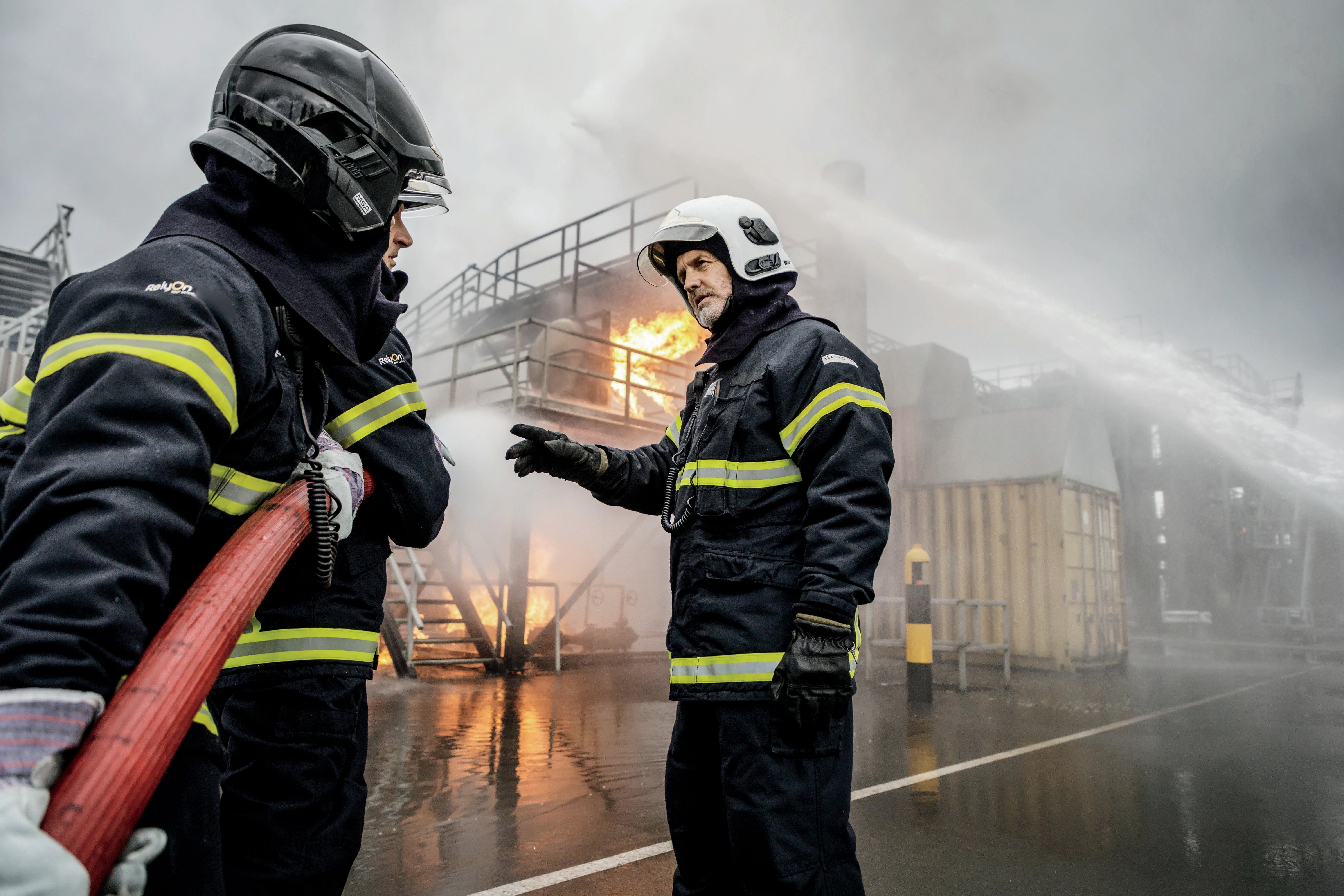
Realistic fires : liquid, gas, class A fuels
Tailor -made scenarios on client's request
Training supported by XVR (virtual reality), scale models, full scale fire simulators
o
360 safety solutions; education, training and consultancy
Advice on and training progammes based on national and international industrial standards and best practices

IFBIC
Industrial Fire Brigade Incident Commander
13-17 July 2026 14-18 September 2026 19-23 October 2026 02-06 November 2026 IFTL
Industrial Fire Team Leader 15-19 June 2026 16-20 November 2026



CONTACT US
EDITORIAL
Publisher Mike Dingle
+44 1752 267330 mike@firemiddleeast.co.uk
Editor Cora Lydon +44 7834 244613 editor@firemiddleeast.co.uk
ADVERTISING
Worldwide Ryan Bickerton +44 1752 265802 ryan@firemiddleeast.co.uk
Gareth Driscoll +44 1752 260603 gareth@firemiddleeast.co.uk
Rahul Vara +44 1752 604352 rahul@firemiddleeast.co.uk
Will Russell +44 7800 513300 will@firemiddleast.co.uk
Digital Editor Britt Jones britt@firemiddleeast.co.uk
Production Team Freya Tucker freya@firemiddleeast.co.uk
Marketing Manager
Mark Doyle +44 7517 452283
PUBLISHED BY
MDC Middle East Ltd
+44 (0)1752 267 330 6 Woodside Lane, Plymouth, Devon, PL4 8QE, UK
This publication may not be reproduced or transmitted in any form in whole or in part without the written consent of the publishers.
©MDC Middle East Ltd. 2026
For subscriptions and advertising enquires, or for further information on the magazine visit our website at: firemiddleeastmag.com
INSIDER’S VIEW
As we open the first issue of Fire Middle East for 2026, the year ahead holds both fresh challenges and tremendous opportunity for our industry. In a landscape shaped by evolving technologies, changing regulations and — unfortunately — ongoing regional tensions, the resilience and innovation of the fire safety community continue to shine through.
One important update for our readers: the Fire Middle East Conference will now take place this November (more details on page 19). While the shift in timing reflects the need for caution amid current regional developments, it also gives us valuable time to strengthen the programme and broaden participation. We look forward to welcoming you later in the year for a dynamic exchange of ideas, expertise and solutions shaping the next era of fire safety across the region.
In this issue, we’re delighted to present a supplement from Waterfall Pumps Manufacturing, shedding light on how its credentials translate into reliability and performance for customers across critical infrastructure and industrial settings. Its commitment to standards and testing continues to raise the bar for quality in regionally-produced fire safety equipment – take a look at page 39.
We also highlight a project coming to a close on the other side of the world: Cladding Safety Victoria’s landmark remediation programme (page 31).
With lessons learned now being shared globally, their insights are set to inform future policy, planning and retrofit strategies that reduce fire risk in high-rise buildings everywhere.
Elsewhere, Peter Stephenson reports on technological advancements in fire alarms, detection and notification systems, from cutting-edge sensors that enhance early warning to integrated communication platforms designed for complex environments (page 35). Finally, Dr Humaid Al Ali, Deputy Director of Fire Affairs at the UAE Ministry of Interior, outlines a strategic roadmap for embedding AI into public safety frameworks — a visionary step that could redefine how data, decision-making and emergency response intersect in the years to come. Don’t miss it, over on page 27.
Here’s to a safe, collaborative and forward-looking 2026.
Cora Lydon Editor editor@firemiddleeast.co.uk
REGULARS
03 Up front
Foreword from the Editor
07 Regional news
The latest regional fire safety and protection news
10 International news
Fire-related news and advancements from around the globe
12 Product showcase
Find out about some of the newest products to reach the market
78 Diary
Diary dates for forthcoming fire safety exhibitions, conferences and events
FEATURES
15 Cover story
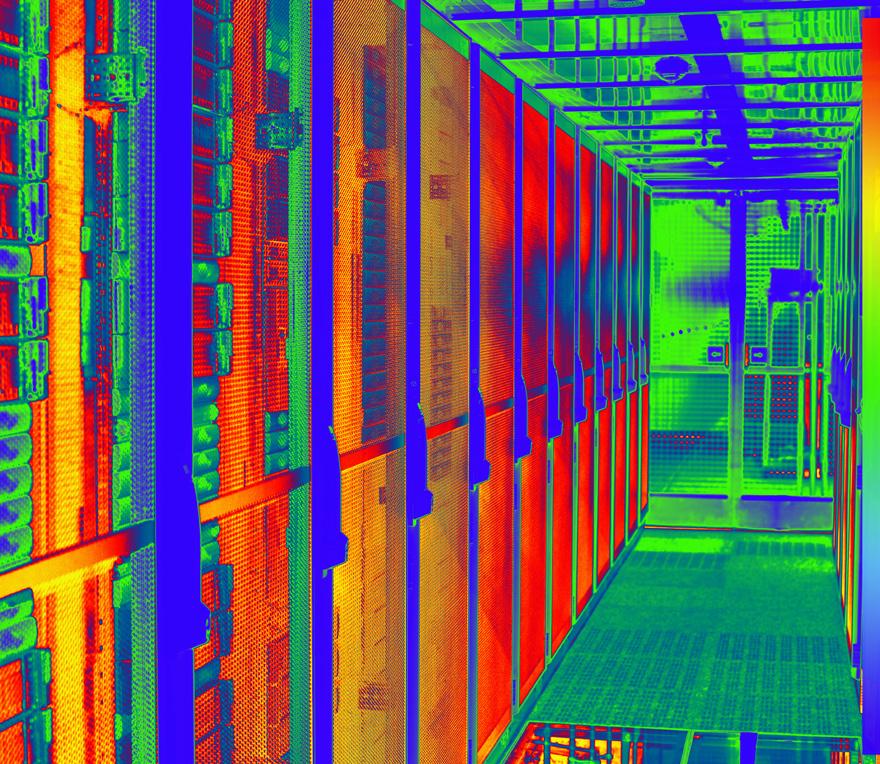
When it comes to fire safety in missioncritical environments, Potter says it’s time to rethink protection for the Middle East’s data centre boom
19 Fire Middle East Conference
The date may have changed but the event hasn’t. Fire Middle East Conference will showcase cutting-edge insights, expert strategies and facilitate game-changing connections in Riyadh in November 2026
27 From design to deployment
Dr Humaid Al Ali, Deputy Director of Fire Affairs at UAE’s Ministry of Interior, draws on his research to recommend successful pathways to better AI integration in public safety organisations
31 Fixing the façade
Dan O’Brien, CEO of Cladding Safety Victoria in Australia, discusses the complex global issue of combustible cladding remediation
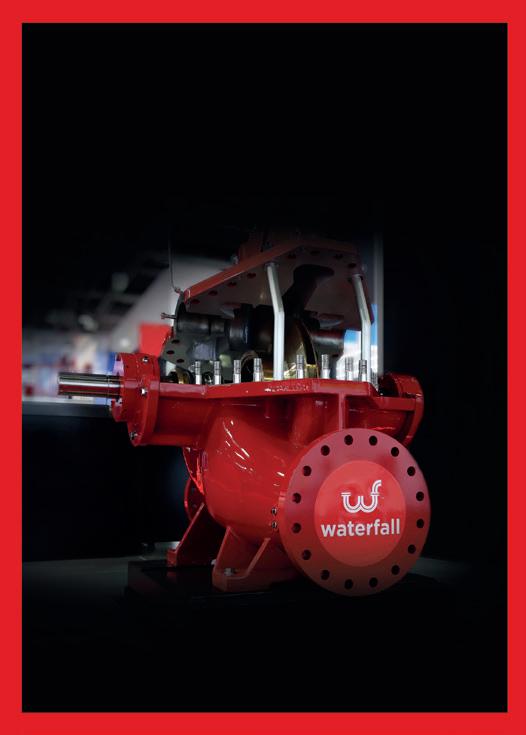
39 Certified under pressure
This special supplement from Waterfall Pumps Manufacturing looks closely at how it leverages internationally recognised fire protection standards and certifications
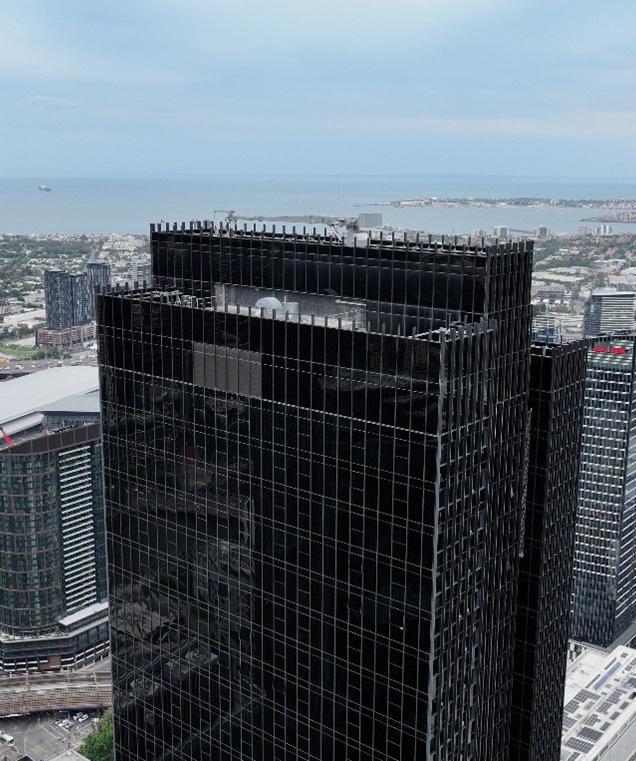
35 From detection to decision
Advanced fire alarm, detection and mass notification systems are altering fire and life safety in complex buildings. Peter Stephenson looks at what’s happening
43 Resilience by design
Mark Fessenden, Managing Director, International Fire Suppression Alliance (IFSA), explores the importance of fire protection in data centres that can ensure continuous operations
56 Data centre resilience
With fire protection in data centres more critical and complex than ever Simon Ince Program Manager, UL Solutions, explores fire safety considerations and strategies to support the performance of fire safety systems when they are needed most
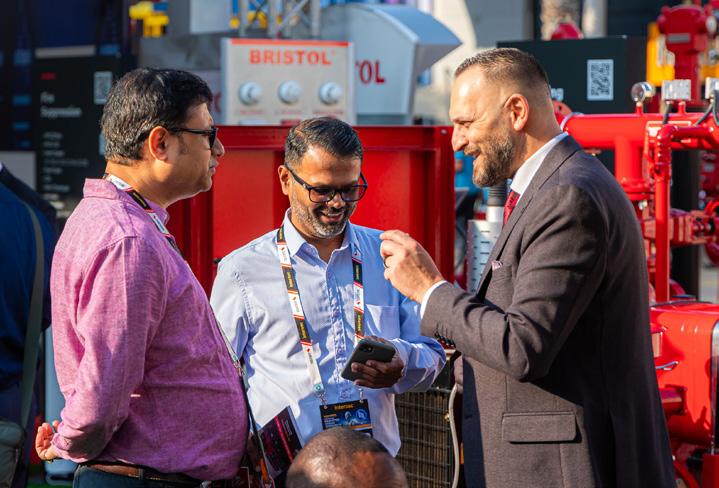
DUBAI 2026
73 Intersec Dubai: Review
Held under the patronage of H.H.
Sheikh Mansoor bin Mohammed bin Rashid Al Maktoum, Chairman of the Dubai Ports and Borders Security Council, Intersec 2026 achieved record-breaking success and marked a defining step in the evolution of global safety, security and fire protection
61 Toughness under pressure
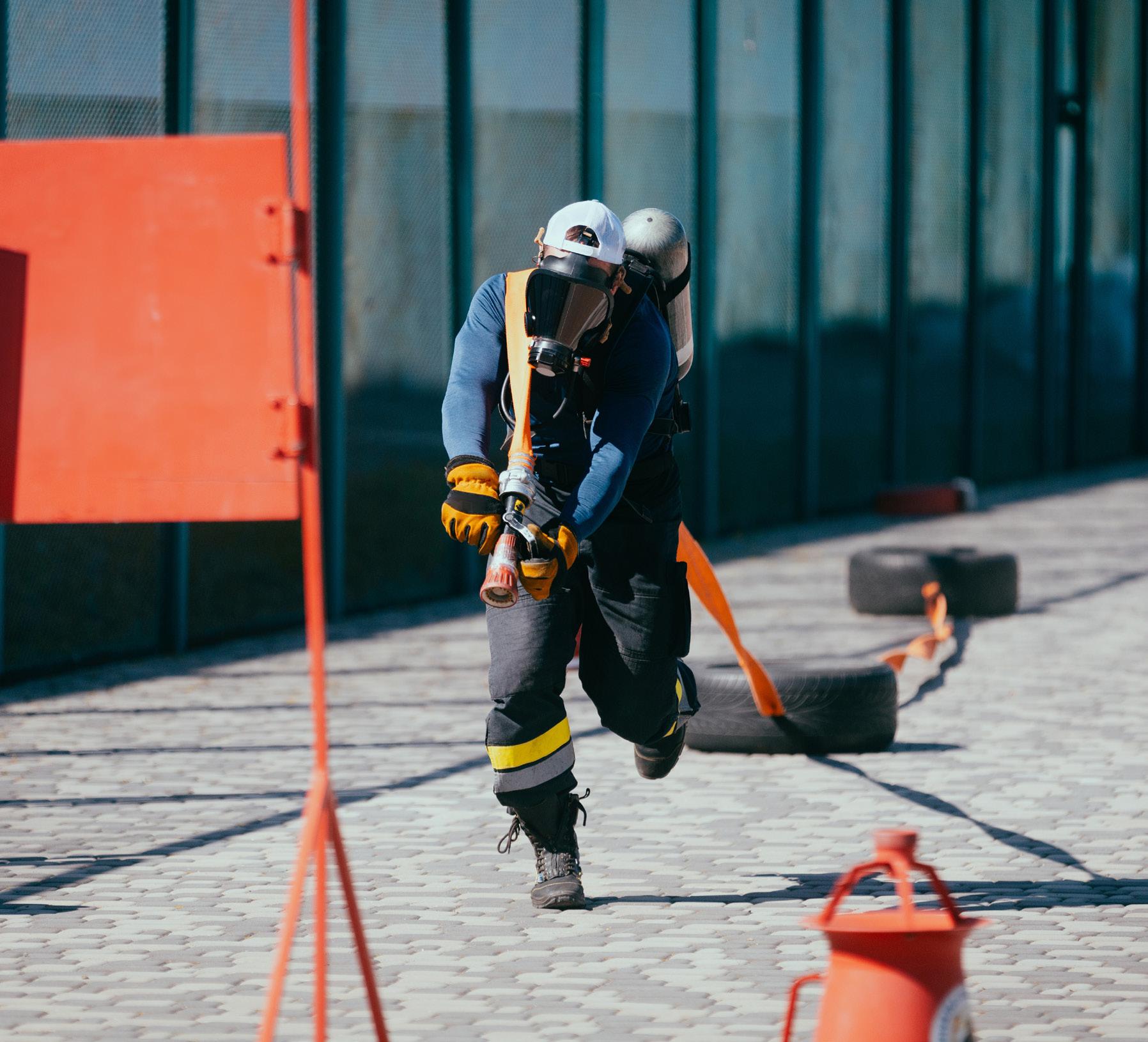
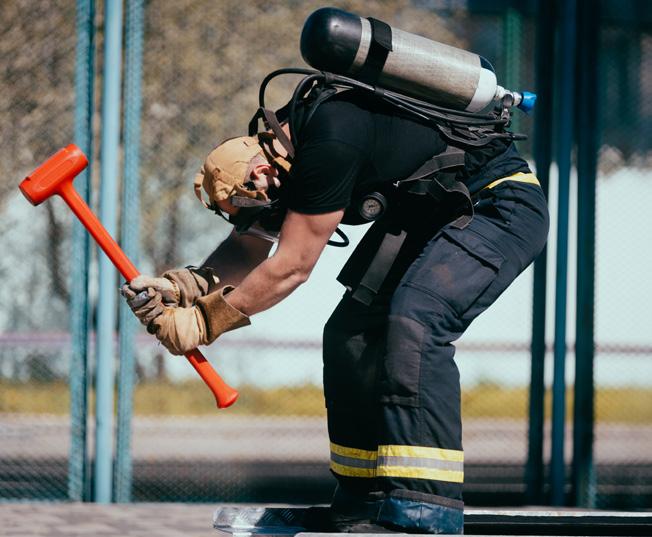
Bob Rea takes a closer look at the vital physical and mental training required of the firefighter’s role
65 Fire safety at scale
Peter William, Fire Protection Regional Manager META, Victaulic, looks at designing for the reality of mega projects
69 Get to know the water mist industry
The 25th International Water Mist Conference (IWMC) will take place in Prague, Czech Republic, on 7th and 8th October 2026
PROMOTIONAL
THIS ISSUE’S PARTNERS & CONTRIBUTORS



Simon Ince
Program Manager, UL Solutions
Simon is a code and regulatory professional with a vocational approach to helping others comply with legislated safety requirements. In his current role, Simon is monitoring conformity requirements in the built environment.
Dr Humaid Al Ali
Deputy Director of Fire Affairs, Ministry of Interior UAE
Dr Al Ali specialises in artificial intelligence and holds a distinguished record of service with the Ministry of Interior. He was awarded ‘The Rising Star Award for Emirati Talent’ at Intersec 2025.
Dan O’Brien
Chief Executive, Cladding Safety Victoria
Dan’s leadership at CSV aims to address the risk of combustible cladding on residential apartments, while advancing international discussions on cladding safety.


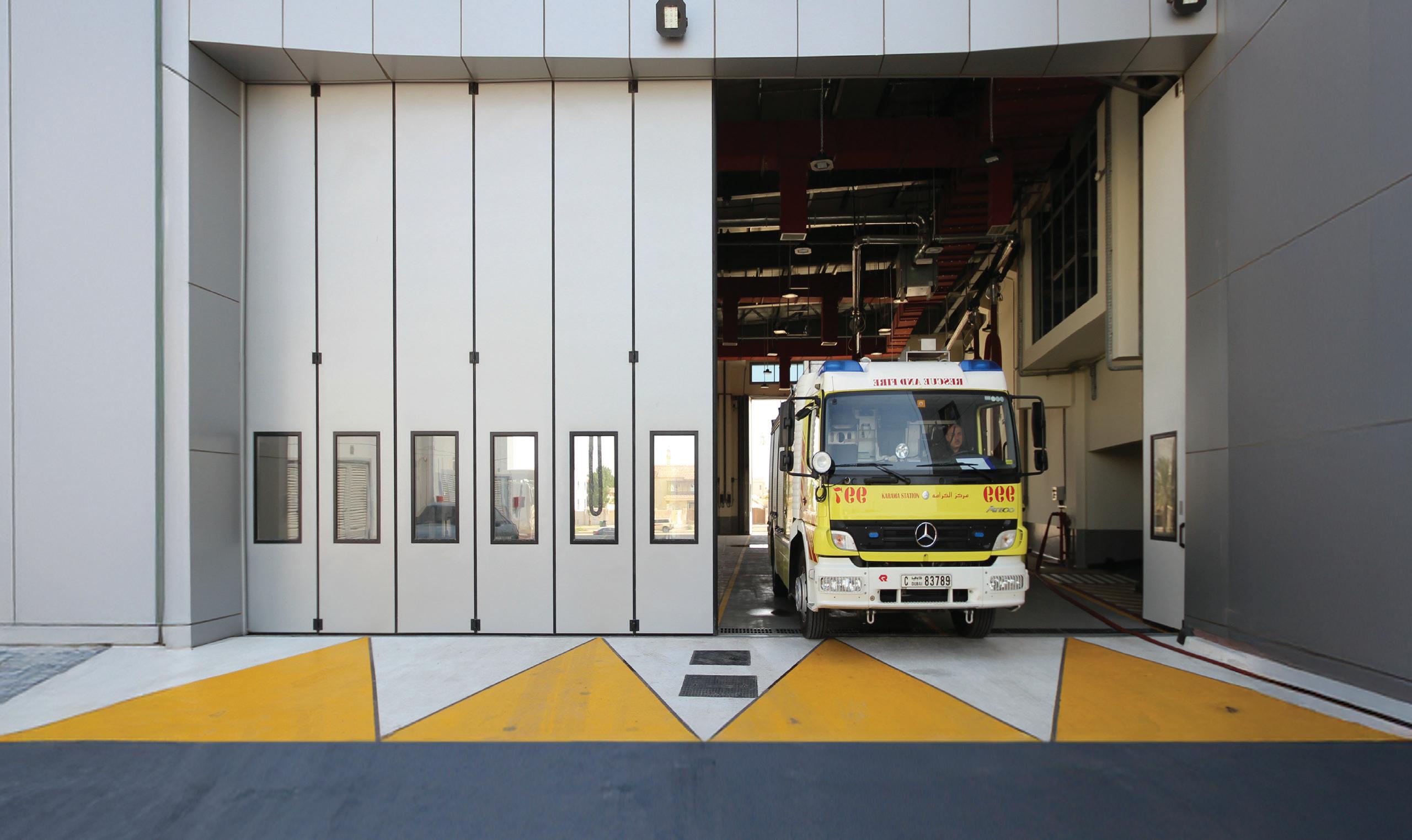
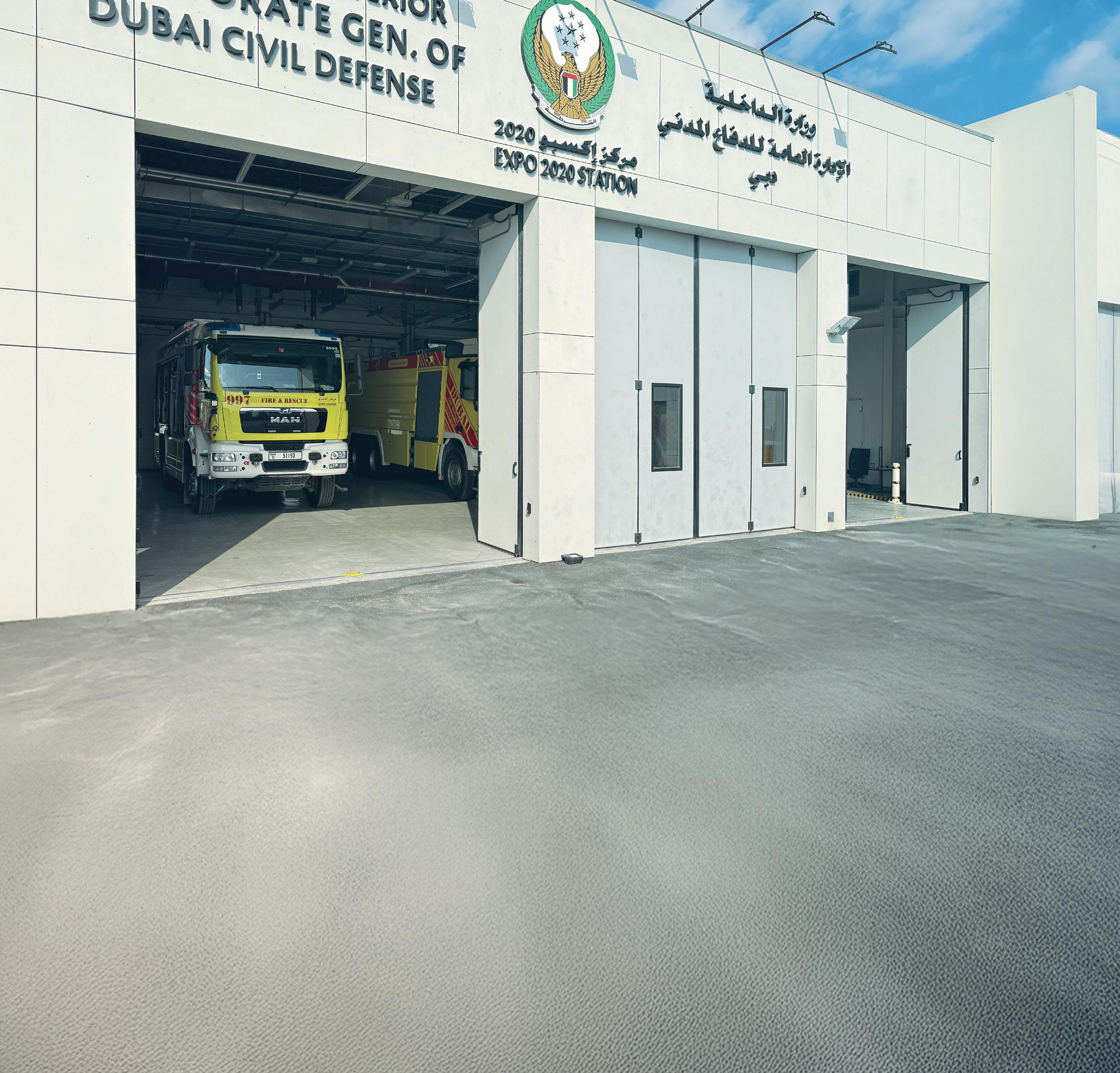
Rapid response starts with the right doors
For over 40 years, Jewers’ has been supplying bi-folding doors to the emergency services.
Our sideways-opening doors provide full-height headroom and a clear line of sight allowing emergency vehicles a safe and quick getaway every time.
Fully insulated doors help temperature regulation, minimizing heat loss in cold environments and maintaining a cool atmosphere in hot climates. Additionally, our fully glazed doors not only allow natural light to illuminate the station but also enhance its aesthetic appeal.
For rapid, reliable, secure, and durable doors that are designed, installed, and maintained to your needs.
Email: postroom@jewersdoors.ae
GCC’s fire safety equipment market to increase by 5 per cent
The GCC fire safety equipment market is forecast to reach US$3.2 billion by 2034, as a result of urban development, stricter regulations and increasing demand for advanced fire protection technologies, according to a new industry report.
Research by The Report Cube estimates the market, valued at US$1.91 billion in 2025, will grow at a compound annual rate of 5.93 per cent over the next decade.
Saudi Arabia currently leads the regional market, accounting for around 42 per cent of total share.
However, analysts link this growth to the Kingdom’s Vision 2030 projects and a surge in large-scale construction
requiring modern fire detection and suppression systems.
Fire detection and suppression equipment continue to be the largest segments in the industry, followed by sprinklers, hydrants and personal protective equipment.
Then, high-risk industries such as oil and gas go on to dominate demand, although commercial and healthcare sectors are increasingly investing as smart city developments increase in the region.
The report shows how companies are shifting to more integrated, technologydriven solutions, such as IoT-enabled sensors and automated response systems, which aims to quicken response times.
Expanding infrastructure projects in UAE call for more fire protection construction materials
The UAE’s fire protection construction materials market is set to see significant growth, thanks to expanding infrastructure projects, stricter safety regulations and rising awareness of fire risks, reveals a new industry report.
Research from ResearchAndMarkets. com has recently valued the market at US$1.2 billion due to large-scale urban developments in the region.
Sharing that Dubai and Abu Dhabi are leading this growth, the increase is put down to being driven by stricter measures in the UAE Fire and Life Safety Code.
As a result, the report explains that it is boosting demand for certified materials, including fire suppression systems, fireresistant coatings and fire-rated building components.
At the same time, growing public awareness of fire safety has led to developers prioritising advanced protection measures.

DAFO GAINS ESL CERTIFICATION FOR ITS BUS AND COACH FIRE SUPPRESSION SOLUTION
Dafo Vehicle has secured certification for its bus and coach fire suppression systems under key safety standards in both the United Arab Emirates and Saudi Arabia.
The company confirmed that its systems meet UAE.S 5041:2021 and SASO 2946:2020 requirements, with certification for the UAE standard issued by the Emirates Safety Laboratory (ESL).
The UAE regulation applies to automatic fire suppression systems in engine compartments of buses and coaches carrying more than 22 passengers, aiming to enhance public transport safety across the region.
To comply, systems must pass a series of tests, including fire performance, vibration resistance and temperature endurance to ensure reliable operation in demanding conditions.
Dafo Vehicle also achieved compliance with Saudi Arabia’s SASO 2946:2020 standard, which sets out requirements for fire detection and suppression systems in passenger vehicles.
The regulation in question focuses on system effectiveness during fire incidents, as well as durability and reliability under normal operating conditions, with verification carried out by certified laboratories.
DUBAI’S NEW SAFETY LAW IS SET TO PROTECT THE PUBLIC
Dubai has announced a new public safety law to raise standards across the emirate, with the legislation set to take effect on 1 June.
Announced by Sheikh Mohammed bin Rashid, Prime Minister and Ruler of Dubai, the law establishes a comprehensive framework designed to protect lives and property by reducing accidents, injuries and damage.
It has been claimed that it will also strengthen safety requirements for public services, products, venues, and large-scale events.
Under the new rules, venues and event organisers must implement a range of safety measures, including fire-fighting equipment, evacuation plans, alarm systems, first-aid provisions and trained supervisors.
The law also introduces requirements for lighting, ventilation, safe access and exit routes, crowd capacity limits and noise control.
This legislation extends to safety standards in residential buildings, electrical systems, and public areas such as beaches and swimming pools, with members of the public being required to follow safety instructions, respect restricted zones and comply with designated swimming times.
It also prohibits the unauthorised handling of hazardous materials, including fireworks and flammable substances, and bans unsafe disposal or tampering with waste systems and infrastructure.
Fines for violations range from Dh500 to Dh1 million, increasing to Dh2 million for repeat offences, overseen by the Dubai Municipality’s Environment, Health and Safety Agency.
International and regional lithium battery fires call travel safety into question
A recent in-flight fire involving a lithium battery on an Air China aircraft has onceagain sparked concerns over the safety of portable electronic devices on commercial flights.
The incident occurred on 18 October, when Flight CA139 travelling from Hangzhou, China, to Seoul, South Korea, was forced to make an emergency landing after a lithium battery in a passenger’s carry-on luggage ignited in an overhead compartment.
The fire produced smoke and flames inside the cabin, prompting a quick reaction from the crew.
Air China confirmed that the battery had ‘spontaneously ignited’, with crew members following emergency procedures to contain the fire before diverting the aircraft to Shanghai Pudong Airport.
The incident has since drawn international attention to the risks associated with lithium-ion batteries, particularly when stored in overhead

lockers where early detection of smoke can be more difficult.
Aviation authorities have increasingly warned about such hazards, with lithium batteries capable of entering ‘thermal runaway’, a process that can cause rapid overheating and fire.
After a number of battery-related incidents on aircraft, regulators and airlines are now reviewing rules on carrying and storing power banks and similar devices.

UKRAINE RETURNS UAE PROPOSAL FOR DEFENCE TECHNOLOGY INVESTMENT
Ukraine’s competition authority has returned an initial application linked to a major proposed investment in the country’s defence technology sector, involving a UAE-based manufacturer, Fire Point.
The Antimonopoly Committee of Ukraine (AMCU) sent back the filing concerning a planned deal in which EDGE Group intends to acquire a 30 per cent stake in Fire Point.
The transaction has been estimated to be worth around US$760 million, potentially making it one of the largest disclosed foreign investments in Ukraine’s defence tech industry.
Fire Point’s Chief Executive, Iryna Terekh, said the update is a routine regulatory process rather than a rejection, as the application was returned due to the need for additional documentation, and a revised submission has already been filed.
“It is entirely normal for the AMCU not to accept an application on the first attempt,” Terekh said.
“We are interested in providing full documentation to comply with state standards rather than seeking workarounds to attract this capital. Our strategy is to set a new standard of transparency in the Ukrainian business environment.”

INTERNATIONAL NEWS
USA
A fire in the laundry facility of the aircraft carrier USS Gerald R. Ford, the world’s largest aircraft carrier, has exposed a “smorgasbord of danger” according to a shipping expert, with flammable materials, heavily used equipment and possible human error all cited as factors. The blaze burned for hours and caused smoke damage that left sleeping quarters unusable and more than 100 beds out of action. The carrier is now in Crete for repairs.
SCOTLAND
Glasgow Central Station is continuing to return to normal after a major fire on nearby Union Street forced a partial shutdown in March 2026. The high-level station was reopened in stages, with some ScotRail and crossborder services back in operation as demolition work on the damaged Victorian building nears completion. Network Rail says the phased reopening reflects ongoing safety work after the blaze spread from a neighbouring vape shop.
SOUTH KOREA
At least 11 people have been killed and three remain missing after a fire tore through an auto parts factory in Daejeon, South Korea, officials said. The blaze broke out on 20 March and spread rapidly through the building, where around 170 workers were on site. Emergency crews deployed more than 500 responders and specialist equipment, including firefighting robots, to tackle the flames and search for those trapped inside.
BOTSWANA
Botswana is using satellite-based Earth Map technology to strengthen national wildfire monitoring, moving a tool first introduced through a drylands project into routine government use. The Department of Forest and Range Resources says the platform makes it much easier to calculate burned areas, track fire frequency and generate statistics for seasonal outlooks and annual reports. Officials say the system has improved workflow by allowing them to quickly visualise and export fire data for further analysis.
CHINA
China has deployed its first remotecontrol forest fire robot in Hubei province, using the machine to speed up the creation of firebreaks in difficult terrain. The robot can cut through undergrowth and trees, excavate raw soil and operate for up to eight hours, while being controlled from a safe distance. Officials say it can triple efficiency compared with manual methods and reduce the danger faced by forestry workers in remote, high-risk areas. The robot will also be used for land reclamation, clearing and forest maintenance, giving it year-round utility beyond fire prevention.
HONG KONG
Hong Kong investigators have said a high-rise fire in November was most likely sparked by a cigarette, after cigarette butts were found near the apparent point of origin. The blaze tore through the Wang Fuk Court housing complex during renovation work and killed 168 people, making it one of the deadliest residential fires in Hong Kong’s history. Officials said the fire spread rapidly through scaffolding and highly combustible materials, while public hearings are now examining wider safety failings and accountability.





Advanced’s latest smoke alarm allows for faster set up
Advanced has launched SmokeGo, a new smoke control solution designed to simplify building safety systems with enhanced functionality and reduced complexity.
Fully compliant with EN 54 Parts 2 and 4 and designed to meet ISO 21927-9 and BS 7346-8 standards, SmokeGo integrates smoke control directly through a building’s control and indicating equipment (CIE).
Compatible with Advanced’s MxPro 5 fire panels, it supports both automatic and manual operation of smoke control fans and dampers.
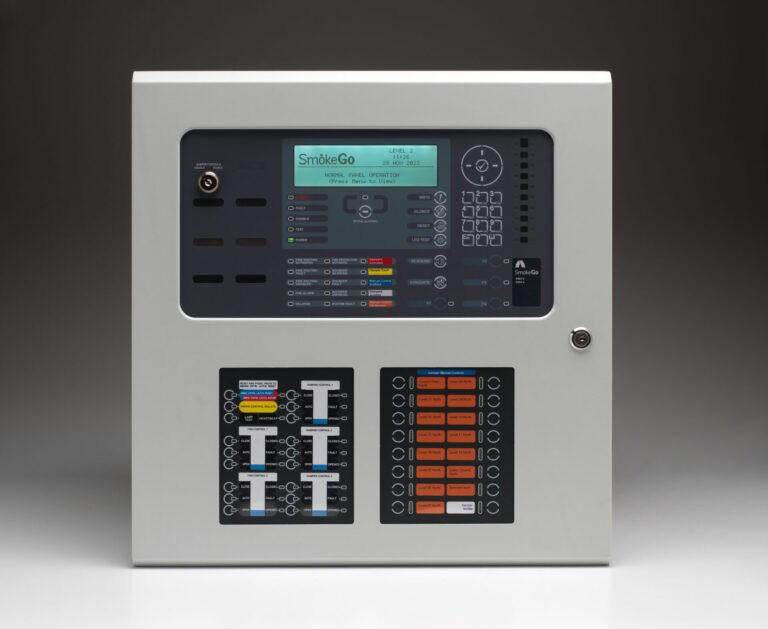
The system uses a four-step configuration process and matrix-based programming to cut setup time, even for complex installations. Each P-Bus can support up to 15 fan and damper switch cards, with scalability for larger projects.
Advanced says SmokeGo offers specifiers, installers and building owners a more intuitive, flexible way to manage smoke control. It can also be customised through the company’s AdSpecials service to meet specific site requirements. advancedco.com/product/smokego
First fluorine-free foam earns FM 5130 approval
Perimeter Solutions has achieved a significant milestone with its SOLBERG® EVOLUTION 3% Synthetic Fluorine-Free Foam (SFFF) becoming the first Newtonian fluorine-free foam to earn FM 5130 approval. The certification marks a step forward for fire protection facilities seeking to move away from PFAS-based agents without compromising performance.
Engineered for use in aircraft hangars, fuel storage sites and other high-risk facilities, the foam combines fast fire knockdown with ‘water-like’ viscosity, ensuring compatibility with standard sprinkler hardware. According to Perimeter Solutions’ business development manager Zachary Brackin, the approval underscores how changing chemistry is reshaping aviation and industrial fire protection. The formulation meets stringent performance standards set by FM, UL, ICAO, FAA and the DoD, offering a viable path for operators preparing for fluorine-free transitions. perimeter-solutions.com
PPG LAUNCHES HIGHPERFORMANCE FIRE PROTECTION COATING
PPG has announced the launch of a new fire protection coating designed to enhance safety and durability in structural steelwork.
The company’s PPG Steelguard 652 is a water-based intumescent coating developed for interior, general-purpose steel applications.
According to the company, it provides up to two hours of fire protection and carries UL 263 certification. Plus it supports more sustainable construction practices through its low volatile organic compound (VOC) formulation.
In addition to fire resistance, it is designed to deliver long-term performance, with durability of up to 20 years.
Key features of the coating include ease of application using standard airless spray equipment, strong adhesion and high impact resistance, helping to ensure consistent coverage and resilience on site, according to PPG. ppgpmc.com
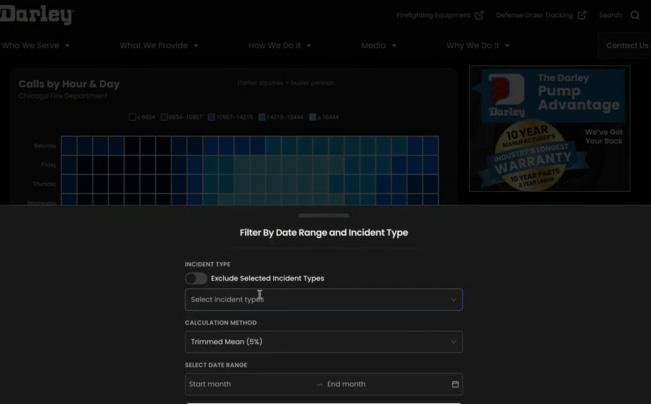
New Data Centre solution to redefine fire department information
A new data platform aimed at transforming how fire departments use information has been launched, offering tools to support faster, smarter decision-making.
The Darley Data CenterSM is a customisable system designed to turn complex datasets into clear, actionable insights for first responders.
Built on proprietary technology that analyses National Fire Incident Reporting System (NFIRS) data, the platform enables departments to track performance, identify trends and benchmark themselves against similar agencies.
The system presents key operational metrics in a streamlined, user-friendly format. These include response times, call volumes, incident types, actions taken and staffing levels. It also provides visual tools such as heat maps of call locations and annual trend analysis, allowing departments to better understand demand and allocate resources more efficiently.
The Darley Data CenterSM is being offered free of charge to the first responder community. darleydata.com





























Complete Fire Safety & Sprinkler Protection Solutions
Backed by 125 Years of Engineering Expertise
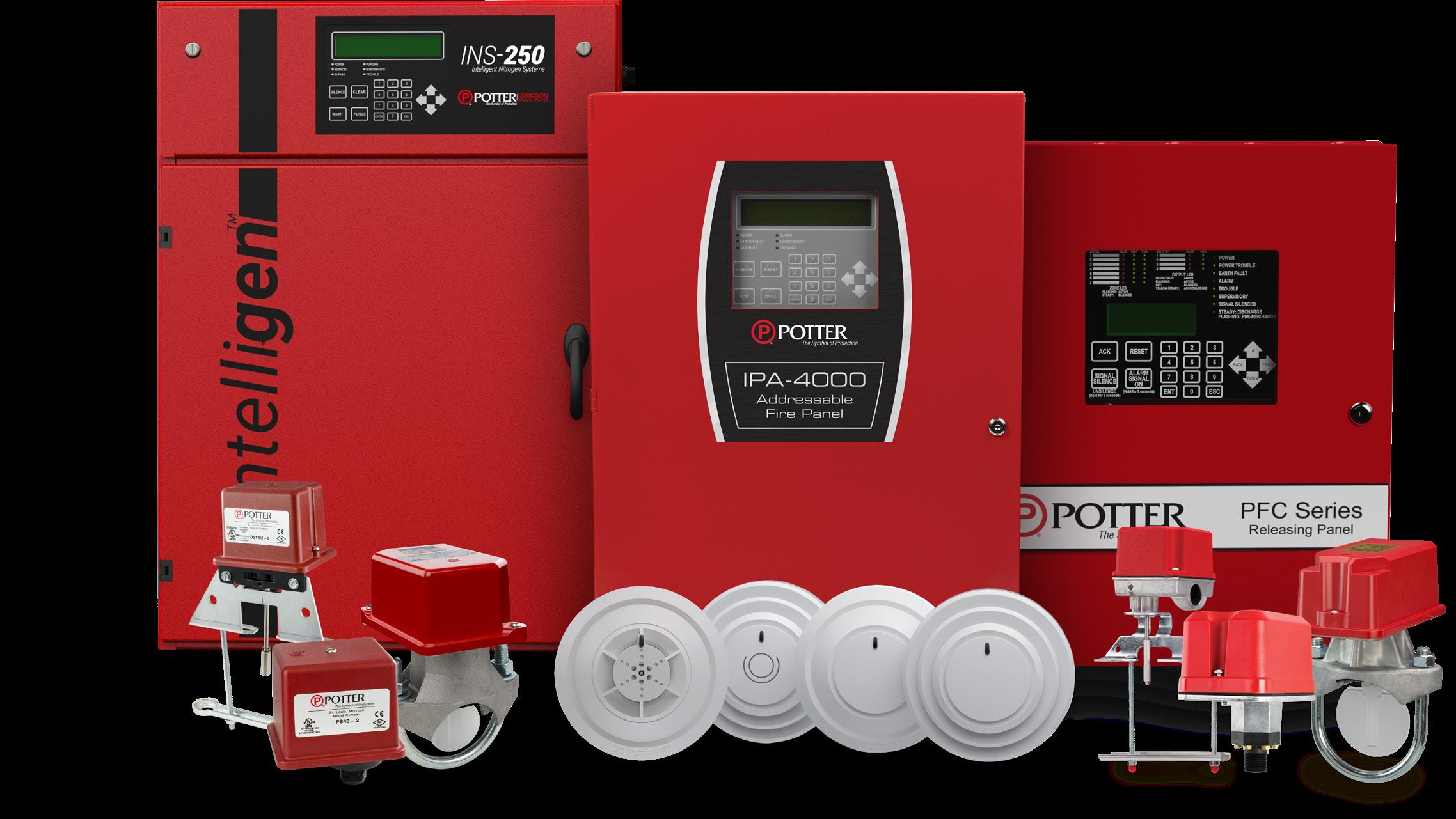
A unified portfolio covering the full fire protection ecosystem:
Fire Detection
Voice Evacuation
Sprinkler Monitoring Releasing Panels
Corrosion Mitigation


Protecting uptime
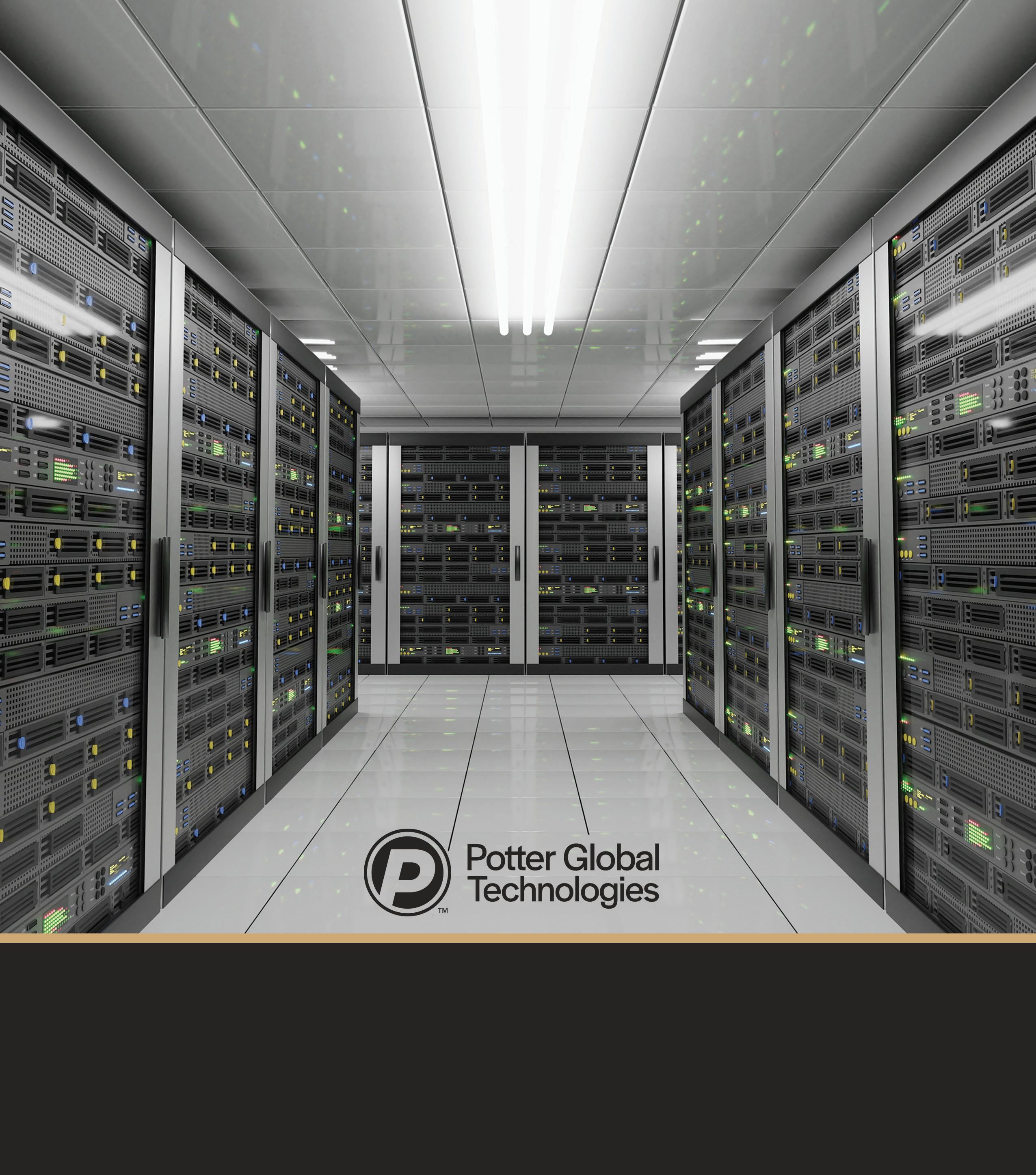
When it comes to fire safety in mission-critical environments, Potter says it’s time to rethink protection for the Middle East’s data centre boom
The Middle East is seeing a surge in hyperscale and edge data centres, driven by cloud adoption, AI workloads and national digital strategies. As these facilities scale, expectations around fire safety are changing just as quickly.
In environments where even seconds of disruption can have serious consequences, fire protection is no longer just about compliance. It’s about protecting uptime, safeguarding critical infrastructure and ensuring systems perform exactly as expected every time.
A shift towards scalable, integrated protection
Data centres are no longer static buildings. They expand in phases, evolve in design and increase in density over time. That puts pressure on traditional fire systems, which were often designed as standalone solutions.
Today, the expectation is different. Fire protection needs to scale with the facility, operating as part of a wider, connected system.
Modern addressable platforms allow thousands of devices to sit on a single network, giving operators a clear, unified view of the entire site as it grows.
In practice, these principles are already being applied by Potter across modular and hyperscale data centre deployments globally, supporting uptimecritical operations for leading technology providers.
This shift from isolated systems to integrated platforms is fundamental. It reduces complexity, improves visibility and supports long-term flexibility.
Protecting uptime, not just assets
In most buildings, fire systems are designed to protect life and property.
In data centres, they must also protect continuity.
That changes the way systems are designed. The focus moves to early awareness and controlled response what many operators now think of as ‘time to respond’.
Rather than reacting to a single trigger, modern systems continuously assess conditions, validate risk and escalate in stages. This allows operators to investigate and act before suppression becomes necessary.
It’s a more measured approach and one that avoids unnecessary discharge while ensuring that, if intervention is required, it happens without delay.
Designing for the reality of the region
Environmental conditions in the Middle East bring their own challenges. Heat,
Integration as standard
“Through open communication protocols, fire systems can now interact with wider infrastructure, enabling coordinated responses when needed”
dust and high airflow can all affect detection performance if systems aren’t designed with these factors in mind.
Equally important but less often discussed are electrical interferences. In high-power environments, transients, surges and electromagnetic fields can impact system stability if not properly accounted for.
For fire detection systems, this means resilience has to go beyond environmental conditions. It also requires protection against electrical noise, ensuring signals remain accurate and systems behave predictably even in demanding operating conditions.
The overlooked risk: Corrosion inside the system
While much of the conversation focuses on detection and response, one of the most significant risks in data centres is often hidden corrosion inside fire suppression pipework.
Pre-action sprinkler systems are widely used to reduce the risk of accidental discharge. However, they also introduce a less visible challenge. Because pipes are not constantly filled with water, they contain a mix of oxygen and residual moisture conditions that allow corrosion to develop over time.
In the Middle East, this process can accelerate. Higher ambient temperatures increase the rate of oxidation, while the cycling of air within the system continually reintroduces oxygen.
The issue is that this degradation happens internally. It’s not immediately visible, and it often goes unnoticed until it leads to:
Blocked pipework; Reduced water flow; Leaks or failures during activation.
In a mission-critical environment, that’s a serious concern. A system that cannot perform when needed represents a risk not just to safety, but to operations as a whole.
Moving towards preventative thinking
This is where the conversation is starting to shift from response to prevention.
One approach gaining traction is the use of nitrogen within sprinkler systems to remove oxygen from the pipe network. Without oxygen, the corrosion process effectively stops.
Solutions such as IntelliGen™ apply this principle, helping to preserve the integrity of the system over time. For operators, this isn’t just about extending asset life it’s about ensuring that critical infrastructure remains dependable throughout the lifecycle of the facility.
In many ways, it reflects a broader change in mindset: designing systems not just to respond to incidents, but to remain reliable years after installation.
Reliability by design
In mission-critical environments, reliability isn’t assumed, it’s engineered.
That means building in resilience at every level, from wiring configurations that maintain operation if a circuit is damaged, to system architectures that avoid single points of failure.
It also means ensuring systems behave predictably. Modern platforms rely increasingly on software-driven logic, allowing multiple inputs to be assessed before action is taken. This reduces the likelihood of false activation and provides a more controlled, auditable response.
Data centres operate as highly coordinated ecosystems. Fire protection systems are expected to work alongside cooling, power and building management systems not independently of them.
Through open communication protocols, fire systems can now interact with wider infrastructure, enabling coordinated responses when needed. At the same time, graphical monitoring platforms provide operators with a single, clear view of system status across the facility.
For large or multi-site operations, this level of visibility is becoming essential.
Looking ahead
As data centres continue to evolve, particularly with the growth of AI and higher power densities, fire protection strategies will need to keep pace.
We are likely to see more localised protection, greater use of data and analytics and a stronger focus on predictive maintenance. Understanding how systems behave over time, rather than simply how they respond in an emergency, will become increasingly important.
Getting the fundamentals right
For developers entering the market, a few principles stand out.
First, design for scalability from the outset. Systems should be able to grow without requiring major redesign.
Second, consider long-term reliability, not just initial performance. Hidden risks like corrosion need to be addressed early.
And third, ensure visibility. Operators need access to clear, real-time information to manage systems effectively.
From compliance to confidence
Ultimately, the organisations leading in this space are those that treat fire safety as more than a requirement.
They see it as part of a broader strategy, one that supports uptime, protects reputation and underpins operational confidence.
Because in mission-critical environments, it’s not just about having a system in place.
It’s about knowing it will work when it matters most.
Trusted. Proven. Potter. potterglobaltech.com






FIRE SAFETY FUTURES
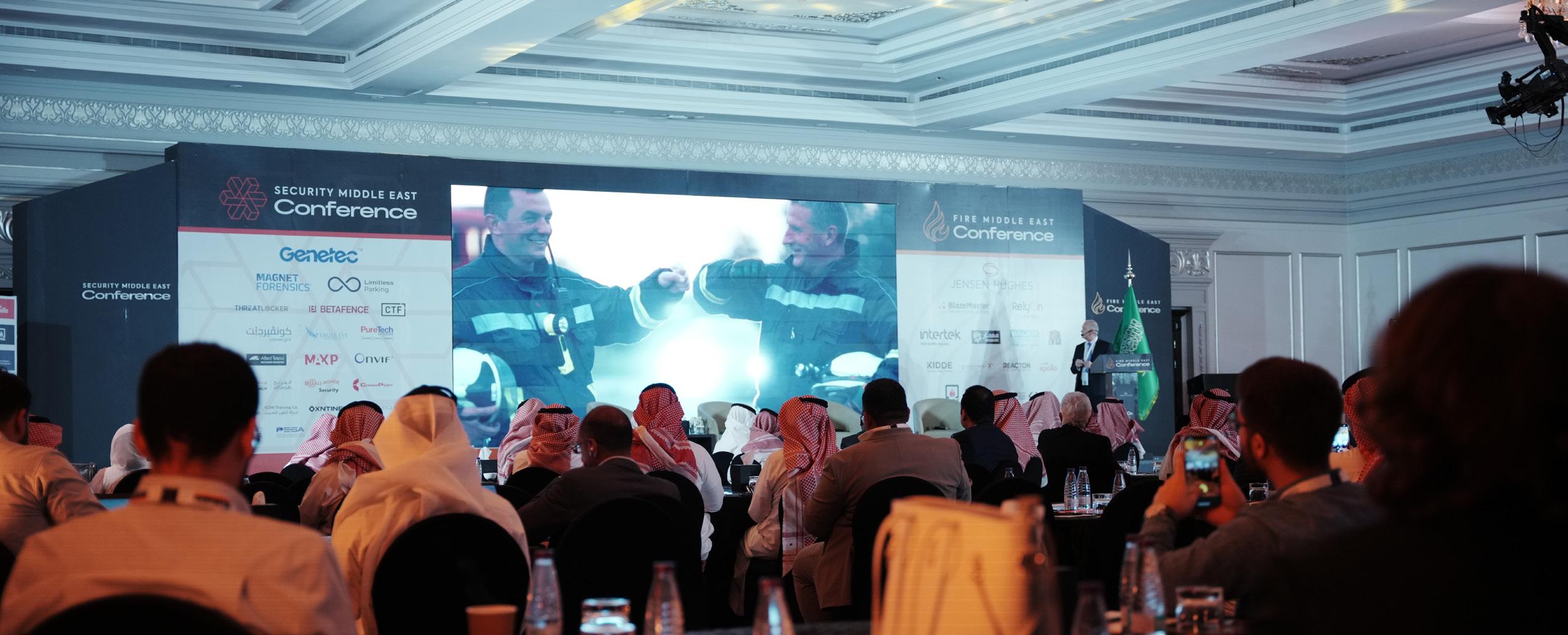
Discover why fire safety leaders can’t miss the Fire Middle East Conference – where cutting-edge insights, expert strategies and gamechanging connections converge to transform your approach to protection
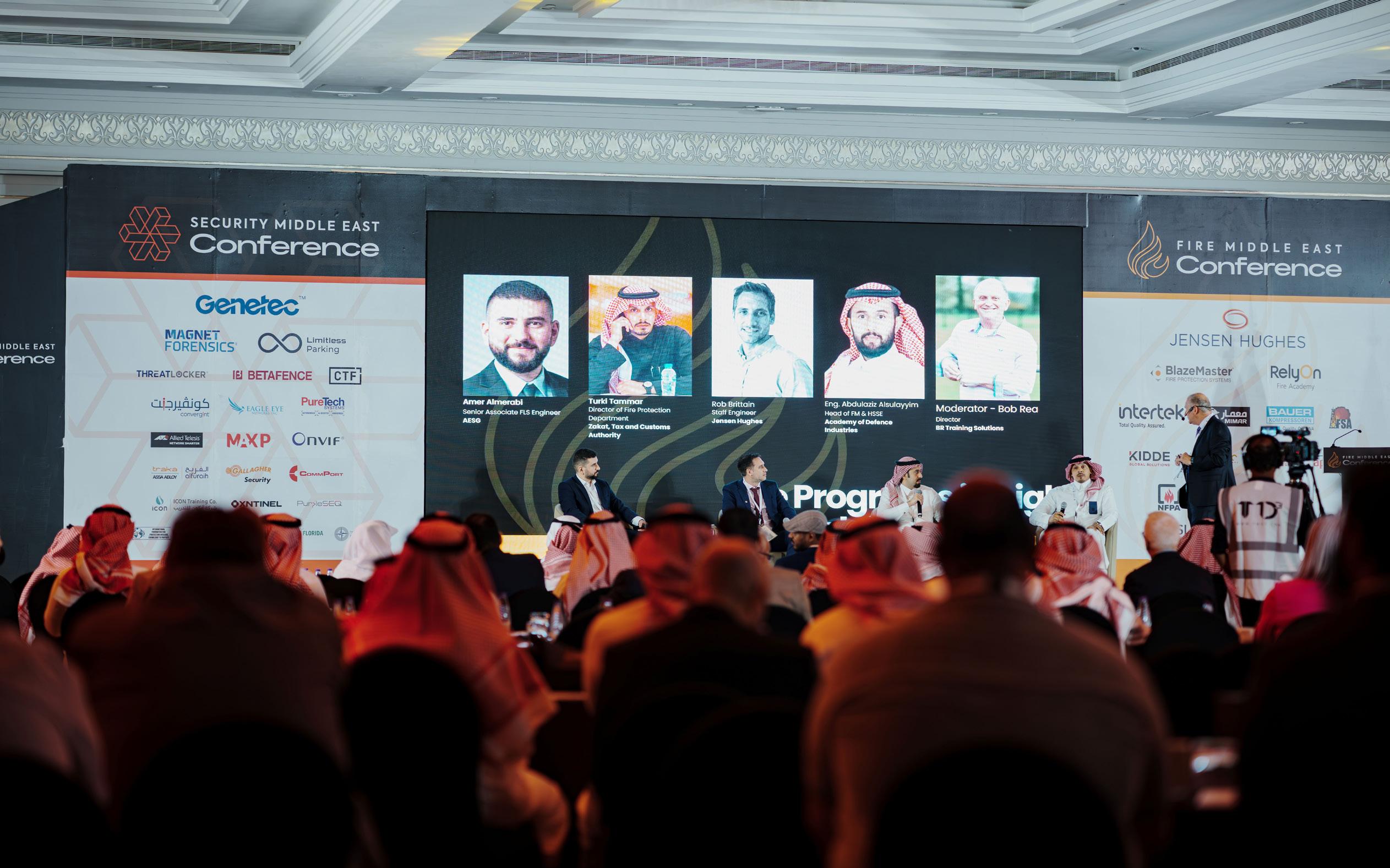
As the fire safety landscape across the region continues to evolve at pace, there has never been a more important moment for the community to come together, share experiences and collaborate on new solutions. That is exactly what the Fire Middle East Conference has been created to do. Designed by and for the region’s fire and life safety professionals, it provides a dedicated forum to exchange ideas, challenge assumptions and build the partnerships that will shape the sector’s future.
In light of escalating regional tensions, and with the safety of our speakers, delegates and event team as our highest priority, we have taken the decision to move the Fire Middle East Conference to November. This was not a decision made lightly, but it allows us to ensure appropriate risk mitigation while safeguarding the quality and integrity of
the event. The additional time also gives us scope to further refine the programme, broaden international participation and secure even more diverse, high calibre contributions from across the global fire community.
What will not change is the ambition behind the conference. Fire Middle East magazine has always existed to support practical progress on the ground – and the conference is a natural extension of that mission. Attendees can expect to hear from global speakers who understand the realities of working in and with the Middle East, and who are focused on delivering actionable take aways rather than abstract theory. The goal is that you leave each session with at least one idea you can take back to your organisation and start implementing the very next day, whether that relates to strategy, technology, training, regulation or operational best practice.
Because the conference is built around a regional lens, every topic, case study and panel will be rooted in the specific context of Middle Eastern markets. Rather than revisiting generic global trends, we will be exploring how these issues manifest across the GCC and wider region: from the implications of new codes and standards, to the challenges of rapid urban development, complex infrastructure projects and climate driven risk. If your work touches the Middle East – whether you are based here or support regional projects from overseas – this is the forum designed for you.
Networking is also at the heart of the Fire Middle East Conference. Across the programme you will find ample opportunities to connect with peers, meet new partners and engage with an audience of highly engaged professionals.
“Because the conference is built around a regional lens, every topic, case study and panel will be rooted in the specific context of Middle Eastern markets”
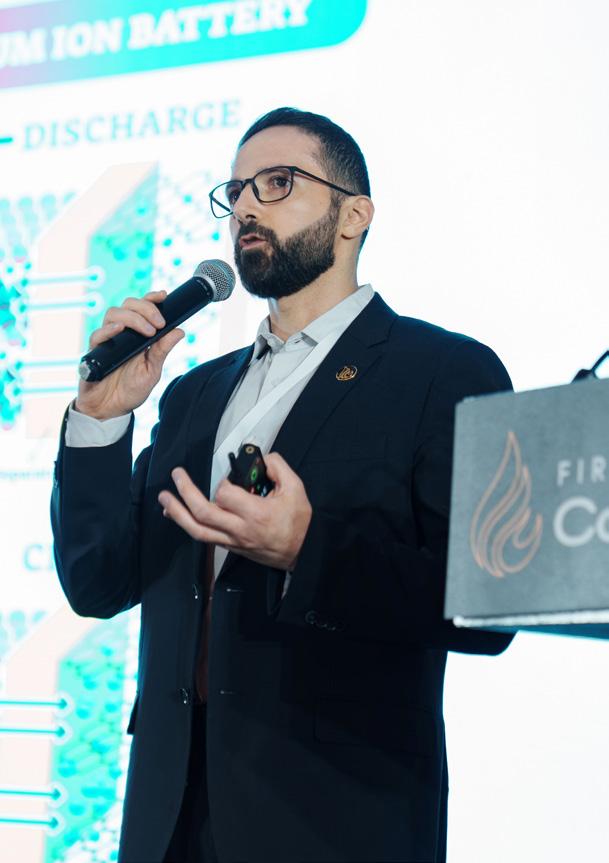
From informal coffee breaks and structured networking sessions, to opportunities to speak directly with solution providers and thought leaders, the event is designed to help you build relationships that last long after the conference doors close.
At this stage in the planning process we are actively shaping the agenda,
and this is where you come in. We are issuing an open call for speakers and contributors who are keen to share their expertise with a regional audience. If you have a compelling case study, a research project with practical implications, a success story – or even a hard won lesson from a project that did not go as expected – we would love to hear from you. Equally, if there is someone whose work you admire and who you believe would bring real value to the community, please consider recommending them as a potential speaker at this year’s event.
We are particularly interested in contributions that translate experience into concrete guidance: what did you do, what worked, what did not, and what should others take away? Whether you are from an authority having jurisdiction, a civil defence or fire service, a consultancy, an engineering firm, a technology provider or an end user, your perspective can help move the needle for the wider sector.
With the new November timing now confirmed, this is the ideal moment to

Meet our Advisory Panel
Central to developing our themes and topics for discussion is our Advisory Board, who we work closely with to identify the most pressing issues affecting the industry.

Zahi Daher International Business Development Manager, NFPA

Khalid Almandil Fire Commissioner and Operational Manager, Red Sea Global

Faris Alzahrani Safety & Fire Protection Executive Director, National Water Company

Sandy Dweik CEO, Thomas Bell-Wright International Consultants

Vinay Deshpande CEO, Vitruvius Fire

Mezher Alqahtani Advisor to VP of Fire Protection, Saudi Aramco

Peter Stephenson Associate Director, Fire & Life Safety, Qiddiya

Amer Al Merabi Team Leader, Jensen Hughes

Bob Rea Director and Lead Facilitator, BR Training Solutions

“Fire Middle East has always been about bringing the regional community together, and the conference is your chance to be part of that collective effort”
secure your place. By registering early, you not only guarantee your attendance but also ensure you receive the latest updates as we confirm speakers, panels and special sessions in the months ahead. You will be among the first to hear about new programme elements, networking opportunities and partnership announcements.
Fire Middle East has always been about bringing the regional community together, and the conference is your chance to be part of that collective effort. If you
are committed to advancing fire safety in the Middle East, we invite you to join us: as a delegate, as a speaker, or as a supporter encouraging others to attend. Register your interest today, and help us shape a safer, more resilient future for the communities we serve.



Building on safety

Shadi Elhag, Business Development Manager - Middle East, Advanced, explores fire safety as a foundation for Saudi Arabia’s real estate growth
Saudi Arabia’s real estate sector is evolving at an extraordinary pace. As Vision 2030 accelerates the delivery of large-scale, high-rise and mixed-use developments, fire safety plays a critical role in ensuring that this rapid growth is underpinned by resilient, well-engineered life safety systems.
From Riyadh’s expanding skyline to new urban communities emerging across the Kingdom, buildings are becoming more vertically ambitious and operationally complex.
As this transformation gains pace, the role of fire and life safety systems is taking on greater significance. Fire safety is no longer viewed solely as a compliance requirement addressed late in the design process. Instead, it is increasingly recognised as a core element of building performance, resilience and long-term asset value. In environments where thousands of people may live, work or gather within a single structure, the ability
of fire systems to respond predictably and effectively under pressure is fundamental.
Evolving risk in modern developments
The changing nature of Saudi Arabia’s real estate portfolio brings new fire safety challenges. High-rise residential towers, large shopping complexes and mixed-use developments introduce multiple occupancy types within a single footprint, each with distinct evacuation profiles and operational demands. Phased construction, future expansion and evolving building use further complicate system design.
In these settings, smoke remains the primary threat to life. Managing its movement through large volumes, interconnected floors and shared escape routes is often more complex than detecting fire itself. This reality places increased emphasis on coordinated detection, intelligent system response
and engineered smoke control strategies that function together as part of a single life safety approach.
Regulatory expectations and practical delivery
Fire safety in the Kingdom is governed by the Saudi Building Code, with SBC801 defining requirements for fire prevention, detection and life safety. Sections addressing fire alarm systems and smoke control establish clear expectations around early warning, system coordination and occupant protection, particularly in high-rise and large-volume buildings.
While the Code sets minimum standards, developers and authorities are increasingly focused on how systems perform in practice. There is growing demand for solutions that not only meet regulatory requirements but also offer flexibility, resilience and clarity during real-world incidents. This shift reflects a
broader understanding that fire systems must support safe evacuation, effective firefighting and ongoing building operation over decades, not just at handover.
Scalable systems for complex estates
As developments increase in size and complexity, scalability has become a defining requirement for fire systems. Platforms must be capable of supporting individual buildings as well as large, multi-structure sites, often delivered in stages.
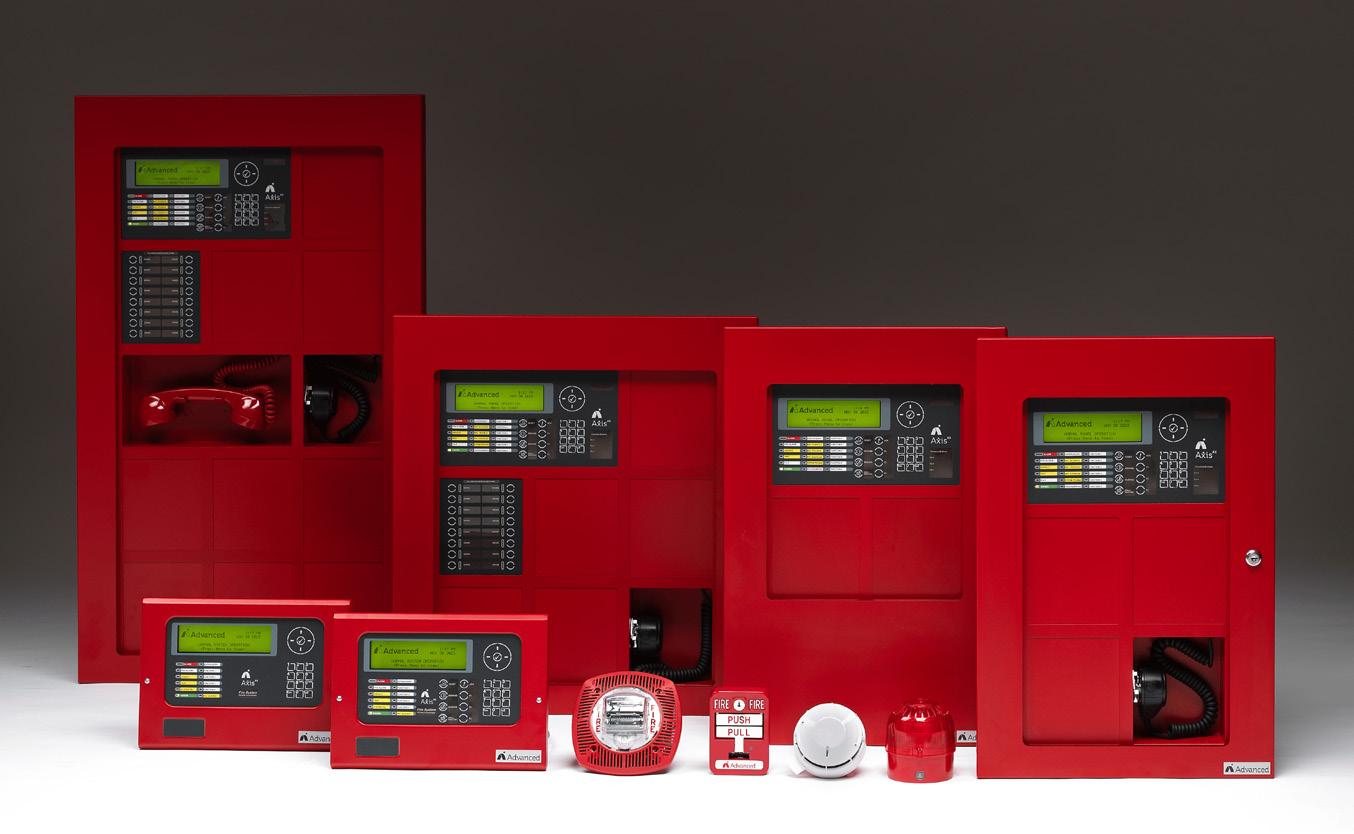
Advanced’s Axis AX fire system has been designed with this reality in mind.
Approved to UL 864 10th Edition, Axis AX provides a networked detection and control platform capable of supporting extensive installations while maintaining distributed intelligence and resilience.
The system can network large numbers of panels across a single site, allowing each area to operate independently while remaining fully coordinated as part of a wider life safety strategy. This architecture is particularly suited to Saudi projects where phased delivery, future expansion and mixed occupancies are common. Fire systems can grow alongside the development, accommodating change without the need for disruptive redesign or system replacement.
Integrated smoke control for tall buildings
Smoke control is one of the most technically demanding aspects of fire safety in modern architecture. In tall residential buildings and mixed-use towers, maintaining tenable escape routes and protecting stairwells and lobbies is critical.
Axis AX supports integrated smoke control functions approved to UL 864 - UUKL, enabling direct control of fans, dampers and associated equipment from within the fire system itself. This approach aligns with SBC-801 requirements and supports engineered smoke management strategies that respond dynamically during an incident.
By integrating detection, control and smoke management within a single platform, system complexity is reduced, response times are improved and overall system behaviour becomes more predictable. For developers and authorities, this integration provides greater confidence that smoke control
will operate as intended under emergency conditions.
Communication as a life safety tool
In large or high-occupancy buildings, detection alone is not enough. Clear communication is essential to guide occupants during an emergency, particularly where phased or selective evacuation strategies are employed.
Axis AX incorporates voice evacuation and audio capabilities directly into the fire system, supporting intelligible messaging across complex sites. This is especially relevant in Saudi Arabia’s residential towers, hotels and mixed-use developments, where occupant familiarity and language diversity can vary significantly.
Advanced’s PerfectSync technology ensures that audio and visual alerts remain synchronised across the network, preventing confusion caused by overlapping messages or delayed signals. When combined with integrated fire telephone systems, this enables effective communication between control rooms, firefighters and different building levels, supporting coordinated response in demanding environments.
Lessons from regional projects
Across the Middle East, Axis AX has been deployed in projects that reflect the challenges facing Saudi Arabia’s real estate sector. Large retail destinations, mixed-use developments and complex infrastructure installations have demonstrated the value of scalable networking, integrated smoke control and clear communication.
Projects such as major shopping centres and transport infrastructure
have shown how a unified fire platform can simplify system management while delivering the performance required in high-risk, high-occupancy environments. These real-world applications underline the importance of selecting systems designed for complexity, rather than adapting simpler solutions beyond their intended limits.
Building safely for the future
As Saudi Arabia continues to deliver on its Vision 2030 ambitions, expectations around fire safety will continue to rise. Authorities, developers and consultants are increasingly focused on systems that offer long-term reliability, adaptability and real-world performance, not just initial compliance.
Fire systems must be capable of supporting complex evacuation strategies, managing smoke effectively and providing clear information during emergencies, all while accommodating future growth and change. Solutions such as Axis AX demonstrate how integrated, scalable platforms can support these goals, helping to ensure that the Kingdom’s remarkable real estate growth is matched by an equally strong commitment to life safety.
By embedding robust fire safety into the foundations of new developments, Saudi Arabia can continue to build with confidence, protecting people, property and the future of its built environment.
For more information on Axis AX, visit: www.advancedco.com/ product/axis-ax-firealarm-system

Want Advanced fire safety peace of mind? Choose
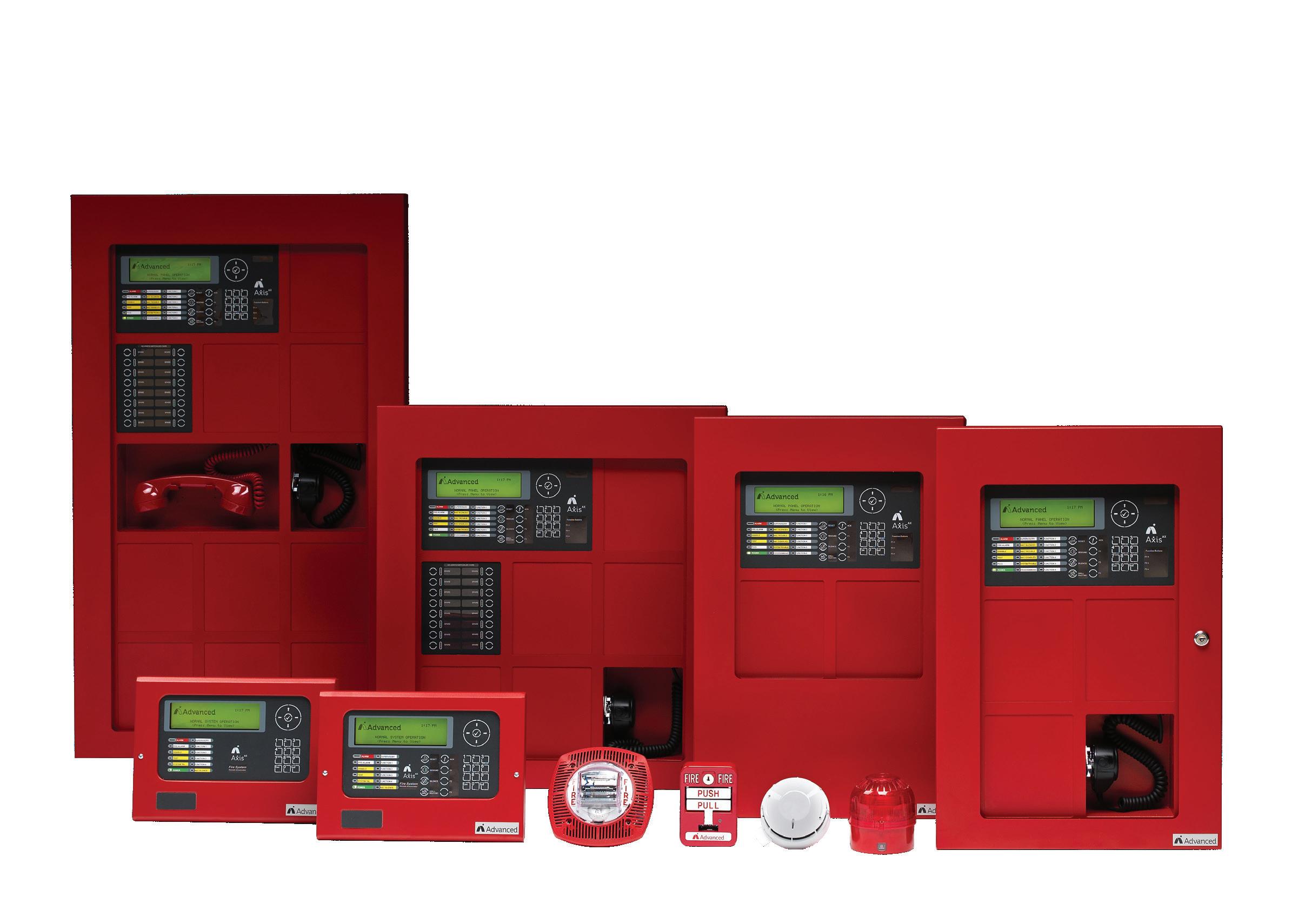
The versatile Axis AX fire system comprises high-performance fire panels, command centres, audio solutions and devices, designed to make UL 864 10th Edition compliance easy.
Feature rich and flexible, the UL-approved Axis AX offers extensive networking and cause and effect options – easily programmed using intuitive software.
Plus, powerful false alarm management, simplified smoke control configuration and perfectly synchronised audio mean fire safety peace of mind is yours.
Creating
a safer future
Safety and health is our first language
Remaining safe is paramount , and workplace health is vital. Make sure your work force is united behind this mission with tailored suppor t from the only Char tered body for occupational safet y and health.

Scan the QR code to find out more.

From design to deployment

Dr Humaid Al Ali, Deputy Director of Fire Affairs at UAE’s Ministry of Interior, draws on his own research to suggest successful pathways to better AI integration in public safety organisations
In an era where fires rage faster and threats evolve unpredictably, artificial intelligence offers fire professionals transformative tools – from predictive risk modelling to real-time drone deployment. Yet adoption lags behind hype. Dr Al Ali draws on his 2023 University of Bradford DBA research as well as his ongoing UAE public safety LinkedIn practitioner poll to map a clear roadmap.
Dr Al Ali’s Bradford thesis, Adoption and Integration of Artificial Intelligence in UAE Public Safety and Security Organisations, surveyed 411 officers across police, civil defence and security
directorates. Using the Unified Theory of Acceptance and Use of Technology (UTAUT), it pinpointed performance expectancy – AI’s proven impact on operations – as the top driver of behavioural intent to adopt, followed by effort expectancy, or ease of use.
AI succeeds not because it is available, but because it is deliberately designed into operations, supported by culture, and reinforced through realworld experience.
Training and infrastructure – key facilitating conditions – drive AI usage, with training playing a moderating role.
Crucially, experience bridges intent to actual integration; seasoned teams embed AI faster. His current LinkedIn practitioner poll builds on this, probing real-time barriers in UAE fire contexts, echoing findings that resistance stems from poor alignment, not from the tech itself.
These insights reveal a truth: Successful AI isn’t about flashy pilots. Instead, it demands structured rollouts aligned with team culture –delivering 20-30% faster responses, as seen in predictive policing models adaptable to fire operations.

AI roadmap to success
1: Define outcomes first
Start with “why,” not “what tech.” Dr Al Ali’s Bradford data shows mismatched goals can derail initiatives – e.g., buying drones without tying to evacuation metrics. That means framing AI initiatives in operational terms first: for example, “reduce high risk building inspection backlog by 30%”, “cut turnout-toarrival time by two minutes in specific districts” or “identify emerging hotspots in industrial zones before incidents occur”. These are the kinds of metrics that make AI’s value tangible to officers and commanders, and they resonate strongly with the performance driven factors identified in Dr Al Ali’s model.
In the UAE public sector, AI has been adopted to reach more people faster, safely and securely, which aligns naturally with public safety missions around response time, situational awareness and risk reduction. When those links are explicit, performance expectancy rises: frontline officers can see how AI will help them clear incidents faster, reduce false alarms, or improve pre-incident planning.
Real-world playbook: Convene crossfunctional teams – command, IT, frontline – to score AI on UTAUT metrics. Prioritise high-expectancy uses like UAE’s Hassantuk system, which predicts fires via AI-monitored sensors, slashing incidents proactively. Benchmark against Dr Al Ali’s Bradford work: Aim for outcomes boosting survival rates by 15% in high-rises.
2: Align with operational culture
Technology that clashes with the fire service’s heroic, hands-on ethos only serves to fuel resistance. The UTAUT findings emphasise that effort expectancy – how intuitive and manageable a tool feels – is as important as raw capability. In organisations where crews operate under time pressure, with high cognitive load and strict procedures, any system that feels slow, complex or alien to the established way of working will struggle to gain traction, irrespective of its theoretical benefits.
Research flags social influence as key: Peers must champion, not mandate. In UAE Civil Defence operations, targeted demonstrations fostering cultural buyin are reducing scepticism, paving the way for smoother AI uptake among frontline teams.
Real-world playbook: Host AI fire drills with tools like thermal drones in mock high-rise scenarios, much like Dubai Civil Defence’s approach. Quantify the wins – AI analytics that map risks, optimise patrols, and shave precious minutes off response times – then survey crews before and after to track shifts in intent using UTAUT metrics.
3: Secure buy-in before training
Dr Al Ali research underlines the value in training post-commitment, not as a convincer – this avoids ‘training fatigue’ and keeps participants meaningfully engaged. His framework flips it: Prove value via pilots, then skill up the team. Good training amplifies the effect of strong infrastructure and leadership support on AI usage, but it cannot compensate for weak perceived value or poor fit with the job.
Real-world playbook: Pilot low risk AI tools first, such as GIS-based fire risk mapping – for example, Saudi Arabia’s AI driven ‘FlameGuard’ smart map, which predicts high risk fire zones in agricultural regions and supports response planning. Then share internal ROI stories, such as how regional Civil Defence agencies are using GIS service area analysis to reshape coverage and cut response times. Only then roll out targeted training.
4: Deploy and iterate
True integration requires hands-on experience – rookie teams often stumble over data silos. Dr Al Ali’s Bradford research links sustained success to strong facilitating conditions, such as seamless APIs and cloud infrastructure. In the UAE, AI-powered firefighting drones exemplify this, deftly navigating hazards while streaming real-time data to crews on the ground.
Dr Al Ali’s research underlines that officers who have had the opportunity to apply AI tools in real incidents or live operational environments are more likely to integrate them into routine decision making and to advocate for their use across the organisation. Leaders can start by embedding AI into a narrow, high impact slice of operations – such as risk based inspection targeting, command and control decision support, or predictive maintenance for critical fleet assets – and then deliberately rotate officers through those environments to build experience. Over time, those early adopters can become internal champions and mentors, sharing lessons and shaping realistic expectations about what AI can and cannot do in a fireground or control room context.
Real-world playbook: Fire leaders can put these principles into action through a seamless rollout. Begin with data unification by centralising incident logs into AI platforms, enabling predictive analytics such as correlations between weather patterns and fire outbreaks. Equally vital are ethical guardrails: tackle biases head-on with diverse training datasets, as Dr Al Ali emphasises in public safety contexts. Finally, scale thoughtfully by monitoring UTAUT metrics post-deployment – adjust swiftly if effort expectancy wanes, to ensure long-term adoption.
“Fire leaders weighing AI investments would do well to self-assess: Does your strategy encompass these critical phases?”

Roadmap at a glance
Phase
Define outcomes first
Align culture
Buy-in first
Deploy and iterate
Performance expectancy (the believe that AI will improve job performance)
Social influence
Effort expectancy (how easy it feels to use)
Facilitating conditions
Fewer incidents
Less resistance to change
Higher retention
Faster response
Lessons for Middle East fire pros
Dr Al Ali’s work underscores upstream thinking: AI enhances missions, not replaces grit. Fire leaders across the Middle East should adapt his UTAUT framework to align seamlessly with their country’s regional codes and standards – for instance, by integrating it with NFPA guidelines to sharpen AI-driven risk modelling.
His LinkedIn practitioner poll helps shed further light on persistent MENA-
wide challenges, from data privacy concerns to interoperability gaps. Fire leaders weighing AI investments would do well to selfassess: Does your strategy encompass these critical phases? Begin modestly – with risk audits using free UTAUT assessment tools – then scale deliberately. The payoff is transformative: forward-leaning departments where AI converts precious seconds into lives saved, echoing the UAE’s pioneering smart safety ethos.
Fixing the façade

Dan O’Brien, CEO of Cladding Safety Victoria in Australia, discusses the complex global issue of combustible cladding remediation
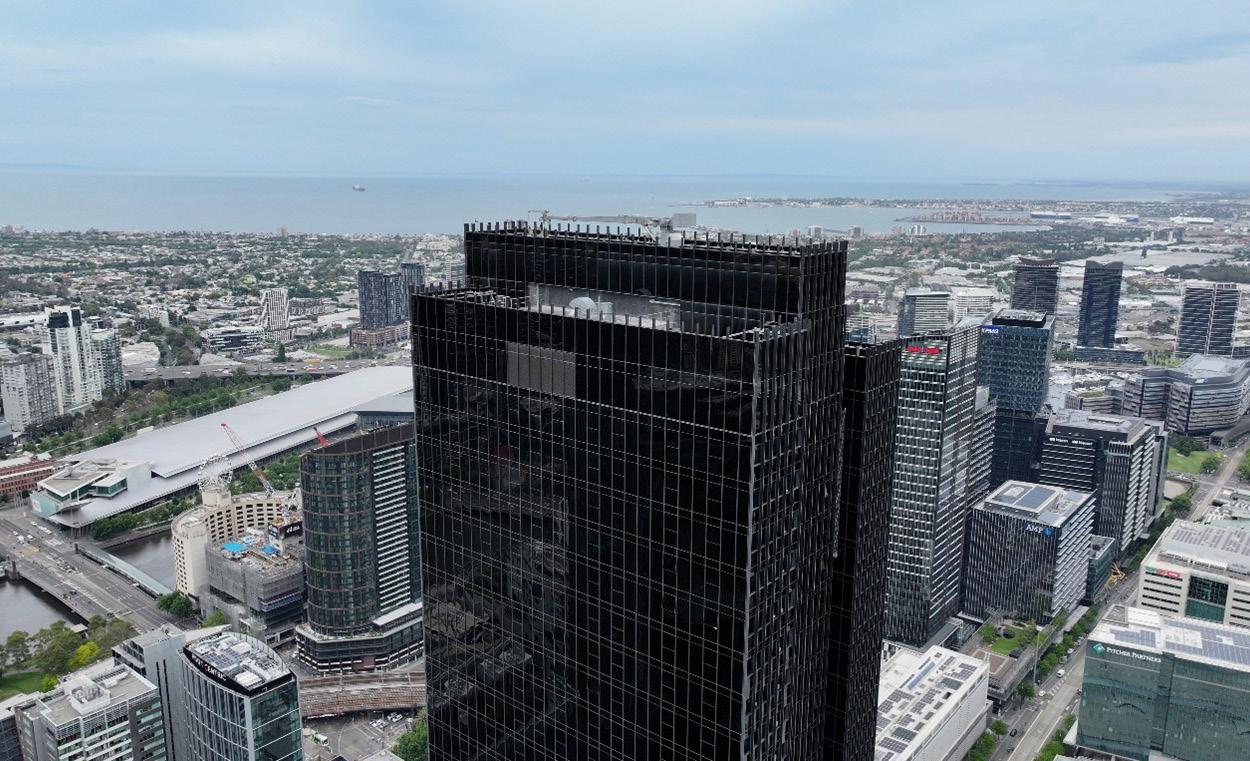
Across the Middle East, combustible cladding remains a live question for regulators, owners and insurers, particularly in dense urban markets dominated by high-rise development. In Australia, Victoria’s Cladding Safety Victoria (CSV) programme offers a valuable lesson: that the most effective response is not blanket remediation, but a risk-based, evidence-led model that identifies the buildings most in need; targets resources proportionately; and delivers safer outcomes without unnecessary cost or delay. As the region continues to strengthen its building safety frameworks, CSV’s experience shows how science, policy and delivery can combine to turn a complex fire risk into a manageable remediation strategy.
To date, CSV’s programme has helped tens of thousands of owners in more than 1,600 buildings deal with the issue of combustible cladding. It became the first jurisdiction in the world to comprehensively deal with the issue, and here it shares the lessons learned along the way – so that a tragedy like Grenfell doesn’t occur again.
Addressing the problem of combustible cladding in Victoria
In July 2019, after two significant inner city Melbourne cladding fires either side of the Grenfell (London) tragedy in 2017 the Victorian Government acted decisively and established a specialist agency, Cladding Safety Victoria (CSV) based on the recommendations of an independent Victorian Cladding Taskforce established in 2017.
The Taskforce concluded that the problem of widespread combustible cladding was attributed to three factors: the supply and marketing of inappropriate building materials; a poor culture of compliance in the industry; and the failure of regulation to deal with these issues. The UK’s Grenfell Tower Inquiry Report in 2024 identified the same causes attributed to the tragic fire that led to the deaths of 72 people.
CSV has been the driver of Victoria’s response to the threat of combustible cladding and is in the final stages of fulfilling its mission.
With a rough estimate of the buildings affected and a set budget, a new
organisation and delivery model had to be built from the ground up.
CSV’s first task was to identify the affected buildings, working with Victoria’s state and local building regulators. Using patchy records, limited datasets and on-the-ground checks, it eventually built a comprehensive picture of 1,660 apartment buildings with some cladding risk – far more than early government modelling had suggested.
The next challenge was prioritisation. Early attempts had placed too much weight on non-cladding factors, which understated the impact of a cladding fire. CSV corrected this by working with CSIRO’s Data61 and RMIT to assign each building a cladding risk coefficient and establish a notional ‘batting order’.
The Victorian Government then decided CSV should focus on the highestrisk buildings. Under this ‘high care’ model, CSV funded independent project managers, selected pre-vetted building practitioners and oversaw the works, effectively stepping into the role usually played by the owners’ corporation (the legal entity that manages the common
“Based on six years of evidence, CSV’s approach has saved both building owners and the government hundreds of millions of dollars, as well as considerable time and inconvenience.”
property of a residential apartment complex).
Overcoming difficulties along the way
With many projects underway, recurring issues quickly emerged and demanded resolution. Half of all assessed buildings contained significant latent defects, and the behaviour of numerous cladding products was still not well understood. In many instances, private building practitioners had overstated cladding risks, while local regulators –understandably cautious – were reluctant to allow any potentially unsafe materials to remain in place.
As CSV examined more buildings, it became clear that many earlier risk assessments had been based on incomplete information, limited understanding of how different cladding products perform in fire conditions, or inflated assumptions of risk. These shortcomings had severe financial impacts on owners, who faced rectification costs in the hundreds of thousands – and often millions – of dollars. It also became apparent that the broader sector and regulatory system, at least in relation to combustible cladding, placed the full burden on apartment owners – most of whom were ill-equipped to manage it – while offering few avenues for addressing the problem proportionately, affordably or efficiently. CSV’s intervention has fundamentally shifted this landscape in Victoria.
To answer the unresolved questions, CSV developed a comprehensive research programme. The aim was not only to help the impacted owners but also to better
inform regulators. The breadth and depth of data gathered by CSV through this work has formed the basis of several important research papers which have been provided to government and published online.
One of the key projects was to better understand the risk posed by lowcombustible products. We conducted our own testing on cladding products and publicised the results.
CSV also continues to work with the insurance industry and other stakeholders to ensure these findings are widely understood. In the early days, achieving consensus on the nature of cladding risk in buildings seemed like a bridge too far. However, through the evidence gathered, those bridges were built, and in Victoria we now have a commonly understood approach to assessing cladding risk in buildings.
Applying a risk threshold to cladding rectification
Armed with a defined set of problem buildings, the lived experience gained from numerous remediation projects, the results of a comprehensive research programme, and access to internationally recognised fire safety expertise, we were able to present clear cladding risk thresholds to government for approval.
The Protocols for Mitigating Cladding Risk (PMCR), developed by CSV in partnership with RMIT University, CSIRO, and a range of other experts, have been central to this work. The impact of this new risk based approach has been significant – saving many owners from incurring large, unaffordable costs unnecessarily and restoring confidence in the buying and selling of apartments.

Through this work, CSV has become the authority on cladding risk assessment and mitigation in Victoria. Its processes now form official government policy through Minister’s Guideline 15, supporting both municipal and private building surveyors in making informed decisions based on CSV’s advice.
In the interest of international collaboration, this work and all our findings have been shared not only with other jurisdictions in Australia but also with other countries, including the UK, Scottish, Irish and New Zealand governments.
Continuous improvement leads to better outcomes
CSV is on track to complete its task within budget, despite steeply rising construction costs over the life of the programme. These savings are due in large part to the introduction of a Clerk of Works quality and safety scheme across funded sites. An impact analysis shows the programme has delivered substantial safety benefits and a return on investment of around 700 percent, equating to savings of approximately AUS$100 million.
CSV’s adaptive approach to programme delivery reflects the principles of a learning organisation – constantly evolving by integrating insights from experience, data and innovation into core operations.

In its early years, CSV operated in a high risk, highly uncertain environment, where strong risk mitigation measures were essential to ensuring safety and quality. Early investment efficiency was supported by strategic contract management, including establishing expert panels such as independent project managers, quantity surveyors, architects and the Clerk of Works programme. By strengthening control over project outcomes, this approach minimised risks and associated costs while fostering trusted supplier relationships.
Over time, CSV systematically captured data and insights from each completed project and fed these learnings back into decision making. This deliberate cultivation of a learning culture helped reinforce organisational capability, refine methods and support the shift from full cladding removal to more proportionate, evidence based solutions.
A culture of continuous improvement, supported by data analysis, cross disciplinary collaboration and evidence based decision making, further strengthened internal capability and reduced reliance on external consultants. Critical to this evolution was the development of in-house expertise, including due diligence processes for assessing cladding risk and an in-house cost planning function. The progression from early caution and uncertainty to
leadership in innovation reflects CSV’s commitment to learning and adaptability – delivering safe, efficient and cost effective outcomes without compromising quality.
Based on six years of evidence, CSV’s approach has saved both building owners and the government hundreds of millions of dollars, as well as considerable time and inconvenience. Had CSV accepted the prevailing professional and regulatory assumptions about cladding products and associated risks, many more buildings would have undergone far more extensive – and often unnecessary – rectification over a much longer period, causing significantly greater distress for owners and occupants.
Key lessons to take away
Victoria’s cladding programme is now nearing completion. Once finalised, CSV’s work will have improved safety for users of 131 public buildings and more than 155,000 residents across more than 80,000 privately owned apartments.
The programme has provided a unique opportunity for government and industry to explore how a genuinely risk proportionate model can guide any intervention involving the development, design, construction, management or maintenance of buildings. By understanding each building’s unique risk profile and applying rectification strategies aligned to that risk,
Further reading
Protocols for Mitigating Cladding Risk (PMCR): www.vic.gov.au/ cladding-risk-prioritisationmodel-policy-and-methodology
Minister’s Guideline 15: www. planning.vic.gov.au/guidesand-resources/building-policy/ building-reform/Ministersguideline-MG-15
CSV’s cladding product fire testing: www.vic.gov.au/ cladding-testing
CSV’s cladding materials library: www.vic.gov.au/claddingmaterials
CSV’s published research reports:
• Compliance in building design: www.vic.gov.au/ compliance-building-design
• Non-cladding building defects: www.vic.gov.au/ other-building-defects
• Promoting quality and safety in construction: www.vic. gov.au/quality-and-safetyconstruction
• The role of owners corporations: www.vic.gov. au/engagement-with-owners
• Cost controls and program delivery framework: www.vic. gov.au/cost-controls-andprogram-delivery-framework
remediation can be delivered far more efficiently and cost effectively.
Another key lesson is that where state intervention is required to address building or construction related risks, decisions should be grounded in an objective methodology – such as the PMCR model – ensuring obligations are prioritised according to risk and tailored to the specific circumstances.
Victoria’s cladding rectification program will be completed in 2026, marking a significant achievement in public safety, regulatory reform and evidence based program delivery.
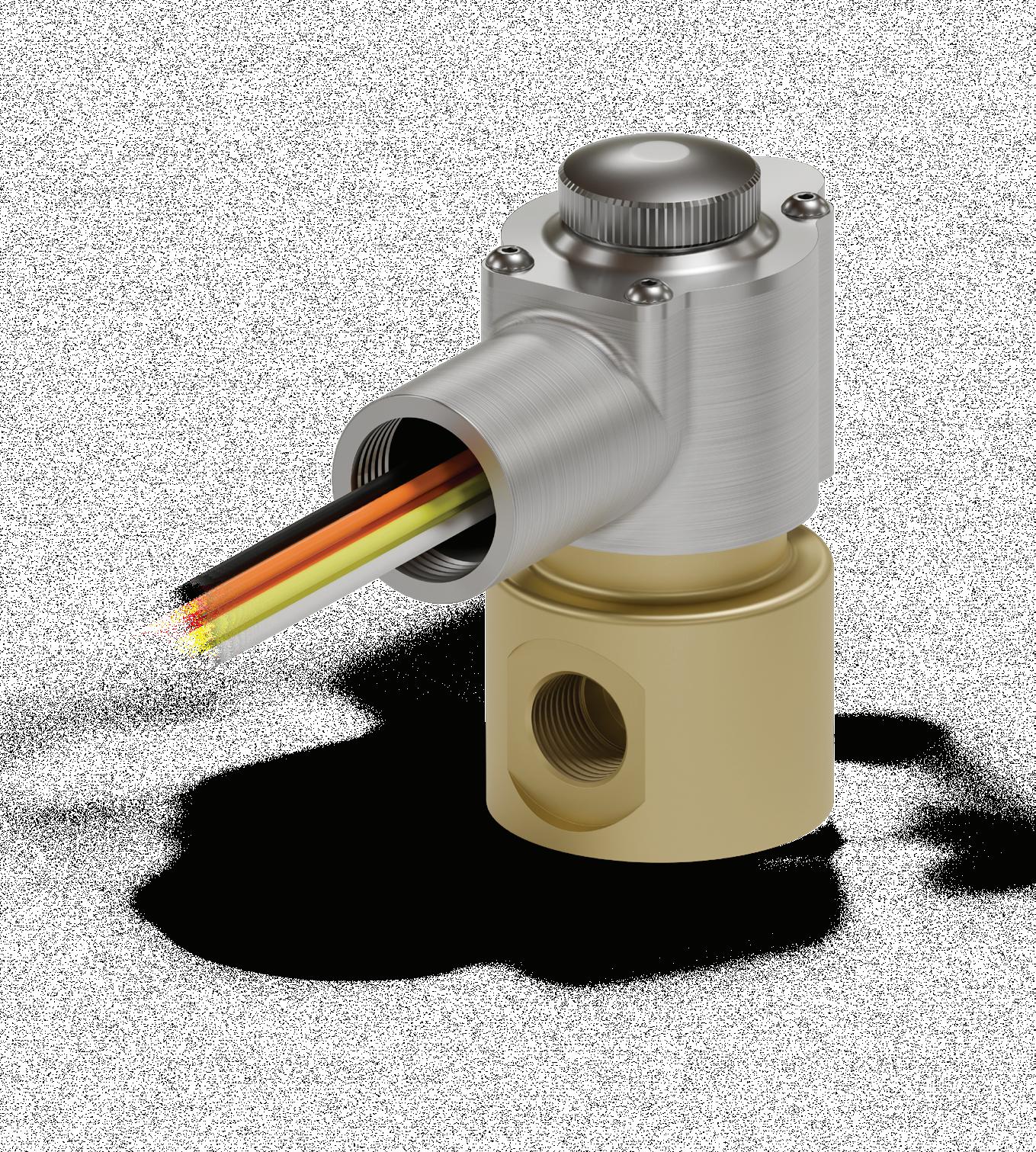
Our Supervised Direct-Acting Solenoid Valve is a UL Recognized Component that provides integrated supervision, eliminating the need for a secondary supervisory component and electrical connection.
+ Meets supervision requirements for NFPA 2001: Sec. 4.3.4.1 & EN 15004-1
+ Removable coil for maintenance and testing
+ Captured fastener prevents misplacement & completes full placement of the coil
+ Fully engaged installation detection with 6-wire standard
+ Full metal enclosure with factoryinstalled wiring
+ Coil assembly freely rotates for easy installation
+ Accommodates systems with operating pressures up to 150 bar
+ Engineering expertise to help achieve UL, FM, CE, LPCB, & VdS certifications and listings
Other Products for Fire Suppression:
Supervised Pilot-Operated Solenoid Valve: For pre-action and deluge systems. Meets NFPA standards for supervision.
Liquid Level Sensor: Automatically provides the thermally compensated weight of the extinguishing agent in your cylinders.

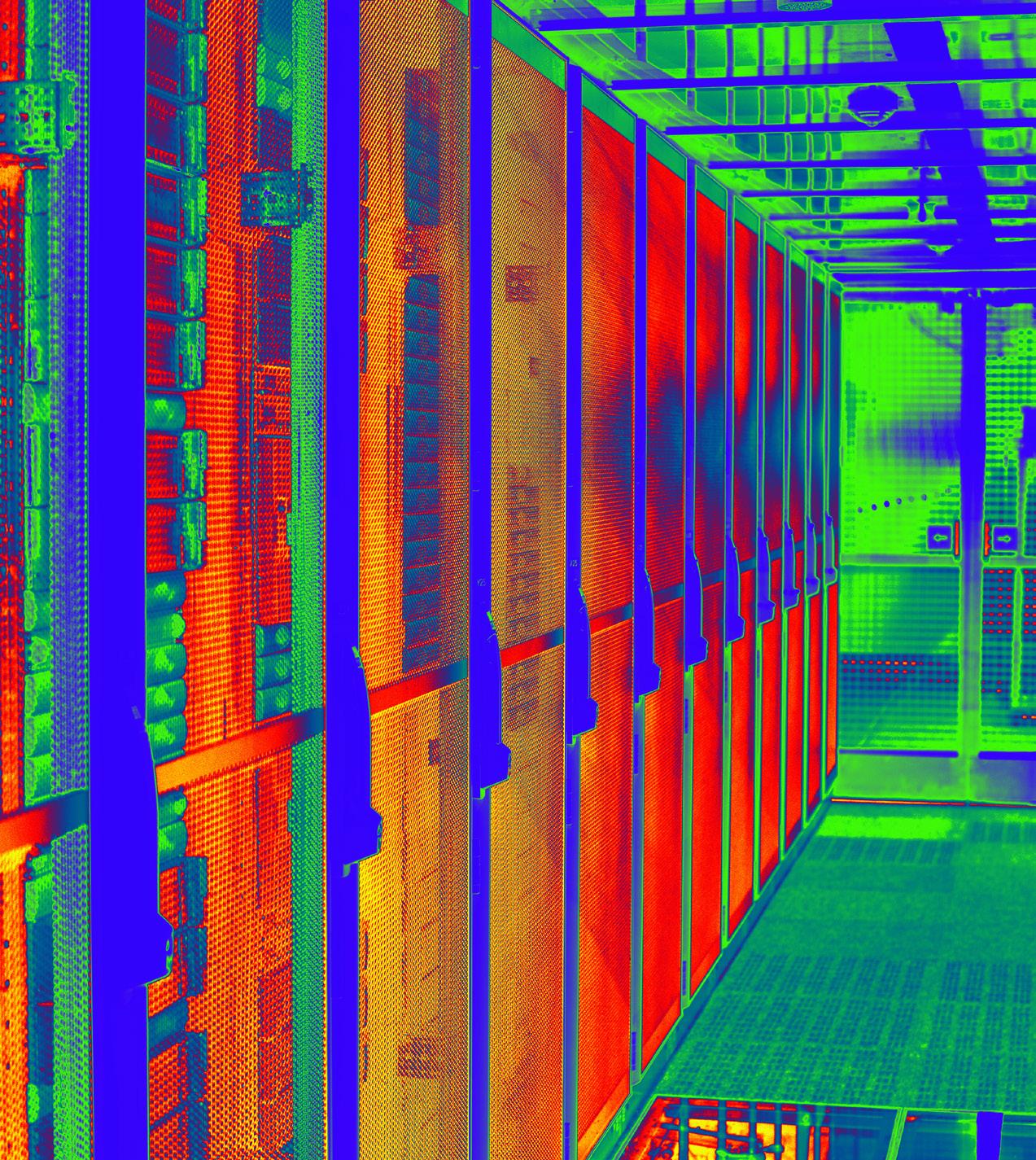

FROM DETECTION TO DECISION

Advanced fire alarm, detection and mass notification systems are changing fire and life safety in complex buildings, says Peter Stephenson
, Fire Safety Solutions Expert
Walk into any major infrastructure project in the Gulf today — a flagship airport terminal, a mixed-use tower in a central business district, a sprawling petrochemical complex — and you will find that fire and life safety has quietly undergone a revolution. The humble smoke detector and klaxon bell that defined fire alarm design for much of the 20th century have given way to layered,
intelligent systems capable of detecting the earliest signs of a developing fire, communicating targeted instructions to thousands of occupants simultaneously, and coordinating the response of every building system from a single, integrated platform. Understanding how this transformation happened, and how it is being applied on real projects today, is essential for engineers, developers,
authorities and building owners who want safety outcomes that are both compliant and genuinely effective.
From
zones to addresses: The evolution of detection
The first generation of fire alarm systems divided a building into broad detection zones. If a device activated, the control panel could tell you which zone had
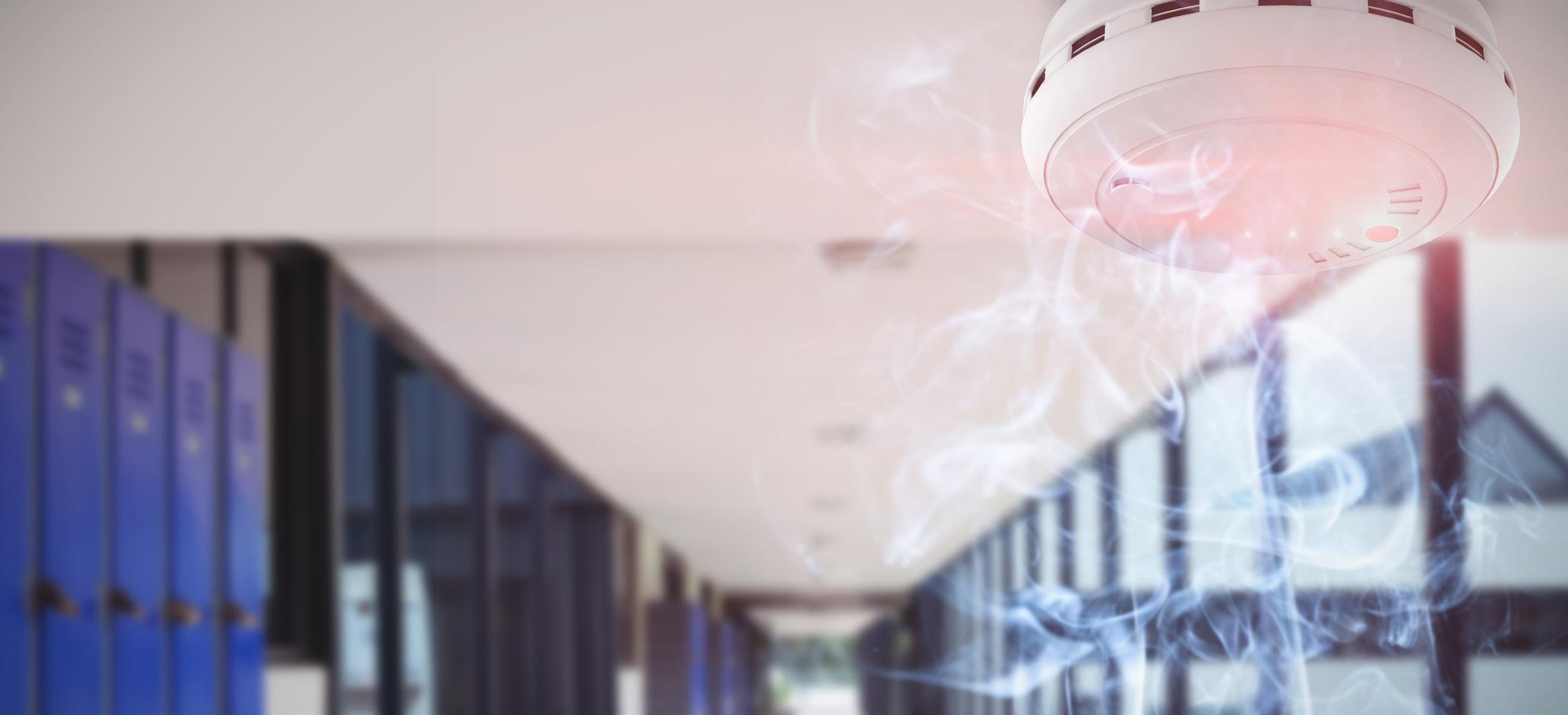
triggered – perhaps an entire floor or a wing – but no more. Firefighters arrived and searched. The shift to addressable, analogue systems changed this fundamentally. Each detector now has a unique electronic address and continuously transmits a signal that reflects the actual level of smoke, heat or combustion product it is measuring, rather than a simple on/off state. The panel interprets these analogue values, applies configurable thresholds and alert levels, and can present responding teams with a precise location map of conditions across a building of thousands of devices. Networked systems extended this logic further. Multiple addressable panels can be linked into a single site-wide network, sharing information in real time. A large campus hospital, a multi-terminal airport or a phased mixed-use development can be supervised from one central control point, with the intelligence distributed across local panels that continue to operate independently if the network is interrupted. Resilience and granularity –the two most important characteristics of modern detection infrastructure — are now achievable by design rather than by chance.
A toolkit of technologies: Choosing the right detector for the environment
No single detection technology suits every application, and the selection process is where fire engineering experience has the greatest influence on real-world outcomes. Multi-criteria detectors –devices that simultaneously measure optical obscuration, thermal changes and
carbon monoxide concentration – have become the default choice for high-value and high-consequence environments. By requiring corroborating signals from independent sensing elements before an alarm is generated, they dramatically reduce the nuisance alarm rate that has historically undermined occupant trust in fire alarm systems.
Aspirating smoke detection (ASD) takes a fundamentally different approach. Rather than waiting for combustion products to reach a ceiling-mounted device by convection, ASD systems actively draw air samples from a network of sampling pipes and analyse them in a highly sensitive detection unit. The technology can identify the sub-visible products of incipient fire – the earliest phase of combustion, before any visible smoke – making it ideal for data centres, clean rooms, heritage buildings, atrium spaces and any environment where an early warning has exceptional value. In the GCC, where large column-free spaces, high ceilings and significant air movement from HVAC systems can dilute smoke before it reaches a conventional detector, ASD has moved from a specialist solution to a mainstream choice on premium projects.
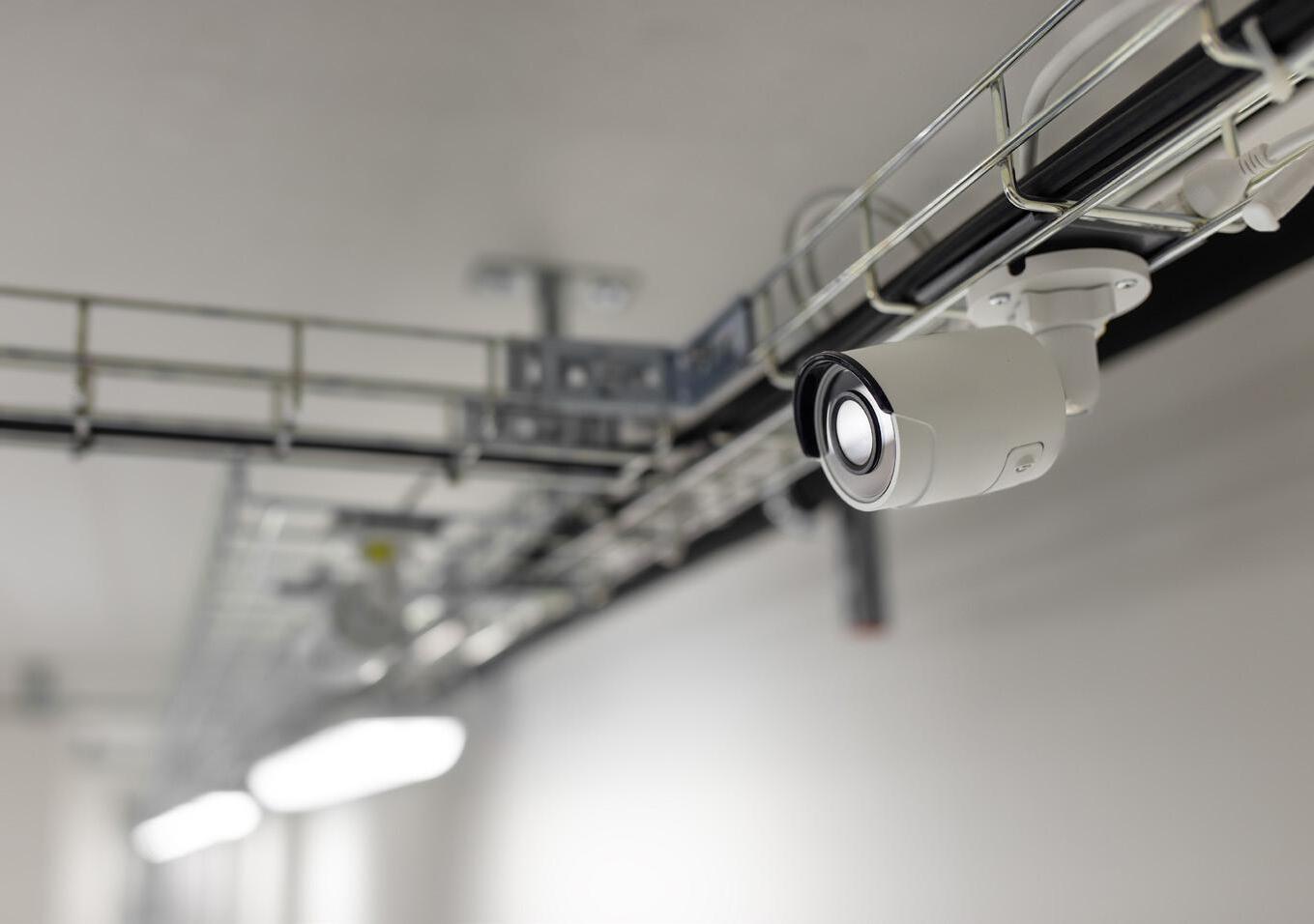
Video and image-based fire detection represents the most recent addition to the toolkit. Cameras continuously analyse a scene for the visual signatures of smoke and flame, using algorithms trained on large datasets of fire behaviour. The technology is particularly well suited to open or partially enclosed spaces — aircraft hangars, warehouses, outdoor processing areas, transportation hubs
— where conventional detectors cannot be deployed at meaningful densities or where the distances involved would prevent timely detection. Integration with existing CCTV infrastructure is possible in some configurations, though dedicated fire detection cameras with appropriate listed performance are generally preferable on life safety systems.
Performance-based design and the role of detection technology
Prescriptive codes set minimum requirements. They specify detector spacing, alarm thresholds and system configurations that are appropriate for a defined set of typical building scenarios. But the GCC region hosts some of the world’s most architecturally ambitious projects – high-rise towers with complex atrium geometries, transportation hubs including airports with vast departure halls, integrated resort developments mixing retail, hospitality, healthcare and residential uses under one roof. These buildings often cannot be fully addressed by prescriptive compliance alone, and a performance-based design (PBD) approach is required.
In a PBD framework, fire engineers use computational fire and evacuation modelling to demonstrate that a proposed design achieves the same level of safety as the prescriptive benchmark, even if it departs from specific code prescriptions. Detection technology plays a critical role in this process. The assumed detection time – how quickly a system identifies and responds to a developing fire – is a primary variable in evacuation modelling. A high-sensitivity ASD system or a multi-
criteria detector array with appropriate spacing can justify a shorter assumed detection time than a standard heat detector, directly influencing the required travel distances, egress widths and other evacuation provisions. In practical terms, the right detection specification can unlock design flexibility that would otherwise require costly structural or architectural changes.
Authorities having jurisdiction (AHJ) across the GCC are increasingly familiar with PBD submissions, particularly for projects subject to international design standards such as NFPA 101, BS 9999 or the International Fire Code. The credibility of a PBD submission rests heavily on the quality of the fire engineering analysis and on realistic, evidence-based assumptions about detection performance — which in turn demands that the specified system is properly commissioned, maintained and documented throughout its operational life.
GCC-specific challenges: Heat, dust and humidity
Operating fire detection systems in the Gulf environment presents challenges that are not always adequately addressed by technologies developed primarily for temperate climates. Ambient temperatures in plantrooms, roof voids and façade cavities can regularly exceed the rated operating range of detectors specified for internal use. Coastal humidity, marine salt-laden air and the fine silica dust prevalent across construction sites and arid landscapes all affect detector performance and longevity. Specifying to appropriate environmental ratings, selecting stainless steel or corrosion-resistant enclosures where necessary, and implementing enhanced maintenance regimes are not optional refinements — they are fundamental requirements for systems that must perform reliably for the full design life of a building.
False alarm management is a particularly important consideration in the Gulf’s extreme climate. Construction phases, high dust environments and the prevalence of cooking facilities in mixed-use and hospitality developments have historically generated high rates of unwanted alarms. Beyond the direct costs of emergency service responses, unwanted alarms erode occupant confidence and create the dangerous habit of ignoring or disabling alarm signals. Multi-criteria detection, air sampling systems with sophisticated
“Video and image-based fire detection represents the most recent addition to the toolkit.
Cameras continuously analyse a scene for the visual signatures of smoke and flame, using algorithms trained on large datasets of fire behaviour.”
analysis algorithms, and properly configured alert and action thresholds are all tools that experienced fire engineers deploy to manage this risk without compromising genuine detection sensitivity.
Beyond the bell: Voice alarm and mass notification systems
The transition from simple audible and visual alarm devices to intelligible voice alarm systems represents one of the most significant advances in life safety communication. Research consistently demonstrates that occupants respond more quickly, more correctly and with less panic when they receive a clear spoken message explaining the nature of the emergency and providing
specific instructions, compared with an undifferentiated alarm tone. This is particularly true in complex, multiuse buildings where different zones may require different responses simultaneously – evacuation of the fire floor, shelter-in-place on adjacent floors, continued operations in unaffected areas.
Voice alarm systems designed to EN 54-16, NFPA 72 Chapter 24 or equivalent standards deliver pre-recorded and live speech at defined intelligibility levels, quantified by the Speech Transmission Index (STI). Achieving the required STI in challenging acoustic environments — large reverberant atria, noisy industrial areas, outdoor spaces affected by wind and ambient sound — requires careful acoustic modelling, loudspeaker selection
and layout optimisation. This is an area where inadequate specification at design stage frequently results in expensive remedial work during commissioning.
Mass notification systems (MNS) extend the reach of emergency communication beyond the building itself. Integrated platforms can simultaneously trigger loudspeaker announcements, digital signage messages, SMS alerts to registered occupants and visitors, email notifications to key stakeholders, and interface signals to connected public address and warning systems. For large campuses, multi-building developments, industrial complexes and public infrastructure such as airports and metro systems, MNS provides the co-ordinated all-hazards communication capability that occupant safety in complex environments demands.
Integration: Making the building respond as one system
A fire alarm or detection system that operates in isolation from the other building systems it is intended to coordinate is, at best, incomplete. In a modern intelligent building, the detection of fire or smoke triggers a cascade of responses across multiple interconnected systems, and the fire alarm panel is the initiating device for all of them. The practical integration requirements on a complex project typically include:
Smoke control and HVAC: Activation of smoke extract fans, pressurisation of stairwells and lobbies, shutdown of supply air to prevent smoke spread, reconfiguration of dampers to establish smoke boundaries.
Lift systems: Recall of all lifts to a designated landing, removal from passenger use, and in some configurations designation of a firefighter’s lift for emergency service access.
Access control: Unlocking of designated fire escape routes, securing of areas to prevent entry, release of electromagnetic door holders and hold-open devices.
Fire suppression: Confirmation of detection conditions to trigger gaseous suppression in protected rooms, co-ordination with sprinkler systems, pre-action sequencing.
Building management systems (BMS): Sharing of alarm and fault status for monitoring and logging, co-ordination of energy management and building automation responses.

“False alarm management is a particularly important consideration in the Gulf’s extreme climate”
Security systems: CCTV call-up to alarm locations, integration with intruder detection, co-ordination with security control rooms.
Managing these integrations requires clear interface documentation, defined protocols and, critically, comprehensive testing before practical completion. Cause-and-effect matrices – documents that map every possible alarm input to its required system output – are essential design tools on complex projects. The increased adoption of open protocol communication standards, such as BACnet and OPC-UA, has improved the reliability and auditability of system integrations, though proprietary interfaces remain common and require careful management across multi-vendor environments.
Technology in service of outcomes
The sophistication of fire alarm, detection and mass notification technology available today is remarkable. Multicriteria sensors, aspirating systems,
video detection, intelligent voice alarm and integrated mass notification platforms give fire engineers a genuinely powerful set of tools. But technology alone does not save lives – its effective application, grounded in fire engineering expertise, site-specific environmental understanding, rigorous integration, and ongoing maintenance, is what determines whether a system performs when it matters most.
In the GCC, where the pace of development, the ambition of design and the demands of the operating environment are all exceptional, the gap between a system that complies with a code schedule and a system that is engineered to protect lives is a gap worth closing. The fire engineering profession’s greatest contribution to complex buildings is not in selecting a product from a catalogue, but in understanding how detection, alarm and notification technology can be assembled into a coherent, resilient and human-centred life safety strategy – from the earliest sign of a developing fire to the last occupant safely clear of the building.
CERTIFIED UNDER PRESSURE
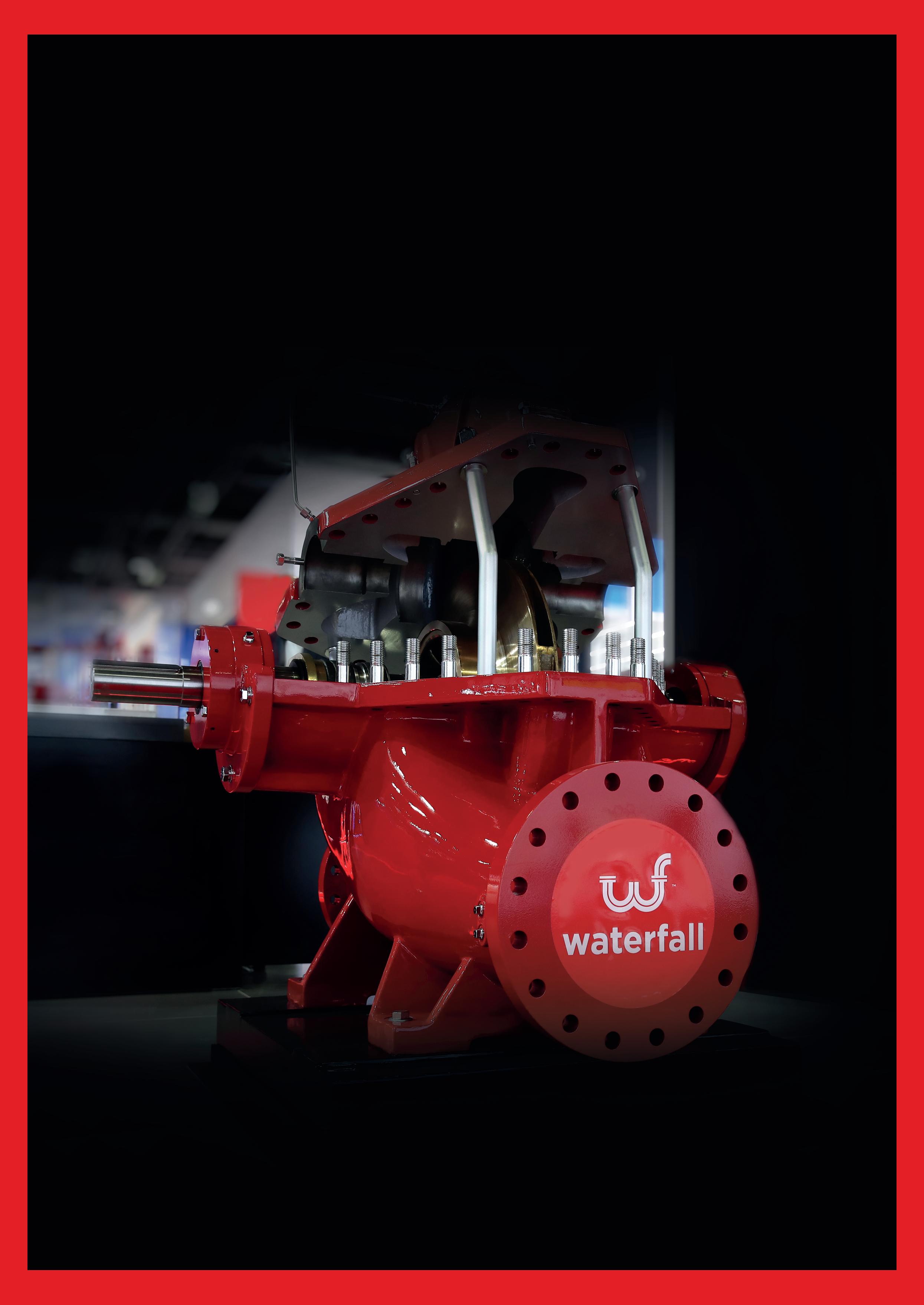
Most days a fire pump sits silent – but in the one moment it’s needed, it has to work perfectly, first time, for as long as the emergency demands. That demand for absolute reliability is what shaped Waterfall Pumps Manufacturing into a specialist producer of certified fire pump systems serving projects worldwide.
In association with Waterfall Pumps Manufacturing
Fire emergencies are unpredictable, destructive and often unforgiving. In those critical moments when a building’s fire protection system is activated, one component becomes the backbone of the entire defence mechanism — the fire pump. It is the engine that ensures water is delivered at the right pressure and flow to sprinklers, hydrants and suppression systems, enabling firefighters and automated systems to control the situation before it escalates.
Because of this vital role, the reliability of a fire pump is not merely an engineering requirement; it is a matter of life safety.
Waterfall Pumps Manufacturing (WF) was established with a clear mission: to engineer fire pump systems that perform flawlessly under the most demanding emergency conditions. Since its founding in 2015, the company has grown from a young manufacturer into a specialised producer of internationally certified fire pump systems serving projects across multiple continents.
Today, WF stands as a dedicated fire pump specialist focused on engineering reliability, certification compliance and global fire protection solutions.
From vision to industry presence
The origins of Waterfall Pumps Manufacturing were shaped by a simple yet powerful realisation: fire protection systems demand a level of reliability
far beyond conventional pumping equipment.
Unlike many industrial pumps that operate continuously under monitored conditions, fire pumps may remain idle for long periods. However, when they are called into action, they must start instantly and operate continuously at full capacity.
Recognising this challenge, the founders of WF structured the company around a single priority; building pumps specifically engineered for fire protection applications.
From its early days, the company invested in developing strong engineering capabilities and disciplined manufacturing processes. The implementation of internationally recognised management systems became a cornerstone of the organisation.
The company achieved certification for:
• ISO 9001 – Quality Management Systems
• ISO 14001 – Environmental Management
• ISO 45001 – Occupational Health and Safety
These certifications ensured that manufacturing operations were governed by structured procedures, continuous improvement practices and strict quality controls.
However, WF understood that in the fire protection industry, internal
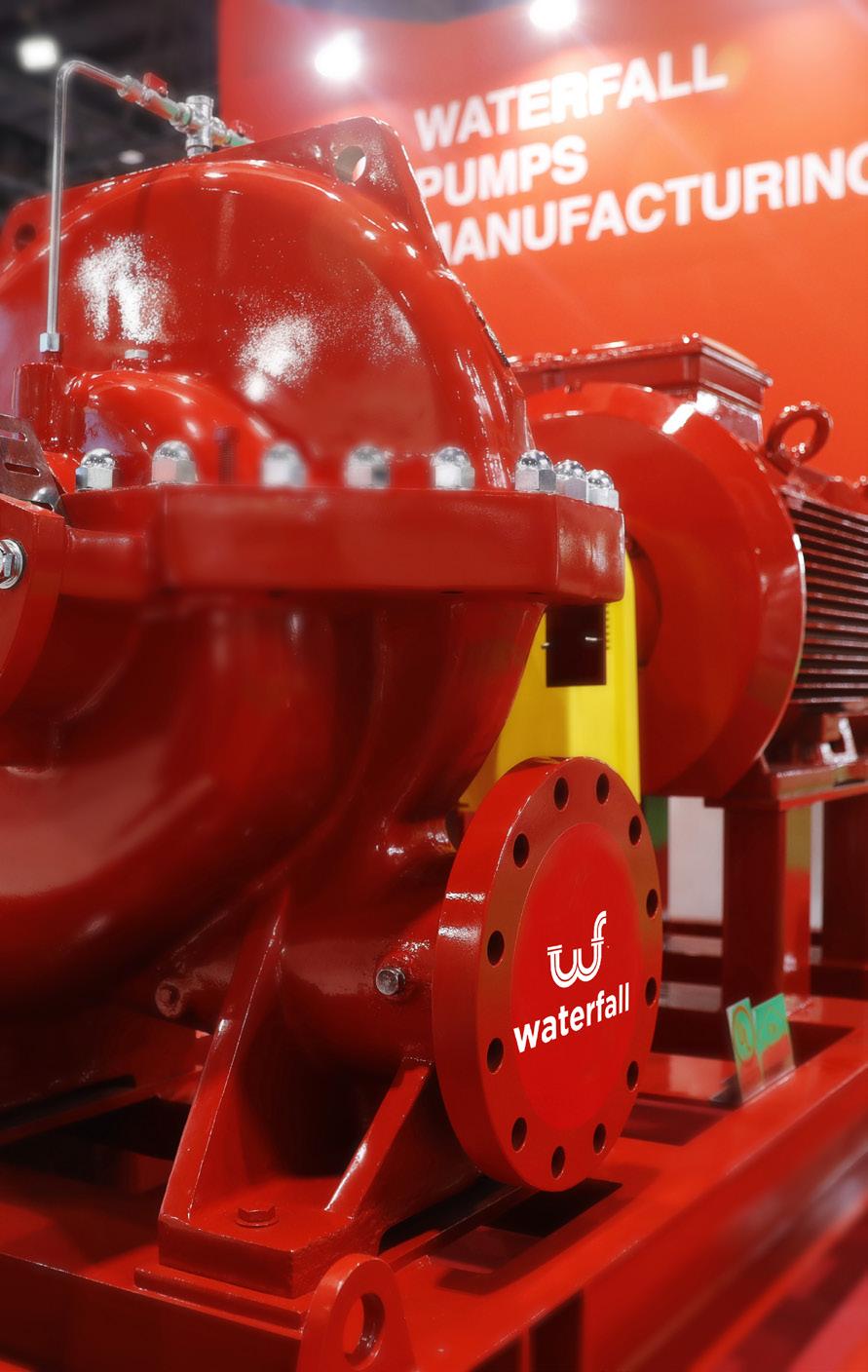









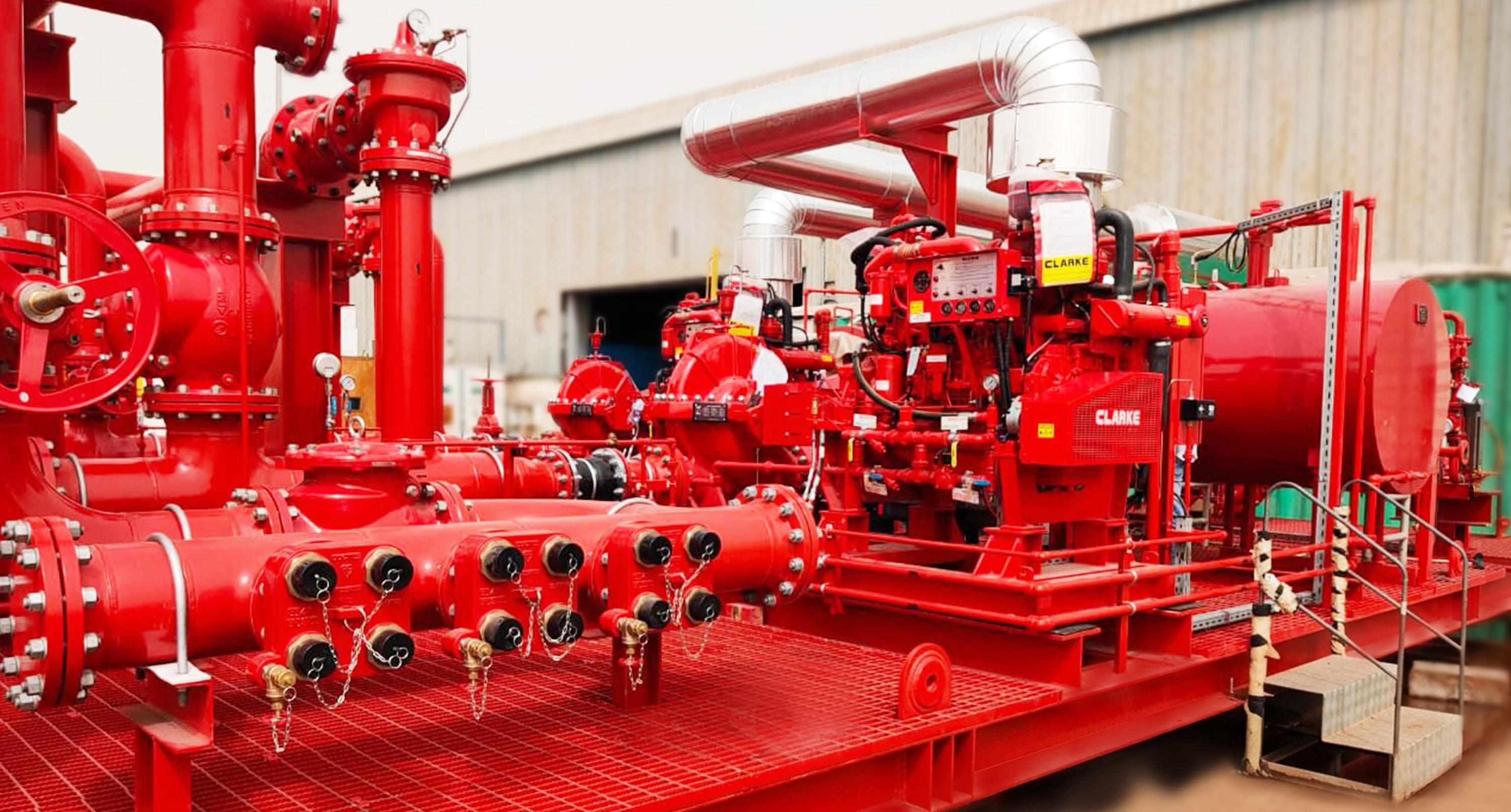
quality systems alone are not enough. Independent certification is essential to verify performance and safety.
The importance of certification in fire protection
Fire pump systems operate within one of the most regulated engineering environments. Standards and certifications exist to ensure that these systems function reliably when lives and infrastructure are at stake.
Three of the most important frameworks in this field are NFPA standards, UL listing and FM approvals.
NFPA 20
The NFPA 20 Standard for the Installation of Stationary Pumps for Fire Protection, developed by the National Fire Protection Association, is widely regarded as the global reference for fire pump systems.
NFPA 20 establishes guidelines for:
• Pump performance requirements,
• Driver and controller selection,
• System configuration and installation,
• Reliability and redundancy requirements,
• Testing and commissioning procedures.
Manufacturers designing pumps for fire protection must ensure their equipment aligns with these standards to guarantee proper system performance.
UL Listing
Underwriters Laboratories (UL) provides third-party certification to verify that fire pump equipment meets strict safety and performance standards.
To obtain UL listing, pumps undergo rigorous testing that includes:
• Hydraulic performance verification,
• Operational endurance testing,
• Structural integrity assessment,
• Overload performance evaluation. These tests ensure that the pump operates reliably under both normal and extreme conditions.
FM Approvals
FM Approvals, a globally recognised certification body, provides additional assurance for fire protection equipment used in industrial and commercial environments.
FM certification involves not only product testing but also continuous factory inspections to ensure manufacturing quality remains consistent over time.
“fire protection systems demand a level of reliability far beyond conventional pumping equipment”
For project consultants, insurance companies, and authorities having jurisdiction, UL and FM marks serve as proof that equipment has been independently evaluated and approved.
Building a specialised manufacturing facility
As demand for certified fire pump systems increased globally, WF expanded its infrastructure to support advanced manufacturing and testing capabilities.
One of the most significant investments made by the company was the development of a modern pump performance testing facility.
Fire pumps must deliver precise combinations of flow and pressure to meet system design requirements. Even small deviations from the expected performance curve can compromise fire protection effectiveness.
To address this challenge, WF implemented high-precision testing systems capable of accurately measuring pump performance across a wide range of operating conditions.
Each pump is tested to verify:
• Flow rate,
• Pressure head,
• Power consumption,
• Efficiency characteristics.
By validating pump performance before delivery, WF ensures that the equipment installed at project sites matches the hydraulic design requirements specified by fire protection engineers.
A comprehensive fire pump portfolio
Fire protection projects vary significantly depending on building design, water source configuration and operational requirements. To accommodate these different scenarios, Waterfall Pumps Manufacturing offers a diverse range of fire pump systems.
Horizontal split case fire pumps
Horizontal split case pumps are widely recognised for their durability, efficiency and ease of maintenance.
The defining feature of this design is the horizontally split pump casing, which allows maintenance personnel to access internal components without disconnecting the pump from the piping system.
This configuration significantly simplifies inspection and repair activities.
Another key feature is the doublesuction impeller, which allows water to enter the impeller from both sides. This design balances hydraulic forces and reduces axial thrust on the shaft, resulting in smoother operation and longer bearing life.
Horizontal split case pumps are commonly used in:
• Industrial plants,
• Power generation facilities,
• Petrochemical installations,
• Large commercial developments.
End suction fire pumps
End suction pumps provide a compact and cost-effective solution for smaller fire protection systems where installation space is limited.
These pumps feature a back pull-out design, allowing the rotating assembly — including the impeller, shaft and bearings — to be removed without disturbing the pump casing or piping.
This feature reduces maintenance time and simplifies servicing procedures.
End suction fire pumps are frequently used in:
• Hospitals and healthcare facilities,
• Schools and universities,
• Commercial buildings,
• Residential developments.
Despite their compact size, these pumps are engineered to deliver reliable performance consistent with fire protection standards.
Vertical turbine fire pumps
In many installations, the water source is located below ground level, such as underground tanks, wells or reservoirs.
In these situations, vertical turbine pumps are the preferred solution.
Vertical turbine pumps operate using multiple impellers arranged vertically along a shaft. Each stage adds pressure to
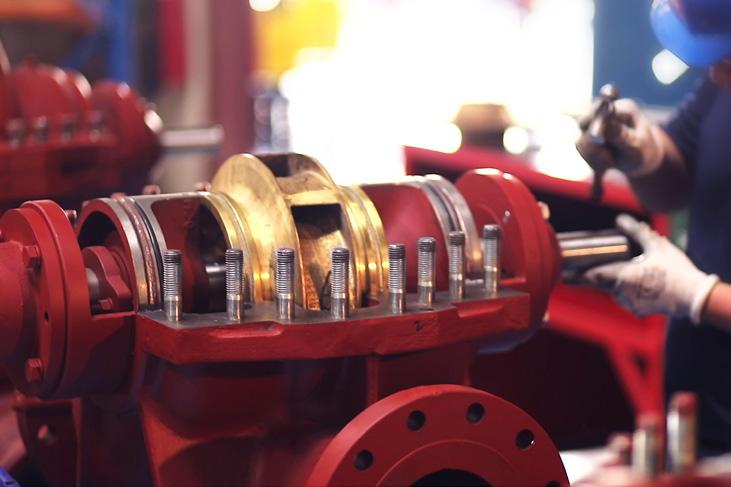
the water as it moves upward through the pump assembly.
This configuration enables the pump to lift water from deep sources while delivering the pressure required for fire protection systems.
Typical applications include:
• Offshore platforms,
• Municipal water wells,
• Industrial facilities with underground tanks,
• Large infrastructure projects.
Integrated fire pump houses
In addition to individual pumps, WF also provides complete fire pump house systems designed for turnkey installation.
These integrated packages include:
• Fire pump and driver,
• Controller panels,
• Jockey pump systems,
• Valves and instrumentation,
• Piping and monitoring equipment.
All components are assembled, aligned and tested within the factory before shipment.
This approach provides several advantages:
• Reduced installation time at site,
• Improved system quality control,
• Simplified project coordination,
• Reliable factory testing before commissioning.
Pre-engineered fire pump houses are particularly valuable for projects in remote locations or where on-site construction activities must be minimised.
Global market reach
Waterfall Pumps Manufacturing has steadily expanded its presence in international markets, supplying certified fire pump systems to projects across:
• The Middle East,
• Africa,
• Central and South America,
• Asia and the Far East.
This global reach is supported by a network of partners and distributors who provide local technical support and project coordination.
Because UL and FM certifications are internationally recognised, WF equipment can be specified in projects across multiple jurisdictions.
This certification credibility enables the company to participate in large infrastructure developments worldwide.
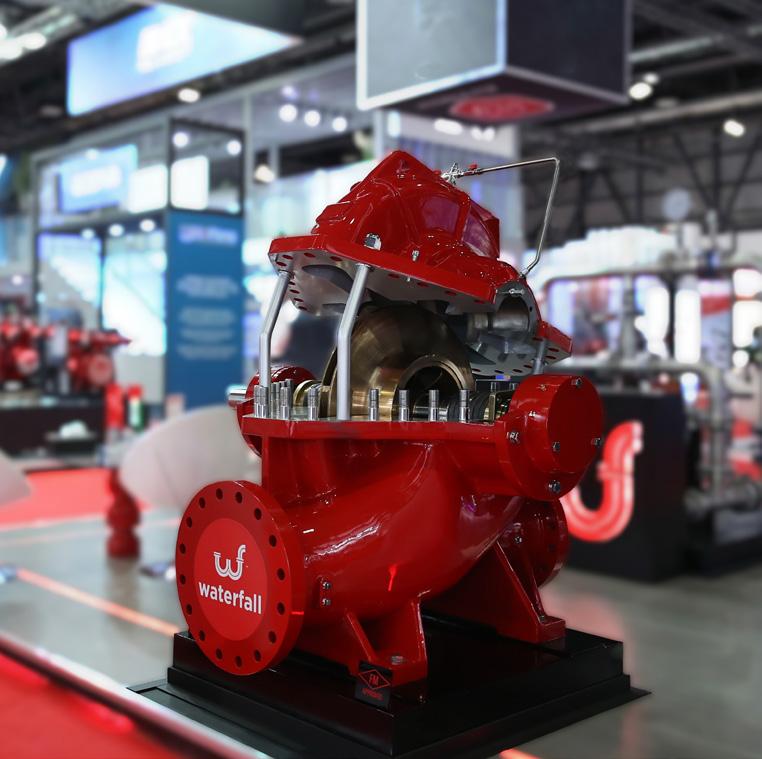
Looking ahead: Innovation and expansion
As infrastructure development accelerates globally, the demand for reliable fire protection equipment continues to grow.
To meet these evolving requirements, Waterfall Pumps Manufacturing is investing in several strategic initiatives.
These include:
• Expansion of manufacturing capacity,
• Upgrades to testing infrastructure,
• Development of new certified pump models.
These investments are designed to enhance product precision, improve production efficiency and support the growing global demand for certified fire protection systems.
Engineering safety for the future
Fire protection engineering is ultimately about safeguarding people, property and essential infrastructure.
Every fire pump installed in a building represents a commitment to preparedness — ensuring that when emergencies occur, the systems designed to protect lives will function exactly as intended.
Waterfall Pumps Manufacturing continues to pursue this mission by combining engineering expertise, rigorous testing and internationally recognised certifications.
Through its focus on reliability, innovation and compliance, the company contributes to building safer facilities and more resilient infrastructure around the world.

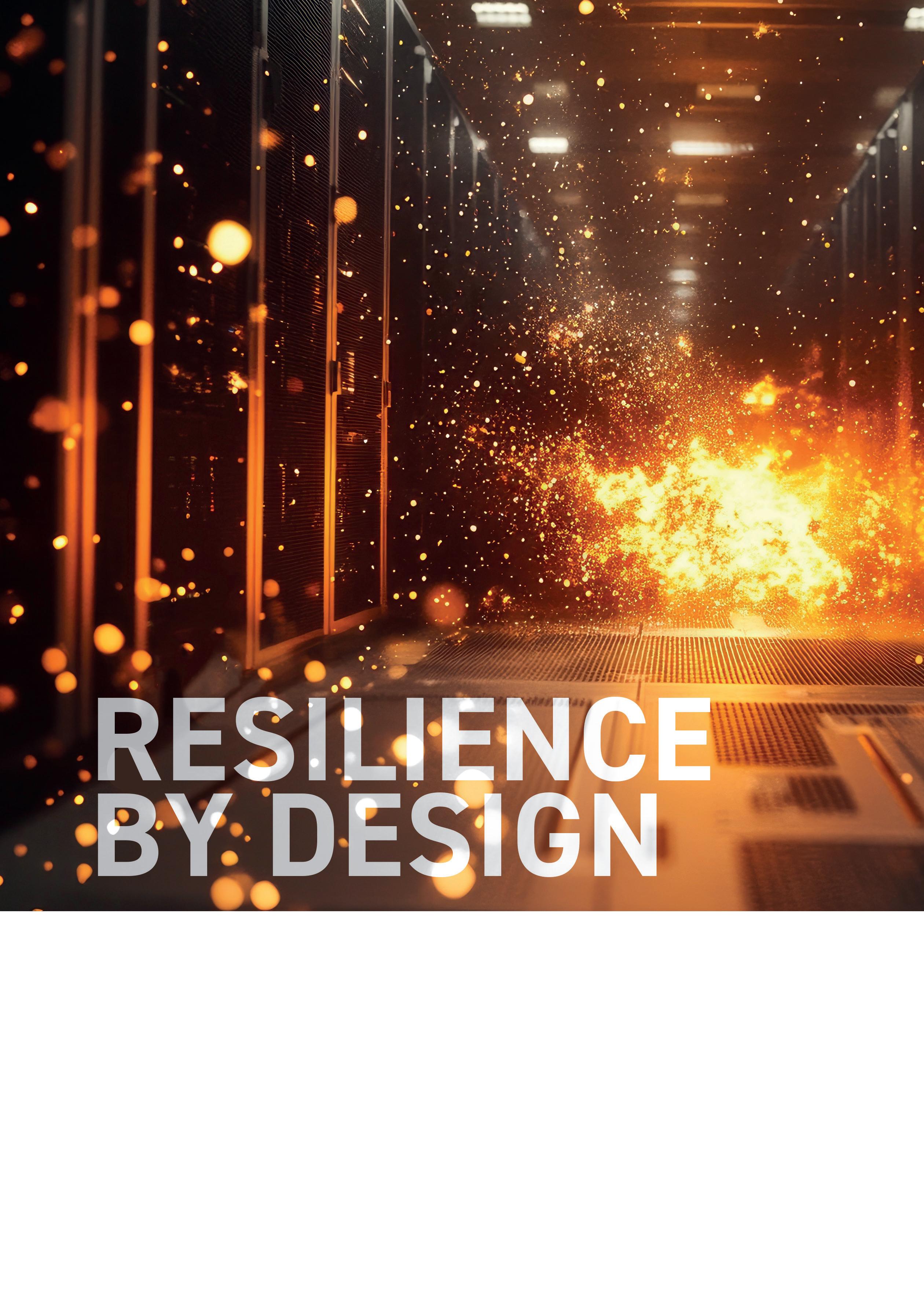
Mark Fessenden, Managing Director, International Fire Suppression Alliance (IFSA), explores the importance of fire protection that can ensure continuous operations in data centres
Data centres are the backbone of the modern digital economy, supporting cloud services, financial transactions, healthcare records and enterprise communications. When a data centre goes offline, the financial consequences
are immediate and severe. According to the Ponemon Institute, the average total cost of an unplanned data centre outage was approximately US$690,000 per incident, with individual events ranging from US$74,000 to more than US$1.7
million. The Uptime Institute’s Global Data Center Survey 2025 confirms that outage costs have continued rising, driven by the growing criticality of digital services and increasingly stringent contractual obligations.
“For
data centre applications, the single-interlock pre-action sprinkler system
is the preferred
configuration”
Fire stands out as both the least predictable and most consequential cause of data centre downtime. Unlike a hardware fault, which can often be isolated within hours, a significant fire can permanently destroy servers, corrupt irreplaceable data, compromise structural integrity and trigger cascading failures that extend an outage from hours to months. Industry research consistently notes that 25% of businesses never reopen after a fire, and 80% of those that do not reopen within a month ultimately fail. For operators and design professionals responsible for protecting these facilities, a solid, code-compliant fire protection strategy is a necessity.
The detection foundation
Effective fire protection begins long before any suppression system activates. The modern data centre presents a challenging detection environment: dense server equipment generates significant heat requiring high mechanical cooling, and the resulting elevated airflow can dilute and disperse smoke before it reaches conventional ceiling-mounted spot detectors.
The accepted solution for highairflow environments is aspirated smoke detection (ASD). Rather than relying on smoke to passively migrate to a ceiling detector, ASD systems continuously draw air samples from multiple points via a network of sampling pipes, delivering air to a central detector that analyses it for combustion products. This active sampling approach provides the early warning capability that modern data hall environments require.
Active fire protection:
The single-interlock pre-action sprinkler system
A water-based automatic sprinkler system remains the gold standard of active fire
protection across virtually every building occupancy, including data centres. NFPA 75 requires that IT equipment areas be equipped with a sprinkler system, a cleanagent extinguishing system, or both. The optimal strategy is a sprinkler system covering the entire building, with gaseous or water mist systems layered on top to protect data halls and peripheral UPS and battery rooms.
For data centre applications, the single-interlock pre-action sprinkler system is the preferred configuration. The piping is normally dry and only fills with water when the primary detection system is activated, preventing water from entering distribution piping due to a single mechanical failure or accidental impact unless a confirmed fire event triggers detection. Once detection is activated, the pre-action valve trips, water fills the piping, and thermally activated sprinklers nearest the fire open and discharge. This two-step sequence delivers proven fire-control performance while substantially reducing the risk of inadvertent water discharge into an equipment-dense environment.
It is worth understanding the design intent: sprinklers are designed for fire control, property protection and life safety, not complete extinguishment of a fire burning inside a server cabinet. They will not penetrate a closed cabinet enclosure. The sprinkler system is the building protection layer; supplemental systems address the equipment protection layer. Both are necessary.
Special extinguishing systems: Capabilities, limitations and the code boundary
Water mist systems discharge extremely fine droplets that suppress fire through heat absorption and oxygen displacement, using substantially less water than conventional sprinklers.
They reduce collateral damage and enable faster system reinstatement after activation. Like sprinklers, however, water mist systems control fire spread at the room level rather than extinguishing fires within individual enclosures.
Clean-agent gaseous systems are designed to completely extinguish a fire rather than merely control it. They activate earlier than water-based systems, responding to smoke detection while fires are still incipient, and discharge without leaving residue. These characteristics make them well-suited for protecting high-value equipment where early extinguishment and rapid return to service are paramount. Design professionals should note that traditional HFC-based halocarbon agents are now subject to significant environmental restrictions; agents with negligible global warming potential should be specified where regulatory compliance is a consideration.
A critical code boundary must be clearly understood: the International Building Code does not recognise special extinguishing systems as equivalent to an automatic sprinkler system for purposes of building construction trade-offs. Installing an NFPA 13 sprinkler system throughout a building provides significant design allowances – increased allowable area, additional stories, reduced exterior fire-wall requirements and modifications to egress provisions. A clean-agent or water mist system protecting a server room does not satisfy this requirement, regardless of its technical sophistication.
The appropriate approach treats these systems as complementary. A single-interlock pre-action sprinkler system provides baseline structural protection required by code. Clean-agent and water mist systems are then layered within specific enclosures to provide rapid, equipment-level extinguishment
that maximises asset protection and minimises recovery time.
A growing hazard: Lithium-ion battery systems
The proliferation of lithium-ion battery systems used as UPS installations deserves particular attention. Lithiumion batteries combine high-energy materials with flammable electrolytes, and any damage to the internal separator can trigger thermal runaway: a selfreinforcing cycle of rising temperature that propagates from cell to cell with potentially catastrophic consequences.
The regulatory framework governing these installations has grown substantially. NFPA 855 is the primary installation standard for stationary battery energy storage systems, establishing requirements for siting, separation, detection, suppression and emergency response planning. NFPA 1, Chapter 52, addresses energy storage from a fire code enforcement perspective. NFPA 70, Article 706, governs electrical installation requirements, while NFPA 110 and NFPA 111 establish performance requirements for UPS systems serving emergency power functions. Design professionals should treat this suite as a coordinated framework: an installation satisfying NEC Article 706 but not evaluated against NFPA 855’s separation criteria may still represent a significant unmanaged fire risk.
FM Data Sheet 5-32 explicitly prohibits using clean-agent systems as the sole active protection method for data processing equipment rooms containing distributed lithium-ion battery backup units, confirming that water-based protection is the required baseline for these increasingly common installations.
Current technology has a hard limit: no firefighting system available today can stop thermal runaway once it has begun. Very early detection – ideally through off-gas monitoring before smoke or heat becomes evident – is the most effective intervention point currently available. Battery rooms should ideally be separated from the main data hall or positioned against an exterior wall to facilitate fire service access. Early engagement with the AHJ and thorough review of applicable NFPA and FM standards are prerequisites for a defensible design.
Designing for the full risk picture
The guidance of FM Data Sheet 5-32, NFPA 75 and NFPA 13 is consistent: no single system provides complete protection, and the systems that protect the building and those that protect the equipment serve different but equally essential purposes.
The single-interlock pre-action sprinkler system is the foundation –providing structural fire protection, satisfying NFPA 75 and NFPA 13 requirements, meeting FM’s preferred configuration and enabling the IBC construction trade-offs on which many data centre designs depend. Special
extinguishing systems, carefully selected and matched to the specific fire scenarios of each protected space, build on that foundation to deliver equipment-level extinguishment and faster return to service.
For a facility where a single outage can cost hundreds of thousands of dollars and fire remains among the most destructive threats in the risk portfolio, treating fire protection as a risk-management investment – not merely a code-compliance exercise – is readily defensible.
ifsaglobal.org
















WHEN EXTRA CAPACITY IS CRITICAL





Mobile, high-capacity firefighting systems. Built for reliable performance.
Across large industrial sites, incidents escalate fast. When additional capacity is required, response must be immediate, reliable, and effective over distance.
FFS delivers mobile systems designed to provide high-volume, long-range fire suppression, supporting primary systems and ensuring critical coverage when and where it is needed.





KEY CAPABILITIES INCLUDE
Rapid mobilisation for fast deployment across complex sites
High-performance delivery with stable, long-range throw
Lightweight systems for efficient transport and handling
Offshore-grade reliability proven in harsh operating conditions
Units delivering up to 80,000 LPM
Mobile Pump Units. Monitor Trailers. Dewatering Systems. Foam Proportioning Systems. Hose Handling Units
Extending fire protection with deployable capacity
In high-hazard fire protection, fixed infrastructure is the definitive first line of defence. These systems provide the essential, immediate coverage upon which facilities such as refineries and tank farms are built. Yet, as industrial sites grow larger and more complex, a critical question is emerging: what happens when an incident exceeds the limits of what was originally designed?
As operational environments become more demanding, firefighting strategies are being tested beyond their original design assumptions. In an era where risks to energy infrastructure are increasingly unpredictable, response may need to be adapted, reinforced or repositioned as situations develop.
To support this shift, Fire Fighting Systems AS (FFS) has applied its offshore-proven engineering to develop deployable, high-capacity firefighting solutions for land-based facilities – bringing flexibility and additional performance where fixed systems alone may not be sufficient.
A legacy of non-negotiable reliability
The engineering DNA of FFS was not forged on land; it was forged in the offshore and maritime sector, where reliability is non-negotiable. At sea, systems operate in hazardous, isolated environments, exposed to continuous mechanical stress, vibration and corrosive saltwater, all within severely limited footprints. Despite these conditions — and often after long periods of inactivity — a single requirement remains: deliver full rated output the moment it is needed.
These constraints have driven the development of highly efficient systems, where performance is maximised within limited space. The result is compact, highoutput solutions with impressive weightto-output ratios and consistent, sustained delivery under full load.
Today, FFS technology defines the global benchmark in marine firefighting, installed on approximately 70% of FiFicapable vessels and 90% of the world’s largest fireboats. The same technology is trusted in high-consequence
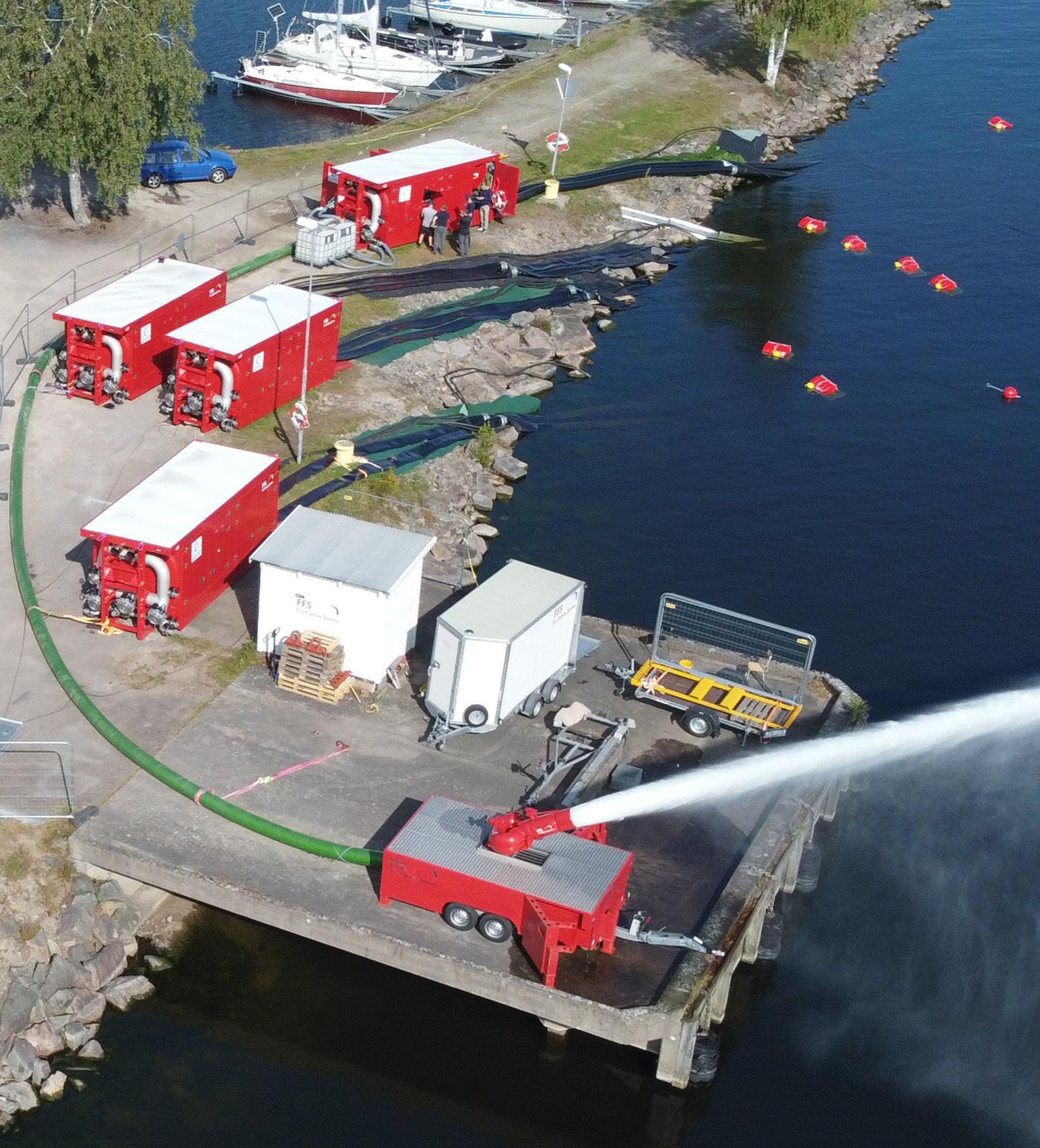
environments, including Blue Origin’s New Glenn rocket landing operations.
Building on this position, the transition to land-based applications was a natural progression. The same engineering principles that enabled high-capacity performance offshore now support deployable firefighting systems onshore — lightweight, rapidly deployable, complete systems capable of delivering
offshore-grade reliable performance when called upon.
Engineering performance as a complete system
Firefighting performance is defined by how pumps, monitors and control systems operate together under load. When these components originate from different sources, overall performance depends
“The result is firefighting capability that is not only effective, but practical to manage, deploy and rely on.”
on how they integrate in operation. Over time, this can introduce complexity in maintenance, support and responsibility. FFS’ philosophy removes that uncertainty. By designing and manufacturing its own pumps, monitors and control systems, FFS delivers complete, integrated systems where performance is defined as a whole. Each component is engineered and manufactured to function as part of a unified system, ensuring consistent behaviour when deployed.
At the company’s production facility in Sweden, complete systems are tested under full load and verified on one of Europe’s most advanced fire pump test beds. At the outdoor test site, systems are operated at full rated capacity under realworld conditions — no recirculation loops, but proper suction and true discharge performance. Customers are invited to witness Factory Acceptance Testing and see their systems perform as intended before delivery.
In discussions with customers, this approach is consistently highlighted as a key advantage: a single point of contact, direct access to OEM parts and a unified approach to maintenance. The result is simpler ownership and reduced lifecycle complexity. This is further supported by a network of experienced local partners, ensuring that service, support and spare parts are available when and where they are needed.
The result is firefighting capability that is not only effective, but practical to manage, deploy and rely on.
Power that moves
Fixed infrastructure provides the foundation of fire protection; deployable capacity extends it. When conditions move beyond the original design basis — whether through escalation, disruption or demand across multiple areas — the challenge shifts from installed capacity to how effectively additional performance can be applied.
By combining high-volume pumping, hose handling and monitor application,
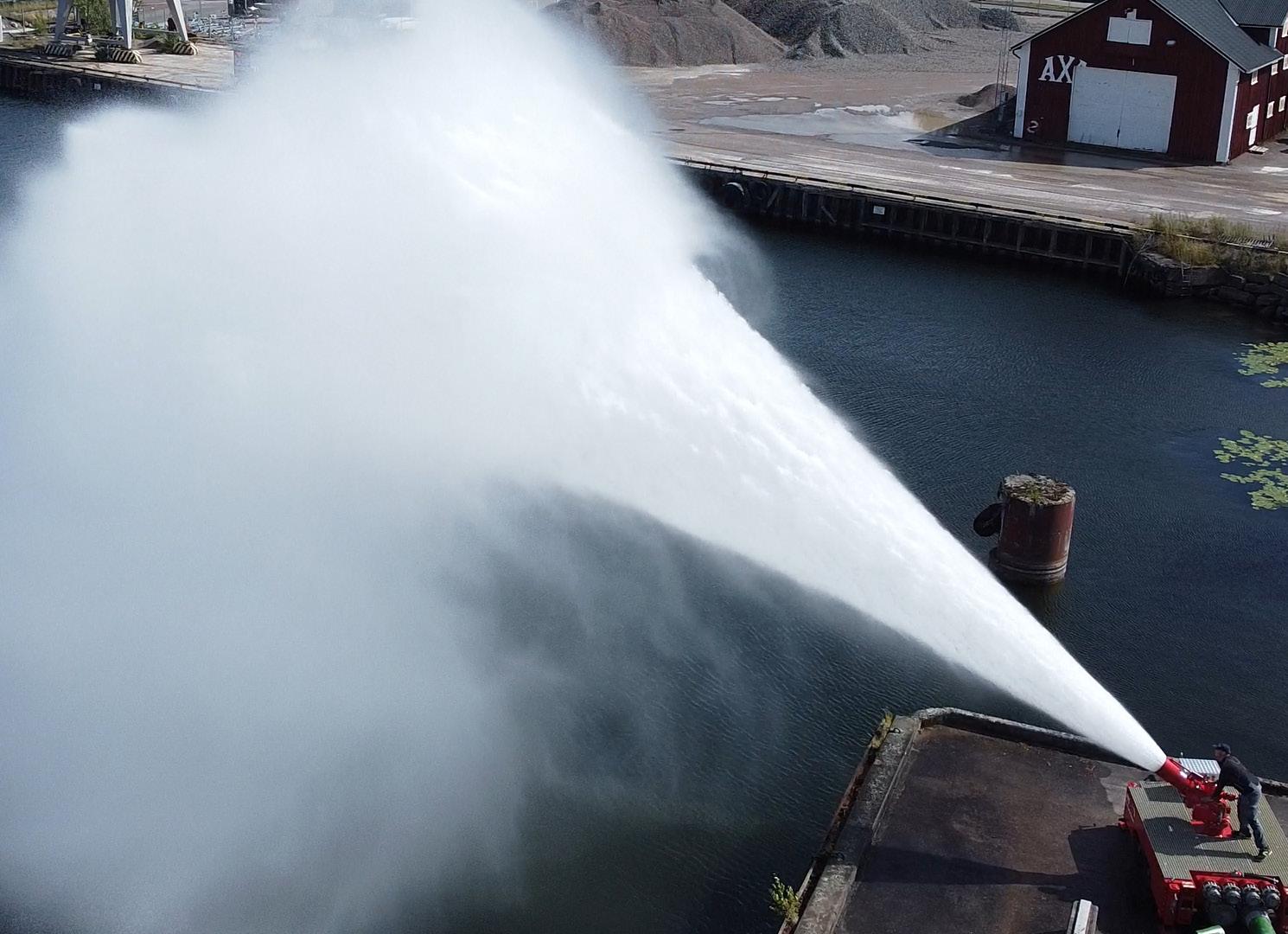
FFS enables firefighting capacity to be introduced where it is most effective and repositioned as conditions evolve. Mobile pump units such as the MPU 2400, delivering up to 46,000 litres per minute, provide a flexible foundation for highcapacity water supply in rapidly changing scenarios. Monitor trailers such as the MT 2400 — often referred to as the ‘Golden Gun’ – provide high-output, long-range application in a rapidly deployable format suited to large industrial sites.
At the upper end, the MT 4800 can deliver up to 80,000 litres per minute with a throw length of up to 200 metres –bringing world-leading fire monitor output into a deployable format.
This level of performance is enabled by efficient, lightweight pumping. The submersible pump SFP 300 LP, for example, delivers up to 25,000 litres per minute while weighing just 85kg, allowing high-capacity firefighting to be transported and deployed without the constraints typically associated with equipment at this scale.
A recent delivery to a customer in the Middle East, comprising eight mobile
pump units with a combined pumping capacity exceeding 350,000 litres per minute, demonstrates how mobile systems can be configured to match the demands of modern industrial sites.
Beyond what was planned
In these environments, where conditions can shift quickly, response demands are not always predictable. Deployable reserve capacity provides that extension. It allows operators to reinforce fixed systems, adapt to changing conditions and apply additional performance where it has the greatest impact.
Because when conditions move beyond what was planned, confidence comes from knowing additional capacity is ready to be deployed — and will perform when called upon.
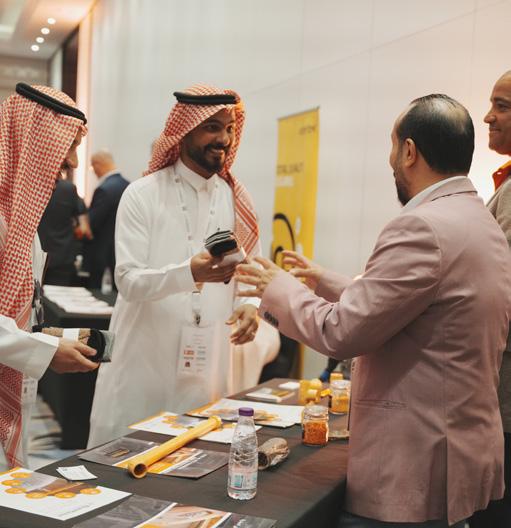
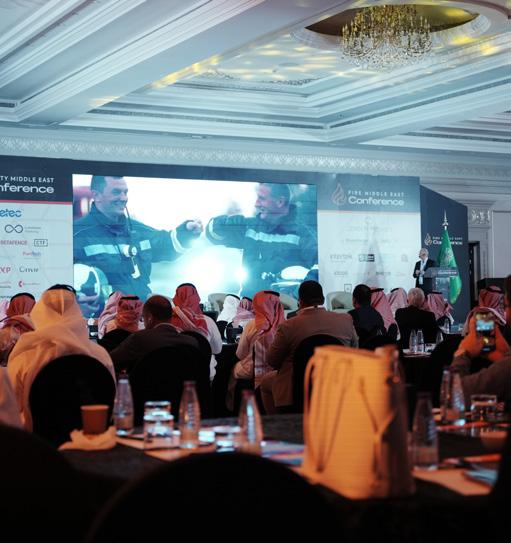

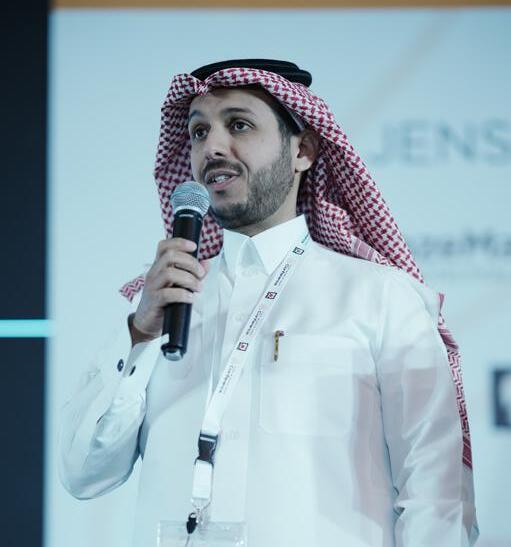

The growth of the Fire Middle East Conference has been driven by the huge appetite for learning, development and innovation being rolled out across the region’s fire industry.
CUT THROUGH THE NOISE
Attending and sponsoring the conference gives you the opportunity to connect directly with the key decision makers in Saudi Arabia today. For the past three years, the Fire Middle East Conference has been the highest-quality forum for fire professionals from across the Middle East.
PREVIOUS
SPONSORS VOCO HOTEL, RIYADH | 30.11.2026
5,200+ ongoing projects in Saudi Arabia
The Fire Middle East Conference is the gateway for your company to approach this dynamic market
150+ companies represented 2025 HIGHLIGHTS
320+ invite-only delegates




PARTICIPATE & SPONSOR NOW – CONTACT ONE OF OUR TEAM Ryan Bickerton +44 1752 265802 ryan@firemiddleeast.co.uk Will Russell +44 1400 221726 will@firemiddleeast.co.uk
Rahul Vara +44 1752 604352 rahul@firemiddleeast.co.uk
Choose the right fire detection for each risk

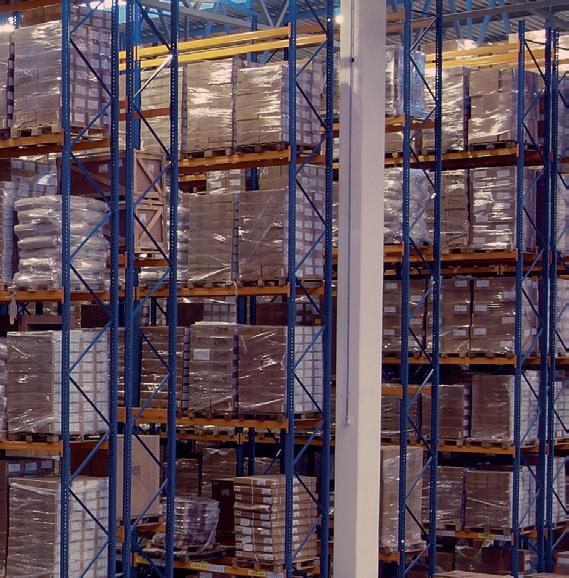
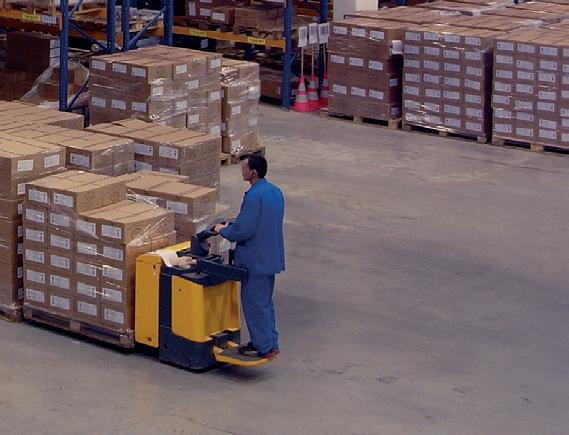
Beam smoke detection – long range cover for high bays and aisles
Aspirating smoke detection – early warning in enclosed/critical rooms
Flame detection – rapid ignition at charging/waste hotspots
Linear heat detection – along conveyors, cable runs and racking
Open volume blind spots
Beams span high bays long aisles.
Enclosed/critical rooms
ASD gives fast, sensitive sampling.
Charging/waste hotspots
Flame detection reacts rapidly — even through glass.
Maintenance & access
Remote checks and simple routing reduce disruption.
Alarm stability
Clear zoning aligned to real warehouse risks.
Conveyors, cable runs & racking Linear heat detection along all three.
We are speaking & exhibiting at NFPA Mandalay Bay Convention Center
Las Vegas 22–24 June 2026 Booth 1045

Fomtec Enviro NEO: A new benchmark for fluorine-free foam in high-hazard environments
As global regulations tighten on PFAS-containing firefighting agents, Dafo Fomtec has launched Enviro 3×3 NEO — a sixth-generation synthetic fluorine-free foam engineered for the industries that can least afford compromise.
The transition away from fluorinated firefighting foams is no longer a distant regulatory prospect. Across the Gulf and wider Middle East, operators of refineries, tank farms, LNG terminals, offshore platforms and petrochemical complexes are reassessing their foam inventories as international frameworks accelerate the phaseout of PFAS-based agents (per- and polyfluoroalkyl substances). The EU’s REACH restriction will ban the sale and use of foams containing more than 1 mg/L of total PFAS from October 2035, with earlier deadlines for training and portable extinguisher applications from 2026. The International Maritime Organization (IMO)’s revised SOLAS regulations, effective January 2026, prohibit the use or storage of extinguishing media containing PFOS (perfluorooctane sulfonic acid) above 10 mg/kg on new vessels, with existing vessels required to comply at their next survey. These are commercial and compliance imperatives affecting procurement decisions being made today.
Purpose-built for high-hazard industry
Fomtec Enviro 3×3 NEO is not a generalpurpose product adapted for industrial use. It has been developed from the ground up for the petrochemical, oil and gas, marine and offshore sectors — environments where fire suppression performance must be consistent and reliable under the most demanding conditions. The product is the outcome of Fomtec’s Enviro Programme, built on thousands of full-scale fire tests across varying fuel types, water qualities and discharge systems. It holds approvals including EN 1568 (1A:1A rated with both fresh and saltwater), UL 162 for direct and indirect application, ICAO Level B, IMO 1312, and the LASTFIRE protocol, where it achieved ‘Good’ ratings on heptane and ethanol with both fresh and saltwater.
Solving the ‘hidden gum’ problem
A significant technical challenge in fluorine-free foam development has
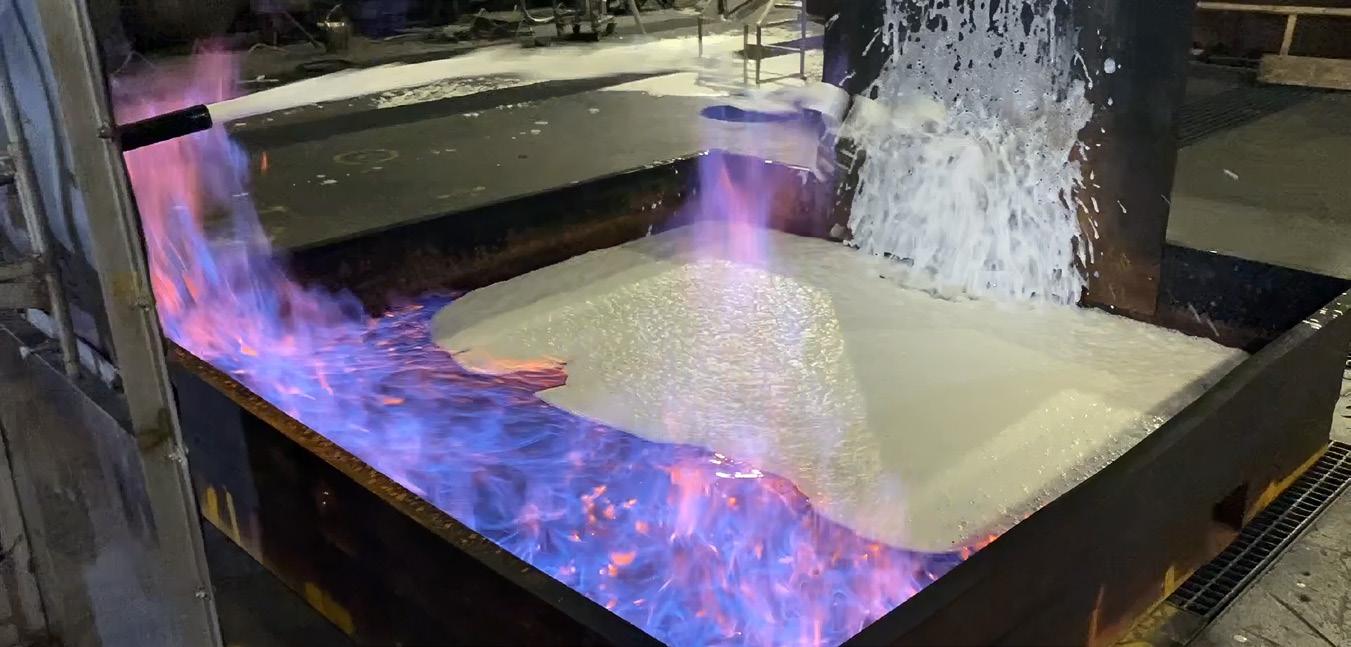
been the behaviour of partially hydrated polymers. In some formulations, these can absorb additional water during storage, leading to uncontrolled viscosity increases, phase separation and polymer drop-out — the so-called ‘hidden gum’ effect. In a fixed system that may sit dormant for years before deployment, this represents an unacceptable risk. Enviro NEO addresses this through a formulation based entirely on 100% hydrated polymers, eliminating the conditions that cause viscosity instability. The result is a concentrate that maintains stable, predictable behaviour and delivers uniform proportioning from initial discharge through to complete extinguishment.
Saltwater performance
For the Middle East’s coastal and offshore installations, reliable performance with seawater is essential. Many facilities draw fire water directly from the sea or from brackish sources. Enviro NEO has been tested and approved for use with fresh, brackish and saltwater, with approvals explicitly covering saltwater performance across multiple fuel types — a meaningful differentiator in a market where many fluorine-free foams have been developed and tested primarily with freshwater.
Operational compatibility
Enviro NEO operates at a 3% proportioning ratio on both hydrocarbon
and polar solvent fuels, and at 0.3% to 1% on Class A fires. It is compatible with Type II and Type III discharge devices, suitable for low and medium expansion applications, and can be used in compressed air foam systems. This compatibility means many existing installations can transition without significant system modification — reducing both cost and downtime for operators managing large-scale foam infrastructure.
Looking ahead
The Middle East’s fire protection market is at an inflection point. Tightening international regulations, growing environmental awareness and the scale of the region’s hydrocarbon infrastructure mean demand for proven fluorine-free solutions will only increase. Enviro NEO represents a serious entry into that space — backed by evidence, built for the harshest industrial environments, and designed to give operators confidence to transition from legacy fluorinated agents without compromising protection.
Fomtec’s Middle East operations are managed through Emergency Safety Solutions (ESS), based in the UAE. Enviro NEO was showcased at Intersec 2026 in Dubai and will feature at Interschutz 2026 in Hannover.
For more information: www.fomtec.com | www.ess-uae.me
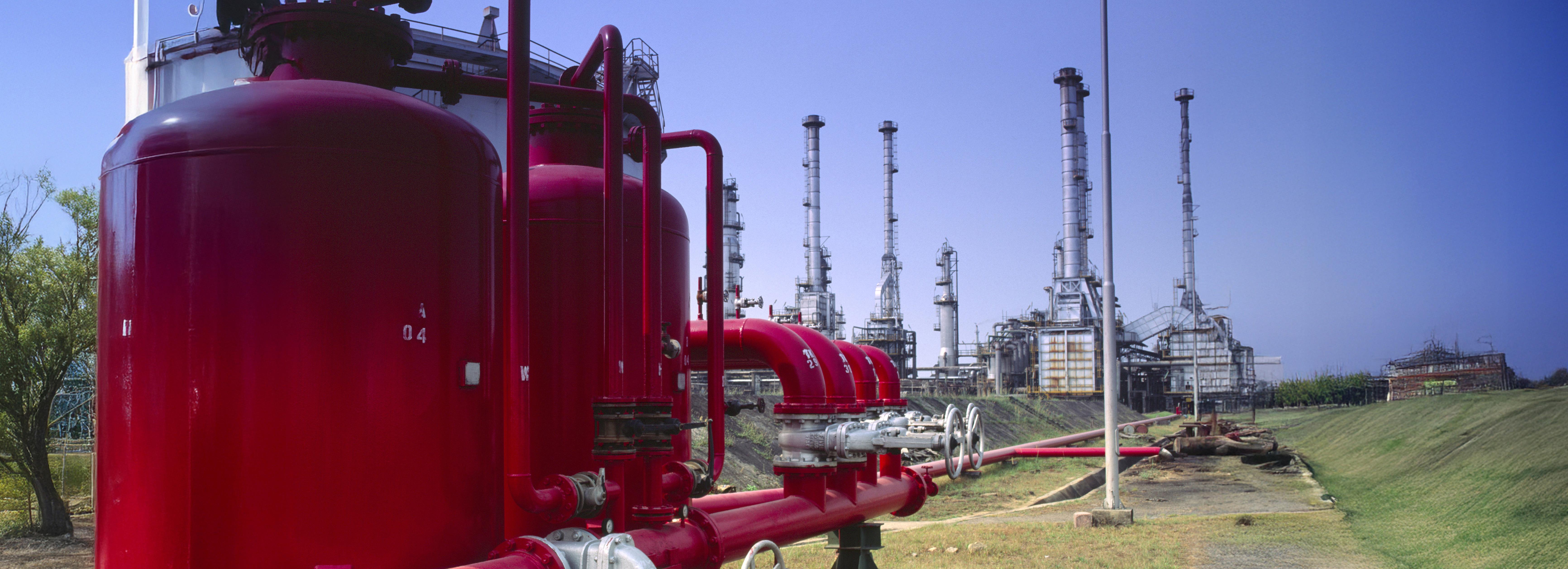
Enviro® Neo is not just another fluorine-free foam, it’s Fomtec’s most advanced 3x3 SFFF, purpose-built for the extreme demands of the Petroleum, Oil & Gas and High-Hazard sectors.
Enviro® Neo delivers exceptional performance without relying on unstable partially hydrated polymers.

with all P.O.G Fixed & Mobile Firefighting Hardware & Operations Low Application Rates & Long Drain Times Proven Performance: EN 1568-3 & 4, UL 162, IMO 1312, ICAO Level B, LASTFIRE
Discover the full IDEX Fire & Safety experience in one place. Explore the latest innovations and launches from our global family of brands, including LUKAS, Vetter, AWG, Alco and Godiva.


AN INTERACTIVE JOURNEY INTO THE SYSTEM THAT‘S UTIONISING PUMP OPERATIONS REVOL

• HOW SAMFLOWS CUTS PUMP
SEE OPERATIONS FROM 13 STEPS TO JUST 3 EXPL
• ORE IMMERSIVE FIREFIGHTING SCENARIOS WITH REAL-TIME VISUALS

• OVER INTUITIVE TOUCH PANEL CONTROL AND AUTOMATED VALVE MANAGEMENT
• HOW SAMFLOWS BOOSTS SAFETY, SPEED, AND WATER EFFICIENCY
DISC LEARN EXPERIENCE
• THE SYSTEM THATʼS CHANGING FIREGROUND OPERATIONS FOREVER
READY TO SEE WHATʼS POSSIBLE?
Scan the QR to explore SAMFlows like never before.


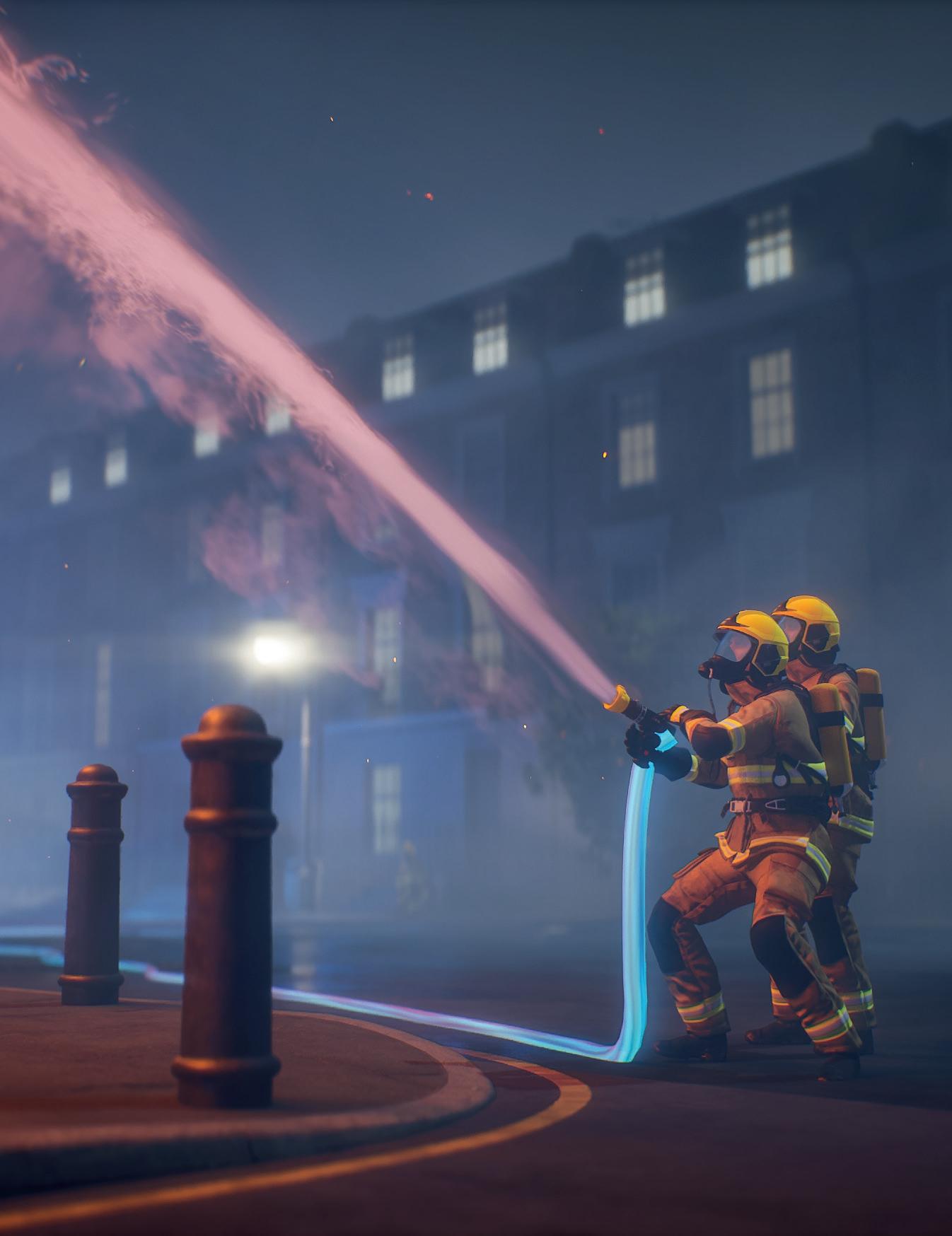
Data centre resilience

With fire protection in data centres more critical and complex than ever Simon Ince Program Manager, UL Solutions, explores fire safety considerations and strategies to support the performance of fire safety systems when they are needed most
The global data centre industry is constantly pushing the boundaries of innovation in power distribution, cooling, energy storage and server technology. While these advances bring exciting opportunities, they also introduce new risks. Mitigating many of these fire risks can be supported by choosing certified fire protection systems that have been properly specified, installed and maintained.
A global industry
While the data centre industry is expanding worldwide, they must still comply with regional fire protection standards. Building codes and regulations differ from country to country, but they generally include prescriptive and performance-based fire safety requirements designed to provide a reasonable level of life safety and some property protection. However, these regulations often lack measures specifically geared towards maintaining business continuity.
These model codes typically consider the size and complexity of a building, occupancy levels, fire load and potential
fire growth rates, and require both passive and active fire protection to achieve an acceptable level of risk to life and structural property.
Regional differences in codes and approvals mean that the methods for achieving regulatory fire protection vary. Therefore, wherever a data centre business operates, facilities must comply with all applicable local fire safety regulations.
Business continuity
Data centres operate 24 hours a day, 365 days a year. For this sector, effective fire protection strategies must also be designed to consider business continuity. Even a relatively small fire can result in significant operational disruption and financial loss.
The Uptime Institute’s Global Data Centre Survey 2025 indicates that fire disruption accounts for approximately 14% of significant outages. While the total number of fire-related incidents may be decreasing, global reliance on digital infrastructure continues to grow. As a result, outages are becoming more impactful and costly. The average cost of
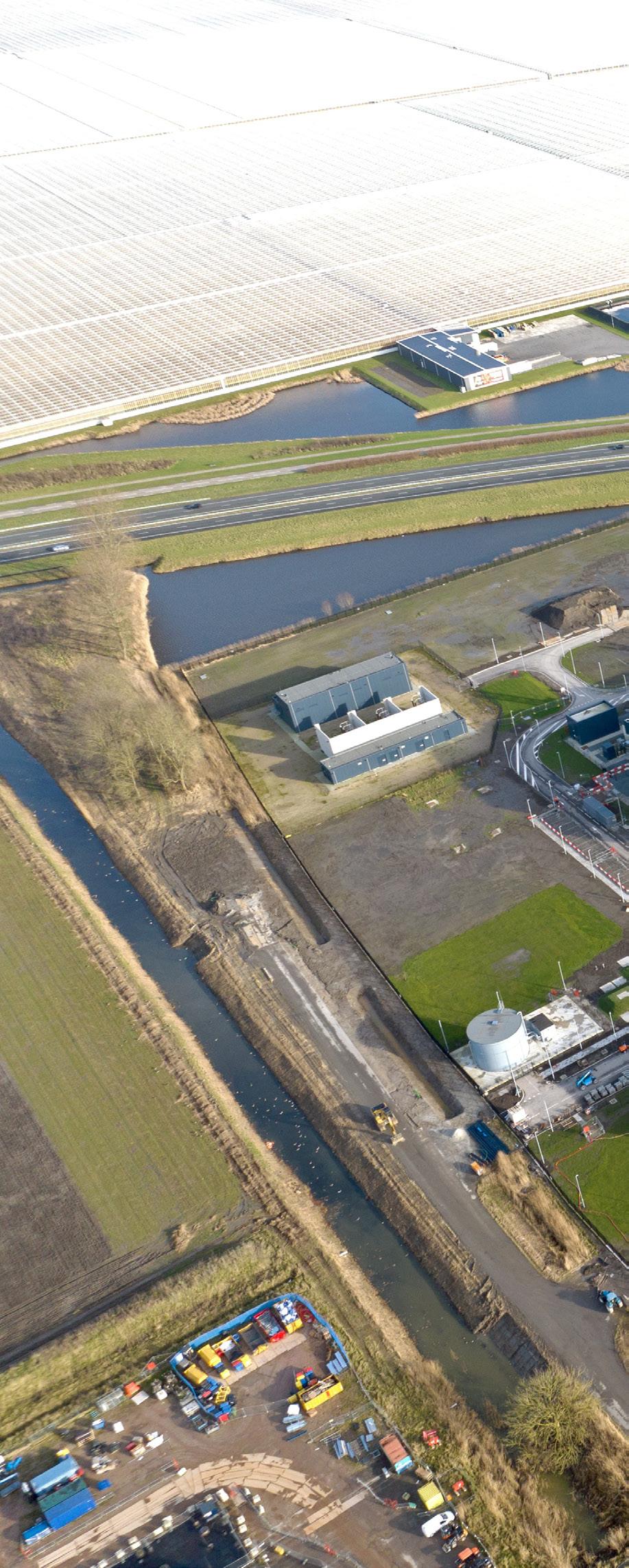
downtime can soar as high as US$9,000 per minute, with large enterprises facing average costs of US$540,000 per hour, according to Uptime Intelligence.
Although major data centre fires are infrequent, their consequences can be severe. In September 2025, a lithium-ion battery fire in South Korea forced the closure of a government-run data centre, disrupting 647 public systems. Critical services, including tracking for emergency vehicles in Daejeon and Sejong, were temporarily paralysed. The incident highlighted the vulnerability of critical digital infrastructure to fire-related events. At the same time, the pace of digital transformation and artificial intelligence (AI) development is accelerating. Global data centre construction is projected to grow by approximately 11.10% annually
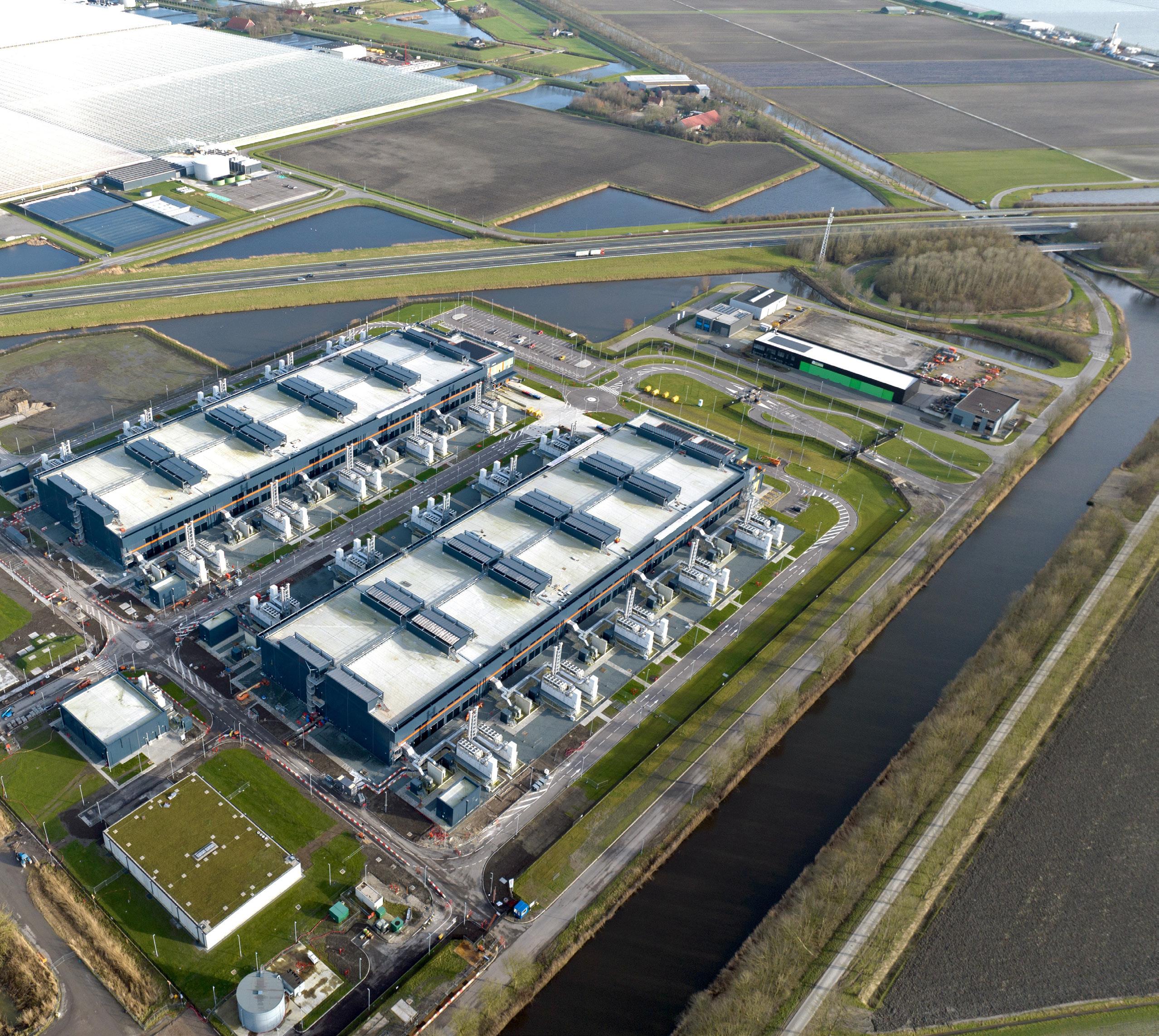
through 2034, according to Fortune Business Insights. This rapid expansion is driving innovation in design, construction methods and energy systems.
As a testing, inspection and certification provider, UL Solutions works with major data centre providers to support innovation by evaluating safety performance. Regulations often struggle to keep pace with emerging technologies. When new risks arise, science-based testing and certification protocols help demonstrate conformity with existing regulations and advance safety where standards have yet to be established.
One example is UL 2755, the Outline of Investigation for Prefabricated Modular Data Center Systems and Related Modular Units, which addresses the increasing demand for prefabricated modular data
centres (MDCs). Modular construction allows faster deployment than conventional builds, with modules often manufactured in one country and installed in another. Supporting code compliance during factory construction is therefore essential.
Start with a fire strategy
Early engagement with a competent local fire engineer is essential during the planning phase of a data centre project. Fire engineers routinely develop life safety strategies based on a site-specific hazard mitigation analysis (HMA), but they can also incorporate resilience and business continuity measures into such strategies.
Maintaining fire engineering involvement throughout construction helps ensure that the ‘on paper’ strategy
is properly implemented. For example, many data centres rely on battery energy storage systems (BESS) to provide reliable and continuous power. These systems can provide immediate backup power until standby generators start.
Fire engineers rely on design guidance such as NFPA 855, which addresses the installation of stationary energy storage systems and requires certification to UL 9540, the Standard for Energy Storage Systems and Equipment. UL 9540A, the Test Method for Evaluating Thermal Runaway Fire Propagation in Battery Energy Storage Systems, is used to evaluate fire propagation characteristics of specific BESS. Understanding how a battery system behaves under fire conditions is essential to managing that risk.
Design with function in mind
In addition to fire engineers, specialist designers for active fire protection, such as detection and suppression, along with passive fire protection for fire containment, should be involved early in the planning process. For example, within the Royal Institute of British Architects (RIBA) Plan of Work, Technical Design is traditionally completed at Stage 4. However, introducing detailed fire protection considerations during Stage 2 (Concept Design) can help identify and resolve potential fire protection issues early in construction.
Every data centre must contain extensive building services, such as power cables and air conditioning duct work, that penetrate fire-resisting compartments, and how these services pass through fire-separating elements, while still maintaining that fire separation is crucial.
Specialist designers understand the importance of third-party certification and selecting systems with verified performance. Tools such as Product iQ® allow designers to confirm the tested scope and application of products. Matching certification data to real-world installation conditions helps prevent costly remedial work later.
Protect, detect and suppress
Active and passive fire protection systems must perform reliably when required. Selection should be based on verified performance testing, as failure during a fire event could result in significant and costly downtime.
Structural fire resistance and compartmentation are fundamental to any onsite fire protection strategy. Standards such as UL 263, the Standard for Fire Tests of Building Construction and Materials (also recognised as ASTM E119), support the evaluation of structural stability and fire separation. Separating plant rooms from server halls, for example, limits fire spread and protects critical assets.
Early fire detection is equally important. Data centres typically have high airflow due to cooling requirements, making traditional detection less effective. Aspirating smoke detection systems, which continuously sample air near server racks, provide very early warning. UL 268, the Standard for Smoke Detectors for Fire Alarm Systems, specifies performance requirements for these detection systems.
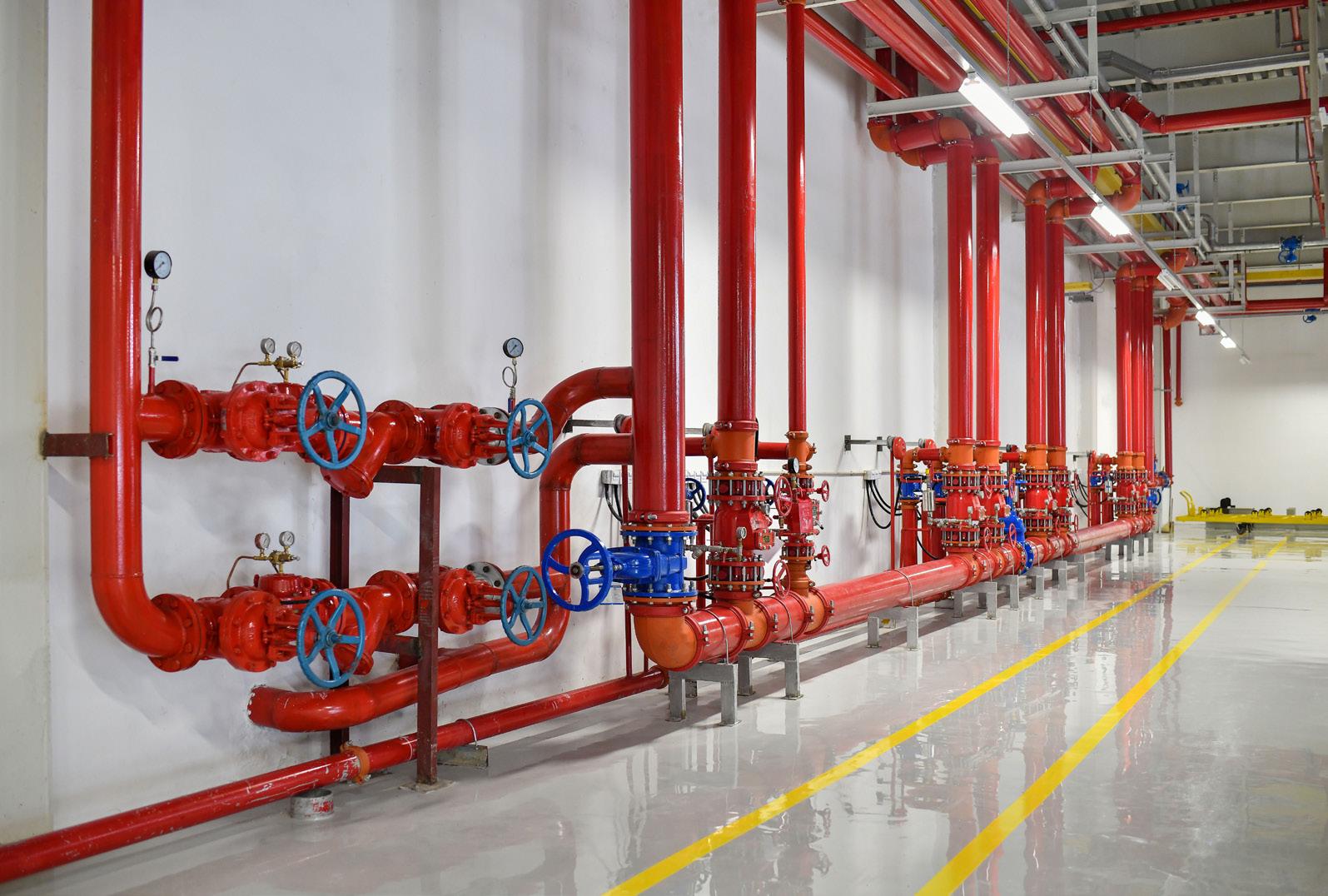
“Early engagement with a competent local fire engineer is essential during the planning phase”
Fire suppression systems vary depending on the area and risk profile within the data centre. Typically, inert gas systems and water mist systems are used in areas containing sensitive electrical equipment. Regardless of the type of system chosen, the components and system should have been tested and certified to be suitable for the specific on-site risk scenario they are intended to mitigate.
Competence matters
Specifying tested and certified products is only part of the solution. Improper installation can undermine even the best-designed systems. Installer competence should be established before work commences to avoid costly and disruptive remediation. Schemes such as the UL Solutions Qualified Fire Stopping Contractor Program can support due diligence in selecting competent specialist contractors.
In a sector where uptime is paramount, fire protection must be approached holistically. From building design and fire strategy through product selection and installation, each stage must be synchronised to protect life and to
support business continuity. Therefore, the competence of all involved must be specified and vetted. As digital infrastructure continues to expand, competent specialists equipped with third-party verified fire safety solutions can help drive safer, more reliable data centre operations.
Ongoing management, testing and maintenance
Getting the design, specification and installation of fire protection systems right, helps reduce the risk of downtime from day one. However, without ongoing inspection, testing and maintenance of fire safety systems, even the best systems may not function as intended over time. Many data centre providers implement externally audited business continuity management systems, such as ISO 22301 or rely on data centre-specific guidelines such as UL 3223, the Outline of Investigation for Data Center Certification. Documented, audited processes for fire risk mitigation can provide a proactive approach to maintaining the fire protection system in a data centre.
ul.com
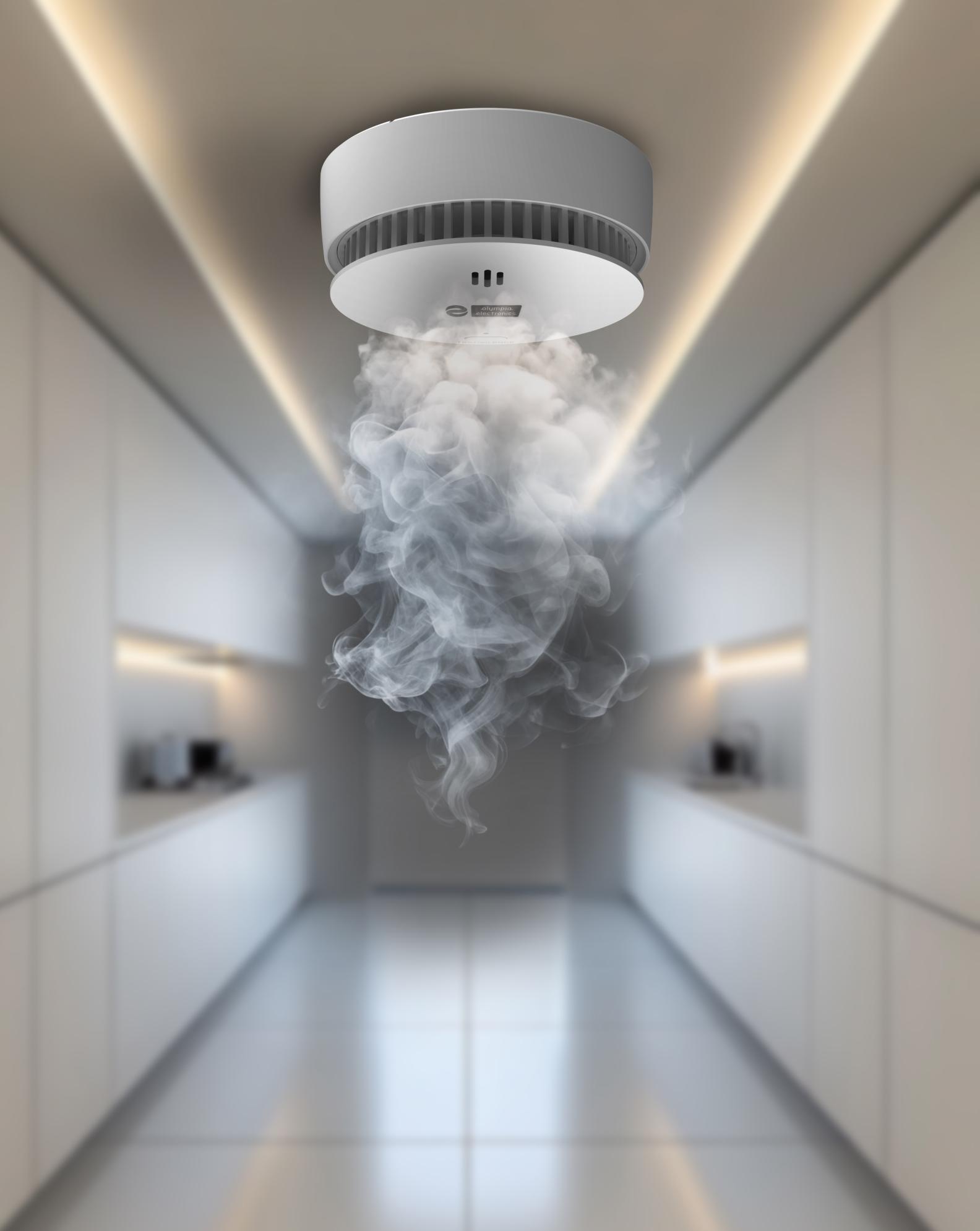
The BS-508/WiFi keeps you safe with instant alerts on your smartphone, wherever you are. High-precision per formance, sleek design, and complete control through the mobile application. The new generation of smoke detectors from Olympia Electronics.

Zico’s powered & manual retrieval solutions help crews deploy drafting & dumping equipment quickly while reducing strain.
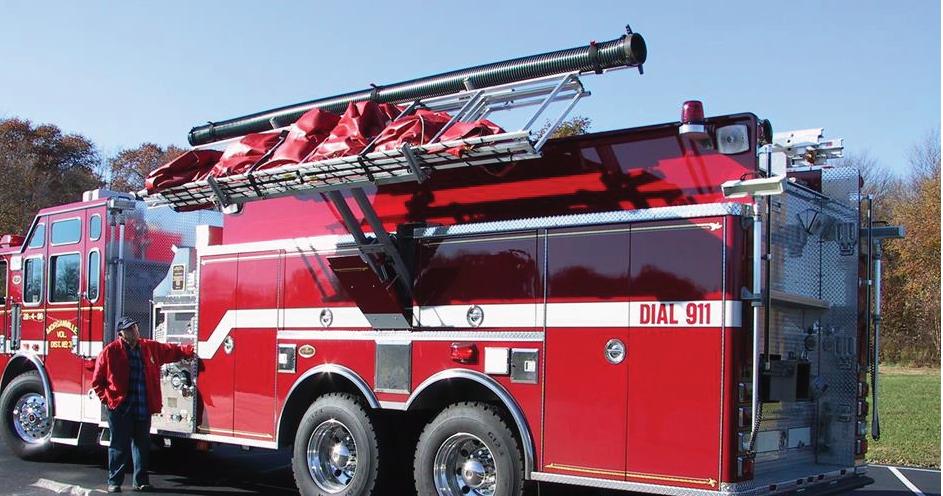
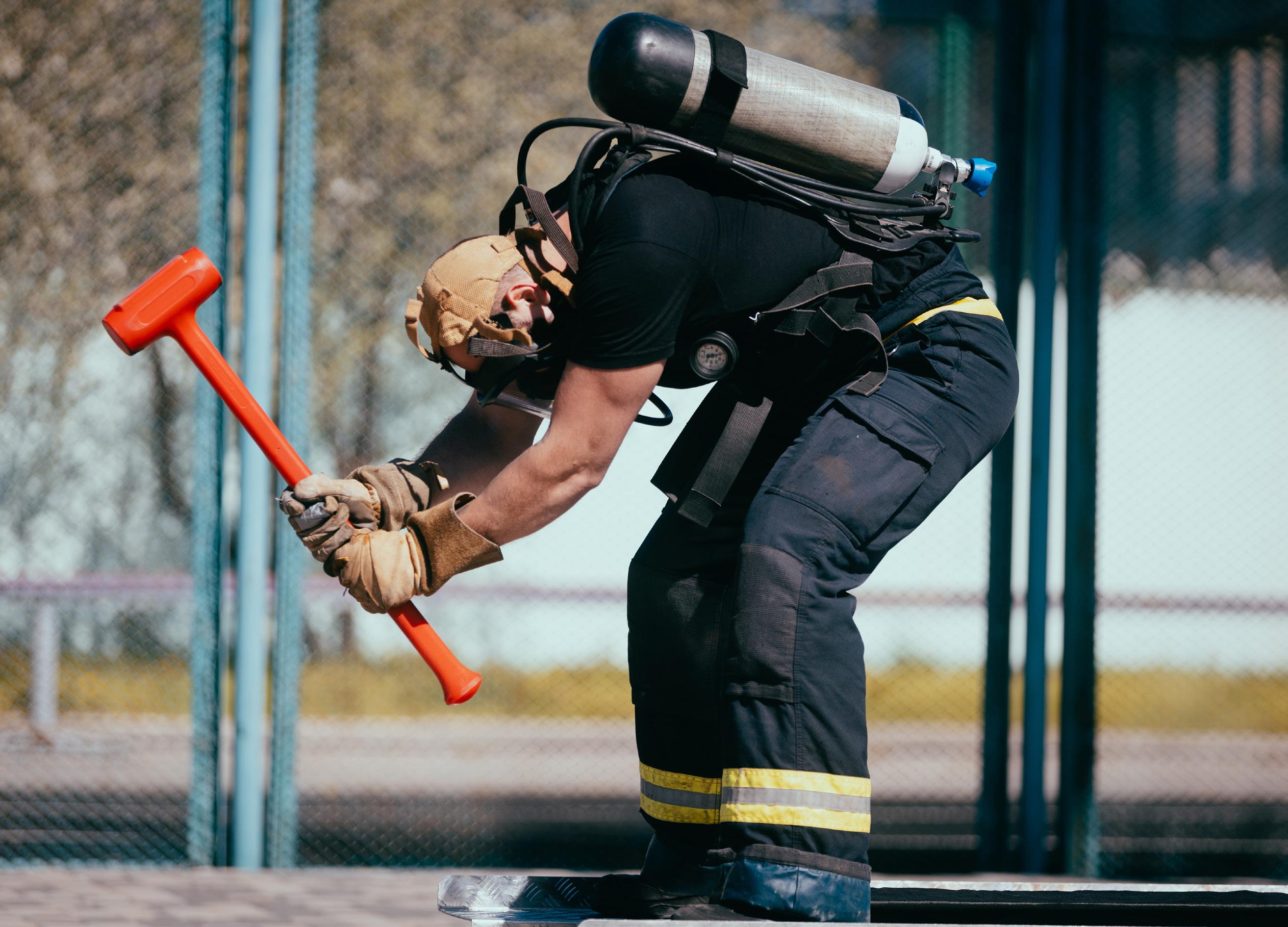
Toughness under pressure

Bob Rea takes a closer look at the vital physical and mental training required of the firefighter’s role
Firefighting can be one of the most demanding and multifaceted professions, it is not only physically demanding but also can search and test firefighters’ mental and emotional strengths. Controversially, I believe the role of a firefighter is not suited to everyone. The role operates in environments that are physically punishing, emotionally charged, unpredictable and, at times, life changing.
Modern firefighting is not confined to structural firefighting; it encompasses technical rescue, road traffic collisions,
water rescue, hazardous materials response, medical emergencies, disaster management and increasingly complex built environments. To perform effectively in these contexts, firefighters must develop exceptional levels of both physical and mental preparedness. Neither can stand alone. Physical strength without psychological resilience is incomplete; mental toughness without operational fitness is insufficient. Together, they form the foundation of safe, competent and professional emergency response.
Physical preparation:
Meeting the standard
Firefighter recruit training is arduous and designed not only to prepare personnel for operational reality, but also to ensure they meet nationally recognised entry and competency standards. In the UK, this assessment of physical capability is clearly reflected in the National Firefighter Selection Tests (NFST) and similar tests used globally. These tests are not arbitrary fitness hurdles; they are carefully constructed simulations of operational tasks. They measure whether a candidate
“Team dynamics are another mental dimension and whilst not training, firefighting is fundamentally a team activity”
possesses the physical capability, coordination, confidence and mental composure required for safe and effective frontline duty.
Preparing for the role of a firefighter starts before or at the time of applying for the role, as there are physical and educational tests, designed to identify suitable persons to take forward to recruit training. The role is a strenuous one and therefore selecting the right people is key. To help select the physically capable candidates the UK Fire and Rescue Service (UKFRS) under The National Fire Chiefs Council (NFCC) introduced and oversees national standards and guidance that underpin firefighter selection in the UK. The National Firefighter Selection Tests (NFST) typically include practical job-related tests (JRTs), with each test designed to mirror a real operational demand. Understanding the purpose behind each one is the first step in preparing effectively. While individual services may vary slightly in format as do different countries, the core physical tests commonly include:
Ladder lift and extension
Ladder climb
Casualty evacuation
Equipment carry
Enclosed/confined space crawl
Hose run (or equipment assembly task).
Success is not guaranteed; national firefighter tests are designed to ensure firefighter and public safety. They represent the minimum physical and behavioural standard required to operate safely within a crew. Preparing for them should be viewed not simply as passing an assessment, but as beginning a professional commitment to lifelong service and operational readiness.
Physical training builds capacity. Mental preparation builds composure. Together, they ensure that when a firefighter steps onto the drill yard or on to the incident ground, they do so with confidence, competence and resilience.
Fail to prepare, prepare to fail
If you are serious about becoming a firefighter, then preparation is essential to prepare yourself not only for the strength aspects, but also flexibility, dexterity, stamina and cardiovascular fitness. Preparing for these assessments therefore demands more than general fitness, it requires a structured approach that integrates physical conditioning, technical understanding and psychological readiness. Embarking on a structured training regime will give you the best opportunity to achieve your goals. An outline programme may be:
Weeks 1–4: Foundation phase
3 cardio sessions per week.
2 strength sessions (full body).
Focus on technique and injury prevention.
Begin light loaded carries and sled work.
Weeks 5–8: Development phase
Increase strength intensity. Introduce HIIT sessions.
Simulate test circuits weekly. Practise ladder confidence and confined space exposure where possible.
Weeks 9–12: Simulation phase
Replicate full test circuits under timed conditions.
Train in boots and weighted vest (if safe).
Combine physical exertion with cognitive tasks (e.g., simple problemsolving after exercise).
Taper slightly in final week to allow recovery.
With its uniquely strenuous activities, firefighting is an occupation that requires continual fitness to maintain operational fitness. Training for these demands must go beyond generic fitness. It requires not only traditional strength, but job-specific conditioning that mirrors operational reality. Fire and Rescue Services recognise
the need for continual training and make provisions for their personnel to engage in ‘fitness’ during duty time with dedicated gym equipment. A large investment by services, but one that is accepted as essential, to maintain a healthy workforce, reducing injury and illness.
Hydration and heat acclimatisation also form part of physical preparedness. Training in controlled live-fire environments helps personnel adapt physiologically to thermal stress while reinforcing safe working durations, crew rotation and rehabilitation protocols. Physical readiness is therefore not only about strength it is about sustaining performance safely over time.
Mental preparation:
The unseen burden
Though physical preparedness is visible and measurable, mental preparedness is equally demanding and arguably more complex. Firefighters routinely encounter high-stakes decision-making under time pressure, exposure to trauma and public scrutiny. The psychological load can be cumulative and should not be underestimated. Without a support network many firefighters experience mental health challenges. You would not be human if you did not reflect in the quiet times on our experiences. It is important that you start on your career journey in the knowledge that things can get challenging.
Part of the recruitment journey should include time visiting the fire station, where you can discuss with career firefighters and learn of their life; preparing yourself and making the decision if a career in the fire and rescue service is for you. It is not a reflection on an individual if you decide it is not for you! Better to decide before joining.
Caring for mental health is essential and preparedness begins with training. Firefighters must develop situational awareness and the ability to perceive, interpret and anticipate evolving conditions. Training scenarios are
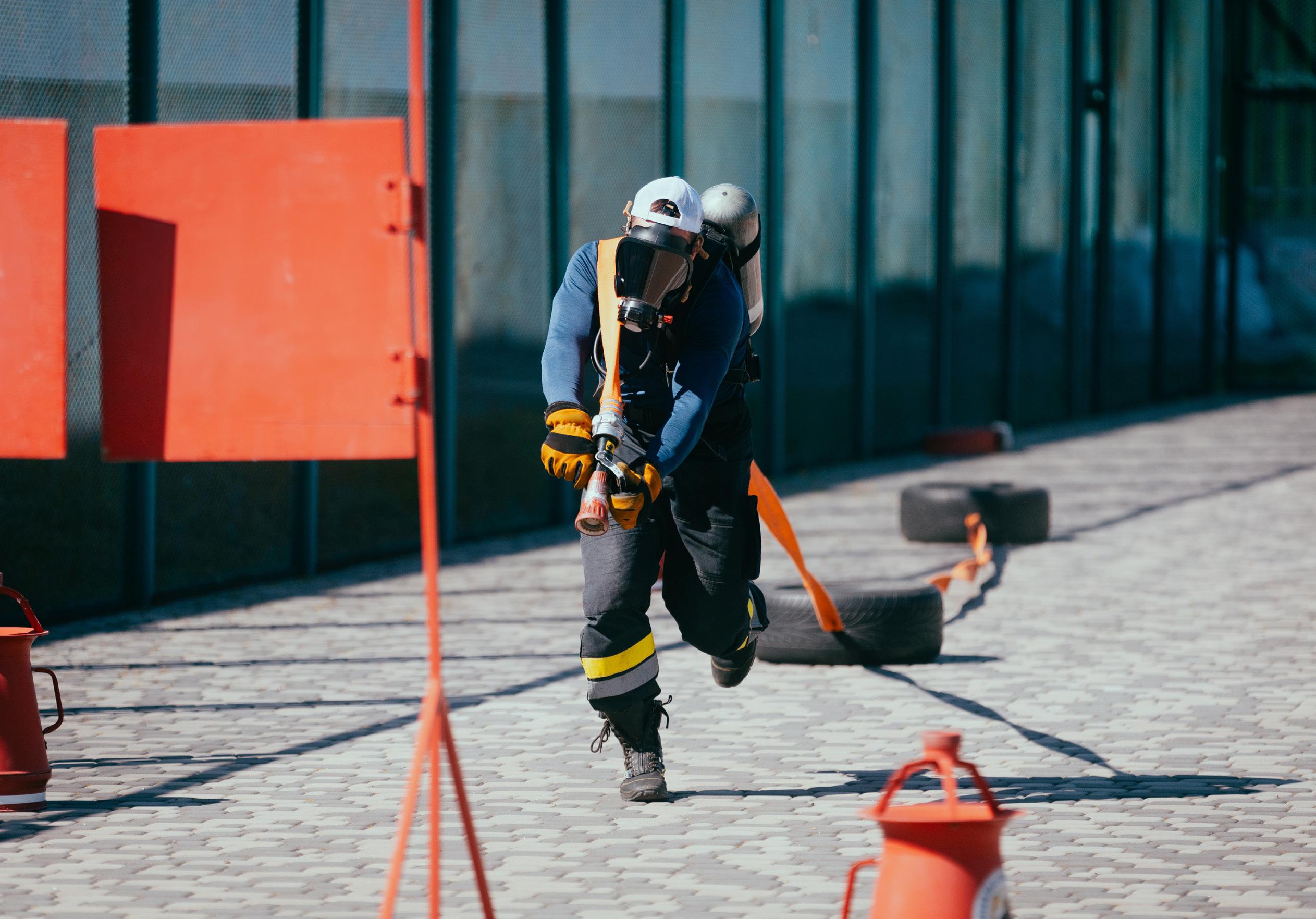
designed not just to test physical skill but to challenge decision-making under stress. Officers practise command simulations, tactical decision exercises and tabletop scenarios to strengthen risk assessment and strategic thinking.
Stress inoculations training is another core element of preparing for the role. By gradually exposing trainees to controlled stressors – heat, noise, time constraints, simulated casualties – resilience can be gained. The goal is not to eliminate stress but to normalise it. Firefighters learn to regulate breathing, focus attention and maintain communication clarity despite environmental chaos.
Team dynamics are another mental dimension and whilst not training, firefighting is fundamentally a team activity. Trust, communication and cohesion are non-negotiable. Training
therefore emphasises crew-based drills, leadership development and after-action reviews. Learning to give and receive constructive feedback strengthens psychological safety within teams, enabling open communication during critical incidents. Having a confidante within the crew is a vital measure to help protect your mental health, but you should also be looking for signs in others. Organisations are implementing training and support mechanisms to provide interventions before issues become unwieldy.
Strength and resilience as standard
Firefighter training is a rigorous and lifelong process designed to prepare individuals for some of the most demanding circumstances imaginable.
Physical preparedness ensures that firefighters can perform the tasks required of them safely and effectively under extreme conditions. Mental preparedness ensures that they can think clearly, act decisively and recover sustainably from the psychological impact of their work.
In an era of increasing complexity and public expectation, investment in both dimensions is not optional it is essential. Organisations that prioritise holistic training create professionals who are not only operationally competent but resilient, adaptable and capable of sustained service. Ultimately, the strength of any fire and rescue service lies not only in its equipment or infrastructure, but in the physical fitness, mental fortitude and collective professionalism of its people.


• Explosion Hazard Classifications
Class I, Div. 1, Group B, C and D
Class II, Div. 1, Group E, F and G Class III
• Marine and NEMA type 4X Rated
• DPDT switch with screw terminal connection
• Single or Dual Action
• DC & AC Voltage Contact Ratings
• Key Reset
• Special application labels and colors
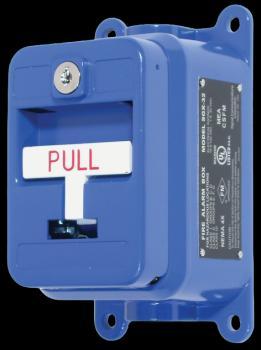
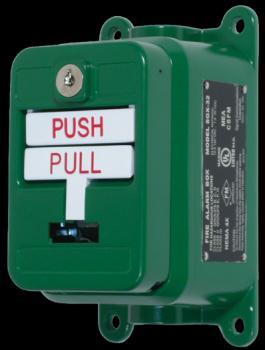
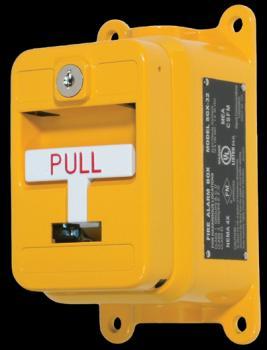
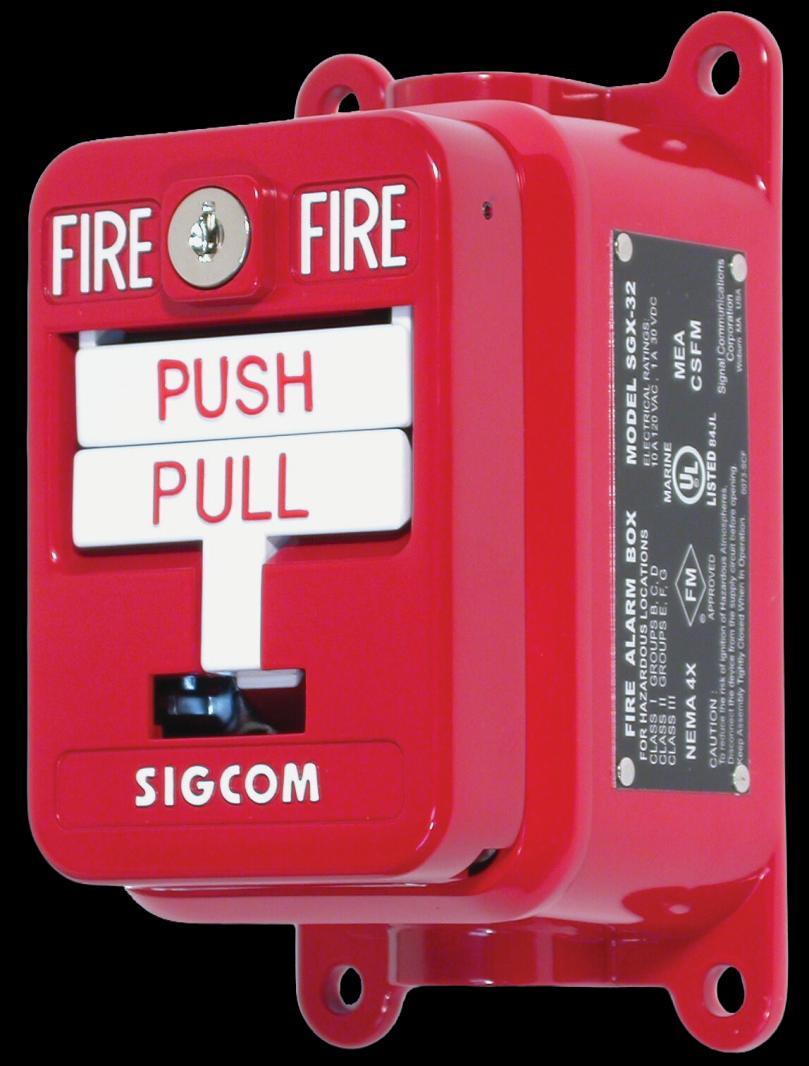



FIRE SAFETY AT SCALE

Peter William, Fire Protection Regional Manager META, Victaulic, looks at designing for the reality of mega projects
Mega projects are not just about iconic skylines. Across the region, vast logistics and data centre developments are challenging traditional fire safety design, placing greater emphasis on standardisation, verification and resilience.
In the Middle East, the term ‘mega project’ often brings to mind headlinegrabbing developments, but it’s not necessarily about the visual spectacle or prestige. Cold storage, logistics hubs, pharmaceutical labs and data centres are now among the most significant largescale developments across the region. These facilities frequently span multiple buildings, cover vast footprints and house high-value, mission-critical assets.
In this context, fire protection must not only protect people. It must also limit damage to billions of dollars’ worth of physical assets – temperature-controlled food and medical supplies, automated logistics systems, or highly sensitive data servers – and safeguard operational continuity. A short interruption in a data centre or pharmaceutical cold chain can have consequences far beyond the building itself.
At this scale, weaknesses that might be absorbed on smaller projects are quickly exposed. Designing fire safety systems for mega project realities, therefore, requires a different mindset – one that recognises the pressures of speed, labour availability, cost control and long-term reliability. It also requires partners with both global reach and strong local presence, capable of aligning international specifications with regional execution realities.
The needs of international owners
Many of today’s large-scale logistics and data centre developments are driven by global owners seeking to replicate high-value facilities across multiple geographies. Just as an Apple store looks and functions in a consistent way around the world, international operators aim to achieve uniform standards of safety, performance and maintenance across their portfolios. When systems are designed consistently, owners can plan more effectively, streamline maintenance procedures and move expertise between sites with confidence. Long-term asset
management becomes more predictable, and operational risk is reduced.
However, achieving standardisation requires close coordination internationally. Specifications may be developed by engineering teams based in Europe or North America, while the project itself is delivered in the Gulf. Contractors, in turn, are working under local regulatory frameworks, overseen by authorities having jurisdiction (AHJs).
There must be alignment between owners, consultants writing the specifications, contractors executing the work and authorities enforcing fire codes. In practice, this often means working with a manufacturer that can coordinate internally across regions – connecting specification teams in Europe or the US with on-the-ground technical support and training in the Middle East – to ensure design intent is preserved through installation.
Challenges caused by scale
Scale introduces its own technical and practical challenges. A large logistics or data centre project may involve thousands of pipe runs across multiple
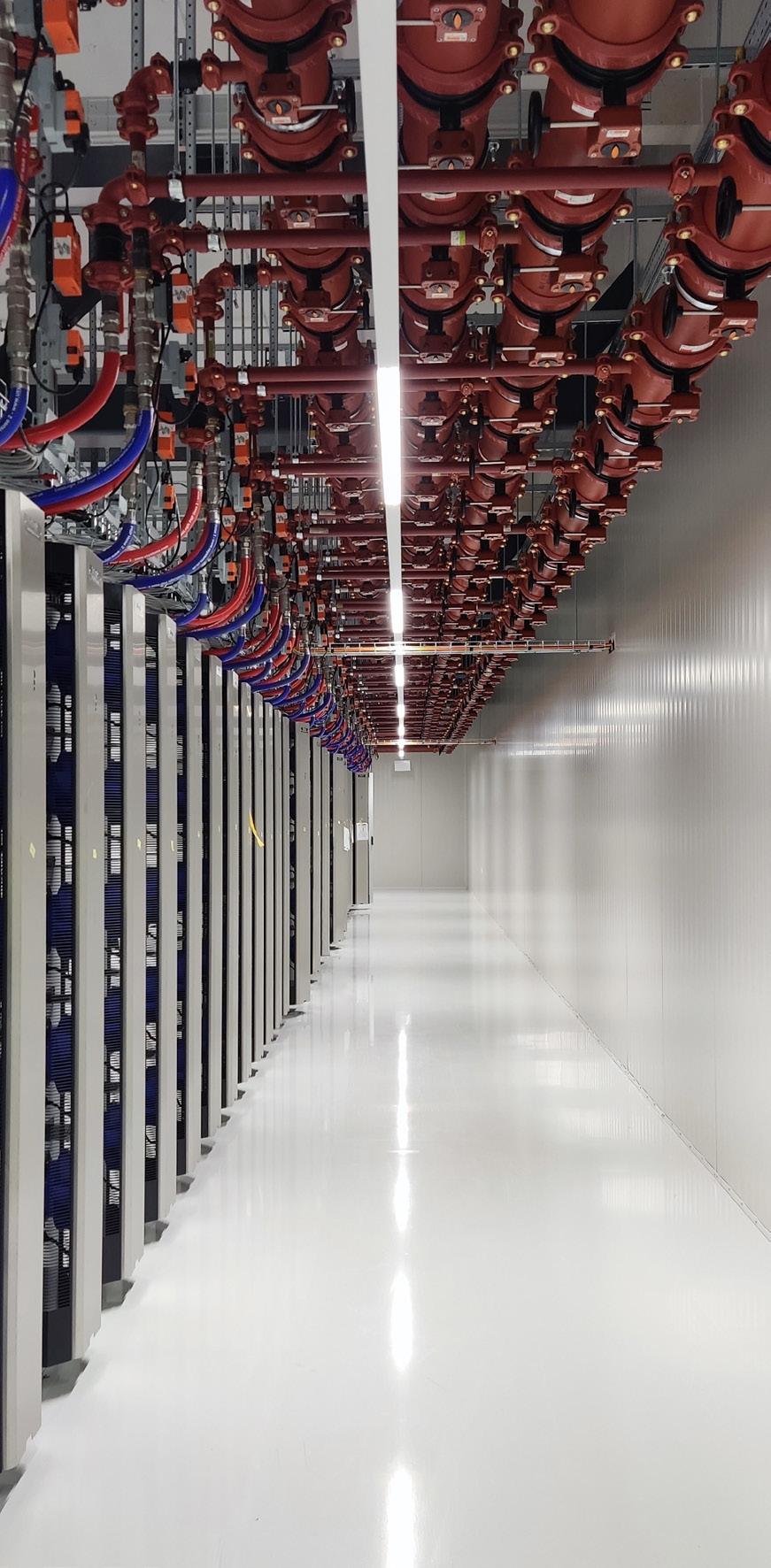
floors and complex layouts. Even where the design is robust, the sheer volume of installation work increases the potential for human error.
Labour dynamics further complicate this picture. On many large construction sites, a significant proportion of labour is subcontracted, and while this is standard industry practice, it can mean that not all installers have the same level of specialist training. This variability increases the likelihood of mistakes and rework.
Contractors typically account for rework in their bids to serve as a buffer against unforeseen issues. On mega projects, this represents a substantial financial risk. Rework not only affects budgets but can also disrupt project timelines and delay commissioning.
Inspection presents another critical challenge. On a vast site, it is physically impossible for a small team of supervision engineers to manually inspect every
“Scale introduces its own technical and practical challenges.”
joint, sprinkler and connection in detail. Traditional inspection models, which rely heavily on manual checking, struggle to scale effectively in these environments.
As a result, designing systems that enable efficient, reliable verification becomes essential. At mega-project scale, inspectability must be considered a core design requirement, not an afterthought. Systems that allow for clear visual confirmation of correct installation significantly reduce uncertainty and make large-scale quality assurance more achievable for owners and consultants alike.
Modularisation and BIM as solutions
One response to these pressures has been the increased adoption of modularisation and prefabrication. Modular assemblies can be designed to meet standardised specifications and used consistently across projects and geographies. When assemblies are built and tested in a controlled environment by a network of licensed fabricators, quality and consistency are enhanced.
It reduces the amount of work carried out on site, where variables are harder to control, and enables thorough testing before delivery, improving reliability. It can also reduce material waste and rework, contributing to both sustainability objectives and more predictable labour costs. With fewer unknowns during installation, project timelines become more manageable.
Digital tools reinforce these approaches. Building Information Modelling (BIM), particularly platforms such as Revit, have become the norm on large-scale, complex projects. BIM supports modularisation by enabling designers to create coordinated, accurate models that reflect real-world installation.
It also supports standardisation. This is because when specifications are embedded within digital models, they can be replicated across projects in different countries while maintaining alignment with international standards. Changes can be implemented more efficiently: for example, if a pipe size is adjusted, the software can automatically update connected elements, reducing manual rework and the risk of error.
In addition, BIM enables the automated generation of bills of quantities, providing immediate and accurate material tracking. This improves transparency for designers and contractors alike and supports better cost control from the outset. For manufacturers that provide integrated digital design tools within BIM environments, this further streamlines coordination between design intent and material procurement.
Designing for performance at scale
As the Middle East continues to deliver ambitious developments, the importance of designing fire safety systems for scale will only increase. It must account for labour variability, inspection limitations, cost pressures and the need for international consistency. It must protect lives while also safeguarding high-value assets and ensuring operational continuity.
Fire safety at scale is ultimately about designing systems that perform as intended – not just on paper, but in the complex, high-pressure reality of mega project delivery. For owners and consultants, selecting partners with proven global capability, strong regional presence and demonstrable experience on large-scale industrial and data infrastructure projects is a critical part of achieving that outcome. victaulic.com
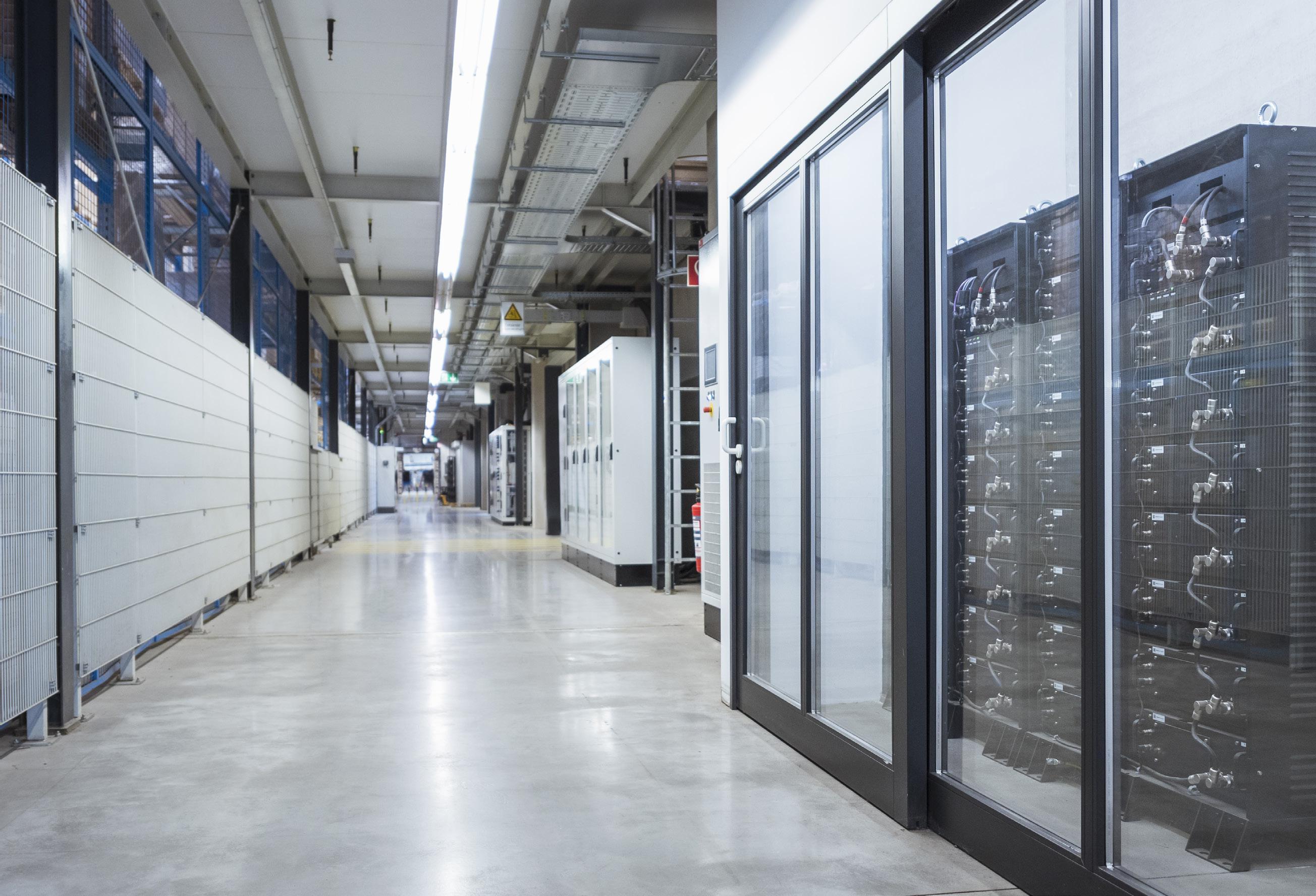
CRC-300 RELEASING CONTROL PANEL
Reliable Suppression Control for Critical Environments
In critical environments, suppression systems must activate with absolute precision, and never unintentionally.
Precise release control. Faster commissioning. Clear system visibility.
WHY INTEGRATORS CHOOSE CRC-300
Reduce False Discharge Risk
Advanced release logic
Faster Commissioning
Pre-configured programs
System Status at a Glance
Event history & indicators
Efficient Maintenance
Built-in testing & Ethernet
IDEAL APPLICATIONS
Specify CRC-300 for your next suppression project.
Speak to your Potter representative
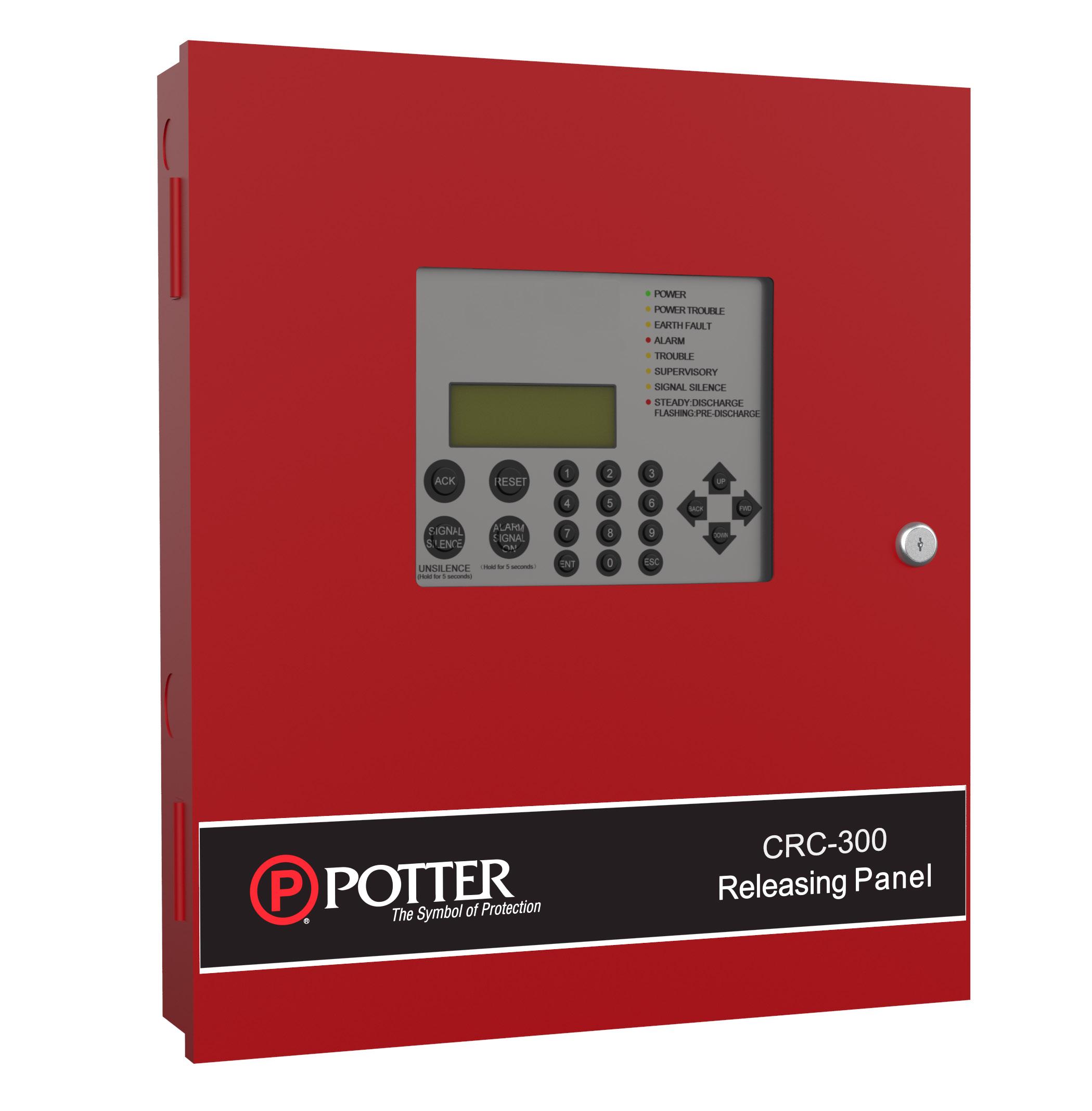
Industrial firefighting
Hytrans delivers more than just water
When oil or petrochemical fires occur, quick and efficient access to a large water supply is crucial.
With our mobile water transport systems, you can respond rapidly and minimise damage when it matters most.
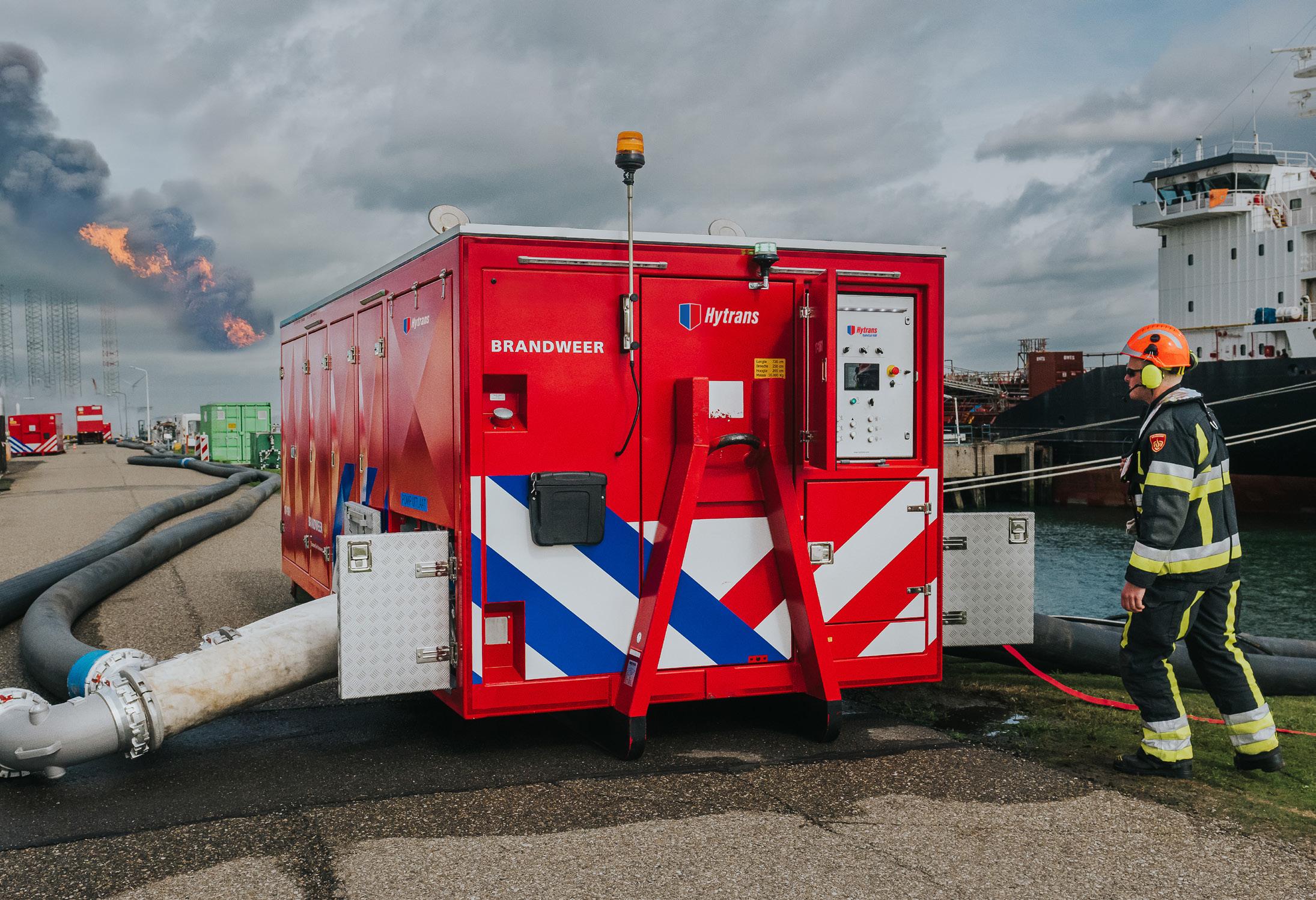
RIV-601P/S spark detector
the best solution for dust collection systems to protect your storage silos from the risk of fire highly sensitive infrared sensor with no false alarms it needs no periodic inspection



RIV-601P/F IR flame detector the fastest and most effective fire alarm device for industrial applications highly immune to false alarms better performance than triple IR Vds































Get to know the water mist industry – and the people behind it!
The 25th International Water Mist Conference (IWMC) will take place in Prague, Czech Republic, on 7th and 8th October 2026.
Following the highly successful Manchester conference, the International Water Mist Association (IWMA) is once again introducing a fresh element to the format. The regular 1.5-day conference programme will be complemented by a dedicated halfday training workshop focusing on the design and effective utilisation of water mist systems. With this initiative, IWMA continues to invest in educating the fire protection industry on how to apply water mist technology more efficiently and confidently in practice. CPD certificates will be issued to workshop participants.
Today, water mist technology, developed into its current form over the past three decades, is a mature, well-established and environmentally-
friendly fire protection solution. While the fundamental principles remain unchanged, significant progress has been made in expanding applications, strengthening validation methods and increasing international approvals.
These developments will be reflected in Prague. Speakers will present case studies, discuss standards and guidelines, and address both achievements and remaining challenges. Topics will include emerging risks, broader application areas and continued technological evolution. Just as importantly, the conference provides valuable networking opportunities in an open and collegial atmosphere.
“Prague is more than a conference”, said Max Lakkonen, President of IWMA. “It is where the global water mist community comes together to share knowledge, challenge ideas, shape the future of fire protection – and enjoy doing it together.”
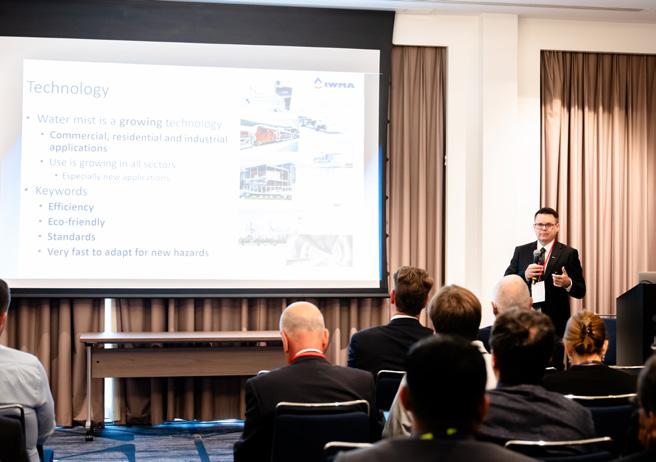
As always, the Ragnar Wighus Award will be presented. In 2026, it will honour the author of the best master’s thesis dedicated to smaller droplets.
The conference webpage will be online from 15th April onwards. For further information, please contact IWMA.
International Water Mist Association Poststrasse 33 (HBC) 20354 Hamburg Germany
+49 (0) 174 3013878 info@iwma.net • www.iwma.net














01-06 June 2026 in Hannover, Germany

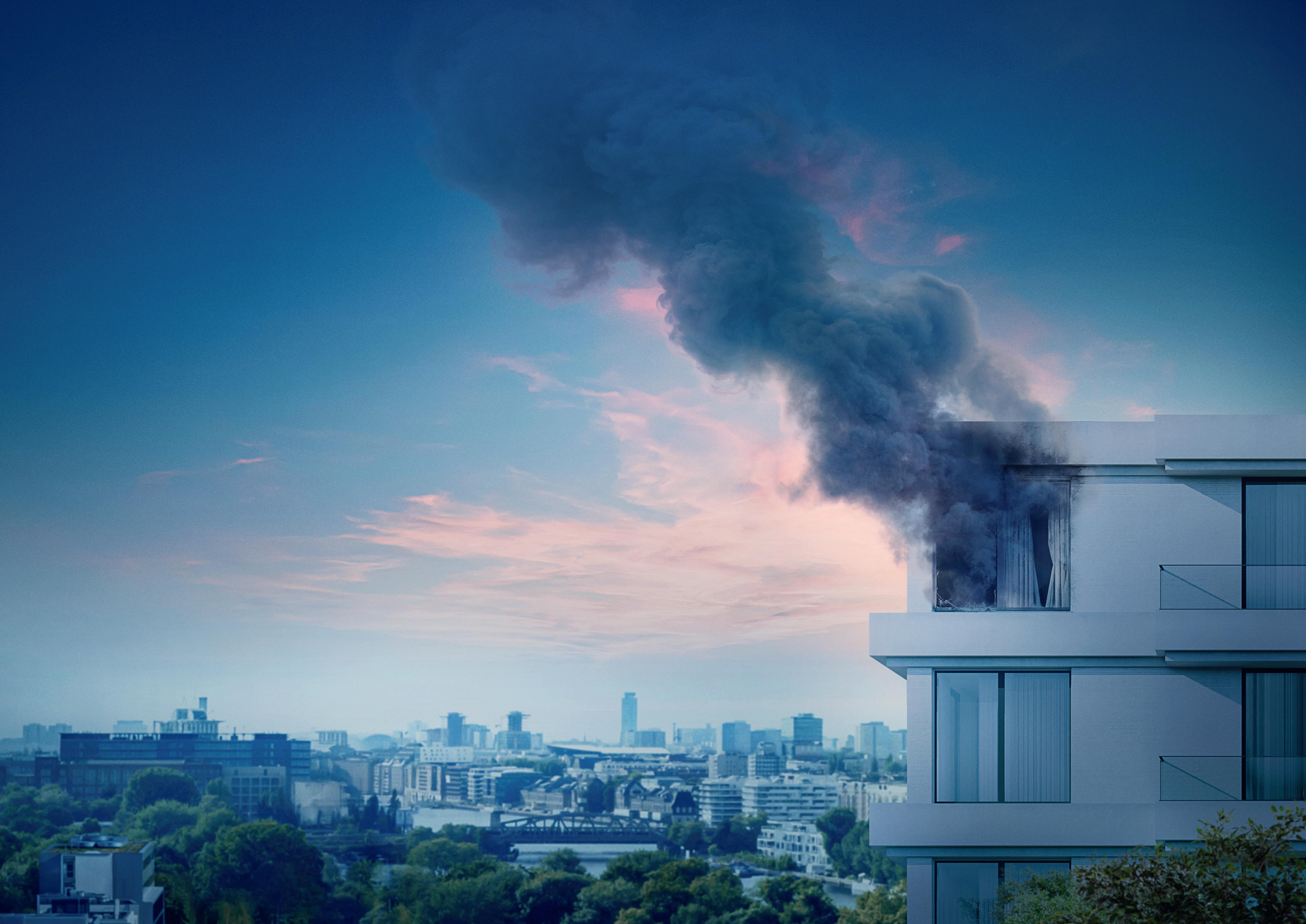

WATER DRIVEN VOLUMETRIC PUMP PROPORTIONERS
FOR FOAM FIRE FIGHTING


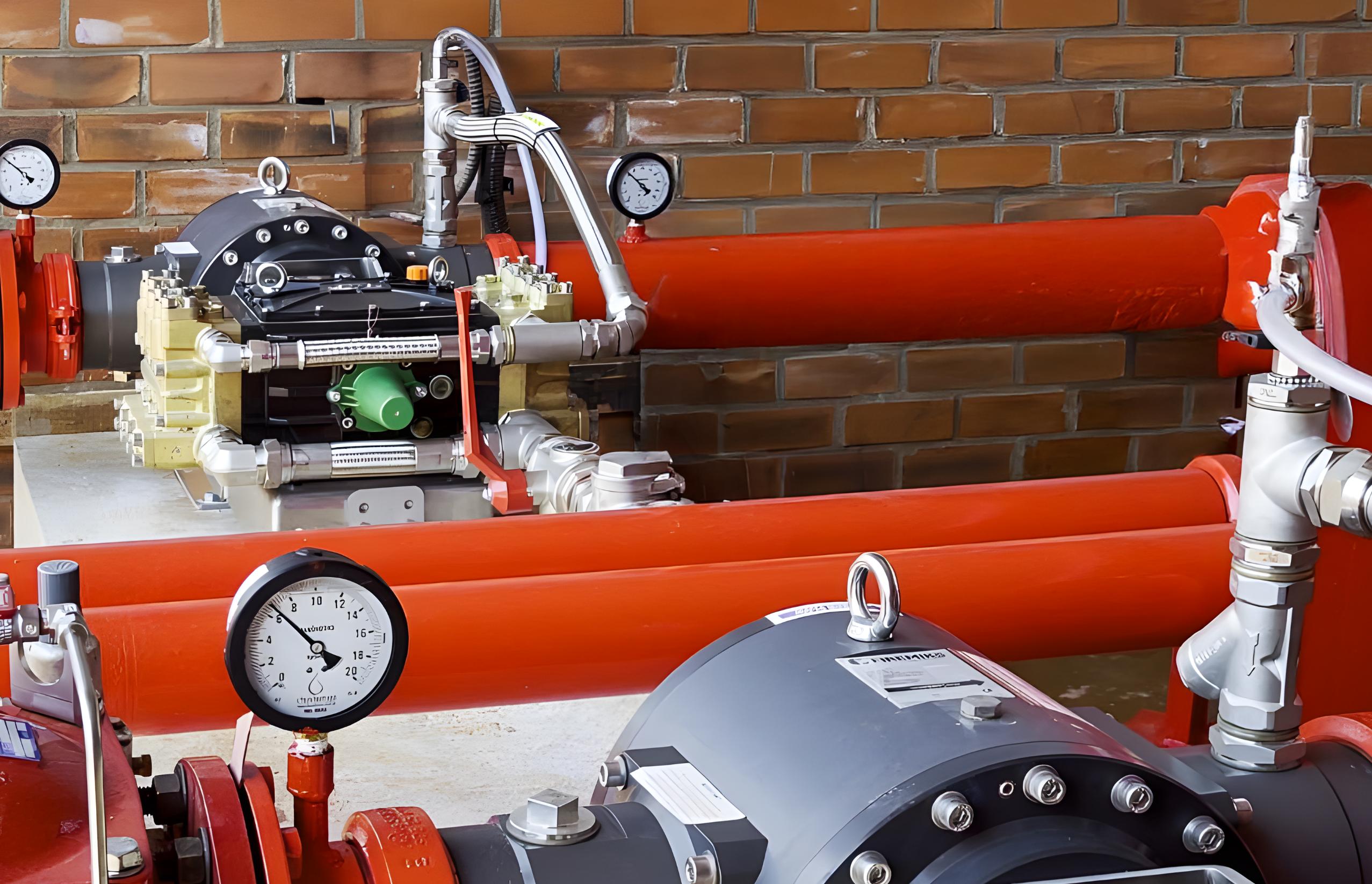

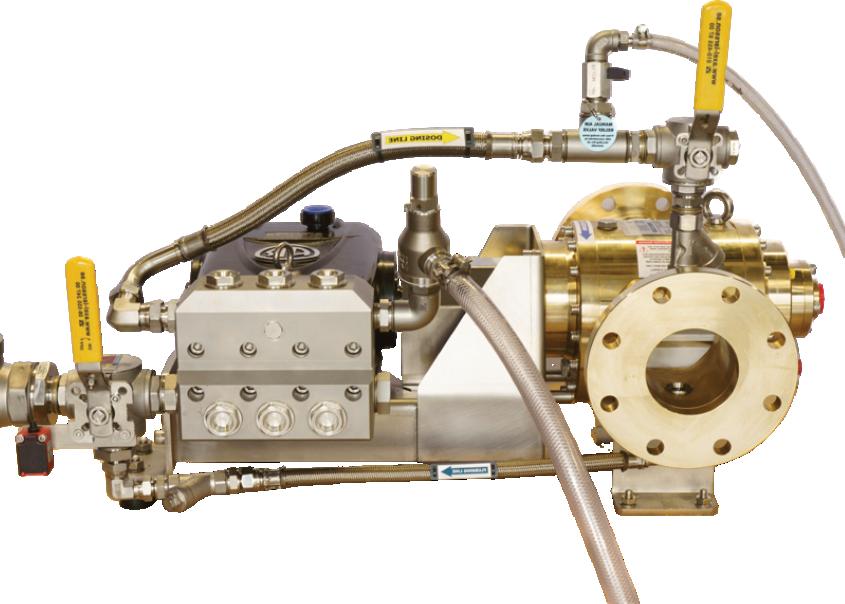
FIREMIKS For Industrial and Sprinkler Firefighting
Piston pumps (-PP) are well suited for systems with wide flow range, for example sprinkler systems and Gear pumps (-GP) are particularly suited for working in deluge installations and with large flow monitors.
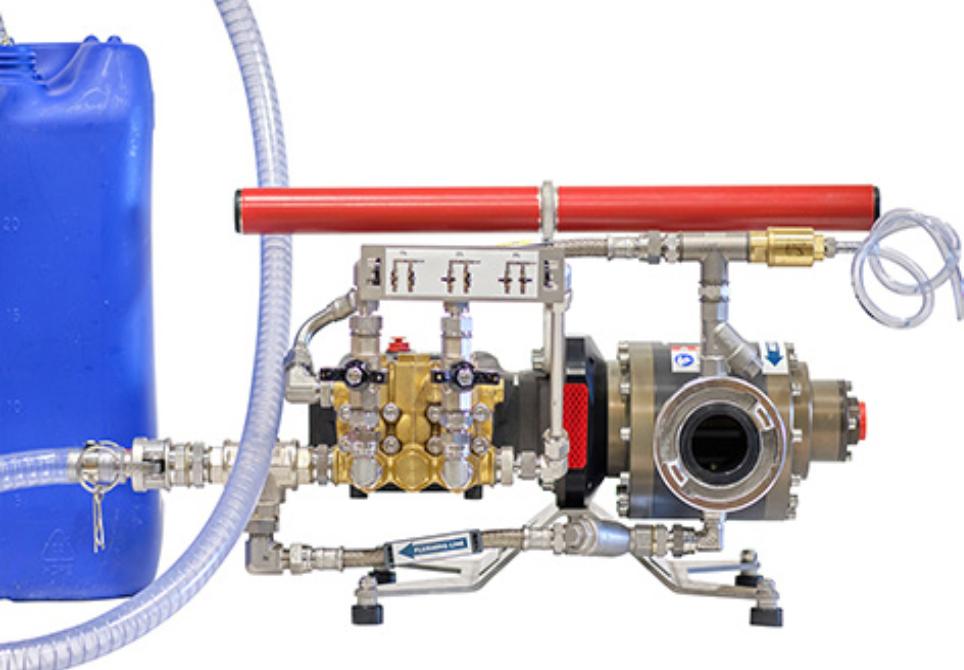
FIREMIKS Mobile unit for Fire Brigades
With a FIREMIKS the firefighters get a flexible resource, easy to adapt to different firefighting situations. FIREMIKS works within a wide pressure and flow range giving a precise and steady dosing rate.
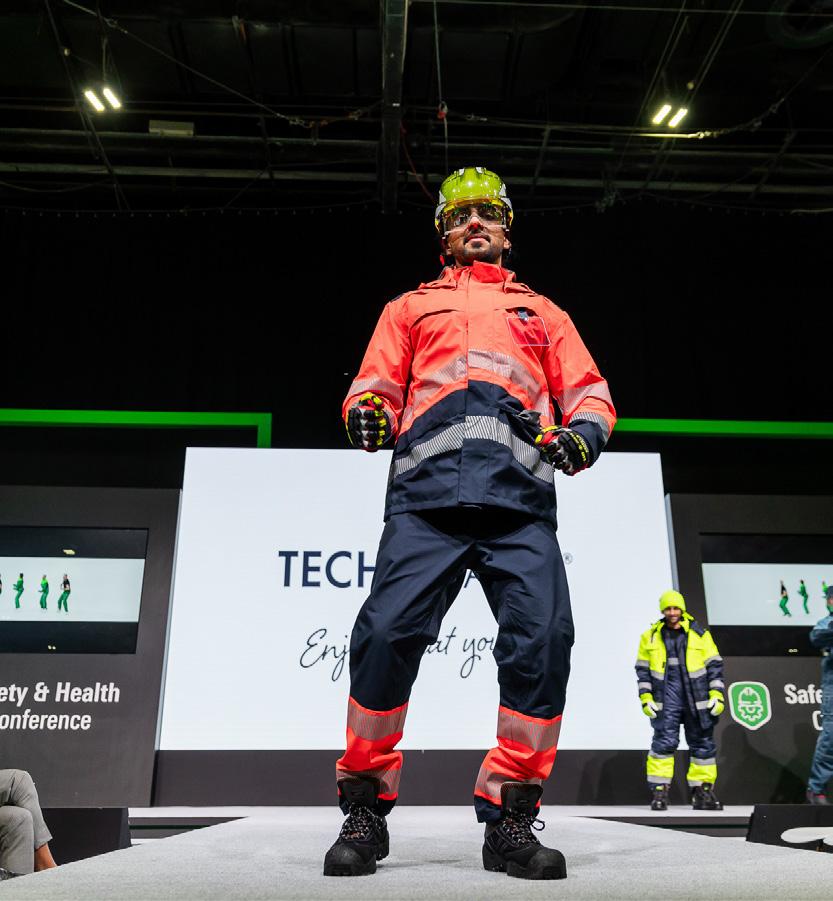

INTERSEC 2026 A MILESTONE MOMENT FOR GLOBAL SECURITY AND RESILIENCE
Held under the patronage of H.H. Sheikh Mansoor bin Mohammed bin Rashid Al Maktoum, Chairman of the Dubai Ports and Borders Security Council, Intersec 2026 achieved record-breaking success and marked a defining step in the evolution of global safety, security and fire protection
Dubai once again took centre stage in the global fire and life safety conversation as Intersec 2026 drew industry leaders, innovators and policymakers from around the world. Over three dynamic days at the Dubai World Trade Centre, Intersec 2026 brought together 1,180 exhibitors from 56 countries, covering an impressive 65,000+ square metres of exhibition space.
The 2026 event delivered a resounding statement on Dubai’s leadership in shaping the future of safety, security and fire protection. In addition, it not only broke records but also marked a pivotal evolution with the unveiling of the Intersec Global identity — a new international ecosystem uniting industry stakeholders, innovators and policymakers under one cohesive vision.
Attendees were treated to cuttingedge solutions across 10 international pavilions, covering everything from passive fire protection advancements and AI-driven fire prediction to integrated life safety systems and emergency response technology. The 2026 event also offered insight-rich sessions through 14 conferences and specialised features, providing critical insights on future-ready regulation, machine learning and crossborder safety intelligence and much more.
“Intersec has become one of the world’s leading platforms dedicated to security and safety, and the scale of international participation reflects the growing confidence in Dubai’s ability to host major global events that help shape the future of key sectors through an
environment that supports innovation and knowledge exchange,” said H.H. Sheikh Mansoor during the opening ceremony.
“The rapid evolution of security, safety and emergency response technologies requires constant integration between innovation, institutional readiness and practical application. Dubai is committed to reinforcing this approach by organising exhibitions that bring together global expertise, helping to strengthen community security and enhance the efficiency of safety systems in line with the highest international standards.”
The power of collaboration
Beyond the buzzing show floor, Intersec 2026 demonstrated how the convergence of policy, technology and partnerships
continues to redefine the resilience landscape. Strategic backing from the General Command of Dubai Civil Defence and SIRA (Security Industry Regulatory Agency) ensured the event aligned firmly with UAE national priorities — from infrastructure protection to digital transformation.
Among the highlights, an intelligenceled maritime security roundtable set the strategic direction for coordinated regional cooperation across the GCC, while a new Memorandum of Understanding with UXE positioned the company as Future Cities Partner, supporting the UAE’s ambitions toward safer, smarter urban environments.
These initiatives strengthened the UAE’s alignment between practical security frameworks and national strategies for infrastructure protection and digital transformation.
Celebrating excellence across the industry
The Intersec Awards returned with renewed prominence, shining a spotlight on industry achievements that are transforming communities across the region. Among this year’s honourees was Khalid Mubarak of Dubai Municipality, who received the H.H. Sheikh Mansoor bin Mohammed bin Rashid Al Maktoum Emirati Rising Star Award for his exceptional contribution to urban safety. The awards, now in their fifth edition, celebrated excellence across 17 categories during a gala dinner at the Conrad Dubai, with winners selected by an independent panel of 23 international judges.
In fire and safety categories, Kentec Electronics and Hochiki Middle East shared Best Active Fire Safety Product for the K-Detect-Ion Detector and ACD MultiSensor with CO, respectively, advancing early detection reliability and reducing false alarms. CI Global took Best Passive Fire Safety Product for CI Safe, praised for robust passive protection against fire and smoke spread. WSP Middle East won Best Fire Safety Project – MEA for One Za’abeel – Skyward, setting benchmarks in fire engineering for complex developments.
The General Command of Dubai Civil Defence won the Incident Resolution Spotlight award for its Drone Firefighting Unit, which improves situational awareness, response speed and firefighter safety in high-risk incidents. While Axis Communications received Best Safety Protection Solution for the AXIS D6210 Air Quality Sensor, monitoring indoor environments for healthier safety outcomes. Saudi Aramco’s From Code to Clarity to Compliance initiative earned Impact Makers recognition for embedding safety culture enterprise-wide.
Dishan Isaac, Show Director of Intersec at Messe Frankfurt Middle East, commented: “The 2026 winners demonstrate how technology, strategy and people come together to deliver realworld impact – from advancing life safety and critical infrastructure protection to strengthening cyber resilience and emergency response capabilities. What is particularly inspiring is the breadth of solutions and leadership on display, spanning early-stage innovation through to large-scale, enterprise-wide implementation.”
The unveiling of Intersec Global
Perhaps the most significant development of the 2026 edition was the launch of the new Intersec Global identity – a transformative step that extends Intersec’s influence far beyond Dubai.
Designed as an always-on ecosystem, Intersec Global will extend the Dubai platform’s reach through digital collaboration tools, global partnerships, and year-round engagement across key verticals. This expanded framework strengthens Dubai’s position as the global anchor for security and resilience while amplifying collaboration across international markets.
Symbolising continuity and evolution, Intersec Global represents a truly unified community dedicated to advancing safety and sustainability worldwide.
A spokesperson from Messe Frankfurt Middle East commented: “Intersec 2026 has redefined what it means to connect and inspire an industry. With a 90% visitor
“The Intersec Awards returned with renewed prominence, shining a spotlight on industry achievements across the region”
EVENT SNAPSHOT
1,180 exhibitors from 56 countries
65,000+
SQM of exhibition space
14 conferences and sectorfocused features
10 international pavilions
90% visitor satisfaction rating
satisfaction rate, the momentum behind Intersec Global has only just begun — 2026 was the foundation of a truly unified international platform.”
Looking to 2027 and beyond
With the success of the 2026 edition still resonating, preparations are already underway for Intersec 2027, which will return to the Dubai World Trade Centre from 12-14 January 2027. The next chapter promises even greater cross-industry collaboration, featuring enhanced global participation, new product launches and advanced demonstration zones.
For an industry that thrives on innovation and partnership, Intersec 2026 demonstrated that Dubai remains at the epicentre of progress – and with Intersec Global now driving the future, the momentum shows no sign of slowing.
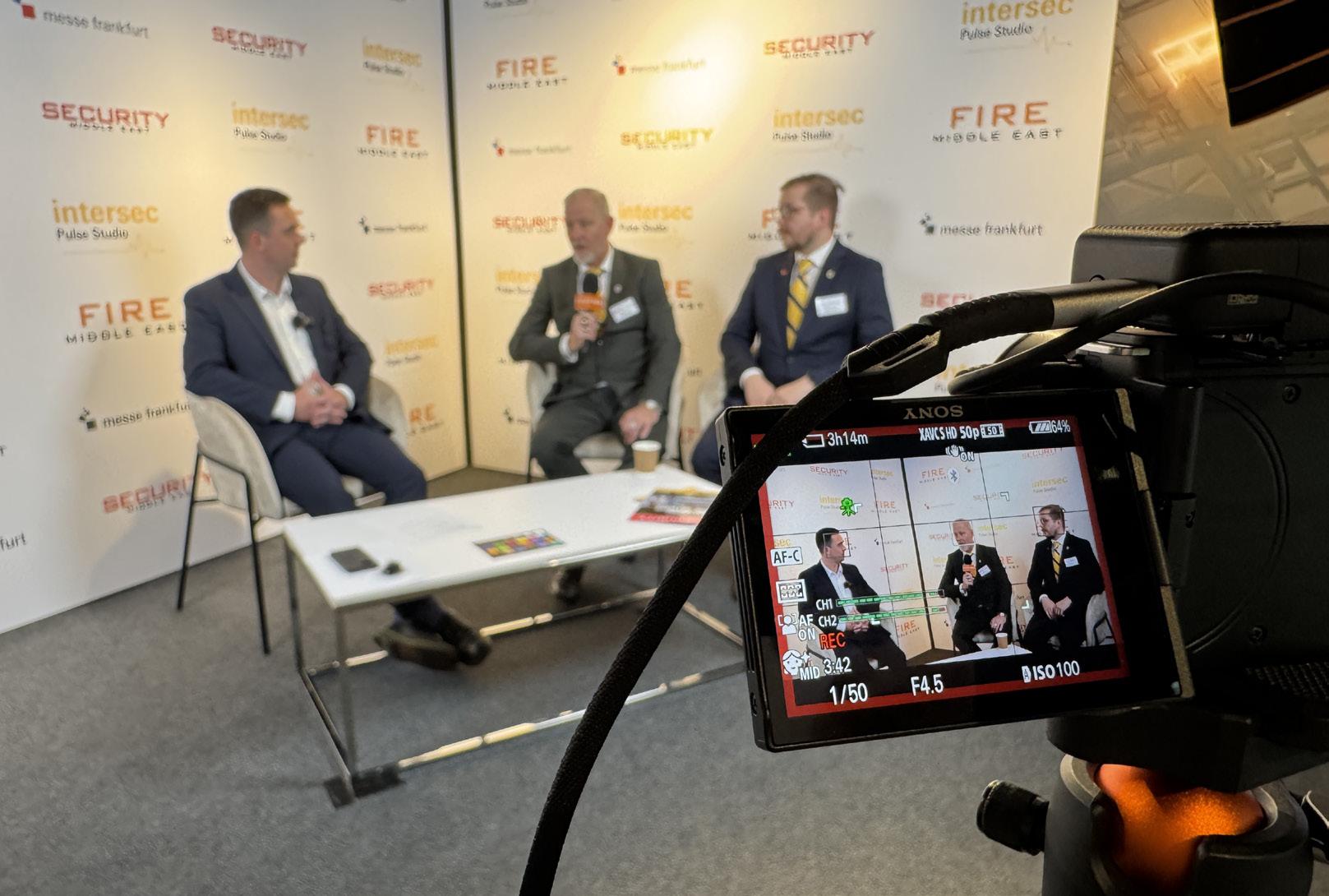
THE HEARTBEAT OF INTERSEC 2026
Intersec Pulse Studio emerged as one of the standout innovations of Intersec 2026, acting as a live editorial engine at the heart of the show. Hosted and produced by Fire Middle East and Security Middle East magazines, the dedicated studio provided a powerful platform for expert commentary, trend analysis and forward-looking debate that extended far beyond the show floor
Positioned as the “heartbeat” of the event, the Intersec Pulse Studio was designed to capture and broadcast the energy, ideas and expertise circulating across the exhibition. Across three days, it hosted a rapid-fire series of 10-minute interviews with senior figures from the fire and security sectors, each conversation curated to tackle a specific critical issue – and find out what the companies are doing to combat it. These interviews were conducted live at the show then amplified across Intersec and the magazines’ digital channels, ensuring the insights reached a global audience long after visitors left Dubai World Trade Centre.
The initiative was conceived as more than a content “add-on”. By placing an editorially led studio in the middle of the event, Intersec Global created a real-time
think tank that both reflected and shaped the agenda. For exhibitors, partners and visitors, Pulse became a focal point –a place where the industry’s most pressing talking points were distilled into sharp, accessible takeaways that could inform strategy and decision-making throughout 2026 and beyond.
A partnership powered by editorial authority
To deliver this, Intersec partnered with Security Middle East and Fire Middle East, recognised editorial leaders for the region’s security and fire industries. Under this collaboration, the magazines managed and conducted all Pulse Studio interviews, drawing on their deep network of influencers, practitioners and innovators. This ensured each session

carried genuine editorial weight rather than being treated as a simple marketing broadcast.
At the centre of the studio was Ryan Bickerton, representing the magazines in his role as host and moderator. Bickerton led tightly structured 10-minute conversations that cut quickly to the issues that matter most to end users: operational resilience, regulatory readiness, technology adoption and the human skills needed to keep pace with change. His questioning gave guests space to share practical experiences while also pushing them to offer clear, future-focused views on where the sector is heading.
Fire Middle East conversations
In conversation with John Dunne, Red Sea Global
John Dunne, Group Head of Health and Safety at Red Sea Global, spoke about “safety re-imagined” in a multi generational, multicultural workforce. Dunne explained why traditional
classroom training no longer fits today’s tech savvy yet often low literacy construction workforce, and outlined Red Sea Global’s response: a practical, on site training academy embedded in live projects. He weighed hands on methods against virtual and augmented reality, stressing that technology must be audience appropriate, not a gimmick. He also highlighted IOSH and other bodies’ role in validating innovative methods, sharing best practice, and urged safety leaders to track ROI and stay engaged with evolving training models.
In conversation with Samer Alkhatib and Anas Alassi, LIFECO Lifeco’s leadership team outlined how the Dubai-based manufacturer has grown into a global fire safety player, now supplying complete, code compliant solutions to more than 50 countries. They explained why customers value an endto-end portfolio – from suppression and sprinklers to detection and extinguishers – backed by robust design, manufacturing
and material quality. Looking ahead, they highlighted new Supreme X HFC and inert gas systems, plans to expand both mechanical and electrical lines, and an ambition to be among the sector’s top brands. Above all, they stressed supportive leadership, standards compliance and a clear mission: making the world safer.
In conversation with Adrian Liechti, Securiton
Securiton Vice President of International Sales, Adrien Liechti, unveiled the company’s new generation of aspirating smoke detectors, the ASD 2000. He explained that the platform has been completely redesigned –from housing and airflow sensors to electronics, software and IT tools – to deliver advanced performance while remaining simple for integrators to install and commission. He highlighted key applications such as data centres, logistics hubs, manufacturing sites and exhibition venues, as well as the cost, certification and cybersecurity challenges behind such innovation.
In conversation with Yasmin Osbourne, Ci Global
Yasmin Osborne, CI Global’s Head of PR and Communications, shared how the British company is reframing fire safety around prevention rather than reaction. She introduced Ci Safe, an intelligent electrical fire and building safety system that detects anomalies at socket level, cuts power before ignition and scales from single homes to smart cities. Additionally, Osborne shared founder Anthony Parfitt’s Grenfell-inspired mission, and why the UAE’s innovation agenda and high
electrical loads make it a launchpad for prevention-first technology. She also highlighted AI, IoT and autonomous sensing as the key technologies turning passive buildings into active protectors.
In conversation with John and Even Ottesen, Fomtec
Fomtec CEO and Founder John Ottesen and International Sales Manager Even Ottesen discussed how the Middle East – the world’s biggest firefighting foam market – is becoming a key growth region for the company. They credit Fomtec’s 25year success to long-term partnerships, deep product documentation and a passion for innovation, showcased through the Enviro research programme and its fluorine free foam range. The pair highlighted landmark products such as Enviro USP, Enviro ARK and the new Enviro NEO, engineered without “hidden gum” polymers to deliver stable, high hazard performance. They also underlined Intersec Global’s role as a vital hub for end user feedback and partner engagement.
Building a forward-looking archive of insight
One of the defining strengths of the Intersec Pulse Studio is that its impact does not end when the show closes. Every interview is recorded and published across Intersec’s digital platforms as well as the Security Middle East and Fire Middle East websites, newsletters and social channels, building a growing archive of expert insight that can be revisited on demand throughout the year. This multiplies the value of attendance for both speakers and the wider community, turning a three-day event into an ongoing knowledge resource.
As Intersec Global evolves into a truly year-round ecosystem, Intersec Pulse Studio – powered by Fire Middle East and Security Middle East – is set to remain its editorial heartbeat: a place where the industry comes not just to showcase technology, but to define the conversation around safety, security and resilience for the years to come.
You can view all of the conversations happening at the Intersec Pulse Studio at www.firemiddleeastmag.com/ intersec-2026/





2026–2027