Leak Detection CEO, shares his vision for pioneering preventative solutions in the commercial FM sector
Welfare Hire
Nationwide’s Sarah Butcher on why cheap weekly rates are false economy for site lighting
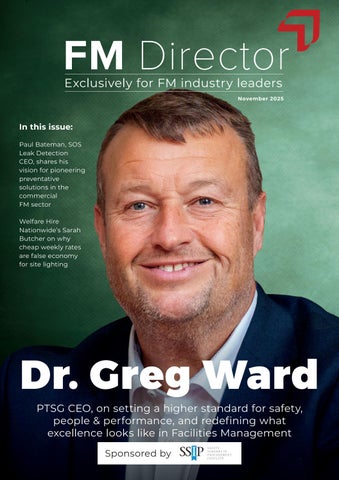
Dr. Greg Ward
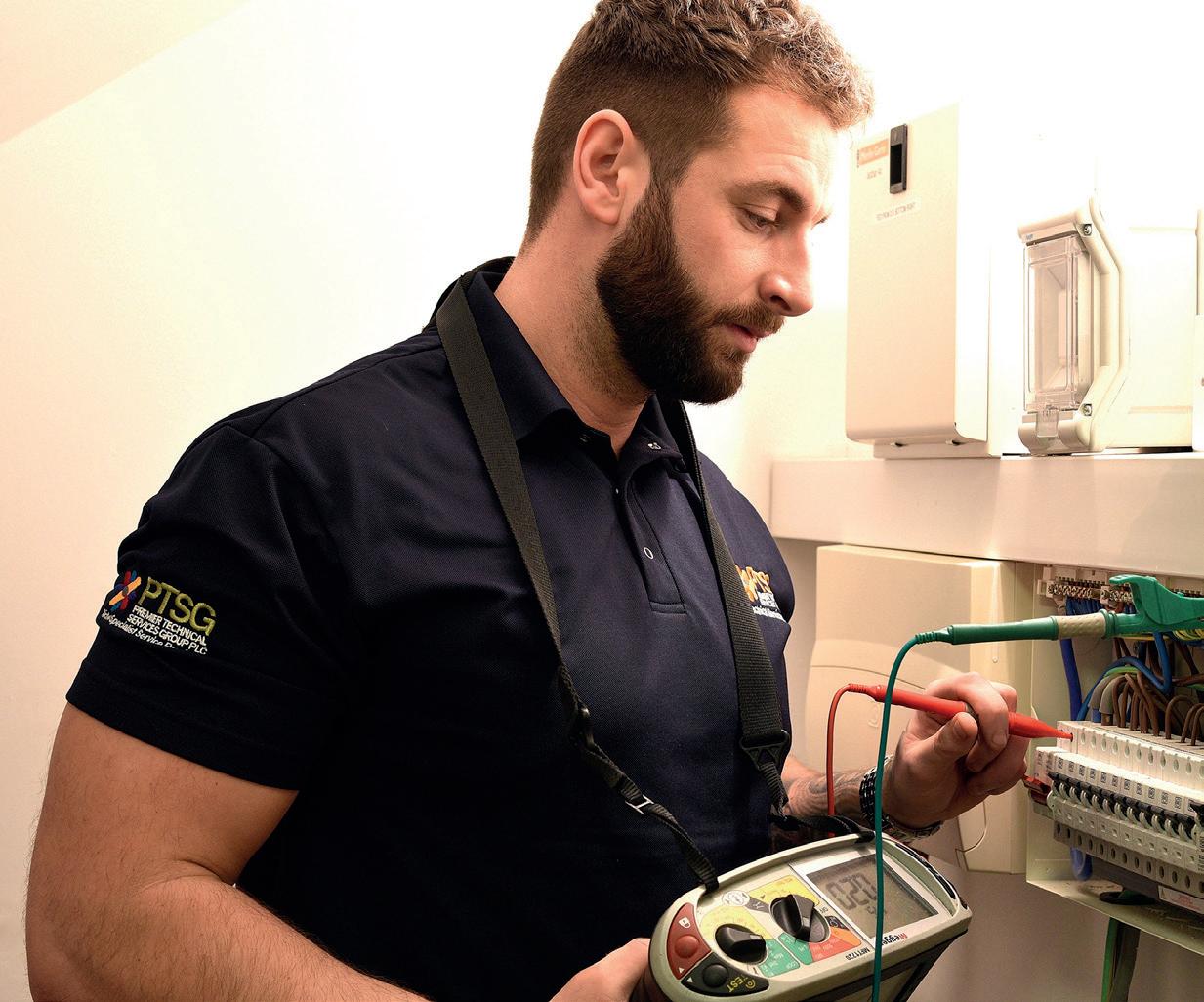
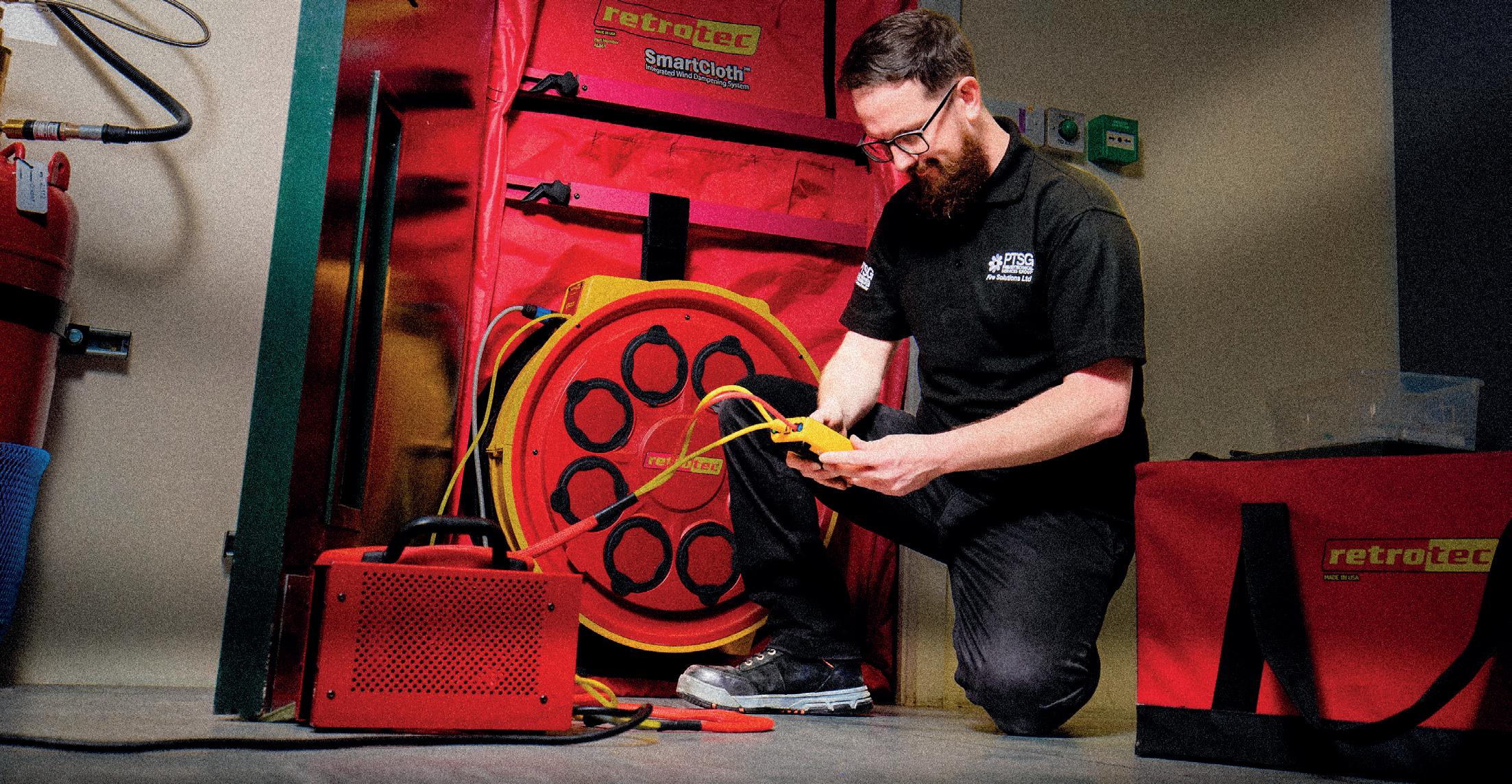
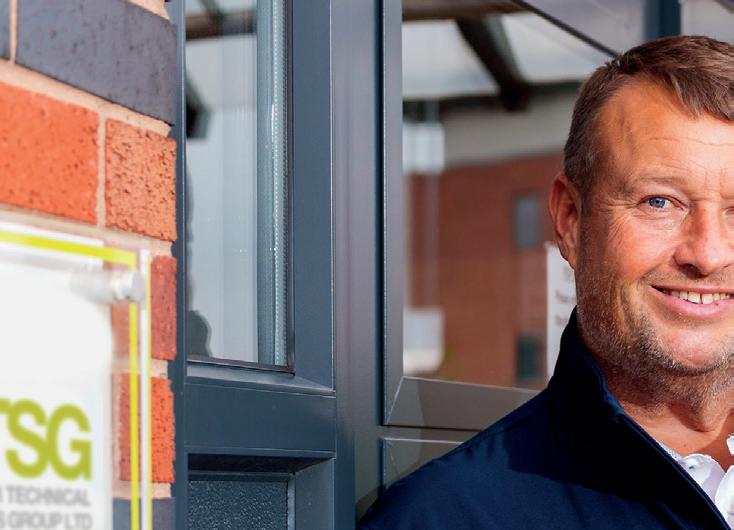
PTSG CEO, on setting a higher standard for safety, people & performance, and redefining what excellence looks like in Facilities Management
Sponsored by
Welcome to November’s Issue of FM Director
As we make our way through the penultimate month of 2025, it’s a good time to reflect on the past year and take stock of everything that’s happened within our fantastic industry.
To this end, we speak to several industry leaders about their experiences over the last twelve months, and what they expect 2026 – and beyond – to bring. We’ve also been as busy as ever gathering all the latest FM stories to keep you updated, and sourcing the most insightful interviews and features from across the sector.
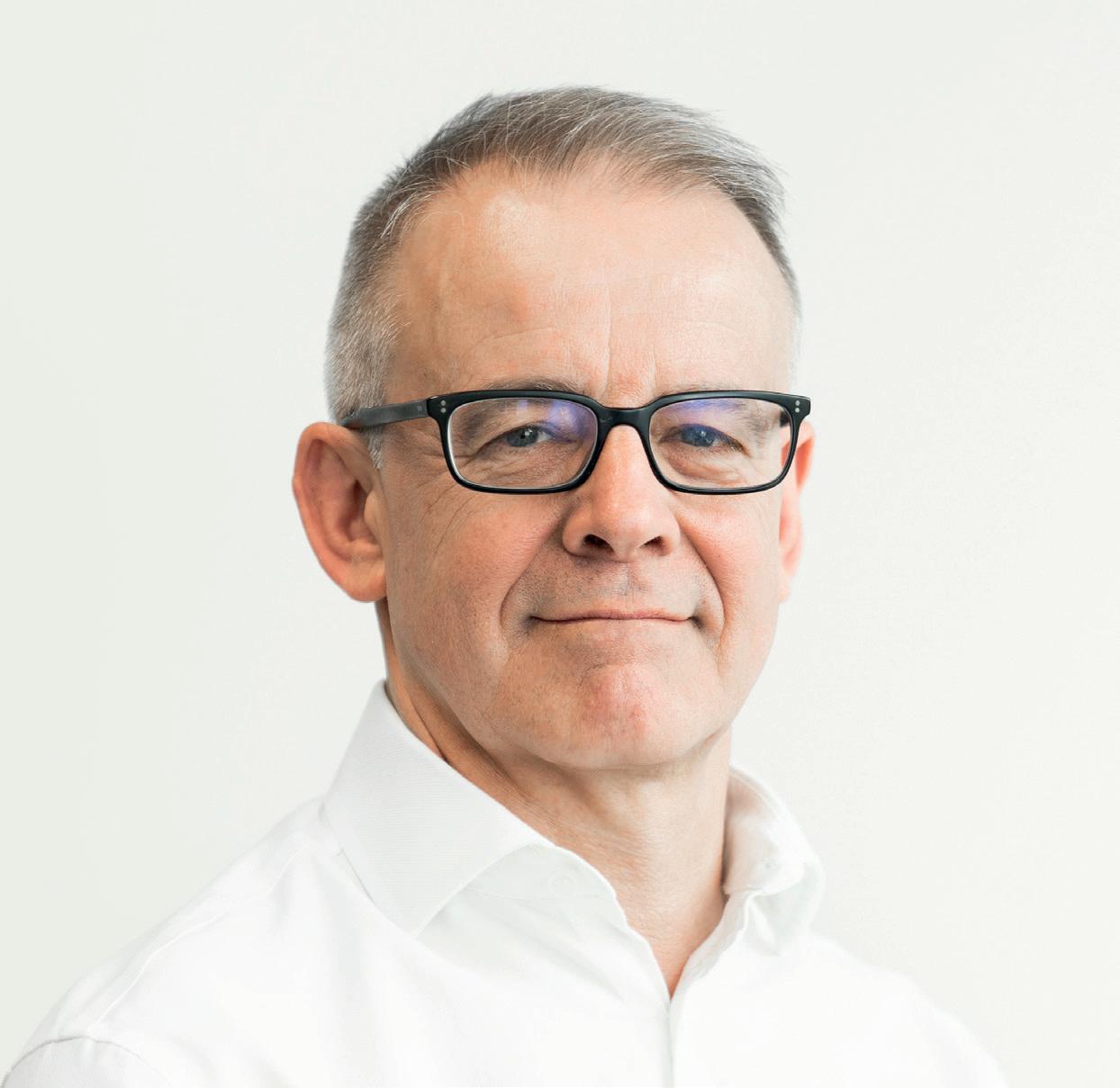
Our cover feature this month is an exclusive interview with Dr Greg Ward, Chief Executive Officer at PTSG. I met with Greg at PTSG HQ last month for an insightful fireside chat where we discussed all things PTSG. Amongst other issues, we covered setting a higher standard for safety, people & performance, and redefining what excellence looks like in Facilities Management. Watch the interview here: youtu.be/BHJxxiOnmRI
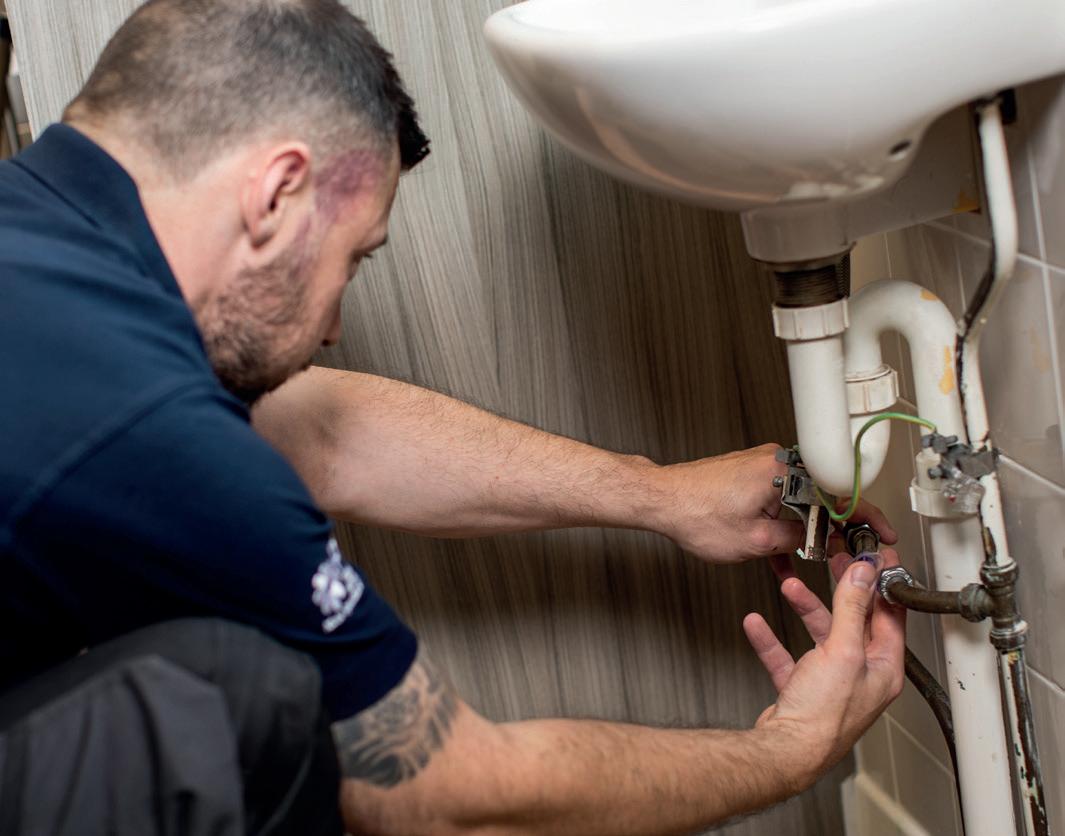
We also speak to Paul Bateman, Chief Executive Officer of SOS Leak Detection. We recently announced our new partnership with SOS Leak Detection – the UK’s leaders in leak prevention, detection and repair. We will be working with them to help them turn their proven expertise into market authority. We’ll be guiding the next stage of their growth - clarifying their message, amplifying their visibility, and ensuring their story reaches the decision-makers who matter most. During their very first spotlight interview, Paul chats to me about the company – their journey so far, where they’re headed, and the importance of leak prevention.
In addition, Welfare Hire Nationwide’s Sarah Butcher talks to us about why cheap weekly rates are false economy for site lighting, Jamie Woodhall, UK Technical & Innovations Manager at Initial Washroom Hygiene, tells us how to keep productivity levels high at work as flu season begins, and Andrew Watkinson, Managing Director at CPiO, discusses how the uncertainty around trade tariffs acts like a new hidden levy on UK Facilities Management.
And as if that wasn’t enough, this edition also features several other key voices in the industry such as Ciphr, Valda Energy, Yanmar, and many more.
As always, I hope you enjoy this edition of FM Director and remember, if you have anything you’d like to discuss with me, please drop me a line at claire.middleton@businessdailygroup.co.uk
Thanks Claire Middleton
fmdirector@fmbusinessdaily.com
A Higher Standard
As PTSG enters a new phase of expansion, Chief Executive Officer Dr Greg Ward is shaping the Group with the precision of an engineer and the vision of a statesman
Let people bloom –and innovation will too
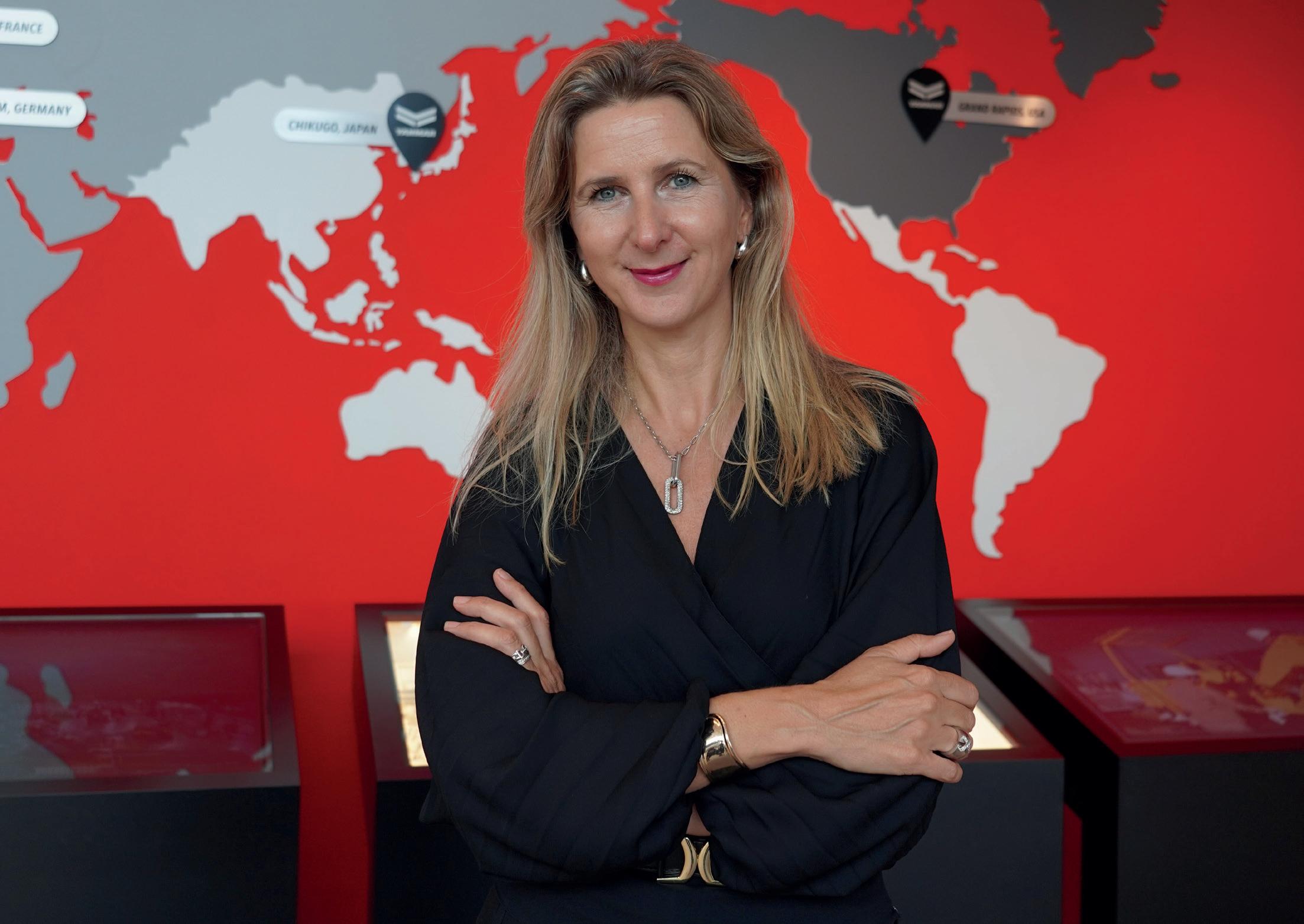
Elsie De Nys, Global Director of Brand and CSR at Yanmar Compact Equipment, talks to us about why difference – not sameness – builds stronger companies, cultures and outcomes
Managing
Editor
Claire Middleton
Designer and Production Manager
Chris Cassidy
Production Editor
James Jackaman
Recruitment tops list of employers’ biggest challenges
Recruiting enough qualified workers, retaining existing talent, and managing rising costs are among the biggest challenges facing UK organisations right now, according to new research by HR and payroll software provider Ciphr
As PTSG enters a new phase of expansion, Chief Executive Officer Dr Greg Ward is shaping the Group with the precision of an engineer and the vision of a statesman
rom his roots as an apprentice to leading one of the UK’s fastest-growing specialist service providers, he is setting a higher standard for safety, people and performance and redefining what excellence looks like in facilities management.
FM Director/FM Business Daily was delighted to have the opportunity to meet and chat with Dr Ward:
Building on Strength: How Dr Greg Ward is Taking PTSG to the Next Level
When Dr Greg Ward joined Premier Technical Services Group (PTSG) as Chief Executive Officer in June 2025, he inherited a business in excellent shape…a high-performing, high-growth specialist services company already admired across the facilities management and construction sectors. But Ward’s arrival marked a new chapter. With a global track record in transformation and a deeply personal belief in people, performance and safety, he has set out to elevate every part of the organisation and to take PTSG from national champion to European leader.
“We combine specialist expertise with national scale – that’s what makes us unique,” he says. “But the next phase is about consistency, culture and ambition. Our journey is only just beginning.”
From Yorkshire roots to national leader
Founded in 2007 and headquartered in Castleford, West Yorkshire, PTSG has become one of the UK’s most dynamic niche specialist
Its reach is immense: from blue-chip corporates and FM giants to local authorities, hospitals, schools and major infrastructure clients. Today, PTSG employs over 3,000 people, around a third of whom are based in middle England.
The company’s trajectory has been remarkable. After listing on the London Stock Exchange in 2015, it was acquired by Macquarie Group in 2018 and later by global private-equity firm Warburg Pincus in 2021 – each milestone reinforcing its credibility and investment strength. Turnover has grown from £275 million in 2023 to £320 million in 2024, with plans to double those numbers within two years through a mix of organic expansion and strategic acquisitions.
PTSG’s economic footprint extends well beyond its balance sheet. With a workforce of 3,000 and an estimated employment multiplier of 2.2, the company sustains over 6,600 additional jobs across the UK economy…a total economic impact exceeding £200 million annually.
The Group delivers more than 170 specialist service lines across five divisions – Access & Safety, Electrical Services, Building Access Specialists, Fire Solutions and Water Treatment – keeping over 300,000 buildings compliant, safe and operational for more than 30,000 customers nationwide.
We combine specialist expertise with national scale – that’s what makes us unique
An international CEO with grassroots beginnings Ward’s appointment brought a distinctly international perspective to a company with deep British roots. He began his career as a mechanical and electrical apprentice at Ford Motor Company before progressing through senior roles in manufacturing, aviation, construction and FM.
His résumé reads like a masterclass in global leadership: Operations Director at BAA Heathrow; Global Managing Director of Manufacturing at Laing O’Rourke; Managing Director of Transguard Group in the UAE; and Chairman and CEO of Revive Group.
“I’ve seen what world-class performance looks like,” he says. “But I’ve also learned that success always comes down to people – giving them purpose, tools and trust.” Ward’s management philosophy is built on accessibility, empowerment and accountability.
He has re-shaped PTSG’s leadership model into an inverted pyramid: the CEO at the bottom, supporting everyone from the back office to the frontline technicians who deliver for customers every day.
“Our people are our greatest asset,” he explains. “They are the ones creating value for clients, ensuring safety and delivering service excellence. My job is to make sure they have everything they need to succeed.”
Re-energising culture and engagement
In his first few months as CEO, Ward made it his mission to listen – travelling across the country to meet teams, customers and partners. The result has been a renewed sense of unity and ambition.
“Driving the culture is first and foremost,” he says. “Safety has to be in our DNA. Collaboration, respect and accountability are what turn a good company into a great one.”
If we have the best people, we’ll have the best company. That’s what the Centre of Excellence is about
From introducing employee-recognition initiatives to championing diversity and development, Ward’s leadership has already left a tangible mark. He has promoted significant numbers of women into leadership roles and created clearer pathways for younger employees to advance.
“If anyone writes to me, whether it’s a director or a cleaner, they’ll get the same response,” he says.
“This isn’t about hierarchy. It’s about respect and teamwork.”
Safety, service and professionalism at the core Few CEOs speak about safety with such conviction. For Ward, it is not a compliance box to tick but the foundation of everything PTSG does. Across all five divisions, safety excellence is nonnegotiable.
“We exist to help our customers meet their compliance needs safely, efficiently and reliably,” he says.
“If we turn up when we say we will, communicate clearly and deliver what’s promised, everything else follows.”
That precision-led culture translates into customer loyalty. Many of PTSG’s clients
have remained with the business for over a decade – a reflection of trust built through reliability and personal accountability. Ward describes this as “customer loving”: a relentless focus on earning and keeping confidence through consistency and care.
Investing in excellence
Ward’s vision for the next phase of growth is anchored by a single idea: raising standards across every dimension of the business. Central to this is a new Centre of Excellence, due to open in 2026…a major investment in skills, innovation and training.
The facility will bring together expertise from PTSG’s 170 service lines under one roof, providing advanced technical instruction alongside leadership, safety and customer-service training.
It will also serve as an innovation hub for digital solutions, data analytics and AI-enabled reporting – areas Ward believes will transform the compliance and safety sector.
“If we have the best people, we’ll have the best company,” he says simply. “That’s what the Centre of Excellence is about –creating the capability and confidence to deliver world-class service, every time.” Technology, he adds, is a key enabler but never a substitute for professionalism. “AI and automation are exciting, but they must enhance, not replace, human judgment. The future belongs to organisations that can combine digital intelligence with human expertise.”
Growth through strategy and partnership
Under Ward’s leadership, PTSG’s growth strategy is as disciplined as it is ambitious. Organic expansion remains the priority, complemented by selective acquisitions that add scale, capability and geographic reach.
The company’s recent move into the Netherlands marks the start of a broader international agenda, positioning PTSG as a European leader in niche compliance and safety services.
At the same time, Ward is strengthening the Group’s ESG performance – from reducing carbon emissions and advancing its EcoVadis standing to increasing community engagement. “Sustainability is now a competitive advantage,” he says. “Our customers, our investors and our people all expect it.”
The road ahead
Looking forward, PTSG’s roadmap is clear: accelerate growth, deepen customer relationships, and continually raise the bar on safety and quality. But for Ward, the real measure of success will always be people.
“It’s not just about numbers,” he says. “It’s about building a business we’re proud of – one that sets the standard for safety, service and professionalism. A company that gives opportunities to thousands of people and delivers real value to customers and communities alike.”
That philosophy echoes the ethos that has defined Ward’s own journey – from apprentice to international CEO. It also captures why, under his leadership, PTSG’s story feels far from finished.
“PTSG has achieved extraordinary things,” he says, “but the best is yet to come.”
Elevate Your Business with UKMDA
Join the UK Metal Decking Association (UKMDA) and place your business at the forefront of the industry. UKMDA offers a powerful network and essential resources to help your company and contracts be successful. Why Join UKMDA?
Leadership & Influence:
Be part of a powerful network that shapes industry standards and works with key bodies like HSE, CITB and CSCS
Credibility & Safety:
Demonstrate your commitment to excellence with our rigorous audits and access to authoritative safety guidance.
The UKMDA is committed to raising the bar for safety and competency. Our comprehensive training programs provide your team with the skills and qualifications they need.
Core Training: Our scheme covers all aspects of metal decking and stud welding installation, taught by licensed trainers.
Nationally Recognised NVQs:
We provide NVQs that allow you and your installers to demonstrate technical competence.
A UKMDA-qualified workforce means fewer accidents, greater efficiency, and an enhanced reputation for quality.
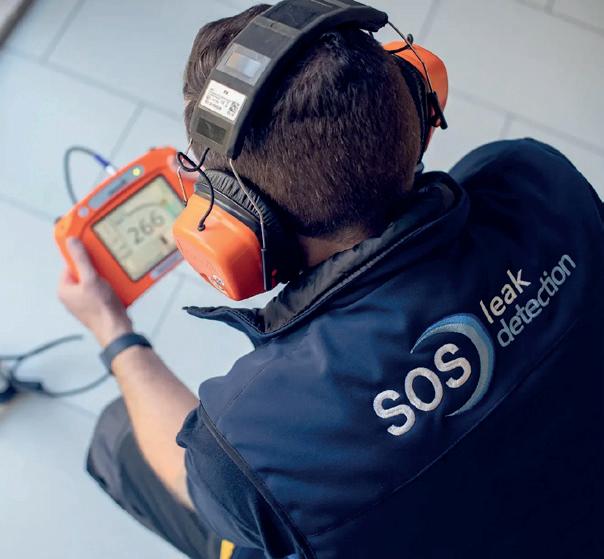
Scaling New Heights in Leak Detection
Speaking exclusively to FM Director, SOS CEO Paul Bateman outlines the company’s renewed focus on supporting FM and commercial estates with fast, non-destructive detection and preventative solutions
Having joined SOS Leak Detection six months ago, Paul Bateman is already shaping the company’s next phase of growth. He brings a fresh, commercially-focused perspective to a market that is becoming increasingly important to FM and commercial property teams.
This fresh perspective may prove to be exactly what the business needs as it looks to expand beyond its traditional insurance market focus into the wider commercial and facilities management sectors.
A Career Built on Transformation
Paul’s journey to SOS began with a qualification as a quantity surveyor, followed by a career spanning civil engineering, highways and railways. His experience encompasses roles across the entire stakeholder spectrum – client, contractor and subcontractor – providing what he describes as “a well-rounded view” of stakeholder management.
Paul’s breadth of experience gives him a clear understanding of how FM, insurers, landlords and contractors operate. This perspective underpins SOS’s shift towards building long-term partnerships in the FM sector, where reliability, reporting accuracy and speed are critical.
His recent career has been marked by significant business transformations. Paul was involved in a management buyout of a rail plant hire business in November 2018, backed by private equity, before exiting in November 2023.
“It was a tough time for the industry,” he reflected. “There were a lot of headwinds to deal with – COVID, inflation, industrial action – but it enabled me to grow my experience and progress in my career.”
Following a brief spell with a turnaround situation in South Wales, where he professionalised an owner-managed business and implemented digital solutions, Paul took some time off before being approached about the SOS opportunity in May 2024.
Seeing the Opportunity
What attracted Paul was the opportunity to take a high-performing insurance-led business – with 99 percent first-visit success and a 4.9 Trustpilot rating – and position it more strongly in the FM and commercial markets, where demand for fast, non-destructive leak detection is growing.
“FM teams are under pressure,” he explains. “Downtime, water loss, compliance obligations and tenant expectations all converge. What SOS offers is speed, national coverage and reporting that gives FM and estates managers the confidence that issues are identified, resolved and documented properly.”
Having experienced both sides of business sales previously, Paul was keen to see this journey through to success. He noted that with backing from private equity firm YFM and a seasoned chairman, the foundations were in place for growth.
“We’re a small team. There’s not lots of red tape,” he said. “It just needs somebody to come in, look at the team, look at the opportunities, reset the strategy, come up with a plan and deliver it.”
Embracing Prevention and Technology
Central to the strategy is prevention. SOS is developing IoTenabled monitoring and early-warning systems designed for FM portfolios, helping estates teams detect issues before disruption occurs.
The business is actively exploring partnerships with water retailers and envisages a joint venture approach that could offer comprehensive water management solutions to large property portfolios.
“Our aim is to partner with water retailers and estates-focused service providers to offer integrated solutions that reduce downtime and protect assets,” Paul says.
It was a tough time for the industry, but it enabled me to grow my experience and progress in my career
The company is also investigating AI applications to streamline operations, from inbound jobs and triaging, through to reporting and invoicing.
“There are lots of things that we could make more efficient by using AI to help us,” Paul stated.
“Our intention would be to streamline a lot of the manual processes, allowing our staff to spend more time on value adding activities. This would also give us the ability to scale without the need to grow our back-office team.”
Leading with Balance
Paul describes his leadership style as calm, structured and focused on empowering teams. “People perform at their best when expectations are clear and the environment is supportive,” he explains.
“Within the world of private equity, it’s all about pace, energy, building teams, being decisive and having the ability to adapt to changing environments,” he noted.
He also acknowledged the balance required between achieving results and recognising the long-term impact on team members who may continue with the business beyond his tenure.
“I’m here to do a job, and that is to take the business on its next stage of growth, creating job opportunities and delivering shareholder value.”
Building on Strong Foundations
Paul is enthusiastic about SOS’s existing strengths. He praised it as “a good, honest business” with a great reputation and national service capability.
SOS has a fully employed national team of specialist engineers – a model that differentiates it from many competitors. “Our engineers take real pride in their work,” he says. “We meet 98 percent of SLAs consistently and find leaks on the first visit in 99 percent of cases.”
Most importantly, Paul found a team genuinely invested in the business’s success. “Everyone takes pride in what they do; they care about the business and want it to improve,” he stated. “There are some that sit in the office until 7pm talking about other things that we should be doing, just trying to make the boat go faster.”
Ambitious Targets Ahead
Looking ahead, Paul’s focus is clear: establish a recognised preventative and diagnostic solution for FM portfolios, build longterm commercial relationships, and continue strengthening service performance. “If we keep doing what we say we’ll do, and support FM teams with speed, accuracy and professionalism, the rest will follow.”
“We’re strongly recognised within the insurance market, where our national coverage and reporting standards are well established,” Paul says. “We’re now translating that same capability into the FM market, where consistent service, accuracy and transparency matter just as much.”
Paul believes the opportunity is significant, particularly given the limited competition in dedicated leak detection. “There’s not a lot of people in our space, really,” he observed.
“We are hoping to use our reputation and quality of service within the insurance sector to show why we are the best out there at the moment.”
With education about leak detection services forming a key part of the growth strategy, Paul recognises the challenge ahead.
He acknowledges that leak detection is still misunderstood outside the insurance world, particularly in FM where responsibilities are broad and pressures high. “Part of our work is education – helping FMs see how early detection prevents disruption, protects assets, and cuts cost.”
As SOS Leak Detection embarks on this ambitious transformation under Paul’s leadership, the combination of strong foundations, clear vision and willingness to embrace new technologies and partnerships suggests the business is well-positioned to achieve its growth ambitions in the commercial FM sector.
We are hoping to use our reputation and quality of service within the insurance sector to show why we are the best out there at the moment
Keeping Productivity Levels High at Work as Flu Season Begins
Our hands are responsible for spreading around 80% of common infections. With flu cases up by 5% in recent weeks, simple preventative actions like handwashing remain one of the most effective ways to defend against illness. Research shows that washing hands immediately after contamination can reduce influenza infection risk by up to 50%
Yet amidst busy working lives, even adults can become complacent with personal hygiene. But a small lapse can sometimes have big consequences, especially in shared spaces where one person’s cold can quickly affect the entire team.
Jamie Woodhall, UK Technical & Innovations Manager at Initial Washroom Hygiene, tells us more.
Why hand hygiene matters for wellbeing and productivity
Healthy workplaces start with healthy people. Minor illnesses such as colds and flu were the leading cause of short-term sickness absence in 2024. They were responsible for about 44.67 million lost workdays across the UK, accounting for approximately 30% of all absences.
And when the chancellor faces a bigger hole in the public finances than expected due in part to productivity challenges, simple measures such as hygiene campaigns could make a big difference to boosting the nation’s working hours.
Investing in hygiene awareness doesn’t just protect employees but it also helps maintain morale, reduce absenteeism, and support consistent productivity.
Office managers and employers therefore play a vital role in promoting proper hand hygiene practices, particularly during winter when infection risks peak.
How to strengthen handwashing habits at work
The World Health Organisation (WHO) recommends washing hands for at least 20 seconds.
It is roughly the same amount of time it takes to hum or sing the “Happy Birthday” song twice when using clean running water and soap, covering your palms, the backs of your hands, between your fingers and under nails before rinsing and drying thoroughly.
However, separate research by the Food Standards Agency (FSA) found that the average handwashing time in a kitchen was between 8.65 and 11.1 seconds, demonstrating that in food preparation areas and possibly other spaces, handwashing routines could be falling short of what’s recommended.
Employers can take simple steps to drive improvement. First, posters should be displayed clearly in washrooms and food preparation areas, demonstrating the correct handwashing techniques. Hand sanitisers should also be placed in communal areas and meeting rooms, while in winter we also advise running internal campaigns that use memorable slogans and reminders that encourage employees to ‘wash, rinse, dry and repeat.’
Healthy workplaces start with healthy people
Damp hands spread up to 1,000 times more bacteria than dry ones
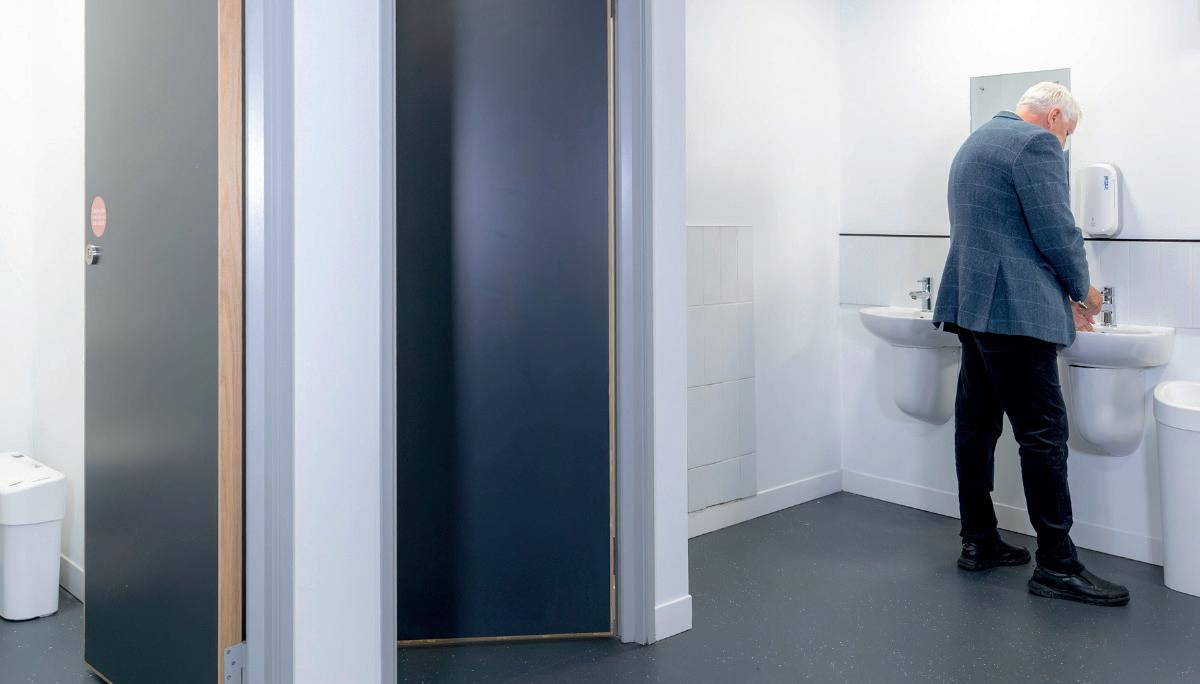
Encouraging employees to wash their hands at least five times a day, especially after using the washroom, before eating, or after coughing, sneezing, or returning from outside, helps turn good intentions into lasting habits. It’s also crucial not to overlook drying. Damp hands spread up to 1,000 times more bacteria than dry ones. Ensuring soap, paper towels, and dryers are well-stocked supports effective hygiene and signals that employee wellbeing is a genuine business priority.
Targeting the touchpoints
A single touchpoint, such as a door handle, kettle, or keyboard, can quickly become a hotspot for germs. Handwashing helps interrupt that chain of infection, but cleaning and disinfection is equally important. Touch-free technologies like no-touch dispenser can reduce cross-contamination.
The WHO’s Global Report on Infection Prevention and Control found such measures like touchless dispensing, can reduce healthcare infections by up to 70%. Products such as surface skins antimicrobial pads, which release ethanol gel on contact, can reduce bacteria levels by over 90%, including harmful microbes like E. coli.
While sanitisers are valuable, particularly in high-traffic areas, they work by killing microbes rather than physically removing them. Handwashing with soap and water remains the gold standard, with sanitisers acting as an important supplement where sinks aren’t available.
Building a culture of hygiene and care
Sustained hygiene improvements come from education and example. Leaders who champion hygiene awareness help build workplaces where employees feel valued and protected. Good hygiene isn’t just a personal habit but a shared responsibility. By creating an environment that supports and rewards healthy behaviours, employers can reduce illness, improve satisfaction, and build stronger, more resilient teams.
What should I do if many colleagues fall ill?
When several employees become unwell in a short period, facilities and office managers should act quickly to reduce the risk of further spread. In these cases, a professional deep clean is recommended. Unlike routine daily cleaning, a deep clean involves a detailed assessment of the workspace and the thorough disinfection of all high-touch areas which might include desks, keyboards, phones, door handles, shared kitchen appliances, and meeting room equipment. Specialist methods such as electrostatic spraying ensure disinfectant reaches hard-to-access areas, while UV disinfection can be used on sensitive electronic equipment to eliminate bacteria and viruses without causing damage.
A deep clean not only removes pathogens but also restores employee confidence in the safety of their working environment. Following this, maintaining regular touchpoint disinfection and clear hygiene communication helps prevent further outbreaks. Acting decisively sends a strong message that employee wellbeing is a genuine business priority and will protect health, productivity, and the overall resilience of the workplace.
Resilient Hard F M Sector Sees Surge in Deals
How to make the most of opportunities for your business
New building regulations, the drive towards net zero and advances in technology are fuelling a surge in merger and acquisition activity across the hard FM sector, new research shows
Analysis by HURST Corporate Finance, which advises ownermanaged businesses on M&A transactions, fundraising and securing investment, has found that private equity firms, trade buyers and international companies seeking a foothold in the UK market are driving the increase in transactions.
Trade buyers are the most frequent acquirers, with sector consolidation now widespread. More than 200 deals involving UK businesses were reported in the year to June. The south east was the most active region, with 30 per cent of acquired businesses based there, followed by the north west and the West Midlands.
Those regions were also the busiest in terms of acquirers. The south east accounted for 47 per cent of UK buyers, followed by the north west and the West Midlands. Globally, over 500 M&A transactions were recorded in the hard FM sector in the year to June 30.
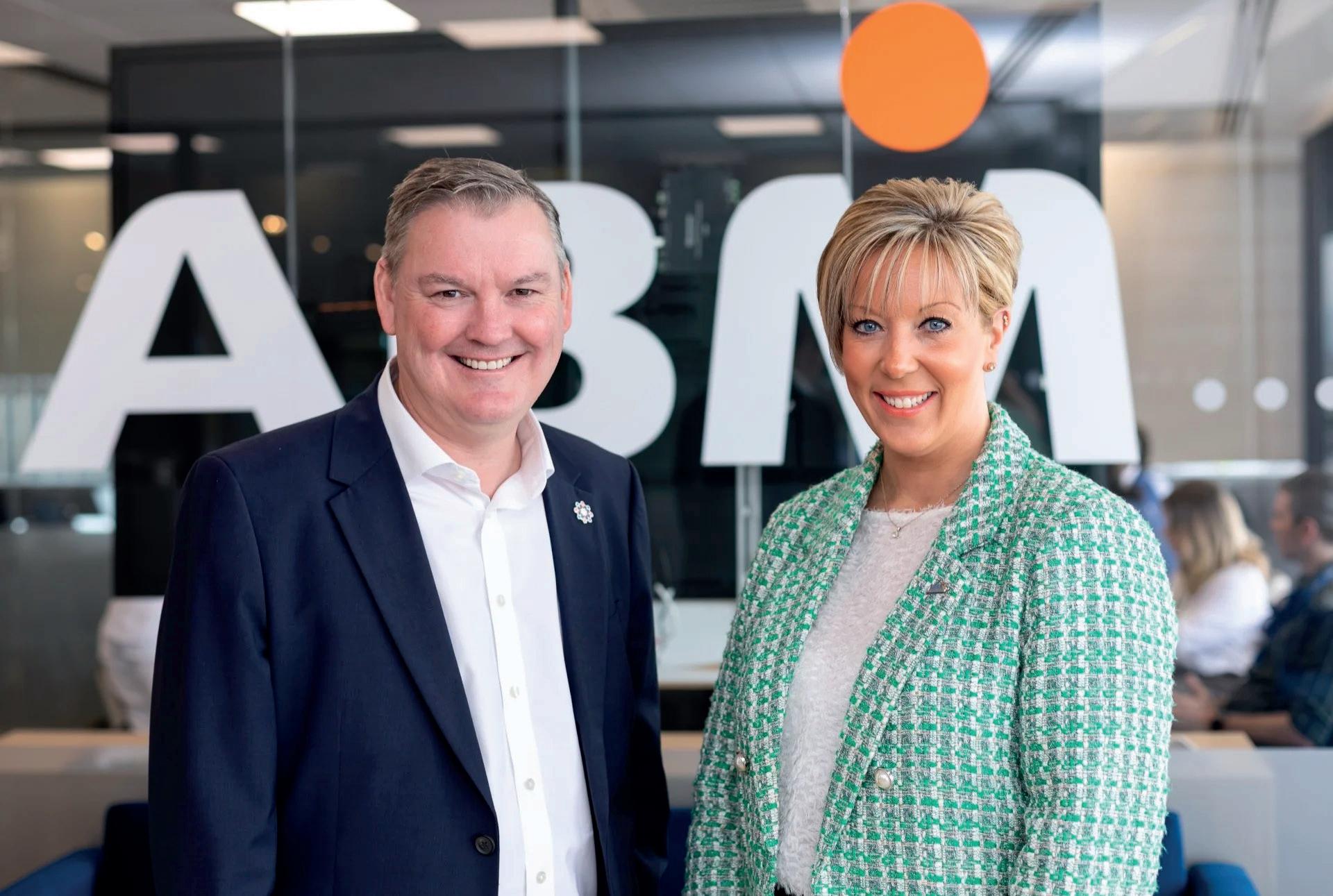
Nigel Barratt, head of HURST Corporate Finance, pictured, says: “UK deal volumes in the hard FM sector have increased significantly in recent years, and 2025 shows promise for being another good year, confirming enduring market strength.
“Deal activity spans the whole of the UK and Ireland, with larger buyers showing flexibility on location – prioritising strategic fit, expertise and brand quality over geographical position.”
HURST Corporate Finance has identified the characteristics that make a business stand out as an ideal acquisition target, and what could increase its valuation.
These include:
Annual revenues of more than £5m, with underlying profits of over £500,000
Annual revenues of more than £5m, with underlying profits of over £500,000
Gross margins of over 30 per cent, a track record of profit growth and a healthy order book
A strong revenue model – 50-70 per cent of turnover from recrurring revenue will result in a premium valuation, although at least 20 per cent is attractive to buyers. A high focus on service and maintenance for driving revenues is also a desirable factor
A diverse client base spanning the public and private sectors Strong management and in-house expertise, and an identified growth strategy.
HURST Corporate Finance’s research has found that overseas trade buyers and investors interested in the UK market prefer acquiring established businesses rather than launching a start-up, to benefit from an existing client base while minimising risks.
Nigel says: “We know businesses in France, Germany, Sweden and the United States with a strong appetite to acquire in the UK.
“We have also seen recent deals involving buyers headquartered across other areas of the EU, as well as Australia, Canada, Singapore and elsewhere.
“The UK offers a great geographical expansion opportunity to companies seeking a presence in Europe. It’s much easier to acquire a business with existing clients and a positive reputation, rather than having to start a new division from scratch.
It’s much easier to acquire a business with existing clients and a positive reputation, rather than having to start a new division from scratch
UK regulations are seen to be stronger and stricter, providing a reliable benchmark.” Private equity buyers are showing considerable interest in the sector as they seek new opportunities and bolt-on acquisitions for companies in their existing portfolios.
Their portfolio companies are often acquisitive in their own right, looking to broaden their service range with new synergies, expand geographically,or cement their sector expertise. PE-backed businesses are experienced buyers with funds available to buy companies that are ready to be acquired.
High-demand subsectors include fire protection and life safety services, driven by tighter regulation and inspection requirements. M&E, HVAC and building compliance specialists are also attracting interest, supported by the push for energy efficiency and decarbonisation, particularly in new developments.
Other active areas include door installation, building maintenance and inspection, security systems and monitoring, alongside energy specialisms and BEMS. Acquirers are further targeting contractors with a strong sustainability focus, including those installing solar panels, heat pumps, insulation, EV charging infrastructure and sustainable HVAC systems, and other businesses aligned with ESG priorities.
Factors driving M&A activity
Nigel says the hard FM sector is resilient, as buildings will always need to be maintained, particularly as stricter requirements are introduced to enforce safety and sustainability measures.
Tighter building regulations are driving demand for service providers offering inspection, maintenance and retrofitting, boosting deal activity in the sector.
Key reforms include the Fire Safety (England) Regulations 2022, mandating monthly checks on fire systems in buildings over 18 metres in height, quarterly fire door inspections, and sprinkler requirements for developments over 11 metres and all care homes since March this year.
Monthly lift and firefighting equipment checks are now also compulsory. The Grenfell Tower Inquiry has accelerated reforms, with the Building Safety Act 2022 tightening standards around fire safety, passive systems and cladding.
Alongside safety, the UK’s net zero 2050 target and the Future Homes Standard are pushing for energy-efficient buildings, phasing out gas boilers and introducing stricter ventilation and overheating standards.
The Minimum Energy Efficiency Standards Act 2023 further requires commercial properties to meet at least an EPC rating of E, spurring demand for hard FM specialists in energy efficiency and retrofitting. Meanwhile, companies pursuing their own net zero targets have invested in greener mechanical systems and smart building systems.
The urgency of adapting buildings to meet new regulations has accelerated demand for hard FM services, fuelling M&A activity as buyers compete to lock in contract opportunities. Consolidation within the sector is also driven by groups wanting to provide a one-stop service.
We expect the sector to remain robust in terms of M&A activity for the foreseeable future
This is generating M&A interest in companies that can provide a full range of FM services or integrated fire and security services.
The hard FM market is highly fragmented, and the many thousands of smaller UK firms in this industry provide a chance for acquirers to roll up these businesses into regional or national platforms with a wide range of disciplines.
Advancing technology has been a key driver of change in the hard FM sector, with a marked shift towards integrated smart systems as demand for recurring maintenance services gathers pace. These systems identify issues that can be monitored and fixed before they become a larger problem. AI is becoming more widely used too, along with sensors and wireless systems in fire protection, access control, security, and unified building management systems.
“We expect the sector to remain robust in terms of M&A activity for the foreseeable future, fuelled by legislative changes and the strategic drive towards more integrated building management services and sustainability.” Nigel reflects.
“Our research reinforces what we are seeing in the market: acquirers are actively targeting well-managed, technically-strong businesses with recurring revenues and scalable operations. This is a compelling environment for owner-managers considering a sale, especially those with specialist capabilities or a regional presence that complements larger platforms.”
About HURST Corporate Finance
HURST Corporate Finance has a highly experienced advisory team operating nationwide on behalf of owner-managed businesses, advising on mergers and acquisitions on both the buy and sell sides, as well as fundraising and securing PE investment. It has a strong track record in the hard FM sector, with an approach driven by thorough sector-specific research, allowing the team to fully understand a business and market activity.
The team’s experience in this sector, coupled with close relationships with acquisitive trade and PE buyers, puts HURST Corporate Finance in a prime position to find the perfect home for a business in the hard FM sector.
For more information, contact nigel.barratt@hurstcorporatefinance.co.uk www.hurstcorporatefinance.co.uk
About HURST Corporate Finance
HURST Corporate Finance has a highly experienced advisory team operating nationwide from its base in Greater Manchester on behalf of owner-managed businesses, advising on mergers and acquisitions on both the buy and sell sides, as well as fundraising and securing PE investment.
It has a strong track record in the hard FM sector. Its approach is driven by thorough sector-specific research, allowing the team to fully understand a business and market activity.
The team’s experience in this sector, coupled with close relationships with acquisitive trade and PE buyers, puts HURST Corporate Finance in a prime position to find the perfect home for a business in the hard FM sector.
For more information, contact nigel.barratt@hurstcorporatefinance.co.uk or visit www.hurstcorporatefinance.co.uk
Let People Bloom –And Innovation Will Too
Elsie De Nys, Global Director of Brand and CSR at Yanmar Compact Equipment, talks to us about why difference – not sameness – builds stronger companies, cultures and outcomes
In construction, engineering, and industrial sectors, innovation depends on diversity. But inclusive workplaces don’t just happen by default –they require focused action, cultural awareness, and consistent leadership.
“Innovation comes from people seeing the world differently,” says Elsie De Nys, Global Director of Brand and CSR at Yanmar Compact Equipment (Yanmar CE). “You need a mix of experiences and perspectives to solve complex challenges and keep pace with change.”
Operating in 70 countries with a multilingual workforce, Yanmar CE draws on its Japanese heritage while advancing global progress –including in Diversity and Inclusion (D&I).
Culture as a catalyst
Elsie leads Yanmar CE’s Corporate Social Responsibility (CSR) efforts, structured around three ESG pillars: Environment, Social and Governance.
At the heart of this is Hanasaka – a Japanese philosophy meaning ‘let the people bloom’. It’s about creating environments where individuals feel empowered to realise their potential, and where difference is seen as a strength.
“Inclusion breaks down when people feel pressure to conform,” says Elsie. “We want our teams confident in what makes them unique.”
She offers a simple analogy: “Diversity is inviting people to the table. Inclusion is giving everyone a chance to speak. Equity is making sure each person feels safe and supported to raise their voice – because not everyone starts from the same place.”
One small but powerful initiative is weekly ‘coffee chats’ – informal video calls between colleagues in different regions and roles. “It began with one colleague in Japan wanting to practise English,” says Elsie. “Now, it’s helping people connect across borders in a relaxed, human way.
Brand and CSR, in sync
What sets Yanmar CE apart is how brand and CSR work together –not as separate functions, but as one aligned approach.
“When brand and CSR move in sync, our values show up in everything we do,” Elsie explains. “It builds stronger trust with employees, customers and stakeholders alike.”
Diversity is inviting people to the table. Inclusion is giving everyone a chance to speak. Equity is making sure each person feels safe and supported to raise their voice
Running the two together turns social responsibility from a side activity into a core part of company identity, making the impact more meaningful and sustainable.
This synergy helps the brand stand out in a crowded market by demonstrating a real commitment to purpose, not just profit.
Group-wide commitment to sustainability
Yanmar CE’s strong focus on D&I is part of a group-wide commitment led by Yanmar Holdings, Chief Sustainability Officer, Mariko Shirafuji: “The spirit of Hanasaka will guide us in making this future a reality,” she said in a recent message.
“Across every business unit, teams are combining technologies and human insight to support prosperity for both nature and humanity.”
Supporting regional progress
Yanmar CE recognises that D&I develops differently around the world. In places like North America, inclusion is more established, and women often move into leadership roles more readily – though there is still significant ground to cover. In others, including Japan, change is happening more gradually. “You can’t copy and paste culture,” Elsie notes. “But you can equip every region to grow through mentoring, training, storytelling and shared platforms.”
One example is Mentorise, a new global D&I mentoring programme connecting close to 30 mentor–mentee pairs across departments and regions, encouraging learning and visibility. The program is open to all employees across different departments and geographies. Elsie sees it as an example of Yanmar’s “Culture Hacks” – small, human actions that create meaningful change.
Create space for people to grow. Make room for different voices at the table. And keep listening
“When individuals see leaders like them, it expands what feels possible,” she explains. “You don’t just imagine the future – you can see it.”
Building with You
This inclusive mindset also extends to customers. A diverse internal culture helps Yanmar CE better understand and serve a global audience: “As a customer-centric business, we shape solutions around real needs and real voices – grounded in collaboration, empathy and understanding. And ultimately, our customers tell us how we’re doing –through trust, loyalty, and tools like Net Promoter Score.”
While surveys and data show trends, Elsie believes inclusion is built through daily behaviours: “Who we listen to, who we promote, who feels safe to speak.”
A persistent gap, however, is the underrepresentation of women in technical and engineering roles. Too often, women are steered toward historically accepted paths like HR, comms or admin – while STEM (Science, Technology, Engineering, and Mathematics) roles remain out of reach.
“We need them in every room,” Elsie urges. “Especially in engineering, where different perspectives can genuinely reshape the future.”
Her message to industry leaders is clear: “Create space for people to grow. Make room for different voices at the table. And keep listening. Difference isn’t a risk – it’s where innovation begins.”
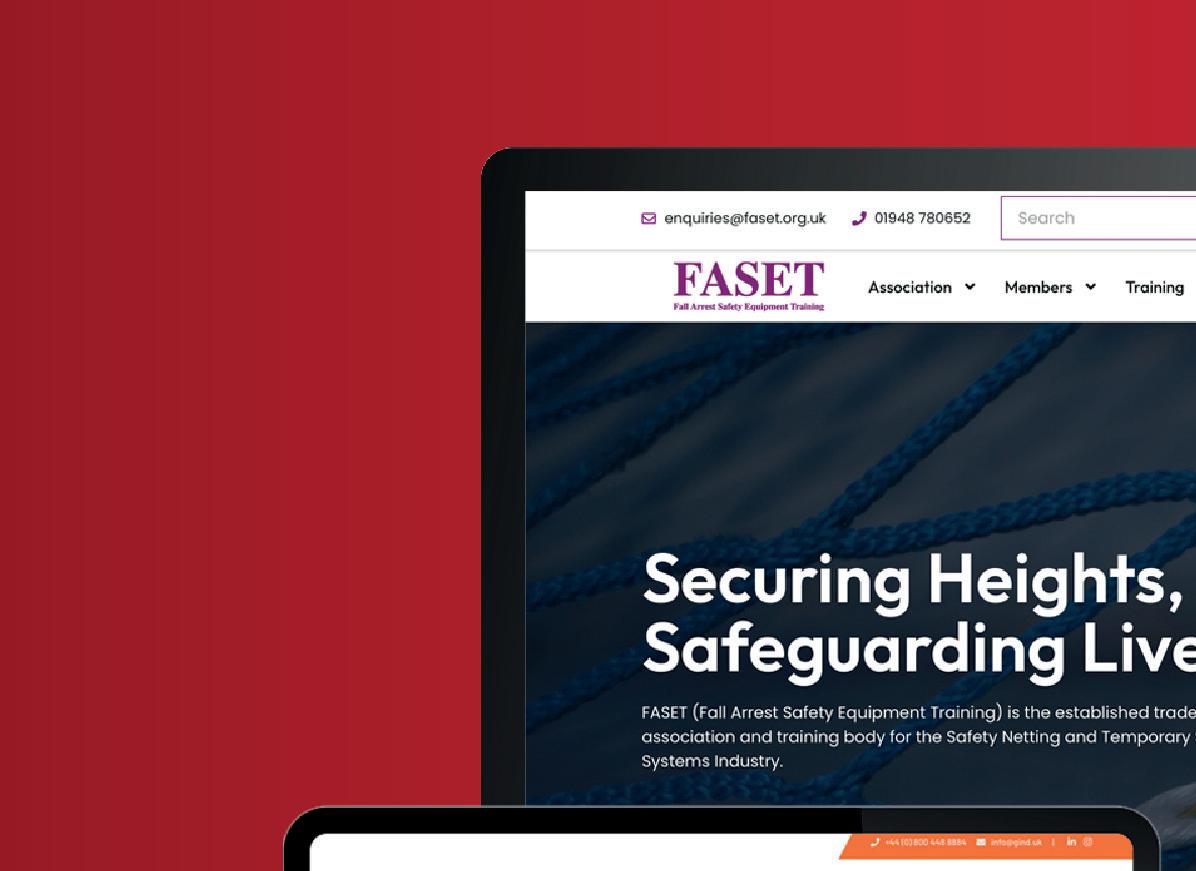
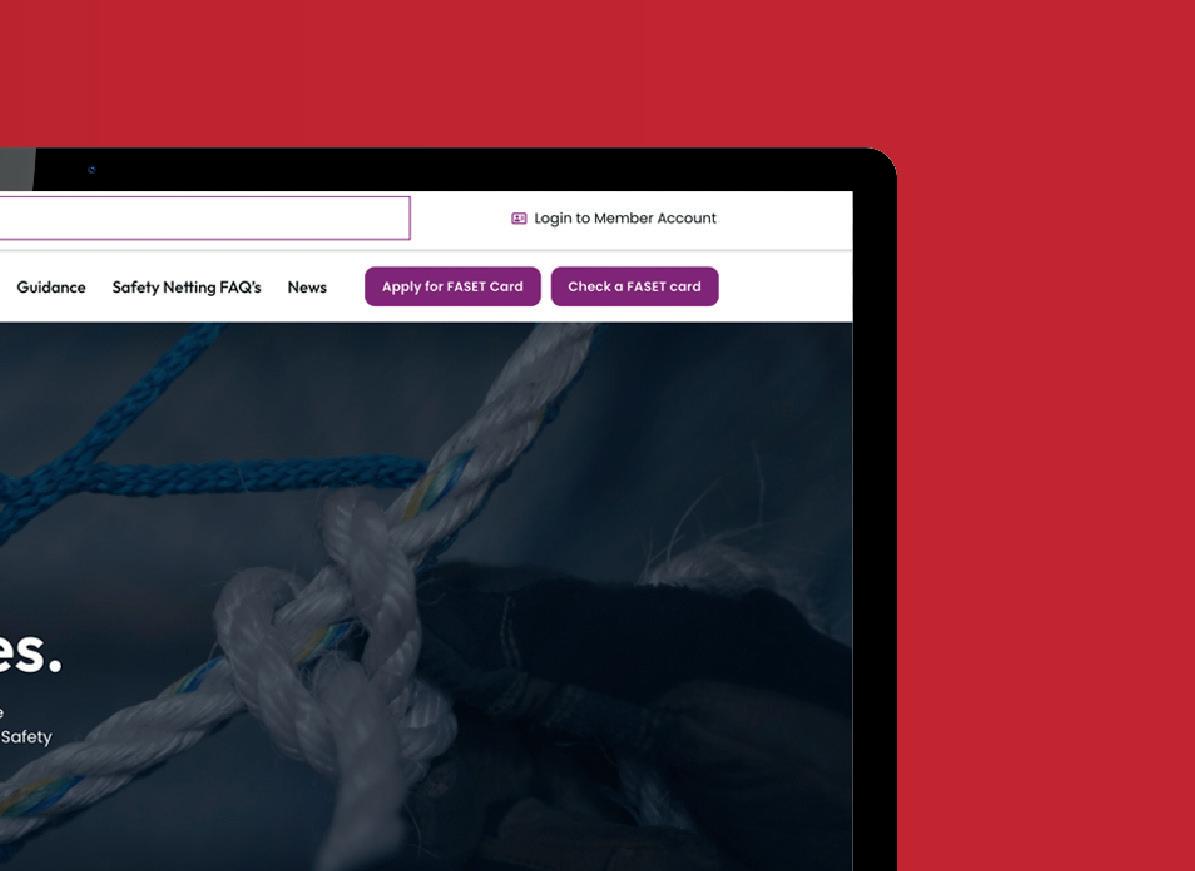
FASET & CSCS: Setting the Benchmark for Temporary Safety System Competence
As the premier body for Temporary Safety Systems, FASET is dedicated to ensuring unparalleled safety standards across the industry.
The Future is Digital: Benefits for FASET-Qualified Operators
All our qualifications now exclusively issue digital cards, offering a wealth of benefits:
Convenience: Easily add new qualifications as you progress.
Streamline Your Checks: For Employers and Site Supervisors
Security: Enhanced protection against loss or forgery.
We achieve this through our robust partnership with CSCS, delivering comprehensive training, rigorous assessment, and the issuance of industryrecognised competency cards. enquiries@faset.org.uk
Verify an operator’s competency instantly! Download the CSCS Smart Check App to your mobile device.
Stay Updated: Receive timely alerts for expiry dates and crucial safety notifications.
01948
Recruitment Tops List of Employers’ Biggest Challenges
Recruiting enough qualified workers, retaining existing talent, and managing rising costs are among the biggest challenges facing UK organisations right now, according to new research by HR and payroll software provider Ciphr
00 UK HR decision-makers were asked to share their views on the most pressing workplace issues for their organisations in the year ahead (to July 2026). The majority cited at least two or more causes for concern (five was the average).
Recruitment – attracting and engaging skilled candidates – was revealed as the biggest worry for UK businesses, with 29% of those surveyed calling this a major challenge.
A similar number of respondents (28%) expect employee retention to prove challenging, while others are bracing for rising costs and budget squeezes (27%).
Many (26%) also believe that their organisation may struggle to satisfy employees’ remote or hybrid working expectations going forward.
Using AI, pay rise requests, and staying compliant (three distinctly different organisational ‘challenges’) were tied for fifth place in Ciphr’s poll. One in four (25%) HR professionals anticipate difficulties with ensuring good AI practices, meeting salary expectations in a continuing cost-of-living crisis, and getting ready for the sweeping reforms of the Employment Rights Bill.
Other big concerns included providing employees with: regular training and development (23%), a good work-life balance (23%), an inclusive workplace (22%), and new benefits and rewards (22%).
Challenges facing UK employers in the year ahead (top 10)
Recruiting enough qualified talent (29% of surveyed HR professionals)
Retaining employees / keeping top talent (28%)
Managing rising costs / budget shortfalls (27%)
Meeting employees’ remote or hybrid working expectations (26%)
Ensuring effective, secure and ethical use of AI (25%)
Meeting employees’ pay expectations (25%)
The Employment Rights Bill – preparing for (and complying with) new employment legislation and reforms (25%)
Investing in / providing regular and ongoing employee training and development opportunities (23%)
Providing a good work-life balance for employees (23%)
Ensuring a positive and inclusive workplace culture (22%)
Investing in new employee benefits and rewards (22%)
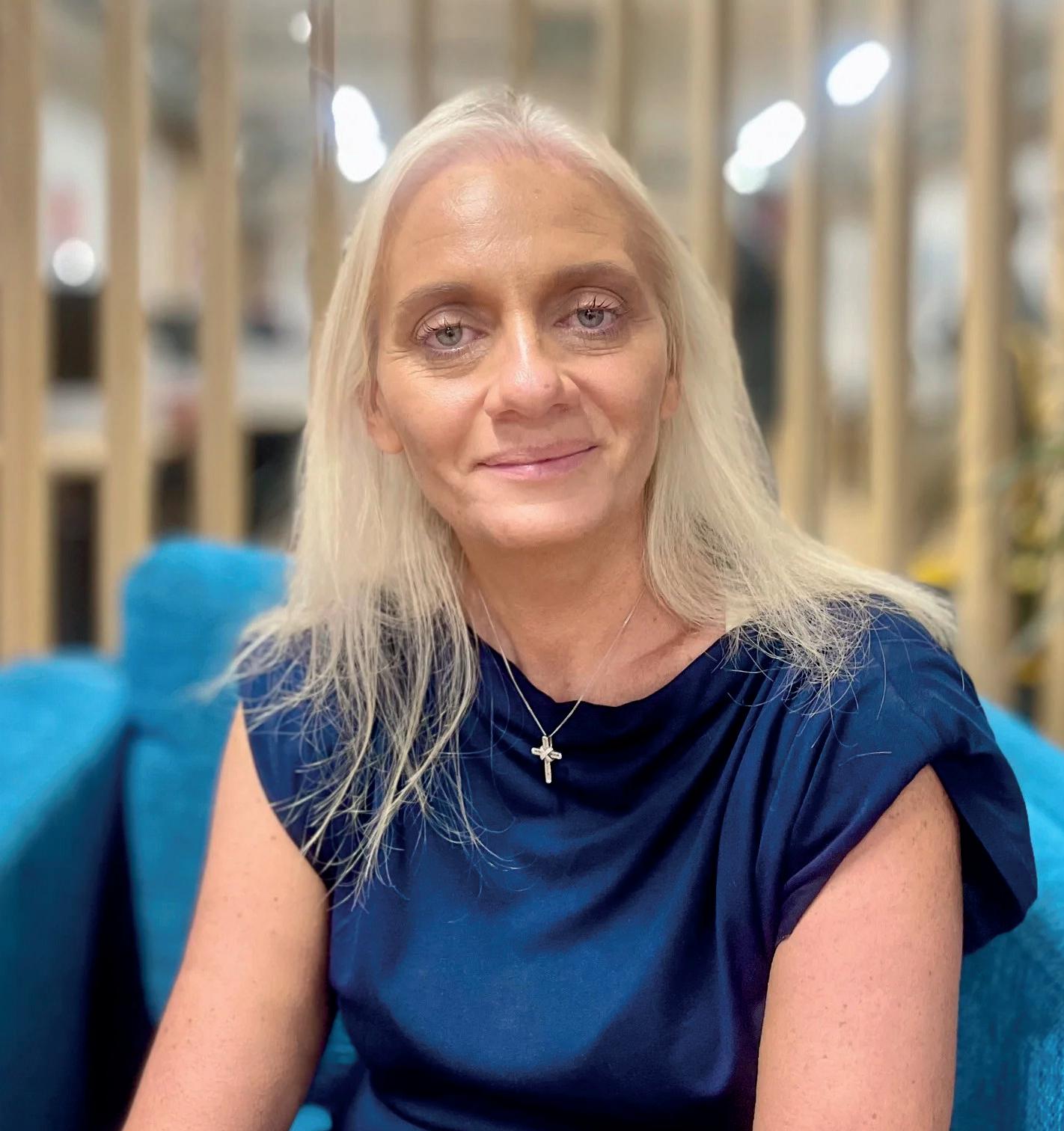
Commenting on the survey findings, Claire Hawes (above), chief people and operations officer at Ciphr, says: “It’s interesting to see how close the top five results were, with just one percentage point difference between each one. Although recruitment and retention continue to make headlines, Ciphr’s research highlights that leaders have many other, equally concerning, challenges to navigate –including AI, the impact of tighter budgets, complex regulatory changes, salary inflation, and continuing RTO/WFH demands. With such a range of challenges, it’s not always clear where to focus your efforts.
“Yes, there’s the challenge of attracting the right talent. But that’s only ever half the battle – keeping people engaged, supporting them and enabling them to grow in their roles, while meeting their pay expectations, is often another challenge again.
“Employers must prioritise creating a compelling employee value proposition (EVP), which covers every aspect of the employee experience. Be led by your data – use feedback from existing employees, of all ages, and recent leavers to understand what needs to improve. Maybe it’s your benefits, maybe it’s clearer career pathways or maybe it’s more transparent communications. Make the changes you can and measure the impact.
“Operational resilience is contingent on how well organisations can balance rising costs with strategic investment in their people. Because the firms that put their people first will, I believe, be best placed to adapt and succeed in 2026.”
Employers must prioritise creating a compelling employee value proposition (EVP), which covers every aspect of the employee experience
Top priorities for employers
Ciphr’s research also revealed what HR teams think bosses should prioritise when it comes to their workers. Especially given the prevailing recruitment and retention challenges that many face. Respondents were asked to consider all employers generally, when sharing their views. Nearly half (46%) of the 300 HR professionals surveyed said ‘providing a good range of employee benefits’ should be the priority for employers, ahead of providing a good workplace culture, a good life/work balance, and even a good salary.
Offering training and career progression, and promoting fair treatment and respect at work, also ranked high in their list of priorities. Maintaining meaningful in-person connections among employees was also seen as more of a priority than offering remote or hybrid working (38% vs 27% of those surveyed).
Employers’ top priorities when it comes to their workers (top 10)
Providing a good range of employee benefits (46% of surveyed HR professionals)
Ensuring a positive, respectful and healthy work environment / culture (45%)
Providing flexible working / a good work-life balance for employees (45%)
Paying a good / fair average wage (42%)
Providing regular employee training, upskilling opportunities, and career advancement (42%)
Ensuring all employees are treated fairly and equally, with no favouritism (41%)
Protecting employees’ health and safety at work (40%)
Providing job security to employees (40%)
Supporting employees’ mental health and wellbeing at work (39%)
Providing a good employee experience (39%)
Phil Curtis, MD of Avantus Employee Benefits (part of the Ciphr Group), says these findings aren’t unexpected: “Employers who embrace flexible benefits – giving people greater autonomy to choose the benefits they genuinely want – have seen staff retention rates improve.
So, it’s no surprise that having a good range of employee benefits tops the list of priorities for UK employers looking to support their employees’ physical, mental and financial wellbeing.”
“A scattergun approach to reward strategy simply doesn’t cut it anymore. Experience tells us that job seekers have become progressively more discerning, especially since the pandemic. They look beyond the headline salary when weighing up employment opportunities and they want to feel fairly rewarded for the value they bring to an organisation. Personalised benefits is an essential part of that.”
He adds: “Investing in new benefits and rewards can be a challenge but doesn’t necessarily need huge budgets. Much can be done without additional cost, especially when salary sacrifice benefits are introduced. It’s also worth revisiting the value of certain core benefits, as it may be possible to unlock budget in this area with some creative thinking, targeting spend more effectively.
“Employees aren’t always totally aware of what benefits they may already have access to. Regular internal comms can help remind them about any benefits they may have missed, while dynamic total reward statements are a great way to illustrate the true value of their benefits packages.”
Ciphr commissioned OnePoll to conduct an independent survey of 300 HR decision makers (employed at UK organisations). The survey ran between 22-28 July 2025. The full results are available at www.ciphr.com/infographics/challenges-and-priorities-foremployers-in-2026.
Ciphr is the go-to HR and payroll software and solutions partner for medium and large organisations in the UK. Its integrated HR, payroll, benefits, learning and recruitment software, services and content provide invaluable insights to HR teams, helping to inform their people strategy and grow and develop their organisations. Based in Reading, Ciphr is on a mission to amplify the voice and value of HR through intelligent people data solutions that help HR be heard – in the boardroom and across the business.
For more information, please visit www.ciphr.com
ECO Property Maintenance is an environmentally friendly and cost-effective way to bundle non-business critical jobs of compatible trades.
It is a simple way to reduce the number of attendance fees and lower your carbon footprint for non-urgent works such as minor repairs or minor decorative fixes.
For more information contact info@msl-ltd.co.uk
HOW IT WORKS
Low urgency maintenance issues at the same site are grouped as Eco tasks and stored on the inSYNC portal for up to 21 days.
inSYNC recognises compatible trade tasks and calculates estimated labour timescales to complete.
Any of the following three triggers then apply: A standard priority job is raised - any compatible Eco tasks are bundled to this work order.
Four estimated labour hours are reached to complete compatible Eco tasks - one bundled work order is created
21 days are reached - one bundled work order
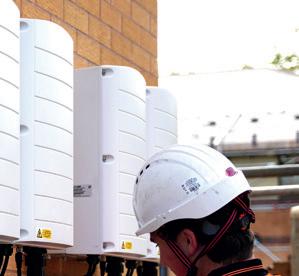
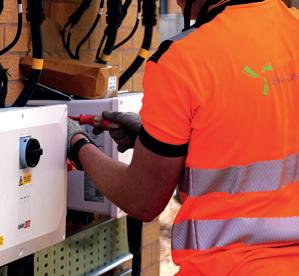
Long-Term Solar Success is Part of the Plan
Solar PV is now a mainstream choice for organisations looking to reduce costs, build energy resilience and meet sustainability goals.
But when systems are installed, ongoing success depends on how well the project is planned, delivered and maintained. The best installations don’t just perform efficiently, they run safely, integrate smoothly and are designed to make ongoing maintenance straightforward for years to come.
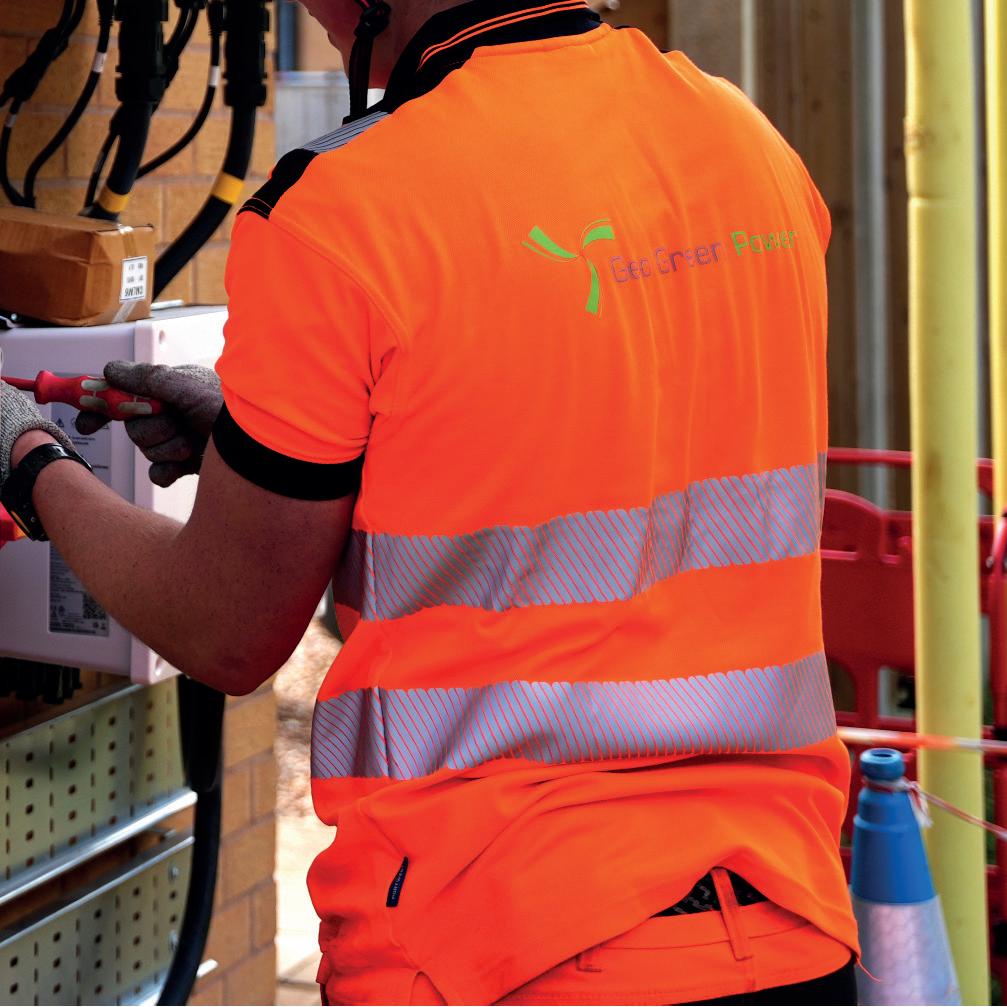
A truly successful energy investment comes down to more than just kilowatt hours and payback periods. Facilities Managers know that ongoing reliability, safety and efficient maintenance are crucial. In this article, Kitty Cunningham, Operations Director at Geo Green Power, explains how to achieve a solar PV solution with safety and long-term accessibility and uptime at the fore
Working safely in live environments
Installing solar on active sites calls for more than technical skill. It requires careful coordination to protect people, maintain access and avoid disruption. Whether it’s a hospital, retail park, school or manufacturing facility, the installation team must work around ongoing operations without compromising safety or productivity.Every Geo Green Power project begins with detailed risk assessments and method statements, covering everything from pedestrian and vehicle flow to emergency procedures and working at height.
Where sites remain open, installation phases are planned around operational needs, with clear communication and flexible scheduling to minimise disruption.
Geo Green Power’s in-house teams are trained and accredited to operate in complex environments. The company holds CHAS Elite and IET accreditations, ISO 9001 and ISO 14001 certification, and is both MCS and NICEIC approved.
These credentials give facilities managers confidence that every project meets the highest health, safety and environmental standards.
Future maintenance
Tolerating a little disruption during install is one thing, but limiting disruption becomes paramount when it comes to long-term operation and maintenance.
A well-designed solar PV system doesn’t just deliver on handover day; it should continue to perform efficiently with minimal maintenance throughout its 30+ year lifetime. To achieve that, accessibility must be considered from the outset.
Systems should be designed so that inspections, cleaning and repairs can be carried out safely and efficiently. Geo Green Power’s technical design team plan all panel layouts to support drone surveys and on-site maintenance without interrupting operations.
Safe drone launch and landing points are identified away from busy areas, and components, such as inverters and isolators, are positioned for easy access.
The team can also install man-safes and permanent edge protection to facilitate access to the solar system and any other plant or roof access that businesses may require. By considering maintenance during the design phase, facilities teams benefit from faster inspections, more straightforward servicing and reduced downtime, all of which save time and cost over the long term.
Protecting performance
While solar PV systems are reliable and need minimal maintenance, dust, shading or minor faults can affect generation levels. A proactive service plan and monitoring, ensures issues are identified early, maintaining consistent output and return on investment.
Geo Green Power offers full service and maintenance packages, including annual system testing, visual inspections, performance analysis and detailed reporting.
Systems should be designed so that inspections, cleaning and repairs can be carried out safely and efficiently
Systems can also be remotely monitored via real-time system data, helping to spot potential issues before they affect generation.
Working with the same company for installation and ongoing maintenance brings clear advantages. The team already understands the system layout and any unique site requirements, so maintenance visits are quicker and more efficient. This continuity helps reduce disruption and costs while keeping the system performing at its best. The team also take on legacy solar PV systems, providing the same level of care to customers whose installers don’t offer service and maintenance or may no longer be trading.
Continuity and confidence
From regular dialogue with facilities managers, we recognise that one of the most significant risks or barriers to investing in solar PV today is the disappearance of smaller or less established installers. Many businesses have been left without ongoing support when their original provider has ceased trading.
Choosing a partner with long-term stability, accreditations and an in-house maintenance team protects that investment.
Geo Green Power has been designing, installing and maintaining commercial solar PV systems for more than 15 years. The company is large enough to manage complex, multi-site projects but remains focused on personal service and lasting partnerships. Installations come with at least 25-year panel and 20-year inverter warranties, backed by in-house technical support and maintenance throughout the system’s life.
The company is large enough to manage complex, multi-site projects but remains focused on personal service and lasting partnerships
A safer, smarter approach to solar
For facilities managers, solar PV should enhance operations, not complicate them. The right partner will design with safety in mind, plan installations around live environments and ensure ongoing maintenance is straightforward.
Geo Green Power’s approach combines technical expertise with an understanding of how real sites work. From health and safety planning to proactive servicing, every decision is made to keep people safe, sites open and systems performing long into the future.
For more information, visit geogreenpower.com or call 01509 880199
PTSG Brings Social Housing Expertise In-House With New Director Appointment
Dave Knowles’ sector experience signals the group’s commitment to delivering integrated compliance solutions for housing providers
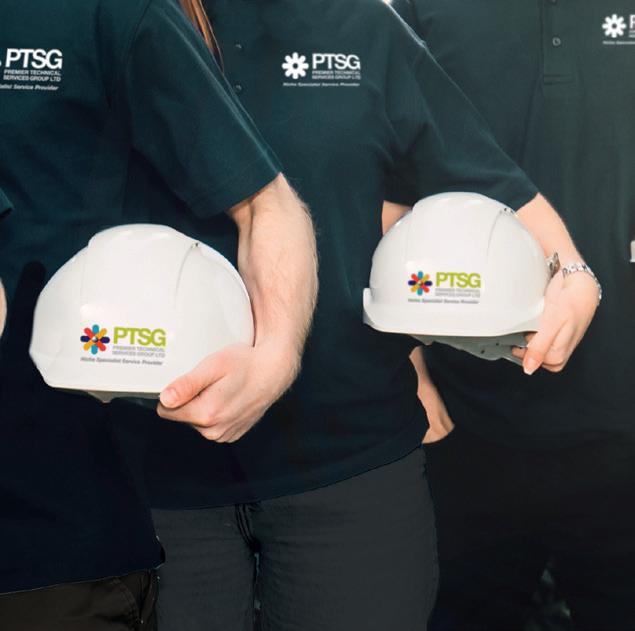
Premier Technical Services Group (PTSG) has appointed Dave Knowles as Business Director for social housing, marking a significant step in the organisation’s strategy to become the go-to partner for housing associations and social landlords across the UK.
Dave brings years of hands-on experience from within the social housing sector itself. He understands the language housing providers speak, the frameworks they work within and crucially, the mounting pressures they face to maintain compliance across vast portfolios with increasingly constrained budgets.
Dave explains: “The challenges that housing providers face are significant. The financial pressures, the regulatory demands, the sheer scale of managing thousands of properties – it’s relentless. What they need are partners who can genuinely support them, take away some of that pain and deliver solutions that work. Because ultimately, this is all about tenant safety. That’s what matters.”
It’s this deep sector knowledge that PTSG is now harnessing to transform how it serves one of the most demanding markets in facilities management.
A powerhouse already serving the sector
PTSG is no newcomer to social housing. Through its five specialist divisions and constituent businesses, the group already delivers critical compliance services to some of the sector’s biggest names. Neo, the group’s fire safety specialist, maintains longstanding relationships with major housing providers, delivering fire door installations and passive fire protection services worth millions annually. Platform Housing alone accounts for over £1 million in fire door contracts.
ECS, PTSG’s electrical compliance business, has completed more than 200,000 electrical installation condition reports (EICRs) with an industry-leading 98% first-time fix rate. The company has delivered electrical testing and remedial works across thousands of properties for organisations including Your Housing Group, Sanctuary Housing Association and Stonewater.
TEC (Total Environmental Compliance), part of PTSG’s water treatment division, brings over three decades of expertise in Legionella risk management and water hygiene services. The company provides water hygiene auditing and risk assessments for housing associations including BHPA, which operates across the Oxford to Cambridge arc.
The group holds positions on the sector’s key procurement frameworks including Fusion 21, CHIC, PfH and Procure Plus, which serve the social housing landlord community across England.
These frameworks provide housing associations with access to pre-qualified specialist contractors, streamlining procurement and ensuring quality standards.
The integrated proposition
What makes PTSG unique in the market is breadth. The group operates five divisions delivering over 170 specialist services across electrical, water, fire, access and safety, and building maintenance. For social housing providers, this means access to comprehensive compliance solutions through a single organisational relationship.
PTSG Electrical Services delivers everything from fixed wire testing and EICRs to lightning protection and surge protection solutions. PTSG Fire Solutions provides fire detection and alarm systems, sprinkler systems, passive fire services including fire doors and compartmentation, and security systems. PTSG Water Treatment covers water hygiene, water treatment, mains water services and environmental compliance.
The practical advantage for housing providers is significant. Rather than managing separate contractors for electrical testing, water hygiene audits, fire safety inspections and building maintenance, they can work with specialist teams who operate under one umbrella, share information and coordinate service delivery.
“Housing providers are telling us that managing multiple contractors for different compliance areas creates a massive administrative burden,” Dave continues. “When you’re coordinating electrical testing, water hygiene audits and fire safety inspections across thousands of properties, having teams who work together and understand each other’s work makes a real difference to efficiency and outcomes.”
PTSG also recognises the critical role that repairs and maintenance contractors play in delivering services to housing providers. The group actively supports R&M contractors by providing specialist compliance services that complement their core delivery.
Whether acting as a trusted subcontractor partner for electrical testing, fire safety works or water hygiene services, PTSG helps R&M contractors meet their compliance obligations to housing clients whilst maintaining their prime contractor relationships. This partnership approach means R&M contractors can focus on their core competencies whilst accessing PTSG’s specialist expertise and compliance management capabilities, ultimately delivering better outcomes for the housing providers they serve.
Technology-driven compliance management
PTSG has invested significantly in technology platforms that address one of social housing’s biggest challenges: demonstrating compliance clearly and efficiently to residents, regulators and stakeholders.
ECS’s ARC Hub compliance management software provides realtime visibility of electrical safety status across entire portfolios. Housing providers gain immediate access to testing schedules, certificates and remedial work tracking, with clear audit trails and reporting capabilities.
Having teams who work together and understand each other’s work makes a real difference to efficiency and outcomes
The platform has been developed specifically to meet the needs of organisations managing thousands of properties.
TEC uses advanced monitoring technology and client portals to provide transparency in water safety management. Their systems capture and store inspection data in real time, backed up continuously, creating comprehensive audit trails that demonstrate regulatory compliance. Housing associations receive access to dedicated client portals where they can review compliance status, access certificates and monitor ongoing works.
“The sector has moved beyond spreadsheets and paper certificates,” Dave observes. “Housing providers need partners who can provide clear, accessible data that helps them make informed decisions, plan maintenance effectively and demonstrate to residents and regulators that properties are safe.”
With over 3,000 employees operating from service centres across the UK, PTSG provides national coverage with local delivery. The group’s scale means it can respond quickly to urgent compliance issues whilst maintaining consistency of service across vast geographical areas.
The opportunity is to bring it all together in a way that makes sense for our clients and demonstrates what we’re truly capable of delivering
Addressing sector-specific challenges
The social housing sector faces unique pressures. Following the Grenfell tragedy and subsequent regulatory reforms, fire safety has become paramount.
The Social Housing (Regulation) Act has strengthened tenant safety requirements. Awaab’s Law has focused attention on damp and mould. Housing providers must meet these requirements whilst managing legacy building stock, dealing with funding constraints and maintaining affordability for residents.
PTSG’s proposition directly addresses these challenges. The group’s fire safety capabilities span active systems (detection, alarms, suppression) and passive protection (fire doors, compartmentation, cavity barriers).
Electrical testing services ensure properties meet the latest BS7671 standards. Water treatment services manage Legionella risks and ensure compliance with HSG274 guidance.
Recent acquisitions have strengthened PTSG’s position further. The purchase of UK Safety Management expanded the group’s electrical compliance capabilities, whilst the acquisition of HD Sharman Group added market-leading expertise in roof maintenance and refurbishment systems – crucial for preventing water ingress issues that lead to damp and mould.
Building the future of integrated compliance
Dave’s appointment represents PTSG’s recognition that social housing requires dedicated focus and sector-specific expertise. His role centres on developing and delivering integrated compliance solutions that genuinely meet housing providers’ needs.
“When I speak to contacts in the sector and explain what PTSG can deliver, the response is consistently positive,” Dave says. “They immediately see the value of having one partner who understands their world, can handle multiple compliance areas, and can help them manage portfolios more efficiently.”
The vision is ambitious: a comprehensive compliance partnership where housing providers access electrical, water, fire and building maintenance services through coordinated delivery, supported by integrated technology platforms and managed through dedicated account teams who understand social housing inside out.
PTSG is uniquely positioned to deliver this. The constituent businesses bring proven track records – Neo’s fire safety expertise, ECS’s electrical compliance capabilities, TEC’s water treatment specialism. The group has the frameworks in place, the technology platforms deployed, and crucially, existing relationships with major housing associations.
“For the first time, we’re bringing all these capabilities together with someone who speaks the sector’s language at the centre,” Dave explains. “The individual businesses have always delivered excellent work. Now we’re creating something bigger – a truly integrated offer where housing providers get the full benefit of PTSG’s scale, expertise and resources.”
The group is actively working with housing providers to demonstrate this integrated approach in practice. Where PTSG businesses are already working with the same housing association on different services, the team are connecting those relationships, identifying opportunities for better coordination and showing how an integrated partnership delivers better outcomes.
“This is about taking really strong businesses with excellent reputations and helping housing providers understand that they’re all part of one organisation. Many housing providers know Neo, ECS or TEC individually. Now they’re discovering they can access all of them through PTSG, with the coordination and efficiency benefits that brings.
For example, recognising the sector’s focus on damp and mould following Awaab’s Law, PTSG has trained all its engineers to identify potential issues during electrical installation condition reports.
When conducting EICRs in social housing properties, engineers are equipped to spot signs of damp and mould and include these observations in their reports.
This means housing providers gain additional value from electrical safety inspections, receiving early warnings about potential property condition issues that could affect tenant health and wellbeing without needing separate inspections.
A strategic commitment to social housing PTSG’s move to appoint a dedicated Business Director for social housing reflects the strategic importance the group places on the sector. With over 4 million social housing properties in the UK requiring ongoing compliance management, the market opportunity is substantial.
More importantly, the sector’s needs align perfectly with PTSG’s capabilities. Housing providers require reliable, professional partners who can deliver multiple compliance services with consistency and quality.
They need technology platforms that provide visibility and audit trails. They need national coverage with local delivery. They need organisations that understand the regulatory environment and can adapt to changing requirements.
PTSG delivers all of this. The group’s five divisions provide comprehensive coverage of building compliance requirements. Its constituent businesses bring specialist expertise and established reputations.
The technology platforms provide transparency and efficiency. And now, with Dave’s appointment, PTSG has someone dedicated to ensuring the social housing sector understands and can access everything the group offers.
“The potential here is significant,” Dave reflects. “PTSG has brilliant businesses, strong technology platforms, established framework positions, and relationships with major housing providers. The opportunity is to bring it all together in a way that makes sense for our clients and demonstrates what we’re truly capable of delivering.”
For housing providers navigating increasingly complex compliance requirements, managing constrained budgets, and seeking partners who genuinely understand their challenges, PTSG’s enhanced focus on social housing offers a compelling proposition. The capabilities are proven, the commitment is clear, and the vision for integrated compliance management addresses real sector needs.
With Dave’s sector expertise guiding strategy and PTSG’s operational strength delivering services, the group is positioning itself as the partner of choice for social housing organisations across the UK.
About PTSG
Premier Technical Services Group is a multinational building compliance business with over 3,000 specialists delivering more than 170 services across five divisions: electrical services, water treatment, fire solutions, access and safety and building maintenance. The group serves over 30,000 customers throughout the UK and overseas, including major social housing providers, with established positions on key sector frameworks.
Revealed: The Top 10 Most Confusing Energy Terms That Can Trip Up U K S ME s
For many small and medium-sized businesses, managing energy bills has become another daily challenge – squeezed between rising costs, shifting regulations, and a steady flow of confusing terms that seem to appear with every government update, including the upcoming Autumn Statement in November
With fluctuating energy prices, increased National Insurance contributions, and upcoming changes like Transmission Network Use of System (TNUoS) charges from April 2026, SMEs are under constant pressure to keep track of what’s affecting their costs.
Plus, navigating a constant stream of updates across various channels like social media, TV, online forums, and online news – no wonder small businesses are feeling the pressure.
But new research from SME business energy supplier Valda Energy suggests it’s not just price rises making things harder. A lack of understanding around key energy-related terms, what’s known as energy literacy, is now another surprising barrier to better cost management.
Energy jargon: A growing business risk
According to Ofgem’s 2025 report, one in seven UK businesses doesn’t fully understand what makes up their energy bills. And among those with lower energy literacy, a group that makes up over half of the surveyed businesses (53%), there is a significantly higher likelihood of struggling with energy payments.
“Business owners are continually exposed to a barrage of media discussions, from changes to “TNUoS charges” or “Net Zero targets”, and it’s not always obvious what those mean for dayto-day operations or the bottom line,” says Daljeet Kaur, chief operating officer, at Valda Energy.
More than a third (37%) of micro businesses also reported that they believe business energy has the same terms and conditions as domestic energy – a simple but expensive misunderstanding.
According to Ofgem’s 2025 report, one in seven UK businesses doesn’t fully understand what makes up their energy bills
For small business owners already stretched thin, unclear energy language can mean overpaying for power, signing unsuitable contracts, or simply losing confidence in how they can manage their costs.
The top 10 most confusing energy-related terms
In response to these findings, researchers at Valda Energy analysed over 75,000 online, forum, and social conversations to identify the energy-related terms that people most often admit they “don’t understand” or find “confusing”.
The unit kilowatt-hour (kWh) is officially the most frequently questioned term online, despite being widely used in billing and contracts. Valda Energy’s 2025 analysis reveals it has been questioned nearly 3,000 times online in the past 12 months, with many unclear on the difference between kilowatt (kW), which refers to power capacity, and kilowatthour (kWh), which measures energy consumption.
The analysis also uncovered that hot-topic terms like ‘heat pumps’ and ‘green energy’ ranked closely, appearing 2,756 and 2,612 times, respectively.
Here’s the list:
1. Kilowatt-hour (kWh) - The standard unit for measuring electricity consumption, representing the energy used by a 1,000-watt appliance running for one hour.
2. Heat pumps - Electrical devices that extract heat from air, ground, or water sources to provide efficient heating and hot water. While having high upfront costs, heat pumps can significantly reduce carbon emissions and running costs compared to gas boilers.
3. Green Energy - Electricity generated from renewable sources such as wind, solar, hydro, and biomass that produce little to no carbon emissions.
4. Great British Energy - A planned publicly owned clean energy company announced by the UK government to accelerate renewable energy development.
5. Smart Meter - Smart meters are the newer generation of gas and electricity meters that automatically send meter reads on a half-hourly basis. These are known as SMETS (Smart Metering Equipment Technical Specifications). There are several different types of smart meters; the latest versions of these meters are known as SMETS2.
6. Net Zero - A state where the volume of greenhouse gases produced is balanced by those that are removed from the atmosphere. The end goal is to negate the build-up of greenhouse gases. Currently, the UK target is to reach Net Zero by 2050.
7. Ofgem - The Office of Gas and Electricity Markets is a government regulator for gas and electricity markets. Ofgem sets the rules energy suppliers must follow, protects consumer rights, and monitors the energy market.
8. Inflation - The rate at which general price levels increase over time across the economy. In the energy market, this can affect costs through higher wholesale prices, network charges, and supplier operating costs.
9. Energy price cap - A limit set by Ofgem on the maximum amount suppliers can charge domestic customers per unit of energy. While this is widely discussed online and on TV, it is not linked to what businesses pay for energy.
10. Department for Energy Security and Net Zero (DESNZ) - The UK government department responsible for energy policy, security of supply, and delivering net zero emissions by 2050.
Many business owners have now taken to online forums to question these terms – “I’m trying to make sense of Ofgem’s energy price cap, does it affect businesses?” and “As a small business, does anyone have experience with heat pumps?”
Why this matters for small businesses
“Our research consistently shows that unclear terminology isn’t a minor issue; it directly affects how small businesses manage and plan their daily operations,” says Daljeet.
In a world flooded with misinformation, she advises small business owners to seek direct clarification from their energy suppliers or regulatory bodies to avoid costly mistakes.
“That’s why we’ve created our new official SME energy glossary, where business owners can find simple, reliable explanations from a trusted source. Our glossary is designed to give them the clarity and confidence that they need to handle these harder economic times.”
Valda Energy aims to help close the knowledge gap and empower SMEs with the knowledge they need to make more informed decisions.
By demystifying the intricacies of business energy language, small businesses can make better choices about tariffs, budgets, and energy-saving options. Understanding the basics is one of the easiest ways to protect margins, plan ahead, and stay competitive in a volatile market.
Our research consistently shows that unclear terminology isn’t a minor issue
Welcome to the Newest Tariff on Facilities Management
By Andrew Watkinson, Managing Director at
one of the UK’s longest-standing Sage partners, CPiO
Just as trade tariffs add hidden costs to goods, the uncertainty around those tariffs is acting like a new hidden levy on UK facilities management and the ecosystem surrounding the sector. When global trade policy shifts suddenly, facilities teams face unpredictability in budgets, procurement and projects.
Imported parts and supplies can jump in price overnight, and long‐term contracts become hard to nail down. CPiO’s latest research into small and medium enterprise (SME) finance teams shows that this policy uncertainty is stalling capital investment and even day-to-day planning across industries. The lesson for FM leaders? Stability and clarity on trade rules are as valuable to running a building or campus as a cost cutting grant.
The Toll on FM Planning and Procurement
Faced with shifting tariffs and geopolitical surprises, facilities managers report multiple stress points:
• Budget Freeze: 68% of SME finance leaders say recent tariff changes have hit short- and medium term investment plans hard. In FM terms, that means delayed upgrades, such as new heating systems, security installations or energy retrofits might be put on hold while teams “wait and see” how costs shake out.
• Pipeline Shrinkage: Over half (56%) of firms have seen their sales pipeline fall by up to 40% since tariffs began. This can easily translate into postponed service contracts or a reduced demand for new projects, as belts are tightened.
• Supply-Chain Risk : 70% of finance heads report higher supply chain risk since tariffs were announced. Facilities managers feel this as delays and price swings for everyday essentials which may now be routed through longer, more expensive channels or subject to sudden border fees.
• Internal Indecision: Nearly half of firms admit finance teams can’t reliably model the future or make firm decisions, citing leadership indecision as a barrier. In practical terms, FM teams find themselves delaying supplier bids, extending contracts or pausing investment in smart building tech, simply because the picture could change with the next policy announcement.
These findings (all from the CPiO survey of 250 UK SME finance leaders) illustrate that tariff uncertainty trickles down into facility management decisions. A new fridge or security upgrade isn’t just about the unit price; it’s about how soon it arrives, who can install it, and whether the budget line holds steady. Unclear trade rules turn every procurement meeting into a guesswork exercise.
Unclear trade rules turn every procurement meeting into a guesswork exercise
FM Leaders Want Clarity, Not Handouts
Importantly, the research shows business leaders aren’t asking for bailouts; rather, they want clear signals. FM professionals need long-term certainty on trade policy so they can plan confidently.
This means smarter policymaking, one that puts long term trade certainty ahead of short term political posturing. In other words, firms, from plants to cleaning contractors, just want a dependable framework and the stability to project 5 year maintenance budgets, or to negotiate multi year service agreements, without fearing a sudden cost shock.
This means government and industry bodies should prioritise early communication when trade rules change. FM is already dealing with Brexit and Covid hangover effects, as well as energy price volatility; adding surprise tariffs or export levies on top can cripple carefully timed renovation plans.
This means government and industry bodies should prioritise early communication when trade rules change
For instance, if a new trade deal suddenly adds a 10% levy on steel, building managers face tough choices on in progress construction. Rather than looking to government for immediate grants, FM budgets would be better served by advance notice of such changes, plus coordinated guidance on how to adapt contract terms or source alternatives.
Building Resilience in FM
If uncertainty is the new tariff, then resilience is the antidote. CPiO’s analysis finds that businesses ready to modernise will fare better. For facilities management, this means investing in flexibility from a diversify in suppliers, through to flexible contracting, while engaging deeper into data and forecasting and detailed scenario planning, such as “what-if” scenarios for key projects.
In essence, facilities professionals need the confidence to move forward now, not wait for perfect conditions. The research shows that waiting rarely helps. When businesses pause decisionmaking, indecision quickly becomes the default. Capital sits idle, opportunities are missed and confidence erodes. By seeking clarity from policymakers and building internal agility, FM leaders can break that cycle.
Lead with Certainty
The foundation of facilities management is predictability, across the environment, the costs, the service levels. Global trade turbulence has made that predictability elusive. Finance decision-makers need the triple antidote of clarity, early guidance and proactive government engagement.
In practical terms this means pressing executives and industry associations to demand that clarity, for coherent trade rules that let estates plan, and contracts and investments go ahead without fear.
SSIP: Compliance Made Efficient Stop the Duplication. Start Saving.
Are you a construction supplier wasting time and money on repetitive health and safety pre-qualification assessments?
SSIP (Safety Schemes in Procurement) offers a smarter solution through Mutual Recognition and the “Deem to Satisfy” principle.
Key Benefits:
Avoid Duplicate Assessments:
Get approved by one SSIP Member Scheme, and your certification is recognised by all others.
Boost Client Confidence:
Demonstrate commitment to the highest health and safety standards and ensure smoother project collaboration.
SSIP simplifies your compliance, allowing you to focus on delivering safe, high-quality work.
Certify Once. Satisfy Everywhere.
Save Time & Money:
Eliminate redundant administrative work and assessment fees. This process attributed to over £5.5 million in direct savings in 2024 alone.
Streamlined Compliance:
SSIP certification is recognised as an exemption against Section 4 (Health and Safety) of the Build UK Common Assessment Standard (CAS).
Learn more and find your ideal SSIP Member Scheme today: www.ssip.org.uk
Don’t be Fooled by Cheap Weekly Rates: Why your ‘budget’ tower lighting costs you more than you think
By Sarah Butcher, Commercial Manager at Welfare Hire Nationwide
Here’s something I hear all the time when talking to contractors about tower lighting: “But your weekly rate is higher than the competition!”
I get it. When you’re looking at quotes and trying to keep project costs down, it’s tempting to go for the cheapest option. But here’s the truth that might surprise you: choosing tower lighting based purely on the lowest weekly hire rate is one of the most expensive mistakes you can make.
Let me explain why.
The hidden costs of ‘cheap’ lighting towers Walk onto most construction sites today and you’ll see the same old units that have been kicking around for years. These traditional lighting towers seem like the sensible, budget-conscious choice when you’re comparing weekly rates.
But here’s what that attractive hire price doesn’t tell you:
Traditional towers typically feature:
Just four lighting heads with metal halide illumination
Around 400 watts total light output
Aged, inefficient diesel engines consuming one litre of fuel per hour
Higher CO₂ emissions
Less illumination: meaning you need more towers to cover the same area
Over a standard 25-hour working period, you’re burning through 25 litres of diesel per tower. For night works at 60 hours? That’s 60 litres per week, per unit.
With diesel prices where they are, and only increasing, those fuel costs mount up shockingly fast. And that’s before you factor in the extra towers you’ll need because each unit simply doesn’t produce enough light.
A smarter approach to site lighting
At Welfare Hire, we’ve spent years helping contractors understand the true cost of their equipment choices.
Our X-Eco range of tower lighting is a perfect example of why looking at the total picture matters so much more than just the weekly rate.
Our X-Eco LED tower: Smarter lighting, serious savings
Take our X-Eco LED, for instance. Here’s what makes it different:
Key features:
6 super-bright LED lamps producing 900 watts total (more than double traditional towers)
Each tower covers the equivalent of half a football pitch—up to 20% greater light coverage
360° positioning to tailor lighting exactly where you need it
Fuel efficiency of just 0.55 litres per hour (roughly half of standard units)
110-litre tank providing 200 hours of continuous light per refill
73% CO₂ reduction compared to standard units
Automatic dusk-dawn sensor
8.5 metre hydraulic mast with AMOSS safety system
Real-world savings per tower:
25-hour operation: Save 10 litres of fuel, £17.50, and 26.2kg CO₂ per week
60-hour night works: Save 24 litres of fuel, £42, and 62.88kg CO₂ per week
Because you need fewer units to cover your site, those savings multiply quickly.
The X-Eco HYBRID: Even better efficiency
If you want to take things further, our X-Eco HYBRID uses AGM battery technology to achieve an impressive 58% silent green running time.
Key features:
Silent running for 11-18 hours per cycle
Fuel efficiency of just 0.23 litres per hour
220-litre tank providing 965 hours of continuous light per refill
88% CO₂ reduction
Programmable timer with auto dusk-dawn sensor
8-hour recharge cycle
Remote operating capability
Real-world savings per tower:
25-hour operation: Save 18 litres of fuel, £31.50, and 47kg CO₂ per week
60-hour night works: Save 43 litres of fuel, £75.60, and 113kg CO₂ per week
The X-Eco HYBRID LITHIUM: The game-changer
Here’s where it gets really interesting. Our X-Eco HYBRID LITHIUM represents the absolute cutting edge of sustainable site lighting.
Key features:
Next-generation lithium hybrid technology
80% silent green running time
Silent running for 11.5-36 hours per cycle
Fuel efficiency of just 0.11 litres per hour
50-litre tank providing 455 hours of continuous light per refill
94% CO₂ reduction compared to standard units
Rapid 3-hour recharge cycle
Smart telemetry with remote monitoring and geofencing
Programmable smart power management
Real-world savings per tower:
25-hour operation: Save 21 litres of fuel, £36.75, and 55kg CO₂ per week
60-hour night works: Save 50 litres of fuel, £88.20, and 132kg CO₂ per week
The unit can run completely silently for up to 36 hours on battery power alone. Perfect for night possessions or sites near residential areas where noise complaints are a concern.
What this means for your project
I know some contractors worry that our weekly rates look higher than the competition. But let me show you why that initial rate is only a tiny part of the story.
Let’s say you’re running lighting towers for a typical 12-week winter project. Here’s what choosing our X-Eco range would actually save you compared to those ‘cheap’ traditional towers:
12-week project savings (per tower):
X-Eco LED: £1,668 saved in fuel + 983kg CO₂ prevented + 798 litres less fuel consumed
X-Eco HYBRID: £2,241 saved in fuel + 1,682kg CO₂ prevented + 1,067 litres less fuel consumed
X-Eco HYBRID LITHIUM: £2,432 saved in fuel + 1,944kg CO₂ prevented + 1,168 litres less fuel consumed
Now think about how many towers your site actually needs. Multiply those savings across your fleet, and suddenly that ‘bargain’ weekly rate on traditional towers looks very different indeed.
It’s not just about the money It’s true; cost savings matter. But there’s more to this than just your bottom line.
With construction activity accounting for around 50 million tonnes of CO₂ emissions annually in the UK, and with net-zero targets looming, every contractor needs to demonstrate they’re taking sustainability seriously.
Our X-Eco range doesn’t just save money; it gives you the data to prove you’re making a difference.
The smart telemetry built into our towers means you can generate detailed reports on your carbon savings for stakeholders and clients. That’s increasingly important when you’re bidding for new contracts.
Stop paying more for less
It’s understandable to choose the cheapest quote. But when it comes to tower lighting, that ‘cheap’ weekly rate is false economy.
You’ll burn through the difference in fuel costs within weeks. Add in extra towers for adequate coverage, servicing visits, potential noise complaints, and missed ESG opportunities, and those savings evaporate.
The next time you’re comparing quotes, ask yourself: What’s the actual fuel consumption per hour?
How many towers do I need based on real light output? Can I prove my carbon savings to clients?
When you calculate the total cost properly, the choice becomes clear. At Welfare Hire Nationwide, we offer expert guidance, nationwide next-day delivery, and the newest, most efficient fleet in the market. Our X-Eco range delivers brighter, more efficient illumination that costs less to run and dramatically reduces your carbon footprint.
Want to see the real numbers for your project? Get in touch and we’ll show you exactly what switching to our X-Eco range would mean for your site.
To learn more about Welfare Hire Nationwide’s X-Eco lighting range visit: www.kellinggroup.com/welfare-hire
H SE Seeks Views on Proposals to Enhance Worker and Public Protection From Asbestos Exposure
The Health and Safety Executive (HSE) has launched a consultation on proposals to improve the application of the Control of Asbestos Regulations and guidance around asbestos management to help protect workers and building users
Great Britain already has one of the best workplace health and safety performances globally, with some of the lowest rates of occupational injury and fatality in Europe. These proposals build on this strong foundation to enhance protections in areas where asbestos remains a significant health risk.
The consultation aims to seek stakeholders’ views on three proposals:
To ensure the independence and impartiality of roles in the four-stage clearance process to further minimise the risk of exposure from asbestos to workers and building users after the removal of asbestos
To drive up the standard of asbestos surveys to ensure dutyholders have the information they need to safely manage asbestos risks
To clarify the type of work that constitutes work with asbestos known as Notifiable Non-Licensed Work (NNLW)
The consultation is particularly relevant to dutyholders, asbestos analysts, asbestos removal contractors, asbestos surveyors, and associated professions including facilities management and construction.
Rick Brunt, Director of Engagement and Policy at HSE, said: “Asbestos continues to be a significant risk to workers in Great Britain. While we have made significant progress in managing asbestos risks, these proposals represent an important step towards further strengthening protections for workers and the public.
“We want to hear from all stakeholders involved in the asbestos regulatory system to ensure our approach is both effective and proportionate, supporting HSE’s commitment to protecting people and places whilst enabling innovation and economic growth.”
Minister for Social Security and Disability, Sir Stephen Timms, said: “The dangers of exposure to asbestos are well known. Its legacy is that it remains the biggest cause of work-related deaths in the UK – responsible for 5,000-plus deaths per year, with many more people living with the impact of asbestos-related disease.
“In Britain we have a mature and well-established approach to the management of asbestos in buildings: the Control of Asbestos Regulations 2012, enforced by the Health and Safety Executive and other regulators.
“This consultation aims to improve these regulations and enhance worker and public protection from asbestos exposure.”
The consultation runs until 9 January 2026. The full consultation document, including detailed proposals, background information and how to respond, is available on the HSE website at: consultations.hse.gov.uk/hse/proposals-control-of-asbestosregs-2012
The dangers of exposure to asbestos are well known. Its legacy is that it remains the biggest cause of work-related deaths in the UK
Latest Appointments of Senior F M Professionals
Michael Fildes-Peace, managing director for Circles, Sodexo’s premium workplace experience and employee engagement service; has been named on the INvolve global Outstanding Executives Role Model List.
The list showcases leaders who are breaking down barriers at work and smashing the ceiling for LGBTQ+ employees within global business.
Separated into three categories the Outstanding Role Model lists, supported by YouTube, recognise executives, advocates and future leaders who are increasing representation and driving culture and belonging for others within the workplace.
Role models featured in the Outstanding Role Model Lists do not work professionally in culture and belonging but represent the wide range of individuals who have made it their personal mission to make a difference.
Tilbury Douglas, a leading UK building, infrastructure, engineering and fit-out business, has appointed Martin Harrison as its Chief Financial Officer (CFO).
Martin has over 20 years in construction and infrastructure and has held senior roles at Tarmac Contracting, Vistry and Fulcrum Utility Services. He has a strong track record of delivering profitable growth and leading high-performance teams.
Craig Tatton, Chief Executive Officer at Tilbury Douglas, commented: “Martin’s industry knowledge, cultural fit and the positive contributions he has made to our business over the past three months, whilst working on an interim basis, made him the preferred candidate. I look forward to working with Martin as we continue to deliver our business plan and build on our position as a trusted provider in the UK construction market.”
Bidvest Noonan has announced the appointment of Mairead Stapleton as Senior Business Development Director, reinforcing the company’s commitment to accelerating growth across key sectors in the UK and Ireland.
Having been with Bidvest Noonan for over 20 years, Mairead has held multiple senior positions across administration, sales, operations, and business development. Throughout her career, she has made a significant contribution to the company’s success and has developed a deep understanding of the organisation’s objectives and service portfolio.
In her new role, Mairead will lead the company’s business development strategy for the Education and Social sectors, two of Bidvest Noonan’s primary areas of strategic focus. The appointment supports the company’s ambition to double its business by deepening expertise and delivering tailored, innovation-led solutions across high-growth sectors.
The definit ive FM industry newsletter
Monday
Hard services and construction focus
Wednesday
Soft services focus
Friday
A combo of the week’s biggest stories, video interviews and exclusive features from across the FM industry
ABM, a leading provider of facility, engineering and infrastructure solutions, has announced Kelly Parish, as its Vice President, Transport & Aviation. The appointment supports ABM’s strategy to expand its aviation stronghold through a more integrated service offering, whilst targeting the broader transport sector.
Kelly Parish joins the ABM senior leadership team, led by Senior Vice President & President for UK and Ireland Richard Sykes, succeeding Jim Niblock, Managing Director for Transport & Aviation who will retire after a career spanning over 30 years; seven of which leading ABM’s aviation presence into 17 airports, and over 40 airlines.
With 15 years of experience in Transport, Aviation, and Integrated Facilities Management, Kelly most recently served as Director of Transport and Aviation at Mitie. She will play a key role in delivering ABM’s growth strategy in the transport sector.
SGC Security Services has announced the strategic appointment of Simon Anderson as its new Commercial Director, effective November 1st, 2025.
This move marks a significant step in SGC’s growth strategy, leveraging Mr. Anderson’s decades of industry expertise to enhance the company’s commercial capabilities across key sectors.
Simon brings over 30 years of exceptional experience from the security services and facilities management sector, with a proven track record of commercial success in respected organisations. He joins SGC after serving as Divisional Sales Director at OCS Group, preceded by nearly a decade in senior commercial leadership roles at Atalian Servest UK & Ireland.
Paul Macarthur, Founder and CEO of SGC Security Services, commented on the appointment: “Simon’s extensive sector knowledge, strategic approach to client partnerships, and commitment to service excellence align perfectly with SGC’s values and ambitious growth plans.”
Compass Group UK & Ireland has appointed Kris Nicholson as Co-Chair of its Armed Forces Committee, joining existing Co-Chair, Angela Lewis and Executive Sponsor, Mark Webster, CEO of Compass One.
Kris joined Compass as Business Director for ESS in 2024, following a distinguished 34-year career in the Royal Navy as a Logistics Officer.
As both a Veteran and an active Reservist, Kris brings a deep understanding of the Armed Forces community and a strong commitment to supporting its members. His passion for supporting Veterans and Reservists, and his insight into the Armed Forces community, will be invaluable as the Network evolves.
Louis Morford has been named BM Caterer’s Chef of the Year after impressing judges at the latest iteration of the culinary competition.
A chef de partie at a London law firm, his winning dish featured turbot cooked on the bone with a side of leeks glazed in sherry vinegar.
His prize includes a food-focused trip to one of Europe’s culinary hot spots, including visits to multiple restaurants and markets.
The competition, which has been running for approximately seven years, took place at St Luke’s Community Centre in London. Five chefs were tasked with cooking a turbot alongside a box of mystery ingredients chosen by judge Adam Byatt, which was revealed to include a selection of seasonal vegetables. The chefs also had to make petit fours and serve a terrine they had prepared ahead with garnishes and accompaniments, all in an hour and 45 minutes.
The event was judged by BM chef consultants Adam Byatt, chef-owner of Michelin-starred restaurant Trinity in Clapham, and Mark Kempson, head chef at the Michelin-starred Kitchen W8 in Kensington.
Excellerate Services UK & Ireland has announced the promotion of Sarah Newland from Group Head of People Services to Director of People Services.
In her new role, Sarah will lead the company’s people strategy, driving initiatives that support talent development, employee engagement and organisational growth.
Excellerate Services UK & Ireland Excellerate Services is a dynamic, data-led market leader within the soft FM sector, with a team of over 9000 working across more than 2400 client sites throughout the UK and Ireland.
Its award-winning, proprietary management and information platform, Velocity, allows Excellerate to deliver data-driven, transparent services to a range of clients across several industry sectors including higher education, retail, distribution and corporate environments.
Specialist contractor Composites Construction UK operates throughout the UK and Europe. Using innovative methods, we carry out structural strengthening and repairs to concrete, timber, and masonry structures. contact@fibrwrap-ccuk.com www.fibrwrap-ccuk.com 01482 425250
Integral Cradles Ltd. delivers permanent façade access solutions across the UK, specialising in high buildings with unique specifications and demands. A whole life-cycle solution. kevin@i-cradles.com www.i-cradles.com 0845 074 2758
FASET is the established trade association and training body for the safety netting and temporary safety systems industry. We support members with guidance, training, and exclusive benefit schemes. enquiries@faset.org.uk www.faset.org.uk 01948 780652
For almost 30 years Julius Rutherfoord has been passionate about providing professional cleaning services to some of the most prestigious organisations in the London area. info@juliusrutherfoord.co.uk https://www.juliusrutherfoord.co.uk/ 020 7819 6700
GIND UK delivers ambitious projects in challenging environments. Our London-based engineering and design team specialises in bespoke access system maintenance for the world’s most iconic buildings. info@gind.uk www.gind.uk 0800 448 8884
Lemon Contact Centre is a leading contact centre for the FM industry. Leveraging 20 years’ of expertise, our 24/7 contact centre services provide unparalleled flexibility, scalability and resilience for your business.
Lemoncontactcentre.co.uk 0800 612 7595
neutral carbon zone (NCZ) is a full-service platform that gives you the tools your company needs to make the transition to a carbon neutral business and beyond. gozero@neutralcarbonzone.com www.neutralcarbonzone.com
0845 094 5976
SAEMA has a long history in delivering the best training and guidance in the temporary and permanent suspended access industry. We are committed to advancing safety through raising the standards in best practice. info@saema.org https://www.saema.org/ 01948 838616
Project Management Global is a media platform and community for professional project managers. Providing informative news, industry insights, career support, resources and jobs for project managers across the globe. news.pm-global.co.uk
Seddon Management Services strives to offer the best solutions for trade associations to keep their members safe and compliant. becky@managementandauditing.co.uk www.seddonmanagementservices.co.uk 07854 226251
Premier Technical Services Group Ltd (PTSG) is the UK’s leading provider of specialist services to the construction and facilities management sectors. info@ptsg.co.uk https://www.ptsg.co.uk/ +44 (0) 1977 668 771
YorPower is one of the industry’s most trusted providers of back-up power solutions (generators and UPS) for customers in a wide variety of sectors, both in the UK and around the world. sales@yorpower.com www.yorpower.com 01977 688155
At PTSG, our mission is simple: to help our customers create safer environments and maintain full compliance in an increasingly complex and regulated world.
With specialist expertise across five key service areas, we deliver the critical services your buildings need — from fire and electrical safety to building access and water treatment. Whether you need support in a single area or a bundled solution that reduces risk and drives value, we tailor our service to fit around you. Talk to us about how we can support you.
Contact us today for a free, no obligation chat about how we can help you to keep your buildings safe and compliant.