While the FSA makes every reasonable attempt to ensure that the information contained in this document is accurate and current, the FSA, its officers, directors, volunteers, and authorized agents are not responsible for any errors or omissions contained therein nor are they responsible for any results obtained from the use of or reliance upon its content. All information is provided “AS IS,” with no guarantee of completeness, accuracy, timeliness or of the results obtained, and without warranty of any kind, express or implied. In no event shall FSA or its officers, directors, volunteers, or authorized agents be liable to you or anyone else for any decision made or action taken in reliance on the information con tained herein or for any for any consequential, indirect, special, or similar damages, even if advised of the possibility of such damages. The informa tion contained in this document is for informational purposes only and does not constitute professional advice. It also includes references to certa in standards that may change over time and should be interpreted only in light of particular circumstances. It is your sole responsibility to confi rm the current state of any referred to standards. FSA reserves the right to modify or update the document content and to modify this Disclaimer at any t ime, effective upon posting of an updated version of this Disclaimer.
This Fluid Sealing Association Knowledge Series training presentation introduces API Piping Plan 53C. A description is provided on:
▪ What is an API Plan 53C?
▪ How an API Plan 53C Works
▪ What does an API Plan 53C do?
▪ What an API Plan 53C cannot do
▪ Optional Features for an API Plan 53C
▪ Cost to Operate With An API Plan 53C
▪ How to Size an API Plan 53C
▪ How to Install an API Plan 53C
▪ General API Plan 53C Commissioning Guidelines
▪ How to Operate an API Plan 53C
▪ General Troubleshooting of an API Plan 53C
▪ Alternatives to an API Plan 53C
What Are Piping Plans?
▪ Piping plans collectively are different piping arrangements of fluid used to improve the conditions the mechanical seal operates in with the objective of improving the mechanical seal’s life.
▪ The American Petroleum Institute adopted numbers and created definitions for each piping plan configuration, thereby allowing a common language across the industry to simply describe a particular configuration.
▪ The American Petroleum Institute standard API-682 is where the definition of each piping plan can be found and where they may periodically be updated.
What is an API Plan 53C?
An API Plan 53C is one of a series of piping plans that provide a pressurized liquid barrier fluid to a dual liquid lubricated mechanical seal.
An API Plan 53C provides:
▪ Zero emissions of the pumped fluid to the environment
▪ A method to pressurize the barrier fluid
▪ A barrier pressure that is proportional to the pressure in the pump
▪ A reservoir of barrier fluid to replace fluid consumed by the mechanicals seal
▪ A heat exchanger to dissipate heat generated by the mechanical seal and absorbed from the pump
▪ Containment of pumped fluid in the event of seal or support system failure
▪ Instrumentation to monitor seal performance and detect early onset of seal performance deterioration
What is an API Plan 53C?
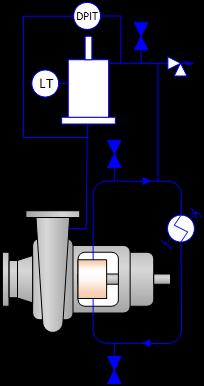
API Plan 53C consists of the following components:
Differential Pressure Transmitter
Level Indicator
Level Transmitter
Barrier Fluid Refill
Reference Pressure
Connection Point
Mechanical Seal
High Point Vent
Pressure Relief Valve
Piston Accumulator
Heat Exchanger
How an API Plan 53C Works
Although not as widely installed as a traditional API Plan 53A system, it does differentiate itself from all the other methods as API Plan 53C will change the barrier pressure as the pressure inside the pump changes. This pressure tracking ability makes this system ideally suited to high-pressure pumps, or pumps that experience a wide range of operating pressures.
A Plan 53C barrier system consists of 2 main elements:
1) The barrier fluid circulating loop where barrier fluid is circulated by a pumping device within the mechanical seal, to a heat exchanger where heat absorbed into the barrier fluid is dissipated and then returns back to the mechanical seal.
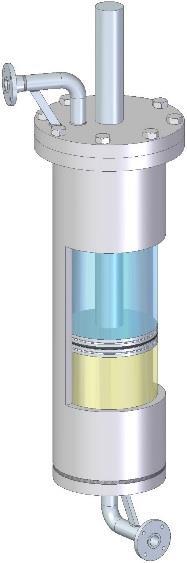
2) A piston accumulator which stores barrier fluid and amplifies pressure from the pump to pressurize the barrier fluid circulating loop.
How an API Plan 53C Works
Dual liquid lubricated mechanical seals contain a pumping device within the mechanical seal that circulates barrier fluid in a cooling circulation loop, through a heat exchanger, returning to the mechanical seal. An API Plan 53C is used to pressurize the fluid in this cooling circulation loop and provide a reservoir of fluid to replace fluid consumed by the mechanical seal through normal leakage.
Stored Barrier Fluid
Accumulator
Reference
Pressure Source
How an API Plan 53C Works
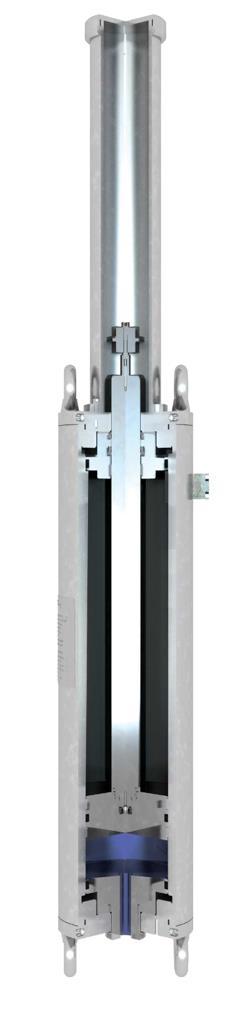
The piston accumulator pressurizes the barrier fluid loop by using a reference pressure line connected to the pump.
This reference line is used to pressurize one side of the piston which pushes the piston against the barrier fluid located on the other side. As the piston rod reduces the effective area of the piston face in contact with the barrier fluid, this has the effect of amplifying the barrier fluid pressure. The pressure amplification ratio is simply the ratio of the area of each side of the piston.
Piston Rod
Piston
To Circulation Loop
Barrier Fluid Reservoir Pumped
How an API Plan 53C Works
The pressure amplification ratio can be calculated as: ���������� = ����������1
Barrier Fluid to Circulation Loop
Barrier Pressure Acting on Area A2
Reference Pressure
Reference Pressure Acting on Area A1
How an API Plan 53C Works
Increasing the piston rod diameter has the effect of reducing Area A2 and thus increases the pressure amplification ratio. Due to the practicalities of design and function, amplification ratios are typically in the range of 1.05 to 1.30. As pressure ratios increase, piston rods become larger in diameter (relative to the cylinder) and the cylinder becomes longer to provide sufficient barrier fluid storage volume.
Piston
Diameter
How an API Plan 53C Works
As the pressure changes in the reference line, the pressure produced by the piston accumulator and delivered to the barrier fluid circulating loop will change proportionally to the amplification ratio:
This ability to track the barrier pressure with respect to the reference pressure is what makes an API Plan 53C truly unique and differentiates it from all the other dual seal barrier systems. Since the barrier pressure is generated by amplifying the reference pressure from the pump, the piston accumulator requires no external utilities to function, which further simplifies the installation and operation of a Plan 53C system.
How an API Plan 53C Works
During operation, barrier fluid is consumed due to normal leakage of the mechanical seal. Barrier fluid stored in the piston accumulator moves into the barrier fluid circulation loop to replace the consumed barrier fluid, resulting in the piston and piston rod slowly moving upwards. The extension of the piston rod from the top of the accumulator provides a direct indication of the volume of barrier fluid remaining in the accumulator.
How an API Plan 53C Works
To move the barrier fluid through the circulating loop, a pumping ring can be incorporated into the mechanical seal design. There are various styles and shapes of pumping rings, however they are all driven by the rotating shaft of the equipment. With higher shaft speeds, the pressure and flow generated by the pumping ring will increase.
How an API Plan 53C Works
During operation of a liquid dual pressurized mechanical seal, barrier fluid is consumed as a result of normal leakage. Stored liquid volume in the piston accumulator will exit the accumulator into the cooling loop to replace the consumed fluid. This will result in movement of the piston to compensate for the lost barrier fluid.
When the liquid volume in the accumulator reaches a minimum, an alarm is triggered for the operator to refill the accumulator with fresh barrier fluid.
How an API Plan 53C Works
Piston Rod Protection
A cover is typically installed over the piston rod extension from the accumulator body to protect the piston rod and rod seals from damage and degradation from the environment.
Piston Rod Cover
Piston Rod
What does an API Plan 53C do?
▪ An API Plan 53C provides a source of pressurized barrier fluid without the need for external utilities (e.g. live pressure source).
▪ The piston accumulator design does not utilize any gas source thereby eliminating gas dissolving into the barrier fluid.
▪ It can be used for high pressure applications (no gas solubility issues).
▪ The design allows for the selection of a wide variety of heat exchangers that can accommodate higher heat loads.
▪ The system has a small footprint; the piston accumulator does not need to be immediately adjacent to the cooling loop.
▪ The barrier pressure will automatically track the reference pressure when process conditions change.
▪ The only flow within the accumulator is to replace fluid consumed by normal leakage from the mechanical seal and to refill the accumulator.
What an API Plan 53C cannot do
An API Plan 53C cannot:
▪ Guarantee any pumped fluid will not reach the environment
▪ Predict when a mechanical seal will fail
▪ Provide a constant barrier pressure
▪ Provide a simple and easy sizing and selection process without support from your mechanical seal vendor
▪ Provide continuous operation without periodic refilling of the accumulator
▪ Operate for extended periods of time in a failure mode
▪ Provide an extended barrier fluid life when compared to alternative pressurized systems due to higher thermal cycling of the barrier fluid
▪ Be used with a single seal
What an API Plan 53C cannot do
Pumped Fluid Limitations
The pumped media is used as the source of pressure in the piston accumulator; thus, the properties of this pumped fluid must be considered when selecting a Plan 53C system. The following pumped fluids should be avoided to ensure reliable operation of the barrier system:
▪ Pumped fluids that solidify at ambient conditions. As there is effectively very little flow of fluid in the reference line, the fluid in this line will, over time, cool down to ambient temperatures. Fluids that will solidify as they cool can plug the reference line preventing the pump pressure from acting against the piston in the accumulator and resulting in loss of barrier pressure.
▪ Pumped fluids that contain suspended solids. The suspended solids can migrate into the piston accumulator and interfere with the function of the piston seal, causing wear and damage to the internal surfaces of the cylinder resulting in leakage past the piston seal and loss of barrier pressure and barrier fluid.
What an API Plan 53C cannot do
Pumped Fluid Limitations
▪ Pumped fluids at elevated temperatures. As the pumped fluid is introduced into the piston accumulator during commissioning, thermal damage to the piston seal can occur if it is exposed to temperatures above the limits of piston seal material(s).
▪ Pumped fluids that are corrosive. The compatibility of the materials of construction of the piston accumulator with the pumped fluid should be reviewed to ensure no corrosive damage occurs to the internal walls of the accumulator and to the piston seals.
Optional Features for an API Plan 53C
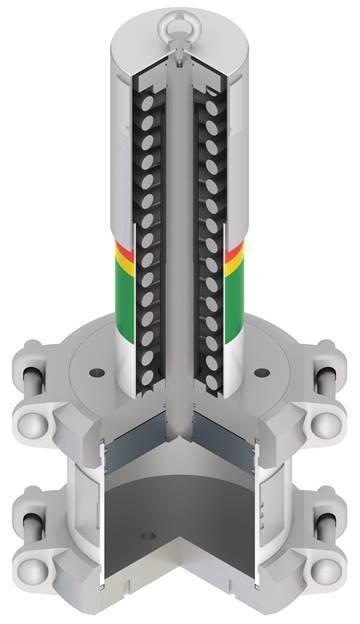
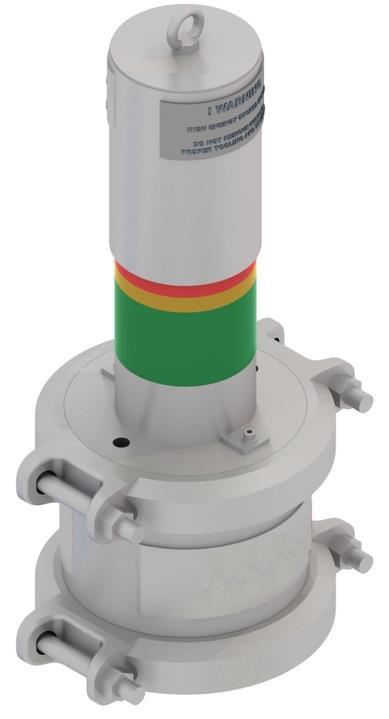
Piston Rod Position (level) Indicator
Since the volume of barrier fluid remaining in the accumulator is inversely proportional to the extension of the piston rod from the accumulator, a variety of position indicating methods can be utilized.
Local position (level) indicator
▪ Linear scale with pointer attached to the end of the piston rod
▪ Colored coded linear scale cylinder that is covered with a larger cylinder that moves with the piston rod, covering and uncovering colored bands with movement of the piston rod
▪ Magnetic scale which is activated with a magnet moving with the piston rod
Optional Features for an API Plan 53C
Analog position (level) indicator
▪ Proximity switches located at alarm positions. Provides remote indication that the piston rod is or is not at the location of the proximity switch.
Digital position (level) indicator
▪ Linear digital transmitter that can provide precise remote indication of the position of the piston rod.
Optional Features for an API Plan 53C
In pumping applications where the reference pressure source and the piston accumulator amplification ratio do not meet the minimum differential pressure, a spring can be added to increase the force acting on Area A2 thereby increasing the barrier pressure. The spring can be located in the reference pressure chamber (in the process fluid) or on the atmospheric side of the piston rod.
Optional Features for an API Plan 53C
Valve and Instrumentation options:
▪ Temperature measurement – Addition of thermowells and local temperature indicators to measure barrier fluid temperature in and out of the mechanical seal
Temperature
Indicators
Typical temperature indicator and thermowell
Valve
Optional Features for an API Plan 53C
and Instrumentation options:
▪ Pressure measurement – Addition of a pressure gauge or pressure transmitter to provide measurement of the barrier pressure
Pressure Transmitter with Local Readout
Pressure Gauge
Optional
Features for an API Plan 53C
Barrier fluid circulation:
Internal to the mechanical seal
▪ Radial flow pumping ring
▪ Axial flow pumping ring
Axial flow pumping ring Radial flow pumping ring
Optional
Features for an API Plan 53C
Heat Exchanger style:
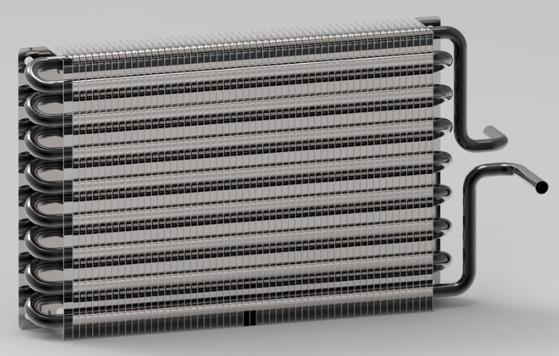
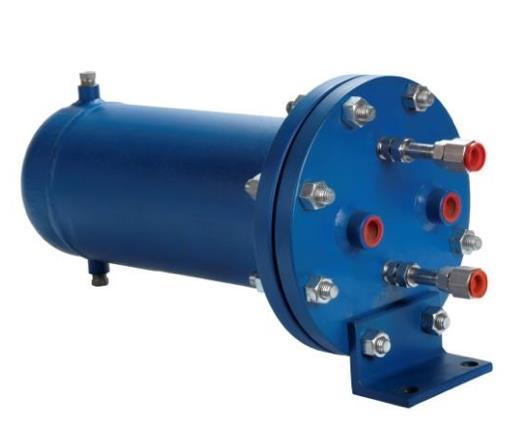
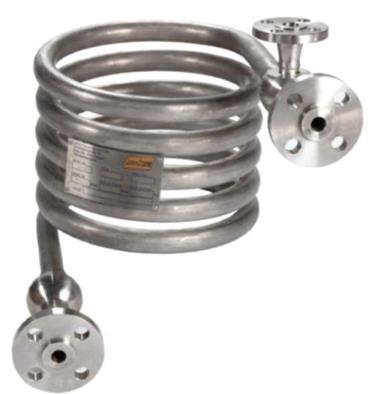
API Plan 53C allows the selection of a variety of different style heat exchangers.
Shell and tube heat exchanger Natural
Tube-in-tube
Optional Features for an API Plan 53C
Accumulator Design Features
▪ Pressure vessel code and certification
▪ ASTM (American Society for Testing and Materials)
▪ PED (Pressure Equipment Directive)
▪ GOST (Gosudarstvennyy Standard)
▪ UL (Underwriters Laboratory)
▪ CR (Canadian Registration)
▪ Region-specific design regulations
▪ Materials of construction
▪ Pressure vessel material choices and piston and rod seal materials for pumped fluid compatibility and/or environment compatibility
Optional Features for an API Plan 53C
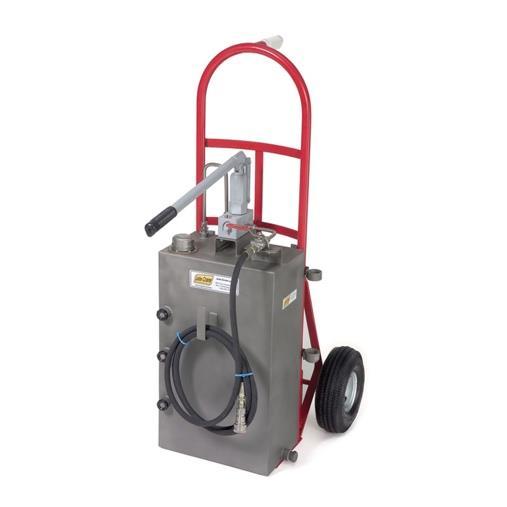
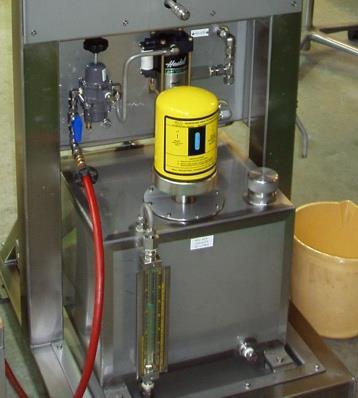
Barrier Fluid Refilling Options
▪ Portable wheeled cart with reservoir and pump (hand or pneumatic)
▪ Local reservoir with pump (hand or pneumatic)
▪ Central reservoir with pump refilling multiple API Plan 53C accumulators
▪ Reservoir with automated refill control system (digital or pneumatically actuated)
Portable Wheeled Cart with Hand Pump
Local Reservoir with Pneumatic Pump
Cost to Operate With an API Plan 53C
Cost of barrier fluid
Barrier fluid is consumed during the normal operation of the mechanical seal. Consumption rate will vary with mechanical seal design, shaft speed, pressure, and barrier fluid.
Cost of utilities
A method to remove heat absorbed into the barrier fluid requires utilities either in the form of cooling water (for a water-cooled heat exchanger) or electricity (for a forced convection heat exchanger). Natural convection heat exchangers do not require any utilities.
Cost of energy balance
Heat is removed from the process via the API plan 53C system. This energy needs to be replaced within the pumping system and there is an associated cost for the energy to achieve this.
Cost to Operate With an API Plan 53C
Friction losses
The operation of a dual mechanical seal results in friction being generated by the seal faces. This friction creates a drag on the rotation of the shaft which the drive needs to overcome. There is a cost for the energy needed to overcome this frictional drag
Labor costs
An API plan 53C system requires routine maintenance to:
1) Monitor the performance of the API Plan 53C system and mechanical seal
2) Periodically replenish the consumed barrier fluid
Cost to Operate With an API Plan 53C
Typically, the initial investment for an API plan 53C system is high, however the ongoing operational costs are low after the system is installed. ▪ Energy to operate
Carbon footprint
Initial investment
Cost of operation
Refer to the Fluid Sealing Association’s Lifecycle Cost Calculator (LCC) for a more detailed analysis.
How to Size an API Plan 53C
Accumulator size
The stored liquid volume (working volume) in the piston accumulator is selected based on the consumption rate of barrier fluid by the mechanical seal and the desired refill interval. Typically, a refill interval of 28 days is selected.
Example: Leakage rate of outer seal: 1.5 mL /hr
Leakage rate of inner seal: 0.5 mL/hr
Total barrier fluid consumption: 2 mL/hr
Safety Factor 2 x 2 mL/hr: 4 mL/hr
Leakage per day = 24 x 4: 96 mL
Leakage in 28 days = 28 x 96: 2688 mL
Minimum working volume: 2.7 liters (0.7 Gal)
How to Size an API Plan 53C
Pressure Amplification Ratio
The recommended minimum differential pressure between the barrier fluid pressure and minimum seal chamber pressure is the greater of 1.4 Bar (20 psi) or 10% of seal chamber pressure.
Example using the seal chamber pressure as the reference pressure:
How to Size an API Plan 53C
Pressure Amplification Ratio
In pumping applications where the reference pressure source and the piston accumulator amplification ratio do not meet the minimum differential pressure, a spring assisted design needs to be selected.
The spring assisted design adds additional force to the reference pressure forces to increase the barrier fluid pressure.
Spring
Piston Rod
Piston
How to Size an API Plan 53C
Reference Pressure Source
Selecting the right amplification ratio and reference pressure point on the pump pressure casing is key to meeting the minimum differential barrier pressure. Additionally, the range of pressure at the reference point must also be factored into the selection process.
For high pressure pumps, the seal chamber can be used as a reference pressure and meet the minimum differential pressure requirements. A simple connection in the seal chamber or mechanical seal gland plate can be used to plumb a reference line to the piston accumulator. However, for low pressure pumps, a pressure higher than the seal chamber must be used to meet the minimum differential pressure requirements. Depending on the pump design, this can be the pump’s final discharge pressure or the discharge of an intermediate stage (if the pump is a multi-stage design).
How to Size an API Plan 53C
Alarm Set Points
Alarms are established to notify the operator that actions are required.
▪ This alarm notifies the operator that the accumulator is approaching running out of barrier fluid
Low Liquid Level (LLL) / Refill Alarm
▪ This alarm notifies the operator to add barrier fluid to the accumulator
Normal Liquid Level (NLL) / Fill Set Point
▪ This notifies the operator to stop adding barrier fluid to the accumulator
How to Size an API Plan 53C
Barrier fluid circulation
The barrier fluid flow produced by the mechanical seal pumping ring (or external pump) needs to be sufficient to enable transfer of the heat absorbed into the barrier fluid (a combination of energy from seal heat generation and heat soak from the equipment) to the heat exchanger.
How to Size an API Plan 53C
An insufficient barrier fluid flow rate will result in large differential temperatures between the barrier fluid in and out connections at the mechanical seal, and an increase in the overall temperature of the barrier fluid.
Excessive barrier fluid temperatures result in a number of problems affecting the performance and reliability of the mechanical seal.
Mechanical seals with internal pumping devices (pumping rings) have a strong correlation to shaft speed. Flow can dramatically reduce when shaft speeds are low and may require the use of an external circulation pump.
How to Size an API Plan 53C
Heat Exchanger
One of the main advantages of an API Plan 53C is the flexibility offered in the choice of heat exchanger style and capacity. With the absence of physical restrictions of traditional API Plan 53A systems, larger cooling capacity heat exchangers can be selected.
When matching the heat exchanger cooling capacity to the heat load placed on the barrier fluid, consideration needs to be made to the effect of increases in the resistance to barrier fluid flow commonly associated with larger heat exchangers.
Undersized heat exchangers will result in excessive barrier fluid temperature which creates a rapid decrease in mechanical seal reliability.
How to Install an API Plan 53C
Heat Exchanger location
The position of the heat exchanger relative to the mechanical seal is important. It should be located as close as possible and a short distance above the mechanical seal centerline (without obscuring access for pump maintenance activities).
Piston Accumulator location
The piston accumulator can be mounted a substantial distance away from the barrier fluid circulating loop without any impact to the system’s performance. However, many installations will mount the heat exchanger and accumulator together on the same stand.
How to Install an API Plan 53C
Interconnection pipe/tubing
Tube or piping connecting the mechanical seal to the heat exchanger should be selected to produce minimal resistance to barrier flow. Large diameter bores, smooth radius bends, short distances, minimal ancillary equipment added into the circulating loop all help lower the resistance to barrier fluid flow.
High point vents must be installed to allow removal of air from the system during commissioning. Lines should slop upwards to the vent point with a minimum slope of 40 mm per meter (0.5” per foot)
Low point drains should be provided to remove barrier fluid when decommissioning the equipment.
General API Plan 53C Commissioning Guidelines
Commissioning must occur with the pump depressurized!
Filling the Accumulator
Filling the barrier fluid circulation loop is a multi step process that is repeated to ensure the barrier system is free of trapped air.
1) The piston needs to be moved so that the piston rod is at its maximum extension out of the accumulator. Low pressure compressed air connected to the reference pressure port can be used to move the piston.
2) Barrier fluid is added to the barrier fill connection or low point drain with the high vent valve open. Fluid is added until flow out of the vent valve is observed.
General API Plan 53C Commissioning Guidelines
3) Close the vent valve and continue adding barrier fluid. As barrier fluid is added, the end of the piston rod will move into the piston accumulator. Stop adding barrier fluid once the full indicating signal is activated.
4) Caution – do not overfill the accumulator. This will cause the piston to bottom out and no longer be free to slide and maintain the correct pressure. If the temperature of the barrier fluid increases, the thermal expansion of the barrier fluid will create a runaway pressure increase which can result in seal failure, damage to the piston accumulator, or rupture of the system.
5) Open the vent valve and using low pressure compressed air connected to the reference pressure port, push the piston so that the piston rod is at its maximum extension out of the accumulator.
General API Plan 53C Commissioning Guidelines
6) Repeat steps 5) and 3) until no visible gas is entrained in the fluid exiting from the vent valve.
7) Reconnect the reference port to port in the pump casing.
8) The final step is to repeat step 3) so that the barrier system contains its maximum volume of barrier fluid.
General API Plan 53C Commissioning Guidelines
Alarm Set Point Verification
During the fill and vent cycles, the changes in piston position can be used to confirm the alarm set points and to validate communication between the instrument, the data acquisition system, and the local readout.
Leak Checks
Check all connections and fittings for visible leakage. Tighten any fittings if leakage is found.
General API Plan 53C Commissioning Guidelines
Heat Exchanger Commissioning
Depending on the style of heat exchanger in use, any required utilities, such as cooling water or electrical fan, should be activated and verified that cooling water or air is flowing.
External Barrier Fluid Circulating Pump
When present, any external barrier fluid circulating pump should be switched on to start barrier fluid circulation.
General API Plan
Pump Commissioning
The pump is now ready to be flooded, and the equipment operators standard commissioning procedures followed.
How to Operate an API Plan 53C
Periodic Barrier Fluid Refilling
Barrier fluid is consumed during the normal operation of the mechanical seal. This will require periodic replenishment of barrier fluid into the accumulator to make up for the fluid consumed. Barrier fluid is added to the accumulator until the Full set point piston position has been reached.
Caution – do not overfill the accumulator. This will cause the piston to bottom out and will no longer be free to slide and maintain the correct pressure. If the temperature of the barrier fluid increases, the thermal expansion of the barrier fluid will create a runaway pressure increase which can result in seal failure, damage to the piston accumulator, or rupture of the system.
The barrier fluid consumption rate is a strong indicator of the health of the mechanical seal. A decrease in the refill interval is an early warning of declining mechanical seal performance.
How to Operate an API Plan 53C
Periodic Inspection of Utilities
Periodic measurement of the barrier fluid temperature into and out of the heat exchanger should be performed to monitor heat exchange efficiency.
An increase in the differential temperature across the heat exchanger inlet and outlet is an indication of a decrease in efficiency that can be caused by insufficient cooling flow or fouling of the heat exchanger heat transfer surfaces.
General Troubleshooting of an API Plan 53C
Symptom Potential causes
▪ Decreasing refill interval
▪ Elevated temperature
Increasing mechanical seal leakage
Leaking fittings
Damage to piston or piston rod seals
Insufficient barrier fluid circulation
Heat exchanger fouling
Insufficient heat exchanger cooling flow
Undersized heat exchanger
Inadequate venting
Increase in process temperature
Increase in process pressure
General Troubleshooting of an API Plan 53C
Symptom Potential causes
▪ Rapid decrease in pressure
▪ Decreasing barrier
Major mechanical seal failure
Delayed maintenance refilling of the accumulator
Failure of piston or piston rod seals
Blocked reference pressure line
Jammed piston
Delayed maintenance refilling of the differential pressure accumulator
Damage or failure of the piston seal
General Troubleshooting of an API Plan 53C
Symptom
▪ Increasing barrier differential pressure
Potential causes
▪ Major mechanical seal failure
▪ Delayed maintenance refilling of the accumulator
▪ Damage or failure of the piston rod seal
▪ Increase in the process (reference line) pressure
Alternatives to an API Plan 53C
Alternative piping plans that are similar:
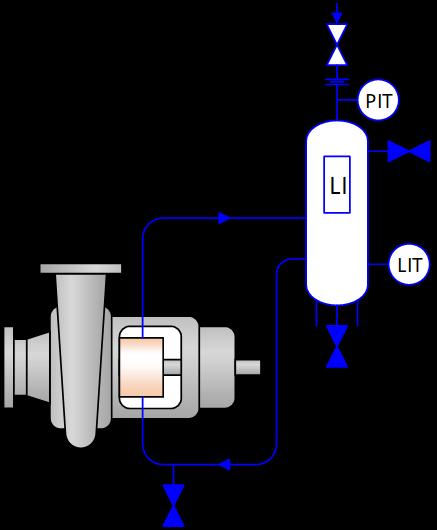
API Plan 53A
Gas pressurized vessel
API Plan 53B
Pressurized bladder accumulator system
Alternatives to an API Plan 53C
Alternative piping plans that are similar:
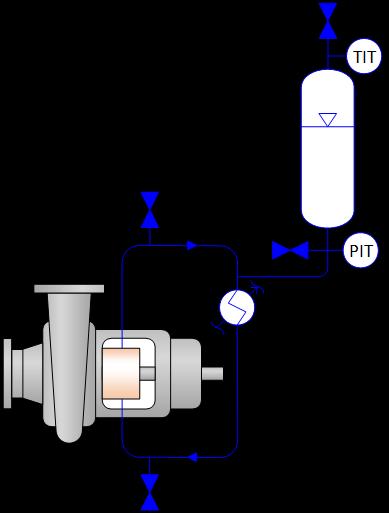
API Plan 54
Fluid from an external system
API Plan 74 Dual pressurized non-contacting gas seal
API Plan 53C Summary
API Plan 53C pressurized seal systems offer a unique ability to automatically adjust the barrier pressure as the pressure in the pump changes making this a simple, safe and reliable solution in a range of pumping applications. The correct sizing of the piston accumulator, heat exchanger and barrier fluid flow rate together with best installation and operational practices are the key to years of reliable performance from an API Plan 53C system.