While the FSA makes every reasonable attempt to ensure that the information contained in this document is accurate and current, the FSA, its officers, directors, volunteers, and authorized agents are not responsible for any errors or omissions contained therein nor are they responsible for any results obtained from the use of or reliance upon its content. All information is provided “AS IS,” with no guarantee of completeness, accuracy, timeliness or of the results obtained, and without warranty of any kind, express or implied. In no event shall FSA or its officers, directors, volunteers, or authorized agents be liable to you or anyone else for any decision made or action taken in reliance on the information con tained herein or for any for any consequential, indirect, special, or similar damages, even if advised of the possibility of such damages. The informa tion contained in this document is for informational purposes only and does not constitute professional advice. It also includes references to certa in standards that may change over time and should be interpreted only in light of particular circumstances. It is your sole responsibility to confi rm the current state of any referred to standards. FSA reserves the right to modify or update the document content and to modify this Disclaimer at any t ime, effective upon posting of an updated version of this Disclaimer.
This Fluid Sealing Association Knowledge Series training presentation introduces API Piping API Plan 52. A description is provided on:
▪ What is an API Plan 52?
▪ How an API Plan 52 Works
▪ What does an API Plan 52 do?
▪ What an API Plan 52 cannot do
▪ Optional Features for an API Plan 52
▪ Cost to Operate an API Plan 52
▪ How to Size an API Plan 52
▪ How to Install an API Plan 52
▪ General API Plan 52 Commissioning Guidelines
▪ How to Operate an API Plan 52
▪ General Troubleshooting of an API Plan 52
▪ Alternatives to an API Plan 52
What are Piping Plans?
▪ Piping plans collectively are different piping arrangements of fluid used to improve the conditions the mechanical seal operates in with the objective of improving the mechanical seal’s life.
▪ The American Petroleum Institute adopted numbers and created definitions for each piping plan configuration, thereby allowing a common language across the industry to simply describe a particular configuration.
▪ The American Petroleum Institute standard API-682 is where the definition of each piping plan can be found and where they may periodically be updated.
What is an API Plan 52?
API Plan 52 is a piping plan that provides a liquid buffer fluid to a dual liquid lubricated mechanical seal at a pressure less than the seal chamber pressure.
An API Plan 52 provides:
▪ Minimized emissions of the pumped fluid to the environment
▪ A reduced emissions solution that does not contaminate the process fluid
▪ A reservoir of buffer fluid to replace fluid consumed by the mechanical seals
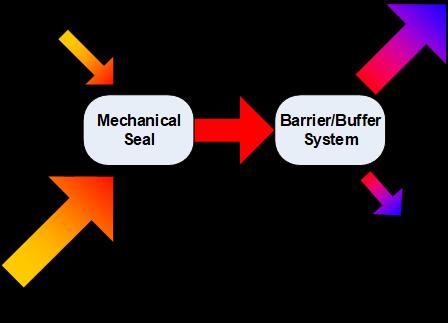
▪ A heat exchanger to dissipate heat generated by the mechanical seal and absorbed from the pump
▪ Instrumentation to monitor seal performance and detect early onset of seal performance deterioration
▪ Containment of pumped fluid in the event of seal or support system failure
What is an API Plan 52?
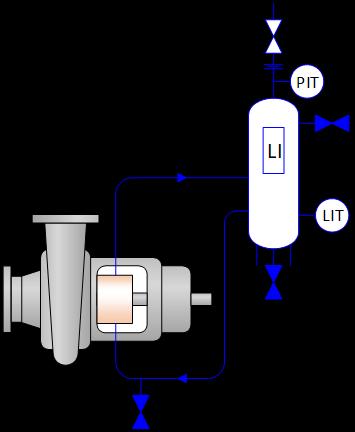
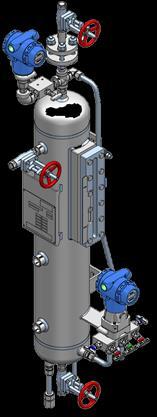
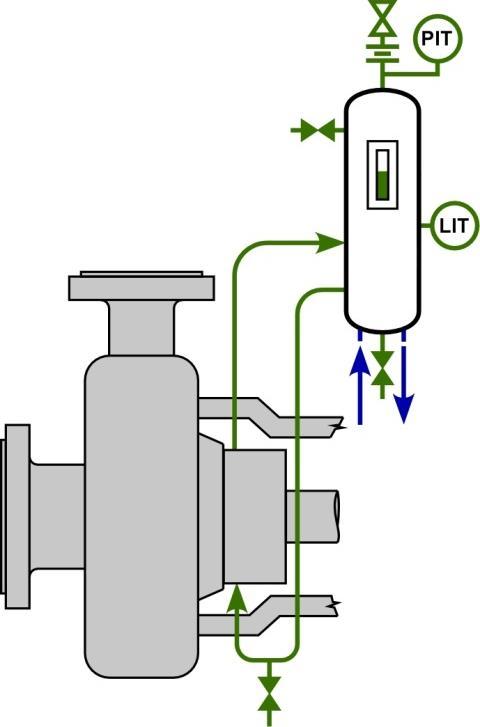
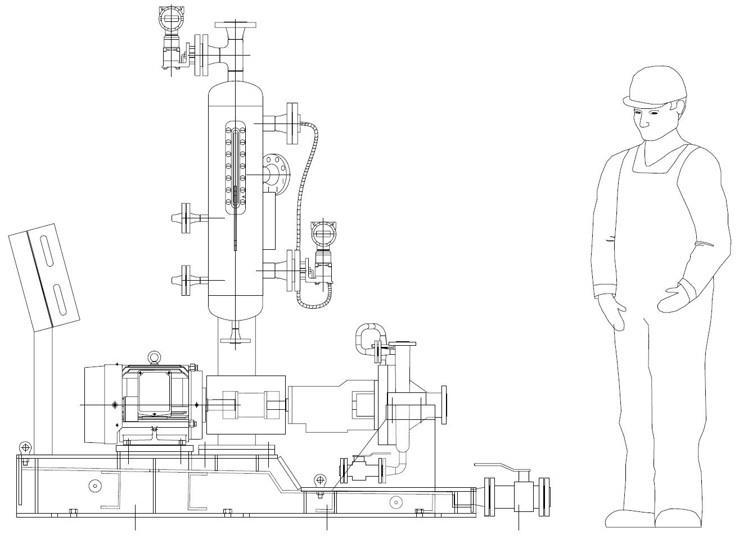
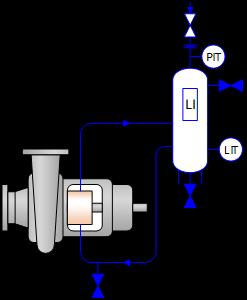
API Plan 52 consists of the following components:
Vent to Flare or Vapor Recovery System
Mechanical Seal
Drain
Pressure Transmitter (Optional)
Buffer Fluid Refill
Level Transmitter (Optional)
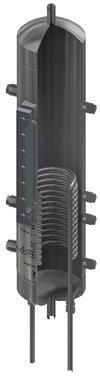
Reservoir with Optional Cooling Coils
How an API Plan 52 Works
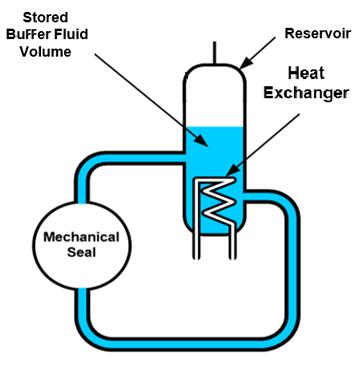
Dual liquid lubricated mechanical seals contain a pumping device within the mechanical seal that circulates buffer fluid in a cooling circulation loop, through a reservoir, returning to the mechanical seal. An API Plan 52 provides a reservoir of fluid to capture process fluid and replace buffer fluid consumed by the mechanical seal through normal leakage.
How an API Plan 52 Works
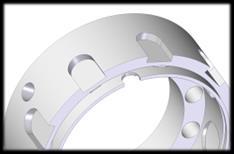
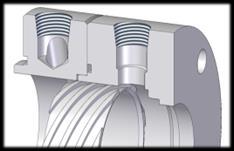
To move the buffer fluid through the circulating loop, a pumping ring can be incorporated into the mechanical seal design. There are various styles and shapes of pumping rings, however they are all driven by the rotating shaft of the equipment. With higher shaft speeds, the pressure and flow generated by the pumping ring will increase.
How an API Plan 52 Works
The pressure of the API Plan 52 reservoir buffer fluid will typically be constant and held below the seal chamber pressure.
The API Plan 52 reservoir is often vented to a vapor recovery system. For hot process fluids, the reservoir may contain a cooling coil to remove heat absorbed into the system.
How an API Plan 52 Works
During operation of a liquid dual unpressurized mechanical seal, normal leakage occurs from the higher-pressure fluid in the seal chamber into the lower pressure buffer fluid. This leakage results in an increase of the liquid level in the reservoir. Additionally, normal leakage occurs from the buffer fluid to atmosphere, resulting in a decrease in liquid level in the reservoir. The leakage rate to atmosphere is often lower than the leakage into the buffer fluid from the process, resulting in an increasing reservoir volume over time.
How an API Plan 52 Works
When the liquid volume in the reservoir reaches a maximum, an alarm is triggered for the operator to drain and refill the reservoir with fresh buffer fluid. The refill alarm can be simply based on a maximum liquid level in the reservoir.
If the liquid volume in the reservoir reaches a minimum, an alarm is triggered for the operator to refill the reservoir with fresh buffer fluid. The refill alarm can be simply based on a minimum liquid level in the reservoir.
What does an API Plan 52 do?
▪ Minimizes process fluid emissions to the atmosphere
▪ In the event of catastrophic failure, can provide contingent sealing
▪ Provides a large recirculating volume of buffer fluid
▪ Maintains a constant buffer fluid pressure
▪ Provides a visible liquid level of buffer fluid
▪ Has a small installed footprint
▪ Provides a method to remove heat soak and seal face generated heat
▪ Aids in monitoring the mechanical seal's health
What an API Plan 52 cannot do
An API Plan 52 cannot:
▪ Eliminate all pumped fluid emissions from reaching the environment
▪ Predict when a mechanical seal will fail
▪ Provide continuous operation without routine maintenance
▪ Operate for extended periods of time in a failure mode
▪ Support more than one seal installation at a time
▪ Be used with a single seal
Optional Features for an API Plan 52
Valves and Instrumentation:
▪ Options to monitor buffer fluid level in the reservoir
▪ Level Transmitter (recommended)
▪ High and Low-Level Switch
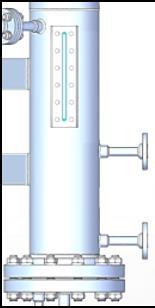
▪ Sight Glass (recommended)
▪ Options to monitor buffer fluid pressure
▪ Pressure Transmitter (recommended)
▪ Pressure Switch
▪ Pressure Gauge
▪ Valves to allow isolation of reservoir from the mechanical seal for maintenance and buffer fluid refilling/draining.
Cooling Coil
Optional Features for an API Plan 52
Valves and Instrumentation:
▪ Temperature measurement – Addition of thermowells and local temperature indicators to measure buffer fluid temperature in and out of the mechanical seal
Temperature indicator
Thermowell
Eccentric Reducers
Optional Features for an API Plan 52
Buffer fluid circulation:
Internal to the mechanical seal
▪ Radial flow pumping ring
▪ Axial flow pumping ring
Radial flow pumping ring
Axial flow pumping ring
Optional Features for an API Plan 52
Reservoir Cooling Coils
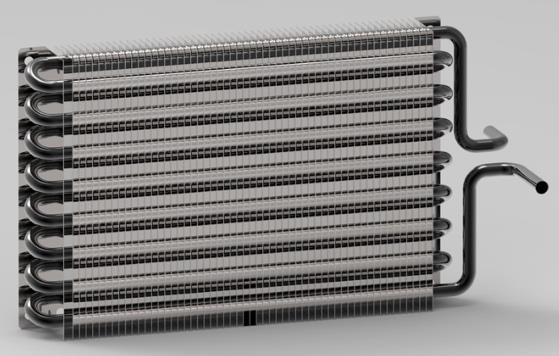
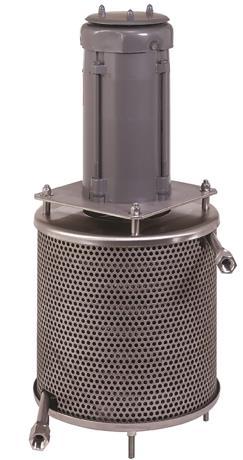
API Plan 52 allows the selection of a variety of different size reservoirs. While reservoirs with internal cooling coils are typically used, natural convection or forced convection heat exchangers may also be used.
Reservoir with internal cooling coils
Natural convection heat exchanger
Forced convection heat exchanger
Optional Features for an API Plan 52
Reservoir Design Features
▪ Pressure vessel code and certification
▪ ASTM (American Society for Testing and Materials)
▪ PED (Pressure Equipment Directive)
▪ GOST (Gosudarstvennyy Standard)
▪ UL (Underwriters Laboratory)
▪ CR (Canadian Registration)
▪ Region specific design regulations
▪ Materials of construction
▪ Reservoir material choices for buffer fluid compatibility and/or environment compatibility
▪ Customer-specific surface coatings and colors
Optional Features for an API Plan 52
Buffer Fluid Refilling Options
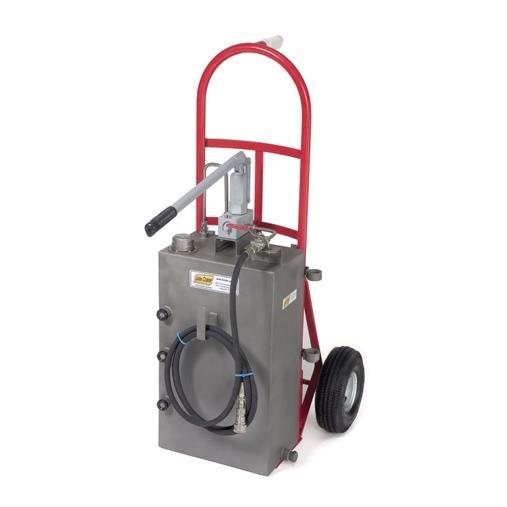
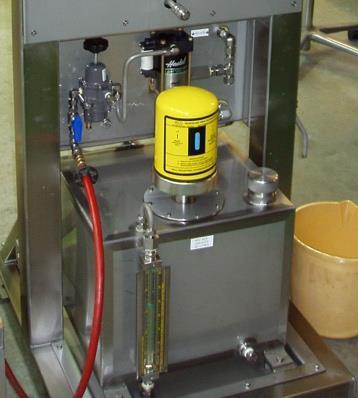
▪ Portable wheeled cart with reservoir and pump (hand or pneumatic)
▪ Local reservoir with pump (hand or pneumatic)
▪ Central reservoir with pump refilling multiple API
Plan 52 reservoirs
▪ Reservoir with automated refill control system (digital or pneumatically actuated)
Portable Wheeled Cart with Hand Pump
Local Reservoir with Pneumatic Pump
Cost to Operate with an API Plan 52
Process fluid
Process fluid will be consumed during the normal operation of the mechanical seal. Consumption rate is low and will vary with mechanical seal design and system pressure.
Cost of buffer fluid
Buffer fluid is consumed during the normal operation of the mechanical seal. Consumption rate will vary with mechanical seal design, shaft speed, pressure, and buffer fluid.
Cost of utilities
A method to remove heat soak absorbed into the buffer fluid requires utilities either in the form of cooling water (for a water-cooled reservoir) or electricity (for a forced convection heat exchanger). Natural convection heat exchangers do not require any utilities. The method of capturing and venting any vaporizing process fluids could require utilities as well.
Although rare, utilities could be required if a pressure supply is needed for the buffer fluid reservoir.
Cost to Operate with an API Plan 52
Cost of energy balance
Heat is removed from the process via heat soak into the API Plan 52 system. This energy needs to be replaced within the pumping system and there is an associated cost for the energy to achieve this.
Friction losses
The operation of a dual mechanical seal results in friction being generated by the seal faces. This friction creates a drag on the rotation of the shaft which the driver needs to overcome. There is a cost for the energy needed to overcome this frictional drag
Labor costs
An API Plan 52 system requires routine maintenance to:
1) Monitor the performance of the API Plan 52 system and mechanical seal
2) Periodically drain and replenish the consumed buffer fluid
Cost to Operate with an API Plan 52
The initial investment for an API Plan 52 system is low, however there are moderate ongoing operational costs after the system is installed. ▪ Energy to operate $ $$$$
Carbon footprint
Initial investment
Cost of operation
Refer to the Fluid Sealing Association’s Lifecycle Cost Calculator (LCC) for a more detailed analysis.
How to Size an API Plan 52
Reservoir size
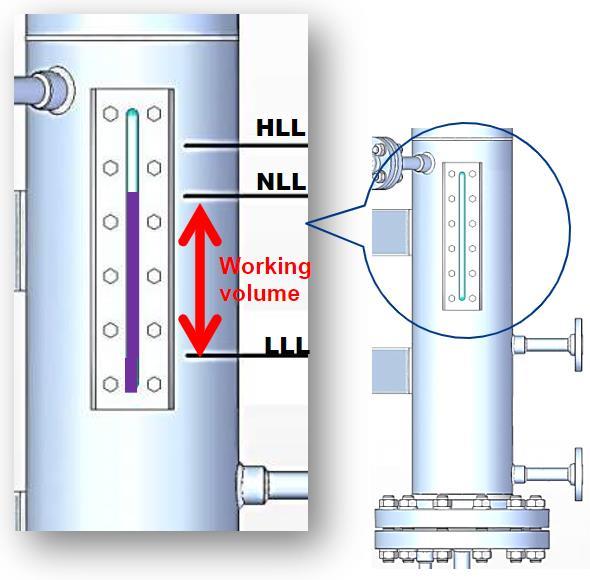
▪ Typical sizes: 11.3 or 18.9 liters (3 or 5 gallon) total volume with a working volume equal to 20-30% of the total reservoir volume.
▪ API 682 reservoir sizing guidelines:
▪ Shaft diameter < 60 mm = 3 Gallon reservoir
▪ Shaft diameter > 60 mm = 5 Gallon reservoir
Example: Leakage rate of outer seal: 0.5 mL /hr (out of the reservoir)
Leakage rate of inner seal: 1.5 mL/hr (into the reservoir)
Total reservoir fluid gained: 1 mL/hr
Safety Factor 2 x 1 mL/hr: 2 mL/hr
Leakage per day = 24 x 2: 48 mL
Leakage in 28 days = 28 x 48: 1344 mL
Min. Working volume: 1.4 liters (0.4 Gal)
Total Reservoir volume : 11.3 to 18.9 liters (3 to 5 gallons)
How to Size an API Plan 52
Alarm Set Points
Alarms are established to notify the operator that actions is required.
There are a few critical set points:
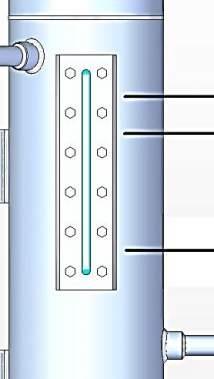
Low Liquid Level (LLL) / Refill Alarm
This alarm notifies the operator to add buffer fluid to the reservoir
Normal Liquid Level (NLL) / Fill Set Point
This notifies the operator to stop adding buffer fluid to the reservoir
High Liquid Level (HLL) / Over Fill Alarm
This alarm notifies the operator the reservoir is overfilled
How to Size an API Plan 52
Buffer fluid circulation
The buffer fluid flow produced by the mechanical seal pumping needs to be sufficient to enable transfer of the heat absorbed into the buffer fluid to the cooling coils in the reservoir (or heat exchanger). The energy absorbed into the buffer fluid is a combination of seal heat generation and heat soak from the equipment.
How to Size an API Plan 52
▪ Typically, not used for pumping temperatures above 176.6°C (350°F) due to heat dissipation capacity
▪ Mechanical seal must have integrated pumping device. Sometimes an external circulating pump is used (then considered as an API Plan 55.)
How to Size an API Plan 52
An insufficient flow rate will result in large differential temperatures between the buffer fluid in and out connections at the mechanical seal and an increase in the overall temperature of the buffer fluid.
Excessive buffer fluid temperatures affect the performance and reliability of the mechanical seal and the life of the buffer fluid.
Mechanical seals with internal pumping devices (pumping rings) have a strong correlation to shaft speed. Flow can dramatically reduce when shaft speeds are low.
The reservoir cooling capacity should be matched to the heat load placed on the buffer fluid.
How to Install an API Plan 52
Reservoir location
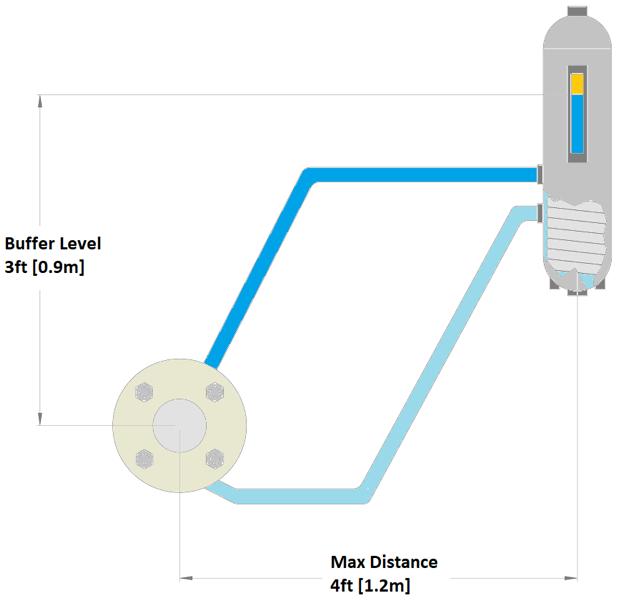
The position of the reservoir relative to the mechanical seal is important. It should be located as close as possible and a short distance above the mechanical seal centerline (without obscuring access for pump maintenance activities).
How to Install an API Plan 52
Interconnection pipe/tubing
Tube or piping connecting the mechanical seal to the reservoir should be selected to produce minimal resistance to buffer flow. Large diameter bores, smooth radius bends, short distances, minimal ancillary equipment added into the circulating loop all help lower the resistance to buffer fluid flow.
High point vents must be installed to allow removal of air from the system during commissioning. Lines should slope upwards to the vent point with a minimum slope of 40 mm per meter (0.5 inches per foot)
Low point drains should be provided to remove buffer fluid when decommissioning the equipment.
General API Plan 52 Commissioning Guidelines
Commissioning must never cause the buffer pressure to exceed the seal chamber pressure
Filling the Reservoir
Typically, the reservoir is filled from a portable cart containing buffer fluid and a pump. The pump is often a hand pump or a pneumatically driven piston pump. Use clean, fresh buffer fluid to fill the reservoir.
Continue adding buffer fluid until the normal liquid level has been reached.
General API Plan 52 Commissioning Guidelines
Venting the System
When possible, the shaft should be rotated by hand to assist purging the mechanical seal buffer cavity of air.
Bleed all instrument block and bleed valves.
Continue venting until a solid stream of liquid with no bubbles is flowing from the vent valves.
General API Plan 52 Commissioning Guidelines
Alarm Set Point Verification
During the filling cycles, the changes in liquid level can be used to confirm the alarm set points and to validate communication between the instrument, the data acquisition system, and the local readout.
Leak Checks
Check all connections and fitting for visible leakage. Tighten any fittings if leakage is found.
General API Plan 52 Commissioning Guidelines
Reservoir Cooling Commissioning
Depending on the style of reservoir and cooling in use, any required utilities, such as cooling water or electrical fan, should be activated and it should be verified that cooling water or air is flowing.
Buffer Loop Pressurization (If Applicable)
The buffer fluid in an API Plan 52 is not typically pressurized. If the seal OEM recommends a specific buffer fluid pressure (below seal chamber pressure), the buffer fluid should be pressurized as the final step prior to pump commissioning to avoid reverse pressurization to preserve the inner seal. Check for leaks or drops in pressure or buffer fluid level.
General API Plan
Pump Commissioning
The pump is now ready for operation, and the equipment operators standard commissioning procedures should be followed.
How to Operate an API Plan 52
Periodic Buffer Fluid Maintenance
During the normal operation of the mechanical seal, buffer fluid is consumed, and process fluid is gained, contaminating the buffer fluid. This will require periodic draining and replenishment of buffer fluid into the reservoir to make up for the fluid exchange. The pump is shut down, buffer fluid is drained, and clean buffer fluid is added to the reservoir until the normal liquid level has been reached.
A change to the draining or refill interval is an early warning of declining mechanical seal performance.
How to Operate an API Plan 52
Periodic Inspection of Utilities
Periodic measurement of the buffer fluid temperature into and out of the reservoir (or heat exchanger) should be performed to monitor heat exchange efficiency.
An increase in the differential temperature across the heat exchanger inlet and outlet is an indication of a decrease in efficiency that can be caused by insufficient cooling flow or fouling of the heat exchanging heat transfer surfaces.
General Troubleshooting of an API Plan 52
Symptom Potential causes
▪ Decreasing refill interval Increasing outer seal mechanical seal leakage
Leaking fittings
▪ Decreasing drainage interval Increasing inner seal mechanical seal leakage
▪ Elevated temperature Insufficient buffer circulation
Heat exchanger fouling
Insufficient cooling flow
Undersized cooling
Inadequate venting
Change in process pressure or temperature
General Troubleshooting of an API Plan 52
Symptom Potential causes
▪ Rapid increase in pressure
Major inner seal mechanical seal failure
▪ Rapid increase in reservoir Major inner seal mechanical seal failure liquid level
▪ Rapid decrease in reservoir Major outer seal mechanical seal failure liquid level
Major leak in buffer fluid loop
Alternatives to an API Plan 52
Alternative piping plans that are similar:
API Plan 53A
Gas Pressurized Vessel
Plan 55
Fluid From an External System
API Plan 52 Summary
API Plan 52 buffer fluid seal systems offer a safe and reliable solution for a wide range of applications.
Unlike dual pressurized barrier systems, the API Plan 52 system provides a reduced emissions solution that does not contaminate the process fluid.
The correct sizing of the reservoir for cooling and the buffer fluid flow rate, together with best installation & operational practices are the keys to years of reliable performance from an API Plan 52 system.