While the FSA makes every reasonable attempt to ensure that the information contained in this document is accurate and current, the FSA, its officers, directors, volunteers, and authorized agents are not responsible for any errors or omissions contained therein nor are they responsible for any results obtained from the use of or reliance upon its content. All information is provided “AS IS,” with no guarantee of completeness, accuracy, timeliness or of the results obtained, and without warranty of any kind, express or implied. In no event shall FSA or its officers, directors, volunteers, or authorized agents be liable to you or anyone else for any decision made or action taken in reliance on the information con tained herein or for any for any consequential, indirect, special, or similar damages, even if advised of the possibility of such damages. The informa tion contained in this document is for informational purposes only and does not constitute professional advice. It also includes references to certa in standards that may change over time and should be interpreted only in light of particular circumstances. It is your sole responsibility to confi rm the current state of any referred to standards. FSA reserves the right to modify or update the document content and to modify this Disclaimer at any t ime, effective upon posting of an updated version of this Disclaimer.
This Fluid Sealing Association Knowledge Series training presentation introduces API Piping Plan 21. A description is provided on:
▪ What is an API Plan 21?
▪ How an API Plan 21 Works
▪ What does an API Plan 21 do?
▪ What an API Plan 21 cannot do
▪ Optional Features for an API Plan 21
▪ Cost to Operate an API Plan 21
▪ How to Size an API Plan 21
▪ How to Install an API Plan 21
▪ General API Plan 21 Commissioning Guidelines
▪ How to Operate an API Plan 21
▪ General Troubleshooting of an API Plan 21
▪ Alternatives to an API Plan 21
What Are Piping Plans?
▪ Piping plans collectively are different piping arrangements of fluid used to improve the conditions the mechanical seal operates in with the objective of improving the mechanical seal’s life.
▪ The American Petroleum Institute adopted numbers and created definitions for each piping plan configuration, thereby allowing a common language across the industry to simply describe a particular configuration.
▪ The American Petroleum Institute standard API-682 is where the definition of each piping plan can be found and where they may periodically be updated.
What is an API Plan 21?
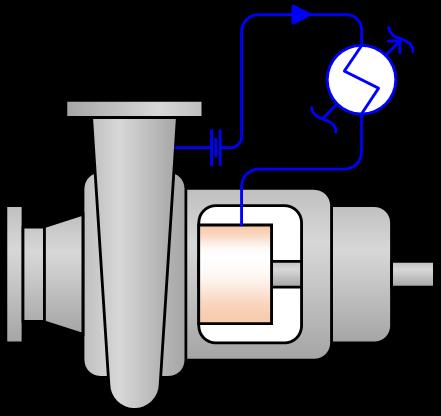
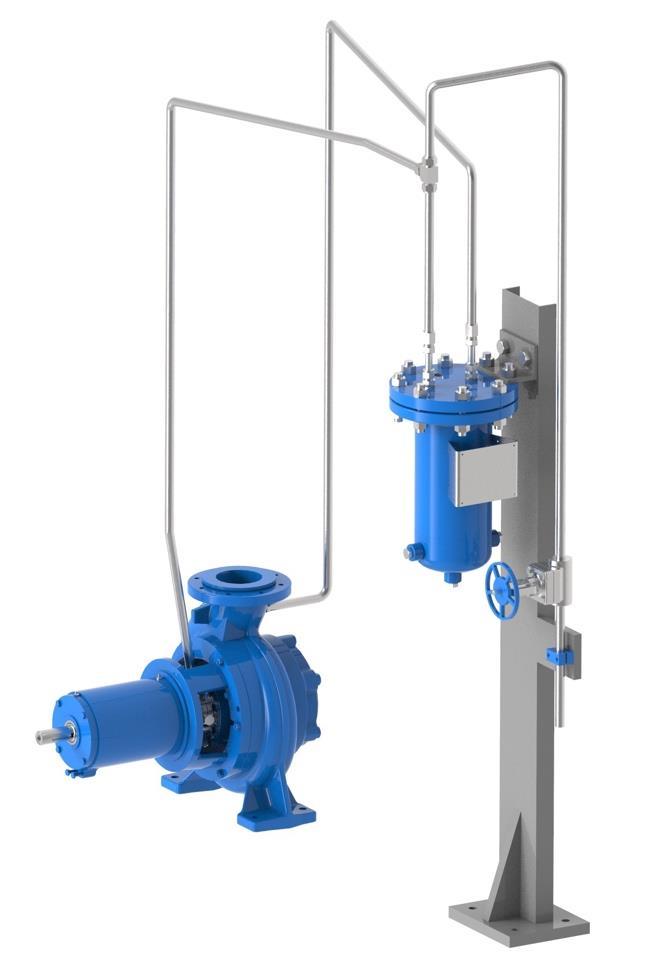
API Plan 21 is a piping plan that reduces the flush fluid temperature being delivered to the mechanical seal. This flush plan simply taps into a pressure source higher than the seal chamber pressure, typically the pump discharge on single stage pumps, or an intermediate stage in a multi-stage pump, and pipes this fluid to the seal chamber via a heat exchanger to provide cooling and lubrication to the seal faces.
Heat Exchanger
Pump discharge flange
Flow controlling orifice plate
Mechanical seal or seal chamber “Flush” connection
How an API Plan 21 Works
An API Plan 21 works by creating flow using differential pressure between the pump discharge pressure, and the pressure downstream of the seal chamber.
The direction of flow is from the high-pressure source, the pump discharge, to the low-pressure point, downstream of the seal chamber. This fluid flow enters the seal
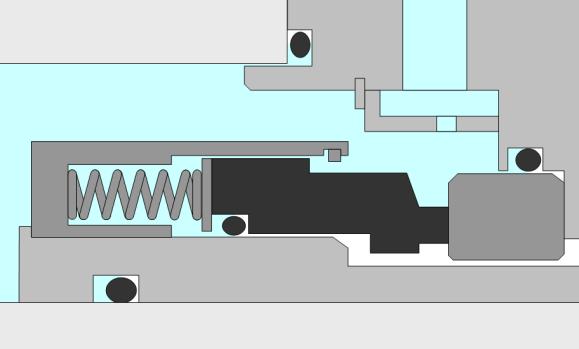
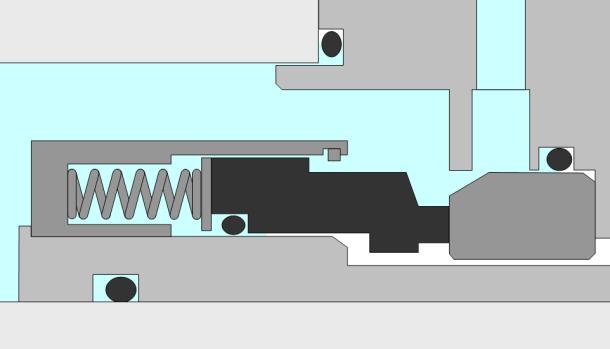
Flush fluid entry to seal chamber chamber through the flush connection, located in either the mechanical seal gland plate or seal chamber wall.
As the fluid source is the pump discharge, the fluid flowing through the interconnecting piping and seal chamber is the same fluid that is being pumped.
Flush fluid exit from the seal chamber
How an API Plan 21 Works
The temperature of the fluid being delivered to the seal chamber can be controlled by the sizing and selection of the heat exchanger, and the coolant temperature, coolant type, and process fluid flow rate.
How an API Plan 21 Works
The flowrate of fluid through the seal chamber can be controlled by adding flow control features. These features include:
Flow Controlling Orifice Pipe/Tube
chamber throat bushing clearance
What does an API Plan 21 do?
The flow of fluid through a heat exchanger to the seal chamber created by an API Plan 21 can be used to:
▪ Reduce the temperature of the process fluid at the mechanical seal.
▪ Improve lubricity of the fluid film at the mechanical seal interface due to increased fluid viscosity.
▪ Improve vapor pressure margin of the fluid around the seal to reduce the possibility of vaporization.
▪ Increase seal chamber pressure when used in conjunction with a seal chamber throat bushing to achieve an increased pressure margin above the pumped fluid's vapor pressure.
▪ Prevent the accumulation of debris in the seal chamber.
What an API Plan 21 cannot do
An API Plan 21 cannot:
▪ Introduce a clean fluid to the seal chamber.
▪ Isolate the seal chamber from process fluid.
▪ Remove debris from the seal chamber if flow is low.
▪ Increase seal chamber pressure without seal chamber throat bushing.
▪ Lower emissions to the atmosphere.
▪ Cope with fluids that freeze, solidify or thicken within the system.
Optional Features for an API Plan 21
Optional flow control types
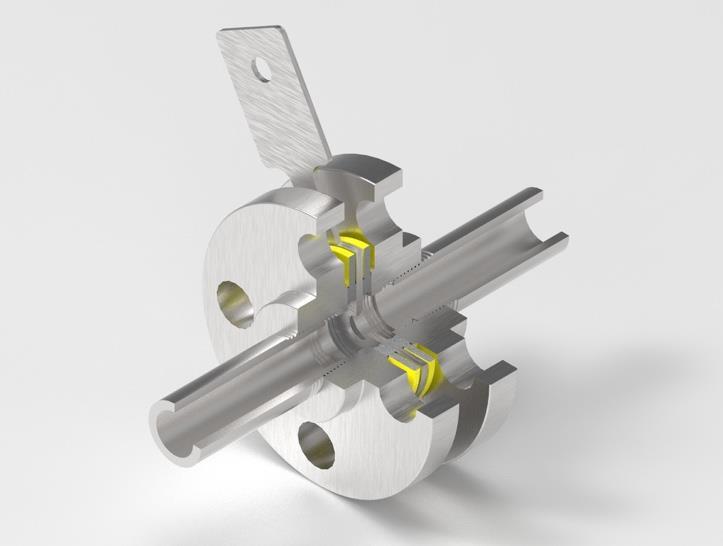
▪ Flat Plate Orifice: Narrow plate with a small flow-through hole that restricts flow within the API Plan 21. These are commonly constructed from piping components and can be assembled either seal welded or threaded. Often used in hazardous fluid pumping applications.
Optional Features for an API Plan 21
Optional flow control types
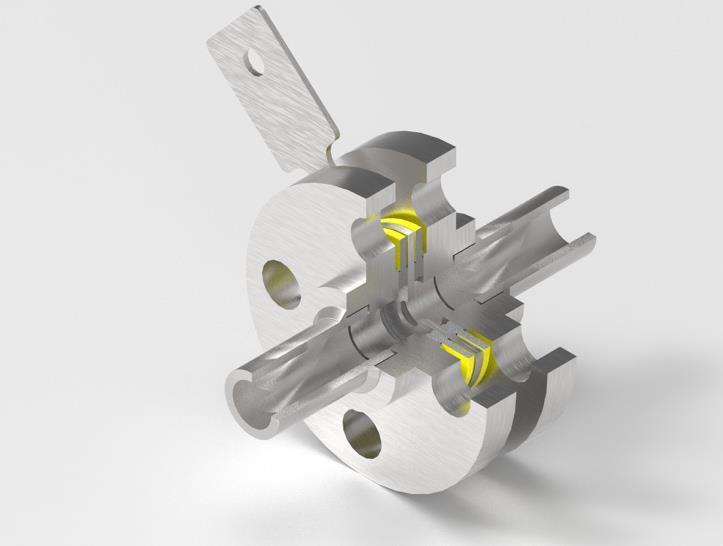
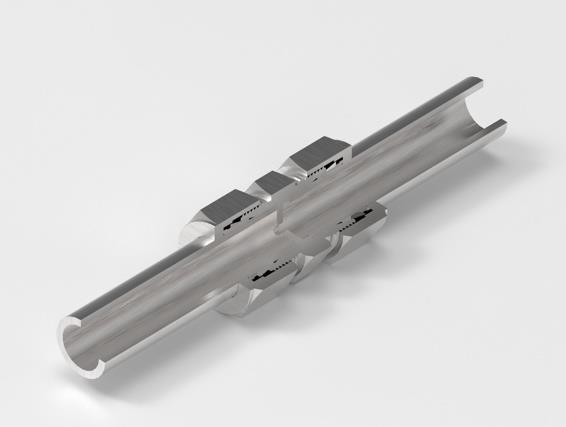
▪ Compression tube fitting with inbuilt orifice restriction.
Constructed using commercially available tubing and compression tube fittings. Offers great flexibility in installation and assembly.
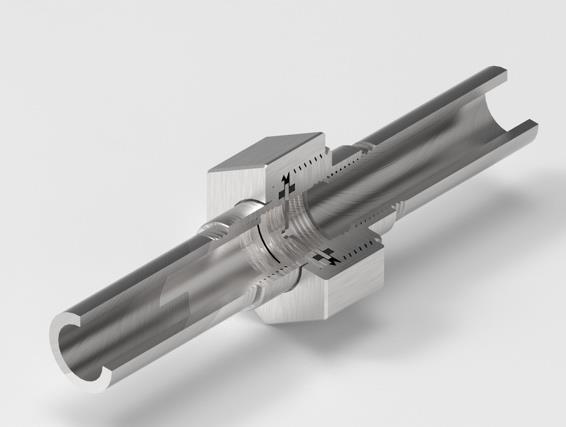
▪ Threaded pipe union with orifice plate. Constructed from piping components and offers advantages where orientation of the connecting pipes is complex.
Optional Features for an API Plan 21
Optional flow control types
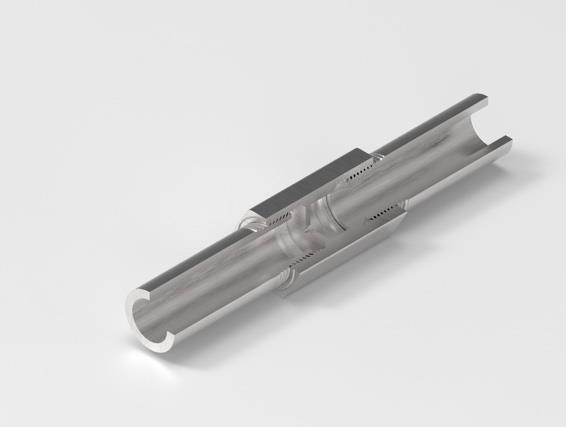
▪ Threaded coupling with inbuilt orifice restriction. Often custom fabricated from hexagonal bar stock to meet the design needs.
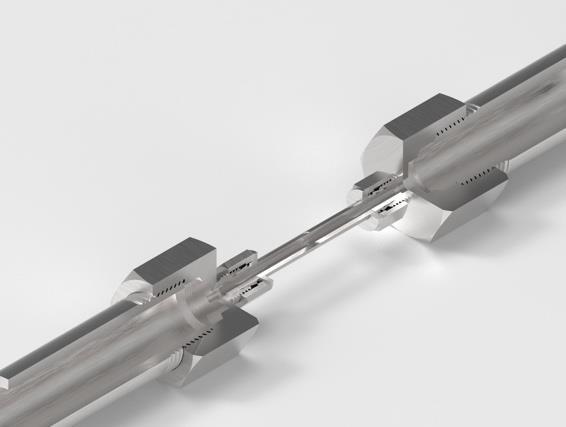
▪ Choke tube: Length of smaller bore tube, possibly coiled, utilizing flow resistance to reduce the flow through the API Plan 21. Used to control flow rates when high differential pressures exist.
Optional Features for an API Plan 21
▪ To control flowrate in pumps that have a large differential pressure, multiple orifice plates can be used. When using multiple orifice plates, they should be spaced a minimum of 300 mm (12 inches) apart.
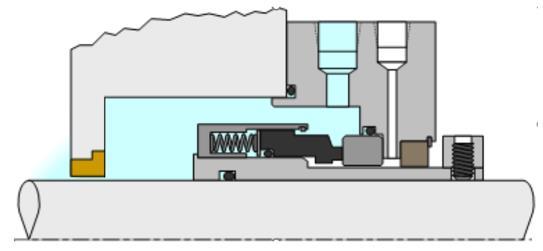
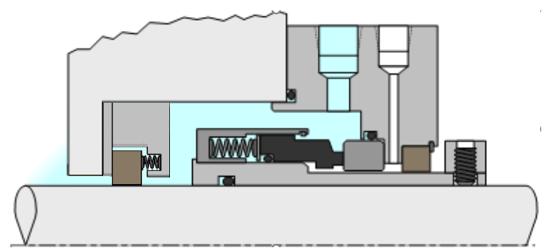
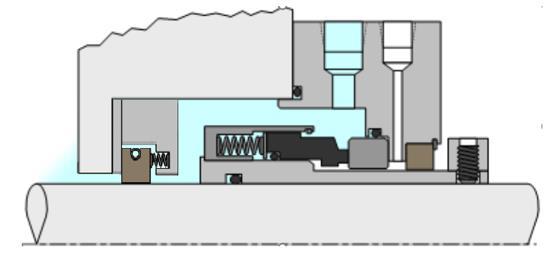
▪ The addition of a bushing to the seal chamber throat can tighten the clearances at the seal chamber throat and generate an increased pressure in the seal chamber, advantageous for increasing vapor pressure margin around the mechanical seal faces.
Optional
Features for an API Plan 21
Throat bushing types
Fixed
▪ The fixed clearance bushing is the simplest and has a clearance large enough to accommodate any misalignment or thermal expansion conditions. This is bushing is typically supplied by the equipment OEM.
Floating
▪ The floating bushing is more complex but can have a much smaller clearance than the fixed bushing and still allow large radial motions. This bushing is typically supplied by the seal OEM.
Floating Segmented
▪ The floating segmented bushing is a floating bushing broken into several segments, allowing for the smallest clearances, large radial motions, and thermal growth. This bushing is typically supplied by the seal OEM.
Optional Features for an API Plan 21
▪ In multistage pumps, an intermediate stage can be used as the source of the API plan 21 flush, thereby lowering the differential pressure across the API Plan 21 system.
▪ Pressure gauges can be installed upstream and downstream of the orifice to provide the ability to calculate the flow rate and to measure the pressure being delivered to the seal chamber
Optional Features for an API Plan 21
▪ A temperature gauge can be added to measure the temperature of the flush fluid being delivered to the seal chamber. When installing, ensure the tip of the temperature gauge or thermowell does not obstruct the flow in the piping.
Eccentric reducers to expand pipe size in the region of the thermowell tip
▪ Temperature gauges can be added upstream and down stream of the heat exchanger on both the process fluid side as well as the cooling water side.
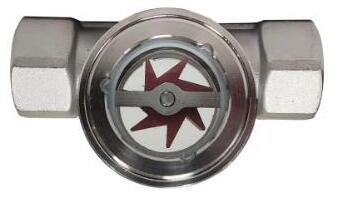
▪ A flow indicator or flow meter can be provided for the cooling water supply.
Optional Features for an API Plan 21
Heat Exchanger
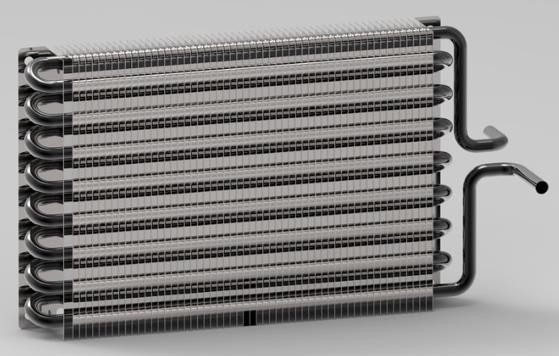
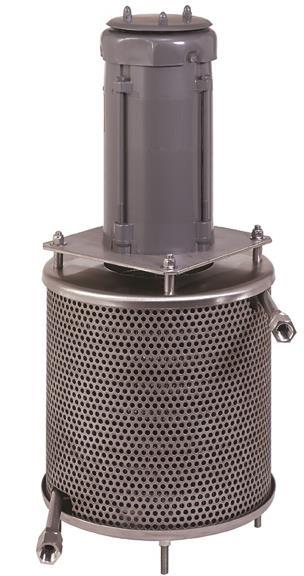
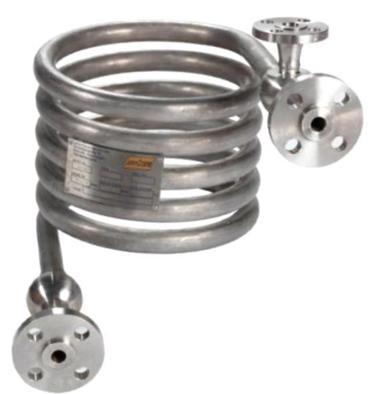
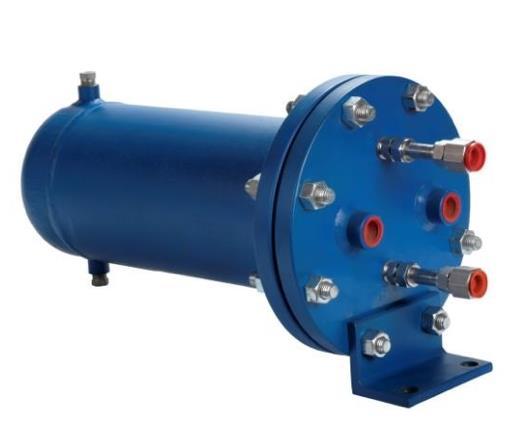
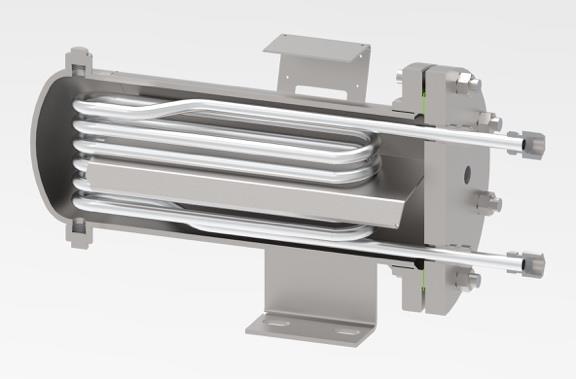
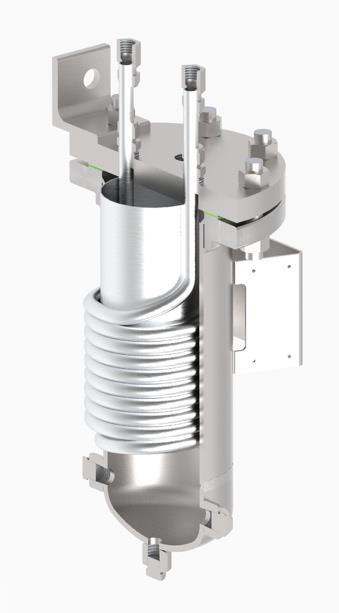
• There are many different Heat Exchanger designs and sizes to accommodate the different cooling capacity requirements and available utilities for API Plan 21 systems.
Tube-in-tube
Optional Features for an API Plan 21
▪ For mechanical seal designs where the flush connection is in the seal gland plate, a distributed flush can be incorporated into the mechanical seal design that distributes the flush cooling from a single point to multiple points. This is achieved by creating an annulus that the flush fluid enters and then exits the annulus at multiple points.
Multi-port flush distributor
Annular flush distributor
Cost to Operate an API Plan 21
Cost of utilities
▪ A method to remove heat absorbed into the flush fluid requires utilities either in the form of cooling water (for a water-cooled heat exchanger) or electricity (for a forced convection heat exchanger). Natural convection heat exchangers do not require any utilities.
Cost of energy balance
▪ Heat is removed from the process via the API Plan 21 heat exchanger. This energy needs to be replaced within the pumping system and there is an associated cost for the energy to achieve this.
Additional costs
▪ The operation of a single mechanical seal results in seal face generated heat and frictional drag on the rotation of the shaft, both of which much be accounted for in utilities and/or energy balance.
▪ Maintaining the API Plan 21 and monitoring the system requires routine operator labor.
Cost to Operate an API Plan 21
Typically, the initial investment of an API Plan 21 is low, however the ongoing operating costs once the system is installed and operational can be high.
Refer to the Fluid Sealing Association’s Lifecycle Cost Calculator (LCC) for a more detailed analysis.
How to Size an API Plan 21
For a given application, a target operating temperature for the API Plan 21 should be established. The heat soak from the pump and the seal heat generation should be considered in the selection and sizing of the API Plan 21 heat exchanger.
Hot process fluid is continuously entering the heat exchanger resulting in the heat exchanger cooling duty required being larger than other API piping plans, such as API Plan 23.
With the large cooling duty often encountered in API Plan 21 systems, the selection of water-cooled heat exchangers provides the most efficient solution for heat removal but is more susceptible to fouling on the cooling water side due to large differences in temperature between the process and cooling water.
Note: The Fluid Sealing Association recommends working with your mechanical seal vendor to properly size your API Plan 21 system components
How to Size an API Plan 21
Sizing an API Plan 21 involves the following steps:
1) Calculate the flow required and size the flow control orifice plates and seal chamber throat bushing (if required).
2) Establish a target seal chamber temperature considering the temperature margin above the fluid’s vapor pressure and increases in fluid viscosity.
3) Determine the heat energy that needs to be removed to meet the target temperature.
4) Select the heat exchanger size to meet the target temperature.
How to Size an API Plan 21
A target flush rate is necessary to obtain the optimal performance of a mechanical seal as determined by an energy balance calculation. Heat generated between the seal faces, together with heat soak from the hot metal parts surrounding the seal chamber, is assumed to be absorbed by the flush through ideal mixing. This raises the temperature of the flush as it passes through the seal chamber. For best practices, the maximum temperature rise through the seal chamber should be limited to: ▪ 8°C (15 °F) for water and low volatility hydrocarbons
16°C (30 °F) for lubricating fluids
3°C (5 °F) for volatile/flashing hydrocarbons
How to Size an API Plan 21
The temperature rise occurring with a heat input and ideal mixing occurring can be calculated by:
Where: Δ�� = Temperature rise (T2 – T1)
Qheat = Seal heat generation
ṁ = Flush fluid mass flow rate
Cp = Fluid specific heat
How to Size an API Plan 21
The actual flow through a Plan 21 piping system can be quite complex to calculate. Typically, the known pressures are the pump suction and discharge pressure. To calculate the flow the intermediate pressures must be calculated through an iterative process:
How to Size an API Plan 21
Seal heat generation is influenced by many factors, including seal design, materials of construction, and balance ratio. The governing formulae are:
Where:
Pface = Seal face contact pressure
P = Sealed pressure
B = Balance ratio
K = Pressure gradient
Pspring = Spring contact pressure
Qheat = Seal heat generation
V = Mean velocity
A = Seal face area
f = Coefficient of friction
How to Size an API Plan 21
Heat soak can be estimated using the following equation:
Where:
▪ U is the material property coefficient
▪ A is the effective heat transfer area
▪ Db is the seal balance diameter
▪ ∆T is the difference between the pump temperature and the seal chamber desired temperature More accurate calculations can be found in:
▪ An Improved Heat Soak Calculation for Mechanical Seals, G. Buck and T. Y. Chen, Pump Symposium Proceedings 2010
How to Install an API Plan 21
An API Plan 21 is typically constructed using tube or pipe components or a combination of both. When using pipe components, the joints can be threaded or, when the pumped fluid is hazardous, welded joints.
When using piping component, the orifice is typically formed with a plate having a central hole sandwiched between 2 flanges with gaskets.
When using tubing components, the orifice is typically formed with a tube fitting union with a reduced diameter through hole.
To prevent clogging, the minimum orifice diameter should be no smaller than 3.2 mm (0.125 inches).
How to Install an API Plan 21
API 682 recommends:
▪ For shaft diameters up to 60 mm (2.5 inch):
▪ Pipe: DN15 (½” NPS) Schedule 80
▪ Tube: 12 mm (0.5 inch) 1.5 mm (0.065 inch) wall thickness
▪ For shaft diameters above 60 mm (2.5 inch):
▪ Pipe: DN20 (¾” NPS) Schedule 80
▪ Tube: 20 mm (0.75 inch) 2.0 mm (0.095 inch) wall thickness
High process pressures may require increased wall thickness.
How to Install an API Plan 21
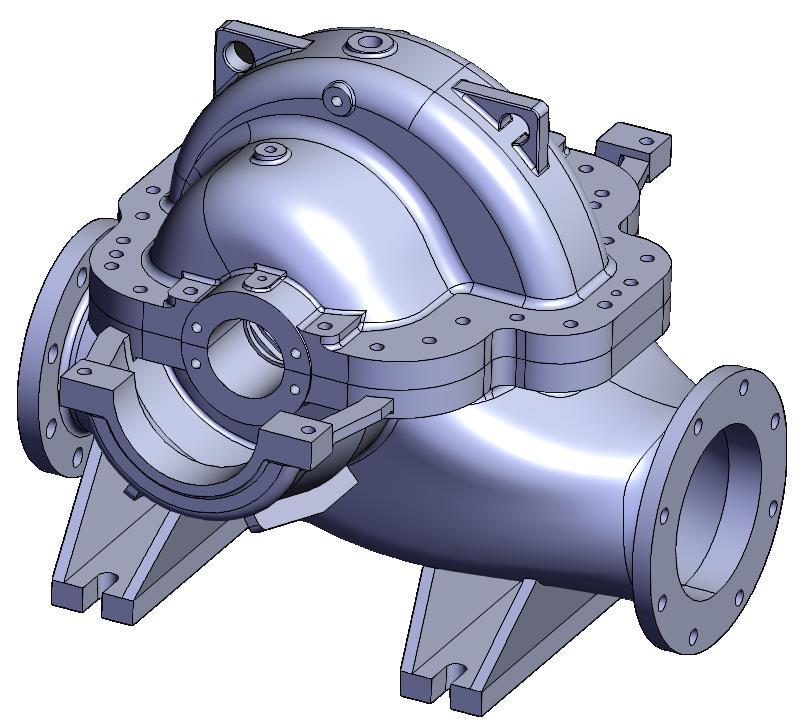
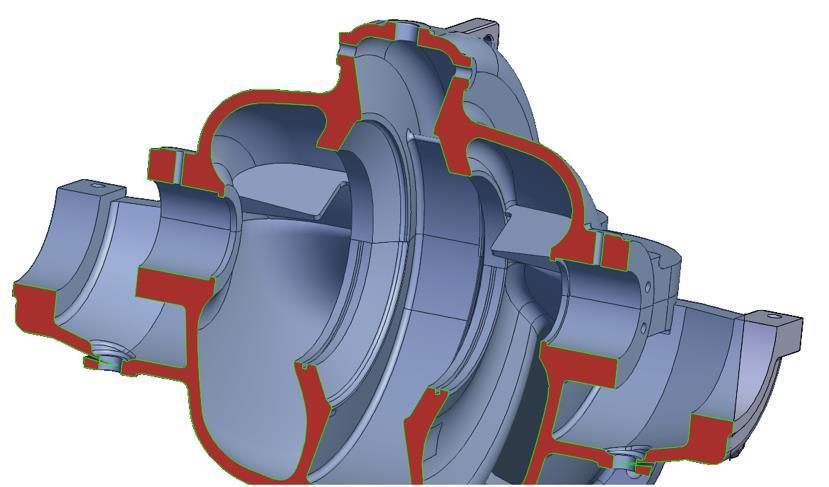
When the connection to the discharge pressure is in the pump volute, typically found in between bearing pumps, use the connections on the side of the volute to prevent solids from being centrifuged into the Plan 21 flush.
How to Install an API Plan 21
To achieve self venting of the seal chamber, the flush connection should enter the seal chamber at the highest point. Piping up to the heat exchanger should have a continuously rising slope, minimum 40 mm rise per 1000 mm run (0.5 inch rise per 12 inch run), with a vent at the highest point.
How to Install an API Plan 21
The heat exchanger is typically mounted on a stand adjacent to the pump and elevated above the shaft centerline. As the pump discharge pressure is driving flow through the heat exchanger, the heat exchanger does not need to be immediately adjacent to the mechanical seal.
When using a water-cooled heat exchanger, provisions for venting the water side of the heat exchanger need to be provided.
Horizontal Shell with
Vertically Wrapped Coils
Vertical Shell with
Vertically Wrapped Coils
How to Install an API Plan 21
Heat exchanger efficiency is improved with counter-flow of the hot process fluid and the cooling water. The counter flow pattern allows for the greatest temperature exchange between fluids.
Process In
Coolant Out
Coolant In
Process Out
General API Plan 21 Commissioning Guidelines
To commission an API Plan 21:
1) Using the mechanical seal assembly drawing, verify that the flush piping is connected to the correct port in the mechanical seal.
2) Check that the orifice size has been indicated on the externally visible surfaces of the orifice.
3) With the pump casing primed, vented, and pressurized prior to startup, check all the joints on the API Plan 21 for leaks. Correct any if found.
4) If a high point vent is incorporated in the API Plan 21 piping, vent the seal chamber following the equipment operator’s standard procedures.
5) When present, start the supply of cooling water to the shell and tube heat exchanger and vent any trapped air, or start the electrical motor on a forced convection heat exchanger.
How to Operate an API Plan 21
Operation of an API Plan 21 is inherently connected to the operation of the pump. As soon as the pump generates a differential pressure at the discharge, flow will automatically occur in the API Plan 21 piping.
Periodically check for leaks at the joints.
The only external adjustments that can be made to an API Plan 21 during operation is adjustment of the cooling water flow rate.
Periodic measurement of the cooling water and process loop temperatures into and out of the heat exchanger should be performed to monitor heat exchanger efficiency.
During routine maintenance of the mechanical seal, the flow control devices should be inspected for wear, damage, or clogging. Replace or repair as necessary.
Periodically inspect the heat exchanger heat transfer surfaces for fouling and clean as necessary.
General
Troubleshooting of an API Plan 21
Symptom
▪ Increased heat exchanger process fluid outlet temperature
Potential Causes
Increased pumping temperature
Reduced cooling water flow rate
Increased cooling water temperature
Heat exchanger fouling
Seal chamber throat bushing wear
General Troubleshooting of an API Plan 21
Symptom
▪ Decreased heat exchanger process fluid outlet temperatures
Potential Causes
Reduced pumping temperature ▪ Increased cooling water flow rate ▪ Decreased cooling water temperature ▪ Clogging of heat exchanger or flow control device ▪ Reduced process fluid flow through the heat exchanger (reduced differential pressure)
Alternatives to API Plan 21
Alternative piping plans that are similar:
API Plan 23
Flush recirculation from seal chamber through heat exchanger
API Plan 21 Summary
▪ API Plan 21 is a cooled version of API Plan 11. In an API Plan 21, the product from pump discharge is directed through a flow control orifice, then to a heat exchanger to reduce the temperature before being introduced into the seal chamber.
▪ A temperature indicator can be included on the process side of the exchanger, normally on the downstream side. Additional temperature indicators can be used to monitor cooling water and process temperature on both sides of the exchanger.
▪ Depending on the temperature of the process, the heat load on the heat exchanger can be very high, resulting in high operating costs of the cooling water, lost heat energy, and/or fouling of the heat exchanger.