Florida's Solution to Septic Tanks
2
Explore hunting opportunities throughout North Florida
3
Florida's Environmental News Source of Record focused on news content of interest to the environmental community.
Florida's Solution to Septic Tanks
2
Explore hunting opportunities throughout North Florida
3
Florida's Environmental News Source of Record focused on news content of interest to the environmental community.
Rockville, MD - When it comes to American cuisine, there are few things more iconic than steakhouses. The slabs of marbled meat, the sizzling grills, the oozing butter, and the dripping bravado, maybe even a cowboy hat or two for ambiance—it's enough to make even fictional steakophile Ron Swanson misty-eyed.
Yet for all the traditional steak dinners ordered daily, there are restaurants nationwide pushing the concept of the all-American steakhouse to new culinary heights, according to market research firm Packaged Facts in the brand new report 2017 Forecast: Culinary Trend Tracking Series.
"The steakhouse is back and will capture our attention in 2017. Not that the classic restaurant style ever disappeared, but a renewal of the model is taking place in response to new sources of beef and new flavorful expressions of the concept that get chefs and diners excited," says David Sprinkle, research director, Packaged Facts.

Address label change?
If your mailing label is inaccurate or incomplete, please contact us with the correct information at SPECIFIER PUBLISHING LLC, P.O. Box 1857 Tallahassee, FL 32302, or email us at admin@floridaspecifier.com. We appreciate your help with keeping our circulation database accurate.
By CAITLIN BUTLER
Today's steakhouse menus increasingly feature grass-fed cattle, locally raised animals, heritage varieties, meat butchered and dry aged in-house, and dishes that stem from the whole animal, not just the premium cuts. And that's just the meat. Creative side dishes in lieu of old standards, global and seasonal flavors, and a wider menu selection also distinguish these new school operations.
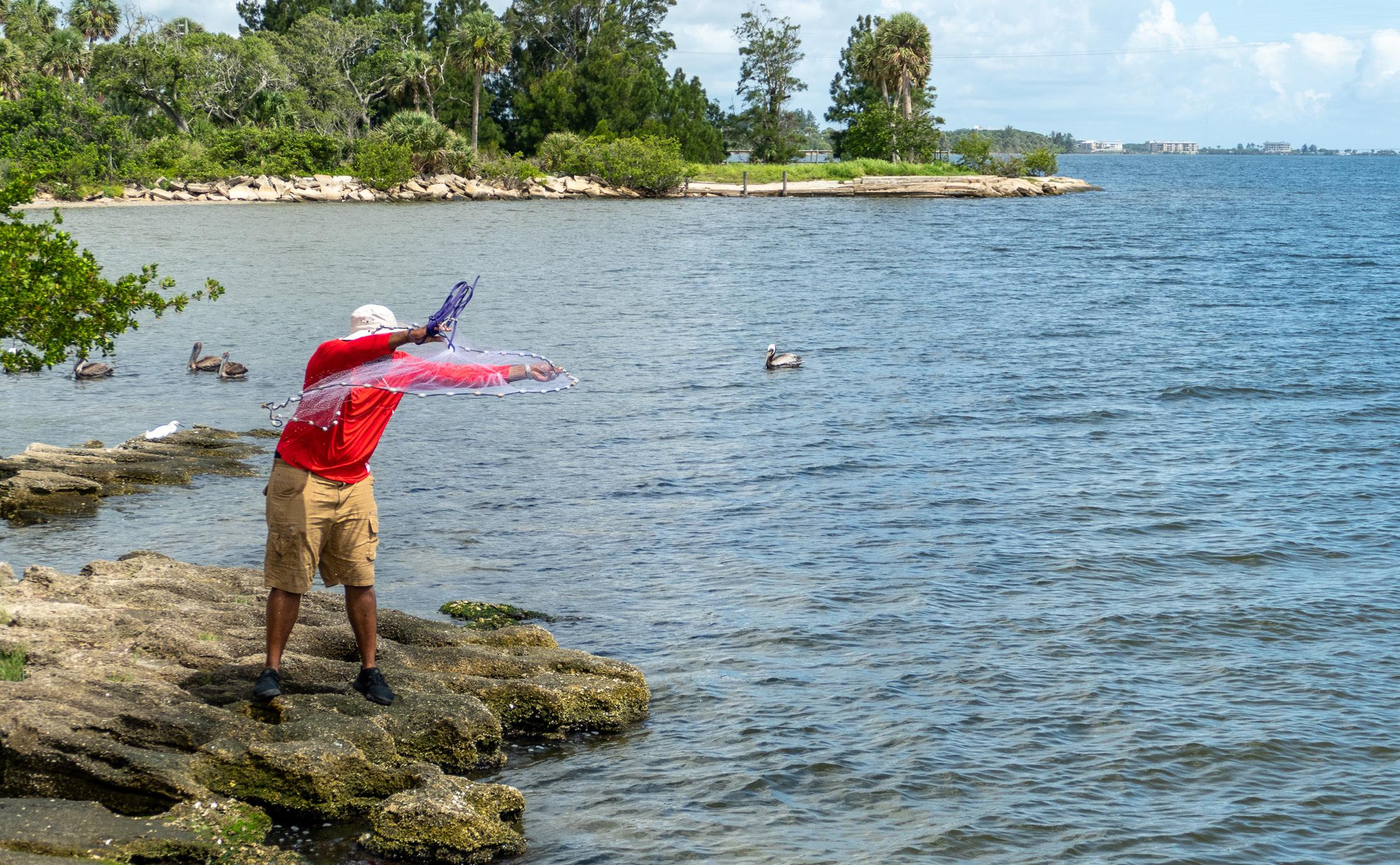
Spanning 156 miles along 40 percent of Florida’s east coast, the Indian River Lagoon (IRL) has long been one of the state’s most iconic and ecologically rich waterways. From Ponce de Leon Inlet in Volusia County to the southern edge of Martin County, the lagoon has shaped the identity, economy and environment of the region. Its beauty and biodiversity have supported generations of families, businesses and communities alike.
tor in sustainability and animal welfare, and create a dining experience that showcases culinary flair, not just a grill master's skill at cooking steak to the requested doneness. These operations are also designed to be more inclusive, more of a great place for all kinds of people to dine well, not just traditionminded men on expense accounts. As a result, the modern steakhouse is increasingly similar to other modern restaurants with a focus on distinctive
Over time, the lagoon experienced increased environmental stress. Nutrient
Jacksonville, FL - After much anticipation and excitement, Jollibee, the largest Asian restaurant company, is now open in Jacksonville. This is the 36th store in the US, as well as
Moreover, new menu categories (such as flatbreads) and service elements freshen the concept.
enrichment, algal blooms and habitat loss affected the ecosystem, contributing to declining water quality. Seagrass coverage declined significantly, raising concerns about the long-term health of the system.
About the Report 2017 Forecast: Culinary Trend Tracking Series offers an outlook on the culinary trends—the foods, dishes, ingredients and flavors—that Packaged Facts expects to grow in popularity in 2017.
Even so, the lagoon has shown resilience. With strong leadership, science-based restoration efforts and community support, the conditions are beginning to improve.
The St. Johns River Water Management District (District) is helping to lead the charge alongside partners across the Indian River Lagoon and Upper St. Johns River Basin (IRL/USJRB) in the ongoing
effort to restore and protect the system. Guided by the 2017 Indian River Lagoon Feasibility Study, and its update in 2024, projects are underway to reduce nutrient inputs at the source, reconnect natural hydrology and revive critical habitats.
One of the most visible signs of this is the recently completed Crane Creek/M-1 Canal Flow Restoration Project in Melbourne. The project restores the historic drainage divide that once directed water west to the St. Johns River, redirecting stormwater from about 5,300 acres away from the Indian River Lagoon. By

By STAFF REPORTS

Wednesday in Havana, in front of a sea of supporters and opponents of Florida setting up a bear hunt, Florida Fish and Wildlife Conservation Commission members voted to approve a limited bear hunt starting in December 2025.
Nearly 170 people signed up to speak to commissioners, with many dressed in orange shirts representing various hunting groups and many wearing shirts featuring bears. The meeting filled up three rooms of attendees.
“Commissioners, if you decide to reopen regulated hunting, it would provide access to the resource and help manage the population,” said FWC Chief Conservation Officer George Warthen. “This science-informed approach could use hunting as a tool to manage the growth rates and bear-management units with the largest sub-populations.”
been the talk of the town since 2016. With the opening, Floridians will get to try Jollibee's signature menu items such as the world famous Chickenjoy. This dish is delicately breaded to be crispylicious on the outside and juicylicious inside. The well-loved Jolly Spaghetti is a favorite of both kids and kids-at-heart because of its signature sweetstyle sauce, loaded with chunky slices of savory ham, ground meat, and hotdog. Other classic menufavorites include the juicy and cheesy Jolly Hotdog, and the Peach Mango Pie, which is made with real Philippine sweet mangoes and a flaky golden brown crust.
He began the meeting by laying out statistics about the black bear population in Florida. He said that between 2002 and 2015, there was a 50 percent population increase and the occupied range of the species has increased from 17 to 51 percent since 1992.
Before Wednesday, only six states didn’t have regulated bear hunting, with Florida’s bear population reaching roughly 4,000.
"As Jollibee debuts in Florida, we anticipate seeing not only a multitude of excited Jollibee patrons waiting to get their hands on their Jollibee favorites, but also first-timers waiting to have their own Jollibee experience," said Jose Miñana, Jollibee Foods Corporation's Group President for North America. "There's no greater joy for us than serving the needs and tastes of Jollibee fans in the community. At Jollibee, we aim to bring families together for happy moments over great tasting food with superior value, served with warm and friendly service – our own brand of joy."
• Hunters would be required to affix tags to harvested bears and make them available to FWC for testing
• No cubs or females with cubs present allowed
• No hunting of populations with fewer than 200 bears
• Feeding stations allowed
FWC staff recommended a hunt with certain specifications:
• An application process for 187 permits with a random drawing
The brand has become a symbol of nostalgia and warm childhood memories for many overseas Filipinos in the U.S. To many, Jollibee is the go-to restaurant of Filipinos for both special
• Bows and arrows allowed
• Use of bear-hunting dogs is allowed, with training in 2026 and hunting in 2027
See JOLLIBEE page 15
• $5 per application with an unlimited number of entries
• Permits cost $100 for residents and $300 for non-residents
• Permittees would only be allowed one bear per season
Gulf County Commissioner Sandy Quinn spoke in favor of a bear hunt, highlighting his community’s concern with encounters.
“Over the past several years, we’ve seen a growing concern among residents among the black bear's increasing population,” he said. “We need to address the root issue
By BILL CONERLY

censed professional, ensuring performance and reliability.
Florida is home to more than 2.6 million septic systems, and many of them are located in areas where central sewer isn’t available and the extension of central sewer is impractical or cost-prohibitive. Nutrient loading from these systems contributes to the degradation of our springs, lakes, rivers, and estuaries — not just harming ecosystems but also threatening drinking water quality and property values.
During the 2025 Legislative Session, I was proud to sponsor House Bill 645, signed into law by Governor Ron DeSantis. This new law creates a General Permit pathway for the use of Distributed Wastewater Treatment Systems (DWTS) to replace failing septic tanks. It is a practical, cost-effective, science-driven solution to benefit water quality improvement by reducing the total nitrogen discharged in the effluent.
Let me be clear: DWTS is not just a “better septic tank.” It is a micro-scale, professionaly-operated treatment system that meets the same performance standards required of large, centralized wastewater treatment facilities — but without the need for costly sewer extensions or new wastewater infrastructure. A single Distributed Wastewater Treatment Unit (DWTU) is installed in the yard, in the footprint of the existing septic tank it is replacing. It is then actively monitored and operated remotely by a li-
doing so, it reduces nutrient loading — preventing roughly 24,000 pounds of total nitrogen and 3,100 pounds of total phosphorus annually from entering the lagoon — while providing an alternative water supply for downstream users. This project is a cornerstone of the District’s restoration strategy, bringing immediate benefits to the interconnected watersheds of the IRL and the Upper St. Johns River.
Building off the Crane Creek/M-1 Canal project is the next phase of restoration with the planned C-10 Water Management Area (WMA), a transformative 1,300acre surface water management area now entering development and design. Located in Brevard County, the C-10 WMA project aims to restore historic freshwater flows currently being diverted from the St. Johns River to the IRL via the C-1 Canal. Once operational, C-10 WMA is expected to remove over 29,000 pounds of nitrogen and 1,300 pounds of phosphorus annually, while restoring eight million gallons of historic daily flow; substantially benefiting both the river and the lagoon.
“The C-10 project builds on the momentum, targeting nutrient reduction and restoring historic flow,” said Executive Director Dr. Duane De Freese, of the Indian River Lagoon National Estuary Program (IRLNEP). “It’s a critical step forward for
These systems are required to achieve a minimum 80 percent total nitrogen removal, which is significantly better than advanced nutrient-reducing septic systems (certified to achieve 50 percent removal). They also meet state standards for subsurface discharge, provided they are properly sited and maintained.
Prior to this legislative session, local governments and utilities trying to replace septic systems with a DWTS had to apply for an Individual Permit from the Florida Department of Environmental Protection (FDEP) — the same process used for million-gallon-per-day wastewater treatment plants. This has created unnecessary regulatory barriers and delayed urgently needed septic tank remediation efforts.
House Bill 645 simplifies the process by authorizing General Permits for Distributed Wastewater Treatment Systems, provided they meet clearly defined criteria. These include:
• Professional engineering design and pre-installation notice to FDEP
• DWTU flow limits (10,000 GPD residential; 5,000 GPD commercial)
• Strict siting standards and groundwater separation
• Ongoing sampling, inspection, and reporting by the permittee
By streamlining this pathway, we have empowered local governments and utilities to act faster, reduce permitting costs, and focus on protecting public health and the environment.
the health of both the St. Johns River and Indian River Lagoon.”
These nutrient-reduction projects are laying the groundwork for an ecological revival, especially in seagrass habitat, an essential part of the IRL’s health. In addition to its project work, the District supports seagrass restoration efforts through their collaborative seagrass mapping program that tracks progress and guides restoration efforts, as well as with the seagrass seed bank studies with the Florida Institute of Technology. Together, these efforts help guide adaptive management strategies and identify areas where restoration is having a measurable impact.
Farther north, the Moore Creek restoration project, funded in part by a NOAA grant through the IRLNEP, is reshaping a key tributary of the lagoon. The District and the U.S. Fish and Wildlife Service are working together on the project to enhance the functionality of the coastal wetlands. By restoring the natural flow of water through these impounded wetlands, the project helps filter nutrients, support fish and wildlife habitat and create a more resilient ecosystem that can better withstand flooding and sea-level rise.
“The Moore Creek project is a strong example of how local, state and federal partners can work together to restore estuarine habitats,” said Melisa Diolos,
Some might worry that decentralizing treatment could reduce oversight. In fact, the opposite is true. Every DWTU installed under this general permit will be:
• Remotely monitored 24/7 via electronic control systems
• Part of a monthly testing plan using state-approved labs
• Operated by licensed professionals, with reporting requirements equal to those for traditional wastewater plants
These safeguards give regulators and the public full confidence that DWTS installations will continue to meet high standards for nutrient removal and environmental protection.
We are not abandoning centralized sewer systems — they remain essential in many parts of Florida. But for areas where sewer service is decades away or cost-prohibitive, and where failing septic systems are degrading water quality today, DWTS offers an immediate and impactful alternative.
This new law opens the door for faster, cost-effective upgrades across the state. It represents the kind of forward-thinking, technology-enabled solution Florida needs to protect its most precious natural resources.
As always, I welcome ongoing dialogue with environmental professionals, utilities, and local leaders. Let’s continue working together to restore and preserve Florida’s precious waters — one system at a time.
Bill Conerly, PE is a Florida Representative representing District 72 in Manatee County.
District Strategic Planning Basin Coordinator.“We’re proud to support initiatives like this that bring tangible, science-based results to the IRL.”
In the southern part of the system, collaboration with the Fellsmere Joint Venture demonstrates the value of public-private partnerships. Their privately operated stormwater treatment area filters agricultural runoff, reducing nutrient loads before they reach the watershed and complementing the District’s broader restoration work throughout the IRL/USJRB.
These projects, and many others across the IRL/USJRB, signal a clear shift in the lagoon’s story. As a lead agency restoring water and habitat across the region, the District is turning momentum into meaningful change. With continued collaboration, science-backed solutions and strong community commitment, the tide is indeed changing.
Learn more about the District’s restoration efforts in the Indian River Lagoon by visiting sjrwmd.com/waterways/renew-lagoon
Caitlin Butler is a Regional Media and Communications Coordinator at the St. Johns River Water Management District.
BLANCHE HARDY, PG
Senior Correspondent
LINA ALFIERI STERN PATRICK GILLESPIE
MBA, MSRED, LEED Green Associate
CAITLIN BUTLER St. Johns River Water Management District
BILL CONERLY Florida House of Representatives
ALEX PREISSER Mitigation Marketing
MARK FULKERSON Southwest Florida Water Management District
KEYNA CORY Florida Recycling Partnership Foundation
STEVE RUPAR WSP
JONATHAN VEACH Florida Fish and Wildlife Conservation Commission
The Florida Specifier (ISSN 07401973), founded in 1979, is published every other month for $60 per year in-state; $80 out-of-state, by SPECIFIER PUBLISHING LLC, P.O. Box 1857, Tallahassee, FL 32302. Subscription refunds are not provided. Local tax applies.
POSTMASTER: Send address changes to the FLORIDA SPECIFIER, P.O. Box 1857, Tallahassee, FL 32302.
© Copyright 2025 by SPECIFIER PUBLISHING LLC. All rights reserved. No part of this publication may be reproduced or transmitted in any form without the publisher’s prior written permission.
Florida Specifier P.O. Box 1857
Tallahassee, FL 32302 Admin@FloridaSpecifier.com
By STAFF REPORTS
Nestled in North Florida, the Suwannee River Water Management District owns approximately 160,000 acres of pristine wilderness. While this land is purchased for conservation and flood protection benefits, much of it is open to the public — in fact, more than 95 percent of District lands are open from dawn to dusk, 365 days a year.
Recreational activities vary from tract to tract, but fishing, swimming, camping, and horseback riding are popular activities on many tracts.
Hunting is another popular use in the area. More than 105,000 acres of District land can be utilized for hunting, attracting hunters from across the state and beyond. This public land, cooperatively managed as wildlife management areas with the Florida Fish and Wildlife Conservation Commission (FWC), showcases a commitment to wildlife conservation and public recreational use.
All are welcome on District hunting lands. Some hunts are designed for youth; others for the mobility-impaired; and others are female-led hunts through District tracts. The goal? A unique hunting experience that lets hunters get back to their roots.
“To me, this is the ultimate challenge,” said Steve Carpenter, Senior Natural Resource Specialist with the District. “It’s back to nature, self-reliance; you’re learning the woods, learning the habits of animals, learning how to read the signs. There’s no baiting or feeding on District lands; you scout on foot, track with your eyes, and earn any shot.”
Carpenter also says this provides residents and visitors with a reprieve from the rigors of life.
“It gives you the opportunity to clear your mind,” he said. “Just seeing the sun come up, being one with nature as opposed to being in this fast-paced world of email and text messages and social media. You can shut all of that out. It’s a path back to nature that provides you with an escape from your day-to-day routine, even if just for a few hours.”
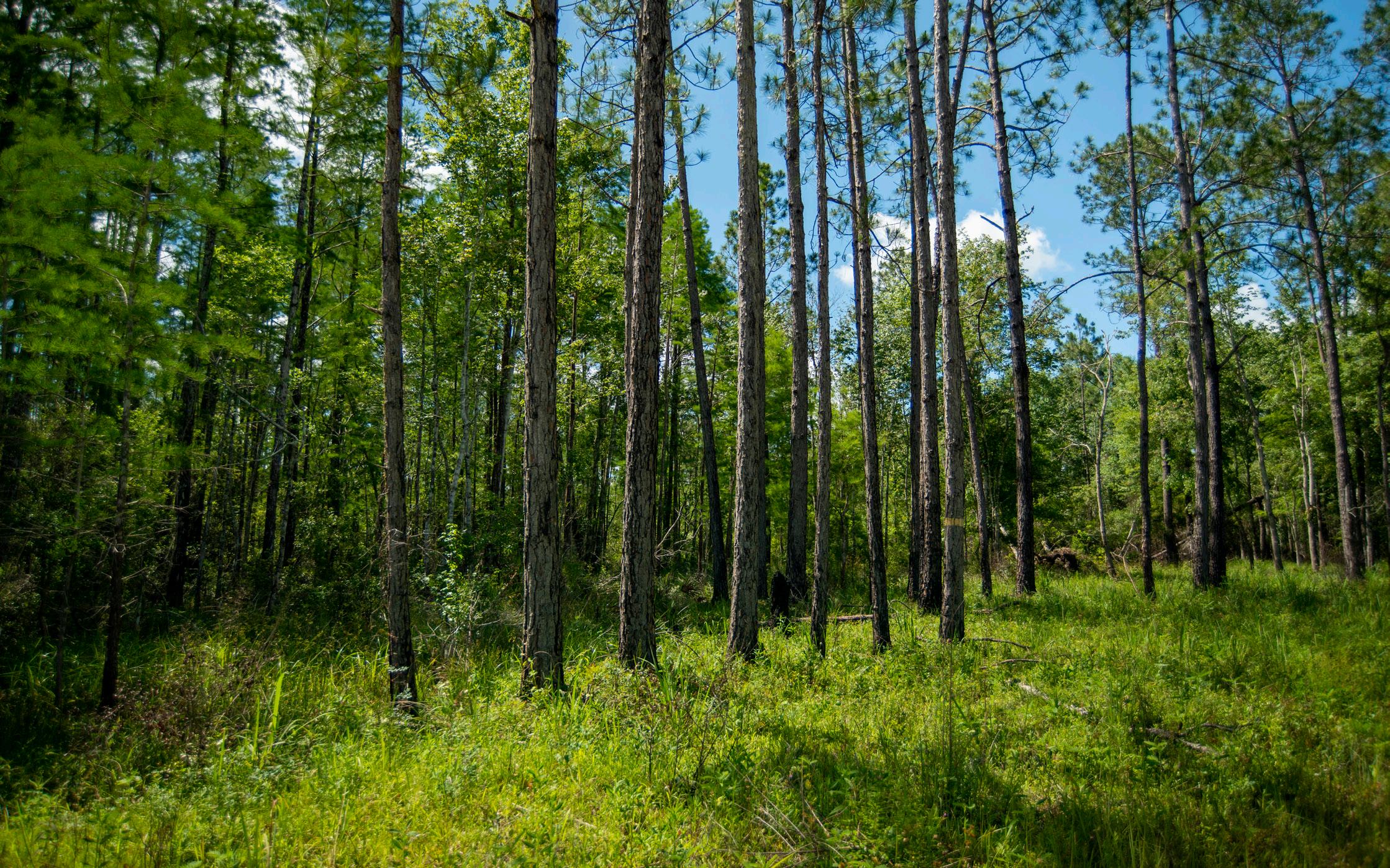
District lands comprise a mosaic of ecosystems, including riverine swamps, pine forests, oak hammocks, and wetlands. This diverse landscape supports a rich array of wildlife, offering hunters a variety of experiences and challenges. From tracking elusive wild turkeys to waiting for whitetailed deer at dawn, the District promises an unforgettable hunting adventure. Florida is home to the Osceola turkey and Eastern Wild turkey, with both turkey subspecies ranges within the District lands.
Hunting opportunities also include bird hunting, coon hunting, frog gigging, and other various small game species.
Hunting plays a vital role in conservation, balancing wildlife populations with their environment to ensure healthy animals and habitats.
Ashlee Williams, an avid hunter, agrees.
"Legally regulated hunting has not caused any wildlife to become extinct,” she said. “In fact, it's a land management practice that helps balance wildlife and healthy habitats."
The District operates on these principles, promoting responsible hunting practices to manage wildlife populations and maintain ecosystem balance.
THE PERFECT PLACE TO GET STARTED
Whether a lifelong experienced hunter or someone just getting started, District lands are great for all skill levels. District lands often host youth and women-led hunts, which has caused an increase in participation and adds a new dimension to the hunting narrative.
New hunter Kristen Turner said hunting has taught her life lessons.
"Hunting has taught me patience and respect for nature," she said. "I also get to go home and brag to my husband that I brought home a cooler full of meat for our family."
The District is dedicated to making public lands accessible and enjoyable for all. Integrated into the FWC's Wildlife Management Area and Wildlife Environmental Area programs, the District's lands are maintained to the highest standards, providing hunters with exceptional hunting opportunities. Hunting on District lands offers a chance to connect with nature and understand the delicate balance of ecosystems.
Local Knowledge
Knowing the best places to hunt is crucial for a successful experience in the District. Here’s an overview of the hunting seasons and recommended locations for white-tailed deer, turkey, and hog hunting within the district:
White-Tailed Deer
Season: Typically runs from late September to early February, with archery season
starting in late September, followed by muzzleloading gun season in October, and general gun season from mid-November to early February.
Best Locations: The Steinhatchee Springs WMA and Mallory Swamp WMA are renowned for their healthy deer populations and vast hunting grounds. These areas provide ideal habitats and ample opportunities for hunters.
Turkey
Spring Season: Generally, from early March to late April.
Best Locations: The Devil’s Hammock WMA and the Santa Fe Swamp WMA are popular spots for turkey hunting. The diverse habitats and robust turkey populations make these areas prime hunting grounds.
Hog
Season: Wild hogs can be hunted year-round on most public lands within the SRWMD.
Best Locations: The Andrews WMA and the Cypress Creek WMA are known for their substantial hog populations. These areas offer hunters the chance to hunt hogs throughout the year.
While hunting, you may encounter various non-game species that contribute to the area's rich biodiversity, including:
• Birds: painted bunting, common yellowthroat, and Red Cockaded woodpeckers
• Amphibians: southern leopard frog and various salamanders
• Reptiles: Eastern diamondback rattlesnake and gopher tortoise
Observing these species enhances the hunting experience, allowing hunters to appreciate the interconnectedness of all wildlife in the District.
Scout access locations and find other outdoor recreation opportunities on SRWMD land.
Learn more about additional recreational options across SWRMD
Explore all the different Maps available on SRWMD land.



TALLAHASSEE, Fla. — On Aug. 14, the Florida Department of Environmental Protection (DEP) announced the award of $150 million through the Resilient Florida Program. The program provides grants to local communities to strengthen our coastal and inland communities against the impacts of flooding.
The awards announced today will support 26 infrastructure projects across the state, including 22 newly authorized projects and four ongoing projects.
“The Resilient Florida Program is turning planning into action,” said DEP Secretary Alexis A. Lambert. “These grants will equip Florida’s communities to better withstand impacts from flooding, storm surge and hurricanes, advancing onthe-ground efforts to safeguard Florida’s natural resources and infrastructure.”
The Resilient Florida Program provides a strategic, statewide approach to fortifying
Florida’s community infrastructure against the impacts of hurricanes, flooding and severe weather, focusing on protecting infrastructure, transportation corridors, emergency services and natural resources. In addition to investments in physical infrastructure, the program also prioritizes coastal management solutions, including the use of hardened shorelines, wetland restoration and vegetative barriers, which also serve as invaluable natural defenses against storm surge and flooding.
Since its inception, the Resilient Florida Program has invested more than $1.8 billion to enhance Florida’s coastal and inland resilience. For Fiscal Year 2025-26, Florida has committed more than $200 million toward statewide resilience.
For more information and to view the full list of Fiscal Year 2025-26 Resilient Florida projects, visit ProtectingFloridaTogether.gov/Grants.
COMMISSIONER WILTON SIMPSON ANNOUNCES STATE PROTECTION OF AGRICULTURAL LAND
TALLAHASSEE, Fla. — On Aug. 18, Florida Commissioner of Agriculture Wilton Simpson announced the preservation of more Florida farmland through the Florida Department of Agriculture and Consumer Services’ Rural and Family Lands Protection Program. More than 540 acres of agricultural land located in Flagler and Putnam counties is being preserved through a rural lands protection easement on Singleton Family Farms, a multi-generational farming operation.
“Protecting working farms like Singleton Family Farms ensures that Florida’s agricultural heritage remains strong,” said Commissioner Wilton Simpson. “This easement supports a family that has invested generations into feeding our state, while also safeguarding critical land within the Florida Wildlife Corridor. It’s a win for agriculture, a win for conservation, and a win for Florida’s future.”
The Rural and Family Lands Protection Program purchases the development rights to agricultural properties through voluntary rural lands protection easements, which prevent the future development of the land and allow agriculture operations to continue to contribute to Florida’s economy and the production of food, timber, and other resources vital to the prosperity of Florida.
Singleton Family Farms is a working potato farm producing chip potatoes under contract with Frito-Lay. The family operation also includes a small cow-calf operation on the original homestead property, managed by a younger member of the Singleton family. The project site is enrolled in the department’s Best Management Practices (BMP) program and lies within the Florida Wildlife Corridor, further enhancing its conservation value.
DYK: 2025 FLORIDA PYTHON CHALLENGE™ ANOTHER HUGE S-SS-SUCCESS
A record-breaking 294 invasive Burmese pythons were removed from the Everglades ecosystem during the 2025 Florida
Python Challenge™, marking the largest number of pythons ever captured as part of the annual competition.
DID YOU KNOW: Burmese pythons are one of the most harmful invasive species in the Everglades.
WHY IT MATTERS: Every python that is removed is making a difference to protect the Everglades and South Florida’s native wildlife.
These invasive snakes threaten our native ecosystem by preying upon the native wildlife that lives there, including wading birds and mammals. Their aggressive predation robs panthers, raptors, bobcats, and other native predators of their primary food sources.
COMBATING INVASIVE PYTHONS: The 2025 Florida Python Challenge™ took place in July, providing 934 participants from 30 states and Canada a firsthand opportunity to join the effort to remove invasive pythons from the South Florida landscape.
The annual ten-day competition is hosted by the Florida Fish and Wildlife Conservation Commission (FWC) and the South Florida Water Management District (District). This year's event included the exciting addition of Everglades National Park as one of eight official competition locations.
ANOTHER HUGE S-S-S-SUCCESS: The results of this year’s python challenge are in! This year’s winners include:
By ALEX PREISSER
Florida has long stood at the forefront of environmental innovation, especially where natural resource protection and economic development intersect.
This leadership is perhaps best exemplified by the evolution of our State’s wetland mitigation banking industry — a story that now finds a striking parallel in the emerging market for Stormwater Nutrient Credits (SNCs).
The 1990s marked a turning point for the protection of wetlands in Florida. Previously, project-by-project mitigation for permitted wetland impacts too often resulted in inconsistent ecological outcomes and tangled regulatory review. In 1993, Florida’s legislature responded by adopting Florida Statute 373.4135, which directed the State to encourage and participate in the creation of public and private mitigation banks as a means of offsetting unavoidable wetland impacts. This statutory framework remains the foundation of Florida’s mitigation banking industry.
Mitigation Marketing was founded in 1995 in the wake of this legislative milestone. As a company, we have witnessed and participated in the transition to a credit-based system where permit applicants satisfy regulatory requirements by purchasing credits from permitted, ecologically significant wetland restoration or conservation projects. Our role is to help land owners and credit buyers navigate a
complex market and facilitate transactions necessary to keep projects moving forward while balancing economic needs with environmental accountability.
Today, Florida is seeing history repeat itself. Nutrient pollution, specifically nitrogen and phosphorus runoff from urban and agricultural development, has been cited as a leading cause of impaired waters across the State. Previous stormwater rules were no longer viewed as adequately protective or effective given population growth, land use changes, and climate impacts. Florida’s legislature once again responded with the bipartisan passage of Senate Bill 7040, set for implementation in December 2025. The new rule calls for enhanced statewide stormwater treatment performance standards and creates the framework for a market-based system of Stormwater Nutrient Credits (SNCs).
In an effort to evolve alongside Florida’s regulatory landscape, Mitigation Marketing and National Stormwater Trust, Inc. are partnering to expand the availability and distribution of SNCs across the State.
Led by a team of industry veterans familiar with the regulatory landscape, NST was founded to meet Florida’s stormwater challenges with forward-thinking solutions. NST has built a robust portfolio of stormwater infrastructure projects that are engineered, permitted, and operated to deliver verified nutrient reductions.
These reductions can then be converted into SNCs that can be used to offset nutrient loads from new or redevelopment projects. By purchasing nutrient credits generated off-site through scientifically validated and permitted projects, develop-
ers and communities can reduce liability and meet regulatory requirements without sacrificing buildable area or escalating project costs.
This new partnership represents a shared commitment to regulatory compliance, environmental innovation, market-based conservation, and clean water for Florida’s future. By combining NST’s engineering
expertise and Mitigation Marketing’s market experience and outreach capabilities, we’re creating a new standard for credit delivery in the stormwater space. As the regulatory landscape continues to shift, we’re ready to help our clients adapt — and succeed.
Alex Preisser is President and CEO of Mitigation Marketing
• Ultimate Grand Prize — Taylor Stanberry for removing 60 pythons
• Longest Python, Novice (15 feet, 11 inches) — Michael Marousky
• Longest Python, Professional (9 feet, 8 inches) — Kennith Chamberland
• Longest Python, Military (11 feet, 2 inches) — Jonathan Miller
• Most Pythons, Novice (14) — Krista Hoekstra
• Most Pythons, Professional (56) — Donna Kalil
• Most Pythons, Military (5) — John Southworth
PROTECTING NATIVE WILDLIFE AND ECOSYSTEMS: The District continues to expedite Everglades restoration efforts and we will continue working to protect South Florida’s natural resources and combat invasive species like Burmese pythons.
If you missed out on this year’s Python Challenge, you can still get involved. Visit SFWMD.gov/PythonProgram to learn more.
WHAT THEY ARE SAYING: ENVIRONMENTAL LEADERS
APPLAUD THE APPOINTMENT OF EDDY BOUZA AS CHIEF RESILIENCE OFFICER
TALLAHASSEE, Fla. – Edward "Eddy" C. Bouza II has been appointed as the Stateof Florida’s next chief resilience officer. As chief resilience officer, Bouza will continue to lead the state’s efforts at maximizing its mitigation investments by coordinating
cross-agency mitigation strategies against the impacts of hurricanes and flooding.
Here’s what environmental leaders and stakeholders are saying about the appointment.
“Eddy Bouza has been a driving force in advancing Florida’s resilience strategy, helping communities better prepare for flooding and hurricanes. Through the Resilient Florida Program, he has positioned Florida as a national leader in resilience, and his appointment as chief resilience officer will further strengthen efforts to protect our environment, economy and communities.” — Florida Department of Environmental Protection Secretary Alexis A. Lambert.
“Eddy Bouza’s vision and technical expertise have been central to landmark efforts like Florida’s Comprehensive Statewide Flood Vulnerability and Sea Level Rise Assessment, providing state and local leaders with the data they need to identify risks and make informed decisions that strengthen infrastructure and protect communities. I look forward to continuing this important work with him to build a more resilient Florida.” — Florida’s Chief Science Officer Dr. Mark Rains.
“As the director of the Resilient Florida Program and a certified Floodplain Manager, Eddy Bouza brings a wealth of knowledge and experience to the position of Chief Resilience Officer. The Florida Flood Hub has had a productive relationship with Eddy, and we look forward to further collaboration that increases Florida’s resilience and protects its people and their assets.” — Dr. Tom Frazer, Dean of the College of Marine Science at the University of South Florida and former Chief Science Officer.
The Southwest Florida Water Management District’s (District) Governing Board approved the purchase of Kirkland Ranch in Pasco County. This 974-acre parcel is located in Wesley Chapel and has been primarily used for cattle grazing and tree farming. The Kirkland family has owned this property since 1956.
The Kirkland Ranch property is approximately 59 percent uplands and 41 percent wetlands. The areas surrounding the property are predominantly residential single-family homes and are being developed around the west and south of the property as part of Epperson Ranch and Watergrass developments. This acquisition meets all four of the District’s Areas of Responsibility, which are water supply, water quality, flood protection, and natural systems and is consistent with the District’s Florida Forever Workplan.
The parcel is being purchased for approximately $30.8 million, with money appropriated from the Florida Legislature to the Florida Department of Environmental Protection (DEP). The state funds are being provided to the District by DEP for the purpose of acquiring the property.
“We appreciate Governor Ron DeSantis and the Florida Legislature’s commitment to preserving this conservation land in one of the fastest growing areas in Pasco County,” said Brian Armstrong, the District’s executive director. “This important purchase will help preserve the region’s lands and water resources for future generations.”
and that means taking meaningful steps to manage the population before serious incidents occurred. Our citizens are worried.”
Opponents of the bear hunt, however, called the agency rule change “barbaric” and “unethical.” Some argued in favor of a delay to gather more data on bears, while some disputed the agency’s science on the matter.
Other speakers referenced the Bible and Native American connections to the bear as reasons to not move forward.
Diamond Bergeron, Vice President of Bergeron Everglades Foundation, whose father Ron Bergeron formerly served as an FWC Commissioner, sought a delay.
“We are not opposed to a bear hunt if and when the data supports a targeted, science-based approach guided by transparent protocols and accountability measures,” she said. “However, the current proposal lacks both.”
The last of the nearly 170 speakers was a 9-year-old girl.
“I care a lot about Florida’s black bears, and I don’t think we should hunt them. But if we have to, it should be done in the most humane way possible – that means no arrows and no dogs,” said Kelsey. “Bears are part of Florida’s wild family. They help our forests, and they deserve to live without being chased or hurt for sport.”
Commissioners then asked several questions of FWC staff to clarify their recommendations on the hunt and to defend the science they presented that many speakers disputed.
By MARK FULKERSON
Q: What is flooding and why does it occur?
A: Flooding is the inundation of water onto normally dry land. It occurs when water bodies such as lakes, rivers, or wetlands rise from excessive rainfall. Although flooding is a natural phenomenon, it can cause substantial damage to homes and businesses, create safety risks, and disrupt everyday life
Q : How does the District help prevent flooding?
A: The District takes an active role in flood protection, which includes the following activities and programs:
Water Control Structures: The District’s water control infrastructure encompasses 84 water control structures, 63 miles of canals, eight miles of dams, two reservoirs and 171 secondary drainage systems. These structures help manage water in 45 lakes and portions of three rivers throughout the District. Depending on the location, the structures help provide flood protection, conserve water going into the dry season, manage water levels under normal conditions and prevent saltwater from entering freshwater lakes and streams. These structures only affect a limited number of waterbodies in our region. With over 1,000 lakes, 1.5 million acres of wetlands, and hundreds of streams, creeks and canals that flow within our District, most areas have no structures that can affect the natural rise and fall of water levels.
Regulation: The Environmental Resource Permitting Program requires permittees to demonstrate that new development will not result in flooding or adverse impacts to receiving waters and adjacent lands.
Watershed Management Program (WMP): The District’s WMP identifies, prioritizes and addresses flood-related water resource issues within a watershed. Information developed through the WMP is used by local governments, the District, and state and federal governments in regulatory and advisory floodplain management programs to help residents make informed decisions about their flooding risks. Visit the District’s website to learn more about the WMP program.
Stormwater Improvement: The District has historically provided funding to local governments for stormwater projects through the Cooperative Funding Initiative with the overall goal of reducing the peak, extent and duration of flooding for regional projects.
Hydrologic monitoring: Monitoring rainfall and surface water levels and flow provides needed information to 1) identify areas prone to flooding due to high water level conditions, 2) model potential flooding impacts based on historical data, 3) assist in effectively operating water control structures to help prevent or lessen flooding, and 4) document hydrologic conditions before, during and after events. The District monitors surface water levels at nearly 800 surface water stations and funds monitoring by the United States Geological Survey at more than 130 additional surface water stations. The District
has about 170 active rainfall gauges and collects nearly six million rainfall measurements every year. Districtwide gauge rainfall data is supplemented with RADAR rainfall data. Rainfall totals (daily, monthly, year-to-date, and prior 12 months) for the region can be accessed from the District’s Daily Hydrologic Data webpage.
Q: Who should I call if I am experiencing flooding?
A: If you are trapped by floodwater or have a flooding emergency, you should call 911 for assistance. For all other flooding situations, your first contact should be your local government (City or County). Local governments are the primary agencies responsible for state-of-emergency declarations, evacuations and rescue efforts during flood-related disasters. The District provides support to local governments and other agencies during flood events.
Contact your local government about problems related to:
• Maintenance of swales, ditches, cross drains and culverts within the rights-of-way on local government-maintained roads
• Emergency pumping to protect the health, safety and welfare of the public
• Drainage complaints that involve runoff from local government roadways, ditches or easements
• Local government easements or rights-of-way
• Local government declared home flooding and emergencies
Contact the District for drainage complaints or issues related to:
• Stormwater management systems (i.e. retention ponds, swales, etc.) in District-permitted subdivisions and commercial developments; homeowners are advised to contact their HOAs first
• District-maintained structures and canals
Contact the Florida Department of Health for drinking water, septic-related and water quality concerns.
Q: Where can I learn more about flooding information and resources?
A: You can learn more about the District’s role in flooding and find information and resources by visiting WaterMatters.org/Flooding.
Dr. Mark Fulkerson is Chief Professional Engineer at the Southwest Florida Water Management District. Over the past 20 years, he has led a variety of projects aimed at minimizing flood risk and developing a better understanding of the region's water resources.
By PATRICK GILLESPIE
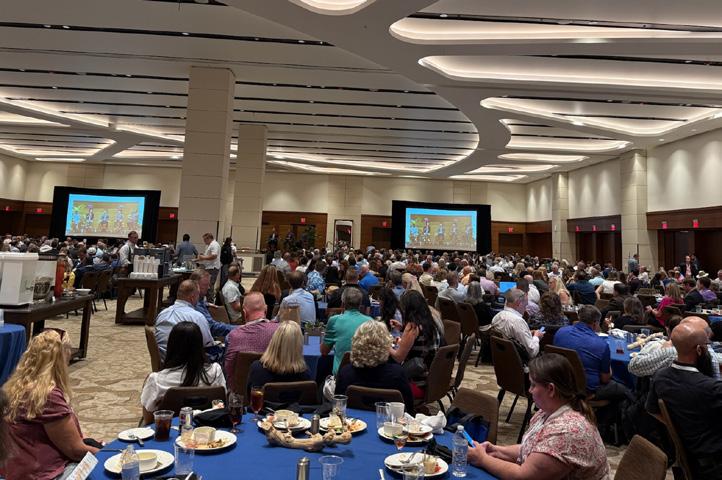
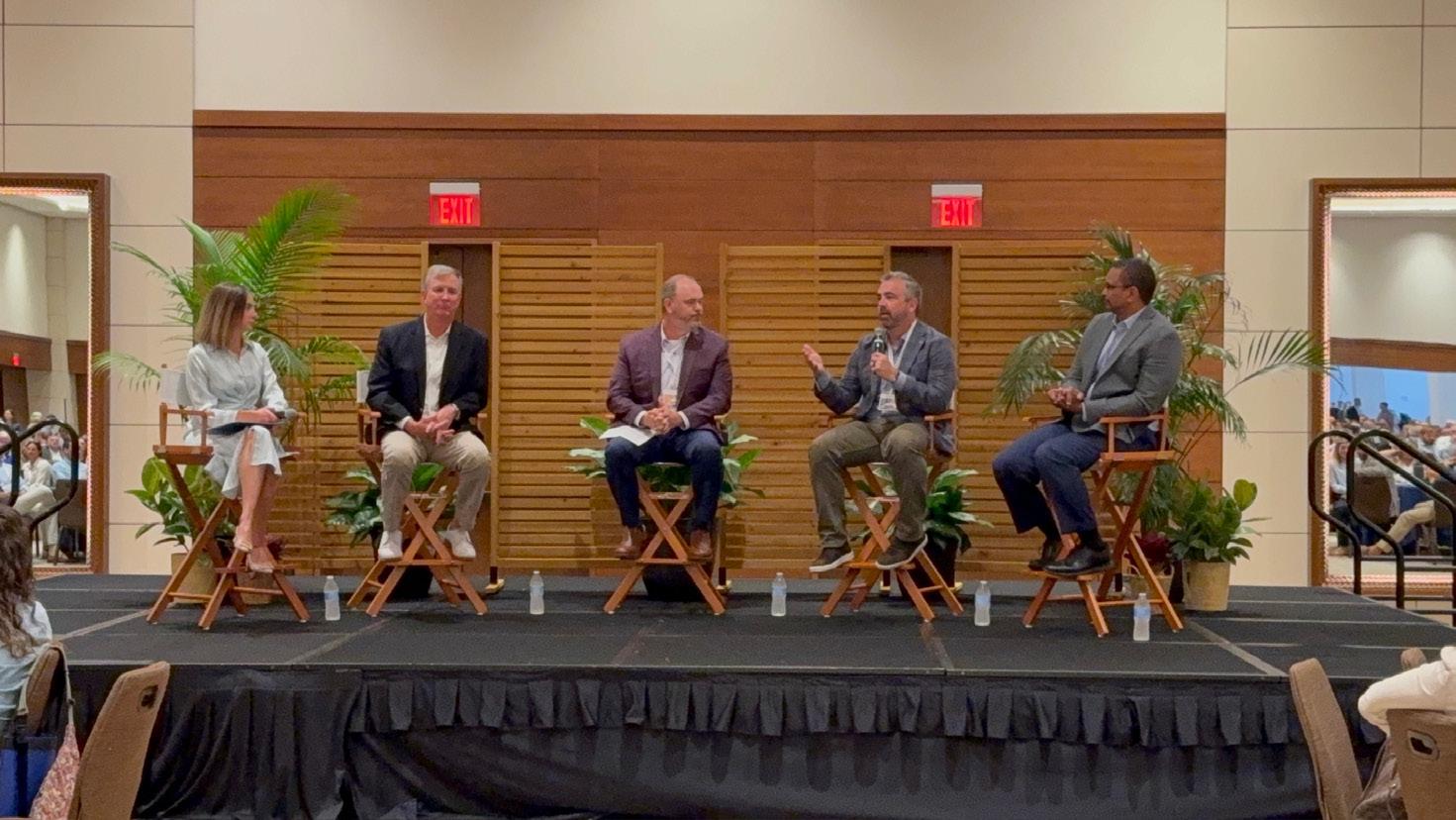
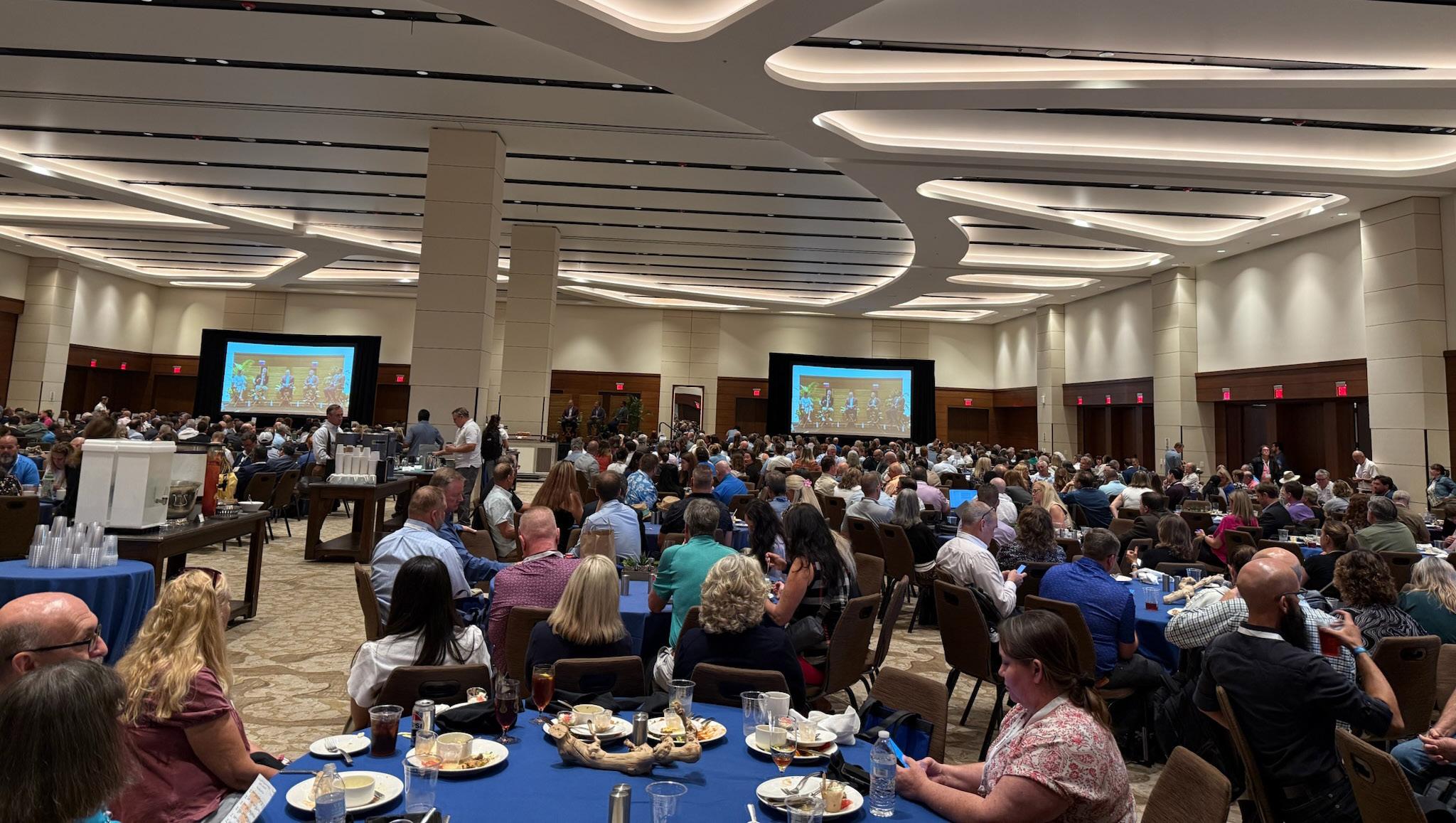
The Environmental Permitting Summer School in Marco Island in July featured experts from around the state and nation, covering many of the timely and important environmental topics that are driving policy decisions and shaping operations and regulation throughout the state. More than 1,400 people attended the 39th annual event.
Perhaps the greatest buzz in the conference happened the morning of the last day of the 39th annual conference, when Gov. Ron DeSantis made a surprise news conference announcement, flanked by D. Lee Forsgren, Acting Assistant Secretary of the Army for Civil Works, DEP Secretary Alexis Lambert, and others. The State of Florida and the U.S. Army Corps of Engineers came to an agreement to allow the state to assume permitting control in order to complete the EAA Reservoir five years early.
But days before that announcement, the conference was filled with analysis and insight from federal partners, state regulators, and experts in all areas of environmental permitting and regulation. Some sessions provided insight on government operations, while others allowed experts to share tips and information.
Shawn Zinszer, Regulatory Chief of the Jacksonville District, U.S. Army Corps of Engineers, told the crowd at a session focused on federal wetlands permitting that as staffing changes have occurred at the federal level since January, changes are also occurring with permitting. He said permitting applications will shift from busier districts to districts with more bandwidth to review.
He also told the crowd that the Army Corps plans to move all permit applications into the Regulatory Request System by the end of August, a move intended to streamline operations. As for the 404 permitting process returning back to
oral arguments by late summer.
Attendees heard from leadership of the five water management districts, with
updates on key projects to impaired waterways, including the St. Johns River, Lake Apopka, and the Indian River Lagoon.
Jennifer Smith, the Chief of Staff of the South Florida Water Management District, said that as the C-43 reservoir – the largest above-ground impoundment in the country — the uncorking of Tamiami Trail along with the Florida Department of Transportation, and other projects are completed, progress in the Everglades is showing.
“What we’re doing is working,” she said. “It’s important that we continue to focus on these projects. There’s more work to do, but it’s working.”
One of the largest-attended sessions included experts discussing the popular topic of WOTUS — Waters of the United States — and the ever-changing legal and regulatory worlds that affect permitting.
Forsgren complimented state regulators on balancing permitting and environmental protection.
“The State of Florida does a heck of a job protecting its water,” he said.
He estimated that as rulemaking is being developed, more clarity on permitting requirements will be published later in 2025. The Sackett v. Environmental Protection Agency case is now the law of the land and federal agencies are basing decisions on that ruling.
By KEYNA CORY
For the past several years, the Florida Recycling Partnership Foundation has proudly presented the Recycling Champion Awards, recognizing outstanding recycling and sustainability programs led by Florida’s top businesses, local governments, and non-profit organizations.

These awards highlight companies, organizations, governmental entities, and individuals who have made a significant impact on recycling and sustainability across the state. Nominations, including self-nominations, are encouraged and welcomed.
The Recycling Champion Awards spotlight innovative and impactful programs in areas such as:
• Waste reduction
• Water reuse
• Energy efficiency
• Environmental stewardship
• Recycling infrastructure and market development
• Highlights from Last Year’s Winners
Collier County’s Preserve Our Paradise: Reduce, Reuse & Recycle — A community campaign focused on protecting the natural beauty of Collier County through sustainable waste management practices.
Coca-Cola Beverages Florida Closed Loop Recycling Value Assessment — A groundbreaking partnership with Circular Solution Advisers and leading institutions, sports teams, and zoos to divert waste from landfills and build a circular economy.
Desert Wireless Recycling, Inc. — Since 2006, this program has recycled, repurposed, and reused more than 500 tons (4.5 million pieces) of electronic waste, keeping hazardous materials out of Florida’s landfills and waterways.
Goodwill Suncoast and Hillsborough County Solid Waste Management — A partnership allowing residents to donate items through Goodwill Suncoast at select county collection centers, expanding reuse opportunities and conserving resources.
University of South Florida Stavros Center Sustainability Superheroes Program — An educational initiative empowering K-12 teachers to help students tackle real-world sustainability issues through entrepreneurial thinking.
Judging will be conducted by faculty and students at Florida Polytechnic Universi-

ty. If you are interested in learning more about how you or your organization can become a Recycling Champion, visit www. flrecycling.org.
Award recipients will be notified in early October, with presentations scheduled for the Florida Recycles Day event on Nov. 13.
Keyna Cory is the Executive Director of the Florida Recycling Partnership Foundation



By PATRICK GILLESPIE
MARCO ISLAND — Standing before a room full of Florida environmental professionals at one of the largest environmental conferences in the country, Gov. Ron DeSantis announced in July a historic agreement between the State of Florida and the U.S. Army Corps of Engineers to allow the state to complete the EAA Reservoir five years early, in 2029.
“We are not just going to say the federal government is going to do the work for us,” DeSantis said before an audience of environmental professionals at the 39th Annual Environmental Permitting Summer School conference. “This is the largest environmental restoration in the world. We’re putting our money where our mouth is.”
As part of a Memorandum of Understanding between the State and the Army Corps of Engineers, the State will assume control of construction and federal funding from the Corps, which will expedite permitting so the project can be completed in 2029, rather than the scheduled 2034 deadline. The state now has authority to construct pump stations, the Blue Shanty Flow way, and other construction projects.
Florida and the federal government share a 50/50 funding commitment for Everglades restoration. DeSantis said he mentioned recently to President Donald Trump the idea of the State taking over certain construction projects and the President agreed to make it happen.
DeSantis said the State can move the project more quickly and with fewer interruptions if controlling it without federal interference. This would allow Florida to take the lead on completing certain federally authorized restoration projects.
As part of its argument in support, the Governor previously stated that the state has already delivered significant progress on the Everglades Agricultural Area (EAA) Reservoir, breaking ground ahead of schedule and completing its portion of the project in 2024.
On Jan. 9 in Juno Beach, DeSantis originally floated the idea of the State gaining authority. Within six months, the idea became a reality. Both the state and federal governments pump billions of dollars into completing water projects, in conjunction with the South Florida Water Management District.
“We have a great partner with the Trump Administration and the Department of the Army where we’re working together and we’re maximizing the resources we bring to the table,” DeSantis said. “I think people are going to be very pleased.”
D. Lee Forsgren, Acting Assistant Secretary of the Army for Civil Works, signed the agreement on behalf of the federal government.
“The Department of the Army feels very comfortable that the State of Florida is — we would call — a model partner,” he said. “We don’t have those in all of our projects. The State of Florida has proven it is a model partner. We are ecstatic to be doubling down today on that partnership.”
DEP Secretary Alexis Lambert celebrated the announcement, following Tuesday’s official opening of the Caloosahatchee (C-43) Reservoir, a 10,000-acre reservoir designed to improve water quality, protect coastal ecosystems, and expand water storage capacity in the region.
“What a banner week it has been for Florida’s environment,” she said. “Throughout the week, we’ve gathered here with our partners at the 39th Annual Environmental Permitting Summer School to share
ideas and continue advancing our mission to protect Florida’s environment while supporting our business community and our economy. And now, I’m thrilled to culminate this week the inking of this agreement, that will usher in a new era in Everglades restoration. Floridians understand the Everglades better than anyone else.”
Since 2019, the Governor’s Office reports that water storage capacity has tripled under this Governor’s tenure, increasing from 57.1 billion gallons to 176.1 billion gallons with the opening of the C-43 Reservoir this year. New projects are currently underway to boost that capacity to more than 330 billion gallons. These efforts reduce harmful discharges into the Caloosahatchee and St. Lucie estuaries and cut nutrient pollution in South Florida’s waterways, protecting drinking water and the Everglades.
Since taking office, Gov. DeSantis has secured $6.5 billion for Everglades restoration and water quality, over his stated goal of $6 billion over his two terms in office.
By STEVE RUPAR
Florida’s water supply is facing a perfect storm of detrimental factors to its security, including increasing demands, expansive regulations, and the depletion of both skilled water experts and the resource itself.
Fresh groundwater withdrawals are at or approaching regulatory limits in many Florida communities, despite heavy rainfall and the State’s aquifers of potable water.
Building a secure water future will require both a comprehensive, statewide water management strategy and the full collaboration of regulators, industry leaders, water utility agencies and the consumers themselves.
Florida’s primary water supply threat is rapid population growth. According to the University of Florida’s Bureau of Economic and Business Research, the State’s population is estimated to increase from approximately 22.9 million in 2023 to between roughly 24.7 and 31.4 million in 2050, which is a spike of approximately 7.9 to 37.1 percent. This surge will significantly strain water resources.
Compounding this challenge is climate uncertainty. Rising temperatures are expected to increase water loss through evapotranspiration and raise irrigation demands. Sea level rise will likely accelerate saltwater intrusion into coastal aquifers, while drier conditions may reduce aquifer recharge.
These pressures are further intensified by the need to keep water rates low and the
looming retirement of experienced professionals in both water resource management and regulatory agencies.
Alternative water sources are crucial for avoiding future water shortages. Two such possibilities are direct potable reuse (DPR) and desalination.
DPR is the process of treating wastewater to drinkable standards, then supplying it directly into the drinking water distribution system. Use of DPR as a drinking water source may defer, reduce or eliminate the need for new reservoir or groundwater aquifer supplies.
Through the other option, desalination, plants remove salt and other minerals from ocean water, using reverse osmosis or thermal distillation to make the water suitable for drinking and irrigation. While typically more expensive than DPR in
the short term, desalination offers a more effective, long-term solution to provide a consistent supply of drinking water across the State.
In addition to constructing new options such as DPR and desalination, utilities can also mitigate water loss by directly addressing leakage in their distribution systems. One of the best practices for managing leakage is dividing water systems into small, discrete pressure zones called “district metered areas.” These areas are monitored and are typically sized so that a leakage crew can cover an area in just one day.
Any comprehensive plan to strengthen Florida’s water supply should consider educational resources, and not just for consumers. Small- to medium-sized utilities often need to rely on additional support to access federal programs that can assist
with funding for programs to control water loss as well as for new alternative sources of supply.
Water has not historically been valued comprehensively or appropriately. It’s more often treated as a given — out of sight, out of mind — until there’s a problem. And that’s where we are in Florida. We have the opportunity to strengthen water reliability in the State, and all parties involved need to understand the best practices to achieve this.
We can’t keep these problems buried. Instead, let’s bring them out, find solutions and move forward.
Steve Rupar, PE is a senior vice president and eastern U.S. drinking water practice leader for WSP In his role, Rupar develops business strategies and delivers projects for clients throughout the East Coast.
November 3-5, 2025



The National Academies of Sciences, Engineering, and Medicine recently released Municipal Solid Waste Recycling in the United States - Analysis of Current and Alternative Approaches. The study explores the contemporary issues facing municipal solid waste recycling programs and lays out recommendations and policy options to chart a path forward.
The Academies recognize that this type of recycling serves an important function for manufacturing supply chain, public health, and pollution mitigation. They report that in recent years, challenges facing municipal solid waste recycling programs, especially economic-based challenges, have led some municipalities to stop funding recycling programs altogether. According to the study, the United States generated approximately 292 million tons of MSW annually, most of which (about 68 percent) was not recycled or composted.
The report, produced at the request of Congress, reviews available information on MSW recycling programs in municipal, county, state, and tribal governments and provides advice on potential policy options for more effective implementation. The Academies found well-designed and supported MSW recycling programs hold many economic and environmental benefits.
The report is available for review for free at the National Academies Press. https://doi. org/10.17226/27978.
Ribault Project
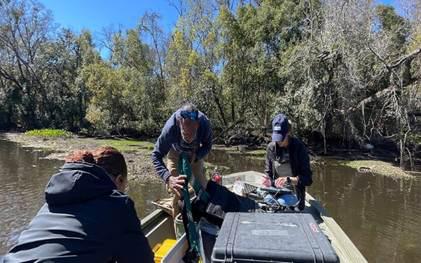
St. Johns Riverkeeper and scientists from Jacksonville University’s Marine Science Research Institute are conducting a twoyear Environmental Quality Assessment of the Ribault River and Moncrief Creek watersheds. The assessment includes the Ribault River, Trout River, and Moncrief Creek watersheds as part of the Resilient Ribault project.
The project is being undertaken to improve water quality, community health and neighborhood resilience by evaluating environmental and water quality problems, identifying sources of pollution, and implementing solutions. Resilient Ribault is a pilot program the Riverkeeper plans to use to address other vulnerable tributaries and their watersheds in the future.
Funding for the project has been made available by a grant from the City of Jacksonville’s Environmental Protection Board.
Although septic tank phase-outs and stormwater infrastructure improvements are underway, Ribault River and Moncrief Creek continue to face water quality challenges, including notable long-term fecal coliform contamination. The Riverkeeper team is conducting monthly fecal bacteria sampling at eight sites, and will continue to do so for two years. At sites with chronically high bacteria levels, a more intensive investigation will be conducted to identify the sources.
FPL “Storm Pods” assist staff in responding to storms. Storm Pods are shipping containers modified to be a mobile office and communication trailer following storm landfall.
FPL’s Emergency Response Team pre-positions Storm Pods and other equipment across the state ahead of every storm. This proactive approach helps to speed restoration following storms by giving field crews a place to check in, a place to work and a place they can communicate back to the FPL Command Center, the hub of all restoration efforts.
Charles Leitner and several other FPL employees were sheltered locally and were able to quickly occupy their storm pod after Hurricane Ian.
“We deployed Storm Pods above and below Tampa thinking even if the storm goes a little farther north or south, we are out of harm’s way and in the area,” he said. “Instead of being on the outskirts of the storm, we were actually dead in the center of [Hurricane] Ian.”
Leitner notes in the early 2000s it would take a week to set up comparable facilities. FPL stays ahead of the curve by consistently improving their pods. Three years ago, FPL started experimenting with satellite high-speed communication inside Storm Pods to make that communication faster and easier.
Subsequently FPL responders came up with an idea to use DC power inside Storm Pods rather than traditional AC power, which required time to restore. FPL took that idea one step further by adding solar panels to the top of one Storm Pod ahead of the active 2024 hurricane season. That step allowed the IT equipment to be up 24/7, with zero setup.
Miami-Dade’s “Water is Life” Campaign Named Nation’s Best
The US Water Alliance recently awarded the Miami-Dade Water and Sewer Department the prestigious Outstanding One Water Communication Award. The award delivers national recognition to the Department’s “Water is Life” campaign. This award acknowledges the campaign’s storytelling, creative engagement strategies, and its success in elevating public awareness about water conservation and stewardship.
The “Water is Life” campaign was selected for its innovative approach to public education, promoting water literacy and conservation throughout Miami-Dade County. The U.S. Water Alliance praised the Department’s ability to connect with a diverse community while emphasizing the essential role water plays in daily life.
The campaign uses a variety of tools, including digital media, strategic partnerships, and grassroots outreach, to promote the value of water among Miami-Dade County residents. The campaign was initiated in 2023 with the mission to engage
residents and customers by strengthening their connections with water, highlighting each person’s unique experiences with this vital resource.
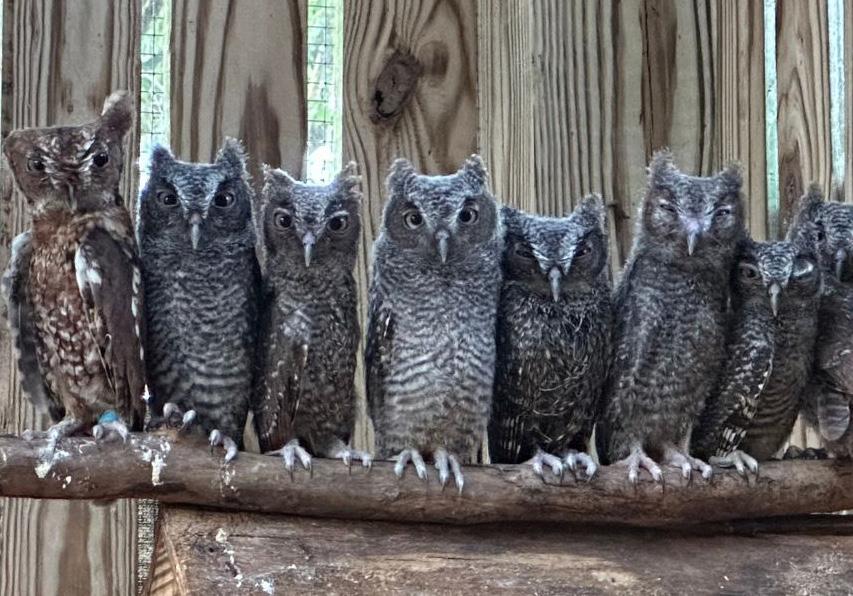
NextEra Energy & FPL Baby Shower Gifts
Baby wildlife season is in full swing, and wildlife rescue centers are overflowing with tiny, sick, injured, or abandoned baby birds and animals requiring attention and care. To assist wildlife in northwest Florida, three nonprofit rescues recently received $25,000 each from the NextEra Energy Foundation and Florida Power & Light Company to support baby wildlife during the peak season.
The recipients, Panhandle Wildlife Rescue, Wildlife Animal Sanctuary of Northwest Florida, Emerald Coast Wildlife Refuge and similar nonprofit advocates depend on corporate and private partners for financial support, supplies and food donations as part of their community partnerships.
Pascal Robin, executive director for Emerald Coast Wildlife Rescue, emphasized the urgent need for the donation.
“We’ve already cared for more than 850 wildlife patients this year at our center alone,” Robin said. “This generous support strengthens the medical care we provide for both juvenile and adult animals, while also enhancing the overall health of our region’s ecosystem.”
The majority of rescues are delivered by wildlife-loving citizens. Native wildlife comes from nearly every county in Northwest Florida to these three nonprofits that operate on donations or sponsorships. NextEra Energy notes each of the awarded nonprofits will take in 2,000 to 4,000 wildlife patients this year with the goal of releasing them back into their native habitats.
Port St. Lucie has been recognized as one of ten All-America City Award winners. The National Civic League presented this honor to recognize Port St. Lucie's work to actively engage residents in the pursuit of environmental goals. Communities
throughout the nation submitted written applications describing their efforts to bring people together, create positive change, and build thriving, resilient communities. Twenty finalists were selected of which Port St. Lucie was named one of the ten winning communities.
City sustainability efforts include one of the nation’s largest septic-to-sewer conversion programs and Naturally PSL, a community-led initiative to preserve 744 acres of green space. Port St. Lucie also highlighted the McCarty Ranch filtration system, which treats six billion gallons of water annually.
The City’s Conservation Corps program, robust public engagement, regional climate partnerships, and grassroots programs like cleanups and tree giveaways are also part of their environmental stewardship.
The Florida Municipal Power Agency has honored the City of Tallahassee Electric & Gas Utility for delivering enhanced reliability to its customers. Tallahassee received two Florida Public Power Reliability Awards, including the Momentum Award for the greatest percentage decrease in annual average outage duration and recognition for achieving a reduction of ten percent or more in annual outage duration.
“As Florida’s fourth largest municipal electric utility, we are proud to be recognized for our reliability,” City Manager Reese Goad said. “Enhanced reliability is a result of our commitment to strategic, forward-looking investments in infrastructure and the exceptional capabilities of our highly skilled workforce. As we continue to deliver dependable electric service to Tallahassee businesses and residents today, we are simultaneously preparing for the energy demands of the future."
FWC Proposes New Management Framework for Apalachicola Bay Oyster Harvesting
The Florida Fish and Wildlife Conservation Commission (FWC) recently proposed a new management framework for commercial and recreational oyster harvest in Apalachicola Bay. The Commission also considered updates for rules that will apply statewide.
Oyster harvesting has been suspended in the Bay for the past five years. FWC staff recommended Apalachicola Bay's oyster fishery be reinstated with annual harvest levels based on oyster abundance to protect ongoing reef recovery. The proposed statewide rule updates will help minimize reef loss and promote good harvest practices.
“We want to be able to get as many boats back in the water as soon as possible, while supporting the bay’s continued recovery and sustainability,” said FWC Commissioner Preston Farrior.
Limited opening of Apalachicola Bay recreational and commercial harvest criteria include establishing a process to set annual harvest levels for specific reefs in the bay that meet a minimum threshold of oyster abundance and creating an initial harvest season between Jan. 1 and Feb. 28, 2026, and then continuing with a normal fall season between October and February.
A Commercial Apalachicola Bay Endorsement would be required to commercially
harvest oysters from the Bay. Qualified applicants will have an opportunity to participate in the 2026 season. The number of participants in the first year will set the cap for subsequent seasons.
FWC will establish an Apalachicola Bay Recreational Opportunity (ABRO) Permit for recreational harvesters who will be selected through a lottery process and reporting requirements will be set for both recreational and commercial harvesters.
SFWMD Releases 2025 NEEPP Everglades Annual Progress Reports and Watershed Protection Plans
The South Florida Water Management District this summer updated the 2025 Northern Everglades and Estuaries Protection Program (NEEPP) annual progress reports and watershed protection plan updates for Chapters 8A through 8D.
The District and partners, FDEP and FDACS, are jointly responsible for implementing NEEPP, each with specific areas of responsibility while coordinating together. The agencies are tasked with protecting and restoring surface water resources and maintaining compliance with water quality standards in the Northern Everglades through a phased, comprehensive and innovative protection program that includes long-term solutions based upon the state’s total maximum daily loads.
The Northern Everglades region includes the Lake Okeechobee Watershed, the St. Lucie River Watershed and Caloosahatchee River Watershed and associated estuaries. Each of the programs are watershed specific and consist of research and monitoring, development and implementation of best management practices, refinement of existing regulations, and structural and nonstructural projects, including public works. The programs are driven by FDEP’s Basin Management Action Plans (BMAPs) and are supported by the Watershed Protection Plans (WPPs) developed by the District and integrated with FDEP and FDACS programs to control nutrient sources at the local, subregional and regional levels.
Supplemental basin assessments were completed for each of the three basins for the most recent 5-year period. BMAP updates were considered and the status of projects in each of the basins were updated. The overall NEEPP report contains updates on watershed construction projects and updates on other regional projects.
The full reports are available at: https://www.sfwmd.gov/our-work/wpps
By BLANCHE HARDY
A simple web search will yield numerous scientific publications reporting that insect populations are declining with extinction rates between 45 and 75 percent. A meta-analysis of 16 studies completed by the University of California, Riverside’s Department of Entomology found insect populations have declined by roughly 45 percent in the last 40 years.
According to “Worldwide decline of the entomofauna: A review of its drivers” — a 2019 study by Francisco Sánchez-Bayo — a comprehensive review of 73 historical reports on insect decline referenced by the United Nations, more than 40 percent of insect species are declining, with a third facing endangerment. The extinction rate is eight times faster than that of mammals, birds, and reptiles. Globally, insect biomass is decreasing by 2.5 percent annually.
Insects make up about half of all known living organisms. They are critical to pollination, nutrient cycling, food chains of birds and other insectivores, and ecosystem support. Insect extinction poses a significant threat to our natural ecosystems and much of our agriculture. Three causes are regularly repeated for their demise, climate change, loss of habitat, and pesticides — frequently neonicotinoids made famous by their devastation of bees.
The United States Environmental Protection Agency is responsible for assessing the risks of pesticides and taking action to protect endangered species and other wildlife. EPA finalized biological evaluations assessing potential effects of three neonicotinoid pesticides on endangered species in June 2022. The neonicotinoids assessed Clothianidin, Imidacloprid and Thiamethoxam are used on a variety of crops, turf, and ornamentals, and for other residential and commercial indoor and outdoor uses.
Biological Evaluations (BE) were conducted on over 1,700 listed species and over 800 designated critical habitats in the United States. They found Clothianidin is likely to adversely affect 67 percent of species and 56 percent of critical habitats, Imidacloprid is likely to adversely affect 79 percent of species and 83 percent of critical habitats, and Thiamethoxam is likely to adversely affect 77 percent species and 81 percent of critical habitats.
The Florida Department of Environmental Protection similarly published “Regional extent, environmental relevance, and spatiotemporal variability of neonicotinoid

insecticides detected in Florida’s ambient flowing waters,” which notes the moderate to high water solubility and environmental persistence of neonicotinoids, “allows these compounds to readily enter, and be retained in, water resources where they may harm nontarget organisms and impact biological communities and associated trophic structures negatively.”
The results of monthly statewide sampling of 77 surface water trend monitoring stations in 2015 showed that imidacloprid, the state’s study targeted neonicotinoids, is ubiquitous throughout Florida’s flowing surface waters. In 24 of the 25 FDEP drainage basins sampled, detections ranged from 2 to 660 ng/L. FDEP found a notable direct correlation between imida-
cloprid and the presence of two land use classes: urban and orchard and vineyards.
Twelve stations representing these eight basins were resampled from August 2019 to July 2020. Imidacloprid was detected in all samples. During both events, neonicotinoids were found at concentrations known to produce deleterious and, in some cases, fatal effects on aquatic invertebrates at all 12 monitoring stations.
FDEP’s Florida study adds to the body of literature documenting the regional extent of imidacloprid’s chronic long-term exposure potential to aquatic insect communities. It also serves as a wake-up call to address the challenges associated with prohibiting the entry of neonicotinoid compounds into water resources.
Restricting the sale of products containing imidacloprid and other neonicotinoids, improving agricultural pest management strategies and better educating consumers about products they can purchase off the shelf all have their role in improving the situation.
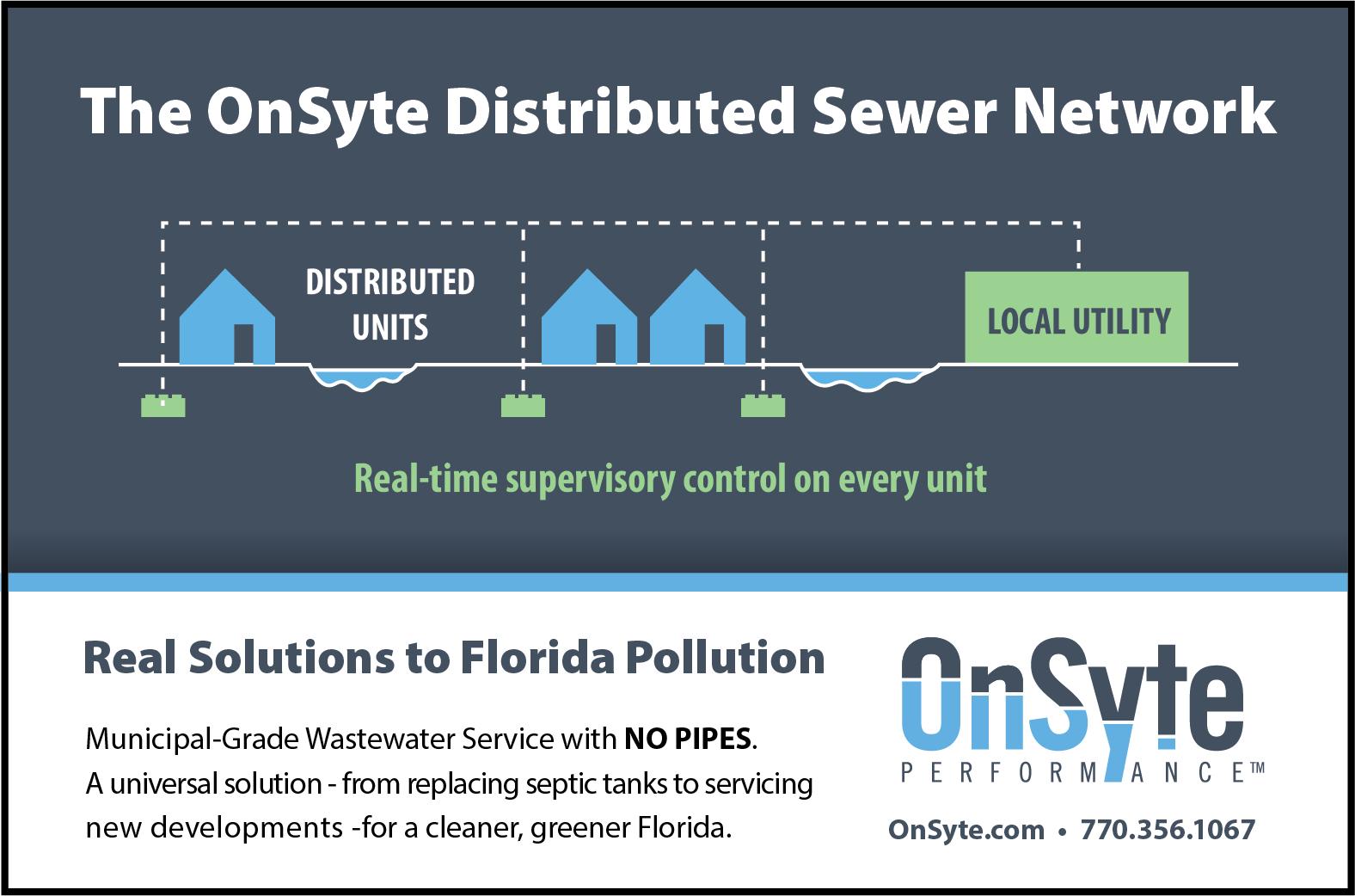

Hubbard will be the first U.S. city to deploy an AirJoule Technologies system that generates clean distilled water from air using waste heat from a geothermal well. The system, expected to be installed by the first quarter of 2026, will produce distilled water for the municipal supply, supplementing Hubbard’s water resources. The technology can utilize waste heat from various sources, including heat from data centers, manufacturing plants and energy production.
Chevron Corporation will lay off approximately 575 Houston employees of the Hess Corporation following its $55 billion acquisition of the company. Chevron employs about 7,000 workers in the Houston area and has been reducing its workforce since February, when the company announced plans to lay off 20 percent of its global workforce.
The Public Utility Commission (PUC) is suing the Attorney General to prevent the release of data on cryptocurrency mining operations. The PUC argues that disclosing the locations, owners, and power consumption of these facilities could aid in terrorist attacks on the state’s energy grid. Critics argue that the industry is exploiting a lack of regulation, driving up electricity prices and impacting local communities.
B2U Storage Solutions, a battery startup in the second-life battery sector, is expanding its operations into Bexar County. The company has secured four projects with a combined capacity of 100 megawatt-hours. B2U, which has successfully operated used electric vehicle (EV) batteries on the grid in California, seeks to capitalize on the energy market by providing storage solutions for clean energy and contributing to grid stability.
Several state startups are developing technologies to utilize carbon from fossil fuels, aiming to change carbon’s status as a waste product and encourage alternate economically viable uses for it. Companies such as Graphitic Energy and Carbon Free are exploring methods such as pyrolysis and mineralization to convert carbon into valuable materials like graphite and calcium carbonate in order to create economic markets for their products.
Over 2,300 shrimpers, boat owners, and seafood businesses from the Gulf Coast are suing Hilcorp Energy and WCC in a Houston courtroom for an oil spill that occurred in August 2022 off Hilcorp’s Caillou Island platform in Terrebonne Bay, Louisiana. The spill, which transpired on the first day of the shrimping season, released 14,000 gallons of crude oil, contaminating fishing areas and closing oyster harvesting areas. The plaintiffs are seeking compensation for lost profits, gear damage, and restoration efforts in affected areas.
Twelve chemical manufacturers in the state were among the 25 exempt by President Trump from EPA regulations aimed at reducing harmful emissions. The exemption applies to the Hazardous Organic National Emission Standards rule, which the Trump administration has deemed as imposing burdensome testing and monitoring requirements. Critics argue the exemption prioritizes industry over public health, citing a history of environmental concerns at many of the exempted facilities.
Entergy Louisiana is seeking approval for a $68.7 million project to upgrade its Waterford 3 nuclear plant, increasing output 1,150 to 1,195 megawatts. The project, financed through ratepayer costs, is expected to generate $205 million in benefits, according to the analysis by Entergy, including energy savings and federal tax credits. According to the utility, the upgrades, utilizing existing infrastructure, would help meet future capacity needs and potentially reduce ratepayer costs.
The state is suing the Louisiana Oilfield Restoration Association for failing to plug orphan wells, misrepresenting finances, and misusing funds. The lawsuit alleges the association’s leaders engaged in self-dealing, including facilitating a $700,000 loan to a former state official. The Association, which was established in 2019 to address orphan wells, has denied wrongdoing and claims it fulfilled its responsibilities.
Five Louisiana ports — the Port of Greater Baton Rouge, Port of South Louisiana, Port of New Orleans, St. Bernard Port, and Louisiana Gateway Port — have partnered with Polaris Analytics & Consulting to develop a unified marketing strategy. This initiative aims to boost international trade, attract foreign investment, and enhance Louisiana’s competitive edge in global commerce. Together, these ports collectively form one of the busiest port systems in the world, handling more than 500 million tons of cargo annually — approximately 20 percent of the nation’s total.
St. Tammany Parish is set to spend $1.77 million to purchase 168 flood-prone acres near Mandeville for drainage purposes. The acquisition, part of a pilot program to address flooding concerns, aims to preserve the land from development and potentially build a pond. The funds will come from the parish’s drainage tax and impact fees.
Tulane University will host its second annual Future of Energy Forum in September, bringing together more than 100 energy leaders to discuss industry challenges and opportunities. The free conference focuses on innovation, competition, and collaboration, and will feature sessions on emerging technologies, shifting regulations, and cross-sector partnerships.
As a result of a provision in the One Big Beautiful Bill that increases the revenue sharing cap imposed on Gulf states from $500 million to $650 million, the state of Louisiana anticipates a substantial surge in offshore oil and gas revenues. In response, BP and other Gulf oil producers are initiating new projects and augmenting their oil production off the state’s coast. The state could potentially earn an additional $46 million annually, or $460 million over the next decade, if the cap is consistently met each year, according to estimates of revenue and production.
The Mississippi Crossing Project, a proposed natural gas pipeline spanning nearly 208 miles across Mississippi, is under review by the Federal Energy Regulatory Commission. Tennessee Gas Pipeline Co., a subsidiary of Kinder Morgan, aims to build a pipeline that can transport up to 2.1 billion cubic feet of natural gas daily. This pipeline expansion, which is intended to address increasing energy demand by enhancing its transportation capacity, faces scrutiny from environmental groups and regulatory agencies.
MSU Completes Tree Planting Project
As part of its infrastructure plan, Mississippi State University in Starkville has planted more than 2,000 trees in the past five years, enhancing the campus’s canopy and outdoor environment. Strategically placed in high-traffic areas, the diverse tree plantings provide shade, purify the air, and contribute to cooling the university’s campus.
Alabama Power received approval from the Public Service Commission to acquire the Lindsay Hill Generating Station, a 895-megawatt gas-fired power plant, for $622 million. The acquisition is to assist the utility in meeting the increasing energy demands of Alabama, particularly in conjunction with two significant data center projects whose details were not disclosed. The Lindsay Hill plant is situated in close proximity to another Alabama Power plant, the Central Alabama Generating Station, a 885-MW gas-powered facility that the utility acquired in 2020 as part of a $1.1 billion expansion initiative.
Bessemer Data Center Opposed
A proposed $14.5 billion data center in Bessemer faces opposition from residents concerned about its environmental impact. The project, which would require significant water and electricity usage, necessitates clearcutting of more than 100 acres of land, and threatens endangered species could strain local resources and increase reliance on fossil fuels. Despite claims from the developer that the project poses no health risks, residents worry about potential cancer risks from diesel generators and the lack of transparency surrounding the project’s details.
Environmental regulators approved stricter limits on 12 toxic substances in state waterways, following a petition from seven environmental groups. The updated standards, based on 2015 EPA guidelines, will reduce toxin levels in drinking water sources and popular fishing areas. The decision was made by a 6-1 vote from the Alabama Environmental Management Commission.

By JONATHAN VEACH
In July, the Florida Fish and Wildlife Conservation Commission (FWC) celebrated five years of the State Reef Fish Survey, a milestone in Florida’s ongoing efforts to ensure the long-term sustainability of its recreational reef fishery.
Thanks to participation from anglers, the survey has played a critical role in delivering timely, high-quality data that is essential for evaluating and managing reef fish stocks statewide. This data-based approach supports not only healthy fish populations but also the fishing opportunities that are a cornerstone of Florida’s outdoor heritage and coastal economy.
Originally launched as the Gulf Reef Fish Survey, the program was created to improve the understanding of recreational fishing for reef species along Florida’s Gulf Coast. Developed through years of collaboration with regional and federal partners, the survey was carefully designed to collect reliable fisheries data.
In July 2020, the program expanded to include Monroe County and the Atlantic coast of Florida, earning a new name — State Reef Fish Survey — to reflect its broader geographic coverage and increased significance.
With each completed survey and dockside interview, the dataset grows, enabling FWC scientists to track trends in reef fish populations, assess the effectiveness of management measures, and plan for the future.
More recently, the survey has been used to help monitor and set the Gulf recreational red snapper season, providing longer seasons and more fishing opportunities for anglers. Additionally, the data was used in assessments for Gulf red grouper, mutton snapper, and yellowtail snapper, offering a more reliable and precise method compared to previous recreational sampling practices.
How the survey works

FLORIDA BROWNFIELDS ASSOCIATION ANNUAL BROWNFIELDS CONFERENCE
When: Sept. 9-11
Where: Palmetto Marriott Resort & Spa
Let's get ready to experience a season of Networking, Learning, Teaching, and Fun in the Florida sun! We want you, your family, friends, clients, and partners to be a part of our "Upgrading Land Revitalization in Your Community", where we seek to provide an experience that is professional, affordable (as we've negotiated some fantastic rates!), comfortable, fun,
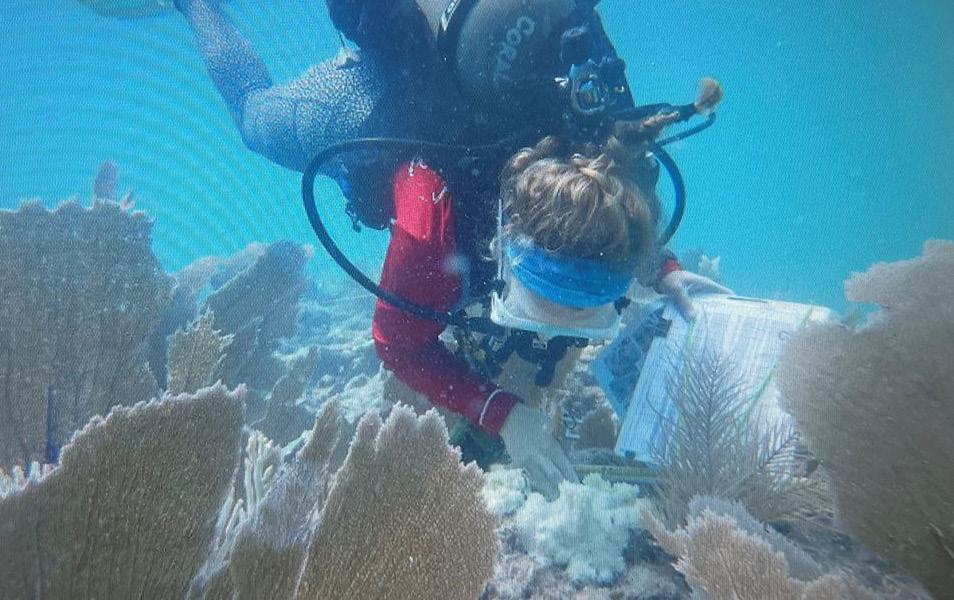
The survey uses a two-pronged approach to collect recreational fishing data: a mail survey and in-person dockside interviews.
Mail Survey: Anglers who hold the State Reef Fish Angler designation — required for those who fish for or harvest certain reef species — may be randomly selected to receive a survey. These questionnaires gather details about the angler’s fishing activity over the previous month, including trip frequency and basic catch information.
Dockside Interviews: FWC biologists interview anglers returning from fishing trips to collect detailed information about their catch, including species, number of fish harvested and released, and data on fish size, weight, and age.
In addition, FWC scientists sometimes join anglers on for-hire charter and headboat trips to gather data directly from anglers. This data helps researchers estimate post-release survival and project future stock availability.
relaxing, and has a multitude of amenities for ALL to enjoy!
https://www.floridabrownfields. com/2025-fba-annual-brownfields-conference
FLORIDA LOCAL ENVIRONMENTAL RESOURCE AGENCIES 2025 ANNUAL CONFERENCE
When: Sept 17-18
Where: Alachua County
UF/IFAS Extension Straughn Professional Development Center
The mission of FLERA is to enhance communication, education and advocacy for Florida local environmental protection efforts.
https://www.flera. org/2025-annual-conference
2025 RESILIENCY FLORIDA ANNUAL CONFERENCE
When: Sept. 17-19
Participation is free and essential. Signing up for the State Reef Fish Angler designation, responding to surveys, and participating in interviews provide critical insights that guide sustainable fishery management. These efforts help ensure reef fish species such as snapper, grouper, and amberjack remain abundant for future generations of Florida anglers.
As the survey marks its fifth year in 2025, continued angler engagement is more important than ever to make the survey maximally effective into the future. Recreational fishing is a valued pastime and an important driver for the state’s economy. Data collected through the State Reef Fish Survey will provide a clearer picture of the health of reef fish stocks throughout the state and help ensure the long-term sustainability of recreational fishing in Florida.
Angler participation is crucial to the success of these efforts. The SRFS desig-
Where: Charlotte Harbor Sunseeker Resort
This year’s conference theme is Adapting Today; Powering Tomorrow!
The program will feature four concurrent tracks focusing on Beach Management, Energy, Gray and Green Infrastructure, and Smart Planning. Additionally, plenary sessions will bring attendees together for discussions with invited speakers on resilience issues of statewide importance, including federal and state legislative policy and funding initiatives.
https://www.resiliencyflorida.org/
THE 30TH FLORIDA REMEDIATION CONFERENCE
When: Nov. 3-5
Where: Orlando Rosen Centre Hotel
The Florida Remediation Conference (FRC) is one of the premier soil, air and water remediation conferences in the industry. FRC attracts over 400 attendees comprising a mix of industry representa-
nation is not included in the Sportsman’s Gold License, so you will need to sign up through one of our other means.
How
Anglers should add the State Reef Fish Angler designation when purchasing or renewing their fishing license through GoOutdoorsFlorida.com and at any license agent. The designation can also now be set to auto-renew, making it easier than ever to stay engaged in sustainable reef fish management. Remember, you only need the designation if you’re targeting reef fish; if you’re fishing for inshore species like red drum or seatrout, you do not need the survey designation.
For more information about the State Reef Fish Survey, visit MyFWC.com/SRFS
Jonathan Veach is a Public Information Specialist at the Florida Fish and Wildlife Conservation Commission
tives, developers, consultants and contractors, and over 70 exhibitors and sponsors from across the country. It is far from just being a Florida event.
https://floridaremediationconference.org/
DISASTERS EXPO USA
When: March 4-5, 2026
Where: Miami Beach Convention Center
A key event for disaster preparedness, response, and recovery, Disasters Expo USA brings together industry leaders, government agencies, and professionals committed to addressing the challenges of disasters.
With a focus on innovation, networking, and education, the event serves as a vital platform for showcasing cutting-edge solutions and technologies that drive resilience and recovery efforts across the country.
https://www.disasterexpomiami.com/