Charlotte County Property Rights Case Continues
PAGE 3
Charlotte County Property Rights Case Continues
PAGE 3
FDOT Delivers Transportation, Environmental Wins in Old Tampa Bay
PAGE 7
South Florida Water Quality Data Gets a New Public Look
PAGE 10

Address label change?
If your mailing label is inaccurate or incomplete, please contact us with the correct information at SPECIFIER PUBLISHING LLC, P.O. Box 1857 Tallahassee, FL 32302, or email us at admin@floridaspecifier.com. We appreciate your help with keeping our circulation database accurate.

Florida's Environmental News Source of Record focused on news content of interest to the environmental community.
Rockville, MD - When it comes to American cuisine, there are few things more iconic than steakhouses. The slabs of marbled meat, the sizzling grills, the oozing butter, and the dripping bravado, maybe even a cowboy hat or two for ambiance—it's enough to make even fictional steakophile Ron Swanson misty-eyed.
Yet for all the traditional steak dinners ordered daily, there are restaurants nationwide pushing the concept of the all-American steakhouse to new culinary heights, according to market research firm Packaged Facts in the brand new report 2017 Forecast: Culinary Trend Tracking Series.
"The steakhouse is back and will capture our attention in 2017. Not that the classic restaurant style ever disappeared, but a renewal of the model is taking place in response to new sources of beef and new flavorful expressions of the concept that get chefs and diners excited," says David Sprinkle, research director, Packaged Facts.

Today's steakhouse menus increasingly feature grass-fed cattle, locally raised animals, heritage varieties, meat butchered and dry aged in-house, and dishes that stem from the whole animal, not just the premium cuts. And that's just the meat. Creative side dishes in lieu of old standards, global and seasonal flavors, and a wider menu selection also distinguish these new school operations.
By FRANK STEPHENSON
tor in sustainability and animal welfare, and create a dining experience that showcases culinary flair, not just a grill master's skill at cooking steak to the requested doneness. These operations are also designed to be more inclusive, more of a great place for all kinds of people to dine well, not just traditionminded men on expense accounts. As a result, the modern steakhouse is increasingly similar to other modern restaurants with a focus on distinctive
Moreover, new menu categories (such as flatbreads) and service elements freshen the concept.
About the Report 2017 Forecast: Culinary Trend Tracking Series offers an outlook on the culinary trends—the foods, dishes, ingredients and flavors—that Packaged Facts expects to grow in popularity in 2017.
team’s Pave Hawk helicopter crashed near the town of Qa’im.
When Carl Enis was growing up in Coral Gables, he impressed his family and friends with twin passions — a love of all things outdoors and a love for country. When his life was tragically cut short in 2018, hundreds of friends and relatives gathered for a memorial service in Tallahassee as a testimony to Enis’ remarkable achievements in pursuing those childhood passions.
Jacksonville, FL - After much anticipation and excitement, Jollibee, the largest Asian restaurant company, is now open in Jacksonville. This is the 36th store in the US, as well as
Enis, who moved to Tallahassee in 2004 to enroll at Florida State, was killed, along with six of his fellow airmen, while serving as a specialist in parachute rescue for the U.S. Air Force supporting combat operations in Anbar Province, Iraq. On a routine mission on March 15, 2018, the
Enis, who had distinguished himself in multiple aspects of air rescue operations and had attained the rank of staff sergeant, was 31. His name appears on a monument beside his grave at Arlington National Cemetery. And now, another monument just built off the shores of Dog Island in Franklin County will serve to commemorate Enis’ life in perpetuity.
the new additions nearly double the size of the project located roughly 18 miles southeast of Dog Island’s easternmost shore.
Alan Richardson, head of OAR’s board of directors, said the project was staged out of Orange Beach, Alabama, home to marine contractor Walter Marine. The company has for years been recognized as the largest reef-building operation in the country with reportedly more than 70,000 reef projects already under its belt.

By STAFF REPORTS
As the 2026 Legislative Session nears, lawmakers continue gathering for Interim Committee meetings through early December en route to the Jan. 13 Legislative Session commencement.
been the talk of the town since 2016. With the opening, Floridians will get to try Jollibee's signature menu items such as the world famous Chickenjoy. This dish is delicately breaded to be crispylicious on the outside and juicylicious inside. The well-loved Jolly Spaghetti is a favorite of both kids and kids-at-heart because of its signature sweetstyle sauce, loaded with chunky slices of savory ham, ground meat, and hotdog. Other classic menufavorites include the juicy and cheesy Jolly Hotdog, and the Peach Mango Pie, which is made with real Philippine sweet mangoes and a flaky golden brown crust.
Adding to Carl Enis Memorial Reef
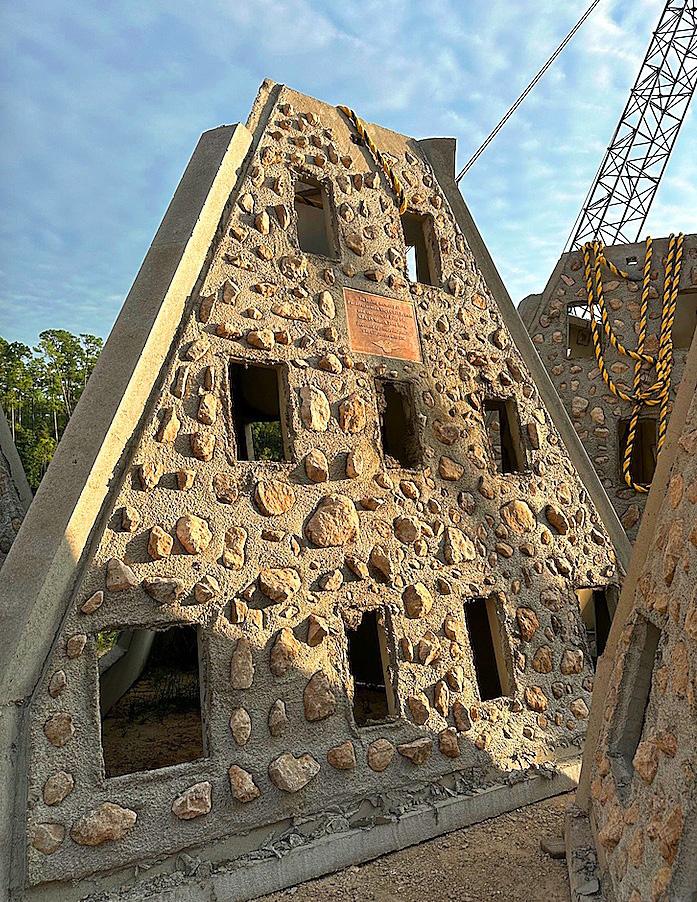
On Aug. 13, the Tallahassee-based Organization for Artificial Reefs orchestrated a deployment of seven custom-made, multiton, pyramid-shaped concrete units to a designated site in 68 feet of water. Begun in 2023 as the Carl Enis Memorial Reef,
"As Jollibee debuts in Florida, we anticipate seeing not only a multitude of excited Jollibee patrons waiting to get their hands on their Jollibee favorites, but also first-timers waiting to have their own Jollibee experience," said Jose Miñana, Jollibee Foods Corporation's Group President for North America. "There's no greater joy for us than serving the needs and tastes of Jollibee fans in the community. At Jollibee, we aim to bring families together for happy moments over great tasting food with superior value, served with warm and friendly service – our own brand of joy."
The Enis reef features seven so-called “super” reefs which stand 15 feet tall and weigh upwards of 30,000 pounds each. Walter Marine’s technology employs a GPS-guided crane system that is capable of lowering units into precise positions on the seafloor, Richardson said.
it’s unclear what policy and budget recommendations he might have.
The brand has become a symbol of nostalgia and warm childhood memories for many overseas Filipinos in the U.S. To many, Jollibee is the go-to restaurant of Filipinos for both special
See JOLLIBEE page 15
Legislative leaders have yet to provide clear guidance on their environmental priorities and this session being Gov. Ron DeSantis’ last as the state’s chief executive,
Some topics that may come up during session:
Budget Discussions
Most in Tallahassee are preparing for continued budget tightening, as state economists are predicting state revenues to begin a downward trend toward a state
deficit if spending doesn’t decline. This has spurred more legislative calls to cut spending as well as work by executive branch agencies to create cost-cutting measures. Chief Financial Officer Blaise Ingoglia has also spent time touring the state touting wasteful spending at the local level.
What all of this amounts to and how budgetary concerns affect environmental grant programs remain to be seen.
By BLANCHE HARDY
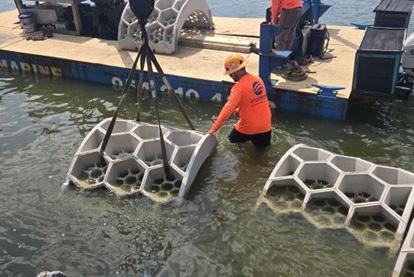
The City of Cape Canaveral has become the first municipality to install Reef Arches — innovative concrete reef structures designed to protect coastlines while enhancing marine habitats. The installation marks a milestone in the city’s ongoing effort to safeguard critical infrastructure along the Banana River Lagoon.
Reef Arches, a South Florida–based company, manufactures modular reef structures intended for both inshore and offshore use. The company’s products are made from a sustainably formulated concrete mix and come in several sizes, including 50-pound and 1,200-pound units, with custom sizes also available. Each unit provides up to 100 square feet of textured surface area within a compact footprint and can be stacked to create scalable breakwater systems.
Cape Canaveral deployed ten 1,200-pound Reef Arch units at the southeast corner of its Water Reclamation Facility, located along the Banana River Lagoon. The site sits adjacent to an oxidation ditch containing roughly 1.4 million gallons of wastewater, an area vulnerable to storm surge and erosion due to its proximity to open water.
Cape Canaveral officials first learned about Reef Arches following a successful 2024 installation by the Marine Resources Council at the organization’s Lagoon House in Palm Bay. That project demonstrated the technology’s effectiveness in both erosion control and habitat creation.
Dr. Mara Skadden, Director of Science at Marine Resources Council, praised both the design and regulatory collaboration.
“MRC permitted this living shoreline project through the Florida Department of Environmental Protection and the U.S. Army Corps of Engineers,” she said. “Both agencies were thrilled with Reef Arches’ design and effectiveness. The Corps even reached out to thank us for using this product and creating new habitat within the Indian River Lagoon.”
The Reef Arches were installed to reduce incoming wave energy while maintaining healthy water circulation. Their open design allows sunlight to penetrate the lagoon floor, encouraging seagrass growth, a key component of the estuary’s ecosystem. Behind the arches, the city reinforced the shoreline with 100 tons of granite boulders and plans to plant mangroves to further stabilize the area.
The installation of Reef Arches and shoreline riprap represents an interim phase in a larger, long-term coastal resilience initiative. The City has partnered with the U.S. Army Corps of Engineers through its Emergency Streambank Protection Program to design permanent shoreline hardening and enhancement measures for the facility. The facility was added to the Corps’ national list of threatened shorelines containing critical infrastructure in 2023.
The Council and Reef Arches have also collaborated on another deployment at Ais Lookout Point, a federally protected archaeological site in Palm Bay that had been severely damaged by hurricanes. In less than a week, the team installed 37 Reef Arch units to stabilize the shoreline and promote sediment buildup.
Within days of deployment at Ais Lookout Point, Council scientists state they recorded several inches of horizontal sediment accumulation and half an inch of vertical sediment accretion — outperforming nearby coquina breakwater systems. The structures quickly attracted wading birds, fish and rays, signaling a thriving new marine habitat.



PATRICK GILLESPIE
BLANCHE HARDY, PG
Senior Correspondent
LINA ALFIERI STERN
MBA, MSRED, LEED Green Associate
EMMA CYPHERS
TRACY KISTLER
FRANK STEPHENSON The Organization of Artificial Reefs
CORINNE HERMLE St. Johns River Water Management District
KEYNA CORY Florida Recycling Partnership
JUSTIN HALL Florida Department of Transportation
BRIAN COOK
MATTHEW PLEASANT Applied Sciences
MICHELLE HOPKINS Southwest Florida Water Management District
The Florida Specifier (ISSN 07401973), founded in 1979, is published every other month for $60 per year in-state; $80 out-of-state, by SPECIFIER PUBLISHING LLC, P.O. Box 1857, Tallahassee, FL 32302. Subscription refunds are not provided. Local tax applies.
POSTMASTER: Send address changes to the FLORIDA SPECIFIER, P.O. Box 1857, Tallahassee, FL 32302.
© Copyright 2025 by SPECIFIER PUBLISHING LLC. All rights reserved. No part of this publication may be reproduced or transmitted in any form without the publisher’s prior written permission.
Florida Specifier P.O. Box 1857
Tallahassee, FL 32302
Admin@FloridaSpecifier.com
Last session, some legislators questioned all the spending on the Everglades and whether agencies receiving funds need to get large infusions of budget when more than $1 billion had been unspent as of March. Land buying programs – including Florida Forever and the Rural and Family Lands Protection Program – have both been priorities in recent years as well and highlighted for their successes. Nearly $1 billion was included in last year’s budget for various land buying programs.
Appropriators are likely headed to intense budget discussions as these funding issues loom, particularly as a federal shutdown may add additional budgetary pressures for state agencies.
Not unrelated to budget discussions, the talk around eliminating property taxes has been going on for most of 2025. DeSantis began publicly discussing the idea in early 2025, encouraging the Florida Legislature to create proposals, which did not occur during Legislative Session 2025.
However, House Speaker Daniel Perez created a Select Committee on Property Taxes to begin discussions and create proposals to cut or change property tax collection. As the Committee met, members shared information from their districts, and a panel of local government leaders dis-
cussed the potential impacts of changing property tax collection on local budgets.
In October, Representatives filed eight different property tax proposals, which are expected to be discussed during Legislative Session 2026. The Florida Senate has filed no similar property tax cut bills as of print time. If the Legislature can agree on a property tax package, it would end up on the 2026 general election ballot for voters to decide.
The Florida Fish and Wildlife Conservation Commission is in the permitting stages of its bear hunt process, according to FWC Chief Conservation Officer
George Warthen, who presented to the Senate Appropriations Committee on Agriculture, Environment, and General Government on Oct. 8.
Minority Leader Lori Berman peppered Warthen with questions about the data backing the need for a bear hunt and whether a hunt was necessary at all. FWC Commissioners approved the hunt in August, the first in a decade. More than 163,000 people have applied for permits.
“This hunt – and previous hunts – are rooted and based in science,” he said. “Not only the quotas that are set this year but the long-term management goals set in the rule are beneficial for bears and for people and all backed in science.”
It’s unclear if legislators opposed to the already approved hunt will attempt a legislative remedy.
KEY COMMITTEES:
Senate Appropriations Committee on Agriculture, Environment, and General Government
Jason Brodeur (Chair)
Lori Berman (Vice Chair)
Kristen Arrington
Colleen Burton
Nick DiCeglie
Erin Grall
Stan McClain
Jason Pizzo
Ana Maria Rodriguez
Barbara Sharief
Keith Truenow
Senate Environment and Natural Resources
Ana Maria Rodriguez (Chair)
Debbie Mayfield (Vice Chair)
Kristen Arrington
Bryan Avila
Nick DiCeglie
Gayle Harrell
Tina Scott Polsky
Carlos Guillermo Smith
House Agriculture & Natural Resources Budget Subcommittee
John Snyder (Chair)
Adam Botana (Vice Chair)
Lisa Dunkley (Minority
Ranking Member)
Jon Albert
Jose J. Alvarez
Webster Barnaby
Robin Bartleman
Yvette Benarroch
Dean Black
David Borrero
Nathan Boyles
Yvonne Hayes Hinson
Jim Mooney
Michelle Salzman
Meg Weinberger
House Natural Resources & Disasters Subcommittee
Adam Botana (Chair)
Jim Mooney (Vice Chair)
Kelly Skidmore (Minority
Ranking Member)
Adam Anderson
Alex Andrade
Yvette Benarroch
Dean Black
Nathan Boyles
Bill Conerly
Lindsay Cross
Tom Fabricio
Richard Gentry
Randy Maggard
Monique Miller
MIchael Owen
Michele Rayner
Allison Tant
Debra Tendrich
By STAFF REPORTS
A recent federal court ruling may have major implications for property owners navigating Endangered Species Act (ESA) restrictions in Florida. In Colosi v. Charlotte County, U.S. Fish and Wildlife Service, et al., the U.S. District Court for the Middle District of Florida denied motions to dismiss filed by both Charlotte County and the U.S. Fish and Wildlife Service (FWS). The decision in September allows plaintiff Michael Colosi’s constitutional and statutory claims to proceed.
According to the court file, Colosi owns a 5.07-acre parcel in Charlotte County, where he wants to build a home. The land lies within habitat for the Florida ScrubJay, a threatened species protected under the ESA. Charlotte County administers a regional Habitat Conservation Plan (HCP) and holds a 30-year Incidental Take Permit (ITP) from the FWS, which allows limited impacts to Scrub-Jay habitat in exchange for mitigation funding and land management activities.
To participate in the County’s HCP, property owners must pay a one-time HCP Development Fee, calculated based on total parcel acreage. For Colosi, that fee was $139,440, regardless of how much of his property actually contains Scrub-Jay habitat, according to court documents. He has refused to pay, arguing the fee was an unconstitutional condition on his right to build. The County then declined to approve his permits.
Colosi’s remedy would have been to apply directly to the FWS for an individual ITP — an expensive, months-long process requiring additional mitigation measures such as conservation easements, habitat restoration, or purchasing conservation bank credits valued near $180,000. Instead, he filed suit against both county
and federal agencies, alleging violations of the Fifth and Fourteenth Amendments, Article I, Section 8 of the U.S. Constitution and the Administrative Procedure Act.
In its Sept. 22 order, the Court rejected the defendants’ arguments that Colosi’s case should be dismissed for lack of jurisdiction. U.S. District Judge John Steele held that Colosi has standing because he faces a “direct, concrete, and personal” injury. The County’s fee and the FWS’ regulatory framework impose real financial burdens and delay his ability to use his property.
Steele also found that Colosi’s claims are ripe for review because he has already
been denied development approval, and not moot, despite the FWS’ later clarification that participation in the County’s HCP is optional.
Importantly, the Court emphasized that forcing a landowner to choose between paying burdensome fees, submitting to an unconstitutional permitting scheme or risking ESA penalties constitutes a sufficient injury for federal review.
Quoting Eleventh Circuit precedent, the order stated that “being forced to choose between suffering criminal punishment or giving up a constitutional right is an injury in fact.”
By denying the motions to dismiss, the Court kept alive Colosi’s effort to challenge both Charlotte County’s Scrub-Jay fee and the broader federal permitting process as unconstitutional. The ruling underscores growing legal tensions between species protection mandates and private property rights in Florida’s rapidly developing coastal regions.
The defendants must now respond to the complaint by the end of October. The case is expected to test the limits of local and federal authority under the ESA and could influence how conservation fees are applied in other Florida counties with approved HCPs.
By CORINNE HERMLE
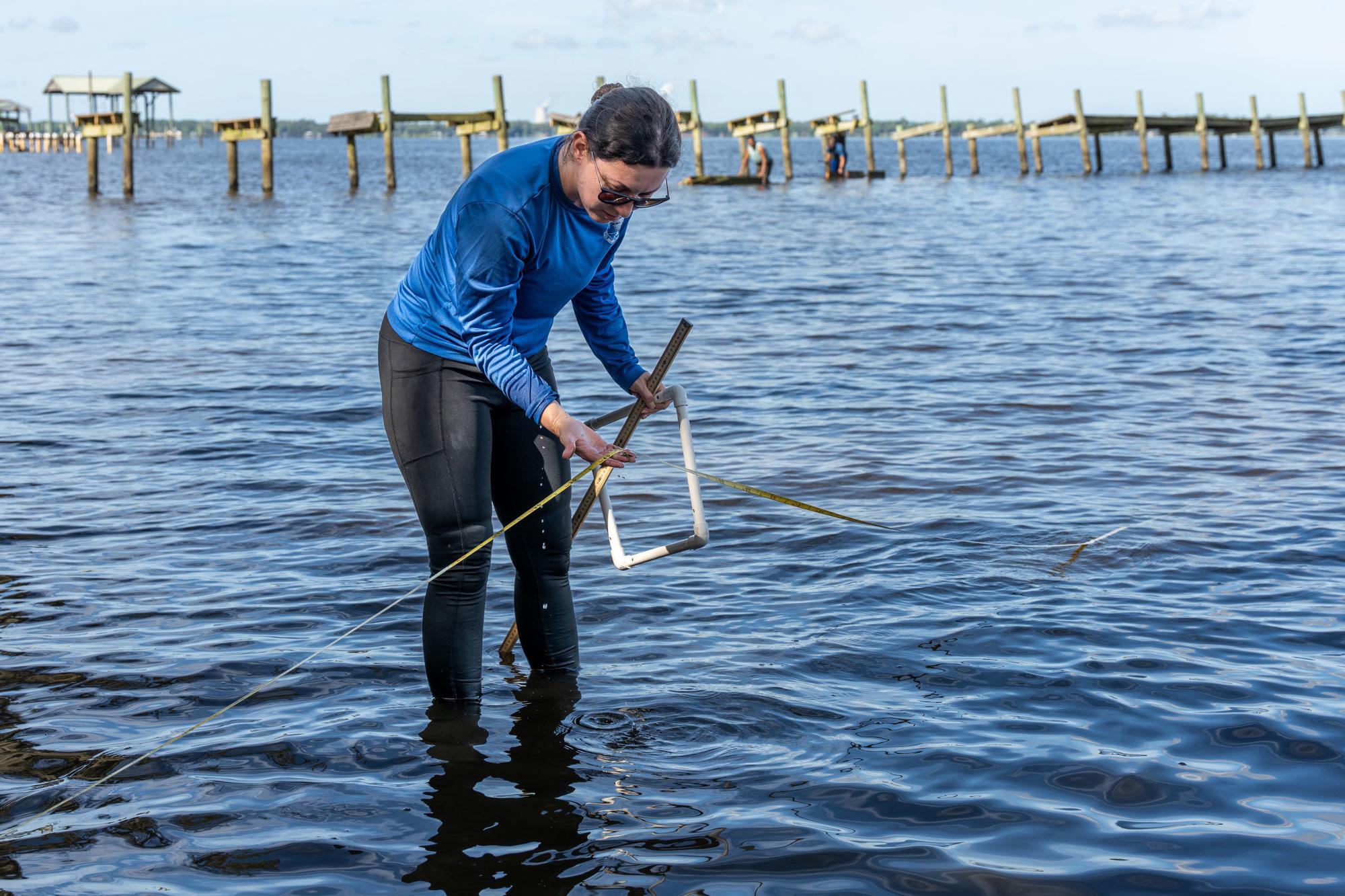
Submerged aquatic vegetation (SAV) serves as critical living infrastructure in the Lower St. Johns River, stabilizing sediments, filtering water and providing food and habitat for wildlife ranging from turtles to manatees.
The condition of these underwater plant communities, particularly eelgrass (Vallisneria), serves as a sensitive indicator of ecological health across the Lower St. Johns River Basin, which spans Baker, Clay, Duval, Nassau, St. Johns, Putnam and Flagler counties and parts of Volusia, Alachua and Bradford counties.
The St. Johns River Water Management District (District) conducts long-term SAV monitoring to track changes in these underwater ecosystems. Prior to 2017, monitoring data showed extensive surface-canopy growth during periods characterized by lower water levels and greater water clarity. Dense eelgrass beds were a defining feature of much of the Lower St. Johns River under those conditions.
Hurricane Irma in 2017 marked a turning point. The storm’s prolonged flooding raised water levels and flushed tannins from inundated floodplain vegetation into the water column, further darkening the river’s naturally tea-colored water and limiting light penetration to the riverbed.
SAV survival is directly tied to light availability, and the combination of deeper, darker water slowing growth and continued grazing pressure has constrained recovery. Since Irma, SAV has persisted but at reduced canopy height and percent cover. Records show the steepest losses occurred south of Shands Bridge in Green Cove Springs, where percent cover declined from more than 50 percent to less than five percent and leaf length decreased from 30 centimeters to under five centimeters.
Despite these limitations, SAV demonstrates the capacity for recovery when conditions align. In the mid-2000s, lower water levels and improved clarity allowed for rapid SAV expansion. More recently, in spring 2025, lower water levels in Lake Monroe let more sunlight reach the lake’s bottom, resulting in significant regrowth of native beds along the lake’s shoreline. These examples show how quickly recovery can occur when water depth and clarity are favorable.
Collaborative efforts continue to play an important role in restoring SAV.
Backed by funding from the Florida Legislature and technical assistance from the District, the North Florida Land Trust committed $2 million toward planting and protecting SAV along the shoreline at the J.P. Hall Bayard Point Conservation Area.
In Lake George, the Florida Fish and Wildlife Conservation Commission (FWC) advanced the effort by installing more than one million eelgrass plants behind temporary barriers in 2024 and plans to add another one million in the spring. Other nonprofit groups are also experimenting with similar shoreline plantings, with promising early results.
“Protecting and restoring the St. Johns River is a shared effort,” said St. Johns River Water Management District Executive Director Mike Register. “Through
collaboration with state agencies, local governments, and nonprofit partners, we’re advancing our understanding of the river and building the foundation for lasting recovery.”
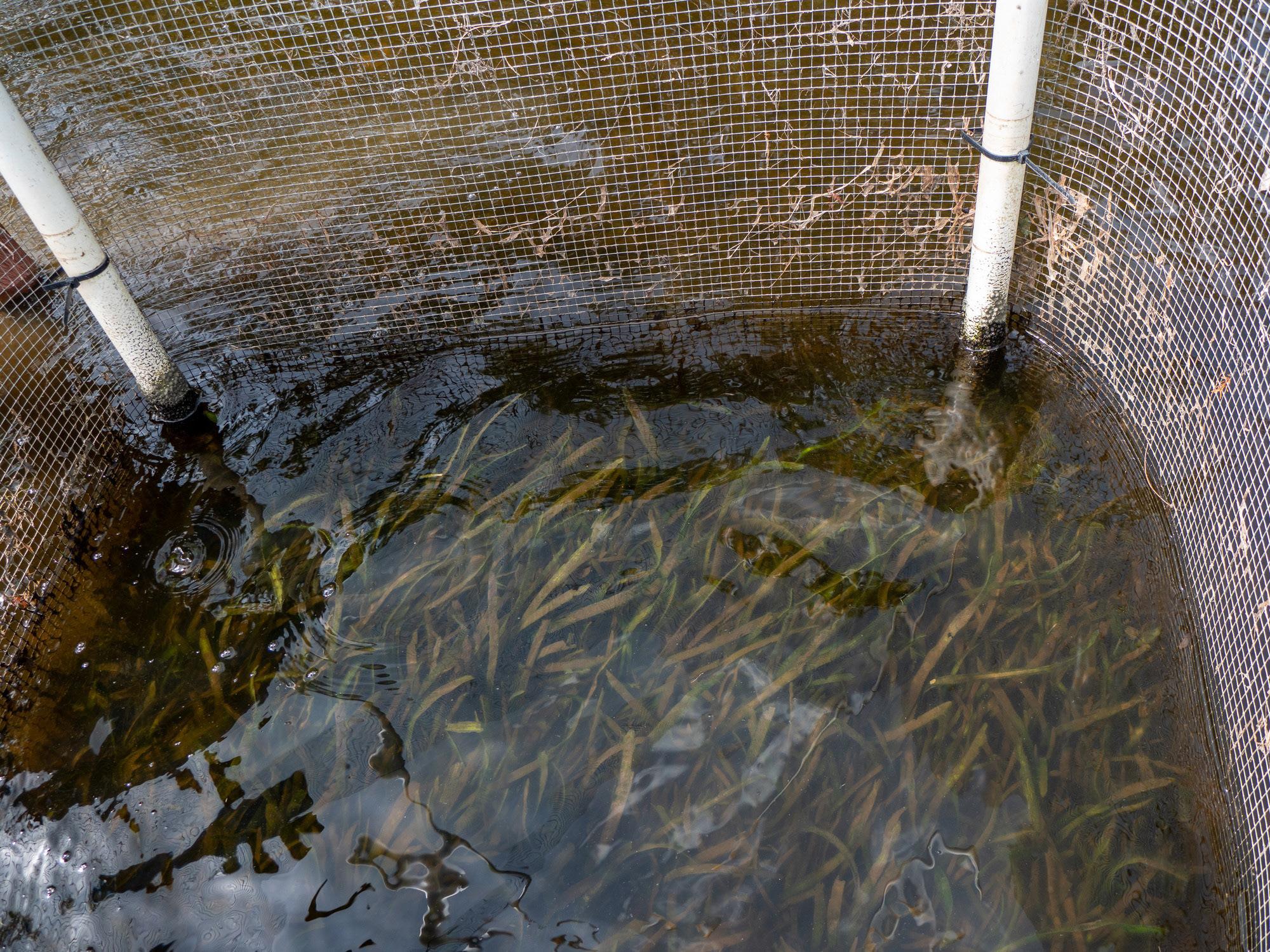
District researchers, in partnership with FWC, have further studied how herbivory affects plant recovery. These exclusion experiments and transplant projects show a clear difference: outside cages, grasses are kept short by constant grazing from turtles, fish and manatees, while inside the barriers the plants are able to grow to full height. These findings highlight the extent to which grazing pressure influences SAV growth and canopy development.
The complex nature of SAV recovery involves multiple interacting factors, including water depth, color, salinity, and grazing intensity. Long-term monitoring and research continue to document how these factors influence submerged plant communities in the post-hurricane ecosystem.
Ongoing monitoring, research and collaborative restoration efforts continue to shape how the District manages the river’s dynamic conditions. Through continued study, shoreline plantings and partnerships with FWC and nonprofit organizations, the river is beginning to show signs of resilience. While current SAV populations remain sensitive, the combined focus on science, restoration and collaboration is laying the groundwork for long-term recovery.



“We’ve enjoyed many years working with Walter Marine,” Richardson said. “These people are reef-building pros without peer.”
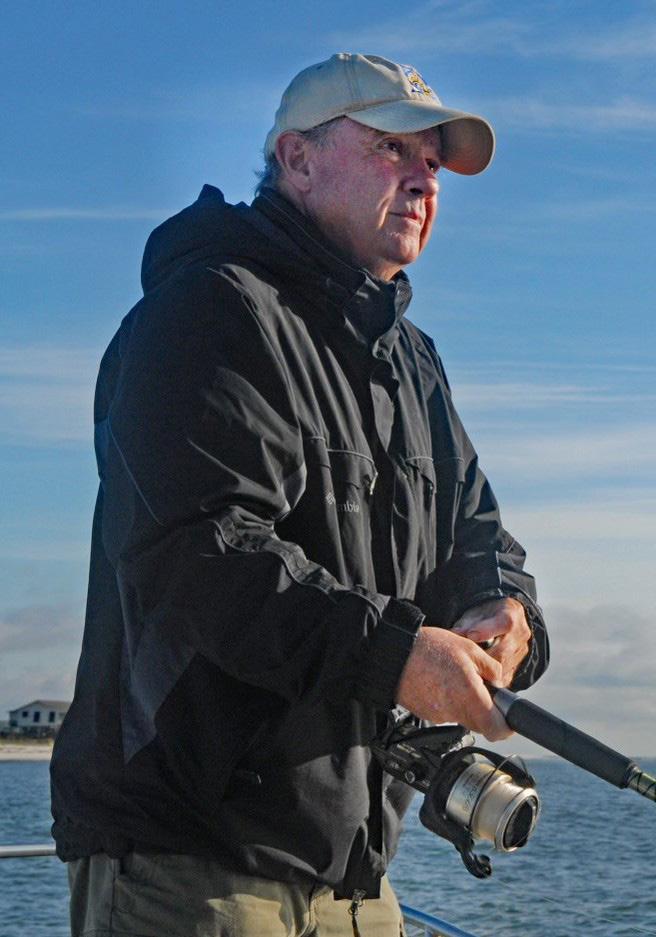
The marine tribute to Enis was inspired by his passion for saltwater fishing and particularly his skill as a spearfishing enthusiast and SCUBA diver. The multi-talented Enis held two degrees from FSU — the most recent being a masters in business administration earned in 2017 — and served as an Air Force Reserve airman and pararescueman with the 308th Rescue Squadron based at Patrick Air Force Base. While in Tallahassee, he also worked as a commercial real estate salesman for TLG Realty Services.
Another Tallahassee resident’s life also was celebrated the same day with a brand-new reef created in his name just a quarter mile from the Enis reef.
This new site, in 73 feet, commemorates William “Bill” Mickler (1947-2024), a longstanding and dedicated volunteer for OAR projects. Mickler, also an FSU alum, was a retired officer with the Florida Department of Transportation and a serious saltwater angler and conservationist who spent many years serving in various volunteer capacities with OAR and the Coastal Conservation Association (CCA), Richardson said.
“I can’t think of a more apt tribute to Bill’s marine advocacy for anglers through CCA and OAR than the creation of a massive artificial reef in his memory. Bill would have been very proud of this.”
The long day of work by Walter Marine and its crew included a major expansion of the Buddy Ward Memorial Reef off Apalachicola. Located roughly nine miles south of the Bob Sikes Cut on St. George Island, the Ward reef lies in 40 feet of water.
Olan “Buddy” Ward (1953-2006) was a major figure in Apalachicola’s seafood industry for decades and was considered
the “patriarch” of the area’s shrimping industry by friends and associates, said Capt. Grayson Shepard of Apalachicola. Shepard, who heads the Apalachicola Artificial Reef Association (AARA), oversaw the permitting and the construction of the Ward reef. He said that 33 eight-foot-tall, 6,000-pound reef units were added to the site, making this one of most impressive memorial reefs off the county’s coast.
OAR and AARA, both nonprofit entities that rely exclusively on volunteer help, teamed up to obtain all the permitting and fundraising required for the project. All told, Richardson said this latest mission cost $202,000 and included funding from the Florida Wildlife and Conservation Commission, CCA, OAR, AARA and a variety of private sources, including friends and families of those being memorialized. Tax money raised through the sale of fishing licenses and equipment make up the bulk of state funding for public artificial reef construction in Florida.
“We have now created at least 31 reefs that permanently memorialize individuals whose lives were enriched by their association with our coastal waters,” Richardson said. “Anyone interested in establishing a lasting tribute to a loved one might want to consider this option at sea.”
The newest additions to Franklin County’s constellation of public artificial reefs include three memorial reefs within easy striking distance of Apalachicola and Carrabelle. Here are the GPS coordinates for the geographical centers of reefs built on Aug. 12. (For a complete listing of coordinates and more detailed information about OAR’s memorial reef program, visit OAR’s website at oarreefs.org.)
Frank Stephenson of Carrabelle is a founding member of The Organization for Artificial Reefs. This article originally appeared in the Tallahassee Democrat and was shared by the author for publication in the Florida Specifier.
By KEYNA CORY
At every grocery checkout, shoppers face a familiar choice: paper, plastic or reusable? What most people don’t see is the complex system working behind the scenes to make sure those bags, and the materials that go into them, are collected, recycled and remade into something new.
In Florida, that system is increasingly shaped by Novolex, one of the world’s largest packaging manufacturers, and Florida’s largest grocer, Publix. Together, they are proving that recycling can work at scale, delivering economic value while reducing waste and advancing sustainability.
Novolex: A Leader in Circular Packaging
With more than 100 production facilities and seven Regional Mixing Centers across North America and Europe, Novolex employs over 20,000 people and produces packaging across 120 categories and 250 brands. Its 39,000 stock-keeping units (SKUs) cover everything from takeout containers to retail bags. What makes Novolex stand out is its ability to design products with recycled content and then
invest in the infrastructure needed to recover those materials.
Programs like Bag2Bag® demonstrate this leadership. Through Bag2Bag, plastic bags and film collected at grocery store drop-off bins are processed into recycled resin and remade into new bags or packaging. This ensures that Floridians who recycle at the store can be confident that their plastic film is not discarded, but reborn.
Publix has been a recycling pioneer since the 1970s, when it first partnered with paper mills to recycle cardboard. Today, every Publix store offers front-of-store bins where customers can return bags, wraps, and other flexible plastics.
Publix has updated signage to clearly identify acceptable items, reducing contamination and educating customers on materials that typically aren’t accepted curbside. In 2024 alone, Publix collected 21 million pounds of soft plastics. Publix also encourages customers to choose reusable bags.
Signage throughout the interior and exterior of their stores reminds shoppers
to bring them, and for every reusable bag sold, Publix donates a portion of the profit, up to $250,000 annually, to the Arbor Day Foundation to support tree plantings in degraded watersheds and forests of greatest need in Florida. Since 2016, this program has planted 1.5 million trees in Florida.
The circular economy is not just about recycling; it’s also about supporting communities. In Jacksonville, Novolex’s Hilex Poly plant anchors this vision. The facility provides skilled jobs while producing millions of pounds of packaging annually. By integrating recycled content into its products, the plant demonstrates how sustainability and economic development go hand in hand.
While Florida’s recycled film is often processed outside the state, it plays a critical role in feeding Novolex’s larger recycling network. Facilities in places like North Vernon rely on Florida’s collected bags and wraps to make recycled resin. That material, in turn, is incorporated into
products used every day in Florida, from Office Depot bags with 30 percent recycled content to foodservice packaging.
Florida faces unique waste challenges –rapid population growth, millions of visitors each year and limited landfill space. By supporting recycling infrastructure, partnering with grocers, and reinvesting in local manufacturing, Novolex and Publix are showing that solutions are within reach. Their work gives Floridians not just the option to recycle, but the confidence that their efforts truly make a difference.
In the end, whether you choose paper, plastic, or reusable, the bigger choice is clear: Florida is building a more sustainable future, one bag at a time.
Keyna Cory serves as the Executive Director of the Florida Recycling Partnership Foundation, a coalition of leading Florida businesses and associations dedicated to educating policymakers, business leaders and the public on the value of recycling and the importance of recycling correctly.
Florida Forever Program Hits Milestone: 200th Conservation Easement Secured
The Florida Department of Environmental Protection (DEP) has secured its 200th conservation easement, marking 364,117 acres of protected land through the Florida Forever Program, now celebrating its 25th anniversary.
The milestone includes key projects, such as Fisheating Creek Ecosystem in Glades and Highlands counties and Deer Creek Ranch in DeSoto County. Easements allow landowners to keep working farms and ranches while permanently limiting development and protecting wildlife corridors and watersheds.
“Conservation easements are one of the most important tools we have to protect Florida’s lands and waters,” said DEP Secretary Alexis A. Lambert.
Florida Marks Fifth Consecutive Year of Meeting Federal Clean Air Standards
Florida has once again met all federal air quality standards, marking its fifth straight year of clean air across the state, according to the Florida DEP. The state is now the most populous in the nation to achieve this distinction.
Industrial emissions have dropped 78% since 2000, and ozone levels, Florida’s most common air pollutant, have fallen nearly 50% in two decades. DEP Secretary Alexis Lambert credited the success to “collaboration between communities, businesses and partners statewide.”
Residents can track local air conditions in real time via DEP’s Air Quality Today and the AirNow.gov platforms.
Florida Museum — NitrogenFixing Plants Evolved Multiple Times
A new study led by the Florida Museum of Natural History has revealed that the ability of plants to recognize nitrogen-fixing bacteria evolved independently at least three times, offering insight into how legumes and their relatives developed self-fertilizing capabilities. Funded by the U.S. Department of Energy, the research identifies convergent evolution in the receptors plants use to engage with bacteria that turn atmospheric nitrogen into usable nutrients.
The findings, published in PNAS, support a long-standing theory that an ancient ancestor of bean plants carried a predis-
position for this symbiosis more than 100 million years ago. Scientists say the results could guide future efforts to engineer staple crops — such as corn and wheat — to fix their own nitrogen, potentially reducing the need for synthetic fertilizers and their environmental impacts.
University of Florida — Breeding Insight Program
The University of Florida has been selected to host Breeding Insight, a USDA Agricultural Research Service program that uses AI and high-performance computing to accelerate crop breeding. The initiative supports more than 61 breeding programs nationwide, focusing on pest resistance, nutrition, and automation-ready varieties. UF/IFAS gains expanded data resources and national leadership in plant and animal genetics innovation.
Among the nearly 50 species currently supported by Breeding Insight, 10 are among the top agricultural products for Florida: blueberry, alfalfa, strawberry, watermelon, lettuce, cucumber, sugarcane, citrus, potato, and commercial beekeeping.
The program also supports honeybee and aquaculture industries to breed for improved genetic stock that are more durable. In this way, growers and producers can gain the best yields and market value while consumers benefit from U.S. agriculture production.
“Feeding the world will require that new plant varieties be developed at a much more rapid pace, and we are confident that Breeding Insight and UF/IFAS combined will be an important part of that effort.” Scott Angle, UF’s senior vice president for agriculture and natural resources and leader of UF/IFAS said.
University of Miami — Electrohydromodulation Septic System
Researchers at the University of Miami College of Engineering have developed a new electrohydromodulation (EHM) wastewater treatment system that recovers nutrients and neutralizes pollutants before they leach from septic tanks during floods. Designed for neighborhoods in Miami-Dade County, where tens of thousands of homes rely on septic systems, the technology uses electrical current rather than chemicals to adjust wastewater pH, isolating phosphorus and nitrogen for reuse.
The project, now in its pilot phase, is funded by the Florida Department of Environmental Protection and supported by the Electric Power Research Institute. By removing nutrients that contribute to algal blooms, the EHM system could play a major role in improving Florida’s water quality. Researchers say the method offers a scalable, energy-efficient solution for sustainable wastewater management statewide.
City of Tampa — South Manhattan Flood Relief Project
Tampa is launching a $6.9 million stormwater improvement project along South Manhattan Avenue to combat frequent flooding. Funded through federal, state and local sources, the plan includes larger pipes, more inlets and utility upgrades. Construction begins mid-October 2025 and will run through late 2026, improving neighborhood drainage and resilience.
Grant funding will pay for a large portion of the project, with nearly a million dollars coming from the federal government in community priority grants sponsored by
U.S. Representative Kathy Castor , and $2.75 million from the Florida Department of Environmental Protection. The remainder will be funded via the Water and Wastewater Departments along with the Stormwater Improvement Assessment, an annual non-ad valorem assessment that funds new capital projects within the Central and Lower Improvement Area (south of Fletcher Avenue).
"Next year can't come soon enough for the residents of these surrounding neighborhoods to finally see the benefits of this long-awaited stormwater improvement project," said Mayor Jane Castor. "But it does not stop here. Across the city, we are working to strengthen this vital system that keeps us safe during rain events, and since 2019, we have invested approximately $350 million for maintenance and major investments, like this one.”
The City of St. Petersburg has approved the purchase of a new GIS-based flood monitoring and forecasting system as part of its Coastal Conditions Monitoring Project. The platform will allow city officials to anticipate, track, and respond to coastal flooding caused by tides, storm surge, and sea-level rise. By integrating detailed terrain and infrastructure data, the system will generate real-time, high-resolution flood forecasts that enhance situational awareness during storms.
The project supports St. Petersburg’s long-term climate resilience strategy under Mayor Kenneth T. Welch’s Environment, Infrastructure, and Resilience pillar. Officials say the system will not only improve emergency response but also inform infrastructure investments and future urban planning in low-lying coastal neighborhoods.
The Coastal Conditions Monitoring Project will provide the City with real-time and predictive insights to enhance preparedness and response strategies for forecasted flooding from tide and storm surge events. The project also supports the development of advanced modeling and forecasting tools that integrate local terrain, infrastructure and environmental data to generate high-resolution flood forecasts and impact assessments.
These tools will provide the City with timely, location-specific information to support decision-making before, during and after flood events.
The St. Johns River Water Management District (SJRWMD) is nearing completion of the Black Creek Water Resource Development Project to replenish the Upper Floridan Aquifer and restore water levels in Keystone Heights’ lakes. The project will divert up to 10 million gallons of excess water per day from Black Creek through a treatment system before routing it to Lake Brooklyn, where it will seep into the aquifer.
The initiative is being undertaken to restore lake levels and strengthen groundwater supply for Keystone Heights and surrounding areas. Completion is expected in early 2026.
The St. Johns River Water Management District works to ensure a sustainable water supply through innovative projects and conservation efforts — securing the resource for generations to come.
“Lakes Brooklyn and Geneva are more than just local landmarks — they’re part of one of two major recharge areas for the Floridan Aquifer, which supplies drinking water to millions of Floridians,” said Vivian Katz, former president of the Save Our Lakes Organization. “While our community has borne the burden of declining lake levels, the greater cost will come if the aquifer gets too low. The Black Creek project is a vital first step toward protecting Florida’s water future.”
The Southwest Florida Water Management District (SWFWMD) has launched a public comment period at WaterMatters.org/ Floodplain through Nov. 27, 2025, for new data identifying flood-prone areas in the Sebring Watershed of Highlands County.
The updated floodplain maps will help local governments refine zoning, development, and emergency response plans. Although the data won’t immediately alter FEMA’s Digital Flood Insurance Rate Maps, it could inform future updates. Officials emphasize that public input is key to finalizing the maps before they are presented to the District’s Governing Board for approval. The information aims to improve community awareness and flood resilience in central Florida’s growing residential regions.
The information will guide land use, emergency planning, and local development decisions. Once finalized, it may be incorporated into future FEMA flood map updates.
Tabitha Biehl has been named Polk County’s new Parks and Natural Resources Director, overseeing a $162 million budget and 182 employees.
A 20-year veteran of the department, she has secured more than $50 million in grants for conservation and stormwater projects. Biehl succeeds Gaye Sharpe, who is retiring after 35 years of service.
Conservation Florida has unveiled plans for a new 8,000-square-foot D Ranch Nature Center in Volusia County, supported by the Big Nova Foundation and county ECHO funding. The two-phase project will transform the 476-acre D Ranch Preserve in Osteen into an educational and recreational hub for conservation and outdoor learning. Phase One, estimated at $2.5 million, includes classrooms, exhibit space, and accessible infrastructure.
Construction is expected to begin in 2026, with a community fundraising campaign underway to close a $400,000 funding gap — which Big Nova will match dollar-for-dollar through year’s end. Once complete, the center will serve as a gateway to wild Florida, connecting residents to nature while supporting ecotourism and environmental education.
D Ranch Preserve, located in Osteen, was permanently protected by Conservation Florida in 2019 and opened to the public in May 2025. The preserve honors the land’s deep agricultural roots, with cattle still presently grazing the property. D Ranch Preserve is a haven for other wildlife like the gopher tortoise, bobcat, and Florida black bear, as well as rare blooms like the pine lily.
By JUSTIN HALL, P.E.
In 2014, the Florida Department of Transportation (FDOT), with the support of the Southwest Florida Water Management District (SWFWMD) and the Tampa Bay Estuary Program (TBEP), sought to create a project which was a “win-win-win” – a win for the environment, a win for transportation and a win for Tampa Bay.
In particular, FDOT aimed to create a regionally significant environmental restoration project that would improve the overall water quality of Old Tampa Bay and more than offset any environmental permit requirements for the replacement of the I-275 Howard Frankland Bridge and other area transportation improvements. With these goals in mind, FDOT’s engineers and scientists developed the concept for a project named the Old Tampa Bay Water Quality Improvement Project.
When the Courtney Campbell Causeway was constructed across Old Tampa Bay in the 1930s, little was known about the environmental impact causeways could bring in terms of natural water movement patterns and water quality needed for seagrasses and marine life to thrive, and this impact began to take shape following the completion of the Causeway in 1934. While most of the Old Tampa Bay’s seagrass ecosystem began to recover in the decades following the construction of the Causeway, one area north of the Causeway and just west of the Tampa International Airport consistently exhibited poor water quality, resulting in an area of persistently sparse seagrasses when compared to the rest of the surrounding Bay. Understanding that seagrasses are a vital food source for manatees and other species that frequent the Bay, as well as its role in providing shelter for smaller fish and stabilizing the bottom of the Bay, FDOT worked closely with water quality experts to seek a solution to further restore the seagrass ecosystem in the area.
In 2015, FDOT sponsored a series of studies to evaluate how the removal of a portion of the Causeway would improve water quality conditions and tidal circulation in Old Tampa Bay. These studies showed promising results: by removing and bridging 220 feet of the Causeway, FDOT could reduce peak pollutant concentrations by at least 50 percent, triple the rate of tidal exchange, and substantially increase seagrass coverage in the area north of the Causeway. With the possibility of these results, the SWFWMD, TBEP, and nearby residents fully embraced the proposed project and supported FDOT to proceed forward with the design, permits, and construction for this alteration to the Causeway.
Knowing that the I-275 Howard Frankland Bridge, which runs parallel to the Courtney Campbell Causeway, would be soon replaced and would need to meet extensive environmental permitting requirements prior to its construction, FDOT determined that the innovative approach to remove and bridge a portion of the Causeway would achieve this particular permit criteria, mitigate potential water quality impacts from the construction of the new bridge, and yield far greater environmental benefits than traditional stormwater ponds that are typically constructed to meet permitting requirements.
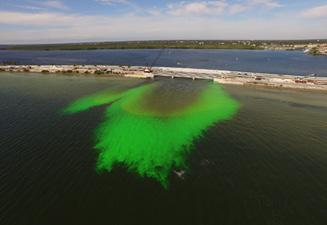
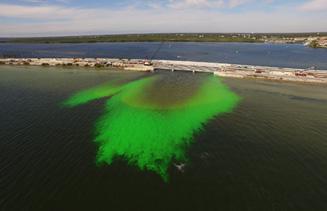
In November 2018, this project was officially completed. To visually observe the project’s impact on facilitating efficient water flow, non-toxic fluorescent tracer dye was deployed into the water on the south side of the Causeway on an incoming tide, showing the successful tidal movement. This success was further demonstrated in the months following the project’s completion, which showed a decrease in concentrations of nitrogen, an algae-feeding nutrient, and chlorophyll-a, an indicator of potentially harmful algae, reflecting the project’s positive impact on creating an environment where vital seagrasses could flourish.
The final component of the ecological restoration was seagrass recovery. According to the most recent monitoring data from SWFWMD, the initial focus area north of the Causeway has gained more than 60 acres of seagrass between 2022 and 2024. These results, which have far exceeded the environmental permit requirements for the construction of the Howard Frankland Bridge and other highway projects, have yielded a win for water quality, a win for seagrasses and the marine wildlife that depends on it, and a win for Tampa Bay.
The project has been recognized across both Florida and the nation for the significant benefits it has provided, including the honor of “Outstanding Environmental Project of the Year” by the Florida Institute of Consulting Engineers in 2017, as well as the “Florida Project of the Year Award” by the American Society of Civil Engineers and the “Environmental Excellence Award” by the Federal Highway Administration in 2019. Outside of these awards, the Department was proud to additionally honor the project and the new bridge structure in particular by renaming it the Virginia Creighton Bridge in July 2022 in recognition of the FDOT scientist who led much of the research and advocacy efforts for this project before her death in 2020.
The Old Tampa Bay Water Quality Improvement Project strongly demonstrates FDOT’s mission in action: a continued
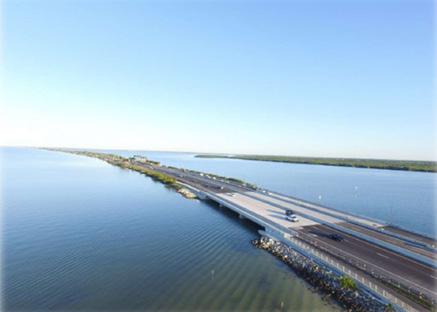
commitment to practicing good environmental stewardship, the ability to seek out and implement innovation in every project the agency undertakes and the ability to successfully meet the transportation needs of the state’s communities.



Base Power Raises $1 Billion for Home Battery Installations
Base Power, an Austin-based startup, raised $1 billion in Series C funding to expand its home battery storage systems. The company leases large-capacity batteries to homeowners, offering a lower upfront cost and a monthly fee, while also selling electricity back to the grid. Base Power is currently constructing its first factory outside Austin and plans to expand beyond Texas and build a second battery factory in the U.S.
150 MW Battery Storage Facility Comes Online in Brazoria County
Nightpeak Energy announced the commercial operation of Bocanova Power, a 150 MW battery storage facility in Brazoria County. The facility, utilizing Tesla’s Megapack 2 XL systems, supports the Houston region’s peak capacity needs and integrates renewable energy. Founded in 2022, Nightpeak Energy develops energy infrastructure projects in the U.S. West and Texas, and their current portfolio includes 240 MW of battery storage and natural gas generation facilities.
Harris County Sues EPA
Harris County Attorney Christian Menefee filed a lawsuit against the Trump administration’s Environmental Protection Agency (EPA) for canceling over $400 million in solar energy grants for Texas. The Solar for All program, part of a Biden-era initiative, aimed to provide solar panels and battery storage to low-income families and community centers. Menefee argues the EPA lacks the authority to cancel the grants, as the funds were already legally committed.
Hyundai Hydrogen Steel Mill to Locate in Ascension Parish
Hyundai has proposed a $6 billion hydrogen-integrated steel mill in Ascension Parish to launch by 2029. However, company officials have raised a series of concerns they say must be addressed before construction moves forward. They urged the state to address these issues, including implementing an emergency response framework and expanding access roads to four lanes by September 2026. Louisiana officials are reviewing traffic models and working with Entergy to determine power needs before proceeding with road improvements.
New Pipelines Online to Transport Gas to Gulf Coast
Two new pipelines, Momentum Midstream’s NG3 Pipeline and Williams Companies’ Louisiana Energy Gateway (LEG) Pipeline, are now operational, transporting natural gas from the Haynesville Shale to Gulf Coast LNG export terminals. These pipelines, along with an expansion of DT Midstream’s LEAP Pipeline, will provide a combined 3.9 Bcf/d of additional capacity, supporting the growing LNG export market.
Danos, an oil and gas services company, has acquired Houma-based Panel Specialists, an industrial panel manufacturer. The acquisition aims to enhance Danos’ capabilities in control panels, instrumentation and electrical solutions, with most of Panel Specialists’ employees joining Danos. This marks Danos’ third acquisition this year, following purchases of X-Pro Valve and Surplus Valve Warehouse, and the onshore U.S. oil and gas labor supply operations of John Wood Group.
Louisiana businesses are set to benefit substantially from federal tax credits, potentially netting over $3.5 billion, through carbon capture and sequestration projects under the 45Q tax credit program. This credit provides $85 per metric ton for carbon dioxide that industries capture and store. There are 17 projects in Louisiana’s chemical, refining and LNG sectors that qualify under this program, aiming to capture about 42 million tons of CO2 for storage or reuse. A total of 43 such projects and 10 pipelines are planned, including regional hubs to transport and store CO2.
Louisiana and four other states (Mississippi, Arkansas, North Dakota and Montana) filed a complaint against the Midcontinent Independent System Operator (MISO), accusing it of relying on unreasonable assumptions to justify $22 billion in transmission projects. The complaint argues that MISO overstated benefits and ignored concerns raised by stakeholders, including the market monitor, about the flawed business case for the projects. MISO, however,
defends the plan, stating it was developed collaboratively and will provide significant value to members.
The state is projected to add 74,500 jobs over the next two years, driven by expansions in the liquefied natural gas industry and the construction of Meta’s $10 billion data center. Lake Charles and Monroe are expected to be the fastest-growing regions, with job gains of 8 percent by the end of 2027. Baton Rouge is also projected to see significant job growth due to industrial construction in Ascension Parish.
Entergy Mississippi announced Superpower Mississippi, a $300 million grid upgrade to reduce power outages by 50 percent over the next five years. The initiative, funded by new revenue from large industrial customers, will strengthen the grid with stronger utility poles, smart devices, and expanded vegetation management. Upgrading work within the 45-county service area of Entergy Mississippi will start as soon as approved by the Public Service Commission and is projected to continue until 2030.
Solar Farm projects planned
Six companies are planning to invest more than $1.8 billion in solar farms across the state, creating nearly 1,300 temporary construction jobs and generating tens of millions in property taxes. The projects, including the $650 million Soul City Solar in Hinds County, are expected to generate clean energy for decades. Additionally, the projects are touted to generate tens of millions of dollars in new property taxes for local governments and school districts. Notably, the Soul City farm is projected to generate $147 million for Hinds County over the ensuing 30 years.
Surface Mining Commission Rescinds Methane Monitoring Requirements
State officials have suspended plans to require methane monitoring at expanding coal mines, reversing a previous agreement with federal regulators. This decision comes after a fatal home explosion in 2024, which residents and experts attribute to methane escaping from the Oak Grove mine. Critics argue that the state’s actions violate federal law and put residents at risk, urging the federal government to take over mine regulation.
A restoration project at the Lower Perdido Islands in Orange Beach created approximately 30 acres of marsh habitat, expanding beach areas for visitors. The project aims to balance recreational use for humans as well as providing critical habitat for migratory birds. Though some areas will be off-limits to visitors, the city anticipates that the restoration will attract more visitors who not only want a beach to visit but also want to experience the native wildlife in the area.
The Department of Environmental Management is awarding over $2.5 million in grants from the Alabama Recycling Fund (ARF) to cities, counties, solid waste authorities and other organizations across the state to enhance recycling initiatives. These grants, allocated for fiscal year 2026, were presented during the Alabama Recycling Coalition’s Annual Conference and Expo, Sept. 10-12.
The coalition, a statewide nonprofit organization dedicated to promoting waste reduction, material reuse, recycling and composting activities, is among the recipients of these grants. The total amount of grants, amounting to $2,529,388, is made possible by the Solid Wastes and Recyclable Materials Management Act, which was enacted by the Alabama Legislature in 2008.

30TH FLORIDA REMEDIATION CONFERENCE
When: Nov. 3-5
Where: Rosen Centre Hotel Orlando
The Florida Remediation Conference (FRC) is one of the premier soil, air and water remediation conferences in the industry. FRC attracts over 400 attendees comprising a mix of industry representatives, developers, consultants and contractors, and over 70 exhibitors and sponsors from across the country. It is far from just being a Florida event.
https://floridaremediationconference.org/
FLORIDA WATER ENVIRONMENT ASSOCIATION 13TH ANNUAL SEMINAR
When: Nov. 6
Where: Brannon Center New Smyrna Beach
https://mms.fwea.org/Calendar/moreinfo. php?eventid=183302
FLORIDA SOCIETY OF ENVIRONMENTAL ANALYSTS FALL CONFERENCES
When: Nov. 6-7
Where: Embassy Suites Orlando Lake Buena Vista South
This meeting promises to be both informative and beneficial to all field samplers, operators, engineers, analysts and managers in the environmental field. Come join us for an opportunity to network and exchange ideas and information.
https://www.fsea.net/events
2026 – FLORIDA GROUNDWATER CONFERENCE
When: Jan. 27-28
Where: The Florida Hotel & Conference Center in the Florida Mall
The objective of American Ground Water Trust conferences is to showcase topical and/or controversial groundwater issues and to facilitate information sharing among landowners, groundwater end-users, regulators, management
agencies, scientists, engineers, lawyers and citizens who have economic or environmental interests in water resources.
https://agwt.org/event/26flgw/ 35TH ANNUAL SOUTHWEST FLORIDA WATER RESOURCES CONFERENCE
When: Jan. 23, 2026
Where: FGCU Cohen Center Ballroom
For 35 years, a group of professional associations and educational institutions has joined together to host an annual meeting discussing regional water resources issues. Conference topics have included water supply, water quality, harmful algal blooms, surface water, ground water, the Caloosahatchee Basin, Estero Bay, climate change, economics, hurricanes, floods and drought. Revenues support university student scholarships and the conference itself promotes student-professional interactions through a student poster competition held at the conference. All proceeds from the conference are used to provide student scholarships through the various co-host organizations that participate.
https://reis-swfl.org/event/35th-annual-southwest-florida-water-resources-conference/
DISASTERS EXPO USA
When: March 4-5, 2026
Where: Miami Beach, FL
A key event for disaster preparedness, response, and recovery, Disasters Expo USA brings together industry leaders, government agencies, and professionals committed to addressing the challenges of disasters.
With a focus on innovation, networking and education, the event serves as a vital platform for showcasing cutting-edge solutions and technologies that drive resilience and recovery efforts across the country.
https://www.disasterexpomiami.com/ 40TH ANNUAL ENVIRONMENTAL PERMITTING SUMMER SCHOOL
When: July 21-24
Where: J.W. Marriott Marco Island Beach Resort
The 2026 EPSS will bring public and private professionals together for unparalleled leadership and professional development, networking and best-in-class programming you won’t want to miss!
https://floridaenet.com/
By STAFF REPORTS
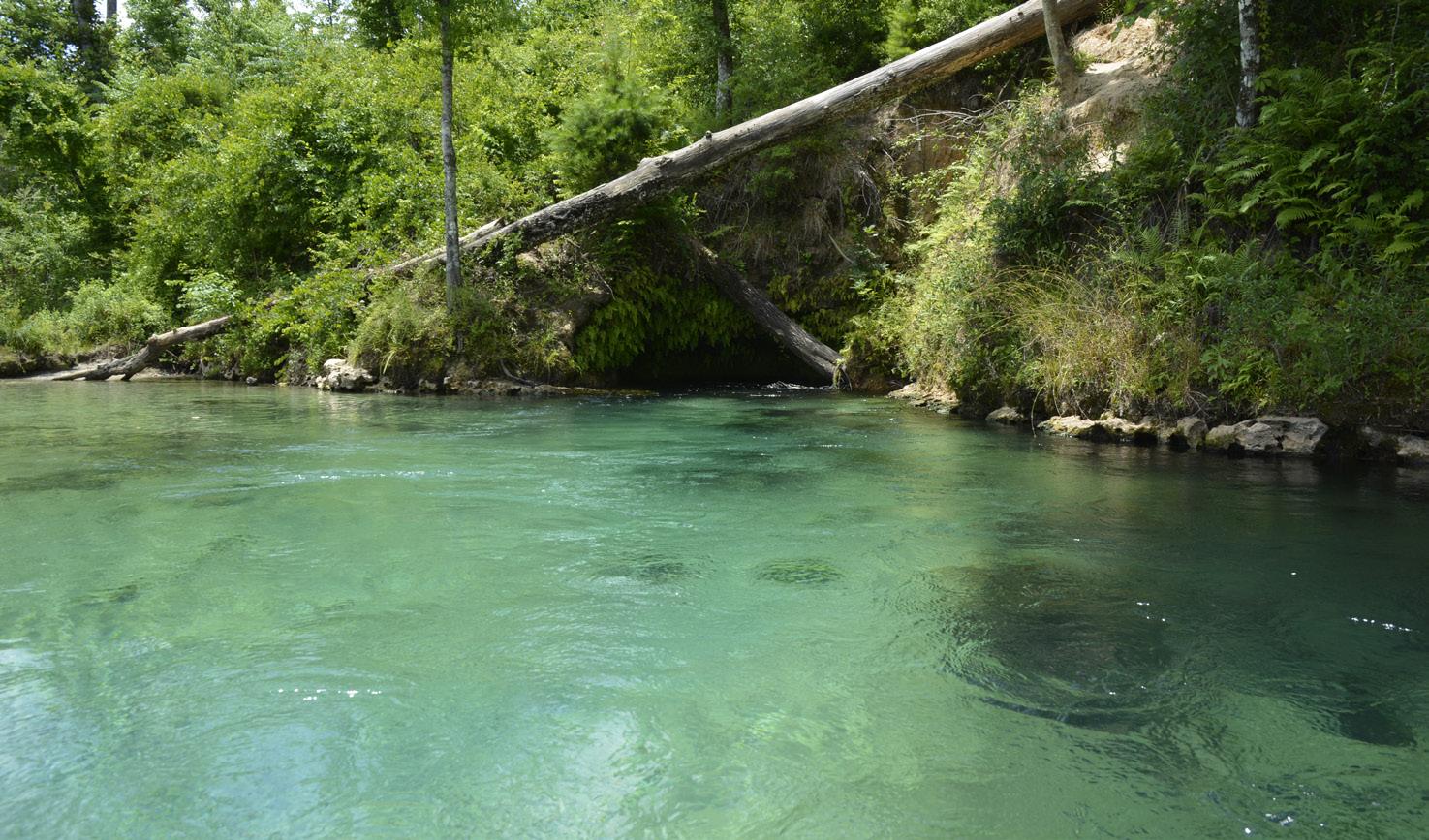
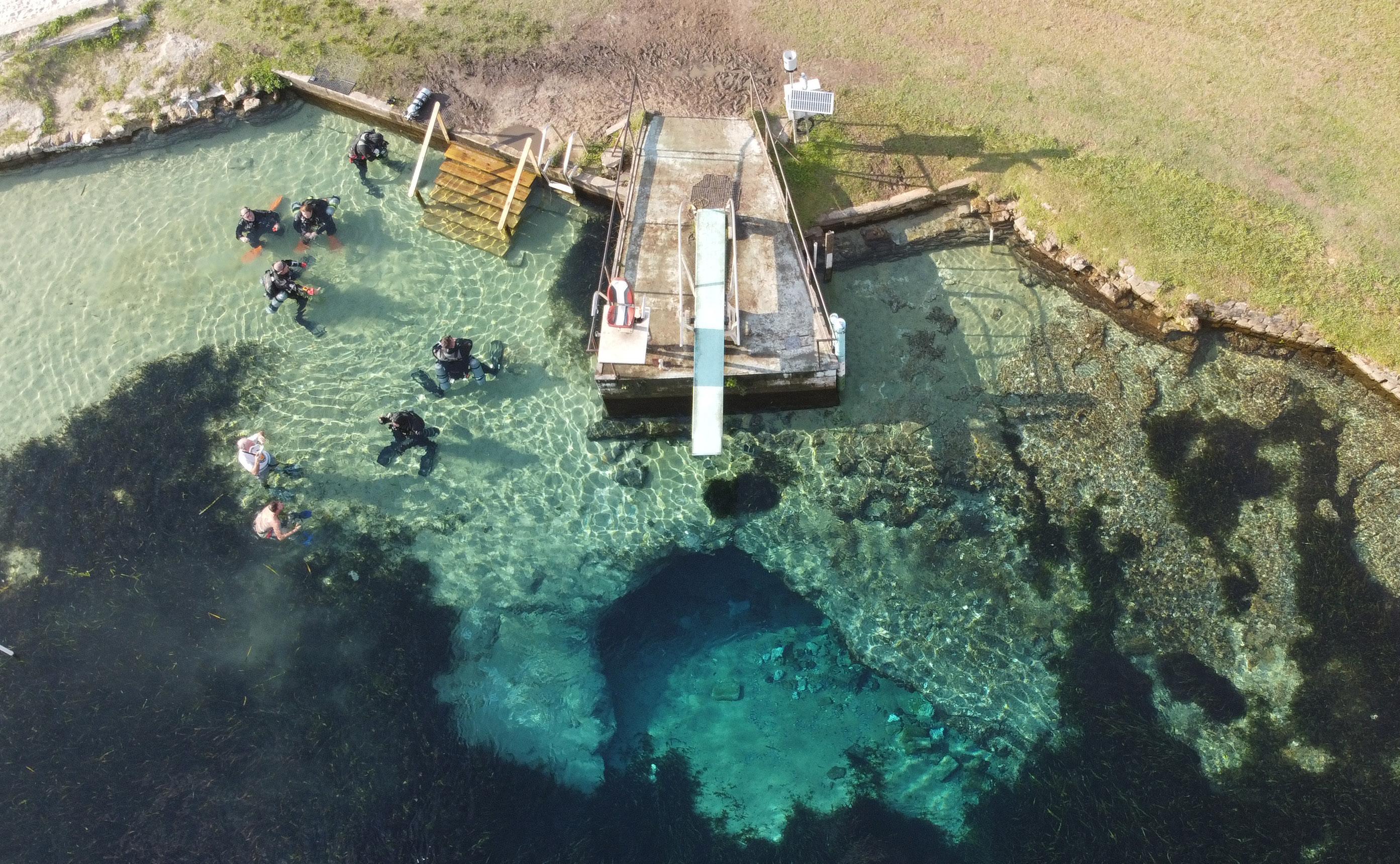
The Northwest Florida Water Management District held a series of public workshops in mid-October to launch the Northwest Florida Watersheds Partnership Program, which aims to identify and support meaningful projects to address water resource issues in each of the Panhandle’s seven watersheds.
The Watersheds Partnership Program will provide funding for planning, data collection, design, and implementation of projects to enhance water quality, aquatic habitat, and water supply in priority subbasins within the Northwest Florida Water Management District.
To maximize effectiveness, the Program will be implemented in coordination with local and county governments, regional entities and other interested and affected parties, including the Florida Department of Environmental Protection, the Choctawhatchee Basin Alliance, the Apalachicola National Estuarine Research Reserve and three Panhandle Estuary Programs: the Pensacola and Perdido Bays Estuary Program, Choctawhatchee Bay Estuary Program, and the St. Andrews and St. Joseph Bays Estuary Program.
The series of public workshops served as an opportunity to help identify priority sub-basins based on criteria such as water quality, water supply and natural system protection. Stormwater management needs, areas of water resource concern because of population growth, or changes in aquatic habitat are some of the examples of the criteria used to identify priority sub-basins.
Once priority sub-basins are identified, the Program will then focus on creating work plans that will identify projects to help address water resource issues in each priority sub-basin.
The seven watersheds which comprise the Northwest Florida Water Management District are: Perdido River and Bay; Pensacola Bay; Choctawhatchee River and Bay; St. Andrews Bay; Apalachicola River and Bay; Ochlockonee River and Bay; and St. Marks River and Apalachee Bay.
For more information on the Northwest Florida Watersheds Partnership Program, please visit https://nwfwater.com/ water-resources/surface-water-improvement-and-management/.
By STAFF REPORTS
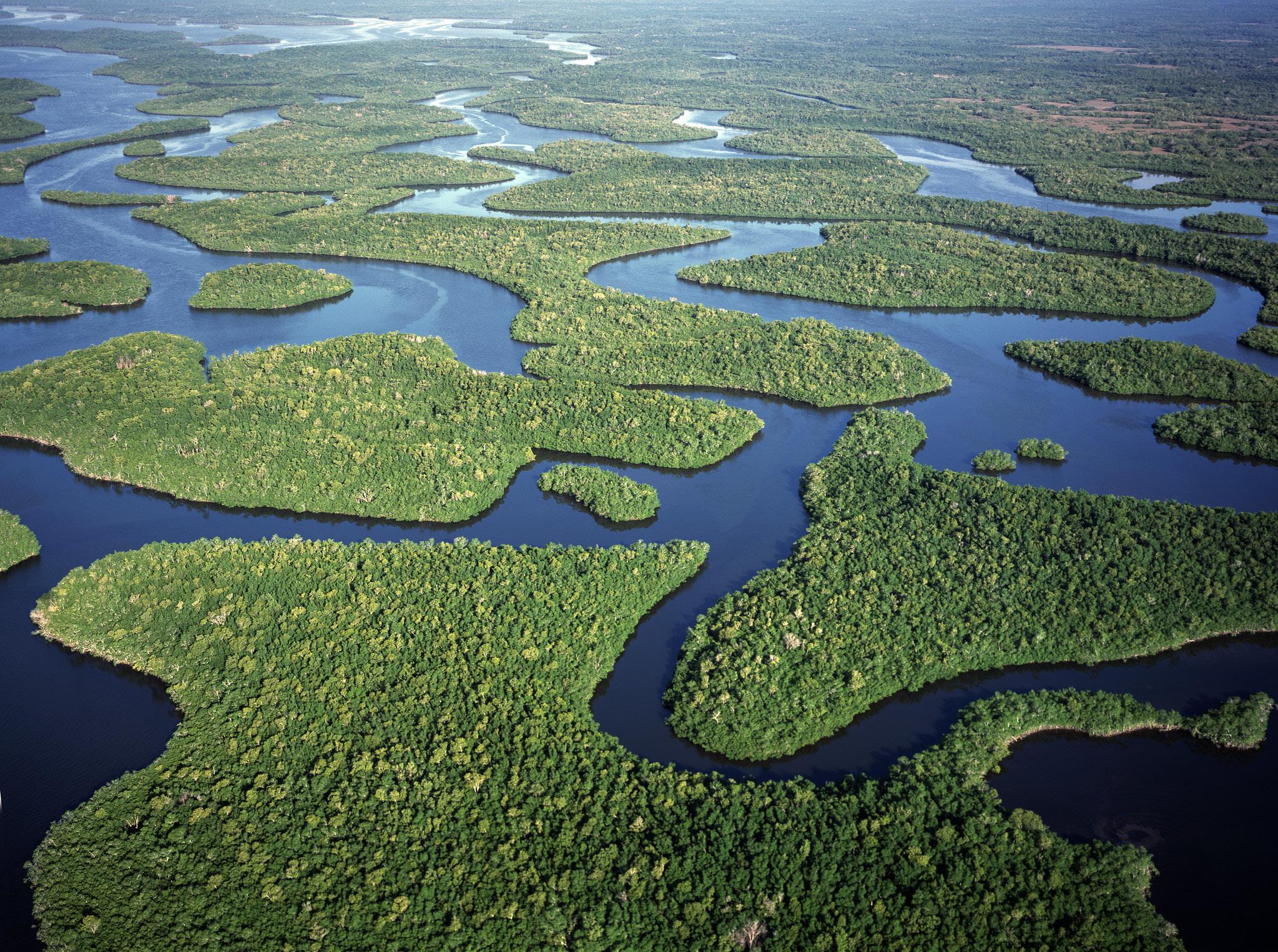
The South Florida Water Management District (District) continues to expand and enhance online access to environmental and water quality data collected throughout the District’s 16-county region.
The District’s new, interactive DBHydro Insights application provides the public and stakeholders with faster, easier access to historical and up-to-date surface and groundwater information, as well as meteorologic, hydrogeologic and water quality data. It replaces the DBHydro Browser application which has been retired.
With DBHydro Insights, users can easily find water levels in lakes, canals and waterways from Orlando to the Florida Keys. The public can also see how much rain has fallen in a specific community. With just a keystroke, people can even find out if coastal gates and other water control structures are open or closed and if pumps are turned on or off.
This one-stop database allows users to quickly download data, as well as create
and share customizable charts. Data tables and interactive graphs can be generated and downloaded in just a few simple steps.
DBHydro Insights also includes an interactive map that helps users easily find information and data for stations, sites, or basins and view results immediately. It provides the most current data, includ-
ing provisional water quality values. A complete users guide, along with a variety of other helpful resources, is available on the District’s website to help users navigate DBHydro Insights and make the most of this new interactive tool.
The District also upgraded the reference system used to measure water elevation readings in their monitoring network. The District shifted from reporting water elevation readings in the National Geodetic Vertical Datum of 1929 (NGVD 29) to the North American Vertical Datum of 1988 (NAVD 88).
The upgrade provides the public and stakeholders with more scientifically accurate information about levels for waterbodies in our region. While there is no difference in the actual water level, the water level readings in the NAVD88 measurement system will read about 0.6 feet to 1.6 feet less than the readings in the older NGVD29 measurement system. Visit SFWMD.gov/DBHydro to learn more about DBHydro Insights and SFWMD. gov/NAVD for more information about the reference system.
By BRIAN COOK AND MATTHEW PLEASANT
The 2024 hurricane season put many communities on notice and was a reminder of the perils of living in Florida’s coastal regions. Hurricanes Debby, Helene and Milton not only cost tens of billions of dollars but also disrupted thousands of lives. To mitigate these impacts, the Florida Department of Environmental Protection (FDEP), through the Florida Legislature, established the Resilient Florida program in 2021.
Resilient Florida has promoted flood vulnerability awareness with more than $100 million going toward planning efforts, including vulnerability assessments and adaptation planning, and more than $1.5 billion invested in resilience-based projects.
If done correctly, the first step in the process – the vulnerability assessment – can be an incredible tool that moves communities forward toward risk reduction. However, despite standardized requirements, there are noticeable differences in the outputs of the studies. In some cases, counts of vulnerable assets and maps of flooding hotspots fall short of providing interpretable data for local governments, leaving administrators uncertain how to apply the assessment toward actionable next steps.
This is often the case when mappings describe flood vulnerability in binary terms of ‘yes’ or ‘no,’ rather than an in-depth evaluation of ‘how’ or ‘why,’ or ‘in what context.’ Often, the results conclude with large-scale geographic information system (GIS) mappings and tabular data, which fail to humanize the vulnerability, leaving out spatial or other detailed information that is needed to develop an appropriate response. As such, momentum can be lost between the risk assessment phase and the formulation of an adaptation plan. Ultimately, studies are in danger of being
left on the sidelines, while communities move forward with traditional capital improvement priorities that do not actively incorporate climate hazards.
In this context, we can review a few recent vulnerability assessments that have proven useful and that have already led to changes in capital improvement expenditures, increased multi-agency coordination and the development of project opportunities.
The City of Tampa is the state’s third-largest city, with 127 miles of coastline, and is home to Port Tampa Bay, MacDill Air Force Base, Tampa International Airport, Tampa General Hospital and the University of South Florida. It has a diverse population spread out over peninsular, riverine and inland areas, many of which are vulnerable to flooding.
During Tampa’s recent assessment process, GIS data was used to locate vulnerable areas, similar to other assessments, but this was the starting point not the conclusion. A second-phase analysis reviewed localized conditions through multi-scaled mappings and ground-level imagery. Other information included access issues, spatial conditions and community use. As an example, a beach park was identified as a primary cultural amenity within the city.
A documentary film evaluated site characteristics and community programming to ensure that adaptation measures would promote rather than diminish the use of the site. Hydrodynamic modeling helped to ensure that risk scenarios were understood through an engineering-based technical lens. Costs were also described to consider the ‘business case’ for prioritized adaptation measures, so the city could immediately move forward with grant requests.
In other instances, individual vulnerable pump stations were shown using site-level photography, and interviews with the city’s
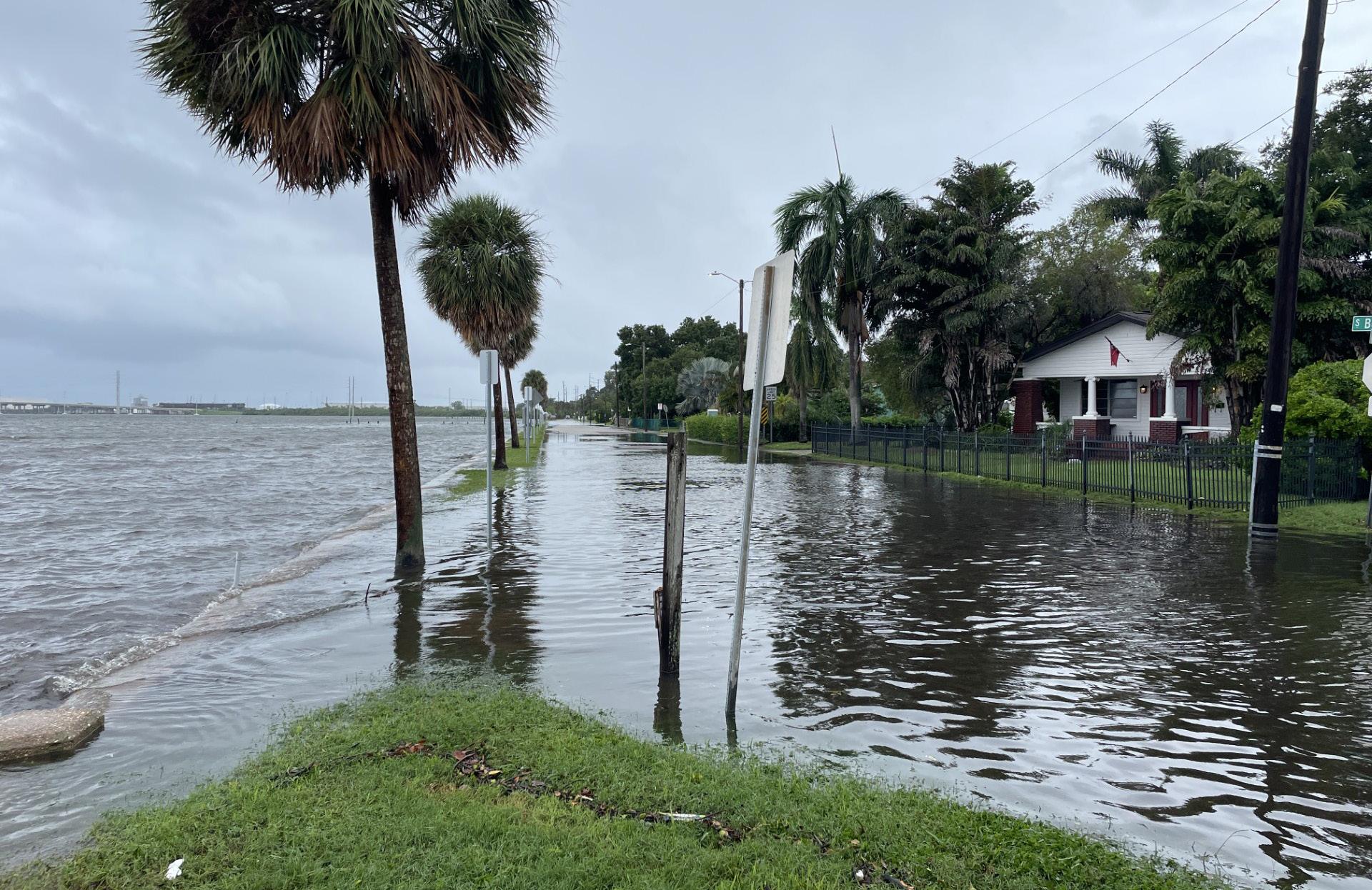
utility department helped to craft the story of wastewater movement through the city. This process also identified uniquely vulnerable infrastructure, such as a 54-inch pressurized concrete pipe under a waterfront street with a 100-year-old seawall.
The City of Palmetto’s recent vulnerability assessment was similar. It included place-based data and detailed focus area studies. In addition to typical mappings of floodplains and assets, the report contains site-scaled studies with photos and nuanced sets of information. In one instance, a two-page spread describes a vulnerable coastal road and dates when it had been overtopped by high tides.
These additional details helped administrators understand the urgency, the community involved and the spatial characteristics of the asset so that decisions could be made appropriately. The city has decided to move forward with a detailed study of the road as a focus area in their
upcoming adaptation plan, which will also be funded by the FDEP.
As Florida communities move forward, with the state’s support, we must continue to develop a culture of resilience by improving on methods and deliverables. These examples were shared as a starting point for continued dialogue and to highlight practical approaches that have led to success. The State of Florida has provided an incredible opportunity for communities to address their coastal and inland flooding challenges. If thought is given to the ‘how’ and ‘why’ of flooding, in addition to the ‘what’ and ‘where,’ successful implementation of projects will soon follow.
Brian Cook, PLA, is Director of Urban Design and Resilience at Applied Sciences Consulting, Inc. Matthew Pleasant, AICP, CFM, is Applied Sciences’ Planning Manager.

COMMISSIONER WILTON SIMPSON ANNOUNCES $25M FUNDING OPPORTUNITY TO SUPPORT AGRICULTURAL WATER RESOURCE PROJECTS
Florida Commissioner of Agriculture Wilton Simpson announced that applications are now being accepted for the Florida Department of Agriculture and Consumer Services’ (FDACS) Agricultural Regional Projects Program, a key initiative with $25 million in grant funding to support regional, collaborative agricultural water resource solutions that improve water quality and quantity.
“Protecting Florida’s water resources is essential to our state’s future — and Florida’s farmers, ranchers, and growers are central to that mission,” said Commissioner Wilton Simpson. “Through the Agricultural Regional Projects Program, we are building strong partnerships that can deliver real, science-based solutions to improve water quality and conserve our water supply.”
The Agricultural Regional Projects Program provides funding for projects that:
• Reduce nitrogen and phosphorus to meet or exceed water quality standards;
• Improve water quality and quantity;
• Promote innovative nutrient management technologies; and
• Align with Florida’s long-term agricultural sustainability goals.
Eligible applicants include:
• Private landowners or entities;
• Local governmental entities proposing to address nonpoint source pollution from agricultural activities; and
• Water management districts, soil and water conservation districts, educational institutions, or conservation groups.
Applications for the program will be accepted until 5 p.m. EST on November 7, 2025. Full program guidelines, eligibility requirements and additional information can be found at FDACS.gov.
North Florida Land Trust (NFLT), in coordination with the Putnam Land Conservancy, The Conservation Fund, and the State of Florida, has been able to preserve a 1,086-acre property previously owned by Rayonier, Inc. The land is in Putnam County within the critical Ocala to Osceola, or O2O, wildlife corridor near the Carl Duval Moore State Forest and Marjorie Harris Carr Cross Florida Greenway and within the Etoniah/Cross Florida Gre-
enway Florida Forever Project Area. The acquisition of the property from Rayonier resulted from a collaboration between the partners to ensure the land would remain natural forever.
NFLT and the Putnam Land Conservancy worked with the Florida Department of Environmental Protection to fund the acquisition through the Florida Forever program. When the sellers needed the purchase to happen before the end of 2024, NFLT contacted The Conservation Fund, which purchased the property for $3.25 million and held title to the property until the State could complete the purchase.
FLORIDA RESILIENCE CONFERENCE DRAWS 600+ LEADERS TO CHARLOTTE HARBOR TO ADVANCE ADAPTATION AND ACTION
More than 600 elected officials, engineers, scientists, policymakers, business leaders, and community advocates gathered in Charlotte Harbor for the 4th Annual Florida Resilience Conference under the theme “Adapting Today, Powering Tomorrow!”
The three-day event, co-hosted by the Florida Shore & Beach Preservation Association (FSBPA) and Resiliency Florida, highlighted the urgent need to safeguard Florida’s communities and natural resources in the face of stronger storms, sea-level rise, and mounting infrastructure challenges.
“This year’s theme was about taking action now,” said David Rathke, Executive Director of Resiliency Florida. “We’re not going to solve these challenges today, but we’re
setting things in motion that will impact Florida for generations.”
EPA ANNOUNCES $48 MILLION FOR SOUTHEASTERN STATES TO REPAIR WATER SYSTEMS IMPACTED BY HURRICANE HELENE
On Sept. 30, U.S. Environmental Protection Agency (EPA) announced $48 million in disaster relief supplemental funding to support water systems in southeastern states impacted by Hurricane Helene.
“These funds are on their way to communities working hard to rebuild and harden water systems damaged and, in some cases, wiped out by Hurricane Helene,” said EPA Deputy Regional Administrator Jeaneanne Gettle. “These funds, combined with funds already allocated, will allow communities to continue recovering from such a catastrophic weather event.”
North Carolina ($21 million), Florida ($17 million), Georgia ($6 million), South Carolina ($2 million) and Tennessee ($2 million) received funds.
These funds are part of $60 million nationally allocated through the American Relief Act of 2025 for projects necessary for preventing, limiting or mitigating an emergency situation.
In addition, EPA allocated almost $3 billion earlier this year through the Clean Water State Revolving Fund (CWSRF) and Drinking Water State Revolving Fund (DWSRF) programs to repair and upgrade drinking water and wastewater systems to better withstand future natural disasters.
By MICHELLE HOPKINS, P.E.
Q
: Why does the District issue permits?
A: Water is a public resource that belongs to all of us. However, fresh water is not limitless. Excessive water withdrawals can harm the resources. Other human activities also pose threats. Without the proper safeguards for wetlands, floodplain encroachment and stormwater runoff can cause pollution and flooding. District permitting benefits residents, property owners and businesses by reducing the risk of flooding and protecting water quality and water supplies for current and future generations.
Q
: What types of permits does the District issue?
A: The District issues three kinds of permits. Water use permits ensure that withdrawals are for reasonable and beneficial use, do not harm the resources and do not adversely impact existing legal users. Environmental resource permits protect wetlands and floodplain functions, reduce or remove pollutants from stormwater runoff and reduce the risk of new development causing flooding. Well construction permits ensure that wells are properly constructed to protect the water resources.
Q
: Do I need a District permit? And if so, what type of permit do I need?
A: If you want to withdraw large quantities of water, develop property or construct a well, there’s a good chance you’ll need a District permit.
Water use permits allow the withdrawal of specific quantities of groundwater or surface water for limited periods of time
under certain conditions. You need a water use permit if:
• You plan to withdraw more than 100,000 gallons per day.
• The outside diameter of your groundwater well is 6 inches or larger.
• The outside diameter of your withdrawal pipe from a surface water body is 4 inches or larger.
• The total withdrawal capacity of your system is 1 million gallons per day or larger.
Environmental resource permits (ERPs) ensure that new development properly treats stormwater runoff to remove pollutants, compensates for any losses in floodplain storage, mitigates for any impacts to wetlands, and does not increase the rate of stormwater runoff onto neighboring properties. You need an ERP if your construction project:
• Disrupts wetlands
• Encroaches on a floodplain
• Increases, decreases or diverts stormwater runoff
• Contributes to water pollution
Well construction permits are required prior to installation of a well within the District. The permits ensure that wells are constructed by qualified contractors and meet rigid safety and durability standards. Generally, a withdrawal for personal domestic use for an individual home is small enough to fall below the threshold for requiring a water use permit. However, if you are constructing a well, your water well contractor will still need to get a well construction permit.
Q: Where do I get my permit?
A: You can apply for a permit at WaterMatters.org/Permits or by submitting a permit application to your local District service office. All District offices are available to assist with permit applications.
Q: Can I access permit information online?
A: Development of the ePermitting Modernization Project is underway and will provide an enhanced user experience for internal and external customers. The new mobile-friendly ePermitting system will be compatible with multiple web browsers and provide easier navigation and registration, quick access to permit information, enhanced searchability and
increased speed for faster submittals. The ePermitting Modernization Project will be launched in phases: first ERP, followed by eCompliance, Water Use and Well Construction permits. To learn more about our ePermitting system visit WaterMatters. org/ePermitting.
Hopkins is a Florida registered professional engineer and the Southwest Florida Water Management District's Regulation Division Director. Michelle oversees the District's regulatory programs, which includes all related permitting, compliance, and enforcement associated with environmental resource permitting, water use permitting, and well construction permitting.