If your mailing label is inaccurate or incomplete, please contact us with the correct information at SPECIFIER PUBLISHING LLC, P.O. Box 1857 Tallahassee, FL 32302, or email us at admin@floridaspecifier.com. We appreciate your help with keeping our circulation database accurate.
FDOT Transforms Alligator Alley Rest Stop Into Environmental Education Center
By STEVE BRAUN, P.E.
For decades, the Mile Marker 35 Rest Area along a stretch of Interstate 75 (I-75) in South Florida, commonly referred to as “Alligator Alley,” has been a place for travelers to stop and stretch their legs and for truck drivers to catch some rest before continuing on their journey across this region of the state.
Rockville, MD - When it comes to American cuisine, there are few things more iconic than steakhouses. The slabs of marbled meat, the sizzling grills, the oozing butter, and the dripping bravado, maybe even a cowboy hat or two for ambiance—it's enough to make even fictional steakophile Ron Swanson misty-eyed.
Today, it is much more.
Yet for all the traditional steak dinners ordered daily, there are restaurants nationwide pushing the concept of the all-American steakhouse to new culinary heights, according to market research firm Packaged Facts in the brand new report 2017 Forecast: Culinary Trend Tracking Series.
"The steakhouse is back and will capture our attention in 2017. Not that the classic restaurant style ever disappeared, but a renewal of the model is taking place in response to new sources of beef and new flavorful expressions of the concept that get chefs and diners excited," says David Sprinkle, research director, Packaged Facts.
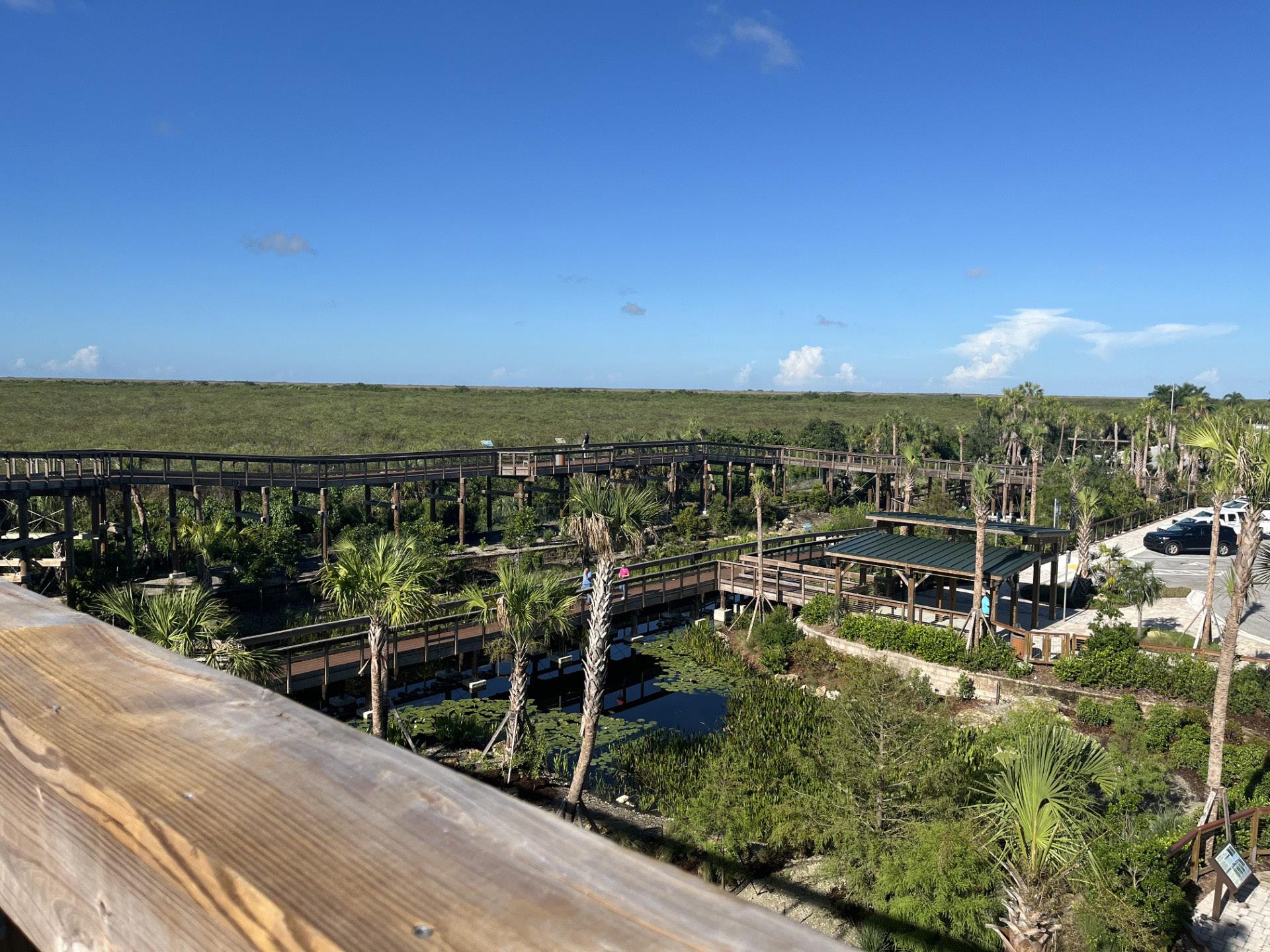
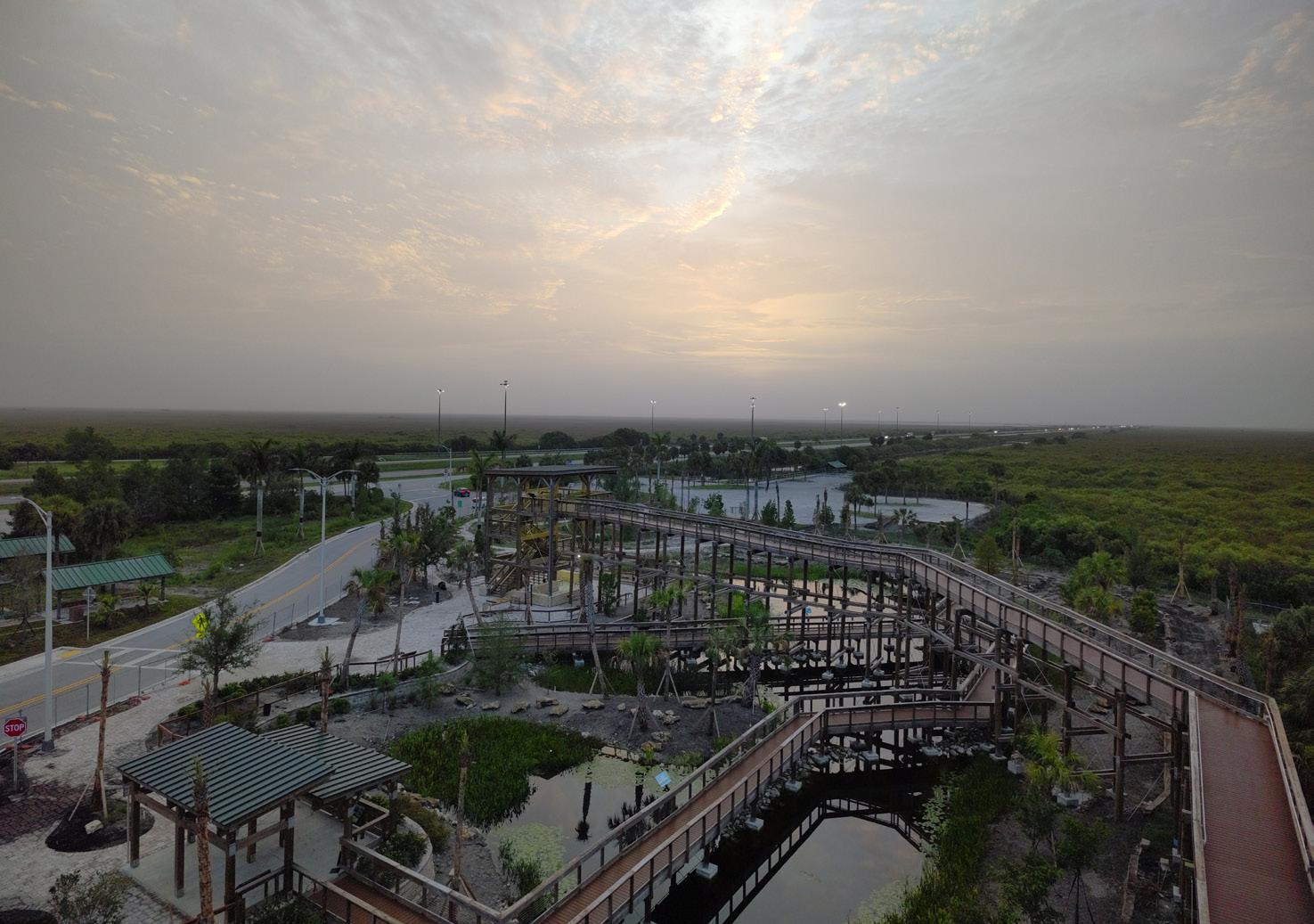
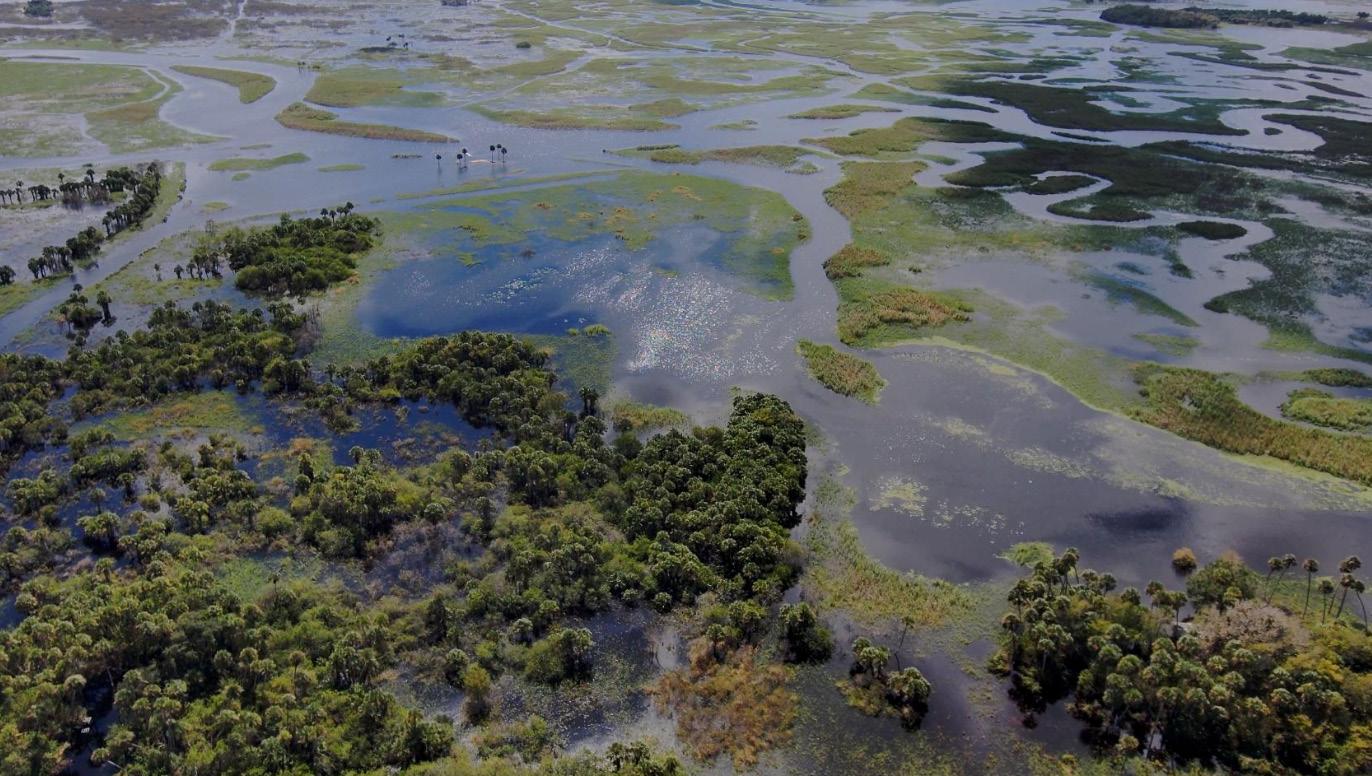
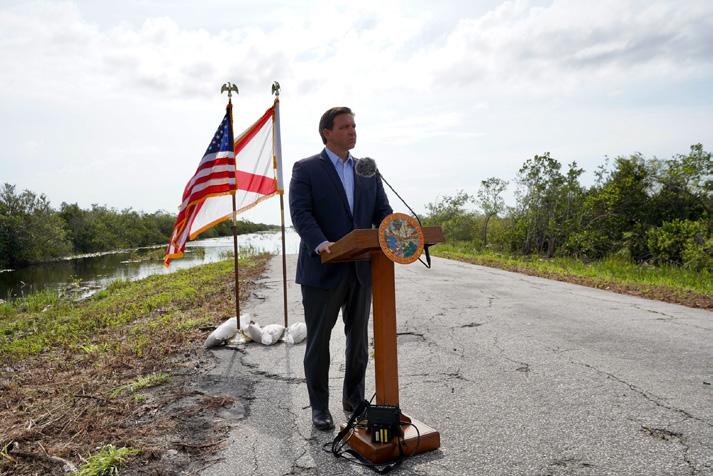
The Florida Department of Transportation (FDOT) has recently completed its efforts to transform this once-typical rest area site into an immersive Environmental Education Center, a one-of-a-kind destination in Florida where recreation, ecology and transportation come together.
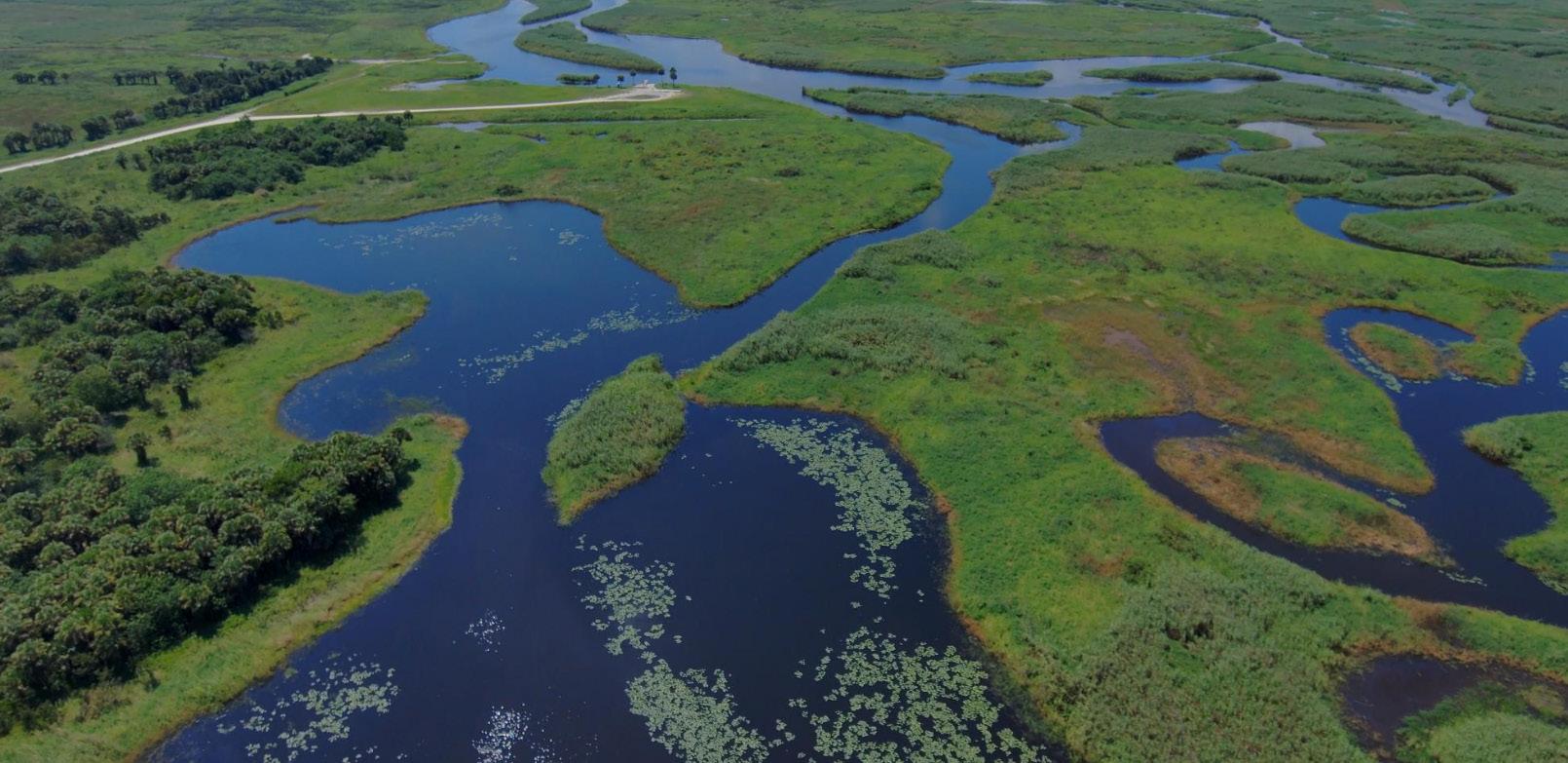
Nestled in the heart of the Florida Everglades, the newly enhanced rest area is surrounded by the Francis S. Taylor Wildlife Management Area and the Miami Canal — a sprawling ecosystem home to many of Florida’s beloved and unique native species.
Today's steakhouse menus increasingly feature grass-fed cattle, locally raised animals, heritage varieties, meat butchered and dry aged in-house, and dishes that stem from the whole animal, not just the premium cuts. And that's just the meat. Creative side dishes in lieu of old standards, global and seasonal flavors, and a wider menu selection also distinguish these new school operations.
Once a simple stop for travelers passing through the area, this site has been reimagined into a landmark project for FDOT, offering visitors a chance to learn about one of the state’s most unique ecosystems while enjoying upgraded amenities, including:
ing sweeping views of the Everglades and close-up encounters with wetland habitats, including wheelchair-accessible ramps.
• Native Plant and Wetland Exhibit — Featuring more than 600 trees, 10,000 shrubs and 17,000 aquatic plants that represent five unique Everglades ecosystems.
• Educational Signs and Exhibits — Informational panels and plant identification markers that highlight wildlife, wetland vegetation, invasive species and FDOT’s role
in the preservation of the Everglades ecosystem.
• Reconfigured Parking and Access — Improved truck and car parking, new walking trails and upgraded site utilities to better serve the traveling public.
• Recreation Areas — A new dog park, shaded picnic pavilions and an interactive children’s playground designed with Everglades-themed flooring and educational panels.
Chefs and consumers both want their meat to taste delicious and to feel good about its’ consumption, too. This new breed of steakhouse broadcasts its mission to support local ranchers, factor in sustainability and animal welfare, and create a dining experience that showcases culinary flair, not just a grill master's skill at cooking steak to the requested doneness. These operations are also designed to be more inclusive, more of a great place for all kinds of people to dine well, not just traditionminded men on expense accounts. As a result, the modern steakhouse is increasingly similar to other modern restaurants with a focus on distinctive
• 40-Foot Observation Tower and Multi-Level Boardwalks — Provid-
Jollibee's U.S. expansion continues with first Florida location opening
EPA and Army Corps Release Updated WOTUS Definition
Jacksonville, FL - After much anticipation and excitement, Jollibee, the largest Asian restaurant company, is now open in Jacksonville. This is the 36th store in the US, as well as
By STAFF REPORTS
The Environmental Protection Agency (EPA) and the U.S. Army Corps of Engineers have published a new proposed definition of “waters of the United States” (WOTUS) in the Federal Register. The notice, titled Definition of “Waters of the United States,” 90 FR 52,498 (Nov. 20, 2025), represents the agencies’ most detailed effort to date to align federal Clean Water Act jurisdiction with the Supreme Court’s 2023 Sackett v. EPA decision.
been the talk of the town since 2016. With the opening, Floridians will get to try Jollibee's signature menu items such as the world famous Chickenjoy. This dish is delicately breaded to be crispylicious on the outside and juicylicious inside. The well-loved Jolly Spaghetti is a favorite of both kids and kids-at-heart because of its signature sweetstyle sauce, loaded with chunky slices of savory ham, ground meat, and hotdog. Other classic menufavorites include the juicy and cheesy Jolly Hotdog, and the Peach Mango Pie, which is made with real Philippine sweet mangoes and a flaky golden brown crust.
The proposal revises major components of the federal jurisdictional framework— including “relatively permanent” waters, adjacency, continuous surface connection and several key exclusions—while laying out multiple alternative regulatory approaches for public consideration. The rulemaking reflects months of listening sessions, federalism consultation and tribal engagement conducted earlier in 2025.
KEY HIGHLIGHTS OF THE PROPOSED RULE
Revised “Relatively Permanent Waters” Standard
The proposal would shift to a wet-season–based approach for determining whether tributaries and certain waterbodies qualify as “relatively permanent.” It also describes how field staff should identify flow duration and hydrologic persistence.
Updated “Continuous Surface Connection” Test
The agencies propose amendments clarifying when wetlands are considered adjacent, emphasizing physical abutment and seasonal surface water presence. The new approach also addresses wetland mosaics and permafrost wetlands.
"As Jollibee debuts in Florida, we anticipate seeing not only a multitude of excited Jollibee patrons waiting to get their hands on their Jollibee favorites, but also first-timers waiting to have their own Jollibee experience," said Jose Miñana, Jollibee Foods Corporation's Group President for North America. "There's no greater joy for us than serving the needs and tastes of Jollibee fans in the community. At Jollibee, we aim to bring families together for happy moments over great tasting food with superior value, served with warm and friendly service – our own brand of joy."
A tributary may still pass through natural or artificial (e.g., culverts, pipes or ditches) features, even if those features are not jurisdictional on their own, as long as they convey relatively permanent flow. Importantly, a non-relatively permanent segment downstream will sever federal jurisdiction for all upstream segments.
Revised Treatment of Lakes and Ponds
The rule proposes removing “intrastate” as a jurisdictional qualifier and clarifying how lakes and ponds relate to the continuous surface connection standard.
The brand has become a symbol of nostalgia and warm childhood memories for many overseas Filipinos in the U.S. To many, Jollibee is the go-to restaurant of Filipinos for both special
Changes to Longstanding Exclusions
See JOLLIBEE page 15
New Definition of “Tributary”
The proposal adopts a narrower, flowbased definition of “tributary,” which must convey relatively permanent flow (standing or continuously flowing water during the wet season), and maintain a connection to a downstream traditional navigable water.
The proposal updates definitions and administration of the waste treatment system exclusion, the prior converted cropland exclusion and the ditch exclusion—each with multiple options on the table for public input.
dients and flavors—that Packaged Facts expects to grow in popularity in 2017.
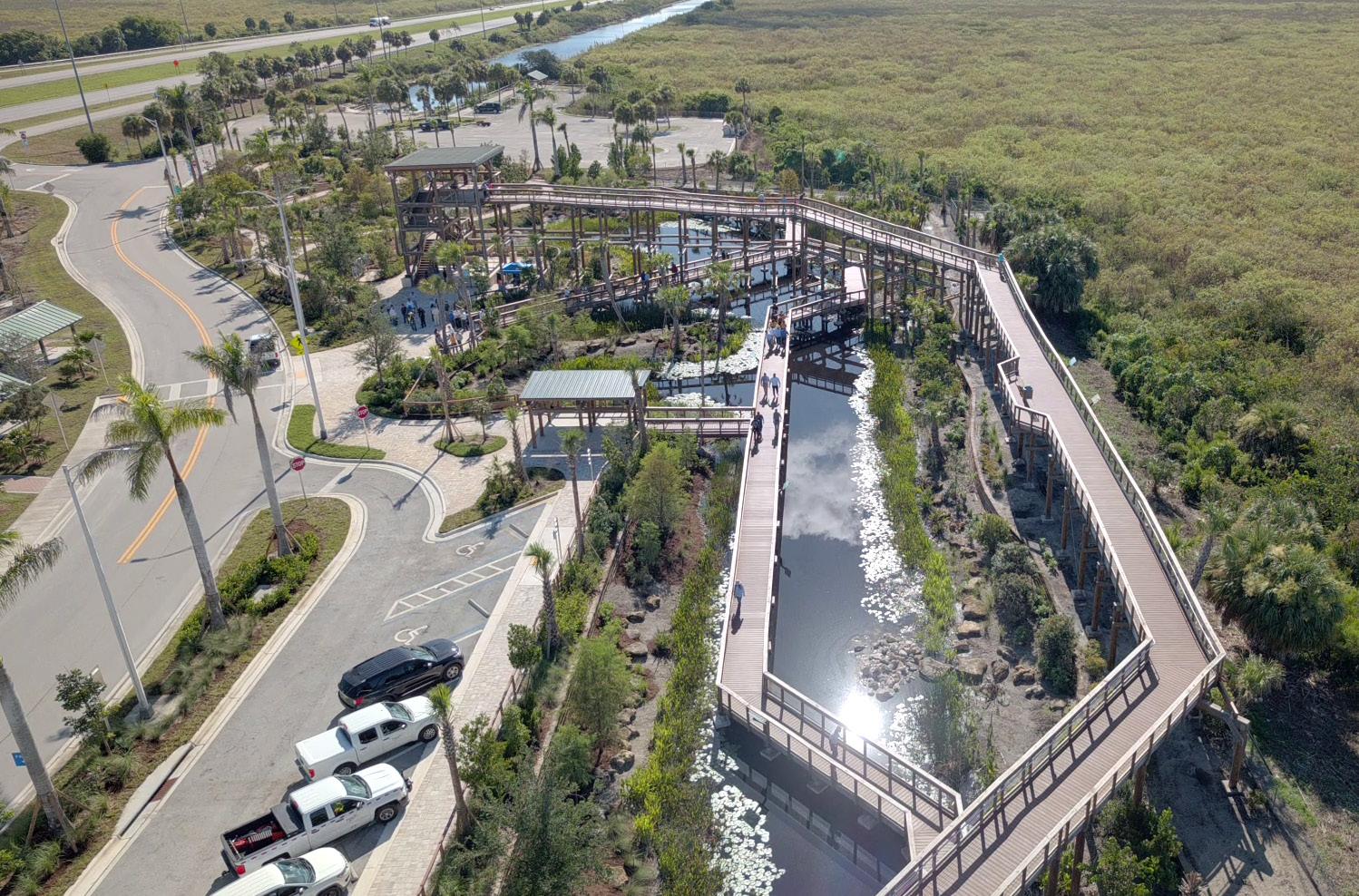
The I-75 Alligator Alley Environmental Education Center is located at Mile Marker 35 on southbound I-75 and can be accessed by both northbound and southbound travelers via an underpass. The observation tower and multi-level boardwalks are open to visitors from 6:30 a.m. to 6:00 p.m. daily.
Photo Courtesy FDOT
With a heightened focus on restoring and maintaining the unique ecology of the Everglades, FDOT engineers and contractors took on a significant challenge to create a living, interactive ecosystem in what was once a truck parking lot through the construction of a three-acre pond exhibit surrounded by wetlands and an arboretum.
This comprehensive wetland system was engineered to mimic the natural sheet flow of the Everglades and features 13 aquatic species, 68 upland and transitional species and more than 31,000 total plants. In order to bring this vision to life, this complex piece of the overall project involved excavating ponds, dewatering the ground in porous limestone conditions and controlling invasive species. Despite the hurdles, the team was successful in its effort to cultivate an area where native vegetation and wildlife, including young alligators, turtles, and fish, have flourished.
Working with pristine surroundings, FDOT’s design and construction teams took great care to minimize environmental impacts and find creative ways to highlight the natural landscape throughout the project’s design and construction process. These new features were carefully designed to showcase the diverse habitats of the Everglades while creating a safe and engaging space for the public. This project serves as a testament to FDOT’s commitment to blending essential transportation infrastructure with environmental stewardship. It ensures that travelers not only have a safe and comfortable place to stop but also leave with a deeper appreciation of Florida’s irreplaceable natural environment.
This $12.2 million project was delivered in multiple phases beginning in 2016, starting with the installation of educational kiosks and expanding to include largescale landscaping, drainage improvements and architectural amenities. While the Environmental Education Center officially opened to visitors in August 2025, this project still has additional phases to complete. Future improvements as part of this project will focus on upgrading boat ramps along Alligator Alley to further enhance recreational opportunities while preserving the beauty of the Everglades.
What was once a quick stop for motorists along a greater journey to their destinations, the rest area has in fact become a destination in itself, attracting environ-
mental groups, schools, nature lovers and travelers from across the world. With an average of one thousand visitors exploring the Environmental Education Center each day since its opening in August 2025, the site has proven itself to be a must-visit destination offering a one-of-a-kind opportunity to experience and learn about the Florida Everglades ecosystem.
As we officially enter 2026 and begin the celebration of the 250th anniversary of the United States, it's worth noting that Everglades National Park was established in 1947 as the first national park created to protect a fragile, living ecosystem, rather
than just a scenic geographic feature. This makes the Everglades a perfect example of how Florida's unique history and natural heritage contribute to the broader American story.
Steve Braun is District Four Secretary of the Florida Department of Transportation
PATRICK GILLESPIE
Staff Writers
BLANCHE HARDY, PG
Senior Correspondent
LINA ALFIERI STERN
MBA, MSRED, LEED Green Associate
Copyeditor
Designer Emma Cyphers Tracy Kistler
Contributing Writers and Columnists
STEVE BRAUN, PE Florida Department of Transportation
SUMMER LINDELIEN Florida Fish & Wildlife Conservation Commission
JOHN CIMBARO Florida Fish & Wildlife Conservation Commission
DANIELLE FITZPATRICK
St. Johns River Water Management District
JAMES MOONEY Florida House of Representatives
KEYNA CORY Florida Recycling Partnership
KATHERINE SQUITIERI Southwest Florida Water Management District
The Florida Specifier (ISSN 07401973), founded in 1979, is published every other month for $60 per year in-state; $80 out-of-state, by
SPECIFIER PUBLISHING LLC, P.O. Box 1857, Tallahassee, FL 32302. Subscription refunds are not provided. Local tax applies.
POSTMASTER: Send address changes to the FLORIDA SPECIFIER, P.O. Box 1857, Tallahassee, FL 32302.
A Question and Answer with Florida’s Chief Resilience Officer, Eddy Bouza
By
STAFF REPORTS
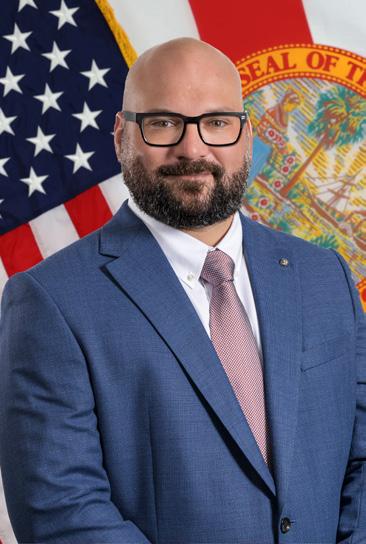
Eddy Bouza was appointed Florida’s Chief Resilience Officer in August 2025, having been with the Florida Department of Environmental Protection for more than four years, with stints at two other state agencies and Collier County government. Bouza previously helped guide local floodplain management efforts at the Florida Division of Emergency Management and he held leadership roles in Collier County government. A certified floodplain manager, Bouza serves on the board of the Florida Floodplain Managers Association and is an active voice in shaping resilience policy statewide.
Bouza answered questions from the Florida Specifier about his past work and his plans for this role:
What's your background? How did you end up in the resilience world and in this role?
I’m a Tallahassee native and a proud graduate of Florida State University. My path to resilience started in local government, where I saw firsthand how planning and policy decisions shape how communities prepare for and recover from storms. It was there that I became a Certified Floodplain Manager, giving me an on-theground understanding of what it takes to get projects in place to protect our communities. I then served with the Florida Division of Emergency Management, helping guide local floodplain management efforts and recovery following multiple tropical cyclones, and advising the Federal Emergency Management Agency on local government activities.
When the Resilient Florida Program was created in 2021, I joined the initial leadership team and have been proud to help build one of the nation’s most forward-thinking resilience programs from the ground up. As Program Management Director for the Florida Department
Sections Where Comments on Alternative Approaches are Specifically Requested
The publication highlights several areas where the agencies are actively inviting comment on alternative regulatory paths: Relatively Permanent Waters
Includes alternative methods for determining seasonal flow duration and identifying wet seasons (e.g., fixed timeframes such as 90 days vs. regionally specific hydrologic periods).
Continuous Surface Connection
Presents options ranging from a strict physical abutment standard to a more stringent requirement that wetlands, lakes or ponds must have permanent (year-round) surface water to qualify as adjacent.
of Environmental Protection’s Resilient Florida Program, I lead a team of about 50 professionals and oversee nearly 700 grants totaling more than $1.5 billion in state-directed investments.
I currently serve on the board of the Florida Floodplain Managers Association, where I continue working to strengthen resilience policy statewide.
Define resilience and how the effort affects Florida?
Resilience is really about the ability to bounce back and recover quickly after a setback. In Florida, that means helping our communities prepare for and withstand flooding, storm surge, hurricanes and other natural disasters so that recovery is faster, safer and less costly.
Our goal is simple: prevent damage where possible, reduce it where we cannot and make sure every dollar invested delivers a meaningful return for taxpayers. By identifying the areas of greatest risk and directing funding to those priorities, we are not only protecting lives and property but also strengthening the foundation of Florida’s economy.
Describe the importance of resilience to this administration.
The DeSantis administration recognized early on that resilience is not just an environmental issue; it is an economic one. A strong, coordinated statewide approach helps safeguard Florida’s communities, infrastructure and natural resources while ensuring taxpayer dollars are used effectively.
Our job is to bring agencies, local governments and researchers together to minimize flood vulnerability across the state. That coordination helps ensure that every project, whether it is a drainage improvement, living shoreline or restored wetland, works in harmony with others and delivers the greatest overall impact.
How is Florida ensuring that state-funded projects are designed to withstand future conditions?
Florida takes a proactive and data-driven approach to building resilience. State law
Waste Treatment System Exclusion
Provides alternative definitions and implementation frameworks for the exclusion.
Prior Converted Cropland
Includes an alternate approach under which USDA would serve as the sole authority for determinations.
Ditch Exclusion
Seeks input on different ways to define “ditch,” distinguish upland-excavated features and determine when ditches with intermittent or ephemeral flow should be excluded.
The rule was open for public comment for 45 days, with a deadline of January 5, 2026. As of mid-December, nearly 11,000 public comments were filed for consideration. EPA and the Army Corps will consider all written and oral feedback before publishing a final rule in 2026.
requires a Sea-Level Impact Projection Study for any project that receives state funding, whether it is a new road, fire station or community center. These studies evaluate how future storm impacts could affect project sites and help identify design solutions that reduce vulnerability.
This requirement ensures that state investments are made wisely and that every dollar contributes to stronger, more resilient communities. It is a great example of how Florida is leading by example and embedding resilience into the foundation of public infrastructure planning.
What do you hope to accomplish while you are in this position?
My top priority is to continue aligning the state’s flood resilience and mitigation so that we are maximizing impact and efficiency. That means streamlining coordination between agencies, leveraging federal funding and focusing on projects that deliver measurable benefits.
Ultimately, success to me looks like reduced flood damages, lowered insurance for residents and quicker recovery after storms. These outcomes show that our investments in resilience are paying off for Florida families and businesses.
Are there specific initiatives you have planned?
We are continuing to strengthen coordination across agencies through the Multiagency Mitigation and Resilience Coordination effort. This work helps ensure that time, funding and expertise are all directed toward Florida’s most significant risks and biggest opportunities for return on investment.
A good example is leveraging state dollars to unlock matching federal funds, helping local governments implement mitigation projects at little or no cost. This is smart government at work.
Can you talk about the success so far of the Comprehensive Statewide Flood Vulnerability and Sea Level Rise Data Set and Assessment, and the resulting Statewide Resilience Plan(s), and what you attribute the participation rate to?
The creation of the statewide data set and assessment was a major undertaking that analyzed more than 2.5 million critical assets for their vulnerability to flooding and sea level rise. This work gives us an objective, science-based foundation to prioritize funding where it is needed most.
Since 2021, the Resilient Florida Program has received nearly 1,000 local government project proposals and funded nearly $1.8 billion in resilience work. With local matches, that represents almost a $4 billion investment in just five years.
We have seen tremendous participation from local governments because of strong outreach, collaboration with other agencies, and a clear, consistent process that makes applying for state funding straightforward and rewarding. Continuing with this data-driven, ranked approach ensures that we are funding the highest-priority projects, the ones that deliver the greatest benefit and make the most effective use of taxpayer dollars.
Do you have any plans right now to change processes or operations within the Resilient Florida program?
We are exploring ways to expand rural eligibility for reduced cost-share in the Statewide Resilience Plan. Smaller communities often face unique challenges in funding mitigation projects, so finding ways to make participation more accessible is an important next step.
What's your vision for Florida's resilience efforts in the next 5-10 years?
The Resilient Florida Program has become a national model for how states can approach resilience strategically. By the end of next year, all 67 counties, along with a growing number of municipalities, will have completed vulnerability assessments. That means every community will have a clear roadmap to reduce risk and invest wisely.
My vision is a Florida where resilience planning is fully integrated into how we grow and build, where communities see measurable reductions in flood damage and insurance costs, and where every dollar we invest helps safeguard both our environment and our economy.
Eddy Bouza
Saving Natural Florida: How SRWMD’s Land Conservation Program Protects What Matters
By STAFF REPORTS
In a state where concrete is poured as fast as the sun rises, finding wild and untouched places can feel like chasing the past. But in the Suwannee River Water Management District (SRWMD), protecting what’s natural isn’t just a memory — it’s a mission.
Stretching across 15 counties in North Florida, the SRWMD is home to more than 450 documented springs — the highest concentration in the United States. It’s a place defined by blackwater rivers, pine flatwoods, and the quiet resilience of landscapes that have remained largely unchanged for centuries.
Preserving that natural legacy is one of the District’s most vital responsibilities. Through its Land Acquisition and Conservation Program with SRWMD, SRWMD works to protect sensitive ecosystems, restore degraded lands, and make sure future generations can experience the Florida that many people think no longer exists.
“We’re looking at what the properties would have been 200 years ago,” said Steven Carpenter, a Senior Natural Resource Specialist at SRWMD. “And we’re trying to bring those properties, using our tools, as close as we can to what they looked like at that time.”
Why Land Conservation Matters
Land conservation plays a central role in advancing SRWMD’s four core missions:
• Water Supply Sustainability
• Water Quality Improvement
• Flood Protection
• Natural Systems Restoration
Every property the District acquires or places under a conservation easement must help fulfill one or more of these goals. That could mean preserving the headwaters of a spring to protect drinking water, restoring native vegetation to reduce nutrient runoff, or maintaining floodplain forests that buffer communities from rising waters during storm events.
“Land conservation isn’t the only tool we use to accomplish our mission, and it shouldn’t be,” said Katelyn Potter, Outreach and Operations Division Director for SRWMD “But it’s one of the most important. These spaces give people room to work, to play, and to connect with what we call ‘Natural Florida.’”
Tools in the Toolbox: From Fire to Easements
Once land is protected, the real work begins. Restoring and maintaining it requires active management, not just good intentions. SRWMD uses a variety of tools to bring landscapes back into ecological balance — and keep them there.
One of the most powerful is prescribed fire, a land stewardship practice that mimics natural wildfire cycles. Carefully planned and conducted under strict safety protocols, these controlled burns help regenerate native plants, reduce invasive species, and prevent dangerous fuel buildup that can lead to wildfires.
In other cases, the District uses vegetation management techniques to remove
aggressive non-natives and support native species, from wiregrass to longleaf pine.
Increasingly, the District is also turning to conservation easements to expand the reach of its land protection efforts. These voluntary legal agreements allow landowners to retain ownership of their property while permanently limiting development and protecting natural functions.
“In North Florida, there’s a lot of pressure on landowners to sell their property as more people move into the state,” Potter emphasizes. “But many landowners are interested in conservation easements as part of long-term estate planning. It’s a way to preserve what they love about their land — and pass it on.”
Thanks to strong legislative support and record investments from the Governor, Cabinet, and Florida Legislature, Florida has significantly grown its conservation easement program in recent years.
The Power of Place: Conservation Along the Rivers
Many of the properties SRWMD protects are located along rivers — places where water, wildlife, and human history have long intersected. The District’s focus on riparian corridors helps conserve water quality, preserve scenic beauty, and create opportunities for public recreation.
From canoe launches on the Suwannee to quiet footpaths along the Santa Fe, these lands are more than green space — they’re places where people forge lasting memories.
“There’s always been that connection between water and people,” explains Carpenter. “But with urbanization, that connection gets lost. Our job is to make sure it’s still there — still real, still accessible, still sacred.”
By protecting these riverfront properties, SRWMD provides public access points that allow visitors to experience Florida’s wild beauty up close. It also ensures that these lands remain open for activities like fishing, birdwatching, and hiking — all of
which contribute to local economies and quality of life.
“Getting people out and connected with nature improves their quality of life,” Carpenter said. “And I think those opportunities are well represented on our properties, especially being along the rivers.”
A Region Under Pressure
Florida welcomes more than 1,000 new residents a day. And while North Florida has, so far, avoided the heavy urbanization of its southern counterpart, change is coming — fast.
Development pressures threaten to fragment habitats, overdraw water supplies, and increase pollution runoff. Without intentional conservation, the region’s character — its open landscapes, free-flowing rivers, and abundant springs — could be lost.
“Florida is a great place to be,” said Potter. “But if we want to keep it that way, we’ve got to protect what makes it special.”
The SRWMD’s land acquisition efforts serve as a bulwark against that trend, ensuring that critical lands are protected before they’re paved over.
How the District Selects Lands for Conservation
SRWMD uses a science-based process to identify lands with high conservation value. This includes evaluating factors such as:
• Proximity to springs, rivers, and aquifer recharge zones
• Ecological significance and habitat connectivity
• Flood mitigation potential
• Compatibility with public access and recreation
Acquisitions may be fee-simple purchases or conservation easements, depending on the needs of the landowner and the conservation goals of the District.
Each project is evaluated for its ability to fulfill one or more of the District’s core missions. This ensures that every conservation dollar delivers maximum benefit for both the environment and the public.
What It Means for You
For residents and visitors alike, SRWMD’s conservation lands provide more than scenery. They offer:
Photo
Want Fishing Tips? Consult the Data
By SUMMER LINDELIEN AND JOHN CIMBARO
The Florida Fish and Wildlife Conservation Commission (FWC) created the Black Bass Management Plan in 2011. The goal of the plan is to ensure Florida is the undisputed Bass Fishing Capital of the World and, to that end, called for creating a trophy bass documentation and release program.
The program became a reality the next year as TrophyCatch, which rewards anglers who provide documentation of their catch and release of Florida bass and largemouth bass weighing eight pounds and heavier in Florida, was launched.
Anglers can be eligible for prizes from industry partners such as Bass Pro Shops and others by submitting photos or videos of their catch to TrophyCatch.com, showing the entire fish and its weight on a scale, before releasing the bass back into the water. FWC biologists then use TrophyCatch data for bass research to inform management decisions about Florida bass fisheries and to promote the catch and release of trophy bass.
“TrophyCatch provides a scale of data collection we could never achieve through traditional sampling alone,” said Jason Dotson, section leader of freshwater fisheries research for FWC's Fish and Wildlife Research Institute. “Anglers across the state are helping us monitor Florida bass populations in real time, giving our researchers deeper insight into growth, survival, and long-term trends in our fisheries.”
Since the inception of TrophyCatch, 91,546 anglers from all 50 states and several other countries have registered for the program. The citizen-science efforts of those who have shared their catch data have helped biologists and stakeholders understand more about trophy bass in Florida. Cumulatively, 16,615 Florida bass weighing eight pounds or more have been approved for the program. Of those fish, the biggest, which are more than 13 pounds and in the Hall of Fame Club, account for 168 catches.
Bass that manage to achieve trophy status are rarer, and they are less frequently encountered during biological sampling.
In fact, citizen scientists who participate in TrophyCatch collectively sample 10 times as many trophy bass annually as the traditional sampling technique electrofishing, where fish are temporarily stunned to collect data. TrophyCatch is providing vital data.
All trophy bass encountered during electrofishing receive a reward tag, which is used to help evaluate the success of the TrophyCatch program. Since 2011, FWC has tagged 1,879 trophy-sized bass across 176 waterbodies and annual angler catch rates for the tagged bass are about 2025 percent. TrophyCatch awareness and participation have significantly increased through time, and the release rates of trophy-sized bass have significantly increased since program inception, highlighting the popularity and success of TrophyCatch.
As the popular program continues into its 14th season, more than 10 years of catch data and other biological information about trophy bass has been compiled. One of the most interesting trends FWC has tracked is the number of catches by month. The data shows that the most trophy bass approved for the program have been caught during March and February, respectively. These months tend to overlap with the peak spawn for bass in Florida. Spawning can start as early as December in the southern part of the state, and bass can continue to spawn multiple times throughout the year across Florida.
Some of the biggest fish are more vulnerable to being caught during spawning season when they enter shallow water to build their beds and lay their eggs. Some anglers have learned to target these individuals using electronics to find and mark nests to fish for the larger females. Even if females are not on nests, they are likely patrolling the areas near males to find their best match, so they can still be seen and targeted during the time when they are carrying eggs and have attained their heaviest weight prior to releasing those eggs during spawning.
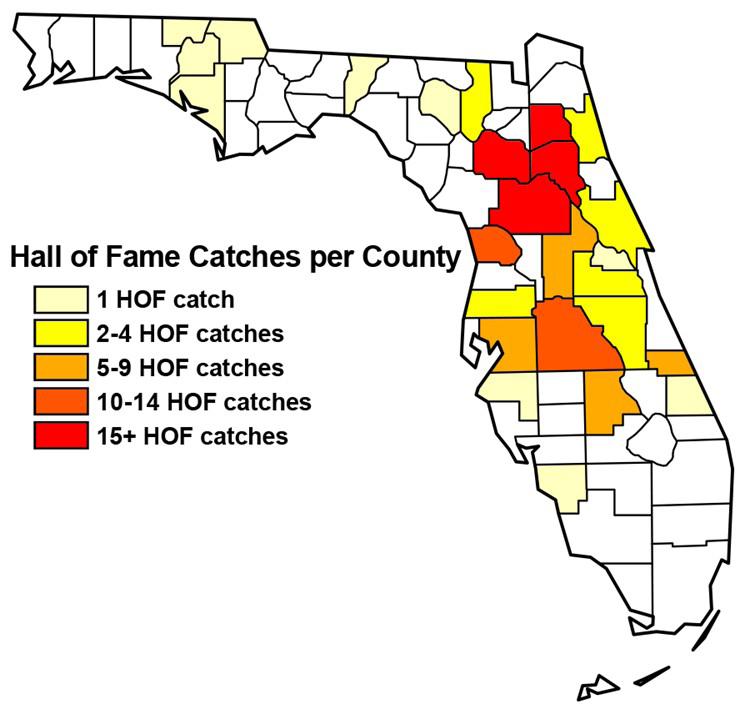
Focusing on the very biggest bass — those Hall of Fame bass weighing 13 pounds and more — some key counties come out on top. Alachua County produced the most approved Hall of Fame catches in the state (28 out of 168), with Clay County coming in a close second (23).
In 2024, TrophyCatch migrated to a new website that allows anglers to hide their catch location to the county level, allowing them to keep their specific fishing location confidential. This was a direct response to angler feedback and requests over the years. Of the water bodies with publicly shared locations, Orange Lake and Kingsley Lake have the most approved catches weighing 13 pounds or heavier. The data shows that anglers should target the north central and northeast regions of Florida if they are hedging their bets on catching the biggest of the big, with Alachua, Clay, Putnam and Marion counties accounting for 51 percent of all TrophyCatch Hall of Fame catches. Polk and Citrus counties also each include 12 Hall of Fame catches.
One of the topics that generates lively discussion when someone says they caught a trophy bass is whether they used natural bait or an artificial lure. So, what does the data tell us? According to FWC data, for Hall of Fame Club bass, 53 percent were caught with an artificial lure, while 47 percent were caught with natural baits. Further analysis conducted on the first 100 Hall of Fame bass submitted to the program (called the Hall of Fame 100 survey) dove deeper into the types of artificial lures that catch the most Hall of Fame Club bass. The data demonstrated that plastic worms have accounted for 41 percent of the 13-pound or heavier bass in the TrophyCatch dataset. All soft plastics together accounted for 71 percent of the largest catches.
“The information gained through TrophyCatch directly shapes on-the-ground management and strengthens our engagement with anglers,” said Tom Graef, director of FWC's Division of Freshwater Fisheries Management. “When anglers participate, they’re not only catching trophy bass but also contributing to the stewardship and future of Florida’s world-class fisheries.”
Since its inception more than a decade ago, TrophyCatch has provided not only a wealth of data for FWC fisheries’ biologists, but also a marketing windfall for promoting Florida bass fishing. The program is cited routinely in top fishing lists such as Bassmaster’s 100 Best Bass Lakes, and in national and state fishing magazines from Florida Sportsman to Outdoor Life. This innovative program represents a win-win scenario for anglers being rewarded for documenting their catch, bass released to swim and spawn again, and resource managers to be better informed about Florida’s favorite freshwater fish — all on the way to ensuring Florida remains the Bass Fishing Capital of the World.
Summer Lindelien is an Assistant Research Scientist and John Cimbaro is a Biological Scientist at the Florida Fish and Wildlife Conservation Commission
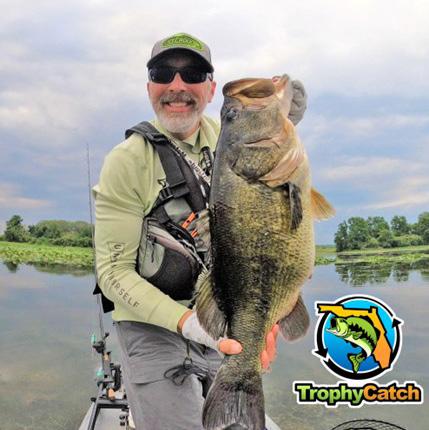
Angler with a 12-pound, 10-ounce Florida bass caught from a kayak on Orange Lake.
Angler-submitted TrophyCatch data shows a clear trend of Florida’s largest bass being found in the north central and northeast regions of Florida.
The peak months for catching a trophy bass are March and February, respectively.
Photo Courtesy FWC
Seminole County BCC talks Septic Tank Conversion
The Seminole County Board of County Commissioners held a Septic Tank Work Session on Dec. 9, with county department directors Kim Ornberg, Environmental Services, Johnny Edwards, Utilities, and consultant C. Robert Reiss. The Work Session provided an update on the status of the county’s septic-to-sewer advanced septic programs.
Seminole County contains two state-mandated watersheds, the Wekiva Priority Focus Area (PFA) and the Gemini Springs PFA. The county has until 2038 to complete remediation of septic tanks in both the Wekiva PFA, which contains 3,850 septic tanks under county jurisdiction and the Gemini Springs Basin Management Plan area, which has 1,259 septic tanks under the county.
Two options for remediation were discussed, including eliminating septic tanks through connection to a central sewer system or replacement of septic tanks with advanced on-site septic treatment units. Staff provided costs for both options.
The total cost of converting all available septic tanks to sanitary sewer is $350 million. This includes $1.46 million to $2.92 million to install advanced septic tanks where conversion is not practical.
The cost of the second option, converting available septic tanks to sanitary sewer with reclaimed water, is $58 million to $604 million. The cost of the third option, converting all available septic tanks to advanced septic tanks, is $80 million to $161 million.
Cost options for property owners beyond anticipated grants were presented for the commission’s consideration for homeowner participation in the program over 20and 30-year payment schedules. The cost was estimated at $75,000 per tank and 4.5 percent interest over the timeline schedule. Staff indicated they will continue to apply for grants and appropriations, schedule an additional work session and present the annual allocation for the program Master Plan CIP to the commission in January.
American Water Resources Association Names Three Florida National Award Winners
The American Water Resources Association recently announced its 2025 national award winners, naming two Floridians and a Florida university group among its honorees.
Ashok Shahane: William C. Ackermann Medal for Excellence in Water Management
This award recognizes an individual who has achieved a status of eminence in the design and/or implementation of exemplary water management practices at the state, regional or local government level.
This award recognizes a young professional who has demonstrated outstanding achievements, talents and leadership potential through their professional activities related to water resources.
The Florida Gulf Coast University Student Chapter: N. Earl Spangenberg Outstanding Student Chapter Award
This award recognizes the Student Chapter that has provided outstanding service in the furtherance of the Association's objectives.
More information on the awardees can be found here
UF/IFAS Report Golden Oyster Mushroom Threat
Growing exotic mushrooms has become a popular DYI hobby, but at least one species, the Golden Oyster Mushroom, has become a national invasive plant threat. Popular for the distinct yellow color and flavor, an enthusiast can buy grow-yourown Golden Oyster kits containing active spoors in grocery stores, farmers’ markets and online for less than $30.
Researchers at the University of Florida caution that golden oyster mushrooms are aggressive colonizers associated with degradation in existing fungal communities, resulting in reduced biodiversity. They have now been reported in 25 states. In addition to impacting local ecology, they may also affect other parameters such as wood decomposition, therefore impacting ecosystems and species beyond fungi.
Buying, cultivating and transporting exotic mushrooms can unintentionally introduce these invasive species into the environment. Extreme caution should be exercised by hobbyists.
State awards $29 Million for Biscayne Bay
The Biscayne Bay Water Quality Improvement Grant Program is awarding $20 million to eight projects supporting continuing efforts to improve water quality in the bay. An additional $9.5 million will be allocated across 11 projects, advancing the state’s long-term strategy to restore Florida’s Coral Reef. Florida’s living barrier reef is unique in the continental United States.
"Biscayne Bay is Florida’s largest estuary and home to an array of important species of plants and wildlife,” said Florida Department of Environmental Protection Secretary Alexis A. Lambert. “By making strategic investments in the bay’s water quality, we are revitalizing waters that
support not only our wildlife but also our economy and way of life."
The Biscayne Bay Water Quality Improvement Grant Program supports efforts to reduce nutrients in the bay. A variety of nutrient reduction methods have been funded, including wastewater improvements, septic-to-sewer, stormwater management and other water quality initiatives.
The funded Coral Reef Restoration and Recovery Initiative projects were selected based on their impact on scaling up landbased coral propagation infrastructure and capacity and increased data management capabilities. FCR3 was created in 2023 to develop the infrastructure, technology, skilled workforce and logistics necessary by 2050 to support the long-term recovery of Florida’s Coral Reef.
Florida State Parks Announces 2025 Photo Contest Winners
Florida State Parks recently announced
this year’s winners of the 2025 Capture the Real Florida Photo Contest, awarded in the categories of: Landscapes, Waterscapes, Wildlife, Park Adventures and Historic Encounters. Historic Encounters is a new special category added in recognition of America’s 250th anniversary. The contest produces thousands of entries.
“Every year, our visitors capture breathtaking moments that remind us why our state parks are among the most treasured places in the country,” said Chuck Hatcher, Director of Florida State Parks. “Thank you to everyone who shared their images. I invite all Floridians to get out and discover our state parks and maybe even grab that perfect shot.”
The Grand Prize Winners include : Landscapes: Shane Carrol’s photo taken at Olustee Battlefield Historic State Park in Sanderson, Waterscapes: Dawn Campbell’s photo taken at Silver Springs State Park in Ocala, Wildlife: Michelle Huguet’s photo taken at Myakka River State Park in Sarasota, Park Adventures: Heather Bossowski’s photo taken at Gamble Rogers Memorial State Recreation Area in Flagler Beach, and Historic Encounters: Valleri Ames’ photo taken at Bulow Plantation Ruins Historic State Park in Ormond Beach.
All Grand Prize, Runner-Up and People’s Choice winning photos can be viewed on the Photo Contest webpage. Each Grand Prize winner received a $1,000 B&H Photo gift card, a Florida State Parks Annual Pass, a stand-up paddleboard and a hammock.
The winning photos will also be on display at Weeki Wachee Springs State Park during its Winter Waterland celebration
Florida Awards $112 Million for Water Quality and Supply Projects
The state recently awarded more than $112 million in grants for water quality and quantity improvements across Florida. Fourteen alternative water supply projects have been awarded a combined $50 million, with an additional $50 million in funding awarded to support 23 Florida natural freshwater springs restoration projects, and $12 million is earmarked for 16 innovative technology projects to help detect, prevent and mitigate harmful algal blooms.
"The funding announced today will help communities secure reliable water supplies, improve water quality and better respond to environmental challenges. These investments reflect our commitment to protecting the resources that support our economy and our way of life," said Department of Environmental Protection Secretary Alexis A. Lambert.
FDEP announced that Florida has invested $335 million in alternative water supply projects since 2019, creating more than 445 million gallons per day of future water supply to meet the needs of the state’s rapidly growing population. The St. Johns River Water Management District was awarded two major grants, including $15 million for the Taylor Creek Reservoir Improvements Project and $10 million to support the new Water First North Florida project. These investments will help strengthen water-supply reliability and support long-term growth across central and northeast Florida.
The Springs Restoration Grants include septic-to-sewer and land acquisition projects to improve both water quality and spring flow. Florida has invested $430 million in 147 springs restoration projects since 2019, resulting in an estimated annual reduction of more than 907,000 pounds of Total Nitrogen annually.
The $12 million combined Innovative Technology program grants will fund projects to prevent, detect, clean up or mitigate harmful algal blooms. Prior investments through this program resulted in the acquisition of six technology vendors now on standby statewide, and the development of multiple tools that monitor conditions, forecast blooms and mitigate impacts are being deployed in communities across Florida. This program has received $75 million to support 68 projects to date.
SJRWMD Apopka-Beauclair Lock Reopened
The St Johns River Water Management District recently completed maintenance on the Apopka-Beauclair Lock located within the Apopka-Beauclair Canal just north of Lake Apopka. The canal serves the Harris Chain of Lakes, popular for bass fishing.
The closure was necessary to perform critical infrastructure maintenance to ensure the continued safe and reliable operation of the lock. The work is part of the District’s ongoing efforts to maintain and enhance the efficiency of Florida’s waterway systems.
The Lake County Water Alliance concurrently removed a large tussock within the waterway just south of the lock, improving navigation within the canal.
Nasrin Alamdari: A. Ivan Johnson Award for Young Professionals
Photo Courtesy UF/IFAS
Valleri Ames’ photo “Echoes of Bulow Plantation,” taken at Bulow Plantation Ruins Historic State Park, earned the Grand Prize in the Historic Encounters Category.
Photo Courtesy Florida State Parks
Photo Courtesy USACE
SWFWMD to Close Alston Tract for Hog Hunt Jan. 6-8
The Southwest Florida Water Management District’s (District) Alston Tract at Upper Hillsborough Preserve in Pasco County will be temporarily closed to the public for feral hog hunts Jan. 6-8, 2026.
Only the 11 permitted hunters will be allowed on the property during these dates. Alston Tract is located at 42144 Deems Road in Zephyrhills.
This activity is one of a series of feral hog hunts being held on District lands to control the damage being caused to the natural habitats.
The District only allows hogs to be controlled through hunts when the damage they cause exceeds unacceptable levels, and damage is occurring more frequently and with increasing severity.
Feral hogs live throughout Florida in various habitats, but prefer moist forests and swamps, as well as pine flatwoods. They are omnivorous and feed by rooting with their broad snouts, which can cause extensive damage to the natural habitats. In fact, they can leave an area looking like a plowed field.
Feral hogs are not native to Florida and are believed to have been introduced by explorer Hernando DeSoto as early as 1539. They can weigh more than 150 pounds, measure over 5 feet in length and travel in herds with their offspring.
Pinellas County Flood Vulnerability Assessment virtual public meeting scheduled for January
Pinellas County is hosting a Flood Vulnerability Assessment Virtual Public Meeting on Jan. 13 from 6-7:30 p.m. This Zoom meeting will present findings from a recently completed Flood Vulnerability Assessment and flood modeling used to reduce risks for critical infrastructure in the County such as roads and emergency facilities.
All residents, business owners, and other interested parties are invited to attend, especially those with ties to the following areas: Belleair, Belleair Beach, Belleair Shore, City of Pinellas Park, Indian Rocks Beach, Indian Shores, Madeira Beach, North Redington Beach, Redington Beach, Redington Shores, and flood-prone areas of Unincorporated Pinellas County.
Pinellas County is required by the State of Florida to conduct this Flood Vulnerability Assessment as a condition for receiving flood risk reduction grant funding. The Assessment focused on areas at risk of flooding during storms and heavy rainfall to better understand and mitigate risks to critical County assets and infrastructure.
Register to attend at Pinellas.gov/projects/ vulnerability-assessment/
Northside Team Wins 2nd Jax Litter League Championship with Nearly Four Tons of Trash Collected
Jacksonville Mayor Donna Deegan in December announced the winners of the 2nd Jax Litter League contest, with the Northside team "Collect and Connect" claiming top honors after collecting an impressive 227 bags of trash—nearly four tons—from Jacksonville neighborhoods.
Team captain Susan Shinego led her crew to victory in the citywide competition, which challenged residents to clean up litter in their communities. For their efforts, the winning team received an elite game day experience watching the Jacksonville Jaguars take on the New York Jets, a box of Jaguars merchandise, and a photo opportunity with Mayor Deegan.
"The Jax Litter League shows what Jacksonville can accomplish when neighbors come together for our city," said Mayor Deegan. "Susan and her team didn't just collect trash, they're helping to build cleaner, stronger communities across the Northside. This is exactly the kind of grassroots action that makes Jacksonville beautiful."
The Jax Litter League is part of Mayor Deegan's "Keep Jax Cute, Don't Pollute" initiative, a comprehensive anti-blight effort aimed at keeping Jacksonville's neighborhoods clean and vibrant. The program encourages residents to take an active role in maintaining their communities while fostering civic pride and environmental stewardship.
• Cleaner water by filtering runoff and protecting groundwater
• Flood protection during heavy rain events
• Wildlife habitat for species ranging from gopher tortoises to otters
• Recreation opportunities that support physical and mental well-being
These lands are also vital for education. School groups, scouts, and nature clubs regularly use District-managed sites for field trips and service projects, helping to foster the next generation of environmental stewards.
“There’s a historic connection between people and water that’s being lost in many places,” Carpenter said. “We want to make sure that connection stays alive.”
A Lasting Legacy
The SRWMD Land Conservation Program is more than a strategy — it’s a commitment to future generations. By preserving critical landscapes today, the District is shaping a more resilient, more beautiful, and more balanced tomorrow.
Whether it’s a family-owned ranch placed under easement or a wild tract restored with fire and care, each project contributes to a healthier North Florida. Visit www.mysuwanneeriver.com for maps, access info, and upcoming conservation opportunities.
In the end, land conservation isn’t just about saving trees or wetlands — it’s about saving the parts of Florida that make us feel at home.
Outdoor Water Conservation Tips – Your Questions Answered
By KATHERINE SQUITIERI
Q : Why is conserving water outdoors important?
A: Typically, outdoor water use accounts for about 50 percent of water consumed by households, so it’s important to pay attention to your outdoor water use. If using a permanent inground irrigation system, conduct regular maintenance to ensure the system is working properly and make seasonal adjustments throughout the year. If using a non-permanent aboveground sprinkler, only run the sprinkler when you’re home and use a kitchen timer to remind yourself to turn it off. Water slowly to reduce runoff and to allow deep penetration.
Q: What should I look for to tell if my inground irrigation system is working properly?
A: Many inground irrigation systems run in the early morning or late at night when homeowners can’t see them. Manually test run your system to visually check for broken or misdirected sprinkler heads, where water is shooting into the air or into
the road or driveway. Also look for areas where water may not be spraying evenly across your lawn.
Q: Does it matter when I water my lawn?
A: Yes, there are always year-round water conservation measures in our region that designate the days and times you’re allowed to irrigate your landscape to help protect our shared water resources. Stricter water shortage restrictions also may be put in place temporarily due to dry conditions and water supply concerns. You should only water on your designated day and only if needed. You can learn more about local water restrictions at WaterMatters.org/Restrictions.
Q: What should I check on my irrigation controller to make sure it’s set to water more efficiently?
A: There are three main elements to check on your irrigation controller — the start time, run time and schedule. The start time refers to when your sprinkler system will turn on. Only one start time
is needed to initiate watering all irrigation zones. The run time refers to how long each zone in your system will run. Check with your local UF/IFAS Extension office for run time recommendations. The schedule refers to the days of the week your system will turn on. Always check local water restrictions before setting your start time and schedule at WaterMatters. org/Restrictions.
Q: Can smart irrigation controllers help save water outdoors?
A: Yes, smart irrigation controllers help to reduce outdoor water use by automatically adjusting your irrigation run times and/or frequency depending on local weather and other site conditions. Smart controllers are an especially great option if you travel often or live in Florida only part of the year, and still want your irrigation system to adjust to seasonal changes. If properly installed and programmed, a smart irrigation controller can result in water savings of up to 30-40 percent during dry conditions and up to 70-90 percent during the rainy season.
Q: Where can I find more water conservation tips?
A: To find more water conservation tips, visit the District’s website at WaterMatters.org/Water101.
Squirieri is the Southwest Florida Water Management District’s Lead Conservation Education Coordinator.
In the role, she manages the District's youth education program and assists in water conservation outreach efforts. Katherine holds a bachelor’s degree in environmental studies concentrating in Environmental Education and Communication from Green Mountain College. She also holds a master's degree in Global Sustainability concentrating on water sustainability from the University of South Florida.
Florida Agencies Recognize 2024 Jim Stevenson Resource Managers of the Year
By STAFF REPORTS
Three Florida agencies in December recognized three land managers as the 2024 Jim Stevenson Resource Managers of the Year.
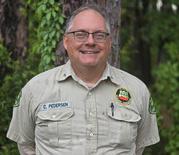
The Florida Department of Environmental Protection's Patricia "Patty" Wilbur, Florida Department of Agriculture and Consumer Services’ Charlie Pederson, and Florida Fish and Wildlife Conservation Commission's Matthew Koenig received the award, as each reflected the leadership, innovation and public service that position Florida as a national model for natural resource management.
Florida Park Service Patricia “Patty” Wilbur Biological Scientist II, Edward Ball Wakulla Springs State Park
Patricia “Patty” Wilbur has dedicated more than 20 years of service to Edward Ball Wakulla Springs State Park, where her work has advanced large-scale habitat restoration, fire management and resource protection efforts in northwest Florida.
In 2018, Wilbur played a leading role in planning and implementing one of the
most extensive upland pine restoration projects ever undertaken in the region, restoring 1,005 acres of flatwoods habitat critical to native wildlife. A recognized leader in prescribed fire management, Wilbur has served as burn boss for 63 prescribed burns totaling 5,964 acres since becoming a certified prescribed burn manager in 2011. Over the course of her career, she has participated in 198 prescribed burns covering more than 21,000 acres, as well as seven wildfire responses.
Florida Forest Service Charlie Pedersen Biologist III, Waccasassa Forestry Center Florida Forest Service
A 28-year veteran of the Florida Forest Service, Charlie Pedersen has worked on more than a dozen state forests, managing diverse plant communities and endangered species.
Since arriving at the Waccasassa Forestry Center in 2004, his leadership has more than doubled the number of breeding pairs of red-cockaded woodpeckers at Goethe State Forest, increasing from approximately 30 to 40 pairs to more than 80. The species was officially downlisted from federally endangered to threatened in fall 2024.
In addition to traditional resource management, Pedersen has embraced new
technology to strengthen conservation outcomes. In 2024, he earned his drone pilot license and is one of the Florida Forest Service’s few certified drone pilots, supporting monitoring and planning efforts statewide.
“Charlie Pedersen is exactly the kind of professional the Florida Forest Service is built on,” said Florida Commissioner of Agriculture Wilton Simpson. “He delivers results by combining decades of experience in the field with a willingness to use new tools and technology to do the job better.”
FWC Matthew Koenig Fisheries and Wildlife Biologist III, Southwest Wildlife and Habitat Management Section/Division of Habitat and Species Conservation
Matthew Koenig serves as lead area biologist for Chinsegut, Perry Oldenburg
and Janet Butterfield Brooks Wildlife and Environmental Areas. He also supports outreach and educational programs at the Chinsegut Conservation Center and assists with resource management across other public lands.
Koenig focuses on maintaining high-quality natural communities that support native species. He and his team manage diverse habitats, including upland pine forest, sandhill and depression marsh. Since 2016, prescribed fire has been his primary management tool, benefiting species such as Bachman’s sparrows, bald eagles and gopher tortoises. Koenig ensures burns achieve the desired habitat conditions while prioritizing safety and minimizing impacts to nearby communities.
“Matt is the perfect choice for winning this honorable award,” said FWC Executive Director Roger Young. “His expertise, dedication, and leadership have all been instrumental to the significant improvements made to wildlife habitat in the WEAs he manages — no small feat considering the challenges of managing three different public lands.”
In December, Gov. Ron DeSantis rolled out his proposed budget for the 2026-2027 fiscal year, pitching to lawmakers a nearly $117.4 billion budget, up from the current $114.8 billion budget.
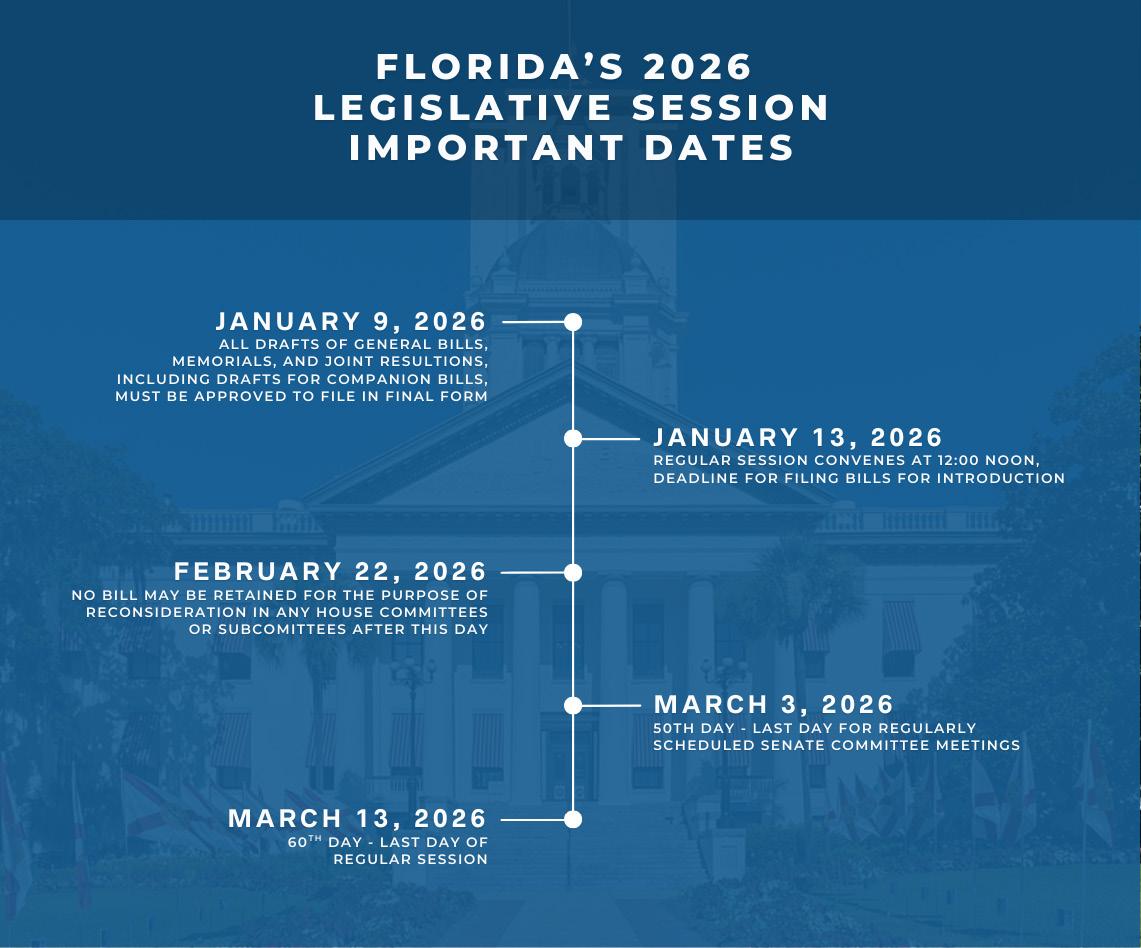
The Governor is required to provide a proposed budget 30 days before the 2026 Legislative Session, which begins Jan. 13. In it, DeSantis highlighted some key elements. In a news release, he touted nearly $17 billion in reserves and $250 million recommended toward continued debt reduction.
“Since I became governor, we have run budget surpluses, reduced the state’s legacy debt by more than 50 percent and enacted record tax relief,” said DeSantis. “Today I announced the ‘Floridians First’ Budget, which will keep Florida on the course of fiscal responsibility and delivers on the priorities that have made Florida the greatest state in America.”
Among the environmental items highlighted in the budget:
Everglades restoration
Of $810 million dedicated to Everglades restoration in the proposed budget, $681 million is earmarked for the Comprehensive Everglades Restoration Plan (CERP), a long-term project central to federal, state
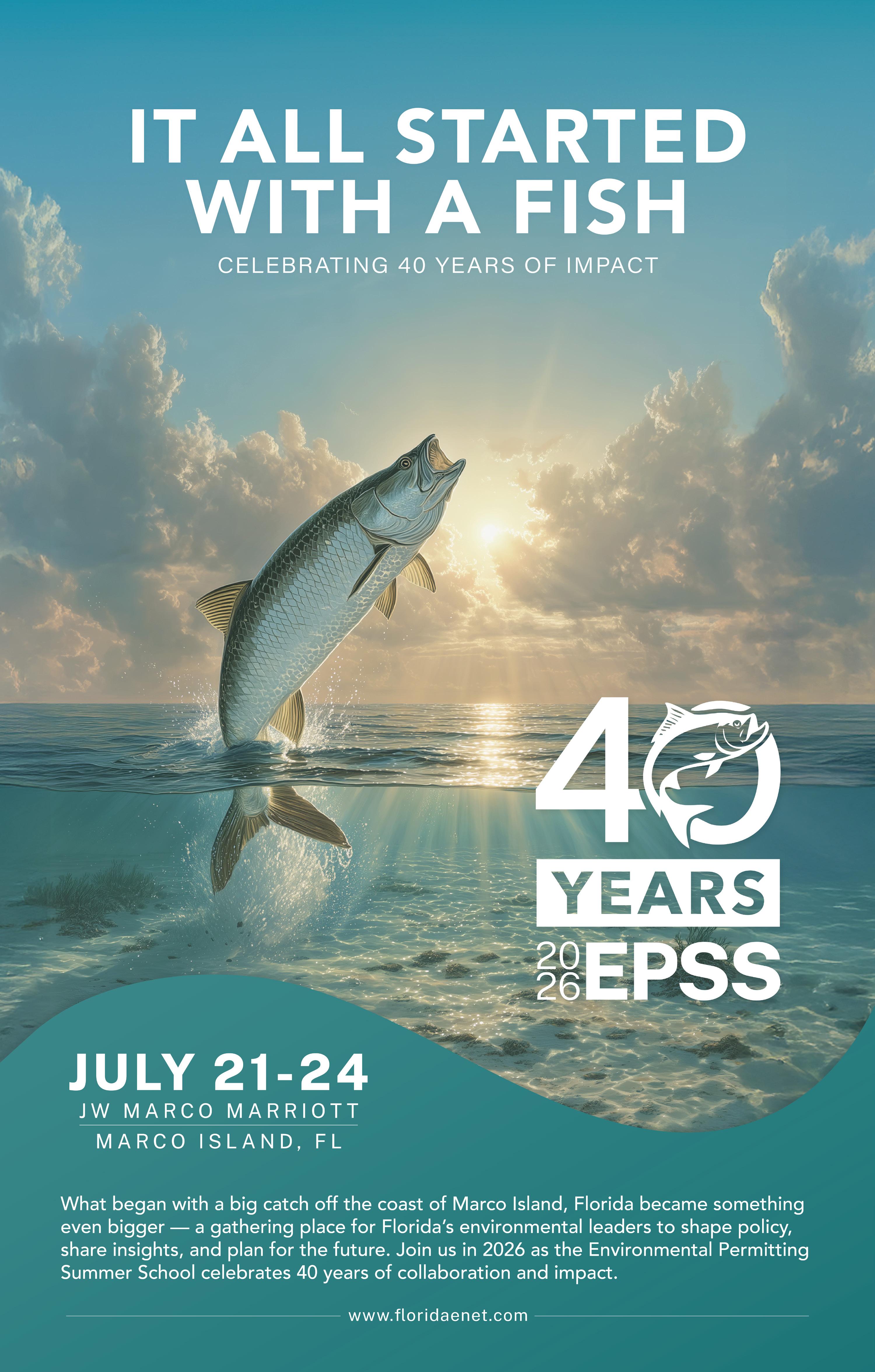
and local government efforts. The plan requires the Federal and state governments to match dollars to restore the Everglades. This summer, during the 25th Anniversary year of CERP, DeSantis announced at the Environmental Permitting Summer School conference an agreement between Florida and the Trump Administration to allow some state control to accelerate projects.
During DeSantis’ time as Governor, nearly $9.5 billion has been allocated to Everglades restoration and water quality, if the recommended $1.4 billion is passed into law in the spring. Within the CERP funding is $586 million for the Central Everglades Planning Project, funding all remaining components of state-funded portions of the EAA Reservoir and CEPP South-Blue Shanty Flow-way. An additional $50 million is being recommended for Caloosahatchee and St. Lucie Estuaries discharge reductions and $79 million for the Northern Everglades and Estuaries Protection Program, according to the Governor’s office.
Other Water Projects
$150 million for Water Quality Improvement Grant Program for projects to construct, upgrade or expand wastewater facilities, including septic to sewer conversions, stormwater management projects and agricultural nutrient reduction projects
$100 million for Indian River Lagoon and Biscayne Bay
$50 million to accelerate Total Maximum Daily Load nutrient reductions
$100 million for the Lower Kissimmee Basin Stormwater Treatment Area project to reduce phosphorus and nitrogen going into Lake Okeechobee via the Kissimmee River
$50 million for springs restoration and land acquisition to support springshed protection
$65 million to improve water quality and combat the impacts of harmful algal blooms, including blue-green algae and red tide
60 million for the Alternative Water Supply Grant Program
Land Conservation
The budget recommendation includes $70 million budgeted for Florida State Parks to make infrastructure improvements and resource management to maintain the system. Florida’s state parks have won the National Gold Medal a record four times.
Within the recommended budget is $150 million to protect Florida conservation land, including $115 million for the Florida Forever Program and $75 million
in beach nourishment funding. With a focus on rural and interior land protection, the budget contemplates $200 million for the Rural and Family Lands Protection Program for perpetual conservation easements, $19 million for citrus research and the Citrus Health Response Program. Within the $19 million is $7 million for citrus research and advertising.
Other Environmental Programs
The budget also includes recommendations on other programs:
$25 million to restore Florida’s Oyster reefs in Apalachicola Bay
$4 million for replanting of trees and timber impacted by hurricanes and natural disasters
$12 million for the care and management of manatees, including $3 million for seagrass restoration
The Florida Legislature’s annual session begins on Jan. 13, 2026, and ends on March 13, 2026. Legislators are required to pass a budget for the upcoming fiscal year, which begins on July 1, 2026. As of late December, nearly 1,000 bills had been filed for consideration in the upcoming session. Budget discussions typically begin around the midway point of the session, in early February 2026.
Trump Administration Generates more than $300 Million in Offshore Energy Leases
By STAFF REPORTS
The U.S. Department of the Interior announced in late December it had completed Lease Sale Big Beautiful Gulf 1, the first mandatory offshore oil and gas lease sale required under the One Big Beautiful Bill Act signed into law in July.
According to the department, the sale produced $300,425,222 in high bids for 181 blocks across 80 million acres in federal waters of the Gulf of America. Thirty companies submitted 219 bids totaling $371,881,093.
“Today’s lease sale is another major milestone in rebuilding American Energy Dominance by unlocking investment, strengthening our energy security, creating jobs and ensuring Americans have access to affordable and reliable energy,” said Doug Burgum, Secretary of the Interior, in a news release. “The Trump administration is delivering results, and the Gulf of America is once again leading the way.”
The lease sale of Gulf blocks by the administration comes at a time when Florida politicians have pushed back against the idea of oil and gas activity in the Eastern Gulf closest to the state.
“Our Administration supports the 2020 Presidential Memorandum and urges the Department of Interior to reconsider and to conform to the 2020 Trump Administration policy,” Molly Best, a spokesperson for Gov. Ron DeSantis, said in a statement, according to media reports.
For decades, Florida leadership, even Republican leadership, has pushed back against federal efforts to increase Gulf oil production, even during Republican administrations. In the early 2000s when Jeb Bush was Florida’s Governor, he pushed back against his brother and President George W. Bush’s efforts to expand oil drilling in the Gulf, instead supporting the Keystone XL pipeline and fracking as other potential energy sources.
In the run up to the 2016 Presidential election, a Bush spokesperson told POLITICO of Bush, “Governor Bush supports expanding domestic energy production. As governor, he worked to strike a balance between our nation’s energy needs and the economic and environmental interests of Florida. He believes states should have a role in decisions that impact their coastline. Expanding domestic energy production is key to ensuring America’s energy security.”
The Deepwater Horizon oil spill in 2010 that left many Florida beaches covered in tar balls became a rallying cry against the practice close to Florida. The hit to tourism dollars following the leak of an estimated 4.9 million barrels of oil and the environmental impacts were touted as reasons to even consider a ballot measure to try to ban offshore drilling off of Florida’s coast.
However, impact on military operations is another common talking point. With six military installations in the Florida Panhandle and MacDill Air Force Base in Tampa, U.S. Navy and Air Force operations occur throughout the Eastern Gulf
of Mexico. Some leaders have contended that an increased presence of oil rigs could interfere with these operations, conflicting with the military’s national security preparations.
Despite these stated concerns, the Trump administration appears set to move forward with additional leases. A map released by the Interior’s Bureau of Ocean Energy Management depicts a portion of the Eastern Gulf as targets for 2029 and 2030 program areas.
According to the department, the Gulf of America’s Outer Continental Shelf spans
160 million acres and holds an estimated 29.59 billion barrels of undiscovered, technically recoverable oil and 54.84 trillion cubic feet of natural gas, supporting longterm U.S. production potential.
Revenues from offshore energy activities provide funding for the U.S. Treasury, Gulf Coast states, the Land and Water Conservation Fund and the Historic Preservation Fund. In fiscal year 2024, offshore development generated $6.5 billion in royalties, $372.5 million in bonuses and $122.8 million in rental payments.
TEXAS
Google’s Alphabet Expands Data Center Operations
Google plans to spend approximately $880 million to expand its data center campus in Midlothian. The expansion, referred to as Sharka Data Center Building 5, will include a new one-story data center and is expected to be completed by February 2027. This investment is part of Google’s larger $40 billion investment in Texas through 2027.
Plans for Blue Hydrogen Plant Cancelled
Exxon Mobil has canceled plans for a large blue hydrogen plant in Baytown following the Trump administration’s withdrawal of funding and the company’s challenges in securing buyers. The company had secured $332 million in funding in 2022 from the Biden administration’s DOE for the project.
State Flood Insurance Fund to Undergo Review
Texas’s $1.4 billion Flood Infrastructure Fund, intended to assist communities in mitigating flooding risks, has experienced limited utilization. Numerous local governments, particularly those with smaller and rural populations, declined the state’s grants and loans, citing insufficient funding that only partially covered project expenses. Legislators have acknowledged the program’s shortcomings and intend to conduct a comprehensive review during the upcoming legislative session.
FERC Approves Gas Plants Acquisition
The Federal Energy Regulatory Commission has approved Houston-based NRG Energy’s acquisition of 18 gas-fired power plants and a demand response company from LS Power Equity Advisors for a total of $12 billion. The plants are located in Texas, the Midwest, and the Northeast. This acquisition will add 13,000 megawatts of natural gas generation capacity, which is expected to meet the increasing energy demand driven by data centers.
Plans Advance for Construction of Four Large Nuclear Reactors in Texas
Panhandle
Fermi America has announced agreements with Doosan Enerbility and Hyundai Engineering & Construction to advance plans for the construction of four large nuclear reactors in the Panhandle near Amarillo. These agreements are intended to address supply chain challenges and support Fermi’s ambitious plan to build a large data center and energy complex.
Galveston Bay Protection Plans Proceed with Award of Design Contracts
The Gulf Coast Protection District has awarded contracts to design gates and dunes for the “Ike Dike” project, which aims to safeguard the Galveston Bay region from storm surges. Although the project has received some funding, it remains billions of dollars short and faces environmental concerns. Critics propose that smaller-scale protections could be implemented more swiftly and effectively.
LOUISIANA
Gulf of America Oil and Gas Lease Sale Held
The first oil and gas lease sale in the Gulf of America since 2023 was held in New Orleans, marking a milestone in the Trump administration’s efforts to increase energy production. Twenty-six companies submitted 219 bids for 1.02 million acres, representing 1.3 percent of the total area offered. The auction is the first of 30 mandated over the next 15 years by the One Big Beautiful Bill Act. The Gulf’s last lease sale in December 2023 drew interest from 26 companies, who submitted 311 bids spread across 1.7 million acres.
Entergy Begins Construction of Power Plants to Service Meta Data Center
Entergy is constructing two gas-fired electricity plants and other infrastructure to power Meta’s AI data center in Louisiana, with a total cost exceeding $5 billion. While Entergy asserts that the project will benefit customers through Meta’s contributions and enhanced grid reliability, environmental groups and other industries express concerns about potential increased costs and environmental impacts. Meta’s data center will require approximately three times the annual electricity consumption of New Orleans and will contribute to a 30 percent increase in Entergy’s electric demands within the state. Meta’s data center in Richland Parish is situated in one of the state’s most economically disadvantaged regions. Proponents of the facility emphasize the potential for economic growth, including the creation of 5,000 construction jobs and 500 operational jobs once the data center is operational.
Carbon Capture Plant Requests Permit Changes
Air Products, the company behind a carbon capture project in Louisiana, has requested a permit change that could allow the plant to become one of the state’s largest industrial emitters of greenhouse gases. The company claims the change is necessary for operational flexibility, but environmental groups are concerned it indicates a lack of commitment to carbon capture. The project, which has faced significant community opposition, involves injecting CO2 and other greenhouse gases from a hydrogen and ammonia plant under Lake Maurepas.
New Partnership Aims to Develop Innovative Carbon Capture Technologies
Newlab New Orleans and JERA Ventures, a Japanese power company, are partnering to develop carbon capture technologies for energy-intensive industries in Louisiana
and along the Gulf Coast. The partnership will provide startups with laboratory space and advanced machinery to develop products focused on energy efficiency, carbon management, and port infrastructure. New York-based Newlab anticipates the commencement of its fifth innovation hub at the former Naval Support Activity Center, situated within a repurposed building at the confluence of the Intercoastal Industrial Canal and the Mississippi River in New Orleans. Newlab previously established innovation hubs in Riyadh, Saudi Arabia, in 2025 and Detroit, Michigan, in 2023. The member companies of Newlab have collectively secured over $5.8 billion in funding from venture capital firms.
Merger Seeks to Advance Liquid Natural Gas Project
Australian company Woodside Energy partnered with U.S.-based pipeline operator Williams Companies to advance the $17.5 billion Louisiana LNG project, with Williams investing $378 million for a 10 percent stake in Louisiana LNG LLC and an 80 percent stake in Driftwood Pipeline LLC. The LNG facility, located near Lake Charles, expected to be operational in 2029, will have a capacity of 27.6 metric tons per annum and is targeting European buyers.
Expansion of Franklin Shipyard Sees $300 Million Investment
Saronic Technologies will allocate $300 million to expand its Franklin, Louisiana, shipyard, resulting in the creation of more than 3,200 jobs and a significant boost to the maritime manufacturing sector. The expansion, anticipated to be completed by 2026, will enhance production capacity for autonomous surface vessels, a burgeoning market for both defense and commercial applications. The project encompasses the construction of new shipyard space, an expanded warehouse and an assembly line specifically designed for the assembly of large vessels.
MISSISSIPPI
CF Industries Plant Explosion Prompts Evacuations
On Nov. 5, a major ammonia leak occurred at the CF Industries plant located north of Yazoo City. The incident was triggered by an explosion that necessitated evacuations and shelter-in-place orders for nearby residents. Although no fatalities or injuries were reported, the event resulted in a substantial release of anhydrous ammonia vapor, necessitating immediate response from emergency services, air monitoring, and road closures. The leak was ultimately contained, and residents were permitted to return to their homes.
Suit is Filed by City Officials Against State’s Public Service Commission
Holly Springs officials have initiated a lawsuit in federal court against the Public Service Commission (PSC). The lawsuit alleges that the PSC has exceeded its authority and infringed upon the city’s right to due process. The complaint was filed less than two months after the PSC voted to impose daily fines of up to $12,500 on the city for failing to address deficiencies in the city’s power system. The Holly Springs Utility Department, which serves approximately 12,000 customers across multiple counties, has been grappling with
challenges in maintaining its power grid infrastructure for several years. This has resulted in frequent electric outages for the city’s residents. The new complaint contends that the PSC overstepped its authority by interfering with the city’s contract with the Tennessee Valley Authority.
MSU Launches Energy Innovation Hub
Mississippi State University established the Energy Resilience and Innovation Hub to facilitate and innovate in the field of energy research. The hub will concentrate on economic growth, energy resilience, policy alignment, and access to energy resources. Recently, the university received a $1.2 million grant to support the R-STEP project: Renewable Energy Siting Through Technical Engagement and Planning. This project, funded by the U.S. Department of Energy and administered by the Mississippi Development Authority, seeks to assist in the site planning and permitting of renewable energy developments within Mississippi.
ALABAMA
260 MW in Solar Capacity Approved to Service Meta
The Public Service Commission approved two substantial solar projects through an agreement with Meta, which is currently constructing a hyperscale data center spanning 1.3 million square feet outside Montgomery. These projects are designated as Stockton I Solar and Stockton II Solar, with anticipated power generation capacities of 80 megawatts and 180 megawatts, respectively. Under the agreement, Alabama Power will acquire the generated power, with completion projected by December 2028. Meta has committed to ensuring that the energy consumption of the Montgomery Data Center is entirely sourced from clean and renewable energy.
Eleven Million in Funding Available
for Mine Reclamation Projects
The Department of Workforce has announced the availability of $11 million in federal funding for Abandoned Mine Land Economic Revitalization Projects. This funding will support reclamation projects that promote economic growth and community development in counties impacted by historical coal mining activities. The program specifically targets abandoned mine lands from coal mining operations conducted prior to 1977. Eligible counties include Bibb, Fayette, Jefferson, Marion, Shelby, Tuscaloosa, and Walker.
Rate Freeze Approved for Alabama Power Customers
The Public Service Commission has approved a two-year rate freeze for Alabama Power customers, postponing a planned rate increase to offset the expenses associated with a natural gas plant. Although the freeze seeks to provide stability, critics contend that it merely postpones costs and protects corporate profits. An analysis conducted by Inside Climate News revealed that Alabama Power’s residential customers incurred the highest total electric bills in the United States during the previous year. This disparity was attributed to a combination of exceptionally high electricity consumption and above-average electric rates relative to the national average.
Flood protection through conservation: Florida’s natural and structural defenses
By DANIELLE FITZPATRICK
Florida is no stranger to rain. And while this year’s hurricane season ended without a storm making landfall in the Sunshine State, that doesn’t mean the threat of flooding has passed. As many residents know, just one heavy afternoon downpour, or several days of steady rain, can quickly lead to flooding.
That’s why flood protection is essential. But there’s no one-size-fits-all solution. Understanding how water moves through Florida’s landscape and working with nature, instead of against it, is key. Effective flood protection combines both natural and engineered approaches to manage water safely and sustainably.
Florida’s environment provides some of the best natural protection against flooding. Wetlands and floodplains act like sponges, soaking up rainfall and slowing the movement of water across the landscape. Trees, shrubs and other wetland vegetation help disperse floodwaters, reducing their speed and force. That’s why the St. Johns River Water Management District actively pursues land purchases that conserve wetlands and floodplains. These natural systems allow water to move safely across the landscape, reducing flood risk for nearby communities.
“Water levels in natural systems rise and fall in response to the rainy and dry season,” said Cammie Dewey, Middle St. Johns River Strategic Planning Basin Coordinator. “Floodplains are an extension of that range, providing storage for additional volumes of water during large rain events or extended periods of rainfall during the rainy season.”
Across the District, more than 775,000 acres of land are preserved and managed, including extensive floodplain wetlands along the St. Johns River and its tributaries. These undeveloped areas safely store floodwaters, protect communities, and sustain the natural systems that recharge Florida’s aquifer and support wildlife.
In the Middle St. Johns River Basin, the District and Seminole County have acquired more than 8,500 acres of floodplain surrounding Lake Jesup. This allows the expansive lake to naturally fluctuate from about 8,000 to 16,000 acres, depending on rainfall and water levels, providing flood storage and also protecting important wildlife habitat.
In the Upper St. Johns River Basin (Brevard and Indian River counties), wetlands can store an estimated 500,000 acre-feet of water, enough to cover the 200,000-acre project area with 2.5 feet of rain. Similarly, the Upper Ocklawaha River Basin (Orange and Lake counties) can store up to approximately 62,200 acre-feet of water. By protecting and maintaining these natural floodplains, the District allows nature to do what it does best, store and manage floodwaters naturally.
The District continues to expand these protections. In the Lower St. Johns River Basin, 2,722 additional acres of vital floodplain and wetland systems were recently added through the strategic acquisition of the Pablo Creek Conservation Area in Duval County. Protecting these critical wetlands provides non-structural flood protection for the Lower Cedar Swamp Creek watershed, Boggy Branch and Pablo Creek, while also safeguarding water
quality and essential wildlife habitat in the lower basin.
While nature provides powerful flood control benefits, engineered infrastructure also plays a crucial role in managing water levels and protecting communities. In the Upper St. Johns River and Upper Ocklawaha River basins, the District operates spillways, pump stations, levees and canals that allow staff to influence water levels and manage stormwater flows.
Before each hurricane season, engineers lower water levels to increase available storage and reduce flood risk. These managed systems are the only areas where the District directly manages water levels.
Yet the river itself presents unique constraints. The St. Johns flows north for about 310 miles but drops less than 30 feet in elevation from its headwaters to the Atlantic, making it one of the country’s slowest-moving major rivers. Because of its gentle gradient, broad floodplain marshes and multiple tributaries feeding the system, structural controls cannot instantaneously alter water levels across the full stretch of the river
The District’s flood protection network in these two river basins includes 12 major water control structures and spillways,
76 minor water control structures, three navigational locks, one pump station and approximately 115 miles of flood control levees. Many of these systems were developed in partnership with the U.S. Army Corps of Engineers, beginning after devastating floods in the 1940s. District staff regularly inspect and maintain these structures to ensure they operate effectively when needed most.
This combined natural and structural approach strengthens floodplain storage and helps reduce widespread flooding along the St. Johns River in central Florida. Still, even with these systems in place, extreme or prolonged rain events can exceed what existing lands and infrastructure are de-
signed to manage. This highlights the critical need for continued investment in land acquisition, which expands floodplain storage, helps protect vulnerable areas and enhances the region’s long-term resilience.
To learn more about the District’s work in flood protection, please visit sjrwmd.com/ localgovernments/flooding.
Danielle FitzPatrick is a Public Communications Coordinator at the St. Johns River Water Management District
Before: Floodplains at Seminole Ranch Conservation Area before Hurricane Milton.
After: The same floodplains after Hurricane Milton, illustrating how these natural areas store excess rainwater and help protect our communities during heavy rainfall and severe weather events.
Photo Courtesy SJRWMD
Photo Courtesy SJRWMD
35TH ANNUAL SOUTHWEST FLORIDA WATER RESOURCES CONFERENCE
When: Jan. 23, 2026
Where: FGCU Cohen Center Ballroom
For 35 years, a group of professional associations and educational institutions has joined together to host an annual meeting discussing regional water resources issues. Conference topics have included water supply, water quality, harmful algal blooms, surface water, ground water, the Caloosahatchee Basin, Estero Bay, climate change, economics, hurricanes, floods and drought.
Revenues support university student scholarships and the conference itself promotes student-professional interactions through a student poster competition held at the conference. All proceeds from the conference are used to provide student
scholarships through the various co-host organizations that participate.
Where: The Florida Hotel & Conference Center in the Florida Mall
The objective of the American Ground Water Trust conferences is to showcase topical and/or controversial groundwater issues and to facilitate information sharing among landowners, groundwater end-users, regulators, management agencies, scientists, engineers, lawyers and citizens who have economic or environmental interests in water resources.
https://agwt.org/event/26flgw/
2026 EVERGLADES COALITION CONFERENCE
When: Jan. 28-30
Where: Naples Grande Beach Resort
An alliance of nearly 60 local, state and national conservation and environmental organizations, the Everglades Coalition
convenes this annual event to educate, inform and unite stakeholders around the progress and priorities of Everglades restoration. The three-day conference will feature leading voices in science, policy, education and advocacy, covering a wide range of topics critical to the future of America’s Everglades.
https://www.evergladescoalition.org/conference
UNIVERSITY OF FLORIDA WATER INSTITUTE SYMPOSIUM
When: Feb. 24-26
Where: J. Wayne Reitz Union, University of Florida
The UF Water Institute and Duke Energy invite you to participate in the 10th biennial UF Water Institute Symposium. For the first time, this symposium will be held over three days, providing more opportunities to explore critical and challenging water issues from multiple perspectives. The event will bring together individuals from a broad range of disciplines and organizations to address water issues across geographical and temporal scales. The 2026 Symposium will focus on innovative advances in science, technology, art, education, communication, policy, and management to tackle pressing water challenges.
https://conference.ifas.ufl.edu/ waterinstitute/
ANNUAL SOUTHEAST NAHMMA CONFERENCE
When: June 8-11
Where: Plantation Resort on Crystal River
Join hazardous materials management professionals from across the southeast at the annual conference, where professionals network, learn, train, and attend sessions on emerging topics in the industry.
https://nahmma.starchapter.com/ meetinginfo.php
40TH ANNUAL ENVIRONMENTAL PERMITTING SUMMER SCHOOL
When: July 21-24
Where: J.W. Marriott Marco Island Beach Resort
The 2026 EPSS will bring public and private professionals together for unparalleled leadership and professional development, networking and best-in-class programming you won’t want to miss!
https://floridaenet.com/
District Approves Central Florida Water Initiative’s 2050 Regional Water Supply Plan
By BLANCHE HARDY
The St. Johns River Water Management District’s Governing Board recently approved the 2025 Central Florida Water Initiative’s (CFWI) Regional Water Supply Plan. The Plan provides a roadmap to secure sustainable water supplies for the next 20 years. The District considers cooperative planning critical to protecting and managing the region’s shared water resources, considering central Florida’s population now exceeds 3.4 million and is growing.
Florida’s five water management districts develop Regional Water Supply Plans to identify sustainable water supply for all water uses while protecting water resources and related natural systems. Regional Water Supply Plans are updated every five years to project water demand over a 20year period in their governing area.
The CFWI is a working partnership that includes the St. Johns River, South Florida and Southwest Florida water management districts and the Florida Department of Environmental Protection, the Florida Department of Agriculture and Consumer Services. Local governments, utilities, environmental advocates and other stakeholders also participate in the initiative.
“Water sustains our communities, fuels our economy and supports the natural places that make central Florida special,” said Regional Water Supply Planning Coordinator Callie Register. “By planning together today, we’re sustaining these resources for the people and the ecosystems that depend on them.”
The CFWI engaged in public involvement for review of the draft report preceding the Board’s approval. Friends of the Wekiva, Audubon of Florida, and the St. Johns Riverkeeper, along with agencies such as the Polk Regional Water Cooperative, Florida
Department of Agriculture and Consumer Services, and the Florida Farm Bureau Federation, participated.
Comments were also received from consultants, industry representatives, cities, and area utilities, including the Water Cooperative of Central Florida (WCCF). The WCCF is a group of local governments working under an interlocal agreement between the City of St. Cloud, Toho Water Authority and Orange and Polk counties.
The WCCF has been engaged in alternative water supply efforts and is implementing the Cypress Lake Wellfield Project, an alternate water supply brackish Lower Floridan aquifer groundwater use project.
The CFWI Plan identifies strategies to meet current and future needs while protecting natural systems. Without the projects outlined in the 2025 Plan, they project central Florida could face a groundwater shortfall of 96 million gallons per day (mgd) by 2045.
The plan estimates a total of 639.15 mgd of water was consumed in 2020 by public and domestic self-supply, agriculture, landscape and recreational uses, commercial, industrial, institutional uses and power generation. The projected 2045 water need is 905.5 mgd, an increase of 41 percent. The largest anticipated consumption increase is by power generation, an additional 92 percent, followed by public supply at more than 58 percent. Conversely, domestic self-supply and agriculture are expected to reduce consumption by 26 and 3 percent, respectively.
To mitigate the projected consumptive outcome, the plan includes 140 water supply and water resource development projects and 27 water conservation projects to ensure growth and environmental protection move forward in unison.
From fiscal year 2020 to fiscal year 2024, approximately $397.5 million was provided for 36 alternate water supply projects that are now completed or are under construction. The result has been 88.84 million mgd of supply.
As part of this program, the CFWI continues to implement water conservation measures and programs in its Planning Area. From fiscal year 2020 to fiscal year
2024, the Districts provided approximately $2.85 million for 30 water conservation projects that were completed or are being implemented at an estimated water savings of 1.08 mgd.
Why The Flamingo Should Be Florida’s Official State Bird
By JAMES MOONEY
I am filing legislation to update Florida’s official state bird from the Mockingbird to the Flamingo, while also designating the Florida Scrub-Jay as our state songbird. This is more than changing symbols — it’s about telling the story of Florida’s wildlife, our conservation progress and the work still ahead.
The American Flamingo is a native Florida species with a remarkable history. In the late 1800s and early 1900s, flamingos were hunted nearly to extinction by plume hunters seeking their feathers, skin and tongues. Thanks to major Everglades restoration efforts and significant water quality improvements across the state, flamingos are now returning and thriving once again.
Both the Florida Fish and Wildlife Conservation Commission (FWC) and Audubon recognize the Flamingo as native to Florida. According to FWC, Flamingos were native to Florida but disappeared from the state around the turn of the 20th century. After about 1925, people started captive colonies of flamingos in South Florida, including a breeding colony at Hialeah Park Race Track in the 1930s, which still remains today.
Evidence suggests that some American flamingos in Florida have arrived on their own from outside of the state. The FWC treats flamingos as native species protected under the Federal Migratory Bird Treaty Act.
Flamingos have long been embraced by Floridians — so much so that the Florida Lottery even features the flamingo in its branding and on its tickets. Tampa International Airport boasts a 21-foot flamingo sculpture nicknamed Phoebe. Tourists from all over often associate the Flamingo exclusively with Florida, as seen in countless movies, television shows, and other media.
Designating the Florida Scrub-Jay as the state songbird highlights another important message. Found only in Florida, the Scrub-Jay continues to lose habitat as our state grows. Elevating its status underscores the need to protect the unique scrub ecosystems this species depends on.
This legislation also acknowledges Gov. Ron DeSantis for investing in and accelerating key environmental and Everglades restoration projects, such as septic to sewer conversions, elevating the Tamiami Trail and many other projects that the Governor has prioritized and helped accelerate during his Administration.
All of these projects help protect our natural resources while supporting the state’s continued growth. By updating our state symbols, we remind Floridians why these
efforts matter and why preserving our wildlife must remain a priority.
As unique as any state in the country, Florida’s diverse ecosystem provides ample room for the state to recognize two uniquely Florida birds – both the American Flamingo and the Florida Scrub-Jay as leaders continue to find balance between the people and the animals that make our state great.
James Mooney (R-Key Largo) is a State Representative from District 120. Mooney’s bill, HB 11 – Designation of the State Birds – passed through its first committee hearing, the House Natural Resources & Disasters Subcommittee on Dec. 3. Its companion bill – SB 150 by Sen. Ana Maria Rodriguez (R- Miami)-- passed its first committee hearing, Senate Environment and Natural Resources, Nov. 4.
2025 Florida Recycling Partnership Foundation Champions Announced
By KEYNA CORY
The Florida Recycling Partnership Foundation proudly announces the winners of the 2025 Recycling Champions Awards, recognizing companies, organizations, governmental entities and individuals that have made a significant impact in advancing recycling and sustainability across the state.
Each year, the Foundation honors those who demonstrate innovation and leadership not only in recycling but also in areas such as water reuse, energy efficiency, sustainability, infrastructure and environmental stewardship. The 2025 award recipients exemplify collaboration, creativity and commitment to Florida’s circular economy.
2025 Recycling Champions
The Florida Bar Book Recycling Program
For 24 years, the Florida Bar has partnered with the City of Tallahassee, the Southern Waste Information Exchange, Greif, Inc.
and the Florida Department of Environmental Protection to operate a successful Book Collection and Recycling Program.
This annual initiative gives attorneys and community members an opportunity to recycle outdated Florida Statutes, law books and other printed materials that would otherwise end up in landfills. Since its inception, nearly half a million pounds of books have been recycled—diverting multiple tons from disposal each year.
The program showcases the power of collaboration between professional organizations, local government, private industry, and nonprofits. It also reinforces the importance of environmental stewardship within the legal community.
Novolex
Novolex continues to demonstrate how a for-profit company can drive sustainability while creating jobs, value and measurable impact. Through its Convenient Recycling Access Program at Publix and other Florida grocers, and its Bag2Bag® recycling initiative, Novolex transforms returned plastic bags into recycled resin used to make new retail bags and packaging products.
By anchoring manufacturing in Jacksonville and promoting local recycling access, Novolex helps strengthen Florida’s circular economy, ensuring consumers can see and
trust that the bags they recycle become something new.
Orange County Public Schools
Orange County Public Schools leads by example in fostering sustainability and environmental responsibility among students and staff. Through its “Tough on Trash” initiative, schools conduct handson experiments to measure and reduce their own waste.
Beyond recycling, the school district has piloted food scrap composting at 21 schools, rescuing over 512,000 pounds of food and turning it into nutrient-rich soil for school gardens. These programs inspire the next generation to rethink waste and embrace sustainability in everyday life.
Naples Airport Authority
The Naples Airport Authority and its Fixed-Base Operator, Naples Aviation, have embedded environmental sustainability into their operations. Their Environmental Sustainability in Aviation initiative includes two key components — Transformative Fuel Initiative and Fleet Electrification.
These efforts are reducing greenhouse gas emissions, improving air quality and enhancing the resiliency of airport operations — all while setting a standard for sustainable aviation practices statewide.
St. Lucie County Solid Waste Division
Through its creative Recycle Rangers program, the St. Lucie County Solid Waste Division has expanded recycling education and engagement across the community. Combining classroom presentations, community events and interactive experiences, the initiative has reached thousands of residents—from students to seniors — helping to make recycling fun, memorable and accessible.
The Recycle Rangers program demonstrates how local government can inspire environmental stewardship through creativity and community connection.
The awards were presented during the Florida Recycles Day event held at Florida Polytechnic University.
Keyna Cory serves as the Executive Director of the Florida Recycling Partnership Foundation, a coalition of leading Florida businesses and associations dedicated to educating policymakers, business leaders and the public on the value of recycling and the importance of recycling correctly. For more information, visit www.flrecycling.org.
Photo Courtesy FWC
GOVERNOR RON DESANTIS AND FLORIDA CABINET APPROVE STRATEGIC CONSERVATION AND AGRICULTURAL LAND ACQUISITIONS
On Dec. 17, Gov. Ron DeSantis and the Florida Cabinet approved the protection of over 21,500 acres of conservation and agricultural lands, including Florida Forever and Rural and Family Lands Protection Program acquisitions, representing a total investment of $27.4 million. These strategic acquisitions will strengthen Florida’s conservation network, support military readiness through Sentinel Landscapes and preserve family-owned agricultural lands, ensuring the state’s natural and rural landscapes remain intact for future generations.
About the land acquisition approvals:
Two conservation easements totaling 10,996 acres within the Caloosahatchee Big Cypress Corridor in Collier and Hendry counties will enhance connectivity between the Florida Panther National Wildlife Refuge, Big Cypress National Preserve and Dinner Island Wildlife Management Area. These properties provide critical habitat for imperiled species such as the Florida panther, while supporting agricultural operations. These properties lie within the Big Cypress Area of Critical State Concern and the Florida Wildlife Corridor.
A 7,437-acre conservation easement within the Coastal Headwaters Longleaf Forest Florida Forever Project in Escambia County will provide a critical buffer for key military installations while protecting water quality and aquifer recharge in the Perdido and Escambia river watersheds. This property lies within the Northwest Florida Sentinel Landscape and Florida Wildlife Corridor.
A 2,060-acre rural lands protection easement within the Tilton Family Farm Project in Putnam County. The property has been family-owned since 1973 and includes a cow/calf operation, timber stands and row crops. The farm produces honey and fresh produce, supporting local food deserts and sustaining community access to fresh, healthy food. This property lies within the Florida Wildlife Corridor.
A 1,059-acre rural lands protection easement within the Siboney Ranch Project in Okeechobee County. The property has been family-owned since 2003 and operates as a cow/calf operation. It is bordered by Pine Creek Sporting Club to the west and Quail Creek Sporting Ranch to the east, preserving productive agricultural land and maintaining rural heritage. This property lies within the Avon Park
Air Force Range Sentinel Landscape and Florida Wildlife Corridor.
FWC SINKS 227-FOOT FREIGHT VESSEL TO BUILD NEW MARINE HABITAT
On Nov. 18, with funding from the Florida Fish and Wildlife Conservation Commission’s (FWC) Derelict Vessel program, in partnership with Martin County Environmental Resources, the FWC successfully sank the Borocho, a 227-foot derelict freight vessel, to create a new artificial reef. The ship now rests nearly 200 feet below the surface, in Martin County, nine miles offshore of the St. Lucie Inlet.
The vessel had remained in the Miami River for a decade after its previous owner allowed it to fall into disrepair. Following a derelict vessel investigation, the FWC hired a removal contractor, Resolve Marine Group, Inc., to remediate, relocate and reef the freighter. Resolve Marine began the sinking process by cutting holes along the vessel’s sides to allow it to flood. Within approximately one hour, the Borocho was fully submerged.
Artificial reefing was selected as the lowest cost disposal option (cheaper than landbased disposal), realizing significant cost savings for the derelict vessel program through the beneficial use of creating long-term habitat as an artificial reef. A collaborative effort between FWC Law Enforcement, Martin County and the FWC Artificial Reef Program resulted in the creation of the Boo McCulley Reef. For over two decades, John “Boo” McCulley, through his company McCulley Marine,
was an integral part of the development of artificial reefs in Florida’s waters. This new reef will provide vital marine habitat, enhance local fish populations and create new opportunities for fishing and diving.
The Boo McCulley Reef now marks the southernmost extension to an over 1.14 nautical-mile-long fishing corridor established in 2002 within the Sirotkin permitted area. This area is popular with local recreational anglers targeting reef fish species such as mackerel, amberjack and snapper.
PATRONIS FIGHTS TO PROTECT 404 PERMITTING
On Dec. 11, Congressman Patronis spoke on the House Floor in support of H.R.3898, the Promoting Efficient Review for Modern Infrastructure Today (PERMIT) Act.
Congressman Patronis: “Mr. Chairman, I thank my friend, Aaron Bean, for introducing this amendment. Mr. Chairman, after working hard to obtain Federal approval in the first Trump administration, a weaponized court system pulled Florida’s 404 permitting out from under us, even though our program was thoroughly vetted and approved in 2020. Florida’s DEP has become a national model for environmental protection, and Washington should be learning from us, not tying our hands. The amendment makes it clear that once a State assumption program is approved, the EPA cannot withdraw it unless Congress explicitly says so—no more regulatory whiplash, no more political games. For Florida, this is critical. It protects our section 404 program, and it ends the uncertainty caused by conflicting court rulings and shifting in interpretations in Washington. Meanwhile, the Army Corps of Engineers got a gut punch with an overwhelming caseload while working hard to try to solve dozens of projects that an activist judge has placed on hold in our communities that they desperately need, like stormwater, schools, and even sewer treatment plants not under construction, protecting our most precious environ-
ments. But we can’t unless the permits can be issued. This is about predictability, federalism, and letting the States manage their own waterways. It is proinfrastructure, prodevelopment, but, most importantly, it is proenvironmental protection.”
DÍAZ-BALART, WASSERMAN SCHULTZ CELEBRATE 25 YEARS OF RESTORING
AMERICA’S EVERGLADES THROUGH CERP
On Dec. 11, U.S. Rep. Mario Díaz-Balart (R-FL-26) joined fellow Congressional Everglades Caucus Co-Chair, Rep. Debbie Wasserman Schultz (D-FL-25), in releasing the following statement celebrating the 25th anniversary of the Comprehensive Everglades Restoration Plan (CERP):
“Twenty-five years ago, the State of Florida and the U.S. Congress, through the leadership and collaboration of Congressman Díaz-Balart and the late Congressman Alcee Hastings, co-founded and launched the most significant environmental restoration project in U.S. history: an ambitious, long-term bipartisan effort to repair and revive America’s Everglades, a national treasure and true ecological wonder. Today, that commitment remains strong under the continued leadership of Reps. Díaz-Balart and Wasserman Schultz as co-chairs of the Everglades Caucus.
Since then, the bipartisan Caucus has worked tirelessly to deliver the authorizations and critical funding needed to restore and preserve this unique ecosystem on which more than nine million Floridians rely. Whether ensuring clean, safe drinking water; protecting our endangered species and habitats; or honoring our commitments to Florida’s Tribal Nations, the preservation of America’s Everglades remains essential for our communities today and for generations to come.”
Photo Courtesy FWC
Photo Courtesy Executive Office of the Governor
Growing Together: Conversation with Adam Putnam, Chief Executive Officer, Ducks Unlimited
This interview was originally published by AgIsAmerica and is re-published with permission.
AgIsAmerica, an initiative of APLU’s Board on Agriculture Assembly, highlights how public and land-grant universities accelerate discovery and deliver solutions: improving farmers' profitability; fortifying our food supply; protecting public health; and strengthening U.S. economic competitiveness. Increased federal investment in agricultural research, education and Extension is critical to feed our nation and create a prosperous future.
Ducks Unlimited CEO Adam Putnam is a fifth-generation Floridian and a graduate of the University of Florida where he obtained a bachelor's degree in Food and Resource Economics. He has also been awarded an honorary Doctor of Laws degree and served as a Rodel Fellow at the Aspen Institute. In 2010, he was the E.T. York Distinguished Lecturer at the University of Florida. Putnam and his wife of 20 years, Melissa, reside in Memphis, Tenn., with their four children.
He is a hunter, angler, conservationist, and third-generation farmer who owns Putnam Groves Inc. Putnam Groves is a family-owned and -operated citrus farm and cattle ranch located in Central Florida.
How did your educational experiences at the University of Florida impact your path to leadership?
I consider myself to be a land grant baby –I was a 10-year 4-H'er, grew up on a family farm, got a degree from the University of Florida and truly benefited from all three legs of the stool - teaching, research, and extension. I truly believe the U.S. land grant model should be replicated around the world. It’s a path to food security and helps produce the next generation of young leaders.
How do Ducks Unlimited’s key priorities align with or benefit from land-grant universities’ research, education, and/or Cooperative Extension programs?
Ducks Unlimited LogoDucks Unlimited (DU) relies on science to guide our conservation efforts and conserve habitat across North America. Similarly, many land-grant universities conduct research that directly applies to our mission and helps advise investments in habitat while also facilitating direct involvement in onthe-ground conservation practices. The challenges and opportunities in conservation have always overlapped substantially with those in agriculture, but as society’s expectations have evolved to include sustainability practices, these priorities are nearing total alignment. In many ways, DU’s outreach to producers is modeled after extension services.
How have colleges of agriculture and natural resources at land-grant universities helped Ducks Unlimited strengthen its impact and serve your stakeholders?
DU has 31 college chapters at landgrant universities. We’re training and developing the next generation of conservationists.
DU educates students and connects them with our science and conservation staff. We recruit staff from wildlife, agriculture, and engineering programs across the country to work with us; many students also go on to work for our important partners.
Colleges of agriculture and natural resources are often our best partners in research and education on critical conservation issues.
Research: If you could ask land-grant university researchers for help with one critical issue, what would it be?
Resourcing future generations with practical skills for working in natural resources, especially the skills to collaborate and communicate with landowners, with policy makers and with the public and private sector.
Education: What advice would you give to students interested in pursuing majors aligned with the Ducks Unlimited work or other conservation efforts?
There is a wide variety of career opportunities available for people with strong work ethics who want to get their hands dirty and are passionate about the outdoors.
Build relationships and gain hands-on experience leading projects while you’re in college, whether in the lab, field, classroom or extension setting.
Consider joining your campus DU chapter to meet like-minded individuals and network with fellow students.
Cooperative Extension: What untapped partnership pathways could be valuable for Ducks Unlimited and Extension to explore?
DU is exploring much more work understanding social and economic values of conservation practices for landowners and to work to tailor conservation programs to best suit the needs of producers. There is enormous collaborative potential to explore these topics with Cooperative Extension.
Based on your professional experiences as both Commissioner of Florida’s Department of Agriculture and CEO of Ducks Unlimited, what strategic opportunities among universities, state departments of agriculture and non-profit organizations have the greatest potential for driving progress for agriculture and conservation?
We have the opportunity to convene representatives from each group to better harmonize our efforts and make sure we’re doing the things that landowners need and want. Farmers and ranchers are under increasing pressure to change the way they operate but receive no reward for being early adopters.
We must align priorities between state departments of agriculture, USDA, DU and other partners. Farmers, ranchers, hunters and anglers are our nation’s original conservationists, and anything we can do to remove barriers to co-operation represents progress.
“Growing Together: Conversations with CEOs” showcases Presidents and CEOs of national agricultural associations, commodity groups and other organizations and explores their powerful synergies with land-grant universities. Through conversations with leaders, this new interview series examines how organizations strengthened their impact in partnerships with Colleges of Agriculture and Natural Resources’ research, education and Cooperative Extension. These interviews also highlight emerging opportunities to leverage collaboration, drive innovation and serve all Americans.
Northwest Florida Water Management District launches Watersheds Partnership Program
By STAFF REPORTS
The Northwest Florida Watersheds Partnership Program was recently launched to help provide funding for planning, data collection, design and implementation of projects to enhance water quality, aquatic habitat and water supply in priority sub-basins within the Northwest Florida Water Management District.
This new program builds upon prior work to develop Surface Water Improvement and Management plans for each of the District’s seven major watersheds.
Under the Watersheds Partnership Program, one priority sub-basin has been selected within each of the seven major watersheds where focused planning, coordination and funding will facilitate the implementation of projects to address critical water resource issues.
The sub-basins selected:
Elevenmile Creek (Perdido River and Bay)
Graveyard Branch-Bayou Texar (Pensacola River and Bay)
Hogtown Bayou-Destin Harbor (Choctawhatchee River and Bay)
Mill Bayou-Lairds Bayou (St. Andrew Bay)
East River-Apalachicola River and Bay (Apalachicola River and Bay)
Lake Jackson (Ochlockonee River and Bay)
Goose Creek-Dickerson Bay (St. Marks River and Apalachee Bay)
District staff selected the sub-basins based on a variety of factors that included water quality concerns, water supply concerns, natural systems concerns, public input and the presence of conceptual or shovel-ready projects with funding needs.
Work plans developed for each priority sub-basin will include a description of the basin, water resource issues and causes, projects that can address and remedy critical issues and associated funding needs. The District expects to complete draft versions of these work plans by early January.
The Program will be implemented in coordination with local and county governments, regional entities and other interested and affected parties to maximize effectiveness.
These potential partners include the Florida Department of Environmental Protection, the Apalachicola National Estuarine Research Reserve, the Choctawhatchee Basin Alliance and the three Panhandle Estuary Programs: the Pensacola and Perdido Bays Estuary Program, Choctawhatchee Bay Estuary Program,
and the St. Andrew and St. Joseph Bays Estuary Program.
Back in October, the District hosted public workshops for each of the seven watersheds to share information about the program and obtain input regarding the prioritization of sub-basins for work plan development. In addition to the public meetings, the District accepted input via online surveys.