UF presidential search member’s ties to Epstein appear stronger in latest file drop
NEWEST DOCUMENTS
REVEAL FLIRTATIOUS RELATIONSHIP BETWEEN DOUG BAND AND GHISLAINE MAXWELL
By Alexa Ryan Alligator Staff Writer
Dozens of documents released by the Department of Justice related to the cases of Jeffrey Epstein and Ghislaine Maxwell give new insights into a UF presidential search advisory committee member’s involvements with the pair.
Douglas “Doug” Band, who was appointed to UF’s presidential search committee for the second time in December 2025, is referenced in at least 33 documents released Jan. 30 under the Epstein Files Transparency Act.
He was previously referenced in nine documents in a batch of files released Dec. 19, 2025.
The newest documents give a deeper insight into Band’s relationships with Epstein and Maxwell, many of which contain flirtatious language between Band and Maxwell, though Band has denied any physical relationship.
Of the 32 documents, 21 are emails between Maxwell and Band, and 11 are other documents and emails referencing Band and his connections to Epstein and Maxwell.
Band was a counselor and adviser to former President Bill Clinton and
served as a key architect in Clinton’s post-presidential career. He stepped back from the role in 2011 to focus on the global advisory firm he cofounded, Teneo Holdings.
The emails
Band’s messages to and from Maxwell largely revolved around the pair’s plans to meet up in person. Some email chains were provided as a single document, while others were released as standalone messages, making it difficult to determine what preceded or followed them.
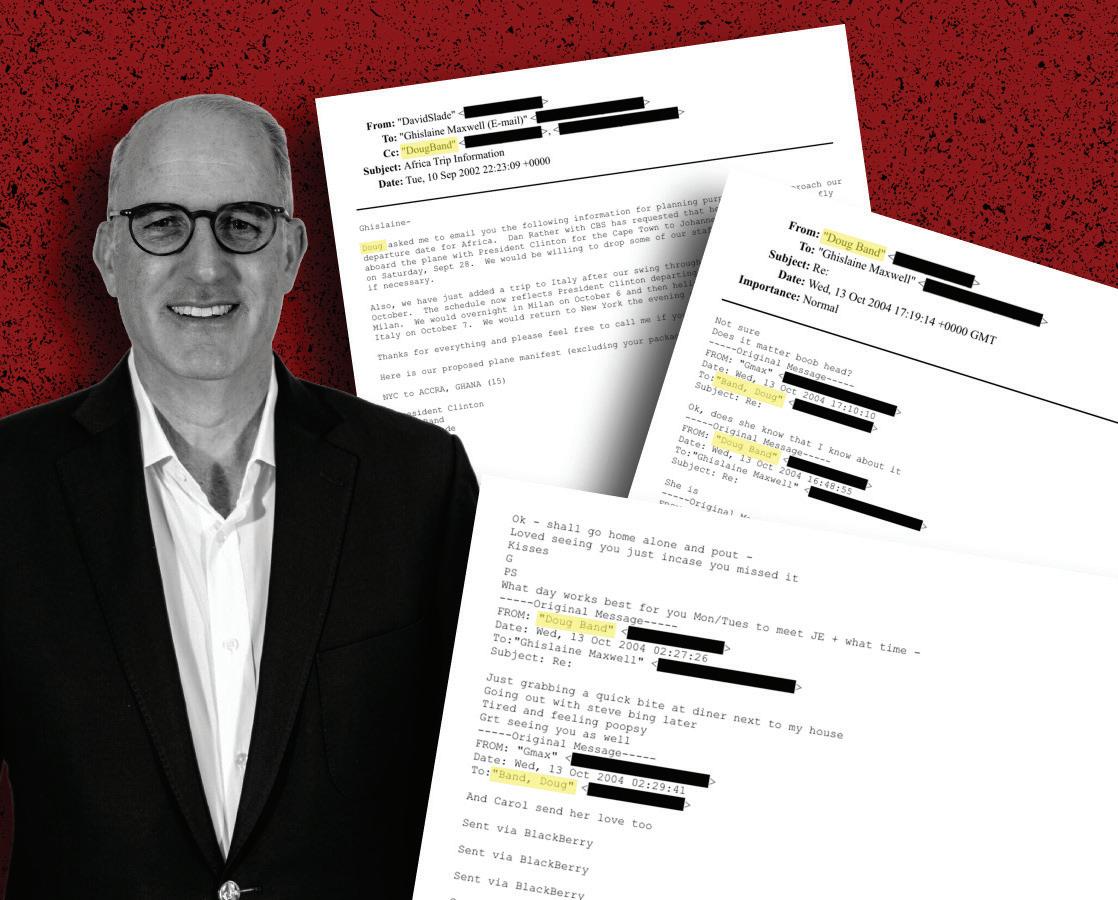
In an email chain sent Oct. 13, 2004, Maxwell wrote to Band: “Did I mention how sexy you are and how Carol and I were ploting disgustungs things w/you or I should say your body.”
Five minutes later, Band replied: “And what I would do to you 2 chicas.”
It’s unclear which Carol the pair was referencing. Other names were instantly recognizable. Ten emails sent between 2:29 and 3:42 the morning of Oct. 13 include Band telling Maxwell he was going to spend time with Steve Bing, a Hollywood financier who died by suicide in 2020.
Upon learning Band made plans with Bing, Maxwell wrote back that she would “go home alone and pout.”
“Clinton” also appears in these messages between Band and
Dylan Speicher // Alligator Staff
UF faculty scramble to make online content compliant with accessibility guidelines
New Title II regulations require sweeping updates to digital materials
By Julia Daniyar Alligator Contributing Writer
As an April 24 federal deadline approaches, UF faculty are overhauling hundreds of lectures, slides and documents to comply with updated disability access rules — leaving some overwhelmed and questioning whether they have the time or tools to get it done.
At UF, students rarely go a day without logging into Canvas or accessing online materials. As more coursework and communication move online, digital access has become inseparable from academic participation.
In April 2024, the Department of Justice updated the Americans with Disabilities Act's Title II regulations, which prohibit government entities from discriminating on the basis of disability, requiring all
Enterprise
UF computer science instructor also appears in Epstein files but s ays relationship was limited to STEM Read more on pg. 3.
public universities to ensure digital spaces are accessible. The DOJ gave universities a two-year window to comply with the new regulations.
“It’s such a double-edged sword,” said Rose Briccetti, a UF assistant professor of art. “I love my job … and I love being able to make my content more accessible or open to a broader audience. I think a lot of us are feeling really overwhelmed, and it’s across all fields.”
Briccetti said while she believes these rules are a step in the right direction for accessibility, they have “doubled her course prep time” and are changing the way she teaches. The learning curve is particularly steep in the College of the Arts, where many classes focus on visual communication, not the written word, she said.
According to a document published by
the DOJ, public entities are increasingly providing services through websites and apps. However, many of these services are not designed accessibly, making them unavailable to individuals with disabilities.
For example, people who are blind may use a screen reader to deliver visual information. If an image doesn’t include alternative text, those people may have no way of knowing what’s depicted.
Starting April 24, all UF online materials, websites and mobile applications must meet Web Content Accessibility Guidelines. According to a UF College of Health and Human Performance webpage, faculty and staff are required to go back and update any course materials that do not already meet these guidelines, including Microsoft Office files, website content, social media and videos.
Kristin Malloy, the Title II coordinator

responsible for ADA compliance at UF, said in an email her office was busy supporting all UF employee accommodation requests and could not provide a statement.
With this deadline quickly approaching, faculty have found themselves combing through hundreds of documents and presentations, rebuilding entire courses slide by slide.
For every presentation, each slide now needs to use default slide layouts and have a unique title. All charts, images and graphics must have alternative text providing an in-depth description of the image, and all videos must have captions. For some courses, this may not look like much — deleting a few photos, changing the font size and reworking the design in a few places. But for some professors, particularly those in visual fields like art and mathematics, these new requirements have them altering hundreds of slides.
UF presidential search committee member Doug Band is referenced in at least 33 documents released Jan. 30 under the Epstein Files Transparency Act. SEE BAND, PAGE 4 SEE ADA, PAGE 5
Today’s Weather
How one Gainesville compost company is rebuilding without city funds
AFTER THE CLOSURE OF BEATEN PATH’S PILOT, AN ALTERNATIVE COUNTY PROGRAM EMERGED
By Juliana DeFilippo Alligator Staff Writer
Months after the city voted to shutter Beaten Path Compost, Jackson DeWitt still sees yellow compost buckets on doorsteps around Gainesville.
After leaving his job as an electrician and joining the compost company in 2022, DeWitt saw the business expand from servicing 200 to 700 homes in three years.
That expansion came crashing down when the city discontinued the company’s pilot door-to-door program beginning this year. Now, he’s watching the company slowly rebuild what it’s lost.
Beaten Path has served Gainesville residents since 2018 by providing and collecting compost buckets from homes and businesses. After signing a contract with the city in 2021 that launched and funded its curbside pilot program, Beaten Path is back to where it started.
In October 2025, city commissioners voted to end Beaten Path’s pilot program by the end of the year. Composters can no longer collect yellow buckets from doorsteps, and the city no longer provides the company with funding. DeWitt and his team said they were surprised by the decision.
“They [the city] could have communicated a lot more with us, and they could have communicated a lot more with the residents who were participating in the program,” he said. “And they just didn't.”
Commissioners voted 4-2 to discontinue the contract after discovering Beaten Path was billing the city for the total number of households enrolled in the program, even though only about half of them were putting their buckets out for collection. In doing so, Beaten Path violated its contract, which was based on participation, according to a statement from the city.
Because the city organized the addresses of program participants, Beaten Path has been working to reach out to those residents in the hopes of getting them to subscribe for compost services.
Since Beaten Path’s city contract ended, a new compost company has entered the area — partnered with Alachua County, rather than the city of Gainesville. O-Town Compost, based in Orlando, launched its rural collection center program Jan. 3.
The company targets areas outside of residential Gainesville, and it hopes to combat food waste, according to members of its leadership team. Meanwhile, Beaten Path seeks to rebuild its own customer base.
Beaten Path Compost
Stephan Barron founded Beaten Path Compost in 2018, back when it only required a bicycle for bucket collection. Taking over from the former Gainesville Compost, Barron operated out of Grow Hub, a local nonprofit plant nursery, and served both single-family homes and businesses.
Environmental activism drove De-
Witt’s decision to join Beaten Path, he said. Composting creates new topsoil — the nutrient-rich, uppermost layer of soil — by repurposing and blending food scraps. When DeWitt learned the Earth only has around 60 years of topsoil left, he took action, he said.
“I wanted to do whatever little tiny bit I could to slow that spiral down,” he said. “Working with Stephan was fantastic and was a really good, healing thing for me to be part of.”
Beaten Path established the curbside pilot program in 2021 as part of the city’s Zero Waste initiative.
During that time, Beaten Path became renowned for its success, DeWitt said. Third parties studied its techniques, and it was diverting food waste produced by households and businesses from landfills. The city continued to expand Beaten Path’s operations.
In 2023, the city reported the pilot program had reduced greenhouse emissions by around 37 metric tons. For comparison, the average U.S. household produces around seven metric tons of carbon dioxide from food consumption and waste each year.
Throughout the pilot program, DeWitt said, the city kept track of the participating addresses and resident contact information. It sent the list of residences to Barron, who would invoice the numbers.
The city conducted an audit of the program during summer 2025 and found that the over $164,000 it was paying for the program did not align with the number of homes actually participating in the composting services.
Only around half of the people taking part were putting buckets out for collection, the city’s public works department said. Additionally, seven in 10 respondents were not willing to pay more than $5 for the service. At the time, the city was paying almost $20 per household.
In a statement released in September 2025, the city said Beaten Path was intentionally overbilling, “rather than invoicing based on actual participation as required by the contract.”
For Gainesville Mayor Harvey Ward, the decision to sunset Beaten Path wasn’t easy, but it was necessary. Despite the city commission’s initial enthusiasm for the program, its audit showed the cost was too high.
“We were serving far too few people for far too high a price tag,” Ward said.
He saw the pilot program as an opportunity to learn about Gainesville residents’ attitudes toward a composting program. Ultimately, the pilot program’s inability to grow made it impossible to continue funding.
Shortly after the announcement of the pilot program’s end, Barron stepped down from his position at Beaten Path. George O’Brien now leads the company, and he’s still upset about the city’s statement against Barron.
A puppeteer by day, O’Brien took over the company after only being with them for a year. He shares Barron’s original vision for the company and emphasizes the importance of education above all else.
“Stephan got a really bad rap, and
it was completely unfair,” O’Brien said. “Knowing him as well as I do, it made me very angry. Totally unprofessional. It seemed like something happened in a kindergarten playground.”
O-Town Compost
For Richard Devereaux, composting came after retirement — a way to give back and promote the environmental issues he had always been passionate about. When a job opened up at O-Town Compost, he got to do just that.
The Orlando-based company was founded in 2019 and expanded to cities like Tampa, Lakeland and Kissimmee before reaching Gainesville in 2024.
O-Town’s interest in Alachua County stemmed from a 2022 city ordinance requiring certain commercial establishments to collect food waste separate from other waste. The company got word of a circular economy grant in Alachua County looking for food waste solutions.
O-Town’s composting program in Alachua County is based around five rural collection centers and prioritizes unincorporated residents. The centers are scattered across the county, and residents and commercial businesses can bring their food scraps to the sites, where they are transported to Gaston Mulch & Soil for composting.
O-Town’s rural collection centers opened Jan. 3. Devereaux and other representatives handed out buckets to around 50 residents and shared information about the new program.
Because they target different populations in Alachua County, Devereaux sees O-Town as an addition to Beaten Path, rather than a competitor, he said.
“We saw ourselves as being complementary to past efforts, not to be in conflict with them,” Devereaux said.
Last year, O-Town attended the Gainesville City Commission meeting that ended with the shutdown of Beaten Path’s pilot program. O-Town advocated for the program and encouraged the city to expand its services, Devereaux said.
He hopes to see the program increase its reach even more in the coming months. Once the Alachua County program proves itself, he said, similar initiatives will pop up in neighboring counties. But progress takes time.
“Just like a newborn infant, they got to crawl before they walk, and they got to walk before they run, so it's one step at a time,” Devereaux said.
Looking ahead
As O-Town Compost educates residents about its services, Beaten Path Compost is working to rebuild relationships with subscribers. Residents can receive curbside pickup for $15 per month, while businesses can do the same for $45, in addition to other services. The company currently is not selling its compost.
Read the rest online at alligator.org.
jdefillipo@alligator.org

352-376-4458 NEWSROOM:
Editor-In-Chief
Engagement Managing Editor
Digital Managing Editor
Senior News Director
Enterprise Editor
Metro Editor
University Editor
Opinions Editor
Zoey Thomas, zthomas@alligator.org
Megan Howard, mhoward@alligator.org
Sara-James Ranta, sranta@alligator.org
Pristine Thai, pthai@alligator.org
Vera Lucia Pappaterra, vpappaterra@alligator.org
Bailey Diem, bdiem@alligator.org
Sofia Meyers, smeyers@alligator.org
Sofia Bravo, sbravo@alligator.org
Corey Fiske, cfiske@alligator.org
El Caimán Editor
Avery Parker, aparker@alligator.org
Ava DiCecca, adicecca@alligator.org
Assistant Sports Editor
Assistant Multimedia Editor the Avenue Editor
Max Bernstein, mbernstein@alligator.org
Multimedia Editor
Noah Lantor, nlantor@alligator.org
Bayden Armstrong, barmstrong@alligator.org
Copy Desk Chief Pristine Thai, pthai@alligator.org
Sports Editor Editorial Board
DISPLAY ADVERTISING
Advertising Office Manager
Zoey Thomas, Sara-James Ranta, Megan Howard, Pristine Thai
352-376-4482
Sales Representatives Cheryl del Rosario, cdelrosario@alligator.org
Sales Interns
CLASSIFIED ADVERTISING
Paige Montero, Simone Simpson, Makenna Paul, Sofia Korostyshevsky, Daniel Sanchez
Sofia Morales-Guzman, Alessandra Puccini, Olivia Fussner
352-373-3463
Classified Advertising Manager Ellen Light, elight@alligator.org
BUSINESS
352-376-4446
Comptroller Delia Kradolfer, dkradolfer@alligator.org
Bookkeeper Cheryl del Rosario, cdelrosario@alligator.org
Administrative Assistant Ellen Light, elight@alligator.org
ADMINISTRATION
352-376-4446
General Manager Shaun O'Connor, soconnor@alligator.org
President Emeritus C.E. Barber, cebarber@alligator.org
SYSTEMS
IT System Engineer Kevin Hart
PRODUCTION
Production Manager
Namari Lock, nlock@alligator.org
Publication Manager Deion McLeod, dmcleod@alligator.org

The Alligator strives to be accurate and clear in its news reports and editorials. If you find an error, please call our newsroom at 352-376-4458 or email editor@alligator.org
Crunch time: UF’s Lettuce Club holds its first eating competition
40 PEOPLE ATTENDED THE COMPETITION IN PLAZA OF THE AMERICAS FEB. 19
By Lilianne Fernandez Alligator Staff Writer
Jennifer Rodriguez Perez started her morning Feb. 19 as a typical 19-year-old UF marine sciences junior. She ended it with a new title: “head of the lettuce.”
A crowd of around 40 people gathered by a bench to watch 20 members of UF’s Lettuce Club, including Rodriguez Perez, compete in a lettuce eating competition. Many watched with their own pieces of lettuce in hand, and some even gripped personal bottles of dressing to complement the leafy greens.
The contest was Lettuce Club’s first meeting. It aims not only to teach other students about agriculture and help the Gainesville community, but to have fun while doing so, according to the club’s president.
Rodriguez Perez, the competition’s firstplace winner, said she participated to try something new.
“It’s my inner animal right now, and it just seemed like something fun to do that wasn’t studying and staying inside my room all day,” Rodriguez Perez said.
After being told she was the underdog by other competitors, Rodriguez Perez said she felt an unusual competitive edge. She felt if she was close to winning, she might as well try.
“At first, I was eating leaf by leaf,” Rodri-
guez Perez said. “But then I realized that the whole thing of lettuce could fit in my mouth, so I just decided to take big bites.”
Rodriguez Perez finished her lettuce in about two minutes and 42 seconds, and the club crowned her the “head of lettuce.”
The club’s president, 19-year-old UF plant science freshman Madeleine Lile-Delfino, was inspired to organize the contest after hearing about a now non-active UF lettuce club from a few semesters ago. She also saw similar groups at other schools.
Lile-Delfino said she wanted the club to be not only informational, but also fun for all lettuce lovers around campus.
“This is to be able to have a fun, social club, where you can go and eat and meet people and
talk to people and have a community,” she said, “but also to learn about agriculture and education and outreach.”
Lile-Delfino’s main approach to spreading the word about the club was to use social media, she said. After posting about the club and the competition, the club gained over 100 followers and had about 20 people come to compete.
“We advertised it as BYOL, bring your own lettuce,” Lile-Delfino said. “Just show up with a head of lettuce and have fun.”
Megan Woratyla, a 19-year-old UF biotechnology freshman, said she came across the lettuce competition flyer on the social media app Yik Yak. She decided to come out, enjoy the weather and watch the competition.
Woratyla thought it would be a casual competition until she saw the lettuce-eating capability of the competitors.
“At first, it started out kind of slow, and I was like, I could do better than that,” she said. “But it got really fast as time went on, and then before I knew it, someone was already done with a head of lettuce, and I thought that was really impressive.”
Amelia McKay, an 18-year-old UF environmental science freshman and Lettuce Club’s vice president, credits her roommate for the idea of the lettuce club.
“I would say our goal is kind of just to bring a bunch of people together who think that things like this are fun and interesting,” McKay said.
With the lettuce eating competition Feb.

19 being the club’s first meeting, McKay said she didn’t expect a large crowd, but she was pleased with this meeting’s attendance.
@ltfernandez8
lfernandez@alligator.org
From house cats to hourglass: UF tests Ozempic-style implant on cats
UF researcher Dr. Chen Gilor is leading a pilot study for a GLP-1 weight loss drug for cats
By Coral Uzgiden Alligator Contributing Writer
In two years, your cat could start taking the same type of medication as Oprah Winfrey.
UF veterinary professor Dr. Chen Gilor is leading a large pilot study of a GLP-1 weight loss drug called MEOW-1, or ManagEment of Over Weight cats. The study began in December 2025 and has enrolled about 50 obese felines.
GLP-1 drugs, the most common of which is Ozempic, mimic a natural hormone released from the gut after eating. They regulate blood sugar by boosting insulin production, slowing digestion and reducing appetite.
The drug was designed to treat Type 2 diabetes in humans. Now, use of the drug for weight management is rising. A Gallup poll found over 12% of U.S. adults reported taking it for weight loss last year, and several celebrities have made headlines for undergoing body
transformations while on Ozempic or similar medications.
In Gilor’s placebo-controlled study, twothirds of the cats will receive the drug, while the others will serve as controls. Researchers will follow them for three months. Owners can then choose whether to agree to a threemonth extension.
Gilor developed MEOW-1 in partnership with San Francisco-based Okava Pharmaceuticals. The drug is administered in small implants, slightly larger than a microchip, that slowly release the dose under the skin for as long as six months.
Gilor said he was inspired to lead the study because of the amount of diabetic, obese and overweight pet cats in the U.S. There are around 600,000 diabetic cats in the country, and 60% of the 70 million cats in the U.S. are overweight or obese.
Gilor has worked with the GLP-1 family of drugs for two decades, starting with his doctoral dissertation on feline diabetes. He ini-

tially intended to treat cat diabetes.
Over time, Gilor, along with the rest of the world, realized these drugs effectively treat obesity as well. He added it’s much easier to study them in the context of obesity than diabetes.
Gilor decided to test the drugs on cats because GLP-1 drugs are most effective in Type 2 diabetes. Dogs almost exclusively develop Type 1 diabetes, with only rare instances of Type 2. By contrast, about 80% of diabetic cats have Type 2.
“I’m doing this to treat obesity in cats, but the urgency for me is preventing diabetes,” Gilor said.
Upon diagnosis with diabetes, Gilor said, many cats are euthanized because owners are unwilling to treat the condition with twicedaily injections of insulin.
“[I’m] trying to prevent death from happening,” Gilor said.
Obese and overweight cats can experience greasy coats due to their inability to groom
themselves, said Dr. Kaela Navarro, an associate veterinarian at Suburban Animal Hospital in Gainesville. This can also sometimes lead to dandruff, skin flakes and skin irritation, she said.
“I think it’s something that could be good if it’s proven safe, because cats do have some trouble losing weight,” Navarro said. Navarro said she’s concerned about potential appetite loss in cats receiving MEOW-1.
“I definitely want to see how much the cats’ appetites are decreased, because I think owners overall are not going to want to see their cats not want to eat,” Navarro said.
Dr. Kimberly Hall de Vries, a veterinarian at Newberry Animal Hospital in Spring Hill, said obesity can increase the risk of diabetes, joint issues, urinary issues and certain cancers, and it can place added stress on the heart.
Read the rest online at alligator.org.
Coral Uzgiden is a contributing writer for The Alligator.




Ryan Friedenberg // Alligator Staff
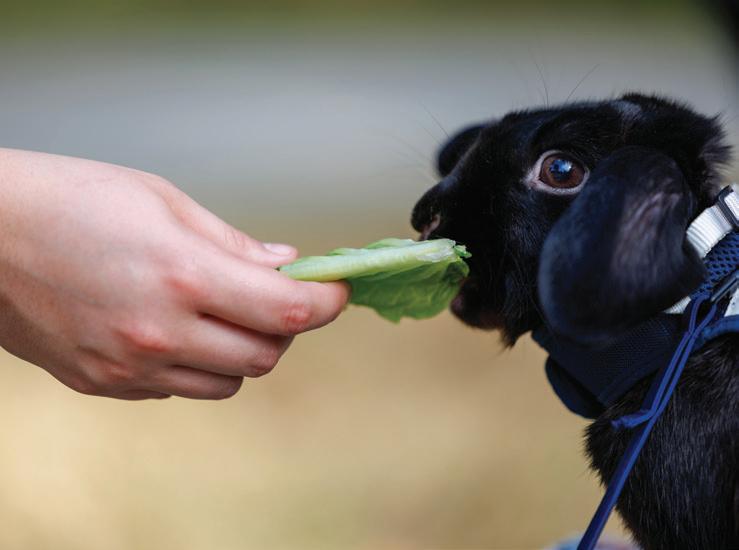
Kayak the rabbit eats lettuce, Thursday, Feb. 19, 2026, in Gainesville, Fla.
Ryan Friedenberg // Alligator Staff
A UF student takes a bite out of a head of lettuce, Thursday, Feb. 19, 2026, in Gainesville, Fla.
UF computer science instructor says emails with Epstein didn’t extend beyond STEM
DOCTORAL CANDIDATE MICHAEL LINK EXCHANGED MESSAGES WITH EPSTEIN AS AN UNDERGRADUATE IN TEXAS
By Alexa Ryan Alligator Staff Writer
Michael Link, a computer science instructor and doctoral candidate at UF, sent at least 19 emails to Jeffrey Epstein over the course of 2017 and 2018, with the released emails stopping less than a year before the financier was arrested on charges of sex trafficking.
At the time, Link was a 19- to 20-year-old undergraduate student at Southern Methodist University. His father, Scott Link, was Epstein’s lawyer in a civil litigation case earlier in the year.
The emails featured requests for advice, favors and information on Epstein’s life experiences, in addition to the scheduling of in-person and Skype meetings.
“I met Jeffrey Epstein through my father, who is an attorney and represented Mr. Epstein in 2017 on a civil matter,” Link wrote in an email to The Alligator. “The topic of our conversations was rooted in my interest in STEM and did not extend beyond that. We last spoke in 2019, long before I enrolled as a student at the University of Florida.”
In an email sent on Nov. 24, 2017, Link wrote to Epstein, “Thank you so much for your time today. I really enjoyed talking to you about math, the future, and all of the exciting opportunities the world will bring me.”
Epstein replied within minutes, writing, “we can talk about the stuff you and I know you get up to. no need for listeners.”
Link talked with Epstein about his relationship with his parents and asked him for advice on what he should do next, including asking for a job recommendation, because his parents wanted him to recuperate after college before going to graduate school, according to one email.
Several emails show Epstein taking an inter-
est in Link’s medical issues. In one email, Link wrote, “Just wanted to send along my thanks for your mentorship and support over the past months.”
Gavin Calleja, an 18-year-old UF computer science freshman, is taking Link’s class this semester after taking a different class taught by him in the Fall.
He said Link mentioned his relationship with Epstein during the Fall semester before any of the files were released. Link told him he was invited to Epstein’s island but didn’t go, according to Calleja’s recollection, and the pair were friendly with each other but not friends.
It’s unclear if Link was aware of Epstein’s trafficking operation. Although Epstein was arrested on charges of soliciting prostitution in 2006, public awareness of his private island, Little St. James, as the center of his operation wasn’t widespread until his 2019 arrest.
In one email chain dated July 20, 2018, Link asked Epstein, “How is your time usually divided? Mainly island?”
Calleja said Link almost has a “cult follow-
ing” among his students.
“A lot of the people who take his classes stay — they love the man,” Calleja said.
Calleja said he doesn’t think Link is capable of being involved in the illegal aspects of Epstein’s life, and that this knowledge doesn’t change his opinion of him as a professor.
Yoan Exposito, a 20-year-old UF computer science junior who is also taking Link’s class this semester, has the same sentiments.
“He’s a pretty good professor,” he said. “I don’t think he did anything wrong.”
Exposito said, from what he has experienced this semester, Link doesn’t give the type of demeanor of someone who would be involved with the criminal aspects of Epstein’s life.
“I’d still be comfortable with him,” he said. “He doesn’t seem like that type of person at all.”
UF spokesperson Cynthia Roldán declined to comment, citing federal student privacy laws.
@AlexaRyan_ aryan@alligator.org
High Springs launches free Narcan distribution program
THE PROGRAM PROVIDES THE COMMUNITY WITH AN ACCESSIBLE RESOURCE TO SAVE LIVES
By Savannah Wroath Alligator Contributing Writer
The High Springs Fire Department launched a free Narcan distribution program at the beginning of February. The program is a preventative measure to empower the community to respond to opioid overdoses before first responders arrive.
Narcan is a medication that reverses the effects of overdoses by blocking opioid receptors in the brain. It’s administered as a nasal spray and can quickly restore someone’s breathing in two to three minutes, said Kyle Livingston, the community risk reduction coordinator at the High Springs Fire Department. Narcan is safe to administer even if the person turns out to not be overdosing.
Livingston said sometimes the fire department can take five or more minutes to get to the scene and an-
other two to three minutes for the Narcan to work after being administered. With the accessibility of this program, it’s possible for a bystander to administer Narcan as soon as the situation arises.
At least 44 people died in Alachua County of drug overdose in 2024, according to the Florida Department of Health. The overdose rate was 16.8 per 100,000 people, slightly lower than the state average of 21.3.
There are currently three Narcan cabinets as part of High Springs’ program. One is located at the High Springs Fire Station, and two are located at High Springs City Hall — one upstairs near employee offices and one downstairs for the general public.
Each Narcan cabinet is an anonymous, grab-and-go resource for the public. Whether Narcan is kept in someone's purse or at home, the program is meant to be accessible.
Having Narcan readily available can potentially save a life before medical help arrives, Livingston said.
The cabinets are expected to expand to the local Winn-Dixie in High Springs, according to Livingston.
One will be installed in the manag-
er’s office, and Livingston will train managers on how to safely use Narcan and how to identify signs of opioid overdose. Winn-Dixie is awaiting approval to install an additional cabinet in a publicly accessible area at the store, he said.
With approval through the state in November 2025 and with a distribution report turned in monthly, the Department of Children and Families will provide additional cabinets, and the Florida Department of Health will supply Narcan for High Springs.
“This program goes far past just people suffering with addiction, because there's opioids out there just in your standard pain meds,” Livingston said.
Livingston worked with the Department of Children and Families and the Florida Department of Health to get the program started. The program has been in the works since July 2025.
“Coming back from a family vacation, I saw an old newspaper machine, and it was painted red,” Livingston said. “It said ‘Emergency Narcan.’”
After doing more research on Narcan distribution, Livingston dis-
covered Gilchrist County runs the same program. He got in touch with the Hanley Foundation, an organization that aims to eliminate addiction through prevention, advocacy, treatment and recovery support. The foundation helped with the Gilchrist initiative and supplied Livingston with two cabinets to jumpstart the program in High Springs.
Angela Noon, the Hanley Foundation's data coordinator, said the foundation has assisted 12 Florida counties in installing 248 cabinets. From those cabinets, 18,092 doses were taken from the cabinet in 2024, and 552 doses were taken in 2025.
“I think people forget that Narcan can save all lives,” Noon said.
Noon said the free Narcan distribution program can help with overdoses unrelated to drug addiction. A child being exposed to opioids or elderly people with memory loss accidentally double-dosing on their medication are possible situations where this program strives to help, she said.
“You can give it to a child as well,” Noon said. “If you don’t know what the person’s overdosing from, and you give them Narcan, there’s
UF search committee member exchanged flirtatious messages with Ghislaine Maxwell
Maxwell. As the conversation continued through the morning of Oct. 13., Maxwell wrote that Carol wanted to know if Band had slept with a best-selling author, “Clinton not withstanding.”
The sexual innuendo was one of many exchanged between the two. In 2004, Band referred to Maxwell as “baby” in a message sent Oct. 11 and “booboo” in one dated five days later. A few minutes after the latter email was sent, Band emailed Maxwell again, writing, “Naked? Philip in town early week u know.”
In a separate email chain sent Oct. 13, Maxwell asked if he could meet Epstein at 6 p.m. that Monday, at his house, and Band agreed.
Prior to the January release of files, no documents showed Band deliberately spending time with Epstein alone; instead, they were more focused on Maxwell. However, this new set of emails and documents shows a different relationship with the financier.
Several emails specify times and places of the pair’s plans together. In one, Maxwell told Band she would love to get together, but Epstein also wanted to see Band solo.
Another set of emails between Maxwell and Band, exchanged in April 2004, occurred as Maxwell accompanied Epstein as he visited his mother in the hospital.
In an email sent April 6, Maxwell signed the email: “Miss you, Gx.”
“What up g,” Band replied the next day.
“Let's talk tommorrow boobihead / Miss you / Say hi to jeeeeeeefffffffrey.”
Other documents
A memo written by an unknown entity listed Doug Band as having “pertinent information” regarding Epstein’s criminal case, alongside people like Ehud Barak, the former prime minister of Israel, and Les Wexner, who was named as a co-conspirator to Epstein’s crimes by the FBI in a 2019 internal document.
The exact date of the memo is unclear, although it references a 2016 court case as
legal background.
Another listing includes an October 2025 news article alleging Band used his consulting company, Teneo Holdings, as a “passthrough” to make money for Clinton.
A 2011 memo from Band to members of the Clinton Foundation explained Band used the company to make money for the foundation and Clinton personally.
In the memo, released by WikiLeaks in 2016, Band said he asked and encouraged Teneo clients to donate to the Clinton Foundation, with a $100,000 donation listed from the company itself.
Teneo also created and secured a number of paid speeches for Clinton, according to the memo. Band and a co-adviser further solicited funds for “in-kind services for the President and his family — for personal travel, hospitality, vacation and the like.”
The response
Andrew Larsen, a 20-year-old acting junior at UF, said the university should launch an investigation into Band’s connections with
no negative effects.”
According to the Cleveland Clinic, the signs of an opioid overdose include gurgling sounds coming from the mouth, slowed heartbeat and breathing, vomiting, weak limbs, blue lips and unresponsiveness.
Dr. Kent Mathias, the director of the detoxification and dual diagnosis unit at UF Health’s Psychiatric Hospital, treats patients struggling with addiction. A similar Narcan distribution program is in place at the psychiatric hospital, and Mathias knows how important it can be.
“I myself support it as well, because if you don’t have it, then you can’t save somebody,” Mathias said. Mathias acknowledged education is a possible missing piece with more free Narcan resources becoming available.
“While it’s being given out, the training of how to use it and how to recognize an opioid overdose doesn’t always go hand in hand,” Mathias said. “My biggest hope is that the trainings become more robust than the systems that are already using it, so people feel comfortable using it.”
Savannah Wroath is a contributing writer for The Alligator.
Epstein and Maxwell.
Larsen said UF’s response to learning of Band’s connections after the first batch of documents was released in December 2025 was “really disappointing, and not serving the students.”
“Any mention is warranting of an investigation,” he said.
The content of the additional documents further intensified these feelings about a need for an investigation by the university, Larsen added.
Earlier in February, Band provided a statement to The New York Times, saying “his communication with Ms. Maxwell occurred when he was in his late 20s and unmarried.” He said there was no physical relationship between Maxwell and him, calling Maxwell a monster, The Times reported.
In an email to The Alligator, UF spokesperson Cynthia Roldán said the university had nothing to add beyond Band’s statement to The Times. Band is still serving on the presidential search committee as of Feb. 20. @AlexaRyan_
Alachua County K-9 retires after 8 years of service
Ozzie served as a narcotics detector with the county’s drug task force
By Vanessa Norris Alligator Staff Writer
An employee of the Alachua County Sheriff’s Office celebrated his last shift Feb. 6, trading his drug-detecting talents for downtime with family.
Ozzie, an 8-year-old Dutch shepherd, spent eight years on the Gainesville-Alachua County Drug Task Force.
Ozzie’s owner, Sgt. Jeffrey Stadnicki, was recently promoted to night-shift sergeant, taking him out of the K-9 unit. Instead of retraining with a different handler, Ozzie will live out his days as a regular dog.
Ozzie came to the sheriff’s office in 2018 after gaining certification from the National Narcotic Detector Dog Association.
Born in the Czech Republic, he was transferred to the U.S. and joined a K-9 vendor in Georgia before the Alachua County Sheriff’s Office selected him to join its narcotics unit.
Ozzie assisted in drug investigations, during which he sniffed out cars, packages, airports and jails, Stadnicki said.
Stadnicki became Ozzie’s handler in April 2023, when he joined the drug task force. Ozzie’s previous owner had just left the unit, leaving him without a partner. Becoming a K-9 handler was a surprise, but Stadnicki couldn’t say no, he said.
The two spent the next three years as partners.
“It’s a dream job,” Sgt. Taylor Redding said. “Having your buddy to help you keep the community safe is pretty amazing.”
Redding oversees the ACSO K-9 unit, and he previously worked with Stadnicki and Ozzie on the drug task force.
The ACSO unit consists of 15 dogs with specializations in detection, search and rescue, and patrol. Drug detection dog certification requires a minimum of 280 hours of training, Redding said.
Stadnicki describes Ozzie as a goofy, energetic and “mouthy” dog.
“Dispatchers got to know him, because I wouldn’t have to say anything,” Stadnicki said. “I could just key up the radio, and they would hear the dog barking, and they knew it was probably going to be me talking.”
At work, though, Ozzie is what Stadnicki calls a “turnkey” dog — task-oriented, focused and highly obedient.
A few months after they became partners, Stadnicki was working a traffic stop when Ozzie alerted to the car by sitting next to it. While searching the vehicle, Stadnicki said he discovered boxes full of $317,000 in cash.
The sheriff’s office traced the money back to drug dealers throughout the U.S., Stadnicki said. The money may
have been exchanged for fentanyl, and Ozzie smelled its lingering odor on the boxes.
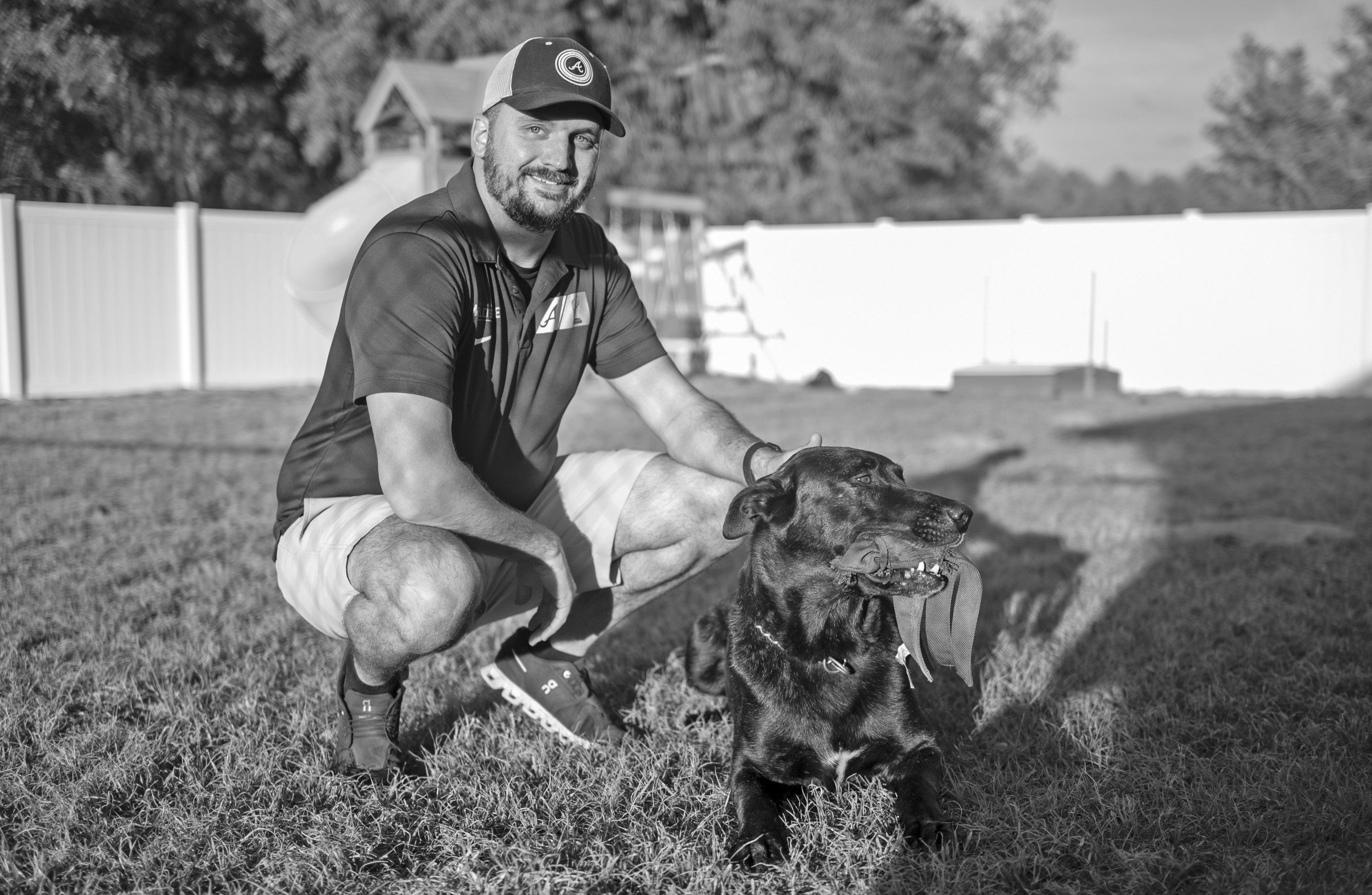
Now in retirement, Ozzie spends his days playing fetch with Stadnicki’s 2-year-old son. Ozzie and Stadnicki’s goldendoodle, Turner, run around each other in their backyard.
Still, Ozzie gets excited every time Stadnicki heads out for work, he said, thinking he’s going, too.
“I’ll give him a bone and let him chew on it as I sneak out the door,” Stadnicki said.
Lt. Bryan Jones and his K-9, a Belgian malinois named Jerry, worked alongside Stadnicki and Ozzie on the narcotics unit. When Jerry retired in June 2025, it took a few months for him to adjust to a laid-back lifestyle, Jones said.
“I would put on my uniform and go out to my vehicle, and he would run circles around the vehicle wanting to get in to go to work with me,” Jones said.
Now, both Ozzie and Jerry are stay-at-home dogs, and they dedicate their time and training to playing ball with their families.
When ACSO K-9s retire, they get an honorary last call on the radio saluting their service and any special cases they assisted with. They’re also recognized with a picture on the office’s retirement wall and a plaque for their handler.
Retired K-9s in Florida also receive up to $5,000 a year in health care benefits.
The K-9 unit is looking for another dog to replace Ozzie, Redding said. The unit will reach out to various vendors, meet candidates and eventually make a selection.
“He’ll be sorely missed,” Redding said. “Hopefully the next dog that we get will carry on his legacy.”
@vanessajnorris vnorris@alligator.org
Melrose, Fla.
UF faculty must update online content to ADA standards
from pg. 1
Professors in other departments are also experiencing issues with new compliance guidelines.
Carol Demas, a senior lecturer in the UF College of Liberal Arts and Sciences math department, said she spent 20 to 30 hours modifying just one file. Because of the complex equations they use, math professors can’t work with Microsoft Word; instead, they use a platform called LaTeX, a high-quality document preparation system standard for math and science in academia.
“I want to do what they tell me to do, but they’re not giving me any tools,” Demas said. “Help is not available. We basically have to figure these things out ourselves.”
As a coordinator for the Elementary Differential Equations class, Demas is
responsible for updating course materials dating back as far as 15 years ago. The process requires her to tag every equation across dozens of documents while responding to student concerns about reduced access to past exams and solutions.
She said many professors feel the additional accessibility requirements take time away from research and mentoring graduate students. Some professors have chosen to remove materials from Canvas altogether, she said, rather than update them for compliance.
But for instructors that oversee large courses, like Demas, that isn’t a realistic option. She said providing supporting documents, practice exams and solutions are a part of her job, even if adapting those materials significantly increases her workload.
Despite the new requirements being
announced two years ago, professors still feel unsure about how to implement them due to little guidance from the university, she said.
“We said we talked about it years ago, and that’s true,” Demas said. “But what’s also true is I don’t feel that we’ve been given the guidance or the tools to implement it correctly. And that may take several more years.”
Demas said she doesn’t personally see how the ends could justify the means — her workload has been doubled to adapt for something she’s never had a student need. But for other professors, the shift is barely noticeable.
Joseph Gullett, a UF assistant professor in the Department of Clinical and Health Psychology, hasn’t found the new guidelines bothersome at all and embraces this new phase of teaching.
Under the new guidelines, all videos
and live lectures must include captions or live transcripts to ensure accessibility for students who are deaf, hard of hearing or have auditory processing differences. However, Gullett has found displaying a running transcript while he talks has helped all students, not just those who need accommodations.
He and his teaching assistant said for every lecture, they spend around 30 minutes adjusting for accessibility. They’ve found their college has been very helpful in providing consistent access to resources and technical help across the board.
“I don’t know, really, how many people are going to care that there’s alt text on an image and use screen readers,” Gullett said. “But if, as long as one person uses it when they need it, then that’s worth the effort.”
Julia Daniyar is a contributing writer for The Alligator. ADA,
Bayden Armstrong // Alligtor Staff
Jeffrey Stadnicki poses with Ozzie, a newly retired police dog, in their backyard, Wednesday, Feb. 18, 2026, in
MONDAY, FEBRUARY 23, 2026
www.alligator.org/section/the-avenue
New Horizons jazz festival to ‘paint new narrative’ for Gainesville music scene
THE WEEKLONG JAZZ AND ADVENTUROUS MUSIC EVENT WILL TAKE OVER DOWNTOWN STARTING FEB. 23
By Isabel Kraby Avenue Staff Writer
Curating shows and bringing people together is “borderline addictive” to Steven Head.
Never before in his time as the manager of Pulp Arts, a recording studio, or in other roles had he curated a weeklong event. But Head, producer of the New Horizons festival, thought it was time the Gainesville jazz scene be celebrated.
“I felt like it was just almost self-evident that there is such an incredible music community here, specifically a jazz one,” he said. “It felt like I was connecting the dots on things that are already strong and existing.”
The first annual New Horizons festival, dedicated to jazz and adventurous music, will take place Feb. 23 through March 1 at various locations in downtown Gainesville. It will feature over 15 artists — both local and out-of-town musicians — and build up to a concluding performance by the prolific drummer, composer and producer Makaya McCraven.
Though Head said it was a sprint to put together the festival — the idea came together toward the end of fall — New Horizons was born out of relationships he and Pulp Arts have taken years to build.
Acknowledging that punk and hip-hop typically dominate the Gainesville music scene, Head said he hopes to shine a brighter light on local jazz musicians through New Horizons. But the artists in the lineup cannot be defined by any one genre or culture.
From an improvisational performance by Mike Khoury, a Palestinian American composer, to a film screening of “Soundtrack to a Coup d’Etat,” an Oscar-nominated documentary, the New
NIGHTLIFE
Horizons festival is ripe with diversity.
“A lot of the programming that I curate and Pulp Arts presents often dips into the avant-garde,” Head said. “So it’s just an opportunity to potentially present new forms of music to people who might not be exposed to them.”
Head said New Horizons presents an opportunity for the community to tap into venues where high-level jazz programming occurs regularly, like Baby J’s Bar and The Bull, both located downtown.
Fusion and funk band Dionysus, which dubs its genre “astro jazz funk,” will be on the bill Feb. 28 at one of those jazz
Everyone’s a star during Gainesville karaoke
WEEKLY EVENTS THROUGHOUT THE CITY
GIVE RESIDENTS THE OPPORTUNITY TO SHINE ON STAGE
By Christopher Rodriguez Avenue Staff Writer
Whether it’s alone in the shower or driving down the highway, everyone loves to sing, and Gainesville’s karaoke nights are the perfect place to belt it out.
While the events serve the economic purpose of speeding up otherwise slow business days for the bars that run them, these weekly traditions have also become a place where friends gather to share drinks and laugh at themselves.
A key component of a good karaoke night is the crowd, which serves as a confidence booster, said 21-year-
Sports
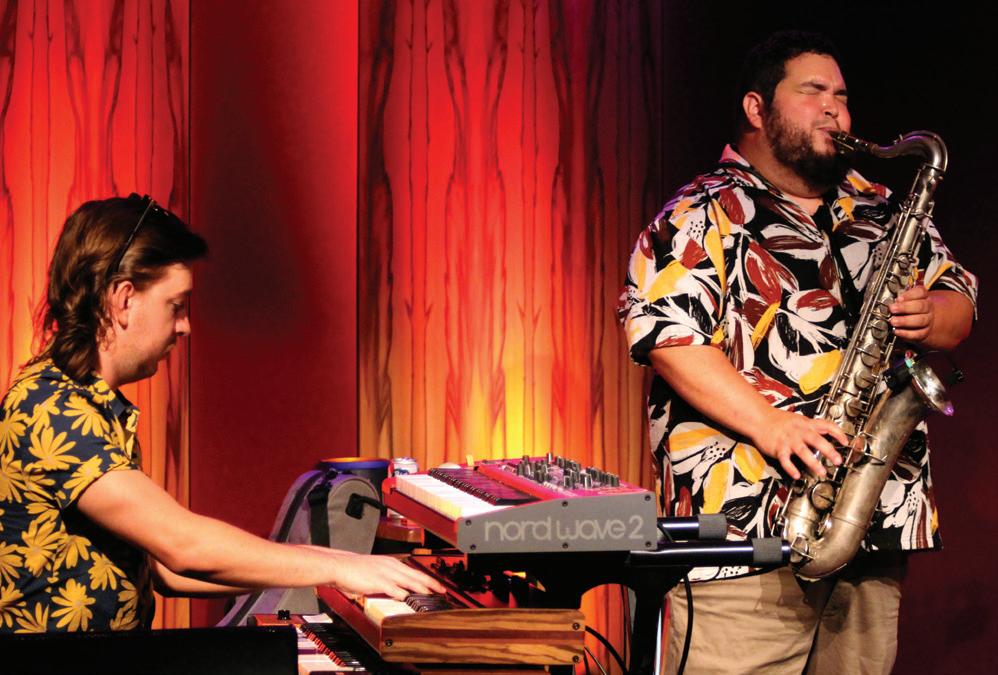
hotspots. The band has worked with Pulp Arts in the past, and it sought the studio’s help to record several music videos. Saxophonist Jose Piñeiro admires the “coalition” Pulp Arts has created in Gainesville.
Though Dionysus has played big events like the Okeechobee Music & Arts Festival and Suwannee Hulaween, 34-year-old Piñeiro is excited to be playing an intimate, “jazz-club-esque” set at one of the band’s favorite venues, Baby J’s Bar.
As an improvisational saxophonist, Piñeiro embraces the experimental style of music that New Horizons celebrates. He compared music to gastronomy, saying a musician might choose to elevate their sound as a chef would their cuisine.
“This whole adventurous genre … is more so in the line of like, ‘How do we make sonically invigorating music?’” he said.
Another of the festival’s artists, Mike Baggetta, doesn’t think of his own music in terms of genre. Head said Baggetta is one of Gainesville’s greatest guitarists and best kept secrets.
Having traveled the world with his craft, both solo and with his punk-jazz super group mssv, 46-year-old Baggetta has resided in Gainesville for the past four years. It’s unreal to him that such a small town can have as impactful a resource as Pulp Arts.
His global success didn’t come from playing it safe. Baggetta insists on taking risks and being dangerous while playing his instrument.
The guitarist will perform on Feb. 25 at Loosey’s Downtown. He hopes Gainesville locals who attend his set and the rest of New Horizons will get out of their own comfort zone.
“I do think letting people know that the festival involves musicians that are taking chances in their music, doing things that are maybe a little bit left of mainstream, is a great opportunity to get people to come out and hear and experience things that they might not be used to,” he said.
@isabelgkraby ikraby@alligator.org
old UF linguistics and French junior Elijah Zarsadias. A regular at Boxcar Beer & Wine Garden’s Wednesday karaoke night, he said the friendly crowd gives him confidence to try new things on stage without the fear of being judged.
His rendition of Whitney Houston’s “I Have Nothing” had the audience waving their phone flashlights along to the beat of the famous pop ballad. To Zarsadias, karaoke lets him build confidence, even when he’s alone.
“It’s a good way to have fun with yourself, just kind of learn to have fun alone,” he said. “I don’t take myself as serious, especially here.”
Another aspect Zarsadias values about karaoke is the community it builds. As a regular, he’s not only familiar with the others who frequent the bar, but he’s even friendly with DJ Chip Clip, who DJs the weekly event.
This sentiment is echoed by an-
Gator track athlete settles back into her home state after transferring from University of Arizona. Read more on page 11.
other karaoke regular, Jon Overman, who performed Black Flag’s “TV Party” at The Backyard Bar’s weekly Monday karaoke night. The hardcore punk song demanded lots of energy from the 38-year-old chef, and Overman met the moment, kicking and dancing all over the stage with screaming vocals.
While karaoke serves as a way for Overman to de-stress, it also keeps him connected to music as a whole. He got his start singing karaoke before becoming lead vocalist for the Gainesville band Rex Dameron. He intends to join another band soon, and karaoke serves as the perfect training ground to build his skills on stage.
“It’s a good way to shed cortisol and just be a star for a second,” Overman said.
Like an orchestra needs a conductor, a karaoke night needs a DJ. The Backyard’s karaoke DJ, Cody Brown, meets the moment. The
34-year-old disk jockey plays a crucial role in shaping the energy of the night, choosing who sings and when. He likes to prioritize newcomers — if a regular cues up five songs, they’re getting skipped.
But hearing karaoke every week comes with its ups and downs. Some nights, singers completely bomb, and Brown faces the challenge of keeping a straight face. But other nights, he’s completely blown away.
“Honestly, sometimes it pisses me off,” Brown joked. “Go join a band.”
But no matter what, Brown values the energy of the performer above all else. It doesn’t matter if you’re tone deaf, so long as you sing your heart out.
Norma Berger, a 48-year-old aging life care manager, uses The Backyard’s karaoke event to gather with friends for a night of support and serenades.
Madeline Johnson, a 33-year-old therapist, agreed stage fright isn’t something to fear during karaoke.
“I love to humiliate myself; I think it’s fun,” she said.
Johnson sang Joni Mitchell’s “A Case of You” at Boxcar alongside her best friend.
Amid the brisk weather and lights strung up against the bar’s wooden pavilion, the duo laughed as they tried their best to capture the Canadian American songwriter’s spirit. For Johnson, karaoke is a way to take herself less seriously and release her inhibitions.
“I think karaoke is a very special opportunity to publicly be a fool, and you’re actually just supported by everybody,” she said. “It’s not really about skill.”
@ChrisRodri29386 crodriguez@alligator.org
“I really enjoy singing, and it’s a chance to get together with some friends and be social,” Berger said. “It doesn’t matter if you’re a good or bad singer. Everybody is just here to have fun, and you don’t have to be nervous, because nobody is really listening anyway.”

Libby Clifton // Alligator Staff
Zack Emerson (left) plays the keys alongside saxophonist Jose Piñeiro (right) at Heartwood Soundstage, Wednesday, May 14, 2025, in Gainesville, Fla.
El Caimán
LUNES, 23 DE FEBRERO DE 2026
www.alligator.org/section/spanish
Para algunos estudiantes de la UF, la cultura latina choca con la cultura de citas universitaria
LOS ESTUDIANTES ANHELAN SERENATAS Y CHOCOLATES, NO “GHOSTING” NI APPS DE CITAS
Por Dulce
Rodriguez-Escamilla
Escritora de El Caiman
Las citas son más que simplemente deslizar a la izquierda o a la derecha o ir al club. Para muchos estudiantes latinos en la UF, las relaciones se basan en la tradición, las expectativas familiares, el respeto y los gestos.
Yeneisi Calihua, una estudiante de primer año de 18 años de nutrición en la UF, dijo que las expectativas establecidas al crecer en un hogar hispano le dieron estándares altos cuando se trataba de citas. Las novelas que veía en la televisión le crearon expectativas de flores, chocolates y salidas románticas.
“Sí creo que el amor entre hispanos es diferente en el sentido de que es muy distinto a la típica relación universitaria”,
dijo Calihua.
Aunque el padre de Calihua pueda parecer poco expresivo a veces, todavía actúa de manera muy atenta y romántica con su mamá, dijo ella. En comparación, dijo, los hombres jóvenes hoy en día son menos expresivos.
Las aplicaciones de citas se han convertido en la nueva norma para encontrar el amor. Pero Calihua cree que conocer a alguien y enamorarse toma tiempo y un esfuerzo intencional. No solo dar un clic en línea, dijo, lo cual parece ser una idea común pero equivocada sobre las citas modernas.
Calihua aplicó esas expectativas a su propia relación. Cuando tenía 15 años, su novio actual le pidió permiso a sus padres antes de pedirle que fuera su novia.
“Le pidió permiso a mis padres, porque teníamos quince años, estábamos chicos,” dijo Yeineisi. “Con el tiempo, su conexión se ha fortalecido.”
Diego Arteaga, un estudiante de primer año de 19 años de ingeniería mecánica en la UF proveniente de Venezuela, dijo que su
familia enfatizaba valores de citas centrados en la cortesía y el respeto como expresiones del romance.
Dijo que ser caballeroso y hacer pequeños gestos, como abrir puertas y correrles la silla para las mujeres, es la manera en que se espera que los hombres traten a las mujeres, un estándar fuertemente reforzado por las generaciones mayores en su familia.
Para Arteaga, el idioma también juega un papel significativo en las citas. Se mudó desde Venezuela y dijo que las barreras de comunicación pueden hacer que una relación sea más difícil.
“Mi acento, la manera en que hablo, las palabras que uso… no poder compartir, y que la otra persona no entienda una parte de tu identidad, eso podría pesar sobre la relación”, dijo.
Aidan Garcia, un estudiante de primer año de 19 años de ciencias políticas en la UF de ascendencia mexicana, dijo que la cultura mexicana romantiza las relaciones más allá de la realidad de las citas universitarias. En contraste, en la UF ha notado que las
personas tratan las citas como algo de bajo compromiso y con pocas consecuencias, y que el “ghosting” ocurre con frecuencia. Los gestos románticos vienen de mucho tiempo atrás para Garcia. Al crecer, vio cómo su abuelo trataba a su abuela. “Mi abuelo, por ejemplo, cantándole canciones a su esposa con la guitarra y básicamente dedicándole serenatas ”, dijo. Sus padres siguen los mismos ejemplos al salir en citas y mostrar gestos románticos el uno al otro. Garcia cree que seguiría los mismos pasos que los miembros de su familia si sale con alguien o tiene novia. Garcia dijo que salir con alguien de un contexto cultural diferente no es imposible si uno encuentra similitudes o intenta adoptar la cultura de la pareja en lugar de enfocarse en las diferencias culturales. Por ejemplo, ha notado algunas similitudes entre las culturas asiáticas e hispanas cuando se trata de citas y conexiones familiares, dijo.
@DulceRodrigueze drodriguez@alligator.org
For some UF students, Latino culture clashes with college dating norms
STUDENTS PINE FOR SERENADES AND CHOCOLATES, NOT GHOSTING AND DATING APPS
By Dulce Rodriguez-Escamilla Alligator Staff Writer
Dating is more than just swiping left and right or heading to the club. For many Latino students at UF, relationships are closely tied to tradition, family expectations, respect and gestures.
Yeneisi Calihua, an 18-year-old UF nutritional sciences freshman, said expectations set by growing up in a Hispanic household gave her high standards when it came to dating. The novelas she watched on TV set her expectations for flowers, chocolates and dates.
“I definitely do think Hispanics love differently, in a sense, and it is very different from your typical college relationship,” Calihua said.
Even though Calihua’s father may seem nonchalant at times, he still acts very thoughtful and romantic with her mother, she said. Comparatively, she said, young men today are less expressive.
Opinions
Dating apps have become the new norm for finding love. But Calihua believes meeting someone and falling for them takes time and intentional effort — not just one click online, she said, which seems to be a common misconception about modern dating.
Calihua applied those expectations to her own relationship. When she was 15, her current boyfriend asked her parents for permission before asking her to be his girlfriend.
“He asked my parents for permission, obviously, because we were 15, we were young,” Calihua said. “Over time, their connection has grown stronger.”
Diego Arteaga, a 19-year-old UF mechanical engineering freshman from Venezuela, said his family emphasized dating values focused on courtesy and respect as expressions of romance.
He said being chivalrous and making small gestures, such as opening doors and holding out chairs for women, is how men are expected to treat women, a standard strongly reinforced by older generations in his family.
For Arteaga, language also plays a significant role in dating. He moved from Venezuela and said communication barriers can make a relationship more difficult.
“My accent, the way I speak, the words I use ... not being able to share that, and the other person not understanding
UF students criticize university dining program, Student Government election system. Read more on pg. 8.
that part of your identity … that could weigh down on the relationship,” he said.
Aidan Garcia, a 19-year-old UF political science freshman of Mexican descent, said Mexican culture romanticizes relationships beyond the reality of college dating. By contrast, at UF, he’s noticed people treat dating as low commitment with low stakes, and “ghosting” happens often.
Romantic gestures go way back for Garcia. Growing up, he saw how his grandfather treats his grandmother.
“My abuelo for example, singing songs to his wife and the guitar and serenading her basically,” he said.
His parents follow the same examples by going on date nights and showing each other romantic gestures. Garcia believes he would follow the same steps as his family members if he dates or has a girlfriend.
Garcia said dating someone from a different cultural background isn’t impossible if one finds similarities or tries to embrace the partner's culture rather than focusing on the cultural differences. For example, he’s noticed some similarities between Asian and Hispanic cultures when it comes to dating and familial connections, he said.
Síganos para actualizaciones
Para obtener actualizaciones de El Caimán, síganos en l www.alligator.org/section/spanish.





Why FLEX isn’t flexible at all
At UF, students who have meal plans are treated to an extra serving of schoolsponsored food options. FLEX, derived from the word “flexible,” is a currency established by the university allowing students with meal plans to spend money at restaurants on campus.
Every student meal plan, from the cheapest to the most expensive, includes at least $250 in FLEX, which has made UF’s new fiat money an unavoidable part of the dining experience. These meal plans convert real U.S. dollars into FLEX bucks, maintaining a one-to-one conversion rate at all of the restaurants accepting the currency on campus. But FLEX cannot be converted back into dollars.
In theory, this sounds like an intelligent method of creating more business on campus by encouraging students to diversify where they eat; in practice, however, I’ve noticed it seems to fail its primary goal of enriching the student experience. Instead, it locks them into an illusion of choice as UF makes itself richer and more able to control commerce in Gainesville.
FLEX has worsened the lives of both students and Gainesville residents. Here’s how. FLEX keeps locally owned food options out of sight for meal plan owners. I’ve quickly realized FLEX doesn’t roll over between school years — only semester to semester. This pressures students to both ensure all of their FLEX is spent before the deadline and to repurchase a meal plan the following semester if they have any FLEX left.
Many freshmen — who are often the most reliant on meal plans — choose to consistently end up at the Subway inside of the Rawlings Hall Pod Market rather than locally owned options like Mom’s OG or Tela, which are right off campus.
One of the nuances that show a potential upside to the program is that a few of the businesses that accept FLEX are locally owned. The Paper Bag and B’z Gelati were created and currently operate out of Gainesville, which proves that if UF provided permanent spaces for locals to open restaurants (rather than simply expanding successful chains), FLEX could actually fuel the Gainesville economy and create a more cohesive network between meal plan owners and the city’s food scene.
But without said implementations, the use of FLEX continues to be a burden to the community — culturally and financially. Students miss out on culinary experiences that are not just better quality than what’s served on campus, but also often similarly priced. Buying into FLEX buys out the opportunity to try the cuisines and techniques curated by those whose dream is to serve food in their own restaurants.
This leads smaller restaurants, which lack the financial backing of campus fast-food chains, to fall into mere economic survival while FLEX-available restaurants prosper.
The fact that young adults can use FLEX to buy Starbucks or Peet’s coffee instead of using their checking accounts at local coffee shops means those chain stores have an oligopoly over FLEX-using students.
In Spring 2025, Change Party received almost one-third of the votes for the eight senators from the College of Liberal Arts and Sciences. They got, however, zero seats. With only around 64% of the votes, Vision Party took all nine seats. Vision prevailed in this district, but not by enough to deserve a sweep.
This is the problem with large multimember districts utilizing winner-take-all voting: A narrow majority can capture every seat. Under this system, the candidates with the most votes — even by a slim margin — win all available seats, leaving the minority party, even if it had a rather successful showing, with no representation. This mirrors how the Electoral College works in most states, where the presidential candidate who wins the statewide popular vote receives all of the state’s electoral votes.
What’s different in UF Student Government elections is that this process is used for multiple candidates.
Imagine Florida decided to employ the same process. People would go to the polls and vote for each of the 28 representatives in the House. Every candidate could hypothetically win their race by just a few votes. But whatever political party wins the majority of the races — whether that be 15, 20 or all 28 — that party receives all the seats, no matter the minority party’s outcome.
No American would stand for this undemocratic means of voting. So why does UF? This disparity matters so much more in close races. For example, in the four-seat Engineering district, Change got 42.2% of the votes in Spring 2025, but Vision took all four seats.
Year after year, reports from The Alligator and The Gainesville Sun list closures of restaurants off campus. Last year, restaurants like Applebee’s and TGI Fridays, with the backing from massive capital firms, closed. Even for chain restaurants, some of the biggest fish in our metaphorical pond, revenues are dipping below a sustainable level in Gainesville.
When we translate the same trend onto local businesses, wherein profits are try-or-die for feeding families, we begin to understand why food prices are rising in and around UF. With high rent and lowered traffic from students, there’s no way Saffron Spice, a family-owned business, could sell a portion of biryani for less than $16 and feed everyone at home.
In the last few years, Gainesville’s cost of living has pushed the community into dire straits. In 2025, the ALICE index shows that 54% of Gainesville households (including non-permanent residents) are either in poverty or are asset-limited, income-constrained and employed.
To put it simply, if we fail to attract students to local businesses, it’s highly unlikely they will find stability. Restaurants are closing and prices are rising partly because students can’t use their money freely when they commit to hundreds of dollars in FLEX.
I realize FLEX isn’t the primary reason for rising food costs, but its significance to the eating culture at UF affects the entire city. The big red string to pin on the board is that Gainesville is artificially becoming a deeply divided city. Students rarely pass the periphery of campus and interact with the permanent community that’s established itself here. Bringing both communities together is para-
Instead of this undemocratic voting method, SG should utilize proportional representation in these multimember districts. Proportional representation is a fairly simple method of voting. If a party wins 60% of the district’s votes, then it would receive 60% of the seats. If there are 10 seats, then it would win six. It’s that simple.
In cases where the numbers don’t come out so easily, the winning party receives the next whole number rounded up. For example, a 60% majority would translate to 4.8 seats in an eight-seat district. So, the winning party would receive five seats. This ensures that minority parties still receive representation even when they do not win the majority of the vote.
So why doesn’t SG utilize this method of voting in these multimember districts? Simply put, the current voting system favors the party with a voting base that consistently shows up to the polls, whether that be due to a passion for civic engagement or social pressure.
That party is the Vision Party, which essentially runs SG with a dominant majority in the UF Student Senate. Proportional representation would ensure that a minority party, once organized and running, could win seats. Why would those in charge implement a system to give a voice to the minority party, thus shooting themselves in the foot?
Another problem is that we cannot fathom voting for a party instead of a candidate. The idea of voting for a party instead of a person, as people do in many other countries, is foreign to many Americans.
The solution is simple.
When you reach the ballot box on election day, you vote
www.alligator.org/section/opinions
mount to bringing forth a city that uses UF as a focal point for everyone in Gainesville. So what can be done?
Sasha Morel opinions@alligator.org
First, if you’re a student with FLEX on your meal plan, you can help small businesses by using your balance on school supplies, hygiene products and prepackaged foods across the myriad of markets located on campus. This frees up money you would’ve spent on those items for food expenses, allowing you to buy groceries from farmers markets or get a meal at an off-campus restaurant.
Second, UF should reform FLEX to be an optional add-on to meal plans rather than an unremovable feature. Forcing anyone to convert their hard-earned money into a fake, backless currency to give fast food titans and billionaire-owned corporations a bigger share of the pie is counterintuitive to enriching the student experience.
When so many of us really could use a few extra dollars for medications, textbooks or saving up for our increasingly expensive futures, FLEX does nothing. It doesn’t collect interest, it doesn’t come in handy for emergencies and more than likely, you’ll lose a chunk of it by the end of the Spring.
FLEX is just about as flexible as Monopoly money — except in this game, the bank owns the board and never lets you leave.
@BySashaMorel smorel@alligator.org
for the people. When the votes are tallied up, they are tallied by party.
Using this solution in a district such as CLAS in last Spring’s election, where Vision got around 63% of the votes, they would receive six seats, and those six seats would be given to the Vision candidates with the highest votes. The remaining three seats would be given to Change, who received around 32% of the votes, a number a bit over three seats.
Democracy in the U.S. is a problem. Our president is chosen through a complicated process that rarely reflects the public will. Our districts are drawn by state bureaucrats in a way to suppress the minority party in a given state. And the choice of who to pick is often between two candidates.
At UF, however, we can fix that.
With proportional representation in these “districts” with multiple seats, every vote counts. If the majority party gets almost 100% of the votes, then it takes all the seats, and they deserve it.
If an indie party gets enough of the votes to qualify for a seat, then they get that seat. And if a third-party candidate gets enough votes to qualify for a seat, then they get that seat. Now, your vote matters. It has the influence to change every seat.
@timothydilleh tdillehay@alligator.org
Los Angeles Times Daily Crossword Puzzle
How to Place a Classified Ad:
APARTMENT FOR RENT - Furnished 1BR/ 2nd floor, heat/air not central. 10 Minutes to campus 409 SE 14th Pl. Asking $925. Grad students preferred. No drinking, drugs, smoking, pets. 55 & Older. 352-213-5942
3-9-26-3-1
You need the money to do what you will Rich at Best Jewelry and Loan has the
5 Real Estate
TO UF For Info on ALL Condos for Sale, Visit www.UFCONDOS.COM or Matt Price, University Realty, 352-281-3551 4-20-26-14-5
We Buy Houses for Cash AS-IS! No repairs. No fuss. Any condition. Easy process: Call, get cash offer and get paid. Call today for your fair cash offer: 1-321-603-3026 2-23-15-5
When the heat is on and it's bucks that you need, Best Jewelry and Loan your requests we will heed. 523 NW 3rd Ave 352-371-4367 4-20-14-5 The surf's up at "Pawn Beach". We're all making the scene. If you're in need go see Rich, Best Jewelry and Loan's got the "green"
● UF Surplus On-Line Auctions ● are underway...bikes, computers, furniture, vehicles & more. All individuals interested in bidding go to: SURPLUS.UFL.EDU 392-0370 12-1-25-15-10
Donate your vehicle to help find missing kids and keep kids safe. Fast free pickup, running or not, 24 hr. response. No emission test required, maximum tax deduction. Support Find the Children Call – Call 1-833-546-7050 2-23-41-12
CASH PAID FOR HIGH-END MEN'S SPORT WATCHES. Rolex, Breitling, Omega, Patek Philippe, Heuer, Daytona, GMT, Submariner and Speedmaster. These brands only! Call for a quote: 1-833-641-0211 2-23-36-13
We Buy Vintage Guitar's! Looking for 19201980 Gibson, Martin, Fender, Gretsch, Epiphone, Guild, Mosrite, Rickenbacker, Prairie State, D'Angelico, Stromberg. And Gibson Mandolins / Banjos. These brands only! Call for a quote: 1-833-641-6789 2-23-36-13
SOUTHEAST CAR AGENCY is looking for full/part-time car washers. Must have good driving record. Please come fill out an application in person 310 NE 39th Ave Gainesville, FL 32609 2-23-26-7-14
UP. PHONE DOWN. DON'T TEXT & DRIVE.

Submit your ad today! www.alligator.org/classifieds NEEDED HOUSE-SITTER FOR FAMILY DOGS McIntosh, FL. Needed March 30th - April 15th. Spend the nights at the house and be comfortable with multiple dogs. $1200. Call 352-207-2717 or heronwesleyd@yahoo.com 2-23-26-7-14

15 Services
stuck out in Oz and you need cash to get home, click your heels three times and think of Best Jewelry and Loan. 523 NW 3rd Ave 352-371-4367 4-20-14-15
● ● ● PLAY PAINTBALL ● ● ● Wayne’s World of Paintball 4841 S. Pine (Hwy. 441) Ocala, FL 352-401-1801 www.waynes-world.com 4-20-26-14-21
BATH & SHOWER UPDATES in as little as ONE DAY! Affordable prices - No payments for 18 months! Lifetime warranty & professional installs. Senior & Military Discounts available. Call: 1-833-754-2465 2-23-90-15 Submit your ad today! www.alligator.org/classifieds
Training?
(352) 727-4733 www.GatorCPR.com CNA Prep Classes from GatorCNA.com 4-20-86-14-16
ATTENTION OXYGEN THERAPY USERS! Discover Oxygen Therapy That Moves with You with Inogen Portable Oxygen Concentrators. FREE information kit. Call 1-833-661-3729 2-23-119-16
TESTING
Alachua County Health Dept. Call 334-7960 for app’t (optional $20 fee)
OPERATION CATNIP
the code to
District 2 – North Florida Al-Anon Family Groups Help for the family and friends of alcoholics Find a local Al-Anon Meeting at our website: alanonfla2.org 12-1-15-16
Attention: VIAGRA and CIALIS USERS! A cheaper alternative to high drugstore prices! 50 Pill Special - Only $99! 100% guaranteed. CALL NOW: 1-877-349-1243 2-23-19-16
STOP OVERPAYING FOR HEALTH INSURANCE! Reduce premiums and out-ofpocket costs while getting the coverage you need! Call now for a competitive free quote. 1-877-351-3442. Plus... Income based government subsidies are available for those that qualify! 2-23-19-16


7: COMPUTERS 8: ELECTRONICS 9: BICYCLES
FOR SALE
MOTORCYCLES/ MOPEDS


1. LANGUAGE: What does the Latin phrase "carpe noctem" mean in English?
2. U.S. PRESIDENTS: Which president was a lifeguard in his earlier life and saved 77 people from drowning over a seven-year period?
3. MOVIES: Who is the primary nemesis of Professor X in "X-Men"?
4. GEOGRAPHY: English is the official language in which Central American country?
5. LITERATURE: Which English novel features characters such as Pip, Miss Havisham and Estella?
6. MUSIC: How many strings does a standard guitar have?
7. TELEVISION: Which TV sitcom stars a character named Eleanor Shellstrop?
8. HISTORY: Which European ruler is known as the Sun King?
9. U.S. STATES: Which state is home to Mount St. Helens?
10. ANATOMY: Which human organ produces insulin?
Trivia Test Sports Quiz
won NL MVP honors in 1991.
2. What brand of athletic footwear and apparel, established in New York in 1972, sponsored the likes of Pele, Dan Marino, Lawrence Taylor, Muhammad Ali, Reggie Jackson, Spud Webb and others in the 1970s and 1980s?
3. What driver did Kevin Harvick beat by one point to win the 2014 NASCAR Sprint Cup Series championship?
4. Name the Detroit Lions offensive lineman who suffered a spinal cord injury in a 1991 game and went on to found an organization dedicated to curing paralysis?
5. In 1940, what NFL team became the first to travel to a road game by airplane when they flew from Chicago to New York?
6. He's an author ("Stan Musial: An American Life") and longtime sports columnist for The New York Times. His younger brother was a longtime NBA insider for the New York Post, NBC and TNT. Who are they?
7. What NBA team selected Jackson State's Purvis Short with the fifth overall pick in the 1978 NBA Draft?
1. Name the third baseman for the Atlanta Braves who led the National League in hits and batting average and
www.alligator.org/section/sports
TRACK & FIELD
How coming home has propelled Jade Brown to success on the track
THE FLORIDA SPRINTER’S TWO HIGH SCHOOL COACHES REFLECT ON HER JOURNEY
By Logan McBride Sports Writer
Junior sprinter Jade Brown transferred to Florida during the 2025 summer portal window, a decision that centered around more than just the school. For Brown, Florida offered a chance to compete for a prestigious program and return home to the state she grew up in.
In her freshman and sophomore seasons, Brown attended the University of Arizona, but she was raised in Coral Springs, Florida, where she attended J.P. Taravella High School.
Since becoming a Gator, Brown has enjoyed living closer to her siblings and cousins, as well as her track coaches from high school, Seitu Smith and Dawn Spann — two people Brown said grew to be a part of her family as she became a prolific high school athlete.
It was in high school that Brown discovered her love for track. Smith, a math teacher and track coach at J.P. Taravella High School, knew quickly what he had with Brown.
“From the first time I saw her and how she ran, I knew she had a lot of potential,” Smith said.
He quickly recognized Brown was powerful, with a build suited for a future in running. However, her form on starts was lackluster, with a strong first step that lacked technique, Smith said.
Smith helped her realize her potential. Her times in the 100-meter jumped from 13 seconds down all the way to a school-record 11.53 seconds in four years.
Brown helped lead her high school to a city championship in 2023, along with a fourthplace finish in the 100-meter dash during the Florida state championship the same year.
Brown and Smith have stayed close ever since, talking nearly every week, Smith said.
“She is a blessing,” Smith said. “I love that girl like she’s my only child.”
Coach Spann was Brown's club coach during high school for the Plantation H.E.A.T. Track club in Coral Springs.
Early on, Brown and Spann butted heads, Spann said, because she was a tough coach who believed in training long to short distances to avoid injuries. Brown pulled her hamstring during her freshman year, preventing her from finishing the season. Spann wanted to keep that from happening again, she said. Brown, a high school sophomore at the time, was a 100-meter runner who didn’t initially believe she should train over 200 meters. Once, after Brown ran a bad time during a 400-meter, Spann said she pushed her to work or not come back.
That was Brown’s turning point. She went to work. In the summer of 2021, her 100-meter time improved from a 12.1 to an 11.7, while her 200-meter time improved from 25.3

to 24.8.
As her times progressed, the coach and athlete began to click. By the end of high school, Brown had etched her name into school history forever. Spann even coined a nickname for Brown: Grumble.
Brown was a hardheaded athlete early in her career, often “grumbling” back to coach Spann, a trait Spann encouraged.
“You’re gonna make noise, and you’re going to transfer what you complained about into the power of your event, and they’re going to see you,” Spann said.
As Brown grumbled her way to success, her relationship with coach Spann grew with it. Their bond began to transcend the track. Spann even flew to Arizona to spend Thanksgiving with Brown in 2023, when she was unable to fly back to Florida.
At the University of Arizona, Brown continued to stand out. In her freshman year, she broke the 100-meter school record for the freshmen category with a time of 11.53, which also ranked fifth in school history in the event. By her sophomore year, she had set the indoor 60-meter record and the outdoor 100-meter record.
After sustaining an injury during the 2025 indoor season, Brown said, she lost confidence in her running, entering meets with little expectation to meet her standard.
“It would be more of a disservice to myself to expect something too high knowing it’s not going to happen,” Brown said. “I didn’t really go into the meets with any goals or anything.”
Her lack of confidence played into her decision to transfer, she said, and when she entered the portal, Florida came calling.
Brown said the opportunity to come home and UF’s extensive support staff stood out most to her when entering the portal.
“It can make the biggest difference,” Brown said. “Having multiple eyes on you, having your family around, you have support in all the places you need.”
Since beginning the 2026 indoor season with the Gators, Brown has regained her confidence and is grumbling again.
In her Gator debut, Brown opened the year with a first-place finish in the women’s 60-meter dash, with her 7.32 time beating out runners from Florida State, Central Florida and Florida A&M during the Jimmy Carnes Invitational.
Going forward, Brown’s goals for the season — and her Gator career — don’t come with any shortage in confidence.
“I want to run fast, and I want to get some school records,” Brown said. “I got some school records at my old school, but I plan to have my name in that book at this school as well.”
Brown's next chance to cement her name in the Gator record books will come when the Gators compete in the SEC Indoor Championships on Feb. 26 in College Station, Texas.
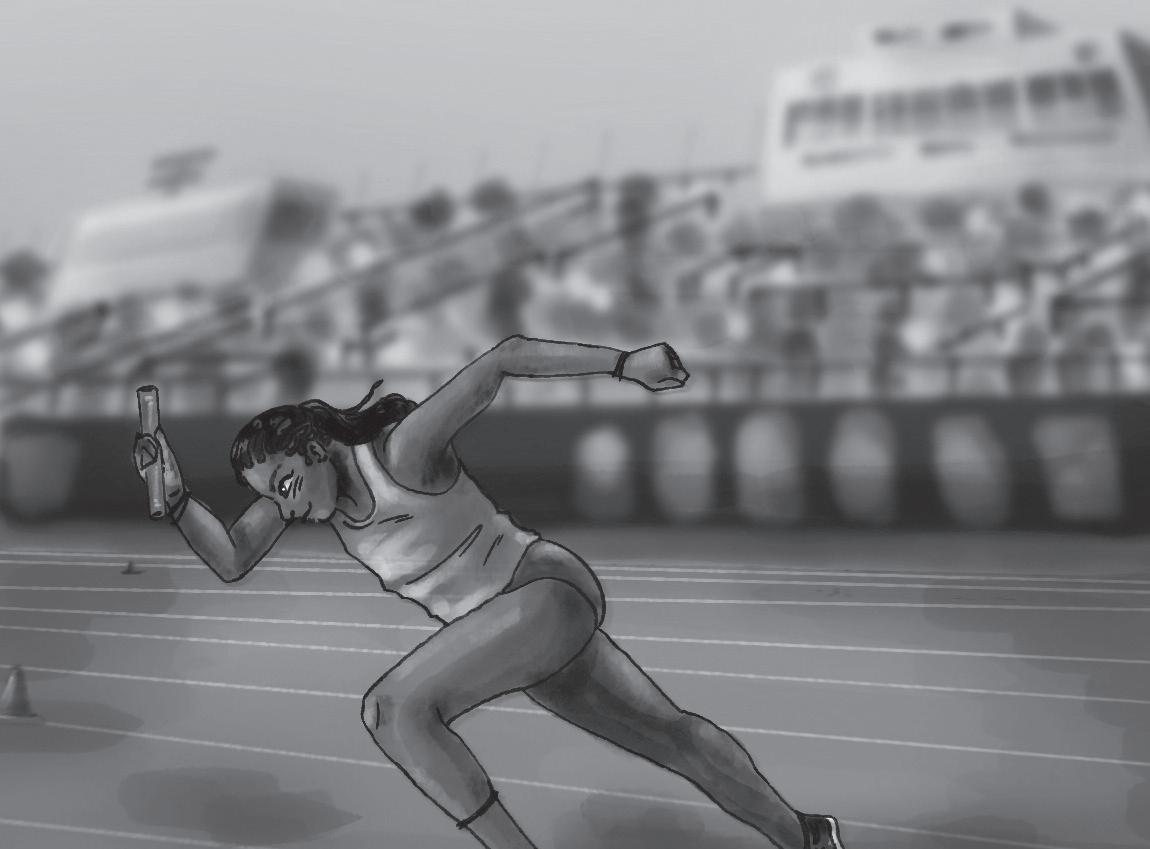


Daniela Penafiel // Alligator Staff
UF sprinter Jade Brown is a junior from Coral Springs, Florida. She spent her freshman and sophomore seasons at the University of Arizona before transferring to Florida for the 2025-26 season.
FOOTBALL
Previewing how Gators will fare at the 2026 NFL Draft Combine
NINE FLORIDA PLAYERS WILL GET THE CHANCE TO SHOW OFF THEIR SKILLS IN INDIANAPOLIS FEB. 23-MAR. 2
By Curan Ahern & Max Bernstein Sports Writers
Every player needs consistency, versatility and resilience to make a name for themselves in the NFL. Yet, with thousands of college athletes vying for professional careers, that opportunity remains out of reach for most, especially when the NFL Scouting Combine invites just 300 to 335 of the top athletes each year. To make matters more difficult, traits that correlate with success in the league can often be overshadowed in Indianapolis. During the “ultimate four-day job interview,” athleticism, position-specific measurables and professionalism reign supreme.
The multiday combine occurs each spring in Indianapolis. The league gathers invitees’ medical information and conducts interviews and psychological tests, all while viewers tune in to see where their favorite players will go. Athletes also perform physical drills, like the 40yard dash and vertical jumps.
In 2026, the combine, taking place Feb. 23-Mar. 2, selected 319 players to evaluate, down only 10 from the year prior. Of these 319 athletes, 114 come from schools in the SEC, and for the second season in a row, nine Gators earned an invitation. Only 12 other schools have nine or more invites.
Despite a lackluster 2025 college campaign, Florida possesses a wide range of elite talent catching the attention of NFL evaluators, including four defensive powerhouses, three offensive players and two special teamers.
Here’s who Florida has to offer the league in the 2026 NFL Scouting Combine, listed in order of their Pro Football Focus Big Board rankings:
Caleb Banks
Florida’s most highly touted invitee to the combine is defensive lineman Caleb Banks. A projected firstround pick, Banks ranks No. 17 on the Big Board. He played 27 games for Florida, during which he racked up 9.5 tackles for loss and 5.5 sacks, despite an injury-plagued 2025 season.
Banks is well-regarded in the scouting community for his elite mix of size, athleticism and strength, all of which will be on full display at the draft combine. He ranks above the 94th percentile of defensive linemen in height (6 feet, 6 inches), weight (335 pounds) and arm length (35 inches), per James Foster.
While his projected 5.20-second 40-yard dash time might not blow scouts away, his explosiveness off the line ranks highly among drafteligible linemen, so his agility drills will be a must-watch. Projected 40yard dash times are most commonly based off of previously reported

times recorded by the athlete.
Because of his physical attributes, it's not hard to see why Banks could lock in a first-round grade if he shows out at the combine.
Jake Slaughter
A two-time All-American, center Jake Slaughter is among the premier prospects in this year's interior offensive line group. He made 33 starts as the anchor of the Gators line, earning Rimington Trophy finalist honors in 2025.
Currently ranked No. 77 on PFF’s Big Board, Slaughter’s on-field consistency, paired with his presence as a leader, makes him a seamless fit into any locker room.
Athletically, Slaughter grades out just above-average in both size and speed, with an estimated 5.20-second 40-yard dash time. His hands measure a little under 10 inches.
One area he might surprise in, however, is in the vertical jump, where James Foster projects Slaughter to achieve a 31.5-inch mark. That would rank third among centers in the 2025 combine.
Additionally, Slaughter’s shortarea explosiveness will be on full display in the agility drills. At the center position, the unique skill will give Slaughter a leg up on his combine competitors.
Devin Moore
Arguably UF’s biggest riser during the 2025 season, cornerback Devin Moore enters the combine with plenty of momentum. He has skyrocketed up draft boards, currently ranking No. 82 on PFF’s Big Board.
At 6 feet, 3 inches, Moore’s height puts him in the 98th percentile among cornerbacks. Along with that, Moore’s athleticism was on full display this past season, and he has a projected 4.43-second 40-yard

dash time, per NFL Draft Buzz. Moore will also likely excel in interviews, which are a major part of the combine, although they don’t receive as much fan attention as physical drills. During interviews, teams are able to evaluate a player’s football IQ as well as their unique personality.
He showcased his leadership skills at the forefront of a bangedup Gator secondary in 2025, earning himself the GatorMade x Danny Wuerffel Man of the Year award. The honor recognizes the UF player who demonstrates elite character both on and off the field.
Tyreak Sapp
In a loaded and deep edge rusher class, Tyreak Sapp stands out as a productive mid- to late-round target for teams. However, the measurements at the combine might not be too kind to the No. 101 player on
some encouraging and discouraging traits.
At just under 6 feet, 7 inches, Barber is among the taller offensive tackles in this year’s class. However, he has below-average arm length (28th percentile) and hand size (17th percentile), which is a nonnegotiable for some organizations. Barber, however, is a solid athlete, and his projected 5.25-second 40-yard dash time would be among the top half of offensive tackles in the class.
George Gumbs Jr.
A productive member of the Gator defense over the past two seasons, edge rusher George Gumbs Jr. enters the combine as the No. 189 player on PFF’s Big Board.
At 6 feet, 4 inches, Gumbs stands out for his height, but he’s smaller than the average pass rusher at 250 pounds. His projected 4.75-second 40-yard dash time eases some of that sting, however.
If Gumbs were to showcase unique athleticism at the combine, he could fly up draft boards. If not, he might be locked into a Day 3 draft pick.
J. Michael Sturdivant
While he wasn’t extremely productive in his lone season with the Gators, wide receiver J. Michael Sturdivant has been on NFL radars for a long time, and it's not hard to see why.
The No. 218 player on PFF’s Big Board runs a projected 4.38-second 40-yard dash, which NFL Draft Buzz ranks in the 88th percentile. That, paired with Sturdivant’s above-average physical measurements (6-foot3, 213 pounds), could spell a solid combine for the wideout.
Another area where Sturdivant could rise is in the on-field drills, as he showcased good hands during his career. This past season, he had a 3.6% drop-rate, which ranks just around the 75th percentile, per PFF.
Trey Smack
PFF’s Big Board.
In Gainesville, Sapp played in 49 games, recording 21.5 tackles for loss and 10 sacks, seven of which came in 2024.
Sapp is in the 16th percentile in height (6 feet, 2 inches) and the 8th percentile in arm length (32 inches) among edge rushers in the class, which could forecast an eventual move to an interior defensive line position.
But like Moore, one area Sapp will shine in is his interviews. Sapp’s unique personality, highlighted by the loving relationship between him and his young daughter, will stand out with NFL personnel.
Austin Barber
After an up-and-down 2025, offensive tackle Austin Barber enters the combine with something to prove. The No. 122 player on PFF’s Big Board has a unique profile, with
While it might not be the mostwatched section of the draft combine, specialists have a chance to display their skills. And in a kicker class without a consensus top prospect, Trey Smack has a chance to make a statement in Indianapolis.
Smack, who hit a 57-yard field goal in the 2026 East-West Shrine Bowl, has shown his ability to connect from long range. His nine 50plus yarders are the most by a Gator kicker in program history.
Tommy Doman
The other Gator specialist invited to the combine, punter Tommy Doman, was solid in his lone year with the program. He earned a 92.2 punt grade from PFF, which ranked second in the country.
As one of four punters in attendance, Doman will have plenty of chances to showcase his abilities.
@CuranAhern cahern@alligator.org @maxbernstein23 mbernstein@alligator.org
Noah Lantor // Alligator Staff
Florida offensive lineman Jake Slaughter (66) prepares to snap the ball during the second half of an NCAA college football game against Tennessee, Saturday, Nov. 22, 2025, in Gainesville, Fla.
Noah Lantor // Alligator Staff
Florida edge rusher George Gumbs Jr. (34) holds Georgia offensive lineman Monroe Freeling (57) during an NCAA college football game, Saturday, Nov. 1, 2025, in Jacksonville, Fla.