After a year defined by delayed investment decisions, rising costs and fragile confidence, the UK forklift truck market is moving through a period of adjustment rather than retreat, a new financial report reveals. The latest UK Forklift Truck Market Outlook, compiled for the UK Material Handling Association (UKMHA) by Oxford Economics shows that cost pressures and economic uncertainty have influenced investment decisions throughout 2025, with many companies delaying fleet renewals or opting for shorter-term leasing.
However, the report suggests that 2026 will mark the beginning of a gradual return to improved conditions, supported by easing inflation and more favourable financing. Forklift truck orders are forecast to grow again as confidence strengthens, with further steady expansion expected through 2027. Analysts point to this as a transition into a more stable, sustainable replacement cycle rather than a return to pandemic-era peaks.
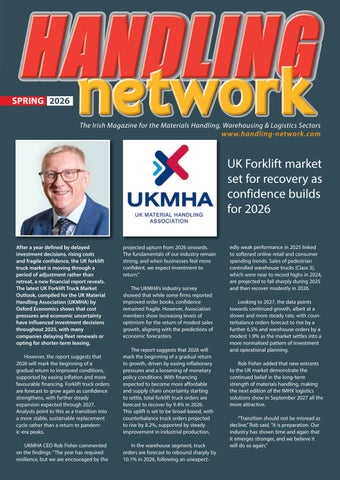
UKMHA CEO Rob Fisher commented on the findings: “The year has required resilience, but we are encouraged by the
projected upturn from 2026 onwards. The fundamentals of our industry remain strong, and when businesses feel more confident, we expect investment to return.”
The UKMHA’s industry survey showed that while some firms reported improved order books, confidence remained fragile. However, Association members show increasing levels of optimism for the return of modest sales growth, aligning with the predictions of economic forecasters.
The report suggests that 2026 will mark the beginning of a gradual return to growth, driven by easing inflationary pressures and a loosening of monetary policy conditions. With financing expected to become more affordable and supply chain uncertainty starting to settle, total forklift truck orders are forecast to recover by 9.4% in 2026. This uplift is set to be broad-based, with counterbalance truck orders projected to rise by 8.2%, supported by steady improvement in industrial production.
In the warehouse segment, truck orders are forecast to rebound sharply by 10.1% in 2026, following an unexpect-
edly weak performance in 2025 linked to softened online retail and consumer spending trends. Sales of pedestrian controlled warehouse trucks (Class 3), which were near to record highs in 2024, are projected to fall sharply during 2025 and then recover modestly in 2026.
Looking to 2027, the data points towards continued growth, albeit at a slower and more steady rate, with counterbalance orders forecast to rise by a further 6.5% and warehouse orders by a modest 1.9% as the market settles into a more normalised pattern of investment and operational planning.
Rob Fisher added that new entrants to the UK market demonstrate the continued belief in the long-term strength of materials handling, making the next edition of the IMHX logistics solutions show in September 2027 all the more attractive.
“Transition should not be misread as decline,” Rob said. “It is preparation. Our industry has shown time and again that it emerges stronger, and we believe it will do so again.”
The Irish Magazine for the Materials Handling, Warehousing & Logistics Sectors
The Irish Magazine for the Materials Handling, Warehousing & Logistics Sectors
As a leader in smart and sustainable load handling, Hiab is dedicated to building a better tomorrow. Among other things, this means fundamentally changing the way the company designs and develop new products.
Hiab’s newly confirmed, science-based climate targets are targeting the company to reach net-zero greenhouse gas emissions throughout its value chain by 2050. Before that the goal is to reach a 25 percent emission reduction by 2030, compared to a base year of 2022. In its own operations Hiab is aiming for a 50 percent reduction by 2030 and 90 percent by 2040. At the same time, it will further develop its circular business models.
“These targets provide a science-based path to reducing the emissions linked to our business,” explained Johanna Pirinen, Vice President Sustainability at Hiab: “We turn our ambition into action in many ways, and product design may be one of the most impactful measures to do this. Smart design means we can make informed decisions on how to mitigate emissions throughout the life cycle of our equipment: in material sourcing, equipment use phase and end-of-life. And it also helps us see opportunities for improving circularity.”
To learn more about smart and sustainable product design, Handling Network spoke with Johanna Högosta, Hiab’s Sustainable Offering Manager.
“Hiab has been developing more sustainable solutions in its eco portfolio since 2017. These solutions have included low-emission equipment, innovative energy-efficiency features and numerous services that keep the equipment in use for longer. Nevertheless, our design process has often focused on performance and
Making sustainability a key element in Hiab’s product design
affordability, with sustainability addressed as an afterthought. Now, we’re embedding these considerations from the start. “The focus is on embedding sustainability into the process from the very beginning to drive meaningful change.”
Johanna compares this new approach to planning a healthy recipe before you start cooking, starting with fresh ingredients. “By making sustainability a core part of the design process, we prevent wasted effort and optimise the entire product lifecycle from the outset. This means that our design teams need to ask critical questions: “How can we make it last longer, produce less waste and contribute to a circular economy?” This new mindset leads to conscious decisions about:
n Material selection: Choosing recycled or low-impact materials.
n Energy efficiency: Designing products that use less energy.
n Longevity and durability: Making products robust and easy to repair.
n Modularity: Allowing parts to be replaced without discarding the entire product.
n End-of-life planning: Ensuring products can be disassembled and recycled.
n Climate solutions: These solutions consist of equipment that cuts emissions by at least 25% compared to conventional alternatives. The reduction is verified by a third-party life cycle assessment (LCA), a systematic method for evaluating a product’s environmental impact from raw material extraction to disposal.
n Circular solutions: These services, like repair, reuse, and remanufacturing, extend the lifetime of our equipment, keeping resources in use for as long as possible.
We also offer more sustainable equipment that shows measurable improvements but don’t yet meet the 25% emission reduction threshold for the eco portfolio. This tiered approach acknowledges that every step towards sustainability is a valuable part of our journey.”
Prioritising sustainability offers significant business value. It leads to cost savings through lower energy use and material efficiency, and it sparks new ideas and business models.
Customers are increasingly willing to pay for products with verifiably low life-cycle emissions to meet their own targets and regulatory requirements. As Johanna puts it: “It’s not just greener, it’s also smarter business.” Companies that consider emissions across the full life cycle often end up being leaner, more innovative, and more competitive.
A great example of this is a project where we considered replacing steel with lighter aluminium to reduce emissions in the customer use phase. Since aluminium has an emission factor four times higher than steel, the change would have increased manufacturing emissions. We solved the challenge by sourcing recycled aluminium, which did not negatively impact manufacturing emissions.
“Our new design approach is key to accelerating the growth of our eco portfolio. The eco portfolio is split into two main categories:
At Hiab, we believe this change in our new product development process will be a key driver as we continue to be the industry leader in providing sustainable solutions,” Johanna concluded.
Hiab’S eco portfolio SH owca S ing S u S tainable innovation
Palfinger AG, founded in 1932 and headquartered in Bergheim, Austria, is the world’s leading manufacturer of hydraulic lifting, loading, and handling solutions, with a dominant 30%+ market share in loader cranes. Monaghan native Joe O’Brien recently rejoined company on the materials handling side.
what’s your role since returning to the brand?
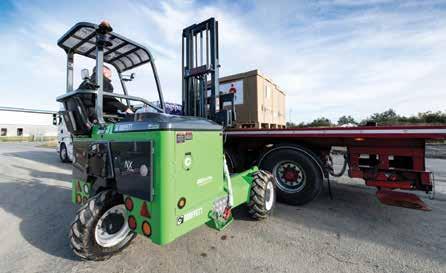
There has been some regional management restructuring at Palfinger in the past couple of years so my new role is Area Sales Manager for the Nordic and Baltic regions, together with responsibility for Truck Mounted Forklifts (TM FL) in the UK & Ireland. I’m really excited about the opportunities for Palfinger to increase Truck Mounted Forklift market share with the introduction of the latest completely redesigned FL model range.
How is the tM fl marketplace out there?
The market for Truck Mounted Forklifts is challenging in similar ways to many other sectors within the transport, logistics and materials handing industries. There was a positive rebound in terms of demand after Covid, but current geopolitical issues, inflation and higher interest rates have all created a level of uncertainty resulting in some customers taking longer to place orders. Having said that, 2025 was overall the second-best year to date for Palfinger in terms of order income and profitability. Turnover increased to almost 2.5 billion due to strong growth in Latin America as well as securing significant orders for Truck Mounted Forklifts from the US and increases in the Marine sector.
Truck Mounted Forklifts sales in general are back to pre-Covid levels and we are
One-to-One with Joe O’Brien, Area Sales Manager, Palfinger
starting to see an increase in order income from some European countries as a result of the introduction of the new models.
tell us about the new flM range launched at bauma 2025
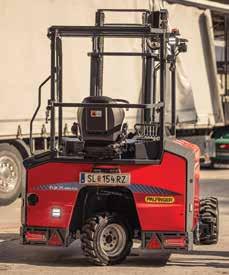
The FLM (middle seat) which was launched at bauma in Munich and has a lifting capacity of 2,500kg, is the latest addition to the new FL range. It follows on from the FLS which was previously launched at the IAA Transportation exhibition and is the first ‘side-seat’ range produced by Palfinger. It’s already having an impact in markets where drivers have traditionally preferred that position, whereas the FLM ‘middle-seat’ machine which is based on the same modular design is aimed at long term customers who prefer to have the operator seated in the centre of the machine. Palfinger is the only Truck Mounted Forklift manufacturer to offer both seat options in the EMEA region and the FLS and FLM are available with a 4-way option for handling long loads in confined spaces.
explain the 4 -way system
The latest all-wheel drive 4-way models feature dash mounted switches for rapid change from conventional forward and reverse driving modes to the lateral travelling position, facilitating the safe transport of long loads such as wood, pipes and plastic profiles in confined spaces and through doorways if necessary. Additional load supports and fork positioners are also available to further increase the stability of these long loads even over rough terrain such as building sites or farmyards.
what are some of the key features of the new models?
and the 5-degree inward seat position increases visibility and reduces driver neck strain when reversing. The footwell size is the largest in the industry and the controls have been located for optimum comfort. Optional telescopic wheel arms facilitate one-side off-loading without the need for a double reach system in some applications.
The mast has been designed for maximum durability and optimised load visibility in all directions. The engine compartment is developed for easy access to all components for daily and routine maintenance. The overall weight of the new models is the lowest in its class which enables customers to maximise payload.
Has Palfinger developed a BEV version yet?
Yes, the latest models are also available in electrically powered versions with maintenance free Lithium batteries to meet specific customer and application requirements where emission free operation and sustainability are of key importance. They are also beneficial when quiet night-time deliveries are necessary in urban areas. Palfinger has delivered a fleet of battery powered units to a large timber distributor in Germany, and the feedback is extremely positive. Battery performance is really good and having the ability to rechange the units in transit is an additional benefit. The first electric units have also been delivered to the Nordic region where electrification of the logistics and supply chain network is already well advanced and there is a well-established charging infrastructure, which gives operators greater confidence when making the transition to EV’s.
Because the new range has been completely redesigned from the ground up, this has facilitated the introduction of multiple upgrades and USPs. The swivel seat with integrated operation protection makes entry and exit really easy,
What events and exhibitions will Palfinger display at during 2026?
Palfinger will be participating in multiple regional and industry specific exhibitions throughout Europe in 2026 including the IAA Transportation in Hannover next September. In the meantime, we are continuing to demonstrate the new FL range to customers all over Europe and through our dealers, including Palfinger Ireland based in Tullamore, which have machines in stock to give operators the opportunity to see the machines in operation.
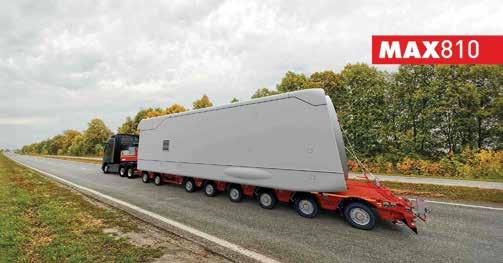
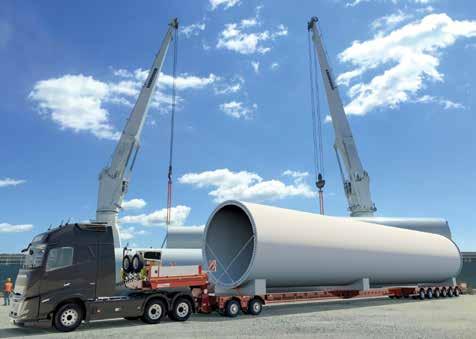
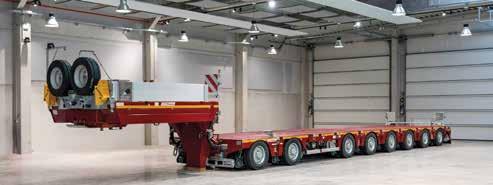
With the new MAX810 semi low loader, MAX Trailer is extending its product range and entering new service areas. The concept impresses with an optimised tare weight, a high payload and the modular combination of front bogie and loading platform.
The MAX810 is a power pack. The loading platform features 6 or 7 axles and is available with single or double extensions. Depending on requirements, it can be coupled to the gooseneck or extended with a 2- or 3-axle front bogie. The gooseneck is hydraulically liftable and lowerable. The technical fifth wheel load is 38 tonnes, designed for 6x4 or 8x4 tractor units.
The combination provides optimal cornering characteristics in any extension length, without having to manually adjust the steering bars at all. Even when manoeuvring backwards, the forced steering ensures ultimate precision.
as driving height and alignment can be conveniently controlled using the radio remote control feature.
The axle system with 17.5” pendle-axles guarantees manoeuvrability and stability, even on difficult terrain. The technology used on the MAX810 offers three crucial advantages: 600-millimetre stroke, 60-degree steering angle and a low loading height of only 800 millimetres – ideal when transporting high loads. The hydraulic functions such
Hydraulic ramps, which can be easily attached according to the needs, support the heaviest machines, whilst numerous stakes and lashing points offer flexible load securing options. The result is an optimised vehicle solution for transporting machines, bridge elements, wind turbine components or industrial parts. The complete metallisation ensures optimum corrosion protection and durability in use.
Faymonville
2026 IFOY AWARDs - Finalists announced
n Thirteen products and solutions from eight countries have reached the final round of the international intralogistics & Forklift Truck of the year (iFOy ) AWArd 2026 (iFOy ) AWArds 2026. Four companies are shortlisted for the iFOy start-up of the year Award.
n All of the finalists will face the IFOY Audit at TEST CAMP INTRALOGISTICS in the Westfalenhalle Dortmund.
n TEST CAMP INTRALOGISTICS will be open to B2B visitors on April 15–16, 2026.
n Winners’ trophies to be presented on June 25 in association with IFOY event partner AEB in Stuttgart.
The eagerly awaited list of finalists for the International Intralogistics and Forklift Truck of the Year (IFOY) AWARD 2026 have been announced. A total of 49 entries were submitted for this global innovation competition, and 17 products and solutions from eight countries have made it to the finals in Dortmund. Nominated innovations come from Crown, idealworks, Jungheinrich, KNAPP, Libiao Robotics, Locus Robotics, Mobotic, Nomagic, PureLoX SOLUTIONS, SSI Schäfer, STILL, The Mobile Robot Company, and Wiltsche Fördersysteme.
In the spin-off category: “IFOY Start-up of the Year”, AI2Connect, Koiotech, Pyck, and Romb Technologies are competing for the title.
The entries were evaluated over a six-week period to determine the panel of finalists.
“Artificial intelligence has arrived in intralogistics – as a practical tool with clear benefits, not as an end in itself. It is no longer just start-ups delivering disruptive solutions: established manufacturers, hidden champions, and mid-sized companies are demonstrating how innovation works today. The IFOY Audit is going to be a thriller,” says Anita Wuermser, Chairperson of the IFOY Jury.
two integrated customer solutions are in the final
The pinnacle of integrated customer solutions demonstrates in practice what AI and automation can achieve today: Jungheinrich at Liebherr and Locus Robotics at The Quality Group.
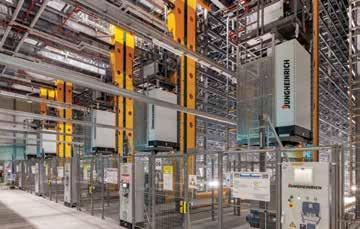
At its headquarters in Ehingen, Germany, Liebherr has built a new central spare parts warehouse, which has been consolidating the global spare parts supply for cranes since April 2025. 90,000 items are processed there via the AI-based warehouse management system (WMS) from the Hamburg intralogistics specialist Jungheinrich. The WMS controls both the pallet high-bay warehouse with 18,000 storage locations and the small-parts shuttle warehouse with 40,000 bin locations, as well as nine manual storage areas. The Jungheinrich “Data Center” module plays a central role in managing the time-critical cut-off times for shipping providers: the integrated AI calculates the optimal picking start and automatically controls the retrieval process. Within the first months, the system made over 97,000
decisions based on more than 830,000 forecasts. The result: more than 96% of picking processes were completed on time, and manual interventions were reduced by over 80%.
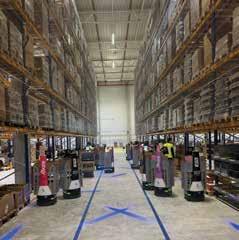
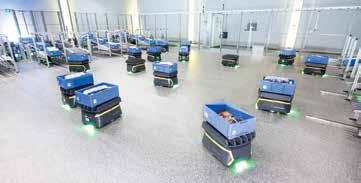
The European headquarters of the US robotics company Locus Robotics in Amsterdam implemented the LocusONE platform with 350 autonomous Origin AMRs for The Quality Group (TQG) at their Elsdorf site, integrating it with the TQG WMS. On 40,000 square meters, the system orchestrates mobile robots and employees in real time. It scales capacity flexibly in a Roboticsas-a-Service model to 60,000 orders per day, and even higher during peak periods such as Black Week. The rollout was carried out in phases alongside the infrastructure build and completed in under eight months – from go-live with around 40 robots to full-scale operation with about 350 units, connecting three halls today. The feature crucial for e-commerce is LocusONE FastPick, where robots are dynamically grouped at so-called pick walls to handle sudden peaks in demand immediately without physical rearrangement. This allows the platform to respond flexibly to campaigns from influencers.
three industrial trucks nominated for the final from the uSa, germany, and Denmark: crown, Still, and the Mobile robot company showcase the innovative potential of classic forklifts and warehouse vehicles.
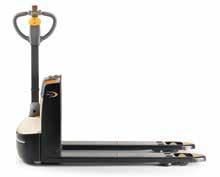
The new WJ 50 electric low-lift pallet truck by Crown impressed during the nomination phase as a modern electric alternative to manual pallet trucks. Its practical overall package combines the familiar comfort of Crown ergonomics with easy handling, intelligent battery management, and a comprehensive warranty. Although it is lightweight itself, the truck can move loads of up to 1.5 tonnes. With a front-overhang of only 370 millimeters, it is also extremely manoeuvrable, making it ideal for tight spaces such as retail and wholesale stores, truck deliveries, or kerbside operations.
Jungheinrich
Locus Robotics
STILL demonstrates how true inclusion can work in intralogistics with a five-ton forklift adapted for people of short stature, without compromising performance or safety. The special version of the RX 60-50/600 electric forklift, developed together with Barrus Engineering for Voß Edelstahlhandel, features an electrically adjustable floor plate, a customized entry, additional handholds, and hydraulic fork adjustment. At the push of a button, the forklift can be converted to standard size, making it usable by all employees. Advantageously, the conversion concept is transferable to other RX-60 models and existing vehicles.
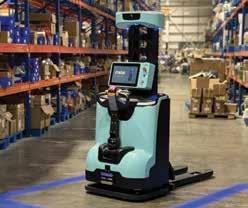
“Manual when you want it – autonomous when it makes sense”: the J1600 by The Mobile Robot Company is a pallet truck with intuitive and high-quality robotic functionality. The dual-mode machine, with a load capacity of 1.6 tonnes, can be used both as a conventional electric pallet truck and autonomously, based on 3D LiDAR localization and mapping. Especially for small and medium-sized manufacturing companies, warehouse operators, and logistics service providers with one to five operators, the J1600 provides an easy entry into automation – and can reduce manual labor by up to 80 percent.
three finalists in the robot warehouse System category Robotics is a major trend in intralogistics, and here too,
everything revolves around AI. Libiao Robotics from China, SSI SCHÄFER from Germany, and Nomagic from Poland.
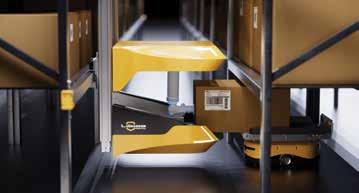
The AirRob PRO from Libiao Robotics is a climbing warehouse robot capable of handling both cartons and plastic bins directly from the shelf, without repacking. What makes it unique is that the gripper mounted on the AirRob climbing platform is rotatable, allowing bins to be picked up or set down on either side of the aisle. This reduces the number of required workstations – and in some cases, they can even be completely eliminated. Dual suction technology, an integrated conveyor,
and a vision system ensure precise, gentle handling and high storage density. The scalable system operates on standard shelving, is quick to implement, energy-efficient, and ideal for dynamic e-commerce and 3PL applications.
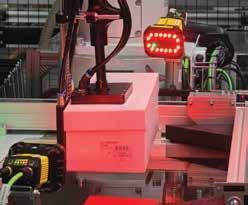
Automation meets shoeboxes: The Shoebox Gripper from Nomagic, introduced in January, handles them reliably. It is the first robotic arm with a novel mechanical gripping mechanism that can pick unsealed shoeboxes of all sizes, shapes, and orientations. Supported by an AI-based perception system, the gripper identifies each item and controls the grasp so that previously fully manual picking and sorting processes can now
Crown
Libiao Robotics
The Shoebox Gripper from Nomagic
SSI SCHÄFER
Mobile Robot Company
Still
be automated. The potential is enormous: according to industry data, shoeboxes account for roughly 20% of all items processed in a typical fashion e-commerce warehouse.
At SSI SCHÄFER, peak performance is the focus with the new FastBots Solution. This holistic solution replaces rigid conveyor technology with an autonomous shuttle fleet and seamlessly connects different warehouse types – shuttle, high-bay, or small-parts warehouses – with workstations of any kind or palletizing robots. On just a few hundred square meters, the system achieves five-digit hourly throughput, covering peak loads in e-commerce, fashion, grocery, pharma, and contract logistics. The solution scales from small warehouses to large distribution centers and can be expanded step by step with additional vehicles, workstations, and charging infrastructure –without interrupting operations.
two Specials of the Year
With Mobotic and Wíltsche Fördersysteme, two German compete in the Special-of-the-Year category.
The MoboDrive ST from Mobotic is a steering-drive unit designed for highly maneuverable AMRs and AGVs. This all-in-one component combines steering, drive, motor control, encoders, and continuous 360-degree rotation in a sealed, compact, and contamination-free module, replacing multiple individual components. Its enclosed design allows configurations that were previously impossible and additionally provides a fast, hygienic solution, ideal for electronics manufacturing, hospitals, and the food and pharmaceutical industries.
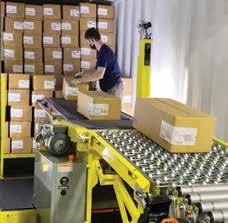
With Destuff-it from Wiltsche Fördersysteme, the jury has nominated a mobile container unloading system that assists employees with loading and unloading packages of up to 74 kilograms. Its main innovations are the flexible conveyor belt and the system’s excellent manoeuvrability – both inside the container and in the warehouse. The unit is height-adjustable,
making lifting boxes largely unnecessary. Battery operation allows it to be easily moved from gate to gate, increasing throughput by up to 100 percent and almost completely eliminating injuries. It represents a practical precursor to the still largely unresolved full automation – ideal for e-commerce, contract logistics providers, and large shippers.
three solutions nominated in the intralogistics Software category
Software has always been important in logistics, and now “AI inside” is driving disruptive approaches. The finalists from idealworks, KNAPP, and PureLox SOLUTIONS clearly demonstrate this.
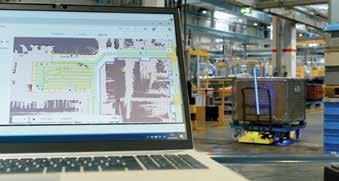
With AnyFleet from the German company idealworks, a cloud-based automation platform for intralogistics reaches the final. It surpasses traditional fleet management systems. A core innovation is the manufacturer-independent, open platform architecture, which – thanks to VDA-5050 compatibility – enables seamless integration of heterogeneous fleets from different manufacturers and levels of autonomy. AMRs, automated guided vehicles (AGVs), and manual vehicles are coordinated centrally, along with peripheral devices such as sensors, roll-up doors, or traffic lights, as well as WMS or ERP systems, ensuring material flow processes are future-proof. Real-time analytics, simulations, and digital twins additionally provide complete transparency of operations.
With its KiSoft Delivery Solution, the Austrian intralogistics provider KNAPP addresses one of the largest and still unresolved challenges in logistics: the last mile and end-to-end supply chain optimization. This AI-supported software connects warehouses, transportation, and delivery in a single system for the first time, enabling dynamic planning that adjusts in real-time to orders, traffic conditions, and available resources – ideal for next- and same-day delivery. Integrated analytics, a driver app, and seamless connectivity to WMS/ERP ensure precise delivery windows, efficient routes, and on-time dispatch from the warehouse.
MoboDrive ST from Mobotic
idealworks
Destuff-it from Wiltsche Fördersysteme,
KNAPP
PureLoX SOLUTIONS overcomes the limitations of traditional monolithic warehouse management systems with plx.wmx®. This cloud-native WMS from Germany, designed specifically for dynamic sectors such as 3PL, e-commerce, and retail, manages all logistics processes – from goods receipt and storage to picking, shipping, and returns – and supports flexible processes like value-added services or multi-pick strategies. Its patented GO-ONE Engine enables simple adaptation and scaling of processes, locations, or tenants, while API-first integration allows seamless connection to existing systems. The one-version strategy keeps all customer instances always up to date.
four Start-ups nominated Software and AI also dominate the start-up category. The jury has nominated four candidates with disruptive approaches for the spin-off award “IFOY Start-up of the Year”: AI2Connect, Koiotech, Pyck, and Romb Technologies.
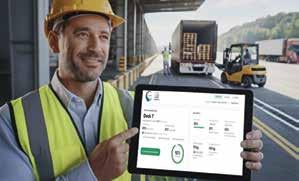
The Dortmund-based Start-up AI2Connect positions itself as a factory for specialized AI agents in logistics. AI2RampOptimizer is one of several AI agents. It addresses ramp optimization using a self-learning multi-agent system based on predictive learning, reinforcement learning, and rule-based logic. The results: 30 percent shorter waiting times, 60 percent fewer detention charges, and 15 percent lower carbon dioxide emissions. The plug-and-play system is operational in under three weeks without IT integration, with a return on investment of less than three months. The factory approach also allows scaling to yard management, route optimization, and other logistics domains.
Pyck aims to replace traditional warehouse management systems with an Open Source Toolkit for Warehousing Software. Instead of rigid standard solutions, the start-up from Schwaebisch Hall offers a modular system that models warehouse processes using AI and automatically generates software. Unlike conventional WMS, Pyck does not prescribe processes: logistics experts design workflows, data models, and user interfaces themselves – flexible, extendable, and independent of vendors. The promise: lower costs, faster
adjustments, and easier integration of new technologies such as AI and robotics.
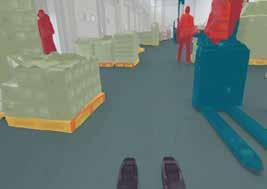
Romb Technologies from Croatia focuses on Semantic Visual Intelligence for Intralogistics. The technology translates raw image data and gives machines a visual understanding of their environment – comparable to human perception. Unlike classical vision systems, it recognizes not only fixed objects but entire object classes such as people, pallets, loads, vehicles, or drivable surfaces. This enables new applications from adaptive load handling and obstacle avoidance to facility-wide analysis. Target users include AGV and AMR manufacturers, system integrators, and end users who leverage existing cameras for real-time transparency and AI-based analytics.
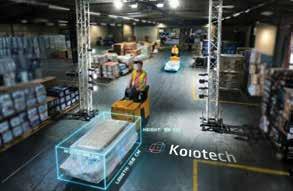
The jury also gave a go for the AI-based DeepCargo freight measurement system from the Göttingen start-up Koiotech. This AI-supported plug-and-play solution combines 3D sensors, barcode scanners, and proprietary software. It automatically measures freight of any size and shape at a stationary drivethrough gate at forklift speed of up to 17 kilometres per hour, detects missing or incorrect master data, and assigns barcodes precisely. The results: highest data quality without process interruptions, up to 50 percent fewer measurement errors, revenue increase of 3 to 5%, and 95% lower personnel effort.
PureLoX SOLUTIONS
Koiotech
Pyck
Romb Technologies
Overall Trailer Market remains buoyant going into 2026
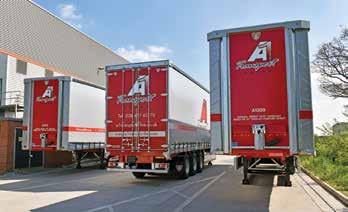
The irish trailer market in general was quite buoyant in 2025 as customers replaced older trailers which they had postponed the replacing in previous years due to covid, price volatility etc . All sections of the market were busy including curtainsiders, skeletals and Platforms. That’s according to Aidan Kinsella, Managing director, dennison Trailers, naas.
He continued: “Generally material prices stabilised in 2025, but steel prices could be affected in 2026 due to the introduction of the Carbon Border Adjustment Mechanism (CBAM) while new quotas under the tariff system which will see imports of steel from Korea, Turkey etc., which have reduced or having a significant increase in price due to exceeding targets. CBAM is where non-EU steel manufacturers whose goods are imported into the EU and will have a new charge added currently estimated at €85 per tonne and rising significantly up to and including 2032. Therefore, there two potential costs affecting steel. In 2025, we launched our new Double deck range of trailers, and this is gaining traction with some decent ordered delivered or in process.”
uS e D trailer M arket
From the Irish perspective this sector of the market has reduced in significance over the last few years. The reason for this is that since Brexit, mutual recognition of trailers built in the UK has ceased. Therefore, any trailer operator importing trailers manufactured in the UK will need to be careful as trailers manufactured in the UK for the UK since Brexit do not have European Conformity and will need potential modifications and individual approval by the NSAI before it can be fully registered in the Irish Republic. Generally, trailers for the Northern Ireland operators are not affected.
overall outlook
Generally, the Irish and UK markets looks like it will be strong again in 2026 and will have recovered from the uncertainty as all the elections were taken place in 2024, that affected confidence so much.
David Dennison, Innovation Director at Dennisons added: We found the 2025 trailer market buoyant in all markets we serve, Ireland, England and some parts of Europe (in the counties we supply). We come into 2026 with a healthy order book and
see no reason why the new year will not continue in this vain. Extended lead times will pose a challenge, particularly for special trailers. Our brand performed well with notable recovery in the skeletal market where we had lost share in the previous three years due to lack of supply. We also saw a marked increase in the curtainside market, helped by double deck sales. We don’t have any requests for e-powered axles or components to compliment electric powered trucks.
There is a nice momentum building on link steer trailers for Germany to run a 25.25m long combination using existing standard tractor units and 13.6m semi-trailers. We will launch a new variant of this at the IAA Transportation 2026 in September. Closer to home there will be further iterations of double deck curtains building on the wrap around rear revealed at the end of last year.”
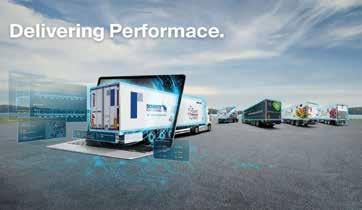
Schmitz Cargobull presented an overview of the new and used semi-trailer marketplace during 2025, and how the leading German brand performed.
It was another challenging year in the European trailer market, with ongoing investment constraint, excess capacity in the sector and increasing cost and regulatory pressure. While our overall production volumes were down 6.5% to just over than 42,000 trailers in the year to 31 March 2025, Schmitz Cargobull increased its overall European market share to 25% and produced more units than forecast.
How do you see the market performing in 2026?
The tense economic situation is set to continue. Our focus is on strengthening trailer sales and expanding our services with the aim of stabilising our economic development over the long term.
are pricing and cost of components continuing to be an issue?
Yes, costs for energy and personnel remain a concern and we continue to mitigate these with greater automation in our factories. However, we will not compromise on either investment or product quality as high-quality, reliable and durable products are the basis for low total cost of ownership for operators. Therefore, at the start of 2025, we increased our prices moderately by 3% to 5% based on the product.
Dennison Trailers
Schmitz Cargobull
any new trailers or model variants [or technology] set for launch during 2026?
We recently announced the latest generation of our popular trailer refrigeration unit, the S.CU dc90, which requires 10% less fuel than the model it replaces while offering greater refrigeration capacity. We have also introduced the S.CU d80 ePTO ready as a factory option. This offers fleets maximum flexibility as the unit can be used with both conventionally powered trucks but also in ‘full electric’ mode with eHGVs.
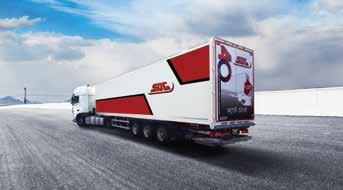
“We have seen a normalisation of the (new) trailer market with pricing and demand remaining steady, while used trailers are slow moving with prices at a consistent low,” said Paul Bratton, SDC Group President. “For 2026, SDC has over 3,000 trailers on order currently so we will see another fair year but competitive pricing is and will continue to supress margins, with the used trailer market again being low pricing with a glut of stock as the larger fleets consolidate. For SDC we achieved 8% more than forecast in terms of production numbers.”
is pricing and cost of components continuing to be an issue?
“No these elements remains steady, availability was temporarily hit due to tariffs, it remains to be seen if there is any further disruption.”
“At Tiger Trailers we would describe the economic climate during 2025 as having been challenging for ourselves and the UK and Ireland trailer industry generally. We would attribute this to a range of factors, including increased costs, and reduced production output due to some operators delaying their decision making, due to the economic climate, choosing in some cases to extend the life of their trailers or pursue shorter term solutions like renting. We are, though, confident over our future growth plans for 2026. Our product range is wide, with particularly strong interest in and orders placed for our moving deck
double deck fridge trailer. Also, we are continuously developing new products and enhancing our finance and rental solutions.
Curtainsider production reduced during 2025, which we believe was experienced by all trailer-builders alike - but Tiger’s box vans, moving double decks, rigid bodywork, and temperature-controlled products all performed strongly.
Supply chain costs remain high, which has inevitably led to price and margin pressure in the industry. We have however mitigated this where possible by passing on efficiency savings that we have realised in our products and processes.
There is definitely and interest in electrification and so in 2026 we will be launching our e-axle fridge trailer which is set to deliver significant CO2 savings over standard diesel fridge engines. Regenerative axles are a big area of focus for Tiger, representing a more environmentally friendly drive solution for customers by packing energy recovery capabilities into a more compact footprint, as sustainability becomes more important than ever for us and our customers.
With single-temperature variants now proven and in operation on several prominent operators’ fleets, 2026 will see the launch and take-up of the multi-temperature version of our moving deck double deck fridge trailer.”
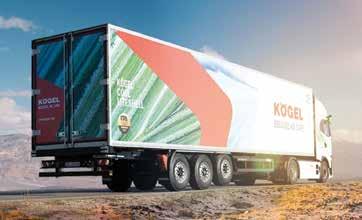
Newcomers to the Irish market Kögel Trailers, hit the ground running with immediate conquest sales. The German brand’s product range are sold under the new established banner of Horizen Trailers, based in Dublin, with well-known industry expert Andy Freeney, at the sales helm.
“For us with Kögel trailers, it was effectively our first year in business so coming with a new product to market our expectations were realistic but sensible,” explained Andy. “We performed better than we expected so that was a good start for us. What we saw in Ireland was a general softening of the market in late Q3 and into Q4 2025, which generally is the busiest time for trailers, so it will be interesting to see how Q1/26 goes. The general feeling among customers from our experience is that the HGV companies have overcooked the pricing and there should be a softening, Let’s see.
There is an interest in electric e-axles and we have the first trailer going into service this month, and have priced quite a few more and expect to win some of that business, For companies to invest they require help from their customers and Government support due to the price of this equipment.”
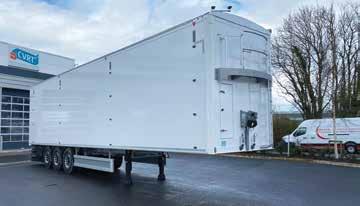
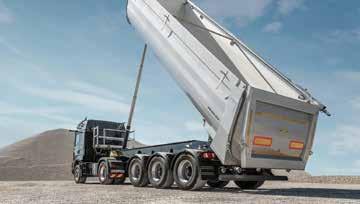
From the Setanta Vehicle Sales North perspective, as authorised importer for Meiller tippers, Kraker walking floor trailers and D Tec skeletal and vacuum tank trailers, overall, 2025 was a year of steady but more considered investment in
SDC Group
Kögel Trailers
Tiger Trailers
trailers, compared to the softer heavy truck registrations and a stronger focus by operators on extracting maximum utilisation and payload from existing fleets. While some high volume segments eased, demand for well engineered, specialist semi trailers remained resilient where equipment is central to safety, efficiency and compliance.
Within this environment, Setanta Vehicle Sales North performed well across all three brands. Meiller tipping semi trailers continued to appeal to customers in aggregates, construction and infrastructure, who value robust chassis and bodies, stable tipping characteristics and long term reliability in demanding site conditions.
Kraker walking floor trailers maintained strong demand from waste, recycling, biomass and agri bulk operators, where non tipping discharge, versatility and safe unloading on marginal ground are important advantages.
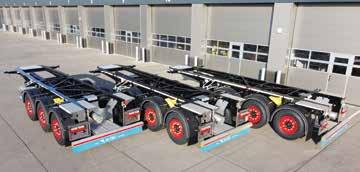
D Tec skeletal and tank trailers are well positioned in container, bulk liquid and waste streams, with lightweight, practical designs aimed at efficient handling of bulk liquid waste and by products within biogas and wider waste management chains.
Across all brands, repeat business from existing operators and new customers coming to the marques for the first time contributed to a healthy mix of orders in 2025, with a clear trend towards higher specification, long life equipment.
o utlook for 2026
Looking ahead, Setanta expects the Irish semi trailer market in 2026 to be broadly stable in volume but with further emphasis on specification, uptime and total cost of ownership. Operators are using replacement cycles to move towards more versatile and better equipped trailers that can serve multiple contracts and seasons, rather than like for like swaps.
Opportunities are strongest in sectors such as construction and infrastructure, waste and recycling, agri bulk and energy
related flows (including residues for biogas), and port related traffic. In each of these sectors, there is a clear requirement for modern trailers that support customers’ ESG, environmental and safety objectives, an area where Meiller, Kraker and D Tec all have strong offerings.
p ricing, co M ponentS an D lea D ti M e S
Pricing and component costs remain a key consideration for customers, but conditions are more stable than during the most volatile post pandemic period. While material and component prices remain elevated versus historic norms, greater predictability is allowing more accurate budgeting and quoting for both single unit and fleet orders.
Lead times have improved overall, though bespoke builds and highly specialised specifications still require early engagement and planning. Setanta continues to work closely with Meiller, Kraker and D Tec to manage specification, production slots and logistics so that customers receive realistic delivery timelines and clear communication from order through to handover.
e lectrification an D new tec H nolog Y
Interest from operators running, or planning to introduce, electric trucks is growing from a low base, and the conversation is increasingly about whole combinations rather than tractors alone. Larger fleets in particular are exploring how trailer specification can support decarbonisation and energy efficiency, including the role of e axles, electric refrigeration and weight optimised designs.
For now, the primary focus for most trailer buyers remains weight, robustness, safety and operational efficiency, but more customers are asking how their next generation of trailers can be specified in a way that does not limit future use with alternative drivetrains. Setanta is actively engaging with its manufacturing partners to ensure that Meiller, Kraker and D Tec products can be configured with this transition in mind where required.
n ew pro D uctS an D D evelopM entS for 2026
In 2026, Meiller will continue to refine its tipping semi trailers with developments in weight optimisation, corrosion protection and safety systems tailored to Irish conditions. Kraker will further develop its walking floor range with configurations and options suited to Irish and UK waste, recycling and bulk markets. D Tec will continue to evolve its skeletal and tank trailer portfolio, including vacuum tank trailers used for bulk liquid waste and by products in biogas and waste management chains, with a focus on payload, ease of operation and compatibility with modern fleet requirements.
Kraker Meiller
D-TEC
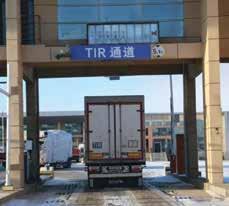
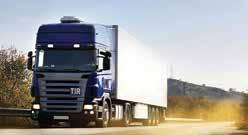
Supporting the rapid growth in more effective road transport routed across Asia, new TIR Green Lanes have opened at China’s Erenhot border crossing, significantly accelerating the transport of goods.
*TIR Green Lanes refer to specialised, fasttracked customs lanes for trucks operating under the TIR (Transports Internationaux Routiers).
TIR Green Lanes which enable vehicles travelling with TIR carnets to be processed in a dedicated lane at the border crossing, are now operational on both sides of the strategic Erenhot–Zamiin-Uud border crossing between China and Mongolia.
TIR Green Lanes on both sides of the border are an example of harmonisation best practices and the streamlining of secure transit.
International Road Transport (IRU) Union Chief Representative for East and Southeast Asia Ran Wang said: “Strengthening dialogue and collaboration with authorities and local partners is key to operational success. The new TIR Green Lanes at Erenhot are a direct result of these engagements, ensuring smoother processes and providing benefits for local companies relying on this crucial corridor.”
The establishment of TIR Green Lanes forms part of IRU’s ongoing efforts to advance trade facilitation at strategic border crossings along major international corridors.
China opens TIR Green Lanes
Working closely with members, customs authorities and international institutions, IRU has helped implement similar measures in several more countries.
Already trailers can complete journeys between depots in Europe and China in seven to ten days and improvements in road standards, the development of hydrogen and other alternative vehicle fuels could further enhance the potential of road transport as quick, clean, and economical players in the supply chain.
ferry lobby group demands pause in eu etS implementation
Interferry, the global association for the ferry industry has called for an immediate halt to the further phasing-in of the EU’s Emissions Trading Scheme (ETS) for the maritime sector. This demand follows the recent EU decision to continue exempting road transport from a parallel ETS mechanism. Interferry claims that the present surrendering obligation for maritime emissions should remain frozen at the 70% level implemented in 2025 and not increase to the planned 100% in 2026, or at least until similar rules are put in place for the road transport industry. There are also issues concerning how the funds that are currently being collected for decarbonisation are being used. The ferry companies are concerned that the ETS charges, which they must add to their rates, can make ferries uncompetitive with road and rail in Europe.
charges increase at Dublin port
Charges levied by Dublin Port relating to general cargo, containers, trailers etc. are increasing by 5% from March 1st. Vessel handling charges will also increase.
A new infrastructure levy of €15 per unit is being applied to laden containers and trailers. The port advises that the purpose of the levy is to help fund the Port Development projects which are
currently underway or in planning. The ports of Rosslare Europort and Waterford do not have any present plans to impose such charges.
The increases in Dublin charges, together with the significant rate increases being sought by the ferry companies, are worrying hauliers who carry low-cost items, typically materials for use in the construction industry to Britain. This represents a substantial amount of low margin traffic and without trailer flows to and from Britain would become lopsided forcing further rate increases.
container tracking and monitoring continues to improve
The rapid implementation of container tracking systems by major shipping lines and other operators has significantly increased shipper trust in shipping using this mode. It is estimated that about 20% of the global fleet is monitored throughout its journey from cargo shipper’s premises to customer’s
warehouse. Significant work is underway in East Africa for example to switch fruit and vegetable traffic from air freight to shipment to Europe in reefer containers. This is due to the ability of the cargo owners to control the condition of the cargo and avoids the need to stow and re-stow the goods at various stages throughout their journey.
As volumes being shipped in this way increase, certain shippers have been putting in place two monitoring devices, one hidden away, in each container which operate independently and reduce the risk of theft or damage en route.
Text: Howard Knott - contributor@fleet.ie
FUNDING SOLUTIONS
With extensive experience and knowledge across the transport industry, our team of specialists are committed to finding the right funding strategy for your business.