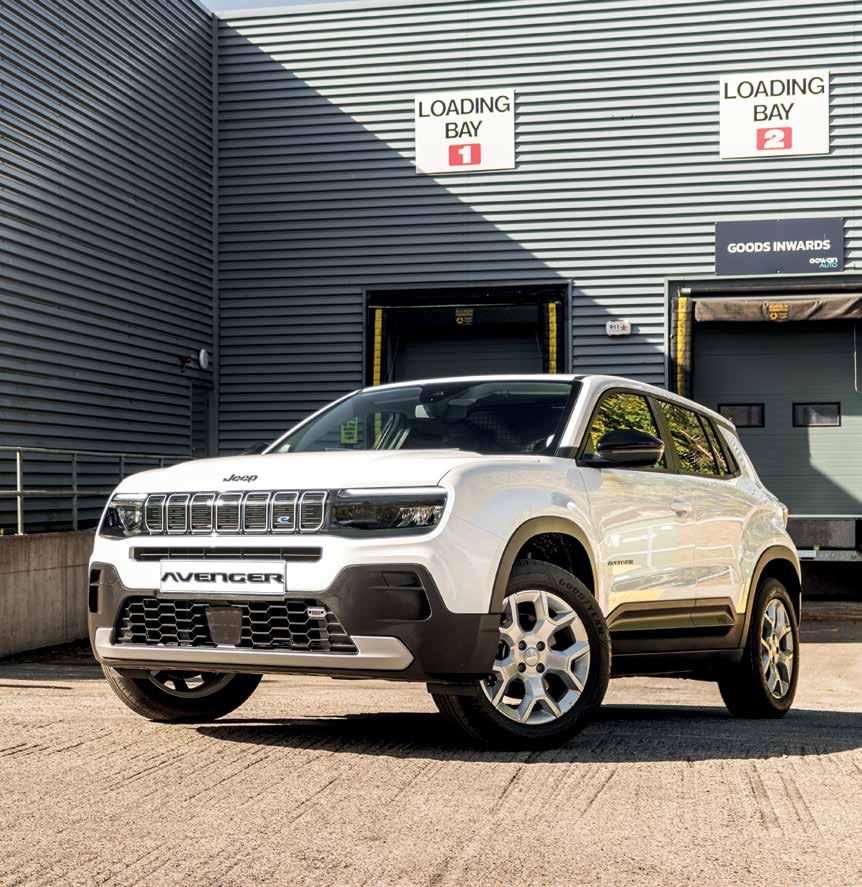
*Fuel consumption Jeep Avenger e-Hybrid range: 4.9-5.0 /100 km; CO2 emissions: 111-114g/km. Electric energy consumption Jeep Avenger Full-Electric range (kWh/100km): 15.4-15. 7 kWh/100km; CO2 emissions: 0 g/ km. Autonomy Jeep. Avenger Full-Electric range: 394-400km. Type approval values determined on the basis of the WLTP combined cycle. Values indicated for comparative purposes. Important: the actual electric energy consumption values may be strongly different and may vary depending upon the conditions of use and on various factors such as: options, frequency of electric recharge per kilometres travelled, ambient temperature, driving style, speed, total weight, use of certain equipment (air conditioning, heating, radio, navigation, lights etc.), tyre types and conditions, road conditions, external climatic conditions, etc. Jeep. is a registered trademark of FCA US LLC.
Fleet Van & Utility Magazine, D’Alton Street, Claremorris, County Mayo, Ireland.
Tel: +353 (0)94 9372819
Email: enquiries@fleet.ie
Printed in Ireland
Editor: Jarlath Sweeney
Contributors: Cathal Doyle, Stefan Bowman (IVOTY)
Photography: Jarlath Sweeney, Cathal Doyle
Administration: Orla Sweeney
Advertising: Mary Morrissey,
design: Crackerjack Design House
Disclaimer: Fleet Van&Utility Magazine management can accept no responsibility for the accuracy of contributed articles or statements appearing in this magazine and any views or opinions expressed are not necessarily those of Fleet Transport management, save where otherwise indicated. No responsibility for loss or distress occasioned to any person acting or refraining from acting as a result of the material in this publication can be accepted by the authors, contributors, Editors or publishers. The Editor reserves the right to make publishing decisions on any advertisements or editorial article submitted to the magazine and to refuse publication or to edit any editorial material as seems appropriate to
MUTEC TRUCK & VAN CENTRE
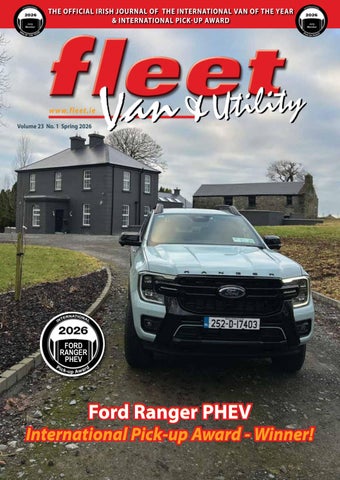
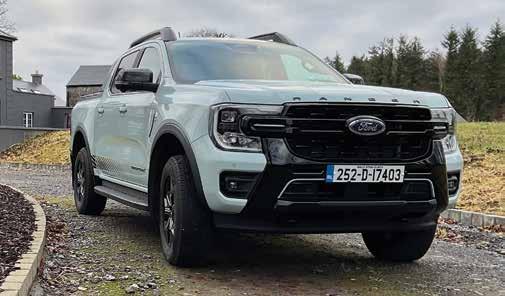
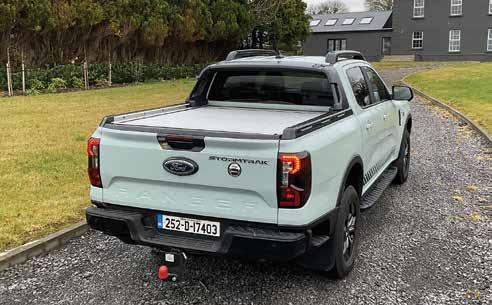
To coin a phrase from a famous horror-thriller movie involving a hungry, killer shark, Ford Pro needs to install a bigger trophy cabinet to house the growing list of accolades its best-selling Ranger Pick-up is continually winning.
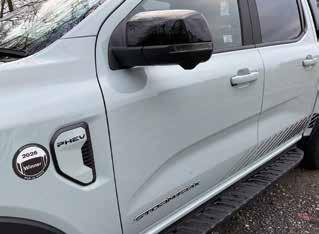
Its most recent achievement was for the new Ranger PHEV which scored top marks in the International Pick-up Award (IPUA) 2026 competition, held in Bulgaria, with the trophy subsequently presented to the winning manufacturer at Solutrans 2025, in Lyon, France. The Ford Ranger pick-up has now scooped this prestigious prize on no fewer than four occasions since the IPUA Award was introduced in 2009.
Full details of this biennial group test session were featured in the November edition of Fleet Transport’s Fleet Van & Utility supplement.
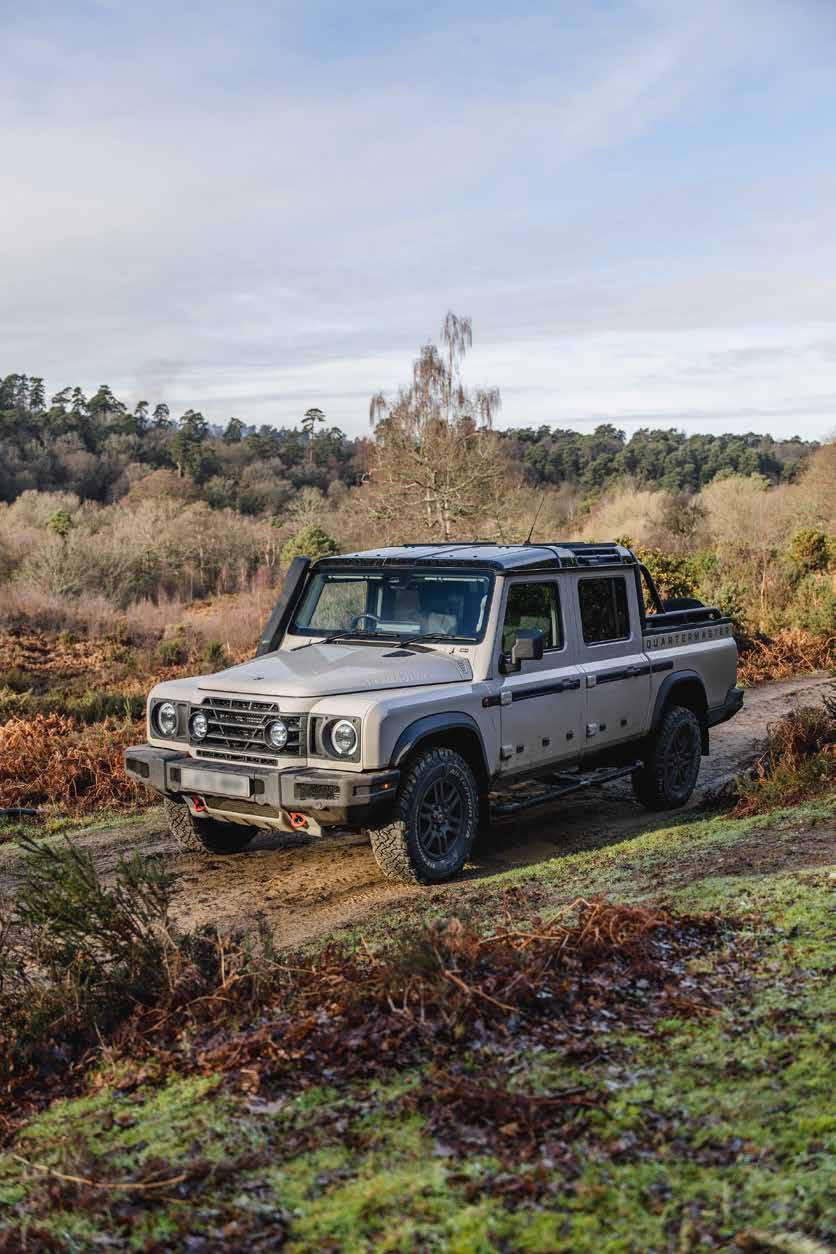
The new Ranger PHEV - plug in hybrid, was up against strong opposition in the shape of the INEOS Grenadier Quartermaster and a number of Chinese newcomer models, with contenders put through their paces during the group test days, undertaken by members of the International Van of the Year (IVOTY) jury.
In their post-test submissions, IVOTY & IPUA jury members outlined their reasons for why the Ranger took the honours, A sample of that feedback is featured as follows:
“The Ranger invests the capital accumulated thanks to its successes not only to grow the variety of its range, but also keeping the segment alive with the best possible alternative to diesel for a pick-up.”
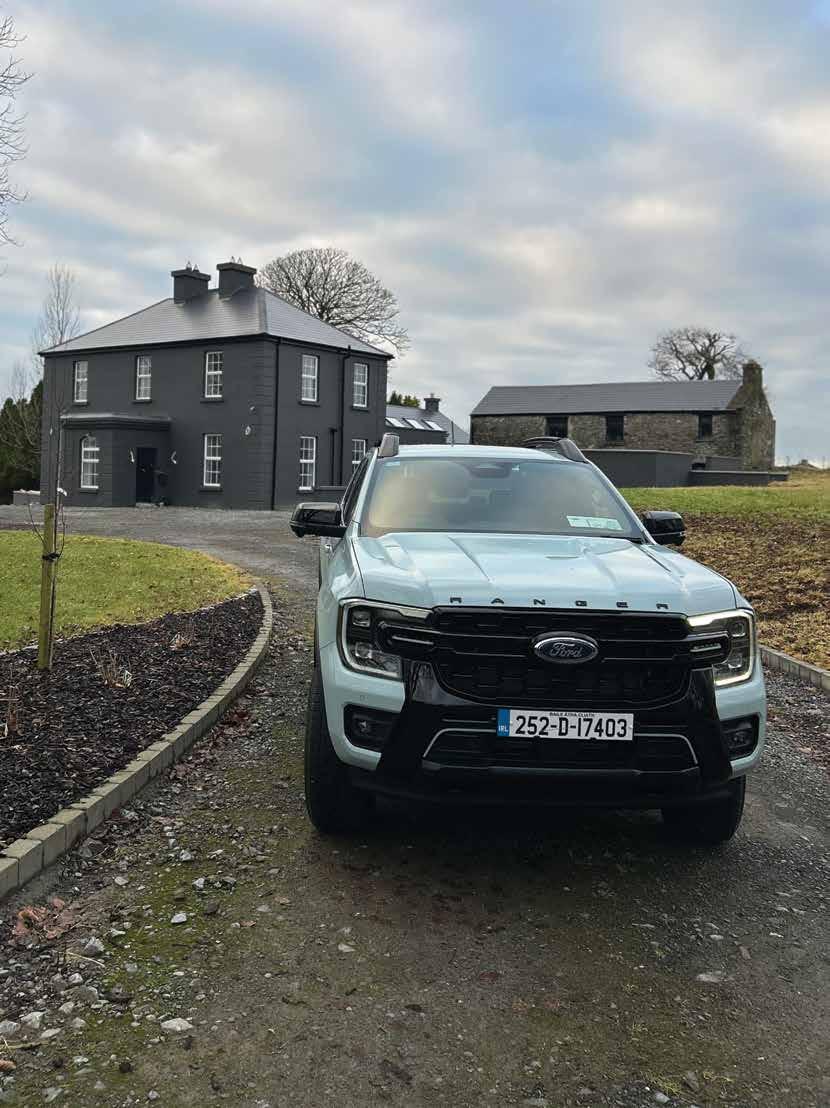
Ford Ranger PHEV - 2026 International Pick-up Award (IPUA) Winner!
they deliver impressive combined power and torque, with the added advantage of electric-only driving for shorter trips or urban areas. Ford projects an electric-only range of around 45 kilometres, which
The Ford Ranger Plug-In Hybrid represents a major step forward in how working and leisure vehicles can combine power, practicality, and sustainability. It’s the first Ranger to feature plug-in hybrid technology, yet it remains unmistakably a Ranger – robust, capable, and engineered for real-world toughness. And it feels just like a “regular” Ranger.
“At its heart sits Ford’s proven 2.3-litre EcoBoost petrol engine paired with an electric motor and rechargeable battery pack. Together,
covers the daily commutes and job-site runs that make up much of a pick-up’s routine mileage. This ability to operate in zero-emission mode gives drivers genuine flexibility and reduces overall fuel costs – an increasingly important factor for both private owners and fleet operators.”
“The hybrid system doesn’t compromise the Ranger’s reputation for capability. The Plug-In Hybrid retains the full 3,500 kilogramme towing capacity, class-leading payload, and the selectable four-wheel-drive system that makes the Ranger so versatile off road. In fact, the electric torque can enhance control at low speeds, providing smoother traction when manoeuvring a trailer or negotiating technical terrain. Combined with the familiar 10-speed automatic transmission, the system feels both refined and rugged.”
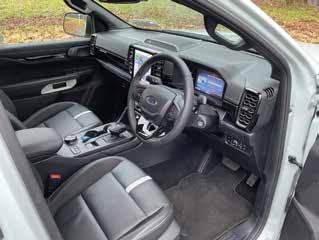
“Beyond its powertrain, the Ranger PHEV introduces useful new technology. Pro Power Onboard allows owners to run tools, lights, or camping gear directly from the vehicle – no need for a separate generator. Inside, the cabin carries over the premium, digital feel of the latest Ranger models, with a central touchscreen and connected services designed to make working life easier. These touches show Ford understands that today’s pick-up drivers expect more than brute strength – they want comfort, connectivity, and convenience too.”
“Crucially, the Ranger Plug-In Hybrid points towards a more sustainable future without asking owners to compromise. It keeps the ruggedness and practicality that made the Ranger Europe’s best-selling pick-up, while introducing lower-emission capability and new efficiency gains. For anyone who values versatility and responsibility in equal measure, the Ranger PHEV is a compelling – and genuinely exciting – evolution of a modern icon.”
“The new Ford Ranger PHEV is a more economic version of the popular Ranger - and though with a much better torque. And the quality is still on a very high level - that you still can miss in a lot of other pick-up vehicles.
In the off Road area you also have an intuitive way of operating the vehiclenot everything is hidden somewhere on the touchscreen.”
“So, the question isn’t just whether the PHEV is a Ranger in every way— there’s no compromise compared to diesel models, as we’ve seen - but whether it’s the best in Ford’s impressive pick-up range. With logic and our hand in our pocket, the answer to the question in the test title is clearly affirmative: The lower price (in several markets) than the equivalent diesel, the large fuel tank offering 700 km of range, the excellent performance of the electrical system, the exemplary and enjoyable road handling (more ‘controlled’ rear axle), the vastly improved gearbox operation, and the zero compromises in off-road capabilities are convincing enough arguments. Add to that the impressively low average fuel consumption, unmatched by diesel Rangers, and you have a pick-up truck that seems unbeatable for professionals -an almost default choice.”
tuned and responsive engine. When used properly, it can actually save a significant amount of fuel and CO2 without any limitations on payload or towing capacity.”
“The Ford Ranger has been a class leading pick-up for years, and with the new PHEV engine many customers can do much of their drive electric. This without compromising on drivability off-road. On road it is even better due to some extra weight that makes the suspension smoother than the other ICE variants. The engine is the most powerful in the Ranger line-up and will be appreciated by many customers towing or driving with full loads.”
“As always, the market leader in one-tonne pick-up trucks in Europe sets and defines the standards in this segment. To everything known so far in the model, the new Ford Ranger PHEV adds an efficient hybrid drive, with which the brand is once again a pioneer. In fact, for the first time in the tests we have a serial plug-in hybrid drive, which increases productivity and efficiency not only on the road, but also off-road. Last but not least, the Ford Ranger in the parallel tests showed that it is the most complex player, equally good in all conditions.”
I N b RIEF: F OR d R AN g ER PHEV
Ranger Plug-In Hybrid combines full Ranger towing, payload and off-road prowess with zero-emission driving capability and Pro Power Onboard for off-grid work and play
“The Ford Ranger takes a huge step forward on the drivetrain side: In addition to the successful chassis, Ford Pro adds a very confidently
Its powertrain includes a 2.3-litre EcoBoost petrol engine, combined with a 75 kW electric motor (e-motor) and an 11.8 kWh (useable) lithium-ion traction battery, together with a 10-speed automatic gearbox, that delivers 697 Nm of torque – the most of any production Ranger model – as well as 281 PS, up to 43 km EV driving and reduced cost of ownership.
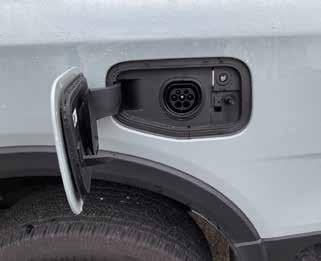
The battery can be charged by plugging into an external power source, as well as by the petrol engine or by capturing energy when coasting.
The battery takes less than four hours to charge using a single-phase 16 amp charger.
INEOS GRENADIER 2026 UPDATES
At the end of 2025 Ford and Renault could claim bragging rights in the Light Commerical Vehicle sector in Ireland; Ford for being the best selling brand overall with 22.7% market share, while the Renault Trafic was the most popular van sold in the country, claiming 7.24% of the overall LCV market (source: SIMI / https://stats.simi.ie/lcv). But other brands could equally claim that 2025 was a positive year and are looking forward to the year ahead with optimism.
But what will that year bring? To get a feel for both how the year
After several years where volatility rather than volume was the defining feature, the Irish light commercial vehicle market entered 2025 with cautious optimism and exited it with renewed confidence. While headline figures suggested a strong year with sales up nearly 7% overall, feedback indicates a more meaningful development was the return of balance — in supply, in demand and in customer decision-making.
For much of the previous three years, the market had been shaped as much by what could not be delivered as by what customers actually wanted. Supply constraints, extended lead times and delayed model introductions distorted replacement cycles and suppressed underlying demand. In 2025, those constraints eased, allowing the market to
LCV Market Overview 2026
function more normally.
Ford Ireland’s John Manning notes that the new LCV market ultimately finished 0.8% ahead of where it had initially been forecast, a modest overperformance that nonetheless reflected improving conditions as the year progressed. That improvement was not immediate. Most manufacturers reported a subdued first quarter, followed by a marked strengthening from mid-year onwards.
Renault Pro+ Ireland’s Jeremy Warnock describes the second half of the year as particularly strong, noting that it was this sustained momentum that pushed the market to its best result in over a decade. Growth of 7% year-on-year compared to 2024 placed 2025 among the strongest LCV years in recent memory, but without the signs of overheating that might otherwise raise concerns about sustainability.
Notably, this was not growth driven by incentives or short-term stimulus. Instead, it reflected the release of
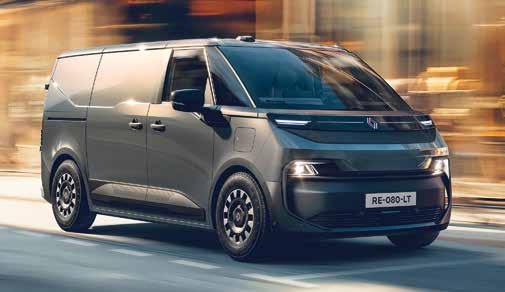
New Renault Traffic
pent-up demand, the resumption of fleet replacement programmes, and improved availability across key model lines. The recovery was broad-based, spanning fleet, SME and rental channels, rather than being concentrated in a single segment.
bRAN d P ERFORMANCE M IRRORS M AR k ET N ORMALISATION
While the overall market picture was positive, brand-level performance varied considerably, shaped by differences in supply stability, product mix and channel exposure.
Ford maintained its long-established leadership position, in fact delivering its strongest commercial vehicle performance since 2007. Consistent availability across the Transit range, combined with strong fleet relationships, allowed the brand to capitalise fully on the market recovery.
Volkswagen Commercial Vehicles had a very strong year. The brand increased registrations by 34% in a market that grew by single digits, a performance that Paul Hunt attributes to improved supply and strong demand across the Transporter, Caddy and Crafter ranges. That growth saw Volkswagen move into second place overall in the Irish LCV market, underlining the competitive intensity at the top end of the segment.
Toyota also recorded one of its strongest LCV years to date. According to Cathal Ryan, market confidence recovered significantly in 2025, a trend
reflected in Toyota’s near-40% year-onyear growth. Strong residual values and continued trust in established models played a central role in that performance, particularly among fleet buyers.
Nissan’s experience highlighted the importance of timing. Delayed availability of the new Interstar constrained volumes early in the year, but once supply normalised, registrations accelerated sharply. Neil O’Sullivan notes that this allowed Nissan to finish the year up 55% year-on-year, despite the slow start.
Other manufacturers focused less on headline volume growth and more on consolidating their positioning. INEOS, for example, continued to build its presence in specialist and utility-focused applications. David Bassett observes that customers in these sectors are increasingly prioritising capability, durability and whole-life cost over traditional brand considerations, a trend that favours vehicles designed for specific operational roles.
S UPPORT
Alongside the recovery in new vehicle registrations, the used LCV market remained resilient throughout 2025. Demand for quality used vans remained strong, particularly among SMEs and sole traders, while supply remained relatively constrained following several years of reduced new vehicle registrations.
This combination supported residual values across most segments, particularly for medium and large vans with sensible specifications and clear service histories. For manufacturers and dealers, this strength in the used market played an important supporting role, improving trade-in values and making new vehicle purchases more viable for customers who had deferred replacement decisions during earlier periods of uncertainty.
The stability of the used market also reflects a more disciplined approach to fleet replacement in recent years, with fewer vehicles entering the market during the period of supply disruption and extended holding cycles.
dEMAN d PATTERNS bY R E g ION AN d S ECTOR
Growth in 2025 was broadly distributed across the country, though urban centres continued to dominate demand for compact and medium vans, particularly in last-mile delivery and service applications. At the same time, regional and rural demand remained robust, driven by construction, agri-related services and utilities.
Rental and short-term hire activity increased during the year, reflecting a shift towards more flexible operating models. John Manning notes that Ford is seeing a clear trend in rental and hire drive sales, a pattern echoed by other manufacturers with strong presence in infrastructure-related projects.
This diversification of demand sources contributed to the overall stability of the market, reducing reliance on any single sector or channel.
As the industry looks towards 2026, few manufacturers are forecasting significant growth, but most are optimistic, expecting the market to remain broadly stable, with volumes similar to those achieved in 2025.
Paul Hunt expects a very similar market in 2026, citing positive economic indicators but also acknowledging ongoing global uncertainty. Ford projects total registrations of approximately 32,200 units, broadly in line with the previous year.
U SE d M AR k ET S TREN g TH P ROVI d ES S TRUCTURAL
LOO k IN g A HEA d: Ex PECTATIONS FOR 2026
For Toyota’s Cathal Ryan, stability itself would represent a positive outcome. After years of volatility, a predictable market would allow fleets, dealers and manufacturers to plan with greater confidence.
Citroën adopts a slightly more optimistic outlook. Trevor Hunt points to a positive start to the year and believes that, despite worsening global tensions, further growth in the LCV market in 2026 is possible.
Across the board, there is a recognition that the ability to plan — rather than chase volume — may be the most valuable development of all.
EASIN g AN d CONTRACT H IRE bECOME THE dEFAULT
One of the most significant structural shifts in the Irish LCV market is the continued growth of leasing and contract hire. What began as a response to uncertainty has evolved into a long-term change in how vehicles are funded and managed.
Opel Ireland’s Fergal Marron notes that as regulations become more complex, more businesses are choosing leasing and fleet management solutions to reduce administrative burden and risk exposure. Increasing vehicle complexity, evolving emissions standards and the growing importance of compliance have all contributed to this trend.
Fiat Professional’s Ciaran Cusack expects leasing and contract hire to continue growing as SMEs and corporates look for flexibility and cost control. While growth rates may moderate as major fleets complete renewal cycles, leasing is now firmly embedded in the structure of the Irish LCV market.
In parallel with leasing, the rental and short-term hire sectors continue to grow. Seasonal demand, project-based work and uncertainty around long-term technology choices are all driving interest in flexible vehicle access.
For manufacturers, rental and hire channels also play an important role in maintaining market presence and supporting residual values, particularly as electrification gathers pace.
EHICLE M I x: C APA b ILITY
While compact and medium vans remain the backbone of the Irish LCV market, manufacturers report a gradual shift towards larger, better-specified vehicles. Toyota’s Cathal Ryan notes growing demand for large vans as customers look for vehicles that can do more, both in terms of payload and operational flexibility.
Health and safety considerations are increasingly influential in vehicle selection. Features such as the ability to stand upright in the load area, improved access and enhanced driver assistance systems are becoming more important, particularly for fleets focused on dutyof-care obligations. Automatic transmissions, connectivity and comfort features are now widely expected, especially for
vehicles covering high annual mileages. The distinction between “working vehicle” and “mobile workspace” continues to blur.
C AR - dERIVE d VANS
Despite the shift towards larger vehicles, car-derived vans continue to perform strongly. For owner-drivers and small businesses, they offer a compelling combination of comfort, image and tax efficiency.
Trevor Hunt observes that the continued strength of the CDV segment suggests customers are increasingly looking to combine utility with comfort, particularly in urban environments. With electrified CDVs set to expand in the coming years, this segment is likely to retain its relevance.
Beyond mainstream segments, specialist vehicles continue to play a vital role in the Irish market. Utilities, emergency services and infrastructure providers place a premium on towing capacity, durability and off-road capability.
David Bassett highlights increasing demand for mission-specific vehicles, reinforcing the importance of matching specification to operational requirements rather than relying on generic solutions.
L
R ENTAL AN d S HORT -T ERM H IRE: F LE x I b ILITY IN F OCUS
V
OVER M INIMALISM
Isuzu D-Max EV
Citroen C5 Aircross
E LECTRIFICATION: M OMENTUM wITHOUT A bREA k THROU g H
Electric LCV registrations more than doubled in 2025, lifting market share to just over 6%. While this represents significant progress, adoption remains uneven and concentrated among government bodies and large corporate fleets with defined sustainability targets.
John Manning points to growth of over 100% year-on-year in the electric commercial vehicle segment, but Mercedes-Benz Vans Ireland’s Fergus Conheady cautions that if pre-registrations and government purchases are excluded, the natural EV van market remains relatively small.
Charging infrastructure, upfront cost and operational suitability remain key barriers, particularly for SMEs and rural operators. Trevor Hunt argues that everyday practicality, rather than environmental signalling, will ultimately determine EV adoption among SME customers.
gOVERNMENT P OLICY AN d I NCENTIVES NEE d E d TO d RIVE E LECTRIC gROw TH
Several manufacturers highlighted structural disadvantages for electric LCVs compared to passenger cars, particularly in relation to taxation and incentives. Paul Hunt believes greater incentives would be required to achieve similar levels of BEV penetration.
At the same time, EU CO₂ compliance requirements are shaping manufacturer strategies, driving supply even where demand remains underdeveloped.
T RANSITIONAL T ECHNOLO g IES: PHEVS AN d A LTERNATIVE F UELS
Green alternatives to full electrics are starting to make waves, albeit at a low level. Plug-in hybrid vans are increasingly viewed as a transitional solution, particularly for fleets with mixed duty cycles. John Manning expects further growth in the LCV PHEV segment, reflecting its role as a bridge between internal combustion and full electrification.
Alongside electrification, interest is
growing in alternative fuels such as HVO. David Bassett notes that HVO provides an immediate and practical pathway to CO₂ reduction where electrification is not yet viable, particularly for heavy-duty and rural applications.
This points towards a more diversified approach to decarbonisation, rather than reliance on a single technology pathway.
wHAT NE w MO d ELS TO E x PECT IN 2026
While many of the major brands are set to have a relatively quiet year for new products in 2026, there will still be a number of exciting new models to look forward to. Volkswagen Commercial Vehicles, Renault and others will expand their electric offerings, while new entrants such as Kia and Farizon increase competitive pressure.
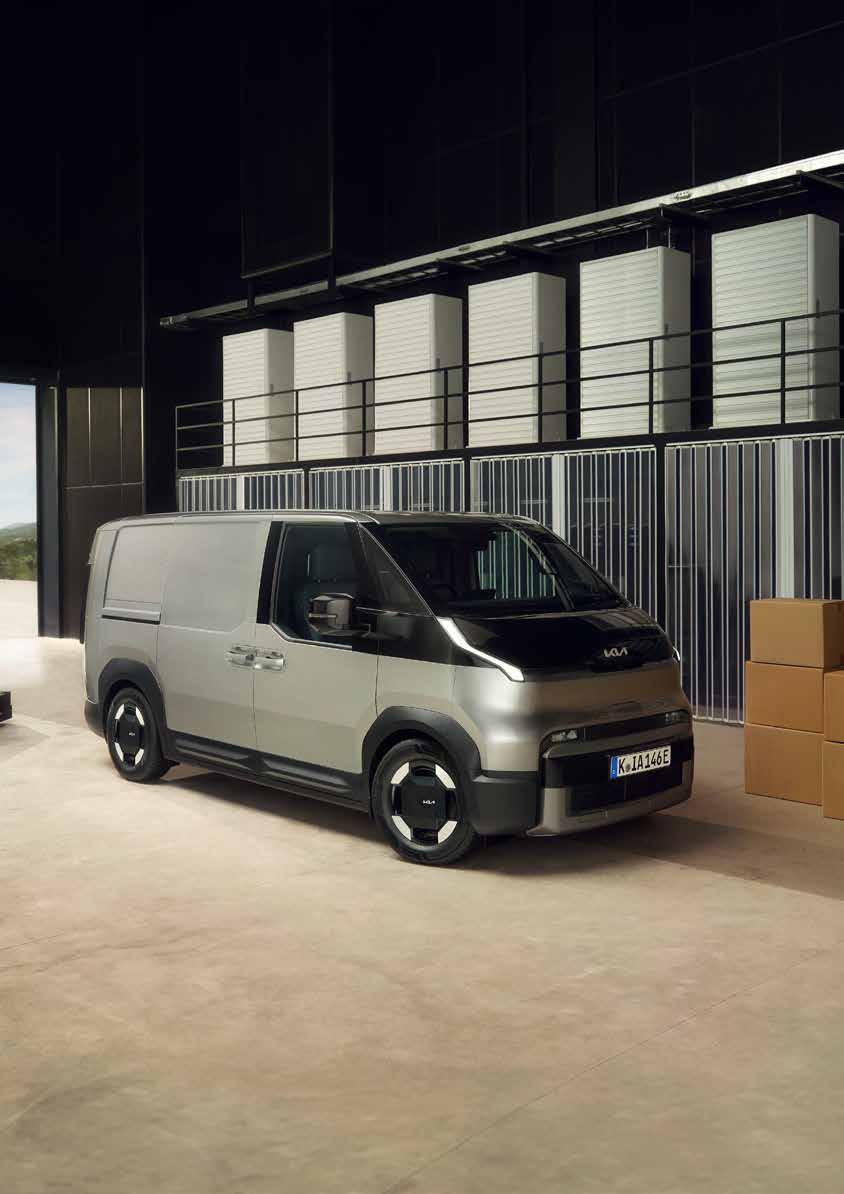
Kia has just launched the PV5 Cargo, its first van offering. Kia Ireland’s Ronan Flood describes the PV5 as the beginning of the brand’s long-term commitment to the LCV market, signalling increased competition in both electric and conventional segments.
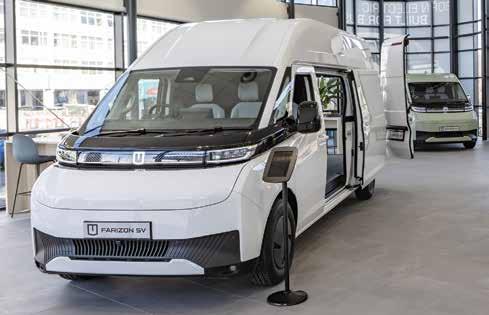
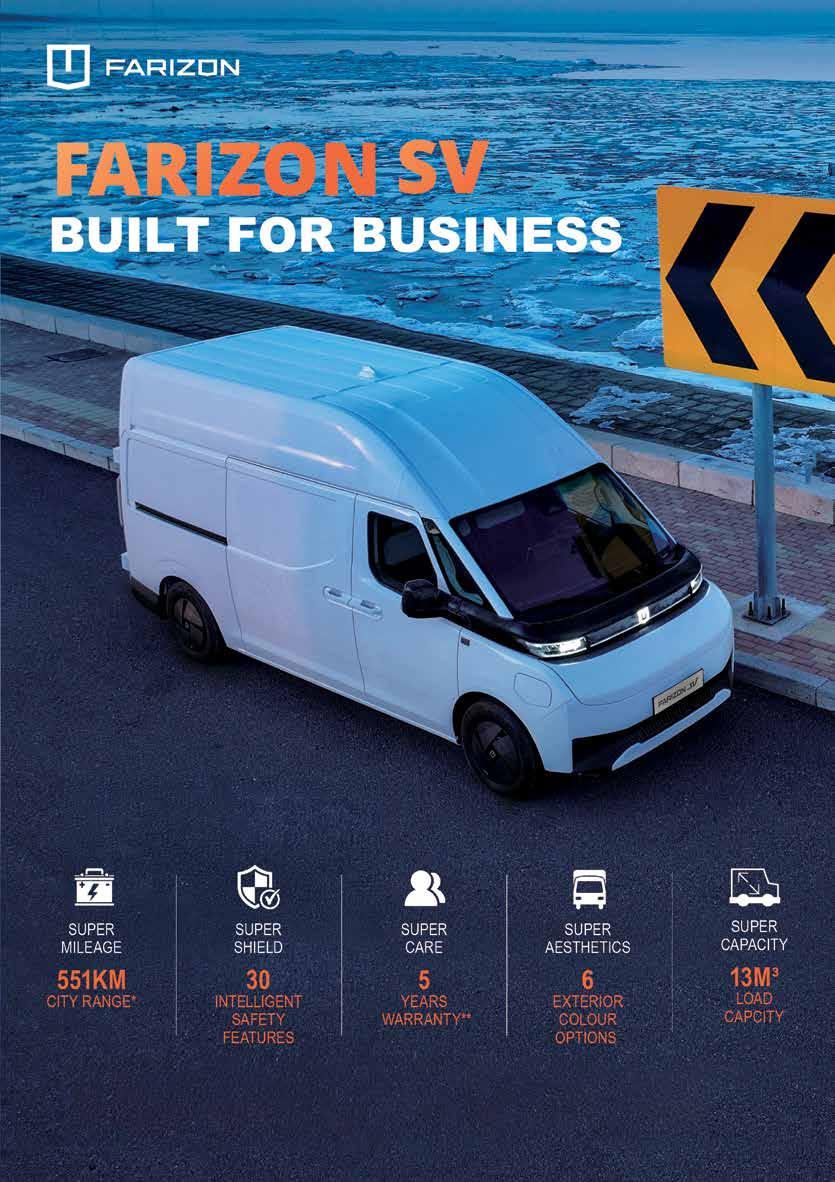
Another new brand, Farizon will have 2 new models: Farizon SV and Farizon V7E with additional variants and battery sizes, all built on a dedicated electric platform. “Our focus is on bringing to market electric commercial vehicles designed specifically to meet the practical needs of Irish fleets, as EV adoption continues to accelerate,” says Andrew Johnson.
Renault will see the arrival of the all-new Trafic E-Tech electric towards the end of the year. Offering up to 450km of range and ultra-rapid charging via 800-volt architecture, Jeremy Warnock is confident that when range, payload and charging capability align with real-world needs, customer adoption will follow — is the Trafic the vehicle to breach that threshold?
Partner brand NIssan will introduce Factory built Tipper and Dropside versions of the Interstar after first quarter 2026.
A Toyota New Toyota Hilux arrives in Ireland in October. Cathal Ryan tells us: “I’ve driven it. Its very impressive!”
Mercedes-Benz Vans will see the launch of VLE and VLS models in Quarter 3, though Fergus Conheady admits these will be niche models for the brand.
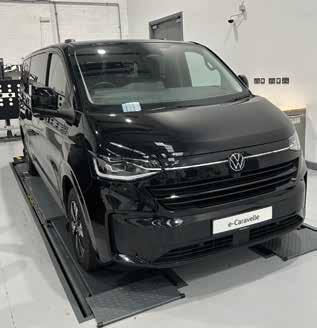
Over at Volkswagen Commercial Vehicles Ireland the focus will be on passenger versions of LCVs with a fully electric New e-Caravelle with 8 and 9 seat versions launching in January 2026 together with a Caddy Life PHEV model. Also new is an ID. Buzz People 7 seat Special Edition model now available with a Caravelle PHEV model launching in February.
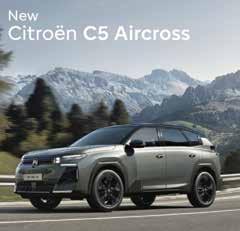
New Car-Derived Vans are on the way from Citroën. “2026 will see availability of an all-new factory produced Citroen C3 N1 class, as well as a wider CDV model range in general with the introduction of the all-new C5 Aircross CDV and all-new C3 Aircross CDV,” says Trevore Hunt, adding: “These will further improve customer choice and further reduce customer compromises on comfort and image vs traditional LCV offerings. These new model additions will be available in both hybrid and full electric variants.”
“For 2026, Orangeworks Automotive has confirmed a revised Irish commercial line-up for the INEOS Grenadier and INEOS Quartermaster,” says David Bassett. “This includes new Irish pricing for the 2-seat Grenadier and 2-seat Quartermaster models, starting from €59,995 plus VAT, built to N1 classification, offering 8% BIK, alongside class-leading towing and payload capabilities.”
CONCLUSION: CONSOLI dATION, N OT COMPLACENCY
The Irish LCV market enters 2026 in a healthier position. Growth has returned, supply has normalised and longer-term trends are clearer.
The prevailing mood is one of a market that is continuing to grow but remaining extremely competitive. Electrification will progress, but gradually. Leasing and fleet management will play an increasingly central role. Established brands retain advantages, but competition is intensifying as new entrants sharpen their focus.
Rather than a year of transformation, 2026 is shaping up as a year of consolidation — one that may ultimately prove just as important in preparing the Irish light commercial vehicle market for the next phase of change.
Text: Cathal Doyle – cathal@fleet.ie
Finance from 0% APR*
Purchase contributions of up to €3,000*
Service plans from €12.99 pm*
Typical Finance Example: TRANSPORTER SL LWB28 110HP M6F. OTRP €38,995.00. APR 0%. Deposit / Part Exchange €12,055.00. 60 monthly payments of €449 incl. 5 year warranty, 5 services and 5 year roadside assistance. 5 Services Plan for new Transporter model only. This campaign is transferable to subsequent owners of the vehicle across the contract duration. No refunds or early terminations are permitted. Contract runs for 5 years or until all 5 services have been claimed. Total Cost of Credit €0. Acceptance fee (€75) and completion fee (€75). No minimum deposit requirement. Finance is provided by way of Hire Purchase Agreement from Volkswagen Financial Services Ireland and subject to lending criteria. Volkswagen Financial Services Ireland Limited is regulated by the Central Bank of Ireland. Offers available on new retail orders taken before 31st March 2026. Models shown for illustrative purposes. Terms and Conditions apply. These offers are subject to availability and may be withdrawn at any time. These offers do not apply to fleet sales. Information correct at time of publication. Warning: You may have to pay charges if you pay off a hire-purchase agreement early. If you do not meet the repayments on your hire purchase agreement, your account will go into arrears. This may affect your credit rating, which may limit your ability to access credit, a hire-purchase agreement, a consumer-hire agreement or a BNPL agreement in the future.
While many of the major light commercial brands are set to have a relatively quiet year for new products in 2026, there will still be a number of exciting and interesting new models for potential buyers to look forward to. Volkswagen Commercial Vehicles, Renault Pro+ and others will expand their electric offerings, while new entrants such as Kia and Farizon increase competitive pressure. Pick-up truck providers have also been busy on the development front.
Kia has just launched the PV5 Cargo, its first van offering and newly crowned International Van of the Year 2026. Kia Ireland’s Ronan Flood describes the PV5 as the beginning of the brand’s long-term commitment to the LCV market, signalling increased competition in both electric and conventional segments.
Another new brand, Farizon will have a brace of new medium and large size models: Farizon SV and Farizon V7E with additional variants and battery sizes, all built on a dedicated electric platform. “Our focus is on bringing to market electric commercial vehicles designed specifically to meet the practical needs of Irish fleets, as EV adoption continues to accelerate,” says Andrew Johnson.
Renault Pro+ will see the arrival of the all-new Trafic E-Tech electric towards the end of the year. This is one part of a trio of new light commercial developments in collaboration with Flexis, the newly formed partnership between Volvo AB, Renault Group and shipping company CMA CMG Group.
Offering up to 450km of range and ultra-rapid charging via 800-volt architecture, Jeremy Warnock, from Renault Ireland is confident that when range, payload and charging capability
align with real-world needs, customer adoption will follow - is the Trafic the vehicle to breach that threshold?
New Trafic will also be sold under the Renault Trucks Red Edition badging.
Alliance Partner brand Nissan will introduce Factory built Tipper and Dropside versions of the Interstar after first quarter 2026.
A new Toyota Hilux pick-up arrives in Ireland in October. Cathal Ryan, from Toyota Ireland tells us: “I’ve driven it. It’s very impressive!” So has Fleet! Very impressed too! As a well as the conventional diesel, the most popular pick-up truck will be electric and hybrid powered.
Mentioning pick-ups, KGM, formerly known as SsangYong is launching a new Musso model, to sell alongside the new Musso Electric entering the market this year.
What new Light Commercial Vehicle models to expect in 2026
version of the Transporter is to come to market, featuring a 150 hp diesel and automatic transmission.
New Car-Derived Vans are on the way from Citroën. “2026 will see availability of an all-new factory produced Citroen C3 N1 class, as well as a wider CDV model range in general with the introduction of the all-new C5 Aircross CDV and all-new C3 Aircross CDV,” says Trevor Hunt, adding: “These will further improve customer choice and further reduce customer compromises on comfort and image vs traditional LCV offerings. These new model additions will be available in both hybrid and full electric variants.”
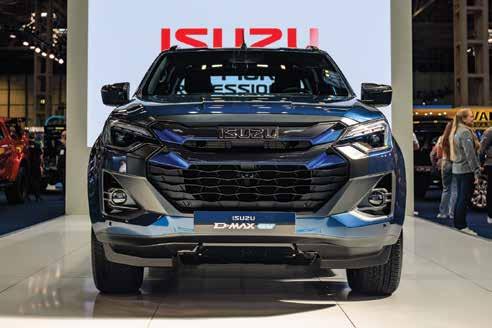
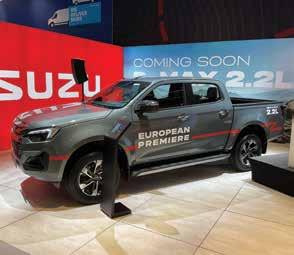
Isuzu premiered the latest version of the D-Max with its fresher look and new powertrain. This pick-up will also have an electric drive option.
Mercedes-Benz Vans will see the launch of VLE and VLS models in Quarter 3, though Fergus Conheady admits these will be niche models for the brand.
Over at Volkswagen Commercial Vehicles Ireland the focus will be on passenger versions of LCVs with a fully electric new e-Caravelle with 8 and 9 seat versions launched, together with a Caddy Life PHEV model. Also new is an ID. Buzz People 7 seat Special Edition model now available with a Caravelle PHEV model launching in February. A new Highline
“For 2026, Orangeworks Automotive has confirmed a revised Irish commercial line-up for the INEOS Grenadier and INEOS Quartermaster,” says David Bassett. “This includes new Irish pricing for the 2-seat Grenadier and 2-seat Quartermaster models, starting from €59,995 plus VAT, built to N1 classification, offering 8% BIK, alongside class-leading towing and payload capabilities.”
On the international front, Iveco will market versions of the Stellantis large and medium vans, rebranded as eJolly and eSuperJolly, from sometime later in the Summer.
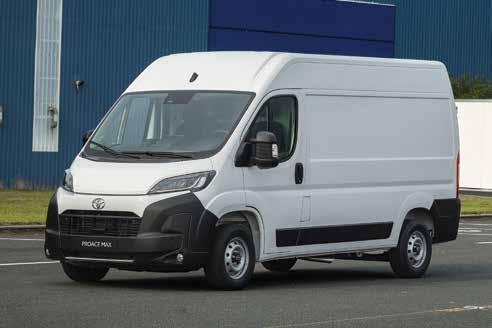
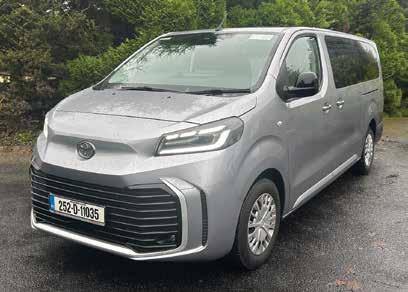
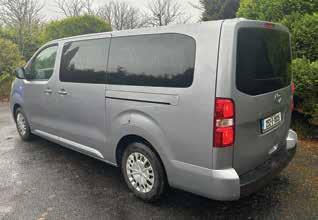
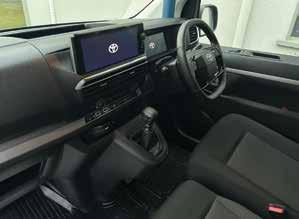
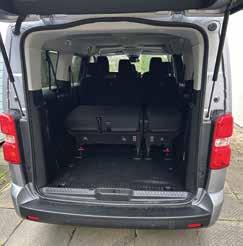
Practicality, roominess, huge luggage space, all round visibility and a sublime driving experience describes the Toyota Proace Verso in a nutshell. This nine seater people carrier is based on the Proace medium-duty van, which in turn is supplied by Stellantis ProOne, following a strategic partnership established in 2016. Since the start of that relationship, Toyota Professional has enjoyed year-on-year growth in Europe - both in terms of sales and market share.
Proace Verso is tailored towards business focused use, family lifestyles or executive transport. From the two person bench seat up front to the two rows behind, there’s room aplenty for all and sundry. The driver can access the 10” multimedia touch screen with ease and for those needing to charge gadgets, there are a
number of USB connections accessible from the first two seat rows.
Travel ‘First Class’ with the Toyota Proace Verso
A well-proven 2.0-litre four-cylinder diesel engine has plenty of power on tap with 145 DIN hp (106 kW) @3,750 rpm and 540 Nm @2,000 rpm, mated to a six-speed manual gearbox. This D-4D diesel engine combine fuel efficiency with great driveability. From our time on board, we achieved close to the official average fuel consumption of 7.5 litres per 100km. With a tow bar fitted, it can pull 1,900 kg.
Regarding the cost price, it retails at €73,600 (Incl. VAT) and its annual motor tax is €790.
Its 1.9 m height allows the Verso to access standard car parks while manoeuvring in busy urban locations is made easier thanks to a 6.4 m turning radius for this long wheelbase version.
Other measurements include:
n Exterior length (mm) - 5331 mm
n Exterior height (mm) - 1910 mm
n Exterior width (mm) - 1924 mm
n Wheelbase (mm) - 3275 mm
Verso is designed to deliver spacious transport for the most active lifestyles. With keen attention to detail, the Proace Verso offers all on board a pleasurable experience through thoughtful ergonomics and a high level of standard specification. Passengers can relax all the way.
On the safety side, the Proace Verso includes Toyota Safety Sense, a suite of safety and driver assistance systems designed to give complete
peace of mind. Using an array of cameras and sensors located around the vehicle, these technologies can help with parking, staying in lane and collision-free driving
The only concern from a driving point of view is that the exterior mirrors are too small for the size of the vehicle, not a Toyota derived issue, but harking back to the original design from the manufacturer, something we have flagged on occasion previously.
As we know, every Toyota is built to exceptional levels of quality, durability and reliability. To ensure peace of mind, Toyota Ireland offers a standard 3 year/100,000km warranty.
Stylish and versatile, the Proace Verso is a quality multi-purpose vehicle. Offering top level transport for commercial passengers and adventurous families alike, its first-class comfort and seamless connectivity make every trip a pleasure.
Text & Photos: Jarlath Sweeney – editor@fleet.ie
The Kia PV5 Cargo.
Electrifying your business. Available now.
From €33,230 (excl. VAT)
NEW LCV DELIVERIES
New MAN TGEs on the Move!
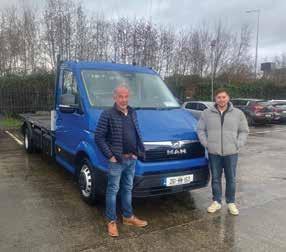
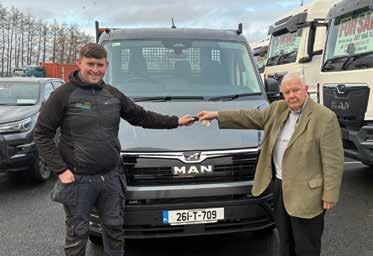
Recent sales of new MAN TGE light commercials by MAN Importers Ireland (Dublin) and Dennehy Commercials (Limerick).
George and Marc Smullen from Abwood, Timore, County Wicklow has purchased another new MAN TGE 5.150 chassis cab, with factory built and specified Scatolini Flatbed Body.
This new TGE MAN 5.160 with tipper body was sold to JMJ Eco-Hire, based at Holycross, County Tipperary. Pictured is Jack Ryan, Managing Director, JMJ Eco-Hire receiving the key from Martin Hough, Sales Executive at Dennehy Commercials. The company specialises in producing solar powered mobile welfare units for construction crews.
New Renault Vans on the Run!
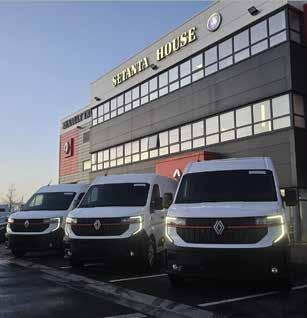
Three new Renault Trucks Red Edition Master vans, sold by Setanta Vehicle Sales North (Dublin) have gone into service at JFN Logistics (Jim Nolan), Naas, County Kildare. The award-winning panel light commercial vehicle were ply-lined by Pro Equip Ireland.
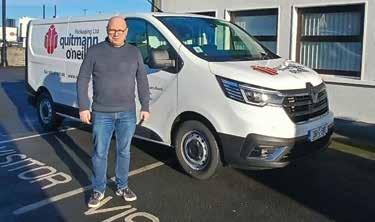
Another example of Ireland’s best-selling van the Renault Trafic was bought from Dennehy Commercials, Limerick, by David O’Neill, proprietor of Quitmann O’Neill Packaging, Portumna. The long established Vounty Galway firm supplies customers in the pharmaceutical, food and beverage, chemical, lubricant, coatings and waste industries.
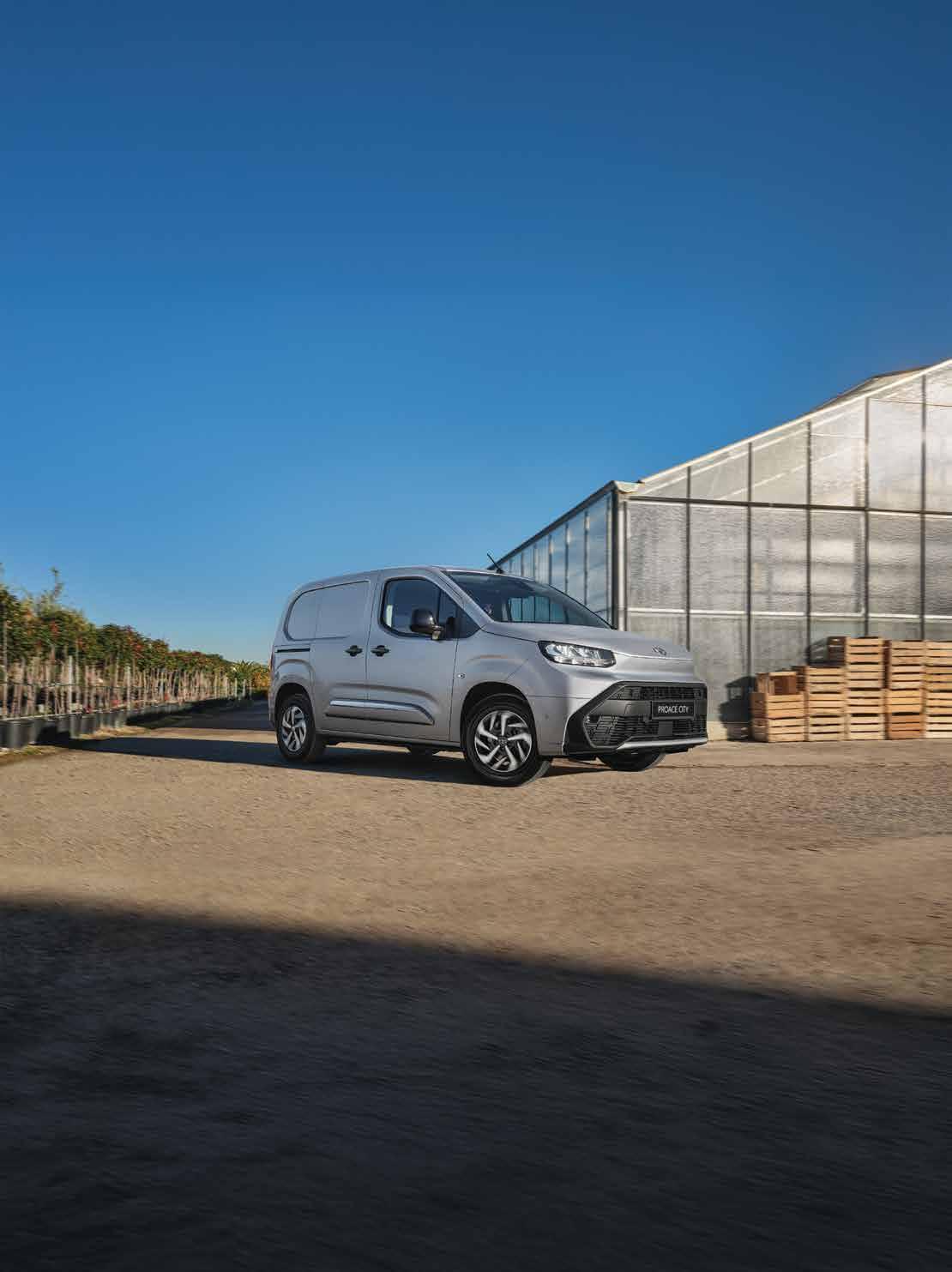
PROACE CITY
Fuel E cient Diesel Engine, Only 5.4L / 100kms
Cruise Control
Collision Avoidance
Parking Sensors
Up to 1 Tonne Load Capacity
Apple Car Play & Android Auto™
Up to 10 Years / 185,000km Warranty* 409 FROM PER MONTH ** € EXCLUDING VAT
102nd Brussels Motor Show 2026
– Autosalon- Brussels Expo/ Heysel Exhibition Centre
Following the return of the “Real Motor Show” in January 2025, the 102nd Brussels Motor Show celebrated another major comeback in January 2026, 80 exhibitors covering car and commercial vehicle brands as well as the biggest motorcycle and moped brands came together across six halls at the Heysel Exhibition Centre and in the Astrid Hall.
Among the commercial exhibitors that premiered new models were Stellantis ProOne, Toyota Professional, Ford Pro, Isuzu, KGM and Renault Pro+.
Stellantis ProOne – the Stellantis global business unit dedicated to commercial vehicles highlighted the full potential of its market-leading range and unveiled a new solution for micromobility.
Alongside traditional vans, the spotlight fell on the surprising lightweight newcomer: the Fiat Professional TRIS, a fully electric three-wheeler making its European debut (See News item).
Attendees also discovered two special editions: the Citroën Berlingo xTR, offering professionals comfort with a dynamic look, and the Opel Vivaro Electric Sportive, featuring sporty decals, 17-inch alloy wheels and distinctive design elements.
Examples of Stellantis ProOne CustomFit programme were also showcased. This offers extensive possibilities for conversion and personalisation, ensuring OEM-level quality, optimised lead
times, and full warranty coverage.
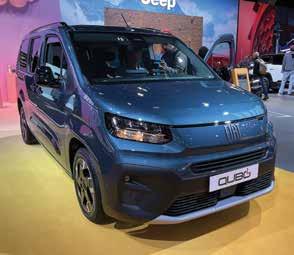
Another new model wearing the Fiat badge was the Qubo L, designed for everyone from families seeking the perfect blend of comfort, space and practicality, to outdoor enthusiasts and city dwellers. The Qubo L is the only diesel model in Fiat’s range, with 100hp and 130hp power options, in addition to petrol and electric variants. It is available as a 7-seater (long wheelbase) or 5-seater (short wheelbase).
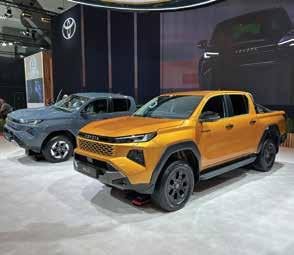
Featuring in our Launch Pad preview, the all-new Toyota Hilux, the ninth generation of the Japanese brand’s legendary pick-up truck, was at the show,. It breaks new ground with a range that includes its first battery electric powertrain.
The all-new Hilux’s introduction builds on a heritage established over more than half a century and more than 27 million global sales. Throughout its history, Hilux’s success has been founded on its core values of Quality, Durability and Reliability, qualities that remain central to its latest evolution.
True to its customer-centred approach, Toyota is not offering a one-size-fits-all solution. Instead, the all-new Hilux aligns with the company’s multipath philosophy to provide a choice of powertrains suited to different customer requirements and preferences, and operation in different driving conditions. Therefore, the new model will be offered with two powertrains: a 2.8-litre diesel engine supported by a 48V battery – the option that will be the volume seller in Europe – and a battery electric version, both of which were on display in Brussels.
Ford Pro had a significant presence at the show, making a big statement on Ford Motor Company’s partnership with Red Bull for a major Formula 1 engine deal starting for the new 2026 season.
The project includes developing new hybrid power units for both the Oracle Red Bull Racing and Visa Cash App Racing Bulls (formerly AlphaTauri) teams, marking Ford’s significant return to F1 by contributing expertise in battery, electric motor, and software tech for sustainable fuels and increased electric power under new regulations.
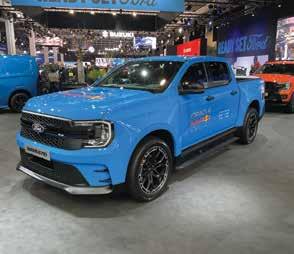
Proudly wearing the International Pick-up Award logo for 2026/27, was the all-new Ford Ranger PHEV, while sporting the distinctive Red Bull Racing colours was the Ranger MS-RT which
is also available in a plug-in hybrid version, featured alongside the Ford F-150 flagship pick-up and the revised Ranger Raptor.
The European debut of the all-new Isuzu D-Max, was also held here. Featuring the much anticipated 2.2-litre turbo-diesel engine which replaces the previous 1.9-litre unit, the higher capacity 2.2-litre ‘MaxForce’ (Rz4F) engine delivers a significant step up in performance. Now producing 120 kW (163 hp) and 400 Nm of torque, the engine offers a 10% increase in pulling power over its predecessor. Most importantly for professionals, it generates 60% more torque (255 Nm) from just
F ORD R ANGER PHEV MS-RT
1,000 rpm, ensuring effortless take-offs even with heavy loads.
The new engine is paired with a new eight-speed automatic transmission, replacing the previous six-speed unit for smoother shifts and improved fuel efficiency, or with a 6-speed manual gearbox in some versions. All 2.2L variants (Single cab, Extended Cab & Double Cab) now feature a standard 3.5-tonne (3,500 kg) braked towing capacity, and a class leading payload capacity of up to 1,200 kg.
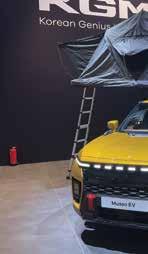
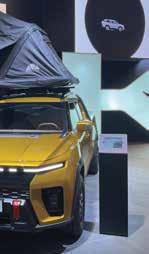
As Korea’s first and only electric pick-up, the Musso EV marks KGM’s (formerly SsangYong) fifth entry into the pick-up segment since entering the market in 2002 with the original and acclaimed Musso Sports.
Combining more than 20 years of pick-up truck manufacturing expertise with advanced electrification, the Musso EV delivers mid-size SUV–level comfort, EV-specific quietness, and payload capability (up to 500 kg).
KGM’s pick-up clientele continue to expand beyond commercial use into camping, leisure, and outdoor activities. KGM has been at the forefront of this trend with its traditional pick-up models, the Musso Sports and Musso Khan. Now, the Musso EV further strengthens KGM’s leadership by opening a new chapter in the electric pick-up segment. Building on its initial success, KGM is also accelerating its overseas rollout. Pre-marketing activities began late last year in key European markets.
“The early success of the Musso EV is especially meaningful given the current slowdown in EV demand and the overall stagnation of the pick-up market,” said a KGM spokesperson. “We will continue to meet the diverse needs of our customers.”
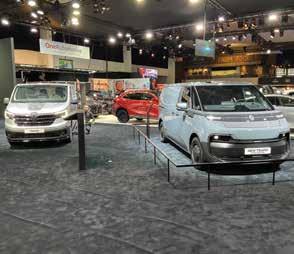
Renault Pro+ premiered the new Trafic van alongside the current model, providing a direct compare and contrast opportunity for interested visitors. The new version, a collaborating project under the Flexis banner, is said to be on sale across Europe before year end.
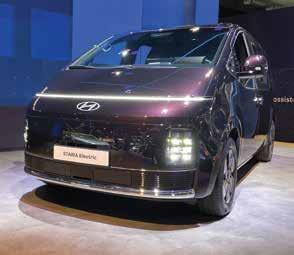
Mentioning people carriers earlier, Hyundai presented a major product premiere: the Staria Electric, Hyundai’s first fully electric MPV, based on the exiting internal combustion light commercial, which expands the South Korean brand’s EV portfolio into the multi-purpose segment. The 7-9 seater is designed for families, leisure and commercial applications alike by offering new levels of space, flexibility and zero-emission driving. Its all-electric driving range travels up to 400 km from the high-capacity battery 84 kWh, allowing for ultra-fast charging from 10-80% in approximately 20 minutes.