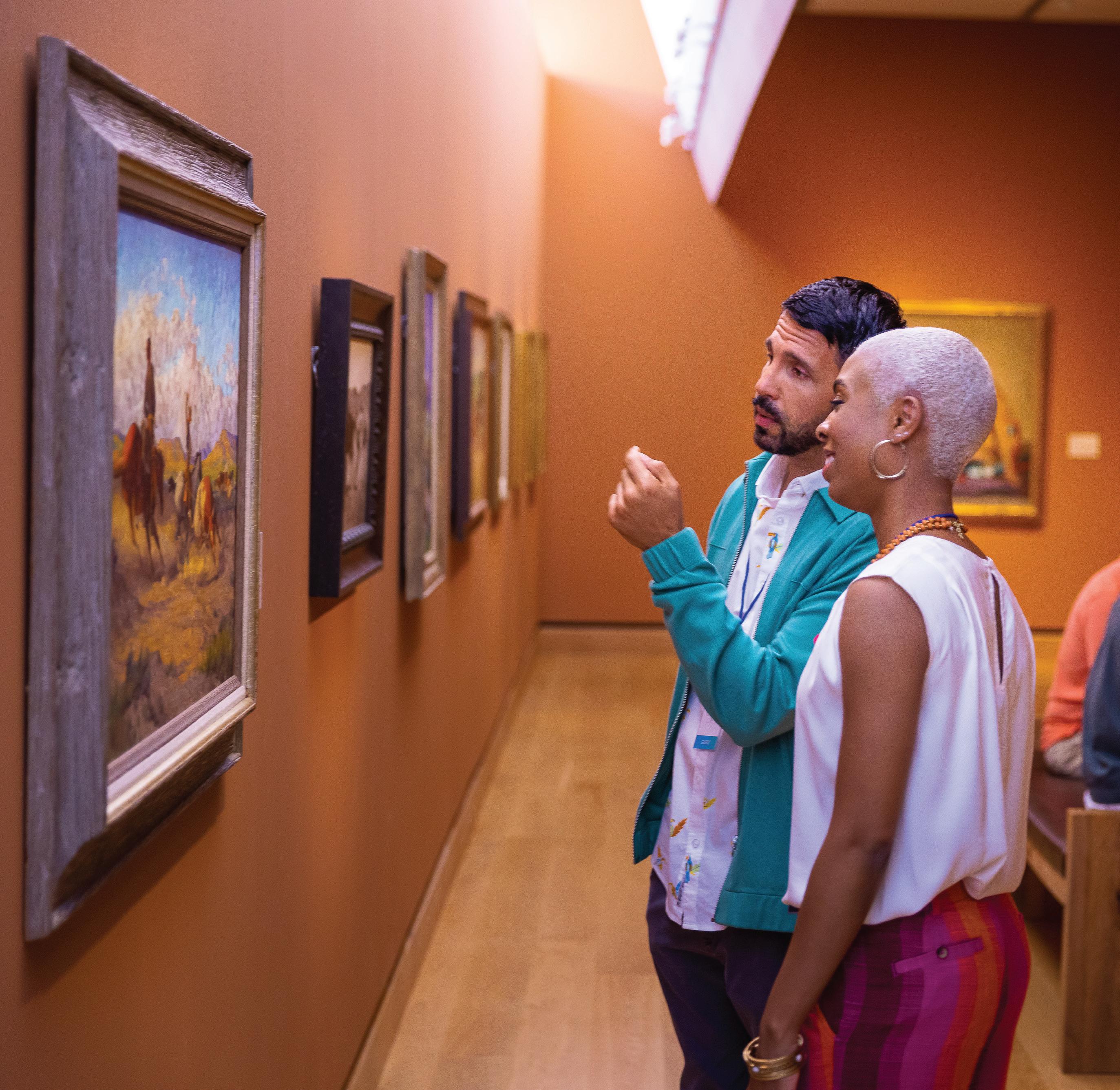
Find your piece of paradise on America’s Favorite Beaches and explore more than 30 museums and galleries. From sun-kissed serenity to a vibrant arts scene, inspiration is everywhere in St. Pete-Clearwater.
Welcome
Treasure Beach Village
On Sale Now
Opens March 1, 2026
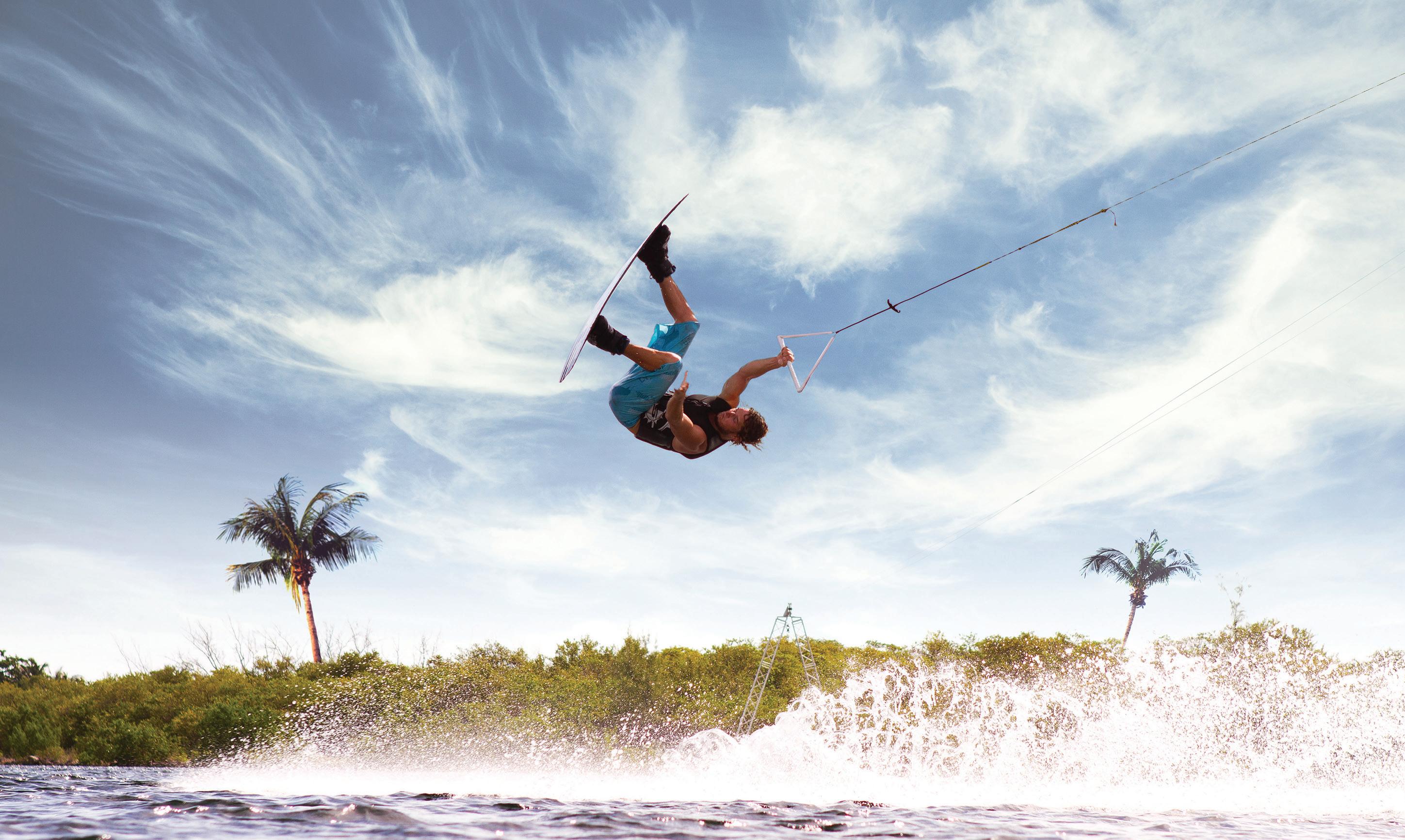
After launching off a 10-foot wave during a storm, action sports athlete and former pro kiteboarder Matt Sexton came crashing down—right onto a hidden rock. The impact shattered his foot. Months later, a second accident broke the other. For nearly a year, he couldn’t walk.
But Sexton doesn’t quit. He adapts.
Today, Sexton channels that same fearless energy into running Grassy Flats Resort & Beach Club and The Lagoon in Marathon, turning the Florida Keys into his personal playground for kiteboarding, wakeboarding and more.
“Action sport is an endorphin boost and is extremely satisfying,” he says. “Hospitality, for better or worse, can have the exact same responses for you but just a little bit more delayed.” And there’s no better place to chase the rush than the Florida Keys.
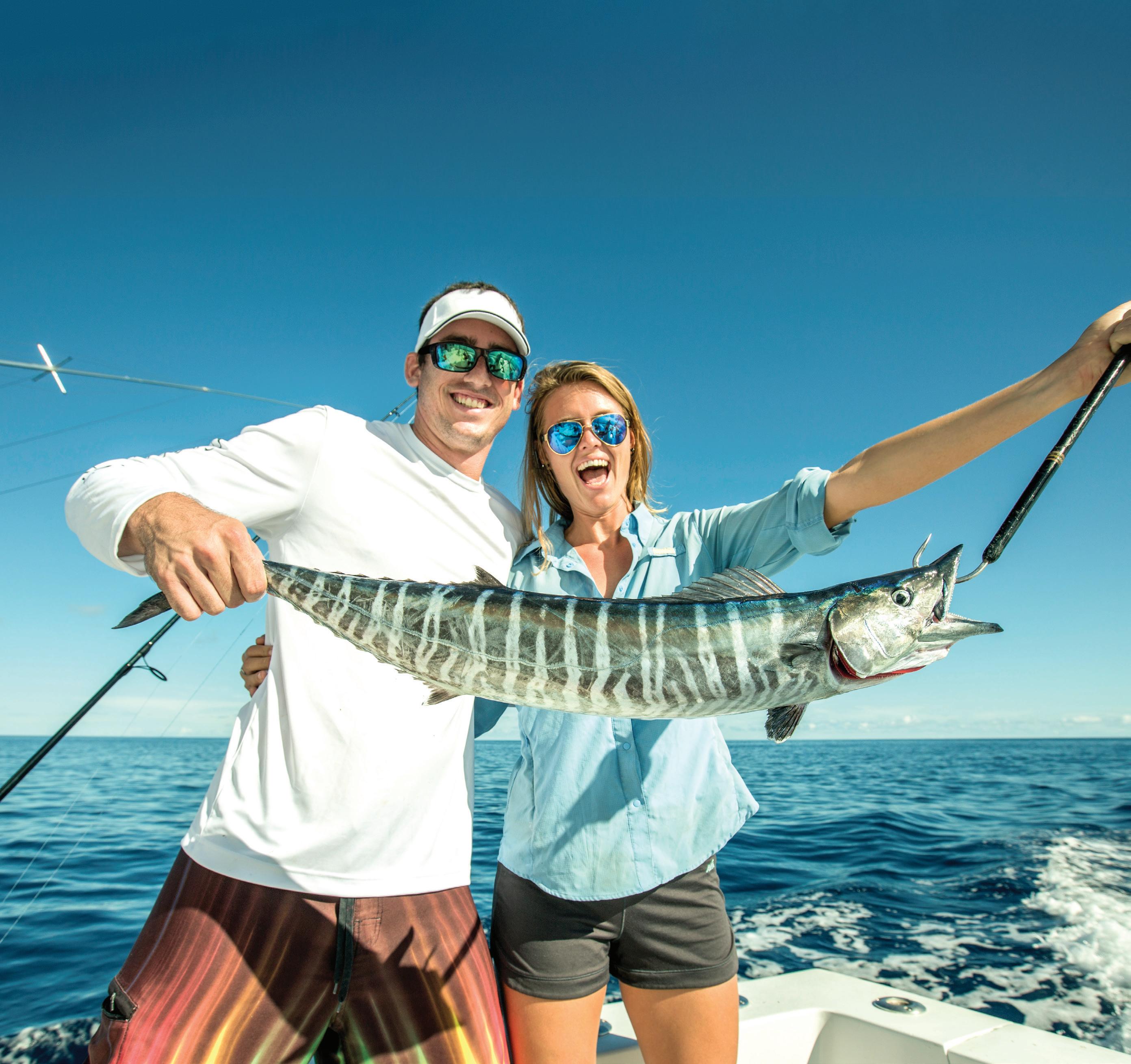
Since 2005, Sexton, a New England native, has called this 125-mile island chain home, drawn to its wild waters, rich ecosystems and nonstop adventure. One week this fall, he caught a 50-pound wahoo off Marathon. Days later, he dove into a school of 30 more—each appearing to weigh 30 to 70 pounds. On a single free dive near a wreck, he spotted wahoo, rainbow runners, African pompano and more. And that’s just the Middle Keys.
Up in Islamorada, known as the Sportfishing Capital of the World, anglers can tap into an unmatched variety of marine life. Between Mile Markers 79 and 83, the blend of flats, channels and deep offshore waters creates ideal conditions for everything from tarpon to sailfish.
Further south, the Lower Keys offer a different kind of magic. Stretching from Key West to the Seven Mile Bridge, this backcountry paradise is shallow, serene and largely untouched—dotted with soft sand, coral flats and uninhabited mangrove islands. It’s one of the Keys’ most private, pristine spots.
“No matter what you’re chasing in the outdoors, you can make it happen here in the Keys,” Sexton
says. “There’s a lot of variety. Depending on where you go, there’s something for everyone.”
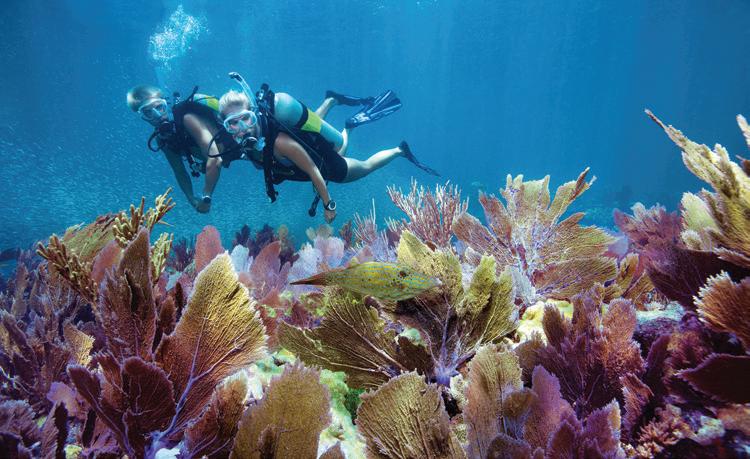
Underwater explorers can dive into the Florida Keys National Marine Sanctuary’s trail of nine historic shipwrecks, scattered across coral reefs and sandy shallows. For a heart-pounding challenge, Sexton recommends spearfishing wahoo—fast, powerful and wildly elusive.
At The Lagoon on Grassy Key, Sexton and his team offer a full lineup of action sports, including kiteboarding, foil boarding and wakeboarding. Their guests range from what Sexton calls the “boardroom warriors of Silicon (Valley) and Wall Street” to weekend adventurers and first-timers seeking a rush.
“The further you get from everyone else, the better everything feels,” Sexton says half-joking, half-serious.
For Sexton, kiteboarding is still the ultimate escape. “It’s as good as it gets,” he says. With endless terrain, consistent winds and waves just yards apart, the Keys are the perfect playground for a former pro chasing the next thrill.
Whether you're flying across the water, reeling in a trophy fish or paddling through untouched mangroves, the Keys deliver something rare: endless ways to discover wild Florida.
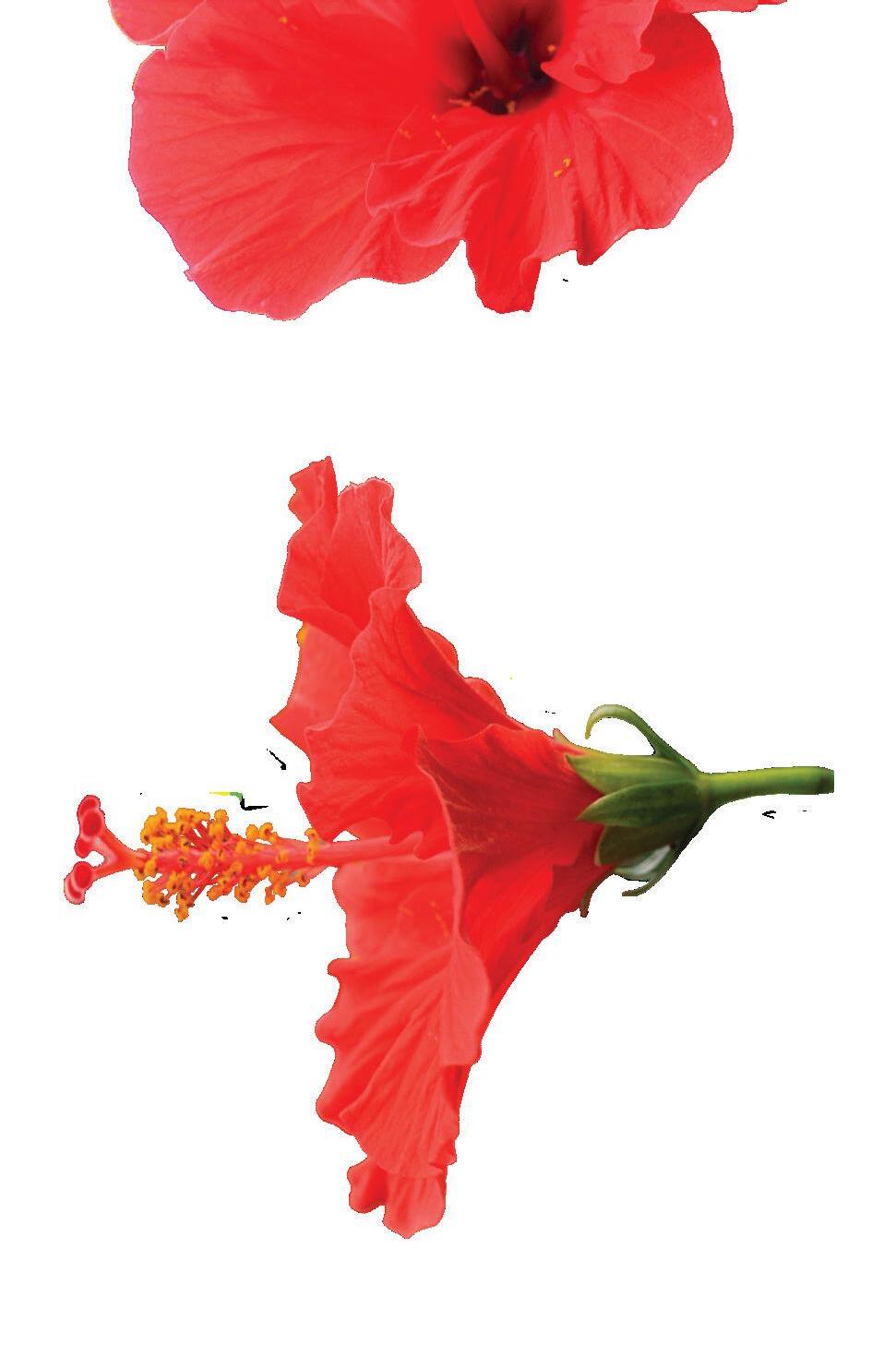
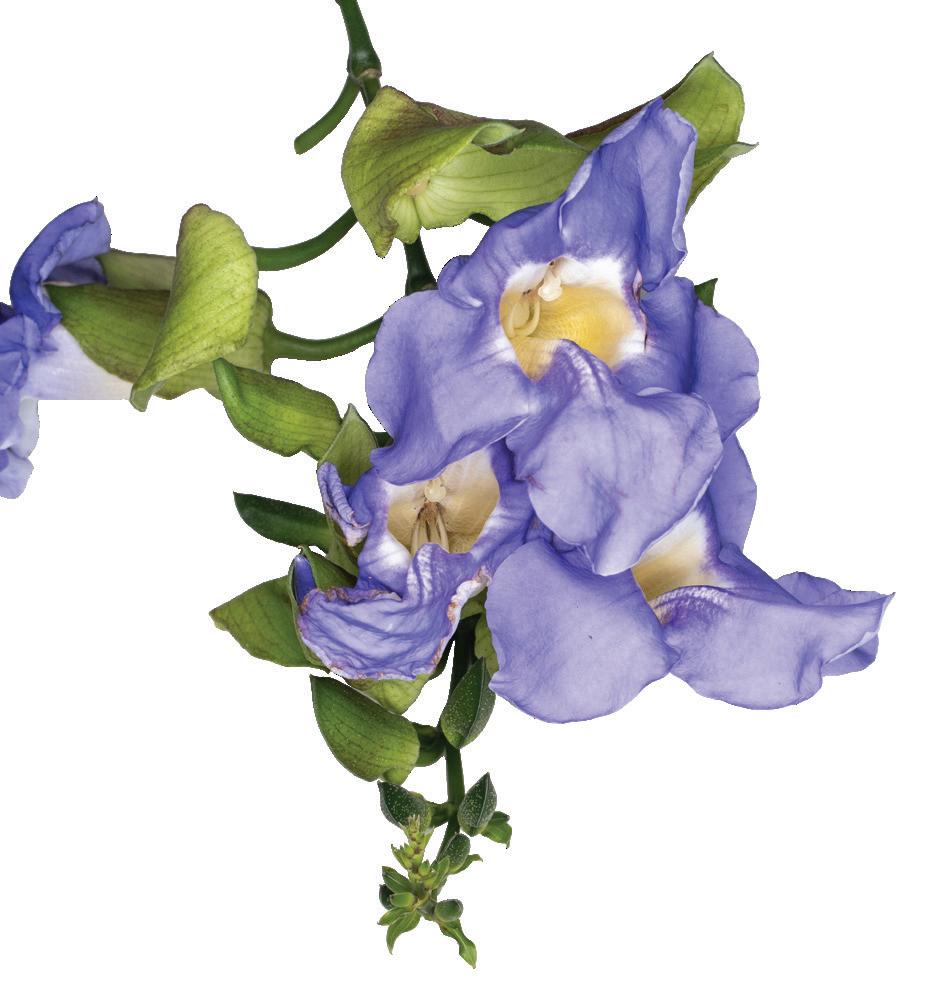
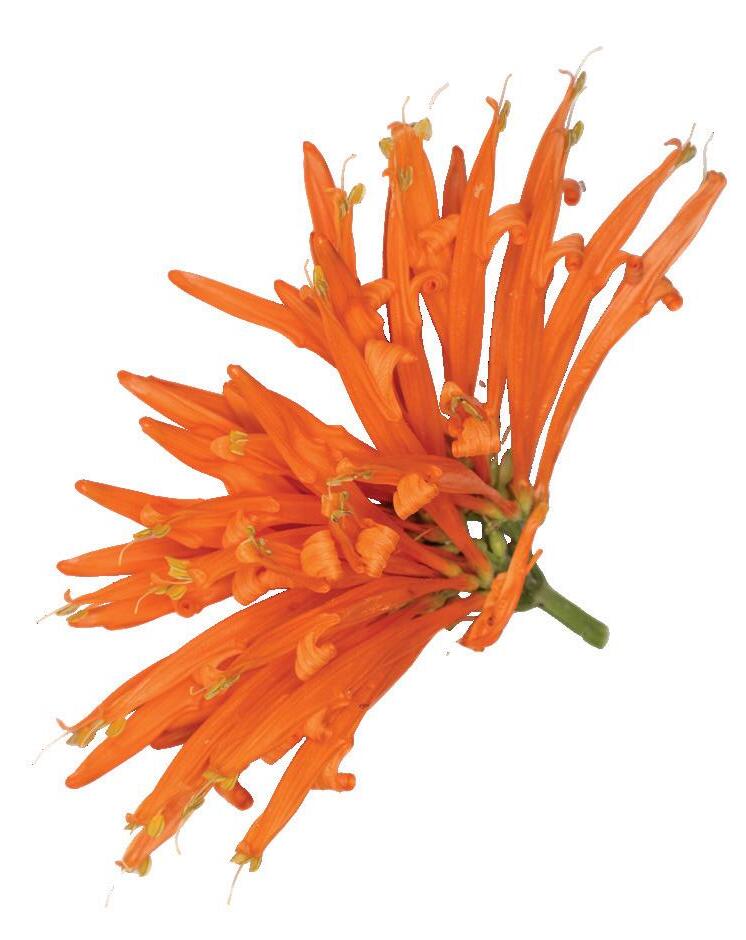
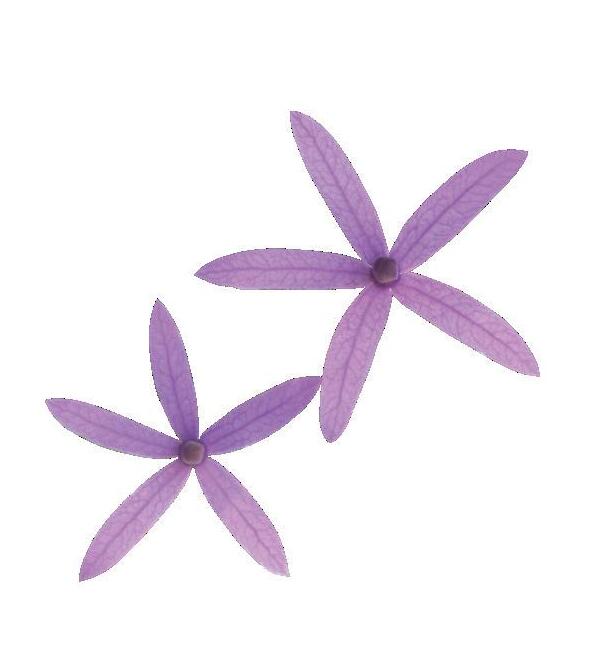
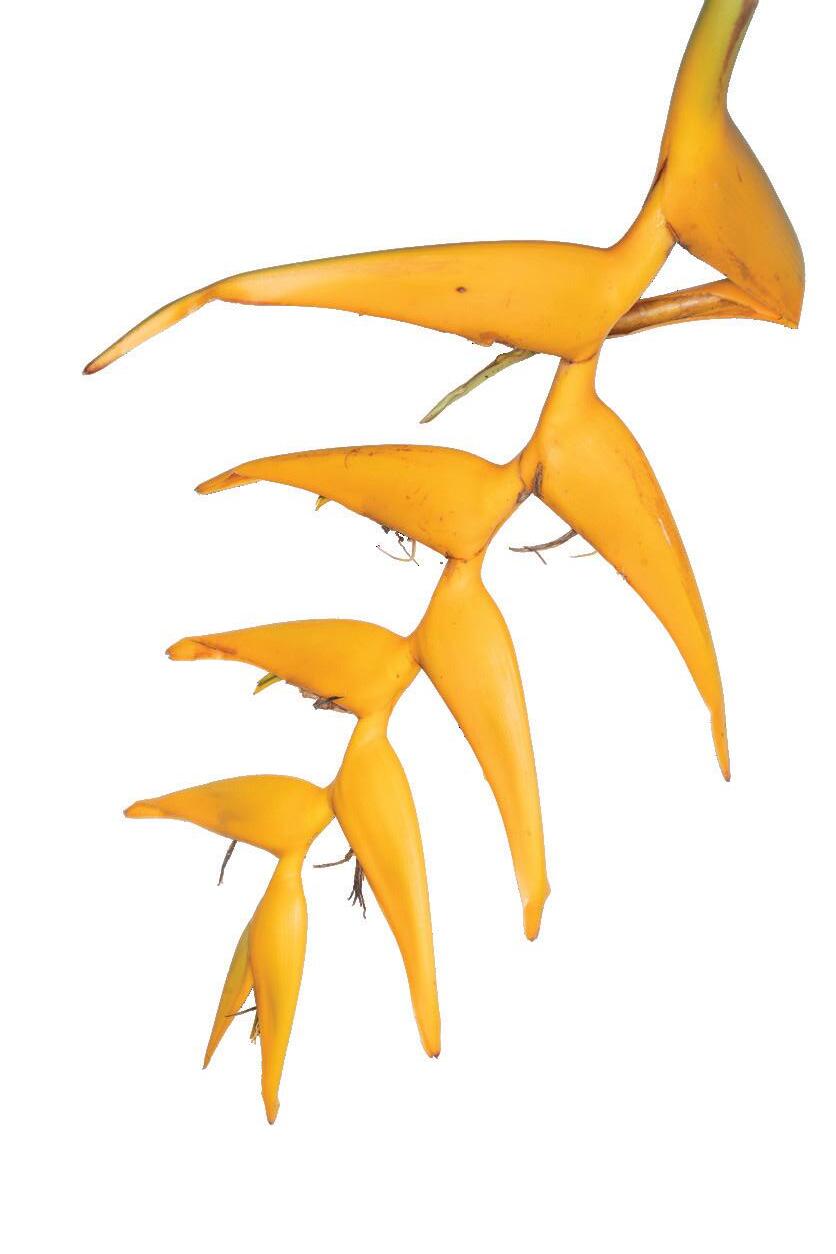
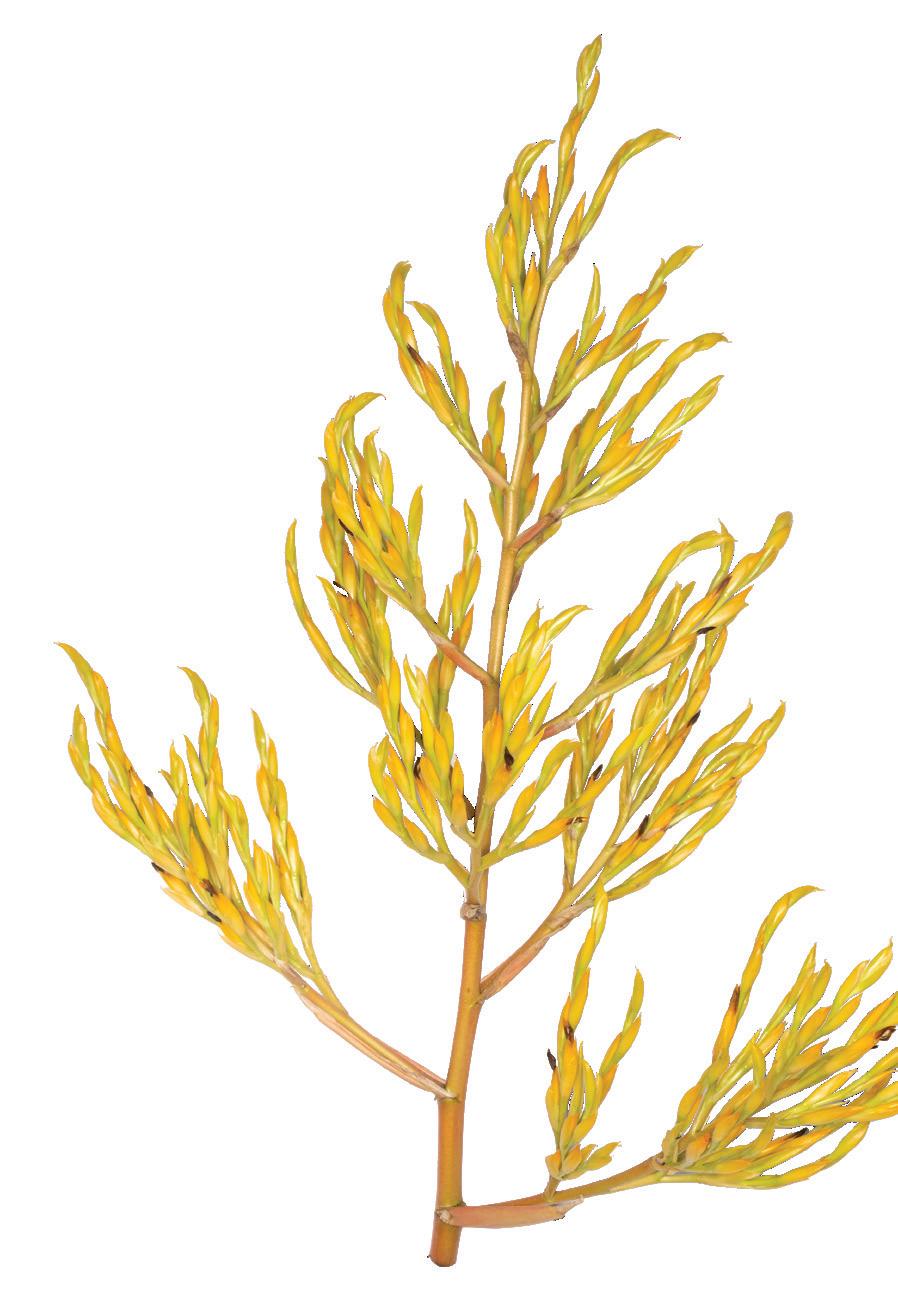
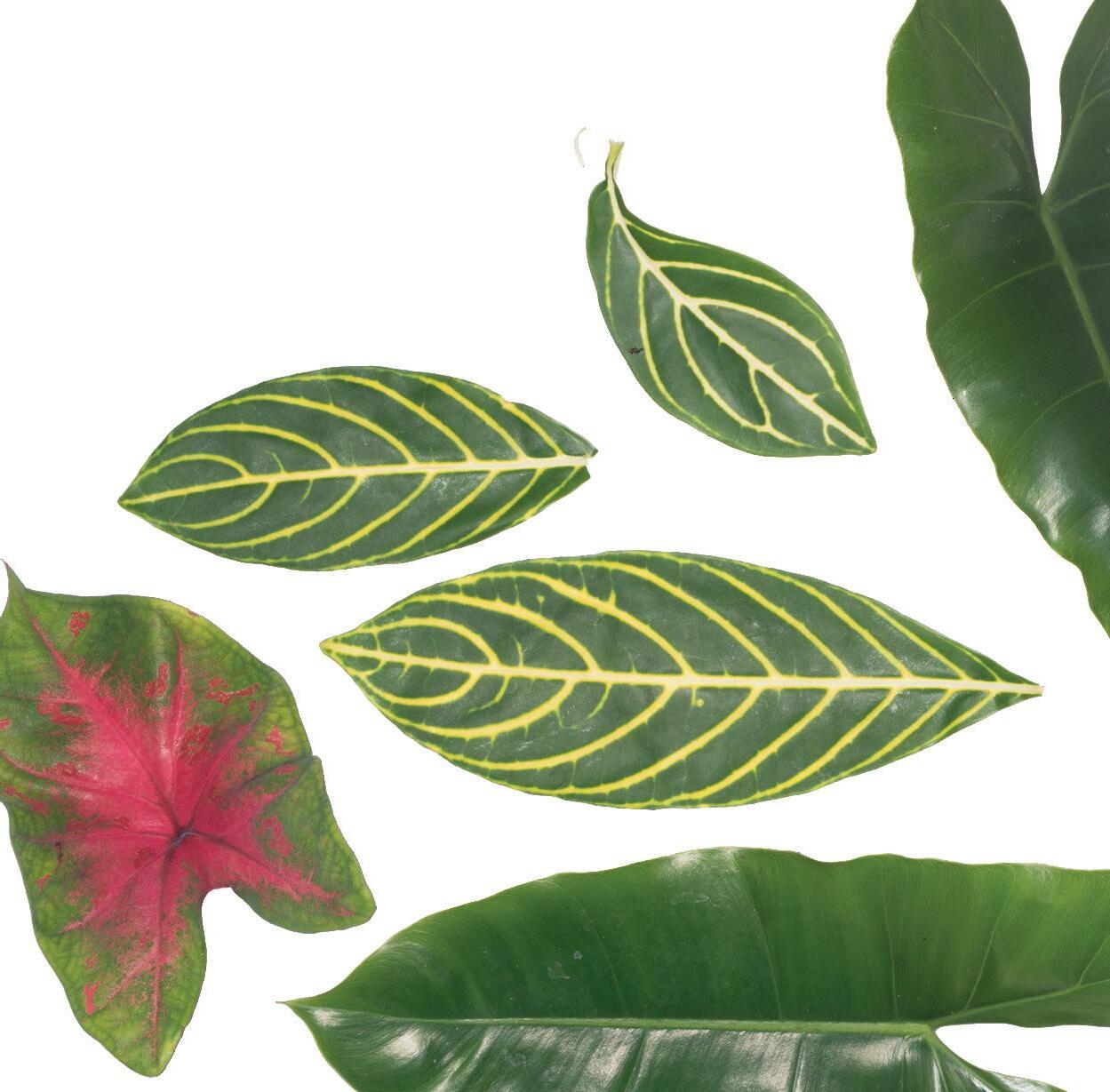
A plant palette like no other
This winter, the Garden bursts into color with ChromaFlora. See the exhibition January 24 – May 25, 2026.
Plan your experience at naplesgarden.org
Before we learn to say the names of colors, we see them—the cerulean blue of the sky above, the emerald hue of grass underfoot, the bright red skin of a favorite fruit. Since the inherent beauty of the world is unmistakable even before learning to speak, it only makes sense that the flora surrounding us has acted as the ultimate inspiration for artists the world over. From Paul Cézanne to Claude Monet to Thomas Cole, artists have always aimed to capture the colors of nature on their canvases.
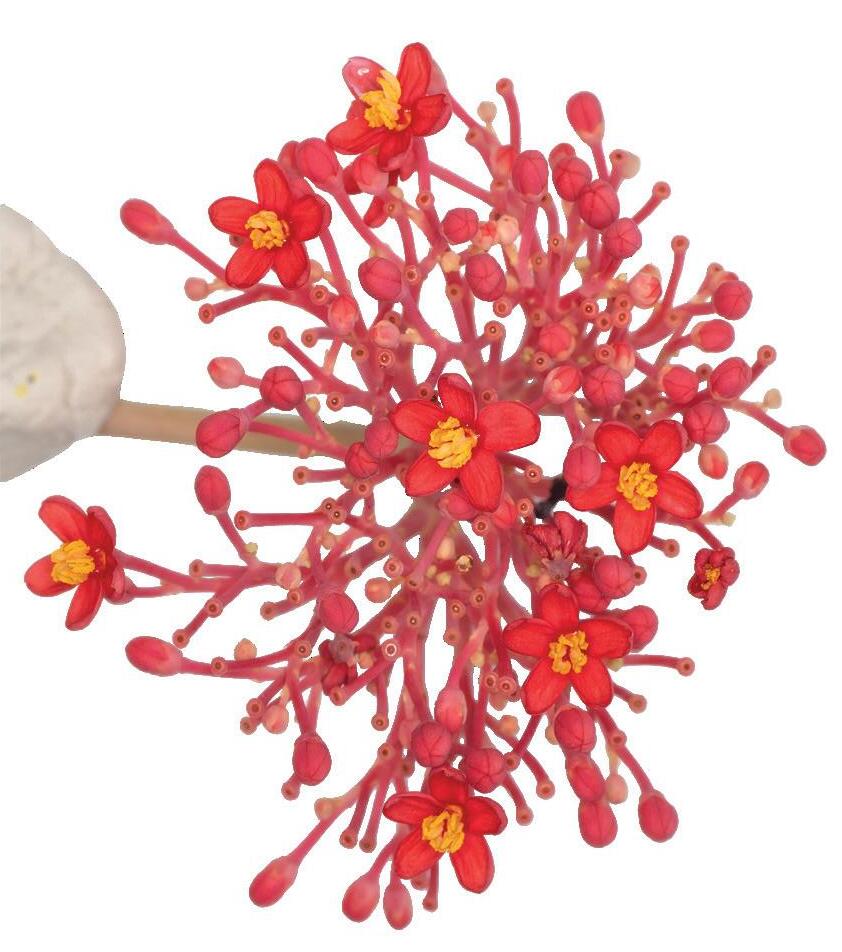
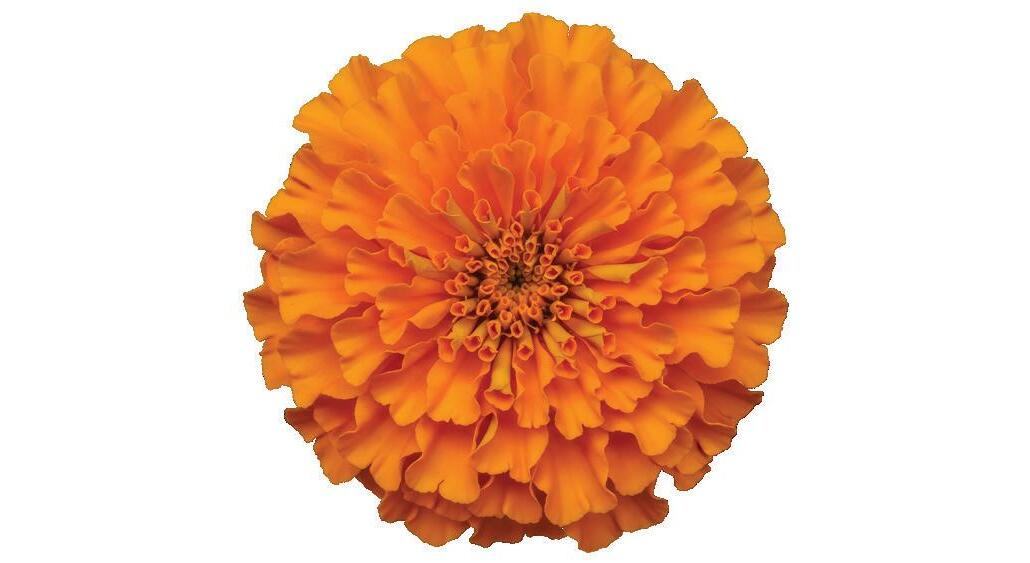
This winter, the award-winning Naples Botanical Garden—a 170-acre tropical paradise—transforms into a living color wheel with its newest exhibition, “ChromaFlora” (Jan. 24–May 25). Designed by the Garden’s own horticulturists and educators, this immersive experience shows how plants, not paints, bring the artist’s palette to life. Along the winding paths, guests discover the chemistry of color: how the shades that make up the natural world, from the red hibiscus flower to the green palm frond, are a
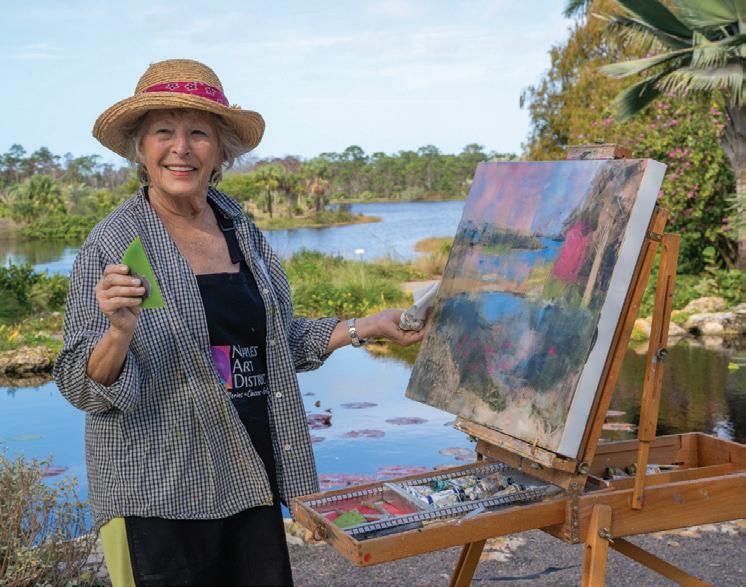
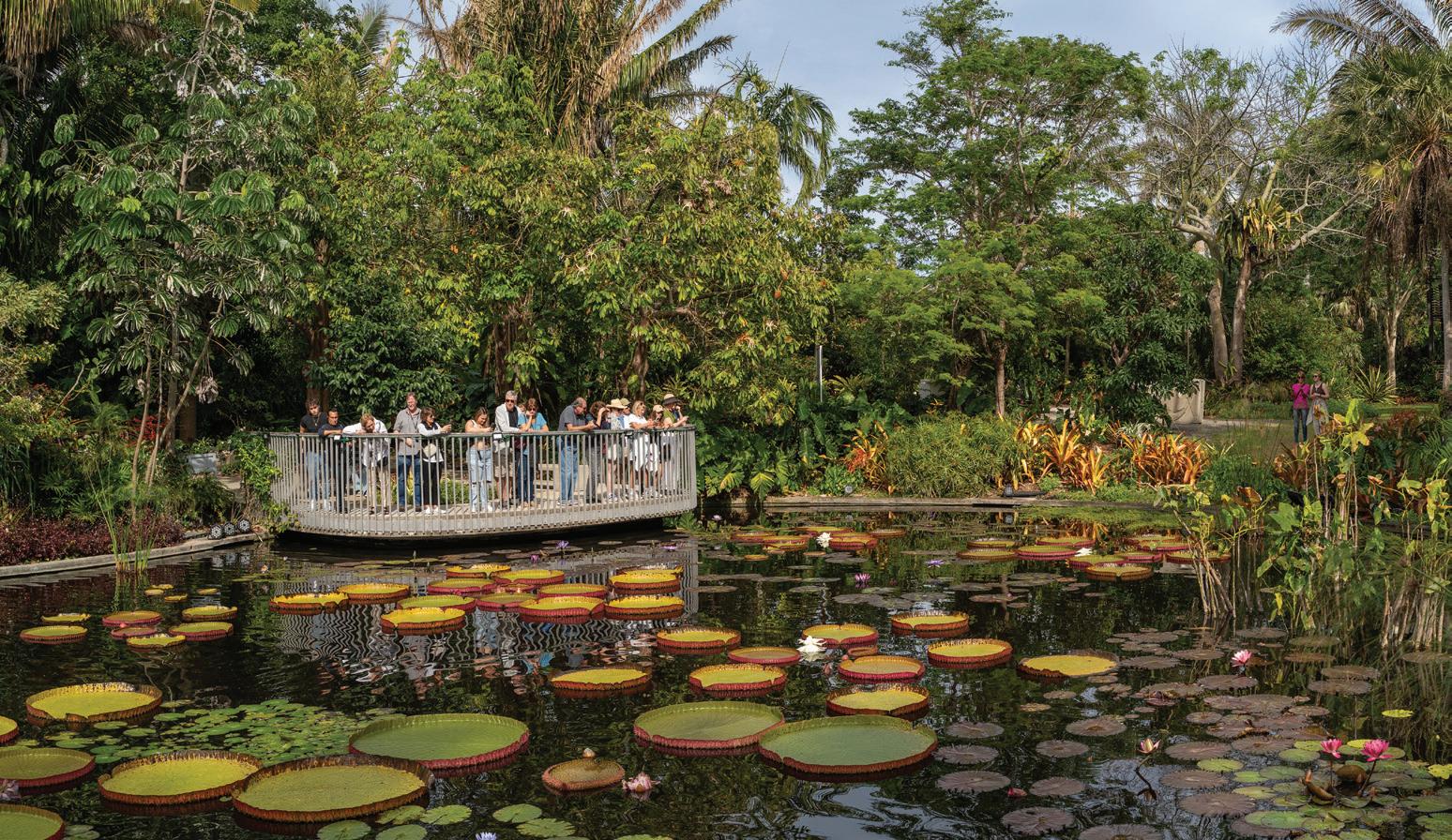
From top: Tropical waterlilies grow year-round at Naples Botanical Garden, including Victoria Amazonicas, among the largest pieces in the world; Plein Air Fest features many Naples artists.
function of how our brain interprets light. “ChromaFlora” also delves into the origin of pigments—for instance, how chlorophyll creates hues of green, flavonoids produce blue and violet and carotenoids cultivate yellow, orange and red.
This celebration of color kicks off with Plein Air Fest on Jan. 24, featuring local Naples artists set up at easels throughout the gardens, painting en plein air (in the open air). As visitors wander, they can watch the creative process unfold in real time, ask the artists questions or join in the freshair fun and make their own masterpiece to take home.
More color-centric happenings include three unique flower shows: the Annual Ikebana Exhibition and the Naples Orchid
Society Annual Show & Sale in February and the Naples Flower Show & Garden Market in March. These yearly fetes draw visitors from across the Sunshine State and are truly must-see events for those who enjoy basking in biophilia. Naples Botanical Garden also offers a variety of musical entertainment. Choose between Friday After 5, Music in the Garden or the latest series, Rhythm & Blooms, which is presented in partnership with Florida Gulf Coast University’s Bower School of Music: Jazz area that brings Emmy- and Grammy-award winning musicians to the Naples community.
Whether through the brushstrokes of a local artist or the petals of a tropical bloom, “ChromaFlora” reminds us that the most vivid art is alive all around us—in living color.
For more information, visit naplesgarden.org.
50
YOU’RE NEVER TOO OLD FOR CAMP BY
EMILEE GARBER
Ever dreamed of playing major league baseball, becoming a mermaid or performing onstage with rock legends? At these curated adult camps across the Sunshine State, you’re never too old for those dreams to come true.
60
BY NICK DAUK
Glide on a wooden boat through the Everglades with Jack Shealy, one of the last remaining Gladesmen, a group of people who have called the area home since the 1800s. Shealy navigates us through the swamps in search of the elusive Skunk Ape and clues to his family’s future.
70
FREE FALLING BY
DAVE SEMINARA
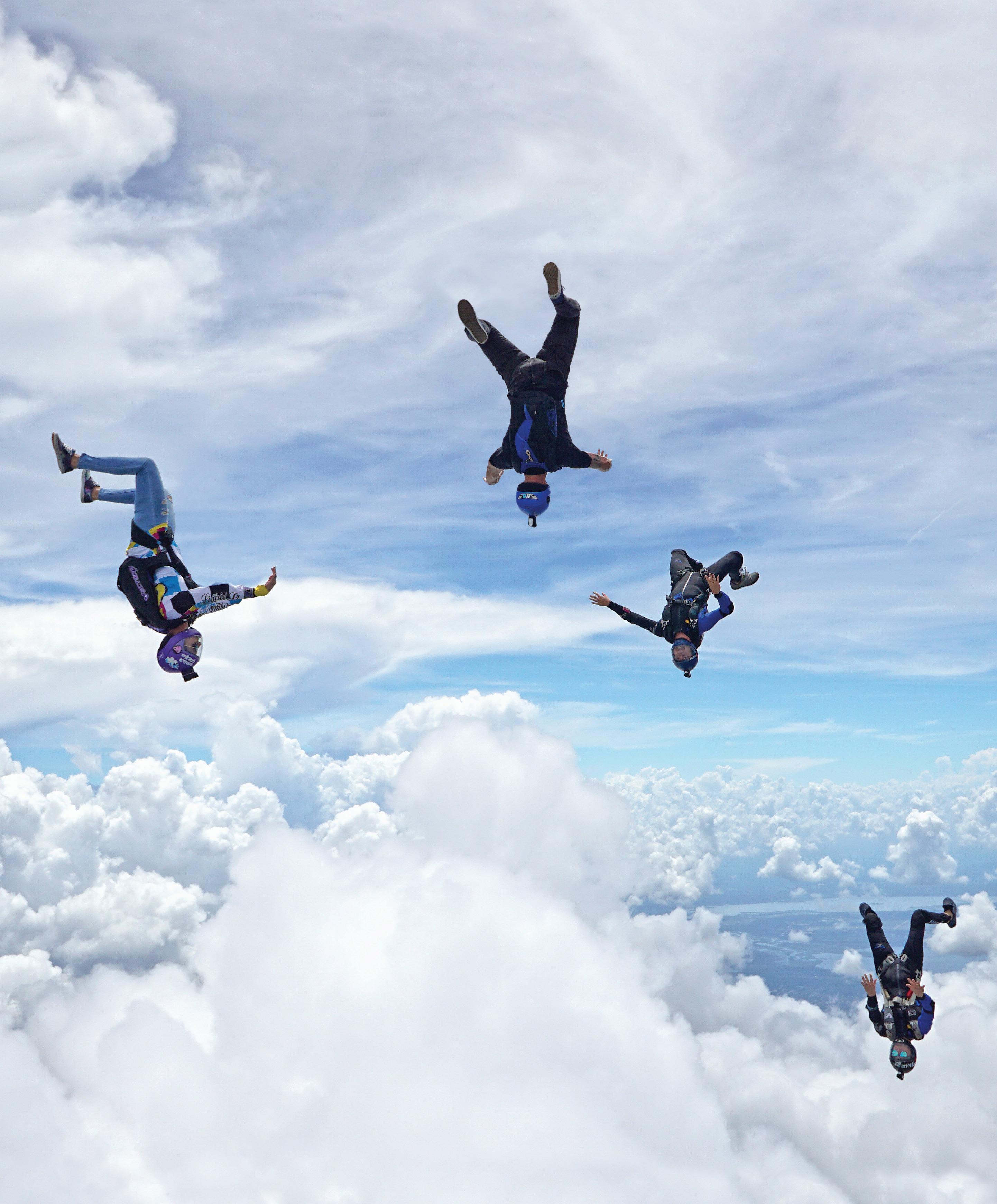
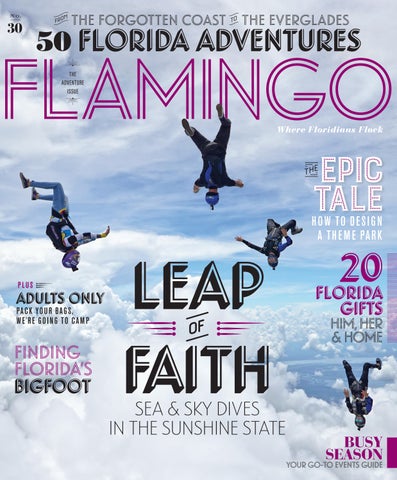
In DeLand, the Skydiving Capital of the World, thrillseekers, parachute pros, celebrity guests and even JOES—jumpers over eighty—make skydiving a way of life. Count down from five, take the leap and feel the rush of 13,500 feet of free fall.
WADING IN
21 /// THE SPREAD: Ants and oysters are always the employees of the month at this Panhandle distillery.
25 /// THE STUDIO: The devil’s in the details with this meticulous wildlife artist.
30 /// DIVE BAR: Gainesville’s The Hails kill their set on Flamingo’s stage.
33 /// GIFT GUIDE: We’ve rounded up 20 locally made gifts for your wish list.
38 /// MY FLORIDA: A seasoned diver finds herself eye to eye with one of the biggest fishes on the food chain.
42 /// JUST HATCHED: New and notable bookstores, bars and boutique hotels
47
47 /// CAPITAL DAME: Diane Roberts takes a trip to the southernmost tip of Florida, where the rules are merely suggestions.
78 /// PANHANDLING: Known as “Sassy” to her grandkids, Prissy Elrod and her family embark on a road trip.
110 /// FLORIDA WILD: Meet Cary Lightsey, a genuine cowboy protecting the state’s wild ways. 81
ON THE FLY
83 /// THE SEASON: Get in the holiday spirit with 31 events across Florida.
94 /// BIRD’S-EYE VIEW: Find all things glitz and gourmet in Boca Raton.
96 /// STONE’S THROW: Live like a local in this miracle mountain town.
102 /// GROVE STAND: Bunet, please! Italianborn pastry chef Stefania Martucci brings family recipes to Tallahassee.
106 /// DESIGN DISTRICT: Dreams become reality, thanks to this architect’s vision for Universal’s latest theme park.
112 /// FLORIDIANA: Have a look into the lifesaving lab behind a demolished reptilian roadside attraction.
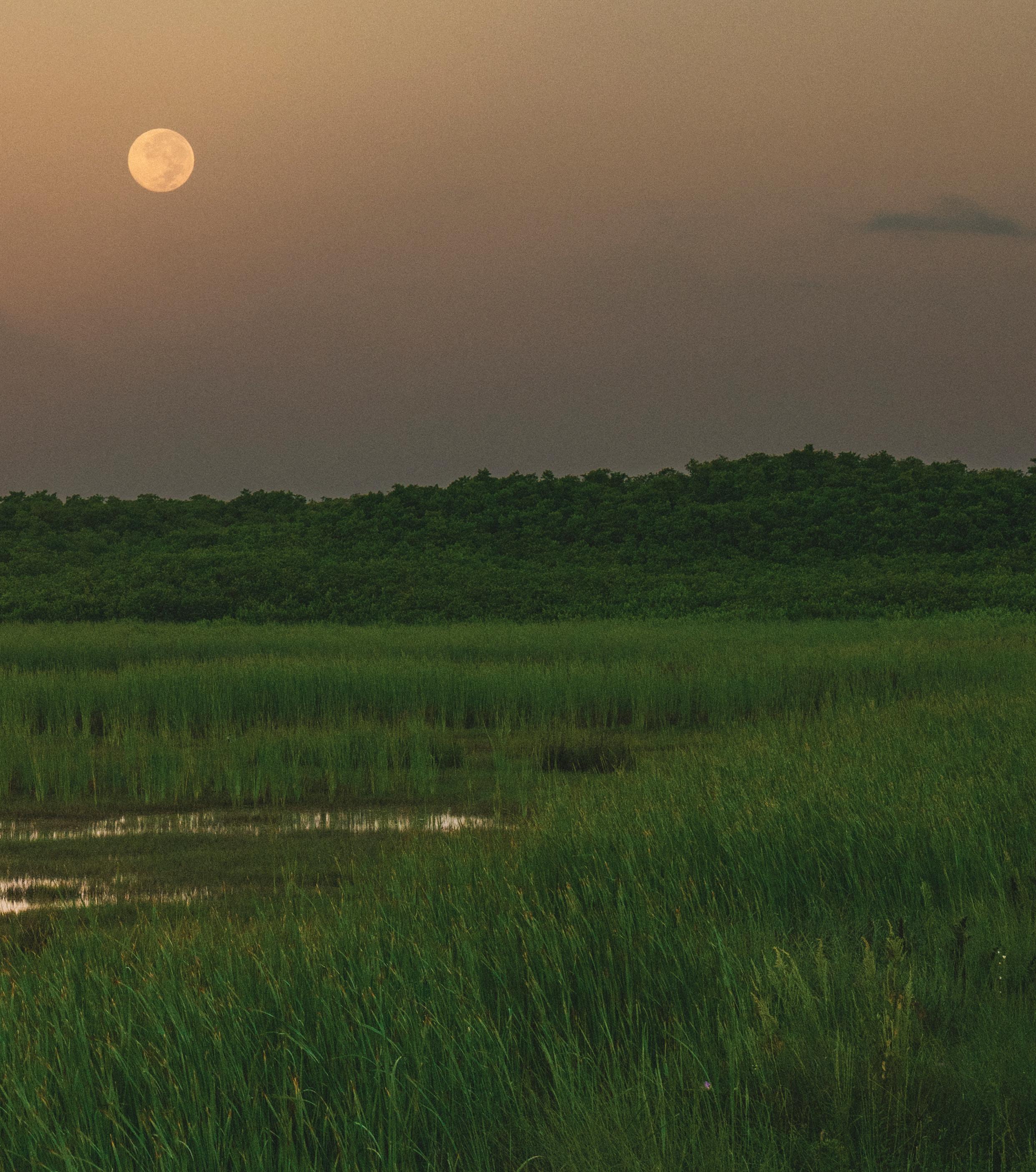
On this spread: A full moon above Big Cypress National Preserve
Photography by JOSH LETCHWORTH
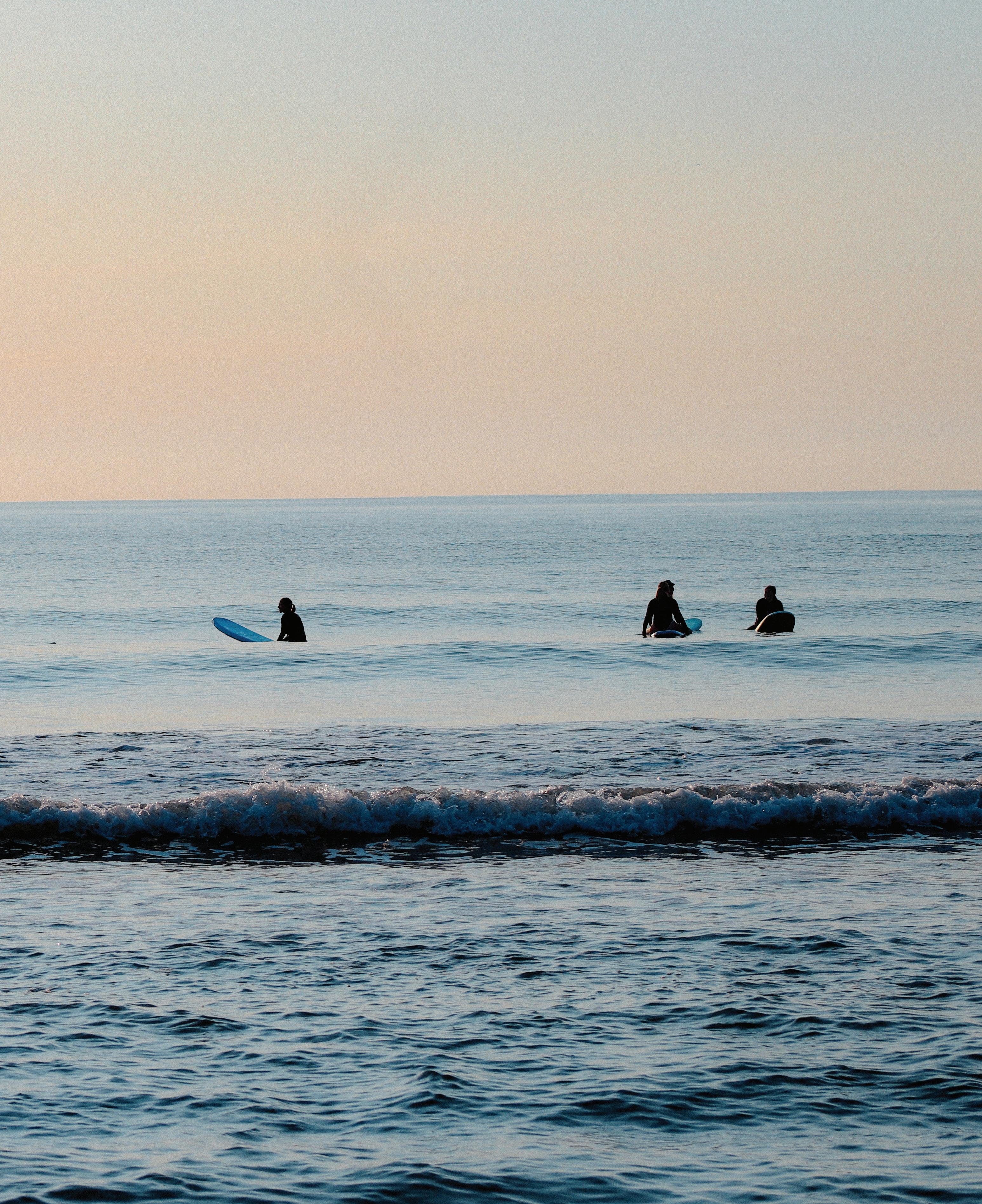
Staring directly at the early morning sun is quite difficult without sunglasses. But on a calm June day in Jacksonville Beach, I float on a surfboard in the Atlantic Ocean, scanning the horizon, and I can’t look away. After a few minutes, a small bump forms in the water.
“This one?” I ask my counselor and professional surfer, Molly Kirk, as I tentatively paddle my arms.
“Go for it,” she confirms. “You got this!”
Kirk’s words spark a tinge of nervousness inside me. As the bump grows closer and larger, I paddle faster, looking over my right shoulder at the forming 1-foot wave. When I feel its momentum start to propel me and my 8-foot foam board faster in the water, my mind races.
“Pop up! Pop up!” Kirk, 25, shouts behind me.
Going from lying to standing on the surfboard is one of the trickiest moments for any beginner. For me, it’s usually the point when it all comes crashing down. I recount the steps in my head. Upward facing dog. Right leg. Left leg. Arms out. Once my feet are planted, my upper body wobbles, but I steady myself as the rushing white water pushes me and my blue foamy toward the sand.
Don’t bail. Keep going, I remind myself. When I’m within a few yards of the beach, I jump off, elated. I wipe the salt water from my eyes, looking back at where I had
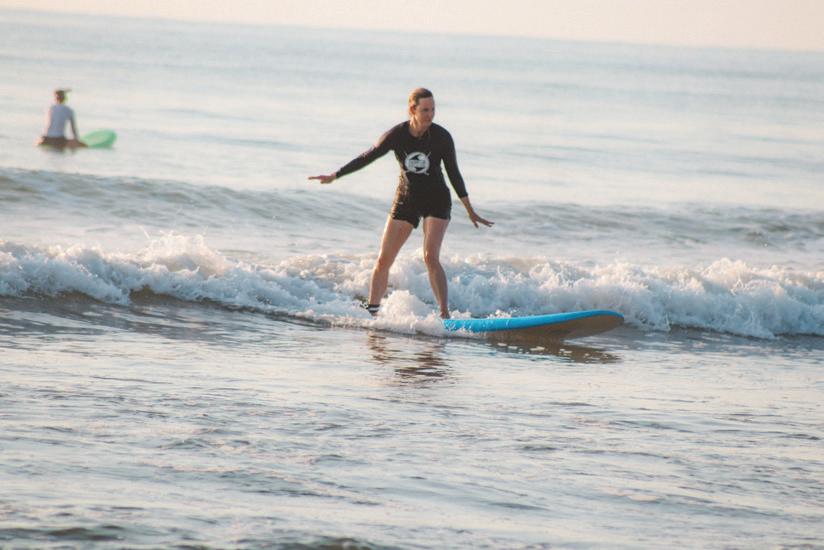
started to see Kirk and my fellow campers pumping their fists with excitement.
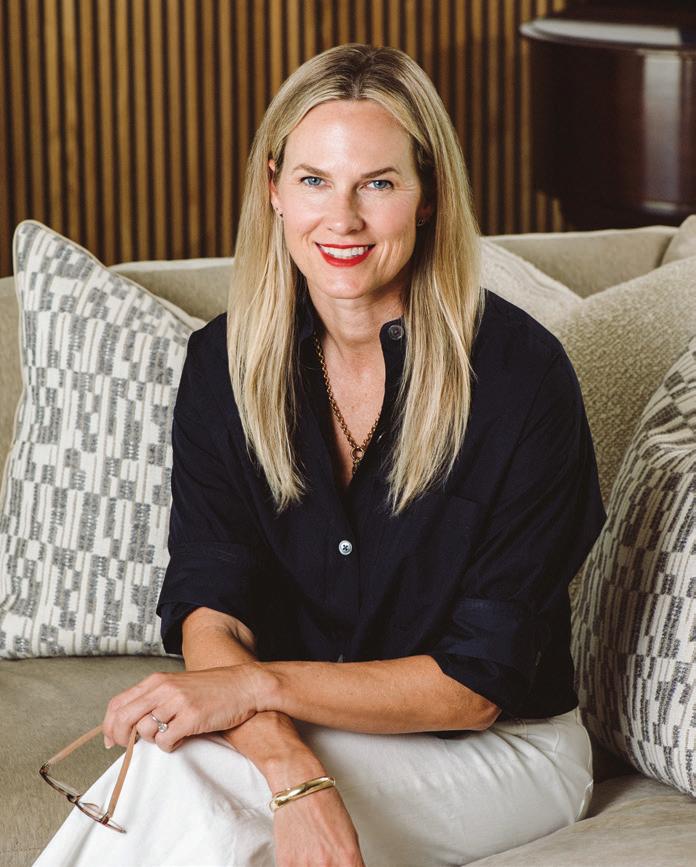
On day three of Thompson Surf School’s adult surf camp, and at age 47, I was finally learning to surf—a sport I had known only as a spectator until that moment. As a mom to a competitive surfer, I’ve stood on many beaches watching my oldest daughter carve up the waves. Aside from taking a couple of fruitless surf lessons on family vacations over the years, it wasn’t until Thompson announced its adult camp that I decided to go all in. More than simply learning to catch waves, the experience was about stepping outside my comfort zone, disrupting my daily routine and embracing something new (and a little scary).
Who hasn’t dreamed of turning off the daily demands of adulting to spend a week testing their athletic prowess or diving into creative endeavors? Tapping into that joie de vivre is exactly what inspires Flamingo’s latest Adventure Issue, where we celebrate the beauty of pushing boundaries.
Inside our pages, you’ll meet campers, artists, architects, explorers and so many more fascinating Floridians who prove that adventure isn’t defined by an age
or a destination—it’s a mindset. From becoming a mermaid to facing off against professional hockey players to taking the stage with rock star royalty, we’ve scoured the state and found the adult camps of your dreams. All you have to do is sign up. Be fearless this winter as we hop over to DeLand, the Skydiving Capital of the World, where we hang with some of the state’s oldest and most daring jumpers. (There’s a 90-year-old who celebrated his birthday with nine solo jumps!) Then head south to a quieter—but no less exhilarating— corner of the state to glide through the Everglades on a wooden boat in search of the Skunk Ape. Or strap on an oxygen tank and explore sunken ships and dodge goliath groupers beneath the turquoise waters off Pensacola Beach.
To be sure, not all adventures require a surfboard, parachute, pole boat or regulator. Some unfold in the spirit of creativity. Meet the man behind Orlando’s latest theme park triumph, vibe with a band of merry musicians, discover new Florida makers and hit the road for The Season—our guide to the state’s biggest and best events. Along the way, we invite you to stroll through Key West cemeteries, handle venomous snakes in Miami and sip oyster-filtered vodka in Santa Rosa Beach.
After weeks of chasing the thrill in the making of Flamingo’s Volume 30, I find myself in need of a recharge. The unused surfboard standing in my garage is calling me back to the ocean and its restorative motion—reminding me that we’re meant to keep changing, evolving and doing things we never imagined we could. As we head into a new year, may you find your own wave, in whatever form it takes. Don’t bail. Keep going. Ride it all the way to the shore. You might look back and see your biggest fans cheering you on.

Editor in Chief & Publisher
let us know what you think. Email me at jamie@flamingomag.com
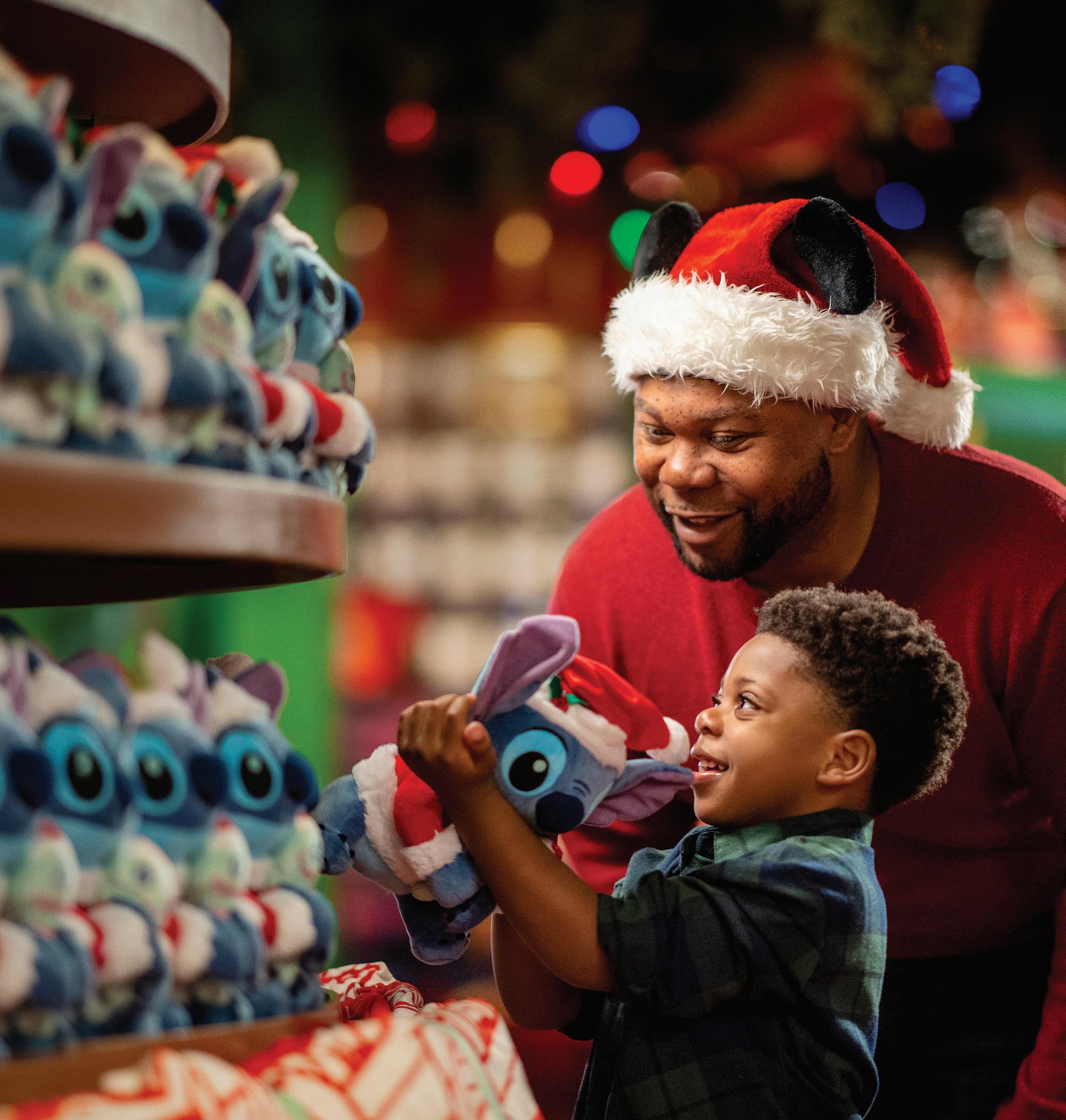
SHOP UNIQUE HOLIDAY MUST-HAVES FOR YOUR NICE LIST AT OVER 100 RETAIL DESTINATIONS.
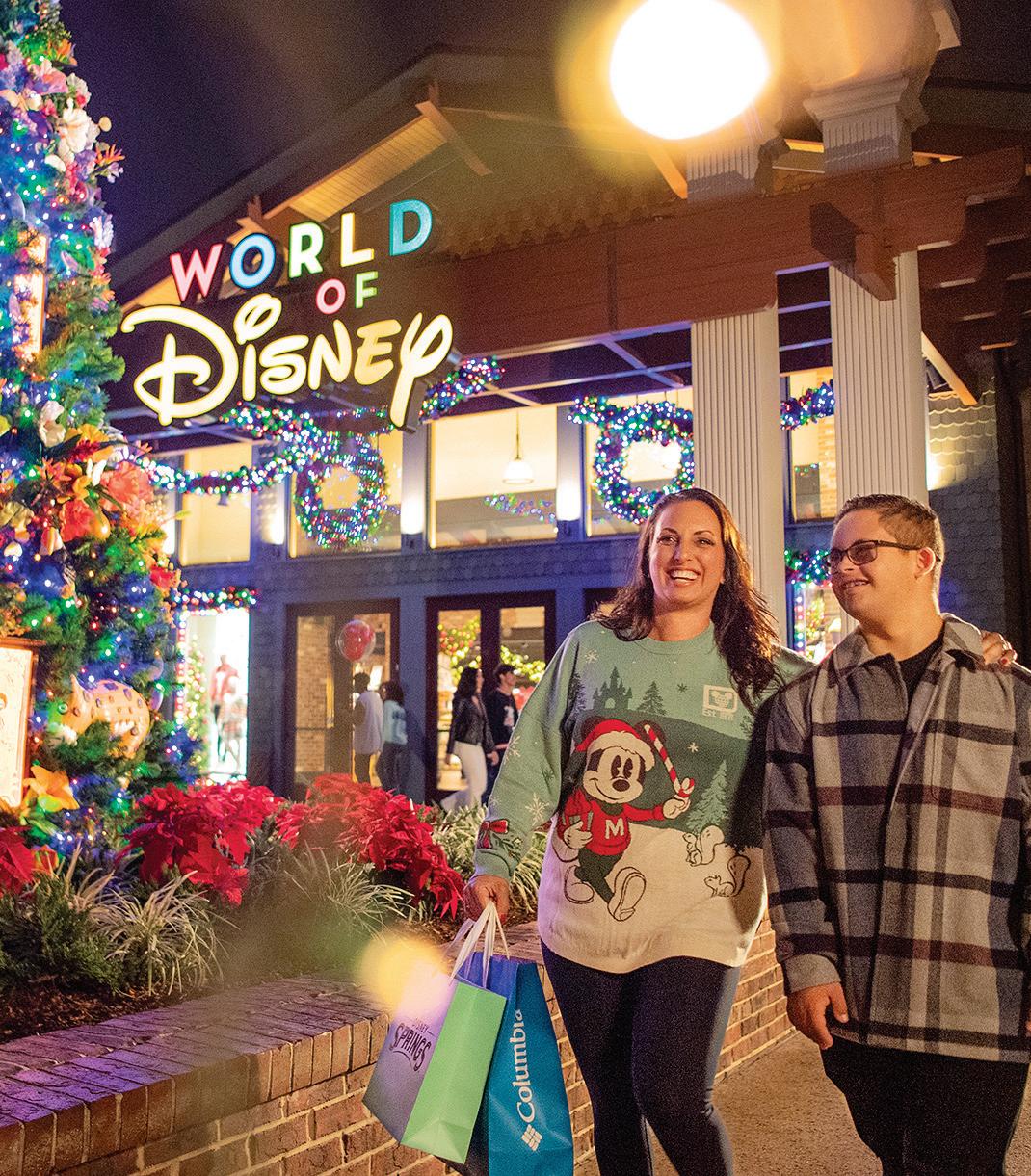
Play among a splendid tapestry of décor while you explore 19 uniquely themed trees at the Disney Springs Christmas Tree Stroll presented by AdventHealth. As nightly "snowfall" accompanies the joyous atmosphere, live holiday entertainment adds a spirited presence with musical performances, snowflake skaters and toy soldier stilt walkers. And of course, you and the family can make reservations to meet the big guy himself, Santa Claus!
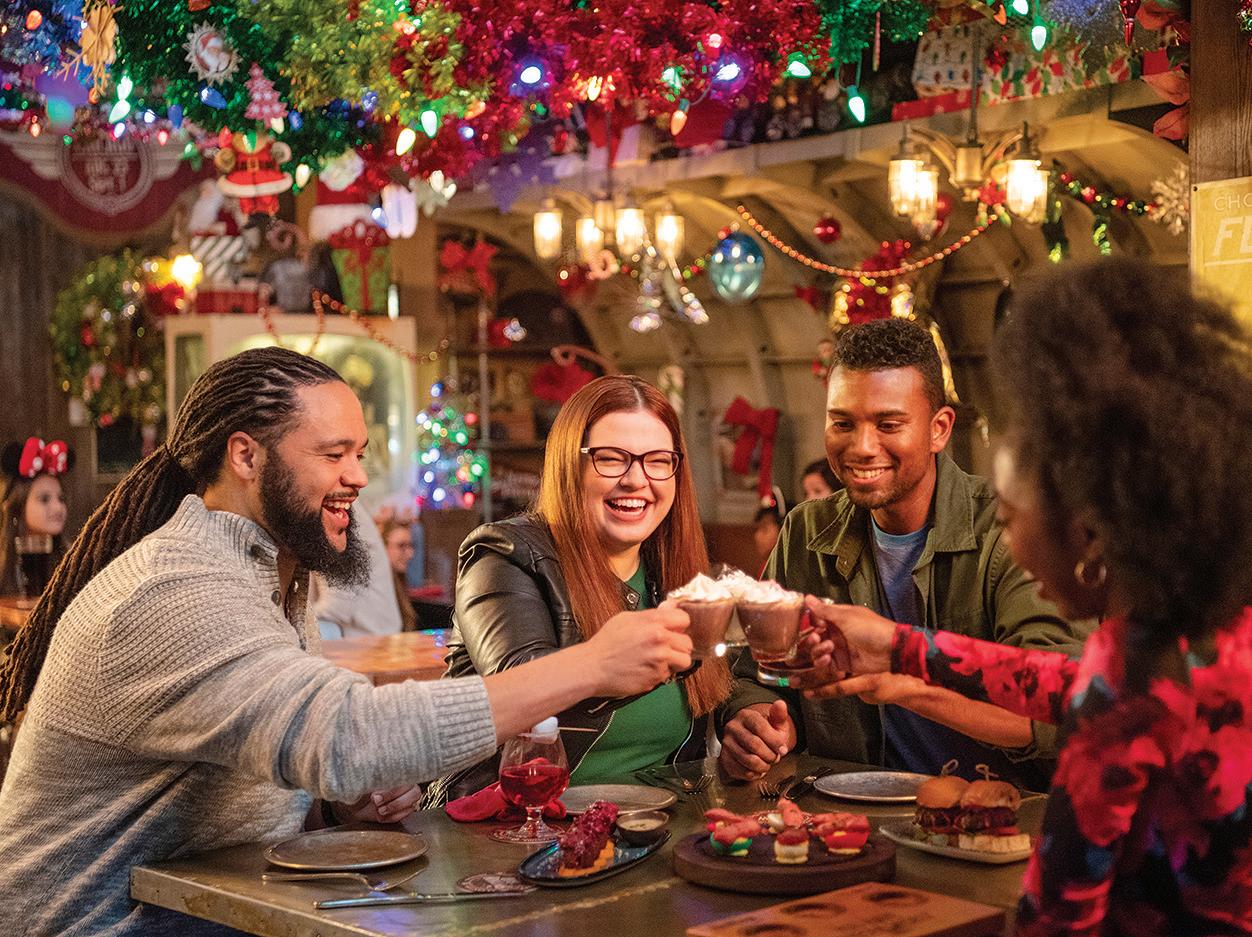
Enter a world of whimsy and holiday delight when you immerse yourself in a winter wonderland of indulgence at Disney Springs®. Here, you’ll find merrily whatever you’re after this season; gifts for your loved ones, unique and limited-time, palate-pleasing dining options, and one-of-a-kind Yuletide experiences that will bring joy to you, your friends and family.
Shop the perfect gifts at over 100 retail destinations including World of Disney® store where you’ll find highly coveted holiday merchandise collections. From matching PJs for the family to holiday Mickey ears and more, you’ll find distinct and Disneyexclusive must-haves for everyone. And if you’re looking for festive home décor and even ornaments that you can personalize, Disney’s Days of Christmas has just what you need to make your holidays merry and bright.
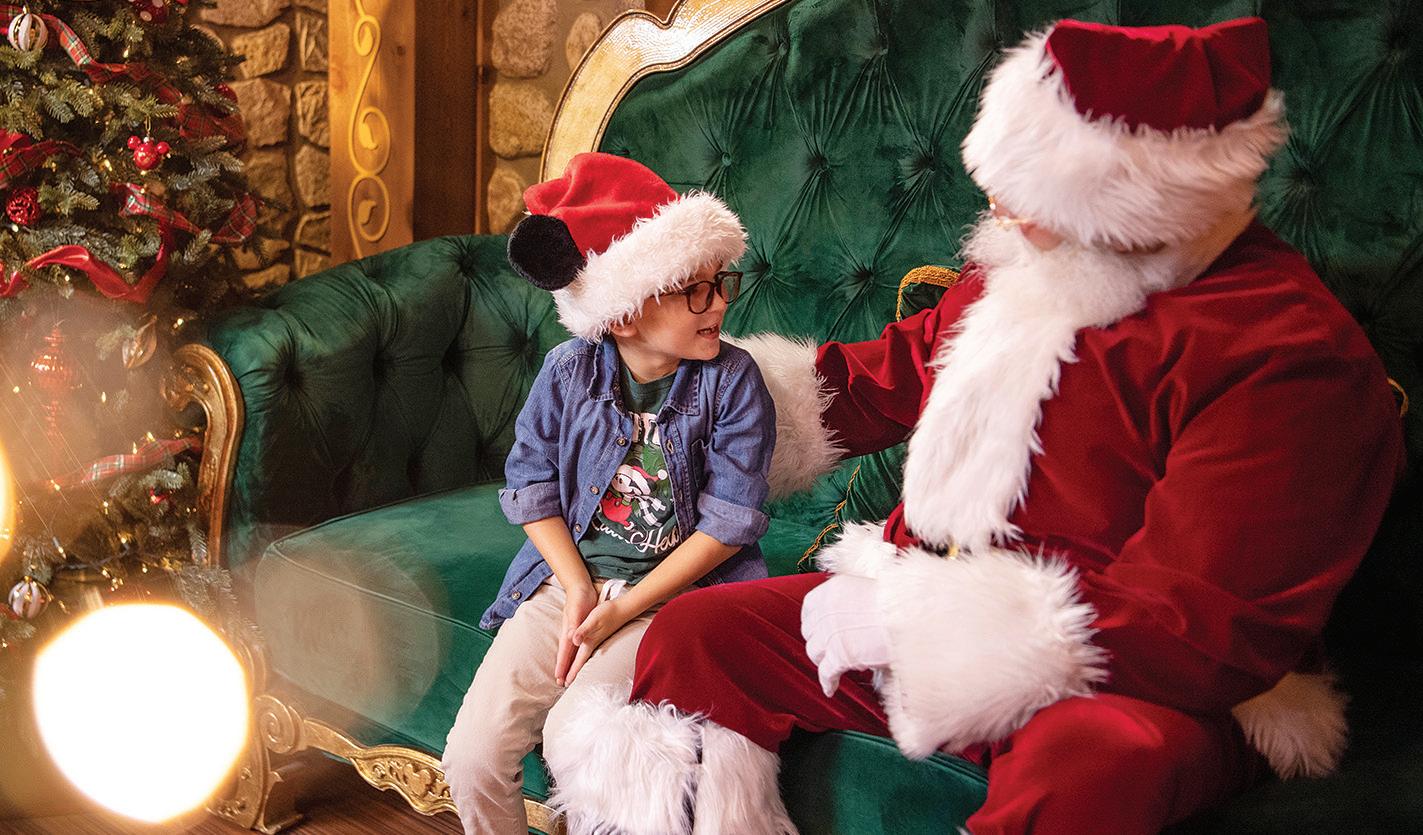
Dine with friends and family while taking in the vintage fun at Jock Lindsey’s Hangar Bar, where you can enjoy casual fare with a daring flair, all wrapped in festive holiday décor. Are you in the midst of gift-shopping and checking items off your list? Enjoy a holly-jolly reprieve as delightfully decadent desserts tempt you at The Ganachery and Amorette’s Patisserie.
Readers Shoutout their favorite stories from our fall issue.
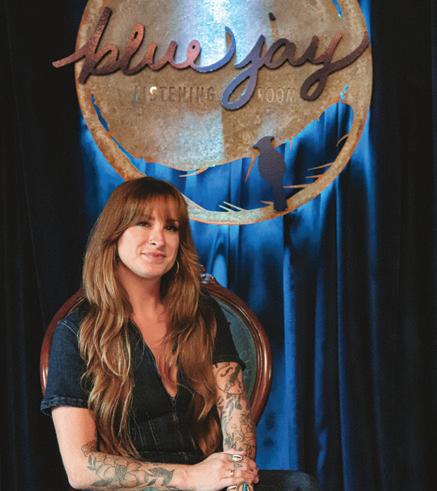
@jamesmoors: One of the best venues in the country right now! Amazing owner, killer staff and enough vibe to keep you coming back for more. @bluejaycara is absolute ��
@tywolford: My favorite, local live-music venue! Community! You’re missing out if you haven’t been. Come check out any show, guarantee a wonderful time.
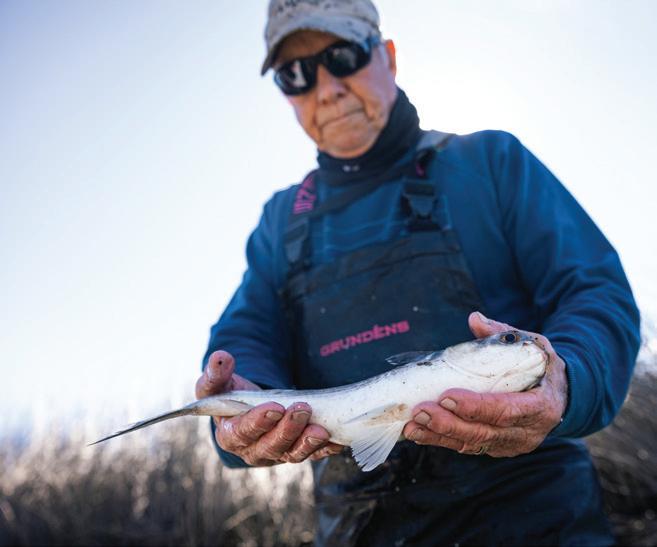
@alreh: Mullet forever! Whenever I go home to Florida, my main mission is to find good mullet to eat. Waited two hours on Father’s Day to get mullet (and left when they told us it was sold out). My family has been enjoying mullet on the Forgotten Coast for 100+ years. Many a family achievement/milestone was marked by wonderful meals at the now-closed Spring Creek Restaurant. Enjoyment
of mullet is part of my family/ cultural heritage, and I’m so proud of that. ❤❤
@theconstantgardenista: (on) the Forgotten Coast, but @kirkfishcompany down in Goodland (SW Florida) still does smoked mullet, and it’s fantastic! Reminds me of my childhood and makes me so happy when I can get it—I hope they never stop! ���� @mccarthyregan: I am officially a mullet convert!
@floralutopia: Love this article so much! So in awe of you daily! @bluejaycara
@scottwhatleycomedy: AND … live stand-up comedy!
@dangatorfl: It’s not hidden to real music lovers! If you haven’t been, you need to go.
@imjoshgibbs: Come build this in Tampa please. I’ll run it for you. ��
@kaitlynyoungoutdoors: Would of found who beat him to death and beaten them to death
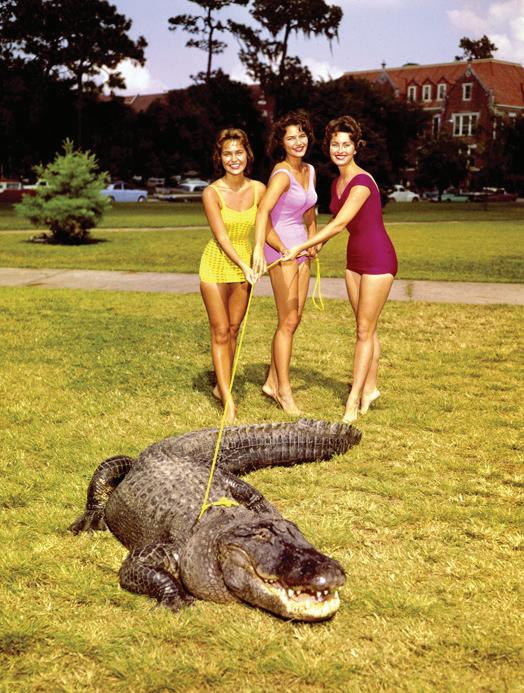
@landiscarey_ceramics: My dad went to UF in the ’60s, and I recall some wild stories about that alligator. He would have loved to see this article and the photos.
@gracie_darlington: Insane! These photos are unreal.
@emilyklingenberg: This makes me so happy as a former mascot!
@mstrong18: Such a cool article! ��
Noah Greene: John is the real deal! ����
Left: A vintage photo of one of the University of Florida’s first live Albert the Alligator mascots
“Fresh Squeezed” newsletter or send an email to info@flamingomag.com and say hello.
EDITORIAL
Editor in Chief and Founder JAMIE RICH jamie@flamingomag.com
Deputy Editor Emilee Garber emilee@flamingomag.com
Creative Director Holly Keeperman art@flamingomag.com
Contributing Designer Ed Melnitsky edit@flamingomag.com
Art Production Manager Kerri Rak
Editorial & Marketing Assistant Helen Bradshaw helen@flamingomag.com
Contributing Editors
Eric Barton, Steve Dollar
Contributing Writers
Eric Barton, Nick Dauk, CD Davidson-Hiers, Steve Dollar, Prissy Elrod, Alyssa Morlacci, Melissa Puppo, Diane Roberts, Maddy Zollo Rusbosin, Dave Seminara, Nila Do Simon, Carlton Ward Jr.
Contributing Photographers & Illustrators
Patti Blau, Thais Bolton, Leslie Chalfont, Beth Gilbert, Josh Letchworth, Alicia Osborne, Jules Ozaeta, Kristen Penoyer, Kiko Rodríguez, Carlton Ward Jr.
Copy Editors & Fact-Checkers
Patty Carroll, Stacy Cortigiano, Olivia Evans, Nick Song
Editorial Intern McKenna Oakley
SALES & MARKETING
Publisher JAMIE RICH jamie@flamingomag.com
Advertising Sales Director Janis Kern janis@flamingomag.com
Advertising Sales Executive Jenn Kirby jenn@flamingomag.com
Advertising Sales Executive Megan Zebouni megan@flamingomag.com
Newsstand Distribution Tom Ferruggia tferruggia@msn.com
Contact Us JSR Media LLC 13000 Sawgrass Village Circle Bldg. 3, Suite 12 Ponte Vedra Beach, FL 32082
P: (904) 395-3272 // E: info@flamingomag.com
All content in this publication, including but not limited to text, photos and graphics, is the sole property of and copyrighted by JSR Media and Flamingo. Reproduction

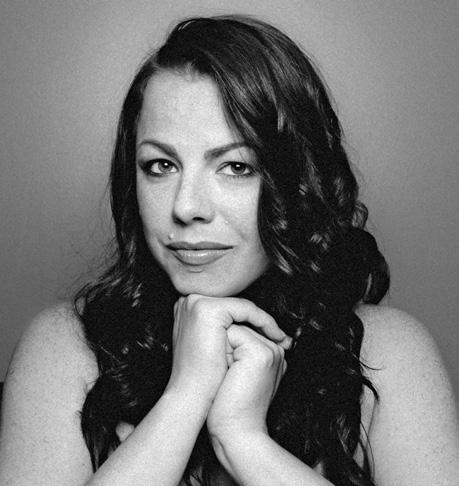
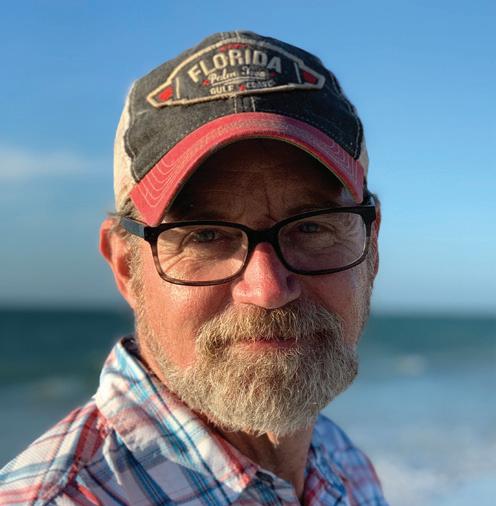
KRISTEN PENOYER, a South Florida native, has lived and worked in five countries around the world. An artist since childhood, she’s now an acclaimed culinary photographer whose clients include some of the world’s most admired brands. Her latest project, Florida is Beautiful, showcases large-format black-andwhite photographs developed in her own darkroom—each image reflecting her deep affection for the South. In this issue of Flamingo, see her work on page 21, where she captures the spirit of a homegrown distillery, and on page 33 in our holiday gift guide.
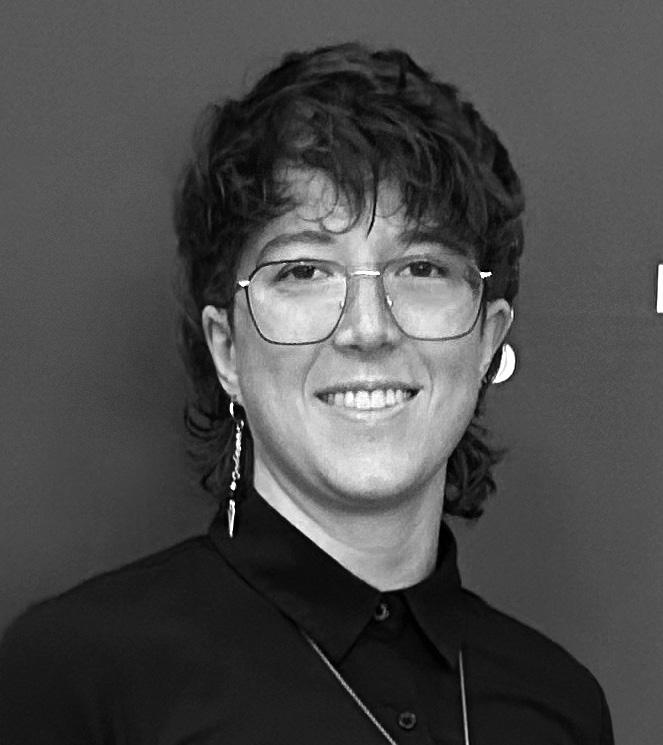
CD DAVIDSON-HIERS is a journalist and essayist who runs the Florida Student News Watch program and reports on environmental and science topics for outlets including Nautilus and The Marjorie. The North Floridabased writer is currently pursuing a master’s in narrative nonfiction and journalism at the University of Georgia. Read her personal essay inside this issue in our My Florida department on page 38, where she reflects on facing her fears while learning to scuba dive off Pensacola Beach alongside her father—and coming eye to eye with a goliath grouper.
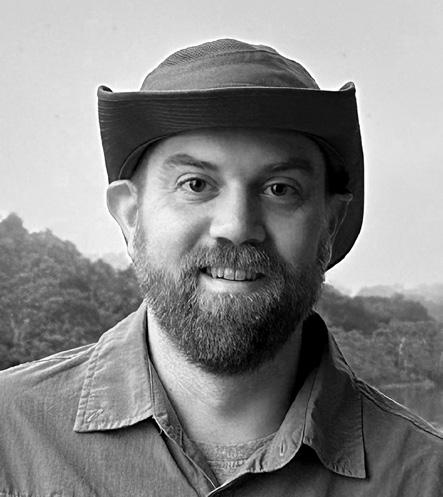
NICK DAUK, originally from Pittsburgh, has lived across Florida— from the Panhandle to Palm Beach County—before calling Orlando home in 2008. When not chasing his three kids around, he’s reporting from locations as far-flung as the Arctic and the Amazon for publications including National Geographic and the Atlanta Journal-Constitution. His favorite stories blend heartwarming moments with hard-to-face facts. In his Flamingo debut on page 60, Dauk chronicles his journey into the swamps of Ochopee in search of the Gladesmen, a century-old community disappearing faster than the Everglades itself.

THAIS BOLTON creates art that plays with shapes, colors, textures and a touch of whimsy. She earned her master’s in visual development from the Academy of Art University in San Francisco and is a Brazilian artist based in Florida, where she draws inspiration from the state’s lush greenery and endless summers. When she’s not drawing, Bolton enjoys playing the piano, reading and spending time with family and friends. Inside this issue, she gives shape to the antics of a “Sassy” grandma in Prissy Elrod’s Panhandling column on page 78
KIKO RODRÍGUEZ is a visual artist and graphic designer whose work blends traditional and digital techniques to create organic, dynamic and colorful illustrations. Known for his precise style, versatility and professional approach to every project, Rodríguez brings more than 25 years of experience to his craft. Rodríguez’s passion for drawing, music and movies began as a child growing up in rural Cuba. In his Flamingo debut, the Miami-based artist illustrates the quirky and sometimes intense world of adult summer camp for our feature story on page 50
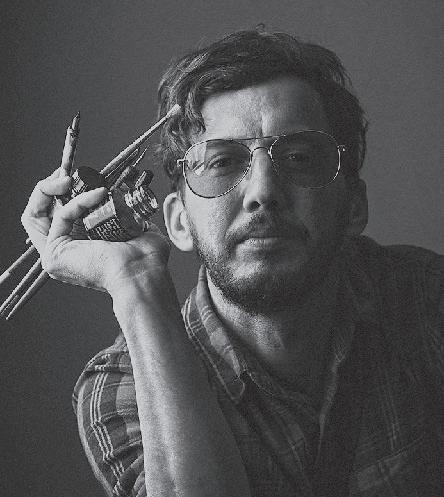
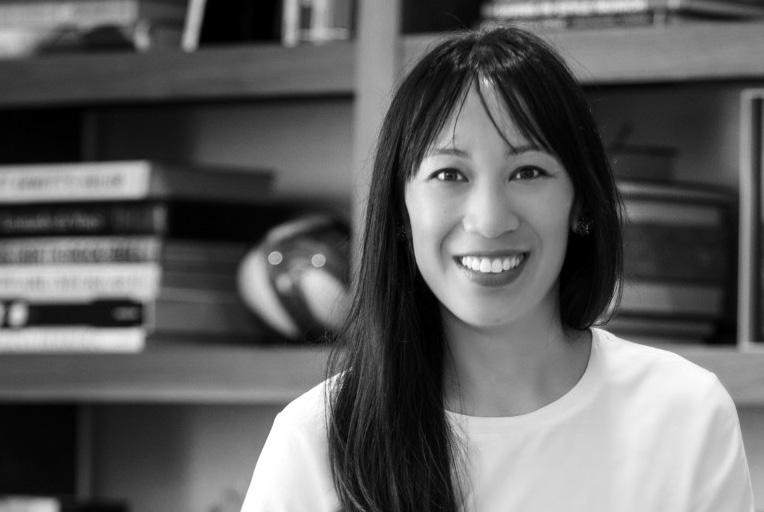
NILA DO SIMON is a lifestyle and culture writer whose work has appeared in Condé Nast Traveler, Garden & Gun and The New York Times. A Florida native, she has served as editor-in-chief for several city-regional magazines and is currently sharing her love of storytelling as an adjunct professor in the journalism school at the University of Florida. In this issue of Flamingo, Do Simon shares some of her favorite haunts around the centennial city of Boca Raton in our Bird’s-Eye View travel department on page 94
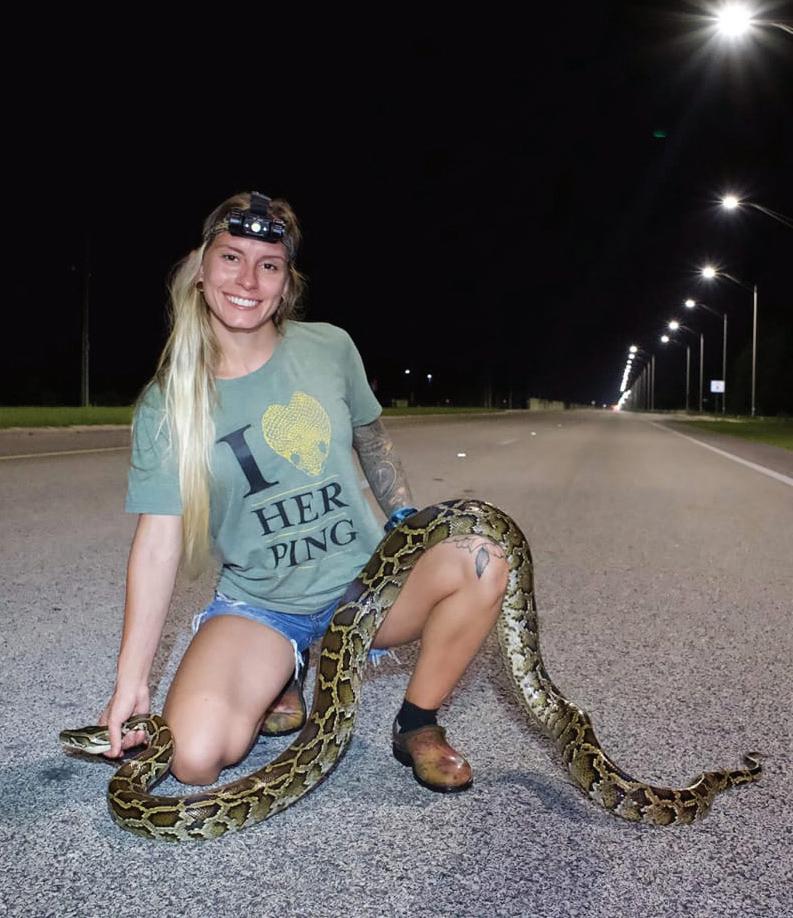
In 2013 the State of Florida began hosting its annual python competition in an effort to remove the invasive species. While women have always neared the top of the leaderboards, none had won—until now. Naples resident Taylor Stanberry bagged the title, along with 60 pythons, in this year’s competition. “There’s still, of course, guys saying it’s rigged or whatever because a girl won,” Stanberry says. It’s all part of her passion to protect native snakes, which she also does professionally as a venomous snake relocator. “I’ve noticed a huge population decrease in native wildlife, so I just remind myself, ‘Hey, this will help the rattlesnakes. This will help the corn snakes.’ I don’t like when people kill (the pythons) just to kill them. It has to be for a greater reason.” Read more about the python huntress online at flamingomag.com
Things got pretty hairy this fall at Flamingo when we opened our inaugural Floridogs & Friends Photo Contest. From puppies and pigs to pigeons and parrots, it was a fierce battle of wags, whiskers and wings, but two came out on top: Whiskey Boone and Luca. Both pups took home a gift basket from Woof Gang Bakery and the coveted—and first ever—titles of Florida’s favorite pets. See a full list of winners at flamingomag.com


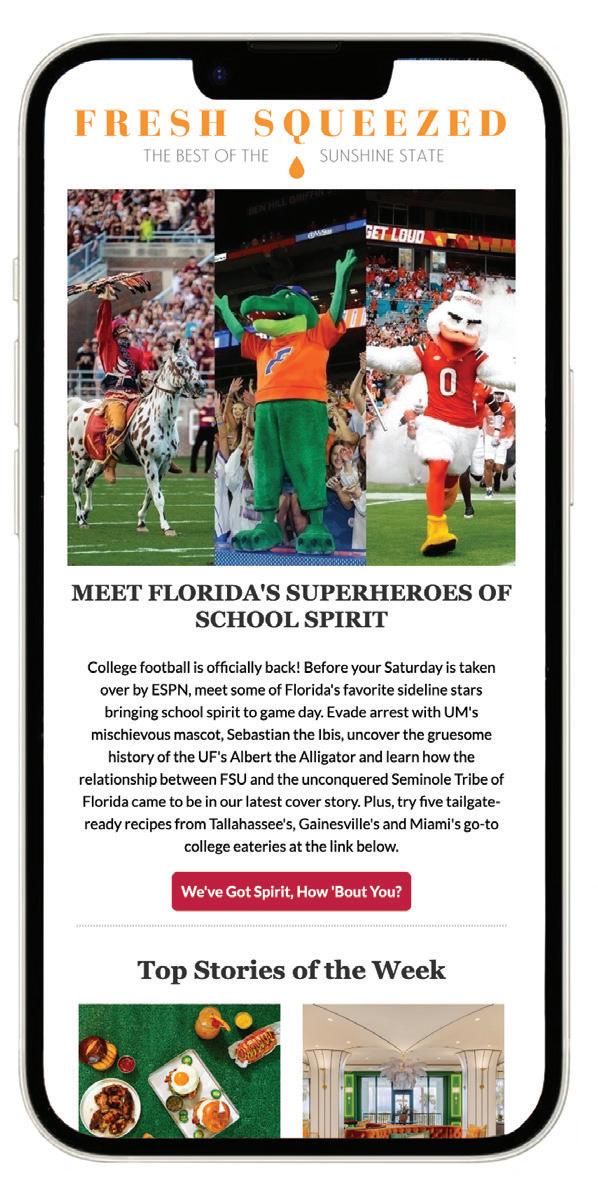
Never miss a Flamingo story— or the next Floridogs & Friends Photo Contest—by subscribing to our newsletters. Get the best of the Sunshine State delivered straight to your inbox weekly in our Fresh Squeezed newsletter, filled with culture, conservation and culinary stories. Or, for the book nerds, cinephiles or foodies among us, check out our other monthly newsletters: Well-Read, Dollar Matinee and Key Lime. Sign up at the link from the QR code, or at flamingomag.com.




— Floridians, fare, finds —
The Spread —
Distillery 98 is the pearl of the Panhandle.
studio
Something’s hiding in every Christopher Still painting.
dive bar —
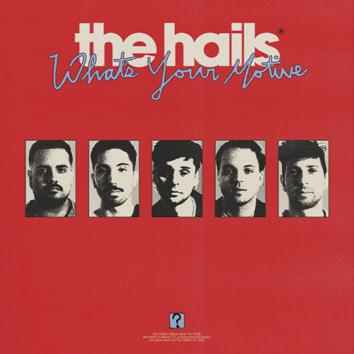
The Hails are all grown up with an album on the way.
—
We’re dreaming of a Flamingo Christmas—and Hanukkah.
My Flo rida
How diving with Dad turned fear into folly
Healing rituals, hidden bars and high-end hideaways

SUBSCRIBE TO RECEIVE 4 ISSUES A YEAR
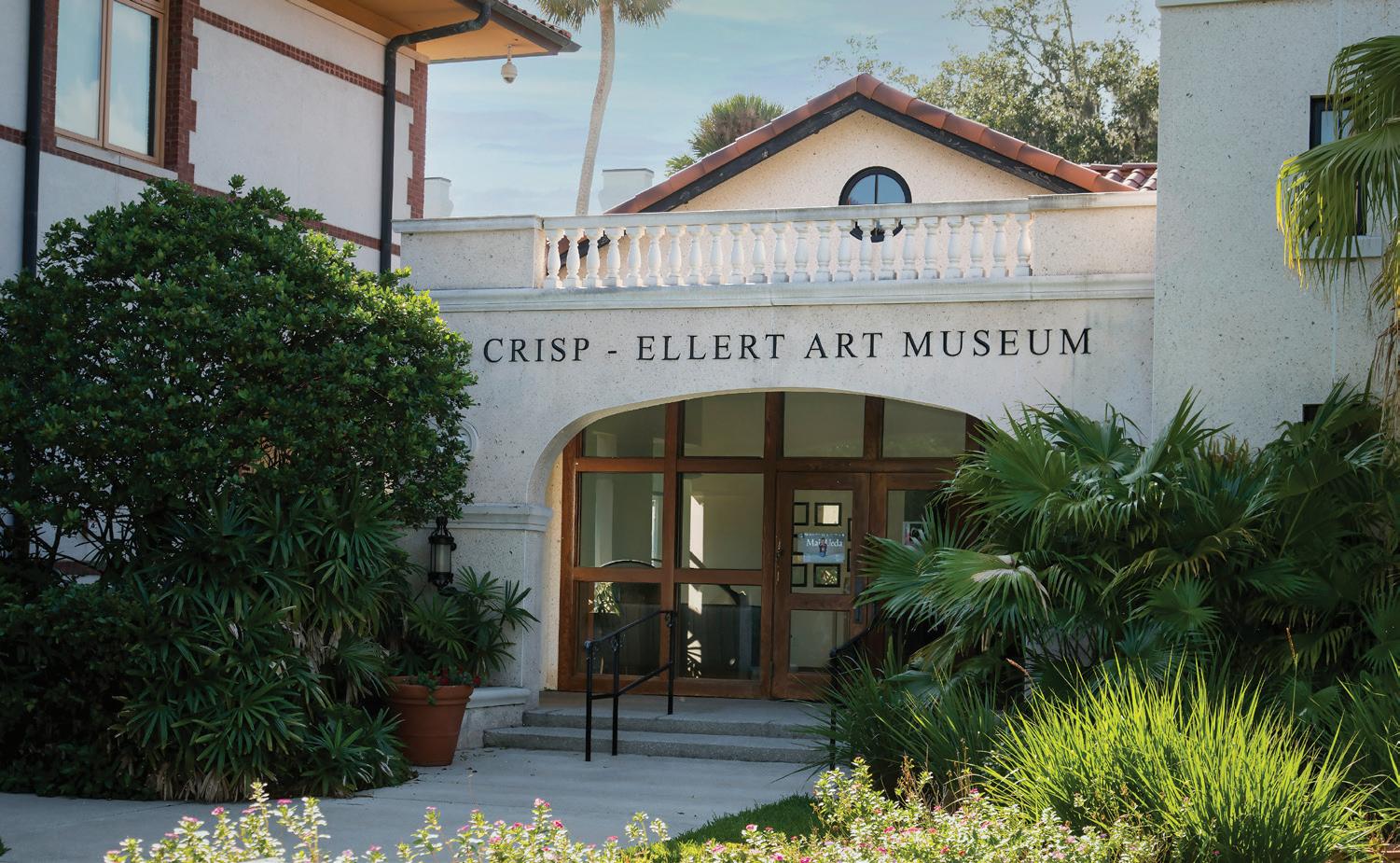
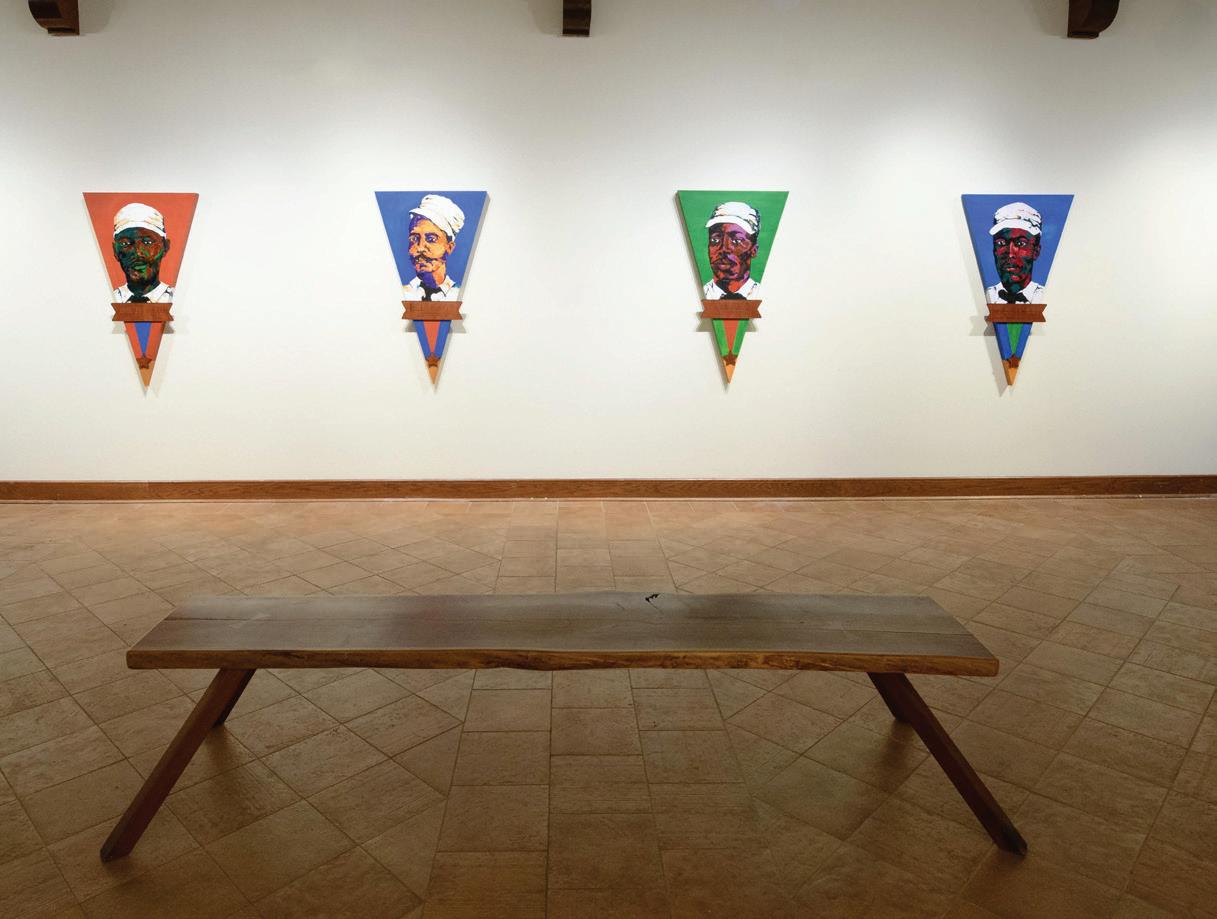
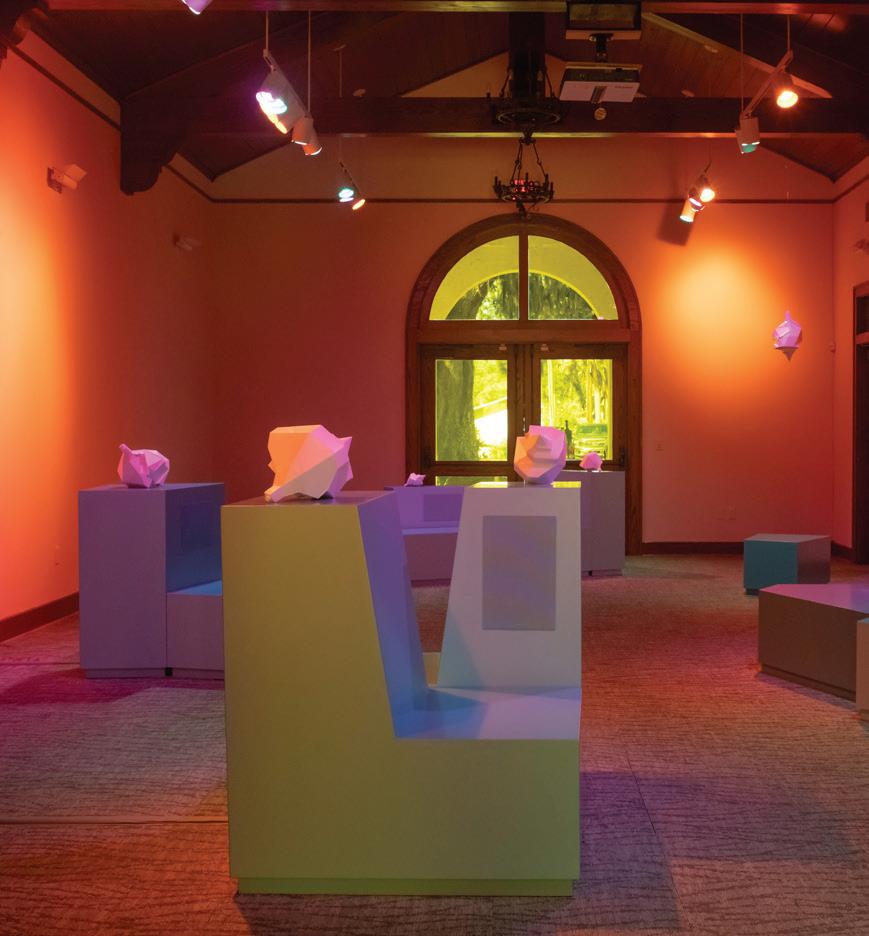
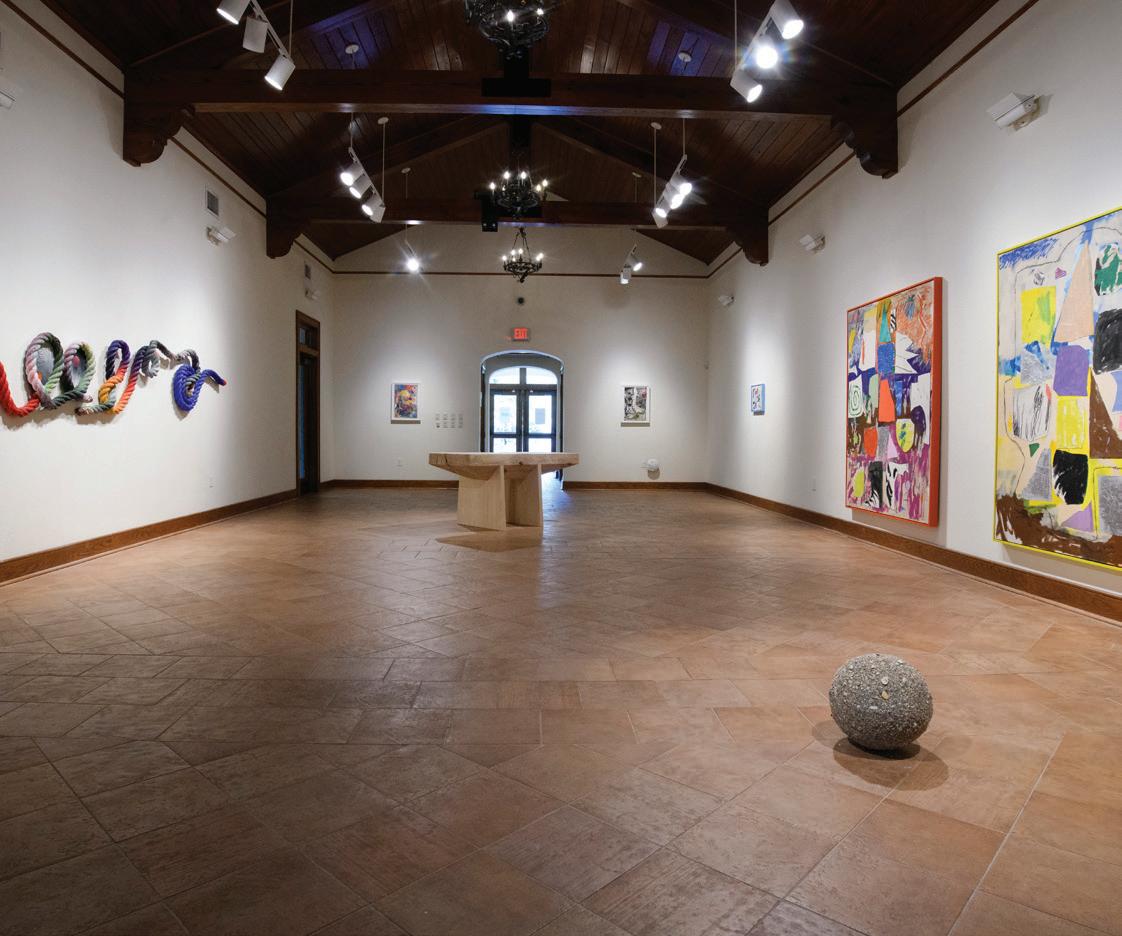
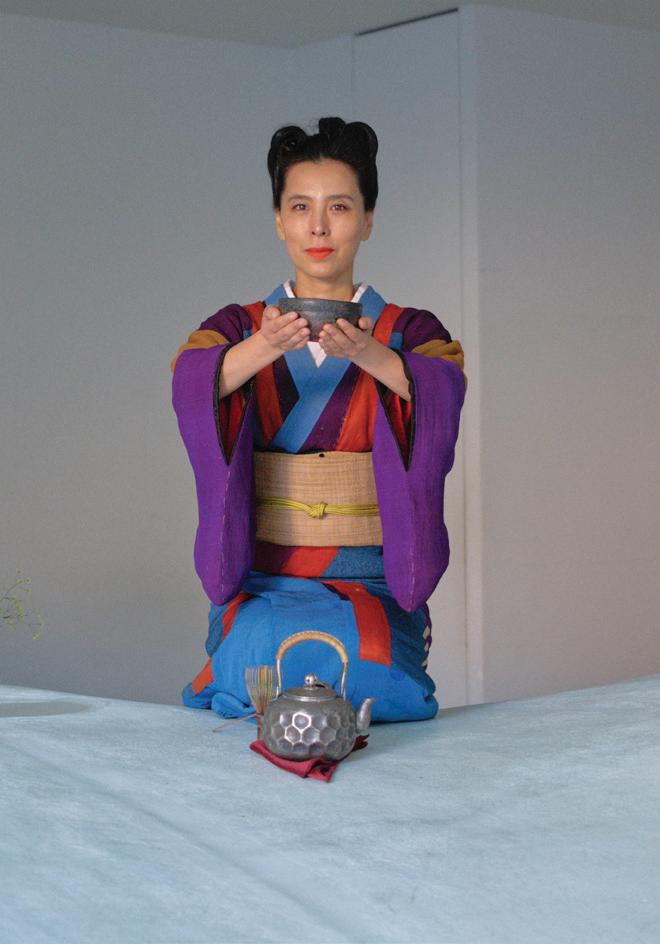
Built in honor of Dr. JoAnn Crisp-Ellert and her husband, Dr. Robert Ellert, The Crisp-Ellert Art Museum (CEAM) fosters knowledge and a deep appreciation of contemporary art through exhibitions, artist residencies, and other collaborative programming. In support of regional, national, and international emerging and mid-career artists, we provide a myriad of ways for the Flagler College, St. Augustine, and greater Northeast Florida communities to reflect on relevant issues through the vital lens of visual art.

Crisp-Ellert Art Museum Flagler College 48 Sevilla Street St. Augustine, FL 32084
T: 904-826-8530 W: flagler.edu/ceam
@CrispEllertArt
Crisp-Ellert Art Museum




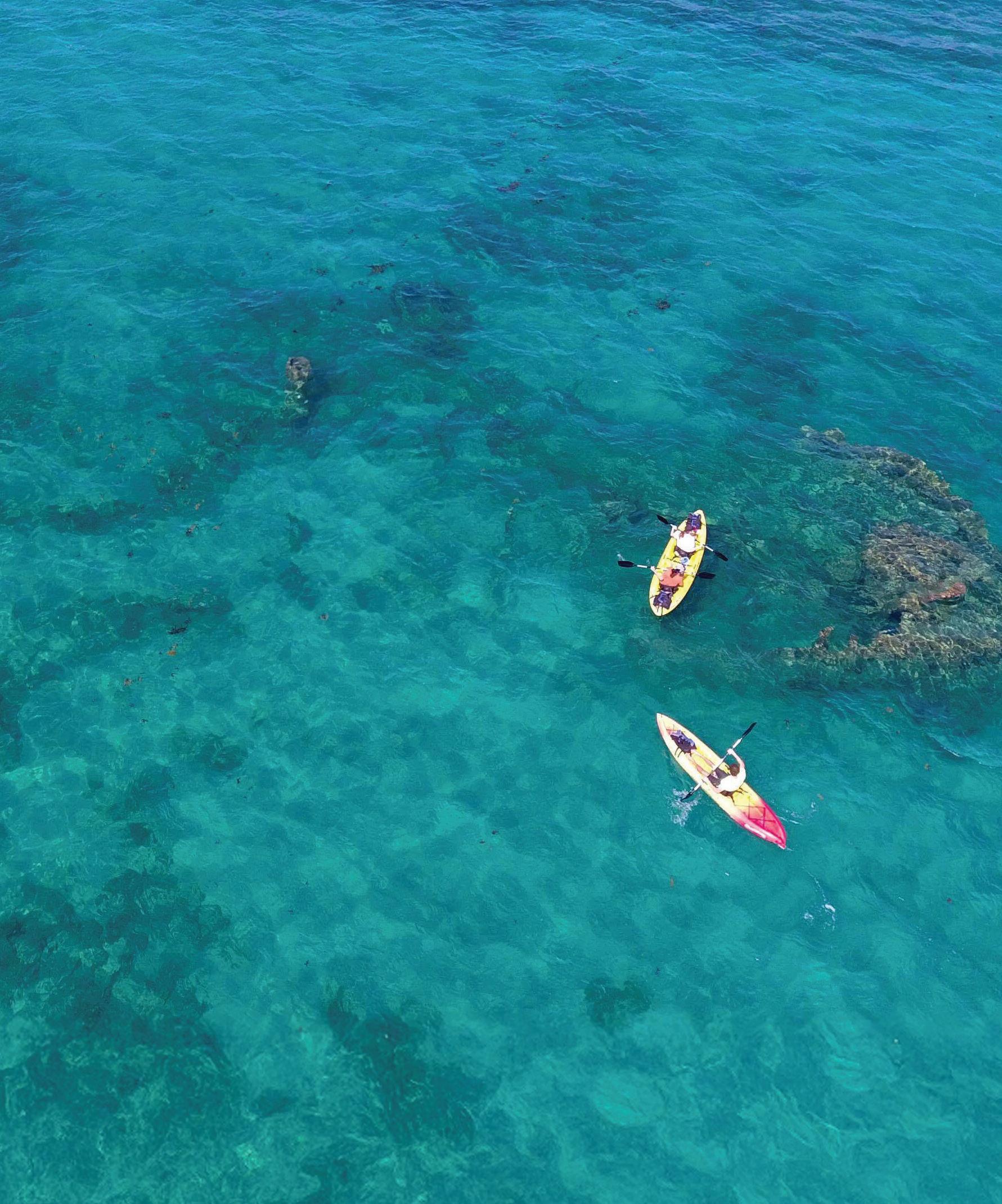
Because there’s nowhere quite like it. It’s not long lines, crowded beaches, and gridlocked traffic. Indian River Country offers you a space to truly unwind and an unexpected delight that makes you want to stay a few more days. It’s serene coastlines, untouched natural reserves teeming with wildlife, and fresh seafood exploding with home-grown citrus flavor. It’s small-town Americana, mixed with upscale luxury and artsy charm. It’s a slower pace of life, where lifetime memories are born among the fragrant orange blossoms. It’s Florida, Reimagined.
So yes, why indeed.
Start planning your visit at visitindianrivercounty.com.
By Helen Bradshaw • Photography by Kristen Penoyer
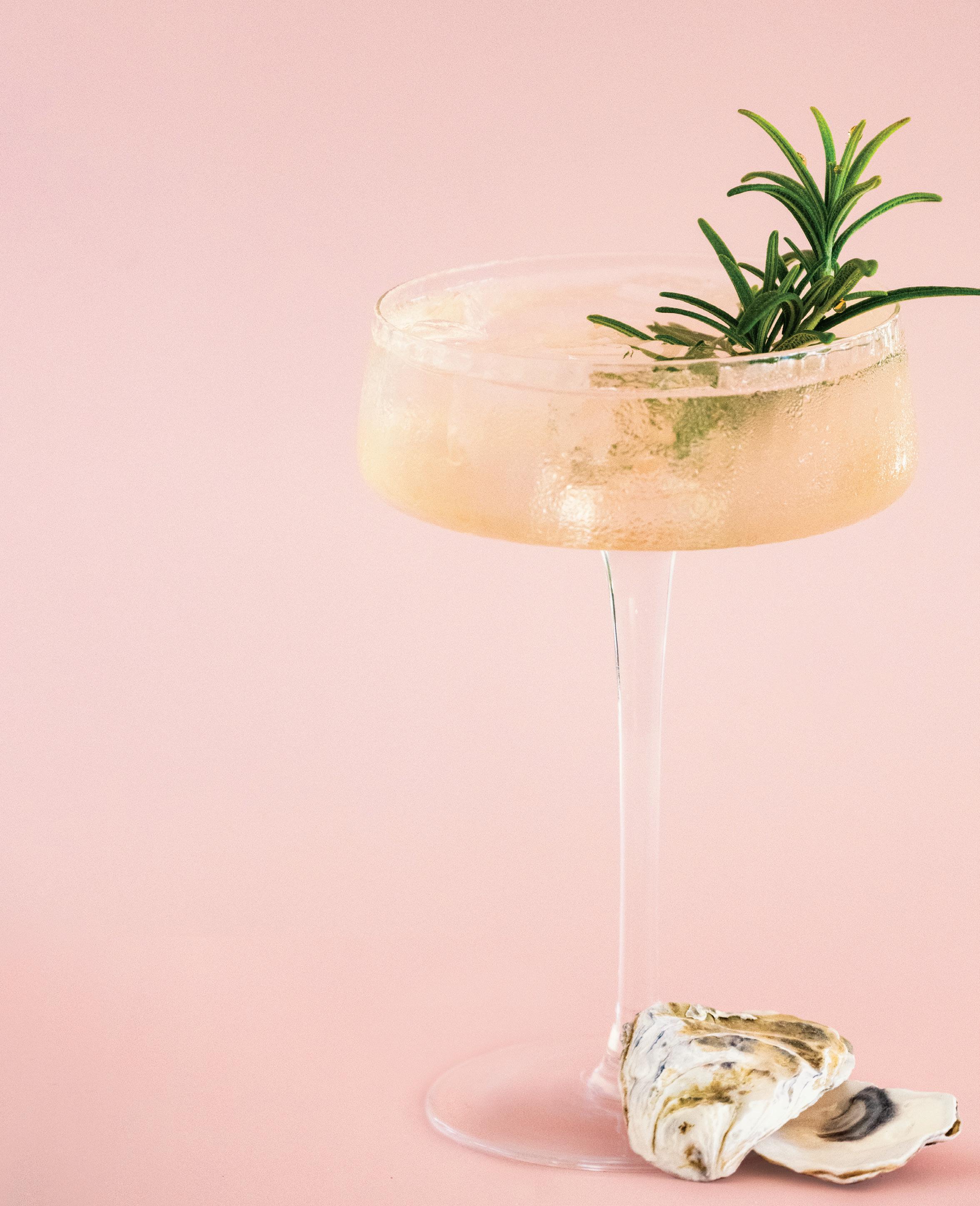
This distillery takes inspiration from the Gulf’s natural filters.
In the wild, when a bit of gunk gets stuck in an oyster, it turns it into a pearl. At one Santa Rosa Beach distillery, when an impurity encounters an oyster shell, it's filtered out to make a smooth vodka.
“It’s kind of this play on taking this product, filtering it with oysters and having this pearl of a spirit for our customers to enjoy,” says Harrison Holditch, co-founder of Distillery 98, the micro-distillery behind Half Shell Spirits.
— LOCATION — SANTA ROSA BEACH
—INSTAGRAM —
@HALFSHELLSPIRITS
halfshellspirits.com
Ever since Holditch and his brother-in-law, David Kapitanoff, opened their business five years ago with the mission to make high-quality liquor as sustainable as possible, their farm-to-bottle process has remained the same. The small team first collects corn from Walton and Okaloosa Counties, mills the grain in-house and cooks it to break down its sugars. Then the corn ferments and runs through 18 rounds of distillation. The distillery often gives the
leftover cornmeal away—sometimes to local cow farmers to feed their bovines, or to a fellow neighbor along the Redneck Riviera looking to make fresh cornbread.
Meanwhile, Distillery 98 collects oyster shells from local restaurants and Gulf Coast farmers. The team scrubs the shells of any remaining protein, but just in case they’ve missed a spot, they hand the oysters off to the most efficient cleaning team in Walton County: ants. “We actually set them out near ant beds, and the ants come in and do a majority of that cleaning,” Holditch says. But don’t worry—the oyster shells are promptly and thoroughly disinfected with high-proof, house-made alcohol. They’re then placed into a 520-gallon tank with carbon, extracted from coconut shells, where the spirits will slowly seep through the organic layers over the course of three days. Holditch likens the process to a giant Brita filter, where the carbon from both materials removes any undesirable flavors, acetone or other chemicals.
The result is a clean vodka—and as of this fall, rum and gin—packaged in a biodegradable cardboard bottle. There's no lingering hint of oysters, save for a spirit smoother than the Gulf’s finest pearl.
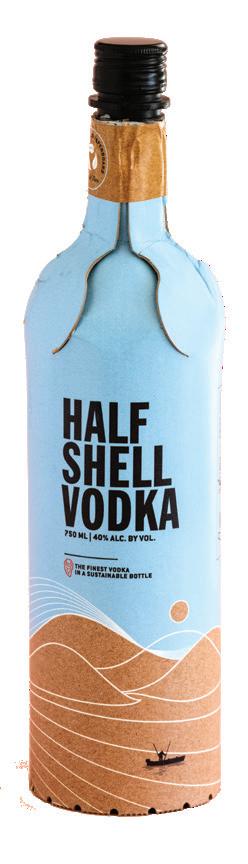
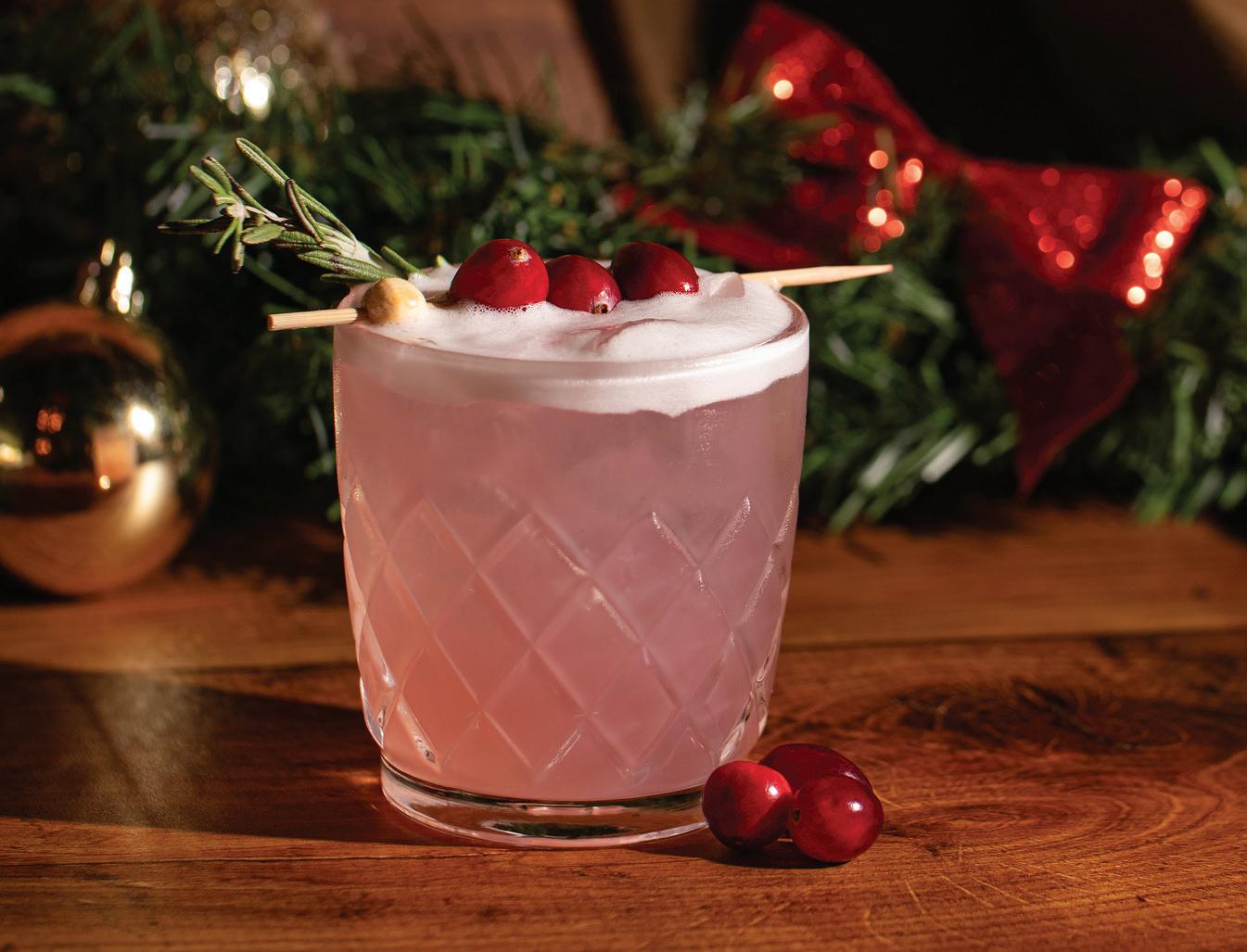
MAKES ONE COCKTAIL
2 ounces Half Shell vodka
1/2 ounce lemon juice
1/2 ounce rosemary syrup
Soda water
Rosemary and honey for garnish
PREPARATION: Add vodka, lemon juice and rosemary syrup to a shaker with ice. Shake well until chilled. Strain into a glass filled with fresh ice. Top with soda water and garnish with a rosemary sprig and a honey drizzle.
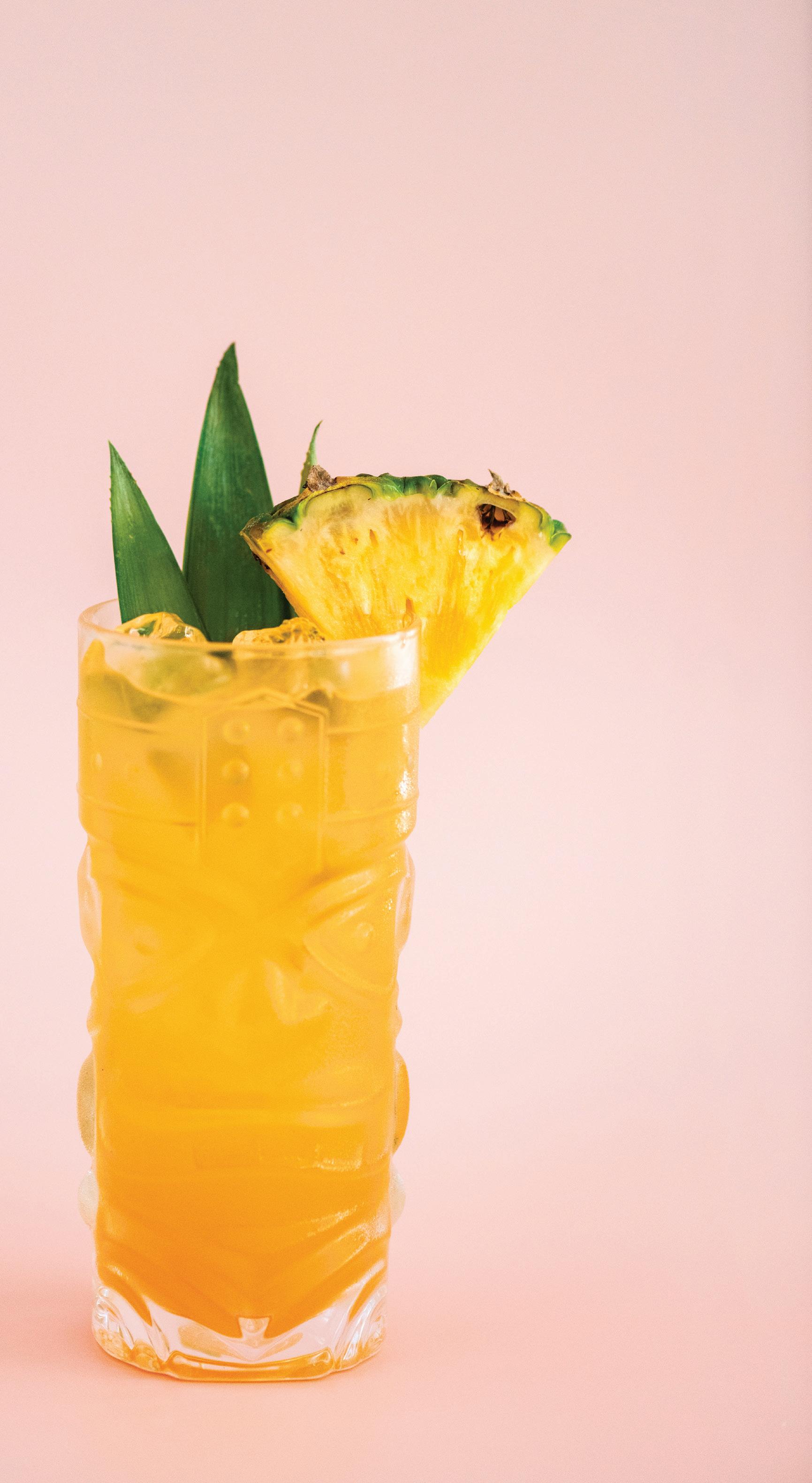
MAKES ONE COCKTAIL
1 1/2 ounces Half Shell rum
1/2 ounce banana liqueur or banana syrup
1 ounce pineapple juice
1/2 ounce fresh lime juice
1 dash bitters (optional) Pineapple fronds or fresh pineapple for garnish
PREPARATION: Add ingredients to a shaker filled with ice and shake until chilled. Strain over crushed ice in a tiki or highball glass. Garnish with pineapple fronds and fresh fruit.
from





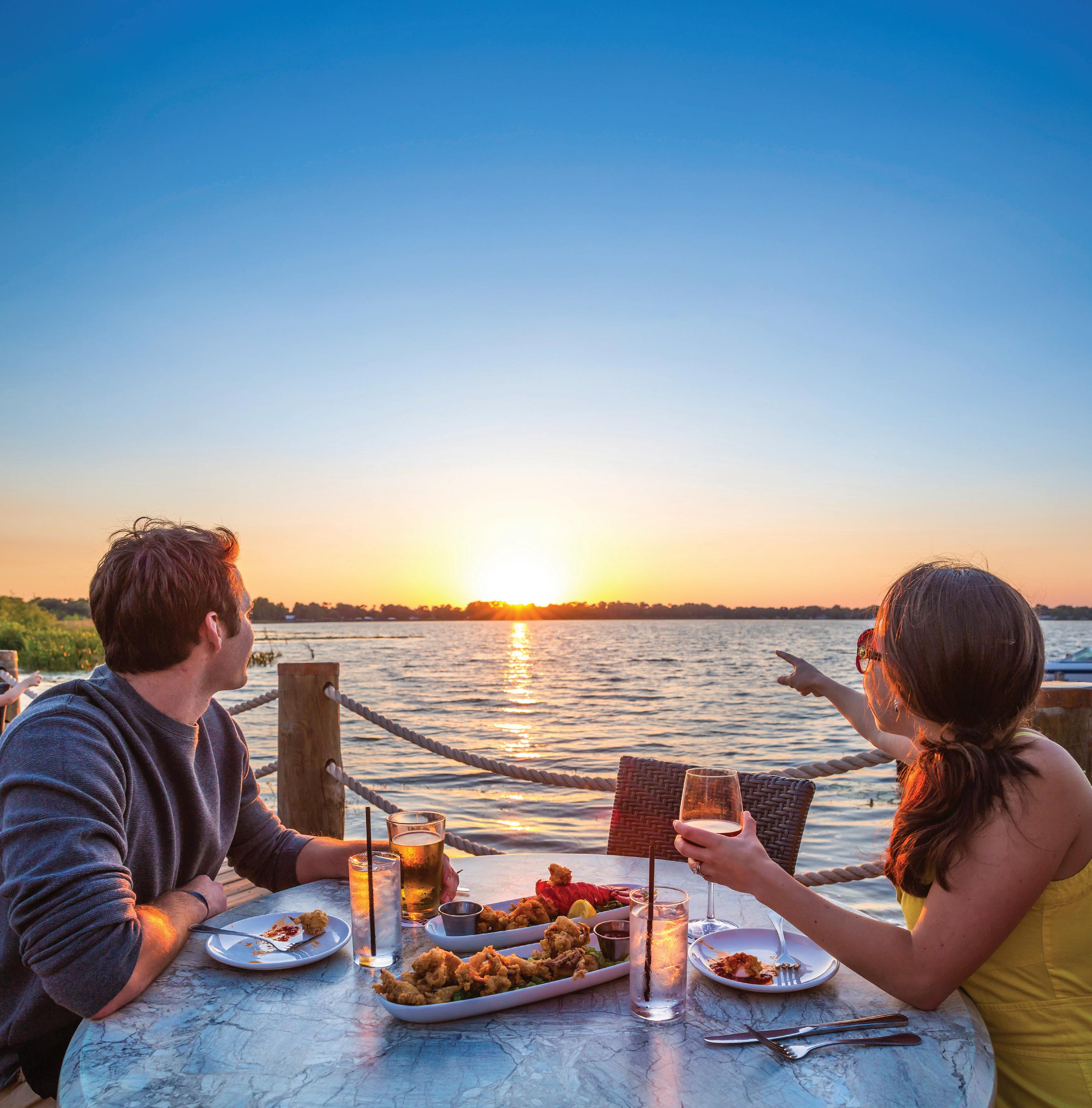
Taste The Real Florida Magic at charming restaurants serving up freshly caught seafood and so much more. Our exceptional culinary scene, attractions & natural beauty offer experiences you won’t soon forget. See where to get your fix at VisitCentralFlorida.com/rooted-in-flavor.
By Craig Pittman
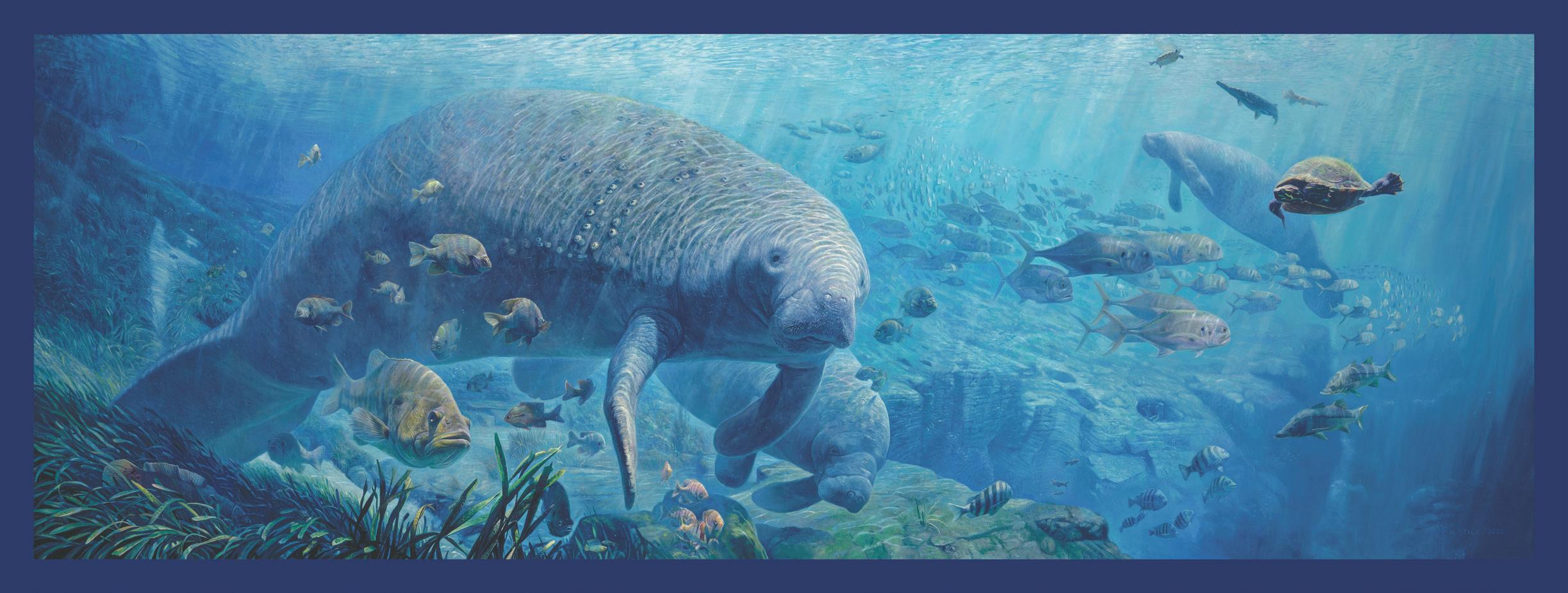
artist CHRISTOPHER STILL captures Florida’s wildlife with his brush.
The ideal way to view one of Christopher Still’s massive paintings is with Still himself by your side. That way the artist, a slender and soft-spoken man, can point out all the hidden treasures—Florida history hiding in plain sight.
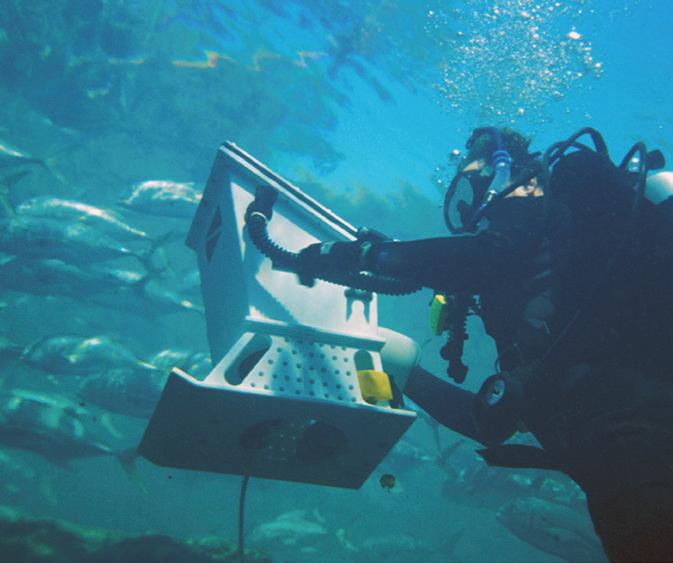
Throughout his creative process, Still crams his canvases with historical and environmental references—and at times has spent hours underwater using a waterproof box to create sketches that capture the light and movement of a spring.
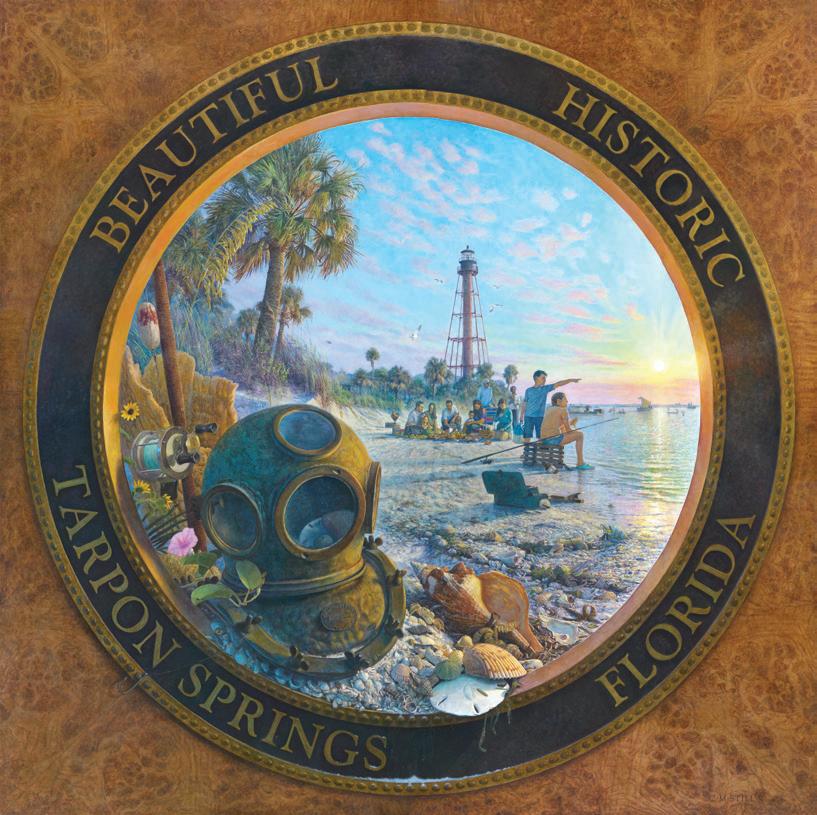
To appreciate the result, consider the 8-by-8-foot painting that now hangs in the lobby of the AdventHealth North Pinellas medical facility in Tarpon Springs. The work “Beautiful and Historic Tarpon Springs” features a copper and brass helmet that Tarpon’s Greek sponge divers used to use in the foreground.
But without Still pointing it out to me one morning, I might never have noticed the map of Greece that shows up faintly in the shine of the brass. Even more subtle is what he did with the Anclote Key lighthouse looming in the distance. Inside the top of the lighthouse
stands a keeper holding something. It’s a love letter written in 1923 by one of the lighthouse keepers to the woman who would become his wife.
The man Still persuaded to pose as the lovelorn lighthouse keeper, lawyer Bill Vinson, is a descendant of the keeper’s family. Still said he made Vinson read the letter while he painted the tiny figure.
As for the results of the artwork, Vinson says, “Chris is very good at painting little, teeny things.”
Nearly every “little, teeny thing” in a Still painting has significance. He makes no apologies for hiding so many mindblowing prizes amid the larger sweep of his subjects.
“I’m telling Florida’s stories,” says Still, who, at 49, was the youngest person to ever be honored as a member of the Florida Artists Hall of Fame.
Still is that rarity: a Florida native. He grew up in Dunedin. His mother was a textile artist and his father was a high school history teacher. His father went all out to make history come alive for his students, something Still cares about to this day. Still began taking art lessons at age 7 and sold his first painting at 14. He and his brother, John Jr., grew up exploring the woods near their home and playing in a nearby creek. Years later, Still came back to find the woods gone and the creek buried under a shopping mall. The memory of that loss drives him to document the state’s beauty and history.
“I feel like I’m in a race to lift up the Florida landscape before someone thinks they’re helping it by changing it into something else,” he explains.
He was 8 or 9 when his father took him to the tiny Panhandle hamlet of Panacea, where they met marine biologist Jack Rudloe at his Gulf Specimen Marine Lab. They had a lengthy discussion about Florida sea life.“He started pulling stuff out of the touch tanks and showing it to me—sea hares and sea cucumbers,” Still says.
using graphite and charcoal to sketch studies, learned to paint directly from what he saw. From Sloan, Still learned a philosophy he follows today: “It is not what you paint, but how you paint it.”
Beyond the academy, Still took courses in human anatomy at Jefferson Medical School. Then, in Italy, he worked on the restoration of damaged frescoes at the Vatican, learning techniques dating back to the Middle Ages. Another scholarship allowed him to travel around Europe, visiting museums and taking careful note of the techniques of the artists.
Finally, he was ready to come home. But he found Florida wasn’t ready for what he wanted to do.
“Florida,” he explains, “has always had this self-esteem problem.”
I feel like i’m in a race to lift up the florida landscape.
By the time he was a senior at Dunedin High, Still had twice won the Gold Key award in the local Scholastic Arts Competition. The sponsor, the Scholastic Corporation, awarded him a full scholarship to the Pennsylvania Academy of the Fine Arts in Philadelphia.
A Florida boy at heart, Still arrived in Philadelphia barefoot—and unprepared for winter. What made the academy worthwhile for Still was one of his teachers, Louis B. Sloan. Sloan was not only the first Black full-
time professor at the academy, but he had been awarded a prestigious Guggenheim Fellowship in 1963.
Sloan was an advocate of painting “en plein air,” which refers to the practice of painting outdoors with a subject in full view. Impressionists, including Claude Monet, often painted this way.
On weekends, Sloan would drive Still and a few other students out into the countryside. They would spend the day painting the landscape while discussing techniques. Still, who until then had been accustomed to
When Still returned home to Florida in 1986, he convinced a few people to hire him to make paintings. It didn’t hurt that the Tampa Museum of Art staged a one-man show of his work. People saw what he had done and sought him out.
Most of those early clients wanted abstracts or landscapes from someplace else. They didn’t want an artistic depiction of scenes they saw every day. Those didn’t seem special enough.
“Many of Florida’s subjects have been disregarded by the fine artist because there have been few examples of these scenes in museums,” Still wrote in a museum catalog for a retrospective of his work in 2008.
Slowly, Still began showing clients what he could do when they turned him loose. He could at last begin, as he put it in that catalog, “swimming in a gulf of history and marveling at the nature before me.”
By 1989, he had begun creating compositions like those of the old European masters he had once studied, painting local flowers, fruit and everyday items like keys, rings and watches. He also found ways to leave something seemingly sticking out of the frame, like an alligator’s jaw jutting beyond one edge, in a 3D effect. When this happens, Still once wrote, it’s him shouting to the viewer, “These things are real to me, and they can be real for you.”
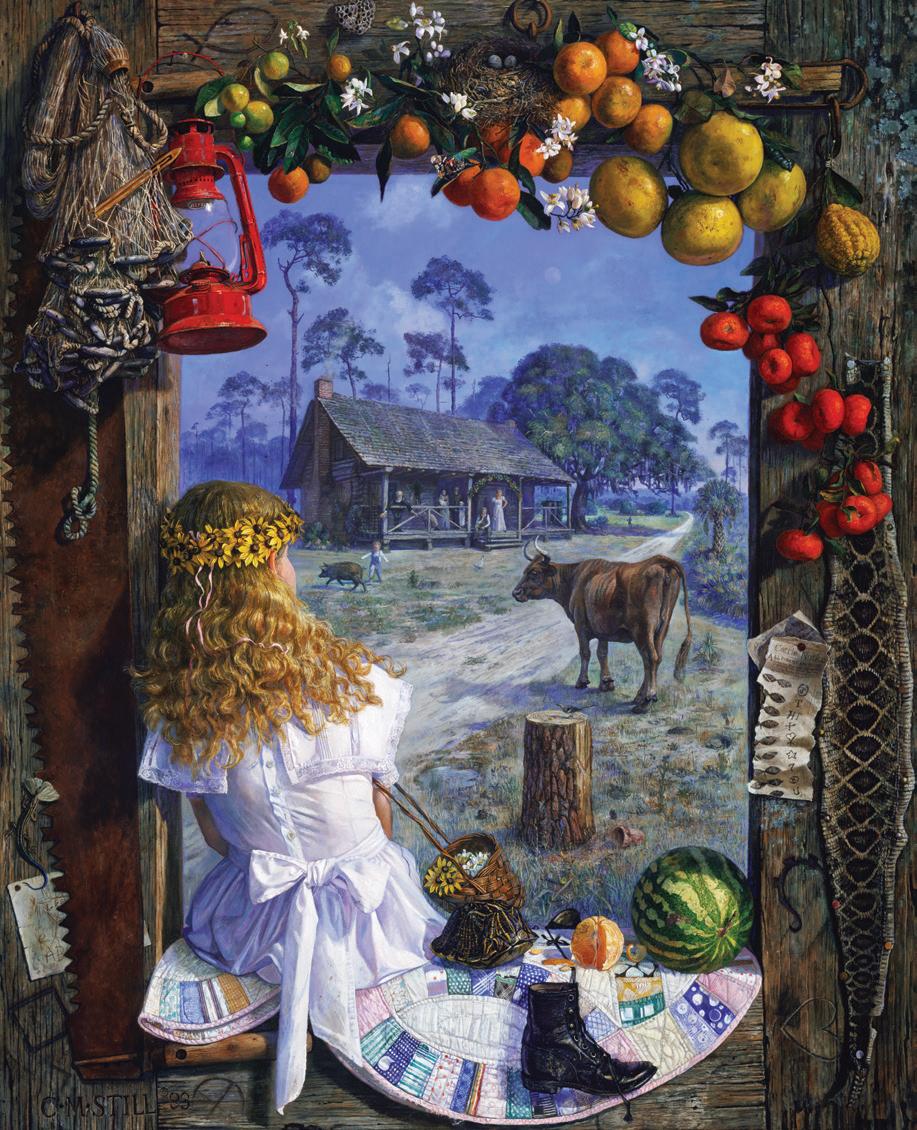
Take a 1993 painting called “Land of Promise,” in the South Florida State College Museum of Florida Art and Culture’s collection in Avon Park. A young woman sits in the foreground, her back to the viewer, gazing at people gathered on the front porch of a pioneer homestead.
The cabin is real—it’s one that James McMullen built in Pinellas County in the early 1850s. It now sits in the county’s Heritage Village. The crowd on the porch are members of a wedding party. The girl in the foreground is the flower girl.
She’s seated on a colorful, hand-stitched quilt alongside fruit and a basket of flowers. The window that frames her is adorned with orange blossoms, a saw and a snakeskin. There’s a red lantern hanging above her head, while below her sits a Victorian-era woman’s boot, seemingly springing out of the painting.
It’s as if a Renaissance artist had leaped ahead centuries to depict a scene from Patrick Smith’s Floridabased pioneer novel “A Land Remembered.” It’s no wonder a 2011 museum catalog dubbed Still “Florida’s Dutch Old Master.”
Paintings such as this one were just a warm-up for his greatest challenge of all: showing the entire timeline of Florida history in one series of paintings. It nearly broke him.
Florida built a modern state capitol building in 1977. Twenty years later, parts of it looked badly dated. House Speaker John Thrasher was determined to refresh the look of the lower chamber. He toured capitol buildings in several states and was impressed by the use of artwork to convey the history. Thrasher and the sergeant at arms, who supervised the facility, put out a call for artists to compete for the assignment of decorating the Florida House chamber.
“As I went through the work of those folks, there was only one, really, that stood out and would make a difference,” Thrasher said of the 30 artists who applied (in an interview that was part of a 2022 PBS docuseries “Florida Crossroads”).
This was Still’s dream assignment: Paint a series of interconnecting works that would depict the history of Florida from prehistoric times to the present day. But what Thrasher wanted was impossible. Still usually took a year to create one painting
and collected a fee of $50,000 for it. The Florida House wanted eight of them in a year, and for just $150,000 total.
There was no way he could justify taking on the project, but he couldn’t stand to turn it down and see someone else do it, either.
“I thought, ‘This is me,’” he said later. “All my work was heading toward this. The Florida House of Representatives would be my Sistine Chapel. I refer to John Thrasher as my pope.”
He said yes and set to work, eventually taking four years to complete everything. He also had to sell additional paintings to private individuals to make up the money he would lose on the project.
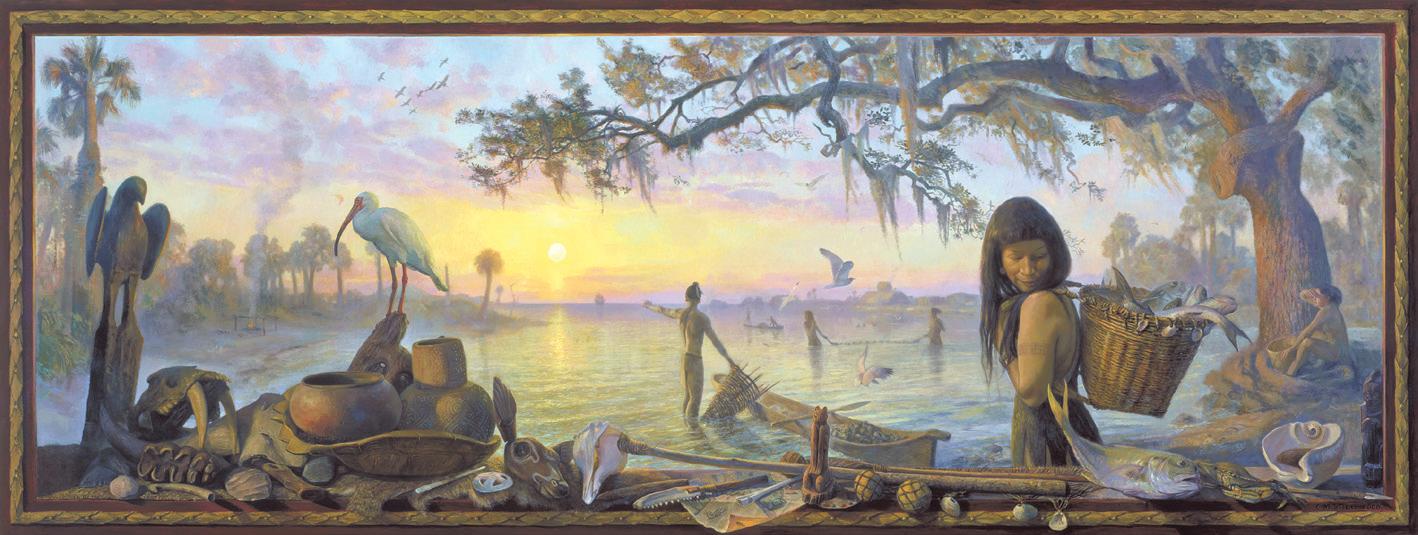
He carefully mapped out how the paintings would progress through Florida’s eras, from the days when Native Americans roamed the woods and waterways to the launching of a space shuttle from Cape Canaveral. While covering a span of thousands of years of history, the lighting would change only slightly in each painting, so by the end it would appear that only 36 hours had elapsed.
He put out a call to friends who supplied him with the items he needed to supplement each scene—an enormous taxidermized raccoon, for instance. There are also subtle connections among the scenes and the items on display in each painting. For instance, in “Patriot and Warrior,” which features the fierce Seminole Tribe member Osceola in the 1800s, faint marks on the palm trees turn out to be depictions of several well-known Native American chiefs.
“All the paintings connect to one another, object to object,” Still says. Some powerful people warned him to skip controversial parts of history. For instance, Still says, there were some who wanted him
to omit Andrew Jackson, the state’s first pre-statehood governor and a staunch advocate for slavery. Thrasher told everyone to leave Still alone, ensuring the artist had a free hand.
Still painted Jackson holding a 23star American flag, the one in effect in 1821 when he was governor. In the same painting, Still depicted an enslaved woman looking away from Jackson as if disgusted. Instead, she’s looking toward and pledging her allegiance to the current 50-star flag that’s not in any painting. It’s hanging behind the speaker’s lectern at the front of the chamber.
He created eight paintings with detailed historical settings, including one in which Still himself shows up as a steamboat passenger, a cameo worthy of Alfred Hitchcock. The eight historical paintings are followed by an additional two that carry the story beyond the land and beneath the waves. One is set at a coral reef in the Keys. The other shows life in one of the state’s remarkable springs. This was before digital cameras made it easy to snap images of underwater scenery. At Still’s request, a friend built him a waterproof painting box with rubber gloves attached. He would put paper, several kinds of paint and some brushes in the box. Still would don scuba gear
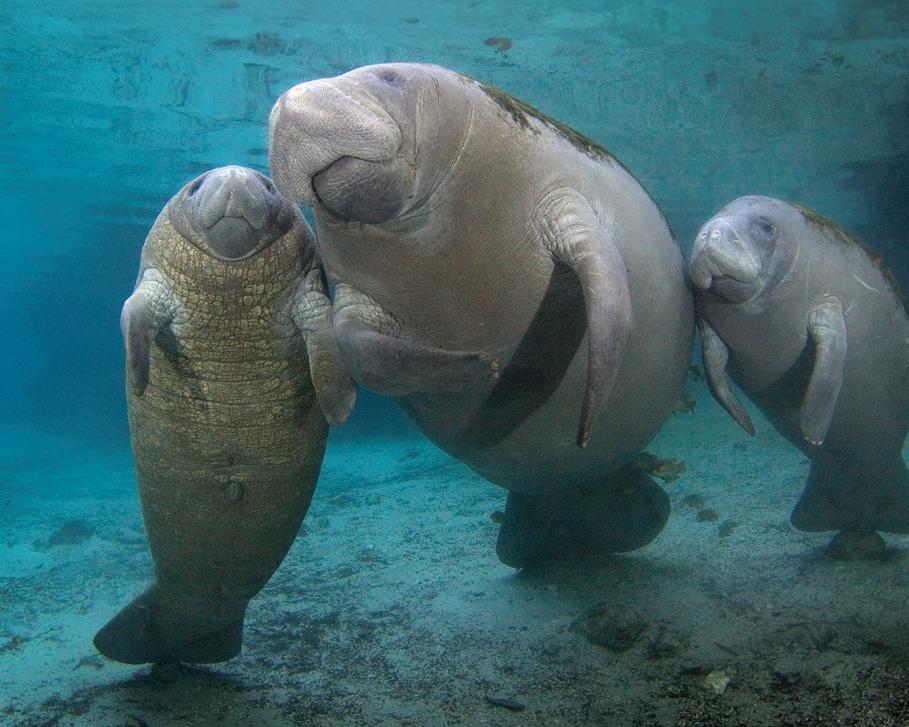
and descend to the floor of the ocean or a spring with the cabinet in three-hour stints. He would insert his hands in the box’s gloves and paint sketches of the reef or manatees. It was just like the en plein air paintings he’d done in art school, only the air was water.
He also spent weeks perched on a stool in the state’s Marine Mammal Pathobiology Laboratory in St. Petersburg, watching employees dissect manatees so he could learn their anatomy, says biologist Ken Arrison.
“Once he was finished with that painting, he brought it back for us to see, carrying it in a U-Haul truck,” Arrison recalls.
Look closely at the eye of the manatee in that final painting. Reflected in its dark eyeball is a view of the entire House chamber that surrounds the artwork. It’s
as if the manatee is keeping an eye on Florida’s lawmakers.
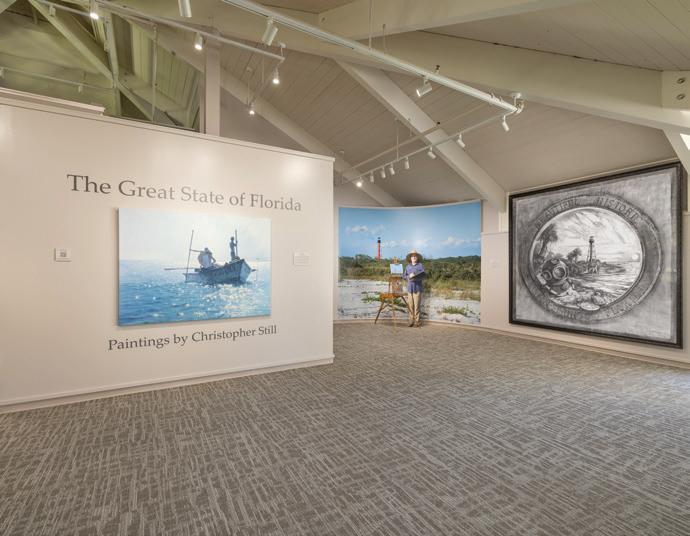
To quite literally step into Still’s world, head over to the Tarpon Springs Heritage Museum. It sits on Spring Bayou, the scene of the town’s annual Epiphany celebration. Since 2024, half of the building has been a tribute to Still.
On the walls hangs a mix of loaned originals and reproductions of his paintings, as well as key artifacts, like the waterproof box he no longer uses. In one alcove is a scene with a life-size cutout of Still next to an easel, which is set up as if he’s painting the landscape.
When I visited the museum with Still, there was a trio in a theater watching a short video about his career, methods and work. When they emerged, a woman in the group recognized Still, something that he says always blows his mind. She gushed about how much she loves his work and got his autograph. Of course, she had to have a picture.
She stepped into the alcove, flanked by two Stills: one a life-size cutout, frozen midbrush, the other very much alive. For a moment, past and present, Florida history and its storyteller, all lined up perfectly in her snapshot.
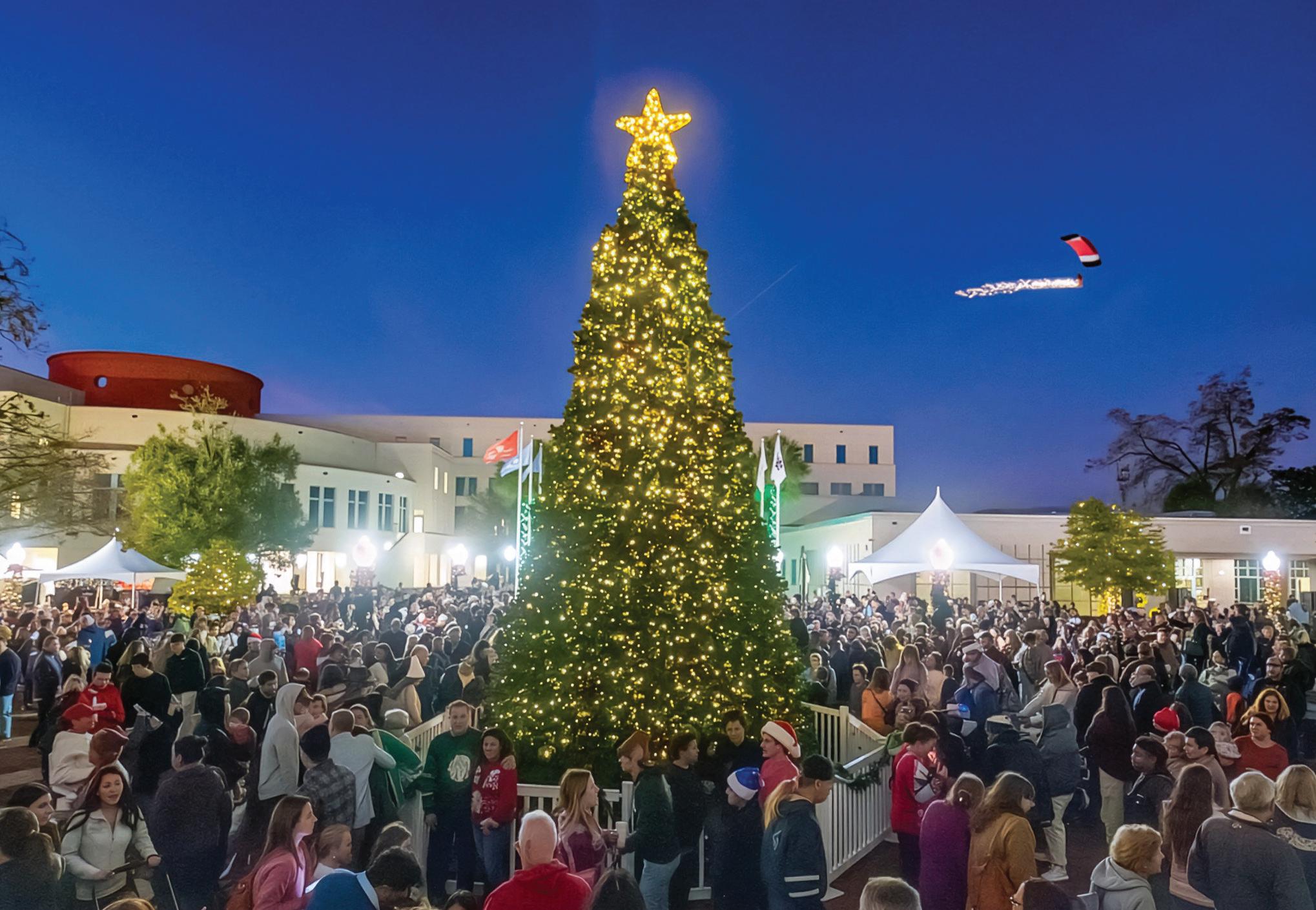
From the hundreds of manatee that dot the run of Blue Spring State Park to the thousands of artists and art lovers that line Main Street DeLand for the Fall Festival of the Arts, tracking down things to do between the many stops on the CoolCraft Beverage Trail has never been easier. Book your stay now because not even Santa can resist skydiving in for this. Want to make your day? Stay the night. Fall Festival of the Arts: Nov. 22nd – 23rd | CoolCraft Christmas: Nov. 28th –Dec. 31st Stetson Mansion Christmas Spectacular: Nov. 1st–Jan. 18th | Light Up DeLand: Dec. 5th
CONVENIENTLY LOCATED BETWEEN ORLANDO AND DAYTONA BEACH |

By Emilee Garber
This Gainesville indie-rock band is taking notes from Tom Petty while producing a sound that’s all their own.
Head-nodding tracks fill the festival tent on a sunny Tallahassee afternoon, mixing rhythmic guitar chords, warm vocals and lyrical vulnerability. Lead singer Robbie Kingsley clutches the microphone, soulfully singing the words, “I like it when you go / But I love it when you stay,” with a nonchalant expression on his face despite the almost-tangible
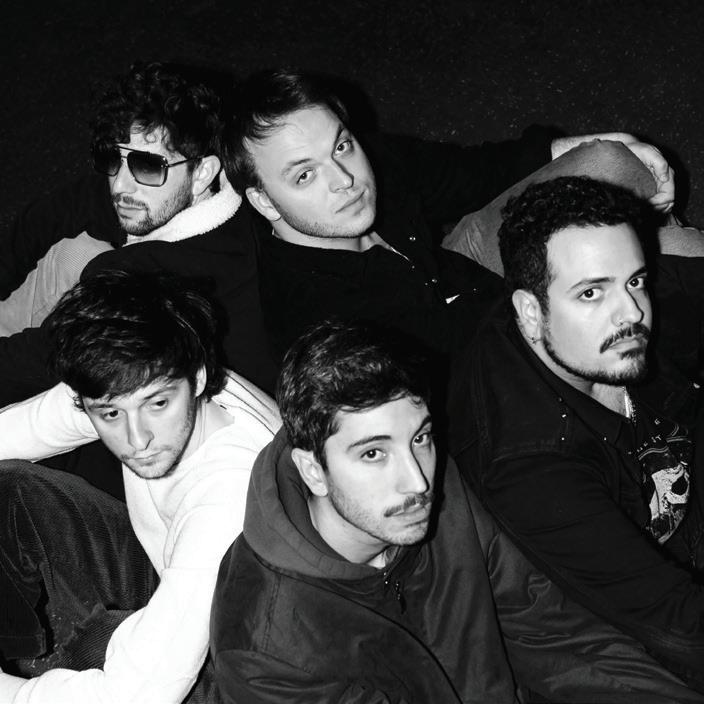
energy of the fast-forming crowd in front of him. Festivalgoers at Word of South dance in the aisles, bounce in the front row and spill out from the tent onto the green hill, all clamoring to get closer to The Hails. Born out of Gainesville’s college scene, the band, which includes Kingsley (lead vocals), Franco Solari (guitar, vocals), Dylan McCue (guitar), Andre Escobar (bass) and Zach Levy (drums), carries the swagger of garage rock while toying with the scrappy
sounds of indie alternative. Lately, The Hails have been making a new album— dropping in 2026—and recently wrapped up a tour across the Southeast, where they tested new material and mingled with fans. Flamingo caught up with Kingsley and Solari before a recent show to talk about their origins at the University of Florida, pre-show rituals, Tom Petty’s influence and new music on the horizon.
THE BAND FORMED DURING YOUR TIME AS STUDENTS AT UF. DID LIVING IN GAINESVILLE IMPACT YOUR SOUND?
Robbie Kingsley: In Gainesville, there is a great sense of pride in Tom Petty and what he stood for and the artist he was. I think we’ve followed a similar path where he started in Gainesville. He ended up going to LA and making it big. We have that same hope and dream and that’s still a path we could follow. There is a vibe of the alternative Florida scene that I like being a part of, because it’s a complete 180 from what any outsider thinks of Florida.
FRANCO SOLARI: It’s very different from the LA and New York music scenes. In Florida, I feel like people don’t really care how they’re perceived—in a positive way. There’s a lack of pretentiousness in Florida’s music culture that’s very different from major cities.
RK: Being one of those alternative Florida bands is something I take pride in, because I’m just trying to show something different from what you might think.
WHAT IS THE STORY BEHIND THE BAND NAME, THE HAILS?
RK: I had an ongoing list of names I thought were cool. One day, on one of those UF football posters, I saw “All Hail, Florida Hail,” which is part of the alma mater, I believe. I became fixated on the word hail. Then I was like, “Let me just throw an ‘s’ on it,” you know, like the Kinks or the Strokes, and that was pretty much it. It sat on my phone for, like, a year, and then I liked it so much that I kind of waited until I felt like I had a band that was worth using that name for. I presented it and, literally, no one said no.
NOW TWO OF THE BAND MEMBERS LIVE OUT OF STATE. DOES THAT AFFECT YOUR SONGWRITING AND RECORDING PROCESS?
FS: We’ve only now just cracked (the code) this past summer. We’ve been struggling with it for the past five years. We wrote a new album this summer, and we rented a house (in South Florida) and the guys lived there for three months. Robbie and I would fly down for a week or two. We had the living room with the drums set up and mic’d, and guitar amps and everything. We would just jam for a few hours and leave the recording going and then go back and look at what we had and flesh out the songs. It was a blast. It felt like we were back in Zach’s room in Gainesville.
we got to open for Flipturn, and we played at Revolution (Live) and Jannus Live, which were two massive venues. I had seen Arctic Monkeys at Jannus Live way back in the day. That was a fun, fullcircle moment.
HOW DO YOU HYPE YOURSELF UP FOR A SHOW?
RK: We take it easy. It’s more like trying to find everyone. Someone will be at the bar, someone’s in the bathroom, someone’s across the street getting pizza. All the hyping up I need is that moment of walking on and seeing the people.
FS: I’m definitely more structured. If it’s up to me, I’ll have a cup of tea, do vocal warm-ups, then usually listen to one playlist and try to end on the same song right before we go out.
WHAT’S THE CRAZIEST THING THAT HAS HAPPENED TO YOU GUYS ON TOUR?
RK: The craziest thing on tour was (when) we got straight-up robbed.
FS: So that sucked. I was thinking about the time Dylan’s guitar was held for ransom.
RK: Yeah, that happened.
FS: I also met a guy that was claiming to be a time traveler. He thought Bill Clinton was still the president and whenever someone would pull out a phone, he’d be like, “Whoa, what is that?”
TALK ABOUT YOUR LATEST SINGLE, “CUT THE SWARM.”
WHAT IS YOUR FAVORITE CITY OR VENUE TO PLAY IN FLORIDA?
RK: I mean, it’s always kind of Gainesville by default. I did always like playing at The Wooly. I thought it was a fun room. Tampa’s been fun. We always play at Crowbar, which is a classic. Last year,
RK: That was an old one I had written in my early days. It used to be a heavy rock song, more grungy. I had a friend that begged me for a decade for that song. The day or week it came out, he got engaged. He was like, this is the best week of my life.
FS: With the next song we’re going to release, I have a friend that’s been asking me for it.
RK: Maybe he’ll get engaged that week.

From small-batch goods to one-of-a-kind finds, add these Florida brands to your shopping list.
By MELISSA PUPPO & MADDY ZOLLO RUSBOSIN
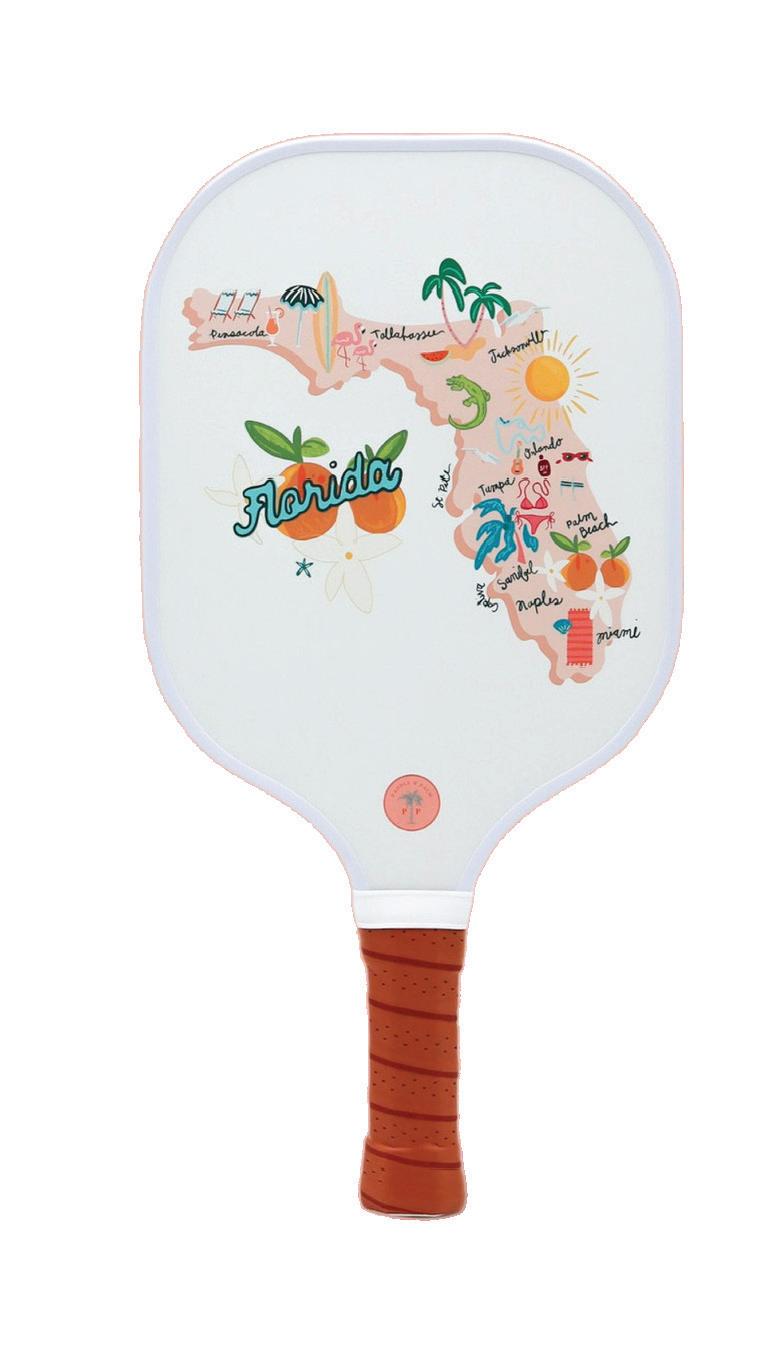
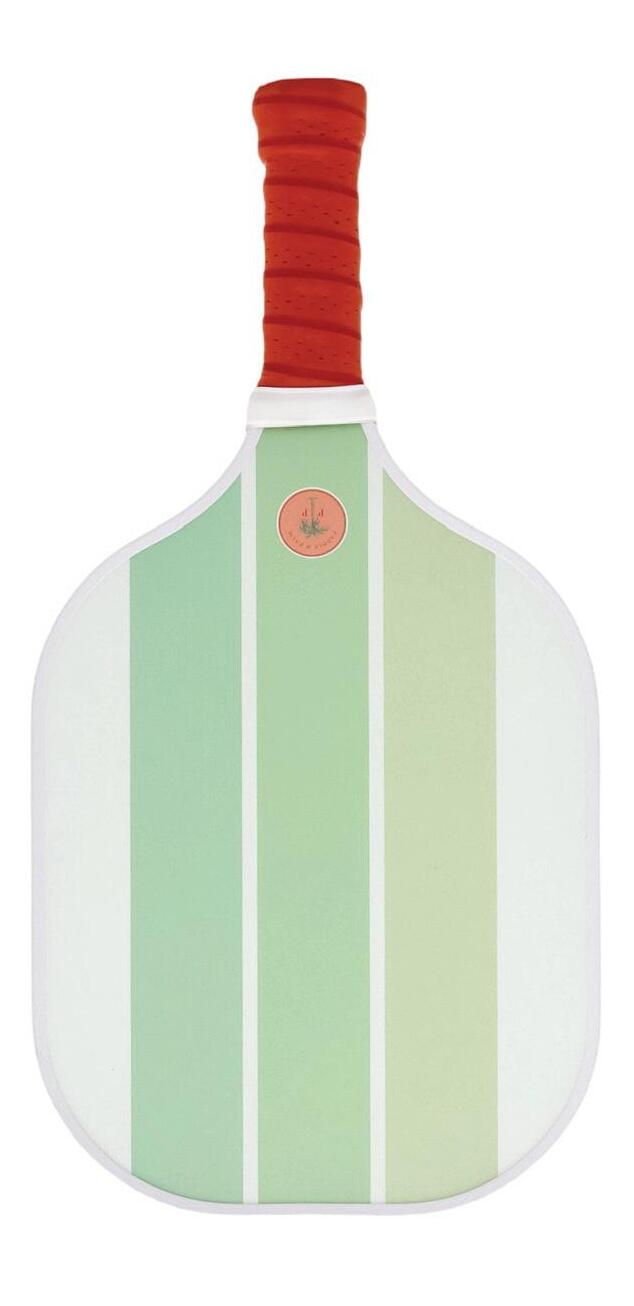
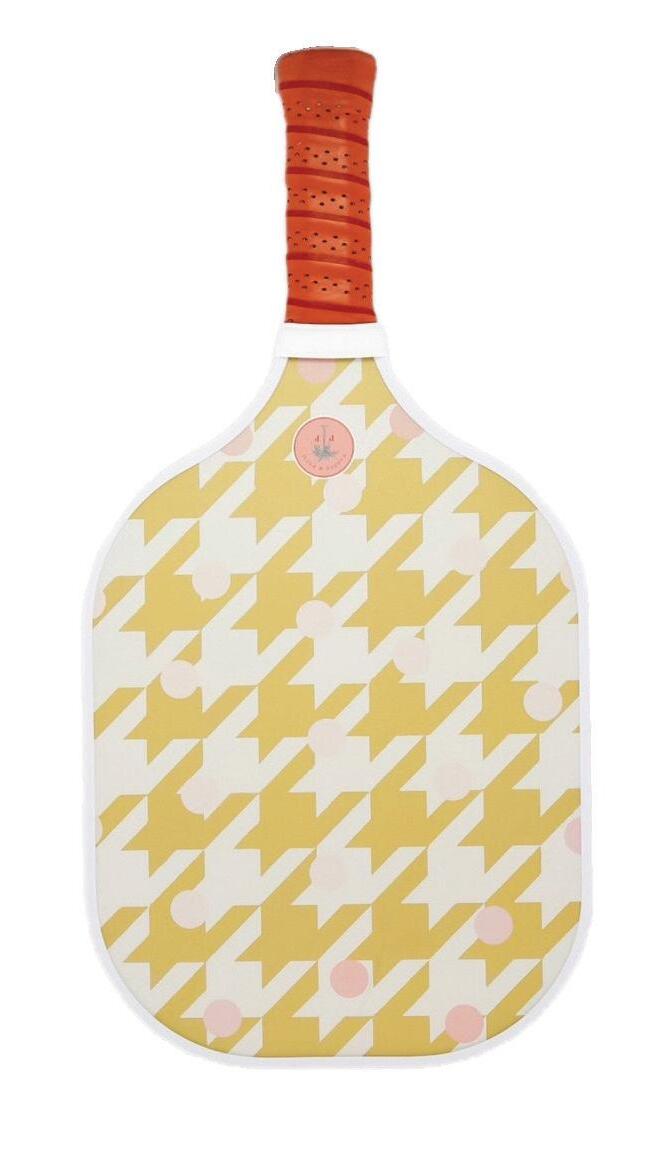
1. PADDLE & PALM
This family-owned Naples brand elevates pickleball style with artsy paddles and chic athletic bags. Each design serves major Sunshine State flair and is an ace on and off the court.
Pickleball paddle, $85
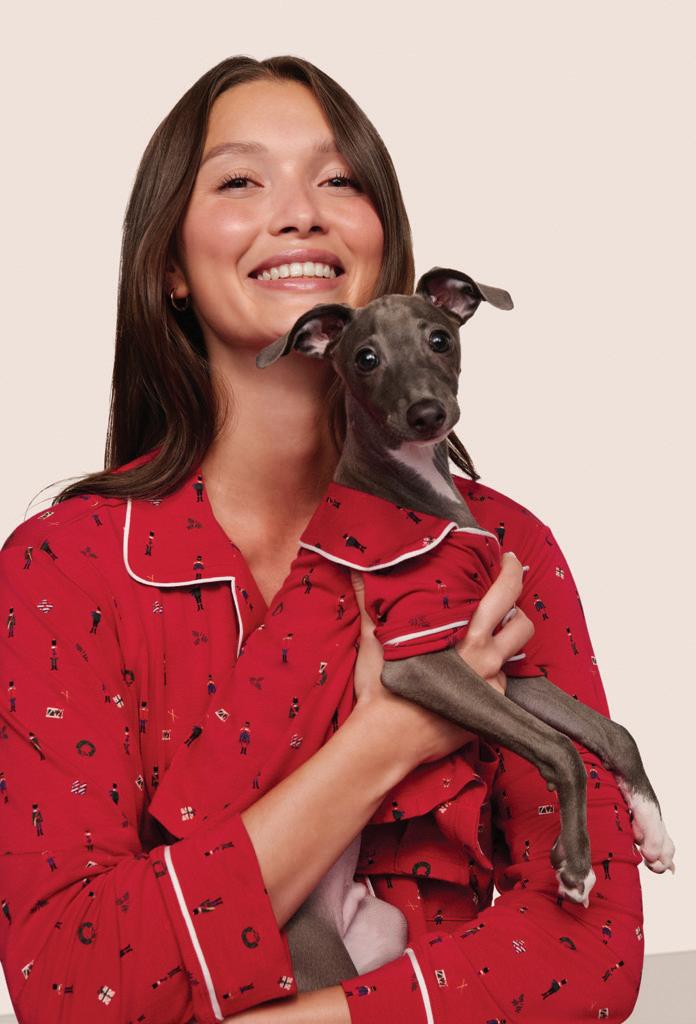
2. EBERJEY
Miami’s Eberjey turns softas-butter pajamas into comfy sleepwear fit for Christmas Eve or Hanukkah. This festive collection includes matching sets for the whole family, including your furry favorites.
Gisele Printed Tencel Modal Shortie Short PJ Set, $138; Gisele Printed Tencel Modal Pet PJ, $50
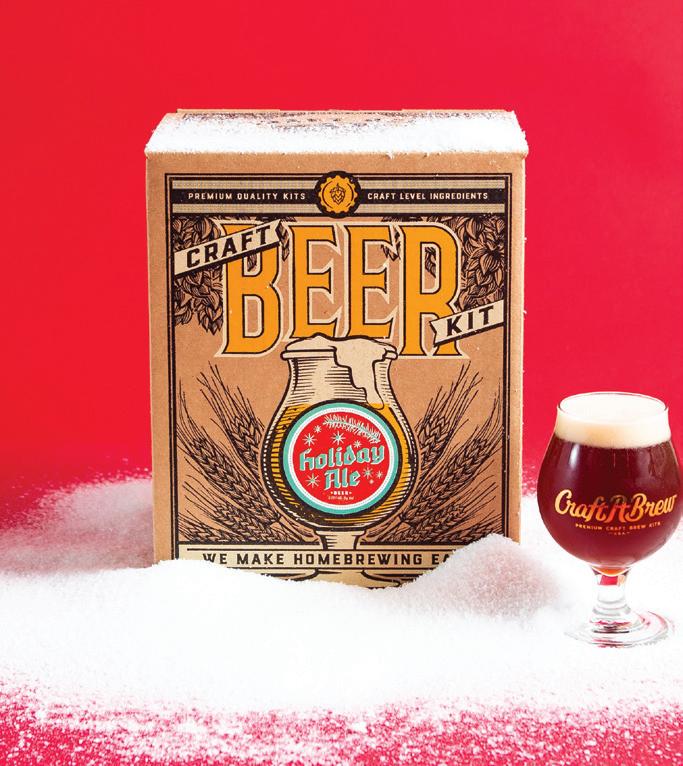
3. CRAFT A BREW
Turn the craft beer lover in your life into a brewer with these five-gallon kits created in Orlando. A seasonal standout is the Holiday Ale, a malty red beer infused with cinnamon and allspice.
Holiday Ale 5 Gallon Beer Recipe Kit, $46.99
4. BOND & GRACE
More than a coffee-table read, these luxe books are reimaginations of literary classics like “Alice in Wonderland” and include the original texts alongside bespoke fine artwork, scholar-made annotations and literary analysis.
Art Novel, $225–$495

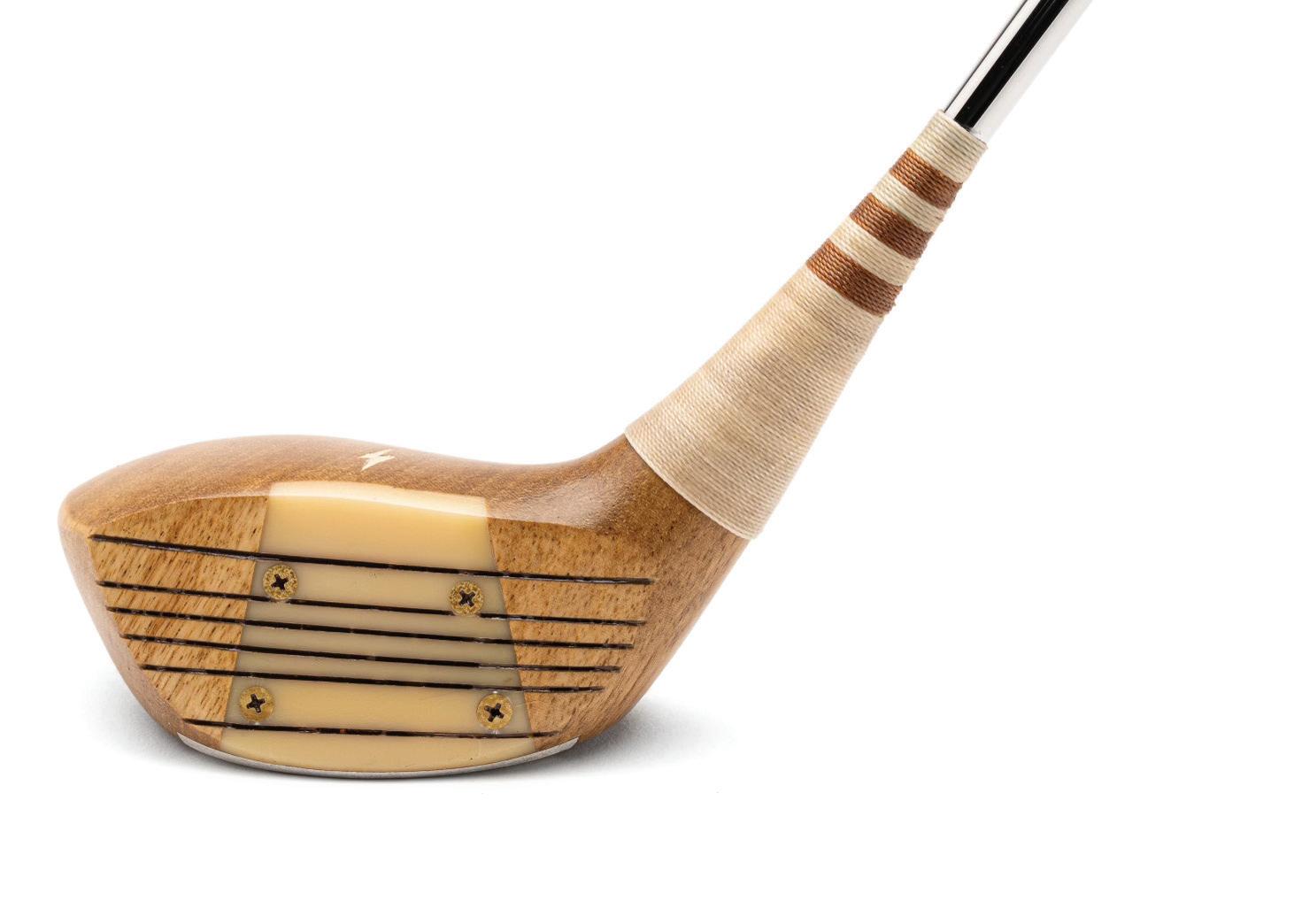


DEMSEY PERSIMMON
Before he was a pro golfer, carving persimmon clubs in high school. Now, from his Neptune Beach studio, woods, blending artistry and nostalgia in pursuit of the $350
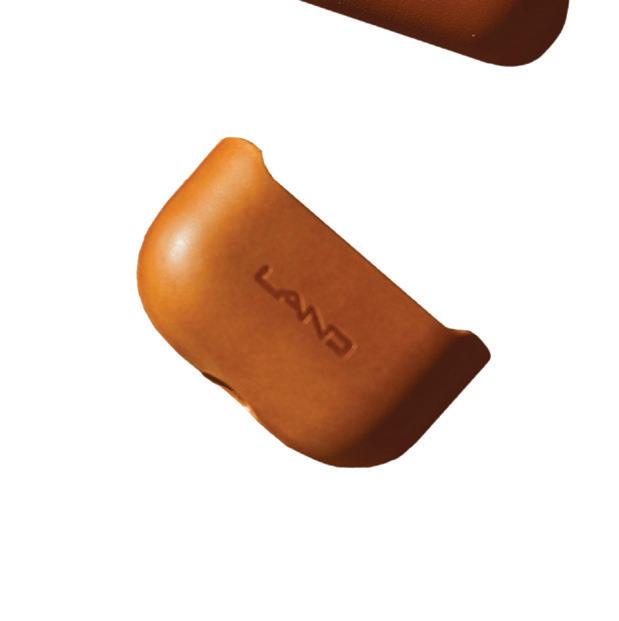
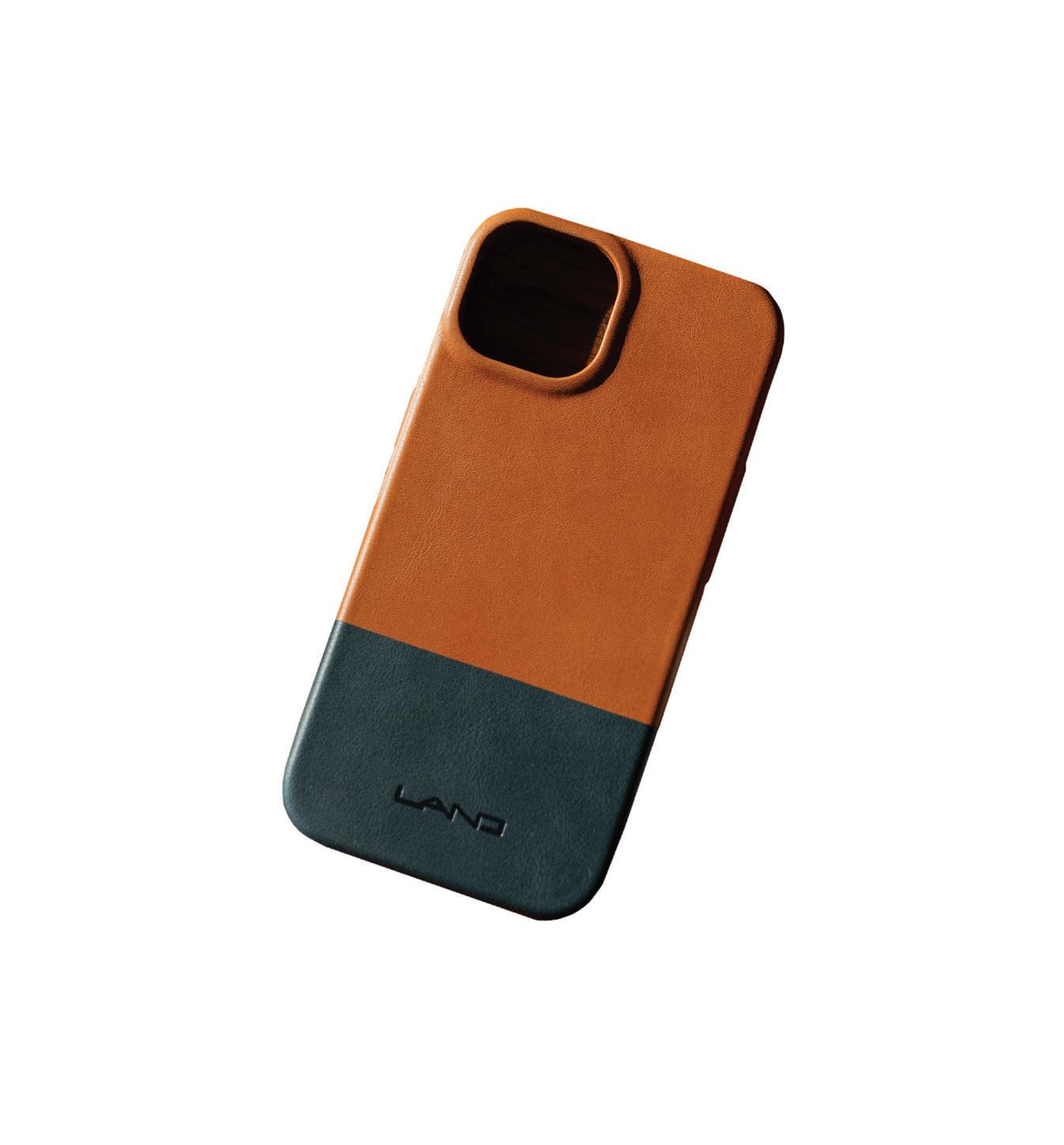
6. LAND LEATHER GOODS
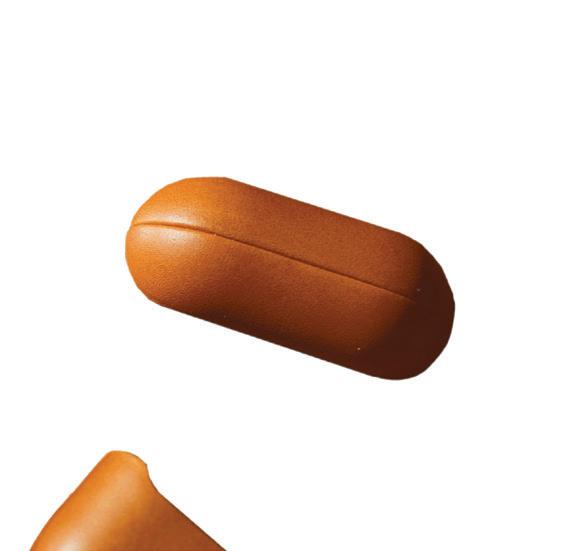
For more than 50 years, this family-owned Miami brand has crafted timeless leather goods—from phone cases to wallets to bags—using premium Colombian leather. iPhone 16 MagSafe Case, $35; AirPods Case, $29.95
7. ATOMIC DRINKWARE
Retro style meets modern durability at this Central Florida-based company, where midcentury-inspired drinkware comes in highquality, affordable sets. We’ll drink to that. Starlite collins glasses, $70
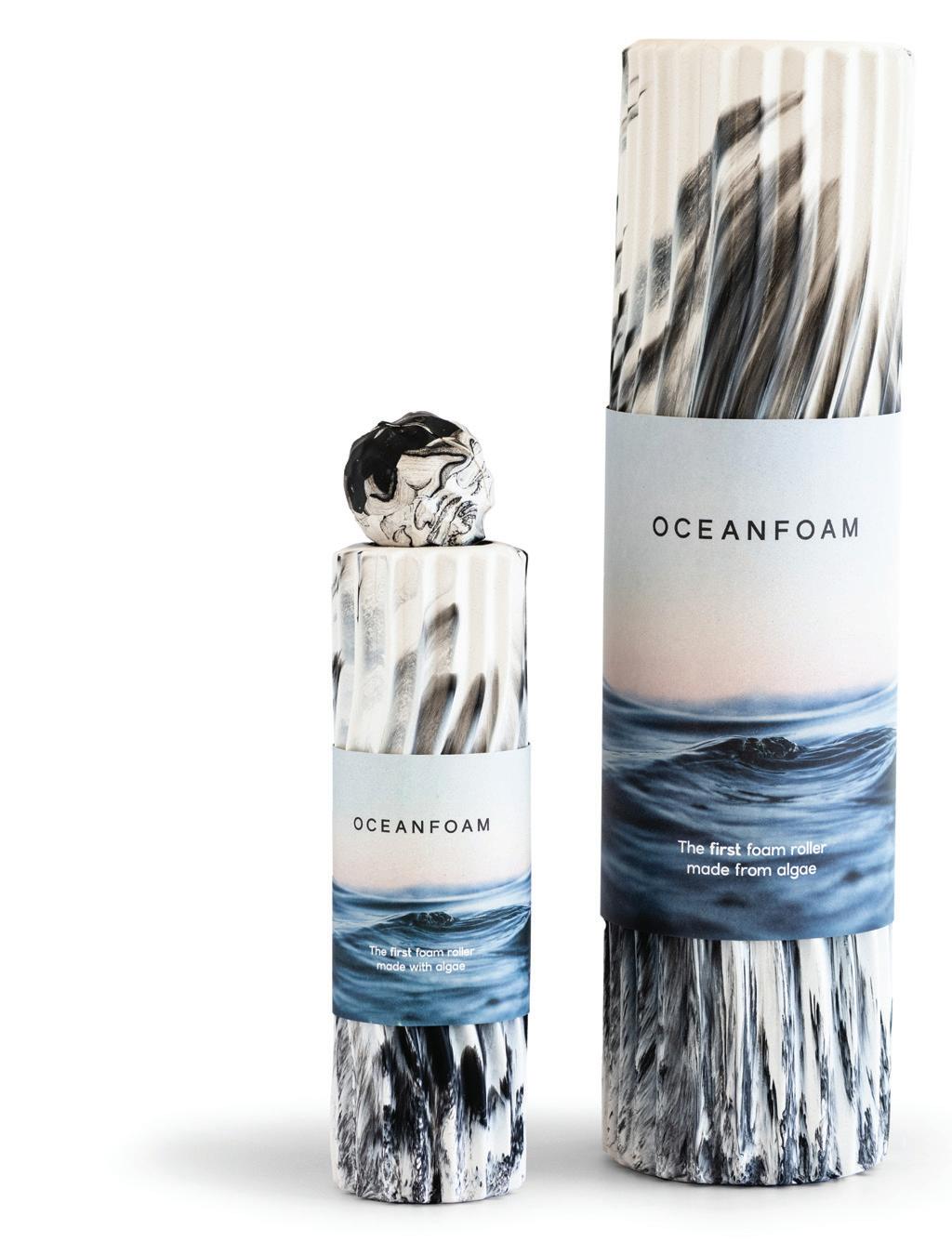
8. OCEANFOAM
This Naples-based business crafts recovery tools that are as stylish as they are sustainable. Made from algae and recycled materials in bold colors, the bundle encourages daily self-care. Wave ball and foam roller bundle, $92
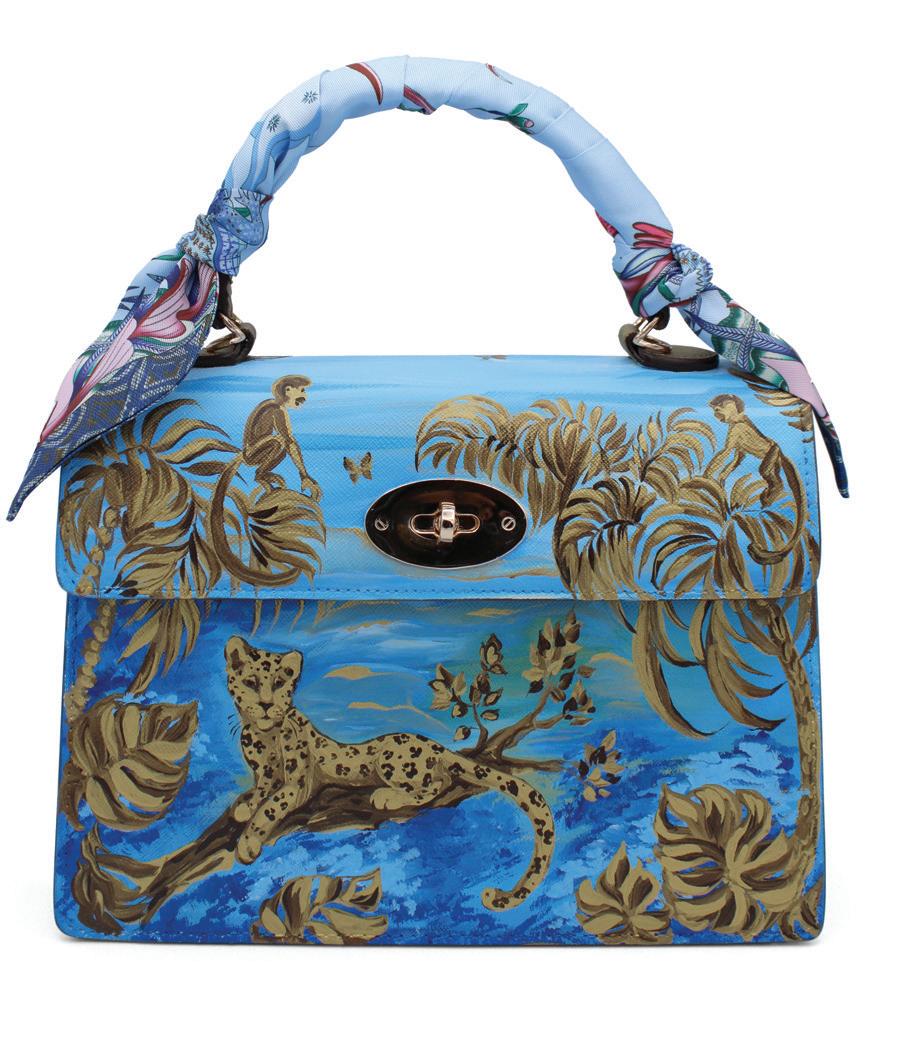
9. SAKAL PALM BEACH
South Florida resident Oksana Sakal paints original designs onto fine leather bags by hand. Each wearable work of art depicts nature, animals or architecture.
Hand-painted bag, $650–$950
10. LILFOX
When skincare is housed in glass vessels designed to preserve botanical potency, you know it’s good. This Miami brand’s gift box draws inspiration from the rituals of an ancient Roman bathhouse with products like the Holy Tree Green Aura Incense Soak.
Ancient Green Viridescent Bath Genius gift box, $350
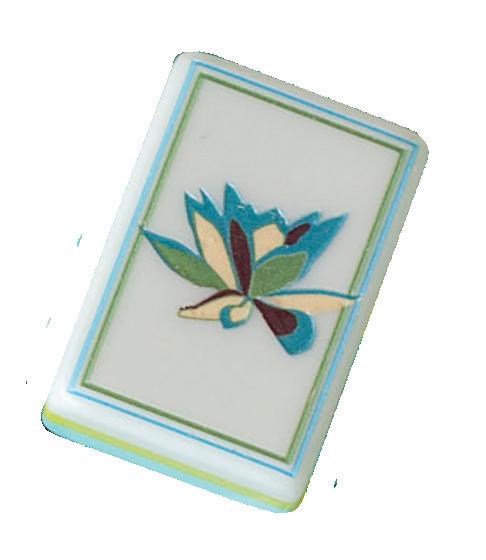
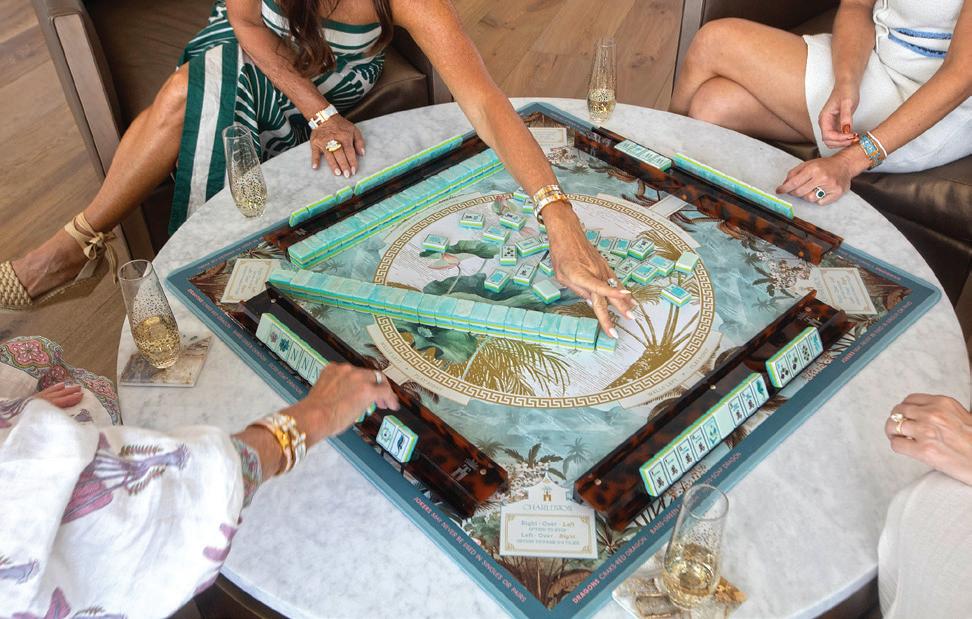
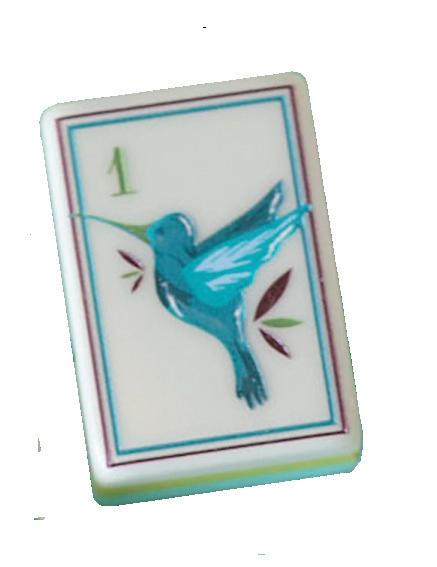
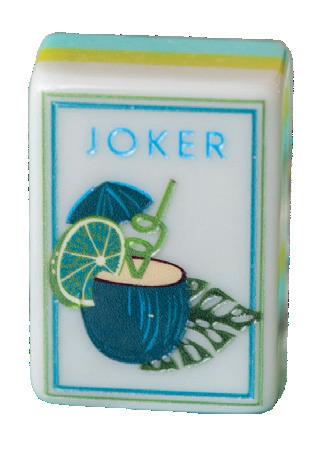
11. MAHJ TILE HAUS
Bams, cracks and dragons get a beachy 30A twist. Founder Caroline Johnson’s custom mahjong tiles, mats and racks blend coastal hues with sophisticated glamour—proof that game night can be chic.
Coral & Coast tiles, $535; mat, $80; rack, $140
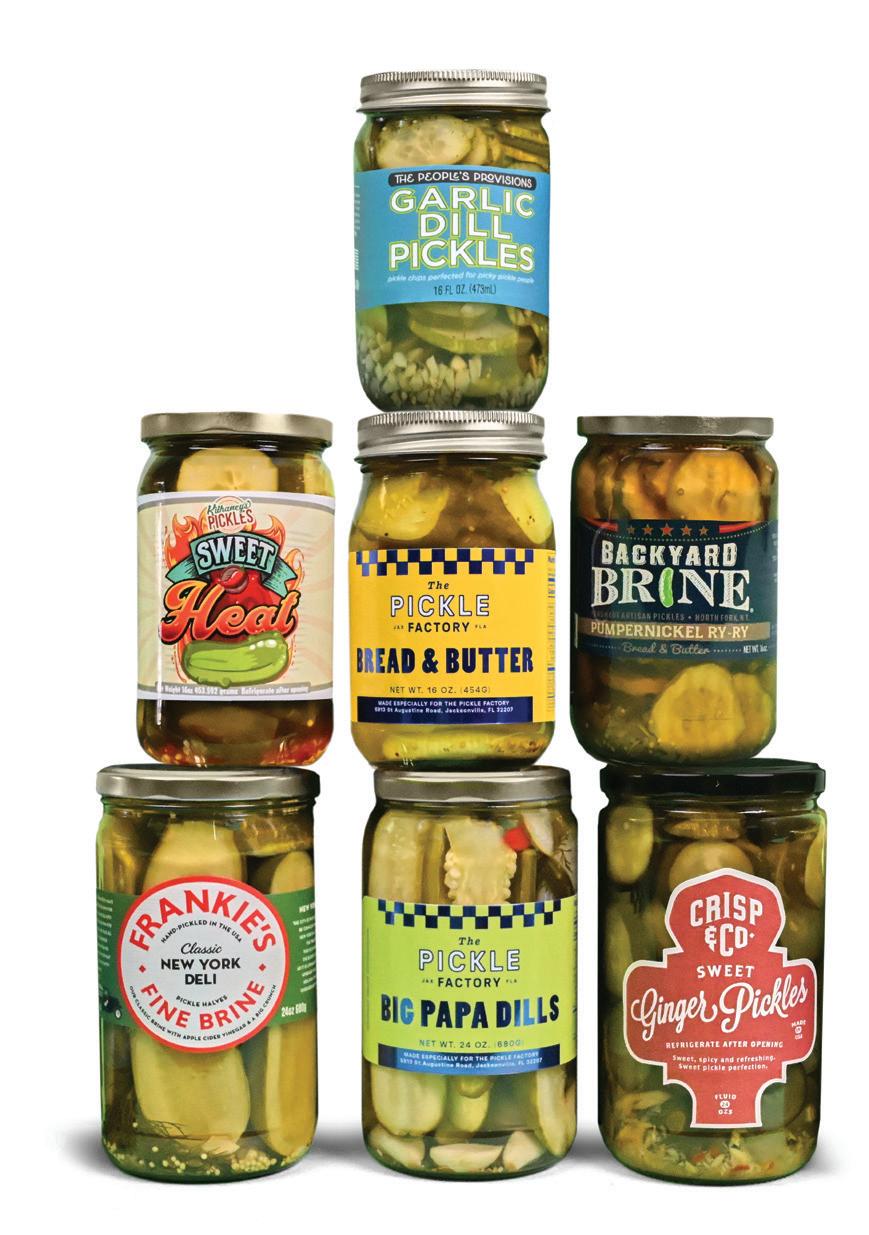
12. THE PICKLE FACTORY
Pickle party in a box? Say no more. This Jacksonville brand delivers seven jars in a giftable set, from their own classic dill to Kilhaney’s Sweet Heat Pickles and even pumpernickel bread-and-butter, for the crunch connoisseur.
Top of the Pickles To Ya gift box, $100
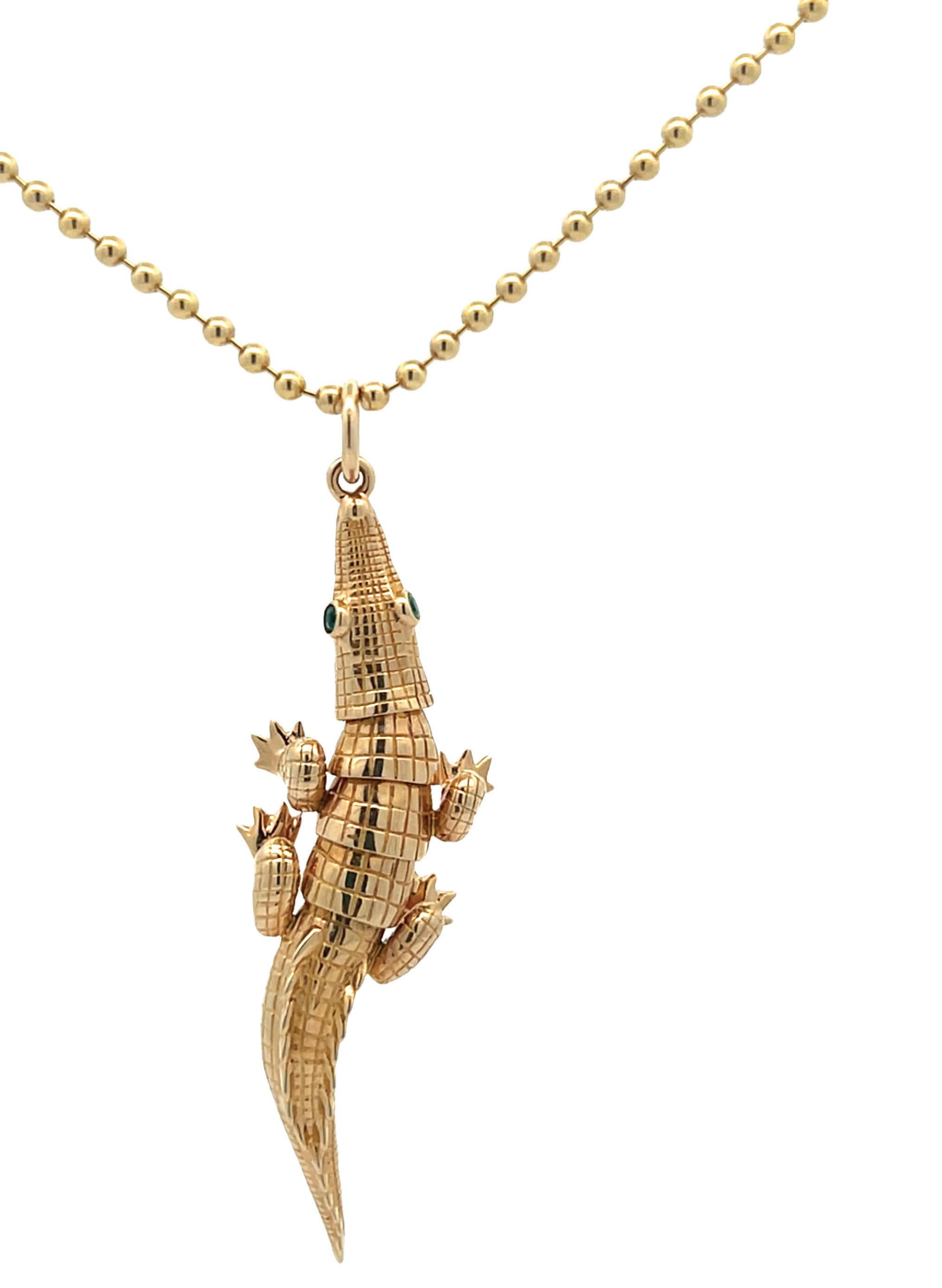
13. LYMAN FINE JEWELRY
At this Palm Beach atelier, Florida’s wild side meets refined craftsmanship. Articulating fish and alligators are reimagined as solid 14K-gold pendants inspired by vintage designs.
Mini Articulating Alligator, $2,200
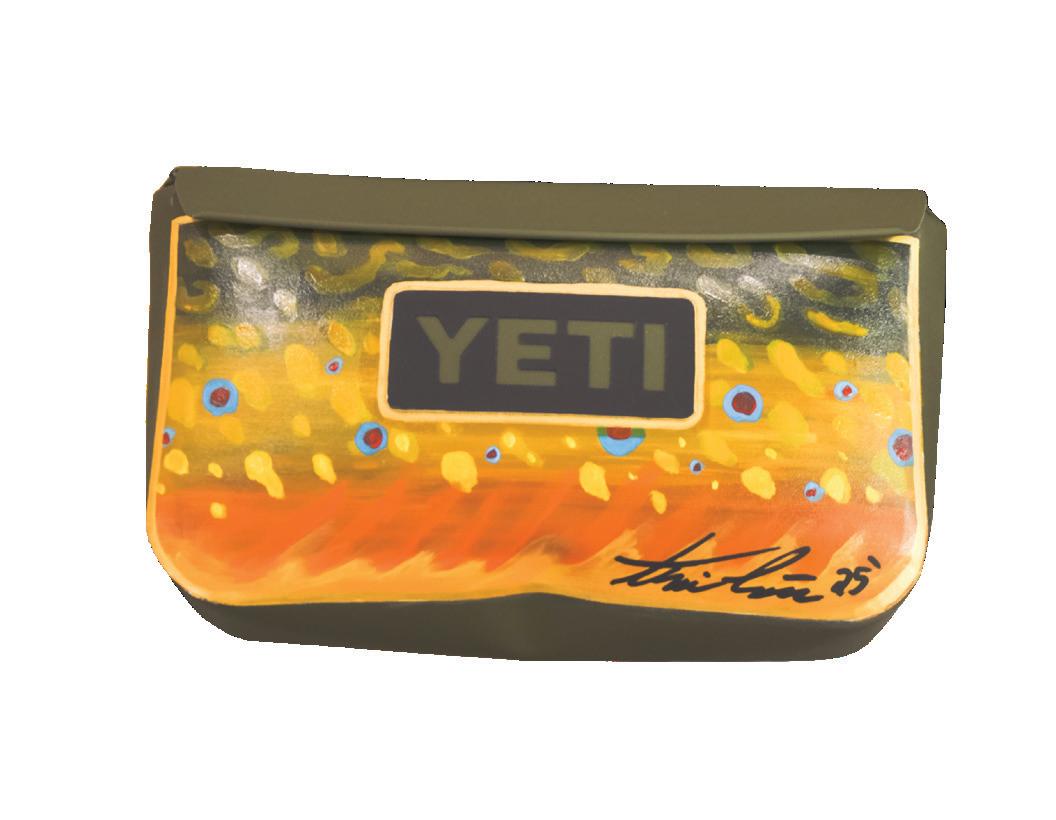
14. TRAVIS LUTHER ART
Native Floridian Travis Luther captures the thrill of the catch with his hand-painted fish renderings. The self-trained artist transforms Yeti coolers, backpacks and belt bags into wearable art.
Hand-painted Yeti SideKick, starting at $250






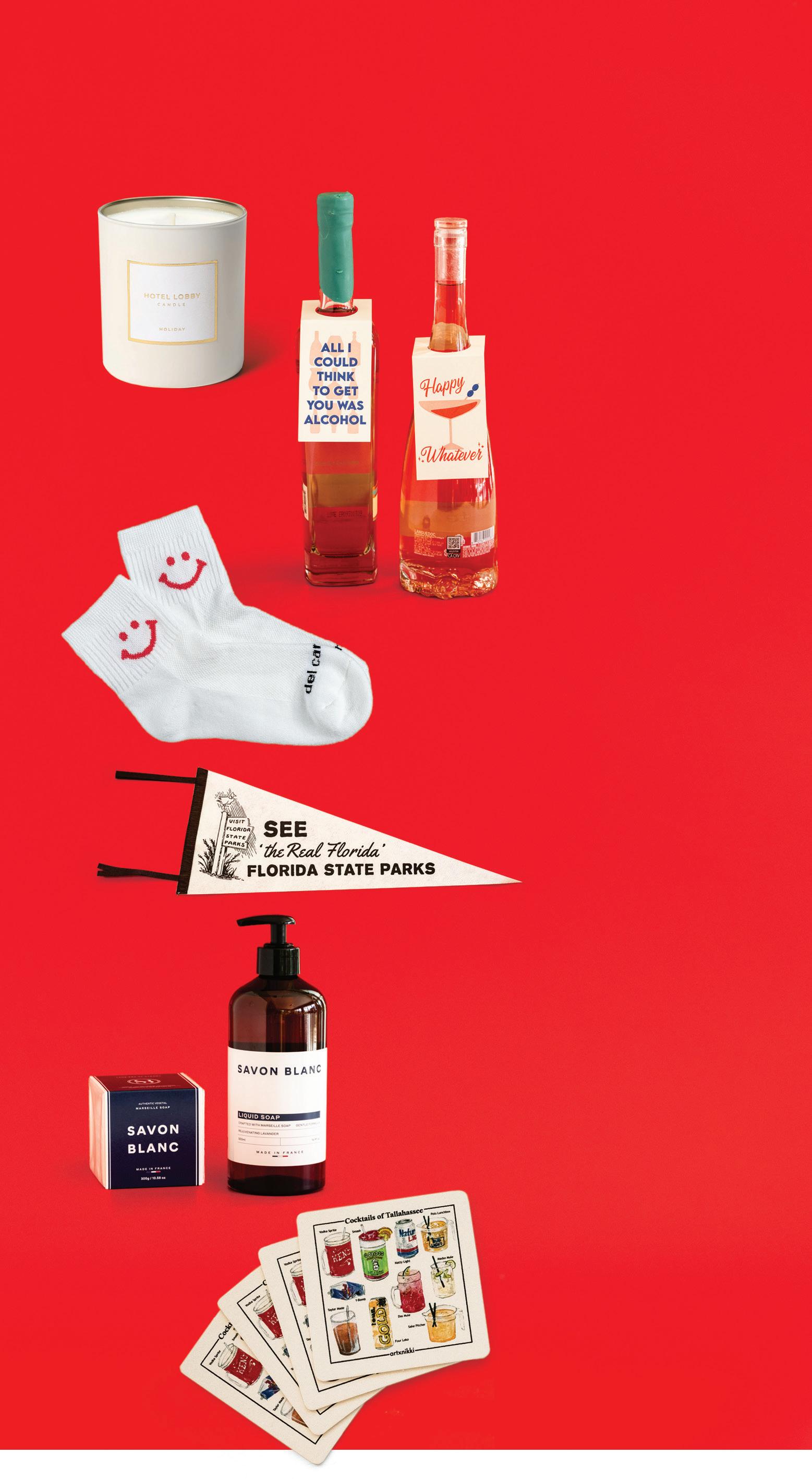
15. HOTEL LOBBY CANDLE
Miami’s Lindsay Silberman brings five-star hotel vibes home with her luxurious line of candles. Choose a citycentric scent like Miami, which contains notes of bergamot, cedar and rosewood.
Miami candle, $58
16. M.C. PRESSURE
The witty St. Augustine duo who runs this letterpress shop creates debossed stationery, bottle tags and recipe cards with vintage charm and a wink. They’re perfect for hosts with a sense of humor.
3-Pack letterpress bottle tags, $6
17. DEL CAMPO
These are socks you’ll actually want to find in your stocking. This Atlantic Beach brand blends playful designs with top-notch performance for golfers and style mavens alike. Smiley socks, $16
18. 5801 PRINT HOUSE
This St. Pete screen-printing studio leans into Sunshine State nostalgia with their line of retro tees, hats, pennants and tea towels that channel Old-Florida flair. Pennant, $20
19. SAVON BLANC
The Ponte Vedra-based founder of these luxury soaps has deep roots in France. The all-natural collection of hand soap, laundry detergent and cleaning solutions brings a touch of French Riviera freshness to your home. Savon de Marseille liquid hand soap, $29; Authentic Marseille soap bar, $16
20. ARTXNIKKI
Hand-illustrated punchy cocktail coasters and cheerful fine art prints by this Tallahassee artist turn happyhour essentials and wall art into conversation starters. Cocktails of Tallahassee coaster set, $7.50
By CD Davidson-Hiers
A father-daughter duo discovers the pleasures and perils of scuba diving.
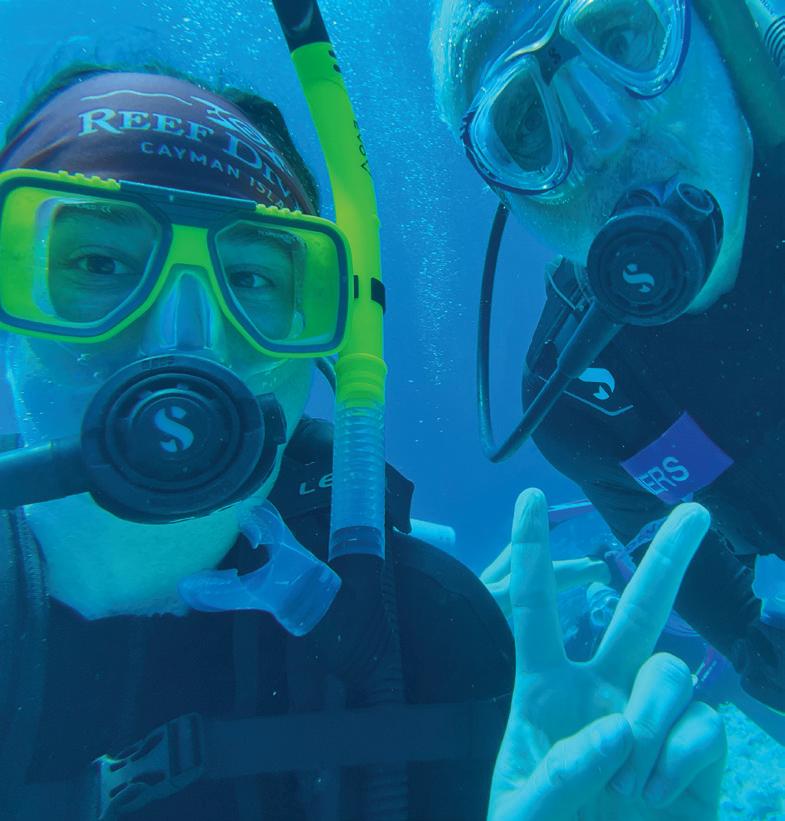
“Just so you know, there’s a shark below us,” I say, spitting out salt water as I pull my regulator from my mouth. My father pauses in the boat above me and looks down to where I tread water in the Pensacola Bay. We have ventured out on this summer day in 2024 on his 24-foot Trophy Pro motorboat, searching for sunken barges. My father and I have been diving together for 10 years.
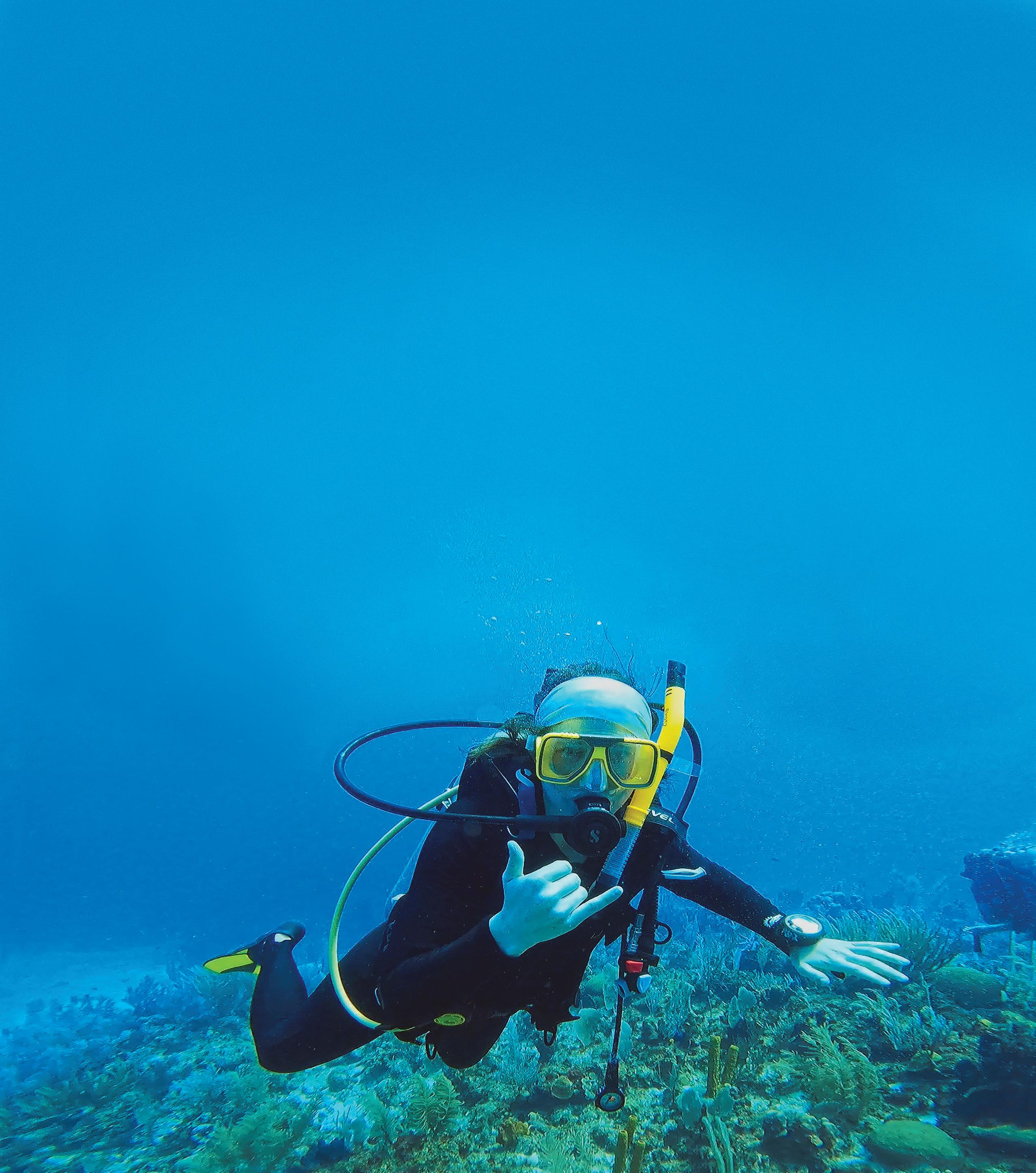
My dad, David Hiers, who grew up diving in the fresh waters of Massachusetts and sometimes beneath the ice in winter, loves what lives underneath the surface.
Once, when my parents were dating, my father leaped from a catamaran under sail off Pensacola Beach with a bucket to capture a seahorse and show it to my mother, Deborah Davidson. He released the small, magical creature back in the same spot, and my
mother started to fall in love with him.
Back in the bay, I dip my face into the water and stare into the sun-streaked depths. We’re in roughly 40 feet of warm ocean, and the visibility from the surface gives me enough room to glimpse a creature’s gray body again as it twitches through the water column below.
Sharp fins, sharp tail. I have a good enough view to think, “shark.” I drift in
the current while my father rolls backward off the boat—one hand over his mask and the other on his tank. A cloud of bubbles erupts upon his impact, and I relax. Now there are two of us, and I’m not just prey.
I trust my father, and I trust the ocean because of him. He taught me to breathe through fear, even with the literal weight of the world—the atmospheres of water pressure felt when diving—on my shoulders. As a kid, I never wanted to learn to scuba dive—something I could never admit to him.
I earned my National Association of Underwater Instructors (NAUI) open water certification more than a decade ago at age 18 with my godfather, John “JK” Kaufman, a wiry Navy dive instructor with salt and sun baked into his skin. He has the same smile printed on his face in all our photos of him and my godmother, Dorothy Kaufman. He and Dorothy fold into the fabric of my childhood. I can still hear JK’s laugh when I think of him. His smile, which is framed by a chevron mustache, bald head, aviator sunglasses and floral shirt that looks like it could sing “Margaritaville.”
JK taught me that every impulse we have on land is wrong in the water. Don’t touch anything. Don’t hold on to a rock to steady yourself. Don’t use your hands to swim. Never, ever rush to the surface for air. Crying underwater fogs your mask. Trust your partner and use hand signals to communicate whether you’re OK, cold or low on air. He cautioned that it was up to me to check my gear and monitor my oxygen levels. My head spun from processing all the information.
“I’ll always be there too,” Dad assured. I learned to scuba dive so my father could share with me a world he loves to explore. He brought me into the waters off Florida’s
Gulf Coast and cultivated my curiosity in a place where I could simply observe the things I admired. I learned the hand signals for turtle and lionfish, octopus and stingray, little fish and lobster. I swallowed my fear and kept an eye on my partner, always remembering to check what was behind me.
Under the boat, Dad and I find the white anchor line and give each other the universal signal for OK—my thumb and pointer finger forming a circle while extending my other three fingers. We press the release valves on our buoyancy vests and descend, the bright rope guiding our journey to the 40foot bottom. We clear our ears by pinching our noses and blowing. My right ear canal squeaks as a stream of air equalizes with the water pressure.
I swivel my head back and forth, searching for the creature. A flash, and there it is again.
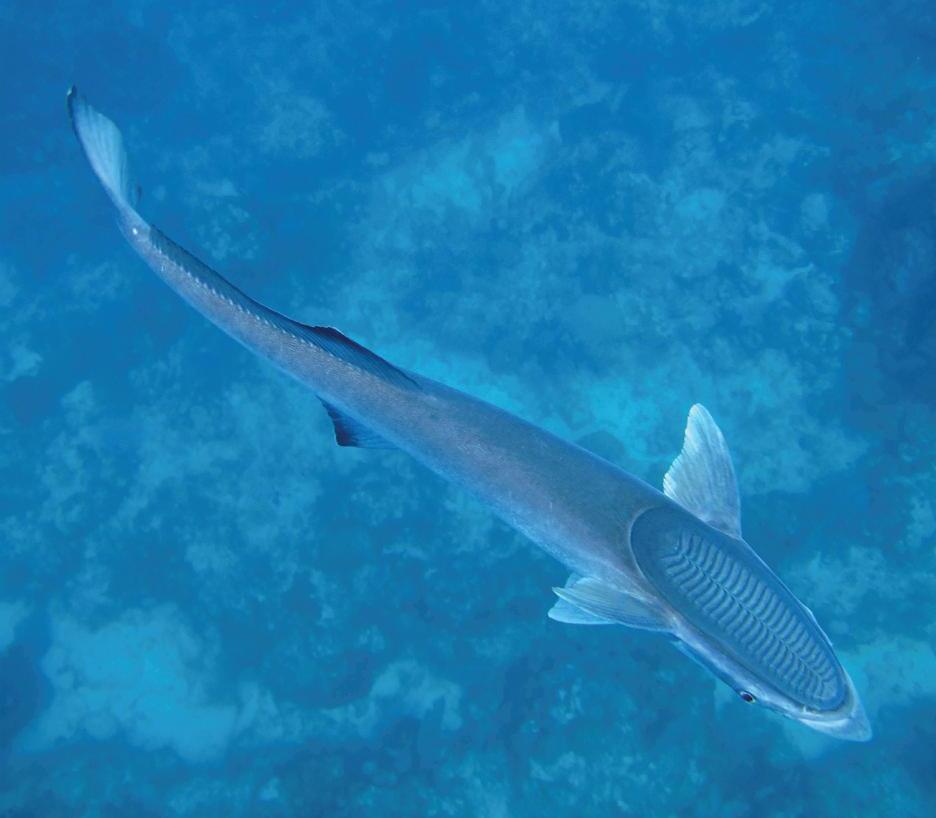
Not a shark. A remora—a gray, flatheaded fish about 3 feet long with a saw-toothed suction cup on top of its head. They attach to sharks in order to feast on whatever the predator finds for dinner. I push away the thoughts of how this remora lost its host.
The sharksucker flinches when I turn to look at it. The fish swims about 8 feet away from us, eyeballing my father and me as if
sizing us up. Would I be a good substitute ride-along? I shake my head at the idea. The fish flits closer.
I tap my father’s shoulder and point to the remora. Dad nods, unbothered, and turns back toward the ocean floor as the sandy bottom rises to greet us. We slow our descent. I hear Dad’s buoyancy vest inflate like an inhalation, his hand on the power inflator button, and I do the same. I feel my vest tighten around my torso, and I drift about 2 feet above the ground.
The remora sidles over to me. I get a good look at its suction head, appearing like a layering of gills or a handful of vents. I can too easily imagine it shllllping to my thigh. I wave a hand at the fish, which remains unfazed. I do not want to be clung to by this weirdo.
Dad is many feet ahead of me in the murky water, following the compass of his dive watch that he wears on his left arm. Using his right hand, he unravels a towline attached to the anchor in case we lose our way. We’re searching for the USS Massachusetts, a 10-ton battleship that fought in the Spanish-American War. “The Mass” was scuttled in the bay in 1921, and is one of the dozen underwater archaeological sites designated a preserve by the state of Florida.
I flip my fins and start paddling after him, the remora fretfully in tow.
On one of my first dives while certifying as a teenager about a decade ago, I took a moon jellyfish to the face. This was back when my tank felt too big on my back, making me feel like a turtle that hadn’t grown into its shell. I was with Dad and JK.
After rolling overboard into the bay, I found myself unable to lift my head past the air valve on the top of the tank strapped to my back. The metal connection for my regulator tapped me in the back of the head like a warning. I circled my hands in the water like I was cranking knobs to rotate my body, trying to find JK and my father.
Suddenly, a moon jelly collided with my face, enveloping itself across my mask and forehead. Everything I saw was through the gummy embrace of a jellyfish. If anyone had been around to look, they would have seen a mold of my profile on the jelly’s topside. I spun my hands to rotate into a backflip and peeled the jelly off. Drifting off into the current, the creature joined the school of moon jellies I had unwittingly dropped into. I was left confused and disoriented, with burning lines across the exposed skin on my neck and forehead. Of all the jellies I could name, moon jelly stings are the mildest. Instead of a garden of tentacles hanging beneath them, the edges of their dinner-plate-shaped heads are lined with small tentacles that leave more of a rash than a welt.
I swam to catch up with JK and Dad, who were about 20 feet away investigating the wreckage of one of the Three Coal Barges off Pensacola, a site on the Florida Panhandle Shipwreck Trail. I kept my gloved hands in front of me, trying to hold onto the water to keep my balance, a technique akin to staring at a spot on the floor while standing on one foot. Only underwater, the sea pushes in on you from every direction.
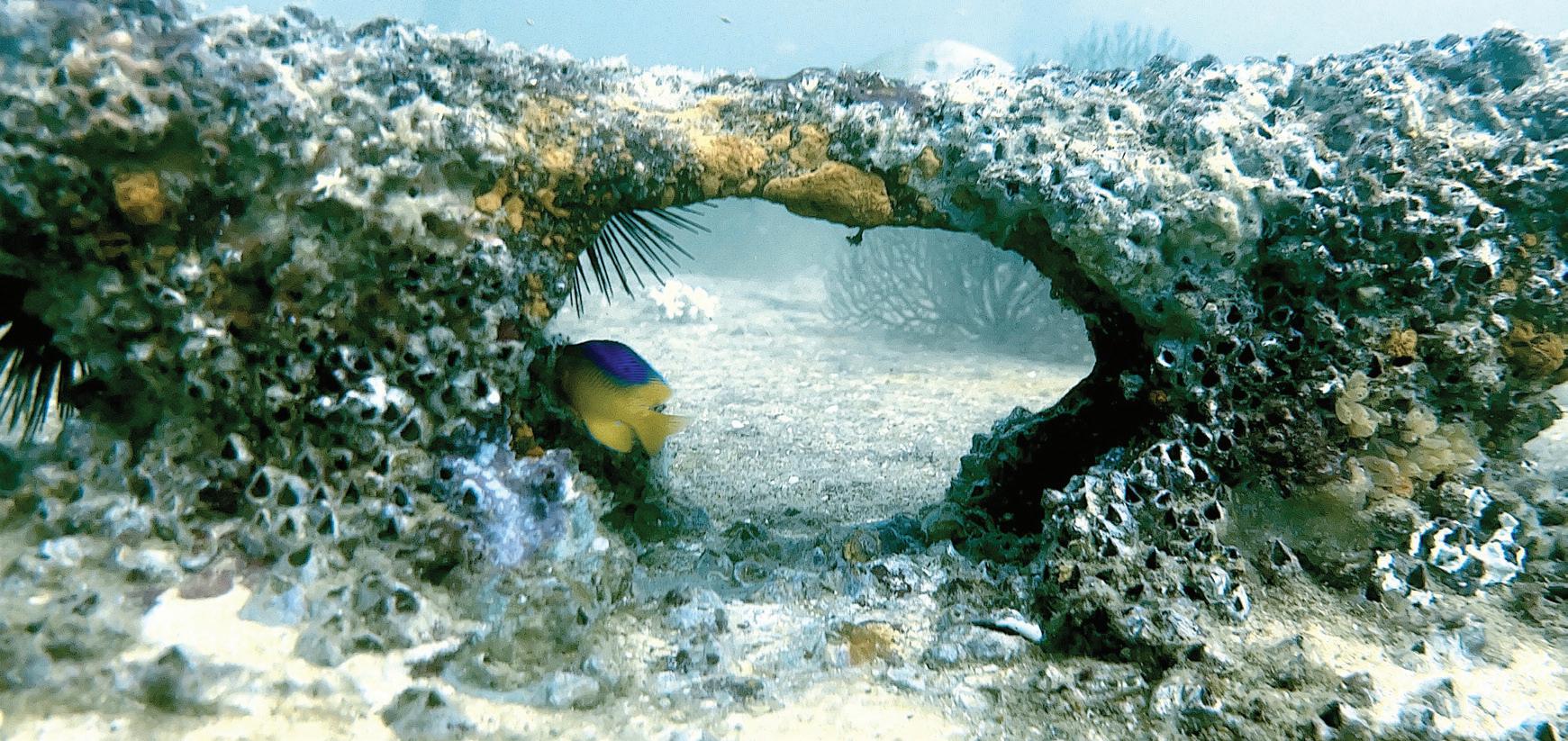
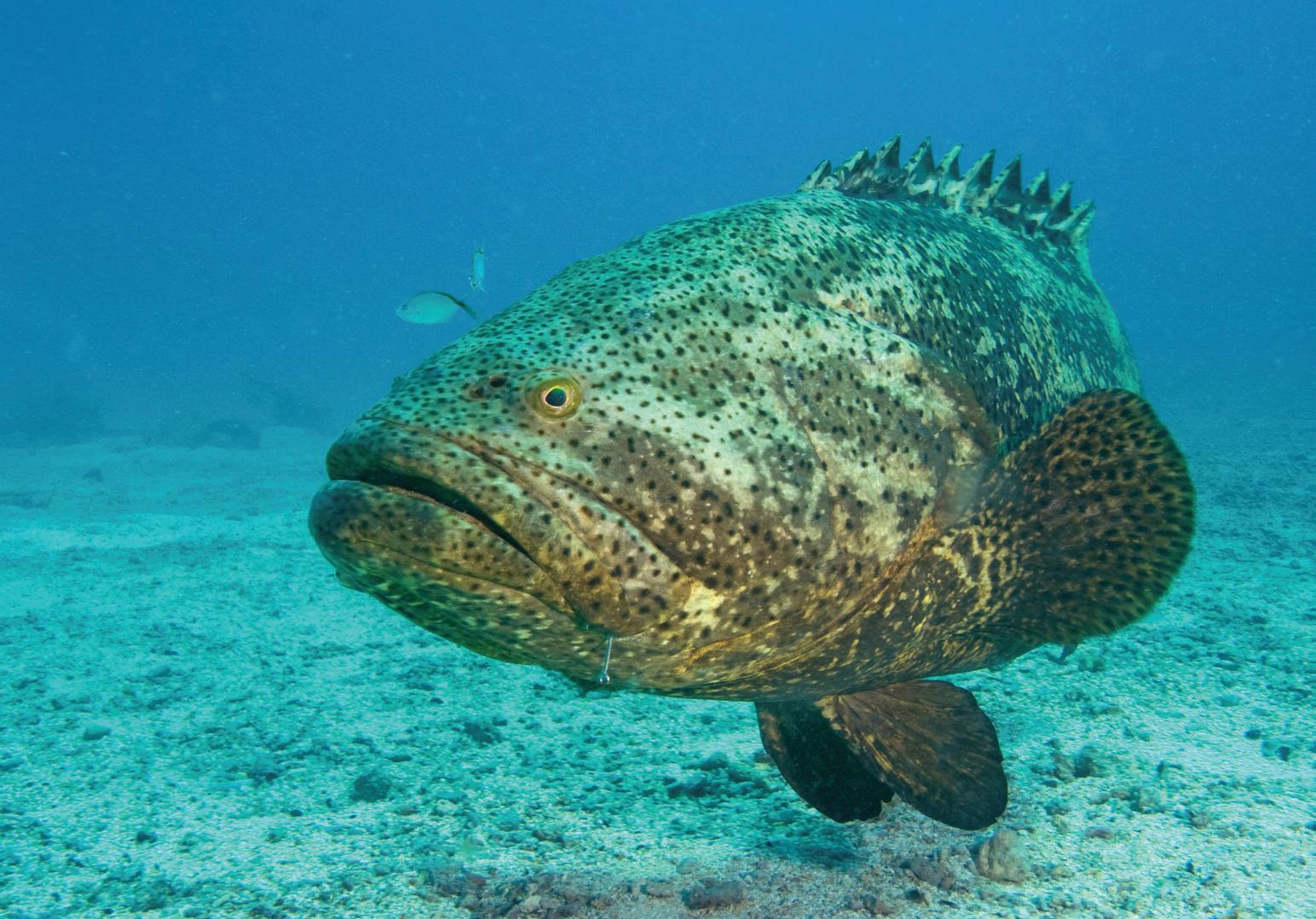
I swam up to a porthole on the side of the barge. Blue, pink and brown corals and plants grew around the edges. As I focused into the darkness inside the barge, I noticed a large brown eye the size of my fist staring back. Looking through the porthole, the eye evaluated me on a criteria I could never know. I felt both profoundly connected to and disassociated from the creature in front of me. My thoughts raced—was this akin to coming across a Florida panther or a black bear on a trail? Was it important to hold the gaze of this single eye or look away in deference? Should I look big, or shrink and not be a threat?
The eye belonged to a goliath grouper—a creature that can weigh up to 800 pounds— about the weight of a touring Harley-Davidson motorcycle. Grouper mouths open with underbite frowns so severe they look like disapproving history professors emerging from their dusty archives.
The grouper’s eye blinked away from my gaze. With a quick flick of its pectoral fins, it continued through the belly of the barge.
JK floated up next to me. His job was to watch me tour this wreck and evaluate how I
handled myself. He glanced at the porthole just as the grouper passed by, its brown spiny dorsal fin flaring like the back of a sea monster writhing through the wreck. I saw the back of JK’s neck turn pale.
“No, it’s OK, it’s a fish,” I tried telling him, humming the words in my throat. I turned my hand on its side and waved it like it was swimming, like a flag flapping in the wind. The signal for goliath grouper—I didn’t know how to sign.
Back in Pensacola Bay, Dad’s eyes bulge underneath his mask. The remora stalking us has disappeared somewhere in the haze. Also missing is my father’s diving regulator, normally affixed to his mouth supplying oxygen. Dad hadn’t taken a breath to hold. I rip my regulator from my mouth and hand it to him.
Dad shoves the rubber mouthpiece between his lips, takes a breath and begins what's known as buddy breathing. I can see streams of bubbles at the corners of his lips where water pushes through.
Despite a decade of experience diving, I still feel claustrophobic.
Now I’m holding my breath underwater, compressed air in my lungs. We are 30 feet below the surface and unsure how from our boat. Were we in a swimming pool and not an ocean, we could push off the bottom and sprint for the sun above, break through the surface and fill our lungs with oxygen. Here with compressed air, if we do that, we risk nitrogen forming bubbles in our bloodstream. Painful, possibly fatal. I reach for the right side of my vest and search for the rubber keeper holding a second regulator in place, coming up short. This is the octopus regulator, the fail-safe to buddy breathing.
I have seconds to find my spare regulator. Dad locates it, rips it from its holder and hands back my regulator from his mouth. We are now both breathing from my tank. We take a moment to inhale and to exhale. We look at each other—his eyes blue, mine brown. We inhale, and
we exhale together. I reach behind him and follow the hose from his tank to where his main regulator floats behind him. After another lung-filling breath from my tank, he takes his regulator back from me.
This was an accident. We had been swimming in open water, unable to find the wreck marked on our map with just Dad’s guideline to bring us home to the anchor. Our plan was to surface and reorient toward the shipwreck. Dad took his regulator from his mouth to inflate a surface marker buoy. The bright red buoy, fueled by the air from my father’s tank, shot to the surface to let boaters know divers were down below.
The tail of the buoy had grabbed my father’s regulator as it flew upward, knocking it behind him out of reach. I saw the second before Dad lost his regulator, the second before he turned to me, eyes wide and desperate.
Despite a decade of experience diving, I still feel claustrophobic the first moments
I descend. I calm my nerves by reciting the familiar steps to cooking eggplant Parmesan until the feeling passes.
Dad recovers his regulator. Now breathing from his own tank, I follow him as he swims around the wreck.
Salt eggplant. Pat dry.
We finally find the USS Massachusetts and drift about the battleship, pointing out sea urchins and a school of fish. I don’t know yet about Dad, but my hands may be shaking—the scene from minutes ago keeps replaying in my head. I cross my arms over my chest as we swim.
The remora is back, now with a couple friends. They flit about and turn to look at us from either eye. I wonder if they feel anxious without a host to pilot them through the ocean. Are they without purpose? I have nothing to offer them.
I signal to Dad, pointing to the surface: I’m ready to go. He nods, and we leave the Massachusetts to find the anchor. The suckerfish seem to heckle at my fins. I blow bubbles from my regulator at them. If any of their thumbprint foreheads come close to sticking to me, I’m going to fight a fish.
The remoras swim away as we ascend the anchor line. Dad and I sway in the current during a three-minute safety stop, gripping the anchor line. My hands steady as I take in how sunlight beats down on my father’s shoulders and reflects off his yellow O2 tank. He looks at me with a gaze that asks if I’m ready to leave this dive behind. Trust goes both ways, and I realize I’ve become someone he can rely on.
As a scared teenager, I couldn’t have known how special diving would become for me or how it would shape my love for Florida’s waters, a place without souvenirs. Diving with my father has given me calm and confidence, traits that he taught me can only exist alongside fear. Every time I enter the depths, I return home as someone just slightly new.
ST. AUGUSTINE
Once, there was Gypsy’s Book Nook, a popular corner of the Gypsy Moon gift emporium nestled in the heart of the Ancient City. That foray into the written word was so successful that owners Alison Bender and Melissa Hunt have gone all in, opening a full-blown bookstore and boutique. The space is cozy and inviting—designed with book club meetings in mind. Shoppers can find everything from hand-poured candles to handmade throws, along with a selection of wine and local snacks to enjoy while they curl up in a chair with a good book. The shelves beckon with a thoughtfully curated array of fantasy, romance and thrillers. midnightmoonbooks.com
FERNANDINA BEACH
European elan comes to Florida’s northern-most beach town as married entrepreneurs Jess and Greg Devaney tap into their passion for continental food markets at their sophisticated new cafe, which opened this summer just a block away from Centre Street. Marché Côtier, French for “coastal market,” offers an expansive assortment of highquality imported cheeses, caviar and meats, as well as items from local bakers and brewers, plus other artisanal favorites. Bring a friend for lunch and build your own charcuterie. Or indulge in the caviar service and have some bubbly on the side. After all, is it really a day at the beach without a taste of Siberian sturgeon roe? marchecotierfb.com
It’s billed as “a general store of sorts,” but the corner shop has turned into more of a community resource. Locals know to look for the colorful art deco facade and the signature logo—a flamingo flying out of a keyhole—on their storefront windows, which cover two of its exterior walls. Come for the sundries; stay for the good company. Kick back with a fancy snack and a Gulf Coast-brewed beverage—or a cup of joe—and browse the boutique for a lastminute gift or party favor. There’s a little bit of everything to enjoy in this lively shop in downtown Panama City, whether it’s the fresh produce or the special popup events: And don’t miss a visit by the Pie Guy. revivalhousedowntown.com
Contemporary fine art finds a home just off 30A with the debut of this new gallery, housed in a quaint cottage among the Shops of Grayton. It’s the dream enterprise of Alexandra Hartsfield, Rebecca Elliott and investor Sharon Hathaway, the latter two who paired their middle names to create the moniker. The space reflects the team’s deep roots in the fine-art world and extensive experience working with artists, collectors, designers and art lovers in search of their perfect piece. The gallery represents about 25 regional and international artists whose styles range from cheeky pop art to delicate evocations of nature, as well as work in mixed media, ceramics and—as it’s at the beach, after all—the surfboard-as-canvas work of Paul Tamanian. Whether looking to purchase a statement piece or just refill your creative well, Ria Leigh is worth a stop. rialeighgallery.com

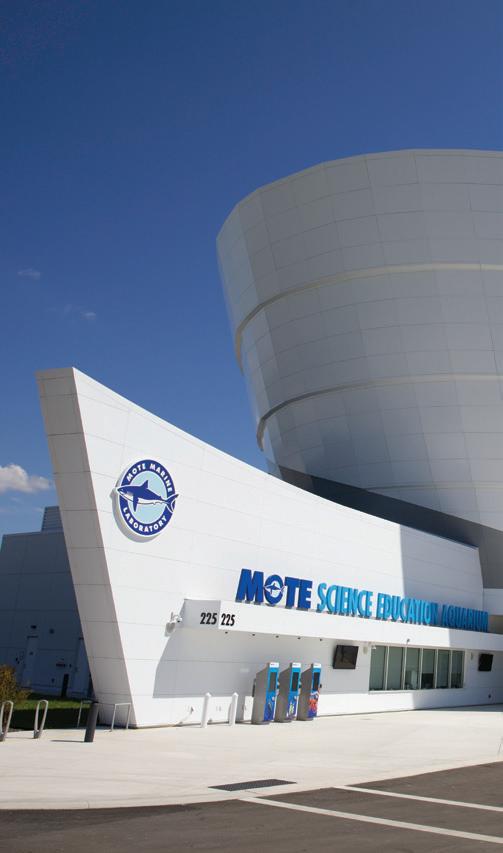
Sarasota just made a serious splash. Opened in October, the 146,000-square-foot Mote Science Education Aquarium (SEA) is making waves as both a research hub and a window into what goes on in the ocean. Habitats bring guests face-to-face with a giant Pacific octopus, a sleek sandbar shark, curious manatees and dozens of other species. What began in 1955 in a one-room building in Placida has grown into a global force in marine science, education and immersive public experiences. The new facility’s three state-of-the-art STEM teaching labs and five workforce training labs will give more than 70,000 K–12 students a chance to dive into hands-on learning each year. Through large glass windows, visitors can even watch scientists at work, uncovering discoveries that may shape the future of our oceans. mote.org
This edgy yet posh apothecary bar and bazaar is the first establishment from Suzanne Lara, a Tampa chef who’s been working her way through local kitchens. Influenced by the distinct cultures that have come together in Ybor City, the menu is divided into five sections: pintxos, hands, please, biggie, smalls and sweets, while the bar serves up creative elixirs like the Mexican fruit cup—a mix of tequila, fruit punch, chamoy and Tajín. Above the eclectic dining area sits the bazaar, offering foodie gifts like cookbooks and cocktail tool kits, along with a speakeasy-style space located behind a sliding bookshelf that welcomes private events and parties. tampalara.com
While this is officially Apopka’s first food hall, it’s also one of the town’s newest community gathering spots. Located in the former Hall’s Feed Store, the historic building is a hub for socializing. Its weekly calendar includes everything from trivia night to a domino league to the beloved Friday night farmer’s market, which includes local vendors and live music. No matter the get-together, there’s always bonding over high-quality food. Currently, Hall’s On 5th has six Apopka-based food businesses, serving up delicious bites like empanadas, plant-based sliders and cookie-stuffed waffles, in addition to The Egret Bar, pouring beer, wine and craft cocktails. hallson5th.com
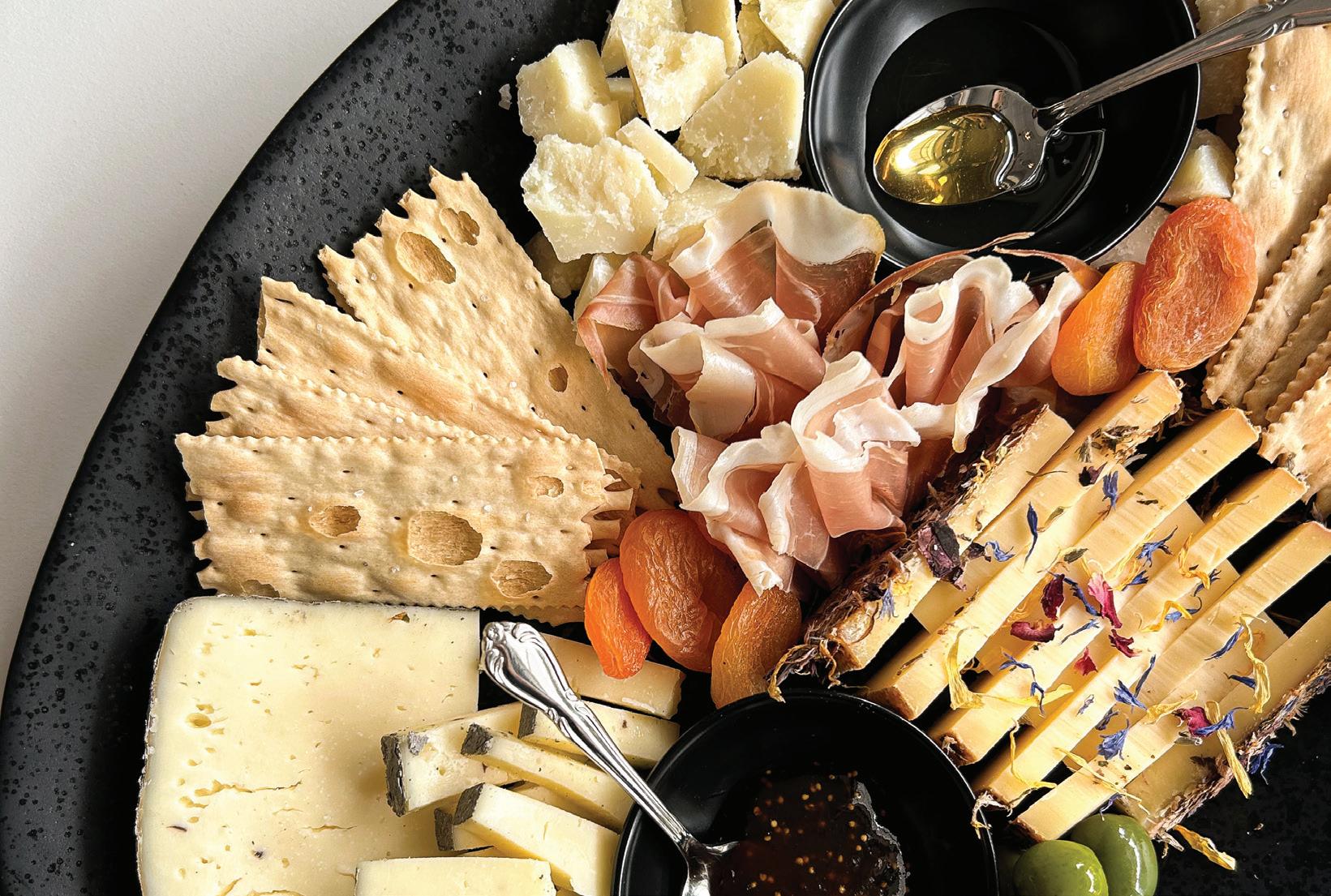
With its checkered floor, mod furniture and a disco ball named Rhonda, Sparrow feels more like an intimate lounge you’d stumble upon in one of the world’s megacities rather than somewhere in Central Florida. One of the latest ventures from Good Salt Restaurant Group, this eatery is located in downtown Orlando. The menu is designed to take your taste buds on a European vacation, jetting from Spain with the jamon Ibérico de bellota to Italy with rigatoni verde to France with sole meuniere. Drinks range from a mix of Old- and New-World wines to their house Sparrow Martini finished with housemade “bird seed” (a mix of seeds and nuts) served on the side. sparroworlando.com

RIVIERA BEACH
What happens when you harness the power of ancient healing rituals into a modern four-story sanctuary of health and wellness? You get the 103,000-square-foot oceanfront spa (the state’s largest wellness center) located within the Amrit Ocean Resort on Singer Island. Amrit transforms the typical wellness experience with its take on long-standing Chinese, Indian and European traditions, including the recent introduction of a 1,200-square-foot hammam, a bathing ritual experience made popular in Turkey and North Africa. Crafted from
imported stone and marble from Portugal and Italy, the hammam is staffed by expert therapists and includes guided spa rituals such as Moroccan bathing traditions designed to purify, rejuvenate and balance the body. Namaste to that. amritocean.com
A slice of island luxury with a pinch of Conch Republic soul, Lunara Bay reimagines the classic Key West getaway. Opened this summer, the waterfront enclave blends the comfort of a private vacation home with the indulgences of a boutique hotel. Its 26 individually designed residences—ranging from four
to eight bedrooms—have their own pool and ample outdoor space. Tucked just before Stock Island, the refined collection of homes comes with a personal concierge, called a Guest Experience Manager, to assist in planning excursions, arranging private chef-prepared dinners and anything else you may need to create the perfect Key West stay.
lunarabay.com
For decades, tales of all-night shows at Churchill’s Pub have been the stuff of Miami legend. Since the rock music venue opened its doors in 1979, acts such as Marilyn
Manson, Iggy Pop and The Mavericks have helped carve it into the cultural conscious of South Florida. When the beloved dive bar went dark, shutting its doors in 2020 during the pandemic, so did a piece of Miami’s underground spirit. Thankfully, Churchill’s reopened its doors in Little Haiti in September. Not much has changed in the five years, save for new paint, a revamped patio and a kitchen that pumps out everything from wings to croquetas. There are movie nights and regular open mic nights (no cover charge)—and the best part? Live music is pumping late into the night.
churchillspub.com
When The Ben opened its doors in 2020, it was the area’s first waterfront hotel in nearly half a century (and remains the only in West Palm Beach.) Now, The Ben is offering a standout amenity thanks to a partnership with PorterYachts, making it the only hotel in the area offering guests direct access to these luxury cruisers. Whether it’s a celebration or corporate outing, choose between three different vessels, all of which can comfortably fit up to 13 guests. Each yacht includes a professional captain, crew, private chef and bartender. The sail is customizable, and The Ben at Sea’s team is on deck to make your yachting dreams a reality—no matter if you’d like a wellness treatment, a multicourse fine dining experience or live music under the stars.
thebenwestpalm.com







With 17 miles of sun-bathed beach, miles of trails to explore, and relaxing places to stay, this is where people with too much going on go to forget about it all. So, if you’ve been looking for your happy place, Relax, you’ve found it.


By Diane Roberts
TOO MUCH OF FLORIDA is ersatz: Palm Beach cosplays as Newport, Rhode Island, while large chunks of Miami, Tampa, St. Pete and Orlando all channel an HGTV version of Mediterranean villas. Disney World? Please—even some of the trees are fake. Key West is not like that. Key West is what Florida

could be if Florida had more imagination and fewer inhibitions. Key West is sui generis: Caribbean, Cuban, gay, literary, tatty, arty, a place of strange histories and animals misbehaving. Key West, like New Orleans, isn’t really American—and I mean that in a good way. Islanders will only begrudgingly
acknowledge their United States citizenship, preferring instead to identify as citizens of the Conch Republic.
To be sure, Key West isn’t free from the outside world. Huge cruise ships will visit the island, stir up coral-killing sediment and disgorge tourists who hit the rip-off
jewelry shops and tramp up Duval Street to Margaritaville, the Jimmy Buffett-themed home of sugary cocktails and over-battered shrimp. While I enjoy watching drunk college kids stagger around wearing semi-obscene T-shirts as much as the next person, I’d rather get away from the sunset ceremonies and stupid pet tricks of Mallory Square to wander Bahama Village—an enclave settled by Bahamians and descendants of Key West’s enslaved people. While gentrification has reared its well-coiffed head—driving up prices and driving out many whose people built the place—the Caribbean bodegas and rainbow-painted clapboard shotgun houses remain. Or I would head to Old Town—a fauvist dream of bougainvillea, banana trees, hibiscus-colored cottages, lacy woodwork and columned mansions shaded by thatch palms and royal poincianas.
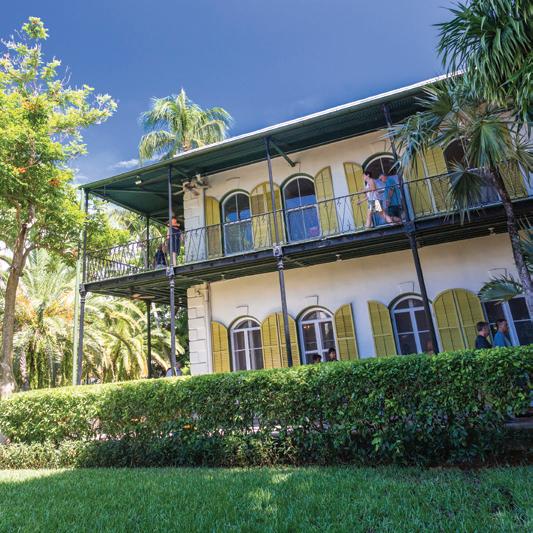
There’s also a really great bookstore, Books & Books. The Key West location, a child of Mitch Kaplan’s famous Coral Gables mother ship, is run by novelist and anti-book-ban campaigner Judy Blume. Books & Books is one part of The Studios of Key West, an art complex of galleries, performances and exhibition spaces that sponsor residencies for painters, poets, musicians and other creative types. The Studios operate as a sort of clubhouse for the local literary community, which has always been considerable in Key West: Robert Frost, Ernest Hemingway, Tennessee Williams, Elizabeth Bishop, Edmund Wilson, Thomas McGuane, James Merrill, Wallace Stevens, Joy Williams and Annie Dillard (this is by no means an exhaustive list) have lived on the island. The late Alison Lurie, a Pulitzer Prize-winning writer who was also a professor at Cornell, came here to escape Ithaca’s bitter winters. Lurie, who was also my landlady in London, once said to me, “I like being here at the bottom of the continent. The regular rules don’t apply.”
Boozy sociability lives in the Conch soul, alongside the chickens and the kapok trees and the cats.
—DIANE ROBERTS
If you fly in, you’re treated to a view of waters in jewel tones ranging from emerald to turquoise to lapis lazuli. But taking the Overseas Highway is even better—113 miles over open ocean punctuated by little islands. As a kid, I found the ride to be simultaneously terrifying and exhilarating. My family drove south almost every year, stopping in Miami to stay with cousins, visit historical sites and marvel at the Atlantic (our nearest saltwater source was the somewhat tamer Gulf of Mexico). My parents, both multigenerational Florida natives, were determined that my brother and I should learn about our state, and so our vacations tended to be relentlessly culture-driven. In Key West, we’d visit Harry Truman’s Little
Below: An aerial view of Key West
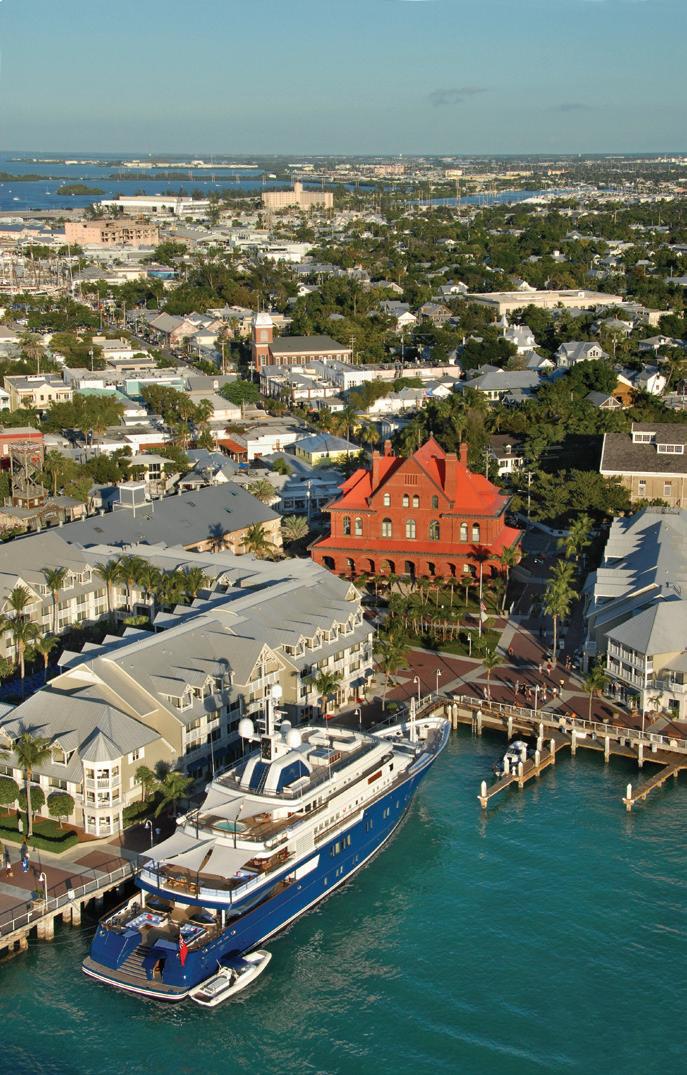
White House, the Audubon House, the Custom House, the Key West Lighthouse and, best of all, the Hemingway house. Tallwindowed and elegant, the abode was built in 1851 by Asa Tift, who made his fortune salvaging shipwrecks. Hemingway himself lived there from 1931 to 1939. My mother was a fan of Hemingway’s writing. I’m a fan of Hemingway’s cats.
Here’s how the story goes: A sea captain gave Hemingway a polydactyl feline named Snow White. This version is hotly debated. Hemingway’s niece, Hilary, claims her uncle did not, in fact, keep cats in Key West; he supposedly kept peacocks at the home while the cats lived in Cuba. In any case, as her Uncle Ernest said, “One cat just leads to another,” and the house and gardens are teeming with dozens of them. Most of the cats are descendants of Snow White, with at least half of them sporting six toes and all of them regarding visitors with disdain. Cats lounge on the cool floors, sun themselves by the pool, stretch out on Hemingway’s bed and drape themselves on his typewriter. The cats mostly keep to their luxurious compound, but one evening, maybe 10 years ago, when I was strolling Whitehead Street, I came upon a mammalpoultry face-off. Four or five cats sat on the curb, glaring at four or five Key West street chickens. It was like the Jets confronting the Sharks in “West Side Story.” After a few tense minutes, the cats retreated. The chickens won.
The chickens usually win. Descended from birds brought over in the 1820s and roosters imported from Cuba for cock fighting, they saunter around the city like they own it, giving serious side-eye to
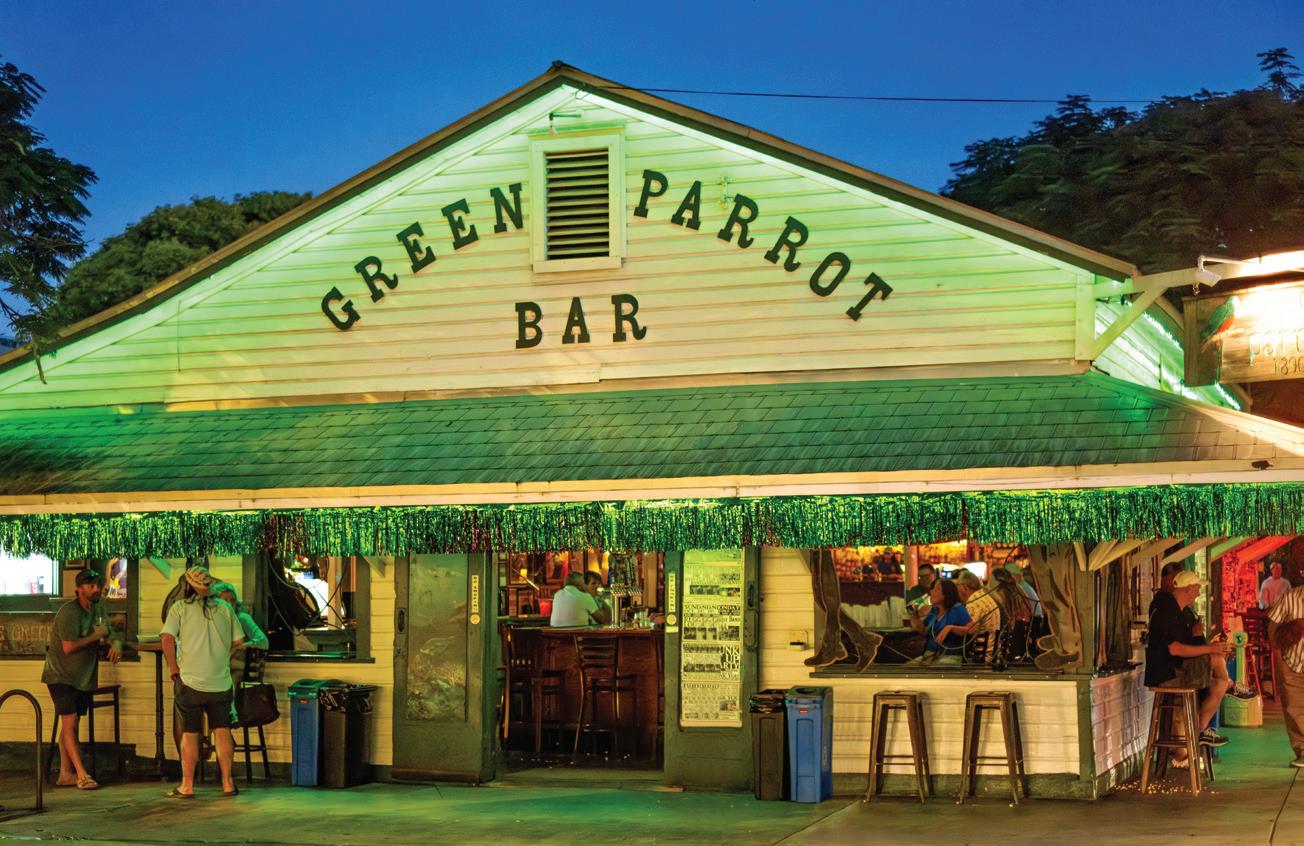
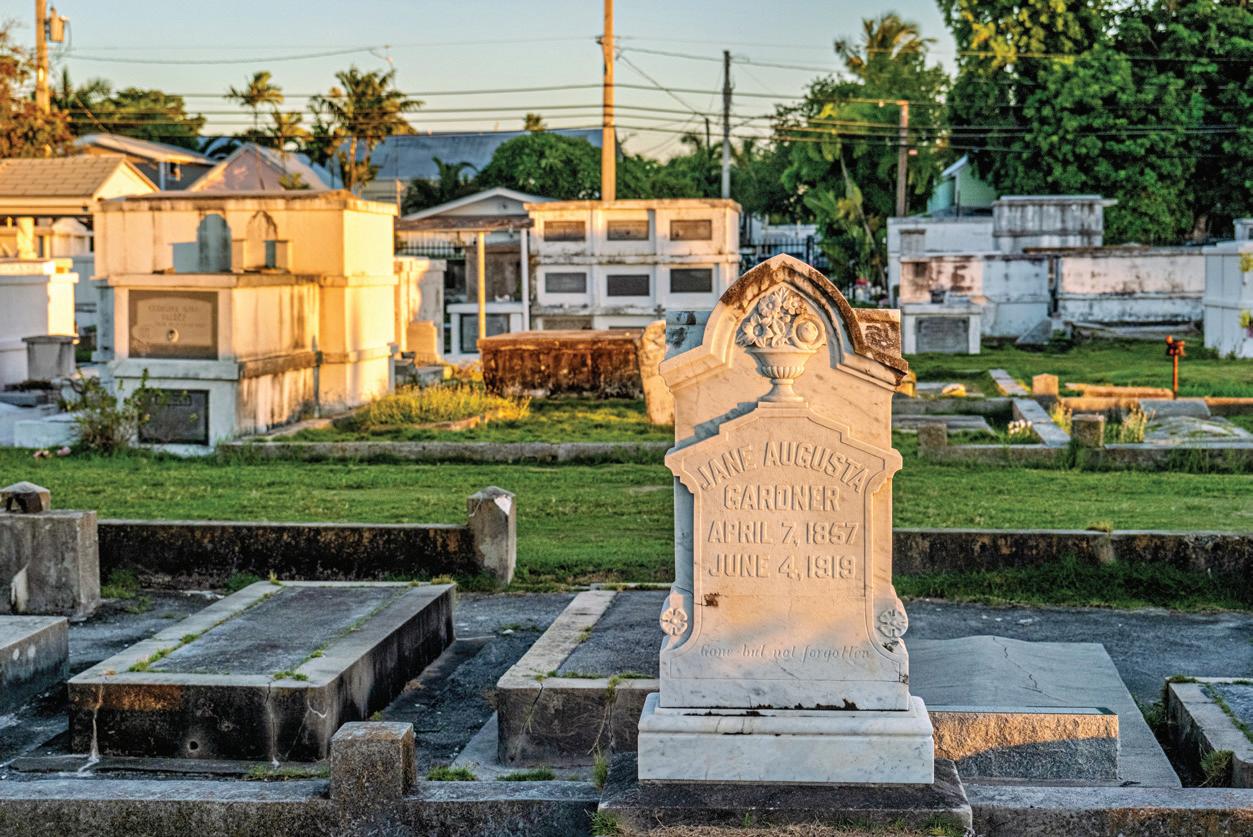
everyone they meet (to be fair, side-eye is all they have). Some people, driven to the edge of madness by the roosters’ late-night crowing and the hens’ uncivilized bathroom habits, would like to see them end up in a stockpot. The chickens are officially local color. I like them.
Giant reptiles are another matter. Call me a specist, but I am not a fan of iguanas. The spiky bastards are relative newcomers— some abandoned pets, some blown over from Mexico or the Lesser Antilles on storm detritus. They can grow up to 6 feet long and like to hang out in Key West’s gloriously strange cemetery. So do I. Established in 1847 after a hurricane washed out the old boneyard near Higgs Beach, the cemetery occupies 20 acres on the highest ground in town—an impressive 16 feet above sea level, and houses (if that’s the right word) up to 100,000 human remains below its green grass and in higgledy-piggledy tombs and mausoleums. Epitaphs are, to put it mildly, unorthodox. The memorial plaque for Steve Province, aka Dead Steve, quotes “The Hitchhiker’s Guide to the Galaxy”: “So Long and Thanks for All the Fish.” The most famous epitaph presides over the remains of B.P. “Pearl” Roberts: “I Told
You I Was Sick.” Many of the headstones, funerary statues and obelisks are cracked and lurching from iguanas digging burrows under them. Showing no respect for the dead whatsoever, the iguanas mate among the graves, leaving their eggs behind. I’m sure there’s a metaphor lurking in there.
A Little Party never killed nobody
Anyway, from the fields of the dead to the fetes of the living, the sun was about to set. After the cats vs. cocks fight, I enjoyed some conch fritters from a convenient food truck. Somehow, they taste best in Key West— close to the source, I suppose. I followed a rooster stalking majestically down Whitehead Street and found myself drawn, as always, to the lights of the Green Parrot. Loud and aggressively un-chic, it’s a dive—an old-school saloon with live music, barkeeps who pour the rum with a heavy hand and a sign that orders “No Snivelling.” The Green Parrot’s presiding spirit is an unsettling, even sinister-looking, portrait of a child named Smirk, painted 50 years ago by former Parrot bartender Saul Paul Stewart. Don’t gaze too long upon Smirk, lest his serial-killer smile haunt your dreams. Instead, order a mojito—maybe two.
Boozy sociability lives in the Conch soul, alongside the chickens and the kapok trees and the cats and the unruly seas, all fueling the island’s cheerfully anarchic spirit. During one of the more frightening 2000s hurricanes (I can’t recall which exactly, but a storm predicted to hit Key West like a speeding Mack Truck), I saw a TV report live from Duval Street. This poor guy stood in his waterproof gear, clutching his microphone against the whipping wind and horizontal rain, shouting about the dangerous conditions. Behind him, you could see a couple of guys in shorts, soaked, carrying to-go cups. Turns out, the hurricane hit on International Talk Like a Pirate Day—one of the many fiesta days on the island’s calendar—and in Key West, nothing, and I mean nothing, interrupts the party.
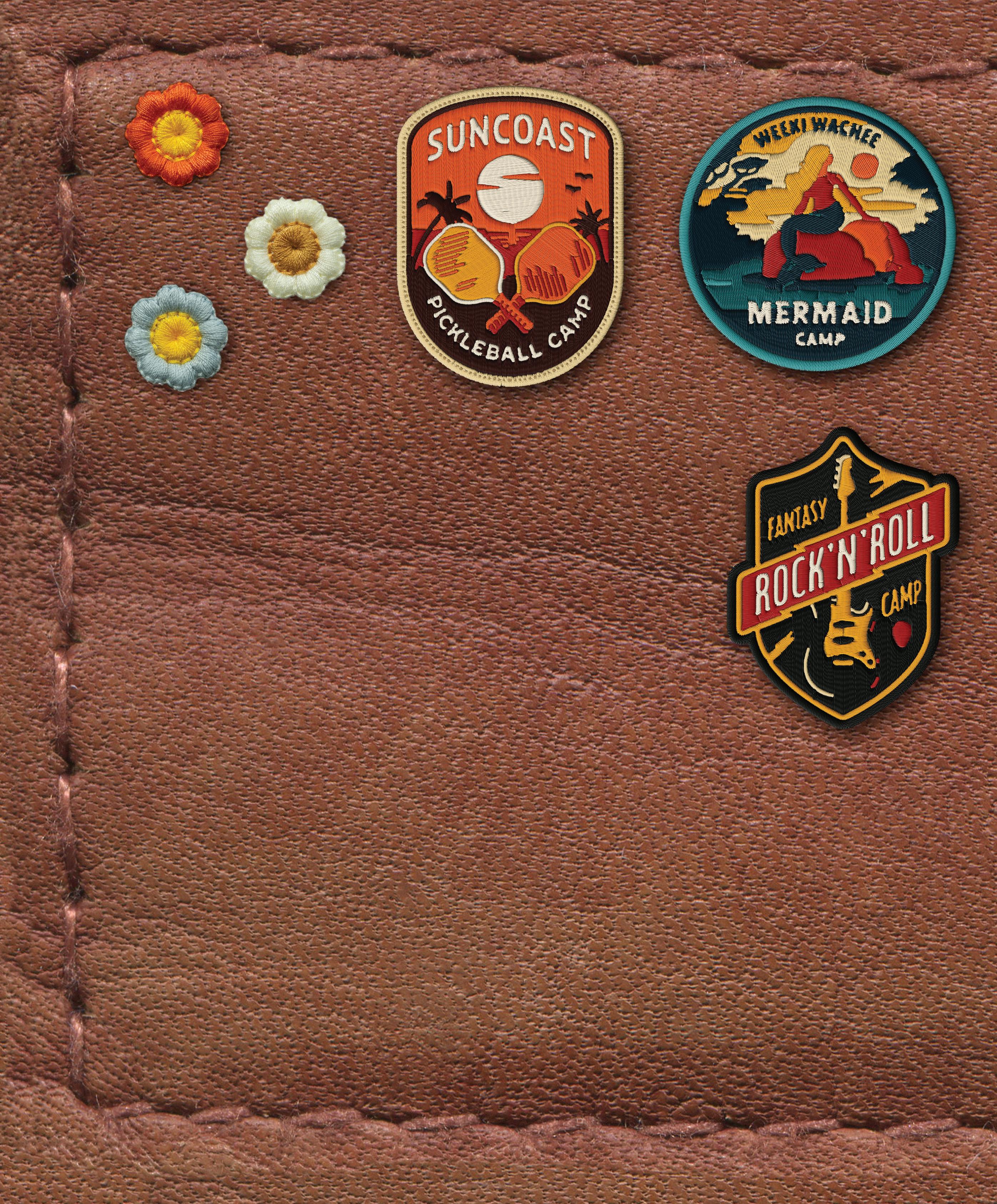
Sign up for these grown-up getaways across the state.
By EMILEE GARBER /// Illustration by KIKO RODRÍGUEZ
This was a bucket list thing.
—JOE BILLETDEAUX
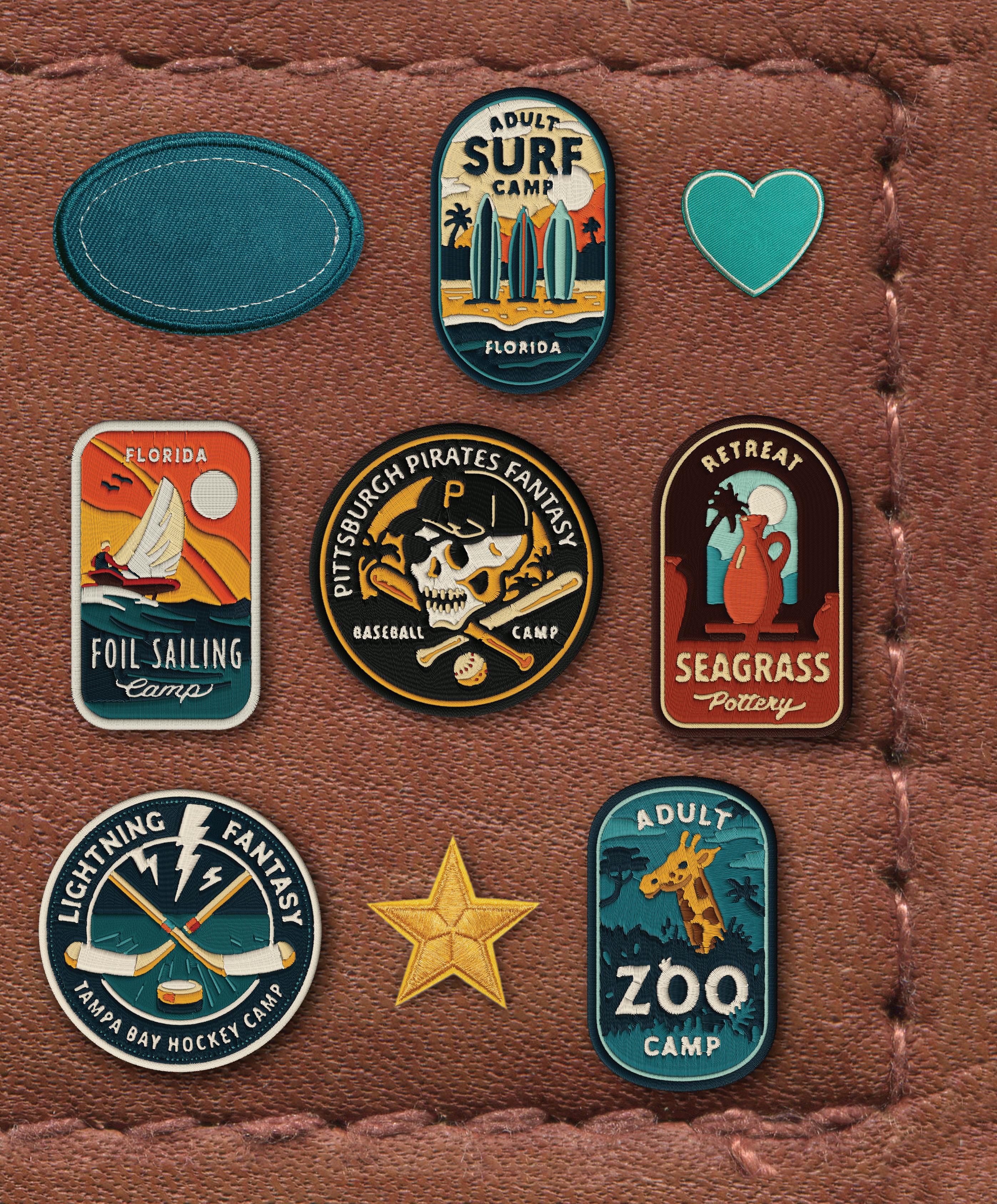
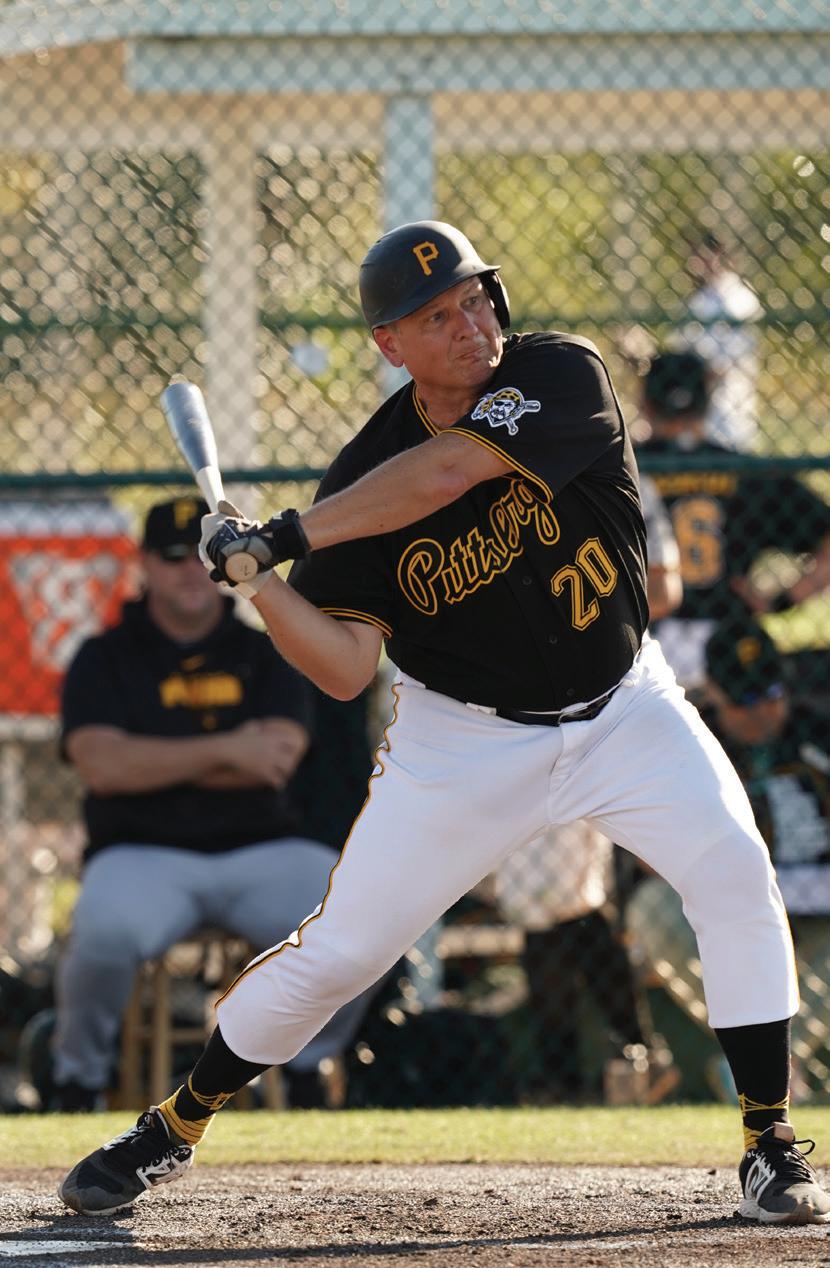
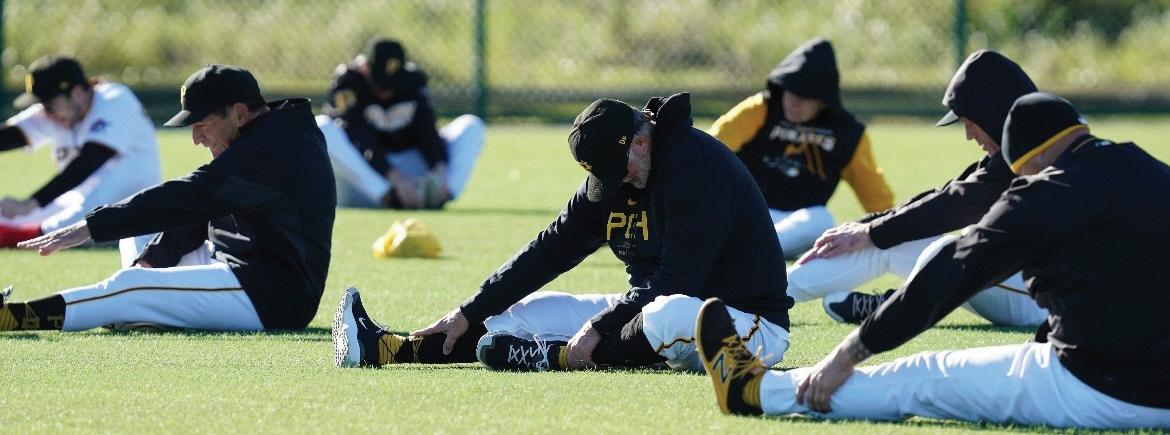
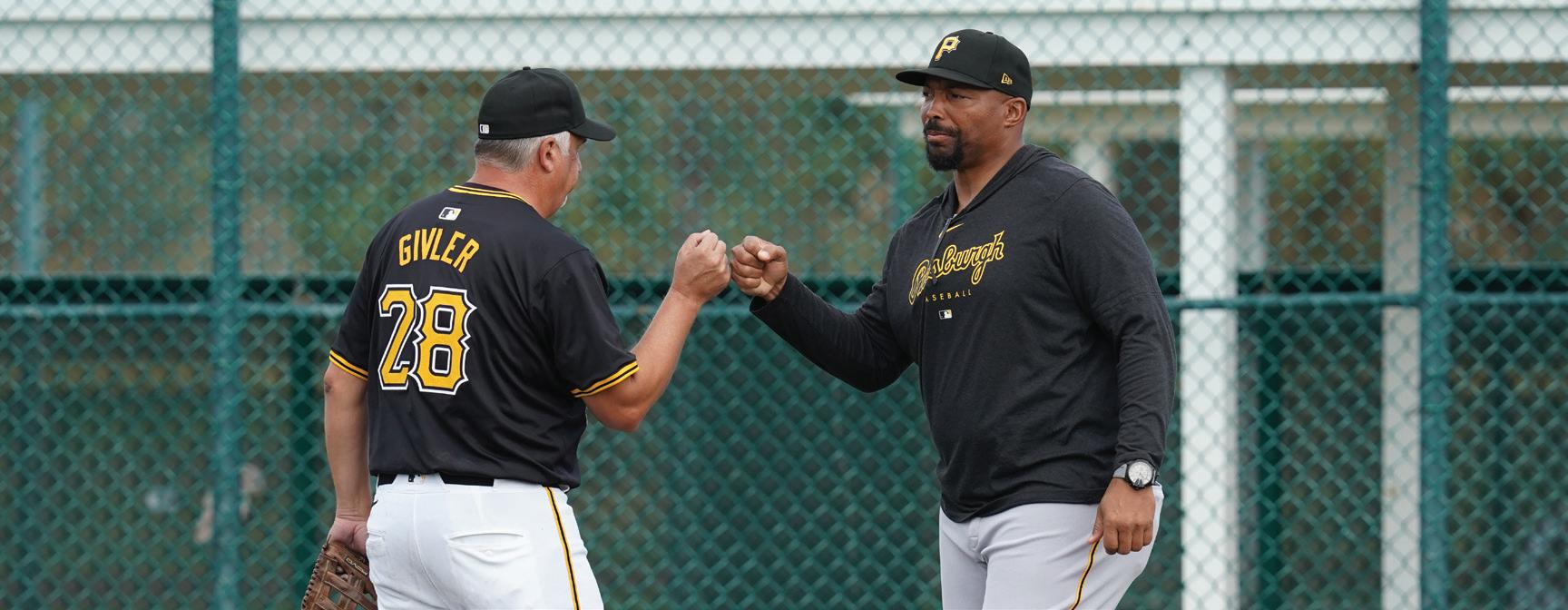
Frank Stephenson finally made it to the big leagues—at age 74. As Stephenson stepped up to the plate in Bradenton, staring down a 60 mph pitch from a former Pittsburgh Pirate, he found himself in a pinch-me moment. Stephenson, along with 95 other guys ages 30 and up, had made it to the final day of the Pirates Fantasy Camp, which included a matchup against the former pros who had coached them all week.
“It’s a dream come true,” Stephenson says of his week-long experience swinging for the fences. “You’re living out that fantasy that you might have had since you were a little boy.”
Chasing dreams and learning new skills is an endeavor more adults are seeking, whether it’s suiting up with MLB icons, taking the stage with rock ‘n’ roll idols, slapping shots past Stanley Cup-winning goaltenders or even swimming with mermaids in a freshwater spring. Somewhere between nostalgia and new adventure lies the grown-up version of summer camp. To reignite that campfire spirit, here are nine immersive experiences across the state where anything can happen.
When campers walk through the doors of the Pittsburgh Pirates’ spring training complex, they’re treated like the pros— right down to the personalized locker.
“Your first time there, you’re just in awe,” Stephenson says. “When you get to your locker, your name is on (it). Your jersey, your clothes—everything is hanging in the locker for you to use.”
For eight days, campers have full reign over the Pirates’ training campus: sleeping in the dorms, eating meals in the chef-led cafeteria and using the clubhouse, locker rooms and fields. Other perks include a custom baseball card highlighting their stats for the week and an authentic Pirates jersey with their name on the back.

Bradenton 8 days / $4,500
Lodging included December
“We’re going to treat you like a bigleague player,” explains Joe Billetdeaux, a Pirates camp coordinator for more than 20 years. “You’re going to experience what big leaguers experience on a daily basis.”
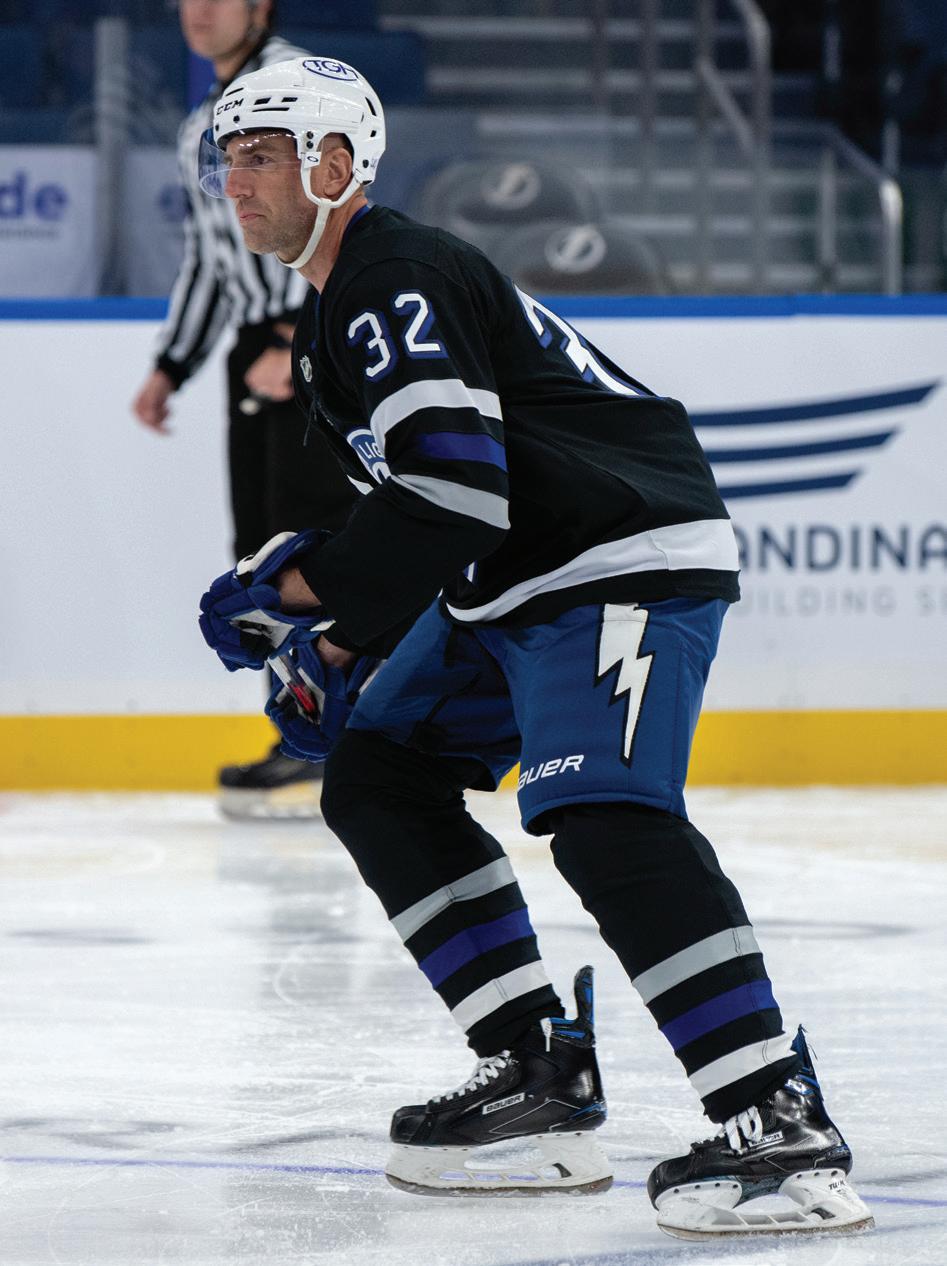
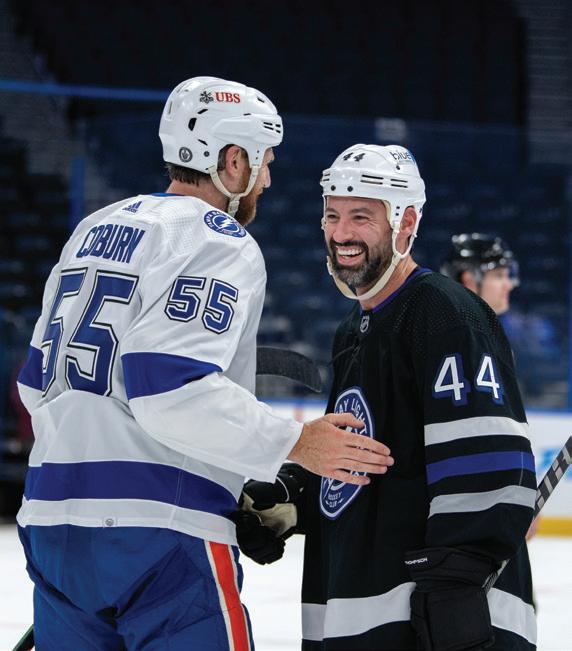
SThe 96 campers are put into eight teams, each coached by a former Pirates player. Past coaches include John Candelaria, Doug Drabek and Steve Blass, to name a few. They practice each morning, perfect their swing in the team’s batting cages and play two games in the afternoon. At the end of the week, the four teams with the best record face off in a camp championship. Attendees can also take advantage of Major League physical trainers, who offer massages, ice baths and assistance with injuries. Off the field, the players and pros get to cut up around town, going to dinners and hitting the high notes at karaoke.
“They were so approachable and down-to-earth,” Stephenson says of the former MLB players. “They would sit and eat with you, talk about your family and talk about their family.”
With campers ranging in age from 30 to 80, not everyone arrives in peak athletic form. Pirates Fantasy Camp offers physical assists, such as runners for guests who need a little help rounding the bases. No matter what age or skill level, campers are completely immersed in the major league life. What they all share is enthusiasm for baseball, and by week’s end, a few sore muscles and lifelong memories.
“So many guys have come into camp saying this was a bucket list thing,” Billetdeaux says. “The next thing you know, they’re coming back again and again.” mlb.com
Opposite page, clockwise: A camper takes a swing at the Pittsburgh Pirates Fantasy Camp; Frank Stephenson (center) and other campers at the Pirates baseball camp warm up before practice; campers enjoy coaching by and playing against former pros like Kevin Young (right).
This page, clockwise: Retired NHL players like Mathieu Garon coach attendees of the Tampa Bay Lightning Fantasy Camp; a camper with Lightning general manager Julien BriseBois (right); campers get to face-off with Stanley Cup winners.
kate laps and light the lamp—aka score a goal—alongside Stanley Cup winners at this three-day fantasy getaway in Tampa Bay. Campers are fully immersed in the life of a professional hockey player for the NHL, gaining access to the Tampa Bay Lightning’s stateof-the-art training facilities, playing games downtown at the Benchmark International Arena and using a locker room decked out with nameplates, official training gear and personalized jerseys.

Tampa 3 days / $2,500 Lodging available for an additional cost September
“You get the experience (of) NHL players,” says Mathieu Garon, assistant community hockey director for the Lightning, retired NHL goaltender, Stanley Cup winner and one of the camp’s pros. “We’re trying as close as we can to make it an NHL experience, from taking care of their equipment to giving them T-shirts, shorts and hoodies.” Attendees’ ages have ranged from 21 to 72, which fosters a generational appreciation for the sport and a camaraderie on the ice. Garon says the program offers a lot of value when it comes to improving hockey skills, but it’s more about making memories.
“André Roy, he’s just a clown,” Garon says with a laugh about the former Lightning enforcer. “He’s gonna start acting like he can’t skate on the ice. He’s gonna start dancing on the ice or do all this stuff to make people laugh. You watch him for a period, and then you get a lot of stories.”
At the most recent camp this fall, the Lightning alumni on the ice included Olympic medalists Fredrik Modin and Ryan Malone, along with Hockey Hall of Fame inductee Dave Andreychuk. And the best part about camp? All proceeds benefit the Tampa Bay Lightning Alumni Foundation and the Lightning Foundation, which give back to the local community through scholarships and neighborhood programs. lightninghockeydevelopment.com
The house lights dim, and a hush falls over the crowd. Bandmates take a breath, almost in near unison, before a spotlight flashes on and the lead guitarist hits his first chord, transforming an unassuming amateur band into a rock powerhouse. At Rock ‘n’ Roll Fantasy Camp, adult musicians leave their day jobs behind for four days of living out their dream of being in a rock ‘n’ roll band—jamming in the studio, writing songs, perfecting their sets and performing on stage to a live audience. The hook? They do it all with some of rock’s biggest stars, like members from The Police, Heart, Green Day and Ozzy Osbourne’s band, among others.
“Joe Perry said it best,” says David Fishof, music producer, creator of Ringo Starr and His All-Starr Band and founder of Rock ‘n’ Roll Fantasy Camp. “He says to a guy, ‘What do you do for a living?’ The guy says, ‘I’m a lawyer.
Miami
4 days / $5,999
Lodging included Year-round
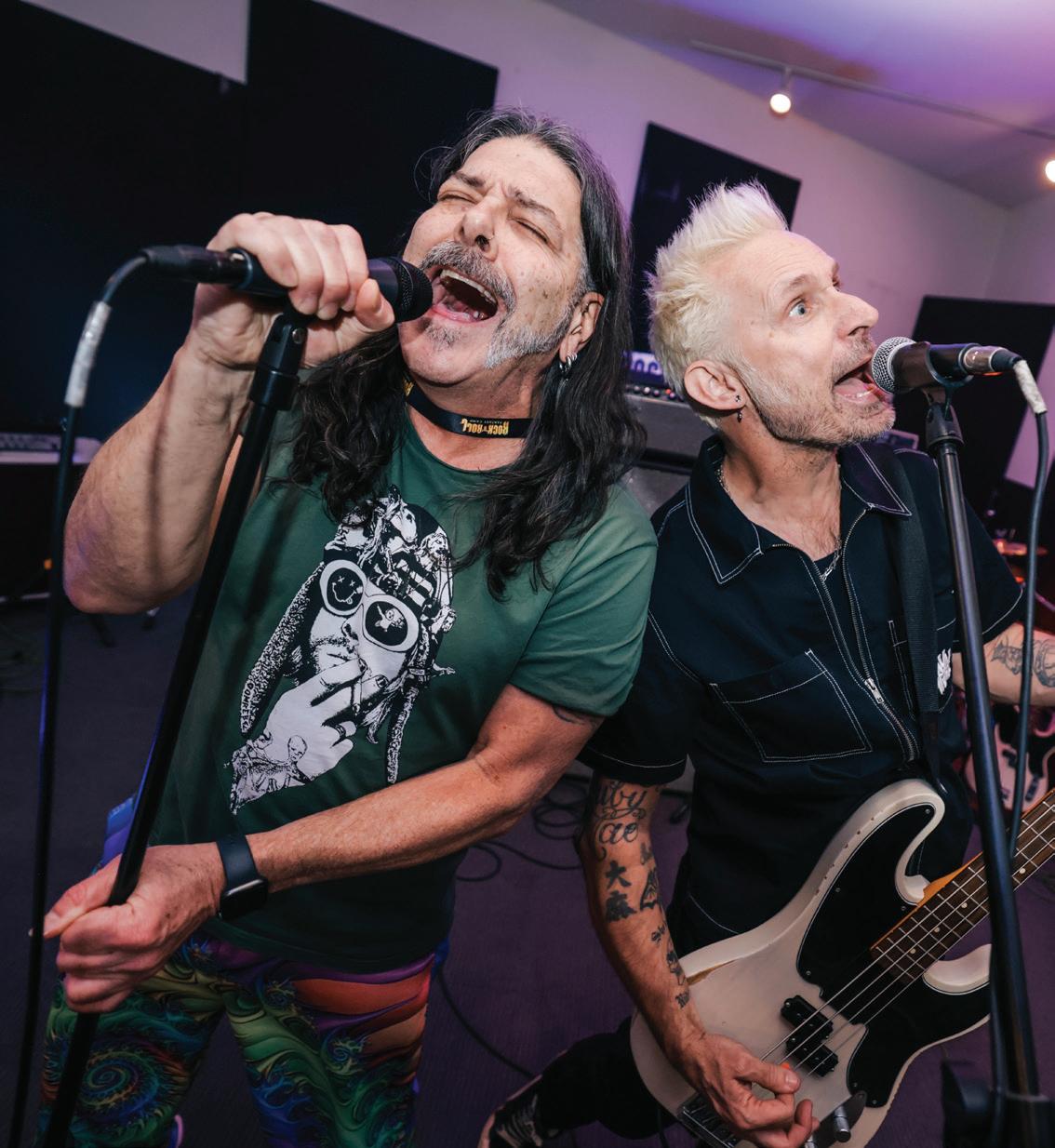
On the weekends, I play guitar in my band.’ Joe Perry says, ‘You’re full of shit. You’re a guitarist first. You do the legal bullshit to pay for your guitars.’”
There’s no audition process, but before camp begins, a director will pair attendees with other musicians of similar skill levels to form a band for the week. For the first time in early 2026, the camp will offer an option for guests to join an all-female band. A set list is sent ahead of time, and band members practice songs before the start of camp so they’re ready to play in studios with rock ‘n’ roll legends. After days of rehearsal, master classes and Q&As, the groups have the chance to perform in front of live audiences in Miami. Camp takes place multiple times a year and across the nation, with several sessions in the Magic City.
“It’s for many people who’ve been in high school bands and college bands and then they had to get a real job,” Fishof explains. “But deep in their minds, they want to be musicians.” rockcamp.com

Ever wondered what happens at a zoo once night falls? Do bat chirps echo through the park? Do sloths stir, searching for fruit? Do aardvarks— an animal that is normally hidden in the day—dig their burrows and stretch their limbs on a moonlit stroll? Find out at one of Jacksonville Zoo and Botanical Gardens’ four adult zoo camps, taking place throughout the year. Housing hundreds of animals and more than 1,000 species of plants, Jacksonville Zoo is known for habitats like Land of the Tiger, a trail system where Malayan tigers prowl, and a Primate Forest with a 40-foot kapok tree and bonobos, gorillas, lemurs and more species. On select days, go behind the scenes in these different wildlife enclosures with zoologists and other professionals and learn how these animals communicate with one another, their preferences when it comes to food and their day-to-day behaviors.
“This time, we’re going to do an evening nocturnal version of it and really talk about what happens at the zoo when the gates close and nighttime falls,” says Sharon Spencer, an adult education specialist at the Jacksonville Zoo. “Where are the animals? Do they behave differently? If you already did Zoo Camp and want to come back, it’ll be something new for you to engage in.”
Each camp looks a little different, with experiences ranging from a visit to the Manatee Critical Care center to expert talks at the award-winning habitat Range of the Jaguar and making enrichment toys or Betsy, the zoo’s North American black bear. There are typically 24 coveted spots for each session, and Jacksonville is one of few zoos across the state that offers programming for adults.
Jacksonville 1 day / $150 Lodging not included Year-round
“We spend a lot of time behind the scenes,” Spencer explains about Betsy’s habitat and other experiences.“That’s definitely a place that folks don’t have the opportunity to go to on a regular basis.”
jacksonvillezoo.org
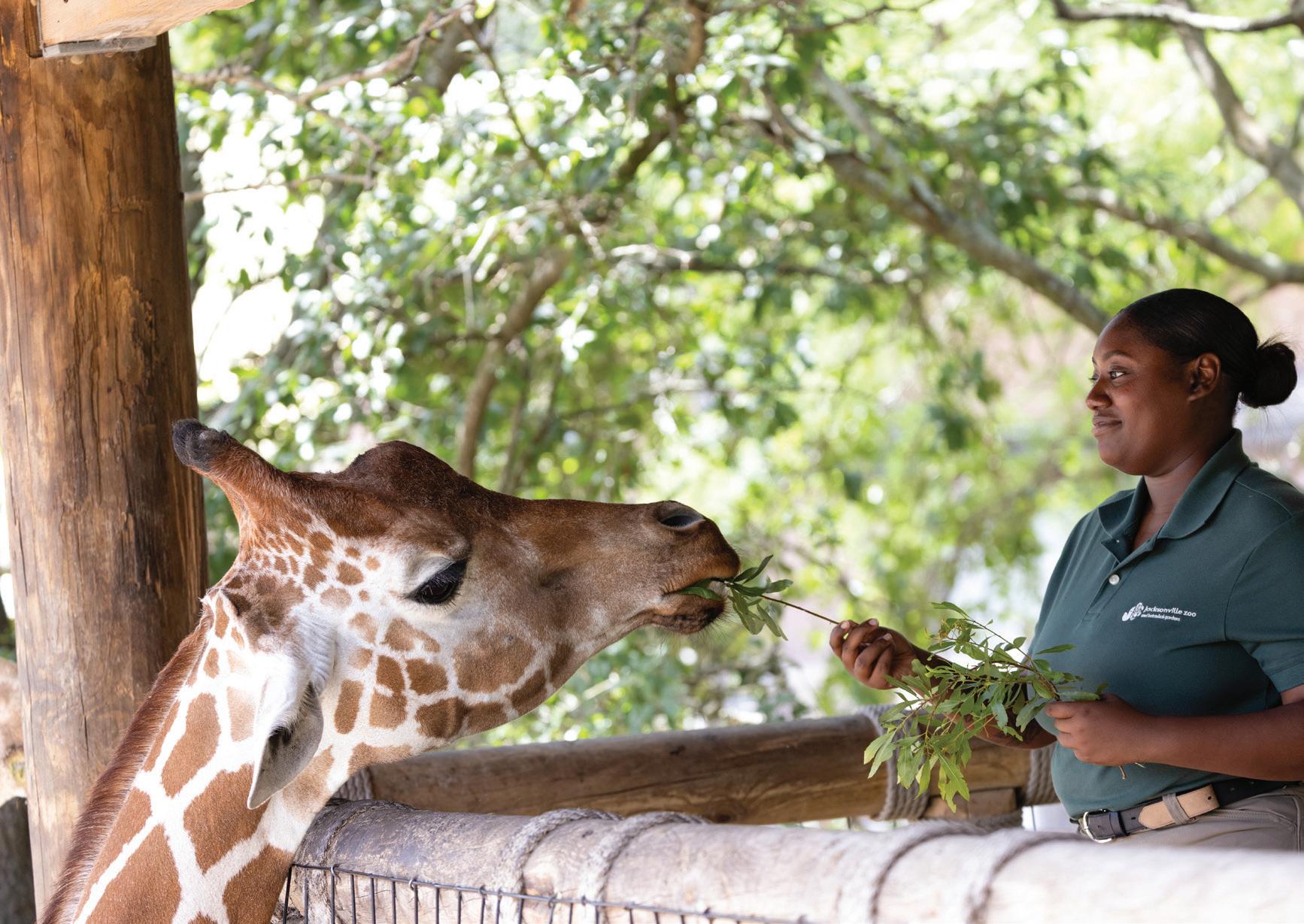
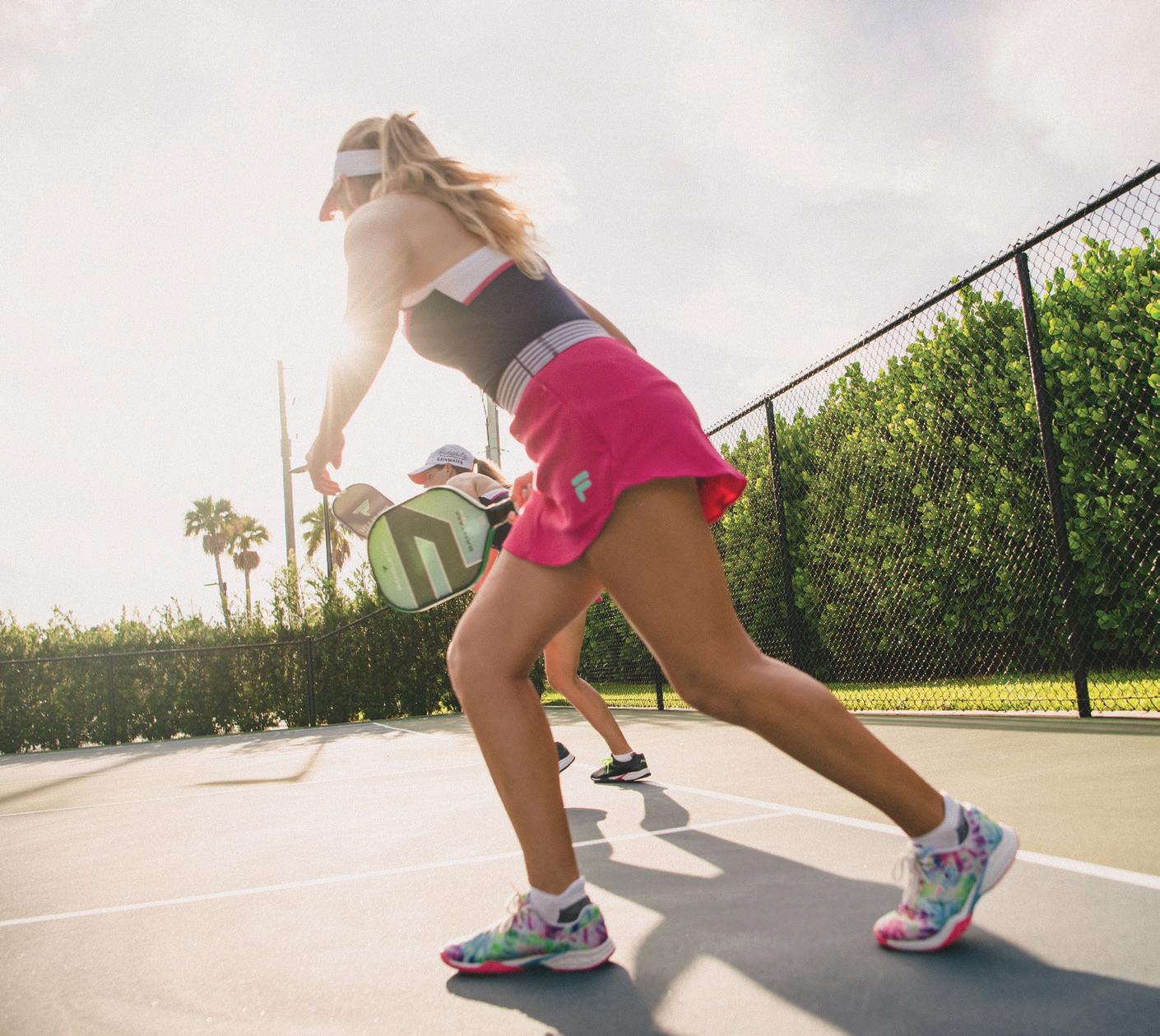
For those who like their camps with a side of competition, this weeklong pickleball getaway serves it up just right. After a 36-year career in parks and recreation for Hillsborough County, Russell Elefterion started Suncoast Pickleball Association in 2015 in Sarasota, planning and hosting tournaments across the state. The popularity of the tournaments showed Elefterion that there was a growing demand for high-level instruction, competition and community. And in 2016, his first all-inclusive pickleball boot camp, where players train with professional pickleball players and hall of famers, was born.
“They’re here to improve their pickleball,” Elefterion says about his campers. “The added bonus that distinguishes us from any other camp is that the pros are hanging out, dancing with them, playing cards. They’re accessible the whole (duration of the) camp.”
Participants have roughly 12 training sessions across six days, each lasting two hours. When they’re not on the court practicing their serves and dinks with pros like Tyson McGuffin, John Sperling, Gigi LeMaster and Mindy Yoder, the 48 attendees spend their nights line dancing to live music, playing
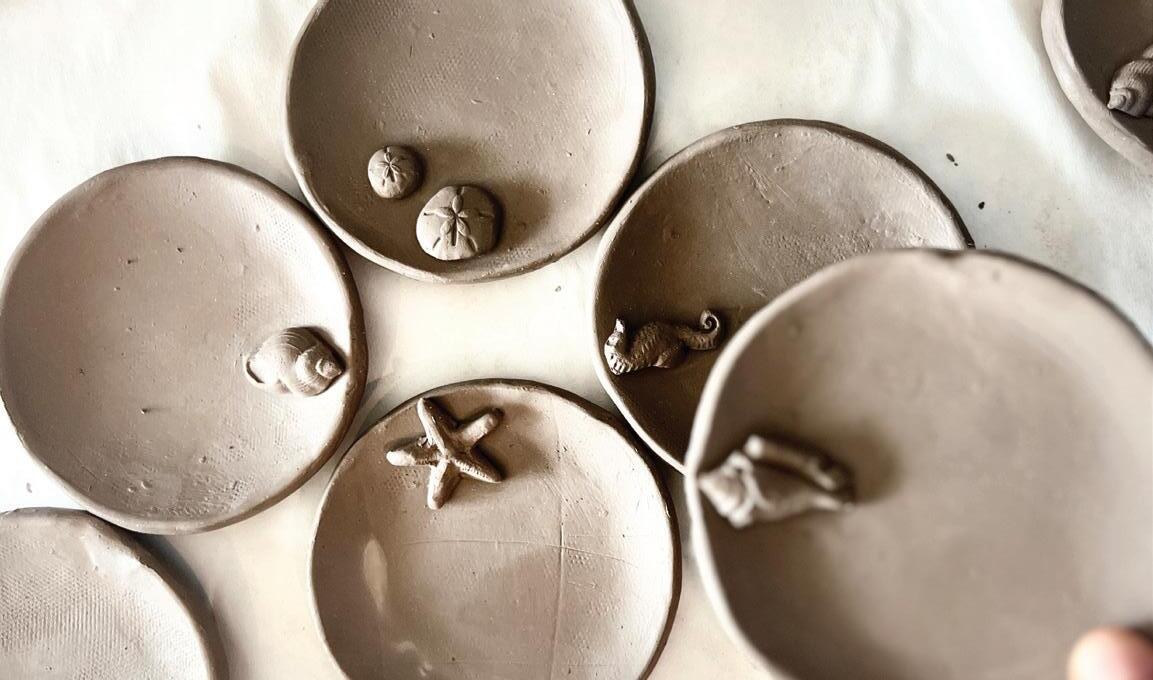
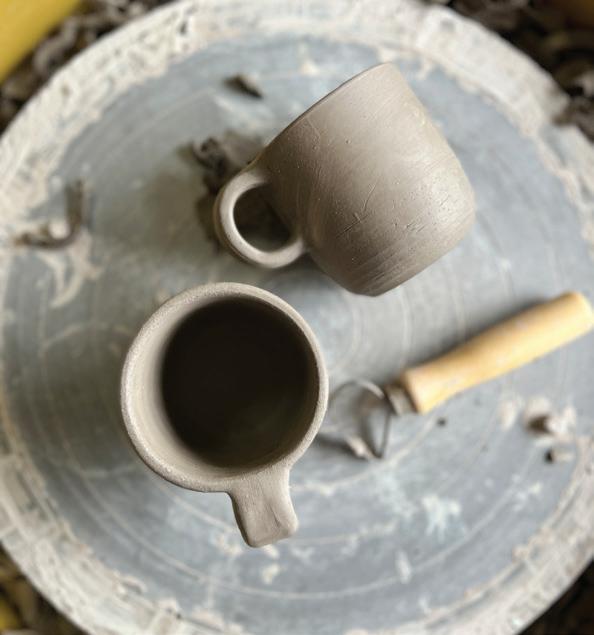
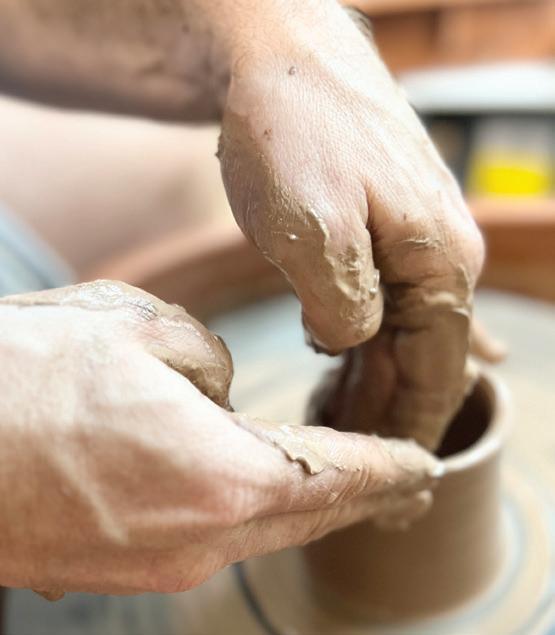
Sarasota
6 days / $1,099–$1,499 Lodging varies by package
Year-round
Texas Hold’em or challenging each other to trivia. Because of Elefterion’s background in recreation, he’s planned an action-packed pickleball getaway—a camp that’s the first of its kind.
The experience ends in a friendly yet competitive tournament on Friday, where a camp champion will be crowned. After six days, players walk away with better court skills, hardearned trophies, guaranteed pickleball pals and maybe a doubles partner for life. In 2023, a couple met at one of Elefterion’s camps and later got married on the courts. Suncoast offers four all-inclusive camps throughout the year, with two locations in Florida (Sarasota and Punta Gorda) and two in North Carolina (Montreat and Lake Junaluska). suncoastpickleball.com
page from left: Suncoast’s weeklong camp helps players fine-tune their game; fire up your creative spirit at Seagrass Pottery’s Florida or international retreats.
Opposite page: Try foil sailing for the first time in the waters off Merritt Island.
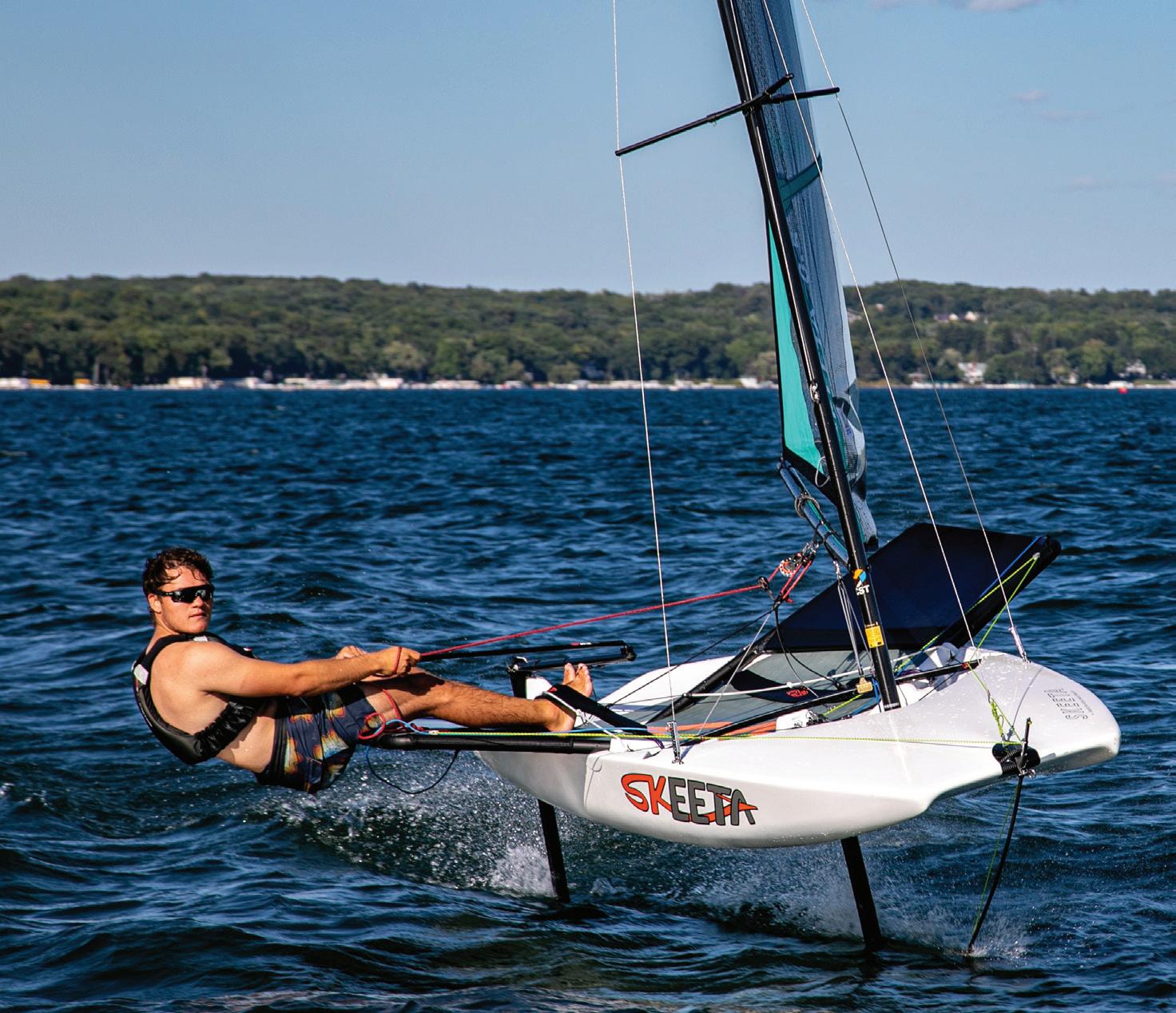
For a creative reset and beach getaway rolled into one beautiful mess, spend five days throwing clay on the wheel of one of Seagrass Pottery’s all-inclusive retreats in Indialantic, a charming town on Florida’s east coast.
“What’s great about pottery is that it’s done in a community,” says Kristina Latraverse, owner of Seagrass Pottery. “It opens this opportunity to learn from each other and also be inspired by each other’s work.”
Situated in a beach cottage, the studio has nine wheels, a slab roller, a glaze room and plenty of working tables for hand-building projects. In addition to three hours of formal instruction, several hours of open studio time and additional time to glaze creations, guests can partake in beach yoga, art journaling, sunset cruises and nature walks throughout the week. There’s also an international version of the retreat, which whisks guests away to a private island in Panama where they can harvest their own clay.
Indialantic
5 days / $3,110 Lodging included October & February
Latraverse takes pride in how functional the experience is. Not only a creative escape, it’s also an opportunity to meet likeminded individuals and make something practical, like plates, mugs, pitchers—anything you can come up with. And, most importantly, it’s about learning something new.
“I want people to leave feeling like they can create anything,” Latraverse says. “I think sometimes people feel intimidated to start, and I hope that this gives them the courage to start something new.” seagrasspottery.com
Merritt Island 2 days / $1,000 Lodging not included Year-round
urns out the Space Coast isn’t just for astronauts—sailors can catch air too at Melges Watersports Center’s flight school. This two-day experience teaches students how to foil sail—a sport where sailors coast above the water. “Adult flight school is for people that have some sailing experience but want to get into the world of foiling, which is really new and an up-and-coming discipline in sailing,” says Eddie Cox, the vice president at Melges Performance Sailboats. Foiling is an aquatic sport where a board or a dinghy lifts just above the water with hydrofoils, a wing system connected to the bottom of the hull. At this school, participants learn the sport on the Skeeta, a single-sail dinghy with a foil that harnesses wind rather than electricity to power the vessel.
Days are split between classroom lessons, in which students learn how to fly and build technique, and hours of in-water practice with top-level U.S. foil sailors. After each session, campers review film footage back on shore.
“People are looking for something more than a vacation. Something where there’s a learning experience and (desire) to try something you haven’t done before,” Latraverse says.
Cox says the first flight on the Skeeta is what gets sailors hooked. “Once the boat lifts out of the water, there’s no noise, so you have total silence (after) you lift off for the first time,” Cox says. “The feeling—the thrill of it—we think it’s pretty unmatched.”melgeswatersports.com
Jacksonville Beach
4 days / $200
7–8:30 a.m.
Add private lessons for $80 per hour
Lodging not included Summer
s the sun rises over Jacksonville Beach, Evan Thompson kneels in the sand next to a small whiteboard, explaining the day’s surf conditions—1 to 2 feet at 8-second intervals. They’re perfect for the dozen prospective surfers sitting in a circle around him. A few minutes later, his brother Tristan demonstrates how to pop up on a surfboard to the campers standing on the beach with an array of blue, yellow and green 9-foot foam boards. Tristan starts by laying down on the board with both hands positioned next to his chest. “One,” he says, pushing his chest up. “Two.” He pulls his right knee forward and plants his foot on the back of the board. “Three.” He threads his left leg up to the front of the board, where he squats down with both arms outstretched. On dry land, it looks as easy as one, two, three. But out in the Atlantic, step three is quite difficult to master. Most campers spend the first morning stuck at step two, riding waves in a hunched over position, never letting their hands leave the deck of the board. Throughout the four-day camp, the Thompson brothers and their crew of coaches teach the students the step-by-step basics of surfing, and by Thursday, even the most off-balance newbies find themselves up and riding to shore. After 10 years of running summer camps for kids ages 7 to 16 years old, Evan opened early-morning sessions for adults. He kept receiving inquiries and requests from students’ parents and other locals who wanted to learn.
“There’s a lot of things as an adult you could be doing, whether it’s shuffling kids around or going to a morning workout,” says Evan, the school’s founder and a professional surfer. “There are a million things you can do, but you chose surfing. It shows you’re committed.”
Thompson Surf School’s adult camp is for beginners who want to learn how to surf and build a strong foundation for the sport. Evan and his team give technical instruction on the proper way to paddle out, how to pop up on the board and the flow of riding the wave. But the camp also teaches students the nuances of surfing that outsiders don’t see: how to read a surf report, the difference between wind swell and ground swell and how the tide affects it all. “That’s probably the coolest part—Just giving people new insight to surfing and how it all works,” says Evan, a four-time USA Surf Team member.
Evan and the other coaches reinforce these lessons out in the water while helping students identify the right wave to take and giving them a little push to help them catch momentum before standing up and riding down the line. Some campers come back week after week, making it a new summer routine before work. “I want them to take away confidence in themselves,” Evan says about his adult students. “Confidence that they could go surfing on their own based on the experience they gained and knowledge they learned.” thompsonsurfschool.com
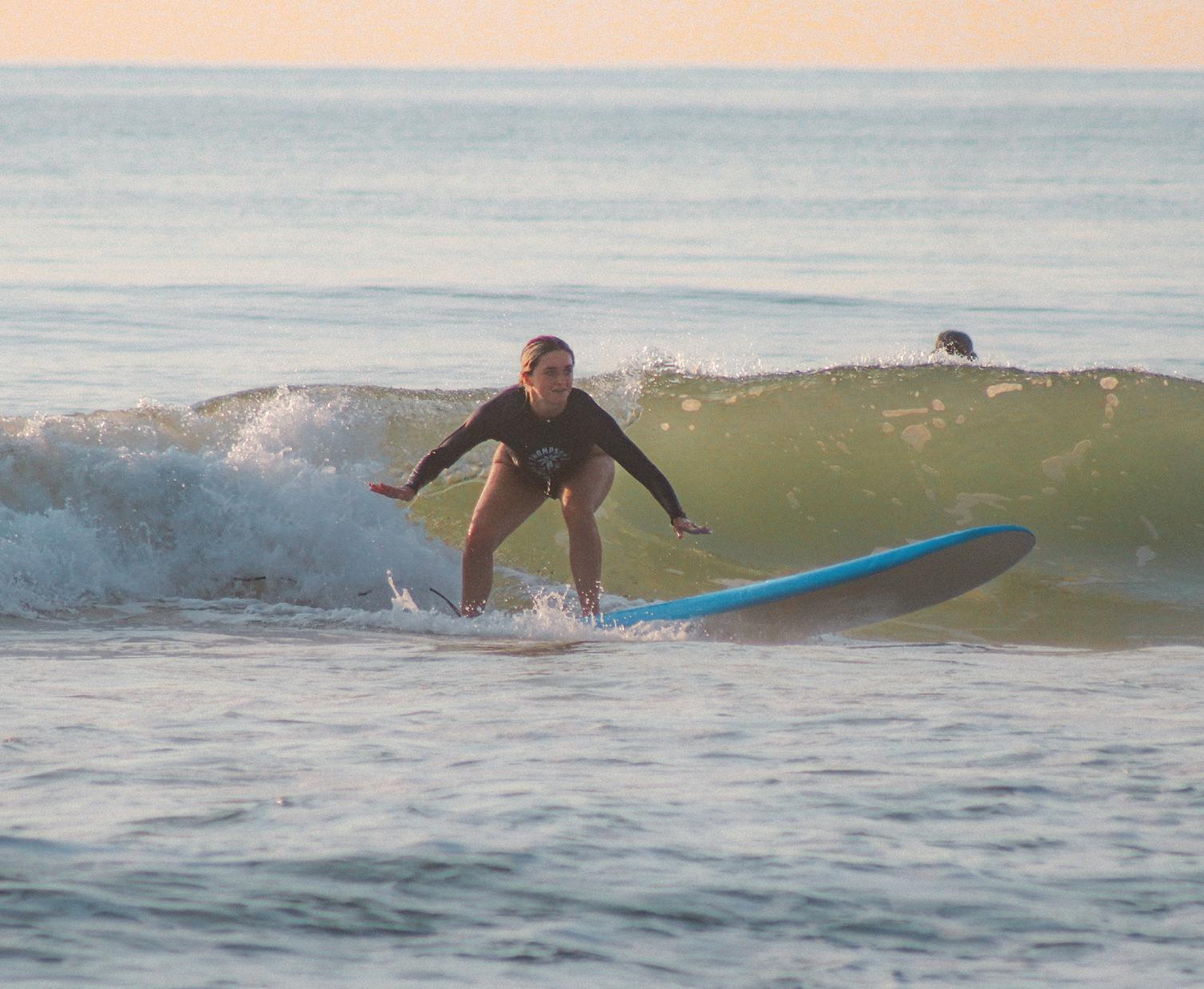
Many people who have seen the movies
“Splash” or “Aquamarine” at some point long to sport a mermaid tail (and perhaps long, blond, crimped hair) like the films’ stars. At Weeki Wachee Springs State Park, you can tap into your inner mermaid or merman and gain insight from professional stars who made the park famous—and, if you’re lucky, hit the spring at just the right time to swim alongside manatees. Slip into a shimmering tail and spin through synchronized underwater choreo at this two-day camp in Hernando County, where the practical and the fantastical merge, and guests can become certified mermaids.
Spring Hill
“There was astronaut camp, but there wasn’t anything for young girls who wanted to be mermaids when they grew up,” says John Anathason, a longtime Weeki Wachee employee and communications specialist at Florida’s Adventure Coast. “This camp allows them to fulfill that childhood dream.”
Weeki Wachee State Park, located just north of Tampa, opened in
Lodging not included 2 days / $450 Year-round
1947 as a roadside attraction known for its sparkling first-magnitude spring, crystal-clear river and a troupe of aqua-batic mermaids. Equal parts natural beauty and supernatural mystique, Weeki Wachee and its sirens became famous across the nation, drawing stars like Elvis Presley to its 400-seat theater cut into limestone and situated 16 feet under the water’s surface. Today, the mermaids still perform a minimum of two shows a day, executing aquatic tricks and even eating underwater.
At Sirens of the Deep, men and women 18 years and older can live like a mermaid. For two days, campers take underwater ballet classes, don colorful tails, pose for a glamor photography session and learn how to be one of the park’s performers from former Weeki Wachee mermaids.
“They always say, ‘Once a mermaid, always a mermaid,’” Anathason says about the iconic group of professional mermaids and campers. “They’re friends for life. We have a lot of repeat women that come and have reunions. They make this annual pilgrimage to see each other.” friendsofweekiwachee.com
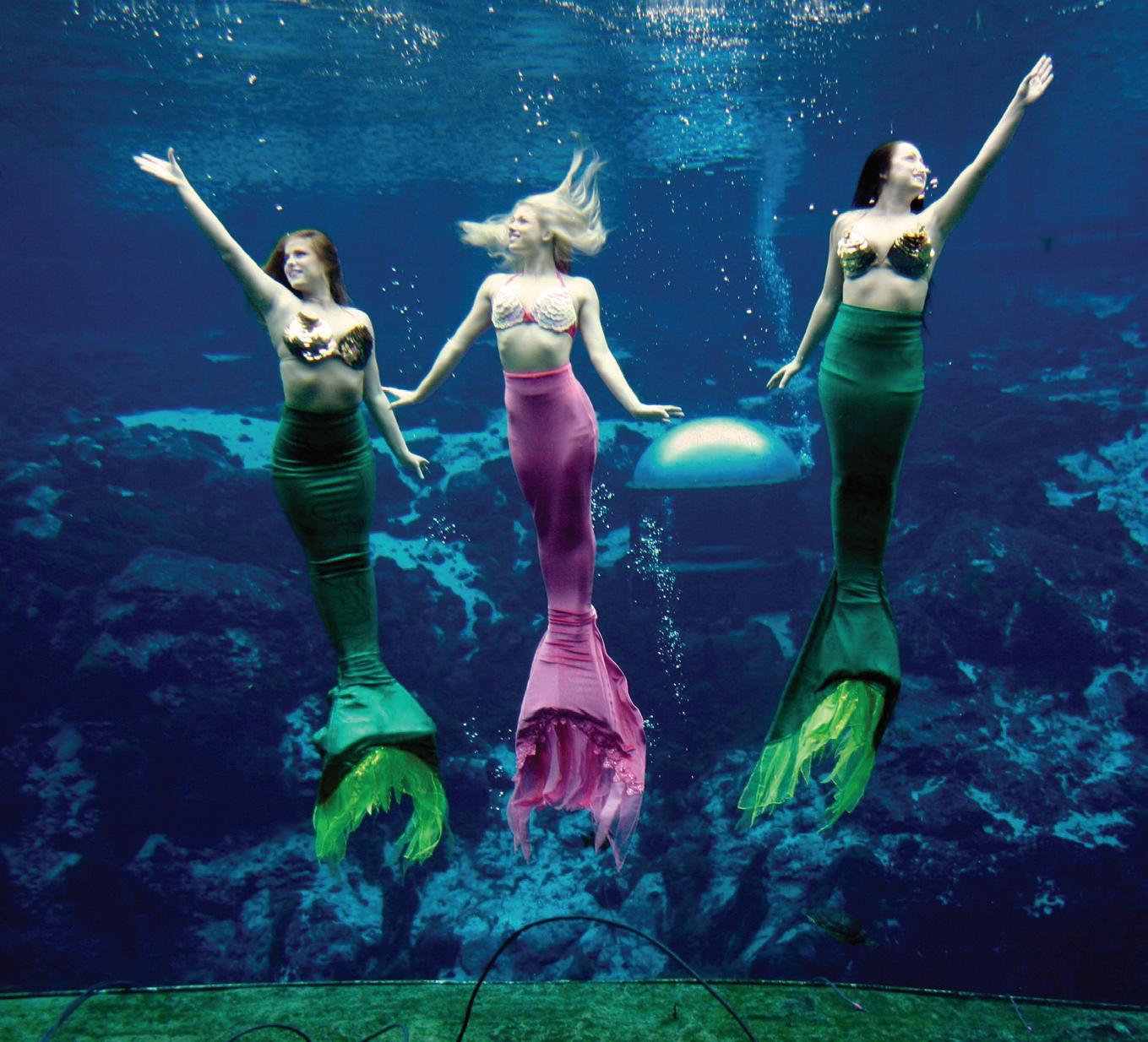
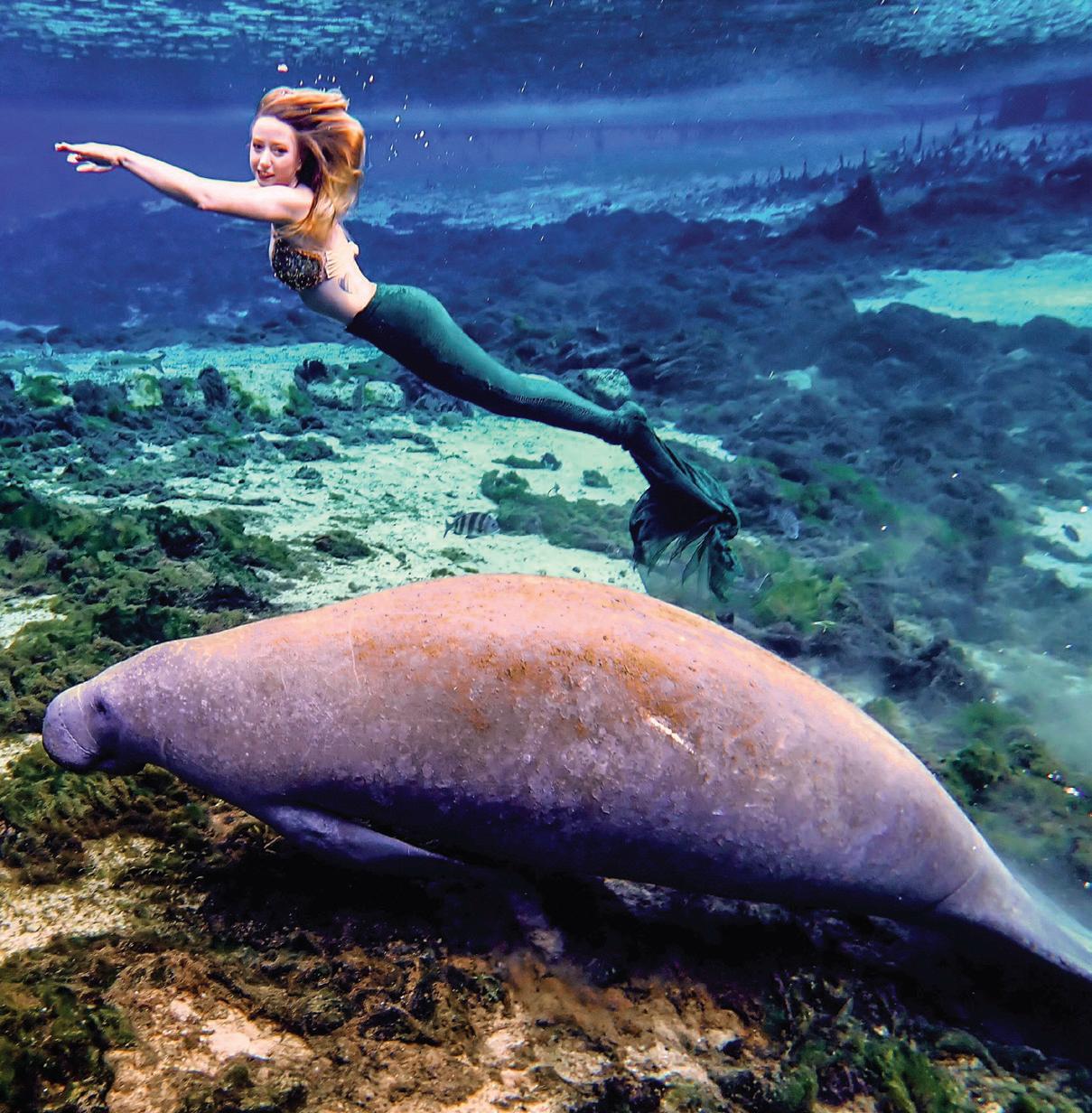
A part of Everglades culture is disappearing, leaving behind the echoes of Old Florida.
By NICK DAUK /// Photography by JOSH LETCHWORTH
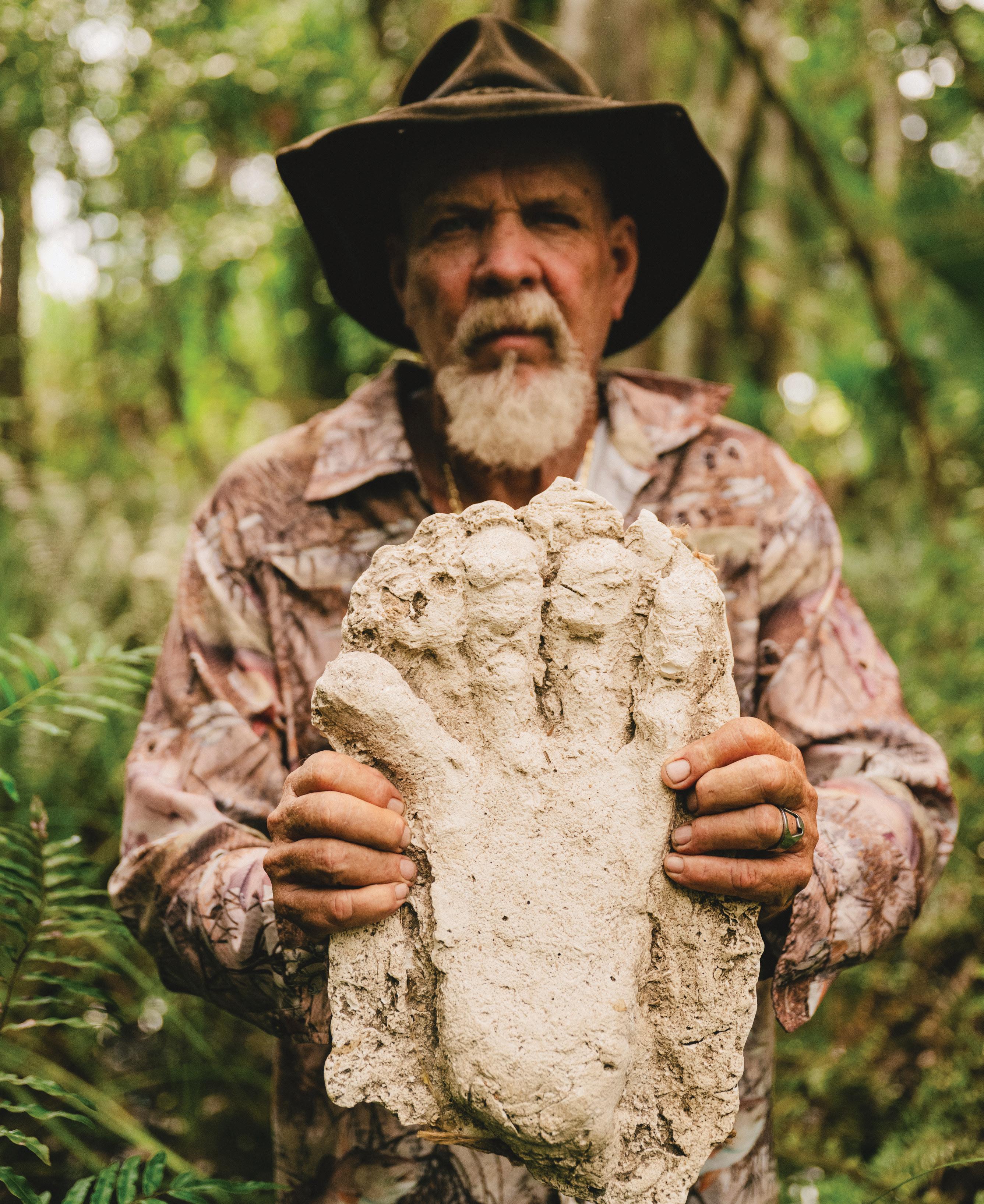
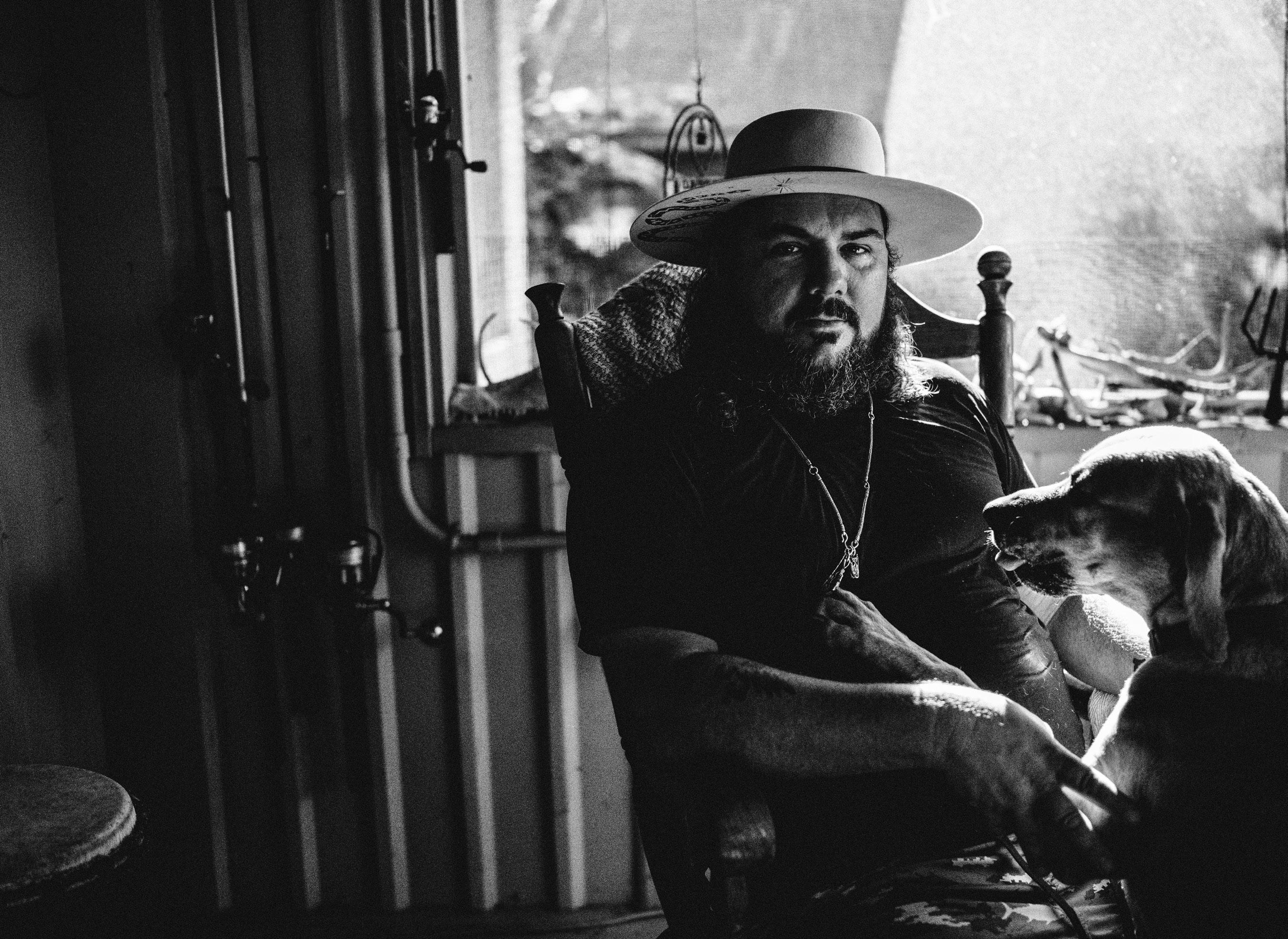
Gliding through the quiet channel, my guide stands at the stern of a shallow draft boat, navigating with nothing more than a long, handcarved oar and his intuition. Each row’s gentle splash stirs memories of a Venetian gondola ride, but this tour is far from anything you’d find in Venice, Italy—or nearby Venice, Florida, for that matter. Instead of palazzos or piazzas, I’m flanked by pond apple trees and algae. No stack of gelato in sight, only the snout of a gator poking up through the waters.
My guide—not a gondolier, but a Gladesmen. Low-hanging branches scrape against my scalp, a necessary exchange as the red mangrove tunnel repels the onslaught of mosquitoes and no-see-ums that swarm the launch site. By the time the
canopy opens onto the river’s wide northern headwaters, the bugs and the sounds of the highway disappear, leaving us in the tranquil Turner River, stretching 8.5-miles from just north of the Tamiami Trail in the Big Cypress National Preserve to Chokoloskee Bay in Everglades National Park.
This excursion through Big Cypress National Preserve is unlike any ecotour in the area. Jack Shealy, a fourth-generation Gladesmen, wades through the same fresh water habitats he explored as a child. Unlike the Seminole and Miccosukee Tribes that share these swamps, the Gladesmen are a community that formed when pioneer families, like Shealy’s, developed a shared culture and ideology while living within one of the Southeast’s most inhospitable regions over a century ago.
I joined Jack for this traditional pole boat ride to learn more about the history of a forgotten Florida lifestyle that’s disappearing faster than the Everglades itself.
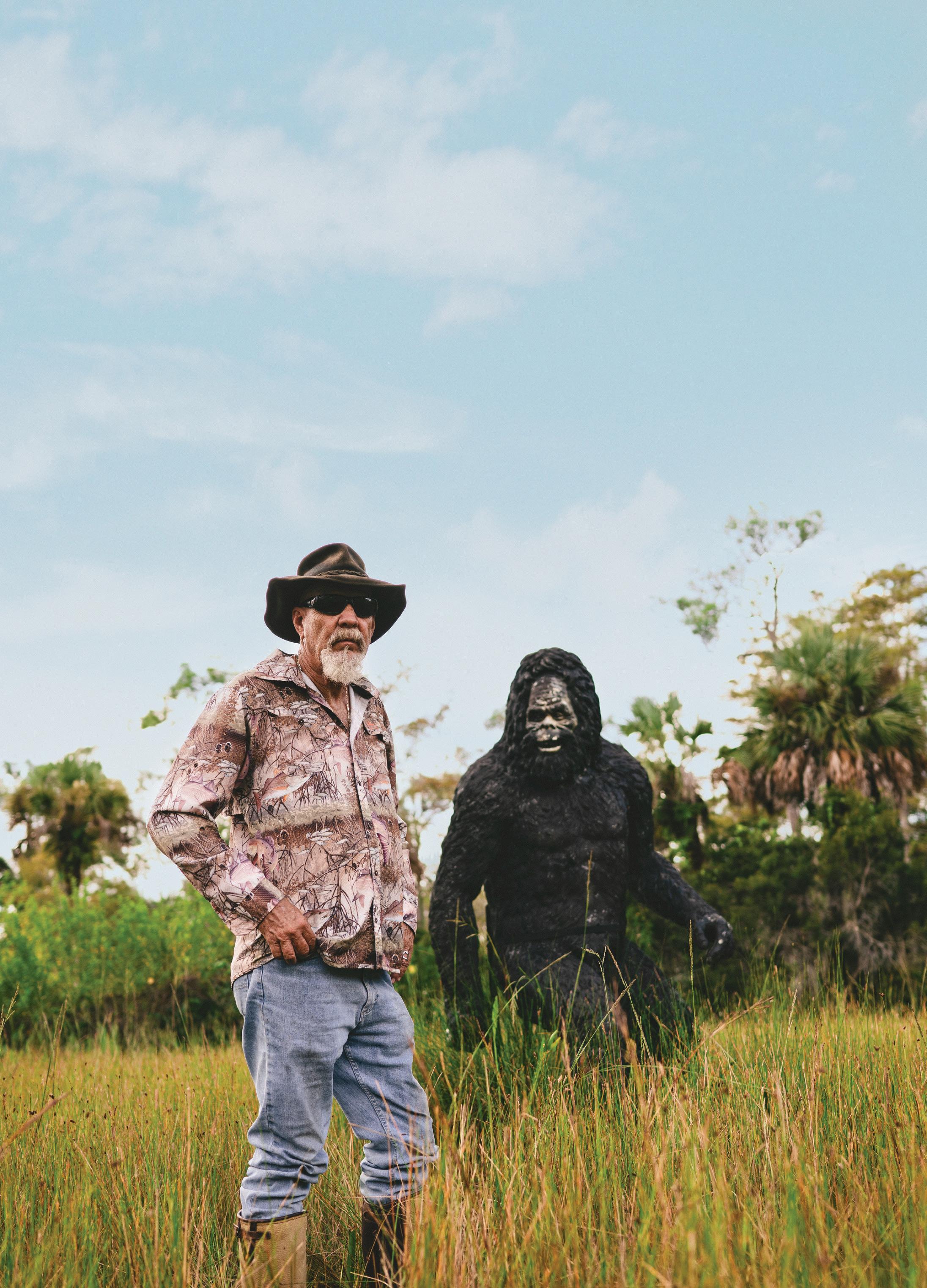
The last generations
“Our kids know that we’re Gladesmen. Growing up, I did not know that,” says Jack, stopping midthought to point out a small green heron watching us from the tree line. Although his father and uncle rarely used the term, Jack grew up living the traditional Gladesmen lifestyle—one that is quickly disappearing—which included frog gigging, hog hunting and fishing here along the Turner River.
“We were called a lot of different things—rednecks and swamp rats—but Gladesmen was not one of them,” Jack says.
The first Shealy members to become Gladesmen moved to Chokoloskee Island, on the edge of the Everglades and Ten Thousand Islands, in the late 1800s—though it was Jack’s machinist grandfather who purchased their current homestead in Ochopee. Set back from the highway, the compound is now
home to three generations of Shealys living in separate houses tucked among bald cypress trees. Like other Gladesmen families, they live off the land sustainably and coexist peacefully with the neighboring Seminole and Miccosukee tribes.
Many Gladesmen have left the unforgiving environs, particularly after the formations of Everglades National Park and Big Cypress National Preserve set restrictions and regulations on how locals like the Gladesmen could access and utilize the landscape. The families who stayed had to find new ways of living on the small patches of property they retained.
Jack’s grandfather allocated 30 acres for the Trail Lakes Campground in 1961, which now accommodates primitive tent camping, RV sites, air-conditioned cabins and traditional Native American chickee huts—raised wooden platforms
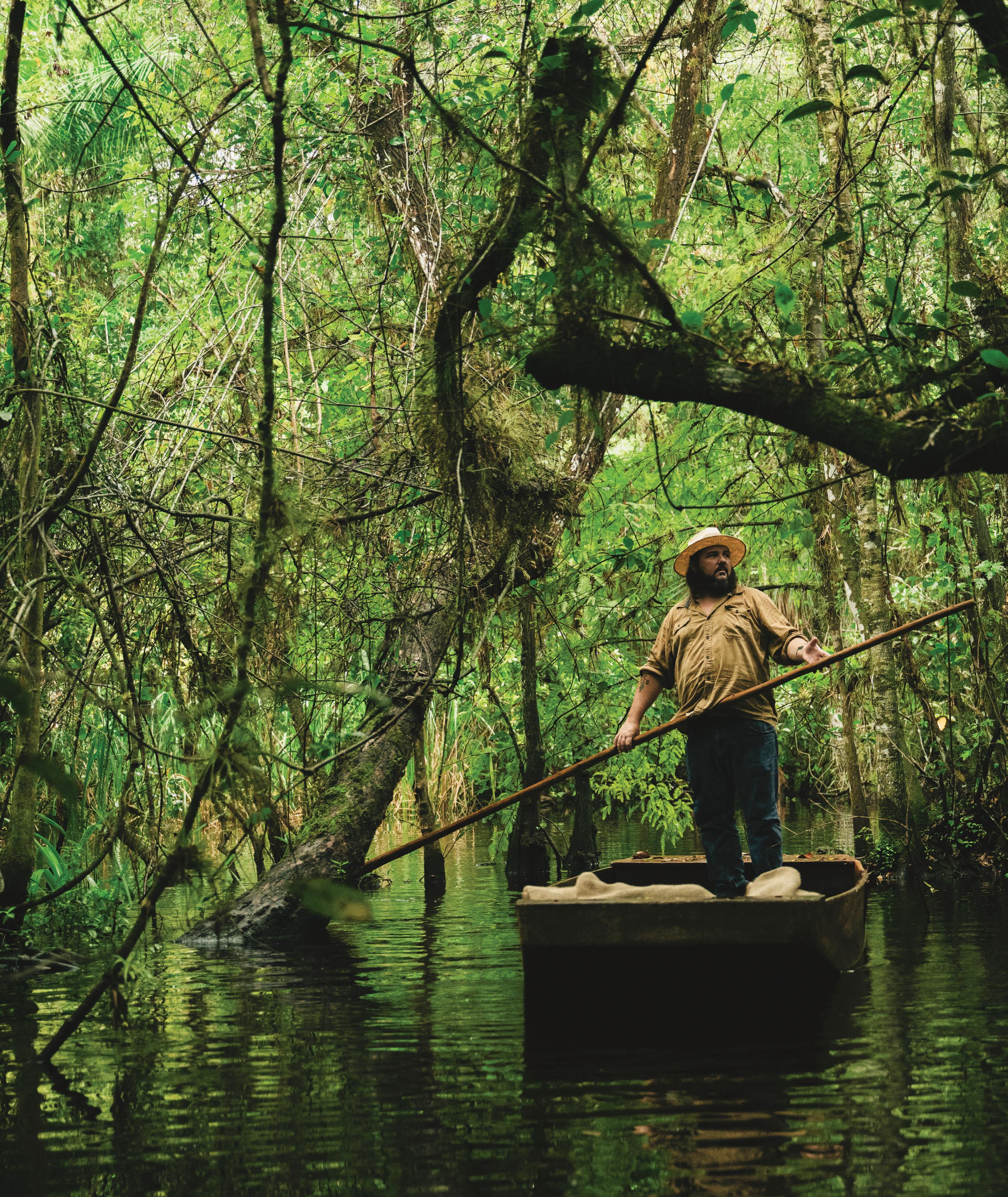
perched above the mangroves and shaded by a thatched roof of palm fronds. Their site in Ochopee further evolved to include Everglades Adventure Tours, offering kayak, canoe, hiking and pole boat excursions—and the Skunk Ape Research Headquarters.
Jack, his wife and two sons live on the property with his father, Dave, and his uncle. They live one mile east of the smallest operating post office in the United States, which Jack’s grandmother used to manage.
Gliding through the Turner River, Jack reflects on how much has changed in the 42 years he’s called Ochopee home. The waterway itself was once the site of Turner’s River Jungle Gardens, a tourist attraction with airboat tours and animal exhibits that helped educate the public on the fragility and importance of protecting the habitat.
Beyond the river, the entire Everglades region has suffered for decades due to man-made water diversions from roads and drainage projects, according to Steve Davis, chief science officer for The Everglades Foundation. Restoration of the ecosystem is not one but many individual projects that focus on localized areas.
“When those projects accumulate across the landscape, we get larger and larger benefits,” says Davis, noting that Everglades National Park has shown substantial improvement because of restoration projects, like those reconnecting natural water flow beneath the Tamiami Trail.
“Western Everglades restoration was a project that was only authorized last year,” Davis says. “It will take time for that project to continue to be built out to where we’ll start to see some benefits in Big Cypress National Preserve.”
Until then, local families like the Shealys often see only the negative ecological impacts accumulated over decades, especially those that have altered their lifestyle. Not only is Turner’s River Jungle Gardens gone, but so are most of the small game the family once depended on, due to human hunting and decades worth of habitat disruption via infrastructure development, invasive species and climate change.
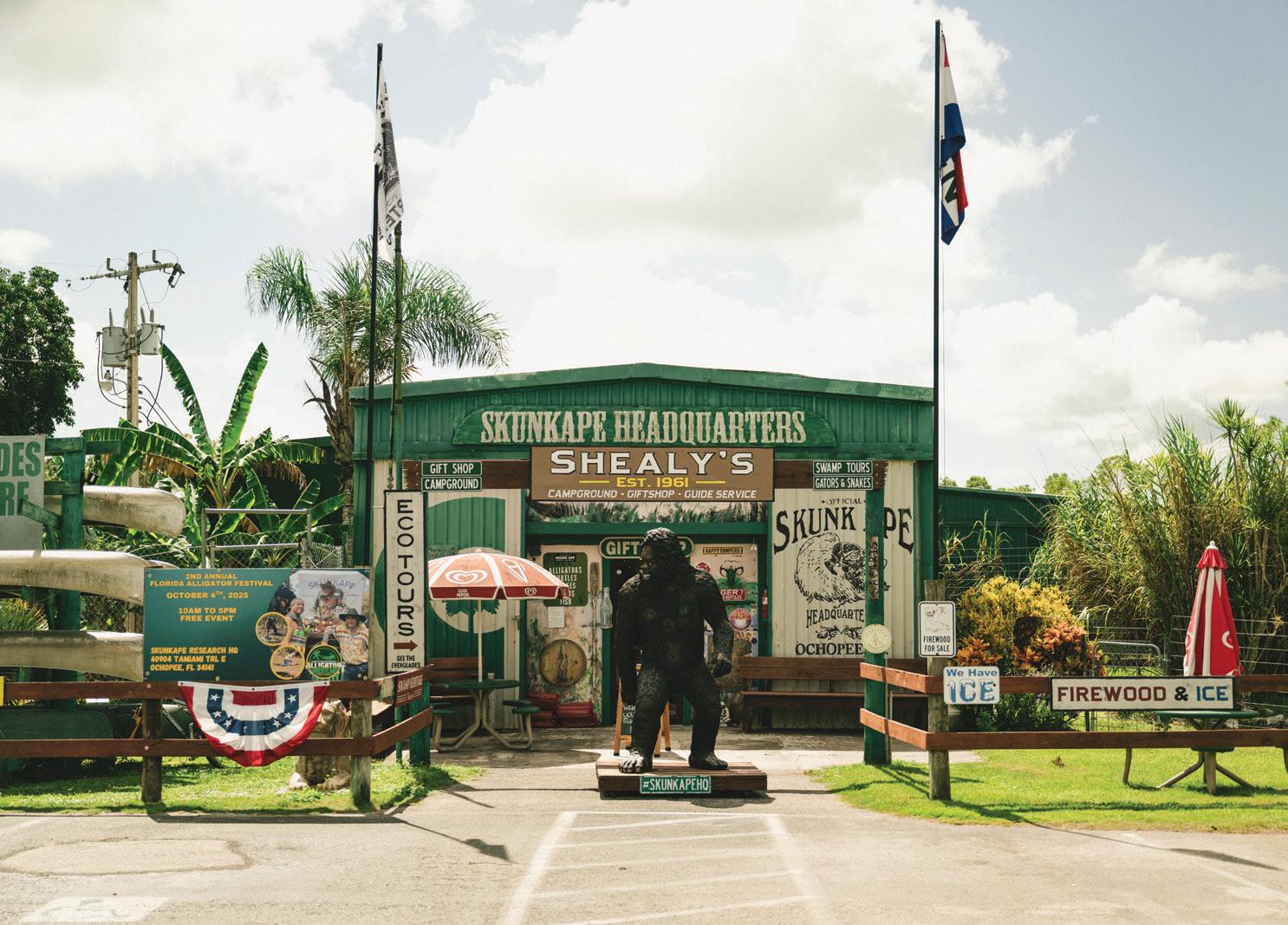
Everglades Adventure Tours is the only company offering private guided pole boat eco-tours, and Jack is the sole guide with Gladesmen heritage leading the experience. He encourages visitors to do their research before booking tours advertised as authentic.
The allure is literally as clear as day: Reflecting the bright blue sky, the calm waters of the Turner River invite daydreams of a life spent leading vacationers on paddle tours and reciting tales of the frontiersmen who wrestled alligators.
If your way of life is your identity, and then the things that are connected with your way of life are taken away, your identity is taken away.
—JACK SHEALY
Even the rectangular pole boat that moves through the water is a relic of the past that not even Jack grew up using. The vessel, made out of plywood and fiberglass, looks as basic as its accompanying pole oar—no paint job and zero pizzazz. The pole boat is as utilitarian as they come, so much so that Jack brings portable chairs to spare visitors from sitting on the dirty, unfinished hull. And, yet, despite years of exposure to the swamp, it’s dependable, efficient and sturdy: the very hallmarks of the Gladesmen lifestyle.
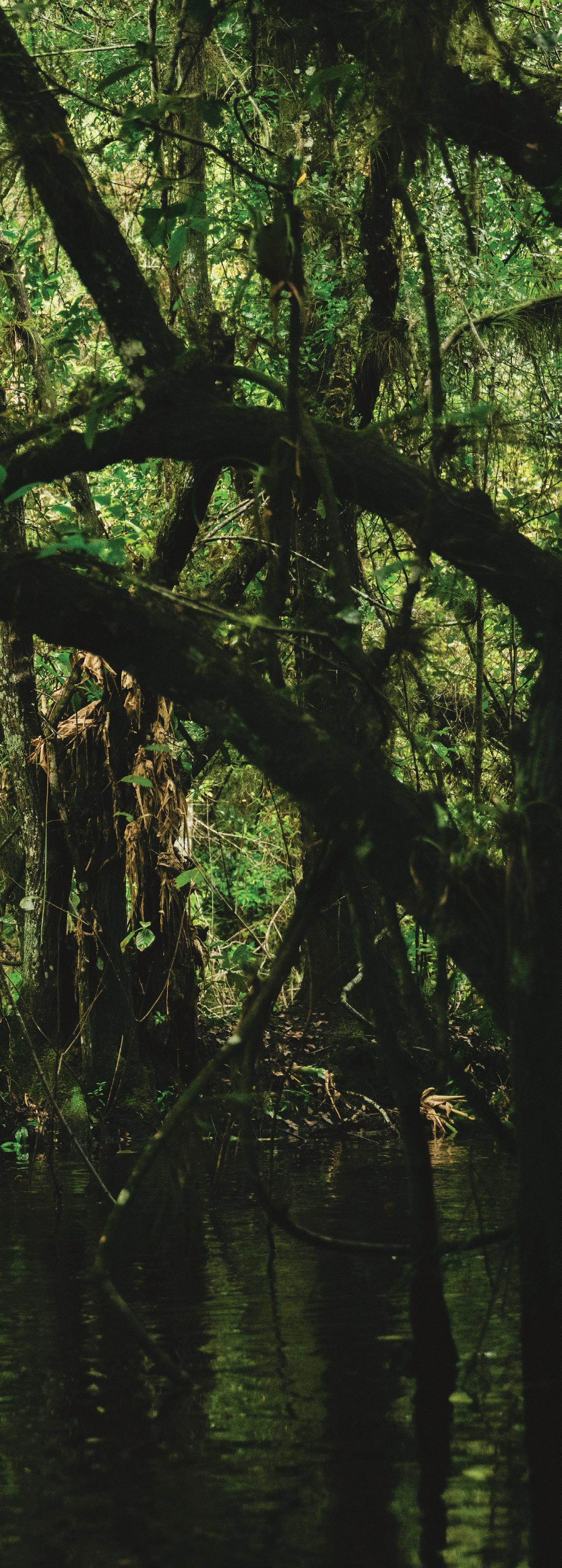
The swamp feels tolerant if not welcoming; not a bird, bug or cold-blooded reptile among the sawgrass seems to mind our presence, so long as we kindly share the space and keep to ourselves.
Through his pole boat tours, Jack wants to educate and engage earnest locals and visitors curious about this traditional lifestyle. He teaches them about true Gladesmen: “people that have a multi-generational ethnography of living here, on and with the land, that practice the values of family and sustainable harvest of resources here for sustenance.”
However, many people traveling across the Tamiami Trail or Alligator Alley—roads that cut through the Everglades— won’t learn of the disappearing Gladesmen culture unless they decide, like I did, to investigate the legend of the equally elusive Florida Skunk Ape.
“I swear when I stepped out of the car, there was somebody or something down there. It went from the edge of the road and walked back,” Dave Shealy said.
I see only a single dark green trash bin when I look down the unpaved roadway, but I don’t doubt his claim. The Shealy patriarch has lived in Ochopee for 62 years and has seen everything from the creation of Big Cypress National Preserve and the demolition of former Seminole homes to the introduction of Texas cougars and the removal of Burmese pythons. He’s one of the few that claims to have documented the Skunk Ape, which is believed to be a large bipedal species similar to Bigfoot with alleged sightings as far north as the Panhandle.
He says he first saw the Sasquatch-like creature at the age of 10 while exploring the swamp with his older brother. Despite carrying a gun, the Shealy boys hot-footed it back home without a passing thought of harming the beast. Dave captured its image on a disposable camera decades later in 1997, and in 2000, caught the Skunk Ape on video—the footage of which is featured on the Smithsonian’s website.
Dave claims that the Skunk Ape mythology, while circulated locally for centuries prior, wasn’t as widely discussed until his photos spurred conversation. He opened the Skunk Ape
Research Headquarters intending it to be a 24-hour attraction where travelers could search for the eponymous anomaly, or at the very least, view “Big Mamma,” the Shealys’ 13-foot captive Burmese python, for $1.
Over the years, the Skunk Ape Research Headquarters expanded to include casts of the Skunk Ape’s footprints, a field guide listing the alleged sightings by other locals and visitors and, until her death in 2025, a massive reticulated python called Goldie that lived at the attraction for over two decades.
Although Dave sold the company to his son Jack in 2009, his business with the Skunk Ape is far from over.
“Am I completely retired? No. Skunk Ape hunting is like being a cop: It’s never over,” Dave says as he scans the trees for movement. He points to pond apples ripening on the branches, mentioning that they’re one of the tree-climbing Skunk Ape’s favorite fruits and that sightings in this area are prevalent.
Dave still explores the Big Cypress National Preserve’s prairies, estuaries and hardwood hammocks primarily on foot. He’s encountered—sometimes painfully—rattlesnakes,
Am I completely retired? No. Skunk Ape hunting is like being a cop: it’s never over.
—DAVE SHEALY

crocodiles, bull sharks and black bears and recalls his last Skunk Ape sighting around 2005.
“I’m easing through the palmetto thicket and noticed the frond shaking hard ahead of me,” he says, gesturing across the prairie. “Then, boom! I see it stand up.”
The scientific community generally suggests that Skunk Ape sightings are misidentified as bears standing on their hind legs. But, in this instance, Dave specifically noticed that the wild creature lacked the pointy ears and sloped nose of a Florida black bear. It also had the Skunk Ape’s hallmark moldy scent.
“It moved away from me pretty fast and never dropped back down like a bear would,” he remembers. “But the biggest thing about this particular sighting was, as soon as it moved away, I saw two other things moving through the palmetto. They were smaller; I think it might have been some baby Skunk Apes.”
We continue our drive through the dirt roads of Big Cypress National Preserve, our heads swiveling from side to side in hopes that the Skunk Ape would reemerge. Nothing, save for a sunbathing alligator and the occasional wading bird, does. It’s been 20 years since Dave’s last Skunk Ape sighting, but he still believes the creature roams the swamp and wishes others believed too. “I would like to see some recognition, park signage or inclusion in the regulations for the preserve,” he says. “I’d like the Skunk Ape to become known as a symbol for the conservation and wise use of natural resources.”
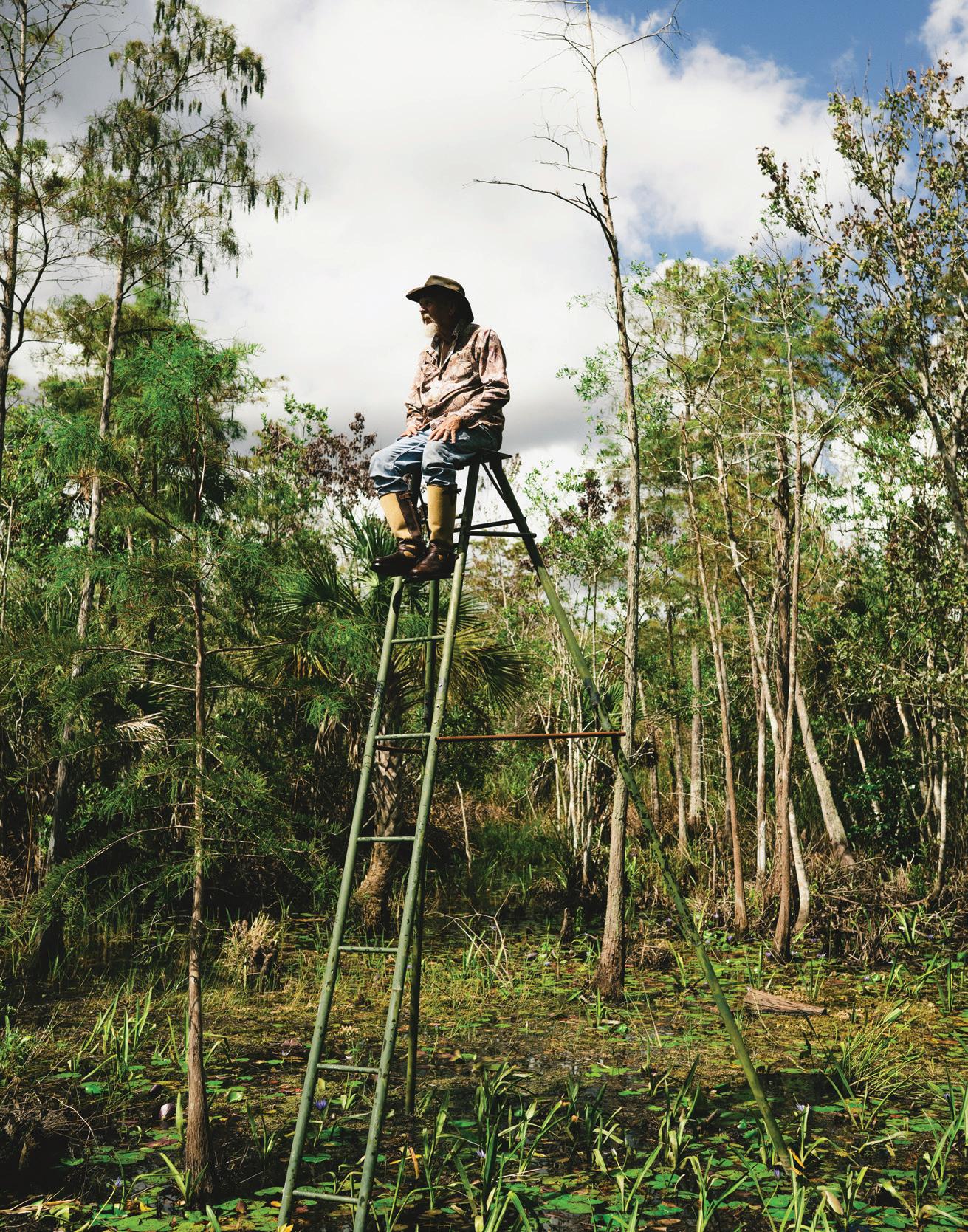
His son Jack, however, sees a different future for the Skunk Ape Research Headquarters, one that uses the creature’s popularity to spread the word about a vanishing Gladesmen culture.
Located along Highway 41 in Ochopee, the Skunk Ape Research Headquarters, which sees about 100,000 visitors annually, is the quintessential Florida roadside attraction: quirky enough to stoke a driver’s curiosity and convenient enough to pull into if only for a quick bathroom break or stick of jerky.
Sasquatch statues flank the shacklike facade advertising swamp tours, dangerous reptiles and a campground. An air-conditioned gift shop stocks Skunk Ape stickers, shirts, hats and shot glasses, while the adjacent animal exhibit houses alligators, a red rat snake, a snapping turtle and a Burmese python.
The cryptid community, unsurprisingly, journeys to Ochopee craving firsthand reports of Skunk Ape sightings. While the novelty of Florida’s mythical beast draws in most visitors, Jack has noticed an increase in ecotourism interest.
But his long-term business goal? Jack envisions a Gladesmen heritage museum on the property that preserves and promotes this piece of Florida.
“The history of the moonshiners and the alligator hunters,” Jack suggests. “The history of the Everglades and Tamiami Trail. The evolution of the airboat and the swamp buggy. There’s enough to build a whole museum around the Gladesmen heritage and now, more than ever, we need a place for it.”
Jack brings me behind the scenes into his workshop, where he holds an impressive collection of Gladesmen artifacts: Frank Dininger’s alligator hunting boat, Glenn Simmons’s blade skiff, a vintage hand-cranked airboat and even Loren “Totch” Brown’s gator skiff, shown on the cover of his historical Gladesmen memoir, “Totch: A Life in the Everglades.”
“This thing belongs in the Smithsonian, dude,” Jack says of Brown’s skiff. “I’m saving and saving; I have one cabinet just for the evolution of frogging and alligator hunting lamps.” It’s easy to envision a Gladesmen museum on the Shealy property as a living snapshot of an Old-Florida lifestyle that combines Jack’s museum exhibits and family memorabilia with interactive stations like game cleaning rooms and trolley rides.
“It’s a no-brainer,” Jack insists. “It’s going to win. It’s just a matter of getting it done with one set of hands.”
rare and rebounding
Dave idles the airboat’s engine at his property’s edge, pointing to the distant tree hammock seen in his Skunk Ape video. He wants to take me deeper into the wetland but legally cannot.
“It’s a story with a happy ending … but it’s not. It’s not been happy,” he says.
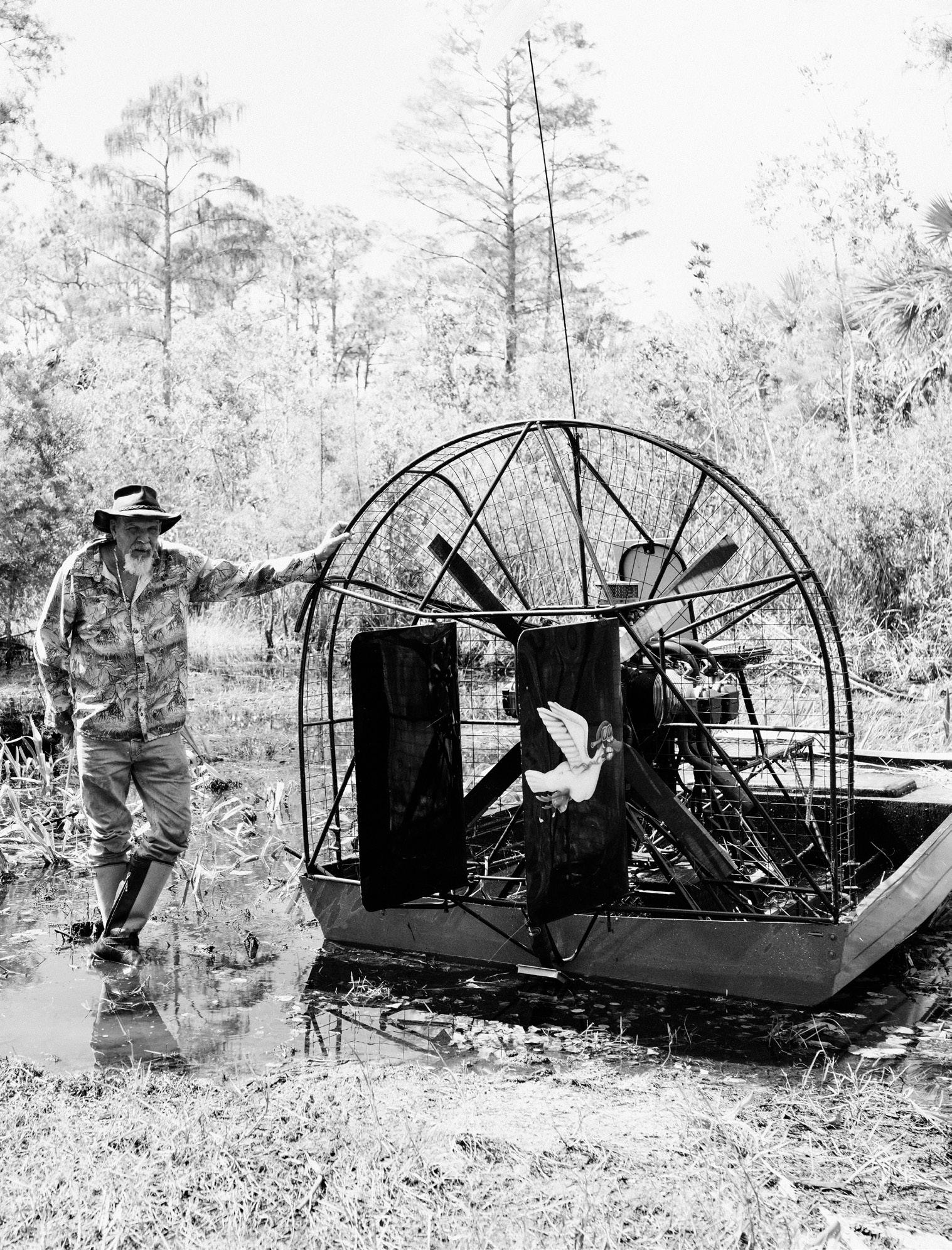
Every species of wildlife, everything that lives on Earth, has died on that highway.
—JACK SHEALY
Unlike the Gladesmen, the Miccosukee and Seminole tribes have special exceptions granted by the National Park Service related to their traditional use and occupancy of Big Cypress National Preserve. The Army Corps of Engineers did an ethnographic study of Gladesmen cultural sites and recommended they be preserved, but it wasn’t sufficient enough for properties like the Shealy’s to gain official designation. Instead, they must wait a decade for reevaluation.
“It’s sad when I walk in the woods and look behind my house and know that I’ll never be able to airboat again,” Dave says.
Dave acknowledges both the need for conservation and what he believes are contradictory methods to achieve it.
For instance, he’s prohibited from riding his airboat into the backcountry for fear of habitat destruction but notes that the development of roadways and state-run RV camping sites for Big Cypress National Preserve has damaged the ecology and endangered the ecosystem.
And if you ask his son Jack about the most dangerous part of the Everglades, he’ll point to Alligator Alley, the stretch of I-75 connecting Naples to Miami. “There’s nothing this thing hasn’t killed. Every species of wildlife, everything that lives on Earth, has died on that highway,” Jack says.
Davis, the Everglades Foundation scientist, agrees that the area’s development has played a role in ecological damage, especially Alligator Alley.
“The road itself has cut off water sheet flow, and the Tamiami Trail, in some areas, is still kind of a dam across that part of the ecosystem,” Davis says. “When you also add in sea level rise, there have been changes to the extent where mangroves have infiltrated farther inland with reduced flows. There are also canals farther north of Big Cypress that have diverted water away from part of the preserve. That’s what the Western Everglades restoration project hopes to resolve.”
But at the heart of it, Dave feels that he, his family and his culture are being overlooked and undervalued.
“When they made up the rules, they cut my family out,” he says. “A lot of people sold their homes. A lot couldn’t take it.”
Someone made an offer was made on the Shealy property 20 years ago, but Dave couldn’t abandon his family’s home,
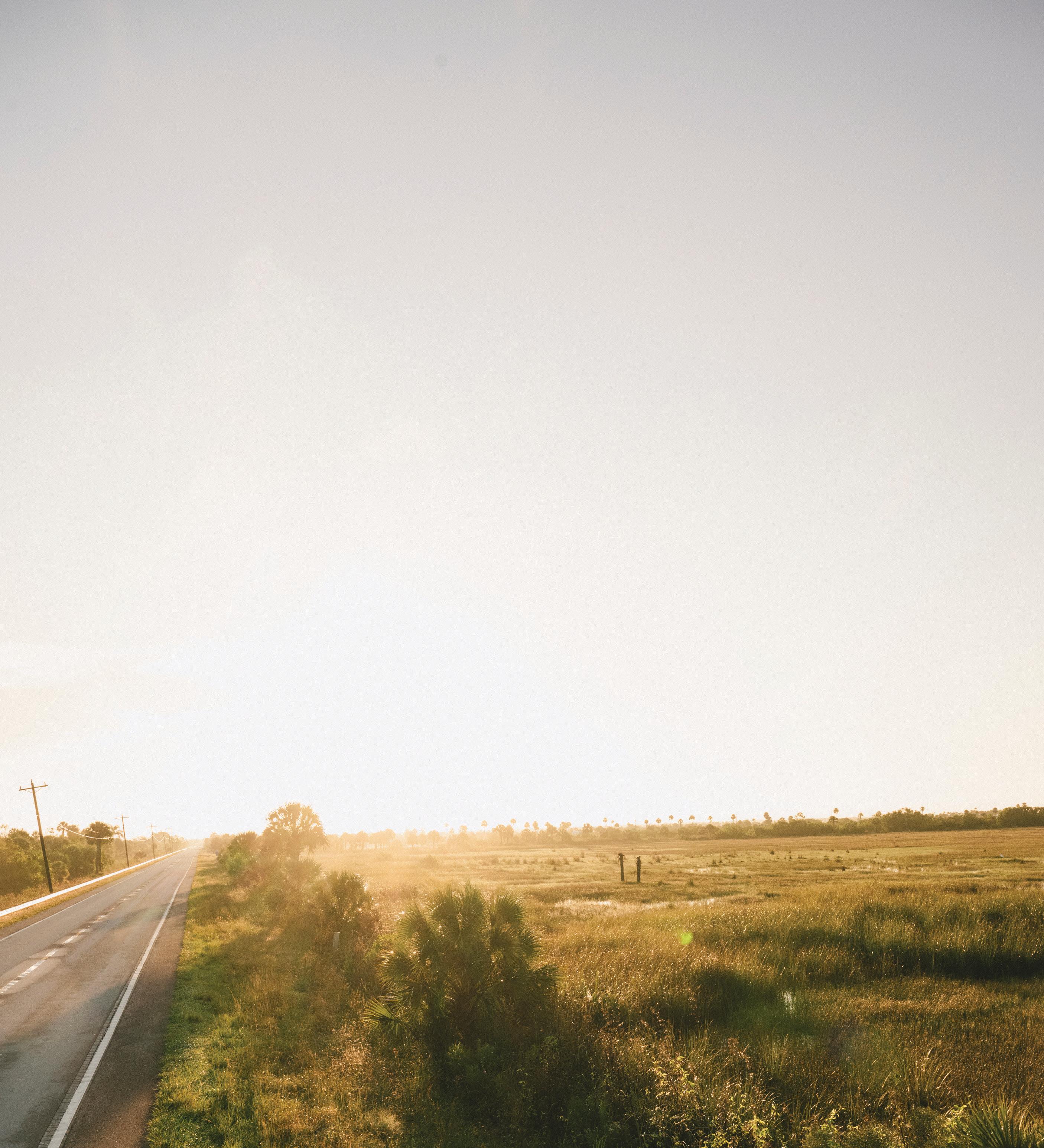
even as their livelihood was forcibly altered. He knows of very few Gladesmen families still in the region and doubts there’ll be future generations. He uses the Skunk Ape Research Headquarters as a platform to talk about the Everglades and his family’s struggle.
Jack’s ambitions also prioritize his family’s past and future. Along with supporting his own wife and children, he financially supports his father and uncle.
“I’ll be honest,” Jack tells me as we unloaded the pole boat. “I just want to not live in fear of trying to keep our lifestyle. I worry about access to wildlands and regulations and things changing over time, because I’ve seen how much they’ve changed in my lifetime. If your way of life is your identity, and then the things that are connected with your way of life are taken away, your identity is taken away.”
Most visitors to Ochopee, unaware of the Gladesmen, arrive eager to spot the rare and rebounding: the bloom of a ghost orchid or the flash of a panther. And while alligators abound, there is no guarantee of spying other species. I came to the swamp in search of the Skunk Ape, but instead I found a family clinging to hope and their withering roots.
Like the Everglades, the fate of the Shealys and their Gladesmen culture hangs in the balance. Will enough people outside of the swamp start to care enough to help save it? For his family’s sake, Jack sure hopes so.
“This place is meant to sustain life. Thousands of years of human history proves it,” says Jack, as he plucks a mango from a tree behind his workshop. “This place has changed, and I feel like not talking about it is the worst thing to do. If you’re not acknowledging it, you’re not really doing your job as a steward of the land.”
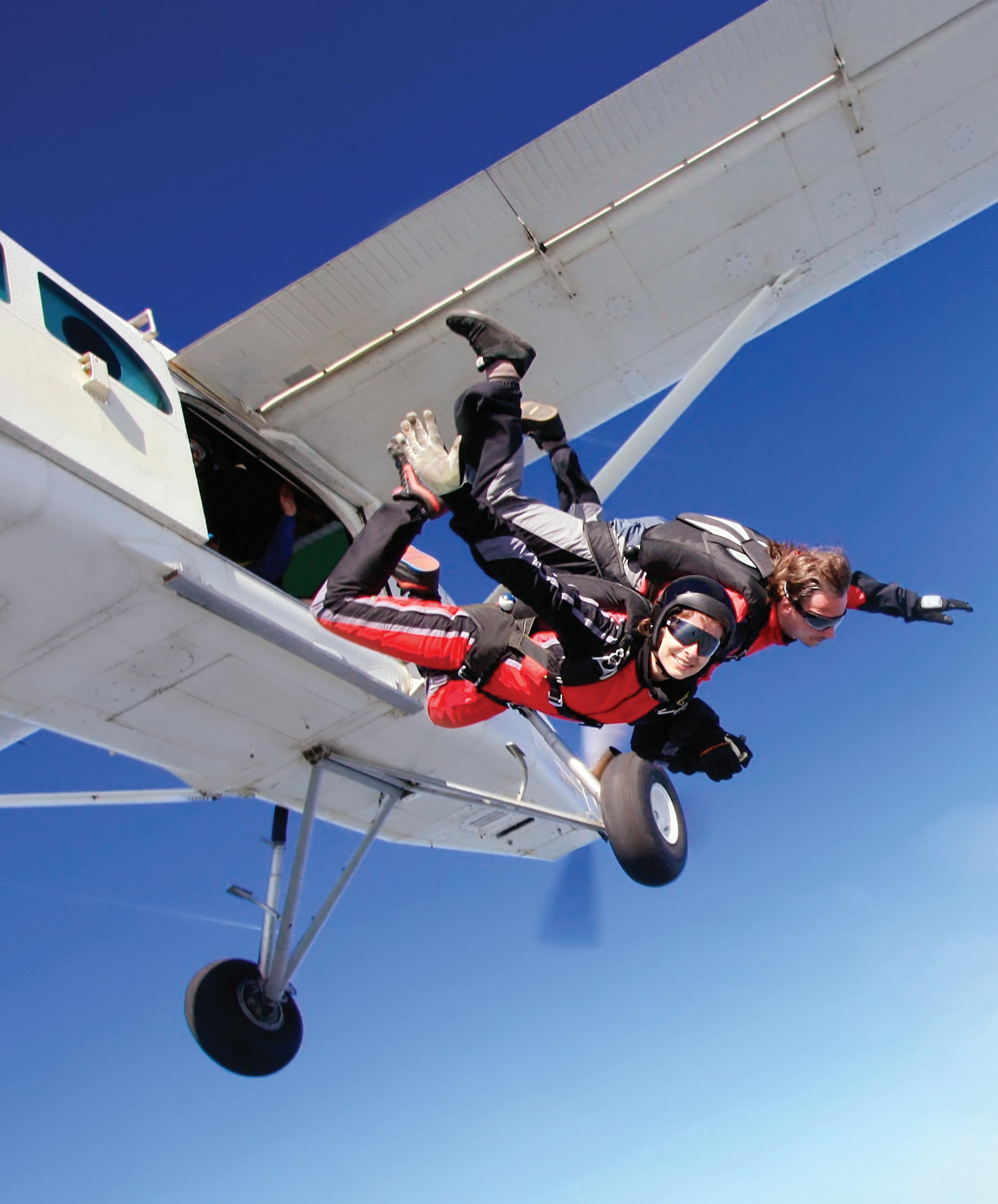
from tom Cruise to 100-year-old seniors, Why every skydiver has this iconic central florida drop zone on thEIr bucket list.
By DAVE SEMINARA

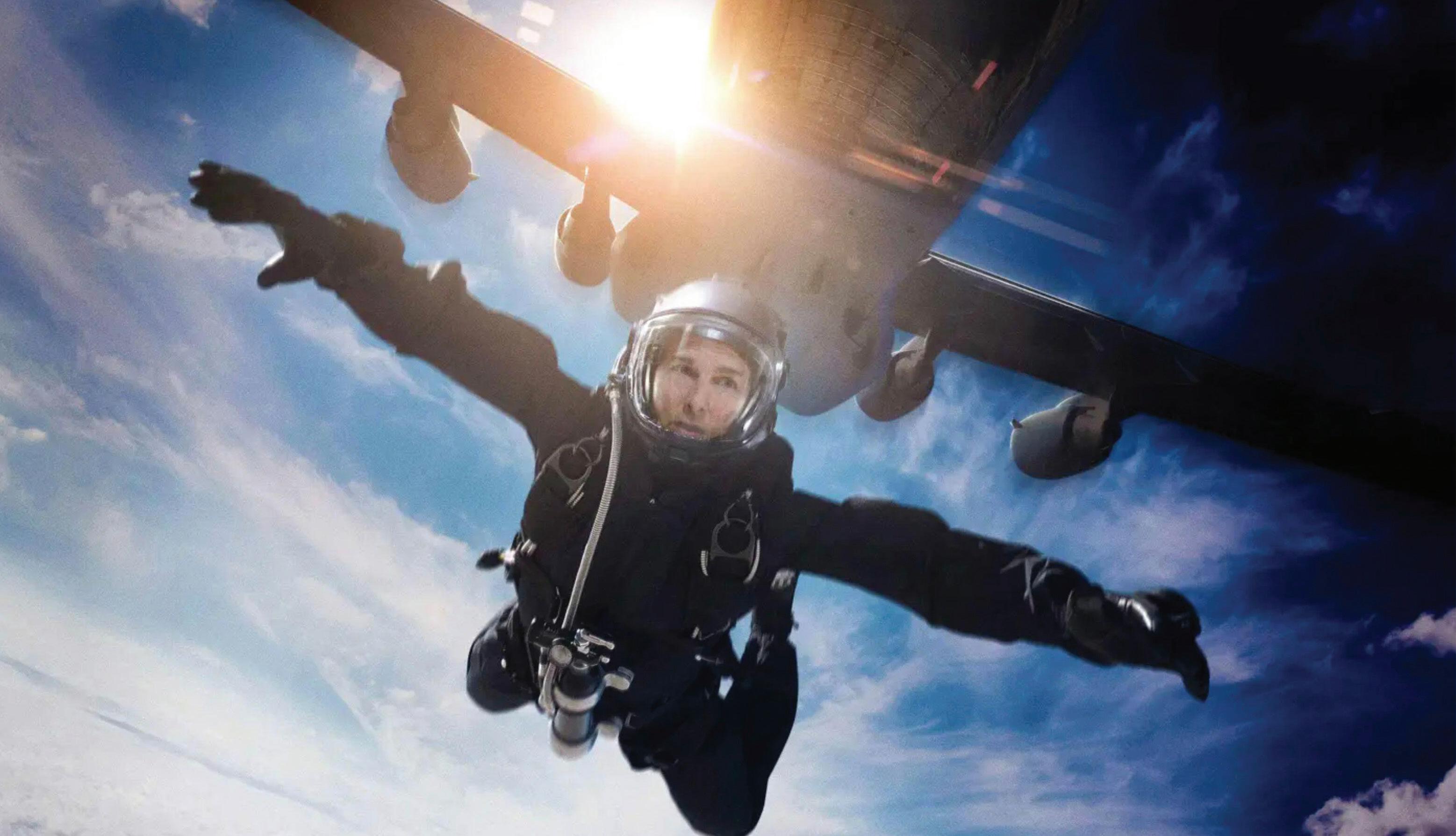
Below:
Russ Manhold is afraid of heights He avoids rooftop bars and doesn’t climb ladders or trees. But when an airplane door opens at 13,500 feet, Manhold doesn’t hesitate to jump out.
“When I’m wearing a parachute, I have confidence that everything is going to be OK,” says Manhold, an 82-year-old Miramar resident and avid skydiver. Nearly every Saturday morning, Manhold—a retired pilot who used to “chase drug smugglers” for U.S. Customs and Border Protection—rises at 3 a.m. to be at Skydive DeLand, his preferred drop zone, in time for breakfast with fellow skydiving lifers at The Perfect Spot, an eatery at Skydive DeLand, which overlooks one of the landing zones.
There are drop zones closer to his home in South Florida, but Manhold and other regulars at Skydive DeLand consider it an iconic place unlike any other in the sport. Skydiving in DeLand began in 1959, when Dr. John “Doc” Gaffney brought his Falling Angels club to the local airport, turning it into one of the country’s rising new hubs for skydiving. In the years that followed, DeLand became ground zero for the sport—home to national champions, world records and innovations—attracting
skydivers and industry leaders from around the globe. Today, with elite teams, military training programs and dozens of skydiving equipment manufacturers, DeLand more than lives up to its nickname as the Skydiving Capital of the World. How did a city in Central Florida with a population shy of 50,000 people become skydiving’s mecca? What kind of people willingly jump out of airplanes, and is it really safe? For answers to these questions, travel to West Volusia County—perhaps the only place in the country where jumping out of planes is considered normal.
Drive through the unremarkable streets south of DeLand Municipal Airport, and you might miss a remarkable concentration of businesses tied to the skydiving industry. There’s United Parachute Technologies (UPT), which manufactures containers—the backpacks that hold two parachutes that every skydiver uses. There’s Alti-2 Technologies, which makes altimeters that signal the parachute to deploy. And there are canopy manufacturers and gear companies like Performance Designs, Icarus World, Aerodyne Research and Aero Tech Products.
DeLand has hosted the National Collegiate Parachuting Championships and the National Parachuting Championships

in the past. Talented skydivers from around the world have been moving to DeLand to pursue their passion for decades.
In a small museum at UPT, Mark Klingelhoefer—an eighttime medal winner at the United States Parachute Association (USPA) National Skydiving Championships and the company’s account executive—demonstrates how far the sport’s equipment has evolved since UPT moved to DeLand in 1975.
“Feel how heavy this one is,” he says, hoisting a 1975-era container—so named because they contain two parachutes— off a shelf. It weighs a back-breaking 50 pounds, compared to today’s containers, which weigh about 20 pounds. Nearby is another container, this one decorated with mink trim and actual diamonds. UPT’s founder, Bill Booth, spent $10,000 on the parachute system in 1983 to show off at a trade show.
UPT manufactures all its harnesses in DeLand and offers public tours. As Klingelhoefer, 50, leads a visitor through the factory, he shares his 25-year connection to the sport. A former whitewater rafting guide, he says he initially wanted to learn scuba diving but couldn’t due to a medical condition. Skydiving began as a consolation prize but quickly became an
Once you get good at it, it’s like golf.
Mark Klingelhoefer
obsession that lasted decades until a knee injury forced him to retire from jumping earlier this year. “We’re not adrenaline junkies with a death wish,” says Klingelhoefer, a Pittsburgh native who has worked at UPT for more than 20 years. “We’re people who found a sport we’re passionate about, and we want to get better. Once you get good at it, it’s like golf.”
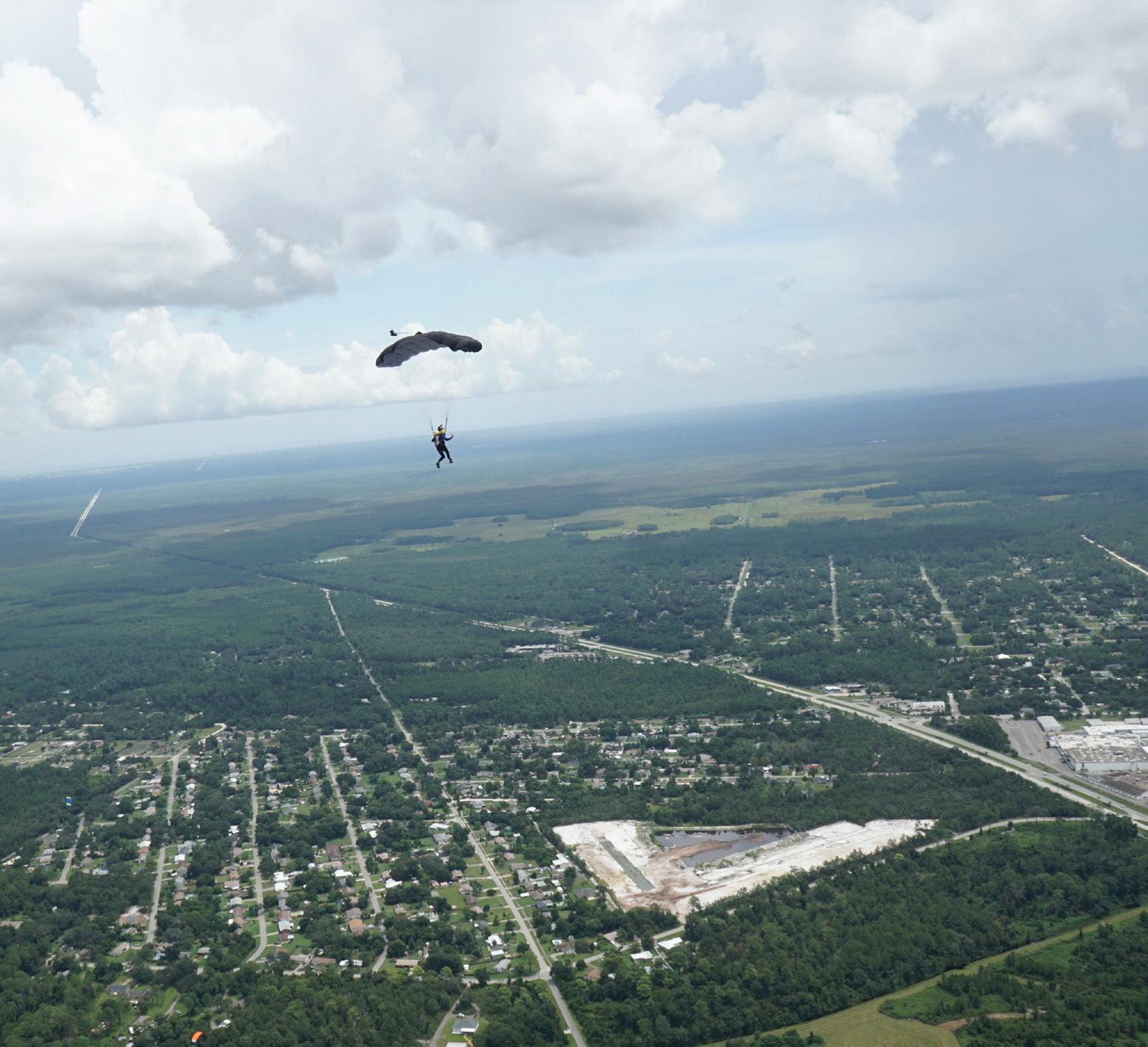
Klingelhoefer loves DeLand and encourages newcomers to try skydiving. “I suggest everyone in the world make one tandem skydive,” he says. “It will change the way you look at the sky for the rest of your life.” He says the first two seconds of a jump—when you “might not be able to breathe because your body goes into shock”—are the hardest. “Then you realize you’re not going to die and can enjoy it,” he says. “When you’re holding hands in free fall, you’re going 120 to 200 miles per hour—that’s crazy on a different level.”
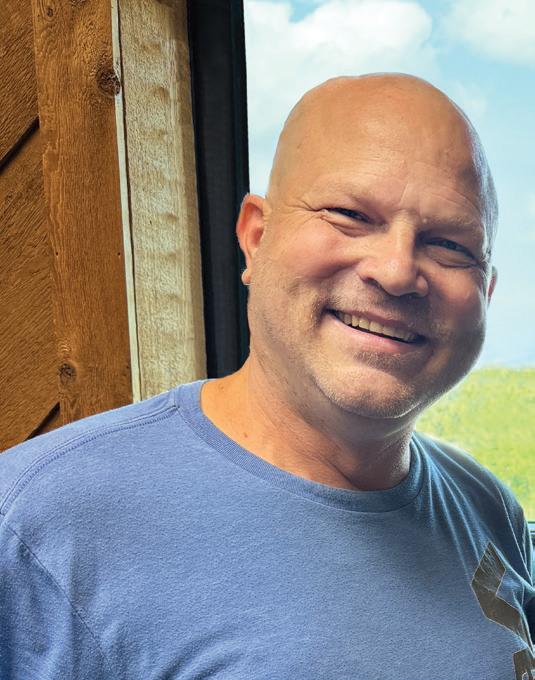
Fernando Caralt, a Barcelona native and Director at Icarus World, says that people have many misconceptions about skydiving. “I always thought skydivers were weirdos with green hair ... but I was so wrong,” he says. “It’s an adrenaline sport, but it’s also very technical.” Icarus World’s manufacturing facility is in Spain, but Caralt felt the company needed a branch office in DeLand because it’s the beating heart of the sport. “Every skydiver, at some point in their skydiving life, comes by DeLand— it’s an iconic drop zone,” he says.
Manuel Martinez, 23, an aerospace engineering student at Embry-Riddle Aeronautical University in Daytona Beach, is another Barcelona native who heard about DeLand as a skydiving mecca while growing up in Spain. Martinez saw influencers jumping in DeLand on TikTok and Instagram and knew he would try it when he arrived in Florida for the first time in August.
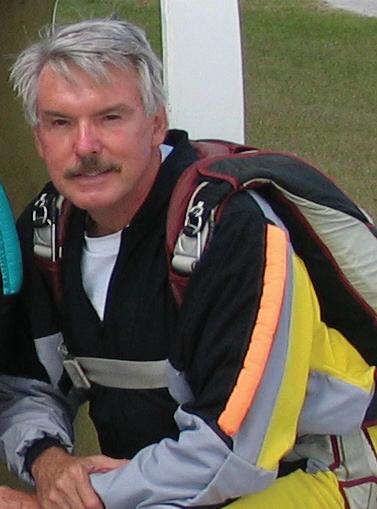
He didn’t tell his parents back in Spain he had joined the accelerated free-fall instruction program at Skydive DeLand until after completing his third skydive—weeks after his arrival— because he was afraid of what they might say. “When the back door opens and you hear all the noise and the wind and the exhaust gases of the engine hit you in the face, that’s when the reality hits you,” Martinez says while having lunch at The Perfect Spot after a jump. “The first five or six seconds, you have the feeling like when you are in a car and hit a bump and feel tickles in your stomach.” For a moment, he reconsidered jumping but remembered the experience was nonrefundable. “I already paid, so I needed to go,” he says. “I didn’t want to lose the money.”
Caralt says that the popularity and accessibility of tandem jumping is helping grow the sport. Some people view it as a once-in-a-lifetime bucket list item, but others get hooked and progress from tandem jumps to solo jumps to competitions. Michael Johnston—who now owns Skydive DeLand following the death of longtime owner Bob Hallett in a car crash in May— has seen both the city and the sport evolve during his nearly 30 years as general manager. “When I first (came to DeLand in 1972), it was just transitioning from being a club operation to becoming an actual commercial operation,” says Johnston, a former Army paratrooper who jumped for 50 years before retiring six years ago. “Things were on a much lower scale at that time, and probably the only business in town was a parachute rigger who maintained the equipment.”
When the back door opens, that’s when reality hits you.
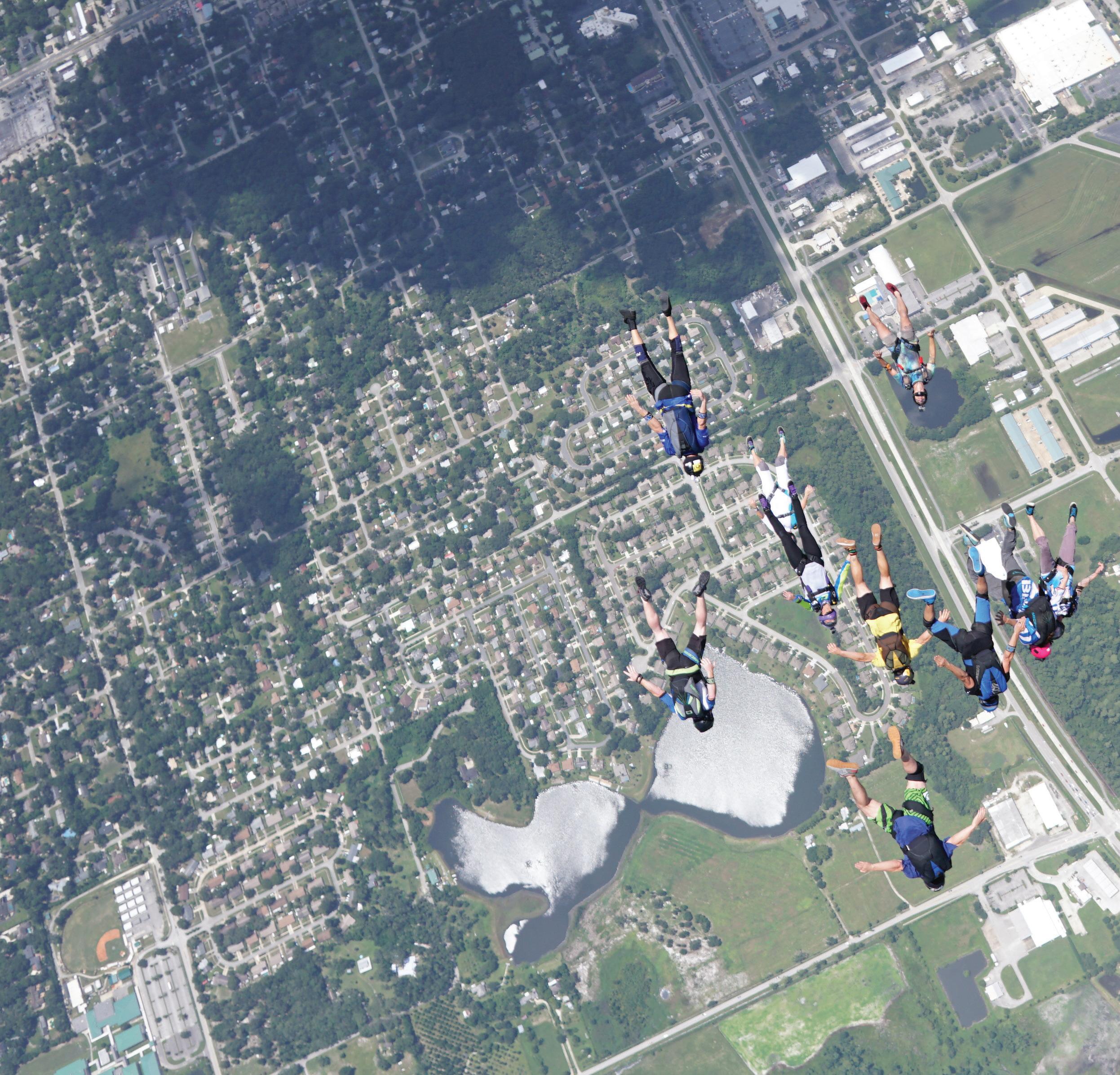
In 1975, UPT moved to town, and other companies followed, gradually turning the city into a magnet for everyone in the industry. “It’s now the technological center of parachute development in the world,” Johnston says. Skydivers come to DeLand from across the globe, including a few celebrities. Most notably, Johnston says Tom Cruise and Nicole Kidman learned to skydive in DeLand while filming “Days of Thunder”
Manuel Martinez
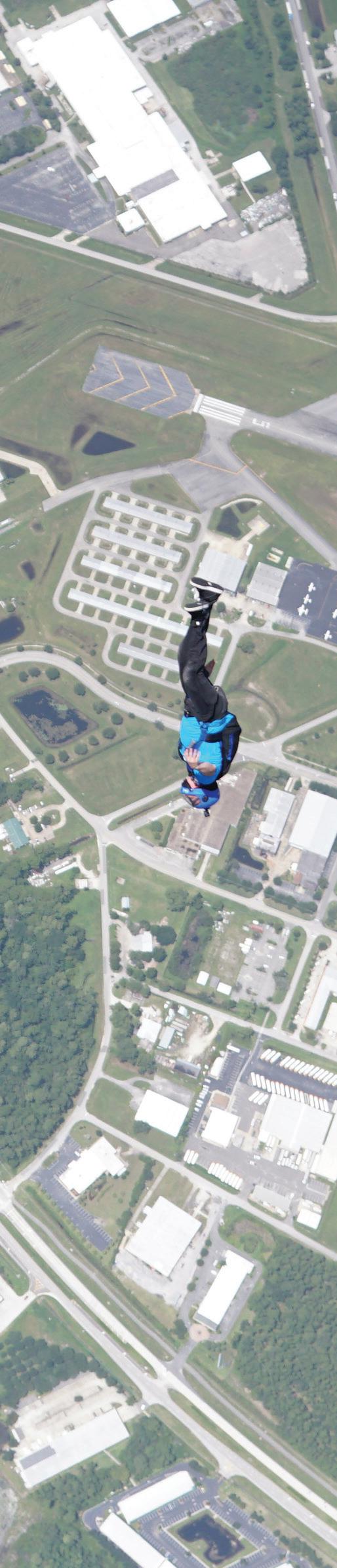
This spread from left: Russ Manhold is part of the Jumpers Over Eighty Society; formation jumpers in DeLand; early skydiving equipment was much bulkier and heavier than today.
in nearby Daytona Beach in 1990. Cruise even flew his mother in to skydive with him on Mother’s Day that year. Johnston says skydiving was technically a violation of Cruise’s film contract, so his agent came to Skydive DeLand to collect his training and jump records.
Johnston says Cruise went on to become a licensed skydiver—a process that requires 25 jumps. Years later, while filming a “Mission: Impossible” movie, Cruise called Johnston out of the blue. At first, Johnston didn’t believe it was actually him. “He told me, ‘I need my training records because I’m getting ready to shoot a movie with some skydiving scenes, and I want to do my own stunts.’” The records were long gone, but Johnston wrote a letter detailing Cruise’s jump history. Since then, Cruise has performed his own skydiving stunts in “The Mummy” (2017) and three “Mission: Impossible” films, including a scene where he completed a daring free fall with a camera strapped to him. For a skydiving sequence in “Mission: Impossible—Fallout,” Cruise said it took 106 jumps to get the shot they wanted. “It’s not that I don’t get scared (doing stunts),” Cruise told a CNN reporter. “It’s that I don’t mind being scared.”
It takes about 11 minutes for an airplane to reach the typical jump altitude of 13,500 feet. Skydivers enjoy roughly a minute of free fall before deploying their parachute between 3,000 and 5,000 feet, followed by about two and a half minutes under canopy before landing. Martinez says his instructor gave him easy-to-remember hand signals, since it’s too loud to communicate verbally during free fall: An extended index finger means “deploy your parachute” and a shaking hand means “relax.”
portrays the sport as “crazy.” “Like in life, being a bad skydiver is probably crazy. Becoming a good skydiver is only (the) result of hard work like in any other activity.”
Johnston points to statistics from the USPA as proof that deaths and serious injuries in skydiving are rare. In 2024, there were just nine deaths out of nearly 4 million jumps nationwide. By comparison, there were an average of 42 fatalities a year in the 1970s—an average that’s dropped to 12 fatalities per year in the 2020s. Meanwhile, 5.6% of USPA members experienced an injury in 2024 that required medical treatment, with ankle injuries during landing being the most common.
Klingelhoefer acknowledges that skydiving is dangerous— but so is driving a car, he maintains, and most of us do that every day. “We mitigate the risks,” he says. Deaths and serious injuries, he adds, are usually the result of human error rather than equipment malfunction. Even the best in the world can make fatal mistakes. In 2004, one of Klingelhoefer’s friends, Pauline Richards, died while participating in a skysurfing competition in Australia. Richards had just won her fourth straight gold medal while competing the day before. “She was one of the best skydivers in the world,” he says. “One bad decision at the wrong time. Just super bad luck.”
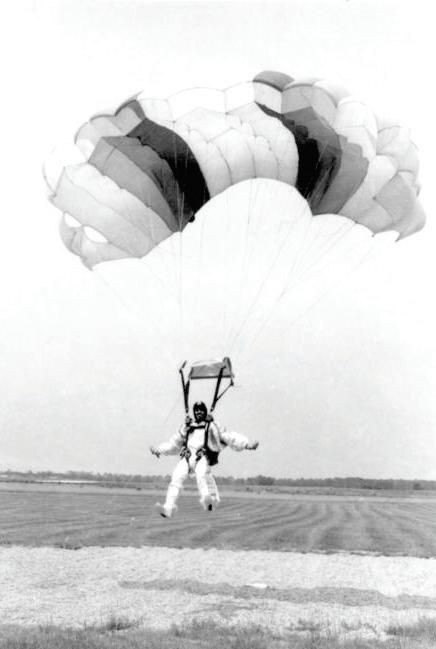
There have been fatalities at Skydive DeLand as well, though they are rare. Last year, a 42-yearold Brazilian man named Giulianno Scotti died after colliding with another skydiver in midair. In 2021, highly skilled skydiver Carl Daugherty died in a similar collision. And in 2022, a skydiver died after a parachute malfunction caused a hard landing.
What could go wrong? Plenty, but most skydivers say the sport isn’t as dangerous as many assume. “People think you’re crazy for doing this,” Manhold says. “But I call skydiving a relatively low-risk sport. With today’s equipment and pilots, I feel safer jumping than I would climbing a tree.”
“I am an engineer, and I have an MBA … and I like skydiving, so am I stupid?” says Caralt, adding the media often
Deaths were more common years ago. The Daytona Beach News-Journal reported in 2015 that between 2005 and 2015, there were 10 skydiving fatalities at Skydive DeLand—nearly one-third of the 33 total in Florida and Georgia during that decade. The year 2005 was particularly tragic for DeLand’s skydiving community. In January, Czech skydiver Jan Kadie died after a hard landing. Four months later, a plane collided with skydiver Albert “Gus” Wing III, severing both of his legs at the knee. He managed to land but later died from his injuries. In October of that year, a $1-million jump plane crashed, injuring the pilot and five others
Experts say that the rate of skydiving injuries and deaths is likely comparable to skiing or snowboarding. Industry insiders
Spend a weekend in this indie-meets-friendly small town.
Prior to becoming a “main street” community focused on preserving its walkable downtown and historic buildings 40 years ago, DeLand was once derisively nicknamed “Deadland”—a place thought to have seen its best days. But by 1997, the National Trust for Historic Preservation gave DeLand its Great American Main Street Award. Today, this small city of around 50,000 people is buzzing with energy, boasting one of Florida’s most charming downtowns— complete with a lively dining scene, public art installations and a modern mom-andpop vibe. DeLand is best explored on foot, so here are some can’t-miss stops in what just might be Florida’s coolest small town.
DeLand grew up around Stetson University, founded in 1883 by the town’s namesake and baking soda magnate, Henry DeLand. The picturesque campus on the edge of downtown features historic buildings such as Stetson Mansion and a striking statue of John B. Stetson—inventor of the iconic cowboy hat and the man who rescued the school financially after Henry DeLand suffered tremendous financial loss as a result of citrus freezes in the 1890s.
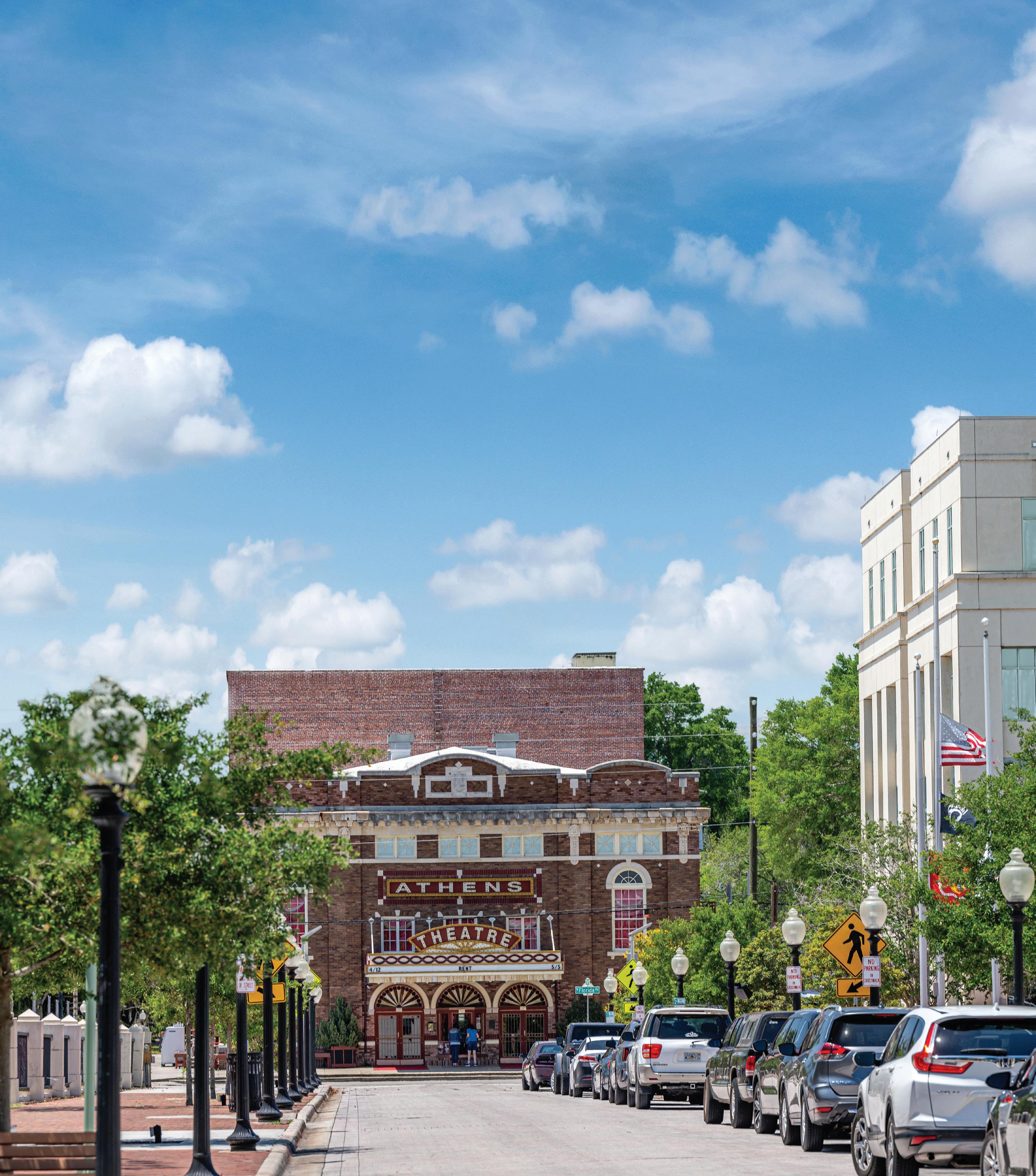
Stroll south along Woodland Boulevard, the city’s main drag, and stop in at Pat and Toni’s Sweet Things for free samples of old-fashioned candy. On the same block, Santorini Greek Cuisine serves what many locals swear are the best gyros and tzatziki in Florida. Book lovers will enjoy browsing The Muse Book Shop and Cliff’s Books; music fans can dig through vinyl at Groovy Records and Steve’s Downtown Music. Don’t miss Nest, a cafe with gifts and home decor; Sidecar Market & Bar, an atmospheric cafe bar that sells craft drinks and furniture; and Pretty Little Things of DeLand, a charming boutique for vintage fashion and furnishings.
Once called Persimmon Hollow, Henry DeLand envisioned the area as a city of the arts. That spirit lives on at the stunning Italian Renaissance–style Athens Theatre Having hosted concerts and plays since 1921, the theater often lets curious visitors step inside for a peek. The Museum of Art–DeLand showcases an excellent contemporary collection, while downtown DeLand features a historic mural walk and sculpture walk. Stop by the West Volusia Tourism Bureau Visitor Center for guides.
On Friday nights, head to the lively Artisan Alley Farmers Market, featuring fresh produce, local artisans and food stands from local vendors. The alley is closed to traffic and allows open containers, giving the market a festive, street-party vibe. Around the corner on Georgia Avenue, you’ll find the Scottish-inspired Hyderhead Brewery and Trilogy Coffee Roasting Co., serving single-origin, artisan-roasted coffee.
For a main-street stay, book a room at The Historic Artisan Downtown Hotel, a 1924 Spanish Colonial building that once housed the DeLand Hotel. Grab a meal inside at Chicas Cuban Cafe for authentic Cuban dishes and pastries. Finally, cap your evening off at Cafe DaVinci, DeLand’s most happening open-air bar and music venue.
say that Skydive DeLand uses top-quality equipment—much of it made locally—and employs some of the best instructors in the country. “The whole industry has done an incredible job not only designing the parachute and the systems, but also developing training procedures so that nobody gets on an airplane without knowing exactly what’s going to happen,” Caralt says.
Skydiving isn’t a cheap hobby, but you don’t have to be wealthy to get started. At Skydive DeLand, tandem jumps cost $229, with photo and video packages available for an additional $90. Jumpers who are already licensed and have their own equipment can jump at 13,000 feet for about $30. Martinez wanted to learn to jump solo, so he bought the seven-jump accelerated free-fall package for $1,350. He paid extra for the photo and video package, which he says was worth every penny. “Some of my friends were like, ‘Wow … you did that?’” he says. Martinez’s new goal is to complete 200 jumps to reach the threshold required to wear a GoPro and take his own footage. (The USPA recommends this so novice jumpers can focus entirely on jumping.)
Caralt says that skydiving is like a fraternity that’s welcoming to outsiders but still tight-knit. “You are either one of us or you are not,” he says. He met his wife, Judith Silva, a skydiver on the Spanish national team, through the sport, and says skydiving has been central to his life for decades.
Many skydivers begin with a tandem jump or a few solo jumps before progressing to formation jumping—where teams build shapes in free fall—or participating in artistic competitions. Formation jumping requires a tremendous amount of practice and coordination, especially for larger groups. In late 2025, a Floridabased team of more than 100 members will attempt to break a canopy formation record in Lake Wales, another Central Florida drop zone.
Klingelhoefer says skydiving is an egalitarian sport. “You could be a lawyer or a bum who lives in a bus, but when you’re at the drop zone, you’re both just skydivers waiting to get on the next load,” he says. Johnston says many high-achieving professionals flock to the sport. “For whatever reason, skydiving attracts a lot of Type-A personalities,” he says.
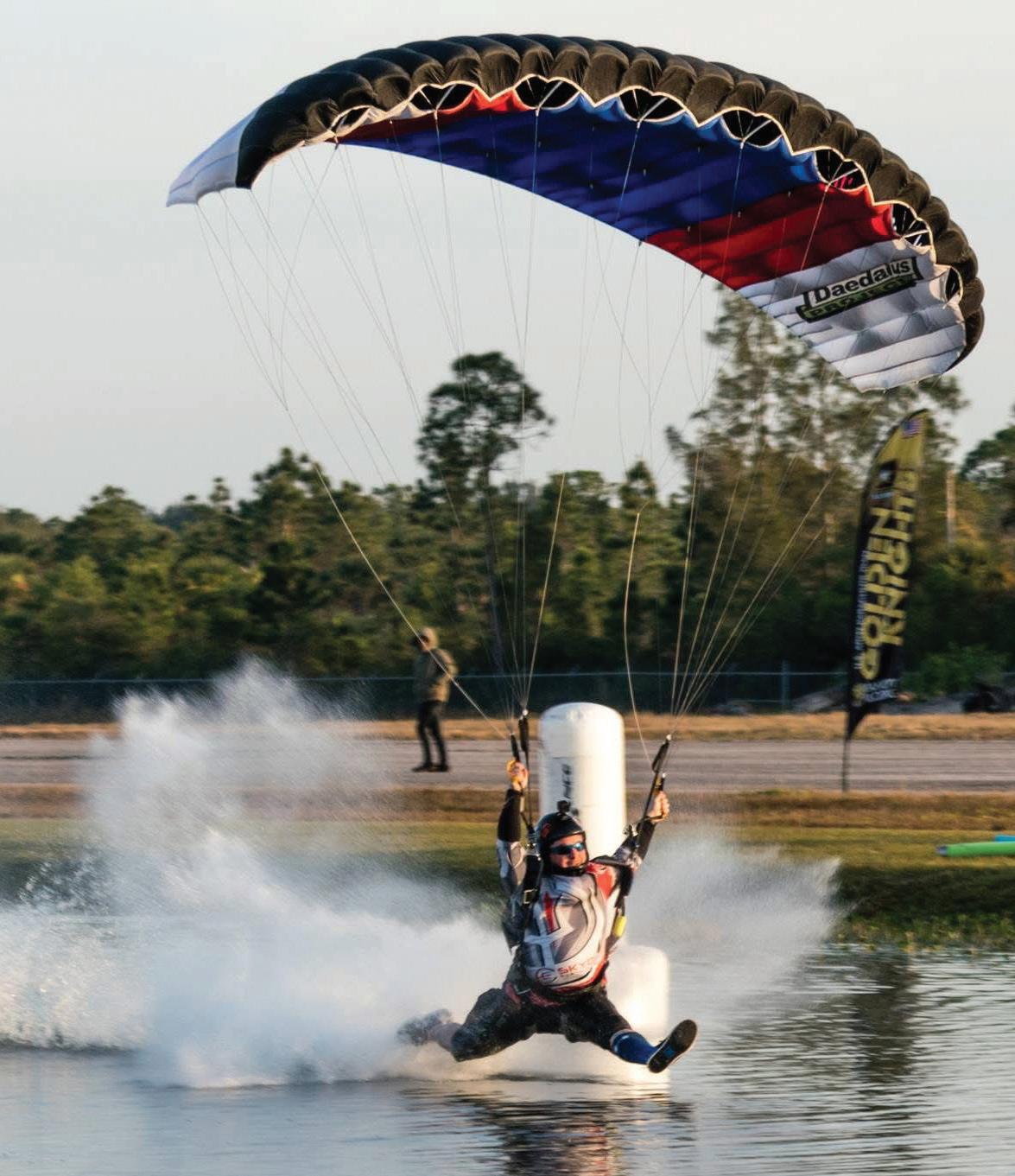
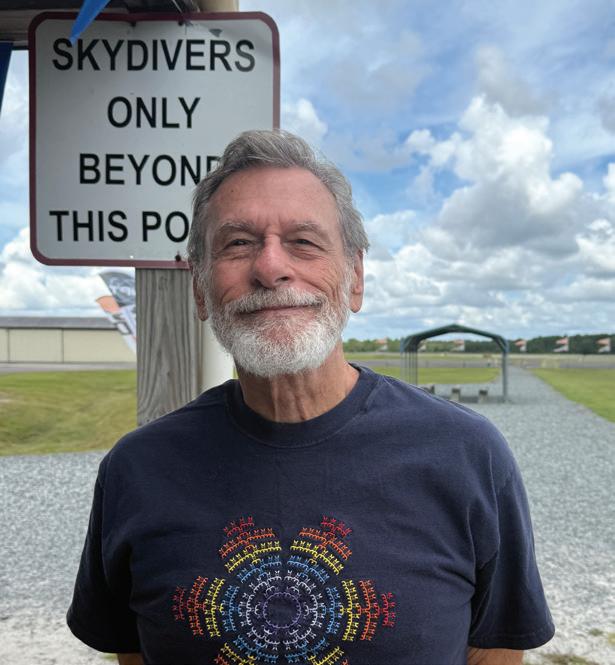
Klingelhoefer’s knee injury may have ended his jumping career, but the 82-year-old Manhold says he plans to keep skydiving as long as his body allows, hopefully until at least 90 or beyond. Skydiving as an octogenarian may sound risky, and
Manhold admits injuries from past jumps have led to shoulder, knee and hip surgeries. But he still believes the sport is safe—and insists he’s young compared to some who show up at Skydive DeLand. His friend Pat Moorehead celebrated his 90th birthday with nine solo jumps in 2021. Manhold is part of a group called JOES (Jumpers Over Eighty Society) while Moorehead belongs to JONS (Jumpers Over Ninety Society). Manhold says there are currently 962 jumpers over 70, more than 300 over 80 and 25 over 90 involved in these clubs. Glendine Hamilton, a centenarian who lives at a senior community near DeLand, celebrated her 100th birthday last year with a tandem jump. When asked why she did it, she told local media: “So others could see that it’s possible, and if they want to— do it! It’s fierce. I loved it.”
Caralt says that if you’re considering trying skydiving, you should go for it—but be careful because it’s addictive. “Don’t say no. Just think about it and learn about it … you may decide to jump,” he says.
By Prissy Elrod • Illustration by Thais Bolton

Double names and nicknames seem to be multiplying like rabbits these days. Fact-checkers will insist it’s always been this way, but I don’t remember a single double name floating around my childhood. Not one.
Don’t get me wrong—I adore them. I’m practically a double-name collector. I have a godchild named Mary Heather. My youngest daughter is Sara Britton, and her daughter is Allie Boone.
But somewhere along the way, Sara Britton shrunk to SB and Allie Boone to AB. And AB’s circle of friends? Four of them have double names, and they all go by their initials too. One night, when she slept over, I found myself stammering through an alphabet soup of questions: “Are KT and TE at JK’s, AB?” Naturally, I got it wrong.
“Sassy, who are you even talking about?” she asked with that teenager’s tone. “I don’t know their names,” I quipped.
Grandparents have their own name-game going on. Nobody wants to be Grandma or Grandmother anymore. No siree—today’s roll call sounds like a concert lineup: Gaga, Bebe, Mango and Mumbo. Four of my friends have chosen these names.
Still in college—no husband, children or grandchildren in sight—I had already decided I would be Sassy one day. It paired neatly with Prissy, the nickname I’d carried since birth, and suited my oddball ways.
And one day, I became her, which brings me to how I ended up not just with a double name, but a double life—as Prissy to the world and Sassy to five grandchildren.
What I hadn’t expected was the frequency of its use. “Sassy, did you know…?” “Sassy, can I go…?” “Sassy, what is…?” One afternoon, out of curiosity, I counted 23 Sassys in one hour.
Now, in my second decade as Sassy, something strange has started happening. Women from here, there and yonder began emailing, texting and calling to ask if they could borrow my name. I swear, how nice is that?
Oscar Wilde said imitation is the sincerest form of flattery. Well, I agree.
When my two daughters had children, the three girls came first. I called them my Poodles. Then came two boys, and they quickly became my Mutts. “Poodles and Mutts” turned into a blog where I laughed at the modern juggle: two sets of working parents, car seat organization, school pickups and grandparents drafted back into active duty overseeing all of it.
But, as usual, S.O.S.F.D morphed into Sassy Oh-So-Fun Travel. The tipping point was when Britton, the oldest Poodle, turned 8 years old. At the time, American Girl dolls were hot, so her mother and I plotted the ultimate birthday: tea at the Atlanta store, shopping and a swanky hotel.
The tea was perfect—mini cinnamon rolls, pizza, cupcakes and pink lemonade served from a teapot. We wore hats. We posed. We left with a brand-new doll.
And then, disaster. In the car, after five hours driving from Tallahassee, plus three hours of doll drama, the birthday girl wailed: “Why did you do this on my birthday? I wanted a party with my friends!”
I drove to our hotel, marched into the lobby, informed the desk clerk that one of my “guests”
serenading her over cake. She agreed. And yes, it was picture perfect—except it wasn’t Times Square. Her soft smile and quiet “thank you” spoke volumes. She was gracious, but the sparkle of her long-held dreams had dulled.
And with that, the three Poodles officially completed their 13th birthday adventures. My attention shifted next to my darling Mutts, the boy cousins. One was already 12, and the other was hot on his heels. Sassy’s playbook was about to get a rewrite.
Boys are so easy
Nobody wants to be Grandma or Grandmother anymore.
These days, you’ll find me in the same school pickup line where I once collected my daughters a lifetime ago with the same K-12 campus and noodle-wrapped line of cars. I sit idling, recounting the hours and years I’ve spent in that exact spot— same pavement, same pace, just a fresher set of Goldfish ground into the floor mats.
In my early Sassy days, I created Sassy Oh-SoFun Day. Of course, in keeping with this family’s obsession with double names and initials, it quickly earned its own acronym: S.O.S.F.D.
The concept was simple: a one-on-one adventure with each grandchild like an ice cream run or maybe a painting class. The girls’ favorite was the slumber party at Camp Sassy. I’d pull into the driveway, load up their Poodle gear and haul it back to my house. Up went the pink tent, crammed with sleeping bags, dolls, books and flashlights. They camped. I didn’t—end of story.
wasn’t well and canceled the whole shebang. Back in the car I announced, “Buckle up, ladies. We’re heading home.”
After that day, I changed the rules. No more grand adventures until age 13. Each would get a birthday trip with Sassy. From then on, they zigzagged through dream destinations as the years ticked closer.
Britton was first. For her 13th adventure, she chose a trip to New York City during a July heat wave. Three years later, Kenley followed suit, and back to New York we went.
Allie Boone had been counting down since she was 6. “Sassy, I can’t wait for my turn,” she said longingly.
But when AB’s big day finally came, the news warned of riots and dire weather in New York. Her mother pulled the plug. I felt terrible.
So I pitched an alternate plan of The Cloister at Sea Island, Georgia: holiday lights, spa treatments, horseback rides and waiters
Thirteen-year-old boys are a dream to travel with. They pack light, eat whatever’s put in front of them and think any hotel with Wi-Fi is the Ritz. Hand them a pizza slice and point toward the nearest sports store, and they’re yours for the weekend. It’s zero drama and maximum fun. When Raynes turned 13, he chose Boston. Unlike his sister Britton, he wanted our trip on his actual birthday. He built his three-day itinerary himself with a little help from ChatGPT. Then came the travel nightmare: Tallahassee flight delayed, Atlanta oversold, eight hours of running from gate to gate. Not once did the birthday boy whine or pout. He kept asking whether we’d make it, and when I said maybe, he shrugged and said, “It’ll be an adventure, Sassy.” Boys are so easy.
By the last flight, the gate agent in a red coat studied our tickets, frowned and declared a mistake had been made—then lifted his microphone. “We have a birthday boy today. Let’s sing.” Fifty strangers sang “Happy Birthday” while Raynes tried to vanish into the carpet. The captain toured him around the cockpit, then seated him in first class.
And Sassy? I was in the last row. Mid-flight, Raynes came up and said, “Sassy, please take my seat.” I stayed put. His offer was gift enough. Then came Whit. My finale. He chose the Bahamas; his mother said no. I sold him
Highlands, N.C., for a fishing trip. He accepted and invited cousin Raynes and his Pops, my hubby, as his sidekicks.
We packed the truck with fishing poles, golf clubs, luggage and snacks. Pops unfolded a paper road map across the dash. “What’s that?” the boys asked in unison. They’d never seen a map. “That’s history,” Pops said. The boys laughed. Their next questions—175 miles later—were about the six billboards advertising the “Largest Adult X Store.” “Sassy, what store is that?” Whit asked twice. I turned up the radio’s volume before he could ask a third time. Innocence is fleeting.
After eight hours of driving, we arrived at our destination. The Airbnb I’d booked looked perfect online. In person? Mold, a mystery smell and a shower I wouldn’t step
in with boots. No one unpacked. I called for a refund as we fled. It was already 6:00 p.m.
There was a large wedding in Highlands that weekend. Everything was sold out. By 11 p.m., still homeless, we left Highlands, bound for another town.
Our final stop was a two-star motel in Franklin, N.C. Four of us squeezed into two tiny beds. The boys set sound machines to drown out Pops’s snoring. I sprayed disinfectant everywhere and scrolled my phone for the next two hours, praying for salvation. By a small miracle, I found an available house, booked it and closed my bloodshot eyes. The next day we checked into a lovely home. The rest was exactly what Whit wanted: fly fishing, gem mining, golfing, mountain roller coasting and even family time. I wonder if there will ever be a fourth
generation of Sassy Trips? The destinations may change but the takeaways won’t. It was never about the fish caught, golf balls lost or Broadway Playbills collected. The real souvenirs are the memories and heartfelt moments: Allie Boone’s sweet gratitude, Raynes turning his mined gem into earrings for Sassy and Whit’s daily texts reading, “Just checking on y’all.” Those are my treasures, and they last long after the trips end.


— favorites, flings & Finer things —
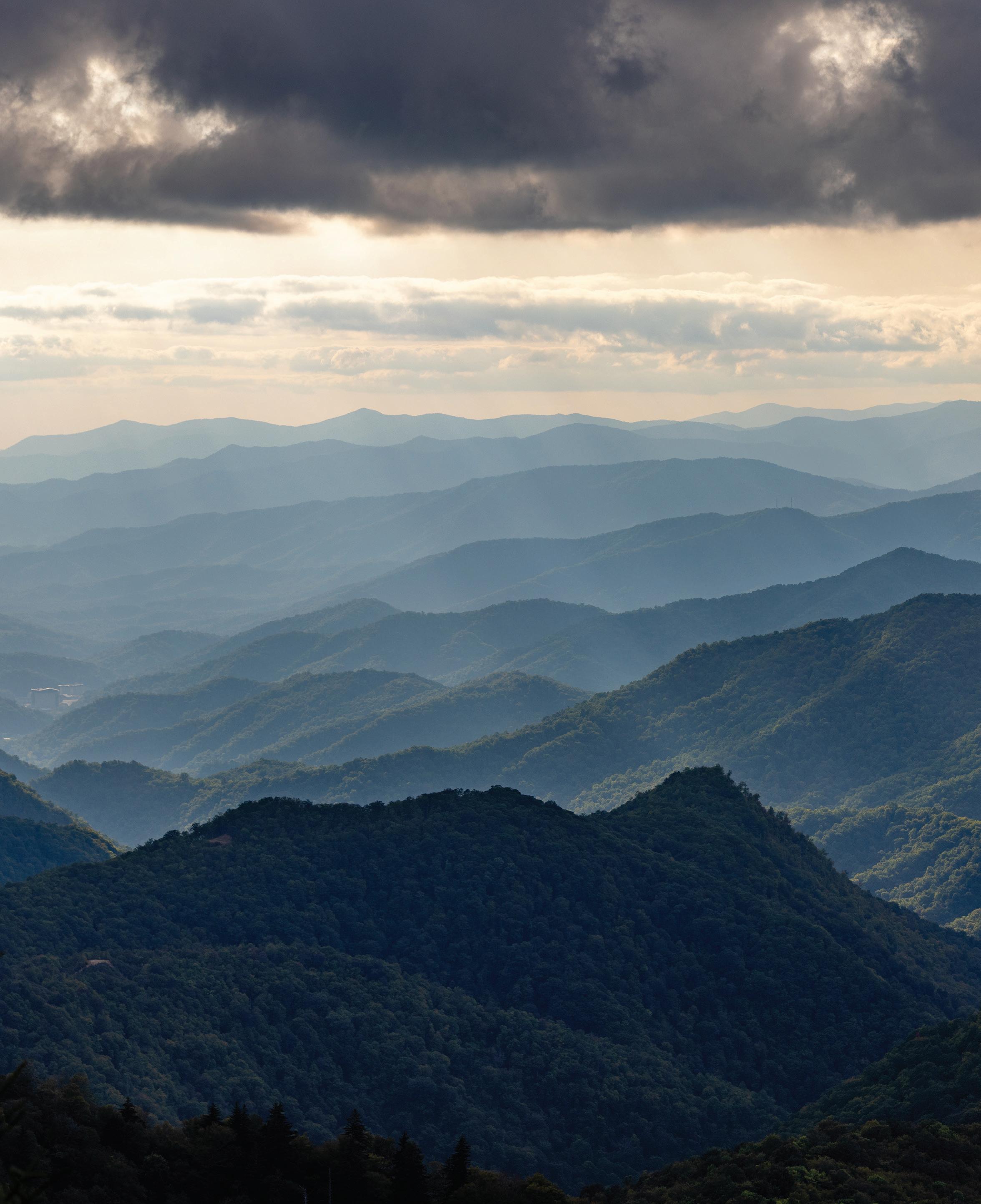
From the Panhandle to the Keys, 31 events worth the trip
We saved you a seat at Boca Raton’s best spots.
Where Asheville locals go when tourists aren’t looking grove stand
Desserts get Kool at this Tallahassee staple.
—
One creator, countless worlds—from Disney to Universal
Meet the rancher protecting Florida’s wild heart.
A scientist, his snakes and a legendary roadside stop

SUBSCRIBE TO RECEIVE 4 ISSUES A YEAR
This page: A view of the
near
Read about this Stone’s Throw city on page 96.

GONZALO GARCIA
12-28
FEB 20-MAR 1
MAR 7-8 CARMEN
MAR 26-APR 5 JEWELS
MAR 27-APR 3
APR 11-12
1-10
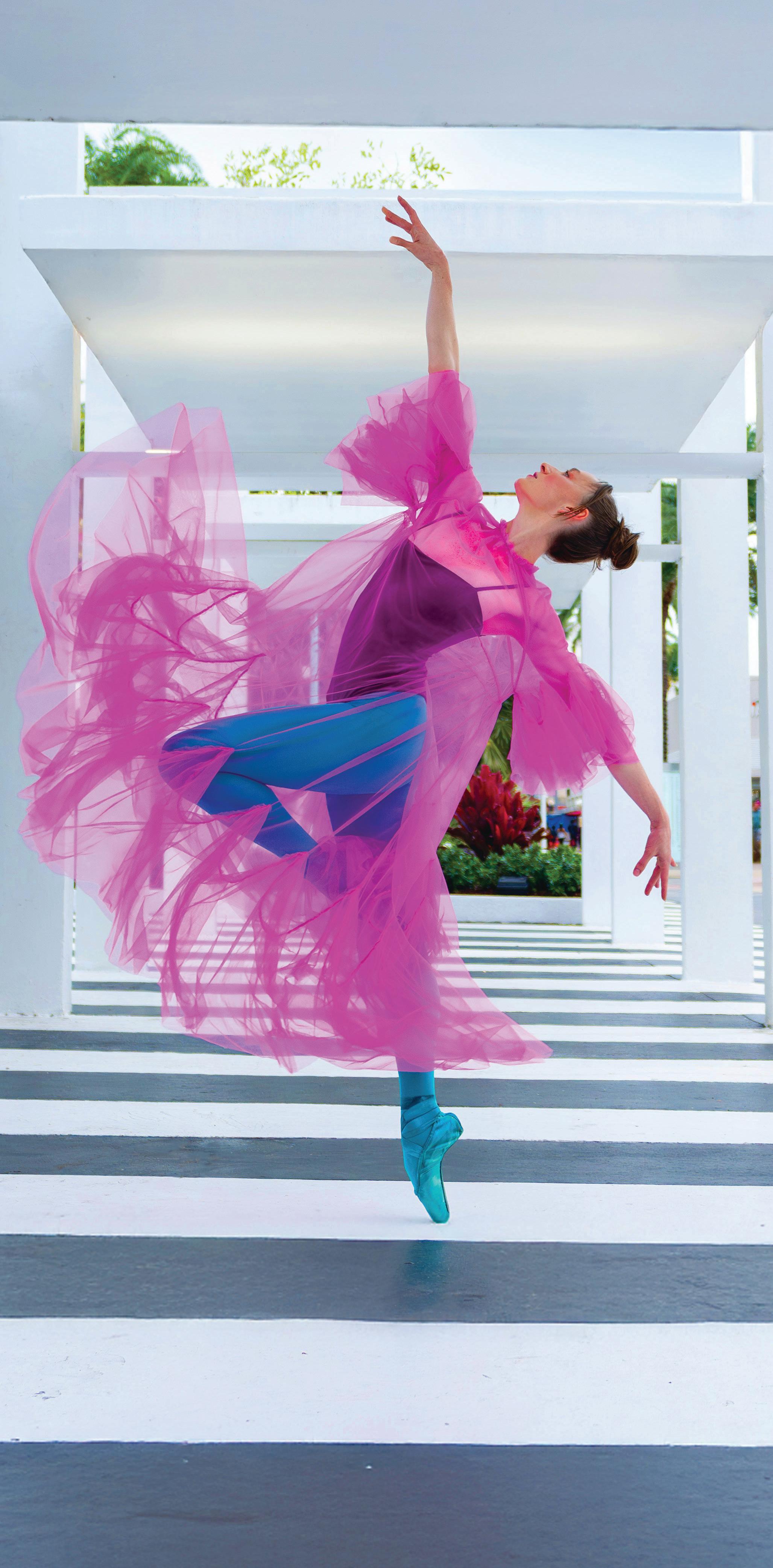

2025–2026
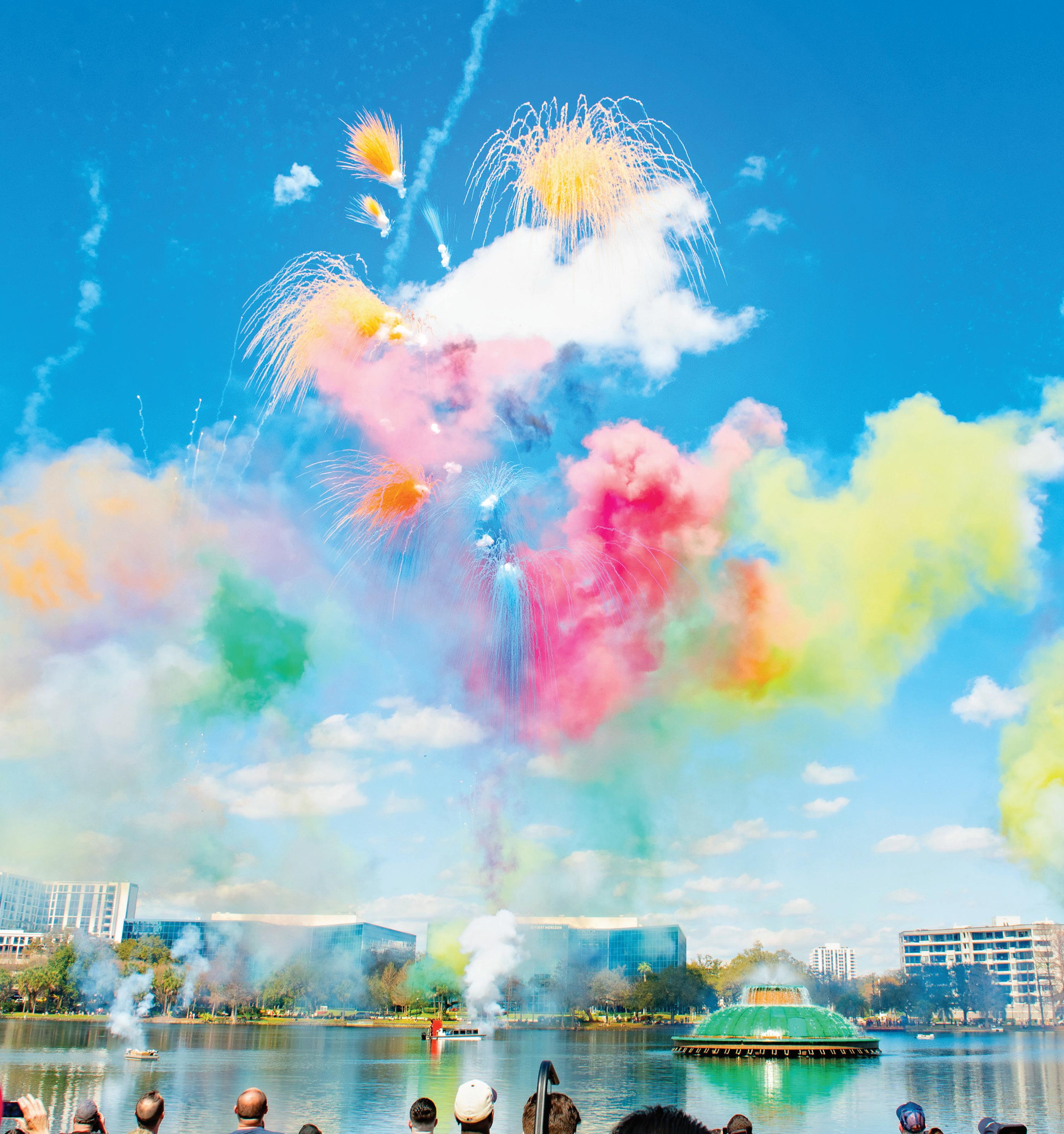
Your road map to an action-packed winter season, with everything from performing arts and foodie fests to music weekends, art fairs, holiday light shows and more

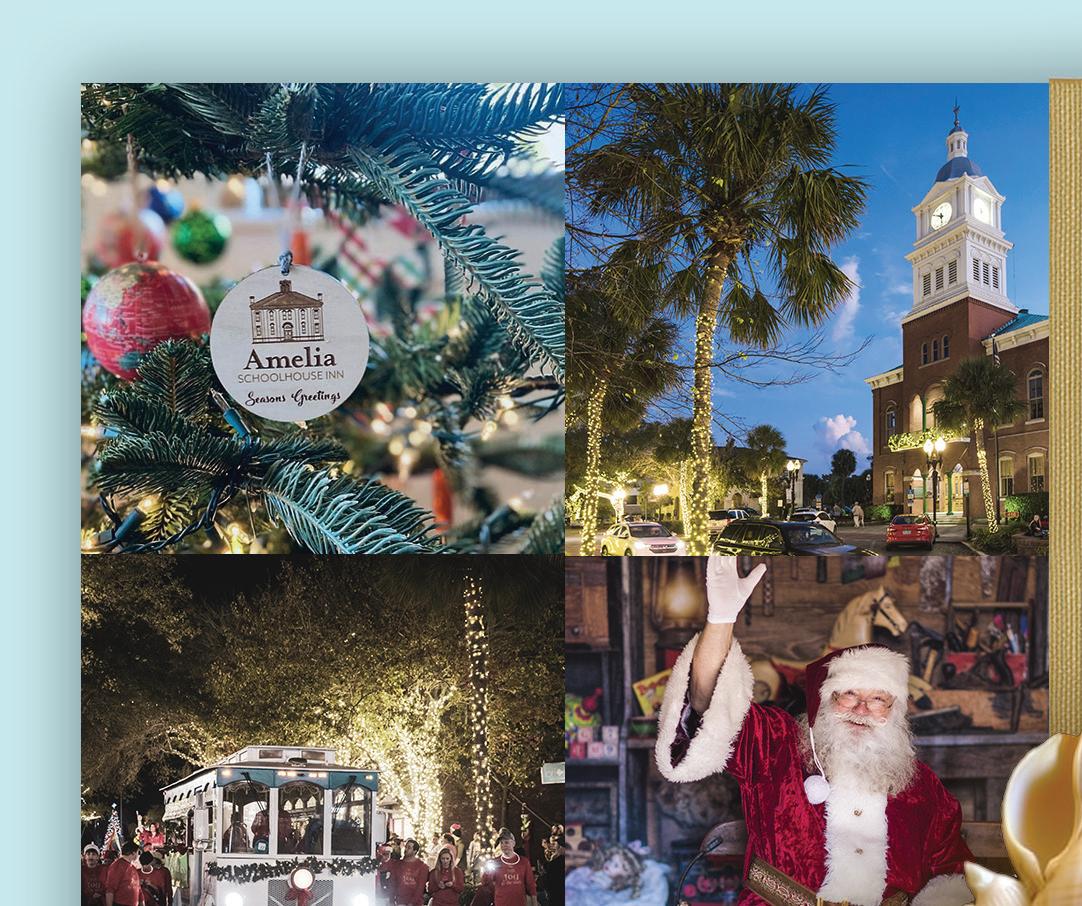
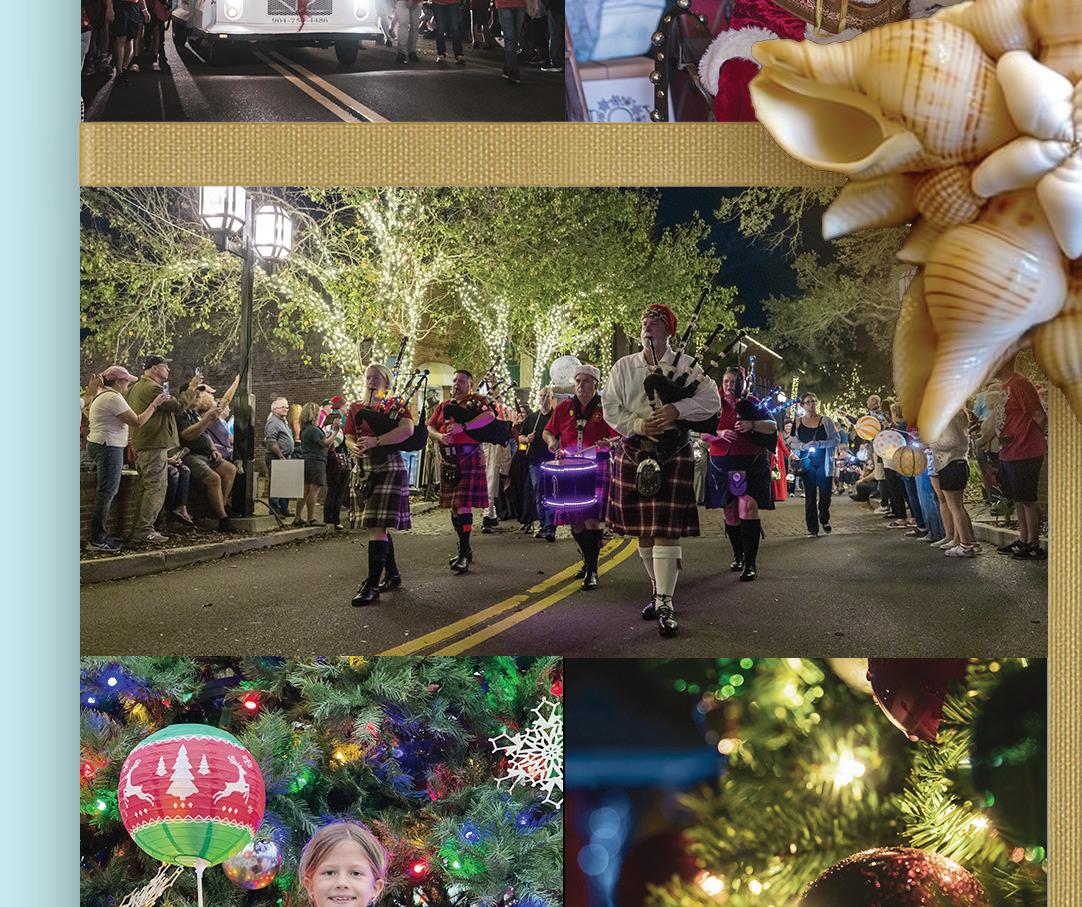
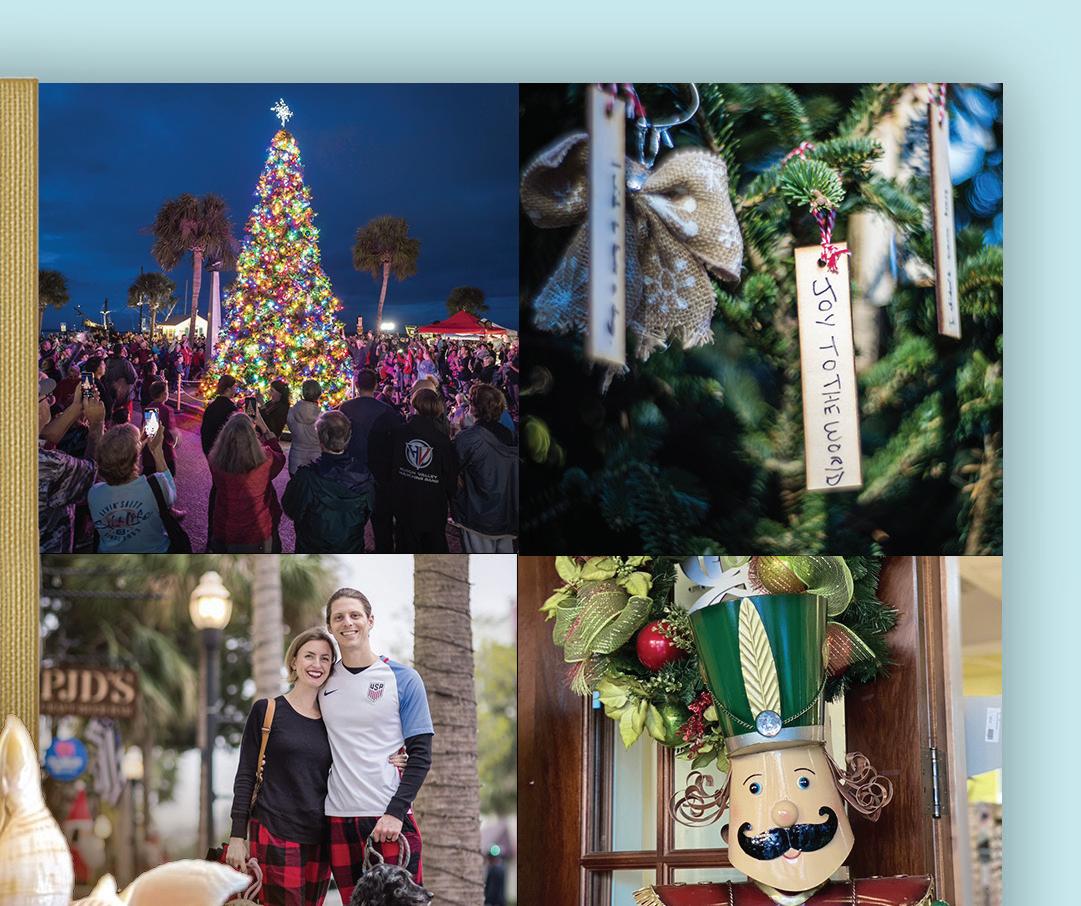
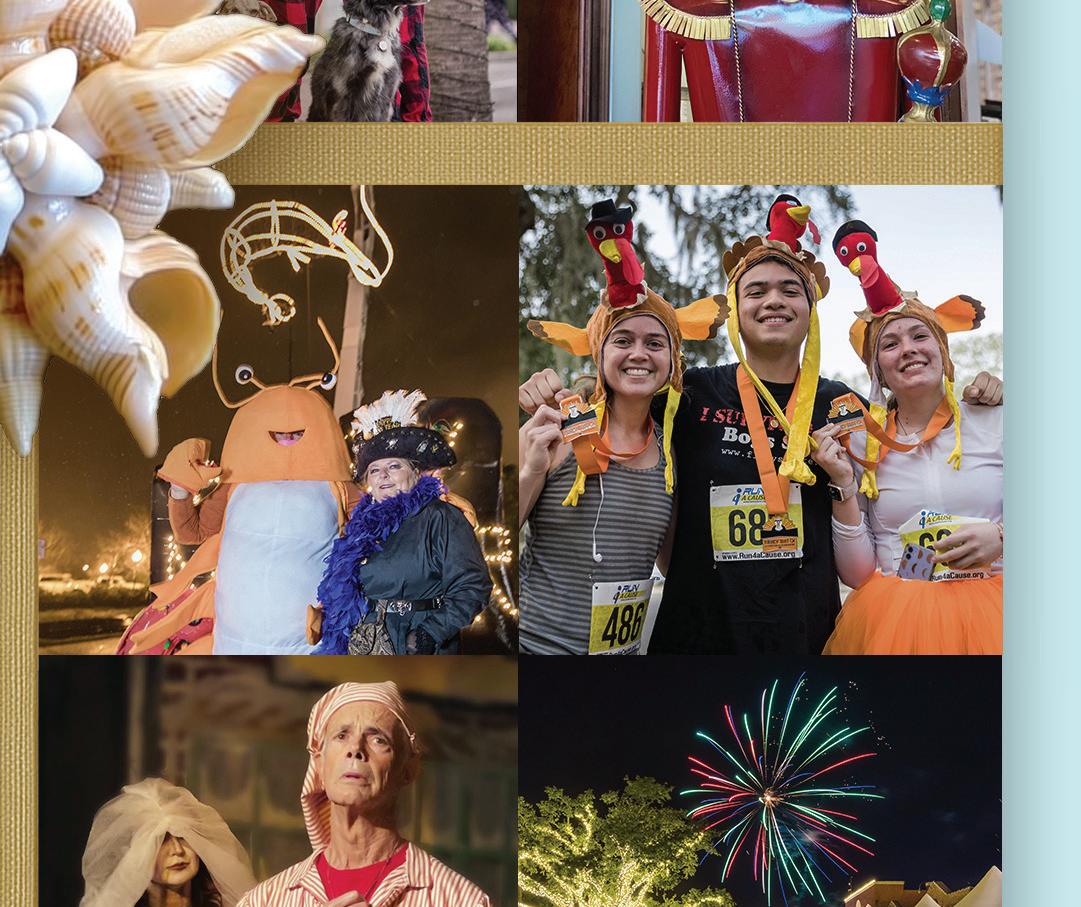


Celebrate the season with timeless coastal charm. Nov 26-Dec 31

On Amelia Island, Florida, magic and mistletoe meet the gentle ocean breeze. From the night before Thanksgiving through New Year’s Eve, the season sparkles with a calendar filled with lights, decorations, family traditions and small-town charm by the sea. Experience the holidays the way they were meant to be.
Plan your getaway at AmeliaIsland.com/holiday
On Amelia Island, the holidays come wrapped in coastal charm with a dash of nostalgia. This barrier island may sit along the coast of Northeast Florida, but come late November it feels like a storybook town from Christmases past, with twinkling lights strung across the historic downtown and festive parades on cobblestone streets. Imagine strolling past storefronts decked out in holiday cheer and children’s faces alight with wonder. Think sweaters, hot cocoa and cozy gatherings by fire pits. This isn’t your typical Florida holiday season, but don’t worry, you can still enjoy some beach time on these pristine island shores.
With a variety of events for all ages, families and couples alike will find plenty to do. The season kicks off with dazzling tree lightings, Thanksgiving Turkey Trot, and Black Friday fun, carrying through with a Holiday Christmas Market and New Year’s Eve Shrimp Drop.
The island’s variety of accommodations makes it easy to fully immerse yourself in the celebrations. Choose from luxury oceanfront resorts and spacious beachfront vacation rentals perfect for the whole family, to intimate B&Bs and familiar hotel brands that put you steps from the beach or in the heart of downtown.
For those seeking a holiday getaway that feels worlds away yet close to home, Amelia Island delivers a magical, small-town Christmas unlike anywhere else in Florida. See the full calendar of events at AmeliaIsland.com/holiday
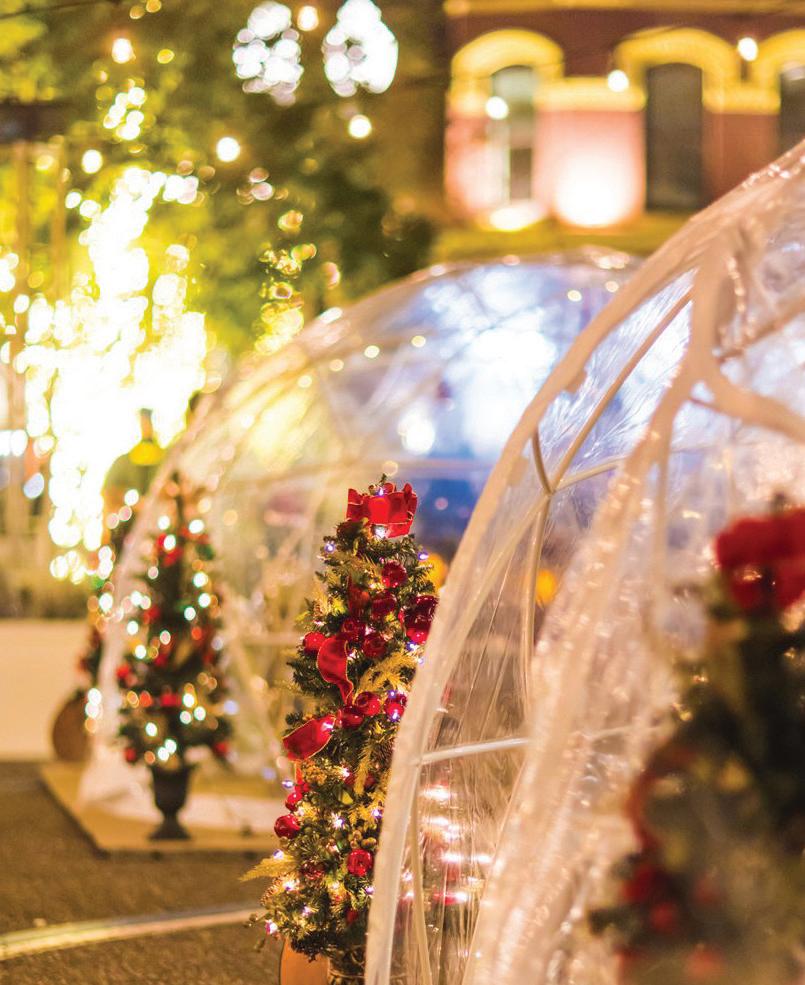
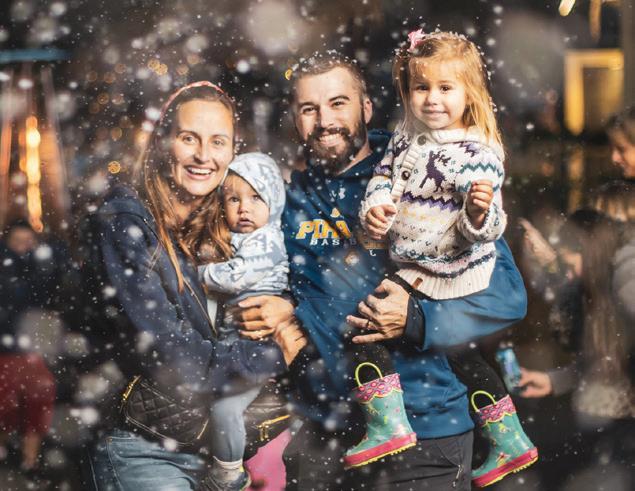
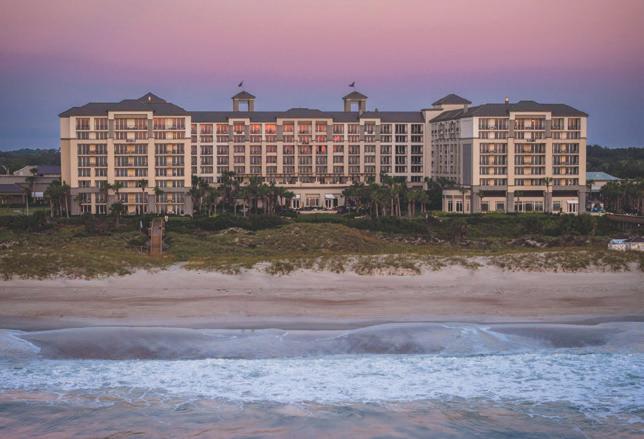
• The Ritz-Carlton, Amelia Island Christmas Tree Lighting, Nov 26
• Omni Turkey Trot 5K, Nov 27
• Black Friday PJ Party Downtown, Nov 28
• Downtown Holiday & Tree Lighting, Nov 28
• Little Women the Musical, Nov 29, Dec 4-6, 10-11, & 14
• Holiday Home Tour, Dec 5 & 6
• Lighted Christmas Parade, Dec 6
• Dickens on Centre Illuminated Procession, Dec 11
• Dickens on Centre Christmas Market & Festival, Dec 12-14
• Chamber Music Festival Sounds of the Season, Dec 17
• Crescendo Amelia, How the Big Band Stole Christmas, Dec 19, 20, & 21
• TaxSlayer Gator Bowl, Dec 27
• New Year’s Eve Shrimp Drop, Dec 31
2025–2026
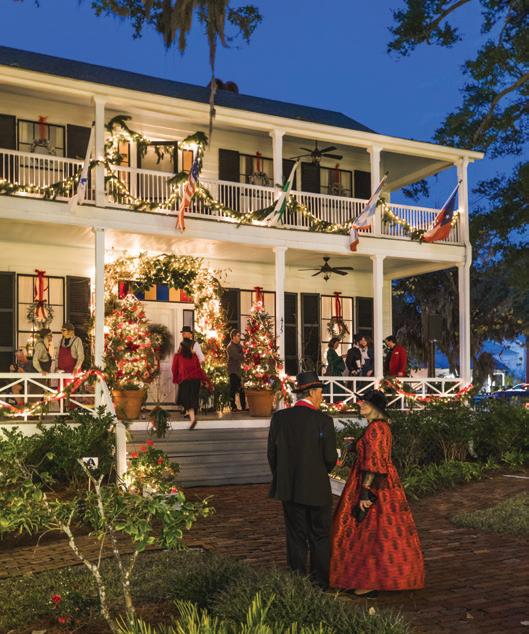
ST. AUGUSTINE
Nov. 15–Jan. 11
The nation’s Oldest City shines with more than three million holiday lights, illuminating historic buildings like the Lightner Museum and Flagler College’s Ponce de Leon Hall to beloved spots like The Tini Martini Bar and town plaza. floridashistoriccoast.com
AMELIA ISLAND
Dec. 11–14
Waltz through a Victorian Christmas market, sample charcuterie inside a giant snow globe, don a petticoat for a party at the storied Lesesne House and end the night with a 500-drone display over the harbor at this Charles Dickensthemed Christmas festival. ameliaisland.com
PENSACOLA
Dec. 4–7
Engines rev and checkered flags fly for a weekend of highspeed chases that culminates in the 300-lap white-knuckle namesake—with racing pros on the track and in the stands. 5flagsspeedway.com
ST. AUGUSTINE
FILM FESTIVAL
ST. AUGUSTINE
Jan. 7–11
The stage is set for 50plus independent films by international and local directors, filmmaker Q&As and insiderpacked soirees delivering more movie magic than any multiplex. staugfilmfest.com
WALTON COUNTY
Jan. 16-19
POMONA PARK
Jan. 31
Hike through 20 miles of canopy-covered trails at this untimed communal trek in Dunns Creek State Park, featuring refreshment stations and a finisher medal to prove you put in the work. mammothmarch.com
SANDESTIN GUMBO & BLOODY MARY FESTIVAL
MIRAMAR BEACH
Feb. 20–21
Swap sugar for spice at this seafood festival, which invites visitors to vote for the restaurant that has the best gumbo and Bloody Marys to the soundtrack of live zydeco. sandestingumbofestival.com
Every January, the 28.5-mile stretch of the Panhandle known as 30A strums to life in a weekend showcase of sun, sound and story. More than 100 singer-songwriters play across 30 venues, from iconic restaurants like Pickle’s in Seaside to sandy staples like North Beach Social in Santa Rosa Beach. Headliners include gospel and R&B legend Mavis Staples, Toad the Wet Sprocket, 10,000 Maniacs and other seasoned storytellers. Surprise artist collabs and seamless shuttle transportation to the main stage keep the good vibes flowing. Situated at the center of the action, Grand Boulevard Town Center is where fans gather to watch headliners. Beyond the main stage, sip an Emerald Breeze at The Bay or grab crab taquitos at LaCo. Cozy coastal stays, from boutique spots like Hibiscus Coffee & Guesthouse to family favorites like Ocean Reef Resorts, make it easy to settle in and sing along from start to finish. 30asongwritersfestival.com
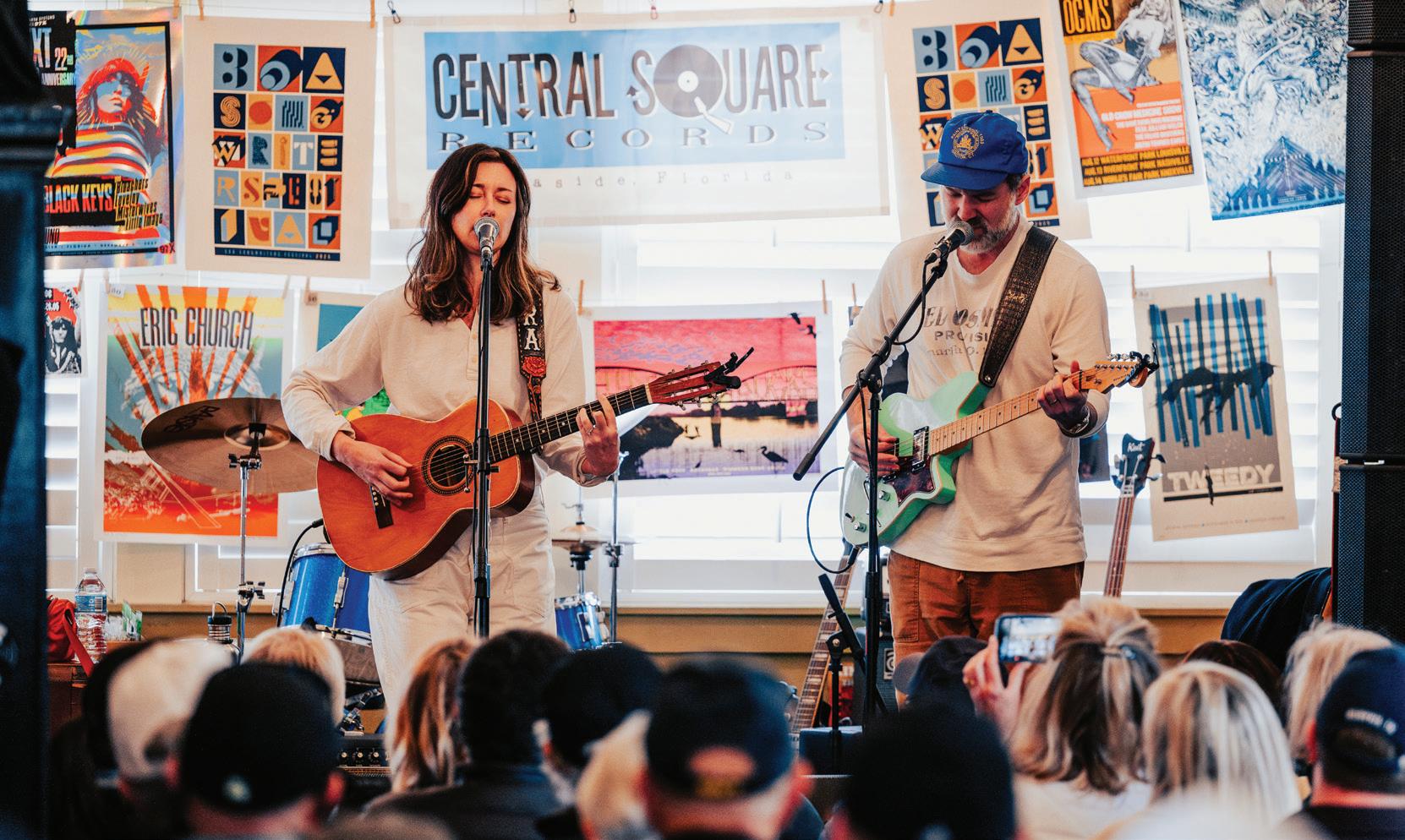


Where’s your sense of adventure? And creativity, and belonging? Here in the heart of downtown DeLand. Just beyond Orlando lies an
cultural oasis, drawing world-renowned artists, unframed thinkers, and the endlessly original. Come be a part of that dynamic. Come see what inspires you.

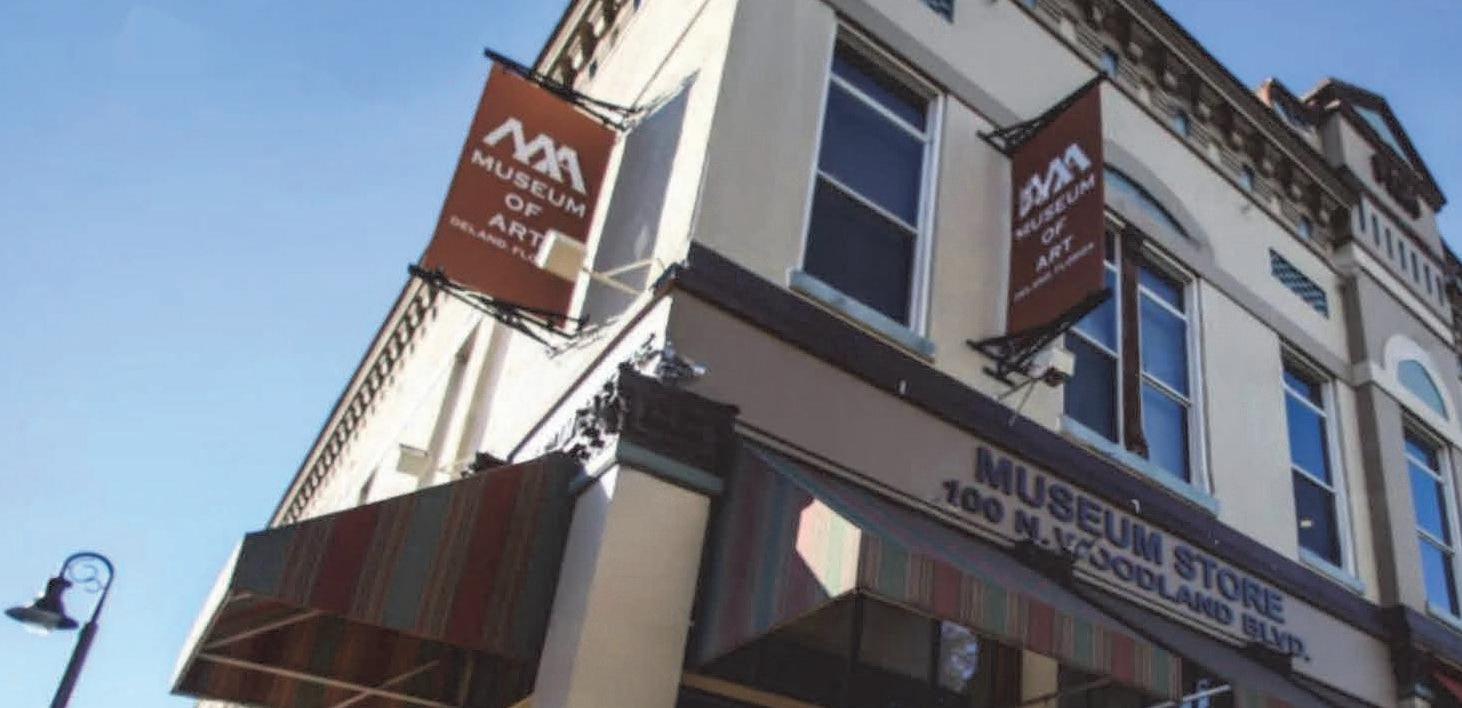

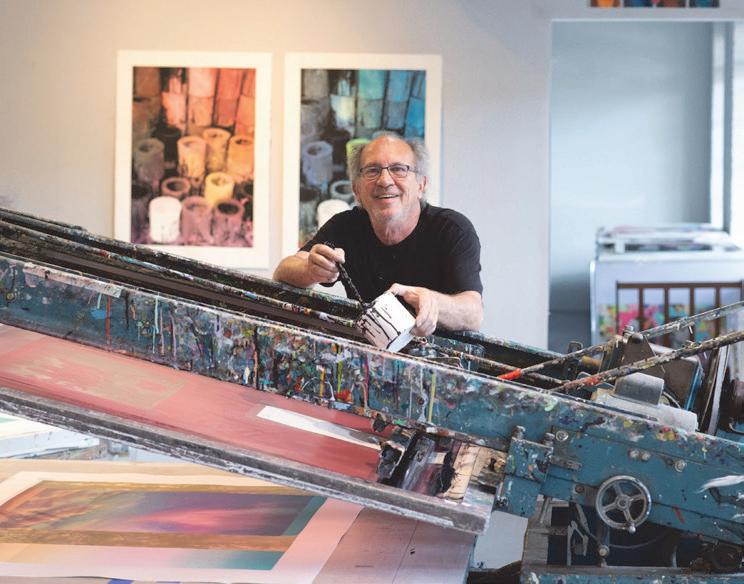
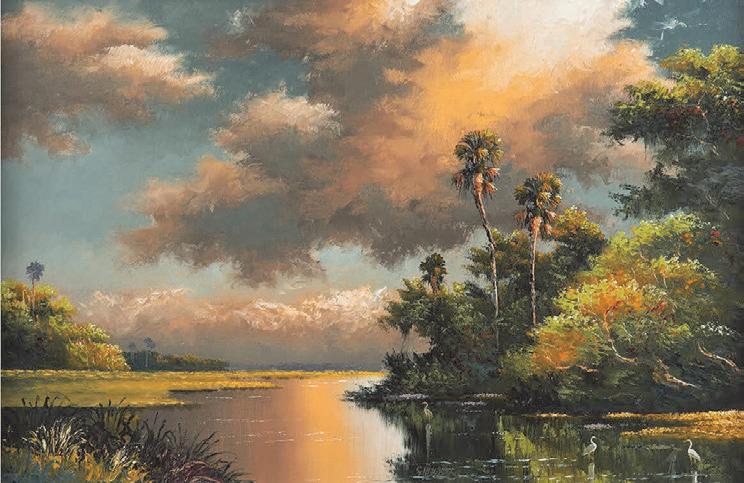

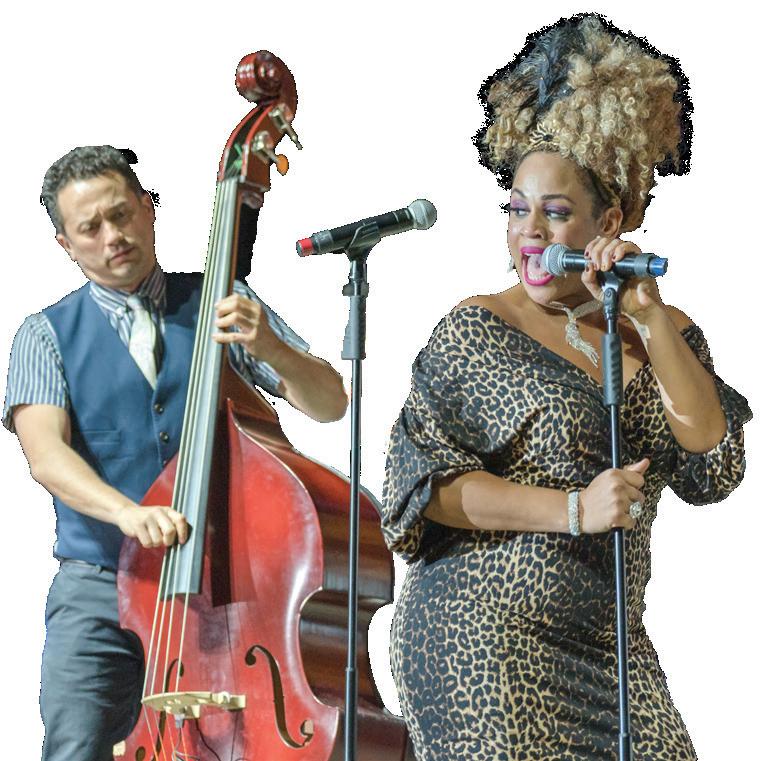










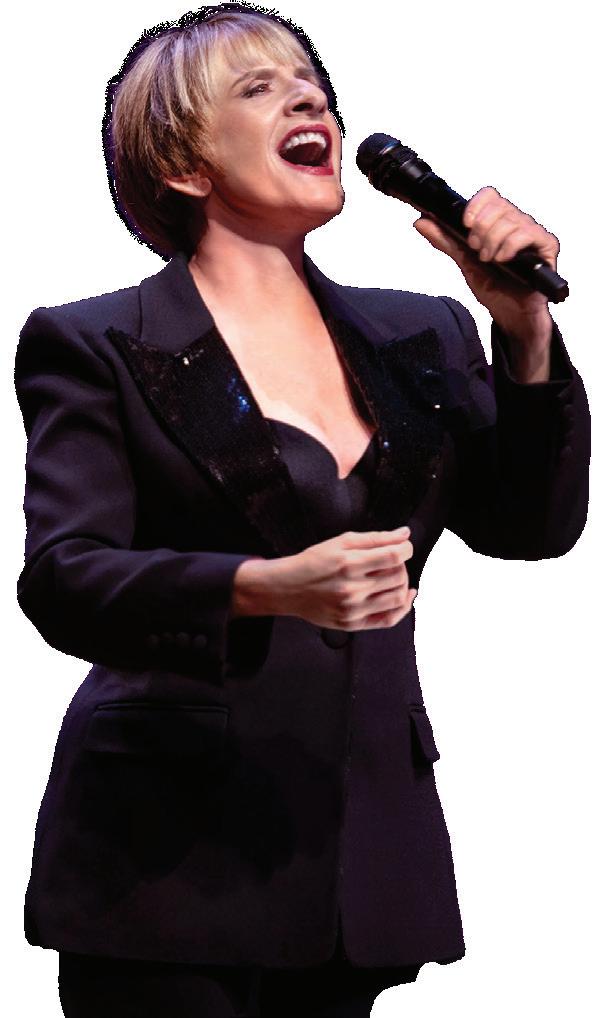







2025–2026
BOWLING GREEN
Dec. 19–21
Enjoy birdies, buddies and a weekend well spent at this luxury golf resort, where twoperson teams will compete on both Red and Blue courses. streamsongresort.com
2026 OCALA
WINTER SPECTACULAR SHOW
OCALA
Dec. 31–Jan. 4
(Don’t) hold your horses! Week one of the World Equestrian Center’s Premier Hunter/Level 6 Jumper circuit gallops into town with some of the world’s top riders competing for big cash. worldequestriancenter.com
CRYSTAL RIVER
Jan. 17–18
Celebrate the sea cows at this two-day festival, featuring manatee tours, local bites and vendor wares inspired by the beloved gentle giants. gomanateefest.com
ROLEX 24 AT DAYTONA
DAYTONA
Jan. 22–25
Centered around the famed 24hour endurance race, autophiles can experience four days of racing, driver meet-and-greets and up-close car encounters. daytonainternational speedway.com
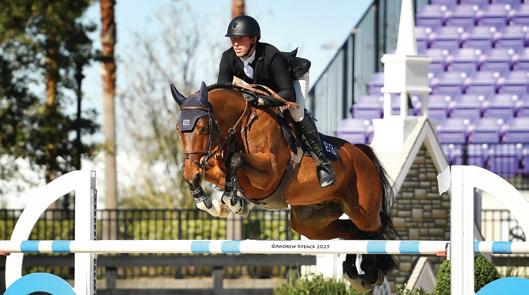
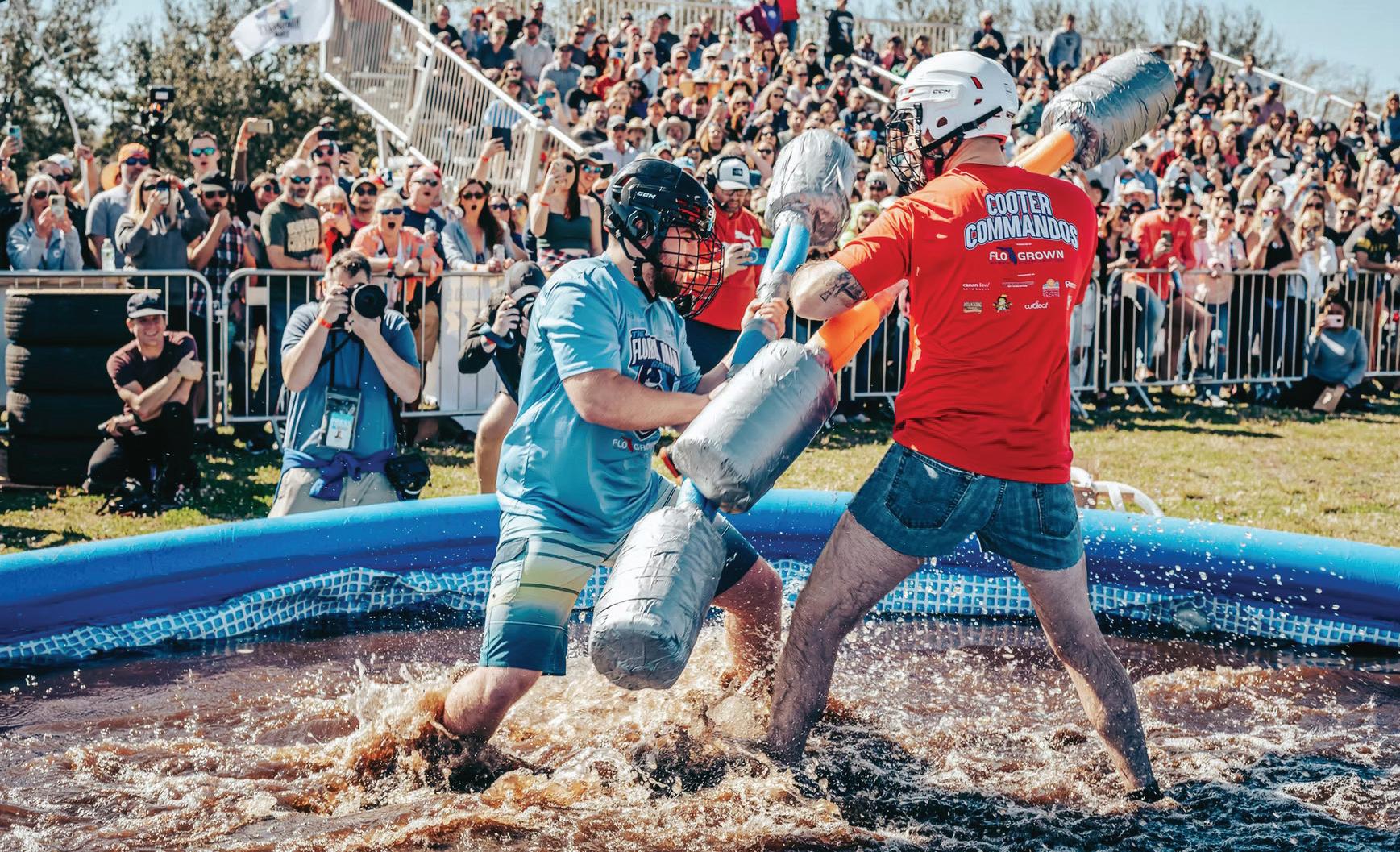
Feb. 21
Let your inner Florida Man run wild in a series of headline-inspired challenges at the third-ever iteration of this competition. Test your speed—and questionable judgment—in the Evading Arrest obstacle course, complete with Florida Man’s favorite pastimes: catalytic converter theft, a footrace from the cops, a hunt for a frozen iguana and a gator toss through a drive-thru window. Then grab a shopping cart for the Hurricane Party Prep rumble, where you’ll battle fellow shoppers to stock up on necessities before grocery shelves are empty in a 60-second free-for-all. The chaos continues with side quests like riding a mechanical gator, dodging fists in the big-glove knockout and rolling inside an inflatable ball toward booze-filled blow-up pools during a game of human beer pong. The winning team will claim a cash prize and the coveted snakeskin championship belt. thefloridamangames.com
TAMPA
Jan. 31
Batten down the hatches! Pirates are expected to invade Tampa Bay by boat, then parade down Bayshore Boulevard alongside hundreds of thousands of rowdy costumed revelers as they search for the key to the city and toss beads at the parrrrtiers. gasparillapiratefest.com
ORLANDO
Feb. 20–22
The streets of downtown Orlando transform into a 10-block interactive art installation. Think: a 100-piece orchestra, acrobats swinging from cranes and singers serenading from balconies. Hosted by Creative City Project, this weekend fest collaborates with more than 1,000 artists. immersefest.com
SANFORD PORCHFEST
SANFORD
Feb. 28
Pulling up a chair in your neighbor’s yard isn’t rude—it’s tradition. Once a year, porches across town become stages for local talent to perform live music. This grassroots music fest is free to the public and takes place across several homes within walkingdistance from one another. sanfordporchfest.org
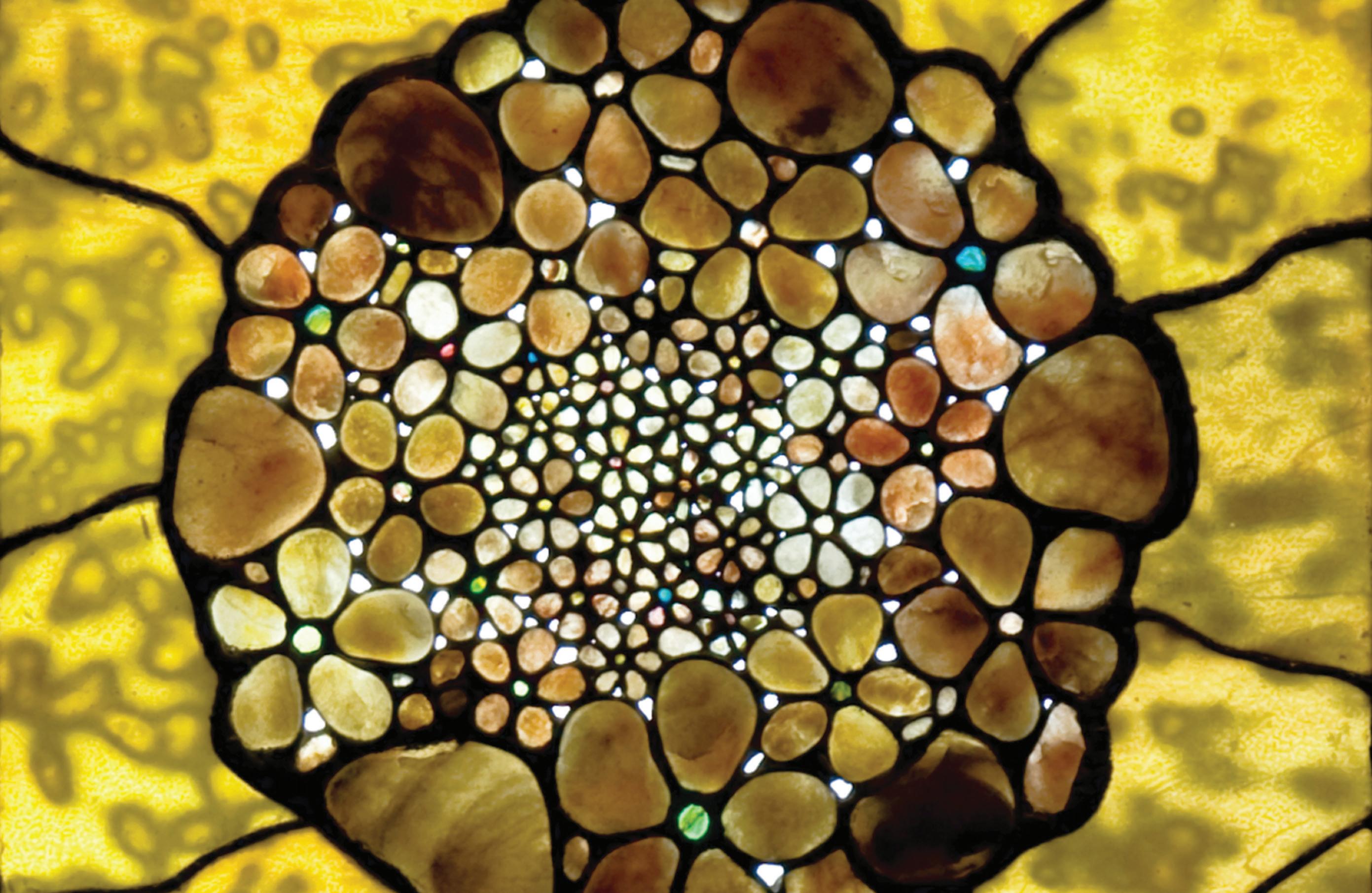
LEONARDO DA VINCI –
500 YEARS OF GENIUS
MIAMI
NOW–APRil 5
From flying machines to the “Mona Lisa,” explore da Vinci’s brilliance via rare artifacts, quirky inventions and interactive exhibits on display at the Phillip & Patricia Frost Museum of Science in collaboration with Rome’s Museo Leonardo da Vinci. frostscience.org
WOODY DE OTHELLO’S “COMING FORTH BY DAY”
MIAMI
NOW–JUNE 28
Pérez Art Museum Miami hosts Magic City native Woody De Othello for his first museum solo exhibition. His work features playful mosaics and sculptures in which everyday objects sprout legs and arms, bursting with life. pamm.org
JOHNSONVILLE NIGHT LIGHTS IN THE GARDEN
NAPLES
Nov. 28–Jan. 4
Step into holiday magic as Naples Botanical Garden transforms into a tropical wonderland complete with glowing gardens, festive food and their beloved living bromeliad tree. naplesgarden.org
HERITAGE FIRE
FORT LAUDERDALE & CORAL GABLES
Dec. 7 and Dec. 14
Blazing feasts of wood-fired meats and parrilla-style cooking await at this food and beverage experience taking place on two separate weekends in South Florida: first at Pier Sixty-Six and then at The Biltmore Hotel. heritagefiretour.com
2025–2026

MIAMI ART WEEK
GREATER MIAMI AND MIAMI BEACH
DEC. 1–7
Magic City’s most over-the-top week is back, and the 305 is ready to party. Begin your art-fueled adventure at the Miami Beach Convention Center with the signature fair, Art Basel, before hopping between satellite fairs such as Design Miami, Context Art Miami and Aqua Art Miami. Stroll along Lincoln Road and marvel at public art installations like Philippe Katerine’s “Mr. Pink Takes Flight,” which features five larger-than-life, candy-colored inflatables perched playfully above the streets. Sip an Old Cuban at The Betsy Hotel’s jazz club during their long-running musician series. Preview The Ritz-Carlton Key Biscayne’s art-filled reopening with contemporary pop artist and illustrator LouisNicolas Darbon. Pro tip: Skip the traffic by booking a room at The Sagamore or W South Beach. miamiartweek.org
BEACH FOOD & WINE FESTIVAL
WEST PALM BEACH
DEC. 11–14
This four-day culinary celebration blends world-class wines, festive walk-around tastings and chef collabs like Clay Conley and Daniel Boulud. The event is all set against the beauty of The Palm Beaches. pbfoodwinefest.com
MIAMI CITY BALLET’S “THE NUTCRACKER”
MIAMI
DEC. 12–28
Balanchine’s “The Nutcracker” whisks you away to the Land of Sweets with more than 100 dazzling dancers, the Sugar Plum Fairy and more holiday magic all from the heart of South Beach. miamicityballet.org
THE BILTMORE’S NYE DESSERT SOIREE & FIREWORKS
CORAL GABLES
DEC. 31
Ring in the New Year at The Biltmore’s centennial-year kickoff with decadent desserts and vibey beats leading up to a midnight Champagne toast and a fireworks display. biltmorehotel.com

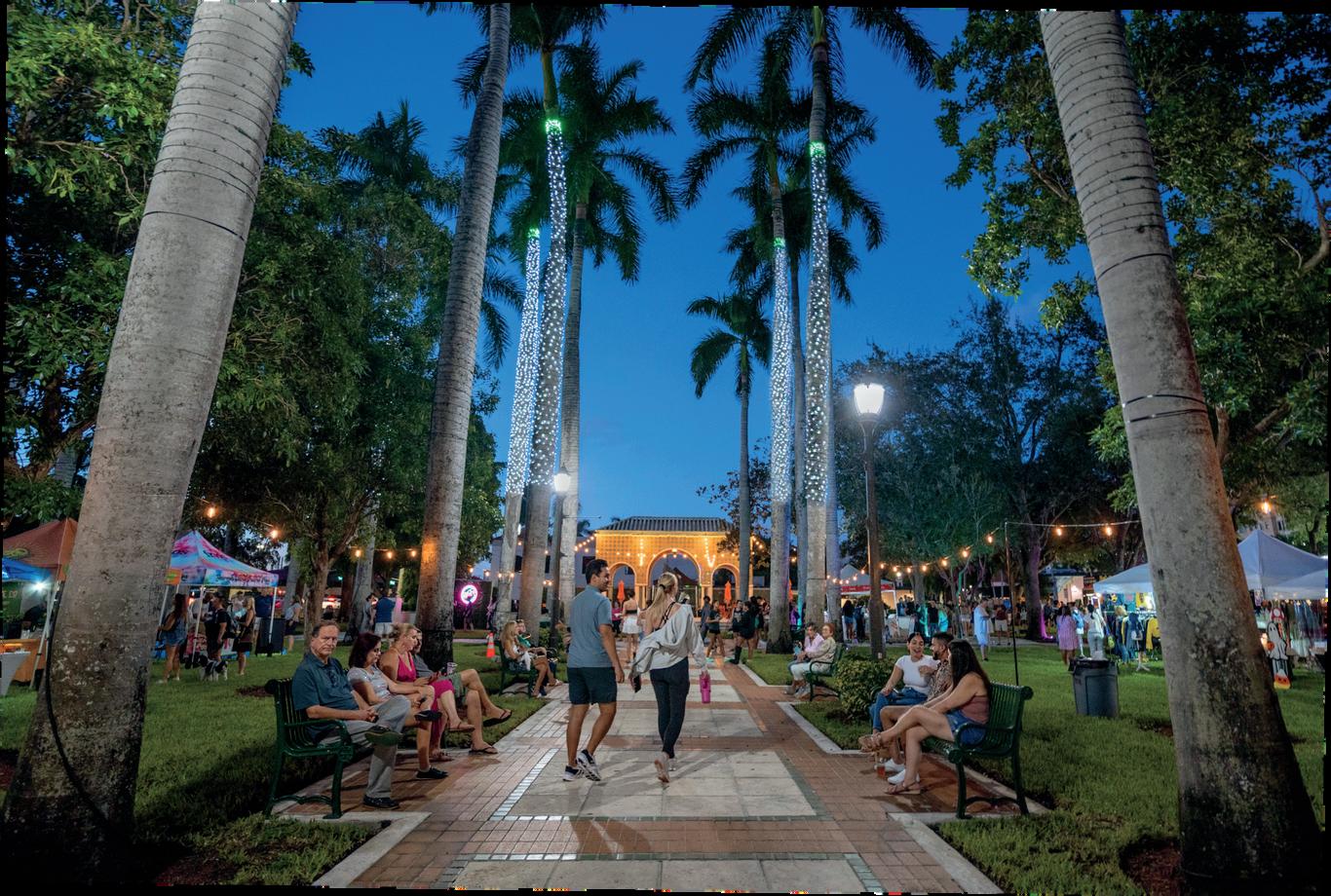
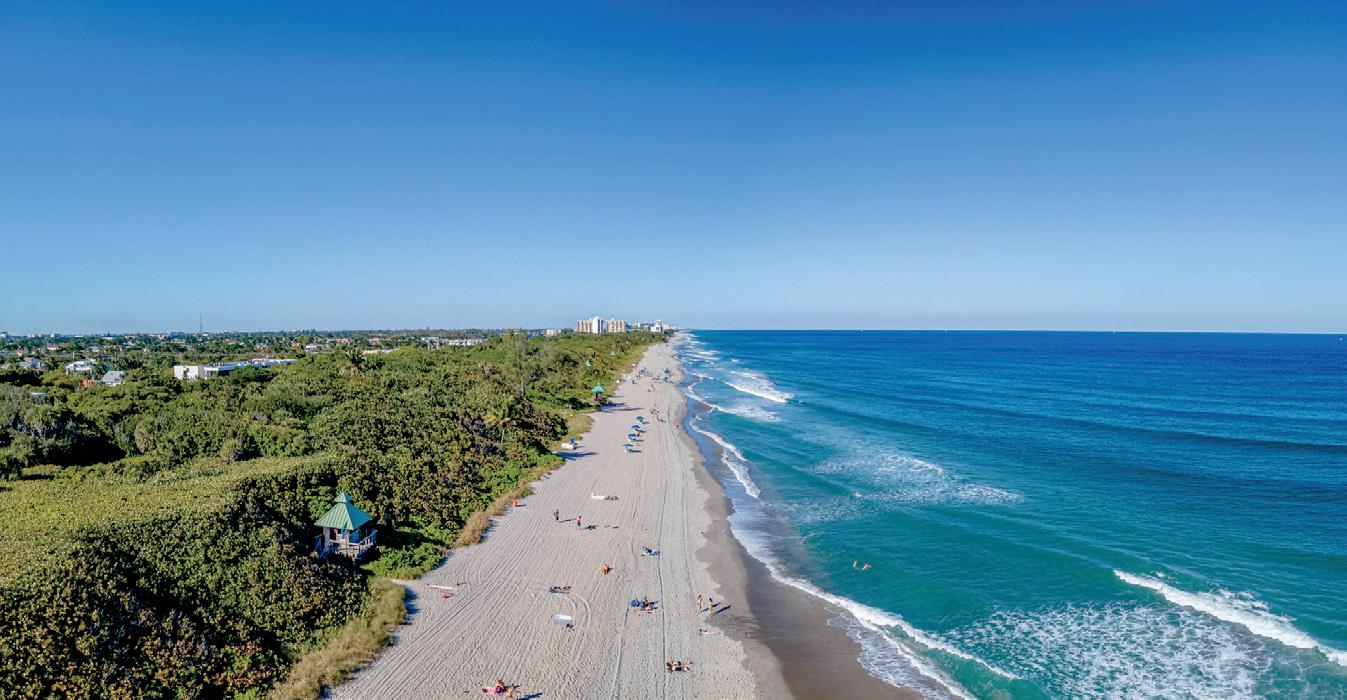
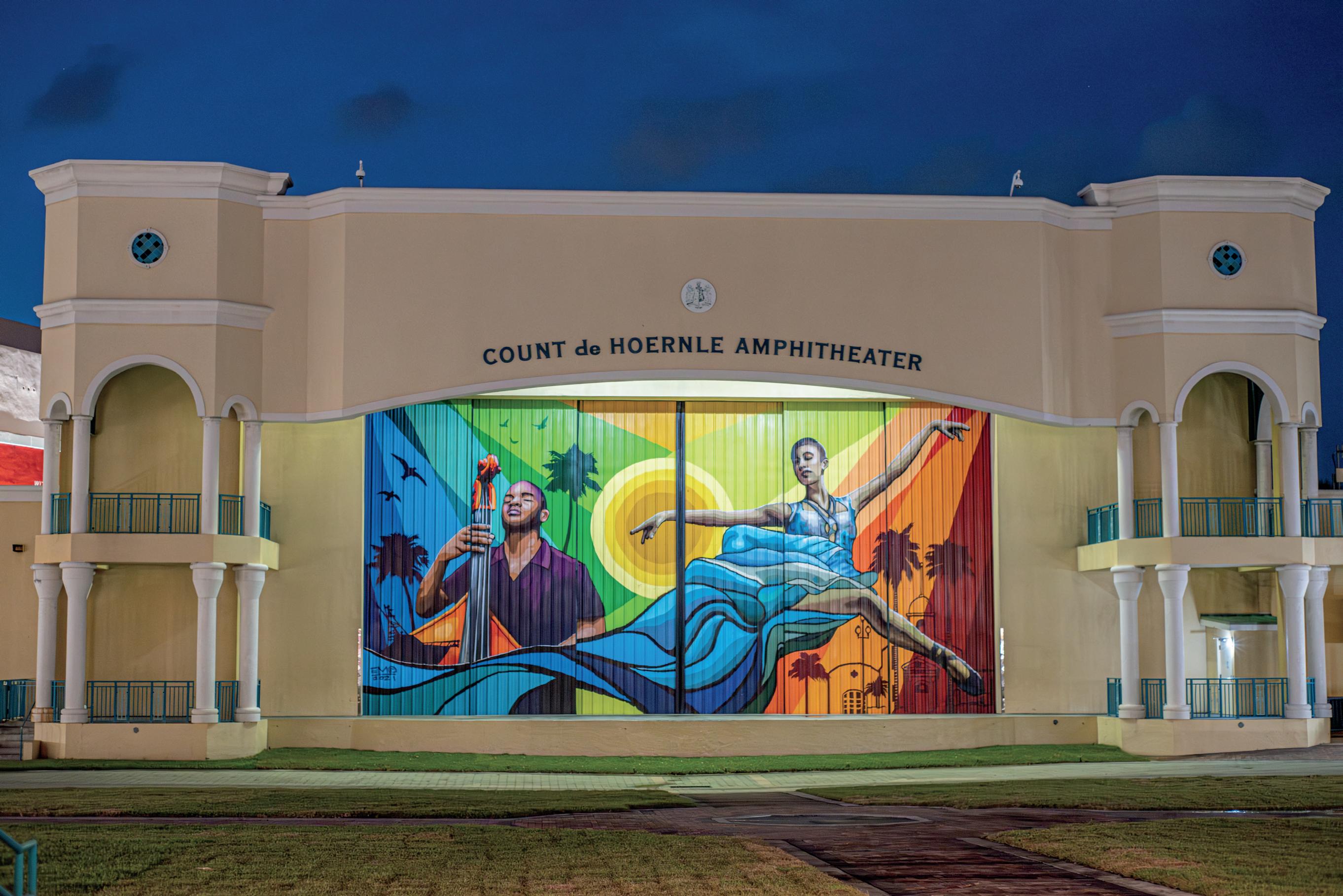
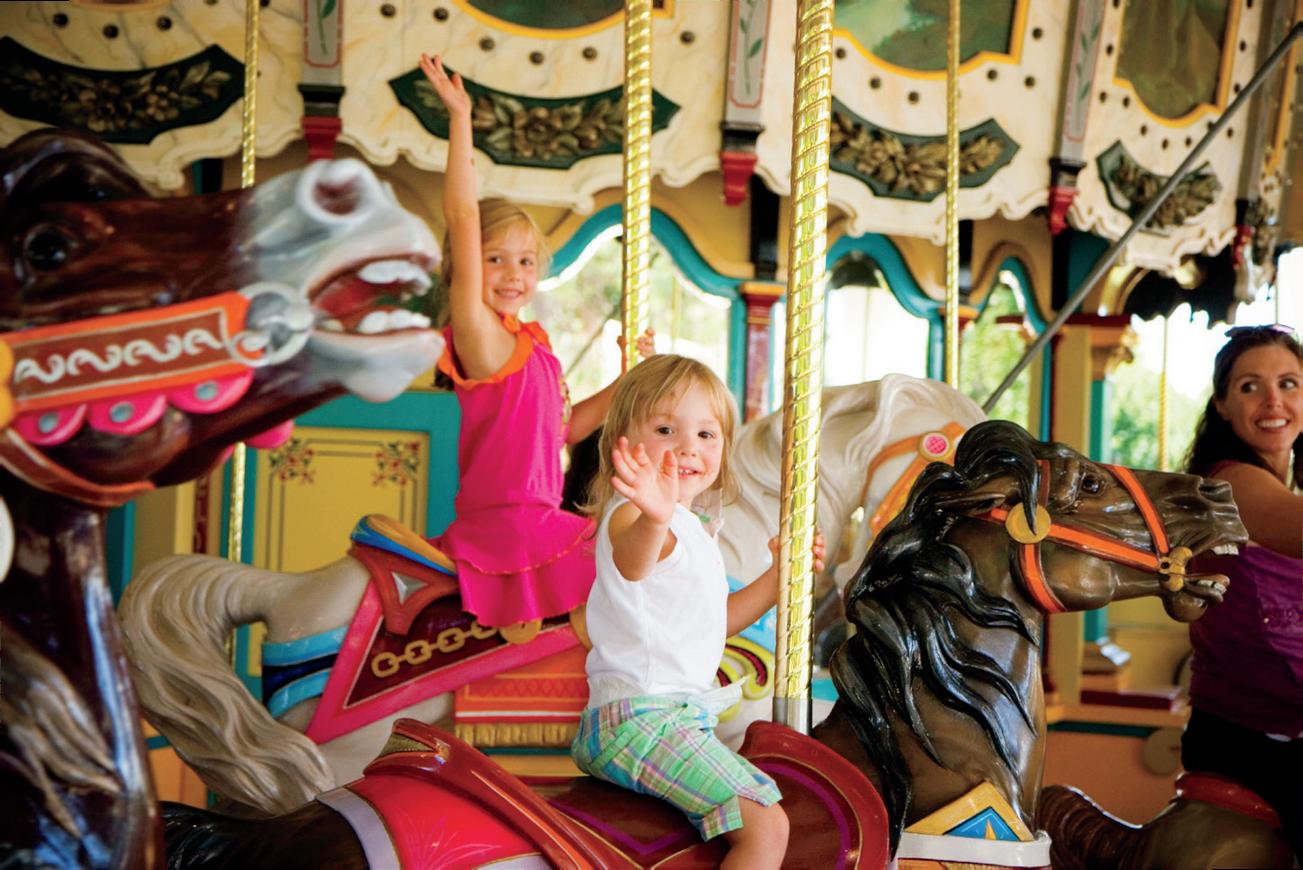
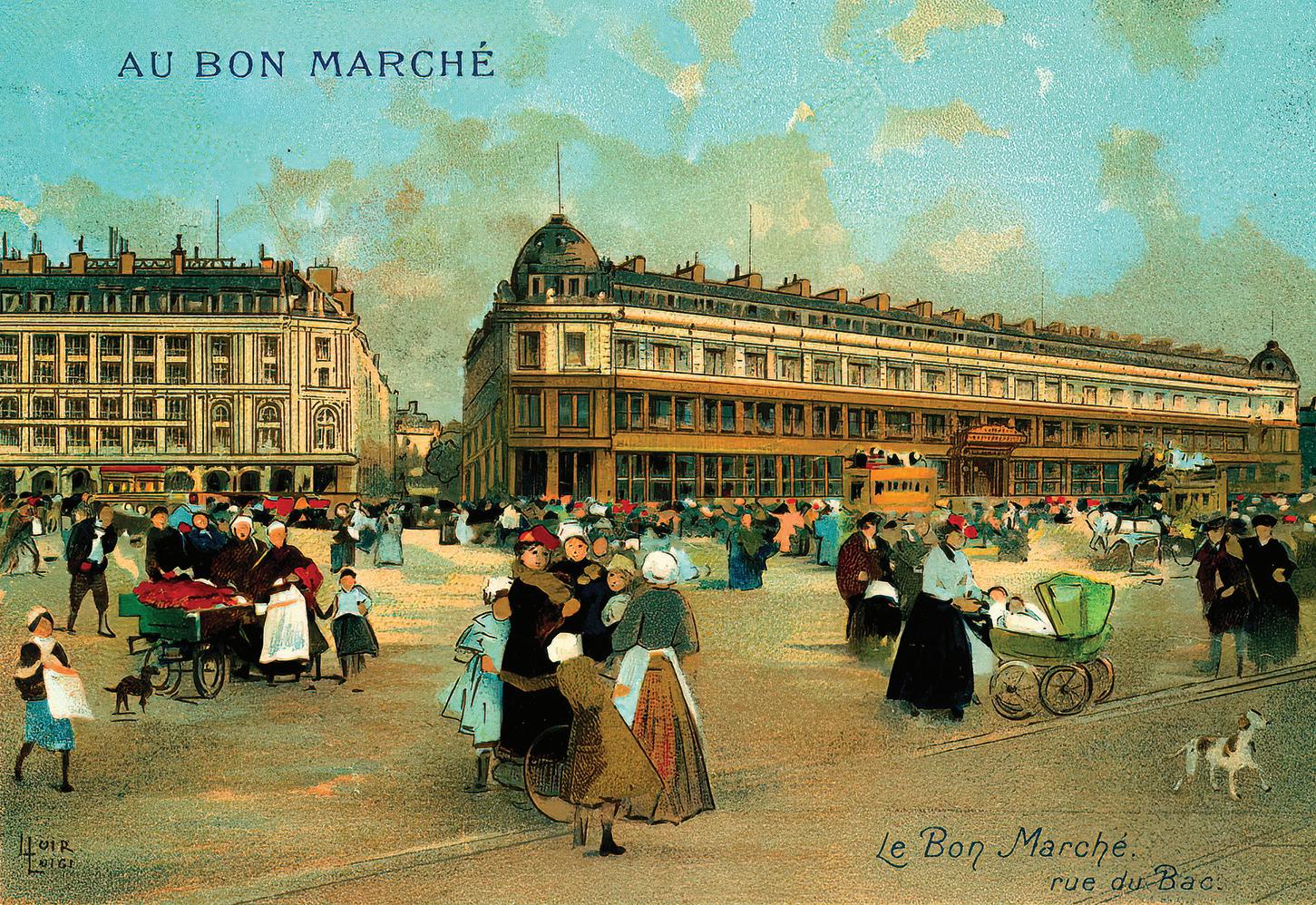

Boca Raton, on Florida’s east coast, offers a perfect blend of
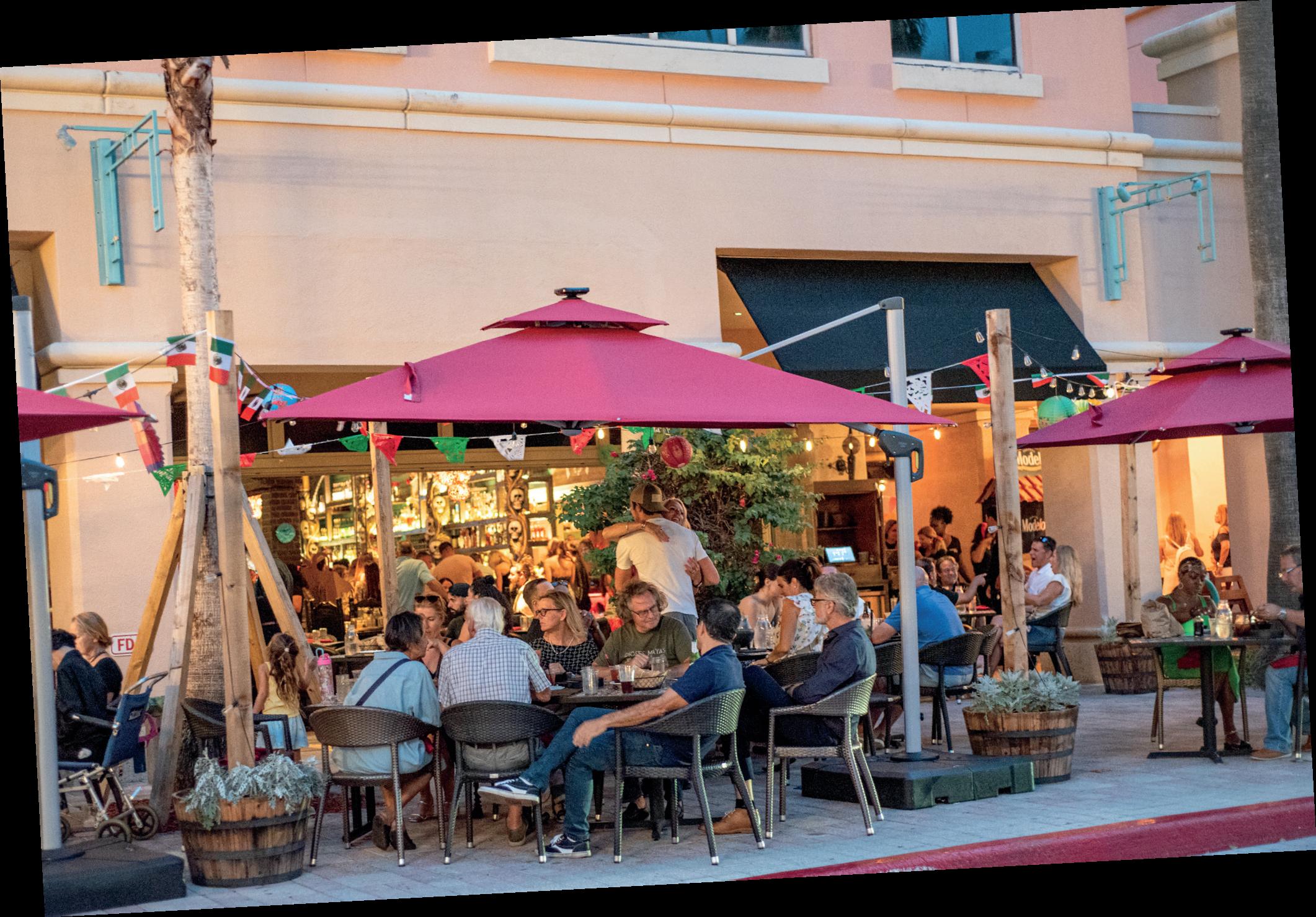
Making of the Modern Department Store Fall Exhibition November 11, 2025 - January 18, 2026
Explore the dynamic rise of the department store as an influential institution of modern urban life. Emerging in the 19th-century with the retail groundbreaker, Le Bon Marché, the department store quickly became a global phenomenon, re-shaping the landscape of commerce, architecture, gender roles, and public spaces. American versions, like Lord & Taylor, Bergdorf Goodman, and Wanamaker’s, adapted the conceptoffering an exciting blend of luxury, mass consumption and spectacle.

KEY WEST
LITERARY SEMINAR
KEY WEST
JAN. 8–11
Join acclaimed authors like Billy Collins and Patricia Lockwood in this legendary literary town for spirited conversation on how novelists are tackling the modern phenomenon of shrinking attention spans. kwls.org
MIAMI BEACH
JAN. 9–11
Time travel into Miami’s golden era during this festival of guided tours exploring iconic properties like The Villa Casa Casuarina and other architectural works along Ocean Drive. artdecoweekend.org
BOCA INTERNATIONAL
JEWISH FILM FESTIVAL
BOCA RATON
JAN. 14–MARCH 15
Revel in powerful stories and vibrant culture through events like the Cinebash Opening Celebration and a three-week showcase of international Jewish and Israeli films. jfilmboca.org
DELRAY BEACH OPEN
DELRAY BEACH
FEB. 13–22
Tacos and tennis, anyone? The world’s only combined ATP Champions Tour and ATP World Tour event returns, serving up game play plus VIP foodie fun. delraybeachopen.com
GROVE ARTS FESTIVAL
MIAMI
FEB. 14–16
Nearly 300 artists and idyllic Biscayne Bay vibes make this Miami tradition worth the drive. Don’t miss the Arts & Drafts Beer Garden and the Young Collectors Club this Presidents Day Weekend. cgaf.com
GREATER MIAMI & THE BEACHES
FEB. 19–22
Miami’s tastiest weekend hits the sand with star-studded bites, endless sips and sizzling events like Masters of Fire with Tyler Florence and Haute Potato hosted by “Foodgod” Jonathan Cheban.
sobewff.org
WELLINGTON
Dec. 28–May 3
BOCA RATON
FEB. 27–March 8
This 10-day celebration of world-class culture showcases the performing arts, including ballet mash-ups, symphonic collabs, author talks and Broadway’s brightest stars like Patti LuPone. festivalboca.org
Stomp the divots and don the fabulous hats as the sport of kings returns to the National Polo Center on Sunday afternoons this winter. Watch top players charge down U.S. Polo Association Field One during an exciting lineup of premier tournaments leading to marquee moments like the Heritage Cup and the NPC 16-Goal Championship—plus prestigious events like the Gauntlet of Polo, U.S. Open Women’s Polo Championship and National President’s Cup. Make a day of it by dining on world-class cuisine field-side with the club’s popular Sunday brunch (did someone say caviar and blini board?) and toasting the action with Champagne in hand. uspolo.org
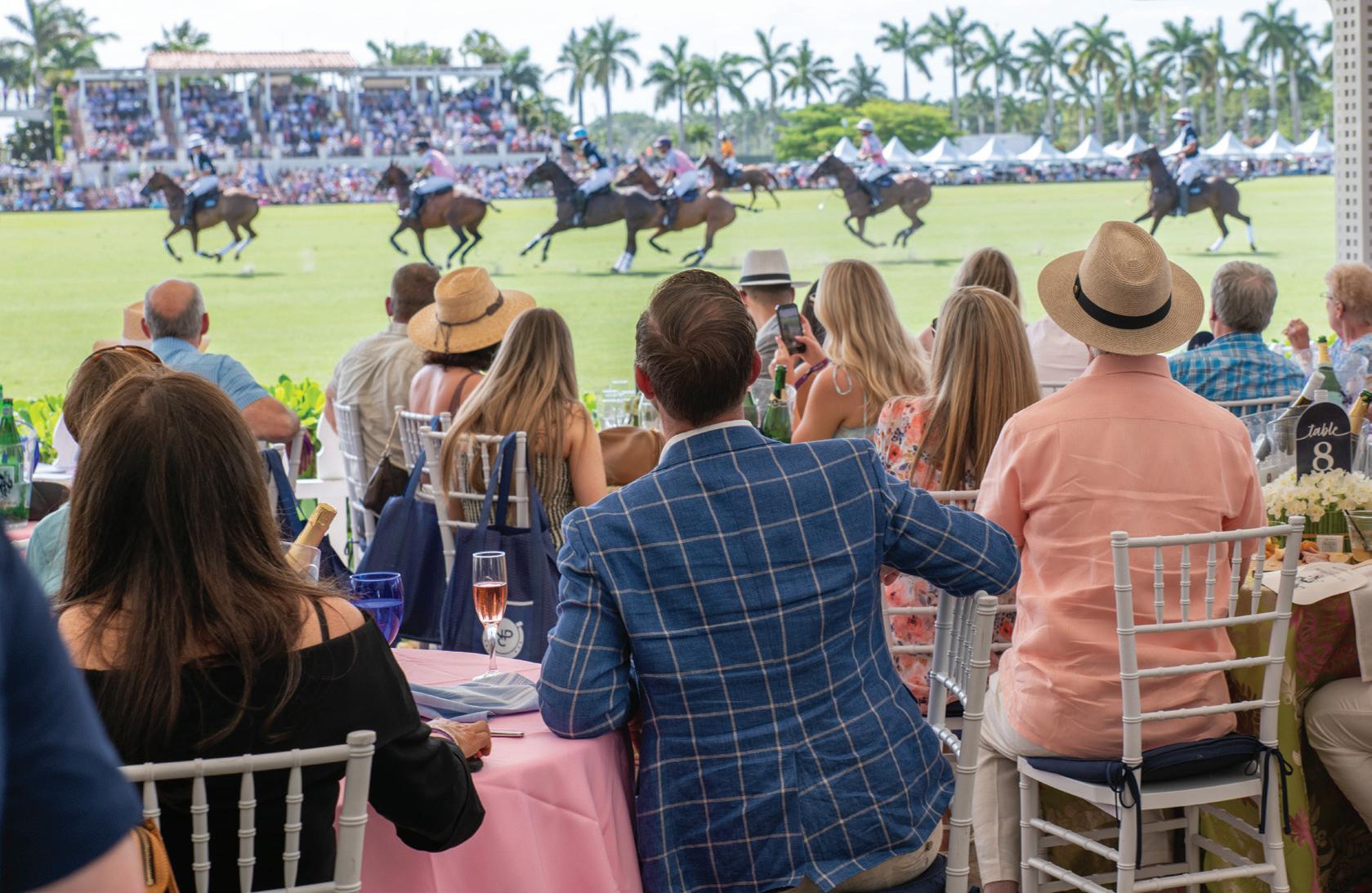







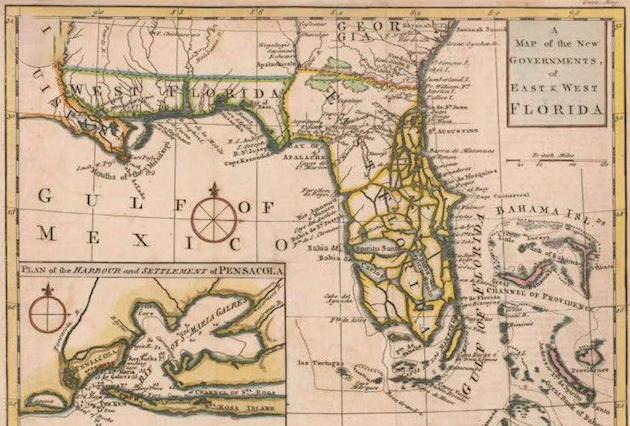







By Nila Do Simon • Illustration by Leslie Chalfont
Art, sport and seaside sophistication collide in this century-old City
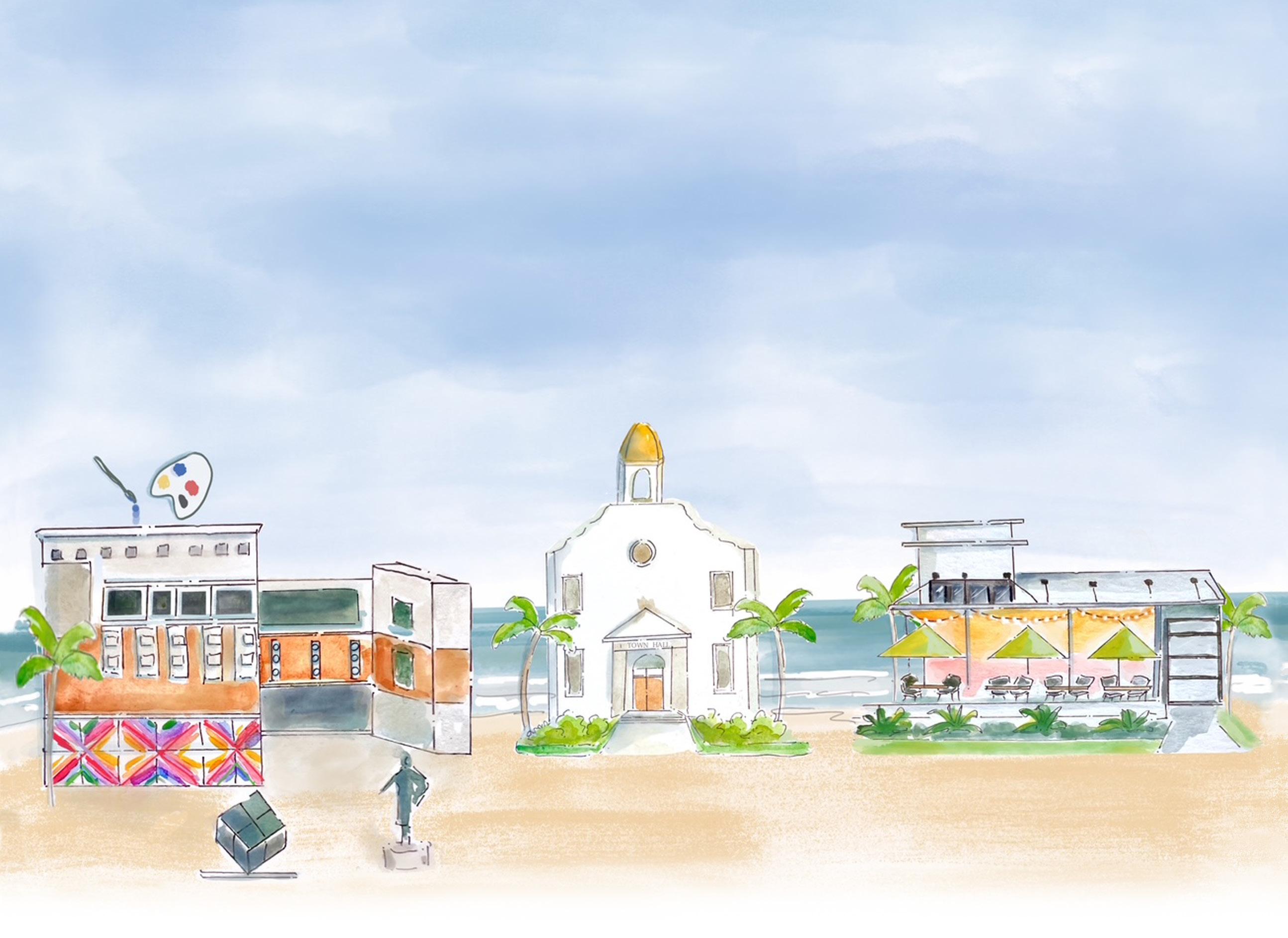
1. LAKE BOCA RATON
String your rods, pack your reels and head over to this well-known fishing spot, where tarpon, snook and jack crevalle abound. With calm waters and sandbars perfect for lounging, it’s Boca’s unofficial backyard.
600 E. Palmetto Park Road
2. JOSEPH’S CLASSIC MARKET
Family-owned and Italian at heart, this foodie favorite brings a taste of New York to Boca Raton with house-made pastas, gourmet cheeses and chef-prepared dishes served with neighborhood warmth.
6000 Glades Road
3. MIZNER PARK
Named for architect and city founder Addison Mizner, Boca Raton’s signature mixed-use outdoor district buzzes with people, upscale boutiques, cafes and an amphitheater that hosts national acts and local music festivals.
327 Plaza Real
4 . RESTAURANT ROW
This collection of independently owned, chef-driven concepts is fast becoming Boca’s dining darling. Explore global cuisine at Stage, modern Mexican fare at El Camino and kosher specials at Motek.
5377 Town Center Road
5. THE WICK THEATRE & COSTUME MUSEUM
Founded by South Florida entrepreneur Marilynn Wick, this regional theater produces musicals, plays and shows, including the upcoming “My Fair Lady.”
7901 N. Federal Highway
6. THE BOCA RATON
The vision of architect Addison Mizner, this century-old hotel has blossomed into a dreamy oceanside retreat, boasting a championship golf course, waterpark, beach club and four Major Food Group restaurants, spread across 200 acres.
501 E. Camino Real
7. GUMBO LIMBO NATURE CENTER
Named after a tree native to South Florida, this 20-acre nature complex on Boca Raton’s barrier island features a 40-foot-tall observation tower with sweeping views, a butterfly garden and an aquarium.
1801 N. Ocean Blvd.
8. CRAZY UNCLE MIKE’S
Equal parts brewpub and music venue, this Boca favorite lives up to the hype the name implies. Swig some house-made craft beers and rock out to high-energy bands: things may get a little, well, crazy.
6450 N. Federal Highway
9. BOOKWISE
Touted as Boca Raton’s biggest used bookstore (with an estimated 75,000 volumes in stock), this indie shop feels like a literary labyrinth, with rows upon rows of classic and contemporary hits and cozy nooks that invite you to stay for a while.
145 NW 20th St.
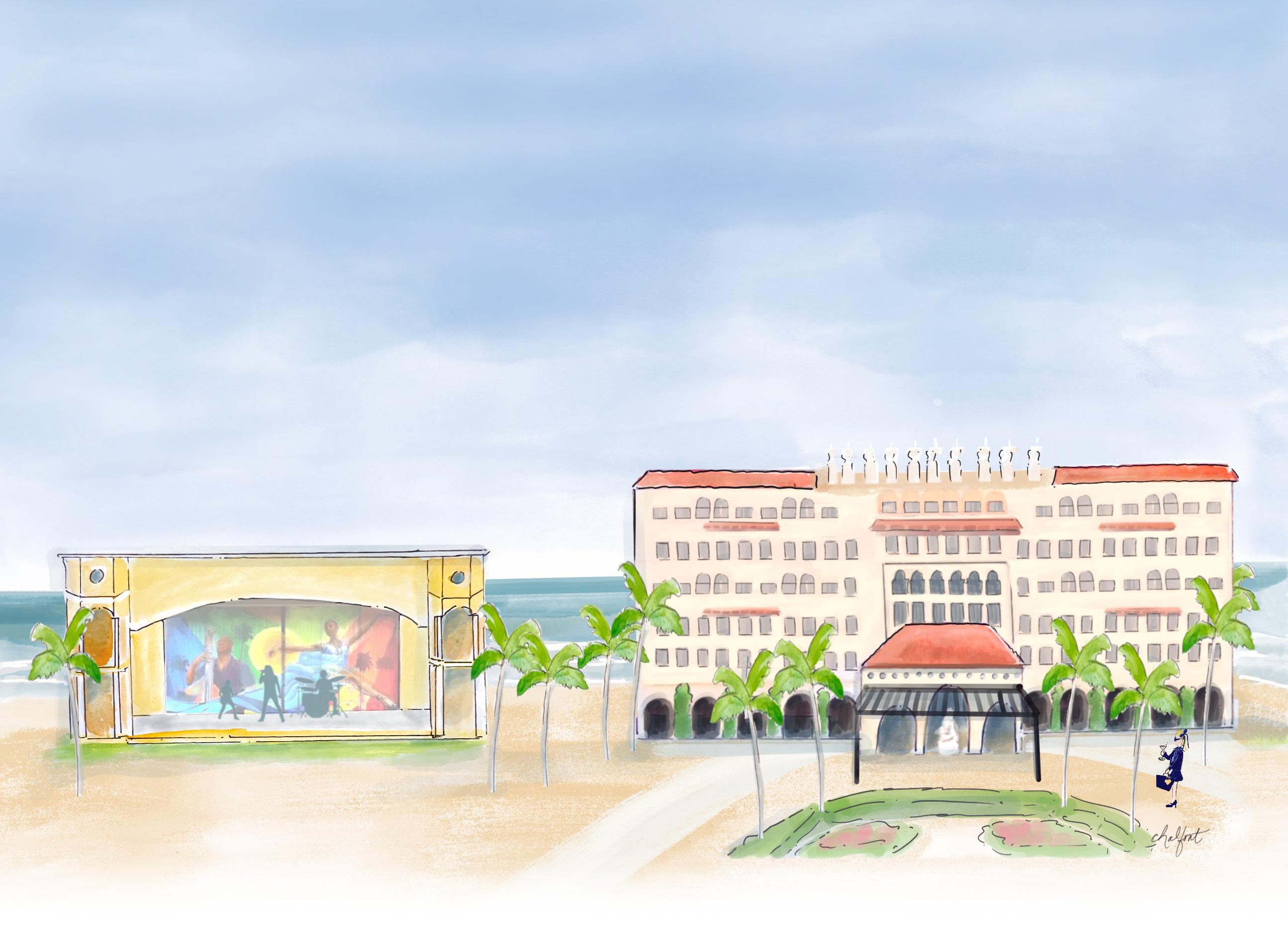
10. THE SEED BOCA RATON
At first glance, it’s a coffee shop, but linger and it reveals itself as a gathering spot for lively conversations shared over lavender lattes. Rustic wood finishes and greenery keep the vibes warm and grounded.
199 W. Palmetto Park Road E
11. CIELITO ARTISAN POPS
This popsicle shop lives up to its name, offering made-from-scratch icy treats that include vegan varieties and puppy pops. The rotation of 46-plus flavors includes frozen faves like the Pavlova and brigadeiro.
327 Plaza Real
12. BOCA MUSEUM OF ART
Founded in 1950 and located in Mizner Park, this fine art museum’s exhibitions reflect the full spectrum of visual arts, and its permanent collection includes 19th- and 20th-century European and American works, Pre-Columbian art and more. 501 Plaza Real
13. RED REEF PARK BEACH
This stretch of white sand is known for its snorkeling trails including a jetty and 20 artificial reefs. Prefer to keep your hair dry? Bask beneath palm trees and soak up the sun across 40 acres of shoreline paradise.
1400 N. Ocean Blvd.
14. BOCA ICE
This cool local hangout makes even the most devoted sun-seeker fall for a little chill. Glide across two NHL-size rinks, drive bumper cars on the ice or book a session in the venue’s alpine skiing experience.
900 Peninsula Corp Circle
15. RAMEN LAB EATERY
Owner Louis Grayson brings his inventive spirit and flavor bombs to this trendy eatery that dips into Far East fare. Expect collaborations with Latin American restaurant friends like Zipitios and dumpling-making classes with expert chefs.
100 NE 2nd St.
16. THE FUNKY BISCUIT
The music will already be bumping when you arrive at this venue. With a robust live music schedule that ranges from rock to reggae to jazz, this intimate downtown venue produces big-time late-night jams.
303 SE Mizner Blvd.
17. PADEL X BOCA RATON
The rapidly growing racquet sport of padel serves up some serious action at this 28,000-square-foot space featuring eight courts, an elevated players’ lounge, sauna, cold plunge and recovery area.
1081 Holland Drive
18. THE SCHMIDT BOCA RATON HISTORY MUSEUM
Trace Boca Raton’s evolution from humble farm town to glamorous coastal retreat at this local history museum, home to nearly 2,000 artifacts, from pioneer-era relics to one of the first IBM personal computers.
71 N. Federal Highway
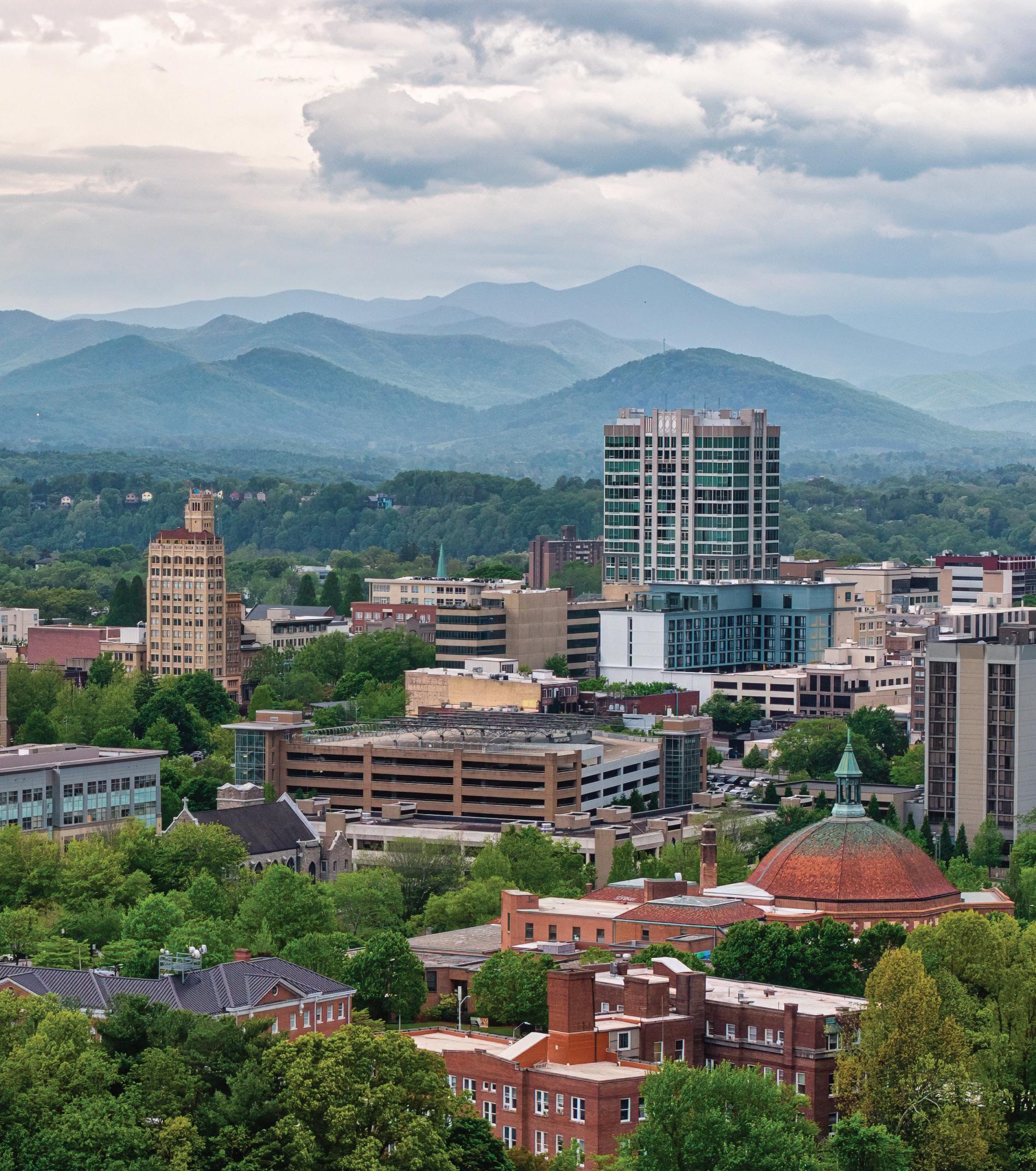
Between the breweries and the Blue Ridge, there’s an Asheville you won’t find on a map.
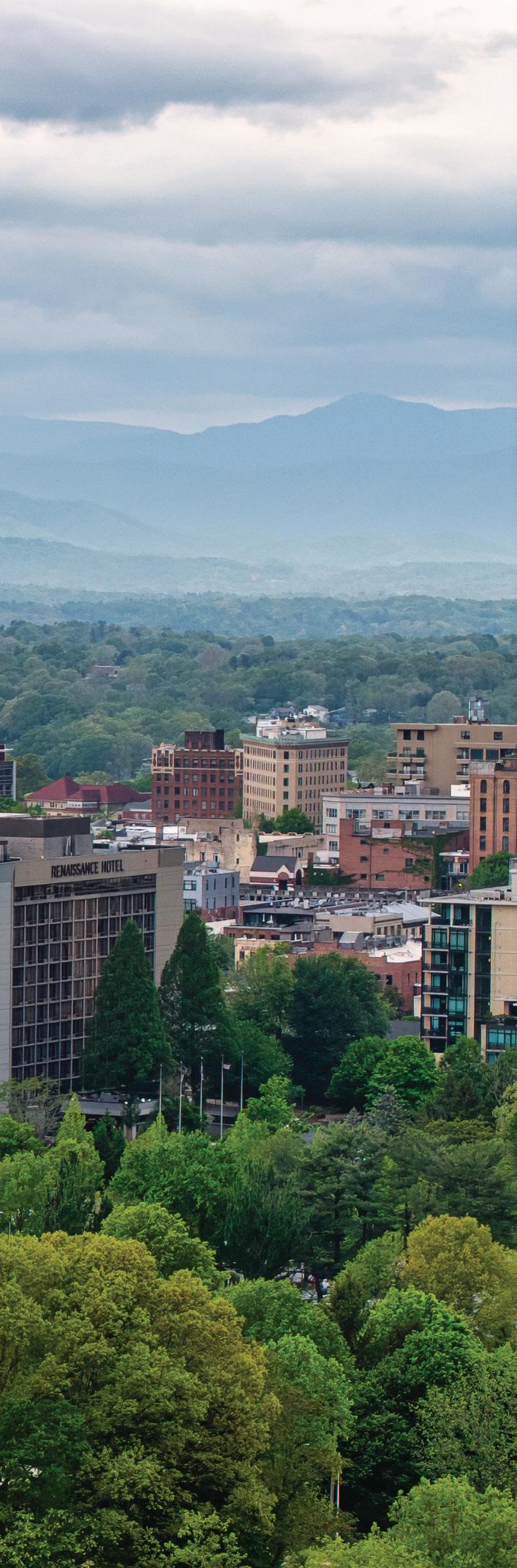
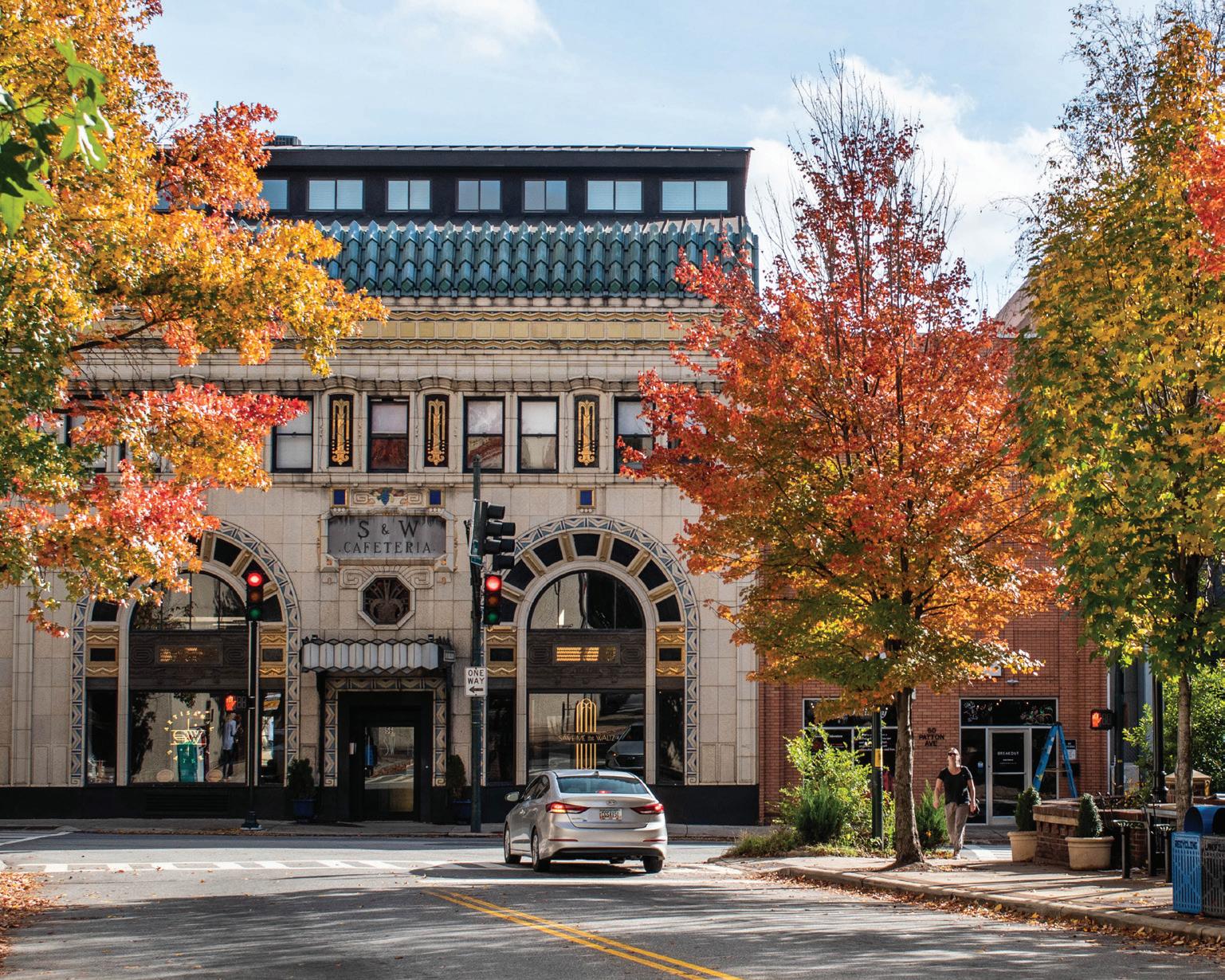
The day starts in the woods on an unmarked trailhead that does not appear on any maps known to me, just to locals and those lucky enough to be briefed on the down-low. The route begins on the north side of the University of North Carolina Asheville’s (UNCA) campus, heading first into a patch of woods left lying on its side from last year’s devastating Hurricane Helene. It looks as if the good Lord pressed a palm into the earth. But the indentation is brief, and soon we’re in old-growth hickory and maple forest—leaves rustling and wrens whistling. The path opens up at the top, with sweeping views of downtown Asheville. In the distance, we spot Mount Pisgah, named after the biblical mountain, where it is said
Moses first glimpsed the Promised Land. Like a lot of Floridians flocking from the Sunshine State to somewhere with fairer temperatures, for me, Asheville serves as my warm-weather playground—an adult summer camp in Appalachia. I bike, I hike, I play a little too much pickleball. So, after returning to this eclectic mountain town after a very hot month at home in Miami, I decided to build my Perfect Asheville Day. For some, there would be the Biltmore Estate, a comedy tour on the purple LaZoom bus or maybe elk steaks at the Red Stag Grill. Mine is different: no itineraries plucked from a visitor’s brochure, no souvenir pint glasses from chain breweries—just the version I’d show a friend, the Asheville that still feels like discovery.
I first started coming to Asheville two decades ago, spending just a few days each summer to see my best friend from college who had moved here. My wife and I would start every trip with a hike just off the Blue Ridge Parkway. Black Balsam Knob remains our favorite, a choose-your-adventure trip where the trail heads up and over several bald peaks, views interrupted only by the cotton-ball clouds that drift by at an elevation of more than 6,000 feet. In those days, after a hike, we’d eat at the places you’ve heard of, like Chestnut, Chai Pani, Limones or, if we’re celebrating, Cúrate. But now that we’re spending nearly half the year living in Asheville (we even restored




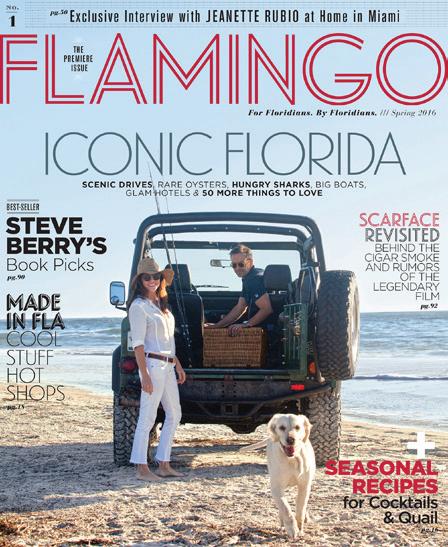
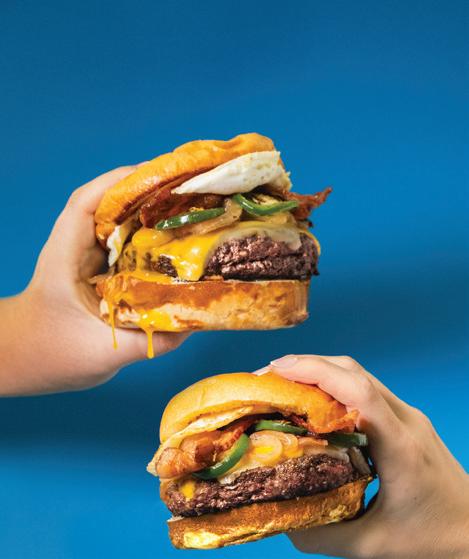











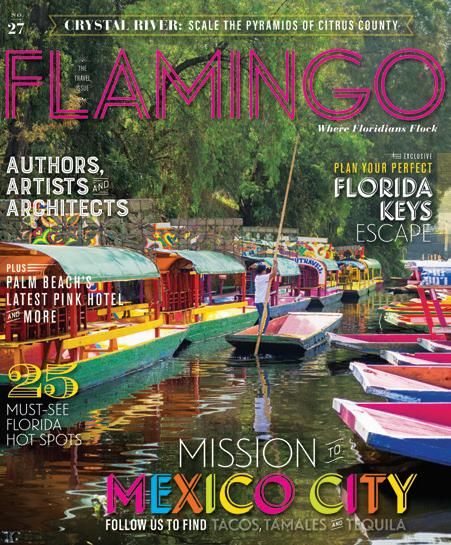
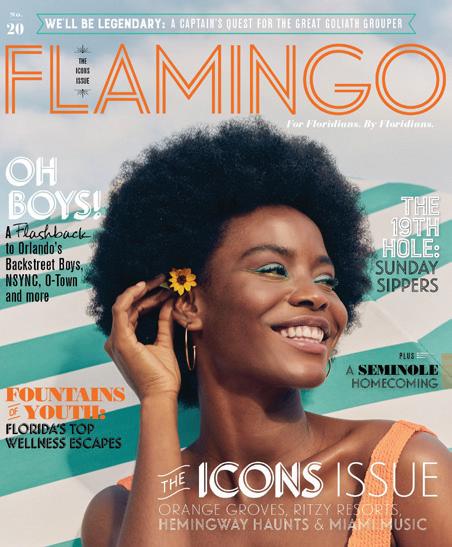



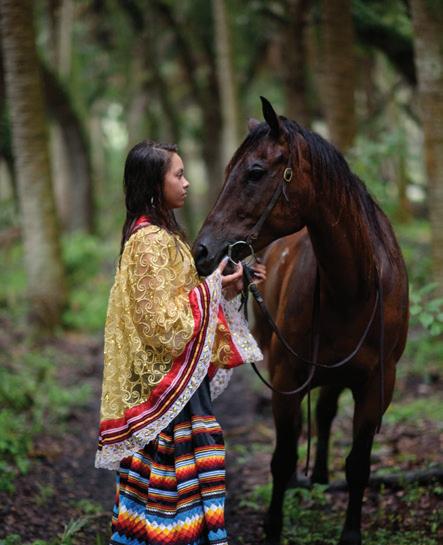







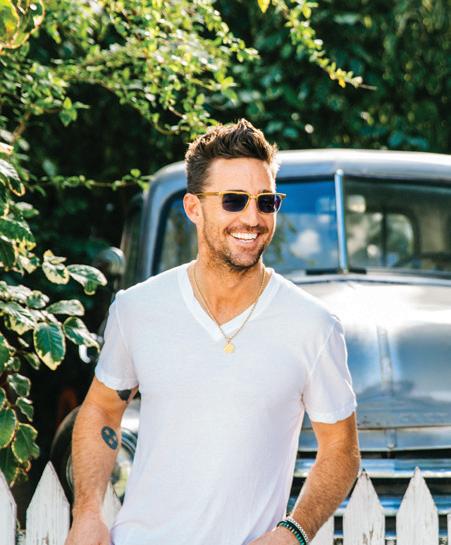

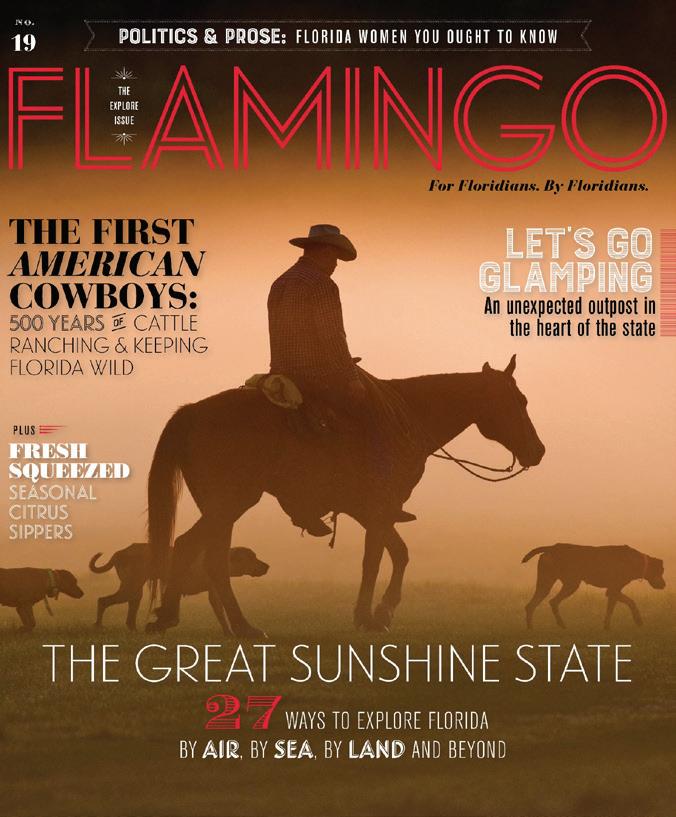

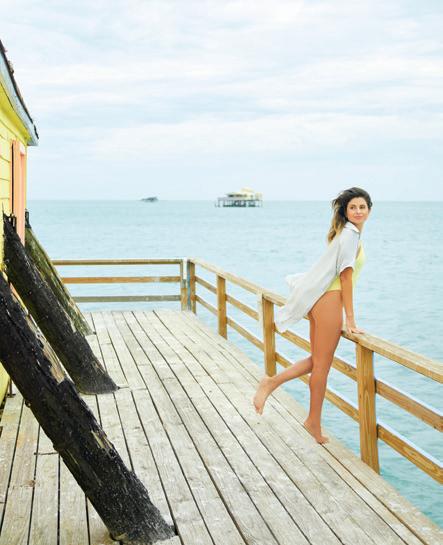












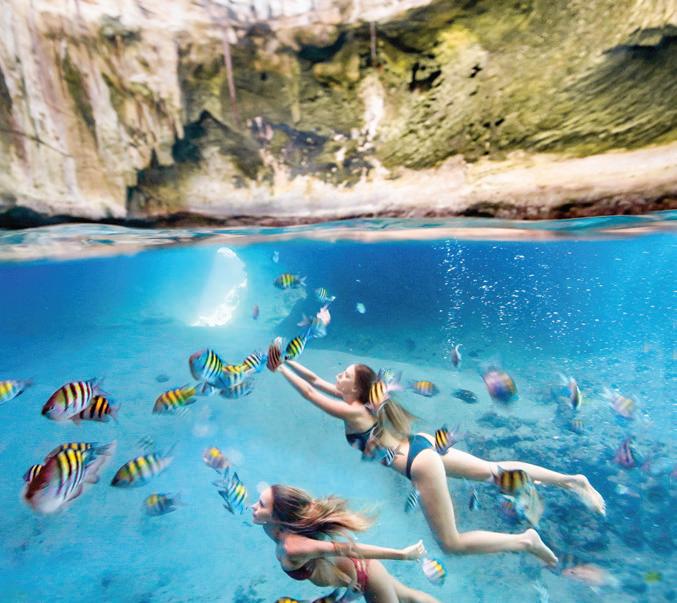





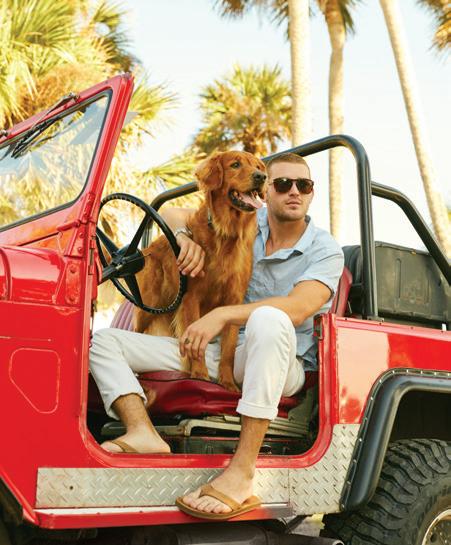
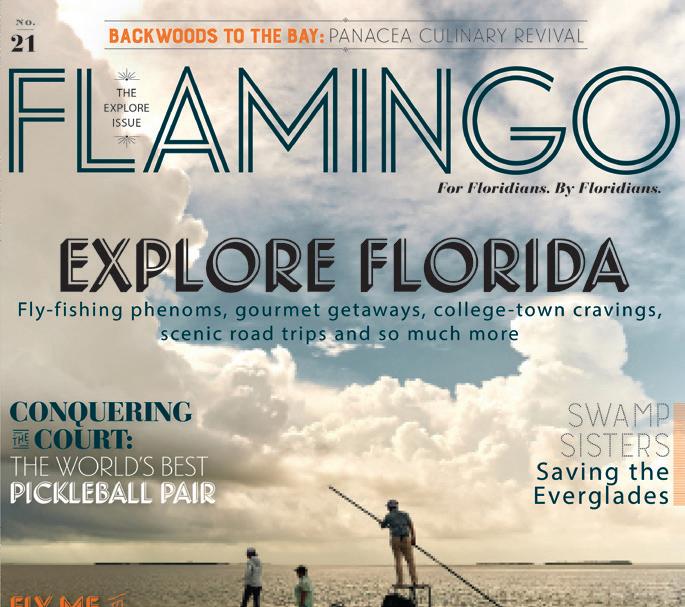









an old log cabin) we look for the places less discovered by those with Florida license plates: burgers on the patio at Universal Joint; cocktails at Little Jumbo; coffee at the cycling-themed coffeehouse, On Your Bike, which is up in Marshall; the six-mile-plus hike up to Looking Glass Rock, where the trail dead-ends on a granite face, dropping down to what looks like eternity. We’ll edge out on our hands and knees to test our bravery and balance.
On this particular perfect day, though, my wife and I finish the hike near UNCA
and head just down the road to the North Asheville Tailgate Market. Dogs nose each other as kids dart through the crowds. People haul tote bags stuffed with knobby root veg and hothouse flowers jutting up like decorations. The air smells of cinnamon rolls, so we head to a bakery stand and split a croissant, letting buttery flakes fall to Finn, our goldendoodle. Someone plays acoustic guitar near the Hickory Nut Gap farm stand. I buy some sheep’s milk labneh and kabocha squash. Less of a shopping trip, it’s more of a ritual that doubles as a sermon on how good it feels to be in a place that appreciates local fare.
and briny, then a tartine layered with trout roe on avocado toast decorated with slices of hard-boiled egg and bean sprouts so vibrant they look plucked from a still-life painting.
Lunch is at Leo’s House of Thirst, where Finn sleeps under our two-top on the front porch. We order a Caesar salad that’s bright
Leo’s, by the way, is in West Asheville, and some locals will hate me for divulging this. You might find some tourists at The Admiral, Neng Jr.’s and a quirky new spot, Potential New Boyfriend. But it’ll be mostly locals at Old World Levain Bakery, where you should dip a pastry into a latte, or split a cheesesteak on the patio at Finest, or sip bourbon at the Haywood Country Club. This part of town is an entertainment district with a smattering of dive bars, chef-driven eateries, churches, auto repair shops and a mural of Dolly Parton and RuPaul at the heart of it all.
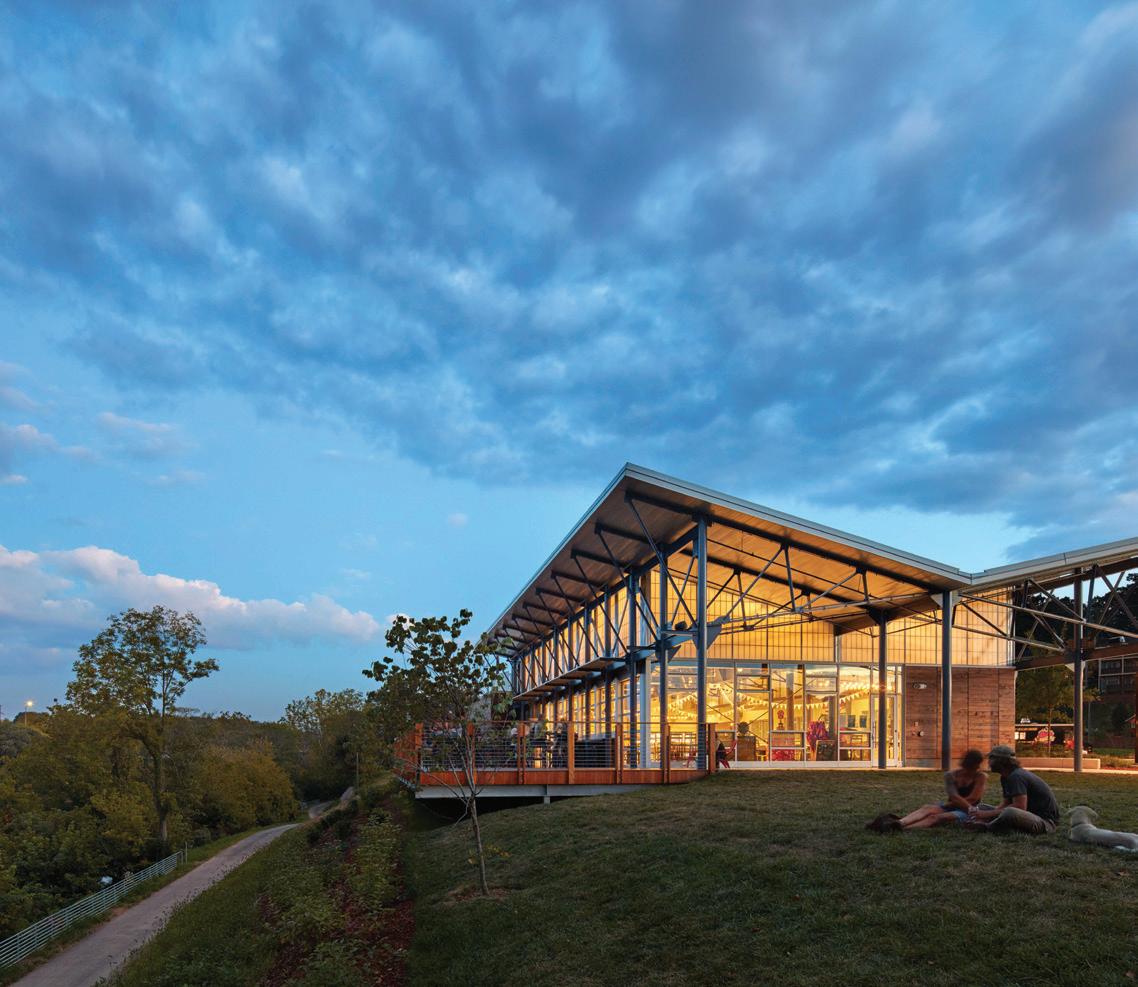
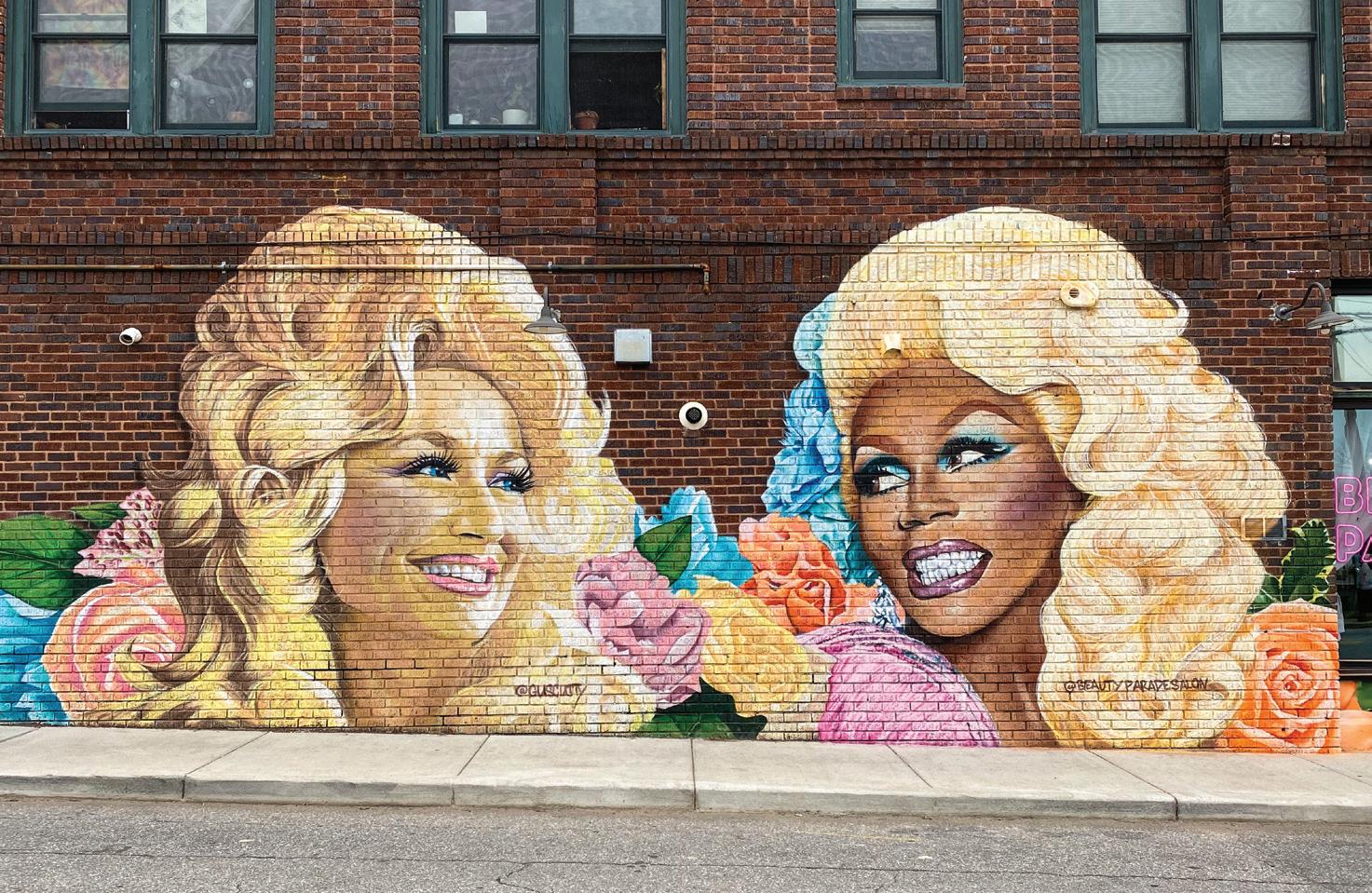
Insider's Asheville
By midafternoon, the sun finally burns off the mountain haze, and we head to the lawn outside New Belgium Brewing. The French Broad River slides by, catching the sun flickering like lighters at a concert during a ballad. Kids zip by on scooters. Dogs laze on the grass. The patio hums with that communal Asheville energy—half locals, half visitors trying to blend in. I order a Mountain Time, the kind of lager you want on the float trips that glide past, and settle into lazy hour, watching kayakers fight upriver like a metaphor for the Asheville Strong shirts everyone wears.
Late afternoon, I head to Montford, the historic neighborhood where you’ll see impromptu evening wine parties on big porches and—believe it or not—kids still play in the streets. Friends have come back from New York City with an idea they saw at a bar: a backyard bingo night with white elephant prizes. We eat grilled chicken and hot dogs slathered gloriously with pimento cheese. As the sun dips, the sky turns to sherbet—pink, orange and lavender.
Guests at this 19th-century Queen Anne home, which was reborn as a chichi guesthouse, are welcomed with handwritten local recs on what to do. Dressed in modern and vintage furnishings, this 14-room stay is not your great-aunt's bed-and-breakfast. larkhotels.com
Like wearing a tailored blazer and hiking boots, downtown’s glass-and-granite showpiece offers a slice of laid-back luxury, mixing epic mountain views with big-city hotel polish. hotelarras.com
Set inside downtown's iconic wedgeshaped building, this hotel has vintage swagger and contemporary touches, and its restaurant on the ground floor is reason enough to make this a home base. ashevilleflatiron.com
Perhaps now you’re thinking that you don’t know a friend with a happening backyard in Asheville where you can recreate bingo night. But I’ll tell you what you can do instead: Head to the River Arts District, where All Souls Pizza stretches out onto an empty lot with its own vegetable garden and charming trellis. On weekend nights with good weather, kids run around playing tag while parents linger under the twinkly lights, noshing on charred pizzas topped with locally foraged mushrooms. Or head to the east side of town, where Highland Brewing has built a park with sand volleyball courts, disc golf and picnic tables shaded by pine trees that drop needles to the ground as soft as carpet. Pack a picnic—ideally with Sunburst Farms Smoked Trout from The Rhu—and make the short climb up the Craggy Pinnacle Trail, just over a mile to a 360-degree overlook. It’s best enjoyed with a glass of wine and a few snacks as the sun dips behind the Smokies, headlamps lighting your way back down. Maybe you’ll tell ghost stories under the twisted and shadowy canopy of branches that give Craggy its name, and maybe you’ll spot fireflies dancing as if they’ve given movement to the stars in the sky.
Of course, there are many more off-the-radar ways to spend a day in Asheville—art tours, dirt-bike parks, saunas in the woods—perhaps just as satiating as the lineup I suggest. The city’s beauty hides in its in-betweens: a fallen forest that’s already growing back, a lunch that feels like a visit to a good friend’s home, a bingo game where nearly everyone wins something small. But for me, the perfect day ends just as it does for the mountains—slowly fading into the dark, content to let tomorrow’s adventures unfold.
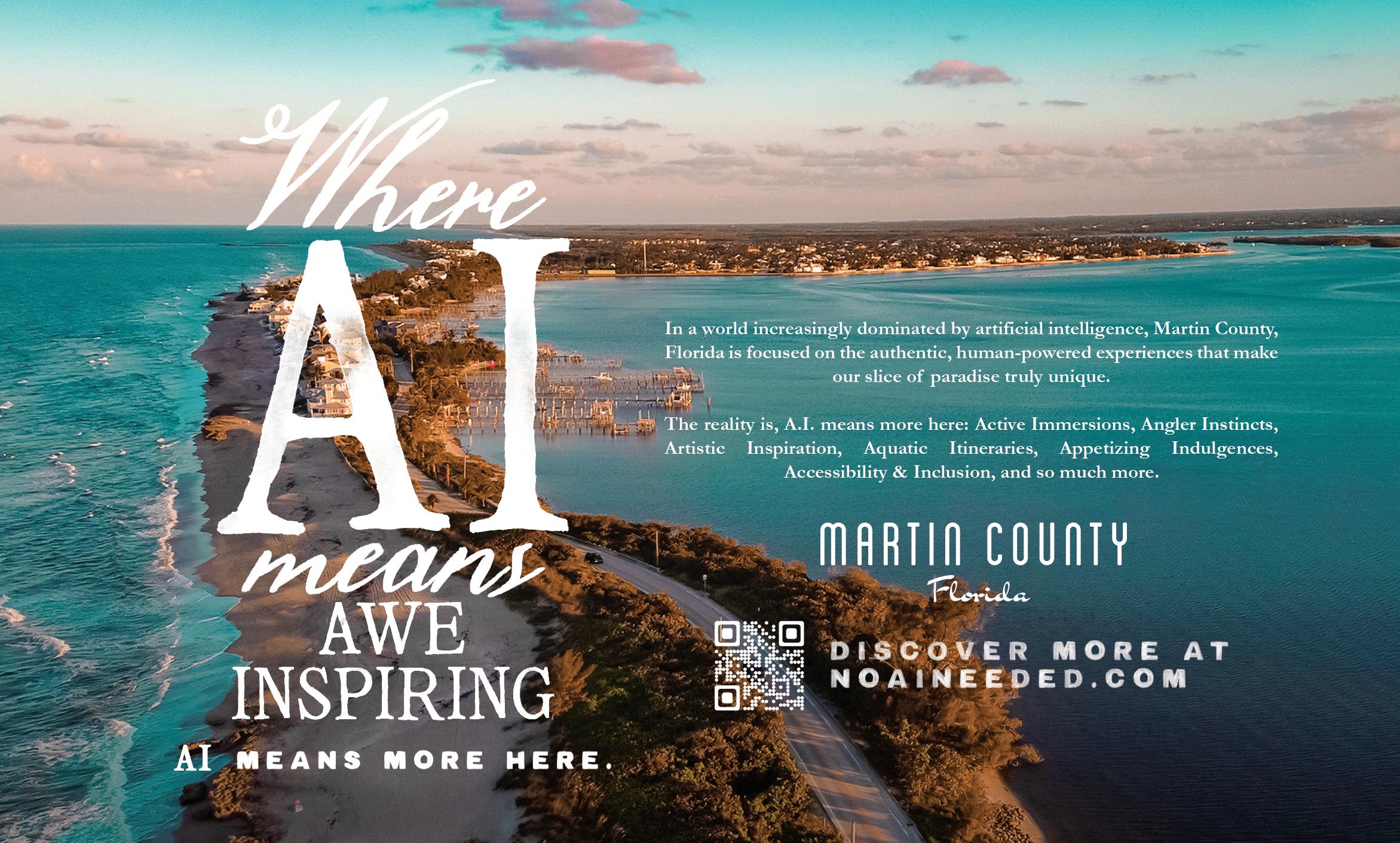
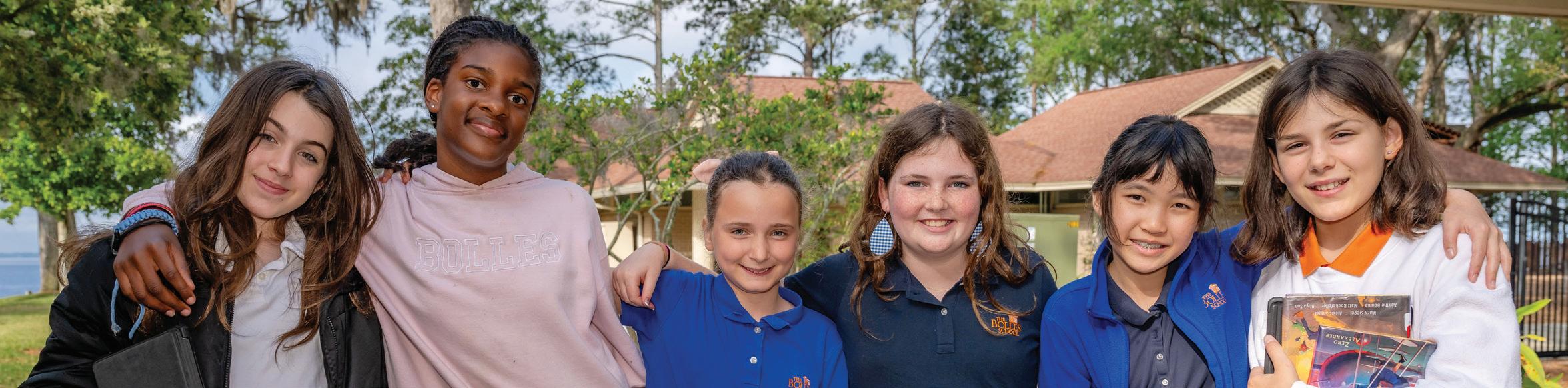
Opportunity is more than access—it’s skillfully guided growth.
Our faculty and staff are masters of creating a culture where students thrive and achieve excellence. Here, opportunity lives in every corner: in classrooms, on stages, in labs, on fields and in studios. Students are immersed in academics, the fine arts, athletics and activities that expand their opportunities today, so more things are possible tomorrow. Bolles.org
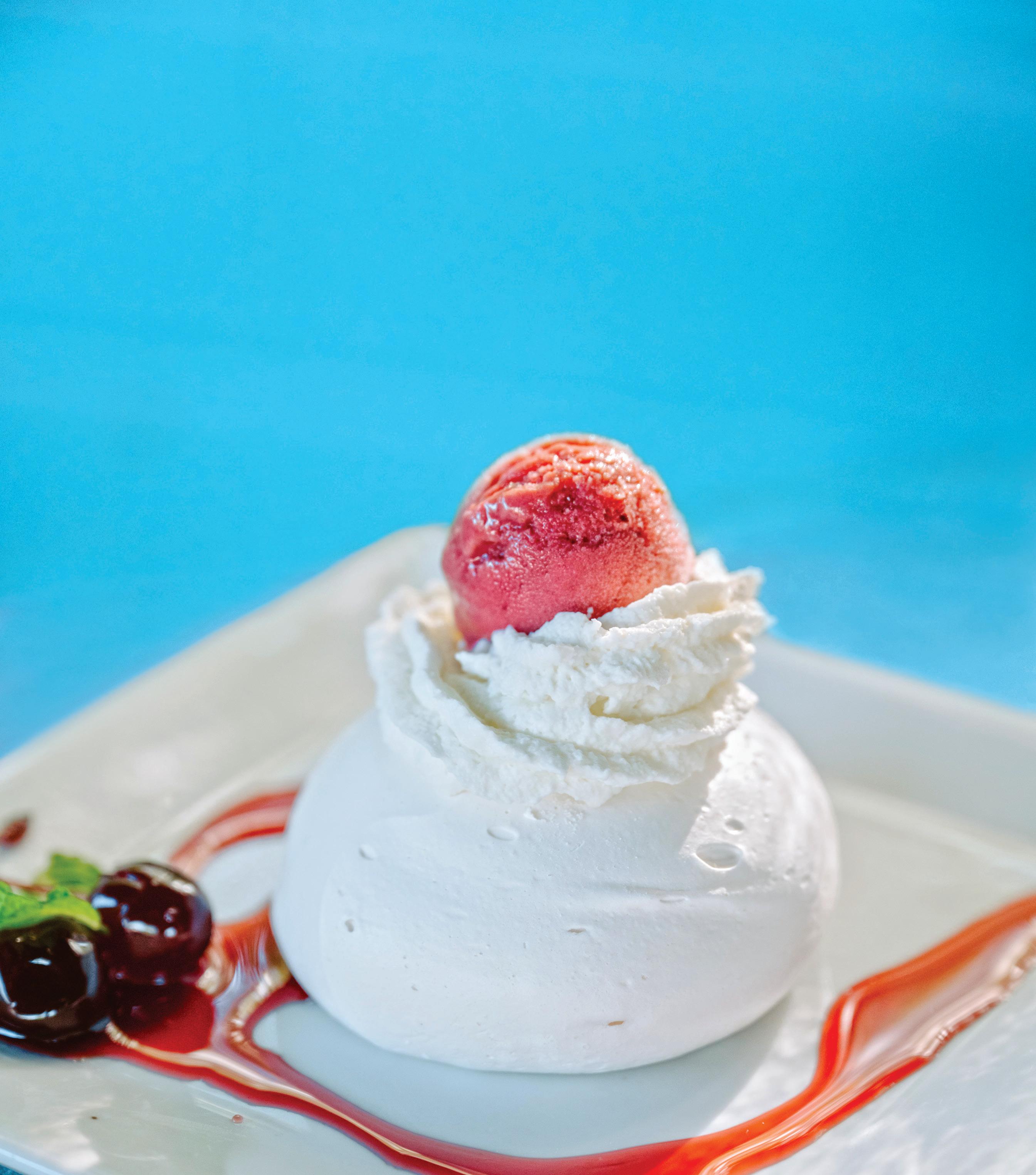
By Steve Dollar • Photography by Alicia Osborne
Italian-born pastry chef Stefania Martucci combines local flavors with family recipes at Tallahassee’s Kool
Consider the bunet.
If you grew up in northwestern Italy like Stefania Martucci, a mere mention of the sweet custard dish stirs childhood memories of family meals destined to conclude with the irresistible treat.
“It’s the quintessential Piedmont dessert,” Martucci says, “and it’s the perfect blend of chocolate and amaretto crumble. Traditionally, it’s the ideal end for a meal of agnolotti (three-meat ravioli) and brasato al Barolo (roasted beef in Barolo wine). Mine follows my family’s recipe, and the hardest thing is to bake it perfectly—the texture has to be silky and decadent.”
As a kid, Martucci would skip those epic Sunday entrees to save room for the bunet. Now that she has her own kids, it’s their favorite too. As the new pastry chef at Kool Beanz Cafe, one of Tallahassee’s most popular dining spots for the past three decades, Martucci calls it her signature dish. In a certain way, the bunet has led Martucci to where she is right now—dressed in black slacks and a matching chef’s shirt bearing her initials, focused and excited to bring her European swerve to Southern palettes nurtured on banana pudding and sweet potato pie.
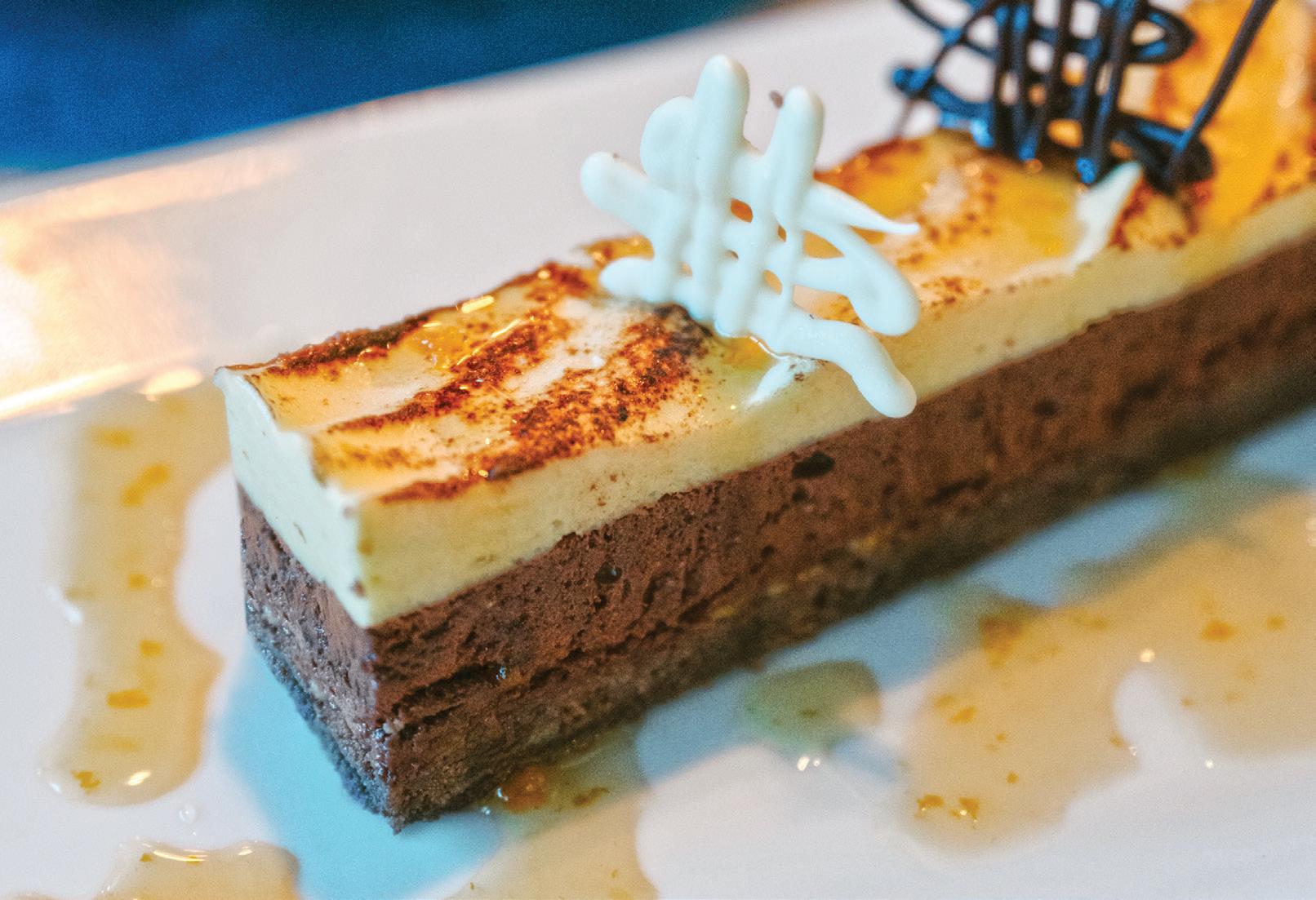
In pastry, you have to follow the rules. —Stefania Martucci
neighborhood in Tallahassee, where she sold her homemade specialties like those bunets.
Martucci moved from Turin, Italy, to the Panhandle in 2021, after her husband had started working as a Classics professor at Florida State University. Over the past few years, Martucci cultivated a fanbase at the Frenchtown Farmers Market in a historic Black
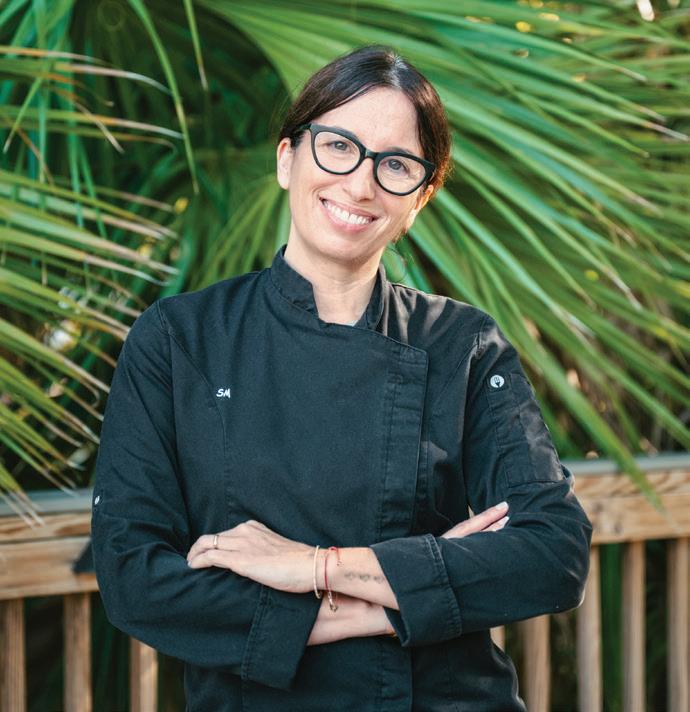
“People loved it,” she says. “It’s something unexpected. Something that is so traditional in my hometown, here is seen as exotic.”
A passion for food may simply be part of the Italian DNA, with centuries of cultural heritage bubbling in every pot of marinara. “Food is always central to any Italian person,” Martucci says. “From my mom’s side, all of my family cooked very well.” But she wasn’t born into her career. Martucci’s businessman father happened to own a restaurant, but she worked in the family’s construction firm. In 2014, however, a moment of self-discovery led her to sign up for classes at a Turin culinary academy.
“I always had this desire to develop my art,” she says. “At some point, I decided food was my thing and was my only real interest—the thing that always makes me feel enthusiastic.”
Martucci spent three summers visiting her brother on the Spanish island of Ibiza, a notorious party destination, working as a seasonal pastry chef in an Italian restaurant.
By Stefania Martucci, Kool Beanz Cafe
Serves 15
1 1/4 cup egg whites at room temperature
1 3/4 cup sugar
4 1/4 tablespoons corn starch
2 tablespoons white vinegar
Whipped cream
Fresh fruit
Sorbet
PREPARATION: Preheat oven to 212 degrees. Whisk egg whites and dry ingredients for 5 minutes in a standing mixer at the second-fastest speed. Add the white vinegar and whisk 1 minute at the fastest speed until peaks form. Pour mixture into a piping bag and, on a pan lined with parchment paper, pipe the meringue into 15, 4-inch circles, leaving a hollow center. Bake for 2 hours. Let them rest in the oven for at least 2 hours after baking without opening the door. Top with whipped cream, fresh fruit of choice and a small scoop of complementary sorbet flavor.
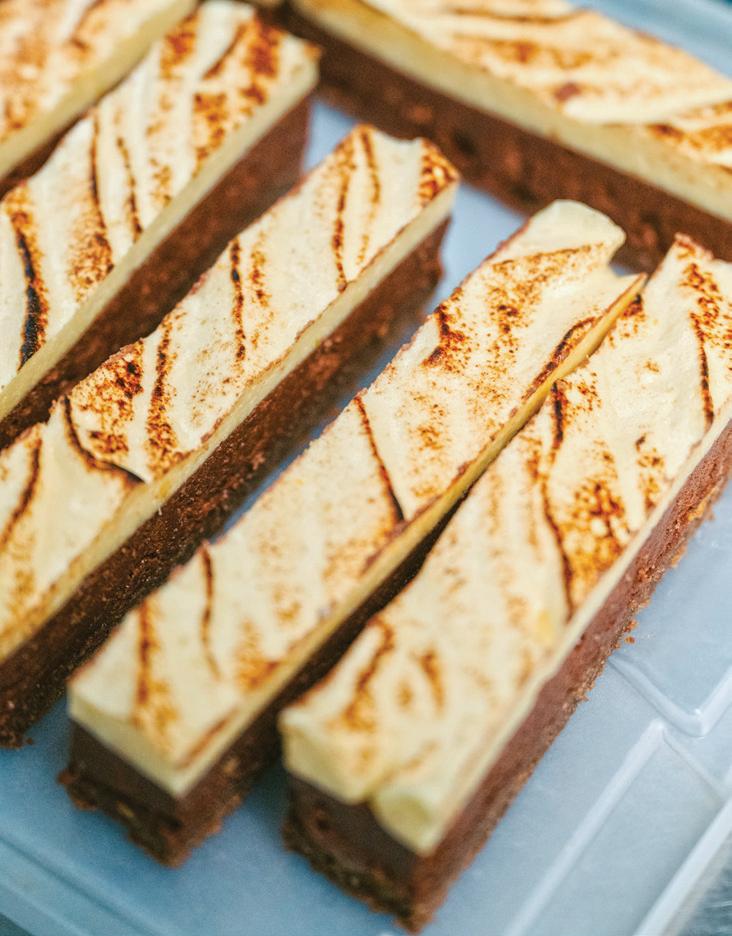
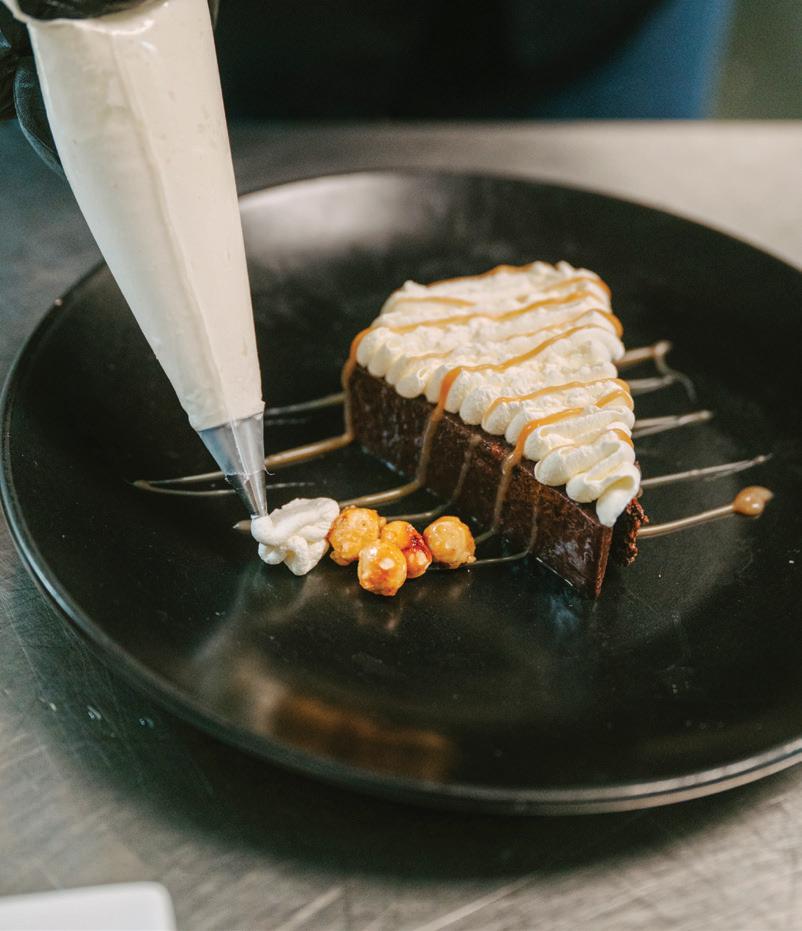
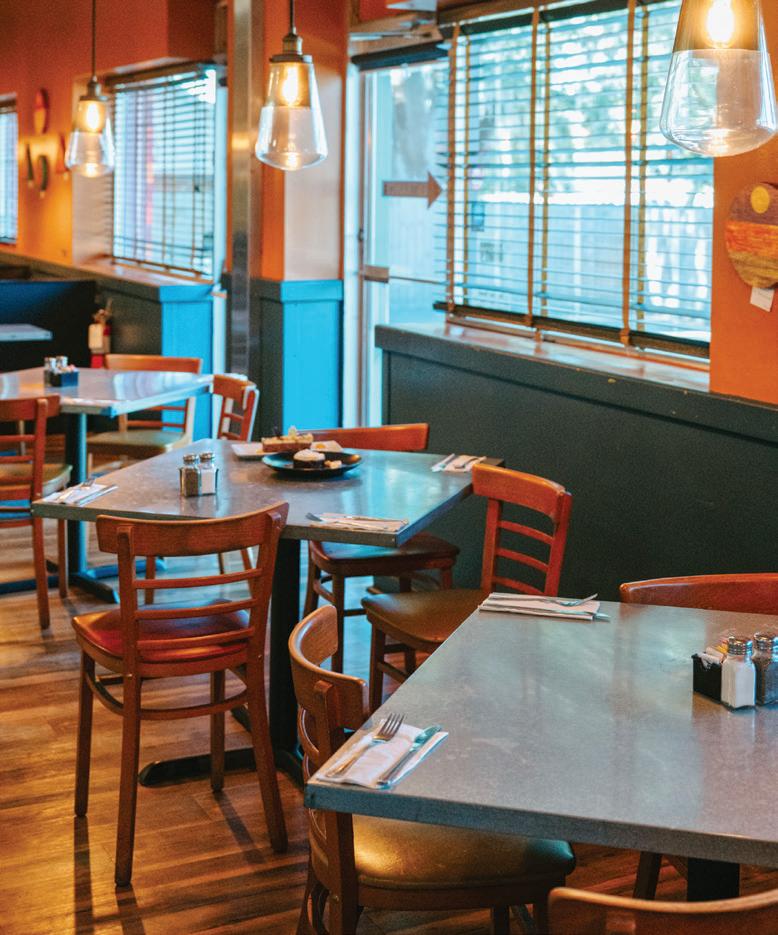
She also got to indulge her love for gelato, which isn’t simply Italian for “ice cream” but its very own type of ice cream. “I just had my second kid,” she says. “There was a gelato store close by, and they gave me the chance to go there to practice, so I was in the lab. I decided that gelato is amazing.”
She brought all those experiences when she moved to Tallahassee with two of her children (a third is now grown up). “When I moved here, I felt so lucky that I could start again my life from zero,” Martucci says. The family became fans of Kool Beanz, with its vivid decor and freewheeling American cuisine informed by everything from the nearby Gulf Coast to a host of global cultures. When Martucci’s husband glimpsed a post seeking a new pastry chef on the restaurant’s Facebook page, she went for it.
At her audition, “She knocked it out of the park,” says Keith Baxter, owner and founder of Kool Beanz.
“First of all, her desserts are very different than anything you get in Tallahassee,” he continues, “and our sales are proving that
they’re very well accepted. She has professionalism. She has dedication. She has passion ... and it shows every day. She’s a department of one. Only she can do what she can do.”
While Martucci excels in shaking up expectations, successful menus tend to offer at least a classic or two— crowd-pleasing dishes that can entertain a broad demographic of customers. In the world of Italian cuisine, there’s one famous dessert that rises above the rest—a fixture as common as red-andwhite checkered tablecloths at spaghetti joints nationwide, with a flavor so well-known the taste can come as a total afterthought. Presto: tiramisu.
—HOURS— MON.–FRI. LUNCH & DINNER SAT. DINNER
was thinking, Why not change the flavor? And I made it like it’s a tiramisu.” She starts with eclair dough, “filled with a coffee cream and glazed with mascarpone, with powdered cocoa on top, and things like that. The flavor is the one of tiramisu. The consistency is something different, more personal.” Martucci’s elevated version abandons the practice of soaking a ladyfinger in coffee. “It’s better because this coffee pastry cream is a little more intense, so the coffee is more strong. And if I eat tiramisu, I want to taste the coffee.”
—LOCATION— 921 THOMASVILLE RD. TALLAHASSEE koolbeanzcafe.org
“So it’s the first time that I try to make a tiramisu (at Kool Beanz),” Martucci says. “I have so many ideas that it’s not necessary to make tiramisu, right? But I have at least 10 ways to make it.” Just a week before, Martucci was making a traditional French profiterole. “The people loved it so much, I
That creative pursuit of flavor and sensory satisfactions was perhaps first driven by the rich resources available to Martucci in her native Turin. She raves about the hazelnuts—an essential element of the bunet—the quality of which she sometimes struggles to find here. On the other hand, she has a wider range of ingredients to choose from. “I can try more things, like Asian influences,” says Martucci, who is a fan of local Asian and Middle Eastern markets. “Probably in Italy, we are a little too
traditional. Here in the United States ... there are influences from other kinds of cultures that are very interesting.”
One particular delight is the mango. The fruit surely doesn’t grow in the Piedmont under the shadow of the Alps. Florida’s tropical climate, however, turns mango orchards as vivid as neon with the sticky, pulpy fruit. “To be honest, when you buy a mango in my country, it’s always so bad,” Martucci laments. “You have to use the professional puree. But here, they’re amazing.”
The mango provides a burst of sweetness to Martucci’s passion fruit and vanilla layer cake, which she calls “a pure exercise of fantasy.” The dish is particularly effective because of the way Martucci utilizes sugar. There’s none of that coma-inducing overload promised by the gooey peach cobbler at your favorite meat-and-three. “European pastry uses less sugar than the American,” the chef explains. “This is something I always try to keep in my desserts. If I make a strawberry dessert, I want to feel the strawberry—it doesn’t have to be covered by too much sugar. I try to elevate the flavor of the ingredient.”
Martucci gives play to a delightful palette of colors in her desserts and loves to introduce surprising contrasts in texture or flavor. There is, literally, no sweet without some sour. “Especially, a restaurant dessert has to have it, because it’s the end of the meal,” she says. “Usually, people have saved not so much room. It’s important that it’s not too sweet.”
In the end, crafting Italian desserts comes down to science. “When you cook, you can use a lot of creativity—you can taste, and say something needs more salt, or it’s a little spicy. In pastry, you have to follow rules,” Martucci says. It’s math, not mood. “If you think to change something because you are in a hurry, you get it wrong.”
As she speaks, Martucci projects a genuine zest for what she’s doing, the abiding thrill of someone who has landed exactly in the place she wanted to be, with no reason to suspect a year ago that she’d be right here, dreaming up her ideal desserts, inspired by European authenticity and a taste for innovation.
Her desserts are very different than anything you get in Tallahassee.
—Keith Baxter
“They are super, super open-minded with me,” she says of Kool Beanz, reflecting on her requests for exactly the right component to turn a new idea into a diner’s perfect final bite, “when I drive them crazy that I want this ingredient, or, (ask) ‘Where do you find it?’
Sometimes you have to be flexible. You try to make it work.”
That is, of course, the joy of cooking.
“I think about all these new ingredients, new techniques that you can learn every day,” Martucci says. “It’s a continuous evolution, pastry. Every month, you learn something new: a new technique, a new ingredient that can help you to make the texture better, and things like that. It’s something that gives me so much satisfaction. I have a friend that once told me, ‘Find your passion, and look for someone who pays for it, and this is the reason for happiness.’ And that’s true.”
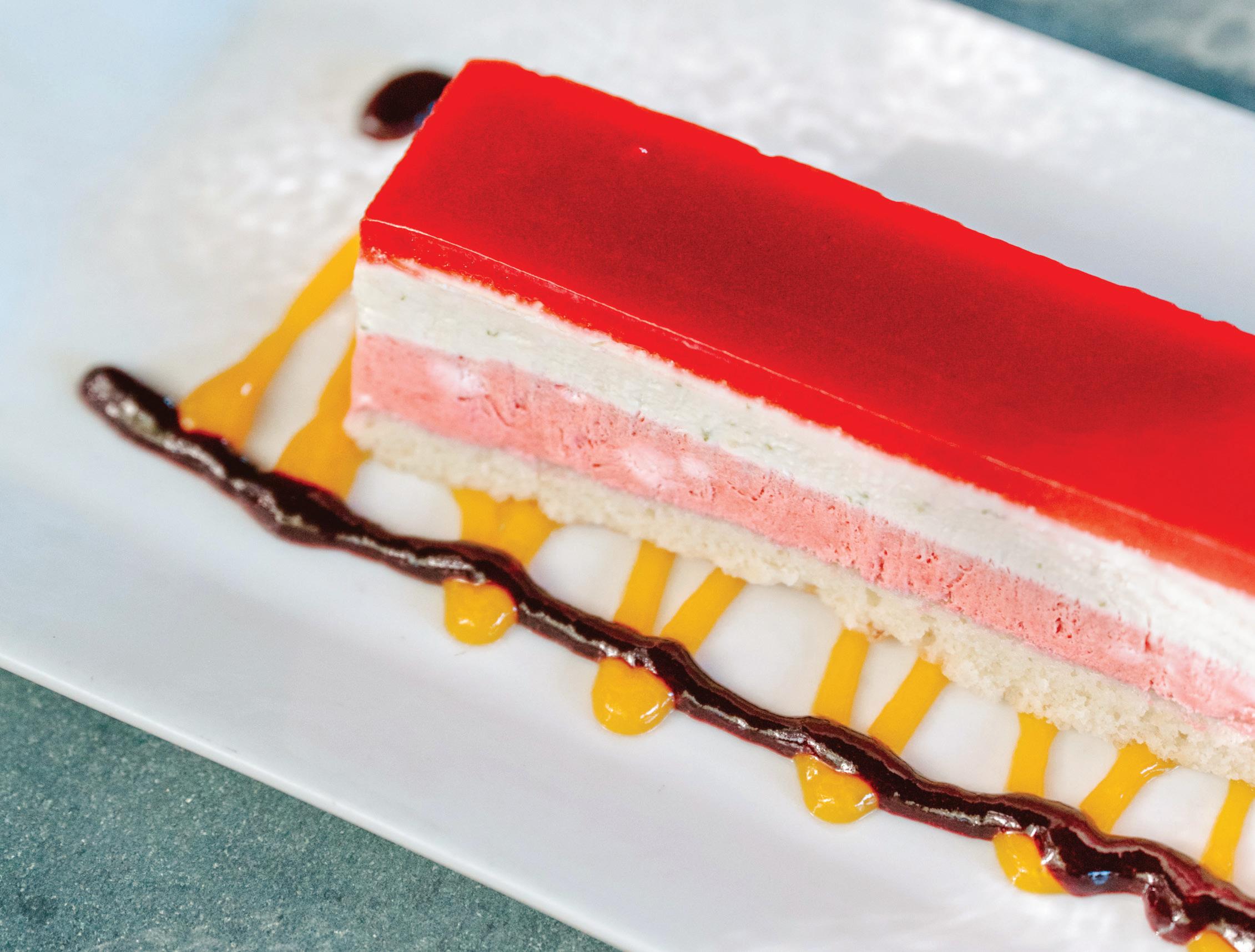
By Helen Bradshaw
MEet the man reimagining theme park design.
The rushing chlorinated waters of a theme park attraction and a crowded tram ride can inspire many things—adrenaline, nausea, the eruption of previously latent familial conflict. For Steve Tatham, they inspired a career.
“There’s a scene that takes place in this little village (on the backlot of Universal Studios in Los Angeles). There’s a flood, and water is roaring toward the tram,” he recalls from a family vacation when he was 9. “I’m sitting there with my parents. And for some reason I thought, ‘Somebody has to make this stuff up. Somebody has to take a blank piece of paper and write down pictures or words or numbers, and then it comes to life.’ I was like, ‘That's gotta be the coolest job in the world.’ It turns out, it is.”
Tatham is one of the world’s preeminent theme park designers. He’s spent decades sketching, scrapping and creating everything from tiny inscriptions on buildings for eagle-eyed fans to entire experiences, including his latest venture, Universal Epic Universe in Orlando. Since it opened in May, it’s made waves far beyond the realm of theme park designers. It’s the first major theme park to open in the
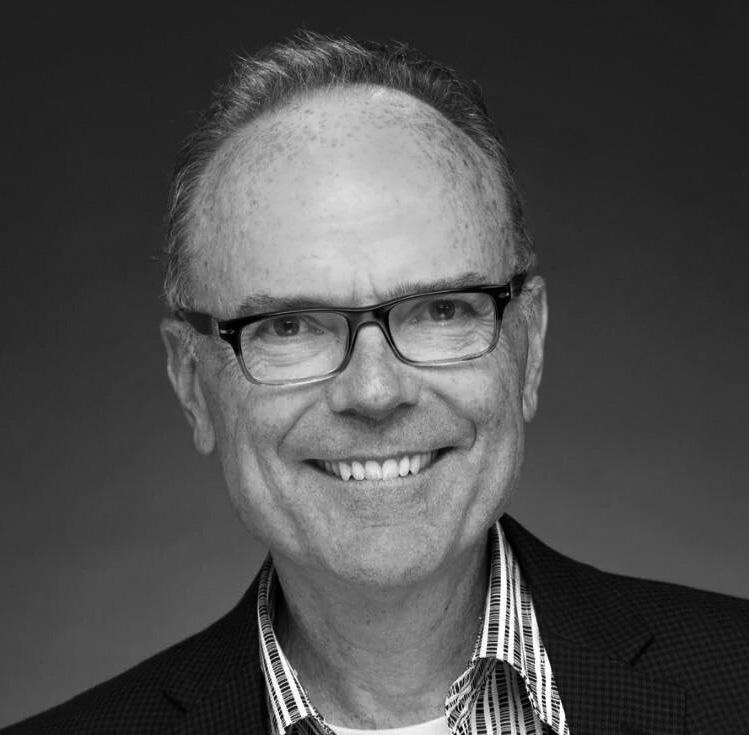
United States this century and is expected to bring $2 billion to Florida in its first year.
Tatham is now a wizard of narrative-based design, but he spent decades honing his craft in theme parks around the world, beginning in the make-believe lands of California. As a young student, first in a set design program at UC Berkeley and then later in an architecture master’s at UCLA, he immersed himself in the theme parks he would eventually bring to life. He worked as a Jungle Cruise skipper in Disneyland and then as a tour guide at Universal Studios. “I would go down to the art department on the lot. I would kind of sneak around, and I would meet production designers. They were really eager to help.”
Legendary production designers, like Henry Bumstead, known for his work with Alfred Hitchcock, gave Tatham advice and even sketches for him to study. After graduating with his master’s in 1987, Tatham became a set designer with the Walt Disney Imagineers—the selective group responsible for bringing Disney’s stories to life as theme parks. But mostly, he spent his days dreaming up lands that never came to be.

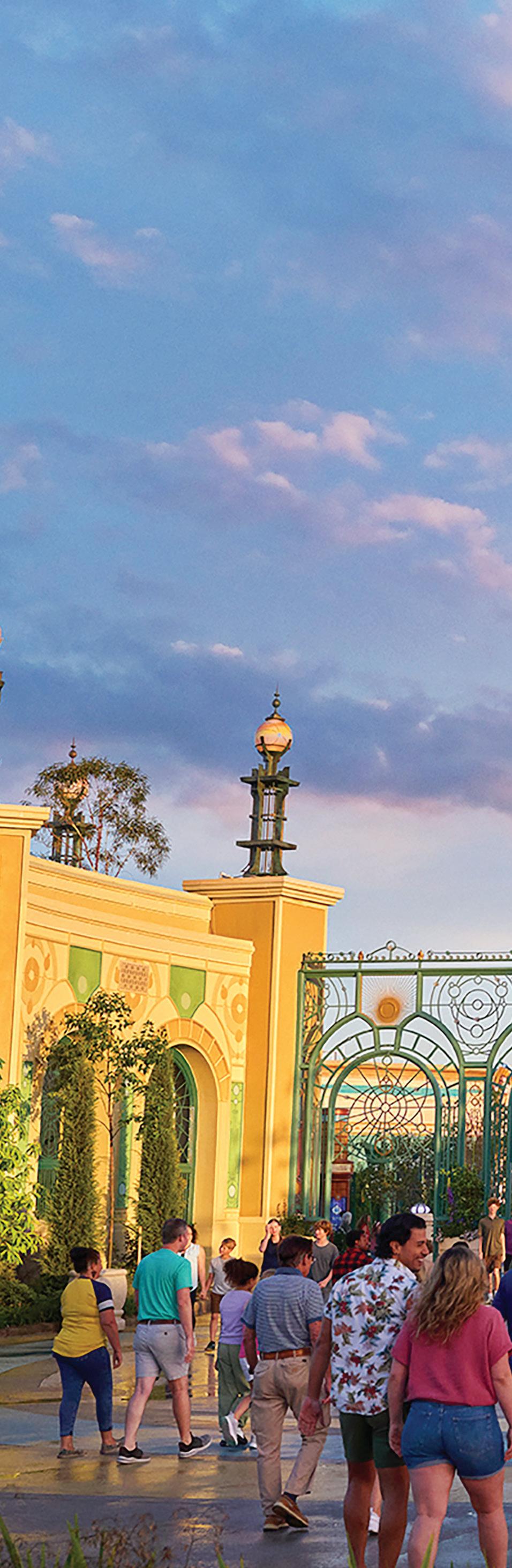
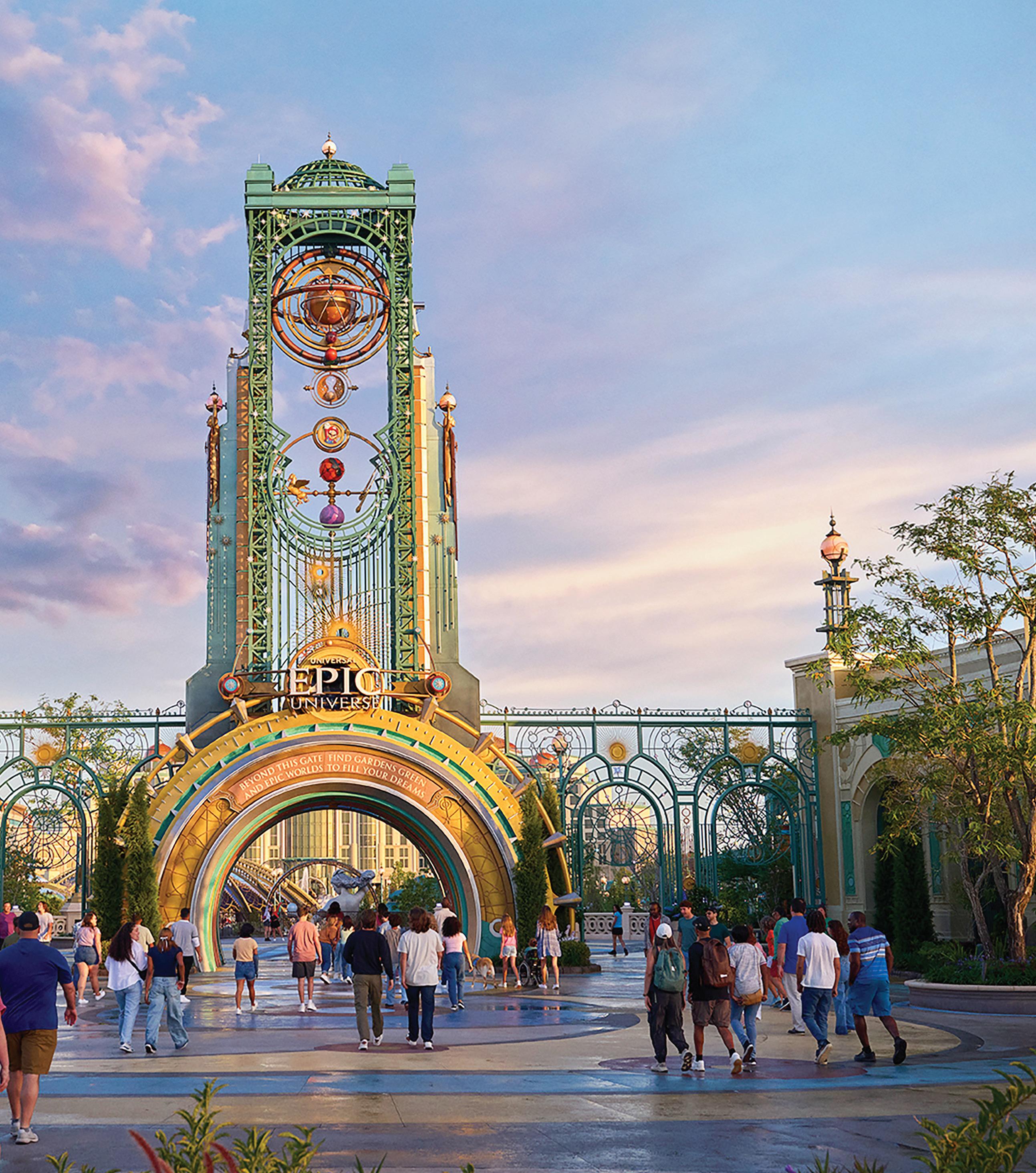
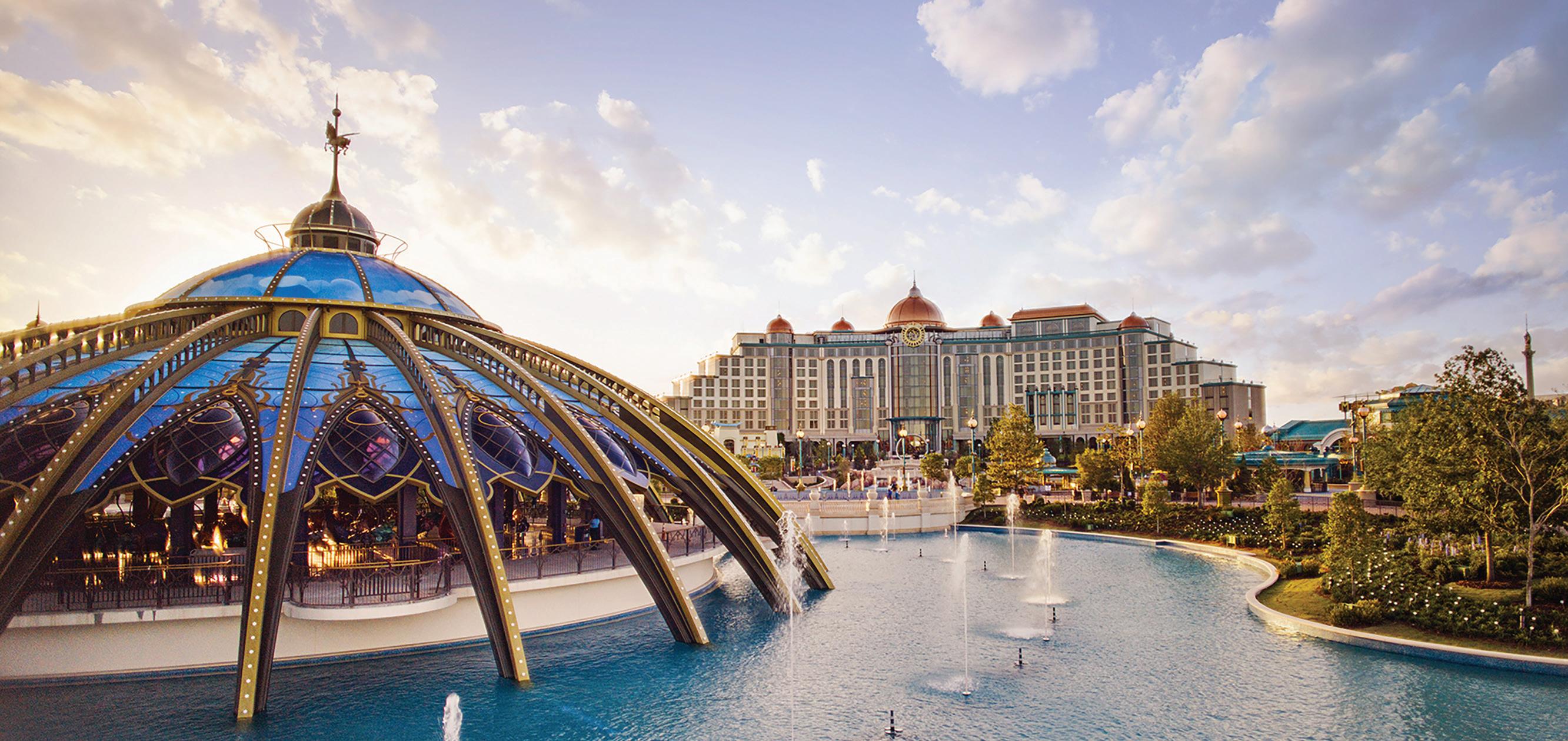
“That was the Disney decade, the ’90s. There were a lot of very ambitious things happening. Some of them landed and some of them didn’t,” he says. “And it was awesome, because you just got to brainstorm and make up stuff and work with all these Imagineers.”
Parkgoers weren’t the only ones wowed by how Tatham wielded his architectural wand. After 28 years at Disney, Universal called him to work on their theme park in Osaka, Japan. The new team was smaller, but the ideas were bigger. What would have been a “no” in California was an enthusiastic “yes” in Japan.
When he arrived in July 2015, the team was already planning their version of Halloween Horror Nights. “There was a model of a corpse, and you’d put your hand in there and there’d be live cockroaches. Then they’d chain people together as they walk through this sanitarium,” he says.
“They’re pitching all this stuff, and I’m just sitting there, slack-jawed, next to the chief marketing officer. He looks over and he’s like, ‘Steve-san is shocked, because he comes from Disney, and he can’t believe all the stuff we’re doing.’ It was a very nice introduction that everything (was) going to be different. I ended up making dozens and dozens of projects. All day long we were churning out stuff.”
I think all buildings have a story.
—STEVE TATHAM
It took a few years for the Universal Orlando team to convince him, but in 2019, he made the move to Florida. “It’s the theme park mecca,” he says. “If you’re in the business, you’re going to end up in Orlando at some point.”
Invigorated by his stint in Japan, Tatham became the executive creative director of Epic Universe, where he led a team of 500 builders, designers and dreamers all dedicated to bringing fictional places to life.
The result is a totally immersive experience: five worlds connected through 30-feet-tall semicircular gates. Visitors can explore The Wizarding World of Harry Potter-Ministry of Magic, then hop through a glowing portal to Super Nintendo World or How to Train Your Dragon-Isle of Berk. Or they can venture into uniquely Universal domains like Celestial Park and Dark Universe.
To Tatham, it’s truly epic—not in the colloquial sense, but like “The Odyssey.” These lands tell a story filled with heroes that create legends. “If you think about these
epic tales that take place in these expansive environments, Epic Universe does exactly that. In fact, ‘How to Train Your Dragon’ is based on ‘Beowulf.’ So there really is a solid foundation for why these particular stories work. If all of a sudden you put Minions in the middle of Celestial Park, people would be like, ‘I don't understand why this is here.’”
Every detail in the theme park is intentional to shape these narratives, but if you ask Tatham to divulge secrets about esoteric Easter eggs referencing deep Universal lore, he won’t tell you anything that isn’t widely known. But rest assured: There are plenty for diehard theme park fans to find.
And for the theme park ambivalent, Tatham doesn’t need you to care about the minutia of his creation. Instead, forget the details and become immersed—it's not hard in a Tatham-designed park.
For now, the 65-year-old architect is moving on to his next adventure. He’ll leave behind Universal for a role as the chief creative officer of MDSX, an Orlando-based
experience design group, and as a professor of themed entertainment design at the University of Southern California.
But his core design tenets will remain true, no matter what's next. “I like to encourage architects to think of their buildings in terms of narrative, because I think all buildings have a story,” he says. “Think about the Isle of Berk. You’re at the point of the story between the second and third movie where dragons and Vikings are at their optimum
point of collaboration. That story is told to you in the design: You see a giant statue of a Viking and a giant statue of the dragon. They’re equal heights. They’re next to each other—they’re parallel, they’re friends. We translate emotions through design … It is different than building any other type of architecture, but it all derives from the story. There’s a lot of possibilities for narratives (in other buildings).”
To him, it all comes down to etching moments and memories, like the family trip he
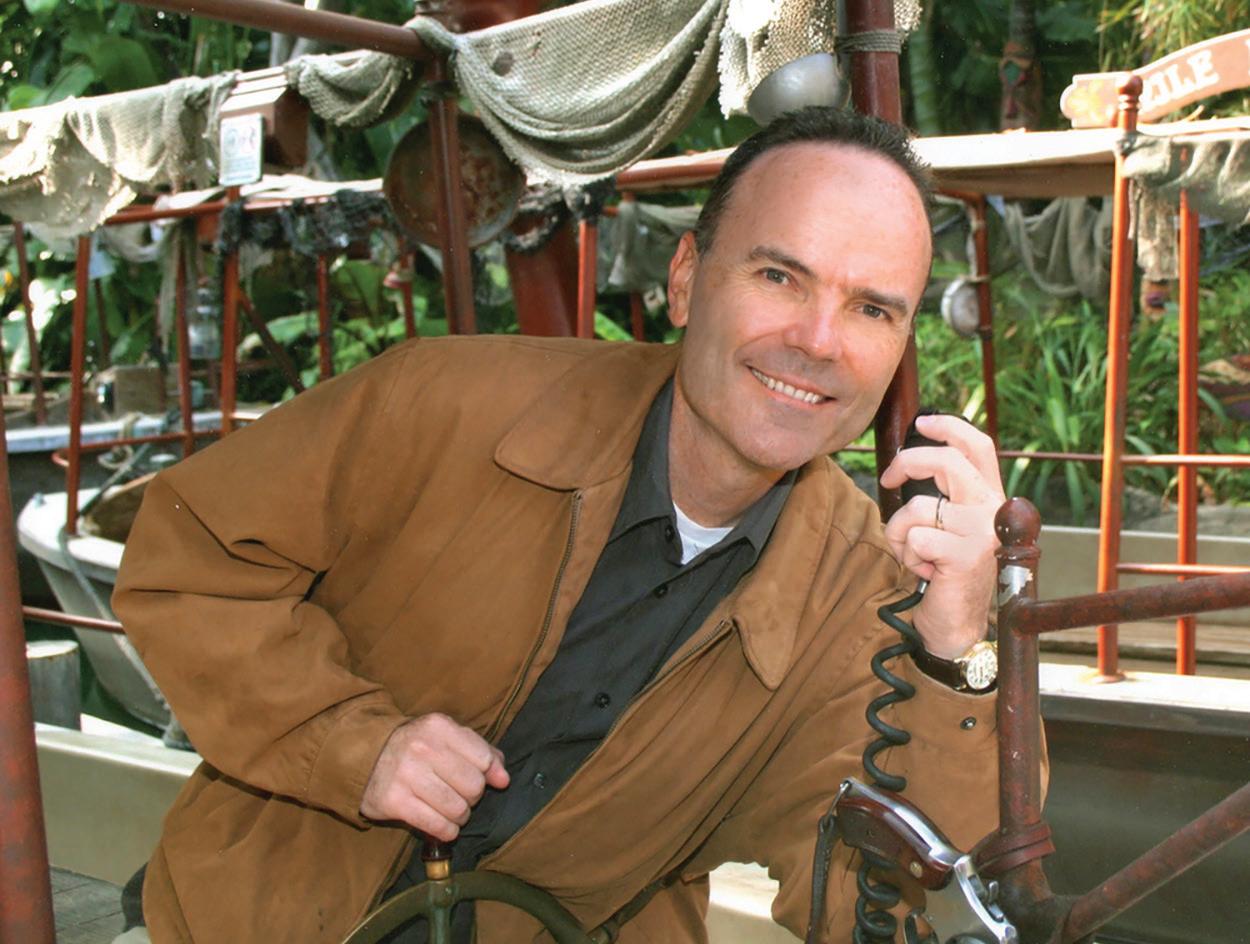
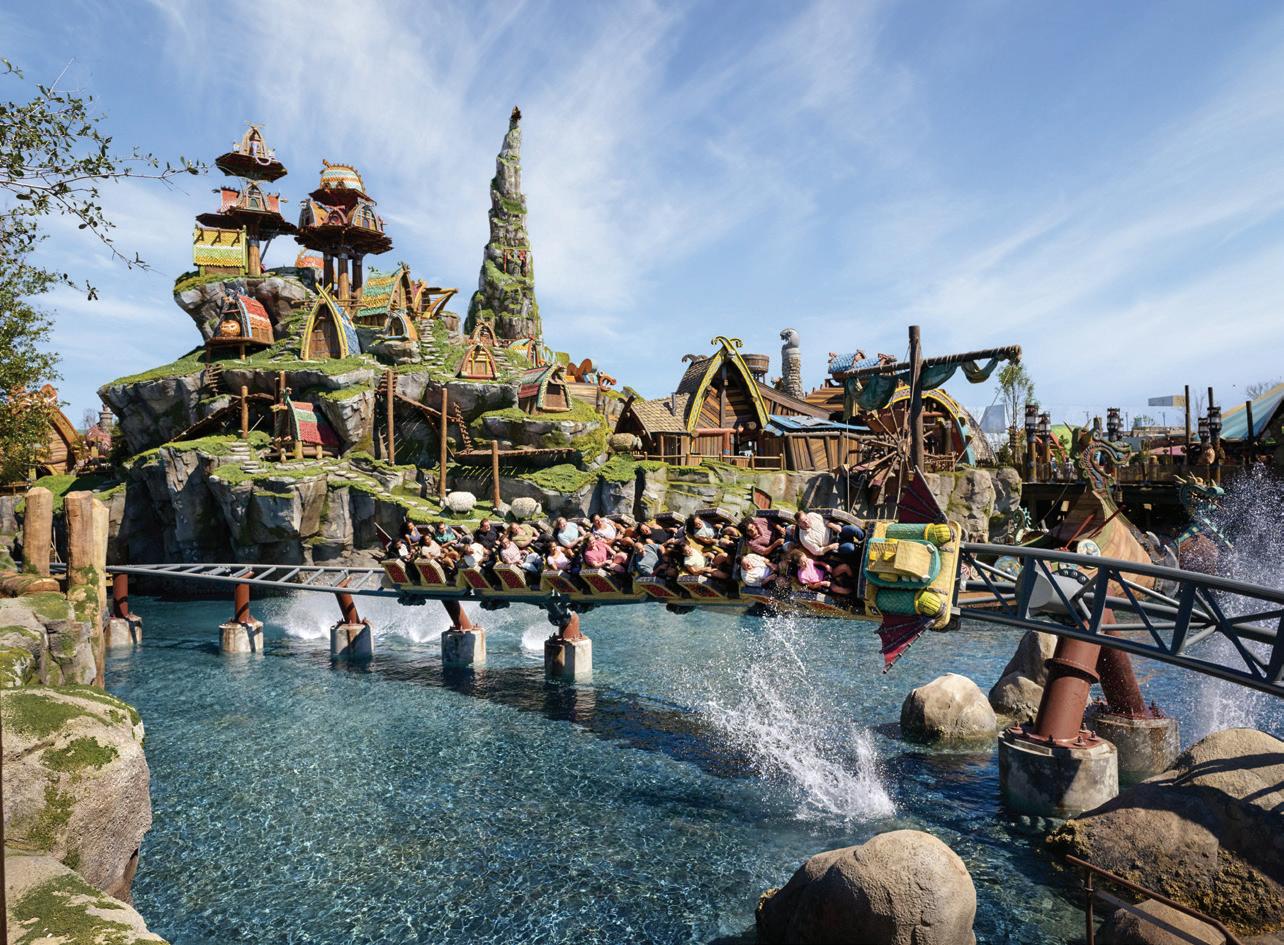
took with his parents that sparked a career. Whether it’s a hospital or a theme park, good design with strong narratives allows a visitor to get lost and focus on who they’re sharing moments with. “You ask people about their experiences, and before they say what rides they went on, they’ll tell you who they went with. I hope we create an environment that allows those emotions to come to the surface, and the best way to do that is to create stories that they love.”
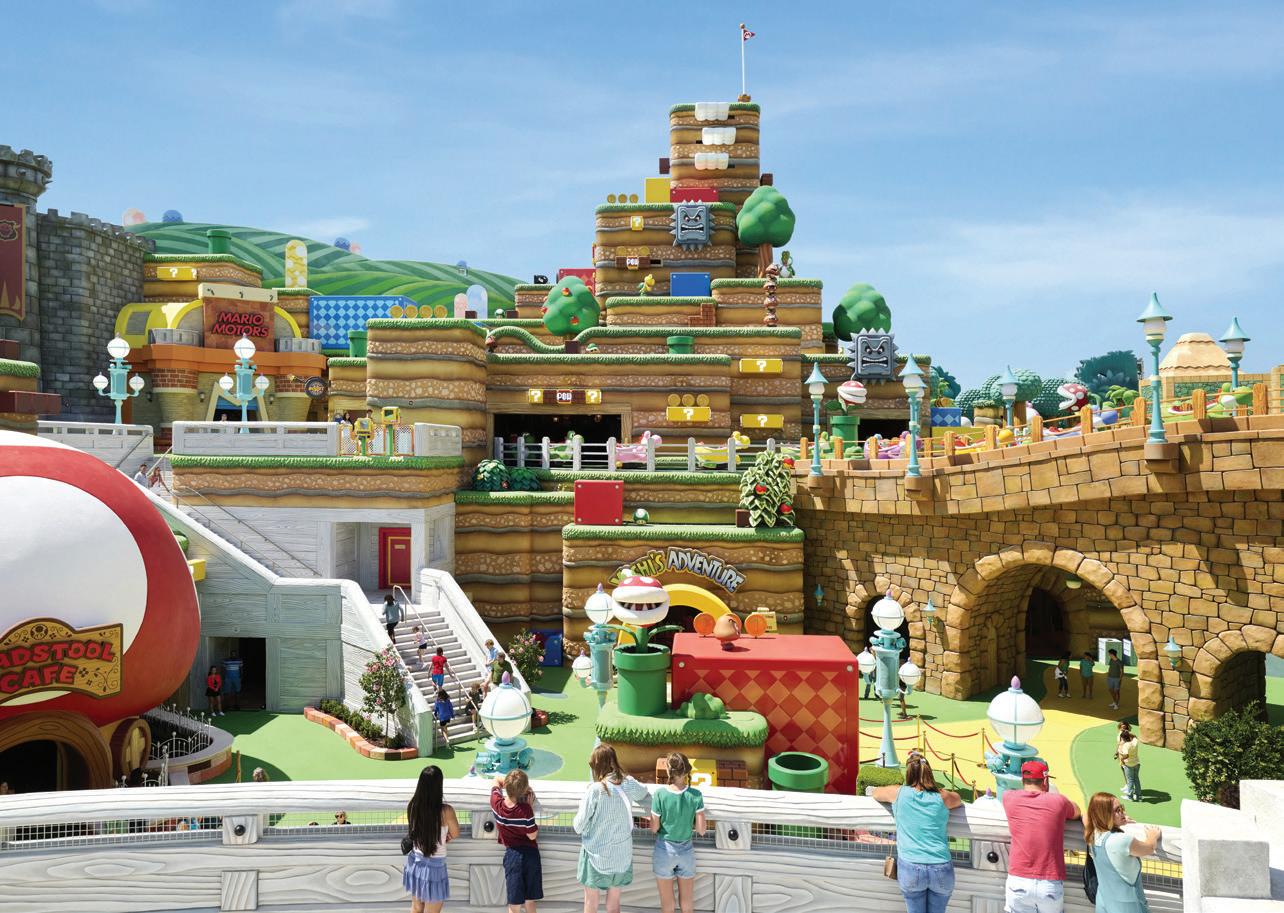
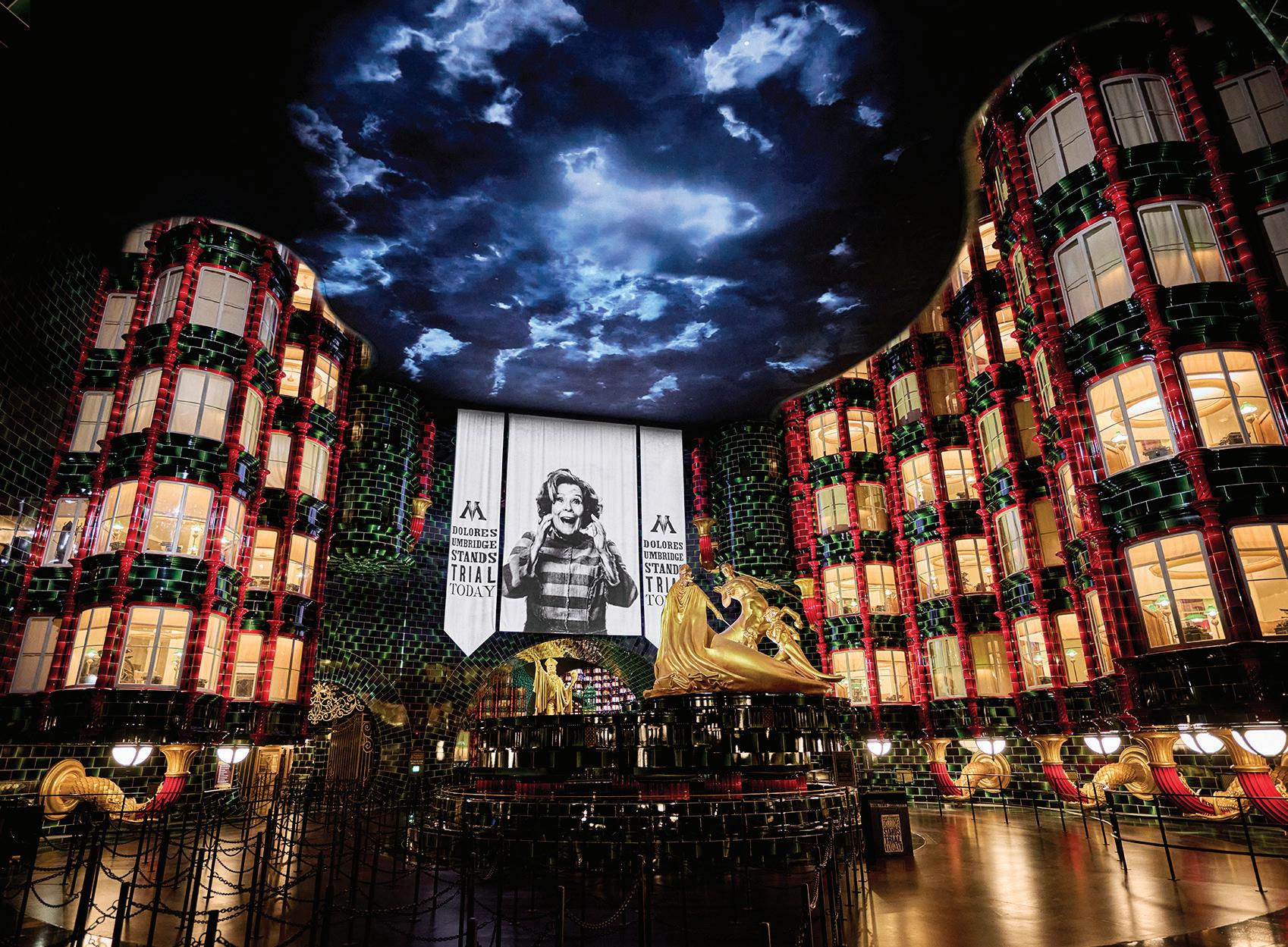
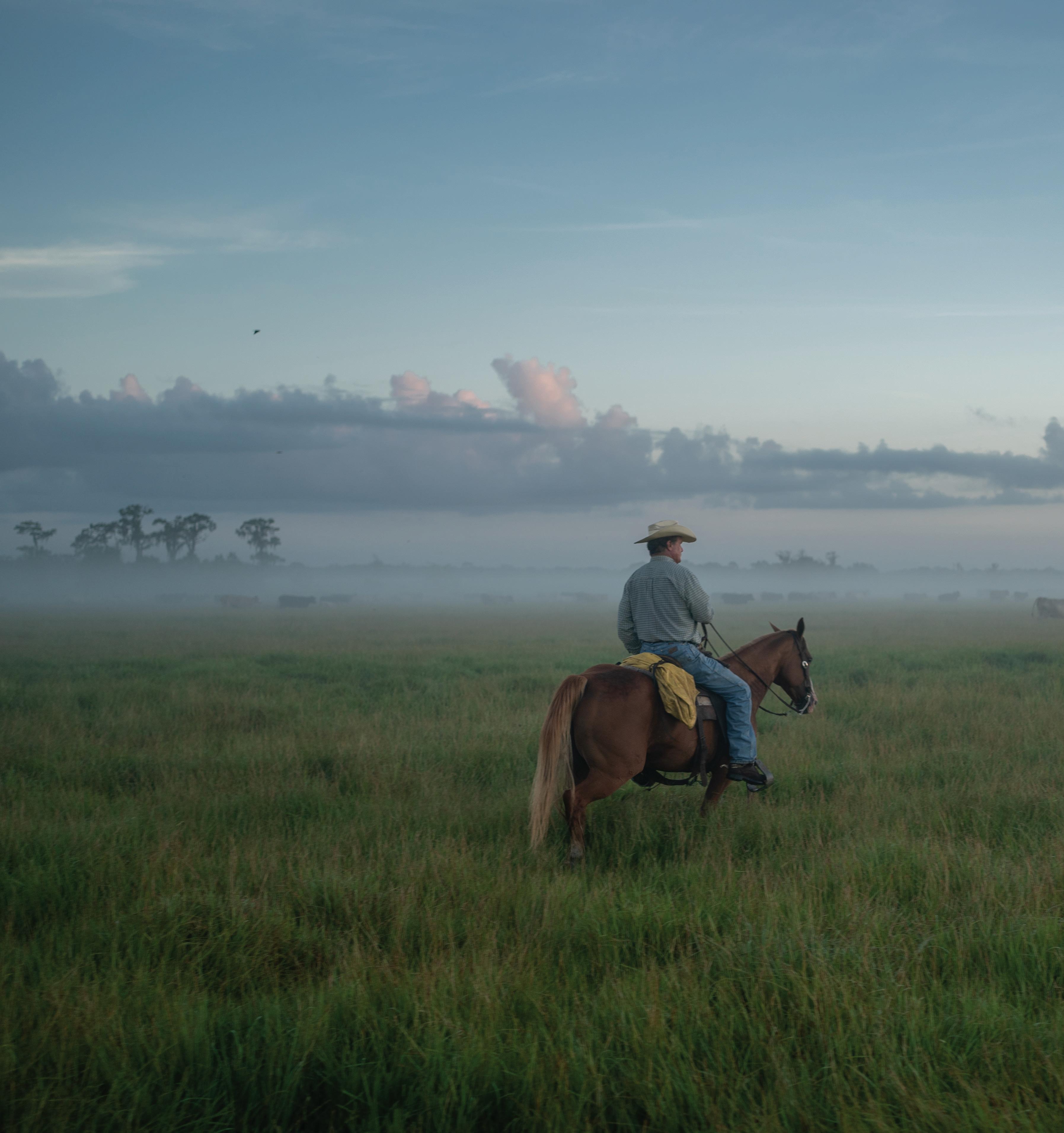
PHOTOGRAPHS & FIELD NOTES
By Carlton Ward Jr.
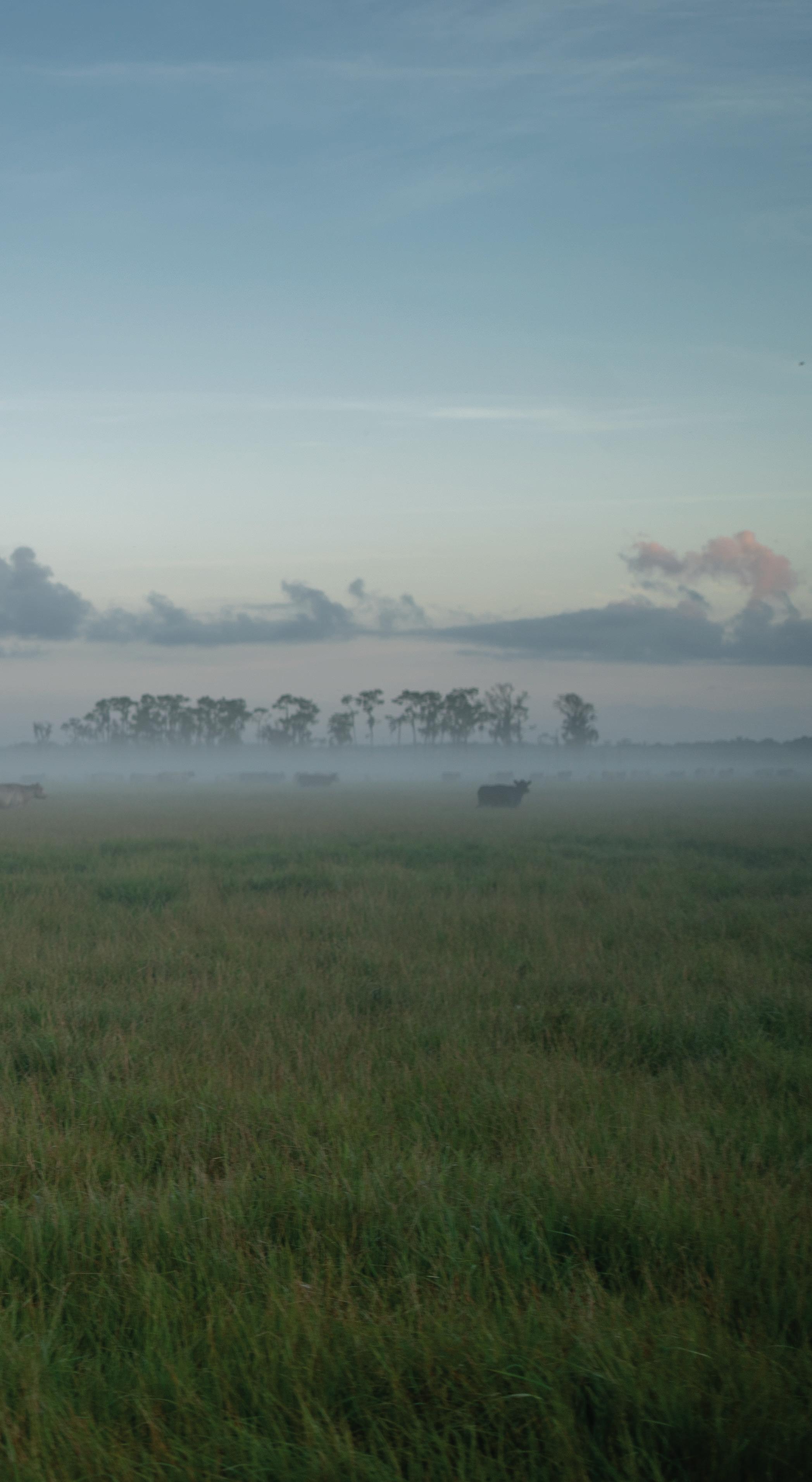
Florida cowboys have been heroes to me for as long as I can remember. My family owns a cattle ranch in the small town of Limestone, two miles west of the Peace River in Hardee County—property my great-grandfather bought in the 1930s. Looking back at my life, I suppose it’s natural that I took an interest in photographing Florida cowboys.
I had learned the craft of conservation photography during graduate school while documenting the rainforests of Central Africa with scientists from the Smithsonian. During my time away from Florida, I realized how quickly the wild places of my youth were transforming into housing developments and shopping centers. I saw that Florida’s ranch country was quietly disappearing—yet unseen, overlooked and forgotten to most people. I moved back to Florida in 2004 to help change that.
Early in the project, I went to meet and photograph Alto “Bud” Adams Jr., the patriarch of the Adams Ranch and a well-known cowboy and conservationist. An accomplished photographer himself, Bud offered tremendous support and encouragement for my work. He introduced me to other ranchers, including the legendary sixth-generation Florida cowboy Cary Lightsey, who owns ranches throughout the state and an island in the middle of Lake Kissimmee.
Like Bud, Cary quickly became one of my heroes, both for his command in the saddle and for his pioneering leadership in conservation. When we first met in 2005, he had already protected 90% of his family’s ranchlands in conservation easements—ensuring that vast stretches of the Everglades Headwaters would never be developed. I photographed with Cary and his family many times over the years, including from a helicopter while he drove a herd of cattle along his Tiger Creek Ranch with Lake Kissimmee in the background.
Photographing Florida’s ranches over the years introduced me to Florida black bears and panthers and also inspired me to create the Florida Wildlife Corridor campaign—
which brings attention to protection of a connected network of conservation lands throughout the state. Florida already had nearly 10 million acres of public conservation lands. But our incredible public parks and preserves were quickly being cut off from one another by roads and development. The best hope for keeping the existing green spaces connected is conserving Florida’s farms and ranches.
In 2020, motivated by a new toll road that threatened to funnel more development into the Everglades Headwaters, I led a campaign seeking to recognize the Florida Wildlife Corridor in state law. My team at Wildpath brought leading conservation groups together and partnered with the National Geographic Society to make a documentary called “Saving the Florida Wildlife Corridor” that celebrated the importance of the landscape for Florida leaders. One of the main characters of the documentary was Cary Lightsey.
We filmed and interviewed Cary on his Santa Rosa Ranch in the Kissimmee Prairie region of the Everglades Headwaters. I captured this photo during an early morning when we were filming Cary riding out on his horse to gather a herd of cattle. Hold this picture in your mind because most mornings, just before sunrise, this scene is still playing out on ranches across the state, and the wildlife and people of Florida are all benefiting from the land these ranchers are protecting from development. During his documentary interview, Cary said, “If we lose the Florida Wildlife Corridor, we’ve lost it all.”
Thanks to the voices of those who were featured in the film and dedicated themselves to the cause, the 2021 Florida legislature passed the Florida Wildlife Corridor Act with unanimous bipartisan support. More than 400,000 acres of farms and ranches in the Corridor have since been protected. Check out FloridaWildlifeCorridor.com to watch the documentary, hear what Carey has to say and see the magical land he is protecting.
By Helen Bradshaw
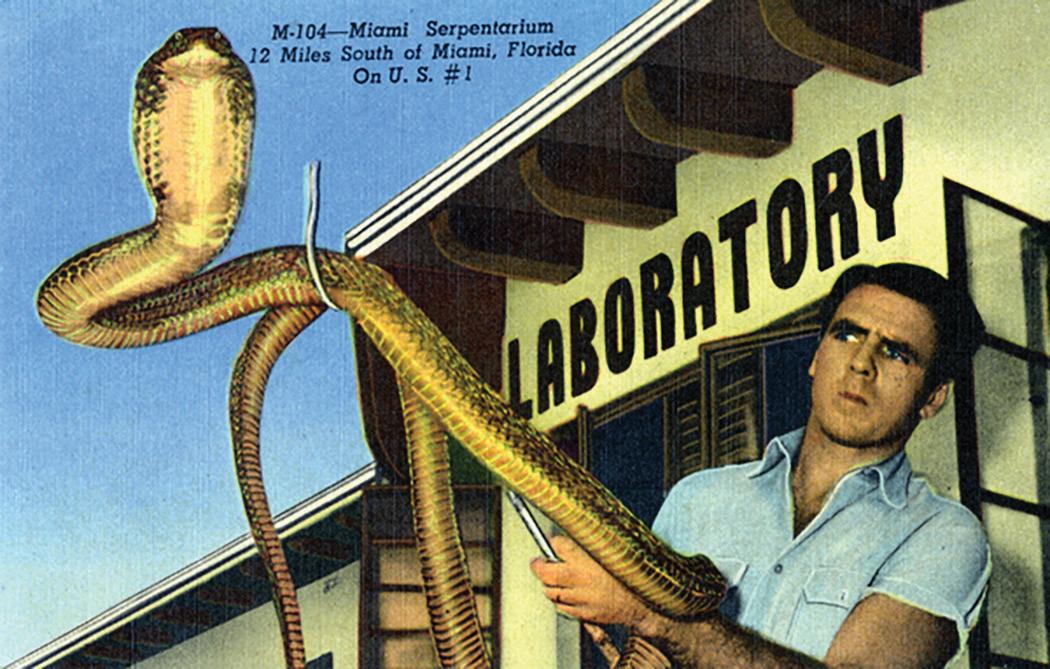
Amid bellows of alligators and the excited chatter of tourists, Naia Hannah Haast and her younger sister, Shantih, would occasionally hear the approaching sound of a helicopter about to land on their front yard. It meant one thing: Someone had been bitten by a venomous snake, and their father’s blood might be the only cure. This was the reality of living at the Miami Serpentarium, a roadside attraction and laboratory opened in 1947, where the Haast family collected vials of venom for researchers across the country.
“A couple of times the Air Force would send the helicopter to just land in our front yard and take him away,” Shantih recalls.
Under the shadow of a giant gold-painted stucco cobra statue off the shoulder of U.S. Route 1, their mother, Clarita, gave tours, while in the labs, their father, Bill, extracted venom from thousands of snakes. Starting in 1948, Bill injected himself with cocktails of snake toxins, gradually working up to lethal doses in an attempt to gain immunity.
And many believe it worked: Over the course
of his 100-year life, Bill was bitten at least 172 times by venomous snakes—including the king cobra, whose paralyzing venom is one of the deadliest in the world. “His first king cobra bite was very vivid to me,” Naia says. “I was nine, and the world stopped for a minute.”
That first king cobra bite sent Bill to the hospital, where his pulse became undetectable and he began losing sensation throughout his body. The following afternoon, he was back to work at the Serpentarium with the cobras. “Everybody in Miami wanted to come and see Bill Haast on Sunday with the king cobra,” says biologist and former Serpentarium employee Joe Wasilewski. “That was the thing to do in Miami back in the day.”
The Haasts ran the establishment until 1984, when an alligator killed a child who had fallen into its pit. After 37 years, four shows a day, hundreds of thousands of visitors and countless vials of venom, the Serpentarium closed. The 35-foot stucco cobra, once a beacon for reptile-curious roadtrippers, broke into pieces as it fell from the grasp of removal cranes. But Bill didn’t give up on his passion—he continued to produce venom in Punta Gorda—and neither did the next generation of herpetologists, who found new purpose in his labs.
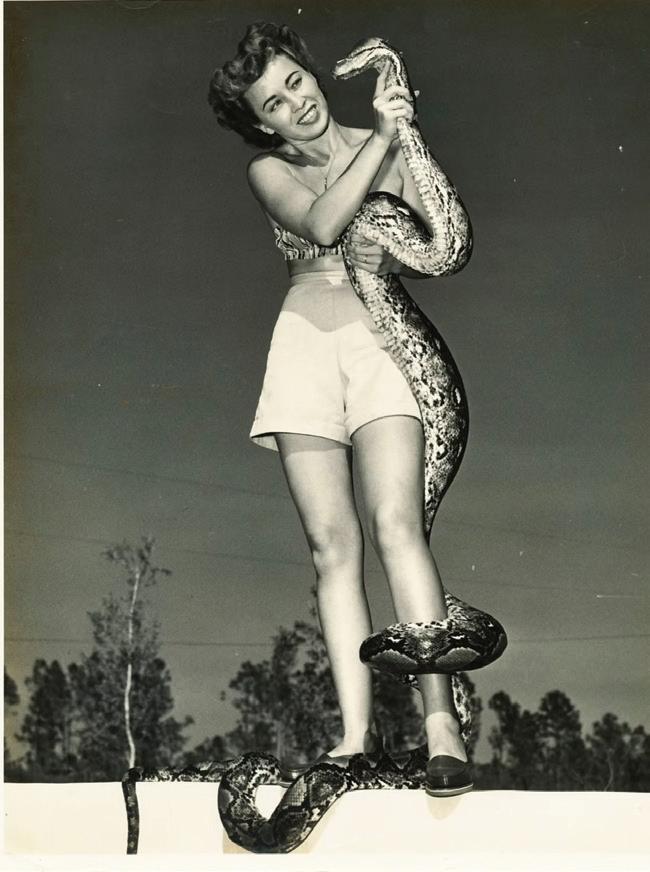
the lab save for a nearby historical marker with a brief history. But for the many reptile researchers who studied under Bill, the memory will never fade. “We call ourselves Serpentarium alumni, and a few people that have gone through there have made big inroads in conservation and venom research,” Wasilewski says. “Although I’m afraid, as time goes on ... it might be lost. It’ll never be completely lost with reptile people, but it’ll get hidden.”
Read more about Bill Haast’s work at
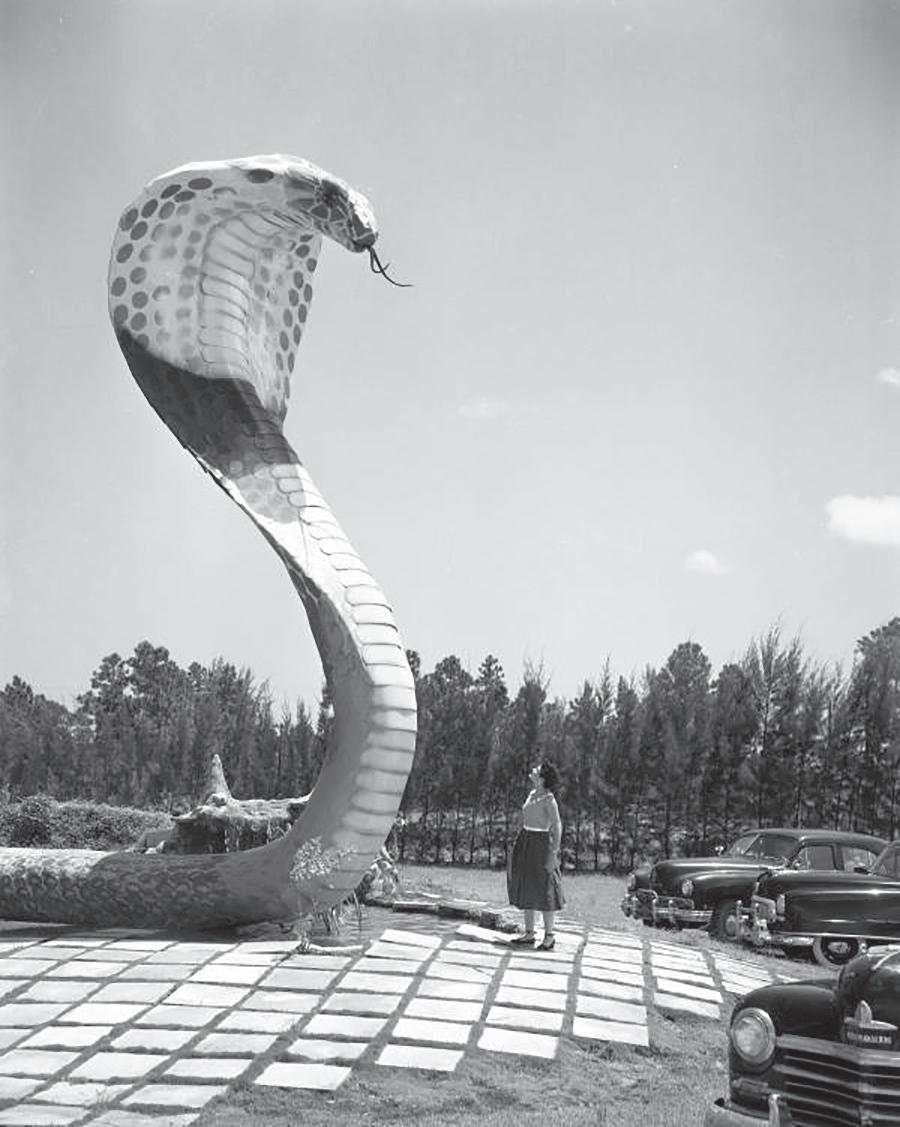
Today, a shopping center stands in the building’s place, obscuring almost any memory of

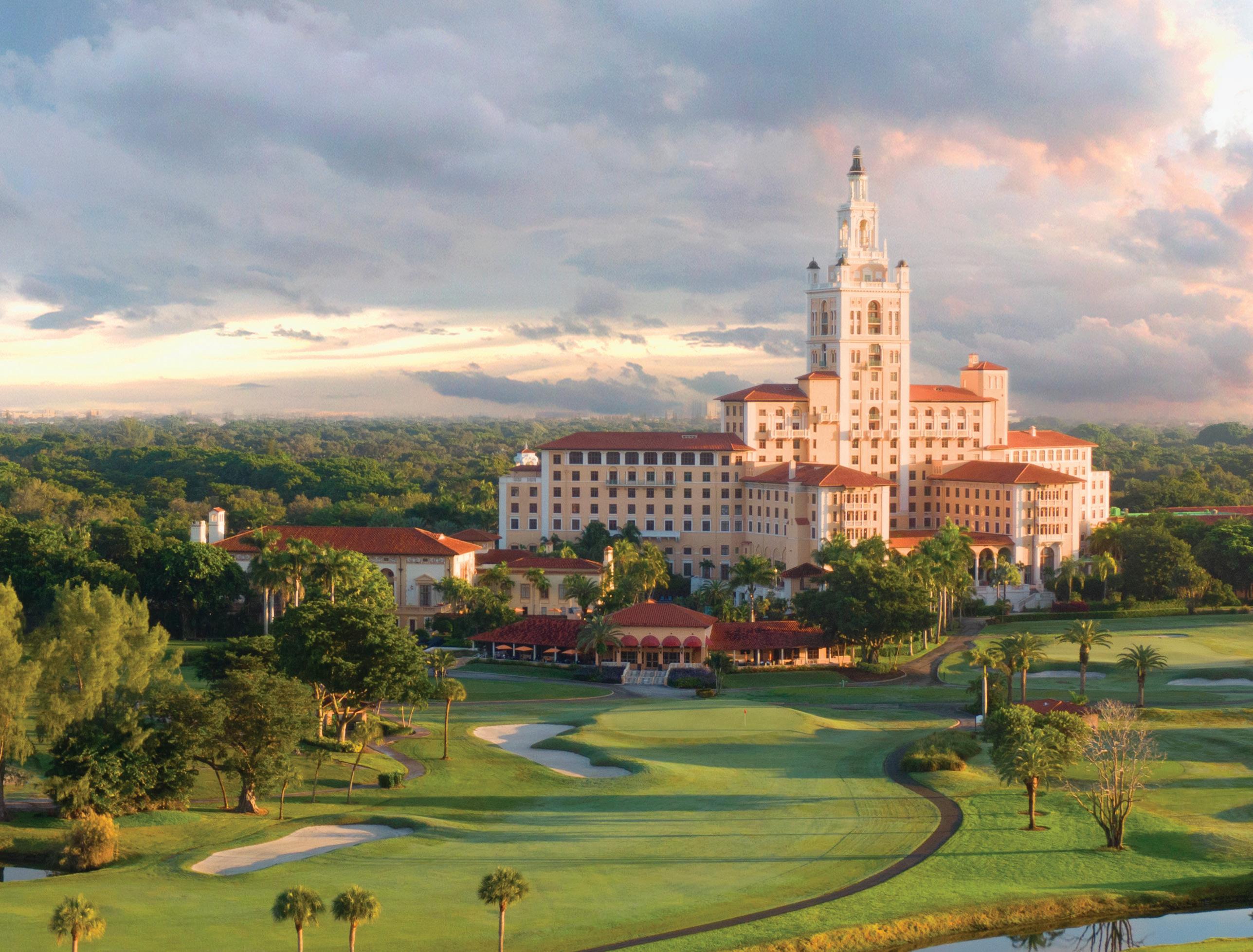
The Biltmore, where luxury never goes out of style. A true icon and National Historic Landmark surrounded by 150 acres of lush tropical landscape. The Biltmore has been a favorite of world leaders and celebrities since opening in 1926. We invite you to create memorable moments and experience timeless luxury. Immerse yourself in our rich history through decadent dining, world-class golf, spa treatments or simply a relaxing day at our iconic pool.