SUSTAINABILITY
Our Commitment for the Future


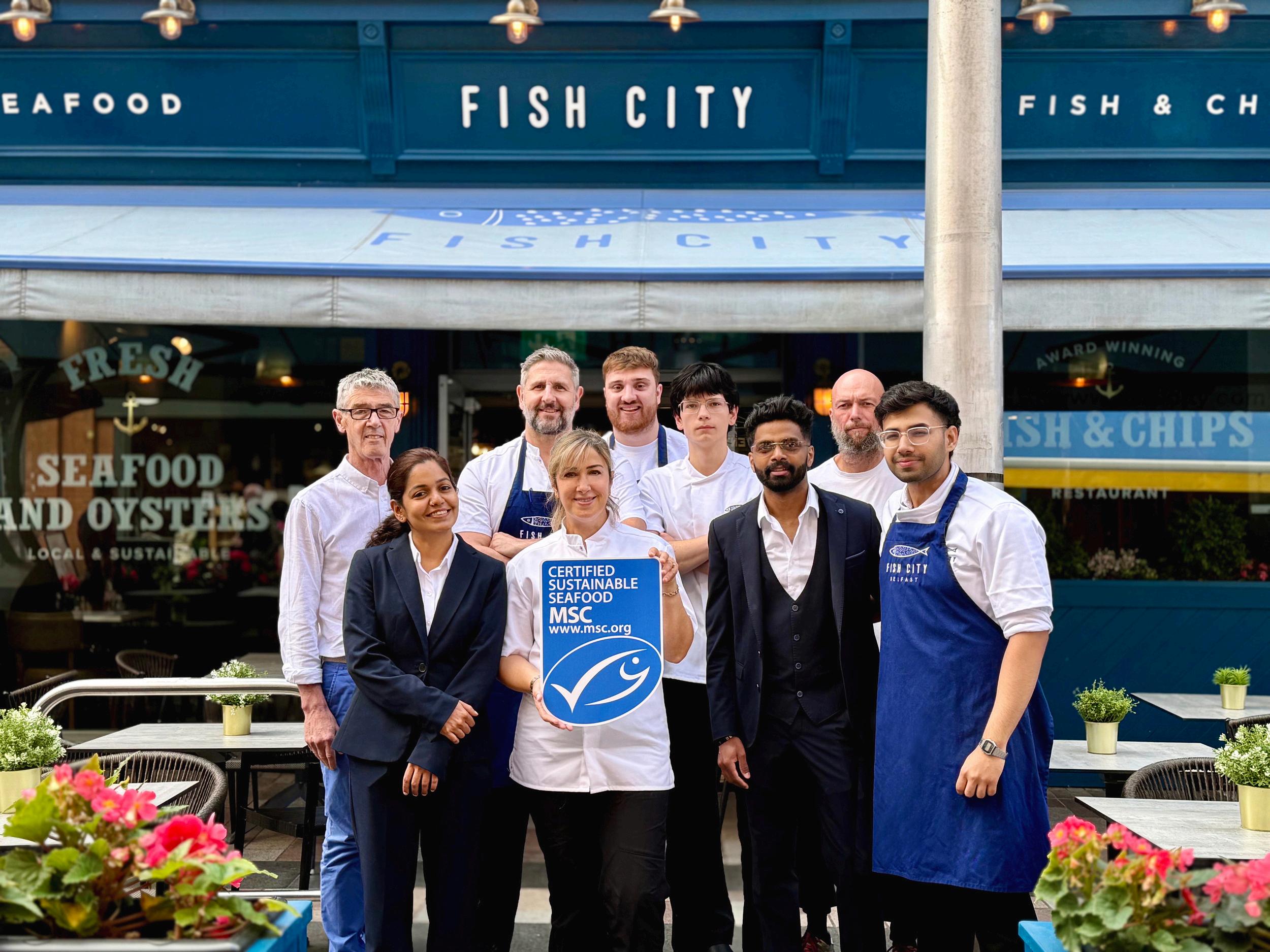
At Fish City, we are committed to the conservation of fish stocks by sustainably sourcing for every dish on our menus. All the fish and seafood we procure are Marine Stewardship Council (MSC)-certified sustainable or responsibly sourced using a number of tools such the Marine Conservation Society’ s Good Fish Guide. We also source ingredients locally and seasonally to decrease food miles and improve the environmental integrity of our dishes. Our commitment includes sharing and advocating our mission of sustainability with our business partners, team members, customers, and community; and we run a free educational Kids Club for local schoolchildren to learn about fishing and the importance of sustainability to the
fishing industry and the health and vitality of our oceans. Doing our part to keep the oceans clean from single-use plastics, we stock only glass-bottled beverages, and nearly all our takeaway packaging is recyclable or biodegradable.
We are a Silver member with Green Tourism, a Gold member with the Marine Conservation Society, and the first and currently the only food establishment on the island of Ireland to be MSC-certified. We were the first business in Northern Ireland to partner with Sustainable Fish Cities NI, a campaign led by Ulster Wildlife, Northern Ireland’ s preeminent environmental charity, to advocate for local businesses to procure seafood products sustainably. In September 2021, we were recognised by the Marine
Stewardship Council as one of eleven regional heroes across the UK for our commitment to conservation. We continually seek to build on and strengthen our ethos of sustainability so that livelihoods in the fishing industry and related industries can be maintained and future generations can enjoy fish and seafood as well. To reduce our paper consumption, we have digitised our records to reduce our paper consumption. We digitally measure our food wastage and are working on measuring the carbon footprint of our corporate value chain. By quantifying the ecological costs of our production, we are looking for opportunities to reduce and, where possible, eliminate our current Scope 1, 2 and 3 emissions.
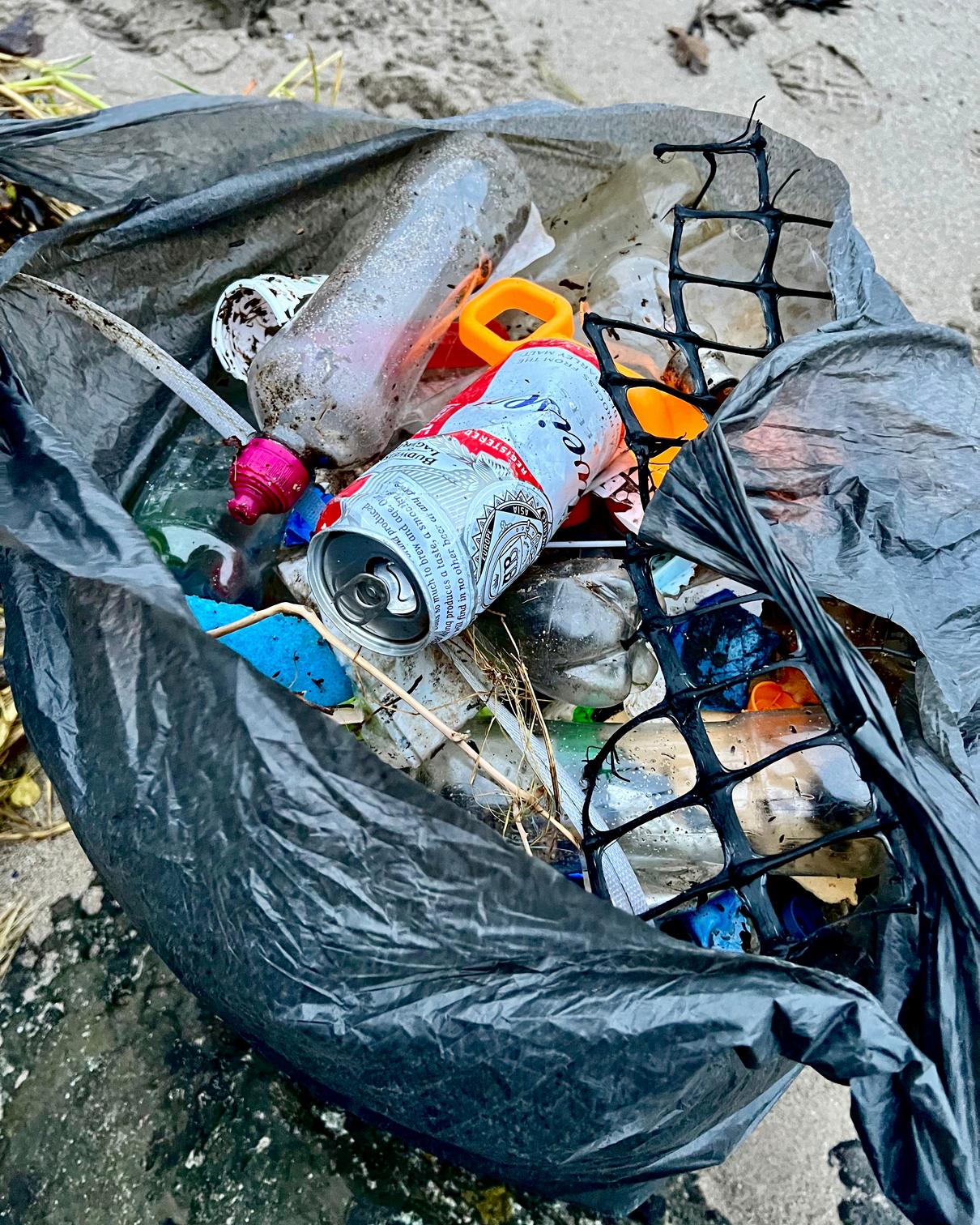
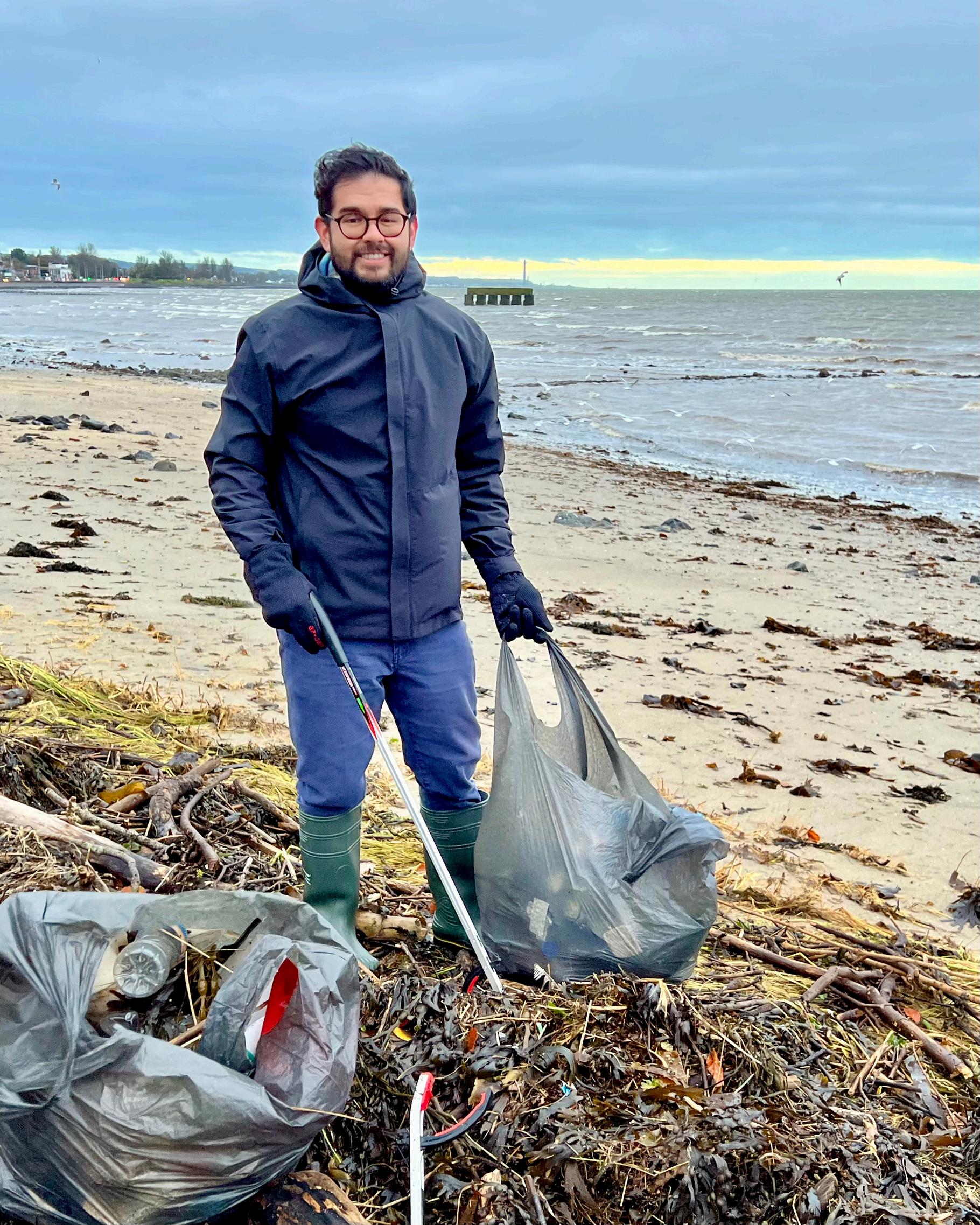
Our staff lead their own regular beach clean-ups at beaches in the local area, removing rubbish from our coastal areas that can contaminate the water or choke or ensnare marine life
OUR COMMITMENT TO
Sustainability
At Fish City, we have taken our commitment to sustainability and the environment to the next level.
We are the first retailer and restaurant on the island of Ireland to be certified by the Marine Stewardship Council (MSC). For over 20 years, the MSC has been part of a global effort to keep our oceans healthy and full of life. When you choose fish or seafood with the MSC’ s ‘blue fish’ eco-label, you can be sure that the fish you are eating can be traced back to a sustainable and wellmanaged wild fishery. We are also the first fish and chip shop in the UK to be corporate members of the Marine
Conservation Society (MCS). We are currently an MCS Gold Member.
At Fish City, we advocate for a healthy, sustainable approach to incorporating seafood into a healthy lifestyle. To that end, we are committed to educating our team, guests and wider communities on the health benefits of seafood and the importance of sustainability to the longterm future of our fishing industry and the health and viability of our aquatic food systems and marine environments.
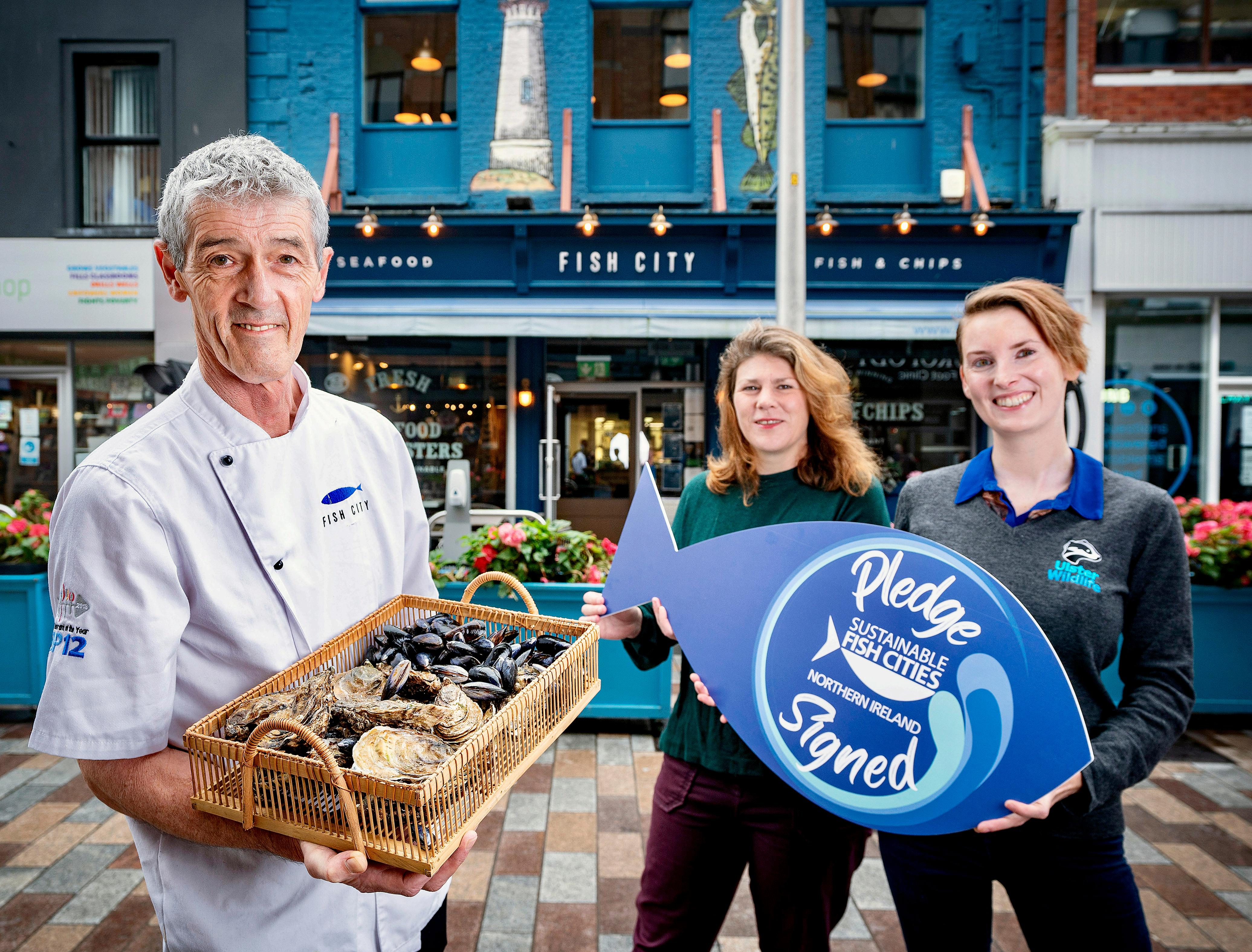
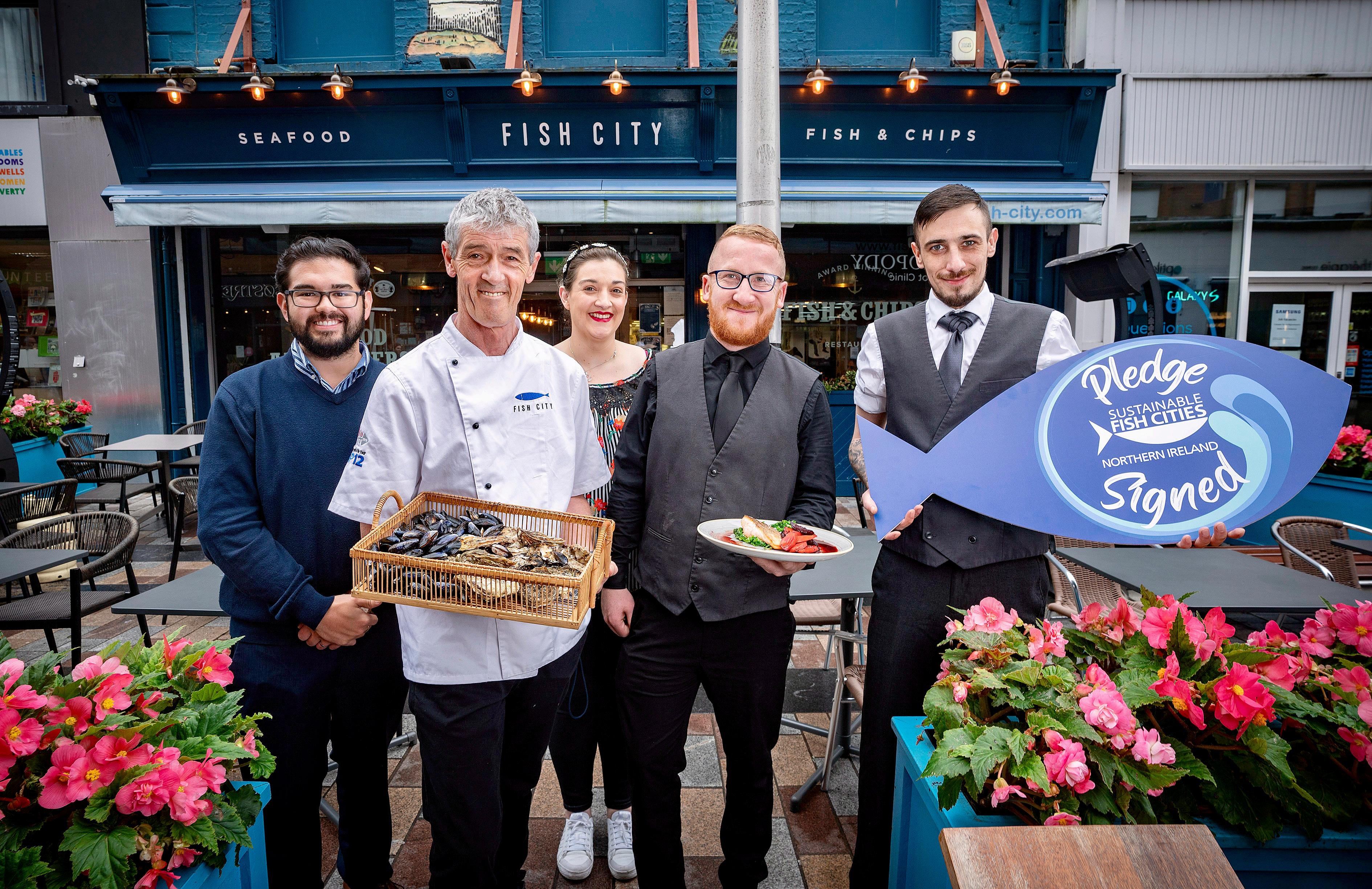
Fish City was the first NI business to take the Sustainable Fish Cities pledge, an environmental campaign led by Ulster Wildlife and Nourish NI.
PARTNER ORGANISATIONS
COMMITTED TO SEAFOOD SUSTAINABILITY

MARINE STEWARDSHIP COUNCIL
For over 20 years, the Marine Stewardship Council (MSC) has been part of a global effort to keep our oceans healthy and full of life. Choose the blue fish eco-label when purchasing seafood, and make sure that the fish and shellfish you eat can be traced back to a sustainable source.
MARINE CONSERVATION SOCIETY
The Marine Conservation Society (MCS) is a UK charity committed to the protection of our seas, shores and wildlife. We are the first Fish & Chip shop to have become corporate members of the MCS. We are currently Gold members with the Marine Conservation Society.


GOOD FOOD IRELAND®
The definitive trustmark for local food and drink experiences on the island of Ireland, Good Food Ireland® thoroughly audits its members, ensuring businesses with the Good Food Ireland® seal of approval provide guests and visitors to the island with authentic, premium experiences focused on certified quality, sustainability, and local food and culture.
NATIONAL FEDERATION OF FISH FRIERS
We are proudly a member of the National Federation of Fish Friers (NFFF), the official body that represents the fish and chip industry. Among many initiatives to promote good fisheries management and responsible sourcing, the NFFF have developed a Responsible Sourcing Code for members and work with the MSC on group certification.
SourcingPolicy
This policy sits within a suite of wider company Sustainability Policies, which seek to examine and control the impacts our business has on the environmental, economic and social fabric of not only its locality but nationally and globally.
FISH CITY SUSTAINABILITY MISSION
We envisage a community of responsible and educated citizens who are environmentally conscious, practice social responsibility in their daily lives, and inspire others to do the same. We commit to operating in an economically, socially, and environmentally responsible manner whilst balancing the interests of diverse stakeholders. We strive to be a leader in corporate citizenship and sustainable development, caring for our employees and customers, seeking to enrich the quality of life for the communities in which we operate, and serve as good stewards of society and the environment.
At Fish City, we believe that the health and happiness of future generations is dependent on our collective commitment to sustainable ways of living and working. We recognise that it is our responsibility to reduce any negative impact we may produce upon the environment and raise the awareness to our staff, guests and communities so that they can help us achieve our goals for sustainability.
We are committed to integrating leading environmental practices into our business and to continually exploring new ideas for improving our environmental performance.
Our wider sustainability approach covers a number of practical issues. We are focusing on practices aimed at:
Energy Management to reduce our consumption of energy (electricity, LPG, fuel oil, diesel, and petrol) with the aim to become carbon neutral;
Waste Management— to reduce the overall volume of waste and maximise recycled proportion;
Supplier Management— to work with suppliers that share our commitment to sustainability; Staff to raise environmental awareness and make sustainability an integral part of our staff culture; and, Guests to raise awareness and actively promote and encourage green tourism initiatives.
It is within this context that this Sustainable Seafood Sourcing Policy is anchored. We are committed to ensuring that all seafood products used in our processes are harvested sustainably. This means that seafood is harvested at levels that maintain their availability for present and future generations.
To achieve this, we:
will not serve seafood from supplies that are ‘Red Rated’ at the Marine Conservation Society’ s (MCS) goodfishguide.org (or similar assessment); will preferentially source seafood from responsibly managed fisheries and farms, such as those rated 1–3 at goodfishguide.org or are certified by recognised ecolabels or standards such as MCS, ASC, Organic, Global GAP, GAA BAP (2-star or better).
CONTINUOUS IMPROVEMENT
We aim to increase the number of MSC-certified products sold. We will partner where necessary with organisations, communities, and bodies to identify opportunities to improve upon the sustainability of seafood products, even beyond that which is required by statute. For illustration, such opportunities may be around: harvesting methods that reduce discards; distribution methods that reduce food miles; or, improving handling to maintain the quality of the product. We will seek to develop incentives for suppliers that choose to be part of this process.
LOCAL AND SEASONAL PROMOTION
We will endeavour to source products that are harvested and processed in our local communities. Sourcing products from near to where they are sold helps to support the economic and social sustainability of our local communities. Importantly it will also contribute to the environmental integrity of our product by decreasing food miles.
ACCEPTED HARVESTING METHODS
We will not purchase any seafood that is harvested using illegal methods. We will use only products harvested using legal means in regulated environments and will work proactively with the industry to encourage investment in gear and technologies that reduce the impact of seafood productions on the environment.
We will endeavour to prioritise sourcing through harvesting methods that have the least impact on the environment and the ecosystem and that have the least amount of discards.
SEAFOOD EDUCATION
We at Fish City view ourselves as advocates for the promotion of the use of seafood as a lifestyle choice. To that end, we are committed to educating our staff, customers, and wider communities on seafood sustainability issues. We have a schoolsbased extracurricular programme aimed at delivering learning opportunities to local children.
Potential suppliers will be required to contribute to that programme. Strategically we aim to promote the issue of cleaner oceans; and, in this respect we will pay particular attention to issue of degradation of plastics and other detritus at sea, as well as the subsequent effect plastic is having on the sustainability of seafood.
We will make information available to our customers and communities in a variety of engagement formats that equip them with information they need to make informed and responsible purchasing choices based on their own values around community, the environment, and their health.
TRANSPARENCY
In order to ensure the credibility of our statements, positions and actions, transparency in our Policy and Programme is essential. For us, ‘ transparency’ means the following: Making the Sustainable Seafood Sourcing Policy public; Releasing annual goals and actions in achieving those goals; Making educational material relating to seafood available to the public, including but not limited to: In situ product labels and signage; Websites and Social Media engagement opportunities; and, Public Relations and Marketing Strategy, including materials designed to support communication and engagement with the public and our target audiences. ■
OurProcess
Our oil is changed daily and continually filtered, ensuring that we use the healthiest and tastiest frying mediums.
We use Superior Frying Fat the most respected, refined, and deodorised beef dripping in the business. It is naturally non-hydronated and lower in trans fats, and it delivers an excellent high performance product time and time again.
We have invested in a state-of-the-art Kiremko frying range, ensuring temperatures are maintained throughout the cooking process to deliver the highest quality of food for our guests.
When staffing levels permit, we can offer guests the choice of having food cooked in beef dripping or vegetable oil.
Socialresponsibility
Fish City is committed to addressing the challenges posed by the effects of climate change on both land and in our oceans and focusing on what we can do to help secure a sustainable seafood future.
LEADING AND SUPPORTING
SUSTAINABILITY INITIATIVES
MSC CERTIFICATION
Recognised by the Marine Stewardship Council as one of eleven Regional Heroes across the UK, Fish City is the first fish and chip shop and restaurant on the island of Ireland and in Northern Ireland to be certified by the Marine Stewardship Council.
SUSTAINABLE FISH CITIES NI
Fish City is the first business in Northern Ireland to join Sustainable Fish Cities NI, an environmental campaign led by Ulster Wildlife and Nourish NI, to source all its seafood produce responsibly and sustainably.
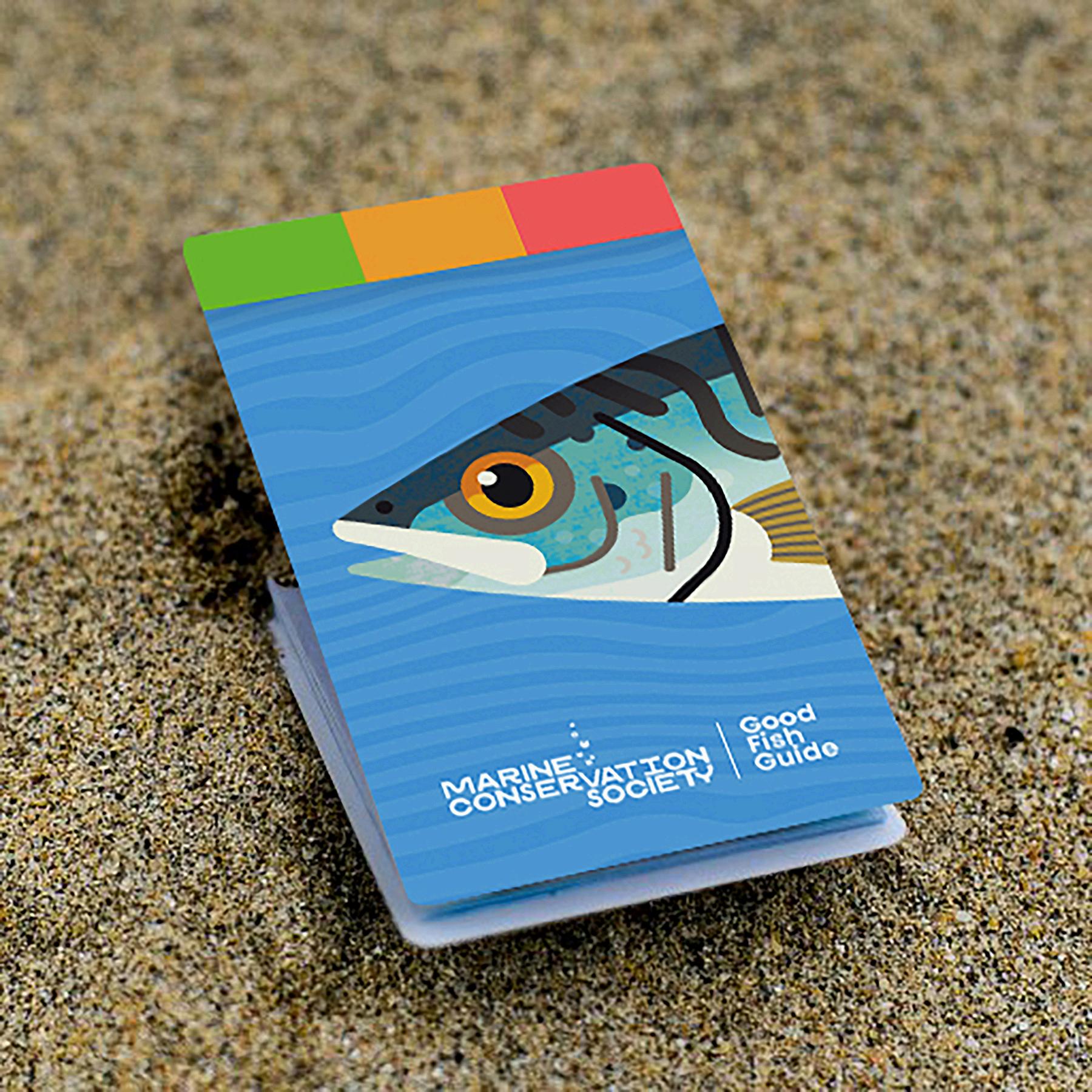
GOOD FISH GUIDES
The Marine Conservation Society’ s Good Fish Guide is one of the longest running sustainable seafood rating systems in Europe. We have previously offered complementary guides to each guest, and now that a continually up-to-date guide is available online, we invite anyone and everyone to check out the latest seafood sustainability ratings at www.mcs.org.uk/ goodfishguide
EDUCATING CHILDREN ON SUSTAINABILITY
We run a free, award-winning educational Kids Club for Primary 7 schoolchildren in the local community in which we bring schoolchildren on a trip to the local fish market to teach them about different fish and shellfish species and the importance of sustainable fish stocks, as well as an interactive workshop at the restaurant to learn how sustainable fishing provides a better, more secure livelihood for our fishing communities.
PROVIDING FOR THE HOMELESS
We maintain a holistic view of sustainability that includes our responsibility toward society and the importance of contributing toward improving the quality of life for our surrounding communities. Working with the voluntary community organisation Team HAVEN, each month we donate hot meals for the homeless, vulnerable and those experiencing food insecurity and food poverty in our local area.

MSC CHAIN OF CUSTODY
Fish City has been certified as conforming to the Marine Stewardship Council (MSC) Chain of Custody Standard, which ensures an unbroken chain where certified seafood is easily identifiable, separated from non-certified products, and can be traced back to another certified business. This system allows businesses and consumers to be confident that seafood with the blue MSC label has come from a fishery certified as sustainable.
GREEN TOURISM ACCREDITATION
Fish City is a proud member of Green Tourism and holds a Gold Award, recognising our commitment to promoting locally, sustainably andethically produced food; promoting, protecting, and preserving biodiversity; our knowledge and awareness of sustainability; and, passionate engagement with the loca community and beyond.
Practices SUSTAINABLE
ALTERNATIVES TO SINGLE-USE PLASTICS
To support the global effort to reduce the use of single-use plastics, we only use biodegradable straws and takeaway cutlery, as well as recycled paper products for takeaway packaging. Also, we serve glass bottled beverages only in restaurant and for takeaway.
STOCKING ETHICAL BOTTLED WATER
We serve bottled still and sparkling water from the ethical water supplier 'Clearer Water.’ Clearer is a local social enterprise based in nearby Larne that champions a mixed ability workforce, providing training and career development for additional needs and socially disadvantaged young people. They are dedicated to manufacturing traceable, ethical products and inclusive working practices.
REDUCING PAPER USAGE
To reduce our paper usage, we are moving from paper to digital records in all areas relating to Hazard Analysis and Critical Control Point (HACCP), Health & Safety, and refrigeration temperature monitoring.
REDUCING OUR IMPACT IN EVERYTHING WE DO
At Fish City, we endeavour to act responsibly by implementing a range of environmentally friendly practices, including:
Ensuring our food waste and cooking oil is collected and regularly recycled;
Installing and using only low-energy LED bulbs for lighting; and,
Minimising the frequency of orders from suppliers to reduce our carbon footprint and, where possible, purchasing all our ingredients locally within a 50-mile radius.

RESEARCH & DEVELOPMENT
We have worked alongside the College of Agriculture, Food and Rural Enterprise (CAFRE), the Agri-food and Biosciences Institute (AFBI), and the Queen’ s University Food Science Department to conduct research and development.
We are currently looking to harness heat generated through our extraction systems to reduce our carbon footprint and engaging with research teams at Ulster University and Queen’ s University Belfast.
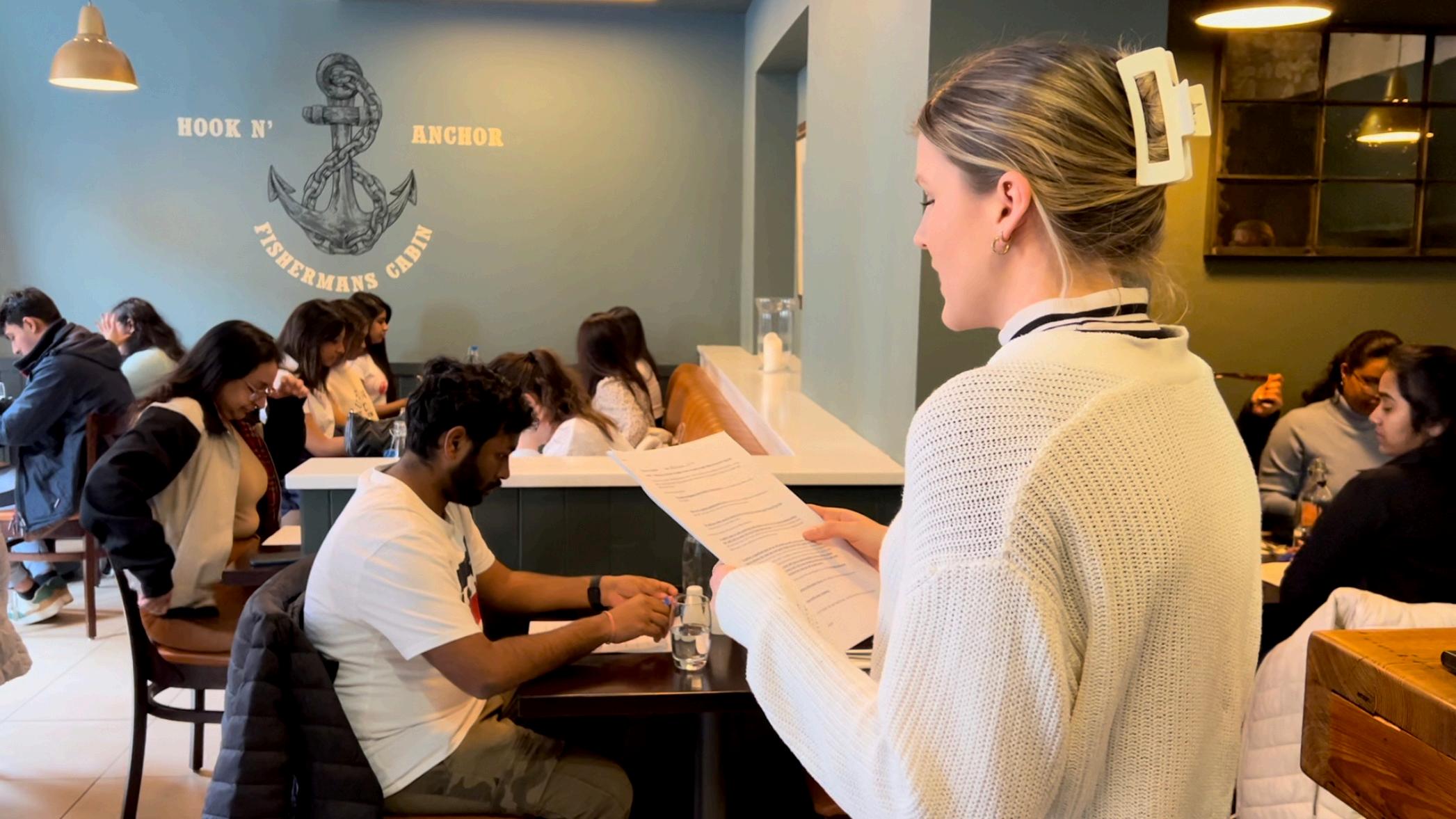
We partnered with Queen's University Belfast’ s Sus-Health research team for their Living Labs experiment exploring how factors such as price, nutrition, and environmental impact influence dining decisions Our head chef worked with researchers to provide detailed nutritional information and sustainability data for each dish in a bespoke menu created for the experiment, and we welcomed and served over 100 study participants from Queens in February and March 2024.
Nutrition
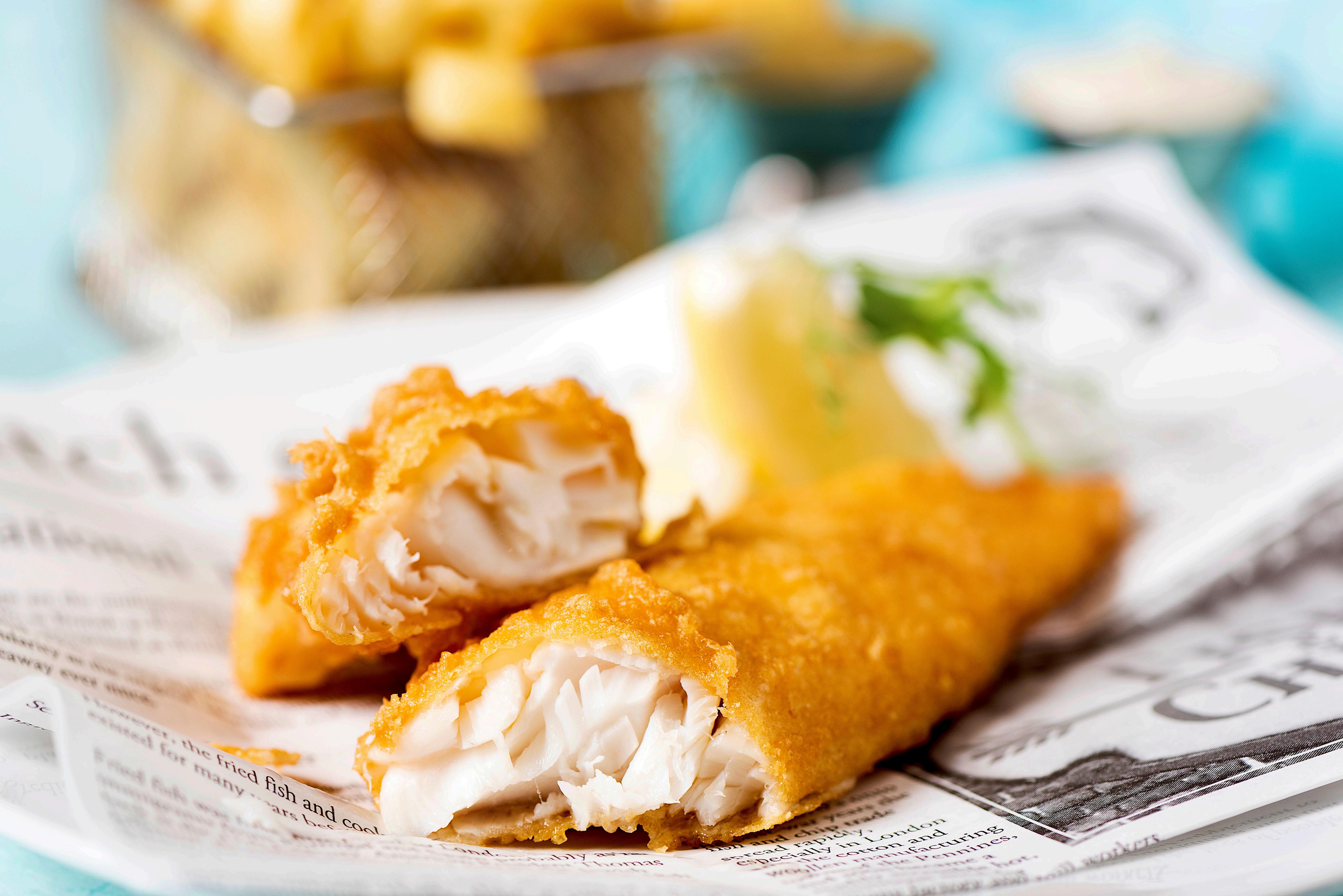
When comparing fast food favourites, Fish & Chips proves to be one of the healthier choices, with the Fish City small Fish & Chip portion meal tested by Beechwood Laboratories to be 579 calories.
A portion of cod or haddock provides essential Vitamins C, B6 and B12, Omega-3 fatty acid, some iron, zinc and calcium, as well as iodine.
We have offered a choice of three different portion sizes of our award-winning Fish & Chips, each portion size in line with nationwide industry standard recommendations.

We have been working closely with the Food Standards Agency to monitor the calories and nutritional content of our food. We are the first independent business to be awarded with the ‘Calorie Wise’ certification by the Food Standards Agency. Calorie information is recorded for all items on our menu.
We offer an extensive range of seafood dishes to encourage people to eat a greater variety of fish and shellfish, accompanied with local, seasonal ingredients and home-made sauces.
Ingredients
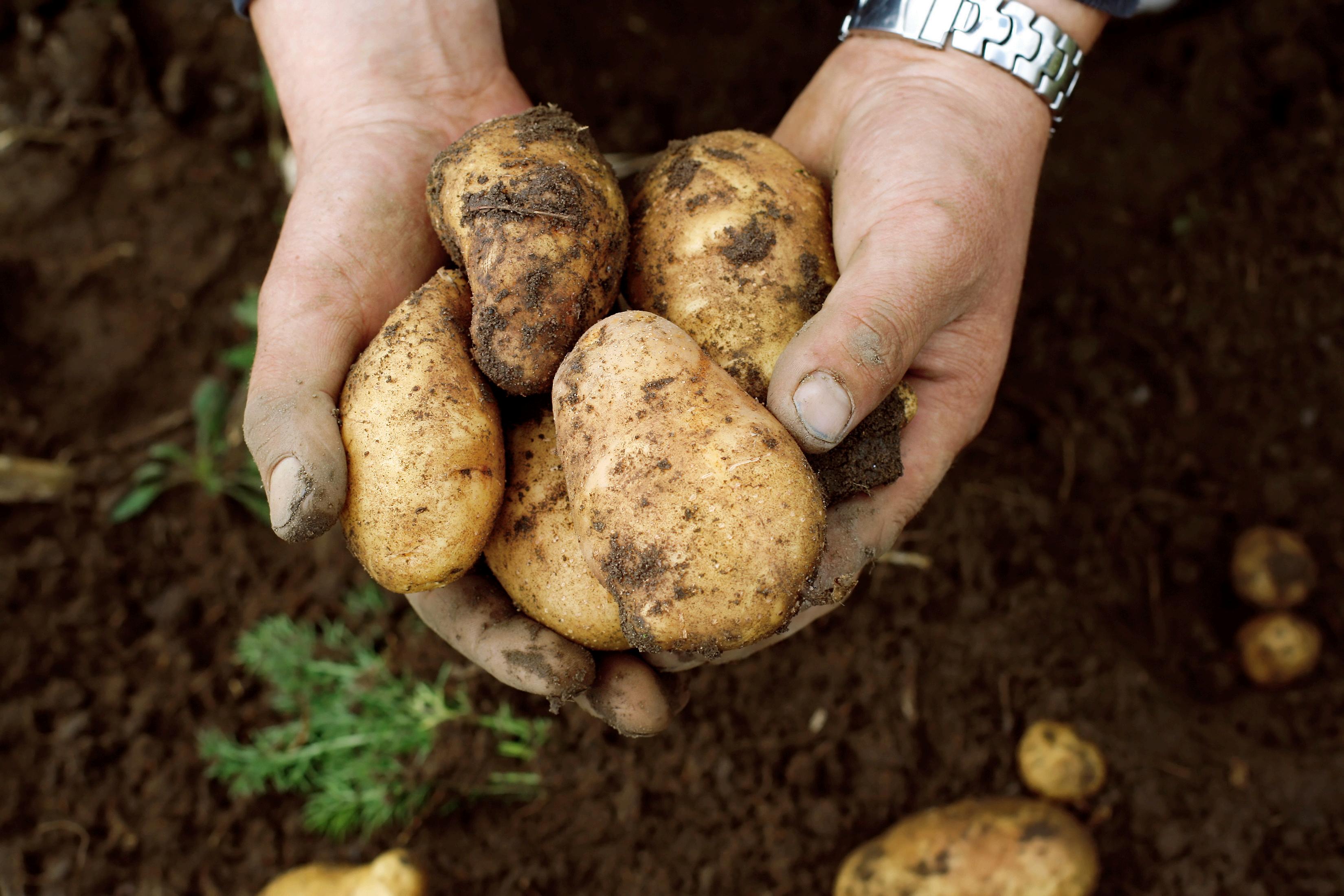
Our potatoes come from only the highest quality growers using potatoes that deliver the best taste and flavour for our chips. We currently use the Maris Piper potato, which were first developed here in Northern Ireland. We peel and chip our potatoes every day, checking for starch and sugar content, ensuring the highest standard of chips for our guests. Our chips are cut to a healthy 14 x 17 millimeters, the size of which has been scientifically proven to absorb less fat.
Our endeavour to deliver healthy food led to Fish City winning the UK's Healthy Eating Award at the 2018 National Fish & Chip Awards, the Catey Award for Health & Nutrition (2019), and the 2020 Menu Innovation and Development Award by Seafish.
We use seasonal vegetables, and all our sauces are freshly made. We work with local suppliers to source innovative and healthy ingredients including products from Abernethy Butter, Rooney Fish, Keenan Seafood, Islander Kelp, Ewings Seafoods, Glastry Farm Ice Cream, and Clearer Water Ireland's first ethical water supplier.
Fully licensed, we have an extensive wine list accompanied with a great selection of local craft beers and ciders, including Kilmegan Cider, Whitewater Brewery, Heaney Farmhouse Brewery, and Troughton’ s Premium Tonics and Mixers, as well as teas from S.D. Bell & Co, Ireland’ s oldest independent tea blenders.

HEALTH BENEFITS
Research shows that eating two or more portions of fish and shellfish a week lowers the risk of heart attack, heart disease, cholesterol, stroke, depression, diabetes and Alzheimer's. It also increases levels of Omega-3 in the body, which supports healthy skin, hair, nails and improves sleep, boosts mood and maintains brain function.
NURTURING TOMORROW’S OCEAN STEWARDS
FISH CITY’S KIDS CLUB EDUCATES ON SEAFOOD SUSTAINABILITY
Seafood is both a vital source of nutrition and an integral part of the cultural heritage of coastal communities such as ours here in Northern Ireland. In a world facing increasing environmental challenges, the need to cultivate a generation of responsible and environmentally conscious citizens has never been more crucial. Whilst strides are being made towards sustainability across sectors, placing Belfast notably in the top 10 Most Sustainable Destinations in the World in 2022, the plight of warming oceans and the global seafood industry demands urgent attention. As we seek to secure the future, imparting knowledge about seafood sustainability to our children emerges as a paramount responsibility.
THE WEB OF LIFE BENEATH THE WAVES
Covering near three quarters of the planet’ s surface, our oceans are teeming with life. The oceans play an integral role in regulating Earth's climate by absorbing carbon dioxide and capturing excess heat, and they provide sustenance to coastal communities around the globe. Nearly 2.4 billion people worldwide live within 100 kilometers of an ocean, with coastal communities representing around 40 percent of the global population.
With fish being one of the most important sources of animal protein, fisheries and aquaculture contribute 260 million jobs to the global economy. Here in the UK, our commercial fishing fleet in 2021 landed 651,800 tonnes of fish and shellfish, generated income of £921 million, and provided over 6,800 jobs.
Whilst the oceans are a valuable source of food with a relatively low carbon footprint (comparing fish to terrestrial proteins such as beef and pork), overfishing, destructive fishing methods, and habitat degradation have pushed many species to the brink of collapse. Canada’ s Grand Banks cod fishery collapse in 1992 was a resounding wakeup call for the fishing industry and the catalyst for the creation of the Marine Stewardship Council (MSC), an international non-profit organisation committed to ending overfishing. A troubling two-thirds of the world’ s commercial fish stocks are reported as exploited or overexploited. The intricate web of life between the waves highlights the delicate equilibrium that characterises the interdependence of marine species and our dependence on them for our food and livelihoods.
To do what we can to help protect our oceans, we choose to serve MSC-certified sustainably sourced cod, haddock and hake, with the rest of our seafood responsibly sourced from wellmanaged fisheries and aquaculture farms, many within 50 miles.
We only source species that are rated high for sustainability according to the latest data published in the Marine Conservation Society’ s Good Fish Guide.
UNDERSTANDING THE IMPACT OF OUR CHOICES
Seafood education– both internally for our team and with the public– is a cornerstone of our wider sustainability approach and touches on two of our core values: sustainability and education.
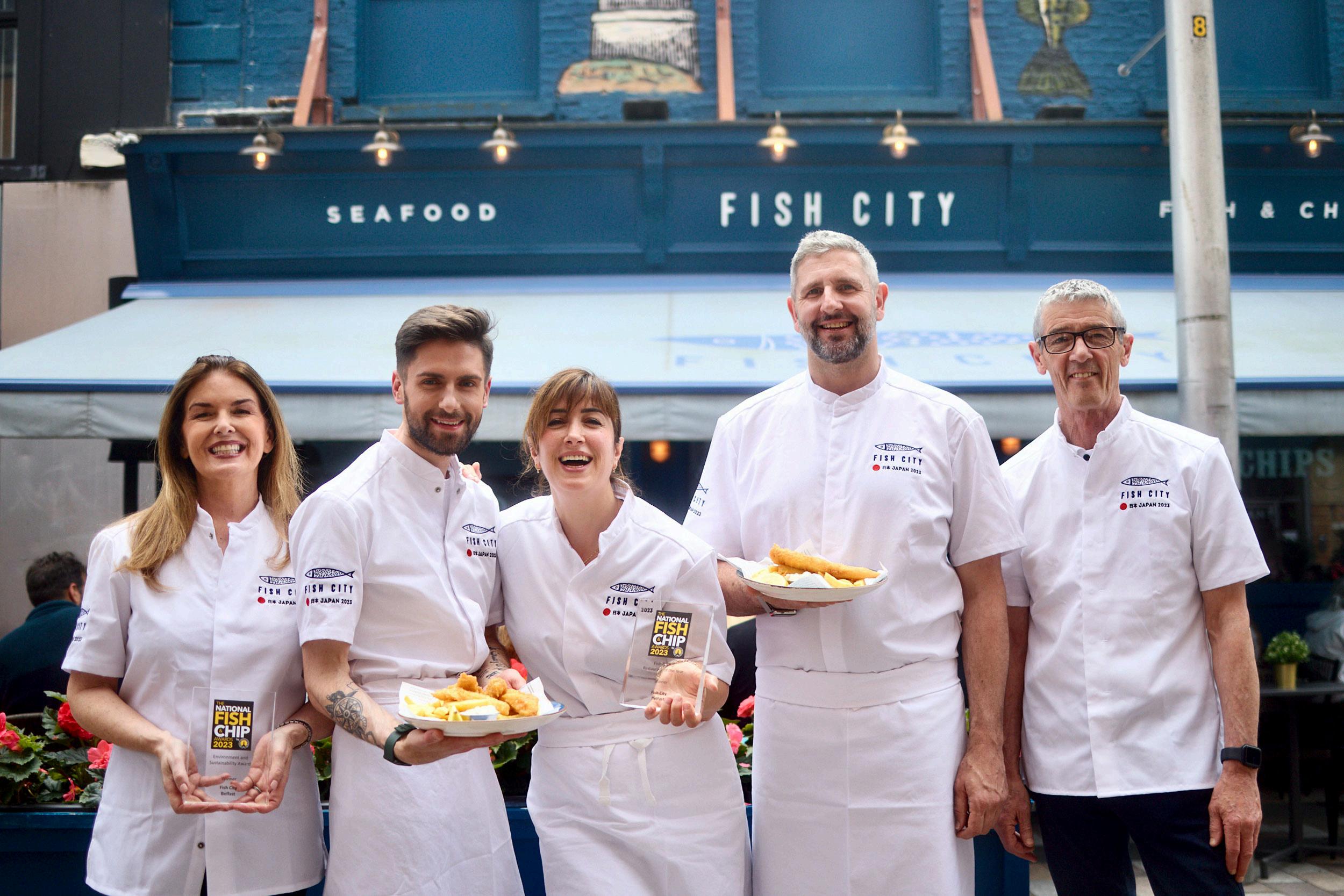
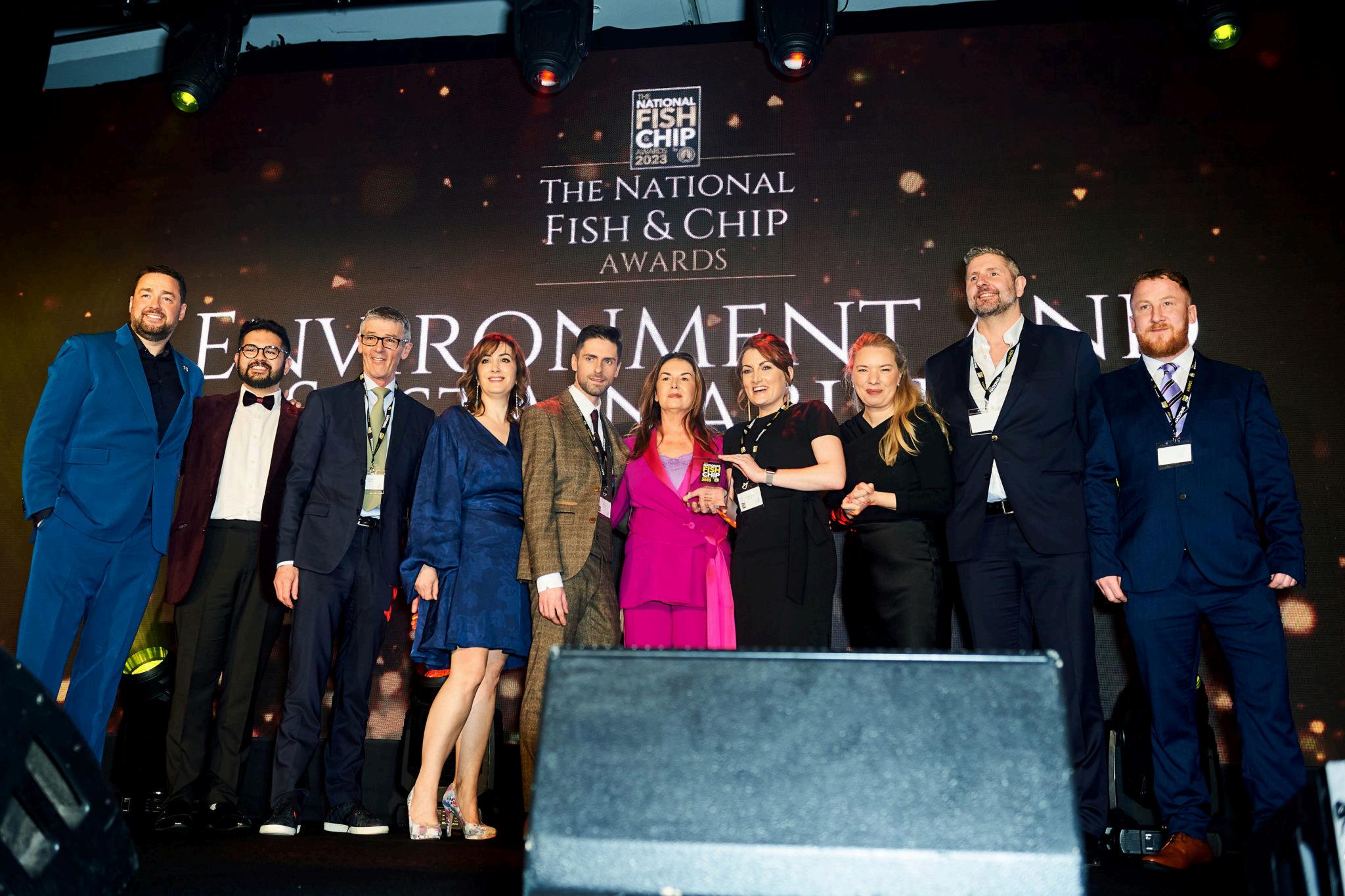
We are very proud to be the first MSC-certified restaurant on the island of Ireland and to be recognised for our sustainability efforts, including recognition as an MSC Regional Hero and the UK’ s Environment & Sustainability Champion at the 2023 National Fish & Chip Awards. We share what we know and what we are learning on our sustainability journey with our local communities through our social platforms, business events, and an extracurricular programme for schools.
Educating children about seafood sustainability goes beyond preserving marine life; it empowers them to make informed choices that reverberate throughout the economy. When children grasp the importance of choosing responsibly sourced seafood and avoiding species that are overexploited, they become active participants in shaping a more sustainable future. Through such awareness, they can exert a positive influence on markets and supply chains, encouraging industries to adopt ethical and sustainable practices.
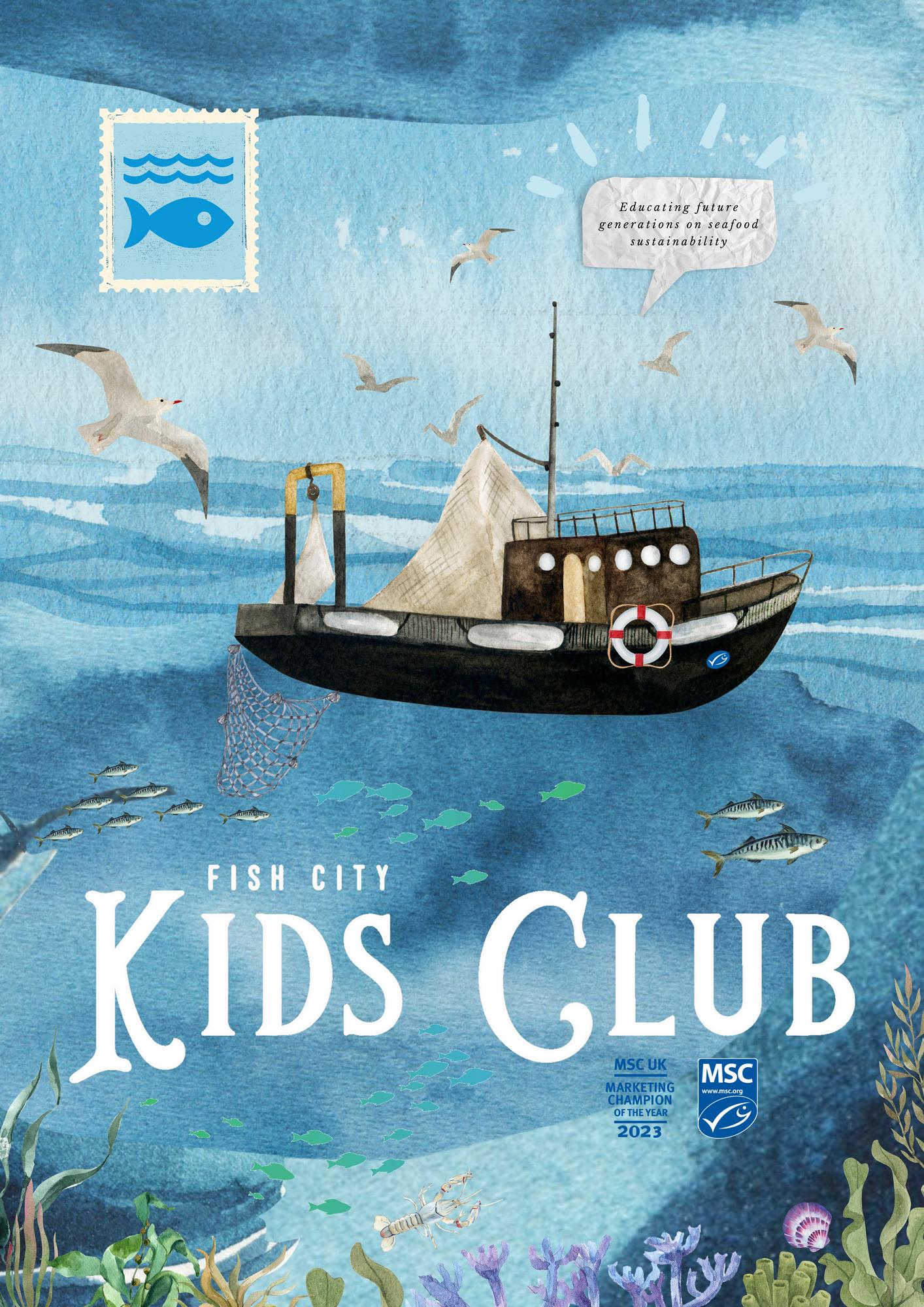
This is why we at Fish City started the Kids Club, the UK’ s first seafood sustainability workshop for schoolchildren, nine years ago in 2014. The Kids Club is a free educational initiative we offer for Primary 7 schoolchildren in the greater Belfast area to learn about the importance of seafood sustainability to the fishing industry and the health of our oceans. The key objective of our Kids Club is to build youth awareness and understanding of the MSC’ s ‘blue fish’ eco-label and how choosing MSC-certified products helps support the long-term health and wellbeing of fishing communities, our oceans and our planet.
AN IMMERSIVE LEARNING EXPERIENCE
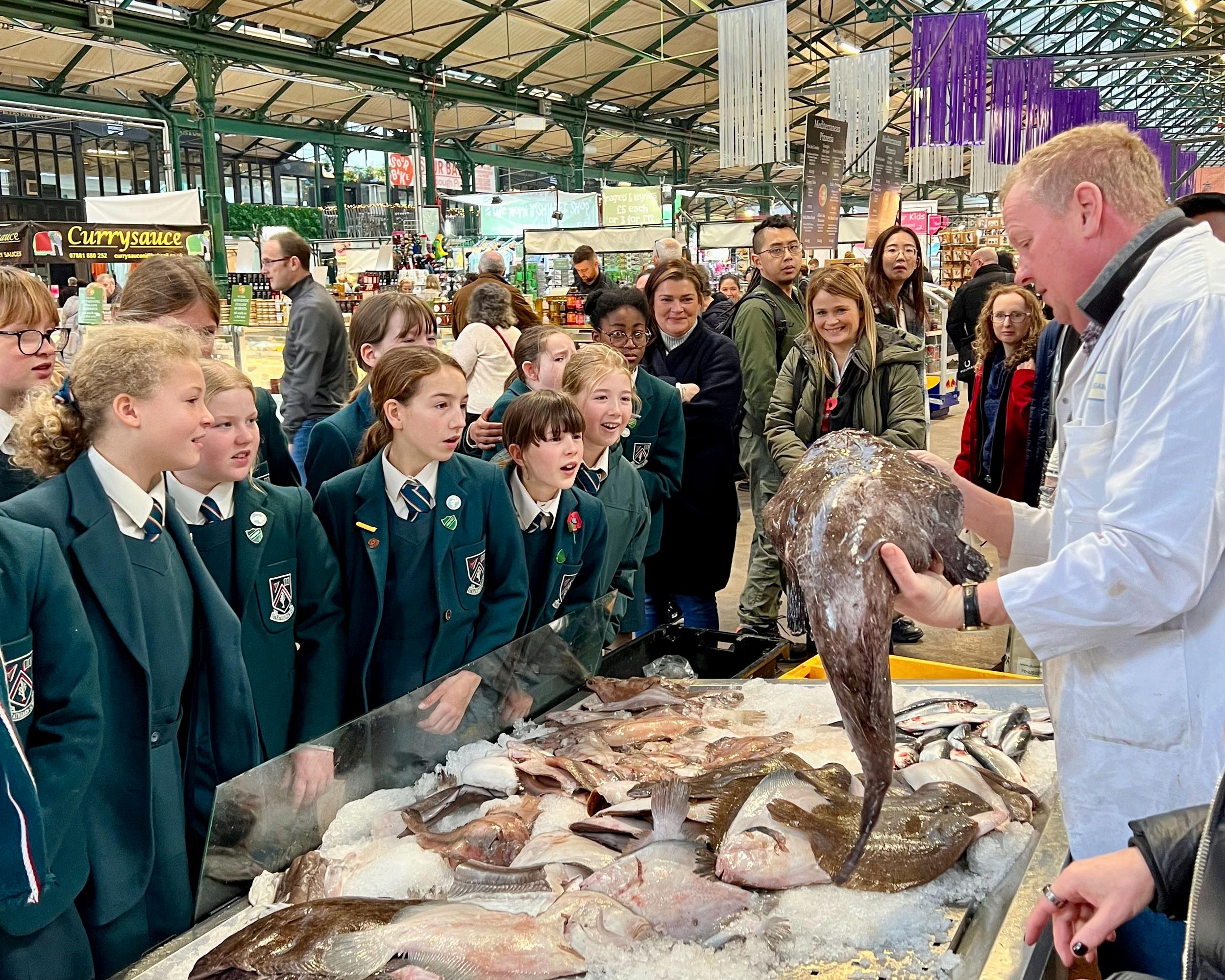
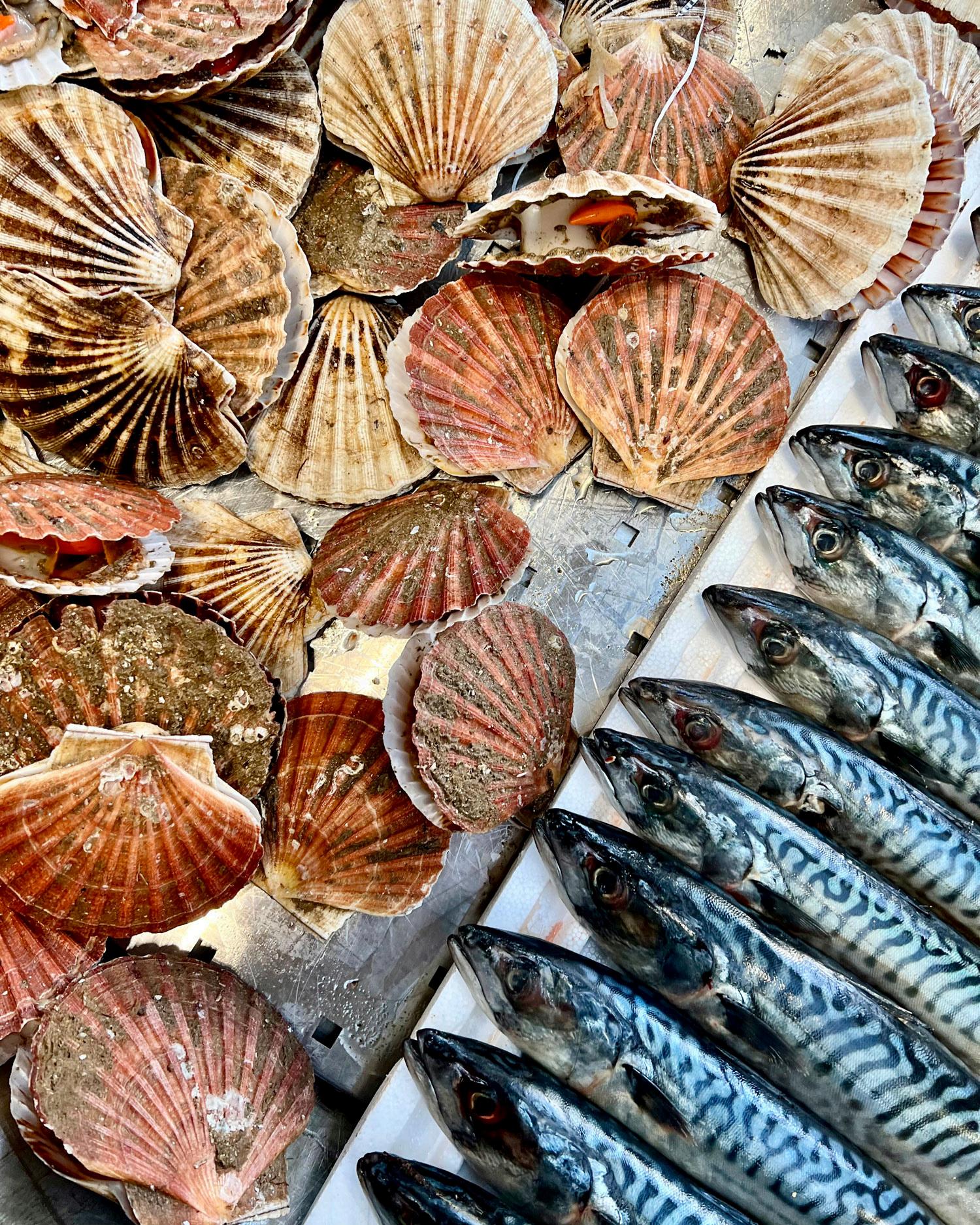
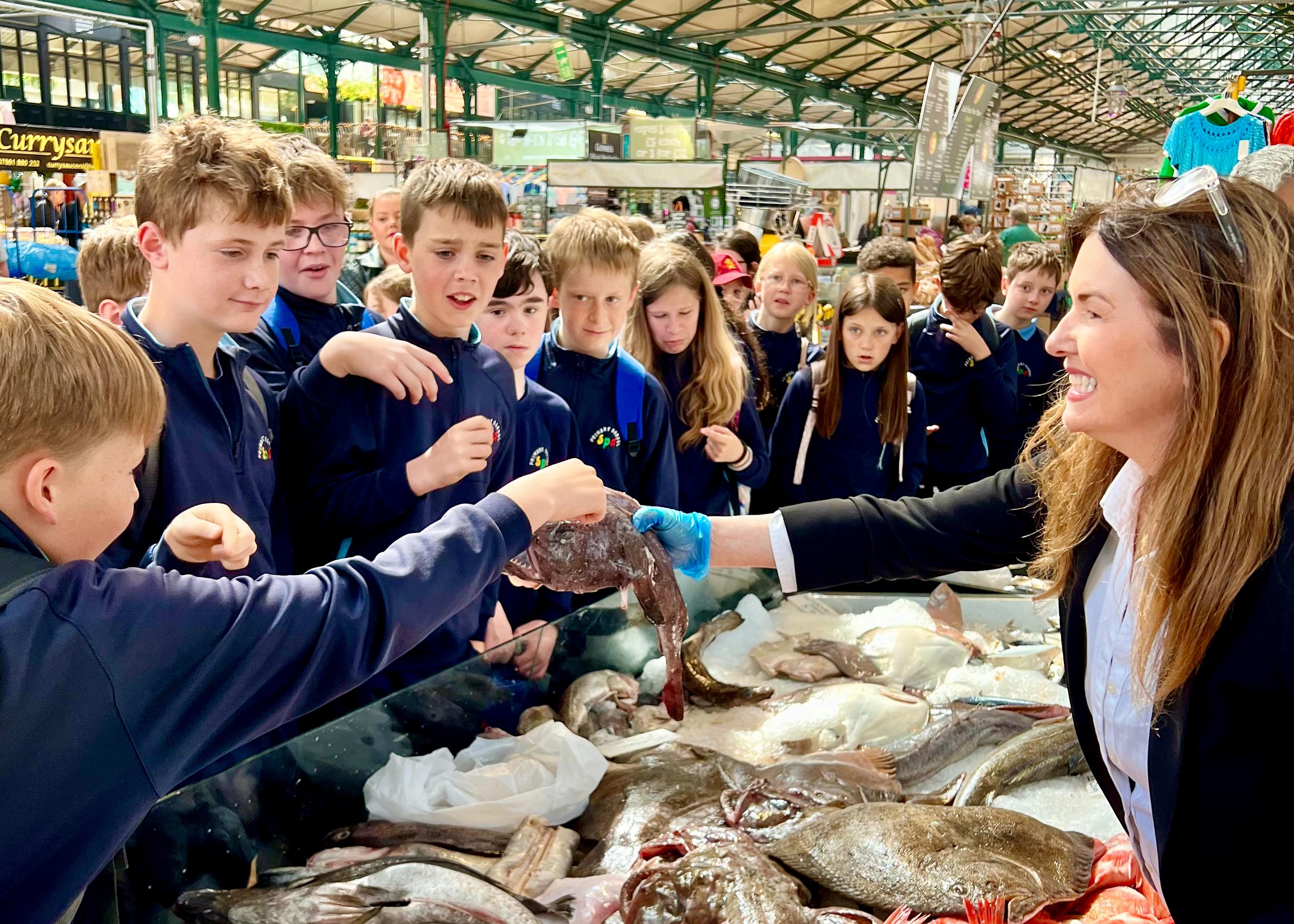
Participating classes join our manager and team at St George’ s Friday Fish Market, where the children get to interact with local fishmongers and experience firsthand the different species of that day’ s catch. For many, it is their first-time seeing so many different species of fish, molluscs, and crustaceans up close. The rather scary looking monkfish is always a curiosity, and the kids revel in the opportunity to see live lobsters landed from the fishing villages of the Antrim Coast. For the kids, the fish market showcases Northern Ireland’ s seafood industry in action in real time; and, the experience of speaking with fishermen, hearing how demanding it is to catch fish, and seeing so many different species of seafood helps establish a deeper connection to the processes of food
production and the food itself. We particularly enjoy taking the kids to the fish market as it helps the kids connects the dots on where fish comes from.
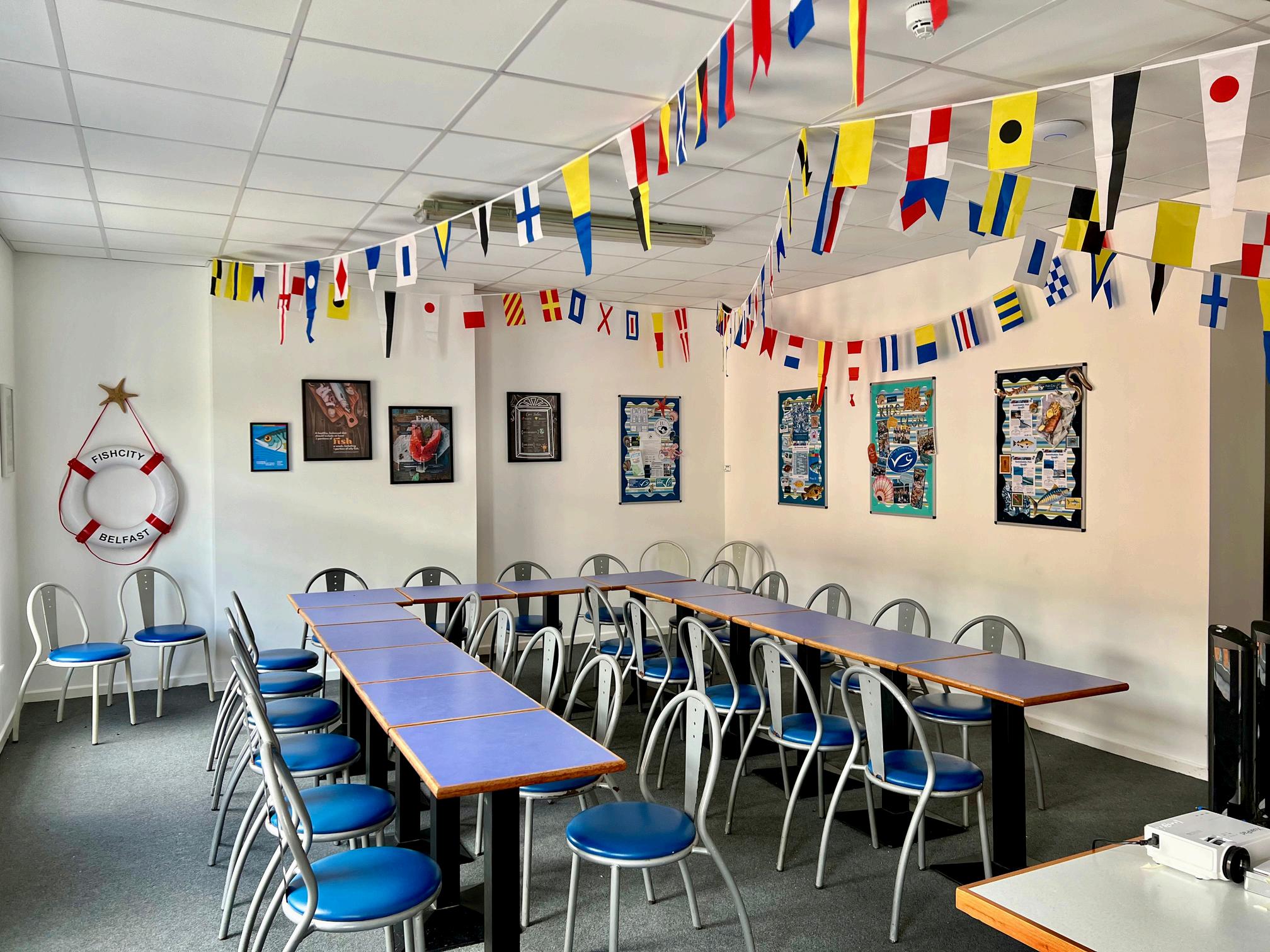
The children are then welcomed to our restaurant for a seafood sustainability workshop. Through a series of engaging activities, the workshop introduces and reinforces the connection of living organisms in the food web. The kids learn about producers and
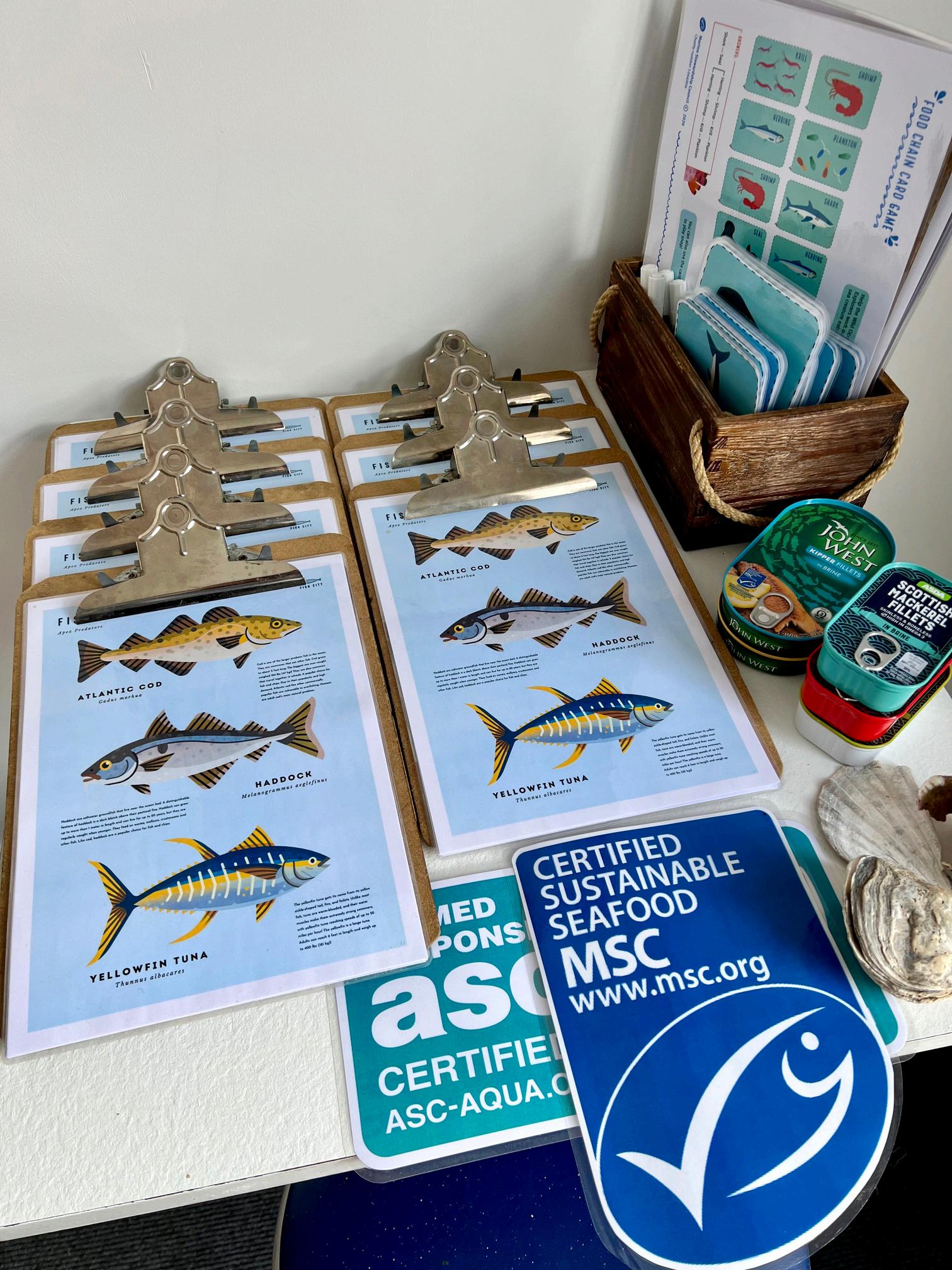
In the workshop, we introduce the Marine Stewardship Council’ s ‘blue fish’ and the Aquaculture Stewardship Council’ s (ASC) green eco-labels. We do this by handing out several different tinned and packaged seafood products purchased from local supermarkets, both with and without these eco-labels, and challenging the kids to find out what differentiates the products. They can observe the wide variety of MSC- and ASC-certified products available in local supermarkets, from tinned mackerel and farmed salmon slices to breaded cod fillets and mussels in sauce. We show them that many of the dishes on our menu are also marked with the ‘blue fish’ eco-label, which denotes seafood from a sustainable, well-managed fishery– one in which the fish population remains productive and healthy, environmental impacts such as bycatch are carefully monitored and minimised, and their operations comply with the law.
In the Kids Club, our working definition of sustainability is ‘the small changes we can make to help look after the planet,’ and the choice to purchase and eat responsibly and sustainably sourced fish and shellfish is one concrete way the kids know they can make a difference. A key takeaway is that choosing the ‘blue fish’ in the supermarket, at a restaurant or chippy rewards sustainable fisheries and supports the future of our oceans. Choosing the blue fish is one small change we can make to help look after the planet.
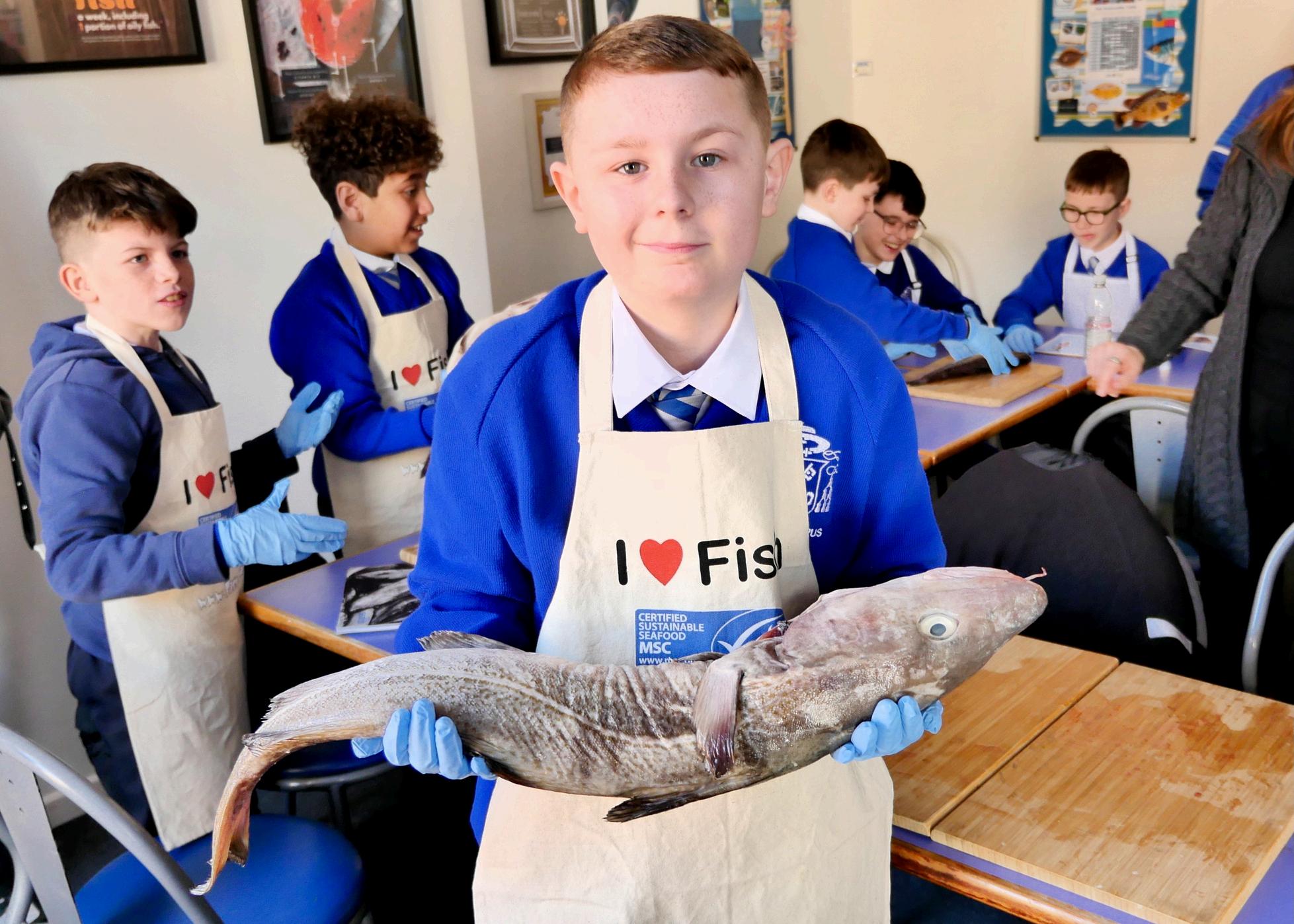
The kids then get suited in aprons and gloves to investigate several whole fish and are challenged to determine what species each fish is using informative fact sheets. Provided by Keenan Seafood, one of our suppliers, these whole fish have included plaice, lemon sole, mackerel, herring, monkfish, and even Atlantic cod, which was so large it sat across two tables. The kids were also provided shellfish including prawns, mussels, oysters, and live crab and lobster.
And the tastiest part of the day– the kids get to enjoy a complementary lunch of MSC-certified Atlantic cod and chips in our Fisherman’ s Hut dining room. We have found that roughly 10 percent of kids join us having said they never tasted or do not like fish; by the time we finish, we reduce that figure to 3 percent or less. This aligns with one of our broader goals as a business–promoting fish and shellfish as a regular part of a healthy, balanced diet, as per NHS guidelines. For such a fun and rewarding field trip for classes, the Kids Club is profoundly educational, and for many of the kids, it has proved to be an illuminating and meaningful learning experience. ■
Climate change, the environment and protecting our oceans are all issues we are now more fully aware of thanks to regular global media coverage, documentaries such as ‘The Blue Planet’ and ‘Wild Isles,’ and prominent environmental campaigners including Sir David Attenborough and Greta Thunberg.
For many years, Fish City have focused on educating primary school children about issues surrounding seafood sustainability through the Fish City Kids Club - an award-winning educational initiative offered free of charge to primary seven school children in the greater Belfast area.
Leaving enough fish in the sea ensures there is enough fish for the future.
THE EXPERIENCE
1.VISIT ST GEORGES MARKET
A visit to nearby St George’ s Market to meet and chat with local fishermen, to see seafood up close and learn more about the different species brought to shore that day.
THE EXPERIENCE
2. WORKSHOP AT FISH CITY
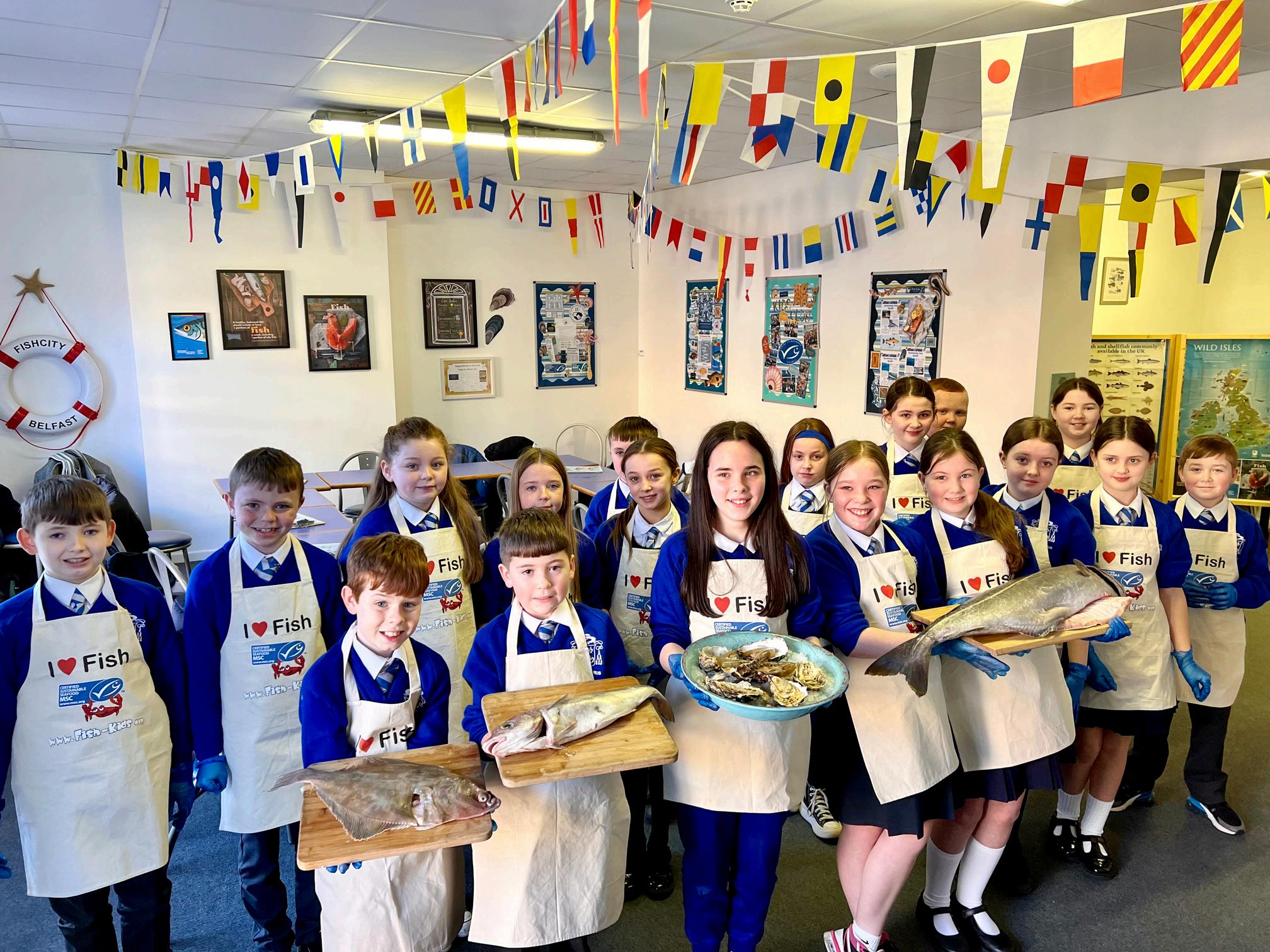
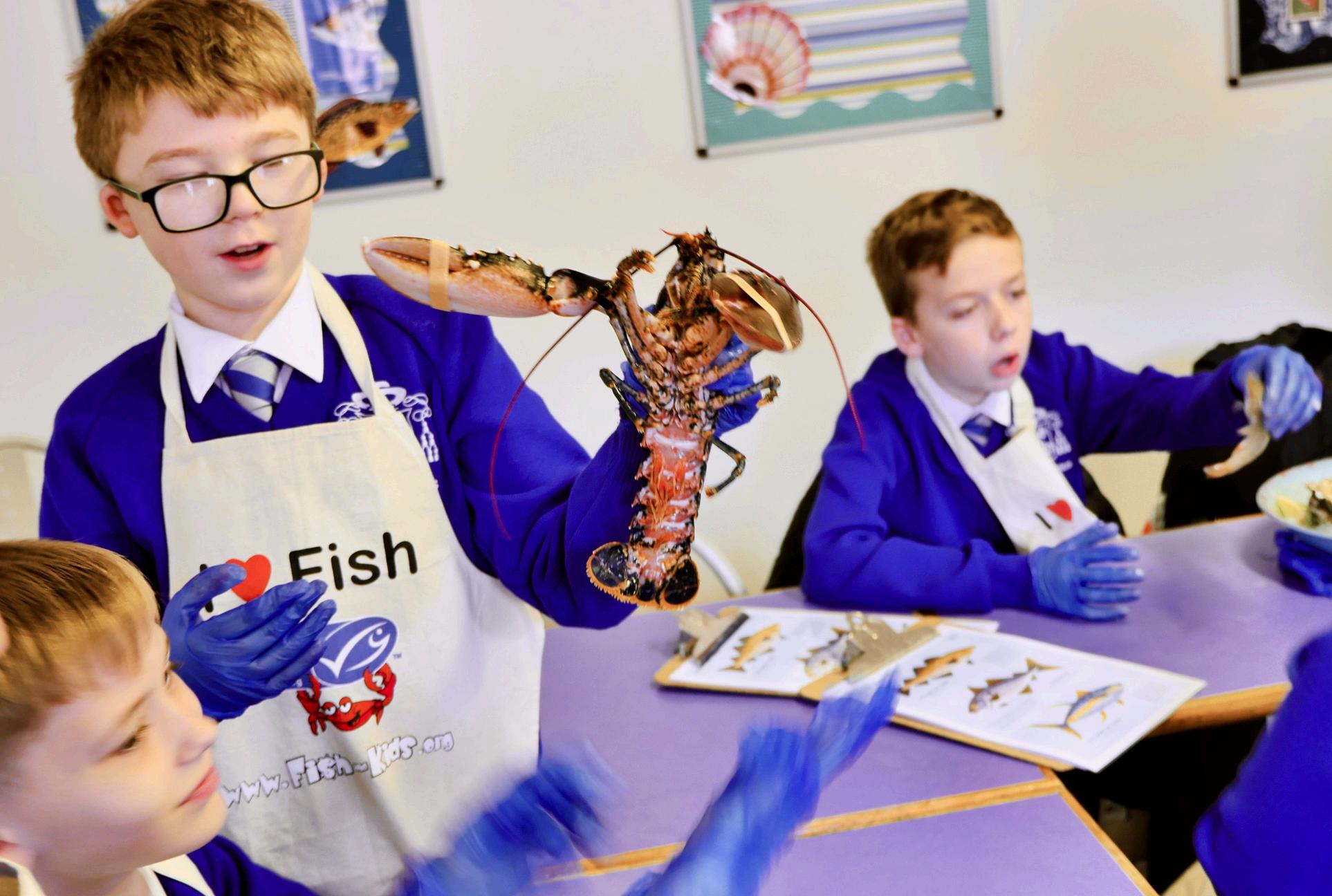
The children are then invited to the restaurant to take part in a workshop and watch a short film about sustainability, the MSC eco-label, and the importance of protecting our oceans. We share how we as a business are focused on making positive changes and how they as children can also make a positive impact.
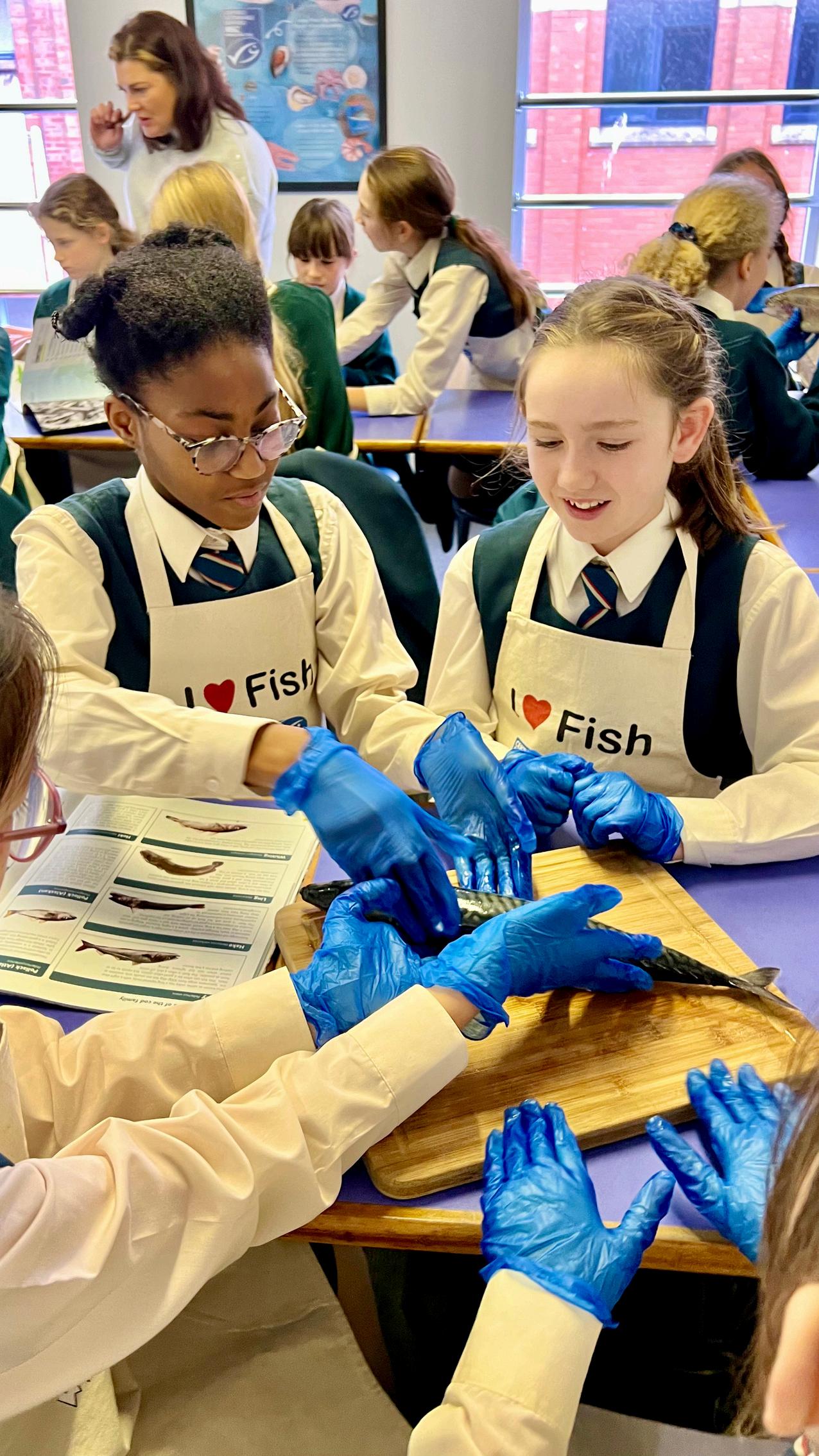
THE EXPERIENCE
3. FISH AND CHIPS
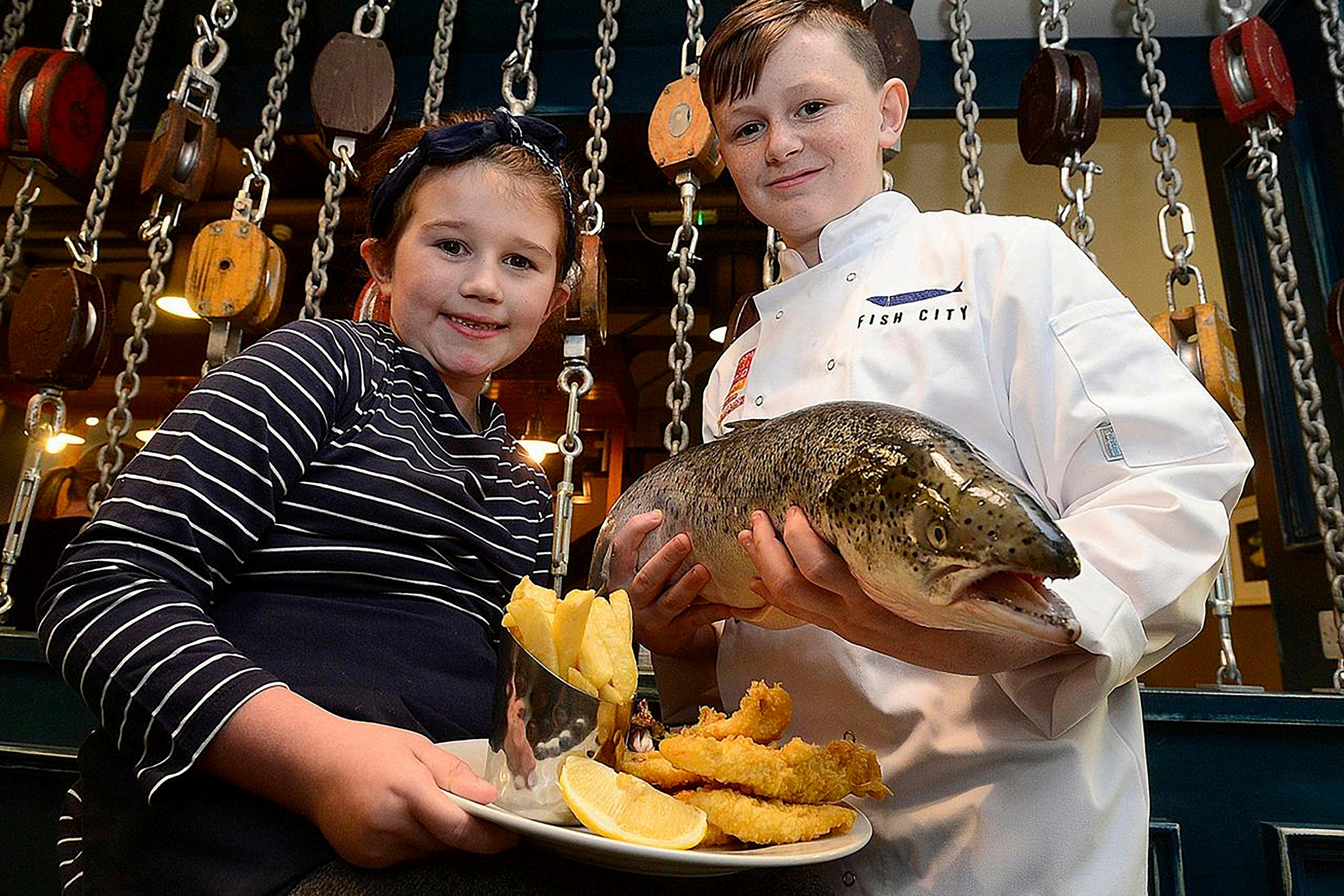
And finally, the best part of the day, we all enjoy sustainably sourced and award-winning Fish & Chips!
CULTIVATING BIODIVERSITY
A SEAFOOD RESTAURANT'S GREEN OASIS IN THE CITY CENTRE
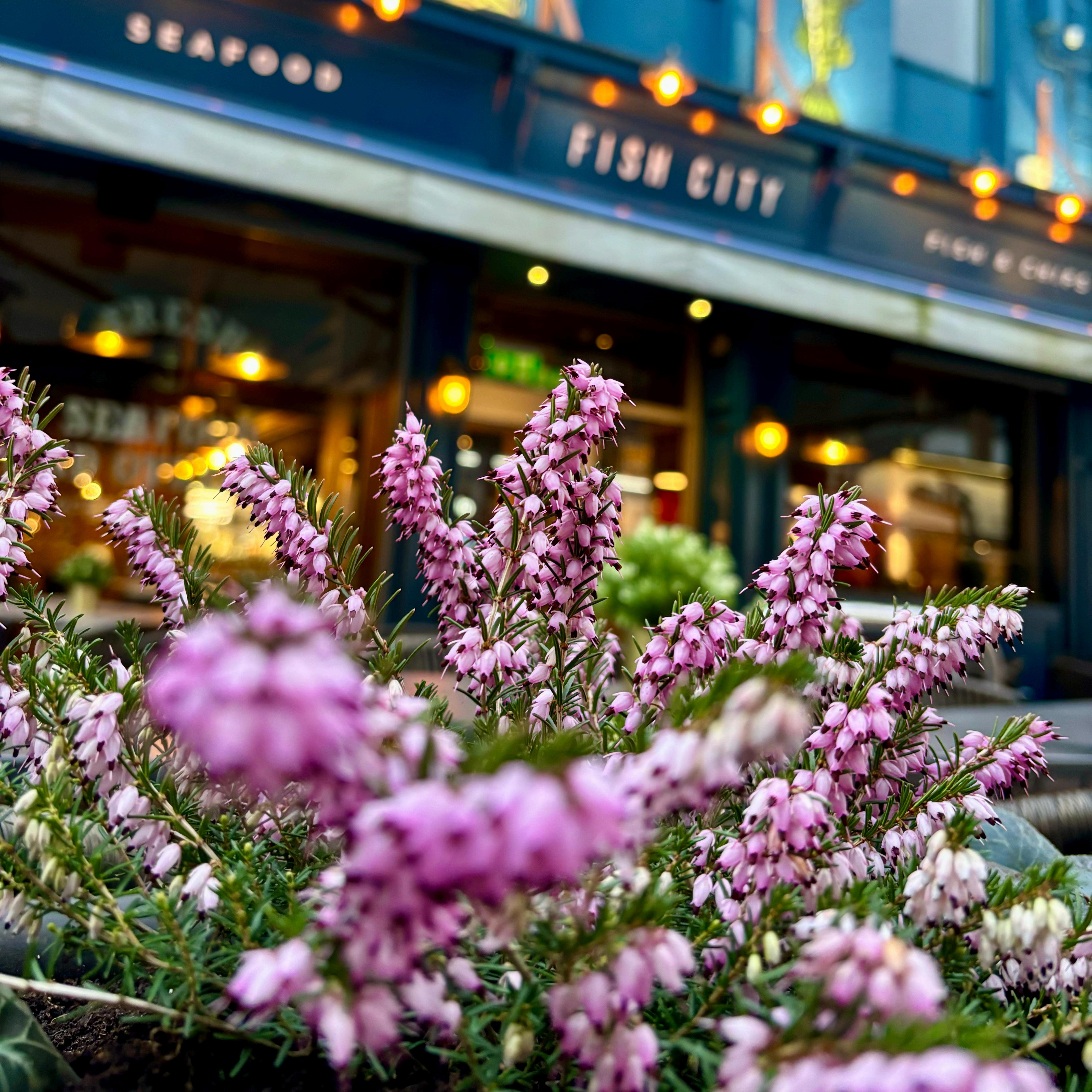
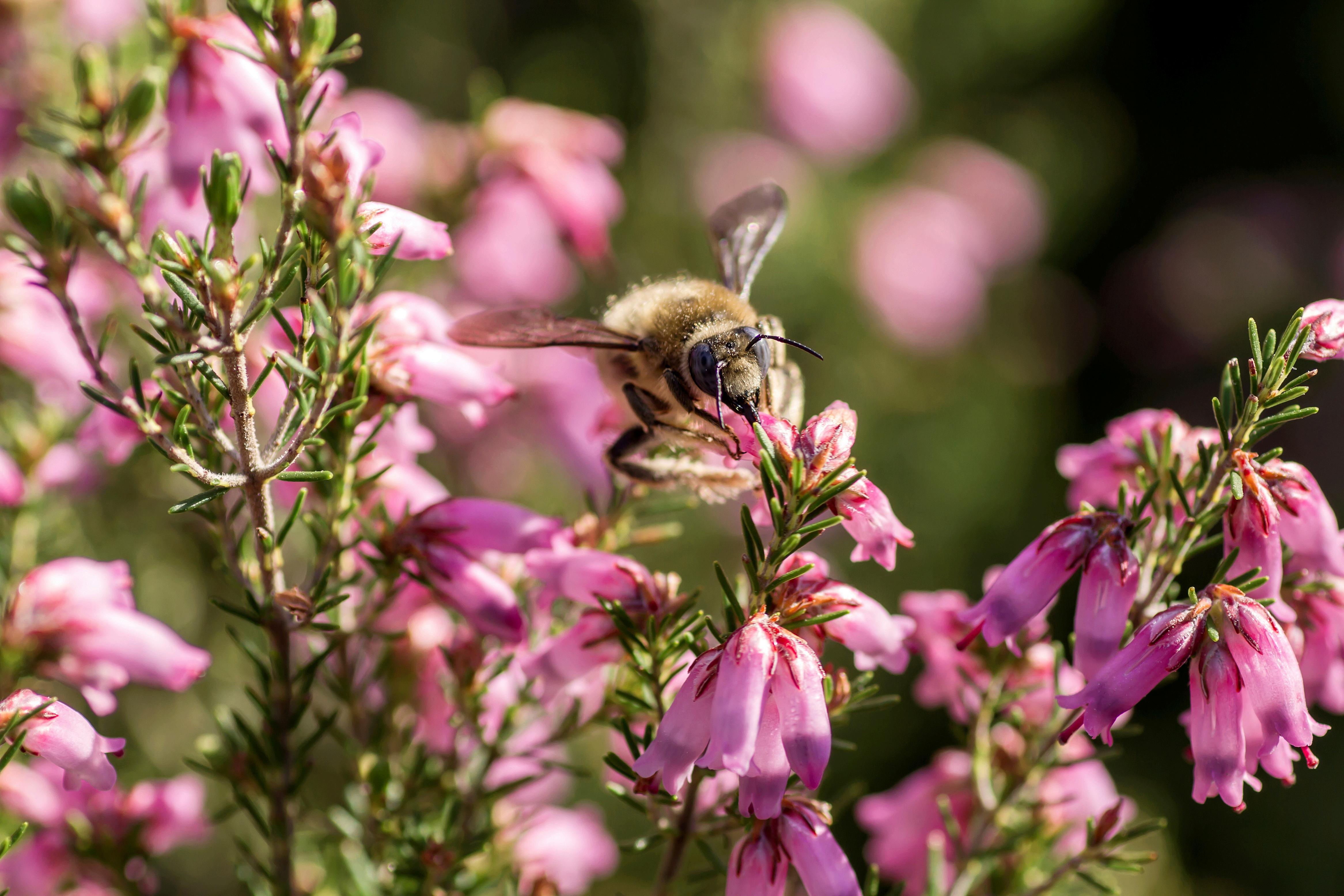
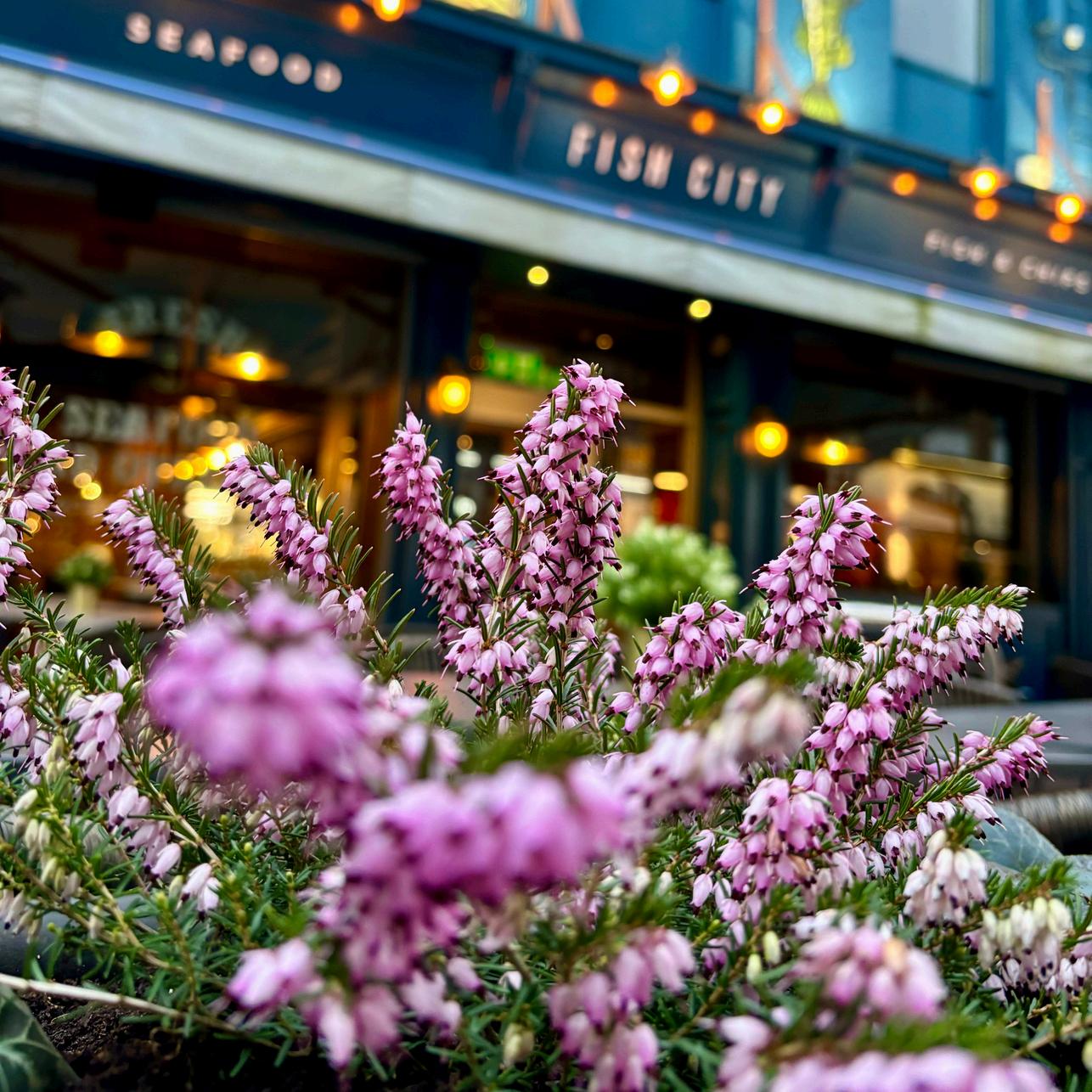
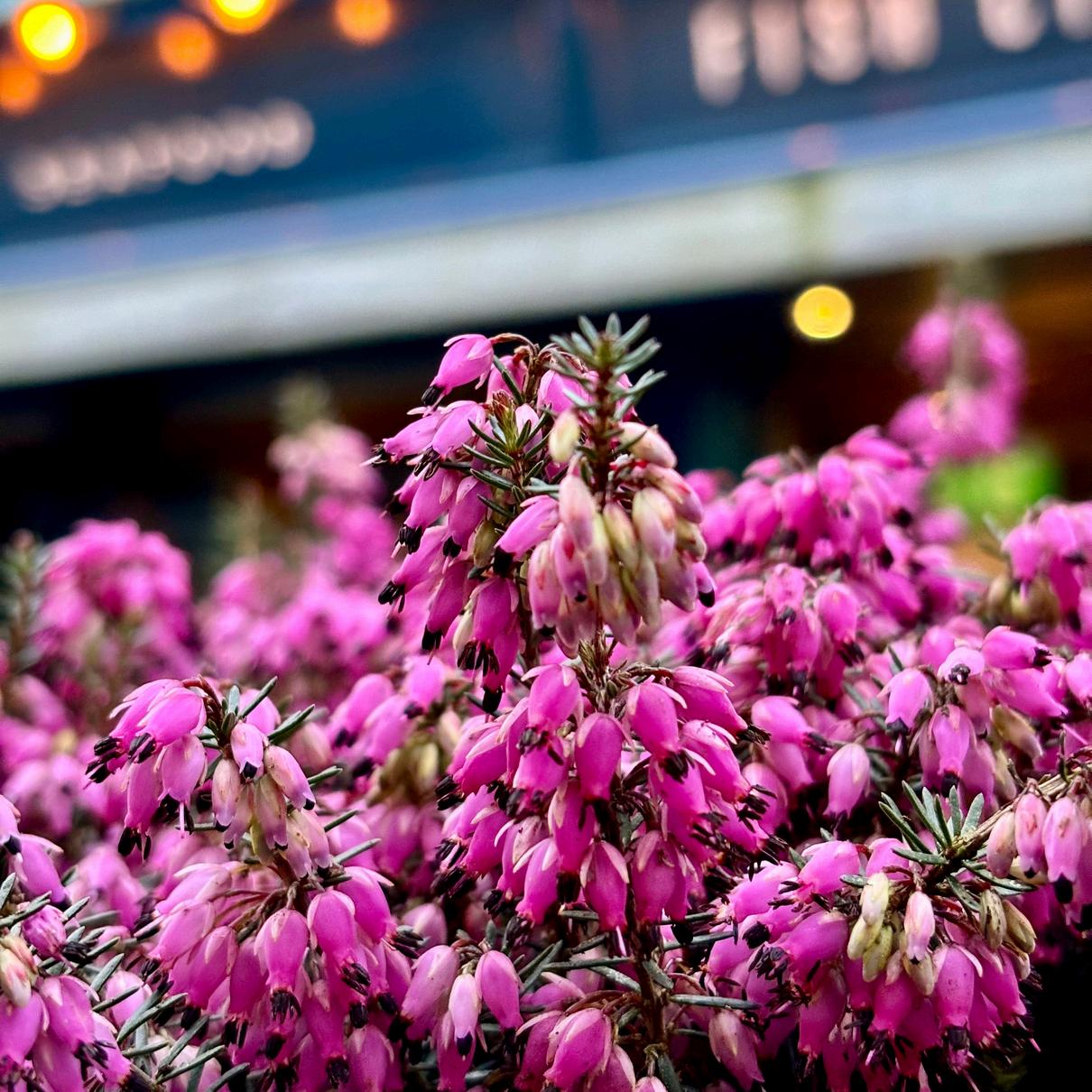
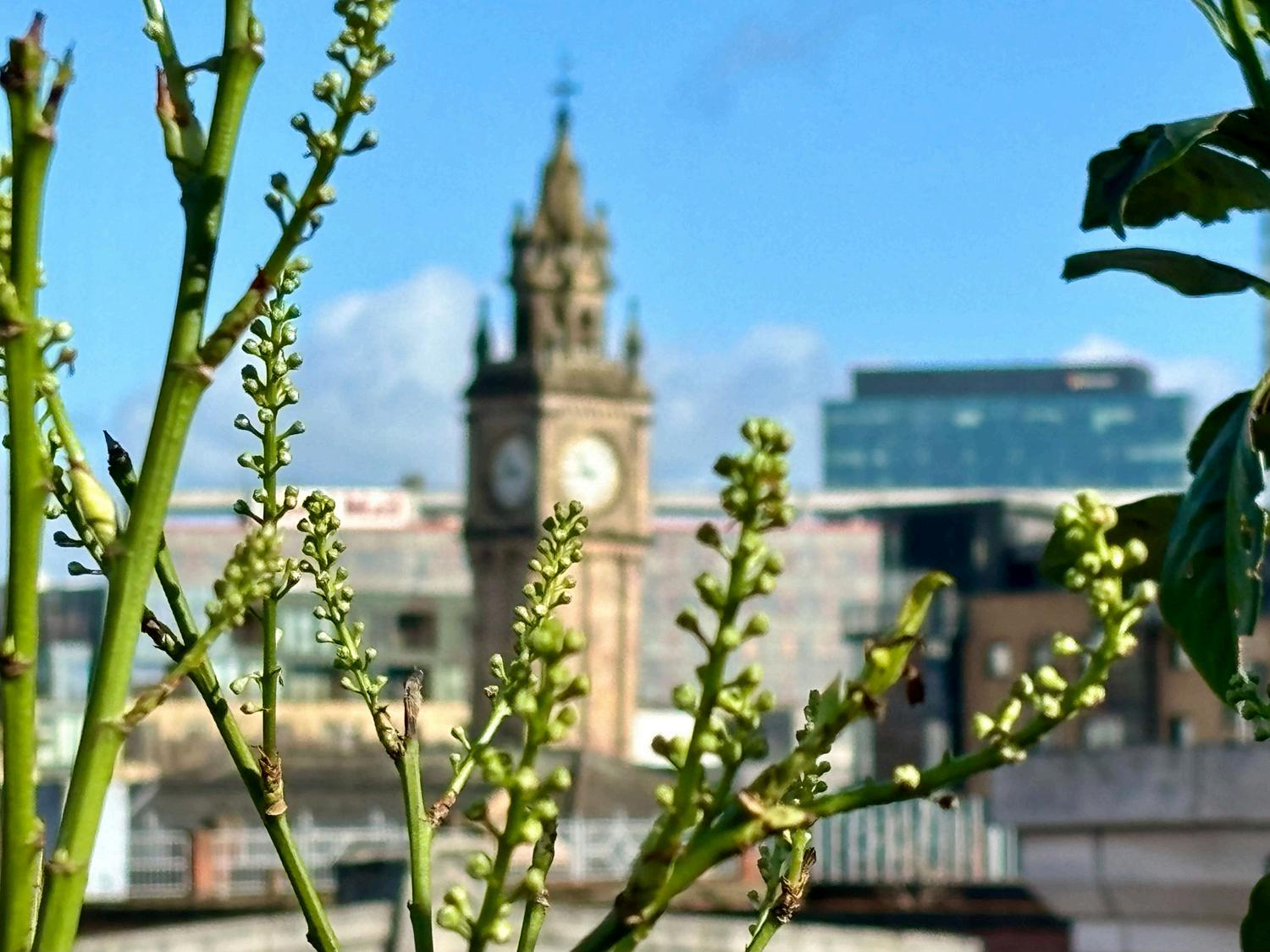
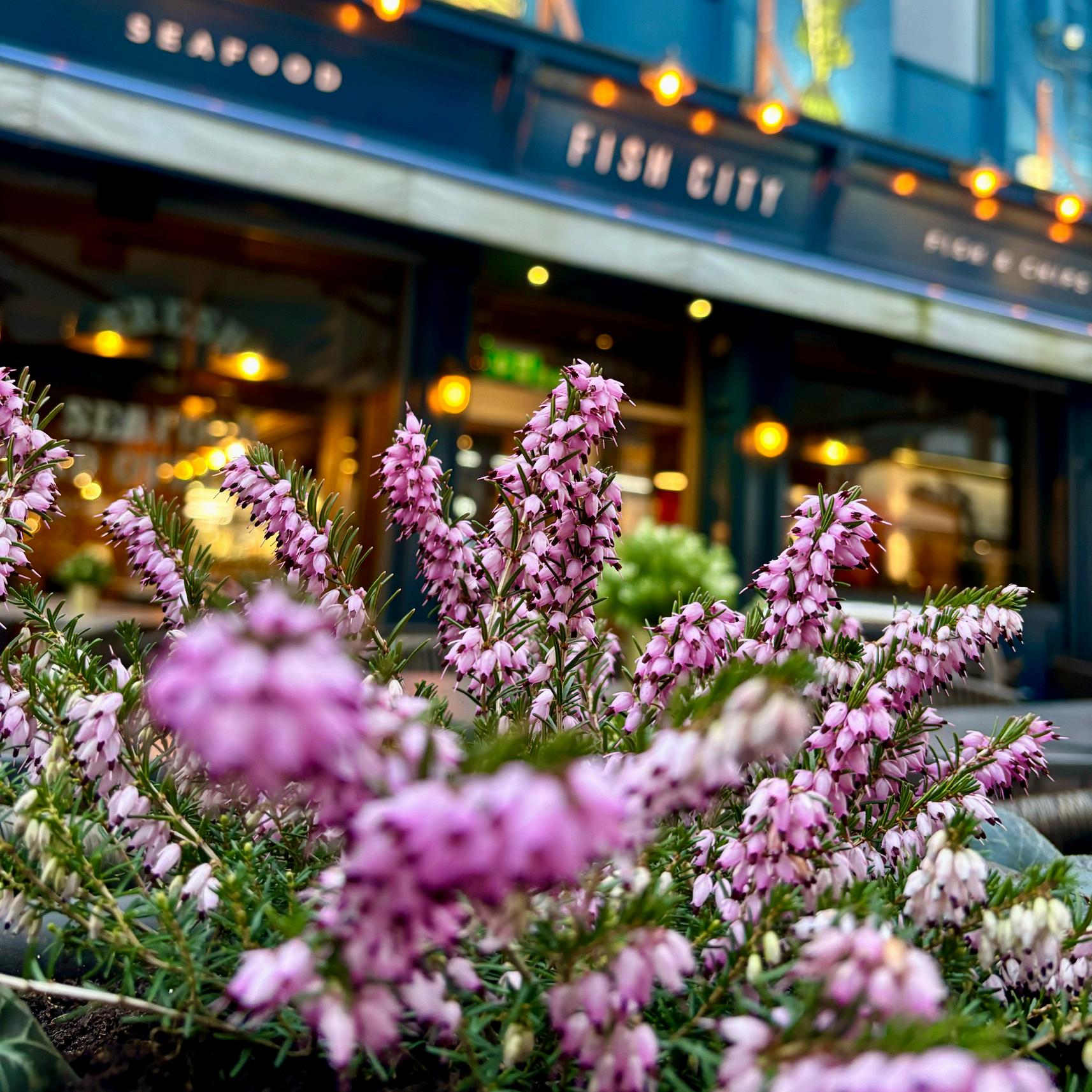
In the heart of Belfast’ s bustling city centre, where brick, glass and concrete dominates the landscape, Fish City is making waves in the realm of ecological responsibility. With a focus on sustainability, the award-winning Belfast seafood restaurant recently embarked on a mission to transform its outdoor dining space into a vibrant haven for pollinators by planting heather– low-growing, evergreen shrubs typically found on heathland across the island. This initiative not only adds a bright splash of colour to the surroundings but also aligns with the restaurant ' s overarching commitment to sustainability and environmental stewardship.
EMBRACING NATIVE BEAUTY
With limited space on the premises, the restaurant creatively utilised the planters around its Terrace outdoor dining area to introduce a stunning display of winter- and spring-flowering heather, providing an important early source of food for pollinators. Embracing the beauty of Northern Ireland's native evergreen heathers, the restaurant planted nine carefully selected varieties. Each variety, such as Springwood Pink and Golden Starlet, have earned the Royal Horticultural Society's (RHS) Award of Garden Merit (AGM) and is recognised by RHS researchers as an excellent pollinator plant, one which provides nectar and pollen for bees and many other types of pollinating insects.
A BUZZWORTHY EFFORT
Recognising the crucial role pollinators play in our ecosystem, Fish City recently joined the All-Ireland Pollinator Plan, an initiative of the National Biodiversity Data Centre to create a landscape across the island where pollinators can survive and thrive. Supporting pollinators is important because one-third of Ireland’ s wild bee species are threatened with extinction, the result of human land use that has drastically reduced the amount of food and safe nesting sites that support pollinators. Fish City has pledged their green space for pollinators. By planting pollen-rich heather, Fish City is actively contributing to the plan's goal of creating more pollinator-friendly spaces across the island. Heather's pink-purple flowers are a delightful treat for bees and other insects, adding a burst of colour to the urban landscape.
GREEN SPACE ENHANCEMENT
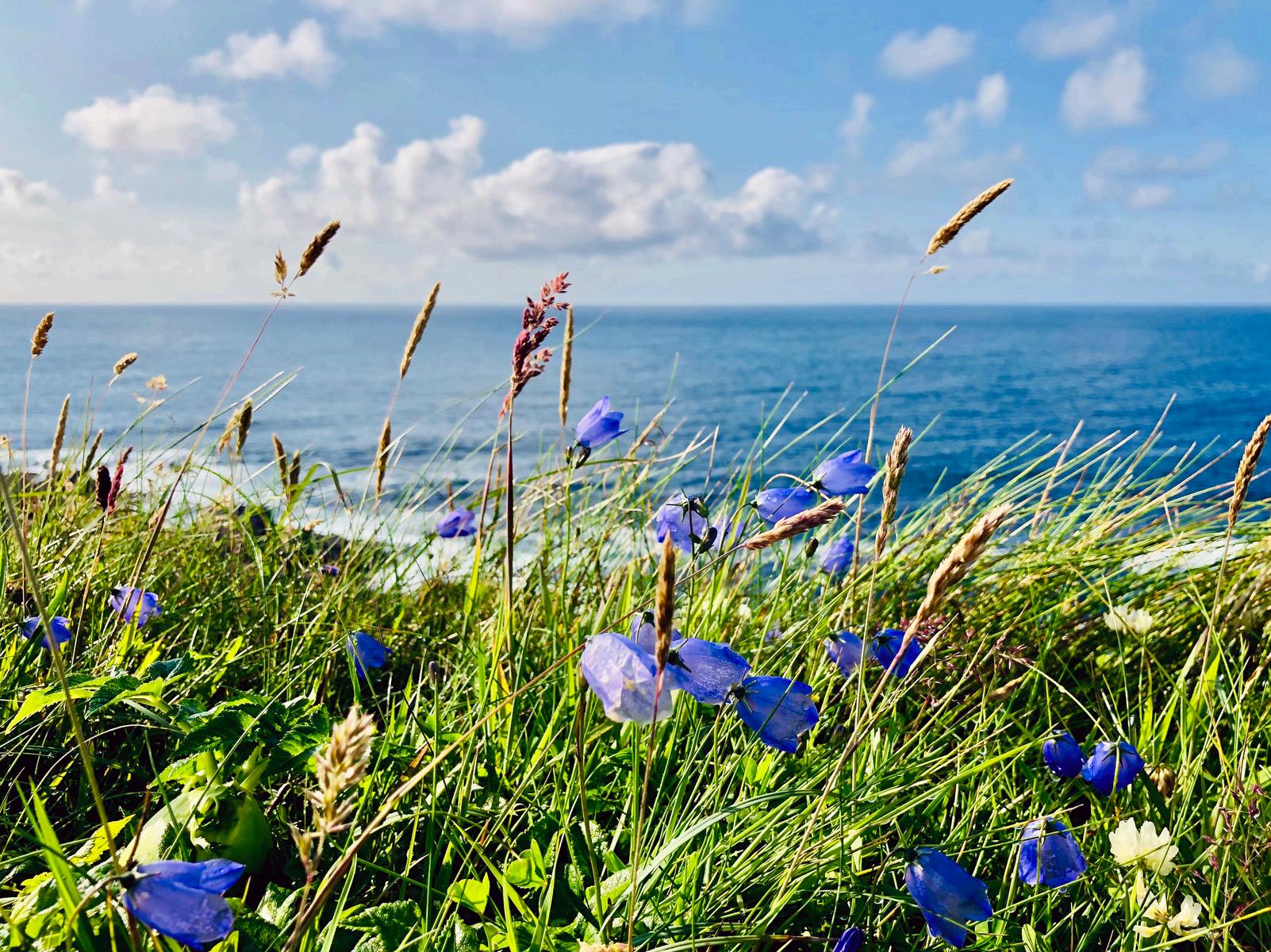
Fish City’ s commitment to green space enhancement goes beyond street-side planters. As part of the business’ s wider biodiversity plan, the objective is to integrate native plants throughout the restaurant ' s surroundings. Native plants, well-adapted to the local environment, provide food and shelter for local wildlife and foster biodiversity. Harebell (Campanula rotundifolia), a pollinatorfriendly perennial, is another plant added to the restaurant’ s display. With its pale blue bell-shaped flowers that grow on basaltic cliffs and dunes, the harebell grows wild on the Causeway Coast. By adopting this approach, Fish City aims to create a more harmonious coexistence between urban living and the natural world.
ROOFTOP OASIS
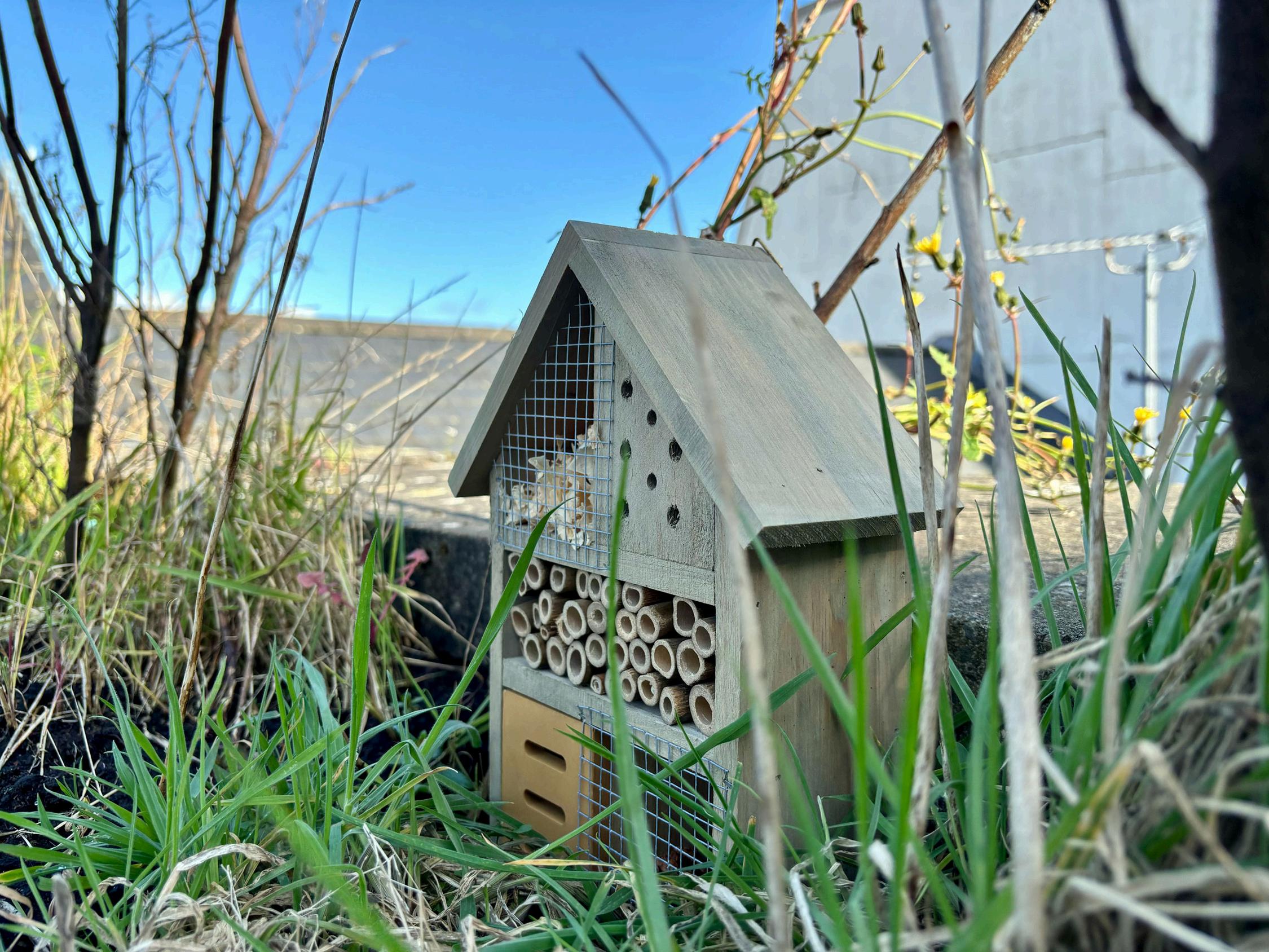
The restaurant ' s rooftop serves as an additional haven for pollinators and other animals. A bee hotel installed in a no-mow area of wild grass provides nesting habitat for these essential insects. A section of planters are intentionally left wild, with grasses and weeds such as dandelions, hawksbeard, knapweed and clover allowed to grow, and only trimmed once a year.
Dandelions are a favourite of the heath bumblebee, which nest in small colonies in old birds’ nests, mossy beds, and even roofs.
Large evergreen hedging plants are stationed on the rooftop as an additional habitat and food source. And a wren nest box is installed to provide an ideal shelter for breeding season and hibernation. With a remarkably loud voice for such small birds, wrens are the most common UK breeding bird and a common garden visitor. Another recognisable garden visitor, Blue Tits have been spotted in the roof garden inspecting the planters for insects, caterpillars, and seeds, which make up their diet.
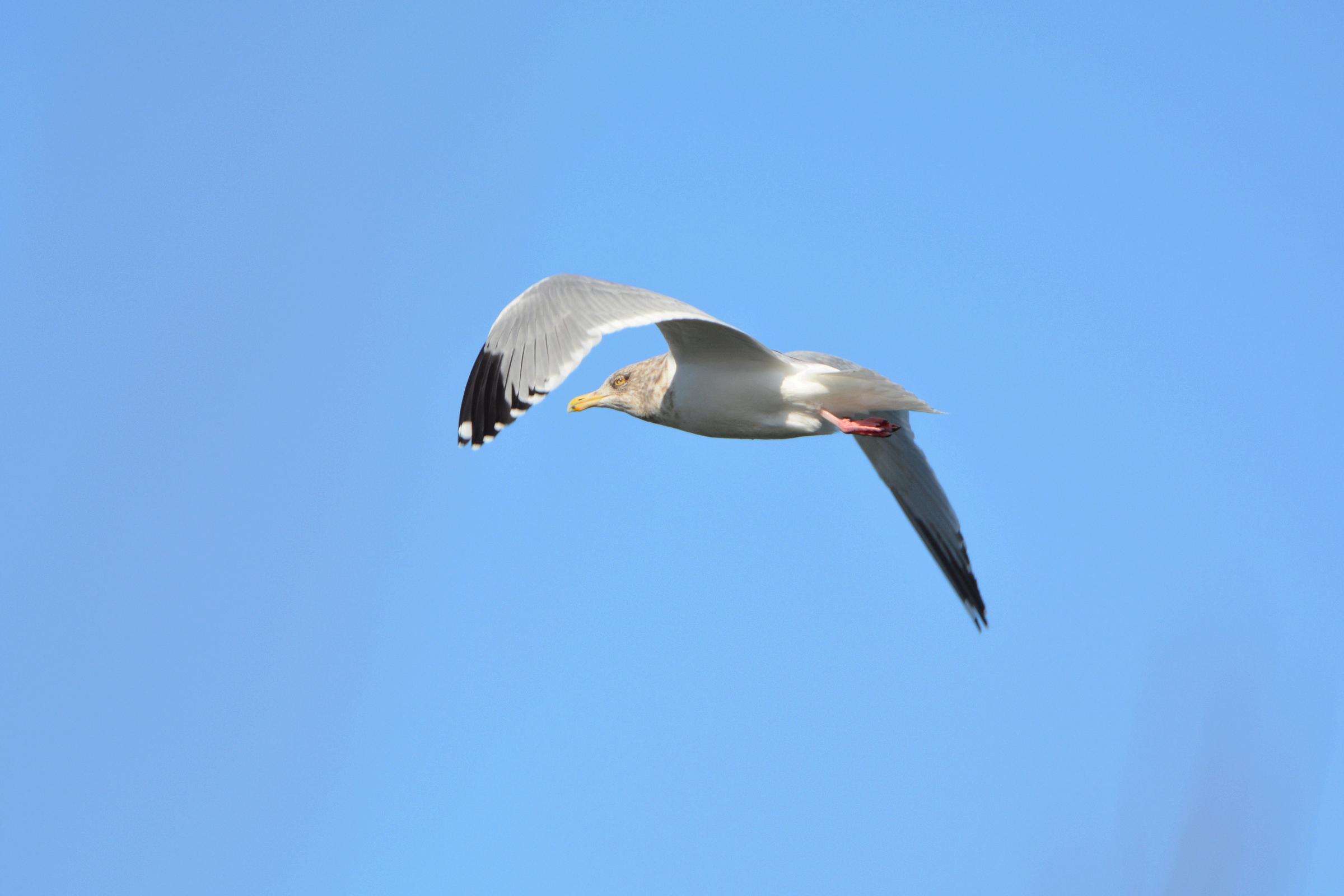
Due to the restaurant’ s location near Belfast Harbour, coastal birds such as herring gulls and lesser black-backed gulls frequent the rooftop and are often seen perched atop the ridge of the building and the gables of neighbouring premises. Their presence is noticed from mid-February when they return from their winter migration to Southern Europe and North Africa. Many of
Northern Ireland’ s gull species have significant nesting populations up the Antrim Coast on Rathlin Island.
BEST PRACTICES FOR A GREENER FUTURE
The commitment to environmental sustainability extends to the restaurant ' s planting practices. Adhering to the All-Ireland Pollinator Plan's best practice pesticide code, Fish City refrains from using herbicides and opts for peat-free compost. By making these conscientious choices, the restaurant ensures that every aspect of its operations aligns with principles of ecological responsibility.
Through its thoughtful planting of pollinator-friendly heather, commitment to the All-Ireland Pollinator Plan, and the creation of rooftop habitats, Fish City is demonstrating that even city centre businesses with limited space can play a vital role in preserving and enhancing our natural world and supporting Northern Ireland’ s biodiversity and native wildlife. This green oasis in the heart of the city serves as an inspiring example of how sustainable practices can be seamlessly integrated into daily operations, paving the way for a greener, more harmonious future.

Nine of the best UK fish and chip shops
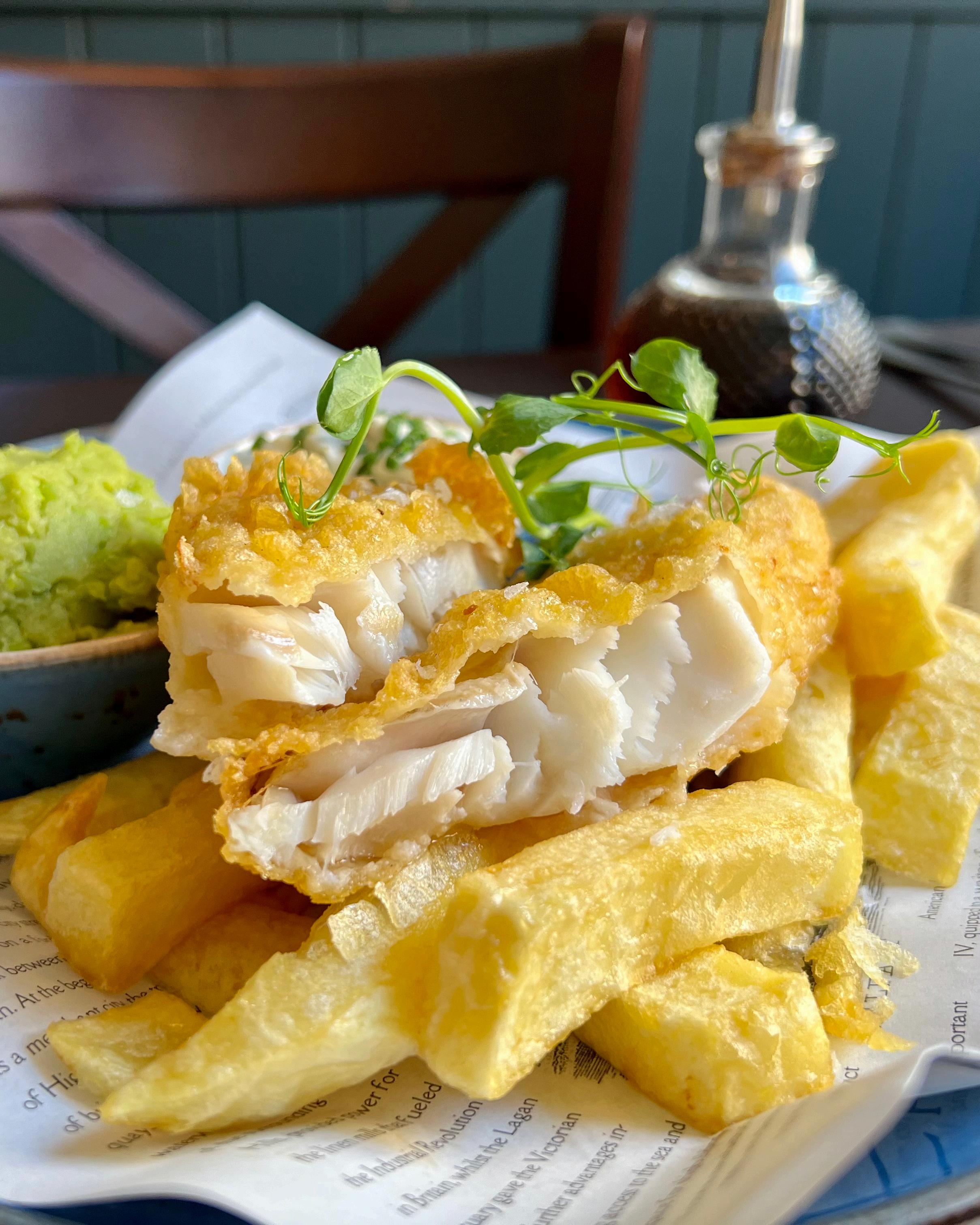
There’ s sustainable and then there’ s Fish City. Certified by the Marine Stewardship Council — and the first fish and chip shop in the UK to be a corporate member of the MSC the team also educate children on sustainability, feed the homeless and recycle food waste and oil, while also minimising order frequency (with most of their suppliers within a 50-mile radius) to help reduce their carbon footprint. Happily, the fish and chips are very good too.
Partner in Focus: Fish City
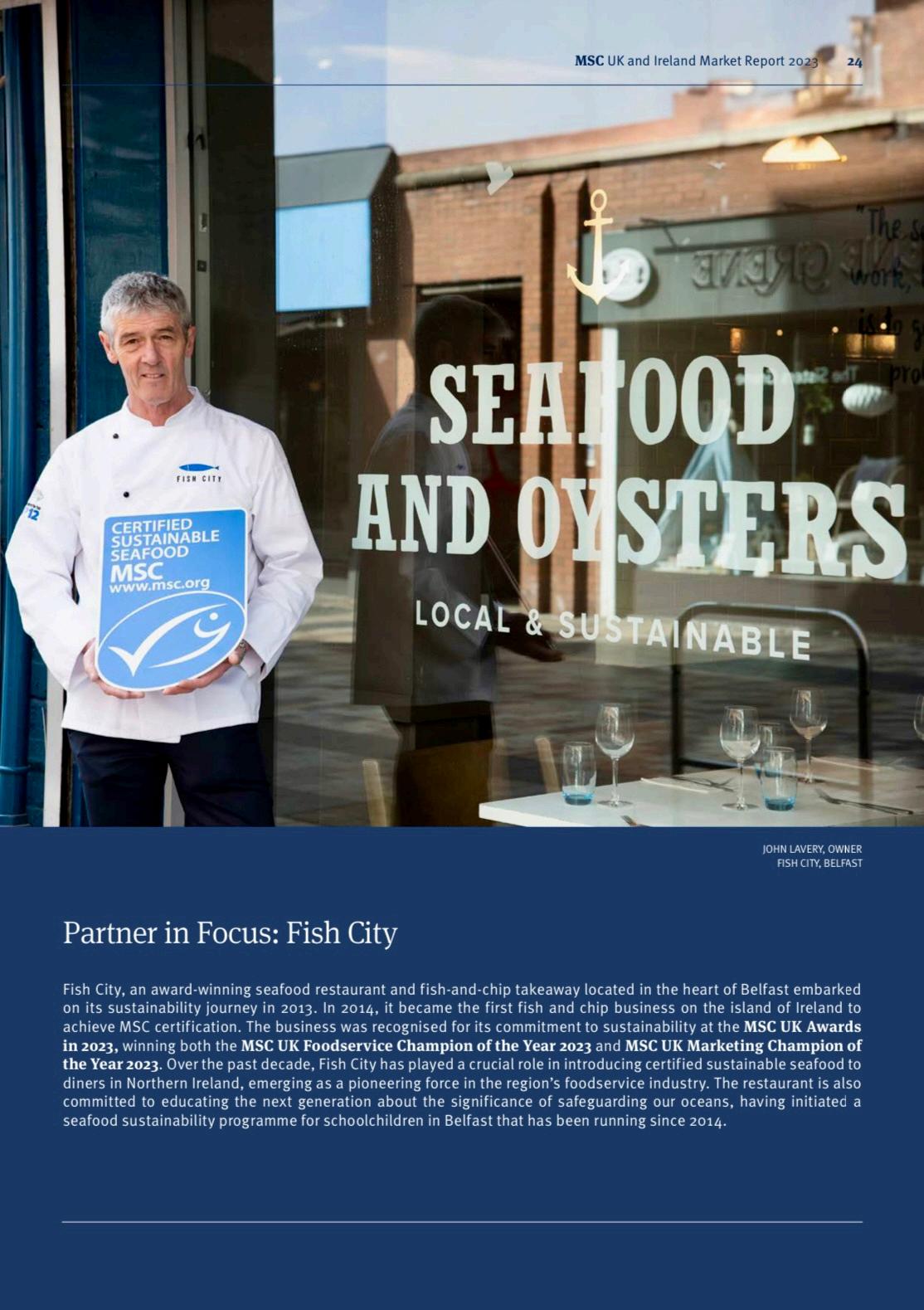
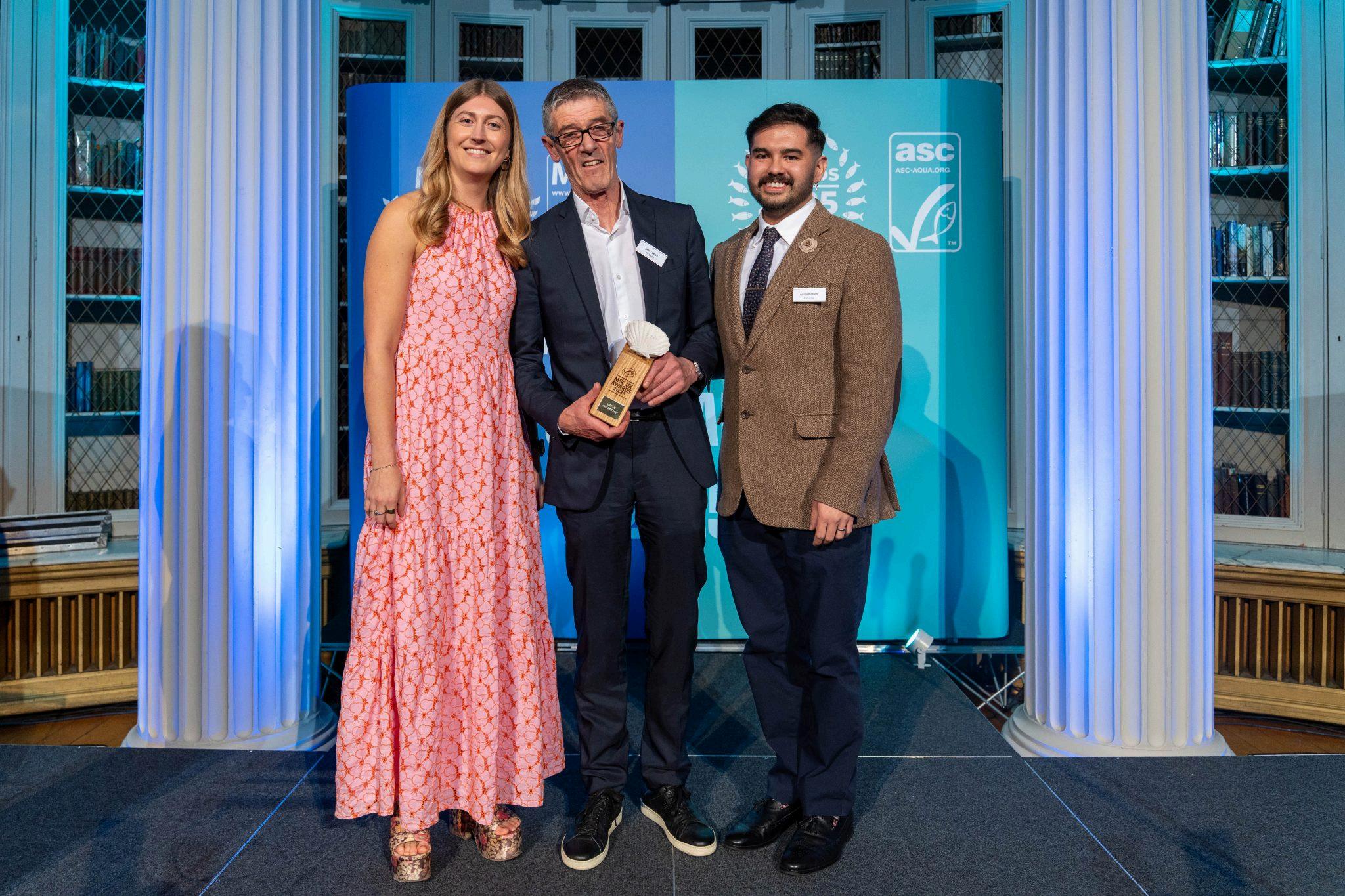
Fish City, an award-winning seafood restaurant and fish-and-chip takeaway located in the heart of Belfast embarked on its sustainability journey in 2013. In 2014, it became the first fish and chip business on the island of Ireland to achieve MSC certification. The business was recognised for its commitment to sustainability at the MSC UK Awards in 2023, winning both the MSC UK Foodservice Champion of the Year 2023 and MSC UK Marketing Champion of the Year 2023. Over the past decade, Fish City has played a crucial role in introducing certified sustainable seafood to diners in Northern Ireland, emerging as a pioneering force in the region’ s foodservice industry. The restaurant is also committed to educating the next generation about the significance of safeguarding our oceans, having initiated a seafood sustainability programme for schoolchildren in Belfast that has been running since 2014.

Published22February2025
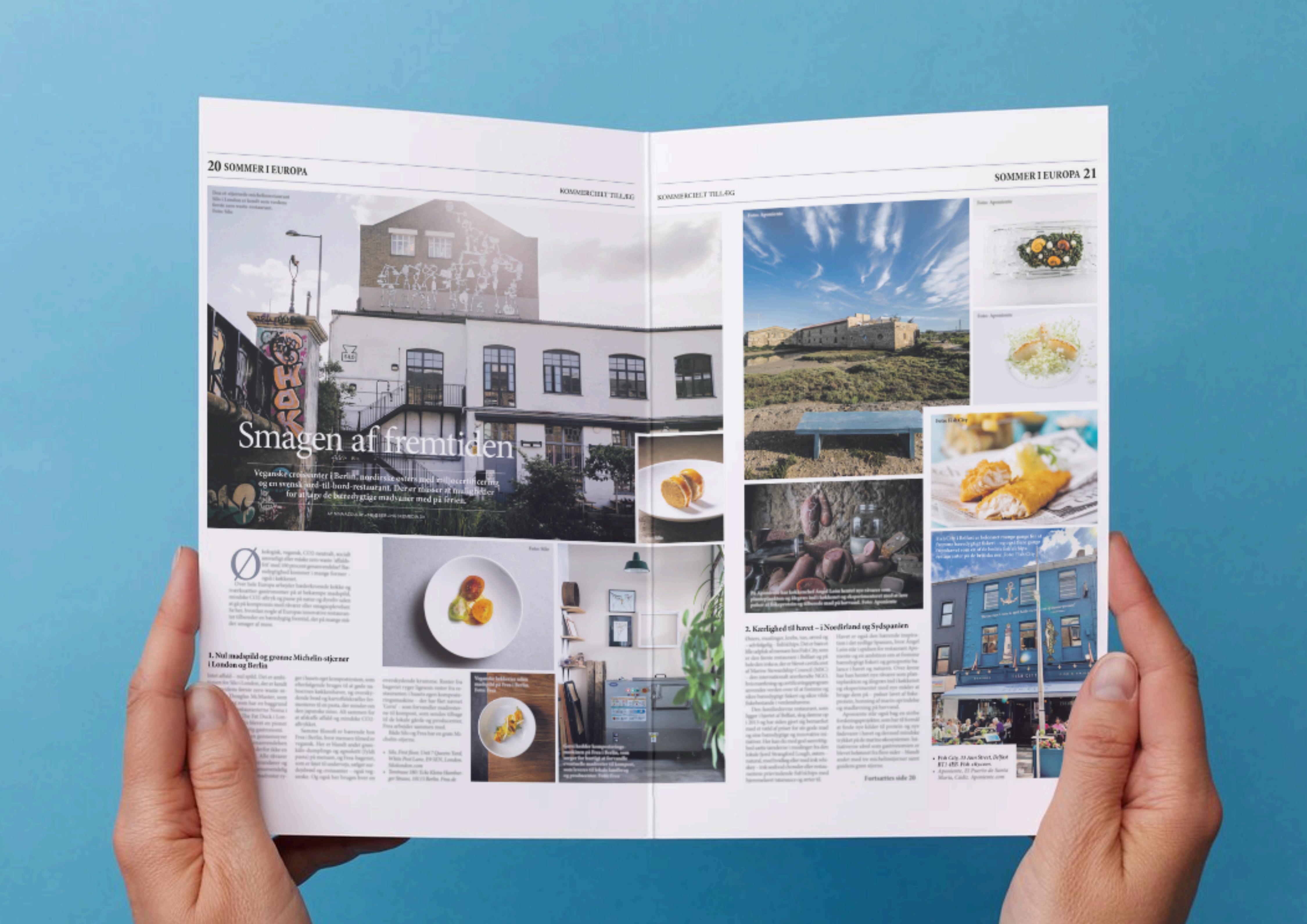
The Taste of the Future

B Y N I N A A Z O U L E Y
Vegan croissants in Berlin, responsibly sourced Irish oysters, and a Swedish farm-to-table restaurant. There are plenty of opportunities to bring sustainable eating habits along on your holiday.
Organic, vegan, CO₂-neutral, socially responsible, or perhaps zero waste “waste-free" with 100% recycling?
Sustainability comes in many forms, including in the kitchen. Across Europe, renowned chefs and entrepreneurial gastronomes are working to combat food waste, reduce CO₂ footprints, and protect nature and wildlife without compromising on ingredients or taste. Here’ s a look at how some of Europe’ s most innovative restaurants are cooking up a sustainable future that, in many ways, tastes even better.
Oysters, mussels, prawns, tuna, trout, and of course fish and chips. These are just some of the menu items at Fish City, the first restaurant in Belfast and on the entire island of Ireland to be certified by the Marine Stewardship Council (MSC)—the internationally recognized NGO whose labeling and certification program is used worldwide to promote and ensure sustainable fishing and the protection of wild fish stocks in the oceans.
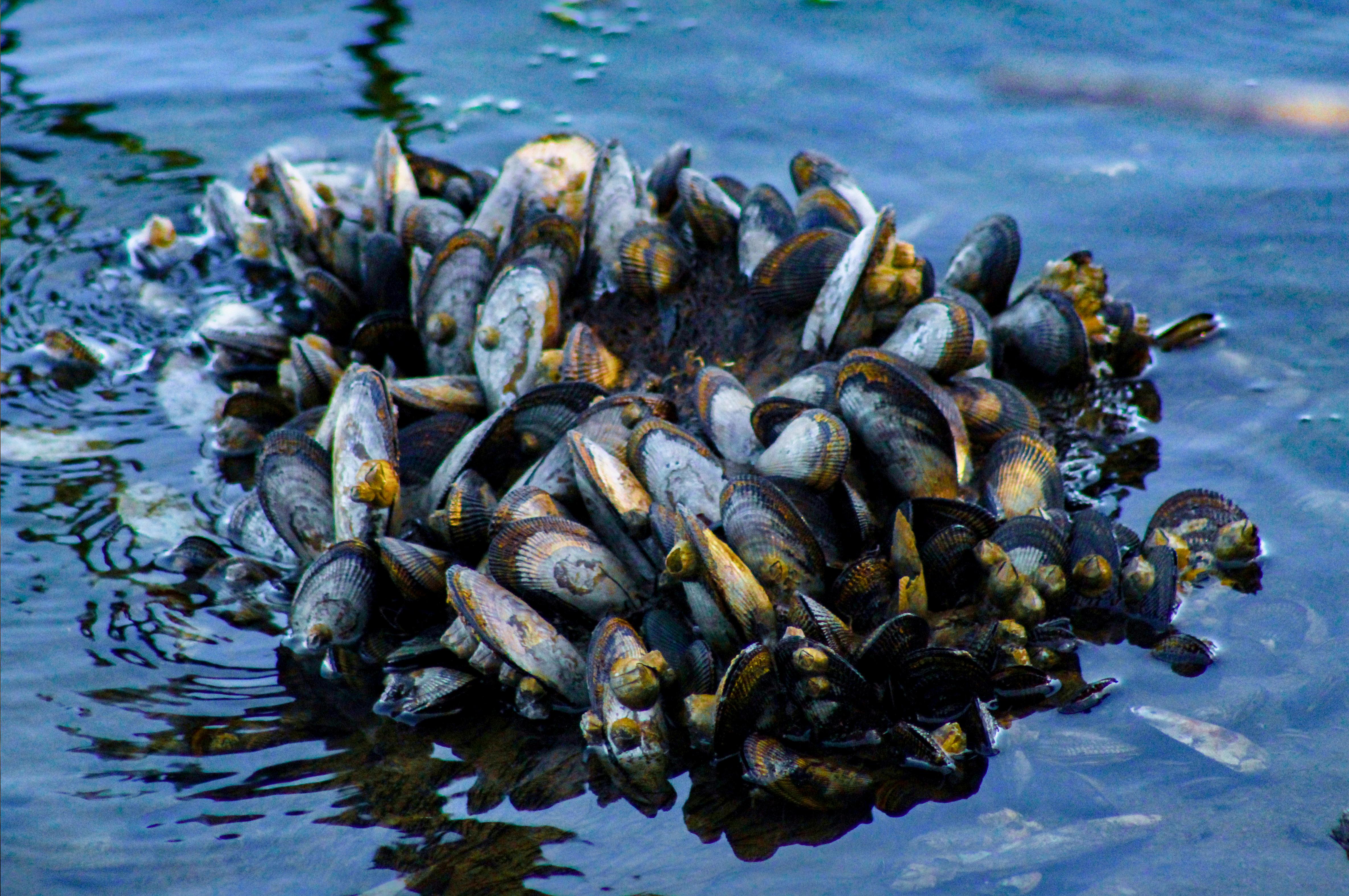
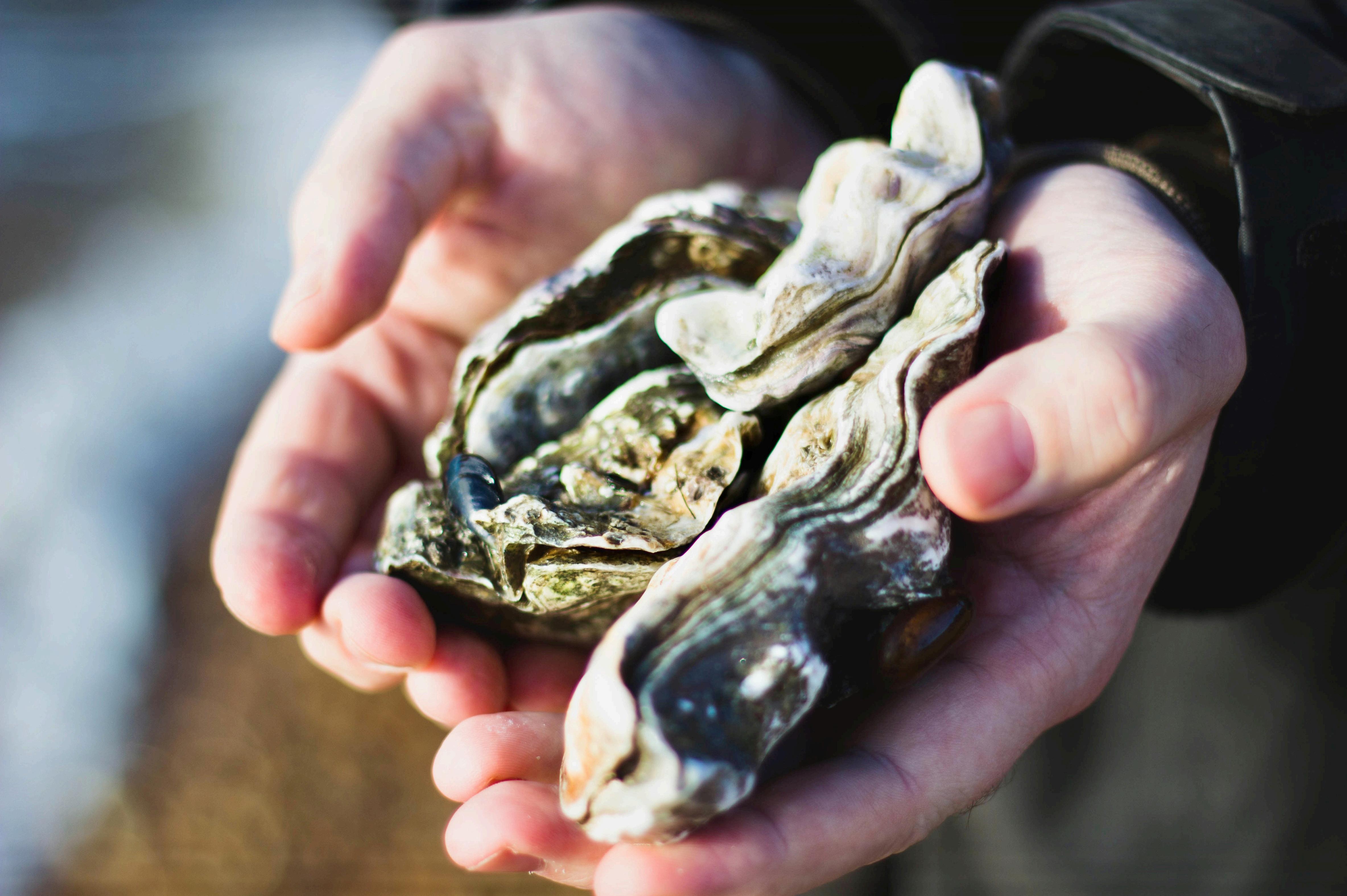
The family-run restaurant, located in the heart of Belfast, opened its doors in 2013 and has since garnered numerous awards for its excellent food and its sustainable and innovative initiatives. Here, you can indulge with a clear conscience in mussels from the local Strangford Lough, oysters served au natural, baked in garlic, or with Irish whiskey Irish seafood chowder, or the restaurant’ s awardwinning fish and chips with homemade tartare sauce and mushy peas.
This independent, government-backed review explores how small businesses across the UK are already benefiting financially from sustainability, and what’ s needed to scale that success. Led by Co-Chairs Minister Gareth Thomas, Michelle Ovens CBE and Nick Stace OBE, The Willow Review sets out to demonstrate that sustainability is not just an environmental imperative, but a clear commercial opportunity for small businesses.
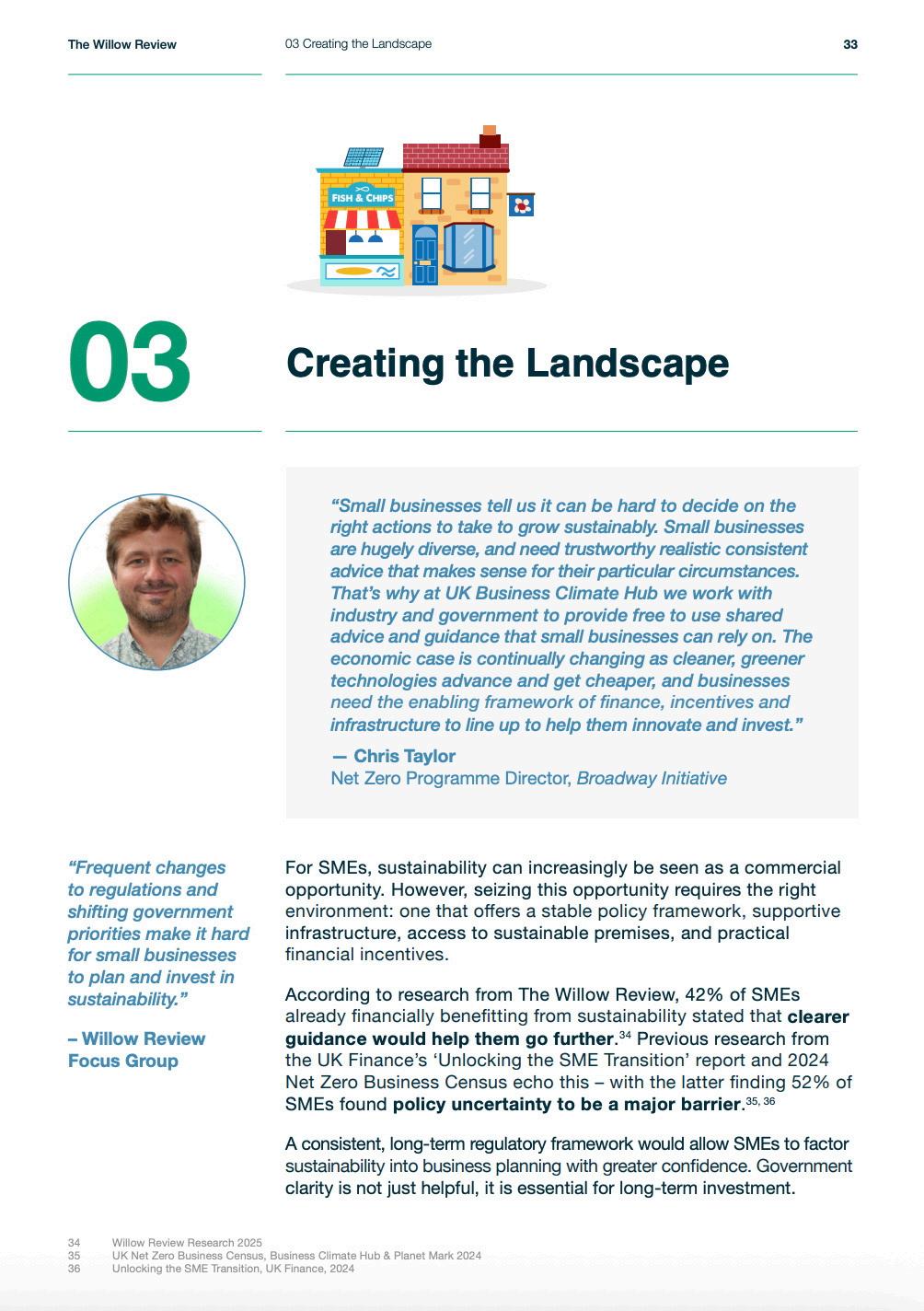
The Willow Review draws on new survey data, in-depth focus groups and real-world case studies to explore how sustainability is helping small businesses to: reduce operational costs, grow revenue, attract new customers, improve customer loyalty, and build long-term business resilience.
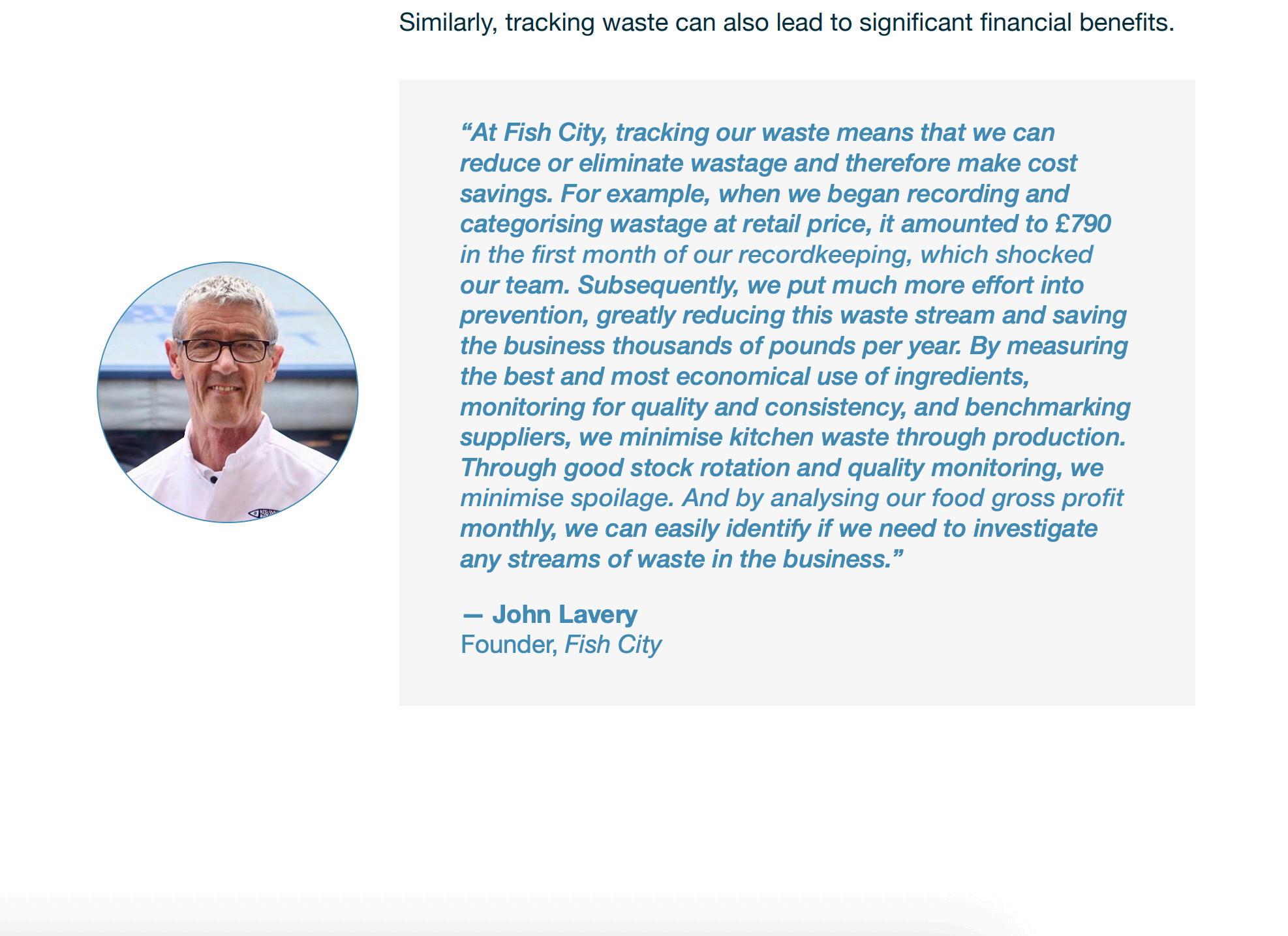
John Lavery, Founder, Fish City PublishedJune2025
At Fish City, tracking our waste means that we can reduce or eliminate wastage and therefore make cost savings. For example, when we began recording and categorising wastage at retail price, it amounted to £790 in the first month of our recordkeeping, which shocked our team. Subsequently, we put much more effort into prevention, greatly reducing this waste stream and saving the business thousands of pounds per year. By measuring the best and most economical use of ingredients, monitoring for quality and consistency, and benchmarking suppliers, we minimise kitchen waste through production. Through good stock rotation and quality monitoring, we minimise spoilage. And by analysing our food gross profit monthly, we can easily identify if we need to investigate any streams of waste in the business.
WILDLIFE AT WATER’S EDGE
EXPLORING BELFAST’S COASTAL WONDERS
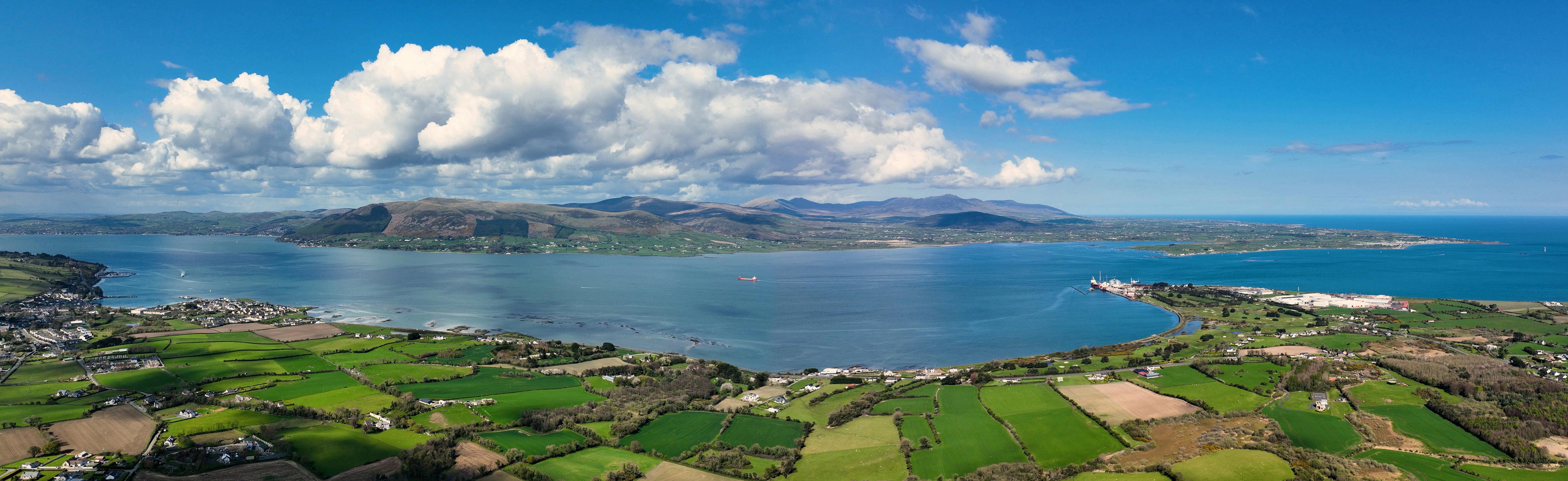
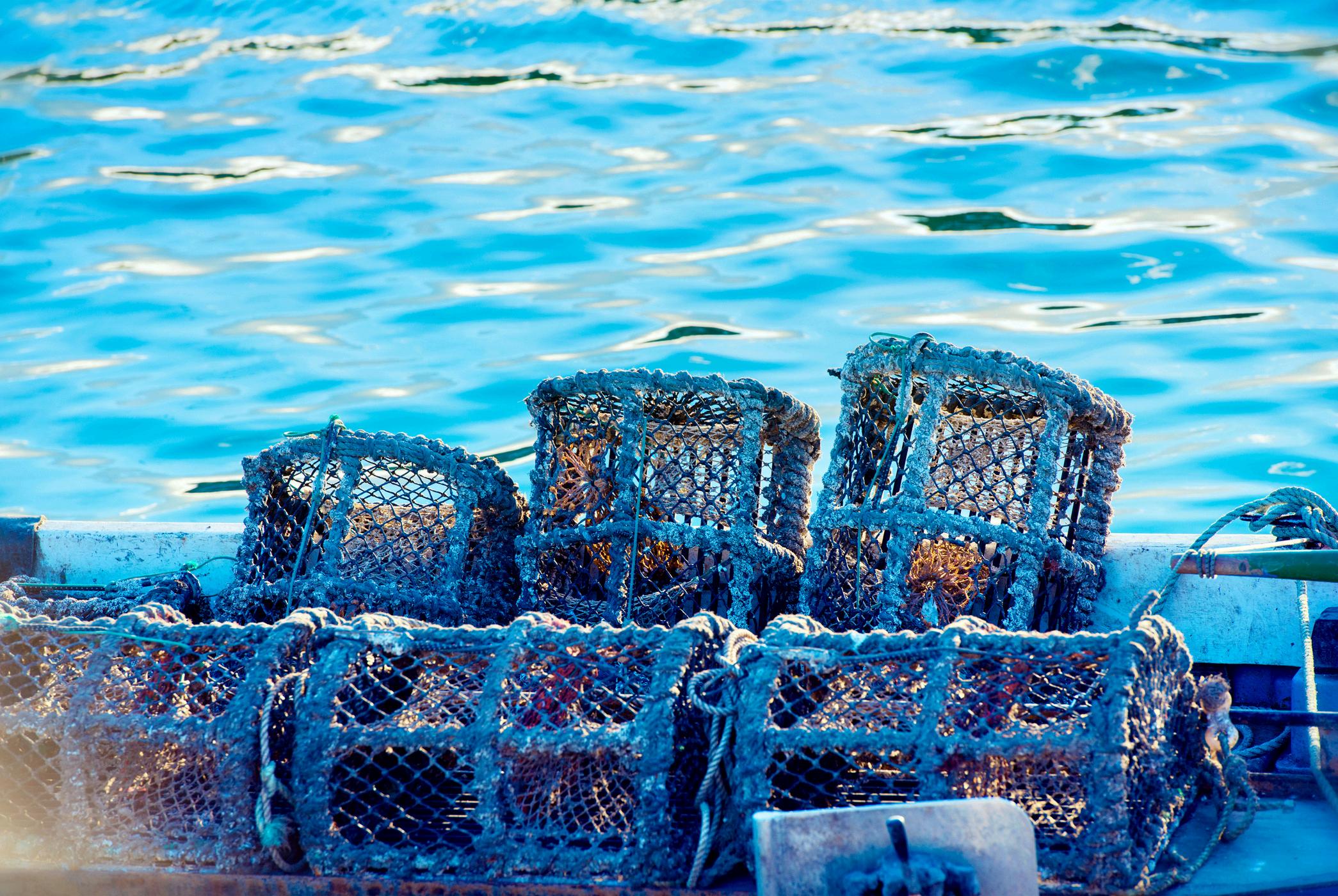
Here at Fish City, just a short walk from Belfast’ s historic waterfront, we ’ re proud to serve sustainably sourced, award-winning fish and chips and some of the finest local shellfish—from rope-grown Strangford mussels and responsibly farmed Carlingford oysters to clams from Dundrum Bay. Our passion for sustainability extends beyond the plate to the natural environment that nurtures every ingredient we source. The same waters that nourish this incredible island’ s seafood also support an astonishing array of wildlife, right here in the waters at the edge of the city.
Stretching out from the industrial pulse of the city to the tranquil shallows of the Irish Sea, Belfast Lough is a remarkable haven for wildlife. Whilst the city’ s skyline is dominated by the Samson and Goliath cranes that speak to Belfast’ s famous shipbuilding past, the lough’ s waters, mudflats, and rocky shores feed and provide shelter for a vast array of birds, plants, and marine life. Among these natural treasures lies the story of resilience and revival from forgotten mudbanks to global bird hotspots. Journey around Belfast Lough’ s coastline and explore its wild side.
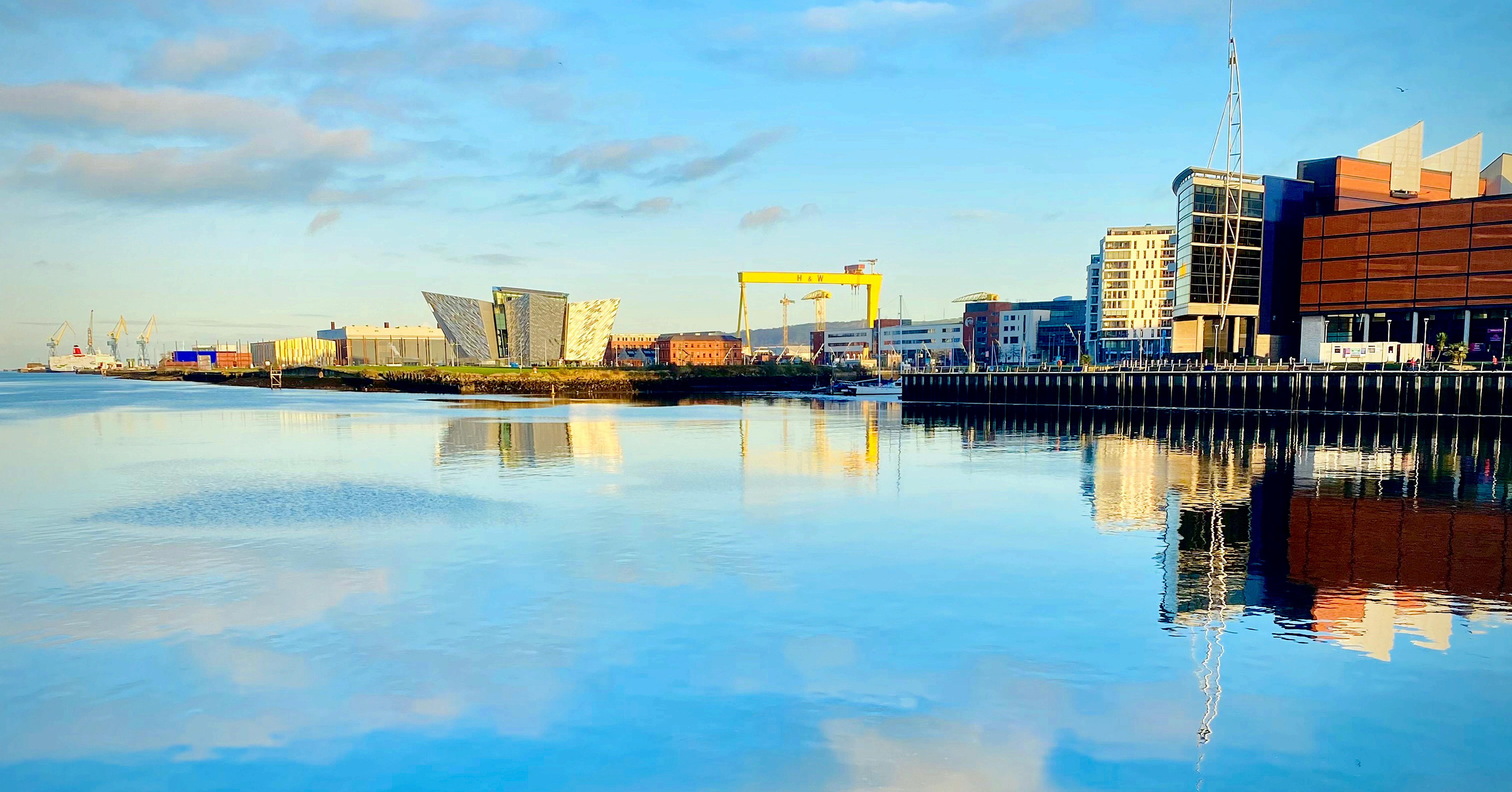
SANCTUARY AT BELFAST WOW
Not all nature reserves are born in wilderness. The lago Belfast’ s Window on Wildlife (WOW), once a dredg site along the south shore of Belfast Lough, evolved into region’ s most vibrant wildlife sanctuaries. In the early 198 filled this unfinished infill site, and birds were quick to cl Wildlife enthusiasts and volunteers stepped in, helping t into a purpose-built reserve managed by the Royal Societ Protection of Birds (RSPB). The nature reserve underw extensive refurbishment and opened to the public in 2015 with a new name: Belfast’ s Window on Wildlife.
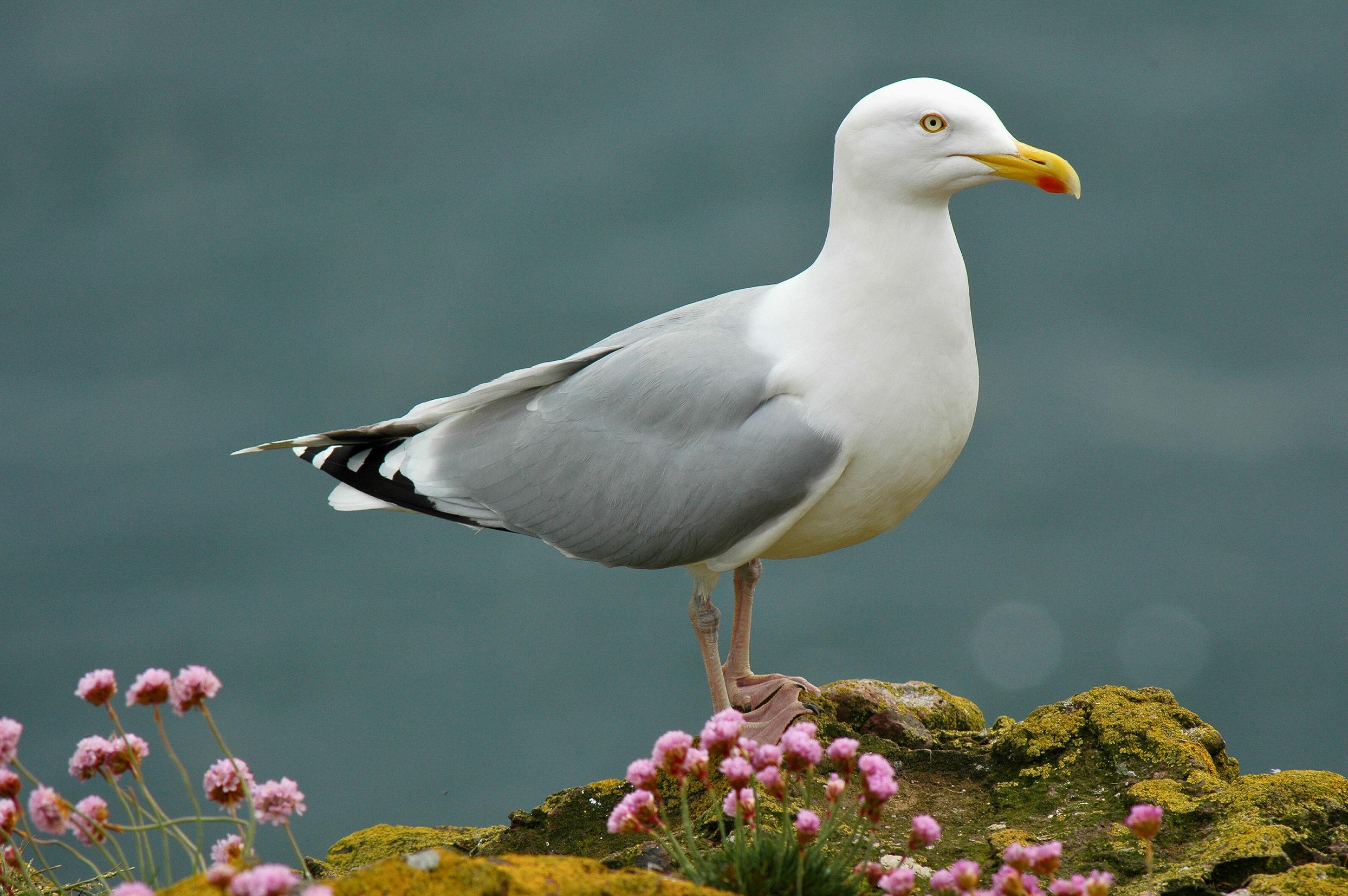
GULLS: MORE THAN JUST CITY SQUATTERS
Despite its relatively modest size, this city centre nature reserve supports over 100 bird species across a mosaic of habitats, including a lagoon, mudflats, dry grassland and meadows.
Surface-feeding ducks like teal and wigeon skim its shallow waters, whilst small islands built from cockleshells attract breeding terns—hundreds of pairs of common terns nest here each summer. At twilight, clouds of midges draw hordes of hungry swifts, and bats replace them after dusk. For birdwatchers, every visit promises a surprise, from barn owls ghosting through the trees to the occasional great skua or roseate tern.
Gulls are a common sight across the UK and Ireland, but Belfast’ s coastal gulls are anything but ordinary. At least five species are frequently seen in Belfast, including black-headed, common, and herring gulls. Also seen are the migratory lesser gull, and the impressive great black-back gull, which is found in small numbers on the coast. But keep your binoculars sharp—rarer visitors like Iceland gulls and glaucous gulls, from Scandinavia, often mingle unnoticed among the flocks. Belfast even boasts an impressive record of sightings of the American ring-billed gull, more than anywhere else on the island of Ireland.
FEEDING GROUNDS FOR THOUSANDS
From late autumn to early spring, Belfast Lough becomes a birdwatcher’ s paradise, hosting up to 20,000 wintering birds. The lough supports internationally important populations of waders and waterfowl, including turnstone, knot, redshank, and oystercatcher. These birds aren ’t just abundant—they’ re specialists. Each wader’ s bill is adapted to probe different depths of mud, enabling peaceful coexistence whilst foraging for food.
Elsewhere on the water, eider ducks distinguished by their preference for mussels—gather to moult, whilst flocks of goldeneye and great crested grebes bob offshore. Shags and cormorants swap their cliffside summer homes for the lough’ s sheltered waters in winter, their dark shapes haunting piers and breakwaters. Even the elusive long-tailed duck and gadwall appear in select spots like Carrickfergus and Grey Point.
SHELLFISH & THE SEA’S HIDDEN BOUNTY
Why so many birds? Food, and plenty of it! Belfast Lough’ s tidal flats and muddy channels are packed with invertebrates—cockles, mussels, prawns, and worms—that support birds and even a small shellfishing industry. At low tide, the mud seems to crawl with life, from brittlestars near the mouth of the lough to ragworms that swarm like serpents in spring.
Among the submerged rocks and seaweed-covered outcrops, sea anemones, sea urchins (see left; photo by Dr Lynn Gilmore), and crabs find shelter. And whilst some marine species are expected, others surprise. An Australian barnacle showed up in 1964, carried in by shipping (Scott, 2004). It is a reminder that Belfast’ s coast is part of a living, shifting world where the faraway and exotic sometimes drifts ashore.
MARINE MAMMALS
Beyond the mudflats and into deeper waters, the marine drama intensifies. The entrance to Belfast Lough, between Whitehead and the Copeland Islands, is a hotspot for harbour porpoises and bottlenose dolphins, especially in summer. With luck and a lot of patience, you might glimpse a minke whale (see photo above), surfacing silently before vanishing beneath the waves.
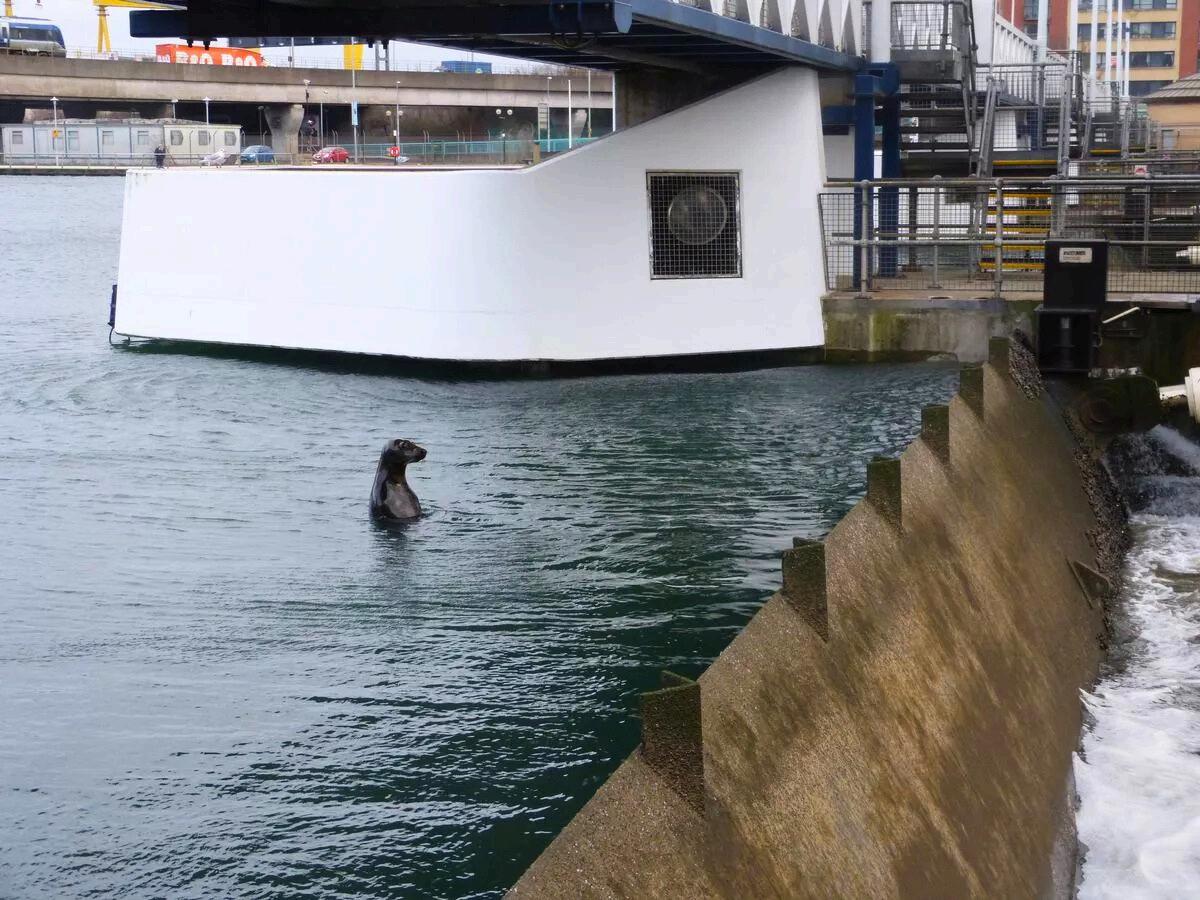
Even filter-feeding basking sharks and killer whales occasionally appear, the latter typically following herring shoals. These sightings tend to be seasonal and fleeting, making them all the more thrilling. Meanwhile, common and grey seals are more reliable residents, visible around Greenisland, Grey Point and Rockport. The rounder-headed common seals tend to venture further inland, whilst the more social grey seals bask near the lough’ s mouth, with some even venturing up the River Lagan into the city.
LIFE AMONG THE ROCKS
Belfast Lough’ s rocky fringes, especially along the Antrim shore, offer yet another kind of habitat. These rugged areas are the domain of turnstones—small, energetic waders that flip over pebbles and seaweed in search of insects. Nearby, rock pipits nest amongst the stones, and sugar kelp drapes the lower rocks like wet ribbons.
Look closely, and you might find mussels, barnacles, and limpets clinging to the rocks; they make good food for hungry birds and provide important ecosystem benefits by filtering the water. In summer, butterflies flit above—graylings along cliff paths, common blues near Tillysburn, and even the rare dark green fritillary, seen now and then along the shore or in places like the Cave Hill’ s old quarries.
PLANTS OF THE TIDES & SHORES
Though often overshadowed by birds and marine life, the plant life of Belfast’ s coast deserves its moment in the sun. From sea asters to knotgrass, these hardy species thrive in harsh conditions— wind, salt, and shifting sands. Perforate St John’ s wort and biting stonecrop add bursts of yellow to rocky crevices, while pink common centaury and the Mediterranean big quaking grass hint at unexpected diversity.
Perhaps most captivating is the bee orchid, with a flower mimicking the bottom of a bumblebee to attract pollinators though the plant can also self-seed if no insects oblige. These orchids bloom briefly in June and have been spotted close to city roads and car parks, showing that beauty can spring from the most unassuming corners.
COASTAL GRASSLAND BUTTERFLIES
The paths tracing the lough are also corridors for butterflies native to our coasts. Along with the common blue and small heath butterflies, which favour open, uncultivated spaces, the grayling butterfly can be seen along the shores at Whitehead. The diversity is enhanced by the wildflowers lining the cycle paths and old industrial verges, providing crucial nectar sources throughout summer.
Even areas like the Harbour Estate offer vital refuges for these important pollinators. The grayling, for example, has managed to hold on in places others might dismiss—proving again that wildlife doesn’t always need a picture-postcard setting to survive.
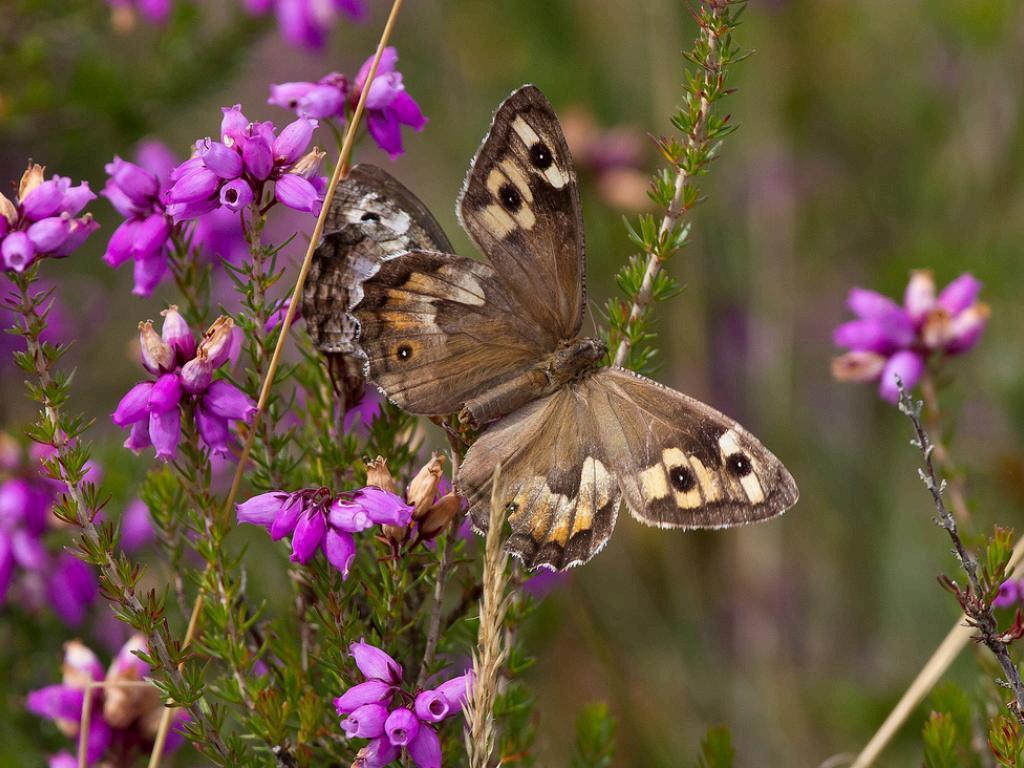
A COASTAL TAPESTRY STILL UNFOLDING
Belfast Lough may sit beside a bustling port and busy capital, but it remains a site of ecological richness. From the flutter of butterflies to the sweep of migrating flocks, the lough’ s coastal wildlife is testament to nature’ s interdependence, adaptability, and resilience.
So next time you ’ re cycling the coastal paths, taking a stroll through Victoria Park, or gazing out from Hazelbank, look closer.
The sea is not just a backdrop to city life here it’ s a stage for many enthralling natural spectacles. And as a local business rooted in the community and in this landscape, we ’ re inspired by Belfast Lough’ s natural rhythms. Whether you ’ re out birdwatching, walking the shoreline, or tucking into a fresh seafood dish at our restaurant, we hope you ’ll take a moment to appreciate the remarkable natural heritage we all share. ◼
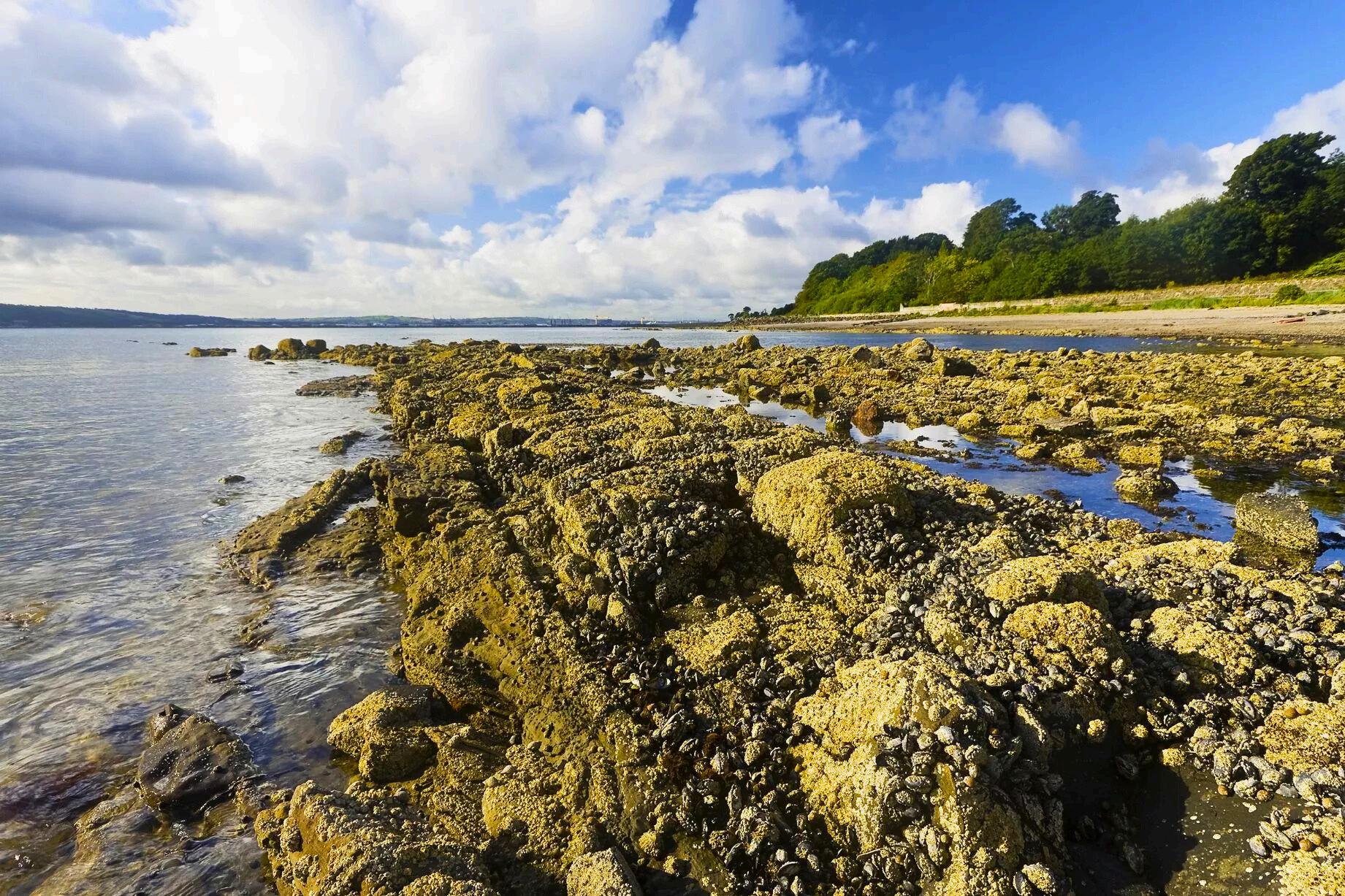
Explore our local, coastal wild places at nearby RSBP sites such as Victoria Park (BT4 1LS) and Belfast’ s Window on Wildlife (BT3 9ED), both near Belfast City Airport, and Gideon’ s Green (BT37 9SQ) in Newtownabbey. Further out along the entrance to Belfast Lough are Ballymacormick Point & Groomsport Harbour, just outside Bangor, and Copeland Bird Observatory, on the Copeland Islands.

Thesea,onceitcastsitsspell,holdsoneinitsnetofwonderforever.