FOCAL POINT

Dear Members and Friends,
“Give thanks to the Lord, for he is good; his steadfast love endures forever.” — Psalm 136:1
As I look through this issue of Focal Point, what strikes me most is not any single event, program, or building, but a pattern and a rhythm: God has been so good to us and for that we give our thanks and praise!
You will read about the Women’s Retreat. One of the takeaways for participants was that we often imagine that God is found only in dramatic experiences or decisive turning points, yet again and again the Christian life teaches us that awareness of God grows through attention and intentionality.
You will also see familiar joys: the Children’s Pageant retelling the Gospel through young voices, new members finding a home among us, and over 100 congregational leaders gathering to pray, to fellowship, and to discern what leadership mantles we carry in this season of our faith and life.
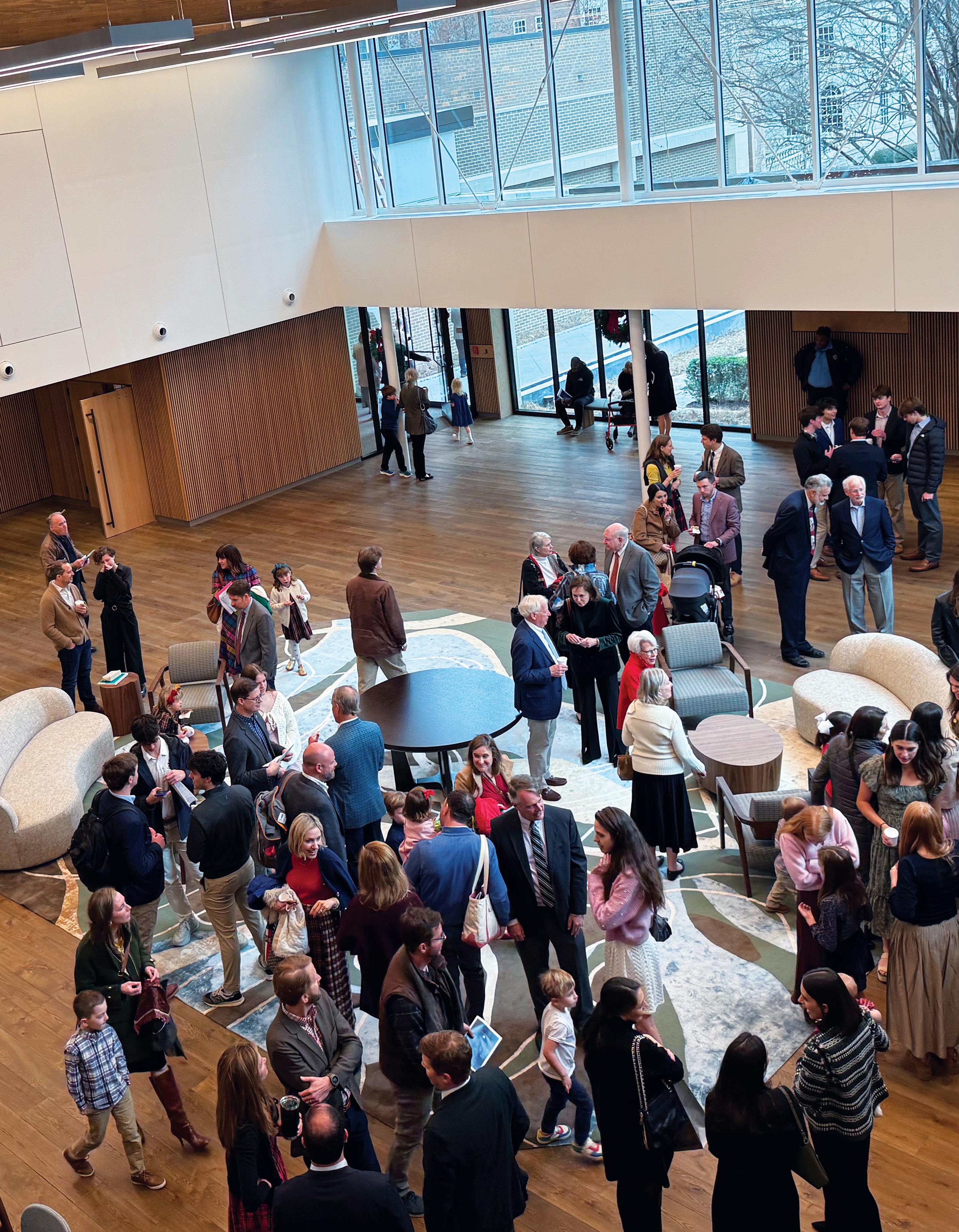
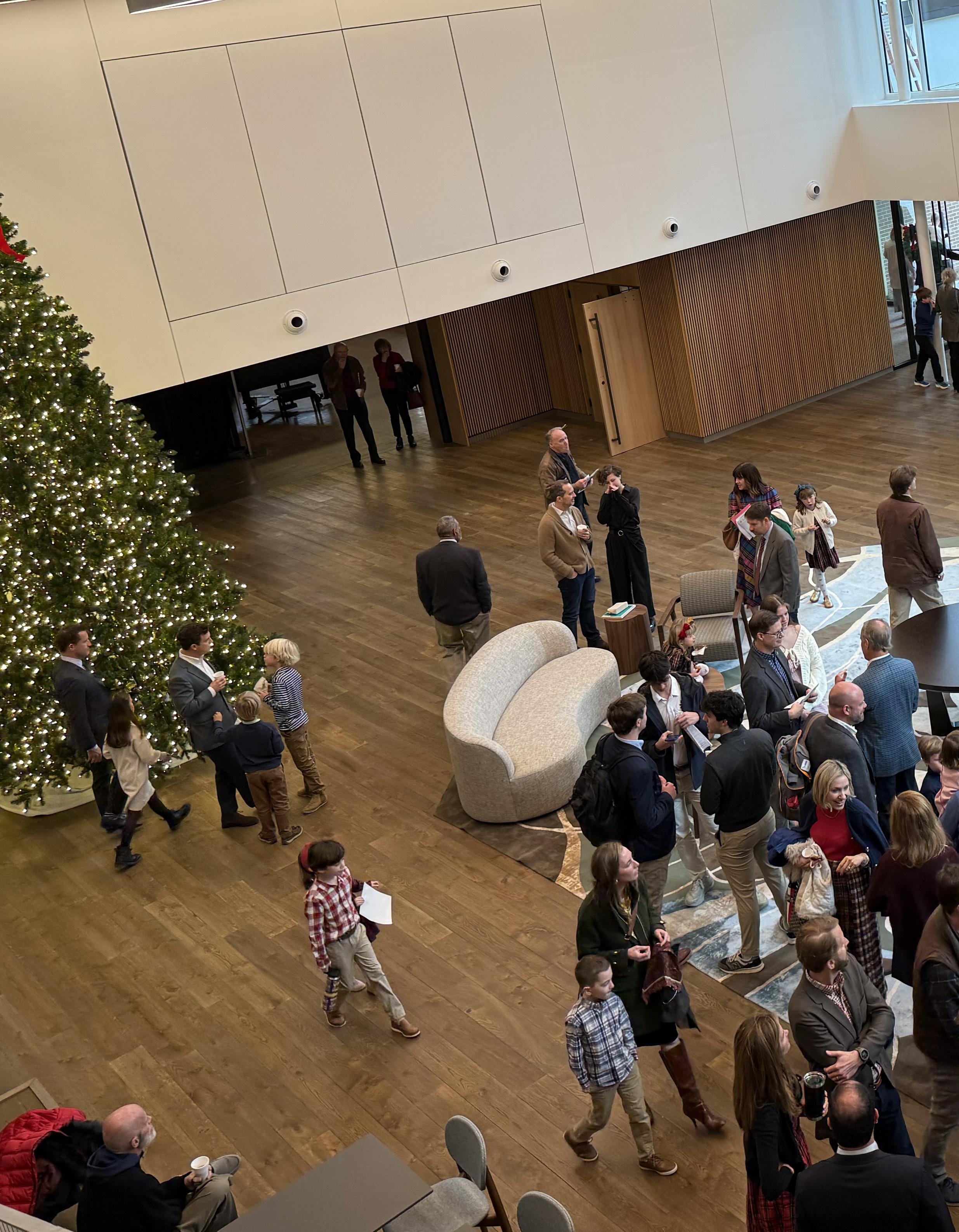
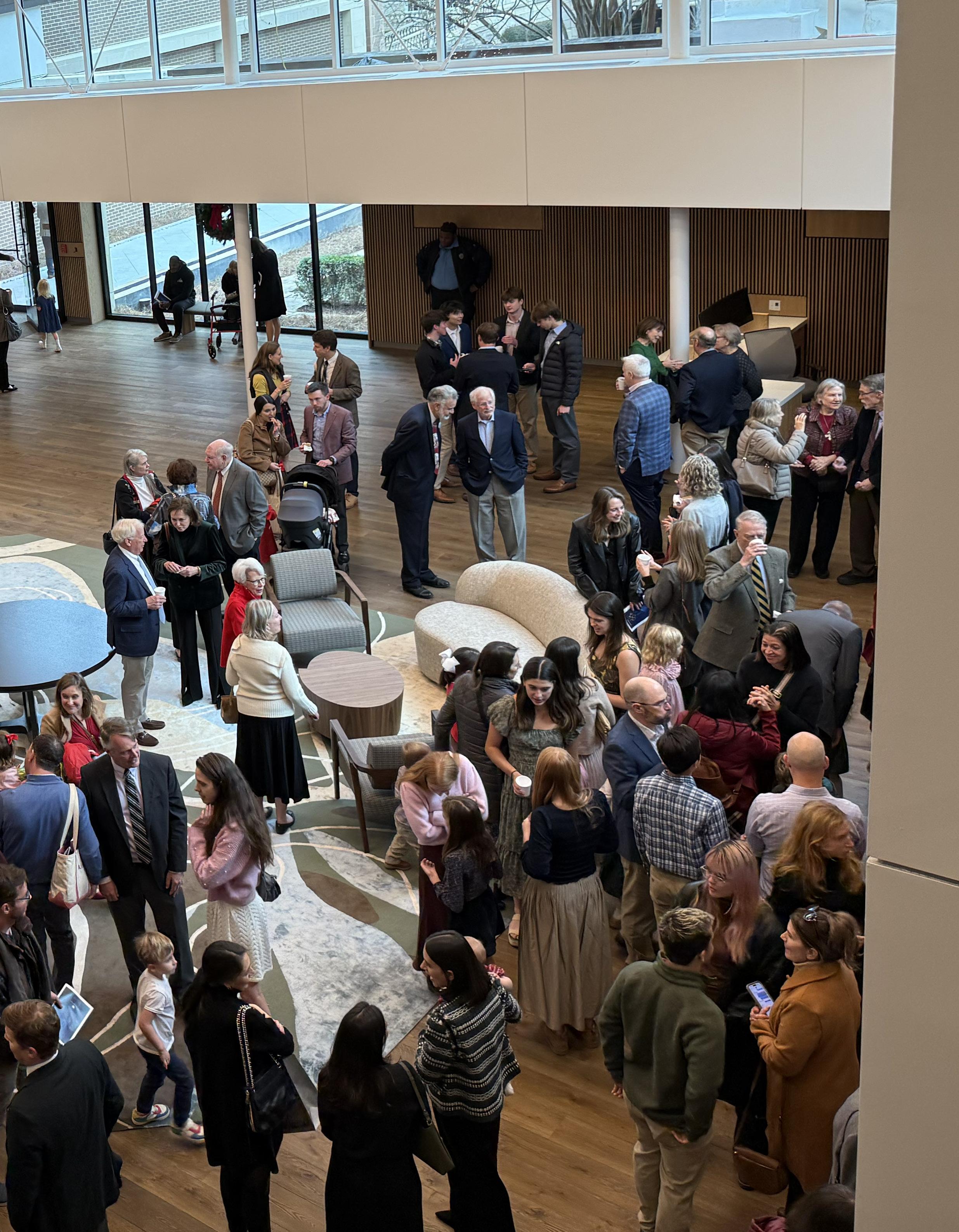
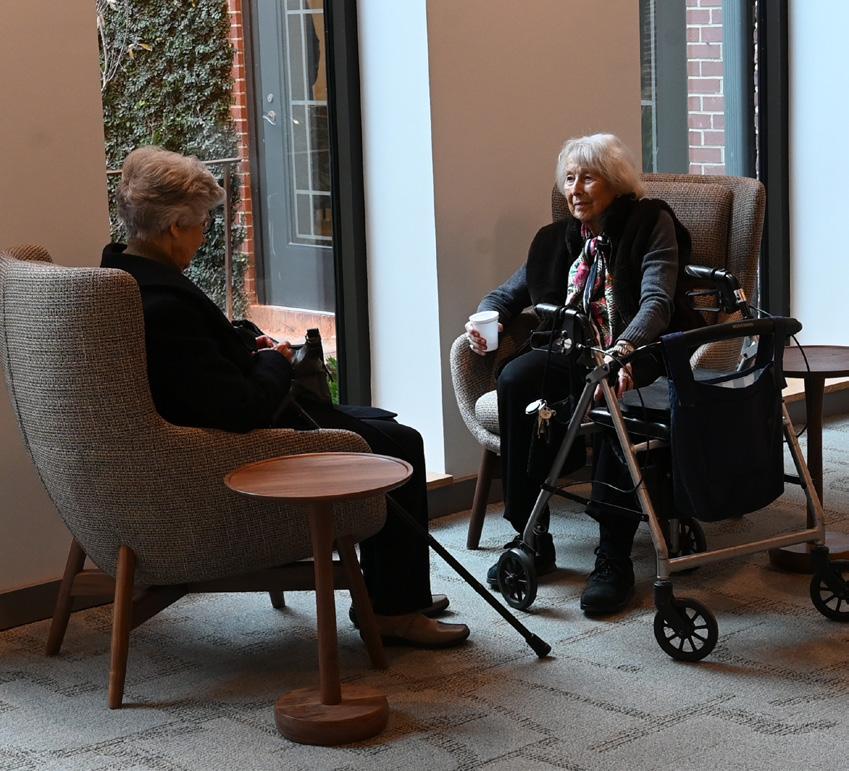
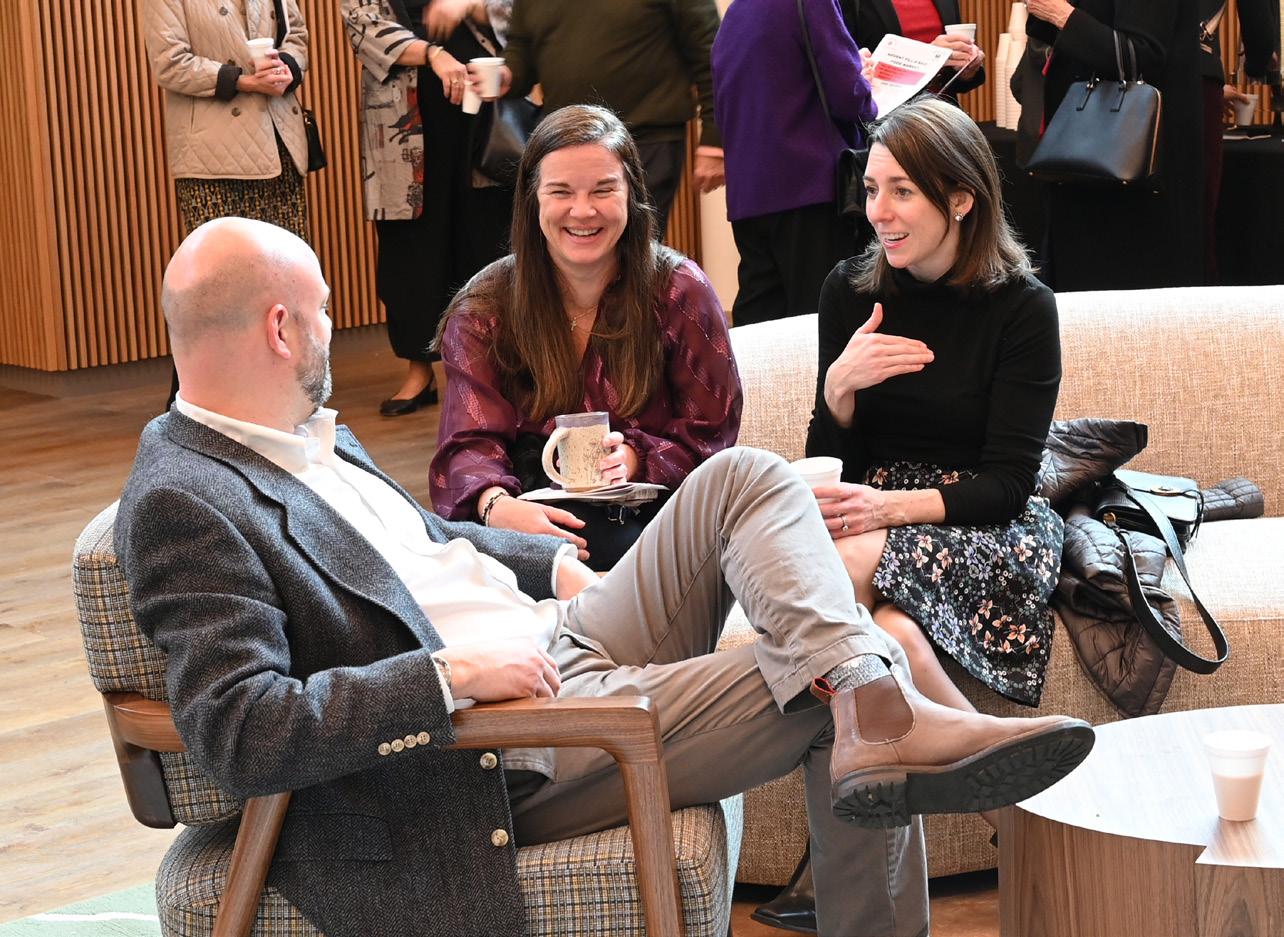
This issue also marks a significant chapter in our common life as we begin using the newly completed spaces from Phase 2 of the On the Way project: the Correll Commons,
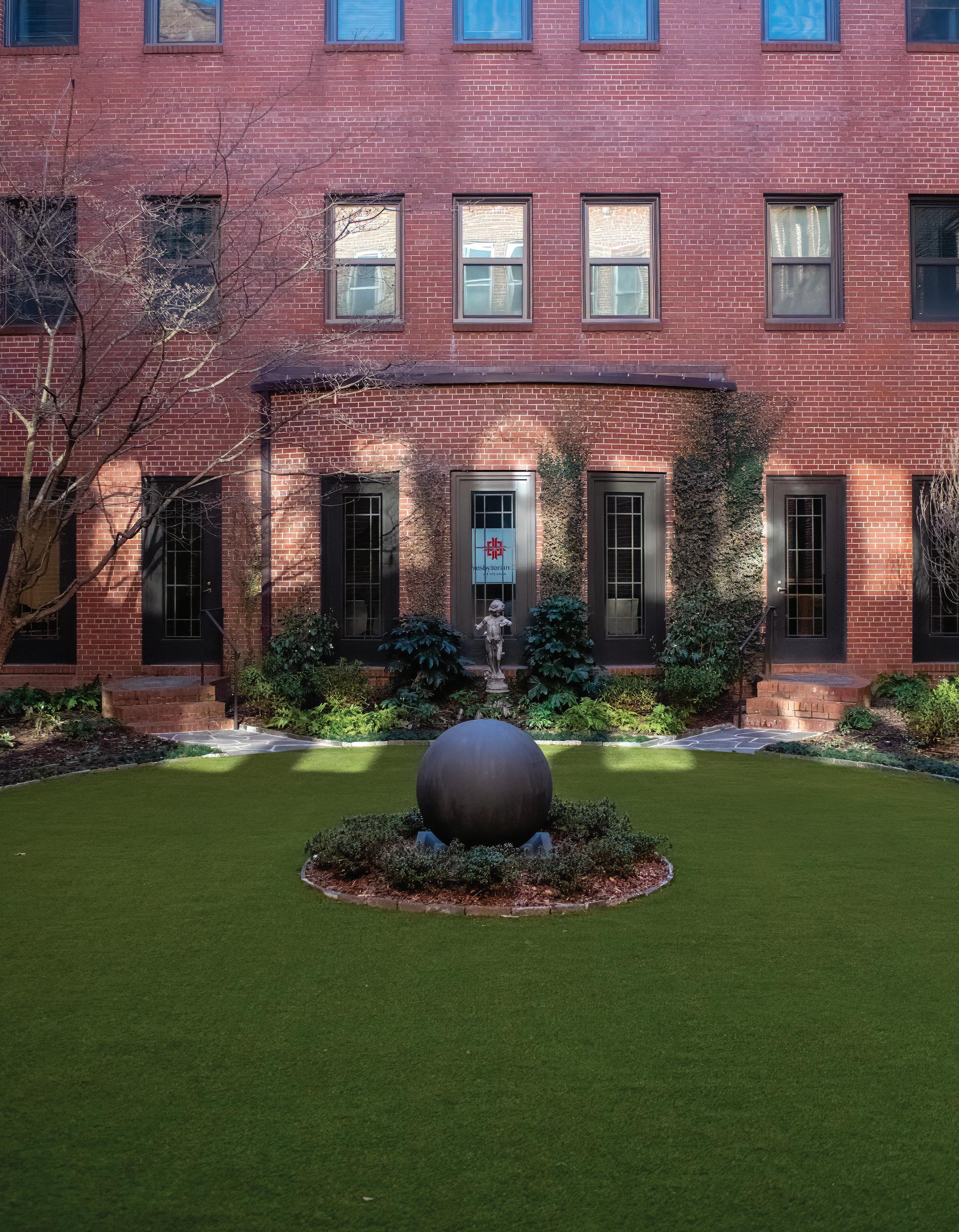
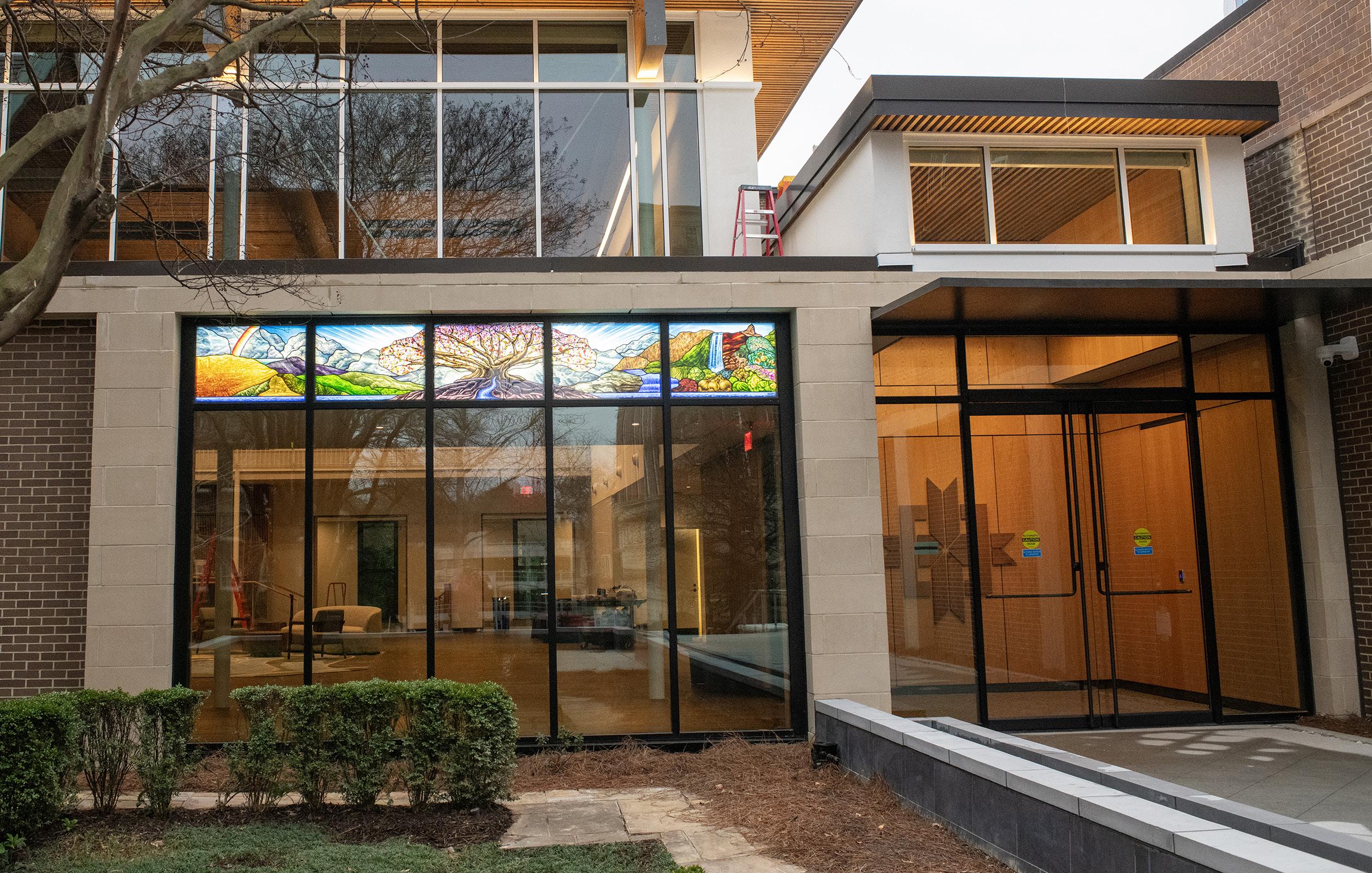
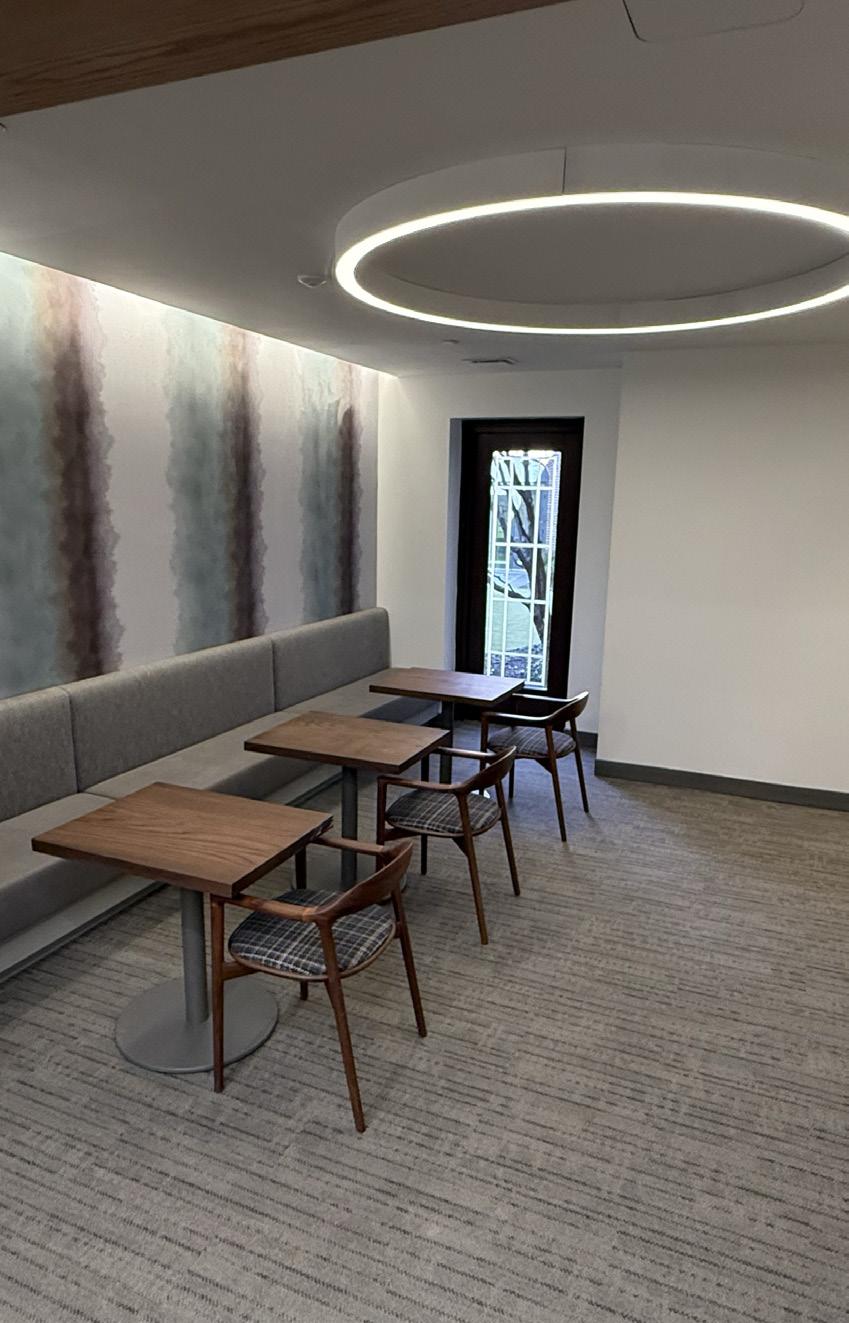
the gallery hallway, the DuPre and Robinson Gardens, the refurbished back parking lot and entrance, and new adult education and gathering areas. We give thanks for them not as accomplishments, but as tools for ministry: places where conversations linger, where prayer becomes easier, where learning deepens, and where opportunities for fellowship and hospitality expand. As part of the project, oak trees that had to be removed from the property were not discarded; their wood has been reclaimed into furniture, fixtures, and podiums now used throughout the campus, reminding us that God does, indeed, make all things new!
My hope as you read is simple, that you will recognize your own story somewhere within these pages and give thanks for God is good, not only for what has happened, but for the God who continues to gather and form us as we continue to become a community of conviction and compassion humbly following Jesus Christ.
Blessings, Tony





Just past daybreak on Saturday, Feb. 7, Fifield Hall was ready to host the 2026 Women’s Retreat. Tables were spaced evenly, and chairs were precisely in place. The buffet table carefully aligned with the straight edges of the room. To the casual observer, the event looked exactly like many held in the room before. By the end of the day, however, the gathering knew this day, this retreat, was different, and they took with them an invaluable commodity – a new perspective to enhance their faith and its practice.
The women who attended the 2026 Women’s Retreat were aware the theme of the weekend was “awaken,” and conversation on the idea began the night before at a potluck supper. On Saturday morning, they awaited what they would discover that day in that perfectly appointed room.
Fifield Hall embraced life-long members and newcomers alike and listened carefully as the voices laughed together through greetings, housekeeping notes, and thanks yous, settled into corporate worship.
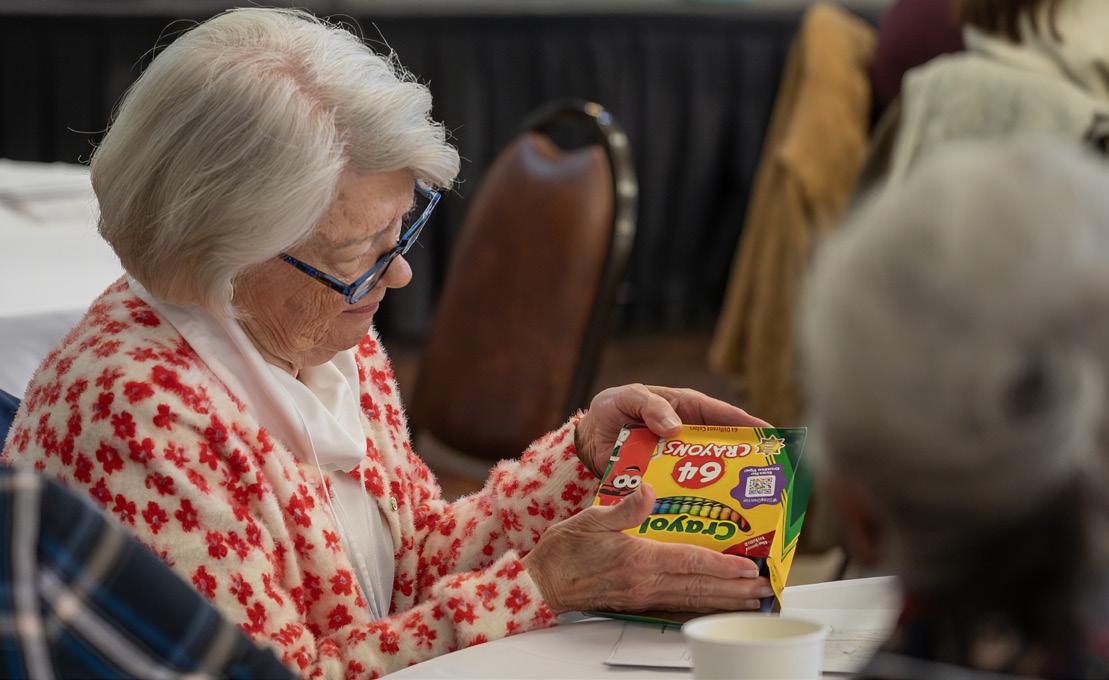
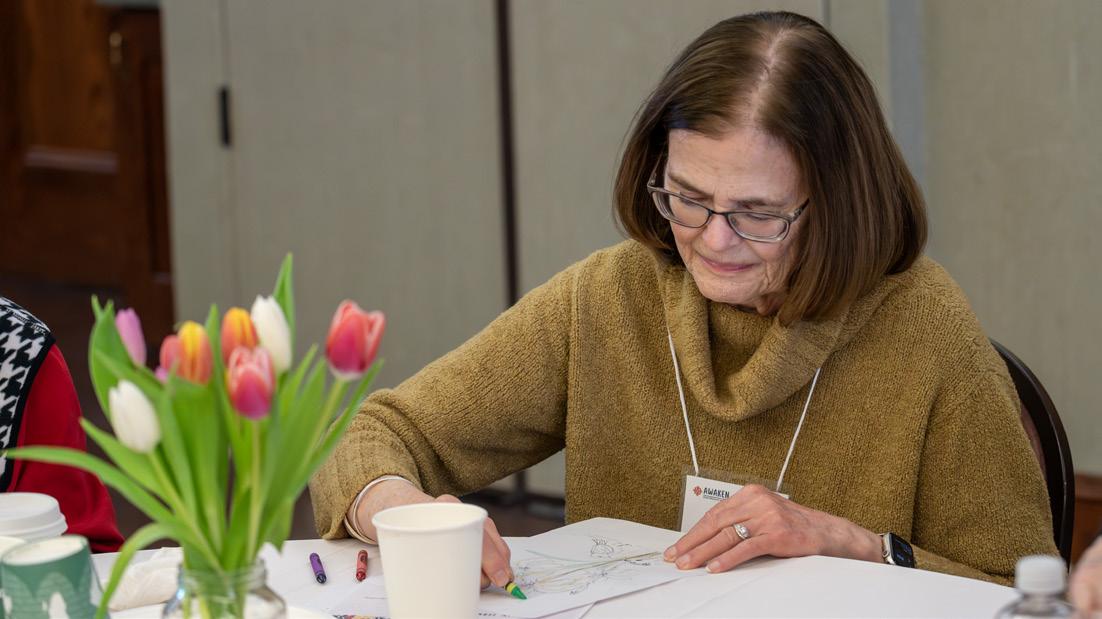
Signs appeared here and there that the retreat from that point on wasn’t like others. Worship leader Sindhu Giedd chose to stop singing for a while on one hymn, creating a space where each person in her own way was the worship leader. Then, the crayons were passed around for the day’s first, but certainly not last, creative experiment. As with most ice breaker exercises, no right or wrong existed. The noticing, the choosing, was the point.
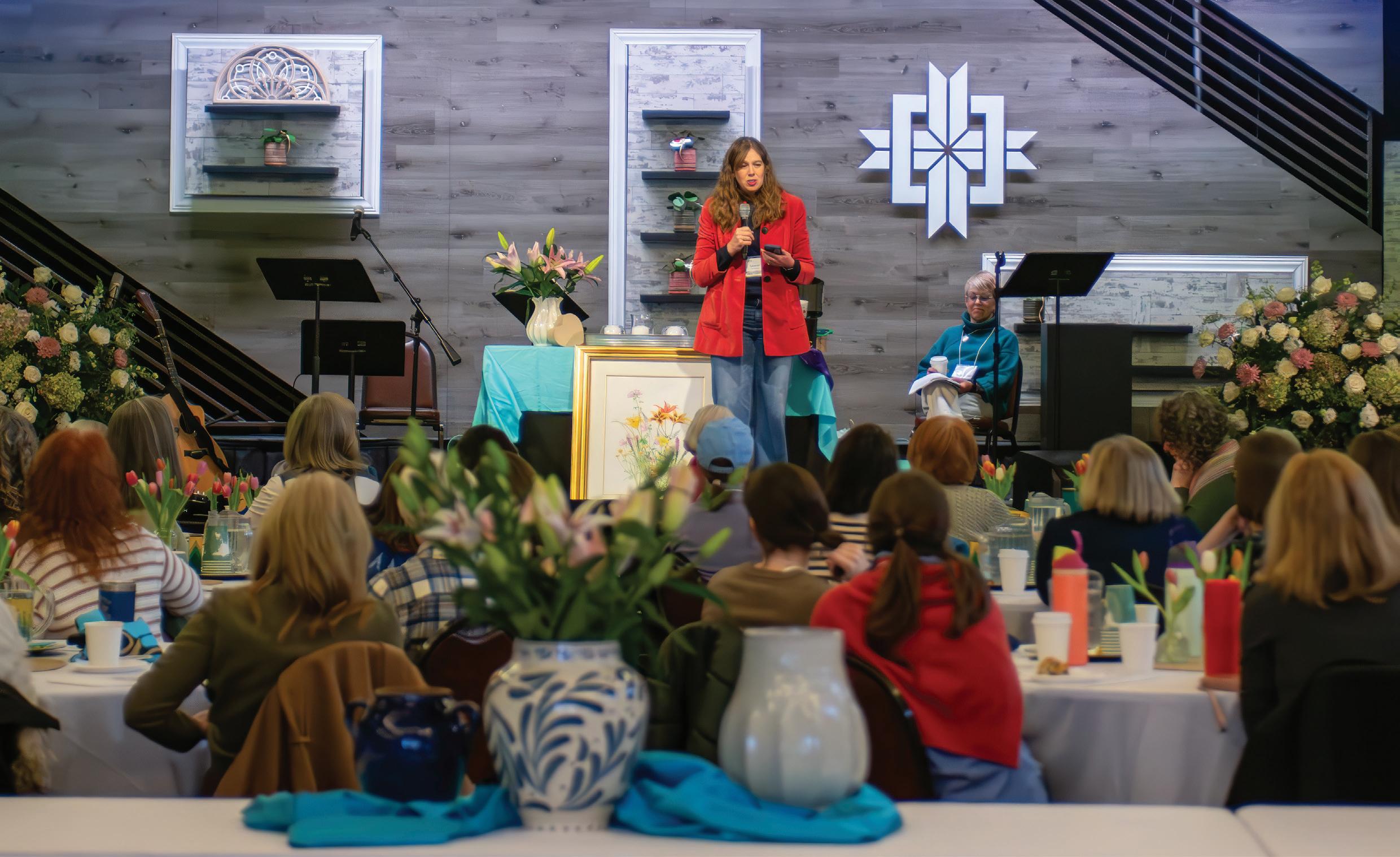
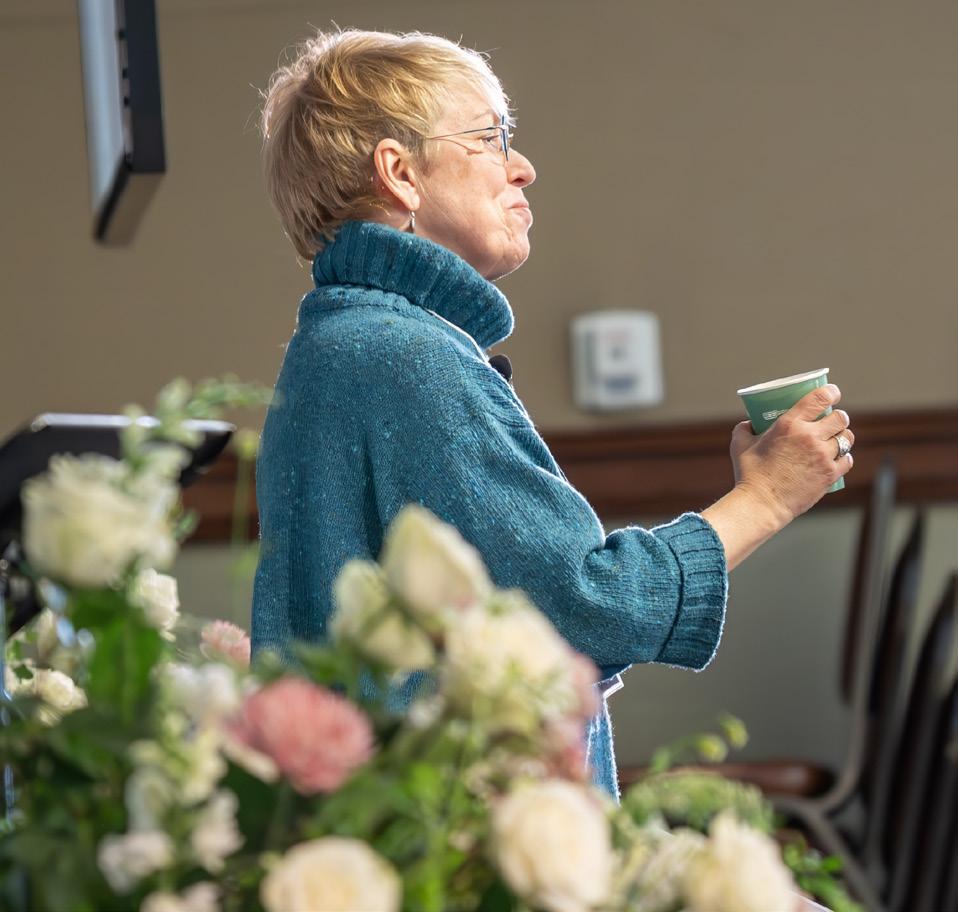
Voices stilled when the keynote speaker, Lilly Lewin, took the stage with a smile that in retrospect was both friendly but already aware that those gathered were about to experience something different. Some of those in attendance might consider it perspectivechanging if not life-changing.
Lewin’s keynote recast the Celtic idea of “thin places” as more than the traditional notions of broad landscapes or holy sites where the divine meets the ordinary. Rather, thin places, Lewin argued, can be found among the ordinary itself.
Throughout her keynote presentation, Lewin emphasized that attentiveness more than effort is the key to locating thin places. They are not big moments to strive toward or manufacture through discipline alone. They are everyday moments of grace.
“Sometimes these moments surprise us,” Rev. Saranell Hartman explained afterward. “The invitation isn’t to chase them—it’s to receive them.”
“That matters because God is a creative God beyond anything we can imagine,” Hartman continued. “When we create and engage our senses, we have the
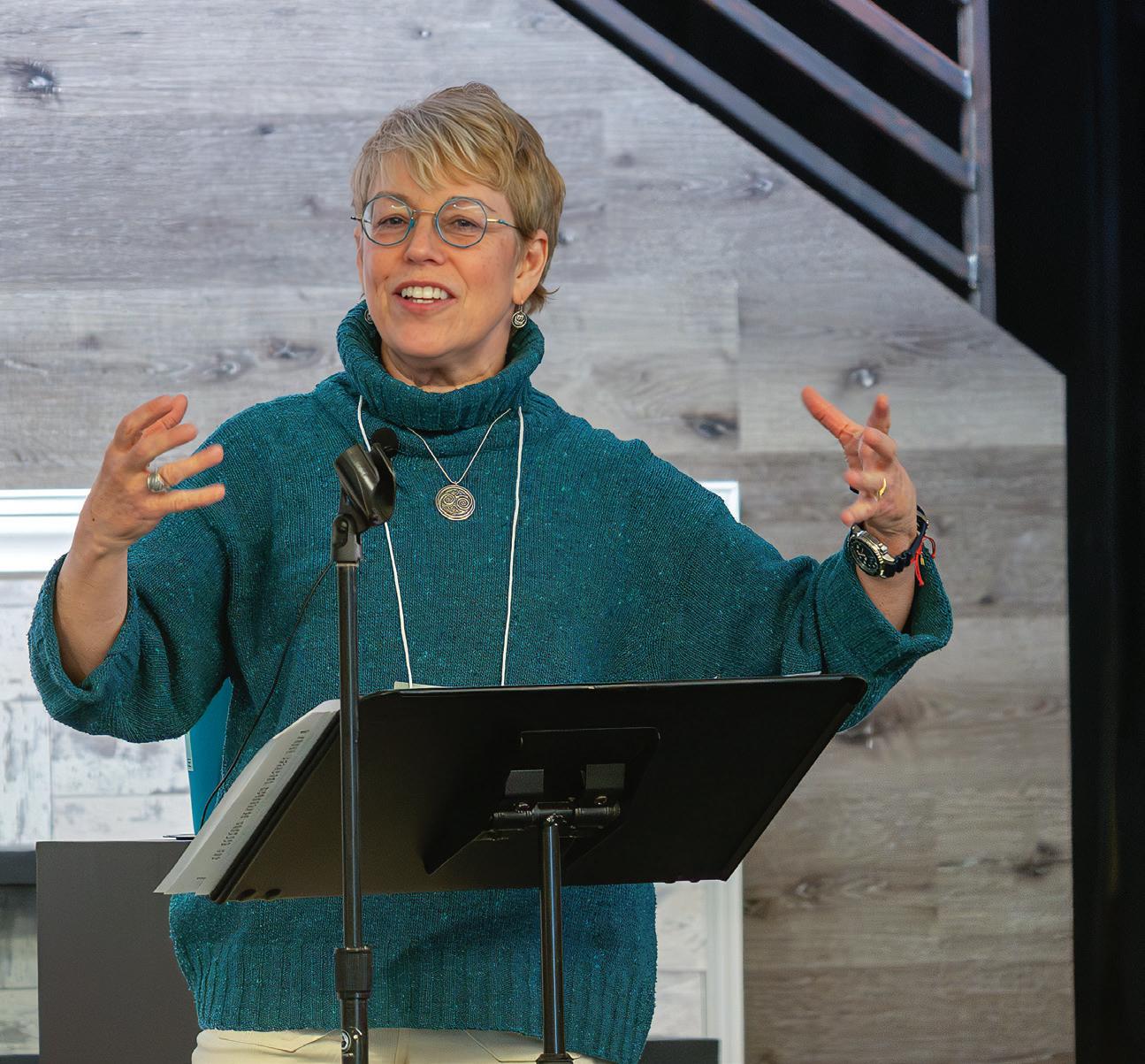
Keynote speaker Lilly Lewin explained how to find God in the everyday things.
“What really stayed with me was the emphasis on looking for God in ordinary days—because God is always there. Sometimes, we just don’t notice.”
– Duggan Lansing
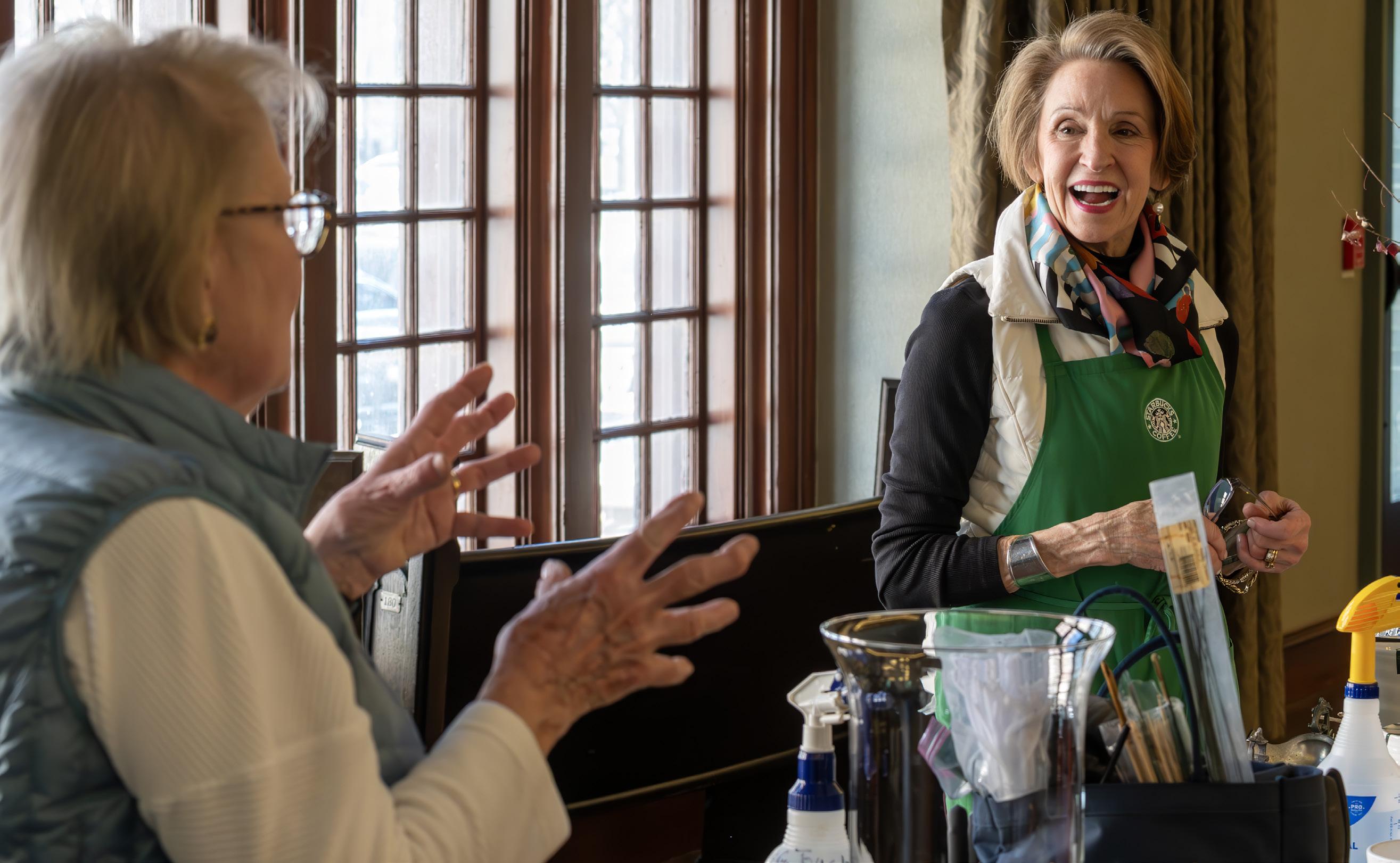
“In my everyday moments awaken me to Your presence, O God.” Matthew 6: 25-34

“Praying
through the people in your text messages — that blew my mind, It’s so
simple, but it reminded me that prayer doesn’t have to be daunting. It can be woven into everything.”
– Cathryn Houchins
chance to experience more of God. While worship has traditionally been a place for creativity, we sometimes get stuck in familiar patterns. Lily encouraged new expressions, putting our own hands and hearts into how we worship and pray.”
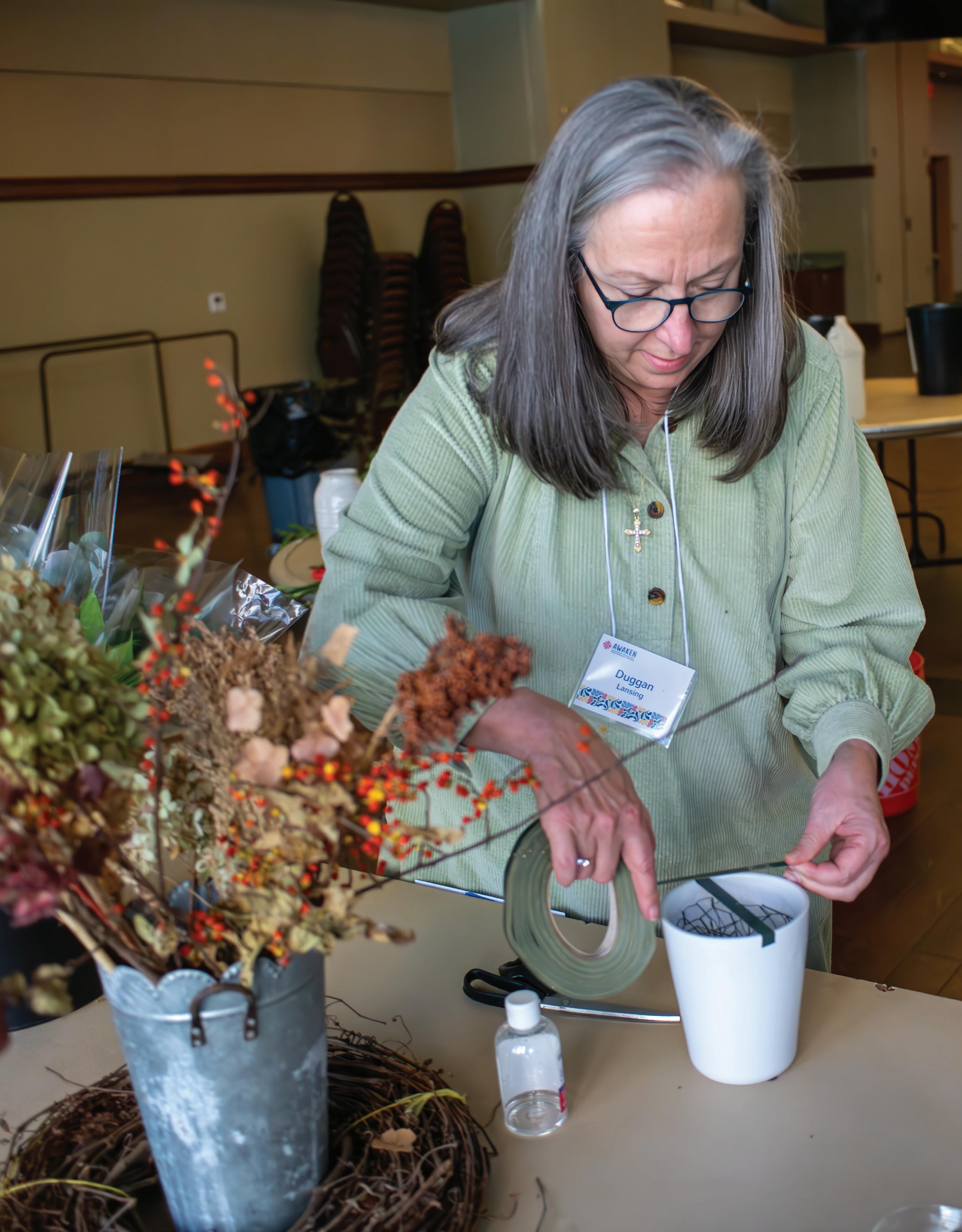
For Duggan Lansing, the invitation landed. “What really stayed with me was the emphasis on looking for God in ordinary days because God is always there. Sometimes, we just don’t notice.”
The practice Lewin described is simple, but it must be intentional, pausing long enough throughout the day to notice beauty, presence, or connection and naming it as holy.
Lewin and other presenters encouraged participants to identify their own thin places. For some, that might mean physical locations—a favorite chair at home, a quiet stretch of beach, a mountain overlook, or a sunlit window over the kitchen sink. For others, thin places might be grounded in movement and repetition: washing dishes, driving familiar routes, folding laundry, or walking the dog.
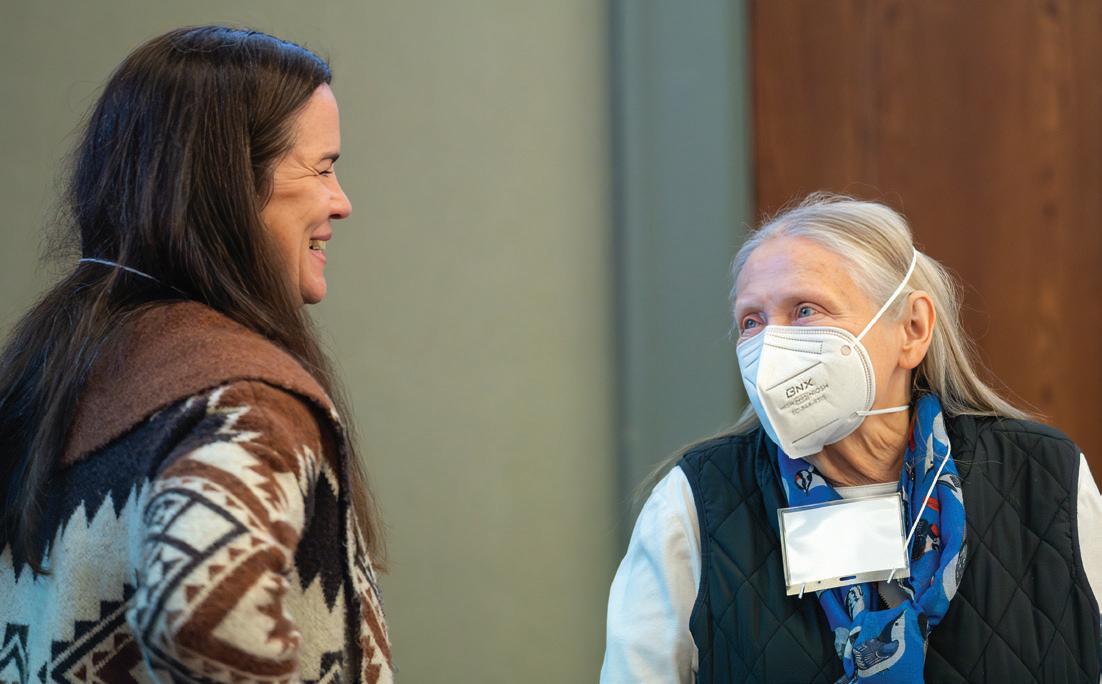
That sense of lingering carried into the retreat’s exercises. In one instance, Lewin invited participants to turn their phones, which are often a source of distraction, into spiritual tools. Instead of scrolling, Lewin encouraged everyone to spend a few minutes praying for the people in their recent text messages, reframing this everyday habit as potential thin place where connection and care can exist.
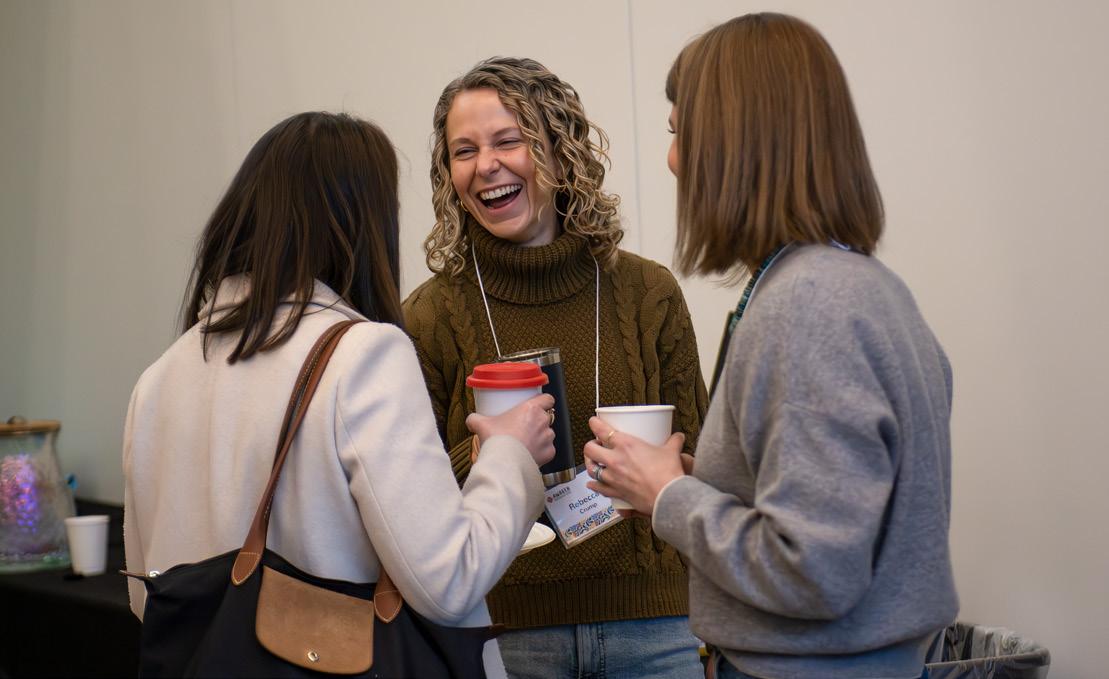
Cathryn Houchins found that shift especially meaningful. “Praying through the people in your text messages—that blew my mind,” she said. “It’s so simple, but it reminded me that prayer doesn’t have to be daunting. It can be woven into everything.”
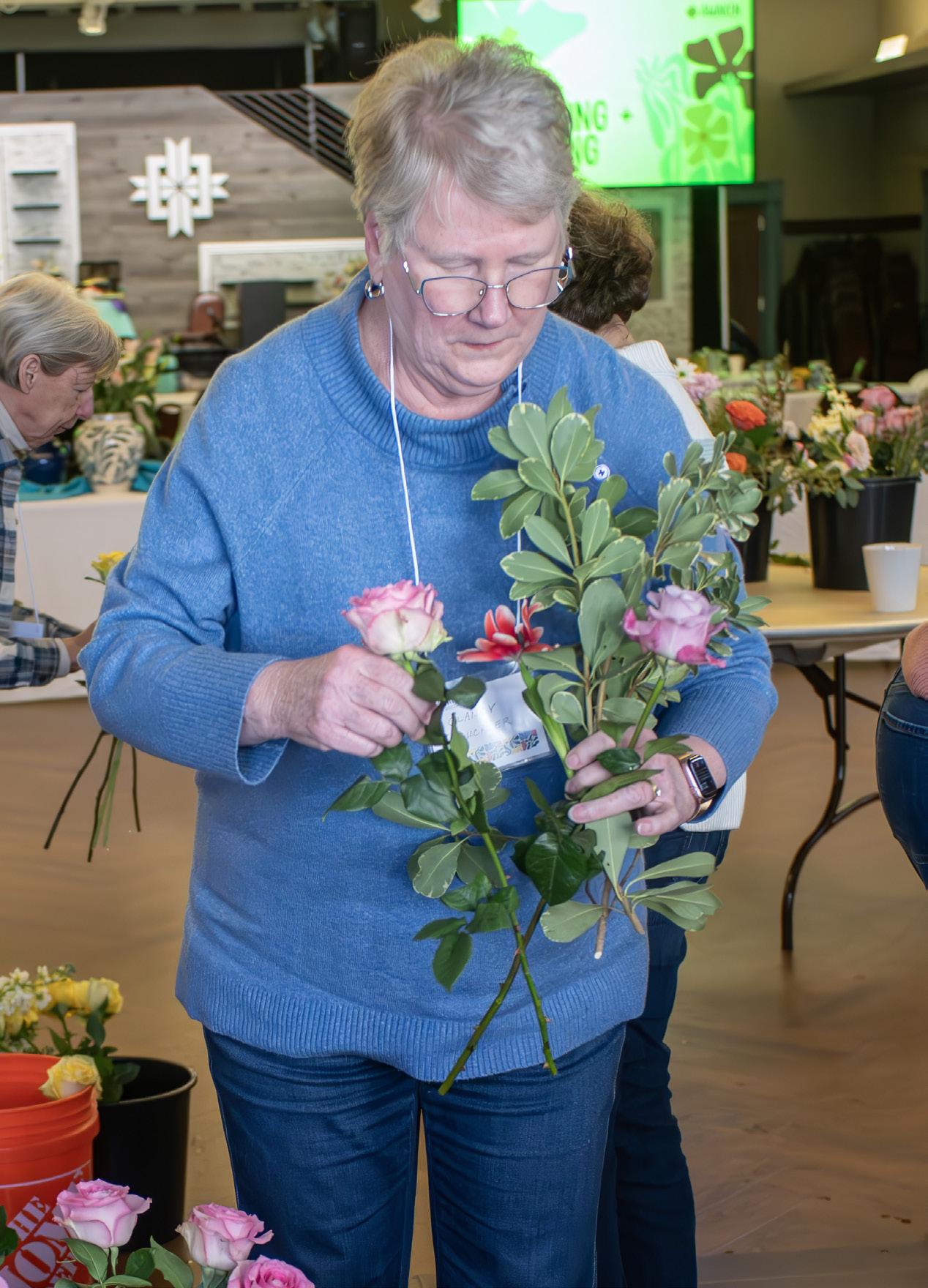
Creativity flowed throughout other aspects of the weekend through flower arranging, poetry, music, art supplies scattered on tables, and open-ended reflection. As Hartman emphasized, creativity was defined broadly. “Everyone creates,” she said. “It’s not just art. It’s conversation, food, care.”
For Natayla Perullo, the concept of thin places offered a new way of understanding faith itself.
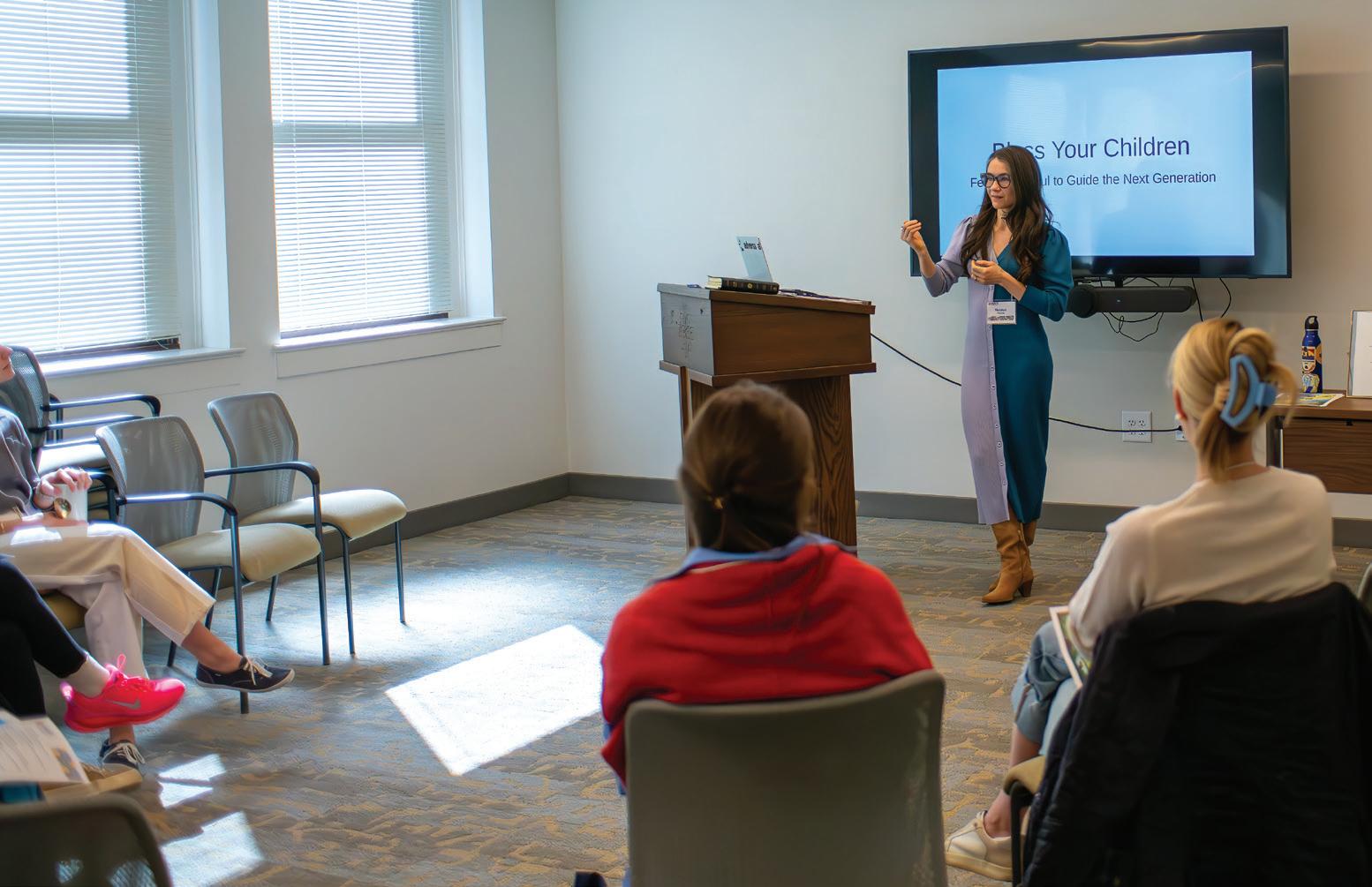
“Growing up, church and faith felt very structured—like things had to be done a certain way,” she said. “This retreat reminded me that God shows up in everyday moments, in simple things.” Her presentation focused on her simple practice blessing her children before school as an example of how ordinary routines can carry sacred weight.
Adele Shepherd left convinced the retreat offered something lasting. “I think this may have been one of the best retreats we’ve ever had,” she said. “It was engaging, fun, and genuinely useful.”
The planning committee that contributed their time and talent were Becca Crump, Catherine Fleming, Catherine Gregory, Shay Herman, Cathryn Houchins, Duggan Lansing, and Suzanne Shull.

Long before the phrase thin places entered modern spiritual language, it was part of the lived theology of Celtic Christianity. Rooted in early Irish and Scottish Christian tradition, the idea describes places where the boundary between heaven and earth feels unusually narrow — so thin that God’s presence seems easier to sense.
At its core, the traditional notion of thin places holds that the sacred is not confined to sanctuaries or spectacular moments but woven into the fabric of ordinary life, waiting to be noticed.
In the Celtic worldview, spiritual and physical realms were never fully separated. Instead, they existed alongside one another, overlapping in ways that could be noticed through attentiveness rather than effort. Thin places were not places where God suddenly appeared, but places where human awareness of God sharpened.
Traditionally, thin places were often associated with the natural world. Windswept islands, rugged coastlines, mountains, forests, and remote monastic sites were all considered thin places. Such landscapes fostered humility and vulnerability—conditions that made people more receptive to the presence of the divine. Pilgrimage to these sites was common, not as an escape from ordinary life, but to reorient the heart and senses.
Thin places were also connected to thresholds and transitions. Doorways, crossroads, and shorelines—places that exist between one state and another—were seen as spiritually significant. Certain times, especially dawn and dusk, were understood as thin moments when the veil between heaven and earth felt particularly light.
Importantly, thin places were never believed to be earned or manufactured. They were received as gifts of grace, often arriving unexpectedly in moments of beauty, repetition, grief, or stillness.




he breakfast rush was in full swing at OK Café on a warm September morning in 2016 when the Rev. Dr. Tony Sundermeier slid into a booth across from longtime member and church leader John McColl. Five months earlier, First Presbyterian Church of Atlanta’s Long Range Strategic Planning Team had begun charting the congregation’s future—its third century of ministry—and one theme kept rising to the surface. The Spirit seemed to be nudging the church toward something bold: a reimagined campus that could nurture deeper community, expand mission, and welcome the city in new ways.
Sundermeier shared the early sense of calling, the dreams forming, and the emerging conviction that the church needed more than repairs. It needed transformation. McColl, who had shepherded major capital projects before, sensed immediately that this vision was different. The scale felt larger. The hope felt deeper. The direction felt unmistakably Spirit-led.
Then, in a moment now woven into church lore, McColl reached for a napkin. Amid the clatter of dishes, he sketched the Peachtree Street façade and added an open gathering space across what had been the Berean Room, the Ministers Garden, McColl Way (ironically!), and restrooms and the pre-function area outside of Fifield Hall.
“This is where people will come together,” he said.
Sundermeier looked at the quick pencil lines and saw not just a drawing but a beginning—“the first sketch of the Correll Commons.”
By 2017, that sketch had begun to take on real weight. The Session unanimously approved a longrange plan that marked the congregation’s movement toward its 175th anniversary in 2023 and its momentum into a new century of ministry. One of its key goals was the formation of a Campus Master Planning Team, charged with reimagining the church’s facilities for its third century of mission.
In early 2019, the Session hired Houser-Walker Architects to lead a master-planning process rooted in broad listening. Over several months, the firm conducted 43 input meetings and surveys, gathering insights from more than 700 members, neighbors, and stakeholders. What emerged was a clear mandate: align the campus’s outward appearance with its commitment to radical hospitality, improve navigation and openness to North Midtown, and centralize staff offices. Members identified the need for dignified spaces for community ministries, increased safety and lighting, long-term sustainability, and greater flexibility in gathering areas. They urged preserving historic structures, expanding technology, and maintaining as much green space as possible.
To the planning team, the message felt unmistakable:
the Spirit was speaking, and the church was listening. By March 1, 2020—before any public launch—15 early commitments totaled $14.5 million. Then COVID-19 shut down the world. The plan paused.
By early 2021, after a year of disruption, the Session sensed that God was calling First Presbyterian Church of Atlanta back to the work. The core vision had not changed. With conviction, the Session endorsed a revised plan and a bold goal: raising $40 million to support a $45 million improvement project at 1328 Peachtree Street, later finalized at $46 million.
Momentum quickly returned. By mid-2021, the quiet phase of the campaign had already secured $26 million from just 63 households. At the same time, church leaders began exploring lending options. In accordance with the Book of Order, the Session called a congregational meeting for December 19, 2021, where members unanimously approved entering into a loan agreement with Atlantic Capital Bank (now SouthState).
The church secured a $25 million loan at 2.85 percent interest, an extraordinary rate obtained just before national interest spikes—a minor miracle that opened the door for the transformational vision to proceed.
In April 2023, the Session hired Heritage Construction to complete Phase One: a full renovation of the Hal and Julia Smith Building. The $9 million project focused entirely on strengthening the church’s mission to the city, transforming the four-story structure into a modern and deeply functional hub of care. All four floors were delivered in Fall 2024. The renovated building now supports some of the most far-reaching ministries in the church’s life. Each year, Community Ministries welcomes more than 2,300 unhoused neighbors to receive essential services: a food market, clothing market, laundry and shower facilities, footcare ministry, computer lab, library, and mail services for more than 1,300 individuals. The building also houses offices for three full-time case managers who help stabilize lives and open pathways
to long-term thriving.
The Smith Building is also home to the Samaritan Counseling Center, which offers more than 9,000 client sessions annually. Finally, the fourth floor of the building provides eight studio apartments for women. The renovation stands as a testament to FPC Atlanta’s commitment to compassion, dignity, and lasting community impact.
In September 2023, the Session approved New South Construction to lead Phase Two—the most visible and ambitious transformation of the church campus in more than half a century.
After two years of construction, new spaces were delivered on December 21, 2025, with punch-list work continuing into early 2026.
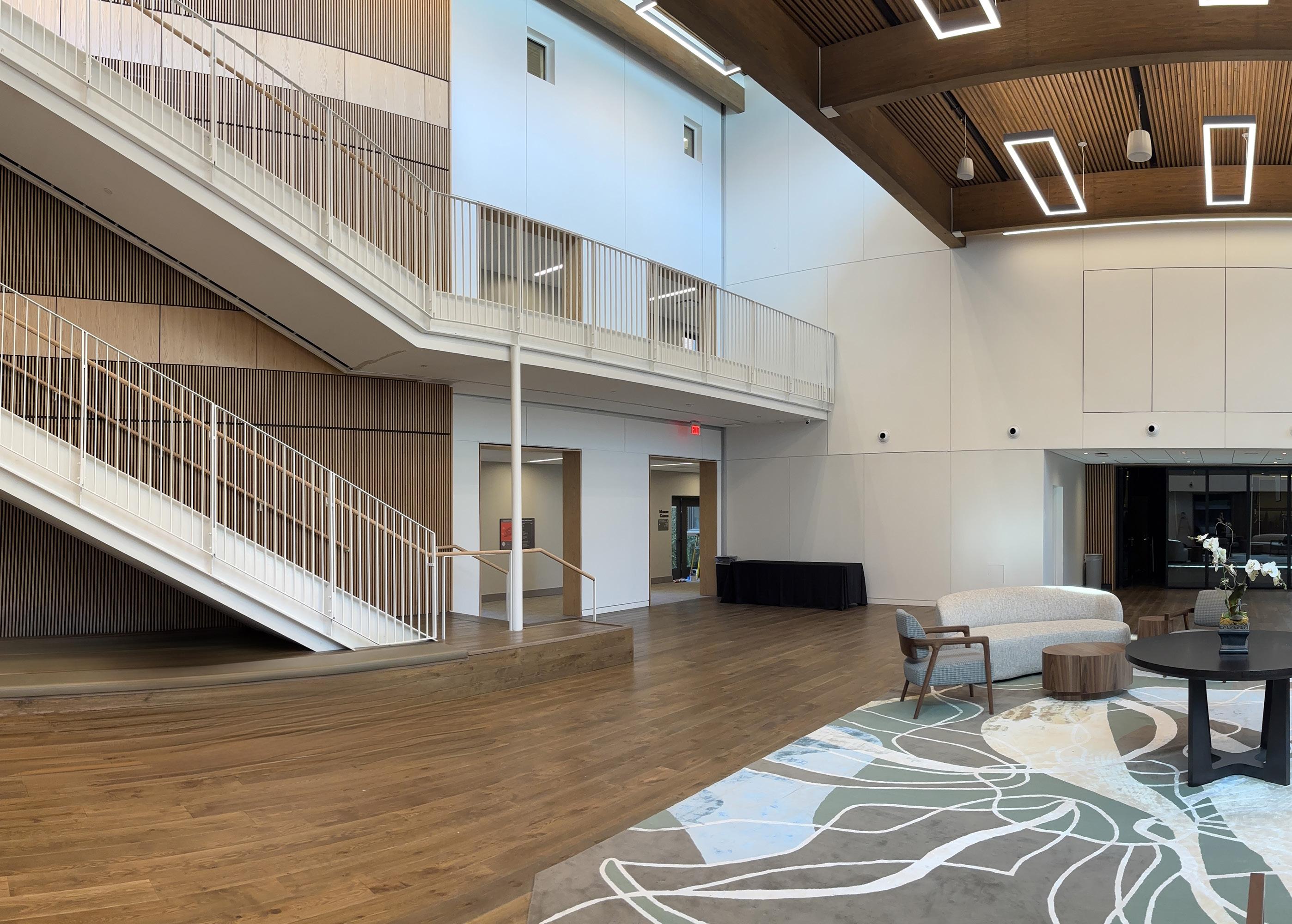
At the center of the project is the 5,500-square-foot
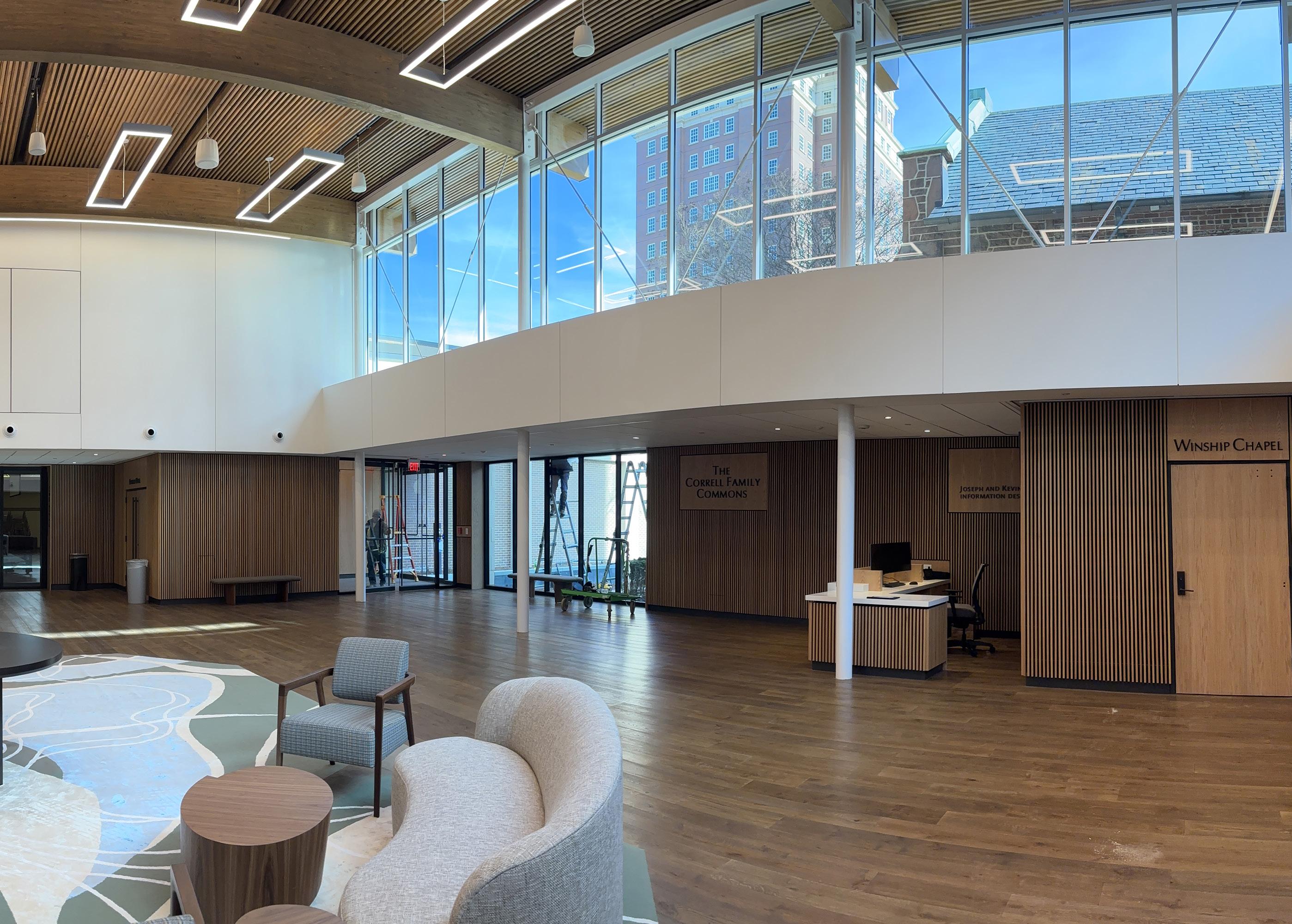
Correll Commons, a bright, open space that now hubs the entire campus. Opening directly onto Peachtree Street, the Commons serves as an inviting front door for the congregation and neighborhood, offering room for fellowship, meals, informal gatherings, churchwide events, and rental opportunities. A new elevator and expanded restrooms enhance accessibility and flow.
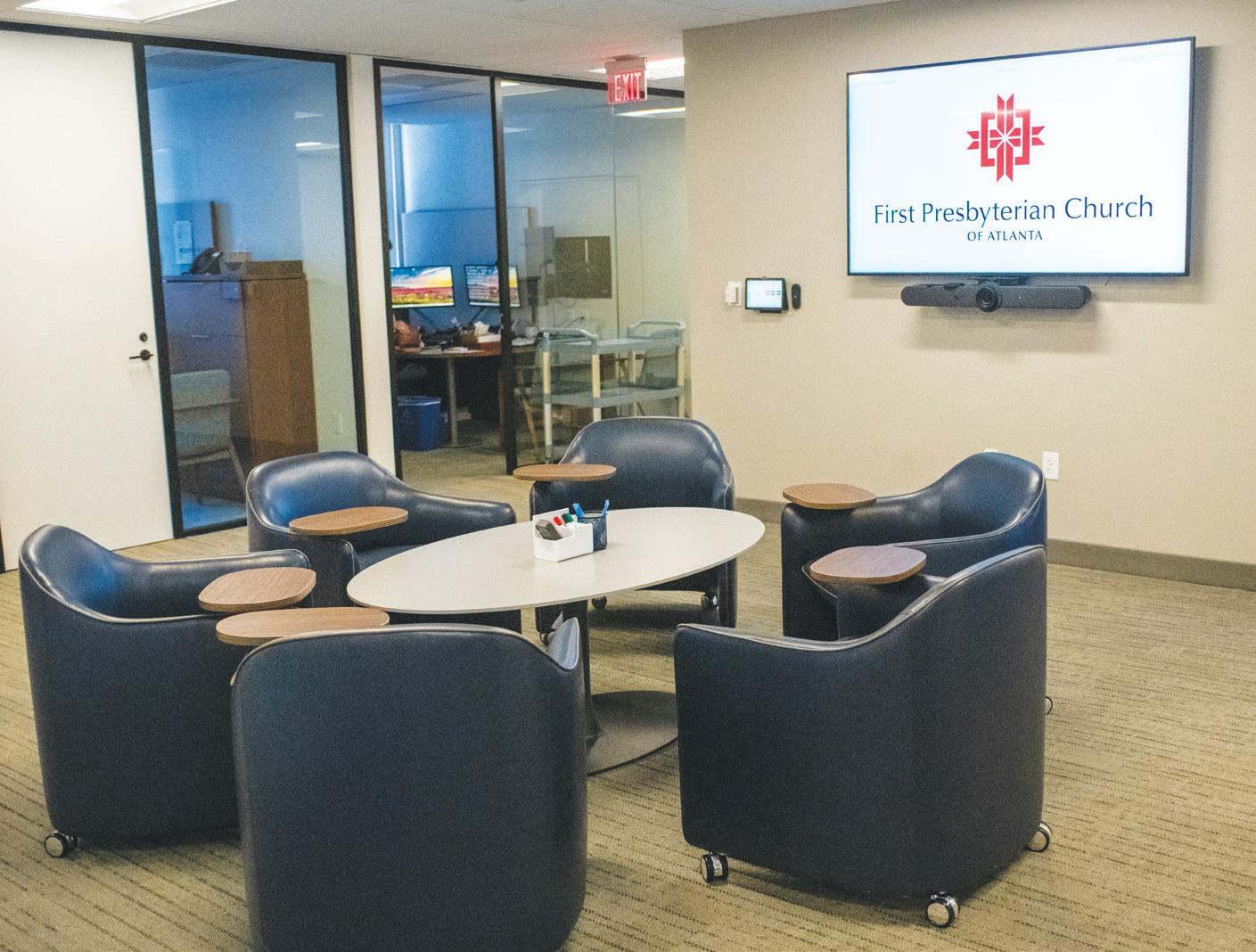
Phase Two also includes brand-new Children’s Ministry spaces on the second and third floors for more than 200 infants through fifth graders, as well as the third-floor Staff Union—centralizing the entire staff in a modern, technologically advanced, light-filled environment.
Other improvements include six new adult education classrooms replacing the old administrative building, renovated Rooker Plaza,
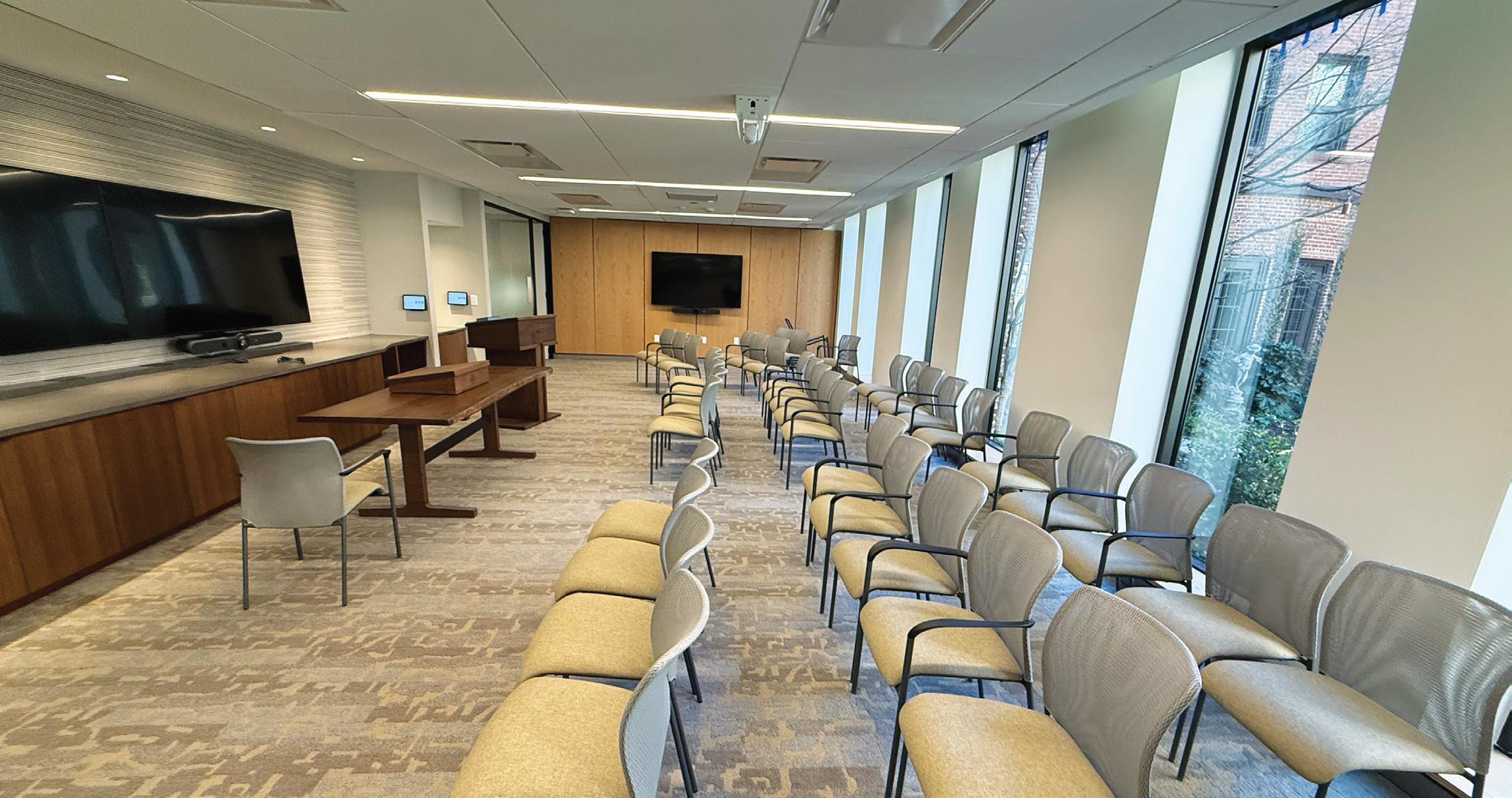
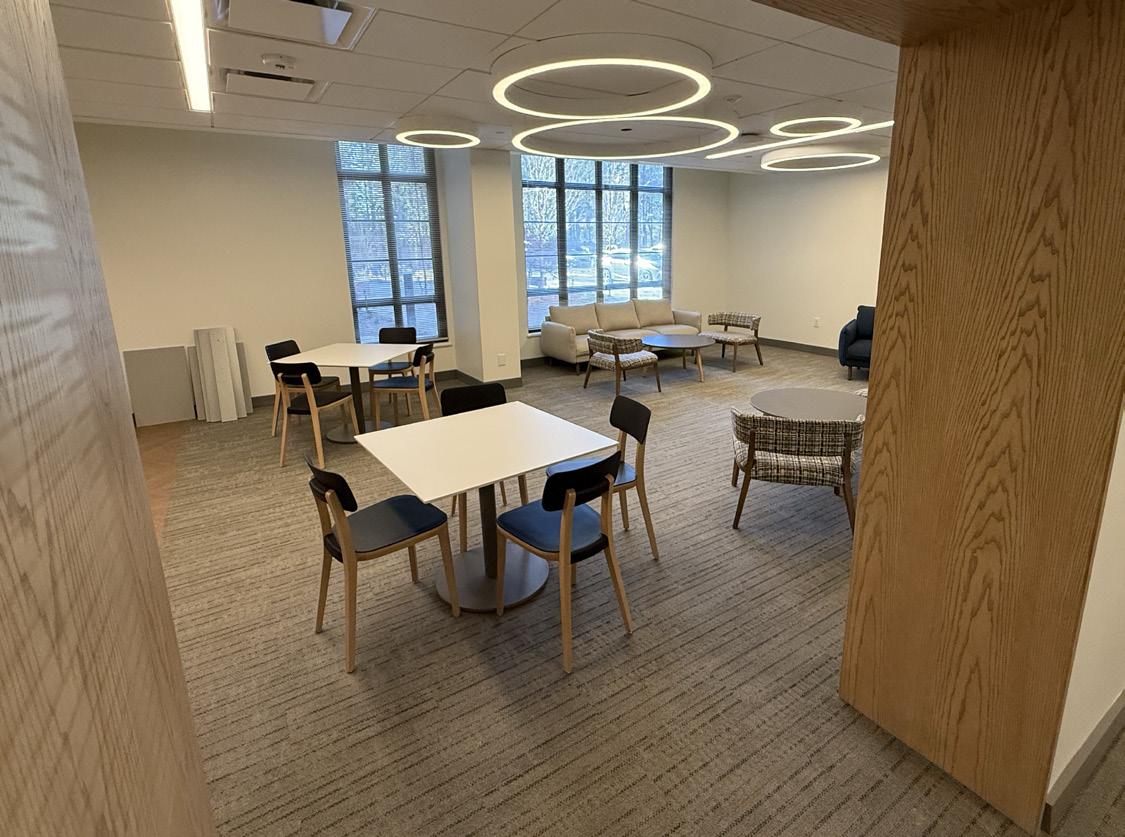
Robinson Garden, and DuPre Garden, a reconfigured back parking lot, an expanded North Drive supported by a 150,000-gallon irrigation pond, redesigned Peachtree Street plazas, and new prayer rooms, a flower room, and an art gallery—alongside full ADA compliance across the campus.
Today, First Presbyterian Church of Atlanta stands on remarkably solid financial footing for a project of this scale. The On the Way Capital Campaign has received 474 pledges totaling $42,232,275, along with a $1.5 million reserve commitment, bringing total commitments

to $43,732,275. Of that total, $37,056,724 has been received, leaving $6,681,672 in remaining pledge balances expected over the coming years.
With a total project cost of $46 million, the current financial gap stands at $2,267,725—a manageable balance supported by strong giving patterns and sound long-term planning. The 2.85% construction loan, due in February 2029, positions the church to move confidently into its next chapter while continuing to steward resources wisely.
Taken together, these commitments reflect more than financial generosity. They reveal a congregation united in purpose—grateful for God’s provision, confident in its mission, and ready to step into its third century of ministry humbly following Jesus Christ as a community of conviction and compassion.
FIRST LOOK REFLECTION
EXPERIENCE THE VIDEO OF OUR FIRST LOOK OF OUR NEW SPACES BY CLICKING THE QR CODE


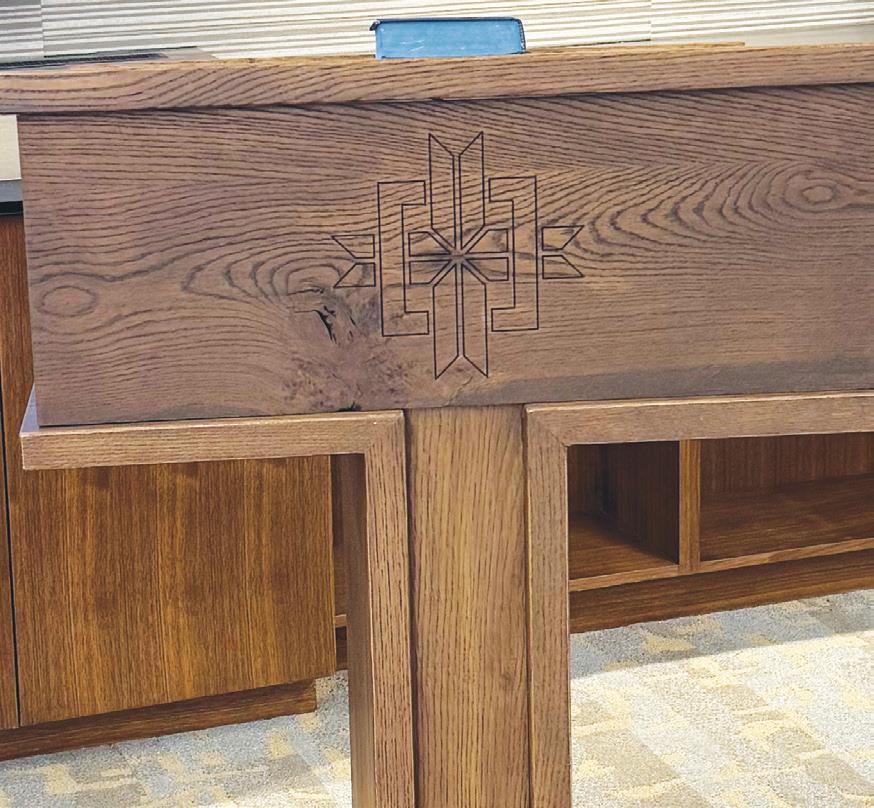

The celebrated river oaks that once graced the Peachtree Street side of First Presbyterian Church of Atlanta are not really gone.
They have been transformed and reborn as furniture and other items that will serve the church for more generations than they stood watch over the congregation.
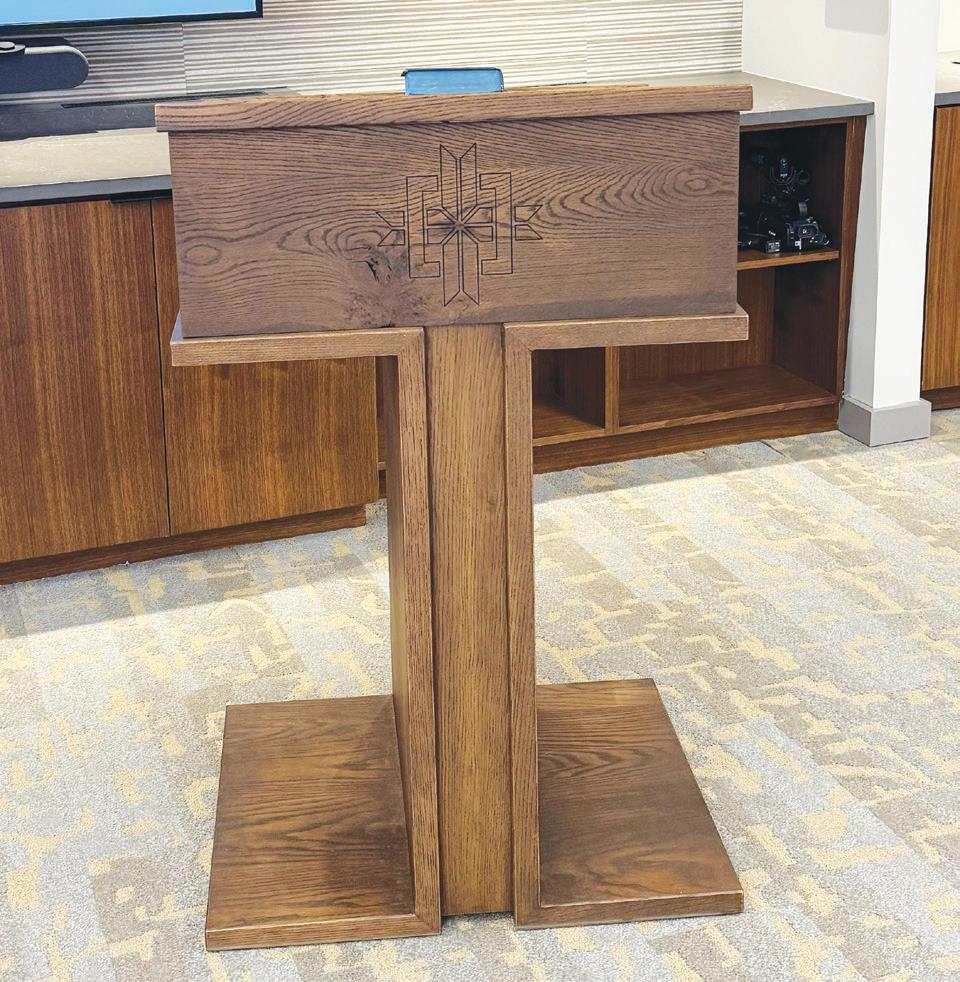
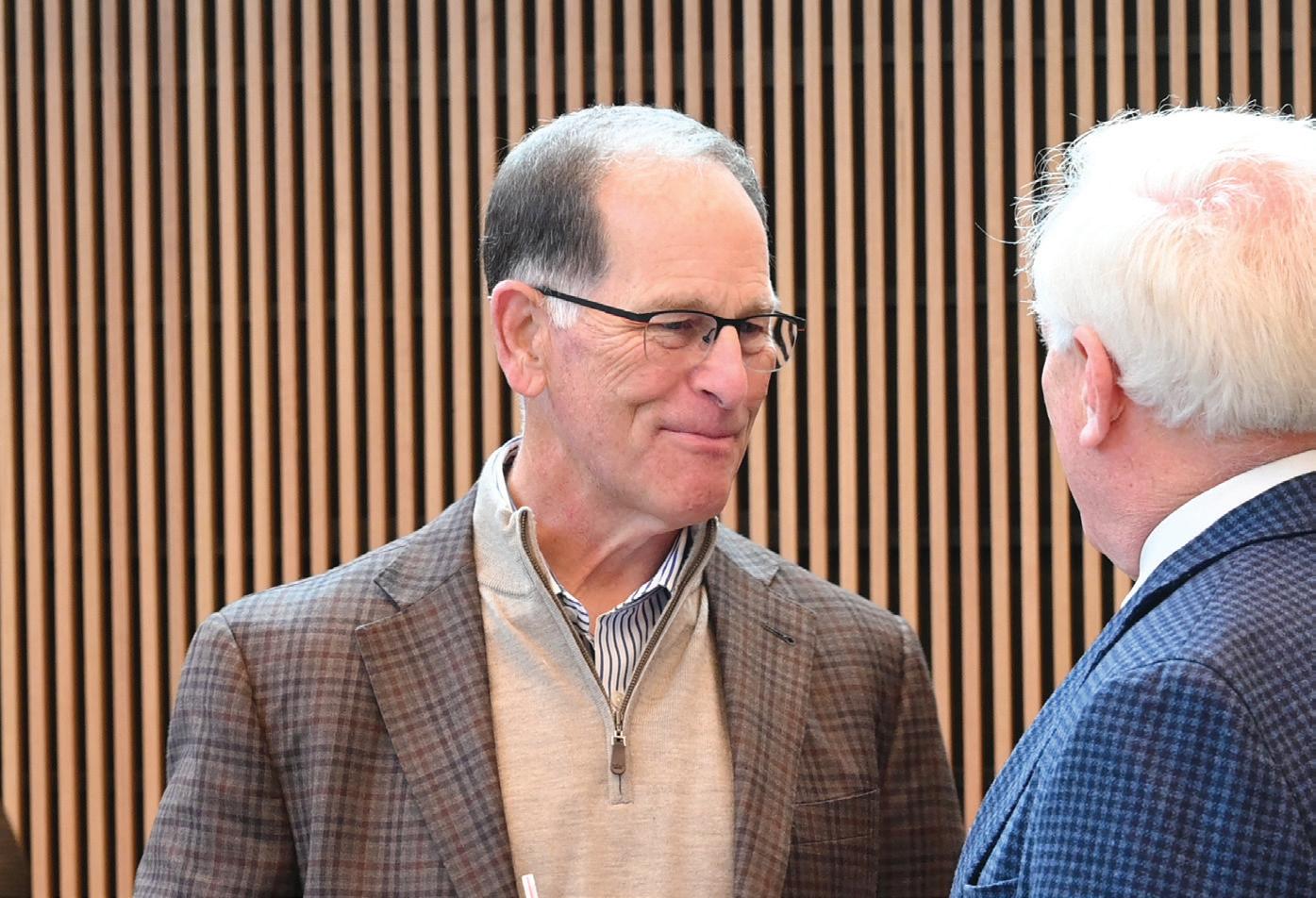
Through a process known as reclamation, once the trees were cut down, they were milled, sanded, cut, and crafted. The wood from those trees, and a few others, can now be found throughout FPC, including two tables in the prayer room, the logo in the entryway facing Peachtree Street, the tabletops in the reading nook and, perhaps most impressively, the Session table in the Wirth Room and the lectern riser that sits on that table.
The idea for keeping the trees a part of FPC’s legacy was born from John McColl. Roughly 10 years ago, he met Whitney Wolf, an artisan who specializes in creating furniture and other items from reclaimed wood.
Wolf works with the Jack Ellis Company, and the firm has earned a distinct reputation for its work in wood reclamation.
McColl, who serves as Executive Vice President of Development at Cousins Properties, was impressed by Wolf’s work. Through his work with Cousins, he witnessed the process of felled timber receiving a second life as tables, wall planks, ceremonial stairs, and decking.
“[Traditionally,] when we went to build, we scraped a site and then

loaded it in a dump truck. That’s when I realized, ‘This isn’t what we should be doing,’” he said.
McColl, who also serves as a trustee-emeritus and elder of First Presbyterian Church of Atlanta and leads our Campus Master Planning Committee, felt giving FPC’s trees a second life was a natural evolution of our renovation.
“I take pride in the fact that we saved these trees from the landfill. I take pride in the fact that the tree is not being wasted. I know that God says don’t waste anything, and we didn’t waste anything,” he said.
Ask McColl for his favorite piece of furniture, and he does not hesitate.
“I’m proudest of the Wirth table. It’s the room we hold Session in,” he said. “It was important for me to have that table be something special and beneficial.”
In addition to having the prior trees transformed into pieces of furniture inside FPC, McColl was
pleased to witness the church replant trees throughout the campus, including a few gorgeous oaks.
McColl wraps up our interview by citing a sermon that Rev. Saranell Hartman preached on December 7, 2025.
Hartman’s sermon, “What the World Needs Now: Peace,” was based on Luke 1:67–79 and Isaiah 11:1–10.
In a section of her sermon, Hartman used the stump from Isaiah to illustrate how the stump leads to the shoot and how the roots of the stump have not died, yet are being fed by the forest around it.
“There is a surprise in the forest. The stump is alive. The shoot is growing. The King is reigning. And the world is being stitched back together in Him,”
Hartman’s sermon read.
Talk to McColl, and you can hear the echoes from the pulpit that day.
“All we did was harvest, nurture, and re-harvest,” he said.
Lent is not a season we rush through; it is a season we learn. Beginning on Ash Wednesday, this year’s sermon series, Learning Lent, invites us to receive Lent not as a burden, but as a gift of formation; a time to relearn how to live faithfully, trust deeply, and hope honestly.
Across the weeks of Lent and into Easter, we will explore what it means to learn practices that shape a life oriented toward God rather than driven by fear, scarcity, or control. Each week names a posture the Christian life requires, not as a technique to master, but as a way of being formed.

Learning Lent Sunday Morning Sermon Series 8:15, 9:00, and 11:00 a.m. Worship
Lent 1 - February 22 – Communion at All Three Services
Learning to Resist: Temptation and Trust
Deuteronomy 8:1-10 & Luke 4:1-13
Ann Henley Nicholson, Preaching
Lent 2 - March 1
Learning to Repent: Turning Toward Life
Isaiah 55:1–9 & Luke 13:1–9
Tony Sundermeier, Preaching
Lent 3 - March 8
Learning to Rest: Trusting the God Who Provides Exodus 16:2–5, 13–21 & Matthew 11:28–30
Lauren Tucker, Preaching
Lent 4 – March 15
Learning to Reconcile: The Work of Forgiveness
Genesis 45:1–15 & 2
Corinthians 5:16–21
Tony Sundermeier, Preaching
Lent 5 – March 22
Isaiah 43:16-21 & John 12:1-8
Learning to Receive: Grace and Gratitude
Saranell Hartman, Preaching
Lent 6 – March 29
Zechariah 9:9–10 & Luke 19:28–40
Learning to Release: Surrender and Hope
Tony Sundermeier, Preaching


Wednesdays at Noon
Holding Space is a midweek Lenten worship series offering a quiet pause in the middle of busy weeks. Through Scripture, prayer, silence, and reflection, these 40-minute chapel services invite us to attend to the inner life; holding silence, fragility, lament, attention, and expectation before God. Come once or come often. All are welcome.
February 25
Holding Silence
1 Kings 19:9–13 · Psalm 46:10
Saranell Hartman, Preaching
March 4
Holding Fragility
Psalm 103:13–18 · 2 Corinthians 4:7–10
Rob Sparks, Preaching
March 11
Holding Lament
Psalm 13 · Lamentations 3:31–33
Saranell Hartman, Preaching
March 18
Holding Attention
Psalm 131 & Luke 10:38–42
Barry Gaeddert, Preaching
March 25
Holding Expectation
Habakkuk 2:1–3 & Romans 5:3–5
Ben Fletcher, Preaching
Lenten Quiet Reflection on Zoom
Wednesdays | 6:30 to 7:15 a.m. through April 1
Join us for a guided time of quiet reflection as we journey through the 40 days of Lent. Each week we will spend time in silence, prayer, and Scripture, creating breathing room for our souls and deepening our trust in God. No previous experience is required. Registration required. You will receive the Zoom link and details by email. Questions? Contact shartman@firstpresatl.org

Monday, March 30 – Chapel
Holy Monday
Barry Gaeddert, Preaching
Tuesday, March 31 – Chapel
Holy Tuesday
Rob Sparks, Preaching
Wednesday, April 1 – Chapel
Holy Wednesday
Ben Fletcher, Preaching
Thursday, April 2 – Chapel
Maundy Thursday
Jonathan Miller, Preaching
Our annual Maundy Thursday Dinners and Communion will take place on Thursday, April 2. Join us at one of nine locations around the city (to be published) as we share a potluck dinner, followed by communion. We invite you and your family to choose a location near you and be part of this special evening.
Friday, April 3 – Sanctuary, Choir
Saranell Hartman, Preaching
7:00 a.m. Memorial Garden and Chapel, 8:15 a.m. Chapel, 9:00 and 11:00 a.m. Sanctuary
Isaiah 25:6–9 & John 20:1–18
Learning to Rise: Hope and New Creation
Tony Sundermeier, Preaching




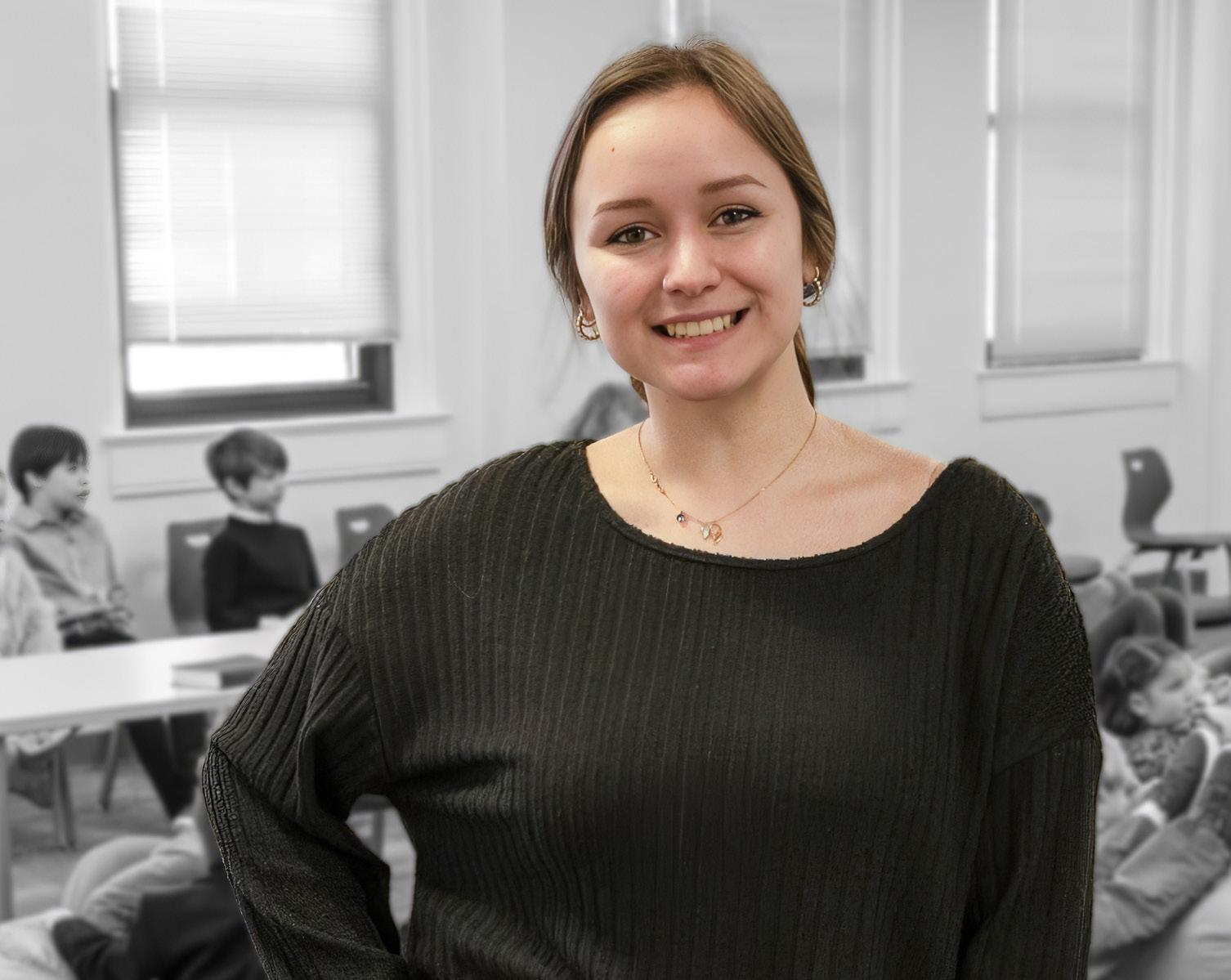
Chloe Giron Assistant Director of Children’s Ministries and Parents Morning Out
Chloe Giron brings a passion for creating fun, welcoming, safe, and faith-filled environments where children can grow, learn, and feel connected to their community.
Giron previously served at Peachtree Road United Methodist Church where she served for several years as Assistant Director of their Drop-In Childcare program. Prior to that position, she served as a childcare professional.
Giron is enrolled in online courses at Georgia State University where she is completing a degree focused on IT Project Management. Outside of her love for children’s ministries, Chloe enjoys learning systems and developing solutions for process improvements. She hopes to somehow combine these two passions one day.
In her free time, she enjoys designing graphics for local businesses, singing karaoke with friends, and spending quiet evenings at home with her beloved
dog, Elsa.
“I feel incredibly blessed for the opportunity to serve a community that values nurturing faith from the very beginning. It brings me much joy to be a part of a church that is so passionate about genuine connection and serving one another. I’m excited to see how God uses me here.” SAVE THE DATE
On the Way Capital Project
Dedication Sunday will take place on Sunday, April 19. We will gather as one congregation to mark this special occasion. There will be only one worship service that morning. The service will begin at 10 a.m. in the sanctuary.

WE’RE SOCIAL! Are you on social media? Make sure to like, subscribe, and share First Presbyterian Church! You can follow all the upcoming activities, worship services, and more on Facebook, Instagram, and YouTube.

Keith Cox Building Engineer
With more than three decades of experience in engineering, Keith Cox brings a wealth of experience and insight into his role as FPC’s Building Engineer.
A native of Monroe, Georgia, he attended Winder-Barrow High School where he excelled in baseball and tennis. He attended Athens Technical College where he studied Electrical Engineering.
Prior to joining FPC, Cox worked for more than 25 years at Prologis as a Building Engineer. Cox finds many aspects of FPC that speak to him, in particular, the architecture of the structures on campus.
He has always harbored a passion for architecture, in particular, churches in Scotland which he has visited and, “hopes to return to Scotland sooner, rather than later.”
He lives in Jefferson, Georgia with his wife, Mara. The couple were married in December
Dolly Purvis
Communications Associate
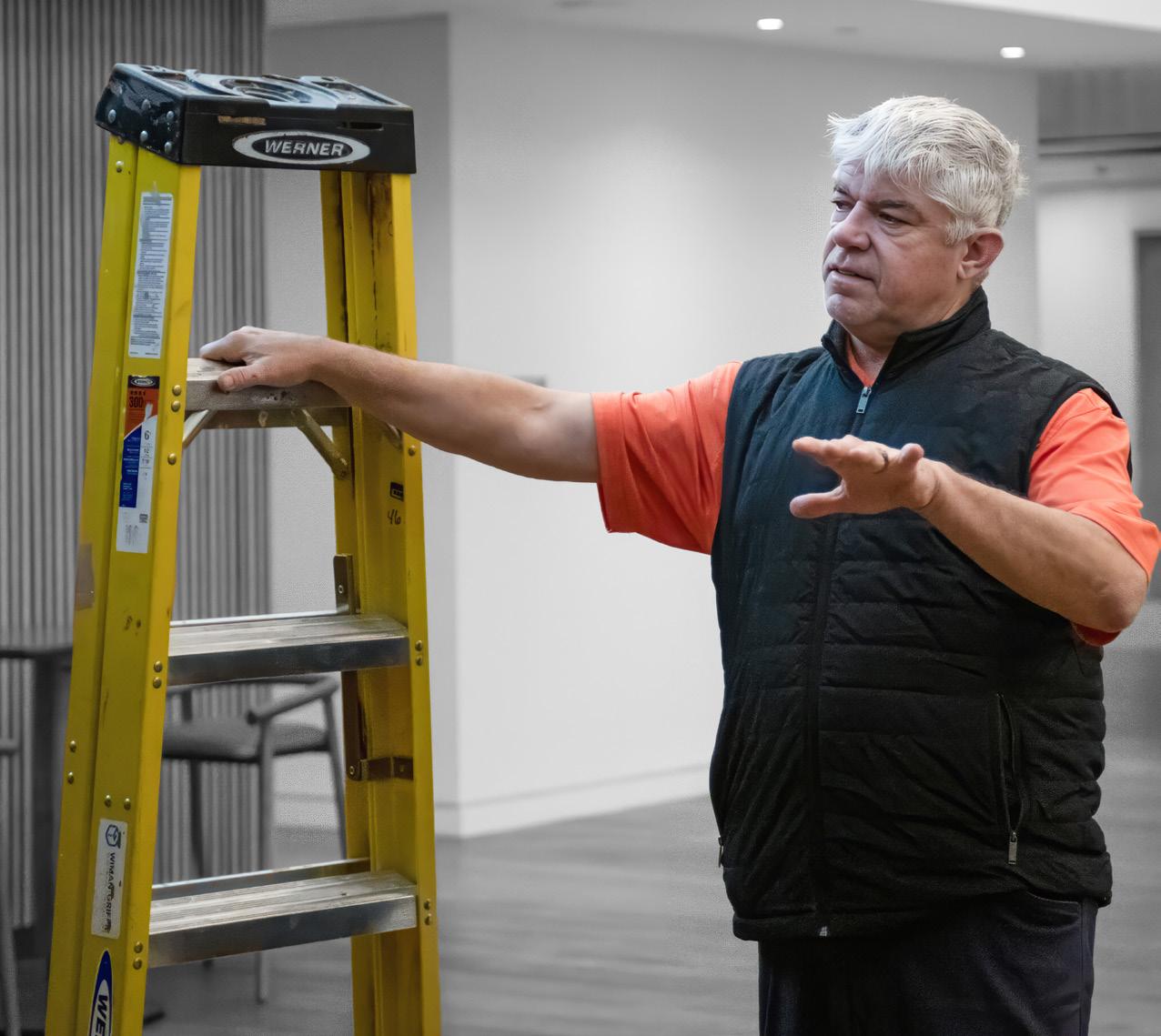
2023. He has two grown children Gabriella and Garrett from a prior marriage. Cox also enjoys golf, antique cars, and cooking. “I’m really glad to be here,” he said.
A seasoned communications professional, known for her storytelling skills, creative content development, and strategic communications work, Dolly Purvis joined FPC’s staff during Advent.
An Atlanta native, Purvis spent many years in metro Atlanta’s competitive media scene as a reporter, editor, and photographer. She has been honored with multiple awards from the Georgia Press Association, Suburban Newspapers of America, and the Georgia School Public Relations Association. She has devoted many years to communications work in nonprofit organizations including work at Agnes Scott College, Habitat for Humanity, Professional Association of Georgia Educators, First United Methodist Church of Marietta, and other nonprofit organizations. She has also run her own creative agency and is proficient in website development, videography, and graphic design.
A proud graduate of Agnes Scott College with a degree in
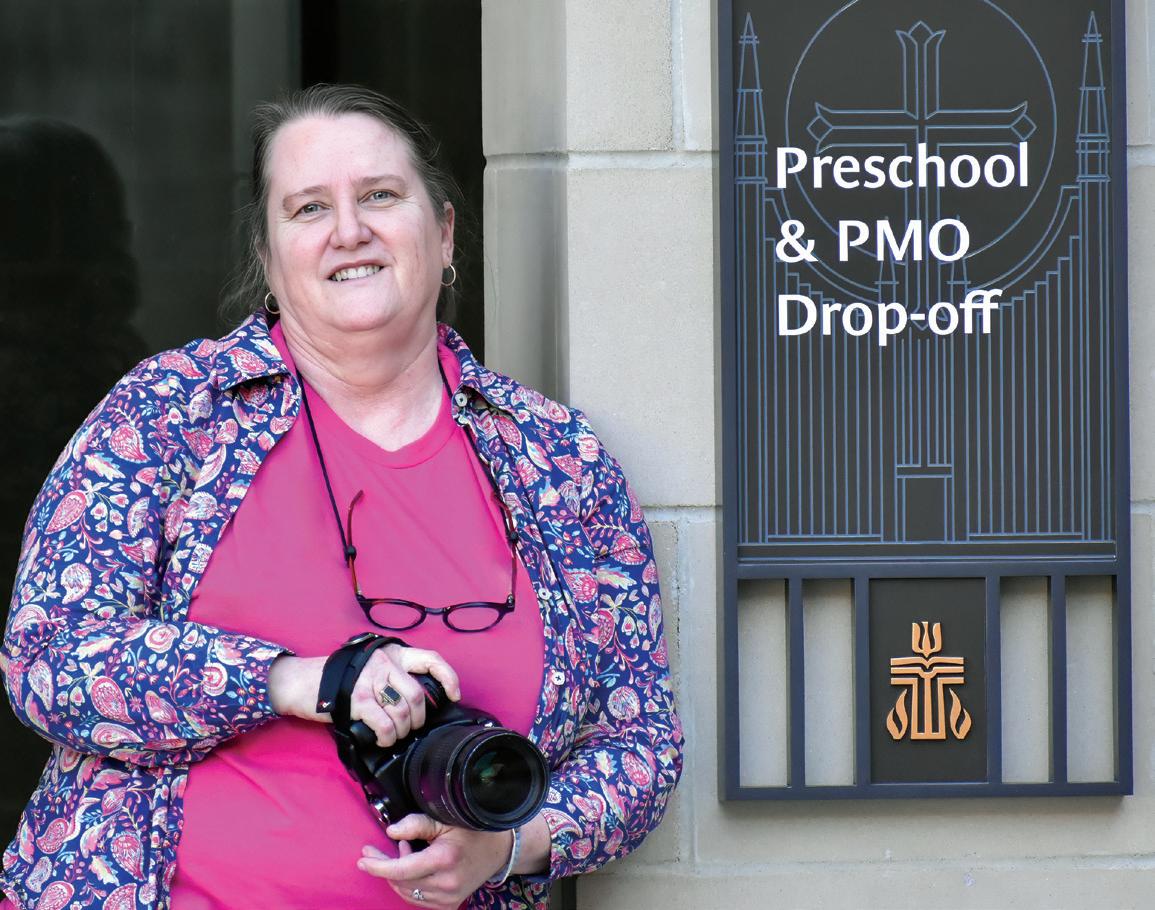
English and Bible, Purvis says, “she already feels at home among friends,” at First and finds joy in telling the intricate stories of the members and spreading the message of FPC.

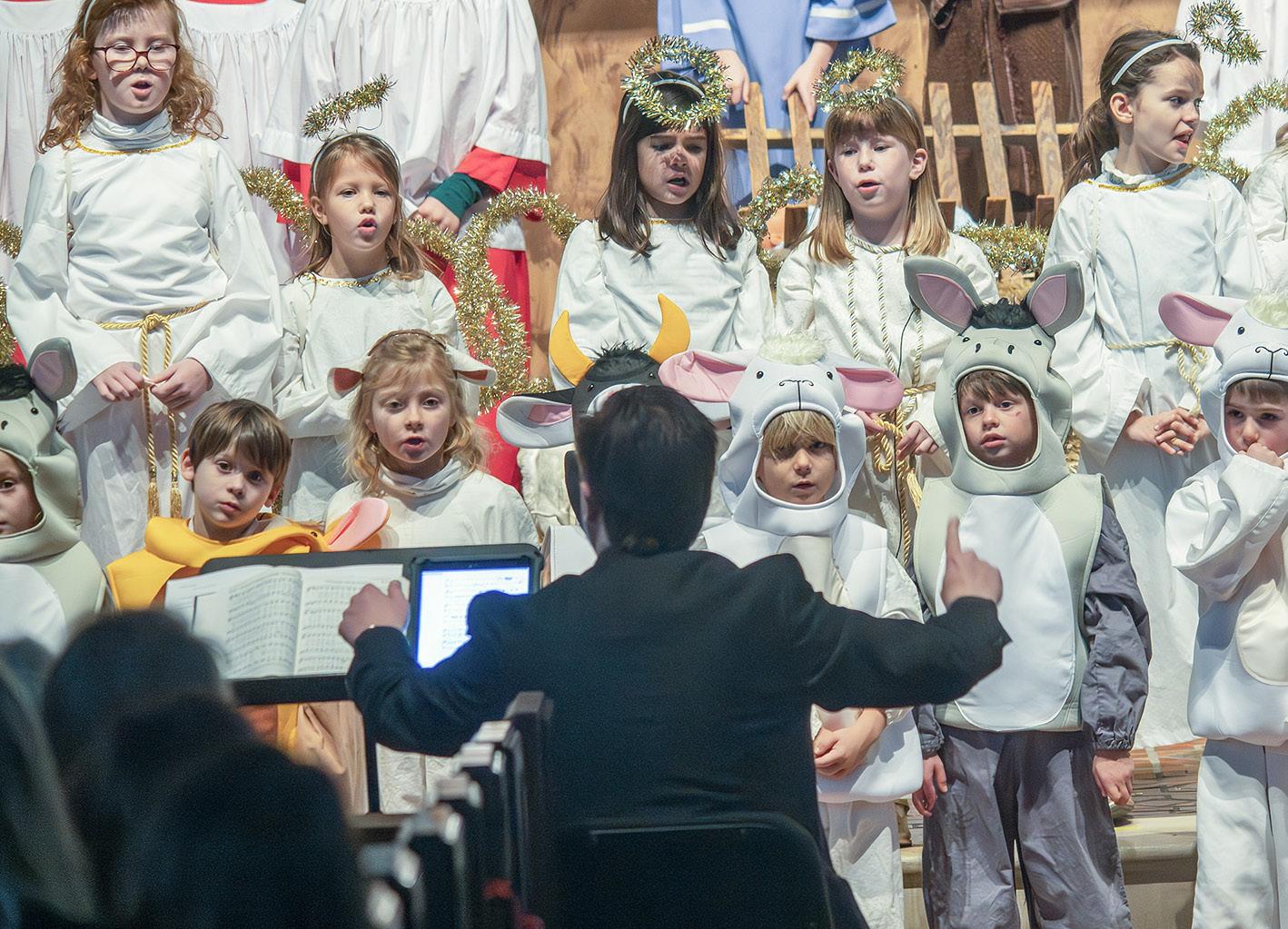
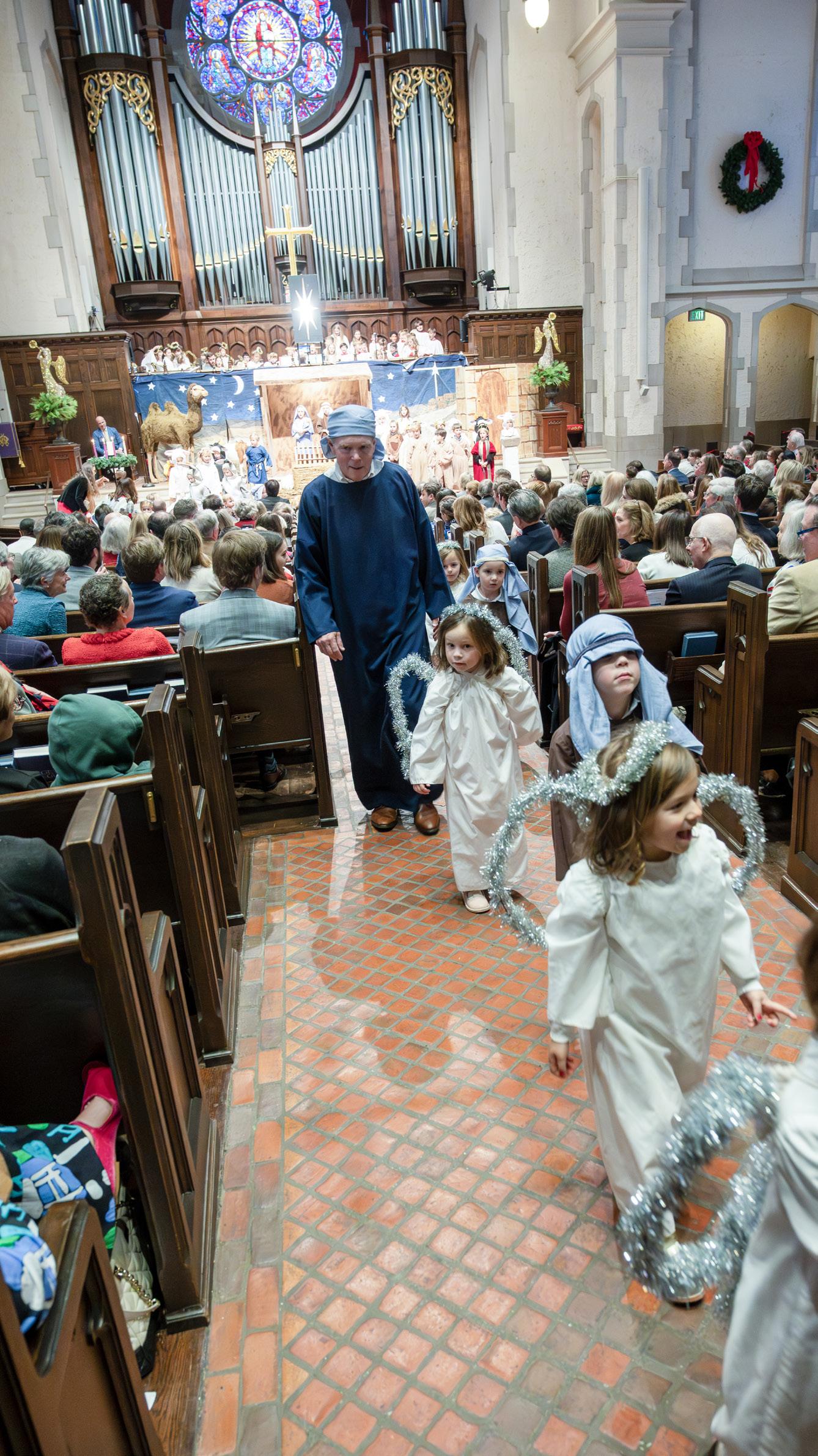
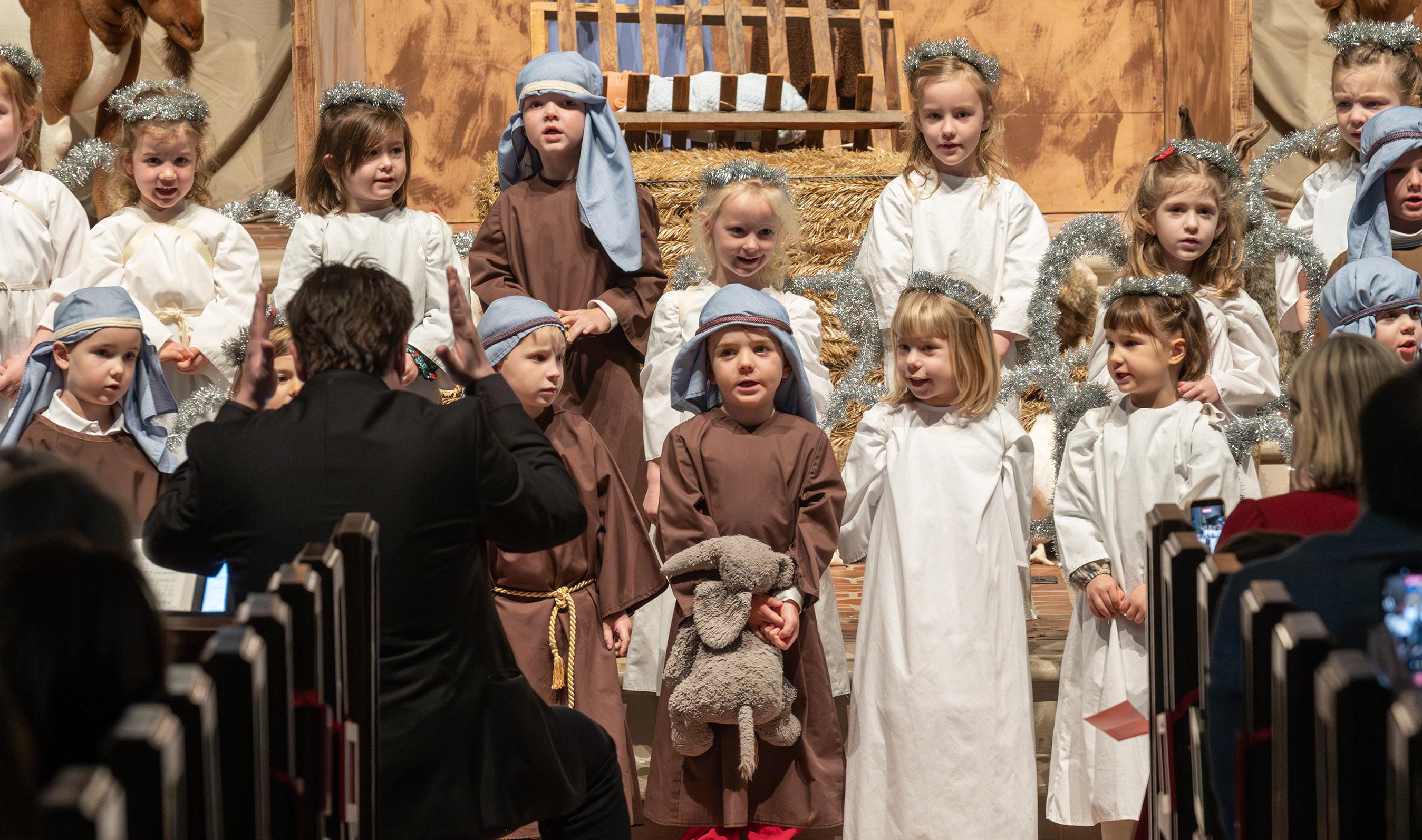
More than 140 children participated in our 2025 Christmas Pageant.

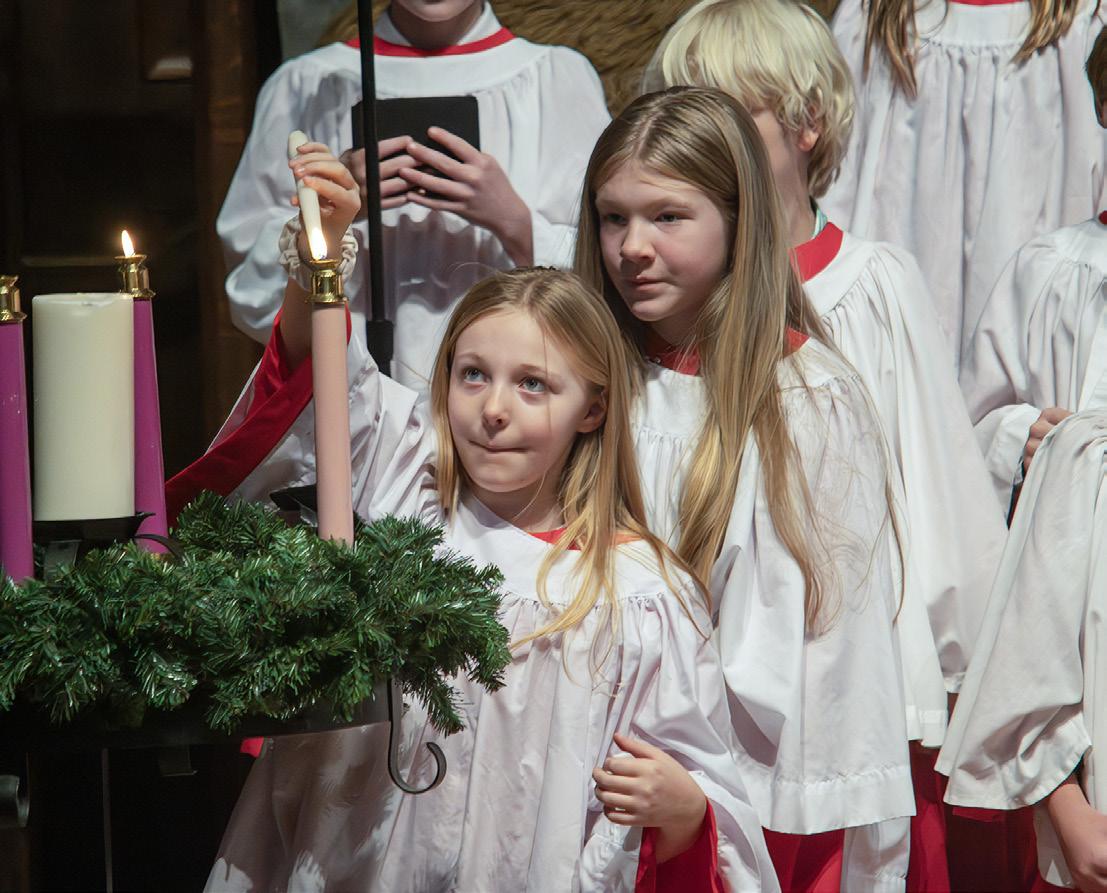

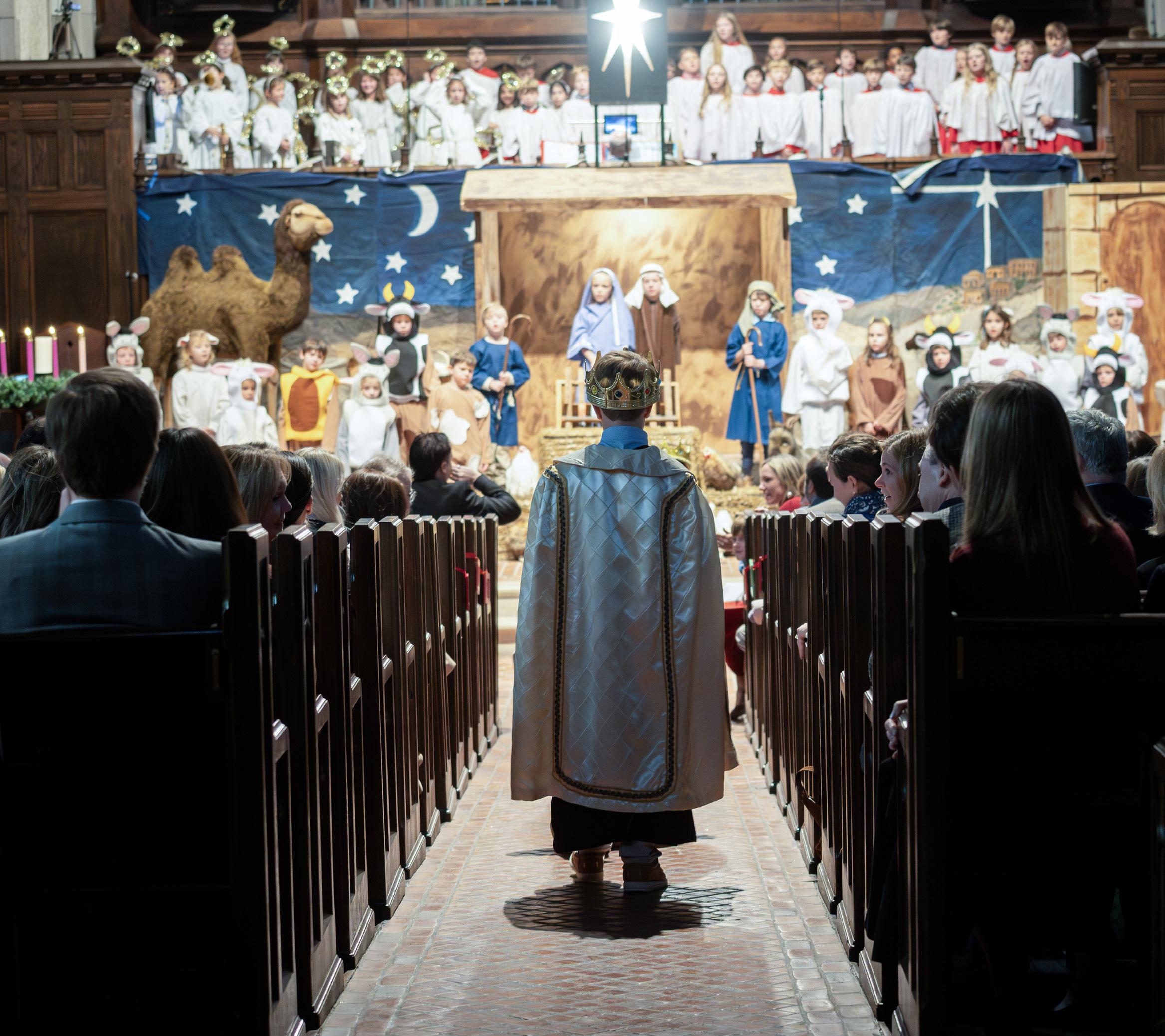
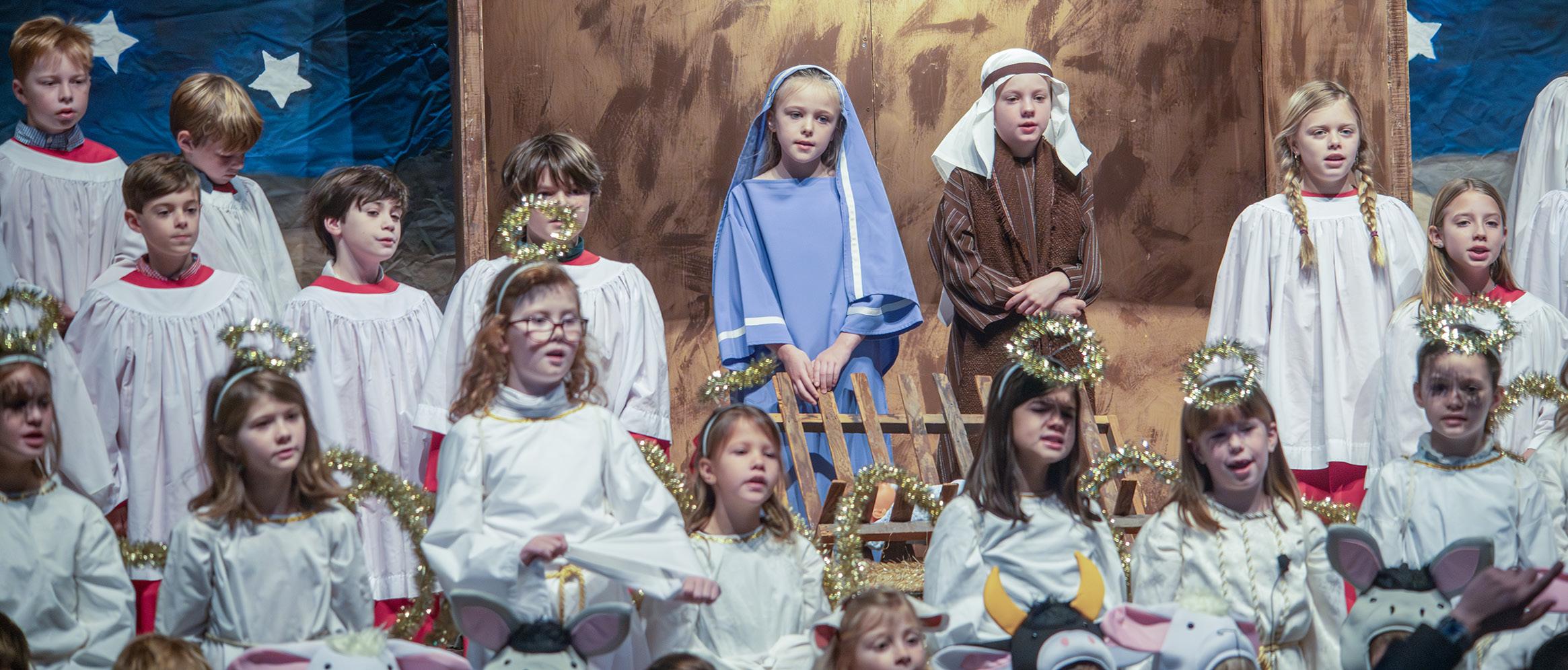

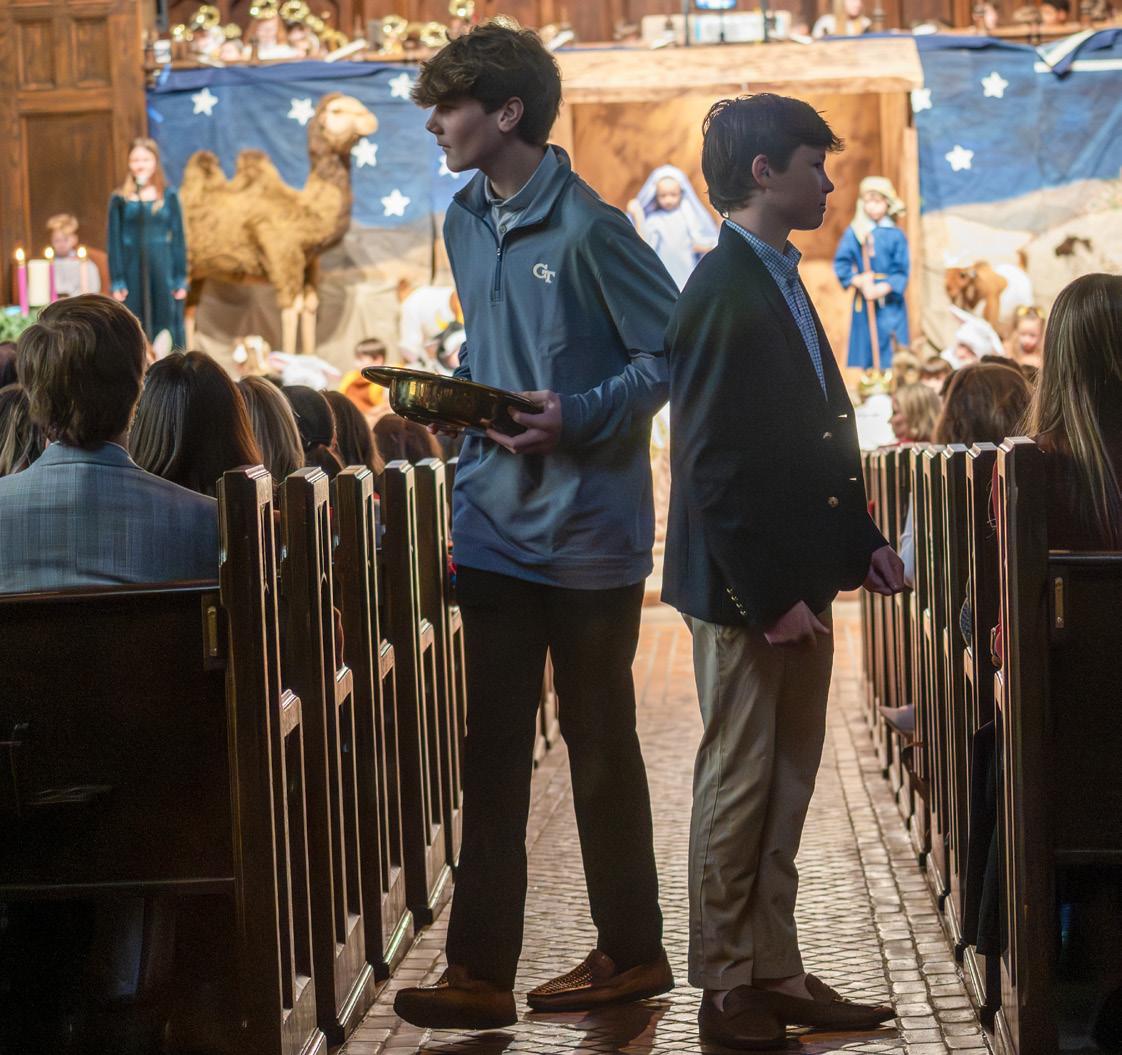


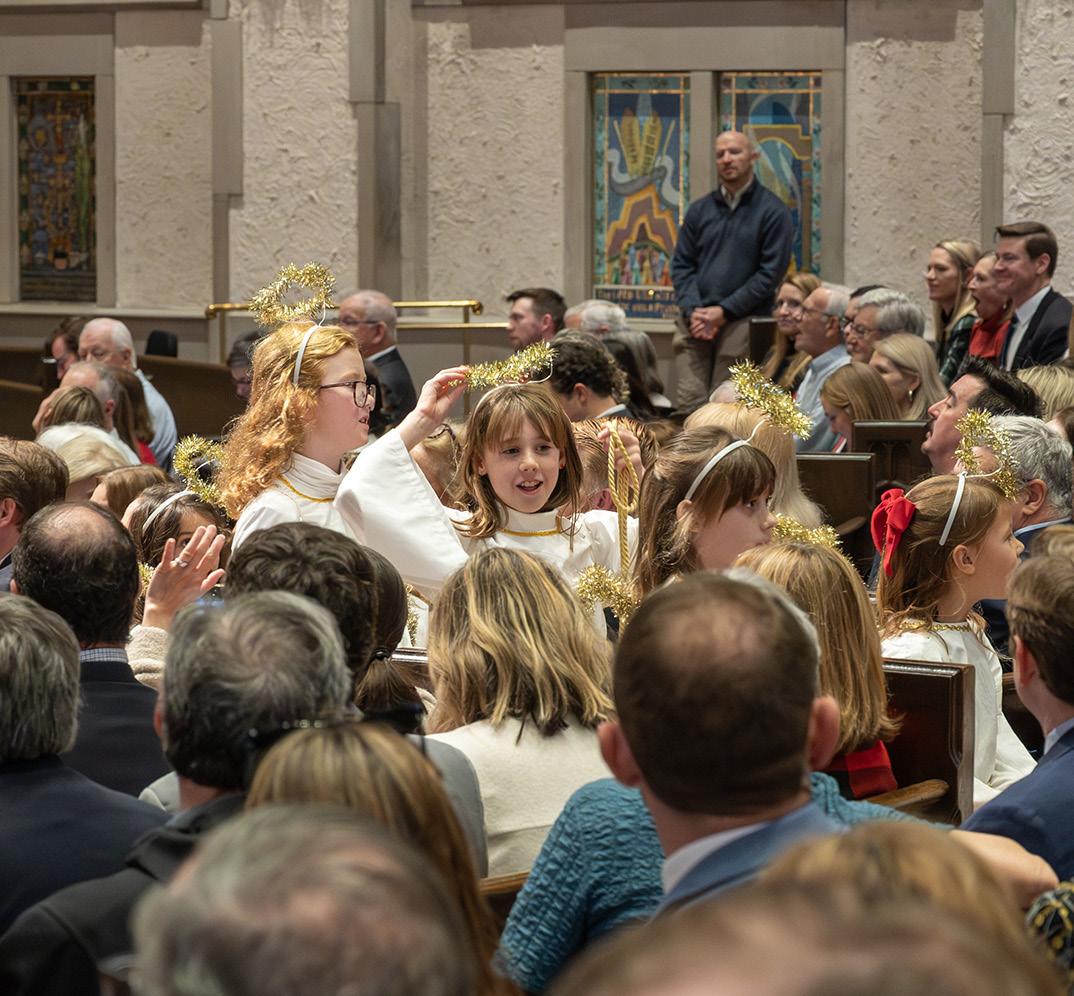
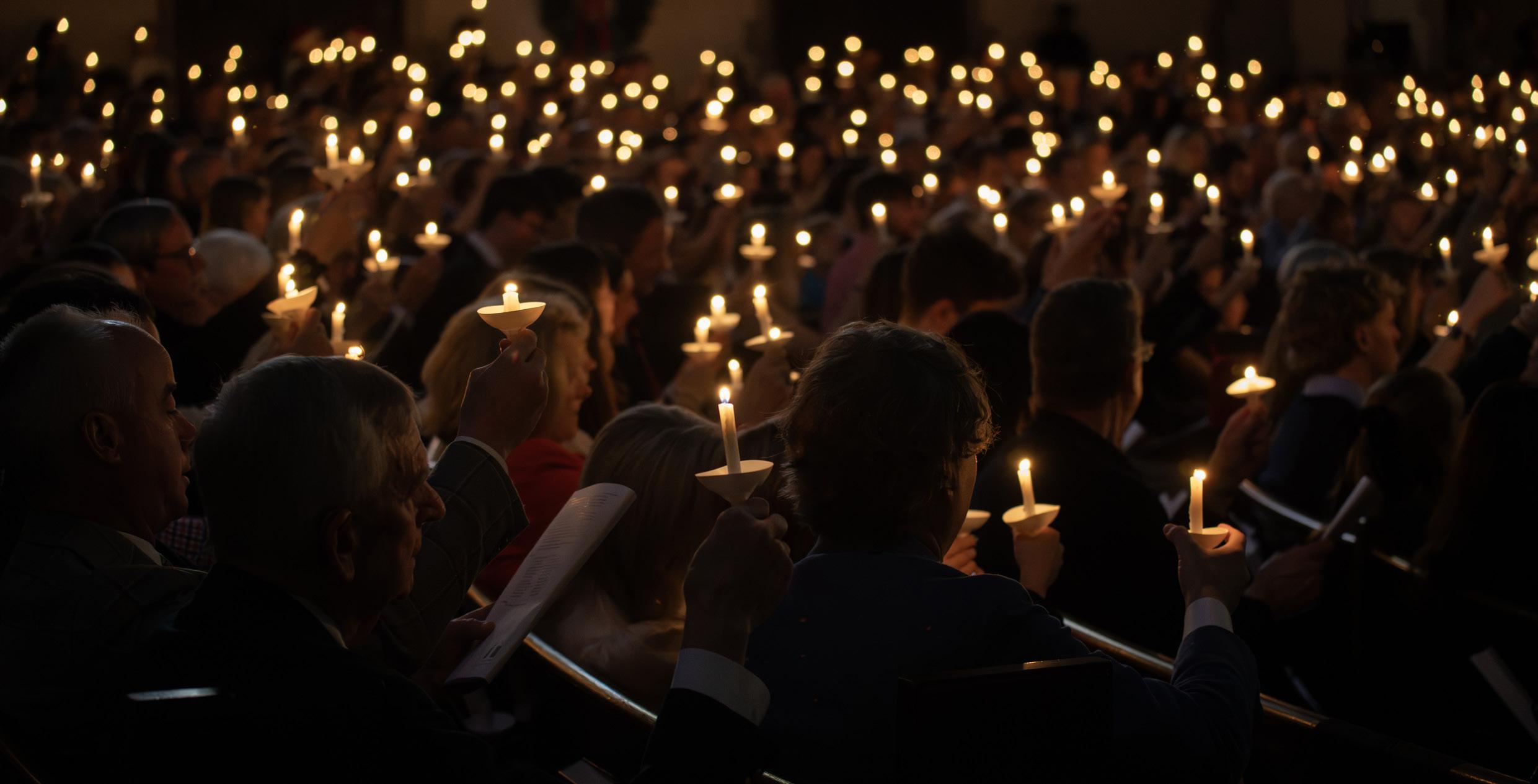
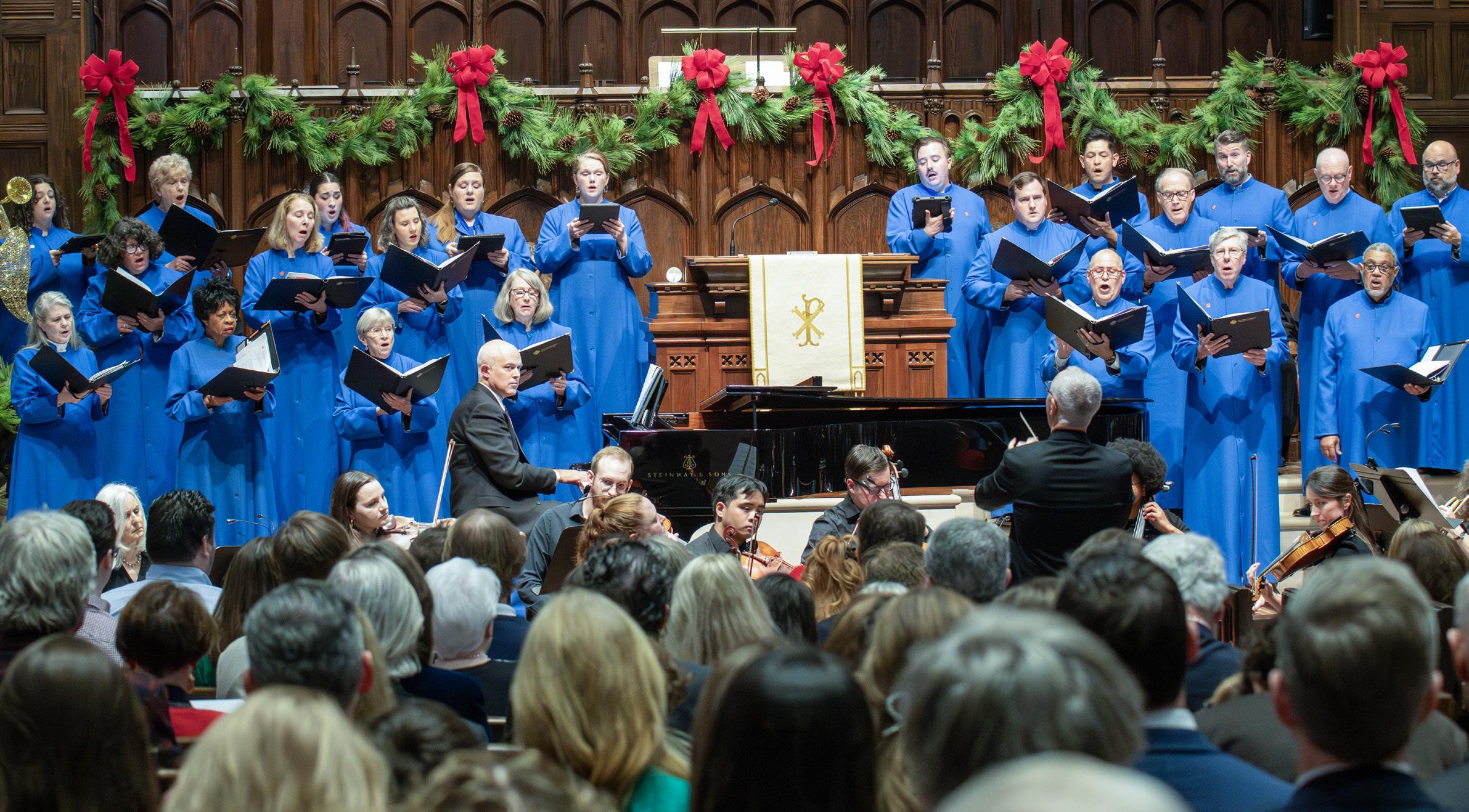
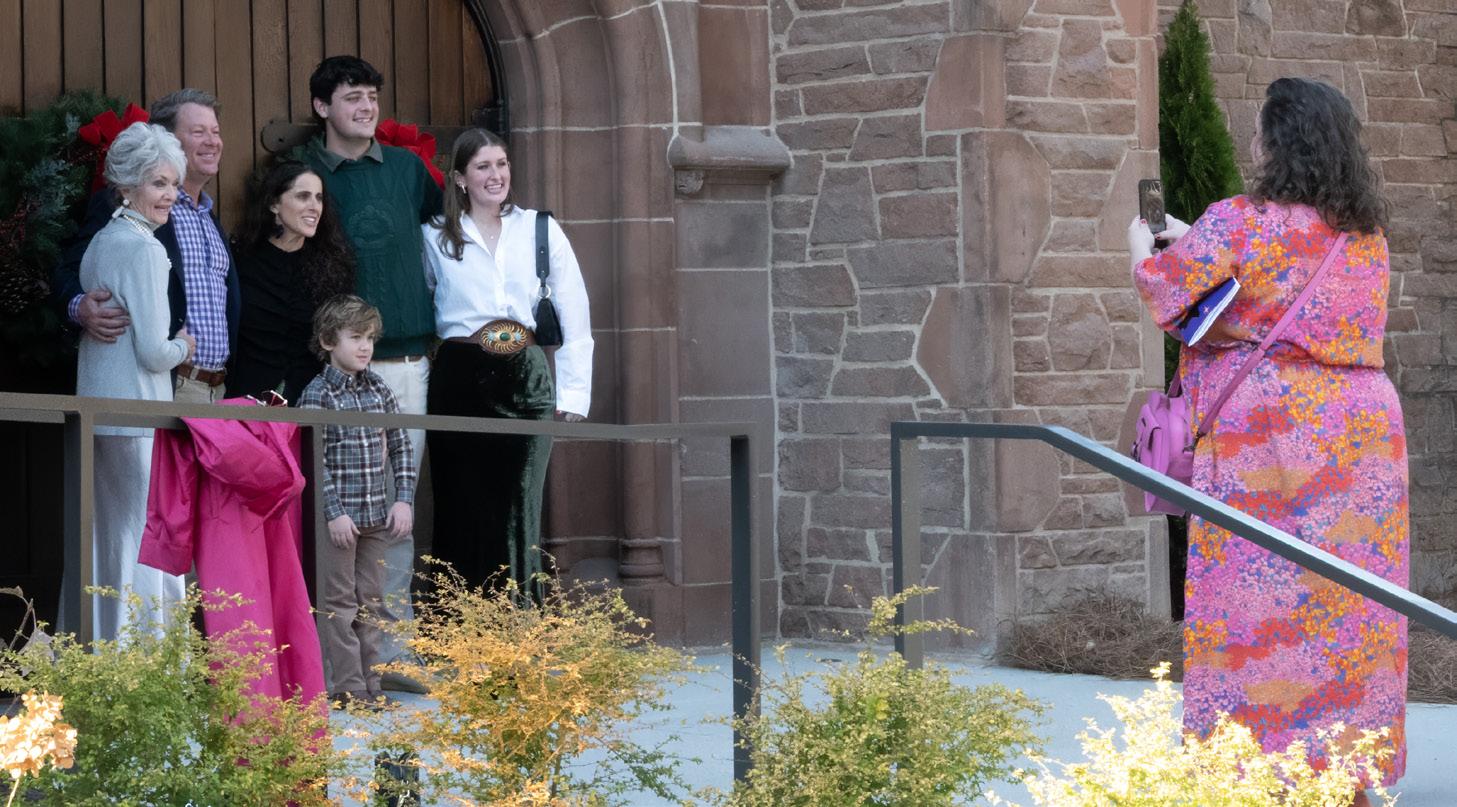
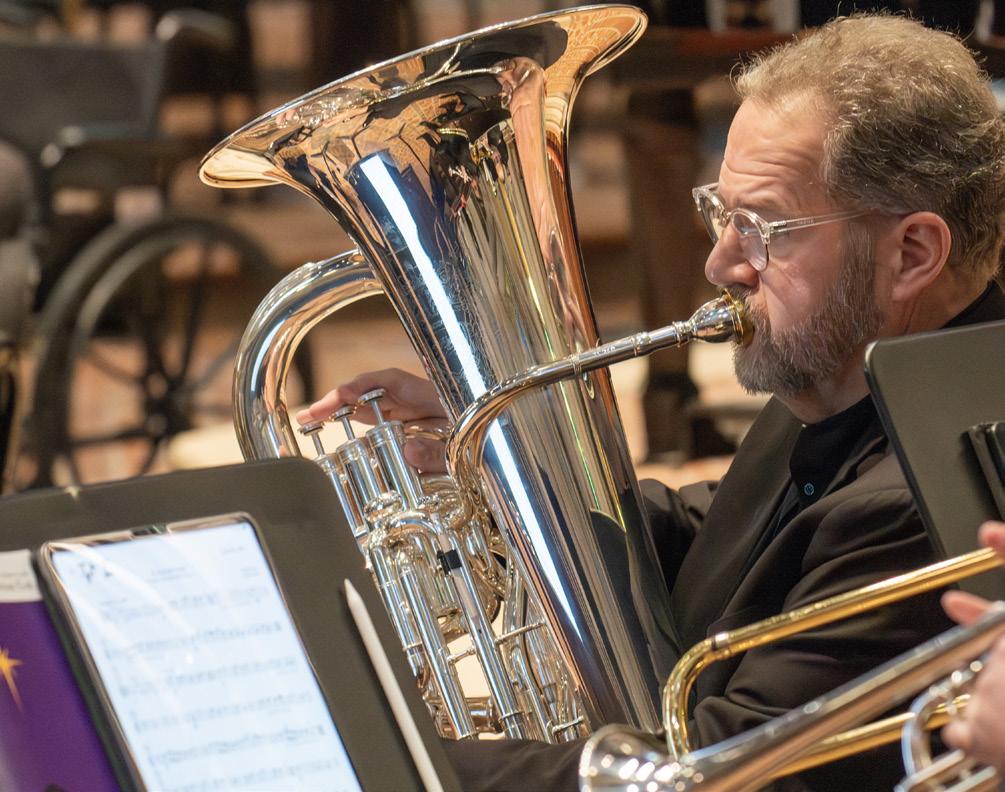
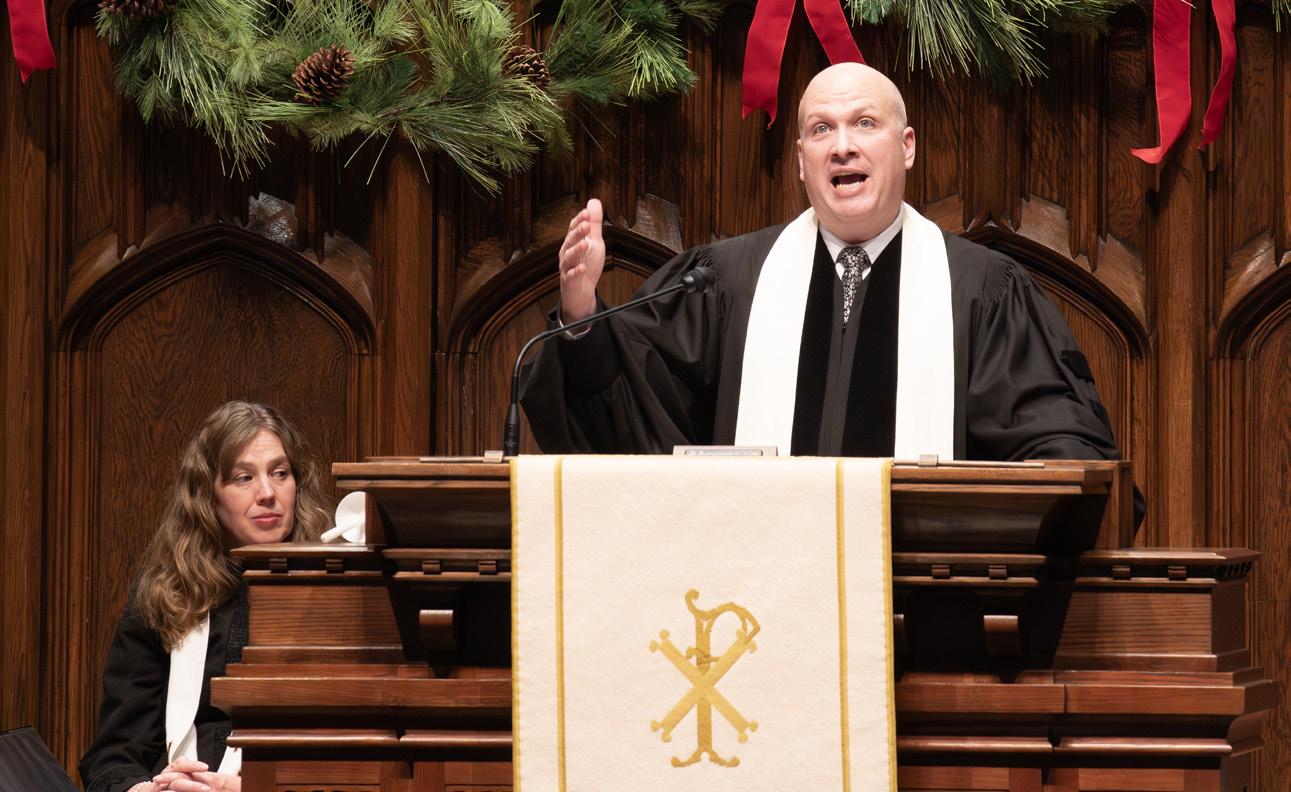
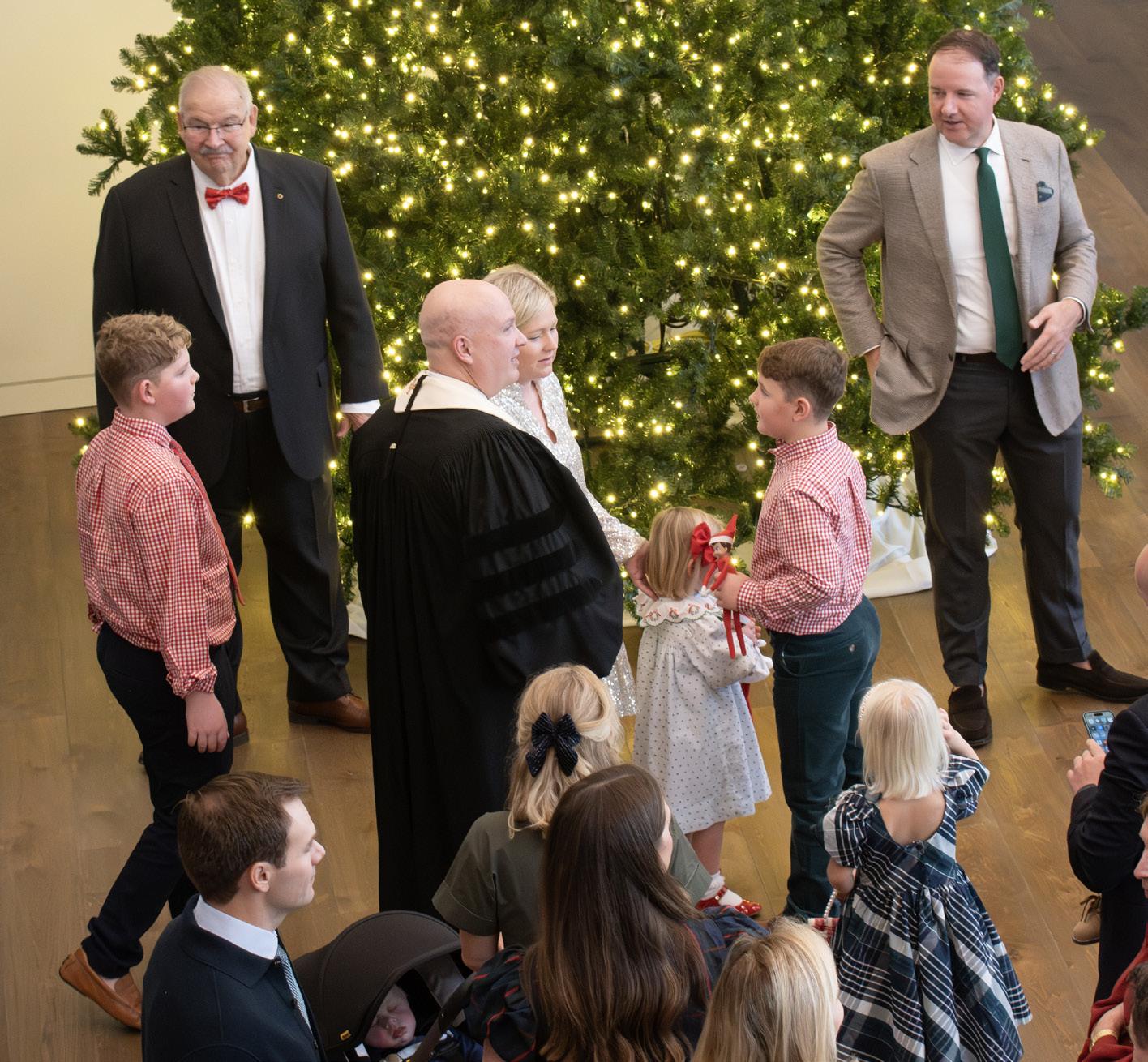
More than 1,800 people attended our four Christmas Eve services this year. We observed this special time of year with services throughout the day and into the evening.
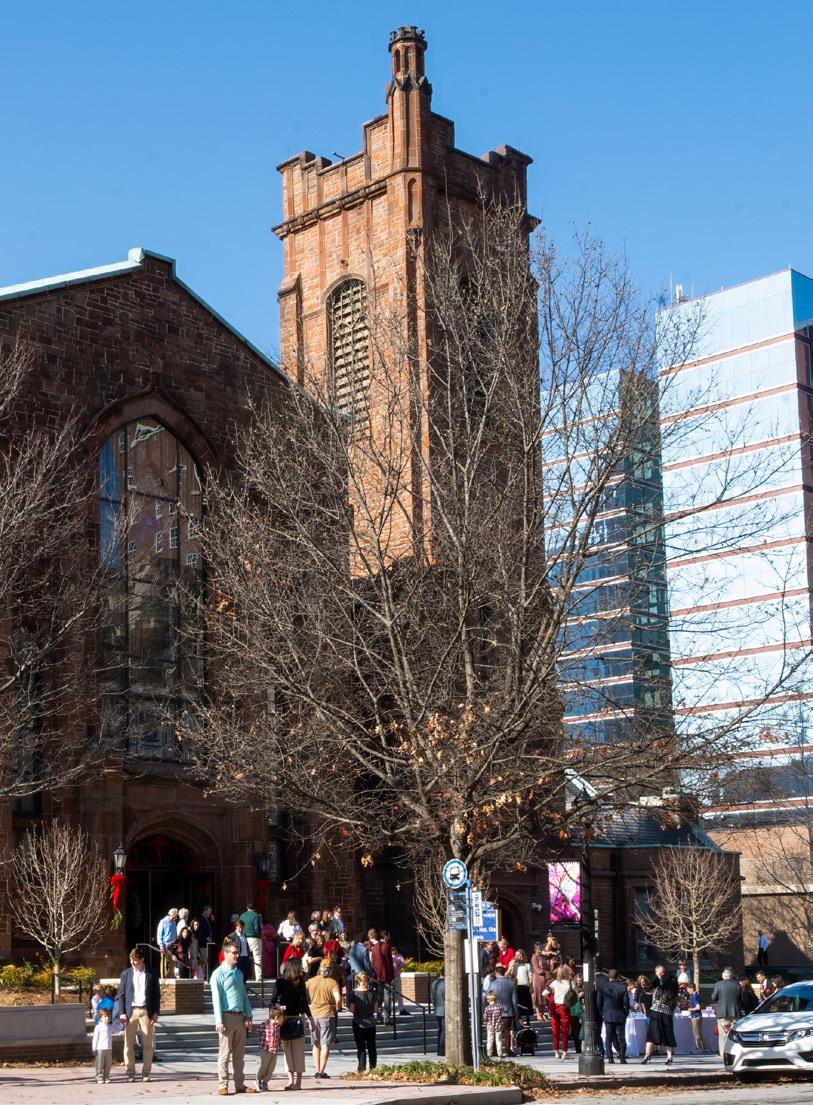

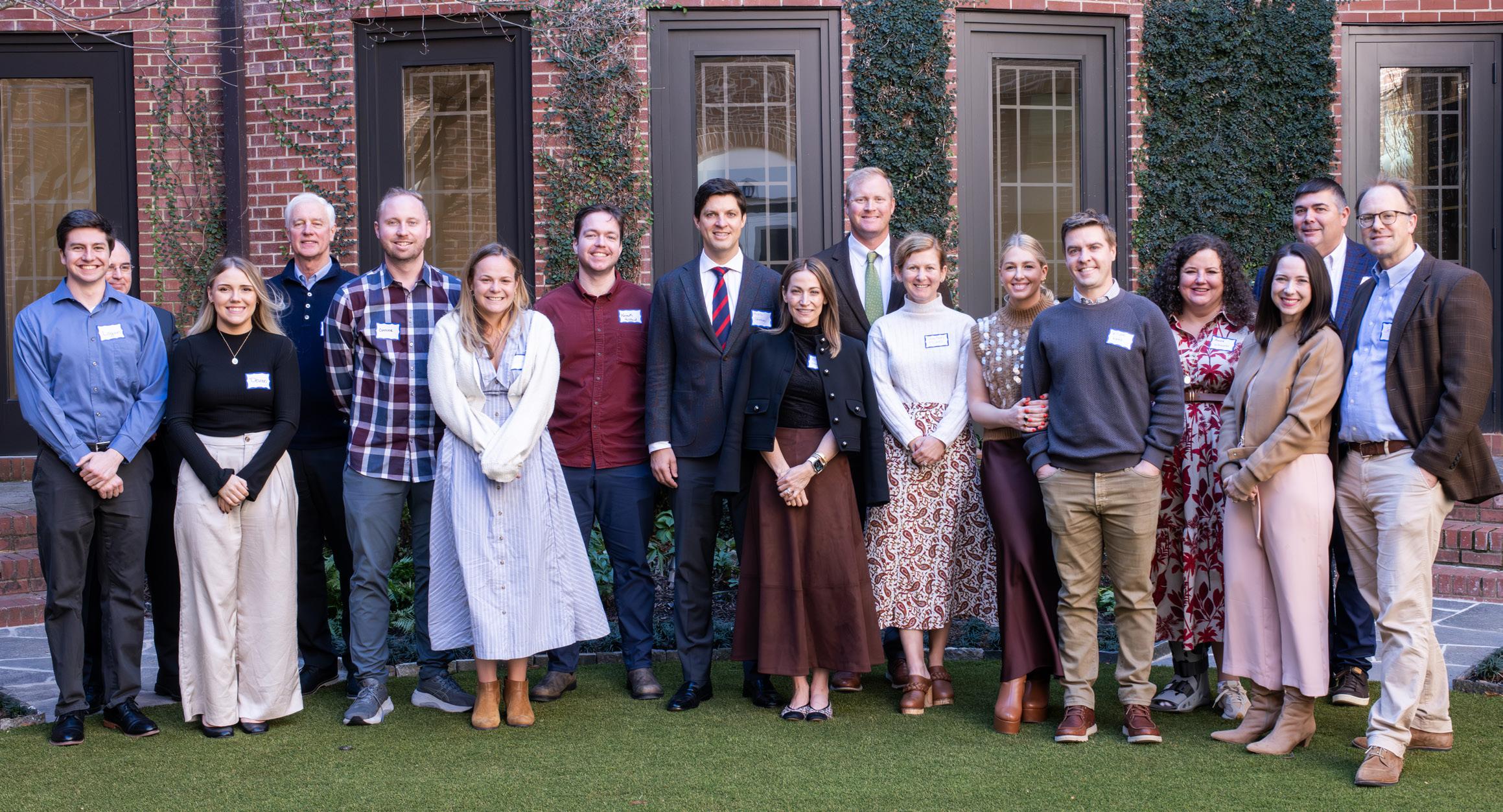
FPC welcomed new members during our January On Ramp class.
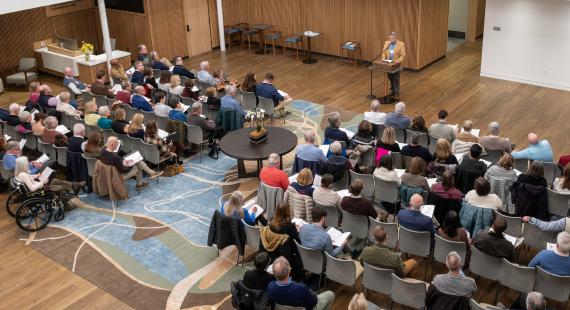
FPC of Atlanta held its annual Leadership Retreat this winter. More than 70 people attended, including current Session members, College of Elders, Ministry Leaders, Ministry Council Members, Nominating Committee, and FPC Staff. Former FPC pastor Craig Goodrich gave the keynote speech on Friday evening. Saturday included worship, a devotion, a long range strategic plan workshop, and the State of The Church address by Rev. Dr. Tony Sundermeier.
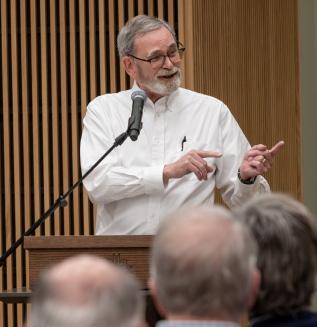
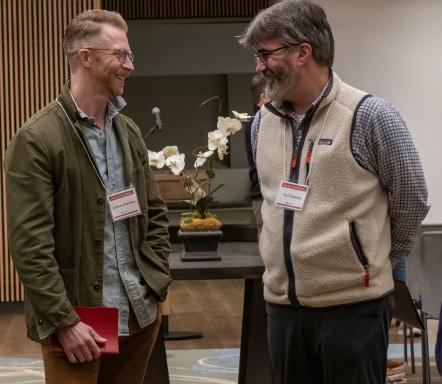
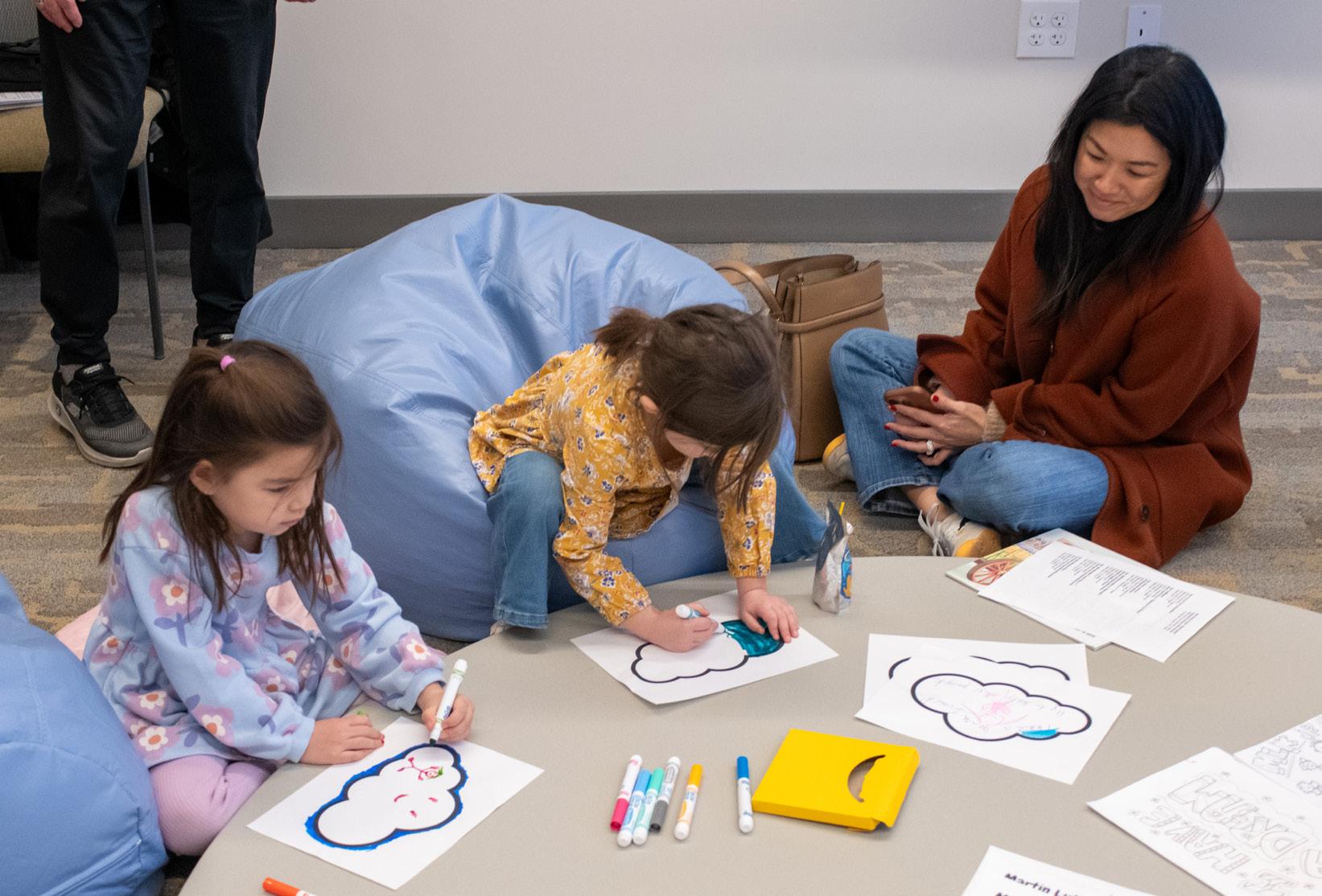
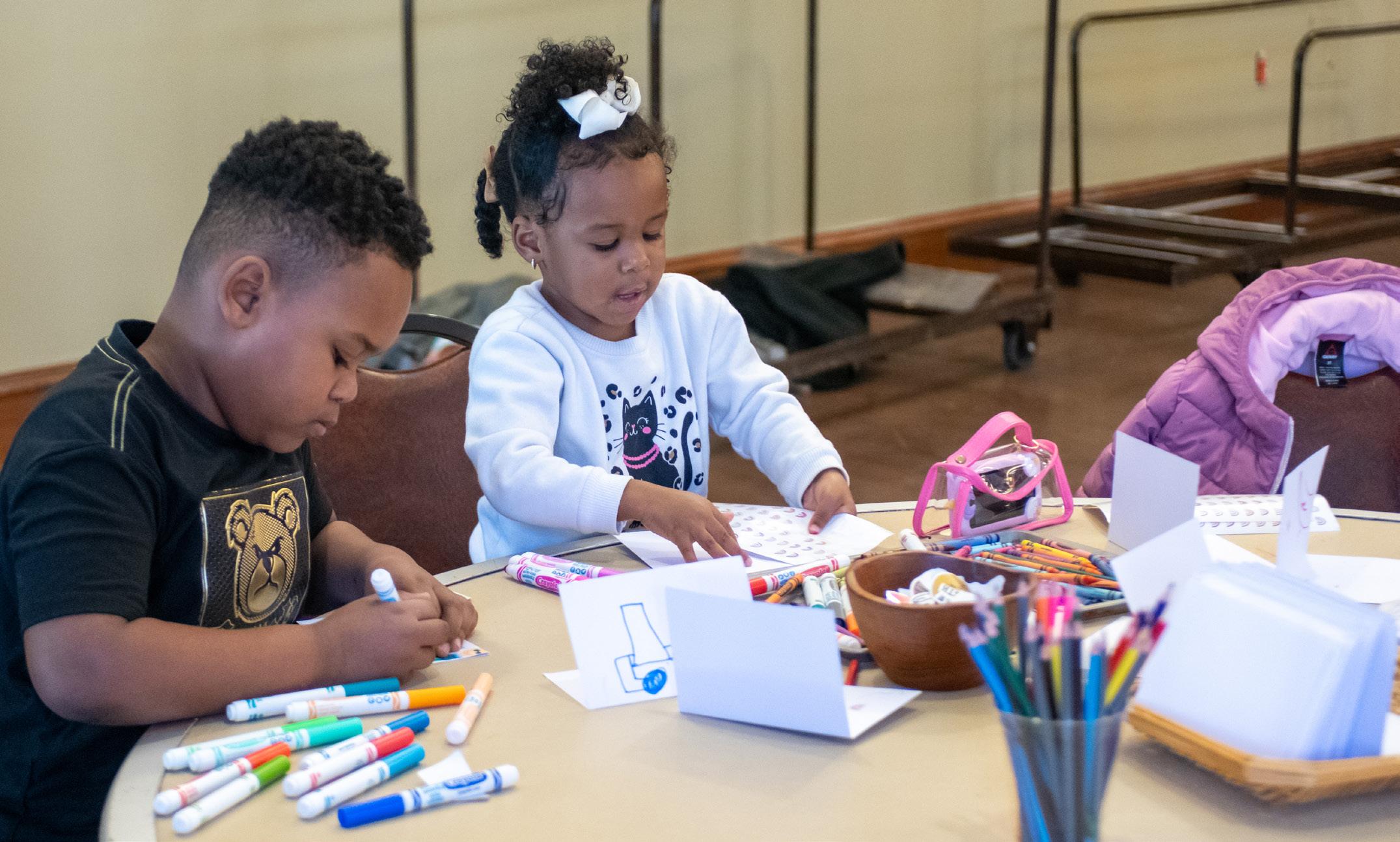
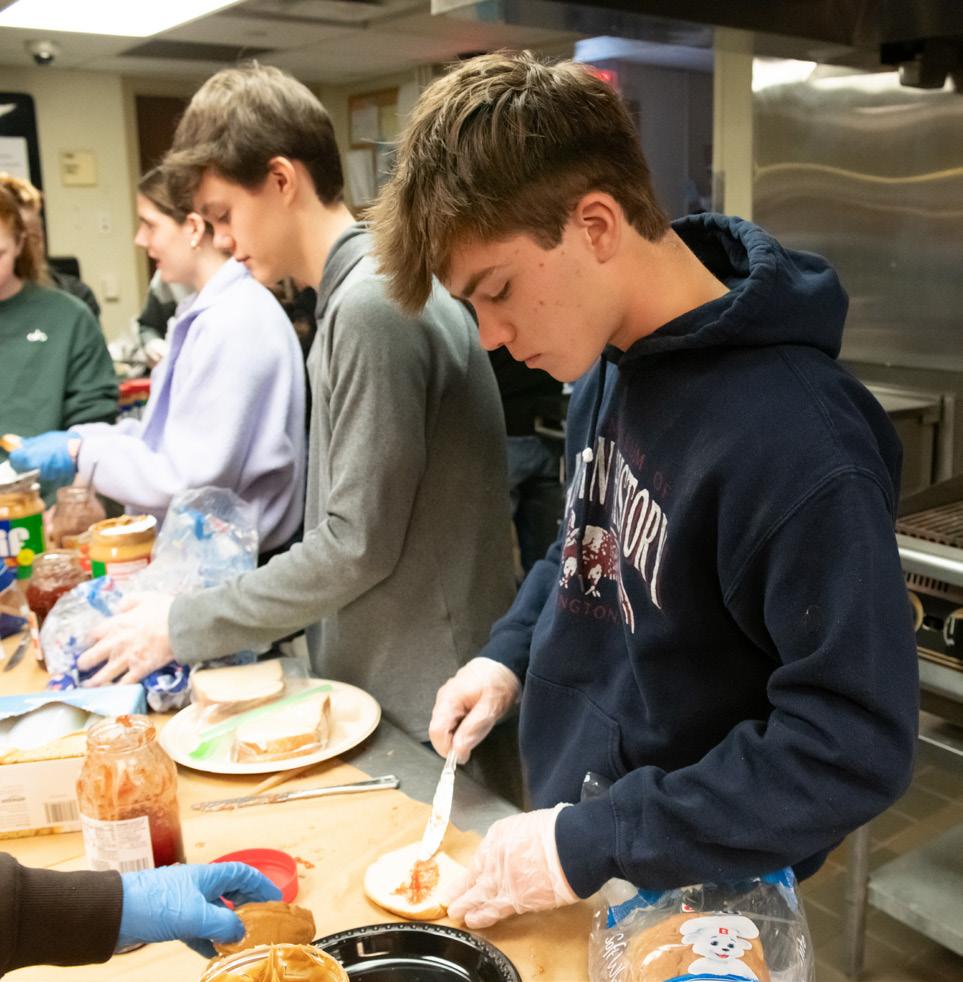
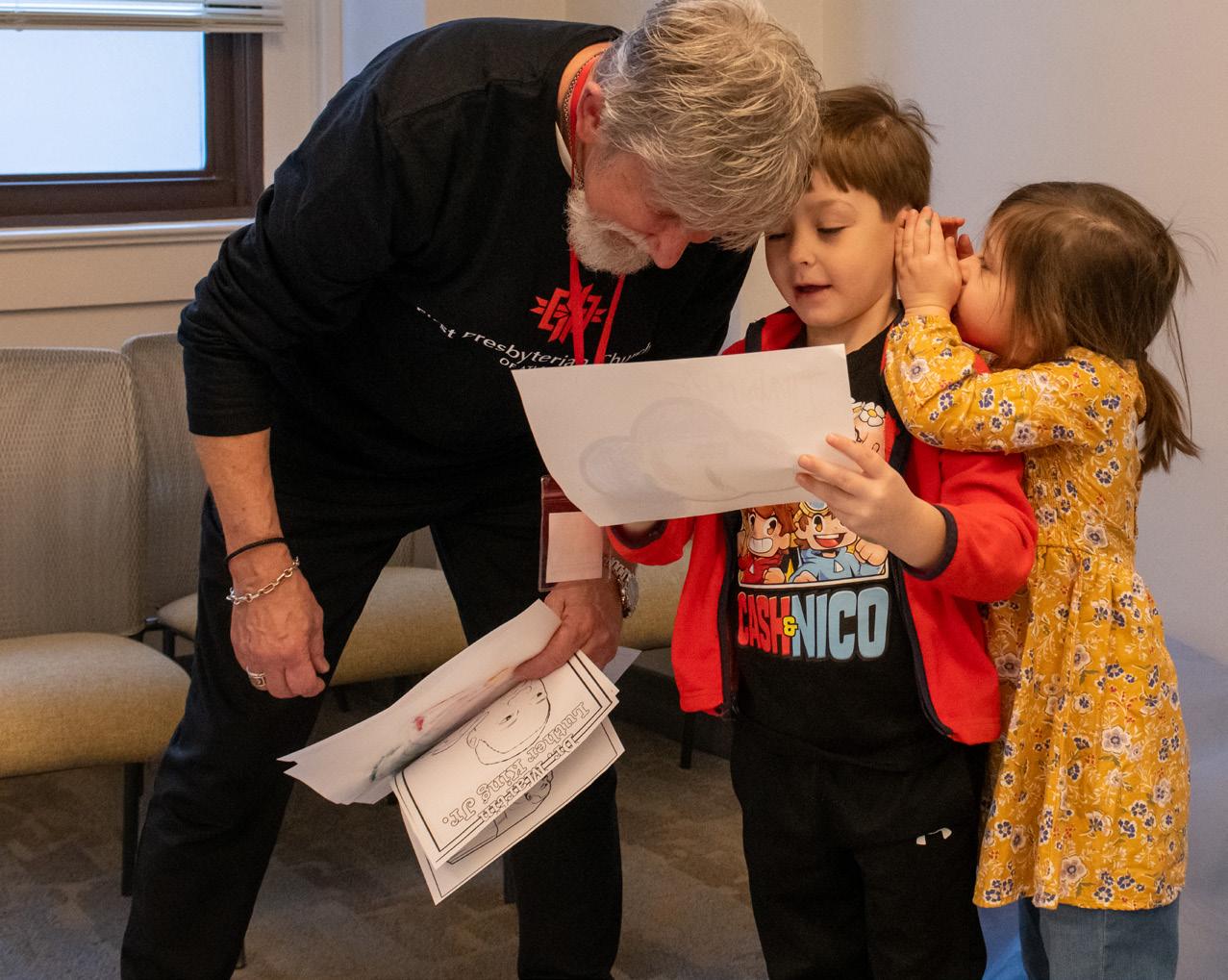
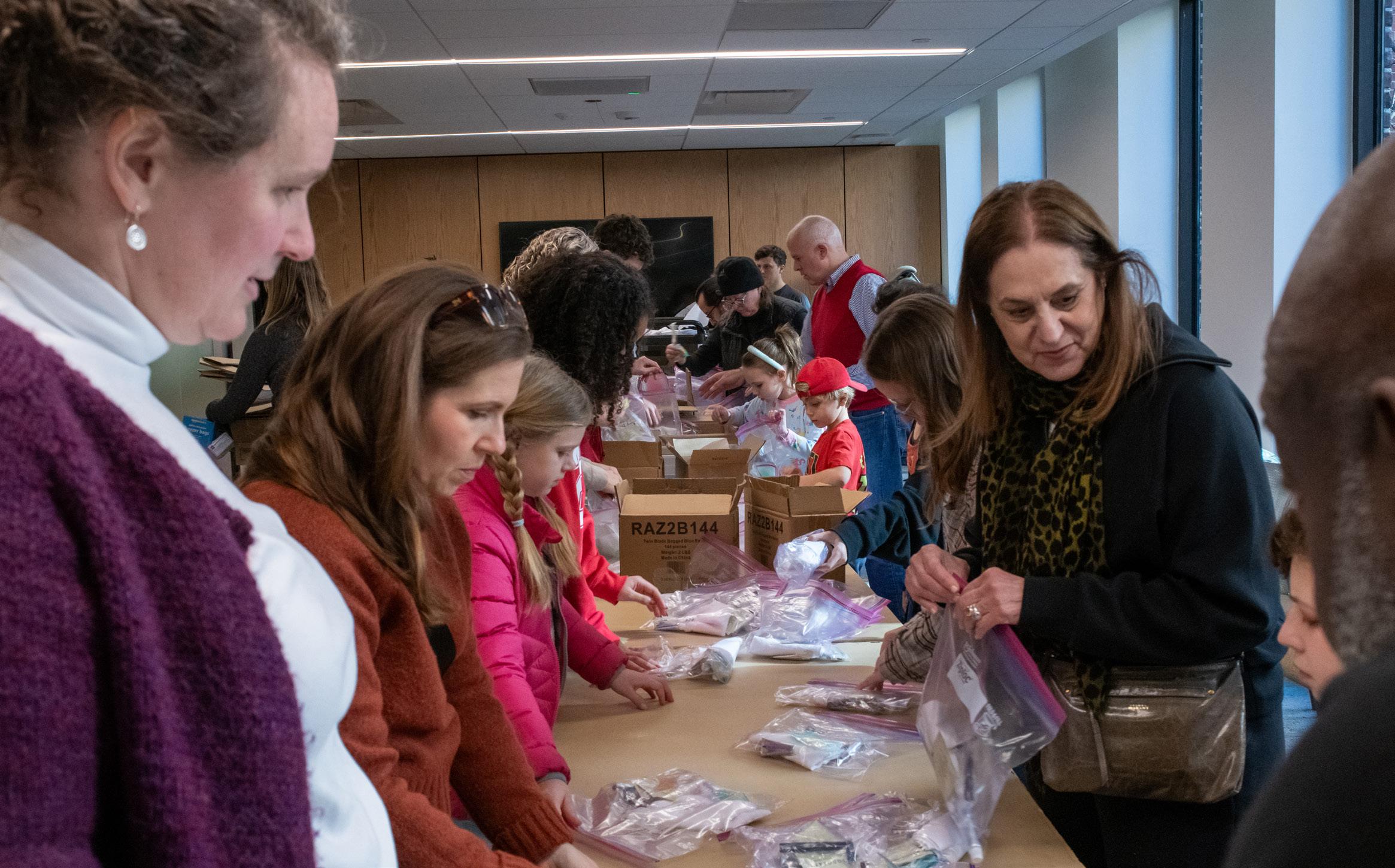
We had more than 170 individuals volunteer at our MLK Day of Service. Volunteers included church members and various community organizations. Activities included making lunches, hygiene kits, and an interactive story core event.

EXPERIENCE A VIDEO FROM OUR MLK DAY OF SERVICE BY SCANNING THE QR CODE ABOVE