YOUNG DRIVER FOCUS 2024 REPORT
In association with





In association with
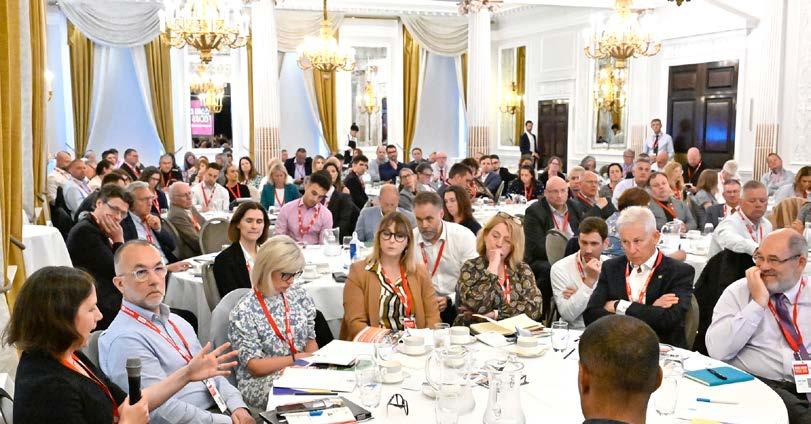
I am pleased to write the welcome for the Young Driver Focus 2024 report, which captures the key points from a fantastic day at the Royal Automobile Club in London on 22nd May.
This conference, featuring renowned experts in the field, succeeded in engaging and inspiring everyone who works with young drivers. The agenda included sessions on the latest research, government updates, and insight into the latest practical interventions. This report captures the key moments and allows others who were not present to share these learnings too.
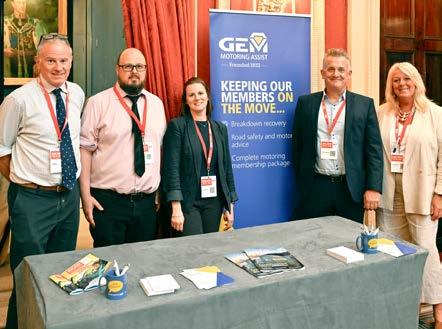
GEM Motoring Assist, as a road safety and breakdown organisation, is not just lead sponsor of this event, but a committed advocate for road safety. We wholeheartedly support any initiative that can make the roads safer for young drivers. Our proud history of working with partners to support innovative schemes and initiatives that can improve safety for young drivers is a testament to our unwavering commitment to this cause. We invite potential sponsors to join us in this journey.
The GEM Road Safety Charity was established in 1985 to help promote road


safety and to reduce the number of people killed or seriously injured on the UK’s roads. This remains at the heart of everything we do and our work in supporting worthwhile projects and initiatives across the UK serves this purpose. A new funding round, which will be open for applications from later in 2024, offers an opportunity for like-minded organisations to join us in our mission. I am proud to play my part in continuing GEM’s work in road safety advocacy.
Please enjoy the report and feel free to share widely with other like-minded road safety professionals.
In association with Supported by Organised by


DR IAN GREENWOOD Road Safety Campaigner
The revolving door of young driver safety policy
PAGE 6
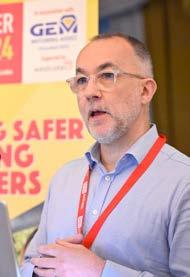
LOVEDAY RYDER CEO, DVSA Supporting young drivers through a lifetime of safe driving
PAGE 8
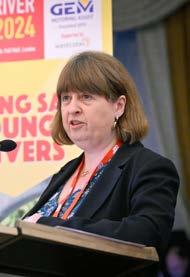
LAURA HILL Head of Marketing, DfT THINK! campaign update
PAGE 12
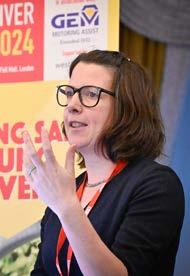
JACQUELINE UPTON Senior Advisor, National Highways DR SIMON CHRISTMAS Social Researcher, Simon Christmas Ltd Novice drivers and safe distances
PAGE 16


NICOLA WASS CEO, So-Mo Redefining road safety: The transformative power of behavioural science
PAGE 20

LORNA SMITH Team Leader, Safer Road Users Kent County Council Young driver and passenger intervention
PAGE 24
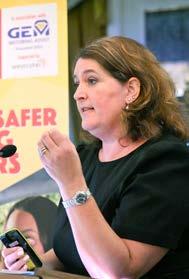
SHAUN HELMAN
Chief Scientist, TRL
JILL WEEKLEY
Principal Consultant, TRL
Achieving greater and more varied on-road practice when learning to drive. What works?
PAGE 30



KEANAN
LLOYD ADAMS
Influencer, FirstCar
TikTok – the next frontier in young driver engagement
PAGE 34

CHERYL EVANS
Senior Road Safety Officer, West Berkshire Council
DCI MIKE BETTINGTON
Roads Policing Department, Thames Valley Police
DR ELIZABETH BOX
Director, ECM Research Solutions
GoDRIVE. Reinventing the wheel!
PAGE 36




IAN EDWARDS
Managing Director, New View Consultants
CHRIS BOSTON
Road Safety Lead, Devon & Somerset Fire Rescue Service
Rerouting the appeal of fear in young driver education
PAGE 38
OLLY TAYLOR QPM
Co-Founder, The Honest Truth Driving Instructors - an undervalued touch point with young drivers? Not anymore.
PAGE 42



DAN QUIN
Chief Fire Officer
Surrey Fire & Rescue
ANNABELE PRIEST
Road Safety Officer for Devon & Somerset Fire Rescue Service
A collaborative approach to young driver safety education
PAGE 44


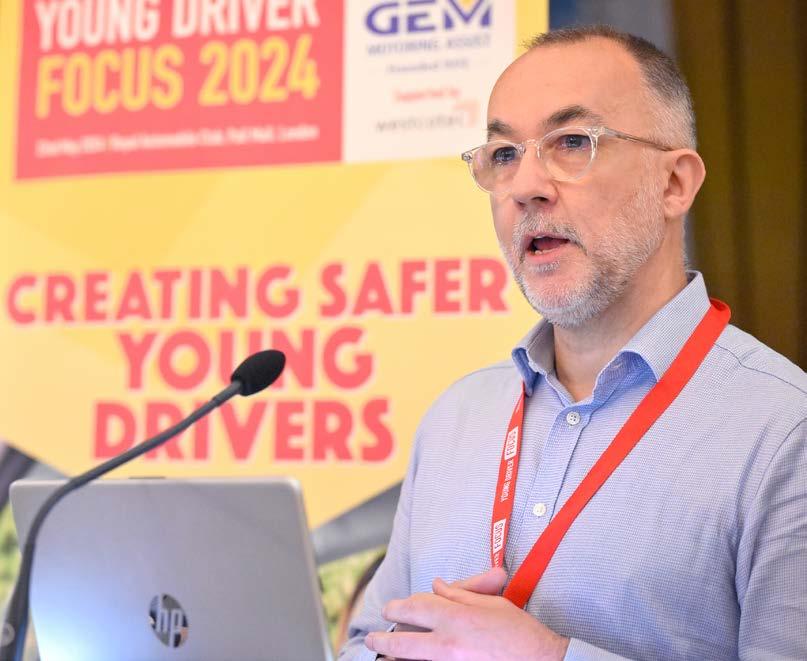
Ian campaigns to stop road death in Britain. This follows an NHS Career as a nurse and senior manager, researching a PhD in ‘the politics of road death’ and, most importantly, the father of two daughters involved in a young driver crash – Alice (forever 12) was killed, and Clara was seriously injured (now 22).
My contention is that until now, the House of Commons does not believe there is a road safety problem in need of policy attention, and that existing policy solutions are too controversial or costly. The politics is too cautious because it fears alienating voters. Instead, the dominant framing is car-centric, people-blaming, and reinforced by language suggesting crashes are accidental and unavoidable. This has a direct impact on the number of deaths and serious injuries on Britain’s roads. Meanwhile, emergency services, the health and care sector, highways and others are struggling with the consequential pressures that road crashes intrinsically bring about. With young drivers, the policy to reduce death or serious injury has been going around in circles, with an optimism bias towards
policy solutions that have less evidence of reducing road death or serious injury, such as learning and testing. The Graduated Driving Licensing (GDL) option is left on the back shelf, despite decades of evidence of reductions in deaths or serious injuries of between 20% and 40%.
The House of Commons has spent decades hoping that psychology and physiology are not relevant. Reviewing the progress of discourse within the House of Commons on young driver safety policy between 1987 and 2021using Critical Discourse analysis for my PhD thesis - young driver risk was first referenced in 1937, and GDL was first described in 1993. Yet despite this, and regular Transport Committee reports and Parliamentary processes, GDL has not been implemented, and the Department for Transport,
as recently as May 2024, states it has “no plans to implement GDL”.
The road safety community, in their 'Manifesto', are calling for GDL, and 24 academics had a letter published in The Guardian calling on government to address young driver risk. The dissemination of the evidence backing up the efficacy of GDL, a petition calling for GDL, and significant media coverage have all contributed to a significant increase in the discourse on the devastating consequences of young driver crashes.
There are several factors that could be influential in advocating and lobbying for GDL:
● Public engagement through further media involvement
● Define a British GDL to provide clarity and encourage support
● Influence a change in the language used to describe GDL. Instead of framing it as restrictive, unfair, removing freedoms, unpopular, controversial, and impractical, reframe it as a supportive transition, targeting risk areas, reducing death and injury, and resulting in cheaper insurance.
● Challenge the accuracy of misleading reporting or descriptions of the consequences of GDL, improving the communication and dissemination of the
evidence available.
● Lobby politicians to increase the visibility and support for GDL in Parliament.
● Gain better public support from influential organisations for the work of the campaign groupForget-me-not Families Uniting.
● Rebalance some of the reporting of young drivers and their passengers towards the consequences of young driver crashes – i.e. ‘other road users’ who are killed or seriously injured. In conclusion, we know
The politics is too cautious because it fears alienating voters. Instead, the dominant framing is car-centric, people-blaming, and reinforced by language suggesting crashes are accidental and unavoidable.
the policy solutions that reduce death and serious injury from young driver crashes. However, national politicians do not see, or are unwilling to acknowledge, a policy problem. It means that politics is not moving in step with the reality of the carnage on our roads. However, with the profile of young driver crashes and the interest in the reality and costs of young driver casualties increasing, this could prove to be the opportune time to lobby for a change in the law and real change on the road. ◆
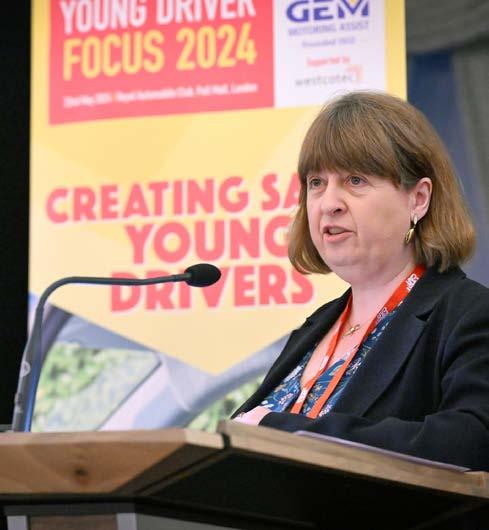
Loveday has been the Chief Executive of the Driver and Vehicle Standards Agency (DVSA) since January 2021. She previously worked in the Ministry of Justice, where she successfully held several senior roles in organisation design, change management, and programme delivery.
Before joining the Civil Service in 2006, Loveday worked in a specialist management consultancy delivering business change, performance improvement, and IT programs in both the public and private sectors
The Driver and Vehicle Standards Agency (DVSA) focuses on making our roads safer, improving services, setting standards for drivers and vehicles, and informing, educating, and advising customers and stakeholders.
“Our mission is to keep Britain moving safely and sustainably”.
Most people’s first real interaction with the agency is when they begin the learning-to-drive process. So, supporting young drivers is an essential area of their work and it has a range of resources to help inform and educate young drivers, especially when it
comes to road safety. These include: The 'Ready to Pass?' campaign; Pass Plus post-test training; learning materials on the Safe Driving for Life website; The Highway Code; and supporting THINK! and their various campaigns.
DVSA are in charge of setting standards to assess
and test drivers and vehicles and licencing, accrediting, and enforcing driver training services. Road safety is highlighted as the central thread that runs through all of this.
“Most importantly, we inform, educate and advise, and we want to ensure we encourage genuine behavioural changes.”
Working with partners, the DVSA is also focusing on sharing resources from their 'Ready to Pass?' campaign at school and college level.
The ‘Ready to Pass?’ initiative partly attempts to reduce the waiting times for driving tests. It is also about improving attitudes to learning and ensuring candidates are fully "test ready" before taking the driving test.
“This sets out the knowledge, skills and experiences that new drivers need to pass their test and drive safely on their own and independently”.
The pass rate for both tests remains below 50%, increasing retest numbers and waiting times, as well as learning costs. Research has found that 40% of learners take the Theory Test before even having a driving lesson and then book a practical driving test as soon as they pass. However, this should ideally be "an holistic
process", with theory and practical learning supporting on-road practice. It is very important to encourage as much on-road practice as possible, combining private practice and lessons, widening the learner’s experience of varied driving conditions. At present, just 47% of learners combine private and professional practice.
So far, 95% of learners say the ‘Ready To Pass?’ campaign has been useful.
Meanwhile, the take up of the ‘Pass Plus’ scheme remains disappointing. Although it aims to add extra training post-test, only 4,000 new drivers (2023-24) undertook it. The agency is looking to review the scheme in the future.
Working with East Sussex County Council and the Behaviour Insights Team, DVSA is also trialling behaviour change interventions, including sending text messages to newly qualified drivers. These are designed to address behavioural factors contributing to KSI collisions, such as speeding, drinking and phone use while driving.
“If this is successful, we will look to introduce it for newly qualified drivers across the country.”
Meanwhile, the content
We are open to new ideas, so come and talk to us about partnerships. We are keen to develop new ones.
of the driving test itself is also being reviewed with the intention of including more independent driving. This will see learners spend more time driving independently and allow examiners to assess more areas where newly qualified drivers face the biggest risks after passing their test.
“Collaboration is one of our core values and we want to ensure we are creating better partnerships with stakeholders. By having a common understanding and agreeing on shared goals, we can continue to help each other and help our shared audiences and customers.
We are open to new ideas, so come and talk to us about partnerships. We are keen to develop new ones.” ◆

















The Immersive Community Education (ICE) Hub is a platform for sharing virtual reality experiences and 360 film for the benefit of road and community safety. Founded by FirstCar and Leicestershire Fire & Rescue Service following their production of the very first road safety VR film in 2015, the ICE Hub has now grown to contain almost two dozen films with a combined total production value of over £750,000.
Virtual reality lends itself perfectly to many safety awareness and education messages, by immersing viewers in a lifelike environment and presenting hazards,
risks and insight that would be too costly, impractical or dangerous to engineer in a live setting. Not only is VR a great media to get messages across, because the technology is relatively new, people are keen to engage with it and enjoy participating using either a headset or handheld device.
ICE Hub members have perpetual access to the whole library of film as it grows. To obtain membership you can either work with us to produce a VR film and contribute it to the Hub or make a financial contribution towards the cost of an existing VR production.


Over 50 members, including:




Working alongside the Older Driver Forum, this collaboratively funded film was designed to provide members with an intervention for mature drivers. Focusing on issues such as reduced physical mobility, impaired vision, hazard perception and the ability to judge speed, virtual reality provided the perfect medium to prompt discussion. Independent evaluation has since shown statistically significant results against all the objectives, proving that VR shouldn’t just be considered a medium for the young.


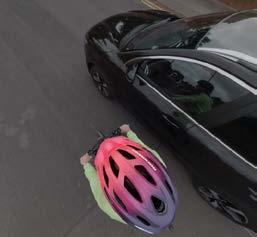


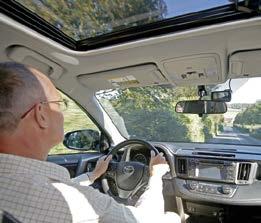
This short film was produced for cyclists and drivers, to demonstrate both unsafe and safe overtaking manoeuvres. Shot from a combination of cyclist and driver perspectives, we can feel the vulnerability of the cyclist and understand from the in-car view, what a safe overtake looks like. This film carries the theme of sharing the road and is narrated with actionable tips by both the driver and cyclist. It is non-preachy and to the point.
FirstCar Awards 2019Partnership Scheme Winner



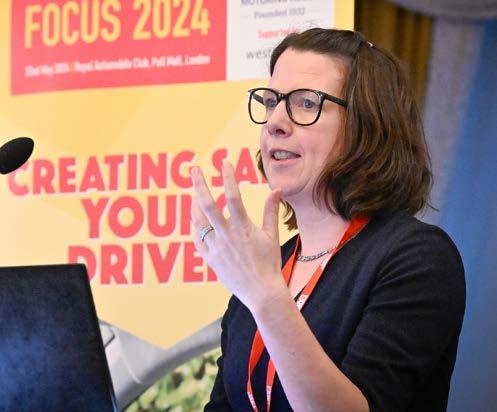
Laura has been working on public sector marketing campaigns for over 20 years, starting out on Teacher Recruitment before moving to the Department for Transport. Laura has led several high-profile THINK! behaviour change campaigns, from the first drug drive campaign to more recent campaigns supporting changes to The Highway Code, drink drive and mobile phone use.
Working across multiple THINK! campaigns has given Laura an in-depth knowledge of young driver attitudes. Her experience lies in strategy and insight, channel planning, partnership marketing and evaluation.
THINK! delivers three core campaigns each year as part of a three-year planning cycle. ‘Speed’ and ‘Drink Drive’ are core annual themes designed to consolidate and have a real presence on these two ongoing road safety issues, with an additional feature campaign being chosen to run during the 12 month period. Last year it was the ‘Highway Code’, this year is ‘Seatbelts’, and next year ‘Failed to Look’, subject to final approvals.
“In putting our plan together, we went through quite an extensive prioritisation exercise about all the road safety behaviours we can talk about, how we determine which we should be pulling out and drawing attention to, and ultimately changing behaviour.”
Focus goes on casualty
data, trending issues, the attitudes of our young audience compared to the general public, the policy landscape and how we need to support that, along with the potential effectiveness of a campaign. It’s important to know whether campaigns have been effective, and where improvements can and should be made.
“Our target audience remains young men who are most at risk with more entrenched attitudes and behaviours. They are more likely to see risky behaviours amongst their peer groups and are less likely to see these behaviours as unacceptable compared to the general population.”
During the-pandemic, attitudes to risk and unacceptability have worsened. We are operating in a challenging back drop to shift attitudes back to where
they once were.
Over the last five years, work has been focused on the ‘Mates Matter’ strategy. This strategy involves using mates, friendship groups, and positive peer group influence to change attitudes, rather than authoritarian voices or approaches. It has proven to be effective in changing attitudes and behaviours across core behaviours.
The THINK! brand has 70% awareness amongst the target audience, and nine in ten young men have positive associations with it. Trust in the brand is at 77%.
Partnership and placement remain crucial to the brand’s success.
Awareness of the social consequences has been seen to be a leading area of influence on attitudes to risky driving behaviour, with research including samples
across social demographics and rural and urban populations.
“Research carried out has found that when it comes to young men, it is about controlled risk rather than safe driving. There is a code, and they have their own code about what is and what isn’t acceptable. Our job at THINK! is to try and interrupt that code and get them to rethink. Road safety is just not on their radar.”
THINK! research also found that young drivers believe the ‘driving licence is hard won’, so this is perhaps a key to encouraging safer driving practices going forward. We also found that delivering the ads at specific/appropriate times of the day, to specific audiences, and according to conditions on the road, also increased their reach and effectiveness.
Most recently, THINK! campaigns have included: CLICK is the sound - Over 13 years since THINK! had last run a seatbelt campaign. Wearing a seatbelt reduces the risk of death for drivers by 50%, yet four unbelted young people were killed or seriously injured every week in 2022. With car occupant fatalities, 30% were among 17 to 29-yearolds who were not wearing
seatbelts; 50% of young people know someone who doesn’t wear a seatbelt; while 40% think its less risky to not wear a seatbelt on short and familiar journeys.
There has also been some research breaking down the audience further, looking at ethnicity and social profiles. Some key trends were identified in fatalities amongst Asian communities in particular, as well as with low income families.
The campaign is focused on rear seat passengers, using peer influence and showing the social consequences young men face through not wearing a seatbelt. These are targeted in highly contextual
environments such as close to five aside football games and fast food drivethrough's. Partnering with relevant third parties helped build reach and relevance, e.g. the County Football Association and Uber. There is a stakeholder toolkit with access to the assets to be used for
Research carried out has found that when it comes to young men, it is about controlled risk rather than safe driving.
education purposes should you wish to - please get in touch with the team.
Full results are not yet in, but it secured some good coverage at launch and has exceeded the teams media buying targets achieving over 5.3M video views. Is pushing your speed worth it? - Speed contributes to around one in four fatal collisions on our road, killing and injuring 58 young people every week. But despite this, only 32% of young men consider it risky. Young people are more willing to encourage speeding rather than ask drivers to slow down. This campaign speaks to male drivers aged 17-24 to raise awareness of the impact that even slight speeding on rural roads can have. The campaign aims to deliver behaviour change through challenging that false sense of control – using unexpected events and conditions to pierce that bubble of over-confidence. It brings the risk closer to home through sharing statistics and relatable scenarios. It provides a clear path for action, for example, educating on how to tackle different conditions on rural roads. The campaign used innovative dynamic audio
technology to serve tailored ads specific to the weather, time of day, area etc. The campaign has delivered shifts in perceived unacceptability of certain behaviours, e.g. driving faster on familiar roads. The unacceptability of speeding is at a new high of 46%, but there is still work to do. Post campaign, young men had a better understanding of what 'driving to the conditions' means: 70% of young men recognise the campaign, with 85% taking action as a result of seeing the hero video. Meanwhile, 42% of those that heard the audio claimed to change their behaviour as a result.
Mates for life – the drink drive campaign ran in December 2023, supported by new out of home posters in proximity to pubs, encouraging young men and their mates to ‘listen to the red flags’ supporting intervention and raising awareness of ‘unintended’ drink driving - 50% of the target audience go out with good intentions but get carried away. The winter campaign saw an increase in those saying that its very unacceptable to let a friend drink and drive. It was found that 90% of those that saw the out of home posters took
action as a result. A summer campaign is planned and is now subject to election planning.
THINK! provides various free resources and a newsletter to help support campaigns. These are available to all road safety teams and organisations. There are also the options to upweight and increase potential influence and effectiveness with media spend in your area, There is also guidance available to help. If you wish to use any of the resources and perhaps add THINK! resources to help improve young driver road safety, please contact the team.
All assets are free to use via: think.gov.uk or email me: laura.hill@dft.gov.uk ◆
We need to dig down into the data, ask questions of the data, the detail, and ensure that we are targeting the right people and in the right way to ensure we get traction to change behaviour.

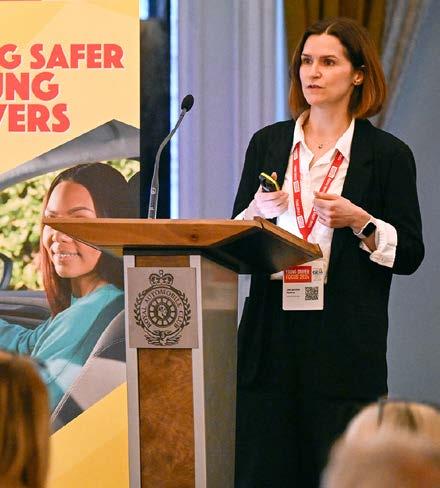
Simon is an independent social researcher with extensive experience in transport and road safety. He specialises in the use of qualitative methods to explore how other people experience, make sense of and find value in the world, as a basis for better policies, services or interventions.
In 2021 Jacqui joined the Social Research and Behaviour Change team at National Highways after 13 years working for the DVSA. Her knowledge and experience working in road safety social research is now supporting the development of both strategic and applied initiatives in National Highways by helping the organisation understand what its customers think, feel and do.

Tailgating – driving too close to the car in front – is a significant safety issue on our roads, as well as one of the biggest bugbear drivers have about other road users. It can make drivers feel scared, angry, frustrated, none of which are good for a safe or enjoyable journey. It is a factor in one in eight collisions - 87% of drivers say they have suffered it, while 23% admit to doing it .
Building on survey evidence, National Highways commissioned qualitative work to understand more about how newly qualified drivers learn and implement good practice. The aim was to build understanding to better support novice drivers to be good drivers on the Strategic Road Network (SRN) – specifically in relation to following distances. The project was phased over a four-week period with 24 novices aged 17-35.
The Highway Code tells drivers to allow at least a two-second gap between you and the vehicle in front on roads carrying fastermoving traffic and in tunnels where visibility is reduced. The gap should be wider as speeds increase. It
rises to 2.4 seconds – about 53 metres – when driving at 50mph and 3.1 seconds – or 96 metres – at 70mph . Many of the participants recognised the ‘two-second rule’ and ‘fixed-point technique’ for managing space when shown them. However, their unprompted recall of both the rule and the technique was low. Moreover, by the end of the research, many reported that - contrary to what they had believed to start with - they were probably not leaving enough space between themselves and other vehicles, especially in busy but free-flowing traffic.
Roads are a site of complex social interaction, and the space in front of the car is not just a safety margin - it has other important social meanings. As currently framed, the 'two-second rule' provides little practical guidance to novices on handling these additional pressures. Participants struggled with the idea of counting time as a way of calculating distances. It seemed very counter-intuitive to themsaying that space is something visual. In terms of the technique, there was a lot of resistance to it and
The aim was to build understanding to better support novice drivers on the Strategic Road Network.
reluctance to use it. There was frequent reference to it being ‘effortful’ and, therefore, distracting from the main task of driving. Much of the process of learning to drive is about making effortful processes non-effortful, things you can do automatically as you get better. It's possible this counting process of the two-second rule seems like a step backwards. Is there a way of changing the technique so it fits better with the driver’s needs and expectations?
Another interesting finding is the response to leaving space in front of your vehicle. We all want to fit in with the flow of traffic, and if the prevailing culture is not to leave space, it is difficult to go against this popular view, especially when driving. The hypothesis coming out of the research is that
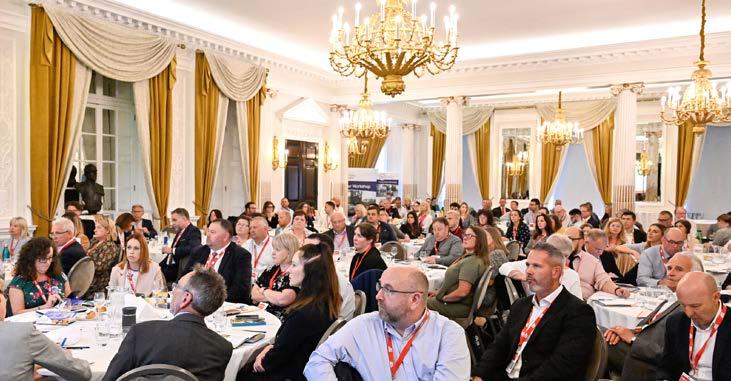
people are seeing this space in front of the car as a breach to the normal flow of traffic. While using the two-second rule, this space is the safest margin if the car in front stops. In the real world, that’s not the only meaning, it can also signify an obstruction to flow. Roads are social spaces governed by social norms and, as a result, that space can have different meanings.
Any definition of ‘a good driver on the SRN’ has to work for real humans. We need to ask if that definition describes something a real human can and will actually do. Our findings raise questions about whether the fixed-point
technique in particular meets that requirement.
To be useful to novices, a definition of ‘a good driver on the SRN’ also has to help them drive on the real SRN. The network is a site of complex social interaction, and the space in front of the car is not just a safety margin: it has other important social meanings. The two-second rule as currently framed provides no practical guidance to novices on how to handle these: indeed, it can appear to create more problems than it solves.
Assessing the research's conclusions, it suggests a need to review the 'fixedpoint technique' and the 'two-second rule' in more
depth, a small qualitative sample is not enough to draw firm conclusions.
Any definition of 'a good driver on the SRN' has to work for real humans. We need to ask if that definition describes something a real human can and will actually do. Our findings raise questions .

Nicola has over 20 years of experience bringing the human perspective to the heart of policy, service, and intervention design. She has an in-depth understanding of the frameworks and insights that drive effective behaviour change, blending the principles and practice of behavioural science, cognitive and social psychology, and service and experience design. Her clients have included the six largest UK local authorities, hospital trusts, ICS (integrated care systems), and national government.
How often have we seen behaviour change interventions fail due to insufficient insight into the problem they were commissioned to solve?
Behavioural science offers a way to bring much needed rigour and insight into the world of behaviour change. It is the science of human decision making and behaviour, using academically validated principles, insights, and methods to first understand why a behaviour is occurring and then to verifiably change it.
“You could argue that behavioural scientists are more like the ‘MedMen’ of behaviour change, than the ‘AdMen’: more Douglas Ross from ER who ascribed to a model of medical diagnosis, testing and aligned
treatment, than Don Draper of Madmen fame who appeared to thrive on pure intuition and creative brilliance, fuelled of course by plenty of whisky sours and cartons of Lucky Strike!”
Nothing is black and white, and the ability to think laterally, ‘join the dots’, and embrace the creativity of thought has enormous value when solving realworld problems.
A couple of years ago SoMoCo were asked to investigate high casualty rates in East Birmingham, home to a predominantly South Asian population.
Birmingham City Council had hypothesised that this may be due to a culture of car racing on public roads. Like a medical doctor, SoMoCo sought to make educated guesses about
what was really going on in the early stages of their work using readily available, easily accessible data. More diagnostic tests could come later on in the investigation. A review of casualty statistics revealed that unusually high passenger casualty rates were driving up overall injury figures. Although these were seen across all ages, they peaked between ages 16-24.
Injuries from car racing were negligible. Instead, the hypothesis was that this was due to low seatbelt wearing. An observation of 507 vehicles confirmed this to be the case.
Seatbelt non-wearing rates in the area sat at 38% - a staggering seven times higher than the current national average of 5.6% (DfT 2021).

Their second hypothesis was that low wearing rates resulted from insufficient awareness of risk and low motivation, partly caused by a lack of cultural tailoring in prior seatbelt campaigns. SoMoCo arrived at this conclusion after reviewing 20 years of seatbelt campaigns, all of which effectively used emotional content to drive up motivation but they
exclusively featured white British actors, aside from one minor character.
“Emotion is a very effective behavioural change lever, so there was nothing wrong with the original approach. However, if the person viewing the campaign doesn't see themselves or their life reflected in what they see, their ability to feel empathy is reduced –empathy drives emotion
If the person viewing the campaign doesn't see themselves or their life reflected in what they see, their ability to feel empathy is reduced.
and, in turn, activates intent, memory and recall. This appeared to be a case of ‘message not received’”. Their second hypothesis was also validated. SoMoCo established an ethnographic community of twenty South Asian young people to help them develop deeper insight into the ‘why’. Of this group, 20% admitted to regular lapses in seatbelt wearing, and online tests revealed
poor awareness of risk and low motivation to wear.
To change behaviour, you treat the cause. Emotion was a validated remedy for the cause, so they decided to continue exploring this as a response. However, this time, they made sure to culturally tailor content to our audience.
This turned out to be the correct strategy. A randomised trial involving over 400 young people, of whom 50% identified as South Asian, revealed that the culturally tailored campaigns they’d created to test messaging, performed significantly better. Notably, the level of emotion registered by South Asian respondents when viewing one of the tailored campaigns was three times greater than the level of emotion experienced by non-South Asian young people watching.
“We need to dig down into
the data, ask questions of the data, the detail, and ensure that we are targeting the right people and in the right way to ensure we get traction to change behaviour.”
Tailoring the content to the audience generated the necessary levels of empathy, emotion activation, intent, and recall of the message.
However, to create real–world change, the campaign needed to be taken online, where young people could share their news and information via their social media channels.
A new campaign was co-designed with a new group of young people from the local Asian community. The resulting campaign was community-driven, made for and by the community, featuring local boxing gyms and people. In-depth behavioural analysis underpinned messaging

We need to dig down into the data, ask questions of the data, the detail, and ensure that we are targeting the right people and in the right way to ensure we get traction to change behaviour.
and content that resonated deeply with the young audience. Messaging harnessed the potent behavioural lever 'anticipated regret,' leading to a staggering 82% reported increase in seatbelt use among the least compliant. Engaging 470,697 young people, the campaign captured attention and achieved unprecedented recall rates 4-8 weeks post-viewing, challenging accepted cognitive processing and memory models.
The key to success was the investment of time and energy in understanding the intended audience, utilising local insight, and adopting a ‘story first and the message second’ approach—something that allowed it to cut through the noise of social media and gain traction with its intended audience. ◆







Lorna is a qualified teacher who has worked in primary, secondary and adult education. She spent 21 years with Kent police, undertaking roles in crash scene management, investigation and deployed as a family liaison officer for fatal crashes. She has worked within Kent County Council Road Safety team since 2019. In that time, she has been involved in a range of education, training, and interventions for the 12 to 24-year-old demographic. Lorna is currently the Safer Road Users team leader supporting Kent in their Vision Zero strategy.
Kent County Council launched their hybrid virtual Young Driver & Passenger course in 2020, designed to empower the learner, the novice driver, and young passengers to make safer choices when they get into a car. It has undergone a three-year evaluation to understand what really works and why, based on the data and intelligence led.
“There is a notable change in what we are doing now, how we are doing it, and there is a much greater understanding and appetite to move away from trauma and the fear arousal style previously used. The evaluation has been about looking at how we educate. There has been a huge cultural change in the way we work.”
The road safety industry is now very much evidence led. Evaluations are so important in finding the best ways to achieve the greatest results, especially when time and access to the audience is limited.
“It is about the flexibility of delivery. The biggest nemesis we have is the educational system itself in schools.”
Finding an intervention that fits all schools in any
particular region is tricky, so interventions must be flexible and suitable for all student ability levels.
Because of this, it’s important to understand in detail the educational framework set out by the National Curriculum, assessing how you can link appropriately into the different requirements of national, local and individual educational needs. In turn, it allows the schools to embrace the interventions for use in their own specific educational environment. Key Stages is a particularly important document to study, allowing you to find the crosscurricular threads that can include relevant road safety interventions. It's about fitting your needs into the school or colleges needs, rather than adding to the workload of teachers or institutions. Everyone needs to be onboard.
“It is very valuable to use peers to deliver the messages. We can facilitate the programme, but having relatable people present and delivering the messages makes a real difference to the way the young audience receives and retains the information.”
Crash data, attitudinal
surveys, and explanations of why crashes occur, all provide the young audience with the knowledge to enable a greater depth of understanding, while deploying relevant motivators to encourage them to make safer choices. This supports young people in identifying with the messages and reducing the barriers to safer driving.
The Young Driver & Passenger Course is a five-part programme encouraging the normalisation of positive behaviours in the car. Virtual pre-recorded delivery consists of four sessions, while a fifth session is delivered live and face-to-face.
IT INCLUDES:
● Driving and Seeing - understanding the limitations of human vision in relation to vehicle control
It is about the flexibility of delivery. The biggest nemesis we have is the educational system itself in schools.
and the road environment, promoting the message that driving is a complex task demanding multiple functions, recognising what are likely distractions and how these can be reduced.
● Speed and Forceunderstanding what allows a car to corner, brake and accelerate. Exposure to how tyre condition and weather will impact on driver and vehicle performance, and how speed and force are connected, specifically focussed on how objects will move within a car on impact.
● Impairment - with a focus on drugs and alcohol, a session to explain how alcohol and drugs impact vision, thinking, coordination and emotions. Provide appropriate information on legislation measures and the implications of driving offences when a driver is impaired.
● Impulse and Control - how driving can be affected by our emotional state, the way it can impact on decisions and concentration.
Exploring the improvement of management and impulse control.
● 5live - The final open session, delivered face-to-
face in the setting, provides an opportunity to respond to questions associated with technical skills, legislative queries, or practical advice.
“The live Q&A means we are able to respond to anxieties that are going on at the time with young people.”
Facilitated by a range of young people, and without using fear or threat, the programme can be shaped to the needs of the educational establishment, providing scope for flexibility within varying timetable demands.
Local or national events may affect the way young people think or act around the issues of road safety, from trusting police officers, to young male drivers using ‘jammers’ to block their insurance ‘black box’ devices. Q&A sessions, especially during the fifth session, allow a better understanding of specific concerns, whilst also gaining better insights into any growing issues on a local or general level.
“It is also important to convey the understanding that road safety is a lifelong learning process.”
The maintenance of key messages is supplemented through their Speak Out campaign.
Campaigns must be based on verifiable data and proven to work. Ensure the campaign can be used in schools and educational establishments by understanding curriculum requirements. It needs to be flexible to accommodate different demands and relatable to the specific audience. Providing the opportunity for live, face-to-face interaction is important to deal with any concerns that may arise within the audience through the campaign.
“My approach to education is ensuring we have got something that works, it has been evaluated heavily, and we are happy to share this with other local authorities that need it. Young people travel, so we need to have a consistent message throughout education across the country.” ◆
Campaigns must be based on verifiable data and proven to work. Ensure the campaign can be used in schools and educational establishments by understanding curriculum requirements.


The U17CC provides a completely different experience to any other under 17 driving organisation.
The U17CC is a family orientated club. Our Members are instructed by their Associate, normally a parent or guardian, and the member learns to drive in their car.
Associates are fully supported by the Club’s team of experienced volunteer instructors.
Members learn in a safe, secure environment, having fun and building understanding and trust.
Our members progress through a structured programme designed to produce all round better drivers.



Learning to drive soon?
Want to be a safer driver?
Pathfinder from the Under 17 Car Club Charitable Trust can help be your route to the road!
Pathfinder is an intensive, practical & comprehensive introduction to driving for prelicence drivers (age 15-17) delivered through intensive 5-day courses. #SafeAt17
There were 1,558 fatalities on Britain’s roads in 2021. 16% of road deaths are 17-24 year-olds, yet they only make up 9% of the driving population. Pathfinder graduates are four times safer than their peers when they begin driving at 17.



FirstCar celebrates two decades of being a road safety education leader, whether it’s through publishing award-winning magazines, delivering road safety conferences, or providing helpful resources to local authorities. Our simple aim is to better educate vulnerable road users.
Over the past twenty years, we have been on such a journey. We’ve worked tirelessly to develop close working relationships with hundreds of road safety authorities, police forces, fire and rescue teams throughout the UK, and many more in the private sector. Our common goal is to help deliver road safety education messages to vulnerable road users.


























Shaun is an applied psychologist who has worked in transport for over two decades. He is Chief Scientist for Behavioural Sciences at TRL.
Jill is Technical Lead for the Driver2020 project. She has worked in transport for nearly two decades and is a Principal Evaluation Consultant in the behaviour team at TRL.
and more varied on-road practice when learning to drive. What works?
One way in which the authorities have tried to improve the safety of novice drivers is to find ways to help them achieve more on-road practice during their learning period.
National Highways recently commissioned a project to undertake a rapid review of published literature, as well as interviews with experts from around the world who have been involved in the implementation of, or research of measures designed to increase the amount and variety of on-road practice in learner drivers. Instead, there currently seems to be a general acceptance that passing the driving test is just the start, and that the real learning takes place after this, unsupervised.
Research spanning several decades confirms that youth and inexperience contributes to an elevated risk - people learn to be safer over time. This risk diminishes rapidly during the initial months of unsupervised driving, highlighting the importance of on-road practice.
Plenty of good evidence demonstrates the protective effect of on-road practice in the post-test period. Some studies suggest increased variety and duration of practice during the learning period can enhance safety during unsupervised driving later.
“On-road experience is protective. We know that on-road experience when you’ve passed your test makes a real difference. The question is how we can increase the experience levels before you pass the test.”
The introduction of the Hazard Perception Test is a good example of how interventions designed to change how drivers learn can have a very positive impact. As part of the Theory Test, its introduction motivated learner drivers to gain an important skill by testing them on it. This research asked what similar interventions might exist to achieve higher levels of on-road practice. “If you get people to do more practice than they otherwise would do when they're learning to drive, they become safer drivers. That stands up
We know that on-road experience when you’ve passed your test makes a real difference. The question is how we can increase the experience levels before you pass the test.
theoretically and stands up empirically as well. Some people tell us that they passed their test and then they learned how to drive. This is a narrative that needs to change.”
National Highways oversees the Strategic Road Network (SRN), which poses specific challenges for inexperienced drivers (such as higher speeds and merging with moving traffic). This project examined interventions aimed at boosting supervised practice among learner drivers.
Mandating a minimum practice duration before taking the driving test appears to increase supervised practice.
“It is important to get learners motivated to do it. Mandating is one way of doing it, but changes to the test can also work as learners are very focussed
on passing the test.”
Additional support is also crucial. Effective systems should include clear guidelines, campaigns for learners and parents, interactive support programmes for parents and supervisors, and access to mentoring programmes as well as support for learners who will otherwise struggle to accumulate sufficient on-road practice.
“Any approach to this needs a supporting system of communications, advice and nuancing to be effective. It is not enough just to make changes to the test, there has to be the support around it to make it work effectively.”
Purely written interventions have little effect on their own, but they are in demand. Learners and parents universally perceive them as useful, but the evidence shows that written interventions are much more effective when they are interactive, especially when they involve parents and other supervisors. Supporting the supervisors is also essential to this process to ensure the best skills are being learnt while on the road.
“The non-professional supervisory role, such as
parents, is absolutely critical in getting learners to do more on-road practice, and there is a massive demand for support for those supervisors; they want the information. On top of this, a major barrier is lack of access to private practice for many learners.”
Australia has developed motoring programmes. These provide free access to a supervisor and a vehicle for the learner to gain that access. These programmes have developed over time to be more holistic road safety programmes.
A second barrier is the belief that getting through the test is all that matters. Better education needs to be provided to help people understand why that attitude is so wrong and dangerous, as well as support and information to help them gain more of the essential on-road experience that is widely recognised as being needed.
“An example of information provision in GB is the DVSA’s ‘Ready to Pass’ campaign which provides learners and supervisors with information about what it really means to be able to drive without supervision safely.”
The evidence we found
in this National Highways commissioned study suggests four things you need:
● Clear guidance on what the requirement actually is
● Publicity to make people aware of the requirement and its credibility
● Interactive support for the supervisory drivers
● Some way of getting access to supervisory support for those learners who are unable to access their own on-road practice.
“No one stakeholder is going to be able to address all these things. It’s a complex system of need and supply. It requires a system-wide approach.” ◆
Australia has developed mentoring programmes. These provide free access to a supervisor and a vehicle for the learner to gain that access. These programmes have developed over time to be more holistic road safety programmes.


Keanan's first ever job as an actor was with FirstCar back in 2017and he's been working with them ever since!
When he’s not running epic quiz nights or hosting £20k gaming giveaways with Acer, you’ll find Keanan producing young driver road safety content for FirstCar’s TikTok channel.
Over the past two decades, media outlets have become more niche and the search for reliable information more fragmented. Young drivers have begun moving away from Google, Facebook and Instagram, towards more short-form platforms, like TikTok.
All this presents a clear risk for road safety, as influencers and channels can easily propagate inaccurate information or, worse, glamourise risky behaviours to gain viewers. FirstCar has established a successful TikTok channel, and is now opening it up for
collaboration. This allows road safety professionals who would otherwise find it hard to maintain their own TikTok presence, to reach their audience through the power of @firstcaruk.
“The average time using TikTok by young people is 50 hours a month”.
Those using TikTok just cannot get enough of it, and the audience is growing. At present, 24% of 15 to 25-yearolds use TikTok, and the usage among young people is growing exponentially.
It’s the sixth most popular social media channel at present, falling behind the long-established Facebook,
YouTube, WhatsApp, Instagram and WeChat platforms. But TikTok use is accelerating and there seems little chance of the brakes being applied.
It is an ever-flowing river of content that you scroll through, only stopping when something catches your eye. It has perhaps the cleverest algorithm of social media channels keeping users hooked. It learns what you like and shows you more of what you like. So, in general, you are not looking for something, but instead waiting for something to catch your eye, or be fed directly to you. They are
usually short-form content videos, essentially fun based, but highly addictive.
“Posting effectively is a marathon, not a sprint.”
The more you post, the better your chances of being picked up by viewers and the algorithm. It’s a cycle that allows for viral posts. However, there is no point in spending huge amounts of time developing posts; you just need to post continuously, feeding the algorithm and hoping that something will catch the eye and pique the interest of the scrollers.
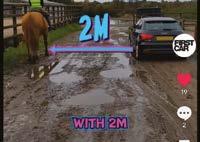
It's important to keep in mind that low cost, rustic real life reels tend to keep the audience from scrolling past you. Making films on a phone will automatically work better than trying to create a fancy, technologically competent film. It’s about authenticity and relatability - this really helps people key into posts.
“TikTok is also a search engine. The days of ‘Google it’ are going nowhere, but the age of ‘TikTok it’ are very much here and growing everywhere.”
The platform provides quick informative videos on how to do things, from making a cake to mending a car. Often rough and ready, they are fun twists on what is generally a more serious
process. This means that making these videos takes no time at all compared to the traditional YouTube video. Ongoing, it is relatively easy to keep posting and building audiences up and following you.
“So, if you want a video to go viral, posting ten quick films will give you much more of a chance than just posting one carefully curated one.”
TikTok is highly effective in attracting attention and getting eyes on the message, and it’s growing rapidly. Its simplicity makes it easy to use, and you know that your target youth audience will be on it and using it. If you know where they are, you know how to reach them, you are more likely to grab their attention.
An additional area of work that really matters, is addressing the comments to your post's thread. It means you can interact directly viewers and control the narrative. So, it is not just about posting, but engaging in an ongoing way to keep the conversation going. This also allows for a natural discussion and conversation between you, the message provider, and the viewer, but steering it in a way that’s serves the intention. One comment
The average time using TikTok by young people is 50 hours a month.
answered can easily evolve into a larger discussion group and conversation, reaching more of the target audience, and all through one post.
It's important to understand that TikTok, and social media in general, is the medium your target audience is using to gain information and entertainment. They are already there, but are you? Are you missing out on the conversation and the chance to have your say?
Viral videos can have a direct impact on changing views, attitudes, and habits. @firstcaruk provides a great opportunity for you to get onboard and begin working collaboratively to deliver your essential road safety messages in a way they will be received by your target audience.
“UK users spend the most time on TikTok than any other single country.” ◆
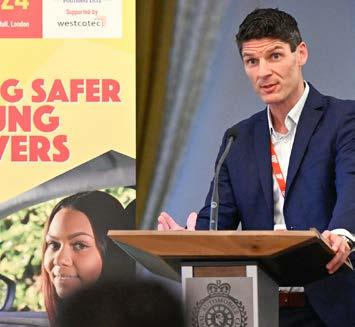
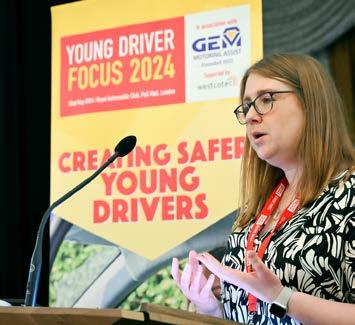
Cheryl has transformed the way road safety is delivered within West Berkshire during her 16 years of service. Her commitment to working in partnership is an expression of her complete dedication to the furtherance of road safety and the need to collaborate with other professionals in maintaining standards and pursuing innovative approaches.
Mike joined Thames Valley Police in 2003, having previously worked in Slough, Windsor, Reading, roads policing, Bracknell and Wokingham and then roads policing again, now as Chief Inspector. He’s worked on core response and CID in the past and has been involved in major events from the 2011 riots to the 2012 Olympics .
Elizabeth has a doctorate in Transport Psychology and is presenting work completed in her capacity as Director of ECM Research Solutions.
Thames Valley and Hampshire have spent many years delivering ‘Safe Drive, Stay Alive’, but since the evaluation of this programme in 2022, it was clear things needed to change.
Our response has not been about perfection, but has instead been about delivering a programme, led by data and research, that supports all our partners. GoDrive is part of our journey towards this end, one that we expect will deliver more effective road safety education to young people. “It’s fantastic to see the wealth of professionalism and experience we have in this field of road safety, but also the increasing amount of evaluation now being carried out”.
Over the past 16 years of Safe Drive, Stay Alive, 350,000 young people have participated in the programme. “We are really proud of what we have achieved in that time.” This is an incredible delivery success, but there is now widespread agreement about the changes that are needed to deliver education so that it can have the greatest impact on this target audience and support their
safety on the roads. The pandemic also dramatically affected young people, which also fuelled the need to re-evaluate our work. The key features of GoDrive are that it is a film delivered using peer group presenters which can be delivered in less than one hour. It has four interactive tasks built into the film, is flexible according to audience size, and has a web-based platform for central access and self-servicing. GoDrive aims to improve knowledge, attitudes, perceptions of risk and intentions toward safe driving practices. It covers ten top tips for remaining safe on the roads including themes such as speed, fatigue, mobile phone use and speaking out. Teachers were provided with information packs to support the delivery of the intervention and a follow-up email was provided to participants to reinforce the key messages and survey their intentions, attitudes, knowledge and perceived risk post-intervention.
“The results from the controlled pre-post evaluation that was conducted across 26 schools/colleges with 186 pupils showed that the intervention positively
The findings illustrate that perhaps we are not in road safety education focussing on the outcomes where there is the greatest scope for change.
affected intentions to practice more, speak out, perform hazard perception, and manage fatigue. Students also gained a greater realisation that travelling with two or more passengers significantly increased risk. The findings illustrate that perhaps we are not in road safety education focussing on the outcomes where there is the greatest scope for change, such as the perceived risk of driving with a car full of passengers. We need to ensure young people are positively influenced by road safety interventions and that this is backed up by consistent media messaging across all platforms, especially social media. We also need to make sure that there are effective sanctions which work as a deterrent to poor driving practices and address persistent offenders.”

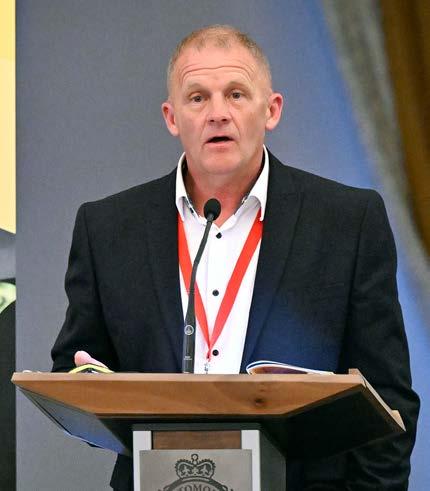
Managing director, New View Consultants
Ian is an award-winning road safety professional with over 25 years of experience in both the public and private sectors. Ian has an MSc in Social Research and Evaluation. He was commissioned by Learn2Live to research and design their new intervention. ( IE)
Chris has worked as a road safety lead for Devon and Somerset Fire Rescue Service for five years and has been involved in Learn2Live for 10 years. He is still operational and passionate about road safety. He has been pivotal in instigating a revised road safety education method for 16 to 24-year-olds within Devon, Somerset and Cornwall. ( CB)
Learn2Live is a road safety partnership comprised of blue light services and local authorities from Devon, Cornwall and Somerset. The partnership is coordinated by Devon and Somerset Fire Rescue Service Road Safety Team and is largely funded by Vision Zero South West.
Started in 2008, its aim is to provide road safety education events for 16 to 19-year-olds, seeing around 12,000 students each year in large theatre-style venues. For many years, Learn2Live events featured primarily testimonial accounts of RTCs from 999 service staff and members of the public. “I am still attending far too many road traffic collisions. Unfortunately, those traffic collisions often involve young drivers aged between 16 and 24. Far too many.” CB However, the road safety partnership has revised its programme with the help of Dr Elizabeth Box. Based on evidence and research, the approach to young driver education has been re-routed after implementing those recommendations.
While all involved in the previous programme did so
with the best intentions and the belief that it was the way to educate and help young people in cars, it is now realised that this can be carried out far more effectively using different methods and style.
“There should be no fear of change and rebooting young driver education, yet there is. With change comes progressions, and if we don’t front up to change, we won’t progress.” CB
For several years, best practice in young driver/ passenger education has been moving away from 'fear appeal' based interventions in favour of more effective approaches. Now, with the benefit of Dr Elizabeth Box's recent research recommendations, and in anticipation of new DfT guidance, road safety organisations and partnerships around the country are working on how to engage with young people without the use of fear appeal.
“Up until about 2018-2019, we thought we were doing the right thing, and what we passionately believed was helping our young students. But we realised we had to change and that we mustn’t be afraid of that change.” CB
I am still attending far too many road traffic collisions. Unfortunately, those traffic collisions involve young drivers aged between 16 and 24. Far too many.
Designing and evaluating best practice interventions for education takes money, time and expertise, which many organisations and partnerships do not have available. In addition, moving away from fearbased interventions means bringing all the stakeholders along with us to achieve a successful outcome. However, practitioners have been heavily invested for many years in a fear appeal approach, and partners who work with the key delivery teams, teachers and funders, often have long-held beliefs that fear is the best delivery mechanism. After all, fear-based appeal is engaging and impactful, so ensuring that young people, the target audience, are appropriately engaged in an intervention is also a challenge. Unfortunately, the research now finds it is
not helping solve the problems we are dealing with, or encouraging young people to act in a safer manner on the roads.
“We are now data-led after speaking to around 140,000 students. It is really important to ensure our messages get across. Because without getting our messages across to the end user, that young driver, it is all in vain.” CB
This new Learn2Live was rolled out in the autumn term of 2023 and received mixed feedback from those teachers and partners who had previous experience with the testimonial-style events. However, evaluation of this new intervention proved it had a positive effect on the target audience.
A pre- and postquestionnaire-based evaluation demonstrated that the new Learn2Live intervention made the participants less willing to engage in unsafe driving activities, they were more willing to take positive action to maintain their safety as passengers, were more aware of how vulnerable novice drivers are to impairment, and when they may be likely to make poor impulsive decisions.
“It is important to
recognise the limitations of education. Education won't fix everything, but educating people and helping them understand things allows important steps toward progress to be achieved. One of the things I have picked up on many of the evaluations I’ve done, is that the bits that are good in education are when they are getting new information that doesn’t fit or seem the same as what they have already had. So, it's very important when we are designing something, that it feels different, otherwise you don’t get the engagement.” IE
Changing the behaviour of young people on our roads has always been the acknowledged challenge, but changing the beliefs of those who deliver and facilitate that activity for the better has now proven to be just as challenging.
“What we wanted young people to recognise through this journey was that they have issues with decision making, they are inexperienced and lacking the safe templates about hazard perception, and that any amount of impairment will impact on them. So, we designed the presentation on those three elements.” IE While showing the images
and telling the truths of real life road tragedies is powerful and emotional it doesn't necessarily deliver the changes in behaviour we'd naturally expect. Evaluation of the data means we can really find the tools to deliver change, save lives and prevent the tragic life changing injuries that too many young drivers, their passengers and other road users suffer. It means challenging the established norms, as well as the exuberance of youth. Improving and evolving should never be seen as highlighting failures, but instead illuminating new, more effective methods of tackling a continuously moving problem. ◆
It is important to recognise the limitations of education. Education won't fix everything, but educating people and helping them understand things allows important steps toward progress to be achieved.
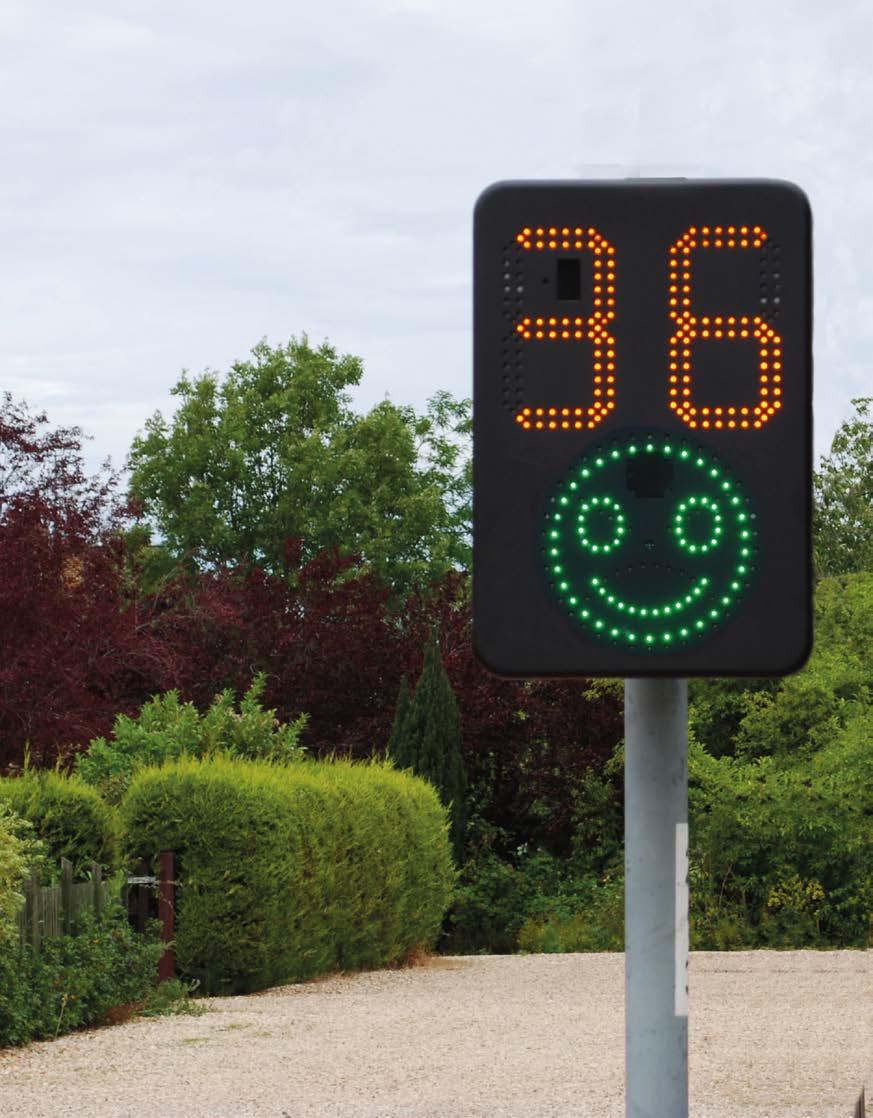
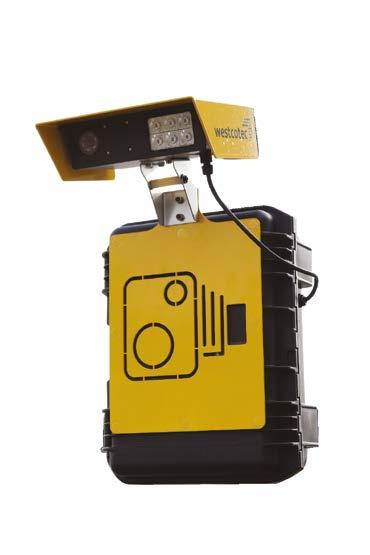
AutomaticSpeedWatchCamera (ASWC)specificallydesignedforthe automationoftraditionalSpeedWatch sessionscarriedoutbyvolunteerswithin thecommunity.
TheASWCdesignedandmanufactured byWestcotecinNorfolk,isaMadein Britainaccreditedunitthatisportable batterypoweredandtripodmountedto allowforrapiddeploymentand relocation.
Thedeviceitselfincludinglicensefree softwarewasdesignedincollaboration withPoliceforcesacrosstheUKto ensureitsusabilityandsuitability.
Oncedeployed,asimplesetupprocessusingaWindows laptopallowsforfastrecordingofoverspeedvehicles registrationdetails,togetherwithdate×tamp, speed,andbyusingaDVLAplugin,themake,modeland colouroftheoffendingvehicle.
WestcotecarepleasedtobeworkingalongsidePolice Forces,SpeedWatchGroupsandParishCouncilstosupply thisequipmentwiththeaimtoreducevehiclespeedsand ultimatelythechanceoffatalitiesduetospeedingonthe roadnetwork.

Olly served for 30 years as a Police Officer, with 13 of those in Roads Policing. He returned to the world of road safety to head up The Honest Truth, working with ADIs and partnerships to help make the next generation of drivers as safe as possible.
Driving Instructors - an undervalued touch point with young drivers? Not anymore.
ADIs are a touchpoint for road safety education, as well as offering exceptional value for money when it comes to delivering road safety messages.
“This is all about the power of context.”
Driving Instructors provide the opportunity for one-toone interaction and discussion over an hour or more, and usually every week during the learning to drive period. But unlike parents, they are independent and respected professional supervisors.
“Parents will know that if they try to give their teenage children advice, they will listen intently, take it on board, and then usually completely ignore it or do the opposite.”
If they’re lucky, road safety
professionals might get an hour or two at most with young drivers in a school or college setting, just a few hours during the whole of a young person's time in education. However, new drivers spend around 30 hours with their driving instructor over the course of learning to drive. Not only does this present an opportunity for additional road safety education, but the best kind - contextual and conversational. It is delivered at the very moment when learners are deciding what type of road user they want to become. It means ADIs are a powerful touchpoint for delivering the work we do.
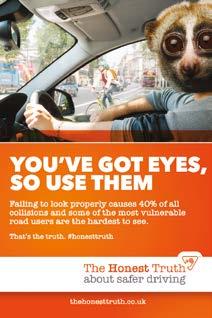
The Honest Truth (THT) is based on ten ‘truths’ – the fatal five (speeding, seat belts, mobile phones, carelessness
and drink driving) plus an additional five (drugs, distraction, showing off, insurance and passing).
The additional five include insurance, for example. Why insurance? Because it is the biggest single cause of new drivers losing their licence in the first year of having itincorrect cover or no cover.
“We believe that young people can handle the truth”.
The campaign has been designed to fit seamlessly into normal driving lessons. It allows the instructor to deliver road safety education in such a way that their learners just assume that ‘this is how everyone learns to drive’. It doesn’t feel like an imposition; it's just part of the learning process.
“We provide the tools for ADIs to deliver road safety
education directly to individuals as part of practical learning to drive lessons. No homework, no classroom sessions, no e-learning. Because with 30 hours, there should be no need for any extra barriers.”
THT used to be about paper-based resources, but during the Covid period and through feedback from pupils and ADIs, they decided that digital was the way to go, developing an all-inclusive App. This helps ADIs deliver road safety education to their pupils in the car during the driving lesson appointment, and at the most appropriate points in their learning journey.
There is inbuilt training and support, film clips to spark discussions, and revision questions to check information is retained. Young guest speakers provide additional short films that pupils can easily relate to. There is a Facebook group for ADIs and a direct contact path for any help, support or feedback they themselves might need.
THT has positively evolved and is presently in a period of high-growth take up by ADIs – it provides them with a useful resource, delivering essential road safety education in an appealing and effective process.
Exploring how effective the scheme is in moulding young driver behaviour, evaluation of the new App has revealed that it is working incredibly well in delivering effective road safety education. At the same time, ADIs are finding it a great support to lesson provision and structure.
“We believe ADIs are one of the most valuable touchpoints for delivering road safety education because of the ability to have one-to-one interactions. They are underutilised, under-valued road safety resource.”
THT is a cost-efficient and effective tool for road safety intervention. When broken down, it delivers each truth at a cost of 25p. That one truth might be the one bit of information that the driver remembers when they are faced with having to make a snap decision on the road, keeping them, their friends and other road users safe - all for just 25p.
“When you look at it, the cost of delivering ten truths about road safety, discussing the issues one to one, for a total of £2.50, it has got to represent one of the most cost-effective road safety interventions possible.”
THT wants to increase partnerships and collaborations, especially
with road safety groups, officers and local authorities across the country. Encouraging and supporting local driving instructors to join the scheme could have a huge overall effect on road safety outcomes. In a time of shrinking budgets, this low-cost, successfully evaluated road safety intervention, unbound by geography or institution, and focused directly, one-to-one, with the target audience at their most vulnerable time, has to be a valuable asset worth tapping into.
“Such is our success and potential, we can announce today that we have another new and important collaborator - the DVSA.”
THT are calling for all local authorities and intervention campaigns to consider joining together with them, and your local driving instructors, to deliver more effective and efficient road safety together. ◆
Such is our success and potential, we can announce today that we have a new and important collaborator - the DVSA.

Chief Fire Officer of Surrey Fire & Rescue Service (SFRS) is also the National Fire Chiefs Council Road Safety and Road Rescue Lead. Dan has over 20 years of experience within the industry since joining SFRS in 1999 and has specialised for many years in post-crash response. Dan is also the Vice Chair of the United Kingdom Rescue Organisation, a charity with the aim to ‘Advance Professional Rescue Together’.
Road Safety Officer for Devon & Somerset Fire Rescue Service. She is a key member of the road safety team and coordinates the Learn2Live partnership which runs road safety education events for 16 to 18-year-olds.
The National Fire Chiefs Council (NFCC) is designing and will deliver a new evidence-based road safety education resource centre. It is part of a collaborative approach open to all road safety organisations and professionals to contribute to, have access to and utilise completely free of charge.
“There is a need for a collaborative, national approach to road safety and road safety messaging, joining together and maximising the resources available.”
The NFCC Young Road User Toolkit will be hosted on Staywise, and is the development of a suite of young driver-focused products/packages that will be consistently delivered across partners.
“It feels like government, academics, and practitioners are starting to converge in a similar direction when it comes to young driver road safety education. Best practice education is understood to be evidenceled and have good quality evaluation, and as a sector we are starting to share that evaluation.”
As a profession, we aim to do no harm and protect young lives on the roads.
“Road safety is now one of the key priorities of the National Fire Chiefs Council.”
However, while the motivation is high, fire services and local authorities in the UK can find their capability and opportunity to design and deliver best practice education is the challenge. We want to help change this.
One barrier is that designing these interventions requires expertise and time. Good evaluation is vital and a specialist skill. This is an expensive process that many organisations don’t have the funds for. What’s more, one size does not fit all, whether due to resourcing, costs, personnel, or localised issues.
This has led us to create something that everyone has access to and is good quality. Our vision with the toolkit is:
“Let’s collate a suite of pre-existing interventions for all road safety educators, constructed in line with best practice, using road safety experts and evaluated designs that modern research can offer. Free for all, so that no young person will be unable to access effective road safety education.”
This new NFCC platform
There is a need for a collaborative, national approach to road safety.
will have free resources. It’s a sharing and collaborative platform that brings together experts and local authorities, all bound by agreed-upon criteria. The platform will be formed of evidence-based and clearly evaluated reports and resources so that users know exactly what they are delivering, what it will do, and why. It will provide a variety of different approaches, but also flexibility in its very nature, so that it is capable of fitting different needs.
A working group and a third-party panel has been set up to progress the Toolkit. They want to hear about successful and positively evaluated road safety interventions so they can be pooled together as part of a national, shared resource toolkit.
“This is done in a spirit of collaboration. We want to work with everybody who is doing the very best work around the country because, as a sector, we need to create the best resources for our young people to make safer roads." ◆
PICTURES IN FULL.




Brilliantbest one yet. ”
A superb event in amazing surroundings. Without doubt, one of the best organised I've attended with passionate people delivering ”
Content was absolutely amazing, would highly recommend to others”
who gave a rating of ‘excellent’ or ‘good’

All very good and so informative, a lot to take away from the conference”
Brilliant... We search for something to take us forward and I felt, by various conversations had, that there was a challenge and a positive drive forward ”