fintechview issue 7

Page 1


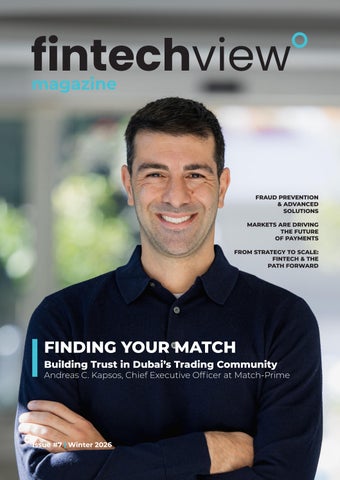
Finding Your Match: Andreas Kapsos on Building Trust in Dubai’s Trading Community

C. Kapsos, Chief Executive Officer at Match-Prime

From Strategy to Scale: Fintech’s Path Forward

Alexander Oelfke, CEO of Tauro Markets & Partner at Synervest Group

Navigating Online Perception and Reputation in the AI Era

Uri Samet, Buzz Dealer’s founder and CEO

Redefining Fintech Cybersecurity

Christoforos Christofi, CEO ChannelIT Group

Georgia Solomou, Managing Partner, OSPHERA, Founder & President W4C Cyprus

Emerging markets are driving the future of payments

Tatjana Meluskane, Chief Commercial Officer at SPAYZ.io

AI fraud detection: The road to sophisticated risk assessment

Fedros Avraam, Chief Technology Officer at P.C ADMIN 22 LIMITED

Empowering Growth Through Strategic Solutions & Cross-border Compliance & Regulation services

Andria Papageorgiou Law Firm

Technology for Brokers, PLUGIT Strengthens Broker and Prop Firm Engagement with Revitalized Website Ahead of iFX Expo Dubai

Maria Pittashi General Manager

Welcome to Fintechview Issue 7 — January 2026. The first issue of the year explores how the next phase of financial services is being written out side traditional hubs: emerging markets are innovating payments, distribution and trust models; AI and clean‑room analytics are reshap ing personalization while forcing new privacy architectures; and stablecoins and blockchain primitives are moving from experimentation into practical rails for speed and cross‑border settlement.

Inside, you’ll find conversations with founders and incumbents bridging MENA, UAE and glob al markets, deep dives on product‑led growth and compliance‑first marketing, a feature on services innovation, and practical guidance for embedding fintech into everyday workflows. We also spotlight regulatory thinking that matters for scaling responsibly and case studies show ing how partnerships, from tech, to liquidity and wallets, are unlocking distribution.

Fintech is evolving fast, but the throughline is simple: build with trust, design for real life, and measure by outcomes. Thank you for reading and for being part of the conversation that turns ideas into action.

Warm regards,

Drosoula Hadjisavva FintechView Magazine

Read us online www.fintechview360.com

Follow us marketing@fintechview360.com

Editor-in-Chief: Drosoula Hadjisavva

Graphic Designer: Demetra Ioannou

Photography: Petros Demetriou

COVER STORY

Finding Your Match: Andreas Kapsos on Building Trust in Dubai’s Trading Community

Exclusive Interview with Andreas. C. Kapsos, Chief Executive Officer at Match-Prime

Can you tell us about the founding vision of Match-Prime Liquidity services and what sets your product apart in the industry?

Match Prime Liquidity was founded with a clear vision: to redefine the relationship between liquidity providers and brokers by creating a regulated, transparent, and partnership driven model. From the beginning, we recognized a significant gap in the market for a liquidity provider that truly understands the operational needs of brokers and supports them in building sustainable, competitive businesses.

Many brokers were seeking more than just pricing and execution—they needed a partner who could guide them with industry expertise, provide detailed insights, and deliver flexible, reliable liquidity without exposing them to unnecessary trading risks. Our founding objective was to offer exactly that: a professional, technology driven, and highly responsive service designed around the broker’s strategic goals.

What sets our product apart is our ability to combine deep industry experience with a tailored approach. We work closely with clients to understand the specific tools, reporting, and transparency they need to differentiate themselves in the market. Our regulated environment reinforces trust, while our technology infrastructure ensures speed, stability, and scalability.

Ultimately, our focus has always been and of course continues to be on delivering value through partnership rather than a transactional model. We believe our success is directly linked to the success of our clients, and that principle remains at the core of everything we do.

How does Match-Prime tailor its liquidity solutions to meet the specific needs of forex brokers and retail traders?

At Match Prime, we recognize that every broker has a unique business structure, client profile, and growth strategy. For this

reason, we take a highly customized approach to liquidity rather than offering standard or generic solutions. Our goal is to deliver conditions & services that genuinely align with the broker’s needs and support the long term success of both brokers and their retail traders.

From the initial engagement, we dedicate significant time to understanding each client’s full setup including their jurisdiction and regulatory environment, the type of trading flow they manage, the profile of their end clients, and their commercial and risk objectives. This in depth assessment enables us to structure the most suitable pricing, execution settings, and instruments to ensure they remain competitive and professional without taking unnecessary trading risks.

What sets us apart is that this tailoring doesn’t stop after onboarding. We maintain strong, ongoing relationships and remain constantly updated on the broker’s development, new markets they may enter, and changes in their business needs. This allows us to proactively adjust conditions, expand instrument offerings, and enhance support as the broker evolves.

For retail traders, this means a more stable, transparent, and fair trading environment delivered through their broker benefiting from deep liquidity, fast execution, minimal slip page, and reliable technology.

Our philosophy is partnership driven: when our clients grow, so do we. By combining industry expertise, regulatory oversight, and a flexible model, we ensure our liquidity solutions continue to meet the highest standards as the market evolves.

We also focus on building strategic partnerships to strengthen our global network and expand our client base through shared expertise, technology collaboration, and aligned market initiatives.

Our strategy in the MENA region is strongly focused on establishing a solid physical presence and building long-term partnerships. The UAE—and Dubai in particular—has quickly become a major global hub for financial services and technology, and we recognize its strategic importance in our industry. It is a region we cannot ignore.

Can you share insights into your latest products or innovations in liquidity and how they benefit your clients?

In the second semester of 2025 we proudly unveiled a major enhancement designed to elevate the trading experience for our clients and strengthen the reliability of our liquidity offering. This innovation reflects our ongoing commitment to deliver greater value, improved performance, and enhanced market stability for all our partners.

Our advanced Abuse Rules engine is now fully integrated with HawkEye RMS, enabling real time monitoring and automatic responses to suspicious or harmful trading behaviors, such as:

• Latency arbitrage

• Gold price manipulation

• Other toxic or exploitative strategies

Rather than applying broad restrictions, the system intelligently reroutes only the accounts identified as risky, ensuring that legitimate traders continue to benefit from:

• Consistently fair pricing

• Stable execution conditions

• Uninterrupted access to high quality liquidity

This enhancement strengthens risk control, protects market integrity, and supports a healthier and more transparent trading environment — ultimately delivering a safer, more efficient, and more competitive ecosystem for all Match Prime clients.

The second major product we introduced is our new Funded Phase Liquidity solution designed specifically for prop firms. As the prop trading industry rapidly expands, many firms face significant challenges in the funded phase and unfortunately, a large number collapse within months, often leaving traders with unpaid payouts. While there are many contributing factors, the most common cause is insufficient risk manage ment during the funded stage.

To address this, we’ve partnered with Match Trade Technologies to develop a dedicated liquidity model that removes the typical barriers associated with hedging funded accounts. This innovative approach introduces a new settlement model between prop firms and the liquidity provider, enabling proper risk handling while maintaining full independence for both parties.

This solution was created to support healthier prop trading businesses, improve sustainability, and ultimately protect traders by enabling firms to operate with more stability and confidence.

What are your strategies for expanding your global client base amid increasing competition in the liquidity services industry?

To expand our global client base amid growing competition in the liquidity services industry, we focus on a multi layered strategy centered around visibility, accessibility, and meaningful collaboration.

First, we believe strongly in maintaining a global presence. Our team actively participates in major financial and fintech events around the world—last year alone, we traveled across five continents to showcase our products, meet partners face to face, and stay at the forefront of industry trends. We aim to have our employees present at key events worldwide, ensuring we remain accessible to both existing and potential clients.

Second, we prioritize communication and support tailored to regional needs. Our employees speak multiple languages, enabling us to provide personalized service and build stronger relationships in diverse markets.

Additionally, we continue to expand our physical footprint by opening new offices in strategic locations such as Dubai. This enhances our ability to deliver local expertise, faster support, and a deeper understand ing of regulatory environments.

We also focus on building strategic partnerships to strengthen our global network and expand our client base through shared expertise, technology collaboration, and aligned market initiatives.

Together, these efforts reinforce our commitment to global growth, long term relationships, and delivering high quality, client focused liquidity solutions.

What’s your message to Dubai-based brokers reading this who are evaluating their liquidity provider relationships?

For brokers in Dubai, I can confidently tell you that choosing the right liquidity partner is about more than pricing and technology—it’s about personal relationships, reliability, accessibility, and long term support. Our message is simple: we are fully committed to being a trusted, local partner that understands the unique requirements of this dynamic and rapidly growing market.

“ We actively invest in building strong partnerships and participating in major regional and global industry events to stay connected and accessible.

With our modern office in Dubai, we are strategically positioned to serve our UAE clients with enhanced prox imity, providing timely support and in depth local expertise. Our regional team recognizes the value of per sonalized guidance tailored to each broker’s requirements and is dedicated to delivering it with excellence.

We actively invest in building strong partnerships and participating in major regional and global indus try events to stay connected and accessible. We also traveled across five continents last year to showcase our solutions and strengthen strategic relationships worldwide—demonstrating our focus on real, human engagement rather than simply remote interaction. To brokers evaluating their options, we encourage you to choose a provider that is committed to growth, transparency, and collaboration. We are here in Dubai to support your expansion and to deliver cutting edge, client focused liquidity services backed by global reach and local presence.

What’s your physical presence or partnership strategy in the MENA region?

Are you committed to growing here?

Our strategy in the MENA region is strongly focused on establishing a solid physical presence and building long term partnerships. The UAE—and Dubai in particular—has quickly become a major global hub for financial services and technology, and we recognize its strategic importance in our industry. It is a region we cannot ignore.

We already have an established office in Latifa Towers, which serves as a key base for supporting our clients across the region. However, due to significant growth and increasing demand, we are actively exploring opportunities to move to a larger office space that will enable us to expand our local operations and better accommodate our team. In parallel, we are developing strong relationships with regional partners and insti tutions and have major expansion plans underway to enhance our coverage throughout the MENA region. Our rapidly growing client portfolio is clear evidence of the increasing trust and market opportunity here. We are fully committed to long term growth in the region and view MENA as a critical part of our global strategy.

Who is Who

Andreas Kapsos, Chief Executive Of ficer of Match Prime Liquidity, brings over a decade of deep expertise in the global Forex and multi asset liquidity landscape. Throughout his career, he has collaborated closely with some of the largest brokerage firms, giving him a comprehensive understanding of the commercial, technological, and regulatory needs of both Brokers and Traders. This experience has enabled him to structure a highly client fo cused liquidity offering, built on transparency, flexibility, and tailored solutions for diverse business models.

Over the years, Andreas has cultivated a strong international client network, serving institutions and brokers around the world. His global exposure has positioned him as a well recog nized and respected figure within the liquidity and fintech ecosystem. With the recent opening of Match Prime’s office in Dubai, Andreas has become actively engaged in numer ous strategic liquidity partnerships across the Middle East, reinforcing the company’s expansion and strength ening its presence in one of the fast est growing financial hubs worldwide.

Match-Prime engineers liquidity for the sessions other LPs hope won't happen.

NFP. CPI. FOMC. Rate decisions. Election nights. The moments that flood your dealing desk with client queries and test every assumption about your execution.

We built Match-Prime around these moments - not because they're common, but because they're the moments that reveal whether your LP is a vendor or a partner.

Stable spreads under pressure. Depth that holds when volume spikes. Dedicated support from our Dubai and Cyprus teams who understand what's at stake.

From Strategy to Scale: Fintech’s Path Forward

Looking back, what was the most defining moment in your career journey so far?

The defining moment was stepping away from the security of established finance and committing to build something entirely from scratch. The early days meant no big office or safety net—just conviction and long nights turning ideas into structure. It wasn’t about launching another brokerage; it was about proving we could design a modern trading platform from the ground up—transparent, technology driven, and anchored in risk management. Very quickly, I realized that success doesn’t just come from vision, but from finding the right people who share that vision. Building the right team—people who challenge you, complement your weaknesses, and live the same values—defines the culture of the company. That leap of faith taught me that fintech isn’t only about innovation and credibility; it’s also about assembling the team that makes the vision real and sustainable.

You’ve successfully co-founded Tauro Markets and serve as a Partner at Synervest Group. What core vision connects your work across these two ventures?

Tauro Markets is one of the flagship ventures within Synervest Group, and that relationship is very deliberate. Synervest was built to be more than a capital provider—it’s designed as a platform that gives fintech companies the regulatory, operational, and strategic foundation they need to scale. Tauro benefits directly from that, whether it’s access to infrastructure, licensing expertise, or long term investor support.

The connecting vision is simple: build ecosystems, not stand alone companies. With Tauro, the ecosystem serves traders—delivering access to transparent, technology driv en markets. With Synervest, the ecosystem serves entrepre neurs and investors—aligning capital with deep operational know how. Both are rooted in the same philosophy: create enduring value by pairing innovation with trust, and by thinking in decades, not hype cycles.

Synervest Group recently raised $4 million in Series A funding. What are the key focus areas for deploying that capital, and how will it shape the group’s investment strategy going forward?

Our strategy for deploying the Series A capital is focused on two primary areas. First, we are scaling Tauro Markets to fully realize its growth potential—expanding into key new jurisdictions, diversifying asset classes, and strengthening our product suite while continuing to invest in technology and compliance. Second, we are further developing Syn ervest’s wider investment platform, with a strong focus on payments and regulated fund structures in Luxembourg.

This capital raise is not only about fueling growth—it is about building a resilient foundation that allows Synervest to support fintech ventures with both financial resources and operational expertise. By combining capital with infrastructure and regulatory strength, we position the Group to capture long term opportunities in a sector undergoing rapid transformation.

You’ve navigated startups, strategic funding, and partnerships. What advice would you give to first-time fintech founders?

My advice is to focus on fundamentals from the very beginning. It is easy to get caught up in emerging trends—whether AI, blockchain, or the latest trend— but lasting success is built on disciplined execution: achieving product–market fit, ensuring sustainable unit economics, and embedding regulatory credibility at the core of the business.

Equally critical is assembling the right team. The early hires shape the culture of the company—they define values, drive execution, and often become the strongest ambassadors for the vision. Surround yourself not only with talented individuals, but with people who challenge you, complement your weaknesses, and share the same long term mindset.

Lastly, choose your partners and investors carefully. Align with partners who value sustainable growth over short term hype. And never underestimate compliance: build ing a strong regulatory foundation from day one creates trust with clients, regulators, and counterparties—trust that compounds into a durable competitive advantage.

How do you approach leadership in the fintech sector, especially when balancing innovation with regulatory demands?

I view regulation as an enabler rather than a constraint. Embedding compliance into our core from day one allows us to innovate at scale with confidence. At Tauro and Synervest, compliance is not treated as an after thought—it is part of the very DNA of the business. This foundation gives us the confidence to grow knowing that innovation is supported by resilience and trust.

Leadership also means setting clear standards, commu nicating transparently, and building teams that share long term values. When you build the right culture and surround yourself with people who live those values, they not only meet expectations—they often exceed them. That balance of trust, innovation, and discipline is what defines effective leadership in fintech today.

That balance of trust, innovation, and discipline is what defines effective leadership in fintech today.” “
“ My bold bet is simple: stay disciplined in building businesses that endure. In a sector often driven by short term momentum and quick wins, I believe the firms that combine trust, compliance, and innovation with long term value creation will ultimately define the future of financial services.

Tauro Markets has been expanding rapidly. Can you share what differentiates your platform in the crowded CFD and multi-asset trading space?

What differentiates Tauro is the ability to combine institutional grade infrastructure with a client experience tailored for retail traders. While many brokers focus primarily on aggressive acquisition, our strategy is centered on long term sustainability and client retention. We provide competitive pricing, robust execution quality, and a compliance framework that is designed to scale across jurisdictions.

In addition, we place strong emphasis on partnership alignment. Tauro is built as the broker for partners—aligning our growth directly with affiliates and introducing brokers. This alignment of interests, underpinned by resilient technology and a disciplined approach to risk management, positions Tauro as a platform built not just to compete, but to endure in a highly crowded marketplace.

The fintech landscape is evolving fast—with AI, tokenization, and decentralization on the rise. Where do you see the biggest disruption coming next?

The next phase of disruption will be driven less by individual technologies and more by their integration. Artificial intelligence will transform areas such as risk management, client onboarding, and operational efficiency.

Tokenization will enable around the clock access to a broader universe of tradable assets, while decentralized infrastructure will significantly reduce transaction costs and increase market accessibility. However, the real disruption will come from how these technologies con verge under strong regulatory frameworks. The firms that succeed in bridging innovation with compliance at scale will define the future of financial services.

At Synervest and Tauro, our strategy is precisely to op erate at this intersection—leveraging new technologies while ensuring they are deployed responsibly, sustain ably, and in line with global regulatory standards.

What’s next for you personally—any new ventures, initiatives, or bold bets we should keep an eye on?

At present, my focus remains on scaling Tauro Markets and further developing Synervest into a truly global fintech platform. Looking ahead, I see significant potential in bridging fintech with real world assets, particularly in areas such as tokenization and cross border payments. We are already laying the foundations in these domains, and I anticipate sharing meaningful developments in the near future.

Who is Who

Alexander Oelfke is a Partner at Synervest Group, a diversified financial technology holding with core activities in trading, payments, and fund structuring. Within the group, he oversees global business devel opment, strategic partnerships, and fintech investment initiatives, driving Synervest’s ex pansion across key international markets.

As Chief Executive Officer of Tauro Markets, Synervest’s flagship multi asset brokerage, Alexander leads the firm’s strategic growth and operational execution, advancing the group’s vision of a seamlessly integrated fintech ecosystem that unites traditional finance with digital innovation. With ex tensive experience in capital markets and cross border finance, he has successfully guided multiple ventures through com plex licensing, international expansion, and institutional fundraising, establishing Tauro Markets as a central platform in redefining global access to multi asset trading.

Uri Samet

Buzz Dealer’s founder and CEO

Navigating Online Perception and Reputation in the AI Era

In the fast paced world of digital marketing and online reputation management, few names stand out quite like Uri Samet. As the Founder and CEO of Buzz Dealer, Uri has built a global agency that helps brands and individu als shape their online presence through strategic digital PR, organic traffic optimization, and reputation manage ment. With over 20 years of experience in the industry, Uri has led groundbreaking campaigns, advised Fortune 500 companies, and helped develop advanced visibility strategies that bridge traditional search and AI driven discovery.

What inspired you to venture into entrepreneurship in ORM and SEO?

What specific gap or need did you see in the market?

I’ve been in the SEO landscape for nearly 20 years, and what’s always fascinated me is the ability to bring in traffic organically, creating a flow of relevant, high intent traffic that finds a brand naturally, not through direct re sponse paid media. Early on, I believe I was among the first to recognize the growing importance of what we now call online reputation management (ORM), back when it was just starting to take shape. I realized that before anyone makes a decision whether it’s choosing a brand to work with, applying for a job, hiring a freelancer, go ing on a date, or buying a product more and more people Google it first, and their first impression is shaped by what’s on that first page of search results.

Search engines have served for years as the digital gatekeepers to first impressions. That shifted my perspective from seeing search results purely through an SEO lens to understanding how they define perceptions. That’s when I founded Buzz Dealer to offer unique solutions that manage online reputations effectively, resolve reputa tional challenges, and ensure a brand’s digital image matches its true identity.

How critical is online reputation for a brand?

Online reputation is absolutely critical for a brand, and that’s even more so now in the age of AI. It’s no longer just about the first page of Google search results; features like rich snippets, automated answers, Q&A sections, and Knowledge Panels are often the first things people encounter, shaping their perceptions with what’s displayed. On top of that, conversational AI tools like ChatGPT, Grok, Gemini, and Copilot are increasingly where people turn for answers, and the responses these tools provide can further define how a brand is seen. Managing your digital reputation across organic content, reviews, and social media is essential to address both layers.

A strong online reputation not only ensures your brand appears in the right light but also helps influence AI driven tech nologies, boosting visibility and trustworthiness. Through proper ORM, brands can control their narrative and positively guide these digital elements whether in search or conversation creating a consistent, credible first impression that aligns with their values and goals. This is also where Generative Engine Optimization (GEO) comes into play ensuring brands are accurately represented not only on Google, but inside AI engines that summarize and recommend them.

How do you help fintech brands manage and enhance their reputation?

At Buzz Dealer, we offer a comprehensive range of services to help fintech brands build and maintain a strong online reputation and optimize their organic traffic. One of our key offerings is Digital PR, where we produce and publish press announcements, news pieces, review articles, video walkthroughs, and additional content types in multiple languages for different markets, using local and global websites to increase exposure and visibility. This work bolsters a brand’s reputation by ensuring that when people search for a financial brand, they find credible, predominantly positive sources that reflect its strengths and trustworthiness.

Additionally, we tackle indexability and visibility issues, ensuring online profiles are optimized and up to date. We also bring specialized capabilities in organic optimization services like SEO and ASO, which draw on our Digital PR expertise to help fintech brands rank for their most desirable keywords and drive a steady flow of organic traffic, working closely with their SEO departments over the long term. Together, these services position fintech brands strongly in the market, enhancing both their digital reputation and discoverability to their target audience. More recently, we’ve formalized this work into our GEO (Generative Engine Optimization) service aligning PR, SEO, entity signals, and authority building specifically to improve how brands appear in ChatGPT and other AI engines.

SEO tactics keep changing. How can brands keep up with the changes and how much time do they need to invest in it?

To stay ahead of SEO changes, brands need to invest in continuous learning and adaptation. The digital landscape is always evolving—algorithms, trends, and user behavior shift constantly. To maintain a strong online presence, it’s crucial to monitor these factors and keep strategies effective and up to date.

To stay ahead of SEO changes, brands need to invest in continuous learning and adaptation.” “

This includes keeping a close eye on Google’s updates, which are pivotal for understanding how changes will affect SEO efforts. By staying informed about upcoming updates, brands can adapt their strategies ahead of time, ensuring they aren’t caught off guard by algorithm shifts or new ranking factors. Regular audits and adjustments are key to staying competitive.

Brands should dedicate at least a few hours per week to staying informed on industry news, tracking algorithm changes, and tweaking tactics as needed. This effort keeps content relevant, discoverable, and well optimized in an ever changing digital envi ronment.

By continuously refining strategies and leveraging insights from Google’s updates and user behavior, brands can align their SEO efforts with current best practices and maintain strong visibility across search engines. And as discovery shifts to include AI an swers, this same “continuous optimization” mindset now applies to GEO as well because AI outputs evolve constantly based on what the web is saying about you.

What’s Buzz Dealer’s competitive advantage?

Buzz Dealer’s competitive advantage lies in our deep expertise in fintech, honed over 17 years and with more than 200 fintech brands under our belt. While we serve a range of clients and industries, our work in fintech stands out, especially in address ing the unique reputational challenges this industry faces. We have a unique reach, publishing content across news and finance websites in over 20 languages, which enables us to connect with diverse global audiences. And now, that advantage extends into GEO because fintech brands can’t afford to be misrepresented inside AI engines, where trust and credibility are decided in sec onds.

Our ability to stay one step ahead and harness the power of new technologies allows us to offer tailored, state of the art strate gies for fintech companies. That, combined with our capacity to produce native content, enables us to effectively enhance brand visibility and reputation on a global scale. This mix of fintech fo cused experience, specialized insight, and multilingual capabilities positions us as pioneers of GEO for fintech brands, and as a lead ing provider of ORM and SEO services within the fintech space.

What’s coming up next for Buzz Dealer?

Buzz Dealer has kicked off 2026 with a clear strategic focus on growth and innovation, starting with the launch of our GEO (Generative Engine Optimization) service. After extensive testing and experimentation across AI platforms, GEO formalizes how we help brands influence how they are represented, summarized, and recommended inside AI engines.

Alongside this, we continue to roll out more personalized ORM solutions for C level executives and entrepreneurs, with a sharp focus on fintech leaders who need to stand out online. For the cryptocurrency sector, we’re enhancing our reach by partnering with a wide range of high authority crypto websites to amplify Digital PR, while also crafting unique ORM and organic traffic optimization solutions tailored to crypto brands. This helps boost visibility, credibility, and search performance in an increasingly competitive market.

Meanwhile, we continue to refine our understanding of the differences between optimizing for traditional search engines and optimizing for AI engines both in terms of ORM for brand or people related queries and SEO for key phrases that drive traffic. In 2026, we are actively adapting our ORM and SEO services to this shifting search landscape, delivering advanced GEO driven solu tions that address AI driven visibility challenges head on. These initiatives strengthen our edge and equip fintech leaders, crypto brands, and clients across industries with the strategies they need to succeed in a rapidly evolving digital environment.

Our continued focus on expanding our offerings will be pivotal in driving our next phase of growth and strengthening our position as an industry leader in GEO, ORM and SEO services for fintech brands.

“Buzz Dealer’s competitive advan tage lies in our deep expertise in fintech, honed over 17 years and with more than 200 fintech brands under our belt.”
Who is Who

Uri Samet is the CEO and Founder of Buzz Dealer, a leading agency specializing in Generative En gine Optimization (GEO), Online Reputation Management (ORM), Digital PR, and organic traffic op timization (SEO, ASO). With nearly 20 years of experience in digital marketing, Uri has a proven track record of helping brands across fintech and other industries en hance their online presence and credibility.

Under his leadership, Buzz Dealer has assisted over 200 fintech brands, using tailored strategies and multilingual content to build lasting digital reputations. Uri’s pioneering work in GEO for fin tech, combined with deep ORM and SEO expertise, has made Buzz Dealer a trusted partner for companies and high profile indi viduals aiming to shape how they are represented across search engines, media, and AI platforms.

Redefining Fintech Cybersecurity

An exclusive interview with Christoforos Christofi, CEO ChannelIT Group

Georgia Solomou, Managing Partner, OSPHERA, Founder & President W4C Cyprus

Christoforos Christofi, CEO ChannelIT, Managing Partner OSPHERA

Based on your extensive experience in the security industry, how do you see modern IT governance and compliance solutions supporting fintech leadership teams asregulatory scrutiny continues to grow? Specifically, how can these solutions enhancedigital trust, ensure ongoing audit readiness, and help organisations navigate emerging regulatory demands with greater confidence?

Based on my experience in the security industry, modern IT governance and compliance solutions have become essential enablers for fintech leadership teams as regulatory scrutiny continues to grow.

Today’s regulators expect continuous compli ance, strong controls, and clear accountability rather than periodic, manual reporting. Centralised governance platforms help organisations establish digital trust by providing full visibility into users, systems, endpoints, and access rights. Solutions such as ManageEngine AD360, Log360, and Endpoint Central support this by enforcing least privilege access, tracking configuration and policy compliance, and maintaining detailed audit logs. This approach ensures ongoing audit readiness, simplifies regulatory reporting, and allows leadership teams to respond to emerging regulatory demands with greater confidence and reduced risk.

Fintechview features an exclusive interview with Christoforos Christofi and Georgia Solomou—two driving forces shaping EMEA’s fintech landscape.

Operational resilience has become a strategic imperative for fintechs. How can unified monitoring and observability solutions provide executives with the visibility needed to anticipate disruptions, reduce downtime, and ensure uninterrupted customer services.

Operational resilience is now a strategic priority for fintech organisations, particularly where system availability and performance directly impact customer trust. Unified monitoring and observability solutions play a critical role by giving executives real time visibility across infrastructure, applications, and digital services. Tools like ManageEngine OpManager, Applications Manager, and Site24x7 provide a consolidated view of system health, performance trends, and potential failure points. This allows leadership teams to anticipate disruptions, address issues proactively, reduce downtime, and ensure uninterrupted customer services—especially in complex, hybrid, and cloud based environments.

As fintech organisations scale, operational complexity and manual processes can limit growth. How can intelligent automation across service management, endpoint management, and incident response help leadership drive efficiency, reduce risk, and support sustainable expansion?

As fintech organisations scale, increasing operational complexity and reliance on manual processes can limit growth and introduce risk. Intelligent automation across service management, endpoint management, and incident response helps leadership drive efficiency while maintaining control. ManageEngine ServiceDesk Plus enables automated workflows for incident, change, and problem management, while Endpoint Central and Log360 automate patching, vulnerability remediation, and security incident response. This reduces human error, accelerates response times, lowers operational costs, and supports sustainable expansion without increasing risk exposure.

Mr. Christofi, what would you advise fintech leaders to prioritise when implementingmodern identity, access, and zero-trust security frameworks—particularly as threats become more sophisticated and regulatory expectations continue to rise?

When implementing modern identity, access, and zero trust security frameworks, fintech leaders should priori tise visibility, control, and continuous verification. As threats become more sophisticated and regulatory expecta tions rise, it is critical to know who has access to what, under which conditions, and why. ManageEngine AD360 and PAM360 support zero trust principles by enabling strong identity governance, privileged access manage ment, multi factor authentication, and continuous monitoring. The most effective implementations focus on reducing over privileged access, securing critical accounts, and integrating identity controls across the broader IT and security ecosystem—helping organisations strengthen their security posture while meeting regulatory requirements.

Operational resilience is now a strategic priority for fintech organisations, particularly where system availability and performance directly impact customer trust.” “ Who is Who

Christoforos is the CEO of ChannelIT Group, leading the company’s strategic direction and growth within the technology and IT services sector. With more than 30 years of experience in the cybersecurity industry, he is widely recognized for his strong leader ship and expertise.

Under his leadership, ChannelIT Group has expanded its footprint across Cyprus, Greece, and Malta, comprising ChannelIT offices in these countries, CYsoft Comput er Consultants E.P.E. in Greece, and Osphera in Cyprus. He has been instrumental in strengthening the Group’s market presence in EMEA and building high performing, cross regional teams. Christoforos has also played a key role in the development of DMARCRIGHT, an anti spoofing domain security platform currently in use across a number of countries.

Georgia Solomou, Managing Partner OSPHERA, Founder & President W4C Cyprus

“Today’s fintech environment moves incredibly fast, and so do fraudsters. With AI driven attacks and high volume transactions, it’s no longer enough to rely on traditional rules. Solutions like behavioral analytics, real time risk scoring, and continuous monitoring give fintech teams the ability to see patterns and anomalies as they happen.

Fintechs are experiencing unprecedented pressure as fraud evolves faster than traditional controls. From your perspective, what are the most significant fraud trends reshaping fintech risk today, and how should leaders prioritize their response?

Based on my experience, I would say that the most significant shift we are seeing is that fraud has become faster, more automated, and far more coordinated than traditional controls were designed to handle. Fintechs are no longer facing isolated incidents, but organized, multi stage fraud campaigns that combine social engineering, credential compromise, synthetic identities, and real time exploitation of digital channels. What makes this particularly challenging is the speed at which these fraud techniques evolve, often outpacing traditional rule based controls and static risk models. At the same time, fintechs are under pressure to deliver real time services and frictionless customer experiences, leaving little margin for error. To respond effectively, fintech leaders must prioritise a shift from reactive controls to proactive, intelligence driven strategies. This includes real time fraud detection, behavioural analytics, and continuous monitoring across the entire digital journey. Ultimately, fintechs that succeed will be those that view fraud prevention not just as a defensive measure, but as a foundation for trust, resilience, and sustainable growth.

Frictionless onboarding and instant payments are core to fintech competitiveness. Based on your professional experience, how can organisations strengthen fraud-prevention frameworks without compromising the seamless user experience customers expect?

Answer: Fraud today is faster, as mentioned earlier, more automated, and increasingly driven by sophisticated social engineering and AI enabled attacks. We’re seeing a rise in account takeovers, payment fraud, and identity abuse that can easily bypass traditional, rule based controls. Fintech leaders should focus on real time, intel

ligence driven fraud prevention that adapts to behaviour, rather than adding friction. The priority is to stop fraud early while preserving trust and keeping the customer journey smooth.

With AI-driven attacks and high-velocity transactions becoming the norm, how can advanced technologies—such as behavioural analytics, real-time risk scoring, and continuous monitoring— help fintechs detect and block fraud before it impacts customers?

Today’s fintech environment moves incredibly fast, and so do fraudsters. With AI driven attacks and high volume transactions, it’s no longer enough to rely on traditional rules. Solutions like be havioural analytics, real time risk scoring, and continuous monitoring give fintech teams the ability to see patterns and anomalies as they happen.

This means suspicious activity can be flagged and stopped before it affects customers, all while keeping the user experience smooth and frictionless. From my experience, combining smart technology with a proactive mindset is key to staying one step ahead of fraud.

As regulatory expectations around financial crime, operational resilience, and real-time monitoring intensify, how can fraud-prevention solutions support fintech executives in meeting compliance requirements while building a scalable and data-driven risk-management framework? What would you Advise?

Regulatory expectations in fintech are only getting tougher, and executives are expected to stay ahead of financial crime while maintaining smooth operations. This is why fraud prevention solutions play a crucial role here, they not only help ensure compliance with evolving regulations but also provide actionable insights through real time monitoring and data driven risk analysis.

I would strongly advise fintech leaders to integrate these solutions into their core operations, so risk management becomes proactive rather than reactive. This approach not only keeps regulators satisfied but also strengthens customer trust and supports scalable growth.

Who is Who

Georgia Solomou Managing Partner OSPHERA Founder & President Women4Cyber Cyprus. With over 20 years of experience in technology and security across the EMEA region she has led successful business expansion in North & East African countries and continues to grow OSPHERA’s presence in Europe and Middle East regions.

With strong business acumen Georgia works closely with governments, financial institutions, and enterprises to identify gaps in their fraud prevention strategies and deliver customized security solutions. Her consul tancy expertise spans Total Fraud Protection, Threat Landscape Assessment, Email Security, Authentication, Transaction Analysis, and End point Protection.

Through her leadership at Women4Cyber Cyprus, Georgia is a passionate advocate for diversity in cybersecurity, working to empower and connect the next generation of women professionals in the field. Georgia has joined the 50x50 Global Initiative as Co leader of Europe Regional Group by ISC2.

Your Brand SafeGuard

Emerging markets are driving the future of payments

Emerging markets are rapidly reshaping the payments landscape, turning mobile first habits, youthful demo graphics, and fragmented banking infrastructures into laboratories for innovation. An exclusive interview with Tatjana Meluskane is the Chief Commercial Officer at SPAYZ.io, bringing over 15 years of leadership in fintech and banking.

Tell us a few things about your career journey and your vision about payment services?

With over 15 years in the financial industry, my path has taken me from traditional banking to the fast evolving world of fintech. I’ve always been driven by a strategic mindset and a passion for building scalable, global solu tions. My career started in banking, where I learned the importance of compliance, risk control, and operational excellence. Transitioning into fintech, I focused on how technology could remove friction and accelerate growth, especially in high risk and underserved markets.

At SPAYZ.io, my vision is clear: payments are no longer a back office function. They’re the engine behind revenue, retention, and trust. My goal is to help merchants treat payments as a strategic lever for scaling globally with pre cision, adaptability, and customer centric logic. In a space where speed, transparency, and control matter, we aim to deliver bright orchestration that drives real results.

What services do you provide and which are your key markets? How your services differentiate?

SPAYZ.io offers a fully integrated payment ecosystem de signed for high growth industries such as forex, iGaming, and crypto. We operate across Asia, Africa, and Europe, covering 30+ markets and 50+ payment methods, includ ing cards, bank transfers, e wallets, QR payments, and real time payouts. What sets us apart is our deep under standing of local infrastructures and user behavior. Two of our latest innovations include:

• Agent Back Office — a powerful merchant dashboard for managing payments, commissions, and local partners. It supports multi currency flows, real time tracking, and role based access control.

• Settlement Exchange Service — a cross border payout tool that accepts USDT and settles in local currencies, using an exchange layer built on 30+ core currencies. This ensures faster settlements and more predictable flows. We don’t just process payments — we optimize them for conversion, compliance, and control.

Tell us more about your expansion plans and operations already kick-started in key global markets 2025 was a breakthrough year for SPAYZ.io. We expand ed into 10+ new geographies, including Nigeria, Congo, Cameroon, Egypt, South Africa, Tanzania, the Philippines, Singapore, and the UAE. These markets are seeing rapid

growth in digital finance, and we’ve responded by integrating popular local payment methods like GrabPay, Zalopay, GCash, Maya, RocketPay and UPay.

Our go to market strategy is about relevance. We localize payment flows to align with user behavior, regulatory requirements, and settlement needs. In 2026, our focus is on deepening our presence in Asia and Africa, improving our routing engine, and investing in even more adaptive fraud/risk controls. We’re also supporting merchants in navigating complex regulatory environments with built in compliance tools.

It’s very interesting how you provide alternative payment methods in the regions of Asia and Africa. Can you share more about this?

In markets like Asia and Africa, cards aren’t king — local alternatives are. Our approach is to meet users where they are. In Africa, that means Mobile money (e.g., M Pesa, MTN), and in Asia, it’s wallets like GCash, Maya, and QR based payments.

We design each flow based on user expectations. For example, in Nigeria, delays in payout erode trust fast. So we built a localized exchange layer that allows us to settle quickly in Naira, even when the merchant operates in USDT or EUR. In Viet nam or the Philippines, users prefer seamless wal let to wallet transfers, so we prioritize those rails. Our ability to integrate fast, test UX at scale, and run localized KYC/AML makes us the partner of choice in these regions. We don’t believe in one size fits all. We believe in purpose built payments.

How does the current regulatory environment affect your company’s strategy, and what proactive steps do you take to ensure compliance?

Operating in high risk verticals like Forex de mands a zero compromise stance on compliance. At SPAYZ.io, we are fully aligned with PCI DSS 4.0, GDPR, AML, and KYC regulations and have made compliance part of the product experi ence. Our systems include built in workflows for customer verification, transaction screening, and dynamic risk scoring. We also provide tools for reconciliation and real time reporting enabling merchants to access up to date stats and stay informed about activity across different payment methods. . As regulations tighten, our strategy is to stay ahead with our legal team actively tracking and adapting to changing regulatory conditions across markets. This allows us to scale quickly, without exposing merchants to unnecessary risk or onboarding latency.

How important is trust in your sector and the role of AI in it?

Trust is the currency of high risk payments. If users doubt the safety of their funds, conversion drops instantly. If operators can’t rely on their payment provider to deliver uptime, security, and clear settlement flows, their business suffers.

AI plays a growing role in safeguarding that trust. At SPAYZ.io, we use machine learning to drive smart routing, detect real time fraud patterns, and personalize risk scoring by region or user type. But trust isn’t built by algorithms alone. It’s a combination of UX, clear communication, fast support, and rock solid performance. We see AI as an enabler, not a re placement, for good payment relationships.

How do you see the future of the fintech industry, and what role do you believe Spayz.io will play in that landscape?

The future of fintech will be defined by orchestration, agility, and em bedded compliance. We’re entering a phase where merchants don’t just want more payment methods. They want faster onboarding, cleaner settlements, real time support, and data driven decisioning. And this is where SPAYZ.io is headed.

We aim to be the control tower for high risk payments, giving operators complete visibility, smart automation, and scalability without compro mise. In 2026 and beyond, we’ll continue to expand into untapped mar kets and deepen local integrations. The mission stays the same: help our partners grow with less friction, more trust, and full compliance.

Who is Who

Tatjana Meluskane is the Chief Commercial Officer at SPAYZ.io, bringing over 15 years of leadership in fintech and banking. With a strong track record in scaling global payment solutions, she focuses on expanding payment solutions globally.

Tatjana combines strategic thinking, com mercial acumen, and deep industry expertise to help merchants grow through smarter payments, trusted partnerships, and agile go to market execution.

Fedros Avraam, Chief Technology Officer at P.C ADMIN 22 LIMITED

AI fraud detection: The road to sophisticated risk assessment

How did your professional journey start?

My professional journey started with a strong interest in technology and problem solving, which led me to study Computer Science. From the very beginning, I was drawn to building systems that were not only functional, but also secure, scalable, and reliable.

I began my career as a software developer, working hands on with real production systems, particularly in finan cial and payment environments. Early exposure to high volume transactions, sensitive data, and strict regulatory requirements shaped the way I think about technology. It quickly became clear to me that in fintech, security and reliability are just as important as innovation.

As I gained experience, my role naturally evolved beyond coding into system architecture, infrastructure design, and security. I worked closely with operations, compliance, and business teams, which helped me understand the full lifecycle of financial systems, from development and deployment to monitoring, risk management, and fraud prevention.

This progression eventually led me into technical leadership roles and later to becoming CTO, where I now focus on designing end to end fintech platforms, integrating AI driven fraud detection, and ensuring that security and compliance are built into every layer of the systems we deliver.

Looking back, my journey has been a continuous evolution from developer, to architect, to technology leader driven by a clear goal: building financial technology that is secure, scalable, and ready for real world complexity.

Share with us some information about the company, services you offer and your target audience? I am part of a technology group focused on fintech and cybersecurity, operating across multiple regulated markets. Through our companies, we design, build, and operate secure, scalable financial platforms that enable businesses to accept payments, manage risk, and grow safely in an increasingly digital economy.

Our services span the full fintech lifecycle. On the financial side, we provide payment gateways, PSP and sub ac quiring services, virtual accounts, card payments, payouts and bulk payouts, QR payments, payment links, crypto payment processing, and e wallet solutions. These services are offered through licensed entities in different juris dictions, allowing us to support both local and international transactions.

Security is a core pillar of everything we do. Alongside fintech products, we offer cybersecurity services, includ ing penetration testing, API and cloud security assessments, PCI DSS consulting, fraud prevention technologies, audit trails, and real time transaction monitoring. This dual focus allows us to build systems that are not only innovative, but also resilient and compliant from day one.

Our target audience includes:

• Banks and financial institutions

• Payment service providers and fintech companies

• E commerce platforms and marketplaces

• Crypto and digital asset businesses

• Enterprises handling high volume or high risk transactions

We work with clients that need more than a generic solution, businesses that require customization, regulatory awareness, strong security, and the ability to scale globally. Our goal is to act as a long term technology partner, helping organizations deliver seamless financial experiences while staying secure and compliant.

Can you explain what an AI fraud detection tool is and how it works?

An AI fraud detection tool is a sophisticated risk assessment system that evaluates transactions in real time, esti mating the likelihood of fraud rather than relying on static yes or no rules. Traditional systems block transactions based on fixed conditions, while our approach focuses on understanding patterns and probabilities. When a transaction is initiated, the system instantly analyses hundreds of behavioural and contextual signals, such as customer behaviour, transaction velocity, device consistency, and location patterns. These signals are pro cessed by machine learning models that generate a fraud risk score on a scale from 0 to 100. Based on that score, merchants apply dynamic decision thresholds to approve, review, or reject transactions.

Finally, the system continuously improves through incremental learning. As new outcomes, such as confirmed fraud or chargebacks, are fed back, the model updates itself to reflect evolving fraud tactics. In short, it is not a static firewall; it is a dynamic system that becomes smarter over time.

How do you measure the accuracy and effectiveness of an AI fraud detection tool?

That’s an excellent question because, in fraud detection, standard ‘accuracy’ can be a misleading metric. If 99% of your transactions are legitimate, a model could be 99% ‘accurate’ by simply approving everything. Naturally, this would be ineffective as it would fail to catch any fraud attempts.

From a model perspective, we evaluate traditional classification metrics such as precision, recall, and false posi tive and false negative rates. Recall is particularly important as it measures how much actual fraud the system is able to capture, while the false positive rate indicates how often legitimate transactions are incorrectly flagged. We also track aggregate measures like Area under curve (AUC) and precision recall curves to understand how well the model differentiates between fraudulent and legitimate behaviour across various risk thresholds, rather than at a single fixed cutoff.

An effective fraud system reduces fraud losses without unnecessarily blocking legitimate customers or over whelming operations teams with reviews. Another critical aspect is threshold level analysis. Because merchants apply different risk thresholds depending on their risk tolerance and data maturity, we evaluate performance across multiple decision bands rather than at a single decision point. This approach allows us to understand how changes in thresholds affect fraud capture, false positives, and customer friction.

Any challenges you faced during the development or implementation of an AI fraud detection tool?

As with any complex project, we faced a number of chal lenges along the way. One of the first was determining which model was best suited to the problem and how it should be configured. Equally important were decisions around data optimization: we engineered additional, high value features derived from the existing data to enrich the model’s understanding. This process added domain knowledge directly into the learning pipeline, reinforcing the idea that a strong model begins and ends with well structured, informative data. In addition, we incorporated user driven signals to better capture and interpret behavioral patterns.

How are the differences between cybersecurity and fraud detection?

Cybersecurity and fraud detection are closely related disciplines, but they focus on different layers of risk and address different types of threats.

Cybersecurity is primarily concerned with protecting sys tems, networks, and data from unauthorised access and technical attacks. Its goal is to prevent breaches, mal ware, and intrusions by securing infrastructure through controls such as authentication, encryption, and network defenses. In essence, cybersecurity asks: “Is someone trying to break into or compromise the system?”

Fraud detection focuses on the behaviour taking place within the system, often after access has already been granted. Fraudsters frequently look like legitimate users, which means the challenge is not stopping entry, but determining whether actions such as transactions or account activity are genuine or abusive. Fraud detection relies on behavioural analysis, historical patterns, and machine learning models to assess risk. In short, cyber security protects the digital infrastructure, while fraud detection protects the business and customers from the misuse of that infrastructure.

What types of fraud can these tools detect and in which sectors is mostly needed?

These tools are primarily used to detect payment fraud, account takeovers, and transactional abuse by identify

In fraud detection, standard ‘accuracy’ can be a misleading metric. If 99% of your transactions are legitimate, a model could be 99% ‘accurate’ by simply approving every thing. Naturally, this would be ineffective as it would fail to catch any fraud attempts.

Fedros Avraam is the Chief Technolo gy Officer of P.C ADMIN 22 LIMITED, a Cyprus based fintech and software engineering company focused on building secure, scalable, and regula tion ready financial platforms. Fedros leads the company’s technology vision, with a strong emphasis on AI driven fraud detection, payment systems, cloud architecture, and cybersecurity.

He has over 8+ years of professional experience in software development, fintech, and cloud infrastructure. His career began with hands on engineering roles, where he worked on enterprise grade systems and high volume financial platforms. Over time, he progressed into senior and leadership positions, allowing him to combine deep technical expertise with strategic decision making.

Andria Papageorgiou Law Firm

Empowering Growth Through Strategic Solutions & Cross-border Compliance & Regulation services

Fintechview met with Andria Papageorgiou, the Founder and Managing Director of Andria Papageorgiou Law Firm. She highlighted that the focus for 2026 is on strengthen ing cross border capabilities, refining regulatory strategy, and offering more integrated legal and compliance sup port in fintech across the major jurisdictions.

With your extensive experience in corporate governance and compliance in various fintech organizations, what is your perspective on compliance and regulation in the fintech sector?

From my perspective, compliance in fintech is not a cost; it’s a risk management and value creation tool. Having worked both in house and as an advisor to fintech groups, I’ve seen that companies with strong governance and clear regulatory positioning are the ones that scale faster, attract better capital, and survive market shocks. The key is not over regulating innovation, but building compliance frameworks that are practical, proportionate, and aligned with the business model.

At ANDRIA PAPAGEORGIOU LAW FIRM and through SAPIMA MANAGEMENT LTD, we help fintechs turn reg ulation into a competitive advantage, by giving investors confidence, protecting valuations, and supporting sus tainable growth.

In my view, the biggest challenge for the Compliance Team is not just knowing the regulation. It’s being able to sit at the board table and present clear options, ex plain the consequences of each choice, and offer practi cal solutions. The role of compliance is not to block the business, but to help the business move forward, lawfully, strategically, and with its eyes open. Real value is created when compliance and business work together, balancing regulatory requirements with commercial reality.

Your clientele comes from diverse regions. Which countries are your target markets, and what services do you offer them?

Our client base is truly international. We work primarily with businesses and investors from Europe, the UK, the Middle East, and selected Asian markets, particularly fin tech, financial services, tech, gaming and regulated busi nesses looking to establish or scale operations in Cyprus and in other jurisdictions.

We support them throughout the full lifecycle of their business, from incorporation, structuring and licens ing, to corporate governance, compliance, AML, GDPR, DORA and ongoing regulatory support. Through ANDRIA

PAPAGEORGIOU LAW FIRM and SAPIMA MAN

AGEMENT LTD, we also advise on cross border operations, regulatory strategy, risk management, and interactions with regulators. Our focus is on helping clients enter new markets confidently, re main compliant as they grow, and build structures that are credible, investable, and sustainable.

Tell us about how your entrepreneurial journey began and the needs and challenges you encountered along the way.

My entrepreneurial journey began right after my second maternity leave finished, when I was forced to step away from a C level role in a multi licensed fintech group, where I was serving as Chief Legal and Compliance Officer. It was a stable position, with responsibility across multi ple jurisdictions and, frankly, a very comfortable salary. Walking away from that security was not an easy choice. But, that was the point that I truly wanted to do something values driven, flexible, and genuinely focused on supporting businesses in a practical way.

Starting my own firm was a completely different reality. I went from a C level position to a Man aging Director and CEO titles with a basic salary, and like many founders, there were months in the early stages where I didn’t even pay myself at all. Building a business from the ground up comes with uncertainty, pressure, and constant deci sion making, especially in a highly competitive environment. But it also gave me clarity, inde pendence, and a deeper understanding of what entrepreneurs truly need from their legal and compliance advisers.

But, you know, for me, titles don’t really matter. What matters is not what you call yourself on a business card, but what you actually do and what you bring to the table. That’s where real value is created, and that’s where a title is either truly earned or exposed. Your impact, your judgment, and the solutions you deliver are what ultimately define whether that title is genuinely representa tive of who you are and how you lead.

The biggest challenge was balancing growth with responsibility, scaling the business while main taining the same standards of quality, integrity, and regulatory discipline I had always demanded

The key is not over regulating innovation, but building compliance frameworks that are practical, proportion ate, and aligned with the business model. “

in large organisations. That journey shaped how I work today: I understand both sides of the table, and I’m deeply aware of the risks, pressures, and realities that founders and boards face every day. And all of that, while being a hands on mom of two.

What is your perspective on the collaboration between Cyprus and the UAE, particularly regarding the fintech sector?

The collaboration between Cyprus and the UAE has real substance, especially in the fintech sector. Cyprus offers a strong EU regulatory framework, access to the European market, and a growing fintech ecosystem, while the UAE brings capital, innovation, and a very progressive approach to technology and digital finance. What I see increasingly is fintech groups using Cyprus as their EU regulatory and operational base, while main taining commercial, investment, or innovation hubs in the UAE. When structured properly, this creates a power ful bridge between Europe and the Middle East. From a legal and compliance perspective, the opportunity lies in aligning regulatory expectations, governance standards, and cross border structures so that businesses can scale confidently in both jurisdictions.

In my view, this cooperation is not just about market access, but more like building credible, well governed fin tech platforms that appeal to global investors and regulators alike.

Is it more beneficial to have in-house regulatory support or to seek external regulatory assistance?

It’s not really an either–or question, I believe. In house regulatory teams are essential for day to day opera tions and for understanding the business from the inside. However, external regulatory support brings an independent perspective, broader market experience, and exposure to multiple regulators and business models.

The most effective setup I’ve seen is a hybrid ap proach—strong in house compliance supported by external advisers who can challenge assumptions, provide strategic guidance, and step in when the business is entering new markets, facing regulatory pressure, or scaling quickly. This combination can cer tainly help companies stay compliant while remaining agile, and it gives boards and investors additional comfort that risks are being managed properly.

How is AI influencing your sector? Is it simplifying processes or adding complexity?

AI is definitely simplifying processes, but it’s also rais ing the bar. In legal, compliance, and fintech adviso ry, AI helps with efficiency, things like data analysis, monitoring, documentation, and early risk detection. That allows professionals to focus more on judgment, strategy, and decision making.

At the same time, AI adds complexity from a regula tory and governance perspective. Questions around accountability, data protection, transparency, and explainability are becoming central. So AI is not re placing expertise, but it’s reshaping it. The real value comes when AI is used as a tool within a strong gover nance framework, rather than as a shortcut.

I also believe that artificial intelligence can never replace emotional intelligence. Empathy, judgment, and the ability to truly understand a client’s concerns are uniquely human skills. That’s why we should invest more in emotional intelligence (i.e. soft skills) so we can genuinely understand our clients’ needs and offer meaningful solutions, rather than just adding another caption to a random Instagram post. In the end, it’s about substance and quality over quantity.

What’s your vision for 2026?

My vision for 2026 is to deepen our presence in the jurisdictions where we are already active, rather than expanding for the sake of it.

The focus is on strengthening cross border capabil ities, refining regulatory strategy, and offering more integrated legal and compliance support across these jurisdictions. I want ANDRIA PAPAGEORGIOU LAW FIRM and SAPIMA MANAGEMENT LTD to be seen as trusted partners for businesses operating interna tionally; firms that understand not only the law, but also how regulation, culture, and commercial realities interact in each market.

For me, 2026 is about consolidation, quality, and impact, building depth where we already have expe rience, relationships, and credibility, and continuing to support clients as they scale responsibly across borders.

Who is Who

Mrs. Andria Papageorgiou is the Founder and Managing Director of Andria Papageorgiou Law Firm. She is a member of Cyprus Bar Association with over 10 years of experience. She holds an LLB, LLM, LPC from presti gious UK institutions, along with CySEC Advance Certificate and CySEC AML Certificate. She is also an Accredited Mediator for Commercial and Banking Dis putes, as well as a member of the Financial Services Committee of the Cyprus Bar Association.

She has held senior positions in top tier law firms serving high net worth individuals and corporations. Additionally, she has served in C level positions across various regulated FinTech groups of companies (including the forex, crypto, and payments industries), leading the legal and compliance teams of these orga nizations and resolving complex legal issues on a daily basis.

Empowering Growth Through Strategic Solutions

At Andria Papageorgiou Law Firm, we provide advanced legal solutions to help businesses and individuals thrive in a dynamic world. Based in Limassol, Cyprus, with a global network, we combine over ten years of experience with a modern approach. Our dedicated team offers personalized and efficient service, blending traditional values with innovative strategies to achieve the best outcomes for our clients.

Why Choose Us

Technology for Brokers

PLUGIT Strengthens Broker and Prop Firm Engagement with Revitalized Website Ahead of iFX Expo Dubai

Maria Pittashi General Manager

PLUGIT, a financial technology provider specializing in trading and brokerage infrastructure, has announced the release of its revitalized 2026 website.

The updated digital experience is designed to better support existing partners while offering brokers and prop firms a clearer, more structured view of PLUGIT’s technology and how it operates in real trading environments. The website re launch comes as PLUGIT prepares to participate in iFX Expo Dubai, taking place from 10 to 12 February 2026, where the company will welcome industry participants at Booth 122.

A Clearer View of PLUGIT and the YOONIT Trading Solution

At the core of the website is PLUGIT’s YOONIT trading solution, a modular yet fully integrated framework that enables brokers and prop firms to deploy, manage, and scale their trading operations through a single ecosystem.

The YOONIT trading solution consists of six core modules, each designed to address a specific operational support:

Copy Trade, supporting scalable trading communities and client engagement

CRM, centralizing onboarding, client lifecycle management, and daily operations

• IB and Affiliate Management, enabling structured partner programs with transparent tracking and automated commissions

Bonus Automation allowing brokers to design and manage icentive campaigns aligned with commercial objectives

Dynamic Margin, supporting margin control, leverage and exposure management and trading conditions customization

MAM / PAMM, enabling managed account structures with allocation methods and performance reporting. Together, these modules form a complete operational ecosystem that supports growth, control, and long term business sustainability.

Meet PLUGIT team at iFX Expo Dubai 2026

PLUGIT’s presence at iFX Expo Dubai 2026 marks an important opportunity to engage with brokers, prop firms, liquidity providers, and fintech partners from across the global trading industry.

At Booth 122, attendees will be able to explore the YOONIT trading solution through live discussions, product walk throughs, and strategic consultations with the PLUGIT team.

Connect with the team to discuss real operational challenges faced by trading firms today, including scalability, partner management, client engagement, and risk control, an area where PLUGIT’s technology is designed to deliver measur able value.

About PLUGIT

PLUGIT is a financial technology company providing broker and prop focused trading solutions. Contact us at sales@plugitapps.com and call at +357 25 025026.

How can brokers design IB and affiliate structures that reward growth without exposing the business to runaway costs?

It’s a balancing act. If you make the program too generous, costs spiral. If you make it too tight, IBs lose interest. The key is flexibility in how commissions are set up; flat fees, revenue share, or tiered rewards that encourage real growth.

With PLUGIT’s IB & Affiliate module, brokers can build multi tier structures and test different payout models, on both Rebates or CPA tiers. That way, they can fine tune rewards based on actual performance and profitability, not guess work.

What role does real-time data and transparency play in strengthening broker–IB relationships?

Honestly, it’s huge. Nothing creates tension faster than an IB questioning their commission statement. If they can see everything in real time, how many clients they’ve referred to, what those clients are trading on, what commissions are building up, then the trust level increases. Brokers benefit too, because they don’t waste time dealing with disputes.

With the IB & Affiliate module, brokers get clear dashboards, instant reports, performance fee reports, revenue made and no grey areas.

With increased regulatory scrutiny, what compliance considerations should brokers keep in mind when running affiliate programs?

Regulators have been cracking down for quite some time now. They are looking closely at how affiliates promote trading, especially in cross border situations. Brokers need tools that give them oversight, not just over payouts, but also over who’s doing the promoting and how.

For example, keeping proper records of referrals, disclosures, and campaign activity is becoming critical. Having this data readily available in your system is a must have.

How can IB and affiliate programs be used strategically for client acquisition in emerging markets versus mature ones? They play very different roles depending on the market. In emerging markets, the Affiliates and IBs are the first point of trust for new traders. They’re usually local, they speak the language, and they give the broker reach they’d struggle to get otherwise. In mature markets, the strategy shifts more towards segmentation and loyalty.

Programs are often about keeping high val ue clients engaged or expanding into niche communities. That’s why flexibility matters so much in your technology. With PLUGIT’s IB & Affiliate module, brokers can run both styles side by side: high growth recruitment in one region, and retention focused setups in another, by mixing and matching payout rules and profiles.

What future trends do you see shaping IB and affiliate technology / AI-driven recruitment, dynamic commission models, or deeper CRM integration?

All of the above, honestly. We’re already seeing demand for smarter analytics. Brokers want to know not just how many clients an IB brought in, but which ones are profitable long term. That’s where AI could make a real difference, spotting patterns and helping bro kers focus on quality, not just quantity.

Dynamic commission models are also a thought, programs that adjust rewards auto matically based on performance. And deeper CRM integration is a must. Brokers don’t want five different systems; they want one dashboard to manage their client database and partner network.

That’s the path we’re taking at PLUGIT: build ing technology that covers all your needs, and more like a natural part of the broker’s day to day operations. Any technical engi neer will tell you that every day they wake up and there is already something new to learn. Our team is inspired and hopefully this reflects in our innovative tools, as well as the new functionality in future products releases to come.

Our focus has always been on building practical, broker first technology. Every PLUGIT product is designed to solve real operational challenges, which is why leading brokers continue to trust us with their core infrastructure.”

Who is Who

Maria is the General Manager at PLUGIT, a leading fintech company celebrated for its award winning solutions in the forex industry, including the Best All In One Broker Solution for their flagship prod uct, the YOONIT suite of intelligent modules. With over a decade of experience in the financial sector, Maria has excelled in management positions at some of the industry’s top fintech companies.

At PLUGIT, Maria is driving the company’s expan sion into new global markets, streamlining the client onboarding journey, and reinforcing PLUGIT’s reputation for delivering outstanding partner sup port and scalable, broker focused technology.

Marketing is a living experience A dynamic, constantly evolving process that merges consumer psychology, human interaction, and strategic storytelling to create lasting impressions

Turn static files into dynamic content formats.

Create a flipbook