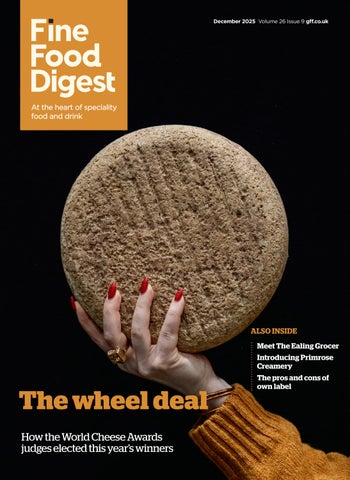
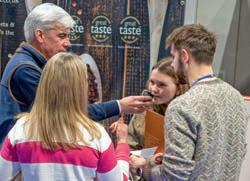
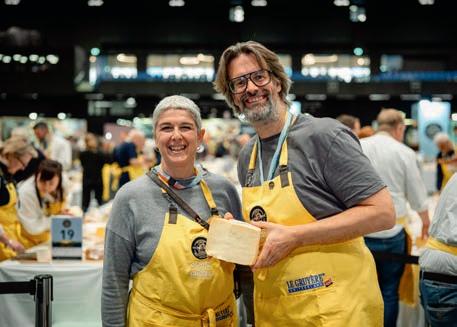
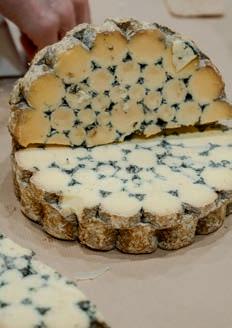
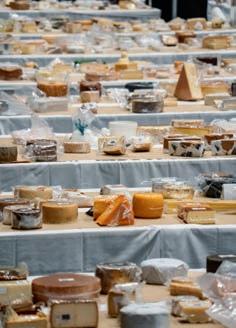
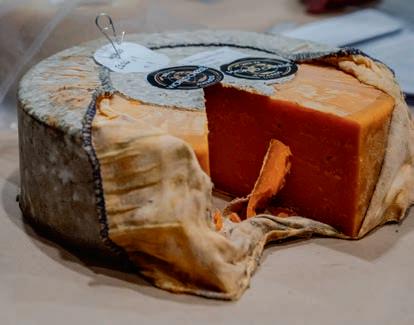
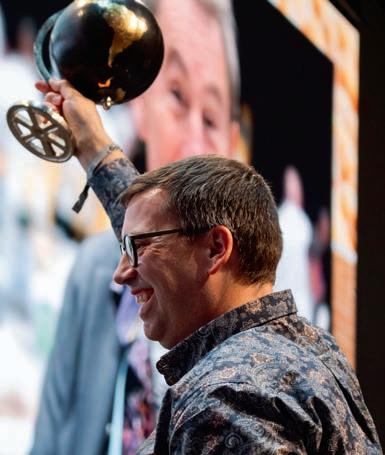
How the World Cheese Awards judges elected this year’s winners
CONTENTS
editorial@gff.co.uk
Editor: Michael Lane
Deputy editor: Tanwen Dawn-Hiscox
Art director: Mark Windsor
Contributors: Nick Baines, Patrick McGuigan, Greg Pitcher, Stefanos Aktipis, Lynda Searby
opportunities@gff.co.uk
Sales and publishing director: Sally Coley
Senior sales account manager: Becky Haskett
Sales executive: Henry Coley
Sales support: Tamsin Bullock
These full-tilt weeks are o en the ones that strengthen the relationships and set the rhythms that see you through the whole year
By Tanwen Dawn-Hiscox, deputy editor
No matter what you do for a living, this time of year can get a little bit frantic. Targets to hit, Christmas to organise – for your family, or your customers – and, if you’re as lucky as I am, the World Cheese Awards to attend.
While I don’t have an operational role at the Guild, I get a good sense of how much work goes into making an event like WCA feel simple, straightforward and seamless, so that judges can focus on what they love most: cheese.
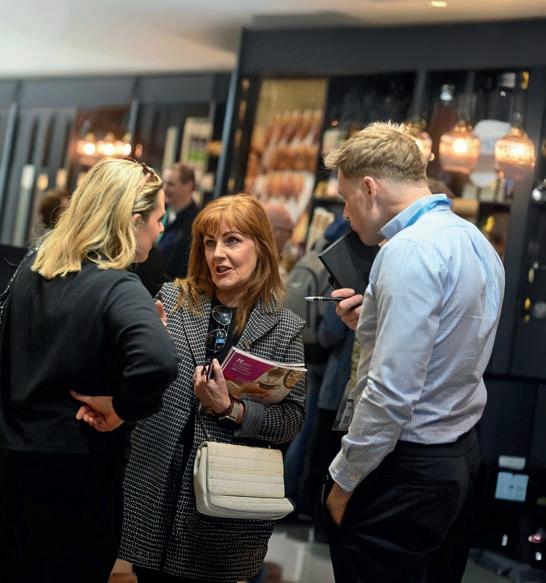
Second on that list, though, has got to be seeing one another. On the evening before the awards, a reception is usually held to welcome judges to the host city, and it unfolds as a succession of usually professional people leaping into each other’s arms, a cacophony of gasps and coos and the smack of kisses on cheeks.
This ambient giddiness goes on for days as new judges meet
EDITOR’S CHOICE
Tanwen Dawn-Hiscox, deputy editor
Accounts assistant: Julie Coates
Finance director: Ashley Warden support@gff.co.uk
Managing director: John Farrand
Associate managing director: Christabel Cairns
Partner relations director: Tortie Farrand
Chairman: Bob Farrand
ar etin offi er Jenna Morice
Marketing and operations
assistant: Frances Coleman
their idols, and those who didn’t quite make it around the room in previous years nally strike up a long-awaited conversation. They share knowledge (and gossip) and make plans for the future.
On the nal day before departing, judges go on tours to meet local cheesemakers and a neurs – and in my case, this year, to a unique facility where Swiss cheese microbes are collected, cryopreserved and replicated to ensure the future of this nation’s great cheeses.
Right until the last moment, discussions continue and plans are set in motion. The Guild team spends days processing the results and exchanging emails with contestants, judges and the host country. Cheesemakers, mongers, educators and writers return to their day jobs, with more work to do than before they le .
As for myself, it was back to my desk to produce what I hope is a
ne magazine.
This might sound like I’m showing o , but there are parallels for retailers, too. These full-tilt weeks are o en the ones that strengthen the relationships and set the rhythms that see you through the whole year – with your customers, your neighbours, and, dare I say, your mum. So go for it: host that cheese & wine tasting. Pack an extra jar of chutney into that bespoke hamper. And if you have a spare evening, go and watch your nephew play Captain Hook in his Christmas pantomime.
This is the last push before you can take stock and start again with renewed momentum, so make sure you take a moment to enjoy it.
Some people might wish for a quieter, more restful life. If you’ve come across any of them, let me know – because in our endlessly invigorating world of food & drink, I can’t say that I have.
I shared a tumbler of this with my brother recently, who was fascinated by the idea of Cornish rum. Fermented and distilled from molasses, then aged in barrels – American oak, and another two that founder Andy Bradbury told me are a house secret. On the nose, it’s got those intense vanilla, tobacco notes I associate with bourbon, and an almost Scotchlike smokiness, matched so well with the rum’s natural tropical fruit. Then you get all the toffee, pepper, bittersweet orange and grapefruit on tasting, and another hint of that smoke. It’s smooth as a silky dress, and I would recommend having your own glass of it. More on page 23.
partner ip offi er Claire Fry
Data strategy & insight manager: Lindsay Farrar
Operations coordinators: Chris Farrand, Sepi Rowshanaei, Chloë Warren-Wood
Operations & events coordinator: Zara Williams
Operations assistants: Thomas Jackson, Jos Holmes
Published by The Guild of Fine Food Ltd Fine Food Digest is published 11 times a year and is available on subscription for £50 p.a. inc P&P.
Autumn Budget: “underwhelming” and “more like housekeeping than vision”
By Tanwen Dawn-Hiscox
Independent retailers and sector representatives have responded with frustration and disappointment to the Chancellor’s Autumn Budget, which she delivered unusually close to the festive period on 26th November. Alongside income tax threshold freezes and tax changes for businesses and on pensions, the Government con rmed a 4.1% rise in the National Minimum Wage and adjustments to business rates.
For Tom Newey, CEO of Cobbs Farm Shop, the measures failed to signal the kind of growth-focused strategy he had hoped for. He told FFD he had found the Budget “entirely underwhelming”, adding: “I’m really struggling to square all the pro-growth chats with either of the last budgets, quite frankly.”
Newey warned that the package could “pile more costs onto business”, particularly given how persistent food in ation has been in recent years, and
said: “When you’re in the quality food arena, those sorts of things are even more noticeable. Itmakes a hard job even harder.” He also raised concerns about changes to corporation tax and business rates, including a higher multiplier for properties over £500,000 in rateable value. The measure is intended to help fund a permanent discount for smaller retailers a er the withdrawal of the remaining Covidera business rates relief. However, sector bodies have warned the shi will
WHAT’S IN THE BUDGET FOR INDIE RETAIL?
• From 1st April 2026, the National Minimum Wage will rise by 4.1% to £12.71 an hour for over 21s.
• Wages for 18-20 year-olds will increase by 85p to £10.85 an hour, and by 45p to £8.00 an hour for 16-17 year-olds.
• The business rates multiplier for retail, hospitality and leisure premises with a rateable value above £500,000 will rise by 10p to help fund a permanent discount for smaller premises.
• Apprenticeship training for under-25s at SMEs will become free.
• The Soft Drinks Industry Levy is being expanded to cover pre-packaged sugary milk-based drinks, which were previously exempt. The lower sugar threshold for the levy will also drop from 5g to 4.5g per 100ml, meaning more high-sugar drinks will be caught by the charge. The changes are expected to come into effect in 2028.
not o set the rise in bills for small shops in April, meaning many will still pay more overall.
Newey added that the lengthy lead-up to the Budget had already dampened Christmas purchasing. “Anyone who thinks delaying it was helpful is wrong. People making purchasing decisions were not doing anything while they waited for the speculation to abate.”
At Laura’s Larder in Orpington, owner Laura Roberts said customers had been “standing back, waiting to hear what
happens” in the run-up to the announcement.
She did, however, welcome the rise in minimum wage. “You never want to mind about that, really,” she said, explaining that higher pay can attract exible and motivated young sta .
Roberts also backed the introduction of free apprenticeship training for under 25s. Having hired someone on an apprenticeship who went on to work with her for several years a er completing it, she said: “It was one of the best things I ever did.”
“Giving someone a chance like that is so valuable, especially if they haven’t had the opportunity to make choices or the con dence to retrain. Opening that opportunity is great, and I de nitely encourage shops to look into it if they haven’t already.”
Elsewhere, industry gures felt the budget was, if nothing else, muted. Perry Wakeman, owner of Rennet and Rind, said: “Like most independents,
we’ll get on with it. We always do. But I can’t help noticing the mood of this Budget feels more like housekeeping than vision.” While welcoming business rates relief for small shops, he said the sector has “no shortage of energy or ideas”, but that it is being sti ed.
“We are ready to build. We just need the space to do it,” he added.
John Farrand, managing director of the Guild of Fine Food, said wage and employer tax pressures remain the “biggest gripe” for small food & drink businesses. While he noted that “Fewer customers seem to be spending more, so revenues remain okay, but sta costs just keep going up, and that’s without recruiting additional workers to encourage growth.” He said that there may be “a small crumb of comfort” in a recent BRC report that claimed business rates changes could cause up to 400 big supermarket closures, and added: “That can only be good news for the high street.”
M&S seeks recovery a er cyberattack damages pro ts
Last month, Marks & Spencer CEO Stuart Machin declared that the high street giant was “getting back on track” after a paralysing cyber attack earlier this year.
M&S posted pre-tax profit of t illion for the 26 weeks to 27 September this year, down fro in t e same period in 2024.
The retailer suffered a cyber “incident” in April that forced it to take some te of ine an left to er na le to purchase online for months, as well as disrupting some in-store processes.
with “margins closer to normal”. Food sales were up almost 8% in the latest period, while customer numbers and market share “continued to grow”.
M&S said in its results announcement that “practically all operational systems have now been recovered”.
e lti e tor fir a e t at it food business had “largely recovered” and was “showing strong sales performance”
M&S added that it had more than 50 food stores approved for opening.
“During the period, we announced investment in several former Homebase sites, which average over 18,000 sq ft,” it said. “We currently anticipate 14 ne foo tore openin t i finan ial year.”
a in a e e fir t alf of t i year was an extraordinary moment in time for M&S. However, the underlying strength of our business and robust finan ial fo n ation a e t e resilience to face the challenge and deal with it. We are now getting back on track.”
The Chancellor said this budget would help deliver “economic stability, investment and reform” to grow the economy
IN BRIEF Indies warn ‘real’ living wage rises could curtail business outcomes
By Greg Pitcher
Independent food retail chiefs have warned that further increases in employment costs next year will force many in the sector to cut sta hours or raise prices.
The Living Wage Foundation announced an almost 7% hike in its ‘real’ Living Wage to £14.80 an hour in London and £13.45 elsewhere across the UK.
The rates are voluntary, but more than 16,000 employers have committed to paying them, and now have until May 2026 to implement the rises.
Meanwhile, Chancellor Rachel Reeves increased the mandatory National
Living Wage by 4.1% in her late-November Budget (see p.4) creating a legal minimum of £12.71 for workers aged 21 or above from April next year.
Will Simkin, owner of Essington Farm Shop, said the business was already “constantly trimming where we can on rotas” a er a wave of extra employment costs this year.
“Some of our student sta get one day a week in the holidays rather than two, or work 10-3 rather than 8-5,” he added.
“Rather than having 10 people in a department, we will have nine people doing 10 people’s work.”
Simkin said he was also waiting “until we
WHAT THEY ARE SAYING ABOUT... REAL LIVING WAGE INCREASES
“We rely on customer service. It would have a negative effect on customer experience if we put in selfcheckouts, removed samples and relied on pre-packed food. So we have to pay higher employment costs. There is a lot of pressure on small independent retailers who don’t have the tools larger businesses have.”
are desperate” before hiring, given the current conditions for employers.
“When wages go up again in the spring, prices will have to go up,” he added.
David Rippington, owner of Thyme & Tides Deli in Stockbridge, said the Hampshire business had been forced to “rethink” its sta ng strategy in the face of rising employment bills.
“We are now being more cautious about recruitment and ensuring that when we do hire someone, it is focused towards our goals,” he explained.
“Next year we are looking to install a cheese room. This has been a plan
“The current climate is not easy. Every person I talk to, whether customers or from the industry, can’t help but comment on how the current Government’s policies have affected recruitment across the board. We are fortunate that we are not beheld to shareholders, so we don’t have to focus on profits over customer service and can adapt the business to suit the current climate.”
in the works for some time so we have already invested time and money into training the existing team.
“This will open up more production in-house, so we have recruited a chef de partie, a young adult who has completed a few culinary courses and shows
“We pay £14 an hour, so we’re currently above the ‘real’ Living Wage. We will not be able to implement a 6.9% rise.
Salaried staff are getting 3% so it will be more in line with that, meaning we’ll be below the new £14.80 level for London. We are still digesting what the impact will be.”
a keen interest.
“Without this forward thinking, many businesses would pause recruitment to reduce their wages bill.”
Andrew Goodacre, chief executive at the British Independent Retailers Association, insisted small shops wanted to pay fairly for work.
“The wages have to be a ordable for the business,” he added. “In the past three years, the National Living Wage has risen by 28% – way above in ation.
“While an increase of 4% next year will still be a challenge, it is more realistic.
Goodacre described the new ‘real’ Living Wage levels as “way beyond the a ordability [point] for indie retailers” and warned that some employers might decide “to turn away from it as a result of such a large increase”.
Butchers seek alternatives to turkey for Christmas as supply hit by bird u
Butchers have been scrabbling for turkeys in the run-up to ri t a after a ir o t rea e i ate o ief eterinar offi er Christine Middlemiss imposed a mandatory housing order across England from 6th November as a ian in en a too ol
Most groups of birds larger than 50 must be kept indoors under the direction, which was repli ate in ale a ee later Several local protection
an r eillan e one ere p t in pla e after pe ifi
onfir ation of t e virus in Norfolk, Suffolk, Pembrokeshire, Yorkshire and el e ere
John Mettrick, legislation director at National Craft t er ai e ir a already caused butchers to seek ot er pplier of t r e
“One member in Norfolk reported that his regular supplier had to have 7,000
t r e lle e to
t seems that areas that have large migratory bird populations in inter are parti larl at ri
“Butchers will be making preparations in case their regular suppliers are hit with ir a in alternati e to turkey available so that all customers have a centrepiece for t eir ri t a inner
National Craft Butchers said it hadn’t seen an increase in imports as a result of the
o t rea
NFU Poultry Board chair Will Raw backed the action taken in n lan an ale o in ir i an important part of a suite of measures to help prevent any further outbreaks of this devastating disease, and we now urge other devolved administrations to consider extending these measures to prote t t e national o e ai
Retail and hospitality employers will be among those facing higher wage costs as the voluntary real living wage rises to £13.45 an hour, and £14.80 in London
DAVID RIPPINGTON THYME & TIDES DELI
JENNIE ALLEN, BAYLEY & SAGE
WILL SIMKIN ESSINGTON FARM SHOP
Stakes rise for indies as Waitrose adopts more deli tactics
By Greg Pitcher
Experts have urged delis and farm shops to focus on their own strengths a er Waitrose declared its intention to become “ rst choice for food lovers”.
The upmarket grocer opened a concept store in Berkshire last month with a ‘cheese island’ of more than 100 speciality products.
The Newbury shop also includes a ‘meal maker’ service with shmongers and butchers preparing cuts, as well as an ‘expanded’ bakery and deli counter.
Meanwhile, sta have completed extra training and secured new quali cations, including with the Guild of Fine Food.
The supermarket said concepts trialled in Newbury would be rolled out elsewhere and “become part of the blueprint for new Waitrose shops” as it ploughs on with £1bn in real estate investments.
Stefano Cuomo, chief
executive at Kent food hall Macknade, said the chain grocer’s drive was in contrast to many supermarkets removing serviced counters.
“I think it’s great for our sector as it gets people more engaged,” he added. “We’re seeing price parity.”
However, he added: “We have to be on our game and recognise our di erentiation, which is emotive drive.
“People want connection – stories and personal
WAITROSE’S NEW SPENDBASED LOYALTY SCHEME
November was a busy month for Waitrose. As well as opening its Newbury concept store, the upmarket grocer launched a major loyalty initiative.
My Waitrose customers can now claim ‘Little Treats’ when they spend certain amounts with the supermarket. Vouchers will appear in their online account when they hit £50, £100 and £250 of expenditure in a calendar month.
The nationwide rollout followed trials at 74 stores through September and October, when treats up for grabs included roses, pizza and money off bills.
The latest initiative adds to personalised offers, discounts on certain counter products and free hot drinks and in-house magazines for My Waitrose customers.
Alex Lovell, head of loyalty at the supermarket, said: “The launch of ‘Little Treats’ is a massive moment in strengthening My Waitrose as a club for food lovers. Loyalty has been a big focus for Waitrose in 2025 and we hope that each time a shopper claims their ‘Little Treat’, free Waitrose Food Magazine or personalised offer, it acts as a reminder of just how much we value them.”
engagement.”
He added that Sussex Charmer cheese playing a starring role alongside Keira Knightley in the Waitrose Christmas ad showed the crossover happening on a product level.
“Some of the lines we have in the independent sector will nd themselves in supermarkets. We can’t rest on our laurels.
“It is about nding products that might not normally sit in our
space. Proactive sourcing, animation, understanding what customers want, expertise, curation – we have to be the best.”
Bryan Roberts, of consultancy IGD agreed, and said: “It is crucial for independent retailers to put this approach at the heart of their proposition,” he explained. “To get ahead, it’s key to identify what it is that makes you unique.”
John Farrand, managing director at the Guild of Fine Food, added that it was “easy to feel a sense of dread” about speciality focus from the chains.
But he added, “Independents need to stay ahead and turn the noise into a positive. There is an argument that through their marketing power, the supermarkets will promote their ‘better’ cheese and charcuterie, not merchandise it very well and inadvertently pique customer curiosity to seek the real deal from your shop.”
DOWN ON THE FARM
IN BRIEF
British strawberries are now available year-round, as the Summer Berry Company has mastered growing them in spring-like conditions, using renewable heat and power, LED lighting and energy storage.
Flourish Produce, Nyetimber and Disco Scallops were among the businesses celebrated at the BBC Food & Farming Awards on November 21st, for their role in promoting “the cause of good food”.
Writer, presenter and longstanding Great Taste judge Mallika Basu has written a new book, In Good Taste: What Shapes What We Eat and Drink – and Why It Matters, which will go on sale on 22nd January 2026.
The latest from farm shops across the country
Little Cowdray Farm Shop and Deli is opening in a Chichester townhouse known as Fernleigh. Already a bar, café, gym and events space, Fernleigh will soon start selling a selection of produce supplied by the Cowdray Estate in the South Downs National Park in West Sussex. fernleighchichester. co.uk
A popular Wiltshire destination, The Old Forge Café and Farm Shop in Berwick St James closed down at the end of August when the previous owners retired. The local community are extremely pleased that new owners have stepped in and reopened it in October. instagram.com/ theoldforgefarmshop. cafe
Belvoir Farm Shop, Leicestershire
The Farm Shop at Belvoir Castle closed for a few days for minor refurbishments, but business is now back in full swing with the inhouse butcher, cheese counter and an extensive range of seasonal items from the Belvoir state. or the first ti e, this year, the shop is also offering bespoke Christmas hampers. instagram.com/ belvoirretailvillage
If successful, the Newbury concept could be rolled out more widely, becoming “part of the blueprint” for new Waitrose stores
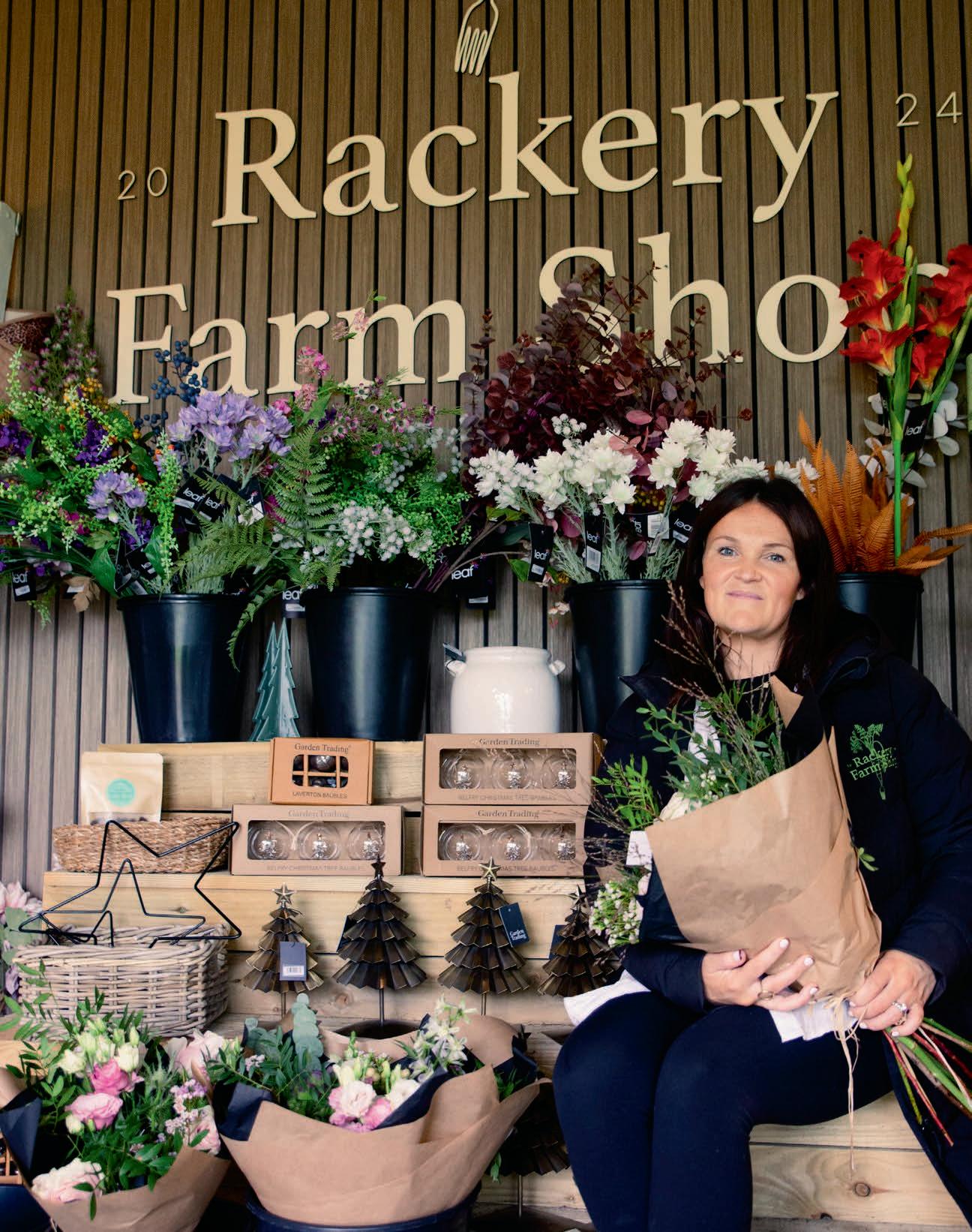
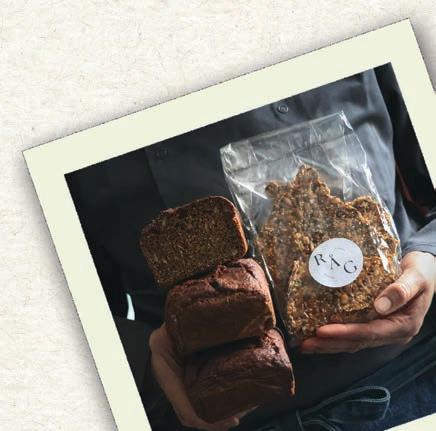
I grew up on a dairy farm and had always dreamed of opening a shop there, but my career took me in a different – albeit farmingrelated – direction. After university, I joined an agricultural bovine AI company, where I was area sales manager for Cheshire and South Wales, responsible for 50 staff. My experience managing a big team gave my husband, Jake, and I the confidence to thin bi and create a destination farm shop and café from day one, rather than starting with a shed on the side of the road.
Obtaining planning approval took a long time – 12 months – as the authorities didn’t want us to build on my parents’ farmland. Fortunately, the local councillors and community were on board and permission was granted in 2021.
e still had to secure finance before we could build the shop. We wrote a detailed business plan with the help of a consultant, funded by the armin onnect diversification scheme. We then tried various high street banks and other lenders without success. In the end, HSBC agreed to a loan – my parents had banked with them for years. We were also awarded a matchfunded grant for the building work under the Shared Prosperity Fund. All in all, the project cost , and too at least five years to brin to fruition. We started building on 1st May 2024 and opened six months later.
ur first year turnover was more than anticipated, but our profit mar ins are still very tight. At the start, there is so much capital outlay, and if anything goes wrong that isn’t budgeted for, it can instantly wipe out your profits. That happened to us in the height of the summer when we had to replace two freezers.
By the same token, when we have a good month, we reinvest in the business. For example, in the summer, we put in an ice cream counter and we are currently building a website.
We have spent very little on marketing, but we have collaborated with in uencers and now have nearly 8,000 followers on Instagram. My parents have a glamping retreat and we have worked together to grow our followings organically. e invite blo ers and T personalities to stay at the retreat, have a complimentary meal and then share their stories. I have also done a few collaborations with local in uencers myself.
In year two, our challenge is turning this into a profitable business and rowin our offer, by putting on more events, launching a loyalty scheme and bringing new suppliers on board. From day one, our mantra has been to make Rackery Farm Shop a destination; we want people to want to spend time here.
Interview Lynda Searby
Photography Stefanos Aktipis
Celebrating a culture of authenticity
A winning combination of tradition, skill and landscape makes Castilla y León a natural home for world-class cheeses
As a region with a long tradition of livestock farming and a vibrant culinary culture it is no surprise that Castilla y León has yet again gathered a healthy harvest at the World Cheese Awards.
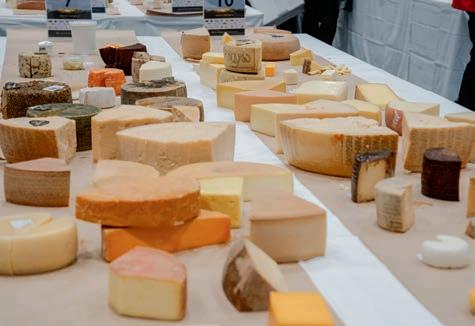
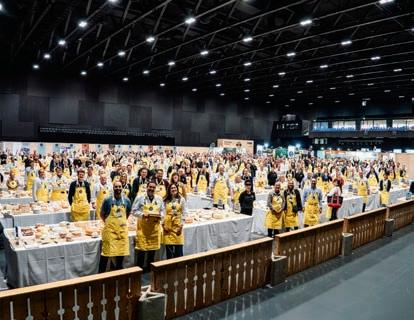
This year’s edition, the 37th, of the competition taking place in Bern, Switzerland, was the biggest yet. It saw a record-breaking 5,244 entries from 46 countries, judged and scored based on appearance, aroma, texture, mouthfeel and avour.
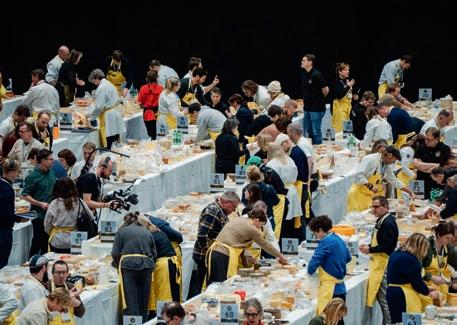
The rigorous blind testing and tasting process, carried out by a panel of 265 judges – experts ranging from retailers and buyers to chefs, journalists and cheese graders – means that any cheese that makes it through is truly special.
The judging process whittles entries down to a select group and the best cheeses are awarded Gold, Silver or Bronze medal, while a small
number is highlighted as Super Gold medal winners.
Stretching from the Picos de Europa down to Salamanca, Castilla y León spans some of Spain’s most varied terrain and heritage, moving from rugged mountain villages to historic cities, re ecting centuries of avour and tradition. This year an impressive 56 cheeses from 19 producers in Castilla y León were recognised in the awards.
HARD WORK AND PRECISION
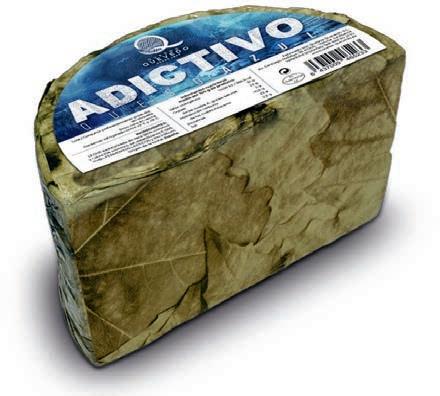
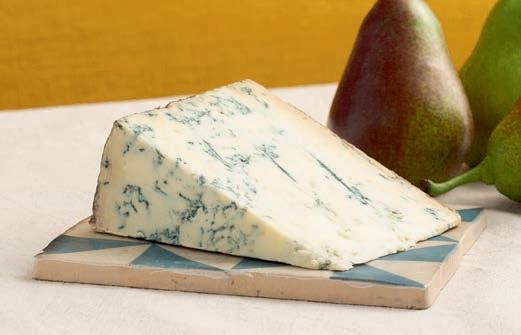
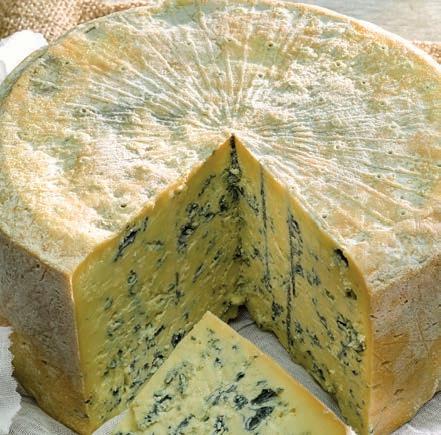
In total, Valladolid-based Quesos Quevedo collected three awards and the highest recognition of Super Gold went to its Queso Adictivo, a pasteurised blue cheese made of 80% cows’ milk and 20% sheep’s milk.
“We age the cheese with a very high humidity level to achieve the creaminess and richness that characterise our blue cheese and set it apart from others in the category,” says commercial director Ricardo Quevedo who is carrying on a
proud family tradition.
His grandfather opened the cheese factory in 1946, which means next year sees the celebration of the 80th anniversary. “When my grandfather stepped aside, my father and his brothers took over and I joined the family business 25 years ago,” he says.
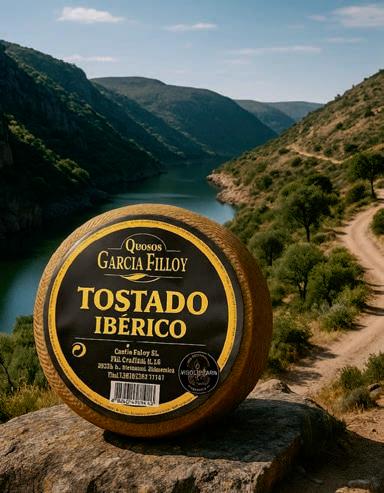
One cheesemaker who feels the familiar glow of success at the World Cheese Awards is Ángel García García from Salamanca’s Quesos Garcia Filloy as one of his cheeses received a Gold for another year.
The winning Queso Tostado Ibérico is characterised by a lightly toasted avour owing to the ageing process, “I like to compare it to a parmesan cheese,” says Garcia. “We were looking to achieve that classic pleasant avour – very smooth and a little sweet – and we have succeeded.”
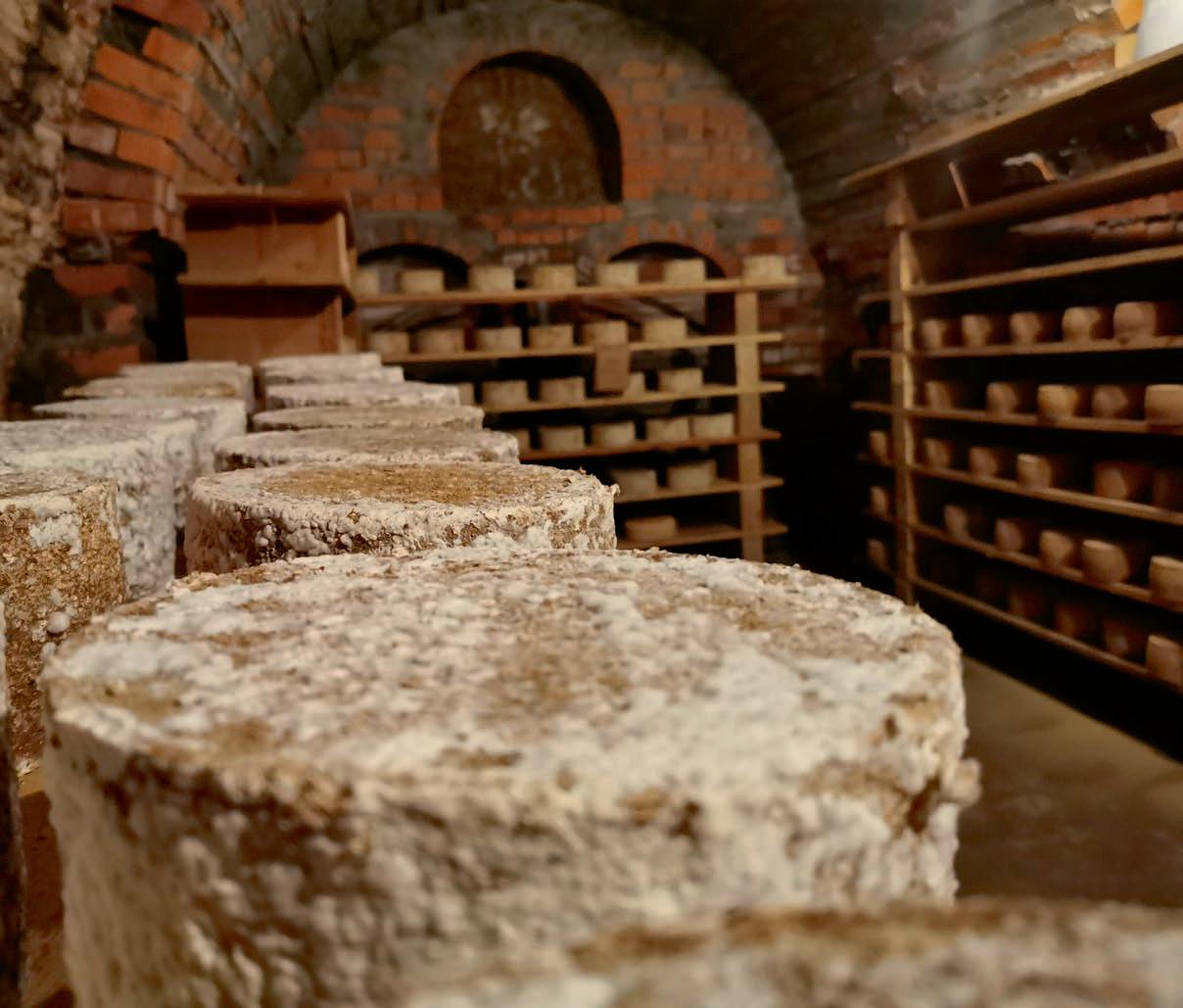
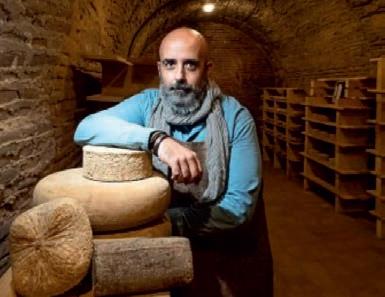
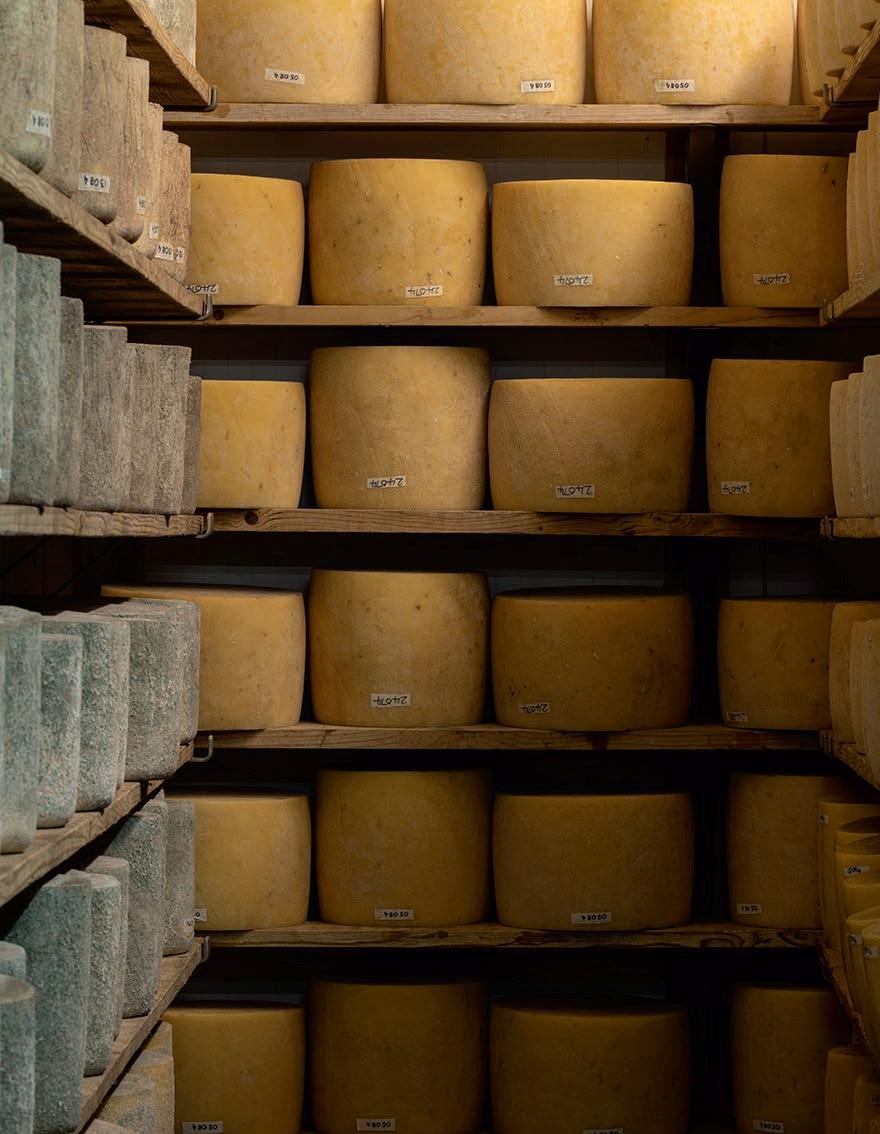
Castilla y León has a vibrant culinary sector and is also a region of celebrated wines. In the heart of Rueda, the DO for wine, Fernando Aldudo, cheesemonger and a neur with Rueda Cheesemonger, heads up a singular project specialised in maturing cheeses in historic underground wine cellars, some of them dating back to the 16th century.
“Our ancient caves o er a naturally stable environment with constant humidity and temperature, making them ideal for developing natural rinds and re ning texture and avour,” he says.
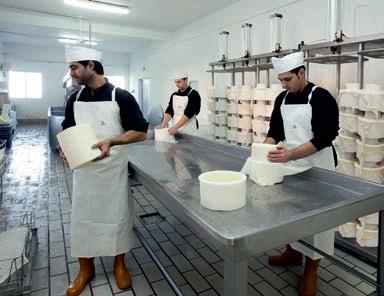
Care for every detail is the name of the game here – the team work in small batches and the cheeses are rotated, brushed and monitored by hand and the natural conditions help us develop expressive natural rinds. “Working wheel by wheel, we aim to bring precision and elegance to cheeses with deep rural roots,” explains Aldudo.
the Valladolid family business La Cruz del Pobre, can celebrate a gold award for his Queso Curado La Cruz del Pobre.
“It is a raw sheep’s milk cheese made from Assaf sheep and aged for seven months,” he says. Weighing about two kilos the cheese is pressed, buttery, with a creamy paste and light on the palate. Escarda describes it as “light notes of matured milk and butter that fade, giving way for roasted avours, almonds and hazelnuts”.
Tradition counts for a lot at La Cruz del Pobre and any new product must meet a very simple standard: it has to remind the team of what they were taught by their grandmother Vicenta.
“Those cheeses were pure cra smanship and we always let the avours of the past guide us,” says Escarda. “The only special touch here comes from refusing to settle for anything less than excellence, always seeking improvement and being self-taught – tasting many cheeses.”
RESPECTING TIME
A similar adherence to the avours of the past is found at the small artisanal family livestock farm and cheese factory Quesería Artesanal de Mucientes, run by Isabel Edesa Hernández and her husband Alfredo. At this small production in the small village of Mucientes near Valladolid they only process the milk from their own livestock, fed with what they produce on our own agricultural land, which is entirely dedicated to producing feed for the animals.
“We don’t buy milk and we don’t sell milk. So the animals’ diet is carefully managed according to the needs of each group, and we try to obtain the highest-quality milk possible so we can process it here,” she explains.
“We continue to work the same way that things have always been done. There are fewer and fewer of us who still work this way, but that has always been our philosophy.” Rewarded with a Gold medal for the Queso Mucientes Curado, a pressed-curd cheese made with raw sheep’s milk and cured for 10 to 12
As a very small operation with a focus on producing cheese to traditional methods, there are no special e ects at Quesería Mucientes.
of making blue cheeses with raw materials sourced from local farmers in the province, using an artisanal process supported by modern technical controls. “For us the key is to respect time in a patient and meticulous process where cra smanship and technique coexist daily, ” she says.
This patience has paid o and the team has been awarded for two products this year, one Bronze and one Gold. The latter award was for the Valdeón Mini IGP, a blue cheese made with a blend of cows’ and goats’ milk.
“It has a creamy texture, well integrated paste and harmonious blue veining,” she explains. “Its avour is marked by an elegant spiciness and a lasting nish that represents the essence of the Valdeón Valley.”
It is perhaps this re ection of the land in the product that makes the cheeses of Castilla y León stand out. Its cold, dry climate favours aging and its long livestock tradition provides exceptionally high-quality milk. Each region contributes unique nuances thanks to its diverse breeds, landscapes, and pastures. And as Pedriza says, “With good milk you can always make great cheese.”
However, there is a di erent layer, beyond the milk, to this region, the largest autonomous community in Spain.
“Castilla y León has exceptional sheep’s milk, centuries of pastoral tradition and a climate that naturally favours maturation,” says Aldudo. “But it also has a culture of authenticity – producers who value cra and avour over shortcuts. This combination of landscape, heritage and skilled hands gives the cheeses a depth and purity that are di cult to replicate elsewhere.”
This year Rueda Cheesemonger has been awarded a Gold for its Pata de Mulo made with raw sheep’s milk and matured with precision in the underground cellars.
“This cheese has a rm but creamy texture, clean lactic aromas and a natural rind that develops gentle white moulds during a nage,” says Aldudo. “The avour is long, balanced and progressively complex, while still maintaining the honesty and rural identity that de ne this historic style.”
Eulalio Escarda Pedriza, director general of
“Nowadays there are many ways to make cheese and many options to create sweeter or spicier avours, more holes or fewer holes,” says Hernández. “But we work in a very traditional way. The foundation is controlling the livestock, caring for the animals, and caring for their diet, because in the end the raw material is what matters.”
If one characteristic unites all these golden winners it is patience, not a common quality in today’s world.
For more information, contact: o ocio .ice c l.es months.
In the majestic mountains Picos de Europa, Leticia Alonso Cuesta, general manager for Queserias Picos de Europa, talks about respecting time and listening to each batch of cheese. She describes the family tradition
www.ruedacheesemonger.com www.queso-quevedo.com . uesosfillo .co www.queseriademucientes.com www.quesospicosdeeuropa.com .lac u del o e.es
View from HQ
FFD’s publisher and Guild of Fine Food managing director John Farrand has his say
PPalaver, meaning an overly long discussion or procedure, from the Portuguese word “palavra”.
alaver, meaning an overly long discussion or procedure, from the Portuguese word “palavra”.
An unnecessary fuss, a lot of hassle, or a complicated and stressful situation.
I laugh out loud as a simple Internet browser search returns the above AI overview. We’ve just returned from the ‘World Cup’ of cheese in Bern, Switzerland. The World Cheese Awards, 2025, has been declared a goodie, and a much-needed one a er the Portuguese palaver of last year.
My clumsy sporting analogy is a lazy one, but sport is never far from my thoughts. Rugby is Bath; football is Liverpool and the word ‘ashes’ is more cricket than Morbier to me.
The home win for Switzerland this year raises many questions, thoughts and debate. It’s the question that every member of the press loves to pose at the now endless media circus; it’s a x,
GREAT TASTE 2026
This year Guild members and nonmembers will be able to enter from December 2nd to allow e er one ti e to a e t eir i ion e er an enter at a reduced entry fee. Entry will close on Tuesday 27th January, or efore if apa it i rea e gff.co.uk/greattaste
APPLY FOR A BURSARY
The Great Taste Bursary offers 50 micro producers the chance to enter for free.
Applications are open from 2nd December – 6th January. gff.co.uk/greattastebursary
surely. I re up the spreadsheet. Since we went international in 2008 (Dublin), there have been eight home wins and eight away wins when it comes to the World Champion Cheese. I don’t need a formula in that spreadsheet to tell you that the result is even.
It is true, though, that more recently home advantage has seemed to play a part. Perhaps our judges are immersed in the terroir and generous welcome of the nation, perhaps it is simply that the cheese has less far to travel, but the reality is that every World Champ has won through our multi-layered and robust blind-tasting judging process and has achieved the highest score in the nal round (by only one point this year).
There were other accolades. Philippe Bardet, long-serving Swiss cheese doyen and dairy dogooder, was quite rightly bestowed with the Exceptional Contribution to Cheese.
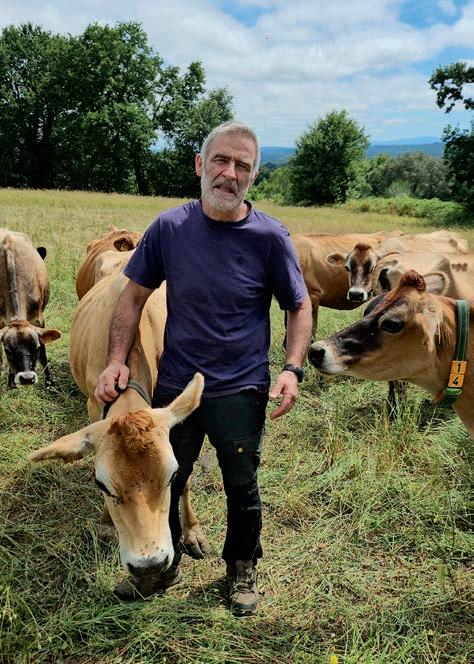
The Guild continued to remind both the trade and consumers of the importance of excellence in milk production through the Es La Leche award. ‘Es La Leche’, literally translated, is ‘It’s the milk’, but in colloquial Spanish it is an exclamation for ‘It’s amazing’. And our winner was amazing; Ricardo Outeiro is famous in Spain for extolling his 180-degree change from intensive to pasture-fed, extensive farming, having made a conscious decision to raise only Jersey cows.
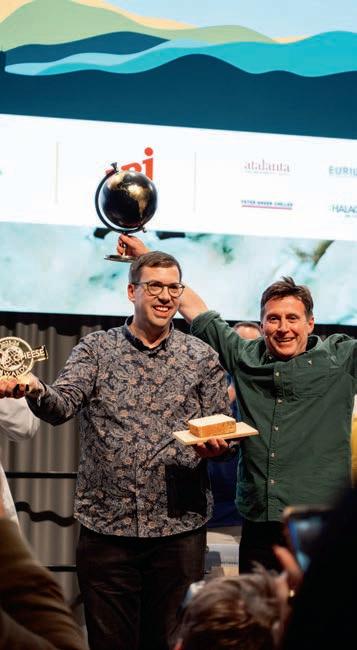
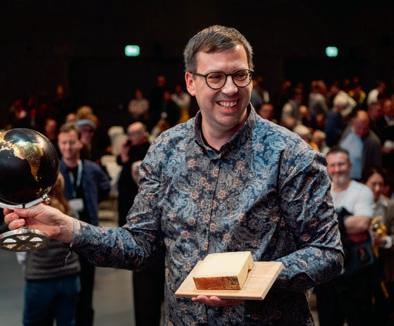
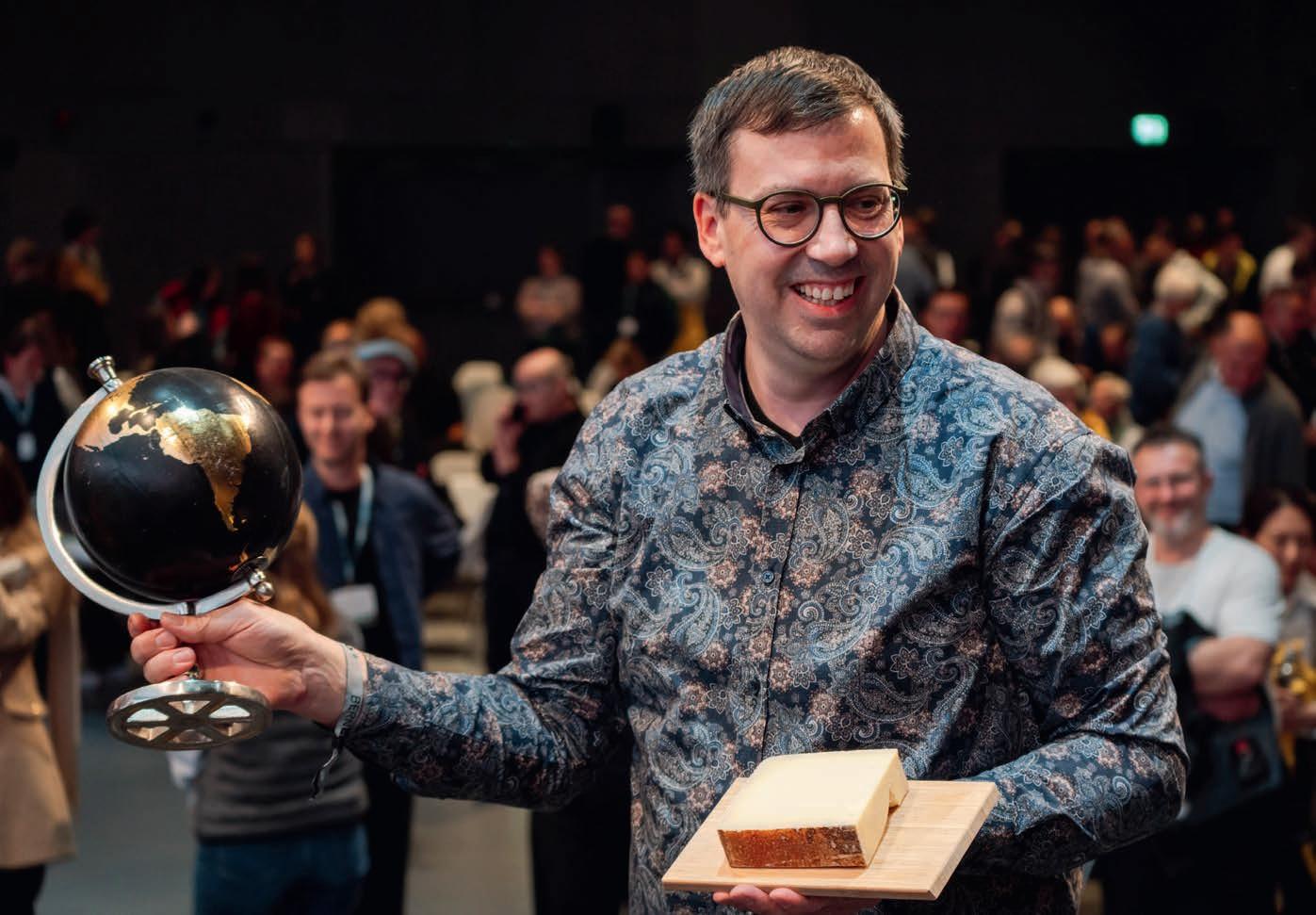
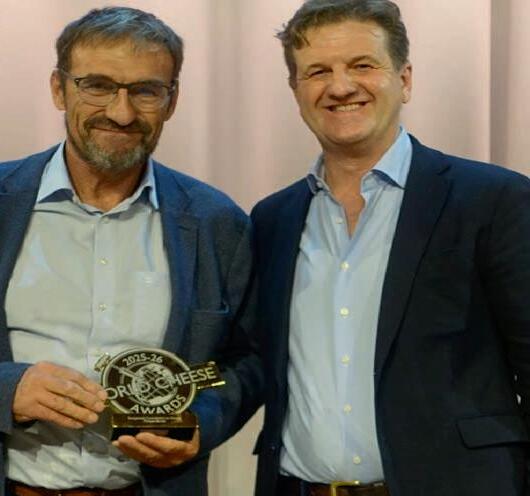
A whacking 1060 cheesemakers from 46 di erent countries took part in this year’s edition and every medal, whatever grade, should be celebrated. But in another tiresome sporting cliché, it’s not the winning, is it? It’s the taking part. Pius Hitz from Bergkäserei Vorderfultigen, who’d travelled only a few miles to collect the champion trophy, disagrees. Read more about this year’s World Cheese Awards on page 30.
The Word on Westminster
By Edward Woodall Association of Convenience Stores
AS I WRITE this, the Chancellor is preparing to deliver the Autumn Budget, and retailers across the country are watching lo el r e tor a eat ere a tor of rising costs, shifting consumer habits, and regulatory change. This is a crucial opportunity for the Government to provide the clarity and pport e nee to in e t ro an ontin e serving our communities.
ir t an fore o t e nee ertaint on business rates. While recent moves to lower multipliers for retail, hospitality, and leisure have been welcome, many small retailers still face the prospect of sharp increases as temporary reliefs are withdrawn and the next revaluation looms. We urge the Government to ensure that new multipliers genuinely offset the loss of relief, and to protect Small Business Rate Relief by updating thresholds in line with rising rateable values. Extending Improvement Relief from 12 months to three years would give retailers the breathing space to invest in their premises it o t ein penali e an i e iate i e in rates.
But the Budget is only part of the picture. As the Employment Rights Bill passes through the final ta e in arlia ent e re on t e p of t e o t i nifi ant an e to e plo ent law in a generation. From new rights around e i le or in an pre i ta le o r to en an e prote tion for parent an arer the changes will affect every food retailerlarge and small. While the ambition to create fairer ore e i le or pla e i el o e t e pace and complexity of change is daunting for small businesses already juggling so much. We nee lear a e i le i an e an a reali ti lead-in time to adapt our policies and processes. The Government must recognise that small retailer on t a e epart ent or le al tea on tan e nee pport to et t i right.
e loo a ea t e e a e to o ern ent i lear on t lea e all retailer behind. With the right support in the Budget and a pragmatic approach to employment law reform, our sector can continue to thrive –serving customers, supporting local economies, and providing good jobs in every community.
Edward Woodall is government relations director at the ACS edward.woodall@acs.org.uk
CONFESSIONS OF A DELI OWNER
Anonymous tales from behind the counter
CHRISTMAS IS COMING and the goose is getting fat – in our case, a little too fat for our customers.
Well, I’m actually talking about the year-round price of our free-range chickens, which are reared on a local farm less than ve miles away, and really are the best tasting birds you’ll ever sample. They are larger, slowgrown birds, and can weigh up to 3 kilos, which means they cost up to £20. The look on some customers’ faces when they hear that price – a mix of shock and indignation – is a routine punch in the gut. They are comparing it to the tasteless, tiny battery-farmed bird available in a supermarket for as little as £3. That’s not a fair comparison; it is
the price of an industrial product vs. the real value of a food raised with care.
The biggest battle we ght in a specialist food shop isn’t against the weather or a faulty fridge; it’s against the phantom price of food. Supermarkets have spent decades convincing the public that food is disposable and cheap, and should never be the subject of a considered purchase. They’ve pushed prices down to a point that completely disconnects the shelf tag from the true cost of farming, production, and high animal welfare. Throw a cost of living crisis into the mix, and it makes our job nearly impossible. We had a customer recently
The biggest battle we ght isn’t against the weather or a faulty fridge; it’s against the phantom price of food
Expert eye
FRA, ON THE NEW ‘MORE THAN FOOD’ MOVEMENT
One of the biggest di erentiators for our industry is our focus on high-quality, local produce. Many of you grow your own crops or rear your own animals or source local products close to home, ensuring the journey from eld to shopping basket is measured in metres, not miles.
This isn’t just a quaint idea: it’s a powerful selling point. Explain to your customers that fresh produce begins to lose its nutritional value as soon as it’s harvested, and that animals travelling shorter distances to be butchered locally are less stressed, which improves meat quality.
In a world where 63% of UK diets are now ultra-processed, you o er genuine, whole food.
This approach of ‘food metres, not food
(let’s call him ‘Bargain Barry’) who baulked at the price of our chicken and proudly told me he lled his supermarket trolley with two-forone deals on frozen, pre-made (read, processed) meals. Barry thinks he’s saving money, but the ‘cheap’ alternative o en comes with a hidden cost: nutritional density and health. Ultra-processed foods might be cheaper per calorie, but they are o en higher in saturated fat, salt, and sugar, and lower in bre, protein, and essential micronutrients. Studies have convincingly linked diets high in UPFs to increased risks of chronic diseases.
Another tragedy is the death of culinary skill: we need to inspire and educate customers, showing them that our £20 chicken yields at least four main meals plus the stock for a soup, transforming it from a luxury item into a foundation for the week’s healthy eating. Our role is to sell the story, the value, and the health bene ts, not just the product.
Our true art as artisanal retailers is to teach without preaching, through tempting displays and recipes on our social media, and not to strong arm Barry to the door. A er all, he’s in our shop in the rst place, which these days, is something to be grateful for.
miles’ also has environmental bene ts. Selling directly to the consumer allows you to prioritise quality over scale, and to retail in a slower, more mindful way.
When a customer visits your shop or market, they’re not just buying food; they’re connecting with the people who grow it. What might seem like a simple day out becomes a chance to learn where food comes from.
Position your business as a community hub. In a world de ned by automation and disconnection, you o er a place to meet, chat and connect. Train your sta to share stories about produce and answer questions. It’s this personal touch that customers can’t get from a supermarket.
Make sure customers know they’re investing in their community. For every pound spent in a farm shop or at a farmers market, around 75p stays local because we employ local people and predominantly sell local produce. Use signage, social media and conversation to highlight this.
In short, you’re not just selling food; you’re selling a commitment to quality, community and sustainability. Use the More Than Food campaign to tell your story and remind customers that their support makes a di erence. farmretail.co.uk/morethanfood
In-store sampling drives the biggest rise in sales of food and drink, with an average uplift of 95.2% Displays in high-traffic areas follow, boosting sales by 54.9%
Source: n re ip an SMG data
ARE YOU LOOKING FOR MORE?
Whether it’s staff training, business advice, event space, making industry connections or opportunities to meet trade buyers and food lovers, the Guild of Fine Food does far more than publish FFD The Guild has been championing independent food & drink for over 30 years. Join us to a an fin o t at e an o for your business.
Notts maker Primrose Creamery debuts with two raw milk cheeses
By Patrick McGuigan
British raw milk cheese has been given a timely boost by a new dairy at the School of Artisan Food on the Welbeck Estate, which uses the same unpasteurised milk as Stichelton.
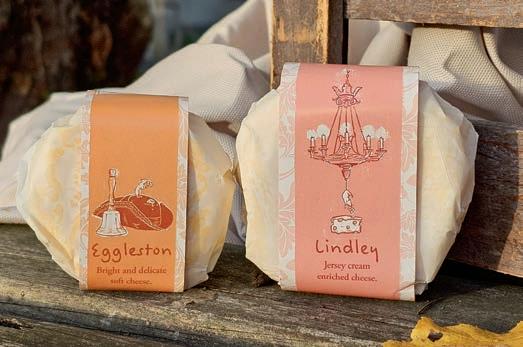
Nottinghamshire-based Primrose Creamery, founded by 33 year-old cheesemaker Jake Goldstein, started production at the end of last month, with two raw cows’ milk lactic cheeses, called Lindley and Eggleston. The decision to use raw milk, sourced from the same herd that supplies fellow Welbeck-based business Stichleton, is an unusual move at a time when many British so cheesemakers now pasteurise due to regulatory and cost pressures.
“Raw milk uses less energy and is more sustainable because I don’t have to heat and then cool the milk again, and it’s de nitely something that interests wholesalers, retailers and the public,” said Goldstein, who previously worked at Monkland and Neal’s Yard Creamery in Herefordshire. “The changing avours of raw milk throughout the year are something to be embraced and enjoyed.”
Goldstein produces around 600 cheeses a week, selling at
farmers’ markets and to around 12 retailers, including Welbeck Farm Shop. Discussions with wholesalers are ongoing. The School’s dairy, which has long been used for teaching cheese classes, has capacity for around ve times the current production. Classes will continue at the school, with Goldstein teaching alongside consultant Ivan Larcher.
Weighing 150g, Lindley is a triple cream cheese with a velvety rind, made with the addition of raw Jersey cream. Eggleston (100g) is a yeast-ripened cheese with a thin annatto-washed rind. Colwick, a local so cheese with a dimple at the top, will be launched next year.
Branding for the cheeses
Sales of premium cheeses are growing fast in supermarkets, according to industry body AHDB, which says higher-priced cheeses grew at nearly 10% in value in the past three months compared to 6.5% for standard ranges.
Restaurant veteran Max Palmer, who has worked at The Fat Duck, Quo Vadis and as a lecturer at Westminster Kingsway College, opened The Little Cheese Shop in Taunton last month, specialising in artisan cheeses, cured meats and custom-made cheese boards.
The ancient society The Brotherhood of the Knights of Camembert in Normandy has applied to Unesco for the famed French fromage to be recognised as an ‘intangible cultural heritage’.
features a recurring image of a mouse and images that reference their origins. Lindley is named a er Elizabeth Lindley, a dairymaid who worked at the estate in the 19th century, and features the chandelier that used to hang in the old dairy. Eggelston is named a er William Eggleston, a Nottinghamshire farmer who lost his life in a cheese riot in 1766.
“I’m not trying to reinvent cheese,” said Goldstein, “but I do believe tradition only stays alive when you keep building on it. What I’m doing is rooted in the old ways, but it also looks forward, using what we know now to make something expressive, balanced, and alive.”
The Cheese Society in Lincoln has refurbished its much-loved cheese shop with a new bakery counter. The business, set up by Kate O’Meara in 2001 and now run by her daughter Lucie Nock, has replaced its caf with a newly desi ned cheese counter and bakery section, selling cheese scones, cheese-topped sausage rolls, and cheese-stuffed croissants. The shop also offers dishes from its menu to cook at home, such as double-baked cheese souf and mac and cheese.
THREE WAYS WITH...
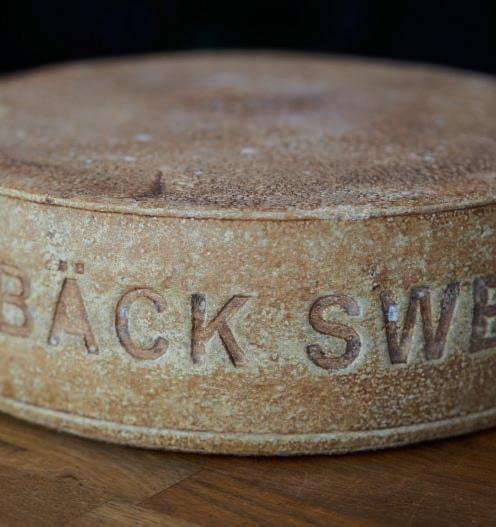
Wrångebäck
This PDO-protected Alpine-style cows’ milk cheese, made by Almnäs Bruk in Sweden, comes in 8kg wheels, which are washed in brine and aged for 10-15 months. The texture is smooth and dense; the avou is slig tl ta t it co le notes of roasted nuts, cream and a ot fi is .
Savignan
La Fromagerie, which imports Wrångebäck, recommends white wines from Jura in France as a good match. The oxidative style of Vin Jaune and Arbois wines, made with Savagnin grapes and matured under a layer of yeast in the barrel, has a nutty sherry li e avour, which lifts the roasty notes in the cheese. Try Arbois from Domaine Jean-Louis Tissot.
Scones
There are lots of fruity, savoury avours in Wrångebäck, which are similar to Gruyère. It also melts like an Alpine cheese, making it a good option for souf s, fondue and cheese toasties. ratin Wrångebäck into the mix for cheese scones is also a fine idea, brin in bi cheesy depths.
Charcuterie
A glass of Arbois, served with a Wrångebäck cheese scone and a few slices of cheese, is a snack that is crying out for spicy salami. Continue the Scandi theme with a few slivers of smoky, lightly spiced Danish salami, which adds to the umami hit of the cheese.
Alongside Lindley and Eggleston, the Sherwood Forest cheesemaker plans to revive Nottinghamshire’s traditional bowl-shaped Colwick next year
CHEESE
Lumpy Skin Disease ban on raw cows’ milk
cheese imports extends to Spain
By Patrick McGuigan
The ban on raw cows’ milk cheeses from France and Italy has been widened to include Spain a er a case of Lumpy Skin Disease was reported in Catalonia.
While Spain is best known for sheep’s milk cheeses, the ban impacts popular cheeses such as Cabrales from Asturias, Picón Bejes-Tresviso from Cantabria and Mahon from Menorca.
Spanish food importer Brindisa said the loss of Cabrales and its newly launched unpasteurised blue Mamá Marisa would hit sales. “They are very important at Christmas when people buy more blue cheese,” said buyer Jose Bueno Marin. “Valdeón is pasteurised, so we hope that lls the gap. With Mahón, we are trying to nd thermised and pasteurised alternatives [the PDO allows both], but it means dealing with bigger producers. The ban is a blow for artisanal cheeses in Spain.”
LSD is a viral disease
UK’s import ban
a ecting cattle, transmitted mainly by insects like mosquitoes and ies. The Spanish ban was introduced by Defra in October, following similar restrictions for Italy and France earlier in the year. Initially, the Government declared that raw milk cheeses made before 23rd May and thermised cheeses were permitted. The cut-o point has since been scrapped and the rules updated to allow any cows’ milk cheese that has
CHEESE IN PROFILE with
What’s the story?
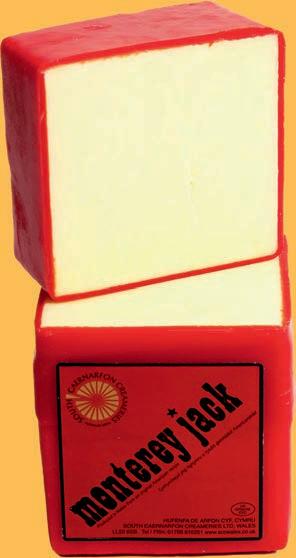
Monterey Jack is a classic hard American cheese that originated in Monterey County, California. Its story begins in the 1700s, when Franciscan monks brought the recipe from Mexico, where it was known as queso del pais – “the country cheese”. In the 19th century, a Scottish immigrant named David Jacks began producing and selling it commercially, renaming it “Jack’s Cheese”. His success
helped put the cheese – and his name – on the map. David went on to expand his cheesemaking operation to 14 dairies across California, and to this day, Monterey Jack remains a regional favourite, with production still thriving in California and Wisconsin.
How is it made?
undergone heat treatment over 40°C.
This means hard-cooked cheeses, such as Comté, Parmigiano Reggiano, Pecorino and Beaufort will still be allowed to be imported, regardless of when they were made. However, the products will need to be accompanied by supporting documentation, such as a manufacturing certi cate or statement, detailing the heat treatment applied to the milk.
BEHIND THE COUNTER TIPS OF THE TRADE
Jessica Summer, Mouse & Grape, Pinner, London
Celebrating a year of trading, Mouse & Grape has more than doubled the number of covers at its shop to 32, with a new room upstairs. “We’ve served cheeseboards and wine from the beginning because the margin is so much better,” says founder Jessica Summer. “I couldn’t see how just retail would work.”
The shop offers a tight menu of nine cheeses and 12 wines by the glass, which customers can mix and match. Each cheese comes with its own accompaniment and wine suggestion, while shop bottles can be ordered with corkage. Each cheese costs between £5.90 and £7.20 for 50g.
“We wanted prices to be reasonable, so you can order one cheese or all nine. We eep it at nine o it i plifie for an t e customers. We precut slices and store them in Tupperware so the boards are easy to assemble.”
Margins on cheeseboards and wine are 70-80% compared to 50% in retail, and there are more opportunities for upselling. “We offer add-ons like nuts, olives and charcuterie, and if people like something, they often buy it to take home with them afterwards.”
mouseandgrape.com
Appearance, texture & lavou ofile
Monterey Jack is often sold rindless, though some versions are dipped in a or paraffin for protection. Aged versions are sometimes rubbed with a mix of oil, cocoa, and pepper, giving them a ri er ept of a o r
This cheese has a smooth and supple texture with a gentle, creamy taste that is mild and fresh.
cocoa, and pepper.
eese o ge ti Monterey Jack pairs well with a Pinot Noir. The wine’s bright acidity an re fr it a o r can complement the cheese’s creamy texture and subtle sweetness. Alternatively, try a bright, light-bodied Sauvignon Blanc with hints of citrus.
Pasteurised milk is gently heated to around 31–32°C before the starter culture is added. Once rennet is introduced, the milk begins to coagulate, forming a soft mass of curds suspended in whey. The curds are then cut into small pieces and slowly stirred as the temperature rises, helping them to fir p fter t e e i drained away, the curds are salted and pressed – either mechanically or
a iatio s
by hand in cloth-lined moulds. Traditionally, the cheese is formed into 2.5kg wheels, though on a larger, industrial scale, it’s also made into blocks.
There are several variations of this cheese, including Colby Jack, known for its marbled pattern; Pepper Jack, infused with jalapeños and chilli; and Dry Jack, aged longer and coated in a mix of vegetable oil,
e s eco e datio Monterey Jack’s mild an tter a o r profile a e it an excellent choice as an accompaniment to Mexican food. Try it shredded or melted on enchiladas and quesadillas. It’s also great melted in mac and cheese or on beef burgers.
Monterey Jack is one of the 75 cheeses studied as part of the Academy of Cheese Level Two Certification. For more information on this and all of their courses, head to www.academyofcheese.org
Brindisa recently added Mamá Marisa, a raw cows’ milk blue from Asturias made by Rey Silo, but has now had to pull it following the
Monterey
Fleuri
In the heart of Ostebygda
Leirgrøv Naturell Vellagra awarded BEST NEW CHEESE at World Cheese Awards 2024-25
To find out how you can stock these award-winning cheeses, please email post@holysteri.no
A Modern Twist on British Tradition
Leirgrøv
Smoked Red FoxVintage Red Fox
Hold ‘Er, Newt
Great sums have been invested in The Newt in Somerset and its Creamery, at Castle Cary station, is no exception.
By Patrick McGuigan
There’s no signof the thousands of festival goers who alight at Castle Cary railway station on their way to Glastonbury every June. The last tents have been taken down at Worthy Farm many months ago, and it’s back to being a sleepy Somerset station.
It’s a di erent story outside the entrance, however, where a gleaming brick and glass building with a towering chimney welcomes a steady ow of customers. The artfully designed Creamery farm shop, cafe and garden, owned by the nearby Newt estate, is doing a brisk trade with passengers and locals alike.
All of them stop and stare for at least a few minutes at two cheesemakers producing perfectly round balls of mozzarella in the dairy at the heart of the building, visible through huge oor-to-ceiling windows. “Sometimes people wave and I wave back, but most of the time we’re focused on the cheese,” says head cheesemaker Margaretha Van Dam as she checks the bounciness of the mozzarellas as they plop out of a revolving mould.
Originally from the Netherlands, Van Dam learned cheesemaking from her grandmother and through formative stints with goat’s cheese pioneer Mary Holbrook. She also spent many years producing cheese for British mozzarella producer Laverstoke in Hampshire, before it closed down. She had moved to Portugal and was making goat’s cheese on her own farm when the opportunity to head up the Newt’s new cheesemaking business lured her back to the UK in 2023. “I’m very lucky because I have a lot of freedom and I’m allowed to play with di erent milks here,” she says. Mozzarella, made with raw bu alo milk from the Newt’s own herd (bought from Laverstoke), is the agship, but Van Dam and
fellow cheesemaker Sedef Durmaz also make bu alo Halloumi and Gouda, plus raw goat’s cheeses with milk from White Lake, including lactics, Bries, Geta and Goudas. Their labneh and yoghurt, made with locally sourced Jersey milk, is hugely popular in the Creamery café, where people can watch the cheese they’re eating being made in front of them.
Built in 1912, the Creamery was originally a dairy where milk from small Somerset farms was pasteurised and bottled, or turned into cheese, before being loaded on steam trains for London. This was in the rst half of the 20th century, but the building had stood abandoned for many years until the Newt took it over. The estate, located 10 minutes away and home to a luxury hotel, spa, gardens, restaurant and farm shop, is owned by a wealthy South African couple, who painstakingly restored the Castle Cary site to its former glory in 2023.
The amount spent on the Creamery is clearly far more than most start-up cheesemakers could dream of. Even the 300-strong bu alo herd, located on a farm nearby, is being treated to a new barn and pool for wallowing. Currently Van Dam’s cheeses are only sold and served in the business’s various restaurants, cafés and shops, along with bread, meat, vegetables and cider also produced on the Estate. Cheese may eventually also be supplied to wholesalers, but there’s clearly no rush for a return on the investment.
“The owners just love mozzarella”, says Van Dam. “It’s a holistic system here. The baker is as mad about bread as I am about cheese. The chefs are constantly coming up with ways of using our products. Each part of the business pollinates the other. It’s a very infectious place to work.”
thenewtinsomerset.com
It’s a holistic system here. The baker is as mad about bread as I am about cheese.
CROSS SECTION
The Newt Buffalo Mozzarella
The cheese is made in 125g balls with raw milk from the Newt’s own tron er of ffalo t a er temperamental cheese because buffalo are closer to nature than cows,” says Van Dam. “What they eat translates into their milk in really big ways.”
ro n of il i eli ere fresh each day for production into mozzarella, but also Halloumi, Gouda and ‘Hangop’ – a labneh-style cheese. Buffalo milk is much richer in fat and protein than cows, standing at around an re pe ti el i i e a i tin ti e a o r an te t re to the cheeses.
The mozzarella has a short shelf-life of t a fe a an t e a o r i rich, clean and creamy. The texture is springy, while whey weeps from the spheres when they are cut.
Head west to find the best
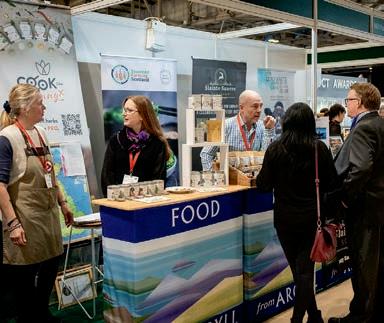
The Source trade show returns in 2026, promising an inspiring showcase of the very best in food innovation, retail, and hospitality. Renowned for connecting leading suppliers, passionate producers, and forwardthinking retailers, The Source is a must-attend event for anyone seeking to discover new products, build valuable partnerships, and stay ahead of market trends.
This year’s show will host a dynamic mix of established brands and fresh talent, o ering attendees the chance to experience the latest in food, drink, equipment, and services. With everything your food or hospitality business could possibly want, all in one place, The Source is the ultimate destination for sourcing, learning, and growing your business in the ever-evolving food sector.
There was a buzz to the show. Aside from meeting potential new suppliers, it’s a great opportunity to catch up with existing ones. I will be adding newlydeveloped products to my range, too.
Cornwall Join us at The Source 2026 and be inspired by the future of fine food. Don’t miss your chance to be part of the food sector’s most vibrant gathering.
Craig Jenkin, All
Things
As a farm shop we are always keen to nd South West suppliers and this is the perfect setting to do so.
HOW TO JOIN
Registration is open to all food industry professionals. Visit thesourcetradeshow. co.uk to book your place and view the exhibitor list. For exhibitor enquiries, contact the team at stands@hale-events com or ring 01934733433.
As the new manager of a recently acquired deli, I wanted to see options for new suppliers. It was very informative and did increase our potential suppliers.
Char Cooper, Puxton Park
Milly Fellows, Rae Foods
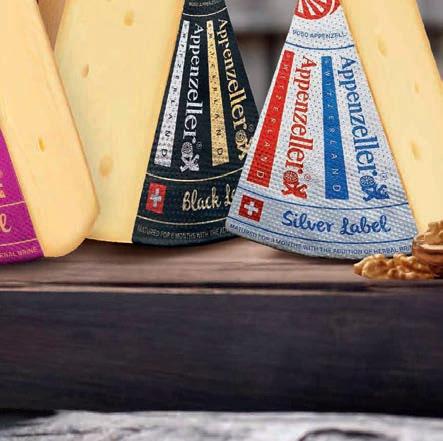
Purple Label
Aged for 9–12 months
Complex and lingering
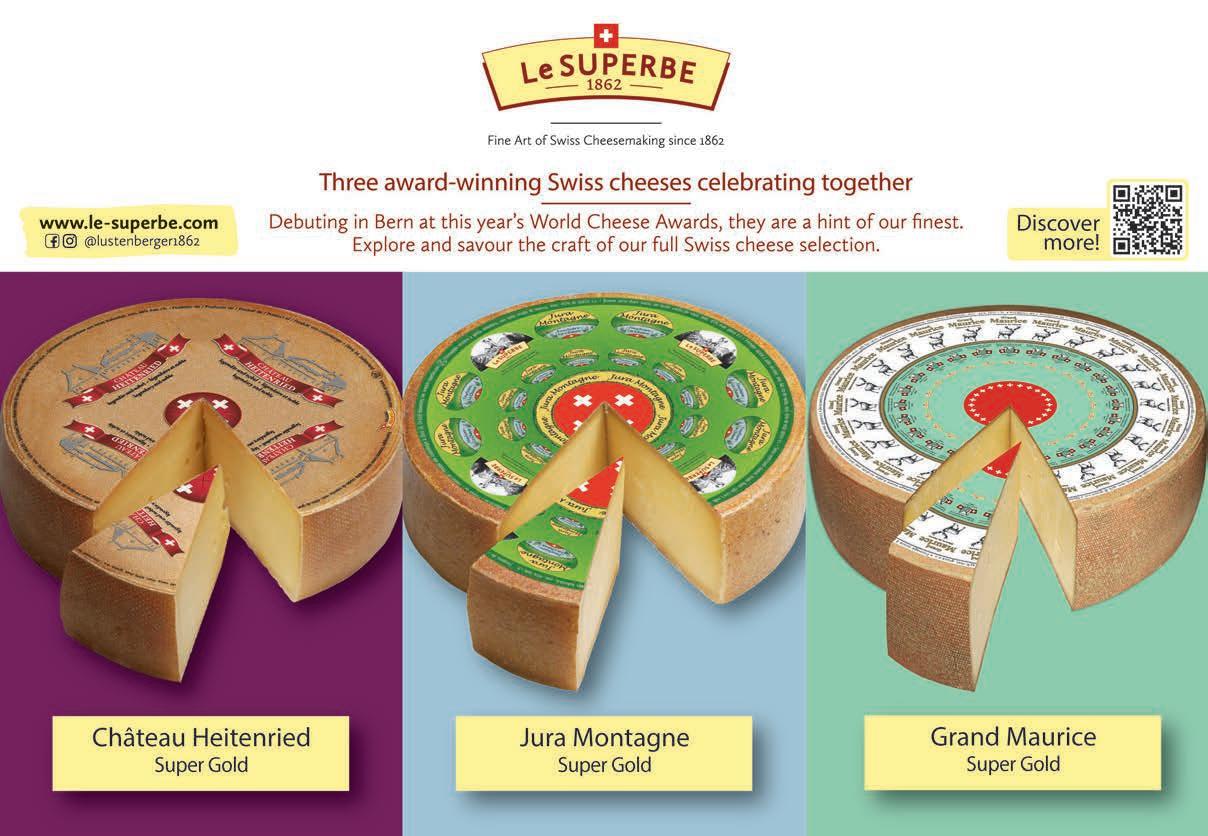
Our Super Gold winners
Black Label
Aged for 6-8 months
Sharp and robust
Silver Label
Aged for 3 months
Mild and creamy
tastiest cheese comes to life in the known as Twice a
Switzerland’s idyllic Alpine region Appenzellerland. day, farmers bring their fresh and still warm cow’s milk to one of the 40 authorized cheese dairies where master cheese makers use their years of expertise and more than 700 years of artisanal tradition to transform it into delicious Appenzeller ® cheese.
WHAT'S NEW
Mead maker Hive
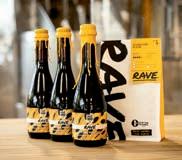
Mind has teamed up with Rave Coffee to create Second Breakfast, a 5.5% ABV oatmeal honey stout. Cold-steeped coffee is added to the malt, oats and honey efore fini in fermentation, re ltin in a f ll bodied, velvety stout with balanced depth. RRP £4.50/375ml. hivemind.com
Penrhos has partnered with Oddbox to make Wonky Pear & Chilli Gin in rpl pears and jalapeños that would otherwise have been wasted.
Penrhos also launched Wonky Strawberry in in fr it fro it Herefordshire farm. Both are available while stocks last. RRP £34 and £30/75cl. penrhosspirits.co.uk
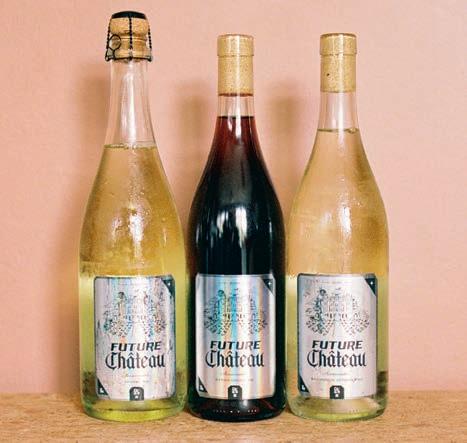
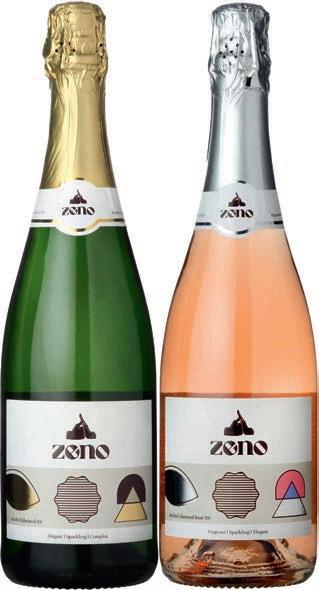
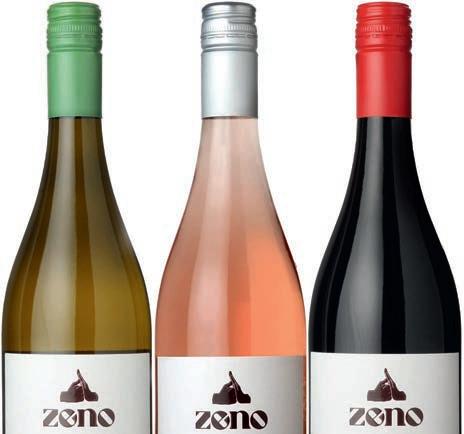
Future Château says proprietary method raises the bar of low ABV wine
By Tanwen Dawn-Hiscox
For all wine drinkers who have wished there was such a thing as beer-strength wine for a casual weeknight drink, Future Château may have the answer. Founder Tom Benn has spent the last three years developing white, red and sparkling wines at 5%, designed to taste like fullstrength bottles.
Benn was part of the founding team at Pip & Nut, and worked for companies like Vita Coco, Milliways and Freya in their early days, so he has brought his product development rigour to winemaking.
The problem with wine, he claims, is that “there’s nothing else that humanity has been this obsessed with for this long – for 4,000 years, people have been fermenting grapes, trying to gure out how to make it better… so our standards are just insane.”
This means it is nearly
impossible to replicate through mixology.
Meanwhile, piquette, a low ABV by-product of wine until recently illegal in the UK, is unstable and has a short shelf-life. And many existing de-alcoholisation techniques, Benn claims, are awed.
“If you’re running 10,000L of liquid through a machine, that machine will get hot. And as soon as you heat wine, you get
stewed wine.”
Benn’s method involves evaporation and blending. Grapes are grown in Australia – prioritising quality fruit – with canopies trimmed to allow the grapes to ripen quickly and be picked before they can develop so much sugar that it will result in high-ABV wine. The white is a VermentinoSauvignon Blanc blend, the red combines Shiraz
‘Made in’ spirits brand range broadened with ve-year-old rum and aged whisky
Ahead of intro in it fir t batch of whisky in 2027, Wiltshire’s B-Corp distillery
Witchmark has put out a limited run of New Make Spirit: Distiller’s Cut. At 60% ABV, made with Fonthill Estate barley and chalk aquifer water, it promises to be fruity, li t rea oot and already full of character. witchmark.co.uk
The two ex-chemists at the helm of Rosemullion are ra pin p t e production of spirits from their Cornwall facility, a in een ati fie with the standard of their fi e ear ol a e r trial, released in October, and of their new Malt Whisky.
Andy Bradbury and his wife started i tillin in rum and whisky in 2017 – from scratch, rather t an in in base spirits. “The fundamentals of i tillin are really physical chemistry,”
Bradbury tells FFD. “We wanted to see whether we could make world-class in r an i in Cornwall.”
They have developed t i roa ran e it it ittin t e pirit to awards over the years,
ta in on t e fee a offere an a in in re ental on oin improvements. ro in ore r an i i e Rosemullion a point of difference over other craft distilleries, as does ein part of the ‘Made-in’ community, pro in it own base spirit. Bradbury says that despite this, its classic styles of in a tren t an London Dry, a on ot er – are still very popular.
e fi e (almost six)
and Grenache, and the sparkling is Chardonnayled, aged on lees. All retail at £20 a bottle. A Provençal-style rosé is due early next year.
The founder is under no illusion that we’re a long way from the lowand-no take on ne wine, but believes his low-ABV range is a step forward.
“I want to spend the next ve years just improving it by working with small retailers and their customers who’ll tell me what they think.”
His research has brought another surprise: whereas he thought millennials and Gen Z would be the main demographic of repeat buyers from the Future Château website, it turns out they are mainly 40+, a uent women.“There’s a phrase I hear a lot, which is, ‘many nights a week I’d love a glass of wine, but I don’t want to waste half the bottle.’ Future Château solves that problem.” futurechateau.com
year-old rum (£60 RRP for a 70cl bottle) i a e in eri an oak and two other proprietary barrels, as is the producer’s Golden rum. “It shows another level of complexity on the palate – smoother, ofter it rollin a o r of anilla and wood tannins,” Bradbury says. It won’t be available next year, but the distiller says it ill e a ein ore for future releases. The whisky, based on Lowland-style Scottish whisky, is described by Bradbury as “very soft, easy on the palate”. RRP £47.50 per 70cl. rosemulliondistillery. com
Artisanal cheeses and dairy products: the authentic taste of Swiss terroir LA CôTE-AUX-FéES FROMAGERIE
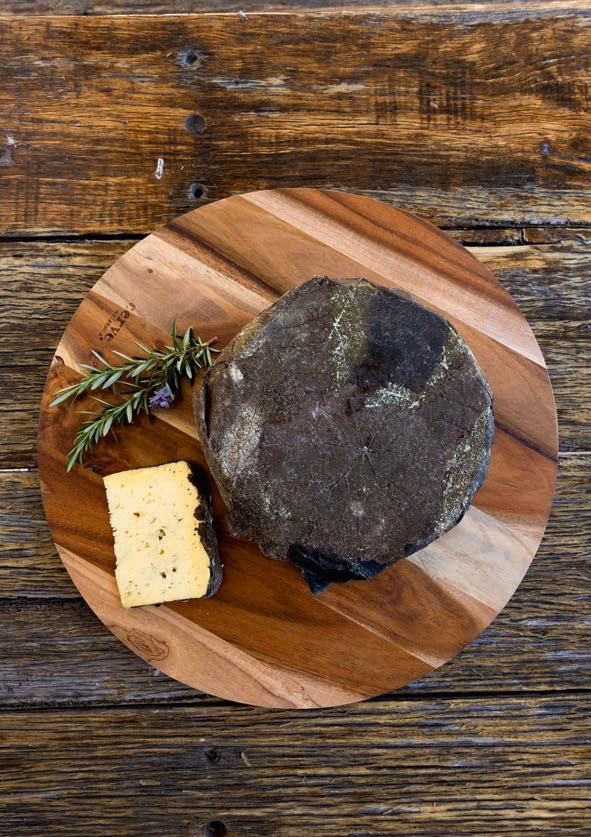
Our cheeses are made at our South Gippsland cheesery with milk from our certified organic dairy farm also in South Gippsland, Victoria. Every wheel of Inverloch Blue begins long before it reaches the vat—out on our paddocks, where the cows do the work and quality milk begins. We then hand make and mature all our cheeses on site.
TEA FONDADA WINS SUPER-GOLD AND SECOND PLACE IN THE FINAL OF WORLD CHEESE AWARDS 2024. For further information, please contact Janic Fasser, info@chascharia-valmuestair.ch Switzerland
Inverloch Blue
Your name here ?
A retailer’s name on a label can carry weight, but when does it make sense to use it? And when you do outsource production, what should you look for in a supplier?
By Tanwen Dawn-Hiscox
We all remember the days of white doilies on jars of generic products. But today’s customers prioritise provenance and transparency, and those values are what set independent retailers apart from the multiples.
While the nostalgic London outlets may exclusively sell their own label, for independents, it can be a viable brandbuilding exercise to o er some.
Make a name for yours
At Paxton & Whit eld, the heritage cheesemonger with shops in London, Bath and Canterbury, the Paxton name carries weight as a specialist cheese retailer – not a delicatessen – with a strong brand.
Managing director James Rutter tells FFD that “It’s important for us, and for our customers, to represent our heritage through the products we select,” he says. “It’s really about the representation of both the producer’s quality and the Paxton & Whit eld identity.”
Importantly, the name usually appears on products where the company has tangibly added value – through a nage, recipe
It’s important for us, and for our customers, to represent our heritage through the products we select
James Rutter, managing director, Paxton & itfiel
development or speci cation. “We don’t do a lot of white label,” he says. “We work quite closely with all of the suppliers that make products for us under our label.”
Each project is handled individually, in a genuine two-way process. For example, it sells cheeses co-developed with Shepherds Purse, or King Stone Dairy, with the names set by the makers themselves, to align with their own ranges.
The business has an a nage cellar below its Jermyn Street shop, and cheese rooms in the Cotswolds, which allow it to mature cheese to its own speci cations.
Unlike bigger retailers, Paxton’s doesn’t ask its suppliers to sign NDAs. “It’s not within the spirit of collaboration. For us, it’s about telling the Paxton & Whit eld story while also celebrating the people we work with.”
If there’s no story, there’s no point
Established Kent food hall Macknade Fine Foods, meanwhile, has a number of ownlabel products on the shelves. However, CEO Stefano Cuomo says that it too avoids the “old-fashioned” white label model, only selling
OWN LABEL
its own label products where it has input into how the product is made.
“The old garden-centre approach, where you’ve just got a list of 100 white-label products with your name on, has no story. The opportunity in the independent sector is to provide added value and genuine storytelling,” he says.
For example, a er years of importing and roasting co ee via a partner, Macknade now does it in-house. It also collaborates with local partners such as Wasted Kitchen, which uses Macknade’s surplus produce to make ready meals, co-branded under both names.
The way Cuomo sees it, own-label products should hit an emotional chord, as well as a nancial one. “We’re trying to get people to eat and consume in a better way –and then there’s the commerciality of it. The two have got to match up,” he says. And if, like with the co ee, there’s added theatre for visiting customers, even better.
Macknade is built on partnerships, many of them local, with an emphasis on quality. One such link has led to several co-packaged items. Wasted Kitchen, which uses surplus food to make ready meals, collects Macknade’s own discarded produce to make items, a er which they are sold under both names.
“This is slightly di erent from an explicit Macknade label – but it’s working with partners who not only have a sustainability narrative, but also create some of the products we make. So it makes sense that we do it on a partnership basis.”
But Cuomo’s main argument for having its own label range is that it supports the company’s brand strategy – and that leans into the trust a orded to it by its customers.
“It sits within your sales and marketing plan. The question isn’t just whether you have your own label, but whether you have a brand that means something, and whether own label is part of expressing that.”
In an era where consumers can feel overwhelmed by information, he says, sometimes that trust that they are buying quality items is enough. “I think sometimes we can navel-gaze a bit, and we want everyone to be included and be shown and get all the details on there. And actually, is that really giving the customer any more than they’ve come in for? Most customers just want to know whether they like it or not – and trust in your brand is enough.”
A threat to independence?
For Iain Hemming at Salt.Deli Kitchen in Salisbury, however, that granular detail of producers’ stories is what makes an independent retailer a real celebrator of independence. Hemming once owned Thyme & Tides in Firsdown before buying a second site in Salisbury, selling the original and renaming the latter as Salt.Deli Kitchen. Alongside all of this, he has always run local food markets to champion small producers and celebrate the kinds of businesses whose products ll his shelves.
“I nd the whole white label thing rather disingenuous,” he says. “I’m a strong believer
in people being able to pick up a product and actually see some authenticity in the back story, coming from the people who produced it.”
He thinks white labelling can erode a retailer’s authenticity, and decries the standardisation of retail, warning that independents run the risk of losing what draws customers in.
The question isn’t just whether you have your own label, but whether you have a brand that means something, and whether your own label is part of expressing that.
Stefano Cuomo, CEO, Macknade Food Hall
“The only thing that di erentiates us from the multiples is that we can tell these stories on a personal level. And the more homogenous we become, the more we get sucked up into the commodity market,” he says.
In fact, his “buying bible” – the criteria according to which he decides to stock a certain producer, prioritises provenance and storytelling – because he believes that is what sets his outlet apart.
“People come to trust your stocking philosophy. The reason you’ve got products in there is because they’ve passed a lengthy process of evaluation,” he adds.
It’s all about the collabs Sangita Tryner at Delilah Fine Foods in Nottingham takes a similar stance, in that she sees the retailer’s ‘raison d’être’ as to celebrate the producers it stocks .
“So we’ve always sold their brands,” she explains, “and I’ve never done my own.”
That said, in celebration of the shop’s 10th and 20th anniversaries, the team jointly developed 10 co-labelled products with some of the shop’s longest-standing suppliers. Examples include a Gjetost caramel – a celebration of the World Cheese Awards in Norway, made with the country’s famed brown cheese; a brinjal chutney jointly developed with Hawkshead Relish; a chai marmalade with Ludlow Farm Shop; a lime pickle olive
made with Olives et Al, and a Rosary (goat’s cheese) wrapped with air-dried green olives on the outside and lled with black olives, developed in partnership with Carron Lodge.
“These are all the result of genuine partnerships,” says Tryner, and what sells them is “ about the team’s enthusiasm – their shouting about avours they love and creating something unique with our producers.”
But these projects come at a cost – as, naturally, Tryner buys every item in each of these lines.
Is white labelling dead?
In fact, Thursday Cottage, the Essex-based preserve maker owned by Wilkin & Sons, doesn’t take on clients below a certain size – its minimum orders are for roughly 5,000 units. About 70% of its business is now accounted for by own label, mainly for large destination retailers like Fortnum & Mason and Selfridges, as well as the National Trust and English Heritage sites.
Sales representative Pele Heydon says ownlabel suits scale, gi ing and tourism, but not necessarily small independents. “If you’re a farm shop or a small retailer, you’re better o having an established brand on your shelves rather than trying to build your own,” he says.
And indeed, Thursday Cottage’s jams and marmalades are stocked by many independent retailers across the UK.
The future of private labelling Cotswold Gold, a rapeseed oil producer based in Gloucestershire that makes around 700 lines of own-label items for a wide range of producers and retailers, brings nuance to Heydon’s theory by taking a modern approach to own-label – o ering bespoke, premium products starting at a relatively small scale, from 500 to 30,000 units.
Own label makes up about half of Cotswold Gold’s business, and the company’s approach prioritises quality and consistency – and refuses to take on watered-down projects, quite literally.
“We’ve had people come to us asking to thin down a recipe or use cheaper oil,” says founder Charlie Beldham. “That’s not something we’ll ever do. If the product isn’t good, then people aren’t going to come back.”
Importantly, he says, “I want to believe in the person we’re making for – if it’s not in my cupboard at home then we probably won’t make it.”
Transparency and strong communication are, according to Beldham, the most important things retailers should look out for when seeking a production partner.
“They want a manufacturer that really cares and is looking a er their best interests, who is not going to rip their product o . NDAs are obviously very important, but it is that relationship that matters; that relationship is key.”
When done well, an own label is another way for independents to tell stories rather than to hide them. Put simply, you should only put your name on something if it represents what you stand for.
THE TASTE OF TRADITION.
TRADITION.
WORLD CHEESE AWARDS 2025-26
37 years in the making
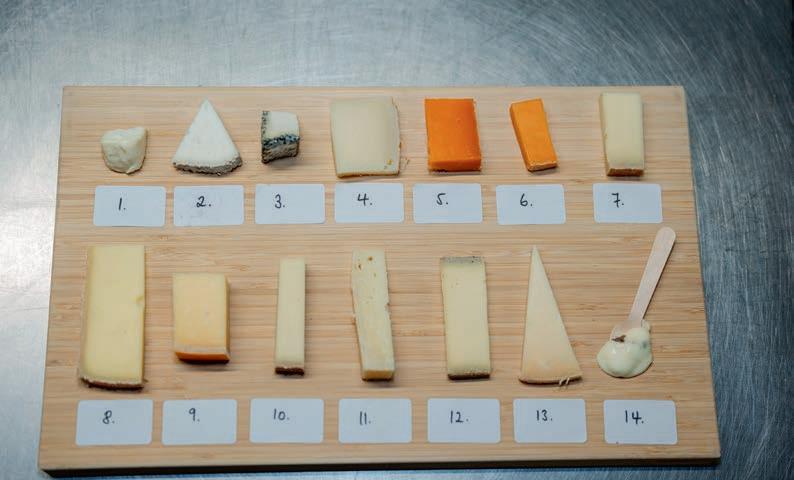
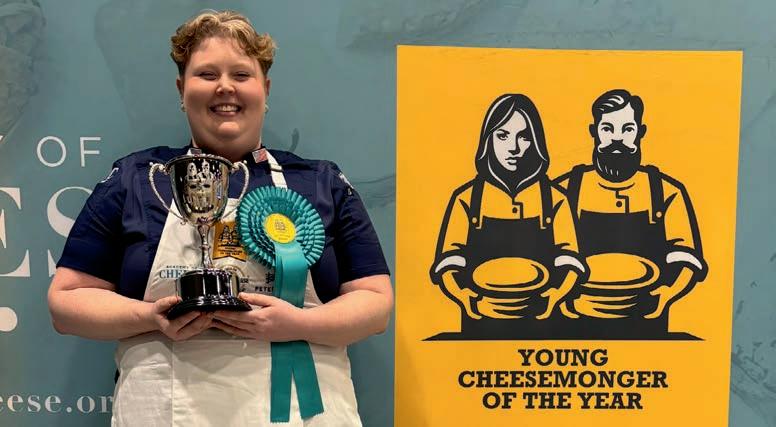
Switzerland played host to the World Cheese Awards for the rst time on November 13th, 2025, in the traditional city of Bern. Read our report, with an interview of the winner, a breakdown of the day’s events and of the judging process, the top 14 cheeses and the medal winners across the globe – as well as an interview with this year’s Young Cheesemonger of the Year.
By Tanwen Dawn-Hiscox
Photography by Kargo Communications
Some call it a curse. Some go to great lengths to rationalise why it happens so o en that the host country takes the top title at the World Cheese Awards: the cheese hasn’t had to travel far, it might even have been delivered by the maker themselves. Local entries always peak. And let’s face it, the Swiss know a thing or two about making world-class cheese.
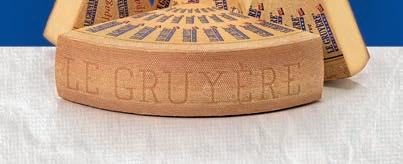
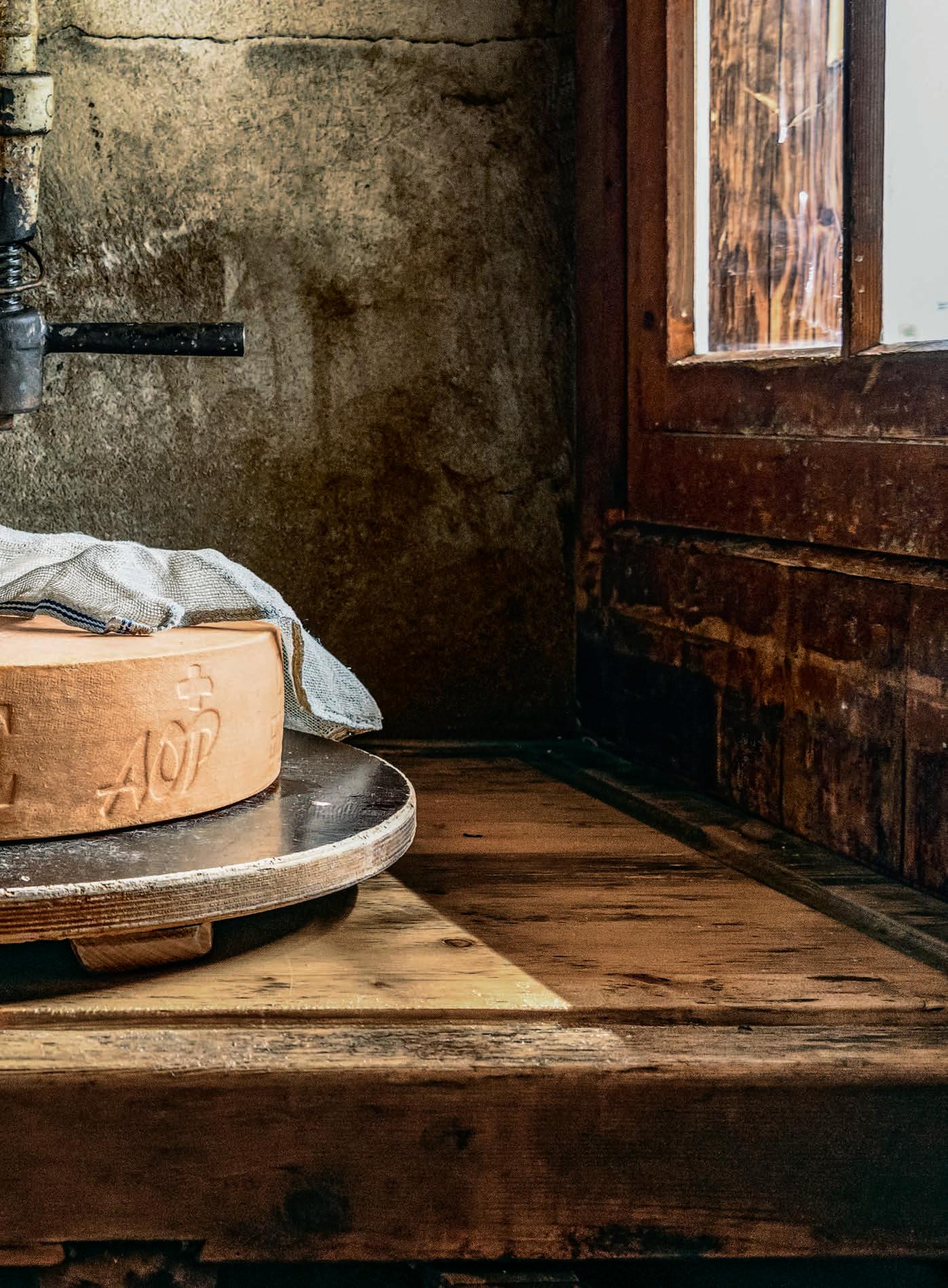
Whatever the reason, the World Champion cheese for 2025, when the competition was staged in Bern, was an over 18-month-old Reserve Gruyère made by
Bergkäserei Vorderfultigen in the Gantrisch region between the city and Fribourg.
Although it was the rst time the awards took place in Switzerland in their 37-year history, it wasn’t the rst time a Le Gruyère AOP was named best cheese on the planet: it was the sixth. It wasn’t even the rst time a Vorderfultigen won the title, as its Surchoix did in 2022.
But a change of hands has happened at the cheesemaking facility since then, as the current maker, Pius Hitz, took the reins in 2023. Raised on his father’s cattle farm,
he began learning cheesemaking at 16 and went on to hone his skills in Zurich, New Zealand and Bern, eventually taking over Vorderfultigen a er more than a decade working in Alpine dairies.
Hitz tells FFD he has always been drawn to Le Gruyère as both a cheese and a make. “I quite love the tempo of the production. It’s a simple production, I think,” he says. “And I like Le Gruyère cheese. You can’t put Emmental in a good fondue. You always need Gruyère.”
Thankfully, he says, he and his team successfully held up the standards set by his predecessor at Vorderfultigen, Urs Leuenberger.
“You always have the pressure on your back. And we were already there, but it wasn’t my award,” he says.
“It was always my dream to make it here again. But for this to happen in Bern and with so many cheeses – we entered 16 cheeses and won nine medals – it’s just crazy.”
This impressive level of success hasn’t come easily, by any stretch of the imagination. The 44-year-old producer has only had a week o a year over the past three years, spending most of his time making Gruyère, as well as a host of other raw-milk Alpine cheeses.
Another two of these – made with milk from seven cooperative farmers, all within a single kilometre radius of the dairy – were among the 110 to have received Super Gold medals.
These were whittled down from the 5,244 entries into the awards this year. One ranked fourth in the world: the Gantrisch Bergkäse, a 12-month-old which is made in a very similar style to Gruyère, di ering
only in minute ways, according to Hitz – its size, temperatures during production and maturation, and a higher proportion of fat in the milk. The third Super Gold in his line-up, the Fultiger Bergkäse, is a younger version of the Gantrisch, aged for around eight months.
Hitz was in the room while the Super Jury cast their nal vote of the day, sitting next to Markus Sturny of Käserei Lanthen, a WCA gold medallist who taught him how to make Gruyère.
He had received a call from the Guild of Fine Food team informing him his cheese had made it to the nal line-up, but not specifying that he had two.
“So when the Gruyère came up, I thought, ‘yeah, that could have been made by another 150 producers.’
“And then the Gantrisch came up on stage, and I recognised that this was my cheese. I was 100% sure.”
“When [awards co-host Leyla Kazim] took that envelope and took out Bergkäserei Vorderfultigen, that was so crazy.”
The second host of the awards, Patrick McGuigan, described the winner as a “big piece of cheese” with a “dark orange rind and umami brothy notes”.
“The aroma has a real bee ness to it. It’s savoury, it’s deep, it’s umami… It’s probably quite familiar to people in this room,” he added.
Super Jury member Perry Wakeman of Rennet & Rind, who nominated the cheese as his favourite among the Super Golds, said he chose it because it was the kind of cheese “that would make people from all walks of life get excited about cheese”.
“Maybe a few people recognise this cheese, but what you know about it being brothy and meaty – imagine all that that you’ve had before, and then dialled up to 13.
“It’s a big old cheese, there’s a lot going on. The texture is beautiful, it’s inty as you break it apart, the crystallines in there are so delicate. I found myself going back and back again for it.”
Asked what he thinks makes his cheeses special, Hitz said: “What we hear a lot from people is that it has a ‘clean, pure’ taste, with milky, grassy avours coming a er.”
He added that the fact that the dairy farms are so close, that the cows graze from spring until the autumn, coupled with the use of natural whey starters, are what make it stand out.
“We don’t have deep frozen cultures for making cheese, and we’re really strong on making the cheese like this,” he says. “I think that’s another key to our cheesemaking.”
WORLD CHEESE AWARDS 2025-26
BEST AMERICAN CHEESE
Stockinghall
Murray’s Cheese
Sponsored by
BEST AUSTRIAN CHEESE
Mountain Rebell
Sulzberger Käserebellen Sennerei
Sponsored by
BEST BELGIAN CHEESE
Kaasboerderij ‘t Groendal fro roen al eri pt
BEST BRITISH CHEESE
Aged Rutland Red
Long Clawson Dairy
Sponsored by
BEST BASQUE COUNTRY CHEESE
a e e finado ri inal
Queseria La Leze
Sponsored by
BEST CANARY ISLAND CHEESE
ode a abra veja
Finca de Uga
BEST FRENCH CHEESE
Crémeux des Aldudes aux Fleurs Etxaldia
Sponsored by
BEST FEMALE CHEESEMAKER
Nellie Fischer
Dalewood Fromage
Sponsored by
BEST US GOATS’ OR EWES’ MILK CHEESE
Pear, Wine & Rosemary Fresh Goat Cheese Log
Laura Chenel
Sponsored by
The victory is sweet for Hitz, who hopes it will make an expansion of the cooperativeowned dairy more likely. He would also like to kit it out with more modern equipment and double down on producing more mountain cheeses, which he began doing when he took over in 2023.
But contrary to what some might expect – or hope, if they’d like to get their hands on some of the World Champion Cheese – the producer won’t be making more Gruyère than he is currently, as all Gruyère makers are bound to a quota under the rules of its PDO.
At Vorderfultigen, that’s roughly 80 tonnes. It has to sell most of its cheese to an a neur, keeping only 2.8 tonnes for itself.
“So people probably think I have 20 tonnes lying around that I’m happy to sell now, but it’s not that simple. We don’t have that much cheese just in stock for everyone who wants it.”
Hitz does want to make more mountain cheeses, though. He is producing roughly 20 tonnes a year at the moment, limited only by the amount of local milk available – which he is adamant about using because he knows it is of the highest quality.
He is hoping to sell one of his newer creations, the Mohikaner, a nine-month hard cow’s milk cheese, into the UK soon. “I think it wasn’t old enough – it was just one point under a medal at the World Cheese Awards,” he says.
Aside from making him feel proud and like all the hard gra has been worthwhile, Hitz thinks the win will make it easier to hire cheesemakers. “It’s not easy to nd good workers to rely on,” he says. He also hopes it will allow him to become a more established member of the global cheese community.
“I love my job. I like the connection to the consumer, and I like to know the happy consumer as well.”
Winning the title, he adds, “makes that much easier for me, I think that will open doors internationally”.
“I would also like to travel, to meet some people from the World Cheese Awards, eat some cheese and talk together.” berg-kaeserei.ch
WCA IN NUMBERS
The 37TH WORLD CHEESE AWARDS was yet another recordbreaking year for the competition, with 5,244 entries from 46 countries – an increase of more than 9% since 2024
The cheeses were spread across 107 judging tables and judged by an international panel of 270 judges. 346 cheeses were awarded a Gold medal, 874 received a Silver medal, and 1139 received a Bronze medal – meaning roughly 45% of cheeses entered into the awards were rewarded with an accolade.
Full results can be found at gff.co.uk/ worldcheese
REWATCH ON WCA TV
To rewatch the entire day, discover the trophy winners, medal recipients and more, visit gff.co.uk/worldcheese
HOW THE JUDGING WORKS
Judges work in teams of two or three, allocating points on the basis of how a cheese looks, feels, smells and tastes. They might consider the appearance of a cheese’s rind, the breakdown of the paste, and the cheese’s aroma. Most points are allo ate for a o r an o t feel e sum of points corresponds to a Bronze, Silver or Gold medal, with the highest scoring Gold named ‘Super Gold’. This cheese then goes to be tasted by a Super Jury – a panel of 14 experts, who, for t e fir t ti e in i not ta e part in t e fir t ro n of in in or er to preserve their palate. They all select a ee e an a pion it in one final ro n of judging in front of a live audience, electing the World Champion Cheese for that year.
TAKING ITALIAN EXCELLENCE AROUND THE WORLD: SPECIAL
CHEESES WITH AN UNMISTAKABLE
FLAVOUR
Discover Italy’s culinary tradition with DalterFood Group’s wide range of fresh and aged cheeses. Alongside producing Parmigiano Reggiano, for over 45 years we have been selecting, portioning and packaging the best PDO cheeses such as Pecorino Romano We also select other typical delicacies from our regions such as Buffalo Mozzarella and Burrata. This is how we bring the authentic taste of Italian products all around the world.
WORLD CHEESE AWARDS 2025-26
The top 14
These 14 cheeses were selected by a Super Jury of international experts among the 107 Super Golds, whittled down from 5,244 judged on the day, and marked one nal time to establish a ranking, and name the World Champion Cheese.
This year’s Super Jury brought together cheesemaking expertise from ve continents: Ann Keymeulen of L’Art du Fromage in Belgium; Ching Yin Chin, founder of The Cheese Shop Singapore); Joey Wells, of Whole Foods Market, USA; Eleonora Borgonovi, export sales manager at Ambrosi Spa in Italy; head of retail at Sheridans Cheesemongers in Ireland, Finbar James Deery; Joost van Nijnatten, owner of Het Kaasatelier in the Netherlands; Kuba Maziarczyk ofFromażeria
TOP 14 CHEESES AT WCA 2025
Gruyère AOP
Vorderfultigen spezial over 18 months, Bergkäserei
Ossau-Iraty AOP pasteurised sheep milk cheese, Agour, France
Kaiserhof inPoland; retail manager at Möllans Ost in Sweden, Malin Dahl; Svein Erik Backlund, sales manager at Oluf Lorentzen in Norway; Nick Tsioros of cheese retailer and importer Olympic Cheese Mart in Canada; Perry James Wakeman of Rennet & Rind in Cambridge; Rafael Dominguez Gonzalez, export manager at Chacón e Hijo in Spain; Sabrina Lau, purchase manager at Coop Basel in Switzerland and Solange Porley Kroger of Queseria DeGuarda in Uruguay.
Montana Intenso, Maaz Cheese, Netherlands
Hechizo, Quesería La Zarcillera, Spain
Aged Rutland Red, Long Clawson Dairy, United Kingdom
Sparkenhoe Red Leicester, Leicestershire Handmade Cheese Company, United Kingdom
Pave Cobble, White Lake Cheese, United Kingdom
Yozawa Yagi cheese, Yozawa Goat Farm, Japan
Eniquem Maly princ 4 months, Eniquem Cheese, Slovakia
BEST GERMAN CHEESE
Berta 15 months
Hofkäserei Gut Ogrosen
Sponsored by
BEST SCOTTISH CHEESE
Corra Linn
Errington Cheese
Sponsored by
BEST AUSTRALIAN CHEESE
Inverloch Blue
Prom Country Cheese
BEST CHEDDAR CHEESE
Stockinghall
Murray’s Cheese
USA
Sponsored by
BEST SOUTH AFRICAN CHEESE
Parmesan 24 months
Klein River Cheese
Sponsored by
BEST UKRAINIAN CHEESE
ouda with truf e Zinka
BEST SPANISH CHEESE
Hechizo
Quesería La Zarcillera
Sponsored by
BEST SWISS CHEESE
Gruyère AOP Vorderfultigen Spezial over 18 months
Bergkäserei Vorderfultigen
Sponsored by
BEST LE GRUYÈRE AOP CHEESE
Gruyère AOP Vorderfultigen Spezial over 18 months
Bergkäserei Vorderfultigen
Sponsored by
WORLD CHEESE AWARDS 2025-26
Born in the USA
This year was the rst time an American contender was named Young Cheesemonger of the Year. 28 year-old Hanna Lee tells FFD about her journey into cheese –and to victory.
Not every summer job ends up shaping your career. But perhaps it was because it was a more engaging role for Hanna Lee, who, while waiting for her university term to start, went to work for Asgaard Farm & Dairy in upstate New York, that it might well have done. During her time there, she learned how the dairy’s seven types of goat’s cheese are produced, and found herself fascinated by cheesemaking.
“When I started, I had no idea I would be making,” says Lee, crowned Young Cheesemonger of the Year 2025 by the Academy of Cheese at the World Cheese Awards. “I wanted to work with the animals, but cheese was super cool.”
A er nishing her degree in Animal Science at Oregon State University, Lee landed a role behind the cheese counter at Whole Foods Market in Seattle. There, she learned the foundations of cheese mongering, climbing up the ranks to become a team leader.
Then, she decided to take a break from working for a big retailer and moved to a smaller counter in Boulder, Colorado. “I’d been in cheese almost four years and thought, ‘clearly I know everything,’” she laughs. “I started working on a counter with all these brands that I’d never heard of before, and I was like, ‘oh my god, there’s so much more out here than I thought’.”
Working under cheesemonger David Myers, she was encouraged to compete in the Cheesemonger Invitational in 2023, where she placed second – a feat she repeated again in 2025. Her runner-up prize was a week-long Dairy Farmers of Wisconsin tour visiting makers across the state.
On that trip, Lee rst met Andy Hatch of Uplands Cheese Company, the artisan cheesemaker behind Pleasant Ridge Reserve and Rush Creek Reserve. She now works for him seasonally, helping to produce thousands of small so cheeses a week.
A er completing her Academy of Cheese Level One this year, Lee was encouraged to apply to the Young Cheesemonger of the Year competition by Molly Browne, education director at Dairy Farmers of Wisconsin and creator of Cheese State University. She submitted her form, and a month later learned
she was headed to Switzerland as one of six nalists.
The competition included ve challenges: a cutting, weighing and wrapping task; a pairing round with Peter’s Yard crackers; a cheese identi cation test; a cheeseboard, which the contestants were to plan in advance; and nally, the ‘MasterRind’ quiz hosted by AoC technical director Katy Fenwick.
For the pairing challenge, Lee chose Stilton, which she paired with Dutch Speculoos paste. Her cheeseboard was built around the theme of a “summer birthday party with ve friends”. She chose Robiola Bosina Casei cio Alta Langa, a small, slightly yeasty so goats’ cheese from Piedmont; Marieke Aged Gouda, made in Wisconsin by master of cheese Marieke Penterman, a hero of Lee’s; Montealva, an Andalusian goats’ cheese that has been instrumental in saving the rare Payoya goat breed, which she describes as having a “stark white, inty paste with lemon, button mushroom and fresh cream”. She added a spoon
of “yeasty, creamy and oral” Gorgonzola
As her prize for winning the competition, Lee has been given access to the Academy of Cheese Level Two course. “I got told last night that it’s much harder,” she says. “I’m curious to see what it incorporates, and excited to bulk up my cheese knowledge a little bit more.”
She has also been invited to return to be a judge at the World Cheese Awards in Córdoba next year. Lee isn’t clear what comes next for her, but says: “What I love about the cheese community is how nice everyone is, and how supportive people are. In a lot of industries, it’s more cut-throat.”
Her success in the competition is signi cant in that she is the rst American to get there. From her perspective, though, it was a positive personal step. “I’m de nitely glad to have come and experienced this and met everyone at the Academy of Cheese,” she says. “It’s been lovely. Mongers should apply if they meet the requirements. It’s a great experience.” academyofcheese.org
e fi e ot er finali t o petin alon i e anna ere a a a fro ro a erie atai ner in ari ori onal fro elli ee e in in r a alena r er fro ltaler in al r i n inn i e fro eal ar air in on on an arr n li fro a ro a erie in on on
Dolce.
Distinctive artisan-crafted flavour shaped by Vancouver Island’s coastal terroir
“In the hilly Gantrisch region between Bern, Fribourg and Thun, my team and I produce 6-7 wheels of Le Gruyère AOP and several wheels of Fultiger cheese daily at the Vorderfultigen mountain dairy. Our dairy farmers’ farms are all located within a one-kilometer radius. This means I can watch all the cows grazing from the cheese dairy.
”- Pius Hitz , cheesemaker and managing director
Fultiger mountain cheese is produced exclusively in our mountain dairy using traditional methods. It has a fresh and rich, milky taste – reminiscent of muesli milk and waffles.
Despite its young age, Fultiger is surprisingly rich, yet fresh and milky in taste. This reminds us of muesli milk. A real “fresh cheese,” one that leaves you wanting more after the first bite.
New to this year’s competition was the Es La Leche Award, recognising the important role of milk in cheesemaking and devoted producers. The inaugural winners, Ricardo Outeiro, Ana Vázquez and Xesús Mazaira Varela ofAiras Moniz, for their achievements in sustainable herding and milk quality.
The team at Airas Moniz have made a conscious decision to raise only Jersey cows, for their quality milk, and to make sure they are happy and free in the pastures.
Literally translated as “It’s the milk”, but used colloquially in Spanish to mean “It’s amazing”, the award will become a permanent xture, with future recipients nominated by World Cheese Awards judges.
EXCEPTIONAL CONTRIBUTION TO CHEESE
i ear eptional Contribution to Cheese trophy was awarded to Philippe Bardet, former ire tor of e r re and of Switzerland Cheese, for the part he played in e ta li in t e arter t at no re late an prote t t e pro tion of e r re fro ani al an il t ro to pro e an alit ar et a een i el re o ni e for i work in applying similar pro e e to an ot er i a ri lt ral pro t
e anno n e ent a a e rin t e per r in in ern it erlan ere it erlan ee e ne pre i ent oren irt an ief ar etin offi er artin pa r e an e ee e it i a ille a ire tor of t e n tit to el e o an an ela ern n e t e eneral ire tor of entro e nol i o i o r partner for ne t ear e ent o i n p for p ate a o t reat a te il ne an a i e or Fine Food Digest, visit: gff.co.uk/subscribe
BEST NEW CHEESE
Eniquem Maly Princ 4 months Eniquem Cheese
Slovakia
Sponsored by
BEST RAW MILK CHEESE
Gruyère AOP Vorderfultigen Spezial over 18 months
Bergkäserei Vorderfultigen Switzerland
Sponsored by
BEST SMOKED CHEESE Smoked Chechil er e pirit of lt Serbia
Sponsored by
BEST CANADIAN CHEESE Bête-À-Séguin
Fromagerie de l’Île-aux-Grues – Agrilait SEC
BEST SCA CHEESE Aged Rutland Red Long Clawson Dairy England
Sponsored by
THE ANN-MARIE DYAS AWARD FOR BEST ARTISAN CHEESE Sparkenhoe Red Leicester ei e ter ire an a e ee e o pan England
Sponsored by
BEST IRISH CHESE ST TOLA KARST Inagh Farmhouse Cheese (St Tola)
Sponsored by
BEST NORTHERN IRISH CHEESE Blue Bull Indie Füde
BEST WELSH CHEESE
Perl Las Deli Caws Cenarth
BEST BELGIAN CHEESE AT WORLD CHEESE AWARDS 2025!
Cheese Farm Groendal won in total 8 awards
The only belgian co ee-cheese -Yes, you read that right… cheese with co ee We make space-cheese!
Scan & discover our story
All our cheeses are:
Lactose-free
Pasteurised
Vegetarian rennet
Made and matured at the farm
Near to Ypres and Passchendaele www.tgroendal.be
100% AUTHENTIC BELGIAN CHEESE
Bierkaas Groendal Gerijpt
Manouri PDO Nominated as the Best Greek Cheese
Kasteel
Ancienne Belgique
Barista
Groendal Brandnetel-nettle
Brokkeloud Roeselare
Oud Roeselare
Billy Goat
Simple snacks
We’re still learning about the detrimental e ects of UPF, but one thing is clear: there is a market for simple ingredient lists, and many snacks are still laden with additives.
By Nick Baines
ULTRA-PROCESSED FOODS have become a hot talking point of late. With a recent Channel 4 documentary taking aim at the deluge of protein bars, what constitutes ‘healthy snacking’ seems set to change.
The protein bar has become a lucrative quick-add item to takeaway service, wrapped in a mirage of responsible food choice. However, as Joe Wicks and Chris Van Tulleken demonstrated, many FMCG snacks marketed as the healthy choice are anything but.
The conversation continues from Van Tulleken’s work and best-selling book, Ultra-Processed People. A growing body of evidence suggests that emulsi ers, thickeners and commercial ingredients in these foods have signi cant e ects on human health. For example, low bre ingredients may lead to erosion of the stomach lining, and it is thought isolates may not reach the part of the gut that tells the brain it’s full.
The reason UPFs are so omnipresent is the fact that they can save money on production, extend shelf life, and leave consumers wanting more. With food prices continuing to soar, Van Tulleken warns that “the uctuating market prices may end up resulting in even more unusual ingredients in our food”.
However, in foodservice, there’s an opportunity to push back against these controversial ingredients as awareness around
them builds: from highlighting sourdough, to deliver a menu that scales in price, and making space for he y grab-and-go items. Many businesses have opted to make their own protein balls, though blenders met with dates and nuts has led to operators burning through motors. Meanwhile, some small producers have seen a boost in sales. Kat Davis from Dorset’s Vamos Kitchen has noted a rise in customers requesting less processed foods with fewer additives.
“Demand for wholesome ingredients and more natural sugars has de nitely grown, and I’m increasingly being asked how much protein is in certain treats,” explains Davis, who makes a range of energy balls and baked goods. “My wholesale orders have quadrupled this year.”
This in ux in demand coincides with the rise in run clubs and cycle groups using co ee shops as a meeting point, a social move that has bene tted many businesses. But the push for more protein is not only endorsed by those upping the exercise ante. Protein-laden brands are widely marketed to women going through menopause, with the conversation promoting milk, animal protein and animal fats. This all coincides with a back-to-cow movement, a retaliation to the plant-based trends of previous years.
“One di culty is that consumers are somewhat ckle,” writes Christine Ro for the BBC, reporting on how the protein craze continues to grow, saying milk sales increased this year for the rst time since 2009.
As a foodservice operator, your business thrives on the agility and adaptability of your kitchen. There has never been a better time to embrace the opportunity of making graband-go items from scratch, so you and your customers know exactly what is in them.
MAKE YOUR OWN
Top tips to improve your ingredients’ lists
The egg add-on
The egg is a popular middle ground, catering to vegetarian diets as well as carnivorous ones. A fast add-on to everything from avocado on toast to bacon sandwiches.
Fat’s back
It’s not just protein that heath-conscious diners are paying attention to. Fats like ghee, lard and even schmaltz are enjoying a resurgence in popularity.
Scrutinise ingredients
Some things aren’t as innocent as they seem. From preservatives in dried fruits to the ultra-processing of Golden syrup, it’s more important than ever that you understand the detail of your ingredients.
THE BACK-TO-COW MOVEMENT
With the rise in consumer concern about avoiding ultra-processed foods, it appears the veganism wave – and the meat substitute market – is receding. Brands like Beyond Meat have seen a downturn in growth, while Whole Foods Market predicts that 2026 will see an increase in demand for tallow as an oil alternative, both off the shelf and within prepared food. The Financial Times recently reported that while concern around climate change remains strong, veganism is no longer held as the solution, due to many vegan meat alternatives simultaneously contributing to the UPF problem. It remains to be seen, t t e pen l o l finall e ettlin somewhere in the middle.
New year, new products
January can be a time to reset, but it doesn’t have to feel restrained. Our round-up of free-from, plant-based and low-and-no products will help you keep these areas of your shop indulgent and exciting. And if you’re looking to refresh your deli counter or sh selection, we’ve got that covered too.
Compiled by Lynda Searby
Scottish fermentation project Slow Sauce has released its first two oji based condiments, which combine traditional apanese methods with cottish in redients. Oat Miso (RRP is said to be rich, savoury and ently sweet from a ein in cottish oa cas s for three months, whilst at hoyu (RRP £8) is a comple , umami rich soy free alternative made from oats and arlin peas. The startup aims to localise traditional fermentation practices and offer sustainable, aller en free alternatives to imported soy products. slowsauce.co.uk
Scotland’s rst miso and shoyu brewery
Belgian breakfast cereal challenger brand Great Granola has added Chocolate & Hazelnut Porridge to its organic and gluten-free portfolio e porri e i a o r e of prebiotics and vitamins and can be enjoyed hot or cold. Great Granola’s granolas, porridges and nut butters are currently available via Faire.com, Ankorstore and Orderchamp, and the company is on the lookout for a UK distributor. greatgranola.be
Forthay, the boutique granola brand born out of a Cotswold B&B, has reimagined its four most popular blends as bars. Available in Cacao & Orange, Goji Berry & Super Seed, Spiced Pear & Ginger and Honey, Nuts & Cranberry, the gluten-free bars are baked fresh to order and contain no refine ar for ar forthaygranola.co.uk
Mena launched in August, staking its lai a rope fir t foo la el to provide natural menopausal support. e elope a an alternati e to and supplements, the range is said to offer health-focused nutrition for o en na i atin t e enopa e e inaugural products are Mena Muesli an ena rotein ar mena-pause.com free-from,
Bubbling Stove says its Vegan Fudgy Brownies are t e re lt of a ont e t to e elop a free-from brownie that can be “enjoyed for enjoyment’s sake, regardless of dietary requirements”. Made in a gluten-free kitchen in el pool t e e o olate treat are free fro e air an l ten for lar e ro nie for ini ro nie bubblingstovebrownies.co.uk
Ausha has introduced Lakadong Turmeric Powder to support those seeking turmeric powder with a high concentration of curcumin - the active compound believed to be responsible for the health benefits asso iate with turmeric. It contains 8-12% curcumin and has a WSP of £2.95/200g; RRP £6.95. ausha.co.uk
Haldy, the sugar-free turmeric mint brand, has launched an le innamon a o r to celebrate Singapore’s 60th birthday. The company is seeking UK distributors for its products, pitching its range as an easy and refreshing way of incorporating curcumin extract into a daily routine. haldyplus.com
Slowly is a functional milk tea from Taiwan’s trendsetting tea brand Boba Chic. It promotes a lifestyle philosophy of balance, awareness and a slower pace in an ‘always on‘ culture. It blends soy, roasted tea, cocoa and matcha, promising a “smooth a o r an stea ener . WSP £2.90/150g; RRP £9.90. bobaempire.com
Minori’s yaki nori is available in the UK for t e fir t ti e providing sushi makers, chefs and retailers with a seaweed sheet option that is “a far cry from the bland sheets found in regular retailers”. Cultivated using organic and sustainable methods in Japan’ a ifi ater t e nori has a deep green-black sheen and crisp, delicate texture that delivers natural umami without overpowering salinity. RRP £18. kotobuki.uk
The Shojin Mania Kinako range of ‘superfood’ powders has been relaunched with refreshed packaging and p ate a o r i modern take on Japan’s traditional roasted o ean o r is a plantbased, protein-rich ingredient that can be added to smoothies, yoghurt, porridge or desserts to enhance t e a o r an nutritional value. The four varieties – Plain, Matcha, Cocoa and Black Sesame – retail at between £12.50 and £14.50/100g; WSP £8-9. shojinmania.com
Korean-owned The Ferm claims to be the UK’s fir t ero a te i i brand, using the parts of vegetables that are usually discarded. The four SKUs are Classic Cabbage Kimchi, Mild a li o er eaf i i pi a li o er eaf Kimchi and Broccoli Stalk Jangaji. WSP
£3.75/250g; RRP £5.50. theferm.net
Only stock what you can trust
German company u o e
Family has unlocked the protein power in the kernels and developed a range of protein products for cooking. An alternative to soy-based options, the organic, de-oiled n o er ee protein a by-product of oil production –i e to a e it n o er
Mince, Chunks, Bolo Mix and Burger Mix. Now available in the UK. RRP £4.99. su o e a il .co.uk
Ian Evans, owner of Broad Bean deli in Ludlow, Shropshire, explains how he’s making the most of the health-conscious movement by focusing on food that stands up on quality alone, whatever the dietary need.
Free-from foods: make sure you can vouch for what you sell
Bakewell Tarts now have a gluten-free counterpart thanks to The Wheatless Whisk in Ludlow, Shropshire. The specialist bakery has created a coeliacsafe Bakewell tart that boasts all the attributes of the conventional version: an all-butter sweet pastry base, raspberry conserve and baked frangipane fini e it a e almonds, an icing swirl and a glacé cherry. WSP £30/12 tarts. wheatlesswhisk.co.uk
For a deli like ours, space is a challenge, so we don’t have a dedicated free-from aisle. Instead, we mix these lines in with the rest of our products but put them on the top shelf to avoid crosscontamination, so gluten-free pasta sits above the normal pasta. Deciding what to stock is tricky as there are so many options, and with free-from you really can’t just decide based on packaging – you have to try the products. We mainly focus on gluten-free lines and have a coeliac member of staff as our ‘taste tester’. There are some great gluten-free bakeries now; we also buy frozen sausage rolls that customers can bake at home. Pre-packaged staples like cereals, pasta and o r ell ell
In line with its mission to make healthy food more exciting, Hungry Squirrel has created a cashew nut butter with the ar in a o r of ai an a e in o al ee i e Scotland, and sweetened with date syrup, Sweet Chai Cashew Butter blends roasted cashews with cinnamon, ginger, nutmeg, cardamom and black pepper. WSP £4/180g; RRP £6. feedthesquirrel.co.uk
Sucseed’s cold-milled ‘superblends’ of seeds and botanical herbs are said to add goodness to everything from smoothies and stews to yoghurt and porridge. The four SKUs –Energy, Focus, Gut Health and mm nit are ri h in fibre protein and essential nutrients. WSP £5.99/250g; RRP £9.99. sucseed.life
As beans and pulses take on a new lease of life as a plant-based protein source, Mr Organic has released a glass jarred range that takes in Chickpeas, Butter Beans, Cannellini Beans and Lentils. Gently cooked with a pinch of salt, they are ready to eat or add to dishes. RRP £2.30. mr-organic.com
Our biggest success has been a self-serve oat milk dispenser – we sell around 20L litres a week. We also sell sheep’s and goat’s yoghurts, though supermarket expansion has made them harder to offer costeffectively.
Superfoods and wholefoods: avoid supplements
Pack’d has added Dragon Fruit to its range of smoothie bowl kits. The frozen fruit pouches can simply be blended with 200ml of water, coconut water or plant milk to create a fresh smoothie in seconds. RRP £5.80 for two portions. packd.co.uk
There are so many supplements and ‘superfoods’ that trying to choose i a inefiel en e o t t e shop, it sold 120 different supplements. I couldn’t invest the time and money needed for proper training, so we scaled that back and focused on food that is good for the soul as well as the body. We dropped supplements but kept loose nuts, seeds and dried fruit, which remain pop lar e pite t e e line of refill op e lentils, pulses and spices in bulk and bag them in compostable packaging. These are a big part of our business, and attitudes towards them are changing thanks to the ZOE app and plant-based movement. We’ve worked hard to champion beans as a cheaper, ealt ier a to a a o r protein fi re an te t re We also stock fermented foods such as kimchi, although we don’t need to push the gutfriendly message.
Low and no alcohol: don’t be scared to be picky
Although it’s a growing market, you’ve got to be discerning with low and no alcohol. I’ve avoided alcohol-free wine because I haven’t found anything I’d drink myself, so I can’t sell it with conviction. I’d rather drink something like kombucha. We stock LA Brewery kombucha and the 750ml bottles work well as a wine alternative. For alcohol-free beer, we’re lucky to have Hobsons Brewery nearby, with an alcohol-free IPA that tastes and looks like a beer. Two Farmers Cider has also impressed me; I expected apple juice, but it has proper fer ente a o r broad-bean.com
oot i lai to e t e orl fir t a ient o on t il oot ie ran e a eli ere it fir t ip ent to t e e ran tor tarte in en fo n er lara e l i a ire a lo in o n fa tor in t e ri an an o on t trian le an et o t to reate a oot ie ran e t at o l il a fairer al e ain an ret rn ealt to ri an a oot alrea ell in er an an apan an t i ear parti ipate in t e reat a te ar an pe ialit ine oo air in preparation for rea in into t e e on ept i i ple it i a len of t ree or ani in re ient o on t il o on t ater an tropi al fr it it no a e ar pre er ati e or on entrate l or l nootzsmoothies.com
Authentic Portuguese avours
ort e e eli ran a o ro la n e in
t e t i ear to rin t e o ntr
e t onto o r plate
t a alrea e re i tri tion it e or eo oo o e a ree an an li tin it t e
li e of an er an allant of r n el
t ran e pan tinne a erel an ar ine fillet an re pe ti el for
Designed with school-aged children in mind, The Tuck Company’s new range of oat bars is built on a list of ‘non-negotiables’: UPF-free, HFSS-compliant, free from the top 14 allergens, a generous 30g serving and UK-made. The brand is the brainchild of entrepreneur Hollie ussell, who identified a ap in the mar et for “genuinely healthy snacks” for children aged 6+ who have outgrown toddler brands. She found that many ne t sta e options were filled with in redients often additives), high in sugar, or contained nuts, making them unsuitable for school. There are three varieties: Lemon & Blueberry, Carrot & Raisin and Apple & Cinnamon. WSP £7.50 for 10 x 30g bars; RRP £1.50. thetuckcompany.com
fro r o onte o ro alle l an t o nati e oli e arietie ale a an e rin a a o ro re in rine all it a ar in for retailer
gou et a t e s. co.uk
ollo in a i ont a en e one of Chesil Smokery’s most pop lar pro t o e orni an o fillet are a in to e o pan ai t e a en e a e to ppl it all an o ie ee in to e ro te to ort ern pain e are ol a part of t e i o in o e ran e i i pro e e l i el t e o er to ar i o n re ipe i chesilsmokery.co.uk
IN BRIEF
Oil Merchant is now carrying Gerard Vea’s L’Estornell Crashed Olives - Hojiblanca olives that are grown in Andalusia and slightly cracked before curing. After three months, they are rinsed and packed in jars with brine and wild herbs. oilmerchant.co.uk
etailer loo in for a ip it a ifferen e o l e o t Spicy Dju eanette e enite i e te at erlin ili e t n pire tra itional e eni a o r t i an rafte ip o ine t e fier eat of o t epper an a a e eanette it t e il er i of i ito len e it fre arli er an pi e spicydju.com
a trio of ee e that are said to repre ent t e a t enti a o r of it lian a eria i e at lt rall rio on er t e a ort ent feat re ranpe orino lie e an a e eep ee e aprino i lia a o pa t an ol oat ee e an a o illo a oat ee e it rie a o ile o er t i a aila le ia la i ine oo a afiore an li e
caseificioa tigia a.co
epton le e oin oo l e an in fi er l e in White Lake ee e line p o pletin t e o er et ee e a er ne trio of l e ee e a e fro eep il o r e fro a lo al er epton le e a a oot fir te t re it t t e ri t a o nt of r le an a il eet a o r it a tle alt e e whitelake.co.uk
Delicioso says it added this tr e salami to its atalo e to meet a rising interest in premium charcuterie. Crafted from Duroc-breed Serrano pork, which is naturally more marbled for a sweeter, fuller a o r the firm- re salami is enri he ith bla k tr e. WSP . P . . delicioso.co.uk
Zeet has a e la k r e to its ran e o li e il Pearls caviar-like balls that burst in the mouth to create an explosion of a o r. he are sai to be i eal for elevating sushi, sashimi, smoked salmon, carpaccio, fin er oo an blinis. P £13.95/50g. evoozeet.com
Dirwest (Welsh for ‘temperance’) claims to have launched the first ever elsh gin-style botanical spirit. Described as a “modern twist on the traditional”, the alcohol-free spirit has notes of juniper, Seville orange and black pepper that are said to pair perfectly with tonic. It comes in a int bottle, which is decorated with handapplied organic ink instead of a label. WSP £16/70cl; RRP £25.
The newcomer to the low and no space also offers two non-alcoholic lagers: ofiwch ryweryn a craft lager, and I’r Gad –a citrus lager. dirwest.cymru
RTD cocktail brand Swish has released a 0% ABV collection, giving non-drinkers the “taste and theatre of a top-tier bar, without the fuss or the hangover”. len in larifie fr it i e otani al inf ion an alcohol-free spirits, these are classic cocktails with a modern twist, including Key Lime Pie Mojito Fizz, Naughty Passion Martini Spritz and Dolce & Banana Old Fashioned. WSP £2.33/250ml; RRP £3.99. swishcocktails.com
Tchai-Ovna Fine Teas created this mulled wine tea to provide a healthy alternative to the wine-based winter warmer. Inspired by a traditional Czech recipe, it blends orange blossom oolong tea with hibiscus, lemongrass, dried apple pieces, and freshly ground whole spices. RRP £11.90/75g bag. tchaiovna.com
Paolo Repetto, the founder of Italian wine merchant Vinifera, has turned his attention to alcohol-free wines with the launch of Nomora. Its Cuvée Blanc and Rosé sparkling wines are dealcoholised via an osmotic membrane, a method said to preserve the wine’s aromatic complexity. RRP £16.99. nomora.it
ZENO’s 2024 vintage is sporting a new look and celebrating Great Taste success after becoming t e fir t al o ol free ine brand to be awarded under the scheme.
ZENO “alcoholliberated” Viura, Tempranillo-Cabernet, Sparkling NV and Rosé NV all picked up stars. The brand has also launched “Bambino” Sparkling NV & Rosé NV cans after requests from its distributors. WSP £2.90/25cl; RRP £4.60. zenowine.com
Black Tar Brewing Co of Llangwm in Pembrokeshire, has blended craft beer with fresh sugar-free lemonade to create a modern twist on shandy. The brand launched with three variants: Siândy Bach, its Pembrokeshire blonde ale; Siândy Haze, a dry-hopped hazy pale; and Siândy Shore, a Czech-style pilsner lager. RRP £3.25+/440ml. blacktarbrewing.co
Designed as an IPA alternative, Lord Hopsworth is the newest craft kombucha from Monty Booch. Brewed with real tea and live cultures, it infuses blueberry with Willamette hops to create a sparkling kombucha with a crisp, almost beer-like finish. WSP £43.20 for 24 x 330ml bottles. RRP £3.50. montybooch.co.uk
London cocktail bar Tayēr + Elementary and non-alcoholic aperitif brand Everleaf’s latest collaboration is a Bergamot, Mint + Lemon Verbena Highball – an “effortlessly refreshing serve,” said to balance the citrusy essences with the saline freshness and botanical depth of Everleaf Marine. RRP £5/250ml. tayer-elementary.com
Teto, a sparkling cold brew tea infused with botanicals and hops, made its debut at the Speciality & Fine Food Fair, bringing a new sugar-free proposition to the noal o ol ate or The brand was conceived after co-founder Linsay Saunders, a type-1 diabetic, gave up alcohol and realised that her options on most menus were limited to sparkling water or additive-laden drinks. From recipes crafted from scratch at home, the team created two naturally sugarand alcohol-free cold brew teas with botanicals and Citra hops to add complexity and subtle bitters.
Sencha & Goji is green tea-based, with notes of lemongrass and apple; and Hibiscus & Berry is hibiscus tea-based, with layers of vanilla and berries. RRP £3.50/350ml glass bottle. drinkteto.com
Newcomer Pop Cultures is championing jun kombucha –the lesser-known cousin of the fermented tea drink. While kombucha is made by fermenting black tea it refine ar n o a e a reen tea a e and honey – in Pop Cultures’ case, 100% pure organic honey.
The Brighton-based producer says this introduces a wider variety of nutrients and delivers a smooth, complex a o r profile
Pop Cultures brews its jun kombucha in oak barrels for en an e ept an o ple it an a o r it with pure fruit and spices only, resulting in a completely natural drink. Pop art-inspired branding designed by a local agency completes the concept and highlights its local provenance.
It comes in Zingy Ginger & Lime, Apple & Cardamom an a p err in er a o r l £3.90. popcultures.co.uk
Scotland’s Speciality Food & Drink Show returns to the SEC in Glasgow from 18-20 January 2026, celebrating the innovation, quality and rich avours that de ne the nation’s ne food and drink sector.
Six reasons to visit… Scotland’s Speciality Food & Drink Show
Discover artisan producers
Buyers can look forward to tasting food & drink made by more than 100 of the nation’s most dedicated producers, including The Wee Tea Company, 8 Doors Distillery, BeeHype Honey, Chocolatbox, Gin Bothy, Kilted Fudge Co, North Uist Distillery, Little Birdie Co ee, Summerhouse Drinks, Island Larder, and Wark Farm Pies.
Learn, share, and grow
The Show is more than a marketplace – it’s a hub for learning and inspiration. A packed programme includes panel discussions on reinvigorating Scotland’s towns and centres. A keynote interview with House of Bruar CEO Patrick Birkbeck and masterclasses on TikTok; harnessing AI; social media selling and visual merchandising.
The 2025 Show is organised in partnership with Scotland Food & Drink, joined by some of its members, as well as key buyers. The trade body will also host a session titled, ‘What does Made in Scotland mean for Food & Drink’. scotlandstradefairs.com 1 4 2 5 3 6
Fresh faces and new avours
The Launch Gallery is bringing fresh energy and innovation to the show this year, shining a spotlight on emerging businesses. Taste tonic from Foreva Farmers, gin from Bealach Gin, whisky from 55 and 46 Degrees North, hot chocolate from Chevron Hot Chocolate and tea from Wander Cuppa, to name a few.
Celebrating excellence
The Best Product Awards on 19th January will feature a dazzling display of producers judged by Rosalind Erskine from The Scotsman, Giovanna Eusebi from Eusebi deli and John Sinclair from Craigies Farm Shop. On the 20th January, a lighthearted session similar to the TV favourite Dragon’s Den will feature new companies pitching to three expert retailers.
Discover regional specialities
The regional stands are a highlight of the show, with a host of artisan producers demonstrating what each area does best. Food from Argyll, for instance, is home to the likes of Isle of Mull Cheese, Slainte Sauces, Annie’s Herb Kitchen, Isle of Mull Seaweed, and Isle of Mull Co ee.
Scotland Food & Drink
TRAINING LEARN
| TASTE | UNDERSTAND | COMMUNICATE
CHEESE
Our one-day course for anyone sourcing or selling cheese, delivered by industry and retail experts. Understand how cheese is made, how it should be stored and sold, gain skills to help communicate with customers and sell more cheese from a position of knowledge.
PRODUCTS & MERCHANDISING
Hong Kong condiments brand transcends cultural boundaries
y Lynda Searby
Simran Savlani says that what started out as a range of condiments to promote her cookbook has “taken on a life of its own”.
Savlani, aka Spark Girl, compiled her Asian vegetarian cookbook ‘A Spark of Madness’ during the pandemic while she was waiting for the hospitality scene to reopen so she could pursue her dream of opening a restaurant.
To support the launch, she developed a line of condiments that are essentially simpli ed versions of the recipes in the book and branded them Spark Store.
Asked what di erentiates Spark Store in a sea of Asianinspired cooking ingredients, Savlani said: “We are not a hot sauce brand, and we are not a pantry brand. The story has always been about bringing Hong Kong to the world. Our condiments are made in Hong Kong and inspired by Hong Kong, but not limited to use in Hong Kong or Asian dishes.”
how its products are used.”
This desire to avoid being pigeon-holed was why Savlani gave her dan dan noodles-inspired sauce the unrelated name, ‘Crack Sauce’.
“Dan dan noodles is a typical dish from China, but the underlying avour combination of peanut and chilli is prevalent across all Southeast Asian cooking, whether you are making Indonesian gado-gado, Singapore satay or Nando-style roast chicken,” she said.
“I also believe that if something is occupying prime space in your pantry or fridge, you need to be able to use it in more than one dish.”
Spark Store currently o ers ten condiments, all of which adhere to the ‘A Spark of Madness’ ethos of balancing sugar, spice, and salt. They include four Spark Sauces: Crispy Chili Oil, Crack Sauce, Caramelized Spring Onion and Black Tru e Chili Crisp; three Spark Jams: Peach with Tequila, Pineapple with Whisky and Pink Guava with Ginger; and Mad Honey (a lychee- ower honey).
WHAT’S NEW
Belazu says its latest release, Miso Harissa, an unconventional pairing of rose harissa and Japanese red miso paste, will meet growing demand for complex a o r profile an tap into t e lt ral shift towards Japanese cuisine. It balances peppery spices and umami notes with a balsamic glaze and a touch of honey. belazu.com
Organic producer Biona has put a wholesome twist on two Italian classics with the introduction of Italian Spelt Piadinas (RRP £2.49) and Italian Spelt Pizza Bases (£2.59). Both are free from seed oils and made from spelt, an ancient grain that is in increasingly high e an a opper ee i fi re lo er gluten alternatives to wheat. biona.co.uk
She added: “We are Asian-inspired but we are not a typical region-based grocery brand that invokes preconceived associations about
In October, Olives Et Al rolled out a new packaging format for its three best-selling kilnroasted nut avours. mo y hilli, Hot Honey and Truf e alted i ed uts are now available in 70g stand-up pouches, priced at £36 for a case of .
The company cited the new pac a in tended roducer esponsibility regulations as part of the reason for the move but emphasised that its nuts are still available in lass.
Olives Et Al kiln-roasts its nuts in 60kg batches with e tra vir in olive oil. olivesetal.co.uk
Spark condiments are currently on sale in Hong Kong, Singapore and the UAE. In the UK, they are listed with Panzer’s and Savlani is currently seeking distributors. asparkofmadness.co
Regenerative ingredients gain traction with conscious consumers
By changing how crops are managed, regenerative agriculture seeks to reverse the biodiversity loss modern farming can cause by using fertilisers and pesticides. The movement has been building momentum for several years, with initiatives like Gail’s Wheat Project and the rise of Wildfarmed, a food and farming business that grows regenerative wheat to a e o r
Now, products made with regenerative ingredients are tartin to filter t ro onto shop shelves, and are likely to appeal to consumers who are looking to make sustainable purchases.
October saw the arrival
of Delisticks a a o rf l take on the breadstick, courtesy of Cradoc’s The hand-baked sourdough sticks are made from regenerative wheat o r an tlanti oa t ol pressed rapeseed oil. They come in three SKUs: Mexican Chilli Bean, Cheddar Cheese & Spring Onion, and Salted o r o
A new limited edition EVOO has landed from Spain, courtesy of Bristol-based distributor Mevalco. Novo by O-Med is produced in Granada from picual olives that are pre e on t e fir t a of harvest, resulting in an oil characterised by a rich green colour and intense, fre a o r it a pepper fini for a 500ml glass bottle and presentation box. mevalco.com
of Wildfarmed’s Seeded Loaf, which i a e it re enerati e o r Regenerative ereal are al o fin in t eir way into drinks, with Sylva Orchard – a non-alcoholic spirit that uses English regenerative pale malt barley from Suffolk-based Muntons – one of the latest examples. This limited-edition spirit, which launched in September, is said to capture the vibrancy of British orchards and arle fiel £40/500ml.
fieldgoods.co.uk
sylvalabs.com
In September, ready meal brand FieldGoods unveiled a bread-andbutter pudding that it has developed in partnership with Wildfarmed. With an RRP of £5.45, the pudding layers white chocolate and raspberries between slices is capture the
cradocssavourybiscuits.co.uk
WHAT’S NEW
Named after South Devon Chilli Farm owner Amrit Madhoo’s childhood beach in Trinidad, Manzanilla Tropical Chilli Jam blends pineapple, yellow peppers, lemongrass, ginger and lime with chillies, and is said to compliment both sweet and savoury dishes. RRP £6.50/250g; WSP £25.35/6 jars. southdevonchillifarm.co.uk
Girl Gone Wild has collaborated with Scottish ‘curry king’ Praveen Kumar to develop a pheasant curry. It marries pheasant breast with a delicate sauce spiced with cardamom, cumin and coriander. WSP £8.37/600g; RRP £11.95. ggwfoods.co.uk
Nutural World is extolling the clean label credentials and ethical sourcing of its new chocolate-coated roasted nut range. The cocoa comes from farms supported by the Cocoa Horizons Foundation, and the nuts contain no added oils or preservatives. The six SKUs are Almond, Cashew, Hazelnut, Macadamia, Pecan and Pistachio. RRP £4.30 per 85g; £13.95 per 400g. nuturalworld.com
My magic ingredient
Homewrecker Pimento Cheese
t arsnips eli in Teddin ton, our shelves are burstin with fantastic products, so it s incredibly hard to choose just one favourite. ut Homewrec er, a fabulous pimento cheese, has become a firm hit with both our customers and staff ali e.
nown as the caviar of the outh in the USA, where it is a true staple in any household, this creamy, tan y and fiery cheese is endlessly versatile it s delicious on crac ers or toast, loaded into a sandwich, smothered on a bur er and added to cauli ower cheese. reated by founder and chief homewrecker Jane Davis, a Savannah native now livin in the , Homewrec er certainly lives up to its name it s rich, bold, and dan erously addictive. blend of rated cheddar, cream cheese and piquant peppers perked up by a secret spice mix that Jane will never share, it s unapolo etically indul ent and uaranteed to ruin your relationship with plain ol cheddar. homewrecker.co.uk
Rollagranola brings child-friendly granola to the breakfast table
By Lynda Searby
Rollagranola is challenging the paradigm that kids’ cereals must be sugar-laden, ultra-processed and high in simple carbs, with the launch of its own children’s granola brand.
Little Rollas is the company’s rst foray into kids’ cereals – a category that has been le behind in healthy innovation terms, according to CEO and founder Robin Longden.
“If you look at the evolution of the kids’ sector, it hasn’t really happened in breakfast cereals,” he told FFD
I am not just talking about sugar here, but also simple carbs – kids consume them in the morning and then have no energy later in the day. Little Rollas have a low glycemic index that provides sustained energy.”
Research carried out by the company indicated that there was strong demand from its customer base for an alternative to existing kids’ cereals.
“65% of parents were not happy with the breakfast choices they were making for their children,” said Longden. “Little Rollas represents a genuine, sincere attempt to produce a healthier and more balanced alternative to what is available.
A high protein content was key to achieving this slower energy burn, he explained, but “soya was a no-no and we weren’t willing to launch until we had a protein source we were happy with”.
Eventually, the company found a source of chickpea protein and combined this with wholefood ingredients like nuts and seeds, and vitamin D for strong bones.
“We don’t believe kids’ products should be inferior in terms of ingredient quality - if anything, the opposite should be true,” said Longden.
There are three variants – Berry, Vanilla and Cocoa – all with an RRP of £4.99 for 350g; WSP £18 per case of six. rollagranola.com
Known as the ‘caviar of the South’ in the USA, it is endlessly versatile
When the pressure is on to serve up a spectacular dessert, The Glorious Mess says it is here to save the day. Available in trawberry and aramel avours, these hand finished merin ue nests provide a shortcut to producin effortlessly indul ent Eton Mess-inspired desserts. They are Swiss ba ed usin free ran e e whites, su ar and natural colours and avours, which ma es them a very different proposition to the often dry, white, chal y merin ues sold in supermar ets. . nests RRP £3.49. thegloriousmess.co.uk
LINDA CALLADINE, Parsnips Delicatessen
flour is ancient which from the finest
Our award-winning flour is produced from the finest ancient grains which are sustainably grown in the beautiful British countryside.
Our entire range carry the highly sought after Great Taste 2 and 3 star awards, in recognition of outstanding quality and flavour.
Available in 1kg and 20kg bags. Minimum order 2 boxes of 10 × 1 kg bags. No delivery charges. Call or email today for a trade price list
With no supply of her favourite home staple of rye bread, RÅG (pronounced rorg) founder Caroline Daines started making her own. The success of her loaf and of her seeded crackers re ects Britain’s growing a nity for all things Swedish.
Interview by Tanwen Dawn-Hiscox
What were you doing before starting RÅG, and how did it come around?
I’ve had another business called Nordic Twigs – an event and oral business – for the last 11 years. I’m also training to become a counsellor.
The idea for RÅG – rye, in Swedish – came about because for years I missed rye bread. I had it a lot when I grew up, and it’s something I revisit every time I go home. But I couldn’t really source the ingredients here.
Then I made the crackers for a dinner party. My friend ate them and said, “You know, you could sell these.” I completely ignored him, but he obviously planted a seed.
My other business is very seasonal – I work very hard between April and October, and the rest of the year I’m surviving on what I’ve made – so it felt like it would be a good complement. Plus, I like being busy.
So I thought, “Okay, let’s see what we can do.” I’m good friends with the guys at Curing Rebels, so I took my products down to them to try and they helped guide me on what markets to get onto. Then I came up with the logo and the name and I just went for it.
Where did you start selling them?
Arundel Farmers Market here in Sussex was my rst one. They already had a bread supplier, but my product is quite di erent, so they let me try.
quite steady.
I also supply some local delis – and I’ve actually got a new stockist up in Yorkshire who had my crackers at the Great Taste Golden Forks: Amber Lee at The Cheese Press.
I’ve also got a couple of new suppliers in Brighton. It’s getting bigger and taking up more of my time. It’s quite scary.
Is there anything that you’d like to add to your range?
I’ve got a third product, which is a limited edition at the moment. If I ever have loaves le over, I slice them really thinly and bake them slowly in the oven with some cold-pressed rapeseed oil and sea salt. They’re like thin rye crackers – exactly the same ingredients as the bread. It reduces waste and turns le overs into something I can sell. Those are really popular too.
I have a lot of people asking for cinnamon buns, etc., but that takes everything to a new level of proo ng. At the moment, I’m digging my heels in and focusing on two or three products.
My dream has always been to get into Fortnum & Mason.
I have got a distributor in Brighton – In nity Foods – who’s going to start stocking the crackers, so I’ll see how that goes.
Would I like to see it in Waitrose? I don’t know. I’m hesitant because I know I’d have to dance by their tune for a bit, and I’d need accreditations like SALSA. That just scares me a little bit. I’d rather see people buying a
Swedish food, for all they say about herring and pickled things, is made for longevity
That was my rst introduction to market life and it was a roaring success.
Does having RÅG mean you’re now able to buy the ingredients cost-effectively? It took me a long time, but yes. Things like cracked rye, treacle and ke r – which I use instead of lmjölk, which is like a soured milk we have in Sweden – are very di cult to get hold of. The challenge was nding wholesalers: it’s easy to nd bulk suppliers, but to get trade price is di cult.
What is your current distribution model?
I did markets to start with, and last October, I launched my website with online orders. That’s been
I am looking at doing some collaborations with chocolate maker Noble and Stace – my crackers go amazingly with chocolate – and Spiced Sussex, who produces hot sauce and a nishing salt.
product that comes from the heart. I like local relationships and expanding organically.
Lately it feels like British people have really warmed to Nordic culture, food & drink. Is that something you’ve witnessed too?
Retail-wise, where would you like to be?
De nitely. People have become a lot more conscious about what they’re putting into their bodies, and Swedish food, for all they say about herring and pickled things, is made for longevity. It’s for sustenance through the winter. My bread will keep you full.
I think what’s coming through here, too, is the idea of hygge, leading a grounded life, being outdoors – it all speaks to that.
Also, farmers markets cropping up across the UK have been fantastic for small producers like me. This is my third year, and I’ve met so many wonderful producers. We’re all part of a community, doing the same thing, but with di erent products, and I’ve been so welcomed. It’s really li ed my spirits. rag-nordicbakery.co.uk
Ex-journalist Andy Harris has shaped The Ealing Grocer around what he loves to eat, cook and share. His South Ealing shop feels both personal and eclectic, a space where retail and hospitality are happy bedfellows.
By Tanwen Dawn-Hiscox
Turning over a new (lettuce) leaf
Readers will know that here at FFD, we are far from disillusioned with the world of magazines. But customers at The Ealing Grocer can be grateful that Andy Harris had grown weary of global food media when he stepped away from it in 2016 and into a new phase of life. Over three decades, Harris travelled the world for titles such as The Sunday Times, Tatler and Vogue. He later served as editorial director of Gourmet Traveller in Australia,
before co-founding and editing Jamie Oliver’s magazine, Jamie, for seven years. He is also the author of several cookbooks, among them Postcards from Marrakesh, Eat Istanbul, Modern Greek and A Taste of the Aegean.
MAKING A VINAIGRIER
A long-standing fascination with Mediterranean food cultures, coupled with a sense that vinegar in the UK could be much better, prompted him in 2016 to launch The Vinegar Shed. He now imports, makes and sells high-quality vinegars, spices, salts and other pantry staples to chefs and home cooks. Of working alone in his Hanger Lane warehouse during Covid in 2020, he says: “I was sitting there, working my butt o , and started thinking, ‘maybe I should open a shop’.”
While he would ride his Vespa to half a dozen shops to source his own specialist ingredients, Harris felt many delis were sourcing from the same wholesalers –and noted that South Ealing didn’t have a shop like the one he imagined. And so, in November 2020, he launched The Ealing Grocer.
VITAL STATISICS
Location: t ar oa on on
Retail space: feet
Annual turnover:
Average basket spend:
Average margin:
Number of lines:
The shop – more deli than grocer in the classic sense – feels like an old-fashioned salumeria: fridges and shelves packed with produce; an immaculate charcuterie slicer sitting pride of place on the counter; and walls covered in posters, paintings and rows of cookbooks written by chefs and friends of the owner. It is laid out almost like an art gallery, curated by Harris, who brings his food stylist’s eye to the space. A wooden table and chairs dressed with a colourful tablecloth. In the window sits a shrine to cheese: a Tomme aux Sept Fleurs surrounded by a selection from around the world – so cheeses, goats’ cheeses, aged Gouda, Alpage Gruyère, British
blues and territorials. Across the chillers, the range expands further, with several Manchegos, Pecorinos and Provolone, along with barrel-aged feta, Baron Bigod and Mont d’Or, all of which is only a fraction of what is on o er.
The shop is essentially a collection of Harris’ favourite things, but with every inch lled from oor to ceiling, he has to be ruthless. “If something doesn’t work, we just don’t order it again,” he says.
If we don’t do a weekly video, we get messages from around the world asking for it
EVERYTHING IN ITS RIGHT PLACE
The o er has shi ed over time, not just through testing what sells but because Brexit has made small, direct imports more complicated. “Where I used to bring in Tuscan beans via UPS, I can’t do that now,” he says. “There’s tax on departure, tax on arrival, customs duties. A lot of people don’t want the paperwork.” He now brings items in via pallets for the Vinegar Shed, or sources through other importers to keep his range eclectic.
And variety there is: as well as cheese, there’s extensive charcuterie; a sharp selection of oils and vinegars; tinned sh and beans in jars; pasta; many varieties of rice;
and a surprisingly diverse line-up of bottled water. There are barley rusks from Cyprus, Catalan thick-cut crisps, dried mushrooms from France. Packs of Asturian sausages for winter soups, endless jams, pickles and sauces.
“I love dry biscuity things,” says Harris, pulling out Picos and long artisan grissini. Many products have a story attached: Townsend Farm apple juice, a French friend’s spicy ginger beer, a local soap maker’s olive oil soaps and the Mirabelle jam he made from the 21 kilos of plums his own tree gave this year.
When we visit, the Christmas displays of chocolates, sweets and panettone are beginning to take shape. They will all need moving for one of Harris’ supper clubs later that evening. “It’s a shame,” he says, joking that shopkeeper Rose gets frustrated at having to rejig the space every few days. The multi-purpose nature of the shop, with its sizeable professional kitchen at the back, means constant tweaking is required, though Harris agrees the continual reshu ing contributes to the precise aesthetic. Trinkets adorn every surface – we spot a set of cheese pins we would love to take home. “People are always trying to buy my little props,” Harris says, bemused.
YOU CAN TAKE A JOURNALIST OUT OF THE PRESS…
A signature selection here, unsurprisingly given the name of the shop, is fruit and veg. Harris prides himself on stocking unusual,
seasonal varieties: Crapaudine beetroot, cardoons, Miyagawa satsumas, Friggitelli peppers, Violina and Ironbark squash; purple potatoes; and green beans which, we’re assured, are at their best when braised with tomatoes and herbs to make a Greek dish
called Fasolakia.
This niche selection goes hand in hand with Harris’ passion for storytelling, and he regularly publishes videos on social media to introduce people to new varieties and explain what to do with them.
“If we don’t do a weekly video, we get messages from around the world,” he laughs. “And I’m thinking, ‘hang on, you’re in Canada, you’re never going to shop in this place.’”
Again, unsurprisingly, cooking is another passion of his, so any unsold veg is repurposed into soups and dishes, further feeding customers’ imaginations. Like most delis, Harris has a food-to-go o er, comprised of things like spanakopita, pissaladière and arancini; soups, sandwiches and so serve ice cream. He also makes the most of the space by o ering brunch and lunch, and hosts weekly supper clubs. “I can do up to 46 people, just me cooking,” he says. “That’s very much the way I’m going… deli by day, bistro by night.”
Recent bistro menus have leaned French; others have taken on Tuscan, Roman, Moroccan, Taverna or Trattoria themes. The four-course menus have featured dishes such as poulet au vinaigre, Delica pumpkin soup, pork terrine with toast and cornichons, gigot d’agneau with seasonal vegetables, and Agen prunes aux Vin d’épices with vanilla so serve. The set menu is priced at £48.50 a head, plus a 12.5% service charge, with BYO and corkage o ered.
MUST-STOCKS
La Guinelle – Banyuls vinegar
Estate Dairy – milk and butter
Espinaler – Thick Cut Olive Oil Crisps
Cheeses – Lincolnshire Poacher , goat’s ee e an o e a le r
Arroyabe – Cantabrian Anchovies and Bonito del Norte
Seasonal fruit & veg
Homemade spanakopita
Zingi Bear – Switchel
Our breakfast/brunch menu items, especially pmelettes and other egg dishes like Strapatsada
llio tra ir in li e il
While he doesn’t yet have an alcohol licence and has no plans to step on neighbour Pulp’s toes by selling bottles of wine in the shop, he will o er it by the glass during bistro evenings, and the licence will allow him to open for more casual cheese and charcuterie nights.
ADAPTABILITY IS KEY
Many retailers will know that diversifying into a hybrid foodservice model is o en inevitable, but Harris has embraced it. The split re ects the nature of The Ealing Grocer as a destination: restaurant and prepared food now account for about 35% of turnover; fruit and veg contribute 20%; cheese is 15%; bread 10%; ice cream 10%; and pantry items, including oils, vinegars and dry goods, the remaining 10%. The gures echo the pattern he sees on the ground, with steady local custom during the week and much higher spends from destination shoppers at the weekend.
While some customers do come for their daily fresh bread, milk and Harris’ precious selection of eggs, a big proportion of trade is done at the weekend – re ected in his Wednesday to Sunday opening days. Midweek trade can be quieter during school holidays or bad weather, but on Friday nights, Saturday and Sunday, the shop comes into its own, both for retail and for the cooking he’s increasingly known for. “People come from
Notting Hill or further a eld and spend the sort of money they spend in Notting Hill,” he says.
Online sales come in dribs and drabs, only accounting for a small proportion of turnover, so Harris is doubling down on the experiential. The uniqueness of his o ering is also what draws people in: his range is about as personal as it gets, rooted in what he loves to eat and drink. Even if he wanted to, he wouldn’t stock anything sold in Waitrose –not because he doesn’t like it, he assures us he shops there himself, but because he can’t ensure the margin.
“I won’t have Colonna or Ravida oil, although they’re both friends of mine, because they’re sold in Waitrose by the Oil Merchant and I can’t compete with that price,” he says.
The greatest source of The Ealing Grocer’s appeal, though, is its ecosystem. Harris runs it himself, supported by his wife Katie and four part-time sta who have been there since the beginning. Many suppliers are close friends.
At 68, he talks about writing a book about The Ealing Grocer one day, capturing this stage of his career as a retailer and cook. For now, the story is told through the shop itself, a space that clearly brings him great joy and one that also seems to encourage people to linger for a while.
theealinggrocer.com
KEY DATES
Entry opens: 2 December | Entry closes: 27 January
Bursary applications: 2 December ‐ 6 January
Members’ discount applies for the whole entry period
For more information visit g .co.uk/greattaste or scan the QR code to sign up for entry alerts
Whether it is the many Great Taste Award winners or the rich history of Traditional Welsh Caerphilly (PGI), there is something for everyone to enjoy when it comes to cheeses from Wales. And with the Welsh dairy sector continuing to grow in recent years, it is clearly no longer Wales’ little secret.
Expert View
AJ SHARP OF SHARP RELATIONS ON USING AI TO BOOST YOUR MARKETING STRATEGY
If you’re running a ne food retail business, you’ll be wondering if AI is even relevant to you. It’s natural to feel a bit wary; people were nervous about computers when typewriters did the trick, and sceptical about the internet when phones were perfectly adequate. But AI is something that can really improve and uplevel your business. Like a good PA, it will handle tasks you don’t enjoy or make time for, such as marketing.
We know that marketing o en ends up at the bottom of the to-do list, somewhere a er ordering stock, chatting to customers, training sta , and mopping the oor. It’s the Friday a ernoon job you’ve been putting o all week, but it doesn’t have to be. There are so many easy-to-use AI tools.
Let’s start with inbox admin. One of my favourite AI tools is Fyxer.ai. It will read all your emails, categorise them into folders, and dra responses for you to check over and send. It can also join your virtual meetings, take notes and dra a follow-up email with actions a erwards. So you can spend more time with customers.
Many business owners also struggle to come up with new ideas for content. Tools
MODEL RETAILING
I’m a student with no prior experience. Could I apply for the job you’ve advertised?
like ChatGPT are brilliant for brainstorming ideas, prompts like “I want to tell customers about our new Winemaker event, please come up with ideas for Instagram content”. Chat GPT can also be used to write blog posts, newsletters and even press releases. However, you must edit for tone and accuracy.
And nally, for design work, Canva is good for easy-to-use design templates; you can even upload your own brand kit so your look stays consistent. But if you need to generate speci c images, I would recommend Dall-E3 or Adobe Fire y. The combination will help you to create
AI isn’t replacing humans; it’s allowing us to be more human.
Removing the need for sitting in front of computers and freeing up time to talk, connect and build communities
professional-looking images, posters, and social media content in minutes.
AI isn’t replacing humans; it’s allowing us to be more human. Removing the need for sitting in front of computers and freeing up time to talk, taste, connect and build communities through our ne food outlets. sharprelations.com
Young people bring enthusiasm and usually respond well to training, but hiring costs a lot now. And how long are they going to stick around?
Hi, I’m semi-retired and used to run my own café. I see you’re looking for staff.
Setting up shop for good hygiene
How long to store homecooked ham joints for
The main hazard with regard to products that are kept under refrigeration is the growth of the pathogen Listeria monocytogenes, which is capable of multiplying at fridge temperatures. Regulations recognise that any growth that might result in an unsafe product is unlikely to occur if the shelf life is kept to less than five days. This could be applied to the uncut joint or remains of a joint. However, the shelf life of slices should be limited to 48 hours for quality reasons.
The main hazard with products kept under refrigeration is Listeria monocytogenes, which is capable of multiplying at fridge temperatures
Fine Food’s Assured Code of Practice for Deli Retailing
The guide is available in PDF format (free for Guild members, £250+VAT for non-members). To request a copy of the Code,
This advice is an excerpt from the Guild of Fine Food’s Assured Code of Practice for Deli Retailing. The guide is available in PDF format (free for Guild Members, £250+VAT for nonmembers). To request a copy of the Code, email support@gff.co.uk
SOLVING EVERYDAY SHOPKEEPING DILEMMAS. IN MINIATURE.
This person sounds experienced, so they could hit the ground running, but will they do things my way? Maybe they’ll want higher wages, too. And how long until they retire fully?
FFD says: Hiring the right person for the job can be tricky – it always has been – but now, with all of the added and increasing costs (mandatory pensions, National Insurance, the everrising Living Wage), the decision is even heavier. Every profile of potential employee has its pros and cons, so think hard about what your business really needs and how much (beyond money) you want to invest in them.