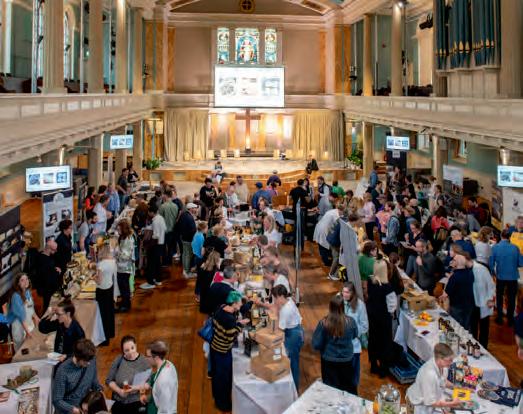
How focusing on cleaner ingredients has given the plant-based category a new lease of life
ALSO INSIDE Farm Shop & Deli Show preview The latest launches foroutdoor dining
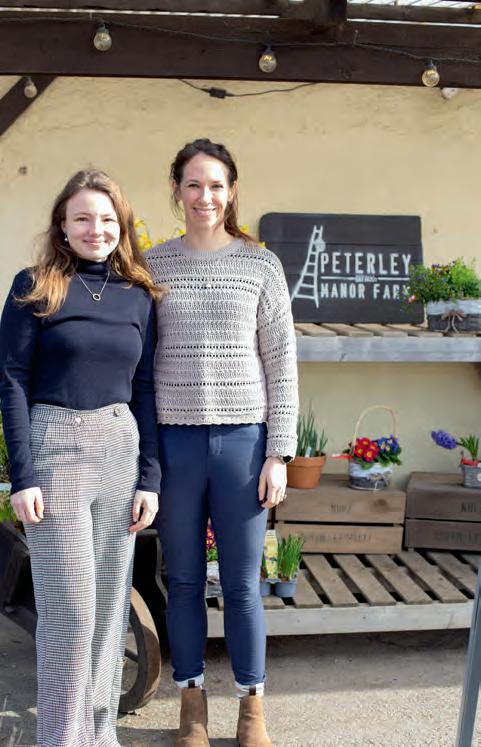
Diversifying at Peterley Manor Farm
CONTENTS
The plight of livestock farmers, Lil Bo’s
Affineur of the Year update, Manchester’s new cheesemonger, Kaltbach caves
Burgundy, The Stiff Tea Company
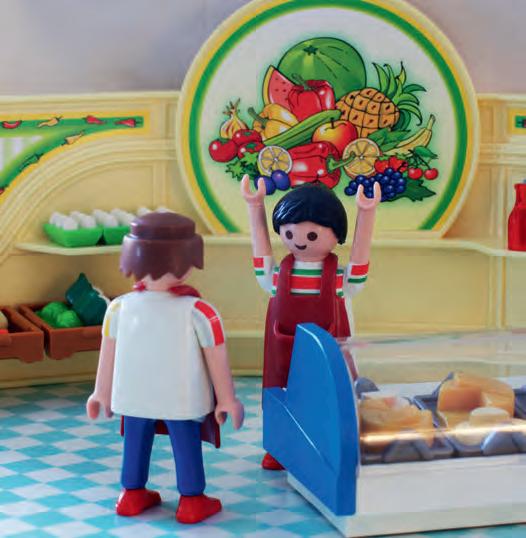
The rise in the minimum wage is closing the pay gap between those who arrive with L plates on their backs and the old hands behind the counter.
By Michael Lane, editor
I was talking to one of my kids at the breakfast table the other day and somehow we got onto the subject of workplaces.
“I wouldn’t want to do what you do, sitting in front of a computer. It looks boring,” she tells me, as I’m sat there thinking that’s a bit rich coming from someone with a bottomless appetite for video games and YouTube.
“What would you do, then?”
“I want to work in a shop.”
“Oh, like the ones I write about.”
“No, a food shop would be dirty and smelly and I don’t want customers having a go at me all the time.”
Forgive me. I know it’s a bit of a LinkedIn cliché these days to quote your kids in order to make some kind of business observation.
In truth, I don’t think my nineyear-old’s assessment of what it’s like to work in food is especially astounding. No one grows up dreaming of, one day, working in a
deli. And kids are all squeamish and workshy at that age.
The interaction just reminded me that the notion of a “career in food” is still up against the perception that it’s utterly unglamourous, thankless, and – at best – something to be tolerated as a temp job (I guess some people’s inner nine-year-old never leaves them).
Leaving aside the matter of making jobs in food more appealing, now there’s a new problem brewing in the world of employment. The rise in the minimum wage is closing the pay gap between those who arrive with L plates on their backs and the old hands behind the counter, who have earned the rate they’re paid.
Retailers are left in a tricky spot. Do they hire pricey newbies and risk upsetting the more experienced staff, who then leave? Or do they go for it, knowing that in a workplace as transient as retail, you have to have new blood coming in?
The issue with hiring younger
EDITOR’S CHOICE
Tanwen DawnHiscox, deputy editor
Delegating,
editorial@gff.co.uk
Editor: Michael Lane
Deputy editor: Tanwen Dawn-Hiscox
Art director: Mark Windsor
Contributors: Nick Baines, Richard Faulks, Patrick McGuigan, Greg Pitcher, Lynda Searby
opportunities@gff.co.uk
Sales and publishing director: Sally Coley
Senior sales account manager: Becky Haskett
Sales executive: Henry Coley
Sales support: Tamsin Bullock
people is that even if you find them with the right level of enthusiasm, they could still be slow learners.
Investing the time and the money in training has always been a bit more of gamble for independent retailers than it has for the supermarkets. And with the initial buy-in having increased, the bigger boys won’t suffer if they hire a tricky trainee.
I’m not saying that our sector is in trouble. There are lots of businesses forging ahead with younger staff and plenty of people who don’t mind getting their hands dirty to make, supply and sell great food. This edition of FFD, like every other one, is proof of that.
But getting new starters to that exemplary (or even satisfactory) level feels like it’s getting tougher all the time.
Curiously, my daughter wanted to work in a cosmetics shop. Let’s hope the world and the job market has had a few more makeovers before we get to her working age.
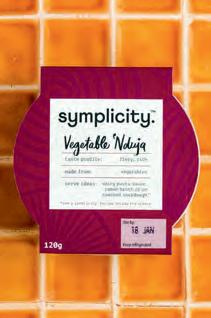
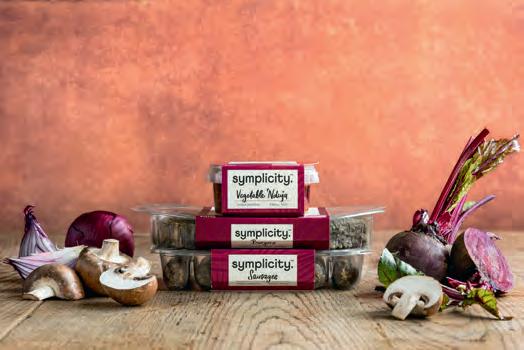
I’m not normally one for products that mimic meat. Like Mr Farrand (see p.10), I’m all about eating less meat, but of better quality. Imagine my surprise, then, when I tasted (and loved) Symplicity’s Vegetable ‘Nduja. It’s made with a base ferment of mushrooms, beets and onions, enriched with tomato and miso, and given fragrance and kick with smoked pap, chilli, garlic and cumin. No extra nonsense. It’s vibrant and tangy, rich and deeply flavoured, with a satisfyingly substantial texture. When it comes to meat, this might be a case of none really is more. More on p.27
Accounts assistant: Julie Coates
Finance director: Ashley Warden support@gff.co.uk
Managing director: John Farrand
Associate managing director: Christabel Cairns
Partner relations director: Tortie Farrand Chairman: Bob Farrand
Warehouse lead & operations support: James McCall Published by The Guild of Fine Food Ltd Fine Food Digest is published 11 times a year and is available on subscription for £50 p.a. inc P&P.
Minimum wage increase adding to cost pressures and hindering hiring
By Greg Pitcher
April’s increase in minimum wage rates has put fresh pressure on fine food retailers to raise pay levels – and made hiring harder.
Independents told FFD about the ripple effect of the latest change to the legal remuneration cutoffs.
The National Living Wage for those aged 21 and over jumped by 4% to £12.71 an hour at the start of the month, while younger workers were given an even greater proportional increase.
Adults under 20 are now entitled to £10.85 per hour after receiving a 9% rise, while apprentices and under 18s can expect at least £8 an hour following a 6% hike.
Food retailers said the ramifications went far beyond the extra pounds in the paypackets of lowestranked earners.
Steven Salamon, owner of Wally’s Delicatessen in Cardiff, said: “The huge increases in the minimum wage over the last few years are having a detrimental effect on hiring decisions.
“We still need to hire staff at the minimum wage to run the business. But the knock-on effect of the increases in wages for [more senior] staff to maintain differentials means cutbacks have to be made on staffing decisions at those levels.”
Emma Lishman, general manager at Lishman’s of Ilkley, said the Yorkshire butcher also felt pressure to
boost pay levels throughout the business.
“We have a young apprentice who we pay quite a bit above the minimum rate, but we would move it all up proportionately,” she said. “It makes the levels between staff trickier.”
This effect is not just limited to internal pay scales, she added. “I see some of the supermarkets are going above £13 an hour. If staff know they can get paid more elsewhere then [that could be a factor in decisions].”
The butchery would have to consider the high cost of employment before recruiting, said Lishman.
“If we lost a member of staff, we might see what we can streamline. We might rehire someone part-time.”
WHAT THEY ARE SAYING ABOUT... ...HOW ARE YOU COPING WITH MINIMUM WAGE HIKES?
“My philosophy is: faced with cutting costs or increasing sales, go for the latter, involve your staff and make it a positive team endeavour. We have a loyal customer base. We have a wide range of English wines, there is headroom for growth on those; we’ve also had a renewed focus on artisan and Alpine cheese.”
“As minimum wages have gone up for a few years we have to put that onto the price of our products. There are always concerns about doing that, there will be a limit where you price some customers out. I hope we can offer people cheaper or smaller products. We want to be accessible to as many people as possible but at the end of the day you need to have a profitable business.”
Dan Williams, project manager at Godfrey C Williams & Son, said April’s minimum wage hikes would “have a big impact” on the Cheshire retailer, which employs seven people.
“Our young Saturday
“It’s a massive impact every year. You don’t want to stop wage increases but the issue is it is stopping us hiring 16 to 21-year-olds. You are asking what you get from people at that age. You are almost paying as much as for someone with more experience. You want to do your bit, but how long can you do that for without impacting the business?”
Retail groups concerned about £300m fraud if Wales doesn’t set up DRS
Food retailers have warned of a £300 million “fraud bill” if the Welsh Government doesn’t move quickly to set up its deposit return scheme (DRS) for single-use drinks containers.
A coalition of trade bodies including the Federation of Independent Retailers, the Food and Drink Federation and the British Retail Consortium wrote to first minister of Wales Eluned Morgan to urge prompt action.
The Welsh Government last year revealed plans to “accelerate” its timeline for
implementing a DRS to align with plans to introduce such schemes in other UK countries on 1st October 2027.
Westminster has appointed an industry-led organisation, Exchange for Change, to deliver the initiative across England, Scotland and Northern Ireland.
The retailer letter to Morgan in March said: “We ask that your Government now acts to protect Welsh consumers, [small businesses] and wider industry by appointing a deposit scheme
staff are currently on minimum wage and as that bracket rises we are happy to pay the higher level,” he said. “But I have heard from other shop owners that some older staff are getting rankled that younger workers’ pay is catching up despite their lack of experience.
“Quite often the people we get are energetic, driven and have a head on them but then on the other hand quite often they are looking to move on, to go to university and so on.”
Williams doesn’t expect to reduce staff cover as a result of the wage hikes, at least in the short term.
“It would depend on sales. Historically we start coming out of a quiet spell around this time of year so it wouldn’t make sense to think about cutting hours now.”
administrator as soon as possible.”
It added: “If an administrator is not appointed soon, a scheme might not be in place in Wales by the time the rest of the UK’s scheme launches. This could leave the UK scheme facing an annual fraud bill of up to £300 million.”
A document laid before the Senedd in February warned that in the absence of a Welsh scheme, people could buy drinks in the country and cross the border to redeem deposits in England.
DAVID RIPPINGTON, THYME & TIDES DELI
DAN WILLIAMS, GODFREY C WILLIAMS & SON
EMMA LISHMAN, LISMAN’S OF ILKLEY
Retailers still need many hands but they are going to cost more
IN BRIEF Indies react to latest energy bill hikes due to Middle East conflict
By Greg Pitcher
Fine food retailers have called for support with energy bills as the war in the Middle East raises fears of price spikes.
Independent shops told FFD of the measures they had taken to minimise the cost of powering their businesses – and described the impact of ongoing uncertainty.
Researchers at Cornwall Insight in March said a sharp reduction in transfer of gas through the Strait of Hormuz had pushed UK gas prices to their highest level since 2023.
The Food and Drink Federation raised its “concern” at the issue and urged ministers to help manufacturers in the sector with their energy bills.
Meanwhile the British Independent Retailers Association backed a charter calling for reforms to create a “fairer” power market for small businesses.
David Rippington, owner
at Hampshire’s Thyme and Tides Deli, said “there needs to be Government help”.
“There is no support for businesses,” he added.
“We lost power for a day recently and there was no rebate.”
Rippington said he looked at energy bills like a mortgage.
“I try to keep my finger on the pulse and look at contracts two years before
Dimbleby quells war-related fears
Food guru Henry Dimbleby in March called for “perspective” on the conflict in the Middle East.
The author of the Government’s 2021 National Food Strategy took to LinkedIn to express his views on the impact of the war on the sector.
Dimbleby acknowledged that the dramatic reduction in commercial shipping through the Strait of Hormuz had consequences for food and drink producers.
“Gas makes the fertiliser that grows our crops. It makes the CO2 that carbonates our drinks and stuns our pigs at slaughter,” he
they expire,” he said. “We contact quite a few brokers, get an idea of what is happening and then get in touch with the energy companies to get locked into a good deal.”
Rippington said energy prices were “a huge deal for small businesses”.
“You question whether to invest in a fridge that will increase your energy bill; do you wait before turning on your ice cream freezer for summer? It holds back growth.”
Stefano Cuomo, chief executive at Kent food hall Macknade, said rising power bills in the wake of the conflict with Iran would “cause problems”.
“Business costs are continually going up across the board,” he added.
But he said retailers and customers had become used to coping with uncertainty and rapid change since the Covid-19 pandemic and war in Ukraine.
“The psychology of the owner-operator is
wrote. “Iran produces over 90% of the world’s saffron and around a fifth of its pistachios.”
Dimbleby, cofounder of food innovation investors Bramble Partners, added: “Every headline screams crisis. It is serious. But let’s keep perspective. This is not Ukraine. Not yet.
“The Hormuz crisis is a supply chain shock, not a food production shock on the scale of 2022.
different, we don’t get too despondent and we’re more accustomed to finding ways around it.
“The same goes for customers, who have been through their budgets and decided food and drink is important.”
Nonetheless, fine food retailers had to focus on adding value, Cuomo stressed.
Jonny Stainton-Burrell, director at Hockey’s Farm Shop, said he had secured a one-year extension to its energy contract with just a minimal price hike, which came as “a great relief” given the war involving Iran.
The New Forest retailer has spent a decade reducing its dependency through projects such as installation of solar panels and replacement of powerhungry appliances.
“There really isn’t one single silver bullet, but a commitment to a long-term plan for energy consumption reduction,” said Stainton-Burrell.
Speciality & Fine Food Fair gets new home and new time slot
The organiser of Speciality & Fine Food Fair has announced that the long-running trade show will be moving to a new time of year – with the next edition set to take place in April 2027.
Montgomery Group also said that the show will not be taking place at the event’s traditional home of Olympia in London during September 2026.
Instead, the next edition will take place on 5th-7th April alongside the events company’s Food, Drink & Hospitality Week at Excel London.
This will effectively see the Fair will joining
IN BRIEF
The winners of the 2026 Farm Shop & Deli Show Product Awards have been announced. Free-from specialist Booja-Booja claimed awards for four products, and Borough Broth took five.
The Gov’t has introduced restrictions on imports of items including feta and yoghurt from Greece after a case of foot and mouth disease was confirmed on the island of Lesvos, with only heat-treated items allowed in.
Theft incidents fell to 5.8m in the 2026 ACS Crime Report (compared to 6.1m in the previous year) while abuse was down from 1.2m incidents to 950,000. Prevention spend increased to £354m from £316m.
forces with IFE and its sister events, which welcomes more than 25,000 trade visitors across three days.
Montgomery said that SFFF will remain true to its ethos of showcasing fine food & drink, adding that the move aligns the Fair more closely with key buying cycles, budget planning and menu development across retail and hospitality.
Nicola Woods, Event Manager for Speciality & Fine Food Fair, said: “Speciality & Fine Food Fair has always been about bringing the industry together to
celebrate exceptional producers and help them build meaningful relationships with buyers. By joining Food, Drink & Hospitality Week and sitting alongside IFE, we’re creating even more opportunities for those connections to happen.
“This move allows us to preserve everything our community values about the Fair - its curated feel, its focus on discovery and its support for emerging brands - while giving our exhibitors access to a significantly larger and more diverse audience of buyers.”
Strawberry Fields takes top honour at 2026 Farm Retail Awards
By Michael Lane
Strawberry Fields Farm Shop picked up, literally, the biggest trophy of the night at the Farm Retail Awards after the Devon retailer was crowned Large Farm Shop of the Year.
Organised by the Farm Retail Association and announced at the trade organisation’s annual conference in March, the award ceremony also saw a number of other businesses take home gongs – with Warwickshire’s Lower Clopton Farm Shop (Small Farm Shop of the Year) and Scottish stalwart Craigies Farm (Pick Your Own of the Year) among the winners.
Newton Farm Foods, near Bath in Somerset, won the trophy for Café/ Restaurant of the Year, while Hutchinson Hobbs in Stockton-on-Tees was hailed as Butchery of the Year, and Norfolk’s Goat Shed claimed the prize for Rising Star.
Completing the winners’
line-up was wholesaler Cotswold Fayre (Associate Member of the Year) and West London’s Queens Park Farmers Market (in the Farmers Market category), with the Lifetime Achievement Award going to Chris and Wendy Barton of Canalside Farm in Staffordshire.
Founded by Jo and Roger Mounce in the 1990s, Strawberry Fields has expanded from a fruitgrowing operation on the
Devon-Cornwall border into a chain of several outlets across county. The current farm shop at Lifton was built in 2002 and the Mounces have since added sites in Buckfastleigh (in 2023), Exeter (in 2025) and Dartmoor (last month).
Broadcaster Nigel Barden hosted this year’s awards at the Cedar Court Hotel in Harrogate, North Yorkshire, on 11th March as part of the annual FRA Conference.
DOWN ON THE FARM
A consortium of businesses including the Food Ethics Council and Marks and Spencer have called for the Government to introduce a Good Food Bill, which it says is necessary to “transform England’s food system”.
A white paper should be published as a first step in this process, it said in a statement, setting out a “visionary plan” to boost health, the economy and the planet through what people eat and drink.
He said: “Farm retail is an exciting and fast-moving sector of the economy, which makes presenting these awards so rewarding.
“Each year, the advances made by farm retail businesses astound me, and 2026 exemplifies this. The finalists demonstrate why farm retail businesses are adored by customers, offering excellent service, produce, knowledge and flair, ensuring people return time and time again.”
Newly appointed FRA Chair Ben Loughrey, who officially took over from former Chair Emma Mosey at the end of the conference, added: “Our winners are prime examples of how farm retailers can successfully build strong community connections and memorable customer experiences. We are immensely proud of all of our finalists and winnersthey represent the very best of farm retail and reflect the strength, resilience and vibrancy of our industry.”
The latest from farm shops across the country
The South West of England’s largest tulip festival is back this April with over 4 acres filled with half a million tulips in 60 varieties. Strawberry Fields Farm Shop in Lifton, Devon (which has just been crowned Large Farm Shop of the Year at the FRA awards, see above) is the place to go to witness this spectacle. Bookings can be made on its website with current dates between 3rd April and 19th April but more dates may become available if the blooms are maintained. strawberryfieldslifton. co.uk
A new farm shop is taking shape in New Alresford on Wood Farm. The Wood Shed is opening in April and will offer seasonal fruit and vegetables, takeaway coffee and locally made gifts.
Lots of farm shops are offering Easter Egg hunts or Easter trails to keep the children entertained this April. Shropshire’s
IN BRIEF
Waitrose will stop selling fresh, tinned, frozen and tinned mackerel citing overfishing concerns. It will be suspending sales once stocks have sold out.
Dobbies Garden Centres has completed a £1.5m revamp of its foodhall offer across its 48 stores, calling time on its supply partnership with Waitrose. The new concept features fresh branding and a 2,000-strong product range, developed with 33 specialist food & drink suppliers.
The Office for National Statistics has added hummus and alcohol-free beer the virtual shopping basket of goods and services it uses to calculate inflation figures. Motorhomes and pet grooming were also added.
Apley Farm Shop offers a self-led trail with clues to solve, a giant Easter bunny to greet you and chocolate surprises on completion of the trail. This runs until the 5th of April and can be booked via the farm shop website. apleyestate.co.uk/apleyfarm-shop/
with offering
Devon-
and fish & chip takeaways, Greendale Farm Shop has added a sauna on its site off the Sidmouth Road, near Exeter. It is the latest diversification at the location, alongside other attractions like fishing lakes and a farm trail featuring a host of animals.
Awards host Nigel Barden with Jo, Roger, Laura and Adam Mounce of Strawberry Fields and Matt Whelan of trophy sponsor Fieldfare
IF I’D KNOWN THEN WHAT I KNOW NOW...
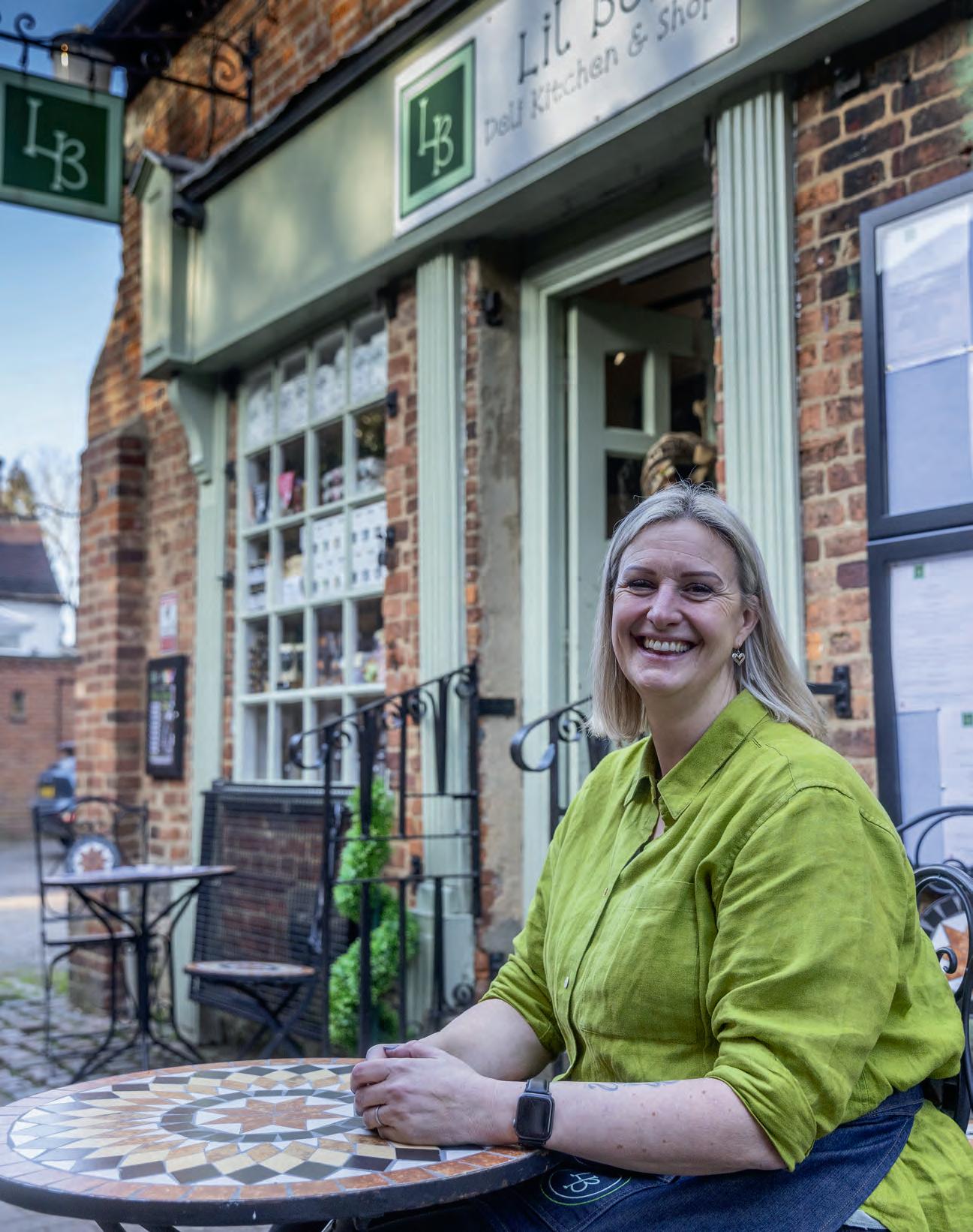
DEBORAH EVANS, co-owner, Lil Bo’s Deli, Ashby de la Zouch
I met my partner, Steve, eight years ago. He has always been in hospitality – he was at Mitchells and Butlers for years and opened the Old Bulls Head at Woodhouse Eaves, whereas I was from the construction industry and more used to being on the other side of the counter.
Steve always wanted his own business, so in 2023, we opened Lil Bo’s. Although I am Ashbyborn and bred I had never worked in the town, so one of the first things I did was set up a small business networking group. What started as a way of getting to know people has become so much more. We have more than 100 members, and they are an incredibly supportive bunch.
The concept of Lil Bo’s is simple: a locally focused deli and daytime restaurant. Getting the layout right was less straightforward. Originally, we planned to have a downstairs lounge with leather sofas and a relaxed vibe, where people could come for coffee and cake, and a more formal restaurant upstairs. Due to customers with mobility issues, we had to move the restaurant to the ground floor, although we did keep ‘the snug’, which people book as a private area.
People must walk through the deli to get to the restaurant, so the first thing they see is shelves packed with ambient products, and our cheese and dessert counters.
Our kitchen is too small to make everything ourselves, so we decided to concentrate on what we are good at and outsource everything else. We make our own sandwiches, soups, quiches and salads, but we buy in sausage rolls and pies to bake off.
Our biggest challenge is waste because no day – let alone week – is the same. We have just had a bespoke EPOS system installed, which should give us a better way of tracking stock and identifying trends.
We relied a lot on accountancy in the beginning but as we’ve evolved, we’ve created our own systems and spreadsheets so that we can keep control of what we are spending daily.
Our biggest cost is staffing, and I think the key to running profitably is avoiding overstaffing. When we first opened, we had too many people, and it took us a while to get staffing levels right. Now we’ve reached the point where we run a tight ship, but we have a fantastic team.
We made a profit in our first year and are on track to make a profit in our second year too, so we must be doing something right. And in helping Steve to follow his dream, I have discovered that I absolutely love working in hospitality.
lilbosdeli.co.uk
Interview Lynda Searby
Photography Richard Faulks
View from HQ
FFD’s publisher and Guild of Fine Food managing director John Farrand has his say
ISmaller, family-owned livestock farms tend to support rare breeds, and if they can’t be commercial, the rare breeds will vanish.
don’t really get cross. But in Q1, there seems to be plenty to get cross about. We were all about to have a half-decent year, and there was a rumour that my electricity bill was going down this month. But now a maverick leader seems to have put paid to all that by lighting the Middle Eastern touch paper. As well as that major global issue, I was cross with myself after my last column’s payoff (FFD March), which mentioned dairy farmers and the arable girls & boys, but ignored the plight of livestock farmers and the demise of slaughterhouses. Comparatively minor, I grant you.
Before this recent energy intervention by the Orange One, regional abattoirs that slaughtered animals for smaller farmers were struggling with spiralling costs. We can all relate to the surge in the price of energy and the ever-increasing cost of employing people, but abattoirs will also have to absorb higher vets’ bills
WEDGE ISSUE 03 OUT NOW
The Spring 2026 issue of Wedge, the Guild’s magazine about cheese, is available to order and stock in your shop now, with special deals for Fine Food Digest subscribers:
5 copies for £6 each – 50% margin (total for order £30)
10 copies for £5 each – 58% margin (total for order £50)
Order issues 01, 02 and 03 today from wedge@gff.co.uk or call +44 (0)1747 825200 wedge-mag.co.uk
following a recent diktat from the Food Standards Agency. I am not entirely sure it will be the vets that get the benefit of those higher bills; it will most probably benefit the venture capitalists that run them.
According to Jason Aldiss of the Association of Independent Meat Suppliers, bills for some establishments could rise by £100,000. What does this mean? There will inevitably be another wave of closures, meaning that animals travel further to bigger abattoirs that could well have less sympathetic lairage. That’s potentially bad for the animal but also bad for taste.
The less obvious downsides are that smaller, family-owned livestock farms tend to support, nurture and sell rare breeds, and if they can’t be commercial, the rare breeds will vanish. Many new or young farmers enter the sector via farming a small block of land and investing in a few beasts. The barriers to entry are fewer, and if
it’s not viable, they can’t survive and grow. Combine those factors and the result is the demise of tasty breeds and farmers that care, and a reduction of quality meat in our farm shops.
Inherent in my diet is lessbut-better meat. I know it’s a sentiment shared by many – even the organisers of Shambala, a music festival that has been meat- and fish-free since 2016. They grabbed the headlines last month by proposing to allow a venison trader at their 2026 event. This laudable rationale ended with the statement: So, here’s the twist: what if eating local wild venison is actually one of the most sustainable food choices we could make?
I suspect Bambi-gate will lead to the trader not being admitted and more’s the shame, because quite soon meat that is better for the animal and the planet – and tastes of something – might not be available anywhere.
Makes you cross, eh?
The Word on Westminster
By Edward Woodall Association of Convenience Stores
LAST MONTH, WE launched the 2026 Crime Report, shining a light on the scale and impact of crime on the convenience sector. The primary audience for this report is the Government, as it sets out not only the action needed from police to stop repeat offenders, but also the hundreds of millions of pounds retailers invest in crime prevention and detection every year to keep colleagues and customers safe.
For many years, tackling retail crime has been the top priority for convenience store retailers. Progress has been made, including securing better protections for shopworkers, increased focus on retail crime response, and more police presence. But persistent reports of theft, abuse and violence across the convenience sector show that there is still much more to do.
In the last 12 months, retailers recorded an estimated 950,000 incidents of verbal abuse and 67,000 incidents of violence. For shopworkers, these are not isolated events but daily experiences that can cause lasting mental and physical harm. The headline figure of over 5.8 million shop thefts is alarming, even though
it is a fall from last year’s high of 6.2 million. There is still a significant gap between what gets reported to police and what is recorded internally, but with two-thirds of retailers reporting more crime than last year, this may be a sign that the gap will begin to close in 2026.
This year we are also placing greater emphasis on the impact of the illicit trade. There are widespread criminal networks dealing in illicit goods, and in some cases, stolen goods from legitimate businesses, that need to be shut down. We’re calling for the toughest possible sanctions against these rogue traders.
For those working in the food and retail sector, these figures will feel all too familiar. But that makes it even more important that we continue to highlight the real and growing harm caused by retail crime. The incoming Crime and Policing Bill should act as a major turning point on retail crime, with more police on the streets, prioritisation of response and investigation of shop theft offences, and new technology and initiatives to stop reoffending, but we must continue to do our part as a sector by reporting every crime that we face.
Edward Woodall is government relations director at the ACS edward.woodall@acs.org.uk
CONFESSIONS OF A DELI OWNER
Anonymous tales from behind the counter
I MANAGED A rare escape from the shop floor this week to visit the local hairdresser. For most, this is a treat. For me, it can feel like an existential crisis. There is something unsettling about staring at your own reflection for 90 minutes when your usual modus operandi is a blur of motion. In the shop, I am a whirlwind of productivity; in the stylist’s chair, I am just a tired person with the dawning realisation that I haven’t had a proper day off since the last time I was here.
In the early years of the business, I could barely afford the time to get to the salon, much less the bill. I would sit there, trapped, as the
inevitable “where are you off to on holiday?” landed awkwardly. When the stylist asked what I did for a living, I would mention the deli.
The response was always a beaming, “Oh, I love shopping there!”
I would smile and nod politely, but I am fully aware that 85% of UK grocery shopping happens in supermarkets. I don’t begrudge anyone a tight household budget, however, I do wish people would stop exaggerating their commitment to the local economy. We have all seen this play out online. When the local butcher finally hung up his apron recently and posted his “lack of support” farewell on Facebook, the comments were a symphony of
People love the idea of an independent butcher; they just don’t love paying for it.
Expert eye
IPANDA CHILLI
FOUNDER NATALIE MCCARTHY SHARES LESSONS LEARNED BY STARTING A FOOD BUSINESS LATER IN LIFE
t wasn’t until I was 54 that I started a business. Having to raise children and care for an ageing parent meant I had to put my own plans on hold.
Starting late has definite advantages but also gave me a fair few headwinds to battle. I have a wealth of experience and skills, easier access to capital and a clarity of purpose. On the other hand, women of a certain age face possible ageism, becoming “invisible” as we age. I have to work hard at keeping up with advances in technology and social media to drive my business. Not to mention that post-menopause, energy levels take a nose dive.
Luckily, my life experience equipped me with the knowledge to work smarter, not to have to try and fail as many times as I might have in my younger years, and particularly to understand human motivation in my
performative grief. All I could think – perhaps unfairly – was that their fridges were probably chock-full of Aldi’s inferior bangers. People love the idea of an independent butcher; they just don’t love paying for it.
The worst part of the salon experience, however, is the gossip. I have learned to keep my mouth shut about my vocation now. I sit in dread, waiting for the person in the next chair to mention the shop in passing. I was once pinned to the seat, mid-colour treatment, listening to a woman berate the waiting times in our café to her stylist. I had to sit there in silence, praying no one would recognise me.
In a small town, the salon is a courtroom where the jury hasn’t bothered to look at the evidence. It is a stark reminder that while we are pouring our lives into these businesses, to the public, we are often just a backdrop for their Saturday morning chat.
The British public wants an independent high street, but at supermarket prices. They want the quaint shopfronts to bolster their property prices, but it doesn’t stop them from spending their hard-earned money in the faceless megastore down the road. As every small retailer knows, you can’t pay the bills with Facebook likes.
customers’ and my staff’s desires and needs. So, if you are thinking of starting something new later in life, here are some tips that might help ease the difficulties of launching a new business.
• Seek your tribe: I joined a local women’s business group, which helped me define my niche and the other members acted as my sounding board. You will get tired and discouraged, so don’t be afraid to accept help.
• Take your time: your body can’t always keep up with your brain. If your idea is good, the world can wait – execute it well, not fast.
• Listen to your gut: decades of experience dealing with people and situations have honed your intuition. Choose to work with people and on ideas that resonate with you.
• Find a balance: running a business at any age is demanding. Maintain a healthy work/life balance and enjoy these years of your life –remember you are doing something you love. chillicrisp.com
If your idea is good, the world can wait. Execute it well, not fast.
Nitrite-cured bacon sales fell by 4.1% in volume
In the UK in the twelve weeks until the end of January 2026, compared to the same period last year. Meanwhile, sales of nitritefree bacon rose by 19.6% in volume.
Source: Worldpanel by Numerator
ARE YOU LOOKING FOR MORE?
Whether it’s staff training, business advice, event space, making industry connections or opportunities to meet trade buyers and food lovers, the Guild of Fine Food does far more than publish FFD The Guild has been championing independent food & drink for over 30 years. Join us today and find out what we can do for your business.
Support & ideas: support@gff.co.uk
Training & venue hire: bookings@gff.co.uk Exhibition stands: opportunities@gff.co.uk
Cheesemakers and mongers are harnessing the power of time, temperature and microbes to create new cheeses thanks to the influence of the Affineur of the Year competition.
Perry James Wakeman, CEO of Rennet & Rind in Cambridge, who has won the annual Academy of Cheese contest three times, is maturing a batch of 45 Quicke’s cheddars using affinage techniques he used at last year’s awards. The 8kg truckles are being matured without cloth-binding and the rind is regularly pierced with a spiked roller to reduce moisture and create an even spread of mould. The cheeses will be released in September and sold as Dillon, the name of last year’s champion cheese.
“I have a roadmap for Dillon and it’s fascinating to see how the cheeses are developing now we have scaled up,” said Wakeman. “Affinage is a way to develop new products, but it has multi-faceted benefits, helping to elevate cheese care across everything we do.”
Quicke’s has also changed the way it matures its cheddar in Devon on the back of the competition, increasing the temperature of its maturing room and researching how many layers of cloth and lard
are used to manage moisture loss. “We have also been inspired by some of the washes and rubs that people have used,” said MD Jane Quicke. “[We are] planning to see if there are new products we could develop using some of these techniques.”
Cheshire cheesemaker Claire Burt is already using knowledge learned at Affineur of the Year to create new products, including Bidlea Blue – a blue Cheshire wrapped in cidersoaked vine leaves. She also plans to take young Appleby’s Cheshire cheeses and mature them in different ways in a new maturing room.
Affineur of the Year, which was launched in 2022, sees
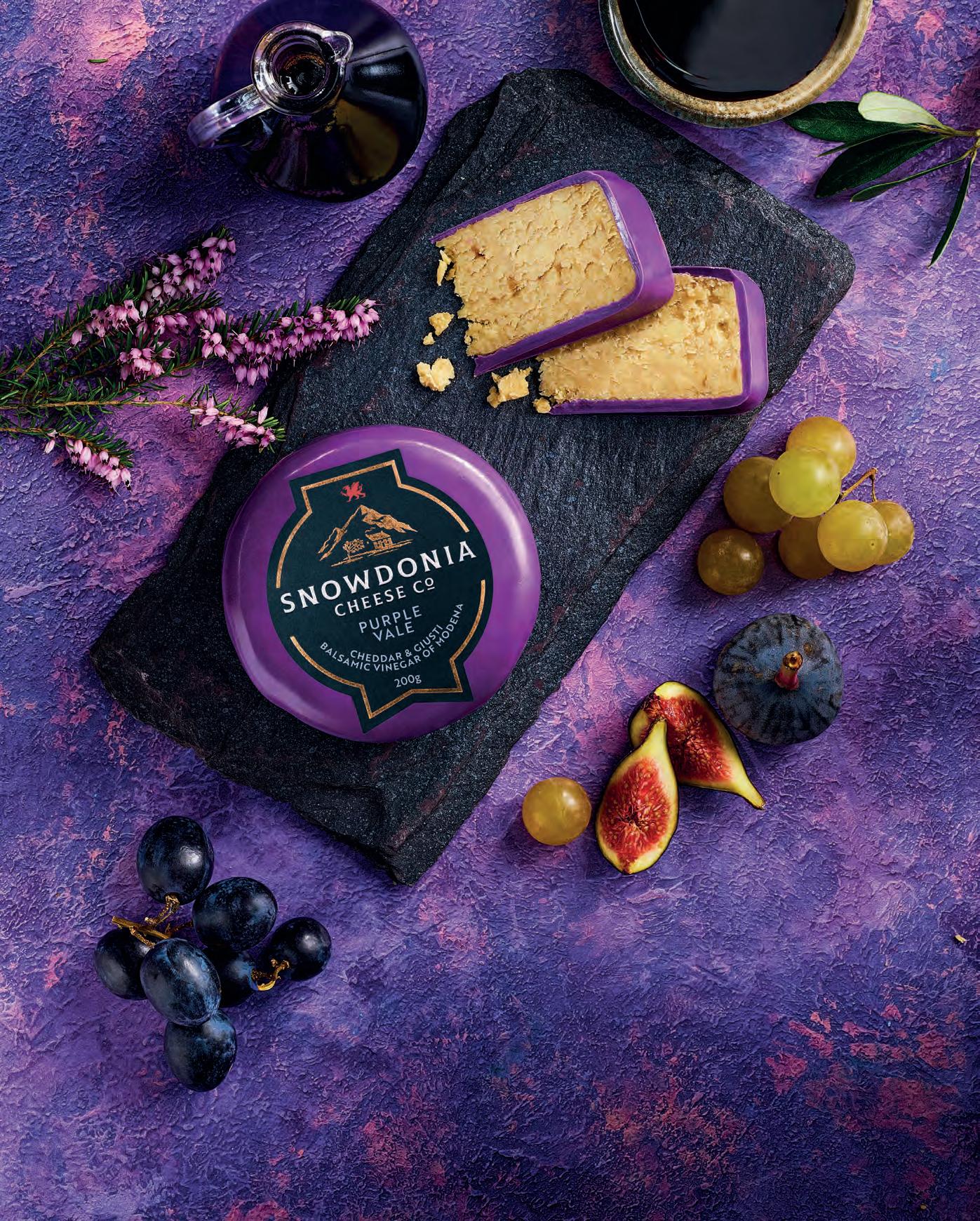
Snowdonia Cheese Co is celebrating its 25th anniversary with the launch of Purple Vale – a balsamic vinegar-infused mature cheddar cheese made in collaboration with producer Giuseppe Giusti of Modena.
French authorities have lifted restrictions for cattle in the South West of the country, brought in to counter Lumpy Skin Disease No new cases have been detected since January. The import of soft raw cow’s milk cheeses into the UK from France is still forbidden.
The Virtual Cheese Awards has had a shake-up with Irish cheeses now permitted for the first time and a simpler entry process. Traditional cheese categories have been replaced with 22 broader classes.
competitors mature different cheeses in unique ways with entries judged by a team of experts. This year’s cheeses are: Quicke’s cheddar; Cropwell Bishop stilton; Baron Bigod brie; White Lake’s goat’s cheese Rachel; and Gorwydd Caerphilly.
The final in London on 16th June will include a preceding education day, plus a new category: the Rising Star Award, the winner of which will receive a scholarship to Mons Formation’s affinage course in France. The overall winner will win an all-expenses paid trip to New York to work in the caves of US cheesemonger Murray’s. academyofcheese.org/ awards/affineur-of-the-year/
Cheesemaker Carrie Rimes, owner of Cosyn Cymru in Bethesda, North Wales, has launched a cow’s milk version of her much loved sheep’s cheese Brefu Bach. The new soft cheese, called Brefu Da, is made with raw cow’s milk from a cow-calf micro dairy in the Vale of Clwyd, which has a Red Poll herd that is entirely pasture fed. The cheese has a soft texture with notes of sour cream and butter. ‘Brefu’ means to bleat or low in Welsh, while ‘Da’ means good or cattle.
THREE WAYS WITH...
Blackmount
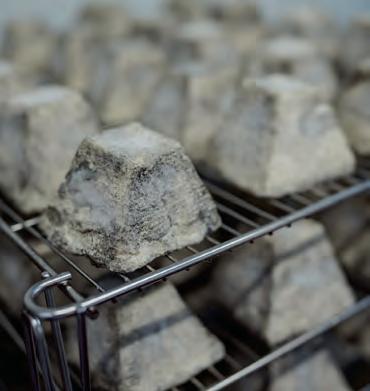
Made by Errington Cheese in Scotland, the ashed, pyramid-shaped raw goat’s cheese is named after a hill near the Lanarkshire family farm. A soft, lactic-style cheese, the texture is fluffy with a silky breakdown. Expect yoghurt, crème fraîche and citrus notes, plus a warm, savoury depth in more mature cheeses.
Pepper oatcakes
Kate Whalley, cheesemonger at Errington’s Barn farm shop, recommends a slice of Blackmount on Dalgetty & Sons’ Cracked Black Pepper Oatcakes. The crunch and peppery bite of the biscuit contrasts with the feathery texture of the cheese. She tops it with a drizzle of light honey and a few caramelised walnuts.
Sauvignon Blanc
The gooseberry acidity and aromatic notes of elderflower to Sauvignon Blanc make it a natural bedfellow for lactic goat’s cheese. The grape is widely planted in the Loire Valley, home to some of France’s most famous chèvres. But others do it well, too: a recent bottle of Steenberg Sauvignon Blanc from Constantia, South Africa, had a surprisingly rich texture and savoury notes that brought out hay and umami notes in the goat’s cheese.
Nectarine and coppa salad Scottish chef Neil Forbes, is a big supporter of local produce, especially cheese. He uses Blackmount in a salad with slices of griddled nectarine and coppa (ham made from pork collar) from Edinburgh-based charcuterie company East Coast Cured. It’s finished with a simple mustard, olive oil and cider vinegar dressing.
CHEESE
New cheesemonger joins Greater Manchester’s retail scene
By Patrick McGuigan
The owner of a new shop near Manchester is banking on the immersive theatre of cheese retail to stay one step ahead of competitors.
Huw James, who opens Tyromancer in Uppermill in Greater Manchester this month, previously worked as a management consultant with several high-street fashion and tech brands, creating retail experiences to attract customers.
“There is a lot of talk about the death of the high street and the finger is pointed at online retailers, but if you can create physical experiences in stores that resonate with people, you are really onto something,” he said.
“Cheese is much better to buy in person than online. It’s got that wow factor, from seeing cheeses stacked high and hearing their provenance to tasting. It about more than what you buy and take home.”
Tyromancer is based in the village of Uppermill
CHEESE IN PROFILE with
at the Saddleworth shop, two to three days a week including Saturdays
in Saddleworth, which is popular with commuters to Manchester and has a thriving independent retail scene, including two butchers, a greengrocer, bakery and wine shop, plus clothes and bridal shops.
James’ refrigerated shop will stock 30-40 mainly British and Irish cheeses, displayed on an open counter in a similar style to Neal’s Yard Dairy.
“The village is going in
Middle Ages. The town of Gouda was first recorded in official documents in 1143, and even then cheese was already being made on farms in the surrounding countryside.
How is it made?
What’s the story?
Aged Gouda is a hard cheese named after the Dutch city of Gouda in the south of Holland, renowned for its historic cheese market. Gouda is one of the most widely enjoyed cheeses in the world, accounting for an estimated 50–60% of global cheese consumption. The name itself is not protected, meaning Gouda is now produced in many countries across the globe. Its origins, however, date back to the
Gouda is made using a washed-curd method, where some of the whey is removed after the curds have been set, cut and stirred, and replaced with hot water. This step washes away lactose, leaving less for the bacteria to feed on and reducing acidity in the cheese. The result is a naturally sweeter flavour, often with gentle caramel notes. The addition of hot water also raises the curd temperature to around 36°C, helping release more whey and firm the curds. Once formed, the cheeses are pressed, brined and typically finished with a
the right direction and I’m hoping to collaborate with other shops on events,” said James, who added that the name Tyromancer referenced an ancient tradition of telling people’s fortune by looking for patterns and symbols in cheese.
“A big part of what we want to do is tell people stories about our cheese, who makes it and where it comes from.”
After working as a cheesemonger in her native France and the UK, Emmanuelle Metz opened her shop at Sunny Bank Mills in Leeds in 2024. She is thus well placed to spot the differences in cheese-buying habits between the two nations.
“There are lots more cheese shops in France. A city like Leeds would have at least six or seven, rather than two or three,” she says. “Buying cheese in France is something normal. It’s a daily food, so people know what they want and they buy a lot. A kilo and half at a time. But here people buy cheese for special occasions, and usually a few hundred grams of each.”
Customers in the UK are less confident, she adds, especially when it comes to how much to order. “My prices are per 100g, but people don’t know what 100g of cheese looks like. They are often hesitant, so it’s my job to relax them and take them by the hand. I tell them that everyone is a connoisseur because we all know what we like. If they tell me their favourite cheeses, then I can suggest others.”
metzcheesemonger.tillex.co.uk
wax or plastic coating. They are aged anywhere between nine months and two years.
Appearance & texture:
Aged Gouda develops a firm, crumbly texture similar to Parmesan, with the formation of crunchy tyrosine crystals. As this cheese ages, its flavour becomes rich and complex, with nutty, caramel notes
often reminiscent of butterscotch.
Variations: Young Gouda, Mature Gouda, Boerenkaas TSG, Gouda Holland PGI, Smoked Gouda, cumin seeds and other herbs and spices are often added to Gouda.
Cheesemonger tip:
Aged Gouda pairs particularly well with the cocoa notes of a stout, or try a robust oaked Chardonnay, or a tannic Cabernet Sauvignon.
Chef’s recommendation: Aged Gouda is a wonderfully versatile cheese, with a crystalline texture and rich caramel notes that elevate savoury dishes. Try using it in Spaghetti alla Carbonara, replacing some of the Parmesan and allowing the Gouda to take centre stage. Its depth of flavour brings a delicious richness, creaminess, and subtle nuttiness to the dish.
Aged Gouda is one of the 25 cheeses studied as part of the Academy of Cheese Level One Certification. For more information on this and all of its courses, head to: www.academyofcheese.org
Tyromancer is looking for a part-time cheesemonger to join the team
Aged Gouda
HOW DO I APPLY?
A CHEESE LIKE NO OTHER
Time-honoured cheesemaking meets centuries of Italian craftsmanship. Introducing our new mature Cheddar with caramelised red onion chutney and Giusti 3 Gold Medals Balsamic Vinegar of Modena.
Deep in the cheese cave
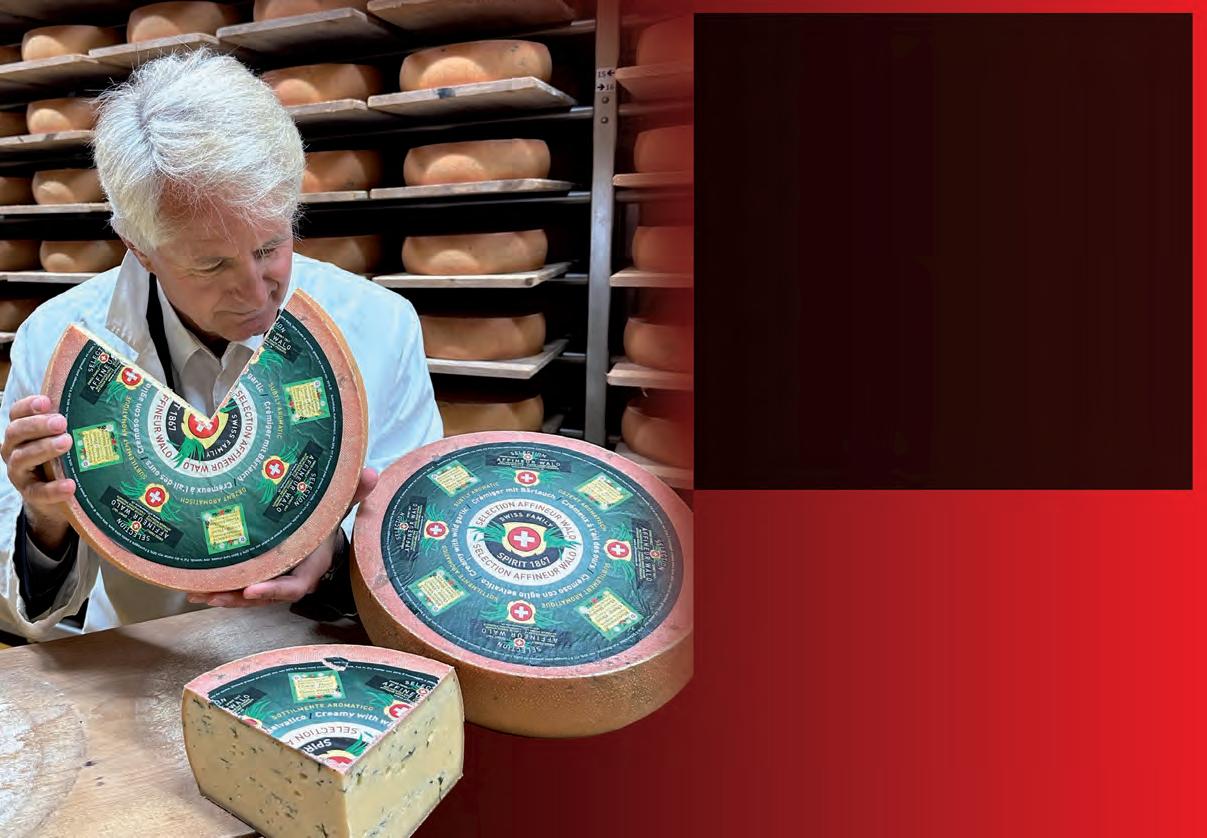
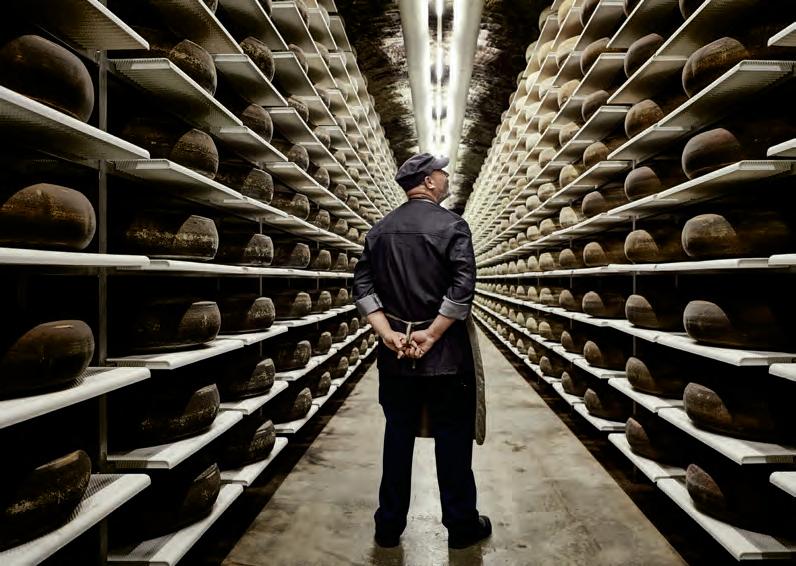
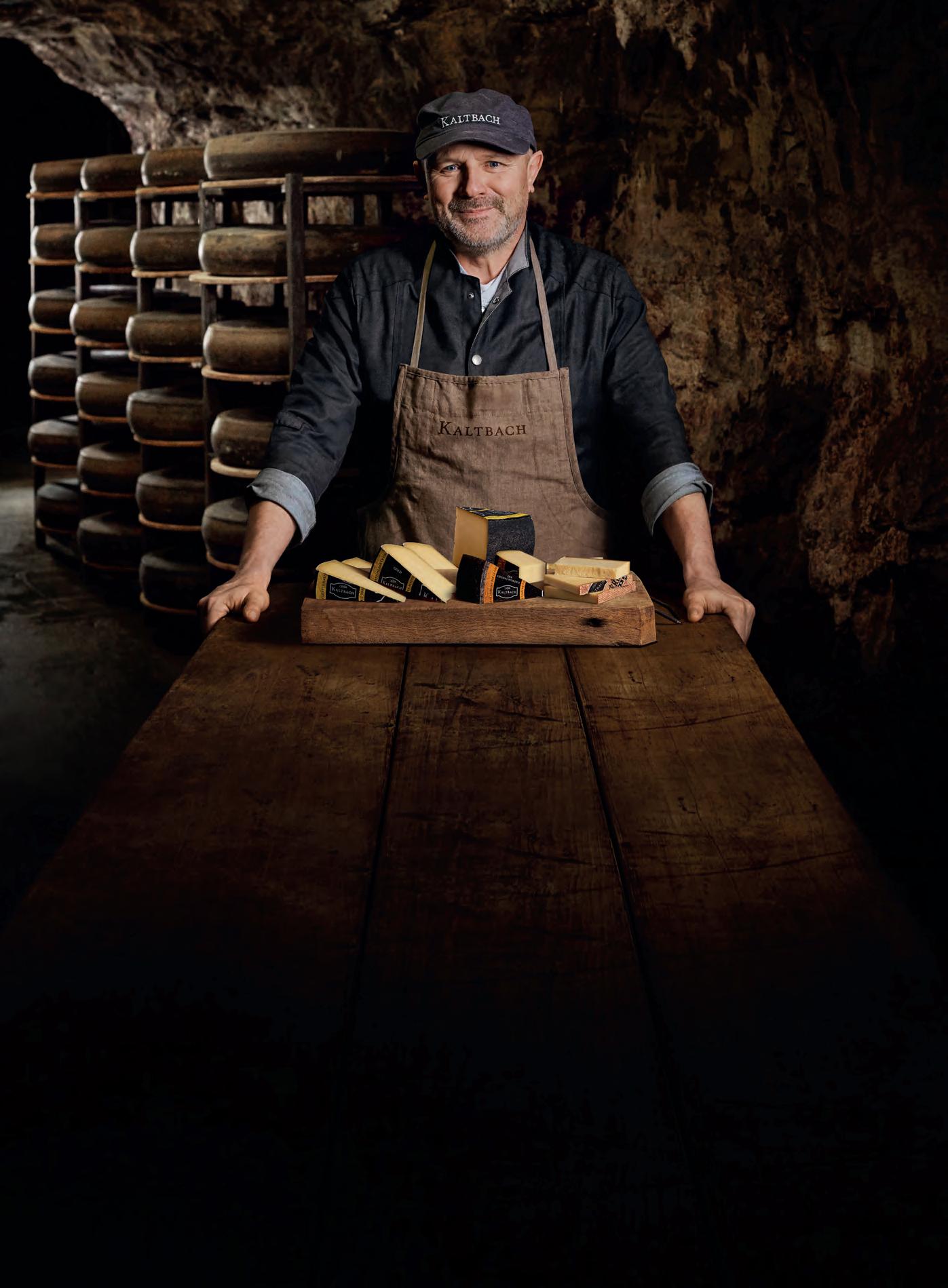
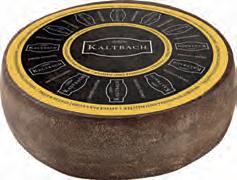
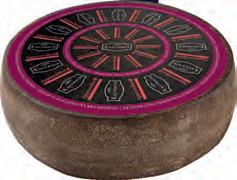
Sixty metres below ground, in the Swiss countryside, the sandstone caves of Kaltbach provide the perfect conditions for maturing cheese. FFD visits the underground labyrinth where naturally regulating humidity, microflora and time shape flavoursome wheels of cheese.
Roland Ziswiler is patting the rock walls with genuine affection as he gives an impromptu geology lesson.
“This is sandstone that is 22 million years old, and it’s wet because of rainwater, which takes two years to come down from the ground above,” he says, before pointing at thousands of wheels of cheeses on wooden shelves that line the underground cavern in which we stand. “It’s the perfect place for maturing cheese.”
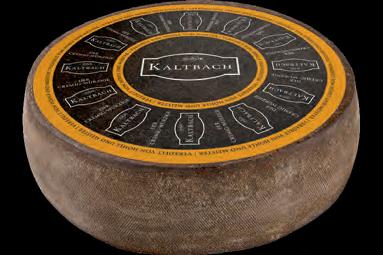
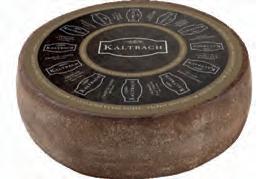
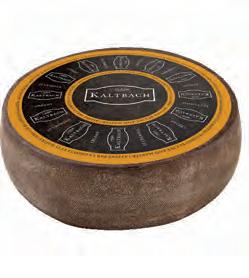
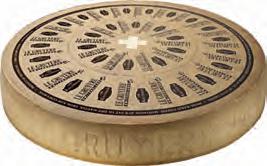
The reason raindrops take so long to reach the damp, echoing space is that we are 60m below ground in the caves of Kaltbach in Lucerne in Northern Switzerland. Owned by dairy company Emmi, the atmospheric sandstone caves stretch for 2.3km and are home to around 100,000 wheels of cheese. Mainly made by local dairies that source milk from small farms, Kaltbach covers traditional cheeses, such as Le Gruyère AOP, Emmentaler AOP and Raclette, to newer creations including Kaltbach Creamy and Gouda.
As cave master and head of operations, it’s Ziswiler’s job to oversee this underground labyrinth, which naturally remains at 12.5°C and humidity of 95%, no matter the temperature above. Depending on the style, cheeses will be aged for anywhere from four to 12 months, and are washed, brushed and turned at regular intervals by laser-guided robots. They are still graded by the cave masters, who use cheese irons to tap and sample wheels, as Ziswiler demonstrates on a 4kg wheel of Kaltbach Rustic – a six-month, Alpine-style cheese to launch in the UK in the autumn.
“We feel the cheese with our fingers and use our noses to check the aromas,” he says, before tasting a small piece from the tip of the iron.
“We want balance and clear flavour.”
The cave’s atmospheric backstory has struck a chord with retailers in the UK, where Kaltbach cheeses are regulars on deli counters. Emmi’s cheese brand lead Amanda Burningham says sales in independent retailers grew by 12% in the final quarter of 2025, with Kaltbach Creamy and Gruyère the best sellers. Growth has been helped by people treating themselves at home rather than eating out in restaurants.
“People are recreating the restaurant experience at home with an elevated cheeseboard and a bottle of wine,” says Burningham. “The ‘picky bits’ tea is definitely a big trend, but people are also making cheese the star in meals like mac n cheese, Raclette and fondue.”
While Emmi is a large company, Kaltbach cheeses are aimed squarely at speciality cheese counters. The company ran a competition with indie retailers last year through Carron Lodge, encouraging them to create Kaltbach displays with the winner taken to visit the caves. “We’re always looking at how we can educate people about our story and the best way of telling it is through word of mouth and people behind counters who are advocates,” she says.
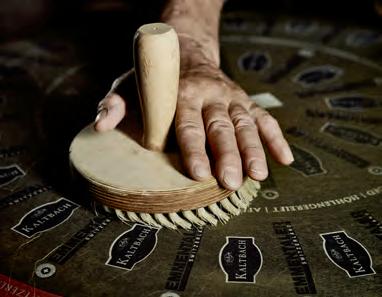
Back in the sandstone caves of Switzerland, Ziswiler is demonstrating how 35kg wheels of Kaltbach Gruyère are brushed and turned to encourage the striking dark grey rind. “We wash with brine and then dry brush,” he says. “This dark rind is completely natural. The rock releases moisture when needed and absorbs it when there is too much, which helps the natural rind to develop. There are unique moulds and microbes in the Kaltbach caves. Our job is to make sure they have everything they need to grow.”
emmi-kaltbach.com
The rock releases moisture when needed and absorbs it when there is too much, which helps the natural rind to develop.
CROSS SECTION
Kaltbach Creamy
1
Kaltbach Creamy is the best-selling cheese in the Kaltbach range in the UK. An Alpine cheese, it is made with pasteurised cow’s milk, which is enriched with double cream, before being aged for around four months in the caves. The cheese comes in 4kg wheels, as well as newly launched 170g prepack wedges.
2
Kaltbach cheeses are made by local dairies, some of which produce just a dozen or so wheels a day. Batches are tested for quality, with only those scoring 19 out of 20 accepted for maturation in the caves. Kaltbach means ‘cold river’ in German and references an underground stream that runs through the caves and helps keep humidity high.
Kaltbach Creamy has a firm but fudgey texture and, for a relatively young cheese, has a surprisingly complex flavour with clotted cream notes, but also floral and fruity nuances, plus a savoury finish.
3
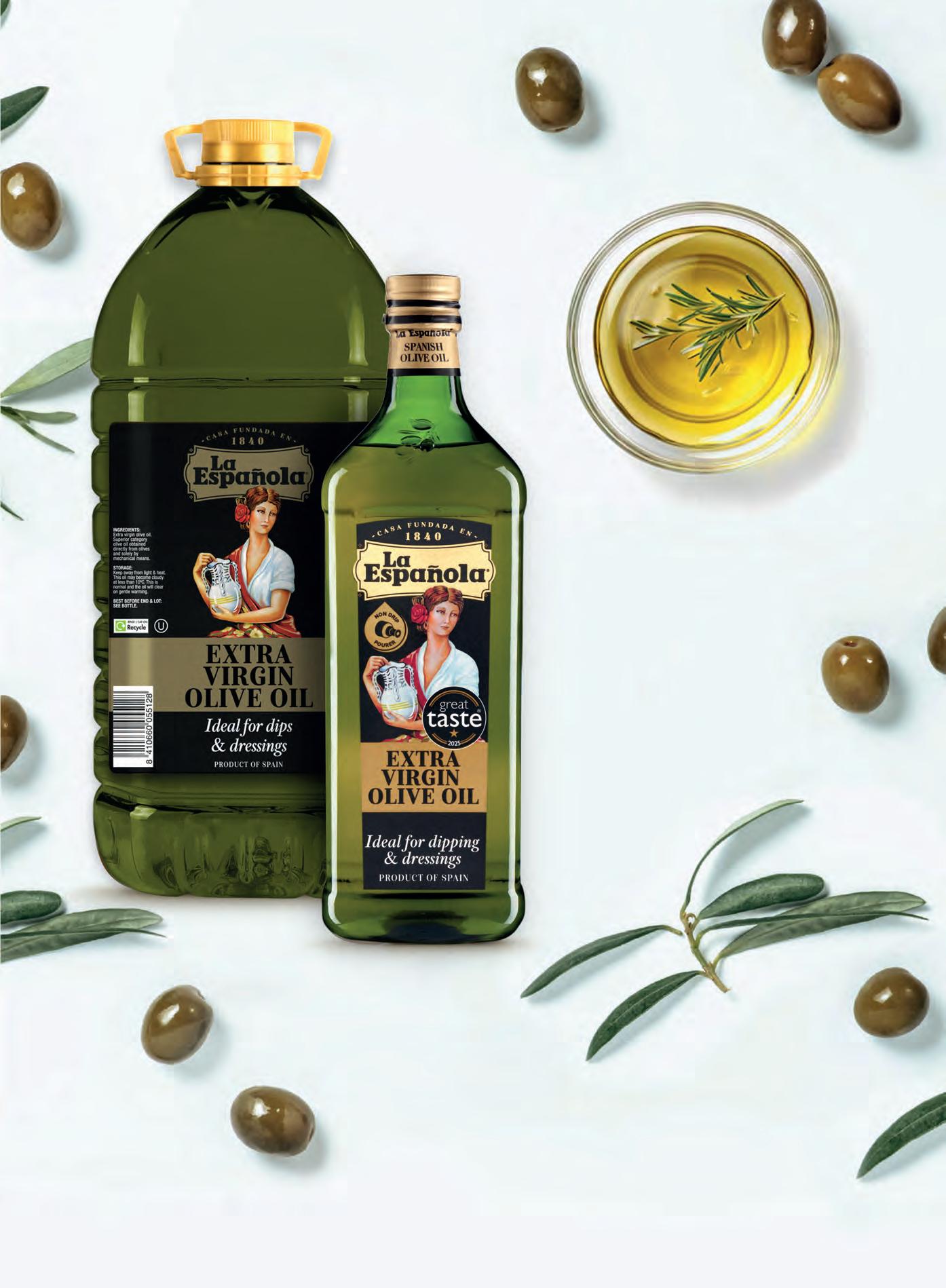
La Española Extra Virgin Olive Oil is crafted from carefully selected Spanish olives and recognised with a Great Taste Award for its exceptional quality.
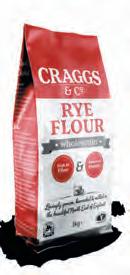
Our award-winning flour is produced from the finest ancient grains which are sustainably grown in the beautiful British countryside. Our entire range carry the highly sought after Great Taste 2 and 3 star awards, in recognition of outstanding quality and flavour.
Available in 1kg and 20kg bags. Minimum order 2 boxes of 10 × 1 kg bags. No delivery charges. Call or email today for a trade price list
BOLLE hopes to entice Chablis lovers with alcohol-free AOP Burgundy
By Tanwen Dawn-Hiscox leading R&D at Reckitt, Mars Chocolate and Lucozade.
BOLLE claims to have developed a world-first in alcohol-free wines by introducing a 0.5% ABV twice-fermented, leesaged white AOP Burgundy to its range. The company, established in 2021, has a portfolio of five wines that are de-alcoholised using a patented method before being refermented with grape juice from the same variety and region. It says this preserves the texture and aroma of wine without adding flavours, aromas, glycerine or sugar.
Targeting wine lovers, alcohol-free sceptics and those seeking to moderate consumption, BOLLE is a collaboration between ex-tech professional Gary Read (now BOLLE’s CEO) and Roberto Vanin, whose previous roles include
The range includes a Sparkling Rosé, Blanc de Blancs and Chardonnay Reserve (AOP Burgundy) (all RRP £24.99), a Chardonnay (RRP £19.99) and a Blanc de Blancs Grand Reserve (RRP £49.99).
Italian-born Vanin came up with the method to make the wine, he tells FFD, to meet his own purposes. “I wanted to do Dry January, but it was a nightmare. I don’t want to drink sickly sweet drinks. The solutions offered were awful. So I said, ‘okay, let me use science to solve this’.” Gary Read says BOLLE’s process of second fermentation, protected partly by patent and partly by trade secret, is what sets it apart. “What a lot of brands do in this space is they take a basic wine and they de-alcoholise
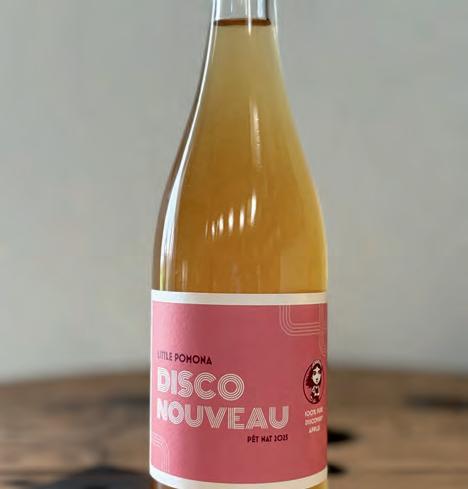
Little Pomona’s Disco Nouveau – an early release from the 2025 harvest and the Hereford cidermaker’s playful answer to the Beaujolais Nouveau wines of France – is available now. It is made with Discovery apples, known for their vibrant strawberry and citrus flavours and for early ripening. Thanks to last year’s clement spring and hot summer, the harvest yielded ripe, juicy fruit, and the resulting cider is described as fresh and lightly sweet. It is said to be a crowd pleaser and a great food companion, particularly with spicy dishes and street food. Available in 750ml bottles and 20L KeyKegs directly from Little Pomona, via The Fine Cider Company, Les Caves de Pyrène, Pig’s Ears or Eebria Trade. RRP £12/75cl bottle. littlepomona.com
it, and that’s where they stop. And in a way, that’s where we start.”
The latest release is intended to be Chablislike, with notes of citrus, green apple and subtle hazelnut, and a clean mineral finish. Meanwhile, the Grand Reserve Blanc de Blancs sparkling is made in the Crémant style, using grapes from La Mancha in Spain, and is also aged on lees – the dead yeast cells left after fermentation – which provide bread, brioche and nutty notes while adding texture to wine. The company is currently exploring the possibility of making red wines, identifying potential production locations in California and Australia. Take-up in fine dining restaurants has been strong – including a deal with a French hotel – and
independents are a prime target for the wines.
“We’re not in any supermarkets and we don’t intend to be in any. It’s really not our route to market,” says Read. “You’ll find us in Highbury Vintners, or General
Stores up in Manchester, or Shepherd Foods, or Corks and Cans in Bristol. Beautiful, appropriate delis, food and wine stores, or wine merchants themselves.” bolledrinks.co.uk
DREAMSAKE wants to democratise sake drinking in the UK
All retailers should consider stocking a bottle of premium Daiginjo sake, according to London brand DREAMSAKE. Founded last year, the sister company of RTD sake spritz brand Shima wants to demystify the category for food-loving consumers.
After living in New York, where sake consumption is high, Matt Brunault, Adam Leven and Hector Butler were surprised to see it so hard to come by in London. “Niche Japanese food is proliferating [in the UK]; there are countless robata places, even okonomiyaki places – but sake had been left behind,” Brunault tells FFD
Hot off listings in M&S and Whole Foods
Market, the brand is positioning the particular style of the fermented rice drink – though higher in umami and lower in acidity than wine – as a versatile food pairing, with a similar ABV to wine at 15.5%.
Made in Hyōgo, Japan, the Daiginjo style refers to the polishing grade of the rice, where at least 50% of
the outer grain must be ground down, resulting in a smooth, aromatic, lightbodied sake.
Bottling in the UK means the company can keep costs down while maintaining quality.
“We like to give new customers that first wineadjacent experience in a way that’s approachable,” Brunault says.
Best served chilled in a wine glass, offering notes of melon, honey and grapefruit zest, the style is said to pair well not only with food traditionally associated with Japan – sushi, ramen and cured fish – but with a wide range of dishes.
“You can literally pair it with anything apart from maybe something super spicy, or a curry,” he adds. RRP £27/75cl. dreamsake.co
DRINKS Tipple in your booch
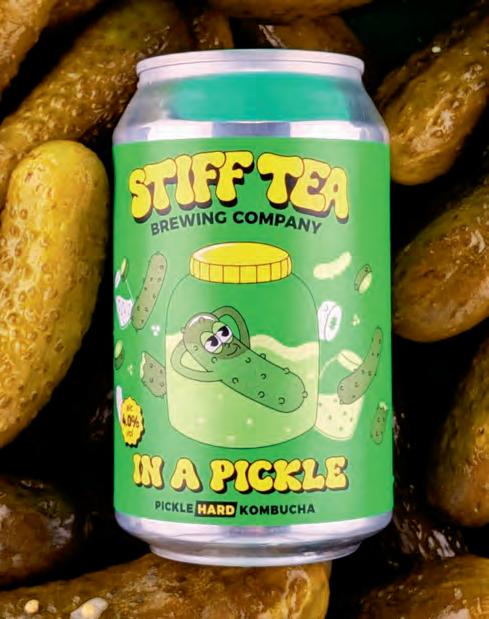
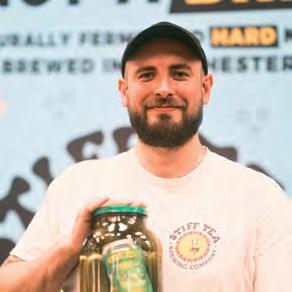
Ambitious young brewer Zach Taylor, founder of Stiff Tea Brewing Company, is making kombucha and refermenting it into a 5% ABV drink he says is fun, flavoursome, and perfect for sipping over messy finger food.
By Tanwen Dawn-Hiscox
It wasn’t so long ago that to say the word kombucha would require following up with a lengthy explanation of what it is and how it is made. A conversation would probably ensue about the benefits of fermentation for the gut microbiome.
Why then, you might ask, would someone create a whole new category of drink, borrowing the base recipe for kombucha and refermenting it to 5% ABV –then flavouring it as one might a lambic or a sour beer?
Because, Stiff Tea Brewing Company founder, ex-beer and kombucha pro Zach Taylor says, the result of his tinkering is a delicious, novel category of drink worthy of existing in its own right.
Taylor’s journey to this point started while he was studying philosophy at university. A student job in a craft beer bar opened his eyes to the wonders of artisanal drinks and production, he undertook a Masters in Brewing and Distilling, specialising in mixed and alternative fermentations.
He then moved to Manchester, where he joined the team at Blackjack Brewery, a respectable, if traditional operation where he became quality control manager.
Having tried kombucha at university and not thinking much of it, he tells FFD, “I didn’t want to brew beer at work and at home – but I needed something
to scratch the itch of brewing something a bit different”.
During Covid, the owners of Booch & Brew (now Hip Pop), who were in distribution talks with Blackjack, ran into production issues. Because he had shared so many of his home brews with colleagues, “my boss put me forward as the guy who makes kombucha – so they hired me for a three-month consultancy”.
Taylor eventually joined Hip Pop full-time as production manager. “That was the start of three years of craziness,” he jokes, during which the company went through a rebrand, landed listings in major retail and abroad, and scaled rapidly.
By late 2023, he had worked across the whole operation, and finally decided to develop an idea that had been niggling at him for a few years. And so he got to work, and in October 2024, he launched Stiff Tea.
In many ways akin to a sour beer, hard kombucha is made by
I needed something to scratch the itch of brewing something a bit different
Zach Taylor, Stiff Tea Kombucha
and kombucha are there, Taylor is emphatic that he does not want to sell it as “healthy alcohol”.
“I don’t want to talk about polyphenols and organic acids and blood pressure – that would be disingenuous,” he says.
“If you’re going to make the choice to drink, there are worse things you can drink, but I’m not going to put numbers to that.”
Stiff Tea, with its core range of In A Pickle, Raspberry Blower, and the popular US drinkinspired Grapple Soda, is suited to different occasions.
“If you’re having a good time and good food with your friends, that’s where we’ll be,” Taylor says.
refermenting a traditional base with Champagne yeast, then flavouring it with things like fruit, hops, or in the case of bestselling ‘In A Pickle’, dill-infused pickle juice.
“So I’m doing all the work of a kombucha brewery and all the work of a beer brewery – which is quite intense, but also a moat around the business,” Taylor says.
The rather tricky nature of the production process, he believes, is also what gives the drink positive attributes, namely its deep flavour and complexity. He can control how sour it is by using more or less SCOBY starter, and how strong it is with how much sugar he adds.
Rival ‘hard kombucha’ brands use a Canadian kombucha concentrate called Manna-K, using a grain neutral spirit, adding probiotic bacteria and natural flavourings, he explains, but the result tastes completely different.
And although the production process parallels between Stiff Tea
The In A Pickle flavour, he believes, has been most successful because the name suggests a food pairing and a specific mood: “Are you eating some chicken wings? Are you eating some burgers? You’re eating food with your hands and you’ve smeared it around your mouth – that’s where we want to be.”
Taylor has so far focused on the on-trade, as the drinks have proved well-suited to craft beer bars and urban food and drink outlets. But with a handful of listings in indies like Superette, B2B availability on Sellar.io (accessible via the Bit.ly link below) and plans to launch with a fine food wholesaler in May, Taylor is building outwards from his “concentric circle”.
Part of this will involve relocating from Manchester to London. “That will be my middle point now, to grow from there into a national brand”.
And while it could take a while for the concept of ‘hard kombucha’ to trickle down into mass awareness, “I think this brand should be recognised as the benchmark,” he says.
As for new products, there are many things he would like to do, including building his own brewery again, and making a more refined range to sell in 750ml Champagne bottles, “putting my starter in wine barrels, using some interesting teas”, he says.
Just like in beer, “you need to have a core range that sells, to pay for the interesting stuff that is slower moving”, he adds, but that is still the plan. So if you thought pickle kombucha was interesting, you might consider watching this space.
stifftea.com
bit.ly/4buSWoT
2 STAR GREAT TASTE WINNER
Azores quality skipjack tuna fillets in olive oil
"LIGHT AND DELICATE"
"THE FISH MELTS IN THE MOUTH"
"DELICIOUS" "SATISFYING"
"THE IN THE DELICIOUS" SATISFYING"
"THE PROVENANCE IS COMMENDABLE"
"MOUTH WATERING"
"THE QUALITY OF OF THE FISH"
"A VISUAL
"THE OF THE OIL ELEVATES THE FLAVOUR OF THE FISH" "A
MASTERPIECE"
"THIS HAD THE JUDGES EXCITED"
Bring on the plants
The excitement around some products in the plantbased category may have dulled as concerns about ultra-processed and interest in gut health has increased. But now a host of producers has entered the fold offering something better.
By Tanwen Dawn-Hiscox
It’s 2026. Big plant-based meat brands are losing revenue, and patents to create new ones are in decline. The bleeding beetroot burger has lost its public appeal.
Even back in the 2010s, when the rise of fake meats was massive, AJ Sharp, of the eponymous PR agency, was dubious. She tells FFD: “One of the things that concerned me then, before we had the widely accepted terminology of UPF, was ‘how are they creating this food, and is it nutritionally appropriate for the human body?’”
She recalls a talk by chef Bo Friederiksen in Copenhagen, who said that while meat delivers flavour easily, creating “green” umami from plants
It’s all about using vegetables, not just being plant-based. We are actually plants.
ALAN WOGAN co-founder, Symplicity
requires real skill, often through fermentation, something Sharp recognises in a new wave of plant-based producers.
Celebrated chef Neil Rankin, the owner of nose-to-tail meat-focused restaurants Temper and Pitt Cue Co., set out to do just that, experimenting with vegetable fermentation and settling on a lacto-ferment of beetroots, onions and mushrooms to make a natural, plant-based mince.
“And of course, as a chef, it was all about flavour first,” explains Alan Wogan, the co-founder of the resulting brand, Symplicity Foods. Alan and his brother Mark Wogan set about developing recipes with Rankin during the Covid lockdowns. On launching Symplicity, they quickly found traction with chefs including Gordon Ramsay and Tom Kerridge, before expanding into wholesale and retail. Waitrose recently introduced a retail range of Symplicity sausages, burgers and ‘nduja, and at the time of writing, the brand was in talks with several independent owners, a distributor in the speciality food market, as well as an organic food chain.
Scaling isn’t an issue for Symplicity, nor is it likely to make it reevaluate its principles,
Wogan says, “unless there’s a shortage of mushrooms”. He believes that it will succeed where others have failed, because “people had a disappointing experience when they ate something plantbased”.
“We’re changing the direction of where this type of food manufacturing has gone – where people have tried to find shortcuts for things by using chemicals or emulsifiers. With our product, we can get the flavour and texture we want without adding anything not to be found in the home kitchen.”
Having spent time working on the brand for the Waitrose launch, Wogan says they decided what would resonate with consumers was the mantra, ‘crafted for flavour, created from vegetables’. “It’s all about using vegetables,” he adds, “not just being plant-based. We are actually plants.”
Fermented nut product brand Nettle Foods
PLANT-BASED
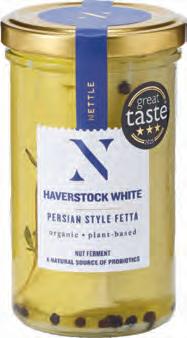
follows similar principles. Although some of its lines resemble cheese, its plant-based products are not designed to mimic cheese, but to deliver a savoury, umami addition to dishes where meat or dairy might otherwise be used.
An experience at a sandwich shop, founder Nina-Rose Hubbard tells FFD, informed what Nettle Foods explicity wanted not to do with its products: “Back then, it was almost impossible to get a healthy high-street, plant-based option.
“I had a vegan toastie which could have been so delicious, made with roasted vegetables – only then it had this horrific claggy, coconut oil cheese that coated everything.”
All is well that ends well, as that same shop now uses Nettle Foods’ preserved lemon dill and sumac chilli mint ferments. “And the idea that people don’t even know that it’s fermented or using whole ingredients – that was a full circle moment,” she says, because at the end of the day, when making these foods, “you should be leading with pleasure”.
“That is the edge of the UPF world. It has food filled with fat and sugar and emulsifiers and ingredients that have been designed to improve mouthfeel”.
“So if you’re trying to compete on any level
One of the things that concerned me before we had the widely accepted terminology of UPF, was whether this food was nutritionally appropriate human
AJ SHARP, Sharp Relations
with worthiness or saying that this is good for you, I don’t think you stand a chance – not even with the environmental argument. The only relevant thing is taste.”
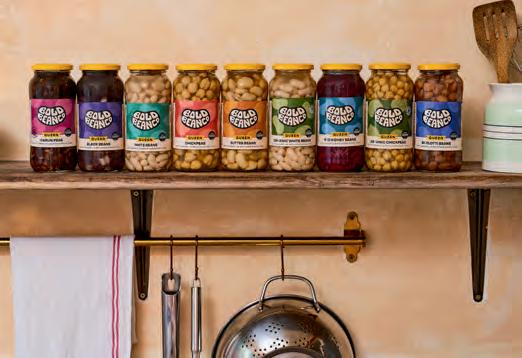
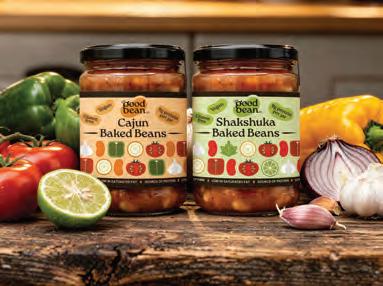
This is a priority for a brand widely recognised as a champion of the modern plant-based movement, Bold Bean Co., too. The premium jarred bean brand only launched in 2021, but has been wildly successful. It sold around five million jars of ‘Queen’ Beans in 2025, and is stocked in all major UK retailers – as well as having a significant presence in independents. Beth Latham, category lead at the company, explains that Bold Bean Co. struck a chord because it landed when the public was shifting from imitation meat to scratch cooking, where beans are the main event rather than a replacement.
While in the 2010s, the conditions were ideal for plant-based cooking to boom, later, “the entire sector was exposed when UPF moved to the centre of the conversation”.
However, she adds, “the success of the premium pulses category reflects something bigger than a reaction to the UPF moment. Yes, they’re perfectly natural. But they’re also high in fibre, cost-effective, and, when you source for quality, genuinely delicious. They also offer a relatively low-cost way to build meals around whole ingredients,” she adds.
Sharp concurs that the shift shows something bigger than a rejection of UPF.
“Home cooks are upskilling and learning how to cook better plant-rich meals, how to get that depth of flavour and how to ferment things, creating complexity with simple plants and grains. The fact that that kind of food is better for the gut microbiome is a bonus.”
That said, brands like Bold Bean Co. don’t discount the modern cook’s desire for convenience.
“Not every night is a scratch cooking night,” Latham says.
“That’s exactly why we launched our gourmet Baked Beans - for when people want something quick that still delivers on quality and natural ingredients.”
It’s hard to talk about how diets are evolving without mentioning the uptake in GLP-1 weight loss drugs and the knock-on effects on people’s diets. Sharp is hopeful that it will encourage people more widely to eat nutritious, plant-rich foods – and be a further nail in the coffin for ultra-processed foods.
If you’re trying to compete on any level with worthiness or saying that this is good for you, I don’t think you stand a chance. The only relevant thing is taste.
NINA-ROSE HUBBARD, co-founder, Nettle Foods
What this raft of changes means for retailers is illustrated by where the new wave of producers want to sit on the shelves – often rejecting the idea of a plant-based aisle altogether.
Waitrose has currently placed Symplicity products in that section, but, Wogan says, “I want to get out of it as soon as possible, and to be seen as an ingredient.”
“We’ve oscillated on this a lot,” Hubbard says, as the ‘plant-based’ and ‘fermented’ dropdowns on web shops are useful to help customers find them. “But in an ideal world, you would have plant-based foods on the shelves alongside their meat and dairy counterparts.”
This momentum, for Symplicity, Nettle Foods, Bold Bean Co., and brands of their ilk, reflects a shift in perception in what plant-based is.
“The majority of people taking GLP-1s are females, and often the cook and the decision maker for the food of an entire household, which means it actually has consequences for an entire family,” she says.
“And the impact of that is that you’re not craving junk foods, you’re looking for more whole grain, natural foods made with real ingredients.”
“It’s funny because we call it reimagining plant-based, but actually I think it’s returning to something,” Hubbard concludes. “Undoing what processing had done, and achieving good flavour, texture and nutritional value with whole ingredients.”
sharprelations.com
symplicityfoods.com
nettlefoods.co.uk
boldbeanco.com
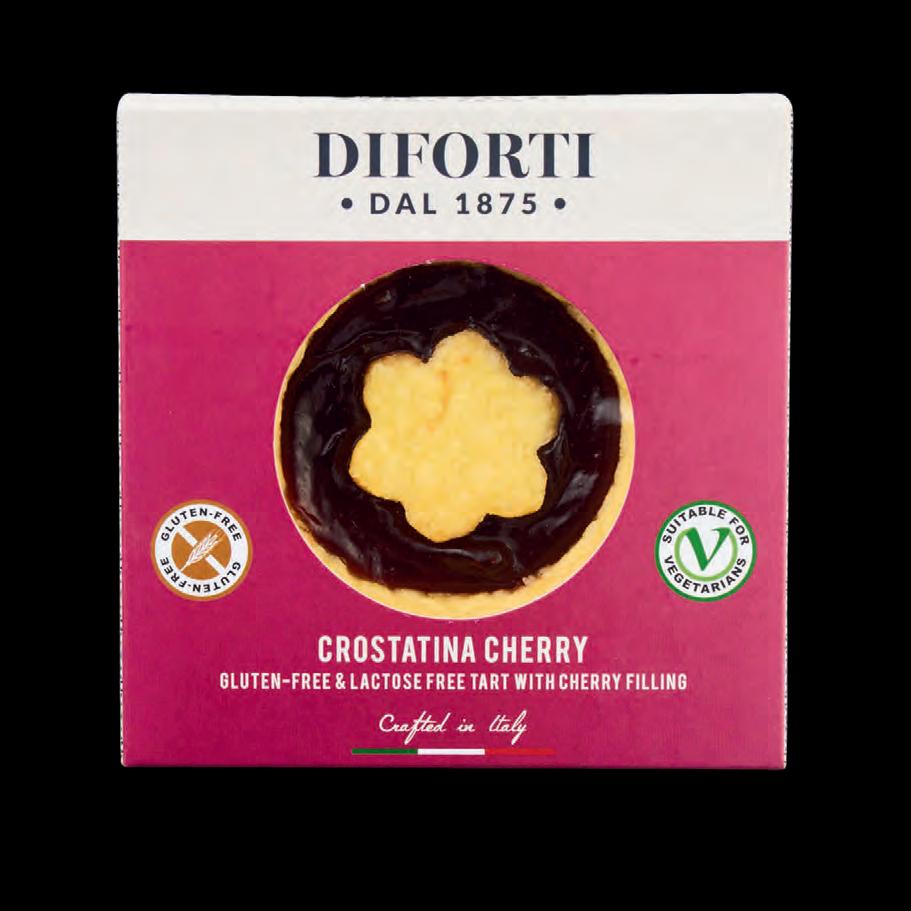
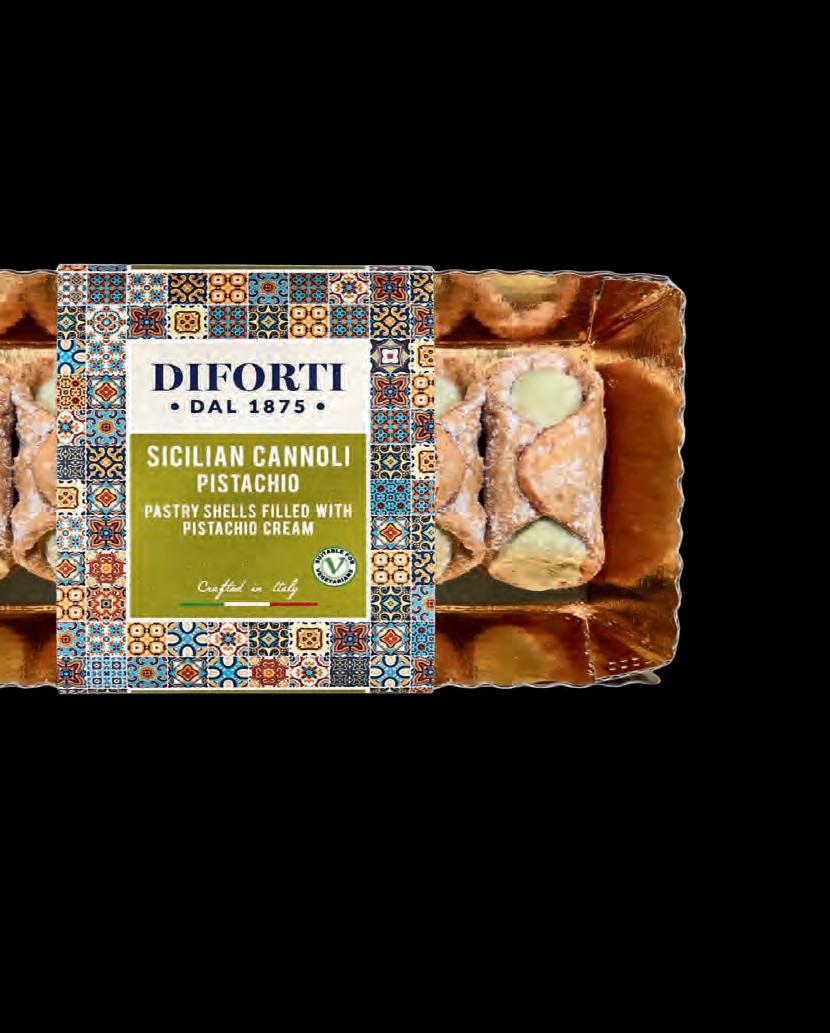
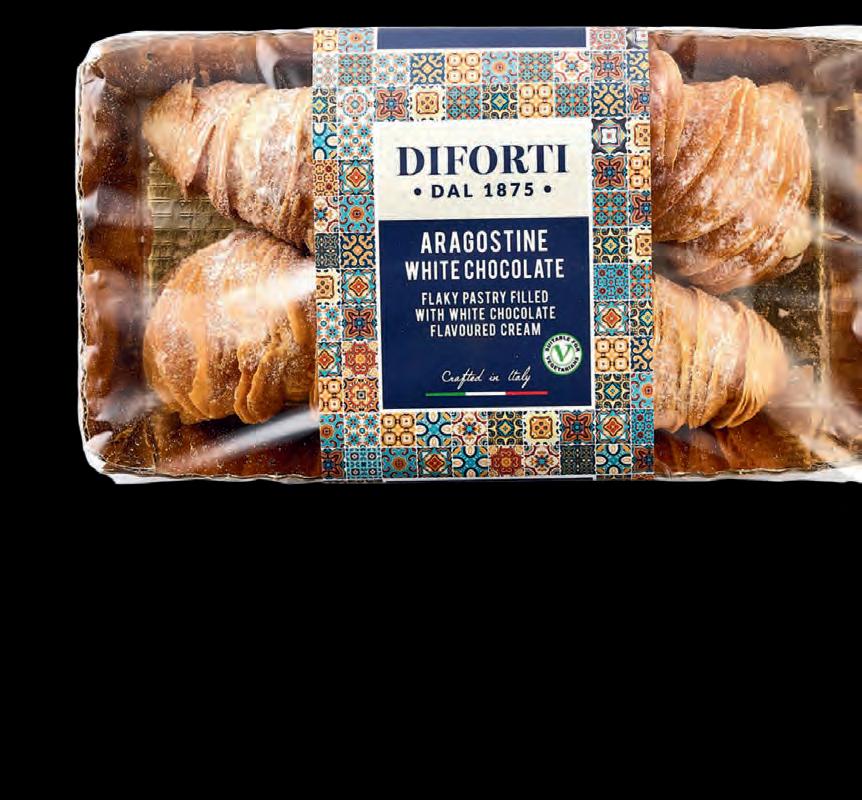
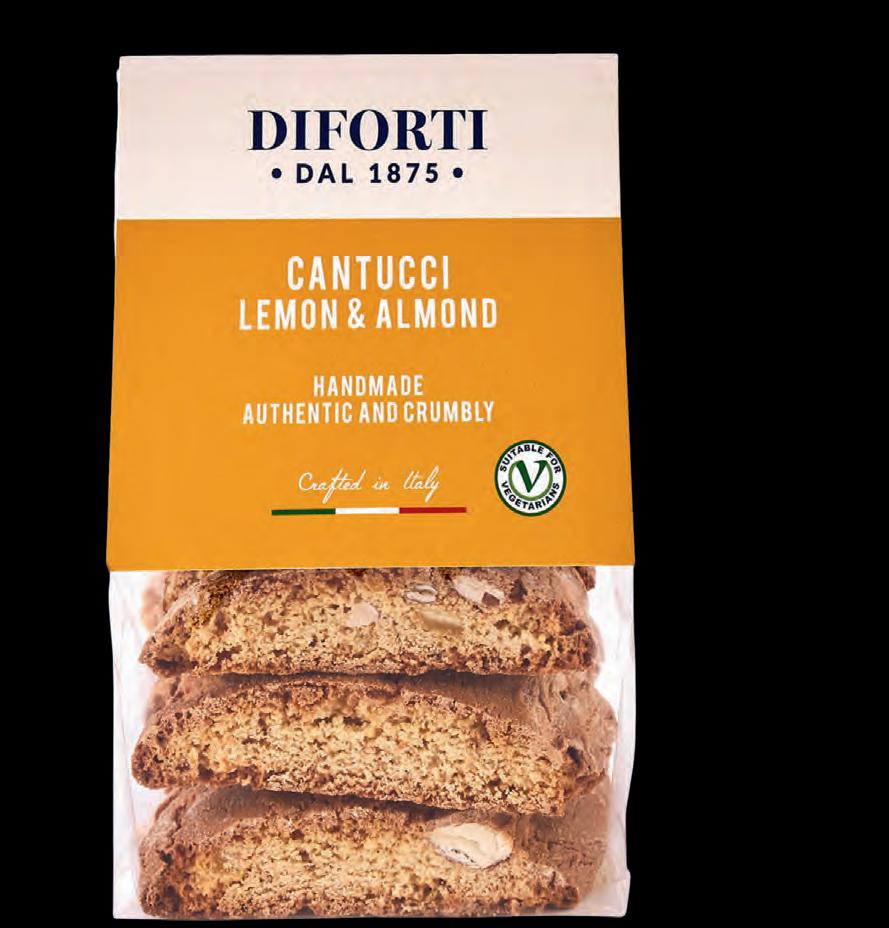
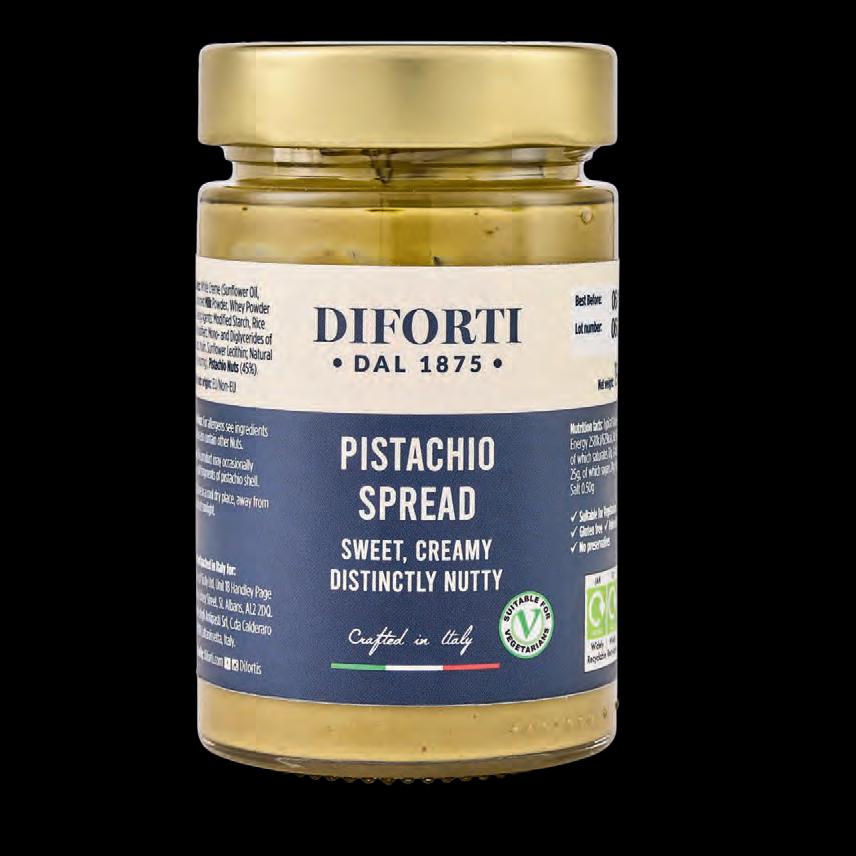
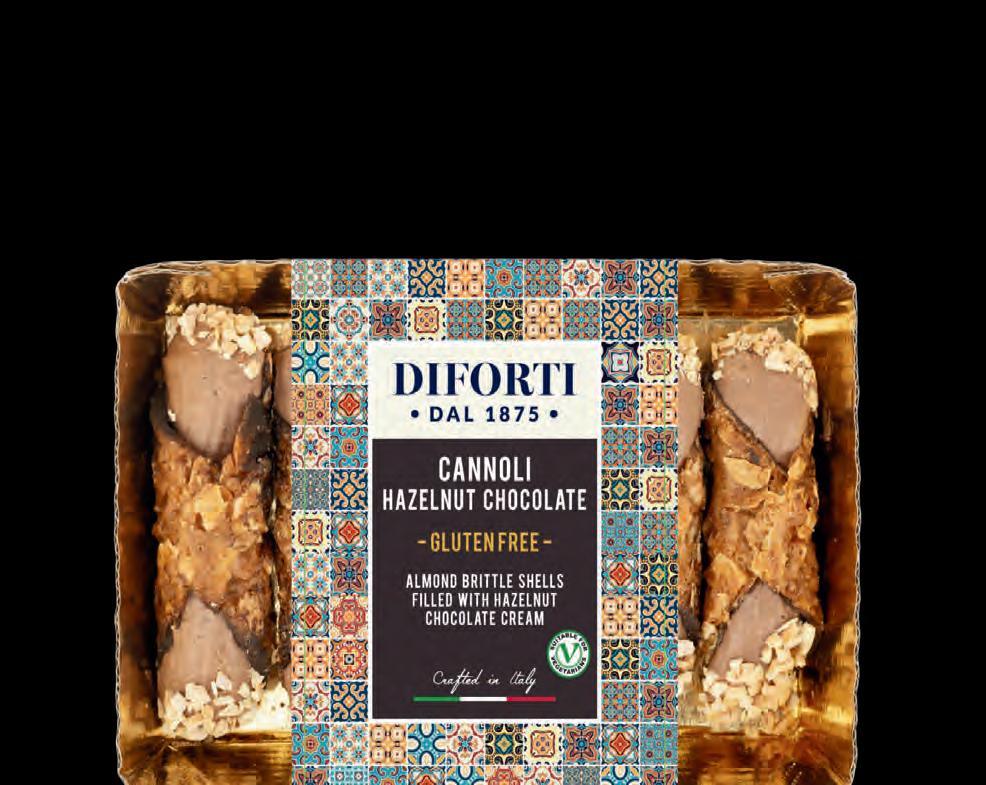
Your Premium Italian Choice
Discover the true taste of Italy with our handcrafted, authentic pastries—made with passion, tradition, and the finest ingredients.
Made from the best, authentic ingredients since 1875.
in Follow the Story @Difortis
Table & chairs out time
If summer is kind to us, it is synonymous with al fresco dining, well-dressed salads, barbecues and bowls of ice cream piled high. Refresh your offer and your customers with our round-up of new products across sauces, dressings and marinades, oils and vinegars, and the all-important gelatos, sorbets and ice cream.
Compiled by Lynda Searby
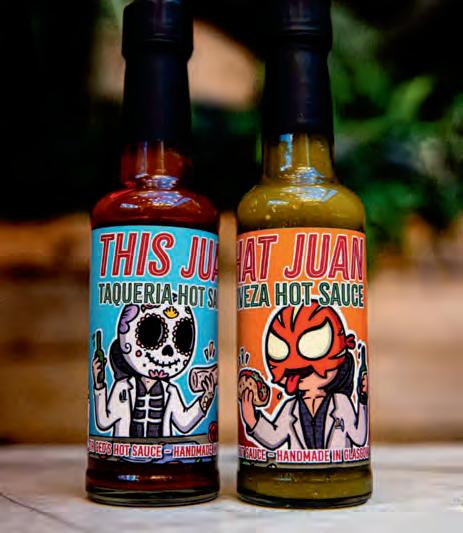
Courtesy of Glasgow hot sauce maker Dr Ged’s, there is a new Mexican double act on the scene. This Juan and That Juan launched in February, giving lovers of tacos, burritos, quesadillas, tostadas and nachos, not one, but two sauces to liven up their meals. This Juan is a mild taqueria sauce, with flavours coming from chilli de arbol, guajillo and tomatoes. That Juan is a green, medium heat sauce made with jalapenos and Mexican tomatillos with some cerveza in the mix. WSP £4/150ml; RRP £7. drgeds.co.uk
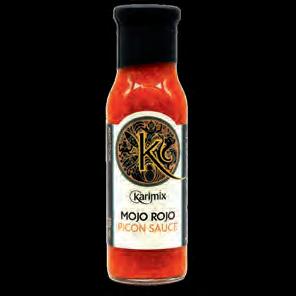
Retailers wanting to stay ahead of the curve on global flavour trends should check out Karimix’s new sauce line-up, which includes the UK’s first Canarian mojo sauce. Bold, smoky and piquant, Mojo Rico Picon Sauce is based on chilli peppers and sweet red peppers. It sits alongside other on-trend SKUs such as Korean Galbi Marinade, Gochujang BBQ Sauce and Swicy Pineapple Glaze. RRP £5.95/250ml. karimix.com
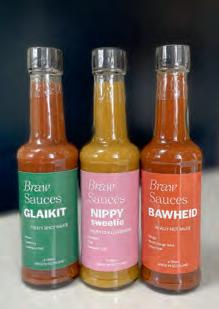
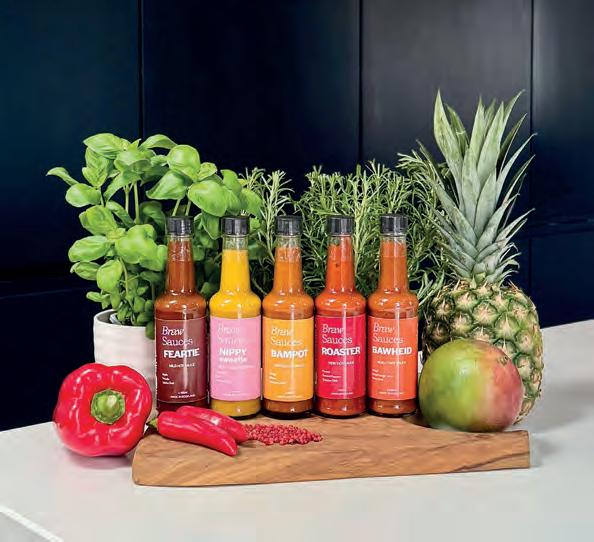
There is no mistaking the origin of Braw’s sauces, whose names are derived from Scottish slang. In the past year, the Borders-based family business has brought three new sauces to the table: Nippy Sweetie - a pineapple-forward hot sauce-dressing hybrid; Glaikit – a herby ketchup with chilli warmth; and Bawheid –Braw’s hottest sauce to date. WSP £3.95/155ml; RRP £6.50£6.95. brawsauces.co.uk
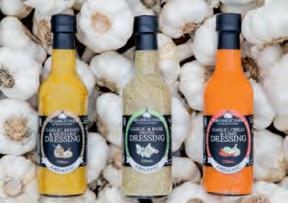
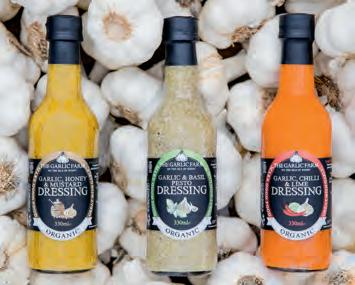
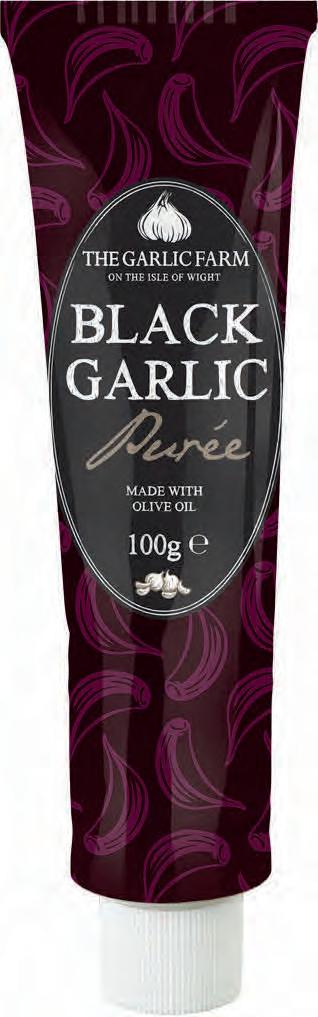
As part of its strategy to transition all of its products to organic, The Garlic Farm has unveiled a trio of organic dressings. Garlic, Honey & Mustard is said to be sweet and tangy with a garlic twist; Garlic & Basil Pesto is an aromatic, creamy dressing for chicken, pasta and greens; and Garlic, Chilli & Lime lends a punchy kick to pasta, salad or fish. RRP £7.95/330ml. thegarlicfarm.co.uk
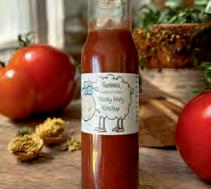
Co. Louth producer Tastees says Bloody Mary Ketchup has become its bestselling product following its launch last year. Inspired by the bold, savoury flavours of the classic cocktail, it blends tomatoes with celery salt, lemon juice, Worcestershire sauce and spices. RRP £5.90/250g. Wholesale discount 25%. tastees.sumupstore.com
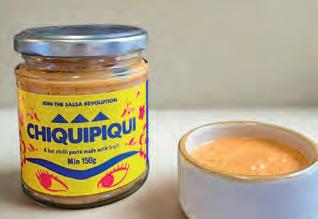
Casazul has added Chiquipiqui Salsa to its retail range, giving Mexican food fans a new hot and fruity topping option for their tacos. The family business, which has been serving up tacos at the Brighton Open Market since 2019, has so far bottled seven of its salsas, including Salsa Chipotle, Salsa Botanera, Salsa Macha and Salsa Cascabel. WSP £6.50/150g; RRP £8.20. casazul.co.uk
GingerBeard’s Preserves’ latest invention – Jerk Rum BBQ Sauce – is the result of a collaboration with Bristol rum brand We Are Curious Creatures. A marriage of sweet, smoky BBQ and jerk spice, the limited-edition sauce is said to be “full of bold island vibes” from the spiced rum. WSP £3.91/270g; RRP £6.50. gingerbeardspreserves.co.uk
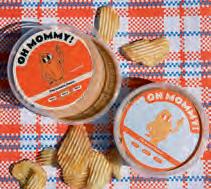
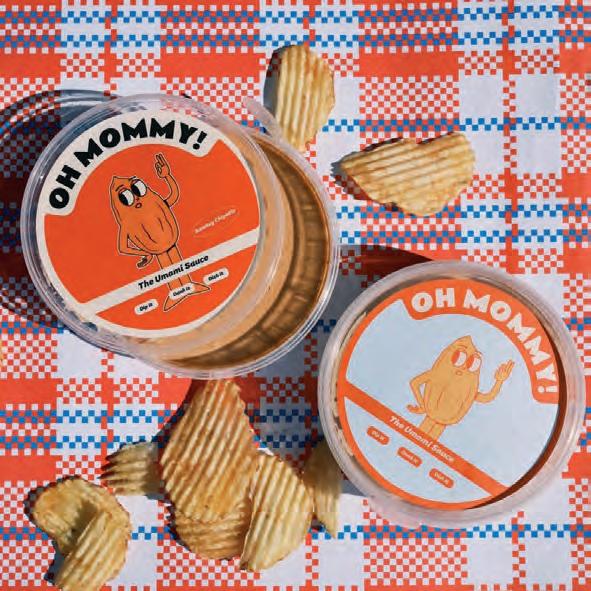
OH MOMMY! is bringing an “almond-based, vegan, all-natural umami bomb” to the dipping space. Available in two variants, The Original and Smokey Chipotle, the dipping sauce has been snapped up by Eat 17 and Superette. WSP £2.70/220g; RRP £4.50. instagram.com/ohmommy_ sauce
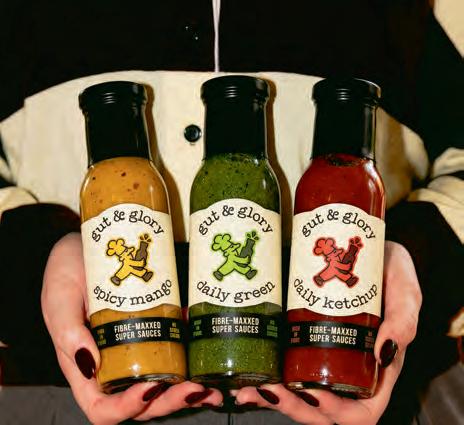
For years nutritionists and health experts have been telling us to incorporate more fibre into our daily diets, but with the ‘fibre-maxxing’ trend sweeping TikTok, eating fibre has suddenly become fashionable.
Tapping into this fibre fever is Gut & Glory, a new gut health brand making its debut with a trio of fibre-maxxed ‘super sauces’.
Made with fruit, vegetables, herbs, spices and chicory root fibre, the sauces contain no added sugar or artificial ingredients.
“The vast array of condiments in the nation’s fridges is overwhelmingly packed with sugar, salt and additives, while 96% of the UK population doesn’t get its RDA of fibre. We’re tackling both problems in one with our sugar-free, fibre-maxxed super sauces, which are packed with plant goodness and contain 25% of your fibre RDA in just two dollops,” said the company’s founder, Toby Morris.
There are three varieties: Daily Green, Daily Ketchup and Spicy Mango. WSP £3/265g; RRP £5.99. gutandglory.co
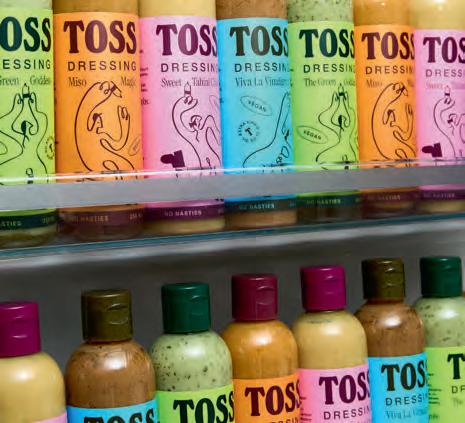
The salad dressing category is undergoing a reinvention led by a vanguard of design-led brands that are breaking out of the traditional glass bottle mould. The latest entrant is TOSS, which is pitched as “your everyday squeeze, to be used daily, not occasionally”. Not just for salads, TOSS is designed to move easily across wraps, noodles and marinades. The brand says it is bringing fresh energy and flavour innovation to the dressings aisle with its five SKUs: Green Goddess, Miso Magic, King Caesar, Viva La Vinaigrette and Sweet Tahini. TOSS is listed with Corner Shop, Panzer’s, BENS, Eat 17, Superette and Selfridges, and available to the trade via Mahalo. WSP £3.80/250ml; RRP £6.50. toss-world.com
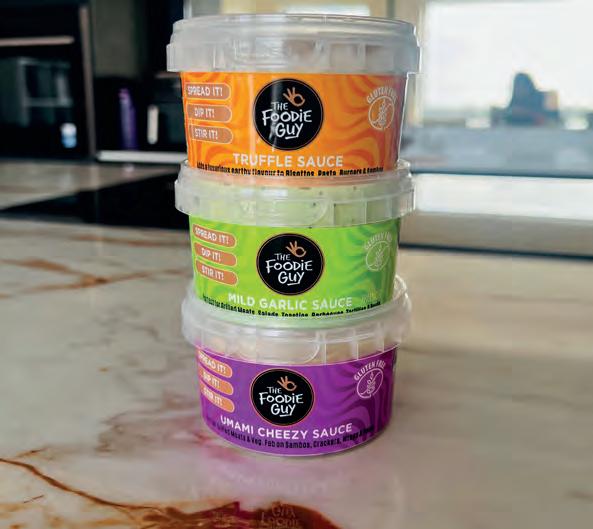
There is growing demand for multiuse products that avoid fridge waste, and this trio of fresh sauces from The Foodie Guy in Co. Meath is a great example. Bringing ontrend flavours such as umami and guasacaca to the chilled dip space, they can also be stirred into pasta, or used as a condiment for burgers and wraps. WSP €3.52/180g; RRP €4.70. asorflavors@gmail.com
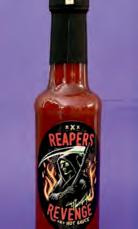
Newcomer Ledders Sauce Company is hoping flavour will be a differentiator in the crowded hot sauce category as it launches its inaugural products. Ledders Extreme scotch bonnet sauce and Reapers Revenge XXX both have a high (80%) chilli content and are said to contain far less vinegar and water than most hot sauces. RRP £7-8/150ml. ledders.co.uk
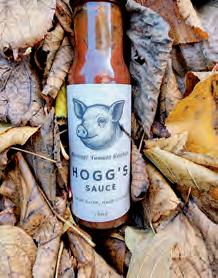
Hogg’s is a newcomer to the scene, bringing a trio of sauces that feature the family pig on the label and reflect founder Caleb Hogg’s first-hand experiences. Heritage Tomato Ketchup (RRP £5.50/280g) uses an old family recipe; Zesty Granny (RRP £4.99/145ml) blends apples, jalapeño and lime; and Banana Bonnie Blaze delivers Caribbean flavours from a banana base (RRP £4.99/145ml). eathoggs.co.uk
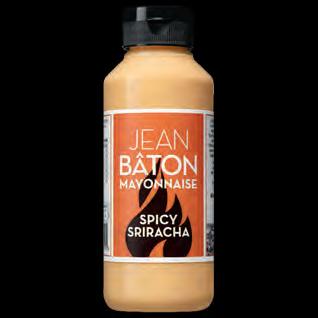
Dutch mayonnaise brand Jean Bâton has launched two new lines. Made with 80% oil, free-range egg yolk, mustard and vinegar, Belgian Recipe emulates the mayo served in Belgian fry shops; while Spicy Sriracha Mayonnaise is a smooth, spicy, bold blend of mayo and sriracha chilli. Jean Bâton is listed with Ocado and Abel & Cole in the UK. jeanbaton.nl
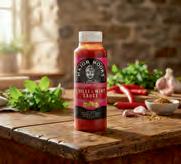
This chilli mint condiment is inspired by founder Imran Mirza’s grandad, who missed the chilli sauces of his homeland while serving in the British Indian Army in the second world war. A “vibrant, fresh-tasting blend of cooling mint and birds-eye chillis”, Major Noor’s Chilli & Mint Sauce is great with grilled meats, street food, samosas, flatbreads and salads. WSP £3.30/500ml; RRP £4.99.
majornoors.com
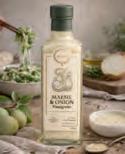
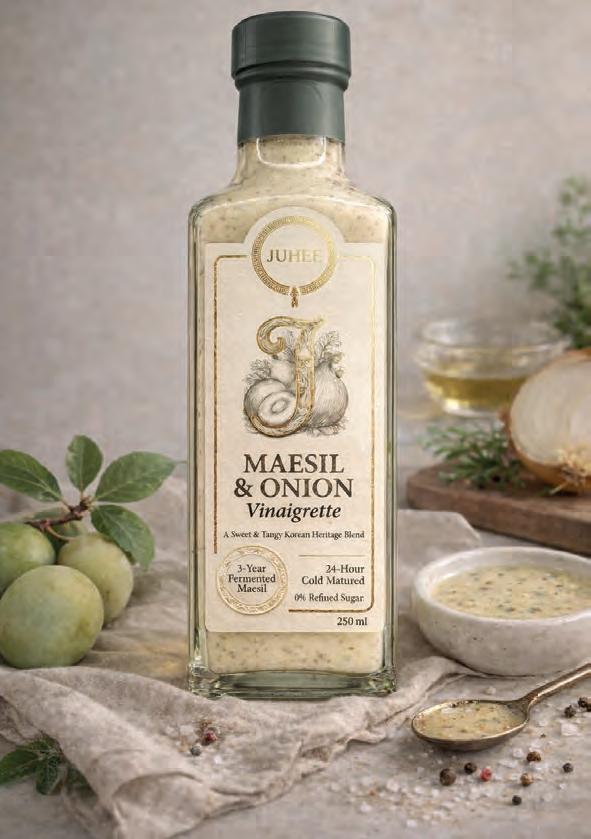
Fermented maesil (green plum extract) has been a pillar of Korea’s culinary and wellness heritage for centuries, and now JUHEE is bringing it to UK tables. The brand has paired it with fresh onion – a key ingredient in Korean soul food – EVOO, vinegar and parsley in a vinaigrette that is said to provide a “sophisticated lift” to salads, grilled vegetables and seafood. WSP £5.99/250ml; RRP £9.99. juhee.co.uk
Driven by growing consumer preference for olive oil and the shift away from seed oils, Olives Et Al is moving its entire dressings range to 100% extra virgin olive oil. The reformulated dressings will launch this month [April], complete with a new look. olivesetal.co.uk
Seasonings brand Angus & Oink has married peach tea with jalapeño chilli in a brush-on glaze that is designed to bring bold flavour to everything from pork tenderloin and wings to grilled vegetables. Son of a Peach Glaze has an RRP of £5.95/350g. angusandoink.com
Harrington Foods’ new owner
James Warwicker is on a mission to get Benenden Sauce “back out there again”. Handmade in Kent, this small-batch sauce has a sweet, gently garlicky flavour and a vibrant red colour. It works as a salad dressing, dipping sauce or finishing sauce. RRP £4.80/250ml. harringtonfoods.co.uk
Samantha Morgan, coowner of Drapers Lane Delicatessen
in
Leominster,
on how to approach these vast categories from a stock selection, pricing and merchandising perspective.
Start with a strong core
These categories sit at the heart of everyday cooking, so we focus on a strong core range of staples like olive oils, vinegars and dressings. Around that, we introduce more discovery-led products that bring interest and flavour to the shelf. We also merchandise them in a way that inspires cooking, grouping oils and vinegars for dressings, or positioning marinades and sauces as simple ways to elevate a meal.
We aim for margins in the 40-50% range, although that can vary. Some imported speciality items can be tighter, but they’re still important because they bring authenticity and credibility to the range.
Quality and authenticity cut through In such a crowded category, good retailing is really about curation. There are thousands of oils and sauces available, but our job is to select the products that truly deserve a place on the shelf. Quality is non-negotiable, but I’m always looking for new products and emerging brands that might not yet be widely stocked. Brand ethos is also important. I like working with producers who genuinely care about what they make and have a clear story behind the product. When that passion is there, it usually shows in the flavour and quality. Our role as a fine food retailer is to do the filtering for customers.
Still demand for good ol’ oil
Classic products consistently perform well, good extra virgin olive oil, proper balsamic vinegar and versatile sauces people can use every day. Where products tend to struggle is when they’re too niche or very single-use. Customers usually favour ingredients they can return to again and again.
Olive oil has become more expensive, but demand remains strong because people still see it as a kitchen essential. Customers are becoming more selective, they’d rather buy one really good olive oil than several average ones. At the same time, there’s growing curiosity around alternatives like rapeseed and other speciality oils.
Trends juxtapose adventure and authenticity There’s continued interest in provenance and authenticity, customers want to know where a product comes from and how it’s made. At the same time, there’s growing excitement around bold, globally inspired flavours, from chilli-based condiments to interesting marinades. Shoppers are becoming more adventurous, but they still value quality and simplicity.
Littleseed is claiming a first in the rapeseed oil category, packaging its product in a 94% recycled paper bottle. Said to have a carbon footprint that is six times lower than glass, the paper bottle extends the brand’s sustainability credentials beyond the product itself, which is made using regeneratively grown rapeseed. WSP £4.30/750ml; RRP £7.50. littleseed.co.uk
Vinegar Shed is carrying Il Tinello’s expanded range of balsamic and condimento vinegars. The brand, which was founded in 1970 by the Crotti family, has historically focused on producing balsamic vinegar of Reggio Emilia, but has recently extended its offer to include vinegarbased condiments such as Balsamic Glaze, Saba, Apple Vinegar and White Balsamic Condimento Balsamico – all available for nationwide distribution. vinegarshed.com
IN BRIEF
Goch & Co says this botanical vinegar meets growing demand for fruit-forward vinegars with cross-category versatility, by doubling up as a dressing and a shrub. Crafted in Wales from organic juneberries and dried hibiscus, it balances gentle tartness with floral depth. WSP £4.50/200m; RRP £8.95. gochandcompany.co
Sicilian olive oil producer Racalia says its 2025 harvest has scored highly on polyphenol count and fresh and fruity taste. The oil is a blend of native Sicilian olives – cerasuola, nocellara and biancolilla – from a family estate near Marsala in Western Sicily. In the UK, flagship stockists include Fortnum & Mason and Rhug Estate Farm Shop. WSP £13/500ml; RRP £18. racalia.com
Forgotten seed oil camelina is making a comeback thanks to a project in East Lothian, Scotland. Janefield cold-pressed camelina launched in autumn 2025, made exclusively from camelina grown on a family farm in Scotland. The oil has a fresh nutty flavour, high smoke point and high omega-3 content, making it suitable for drizzling and cooking. WSP £4.35/250ml; RRP £6.95. janefield.farm
After supplying its oil locally for generations, Libyan EVOO brand ÉNOIR is breaking into the UK market. The producer has created new packaging and a dedicated online store for the D2C launch, and says it is keen to expand into retail. Early Harvest single-estate oil is produced from baladi olives that are grown in Libya’s Nafusa Mountain region. WSP £15/500ml; RRP £29.99.
The Oil Merchant has added Villa Manodori to its roster of artisanal producers – a collection of Modenese condiments created by Massimo Bottura. Highlights include a dark cherry balsamic aged in sour cherry wood barrels, a monovarietal taggiasca EVOO, and flavoured “essential oils”. RRPs start from £20. oilmerchant.co.uk
APSOGO has been treated to a new label to strengthen its shelf appeal in delis, food halls and farm shops. Crafted from organic Greek koroneiki olives, the oil is characterised by a smooth, buttery mouthfeel, fresh grassy aromas and notes of green apple. RRP £22.99 for a 1L tin. apsogo.com
Anècdota, a father-anddaughter led olive oil project, is seeking a UK importer for its fully traceable, singleestate olive oils from Spain. Its flagship product, Blend de la Casa, is a monovarietal arbequina EVOO, extracted from the family grove in La Noguera. anecdotarural.com
The ethical and environmental issues around avocado production can make for uncomfortable eating. Fortunately, Uppa Club has come to the rescue of conscious avo lovers with a product that is a force for good.
The brand tackles the problem of waste, by saving avocados that would otherwise quite literally go to the dogs.
Mily Williamson launched Uppa Club after a trip to Kenya, where she learned that Kenya grows so many avocados that they end up feeding them to dogs. In 2025 alone, an estimated 250,000 tonnes of avocados were wasted.
Instead of letting them go to waste, Uppa Club works with a Kenyan farmers’ cooperative to save them. The avos are cold-pressed into an oil that is said to be buttery smooth and rich in vitamin E and heart-healthy fats, with a high smoke point. Bottled in infinitely recyclable aluminium, Extra Virgin Avocado Oil has a WSP of £12/500ml; RRP £18. uppaclub.com
Olive oil sommelier Mazen Assaf has created his own olive oil label with the aim of bringing “personality, expertise and accessibility” to the category.
With a contemporary feel, The Olive Oil Guy is an expert-led brand that is designed for everyday use, gifting and discovery, offering an accessible entry into premium olive oil.
The brand’s inaugural range takes in five SKUs, all presented in boldly illustrated tins that protect against light and oxidation. First Edition is its flagship single origin Greek EVOO (WSP £7.45/500ml; RRP £15.99), then the other four lines are variants of this oil infused with Red Chilli, Rosemary, Black Truffle and Lemon (WSP £4.74/250ml; RRP £8.99).
The collection is available to the trade via CLF and is already listed with Harrods, Selfridges and Zapp. oliveoilguy.com
Rich in alpha-linolenic acid and with a clean, nutty flavour, Perilla seed oil is emerging as an alternative culinary oil. Shunfa Oil started cultivating perilla in Taiwan in 2024 and has already launched coldpressed perilla seed oil in the USA and Canada. Its next target is Europe, where it is hoping to introduce this premium Asian oil to delis, food halls and farm shops. WSP £35/300ml; RRP £55. shunfa-oil.com
Popoli is a new Italian oil brand that was conceived to share the authenticity and personality of small-batch Italian EVOO with an international audience that cares about provenance, quality and sustainability. A blend of four varieties that are indigenous to Abruzzo, the oil launched in the UK mid 2025 and has picked up listings with Fenwick and Selfridges. WSP £14.95/500ml; RRP £24.90. ourpopoli.com
Wild Cornwall has released a trio of infused olive oils: a basil oil; a rosemary-infused oil for roasting and marinading; and a flavour-forward chilli oil for drizzling on pizza, pasta and grilled vegetables. WSP £4.95/250ml; RRP: £7.95. Also new from the Truro producer is Blackberry Balsamic Vinegar (WSP £7.50/250ml; RRP £9.95). wildcornwall.shop
With a taste profile that is described as “smooth, aromatic and slightly floral”, Numidia’s Honey Vinegar is pitched as a “delicate and complex” alternative to apple cider vinegar. Crafted in small batches using 100% pure British honey, it is fermented via a two-stage process (mead fermentation followed by slow acetification), and bottled with the mother. WSP £7/250ml; RRP £11.99. numidiakingdom.co.uk
Drivers has introduced a ready spiced malt vinegar for flavouring homemade pickles such as onions, beetroot, red cabbage and many other seasonal vegetables. The vinegar is brewed in the UK from malted barley by a company that has been in the pickling business for over a century. RRP £2.25 for 1L. Also available in 5L containers. driverspickles.co.uk
IN BRIEF
Moldovian producer Biateca has secured UK distribution with CLF for its tinned oil collection. The range includes four expeller-pressed, everyday oils for the kitchen: Avocado Oil, Toasted Walnut Oil, Grape Seed Oil and Extra Virgin Olive Oil. WSP £5.106.90/500ml; RRP £9.49-13.99. biateca.com
Farrington’s has introduced a 2L refill pouch for its Mellow Yellow rapeseed oil. Aimed at value- and environmentallyconscious consumers, the pouch has a smaller carbon footprint than Mellow Yellow’s glass bottles and uses up to 80% less plastic than traditional bottles. WSP £10.30; RRP £13.50. farrington-oils.co.uk
Frantoio Franci’s organic EVOO is sporting a new bottle and label celebrating the hills of Tuscany, where the oils is produced. Carried by Artisan Olive Oil Company, the 2025/2026 harvest is a coupage of frantoio, moraiolo, leccino and olivastra varieties. It received a maximum score of 100/100 in In Flos Olei 2026 — the world’s most authoritative olive oil guide. WSP £10.85/500ml; RRP £18.95. artisanoliveoilcompany. com
Scottish producer Hemp it Up has infused its cold-pressed hemp oil with sweet, balsamiclike black garlic, and the outcome is a smooth, smoky profile that is said to be divine with sourdough or when sweating off mushrooms to add to a steak. RRP £7.95. hempitup.co.uk
Marshfield Farm has set out to challenge the status quo by creating a real dairy handheld ice cream with farm-tofreezer credentials.
“Many big brands offer handheld products with lowquality ice cream. We felt it was time to compete with a product made from our real dairy ice cream, with a high cream percentage and a true British farm story,” said director Dawn Hawking.
Moment pairs ice cream made using fresh milk from its own herd with a thick cracking chocolate, in a flowwrapped bar-on-stick format.
Marshfield has invested £5 million in upgrading its Cotswold factory and regenerative family farm to allow the product to be crafted from start to finish on site. Moment is produced in a factory powered by renewable energy, including wood pellet boilers and solar panels, that is located just metres from the milking barn.
There are three flavours: Milk Chocolate, White Chocolate and Salted Caramel. RRP £2.50/110ml. marshfield-icecream.co.uk
Swoon Gelato has unveiled a six-strong retail gelato range, marking its first foray into wholesaling.
“We have obtained SALSA recently and this has made us think about how we could share our gelato further afield than just our stores,” Bruno Forte, co-founder of Swoon, told FFD. He said the six flavours have been chosen from lines that are already available in Swoon’s stores. They are: Vanilla, Pistachio, Mango Sorbet, Salted Caramel, Chocolate Brownie and Amarena Cherry Cheesecake. The products are available in 125ml and 475ml tubs, with respective WSPs of £1.49 and £3.76, and RRPs of £2.75 and £6.95.
Tout’s, Allington Farm Shop and Brockley Stores are among the first stockists of the new range. swoononaspoon.co.uk
Bears Ice Cream Imaginarium has reinvented a classic with the launch of its ice cream sandwiches. Sponge layers encase small-batch ice cream in contemporary flavours such as Peanut Butter & Miso Caramel and Raspberry Ripple Birthday Cake. Produced from scratch in Whitstable, Kent, the individually wrapped sandwiches offer delis and farm shops a high-margin, grab-and-go option. WSP £24.60/case of 12; RRP £4.50. bearsicecream.co.uk
New Forest Ice Cream has treated its 500ml tubs to a glow-up to boost their shelf appeal. The redesign has been rolled out across the Hampshire producer’s full range, which has been enlarged for summer 2006 to take in Cookies & Cream, Blackcurrants & Clotted Cream, Chocolate Fudge Brownie, Strawberries & Clotted Cream and dairy-free Coconut & Pineapple. WSP £24.28 per case (24×500ml); RRP £5.60. newforesticecream. com
Now nut avoiders can join the pistachio party, following the launch of Gelato Gold Pistachio from Suncream. The ice cream captures the taste of the on-trend nut in a recipe that is produced in a nut-free environment. It is available in 5-litre scooping tubs. suncreamicecream.com
Miall’s has added two new flavours – Salted Caramel and Mint Choc Stracciatella – to its portfolio of French-style custard ice creams. Handmade in East Sussex using whole milk, double cream, egg yolks and chocolate from a Sussex-based bean-to-bar producer, they are available in both 473ml and 150ml tubs, with RRPs of £7.50/7.95 and £4. mialls.co.uk
Irish ice cream maker Noble has launched a four-strong ‘Artisan’ retail range as an antidote to mass-produced ice creams made from commercial bases and flavour pastes. The four flavours are made from scratch using organic fresh milk and cream, Madagascan vanilla pods and 70% cocoa Criollo chocolate, and a high percentage of fruit. WSP £4.30/350ml; RRP £6.95. instagram.com/nice. icecream
Purbeck is keeping things fresh with several changes to its menu, including the launch of Sicilian Lemon & English Blueberry Ripple; the return of Marmalade ice cream in partnership with Cherry Tree Preserves; a new Coffee flavour, a collaboration with Ezpresso; and a revamp of its Rum & Raisin recipe to include local spiced rum from Shanty Sprits. purbeckicecream. co.uk
Billed as the UK’s first range of ambient organic ice pops, Pola Organic Fruit Ice Pops launch this summer with distributors Suma and CLF. The clean-label, real fruit pops are designed to appeal to healthconscious families, bridging the gap between traditional sugar-heavy ice pops and modern health-led snacking. WSP £2.03 for a box of 10 x 30ml freeze-at-home pops; RRP £3.99. polapoles.co.uk
Japanese-inspired frozen desserts are on the rise in the UK, and Mr Matcha has spotted an opportunity at the premium end of this trend. The company has launched two gelatos –Ceremonial Matcha Green Tea Gelato and Black Sesame Gelato – in 150ml tubs. WSP £2.85-3.00; RRP £5.99. mrmatcha.com
Ice Cream Union’s latest flavour – Milk Chocolate & Brownies – is a collaboration with fellow London artisan Layers Bakery. It combines “the ultimate chocolate brownie recipe” with milk chocolate ice cream made from single variety Nica Brown dark chocolate. WSP £7.20/470ml tub; RRP £12. icecreamunion.com
Amarena Cherries & Cream Gelato
Birmingham bound
Returning to the NEC this month under the UK Food & Drink Shows banner, the Farm Shop & Deli Show 2026 serves as a key meeting point for independent retail, bringing together buying opportunities, networking and industry debate.
If you are an independent food and drink retailer – or a business that supplies them – the Farm Shop & Deli Show is for you.
Taking place at the NEC Birmingham from Monday 13th to Wednesday 15th April, it will feature more than 450 exhibitors and offer visitors invaluable insight on the topics and trends that are driving the industry.
By registering for free entry to the Farm Shop & Deli Show, visitors will also have free access to three other events taking place at the same time under The UK Food & Drink Shows banner: Food & Drink Expo, National Convenience Show and Forecourt Show.
Around 1,200 businesses will be exhibiting across the four shows, which cover the breadth of the grocery,
AT A GLANCE
The UK Food & Drink Shows
hospitality, specialist retail and manufacturing sectors.
Once again, the Farm Shop & Deli Show will feature a packed programme of features, panels and presentations that can help a business flourish (turn the page to find out more).
These will include the following: building a team to thrive; navigating the challenges facing UK specialist retail; and generating footfall at no extra cost.
The UK Food & Drink Shows continues to evolve to reflect the changes in this vibrant and fastpaced industry.
Food innovation will also be highlighted by the Taste the Future competition, which gives visitors the chance to sample and score 40 trailblazing products across a range of categories.
The winning supplier from
each category will go forward to the live final and will get 10 minutes to pitch their product to a panel of industry experts. The brand chosen by the judges will win a package worth £5,000 from consumer testing agency Stickybeak.
As the food-to-go market continues to boom, the dedicated Coffee Shop & Café space at Farm Shop & Deli Show will highlight the latest trends and products.
Part of Food & Drink Expo, the Spotlight on Future Foods area will celebrate the brands and innovators redefining what good food means by showcasing wellness-driven, clean-label and sustainable products that deliver on taste and convenience.
To ensure visitors make the most of their visit, the Show App will offer a comprehensive show guide, interactive
floorplan, indoor navigation and real-time notifications.
The UK Food & Drink Shows is organised by business information provider William Reed.
Managing director of exhibitions at William Reed, Dan Dixon, says: “We appreciate that retailers and suppliers continue to face intense pressure and are confident the shows can help to equip businesses with the knowledge and inspiration to grow and flourish.
“At the heart of it all is the power of face-to-face interaction; the chance to have meaningful conversations, experience products first-hand and build relationships.”
To find out more and register for free tickets visit farmshopanddelishow.co.uk.
Comprising: Food & Drink Expo, Farm Shop & Deli Show, National Convenience Show, Forecourt Show
Monday 13th April: 10am - 5pm
Tuesday 14th April: 10am - 5pm
Wednesday 15th April: 10am - 4pm NEC Birmingham ukfoodanddrinkshows.co.uk
SHOW PREVIEW
NEW PRODUCTS AT THE FARM SHOP & DELI SHOW
The 2026 Farm Shop & Deli Show will give visitors the opportunity to see and sample dozens of new products. Here is a small selection of them.
FERMENT FIZZ
THE EGGLESS BAKER
Egg-free, vegan and gluten-free desserts specialist The Eggless Baker will be launching a range of gluten-free cakes and brownies at the Farm Shop & Deli Show. The business is also rolling out stuffed cookies, which have a filling that melts if it is warmed.
Stand: P218
Fermented lemonade brand Ferment Fizz says it is focused on a ‘cleaner, more flavour-led approach to soft drinks’. At the show the brand will be presenting its range of fermented lemonades: Lemon, Lemon & Raspberry, and Orange & Mango.
Stand: W109
ROMI MATCHA
THE BUFFALO FARM
Scottish business
The Buffalo Farm will be exhibiting its Buffalloumi – a halloumi-style cheese made with 100% buffalo milk to deliver a creamier flavour. This is part of a range of cheeses produced using buffalo milk from the farm’s herd of grass-fed water buffalo.
Stand: Z216
Romi Matcha is a UK-based matcha brand that says it is focused on supplying ceremonial-grade matcha sourced from Yame, Fukuoka, one of Japan’s most celebrated tea-growing regions. The range includes single-origin cultivars as well as blends designed for traditional preparation and modern drinks such as matcha lattes.
Stand: Y108
CAMBROOK FOODS
Cambrook Foods, baking, seasoning and caramelised nuts specialist, will be showcasing a new range of crunchy, flavoured Peruvian giant corn in three flavours: Truffle & Pecorino, Hickory Smoke Seasoned, and Sriracha Chilli & Lime.
Stand: X160
New for 2026
Taste the Future
Food innovation will also be highlighted by this competition, which gives visitors the chance to sample and score 40 trailblazing products across a range of categories. The winning supplier from each category will go forward to the live final and will get 10 minutes to pitch their product to a panel of industry experts. The brand chosen by the judges will win a package worth £5,000 from consumer testing agency Stickybeak.
Spotlight on Coffee Shop & Café
As the food-to-go market continues to boom, this dedicated space at Farm Shop & Deli Show will highlight the latest trends and products.
Spotlight on Future Foods
Part of Food & Drink Expo, this area will celebrate the brands and innovators redefining what good food means by showcasing wellnessdriven, clean-label and sustainable products that deliver on taste and convenience.
FOUR SHOWS UNDER ONE ROOF
With its focus on independent food & drink retail, Farm Shop & Deli Show should be the first stop for Fine Food Digest readers. But it is just one of four events taking place at the NEC under The UK Food & Drinks Shows banner:
Farm Shop & Deli Show offers local and regional produce alongside exciting new product development and the latest in equipment, labelling and packaging solutions.
Food & Drink Expo is the destination for discovering fresh ideas and gaining insights into the future of food. It attracts key foodservice buyers as well as decision makers from retail and wholesale grocery operations.
National Convenience Show is a one-stop destination for c-store specific products, services and innovations to help boost footfall, increase basket spend and gain a competitive edge.
Forecourt Show provides opportunities for sourcing products, ideas and smart solutions to future-proof your business, whether you are part of a symbol group, an independent forecourt, fuel company or dealer.
“For
SHOW
PANELS AND PRESENTATIONS
While there’s a host of presentations and stage sessions across the four shows, here are some highlights that FFD readers might want to seek out:
MONDAY 13TH APRIL
Borough Market: Balancing growth with heritage
10.45am, Farm Shop & Deli Stage Nicole Casey, director of operations at Borough Market, offers a behind-the-scenes look at how one of London’s most iconic food destinations continues to thrive while staying true to its heritage.
Competing with the biggest food trends of 2026
12.15pm, The Grocer Stage A live, interactive gameshow exploring the biggest trends shaping the food and drink industry. From GLP-1 and weight management to gut health, HFSS reformulation, and the UPF debate, discover what’s driving consumer behaviour and how innovative ingredients are transforming product development.
Staff culture: Building a team to thrive
1.45pm, Farm Shop & Deli Stage
In this session, a panel of leading specialist retailers explore how cultivating a positive, inclusive and purpose-driven workplace can directly impact customer
experience, employee retention and business performance.
TUESDAY 14TH APRIL
Building a multi-faceted retail store
10.45am, Farm Shop & Deli Stage
With a restaurant, in-house butchers, outdoor garden centre and a grocery store, Field to Fork in Warwickshire is driving success with a multi-channel approach. Director and owner Mark Tate discusses the business in detail, the challenges and opportunities facing the farm shop and deli market and what the future may hold for the specialist retailer.
JB Gill: From global music star to farm owner
11.30am, Farm Shop & Deli Stage JB Gill – member of boyband JLS, Strictly Come Dancing finalist, The One Show presenter, children’s TV presenter, author, and awardwinning farmer - shares how leaving behind the frenzy of
COMPETITIONS AT THE UK FOOD & DRINK SHOWS
Competitions play a key role in the UK Food & Drinks Shows, with judging for some taking place live at the show. In addition to those listed below, the 2026 show sees the debut of the Taste the Future contest (See main article on page 45).
BRITAIN’S BEST CAKE 2026
Monday 13th April, 3.15pm
The Grocer Stage
A competition for professional bakers, judged by professional bakers and industry experts. Judging will take place on the Monday morning, with a ceremony in the afternoon to announce the winning sweet treats across a range of categories.
FARM SHOP & DELI RETAILERS OF THE YEAR 2026 REVEALED
Monday 13th April, 3.15pm
Dragons’ Pantry
12.30pm (Monday and Tues) 12:45pm (Weds)
A long-running feature of the show, this daily session will see intrepid producers climb onto the Farm Shop & Deli Stage to present to a panel of industry ‘dragons’. Will their 15-minute pitches be successful?
showbiz led him to an 11-acre Kent farm he purchased in 2012. Gill will also be signing the latest book in his children’s series Ace and the Animal Heroes.
Navigating the challenges facing UK specialist retail 2.30pm, Farm Shop & Deli Stage In this session, industry leaders explore the key challenges impacting specialist retailers and how businesses can adapt, innovate, and thrive in a landscape that demands both resilience and reinvention.
WEDNESDAY 15TH APRIL
Generating footfall at no extra cost
10.45am, Farm Shop & Deli Stage
Claire Mortimer of Fabulous Farm Shops shares the key steps retailers can take to increase footfall and revenue, with testimonials from farm shops that have already achieved this.
Farm Shop & Deli Stage
These annual awards recognise the speciality retailers leading the sector in customer service, innovation, community involvement as well as initiatives aimed at retaining, rewarding and empowering staff.
BRITAIN’S BEST LOAF 2026
Tuesday 14th April, 3.15pm
On the move: How the UK foodto-go market is changing 1.45pm, The Grocer Stage In this session, Lumina Intelligence focus on shifts in product offerings, pricing strategies, and consumer behaviour. From supermarket meal deals to high street grab-and-go concepts, discover how businesses are adapting to meet the needs of a more mobile, value-driven customer base.
REGISTERING FOR THE FARM SHOP & DELI SHOW
Registrations for Farm Shop & Deli Show are now open and free for anyone in the trade.
Please visit farmshopand delishow.co.uk
The Grocer Stage
Britain’s Best Loaf will be judged live, and winners will be announced that afternoon. Experts will determine the winners across categories including innovation, sourdough and gluten-free - with one of these winners also receiving the ultimate accolade of Britain’s Best Loaf 2026.
FARM SHOP & DELI
PRODUCT AWARDS: MEET THE GOLD WINNERS
Wednesday 15th April, 2pm
Farm Shop & Deli Stage
These awards showcase the best products in the specialist retail sector, from a taste, branding and commercial viability perspective. Gold winners take to the stage to showcase their products, giving you the opportunity to try for yourself and ask any burning questions you might have.
Benenden Sauce
Benenden
PROMOTIONAL FEATURE
The Garlic Farm
Farming organic garlic, for the future
With help from an expert collective of farmers and researchers, the team at The Garlic Farm is trying to learn ways to balance progress of production while minimising the harm to soil health and nature.
THE TEAM AT The Garlic Farm on the Isle of Wight is aiming for production and restoration alongside each other. The evidence shows that doing both is possible, by combining techniques new and old. The team base their garlic growing on the four principles of organic farming: health, ecology, fairness and care.
All of these encourage a restorative, repeatable process that actively increases the resilience of a farm and its people rather than simply sustaining it. A balance between the often-invisible wisdom of nature and the creative innovation of modern farming appears to be where the sweet-spot sits.
Since 2023, The Garlic Farm has been certified as organic by the Soil Association. This means it doesn’t rely on synthetic input. Instead, the farm’s team has adopted practices that enhance soil fertility and promote biodiversity. Out in the fields, they use nature-friendly farming methods, such as mob-grazing (rotating livestock through parcels of land to promote optimal soil health and carbon sequestration) and alley cropping (planting trees within crops to provide wildlife corridors, browse for livestock and improve soil structure).
Moving to organic farming methods has meant the company is witnessing, first-hand, the positive impact organic farming has on the natural world. It has been tracking changes, monitoring soil health and biodiversity. The evidence is clear: the soil structure, chemistry and biology are all moving in the right direction. Earthworms and dung beetles are often sighted in the garlic fields, both great indicators of soil health.
LAUNCHING NEW ORGANIC PRODUCTS
Now, The Garlic Farm is well on its way to transitioning all of its products to organic. This year, the team has relaunched the range of garlicky dressings, with new organic recipes certified by the Soil Association. Packed full of bright, fresh flavours, the collection of versatile dressings enhance salads, pastas and meat. This new collection builds on the shift to organic produce, reflecting growing customer appetites for foods that deliver on flavour, without compromising on values.
Barnes Edwards, director, says: “Quite simply, our own practise is showing us that organic food and farming is better for soil, biodiversity and people – and this has galvanised us to transition all our products to organic.
“The process will take a while, but it’s already underway, and we’ve made some great organic products – all packed full of flavour and with a healthy dose of garlic. Our new organic collection features dressings, sauces, cooking pastes and salts so far, and responds to customers’ needs for versatile cupboard staples that add depth of flavour, made using high quality, organic ingredients.
“Ultimately, our aim is to make good food great with garlic, while farming the land in a way that sustains nature recovery. Each new organic product marks another step on this journey.
THE GARLIC
FARM’S NEW DRESSINGS COLLECTION
ORGANIC GARLIC, HONEY & MUSTARD DRESSING
Sweet and tangy with a garlic twist. Perfect drizzled over potatoes, sausages & vegetables.
ORGANIC GARLIC & BASIL PESTO DRESSING
Aromatic and creamy, this versatile dressing is delicious with chicken, pasta and greens.
ORGANIC GARLIC, CHILLI & LIME DRESSING
Warm and spicy with a punchy kick. Liven up pasta, salad or fish with this gourmet dressing.
Size: 330ml RRP: £7.95
Stockists: Available direct, and through Cotswold Fayre or Cress Co.
ABOUT THE GARLIC FARM
The Garlic Farm is a third-generation, family-run business, based in Newchurch on the Isle of Wight - a UNESCO Biosphere Reserve. It farms garlic, cultivates garlicbased food products, and operates retail, restaurant and on-farm accommodation. It holds Soil Association Organic and Pasture For Life certifications, demonstrating leadership in regenerative agriculture.
One of eleven farms to achieve B Corp status in the UK (2023), the farm offers educational outreach to schools, the general public and local businesses. The Garlic Farm was awarded the prestigious King’s Award for Enterprise in Sustainable Development in 2025.
The Garlic Farm prioritises carbon insetting, biodiversity conservation, and circular resource management, implementing initiatives like multi-paddock grazing of livestock within the garlic rotation, woodland restoration, habitat creation, and soil regeneration.
Web: www.thegarlicfarm.co.uk
Email: enquiries@thegarlicfarm.co.uk
Phone: 01983 865378
A word about salad
With takeaway salads selling for more than £15 each, and customers seeking healthy alternatives to the classic lunch sando, upping your salad game is an opportunity worth seizing.
By Nick Baines
SALADS HAVE LONG been a maligned menu item. Perhaps seen as the dieter’s choice, what you choose when you’re not really that hungry. The salad option has historically been a mediocre, drab affair, playing, at best, second fiddle to the main event. For this reason alone, it’s never been the object of much love.
The side salad probably didn’t do much to help our appetite for this type of dish either. The ‘something green’ added to a plate in an attempt to counter a gut-busting plate of lasagna, maybe? Speak to kitchen staff in any restaurant to find out just how much of it ends up in the food waste bin.
Despite the colourful, flavourful efforts from the likes of Ottolenghi in the early 2000s, there has still been a certain carryover of prejudice towards salads, but it finally feels like we are getting over ourselves.
But it comes at a cost. The Independent recently reported on the skyrocketing price of a takeout salad in central London, approaching the £15 mark in chains like Pret a Manger and The Salad Project –highlighting that eating healthy food on your lunchbreak comes at an annual cost of around £4,000.
Businesses like Atis, another London chain specialising in salad-based dishes built from whole foods, have done well in a market of consumers not necessarily looking to lose weight, but to eat healthier and avoid ultra-processed foods, and who are happy to spend more on their lunches and less on pints down the pub.
Outside of the capital, salads are gaining pace too. In Castle Cary, Pinsents Deli has carved an enviable reputation for its salads over the past nine years. “Salads are one of our calling cards,” says owner Charlie Pinsent. “They’re our best sellers, and we have people phoning in to ask about them.
“We use carbs like rice, potato, faro or fregula,” he says. “Then we use a lot of marinades and sauces that we sell here in the deli. We recently did a Korean roasted aubergine and rice salad with crispy shallots, where we roasted the aubergine in a Korean barbecue sauce we sell.”
The small team at Pinsents Deli has a wide range of salads up their sleeves, but as well as adapting to what seasonal produce (supplied by Arthur David) is available, they also look to Instagram and TikTok for inspiration. “We look for colour,” explains Pinsent. “And use herbs to zing them up.”
We know that social media has changed the landscape when it comes to food. The hearty salads featuring marinated strawberries and toasted almonds are just as likely to be in someone’s feed as the chickpeas and falafel of Tangier. This leads to an elevated expectation of what a ‘salad’ is. The question is whether foodservice operators are willing to rise to meet that demand.
THREE WAYS TO... ...upscale your salads
Wild dressings
Big, bold flavours can take your salad game to the next level. LA’s Roy Choi adds sweetness and zing with pineapple or orange juice, while London influencer Jesse Jenkins opts for the lift of pickled ginger and coriander for his Atis collaborative salad bowl.
Go for heft
Shredded chicken, sliced steak, or slabs of fried tofu can all bulk out a vibrant bowl of leaves, but when bringing together substantial salads, why not add edamame, mushrooms, or roasted root vegetables?
Get herby
Consider coriander, mint or basil – tossed into other garden leaves, or blended into dressings, bastes and marinades. Lemon and thyme roasted potatoes, dill and mustard baked salmon – herbs can turn a good salad into a great one.
THREE SALAD SPOTS RAISING THE BAR
Atis
This 15-site brand has captured the attention of young professionals with influencer specials and collaborations with other restaurants. Check out their Gochujang Tofu Greens, or the Harissa Chicken Caesar – both bowls that fill a hole.
Pinsents Deli
This Castle Cary deli draws in crowds for its punchy bowls of colourful salads. The options are ever-changing, but keep your eye out for the Bang Bang cauliflower noodle salad, or faro with roasted fennel, butternut squash, sage and radicchio.
Sqirl
This might be a long way from home, but Sqirl in Los Angeles is responsible for some of the most copycatted salads going. Its Woodstock salad is chock-full of pulled chicken, julienne vegetables and mung bean sprouts, tossed in a sumac and extra-virgin olive oil dressing, and a tahini-style drizzle made from sunflower seeds.
•Name
•Additional
•Social
•Number
MEET THE PRODUCER
So fresh, so stoneground
Fresh Flour Co. founder Andrew Gilhepsy is out to prove that small-scale milling and food production can return to towns, farms and high streets. Working with organic, regenerative farmers, the producer stonemills heritage grains in Devon, turning them into pasta, crackers and biscuits.
Interview by Tanwen Dawn-Hiscox
What were you doing before Fresh Flour Company, and how did it come about?
I was working at Yahoo, then doing audience targeting for eBay, then Amazon, then a couple of companies working on the back end of Facebook, and eventually Tesco head office. It was awful. The whole thing made me feel like I’d been commoditised.
This company is really my response to that. I went back to study and did an MSc in Sustainable Agriculture. My daughter had just been born and it struck me that we needed to do things differently. We need to be able to touch and see things and know where they come from. Because we don’t even know what the truth is anymore.
How did you decide on flour?
If you look at global diets, the majority of our calories come from three crops: rice, corn and wheat. In the UK, wheat is the obvious one.
I tried growing it myself at first. I grew it very badly. I took on land that had been farmed conventionally and the pests basically ate my first tonne of grain.
That’s when I realised farming wasn’t where I should be putting my energy. Milling and making was.
I’d also worked in a bakery and could see that bread is a difficult product commercially. It’s a 24-hour cycle, it’s labourintensive and it has a really short shelf life. So I started looking at pasta, crackers and biscuits – everyday wheat products that people can actually buy regularly.
What is wrong with the way wheat is
We’re used to drowning pasta in sauce, but with heritage grains it really sings when you keep things simple.
currently produced and sold?
The UK milling industry is dominated by a few huge centralised players, designed to supply industrial bakeries. If you’re a small stone miller trying to sell flour into that system, it’s basically economic suicide.So we realised early on that we couldn’t just be a mill. We had to be a manufacturer as well.
A kilo of flour might retail at around £2.80. Once you turn that same grain into finished products, suddenly you’re in the £5 to £10 per kilo range. That margin is what allows the model to work and, crucially, it means we can pay farmers properly. On average we pay around
Tell us about the farmers and grains you work
We buy organic grain from farmers including Chapel House Farm in Herefordshire, which is being rewilded; Fortescue Farm near Exeter, where they haven’t ploughed the soil for decades; and from Fred Price at Gothelney, who’s experimenting with population wheats
wheat called YQ. It contains hundreds of different varieties grown together. It’s diverse and resilient, but it also means the grain behaves like a living thing.
How does the production process work?
We’ve got two mills. One is a French stone mill that produces a fine flour and runs all day, and the other is an Austrian wholegrain mill that will grind pretty much anything.
We mill during the day and the next day turn that flour into products.
Most of the equipment is second-hand. The pasta machines came from Jamie Oliver’s restaurants when they closed. We built our own pasta drying room because buying one would have cost tens of thousands of pounds. We’ve basically engineered our own vertically integrated system.
How is heritage-grain pasta different from the pasta people are used to?
Modern wheat has been bred to hold starch very tightly. That makes pasta extremely stable for industrial production.
With stone-ground heritage grains, the starch behaves differently. The pasta releases starch much more readily, which gives it flavour and texture, but it also means you have to treat it with a bit more care.
We’re used to drowning pasta in sauce, but with heritage grains it really sings when you keep things simple – garlic, greens, olive oil, maybe a splash of the starchy cooking water.
What are your ambitions for the business?
At the moment our set-up is a bit of a Frankenstein’s monster.
The next step is to refine it and turn it into a blueprint. Ultimately the aim is to democratise and decentralise milling and making. I’d love to see small mills and production spaces popping up again in towns and on farms. freshflour.co.uk
Currently the leading chocolatier in the UK, we have recently been recognised as one of the best in the world by The Global Recognition Awards.
Our mouthwatering delicious chocolates are transforming consumer health & wellness worldwide with their innovative freefrom nature & highly nutritious ingredients.
Ben Ellis has formulated a recipe without gluten, egg, butter, cream, oil, added sugar, sweeteners, artificial & ultra processed ingredients, he instead uses fresh raw herbs & fruits in a water ganache, creating a refreshing melt in the mouth experience & a genuinely healthy chocolate with an unmatched purity of flavour. We also do an extensive dairy free/vegan range.
We pride ourselves on integrity, excellence in business, & creating beautiful handcrafted chocolates that are a specialty fine food without a premium price tag.
Skilled in the art of Molecular Gastronomy, Ben can create any flavour to expertly handcraft a unique chocolate designed for any special occasion, corporate event or gift, hotel bedroom, wellness retreat, or luxury petit fours for your restaurant, alternatively why not choose from our current range of 24 exquisite flavours.
Please visit our website or get in touch directly if you want to book a chocolate making demo, handcrafted sculpture, or to view any other services we offer.
Contact Vicky at info@ BenEllisChocolatier.co.uk
www.BenEllisChocolatier.co.uk
A NEW CHAPTER FOR SPECIALITY & FINE FOOD FAIR
From 2027, the Fair will move to a new home alongside Food, Drink & Hospitality Week, the UK’s biggest celebration of industry innovation, taking place 5 - 7 April at Excel London.
Everything you value about the Fair stays the same, but there will be more opportunities to connect with a wider community of buyers across the sector.
PRODUCTS & MERCHANDISING
Fearne & Rosie bucks jam decline with seedless and fruit-forward focus
By Lynda Searby
While the jam category slides as consumers eschew sugar-laden products, challenger Fearne & Rosie is flying.
According to IRI data, in the 12 months up to February 2026, Fearne & Rosie grew its value and volume sales by over 120%, versus a total category decline of -1.6% in value.
A product design strategy that leads on high fruit content is a major contributor to the brand’s performance, Aidan Conry, the company’s head of sales, told FFD
“Jam is an innately highsugar product, but that doesn’t mean that sugar has to be the first ingredient, as it is with many of the brands on-shelf at present. Fearne & Rosie chooses to lead with fruit as our main ingredient and uses 70% fruit in every one of our jars – up to double the amount found elsewhere. We do this so that our shoppers can trust what they’re putting in their cupboard,” he said.
Another factor in the brand’s favour is its readiness to turn changing consumer habits into opportunities.
“Two of the biggest breakfast changes and trends in recent years – overnight oats, and high-protein yogurts – are perfect for jam. Who wouldn’t want a high-fruit and lower-sugar jam in their oats or yoghurt?” said Conry.
“If the category can restore that trust and show that sugar-first options don’t have to be the norm, there is no reason why new shoppers can’t begin to be recruited again. That’s our strategy and mission; building the best-tasting and most trusted family brand that health-seeking shoppers can relate to.”
The Good Bean Co is the latest entrant to the gourmet baked bean subcategory, which has emerged as a premium-tier alternative to traditional canned pulses. The brand arrived on the scene last year, with an initial offer of three glass-packaged varieties: Luxury Baked Beans, Tuscan Cannellini Beans and Mexican Style Beans. This spring sees the release of two new lines – Cajun and Shakshuka Baked Beans –furthering the company’s mission of reimagining baked beans as a flavour-forward table accompaniment and meal enhancer for healthconscious and convenience-seeking consumers. WSP £2.25/350g jar; RRP £3.99. goodbeanco.co.uk
But he also emphasised that shoppers can be creatures of habit, and highlighting this versatility of use is key to driving repeat purchase.
To this end, the brand is seeking to create new usage occasions through crosscategory partnerships. All Things’ Mango Cottage Cheese, and Mixed Berries Cottage Cheese, which use Fearne & Rosie’s Mango and Superberry preserves respectively, are examples of this.
Fearne & Rosie is also driving growth through its own NPD programme, which included the introduction of a new ‘Seedless’ preserves range this year. The range launched to the independent trade in February, with two SKUs - Raspberry and Strawberry (RRP £3.50/310g) - available via distributors.
fearneandrosie.co.uk
WHAT’S NEW
Dorset charcuterie producer The Real Cure has collaborated with The Garlic Farm on the Isle of Wight to develop Black Garlic Salami. The Garlic Farm’s signature Black Garlic brings rich, balsamic sweetness to the traditionally cured, high-welfare pork salami. RRP £5.10/55g sliced retail pack. therealcure.co.uk
In a category dominated by “jaw-achingly” solid UPF bars, The Protein Ball Co is seeking differentiation through a new twotextured format. Its minimally processed, gooey-centred ‘Stuffed’ balls combine a crispy outer with a choice of smooth fillings: Pistachio, Matcha and Hazelnut. RRP £2.20-2.50 for three balls (25g). theproteinballco.com
Borough Broth is pitching its new Frozen Bone Broth Cubes as a healthier, nonUPF alternative to traditional stock cubes. Made from slow-cooked British bones, the cubes are available in two flavours: Free Range Organic Chicken and Grass Fed Organic Beef. RRP from £6 for nine cubes. boroughbroth.co.uk
Moderation trend filters through to coffee via ‘half-caff’ introductions
Mid-strength wine is booming, and in recent months, the moderation trend has started to show up in the coffee category too, with a flurry of NPD for half-caff options.
Kent roastery Mont58 Coffee was one of the first movers, introducing a halfcaff blend last year. The company’s co-founder, Maya Haimon-Eilon, said it has quickly become popular with customers who want flexibility – particularly those who enjoy several cups throughout the day but prefer a lighter caffeine load in the afternoon.
“Interest in half-caff coffee has been rising as more people look for ways to moderate their caffeine intake without giving up the flavour
and ritual of drinking coffee,” she told FFD. “Consumers are increasingly mindful of sleep quality, anxiety and overall wellbeing, which is leading many to reduce caffeine, especially later in the day.”
Hampshire-based Moon Roast also made its foray into the half-caff space last year, tilting its Half Moon blend of Colombia San Sebastian and Decaf Colombia Riseralda towards consumers “who love coffee but want less of a stimulant”.
Last month, one of the big names in ethical coffee – Union Coffee – joined the fray too, launching Half Caff, a new blend for “today’s more mindful drinker”, and citing growing interest in flexible
caffeine options as one of the reasons for the move. Presto has also included a half-caff option in its new Instant Coffee range, which has just gone live in Waitrose. “Flavour and a bit of a lift without going full send on caffeine” is how it describes the new addition. mont58coffee.com moonroast.co.uk prestocoffee.com unionroasted.com
PRODUCTS & MERCHANDISING
WHAT’S NEW
The Lyth Valley Damson Company has resurrected a local tradition with the creation of Damson Fruit Cheese. Founded last autumn, the Cumbrian company is making the cheese by hand and supplying it in 1kg ‘bricks’ (WSP £35) and 100g ‘parcels’ (WSP £5) to local farm shops and cafés. thelythvalleydamsoncompany.co.uk
Spanish food importer Mevalco has added Smoked Butter by Rooftop Smokehouse to its retail range. Crafted using traditional smoking techniques, it offers a simple way of elevating home cooking, slathered on warm bread, to finish steaks, or added to sauces. WSP £7.50/200g. mevalco.com
Bio&Me is tapping into the popularity of pistachio with the launch of two breakfast options: Pistachio & Vanilla Low Sugar Granola and Pistachio & Chia Overnight Oats (RRP £3.50/350g). The brand, which specialises in guthealthy food and drink, says its choice of nut is led by taste and science: pistachios are rich in protein and prebiotics. bioandme.co.uk
Five years after introducing the UK to authentic Tunisian harissa, Lamiri has launched another staple of the country’s cuisine: Shakshouka, in a can. The traditional Meski pepper, extra virgin olive oil and wood-oven-dried Baklouti pepper paste stew is sold in 400g tins (RRP £4.99). It is best heated in a pan with a pair of eggs cracked in the middle, stirred into pasta or simply served alongside fish or meat. Founder Sam Lamiri set out to broaden UK consumers’ grasp of Tunisian food after running out of harissa during the pandemic, and finding only rose harissa products on the shelves. He makes everything in Tunisia according to his grandmother’s recipes. lamiriharissa.com
Traceable coffee brand takes on RTD and concentrate categories
By Lynda Searby
Lost Sheep Coffee, the Kent-based roastery that aspires to bring Aussie-style speciality coffee to the UK, is leveraging traceability as a differentiating factor in the RTD iced can and coffee concentrate subcategories.
The brand’s move into coffee concentrates last autumn was inspired by the US market, where, according to founder Stuart Wilson, people buy ‘coffee squash’ by the gallon.
“Coffee concentrate is one of the few Americanisms we have never adopted in Europe,” he told FFD “I have been toying with the idea for a while, as to me, it seemed the ideal complement to our RTD iced can range.
concentrate brands on the market, Lost Sheep spotted a gap for a product that could combine espresso strength with full coffee traceability.
“We can trace the coffee back to the farm, and we tweak the roast profile specifically to work best with iced coffee,” said Wilson.
“Most Gen Zs don’t drink hot coffee; they drink iced coffee. The canned format caters to out of home consumption, but it is not very practical for at home usage. ”
With just a handful of mainstream coffee
He emphasised that concentrate is not the same as cold brew – the latter is simply a cold cup of coffee, whereas concentrate has a higher Brix rating which lends it to being diluted.
Lost Sheep Pure Espresso and Caramel Concentrates have an RRP of £5.50 for a 500ml bottle.
In parallel to building up its concentrates business, Lost Sheep is keen to grow sales of its RTD iced coffee range and has recently added a third variety – Iced Caramel Latte – to its line-up.
“Farm to can coffee traceability is unheard of in the mainstream RTD market. What also sets us apart from the competition is the fact that we’re the coffee roasters; every single bean that goes into our cans is hand-roasted by us, hot brewed and flash-chilled into our cans,” Wilson explained. lostsheepcoffee.com
My magic ingredient
Black garlic purée is my secret weapon in the kitchen. Unlike raw garlic, which can be sharp and overpowering, black garlic is mellow, sweet and deeply savoury. Slowly aged until the cloves turn soft and dark, it develops rich notes of molasses, balsamic and tamarind, with an almost caramelised depth.
The black garlic I use and the one we proudly sell comes from The Garlic Farm on the Isle of Wight. Their puree
Black garlic is
mellow, sweet and savoury
is beautifully smooth, balanced and packed with flavour, making it effortless to use in everyday cooking.
In our deli, we fold it through hummus and baba ganoush, stir it into Asianstyle salads and dressings and blend it into butters for an instant flavour boost. It enhances without overpowering, adding depth and richness to everything it touches. For me, black garlic puree truly is magicsimple, versatile and unforgettable.
The Garlic Farm Black Garlic Purée
SAM WILSON, Kitchen Food Co
La Pastourelle is the only Roquefort producer that belongs to its farmers, united by a strong cooperative model.
•Made exclusively with milk from La Pastourelle cooperative.
•Specific strain of penicillium Roqueforti.
•Creamy melt in the mouth texture, with a good balance of acidity, salt and blue cheese flavour.
•Now available in a new and improved foil, in half wheels.
Matured slowly over 6 months in natural caves
Matured over a 3 month period in natural caves
www.sodiaal.co.uk
info@sodiaal.co.uk
@sodiaaluk
Buckinghamshire’s Peterley Manor Farm is a blueprint for diversifying a rural business. Its latest mission is to become a destination retailer, using theatre, thoughtful layout and a strong production kitchen to engage customers and keep them coming back.
By Tanwen Dawn-Hiscox
Steady as it grows
“It’s very hard to ‘just’ be a farm shop and café now, you have to do more to make it,” Rachel Albin, retail manager at Peterley Manor Farm, tells FFD as she gives us a tour.
When Roger and Jane Brill bought the property in Great Missenden, Bucks, in 1982, they sold fresh produce at the farm gate, invited customers to pick their own, and ran a plant nursery.
While they did convert one of the barns into a greengrocer, it would have been hard for them to imagine what the business looks like today: a recently renovated, modern retail space, a thriving café restaurant and outdoor
dining area, yurts for events, a wild spa and fitness gym, beehives, and even a seasonal Christmas tree shop.
As we are shown around, the scale of the operation becomes evident. In the production kitchen, chef Ross Taylor is preparing 200 afternoon teas for Mother’s Day. Out in the polytunnel, recently appointed horticulturalist Sam Taylor (no relation to Ross) grows produce sold in the farm shop, and is busy establishing a kitchen garden for the café.
Roughly 70 people now work across the site – though most of them on the foodservice side.
The shift towards this level of diversification came when the founders’ daughter, Katy Brill, joined the business in 2014. Sensing that shoppers wanted to spend more time on site, the ex-private chef established the Wild Strawberry Café in a shipping container outside the shop.
“It was meant to be a pop-up,” Brill says, “but it lasted seven years.”
The subsequent (and permanent) Barn Kitchen, built in 2021, forms part of the ecosystem that keeps people on the farm for longer than it takes to buy a few groceries. The evolution has been gradual, but carefully considered, Brill explains.
“When you’re a family business, you can’t do things as quickly as those who can throw a lot of money at it and get everything done. We’ve had to do it very slowly.
VITAL STATISICS
Number of employees: 70 on site, 20+ in the farm shop Annual turnover: £3.5m
basket
“We’re reinvesting all the time – we haven’t got investors, so we have to think carefully about the things that we do and how we grow.” This ethos is visibly applied, and nothing is done without intention.
Most recently, the shop underwent a refurbishment, completed in September last year.
“It felt like a risk to do it with National Insurance and minimum wage increases, but it was a case of ‘if we don’t do anything, we’re going to be in a bad place in a year’s time,
so we’re going to take a massive risk, spend some money and hope it pays off. Which I think it has,” Brill says. The work has led to a significant increase in sales and, although there is still room for growth, she says it has shifted people’s perception of the retail side of things.
“We were a bit of a destination with The Barn, but now the shop feels like a destination as well.”
Brill is clearly a hands-on person. She began designing the refurb herself, on graph paper, later teaching herself how to use the Floorplanner tool. She reconfigured the space to allow for a new butcher’s counter, deli counter, more freezer space and, excitingly, a cheese room.
“It felt like a puzzle getting it all to fit,” she says. Moving the tills from the middle of the room – a vestige of the shop’s days as a greengrocer – not only allowed fresh produce
We’ve seen a direct correlation between sampling, cross-training and sales.
to take pride of place on entry, but also created a clear visual line, from fruit and veg to the deli counter and through a window into the cheese room.
“There’s a lovely thing that happens with the positioning – people come up to the deli counter, then you see them look up and the penny drops. ‘Is that a cheese room?! Can I go in?’
“I’ve had that conversation hundreds of times. You tell them to head on in, and there’s
this wonder – it’s amazing, and exceeds expectations.”
Fruit and vegetables remain the shop’s largest department, something in which Brill takes pride. “We’re not just ‘a few sad carrots in a display’ kind of place, we go to the markets every day and buy it ourselves,” she says.
The new deli counter is also a focal point, as it is filled with house-made pies, tarts, Scotch eggs and pastrami, alongside ham and roast beef from the butchers’ counter. Inspired by The Ginger Pig’s counter, it sells homemade lasagne by the slice, as well as seasonal additions and dishes developed by the team.
Behind the scenes, the former pop-up café now operates as a dedicated production kitchen, supplying the deli counter, plus cakes and puddings for both the café and shop. It also produces a growing range of frozen meals, shrink-wrapped using a machine – this time inspired by Daylesford’s setup.
Justifying dedicated production chefs took time, Brill explains, but became inevitable when faced with potential inconsistencies in output.
“In the early days, I would just use the café chefs, but in the summer the café would get too busy,” she says.
“The problem with production is that you have to keep going – you can’t have it there one week and the next you don’t, or you don’t build up the trade.”
This integration across departments extends to the butcher’s counter, where the team is trained in whole-carcass butchery.
“In the past we had everything butchered
and packed for us, but it wasn’t a particularly high-margin product because they were doing most of the work,” Brill says.
“Bringing this in was a massive change because it means we can deal with smaller, local farms that don’t have the capacity to do that.” It also means full traceability for the meat.
And although prices sit at the higher end, “we price-check everything against Waitrose
and other places selling good quality,” she adds.
“It’s doing really well, it’s busier than we expected so there’s still room for us to grow, but people are really loyal with meat, and the convenience aspect of being able to buy it with everything else is really helping us.”
The drinks section has also benefited from the extension, with more space for local ales and gins, including an own-label gin made by a nearby producer.
As for wine, Brill worked with a consultant to rebuild the range, which now counts around 50 bottles. “Over the years it had gone a bit astray, so we started again from scratch, looked at our best-sellers and introduced a whole load of new ones.”
Positioning wine as an independent retailer remains a challenge, she says. “You can’t compete on price, so we have budgetfriendly options,” she says, pointing to a bottle priced at £13.95, “as well as some that have particularly good stories, and English wines, which are always more expensive.”
The consultant also runs in-store tastings. “When he does, the wines fly out of the door,” she says. “He uses proper glasses and all, people would pay a lot of money for that normally.”
These tastings, alongside other touchpoints across the shop, are having a measurable impact. “We’ve seen a direct correlation between sampling and cross-training across the butcher, cheese room, deli and wines –and sales,” she adds.
The cheese room was perhaps the most significant addition of the refurbishment.
“It felt a bit extravagant putting a cheese room in,” Brill says, “but we did it on such a budget – and it felt like we needed one. It’s a real experience. Walking up to a cheese counter is fine, but our shopkeeper Lucy takes people on a tour of the cheese room to sample, and you can see them through the window just having a wonderful time.”
Beyond the headline additions, the refurbishment has also allowed more space for core farm shop categories, including additional freezers for Peterley’s own prepared meals, a larger fruit & veg area, freshly cut flowers, and a Tebay services-style section of homeware, beauty products and gifts.
The product mix combines local suppliers with high-end items from further afield. Own-label jams and chutneys sit alongside the farm’s own pressed apple juice, encouraging customers to pick up branded items alongside
“We also have food markets here on occasion, which helps us nurture good relationships with all of our suppliers,” says Albin – something the team hopes to build on in the next phase of development.
“We’ve got planning permission to build a smart new porch, the roof needs doing and we’re building a much grander entrance,” adds Brill.
Plans also include adding retail units along the front of the shop. “Pop-ups and possibly a fishmonger, as we don’t sell fresh fish.”
“We work with so many independent producers – so it could be homeware or pet stuff, or our local sourdough bakeries.”
More than any single decision about investment or diversification, Peterley Manor Farm’s success seems to lie in the determination to keep improving – a mindset that will resonate with many FFD readers. peterleymanorfarm.co.uk
cakes and frozen meals.
Discover the award-winning ITANIA Organic Extra Virgin Olive Oil, where heritage, quality, and wellness come together. Originating from the heart of Crete, ITANIA is a family product, crafted without chemicals, delivering pure and distinctive flavour rich in health-boosting antioxidants. Bottled in a premium packaging to preserve its excellence, this olive oil is abundant in powerful polyphenols and vitamin E, known for supporting cardiovascular and neuronal health, along with anti-inflammatory benefits. ITANIA is more than just a healthy choice—it’s a thoughtful gift for yourselves and for your loved ones.
ITANIA is a celebration of both the planet’s health and your own.
Quince Jelly
Maraška - sour cherry vinegar
Expert View
STEVE ASHWORTH TAX DIRECTOR AT PKF FRANCIS CLARK, ON INCOMING FAIR WORK AGENCY CHANGES
From April 2026, the UK’s enforcement landscape for employment rights will undergo its most significant transformation in over a decade with the launch of the new Fair Work Agency (FWA). Announced in the 2025 Budget, this change forms part of the Government’s wider “make work pay” agenda.
What is the Fair Work Agency?
Launching on 7th April 2026, the Fair Work Agency will merge three existing bodies into one central regulator:
• HMRC’s National Minimum Wage (NMW) enforcement team
• The Employment Agency Standards Inspectorate (EASI)
• The Gangmasters and Labour Abuse Authority (GLAA)
The new agency will oversee enforcement of the national minimum wage, holiday pay, statutory sick pay and protections for agency workers. It will investigate breaches, issue penalties and require employers to correct underpayments. Retailers relying on seasonal workers, agency staff or complex rostering should expect increased scrutiny.
MODEL RETAILING
I need to go home early today. Are you ok to see the last hour out and lock up?
What’s changing?
Historically, HMRC handled NMW enforcement. From April 2026, the Fair Work Agency will take full responsibility. The regulator will have enhanced powers to investigate workplaces, enforce minimum wage compliance, and pursue legal action on issues relating to pay and workers’ rights. The intention is a less fragmented, more robust system with fewer breaches slipping through the net. Particularly for lower‑paid or shift‑based staff, like those in retail roles.
The Government has also signalled that the agency’s remit may expand further in future, potentially covering wider employment rights.
Why does this matter?
Retailers face unique compliance challenges: variable hours, night shifts, apprentices, commission structures and high turnover. These conditions increase the risk of unintentional underpayments – an area the new agency will target more aggressively. With tougher penalties, more frequent investigations and fewer opportunities to resolve mistakes informally, retailers should take steps to protect themselves.
How should you prepare?
• Audit pay practices, especially around overtime, breaks, uniform deductions and salaried hours rules
• Review agency worker arrangements to ensure compliance with worker protections
• Strengthen record‑keeping, including time‑tracking and payroll accuracy
• Train managers on updated legal obligations and risks.
Make sure you meet the requirements to avoid costly penalties and maintain workplaces. pkf-francisclark.co.uk
Updated waste rules
Setting up shop for good hygiene
As of 31st March 2025, all workplaces in the UK have been obliged to separate waste into:
• Dry recyclable waste (such as paper & cardboard; and rinsed plastic, metal or glass).
• Food waste (including leftovers and waste generated by food preparation).
While paper/cardboard may be separated from other dry recycling, a retailer’s waste collector may have specific rules on how dry recycling should be sorted.
A compliance notice can be issued by the environment agency, waste collector or landlord, in the event of non-compliance.
Micro-businesses (defined as having “less than 10 employees”) are exempt from these new rules until 31st March 2027.
This advice is an excerpt from the Guild of Fine Food’s Assured Code of Practice for Deli Retailing. The guide is available in PDF format (free for Guild Members, £250+VAT for nonmembers). To request a copy of the Code, email support@gff.co.uk Fine Food’s Assured Code of Practice for Deli Retailing The guide is available in PDF format (free for Guild members, £250+VAT for non-members). To request a copy of the Code,
SOLVING EVERYDAY SHOPKEEPING DILEMMAS. IN MINIATURE.
Of course. I’m so glad you’ve delegated this job to me. Won’t let you down.
Mr Deli, there’s a customer here who wants a cheese we don’t have. What should I do? Also, where are the keys for locking up?
Knew I shouldn’t have left them.
FFD says: It’s a good thing to want to trust and rely on your staff but this exercise won’t always go smoothly. If you’re going to give them unsupervised responsibilities, then make sure that they feel comfortable with that idea and set guidelines. Yes, common sense should prevail, but they may need reassurance from you. Be patient, be clear and make sure they’ve had the right training to be able to make decisions on your behalf.