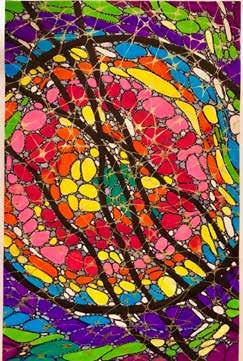
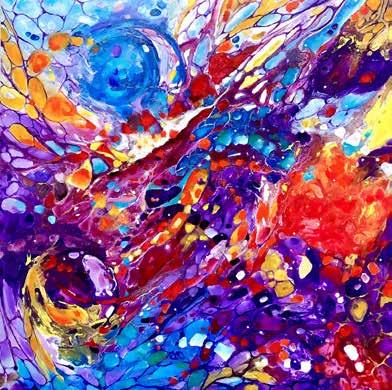
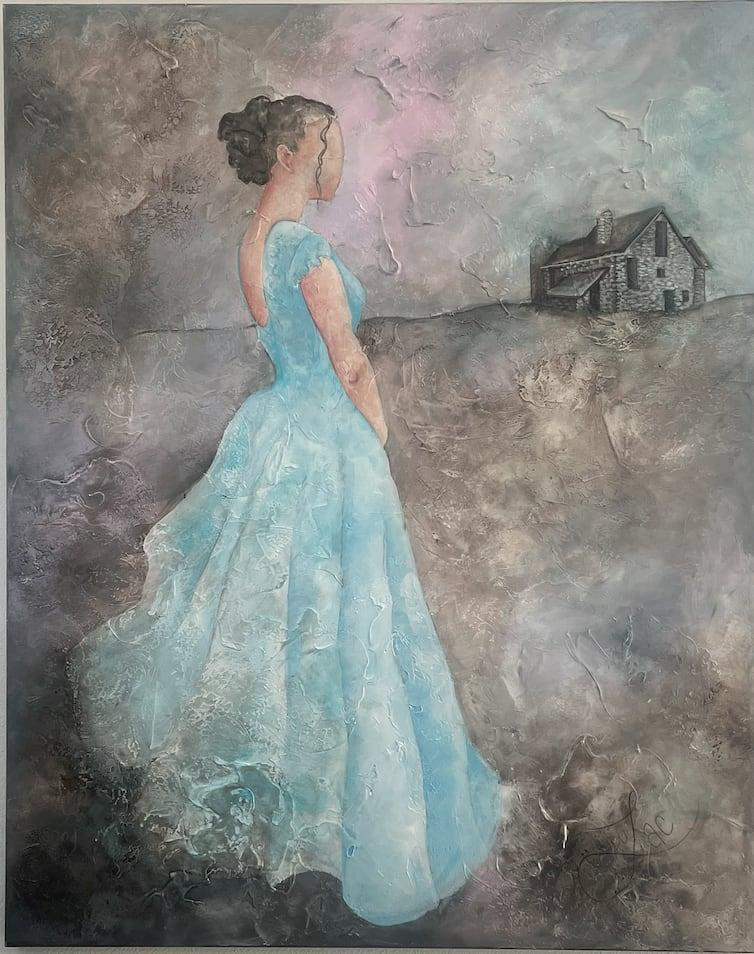
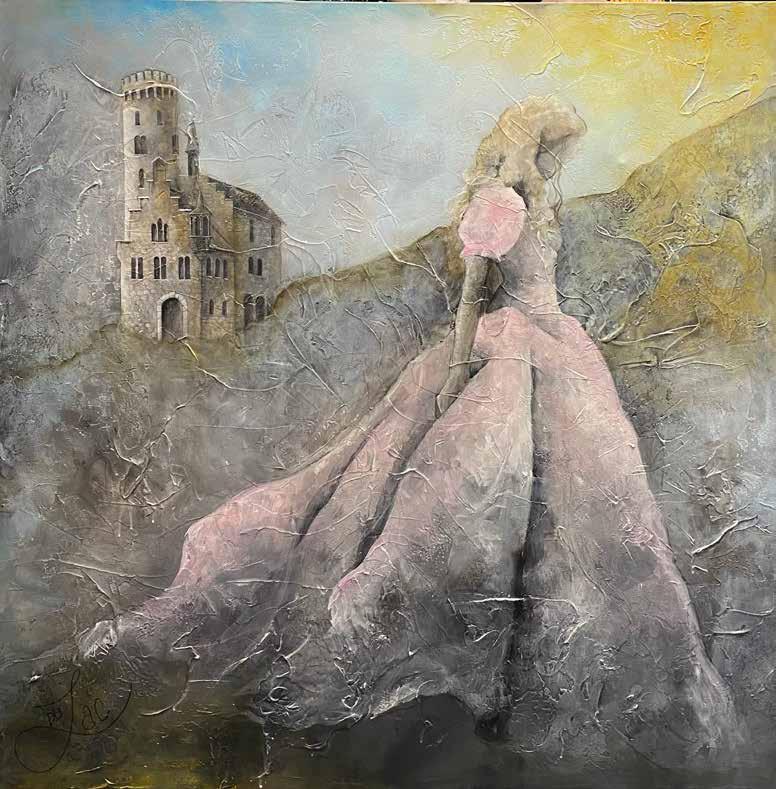
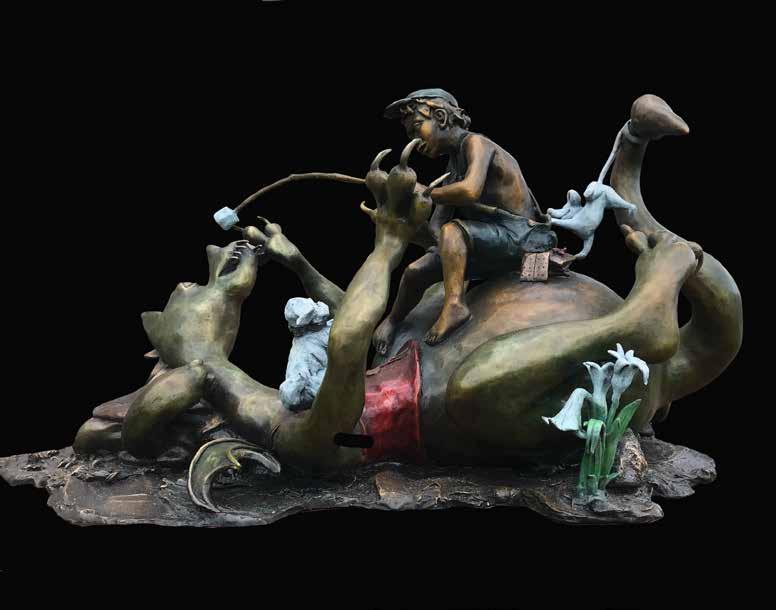
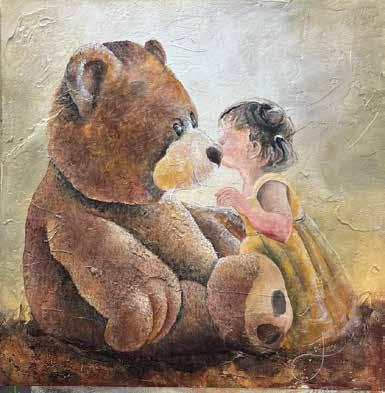
“The aim of art is to represent not the outward appearance of things, but their inward significance.” - Aristotle
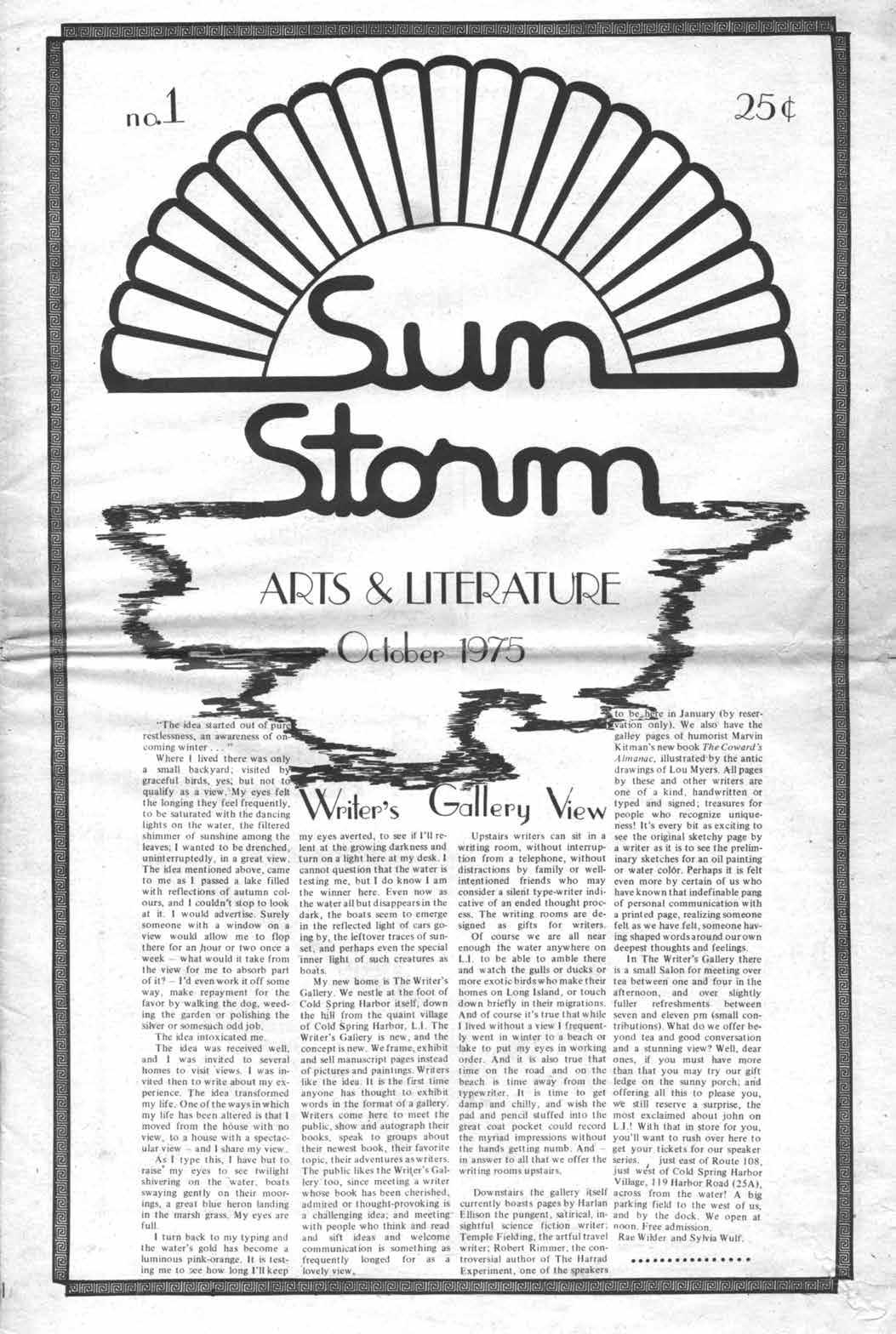
Wow! “What a long strange trip it’s been”... for fifty years we have covered the arts: music, poetry, fine art image, galleries, artists, museums, and happenings investigating everything inbetween. From local awareness to global impact, we were privileged to communicate and shape the perception of art within the pages of SunStorm/ Fine Art Magazine. Covering artists, publishers, museums, and galleries from the original Absolut artists to the Woodstock Wall of Peace.
It has been my privilege to interview many to further understand the communicative dialogue that exists between an artist and their intended audience. In capturing the voice of the art/picture as a written icon, I have pursued my interest in dialoging with artists through publishing this magazine and related materials—books, catalogs, radio interviews and forums. Seeking to see and experience the voice behind the art, I desired to put into words the special flow of intent of the artist. I lent interpretations to their visuals as a translator of the artistic vision of those I spoke with through the common denominator of words. Not to critique the artist’s mind-set, but to weave into an easily understandable language the ideas contained in the common thread of creativity.
Starting in the mid to late nineteen seventies, I encountered Romare Bearden, Sri Chinmoy and Francoise Gilot, Richard Pousette-Dart, Mikhail Chemiakin and countless others. Every artist I have ever spoken with has had to sacrifice something to get to where they wanted to be. Most have overcome tremendous barriers and hardship to their success. I learned that artists known or not so well-known only paint if they cannot do anything else. All would have chosen an easier avenue for making their way in the world if they could have. Why did Robert Indiana use the word LOVE to communicate so much more than just “I love you?” How and why was this icon so successful in communicating the artist’s intent? What makes the universal value of the symbolic stream of consciousness of the viewer unite with simple genius of statement so it can take on so many individual significant messages?
Most people believe art to be an accident of inspiration. Few realize that the discipline of daily experience and practice is one key to artistic success. I continue to communicate with many artistic notables and hope to learn continually why I need to do this.
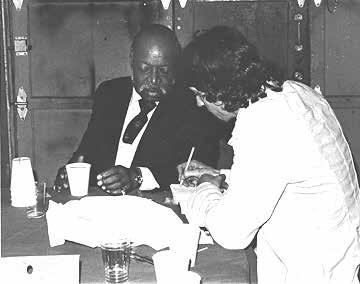
Count Basie being interviewed by Victor Forbes in Glen Cove 1975
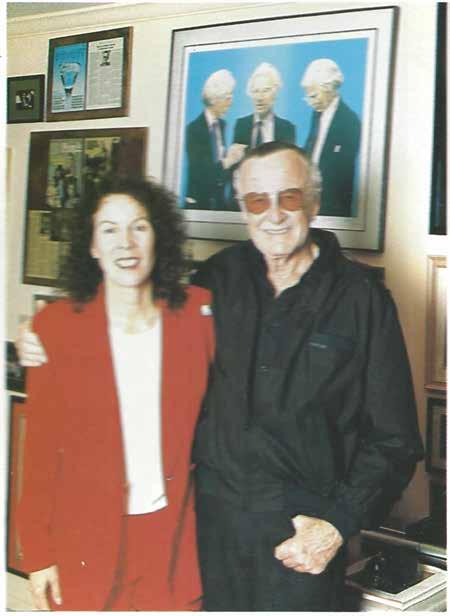
Stan Lee, Jamie Anaheim Artexpo, 1992
IN MEMORIAM • 1951 -2025
PAUL “ACE” FREHLEY”
A superstar and a kind-hearted gentleman, Paul “Ace” Frehley His visit to our printing shop in Ronkonkoma was memorable.
FOUNDED IN 1975
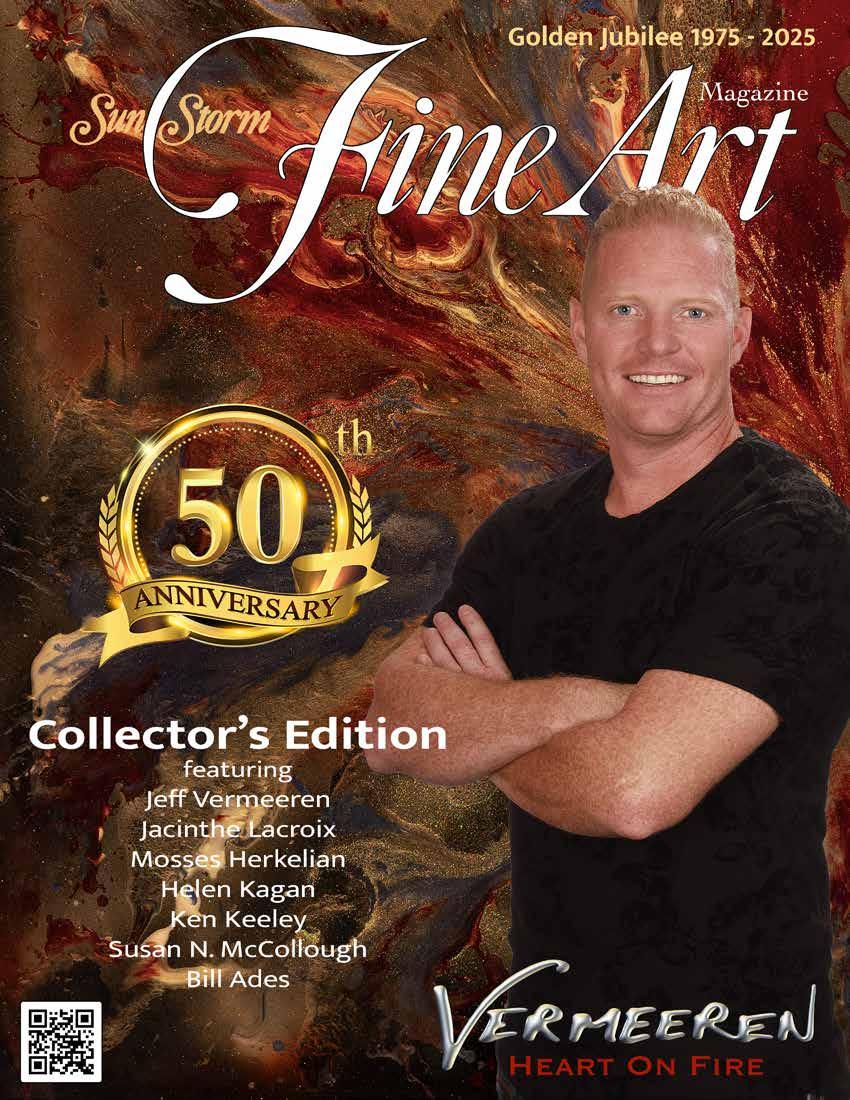
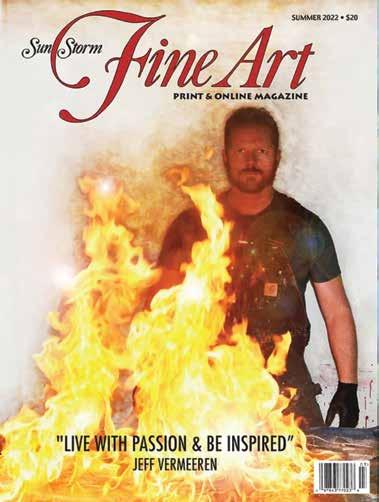
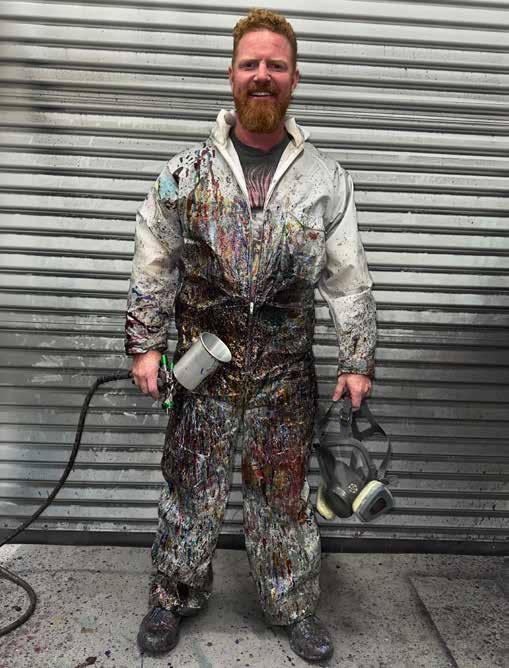
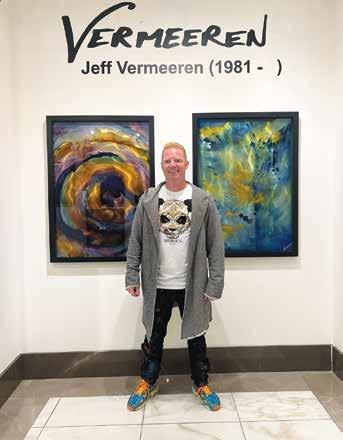
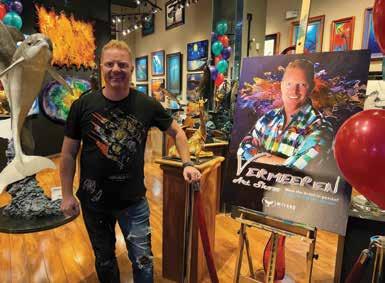
Cover Artist Jeff Vermeeren
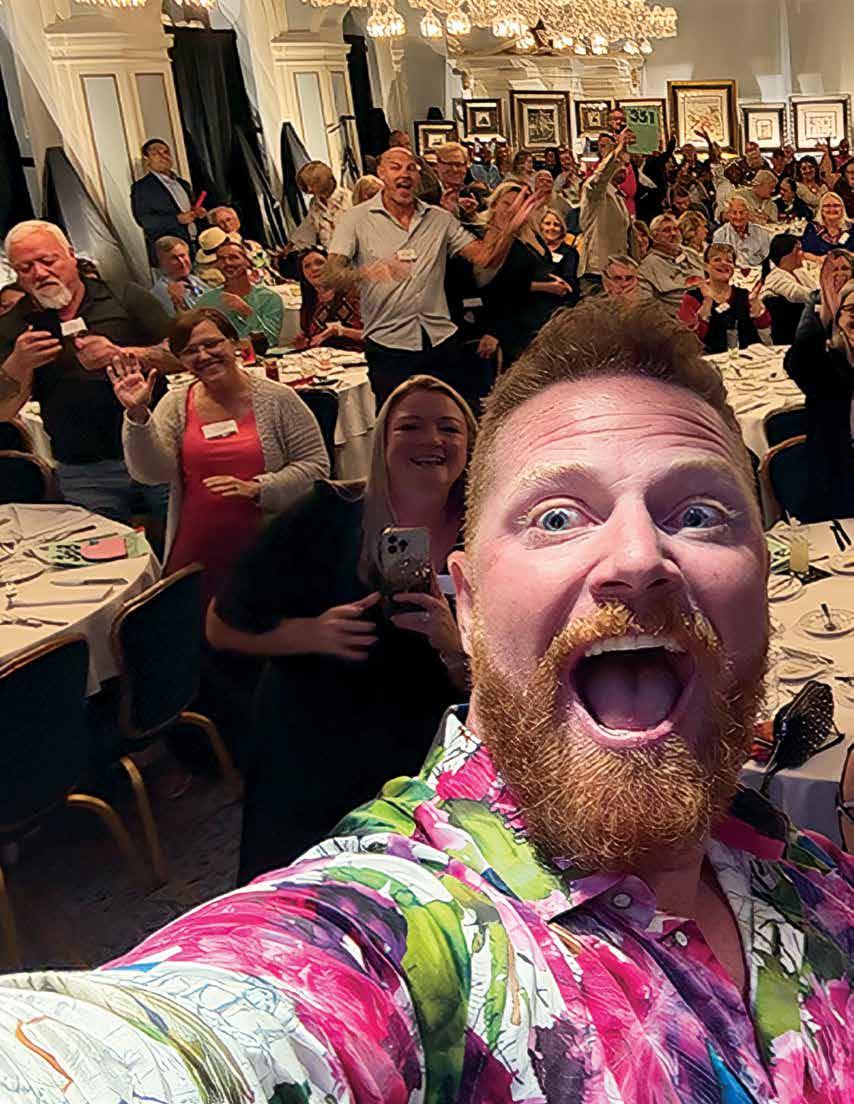
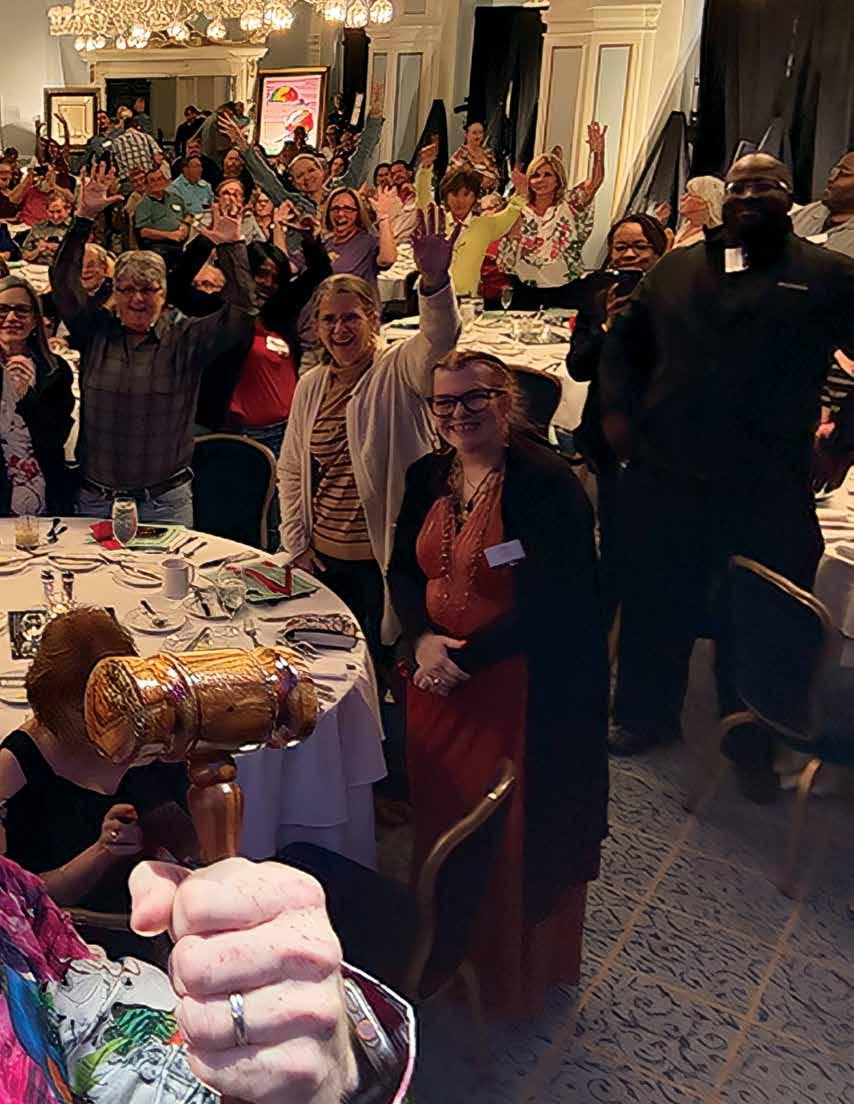
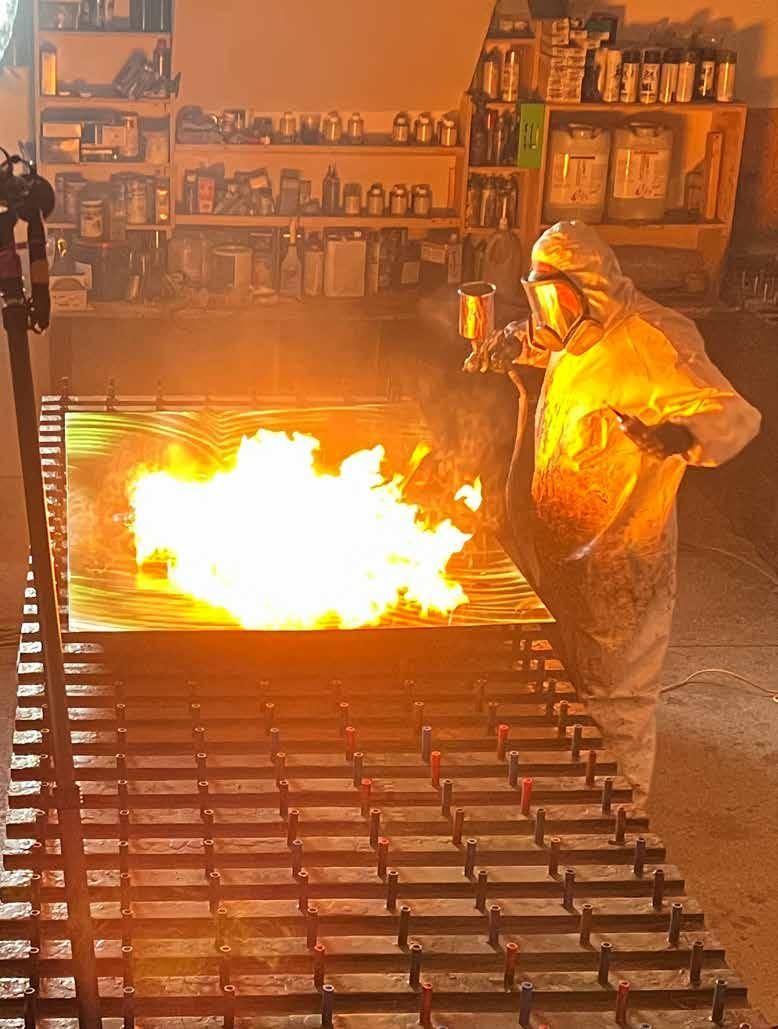
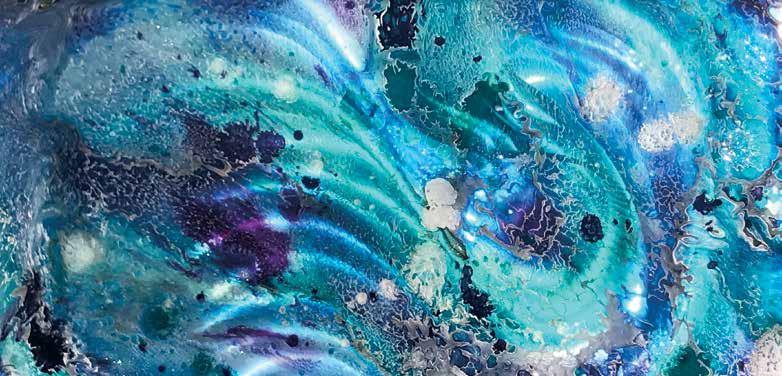
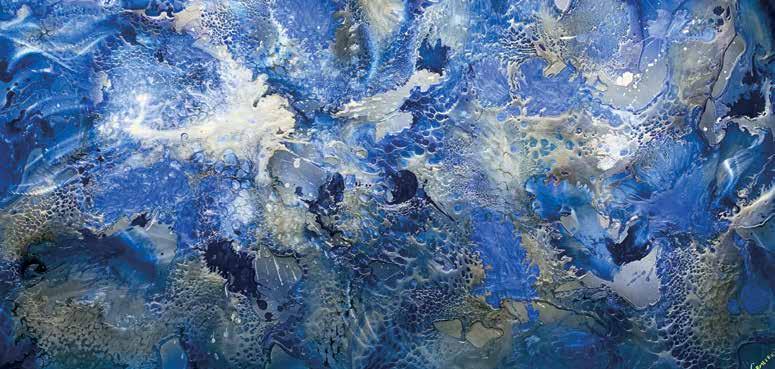
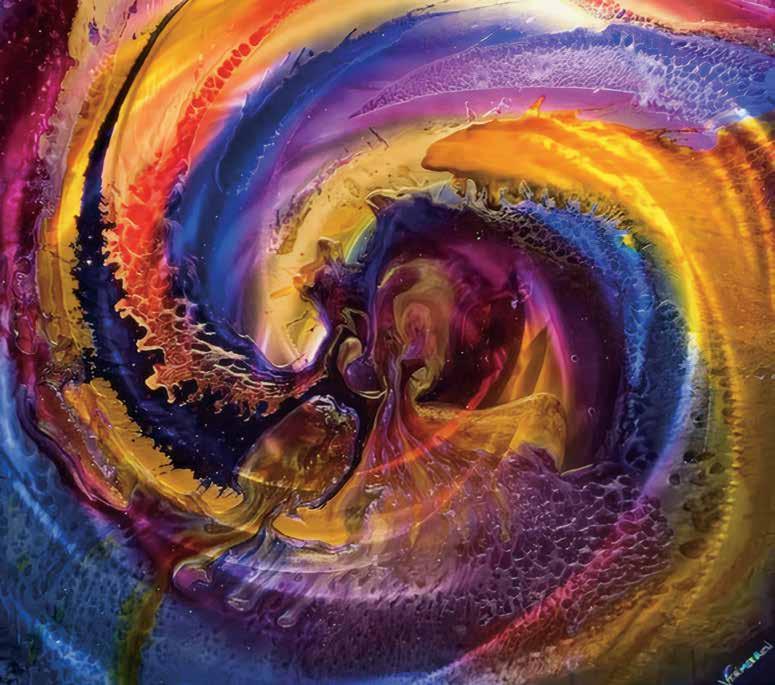
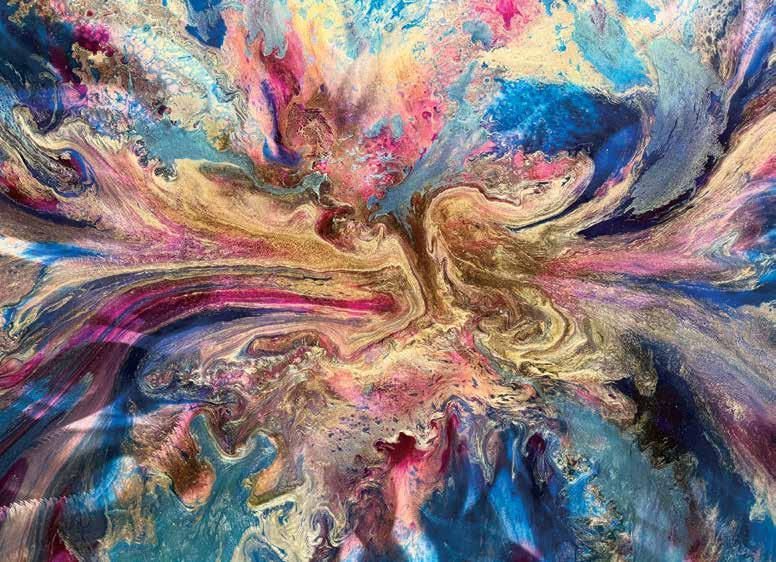
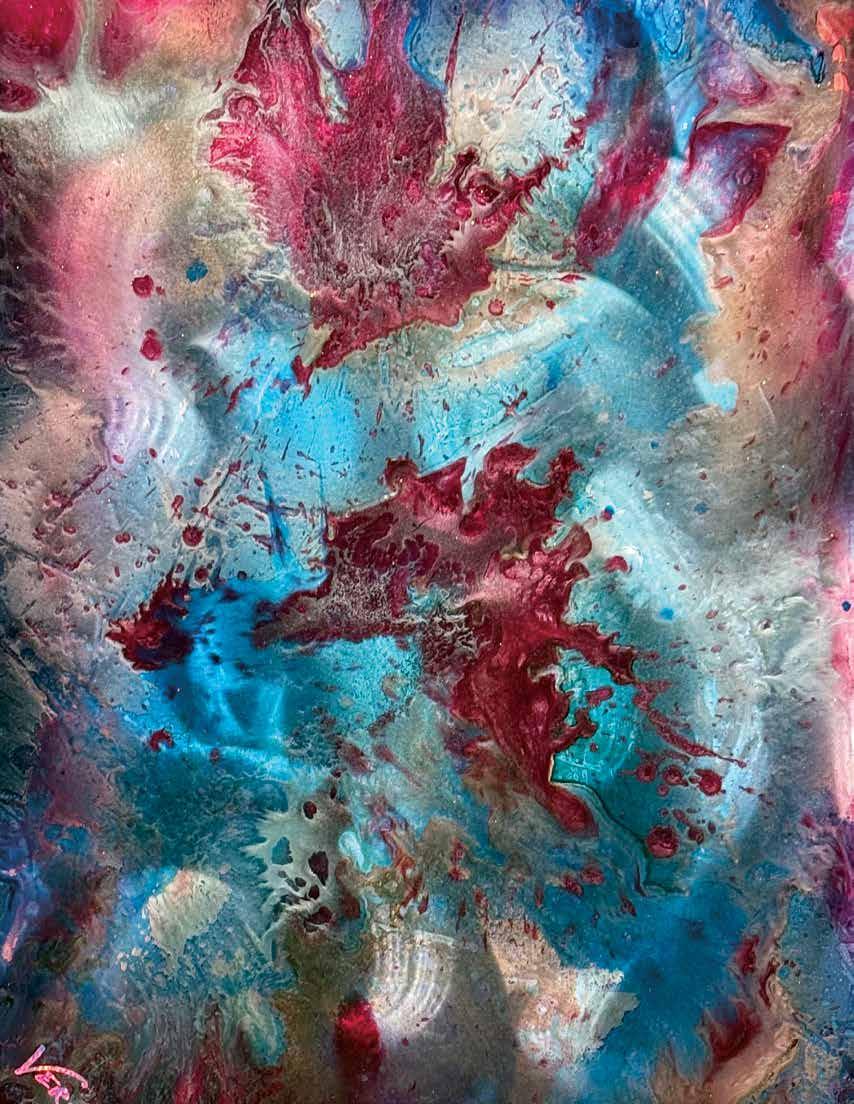
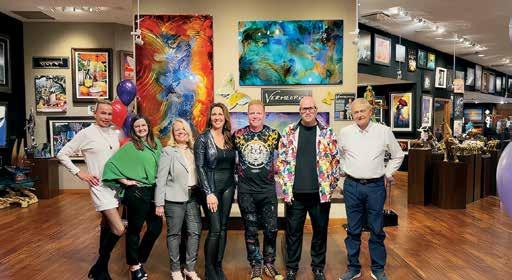
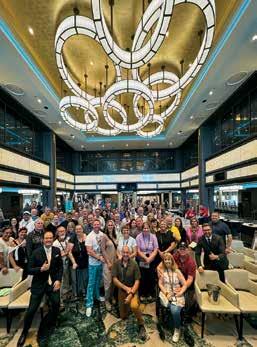
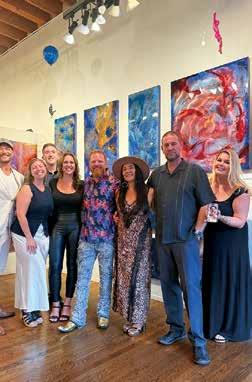
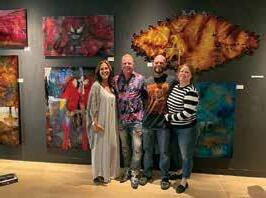
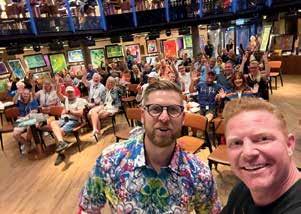
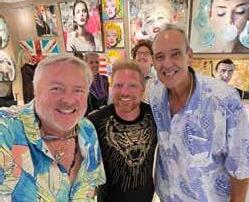
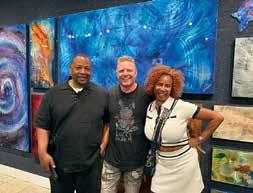
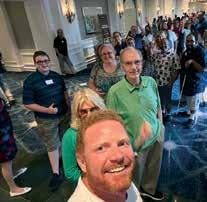
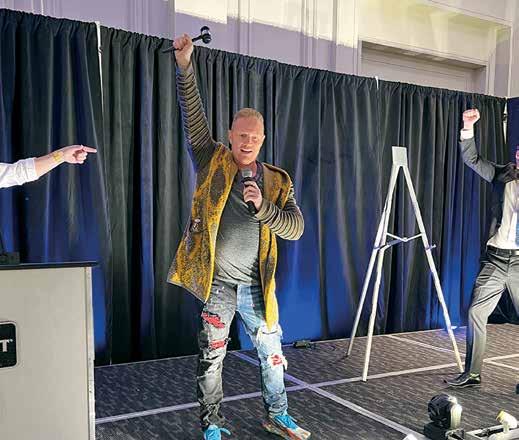
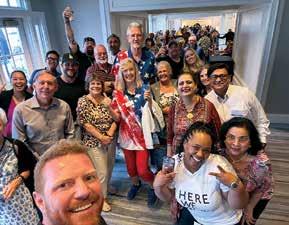
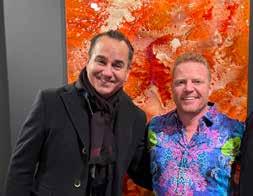
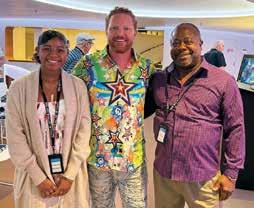
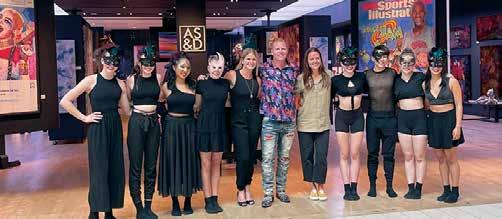
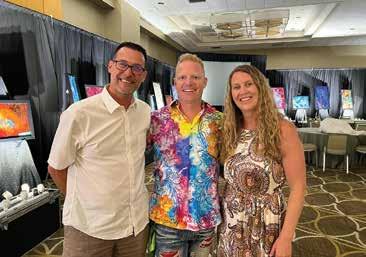
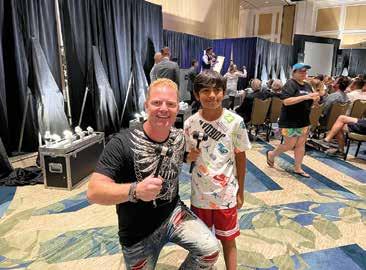
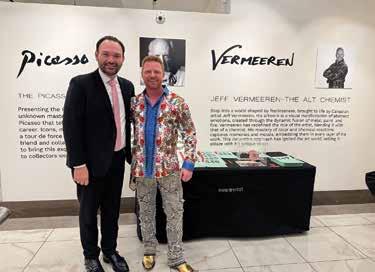
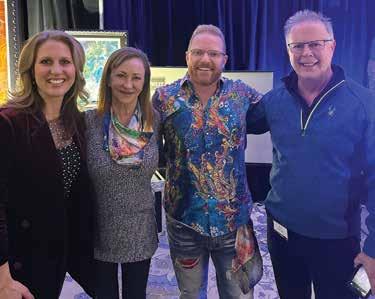
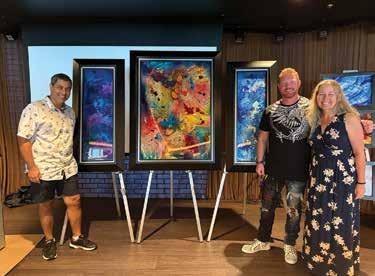
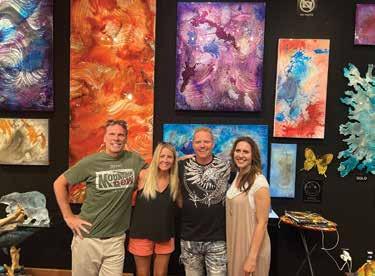
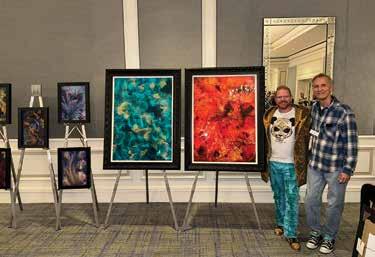
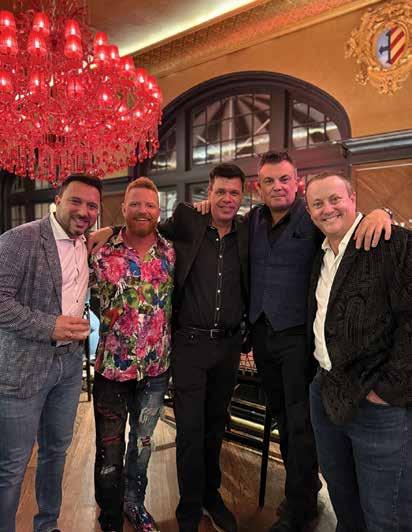
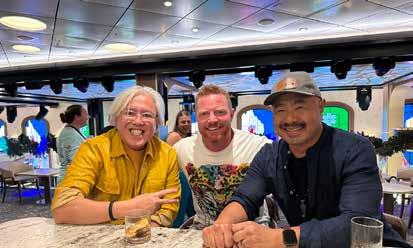
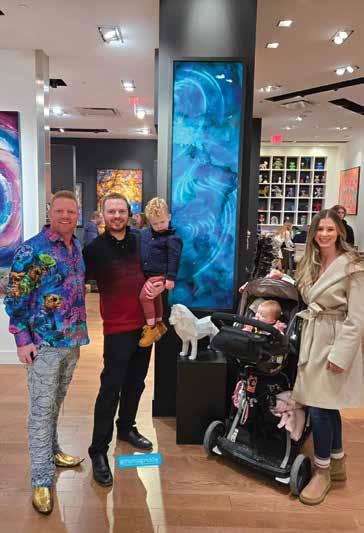
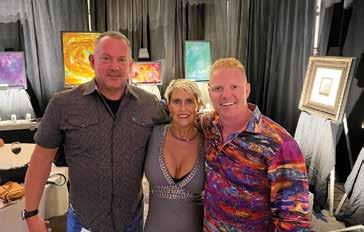
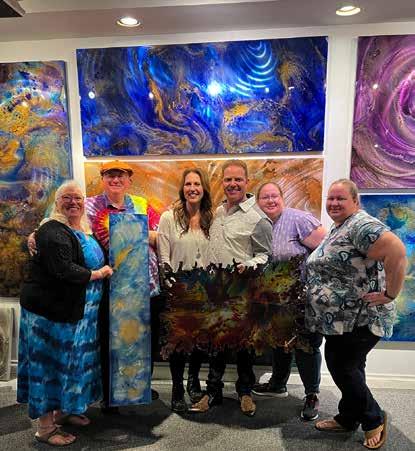
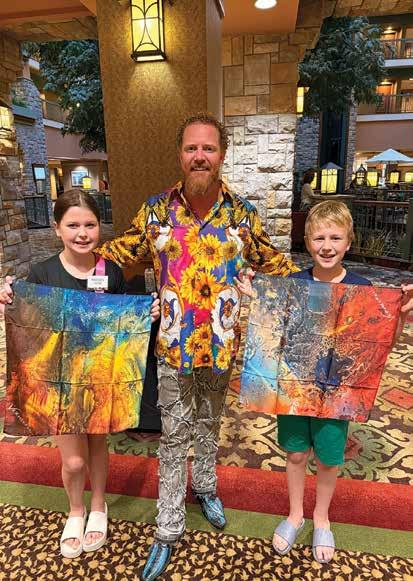
Jeff Vermeeren is a delight to have known over the last decade as we have watched him develop and create art for collectors, making impressive wall works available to the public. Until now, wall space for the most part was reserved for canvas, paper, reliefs and/or wall-hangings in traditional mediums. Jeff’s technique has advanced to encompass both figurative and abstract spaces with instilled vitality and sensation. This new mode of expression Jeff has created dominates the visual presentation of each piece with color, fire and excitement. Displayed in Jeff’s artistic process is an inventiveness — the ray of light issued from the artist’s heart intended to inspire and enlighten. Capturing energy and movement, the possibilities of dimensionality offered by his galvanizing work has resulted in broad-spectrum appeal of his paintings and sculptures to collectors. In the overview to the images in the SunStorm FINE ART’s 50th Anniversary Edition, you will see crowds react with enthusiasm to his presence and works in all venues. On board cruise ships, at auctions, and during galley events the people are happy and engaged. With his natural convivial availability, one can see the work is infused with his personal presence, not a distant brooding artistic force. His joy becomes evident in his images up close and personal. Maybe the reader can tell I am a big fan of Jeff Vermeeren — as an artist and as a person.
–Jamie Forbes
Enthusiasm + Passion = Vermeeren
In a world of creatives and influencers fighting for a fleeting moment of attention, Jeff Vermeeren’s paintings jump off the wall. The light and energy are impossible to ignore. There is a power in them. The beauty of a Vermeeren is that you can spend a quick few seconds absorbing the immediate visual impact or an infinite number of years gleaning and mining the depth of his visions. Deep yet decorative, Vermeeren has something people want — a story in every work. Some are obvious, some require one’s full attention and all provide a deep glimpse into not only the soul of an artist but into elements of wordless splendor. As a sculptor finds form in wood and stone, Vermeeren takes fire and water that he somehow solidifies onto a canvas of metal that reflects as well as portrays a pristine energy that unmistakably brings about a more perfect world. “A swirling whorl of nebulae,” said one pundit. “The fruits of Jeff’s labor.”
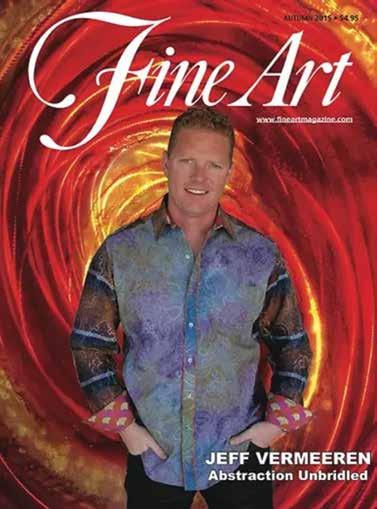
When FINE ART magazine first celebrated Jeff as “Artist of the Year” in our 2015 cover feature, we knew he was someone special. Now, as we celebrate our 50th Anniversary, we’re thrilled to once again showcase Jeff’s talent and energy — inviting new admirers to discover his work, welcoming seasoned collectors to explore his latest creations.
For Jeff, art is about sparking emotion and connection, much like a song that stays with you long after the music ends.
Born and raised in Calgary, Alberta, Canada, from early childhood Jeff has been interested in discovering and learning
about anything and everything. As a youth he was always taking things apart and creating gadgets with a new purpose. On into his teens he was often found in the shop working on vehicles and projects. Jeff is a lifelong Motocross rider and demolition expert, so looking at the action involved in making beautiful art from a chaos resonates — as the poet philospher Eli Siegel so aptly put it, “Beauty is the making one of opposites.” Sometimes the bike crashes but as a winning racer, Jeff knows how to make that blend work. In his very unique version of abstract art — “Abstraction Unbridled” — that dynamic is quite evident and has been since he started his business he said of it, “We had a company, we built up to where we had 45 employees, excavators, trucks, and a whole crazy operation. We were doing some charity work for a children’s hospital where I saw a piece of art that I liked and I thought to myself, I can do that. So I went home and taught myself how to paint. I had a bit of free time and my hobby evolved into my passion and my passion grew. I wanted to go from deconstruction to my creative side. I gave the majority of my work for the first three years to charity. ”
When this reporter was a lad growing up in Manhattan, New York City, my grandmother Helen Dunn took me to a print shop in Greenwich Village that was printing her magazine, “What’s Cooking in New York.” People often said to me “Printing is your blood” and that could be true. The clanging of the machinery, the molten lead, the skills of the Mergenthaler
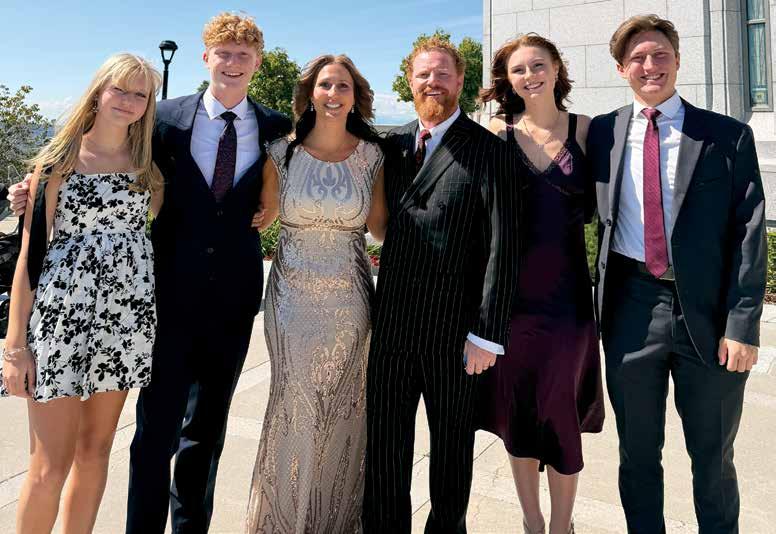
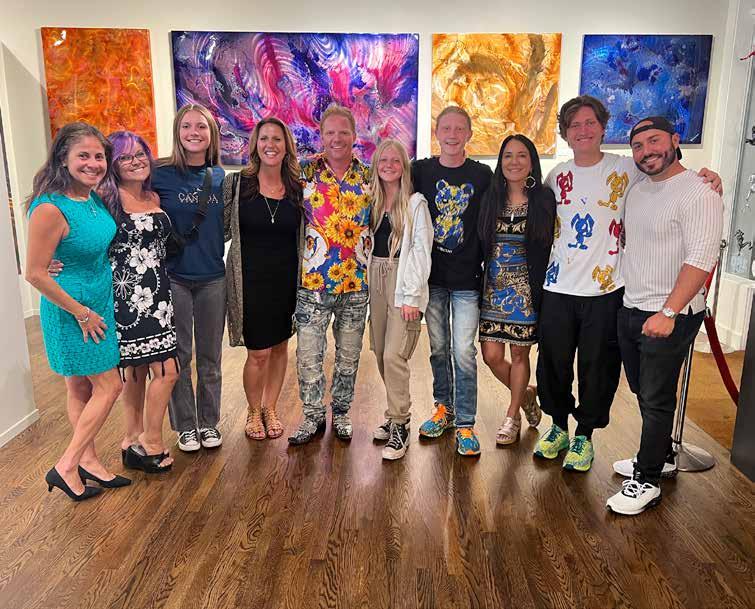
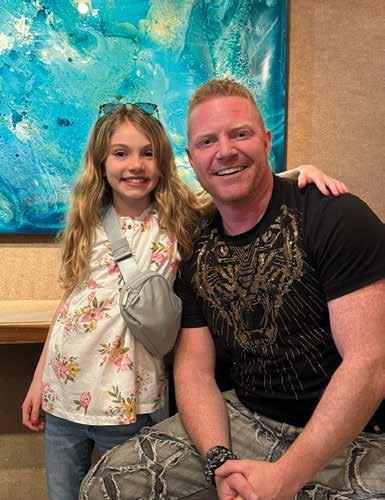
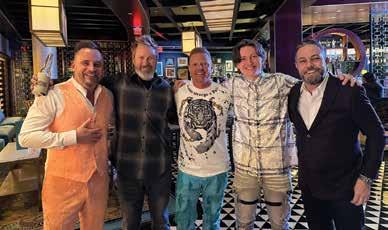
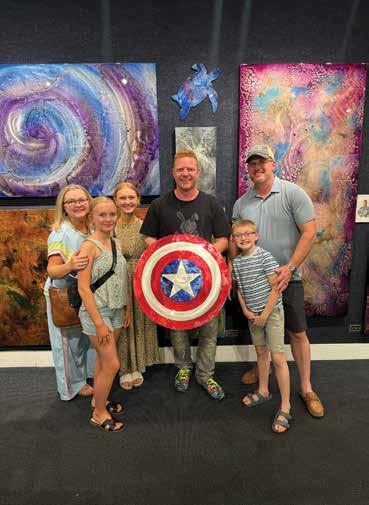
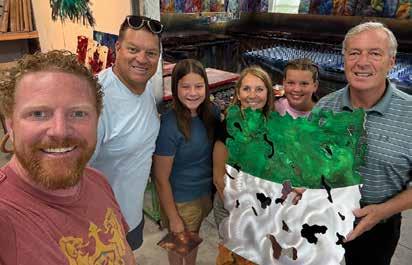
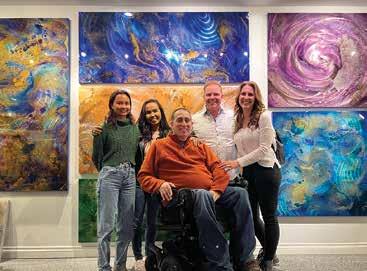
IT’S A FAMILY AFFAIR WITH THE VERMEERENS
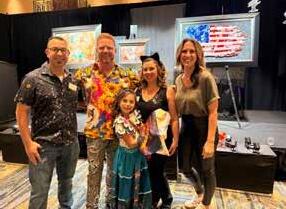
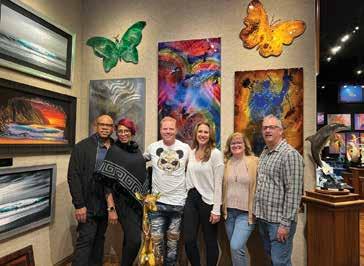
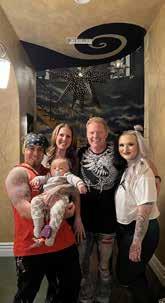
From left to right - Sasha, Roman, LaDawn, Jeff, Taya, Austin
operators are part of me. Along with a never ending supply of papers and pencils, I was gifted with a gold-plated ruler with the slogan “ENTHUSIASM SELLS” printed on the back. I still have that ruler so ‘Thanks, Grams, for this good lead in for the story: ENTHUSIASM + PASSION = VERMEEREN.
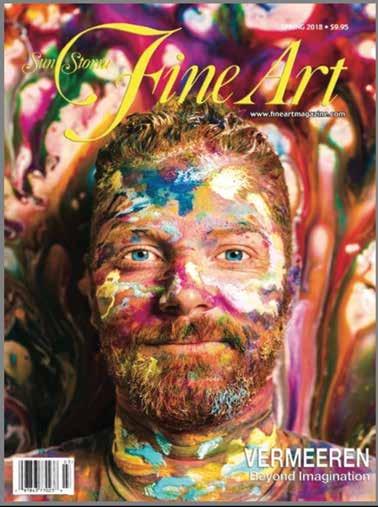
Vanity Fair had Demi Moore, Hockey News loved Wayne Gretzky. Michael Jordan adorned Sports Illustrated covers 40 times. SunStorm FINE ART is running our fourth Jeff Vermeeren cover on our Golden Jubilee 50th Anniversary edition and we’re proud to do so.
Following is a compendium of interviews and articles we have published on Jeff over the past ten years.
“With various metals as his canvas and a combination of fire, ice, pressure, and a wide range of unstable chemicals as his media, Jeff Vermeeren creates unique, dynamic, sculptural and painterly works of art,” noted Jamie Ellin Forbes, publisher of FINE ART Magazine in the Fall 2015 edition in an article entitled “Abstraction Unbridled.”
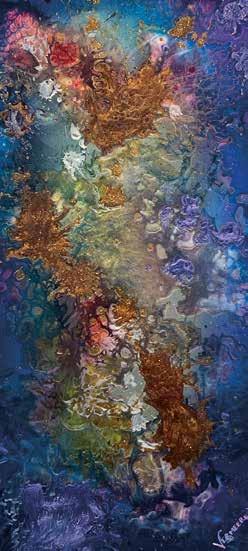
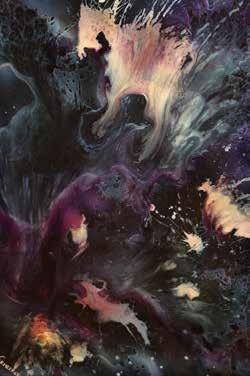
“The work of the artist is to envision. Vermeeren also enables the opposition of the compatibility between the two forms of media — fire and metal — to reveal the face of the spontaneous imagery he intends through his guidance of the process when creating his works. During this, something magical happens. The liquid quality of the paint is captured, as if splattered, then tempered for color and texture by the fire, the image then frozen in the moment of Vermeeren’s choosing. The gamut between color hues is run, the cooler blue tones produce an icy feel to the images, clear and clean. The reds, oranges and umbers from yellow through gold flow into a cauldron, yielding from the vat powerful images of change.
“Like the medieval alchemists, Jeff is looking for the philosopher’s stone — gold — which is found in the mixing of paint with fire. The mystery and the alchemy are merged in his artistic vision via use of the material to produce the cool blue vision. As Matta’s mid-20th century works resemble the photons and other atomic fragments projected as art image, Vermeeren’s fire of the mind pierces through time. ”
JAMIE: What I admire most about your success is that ever since we met at your single booth in that far corner of Artexpo New York some years ago is that you’ve included your family and many charities in all your doings.
JEFF: Thank you so much. It’s true and it’s fun. I came into the art business to support my charitable endeavors. It’s the law of the harvest. What you put in is what you get out. They’re universal laws — universe wide. If you throw something up in the air, it’s gonna fall down on you. LaDawn and I have always taught our kids — and we’ve always lived by the laws — that you put good out, good will come back.
JAMIE: Your ascent from a single booth in the dark corners of Artexpo in New York City a decade ago to literal artistic superstardom as one of the most popular artists on the scene today is a wonderful success story.
JEFF: Years ago when I first met you in New York, I viewed the art world a lot differently than I do today. You think you’re going to be a celebrity and you think these guys are larger than life. I’m not going to lie — a lot of these artists are larger than life, but after I came home from New York, it was like a plug was pulled from me. I thought that I was higher than life. We went out there, walked the red carpet, first class. It was big for us, we did it all. We met FINE ART
Magazine. It just took off for us, but I came home and I had to mentally adjust. People are people. My collectors, the artists, the gallerists…everybody is just doing their best to succeed. On this awesome playing field I understand and am very aware that the guy looking after me is the exact same guy I am. He’s just doing something different. What we do and how much we have doesn’t define us.
JAMIE: Truly. I really love the vibrant colors. Pollock may have dreamed of this freedom found within the mixing of elements and color
JEFF: I wanted to do something extraordinary that not everybody was doing. I don’t want to have the same art everywhere. Every piece is different in its own way and it is impossible for me to reproduce.
JAMIE: Such a delicate process, so many variables that come into play. If I watched you, I’d still be in awe of how you do it.
JEFF: I mix all my colors, use tons of different kinds of trade secrets. I don’t write anything down or I’ll be doing the same thing I did yesterday. All of my colors — you could see 50 or 100 paintings of mine — and all the blues are different. My very first piece was made out of heating duct material. I tried everything from steel to cooper to brass, different layers of aluminum, high grade aircraft aluminum. Part of me has a vision but it always evolves. I learned to paint this way over time. It’s nice for me to have an idea. Now it’s just how I paint, I can’t pre-meditate to a full extent knowing to some degree what I am getting into.
JAMIE: So you’re casting your artistic fate to the light.
JEFF: Yes and the fun thing is in some of those ones you can’t even tell until you take them into the light because some glow in the dark and some don’t. It’s hard to paint that way, but once I’m done, the process adds a whole new element to my paintings.
JAMIE: It is the movement in the pieces.Your various collaborations with other artists of note offers a suggestion of the opportunity to personally conceptualize within your abstracted works with a fascination for what is held in the forging fire. The incorporated realistic imagery in some pieces are crisp and sharp and a contrast to the unbridled compositional abstractions formulated in conjunction with the media and method of the artists, providing a fun Pop feel to some of the pieces.
JEFF: I met a military client at Artexpo who wanted a piece that resonated with his experiences. The resulting work is an embossed, reversed painting — a process rarely duplicated — that stands out as unique. This World War II project took me outside my artistic comfort zone and led to new opportunities. There’s certain things I do to reflect what I feel is important.
JAMIE: It’s interesting because everybody has their ideas and thoughts on how you make this art.
JEFF: Collectors come out and watch me create. They can’t really tell whether it is sprayed, dripped or even ceramic. I use a ton of different techniques. People think “it’s glass, it’s plastic, there’s a light behind the painting. ”
JAMIE: I heard you say one time it’s your “little secret” these blending combinations of fire, ice, pressure and a wide range of unstable chemicals to create a variety of feelings and moods. As you said, there is no way to duplicate one of your creations.
JEFF: I want everybody that is looking at my work to see something different every time. I don’t want to be painting
the same thing where people can say, “I’ve seen that before.” I want my art to be in a home and every time you see my piece you see something new, which relates to the fact that there’s a lot going on, from color to texture to symbolism. When you’re in your 20s you don’t really think about the future. Later, it’s about where I’m going instead of where I’ve been. You go through pain, you go through joy and there’s certain things that help you get there and certain things that don’t. When I first started out, 10-20% of the paintings I created worked. Now I would say 90% of what I do works, I wish I could say everything. One of the the fun things about being an artist is you’re switching out the art on your walls all the time.
The interview continues with VB Forbes
VBF: To what do you attribute this great success?
JEFF: You know what? It’s probably my wife. We never had a publicist. I’ve never had anybody promoting. Everything that I did was created from my visioon and dream and how I’m pushing and progressing. It helps to have a good caring base behind you. My extended family
and just everybody around me — it was more than them just blowing smoke and saying, ‘Hey, good stuff, good work,’ you know? It’s about them believing in me and believing in us.
VBF: Jeff, you are always quick to mention LaDawn, who accompanies you to most every exhibit.
JEFF: She is my number one supporter being right on my side 100%. My wife and I have worked together every day since we’ve been married and we still do. So what we do is we really share a lot of personal stories about ourselves and we really enjoy touring. It’s exciting getting in galleries and on the cruise ships. We love the charity stuff, love the people we get to meet and connect with. The tough thing is as soon as you get to a certain point, it’s dumb to give it up.”
VBF: Your level of positive energy is contagious. How do you manifest the excitement of these auctions?
JEFF: I say “Always come in with a bang,” and I always try and connect with people’s hearts and talk to them about our past, our history, our family and how we became what we are today. I also talk a lot about capturing energy and movement, the
possibilities of dimensionality.
VBF: How does the audience respond to that for the most part?
JEFF: For the most part, everybody’s really good. They’re excited and interested to hear about how we got to where we are now and also where we’re headed — our destination — what our goals and dreams are with the art.
VBF: And what would those be?
JEFF: We like to talk a lot about our charities we work with — Make A Wish, children’s hospitals, kids cancer funds. We also talk a lot about helping people who have been in physical, mental or sexual abuse. We reach a lot of hearts that way. We also discuss our programs with the Vets out there and people who have served, who are serving, or who are going to serve. We really give back there and we like to bring them in and talk to them as a big group. For example, I’ll go to an event after they talk a little bit about my work before I come in and they play my video. From there, they announce me and I come in strong on a really nice big high and everybody’s excited. Then we talk about struggles and how people get through some of the pains in their
Burning Pride
life; how we’re all doing this together. Even though our pains and struggles are different, the feelings are the same. It really grew just by giving. It really took us to the next level when we started giving back to everybody.
VBF: How did you go from being a fledgling artist to being somebody who basically invented a way to express yourself?
JEFF: I think it evolves. I’m different than most artists. I don’t write anything down and the way I create is I’m going through my feelings and emotions. My process to complete a work takes about four to six weeks. On average, I paint 25 to 35 layers of paint and I set them on fire. I actually started by putting food coloring and gasoline on heating duct material. It quickly evolved to where my products just kept getting more advanced, using highend car paints, Lamborghini, Ferrari and it started taking off. I just keep pushing myself and pushing myself for new ideas, and keep evolving and getting better and better.
VBF: You’re in 79 galleries worldwide and every single cruise line in the ocean with
Park West. It just really exploded.
JEFF: I push it really hard. I guess it all boils down to if you’re passionate about something, it’ll grow.
VBF: Your motto is “Live with passion and be inspired.”
JEFF: That’s something I write on the backs of my paintings. If you live with all your heart, mind and strength and you’re genuine, people can feel your energy. People can feel your passion.
VBF: When we met you at that Artexpo in New York, I guess it was 2015, your work was something that was so striking. Even though we were in a dark corner of the place, it really lit the room up. Was that one of your first major exhibits?
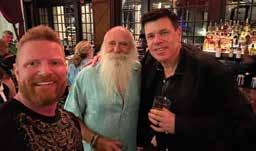
JEFF: That actually was my first. When I started, I saw that people enjoyed meeting the artists. I learned that what people are getting involved with is not just an art piece that they hang on their wall. They want a whole experience. If you see any of my marketing it always says, ‘Experience Vermeeren,’ because there’s just so much to it. I didn’t do this to get into a whole bunch of money. I wanted to give back, to leave a legacy for myself and my family. I came up really quick because I’m so passionate about it. Some of my best shows, Victor, like that Miami one we did, you, me and Jamie – I didn’t sell a thing, and that was still one of my favorite shows. It’s about people. It’s about the energy. I always say the art world is very hippie still because it’s all about love. The energy is so positive. You don’t get that in any other field of work.
VBF: Definitely not in the demolition world.
JEFF: If you take out the wrong wall, Victor, they don’t like that very much.
VBF: I can only imagine.
JEFF: The art world is a very, very positive world. It swallowed me up — the people and the energy. This week we’re going to Rome, Greece and Turkey. Then to Key West. It’s a whirlwind, but it makes it all worth it when you get to share a piece of yourself with the world. When you see other people enjoying what you’ve created from your soul — that’s what makes it all worth it for me — seeing other people enjoy.
VBF: And LaDawn is right there with you every step of the way.
JEFF: I either travel with just LaDawn and/or one of the kids who come either on their birthday month or if it’s a place they want to go, we all go. So when all the kids are out of school in the summer,
we go and do a tour all the way. This past summer we went through Las Vegas, Laguna Beach, San Diego. In between the awesome art shows, we’ll do Disneyland, we’ll do SeaWorld and then I’ll do another show. The kids come with us and are very much involved in the art world. A lot of the galleries know our family really well and definitely Park West does for sure. We would have never thought it would come to this. I would have never imagined that we’re in a top echelon of the top living artists and making money at it. There’s so many amazing artists out there that never will get the opportunity to showcase their work on a world stage like I’ve been blessed to be on.
VBF: I’ve seen it in action. I couldn’t imagine a more difficult medium in which to create.
JEFF: LaDawn and I work in the studio together. My kids will come down. My boys will help crate paintings and my girls will help with wrapping the paintings and getting them ready to be crated, inventory and stuff like that. The kids are getting a little bit older, so they’re not in school and getting on with their lives, but it very much was a family based kind of creation as it evolved and it still is. Then when I come back, I paint, paint, paint.
VBF: How do you manage to keep up with the demand?
JEFF: We get that question asked a ton. Are there people that help us or do we have a big team? We really don’t. LaDawn and I still do everything ourselves. Could I get a team? I’m not ready for everybody
to be in my creative zone yet.
VBF: What I appreciate most is that when we saw you, we said, ‘This guy’s got something out of all the hundreds of exhibiting artists in that place.’
JEFF: You and Jamie, Victor, really, from the very beginning, you guys supported me. You guys have turned into family for us.
VBF: Well, I can’t express my appreciation for that remark with enough gratitude. Because I know what you go through to make these things because we talked about it often, and all the techniques involved. The blue is going to be that
blue, but then it turned into that blue, and then...
JEFF: Of all the artists I know, many will write down in their sketchbooks what they want to see. They’ve already pre-determined their characters and what they’re creating, landscapes or characters or whatever. I do it totally different. I create with feelings and moods and it evolves as I’m going. That’s why nobody ever sees the exact same painting twice from me because the process evolves from when I begin. It’s impossible because as I’m standing there mixing paints, there’s no way I can mix that same color, again,
it’s just impossible. I can get close.
VBF: It’s not food, food dye, and gasoline anymore, is it?
JEFF: Not anymore, but actually, a fun thing for me is from time to time, I dialed back into some of my earlier ideas and have done a few more gasoline ones, but it’s evolved.
VBF: There’s so many people out there so focused on that one thing.
JEFF: If I was still focused on the beginning, I would have not reached where I am now because I would still be doing what I did yesterday. That’s why I never write anything down and that’s
why every day is probably my next ‘best painting.’
VBF: What’s your favorite piece?
JEFF: Everybody asks me this, It’s the number one question. I used to say it was the fires and the waters and just those kind of multicolor ones — I tell them which ones I like, but the truth, is my favorite piece is the next one, the next painting.
VBF: Trial by fire would be an apt description.
JEFF: I’m painting because it just keeps me on my toes. It keeps my passion alive.
VBF: I couldn’t imagine doing the same thing over and over and over.
JEFF: But with this, I can do something different every time I paint, and it’s a new adventure for me as well.
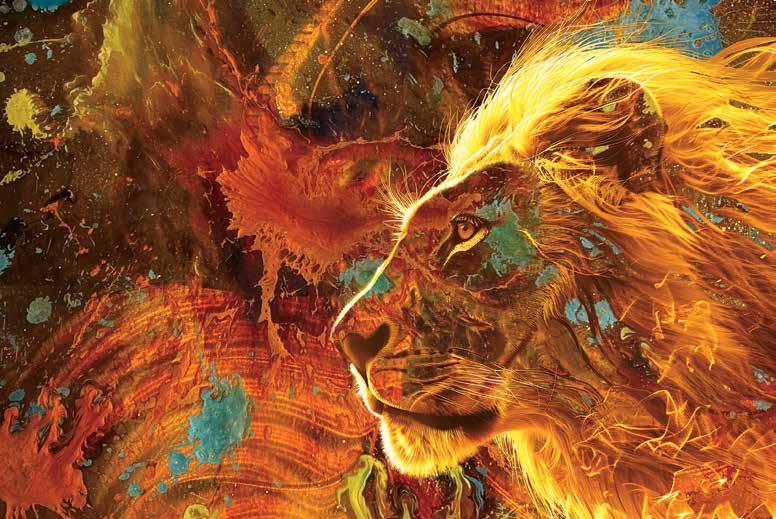
VBF: How do you get something realistic in there, like the Lion or the Soldier or the Elephant?
JEFF: I found that I have an excess amount of time on planes, in hotel rooms, on buses, on trains — you name it — that’s where my creative aspects come out.
VBF: In what way?
VBF: How old were you?
JEFF: I was probably six. My mom dressed me up in my suit pants. I remember the
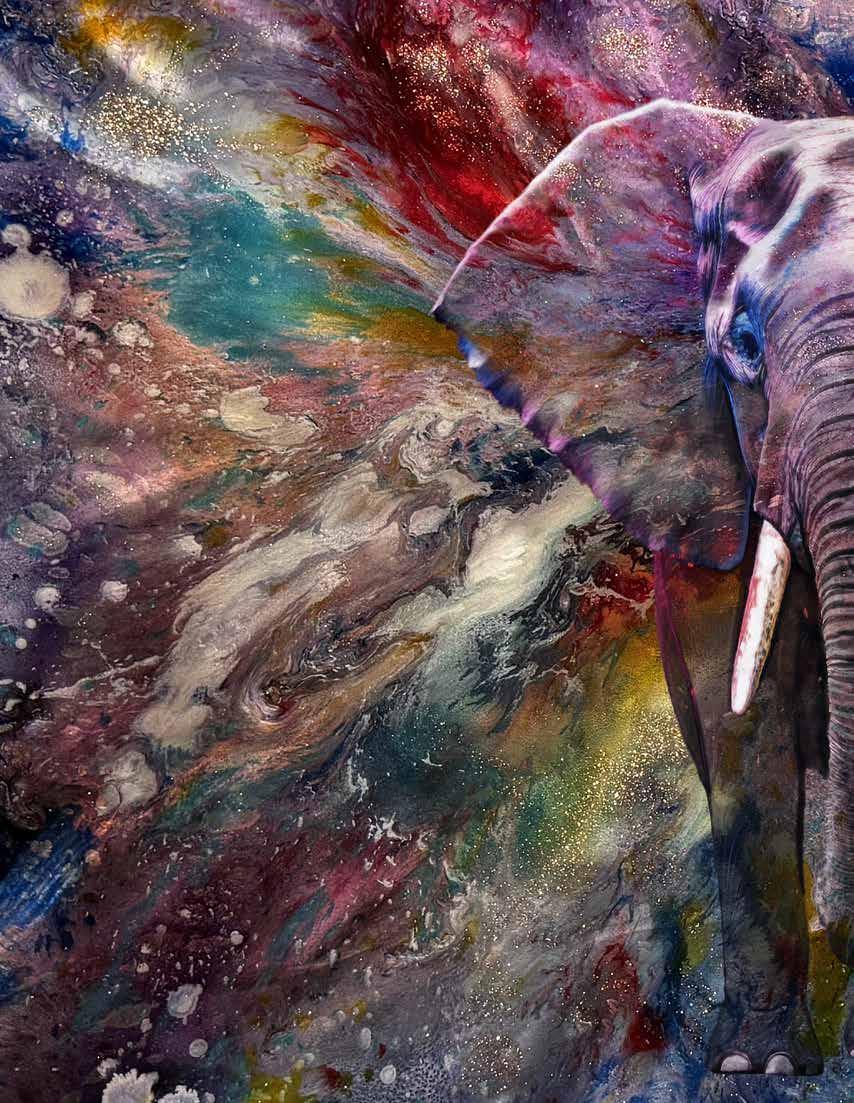
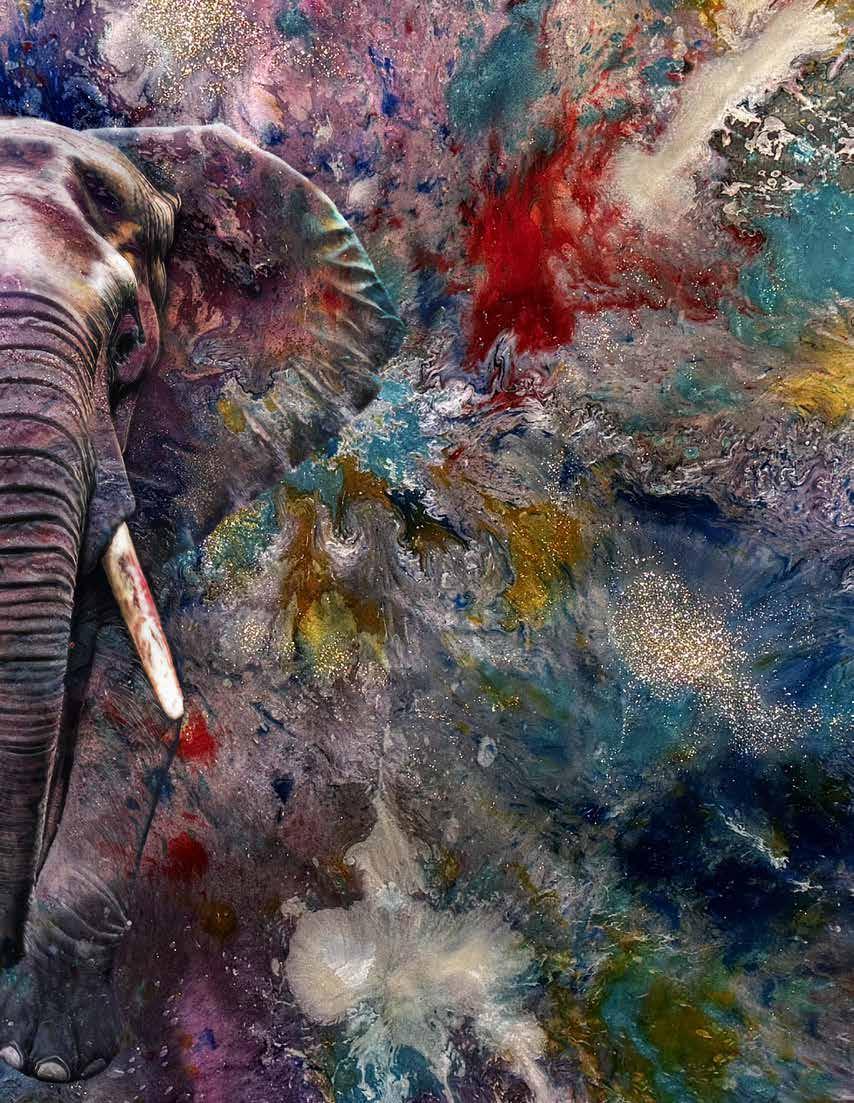
JEFF: Now what I’ve been doing is I’ve been creating and drawing. I take one of my images and then I go into it and draw something that works with it and then I work on it. Some pieces I work on for a month, sometimes two months, and I’m just sitting there working away at it until I find what I am looking for and it has evolved into something new that I’ve been doing in the last six months.Good friends of mine like, Michael Godard and Walfrido and others, they talk about their adventures and when people want to talk to them about their paintings, there’s a story there. Even though my story is how I’m living, I want to be able to give them something additional. The elephant, for example, that was actually really neat for me. There’s a story there about when I was a child my parents worked hard for their money. I’m the youngest of four and my dad said, ‘I want to take you to the circus.’ I went with him and there was an elephant there. I think his name was Hercules and he put me on it. It cost him a few dollars. For me at that age, that was probably one of the highlights of my life.
shoes were worn down, but they were church shoes, like Sunday shoes. I’m sure my Dad had more stuff to do in his life because he worked very, very hard, and I know that was a big thing for them to pay for at that time. We had a big family and my parents were both working double jobs. But going on that elephant is something that I’ll never ever forget, so that piece is called Hercules.
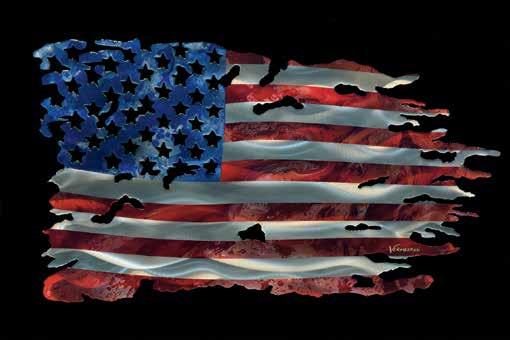
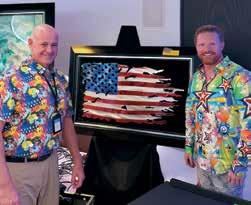
VBF: It looks like it’s walking out of the painting. It’s spectacular in the details, those eyes are incredible, and the lion — he looks so potent. Then there is the soldier and the flag.
JEFF: I meet guys who have served in Vietnam who come up and put their arms around me in tears and just say, ‘We came back and people were yelling and spitting
at us and this painting is something that still makes me feel like we served as well as we could.
VBF: It’s a very impressive painting and the gold behind the soldier geographically does look like a map of Vietnam.
JEFF: It’s all gold leaf.
VBF: It looks like he is coming out of fire.
JEFF: If you look at it, I don’t know if you noticed, but you can’t tell if he’s walking toward you or walking away from you. I wanted to do it that way so that for people that lost a loved one, he was walking away, or you can say it’s somebody who’s lost, he’s coming home. Everybody looks at their experience from a different point of view. When you can embrace somebody who has gone through so much pain and a piece truly speaks to that person and you
can be there and share love with them, it’s amazing. It speaks to everybody in a special way because everybody looks at my art from their own perspective. That’s why I love abstract so much. Somebody will see an angel or a dragon. If somebody sees a heart in my work, I donate it. Even if I unintentionally created something with a heart in there, I donate the proceeds to charity. But that energy, it’s just so neat.
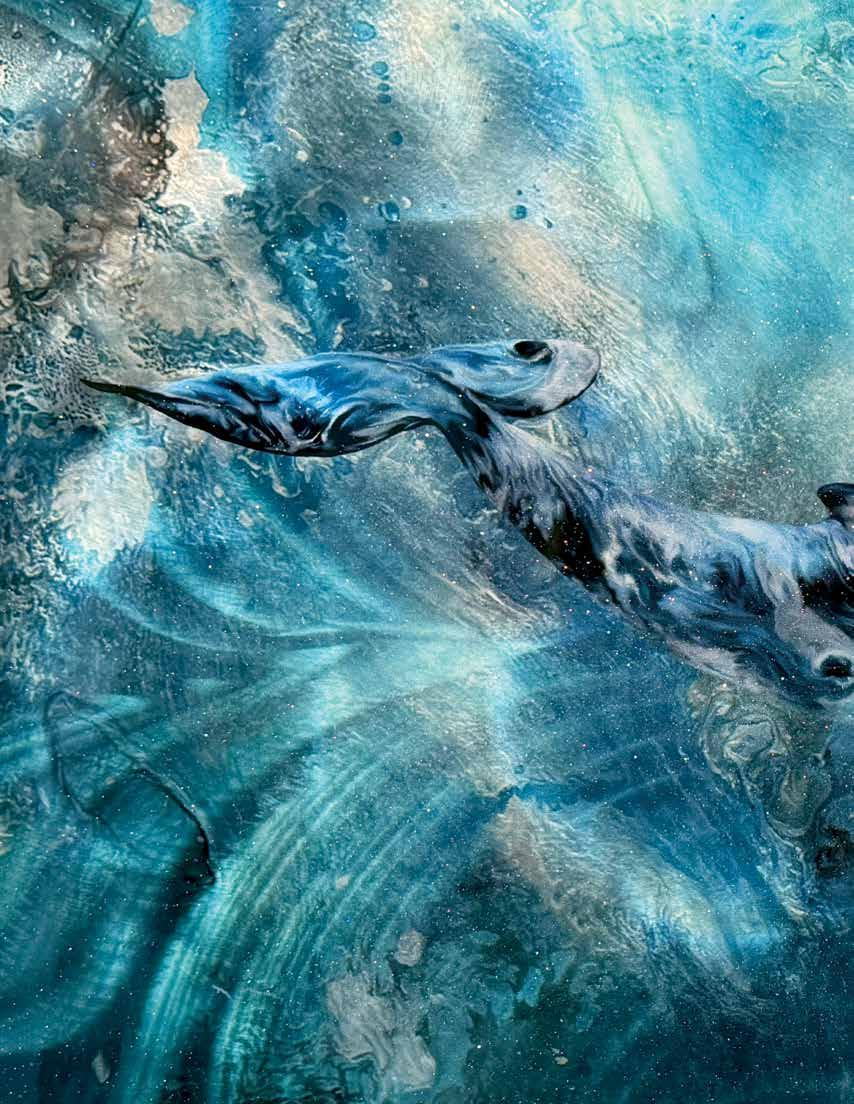
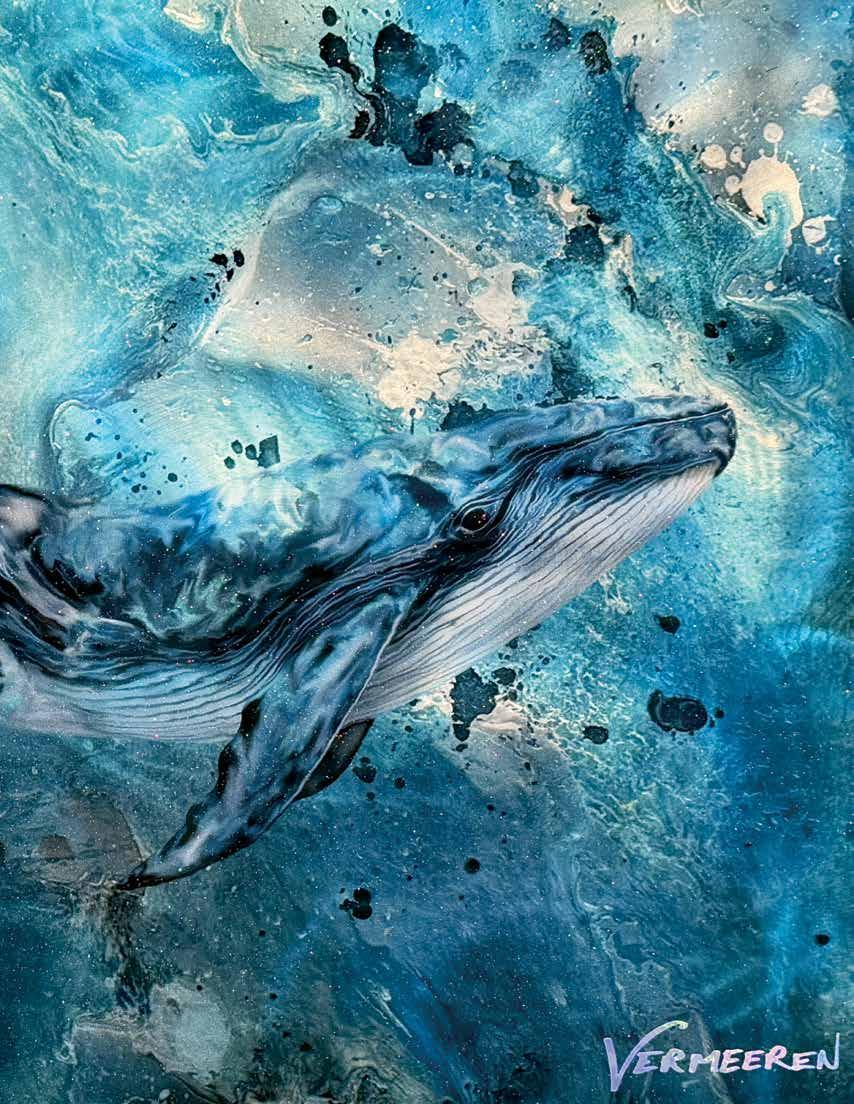
VBF: You could have one painting, you have 50 people looking at it and everybody’s looking at something different. That’s what makes a good abstract. Tell me about Monstro , the whale.
JEFF: I wanted to create a piece that was so powerful but gentle at the at the same time. There is something so majestic about
“I’m blessed enough to be able to create and share my talent with the world.”
water. It really pulls you into the world below the surface.
VBF: You really get the emotion of that beautiful creature. It looks very maternal.
JEFF: Totally. That’s something I wanted to try. Water and fire are still my two favorite things to paint. It’s always neat to see how they come out different. But once you get into water you can explore the motion, the colors, the energy and the beauty of the subject matter comes into play.
VBF: They all work together with the sum being greater than the parts. Speaking of sums, from the looks of things, you seem to be one of the most collectible young artists of this period of time.
JEFF: Anybody can make money, Victor. But at the end of the day, when you can touch someone’s soul, that’s worth more than anything. That’s why I am where I am, because I’m not chasing the dollar on this game. I’m blessed enough to be able to create and share my talent with
the world and I get to see it and share it with people that are in front of me. This is happening in real time, not in 20, 30, 40, 50, 100 years.
VBF: And you get to travel the world.
JEFF: And I get to travel the world and see everybody. But don’t get me wrong. I like getting paid. I like to eat just like everybody else, but that’s not my driving force. I found an industry that is about more than just myself. At the end of the day, we’re all the same and if we treat each other well and with kindness, this world’s going to be a better place. Now I’m chasing being able to share good. Being able to give positive to the world. And that’s what I think, that’s why it’s taking off. That’s why I think I’ve got here. You don’t need to put this into the interview but I had a really neat experience recently. Now you know we’re Christian. I was at one of my shows and having a really amazing time, visiting with people and out of the corner of my, I saw this lady. She’s probably about 60, sitting at a table
staring at me while I was visiting with people. Toward the end of the evening where people were kind of dissipating, she came up to me and said, ‘I wanted to tell you something, and I don’t want you to take this the wrong way. I’m watching you and the way you talk to others and treat people. It reminds me of how Jesus would have taken the time and loved everyone. And you can take that any way you want.’ I looked at her in her face and she was starting to tear up and I said, ‘That is the nicest compliment I’ve ever received.’
VBF: That’s an amazingly beautiful and potent compliment.
JEFF: And, you know, Victor, when you hear something like that, it makes me want to go home and paint and put my passion and love into it.
VBF: And it’s working.
JEFF: It’s working and it’s also nice because I’m not focused on the whole money thing. I’m focused on creating something that is going to bring joy to somebody. Multiple people, forever.
VBF: That’s pretty great. You’re still in
your 40s, right?
JEFF: Yeah, I’m 44. I got a little bit of a road still to go and we’re going to break some ground. We’re gonna make it crazy. We’re going to have so much fun and I want people to feel who we are. I’m working with the Board of Salt Lake City, Utah for their 2034 Olympic Winter Games so I’m hoping that I can be a part of that. So we got a few fun projects with that going. I’m just getting started, Victor.
VBF: That’s the beauty of you Jeff — that you are the same person we met all those years ago, friendly, kind, seriously funny, grateful and still on the rise.
VBF: You’re a true follower of Christ because what did he do?
JEFF: He went about doing good.
VBF: That’s right. Hallelujah for that.
Caption for Flag image at right: “Let Freedom Ring” To all of the brave men and women who have served, who are serving and who are going to serve to give all of us our freedom.
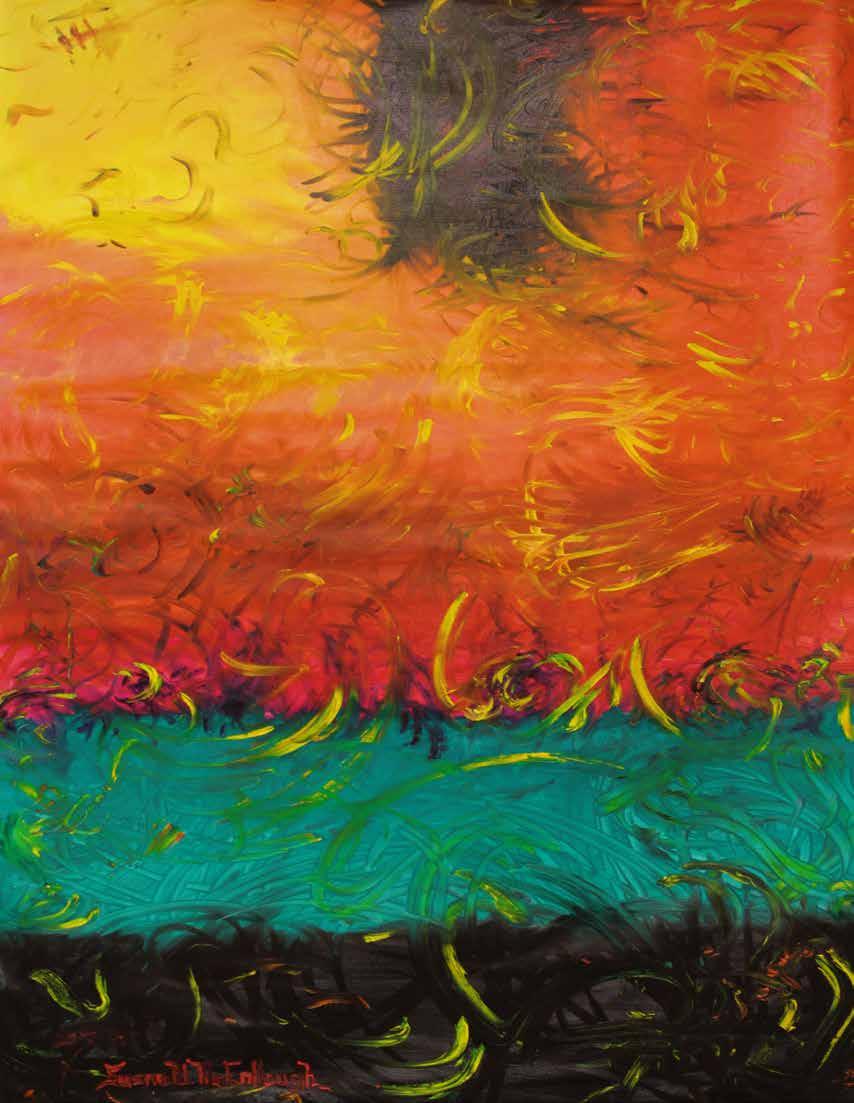
SUSAN N. McCOLLOUGH
“A Free Spirit In Life As In Art”
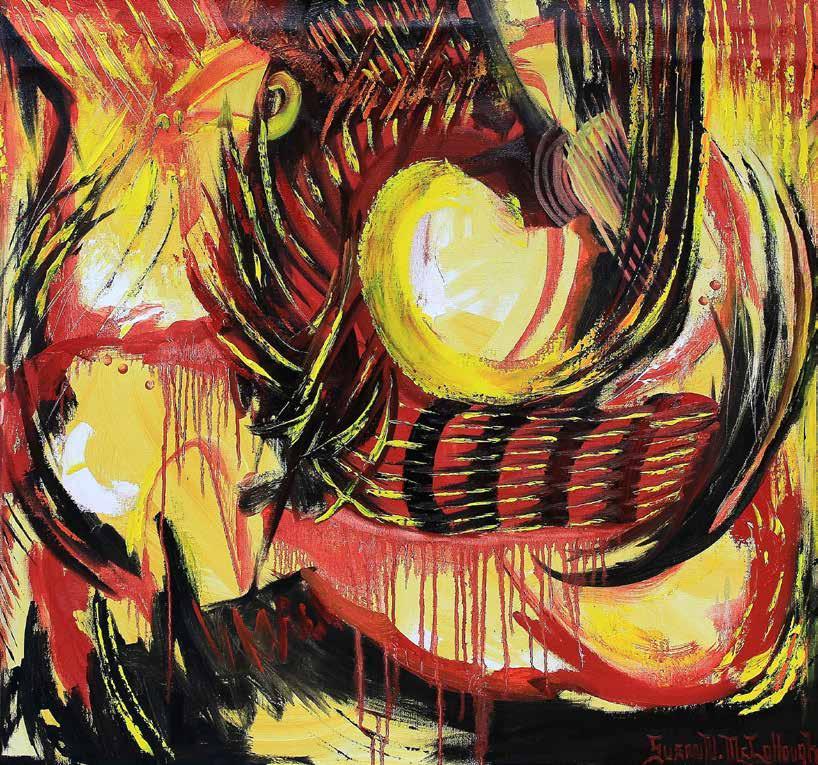
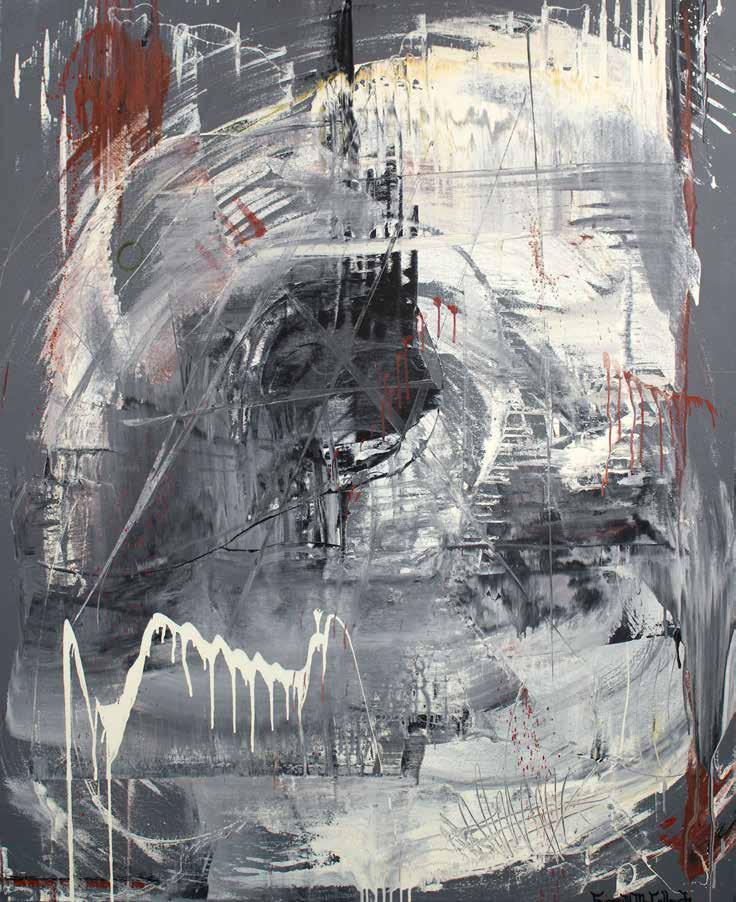
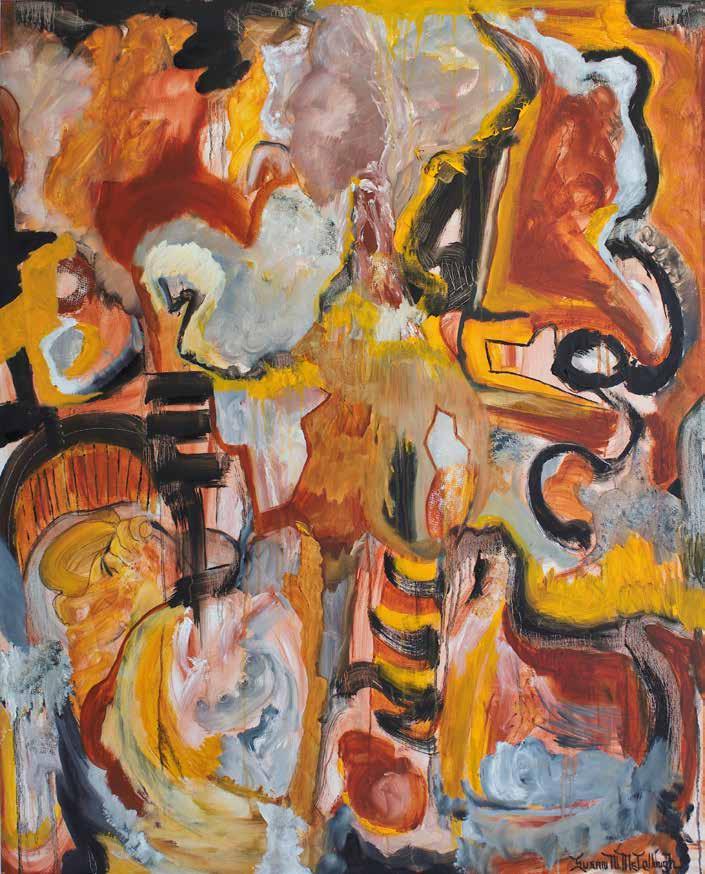
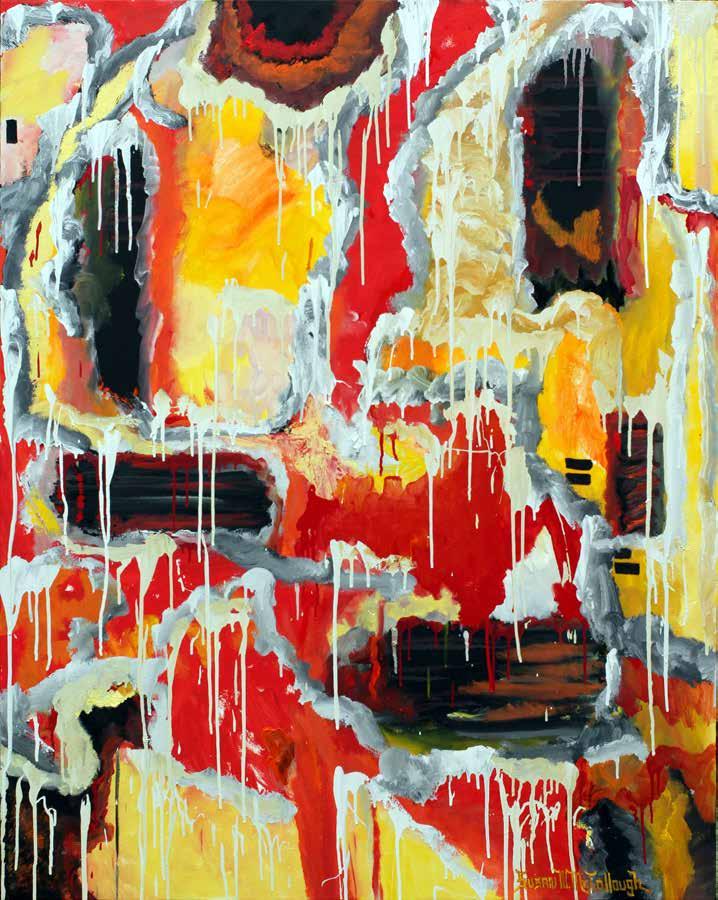
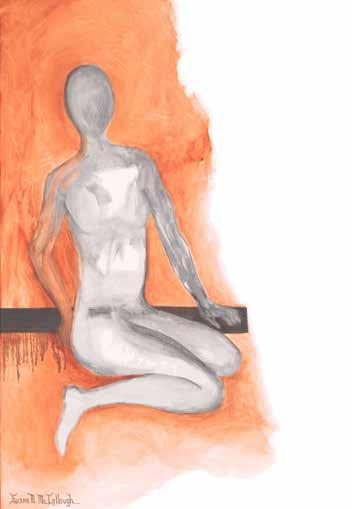
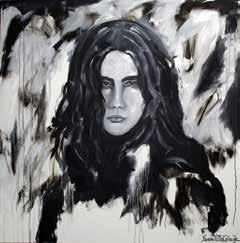
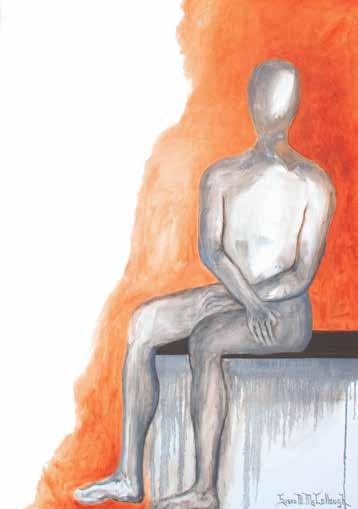
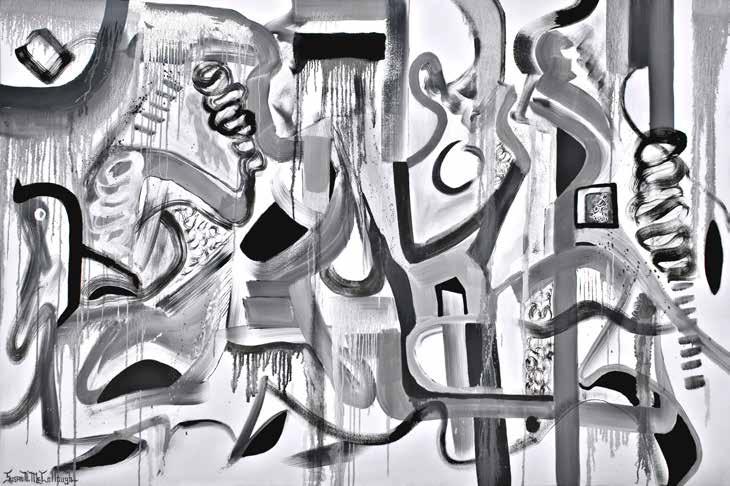
“Susan N. McCollough is a multi-faceted, international artist who captures the essence of her emotions on canvas, reaching deep within her soul. You feel the emotions from canvas to canvas and your mood quickly changes. Bold color schemes of intense hues create excitement unrivaled as you absorb her originality and uniqueness. Spontaneous movement, expressed translucency, veiling of sequences, flickering gold, goes beyond description and can be enjoyed independently of content. She has mastered Contemporary Art. Susan lives and works in Gulf Shores, Alabama where her gallery and studio are a major part of her life.”
Kay Daughdrill, Exhibitor/Florence Biennale 2005, Curator/American Sport Art Museum and Archives, Daphne, AL
By VICTOR BENNETT FORBES
Susan N. McCollough is a classic example of an anomaly. Born in the Borough of The Bronx, New York City, her family moved south when she was six years of age. She stepped quite naturally into her destiny as a classic Southern Belle without compromise. A collegiate beauty queen at the University of Alabama, she met a handsome football star who played center on a national championship team coached by the legendary Bear Bryant with all-time great quarterback Joe Namath. Today E. Gaylon McCollough, MD FACS, is an internationally recognized and board-certified surgeon and teacher. The founder of The American College of Rejuvenology and the McCollough Institute for Appearance and Health, Dr. McCollough has been recognized as one of the preeminent doctors in America and is author of 28 books. A graduate of Dothan High School, Susan was crowned
Miss Dothan High School, Class Beauty, School Beauty, Homecoming Queen, Dothan High Key Club Sweetheart and a majorette for DHS Marching Band, Outstanding Twirler at Florida State University Twirling Camp Susan was also honored as Alabama’s State Key Club Sweetheart.
She also participated in the Miss America’s, Miss Alabama State Pageant and emerged in the top five. As the State of Alabama’s entry in the Miss Alabama International Beauty Congress, Long Beach, California (which became the Miss Universe Pageant), Susan finished in the top 15 in the Miss USA pageant and won an acting scholarship to Playhouse “90”, located in Los Angeles, California.
In 2020 ATI recognized her as one of its ART TITANS – Masters of the New Era documentary series. She received the award in New York in 2023. The documentary, “Art Titans –Susan N. McCollough, A Journey of Inspiration,” is available
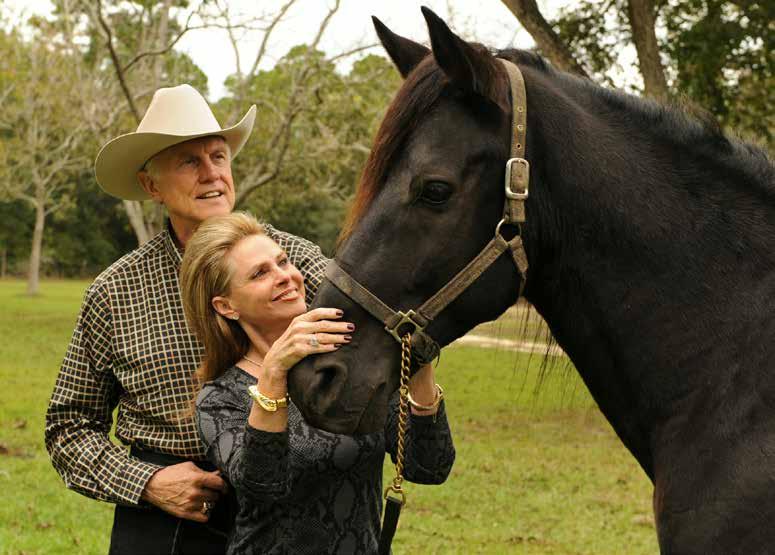
Dr. E. Gaylon McCollough and Susan N. McCollough with their stallion, Sonshyer
on Vivid Arts Network and Roku.
While femininity, charm, beauty and elegance abound, there is a streak of old time Bronx confidence evident in her paintings as in “you can take the girl out of The Bronx but you can’t take The Bronx out of the girl” to paraphrase Lynyrd Skynyrd’s Ronnie Van Zant (substitute “Dixie” for “Bronx” and “boy” for “girl”). The combination of tenderness and power manifests in a vibrant collection of art, a body of work that she considers “a labor of love, fun and exciting with every brush stroke.” Susan’s palette is varied yet consistent — a distinctive array of colors and compositions mining depths of Abstract Expressionism, Surrealism and Color Field with a strong sense of the Fauves mixed in to create art that excites the senses while stimulating the mind.
The finished paintings bring to mind the reds of Rothko, the blacks of Franz Kline. The sun-kissed yellows merge into a subject matter soft and strong, some reminiscent of Dali yet all retaining an originality that can only come from the heart, mind and soul of a confident artist. Susan is a combination of magician and construction worker. Her forms appear out of the nowhere and into the here whether they be portraits in charcoal
or phantasmagorical splashes of pure imagination with all kinds of subtleties hidden within. The melding of opposites — this anomaly — results in masterful representations where form, subject matter and color are both comforting and challenging, leaving a viewer to wonder what was she thinking/feeling when she painted that. We may never know and actually, it is of little or no importance. She paints with a fiery disposition like a Maestro leading an orchestra or Muddy Waters leading his blues band. Tempos change, volume is raised and lowered, lyrics scowl and smile. Messages come charging off the canvas, vibrating through the ground and air. Put your ear to the floor and like Tonto, you too will hear the galloping horses on the trail. Then there is the softness of golden silence. The longing for a peaceful world amidst the maelstrom of life which in her art is a natural process.
“The mind of this artist, a beautiful artist with a beautiful spirit, knows no bounds,” states Salvatore Russo, International Art Critic and Curator, Rome, Italy, “Fingerprints on canvas. Signs of the soul. Refined storms of light. Storms of color fall down against human injustices. The paintings of Susan N. McCollough go beyond the hedge to reach the infinite. An infinite that corresponds to a large cultural refinement that characterizes each of her works.”
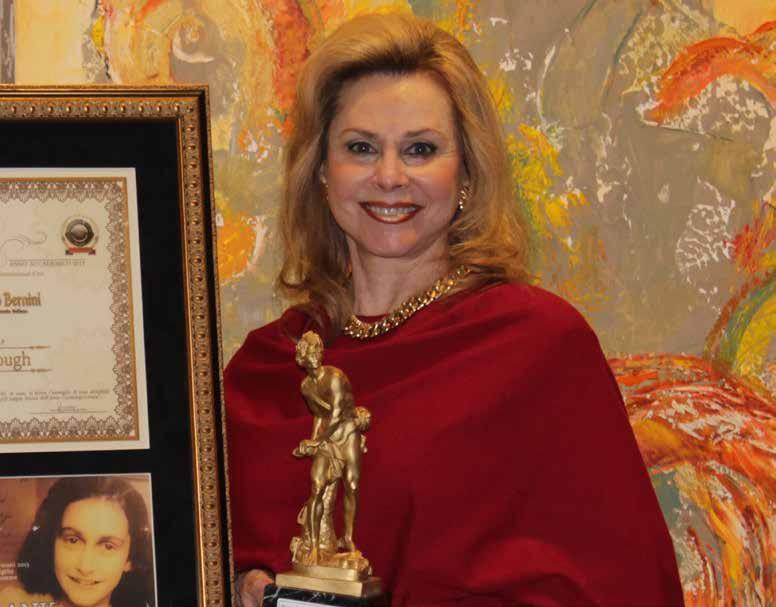
Susan N. McCollough received the “SPECIAL PRIZE FOR HUMAN RIGHTS IN 2015 TRIBUTE TO ANNE FRANK” awarded by The Associazione Culturale Accademia “Italia in Arte Nel Mondo in Lecce, Italy.
MORE ABOUT SUSAN & Dr. McCOLLOUGH
Susan served on the Art Committee and as a member of the Board of Trustees at the United States Sports Academy for more than 16 years. The USSA attracts and honors artists from around the world and is solely responsible for selecting featured artists for the Artist of the Year Award. She now serves on the committee as Artist Emeritus and on the Academy’s Board of Trustees as Board of Trustees Emeritus. In June 2024, Susan received an Honorary Ph.D. from the esteemed United States Sports Academy for her work in the arts and as a member of the Board of Trustees.
In 2023, Susan became co-benefactor of the University of Alabama’s “The Susan Nomberg McCollough Fine Arts Initiative”. The Initiative is an international contemporary art exhibition and conclave that will be held every two years on the campus of and at galleries affiliated with The University of Alabama. It is supported by Mrs. Susan Nomberg McCollough and Dr. E. Gaylon McCollough for the sole purpose of creating a venue by which to feature University of Alabama art and artists. The initiative will showcase artists and provide them with a platform to exhibit their work, connect with potential buyers and collectors, and interact with fellow alumni and leading art professionals on a regional, national, and international scale for years to come.
Susan and Dr. McCollough are also co-benefactors of the University of Alabama’s “McCollough Institute for Pre-Medical Scholars,” a one-of-a-kind academic initiative designed to prepare “tomorrow’s phenomenal physicians” for the road ahead.
She is a member of the Women’s Art World organization in Marrakech, Morocco. The WAW’s mission is to bring together and promote Women’s Art in a world of different cultures, languages and art. Today there are 20 countries and 35 artists represented in Women’s Art World. Susan is also a member of ICAF (International Culture and Arts Federation) in Seoul, South Korea; NOMA (New Orleans Museum of Art) in New Orleans, Louisiana; BMOA (Birmingham Museum of Art) Birmingham, Alabama; MMofA (Mobile Museum of Art) in Mobile, Alabama; Metropolitan Museum of Las Vegas, Las Vegas, Nevada; MOMA (Museum of Modern Art) New York City, New York; MMOA (Metropolitan Museum of Art), New York City, New York and DMA (Dallas Museum of Art) Dallas, Texas.
“OF HEAVEN AND EARTH”
This is the name of the wonderful art piece I have been so lucky to acquire from Susan N. McCollough. After several trips to Susan’s Gallery, I fell in love with all her work but especially Of Heaven And Earth and wanted to bring it home. This painting drew me in from the start. Her unique strokes of color and use of varied composition take our minds to places that stir the imagination. I see something different every time I look at it, so it will forever be fresh, new, and exciting, just as Susan’s gallery is. I often visit to get a glimpse of the new paintings she has created and talk with her about ideas that might become reality on the next big canvas. She always gives us an adventure in art no matter what subject she paints, and I look forward to seeing what her colorful strokes bring out next. Susan is a great friend, mentor and inspiration to my own work.
We are so proud of her talent and wonderful success nationally and in the international Art world and I am very proud to say Of Heaven And Earth is going home with me, where it belongs. Thank you, Susan.
– Maria M. Bastin Gulf Coast Arts Alliance Gulf Shores, Alabama
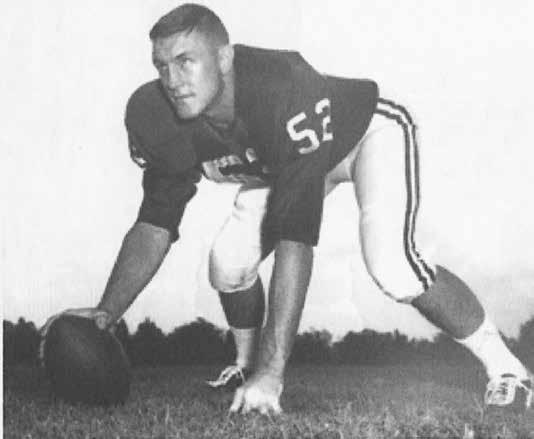
Gaylon McCollough, University of Alabama offensive Center, 1962-64
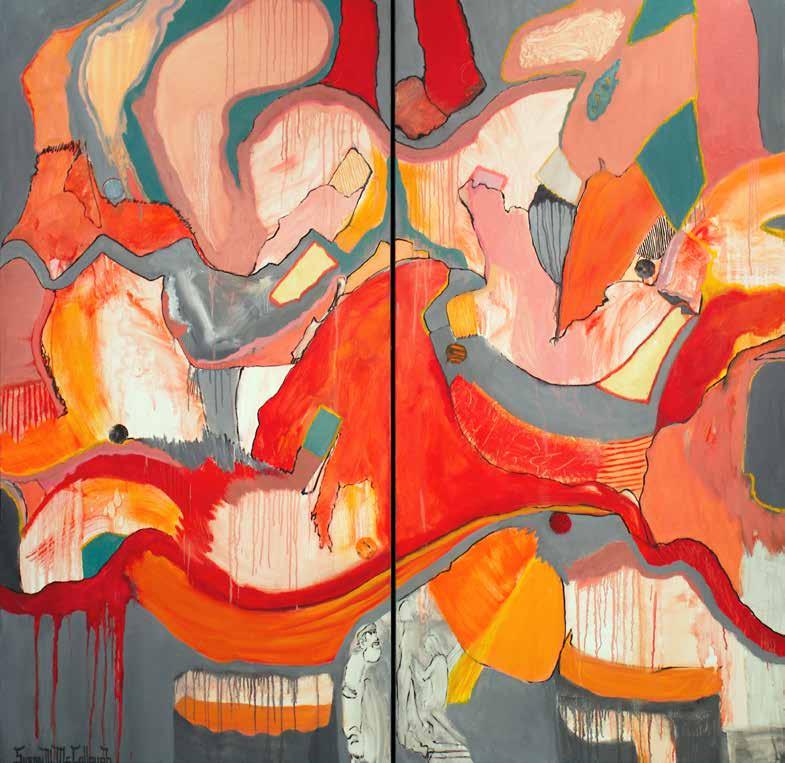
OF HEAVEN AND EARTH, Oil on Linen, 44” x 96” 2016
COUNTERPART 1 & 2, Diptych, Oil on canvas,36” x 72” each
“I find it all a labor of love, fun and exciting with every brush stroke I take.”
In Susan’s blend of abstractions with reality, one imagines the artist must go through some serious work and thought to get to that particular point. Words fall short in describing such a process. “It’s been very difficult to describe it,” she told me in a recent interview. “I’ve been painting for many years and a lot of the galleries and museums always say that when someone looks at your work, they should know immediately who painted that painting. I wrestled with that concept for many, many years until I had a breakthrough and understood I’m just not one of those people… that’s not how I work — that’s not how my mind works anyway.” Either way, the paintings have a distinct style and connection to each other and when people view them in the continuum, they do all pertain to each other, they carry a theme through them somewhere between power and longing. So there is no specific genre in which to place these works other than a new one, “Susanism.” Why not? Continues the artist, “Maybe it’s coming through, but not as you know it was meant to be. Early on, I would dream my paintings or when I was in that in-between stage of a thought and trying to sleep — I know it sounds a little strange — but once I got into that realm, I learned how to keep myself in that moment of falling asleep and being able to finish the painting in thought. I did that for many years and now I don’t do that as much, but when I go to my studio, I always know what colors I’m going to use and they’re very strange, too, because I put colors together that normally maybe shouldn’t go together, but by the time I finish the painting it all works.”
“I have never thought about why I paint. If I go back in time it would be like most children. I started trying to draw the heads or pictures they tell you in the back of magazines and it would say ‘Draw Me! If you have an interest in drawing Enter this Contest.’ I would always do the drawing, but never thought about entering. Then I would draw pictures out of the encyclopedia. Then I noticed my Mother had an interest in art. Later in life she took lessons but mostly she was self-taught. I continued to draw and there was always an influence of art in my home. It wasn’t until my freshman year at the University of Alabama that I took an elective art course. It was ceramics with Frank Engel. After that I took every art course I could. I almost double majored in art without even trying. I married; I painted. I worked; I painted. I had children; I painted. I traveled; I painted. I guess I always came back to painting.
“I was fortunate early on to have sold every painting that I painted. I might have saved one or two because I did not want to part with them and even this year I let one of those go. I never took great photos or kept any real records, just scattered here and there with a voice always saying, ‘Susan, you must keep better records.’ My Mother kept track of everything
that I sold. I now treasure her handwriting and the names of paintings we would come up with and who purchased them, all in her beautiful handwriting. At ninety-two, my Mother Dorothy (Dottie to her close friends) passed away but her journals are irreplaceable.”
Starting a new year in 2025, Susan closed her gallery and moved from The McCollough Institute to new quarters in Gulf Shores, Alabama at the MacLand Ranch. The opening exhibition was titled Past and Present . Most days you will findthe artist at work in the studio, where she continues to sculpt, paint, and exhibit her art. “It is a new endeavor,” continues Susan, “and one that now, in this time in my life, just seems to make sense. My father Max was 100 years young in February 2017 and passed away in August 2017. He used to go into the Gallery with me every morning and open-up and close it in the evening, but he said that he was going into retirement. My husband Gaylon and I decided together that this was a long time in coming. I have always just painted for myself and for commissioned pieces. Early in my career I would enter shows but not recently until now have I begun to do more paintings and more showings and enjoying it more,
MYSTICISM, Acrylic on canvas, 60” x 48”, 2021
“Before I paint a new canvas, many times I will envision painting it as I fall asleep and I work it out in my head until I know the direction I will take the next morning. Sometimes I do not wait till the next morning.”
I guess because I can. I paint from the excitement of the blank canvas. I paint with freedom of inner-feelings, movement, connection of space, combination of colors, playing with negative space until it all speaks to me. My ideas come from so many things that just fill my head all the time. They come from our travels, the faces I see, the natural works of nature and creations of mankind, the architecture, the people we meet and mostly the feeling I get just waiting to start a new canvas. I look at things that are realistic in nature and change them into abstract paintings. I’m trying some of these abstractions with reality.”
Noted art critic and art historian Sabrina Falzone of Milan concurs. “Susan N. McCollough’s Landscapes of the Unconscious is an artistic research that opens new creative scenarios, comparable to chimeras of the unconscious and evocative as unexpected windows of the soul…turning towards a dreamlike language of great visual impact. The American artist manages to find her personal style to express her own inner world... The passion and the impetus of the pictorial gesture is witness to, above all, a viable artist’s temperament that expresses itself with spontaneous freedom.”
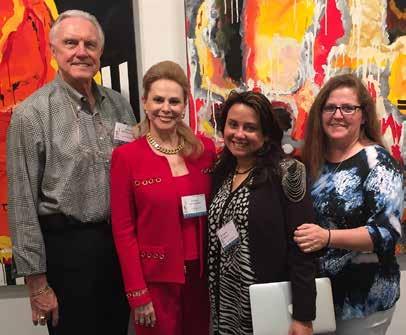
Dr. E. Gaylon McCollough, Facial Plastic Surgeon, husband) Susan Nomberg McCollough, Artist; Viviana Puello, Editor and CEO of Art Tour International Magazine; Michelle Jordan, Assistant Director of The Susan N. McCollough Gallery/Studio at Artexpo, New York City
INTO THE WILD, Oil on canvas, 88” x 64”, 2021
ABSTRACT 2020, Oil on canvas, 48” x 72”, 2020
LONDOLOZI, Acrylic on canvas, 48” x 60”, 2013
CONNECTING SOULS Oil on canvas, 72” x 48”, 2025
ILLUSIONARY JOURNEY, Oil on canvas, 48” x 74”, 2016
THE GUARDIAN, Oil on canvas, 45” x 63”, 2015
INTERDIMENSIONAL PERSPECTIVE,
Oil on canvas, 60” x 72”, 2024
“A leap in a world in which colors move everything. Intense and brilliant, the chromatic structure of this painting gives the observer the key to read the real meaning of it and get connected with the artistic aim of the painter. Opposite feelings and emotions are the leitmotiv of the pictorial aim of Susan N. McCollough, a free spirit in life as in art, an artist who shares the colored ocean of her soul with the spectators, who are not only passive observers, but active part of the creative process of this painting. A well balanced abstraction of eality and a good imaginative language.”
– Sandro Serradifalco, General Director, Effetto Arte Magazine, Palermo, Italy
On Friday, July 18, 2014, we had the pleasure of attending the Gala Reception at the Marx Library on the USA campus for Susan N. McCollough. Viewing Susan’s extraordinary creations spanning over 30 years, we perceived the depth and breadth of her influences, the focus and discipline of her research, and we felt her joyous explorations into the ART WORLD. Her works are beautiful, impressive, and inspirational like the artist herself. The show documents her progression as an artist and communicates her love and passion for painting, living, and giving. The Galaxy Series is a special gift... It is Glorious! Susan’s “The Eagle Nebula” is literally breathtaking. A magnificent masterpiece that transcends SPACE and TIME! Like all the great global masters, Susan creates, “The ART of the Possible, the True and the Beautiful.”
— Sandra Diane O’Conner
Page Global Motionist Master Painter
Co-Founder Global Motionist Masters ART Movement
Winner of the National Art Teacher of the Year Award with similar awards in the State and region.
STAR FIRE, Oil on linen, 35” x 38”, 2016
Susan N. McCollough’s exhibition at Pensacola State College’s Anna Lamar Switzer Center has been well-received by the community with steady daily attendance and well over 200 guests for the artist’s reception. The paintings and sculpture on display represent a cross section of Susan’s vast talent and interests. There is a connection between the works that becomes evident upon seeing them in this venue. Although the paintings are separated by time, their cohesive compositions make this exhibition a must see for anyone who enjoys abstract and impressionistic art.
– Vivian Spencer Director/Curator, Switzer Center for Visual Arts
WILDFIRE, Oil on canvas, 40” x 50”, 2024
INTO
Susan N. McCollough’s work is difficult to peg. She has her own namesake gallery in Gulf Shores, Ala., where some of her breezy abstract paintings fit right in with the coastal lifestyle. The acrylics and oils are fairly large and command attention with their kinetic fields of scratchy lines, arcs, rings and stripes. — Mike Roberts July 2, 2015, “Pensacola News Journal”
MELTING
SPRING, Oil on canvas, 48” x 60”, 2015
“May your works, Susan, travel to many continents and your art be recognized for all the value and intent you put into each painting. You make us travel in magical lights and according to your canvases we feel all the love you put inside. Your creations are wonderful and we have so much fun to watch them. We will always be unalterable on your works because we feel all the intensity that you put there.”
Michele Matray art agent art cubisMe sculpture lyon, France January 2017
FIGURATIVELY SPEAKING I * II, Diptych Oil on Linen 45” x 63”
UNTITLED 508, Oil on canvas, 72 x 48, 2024
FOCUS, Oil on canvas, 48” x 48”, 2018 (Insert)
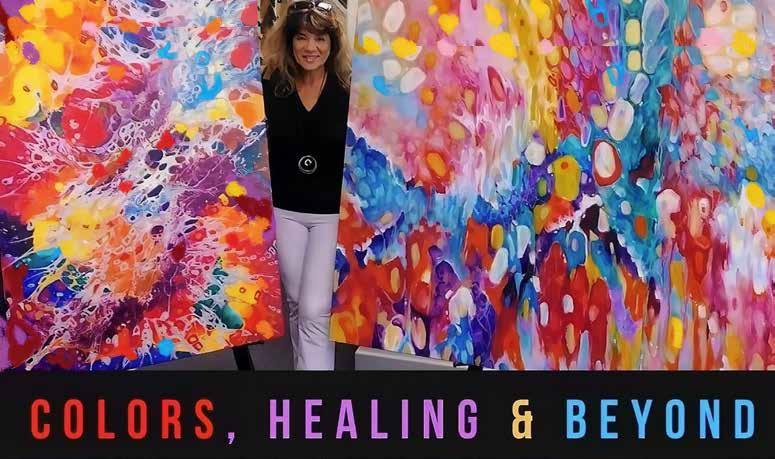
A scientist, psychologist, holistic therapist, artist, author and pioneer in intentional creating art for healing, to say that Helen Kagan, PhD pours her heart and soul into every painting would be an understatement. She expresses her belief in the inter-connectedness of mindbody-spirit in art as a catalyst for healing individuals, society and the environment. Her powerful paintings are a testament of her theories in action. Quotes the artist: “I agree with Picasso who said, “Art washes away from the soul the dust of everyday life.”
Forging a path intertwining Fine and Expressive Arts with the Art of Healing, Kagan combines certain frequencies of color, positively charged intention, embedded spiritual messages and energetically balanced composition. The resusltant works of art are stunning — at first by their powerful colors and then, on close examnination, by the sheer volume of paint occupying every inch of canvas. They are intentionally designed to exude power. Just as beauty is in the eye of the beholder, healing is in the heart of the healer and the “healee.” It’s a true interaction of energy from a vessel of harmony, light, color and as the artist admantly states, gratitude.
By VICTOR BENNETT FORBES
HELEN KAGAN Visionary Healing Artist
Helen has been developing and practicing her unique, trademarked concept of “HealingArts” as a vehicle for emotional, physical, mental and spiritual well-being to enhance healing for those in need of assistance on any one or more of the levels just mentioned.
Over the course of many years, many worlds and many art fairs, it can be fairly stated that Helen’s passionate works shine live vibrations of bright colors, heavy textures of paint and a charisma of high energy from an unnamed source of pure purity. In person viewers can feel a sense of peace and hope and even from these pages. Helen’s work is internationally recognized with enthusiastic collectors enjoying the multiple benefits of possessing an original Kagan.
Following is an interview with Helen Kagan specifically for our 50th Anniversary Golden edition
“My Life Journey, in general, is about resilience, survival, determination,
and a quest for Freedom. Creativity and Self-expression, Faith and Gratitude, and intentional Evolving (thanks to multitude of challenges!) have not been just abstract concepts, but very realities of my Journey. My quest leading to this profound understanding was not linear, to say the least. Growing up in a Communist State of what then was the USSR, where oppression and control were a daily reality, formed my beliefs, values and a great respect for freedom to express yourself. I immigrated to the US as a refugee, with very limited luggage allowed. I brought my Jewish heritage, three graduate degrees, zero English, one hundred dollars, two small suitcases, and an unending thirst to explore the World and its meaning.
Coming from a family of scientists, I was curious about the left/right brain synergy which led me to study mathematics and science and then to psychology, therapy, healing and fine art to arrive at my destiny to create my unique venue HealingArts™. As a refugee from Russia, my art reflects an existential view on life, a desire to bridge Realities and heal the Past. The further I am on my Journey, the more I evolve, the more my art ascends to higher vibrations
and reflects higher dimensions of being. Communicating on subliminal levels it delivers Love and Healing through positively charged intention, healing frequencies of color, embedded spiritual messages, sacred geometry, and energy balance, which brings you in touch with your own Quest, and facilitates your own healing Journey.
I believe it is critically important for a Visionary artist to have a strong and unique message we communicate to others. A message that can touch people’s Souls, uplift your Spirit, and warm your Heart. This is how I understand the Purpose and Mission of my HealingArts™.
What inspired you to pursue healing art as your life’s work?
As a Healing Artist and a ComplexPTSD survivor who dedicated my life to helping others, I believe it is my Duty, my Vision, Mission and Purpose to create
art for healing, especially in our trying times, amid Worldwide multiple crises, wars, fear, pandemics, anxiety, stress and uncertainty. I envision bringing my unique “wearables”— colorful designer clothes and homeware — not only to individuals to enjoy wearing and/or using these beautiful creations at home, but to create and bring various items of hospitalware and hotel-ware to HealthCare and Hospitality facilities to make my HealingArts™ available to patients, clients, visitors, guests and staff working long shifts as a vehicle for healing and well-being and to assist in recovery. My work has been proven to also promote joy and happiness by introducing highvibrational experience, meditation and relaxation. My passionate vibrant art is often described as “symphony of colors” and as a vehicle for well-being and is exhibited in multiple venues, national and International Shows, Artsy.net, major
Kintsugi is a Japanese art form of repairing broken pottery by mending the areas of breakage with gold, silver, or platinum. It’s a philosophy embracing the beauty of imperfectioniin which “brokenness” can be transformed into “new, beautiful and valuable.”
Creating Harmony, Series Kintsugi. Acrylic mixed media on canvas 36” x 48”
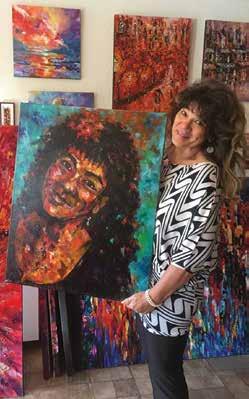
In her studio with self-portrait
ArtFairs (ArtExpo, ArtBasel, RedDot, Spectrum). Helen is reocognized by many sources, published, awarded, podcasted, filmed, and hosted her own Talk Show with BoldBrave TV.
What’s your HealingArts’ philosophy in simple terms? Was there a turning point in your life that deepened your calling?
I believe we are “Spiritual Beings on a Human Journey,” and that art is a spiritual path and a transformational process . I believe my HealingArts brings healing and well-being to everyone in need by serving as a Portal for intentional connection with your True Self, to heal on deepest level, to empower you and bring harmony, love and peace.
There were many “turning points” or rather “Lessons” as I call them which deepened my calling as a healer. HealingArts™ was born 30 years ago when I first practiced healing as a holistic practitioner in New York City. Being a scientist, psychologist & therapist helped me to conceptualize and develop my unique approach, being a healer and artist — to express it in soulful ways to touch your Heart and uplift your Spirit.
I was devoted to creating culturallycompetent clinics for disenfranchised immigrant populations from scratch, with my ‘broken English,’ and zero resources available. I worked three jobs, successfully developed and ran clinical Programs I hosted international delegations coming to learn from my experience and was featured in The NYTimes (front page Metro Section) and on TV & Radio. I developed my healing practice using multiple energy-healing modalities.
I was helping people heal in many different and creative ways, called myself a ‘holistic psychotherapist’ (sounded quite provocative then), my HealingArts blossomed serving people in need, and I was happy doing authentically what I loved. Then I burned out. Completely. That’s when I was picked up by Ambulance from the streets in Manhattan. Soon after that ER episode, my multiple old traumas got re-activated from the amount of stress trying to not only survive, but “make it in America”, by living my Purpose, Vision, and Mission. My complex-PTSD came to bloom
without asking my permission. I had to stop working altogether which was devastating. I was totally crushed, and I didn’t know how to be sick — that was a new “lesson” I had to learn. It was NOT authentic as I only learned how to survive. But I knew I had to bring myself back. I had to get myself back to my “new normal”, whatever it meant.
My HealingArts™ became an authentic source for my own healing which I’ve been bringing to the world since, offering my unique way of healing through art. I do believe art heals, I live through art — it is my spiritual path, transformational process, a way of being. What makes my art transformational for others? The same what it did for me — it creates a colorful sacred space to “feel good.” Synergistically integrating fine art, expressive arts, art of healing, and more specifically healing frequencies of colors, embedded spiritual messages, sacred geometry and energetically balanced composition, my HealingArts™ enhances well-
Helen Kagan, Enchanting Forest. Series Vermont I Love You, Acrylic canvas, 24” x 36”
being, brings love and gratitude to feel authentic, joyful, and alive.
What are your healing practices?
I have studied and worked with so many healing modalities, well-known and those I intuitively created. To name a few: Yoga, Tai-Chi, Qi-Gong, NLP, Hypnosis, Trance-Dance, Polarity Therapy, CranioSacral Therapy, Art Therapy, EFT, Reiki, IM School of Healing (five years), Biology of Trauma, Spiritual Counseling, Sacred Geometry, Neurographics, and a few others.
As a result of my training, practice, and healing gifts, HealingArts™ creates a powerful experience by infusing the space with a captivating spirit and transforming it — both internal and external — by creating a high-vibrational sacred space for meditation and rejuvenation that bridges real and imaginary dimensions. It inspires a sense of wonder and awe while radiating a unique colorful aura, which creates a Portal for intentional meaningful connection with Higher Self to heal wounds on deepest Soul levels. It facilitates your own journey of transformation to a healthier happier
You, and deeper understanding of your TrueSelf. It brings Harmony, Light, Love, and Peace.
Not easily categorized, my work is simultaneously transformational, introspective, vibrant, multidimensional, and healing. A first-generation RussianAmerican, I bring my unique pointof-view, one that conveys depth and understanding of spiritual concepts and messages of the current “real and alternate” turbulent times, of a sensitive Soul, not foreign to the colorful abstraction of contemporary and Russian artistic traditions. My unique art reflects deep existential expressionist emotionality while communicating well-being and creating an enchanting unforgettable healing experience.
What is your vision for the future?
I envision the future of art as a medium for healing and transformation.I believe it is my Purpose-driven Mission to keep creating my life-affirming soulful HealingArts to make a difference in peoples’ lives by bringing colors, healing and hope. After many years of doing other important things while wearing different
“hats”, creating and running clinics for disenfranchised populations, developing from scratch my unique Healing practice, my Higher Self finally “dragged” me to this magic place where I allowed myself to become the Artist I’ve always been. That place in my Soul where I feel Home. That magic place where I created my unique concept HealingArts ™ , then Holistic Intelligence ™ , then ArtSynergism ™ , and WearableHealingArts®.That sacred space where the most important things are Light, Love and Gratitude. I don’t believe in “mistakes”. I believe there are “lessons” given to us to learn, and they will be given again, and again to finally get it what we need to learn on our Journey. Practicing Forgiveness. Knowing your Strength. Speaking your Truth. Learning SelfLove. Embracing Gratitude. We also need to find and define our WHY-s. I am finally clear about my “WHY”. I chose to be an Artist that I was born to be, and that is my Truth. But… it took me almost 30 years to realize that I can’t NOT do it because it is my Truth, because this is WHO I AM.
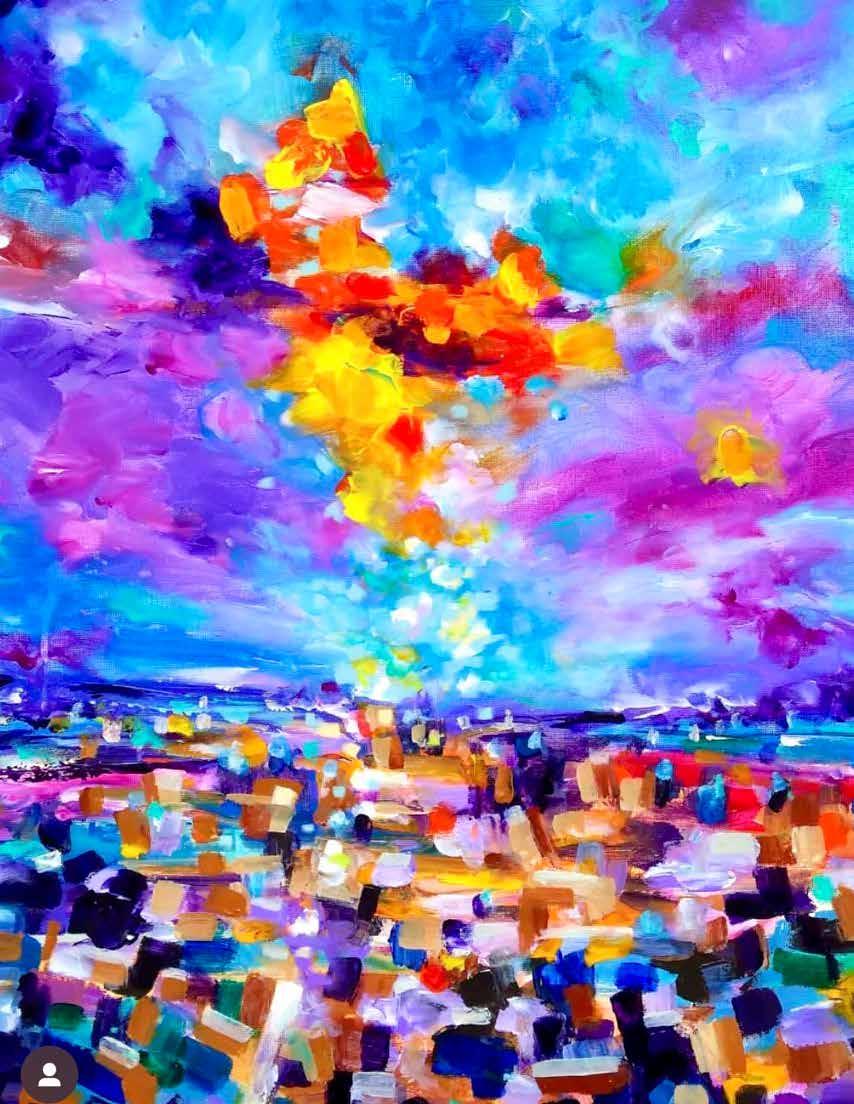
Helen Kagan, Composition #3, Chroma. Series Abstract Sunsets, 36” x 48”
“I am sharing a message of healing and well-being. I believe in Hope, Harmony, Healing. Giving people a chance to believe in themselves, that they’re not broken, and everything can be healed! This is the main Message,Vision and Purpose of my work.” – Helen Kagan
Helen Kagan, In Search Of Meaning. Collection EnergyArt, Acrylic mixed media canvas, 48”x 36”
METAMORPHOSIS. Canvas 1 of a diptych of two paintings 4’ x 6’ ft. each. Says the artist: “This artwork was guided & channeled. I am humbled and grateful for this powerful co-creation! There is a huge Universal Heart pulsating through the Galaxies, embracing and bringing Peace, Love, Harmony, and Beauty to all the world’s religions, people, universes and beyond … It is VERY meaningful.”
“My latest “invention” integrating Neurographics+ Kintsugi in the same painting. This drawing is for “Removing limitations, anxiety, procrastination”.
Finding Harmony in Chaos. Collection Bridging Divides
Helen Kagan collaborated with several other artists creating unique synergistic art works. One of her favorite artists was the late Sotirios Gardiakos (GARSOT). This unique concept created by Helen– Art SynergismTM – is much more than just two artists working together. It gives each of their individual gifts a new dimension, a new way to expand into something greater than just their individual selves. Helen and Garsot painted together, simultaneously on the same canvas, without defined parameters or tasks, being in a freeflow. Says Helen, “We integrated our individual techniques, forms and styles while intertwining, embracing and enhancing each other’s spontaneous colors and movements. Always present in this concept is a beautiful authentic holistic oneness with the Creator-Universe-Source allowing us to be channels for this synchronicity to deliver a colorful, powerful, soulful and healing experience to all.”
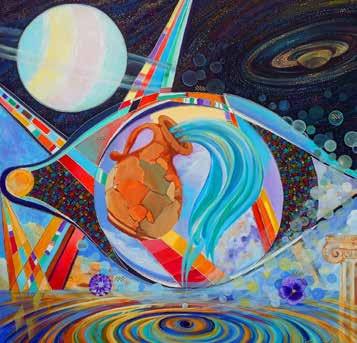
ArtSynergism by HKagan & Garsot. Aquarius Collection Eyes of the Zodiac.
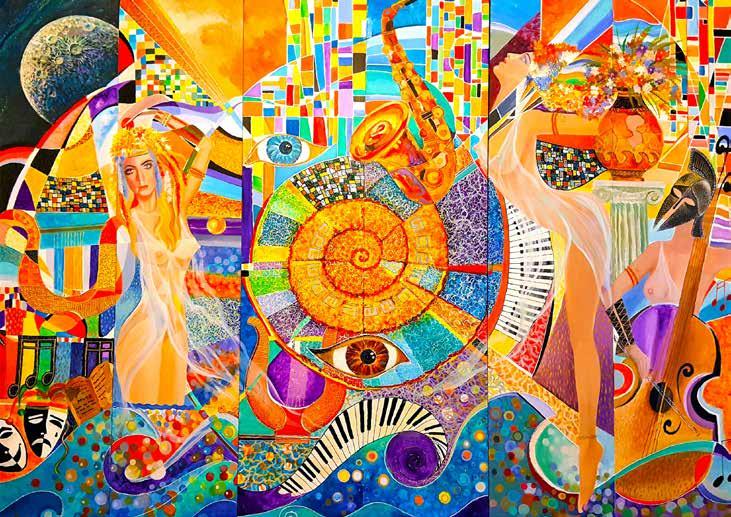
Muses Forever. Collection Muses & Music. Screen 10 x 8 ft (Side 1)
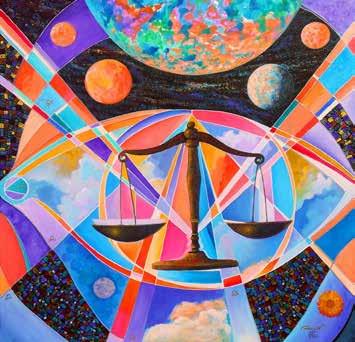
ArtSynergism by HKagan & Garsot. Libra Collection Eyes of the Zodiac.
As war disrupted Europe’s economy and art market—twice in the first half of the 20th century—the United States provided refuge to both European and American artists whose work was revolutionary. After a parade of stylistic “isms” such as Cubism, Fauvism, and Surrealism, artists embraced abstraction as the formal strategy that best suited their artistic purpose and made New York City the international capital of the art world.
As war disrupted Europe’s economy and art market—twice in the first half of the 20th century—the United States provided refuge to both European and American artists whose work was revolutionar y After a parade of stylistic “isms” such as Cubism, Fauvism, and Surrealism, artists embraced abstraction as the formal strategy that best suited their artistic purpose and made New York City the international capital of the art world.
In today's cultural climate, with instant access to anything and everything, a new “ism” would be called a mash-up. That, in the most complimentary terms, is usually reserved for a musical composition when a pair of distinctive styles merge into a combination of the two. For the art history buffs, this energetic and thoughtful application of paint to canvas will be forever known as ArtSynergism, a creation of and by two very interesting and accomplished artists from very different backgrounds. The legendary Greek, Sotirios Gardiakos (Garsot), combined forces with a Russian emigre who is a highly regarded in the Healing Arts field, Helen Kagan, PhD. "This,” says Ms. Kagan, “is much more than just two artists working together, inventing as we go. In fact, this collaboration gives each of our individual gifts a new dimension, a new way to expand into something greater than just our own individual selves.”
In today’s cultural climate, with instant access to anything and everything, a new “ism” would be called a mash-up. That, in the most complimentary terms, is usually reserved for a musical composition when a pair of distinctive styles merge into a combination of the two. For the art history buffs, this energetic and thoughtful application of paint to canvas will be forever known as ArtSynergism, a creation of and by two very interesting and accomplished artists from very different backgrounds. The legendary Greek, Sotirios Gardiakos (Garsot), combined forces with a Russian emigre who is a highly regarded in the Healing Arts field, Helen Kagan, PhD. “This,” says Ms. Kagan, “is much more than just two artists working together, inventing as we go. In fact, this collaboration gives each of our individual gifts a new dimension, a new way to expand into something greater than just our own individual selves.”
Adds Garsot, “It is important to me that art be respected as it has much to teach us. To that purpose, we see ourselves as ambassadors of art for the next generation and all the generations to come. We are following in the footsteps of artists from pre-historic days right through the greats of art history and as we learned from the past, generations to follow will understand through our art what happened today.”
Adds Garsot, “It is important to me that art be respected as it has much to teach us. To that purpose, we see ourselves as ambassadors of art for the next generation and all the generations to come. We are following in the footsteps of artists from pre-historic days right through the greats of art history and as we learned from the past, generations to follow will understand through our art what happened today.”
T his interaction of Garsot and Kagan is greater than the sum of its parts. They create by painting together, simultaneously on the same canvas without defined parameters or tasks, freely flowing, integrating their individual techniques, art forms, styles, intertwining, embracing and enhancing each other’s spontaneous colors and movement. “Always present in this process,” continues Kagan, “is that completely authentic organic holistic Oneness with the Creator, Universe, Source - allowing us to just be channels for this amazing spontaneity and synchronicity.”
This interaction of Garsot and Kagan is greater than the sum of its parts. They create by painting together, simultaneously on the same canvas without defined parameters or tasks, freely flowing, integrating their individual techniques, art forms, styles, intertwining, embracing and enhancing each other’s spontaneous colors and movement. “Always present in this process,” continues Kagan, “is that completely authentic organic holistic Oneness with the Creator, Universe, Source - allowing us to just be channels for this amazing spontaneity and synchronicity.” “As a musician and composer,” notes Garsot, “I am doing the fine art of music. Playing synthesizer and writing material,
“As a musician and composer,” notes Garsot, “I am doing the fine art of music. Playing synthesizer and writing material, I am forever inspired by the muses and this collection reflects that. Right now we are working on a ten ft. long by seven and a half ft. high composition, a double faced screen which we will debut in December at Spectrum.”
SYNERGISM A PROJECT of GARSOT & KAGAN
PROJECT OF GARSOT & KAGAN
ArtSyn erg ism A
Interview with Victor Forbes
How d id you meet and decide to work together?
I am forever inspired by the muses and this collection reflects that. Right now we are working on a ten ft. long by seven and a half ft. high composition, a double faced screen.”
How did you meet and work together?
We met several times in the last few years showing together in different galleries and exhibits and liked each other’s work. We thought of perhaps doing one painting together just to see how it could go. Finally, in March 2016, when circumstances allowed, Garsot drove to my Studio (a 100 miles away) and we did our first Muse. It was easy and joyful; totally spontaneous with no prepping. This became the beginning of our “Muses and Music” Series... as well as our ArtSynergism concept.
What is the concept of “ArtSynergism”?
We met several times in the last few years showing together in different galleries and exhibits and liked each other’s work. We thought of perhaps doing one painting together just to see how it could go. Finally, in March 2016, when circumstances allowed, Garsot drove to my Studio (a 100 miles away) and we did our first Muse. It was easy and joyful; totally spontaneous with no prepping. This became the beginning of our “Muses and Music” Series... as well as our ArtSynergism concept. What is the concept of “ArtSynergism”?
How does it relate to your work in other fields and in your current and past art work?
been used or referenced in Fine Art. Therefore I can say that while collaborating on our new “Musical” Series we are developing a new perspective, a new movement. How does it relate to your work in other fields and your current and past art work?
It feels like I am living my dream! Being a scientist, holistic practitioner and ar tist (in that order), I’ve been creating and developing various projects bringing the Art Synergism concept into whatever I’ve been doing. Always. Since 1998 I’ve been developing my “Healing Arts” venue integrating Arts of Healing and Fine Art. “Synergy” experience is something universal for me. It is how I understand my Purpose. Collaborating with Garsot is very special – it feels as if we were meant to create art together –this is how smooth, beautiful, and healing our synergistic process is!
Where can we see the next ArtSynergism exhibition?
The concept has Greek origins (synergos), and I thought that it’s just a perfect description for what we do. “ArtSynergism” as a concept, has not
T he concept has Greek origin s (synergos), and I thought that it’s just a perfect description for what we do . “ArtSynergism” as a concept, has not been used or referenced in Fine Art. Therefore I can say that while collaborating on our new “Musical” Series we are developing a new perspective, a new movement.
It feels like I am living my dream! Being a scientist, holistic practitioner and artist (in that order), I’ve been creating and developing various projects bringing the ArtSynergism concept into whatever I’ve been doing. Always. Since 1998 I’ve been developing my “Healing Arts” venue integrating Arts of Healing and Fine Art. “Synergy” experience is something universal for me. It is how I understand my Purpose. Collaborating with Garsot was very special, as if we were meant to create art together. Our synergistic process was smooth, beautiful, and healing!
The first “official” show was scheduled for December 2015 at a We had a big gorgeous booth at S PECTRUM ART BAREL Miami. Everyone experienced a contagiously joyful vibe of our brand new “Muses and Music” Series.
the past, Impressionists, Expressionist s Matisse, Klimt , of course, Scientist over 500 belong to the man who definitely his the in many when two a large taking turns, day - one, creative without negotiation flow of while styles and painting. It is a creative each of our new way than just will enjoy in the artworks will bring more people general. artist, my relationships relationship with ones, and enjoying is very who’s been Surrealism”
creating my “Healing Arts” for many years…It is no accident Garsot and I created “ArtSynergism.”
How do you devise your paintings and what is the depth of your interaction?
One day we just started to paint together, without big preparations or long discussions about who does what, when, and how, we just took a large canvas, paints, brushes and got to work! We each had our own sets in the beginning, then we started to pick up each other’s stuff. Now we share everything — paints, brushes, etc.
Who has the last word in your collaboration?
There’s basically no questions of “what to do” or how, when, where, or who has the last word. It is often Garsot simply because I respect him being older and more experienced, but this amazing creative synergistic process does embrace both of us, and the “proverbial” holistic Oneness is so strong that I feel we are just being channels for this sacred spontaneity and synchronicity.
Who are your influences — artists of the past, people outside of art?
Many Masters…mainly Impressionists, Post-Impressionists, Expressionists (Monet, Pissaro, Cezanne, Picasso, Matisse, van Gogh, Seurat, Modigliani, Klimt, Kandinsky, Miro, Chagall...) And of course, my Father – a Nobel man, a real Scientist (a triple PhD), an Inventor with over 500 inventions and patents (all belong to the USSR Government...), a Jewish man who never gives up. I am definitely his daughter...
preparations or long discussions about who does what, when, and how, we just took a large canvas, paints, brushes and got to work! We each had our own sets in the beginning, then we started to pick up each other’s stuff. Now - we share everythingpaints, brushes, etc.
Who has the last word when there is a question of what to do?
How will ArtSynergism impact the world in general and the art world in particular?
I don’t think there are many examples in the history of art when two (or more) artists collaborate on a large volume of works — not taking turns, not dividing canvases, or one day - one, the other dayanother, etc. The creative process happens spontaneously without much preparation or negotiation between us, just following the flow of creativity and spontaneity, while integrating many different styles and techniques in the same painting. It is a very interesting and exciting creative process. Our collaboration gives each of
Mission , are not heals. I inter-connectedness of why I’ve for many are now and what we just without big
There’s basically no questions of “what to do” or how, when, where, or who has the last word... Well, I think Garsot often has the last word simply because I respect him being older and more experienced, but this amazing creative synergistic process does embrace both of us, and the “proverbial” holistic Oneness is so strong that I feel we are just being channels for this sacred spontaneity and synchronicity.
What do you hope to accomplish with this collection?
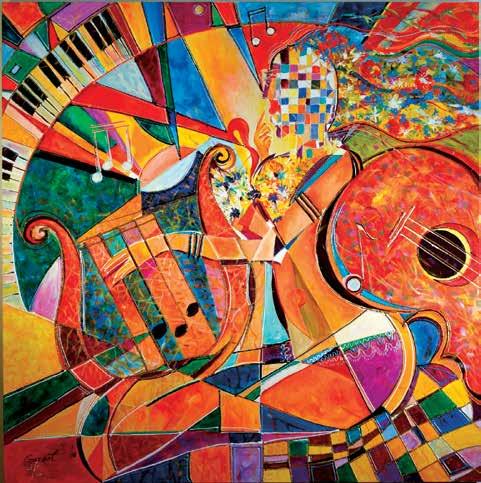
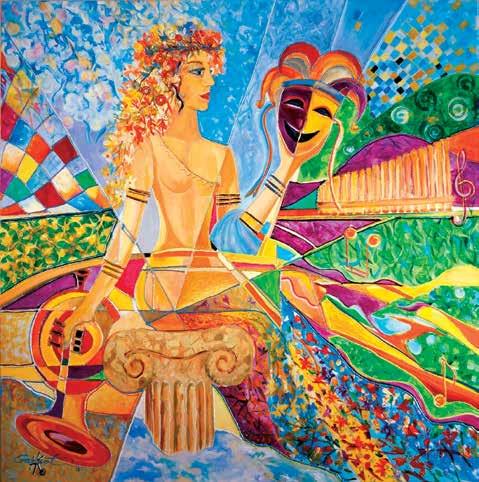
Ou r Serie s “Muses and Music” consists of 10 large square paintings one for each of 9 Muses, and the 10th Mnemosyne — Mother of all
Muses. This Series is bright, light, complex, spiritual, enigmatic, an d ju st beautiful! Eve rything about it - bright sparkl ing colors, energetically balanced composition, ancient theme, embedded healing messages, and of course, the beauty of the Muses and the Music - all this envelops you with an amazing ambiance full of Light, Love, Music, Beauty, and Healing.
our individual gifts a new dimension, a new way to expand into something greater than just our own individual “selves.”
I think the more people will enjoy or even use our approach in the future, and more truly beautiful artworks will be cocreated. More artists will bring positive and healing art, and more people will better their relationships in general.
We hope you find yourself gently guided to immerse into, relax and e njoy an embracing warmth, sparkling brilliance, powerful soulful experience and the healing vibrations of “Muses and Music”- a unique “Healing Arts” Series by Garsot and Helen Kagan. www.helenkagan.com
As a holistic therapist and artist, my belief is that it’s all about relationships — your relationship with yourself, with God, family, loved ones, and all others. I am truly enjoying collaborating with Garsot who is very positive, a great visionary who’s been creating his own “Positive Surrealism” for over 50 years!
Synergistic Humanity. Mission, Vision, Purpose. Healing. These are not just words for me. I believe Art heals. I believe in the interconnectedness of mind, body and spirit. This is why I’ve been
Our Series Muses and Music consists of 10 large square paintings one for each of 9 Muses, and the 10th Mnemosyne — Mother of All Muses. This Series is bright, light, complex, spiritual, enigmatic, and just beautiful! Everything about it — bright sparkling colors, energetically balanced composition, ancient theme, embedded healing messages, and of course, the beauty of the Muses and the Music — envelops you with an amazing ambiance full of Light, Love, Music, Beauty, and Healing. We hope you find yourself gently guided to immerse into, relax and enjoy an embracing warmth, sparkling brilliance, powerful soulful experience and the healing vibrations of “Muses and Music”— the unique HealingArts™ Series.
Helen Kagan, Kaleidoscope Of Life. Acrylic canvas, 36 x 48
G A R S O T K A G A N
“MUSES FOREVER”
Kagan and Garsot created three collections together: Muses and Music, Eyes of the Zodiac and Serenity Blues. The last collection, unfinished unfortunately due to Garsot’s transition, was specifically created to have the soothing images and colors placed in hospitals to help people to recover and feel better. In Helen’s words, “My purpose is to encourage healing through art in our turbulent times of Worldwide crisis, wars, fear, anxiety and stress. People are overwhelmed and uncertain. I feel it is my duty to continue creating art for healing and I believe that now more than ever, our world needs positive energy, Spiritual intention, gratitude, and a lot of healing art. My passionate vibrant healing arts are a vehicle for joy and well-being — a statement of all my beliefs.”
ArtSynergism by HKagan & Garsot. Collection Eyes of the Zodiac. Scorpio
ArtSynergism by HKagan & Garsot. Dolphins’ Love. Series Serenity Blues
Fine Art Magazine Spring 2017 Artexpo New York edition
What is your advice to younger gerations?
The way for me to express myself is via art, as well as writing, music, movement, and a way to heal myself and help others heal. I am here to bring this message to the world that my Art is Healing; it is Love and Light; it is a healing tool that can help you on your Journey to YourSelf.
Here’s my advice to everyone, and not only to “young healers and artists” — don’t ever STOP! Keep going. If you believe in your unique “message”, your Mission will eventually pick up. Everything new and innovative takes time for people to recognize it, change their own (old) paradigm to accept new, and then, hopefully, accept yours. I am speaking from my own, tough, rough full of challenges, setbacks, obstacles, trauma, drama, etc. yet so valuable life experience:
For Helen Kagan’s full portfolio and gallery, please visit www.helenkagan.art, www.helenkagan.com, www.helenkagan.net, www.wearablehealingarts.com
Helen Kagan, Chakras of the Universe. Collection 5D. Acrylic, on canvas 48” x 36”
Helen Kagan, Between the Heaven & Earth. Series Sunsets & Blues, Acrylic on 48” x 36”
Helen Kagan, Big Bang Series My Universes, Collection EnergyArt, Acrylic on Canvas, 36” x 48”
One of the truly wonderful aspects of our half century covering creativity around the world is watching the rise of an artist to international Superstardom. As publisher, co-founder and co-owner of SunStorm/Fine Art Magazine, widely known as the magazine selected by Ingram Periodicals, the largest distributor of magazines in the U.S.A., as one of a handful of international publications with all the attributes of a “Coffee Table Book minus the hefty price tag,” it is gratifying to be witness to the arc Jacinthe Dulac-Lacroix’s success. Since those early years at Artexpo, her career has flourished to the point where she is at the top tier of artists represented by Disney’s Promenade Gallery where her paintings and sculptures are highly sought after.
Her significant and many achievements are evidence that she has risen to the highest echelons of the field and further evidence that she is unlike any other artist in the world, truly making this highly original artist/sculptor/storyteller a visual artist of extraordinary ability. Mastering the balance between emotion and technique as have very few, Jacinthe has attained international recognition and a very special niche in the sculpture field for her delicate blend of strength and sweetness — a combination of power and grace with a highly original blend of realistic beauty and humor.
She leads the field of those who have followed a path with their own brand of creativity and the Canadian-born Dugal-Lacroix has secured an enviable position as an artist who is both commercially successful, creatively brilliant and technically top notch.
“My sculptures are not rushed,” states Jacinthe, who has exhibited internationally including at the Grand Palais in Paris. “I will take months to sculpt a 1/3 life-size sculpture and up to a year to sculpt a life-size piece. Even with the drawings, I like to savor the work, the process. My whole way of sculpting changes when it goes from the armature to the skeleton, the muscles, the attachment, getting to the flesh, the personality, the expression — my touch changes from a very technical way of moving to the soft touch of a mother. I almost say good morning to them
when I come into the studio, I think that’s what people feel when they see them.”
“The whole process of it all,” she continues, “begins with a story to tell. I like to say something that touches people in my work,” and the crowds of admirers and collectors at the Disney World Orlando Promenade Gallery attest to that. “They are not always earth-shattering messages,” states her husband, Marc, who also manages her career. “They are works of art that offer the viewer a few moments to have a nice thought; a few seconds to appreciate life.”
A dynamic artist who has been recognized for her expertise in different publications, through her commissioned work for celebrities, and by serving as the only artist who is both a sculptor and painter for Disney Fine Art, what sets Ms. Lacroix apart from others in the field is her unique and compassionate style that evokes strong emotions in her viewers. She shows that sentiments of duality coexist simultaneously. In simple, practical tools of life, she incorporates a deeper symbolic resonance to both the light and the dark elements of our existence. What Jacinthe does is play around with emotions, basic, simple emotions. She’ll get something in her head, inspired by a story or a song, and find a way to simplify it with a gesture, a look in the face. “That’s why I like to do commissioned pieces.” She says her best work is when someone contacts her and they have a story. Very few artists see this binary angle and can successfully play with it to consciously elicit emotions from viewers of the artwork.
Jacinthe began to sculpt in earnest when she became frustrated with her paintings and wanted to push them one step further and to get a certificate. In order to do so, she had to sculpt. She was so intimidated by the media that she went to the coordinator of the Ottawa School of Art to beg out, but he wouldn’t let her off the hook. “If you want your certificate,” he declared, “you have to do your sculpting.” By the second class Jacinthe started manipulating and molding clay and a world of possibilities opened to her, a new way of self-expression that consumed her. “I was so taken by sculpture, I finally found a medium that gave me the luxury of touch.”
Liberty, bronze, 45”x 15” x 11”
She studied with Richard MacDonald, one of the most successful sculptors in the world, and then went to study at the Florence Academy of Art in Florence, Italy, at their summer program, going back to MacDonald for advanced anatomy classes shortly thereafter, stating, “I pushed to where I could no longer learn on my own. Finding a great master to study with for a while pushed me even further into anatomy sculpting from live models, learning to create movement even if the pose is sitting. “Richard taught me not to be scared. With him there is no limit. His mantra was ‘Anything you can imagine, you can create.’”
Thirty years later, her imagination runs rampant and unbridled in paintings and sculptures. “In recent years, I have been fortunate enough to work as a Disney Fine Art artist, a role that fills me with awe and gratitude. Being part of this iconic world is not just an opportunity — it’s an incredible experience that I deeply cherish. It is a true honor to bring these beloved characters to life through the lens of my own artistic style. Revisiting my favorite images, which have played such a significant role in shaping my artistic identity and personal history, fills me with excitement. Each piece I create allows me to connect with the magic of storytelling and the joy that comes from sharing these iconic figures with others, fostering a sense of nostalgia and wonder in all who encounter my art.”
Jacinthe has added to the glossary of classic Disney characters with a collection of her own —The BlueBell Collection—notably a friendly Dragon named Bell and a dog named Blue. Their adventures are well-chronicled and often accompanied by a poem that adds even more meaning to the visual. This whimsical collection that the artist affectionately refers to as “My Blue Bell series” is a playful outlet for her imagination, where she can let it run wild and free.
“On a dragon’s belly
A little boy sits so happy” “This series provides me with the chance to revisit cherished memories from my childhood, drawing inspiration from the everyday adventures and delightful encounters that color our lives. Through these experiences, I find the spark that ignites my creativity and transforms into captivating stories, brought to life in my creations. Dog Blue is a charming canine companion and Dragon Bell is a fanciful friend who embodies the magic of imagination.”
Combined with the pure emotion of the characters, Jacinthe’s popularity comes about quite naturally. People are genuinely touched by her work, whether children or sophisticated collectors. Jacinthe’s prowess with her tools, accompanied by her sincere love and joy come
Always In My Heart
Acrylic on canvas, 36 x 36 in (91.44 x 91.44 cm) Disney Fine Art Collection
Celine Dion's Mother
Bronze 44 x 28 x 28 in (111.76 x 71.12 x 71.12 cm)
Bronze Figurative Collection
Figurative
through in every painting and sculpture. With the embellishment of poetry and even titles of the work, a soft power is emitted, exuding goodwill and optimism. Yet, if you study the work, and even the more “adult” sculptures (such as Liberty, Lions and Man Holding A Sphere) one will recognize the skill and training required to create these wonderful masterworks.
“At the core of my artistic journey is a deep passion for capturing the essence of the human body. I strive to freeze those fleeting moments in time that evoke a sense of tenderness and encourage profound reflection. Each figure I sculpt and every brushstroke I apply serves to convey the beauty found in these small yet significant moments of life. ”
The poetic meaning that she extracts from mundane life by re-romanticizing everyday objects into new forms of sculptures as metaphors is special. By taking these simple, mundane objects and decomposing and reconstructing them, Ms. Lacroix aims to deliver the emotions that she felt at the moment while making her art. This is what makes Ms. Lacroix a truly exciting artist.
“If I’ve managed in a show to reach a few people in that way, WOW! There is a bond that is created, an understanding. They get what I am saying. Every art show is a memorable and inspiring experience Even when people decide to purchase a sculpture, I never lose track of them, nor do they lose track of me. These shows always reignite my passion for creating and inspire me to head back to my studio to continue producing more works of art.”
Jacinthe began as an architectural designer, and this helped
train her in the art of listening to what people want to say, do or express. “Even after years of dedicating myself to the art of sculpting and painting,” she says, “I find myself continually filled with wonder at the creative process. Each day brings with it the thrill of exploration and the realization of the boundless possibilities that exist within the realms of clay and paint. These materials allow me not only to express my thoughts and emotions but also to breathe life into my art. The joy I experience in the act of creation is profound, especially when I consider the potential for my pieces to resonate with the human spirit on a multitude of levels. Through my work, I aim to create visual narratives that offer viewers an opportunity for contemplation, inviting them to
Happy Days Is A Warm Puppy
Acrylic on canvas • 48 x 48 in (121.92 x 121.92 cm)
Figurative Painting Collection
Golden Reverie
Acrylic on canvas • 60 x 40 in (152.4 x 101.6 cm)
Painting Collection
Promenade Gallery at Disney’s Boardwalk Inn
A Vision Afar
Acrylic on canvas, 40 x 30 in (101.6 x 76.2 cm) • Figurative Painting Collection
In the painting, bright and clear
A young boy and his bear, so dear
The bear’s paw around him, protective and strong
Together they gaze at a castle in song
The boy in the white shirt, blue shorts with suspenders
A fedora hat, their bond warm and tender
Dreamy castle in the skies, a vision afar
In the embrace of friendship, they reach for a star
Bluebell’s Ark
Bronze 16 x 12 x 9 in (40.64 x 30.48 x 22.86 cm) • Bluebell Collection
On Bluebell’s Ark, a whimsical site
Blue the dog, by his side, takes flight Elephant trumpet, giraffe stand tall
Bear lumbers, lion’s roar echoes through the hall
Rabbit hops, turtle slow and steady In harmony they sail, hearts at ready Bell and Blue guiding the way
Through stormy seas and skies of gray An unlikely crew, on a grand adventure
In unity and joy, they find their treasure
Acrylic oncanvas
36 x 36 in (91.44 x 91.44 cm)
Disney Fine Art Collection
In a dress of white, she sits so still.
With her Disney friends, a moment to fill Tiger, Eeyore and Pooh in her grasp. In a world of childhood magic, a gentle clasp. Their soft fur and smiles bring her delight. In this precious moment, everything feels right. Immersed in their world, a child's pure joy. With her plush companions, she's not a lonely toy.
Childhood Magic
Cinderella’s Story
Bronze, artist copy 1
73.5 x 46 x 8 in (186.69 x 116.84 x 20.32 cm)
Disney Fine Art Collection
Cinderella’s Story
Around a tree, Cinderella’s tale unfolds In bronze relief, each moment told From stepmother’s cruel demand to scrub the floor
To fairy godmother’s magic, opening the door And invitation to the ball, a dress so fine
The carriage and horses, a moment divine
Running from the ball, losing her shoe
A valet trying the glass slipper, a love so true
In the background, the clock tower stands tall
As Cinderella and her prince walk hand-in-hand standing tall
A story of hope, of dreams that come true
And they lived happily ever after, in a love that grew
Faith Is To Have Wings
Acrylic on canvas • 60 x 48 in (152.4 x 121.92 cm)
Figurative Painting Collection
In a soft peach gown, she takes a stroll. Feeling like a princess, delicate soul. With grace in her step, she wonders near.
A grand castle looms, her prince so dear. Her dress whispers softly in the evening air. As she walks with regal, elegant flare. Her heart beats with anticipation and love.
As she dreams of the castle high above. A fairytale moment, a princess’s delight. On this evening stroll under the moonlight
Hammock Haven
Bronze
The Bluebell Collection
The sculpture in bronze named Dragon Hammock. The whimsical bronze sculpture from the BlueBell Collection is inspired by Jim Kwik’s life. It depicts a dragon lying is a hammock, eating ice cream, wearing earphones, and creating a podcast. The dragon is shown with a relaxed and content expression on its face, as it enjoyed the simple pleasures of life. Beside the dragon, Blue the dog, is lying with all four legs up, indicating that he is completely relaxed and at ease. On the ground are his favorite book, suggesting that he is a voracious reader and always seeking to learn and grow. Perched on a branch is a stork bringing a baby boy, we can also see both his dogs and squirrel eating watermelon. Overall, the sculpture is a beautiful and playful work of art capturing the essence of Jim Kwik’s life and his love of learning, growth, and relaxation. It is a testament to the poser of imagination and the joy that can be found in the simple pleasures of life. which will be the commissioned pieces for our notable clients such as Jim Kwik, widely recognized American Brain coach, podcaster, writer, and entrepreneur.
Le Sommelier
Bronze • 12 x 8 x 8 in (30.48 x 20.32 x 20.32 cm)
The Bluebell Collection
I decided to sculpt the Dragon Bell in a standing position, with his legs crossed giving him an air of sophistication. He is wearing a tuxedo jacket and is unashamed about holding his pinkie in the air, enforcing the look of a trained and knowledgeable wine professional. For this whimsical sculpt, I decided to semi-hide Blue (the dog) in a bushel of grapes. She is lying on her back, with a grape in her mouth. It is a sculpture that will certainly appeal to the wine enthusiasts! It is displayed at the Promenade Gallery at 2101N. Epcot Resorts Blvd, Lake Buena Vista, FI,32830. This bronze sculpture was sold to Dr. Sorlo. The editions are 20 artists proof plus 195 open edition.
x 20.32 x 20.32 cm)
ADDITIONAL INFORMATION
In Collections: Bluebell
DESCRIPTION
LE SOMMELIER: (sculpture)
Lion (Left Side)
Bronze • 66 x 34 x 56 in (167.64 x 86.36 x 142.24 cm)
Bronze Figurative Collection
The two 5’-6” commission bronze lions’ sculptures were inspired by the ancient Greek and Roman mythology. In these cultures, lions were seen as symbols of strength, courage, and protection. Each lion will be sculpted with on paw on a shield. The sheds represent the idea of protection, while the lion’s paws on it symbolize the strength and posture needed to defend it.
ADDITIONAL INFORMATION
Man With Sphere Life Size
Bronze • 130 x 60 x 60 in (330.2 x 152.4 x 152.4 cm) • Bronze Figurative Collection
This almost 11’-0” height bronze sculpture is inspired by the famous Atlas sculpture depicting a man holding a sphere. With a muscular and powerful physique, he stands tall and proud, holding the sphere above his head. With a determined expression on his face, he bears the width of the world on his shoulders. The sculpture is a testament to the strength and resilience of the human spirit, and to the importance of perseverance and determination in achieving our goals. It is a powerful and inspiring work of art, reminding us of the challenges we face in life and the importance of rising to meet them.
Nature vs. Nurture Life Size
Bronze • 70 x 30 x 19 in (177.8 x 76.2 x 48.26 cm) • Bronze Figurative Collection
Nature vs Nurture was inspired by the ongoing debate in the field of psychology and refers to the question of whether our behavior and personality are shaped more by our environment and experiences (nurture) or by our genetics and biology (nature). To illustrate that debate, I decided to sculpt a woman in a beautiful and graceful dancing pose. This beautiful woman is mysteriously elevated by vines, those vines take the shape of a man representing the idea that our environment and experiences can shape us into something different from our natural state. It is a life-size sculpture that really gives pause to anyone who takes a moment to look at it. A definite success.
ADDITIONAL INFORMATION
In Collections: Bronze Figurative
The editions consist of 20 artist’s proofs plus a 195 piece open edition for a total of 215 works.
DESCRIPTION
(177.8 x 76.2 x 48.26 cm)
Lacroix
Secret of The Ocean
Acrylic on canvas • 40 x 30 in (101.6 x 76.2 cm) • Disney Fine Art Collection
Beneath the waves where secrets lie
A mermaid dances beneath the sky Ariel, with Flounder and Sebastian near Smiling, exploring without fear
ADDITIONAL INFORMATION
Around them swim the ocean’s friends
Hundreds of fish, a world that never ends Crabs scuddle by, corals aglow
In Collections: Disney Fine Art Collector
In the depths where mysteries flow
Where mermaids play and shipwrecks sleep
DESCRIPTION
The wonders of the sea run deep
Secrets Of The Ocean
Soft Melody
Lacroix Soft Melody
ADDITIONAL INFORMATION
Bronze • 34 x 34 x 19 in (86.36 x 86.36 x 48.26 cm)
Bronze Figurative Collection
In Collections: Bronze Figurative
Bronze x 34 x 19 in (86.36 x 86.36 x 48.26 cm)
DESCRIPTION
SOFT MELODY is a pride and joy. In creating this piece, I pushed my limits and the limits of bronze. I aligned three beautiful ballerinas in different graceful poses, with their legs and arms positioned strategically to create the sense of movement and the sense of music flowing through the dancers. None of the dancers touch the ground, all three are sculpted in different expressive poses, dancing tirelessly to the music. Only one of the dancer’s dresses touches the ground, allowing the sculpture to be supported. The fabric of the dress from the third dancer flows in a cascading ripple giving the sense
SOFT MELODY is one of my pride and joy. In creating this piece, I pushed my limits and the limits of bronze. I aligned three beautiful ballerinas in different graceful poses, with their legs and arms positioned strategically to create the sense of movement and the sense of music flowing through the dancers. None of the dancers touch the ground, all three are sculpted in different expressive poses, dancing tirelessly to the music. Only one of the dancer's dresses touches the ground, allowing the sculpture to be supported.
The fabric of the dress from the third dancers flows in a cascading ripple giving the sense of continuous movement. The chosen patina, a soft whisper of pink, adds to the delicate feeling of this sculpture.
Jacinthe
Some Storms Come To Clear Your Path
ADDITIONAL INFORMATION
Acrylic on Canvas • 40 x 30 in (101.6 x 76.2 cm)
Some storms come to clear path
Acrylic On Canvas
Disney Fine Art Collection
In Collections: Disney Fine Art Collector
DESCRIPTION
The creation of an original Disney painting for Wyland Galleries of Florida, LTD named Some Storms Come To Clear Your Path is based on the movie “UP” and is a stunning and powerful work of art. The painting is beautifully detailed, with every element capturing the sense of adventure and wonder that the movie evokes. The house is shown with its colorful balloons lifting it up into the sky. The storm clouds are shown in the background, adding to the sense of drama and excitement. The painting is filled with vibrant colors, with the menacing sky outlined with the light soon to be felt as the house travels through the storm. It was inspired by a scene not usually chosen as inspiration by other artists but sure to be a favorite of collectors.
The creation of an original Disney painting for Wyland Galleries of Florida, LTD named Some Storms Come To Clear Your Path. This Disney painting based on the movie UP is a stunning and powerful work of art. The painting is beautifully detailed, with every element capturing the sense of adventure and wonder that the movie evokes. The house is shown with its colorful balloons lifting it up into the sky. The storm clouds are shown in the background, adding to the sense of drama and excitement. The painting is filled with vibrant colors, with the menacing sky outlined with the light soon to be felt as the house travels through the storm. It was inspired by a scene not usually chosen as inspiration by other artists but sure to be a favorite of collectors.
Jacinthe Lacroix
Stories Woven in Threads of Old
Acrylic on Canvas • 60 x 48 in (152.4 x 121.92 cm) • Figurative Painting Collection
In Threads Of Old
Stories Woven in Threads of Old In a gown of blue, she stands so serene, A woman lost in thoughts, her mind unseen. Pensive and deep, her gaze fixed afar, Her ancestral home, a guiding star.
ADDITIONAL INFORMATION
In Collections: Figurative Painting
DESCRIPTION
Lacroix
The Field Of Dreams
Acrylic on Canvas • 48 x 48 in (121.92 x 121.92 cm)
Figurative Painting Collection
In a field of dreams, where beauty resides, a young girl walks with grace, her spirit guides.
ADDITIONAL INFORMATION
Dreams Canvas (121.92 x 121.92 cm)
Adorned in a gown of pink, a hue so divine, it dances with the breeze like a love, sweet rhyme. Her steps are light, as if floating on air, her presence captivating beyond compare. With each stride, she paints a picture so rare, a masterpiece of elegance, beyond compare.
In Collections: Figurative Painting
DESCRIPTION
Fields of Dreams
Lacroix
The
Perfext S’Mores Partner
Bronze • 11 x 22 x 11 in (27.94 x 55.88 x 27.94 cm)
Bluebell Collection
Jacinthe Lacroix
The Perfect S'More's Partner
Bronze x 22 x 11 in (27.94 x 55.88 x 27.94 cm)
ADDITIONAL INFORMATION
On a dragon’s belly
In Collections: Bluebell
A little boy sits so happy
DESCRIPTION
He imagines eating s’mores
Knowing he will want more and more
PERFECT S'MORES PARTNER
On a dragon's belly
The Dragon, his Perfect Partner
A little boy sits so happy
Is cooking the marshmallows with his fire. But down by the tail, with a twinkle and squeak,
He imagines eating s'mores
Knowing he will want more and more
A mouse on a mission, so crafty, so sleek,
The dragon, his Perfect Partner
Reaches for the chocolate, a tempting delight, Right in his line of sight
Is cooking the marshmallows with his fire
But down by the tail, with a twinkle and squeak,
A mouse on a mission, so crafty, so sleek,
For in every bite, in each toasted cheer, Lies the magic of friendship, warm and sincere.
Reaches for the chocolate, a tempting delight, Right in his line of sight
For in every bite, in each toasted cheer, Lies the magic of friendship, warm and sincere.
A Kiss For My Bear Acrylic On Canvas, 24 x 24 in (60.96 x 60.96 cm) Figurative Painting Collection
ADDITIONAL INFORMATION
For My Bear Canvas
(60.96 x 60.96 cm)
In Collections: Figurative Painting
Breath In, Breath Out
Jacinthe Lacroix Breath In, Breath Out
Hear My Heart Speak no base regular no face
Lacroix
Jacinthe Lacroix
Acrylic On Canvas, 36 x 36 in (91.44 x 91.44 cm)
Disney Fine Art Collection
Fairest One Of All
Acrylic on canvas
ADDITIONAL INFORMATION
One Of All Canvas (91.44 x 91.44 cm)
36 x 36 in (91.44 x 91.44 cm) Disney Fine Art Collection Bluetiful Acrylic On Canvas
In Collections: Disney Fine Art Collector
I Think There's A Monster Under My Bed
Bronze 11 x 21 x 16 in (27.94 x 53.34 x 40.64 cm)
x 48 x 2 in (121.92 x 121.92 x 5.08 cm)
Figurative Painting Collection
Mickey And Friends Balloons (Fab 5 Wall Relief)
Bronze 34 x 31 x 4 in (86.36 x 78.74 x 10.16 cm)
Disney Fine Art Collection
Mommy
Bluebell Collection
Gravity Unbound 1/2 life (female)
Pooh's Birthday Party
Acrylic on canvas
x 48 in (91.44 x 121.92 cm)
Fine Art Collection Inspiration
ADDITIONAL INFORMATION
x 24 x 22 in (182 x 61 x 56 cm)
Figurative Collection
x 12 x 9 in (76.2 x 30.48 x 22.86 cm)
In Collections: Bronze Figurative
In Collections: Bronze Figurative
More To Life Than Scaring. Monster Inc.
36 x 24 in (91.44 x 60.46) Figurative Painting Collection
Wave Of Deception - Ursula
40 x 30 in (152.4 x 121.92 cm)
Figurative Painting Collection
Spaghetti Kiss
Lacroix
GEVORG YEGHIAZARYAN Echoes of the Essence of Eternal Life
“Life is full of strange absurdities, which, strangely enough, do not even need to appear plausible, since they are true.”
– Luigi Pirandello
The concept of absurdity, often associated with the aftermath of the Second World War, is not the exclusive domain of the representatives of “Absurd Literature” (such as A. Camus, S. Beckett, F. Kafka, J.-P. Sartre, J.A. Adamov, H. Pinter, etc.). While this notion may hold true in literature, the reality is different in the realm of art. Since the dawn of time, both natural disasters and wars have existed, often giving rise to absurd situations that have found expression in art—consciously or subconsciously—to varying degrees.
Today, when illogical and seemingly meaningless phenomena occur on the global stage, there are often deeper, logical foundations behind them—truths that are more real than what is merely visible or tangible. In our daily lives as well, many events may appear illogical or “meaningless,” but beneath these surface appearances lie intangible and complex truths. These deeper realities often manifest instinctively and naturally through the works of gifted artists.
This is precisely why Gevorg Yeghiazaryan avoids mundane, tangible surroundings and “takes refuge” in the spiritual realm. Here, the term “spiritual” should not be understood in a purely religious sense or as blind faith in the divine. Rather, it refers to the human subconscious—the inner world where inherited and traditional phenomena, memories, visions, and impressions from life’s trials continuously mingle. As an introspective and deeply sensitive artist, Gevorg mines this inner world, shaped by the crucible of life, in search of spiritual, though perhaps forgotten, concepts accumulated over time. These ideas emerge through his art as echoes of the essence of eternal life.
For instance, his “First Mother Goddess” figures do not merely express the relationship between mother and child, nor do they relate directly to the “Madonna and Child” theme commonly found in iconography or Renaissance art. Instead, Gevorg’s depictions of mother and child represent the “Primeval Woman”—the first mother of the human race, the source of all life, embodying divine feminine creative energy. They echo mythological archetypes such as the Sumerian Inanna, Babylonian Ishtar, Indian Devi, Egyptian Isis, Armenian Dzovinar, Jewish Eve, and Greek Gaia. However, whereas ancient cultures often portrayed the “First Mother” as a solitary figure, Gevorg chooses to depict her unified with the child—as a single, inseparable whole. It is no coincidence that he titles his works with phrases like “Eternity”, “Source of Life”, “Eyewitness”, “Metamorphose”, “Timeless Echo”, “Verdict,”“Duality,” and “Bliss”, all of which are dedicated to the immortality of life.
Though the image of the Mother stems from his tribal and cultural heritage, when refracted through Gevorg’s unique historical and artistic perspective, it becomes a symbol of life that is both beginningless and endless. In his work, the Mother and Child—two distinct yet interdependent beings—merge physically and spiritually to form a singular sacred entity. Their bodies are intricately interwoven, their limbs and features shared: two hands, one body, one face—yet this face is simultaneously seen from both the front and the profile.
Even in a work titled “Duality”, where the Mother and Child are depicted alongside a fish, the symbolism points to unity. The fish, in Armenian tradition, is also revered as a protector of water and a source of life. In his ongoing artistic exploration, Gevorg sometimes introduces a third face, not to suggest a Christian-style “Trinity,” but rather to portray multiple personalities fused into a single entity—akin to the many-headed deities of Indian mythology.
Here, the artist himself seems to merge with the images he creates, seeking identification with them.
When Pablo Picasso said, “I paint objects as I think them, not as I see them,” he claimed the right to express subjective perception over visual accuracy. He deconstructed the human face, showing it both from the front and the side at once, exploring its duality or even duplicity. Gevorg adopts a similar approach—not to mimic Picasso, but to express his own vision. His Mother and Newborn are distinct personalities that he aims to unify into one image: on one side, the life-giving essence of motherhood; on the other, the pure innocence of childhood—both depicted simultaneously.
While Gevorg’s stylized and often distorted faces may seem reminiscent of Picasso, his inspiration likely comes from deeper, older sources. Throughout art history, we find examples of faces shown both in profile and frontal views. In ancient Egyptian art, the eye—considered divine—was always shown frontally, even in profile depictions. This rule created stylizations that might appear “incorrect”
11th Century Armenian miniature, Sacrifice of Abraham
to the modern eye, yet they held sacred significance. Similar representations appear across Etruscan, Minoan, Aztec-Toltec and Greek frescoes and pottery. Even in Ancient Eastern, Indian, and European manuscripts, and notably in Armenian miniature painting, this stylistic device recurs.
For example, in a 15th-century parchment manuscript from the “Khizan” school of Vaspurakan, there is a miniature depicting Abraham preparing to sacrifice Isaac. Abraham’s face is shown in
profile, but his eye looks directly at the viewer—illustrating this very stylistic phenomenon. Picasso, known for studying diverse world cultures, was likely inspired by such traditions. Likewise, Gevorg seems to draw from the same wellsprings, making it more accurate to say that both artists were inspired by shared sources, particularly ancient Egyptian frescoes and Armenian miniatures.
Gevorg delves deep into the human psyche, portraying the Mother as the origin of all life. Yet he also lets his imagination soar into the
Gevorg Yeghyazarian, Duality, 97 x 116 cm, oil on canvas, 2013
cosmos. In this dimension, his female figures are not sexualized. Rather, they are strange but earthly beings, otherworldly entities with ambiguous gender. While drifting through space, they sometimes encounter symbols of modern civilization—squares, circles, triangles—that obstruct their path and freedom.
If in his first artistic realm Gevorg seeks the “Divine” within the depths of humanity, in the second he looks for the “Human” within the vastness of the divine cosmos.
Mosses Zirani, Ph.D. in Fine Art
Gevorg Yeghiazarian, 5-1 Dimension, 60 x 50 cm, oil on canvas, 2014
11th Century Arnenian Miniature, detail from Sacrifice of Abraham ”
Gevorg Yeghyazarian, Metamorphose, 116 x 89cm, oil on canvas
Gevorg Yeghyazarian, Dante, 73 x 100cm, oil on canvas
Gevorg Yeghiazaryan, Timeless Echo, 130 x 162cm, oil on canvas
Gevorg Yeghiazaryan, Between Dimensions, 130 x 160cm, oil on canvas
BERDJ TCHAKEDJIAN
The Orgasm of Nature as the Fertility of Art’s Joy
“The wisest and noblest teacher is nature itself.” (Leonardo Da Vinci) “The earth has music for those who listen.” (William Shakespeare)
What we call here the “orgasm of nature” refers to the natural, healthy sensuality that ennobles a person’s animal inclinations, transforming them into a serious, symbolic, and creative release. The world’s oldest civilizations have always considered this form of sensuality as a sort of divine “delight,” believing that the gods themselves were in a constant state of ecstasy. Humans, however, only felt this orgasm of nature during the performance and the act of fertility, when their personal boundaries could at last extend to the divine. They also believed that every part of nature was endowed with this ecstasy, which was anthropomorphized and worshipped, the most common of its personifications being deities such as the Earth Goddess. It is no coincidence, then, that the Latin word natura is derived from the root nascor, “to be born.”
Through nature comes forth life and its very meaning.
Berdj Tchakedjian, The Flutist In Her Red Dress, 94 x 102 cm, oil on canvas
This multidimensional Mother Nature lives on in time through rebirth and renewal and appears to be in a constant state of ecstasy and sensuality. When an artist fosters this metaphysical and elementary understanding of Mother Nature inside their inner world as both an inspiration and a vision to grasp, from own their birth suddenly springs a symbolic meaning and manifestation of creation. We see this when we look at and take in Berdj Tchakedjian’s work through the lens of his artistic evolution.
Tchakedjian, whose art is inspired by Mother Nature and the Eternal Feminine, knows nature through many of her elements, from the scorching sand dunes where he spent his youth to the biting cold of the Northern Hemisphere where he currently resides. It is the image of his wife, Nairi, that he has brought forth in the “virgin” nature as the maternal figure embodying Mother Nature through her “external charms” as well as her “inner wisdom.” In his work, woman and nature, united and intertwined, form a growing whole, whose external charms are strengthened and completed through internal balance
Berdj Tchakedjian, Nature in the Fall, 94 x 102 cm, oil on canvas
Berdj Tchakedjian, The Beauty and the Bird, 94 x 102 cm, oil on canvas
and harmony. This can also be found in his still lifes, where the depicted fruits and objects possess a certain erotic appearance, content, and expressiveness.
Tchakedjian penetrates the inner world of the female figure by interlacing the goddess he loves and adores with his beloved and adored nature, endowing this image with the various attributes of the female body (breasts, vaginas, buttocks, thighs…), which serve to beautify the natural world and bring sense to life. Though Tchakedjian’s world seems to be in a constant state of ecstasy, his female figures, despite their nakedness, are refined and elegant. Their feminine beauty can be found not in the physical appearance of their naked bodies nor in their lustfulness, but rather in a certain restrained yet “eager” expression where Mother Nature and the Eternal Feminine, in harmony with one another, appear to be conceiving the symbolic creation of life through a moment of peace and mystery. Likewise, the widespread tranquility depicted in Tchakedjian’s portrayal of nature is satisfying and enchanting to the art-loving eye.
How? Tchakedjian’s first teacher will always be Mother
Berdj Tchakedjian, Dialog, 100 x 112cm, oil on canvas
Berdj Tchakedjian, Spring Impulse, 61x78cm, oil on canvas, 2021
In this day and age when humans are ceaselessly defiling Mother Nature, and when women’s rights have reached a standstill in many societies, Berdj Tchakedjian’s art allows us to feel for the beauty of both nature and women, and their vital importance in our lives
Nature, with her angelic musicality that requires a competent listener to fully understand… Without being lustful or similar to the likes of Rodin, Dali or Egon Schiele, Tchakedjian creates through everyday inspiration. He lives in nature, in communion with her, just as with his life partner, Nairi, who acts as both his muse and his wife. As such, we are made to see nature, especially in her spring and fall colours, we are met with insects, birds, and other beautiful animals, who are blended into the background and act as heralds of renewal and livelihood. Tchakedjian is not
interested in all that which hinder beauty and disturb the peace of a setting; he flees these disruptions. However, this doesn’t mean that he romanticizes nature, nor does he depict it like the Impressionists. Rather, with his colourful, expansive prism, he paints a world where all is peaceful, vibrant, and bright, miles away from life’s troubles and conflicts and, especially, its atrocities.
Tchakedjian is foremost a worshipper of the light: in his paintings, light and shadows are interlaced with nature and
Berdj Tchakedjian, Soft Music, 94 x 102cm, oil on canvas
Berdj Tchakedjian, The Flight of the Heron to the South, 94 x 102 cm,oil on canvas
the Mother figure, bestowing his work with philosophical depth. His nudes aren’t perfect goddesses with glorified feminine figures, like the Hellenistic ideal of female beauty or the portraits done by Renaissance painters. Their charm and grace shine from within, extending to the nature and everyday life that surrounds them, because they aren’t painted to look like dolls or for the pleasure of the eye alone, but are felt as Beauty itself. It is here that a painter’s strong, innate intuition, working outside of logic alone, is revealed; through it, the painter can render that which took place in his sensual, inner world, where Mother Nature and the Eternal Feminine set the terms for the very stuff of life. This cannot be mistaken for vulgarity or pornography.
From the delicate colours to the expressiveness of his brushstrokes, Tchakedjian has created art so unique that its imitation is unthinkable. He belongs to the select club of painters whose work doesn’t require a signature to be recognizably theirs.
Tchakedjian’s art makes one thing very clear: he is in love, not with a singular woman and nature alone, but by the joining of these two into one being which fills him with drunken ecstasy. Even though he has reached old age, he continues to create with the same excitement as a teenager in the throes of puberty. There are very few artists – Hokusai, Michelangelo and Picasso come to mind – who have continued to create in their later years with renewed enthusiasm, perfecting their art until the very end. Berdj Tchakedjian is one of them.
In this day and age when humans are ceaselessly defiling Mother Nature, and when women’s rights have reached a standstill in many societies, Berdj Tchakedjian’s art allows us to feel for the beauty of both nature and women, and their vital importance in our lives. Mosses Zirani, Ph.D. in Fine Art
Berdj Tchakedjian, A Sunbeam, 94 x 102 cm, oil on canvas
THE HYLOZOIST
On the Occasion of Arshile Gorky’s 120th Anniversary
How My Mother’s Embroidered Apron Unfolds in My Life
In reality, Hylozoism is neither an art school nor a movement or concept belonging to any specific genre of art. Although it carries some connection to faith, it is not a religion in the way we understand the term today. Rather, it is a philosophical expression that, over time, has transformed into a way of life—a worldview that naturally emerged during humanity’s process of becoming human, and found expression in nearly all ancient cultures... as the vitality of matter and the inner spiritual link between life and the visible, tangible world.
In this sense, hylozoism would reveal itself in Ancient Greek philosophical thought as the harmonious coexistence of spirit and matter. Thales and his followers believed that “Nature is inherently vital and animated.” The word hylozoism is derived from two ancient Greek words: hyle meaning matter, and zoe meaning life.
Even in our current times, followers of the Shinto religion in Japan believe that the elements of Nature—and even man-made objects—are alive, they live, and each of them possesses its own life, meaning, and essence. This belief, despite some differences, closely resembles Taoism, whose founder Laozi believed that “the TAO is not a God, but a universal force that flows through everything.”
Nearly all true and talented artists—consciously or unconsciously, to greater or lesser extents—are hylozoists. When they depict nature or still life, they instinctively seek to give life to natural phenomena or lifeless objects, to spiritualize them as living and breathing beings. As for the others, from Expressionists to Surrealists and Abstractionists, they manifest spiritualized emotions and experiences from within their own inner worlds. These groups, in many ways, appear closer to hylozoism than their
predecessors from traditional art schools.
However, Arshile Gorky stood apart from all of them. Throughout his memory, he would return to the life and environment of his childhood in his birthplace. After infusing these experiences with meaning and spiritual energy, he expressed them on canvas as visions and emotions. Yet, above anything else, what held vital importance for him were his living and breathing dreams—lived moments and dreams shaped by the unique environment and daily life of his hidden, personal past.
And therein lies the greatness of Gorky’s talent and the key to his visionary originality.
However, who is this genius whose creative life can best express the anxieties of “searching” for a spiritual homeland torn apart by genocide and their reflection on universal issues?
Vostanik Adoyan was born near Lake Van, in the village of Khorkom, in 1904 (or, according to his sister Satenik, in 1902). In 1915, he participated in the April defense of Van as a supporter of the freedom fighters and, according to some accounts, as a sharpshooter. After the fall of Aygestan, during his family’s escape, near Igdir they encountered a group of Armenian volunteer fighters who safely escorted them to Etchmiadzin. After staying there for several weeks, they moved to one of Yerevan’s poorest neighborhoods—Kond—where his mother died at the window, from starvation.
In 1919, with his sister, he moved to Tiflis, then to Batumi, Constantinople, and finally, through Greece, to the U.S. in 1920. He first lived in Boston with Satenik, then moved to New York, where he faced numerous difficulties. His artistic maturation and flourishment was eventually followed by his tragic end: he took his own life.
So where did his art derive its aesthetic value from? Or what assured the uniqueness of his vision?
“Memory is the germ of the artist,” said Arshile Gorky.
Memory indeed acted as the “germ” not only for him but for many truly profound artists. In Gorky’s case, this becomes a necessary key for interpreting his work—a fact echoed by others as well. One of the most famous American painters, Jacob Kainen noted:
The Plough and the Song, 1947
“Later, in the 1930s, I realized that he wanted to maintain the structural inevitability of the masters while more and more surrendering to his national memories and tormented unconscious.”
And so it was.
Gorky’s eternal inner turmoil, filled with anxious emotions, forged in his spiritual and intellectual crucible, emerges as line, hue, and inner light. His raw, unmediated experiences saturated with a haunting purity—surface spontaneously in his creations, which tolerate no constraint. The distorted figures, and figures in general, after germinating in the depths of the past, bypass the present… to blossom and flourish upon the uncontainable canvas of the future.
This is precisely why Gorky not only surrendered to his “national memories and tormented unconscious,” but also excavated the very human sources of his own inner world—to relive and express them upon the slippery surface of American life. Though all this stems from the mythologized memories of his birthplace, they are refracted through the feverish life of America and reframed through the emotional prism of a nostalgic exile, transformed into visionary emotions and germs of memory—manifesting like a sacred rainbow on the virgin canvas.
To understand Gorky’s Art substantially, let us recall his own testimony. In one of his letters, Gorky himself admits: “For all of this, I am indebted to our Armenian art.”
While to better appreciate Arshile Gorky’s place and role in the history of art, let us recall André Breton’s testimony:
“Gorky is the greatest and most unique painter in the history of American art.”
Gorky was a phenomenon, and for this reason, art critics could not entirely place him within any single “ism.” Barbara Rose writes: “It still remains unsettled whether Arshile Gorky is the last great Surrealist or the first Abstract Expressionist.”
Beyond those mentioned above, many other critics—including John Graham, Harry Rand, Julien Levy, and more than a dozen others—greatly admired his art, but could not fully understand him. This was because Gorky came from a culture unfamiliar to them, was shaped by a different temperament, and carried a unique aesthetic worldview. Gorky justifiably objected:
Scent of Apricots
“They call my mother’s eyes ‘Picasso-like,’ and Armenian melancholy ‘Byzantine’ or ‘Russian.’ When I correct their mistakes, they say these corrections are just the exaggerated nationalism of small nations. That infuriates me... Art is above nationalism; it represents the universal human vision.”
If those art critics had been familiar with the anguished and melancholic eyes portrayed in Armenian miniature painting, they would not have called Gorky’s mother’s eyes “Picasso-like”—but would rather have wondered: “Was Picasso perhaps influenced by Armenian miniature art?”
Indeed, Gorky’s art is different from others and hard to fit into any “ism,” because at its core it is hylozoist—believing in the vitality of all matter. While hylozoism is not unique to Armenian art. But it is nevertheless deeply embedded in the Armenian cultural consciousness, stretching back through millennia.
Although it is widely accepted that Gorky is one of the founders of the Abstract Expressionist school, in truth, he was fundamentally a hylozoist. And for Gorky, more than living plants, stones, or bones, the concept of “Living Dreams” held greater significance—those dreams that opened themselves through memory onto his art as spiritual visions, as multicolored echoes of the past.
With complete conviction, Gorky would say:
“In a short time, we were forced to see and experience many things: the Turkish atrocities, the massacres and the Genocide, our exile, the destruction of our homeland. I remember all of it. We, the survivors, cannot help but respond to all this with the greatest possible intensity.”
Thus, Gorky placed not only himself—but an entire post-Genocide generation—under a moral imperative to respond with the greatest artistic force as strongly as possible. Yet this was not about revenge. It was about artistic power, self-affirmation, and above all, the defense and renewal of a unique and high culture.
Although countless books, monographs, and articles have been written and published about Gorky’s artistic life and work— and although nearly every major modern gallery and museum proudly exhibits examples of his art—his legacy has yet to be truly studied and appreciated through the prism of ancient cultural traditions, especially through the essential lens of Hylozoism. And in order to show where his uniqueness flows from, and how Arshile Gorky seems to be inspired, perhaps in the next issue of Fine Art Magazine we will dedicate a special article to the various stages of his creative life and attempt a thorough analysis and interpretation of his work…
– Mosses Zirani Ph.D. in Fine Art
The Liver is the Cock’s Comb
Study of Aerodynamic Shapes
SATENIK AND GORKY
On the Occasion of Arshile Gorky’s 120th Anniversary
Among the towering figures of American art, Arshile Gorky had three sisters: Agabi, Satenik, and Vartoosh. The eldest, Agabi—his father Sedrak Adoyan’s daughter from a first marriage— has remained a marginal figure in his biography. In contrast, Satenik not only followed Gorky’s life closely but also made tangible contributions to his creative journey. Although biographers often rightly emphasize Vartoosh’s role, they have unjustly relegated Satenik to the margins of history.
It was this oversight that led me, in the summer of 1979, to travel to the United States to conduct research for my doctoral dissertation on modern American art— particularly the work of artists of Armenian origin. Determined to speak with Satenik and fill in certain gaps in Gorky’s biography, I sought her out.
Providence, Summer 1979
Of all the painters of Armenian-origin, it was Arshile Gorky who first captured my interest. And among sculptors, it was Ruben Nakian—himself one of the most prominent American sculptors. When I met the Boston-based painter Richard Tashjian and asked him about Gorky’s second sister, Satenik, he answered:
preserved as an audio recording in my archives—is not only fascinating and valuable but also contains important new information, particularly for biographers of Gorky. Now, forty years later, I publish an important portion of it for the first
I—attended the school in Aygestan. By then, our father had already come to the U.S., so we hardly remembered him. But there’s one memory I do hold clearly:
When our father was about to leave for America, he lifted us children onto a horse and took us to our large and fertile field, where a beautiful spring would flow. Lake Van was right nearby. Waters from the mountains would merge with the lake’s currents. It was such a lush and lovely place. If Ado—Gorky’s cousin, who lives in Armenia— hears this, he’ll know exactly what I’m talking about. I want to tell it in detail so that if he ever hears it, he’ll know it’s me. My mother had prepared us a wonderful meal. We sat by the spring and ate. In the end, our father kissed us and cried. Then we parted ways and returned home. After that, he went to Constantinople, then to Europe, and finally settled here, in Providence.
Arshile Gorky Adoyan
“I know her well—she lives here. I’ll take you to her. But be warned: her son once destroyed and discarded some of Gorky’s handwritten notes and drawings, thinking that they were useless objects. He later regretted it—but what’s done is done. Best not to mention any of this to Satenik.”
A few days later, Richard brought me to Satenik’s home. She received us with warmth and graciously answered all of my questions. She explained, among other things, that when Gorky was living with her in the Providence neighborhood of Boston, his studio had caught fire and many of his artworks had been destroyed.
The following interview—still
time in Fine Art Magazine, edited slightly for clarity, but without altering the meaning in any way.
M.Z.: Dear Mrs. Avetissian, to begin with, could you tell us about young Vostanik?
S.A.: You know, our village—Khorkom— where we were born, was right on the shore of Lake Van. From a young age, we’d go down to the water to swim. I remember little Vostanik drawing fish, birds, plants, flowers, and sometimes even our portraits in the sand. When we were very young, we first moved to “Vostan,” my mother Shushanik’s birthplace, and lived there for a while. Later, we relocated to Aygestan—the Armenian quarter of Van. The city had only a few Turks, and they lived alongside Armenians. All three of us—Vostanik, Vartoosh, and
M.Z.: Let me interrupt you there. In his letters, your brother often mentions the Armenian plow, the scent of apricots, and rich colors.
S.A.: Yes, because we had an abundance of orchards—more than anyone else. We were the wealthiest family in that village. We owned 500 sheep. In the summers, they would graze in the mountains, and in the winters, they would return to the village.
We had a tree known as the “Cross Tree.” Women who suffered from tremors or spiritual ailments would go there, tear a strip from their clothing, and tie it to the tree to be healed or to have their wishes granted. Our mother was still young then. She took care of us and sent us to school. My brother was very gifted—he would draw maps at a very young age. Stepan Jamkochian, who was a close relative of my mother’s, wouldn’t let him draw. In 1915, we were forced to flee after the fall of Van’s famous self-defense battle…
At this point, Satenik became emotional and couldn’t continue. I changed the subject.
M.Z.: Do you remember anything from Yerevan?
Self Portrait
S.A.: In Yerevan, first we lived on Astafian Street—now it’s called Abovyan. Our family lived in the house of a man named Katarovsky. But I wasn’t there for long. I came to America in 1916.
M.Z. – Did your mother stay behind while the three of you came here?
S.A. – No, I wasn’t supposed to come either. My older sister Agabi’s husband had volunteered for military service. He was supposed to take his wife and son with him. But my sister cried and insisted that unless one of the children came too, she wouldn’t go. I was the oldest, so they sent me. My mother, Vostanik, and Vartoosh stayed behind and moved to the Kond neighborhood (in Erevan), during that time, war was ravaging near Yerevan… I didn’t know anything at the time. My mother passed away there—on March 1st, 1919. That same day, I got married here. I received the letter just like that, advising me of the news.
M.Z. – Do you remember how you traveled from Van to Yerevan?
S.A. – We escaped along with all the people. I went with my elder sister Agabi (she has passed away now), her five-year-old child, my mother, Vartoosh, and Vostanik.
M.Z. – When did Vostanik come to America?
S.A. – He came in 1920.
M.Z. – Alone?
S.A. – No, with Vartoosh, because our mother had already passed away in 1919.
M.Z – Did they come with a group?
S.A. – No, with a man from Van named Tigran—I can’t recall his last name. Tigran came with his wife to Constantinople, then here.
M.Z. – And they found you here?
S.A. – Yes, in Watertown. I was married, but I lived with my elder sister because I was sick and bedridden. That’s when my brother and Vartoosh arrived.
M.Z. – You and your family went through a difficult path by the time you got to Eastern Armenia, during the genocide. Please tell me more about your stay there.
S.A. – We went and rented a house for about a week in Etchmiadzin. That’s where we saw Ado and his brother. It wasn’t an orphanage—it was a nice place where they brought children. Inside the courtyard of Etchmiadzin was the seminary.
M.Z. – Did Vostanik go there too?
S.A. – Yes, we were all together—we were never separated from each other. Many of our relatives died there... We wanted to take Ado and his brother—his name was Azad—with us to Yerevan, but we couldn’t find their mother and aunt. My mother said, “You and Agapi will watch over the children, so that Ado and his brother don’t get sick or that something happens to them.” Eventually, in the morning we were going to Yerevan... but they (Ado and his brother) weren’t there, and we felt awful... Should we cry or not cry...? We came to Yerevan. My sister Agapi came too, and she fell ill. My mother brought back an entire yerama (a large jug) of vinegar... My sister completely lost her senses... Two days later she recovered from that illness.
M.Z. – And after you came here, when...
S.A. – I went to live with my father... I had a half-brother, from my father’s other wife...
M.Z. – Did Vostanik meet his father here?
S.A.: Yes! Vostanik and my sister Vartoush lived with him for 8–9 months. Because… Vostanik had a great sense of humor. My father (here) had gotten married. Now my brother would jokingly say, “Why did you marry this woman?” He was very
humorous—excessively so. He had a very good singing voice, used to sing, and had very handsome features—truly beyond handsome. Look at his photo… He looked like our mother… M.Z.: Another question. Recently, I came across a book written about Arshile Gorky where there was a poem signed by him. Did your brother write poetry?
S.A. Yes!
M.Z.: In Armenian or in English?
S.A.: In Armenian.
M.Z.: Do you know where those poems are?
S.A.: I don’t know.
M.Z.: Is it possible Vartoosh might have them?
S.A.: No, Vartoosh doesn’t have them.
M.Z.: Was your brother ever in Sochi?
S.A.: Sochi is a seaside resort on the Black Sea. They would go there, swim... We all used to swim in Khorgom… The Black Sea isn’t our place. But almost all of his paintings are about Khorgom. About his house—he drew the Tree, the Plow… Together with Yenovk, they made two of them—one for himself, one for Yenovk (as a prototype for a tombstone). --But how did Vartoosh come to possess it I don’t know, I have no idea.
M.Z.: As far as I know, one is in the Washington Museum of Modern Art.
S.A.: Gorky’s was with Vartoosh. If she gave it to them, I don’t know.
M.Z.: They say Vostanik often spoke about his birthplace— Van.
S.A.: Every time we were together, we would talk about it. When Vartoosh was living with my eldest sister, she would attend art school.
M.Z.: I’m not sure if I understood correctly. They say Gorky wanted to go to Armenia if it became independent.
S.A.: I don’t know, I haven’t heard that. But he loved Armenia
The Artist and His Mother
and wanted it to be independent. We all did. We all loved Armenia and wanted it to be free. Wouldn’t you want that?
M.Z.: Of course…
S.A.: Who wouldn’t want their country to be free… The Armenian people have suffered so long and still couldn’t gain independence. We love our homeland
M.Z.: What do you know about Gorky’s final days?
S.A.: His final days lasted quite a while. Gorky came and stayed with me for eight days.
M.Z.: I believe he had an accident before that…
S.A.: Yes. If he hadn’t had that accident, things wouldn’t have turned out the way they did.
M.Z.: What injuries did he have from the accident?
S.A.: His neck was broken, and his arm…
M.Z.: Did he have any other illness?
S.A.: Yes, he was suffering from cancer—and personal issues... My brother had surgery—they didn’t tell me. For my daughter Varsik’s wedding, we sent him an invitation, and he didn’t reply… How could he not respond? He adored Varsik… (Here, too, she began to get emotional. And though I was also affected, to distract her, I said:)
M.Z.: Another question—American critic Julien Levy was said to be one of his closest friends, was that the case?
S.A.: No. He was not his closest friend—he was the one who exploited him the most.
M.Z.: And how did Julien Levy end up with so many of Gorky’s paintings?
S.A.: The story goes like this. In his final years, Levy would give him money every month in exchange for a painting. That’s how those works slowly accumulated in his possession.
M.Z.:Was Julien Levywith him when the accident happened?
S.A.: Yes, he was in Levy’s car. In the back seat were Levy’s wife and their dog, who both came out unharmed, while my brother was seriously injured.
M.Z.:Some believe the accident may have been intentional.
S.A .: I don’t know... They say there was a terrible rainstorm... I don’t think so. That’s impossible.
M.Z.: Mrs. Avetissian, you mentioned earlier that Schwabacher wrote the most accurate account of him. Would you like to talk about that?
S.A.: I can’t say... Do you want me to get the book? (Her daughter, Varsik, went to fetch the book and placed it on the table.)
M.Z.: At the time the plane transporting Gorky’s works crashed, do you know how many paintings were lost?
S.A.: No, I don’t know exactly. I think it was six.
M.Z.: Some say the entire collection vanished.
S.A.: I don’t know... I only know that they were purchased for a very low price.
M.Z: Do you have any of his sketches on paper?
S.A.: We have other works. My daughter Varsik has one... it’s an oil painting
We loaned them to the Boston Museum of Fine Arts. (They were loaned in exchange for rent income that supported the mother and daughter.)
M.Z .: Do you remember his painting “ The Artist and His Mother” , which now hangs in New York’s Whitney Museum, when did he start painting it?
S.A.: Of course. That’s the only one—he didn’t paint another like it. We went to see it. He told us about it. I was always ill, and they would hide everything from me. They’d say, “Poor Satenik, let’s not tell her—let her not know.” They never told me anything. Even his surgery—I had no idea... (In reality, there are two versions of The Artist and His Mother, the second being at the Smithsonian American Art Museum in Washington.)
M.Z.: Did you ever try painting?
S.A.: No, but my daughter Varsik paints.
M.Z.: In this book (gesturing to Schwabacher’s book on the table), there is a mention of the painted eggs.Where are they now?
S.A.: Oh! If only we had kept those eggs... I kept them in a cupboard for 10–15 years. But we moved so many times, here and there, and they were lost. You should’ve seen them... One had the dome of Akhtamar (prominent Armenian church in Van) on it...
M.Z.: He painted on the eggs themselves?
S.A.: Yes, he painted all over the eggs... truly beautiful. Entire monasteries. The Cathedral of Vostan—Saint Nshan—my mother’s monastery, he painted its dome... and wrote on them. Do you know what those eggs were? They were just eggs... but the paintings were all Armenian—monasteries of Armenia... Only Armenian monasteries and Van. All of Van was painted on those... our village... (After a pause, she became more serious and continued).
S.A.: ...My mother had three daughters and no son. She made a vow and went on pilgrimage to the Sultan Saint Karapet Monastery of Mush. She climbed the 100 steps of the monastery
Khorkom Gardens
“Noah’s Ark” as a Temple of Art
The “Noah’s Ark” art gallery—originally conceptualized in Moscow and later established in Yerevan—has, since its founding, expanded its global presence, participating in more than 30 international art fairs. From Europe and the United States to South America and the Far East, the gallery has exhibited in cities including Beijing, Singapore, Sydney, and Melbourne, among others. Despite challenging economic conditions today, “Noah’s Ark” continues to make significant strides on the international stage.
In celebration of the 50th anniversary of Fine Art Magazine and the 30th anniversary of the “Noah’s Ark” gallery, we had the pleasure of interviewing its founder and director, Dr. Mosses Zirani—also a permanent art critic for Fine Art Magazine—who generously shared his insights.
First of all, could you tell us when and how “Noah’s Ark” was founded?
The idea for “Noah’s Ark” emerged in 1995 in Moscow, initiated by art critic Henrik Igityan in collaboration with two art-loving friends, Ruben Avagyan and Mher Sahakyan. It was later relocated to Yerevan and Beirut. By the time I met Igityan in Yerevan, the foundation had already been laid. Before the gallery officially opened in Beirut, we published two albums—Tree of Life and Gallery Noah’s Ark. Each consisted of 134 pages, printed in a run of 5,000 high-quality copies. These albums reflected the style and vision of the art we wished to share with the world.
Our first exhibition took place in 1995 at the Emmagoss Exhibition Hall in Beirut. The following year, once our current location was set, we hosted a larger exhibition titled Post-Soviet Painting, which made a strong impression with its innovation and quality—especially given the historical context of the region. We also published a companion album of the same name, featuring works by artists from Russia, Ukraine, and Armenia, such as Konstantin Khudyakov, Yuri Tsvetaev, Ruben Abovian, Samuel Gareguinian, Al. Maltsev, Vahram, and Andre Kostin. The show also included works by artists
like M. Chemiakin, Al. Isatchev, G. Yeghiazaryan, and M. Alexandrov.
Do you follow any specific design principles in presenting your art?
Absolutely.
Could you elaborate on these principles?
A publisher’s goal should not be to create an album that’s merely affordable and attractive, where the designer’s personality overshadows the art. Instead, the art must be presented clearly, beautifully, and without distractions. The album’s design should not compete with the artworks but rather serve as a quiet conduit, inviting the reader into an intimate and engaging experience with the art itself.
You’ve also emphasized the importance of high-quality printing. That’s right. Printing visual art should not be confused with commercial printing— like advertisements for fast food. It’s an art form in its own right.
What determines the highest printing quality?
Quality depends on three key stages: photography, color separation, and printing. Each requires precision. Although today’s technology has evolved, nothing surpasses natural light and the
human eye. Ideally, artworks should be photographed on sunny days in shaded areas—between 10:30 and 11:30 AM or between 3:30 and 4:30 PM.
Why those specific times?
Physics tells us that morning light has a yellow hue, afternoon light tends toward red, and evening light is more violet. Capturing artwork under balanced natural light gives the most accurate color reproduction.
Do you still follow that method? We did in the beginning. But with advancements in photography and AI, we now use digital methods that closely match those natural-light results.
Does all this come at significant cost? Certainly. Art should never be treated cheaply. Every effort must be made to ensure the highest quality in presentation. True art cannot abide forgery, and mediocrity never survives the test of time. Poor-quality printing can damage the perception of the artwork and harm the reputation of the gallery.
Let’s return to a major question: how did a gallery based in Lebanon and Armenia reach the international art
Left to right Mosses Zorani and Victor Forbes at New York Art Expo
scene?
From the beginning, our ambition was to become a “Temple of Art” — a cultural institution akin to an opera house or museum. We’ve remained true to that mission, guided by our own “Ten Commandments” of artistic integrity and quality.
You also emphasize the uniqueness of the art you represent. What sets it apart?
Our specialty is a genre we refer to as Absurd Surrealism, which has yet to gain widespread recognition internationally.
“Absurd Surrealism”—this is a term I first heard from you. Where does it come from?
As the name implies, it’s a form of Surrealism that accentuates the Absurd. Though authors like Camus, Beckett, Kafka, Sartre, and others popularized the Theatre of the Absurd in literature, from the start it was not their monopoly. The concept predates them — and persists beyond them. Much of life can seem illogical or meaningless. Yet beneath this apparent absurdity lie profound and complex truths. True artists instinctively reveal these deeper layers through their work. As Luigi Pirandello said, “Life is full of absurdities, which strangely enough, do not even need to appear plausible, since they are true.”
How did this movement develop historically?
The Soviet regime imposed fabricated ideals. Its sudden collapse during the Perestroika era felt equally surreal. Emerging from that turmoil, artists from former Soviet states began expressing themselves freely—not through learned traditions but by trusting their instincts. Initially dubbed Post-Soviet Painting or Fantastic Realism, their work soon revealed a common thread: a strong sense of the Absurd.
Do you think Absurd Surrealism is limited to the ex-Soviet region?
Not at all. It already existed in the West, too, but remained categorized under broader surrealism. Absurdity and Surrealism are both artistic responses to crisis — be it political, economic, or existential. Together, they express a profound commentary on the human condition. Given today’s ongoing
global conflicts and uncertainty, more and more artists naturally gravitate toward the themes of the Absurd and that of Surrealism, throughout which they discover that they can fight for the perseverance of humankind. Also, artists can take upon themselves the mission to preserve and promote higher values on a cosmic level, referring to what gives meaning to humans and separates them from other animals, specifically by going above surface-level and hedonistic pleasures.
So does “Noah’s Ark” exclusively feature Absurd Surrealist art?
While that is our signature theme, we also collaborate with and exhibit works by a wide range of notable artists.
Could you give us some examples?
Certainly, over the years we have collaborated and continue to collaborate with artists (and/or their foundations) of various genres, including but not limited to the following: Yuroz and Michael Cheval (USA), Detlef Gotzens (Germany–Canada), Paul Ygartua and Berdj Tchakedjian (Canada), Salvador Dalí (Spain), Carzou, Jansem, and Asadour (France), Emmanuelle Ferraccioni and H. Bezdikian (Italy), Thor Lindeneg (Denmark), and Guillermo Didiego, Marsela Cazabouri, and Silvia Celcer (Argentina), among others.
Back to our original question: how did you make your debut internationally?
Our first major opportunity came in 1998 at Beirut’s inaugural international art fair, organized by Laure d’Hauteville, where “Noah’s Ark” had taken part in. She introduced me to art critic Patrick Barrer, who invited me to participate in the “Europe Art 2000” jubilee exhibition at Geneva’s Palexpo Center. I was hesitant at first, but Laure encouraged me by pointing out that Patrick had selected only us from the entire Middle East. The result exceeded all expectations. One of our artists, Vahram, was named among the top 40 international participants. His painting The Midnight Game was even selected as the top work by the “Fantastic Art Museum” in Gruyères and added to their permanent collection. This was our official entry into the international art world. From there, we participated in fairs across Europe and North America. In 2008, while exhibiting
A Corner of Nosh’s Ark booth at Arteclasica Buenos Aires
Andre Bardon Founder of Arteclasica next to Noah’s Ark booth
from left to right Mosses Zirani, Omar Sherif and Elo Sarajian
Modern Masters’ Marque, Melbourne
Elo Sarajian Receiving the Prize of Noah’s Ark at Art’Monaco by Johnesco Rodriguez
Dr. Gil Schneider and Mosses Zirani. Singapore, 2016
Ex-Queen of Iran Farah Diba Pahlavi and Elo Sarajian, Monaco, 2013
Left to right Mosses Zirani and Etienne Chatton, at Europ’Art 2000. Geneve
Lorenzo Rudolf, Founder Art Stage Singapore, Mosses Zirani, Noah’s Ark Art Gallery
Actress and Artist Jane Seymour with Art Critic Mosses Herkelian
at ArtExpo New York, we were first featured in Fine Art Magazine. That feature marked the beginning of a deeply rewarding collaboration.
In what ways was it rewarding?
While we already had some visibility in North America, Fine Art Magazine helped significantly raise our profile in Europe. Before that, a few American and Canadian outlets had covered us. But when my article The Eternal in the Present appeared in the Fall 2009 issue of Fine Art, public interest grew markedly.
How did that impact your gallery’s reach?
In 2010, during Art Monaco ’10, we shared copies of Fine Art with the organizers. That opened doors to collaborate with European publications like LUX IMMO and L.A. Art, which are multilingual and distributed in New York, Moscow, London, Paris, and Monaco. This, in turn, led to partnerships with esteemed figures in the art world— individuals who appreciated our mission and helped us grow. We also had the honor of meeting global cultural icons who supported us, including Charles Aznavour, Jane Seymour, Omar Sharif, Pelé, Queen Farah Diba, Ayrton Senna, and Leza and Eric Lidow. ost importantly, we remain deeply grateful to our friends
Jamie and Victor Forbes. For 50 years, they have published Fine Art Magazine with passion and integrity, providing a platform for “Noah’s Ark” to share its vision. On this momentous occasion, we offer them our heartfelt congratulations and gratitude.
And on that note, allow us to congratulate you and your family
Wishing you continued
Jamie Ellin Forbes Publisher
Victor Bennett Forbes Editor-in-Chief
FineArt Magazine/SunStorm Arts
Left to right, Victor Forbes and Herag Herkelian on the 30th anniversary of “Noah’s Ark.”
success!
Left to right Herag Herkelian, Deborah Forbes, Victor Forbes, Elo Sarajian
KEN KEELEY
“My Paintings Have Been Very Good To Me”
What we love about this art business is the lasting friendships one can make; how you can watch a fellow human being develop his skill in a linear fashion.
We have been writing about Ken Keeley since the early days of our inception and also worked with him on one of SunStorm/Fine Art’s first hardcover books, which Ken is signing at Artexpo in the accompanying photo.
Over the years, Ken Keeley has proven that the race is not to the swiftest. He is an artist and a man who has endured by staying true to his vision and by keeping himself on task. Internationally known for his meticulously detailed paintings, which have been widely reproduced in posters and serigraphs, up until his death in 2020, Keeley has steadily created his four or five large canvasses, and a few smaller ones each year like clockwork.
Speaking to Ken Keeley is much like looking at his paintings. He is a photorealist who paints in a lucid style that somehow conveys the stark reality of the moment without any of the cold sterility of the genre. Keeley, famous for his newsstands and cityscapes, is hot on the new developments around Times Square, with the strong Disney pres ence, which should give him fodder for a new updated series of paintings and is excited about his forthcoming pass to photograph the action on the floor of the New York Stock Exchange, which he will be doing during Expo week, between stints at the Cosmpolitan booth where he will be signing posters for his fans and collectors. Cosmopolitan will also be showing a new collection of handprinted limited edition serigraphs along with four new mixed media posters.
Florida life agrees with the former New Yorker, who was born in Brooklyn, before moving to Queens at a fairly young age. He attended the School of Industrial Arts on 51st Street and Lexington Avenue, graduated in 1952, and went in the service with the Korean War in full blast. “The school itself,” recalls Keeley with the same attention to detail so evident in his art, “was actually a Civil War hospital, quite a place, with a very good training program for industrial arts. We had to wear a shirt and tie every day. It was strict and we also had to march to class. They said they we were being trained for the business world, but nobody,” he said with a wan smile detectable from a thousand miles away, “Told me about this…” (meaning the imbroglios of the art world).
Keeley stayed in the service some 27 years. As a contracting officer in the Air Force, he travelled “all over the place — Europe, England, Japan — before winding up at the Suffolk County, New York, Airport with the 106th Air Rescue & Recovery Group. After retiring, Keeley took a job in an art gallery. “The owners told me to stay there during the week and they let me open a studio in the back where I could paint. If a customer walked in I would take care of them.”
There are probably few people in the world who are more familiar with Ken Keeley’s art than we at SunStorm. We printed his book; his posters and postcards. We have seen his work in the photo stage, the color proof and separation stage, the offset and silkscreen print, the cibachromes (remarqued) and the originals. Keeley hides nothing from the viewer. In fact, he packs plenty of information, including, in every piece, his name embedded somewhere in the midst of the action. Still, after all these years, I couldn’t tell you if the black imagery on the newspapers is in reality typeset copy or finely greeked facsimile in a heiroglyph created by the former career Air Force man. Keeley is no flatterer. He tells it like it is. Titles his paintings in the same way. Whether you examine them in print form as they come off a printing press moving at thousands of
sheets per hour, as a screenprint or even-especially- looking at the original, you begin to see the hidden, darker aspects of Keeley’s world coming to life. Interplay between shadow and light, between movement and impasse are earmarked by elements that are unmistakably Keeley. “The paintings are coming out better than ever, probably because I work so much. I can see the improvement, I can feel it. I’m just going to keep on painting the way I’ve been, try to do each piece better than the last one. I guess you can say you’re always learning. It seems like I have a knack now, I don’t know how I do it, but I can get a color from a photograph in a real short period of time. I guess I know what makes that color, a certain kind of blend and mixture. Duplicating the colors of magazines and candy bars has worked out well. The lettering has been learned through trial and error. It’s called shaving: to get the lettering as clear and precise, you keep shaving the sides of it rather than try to do a straight line-it sharpens up the lettering that way.
Keeley knows the public likes his work, and he is becoming more and more comfortable with the celebrity status. When I go to a show and my paintings are out there, there’s a reaction. At The Gallery Center in Boca Raton, I had my latest painting on display, Diana. I had to hide, almost, the accolades were too much for me. At least I did my job, the painting, the prints are a reflection of the work.
“I was with Bruce Helander, on Worth Avenue in Palm Beach for five years and doing nothing but newsstands. He would sell them as fast as I could paint them!”