Messiah In The Old Testament Episode 43
The Abrahamic Prophecies: The Defeat Of Kedorlaomer
Welcome to Messiah in the Old Testament. In today's episode, we are continuing our multi-part series looking at the Messianic prophecies that are found in the life of Abram. Now so far, we've covered 20 of these Abrahamic prophecies. We have many more to go.
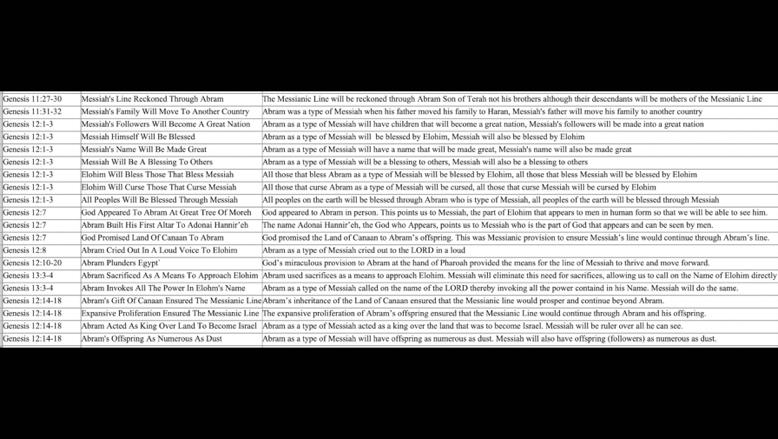
We're only about a third of the way through. Now, in our last episode, if you'll recall, we saw Abram and his nephew Lot, part ways. It seems that all of their herds, their flocks, all their animals were getting too numerous for the land to be able to sustain them. They could not stay together. They had to separate or they had to move to some better place. They were quarreling. The herdsmen of Lot were quarreling with the herdsmen of Abram. And besides that, you had the Canaanites and the Perizzites. They were all competing for the same pastureland, the same watering holes. So Abram told his nephew, if you go to the right, I'll go to the left. If you go to the left, I'll go to the right. And so they separated.
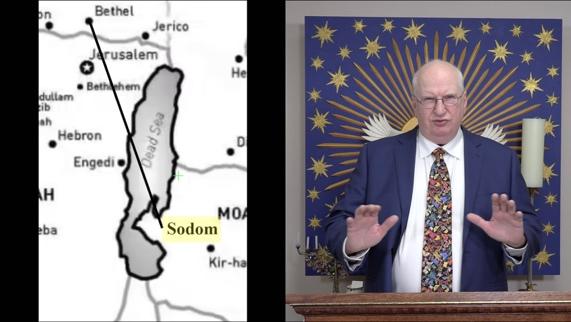
Now, Lot took off and he went to the Jordan plain, which was described as this fertile plain like the Garden of Eden or the Nile River Delta. He moved to a city called Sodom. Now Sodom was a city state. It had a king. His name was Bera. It had a standing army.
Now we theorized that he moved there because of the green pasture and it had room to expand and it was a place where he could settle down. I think there may have been more to it than that.
We have another possible explanation. We're going to learn in this episode that Abram had an army of 318 trained fighting men. And this army would have protected not only Abram's stuff, Abram's flocks and herds. It would have also offered protection to Lot. Once Lot left Abram, he left that protection as well. So he needed some form of protection. I don't think he [Lot] had his own standing army. And I think he may have gone to Sodom to live under the protection of King Bera's army. Now that brings us up to today's episode.
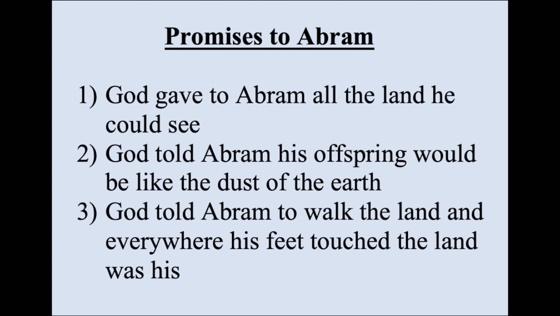
The only other thing I want to bring out is that after those two separated, Abram was shown by Elohim multiple promises. He said, now look to the north, the south, the east, and the west. Everything you see is yours. And I want you to walk the length and breadth of the land. Everywhere your foot steps is yours. He was giving Canaan to Abram.
And out of that came not only promises to Abram and his offspring, but also these had Messianic significance. And I'd like to go through these real quick.
1) Abram’s inheritance of Canaan ensured that the Messianic line would prosper and continue beyond Abram.
2) The expansive proliferation of Abram’s offspring ensured that the Messianic line would continue through Abram and his offspring.
3) Abram as a type of Messiah acted as a king over the land that was to become Israel. Messiah will be ruler over all he can see.
4) Abram as a type of Messiah will have offspring as numerous as dust. Messiah will also have offspring (followers) as numerous as dust.
Now, in the world around Canaan, there were many nations, and the kings of these nations were all jockeying for positions. Some had visions of conquest and splendor, and they were bent on conquering the world. One of those kings was named Kedorlaomer. He was the king of the Elamites.
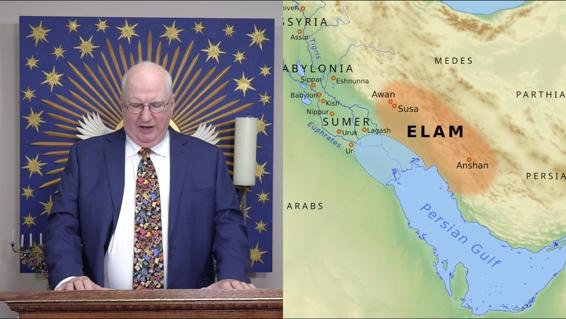
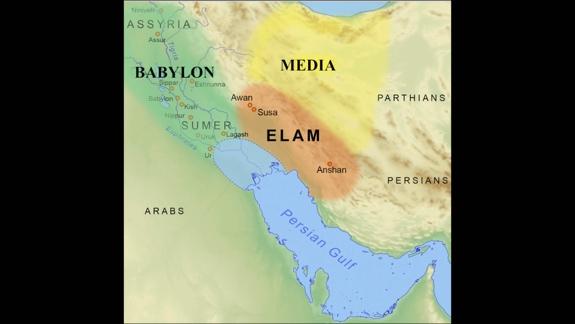
I'm going to put up a graphic here really quick so you can see where Elam is. We've talked about Elam in the past. It was a buffer territory between Babylon, you can see Elam there in the orange, and Persia is on the other side, Parthians, the Medes. So it was a buffer between Babylon and those nations to the east.
Now, the story of Kedorlaomer is found in Genesis chapter 14, specifically 14:1-3. I'm going to read it to you.
At this time Amraphel king of Shinar, Arioch king of Ellasar, Kedorlaomer king of Elam and Tidal king of Goiim went to war against Bera king of Sodom, Birsha king of Gomorrah, Shinab king of Admah, Shemeber king of Zeboiim, and the king of Bela (that is, Zoar). All these latter kings joined forces in the Valley of Siddim (the Salt Sea).
So, in these verses we have two armies that are facing off. We have an invasion force from the north comprised of four nations, and then we have the other army which is the five city-states of the plains who are coming together to defend their territory. So these armies are facing off.
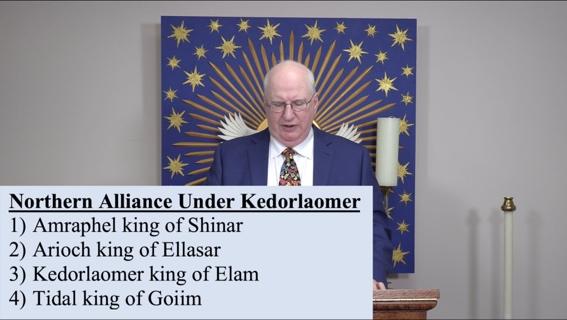
First of all, I want to look at the northern invading army. It's an alliance of four very diverse territories. I'm going to put another
graphic up so you can see as we go where these territories are. First, I'd like to talk about Amraphel king of Shinar. He has been identified by the sages as Nimrod king of Babylon.
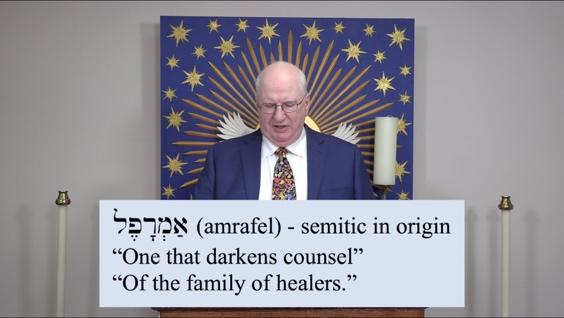
His name, Amraphel, is very much Semitic in origin. Some propose Akkadian roots, others propose Hebrew roots, but it's a very complex discussion. I don't want to wade into the weeds of that discussion but let me just say the two most common translations that have been put forth is that his name means “one that darkens counsel” or “of the family of healers.” Now, Shinar, we know that Babylon was in the Shinar plain. King of Shinar typically is referring to Babylon. So I think it's pretty clear that he was king of Babylon. And on our graphic, we see Babylon in the green there just off to the left side of Elam.
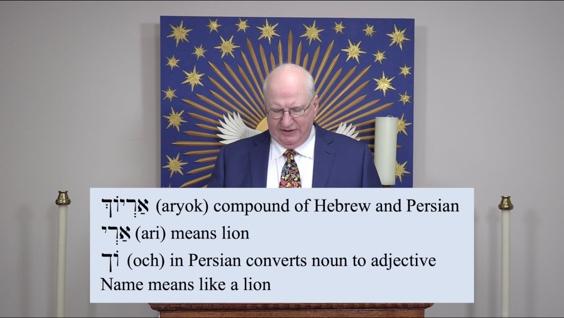
The next king in the alliance was Arioch. He was king of Elassar. Rambam has identified him as the king of Media. His name, Arioch, is actually a compound of two languages. You recognize the first part, Ari, which of course in Hebrew means lion. The och, in the ancient Persian was a means of converting a noun into an adjective. So his name would have meant like a lion or lion like. Now, we don't know where Elassar was located. There have been many proposals, but there's no hard archaeological evidence to identify where Elassar was.
I think most agree with Rabbi Rambam that we're probably looking at Media. And it makes sense.
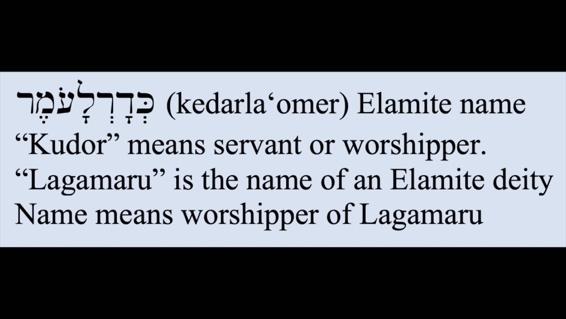
You can see on our graphic; Media is over there just above Elam. And all these three nations are in proximity to each other. The third king is Kedorlaomer, king of Elam. His name is from the Elamite language. There are two roots. The Kudor means servant or worshipper. And then Lagamaru, it's the name of the Elamite deity. So Kedorlaomer literally means worshipper or adherent of Lagamaru. So we know that the Elamites and the Babylonians had very close association. There's a lot of Elamite influence in Babylon and Babylonian influence in Elam. They fought back and forth constantly.
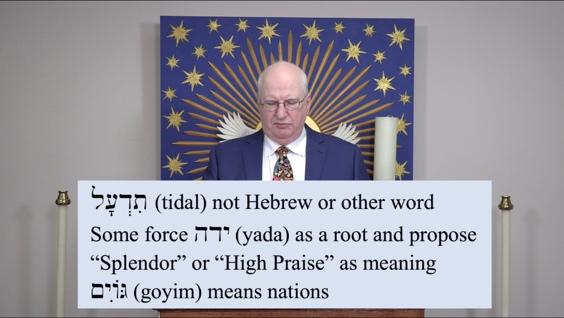
Now the final king in our alliance is Tidal, king of Goiim. His name Tidal does not lend itself readily to any interpretation. Some try to force hdy (yada) in the middle of his name and say that his name means high praise. I'm not sure about that. But what I am sure about is that the name of his nation, Goiim, it literally means nations. So, most scholars believe that he was the king of a confederation of smaller nations. I think the most probable theory is the one that these were non-Mesopotamian nations off to the west.
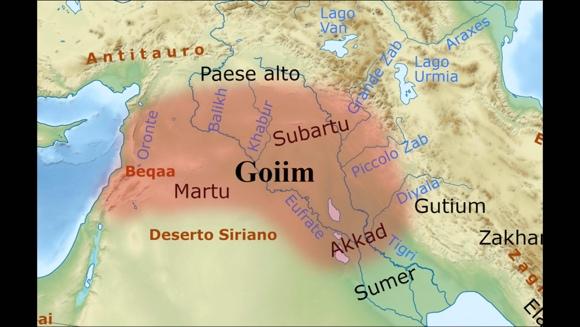
And I’ll put up a graphic, it's in Portuguese. But it shows you nations Martu, Subartu, Akkad, which would be the Assyrians. And then over, you know, we've got into the Mediterranean Sea there, that would be territories of Aram. So it's a confederation of Mari, Assyria, Subartu, and Aram. Some try to push these four nations into the model of Daniel where he's describing the four empires. And so they try to ascribe these to the Babylonian Empire, the Medo-Persian Empire, the Greek Empire, and the Roman Empire. I think that's stretching things a bit.
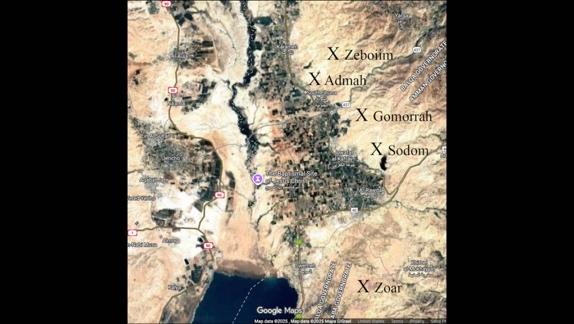
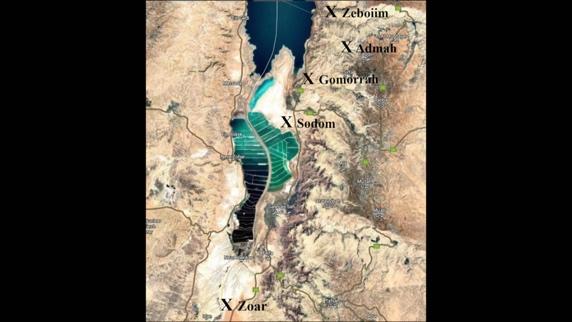
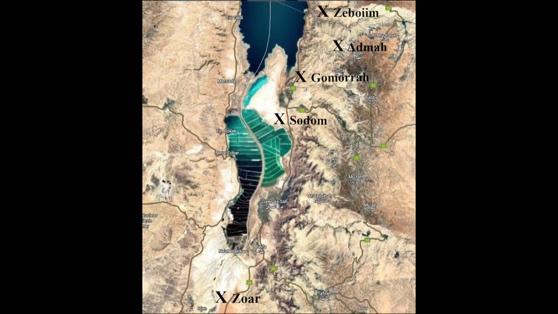
Now let's look at the other army. So our southern army, the defending army, it is comprised of forces from each of those five city-states. The location of those city-states is extraordinarily controversial. More recently, theories have arisen that these were located north of the Dead Sea. And they cite several tells that have been excavated which have shown Bronze Age settlements. So they put them up there. And my first graphic shows you theoretical places where those could have been north of the Dead Sea. Some, more commonly, the traditional has been to place them on the southern part of the Dead Sea. And you can see where those potentially could have been. So these five citystates came together to try to defend their land. There was an invading army.
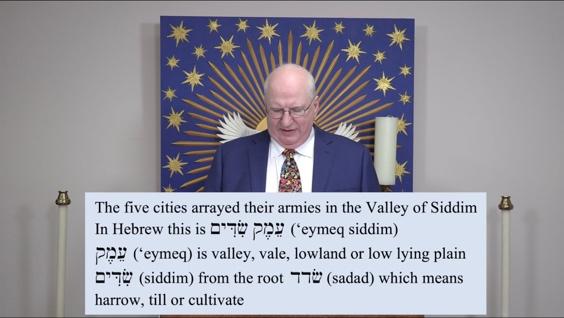
And they all were gathering for battle in the Valley of Siddim. Now the Valley of Siddim, in the Hebrew, the word translated valley is qRmEo (‘eymeq). And it can be translated as a deep valley, a vale, which would be an upper valley between peaks. Or it could be a lowlying plain or just plain, swampy lowlands. I think it was probably a low-lying plain. It was a part of the Jordan Plain where there were hills on either side. The word Myî;dIc (siddim) is a proper word and the name of the valley. But it comes from the root ddc (sadad), which means harrow, till, or cultivate. So I think this means cultivated fields. It's the valley of the cultivated fields.
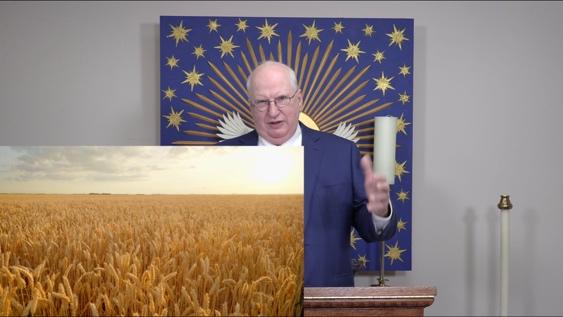
For us, it would be like fighting in the middle of a corn field or bean field or wheat field where I live. If you're in the Dakotas, maybe fighting in a sunflower field. Or in northern Indiana, you may be fighting in a mint field. But they were cultivated fields. Now the scriptures identify the location of the Valley of Siddim. And they say it is the Dead Sea.
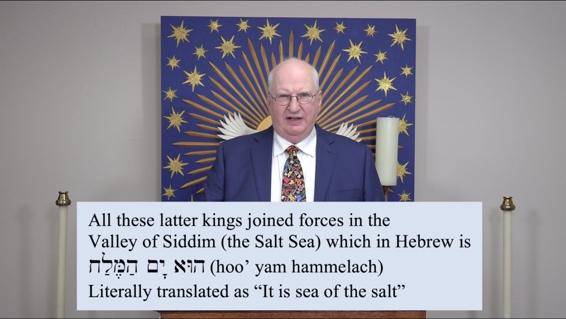
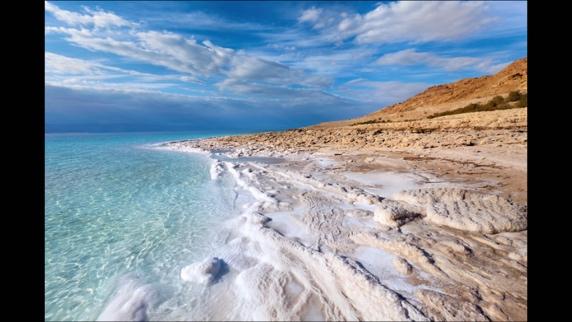
The phrase translated, the Dead Sea, literally is jAlR;mAh MDy a…wh (hoo’ yam hammelach) , which means it is the Salt Sea. Now obviously you couldn't have a battle underneath the water of the Salt Sea. You couldn't have a battle on the shores of the Dead Sea. There wouldn't be a huge place to plant any crops. So I think what we're talking about is the person who wrote Genesis is identifying those ancient locations based on current cities and current bodies of water. And the current body of water where that battle would have taken place was now under the Dead Sea.
I think we should step back and do like we've done in previous episodes where we imagine in our mind the scene that is playing out for us. I want you to picture a giant field which is planted. Maybe we're between plantings, but it's a cultivated field. So it's probably flat. The crops are not very high off the ground so you can see into the distance. We've got these five armies that are clustered together defending their cities. They probably are all dressed in different uniforms, one for each of the five city states, probably have different armor. They've got their own standards, their own flags.
And the number of soldiers in those armies cannot be extremely large because those city states, especially if you're basing it on the excavation of those Bronze Age settlements, they were not very big. You could maybe produce hundreds of soldiers per city, perhaps 1,000 or 2,000. So I think the biggest this army would be somewhere around 10,000, probably more like 5,000.
So it was definitely a small army. Now, the invading army, they would have been more massive. I mean, we're coming from four different large nations. They probably were well-supplied. They had the latest, greatest armor. They were well-fed and well-armed. So,
they would have measured probably more in the tens of thousands. We don't know the exact size, but we can compare it to other armies.
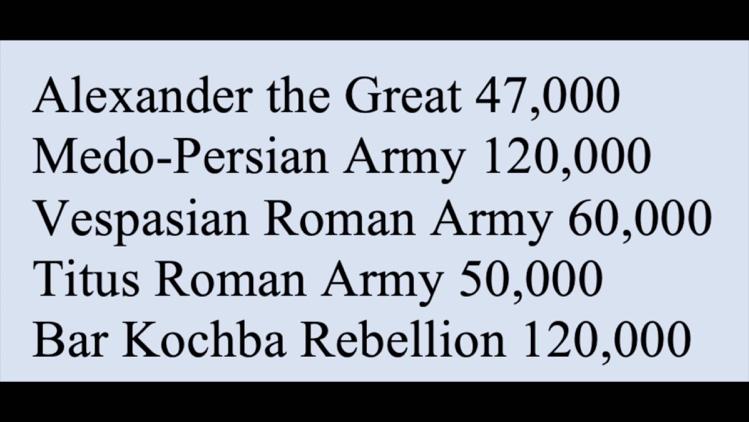
For example, Alexander the Great conquered the world with an army of 47,000. The Persians tried to invade Greece with an army of 120,000. When the Romans conquered Judea, they were bringing in armies on the order of 50,000 to 60,000. For example, Vespasian invaded the majority of Judea, except for Jerusalem with an army of 60,000. His son Titus then came in and finished the job with an army of 50,000 when they laid siege to Jerusalem. And then the biggest was the 12 legions showed up for the Bar Kokhba revolt in like 137 A.D. So, I think the army size would have probably been probably in the 50s, maybe a little bit bigger than that. The Sefer HaYashar say that the army was 800,000. I think this is a little bit on the high side. I mean, the logistics of moving 800,000 men from Mesopotamia down to Canaan would have been quite difficult. Now, having said that, the standing army for Israel under King David, if you remember in the Book of Chronicles where David was incited to count his fighting men, they came up with over one and a half million fighting men. And that wasn't even including the men of Benjamin or Levi.
So it could have been a larger army, I'm guessing more in the 50,000 to 100,000 range and this would mean there was probably about a 10 to 1 ratio. So as this army approaches, I'm imagining that these soldiers are using their shields to their advantage. They're using their swords and clanking them against the shields or their spears. They're chanting. They're screaming. They're making as much noise as possible to intimidate this smaller army.
So, if you're sitting there waiting for this massive army to arrive, and they're marching in and the ground is shaking, I think there's certainly an element of fear that is creeping in. Now, we know there's more to the story, so the back story is told in Genesis 14:4-9, and I'm going to read that to you.
For twelve years they had been subject to Kedorlaomer, but in the thirteenth year they rebelled.
This tells me that these five city-states had been paying Kedorlaomer tribute.
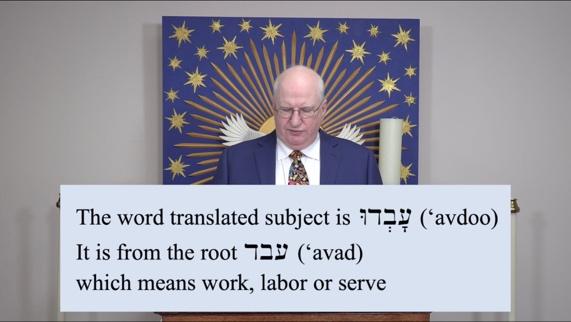
If you look at the word subject, they'd been subject to him. It's the word wdVbDo (‘avdoo). It's from the root dbo (‘avad), which means to work, labor, or serve. These people were serving, were laboring for, were working for Kedorlaomer, and they were sending tribute back. They'd done that for 12 years, but in the 13th year they rebelled. This would have provoked quite the response from Kedoraomer. I'm sure he fell into a rage, and he assembled an army.
In the fourteenth year, Kedorlaomer and the kings allied with him went out and defeated the Rephaites in Ashteroth Karnaim, the Zuzites in Ham, the Emites in Shaveh Kiriathaim and the Horites in the hill country of Seir, as far as El Paran near the desert. Then they turned back and went to En Mishpat (that is, Kadesh), and they conquered the whole territory of the Amalekites, as well as the Amorites who were living in Hazazon Tamar (which is modern En Gedi).
Then the king of Sodom, the king of Gomorrah, the king of Admah, the king of Zeboiim and the king of Bela (that is, Zoar)
marched out and drew up their battle lines in the Valley of Siddim against Kedorlaomer king of Elam, Tidal king of Goiim, Amraphel king of Shinar and Arioch king of Ellasar four kings against five.
We're ready for this battle, but let's push the pause button and look at what the strategy was behind the invading army. They started in the north. They started by picking off the Rephaites. So who were the Rephaites? Where were the Rephaites?
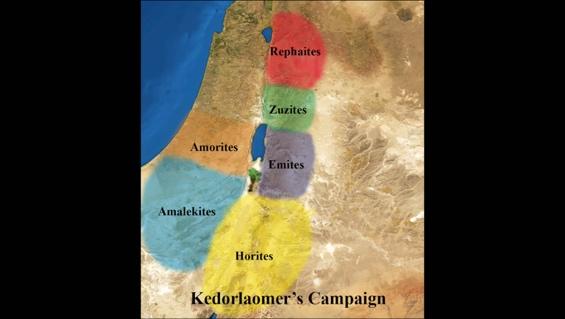
I've got another graphic to help you out. This shows all of these people groups that they conquered starting in the north. You'll see the Rephaites right next to the Sea of Galilee there. This is obviously Syrian territory, some Israeli territory. It is the Golan Heights, and if you look at it, it's basically the kingdom of Bashan. It would become later the kingdom of Bashan, that capital city, Ashteroth, Karnaim, that was one of the bigger cities. This is the territory that would later become Bashan, headed by Og, and we know that the Israelites defeated him and conquered this territory after they left Egypt on their exodus.
From the Rephaites, they moved south and they conquered the Zuzites. The Zuzites are in territory which would later become Amorite territory, headed by King Sihon, also conquered during the exodus. Then they moved further south and they conquered the Emites. The Emites were in the territory that would later become Moab. They're on the east bank of the Dead Sea there. And then they finally moved down into Horite territory, and it says the hill country of Seir, as far as El Paran. So this is Edomite territory. So they conquered the Horites.
Then they took a shift and they went back to the west and conquered the territory of the Amalekites. This is in the Negev, and then as far as En Mishpat. And then they headed north into Amorite territory. And if you'll remember, Abram was allied with some Amorites. Mamre, Eshkol, and Aner, he was allied with them. I think they shared resources and shared armies.
And the invading army stopped short of Abram's location. And they went as far as En Gedi, and then they started on their final conquest, which was the five city-states. So you can see these are the nations that completely encircle the plain of Jordan where these city-states were. I think Kedorlaomer's strategy was to pick off any nation that might come and lend aid to the city-states and isolate them. And once isolated, they'd be much easier to defeat. So, now the army is marching east, and they're going right into the Jordan plain, and they're going to engage the enemy on the Valley of Siddim.
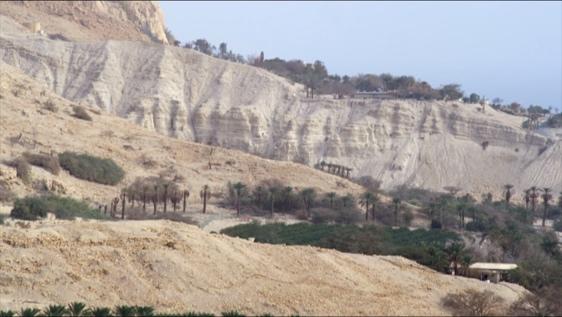
Now, in modern-day topography, that would not be an easy task, because if you've ever been to En Gedi, you know that there's a line of cliffs along that edge of the Dead Sea. If you've ever been to Masada, anywhere up and down that stretch, it wouldn't be easy to get down into the valley. If you're coming straight in from the west, you can get there. I mean, there are ways to get in. There's valleys and ways to get in, but you'd have to come down almost single file. And how are you
going to get any of your heavy equipment down? If you have horses, armor, it'd just be a very difficult, if not impossible, task. So I think the topography, as we discussed in our last episode, was this was all fairly flat. There may have been some hills, but not cliffs that you'd have to go down. And I've been showing you a video of what those cliffs look like. They would block the army from just walking right in. So now we're ready for the battle. I was trying to get you all excited and worked up for this momentous battle.
It's described in Genesis 14:10-11:
Now the Valley of Siddim was full of tar pits, and when the kings of Sodom and Gomorrah fled,
Wait a minute, wait a minute, where's the battle? We go from drawing up your battle lines, the army of Kedorlaomer are marching in, to suddenly they're fleeing.
some of the men fell into them and the rest fled to the hills. The four kings seized all the goods of Sodom and Gomorrah and all their food; then they went away. They also carried off Abram’s nephew Lot and his possessions, since he was living in Sodom
So it seems there was really no battle at all. It was just chaos, pandemonium. People were fleeing in all directions. They were literally running for the hills. Now, in the U.S., we have some famous tar pits.
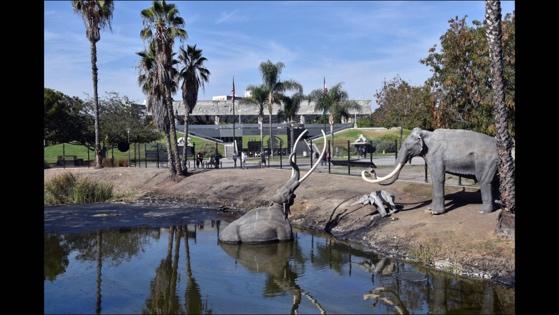
They are found in Los Angeles. They're called the La Brea Tar Pits. In all, they have discovered 100 tar pits, and some of these are 11 feet
deep. And if these tar pits in the Valley of Siddim were anything like the La Brea Tar Pits, they were numerous and they were deep.

And once you fell into a tar pit, you probably were not getting out, especially if you had armor on. So, I can see how this would happen. You're just running aimlessly trying to get out of there in fear, and you fall into the tar pit. So with the cities unguarded, Kedorlaomer and his army just marched right in, and they took everything that was there.
They took the people, they took the goods, they took the riches, they took food, and they just carried them away, and they marched them back up north. So we know their line of retreat would have been back up the Jordan Valley.
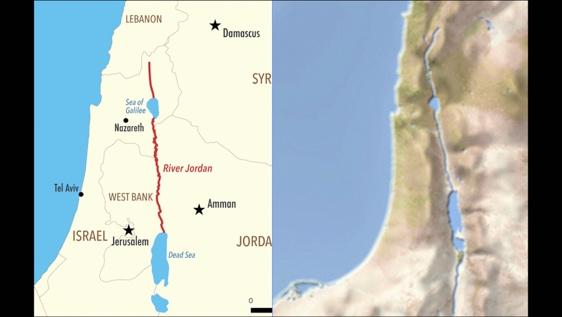
They probably would have left a trail of refuge behind them. It would have been very easy to track them. They were heading back to Mesopotamia with all their spoils. They were probably partying, drinking, and carrying on. So, it probably would not have been a mad rush to get back to Babylon and Media. It probably would have been just a very slow, leisurely march home.
Now, Abram found out about this, and his response is found in Genesis 14:13-16:
One who had escaped came and reported this to Abram the Hebrew. Now Abram was living near the great trees of Mamre the Amorite, a brother of Eshcol and Aner, all of whom were allied with Abram. When Abram heard that his relative had been taken captive, he called out the 318 trained men born in his household and went in pursuit as far as Dan. During the night Abram divided his men to attack them and he routed them, pursuing them as far as Hobah, north of Damascus. He recovered all the goods and brought back his relative Lot and his possessions, together with the women and the other people.
So, we know the army that pursued Kedorlaomer composed at least of 318 trained men, but it specifically says that Abram was allied with Aner, Eshcol and Mamre, so they probably also had their own trained men. So, the army was bigger than the 318, but it only includes details of Abram's army.
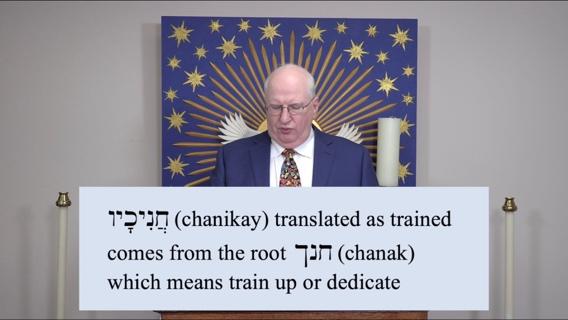
If you look at the word trained, translated trained, it comes from the root Knj (chanak), which means to train up or dedicate, so we're talking about soldiers that were dedicated to fighting. These were not day soldiers. They didn't have a day job, and they just served when they were needed. They were 24/7 soldiers. They were the guards. They were the ones who protected all the crops, the people, the animals, protected all of Abram's gold, silver, and bronze reserves, etc.
So Abram called out his army, and they followed the trail of breadcrumbs, all the junk that the Kedorlaomer's army was leaving behind after they ate the stuff and abused the stuff. They just threw it away, so they would have been able to track them pretty easily.
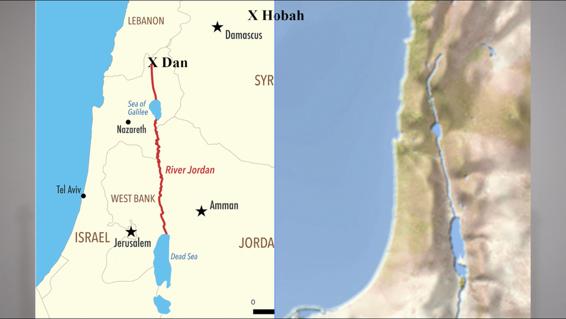
They caught up with them at Dan. Now, Dan wasn't a thing back then. Obviously, Dan came later, but the writer of Genesis is using more modern locators to tell you where this was. So this was on the slopes of Mount Hermon, at the foothills of Mount Hermon. It would have been north of the Hula Plain, up there on the slopes. So Abram's army divided, so they created an ambush, and they attacked and routed and pursued them. Now, the phrase, attack, routed, and pursued, it's the Hebrew phrase,
ME;kÅ¥yÅw (vayyacaym vayyirdefaym)
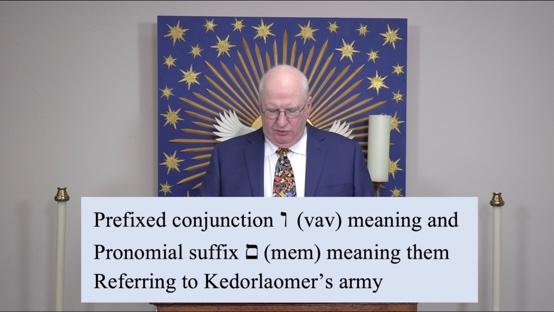
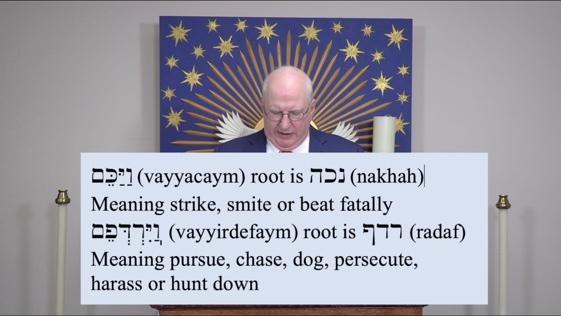
And this phrase is composed of those two words, each which has a prefixed conjunction meaning and, and the suffix, pronominal suffix, which means them. The them is referring to the Kedorlaomer's army. So what did they do to them? The first word has the root hkn (nakhah). It means strike, smite, or beat fatally. So this is the part of the phrase where they attacked and routed. They literally put them to the sword and killed them. So they destroyed, I think, the majority of the army, causing them to turn tail and run. And that brings up the second word, and the root of the second word is Pdr (radaf), which means pursue, chase, dog, persecute, harass, or hunt down. I like that one, hunt down.
I think Abram's army hunted down Kedorlaomer's army. They caught up with them at Hobah, north of Damascus. Most think that this is probably on the road between Damascus and Palmyra, which, of course, then would have been Tudmor. And this would have been a logical escape route. It would have been a major highway that would have allowed them to retreat to their country. So, once the army was under attack, I think they just dropped all of their booty. They left all the slaves behind. They left all the stuff behind and just ran. They may have even dropped their weapons, took off their army, and just started to sprint back home. But I think Abram's army caught up with them, and I think they destroyed them. We don't know.
But what we do know is that Abram's army recovered all the plunder. I mean everything. They recovered Lot. They recovered Lot’s stuff, Lot’s family. So everything that had been stolen by Kedorlaomer was now recovered and is going to be returned. So now they turn around, and they make the slow march back down the Jordan Valley, back down to the five cities of the plain. And you can imagine how these people felt. I mean envision this one. They're all heading home to go back to their houses, their land. They've been redeemed. They're no longer going to be slaves. They're being fed again. So there would be a lot of joy and celebration, happiness. I think they would have been singing and shouting. And Abram here is leading all of these redeemed refugees in his train back down the valley.
So, Genesis 14:17 describes Abram coming back:
After Abram returned from defeating Kedorlaomer and the kings allied with him, the king of Sodom came out to meet him in the Valley of Shaveh (that is, the King’s Valley).
So the people of the cities were coming out to meet this throng of people returning home. So, soldiers that had run away now are being reunited with their families. The king was going to greet David, and I think this was just a time of great jubilation. It reminds me of Isaiah 51:11, which says:
The ransomed of the LORD will return. They will enter Zion with singing; everlasting joy will crown their heads. Gladness and joy will overtake them, and sorrow and sighing will flee away.
This is clearly a Messianic scripture in Isaiah, and what we see here with Abram redeeming all these slaves is basically the same exact picture. Abram is ransoming all these people, and this has clear Messianic significance.
So this is our first Messianic prophecy of this episode, and I'm going to read it to you.
1) Abram as a type of Messiah led a throng of redeemed captives out of bondage and slavery and into freedom pointing us to Messiah who will do the same.
Based on this verse and also Isaiah, it's the same exact picture, the same exact thing. Messiah will be leading captives out of bondage and into freedom, leading them into Zion. So, I'm sure the king of Sodom was eternally grateful to Abram who saved his bacon and brought his people back to him. He was going to address Abram, but before that event happened, something extraordinary took place, and this event has so much Messianic implication. It just reverberates throughout all history, this one single event, and I'm going to talk to you in our next episode some of those reverberations I'm referring to. It has to do with the priesthood. It has to do with salvation. It has to do with the Levitical priesthood pointing us towards Messiah. So, I'm going to read Genesis 14, 18-20 for you:
Then Melchizedek king of Salem brought out bread and wine. He was priest of God Most High, and he blessed Abram, saying, “Blessed be Abram by God Most High, Creator of heaven and earth. And blessed be God Most High, who delivered your enemies into your hand.” Then Abram gave him a tenth of everything.
This is just an outstanding verse. It just glows. It sparks with Messianic prophecy. Now, we've talked about Melchizedek in a previous episode, and we said that we'd go into great detail in a future episode. Well, that time is now. Both this episode and the next episode we’ll be dealing with Melchizedek. He had three titles assigned to him in this passage.
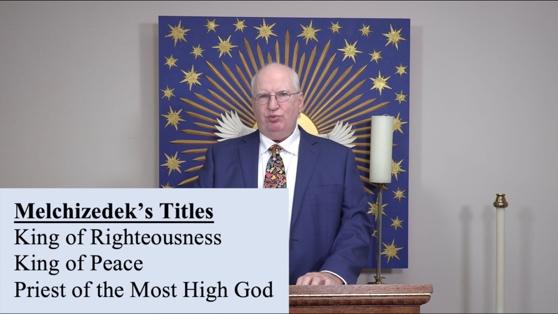
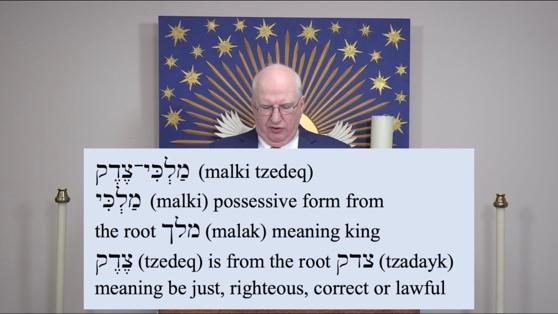
Title number one was his name, and its q®dRx_yI;kVlAm (malki-tzedeq) . It's a compound word. The yI;kVlAm (malki) is in the construct form, and it's from the root which means king, Klm (malak). The q®dRx (tzedeq) comes from the root qdx (tzadayk), and it means to be just, righteous, correct, or lawful. So he was king of righteousness. He was the king of everything correct, lawful, and right. So, this is his first title, King of Righteousness.
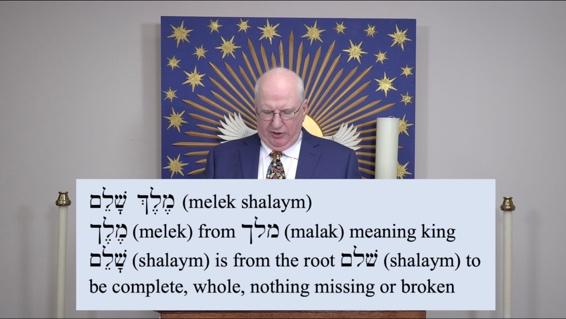
His second title was MElDv JKRlRm (melek shalaym). KRlRm (melek), of course, is the same root as the yI;kVlAm (malki), it means king. And then MElDv (shalaym) is from the root Mlv (shalaym), which means complete, whole, nothing missing, nothing broken. Translated here as peace. And so Melchizedek was the King of Peace, title number two.
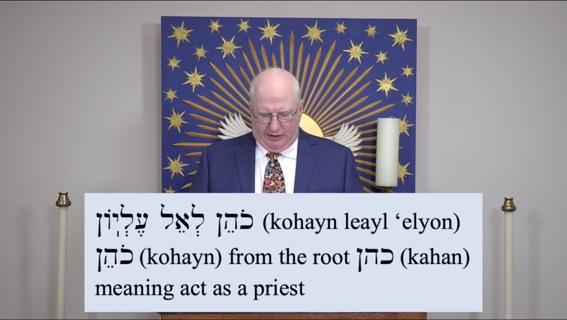
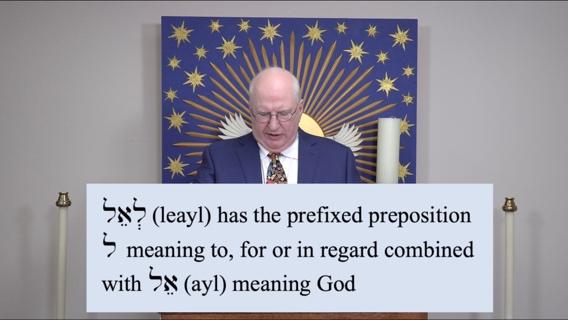
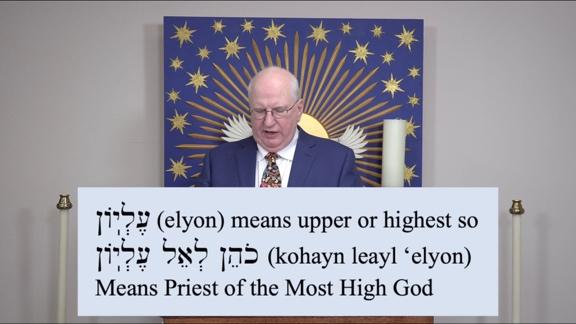
His third title was NwáøyVlRo lEaVl NEhOk (kohayn leayl ‘elyon). NEhOk (kohayn) is from the root Nhk (kahan), which means to act as a priest. So it literally means priest. lEaVl (leayl) has a prefixed preposition to, for, or in regard to. lEa (ayl) is the name of God. And then NwáøyVlRo (elyon) means the most high, the highest.
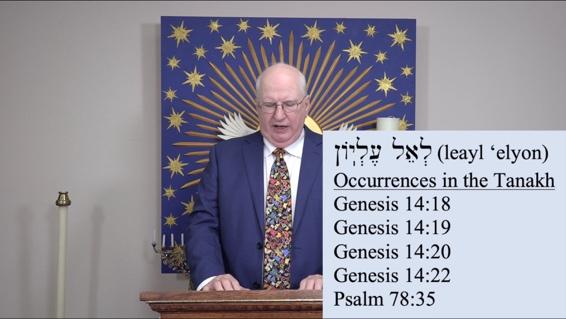
So he was Priest of the Most High God. And if you look at all the references to this specific name El Elyon, you're only going to find them in this passage in regards to Melchizedek, priest of El Elyon. Or it's also used in Psalm 78, where David is describing the Israelites in the desert, remembering that Elohim was their Rock and the Most High God their Redeemer. So not a title that's used very frequently. Now, these three titles have Messianic significance. And the fact that he is both a king and a priest has Messianic significance.
So here they are:
2) Melchizedek as a type of Messiah points us to Messiah who will be the King of Righteousness.
3) Melchizedek as a type of Messiah points us to Messiah who will be the King of Peace.
4) Melchizedek as a type of Messiah points us to Messiah who will be a Priest of the Most High God.
So, both king and priest, King of Peace, Priest of the Most High God. He was both a king and a priest. Which brings us to number five:
5) Melchizedek as a type of Messiah was both a king and a priest. Messiah will also be a king and a priest
Now, Melchizedek came out. He met Abram and he brought him bread and wine.
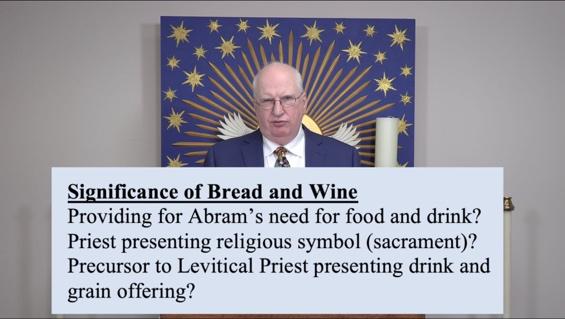
Now what is the significance of the bread and the wine? It may have just been generic food. So he brought him some bread to eat, some wine to drink. So just he was refreshing him after his rough battle. But I'm sure Abram had already eaten and drunk and had plenty and was well hydrated. So I don't think that was the significance that he was just providing for Abram's needs. I think there's more to it than that. Melchizedek obviously is a non-Levitical priest. But he is a priest, nonetheless. He was a priest of the Most High God. He wasn't a priest of Baal. He wasn't a priest of Asherah. He wasn't a priest of Astarte or Marduk or any of the gods that Abram would have known. He was a priest of the Most High God. So he made offerings that are significant to the Levitical Priesthood. Because the Levitical priests offered drink offerings. They offered grain offerings. They offered these same kind
of offerings. So now they would offer them to God. And Melchizedek now is offering them to Abram. These offerings point us to those Levitical offerings. Which then points us to Messiah's ultimate offering.
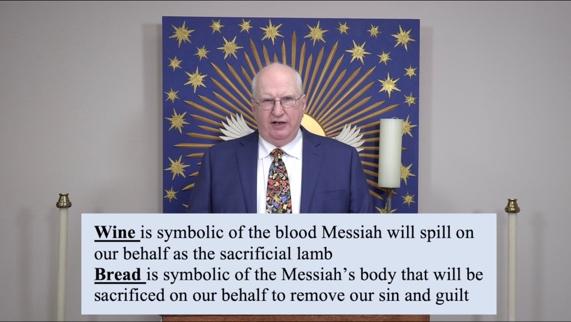
And that is the significance I want to bring out here. The wine is symbolic of the blood that Messiah would shed. Just like a drink offering poured out is a drink offering. Just like a sin offering slaughtered on the altar. Messiah was going to offer his blood which is symbolized by the wine. And he's going to offer his body that will be killed, sacrificed. And that is symbolized by the bread. So that brings us to our final Messianic prophecy.
6) Melchizedek, priest of the Most High God offered bread and wine to Abram. This points us to Messiah who will present his body and blood and as the ultimate sacrifice. He, like Melchizedek, will present bread which is symbolic of his body. And he will present wine which is symbolic of his blood.
Now that's a lot to take in. We have much more to say about Melchizedek. But not enough time in today's episode to do it. So we're going to pick up at this exact spot in our next episode. And we're going to talk about Melchizedek's blessings. Because these have huge significance in regards to the priesthood. And we're going to talk to you about what the sages believe. What the Jewish belief is about who Melchizedek was. And we're going to talk about Muslim beliefs. And we're going to talk about Christian beliefs on who Melchizedek was. Because everybody has just a little different idea of Melchizedek. So join me next time as we talk about the King of Peace, The king of Righteousness, Melchizedek, pointing us to Messiah
Thank you for watching our show today. We hope that you enjoyed watching it as much as we enjoyed bringing it to you. Now, after watching this episode you might be saying to yourself, “Who is this Messiah that Dr. Smith is talking about?
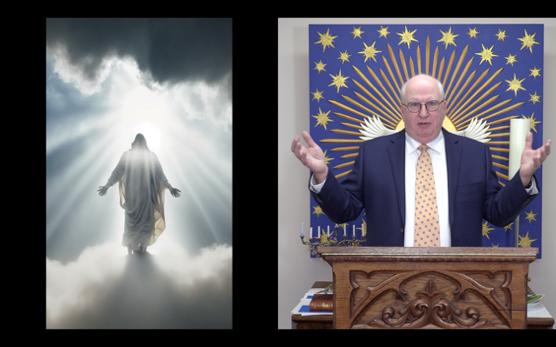
Is he talking about the Christian Messiah? Is he talking about Jesus Christ, the Son of God, who was born of the Virgin Mary. And then lived a blameless and holy life on the earth and then was tortured and crucified. And after he died he then was resurrected from the dead after three days. Then after people witnessed this, he was then taken up bodily by Elohim into heaven from the Mount of Olives.
Or is Dr. Smith talking about the Muslim prophet Isa. Isa Ibn Maryam, the messenger, who was sent by Allah to bring a message to the people. The Quran says he that lived a holy and blameless life, was born of the virgin Mary. He fulfilled all the Jewish prophecies in exact accordance. But one difference, instead of being crucified, he then was taken up by Allah into heaven before the Romans laid hands on him. And he awaits there now in the fourth heaven where at the end of days at the day of judgment he will be revealed to all.
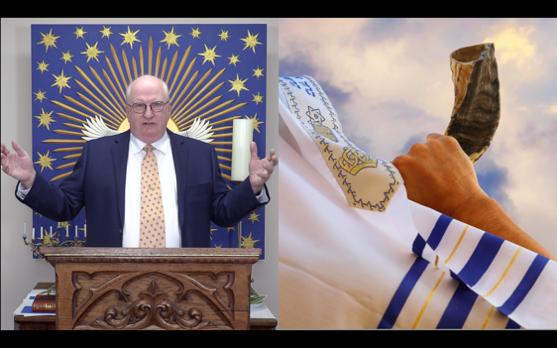
Or is Dr. Smith talking about the Jewish Messiah? The Messiah who has not yet been revealed that the entire Jewish world is waiting for his revelation. Now, the beautiful thing is that you can hold to any of these beliefs. And we can all still learn together about Messiah. We can learn about our Christian Messiah. We can learn about our Jewish Messiah. We can learn about our Muslim prophet Isa who will be revealed. It doesn’t matter what you believe. You can even be an atheist or agnostic and still learn from this program about Messiah. Now, I have to admit I am a Christian, so I approach things, obviously, from a Christian point of view. And I promise you, as we reveal these prophecies, which I believe have all been fulfilled through Jesus Christ. Or will be fulfilled when he comes back, returning in the clouds in the same way he was taken up. I believe that all of this is true, but I promise you I will do my very best to present these prophecies from a neutral point of view. And try to keep my Christian bias to a minimum. Obviously, it will pop up from time to time, but I will try to stay only in the Tanakh and try not to get into the New Testament very often. Now, if you want more information about Messiah, we have resources for you.
We have a website which is findingmessiah.org. Now, on that website you are going to find several resources. You will find links to all the videos, all the episodes that we have created so far. You will find links to download the transcripts of any of these episodes. And then you will find a section where you can get more information about Messiah through frequently asked questions. And then there is a section for donation. If you want to come alongside our ministry at Finding Messiah.
Now, there’s going to come a time in this series where you are going to be confronted with the question: What are you going to do with Messiah? Who do you believe Messiah is? Which of these Messiahs do you believe Dr. Smith is talking about? And Messiah will become real to you if you look at all the information presented and come to your conclusions. So, join us as we continue our journey through the Old Testament Scriptures looking for all the Messianic Prophecies. And join us next time as we reveal those to you.