
ANNUAL REPORT
July 2024 to August 2025
Compiled by: UNDP - FREF Support Project Unit
FREF Chair's Message
Paula Baleilevuka
Permanent Secretary for Public Works and Meteorological Services
Bula
Much has been achieved since January 2025, when the Fiji Rural Electrification Fund (FREF) officially began implementation with the UNDP Pacific Multicountry Office The FREF Board approved 20 sites to be electrified under Stages 1 and 2 of FREF's 24-month electrification plan, with 3 and 17 sites to be implemented under each stage, respectively.
I am pleased to convey that the tender for the Stage 1 sites has been advertised, and we plan to begin construction of the 3 sites by October 2025, with commissioning scheduled for late March 2026
Preparations for Stage 2 tender are well underway as a multi-agency technical team from the Department of Energy, UNDP, Ministry of Trade, Co-operatives, Small and Medium Enterprises, Ministry of iTaukei Affairs, and Arizona State University is conducting comprehensive technical scoping and socio-economic validation of 22 communities across Lomaiviti, Kadavu, and Lau, from which 17 will be shortlisted based on a multi-dimensional criterion established under the FREF Operation and Financial Manual. The commencement of construction for Stage 2 sites is planned for February 2026, with commissioning scheduled for August 2026.
I take this opportunity to thank our donors, the Governments of Australia, New Zealand, and the United Kingdom, for their invaluable support to Fiji's rural electrification ambitions FREF promises to be a gamechanger for rural development, showcasing how well-coordinated integrated development in the form of electricity and digital communication can unlock the economic potential of marginalised communities.
However, there is much to be done With over 399 rural communities identified to be supported by FREF over an 8-10 year horizon, requiring a total investment of approximately FJ $564,859,312, there is an urgent need to increase the scale, scope, and speed of development/climate finance from a combination of bilateral, multilateral, and private sources to meet Fiji's rural electrification targets. In the coming months, the FREF team will be working closely with UNDP to conduct resource mobilization for subsequent stages of electrification for FREF.
The Government of Fiji remains committed to the FREF model, and we look forward to the expedited implementation of FREF's electrification plans over the next 24 months
Vinaka Vakalevu.

Overview of Ambitions
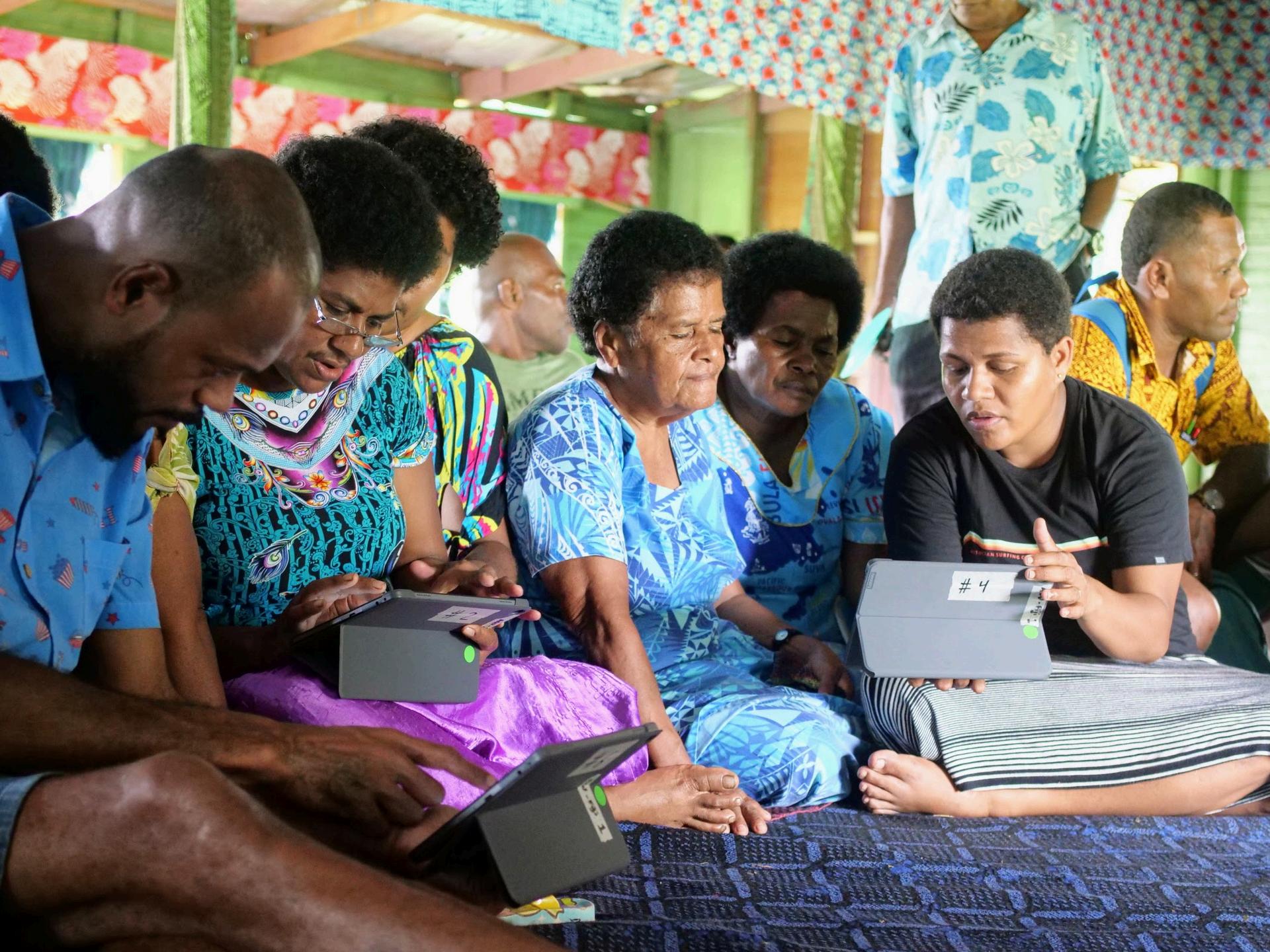
The FREF model aims to provide access to clean, affordable, reliable and resilient forms of energy for un-electrified and intermittent demand rural communities. It will de-risk private sector participation into the renewable electrification market, creating a fair and open competitive renewable electrification market that supports sustainable electrification schemes for rural communities

Duration: September 2024 - December 2028
Total Budget: US $19 Million (Funding gaps: US $3 Million)
Target Beneficiaries:


National Rural Electrification Regulations and rural mini-grid tariff setting structure developed using gender considerations and being used by the national energy regulator and the Department of Energy.

20 rural solar mini-grids constructed using public-private partnership models with an installed capacity of 2 megawatts and a particular focus on supporting women-led partnerships Implemented as Stage 1 (3 sites) and Stage 2 (17 sites)

6,500 people living in 20 rural communities, half of whom are females, have access to clean, affordable and reliable energy and telecommunications solutions

Empowered, inclusive and climate-resilient rural communities with equitable access to sustainable energy solutions, driving inclusive socio-economic development and global climate goals
Funded by:



Implemented by:
SDG Alignment:
FREF TechnicalApproach
Horizontal and Vertical Integration
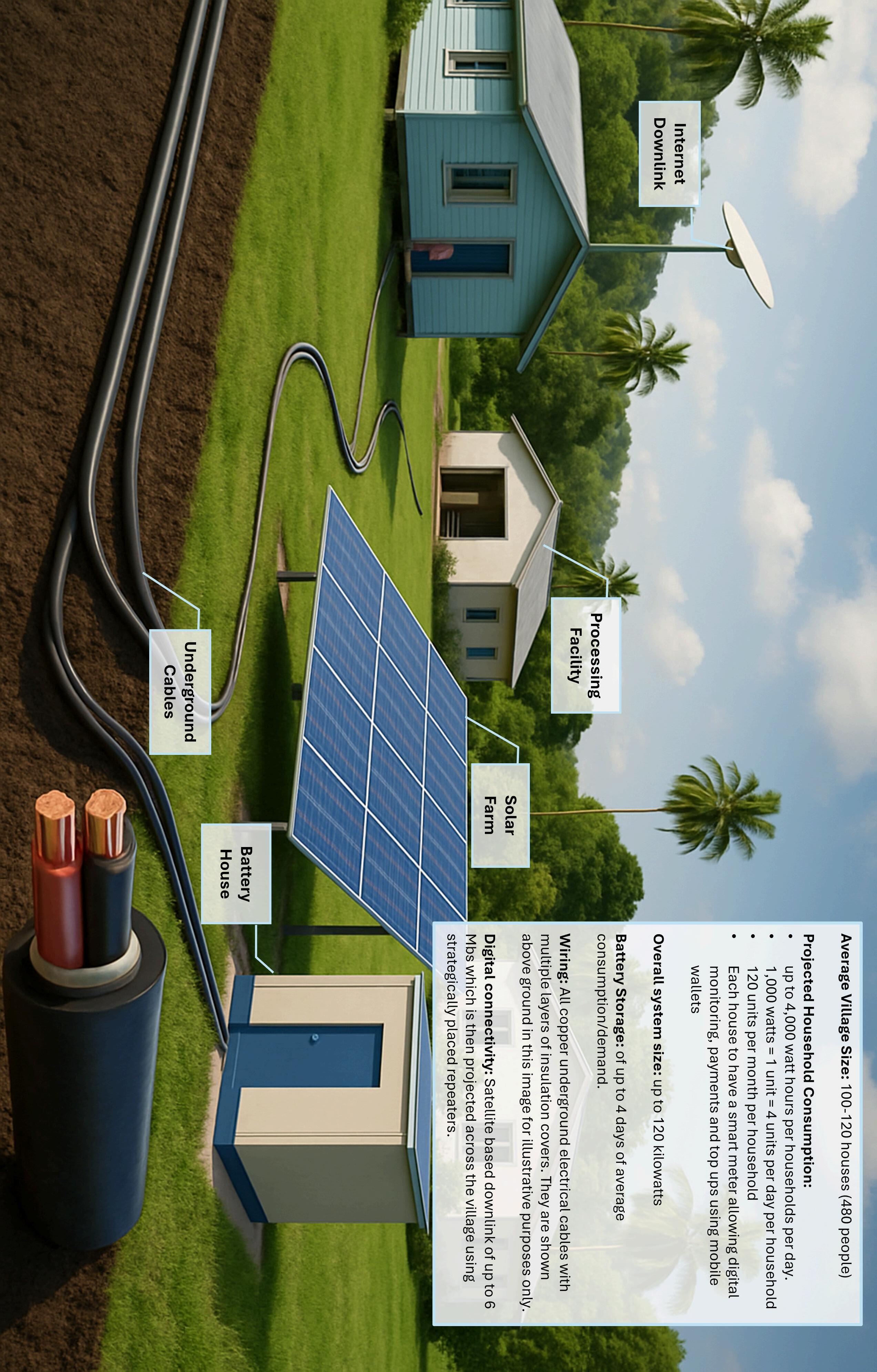
The FREF model aims to provide access to clean, affordable, reliable and resilient forms of energy for unelectrified and intermittent demand rural communities It will de-risk private sector participation in the renewable electrification market and will create a fair and open competitive renewable electrification market that supports sustainable electrification schemes for rural communities. Other auxiliary services, such as desalination plants, solar refrigerators, mobile networks, digital payment solutions, telehealth services, and parametric disaster risk insurance, will be built on top of the mini-grid solution to improve overall standards of living
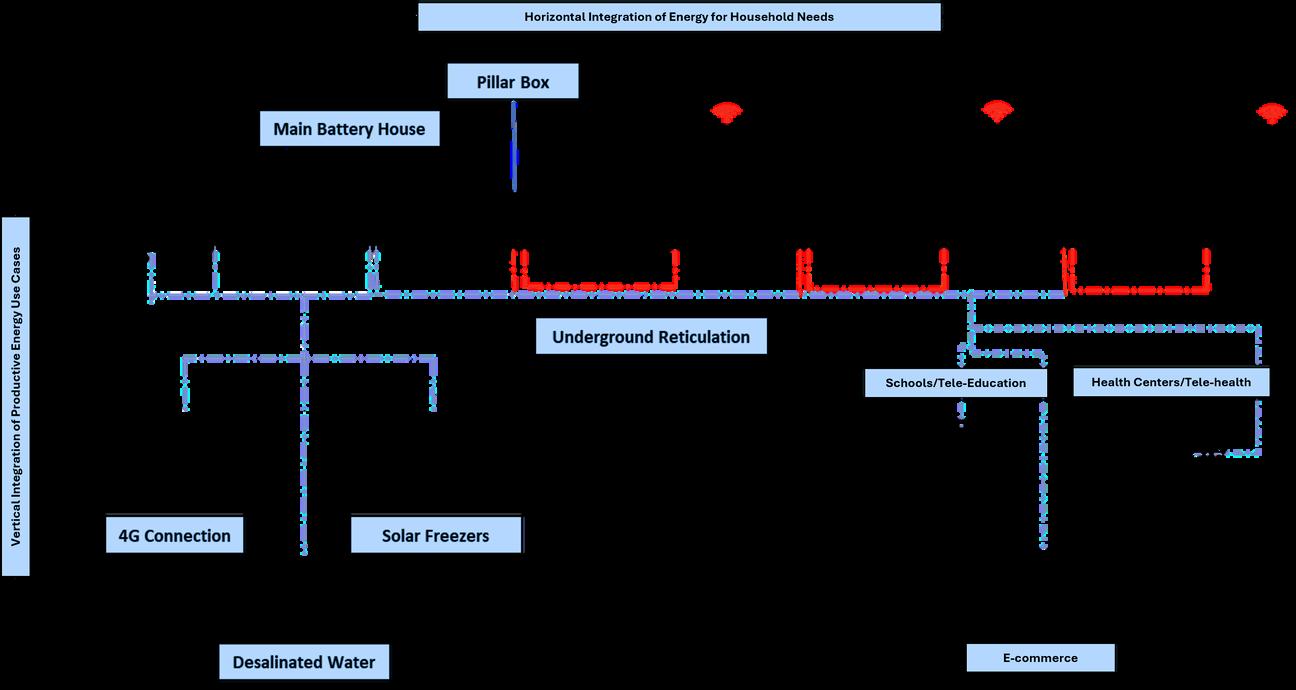
FREF uses a horizontal integration model to connect all households in the village to the centralised solar mini-grid using underground cables. Each house has a smart meter, which is used to remotely monitor, bill, and manage electricity usage, enabling seamless integration with mobile wallet solutions
This is complemented with a vertical integration model to create productive energy use cases, thereby enabling the village to increase its income and pay for the electricity it uses (user pay system). This model allows the solar minigrid to unlock the economic potential of rural communities by enabling digital connectivity, cold storage and value addition services, clean water and sanitation, as well as tele-health and tele-education services FREF ensures that the Engineer, Procure and Construct contractor is also committed to a long-term Operations and Maintenance contract for long-term viability of the project
The diagram below illustrates both models.
FREF TechnicalApproach
General Technical Specifications
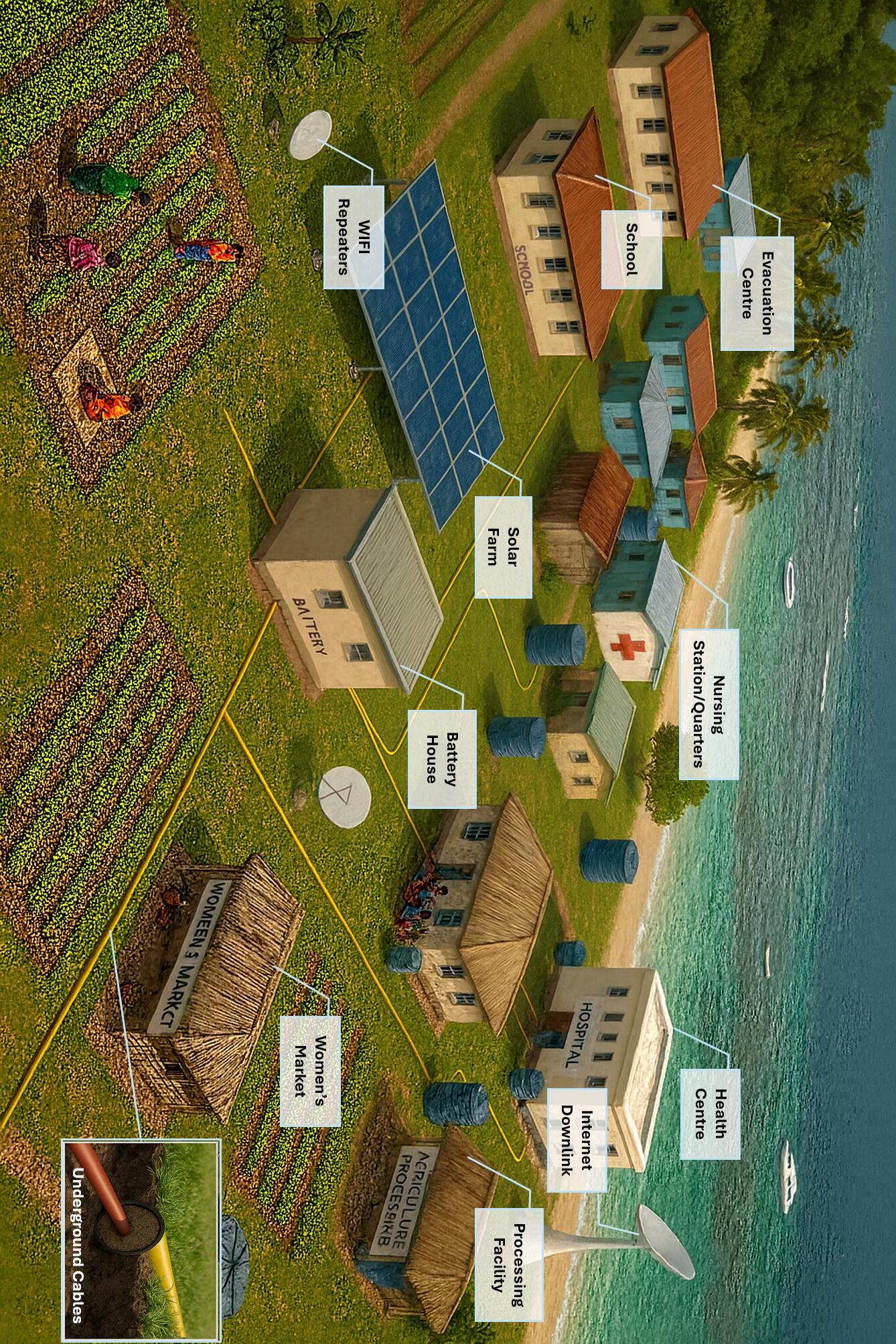
FREF TechnicalApproach
General Village Layout
YearinReview 2024
June 2024
October 2024
November 2024
Finance Agreements signed between the Government of Fiji and the Government of Australia and New Zealand. Funds were received into the FREF Trust account
FREF Board endorsed the establishment of the FREF Unit within the Department of Energy to provide secretariat support to FREF The FREF Board also endorsed the FREF Operation and Financial Procedures as well as modalities for outsourcing implementation to UNDP as the Lead Implementing Partner for FREF.
Total funding of USD 7 2 million transferred from the FREF Trust Account to UNDP under the UNDP-FREF Support Project Funds are to be used for the electrification of 3 sites under Stage 1 Tender and for up to 17 sites under Stage 2 Tender.
January 2025
Feb - March 2025
UNDP-FREF Support Project presented the first draft of Tender documents for the Stage 1 Tender to the FREF Advisory Committee and Board. The endorsement was received, and work proceeded with detailed design. FREF Board endorsed technical scoping for 22 sites under Stage Tender
Waitabu Village is replaced with Yacata Village as the third site under the Stage 1 Tender due to the planned grid extension on Lakeba Island A detailed site scoping and technical assessment for Yacata Village was conducted, including socio-economic baselining and geotechnical assessments.
April 2025
Tender documents for the FREF Stage 1 tender were updated and reviewed by the Department of Energy and the FREF Advisory Committee The UNDP FREF Support Project partners with Arizona State University to conduct preparatory works for the Stage 2 tender.
2025
May - June 2025
Jul 2025
August 2025
Detailed technical preparations were conducted by the FREF Secretariat, UNDP-FREF Support Project, Arizona State University, and selected Government agencies for the Stage 2 tender works A detailed review was undertaken by the UNDP Global procurement team on Stage 1 tender documents
Stage 1 Tender advertised with closure of tender expected on 29 August 2025. A multi-agency technical team from the Department of Energy, UNDP, Ministry of Trade, Co-operatives, Small and Medium Enterprise, Ministry of iTaukei Affairs, and Arizona State University began detailed scoping of Stage 2 sites in Lomaiviti
Stage 1 tender advert is being facilitated, and responses to queries from potential bidders are being addressed Multi-agency technical team began detailed scoping of Stage 2 sites in Kadavu UNDP-FREF Support Project Team and Arizona State University began work on drafting Stage 2 Tender documents.