WO DONG A ALBU RY FIELD & GAME
Friday 30th October –Monday 2nd November 2026
Friday 30th October –Monday 2nd November 2026
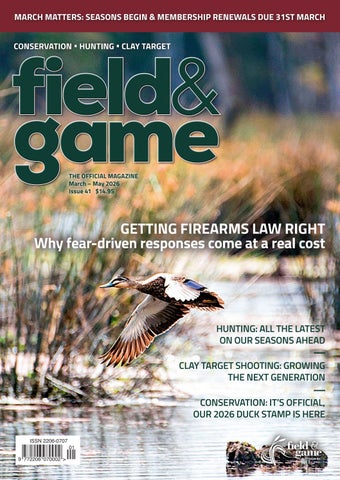
As this March issue of Field & Game Australia goes to print, the past few months have been marked by both challenge and reflection — for our members, our communities and the broader Australian public.
The tragic events at Bondi Junction have understandably shaken the nation. In the aftermath of such violence, grief and fear often drive urgent calls for action. In this issue, we address the renewed focus on firearm legislation and public safety with the seriousness it deserves. Our feature article takes a measured and considered look at the risks of fear-driven policy responses, reinforcing Field & Game Australia’s long-held position: that strong, effective laws must be grounded in evidence, enforcement and responsibility — not rushed reactions that fail to address the real causes of harm.
At the same time, many of our members have watched with concern as devastating bushfires swept across parts of regional Victoria in January. Communities have been tested, wildlife habitat has been lost, and the scale of recovery ahead is significant. We acknowledge the toll these fires have taken and extend our thoughts to all those affected — including members, volunteers and regional towns that form the backbone of Field & Game Australia. The protection and restoration of wetlands and habitat remains as critical as ever in the face of increasingly extreme conditions.
Against this backdrop, it has been heartening to see the strength of community that continues to define Field & Game Australia.
This issue includes a wrap-up of our Australia Day Community event at Connewarre, a day that once again highlighted the positive role our members play in bringing people together. From families and juniors to long-time volunteers, the event showcased the connection between conservation, education and community engagement — values that sit at the core of our organisation.
We are also pleased to feature junior shooter Maximus Pratt, whose enthusiasm and commitment to clay target shooting is a reminder of the importance of supporting the next generation. Stories like Maximus’s reinforce why junior pathways, mentoring and inclusive participation remain priorities for Field & Game Australia across all aspects of our sport.
Members will also find an update on the GMA MyGL licence renewal process, an issue that has generated understandable questions and concern in recent months. We continue to work closely to ensure members have clear, accurate information and practical guidance as processes evolve.
Throughout this issue, you’ll also see the ongoing work of our conservation programs reflected — from Containers for Conservation to wetland restoration and community education initiatives. These efforts, often carried out quietly and consistently, demonstrate how everyday actions contribute to meaningful outcomes for wildlife and habitat.
March is always a significant month for Field & Game Australia. As hunting seasons commence, competitions continue and memberships come due for renewal, it is also a time to reaffirm what brings us together: a shared commitment to ethical hunting, practical conservation and strong, informed advocacy.
Thank you to our members, volunteers and supporters for continuing to stand with Field & Game Australia. Your involvement — whether in the field, at the range, in wetlands or within your local community — is what ensures our organisation remains credible, resilient and relevant.
As always, we appreciate your engagement with the magazine and the issues that matter to our community.
Anne-Marie Blewett
Field & Game Australia
If you have any feedback of any sort of would like to contribute to Field & Game magazine in any way, drop us a line at editor@fieldandgame.com.au or, you can call on (03) 5799 0960.
Lucas Cooke – Chief Executive Officer
Glenn Falla – Conservation & Hunting Manager
Anne-Marie Blewett – Operations Lead
Wayne Peters - Senior Administration and Branch Support Officer
Olivia Peachey - Administration and Member Support Officer
Chelsea Skinner – Business Accounts Clerk
David Anderson – Chairman
david.anderson@fieldandgame.com.au
Trent Leen – Vice-Chairman trent.leen@fieldandgame.com.au
Glenda Anderson glenda.anderson@fieldandgame.com.au
Adam Carson adam.carson@fieldandgame.com.au
Vicki Norris vicki.norris@fieldandgame.com.au
Paul Sharp paul.sharp@fieldandgame.com.au
Michaela Shirley michaela.shirley@fieldandgame.com.au
Jacqui Maskell – Graphic Designer
Anne-Marie Blewett – Operations Lead
Karen Davies Rod Watt
Kevin Walshaw
Sarah Fritsch Maximus Pratt
Paul Brown
Tim Michaelides – Managing Director
Tim Dunphy – Production Manager (Print & Mail)
Field & Game (ISSN: 2206-0707) is published and printed by Complete Colour Printing (84-86 Herald Street, Cheltenham, VIC 3192) under licence from Field & Game
Australia Inc www.fieldandgame.com.au
Copyright 2026 Field & Game Australia Inc.

March - May 2026 Issue 41
Page 6
From the Chairman: Positioned for Progress
Page 8
From the CEO: Transition, Unity and Seasons Ahead
Page 10
Membership: March Matters
Page 12
Advocacy - after terror: Fear, Firearms and the Cost of Getting It Wrong
Page 16
Hunting: Early 2026 Duck & Quail Hunting Outlook
Page 18
Conservation: 2026 Duck Stamp Winner
Page 20
Hunting - riding the Storm: The 2025 Northern Territory Goose and Duck Season
Page 22
Heart Morass: A Living Example of Conservation, Community and Care
Page 24
Traditions - echoes of the bush: The Legecy of field Sideby-Side Showguns in Australia
Page 27
Board Profile: FGA Board –Paul Sharp
Page 28
Events: Australia Day Picnic at Connewarre Wetland Centre
Page 30
Clay Target: Growing the Next Generation – A Junior Shooter’s Perspective
Page 34
Hunting: Responsible Hunting, Better Outcomes
Page 36
Hunting: Capture the Hunt 2026 Photo Competition
Page 38
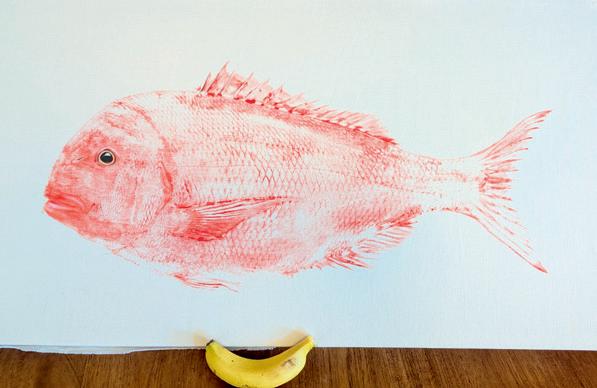
Hunting Art: How to Get Started with Gyotaku
Page 40
Hunting: Who are you taking?
Page 42
Hunting: MyGL and GMA Education Modules
Page 45
Advocacy: One is too many but Four or Forty Changes Nothing
Page 46
In the Field: Kevin Walshaw
Page 48
Conservation: Op-Ed – What Anti Hunters Get Wrong
Page 50
Vet Talk: From Shot to the Table
Page 52
Community: Why Belonging Matters
Page 54
Tribute: Stan Archard (AM)
Page 57
ASF: The Range between Targets
Page 58
Gun Dogs: Building a Quality Gundog
Page 60
Member Contribution: Outwitted by a Fox and Judged by a Dog
Page 61
Education: Strengthening our future – Why Tomorrow’s Conservation Hunters need to Understand Hunting
Page 62
Opinion: Birdwatching is bad for ducks
Page 66
Community: The unwritten rules
Page 67
Hunting: Member reflection
TRADITIONS – Echoes of the Bush
GROWING THE NEXT GENERATION – A Junior Shooter’s Perspective 24
– Capture the Hunt 2026 Photo Competition
Page 69
Branch News: Port Philip Field & Game 2 Day Barry Harkins Memorial
Page 70
Branch News: Sale Field & Game - Sale Christmas Shoot 2025
Page 72
Branch News: Clunes Field & Game - A Celebration of Tess
Page 74
Branch News: Moe Field & Game - 1st Shoot of 2026
Page 75
Branch News: Darlington Field & Game - Standing together when It matters
Page 77
Conservation: What Hen House taught the world about conservation
Page 78
Recipe: Camp Duck a L’Orange
Page 79
Recipe: Golden Delicious Duck/ Goose Dumplings
Page 80
Recipe: Tea Smoked Duck
Page 82
Back Page Yarns: The people who turn up
2026 has kicked off strongly with the organisational restructure, being heavily engaged in the gun law reviews, pushing for our duck bag limits and ensuring wetland access is not restricted, along with the many other work fronts we have ahead of us.
With Lucas Cooke heading up the organisation’s portfolio of futureproofing and expansion, we will see accelerated results in comparison to past years. We have spent the past several years sharing our progress on the RTO development, Resilience Fund proposal, Willowmavin utilisation and growth, and our member management system upgrade. In all honesty, while all have moved in the right direction, they have not progressed at the pace we would like.
We have discussed this internally a number of times and, with Operations expanding its service over the same period, it almost becomes an impossible task to succeed at every level without stretching the limits of our people every week. Hence the restructure, which will be focused on strategy and advocacy for our organisation, with a strong additional focus on conservation. This will be an exciting year for us, and we certainly appreciate the effort of Lucas Cooke as CEO. We will now gain the benefit of his enthusiasm and knowledge in the strategic performance of who we are as an organisation.
We are currently in the midst of recruiting a CEO, with a strong focus on ensuring we appoint a solid and well-grounded individual who will pick up from where Lucas left off and continue to progress our organisation with strength and leadership. The CEO role will change somewhat and will be more focused on day-to-day operations, ensuring our service to members is exceptional, and that membership growth adopts further creative ways of sharing who we are, what we do, and what we deliver.
Additionally, Lucas’ role is to take each of the major projects through to implementation stage and then hand them off to the CEO for resourcing and smooth integration into our base business. This adds considerable strength to our organisation, and we look forward to the results.
Gun laws — or reform, whatever name you would like to put on it — continue to come in the form of disbelief. You, me, and our entire membership know that what we do as law-abiding hunters, clay target shooters, and active conservationists involves following the rules and teaching the young and new what responsible gun ownership is all about, only to find it is once again being challenged.
Licensed gun owners, in the most part — and I mean 99.9% of us — do the right thing. We go above and beyond, particularly when you consider that we self-regulate. If we see one of our own operating outside the rules, our members step in to correct behaviours where needed, and without hesitation. It is disappointing that we are being punished when we know the focus should be on enforcing existing laws.
Field & Game Australia has been engaged from the start, liaising with government departments, like-minded organisations, ministers, regulators, and decision-makers to ensure our voice is heard on behalf of rightful gun owners. This coming week, both Lucas and I will be attending a meeting in Canberra with David Littleproud who has invited us in to discuss the proposed laws and the effects it will have on lawful gun owners. We continue to provide insights to government to help them be better informed. Please continue talking with your local members and pushing hard wherever you can — we are not the problem.
Duck season is knocking on our door and will most likely have started by the time this magazine reaches you. Thank you to our members and volunteers who participated in our duck counts — a critically important piece of work to ensure we are well placed to provide the regulator with accurate statistics and to use science and data in determining this year’s bird limits.
We have been working on the upcoming
duck season since the last quarter of 2025 and continue to do so as we speak. It is never off our radar, and while the dry spell will not help our situation, we remain optimistic.
Australia being Australia, and as we know, mother nature always finds a way to challenge us. Recent bushfires across Victoria and New South Wales have caused significant heartbreak and devastation. Many of our members are CFA volunteers, machinery operators, and government employees through DEECA, Parks Victoria, and Fire Rescue Victoria, and together with landholders have done a remarkable job in preventing and minimising the loss of life, assets, and animals across vast areas.
Field & Game Australia has been in contact with support agencies, offering assistance through volunteers to help with rebuilding efforts and support for those impacted. Summer still has time to run before conditions ease, so please be cautious when travelling, keep an eye on the VicEmergency app, and where possible, lend a hand to those in need.
The next item of business on our agenda is the Presidents’ Meeting, where we as a Board and organisation get to hear directly from our branches about challenges and successes, and where you have the opportunity to provide input and guidance on our direction. We will provide updates on all things FGA, but your feedback is what matters most — this day is about you.
Please keep the 9th of May locked in, and I encourage our Branch Presidents to attend and bring along committee members to stay informed, network with fellow branches, and share your thoughts.
Stay safe, and I look forward to meeting with you throughout the year.
Kind regards,
David Anderson Chairman, FGA
Board

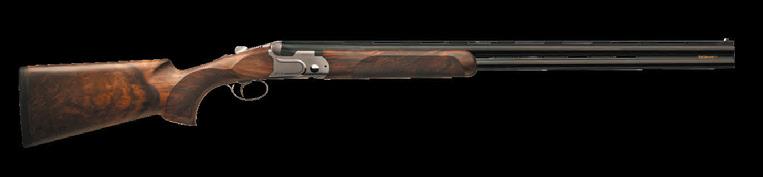
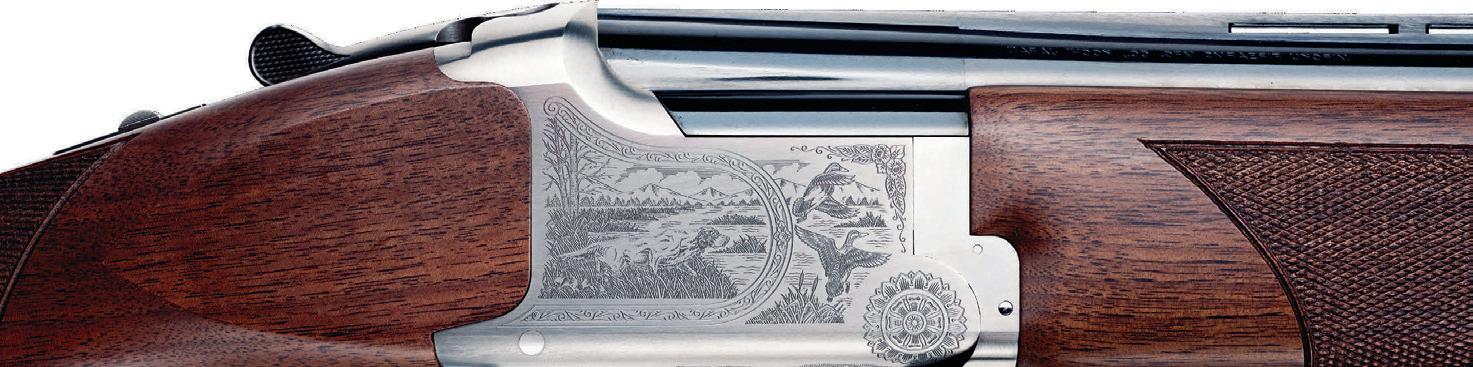
Grade 1 Wood with Game Scene Engraving Includes x3 Invector Plus interchangeable chokes

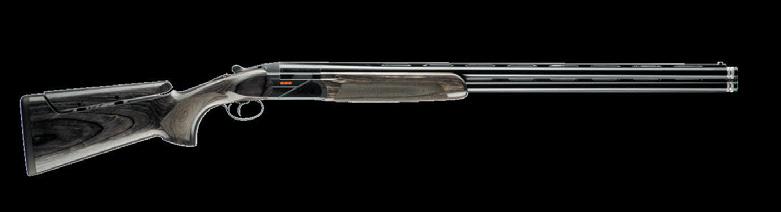
Grade 5 Wood with Scroll Engraving Includes x5 Invector Plus interchangeable chokes


Field & Game Australia is growing — in scale, in complexity, in activity, and in responsibility. At the same time, the external environment in which we operate is becoming more contested, more challenging, and more demanding. The need for clear leadership, reliable influence, and strong organisational structure has never been more important.
Within that context, the organisation is entering a deliberate and carefully managed transition.
As many members are now aware, I will be stepping aside from the Chief Executive Officer role once a new CEO is appointed. This is not a departure from Field & Game Australia, nor a withdrawal from its mission. It is a considered leadership transition shaped by both personal circumstances and what is best for the long-term strength of the organisation.
Family has always been central to my life and the way I make decisions, and it is family that has led me to return to Tasmania. That decision means I can no longer be physically present in the national office on a daily basis.
The Board and I have discussed this openly and constructively, and we are aligned in welcoming the opportunity for Field & Game Australia to become stronger still by onboarding an appropriately skilled, knowledgeable, and capable Chief
Executive Officer — someone able to carry the full operational load of an increasingly complex and reactive organisation.
This is not about capability. It is about capacity and structure.
At FGA’s scale and level of activity, the CEO role is inherently demanding and highly reactive. This transition is about ensuring the organisation has the structural capacity to meet that reality on a day to day basis.
Importantly, I am not leaving Field & Game Australia. I will remain through the transition and beyond in a defined senior strategic role focused on advocacy, major projects, partnerships, and national initiatives, providing continuity, organisational knowledge, and support as the organisation moves forward.
This approach reflects responsible governance, long-term thinking, and organisational maturity — ensuring continuity, stability, and strength as Field & Game Australia enters its next
phase of growth.
At the same time as we build internally, we are facing an external environment that is becoming more challenging by the month.
Across Australia, we are seeing sustained political and ideological pressure on lawful firearm ownership. Not because licensed shooters and hunters are a risk — but because they are visible, regulated, and politically convenient.
Law abiding people are being targeted not for what they do wrong, but for what they represent: independence, responsibility, self regulation, and community tradition.
This is not about public safety outcomes. It is about optics. It is about symbolism. It is about easy politics.
And the response cannot be fragmentation.
Hunters, clay target shooters, farmers, conservation volunteers, sporting shooters — we are one community. Different
disciplines, different tools, different traditions — but shared values.
If we allow ourselves to be divided into categories, we will be managed in categories. If we stand together, we are heard together.
Unity is not a slogan. It is a strategy. It means standing up for lawful ownership wherever it is challenged. It means defending each other’s legitimacy. It means understanding that every erosion in one space becomes precedent in another.
Field & Game Australia will continue to advocate firmly, constructively, and professionally — but our strength will always come from an engaged, united membership that understands the long game.
And while advocacy matters, culture matters just as much.
We are entering one of the most important times of the year for our community.
Duck and Quail season! (in the southern states).
This is when Field & Game Australia is not just an organisation — it is a lived experience.
In wetlands. In forests. On ranges. At clubhouses. On working bees. On conservation sites. At branch shoots.
This is the season to bring people with you.
New members. Young shooters. First time hunters. Mates who’ve always been curious. Families looking for connection to land and tradition.
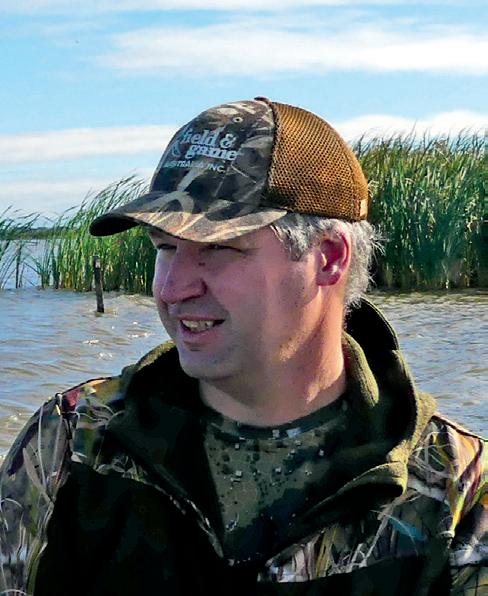
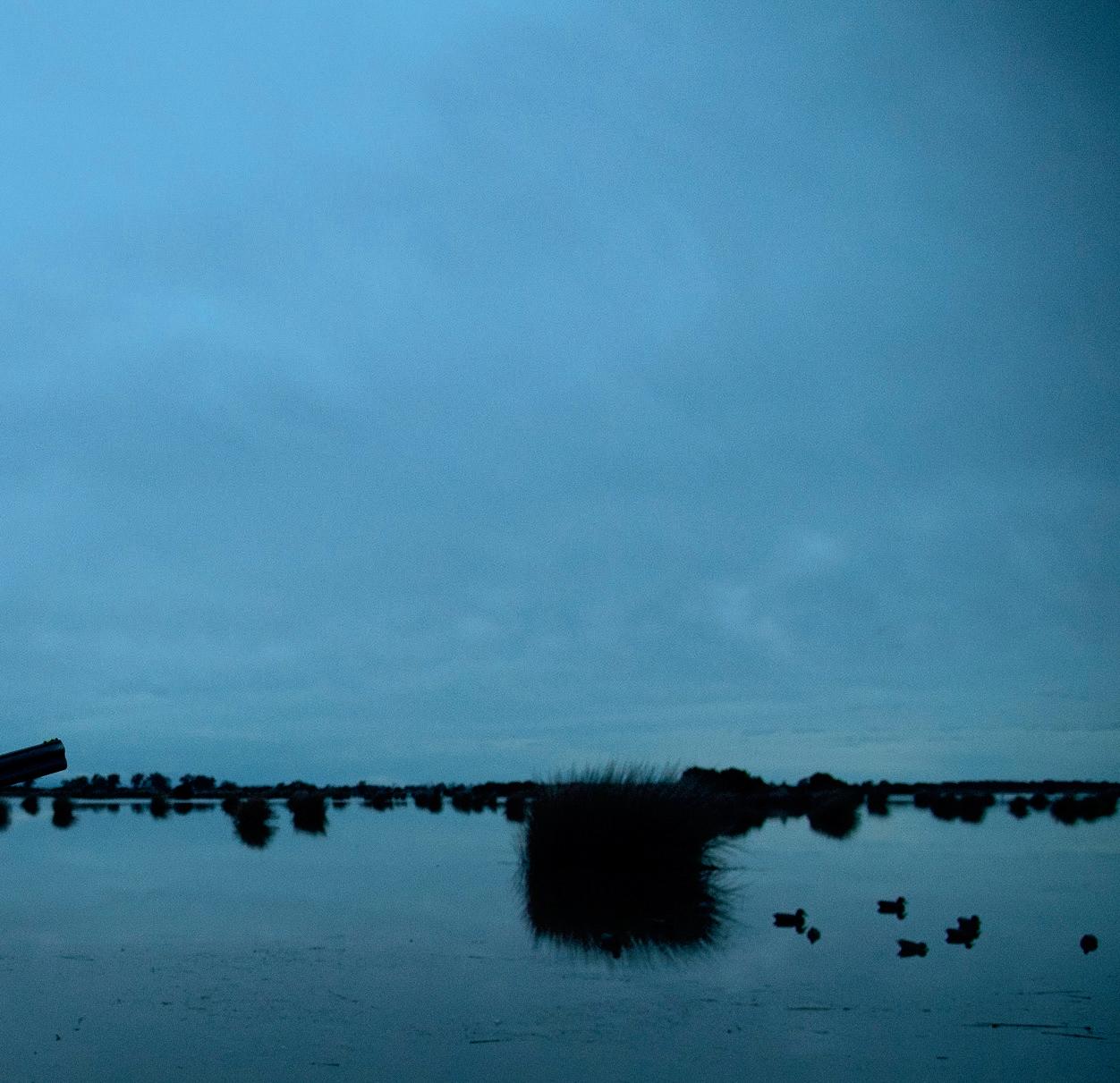
Take them shooting. Take them into the field. Take them to a working bee. Put a tool in their hand. Put them behind a clay target. Put them beside a wetland.
This is how culture is built. This is how knowledge is transferred. This is how confidence grows. This is how conservation becomes real.
And it is how organisations grow — not through marketing alone, but through experience.
Membership growth does not start with forms. It starts with belonging.
As we move into this next phase for Field & Game Australia, the message is simple:
We are building. We are growing. We are transitioning with purpose. We are
strengthening our structure. We are standing firm on values. We are defending lawful ownership. We are expanding conservation. We are backing volunteers. We are investing in branches.
And we are doing it together.
This organisation has always been strongest when it is united, grounded, and active — in the field, on the range, in the wetlands, and in the community.
That doesn’t change with titles. That doesn’t change with roles. That doesn’t change with structure.
What matters is who we are, what we stand for, and how we show up.
See you in the field. See you on the range. See you in the wetlands.
Lucas Cooke
CEO – Field & Game Australia
March is one of the most significant months in the Field & Game Australia calendar. It marks the opening of duck hunting seasons across Victoria and South Australia, and it is also the point at which most memberships are due for renewal.
Together, these moments define the start of the season — a time that calls for preparation, responsibility and continued commitment to the values that underpin hunting and conservation in Australia.
For many members, opening the season is the culmination of months of planning and anticipation. It is also a time to pause and ensure we are ready — not only in terms of equipment and logistics, but in our approach to ethical, lawful and responsible hunting.
As the season opens, members are encouraged to:
• Refresh species identification and seasonal conditions
• Ensure firearms, ammunition and safety equipment are in order
• Prepare dogs and gear appropriately
• Respect access arrangements and wetlands under pressure
• Hunt safely, ethically and within the law
Field & Game Australia continues to advocate for science-based seasons, ethical hunting practices and effective compliance — protecting both the activity and the environments on which it depends.
For members beyond their first year, FGA memberships expire on 31 March.
Renewing your membership ensures:
• Continuous insurance coverage
• Ongoing participation in FGA events, activities and competitions
• Continued representation through advocacy at state and national levels
• Ongoing investment in conservation, education and community programs
Renewing by 31st March helps ensure continuity for both individual members and the organisation as a whole as the season unfolds.
Renewals can be completed:
• Online via the FGA website
• By phone through the National Office 03 5799 0960
• Note: if you opted in for Automatic Direct Debit renewal, your membership will automatically renew on 31st March.
Members unsure of their status are encouraged to contact the office for assistance.
Membership of Field & Game Australia extends well beyond individual
participation in the season.
Through member support, FGA continues to:
• Advocate for responsible, evidencebased hunting policy
• Deliver hands-on wetland restoration and conservation projects
• Support juniors, mentoring and education initiatives
• Provide competition, training and community opportunities nationwide
• Represent lawful hunters with credibility and authority
Renewing your membership is a tangible way of supporting the future of hunting, conservation and community engagement in Australia.
As the season progresses, members can expect:
• Branch events and competitions across the country
• Ongoing conservation and wetlands project updates
• Advocacy developments and government engagement
• Opportunities to contribute, mentor and participate
Thank you for continuing to stand with Field & Game Australia as the season begins. We’re Proud to Belong.
For individuals who have had membership for over 12months, your membership will be expiring on the 31st of March.
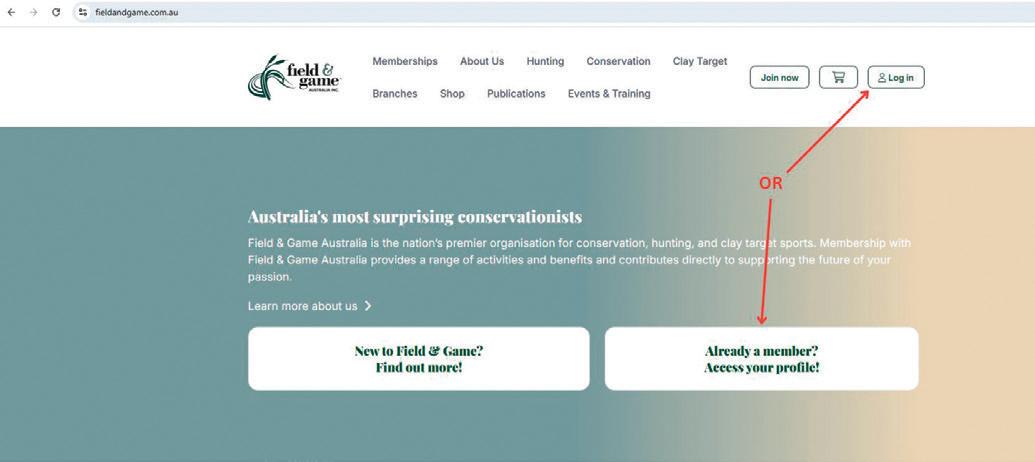
If you would like to confirm your expiry date or membership details, you can do so by logging in to your online profile.
1. Visit www.fieldandgame.com.au
2. Select “Log in” or click “Already a member? Access your profile! homepage.
3. Follow the prompt to log in. If you don’t know your username or password, click “Forgot login details?”.
Once logged in, you will be able to view your membership status and expiry date.
If required, you can click “Renew”, enabling you to renew your membership for another 12 months.
This process will prompt you to pay via credit card (“Pay now”) or through bank deposit/cheque (“Pay later”).
By clicking “Pay later” you will be issued a link to an invoice and reference number via email, please check your spam and junk inboxes for this. When paying by cheque or bank deposit please ensure you utilise the reference number where appropriate.
If you have family members connected to your membership, you can also see their membership details by clicking the “Family” icon. You can then renew their memberships by logging out of your account, and logging into their profile following the above steps.
We are aware that not everyone will be able – or want – to renew this way, but it is available for those who wish to use it. Online renewals are secure and fast!
If you wish to contact the FGA National Office to discuss your membership, ask for assistance, or to renew your membership please see the below details.
(03) 5799 0960
membership@fieldandgame.com.au
605 Lake Road, Connewarre, Victoria 3227.



Scan the QR code to check the status of your current membership and your expiry date. It’s easy: simply open the camera app on your phone and aim the camera at the QR code. You should see the link for the FGA membership registration/renewal portal appear on your screen. Tap the link, then follow the prompts to register or renew your membership.

What Bondi exposed — why repeating old mistakes, and making new ones won’t fix it
Commentary by Lucas Cooke, CEO – Field & Game Australia
• Bondi exposed intelligence and enforcement failures, not a gap in “more laws”.
• National Cabinet agreed to consider options — not to impose a national cap or mandatory buy-back model.
• NSW has moved further and faster than any other jurisdiction — but NSW is not a national mandate.
• Victoria has commenced a “rapid review” of proposed national changes.
• Tasmania has declined a statefunded buy-back, prioritising criminal access and enforcement; the NT has said similar.
• Queensland has said it will not participate in a buy-back, flagging alternative reforms focused on criminal use; SA has been quiet.
• Australia’s 1996 buy-back cost over $1 billion (1990s dollars) and research found no clear reduction in overall homicide or suicide attributable to it.
• New Zealand’s 2019 reforms were rapid and expensive; even the Auditor-General noted the public-safety impact had not been established.
• Spending billions targeting compliant owners is policy theatre unless intelligence, licensing, and enforcement are fixed.
The recent terrorist attack at Bondi was a terrible, confronting moment for Australia. Innocent people lost their lives, families were shattered, and a sense of safety that most of us take for granted was violently breached. Grief, fear and anger are natural responses. Wanting answers — and wanting action — is human.
History shows us something important: in the aftermath of tragedy, governments are under pressure to be seen to act decisively. The fastest way to demonstrate action is rarely the most effective. Despite public acknowledgement that the enablers of this attack were intelligence failures, enforcement gaps, and systemic breakdowns, governments still reacted in favour of restricting firearms ownership. Why – because it is immediate and highly visible — even though it has little connection to the failure that actually occurred.
This article is not written to inflame, minimise, or deflect. It is written to slow the conversation down, inject evidence into it, and explain — clearly and calmly — why repeatedly targeting law-abiding firearm owners after acts of violence does not improve public safety, and often makes it worse.
If a member of the public only ever reads one article on this issue, this should give them everything they need to know.
Bondi: what the facts actually point to
The facts of the attack on 14 Dec 2025, as they are now understood, matter. Despite
the initially baffling public statement from senior police and government officials suggesting there was “no evidence the attack was religiously motivated”, it is now clear that this was an ideologically driven terrorist attack targeting members of the Jewish community. This distinction is important.
The motivation was not a conflict between religions, but the application of a violent extremist ideology directing harm toward a specific ethno-religious group — a pattern that mirrors numerous ideologically motivated attacks globally.
The attackers were a father and son who had previously come to the attention of authorities for links to violent extremism. These links had been confirmed. Under existing legislation, at the time and before the attack neither attacker should have had access to firearms.
Only the father held a firearms licence, and all firearms used were acquired under that licence. Multiple identical firearms were reportedly purchased — a pattern that should have triggered scrutiny under existing licensing and intelligence frameworks, including verification of genuine need and exclusive control by the licensee. A firearms licence is conditional, not absolute. Allowing access to unlicensed persons, acting as a proxy purchaser, or retaining firearms while subject to adverse intelligence attention constitutes a breach of licence conditions and activates existing powers for suspension, seizure, and revocation.
Accordingly, and despite media and
“The presence of a licence does not render the conduct lawful… and despite the father holding a licence, the ownership and use of those firearms was not lawful in substance under existing law”
government statements asserting the firearms were “licensed” and “legally obtained”, we do not accept that characterisation. The presence of a licence does not render the conduct lawful. This attack reflects multiple failures to detect or act on illegal acquisition and use, and despite the father holding a licence, the ownership and use of those firearms was not lawful in substance under existing law.
We have chosen not to name the attackers or the extremist group involved. Terrorism thrives on attention and recognition. This article is about accountability, public safety, and policy failure — not granting notoriety to those who seek it.
If the Bondi attack resulted from failures to act on existing intelligence, licensing conditions, and enforcement powers — failures that occurred within the framework of laws already in place — then the question for government is not whether Australians need more firearm laws, but why the current ones were not used.
Before reaching for new restrictions, buybacks, or expanded prohibitions aimed at compliant owners, it is essential to examine whether previous, far-reaching interventions of this kind have ever delivered the public safety outcomes they promise.
Australia has already conducted the largest firearm intervention of its kind in modern history. The evidence from that experience should inform what comes next.
In the days following Bondi, the Prime Minister convened National Cabinet to discuss a coordinated national response. Public statements made clear that governments would examine Australia’s firearms framework, with a focus on strengthening public safety and addressing perceived gaps exposed by the attack.
National Cabinet agreed to consider options including:
• potential limits on firearm ownership,
• changes to licensing and eligibility settings,
• acceleration of work toward a national firearms register, and
• the possible use of a nationally coordinated buy-back mechanism should new prohibitions be introduced.
Importantly, these announcements
were framed as commitments to review, develop, and examine policy options, not as binding decisions on specific legislative outcomes, numerical limits, or compulsory acquisition thresholds. At that stage, no draft legislation had been released, no costings had been published, and no agreed national model — including any specific ownership cap — had been endorsed by National Cabinet.
Since then, state responses have clarified what that “review” posture means in practice. Victoria has commenced a rapid review process. Tasmania has publicly declined a state-funded buyback, emphasising that the priority is keeping firearms from criminals rather than tightening restrictions on legal owners. The Northern Territory has signalled a similar focus. Queensland has stated it will not participate in a buy-back, foreshadowing alternative reforms targeted at criminal misuse. South Australia has, so far, remained comparatively quiet.
Those developments matter because they confirm a simple point: the National Cabinet process was never a blanket mandate for one state’s policy preference to become the country’s default.
“A commitment to consider options is not a commitment to copy NSW.”
National Cabinet:
agreed to review options
agreed to consider reforms
did not endorse a specific ownership cap
did not publish costings or numbers
did not mandate any state to adopt NSW’s approach
NSW moved first — but NSW is not “the nation”
New South Wales has since moved more quickly and unilaterally than any other jurisdiction, signalling its intention to legislate strict numerical caps on firearm ownership and to shorten licence renewal periods, among other measures. NSW is currently the only jurisdiction to have progressed to this position.
While NSW is entitled to legislate within its own firearms framework, its approach should not be confused with a national consensus or a binding National Cabinet outcome. Other states and territories did not agree to adopt NSW’s model, nor did they commit to specific numerical caps or compulsory acquisition thresholds.
In fact, emerging state positions show the opposite: several jurisdictions are now explicitly prioritising criminal access and enforcement over broad-based restrictions on licensed owners. Victoria is formally reviewing the national proposals. Tasmania, the Northern Territory and Queensland have all indicated they will not support state-funded buy-backs, and Queensland has foreshadowed alternative criminal-focused reforms. South Australia has not, at the time of writing, clearly declared a position.
The NSW position reflects a state-based policy choice made ahead of completed national analysis, published costings, or agreed evidence-based standards — not an obligation flowing from National Cabinet.
What states have — and have not — committed to
To date, states and territories have committed to:
• examining existing firearms laws,
• considering policy options put forward through National Cabinet processes, and
• engaging in further consultation and analysis before determining any legislative changes.
They have not committed to:
• adopting a specific numerical cap on firearm ownership,
• mandating compulsory buy-backs at any particular threshold,
• mirroring NSW’s proposed settings, or
• implementing uniform reforms without regard to state-specific evidence, costings, or enforcement capacity.
>> Australia’s “we’ve done this before” story — in hard numbers
When people say “we’ve done this before and it worked,” they are almost always referring to the 1996 National Firearms Agreement and the buy-back that followed. It is worth being precise about what actually happened.
Between 1996 and 1997, the Australian Government compulsorily acquired and destroyed around 650,000 firearms. These were primarily specific categories — mainly semi-automatic longarms. Compensation payments alone exceeded $500 million. When administration, policing, compliance, storage, destruction, and the permanent expansion of regulatory systems are included, economists generally agree the true cost exceeded $1 billion in 1990s dollars — several billion today.
What did Australia get for that investment? This is where the conversation often changes tone, because the data does not match the mythology.
Multiple long-term studies found no statistically significant reduction in overall homicide rates attributable to the buy-back. Firearm homicide was already declining before 1996 and continued to decline afterwards — at roughly the same rate as comparable countries that did not confiscate firearms.
The same pattern appears in suicide data. Firearm suicides declined, but overall suicide rates did not, because method substitution occurred.
In simple terms: a very large amount of money was spent, lawful owners were permanently restricted, and the underlying drivers of violent crime were unchanged.
• Firearms seized: ~650,000
• Scope: mainly semi-automatic longarms
• Direct compensation: > $500 million
• Total estimated cost (incl. admin & policing): > $1 billion (1990s dollars)
• Measurable impact on homicide & suicide: none attributable
• Long-term outcome: expanded regulation, unchanged crime drivers
New Zealand provides a more recent case study — and a cautionary one.
After the 2019 Christchurch mosque attacks, New Zealand enacted one of the fastest and most sweeping firearm bans and buy-backs ever attempted in a Western democracy. Initial cost estimates were modest. They did not remain so.
By the time the programme concluded, more than NZ$100 million had been spent. Fewer firearms were surrendered than anticipated. Compliance was incomplete. Police later acknowledged they had no reliable estimate of how many prohibited firearms remained in circulation.
More importantly, the promised outcomes did not appear in any way that was clearly demonstrated by government evaluation.
After the 2019 firearms buy-back and amnesty, the New Zealand Office of the Auditor-General (OAG) recommended that police design and implement a framework to evaluate the extent to which the regulatory changes actually made New Zealand safer — because the extent of any impact on public safety was not yet established or reported. That’s an important point: even the government’s own evaluators were not claiming a demonstrated crime-reducing effect.
In fact, in the years following the buy-back, public reporting and analysis highlighted rising firearm offence charges and ongoing gang-related violence — reinforcing the central flaw in reactive disarmament policy: it affects the compliant first, while criminals adapt faster than the law.
“Confiscation targets who is easiest to regulate — not who is most likely to harm.”
• Buy-back cost: > NZ$100 million
• Compliance: incomplete
• Firearms remaining: unknown
• Official conclusion that it reduced crime: not demonstrated
• Key lesson: disarming the compliant does not disarm criminals
The modern price tag: a conservative scenario
In Australia today, we are on the verge of repeating this mistake — but at a scale that should concern every taxpayer, whether they own a firearm or not.
In 1996, the government targeted specific categories of firearms. Today, proposals emerging in states such as NSW are far broader. They contemplate arbitrary ownership limits, with the possibility that every firearm owned above that limit could be forcibly acquired, regardless of type, use, or history.
Critically, governments have not provided projected numbers, costings, or modelling.
So let’s do a conservative thought experiment.
Australia has approximately 960,000 licensed firearm owners. Not all would sell a firearm. Some would sell none. Others would be forced to surrender several. To keep this deliberately conservative — and easily understood — assume each owner surrenders just one firearm.
Now consider compensation. Even at a modest average of $3,000 per firearm — well below the replacement cost of many sporting, farming, or competition firearms — compensation alone reaches $2.9 billion.
Add administration, policing, storage and destruction, disputes and appeals, compliance enforcement, and expanded registry systems. Independent modelling by groups such as the Sporting Shooters’ Association of Australia has suggested a credible national cost in the order of $15 billion.
These figures are confronting — they should be.
• Licensed owners in Australia: ~960,000
• Hypothetical surrender: 1 firearm per owner
• Average compensation (conservative): $3,000
• Direct compensation cost: ~$3 billion
• Likely total national cost: up to $15 billion
• Expected impact on violent crime: none demonstrated
And here is the key point: there is no evidence — from Australia, New Zealand, or overseas — that this level of expenditure reduces homicide, suicide, or violent crime.
If this doesn’t work, why do governments keep reaching for it?
Part of the answer lies in symbolism. Buybacks look decisive. Bans photograph well. “Doing something” feels better than fixing systems that failed quietly over years.
Another part lies in who governments choose to listen to.
After Bondi, we were told there would be “consultation.” Yet once again, groups that oppose civilian firearm ownership in principle were given a seat at the table, while those who actually live under the licensing system were largely excluded.
In almost any other policy area, this would be considered absurd. We would not respond to road trauma by consulting only anti-car activists. We would not respond to medical error by excluding doctors. But firearms policy routinely ignores the very people who are regulated by it.
The result is predictable: policies that feel strong, sound simple, and fail quietly.
Even the Prime Minister has acknowledged that Bondi exposed failures in intelligence, enforcement, and intervention. The contradiction lies in responding to that acknowledgement by tightening controls on people who had nothing to do with those failures.
Licensed firearm owners are not a “risk cohort.” They are one of the most regulated civilian groups in the country. Rates of violent offending among licensed owners are a fraction of the general population. This is not ideology; it is crime data.
NSW’s new measures: costly, ‘neat’,
NSW is also advancing measures that are ultimately likely to fail expensively.
The “cap” model — seductive, simple, and scientifically thin
Western Australia and now New South Wales have moved toward a “cap” model: a hard limit on how many firearms a licensed person may hold. On paper, caps sound neat — like a speed limit for gun ownership. In practice, they are a blunt instrument that misses the risk variables that actually matter: intent, access, supervision, intelligence flags, and enforcement.
A cap can reduce lawful accumulation, but it does not reduce criminal access, stop proxy purchasing, improve intelligence flow, or fix what Bondi highlighted: systems failing to detect and act on anomalies early.
The “shorter licence period” model — more paperwork, not more enforcement
Moving from five-year licences to two-year licences doesn’t magically create better enforcement. It creates more admin. A fiveyear renewal cycle means processing roughly 20% of renewals each year; a two-year cycle means 50%. That is a 150% increase in renewal workload (2.5 times as many renewals, every year), before audits, followups, disputes, or enforcement actions.
In plain English: unless governments fund a major staffing and systems uplift, the very people and systems that should be identifying risk are now swamped with routine processing — leaving less time to join the dots and act early.
• 5-year licence cycle = ~20% renewals per year
• 2-year licence cycle = ~50% renewals per year
> That’s +150% workload (2.5× more renewals – with NO additional resources pledged)
Targeting compliant citizens because they are visible, traceable, and politically easier to regulate is not public safety. It is policy convenience.
There is a dark joke among policy analysts: if banning things solved complex social problems, crime would have been eliminated long ago — along with drugs, gangs, and illegal firearms. It’s funny because it’s true.
Criminals do not comply. Paper does not enforce itself. And laws aimed at the wrong population do not magically find the right target.
Field & Game Australia is not arguing for deregulation, recklessness, or Americanstyle absolutism. We are arguing for evidence, proportionality, and honesty.
We are asking for:
• evidence before expansion
• data before slogans
• genuine consultation
• properly scoped inquiries
• accountability where systems fail
The greatest long-term risk is not that lawful firearm owners will suddenly become violent. History shows they will not. The real risk is that Australia normalises a policy reflex where, after every institutional failure, governments expand control over compliant citizens rather than fixing the failure itself.
That precedent does not stop with firearms. Strong societies are not built by punishing the compliant to compensate for institutional failure. They are built by confronting uncomfortable truths, fixing broken systems, and resisting the urge to trade billions of dollars — and civil trust — for the illusion of safety.
(Use this as the closing “punch” panel in bold or boxed layout)
Further regulation, without intelligence and enforcement, will not prevent future attacks.
Law-abiding firearm owners did not cause the Bondi tragedy.
Adding regulations should not be the default response every time governments fail to act on warnings they already had.
That is not a gun argument. It is a publicpolicy one.
Season
• Ducks: In 2026, Victoria’s duck hunting season will run from 18 March to 8 June (inclusive) under current regulations. This mid-March through early June window has been committed to for the next two annual seasons by the state government, with openings on the third Wednesday in March and closure on the second Monday in June each year.
• Stubble Quail: According to the 2026 season summary draft, Victoria’s stubble quail season is 4 April to June 2026 (inclusive). This aligns with the longstanding regulation setting quail season from the first Saturday in April through the end of June.
• Bag limit: up to 20 stubble quail per day. (subject to change)
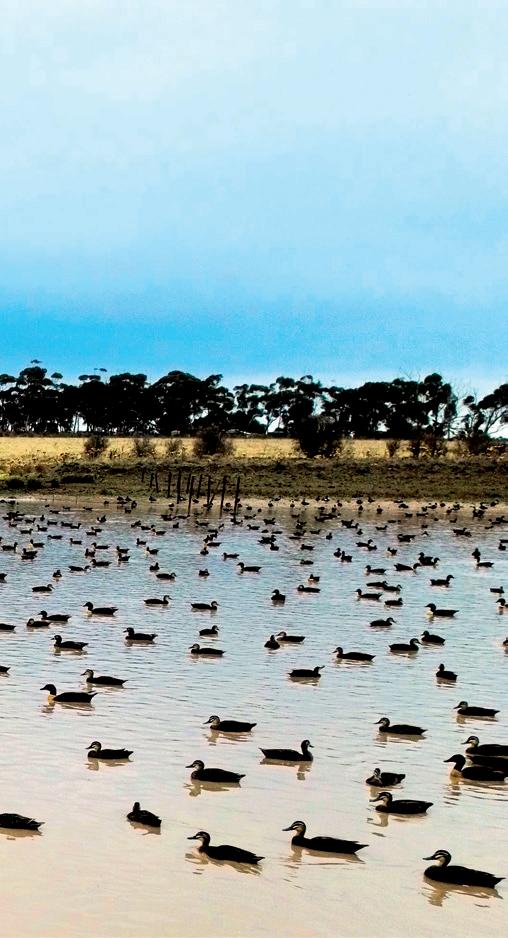
With warm late-summer weather often reducing wetland water levels, the mid-March duck opener may find birds concentrated on the more
reliable wetlands and storages. Stubble quail season — starting later in April — should coincide with more stable ground cover and moisture levels that support fledged young from late summer rains (if they occur). A lingering
hot dry spell could reduce quail numbers and push birds to vegetated refuges; conversely, widespread summer rain would lift breeding success and early season density. (Start doing your rain dances now)
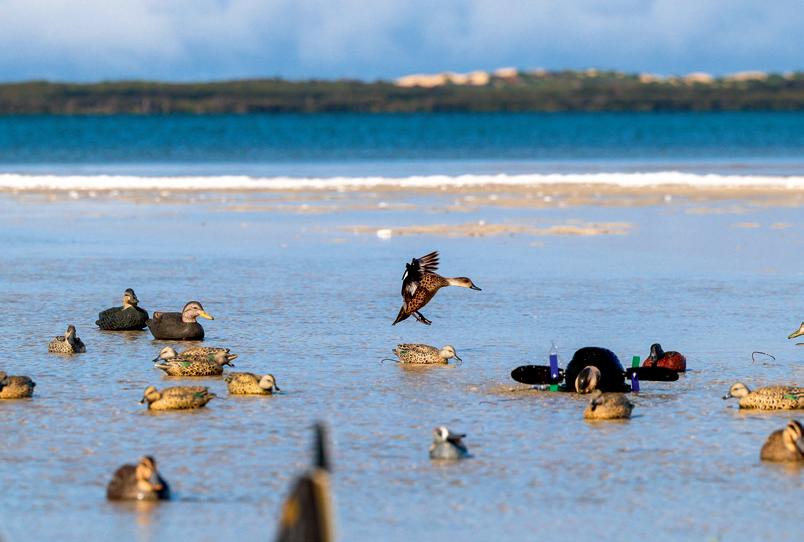
Get them in close, decoys, motion and concealment are the key
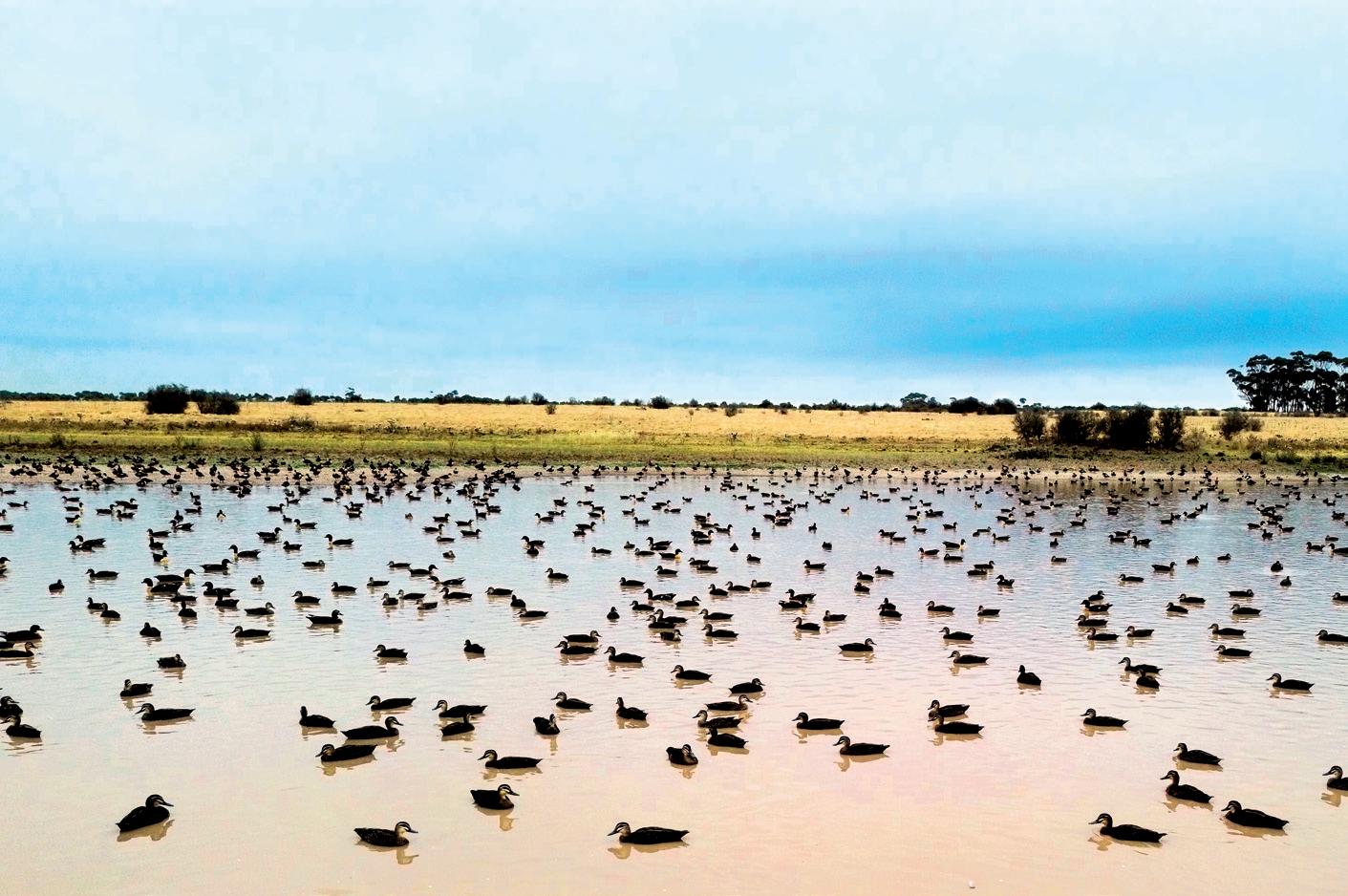
South Australia’s 2026 open seasons for duck and stubble quail have now been confirmed, following climate conditions and waterbird survey outcomes.
Duck Season (2026)
Dates: 21 March – 28 June 2026
Times: Sunrise to sunset
Season length: 100 days
Daily bag limit: 8 ducks
Species restrictions:
No hunting permitted for Pink-eared Duck, Hardhead, or Blue-winged Shoveler (BWS)
Mountain Duck (Shelduck):
Species-specific limit removed for 2026
Stubble Quail Season (2026)
Dates: 25 April – 2 August 2026
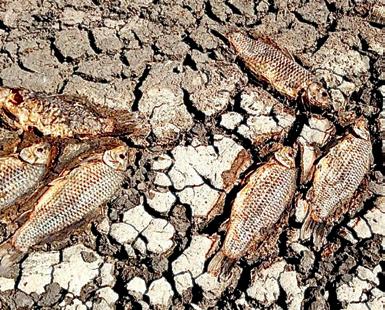
Dead Carp and drylands seem common right now
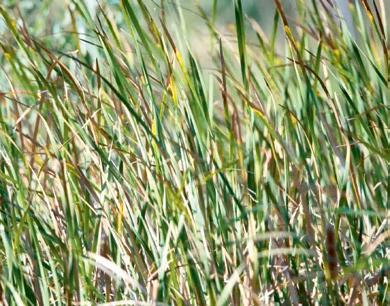
Cumbunghi makes a great place to hide, concealment is the most significant factor that will improve hunting success
Times: Sunrise to sunset
Daily bag limit: 15 quail
The confirmed 100-day duck season provides welcome certainty for South Australian hunters, offering flexibility across autumn and early winter and allowing participation to align with local wetland conditions and personal schedules.
As with previous seasons, access and success will remain closely linked to rainfall and wetland availability. Seasonal conditions earlier in the year will influence water levels and bird distribution, particularly across key coastal and inland systems.
Stubble quail prospects continue to depend heavily on summer rainfall, with strong ground cover and seed availability supporting higher quail visibility and abundance throughout the season.
On a positive note, as we go to print, duck numbers are increasing on important South Australian wetlands, including areas such as Lake George near Beachport, consistent with expectations following significant breeding activity in central and northern Australia during the past year.
Hunters are reminded that South Australian regulations, permit requirements, and species restrictions apply and should always be checked prior to hunting.
Season Dates + Timing
Tasmania’s season dates are set in regulation (Nature Conservation (Open Seasons) Order) and differ slightly from the mainland:
• Wild Duck: Open season runs from the Saturday nearest 8 March through the Sunday nearest 8 June, or the second Monday in June where applicable, with up to 10 ducks per day permitted. Likely 2026 dates: ~7–8 March to ~7–8 June 2026.
• Brown Quail: The brown quail open season commences on the Saturday nearest 15 May and extends for seven weeks (seven Sundays after that date). Likely 2026 dates: mid-May to early July 2026.
Season Context
In 2025, Tasmania’s duck season was 8 March to 9 June, and brown quail ran 17 May to 29 June. The statutory framework points to similar timing for 2026 unless unusual environmental conditions prompt a regulatory change.
Putting It Together: Seasonal Forecast + Dates
Season Outlook Summary (Climatic + Habitat)
Victoria & South Australia
• Duck hunters can expect mid-March to early June seasons, with prospects shaped by water availability at key wetlands; below-average February/ March rainfall or high heat will concentrate birds on permanent water, while broader rainfall can expand productive hunting sites.
• Stubble quail likely peak in late April–June hunts. Ground cover and insect food after summer showers will drive local density
— dry grasslands could see lower quail numbers and forced movements.
Tasmania
• Duck season starts early March and runs until early June. Tasmania’s generally wetter catchments may hold water longer than on the mainland, but heat and dry spells will still dictate local concentrations.
• Brown quail season likely runs midMay through early July. These birds favor verdant pasture and cover; wetter autumn conditions support stronger quail presence and earlier breeding cohorts.
Despite the Adaptive Harvest Model and promises of earlier confirmation of bag limits in Victoria through consultation in recent years, we are still awaiting confirmation at the time of printing. Field & Game Australia will continue to keep our members updated as soon as information comes to hand.
Added to this of course will be the lastminute wetlands management strategies which have ultimately resulted in more closures than other management methods in recent years. Field & Game Australia will continue to represent their members and advocate for resisting unnecessary closures unless all other methods are explored to manage each individual situation.
The wounding reduction action plan within Victoria will also result in observers in the field throughout the 2026 duck and quail season, monitoring wounding rates, so now more than ever before is the time to sharpen your skills, practice your marksmanship before the season, show restraint and only shoot at ducks within 30 metres and utilise all the information that is available on the GMA Website.
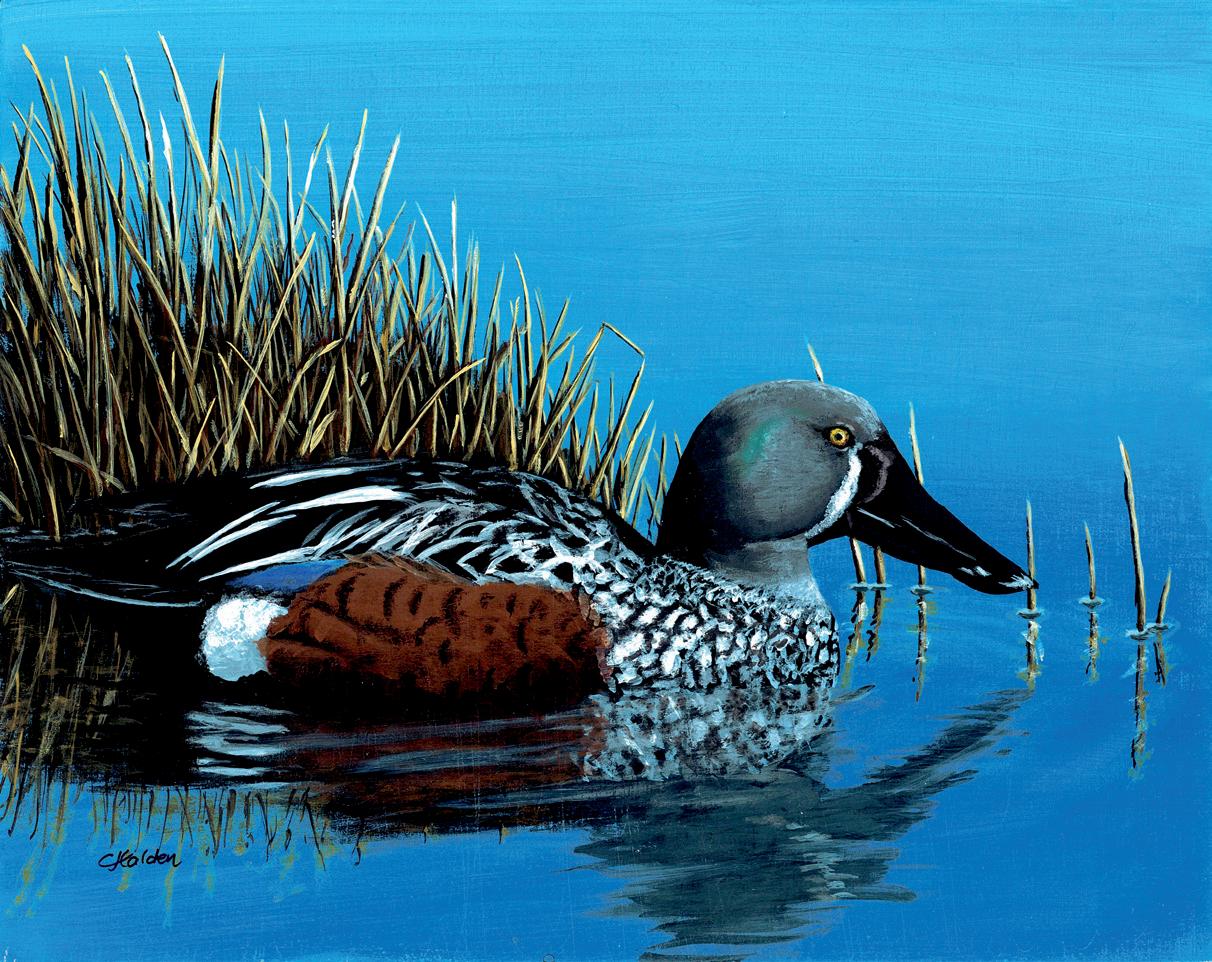
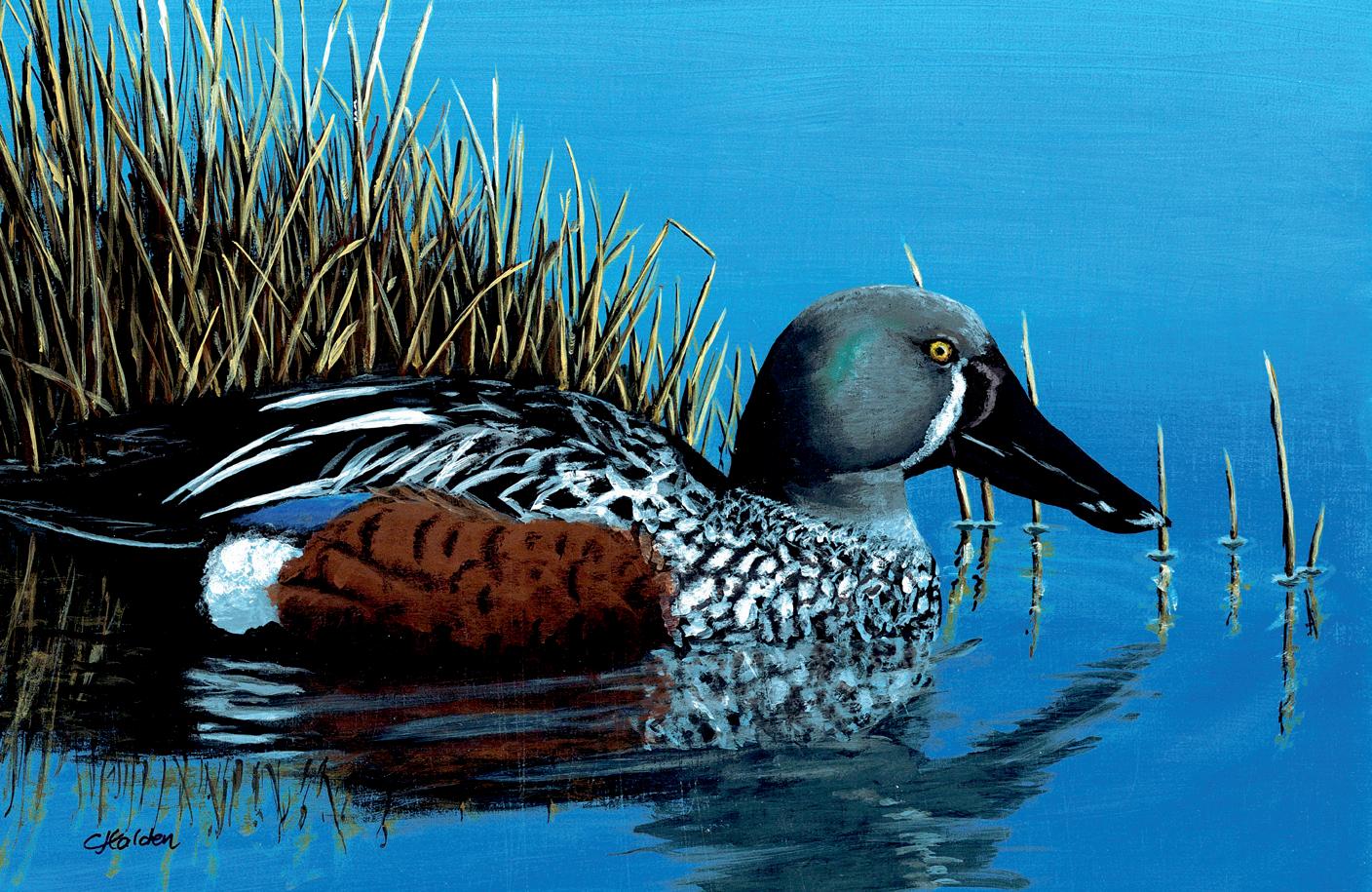
Field & Game Australia is proud to announce Colin Halden as the winner of the 2026 Duck Stamp Competition, with his artwork featuring the Bluewinged Shoveler selected to represent the program for the year ahead.
The Duck Stamp Competition continues to play an important role in supporting Field & Game Australia’s conservation and wetland restoration work, delivered through its dedicated conservation arm, the Wetlands Environmental Taskforce (WET). The program celebrates the strong connection between hunting, art and the natural environment, while directly funding on ground wetland restoration projects carried out by WET volunteers across Australia.
Colin’s winning entry stood out for its balance, accuracy and thoughtful portrayal of a species closely associated with healthy wetland systems—habitats that
are the focus of WET’s ongoing restoration and management efforts.
Now based in Melbourne, Colin maintains strong ties to his hometown of Rushworth and remains connected with the local Field & Game branch there. Like many members and supporters of the organisation, his involvement is shaped by an appreciation for the work carried out by volunteers on the ground—restoring wetlands, managing habitat and contributing to long term conservation outcomes through programs led by the Wetlands Environmental Taskforce.
“I am delighted and honoured to have been chosen as the competition winner,” Colin said. “I am proud that I am able to contribute, in my small way, to the important conservation work that Field & Game Australia, the Wetlands Environmental Taskforce, and the wider community do.”
Colin’s Blue-winged Shoveler captures both the elegance and character of the species, reflecting careful observation and attention to detail. The work speaks not only to artistic skill, but to an understanding of the role waterfowl play within broader wetland ecosystems—a theme central to both the Duck Stamp program and WET’s conservation mission.
The Duck Stamp has become a recognised symbol of Field & Game Australia’s commitment to conservation through participation. Each year, artists from across the country submit works that reflect their connection to waterfowl, wetlands and the values that underpin ethical hunting and stewardship. Funds raised through the Duck Stamp directly support WET’s boots on the ground projects, delivering tangible outcomes for wetlands, native flora and fauna.
Colin’s artwork will feature on the 2026
Duck Stamp, with funds raised continuing to support Field & Game Australia’s conservation initiatives delivered by the Wetlands Environmental Taskforce nationwide. Field & Game Australia congratulates Colin on his achievement and thanks him for his contribution to the program.
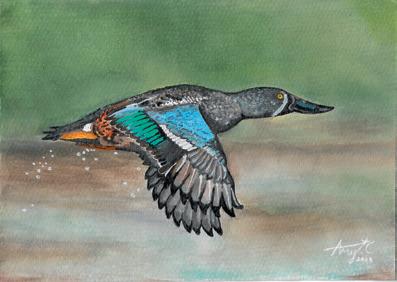
Amy Chaplain’s submission demonstrated a refined artistic approach and a strong appreciation for the natural character of her chosen subject. Her work reflected a careful balance between technical detail and atmosphere, capturing the essence of waterfowl within their wetland environment.
Amy’s contribution highlighted the important role art plays in fostering a deeper understanding of species and habitat, reinforcing the connection between creative expression and conservation awareness that underpins the Duck Stamp and the work of the Wetlands Environmental Taskforce.

Greg Playdon once again submitted a high quality entry to the Duck Stamp Competition, continuing his strong engagement with the program. His work displayed confident technique and a clear understanding of waterfowl form and movement.
Greg’s ongoing participation reflects the depth of commitment shown by many artists who return year after year to support the Duck Stamp initiative and, in turn, the conservation work delivered by WET volunteers.
The 2026 Duck Stamp Competition again attracted a strong and diverse field of entries, with artists of varying backgrounds, styles and experience contributing high quality works. Field & Game Australia acknowledges the following artists with Honourable Mentions, recognising the standard and thoughtfulness of their submissions, and their shared support for conservation outcomes delivered through WET.
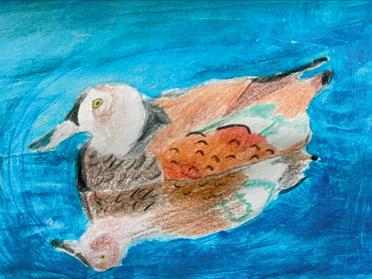
At just 11 years of age, Jack Pett’s submission to the 2026 Duck Stamp Competition stood out for the care, patience and determination evident in his work. His pencil drawing of the Blue-winged Shoveler reflected not only strong observation skills, but a genuine commitment to refining his artwork until he was satisfied with the final result.
The judging panel was particularly impressed by the effort Jack put into his drawing and his willingness to persist—qualities that reflect the values Field & Game Australia and the Wetlands Environmental Taskforce seek to foster in young members.
Young members like Jack represent the future of hunting and wetland stewardship in Australia. By providing opportunities to participate through art, education and community involvement, Field & Game Australia and WET continue to support the next generation in developing a strong appreciation for wildlife, conservation and ethical hunting practices

Natalia Lazouskaya’s submission reflected her strong background in the natural sciences and her meticulous artistic style. Known for her highly realistic approach, Natalia’s work demonstrated exceptional attention to detail and an ability to capture the defining features and character of her subject. Her submission reinforced the close relationship between scientific understanding and artistic representation, aligning closely with the conservation objectives of the Duck Stamp program and the work of the Wetlands Environmental Taskforce.
Field & Game Australia extends its sincere thanks to all artists who entered the 2026 Duck Stamp Competition. Each submission contributes to the ongoing success of the program and plays a direct role in supporting wetland restoration projects delivered by the Wetlands Environmental Taskforce.
Through initiatives like the Duck Stamp, Field & Game Australia and WET continue to demonstrate how hunting, conservation and community participation work together to protect and enhance the environments that sustain waterfowl and wildlife for generations to come.
The 2025 Northern Territory goose and duck season will be remembered as one of contrast — a year defined by strong breeding success and promising early conditions, before being dramatically reshaped by the arrival of Cyclone Fina. From a measured start that demanded patience and planning, to a post-cyclone landscape that tested access and adaptability, the season delivered both challenge and reward for Top End waterfowlers.
Part One: Before Cyclone Fina — A Slow Burn That Paid Off
The early weeks of the season unfolded under favourable wet-season conditions. Widespread rainfall filled floodplains, rejuvenated wetlands, and produced abundant feed across the Top End. The country looked healthy and productive, setting a solid foundation for the months ahead.
Magpie geese, however, were slow to concentrate. Numbers in and around traditional early-season hotspots — including reserves, floodplains, and mango farms — were lower than usual during the opening weeks. Instead, birds remained widely dispersed across flooded country, making them harder to locate and requiring hunters to invest more time and effort scouting. This delay ultimately reflected a system rich in water and feed rather than any underlying shortage of birds.
When geese did begin to arrive in stronger numbers, the quality of the season became clear. Harvest data and field observations showed a higherthan-average proportion of young birds taken, pointing to an excellent breeding year. Juvenile geese were plentiful, wellconditioned, and a highlight for many hunters, even if success required more effort than in previous seasons.
Duck activity before the cyclone was varied but encouraging. Plumed whistling ducks and wandering whistling ducks were widespread, moving constantly between feeding and roosting areas and providing plenty of visual and audible activity across the wetlands. Radjah shelduck were also present in good numbers; however, they
remain a fully protected species in the Northern Territory and are not permitted to be hunted. Their strong presence was yet another positive indicator of healthy wetland conditions.
Pacific black ducks were present but noticeably fewer than in the previous season. While still encountered, their numbers did not match last year’s abundance — a trend that would become more pronounced as the season progressed.
Just as bird movement patterns began to stabilise and confidence was building across the hunting community, Cyclone Fina made landfall.
Cyclone Fina marked a clear turning point in the 2025 season. Heavy rainfall, flooding, and strong winds reshaped the landscape almost overnight, dramatically affecting both access and bird behaviour across much of the Top End.
Forming in mid-November, Cyclone Fina intensified as it tracked across the Van Diemen Gulf, skirting north of Darwin with gale-force winds, heavy rainfall, and pockets of destructive gusts before moving westward. In Darwin
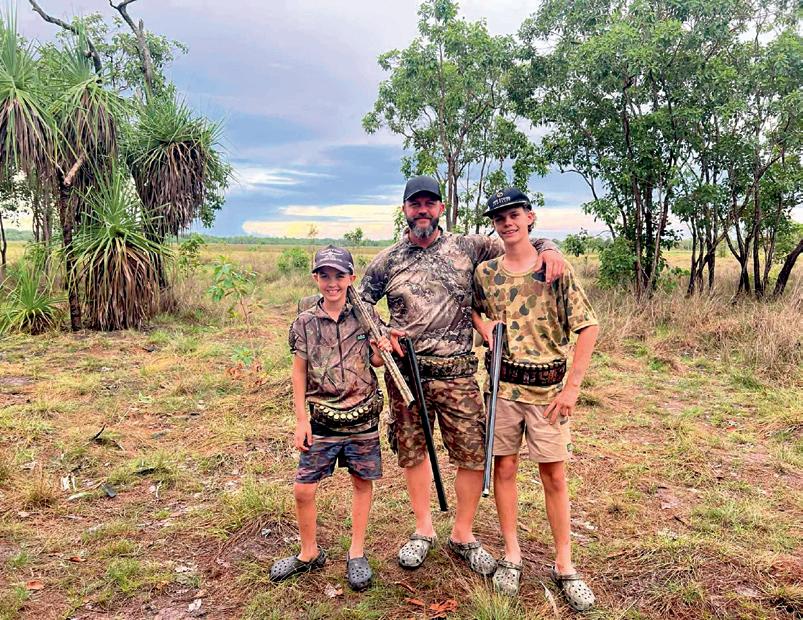
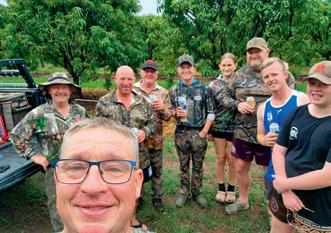
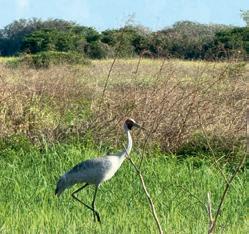
and surrounding rural areas, trees were uprooted, roads were blocked by debris, and almost 20,000 properties lost power.
For hunters, the implications were immediate and practical:
• Limited track access: Many reserve access roads and floodplain tracks leading to key hunting areas were clogged with fallen trees, washed-out creeks, and scattered debris. Fourwheel-drive access became difficult or unsafe without significant clearance work, limiting time afield and reducing opportunities to move birds that would ordinarily shift into favoured spots.
• Temporary reserve closures: Parks and reserves that lie en-route to prime waterfowl habitats, including sections of coastal reserves popular with longweekend hunters, were temporarily closed while authorities assessed fallen trees and electrical hazards. Even as facilities reopened, many access points remained compromised.
Accessibility quickly became the primary challenge. Tracks that had been marginal before the cyclone were washed out, roads were closed, and floodways remained impassable for extended periods. Many productive areas were simply unreachable, forcing hunters to abandon familiar ground and focus on whatever locations could be accessed safely.
With fresh water spread across vast areas, birds responded by dispersing widely to feed on the freshly flooded plains. This was particularly evident among both plumed and wandering whistling ducks, which scattered across the region and became far less predictable for a period. Traditional holding areas produced inconsistent results, and successful hunts increasingly relied on flexibility and constant reassessment of conditions.
Magpie geese, while still present in healthy overall numbers, also became more mobile. Concentrations broke up as birds shifted daily in response to changing water levels, feed availability, and disturbance. The post-cyclone period favoured those willing to walk further, move more often, and accept shorter, opportunistic hunts.
Pacific black ducks were especially scarce compared to the previous year. Encounters were infrequent and typically involved
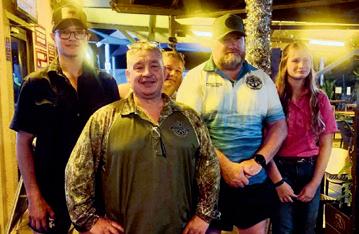
small groups, making them a relatively minor component of the season’s harvest. Whether due to cyclone-related dispersal, breeding outcomes, or birds holding in inaccessible habitat, their reduced numbers stood out as one of the clearest contrasts of the year.
Despite the disruption, bird condition remained excellent. Geese and ducks taken late in the season were healthy and well-fleshed, reinforcing the resilience of the Top End’s wetland systems even after extreme weather events.
The cyclone also stirred up more than water. Saltwater crocodiles — already abundant in the Top End and increasingly dominant in many waterways — often take advantage of turbulent conditions, moving into new channels or resting in high-water refuges after storms. While reliable post-Fina crocodile counts are not yet available, hunters were reminded to exercise heightened caution due to the conditions:
• Stay alert near deep eddies and submerged riverbanks where crocodiles may linger
• Avoid retrieving birds close to the water’s edge without first observing the area for signs of movement
• Never wade into fast-flowing water to push birds toward a blind — currents can be deceptive and dangerous
Feral pigs, buffalo, and other wildlife were also displaced, altering animal behaviour around wetlands and marsh edges during hunts.
The 2025 Northern Territory goose and duck season demanded patience, adaptability, and respect for the country. Strong breeding success, high numbers of young birds, and a productive wet season laid the foundations for success, even as Cyclone Fina reshaped access and bird distribution.
For die-hard hunters who are fair dinkum, this often meant driving only as far as it was safe to park, with the knowledge that there was a reasonable chance of getting out again even if further wet weather arrived while in the field. From there, it was a matter of hiking — sometimes several kilometres — into chosen hunting spots
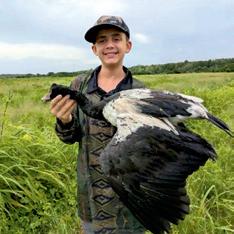
and returning with a heavier load that included the harvest. Never a bad thing, provided health allowed. Cheaper than a gym membership? Probably not — but that’s part of the attraction.
For others, there was a noticeable increase in the use of ATVs or buggies, trailered in from town and ideal for moving from safe vehicle parking to wetter country. Even better if fitted with a winch, as these machines inevitably fall victim to black floodplains and their well-earned reputation for swallowing vehicles beyond recovery.
Darwin and its outer regions benefitted greatly from the Northern Territory’s approach to outdoor recreation, supported by government and recognised as a major tourism drawcard. Many southern hunters took the opportunity to escape the cold and head north for an adventure — proving once again that it is often more about the destination and the memories created than harvest numbers alone. For many, it is an escape: a chance to warm the body and reconnect with family and friends who are often only seen when seasons align.
Life is not a rehearsal, and you do not create memories sitting on the couch. Start planning next year’s hunt today. Darwin and the Northern Territory Government will welcome you with open arms and a cold beer, grateful for the tourism and economic contribution visitors bring to the region. Chances are you will be encouraged to stay longer — perhaps for a barra fishing trip, a buffalo hunt, or simply to enjoy the many other outdoor attractions on offer.
And when things do not go perfectly to plan, there is always plenty to do. The tourism industry is alive and well, the seafood is sensational, and the bars and restaurants are vibrant. Take a mate who has never been before, bring the family, extend your stay, and drop into the NT Field & Game Branch to shoot some clays and get to know a few locals over a beverage or two. Before you know it, you will be part of the furniture — they really are a friendly bunch up that way.
See you there on the first weekend in August 2026 — at The Festival of Clays, during the Goose and Duck hunting season, or maybe both. Put it in the calendar now and lodge that leave form. How could the boss ever refuse?
Heart Morass, a 1,800-hectare wetland near Sale in Victoria’s Gippsland region, stands today as one of Australia’s most significant examples of hunter-led conservation in action. What was once a degraded landscape impacted by salinity, acid sulfate soils and heavy grazing is now a thriving wetland supporting waterfowl, native wildlife and responsible public access.
The transformation of Heart Morass has been driven by decades of sustained effort from volunteers, conservationists and hunters, led by the Wetlands Environmental Taskforce Trust in partnership with Field & Game Australia. Careful water management, habitat restoration and ongoing monitoring have restored the wetland’s ecological balance, creating conditions that benefit both wildlife and the wider community.
In recent seasons, Heart Morass has continued to demonstrate its value as a high-quality wetland habitat. Species such as grey teal, chestnut teal and Pacific black duck are consistently observed, with waterfowl numbers often increasing as water recedes elsewhere in the district. These outcomes are not accidental — they reflect long-term planning, reinvestment and stewardship.
Access to Heart Morass during the Victorian duck season is deliberately managed to balance environmental protection, hunter safety and fairness. Entry is controlled through a key system, with funds raised from keys reinvested directly back into the wetland’s ongoing
care, infrastructure and management.
For the 2026 season, a limited number of keys were made available for the opening access period, with hunter numbers capped and subject to water availability. By the time this magazine reaches members, most opening-period keys will likely already have been allocated.
Importantly, access for the remainder of the season is not limited, and hunters may continue to obtain keys for use outside the opening period, subject to the conditions of entry.
Keys are available to current financial members of Field & Game Australia. Junior members do not require a key but must be under the direct supervision of an adult key-holder at all times.
Each key holder receives access information, conditions of entry and a detailed map of the wetland. These conditions are strictly enforced and play a critical role in ensuring Heart Morass remains sustainable for future generations.
While Heart Morass is highly regarded as a hunting destination, its significance extends far beyond seasonal access. The
wetland is a refuge for wildlife, a site of ongoing ecological research, and a powerful example of how conservation and hunting can coexist when guided by science, respect and community effort.
Every key purchased — and every additional donation made — supports the work required to maintain water infrastructure, manage vegetation, monitor bird populations and protect this landscape from future degradation.
Heart Morass exists today because people cared enough to restore it — and continue to care enough to protect it.
• Keys are obtained via an $80 cash donation to the Wetlands Environmental Taskforce
• Opening-period access is limited; remainder of season access is unrestricted
• Access is available only to current Field & Game Australia members
• All conditions of entry must be followed
For enquiries regarding access or conditions, contact Gary Howard on 0427 432 540.
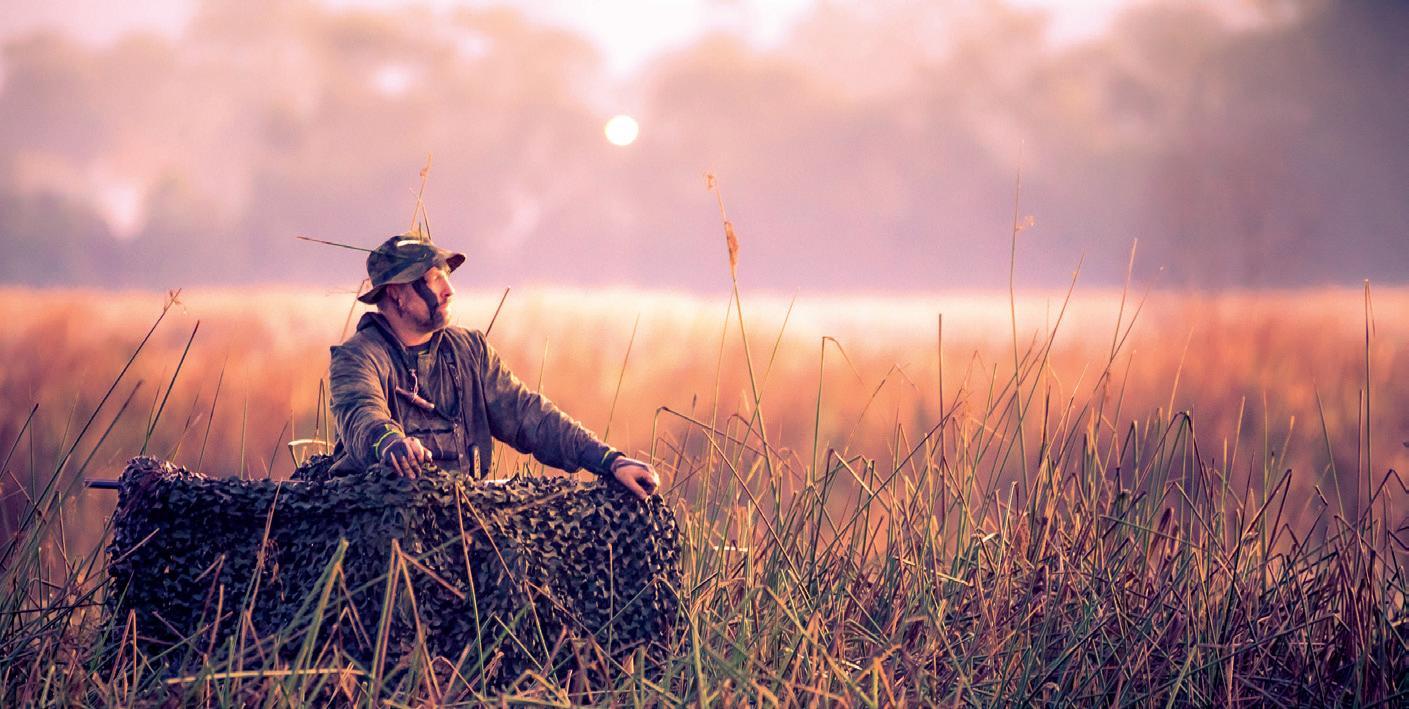

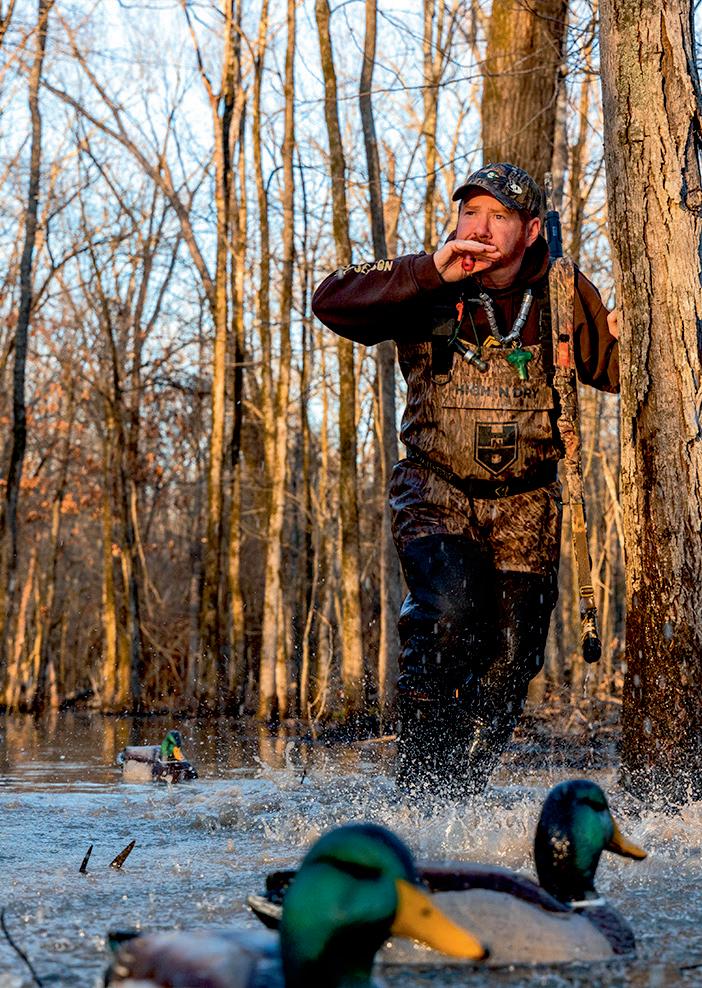
available at the FGA Shop www.fieldandgame.com.au/shop
In the quiet dawn light over the red earth, or at the last golden glow of an autumn evening, there’s a silhouette that carries an almost sacred weight: the broad, familiar outline of a side-by-side shotgun. For generations of Australians — farmers, sportsmen, country families, and bush workers alike — this humble firearm was more than a tool; it was a companion in the field, a teacher of patience, a keeper of memories.
Long before synthetic stocks and overunder engineering became commonplace, the side-by-side ruled the world of scatterguns in this wide, ancient land. Its twin barrels spoke of simplicity and reliability. Its balance and poise offered a grace that became woven into generations of hunting tales — the flush of quail in wheat stubble, the flight of ducks at first light, and laughter around kitchen tables recounting shots both well-made and wonderfully missed.
There is a poetry to the side-by-side’s form that goes beyond nostalgia; there is function. Unlike narrower barrels arranged vertically, the horizontal pairing creates a naturally wider sighting plane. For many shooters, this translates to an openness — a more intuitive alignment with moving targets. In fast, flush shooting — whether chook flight or flush covey — that wider visual field can aid the eye and mind to work in harmony.
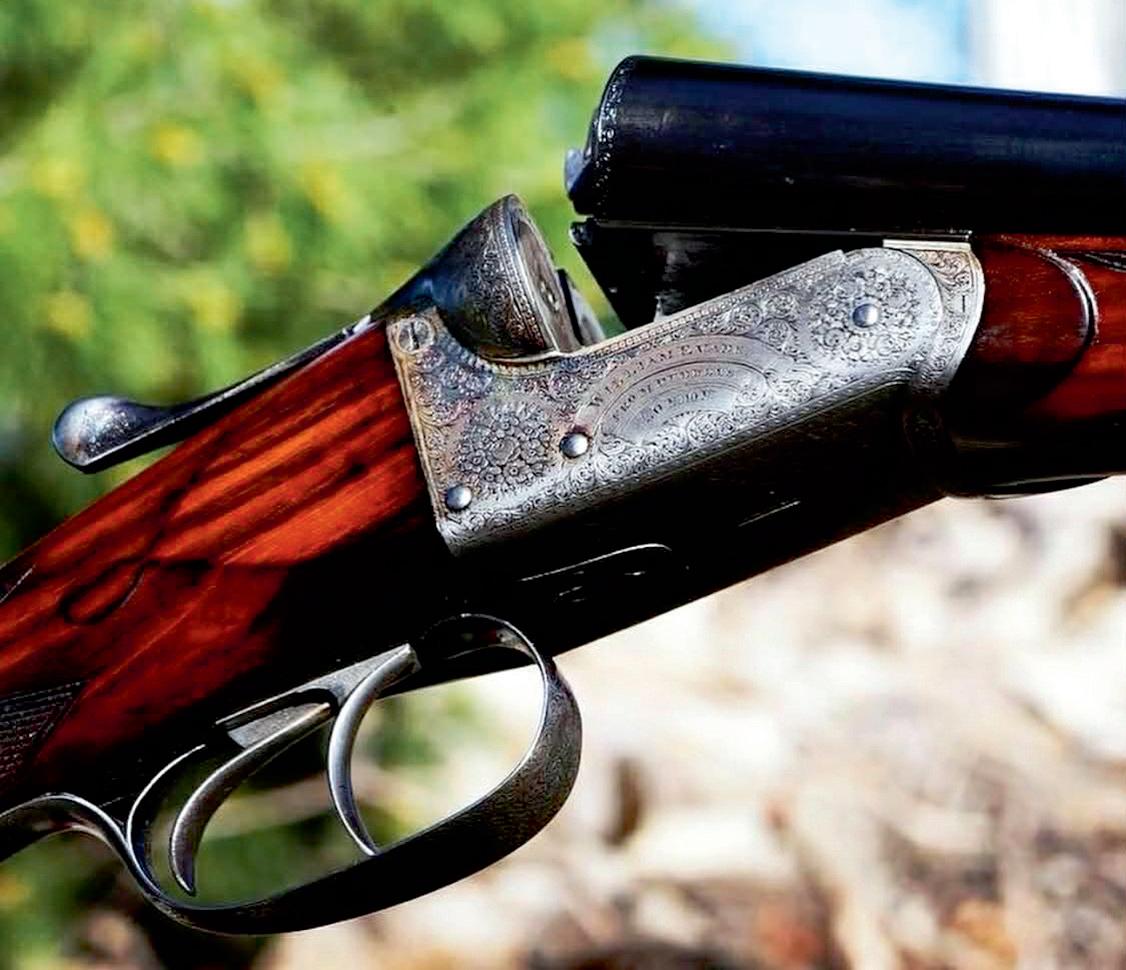
Similarly, the mechanics of the side-byside tend toward simplicity. The broader stance of the action allows for a smaller opening angle to extract spent cases and reload with fresh shells. To those who fielded these guns before modern innovations, these traits weren’t just talking points in a gunroom — they were practical assets on cold mornings when time in the field was precious.
In Australia’s still-living tapestry of sporting firearms, side-by¬-sides run the gamut from humble utilitarian tools to treasured heirlooms. You’ll find them at rural auctions, once stored in woolsheds and garages, behind the seat of the farm ute and worn in by decades of honest service. These “cheap old guns,” as some might casually call them, often carry scuffs and repairs that read like excerpts from a field journal — each ding marking
a season, each patina a memory of early mornings and fading light. These days of course they are securely stored in an approved safe, locked separately to ammunition like any other firearm due to changes in storage requirements.
These are sometimes referred to as workhorse guns — inexpensive examples that have been used and sometimes abused for decades. Their stocks are gouged, their finish worn, and their barrels seasoned by clay and field alike. These guns weren’t museum pieces; they were tools carried through years of rabbit drives, quail shoots and duck hunts, soaked with memory and fought over at auction for a pittance.
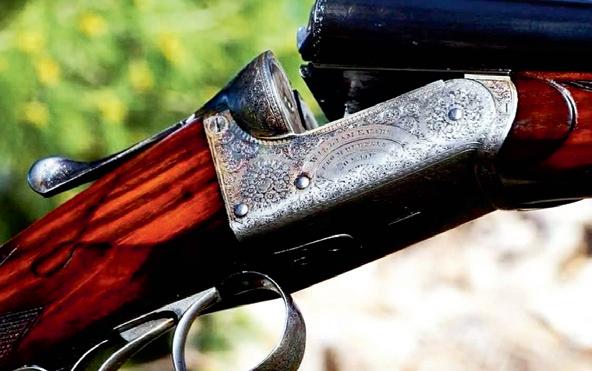
And yet, alongside these workhorse shotguns, there are treasures of a different sort: fine English-made side-by-sides that have survived nearly a century with graceful preservation. Names like Purdey, Holland & Holland, William Evans and William Powell — exquisitely finished,
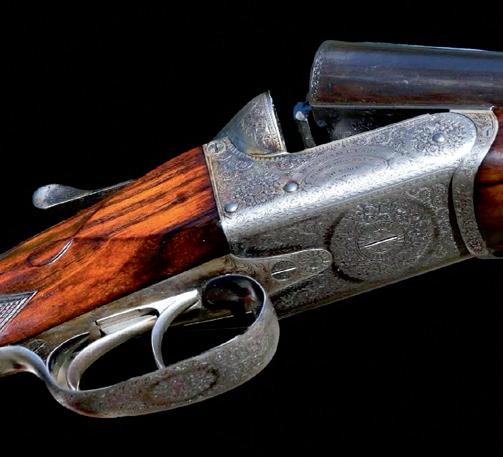
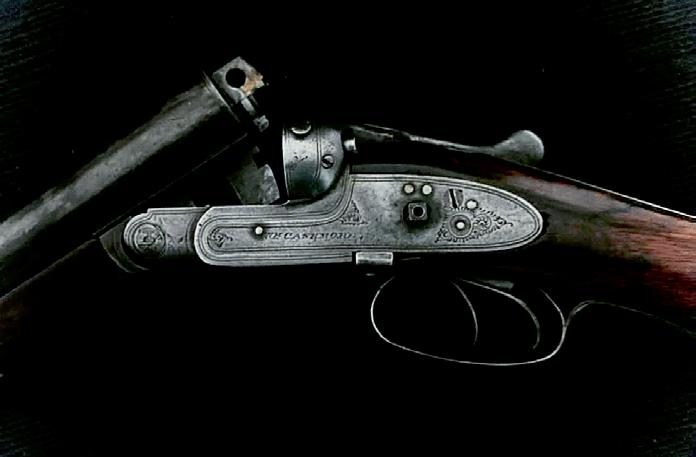
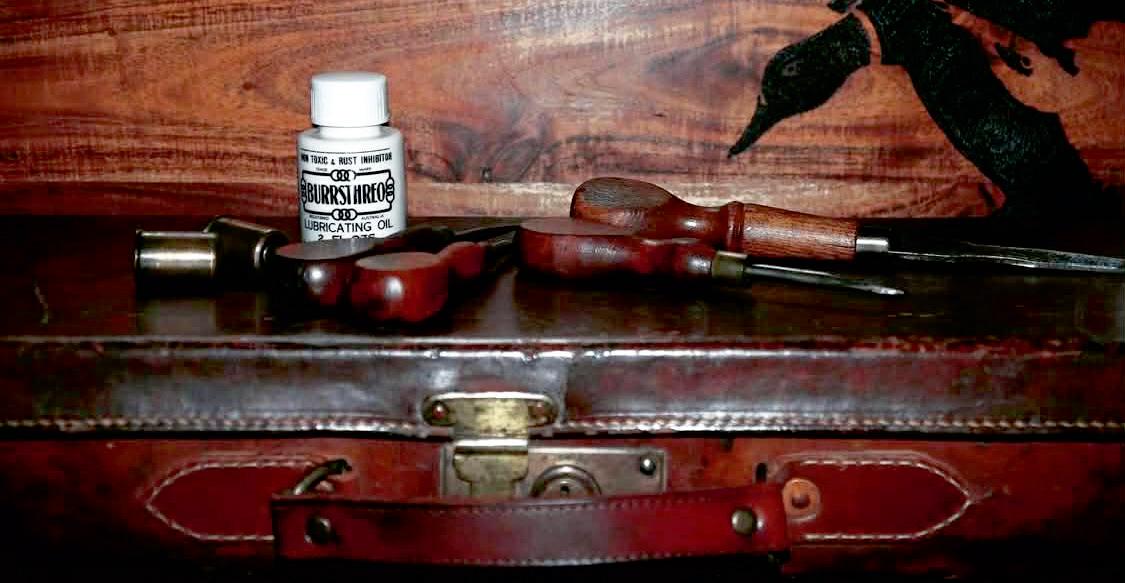
beautifully balanced, and cared for by generations — stand as living testaments to craftsmanship. In the Australian context, many of these guns were imported in the early 20th century, often accompanying families settling far from home, where tradition met new country challenges.
These fine guns command respect not just for their value, but for the continuity they represent; they bridge hemispheres, cultures and decades. They remind us that firearms — particularly sporting arms — are not merely objects of metal and wood, but keepers of heritage and stories.
Yet as trends in shooting sports evolve and collectors focus on rarities, there is a real need to reflect on what is at stake. Too many old side-by-sides sit forgotten unused in the depths of dealers’ collections, destined for corrosion and loss of value. With them goes a lineage of craft, of bush culture, and of experiences that shaped lives from the Snowy Mountains to the Nullarbor.
Preservation isn’t just about museum displays or collecting for value. It’s about remembering. It’s about understanding the roles these guns played — the way they taught young hands discipline, introduced
novice eyes to the rhythm of clay and bird, and served families through countless seasons. Preserving side-by-sides means conserving stories: the old hand who handed down a shotgun with a wink and a lesson, the grandfather whose first hunt was shared on a crisp winter’s morning, the mates who settled debates over shots on a dusty ridge.
Across Australia today, enthusiasts can still find a remarkable variety of sideby-side shotguns — from affordable, rugged examples that will take a lifetime of field use, to refined classic pieces that represent the pinnacle of turn-of-thecentury gunmaking. Many of these change hands through private sales, gun clubs, auctions and specialist dealers. Each trade, each handover, is an opportunity to connect past and present — and to carry forward the traditions that define a uniquely Australian relationship with the land and sport.
The challenge now, for clubs, collectors, families and field shooters alike, is to keep this heritage alive. Not as relics behind glass, but as lived, cherished instruments. Teach younger generations to appreciate
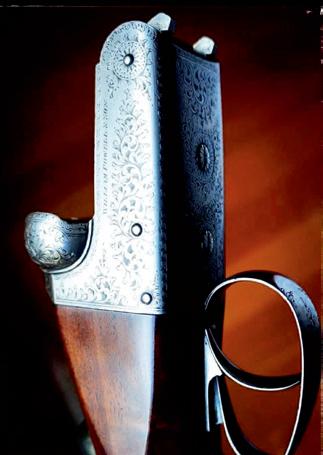
not just how to shoot, but why these guns matter. Document provenance. Care for barrels and stocks. Share stories. Encourage respect for history alongside respect for safety.
For in every side-by-side that rings open on a cool morning — whether a battered old favourite or a polished classic — there lies an echo of the many who walked these fields before us. And if we listen, that echo will keep singing our shared story.
To understand these guns is to understand what they brought home. In times when dinner was earned with sweat and patience, side-by-sides delivered for families right across the continent.
Rabbits — once introduced, their inexorable spread brought hardship and opportunity. During the lean years of the Depression, rabbits were a crucial source of protein at many a kitchen table, and trusty double barrels saw decades of service chasing them across stubble and scrub.
Quail — tiny, fleet and challenging — became the epitome of upland sport. Their flushed flight demanded quick reflexes and instinctive pointing, and the wide sighting plane of a side-by-side lent a natural >>
advantage when tracking these fast birds. Foxes — elusive and cunning, predator and pest — were taken with equal parts skill and respect; stalked under moonlight or at dawn, using the scattergun for quick, humane dispatch where needed.
Ducks — haunting marshes and waterholes at first light — tested both shooter and dog alike. From teal to grey ducks, each species spoke to tradition and skill, demanding respect for wind, water and wing.
These quarry — and the countless meals and memories they provided — became inseparable from the silhouette of the side-by-side in the Australian imagination.
Live bird & Clay Pidgeon competition shooting — is a story of its own and best left separate at another time.
Modern hunting is as much about conservation as it is about tradition. In Australia, hunters must be mindful of non-toxic shot requirements, especially for game birds such as ducks and quail. Laws in places like Victoria explicitly prohibit the use of toxic (lead) shot for duck & quail hunting and mandate the use of non-toxic alternatives such as steel, bismuth-tin, tungsten alloys and other approved blends. Using prohibited shot carries penalties including fines and even licence suspension.
Hunters today can choose from several non-toxic options suited to both traditional side-by-side guns and modern field needs:
• Steel shot — the most common and affordable non-toxic option. It’s widely available and effective for bird hunting with proper choke and range adjustment.
• Bismuth-tin shot — denser and softer than steel, often recommended for older guns with fixed chokes where steel might cause wear. Its ballistics more closely mimic traditional lead loads, making it a popular choice among heritage gun shooters.
• Tungsten-based and blended shots — such as tungsten-iron, tungstenmatrix or proprietary higher-density mixes, offering excellent penetration and patterning at extended range. These options tend to cost more but can deliver performance closer to lead.
• Using these materials with vintage barrels may require care — older guns with fixed chokes or without steel proof marks may best handle softer non-toxic shot like bismuth to avoid undue wear. Consulting a qualified gunsmith and selecting properly-

loaded shells is wise to preserve both safety and heritage. Of course there’s also the odd 2 and a 1/2” chambers to cater for as well and the availability of suitable ammunition is becoming pretty scarce, so do your homework. Even classic side-by-sides can thrive in the field with the right ammunition — a living link from bush hunts of yesteryear to sustainable seasons ahead.
There’s a living story in each gun — from the worn 12-gauge that raised generations of bush kids, to the finely finished English model that graced a family mantelpiece. Preserving that heritage means more than safe storage; it means passing down respect for the land, the quarry and the traditions that shape them.
Teach young hunters not just marksmanship, but ethics and ecology. Respect what we pursue and how we pursue it. Understand why non-toxic shot matters, not just for compliance, but for the lands and skies we share with waterfowl and upland game alike. Embrace the diversity of guns on the market — from affordable field barrels to cherished classics — and let each have its place in the narrative.
For as long as we cherish the echo of a side-by-side’s barrels welcoming the dawn, that heritage will continue — a testament not only to skill, but to memory, stewardship and the enduring heart of the Australian outdoors.
Gunsmith’s Advice
Before using any non-toxic shot in an older firearm:
• Have the chokes measured and barrels inspected.
• Avoid steel unless the gun is confirmed
safe for it.
• Stick with bismuth for heirloom or lightly-built English guns.
These short reflections echo the lived experiences that shaped Australia’s hunting heritage.
“Rabbits Fed Us When Nothing Else Would.”
— Bill H., Mallee Region
“My grandfather used to say the side-by-side kept his family clothed and fed through the Depression. He took rabbits by the dozen on weekends. The old double was never glamorous… but it earned its keep more than any tool on the farm. We still have it — stock worn smooth like river stones.”
“Quail Make You Honest.”
— Karen D., Riverina Shooter
“You can’t bluff your way through a quail patch. They flush low and fast, and those wide-barrel doubles just seem to make sense when you mount them. It’s instinct, not mechanics. My dad swore that a sideby-side teaches you to see the bird, not the bead.”
“Foxes at First Light.”
— Tom P., Southern Tablelands
“I grew up shooting foxes with my father. He carried an old side-by-side with a dented rib and a mismatched forend. Didn’t matter — he knew that gun like it was an extra limb. Quick shot, humane dispatch. The foxes didn’t wait, and neither did he.”
“Ducks in the Mist.”
— Lyn and Mark C., Gippsland Wetlands
“Some mornings the world is just a curtain of white over black water. The first whistle of wings always got our hearts going. We still carry the double my uncle brought from England after the war — and now with bismuth loads, it’s as much a part of the marsh as the teal themselves.”
Ihave had the immense pleasure of being exposed to Waterfowling in Australia and overseas from 5yrs young to my now 55th year on this planet surrounded by some of the finest citizens one could hope to meet whilst engaged in it, It’s a love affair with nature that has given my life such direction and meaning.
I have a love of producing waterfowl art and hand carved decoys that I donate for conservation purposes, I love the travel, comradery and fine natural table fare that wild game provides in abundance. Its so much more than just hunting, but hunting is most certainly central.
In recent years as all of us outdoor enthusiasts have found continued assaults on our way of life had become as more intolerable as they are articulate, relentless and more determined at every juncture making for an atmosphere of defeat and oppression.
Nothing seemed to go our way and to be honest I couldn’t get this saying out of my head ‘if you’re not part of a solution, then I’m part of the problem’ and I love every aspect of waterfowling more than I love the couch or eco coffee shops! Which was looming large as our combined futures if we did nothing!
I was sick of not making a real difference that will allow future generations of my family to enjoy what I was experiencing. Joining the only organisation that I felt was best placed to fight back in a coherent focused manner left only one clear choice, FGA. This is not an advert for fga but fact. I’m a duck hunter/conservationist then this is my people.
Being a proud member, determined to make positive changes drove me to then go on and campaign for an appointment to the board of directors where I feel I could join other focused likeminded enthusiasts, driving changes to help as many people as I could. This position is voluntary, time consuming but extremely worthwhile.
I’m aware that sounds corny but honestly without witnessing what our magnificent
volunteers are achieving it compels you to throw whatever weight I could behind them, our long-documented conservation values and achievements are held in high regard even by our detractors, what’s not to love about that?
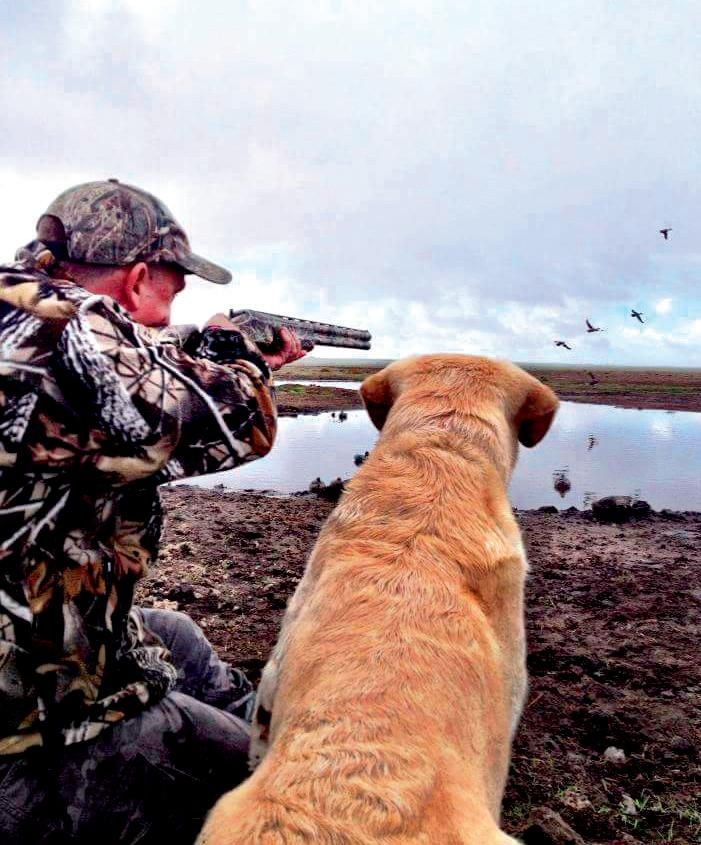
It’s what helped us win the fight to save recreational gamebird hunting in Australia, I joined that fight late with the uncertainty in the hunting community seemingly omnipresent. The board remained tactical and clinical, I’m so glad I was able to contribute and thankfully prevail, but the fight my friends it never ever ends.
My focus whilst on the board of directors, I am unashamedly a hunter and conservationist first because that’s who I always have been. As a threepillar Hunting, Conservation and Clay targets organisation we cover everything because our members are diverse but I am determined to bring focus back to our members and their hunting back yards.
Last year I began to engage motivated volunteers in bringing attention to our dilapidated state game reserves around Corop and Kerang. I cannot tell you how important it is that as a member of FGA we rely on you to help us, to help you!
I am but a conduit to triage projects based on the information, merit, community importance and practicality allowing the flow of volunteer enthusiasm to focus the right tasks, government departments and specialities that allow improvements to hunting opportunities of you as members AND non members of FGA.
That sounds like I am all over it but believe me it’s the local FGA knowledge that rules the day, I learned just how nuanced and complex these jobs are. My task as your board member is just make the right noise in the right direction to help these projects get underway and see completion or vast improvement.
Long story short, I donate my time so we can all enjoy gamebird hunting in Australia for a long time to come, would you like to join me in being part of a solution?
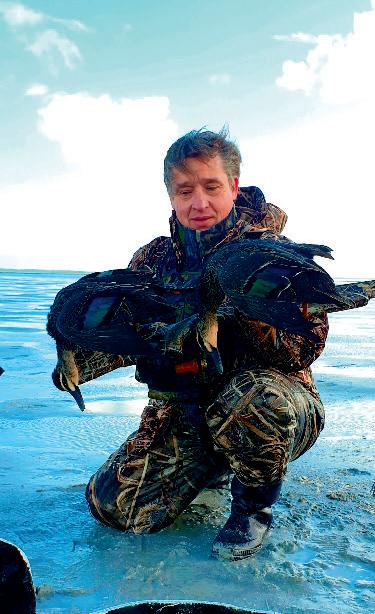
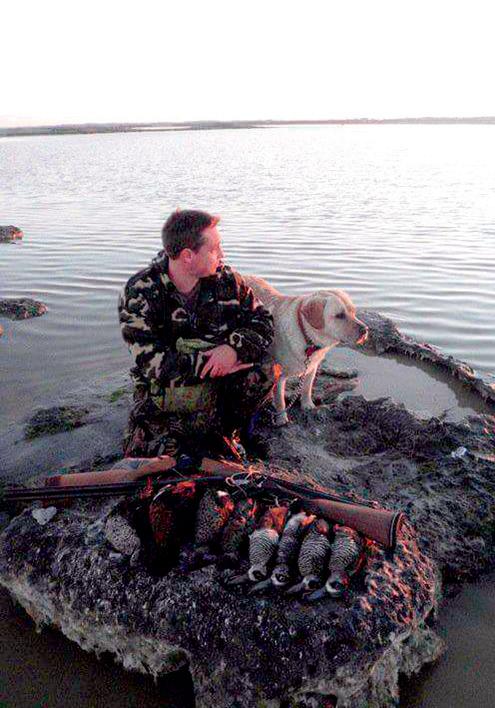
The Australia Day Picnic at the Connewarre Wetland Centre once again proved to be a successful and well-attended community event, bringing together Field & Game Australia members, families and visitors for a relaxed day celebrating wetlands, conservation and community connection.
Held just outside Barwon Heads, the picnic continues to showcase the Connewarre Wetland Centre as a place where education, environmental stewardship and family-friendly activities come together in a practical and welcoming setting. This year, approximately 250–300 visitors came through the site across the day, taking full advantage of perfect weather conditions to explore the wetlands and enjoy the program of activities on offer.
Field & Game Australia was pleased to welcome Libby Coker MP, who visited the wetlands alongside her Chief of Staff, Kylie Rawson, spending time exploring the site and engaging with the day’s activities. Their
visit provided an opportunity to experience firsthand the value of the Wetland Centre as a community space and to learn more about the conservation and education work being delivered on the ground.
A highlight of the day was the return of the Bug Blitz information sessions, led by John Caldow, which once again captured the interest of both children and adults. These engaging sessions offered visitors the chance to learn more about the diverse insects and invertebrates that play a critical role in healthy wetland ecosystems, reinforcing the importance of protecting even the smallest and often overlooked species.
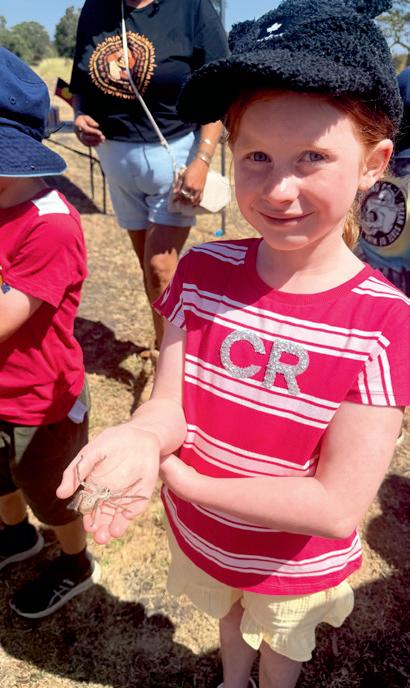
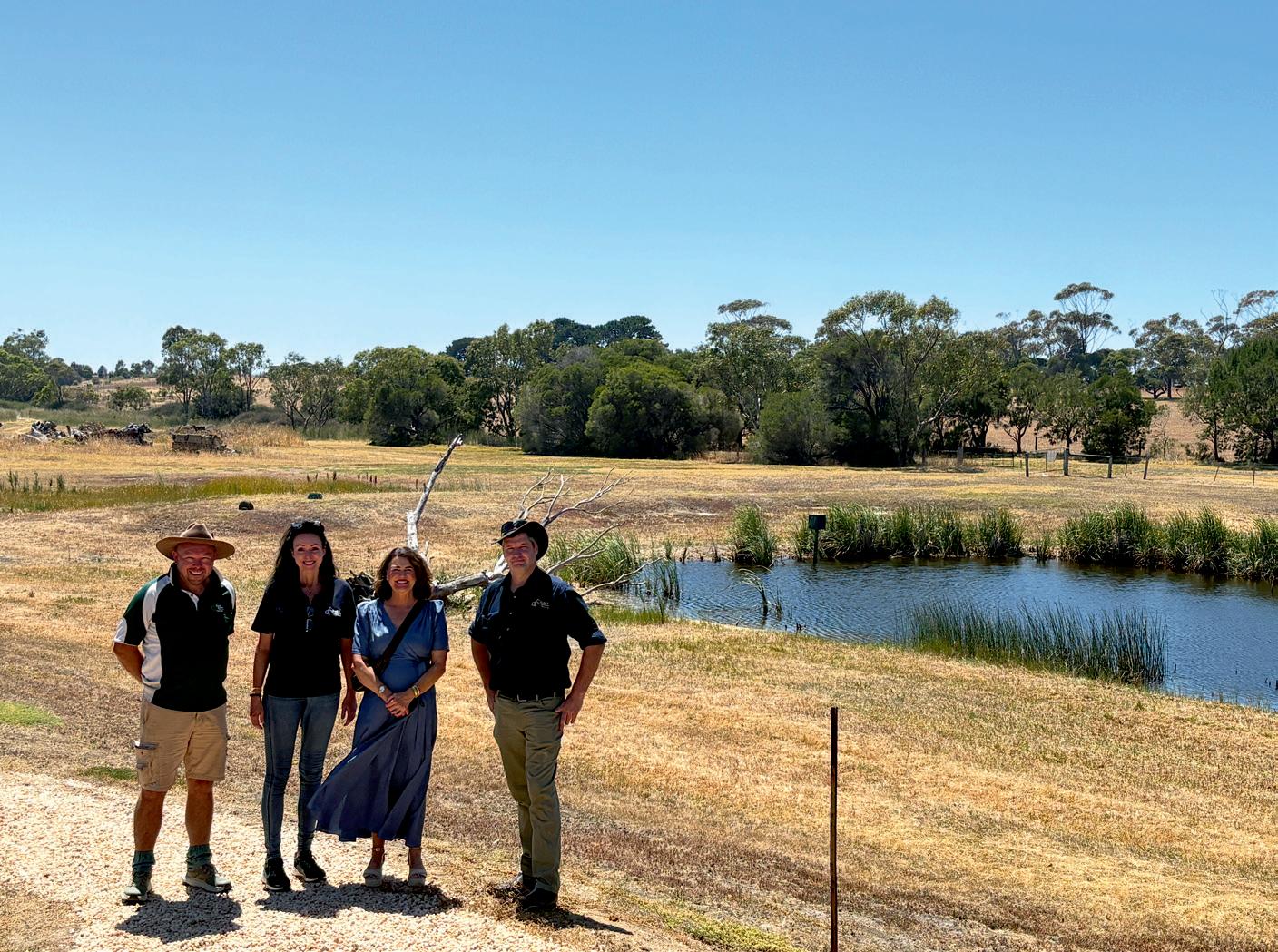
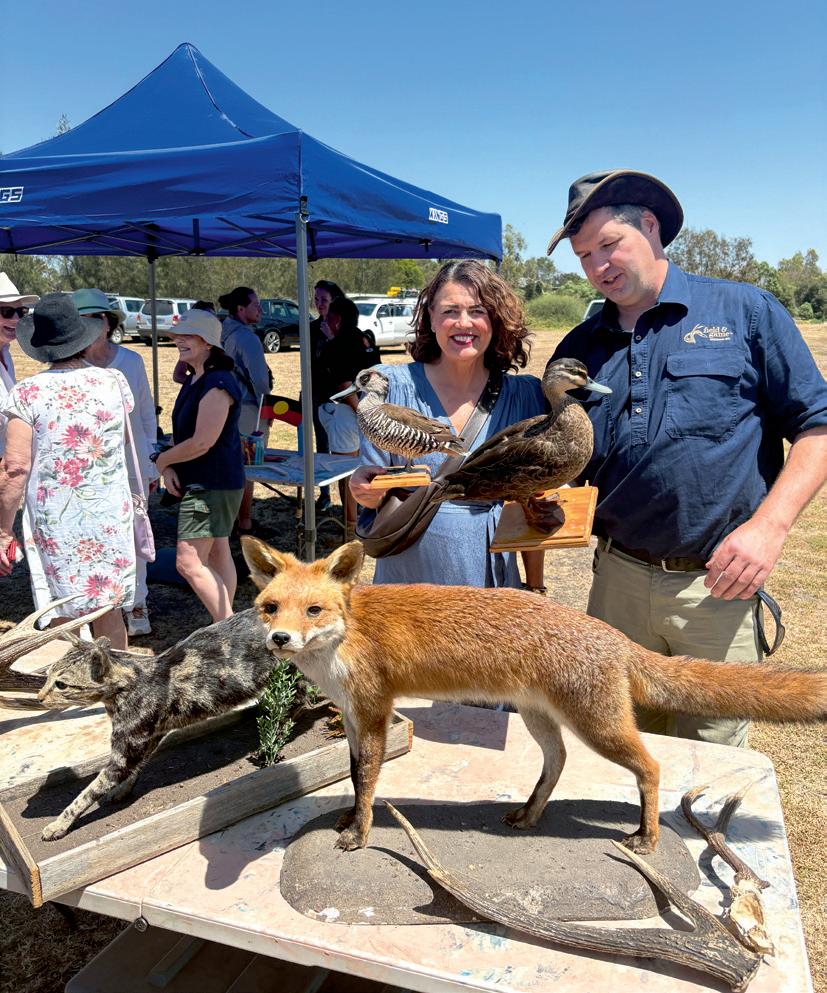
Families enjoyed a wide range of handson activities throughout the day. Electra provided a popular creative space, offering colouring-in of small wooden didgeridoo shapes and sharing storytelling with visitors. For younger attendees, there was an enormous soft play area, along with face painting, temporary tattoos, colouring-in stations and a fun fishing activity that kept children engaged and entertained across the day.
Food was, as always, a major drawcard. The community barbecue was a huge success, serving venison burgers and sausages, alongside much-loved Aussie beef options. Adding to the festive atmosphere were soft-serve ice-cream, slushies, popcorn and lolly bags for all the kids — ensuring no one went home hungry.
The picnic also provided plenty of space for people to relax, connect and enjoy the surroundings, with families spreading out across the grounds and taking time to explore the wetlands at their own pace.
The Australia Day Picnic was proudly supported by the Australian Government through the Australia Day Council, whose assistance helps enable inclusive,
community-focused events that encourage participation, education and connection.
Field & Game Australia extends sincere thanks to the Geelong Field & Game volunteers, whose ongoing commitment and hard work were central to the success of the day. From setting up activities and managing logistics through to welcoming visitors, volunteer involvement remains at the heart of events such as the Australia Day Picnic.
Beyond the activities themselves, the day provided an important opportunity for Field & Game Australia to engage with the wider community, share information about its conservation and education initiatives, and demonstrate how outdoor recreation, environmental stewardship and community connection can work together in a positive and inclusive way.
With strong attendance, ideal conditions and broad community support, the Australia Day Picnic at the Connewarre Wetland Centre continues to be a valued way to mark Australia Day — bringing people together through a shared appreciation of community, conservation and the outdoors.

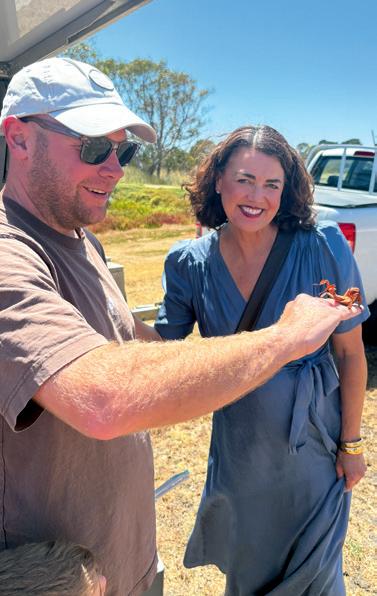
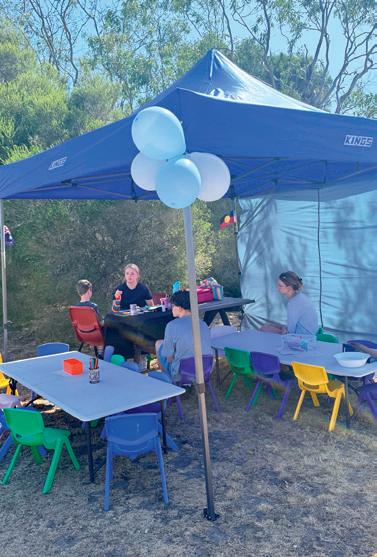
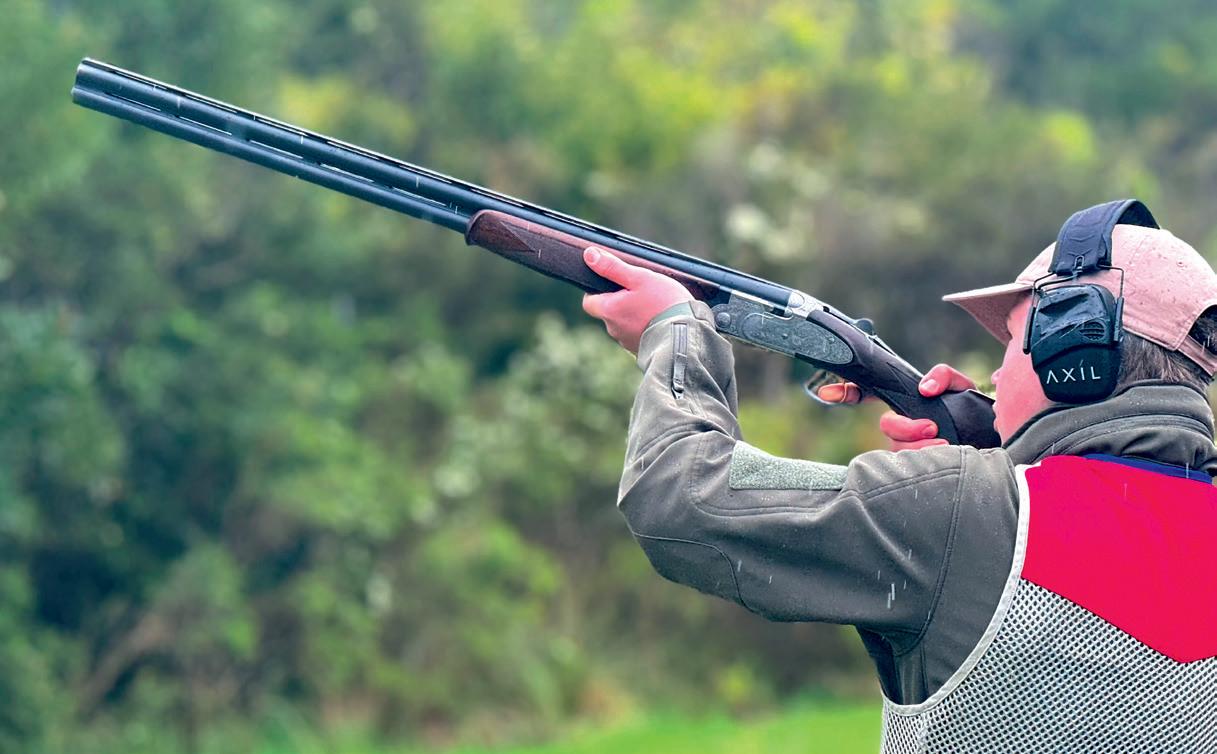
For Maximus Pratt, clay target shooting didn’t begin as a competitive ambition — it began as a stepping stone.
Coming from a family of hunters and shooting rifle himself, Max was first introduced to clay targets by his great uncle Tony as a way to learn bird shooting. The lessons happened at the clay target range, where Tony taught him everything he knew. Somewhere along the way, Max realised something unexpected had happened — he’d fallen in love with clays, and the birds faded into the background
The moment it became his sport came quietly. Max noticed he was nominating himself for competitions without being prompted, already planning how he’d get from one end of Victoria to the other if his great uncle wasn’t available. That independence marked the shift from trying something new to committing fully to the sport.
Like many young shooters, Max’s biggest gains have come from understanding how to simplify rather than overthink. Learning the concept of move, mount, shoot — and trusting instinct instead of analysis — has been central to his improvement. When he drifts away from that, he’s the first to admit everything starts to unravel.
Some challenges surprised him along the way. Distance perception, lead speed, and the temptation to measure targets instead of reacting naturally all required work, as did learning to ignore the scoreboard and
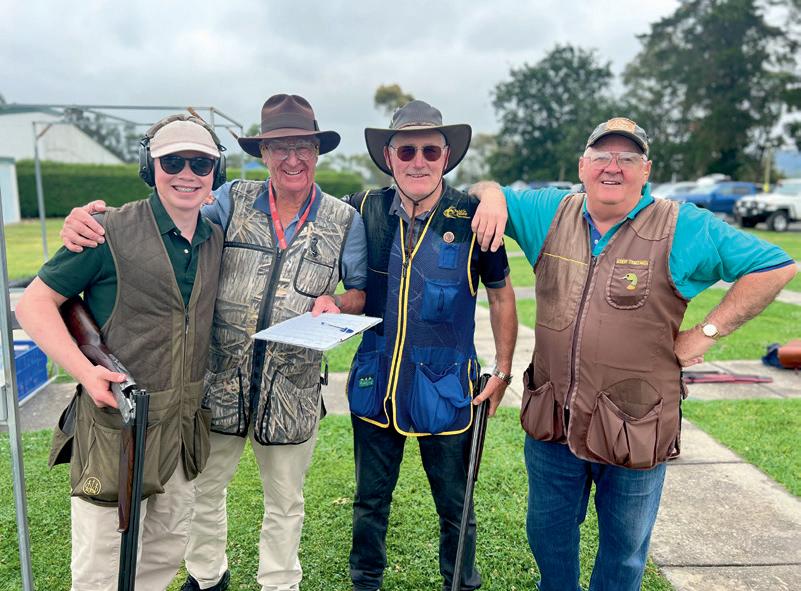
stay mentally present. Shooting gundown has also meant focusing heavily on building a consistent, fast gun mount — a challenge made more memorable during the period he was shooting with braces and occasionally copping a painful reminder if his technique slipped.
Max began his competition journey as a sub-junior, almost always squadded with adults — many of whom, he laughs, are well over 70. Far from being intimidating, those squads have become something he looks forward to each weekend. They are
some of the funniest people he knows, and the lessons he’s learned extend well beyond shooting technique to social skills and perspective.
That sense of welcome has followed him from club to club. Travelling most weekends and often shooting alone, Max says he’s always been made to feel comfortable and treated as an equal — never “just a kid” — which has made a lasting impression.
What draws him specifically to Field & Game is the variety. He enjoys reading targets, adapting to different layouts, and avoiding repetition — though he admits
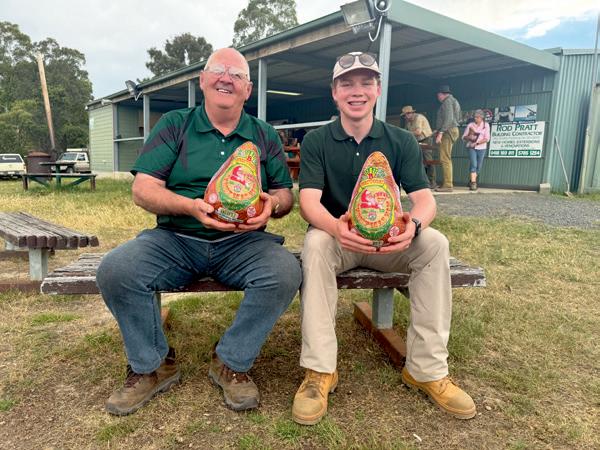
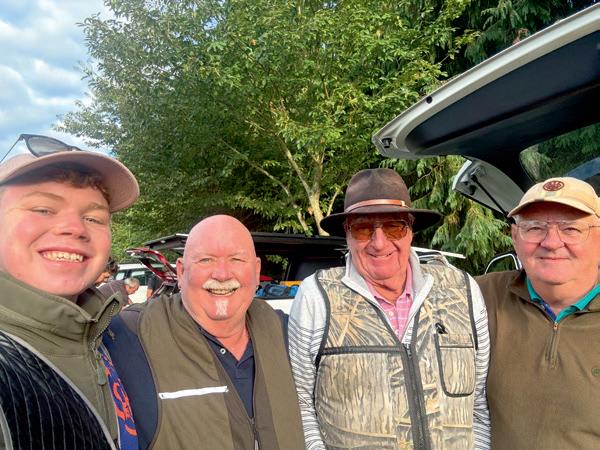
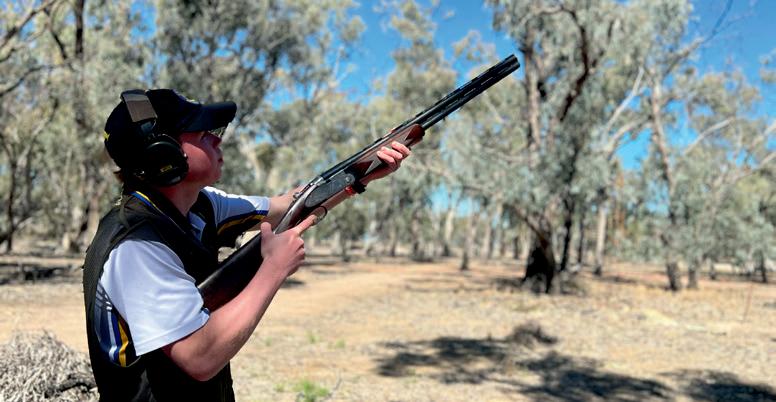
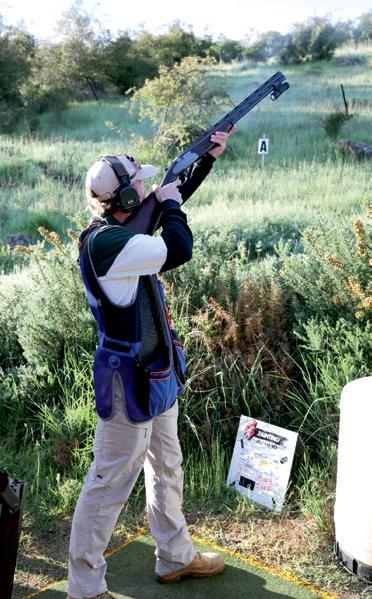
loopers will always have a special place. The discipline feels like a natural extension of hunting and aligns closely with the style of shooting his family enjoys.
While Max has benefited from formal coaching — including lessons with Chris Brown that helped him better understand targets and develop his own style — he’s quick to acknowledge the influence of the
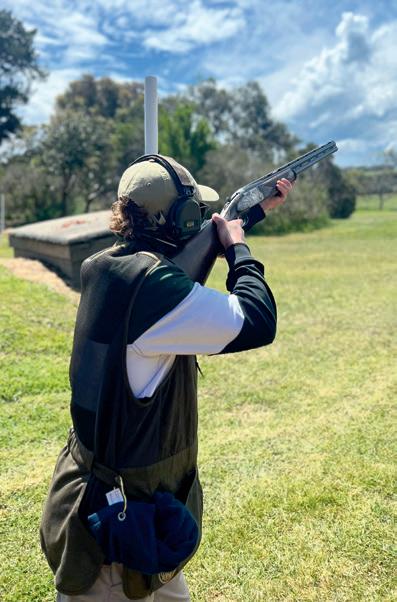
people around him.
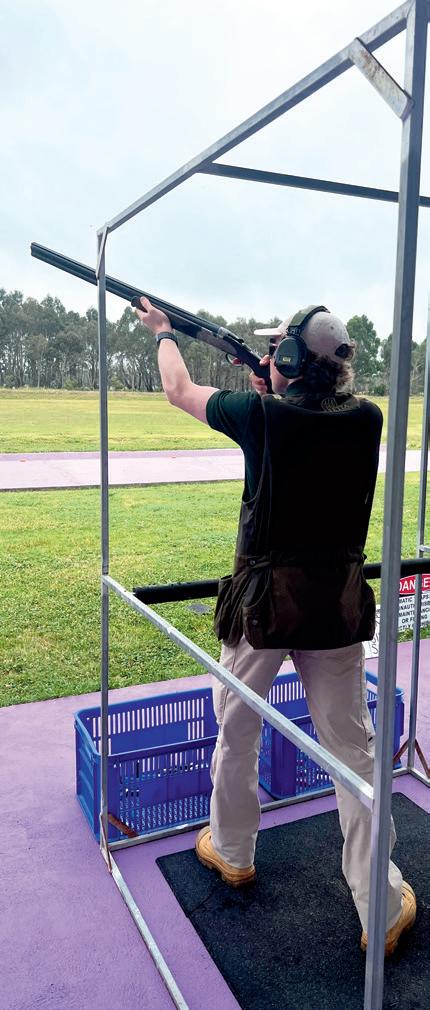
His regular squad, including Robert Sturzaker, Scott King, Adrian Ward, Graham Kemp, and at times his dad and grandad, have provided encouragement, humour, honest feedback, and grounding when needed. Friendly banter is part of the package, but so is genuine support.
Above all, Max credits his great uncle Tony for introducing him to the sport and
continuing to invest time, advice, and positivity into his development. Even when Max feels he’s shooting terribly, Tony is there reminding him to return to basics, stop overthinking, and enjoy the process — lessons that resonate far beyond the range.
When asked what good club support for junior shooters looks like, Max’s answer is simple: recognition. Whether it’s a mention in a newsletter, a post celebrating effort, junior-specific shoot days, or even
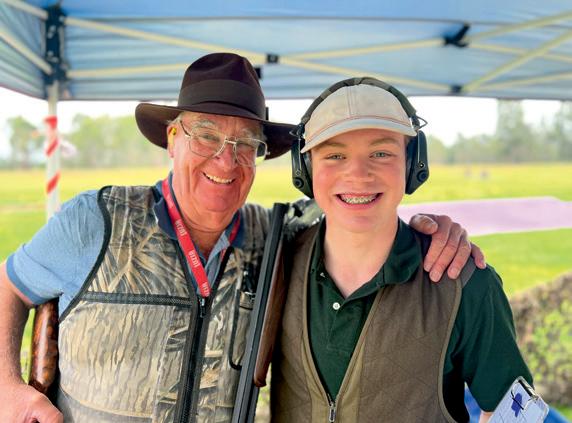
something as small (and practical) as a canteen discount, feeling seen makes a difference — especially for younger members finding their place.
Clay target shooting has changed more than Max’s scores. Meeting people week after week has built confidence in approaching strangers, shaking hands, introducing himself, and holding conversations with ease. He’s also noticed improvements in punctuality, discipline, and even vocabulary — a side effect, he jokes, of spending so much time talking with older shooters who have “a vast array of words”.
Balancing shooting with school hasn’t always been easy. With compulsory school sport often clashing with Saturday competitions, Max has become used to travelling on Sundays or taking advantage of the rare free weekend. With the support of his parents — and an agreement that his grades stay at a B or above — he’s occasionally able to miss school to shoot when the opportunity matters most.
Outside shooting, Max keeps busy with
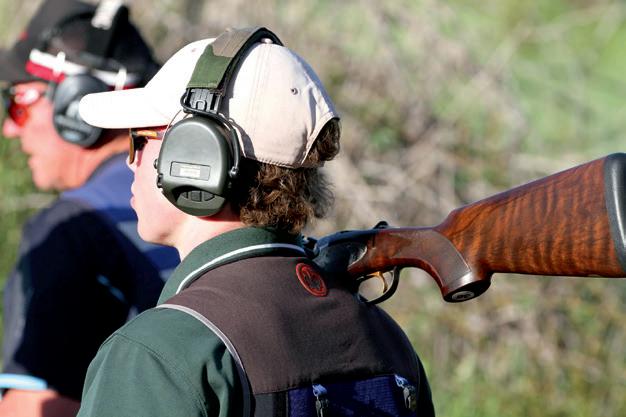
football, rowing, darts, golf, and the occasional well-earned day on the couch. He describes himself as active, but realistic — balance matters.
Like most shooters, Max knows consistency is the real challenge. Raw ability only goes so far if it can’t be repeated. A conversation with a relative helped frame his long-term thinking: improvement comes from slowly accumulating targets at every shoot, lifting the baseline of what you can reliably hit. For 2026 and beyond, that’s the goal — raising that number and making it stick.
When speaking to other young people curious about clay target shooting, Max offers clear advice: don’t get trapped by scores. Shooting alongside A-graders can be intimidating, but the aim should always be enjoyment. He learned this early after being invited to a competition in New Zealand and shooting a round of 4/25 — an experience that still stands out as one of the most memorable of his shooting life.
For parents, his message is equally practical. Encourage kids to introduce
themselves, step outside their comfort zone, and connect with other juniors when they can. The shooting community is small, and friendships often begin with a simple conversation — just as his did with Chloe Hughes-Gage, once a competitor he avoided, now one of his closest mates in the sport.
Patience, Max says, is the biggest lesson shooting has taught him — patience with malfunctioning traps, slow squads, and most importantly, with himself. Being a junior in Field & Game means shooting a discipline that feels authentic, progressing through grades, and learning to hold your own alongside more experienced competitors. It’s challenging, rewarding, and constantly surprising — especially for a fifteen-year-old city kid whose sport still raises eyebrows when he tells people what he does.
Maximus Pratt’s story is a reminder that the future of Field & Game isn’t abstract — it’s already standing on the line, learning, laughing, and quietly building the next generation of shooters.
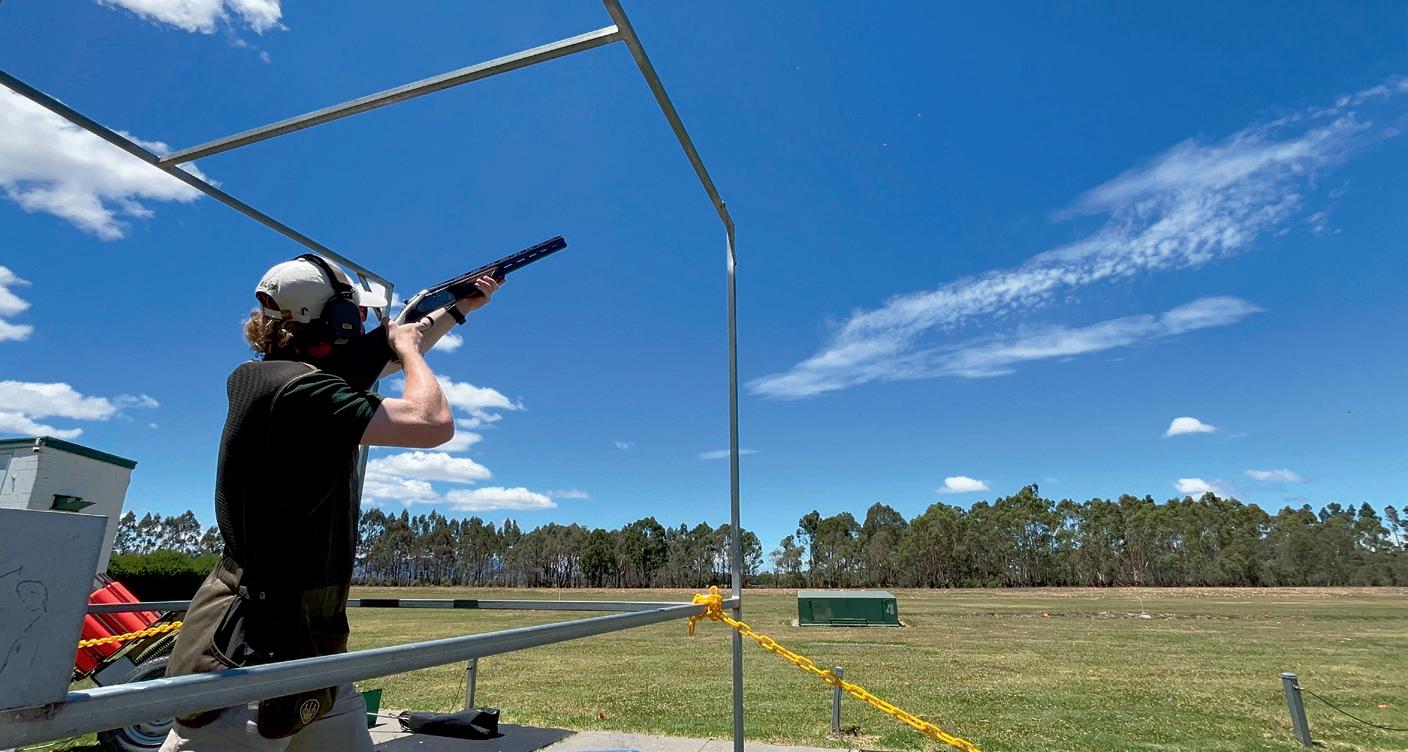

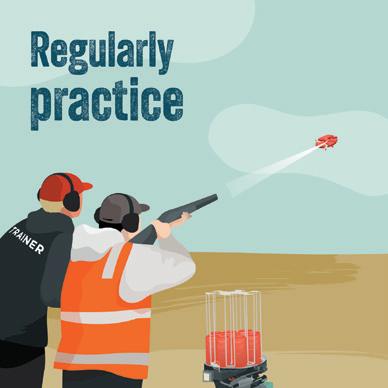
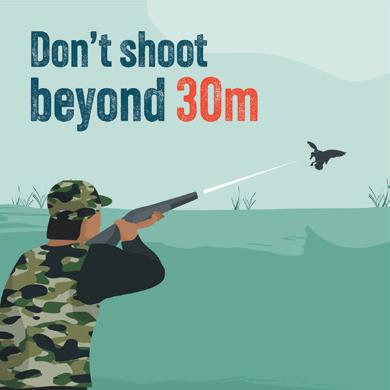




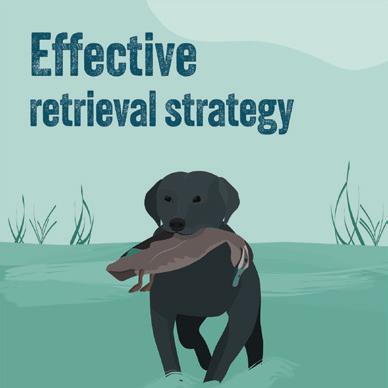

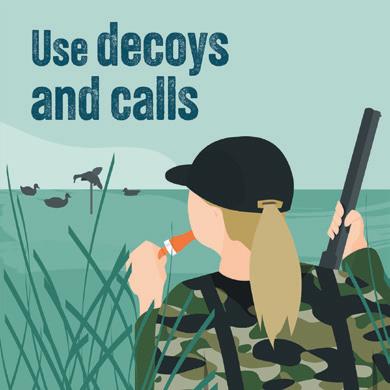

Pattern
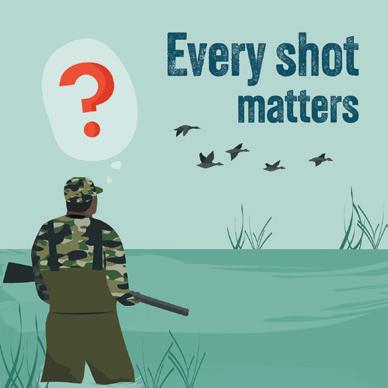



Consider every shot, Don’t shoot in hope or if there is a high risk of wounding birds



In the heart of southern Australia, duck season is more than a date on the calendar — it’s an expression of tradition, connection with the landscape, and careful stewardship of a precious resource. In Victoria, hunters are widely recognised within their communities as ethical, lawabiding people who care deeply about sustainability and animal welfare. But even the most dedicated and skilled hunter can, unintentionally, wound an animal rather than harvest it cleanly.
That’s where the REDUCE Wounding campaign — led by the Victorian Game Management Authority (GMA) — comes into play. This initiative isn’t about criticism or policing hunting culture; it’s about enhancing the skills, knowledge and confidence of hunters so they achieve better, less wasteful outcomes in the field. At its core, REDUCE Wounding supports what every good hunter wants: clean shots, rapid retrieval, respect for wildlife, and the honourable continuation of duck hunting for future generations.
Representatives from various hunting organisations and industry groups have been and will continue to be involved in working groups that advise and assist in developing messaging. Sharing those messages through our networks and membership are critical to reaching the
intended audience. We know that you all do the right thing as laid out in code of conduct ethics and behaviours, it’s the hunters that are not a part of any hunting organisation that we are trying to reach. Generational behaviours rely on us to mentor and be custodians of our pursuit, that means it is up to every single one of us to pass on the correct behaviours we have practised forever. The future of gamebird hunting relies upon it and therefore it should be front of mind for all of us.
Wounding — when a bird is hit but not immediately killed — is an outcome nobody wants. It increases suffering for the animal, complicates retrieval, and
often leads to waste, even when every care was taken. Importantly, wounding also has implications for how the broader community perceives hunting. Given the intense public scrutiny duck hunting already faces, reducing wounding helps safeguard the reputation of hunters and strengthens the standing of hunting as a legitimate, responsible outdoor pursuit.
Wounding rates are monitored systematically by the GMA through its Waterfowl Wounding Monitoring Program, which assesses trends and helps shape education and management responses. Data from this monitoring — and the continual feedback hunters provide through surveys and engagement — form the evidence base for REDUCE Wounding’s focus on continuous improvement.
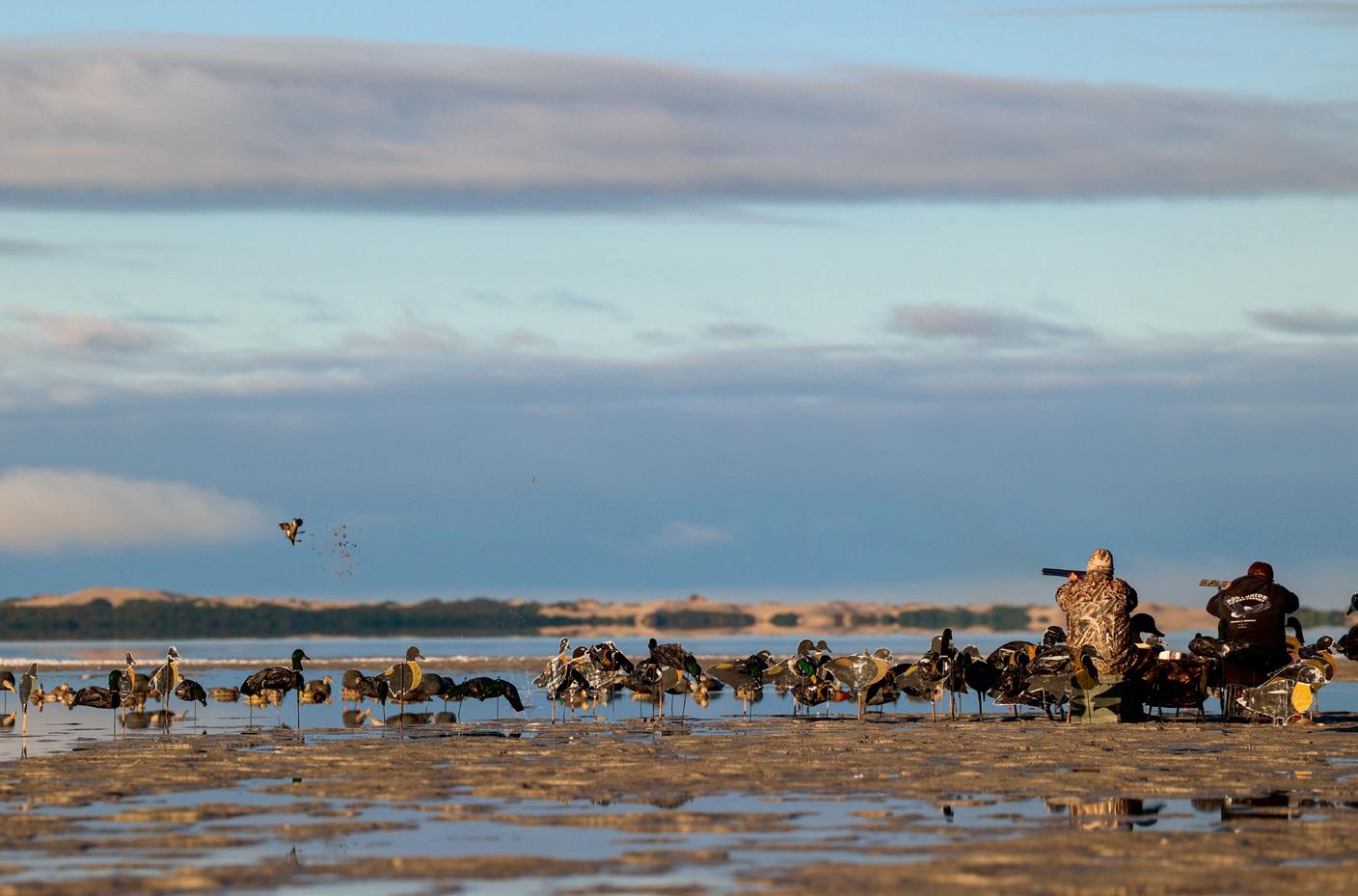
Rather than a set of rules imposed from above, REDUCE Wounding offers a practical framework that hunters can voluntarily adopt to sharpen their craft. Each letter in the REDUCE acronym highlights a meaningful element that contributes to more humane, effective hunting:
Even seasoned hunters benefit from purposeful practice. Consistent clay target shooting — especially on targets that mimic waterfowl flight paths — builds muscle memory and judgement. Pattern testing your shotgun and ammunition combinations also gives confidence that your gear will perform as expected within your effective range.
Downed birds that can’t be located are not
a mark of good hunting, and all hunters are required to make every reasonable effort to retrieve any game they have struck. Planning how you retrieve game — using trained dogs, appropriate loads for dispatch, and coordinated teamwork — ensures clean outcomes and minimises loss.
Even with practice, every hunter has a limit to their effective range. Scientific evidence shows that the risk of wounding increases with distance, as pellet density drops and the chance of fringe hits rises. Simple discipline about realistic shooting distances dramatically reduces imperfect outcomes.
Decoys and calls aren’t just tradition; they’re tools for smart hunting.
Strategically arranging decoy spreads and using calls to bring birds within comfortable range increases opportunities for clean, ethical shots.
Matching your shotgun’s choke and ammunition to the conditions ensures your shot pattern delivers the lethality you intend, without excess recoil or poor performance. Pattern testing is the best way to learn which combinations suit your style and typical hunting distances.
This reminder goes beyond technical skill. It’s about the mindset of a respectful hunter: waiting for clear opportunities, choosing when not to fire, and understanding that restraint can be just as effective as marksmanship.
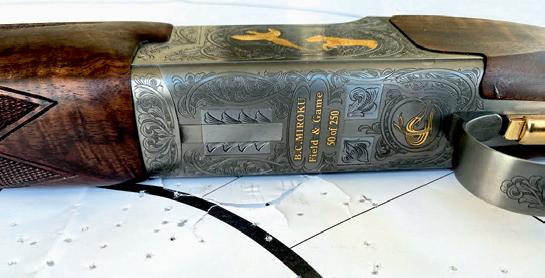
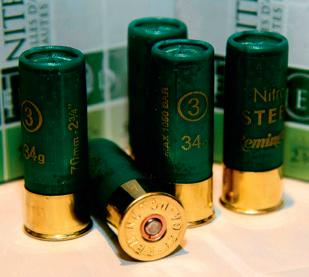
Perhaps the most important aspect of the campaign is the role hunters play in its success. The REDUCE Wounding framework is not a list of edicts — it’s a toolkit developed with input from experienced field practitioners and supported by hunter groups and trainers. This partnership approach recognises that hunters themselves are the people best placed to enact change and to mentor others in their community.
Hunters are encouraged to integrate REDUCE Wounding principles into club training programs, magazine articles, mentoring for new licensees, and peer recognition of good field practice. The GMA’s Waterfowl Wounding Reduction Action Plan also includes provisions for codes of ethics and continuous improvement initiatives developed in collaboration with shooting organisations.
Reducing wounding isn’t an abstract ideal — it ties directly into long-term sustainability of waterfowl hunting in Victoria. Less wounding means less wastage, more accurate harvest data, and greater confidence that hunting practices are
aligned with conservation goals and animal welfare expectations. These outcomes strengthen community trust and protect the privilege of licensed hunting.
When hunters demonstrate leadership in minimizing wounding, they reinforce to regulators, landholders, and the broader public that Victorian hunters are ethical stewards of the environment. That’s a legacy worth pursuing and leaders are likely to be rewarded in the future
The REDUCE Wounding campaign is a shared journey. It reinforces what good hunters already value — skill, respect, humility, and care for game species. By embracing the REDUCE principles, hunters can sharpen their craft, reduce unintended suffering, and contribute to a vibrant, sustainable hunting culture in Victoria.
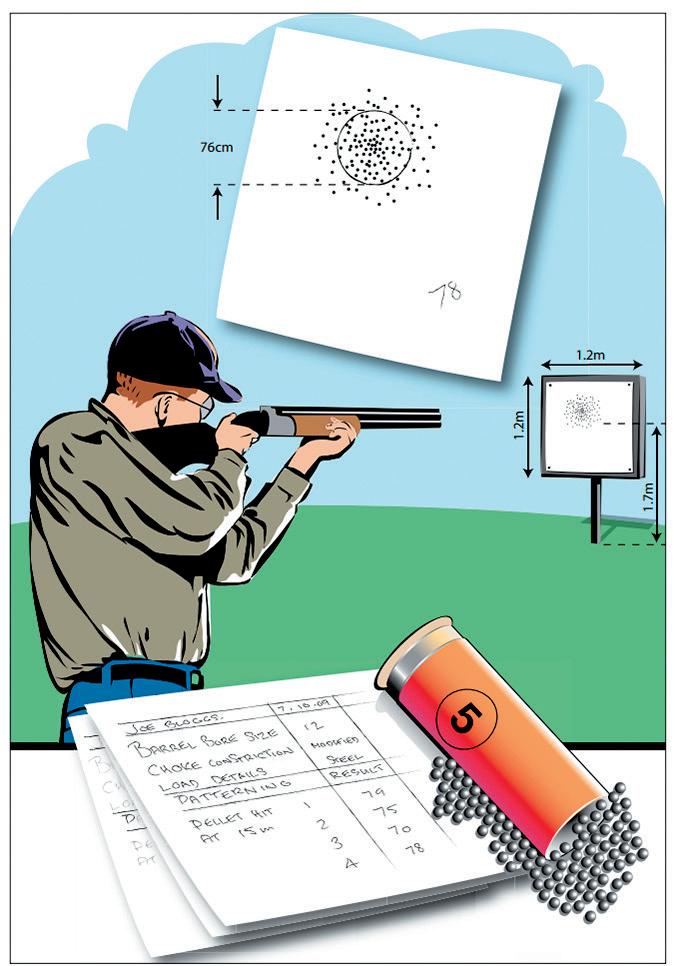
In a community where ethical hunting is the norm, REDUCE Wounding isn’t about correction — it’s about refinement, pride in one’s abilities, and leadership in responsible outdoor recreation.
If you’d like more detailed guidance or resources connected to REDUCE Wounding, the GMA provides videos, handbooks, and instructional materials that pair well with local club training and mentoring efforts.
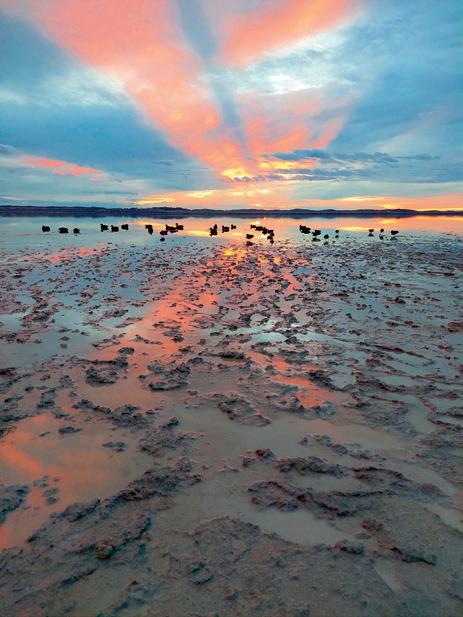
Have you snapped a stunning sunrise over the wetlands, captured a moment of camaraderie in the duck blind, watched your retriever in action, or experienced the thrill of a successful hunt? Now is the time to share those unforgettable moments with the Field & Game Australia community—and beyond! Whether you’re an amateur with a smartphone or a seasoned photographer with professional gear, we welcome submissions from all skill levels.
By entering your best hunting photos, you not only have the chance to win fantastic prizes but also contribute to the vibrant culture of hunting within FGA. Plus, the winning image could be featured on the cover of the June edition of Field & Game magazine—an incredible opportunity to showcase your talent!
Prizes
• First Prize: FGA’s water-resistant fleece hoodie featuring a wetland camo pattern across the shoulders and arms, with a two-tone olive and black body, extended cuffs with thumb holes, a full zip front, a contoured hood with brim, deep zippered front pockets, and a chest pocket with
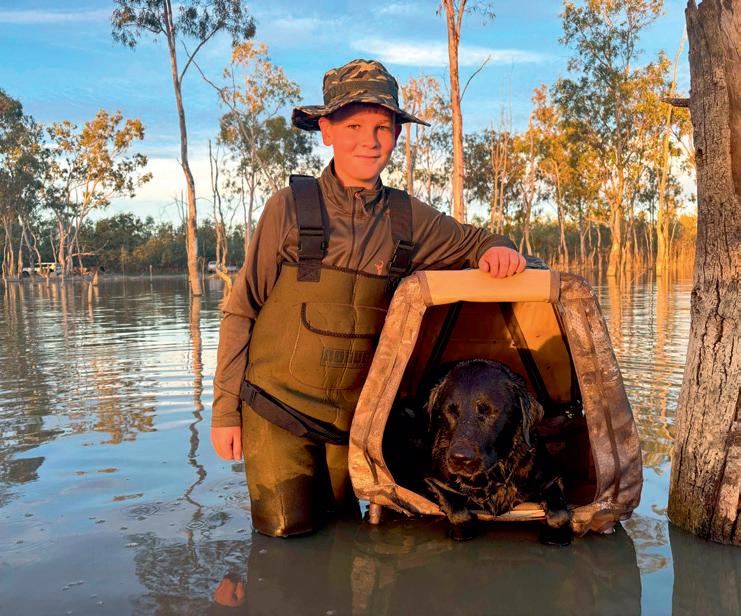
zip. PLUS the matching wetland camo cap with an olive green mesh back. Total prize value: $160.
• Second Prize: The fleece hoodie (value $130).
• Third Prize: The camo cap (value $30).
Head to the FGA website and click on ‘Shop’ to view these items.
But this competition isn’t just about the prizes—it’s about celebrating the passion, camaraderie, and appreciation for the great outdoors that define the hunting experience. Your photos tell powerful stories of adventure, perseverance, and respect for the wild harvest. They capture moments that resonate with fellow hunters and nature lovers alike, fostering a sense of connection to the landscapes and traditions we hold dear.
As you head into the 2026 duck season, keep your camera close at hand. Whether you’re waiting in the reeds, setting up in a boat at sunrise or sunset, or soaking in a quiet moment in nature, take the time to capture those unforgettable experiences. Then, submit your best shots for a chance
to win and share your passion with the Field & Game community.
We’d also love to feature your written contributions in the magazine and on our social media channels! Whether you’re a seasoned storyteller or just jotting down the basics, we want to hear about your hunting experiences. If writing isn’t your strong suit, don’t worry—just send us the key details, and we’ll take care of the rest.
Don’t miss this chance to showcase your skills and celebrate everything that makes duck hunting special. Enter your photos and/or stories today, and help us tell the story of hunting in 2026!
Please note that photos must be highresolution (minimum 300 dpi and a file size of at least 1Mb – preferably more) in order

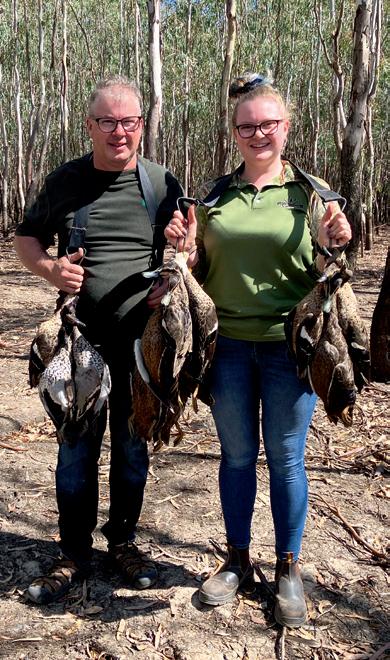
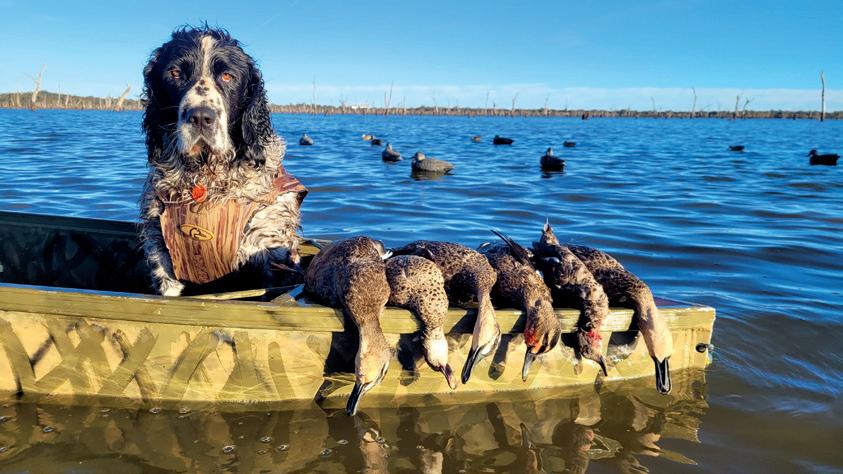
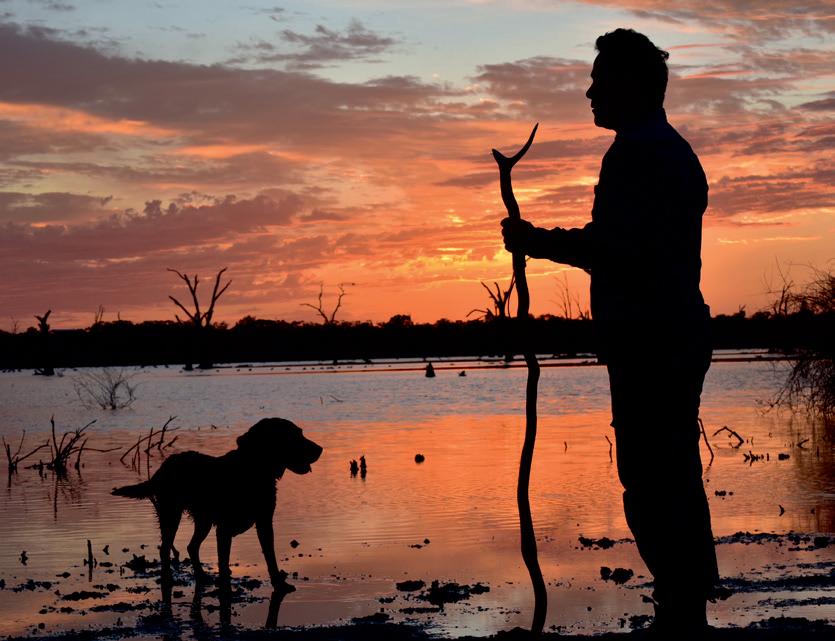
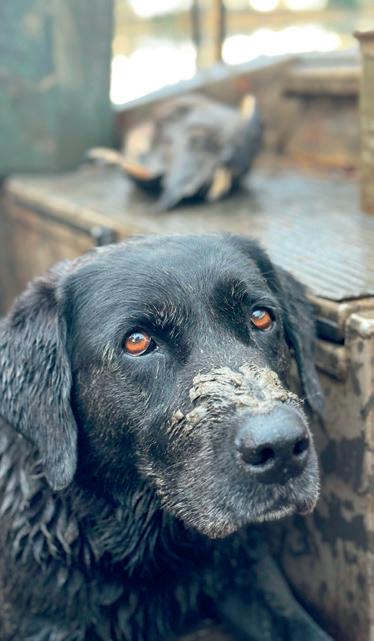
When it’s not duck-season, I like to fish. Gyotaku, translating to "fish rubbing" in Japanese, is a traditional art technique that originated in the mid-1800s as a way for anglers to record their catches. Today, it’s celebrated worldwide for its blend of natural beauty and hands-on creativity. If you’re keen to try your hand at Gyotaku, this guide will walk you through the process, from gathering materials to producing your first print and putting it on the wall.
• Fresh fish are best. Try and avoid splitting fins, losing too-many scales or otherwise mutilating them too much in the cooler.
• Non-toxic, water-based ink or paint (sumi ink is traditional, but acrylic or watercolour also works). I have used cheap acrylic poster-colours, with success. I have found that non-toxic acrylic paints readily wash off the fish immediately after you’ve printed it and seemingly have no effect of the edible qualities of the fillets. So unlike taxidermy, it’s easy to print your fish then eat it.
• Rice paper (washi), or any absorbent paper is traditional (available from (www.amazon.com). Although I prefer
to print on locally available cloth (I bought mine from Spotlight). I spent $20-30 on a meter of plain off-white linen suit-cloth which gave me a piece about 115cm x 100 cm and enough to print a couple of attempts at a decent snapper. Cotton should also work.
• Soft brushes or sponges to apply ink/ paint to fish
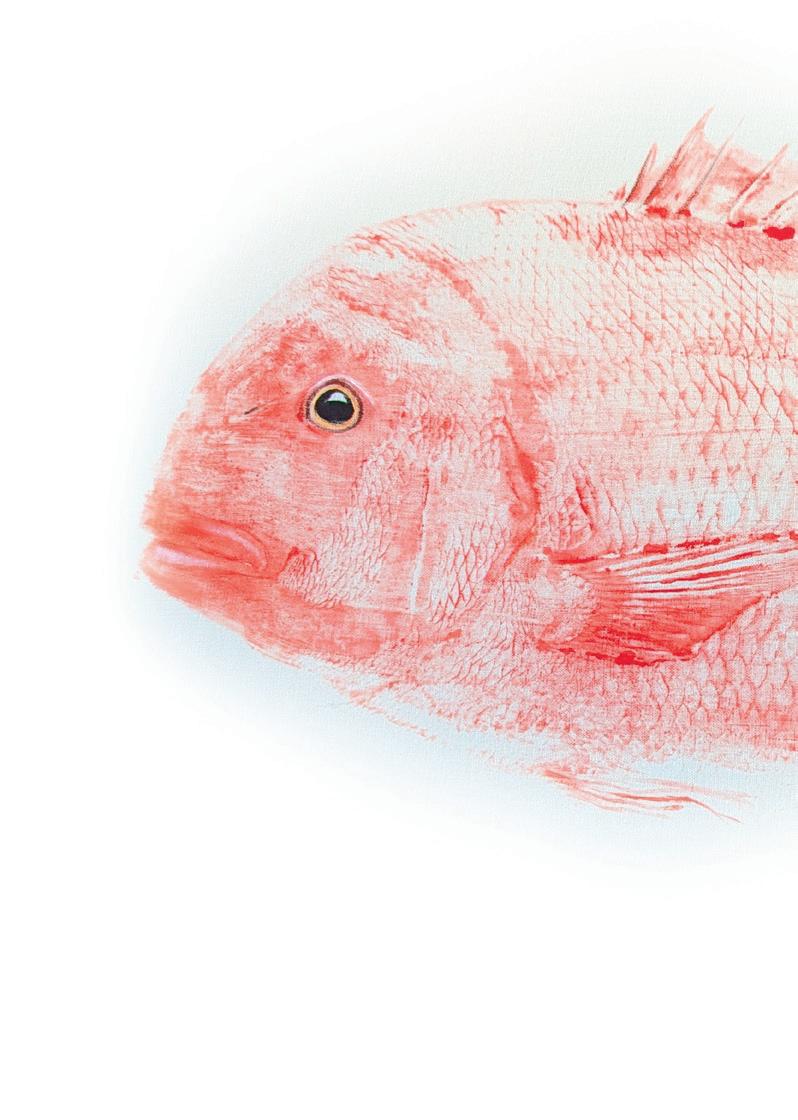
• Optional: Pins for setting out fins, and a fine brush for detailed finishing work, along with a staple-gun for framing
• Frame: I recommend simply stretching and stapling a cloth-print around a pre-made canvas frame (available from art and craft stores in a range of sizes). Although otherwise frame a paper-print as you would a watercolour or poster.
Step-by-Step Instructions
1. Prepare Your Fish: Clean the fish thoroughly, wipe-off loose scales, slime, and excess moisture. Gently dry it with a towel and ensure the fins and tail are spread out neatly. I laid the fish out on scrap cardboard packaging and used dress-making pins to set out some of the fins.
2. Ink the Fish: Using a brush or sponge, gently apply a thin, even layer of ink or paint across one half of the fish’s surface. Avoid pooling, particularly around fin-bases, or dripping onto the background (as contamination around the fish will mark your print background). Be careful to cover all
details but not so much that the paper gets saturated. It’s easy to get too much ink on the fish. I found brushing on an even layer then gently dabbing most of it off again with a dry cloth gives the best results. Cover the eye so you can paint it in-detail later. I cut out a circle of card and placed it over the eye. Eyes don’t take the ink very well, and many proponents prefer to paint them in afterwards.
3. Position the Paper: Lay the rice paper/cloth gently over the inked fish, starting from one end and smoothing it out with your hands. Press lightly, working it into detail with your fingertips to ensure good contact, especially around fins and other textured areas.
If the first print from a fish seems too heavy, just try immediately printing again with another sheet of paper.
4. Reveal Your Print: Slowly peel back the paper, revealing the imprint of the fish. I immediately peg mine up to dry to avoid the risk of any smudges. Each print is unique—embrace any imperfections as part of the charm. If a little detail is lacking,…see the next point.
5. Finishing Touches: Once the initial print is dry, you can use fine brushes or cotton buds to add eyes or enhance details. Fin spines and rays that appear too faint can be touched-up. A good eye really makes the subject ‘come alive’. I took some good photo close-ups of the fish to make sure I could recreate
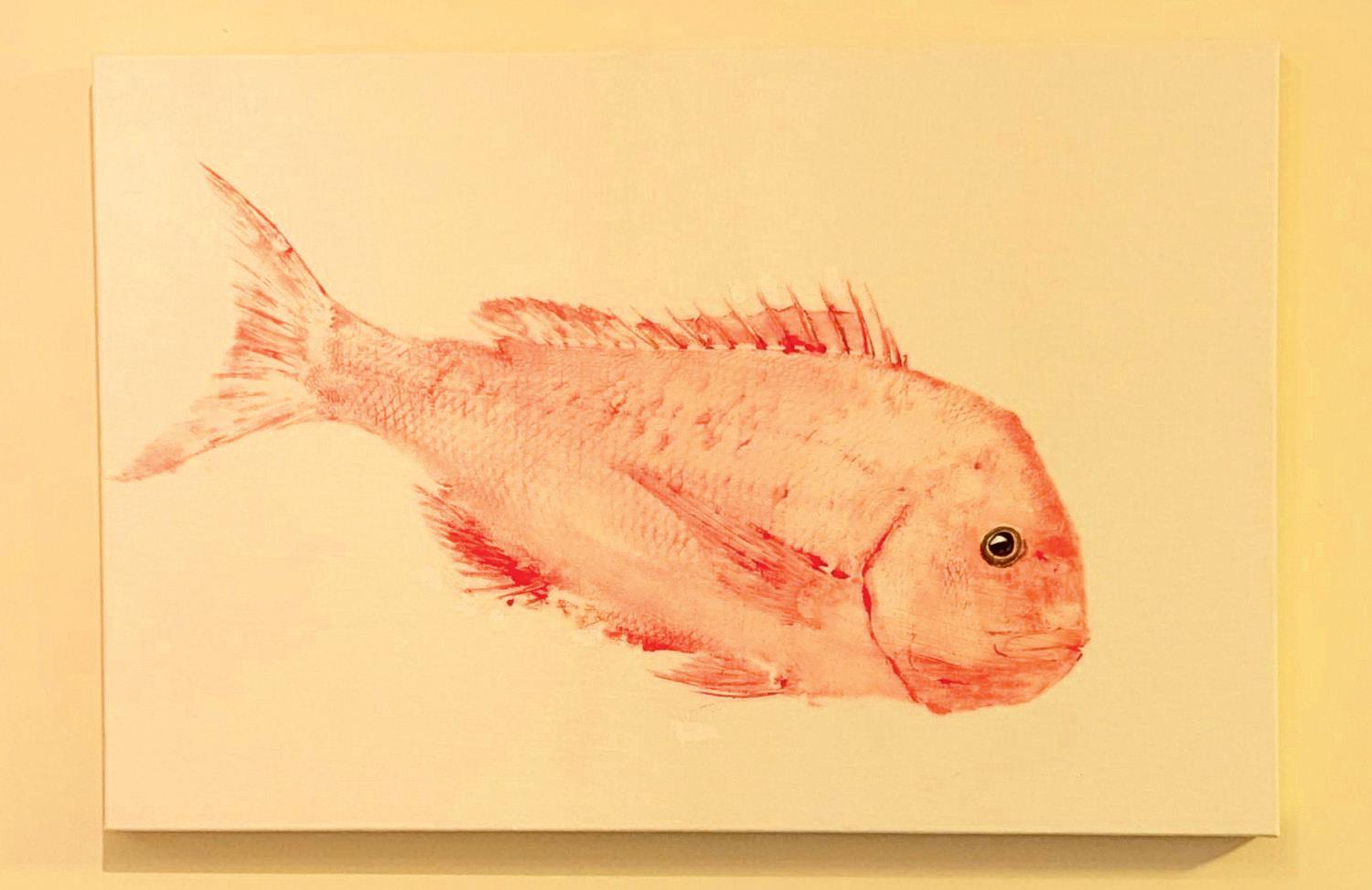
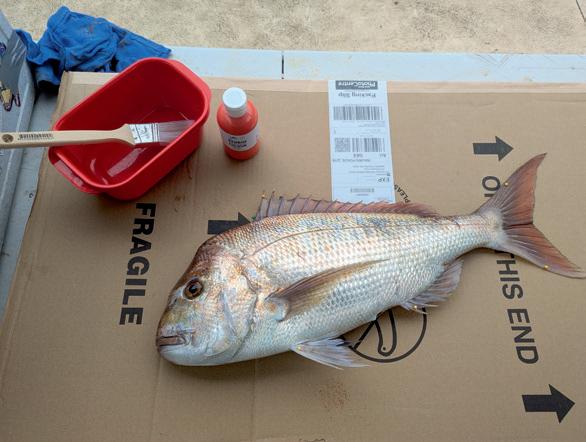
a realistic eye. You can also write the fish’s species name or the date for a personal touch. Traditionally an artist would use red ink on a name-stamp or ‘hanko’ to stamp their signature.
6. Stretch over frame or mount behind glass. Gyotaku printed traditionally on paper looks good in any frame behind glass. I have so far, opted to frame my cloth prints by stretching them around stretched canvases. These are available from craft store suppliers such as Officeworks and Spotlight. They are cost-effective, look good and are ready to hang.
• If you’re going to frame around a
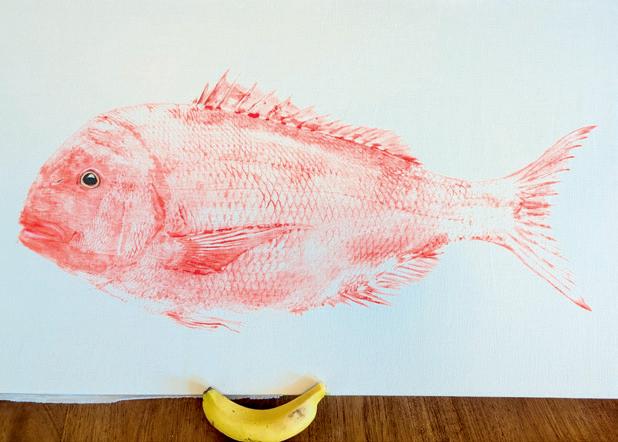
stretched canvas, as I did. Make sure your cloth is sized large enough to wrap around and staple to your chosen frame as the range of pre-made sizes is limited. Take care in laying on the cloth to the inked-fish to ensure it is central. Excess can be trimmed off after stapling around the back of the frame.
• Work quickly, as ink can dry fast and fish can lose their structure.
• Experiment with different paper types and ink colours for varied effects.
• Clean up promptly—Gyotaku can get messy!
Gyotaku is not just about art—it’s also
about appreciating marine life. It’s a great way to record a memorable or quirky catch and the results seem somehow more “special” than a photograph. Please make the most of your special catch in the kitchen after you have washed off the ink and always adhere to local fishing regulations and ethical practices.
Gyotaku offers a creative way to connect with nature and appreciate fish species while producing striking, one-of-a-kind prints. Whether you’re an angler wanting to immortalise a catch or a craft enthusiast seeking a new hobby, Gyotaku is an accessible artform perfect for Aussie homes and classrooms. Give it a go and let your creativity swim free!
Most Australians sit somewhere in the middle. They’re not anti-hunting. They’re just not raised around it.
For many, hunting or shooting doesn’t feel wrong — it just feels unfamiliar. That’s why so many people say, “I’ve always wanted to try…”
And that’s also why most never do. They don’t know how to start. They don’t know who to ask.
And without an invite, it never happens.
That’s the part we can change.
Hunting isn’t what many people think it is
Hunting isn’t about politics or stereotypes. At its core, it’s about responsibility, learning, and being part of the land — not just passing through it.
When people finally try it, the reaction is often the same:
“I didn’t expect it to be like that — but I’m glad I did.”
Trying hunting — even once — teaches things you don’t get from social media or second-hand opinions:
• Respect for animals and life
• How food really gets from paddock or wetland to plate
• Patience, restraint, and self-control
• That most hunters are ordinary people who care deeply about doing things right You don’t have to become a lifelong hunter to understand its value. Many people don’t. But seeing it properly — up close, done
well — changes how people think about conservation, land management, and responsibility.
And no one ever regrets learning a skill the right way, from someone who puts safety and ethics first.
Almost no one starts alone.
Every hunter can point to someone who helped them take that first step:
• A parent or grandparent
• A mate at the range
• Someone who said, “Come along — just watch, no pressure.”
That’s how good culture survives.
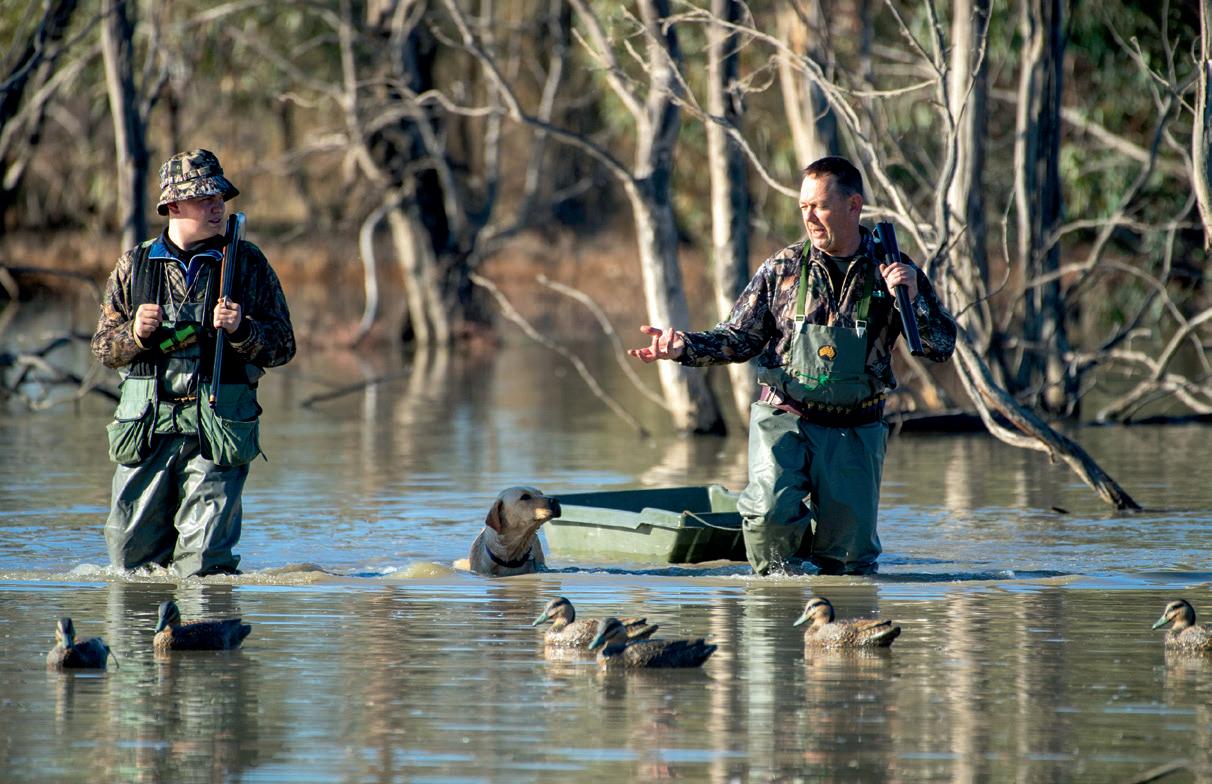
Without mentoring, hunting becomes closed off, misunderstood, and slowly fades. With mentoring, it stays grounded, safe, and respected.
Mentoring doesn’t mean throwing someone in the deep end. It means:
• Explaining why things are done a certain way
• Showing patience
• Putting safety first — always
• Letting people move at their own pace
For many people, the biggest step isn’t pulling a trigger.
It’s simply being invited.
It doesn’t have to start with a hunt
Mentoring doesn’t mean a full hunt on day one.
It can be:
• A trip to the range for a relaxed target shoot
• A working bee or conservation day
• A morning in the field just watching and learning
• Helping with gear, dogs, or setup
What matters is the journey from:
“I’ve always wanted to…” to “I’m glad I did.”
That only happens when someone opens the door.
So here’s the challenge — and it’s a simple one.
Every hunter should be asking themselves now:
Who am I taking with me this year?
Not just people like you.
Not just people who already know everything.
Someone curious.
Someone unsure.
Someone who’s always wanted to try. By the end of 2026:
• One new person to the range
• One new person into the field
• One new person helping on the ground
That’s how hunting stays strong.
That’s how trust is built.
That’s how understanding grows.
If you care about the future of hunting, conservation, and doing things the right way — this is where it starts.
One conversation.
One invitation.
One mentor.
So — who are you taking with you this year?
Before the day
• Set expectations – explain what the day will look like, how long it will run, and what won’t happen as much as what will.
• No pressure – make it clear they can just watch, ask questions, or stop at any time.
• Check comfort levels – firearms, animals, noise, weather, early starts. Don’t assume.
• Handle the paperwork – licences, permits, range rules, insurance, permissions.
• Choose the right day – good weather, simple plan, low stress. First impressions matter.
Gear & practical stuff
• Bring spare everything – ear/eye protection, gloves, warm layers, hat, sunscreen.
• Food and water – more than you think you’ll need. A hungry person won’t have fun.
• Comfort items – seat, thermos, hand warmers, insect repellent.
• Appropriate firearms & loads – low recoil, well-fitted, easy to use.
• Clean, reliable gear – today is not the day for temperamental equipment.
Safety first (always)
• Explain the “why” – not just the rules, but why they matter.
• Model perfect behaviour – assume they will copy everything you do.
• Slow it down – no rushing, no showing off.
• Reinforce safe handling constantly – calmly, not critically.
In the field or at the range
• Talk them through everything –what you’re doing, what you’re looking for, what happens next.
• Celebrate small wins – good shots, good decisions, good questions.
• Read the room – tired, cold, overwhelmed? Adjust the plan.
• Let them choose their level of involvement – watching is still learning.
• Make time to stop and talk – the conversations matter as much as the activity.
Mindset matters
• Keep it light – fun first, skills second.
• No ego – this day is about them, not your experience.
• Be patient – silence, nerves, or hesitation are normal.
• Respect their values – curiosity doesn’t mean they’ll agree with everything (yet).
After the outing
• Debrief – ask what they enjoyed and what surprised them.
• Answer questions honestly – even the hard ones.
• Leave the door open – suggest a next step, but don’t push.
• Thank them – for trusting you and giving it a go.
If they leave saying:
“I felt safe.”
“I wasn’t rushed.”
“I enjoyed that.”
You’ve done your job as a mentor.
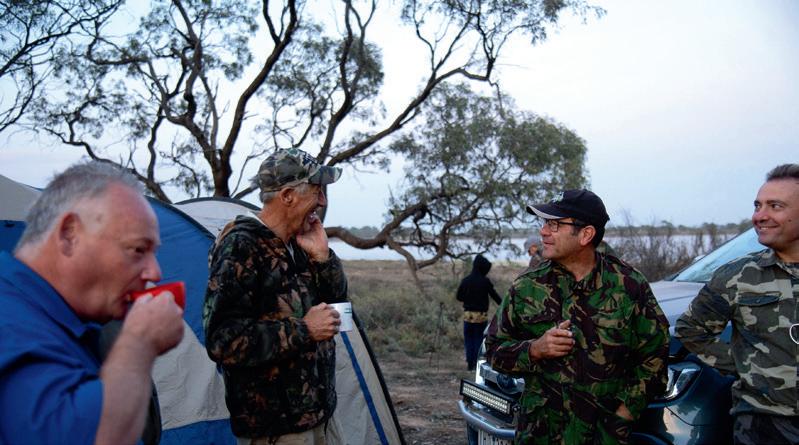
Over recent months, Field & Game Australia has continued regular and direct engagement with the Game Management Authority (GMA regarding the Victorian Game Licence education modules and the broader licence renewal process.
We want members to know clearly and confidently: we remain actively involved, and we are consistently raising the same concerns you are sharing with us.
In our ongoing discussions with GMA, we have reinforced that many hunters are still experiencing real difficulties with:
• navigating the education modules
• understanding test requirements
• moving between the modules, assessments, and licence renewal portal
• and completing the process without confusion or repeated attempts
We have been clear that the current system is not intuitive, and that for many people — particularly older hunters, rural members, and those without reliable digital access — it remains unnecessarily complex.
These are not isolated cases. They are persistent, recurring issues, and we are continuing to communicate this to GMA directly.
In the meantime, Field & Game Australia has assisted many members to successfully work through the education modules and licence renewal process. In many cases, that support has come through:
• branches helping members locally
• family members and mates stepping in
• and direct assistance from the FGA National Office
While this is not the long-term solution we are advocating for, it is the reality right now — and no
member should feel they are on their own.
If you are experiencing difficulties and:
• cannot navigate the system
• are unsure where you are in the process
• or have been unable to get a response or practical support from GMA
please contact the FGA National Office on (03) 5799 0960.
We will do our best to assist you directly, or help connect you with someone who can.
Field & Game Australia continues to push for:
• a simpler, more intuitive process
• clearer pathways between education, testing and renewal
• and requirements that are inclusive and practical for all hunters — not just those comfortable with online systems
We will keep advocating for improvements, and we will keep providing support to members while this system remains in place.
Most importantly, we repeat the message we shared last issue:
Please don’t give up your licence.
That outcome benefits no one except those who want to see hunter numbers quietly decline through frustration and exclusion. Staying engaged — and supporting each other through the process — matters.
Thank you to the many members who have shared their experiences with us. Your feedback continues to inform our discussions and strengthen our advocacy.
We will keep you updated as this work continues.
If you’re stuck with the GMA education modules or renewal process and can’t get support elsewhere, contact the FGA National Office on (03) 5799 0960. We’re here to help.
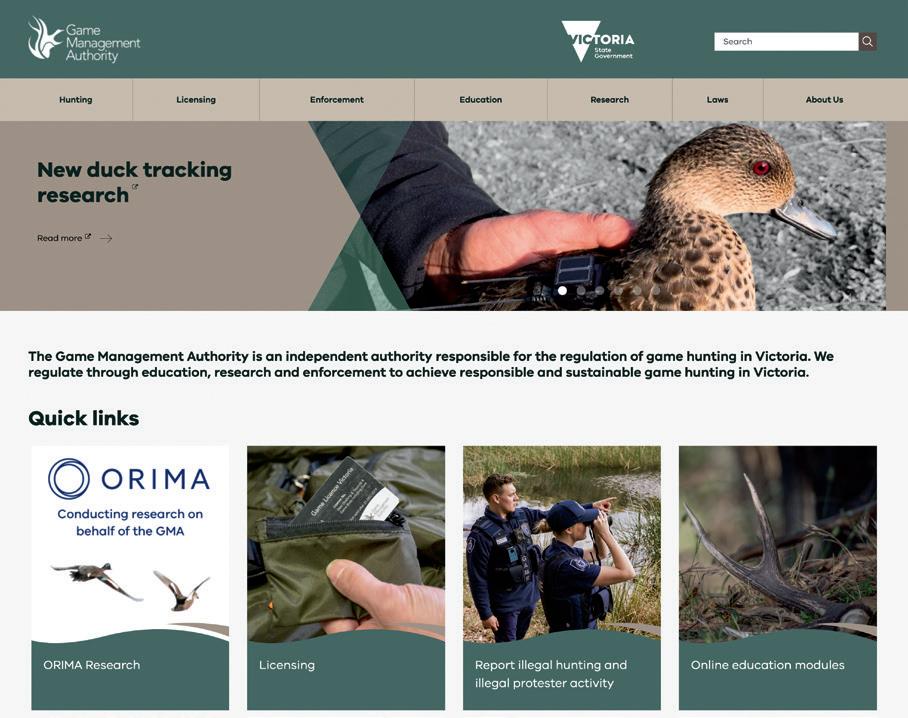
If you have a current Game Licence or held a Game Licence previously, you must register your email address first before Sign up / Sign in to your account!
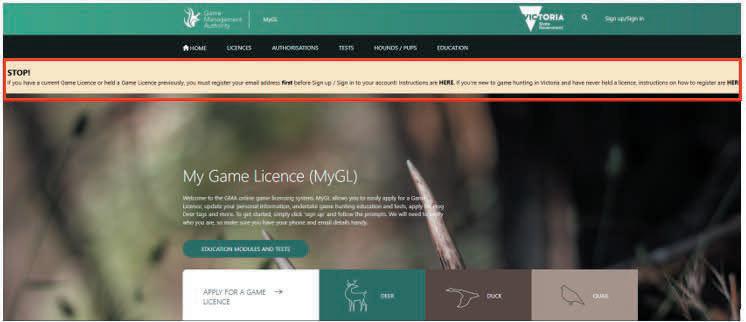
When you visit the MyGL area of the GMA website – there are several videos and instructions.

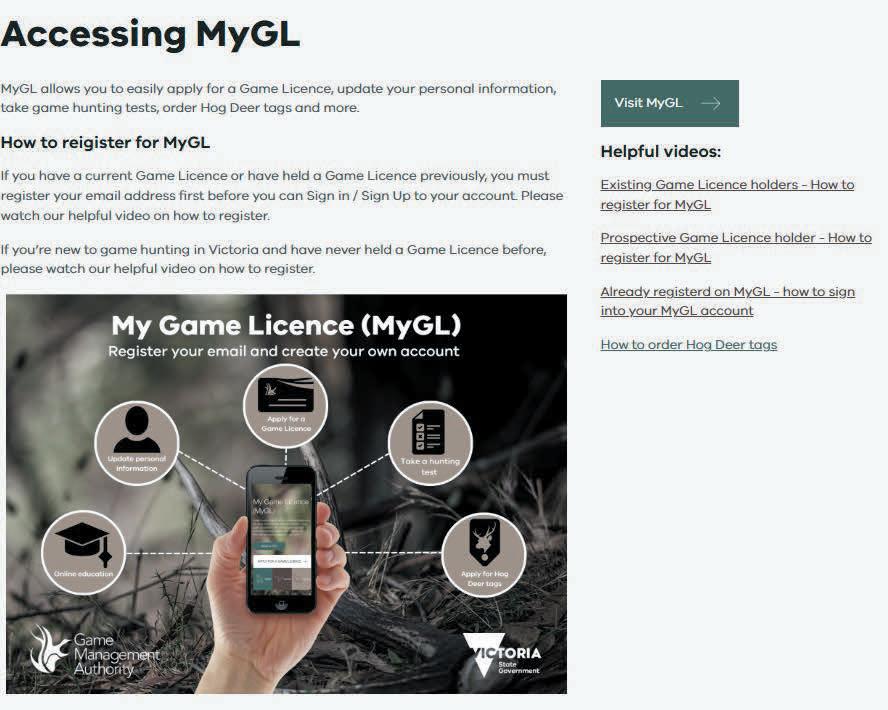
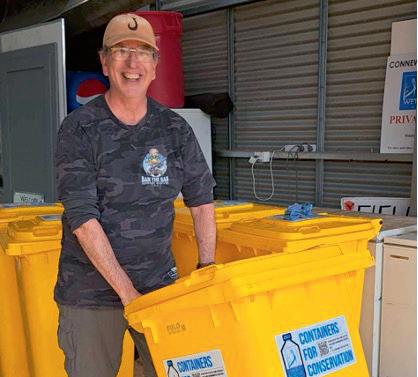
Wetlands Environmental Taskforce (WET) recognize the pressing challenges facing our environment today. That’s why we are proud to introduce our Containers for Conservation program—a grassroots initiative designed to transform everyday recycling into meaningful action for preserving vital wetland habitats.
Containers for Conservation encourages positive community engagement through recycling. Volunteers are provided with WET branded wheelie bins to place at worksites, clubs, and other community gathering spots. Once these bins are full, they are taken to a recycling centre where the Container Deposit Scheme (CDS) kicks in, refunding 10 cents for each eligible returned container. What makes this initiative truly remarkable is that all proceeds go directly back to WET, funding essential conservation projects and protecting game bird nesting habitats.
CDS Vic is part of the Victorian Government's $515 million investment to transform the state's waste and recycling sector. Funded by contributions from the beverage industry, the scheme will contribute to Victoria's target of diverting 80% of all material away from landfill by 2030.
This simple yet effective approach allows anyone to contribute to environmental efforts without requiring extensive time or resources. By recycling, participants are not only cleaning up their local environment but also financially supporting critical conservation work.
The Victorian Container Deposit Scheme & Wetlands Environmental Taskforce:
Field & Game Australia has partnered with WET to enhance the impact of the
Victorian Container Deposit Scheme. This program incentivizes recycling by allowing participants to return eligible beverage containers at various collection points throughout the state, receiving a refund for each returned item. But the CDS offers something unique: the option for participants to donate their refunds to the Wetlands Environmental Taskforce Trust.
The scheme was introduced with the goal of reducing litter and promoting resource recovery. With this dual benefit, individuals can not only recycle but also support environmental initiatives. This encourages a culture of generosity while fostering a sense of community responsibility towards preserving our natural resources.
When participants choose to donate their container refunds to the Wetlands Environmental Taskforce Trust, they contribute to crucial efforts aimed at restoring and preserving wetland habitats. Victorians use more than 3 billion drink containers every year. Sadly, many are not recycled, ending up in landfill and as litter in local communities across our state. The funds generated through the CDS allow WET to continue its mission of habitat restoration, ensuring the long-term health and resilience of these precious environments for future generations.
In Victoria, three Zone Operators—Visy (North Zone), TOMRA Cleanaway (West Zone), and Return-It (East Zone)

facilitate the Container Deposit Scheme. To find a collection point near you, simply visit CDS Vic Locations.
Getting involved is easy! Participants can locate Wetlands Environmental Taskforce Trust at their local refund points or use the trust’s Donation Partner ID number, C2000010199, when donating. Each Zone Operator offers a dedicated app—CDS Vic North, CDS Vic East, and CDS Vic West—to streamline the donation process. Users can easily set up an account, select ‘Donations,’ and search for the Wetlands Environmental Taskforce Trust to ensure their refunds directly benefit our wetland conservation efforts.
Please note, Legitimate Zone Operator Apps will never ask for your credit card details and can be found on the official CDW website at cdsvic.org.au/refund-point-types
As individuals, FGA branches, community groups or households, we can all play a part in making a positive impact on our environment. By participating in the Containers for Conservation initiative and the Victorian Container Deposit Scheme, we not only reduce waste but also support essential conservation work.
To learn more about the exciting projects undertaken by the Wetlands Environmental Taskforce, visit WET Projects. Together, we can ensure that our wetlands survive and thrive for generations to come.

For more information about the Container Deposit Scheme and how you can get involved, check out CDS Vic. Let’s turn our recycling efforts into a powerful tool for conservation!
In recent months, both NSW and Western Australia have moved to limit the number of firearms a registered, licensed person may own. These proposals are often framed as “common sense” measures designed to improve public safety. But that framing misses the point — and risks distracting governments from the real work of preventing violence.
This debate is not about “how many is enough”.
It never was.
One firearm in the hands of the wrong person is too many. That is where risk lives — with intent, access by prohibited persons, failures in enforcement, and failures in intelligence and intervention. By contrast, whether a lawful, vetted person owns four firearms or forty, all safely stored and lawfully used, makes no difference to public safety.
Limiting numbers does not limit risk. It only limits specialisation.
It is often said — sometimes sincerely, sometimes glibly — that “one gun can do everything”. In theory, perhaps. In practice, absolutely not.
Yes, a .308 centrefire rifle could dispatch most animals in Australia. But you cannot safely or legally shoot ducks with a rifle — you need a shotgun. And if you intend to eat a rabbit, a .308 is not just inappropriate; it is reckless and wasteful. The right tool matters.
This is not a firearms argument. It is a tools argument.
We do not ask a tradesperson why they own multiple screwdrivers. We do not ask a farmer why they own more than one vehicle. We do not ask a surgeon why they need more than one scalpel. We understand instinctively that specialisation improves safety, efficiency, and outcomes. Firearms are no different.
Take rabbit control as a simple, everyday example.
One rifle could do the job. But a person who regularly controls rabbits might very reasonably own several specialised .22 rifles:
• a lightweight rifle with open sights for walking long distances
• a heavier, scoped rifle for accurate shots at distance
• a rifle set up with night vision or thermal for nocturnal control
• another zeroed with subsonic ammunition for use around farm buildings and livestock
Each rifle is suited to a specific task. Each improves safety, accuracy, and humane outcomes. None increases public risk — because all are owned by the same lawful person, stored to the same standard, and used within the same legal framework.
Owning five specialised firearms does not make that person five times more dangerous. It makes them five times more appropriate for the task.
Don’t accept the wrong question
Hunters and shooters should be careful not to fall into the trap of debating “how many you need”.
That question assumes that firearm ownership is justified by personal want, rather than governed by public risk. It is the wrong test.
Public safety is not affected by how many lawful tools someone owns — it is affected by who has access, whether laws are enforced, and whether warning signs are acted upon.
Once you accept the “need” framing, the conversation shifts away from evidence and toward moral judgement. That is exactly where poor policy is born.
Use these simple, calm responses — then stop. Don’t argue further.
“Need isn’t the test. Risk is.”
Public safety doesn’t change based on numbers. It changes based on who has access.
“One gun in the wrong hands is too many.”
Four or forty in the right hands makes no difference.
“Specialised tools don’t increase risk.”
A tradesperson with ten screwdrivers doesn’t tighten more screws — they just use the right one.
“All my firearms are licensed, stored, and inspected the same way.”
Whether there are two or ten does not change compliance.
“If numbers reduced crime, criminals would follow limits.”
They don’t — because they’re already outside the system.
“This policy limits lawful people, not dangerous ones.”
And that tells you exactly where the problem isn’t.
Field & Game Australia has always been clear: public safety is paramount. We support strong licensing, secure storage, and robust enforcement. We support evidence-based policy that targets risk, not symbolism.
If governments are serious about safety, they should focus on:
• identifying and intervening early with high-risk individuals
• enforcing existing prohibition and compliance laws
• improving intelligence sharing and resourcing
• ensuring police and regulators can act when red flags appear
Because whether a lawful person owns one firearm or ten is irrelevant to public safety.
One gun in the wrong hands is too many.
Four or forty in the right hands changes nothing.
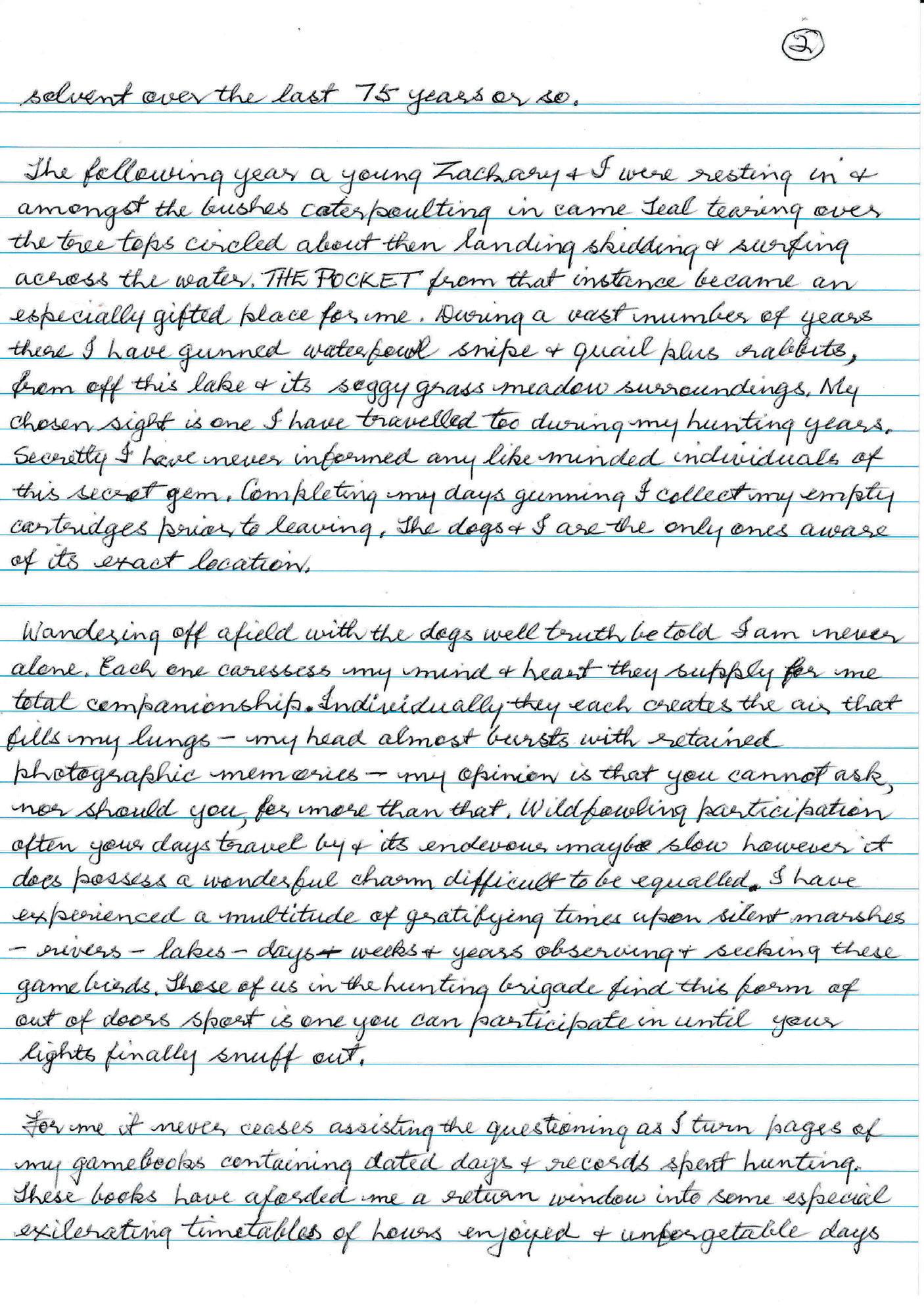
WHAT CREATES the desire and captivates the field gundog fancier into climbing higher up the ladder rungs to the level of field trial participation — firstly as galleryite then as a competitor and ultimately to the pedestal of judge? I believe it is man’s thirst for knowledge.
Gundog men the world over are forever questing the higher levels of understanding of the degree to which our field breeds require such attributes as super olfactory powers; desire; conformation; heart and yes even eye colouration. Those among us sharing any degree of open mindedness surely agree that informative discussion supplies the answers and direction in our gaining of knowledge and hopefully a better understanding of proven tried and true skills of our selected sport. We must also become aware of the more venturous new ideas and techniques of the handling craft in the training of dogs, demonstrating them as an added bonus to ensure judges, fellow handlers and breeders become far more mindful as to each specific breeds’ field capabilities.
During the mid 1970s I purchased some 260 acres in southern NSW. With the completion of building my house and kennels I proceeded to work upon a number of projects that had consumed my interests for some years. Unanswered questions encompassing the field workings of dogs on both wild and planted game had engrossed me for a long period of time. One burning section for me had always been the effect wind has on — over — and around objects and cover containing game.
I began with the scenting of game in all types of cover and wind conditions, from which I was to quickly discover just how dogs can and do adjust their ground patterning enabling them to find point and hold game at seemingly impossible distances. For this particular section of work pigeons, pheasants and quail were used. Pheasants and pigeons were dizzied and planted for my dogs Zac and Axel, both field trial champions of some note. Once I had completed a set programme by both Zac and Axel, I ran two young dogs, a GSP and a Pointer, through identical tests, enabling me to compare the seasoned campaigners’ performances against that of
the young and unexperienced.
Moving onto the next section I planted birds shackled by a very fine cord allowing them freedom of range and flight up to eighty yards or so. Untethered birds whose bodies were encased in stockings, leaving heads and feet free, also clarified and helped me to attain very clear opinions as to various sections of training and judging work.
Previously held ideas and trains of thought on the effects wind conditions create and produce in favour of game over that of the questing dog was made totally clear for me by these workings. Wind blowing onto heavy or thick clumps of vegetation and large rocks etc, tends to create small eddies of air in a similar way as do the larger rocks in the waters of our rivers and streams. Objects thrown into these swirling waters behind rocks and boulders will often travel back towards the rock, seemingly against the flow of the current.
For sometime during my experimenting I confess that I was bamboozled when my dogs would occasionally scent and retrieve game from positions where the wind was actually blowing from my dog towards the downed and planted game.
The solution to this and other perplexing problems becomes simple, so long as individuals are prepared to solve these and others by creating the necessary situations described above time and time again, allowing a topnotch field dog to work them out for you. It shall be the dog than can and will paint the clearer pictures for the handler.
Wind blows over and around vegetation, hillsides and rocky outcrops creating underneath the main windflow eddies of air which travel back towards the obstacle, breaking the natural course of the wind. Dogs can and will scent game — well, to our naked eye at least — apparently against these prevailing wind currents, relaying to us the onlooker an impression of the dog having sighted the game.
However, what in fact this dog has successfully achieved is to have scented the game on the air current caused from the breeze flowing over and around sizeable objects which in turn has formed an eddy that is actually under the main top flow, one which is drifting back towards the dog in the opposite direction to the main wind.
Yes, a similar situation to that of the river water behind large rocks and boulders.
The end results of these projects have aided me many times in field working, training and field trial competition. The most vivid recollection I have of a dog scenting game and pointing it against the assistance of the wind was demonstrated by my own dog Althof Axel on his way towards the winners circle at the inaugural “Winchester Open Field Trial” held June 18th 1978.
Outstanding olfactory powers, speed, lofty positive pointing, coupled with great style and class always were Axel’s trademarks. The running of his first round heat carried Axel into an area of large bushy patches and fallen trees. Here Axel was to produce one of the most stunning finds I am certain the judge and gallery have ever witnessed.
Clearing a fallen tree at speed Axel scented a rabbit tucked tightly behind and below him; he hit the rain sodden earth skidding some two yards locked on point from where he never moved. The rabbit was flushed and quickly despatched; on command he again cleared the tree picked up the rabbit and retrieved it back over the fallen tree to sit and gently deliver to my hand in perfect fashion.
The continuation then of classic field work by the pointing breeds will be based on marvellous individual dogs whose olfactory work is so admired by those of us capable of discriminating the vast distances at which these masters of scent find and produce game. These much admired champions inevitably pass on; for their owners however, their shadows
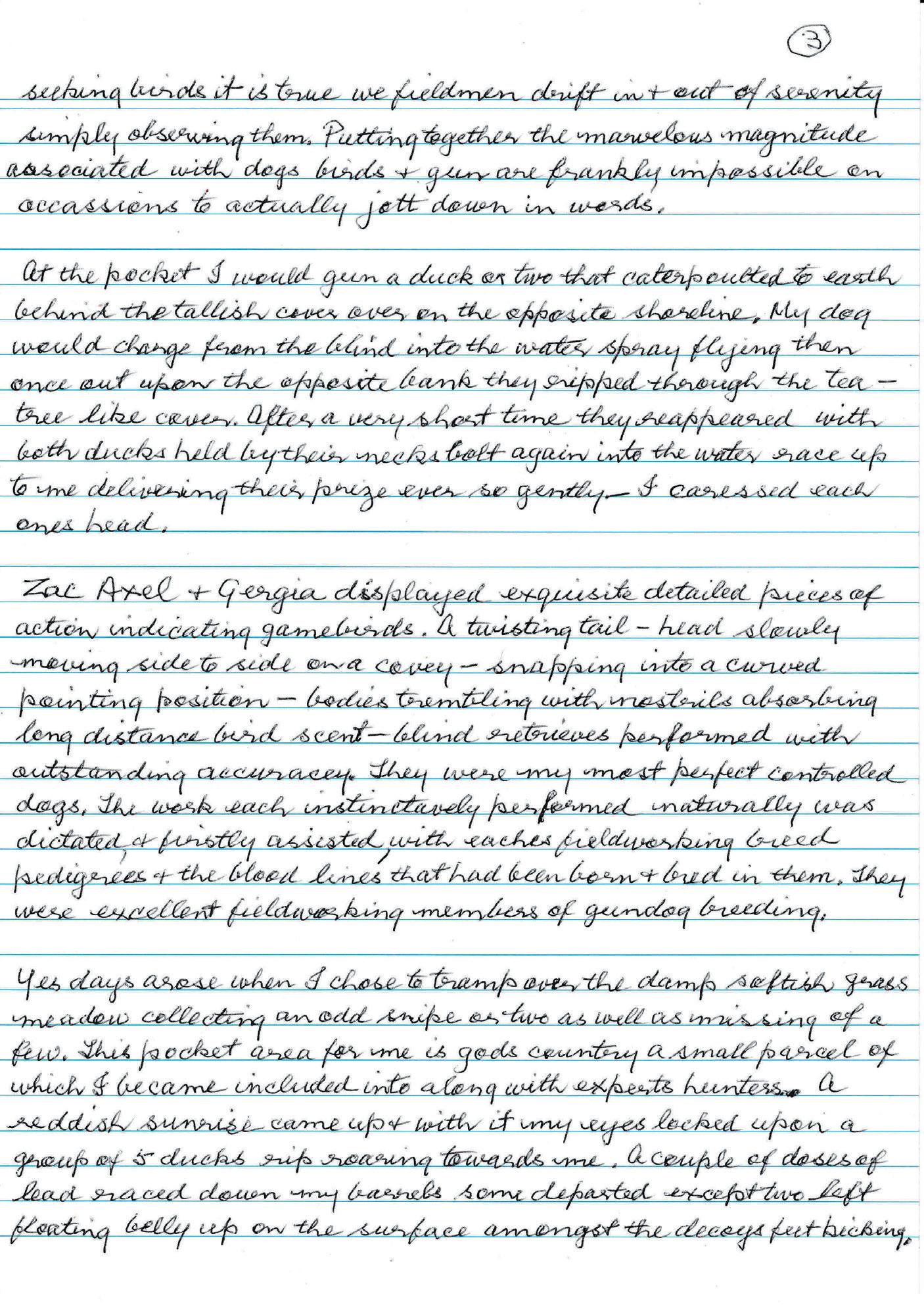
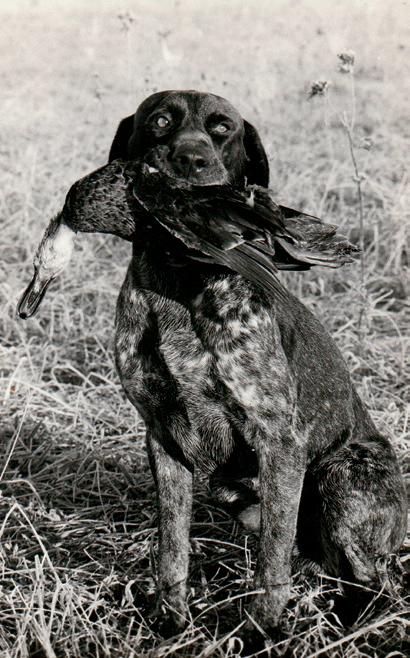
are always close at hand sending shivers through the body thrilling him until his eyes fill and overflow, and ten years become a lifetime.
REAMS have been written regarding the mental and physical make ups of gundogs. Yet very little can be found from gundog authors on the one ingredient that to my mind decides if an individual dog possesses the true potential to be an outstanding pillar of his breed. This most important factor is the olfactory powers or scenting ability.
When an individual dog is greatly endowed with this essential attribute it can best be observed under trying field conditions. At times like that an accurate description of his work becomes almost impossible to put into words.
The scenting of game is most difficult under adverse weather conditions, yet individuals of the various gundog breeds can and do instill tremendous pride into breeders and owners by their spectacular scenting performances on these balmy days afield.
Strong wind can at times carry in game scent from vast distances to the nostrils of these sniffing machines. In the early 1970s I was duck hunting on a swamp in the Riverina area, under similar conditions to those I have described, with my Short-hair dog Zac. We had completed our morning shoot and were returning to camp with my bags of ducks and decoys. Zac had already
found and retrieved a few cripples around the edges lost by other hunters working out of boats in the centre of the swamp.
As I walked campwards Zac threw his head up into the strong breeze and went a few yards into the water’s edge. His nose had caught the scent of yet another crippled or dead bird. He looked to me with a questioning expression of “Can I go?” I dropped the heavy bags and commanded him to “Fetch”. He surged into the water and strongly swam off in the direction of a reed bed that was approximately 80 yards offshore. I sat and watched him as he determinedly swam straight by the reedbed and into the clear water beyond.
Zac’s disappearance into the tall cumbungi some 180 yards from me created an uneasy feeling. But within a minute or so I saw him returning, his bobbing head just above the waterline. When he arrived back on shore he strode up to my sitting position proudly displaying a wounded black duck for my hand to take. He had scented and swum out into the wind for that bird over 200 yards!
During this wonderful dog’s lifetime he demonstrated time and again outstanding olfactory powers. His deeds created in my mind a need to enquire further into the gundog’s scenting powers.
Never in doubt
There can be no doubt that the strong wind had carried that duck’s scent better over water than it could over land. I observed this dog on numerous occasions pass up dead duck and retrieve cripples first. And so it was also with quail. I soon learnt to never doubt his ability to quickly yet thoroughly translate the scent that came to his nostrils.
Here let me drift back in time. I recall as if it were yesterday the first Utility Field Trial Championship conducted in our country. During the second field round heat Zac drew Heathman of Tirilui as his bracemate. Both dogs were working some 60 yards ahead when Zac slammed onto point. Old Monty honoured him. The judges came forward with me as I strode to Zac’s side. Commanding him in, he flushed a quail and immediately sat. I shot the bird and after a pause of a second or two sent him for the retrieve. As he returned with the bird in his mouth Zac once again went on point.
Fast on the scent
The judge instructed me to “Call him and take the bird from him, Kevin.” This I did. “Do you think there’s another one there?” was the question put to me. I indicated that I was certain. “OK, send him after it,” was Doc Penny’s order. Zac slid forward
and picked up the scent of the second bird immediately. He drew on and then cast off in a semicircle out and around to the very rear of the gallery and locked up on point only yards from them. A few smart comments and some laughter came from the gallery. This quickly ceased when I ordered Zac to flush and he dived in, producing another quail which was quickly despatched and again perfectly retrieved to hand.
That was to be a typical feat I was privileged to witness from this magical master of scent many times over as the years rolled by. How in the name of reason can dogs — with their mouth, nose and flews full of game scent — be so discerning to wind yet another bird as they return with the first is a mystery.
Often I have hunted rabbits after a snowfall with Zac and various other dogs from my kennel. This type of hunting can be hazardous in terms of good dog performance. When crusty snow is brushed clean of scent by the wind your dogs are best left in the warmth of their kennel. When the snow is thawing, however, scenting is good and a dog has a great chance of producing game for the gun.
I am convinced that scent freezes. If you doubt this, take a piece of frozen fish or meat from the freezer and sniff it. You will find little or no scent. Let it thaw out, smell it again.
Our children, Nerrida and Ben, were only tiny tots when my wife Jeanette, also an avid quail hunter, and I took Zac, Axel and Misty and children off with us quail hunting for two weeks in a caravan.
We arrived at one of our favourite locations in fine warm weather conditions. After setting up camp we encountered a 10 to 15 minute thunderstorm. Immediately the rain ceased I ran all three dogs. Their work was spectacular. The cold rain hitting the warm earth had created scenting conditions second to none.
Under very wet conditions I have observed top dogs virtually pass over the quail and not scent them at all. I am positive that the rain had not actually washed all the birds’ scent away but I am certain that quail do not give off the same amount of scent under these conditions.
Dogs encounter difficulty in producing quail when the birds are nesting. It is my belief that the quail sitting very still and quietly and being inactive, plus the strong green vegetation, is the major reason why dogs are at times oblivious to the nesting quail. It is nature’s way of protecting these gamebirds against their predators.
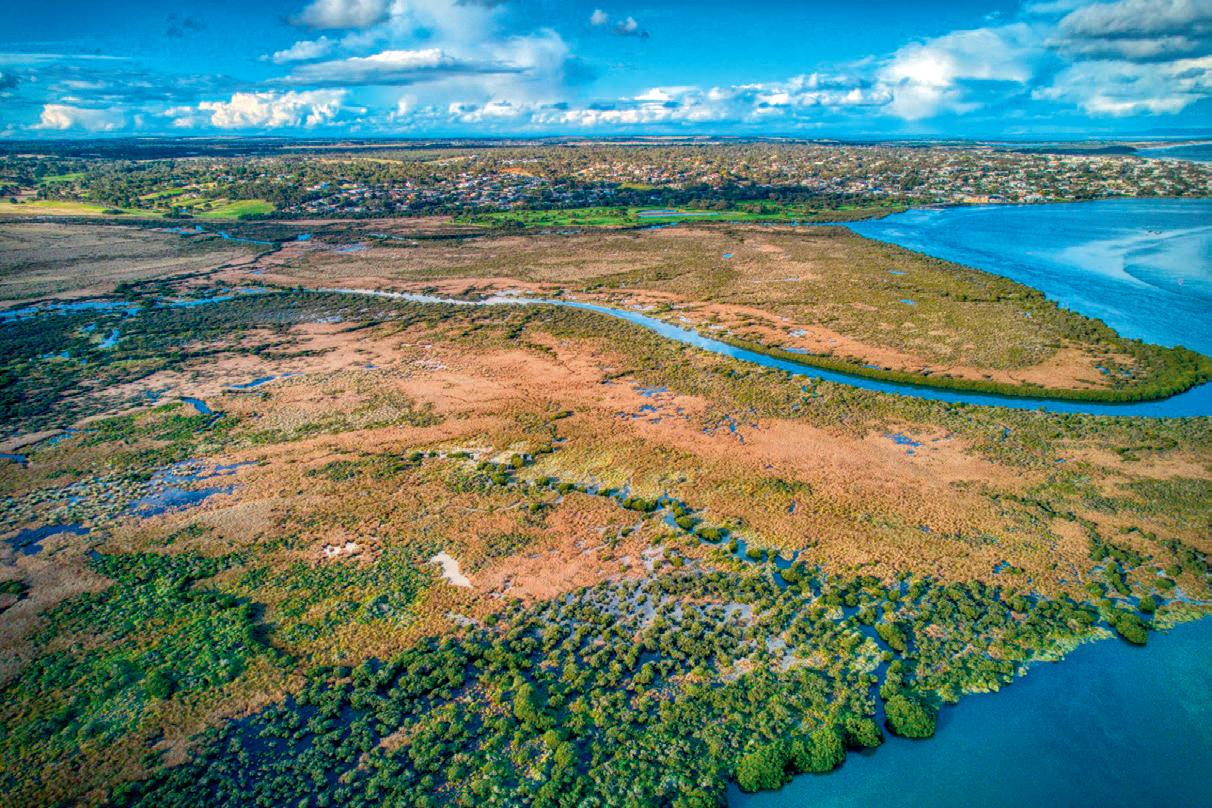
he debate about hunting in Australia is often framed as a clash between compassion and cruelty, modern ethics and outdated traditions. But once you move beyond slogans and assumptions, the picture becomes far more complicated — and far more revealing. Three issues usually treated separately are in fact tightly connected: the control of invasive predators, the ethics of wild-harvested food, and the ideology driving modern anti-hunting movements. Understanding how these threads intersect is essential if we care about the future of wildlife and the integrity of our food system.
Australia’s native species evolved without foxes and cats. These introduced predators are extraordinarily efficient at destroying ducklings, quail, small mammals and reptiles. In many habitats, removing a single fox protects an entire wetland’s worth of native wildlife. And the conservation benefit remains the same regardless of why a hunter chooses to participate. Whether someone acts out of ecological responsibility, tradition, challenge or instinct, the outcome does
not change. A fox removed is predation pressure eased. Predator control is conservation; it always has been.
This reality also informs the ethics of duck hunting. Critics often claim duck hunting is unnecessary because “meat is cheaper at the supermarket.” Of course it is — but duck hunting has never been about choosing the cheapest protein. If cost were the deciding factor, hunters would simply stay home and buy a frozen chicken. Instead, duck hunting is about taking responsibility for food in a way that is honest, transparent and environmentally minimal. A wild duck lives a completely natural life. It is not confined, force-grown, transported or processed. A clean shot ends its life instantly. As uncomfortable as that may seem, it remains far more humane than the industrial systems that produce most supermarket meat.
By contrast, plant-based alternatives — often promoted as the “ethical” option — depend heavily on large-scale monoculture farming. This isn’t a moral failing of farmers; it is a product of market forces. To survive financially, farmers growing commodity crops like soy, peas,
corn and canola are forced into systems that remove biodiversity, intensify pest control and displace wildlife at scale. The casualties are unseen: small mammals, ground-nesting birds, reptiles, insects and countless other species disrupted or killed by habitat clearing, machines and chemicals. Far more animals die this way than through an entire season of duck hunting. The difference is that hunting is honest about where life and death meet; industrial agriculture hides it.
This is where the conversation becomes even more uncomfortable for anti-hunting activists, because the ideology often mirrors the extremism it claims to oppose. Most hunters are ethical, law-abiding conservationists who respect both wildlife and the environments they depend on. But, like any community, hunting has fringe voices — those who speak about wiping out foxes entirely rather than managing them responsibly. Ethical hunters reject that view because they understand balance, stewardship and the limits of intervention.
Yet a striking parallel emerges: antihunting ideology frequently adopts the
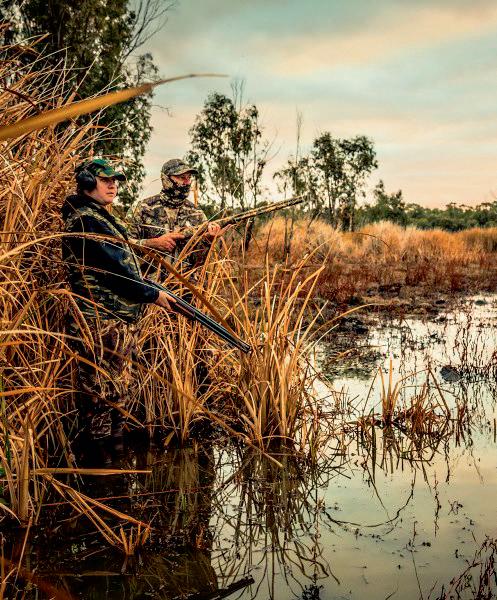
same absolutist mindset. Where the extremist hunter says a species must disappear, the anti-hunter insists that an entire community of people — hunters — should disappear. Where the bad hunter says certain animals “don’t deserve respect,” the anti-hunter says the same about the individuals carrying out legal management. In both cases, nuance is replaced with the belief that something disliked should simply be eliminated. It is not an ethic of care; it is an ethic of eradication.
Meanwhile, ethical hunters accept nature as it actually is, not as they wish it to be. They understand that some species require management to protect others. They harvest their food in a way that
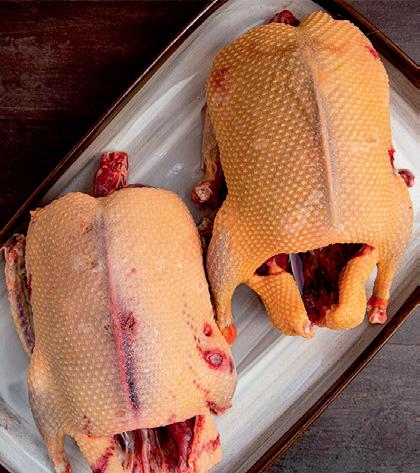
produces far less suffering than industrial agriculture. They operate within seasons, bag limits, identification rules and scientific oversight. They respect the animals they take and the habitats that sustain them.
Anti-hunting ideology, however wellintentioned, often demands inaction even when ecosystems deteriorate. It protects invasive predators at the expense of native wildlife. It relies on agricultural systems that kill animals invisibly and at enormous scale. It frequently condemns the very people doing the most practical good for biodiversity.
This is not an argument against plantbased diets, nor is it a blanket defence of every hunter. It is a call for honesty.
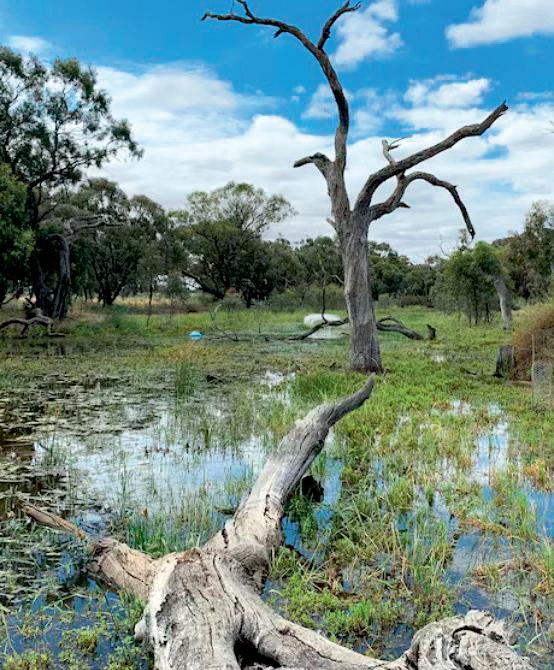
Predator control protects vulnerable native species. Wild-harvested meat is one of the most ethical sources of food available. Farmers working within monoculture systems are responding to economic pressures, not personal choice. And the loudest voices condemning hunting tend to reflect the same simplistic absolutism they criticise in others.
If we want informed public policy and genuine environmental outcomes, we must be willing to examine the true impacts of our choices — all of them. Hunting is not the great moral failing some portray it to be. In many cases, it is the most responsible, least harmful and most ecologically grounded option we have.
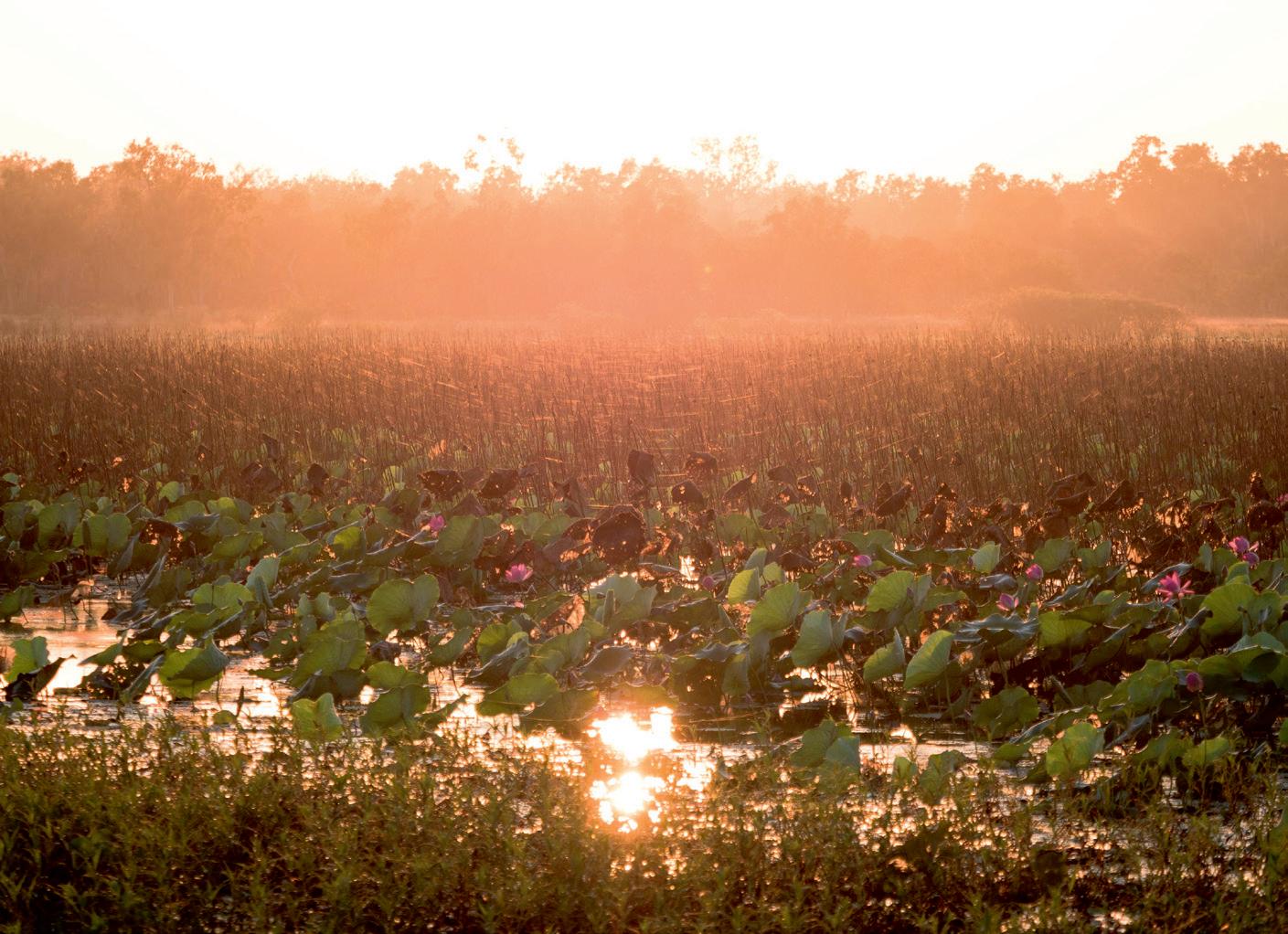
Ethical hunting is often talked about as a moral choice. From a veterinary point of view, it is also a sciencebased one. How an animal is harvested affects how much pain and fear it feels, how quickly it loses consciousness, and how good the meat is that ends up on the table.
“A quick, calm death is better for the animal –and better for the meat.”
Veterinarians deal with humane death regularly. The same principles used in animal welfare and euthanasia apply in the field. When harvest is done correctly, suffering is minimal and meat quality is high. When it is done poorly, both animal welfare and food quality suffer.
What does ‘humane’ really mean?
In simple terms, a humane harvest means the animal loses consciousness as fast as possible, with little pain or fear. Death follows shortly after.
This happens when either the brain is destroyed immediately, or the heart and lungs fail quickly, cutting oxygen to the brain.
“Time to unconsciousness is the most important welfare factor and determines the quality of your harvest.”
When animals are frightened, chased, or wounded, their bodies release stress hormones. These hormones prepare the animal to run or fight, but they also damage meat quality.
High stress before death can make meat darker, tougher, and drier, with a shorter shelf life. This is common in animals that are wounded and escape or take a long time to die.
“Poor welfare always shows up later in the meat.”
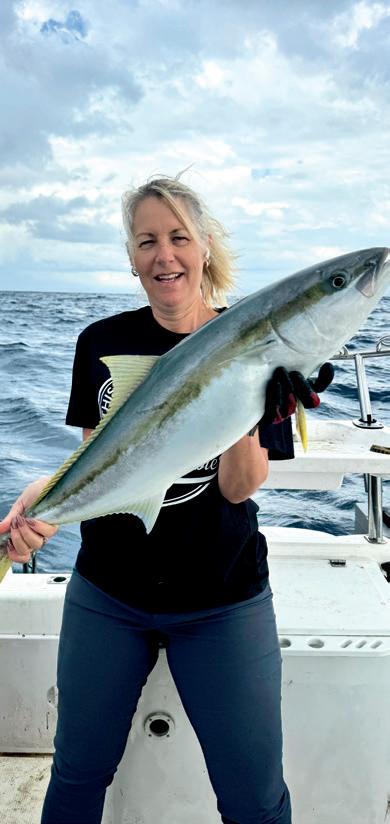
Being ethical is not just about shooting skill. It is about knowing when not to shoot.
Ethical hunters wait until they have a clear view of the vital organs, are within a distance they can shoot accurately, and are in a stable position. If those conditions are not met, waiting is the right choice.
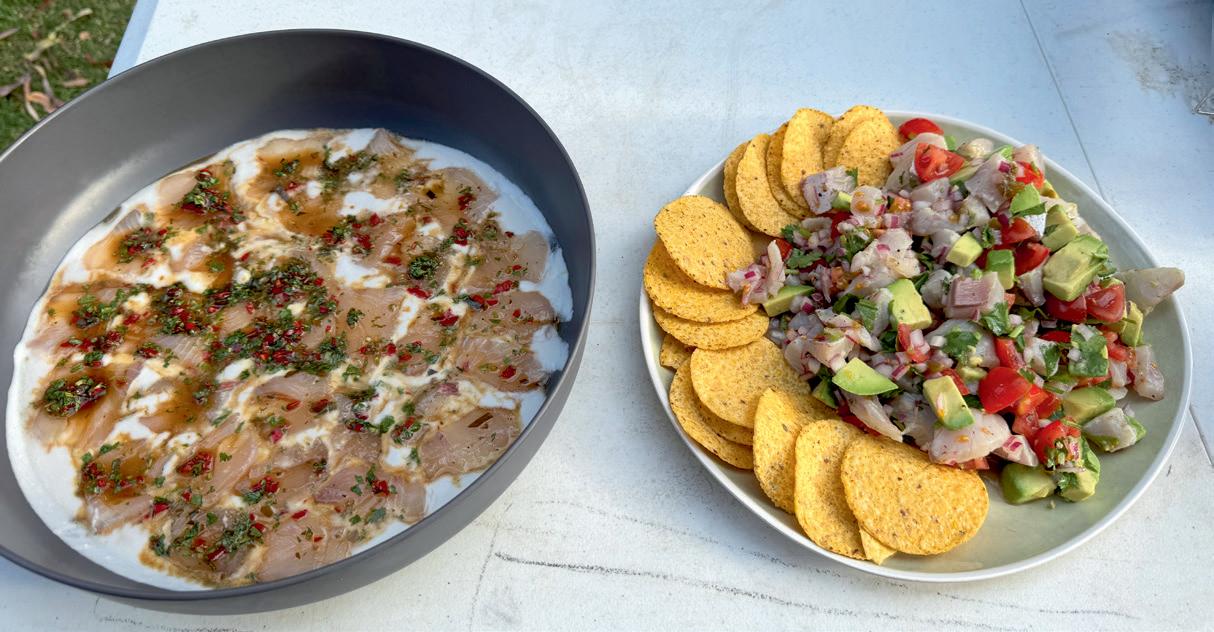
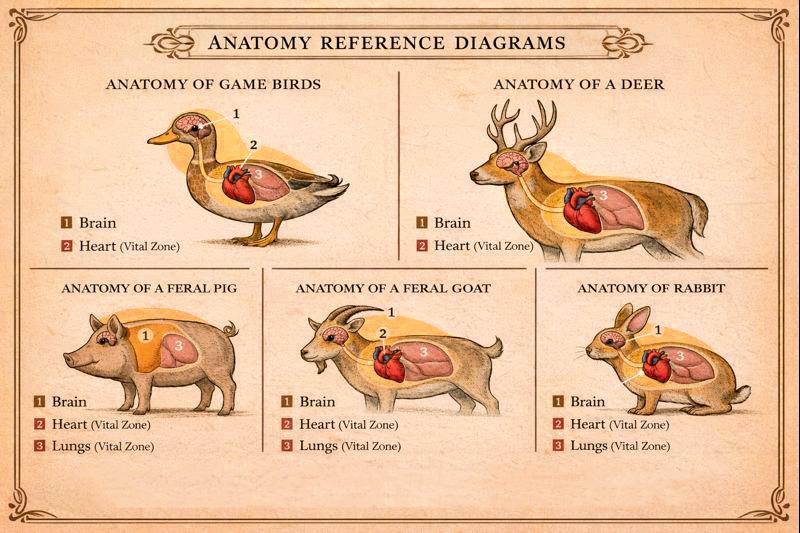
These diagrams are simplified visual guides intended to show the general location of vital organs. Exact organ position varies by species, size, posture, and angle, and these illustrations should not be interpreted as precise anatomical targets.
Birds have very small vital areas and fragile bodies. Humane harvest relies on either destroying the brain or causing rapid failure of the heart and lungs.
Because birds are often shot in flight, finding them quickly and dispatching them immediately is critical.
“Retrieval and quick dispatch are part of the ethical shot.”
Deer are strong animals that can travel long distances even when badly injured. The most reliable humane shot is into the heart and lungs from the side.
Poor shots, especially into the gut or jaw, cause severe suffering and often ruin the meat.
“If you can’t clearly see the heart–lung area, don’t take the shot.”
Pigs have a heart that sits further forward than many people expect and thick tissue over the shoulders. Understanding this
anatomy is essential for humane harvest. Angling the shot from behind the shoulder and diagonally forward will not only improve the speed of the kill but also avoid the bullet progressing through to the gut and carcass contamination, as can happen with a front-on-shot.
Chasing wounded pigs greatly increases stress and danger.
Goats are often hunted in rough terrain. A clear heart–lung shot provides the quickest and most humane result.
Small animals have very small vital areas. Only close, accurate shots are ethical. If using a shotgun pellet spread makes a huge difference to the bruising of the carcass and the number of “surprise” metal balls in your stew.
What happens if animals aren’t harvested?
Many hunted species in Australia are introduced. Without control, their numbers grow quickly and cause harm to land, crops, native wildlife, and even to the animals themselves through starvation and disease.
“Responsible harvesting reduces suffering across whole populations.”
My view
Ethical care is practical and sciencebased. Ethical hunting means respect for the animal, respect for the land, and responsibility for the outcome. Preparing the game for the table after putting in all that effort, there is nothing more disheartening than when the carcass doesn’t set or is chewier than the tyres on your 4x4. A little time and patience for the correct shot makes all the difference.
Before every shot, ask:
- Can I clearly see the vital area?
- Is my shot likely to cause fast unconsciousness?
- Am I close enough and steady enough?
- Can I follow up immediately if needed?
- Can I retrieve and cool the animal quickly?
THE FIELD & GAME MESSAGE
Respect the animal. Know your limits. Take the right shot—or don’t take one.
Dr Karen Davies is a veterinarian with more than 35 years of clinical practice and the Clinical Director of Direct Vet Services in Victoria. Alongside her professional clinical work, she has a long-standing passionate interest in hunting dog health, ethical deer hunting, and preparing wild-harvested meat. She believes good science, good welfare, and good food go hand in hand. Pest-to-plate, and paddock-to-plate are well practiced in her household.
Most Field & Game Australia members don’t join because they’re looking for an organisation.
They join because someone invited them along.
It might have been to a shoot, a working bee, a conservation day, or simply to spend a day outdoors with good people. What keeps them involved, though, is rarely the activity itself — it’s the sense of being part of something steady, welcoming, and bigger than any one person.
For many parents, there’s reassurance in knowing their children are growing up in an environment where safety, respect, and responsibility are taken seriously. Where adults model calm decision-making and care for the land, and where young people are encouraged to ask questions, listen, and learn at their own pace. These moments may seem small, but over time they quietly shape character, confidence, and values that last well beyond the range or the wetland.
Across Field & Game Australia, families
and younger members sit alongside those who have been involved for decades. Knowledge is shared casually. Stories are told between events. Skills are passed on without ceremony. It’s how culture survives — not through instruction, but through example.
For younger members, Field & Game offers something that’s becoming harder to find: a place where learning happens face to face, responsibility is modelled, and respect for the environment is lived rather than talked about. Confidence grows not just through skill, but through being trusted, encouraged, and included.
For families, involvement often becomes part of the rhythm of life. Weekends spent outdoors. Children watching adults work together, solve problems, and look after places that matter. Those experiences shape values quietly — respect for nature, patience, accountability, and community.
Long-standing members are central to this. Not because they are asked to lead, but because they naturally do. Through their
consistency. Their willingness to answer questions. Their understanding that the strength of Field & Game Australia has always come from people taking the time to bring others along.
And just as importantly, the organisation grows because newer members bring fresh perspectives, energy, and ideas. Traditions are respected, but they’re not frozen. Field & Game Australia evolves because each generation adds to it rather than replacing what came before.
Belonging here doesn’t require expertise or titles. It comes from showing up, contributing where you can, and understanding that everyone’s role changes over time.
In a world that often feels fragmented and fast-moving, Field & Game Australia remains something rare — a community built on shared values, trust, and connection across generations. It’s something worth protecting.
And something to be genuinely proud of.
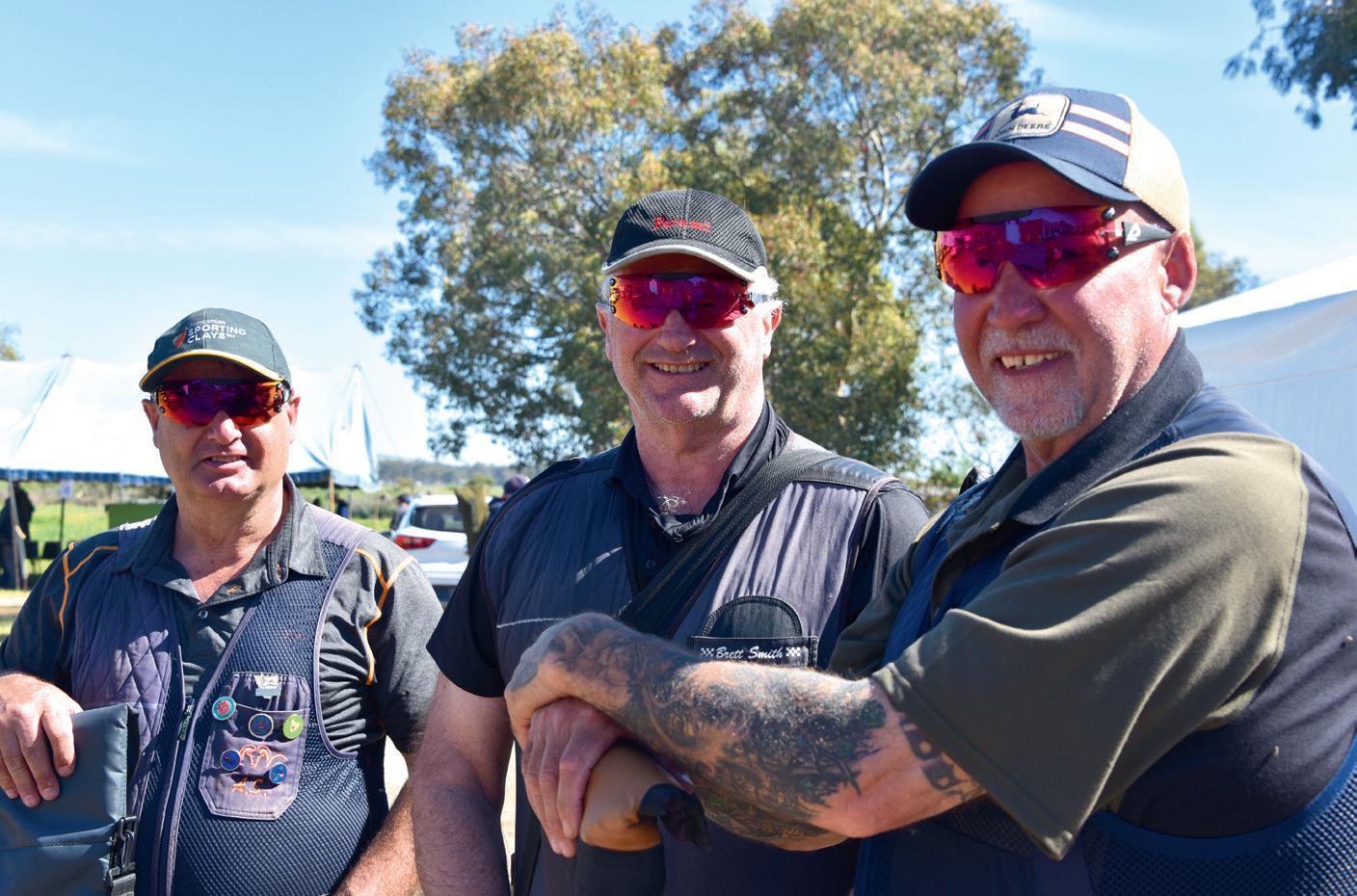
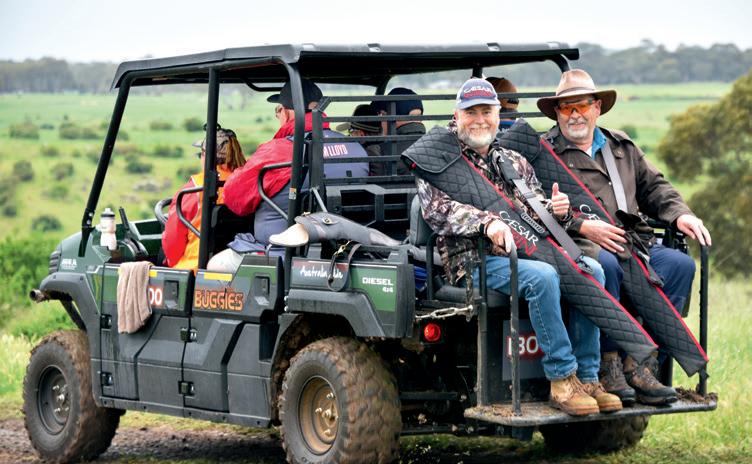
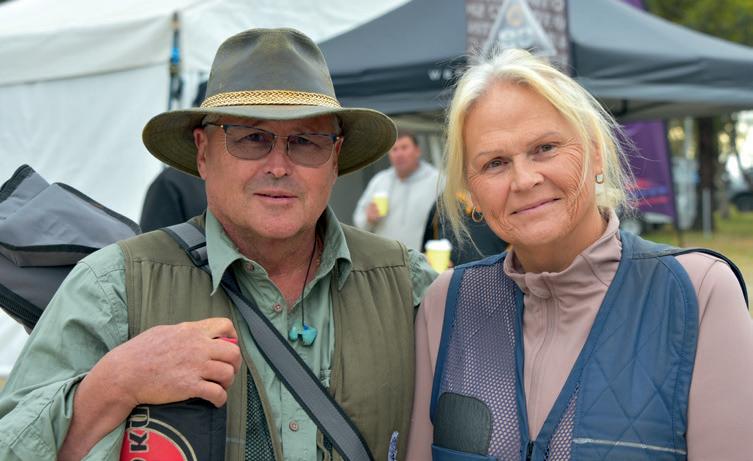
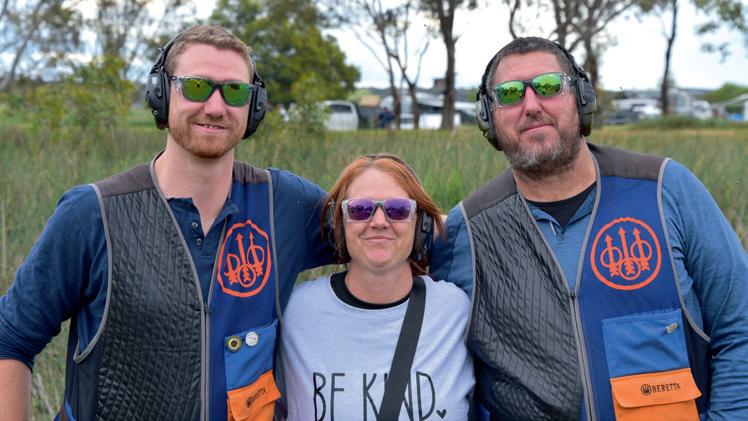
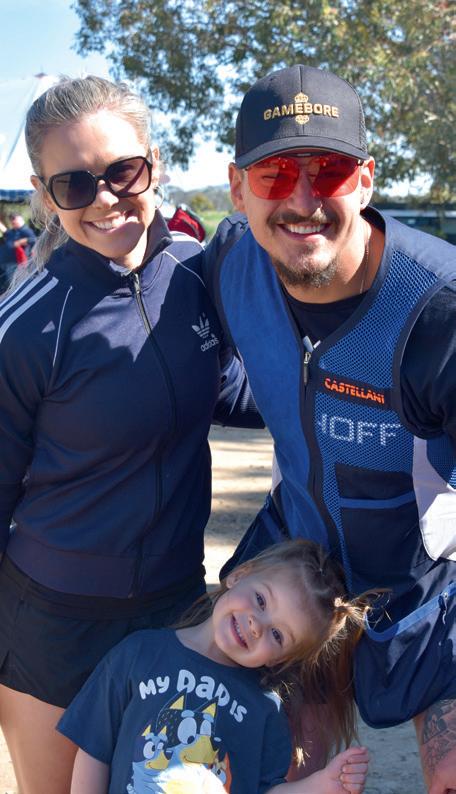
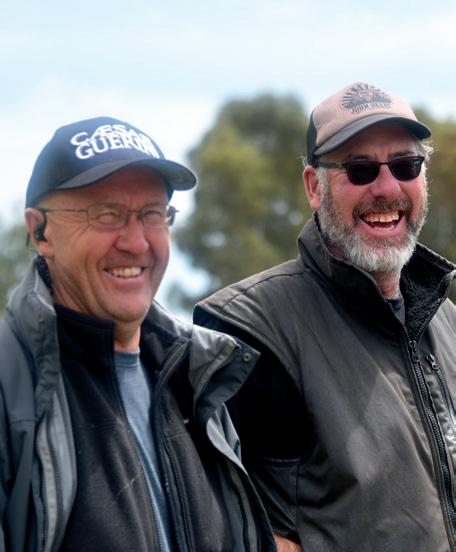
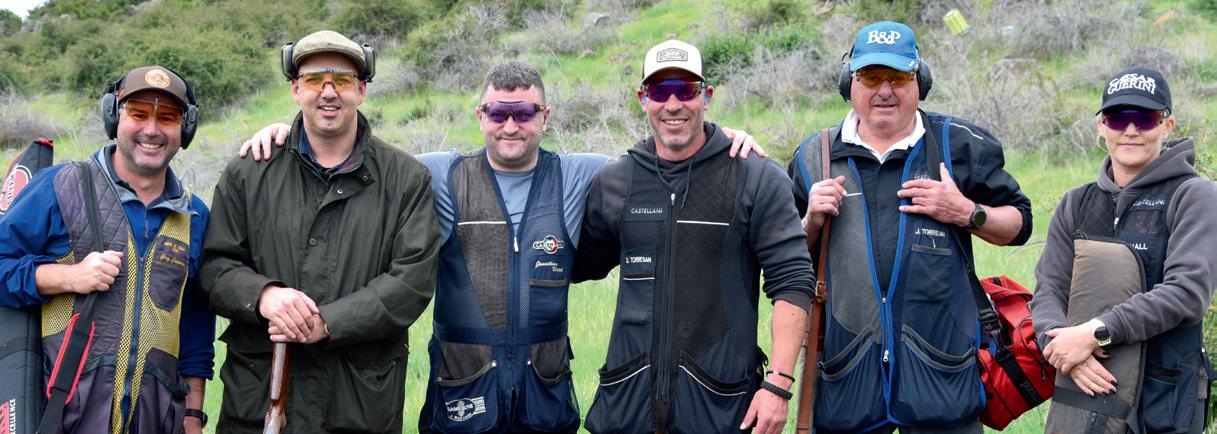
So many tributes and quotes from admirers flooded in when the news of Stan’s passing got around, we thought we should share a few in this article.
Maxwell Graham Fehring wrote: “There are no office hours for leaders.” — James Cardinal Gibbons
Greg Turner wrote:
Very sad to hear the passing of Stan. I worked with Stan on many occasions when I was working with the four salinity management plans in that area especially Torrumbarry East of Loddon, Kerang, Swan Hill and Boort West of Loddon. Stan was involved with survey work on the Wandella Creek to enable to BWOL plan to go into implementation.
He was very involved with Rob O’Brien in looking at salinity in the Kerang Marshes.
Initially, I was concerned that Stan was more about maintaining duck habitat as he was a keen duck shooter but over time came to respect him as a person with deep knowledge and how the wetlands functioned. He was fun to work with.
I was the OIC of the Kerang office of the Department of Agriculture, although most of the work was in the biodiversity management area.
Please pass on my commiserations to his family and the people of Cohuna. He will be sadly missed. Thanks.
Gary and Di Bowles wrote: So much love to you all chairing meetings without telling Stan to behave just won’t be the same.
Such a great contributor to all thing’s irrigation and pumping.
Bar-Rook Sporting Field & Game wrote: We send our deepest sympathies to all the Archard Family on the loss of Stan. He will be sadly missed.
The life of Stanley Alexander Archard CANNOT be captured by a single achievement or title. Rather, it is best understood as a lifetime of service— quietly given, generously shared, and deeply felt—across family, agriculture, conservation, and community. Stan’s passing is mourned by his loved ones, his local region, and by the many members of Field & Game Australia and the wider conservation community who were shaped by his leadership and example.
As an elder of the Archard family, Stan assumed responsibility early in life, and leadership came to him naturally. It was not authority he sought, but outcomes— better systems, stronger communities, and healthier landscapes. Those values guided him from his earliest working years as a shearer, when he built a travelling shearing business that took him across the countryside and grounded him in the realities of rural Australia.

replacing open channels with polythene pipe systems was once considered radical. Today, it is standard practice and a testament to his vision.
Stan was never afraid to challenge accepted thinking. He welcomed debate and, as many recall, could be provocatively direct. Yet those discussions almost always led somewhere new. Farmers who initially questioned his ideas often became their strongest advocates, once the benefits were evident on the ground.
From shearing, Stan moved into cropping, where a persistent question defined his thinking: how could irrigation be improved? That question would lead to one of his most enduring contributions. At a time when inefficiency was accepted as inevitable, Stan was already looking abroad for better solutions. His efforts to import early laser-levelling concepts from the United States were met with resistance, regulatory hurdles, and protection of unsuitable domestic systems. Yet Stan persisted, convinced that Australian farmers deserved better.
What set Stan apart was his understanding that technology alone was not enough. Well-designed farm planning, land forming, and layout were essential. He became deeply involved in improving land graders—what are now commonly known as carry grader scoops—and, through foresight and courage, helped spark a national irrigation design and land-forming industry. His advocacy for
“My life is the University. I hope to graduate with some distinction.” — Louisa May Alcott Stan’s university was life itself. His learning was practical, continuous, and shared freely. Nowhere was this more evident than in his long and committed involvement with Field & Game Australia. His leadership, planning, and administrative contributions at Branch and Regional level were recognised in 2013 with the Dr Hugh Martin Medal, awarded for outstanding service by members within the organisation.
Beyond governance and leadership, Stan was a passionate conservationist. He was widely respected as a custodian of wetlands, understanding their value not only for waterfowl and biodiversity, but for future generations. His approach to conservation was grounded in stewardship—use balanced with care, and knowledge shared with responsibility.
In a joint tribute, Field & Game Australia acknowledged his legacy, stating:
“Stan Archard embodied everything Field & Game Australia stands for. His leadership, integrity, and unwavering commitment to
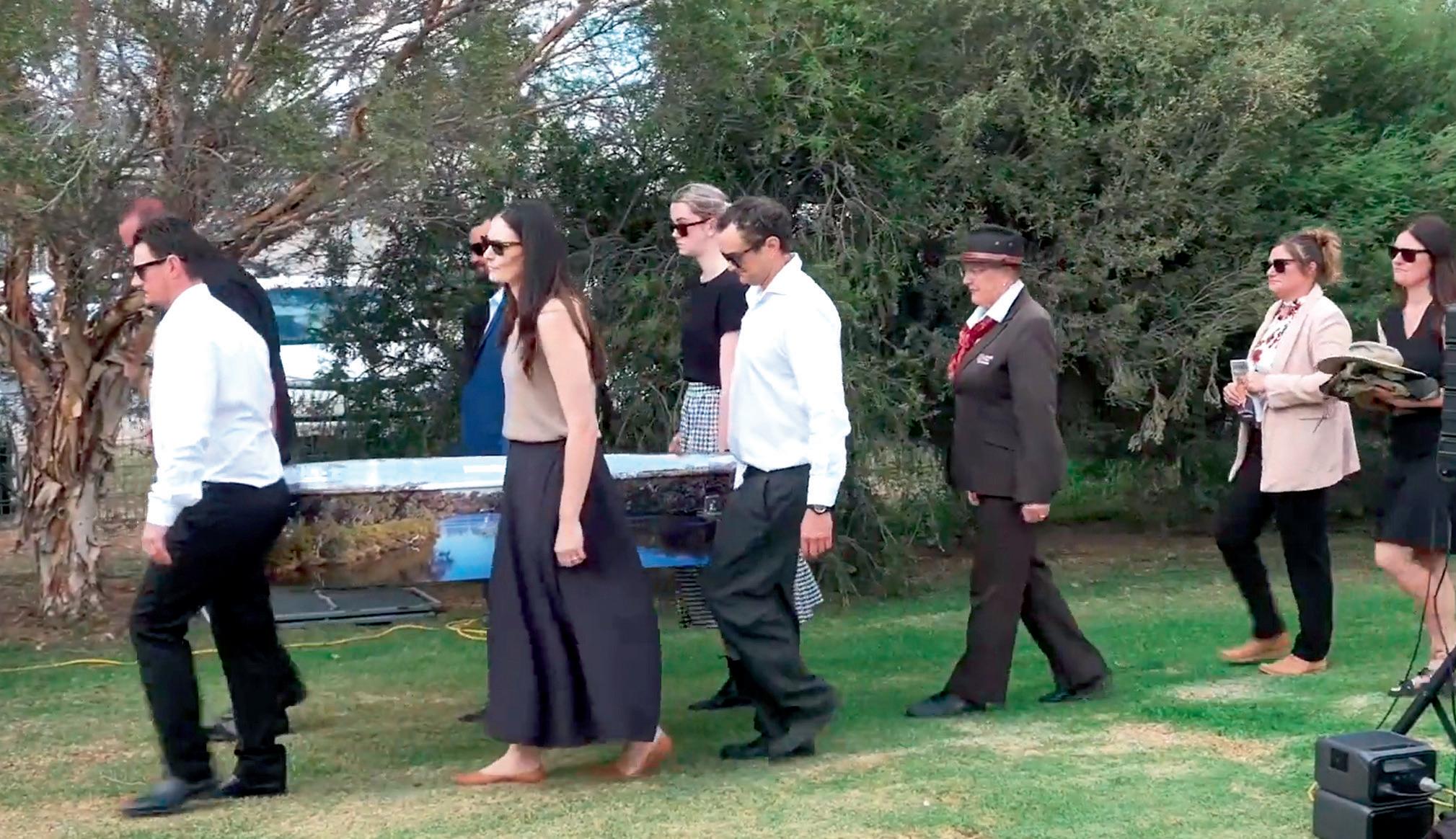
conservation set a benchmark for us all. He gave his time, his knowledge, and his heart to the protection of wetlands and the people who care for them.”
The Wetlands Environmental Taskforce echoed this sentiment, offering a deeply personal note of thanks:
“Stan was a staunch conservationist and a true custodian of many wetlands. His advocacy, practical wisdom, and long-term vision helped safeguard vital habitats across our region. We are profoundly grateful for what he has contributed and for the example he set.”
At the centre of Stan’s life was his family. Together with his beloved Edie, he created a home that encouraged independence, curiosity, and resilience. Their children were supported to pursue their own paths, just as Stan had forged his. That same generosity extended beyond family, opening doors for countless others who benefited from his encouragement and belief in their potential.
Those who met Stan—whether briefly or over many years—often remarked that they left conversations with him feeling enriched and more confident. He had a rare ability to challenge people while affirming their worth, to teach without lecturing, and to lead without seeking recognition.
True to character, Stan regarded his own
Bachievements as “somewhat ordinary.” Yet he recognised the importance of recording a life lived fully. His story, ideas, and reflections were captured in the book Everybody Knows Stan, authored with his nephew Colin “Butch” Archard. The book stands as both memoir and regional history, and a signed copy now proudly forms part of the Australian National Hunting Archives. For anyone wishing to purchase a copy you can contact the National Office and we will make arrangements for that to happen.
Even into his 90s, Stan had “no plans to slow down.” Longevity, however, was never his measure of success. Purpose was. He remained engaged, curious, and committed to the land and people around him until the end.
Stan Archard AM leaves a legacy that will endure—in healthier wetlands, improved farming practices, stronger organisations, and, most importantly, in the lives of those he influenced. For Field & Game Australia, for conservationists, and for his community, his life is a powerful reminder that leadership is defined not by position, but by service.
Vale, Stan. Your contribution will not be forgotten, and your family and friends will be forever proud.
A beautiful send off and to see a guard of
honour formed by so many Field & Game Australia members was very fitting.
From the Slim Dusty and John Williamson songs to the Banjo Patterson poems and the great fun memories shared, no problems only solutions and one last carefree Polaris Buggy ride.
No more wines under the vines, but your legacy remains forever.
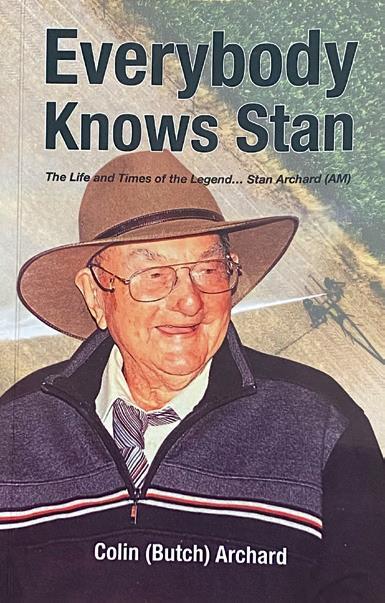
orn to parents Norman and Muriel Archard in Kerang on 29 September 1931, Stanley Alexander Archard was raised on the home dairy farm at Koroop, Victoria.
After moving away from the farm as a young adult he took up shearing as an occupation. He was a fast, clean shearer and went on to have much success at shearing competitions.
At the age of 21 he married Ida (Edie) Guerra, and they made their home in Cohuna. They went on to have 5 children -
Moving on from shearing, Stan did some cropping and developed a passion for all things relating to developing farmland irrigation. He developed a business in contract irrigation farm landforming. Levelling out the bumps and troughs in farmland to assist with irrigation water flow at that time was measured by eye. Always the innovator, Stan was the first to import lasers into Australia from America in 1977 for use in calculating levels to build
in a desired slope for efficient irrigation. These lasers were used with the scraper plane that Stan designed and manufactured, with his son Wayne. The scraper plane was a piece of equipment to be towed behind a tractor. With guidance from the laser level, it collected dirt from the areas that were higher and deposited them in the areas that needed raising. An innovative mesh “walking floor” inside the machine assisted with controlling the dirt movement.
Moving on from the landforming, in 1980 Stan, together with sons Steve & Ben,
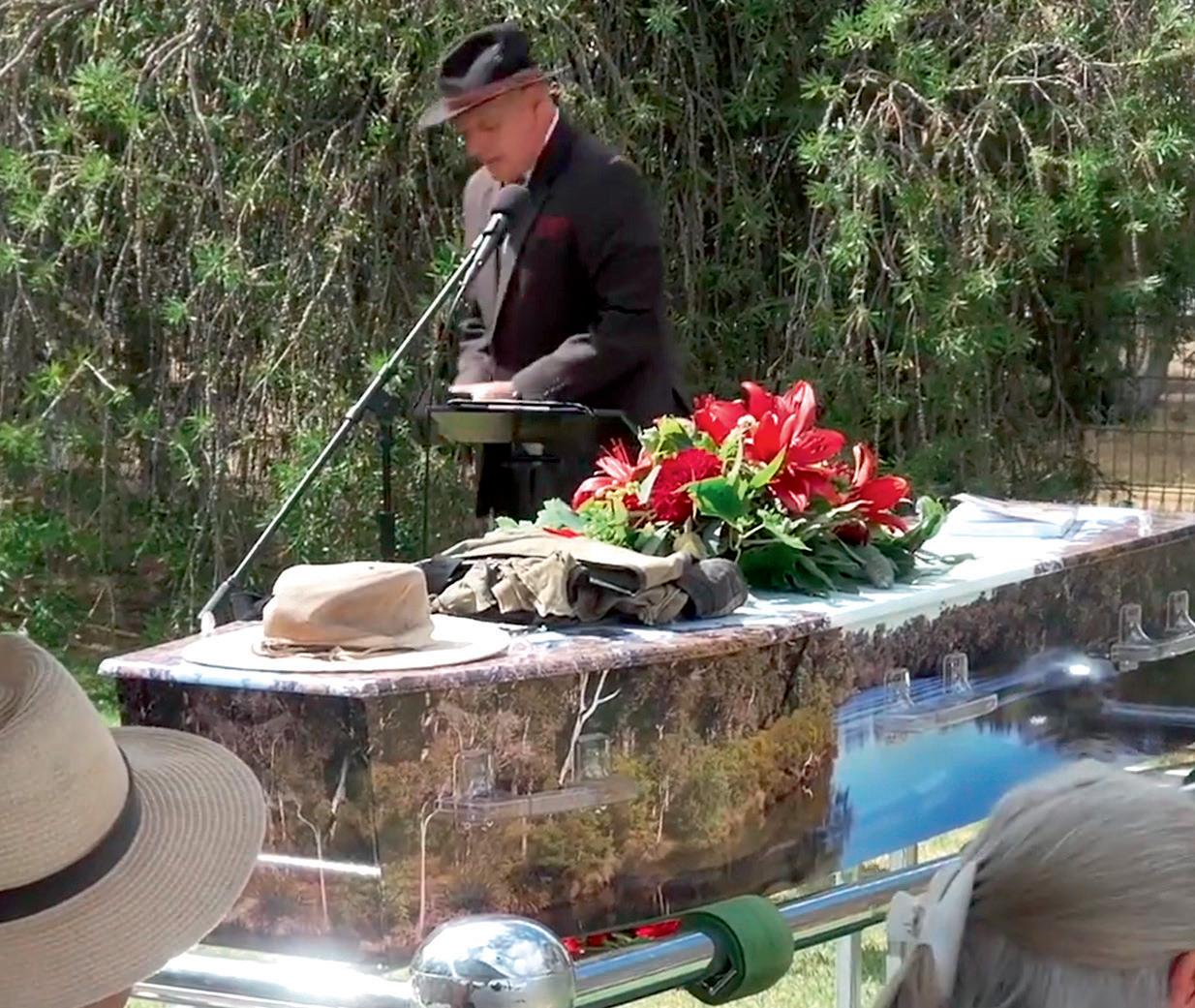
formed Archards Irrigation.
As part of the landforming business, Stan had been using existing levels from surveys to design the desired finished ground levels. This had been traditionally done in a piecemeal fashion, but Stan saw the need for improvement. He developed the concept of a “whole farm plan”. This was an holistic approach to planning farm layouts. By planning the farm as a whole it was ensured that all areas would work in together well for efficient water use and drainage and that tree lines and water re-use systems could be added. Over time, whole farm plans became the industry standard.
The natural evolution of whole farm planning involved the development of irrigation structures to control irrigation water flow around the farm and onto the bays. Stan’s innovation in moving away from traditional heavy concrete pipes with slides to lighter fibrolite pipe, and then on to polyethylene (poly) pipe spawned a whole new sector of Archards Irrigation, in manufacturing “bay outlets” and other irrigation structures. The use of poly pipe to manufacture custom irrigation structures also became industry standard.
Water efficiency was a major concern of Stan’s. He recognized that moving water on-farm through pipelines would save water by minimizing seepage and evaporation, but the concrete and poly pipes available on the market were too heavy and expensive to be viable options. Stan, together with the team at Archards Irrigation, worked with a national poly pipe manufacturer to develop a new product which was to be known as flood
pipe. It had a thinner wall than the traditional pressure-rated poly pipe that was on the market at the time. This went on to become the industry standard for on-farm pipelines.
Stan’s contribution to the irrigation industry has been recognized by many awards over the years, with the most prestigious being an Order of Australia Medal in 2013.
With sons Steve and Ben having departed Archards Irrigation some years earlier, Stan retired at the age of 81.
Over his lifetime, Stan developed his other passion - for conservation. Through his involvement with Field & Game Australia and as a consultant for North Central Catchment Management he was instrumental in rehabilitating wetlands including Hirds Swamp, Johnsons Swamp and the Gunbower Forest. In his work at Archards Irrigation he would always include treelines for the wildlife as well as pasture protection, and a wetland if the opportunity arose.
Stan also received many awards for his conservation work. These included awards from Field & Game Australia and the Catchment Management Authority.
Stan remained active after retiring from Archards Irrigation. Prior to Edie’s passing in 2014, Stan and Edie spent most of their days at Steve’s property at Mellool. They loved pottering around in the buggy and spending hours in the tractor tidying up around the farm. Stan continued his daily trips to the farm until 2021 when Steve sold the Mellool farm and moved to further away, to Moulamein.
Stan had played tennis and football as a young adult, but his highest sporting achievements were with clay target shooting. As a keen member of Bar-Rook Sporting Field & Game club he travelled far and wide to compete. On 2 occasions he competed with some success in national events in New Zealand. Stan reluctantly retired from clay target shooting in 2019 when arthritis in his shoulder made shooting too painful.
Stan had spent years gathering his memoirs for a book. In 2022, his nephew Colin (Butch) Archard committed to make the project a reality. Over 3 ½ painstaking years he spent hours interviewing Stan and others, travelling around the country to farms and wetlands that had played a part in Stan’s life, gathering photos and compiling it all into a book recording his family, business and personal history for future generations.
Stan lived to realise that dream. At the Cohuna 150 Years celebrations on 31st October 2025 Stan’s book “Everybody Knows Stan” was launched with a lot of excitement and anticipation. After a brief illness he passed away peacefully 6 weeks later, on 14th December 2025 at the age of 94.
Stan Archard leaves behind a great legacy. He was a pioneer and innovator and showed great determination to improve the world one farm, one wetland at a time. He was an “ideas man”, a “people person” with the gift of the gab and the determination to never be afraid to have a go at something new. He will be sadly missed by his friends and extended family.
Most of us can remember a shoot that had nothing to do with the scorecard.
It might have been a cold start, a tricky presentation that caught everyone out, or a conversation behind the cages that drifted well past shooting technique. Maybe it was helping a newer shooter settle their nerves, or quietly realising — halfway through the day — that you were still learning something after all these years.
That’s the part of Australian Simulated Field shooting that doesn’t often get written about.
Yes, it sharpens skills and keeps us safe and capable in the field. Yes, it challenges us technically and mentally. But for many members, the real value of simulated field sits somewhere between the targets — in the moments that shape club culture and keep people coming back.
For long-standing members, simulated field has a way of evolving with you. What began as competition may now include course setting, mentoring, refereeing, or simply being someone others look to for quiet guidance. There’s a satisfaction in that shift — in knowing your experience still matters, even as the role changes.
For others, it’s the social rhythm of the day that holds the appeal. The familiar faces. The banter. The shared frustrations when a target wins the argument. Simulated field becomes less about chasing perfection and more about connection.
Younger and newer shooters often arrive focused on the mechanics — stance, timing, consistency — but they stay because of the people. Because someone took the time to explain a rule, offer a tip, or say, “We’ve all been there.” That informal passing-on of knowledge is how standards are maintained and culture is preserved.
And while we don’t always notice it in the moment, simulated field shooting quietly supports something larger. Clubs bring people into regional areas week after week. Events fill local cafes, fuel stations, and accommodation. Relationships are built not just within clubs, but with the communities around them.
Simulated field doesn’t demand that you shoot a certain way, or at a certain level. It simply asks that you turn up, respect the sport, and respect each other.
In an organisation built on conservation, ethical hunting, and community, simulated field remains one of the places where all three meet — not loudly, not formally, but consistently.
And perhaps that’s why, long after the targets are packed away, we keep coming back.

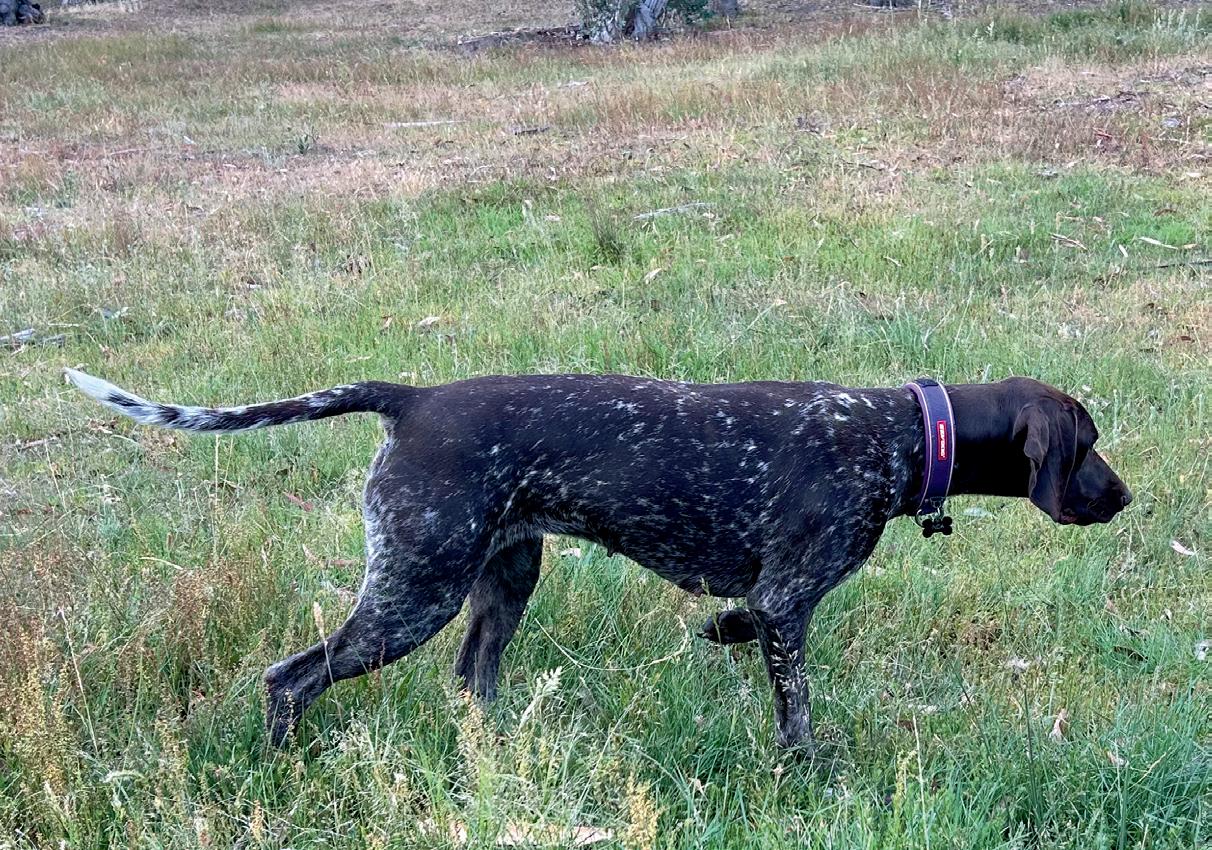
In the last issue of Field and Game I wrote about exercises that would build a strong foundation in a pup. We have a young German Shorthaired pointer (Inca) and her owner Troy who is tired of hunting with Gundogs that have no manners and are out of control at times. So, I gave Troy some Gundog training exercises that would be the foundation to building a quality dog that was under control in the field. The exercises were simple and easy for a pup and more importantly had no pressure. I like to call them games that the pup will enjoy playing with plenty of praise and encouragement. These games form the basis of everything you need in a seasoned Gundog.
Of course there will be times when things don’t go as planned and that’s when you need to take a step or two back and get some guidance from an experienced gundog trainer.
Troy’s gundog Inca has started to mature and has learnt the foundation exercises well without any pressure from Troy, so now we can start to move forward. Because she was trained in a confined space as a pup she is conditioned to go straight out and straight back with her retrieving, so now she is taken to an area with perhaps a row of trees or a hedge to retrieve along and told to watch, (the command to look out in front), your arm around her chest, to keep her steady, and
the dummy thrown. Troy counts to three then gives the command “fetch” and releases her, she’s out and back quickly, (like in the hall as a pup) you encourage her to come to you and take delivery. All of this works well because you have built the foundation. However, a couple of tips for when you first go out to an open area for retrieving: one - try to find a spot with a fence behind you, or a bush, as this tends to bring the dog into you as you are on your knees encouraging her to come into you and two - a fence behind where the dummy is thrown will stop your dog from running passed the dummy.
If you have some duck wings then now is the time to tape one or two to your dummy, making sure that no feathers hang off anywhere otherwise your dog could pick up the dummy by the feathers causing bad delivery.
As part of Inca’s foundation work as a pup, Troy taught her to sit while heeling, then walking away a metre or two, then walking back and praising her; this taught her steadiness and to sit on command. It also taught her that there can be a distance between them while working. Troy also introduced the whistle when she was asked to ‘sit’ which is a fairly easy exercise. When you give the command ‘sit’ immediately after, give one ‘bip’ on your whistle and you will find the dog responds very quickly to both voice and
whistle commands. The extension to this exercise is when your dog is close and not distracted, you ask her to ‘sit’ and blow the whistle. She knows these commands so will probably sit for you being close , but if she doesn’t then go to her and gently push her down, saying ‘sit’ then praise, However you must walk back to the position you were in then emphasise the command ‘sit’. Once she has mastered this at a short distance you can slowly extend the distance between you and the dog. This training is preparing your dog to sit in the field at long distance. Troy and Inca mastered this important exercise well in the end, although at first Troy did try to rush it by asking his dog for a sit at too big a distance. Remember that you must take short steps with this exercise, slow and steady wins the race. Praise is so important in all exercises.
How good is it having a Gundog that comes when it’s called in the field. I personally have been out in duck swamps and have sent my dog for a retrieve and while my boy is half-way to the bird someone else’s dog has broken and is heading for our bird, with a ‘bip bip’ on the whistle my dog turns and comes into heel, Control is essential and it starts by building a solid foundation.
Troy and Inca played the cooked sausage game as a pup in her foundation work and once again she learnt in a confined space
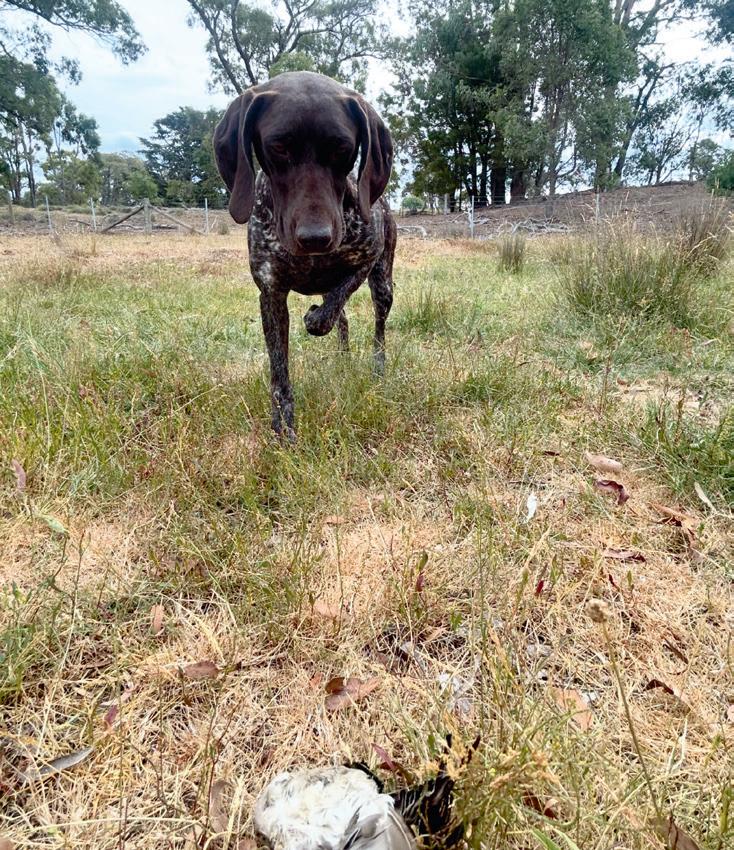
to run into the boss as fast as her legs would carry her, then the reward was in her mouth - that beautiful taste of cooked sausage! I did mention that in my opinion, food as a reward can be over-done. I have taught many gundog people that if you use food for one exercise only it will have a much better effect The second most important exercise is ‘come’ when called on the first command, every single time. Yes, I see trainers giving food for every movement and I believe that this is not necessary in your Gundog.
Inca has been taught well with this exercise and so Troy didn’t have any trouble out in an open space, because he had the cooked sausage in his pocket, had his timing right when he called her (not too far out, and no distractions) back in like a flash, asked her to sit while he administered the treat, the cooked sausage. Troy has now moved on to calling ‘come’ and giving two short ‘bips’ and one long ‘bip’ on his whistle. Eventually he will drop the voice command and it will be just the whistle. It’s important that the dog gets plenty of praise with the cooked sausage because we will eventually drop the sausage reward as well. Troy needed to be reminded that consistency is everything in Gundog training. For instance, if you’re calling her, “ Inca come” and she comes, next time you call “Inca” different sound to a dog and she could very well disobey and
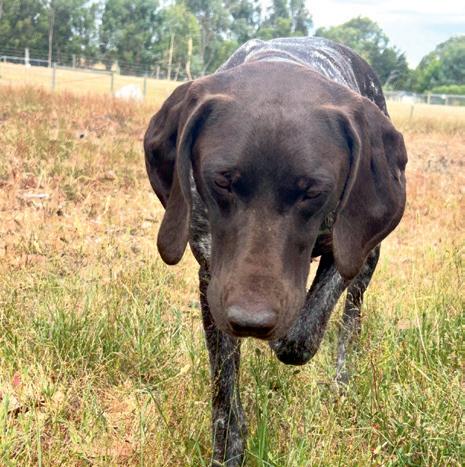
then get into trouble. This could result in the dog going into her shell and it’s not her fault. So be consistent with your words and actions.
In the foundation work as a pup, Inca leant to sit and stay before food. Troy introduced noise about 15 metres away, first tin cans being dropped then a cap gun being fired, all at a distance to start, then slowly moving closer. This will result in his pup not being nervous around gunfire. You do this while the pup is eating because the food intake is so much more important than anything else. As her retrieving was getting better we introduced the cap gun just before she was sent to retrieve - remember we are holding her with one arm around the chest while your partner fires the cap gun, teaching steadiness to the sound of a gun. You will see that it won’t be long before your dog will be retrieving on your command while being steady to gun and the fall of game.
Once Inca was steady with her retrieving, Troy introduced another important part of having a steady gundog in the field. So during certain retrieves, instead of instructing your dog to 'fetch,' you should use the command 'stay' and personally retrieve the dummy yourself. This will stop your dog anticipating your next command and when you get back praise the dog for being steady. If your dog did move, just get back to her quickly and put
her in the exact spot and then go out to get the dummy, not forgetting to praise on return.
When I shoot game nearby while hunting, I tell my dog to stay and retrieve it myself to keep the Gundog steady.
Inca’s pointing was started with the normal feather on a fishing line, however as Troy lives in rural Victoria with game around his property she was learning to point naturally, with supervision. We also took the advantage of walking her in the opposite direction once the game was flushed, thus teaching her steadiness and that game was finished with.
A pup builds a strong foundation, progressing from playing in the backyard to becoming a controlled Gundog in open areas and the field.
Inca will be going out with Troy next duck season, but Troy will make sure wherever they hunt will have easy access into the water and her first duck will be stone dead. Imagine if her first retrieve is only wounded and flaps as she approaches, this could put her off forever (and giving me the task of fixing her!). So, from the very first hunt remember to think about your dog.
Enjoy your training and hunting with a Gundog.
Rod Watt.
By Anonymous Author
Iwent out that morning fully confident I was about to outsmart a fox.
Not hopeful. Not optimistic. Confident.
The kind of confidence that comes from years of experience, good ground, the right wind, and a dog that genuinely believes you know what you’re doing.
I set up a calling position properly — tucked in, good back cover, clean shooting line, wind right. Textbook.
A few calls in, and sure enough, a fox shows itself.
Out of range.
Standing there. Watching. Curious. Interested. Not committing.
So I shifted position to the other side of a fence, set up again, and started calling. Fox appears.
Same fox.
Same attitude.
Now it’s back on the other side of the fence again — still out of range, still hanging about, still completely uninterested in coming in any closer.
Just standing there like it’s reviewing my technique.
So I decide to do it properly.
Careful belly crawl through damp grass. Keeping low.
Staying out of sight. Moving back to my original position.
Slow. Controlled. Quiet. Professional.
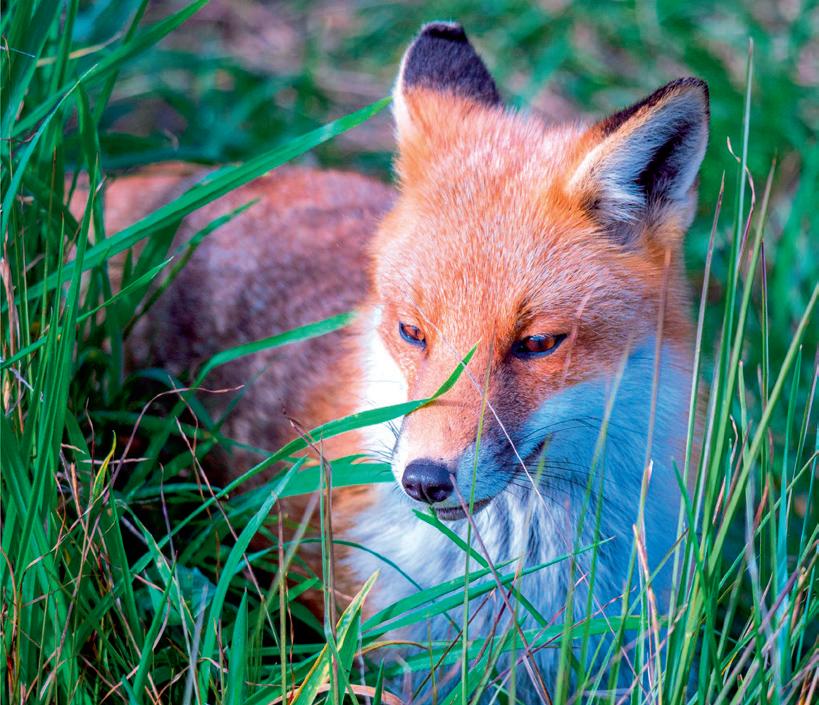
I reach the fence line, line myself up, and start slithering under the bottom wire.
That’s when my belt hooks into the barbed wire.
Not dramatically. Not violently. Just enough.
Enough to stop me moving forward. Enough to stop me moving back. Enough to make my life choices feel questionable.
My shotgun is now just out of reach. My mobility is zero. My dignity is in rapid decline.
So there I am — half in the grass, half in the fence, stuck by the belt like an idiotshaped coat hanger — trying to carefully unhook myself without turning the situation into a medical incident.
I look up.
Two foxes.
Not one. Two.
Walking the fence line.
Calm. Casual. Unhurried.
Together.
There had been two the whole time.
One playing the decoy. One working the angle.
A perfectly executed little double act.
They don’t run. They don’t spook.
They don’t rush.
They just stroll past, glance over in my direction, and continue on their way like they’ve just finished a job.
My dog watches the entire thing in complete silence — then looks at me, looks at the foxes, looks back at me — with an expression that clearly says:
“Well if you’re not going to shoot, mate… pass me the gun.”
They walk off. I stay stuck.
The hunt is over.
No shot fired. No fox down. No dignity retained.
Just me, a fence, two smarter-thanaverage foxes, and a dog who has lost all professional respect.
I’m sharing this because, while I was glad no one else saw it, with a bit of reflection it’s a reminder of something simple:
Not every hunt needs a result to be a good morning.
Years of mornings like this — successful ones, frustrating ones, ridiculous ones — have still been some of the best time I’ve spent outdoors.
Sometimes you win.
Sometimes the fox wins.
But either way, being out there is the point.
So get out there and chase these foxes.
Because I swear they’re getting smarter… and I’m not convinced I am.
One of the quiet challenges facing wildlife conservation globally is generational change — not just among hunters, but among the people who will one day write policy, manage land, and make decisions about wildlife.
Delta Waterfowl confronted this challenge head-on through its University Hunting Program, after recognising that many wildlife biology and environmental science students were graduating without ever having experienced hunting, despite its central role in conservation funding and population management.
Rather than arguing from a distance, Delta invited students into the experience itself. Under strict supervision, participants completed firearm safety training, spent time on the range, and took part in a guided waterfowl hunt. What followed was not recruitment — but understanding.
For many students, the experience reshaped how they viewed hunters, ethical harvesting, and the role regulated hunting plays in conservation systems. They saw first-hand the discipline, respect, and responsibility involved — and how licence fees, habitat programs and volunteer labour directly support environmental outcomes.
This approach mirrors what Field & Game Australia members already do — often informally — through mentoring, branch activities, youth shoots, and education days. Across Australia, experienced members take time to guide newcomers, explain why rules matter, and model ethical behaviour in the field and on the range.
It also reinforces why retaining young people and families within Field & Game Australia matters so deeply. Today’s junior shooter, new hunter, or volunteer is
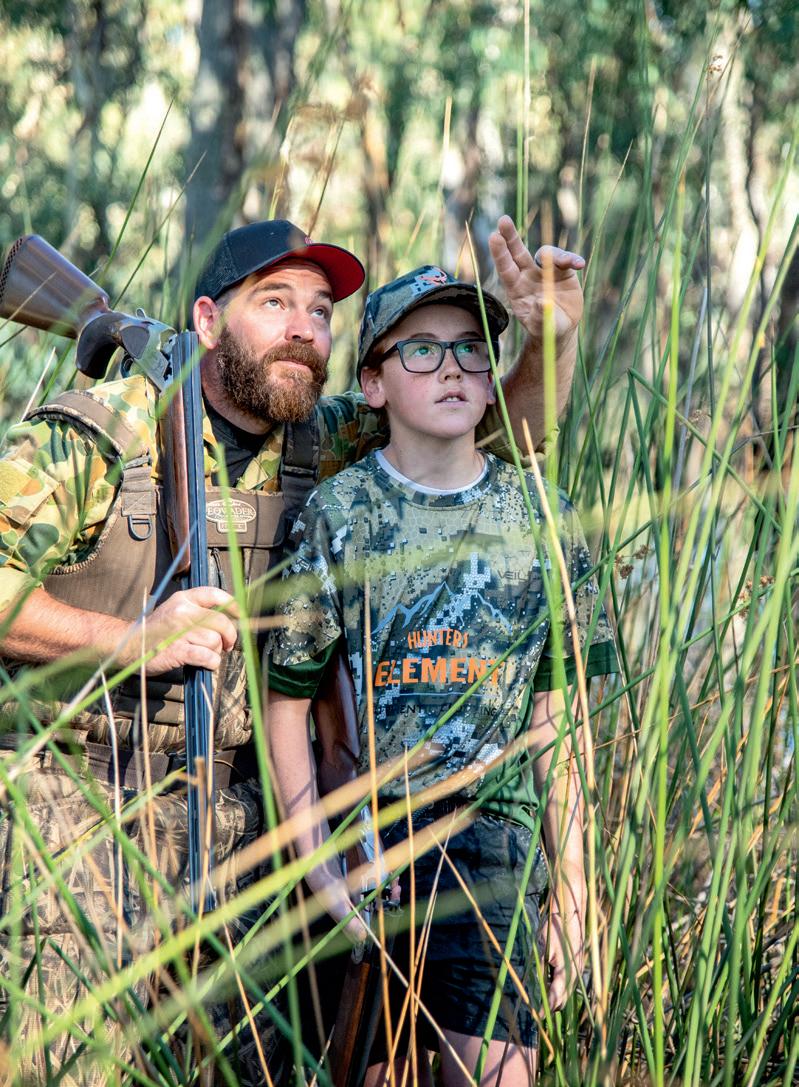
tomorrow’s land manager, policymaker, or community leader.
Programs like Delta’s demonstrate that education is most effective when it is experienced, not explained — and that respectful exposure to hunting culture can build long-term understanding, even
among those who may never become hunters themselves.
For FGA members, it’s a powerful affirmation: the conversations held at clubhouses, wetlands and ranges today are shaping the future of conservation tomorrow.
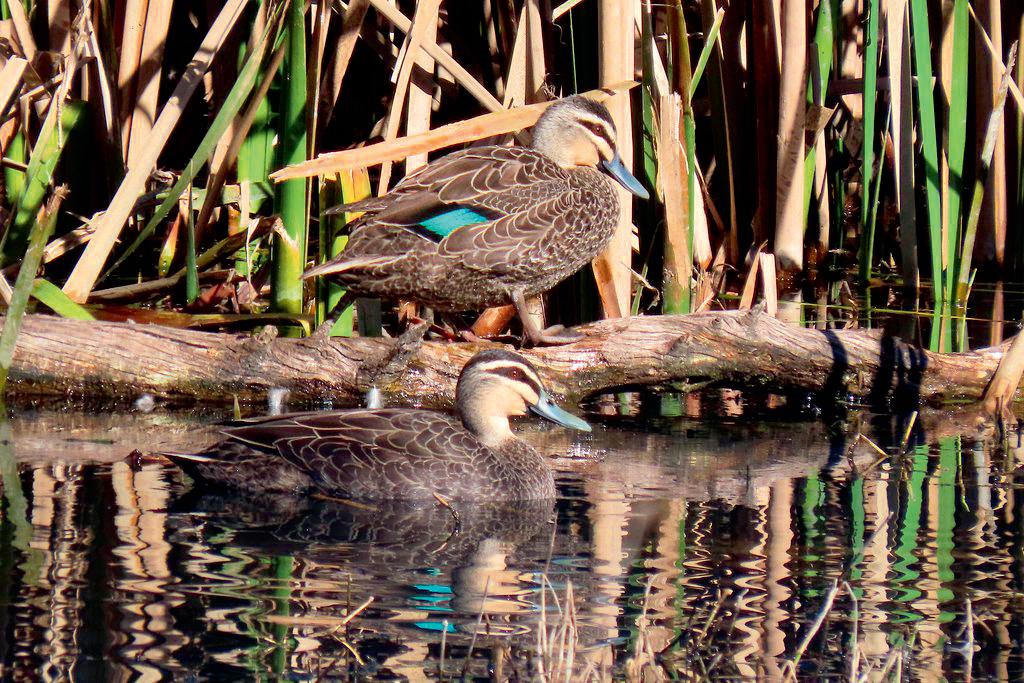
Before we start, a quick note.
Some of what you’re about to read will be obvious to many Field & Game Australia members — and to anyone who has spent years managing wetlands, controlling weeds, and keeping predator numbers down.
But this series isn’t written primarily for them.
It’s written for people who love birds, love wetlands, and might even hate hunting. People whose first instinct is to protect, preserve, and observe — and who may feel uneasy (or outright angry) at the idea that hunters could have anything useful to teach about conservation.
If that’s you: welcome. Stay with it.
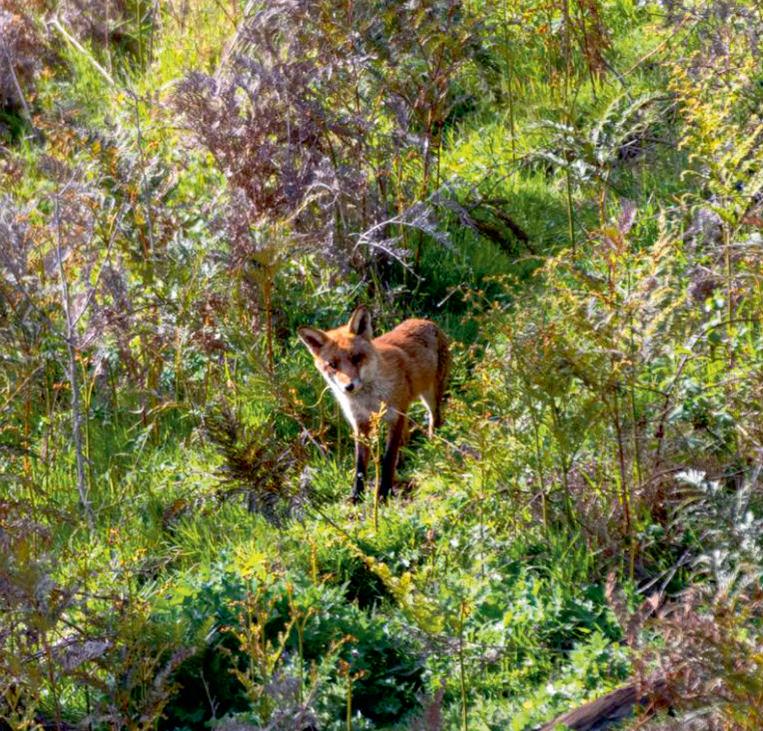
This isn’t an attack on birdwatchers. It isn’t a “gotcha.” It’s a hard, uncomfortable argument about outcomes — made gently, but made directly.
Here’s the thesis of this three-part series:
Birdwatching culture — when it becomes the dominant model for wetland conservation — can be bad for ducks.
Not because birdwatchers don’t care.
But because the incentives and habits of “observation-first conservation” often produce a fragile world: fewer wetlands functioning, fewer birds overall, and more ecological risk concentrated into fewer places.
If you care about birds, that should worry you.
At the risk of oversimplifying, there are two conservation instincts at play in Australia. One is observation-based.
The other is production-based.
Birdwatching culture is naturally observation-based. That’s not a moral criticism — it’s the point of birdwatching. You visit wetlands to see what’s there, to record, to admire, to photograph, to experience.
But ducks don’t survive on admiration. They survive on functioning systems: water, food, cover, breeding success, and critically, predator pressure.
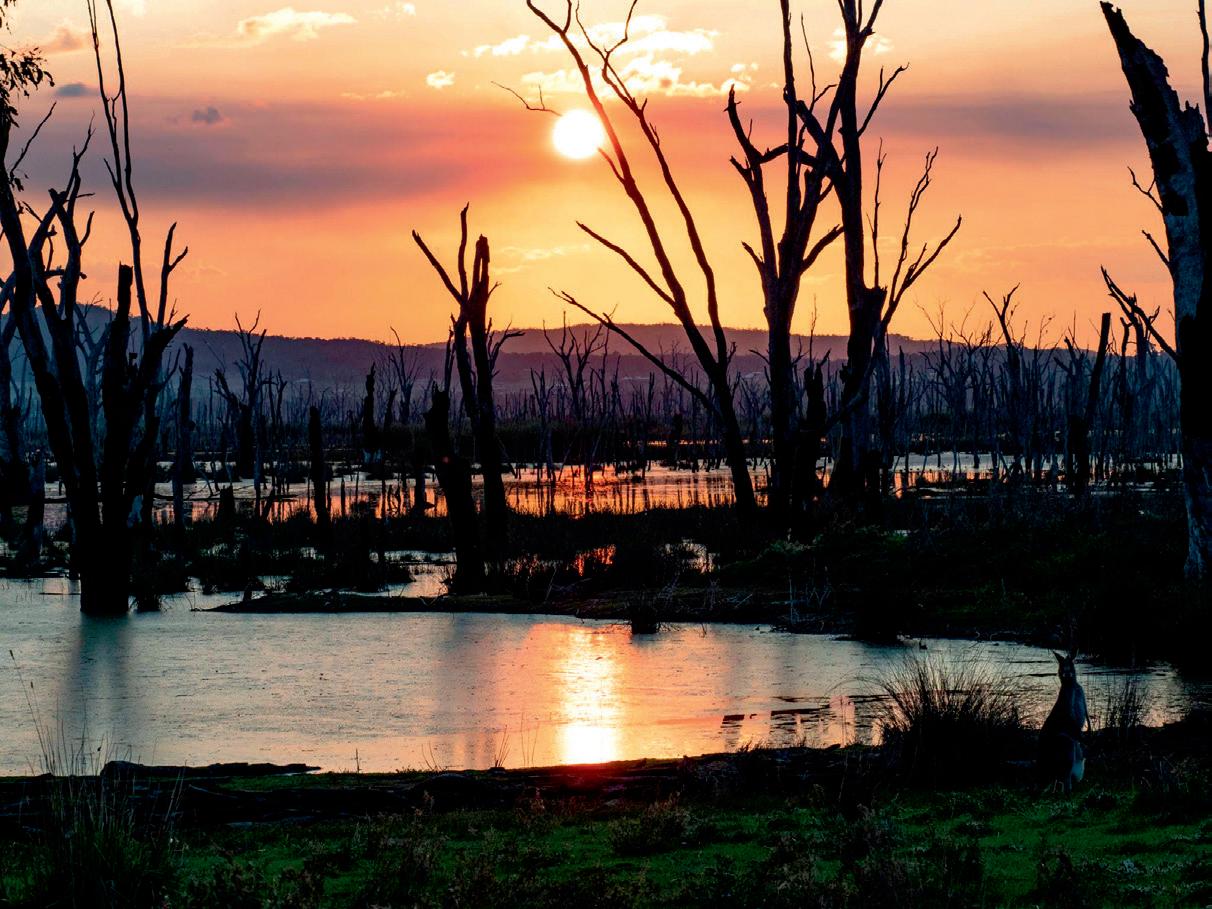
A wetland can be loved to death — or more precisely, loved while it quietly loses the conditions that make life possible.
And this is where the phrase “birdwatching is bad for ducks” stops being a slogan and becomes a systems claim.
Because a conservation culture centred on observation tends to prioritise:
• protecting places from “disturbance”
• minimising intervention
• focusing effort on the most iconic site or rare species
• treating management tools (like predator control) as morally suspicious
• measuring success as “presence” of special birds — rather than abundance of common ones
That instinct can be deeply compassionate.
It can also be structurally brittle.
In modern Australian conservation, rarity often functions like a moral currency.
The rarer a bird becomes, the more important it feels.
The more important it feels, the more energy and attention it attracts.
That’s why species like the Australasian bittern inspire genuine devotion — and rightly so. The work many groups do to protect and optimise a wetland for a bittern population is often impressive: technical, careful, and driven by sincere concern.
But here’s the problem:
When conservation becomes “make one wetland perfect for one rare bird,” it can accidentally ignore the larger landscape in which that wetland sits.
And landscapes are where ducks live.
Picture a region with ten wetlands.
A local group pours time, money and emotion into making one wetland an ideal bittern site. Water levels are managed. Reedbeds are protected. Human access is controlled. It becomes, in many ways, a conservation jewel.
Meanwhile, the other nine wetlands are being hammered by foxes.
Predation is so heavy that nesting success collapses.
Weeds choke the edges.
Water regimes are unmanaged.
The system quietly degrades.
Bitterns can’t settle there. Ducks can’t breed there. The landscape loses capacity.
But because the “jewel wetland” still looks good — because it still produces the occasional special sighting — the broader collapse is easy to miss.
Then the dry years come.
Or a water decision changes.
Or a flood doesn’t arrive.
Or the jewel wetland fails.
And suddenly there is nowhere else to go.
That’s what scarcity-centred conservation does: it concentrates risk.
It builds a beautiful lifeboat — but forgets to stop the ship from sinking.
Now compare that with an abundancefocused approach.
The goal isn’t perfection. The goal is capacity.
>> Instead of trying to perfect one wetland, hunters and practical land-managers often spread effort across many:
• predator control across a region (not a site)
• weed control over years, not weekends
• water and access management repeated season after season
• continual maintenance because people keep returning
No single wetland becomes a cathedral.
But multiple wetlands remain functional.
This is what ecologists call resilience: redundancy and distribution.
A mosaic of “good enough” wetlands can outperform one “perfect” wetland because:
• birds can move when conditions change
• predators are suppressed across the broader landscape
• food webs keep functioning in multiple places
• population pressure is spread, not concentrated
• drought doesn’t create a total collapse
And here’s the key point that many people miss:
This mosaic doesn’t just help ducks. It can indirectly help bitterns too.
Because when predator pressure is managed at a landscape level, rare birds get something priceless: breathing space.
Not an idealised reedbed — but a functioning region.
This part matters, because it’s where the “birdwatching is bad for ducks” claim becomes concrete.
A birder can love a wetland deeply — and still only visit once, twice, or a handful of times.
A hunter tends to return repeatedly:
• pre-season scouting and preparation
• opening weeks
• mid-season
• late-season
• and then again next year
Not because they’re more virtuous — but because the wetland is not just a place to observe; it’s a place to participate.
That creates a radically different conservation engine: repeat engagement.
Here’s the practical difference:
Ten birdwatchers doing ten hours each on one wetland is 100 hours. Valuable, real, worthwhile.
But hunters don’t just do “one working bee.”
They return as a pattern of life.
Ten hunters doing ten hours each across ten wetlands — plus predator control nights, plus weed work, plus rubbish collection, plus track maintenance, plus camping and presence — quickly becomes not a weekend of conservation but a culture of stewardship.
And they bring other people:
• kids
• friends
• family
• new hunters
• mentors
• volunteers
That’s not a small thing.
Because conservation isn’t just science — it’s human behaviour sustained over time.
Ducks are a numbers game. A resilience game. A systems game.
The conservation culture that generates the most sustained, place-based human effort often generates the most robust outcomes.
So when we say “birdwatching is bad for ducks,” we don’t mean birdwatchers are bad people.
We mean this:
A conservation culture that treats wetlands primarily as places to observe — and treats management as morally suspicious — often produces:
• fewer functioning wetlands
• higher predator pressure
• less redundancy in the landscape
• more brittle populations
• and a drift toward scarcity as “normal”
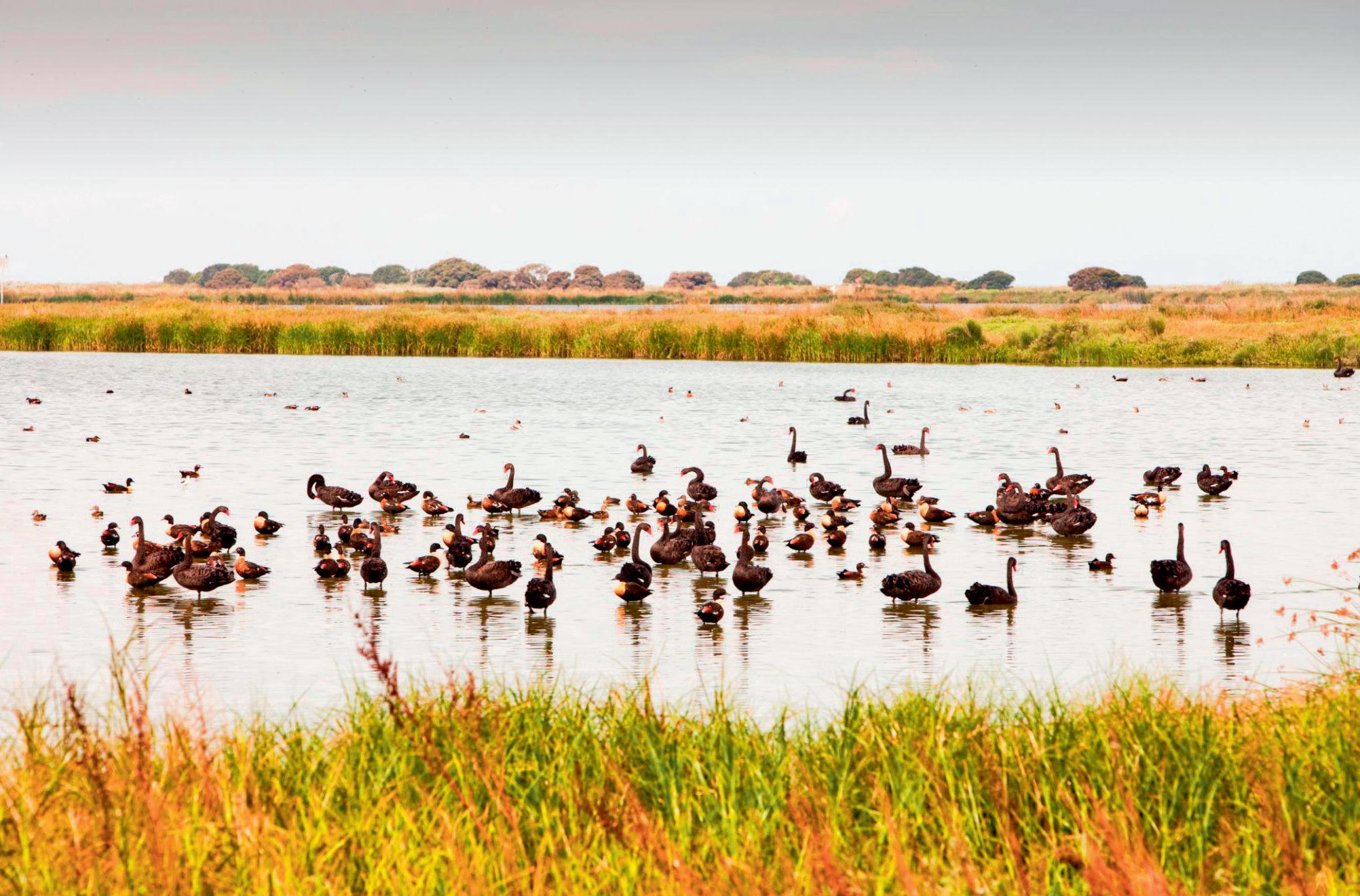
A culture that treats wetlands as places to use, return to, and invest in often produces:
• more on-ground effort
• more predator management
• more habitat work
• more regional economic gravity
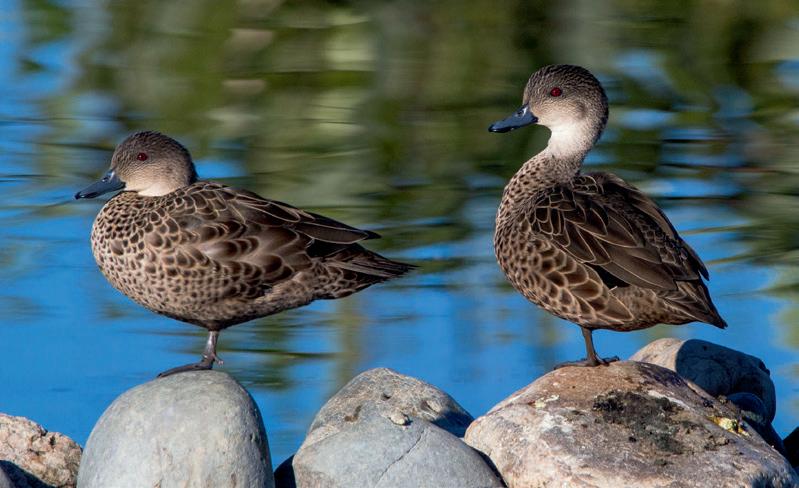

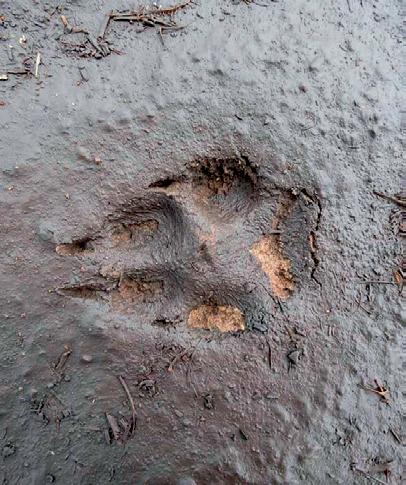
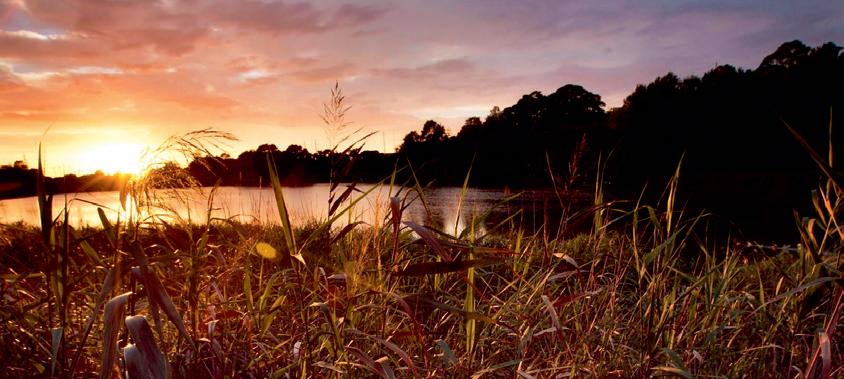
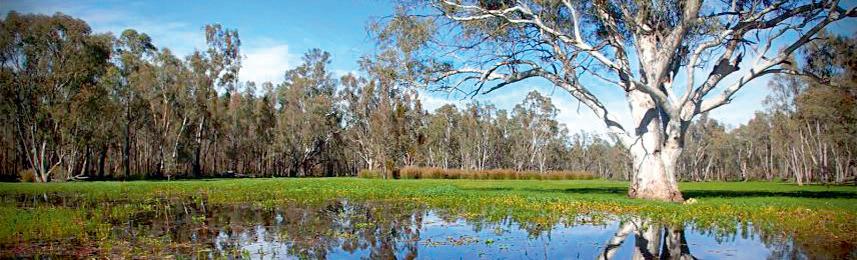
• and a stronger public constituency for keeping wetlands alive
And yes — it produces more ducks.
If you want to test this argument honestly, don’t start with ideology.
Start with a question of outcomes:
Do we want wetlands that are “quiet and protected” — or wetlands that are “alive and productive”?
Do we want a handful of jewels — or a functioning mosaic?
Do we want conservation measured in rare sightings — or measured in abundance?
If you care about birds, those are not “hunting questions.”
They are ecological questions.
If you’re a birder reading this and feeling defensive, fair enough.
But consider this: the strongest conservation systems in the world are not built on who feels morally pure. They’re built on incentives that keep people coming back, funding models tied to outcomes, and management tools used without shame.
In Part 2, we’ll talk about the money and movement — who actually travels for wetlands, who keeps towns alive in
shoulder seasons, and why that matters for conservation.
And in Part 3, we’ll talk about the deeper irony: that most serious duck hunters are birdwatchers too — just birdwatchers who also manage, harvest, and return.
If you disagree, don’t throw the article away. Sit with it.
Then talk to a hunter you trust — or one you don’t — and ask them a question most Australians never ask:
“What do you actually do for wetlands, year after year?”
Because that answer tends to be the difference between scarcity and abundance.
There was no handbook for how to behave on your first morning out, or what mattered most at a branch shoot, or how to find your place at a working bee.
Most of us learned the same way — by watching, listening, and paying attention to the people around us.
Those unwritten rules are still there. They always have been.
We see them when a new face turns up and no one makes a fuss — but someone quietly walks over and says g’day. When help is offered without hovering. When advice is given carefully, and only when it’s wanted.
No one announces, “This is how we do things.”
We just show each other.
Out in the field, it might be as simple as letting the morning settle before the chatter starts. Waiting your turn. Taking cues from those who’ve been there longer. Not rushing the moment, and not needing to fill the silence.
At branch shoots, the unwritten rules show up in small, important ways. Someone explaining how the day will run without assuming you already know. Making space on a squad. A quiet, “Stick with us — you’ll be right.” No spotlight. No pressure.
And at conservation days, they’re there too. Turning up ready to help. Listening before offering solutions. Learning which jobs matter most, and which ones just need doing without comment. No one is keeping score — but everyone notices effort.
These unwritten rules aren’t about hierarchy or status. They’re about respect. About remembering that every one of us was new once, and that confidence grows faster when it’s allowed to arrive in its own time.
We don’t often talk about mentoring — but it happens constantly. In the way we set the pace. In knowing when to step in and when to step back. In letting someone have a go, even if it’s not perfect. Especially if it’s not perfect.
Newer members feel this too, even if they can’t quite put it into words yet. That sense that this is a place where you don’t need to prove yourself on day one. Where learning happens naturally. Where you’re welcomed into the experience, not pushed through it.
These unwritten rules are the reason Field
& Game Australia works as well as it does. We protect standards without hard edges. We build trust without ceremony. We allow people to grow into their place, rather than being pushed into it.
You won’t find these rules written down anywhere.
But you’ll recognise them the moment you see them.
And if you’ve been around long enough, chances are you’re already passing them on — without ever needing to say a word.
Maybe that’s also why so many of us were invited along in the first place. A mate. A family member. Someone who thought, “You’d enjoy this.”
As another season approaches, perhaps that invitation is worth extending again. Not with a big pitch or explanation — just by bringing someone along to see it for themselves.
Because the best way to understand the unwritten rules, has always been to experience them.
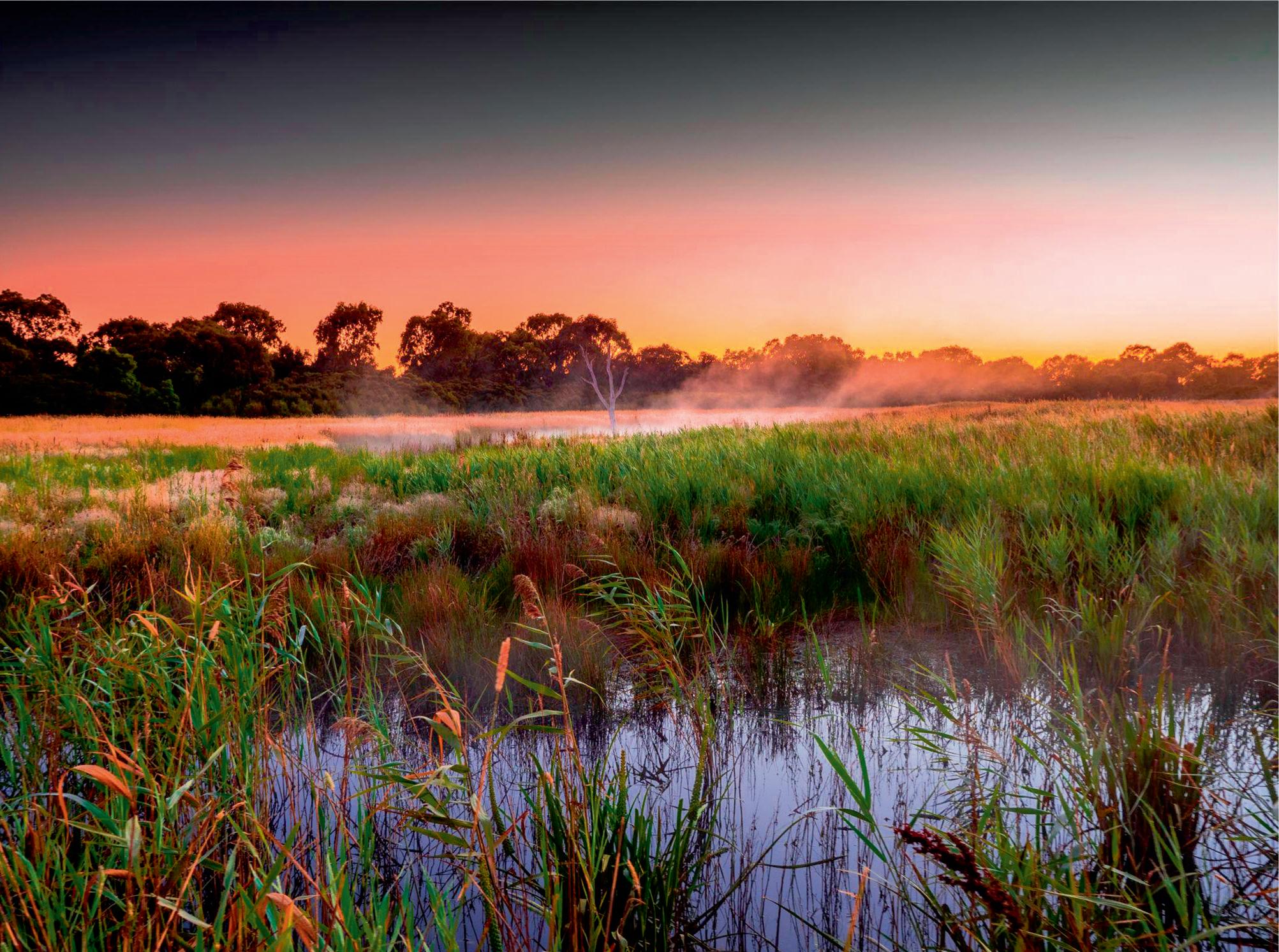
Do you have the duck stamp set — or just one?
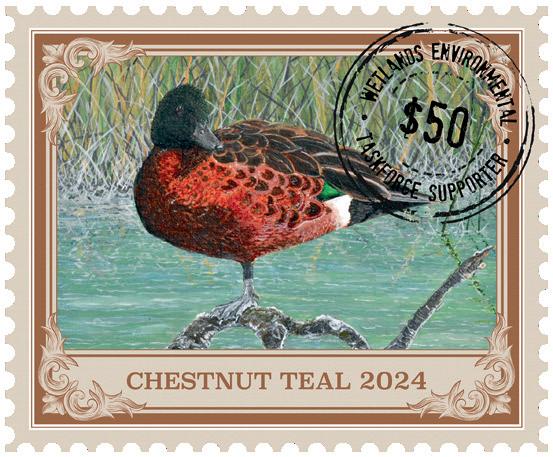
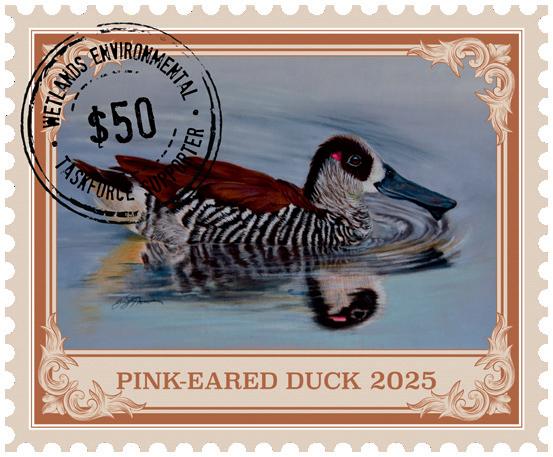
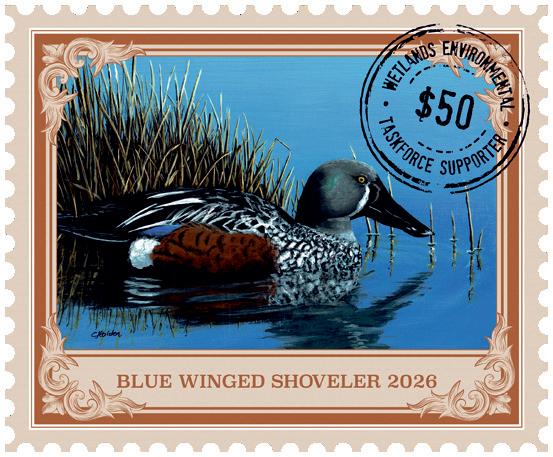
Each Field & Game Australia Duck Stamp tells a story — of habitat, of heritage, and of the wetlands we are proud to conserve.
Whether you're a long-time supporter, collector, or just love beautiful wildlife art, our Duck Stamps are available to order individually or as part of an annual collector’s set.
Receive your 2024, 2025 and 2026 stamps now.
SUPPORT CONSERVATION. CELEBRATE OUR WATERFOWL. BE PART OF THE STORY.
Order your duck stamp here
There was a morning last season here in Victoria that I keep coming back to as the next one gets closer.
It wasn’t anything special on paper. Same group of mates I’ve hunted with for years. Same early alarm that makes you question your life choices for a few seconds before you’re properly awake. Same quiet drive, headlights cutting through mist that sat low over the paddocks.
We arrived in the dark, as usual. Boots squelched a bit more than expected — it must have rained somewhere overnight. Someone poured coffee that was far too hot, and we all drank it anyway. There was the usual grumbling about the cold, and a bit of laughter when one of the boys realised he’d left something important in the ute again. Nothing new. Nothing rushed.
When you’ve hunted with the same people long enough, the morning tends to sort itself out. One bloke automatically checked the wind. Another wandered off a bit further than planned, saying he wanted a better look. Someone else stood still for a long moment, listening. No one told anyone what to do — it just happened the way it always does.
As the light started to come up, the place changed. Shapes appeared slowly. The water took on colour. Sounds carried further than they had earlier. You could feel everyone settling into the morning rather than pushing it along.
Not long after that, we had our first real moment.
At first it was just movement — something cutting across where nothing had been a

second earlier. I wasn’t completely sure, so I waited. One of the others caught my eye and gave the smallest nod. That was enough. We eased into position, slow and quiet, doing exactly what we’d practised and talked about for years.
For a short stretch — I couldn’t tell you how long — everything narrowed down. You notice your breathing. The cold on your hands. The way your focus sharpens without feeling rushed. That mix of excitement and calm that only comes with experience.
When it was over, no one said much. Just a quiet smile. Someone shook their head and muttered, “Good start.” We took a moment, did what needed to be done properly, and then carried on.
That’s the part people who don’t hunt rarely see — the care that comes after the moment everyone thinks it’s about.
The rest of the morning unfolded the way good mornings usually do. A few opportunities that didn’t quite come together. One mate calling out something the rest of us had missed completely. Another ending up in the right spot without really knowing how. We laughed about it, quietly, so as not to spoil what we still had ahead of us.
At one point, a couple of walkers passed through not far from where we were set up. We exchanged a quick hello. They asked how the morning was going. “Good,” one of us said. That was about it. Everyone was respectful. Everyone went on their way.
By mid-morning the sun was properly up, and you could feel the shift. The intensity eased. The conversations came back. We moved around a bit more freely, compared notes, talked through what we’d seen and what we hadn’t. Someone pulled out the last of the coffee. Someone else started
planning the next trip before this one was even finished.
We packed up later than we probably needed to. No one was in a hurry. It felt like the right way to end it.
That evening, after everyone had gone their separate ways, we ended up together again — not planned, just the way it sometimes works. A couple of us at someone’s place.
The stories came out then.
The moments everyone had seen slightly differently. The one that got away. The thing someone noticed that no one else had. The quiet laughs when we realised we’d all been thinking the same thing at the same time that morning. There was no need to exaggerate anything — the day had been good enough as it was.
As the night went on, the conversation drifted. From the morning, to past seasons, to who used to come along and doesn’t anymore. There was a bit of that familiar mix of gratitude and nostalgia — for still being able to do this, still having the time, still having the people to share it with.
That’s when it really hit me.
Hunting isn’t just about the morning, or even the day. It’s about the stories that follow. The shared memory that settles in and becomes part of the group. The understanding that some experiences don’t need explaining, only remembering.
Now, with another Victorian season just around the corner, it’s that whole day I’m looking forward to. The early start. The quiet hours. And the evening that comes after, when the stories are told and the feeling lingers.
Not just the hunt — but everything that surrounds it.
January has been a whirlwind for the club, and we wouldn't have it any other way. We kicked things off on Saturday the 3rd with the OTC Peninsula Classic 100 Target shoot. It was a proper cracker of a day, with over 180 shooters turning out to start the year strong.
Congratulations to Leigh Lupton, who took home High Gun with a fantastic 91/100. A massive shoutout to the crew at Outdoor Trading Co, as their ongoing support makes this event possible, so please make sure to support those who support our sport! This shoot also doubled as our annual MCC v PPFGA showdown. We’re happy to report that PPFGA took the win, meaning the iconic cricket bat trophy stays right where it
belongs for another year.
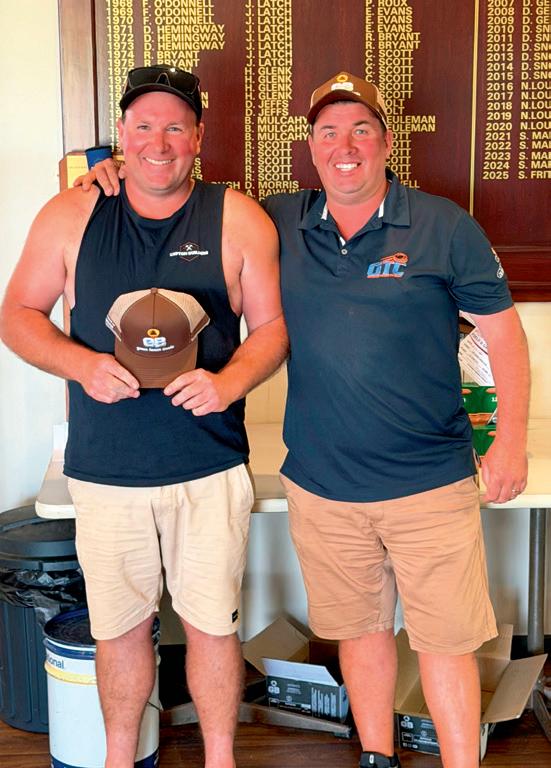
The momentum didn't slow down for Australia Day. On the 26th, we had another huge crowd of 182 shooters back at the traps. The competition was strong, but Shaun Martin was the man to beat, clinching High Gun with an incredible 96/100, including two clean rounds.
Pulling off back-to-back events of this size,
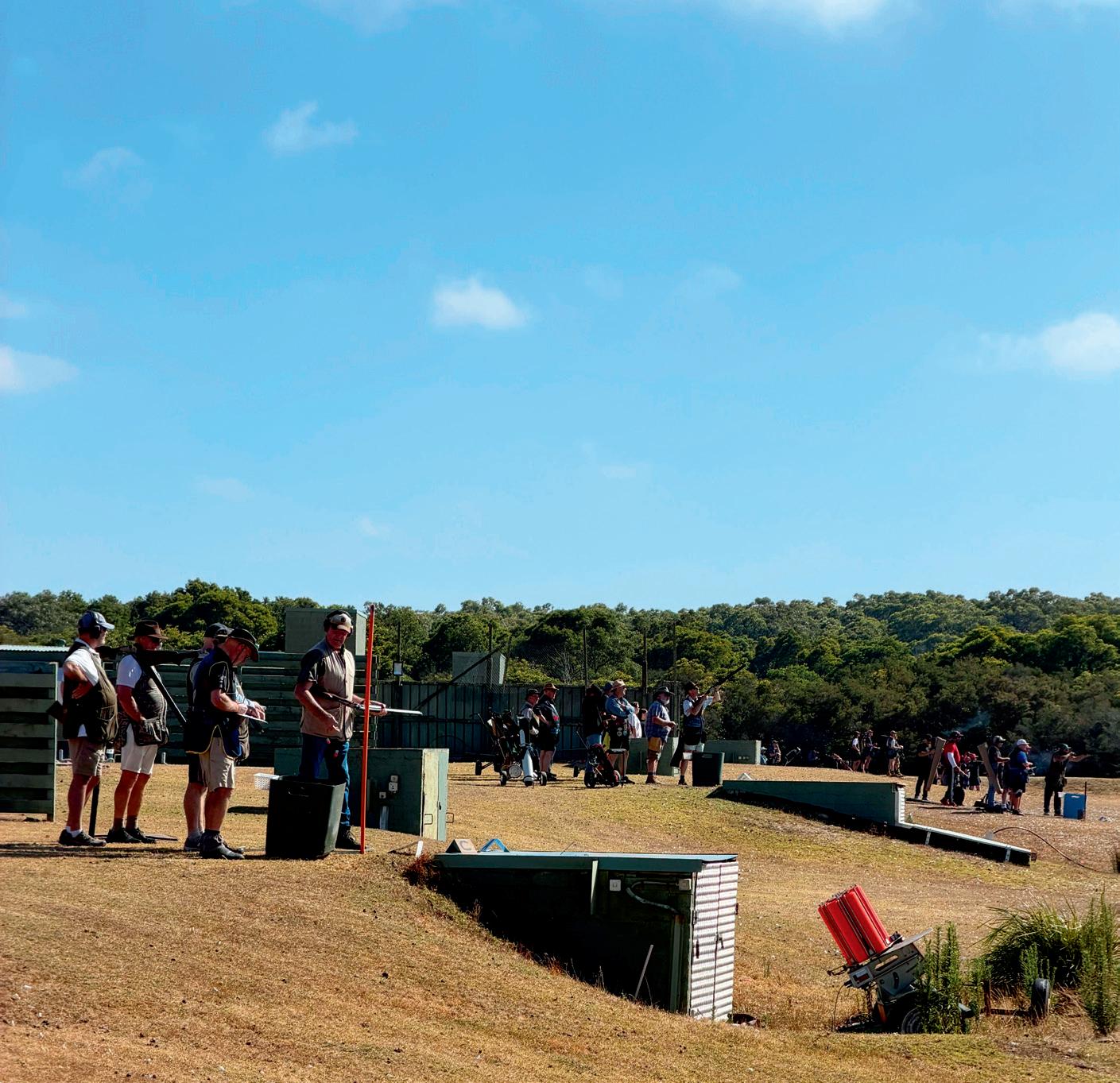
especially with two grounds running, is no small feat. A huge thanks goes out to our tireless ground crew and committee for their dedication to the club.
Cheers to everyone who made January such a success! A quick reminder to members: March is our AGM, as well as our inaugural Memorial Shoot, where we’ll take a moment to remember those who helped get our club to where it is today.
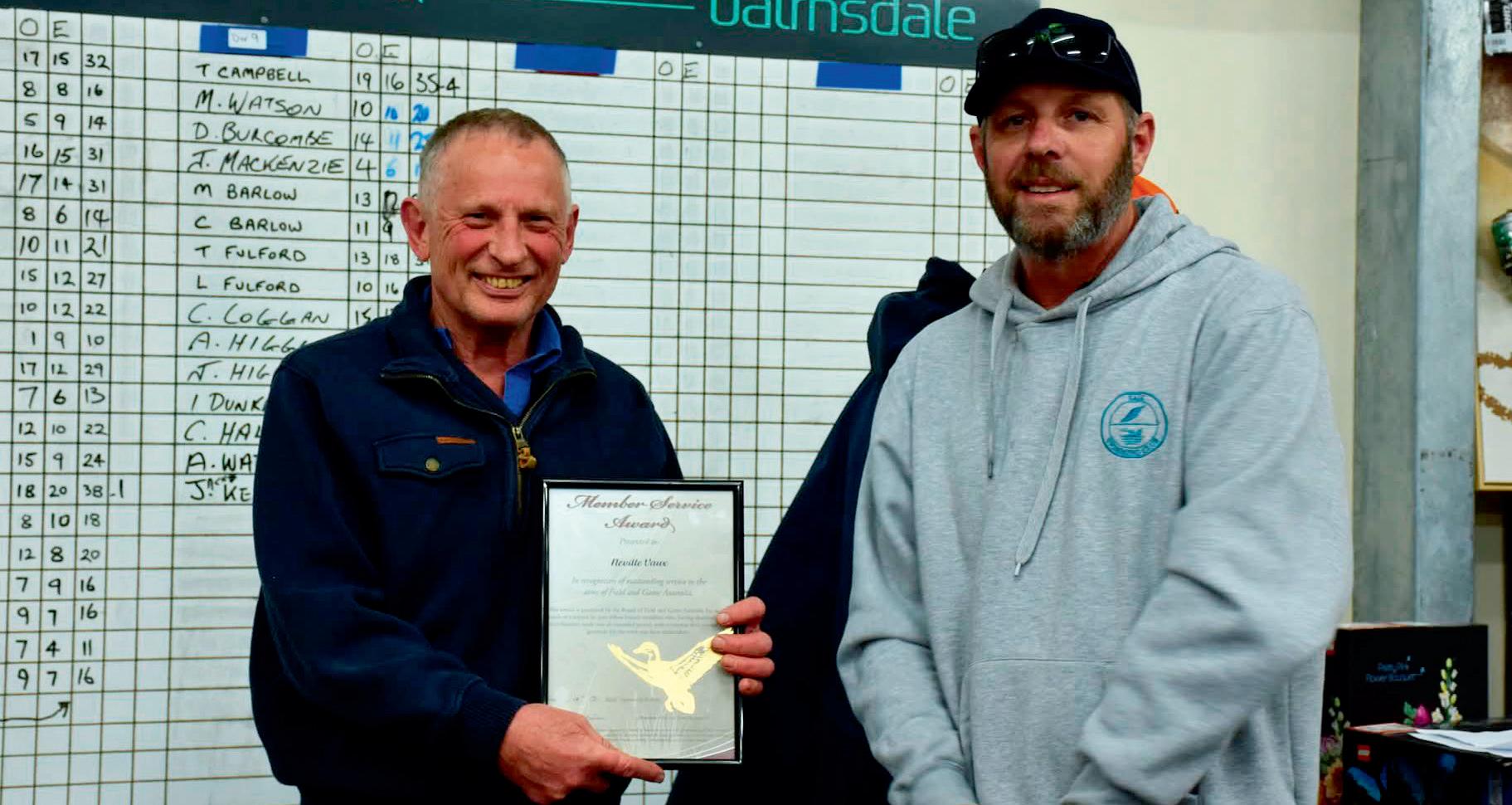
As another year draws to a close, Sale Field and Game reflects on an event that truly showcased the resilience, camaraderie, and spirit of our shooting community. While the weather may not have been on our side, the determination of our competitors certainly was.
Despite persistent rain throughout the day, an impressive 251 competitors took to the field, demonstrating not only their skill but their commitment to the sport. Their perseverance did not go unnoticed, and the club extends its sincere appreciation to everyone who turned out and made the event a success under challenging conditions.
Competition prizes were generously awarded, with 53 hams presented to successful competitors. In addition, the club ensured that luck had its moment as well, with 25 hams awarded through a lucky draw to non–place getters. Congratulations to all winners — your efforts and good fortune helped make the day memorable.
Beyond the competition itself, the event also provided an opportunity to recognise individuals whose dedication has made a lasting impact on Sale Field and Game. These awards highlight the importance of service, commitment, and contribution to
the ongoing strength of the club:
• Member Service Award – Neville Vaux
• Member Service Award – Robert Lyndon
• Dr Hugh Martin Medal Award – Geoff Glass
Each recipient has played a vital role in supporting the club and its members, and their contributions are sincerely appreciated.
At the conclusion of presentations the monster raffle was drawn. The raffle is always a highlight of the day with a huge array of valuable prizes, with a combined value of $10,000.
The day ended with a two course meal and we thank the families who assisted with bringing a dish to share.
Sale Field and Game would like to thank all competitors, volunteers, sponsors, and supporters for another successful year. Your continued involvement ensures the club remains strong.
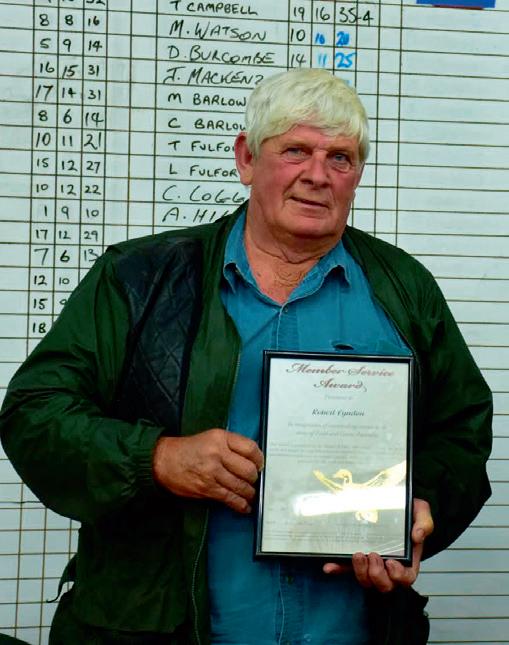
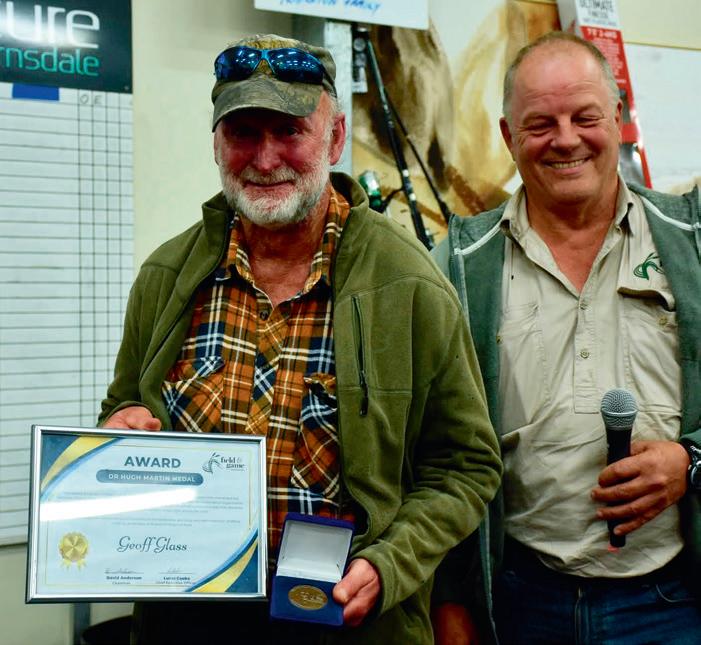
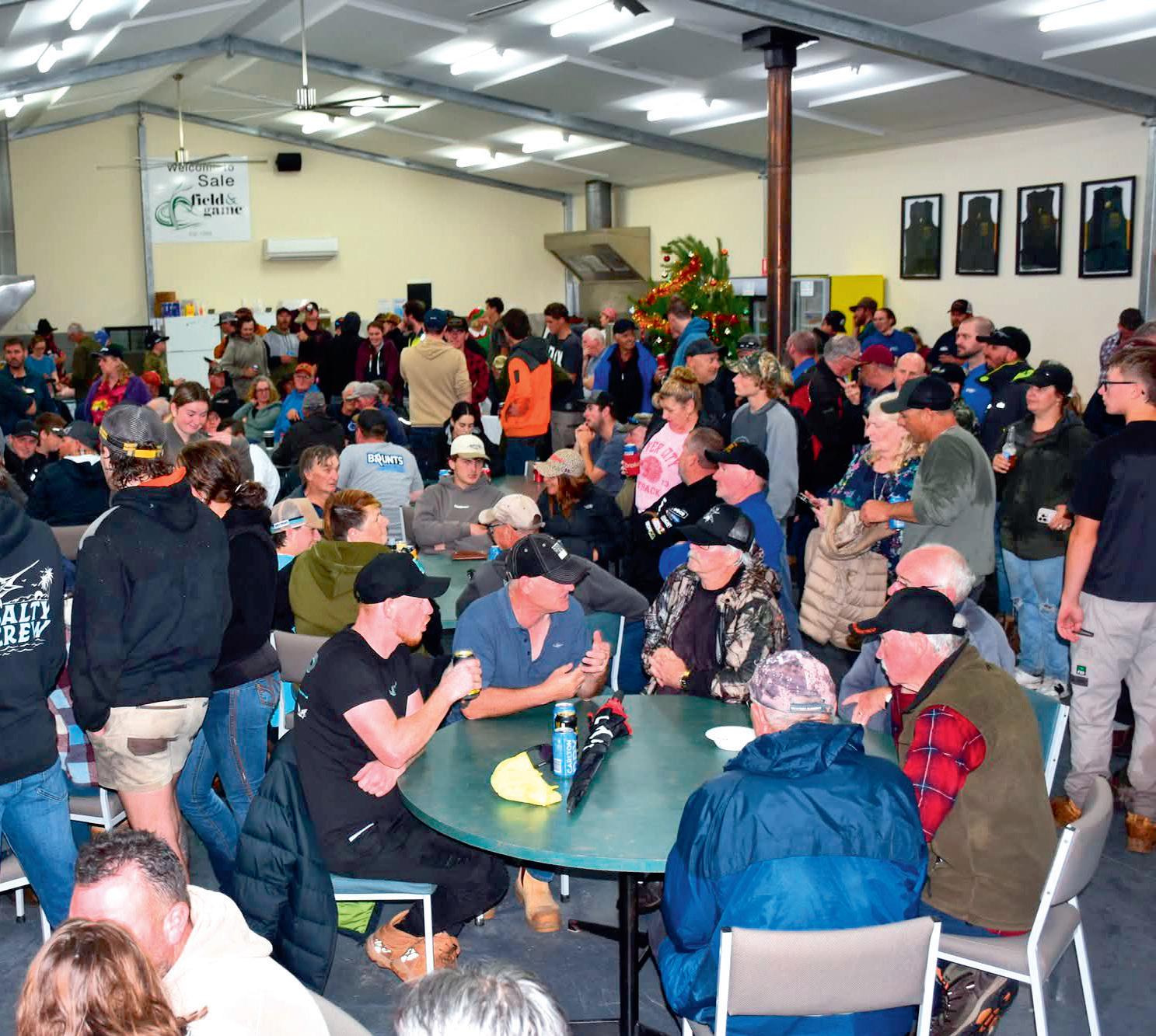
The 14th of December was a very special day for Clunes Field and Game as we held the first Tess Toose Memorial Shoot in memory of our muchloved Tess.
The day was made even more meaningful as it also marked what would have been Tess’s 55th birthday.
A total of 118 shooters attended the event, which included a 50 Target ASF shoot along with a 26 Target Rabbit Round novelty.
The wind and weather made sure there were targets to suit every skill level. With two top grounds used for the 50 Target ASF, shooters enjoyed targets thrown from below their feet, while the changing wind held some targets out wider and further, providing a good challenge for many.
The Rabbit Round highlighted the variety of rabbit targets that can be thrown and the skill required to hit them. A nemesis for some and a favourite for others, it was something a little different and was enjoyed by everyone on the day.
Although we would have loved Tess to be there shooting alongside us, her presence was felt throughout the grounds.
A small memorial table with lit candles and a few words written by those closest to Tess was visited often, offering a quiet place to stop and reflect.
Tess leaves behind a legacy of kindness, dedication, and love.
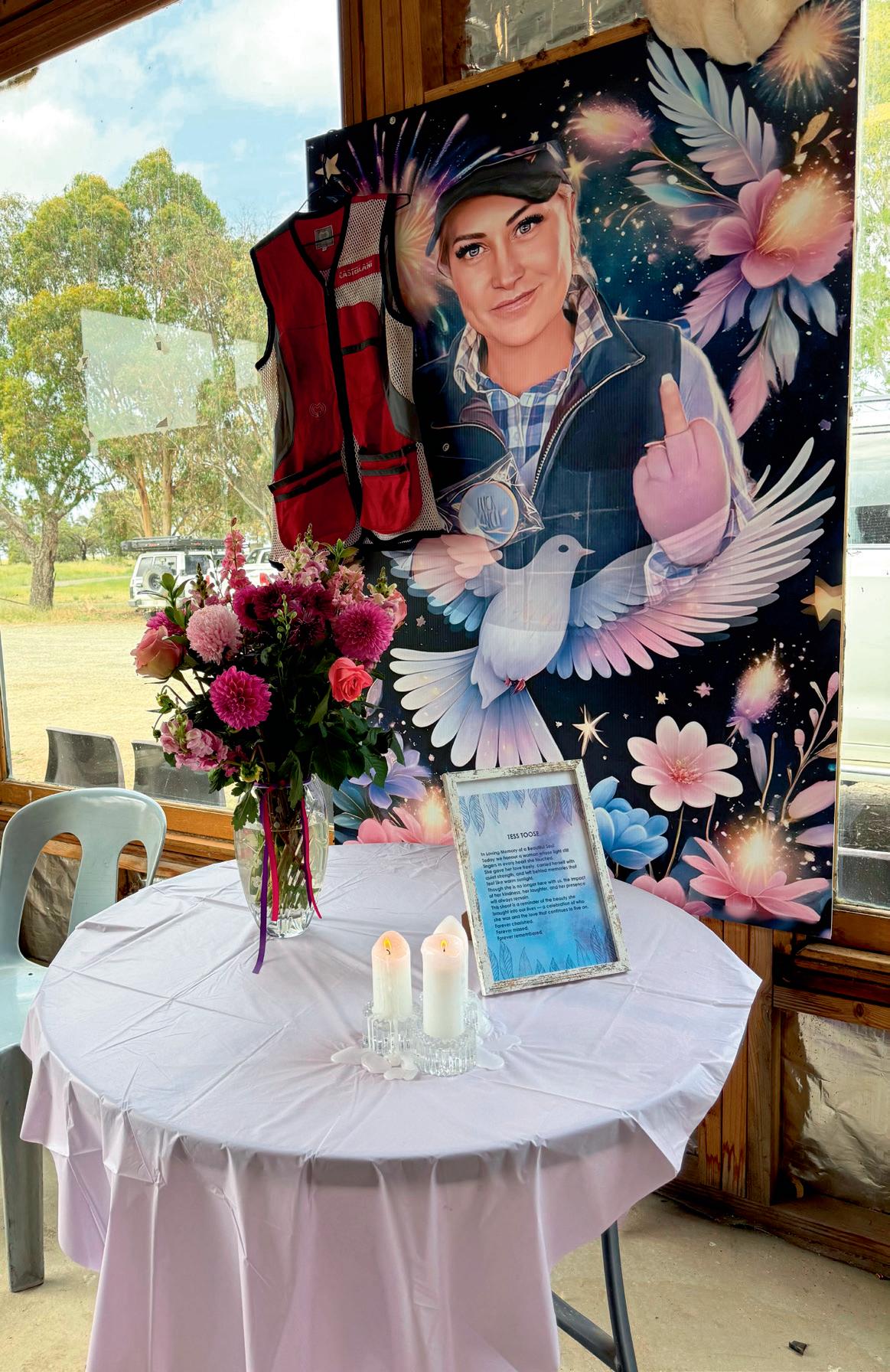
She will be remembered not only for her passion for clay target shooting, but also
as a warm and gentle soul who meant so much to so many.
Her memory lives on—in the sound of shots across the grounds, in the friendships she formed, and in the hearts of all who knew her.
Tess, you are thought of and spoken about often. We miss you every day.
“Today we honour a woman whose light still lingers in every heart she touched.
She gave her love freely, carried herself with quiet strength and left behind
memories that feel like warm sunlight.
Though she is no longer here with us, the impact of her kindness, her laughter and her presence will always remain.
This shoot is a reminder of the beauty she bought into our lives - a celebration of who she was and the love that continues to live on.
Forever cherished.
Forever missed.
Forever remembered.”
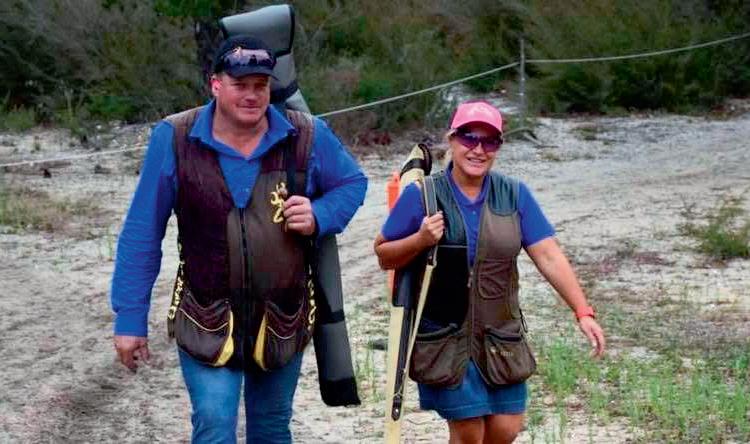
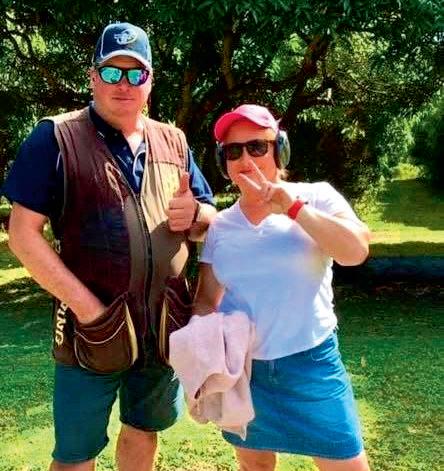
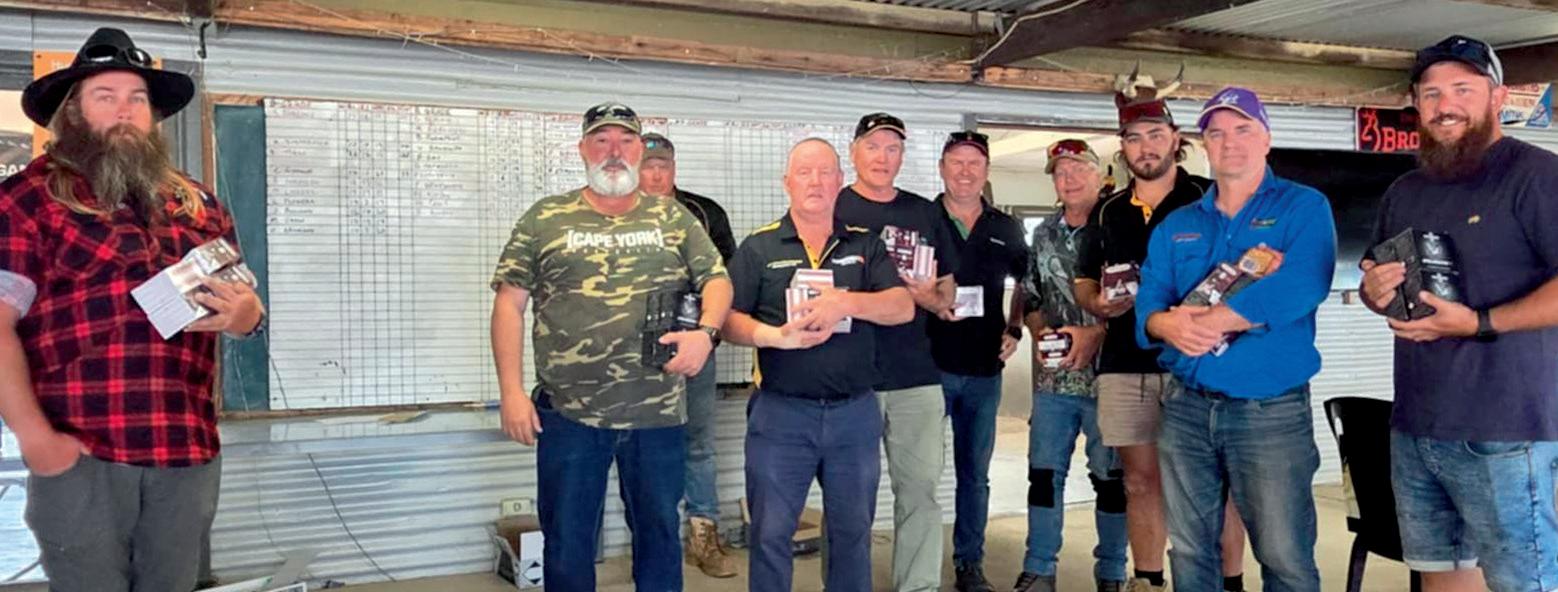
Moe Field & Game held their first shoot for 2026, the two day Barry Harkins Memorial event over the weekend of 24th/25th January with 100 targets on Saturday and 75 targets on Sunday.
Congratulations to everyone who placed over the course of the weekend, and a special congratulations to Corey Arnup (Moe F&G) for winning high gun overall (154/175)!
Three 25’s were achieved over the weekend by Shaun Cook (Moe F&G), Tony Connell (Shepparton F&G) and Wayne Lieshout (Moe F&G).
The club would like to thank everyone who chipped in and helped out over the weekend
with setting up, packing up, changing targets on Saturday afternoon, the canteen, the office and anything else I missed!
And of course a tremendous thanks to the sponsors for the weekend. Without sponsors, volunteer based clubs don’t exist.
• Roger Manson Panels Drouin
• E&R Classics Limousine Service
• TPS Electrical Inspections
• Alpine Country Morwell
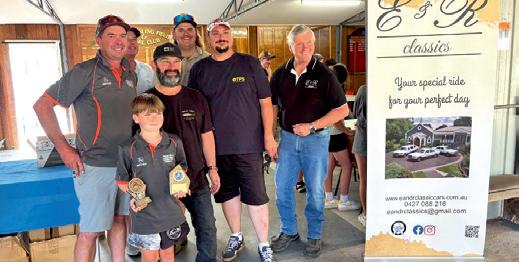

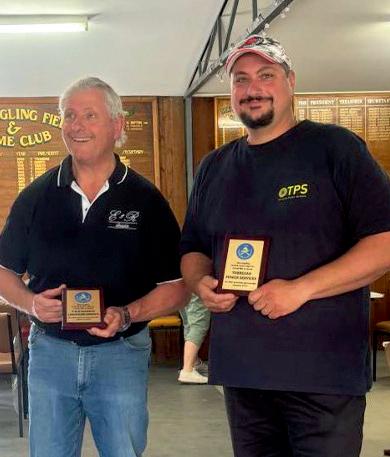
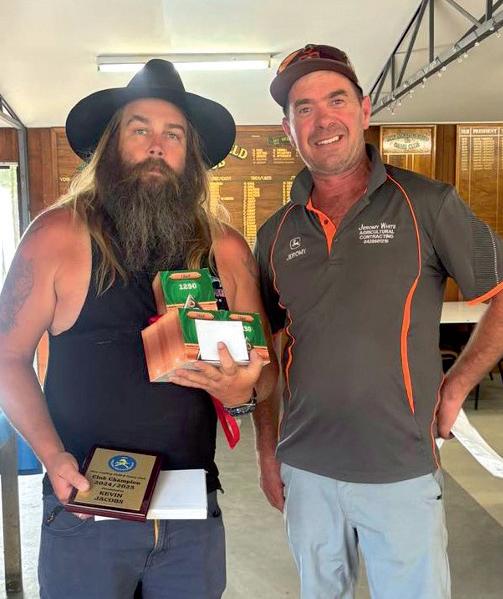
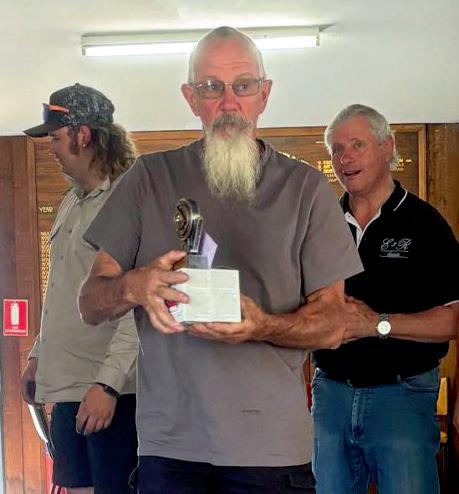
In early January, fire tore through the Streatham district, leaving a trail of devastation across properties that many Darlington Field & Game members know intimately — places where fox drives are held, where spotlighting has long been part of local pest control efforts, and where friendships with landholders run deep.
Some properties were completely burnt out. Others were luckier, but still suffered significant losses. Homes and sheds were destroyed, livestock lost, and fences and machinery damaged or wiped out entirely. It was the kind of event that stops a community in its tracks.
Within days, Darlington Field & Game members stepped up.
On the weekend of 17–18 January, a group of members and close club associates volunteered their time, machinery and vehicles to begin the long road to recovery. Their work focused on fence removal and the creation of stock-proof paddocks on properties south of Skipton — practical, unglamorous tasks, but essential ones for landholders trying to protect surviving
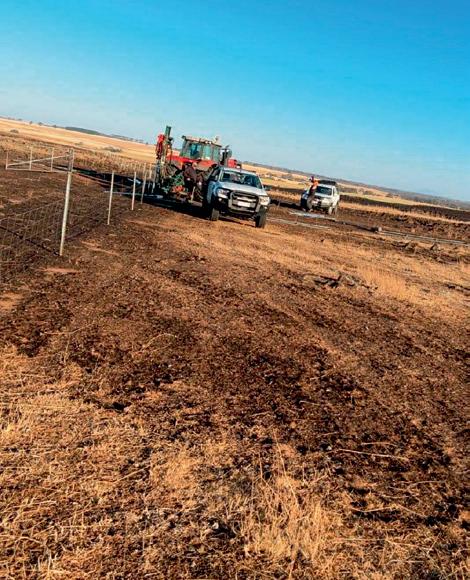
stock and stabilise their properties after the fires .
As that recovery effort was underway, fire struck again.
The Larralea fire burned through two members’ properties and additional land where the club conducts fox drives. Once more, Darlington members were everywhere they were needed — on fire trucks, driving vehicles fitted with water carts, and working alongside emergency services. In the days that followed, others helped fight the blaze, euthanise injured animals, move stock to unburnt ground, and search for missing livestock in dangerous and heartbreaking conditions
This is not work that attracts headlines or
trophies. It happens quietly, out of sight, driven by a deep sense of responsibility to neighbours, landholders and the wider community.
Darlington Field & Game’s response is a powerful reminder that Field & Game clubs are more than shooting organisations. They are made up of people who understand the land, who show up when things go wrong, and who are prepared to roll up their sleeves when help is needed most.
Behind every competition and social shoot is a network of members who care — about each other, about the people who trust us on their properties, and about the communities we are part of. When crisis hits, that sense of care turns into action.
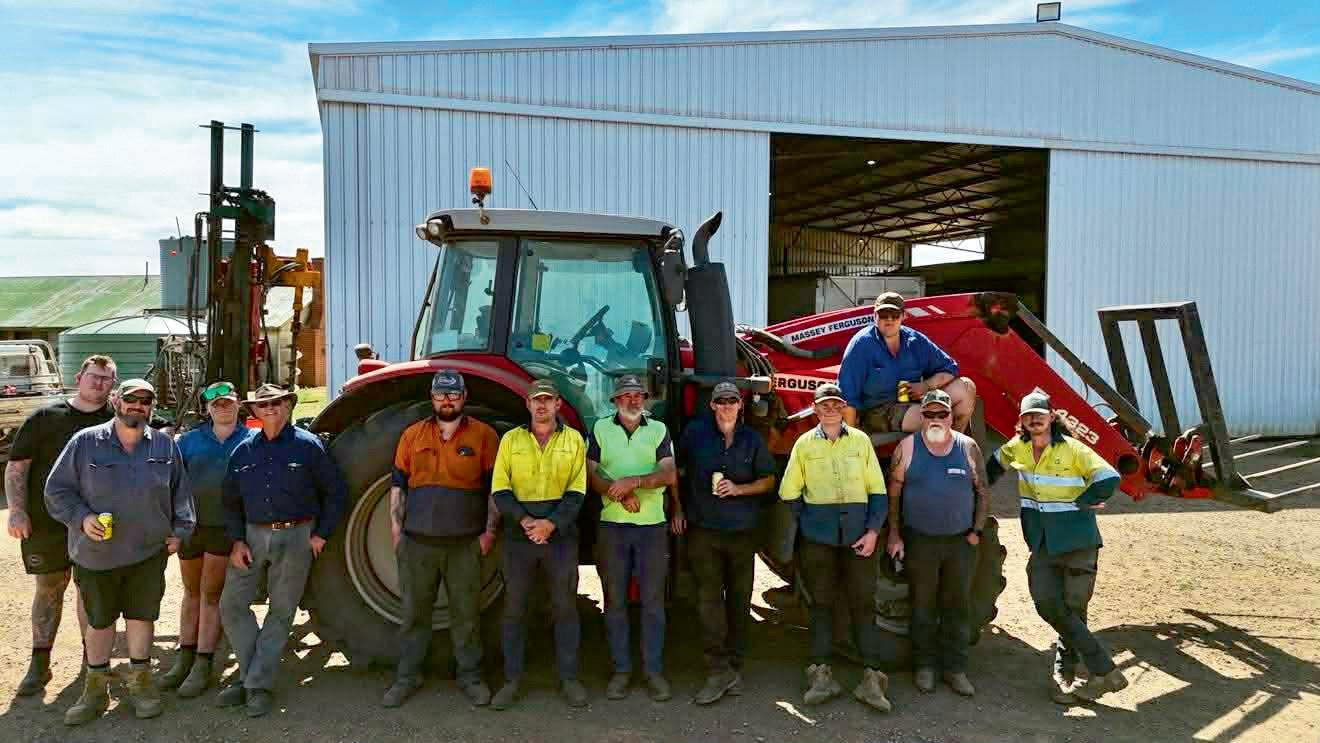
FGA branches sometimes adjust shoot dates, times, targets, and other details. Make sure you have the latest information before you attend a clay target event. Follow these steps:
1. CHECK THE 2026 SHOOT BOOK ONLINE
The FGA website always has the most current details. Make sure you review it before heading to a shoot.
2. FOLLOW THE BRANCH ON SOCIAL MEDIA
Visit the branch’s Facebook page or website. Updates on time changes, catering, parking, or other important info are often posted there.
3. PLAN AHEAD AND PRE-NOMINIATE
Secure your spot by nominating via My Clubs My Scores or contacting the branch directly. This speeds up check-in and allows the branch to reach you if plans change.
View the 2026 Shoot Book: www.fieldandgame.com.au
Questions? Call the FGA National Office on 03 5799 0960.
Across Australia, Field & Game
Australia members understand a simple truth: protecting waterfowl isn’t just about seasons and bag limits — it’s about what happens long before birds ever reach the sky.
That same understanding sits at the heart of one of the most successful waterfowl conservation programs developed by Delta Waterfowl in North America — the Hen House nesting program.
On the prairie breeding grounds of Canada and the northern United States, Delta Waterfowl researchers faced a problem that will sound familiar to Australian conservationists: duck populations were not limited by hunting pressure, but by poor breeding success. Predation and habitat fragmentation meant many natural nests simply didn’t survive long enough to hatch.
Rather than focusing solely on restrictions, Delta Waterfowl invested heavily in on-ground solutions. The Hen House — a raised, predator-resistant nesting structure placed in wetlands — dramatically improved nesting success for species such as mallards. In areas where natural nests were often unsuccessful, these structures lifted hatch rates to levels that could genuinely sustain populations.
What makes the story relevant for Australian readers is not the structure itself — but the philosophy behind it.
Like Field & Game Australia’s wetland restoration projects, habitat works, and waterfowl monitoring programs, the Hen House approach recognises that active management is essential. Healthy populations don’t happen by chance; they are the result of informed intervention, long-term monitoring, and volunteers
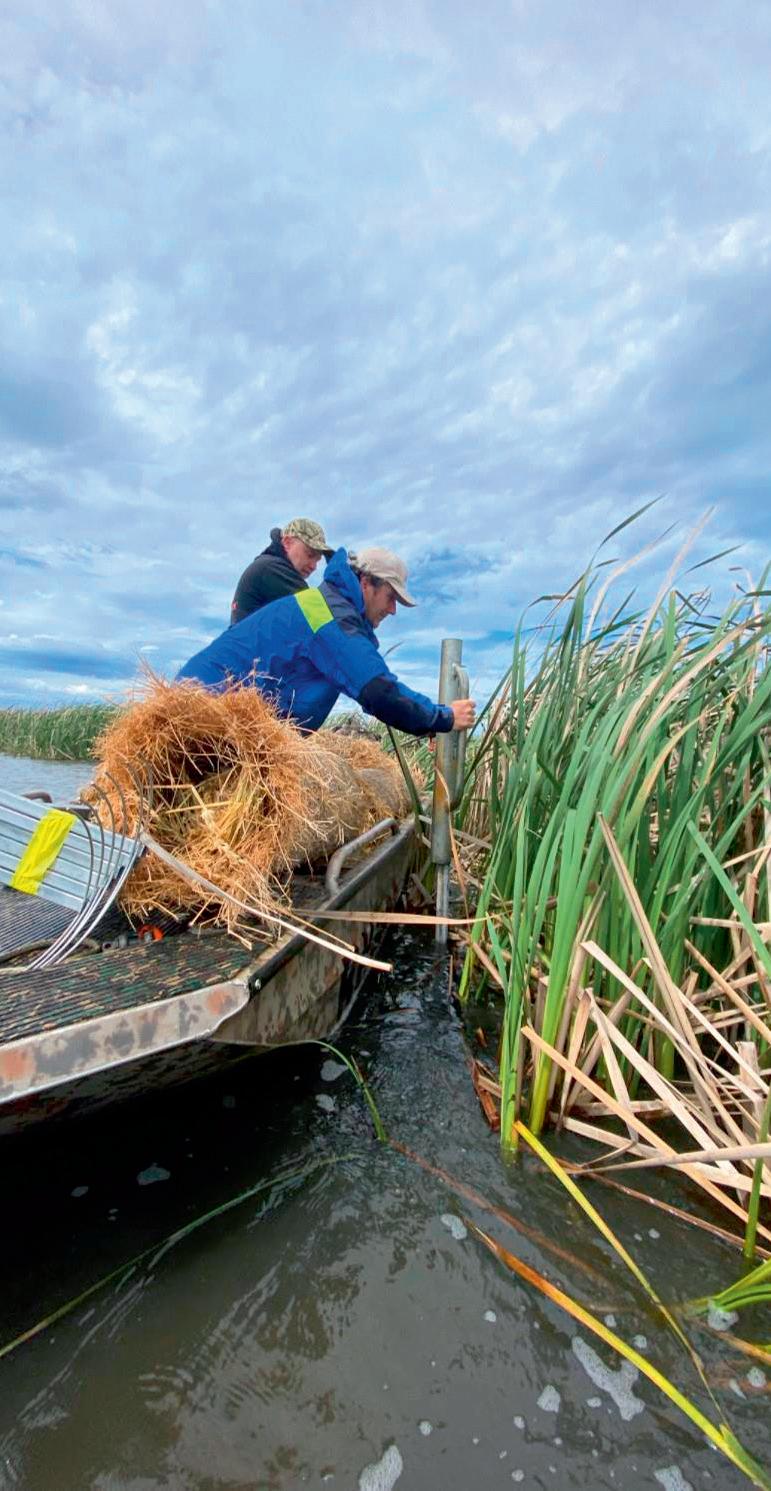
willing to put in the work year after year.
Australian conditions are different, but the principle is the same. Whether it’s restoring wetland hydrology, improving breeding habitat, controlling invasive species, or conducting annual counts, the work FGA members do locally reflects the same conservation mindset — one that
looks beyond the season and focuses on outcomes.
The Hen House story is a reminder that hunters and conservationists are often the same people, and that meaningful conservation success comes from practical action on the ground — not just policy debates.
Serves 1–2 hunters
Ingredients (Field-Friendly)
DUCK
• 1 fresh wild duck, plucked and dressed
• Salt
• Black pepper
• Duck fat or cooking oil
SAUCE
• 2 tbsp sugar
• 1 tbsp vinegar (white or apple cider)
• Zest of 1 orange (peel strips with a knife)
• Juice of 1–2 oranges

• ½ cup water or light stock cube water
• Small knob of butter (optional but good)
OPTIONAL FIELD EXTRAS (IF YOU’VE GOT THEM):
• Dash of port / whisky / brandy
• Pinch of chilli flakes
• Small spoon of marmalade (if no fresh orange)
GEAR
• Camp stove
• Frypan
• Small pot or second pan
• Knife
• Tongs or fork
• Cup for measuring
Method
1. PREP THE DUCK
1. Split duck down the breastbone or take breasts off.
2. Pat dry.
3. Score skin if using breasts.
4. Season with salt and pepper.
2. COOK THE DUCK
1. Heat frypan on camp stove.
2. Add duck fat/oil.
3. Cook duck skin-side down first.
4. Render fat slowly until skin is golden and crisp.
5. Flip and cook briefly.
6. Remove and rest near heat source.
Wild duck cooks fast — don’t overcook it.
3. MAKE THE BUSH ORANGE SAUCE
In your small pot or pan:
1. Add sugar + vinegar.
2. Heat until sugar melts and darkens to a deep amber caramel.
3. Add orange peel strips.
4. Carefully add orange juice.
5. Add water/stock cube water.
6. Simmer 5–10 minutes until slightly thickened.
7. Add butter if you’ve got it.
8. Taste and adjust:
• Too sweet > more vinegar
• Too sharp > tiny pinch of sugar
4. FINISH
• Slice duck.
• Spoon hot orange sauce over.
• Eat straight from the pan or plate up if you're fancy.
WHAT THIS GIVES YOU
• Bitter-sweet sauce
• Proper caramel base
• Balanced acid
• Rich duck fat flavour
• No sugary glaze
• No fake sweetness
• Real Duck à l’Orange character
• Camp-stove realistic
• Minimal gear
• Fast cook
• Works with wild birds FIELD TIPS
• Orange peel adds bitterness — don’t skip it
• Caramel matters — don’t rush it
• Vinegar is essential (don’t skip)
• Wild duck needs acid more than sweetness
• Keep heat moderate — camp stoves burn hot
• Less sugar is better than too much
BUSH VARIATIONS
No oranges?
• Use marmalade + vinegar + water
Want it richer?
• Add dash of whisky or port
Want it more gamey?
• Add crushed juniper berry
Want it smoky?
• Add splash of campfire-smoked water
EAT IT WITH
• Damper
• Camp bread
• Frypan spuds
• Beans
• Rice
• Or straight off the pan with a fork and a grin
Wild Game, Elevated to a whole new level but kept simple enough to do at home.
There’s nothing quite like transforming wild duck and goose — pure, natural protein — into something truly special. Slow-cooked, spiced, and wrapped by hand, these wild dim sims bring the essence of the hunt into the kitchen.
From the field to the plate, it’s all about respecting the ingredient, celebrating flavour, and letting the wild shine through.
Ingredients
DIM SIM
• 50/50 wild goose (or duck) and pork minced
• Corn flour to bind
• 1-2 eggs
• Garlic and ginger paste
• Chinese five spice
• White pepper
• Grated carrot
• Spring onion
• Fine diced Chinese cabbage
• Oyster sauce
• Soy sauce
• Sugar to taste
DIPPING SAUCE
Method & Preparation
Simple Soy Dipping Sauce
Ingredients
• 2 tbsp light soy sauce
• 1 tbsp rice vinegar (or white vinegar)
• 1 tsp sugar (or honey)
• 1 tsp sesame oil
Optional add-ins (use what you like):
• Finely chopped garlic
• Chili oil, chopped fresh chili or chili crisp (to taste)
• Sliced spring onion
• A few drops of water if you want it milder
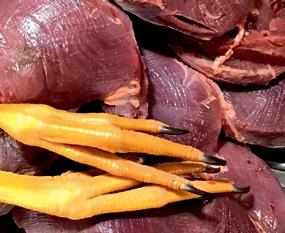
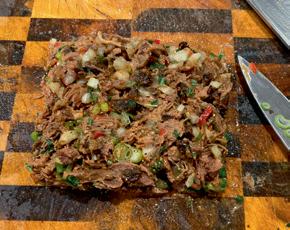

Method

1. Stir everything together until the sugar dissolves.
2. Taste and adjust: more vinegar for tang, more sugar for balance, more chili for heat.
3. Mix ingredients well
4. Fill the won ton wrappers and shape them as per the image
5. Deep fry
Serving suggestion
Serve with your favourite dipping sauce
2nd option is steamed and traditional soy sauce
INGREDIENTS
• X2 goose breast diced
• X2 garlic clove
• 2tsp of five spice powder
• 1tbsp ketchup manis (sweet soy)
• Pinch of chilli flakes
• 2 red Thai chilli (optional)
• 1/2 cup of chopped fresh garlic chives
• 3tsp lite soy sauce
• Pinch of Szechuan pepper
METHOD & PREPARATION
1. Put all ingredients into a food processor and blitz
2. Fill wonton wrappers (available at most stores)
3. Put one wonton sheet in your hand and lightly brush with a bit of water on one side
4. Wet the inside edge of the wrapper with a little water, put a tablespoon of the mix into the middle off the wonton sheet and cup it together into the dimsim shape.
5. Place all the dim sims into a steamer on greaseproof paper
6. Steam gently for 20 min
Serving suggestion
Serve with your favourite dipping sauce, our preference is more of the ketchup manis included in the recipe above
Tea-smoked duck is one of those dishes that feels impressive but is surprisingly simple. The gentle smoke adds depth without overpowering the natural flavour of the duck — perfect for showcasing good birds treated with care.
Serves 2–4 (depending on size of duck)
FOR THE DUCK
• 1 whole duck (or 2–4 duck breasts), skin on
• Sea salt
• Freshly ground black pepper
• For the tea-smoking mix
• ½ cup long-grain rice
• 3 tablespoons loose black tea (Lapsang Souchong is ideal, but any black tea works)
• 3 tablespoons brown sugar
• 2 star anise (optional)
• 1 small cinnamon stick (optional)
• Strip of orange peel (optional)
1. DRY THE DUCK WELL
Pat the duck or breasts dry and lightly season with salt and pepper. If time allows, leave uncovered in the fridge for a few hours or overnight — this helps the skin dry and improves flavour.
2. COOK THE DUCK FIRST (IMPORTANT)
Tea smoking is for flavour, not cooking from raw.
• Breasts:
Place skin-side down in a cold pan. Slowly bring up the heat and render the fat until the skin is golden and crisp. Turn and cook briefly on the flesh side until medium-rare. Remove and rest.
• Whole duck:
Roast at 180°C until just cooked through (or slightly under), then rest well.
1. PREPARE YOUR SMOKER
Line a deep wok or heavy pot with foil (this saves cleaning).
Mix the rice, tea, sugar and spices and spread evenly over the base.
2. SET UP THE RACK
Place a wire rack or steamer basket
above the smoking mix. The duck must not touch the mixture.
3. SMOKE THE DUCK
• Place the duck on the rack
• Cover tightly with a lid (seal gaps with foil if needed)
• Place over medium heat until smoke appears
• Reduce heat slightly and smoke:
Duck breasts: 8–12 minutes
Whole duck: 15–25 minutes (depending on size)
The duck will deepen in colour and take on a rich, aromatic smoke.
4. REST AGAIN
Remove from the smoker and rest for at least 10 minutes before carving.
Slice the duck thinly and serve simply:
• With steamed greens or Asian-style slaw
• A drizzle of soy and sesame oil, or hoisin on the side
• Plain rice or crisp potatoes work well
The flavour should be smoky, slightly sweet, and clean — not heavy.
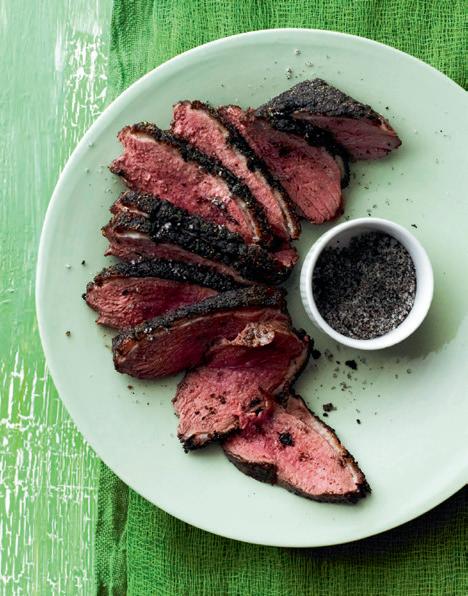
Tea-smoked duck sits in a lovely middle ground — rich but not heavy, smoky with a touch of sweetness. The wine needs to lift the dish, not compete with it.
PINOT NOIR (Cool Climate) – Best All-Round Match
A cool-climate Pinot Noir is hard to beat with duck.
• Bright acidity cuts through the richness
• Red cherry and earthy notes complement the smoke
• Soft tannins won’t overpower the meat
Look for: Yarra Valley, Mornington Peninsula, Tasmania
SHIRAZ (Medium-Bodied, Not Too Ripe)
If you like a bolder pairing, a restrained Shiraz works beautifully.
• Pepper and spice echo the tea and aromatics
• Avoid overly jammy or high-alcohol styles
Look for: Grampians, Heathcote, cooler Barossa styles
GRENACHE OR GSM BLEND
A great option if serving the duck with Asian-inspired sides.
• Red fruit sweetness pairs well with tea smoke
• Lighter structure keeps the dish balanced
WHITE OPTION: Off-Dry Riesling or Gewürztraminer
For those who prefer white wine:
• Slight sweetness softens the smoke
• Aromatics lift the dish without heaviness
Especially good with: Hoisin, soy, or spiced accompaniments


You can always tell who the volunteers are.
They’re the ones who arrive early and leave late.
The ones who know where the keys are kept.
The ones quietly fixing problems you didn’t know existed.
They rarely announce themselves. In fact, they’re often invisible — right up until the moment they stop.
At first, you might think I’m talking about presidents of organisations, committee chairs, or elected representatives. Maybe even politicians. And yes, some of them fit the description.
But I’m not really talking about them.
I’m talking about the people who make things happen while everyone else is busy having opinions.
The noise, and the gap beneath it
Outdoor recreation is loud these days. Passionate. Opinionated. Certain.
Social media has ensured that everyone has a megaphone — and many use it generously.
There is no shortage of commentary about what should be done, who should act, and why someone else has got it wrong. Every issue is urgent. Every decision is scrutinised. Every compromise is framed as failure.
And yet, beneath all that noise, there’s a quieter reality.
Clubs don’t run on posts.
Branches don’t survive on outrage.
Conservation doesn’t happen in comment sections.
It happens because a small group of people keep turning up.
Why so many capable people hesitate
Here’s the uncomfortable truth: most people who would make excellent leaders never put their hand up.
Not because they don’t care.
But because they’ve seen what happens to those who do.
They’ve watched good intentions misread. They’ve seen decent people criticised for decisions made in good faith. They’ve felt that knot in the stomach that comes with knowing that no matter what you do, someone will be unhappy — and possibly vocal about it.
So they stay back. They tell themselves they’re “too busy”. Or that others are better suited. Or that it’s easier to help quietly — or not at all.
And slowly, the load concentrates on fewer shoulders.
If you’ve ever thought, “I should help more…”
If you’ve ever felt a twinge of guilt walking past a working bee.
If you’ve ever thought, I really should get down there one day.
If you’ve ever assumed the branch will be fine without you.
This is for you.
Because the people who already volunteer don’t need more praise — they need more company.
And the difference between a branch that thrives and one that struggles is rarely grand strategy. It’s whether enough people are willing to do the unglamorous things:
set up, pack away, cook, clean, fix, plant, fence, and organise.
A quiet congratulations — and an invitation
If you’re already one of those people: thank you.
You are the reason shoots run, grounds stay open, wetlands improve, and communities exist. You are noticed — even when it doesn’t feel like it.
If you’re not, here’s the good news: the bar is low.
You don’t need to join a committee. You don’t need to lead a charge.
You don’t need to fix everything.
Just turn up.
One minute. One hour. One day.
A shoot set-up. A pack-away. A working bee. A conservation day.
It will cost you very little — and it will mean a great deal.
Real leadership in Field & Game Australia doesn’t shout. It steadies. It shows up. It keeps going when enthusiasm fades and the work remains.
And perhaps that’s the reminder we all need: the future of our branches, our traditions, and our places won’t be decided by the loudest voices.
It will be decided by the people who quietly say, I’ll help.
Or, as it’s often put more simply: The work is done by those who turn up.
So if you do — keep going.
And if you don’t — we’d love to see you.

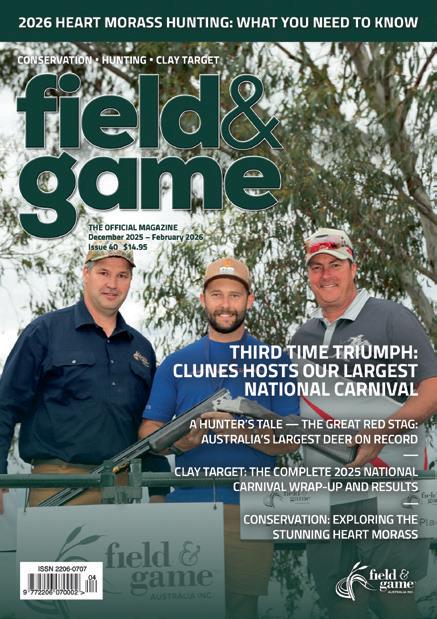
Field & Game’s quarterly magazine is distributed to about 15,000 households in March, June, September and December each year. The magazine holds a wealth of information, articles and photos on all aspects of Field and Game Australia’s activities. No other publication can offer the same targeted, repeated exposure to our shooting members! Call us now to secure your spot. Contact our National Office on 03 5799 0960 or email - editor@fieldandgame.com.au


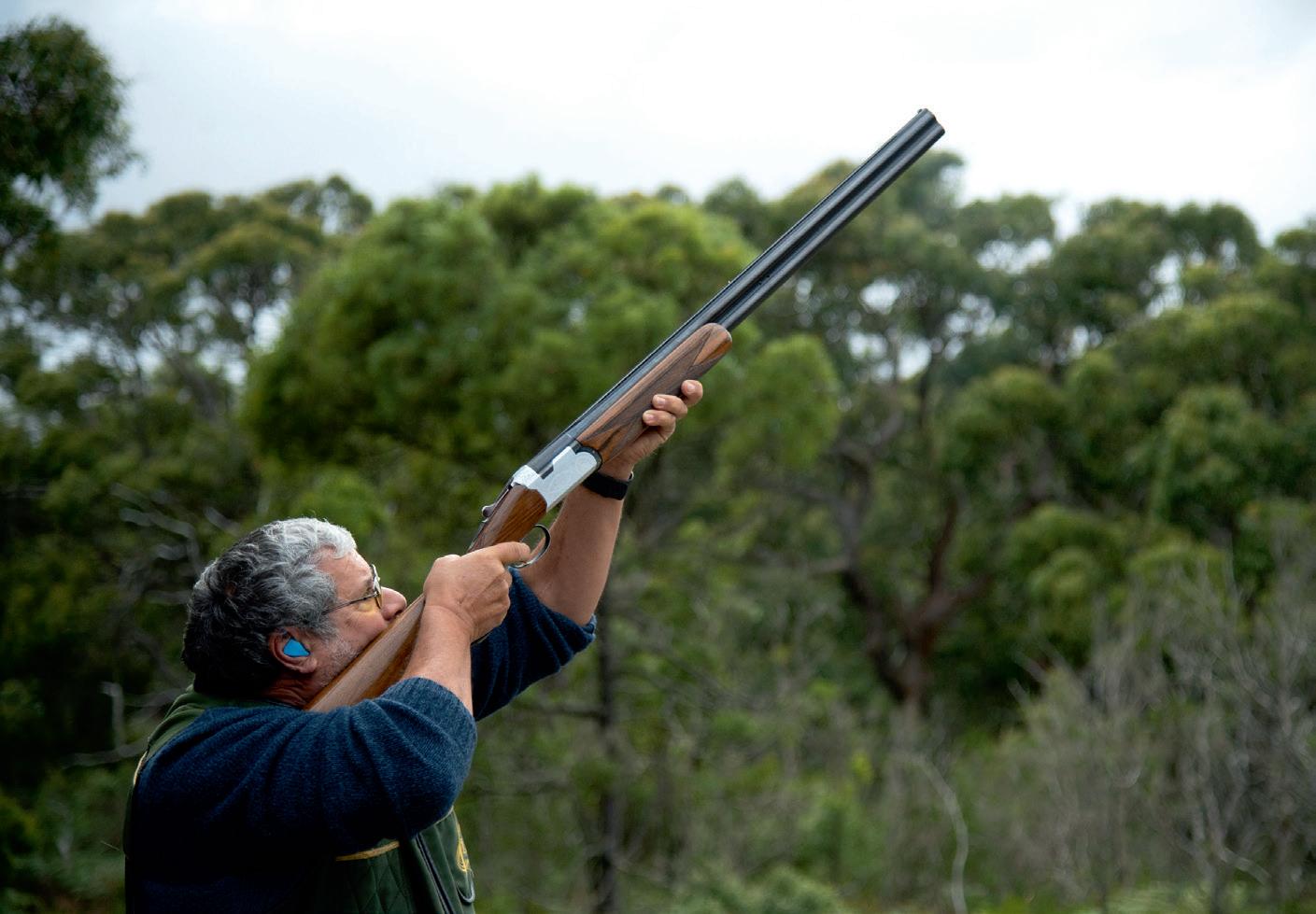







At Beretta, we understand that the right gun can make all the difference. From the Silver Pigeon I to the 688 Performance, to the 694 to the DT11, our Steelium barrels ensure a more gentle shot with better consistency. With each advancement, a higher grade Steelium barrel means an even more consistent pattering when your shots hit their target. Steelium, Steelium Plus and Steelium Pro, when you need the extra edge, Beretta provides a complete range of competition shotguns to suit any discipline and any budget.

It's all about you.