Born

Born
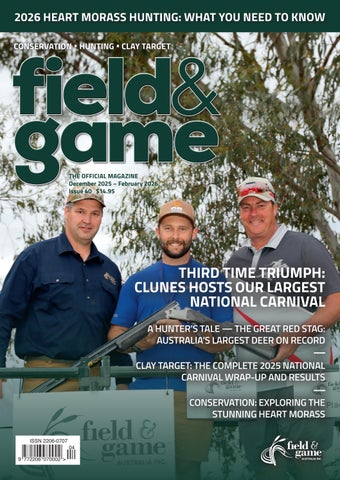
As we head into the final stretch of 2025, it’s been another busy and rewarding period for Field & Game Australia. The standout moment of the quarter was undoubtedly our National Carnival at Clunes, which once again delivered an outstanding celebration of clay target shooting. It was wonderful to meet so many of you over the long weekend, to hear your stories, and to see the grounds buzzing with competitors, families and supporters from right across the country. Our sponsors and vendors have shared overwhelmingly positive feedback and are already looking ahead with enthusiasm to 2026—an encouraging sign of the strength and growth of our event.
This edition brings together a wide range of stories that reflect the depth of activity across our organisation. Inside, you’ll find a full wrap-up of the National Carnival, insights from our winners, and reflections from those who brought the grounds and events to life. We also share an important update on access to the Heart Morass in 2026, along with a feature that explores this remarkable wetland and what it means for our members.
With duck season only a few months away, we’ve included practical guidance to help hunters navigate the new Game Management Authority Education Modules and ensure their MyGL profiles are ready well ahead of opening morning. Alongside these features, we have updates from our Chairman and CEO, expert perspectives on gundog training, conservation work, clay target performance, and the rich hunting traditions that continue to shape our community.
We are also pleased to include a diverse range of branch news and event reports from across the country. Thank you to everyone who contributed their stories, photos and updates—your efforts help showcase the strength, passion and dedication that exist within every corner of Field & Game Australia.
We hope you enjoy this edition and feel as energised as we do heading into 2026. Thank you to our members, branches, volunteers and partners for your ongoing support, your contributions and your passion for our sport, our wetlands and our wildlife.
Wishing you all a safe and happy Christmas period and holiday period.
Anne-Marie Blewett
Field & Game Australia
If you have any feedback of any sort of would like to contribute to Field & Game magazine in any way, drop us a line at editor@fieldandgame.com.au or, you can call on (03) 5799 0960.
Lucas Cooke – Chief Executive Officer
Glenn Falla – Conservation & Hunting Manager
Anne-Marie Blewett – Operations Lead
Wayne Peters – Administration Officer - Member Services
Ian Anderson – Branch Liaison Officer
Chelsea Skinner – Business Accounts Clerk
Shannon Simmons – Media & Communications Coordinator
David Anderson – Chairman
david.anderson@fieldandgame.com.au
Trent Leen – Vice-Chairman trent.leen@fieldandgame.com.au
Glenda Anderson
glenda.anderson@fieldandgame.com.au
Adam Carson adam.carson@fieldandgame.com.au
Vicki Norris vicki.norris@fieldandgame.com.au
Paul Sharp paul.sharp@fieldandgame.com.au
Michaela Shirley michaela.shirley@fieldandgame.com.au
Jacqui Maskell – Graphic Designer
Anne-Marie Blewett – Operations Lead
Shannon Simmons – Media & Communications Coordinator
Karen Davies
Rod Watt
Michael Kruger-Davis John Long Mauro Conti
Deb Shields – General Manager
Deanne Martin – Account Manager
Deepika Khadgi – Customer Co-ordinator
Trent Small – Prepress Manager
Andy Shayler – Production Manager
Sean Crombie – Warehouse/Mailing Supervisor
Roger Teague – Dispatch Supervisor
Alex D’Ambrosio – Warehouse/Dispatch Manager
Field & Game (ISSN: 2206-0707) is published and printed by McPhersons Printing (76 Nelson St, Maryborough VIC 3465) under licence from Field & Game Australia Inc www.fieldandgame.com.au
Copyright 2025 Field & Game Australia Inc.
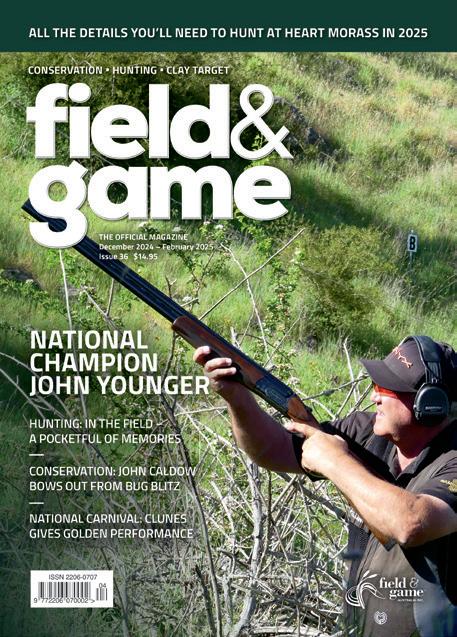
December 2025 - February 2026 Issue 40
Page 6
FGA Chairman’s Report: Celebrating a strong finish to 2025: David Anderson
Page 8
FGA Chief Executive Officer: A Big quarter for a growing organisation – Lucas Cooke
Page 10
Gundogs: Foundation training for gundogs – Rod Watt
Page 12
Hunting: Heart Morass 2026, Our thriving wetland and Hunter’s haven
Page 14
Clay Target Shooting: 2025 National Carnival: Clunes delivers another golden National Carnival
Page 15
Clay Target Shooting: Blake Nankervis takes the High Gun
Page 16
Clay Target Shooting: Our 2025 Ladies, Veteran’s Junior and Sub Junior winners
Page 18
Clay Target Shooting: 2025 National Championship Results
Page 22
Clay Target Shooting: 2025 Nationals Carnival – Friday and Monday events
Page 24
Clay Target Shooting: Thank you - Thanks to our Sponsors and Vendors
Page 26
Clay Target Shooting: Novelty event, Lucky 10 Five-Stand Handicap Returns
Page 28
Clay Target Shooting: Thank you – Peter Hall and Phil Toose
Page 29
Clay Target Shooting: Psychological Skills for Shooting – Is it better to be confident or competent?
Page 30
Board Profile: FGA Board –Glenda Anderson
Page 32
Hunting Traditions: Don Mayfield World Champ
Page 34
Wild Deer Expo
Page 35
Voting Matters
Page 36
Conservation: Rice Rice Baby –Gamebird Management in NSW
Page 38
Hunting: Northern Territory Goose & Duck Season Off to a Mixed Start
Page 40
Hunting is Conservation: Wild Harvest Down Under – Reconnecting Through Sustainable Use
Page 42
Events: Australia Day 2026 at the Connewarre Wetland Centre
Page 44
Heart Morass: Educating FGA Staff
Page 46
Review: Norma Claystrike
Page 48
2025 NATIONAL CARNIVAL – Clunes delivers another golden National Carnival
General: Modern Anatomy of a Shotgun Shell
Page 50
Hunting: My GL and The GMA Education Modules
Page 52
Conservation: Deer, Debate and Double Standards – Why Victoria’s Management Model Makes Sense
Page 54
Vet Care: Keeping your Hunting Dog in Top Shape
Page 56
Hunting: A Hunter’s Tale — The Great Red Stag
Page 58
Conservation Research: Understanding Fox-Borne Parasites in Victoria 14
Page 60
International: Wild Origin Visits
Page 62:
Branch News: Sale – School Shoot
Page 63:
Branch News: Benalla – Clay Target Fun for the Benalla Broken River Venturers
Page 64
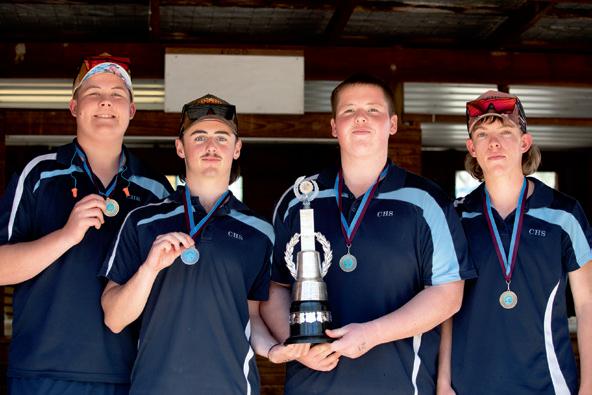
Branch News: Benalla – School Clay Target Championships 2025
Page 66
Branch News: Gouldburn Workers – A Tribute in the Bush
Page 68
Branch News: Seymour – Ron Jone Snr Memorial Shoot
Page 70
Branch News: Sale Field & Game and Furneaux Field & Game

Page 72
Branch News: NT Festival of Clays
Page 77
Branch News: Geelong –Geelong 2026 Duck Hunting & Outdoor Expo
Page 78
Branch News: Seymour – A standout year for Seymour
Page 79
Recipe: Wild Duck Cornish Pasties
Page 80
Recipes: Magpie Goose legs & gourmet medley of mushroom risotto
Page 82
Back Page Yarns: Recreation –wrestling with a word - Lucas Cooke
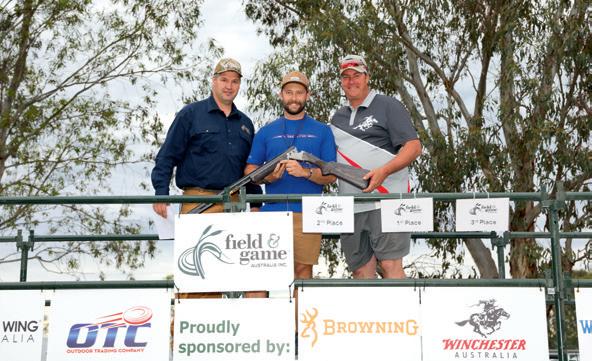
I’m not sure if I’m getting old or the world is speeding up, but here we are with Christmas staring us down — and most likely done and dusted — when this quarter’s magazine reaches you.
Our final quarter of 2025 was a hive of activity, producing an excellent close-out to the year. Firstly, our Annual General Meeting, which was attended by 27 branches, is an outstanding effort. For those who travelled, we thank you for your dedication to our organisation, and likewise, for those who took time out of their busy schedules to participate via screen, it was certainly appreciated.
As always, I would encourage those branches who have been missing in action to schedule next year’s AGM for October 2026. Your input and ideas are valuable to us, and you are able to get first-hand insights into our direction, our successes, and our challenges.
To recap a little, we shared our everevolving strategy to future-proof ourselves with the development of a training organisation and how far that has come since it was announced at last year’s AGM. The development of a resilience fund to support branches with equipment loss, and the modernising of our membership management system, have also progressed significantly. These cumulatively will bring in additional revenue streams and reduce financial burden on our branches while providing additional resources that will assist us in growing our great organisation. We are gaining momentum, so keep an eye on the weekly updates. An additional agenda item was to hear from international conservationist Robbie Kroger, who praised Field & Game Australia for our efforts and will continue to provide his support into the future. His video is worth a watch. We hope to have more guest speakers attend our AGM in the future.
Our National Carnival has been a great success, made possible by the Clunes Branch providing their ground, the amazing work done by trap setters Peter Hall and Phil Toose, the volunteers who helped tirelessly across a myriad of activities over many weeks and days, the staff of Field & Game and their partners, and of course — it’s not an event without the competitors. Well done to you all; simply awesome by everyone involved. Congratulations to the winners and runners-up in each of the categories; a great display of marksmanship and sportsmanship that was only divided by the smallest of margins. Our sponsors, who play a huge role in our event successes, should never be underplayed. After spending time talking through what it takes to be a sponsor — the planning, packaging, travel, setting up displays, and being visible over four days — it is clear it is a huge effort and commitment. Thank you.
It would be amiss not to mention the loss of our closely held member, Jason Charlton — so sad for his family and friends. I’m not sure you can ever describe a loss well enough. The Board and staff of Field & Game Australia sincerely pass on their condolences. Thank you to those on the day who intervened and assisted; a very confronting situation managed in the best way possible.
We are all looking forward to a Christmas break after such a strong and busy year. In saying that, enjoy your time with family and friends, and please make sure you remain safe wherever you are or wherever you go. The Board of Field & Game Australia wishes you all the best for a Merry Christmas and a Happy and Healthy New Year.
Kind regards,
David Anderson Chairman, FGA Board
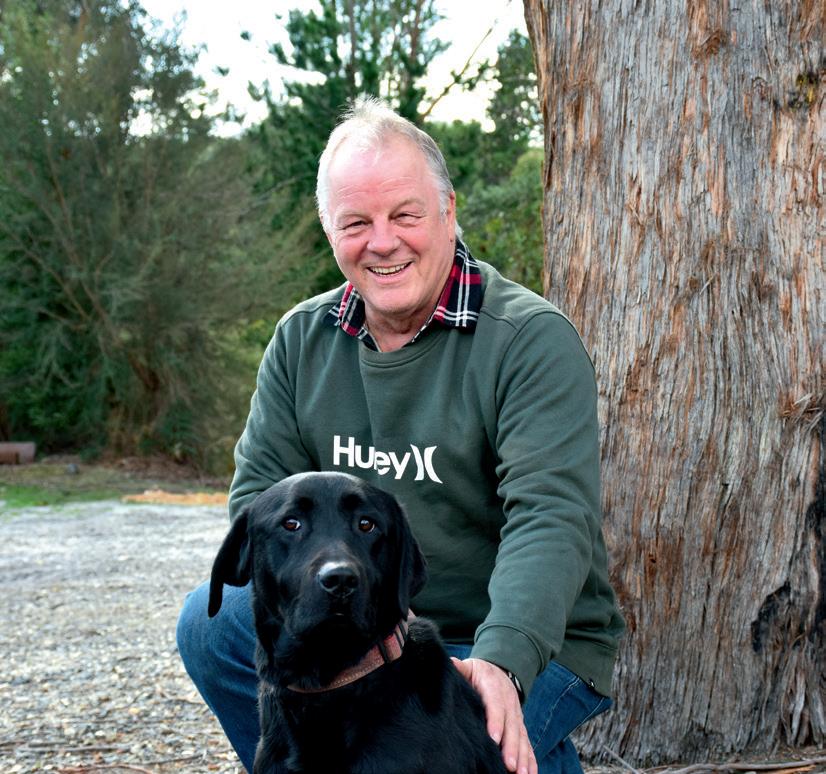
It seems like every quarter I say this – but the past few months really have been some of the busiest and most rewarding I’ve experienced as CEO of Field & Game Australia. From international visitors to major public events, from our AGM to our National Carnival, this quarter has shown, once again, what makes FGA such a powerful, respected, and united organisation.
Our international guest, Mr Robbie Kroger was genuinely impressed, and I’d like to hope just slightly inspired, not just with our wetlands and shooting facilities, but with our people. He saw what we already know: that FGA members are passionate, knowledgeable, and dedicated stewards of Australia’s outdoor spaces and traditions. That as easy as it is to get carried away with million-dollar campaigns and big ticket conservation, sometimes 20 dedicated members, excited to get a
$1500 community grant and build some habitat is more humbling!
Robbie also reinforced something important. We don’t need to pit clay target sports against hunting, or vice versa. We agree on the fundamentals: safe, ethical participation, conservation, good character, community, respect. We have enough enemies out there who would happily see all of us gone. Unity is strength!
And on the domestic front, our public profile continues to grow. FGA is increasingly recognised as a serious, credible organisation rooted in science, stewardship, and community.
With new owners taking the reins in uncertain times, the Outdoor Expo was a great reminder that our industry only survives if we back the businesses, events, and people who support our way of life.
These expos don’t exist without us, the hunters, shooters, families, and outdoorsmen who buy a ticket, attend, and engage. If we want events like this to thrive, it’s up to us to be present.
We had great attendance and strong engagement at the AGM this year. It’s always inspiring to hear the stories, challenges, and victories from branches all over Australia. FGA is in a solid position, organisationally, financially, and culturally—and that’s because of the people who show up.
But as always, we need focused, committed, well-supported volunteers. If your branch didn’t attend the AGM, I genuinely want to know why. What do you need from us? How can we help? Please reach out directly at CEO@fieldandgame. com.au — I’m here to listen.
The 2025 National Carnival delivered another unforgettable four days. Clunes has now completed the “three-peat,” and what a send-off it was. Over 600 shooters took to the grounds across the 4 days of shooting, all made possible by a core group of less than 20 volunteers working around the clock.
To Peter Hall, Phill Toose, Jamie Baird, and every single volunteer, whether you were from Clunes or another branch, thank you. Scorers, referees, UTV drivers, admin support, ground crews… the list goes on. These events live or die by the generosity of people who choose to step up, and you delivered a world-class carnival.
FGA staff also went well beyond their job descriptions, as they always do. With only 6 staff covering an event of this scale (and keeping the office running simultaneously), their effort speaks volumes about their
commitment to this organisation and its members.
The carnival was overshadowed by the sudden and tragic passing of our muchloved member Jason Charlton.
Jason was one of those people who reminded you why clay target shooting is more than a sport, it’s a community. He loved the game, the camaraderie, and the simple joy of being behind a shotgun with friends. Losing him was heartbreaking, and our deepest condolences go to his family and those closest to him.
Moments like this remind us that as important as our mission, our policies, our events, and our advocacy are, FGA is ultimately a family. We celebrate together, we work together, and when we lose someone, we feel it deeply.
Jason will be remembered fondly, not just
for how well he shot, but for how well he lived among us.
Next year, we return to Wodonga–Albury for the National Carnival. Lock in the dates now—you won’t want to miss it. With fresh energy, a great venue, and a huge turnout expected, it promises to be one of our strongest carnivals yet.
Thank you to everyone who contributed to this massive quarter; volunteers, staff, branches, members, partners, and friends. We push forward, united in purpose and proud of who we are.
See you on the range and in the wetlands.
Lucas Cooke CEO – Field & Game Australia
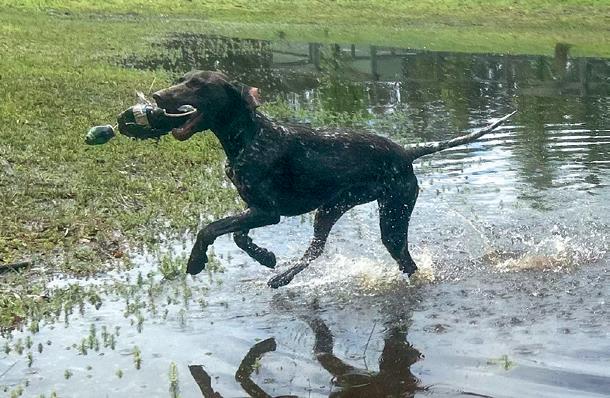
Around 18 months ago, an old friend approached me and asked if I would help his son train his new German Shorthaired Pointer. The young man had hunted with this breed for the last 20 years and, although his dogs were great working dogs, they were never under control.
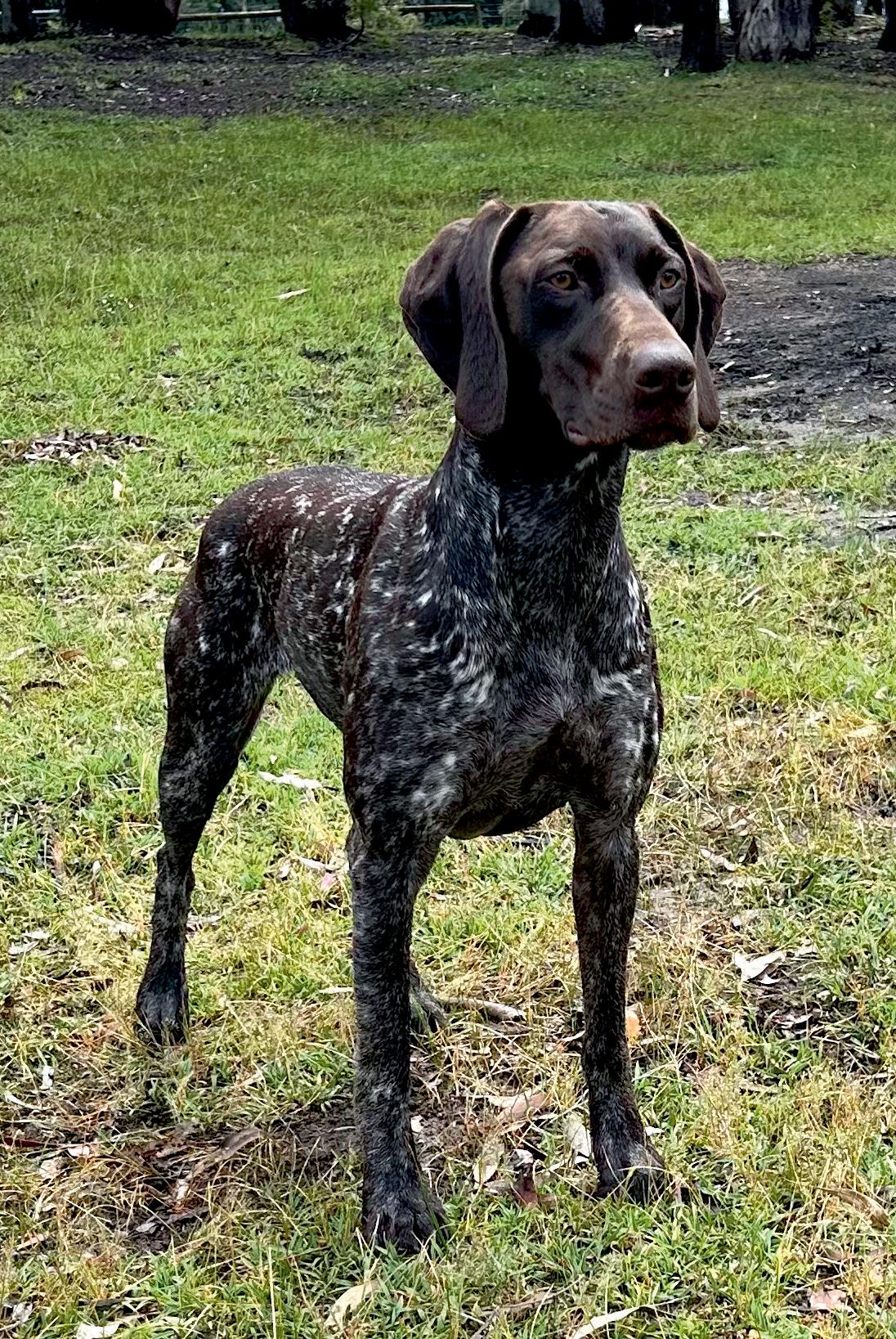
At my first meeting with Troy, we talked about the previous hunting dogs he had owned and worked in the field. Like most of us, he said his last dog wasn’t steady to shot or the flush of game and didn’t come back when called. We can all relate to that, and the reason for these problems is clear: hunters are so keen to take this wonderful gundog out into a field to hunt and flush game for the gun that the foundation work is often never done—or only half done.
If you want a gundog with some polish, then you need to teach the dog to retrieve on command, deliver to hand, come when called, show steadiness to the flush, and sit on the first command. This was Troy’s goal, and so the story begins.
This new pup was bred for hunting by a man who has devoted 40 years to breeding quality German Shorthaired Pointers. To me, a breeder can produce pups with two essential attributes that a buyer wants and needs: natural ability and good temperament. After meeting Troy’s pup, Inca, it was obvious she had natural ability and, with the right training, would make a fine hunting dog that was under control.
When I talk about training a pup, it’s really about setting up games the pup enjoys. But these games form the foundation for all the work required in a seasoned hunting dog. If you put pressure on a pup too early, it will quickly go into its shell, which slows progress and can create confusion.
To train a gundog to a high standard, I believe it’s essential to build a strong bond with the pup. After meeting Troy and seeing the type of person he is, I knew this would be achievable.
I am often asked, How do you build a strong bond? It’s usually achieved by
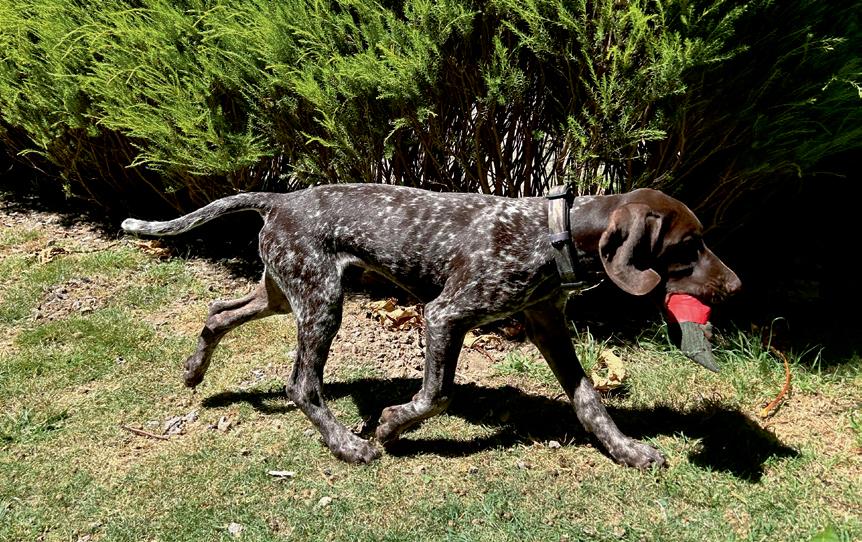
playing with the dog, always being the person who feeds the dog, taking the dog on outings (short to start with), spending positive time with the dog, giving as much praise as possible, being consistent with praise and corrections, and not overdoing corrections.
For example, a friend recently told me her dog was unable to walk on all fours and was limping badly. She examined the foot and discovered a prickle in the pad. By removing the prickle, she was effectively building trust and strengthening the bond with her dog. As you can see, bond building comes from many different sources.
We started Troy’s dog, Inca, with retrieving, one of the most important skills for a hunting dog. The goal for a quality gundog is steadiness while retrieving (retrieving on command), running straight out and back with speed, carrying game correctly, and sitting in front of the handler with a proper delivery. However, you shouldn’t expect all of this from a pup initially.
We started Inca in a confined space (a hallway with all doors shut), down on our knees at her level, teasing her with a small dummy, then throwing it to the end of the hall while saying, “fetch.” No holding her— just letting her run in (speed comes first, control comes later). Once she had the dummy in her mouth, we gave plenty of encouragement to get her back. Being in a hallway lets you catch her and gently take the dummy. I slide my finger behind the dummy into her mouth with the command “give.” She lets me take it, and I give it back to her. This shows the pup that we are prepared to share—taking it back within seconds. Inca is learning the fundamentals of retrieving; the polish will come later.
During this exercise, I observed that Inca had a problem with returning the dummy. When Troy put his hand out, she would
automatically drop it. This is often caused by the handler. As a pup, we must be gentle and not put pressure on the dog. There are several ways to address this. At home, encourage her to pick up objects and bring them to you with “give.” Once she does, give it back and say “hold,” letting her run off with it. Praise generously. The idea is to get objects placed in your hand with the correct command.
Another approach is to use a different area, switch to a tennis ball, roll it along the ground, and encourage her to retrieve it to you while sitting on the ground. Don’t be eager to take it immediately, but when you do, give it back with the command “hold” and praise. Eventually, the ball can be replaced with a small dummy.
I noticed that Troy was eager to move on, but patience is key. Build the foundation slowly—there’s no rule about how old a gundog should be before it’s fully trained. Two or three years is fine; dogs learn better with time, patience, and perseverance.
While Inca was learning to retrieve, we also introduced lead work. This teaches dogs to heel on and off lead and allows them to feel the handler’s mood through the lead. Be gentle with pups: short sessions, soft handling, and encouragement are enough. Lead work also reinforces basic commands like sit, stay, and come, all essential for a well-trained hunting gundog.
Once Inca was comfortable heeling on lead, we taught her to sit by gently pushing her hindquarters down and pulling up on the lead, giving praise and reassurance. One exercise essential for any gundog is to come when called. Troy agreed, as his previous gundogs were not always responsive in a swamp with distractions. For pups, this should be a fun game: in a confined space, call “Inca, come,” and reward her immediately with cooked
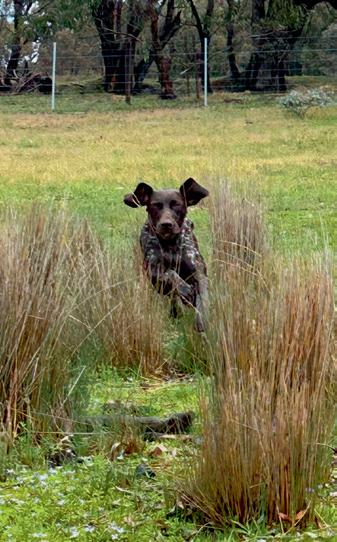
sausage and praise.
Training with food, when used correctly, can be very effective. The pup learns that “come” means a delicious reward. The food can be gradually phased out as the dog grows, but don’t rush it. Imagine a gundog that comes every time on the first command! Troy’s other dogs have also learned “come” through this method.
Another exercise is feeding time. Place the food outside, ask the pup to sit before setting it down. If needed, gently position her, hold her chest, place the food, then say “forward” after three seconds to release her. This teaches come, sit, stay, and forward without pressure. Troy keeps me updated via text and phone, which helps resolve issues quickly.
It’s important to stop immediately if problems arise. Dogs don’t think like humans—they associate your reaction with their last action. If a dog eventually comes after multiple calls and you react angrily, it associates your bad attitude with the correct behavior. Always step back and reset if needed.
Some gundogs develop “gun nervousness,” usually caused by the handler. Early introduction to noise prevents this. Troy started by dropping a tin can behind Inca while she ate, gradually moving closer over weeks, then used a cap gun in the same way. This prepares her for hunting with firearms.
All the commands Inca is learning are the foundation of a quality working gundog. Troy and Inca are progressing well with these puppy games. In the next issue of Field and Game, we will move on to what I call Novice Gundog training exercises.
Good luck with your training and hunting.
Rod Watt
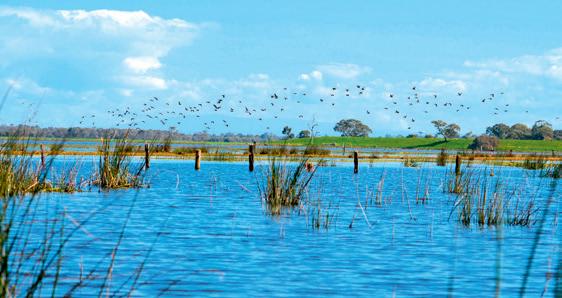
As 2025 draws to a close, Heart Morass continues to stand as one of Victoria’s most outstanding examples of wetland restoration and sustainable hunting management. Thanks to the ongoing collaboration between the Wetlands Environmental Taskforce Trust, Field & Game Australia, and countless volunteers, this 1,800-hectare property near Sale remains a true model of conservation in action.
Over the past season, Heart Morass once again proved to be a magnet for waterfowl and hunters alike.
Caretaker Gary Howard, reports that the site’s ecological health remains exceptional, evidence of the years of dedicated management and restoration that have transformed the Heart into the thriving wetland it is today.
Looking ahead to the 2026 duck season, access to Heart Morass will again be managed through the sale of keys to ensure the balance between hunting opportunity and environmental protection is maintained.
Due to the high demand for access on opening morning, the number of hunters entering the Heart will continue to be limited.
The exact number of opening period keys will be confirmed closer to the season, subject to water availability at the time.
Keys will be priced at $80 (cash only), with all proceeds going directly to the Wetlands Environmental Taskforce Trust (WET) to support ongoing management, water control, and habitat restoration across the site.
General season keys (for access outside the opening period) will remain unlimited, giving all Field & Game Australia members the opportunity to enjoy this remarkable property throughout the season.
Keys for use during the 2026 Victorian Duck Season can be obtained by making a cash donation of $80 to the Wetlands Environmental Taskforce (WET).
Donations will be accepted from 9am on Saturday, 24 January 2026.
To purchase your key:
1. Download, print, and complete the 2026 Conditions of Entry Form – available at www.fieldandgame. com.au under Hunting > 2026 Heart Morass Access.
Hunters must be current financial members of Field & Game Australia to purchase a key. Junior members are welcome to attend under the direct supervision of an adult keyholder.
Funds raised through key sales are vital to maintaining the Heart’s environmental integrity — supporting water management infrastructure, vegetation regeneration, and wildlife monitoring programs that benefit both hunters and conservationists.
Those wishing to further support the ongoing work of the Wetlands Environmental Taskforce can make a tax-deductible donation via the FGA National Office on (03) 5799 0960.
Heart Morass is more than a hunting ground — it’s a symbol of what can be achieved when conservation and recreation go hand in hand.
Whether you’re there to hunt, birdwatch, or simply take in the serenity of a restored wetland, every visit is a reminder of our community’s shared commitment to preserving this precious landscape for generations to come.
For key sales, access details, and conditions of entry, visit the Field & Game Australia website under the Hunting page, or contact Gary Howard on 0427 432 540.
2. Take your completed form, current FGA membership card, and game licence (showing current expiry date), along with your $80 cash donation (sorry, no cards accepted), in person to: H & S Firearms, Shop 6/61 Princes Hwy, Sale VIC from 9am on 24 January 2026.
3. Alternatively, you can complete the form in-store at H & S Firearms.
4. You will then receive your key, a copy of the conditions, and a map of the Heart Morass.
Your key provides access from 8am on Saturday, 7 February 2026.
Please note:
• Hunter numbers for the opening period will be limited (final number subject to water availability).
• Hunter numbers for the remainder of the season are unlimited.
Keys are available from Saturday, 24 January 2026 (Check the FGA website for updates under the Hunting page.)
• Limited number of keys available (subject to water)
• $80 donation (cash only)
• Access opens 8am, Saturday 7 February 2026
• Exclusive access until midday Sunday, 22 March 2026
• Unlimited keys available
• $80 per key
• Valid for access from midday Sunday, 22 March 2026, for the remainder of the duck season
• Must be a current FGA financial member
• Junior members may attend under adult supervision
Gary Howard – 0427 432 540
FGA National Office – (03) 5799 0960 www.fieldandgame.com.au

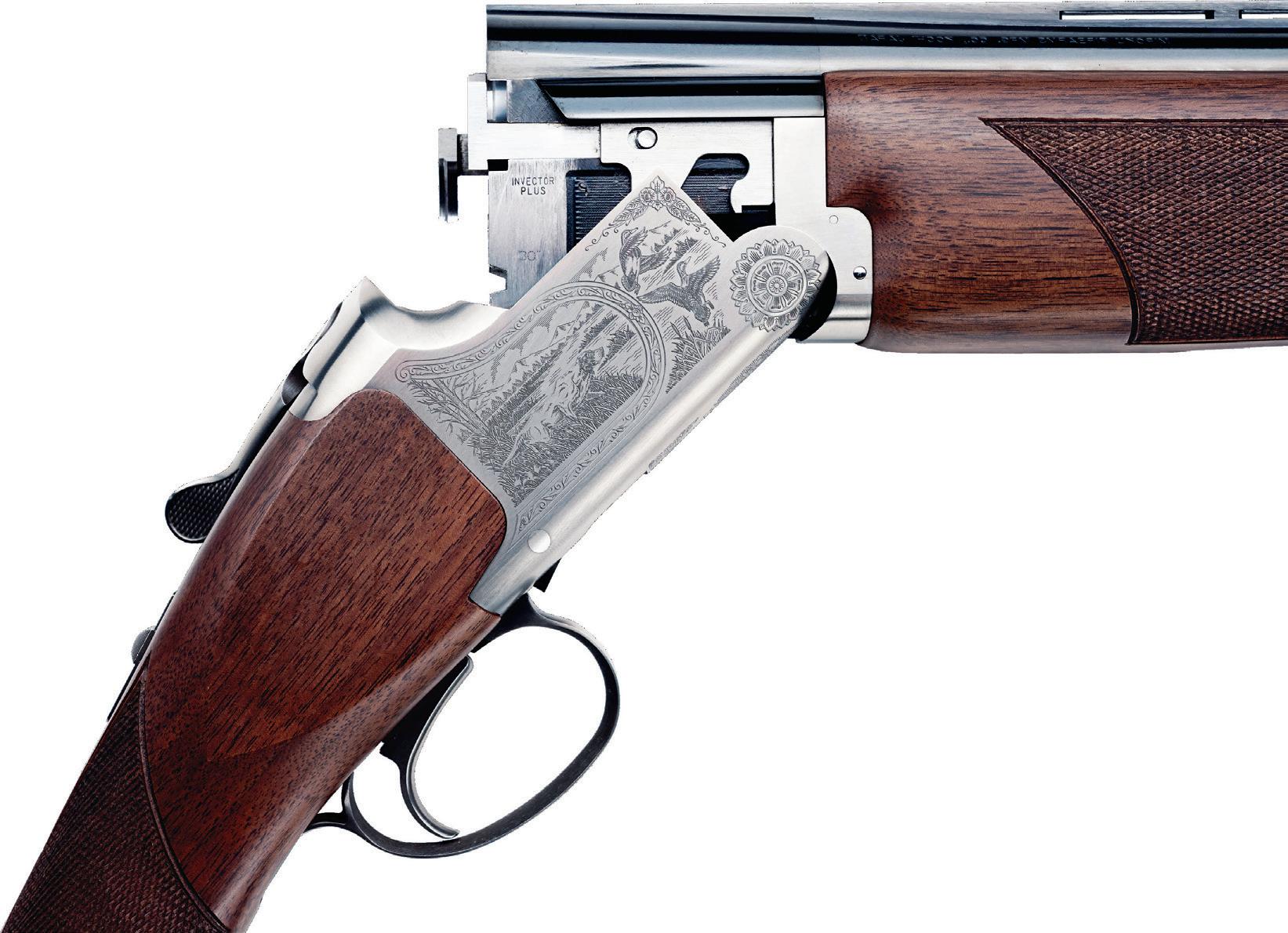
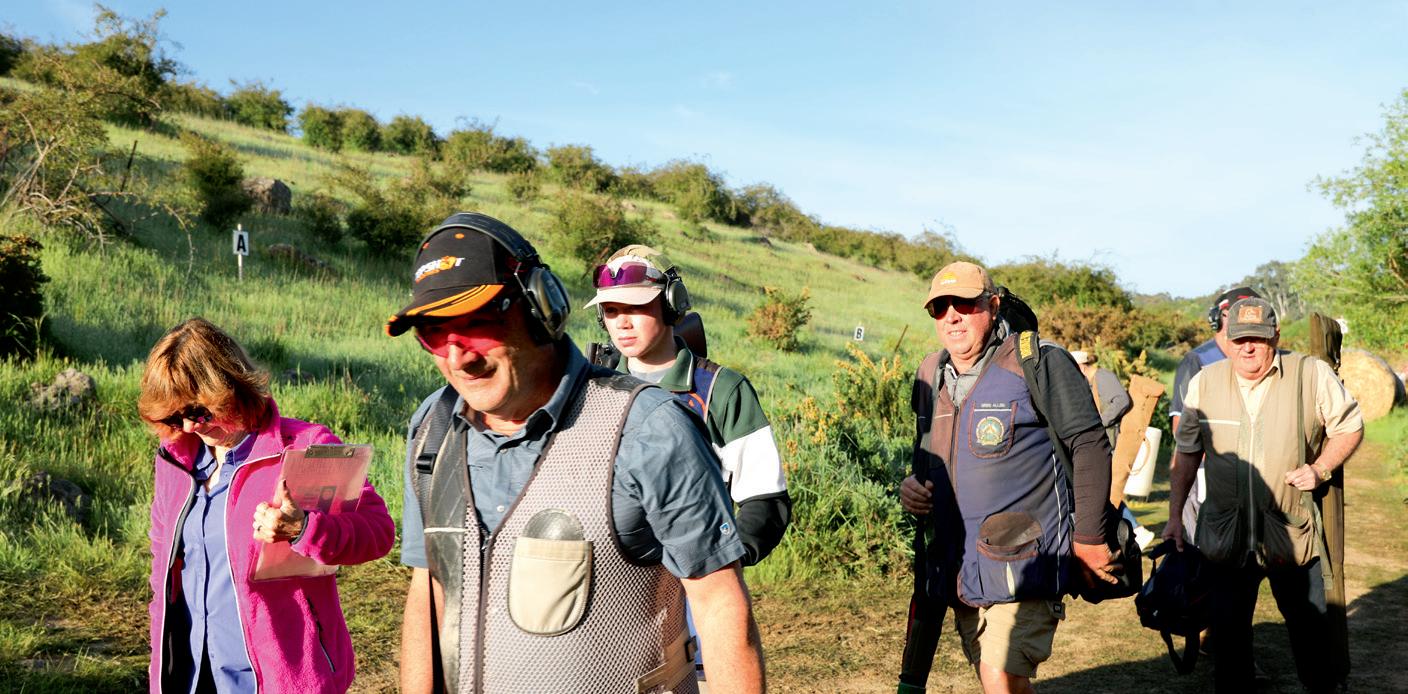
Clunes Field & Game once again cemented its reputation as a premier host, turning on another spectacular weekend for the 2025 Field & Game Australia National Carnival.
This year’s carnival was bigger and better than ever, with three major events held over four days. Proceedings kicked off on Friday 31 October with the 100 Target ASF PreNationals Shoot, attracting more than 200 competitors eager to test their form ahead of the main championship. The competition was fierce, but it was Robert Hall who ultimately claimed top honours in the Pre-Nationals event.
The action ramped up across the weekend as close to 540 shooters took part in the ASF National Championship, held on Saturday 1 and Sunday 2 November. After two days of top-class shooting and a thrilling shoot-off, Blake Nankervis emerged victorious to claim the High Gun, with Xavier Russell taking out AA Grade honours. The carnival then wrapped up on Monday with the 100 Target Bronze Wing–sponsored Novelty Event, where Sam Nash triumphed despite the wild weather to close out the weekend in great spirits.
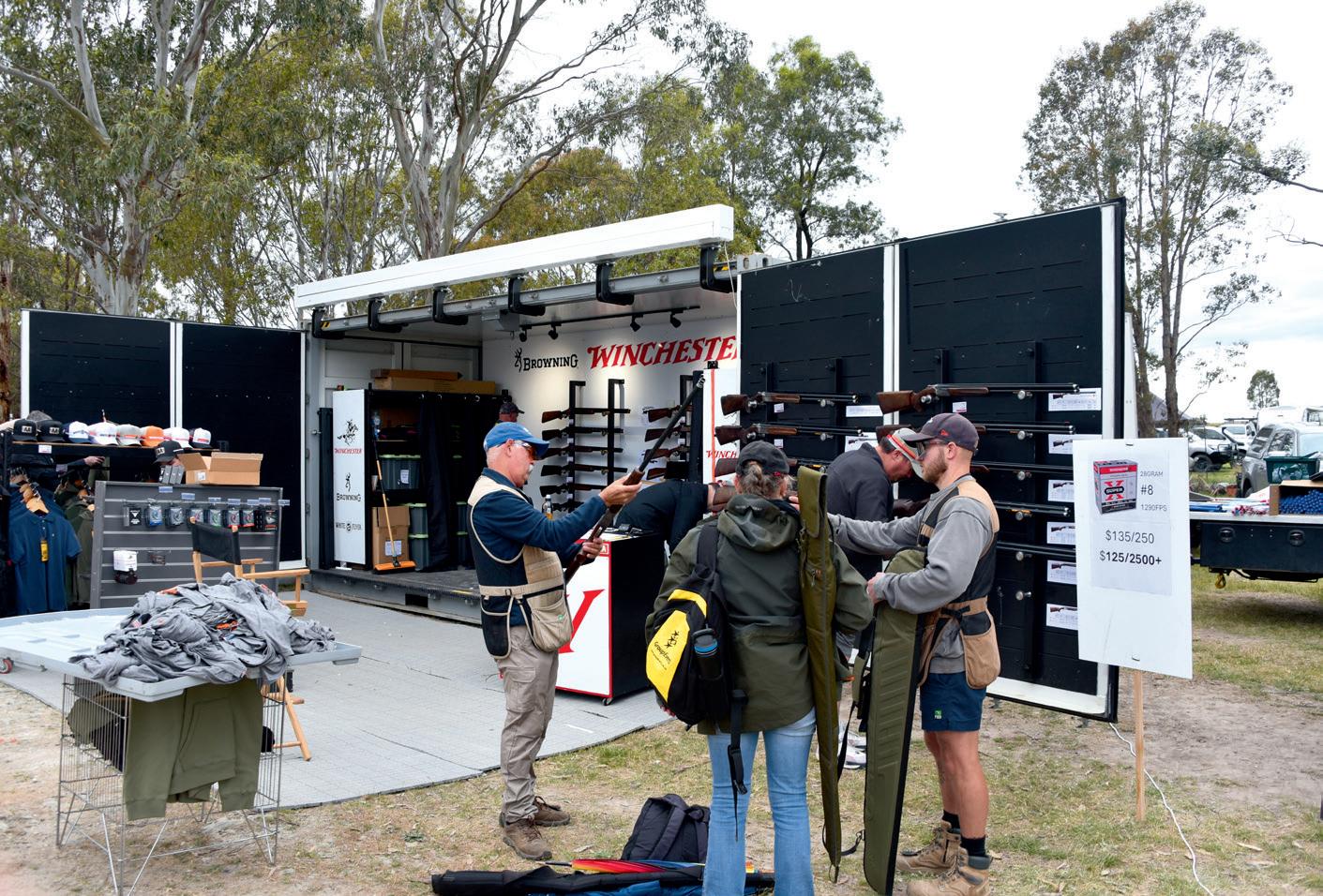
This year’s event also saw Winchester Australia join with a larger on-ground presence, proudly showcasing Browning and White Flyer, alongside returning major sponsors Beretta Australia, Bronze Wing Australia/NSI/Laporte, and Outdoor Trading Company. Their support, both in sponsorship and on-site activation, helped make this year’s carnival another standout success.
The Vendors’ and Expo Day on Friday began under a light drizzle that did little to dampen spirits. Shooters and visitors braved the early showers to enjoy a full day of browsing, testing, and talking gear, with the vendor line-up including Precision Etch, Top Shot Industries, Motorcycle Land Ballarat, SH Shooting, BEST Vests, Gamebore, and Collumbo Shooting. By the afternoon, the clouds had lifted and the atmosphere was buzzing with anticipation for the days ahead.
Saturday dawned with glorious sunshine, setting the perfect stage for the first day of championship shooting. With crisp targets, smooth rotations, and top-tier course design, competitors enjoyed ideal conditions from start to finish. Sunday brought slightly softer light and a touch more cloud cover, but the enthusiasm on the ground never faded as shooters pushed through their final 75 targets before the afternoon presentations.
While Monday’s novelty event brought with it torrential rain, the atmosphere remained upbeat. Competitors leaned into the challenge with good humour, determined to make the most of the final shoot — a true
testament to the FGA community spirit.
As always, the Clunes canteen team were in full flight, keeping everyone well-fed from early breakfasts to hearty lunches, while the coffee van was a welcome sight from dawn until presentations.
Perfect organisation and a well-planned layout made for smooth running across all four days. The early-start format kept squads on time, ensuring everything wrapped up efficiently — leaving shooters and spectators to relax and celebrate as another memorable carnival came to a close.
Field & Game Australia extends its gratitude to the Clunes committee, volunteers, sponsors, and vendors who made this event possible. Their tireless effort and teamwork were once again on full display, delivering an event that reflected the very best of our sport.
“The Clunes team has once again set the benchmark for what a National Carnival should be,” said Field & Game Australia CEO Lucas Cooke. “From the quality of the targets to the welcoming atmosphere and strong sponsor support, everything came together perfectly. It’s a credit to the branch, the volunteers, and everyone who contributed to another truly memorable event.”
With another golden Clunes carnival now complete, Field & Game Australia is thrilled to announce that Wodonga-Albury Field & Game will host the 2026 National Carnival. This much-anticipated event promises a fresh course layout, new challenges, and the same great community spirit that continues to make the National Carnival a highlight of the shooting calendar.
The 2025 Field & Game Australia National Carnival saw exceptional shooting across all three major events, with one of the standout moments being the ASF National Championship shoot-off where Blake Nankervis earned the High Gun title in a composed and well-deserved performance.
After a consistent competitive year, Blake arrived at Clunes focused on finishing his season strongly. With the FGA Nationals marking his final major event of 2025, he approached the weekend with a simple goal: shoot steadily, stay focused, and make the most of the opportunity.
With close to 540 competitors taking part in the two-day Championship, the standard of shooting was exceptionally high. Blake’s strong performance across the layouts saw him finish tied with Xavier Russell, setting up a shoot-off that quickly drew the attention of spectators across the grounds.
The contest showcased two highly capable shooters at the top of their game. Xavier proved to be a formidable and worthy opponent, pushing the shoot-off into a tense and memorable finish. Blake’s
measured composure ultimately secured the High Gun title — a moment that stood out as a highlight of the Carnival.
For Blake, this win carries particular personal significance. Having previously finished second overall three times and reached the podium on several other occasions, securing the FGA National title represents a long-awaited milestone in his shooting journey. True to his nature, he remains modest about the achievement, viewing it as the result of steady work over several seasons rather than a single defining moment.
Blake was supported strongly throughout the season by his family. With his partner Cait close to welcoming their second child, she and daughter Evie cheered from home, while his parents — long-time supporters of his shooting — continued to encourage him every step of the way.
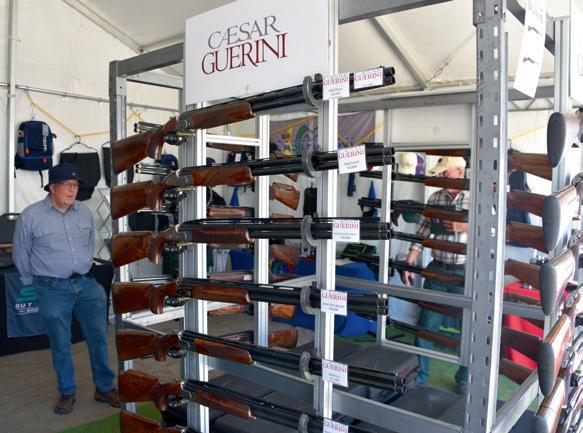
He also acknowledged the ongoing support of his sponsors — Outdoor Trading Company, Beretta Australia, and Edwards Eyewear — whose backing has played a meaningful role in helping him compete consistently at a high level.
With the 2025 season now concluded, Blake is looking forward to a break over Christmas before preparing for the SCA Sporting Grand Prix in Cooma, NSW, in late January. He also hopes to devote more time to coaching in the coming year to help support and develop other shooters within the sport.
Blake’s High Gun win was a fitting moment in what was an outstanding weekend of shooting at the National Carnival — a modest, hard-earned result for a shooter who continues to demonstrate consistency, respect, and quiet determination.
At just 17, Georgia Rogers has claimed the 2025 Field & Game Australia ASF Ladies’ title, scoring 123/150 and showcasing her rapid rise in the sport.
Georgia’s journey in clay target shooting has been swift. “I started shooting back in October 2021 at 13, and I’ve loved the journey since,” she says. Just six months after first picking up a shotgun at Beaudesert Sporting Clays, she entered her first competition. “Best decision ever!” she reflects, crediting her dad’s encouragement.
Her first Nationals at Clunes proved an exciting challenge. “I had heard about the terrain and targets, and it definitely lived up to the reviews! The targets were incredible, some I had never seen before— it was truly exciting!” Georgia singled out Ground 3 and 5 as favourites, noting the
technical and challenging birds that tested her focus. She also loved the atmosphere and camaraderie: “Another awesome moment was watching two of my mates battle it out for high gun in the shoot-off.”
Even with nerves in a strong field and coming off her first Ladies SCA National title just weeks earlier, Georgia stayed composed. “It felt amazing to walk away from my first Field & Game Nationals with the overall Ladies Champion title, and I can’t wait to do it again next year!”
With precision, focus, and a love for the sport, Georgia Rogers has made her mark in the Ladies’ ranks and is a rising star to watch in the national competition scene.
Robert Passarin has done it again, claiming the Veterans title at the FGA ASF National Championship for the second consecutive year.
Scoring 125/150, Robert Passarin from Westernport FGA held his nerve under pressure to secure back-toback victories. “I didn’t have the same
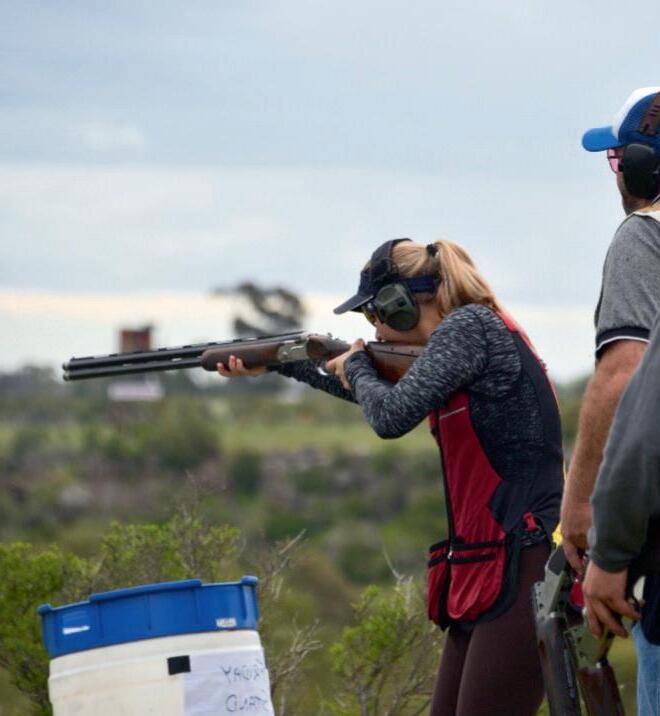
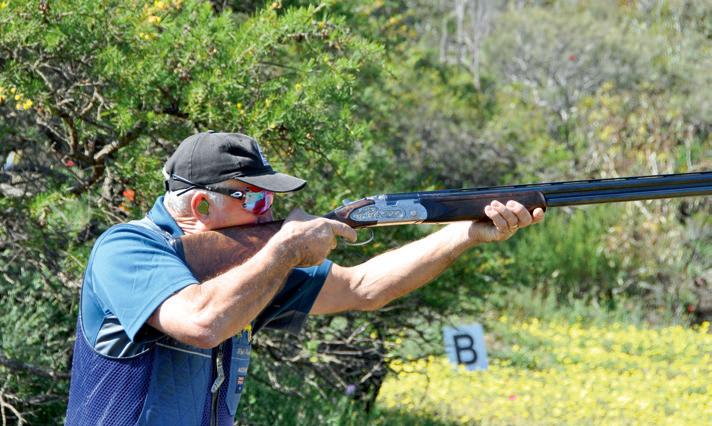
feeling going into this carnival as last year, but none the less I still managed to compile a score that got me to the podium yet again—surreal, to be honest,” he said.
A lifelong outdoor enthusiast, Robert’s connection to the sport runs deep. “My father and grandfather were both avid hunters, and I enjoyed every aspect of the outdoor pursuit from a very early age,” he shared. He discovered clay target shooting during drought years and has been refining
his skill ever since.
Clunes proved a tough challenge, but Robert thrived. “This year’s targets were of similar degrees of difficulty to past years—congrats to the target setters for yet another fine presentation,” he said. And ever the sportsman, he added, “Congratulations to Blake. Legend.”
With focus, experience, and a steady hand, Robert’s performance once again set the standard in Veterans shooting.
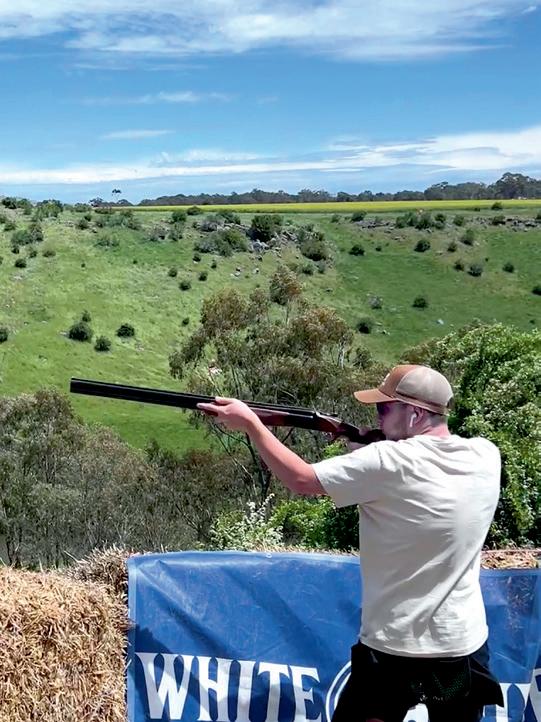
Marcus Keirl of Echuca-Moama FGA claims the Junior title at the 2025 FGA ASF National Championship.
Marcus Keirl, age 16, secured the Junior title with a score of 125/150, ahead of Ashtan Papaluca in second with 120 and Chase Porter rounding out the placings in third on 118.
The Echuca-Moama member first picked up a shotgun at age 12, inspired by his family. “My Dad, Mum, and sister were already shooters, and I completed my safety course early to get my licence as soon as possible,” he said.
This year’s Nationals brought both challenge and reward. “I liked the targets this year, probably even more than last year’s. I did find shooting up at some targets a bit tricky to judge the lead they needed,” Marcus reflected, adding a highlight: a perfect 25 on Saturday.
14-year-old Rocco Moretti of Traralgon FGA has taken the Sub-Junior title at the 2025 FGA ASF National Championship, scoring 106/150.
Rocco’s first Nationals as a SubJunior were full of excitement— and a little challenge. “I really enjoyed the targets this year and thought there was a good variety,” he said. “Some of the pairs were tricky after shooting the singlebarrel targets, and this is something I am working on.”
The young shooter has been around the club for years, tagging along with his dad, but only started clay shooting at 12. “I have followed Dad around the gun club since I was little and started clay shooting when I turned 12,” Rocco explained.
For Marcus, the Carnival isn’t just about scores. “I always enjoy catching up with my friends at shoots who I don’t get to see all the time, and I like that it’s something we do as a family too. I really enjoy being a part of the shooting community. It’s like having a big extended family.”
Looking ahead, Marcus has his sights set high. “I would like to continue to maintain AA grade, and to represent Australia in shooting in the future.” With skill, focus, and a love for the sport, Marcus is one to watch.
Marcus was presented with the Junior winner’s prize of Winchester Xpert 22LR thanks to Winchester Australia.
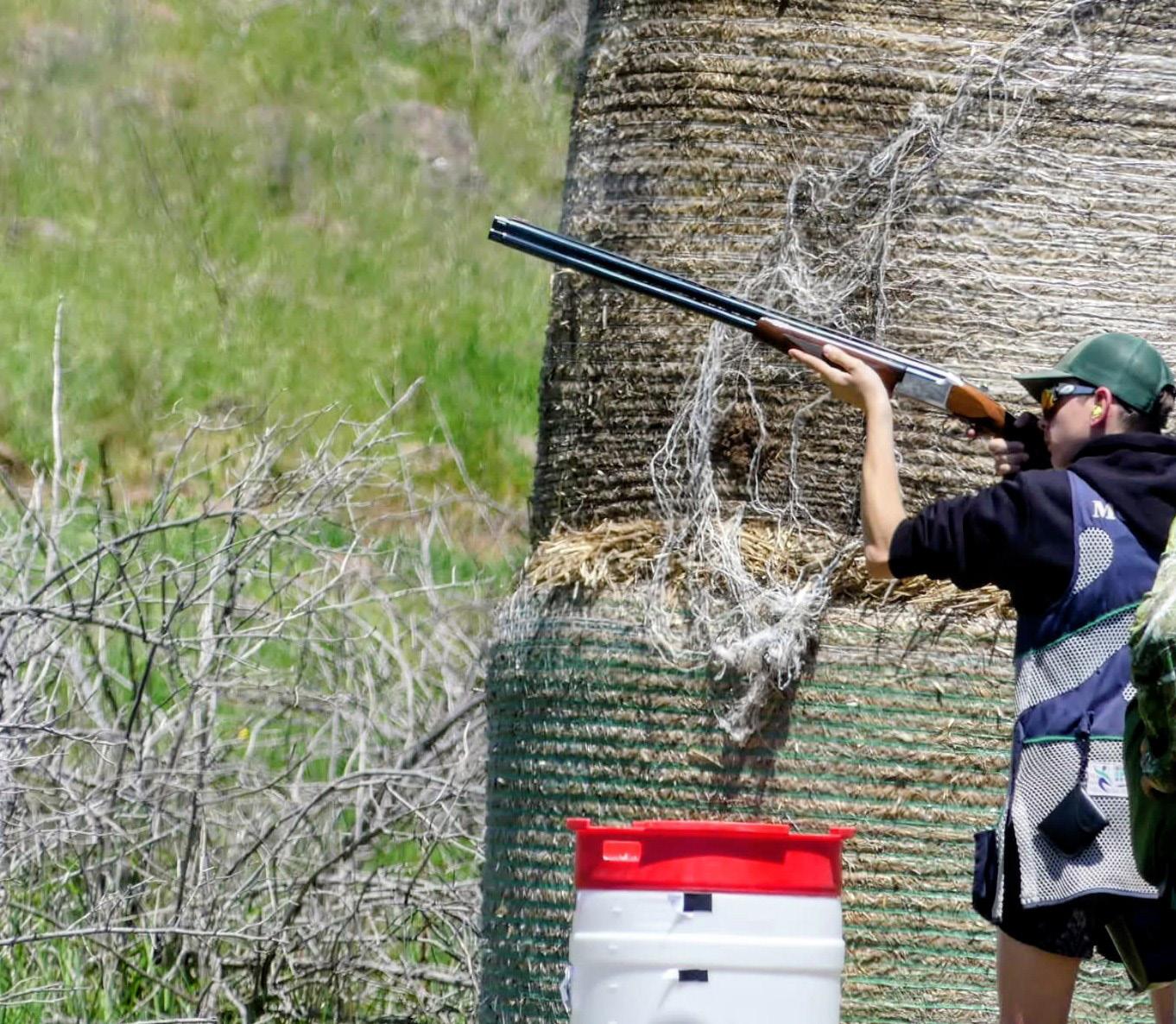
For him, the Carnival isn’t just about scores. “I enjoyed camping at the club with people we know and being able to head straight out to the grounds. I also enjoy hunting with family,” he said.
Looking ahead, Rocco has big goals. “I want to get better, break more targets, and hopefully one day shoot for Australia.” With energy, focus, and a love for the sport, the Sub-Junior category has a bright young talent in Rocco. Rocco was presented with the Junior winner’s prize of Winchester Xpert 22LR thanks to Winchester Australia.
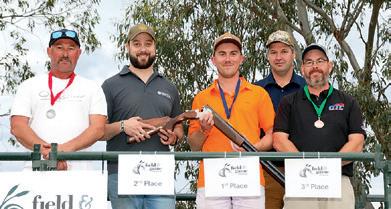
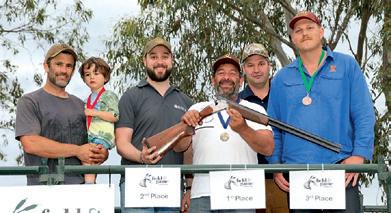
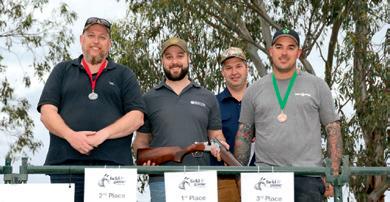

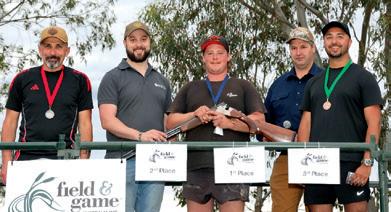
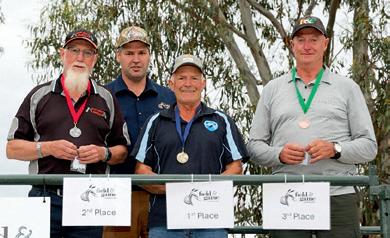
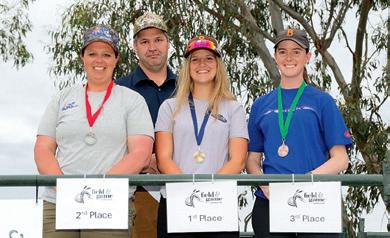
Veterans
1st
1st
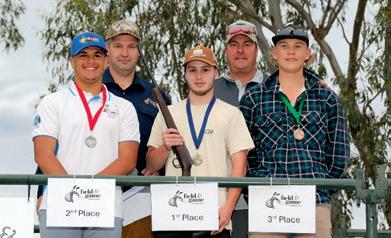
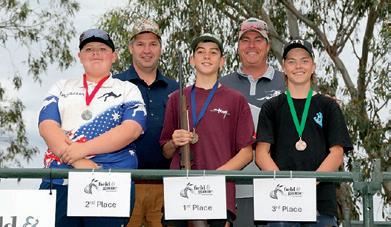
Wison, Rocco Moretti, Zavier Musgrove
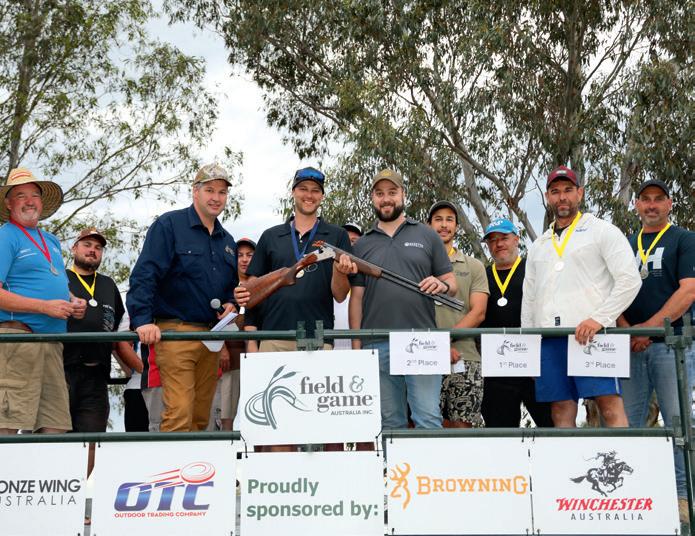
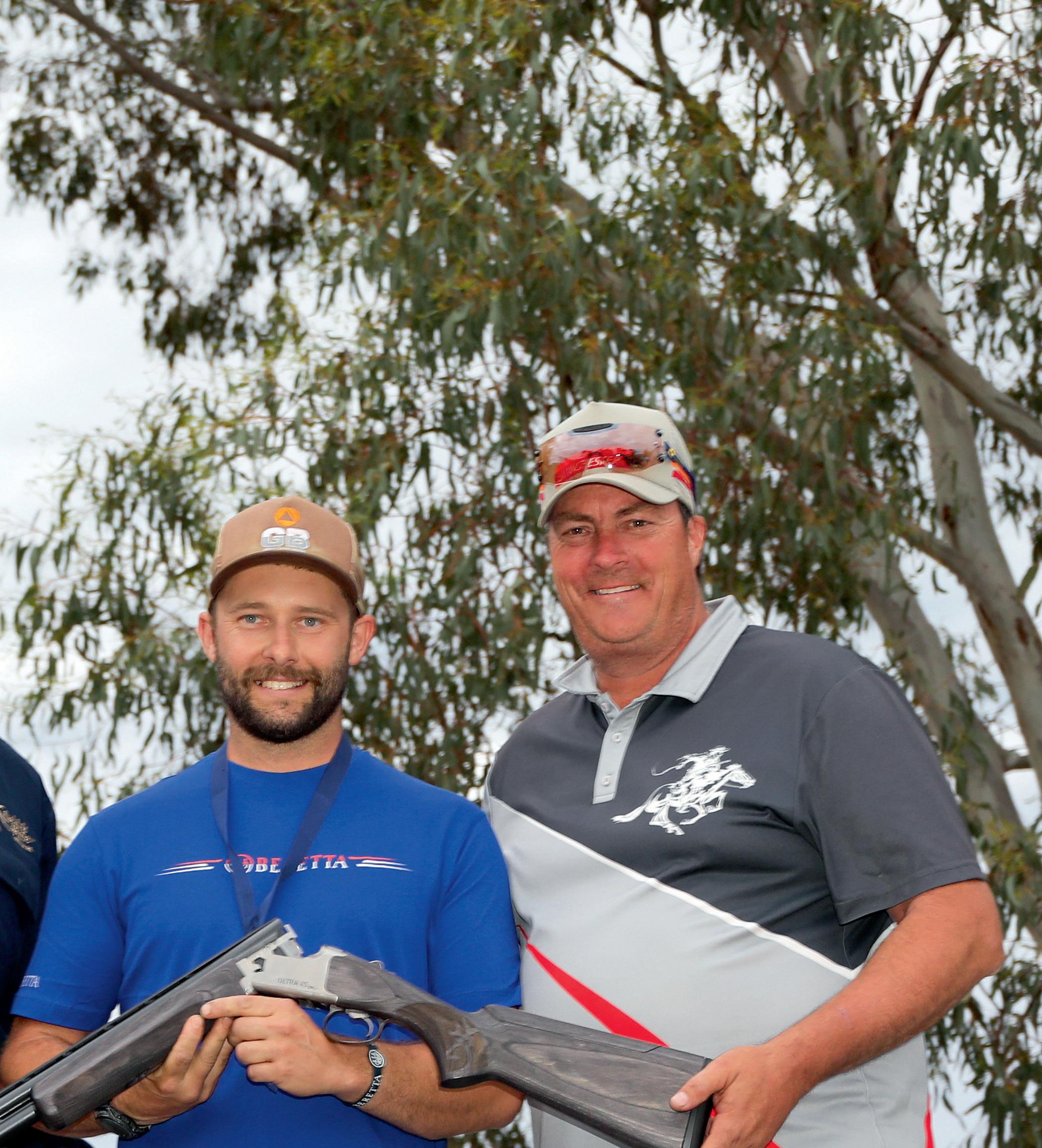
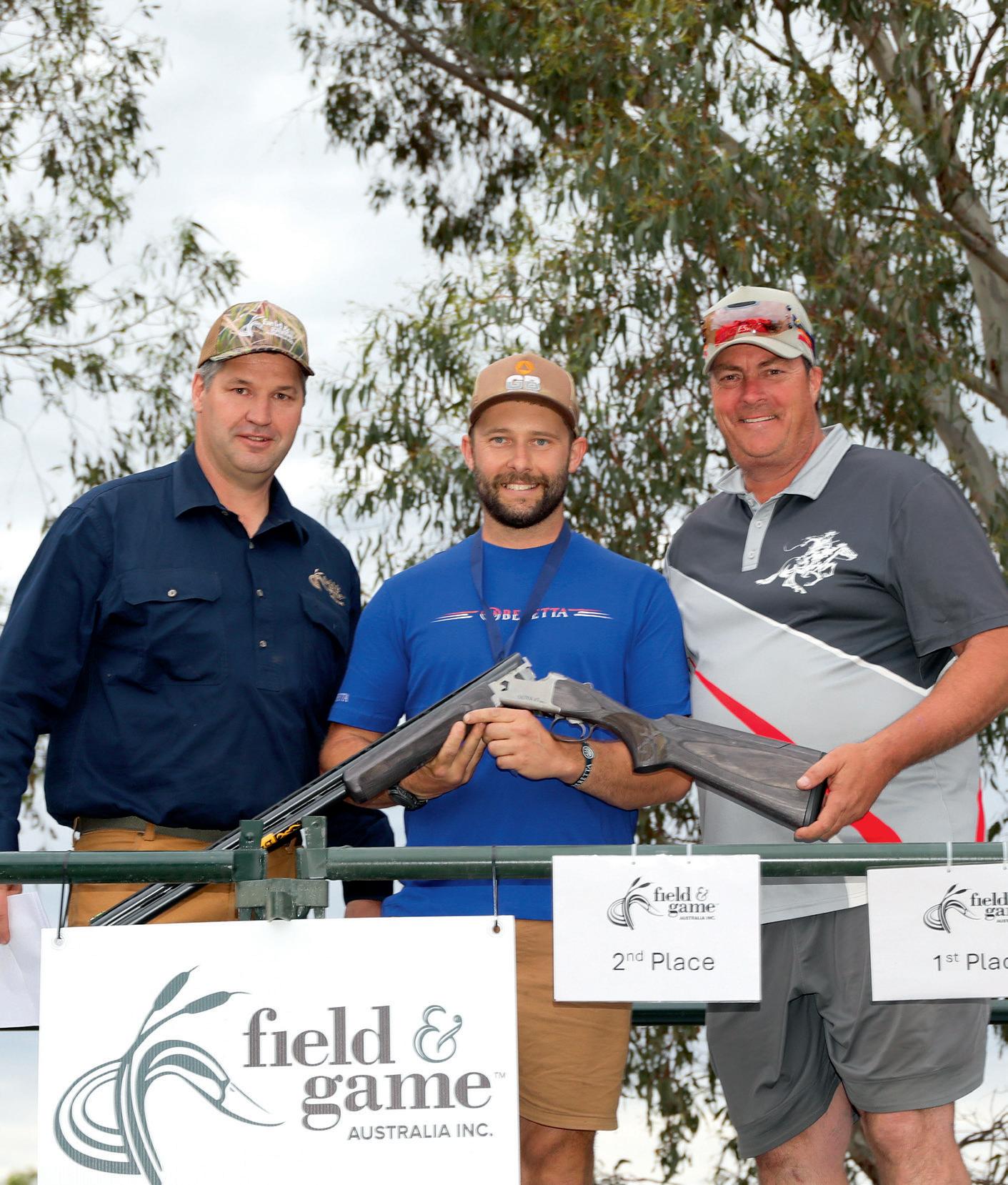
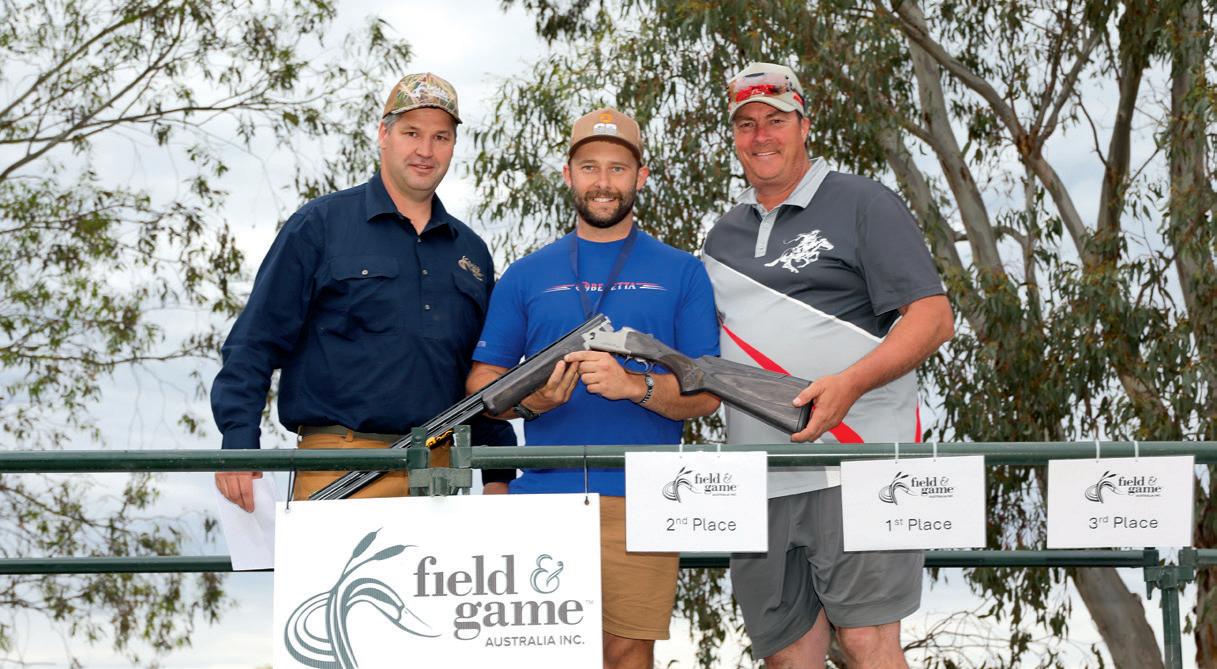
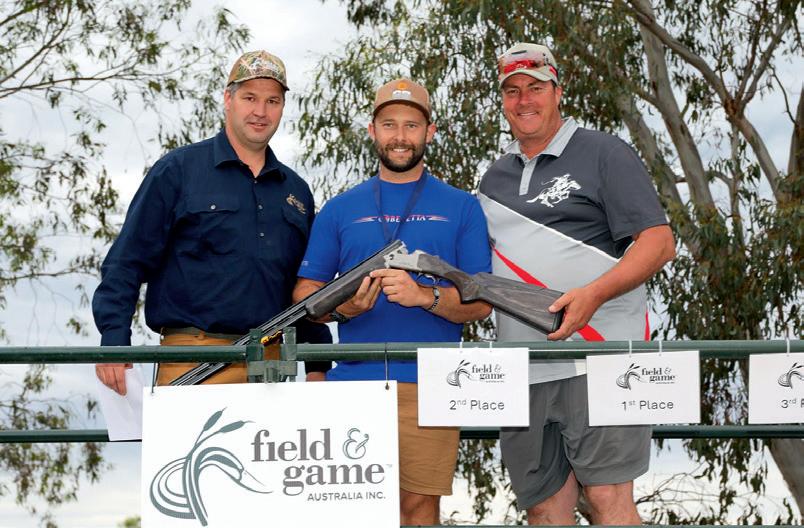
Jack Gibbs accepts the winner’s prize for the 2025 FGA National Handicap event – a Beretta Silver Pigeon – from Beretta’s Michael McNabb. Congratulations to the prize winners of this event!
Field & Game Australia ASF National
(OTG score plus handicap in brackets):
8th
13th Rhys McGauran
15th Angelo Salamon
16th Adam Hirchfield
/
/
/
/
/ 150
(+6) / 150
(+6) / 150 17th Zayne Papaluca
18th Frank Vella
19th Robbie Rainone
20th Angelo Axiak
21st Ryan Wharton
22nd
23rd Darren Hope
24th Chris Evans
25th Adam Shale
26th Aidan Keipha
27th Trav Tait
28th Bill Fraser
29th Josh Vickery
30th Deni Karanfilovski
(+6) / 150
(+6) / 150
(+11) / 150
(+6) / 150
(+6) / 150
(+18) / 150
(+17) / 150
(+17) / 150
/ 150
(+6) / 150
(+6) / 150
(+6) / 150
(+5) / 150
(+12) / 150
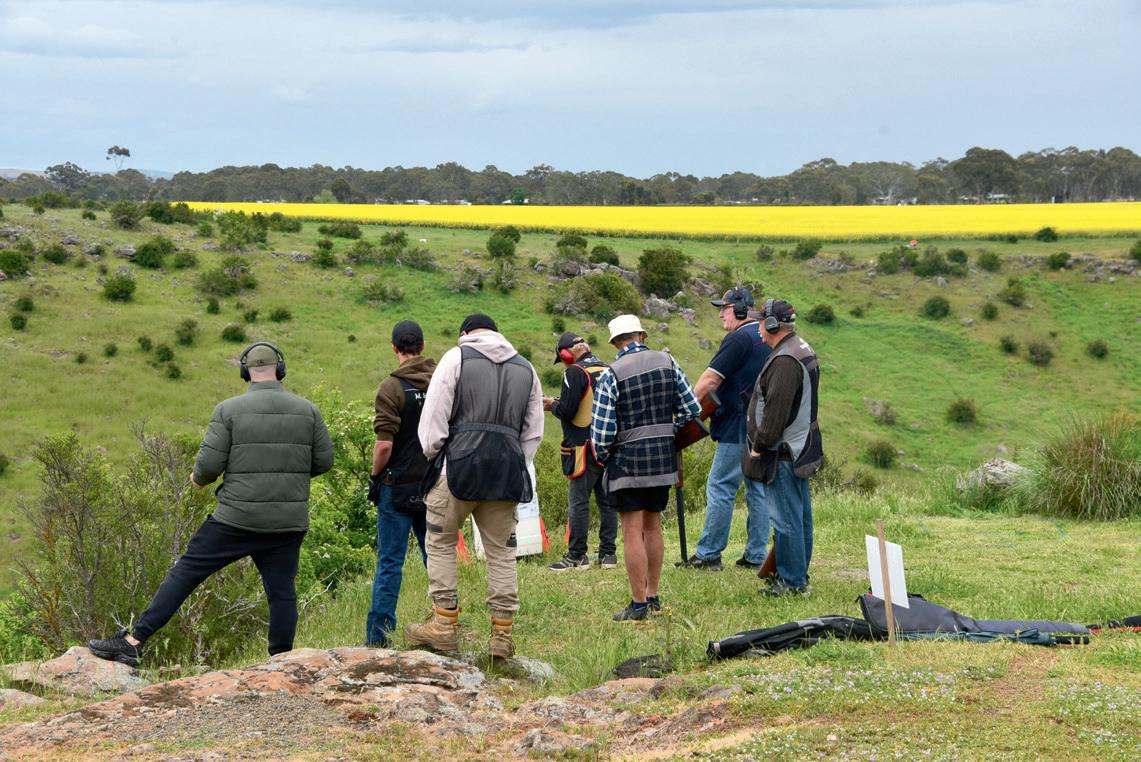
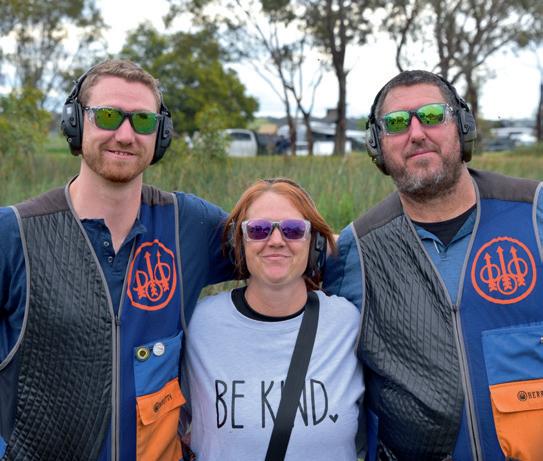
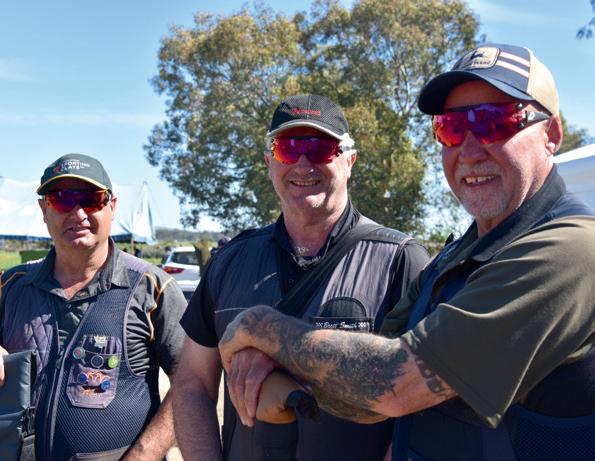
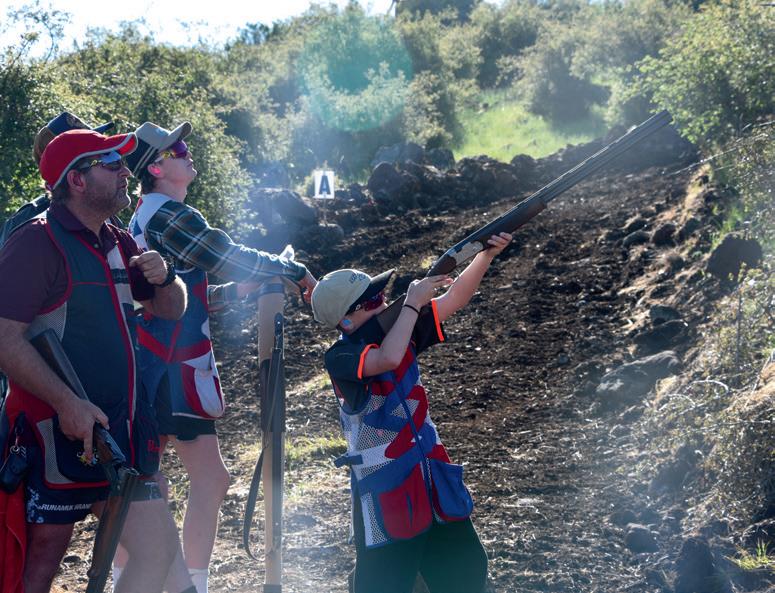

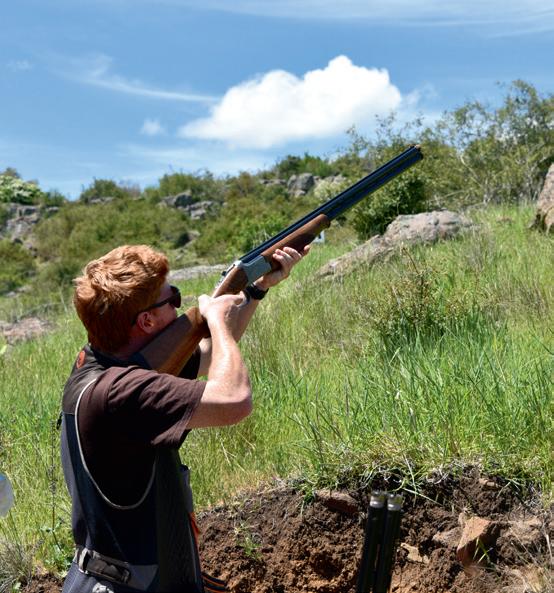
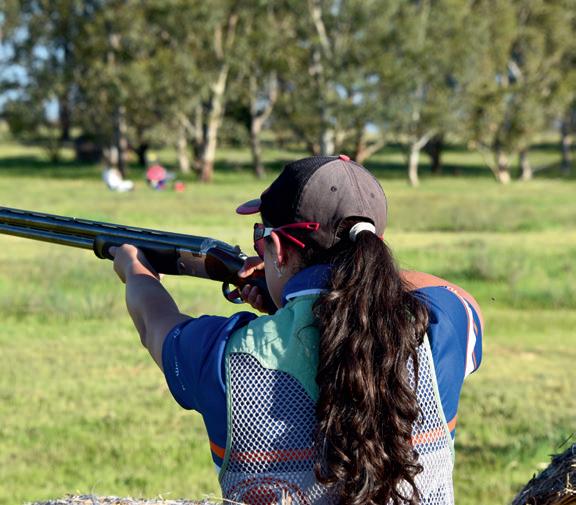
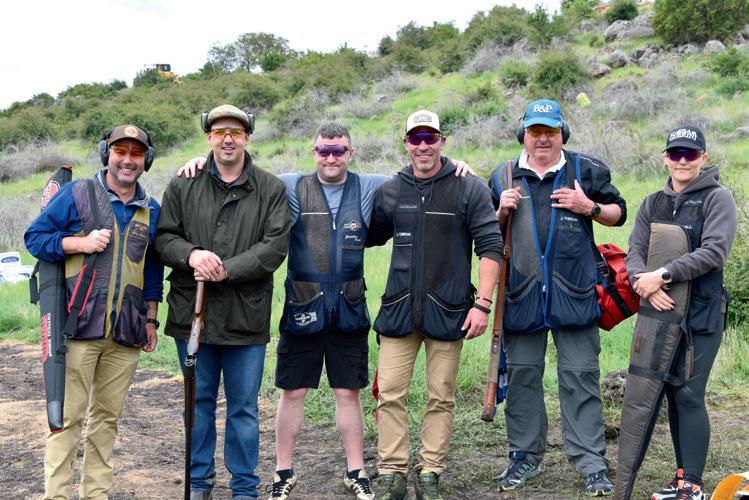
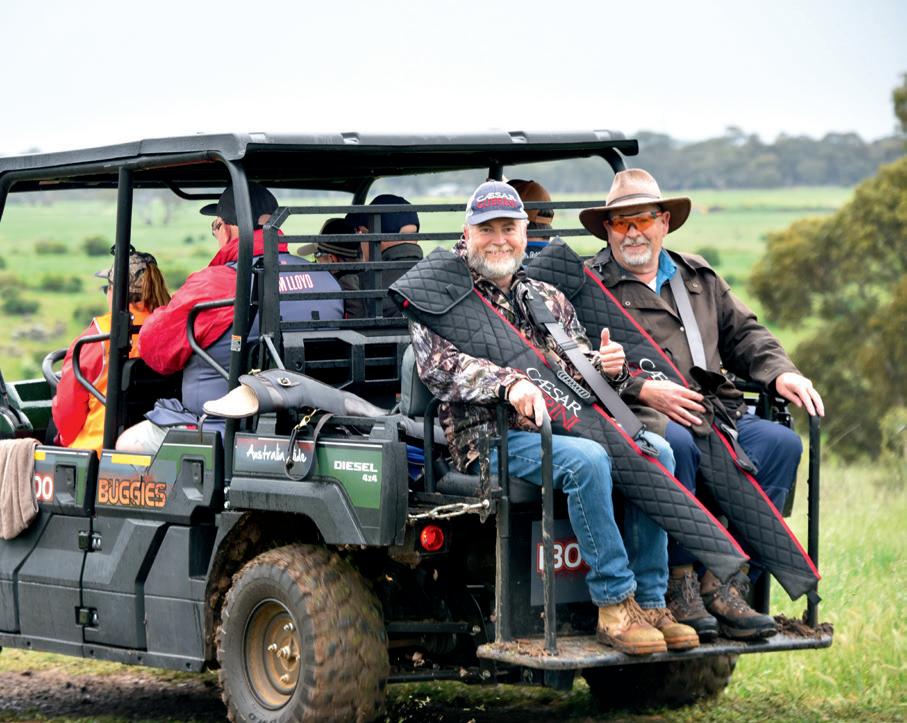

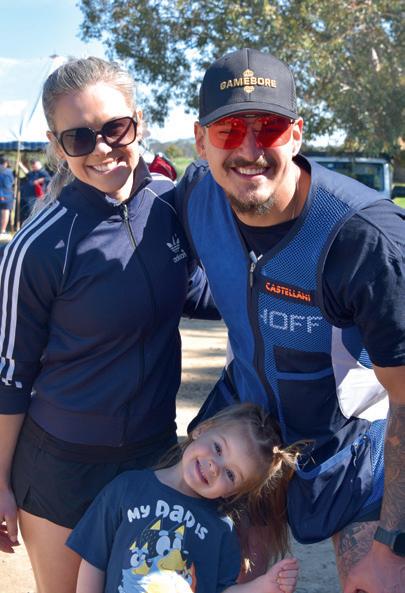
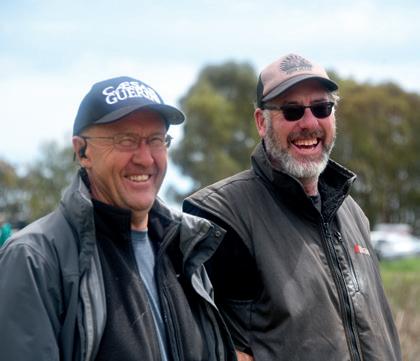
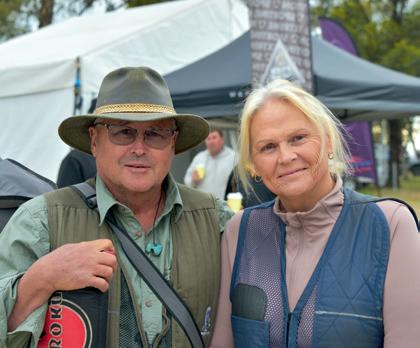
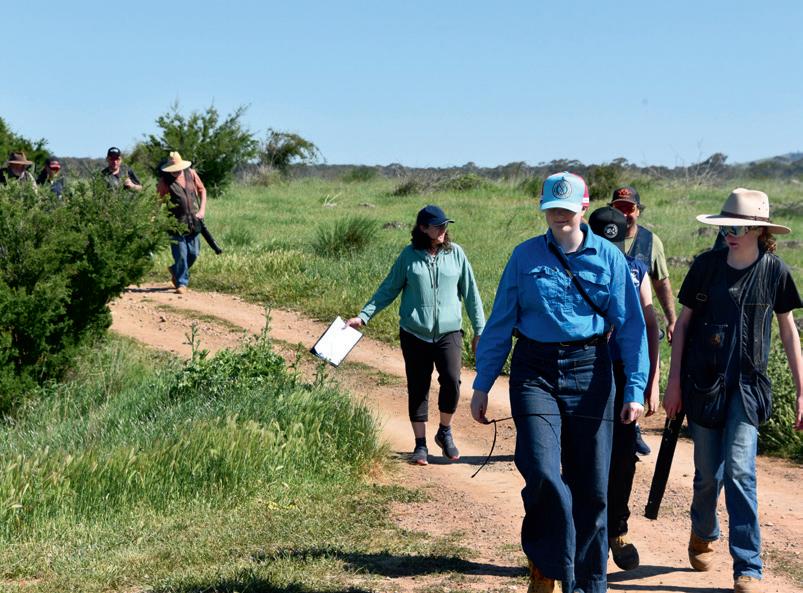
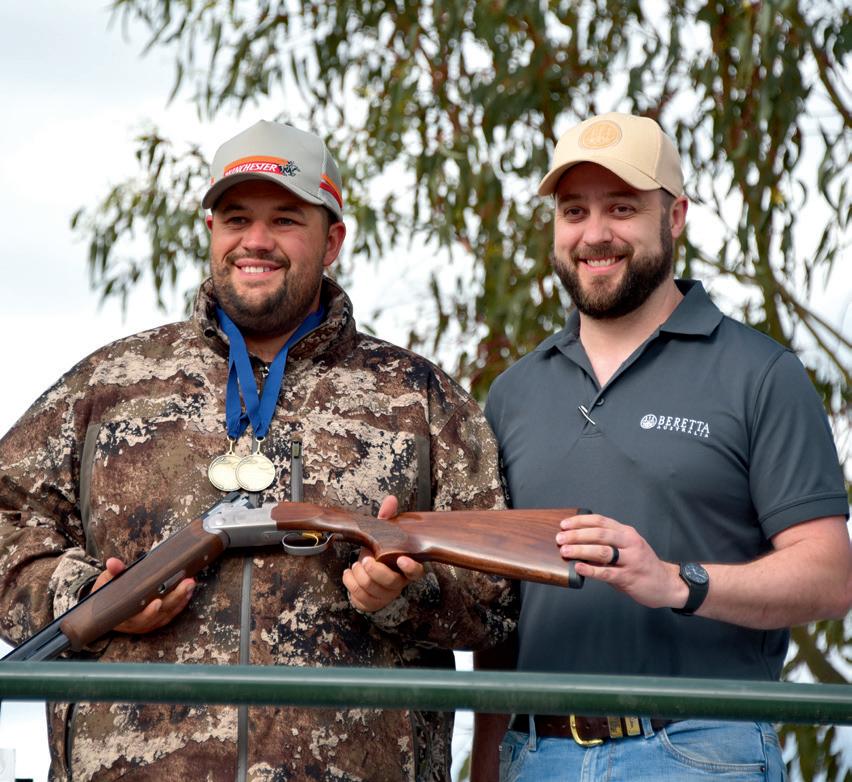
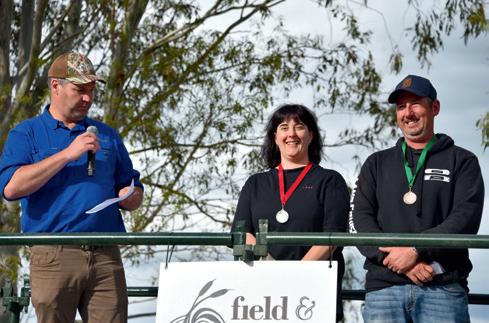
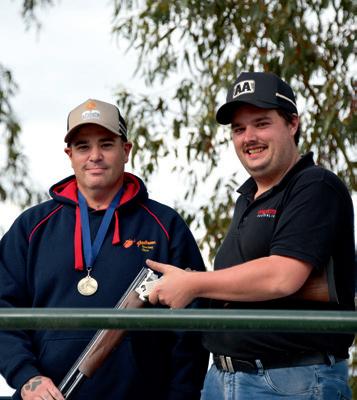
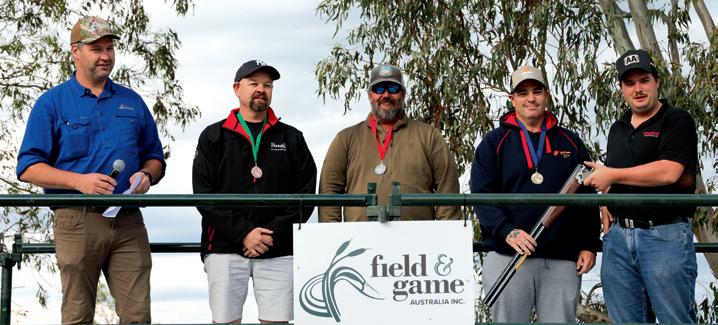
The 2025 Field & Game Australia National Carnival launched with real energy on Friday 31 October, as more than 200 competitors stepped onto the Clunes layouts for the 100 Target Pre-Nationals Shoot.
Alight morning drizzle didn’t slow anyone down. Squads rolled through smoothly, the traps ran flawlessly, and the atmosphere quickly shifted into full Carnival mode. The course offered a balanced challenge—technical enough to demand focus, but enjoyable and confidence-building ahead of the championship weekend.
Robert Hall set the pace early, shooting consistently across all layouts to secure
the overall win. His performance raised the bar for what would become one of the most hotly contested Carnivals to date.
Meanwhile, the vendor precinct sprang to life as the first official trading day of the Carnival. Shooters and visitors drifted between rounds to check out new gear, stock up on essentials, and chat with suppliers—adding to the buzz that makes Friday such an essential part of the experience.
With strong numbers, a seamless run on the grounds, and a great mix of competition and camaraderie, the PreNationals once again proved why it’s the perfect launchpad for the biggest weekend on the FGA calendar.
Congratulations to Robert Hall, and thank you to the Clunes volunteers, vendors, and competitors who helped set the tone for an outstanding Carnival.
The 2025 National Carnival wrapped up on Monday 3 November with the 100 Target Bronze Wing Novelty Event, bringing four big days of competition to a close. Competitors braved cold, wet and rainy conditions, showing real determination to finish the Carnival strongly despite the weather.
Across four thoughtfully designed 5-Stand layouts, shooters were treated to a varied and engaging mix of technical, long, fast and creative targets that kept the final day both challenging and enjoyable.
Sam Nash secured the overall win with an excellent 95/100, finishing ahead of Colin Johns (93/100) and taking home a Beretta Ultraleggero, proudly supplied by Beretta Australia. The remaining prize pool, including ammunition, wine and gear, was generously sponsored by Bronze Wing / NSI La Porte, whose support helped make the Monday event a standout conclusion to the Carnival.
In the grades, Jason Corbett won A Grade, Brandon Wood claimed B Grade, and Jackson Lomer rounded out a highly successful weekend by securing C Grade.
Maximus Pratt impressed with a strong 60/100 to take out the Sub-Junior category. Only a year into competition shooting, he handled the demanding course exceptionally well. The varied presentations — including uphill rabbits, long crossers and the added challenge of rain — showcased his growing confidence and skill. He also embraced the full Nationals experience, from the busy grounds to the vibrant sense of community and the unique landscape at Clunes.
Peter Reading delivered another consistent performance to secure the Veterans win. A seasoned shooter, Peter
praised the overall quality of the Carnival targets, noting that the design, terrain use and variety across all four days created an experience far beyond a typical club shoot. Monday’s 5-Stand offered another thoughtfully crafted mix of targets, and Peter highlighted how well-prepared and diverse each layout was. He also acknowledged the generosity of Bronze Wing’s prize support, which added a special touch to the event.
Sarah Fritsch capped off a strong Carnival by taking the Ladies category with 79/100. Having started shooting regularly in 2018 and now serving as President of Port Phillip FGA, Sarah brought both experience and consistency to her performance. She recognised the balanced and fair nature of this year’s target setting and commended the significant effort invested by the Clunes volunteers in building and running such a large and complex shooting ground. The weekend was also a memorable one for her club, with multiple Port Phillip shooters featuring strongly across the program.
With determined competitors, strong scores across every grade and category, excellent course design and generous sponsor support, the 100 Target Bronze Wing Novelty Event proved to be the perfect finale to the National Carnival.
Congratulations to Sam Nash, all grade and category winners, and everyone who braved the conditions to close out the Carnival in style.
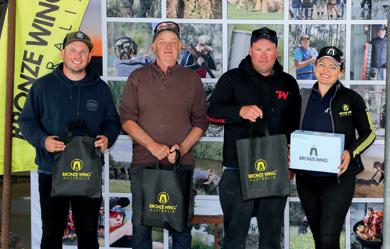
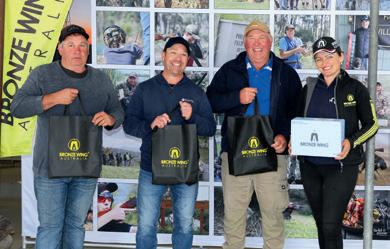
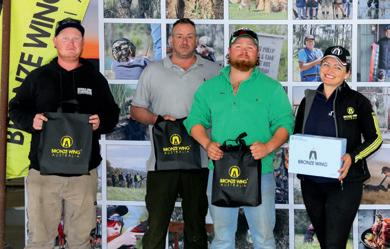
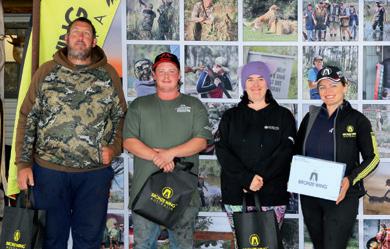
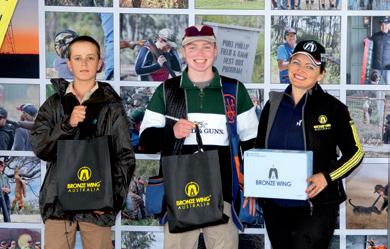
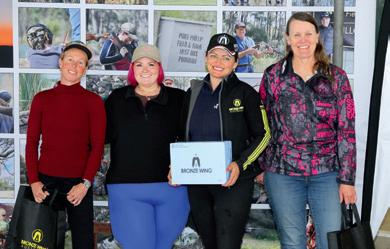
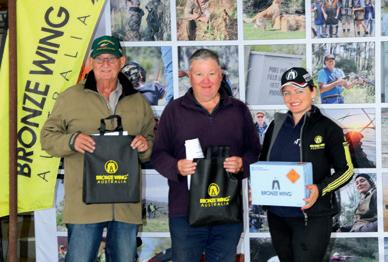
Celebrating the partners who helped bring Australia’s premier clay target event to life
The 2025 Field & Game Australia
National Carnival was another unforgettable four-day celebration of sportsmanship, community, and worldclass competition. This year’s event, which featured three major shoots across the weekend, brought together hundreds of competitors, families, volunteers, and supporters.
But the real backbone of the Carnival’s success was the extraordinary support of our sponsors and vendors, whose generosity, commitment, and passion for our sport were on full display. Their partnership not only strengthened this year's event but continues to shape the future of clay target shooting in Australia.
Winchester Australia
Winchester Australia returned as a proud major sponsor of the 2025 National Carnival, bringing with them an even bigger footprint and deeper support for our competitors and community. This year we were especially thrilled to have the Browning brand as prominent as ever, showcasing its strong connection with Australian shooters, and to welcome White Flyer to the Carnival for the very first time as an official ground sponsor. Their debut added excitement and prestige, reinforcing the quality and reliability that shooters expect at a national-level event.
Winchester’s contribution to the prize pool, including premium firearms awarded to several event champions, further elevated the competition and helped create
memorable moments throughout the weekend. Their professionalism, passion for the sport, and unwavering support of Field & Game Australia make them an invaluable partner.
Beretta Australia
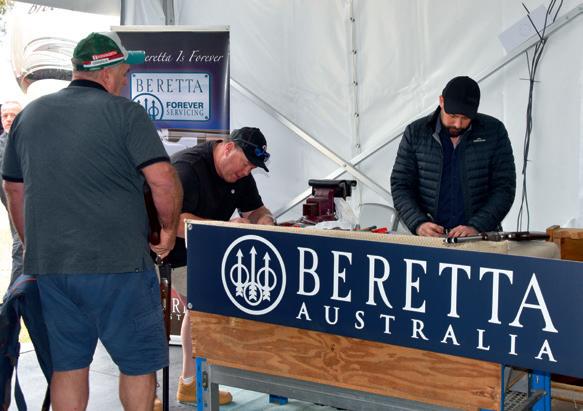
A long-standing supporter of FGA and the National Carnival, Beretta Australia once again showcased their dedication to the shooting community. Micheal and the team had a fantastic set up with so much on offer from servicing to a full range of products. Their contribution of premium firearm prizes added prestige and excitement to the weekend, helping create memorable moments for our highestperforming competitors.
Beretta’s presence continues to inspire shooters of all levels, reminding us of the important connection between heritage, craftsmanship, and performance.
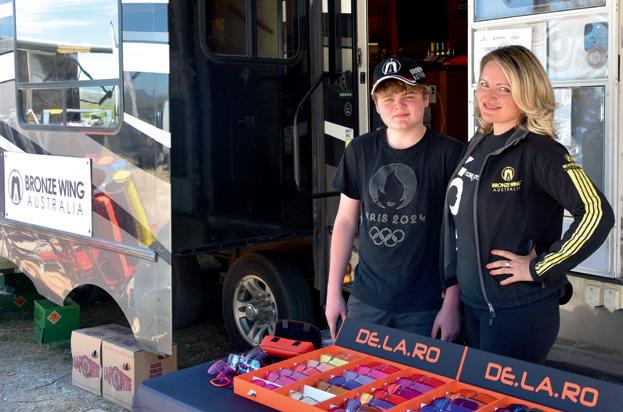
Bronze Wing has been a valued Carnival partner for many years and Anna, John and Boof, returned again in 2025 with unwavering energy and enthusiasm. Their contribution, paired with the quality and reliability associated with NSI and La Porte, ensured competitors enjoyed an exceptional shooting experience across the entire weekend.
Bronze Wing’s support went beyond product alone, they brought genuine passion for the sport and a strong sense of community, reinforcing why so many shooters are loyal to the brand.
Outdoor Trading Company stepped up again in 2025 as a proud sponsor of the National Carnival. OTC continues to play a pivotal role in supporting FGA events and contributing to the growth of responsible, sustainable shooting sports in Australia.
Their involvement helped elevate the quality and calibre of the Carnival, and we thank them for their ongoing commitment.
This year’s vendor village was a highlight for both shooters and spectators. From apparel and custom engraving to ammunition and accessories, our
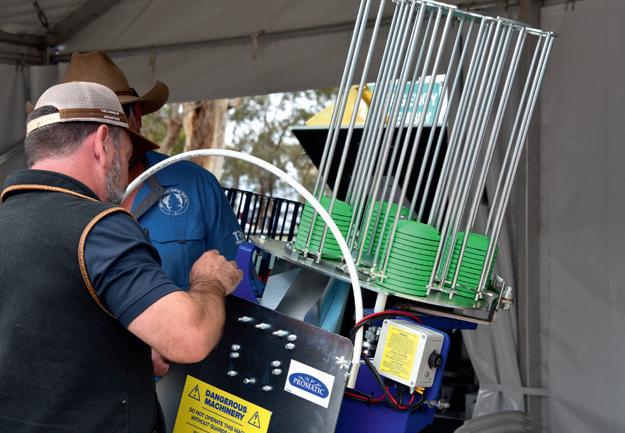
vendors helped create a vibrant, engaging atmosphere throughout the Carnival grounds.
Top Shot Industries proved why they are a trusted favourite among shooters. Their team brought great energy and expertise to the event.
Always a crowd favourite, Kevin and the BEST Vests team returned with their premium shooting vests and accessories. Their craftsmanship and customer service continue to set the benchmark—and our competitors were thrilled to have them onsite.
Offering customised engraving and personalised gear, Precision Etch added a unique flair to the vendor space. Many competitors left with beautifully engraved pieces to commemorate their Carnival experience.
Collumbo Shooting brought a strong retail presence to this year’s event, with highquality shooting apparel and equipment that drew a steady crowd to their stand across the weekend.
Wtih a brilliant range of firearms on show, SH Shooting contributed a valuable retail and advice hub for competitors seeking last-minute kit upgrades or expert insights.
Danny Genovese and the Gamebore brand delivered exceptional service and premium ammunition options once again this year. Their commitment to supporting competitors—with both product and expertise—was greatly appreciated.
The strength of the National Carnival lies not only in the talent of our shooters and the dedication of our volunteers but also in the partnerships we build with organisations who care deeply about the future of clay target shooting.
To all our 2025 sponsors and vendors, Winchester, Beretta, Bronze Wing/NSI/ La Porte, OTC, and every business who joined us onsite, thank you. Your support, enthusiasm, and belief in what we do at Field & Game Australia make this event possible.
We are proud to work alongside you and look forward to building an even bigger, brighter Carnival in 2026 and in the years ahead.
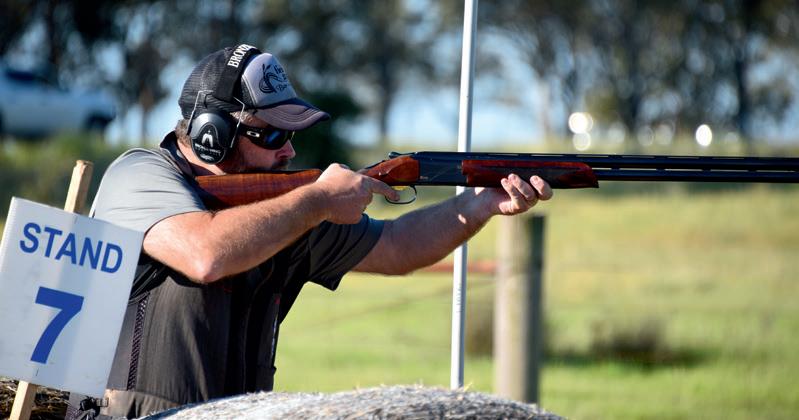
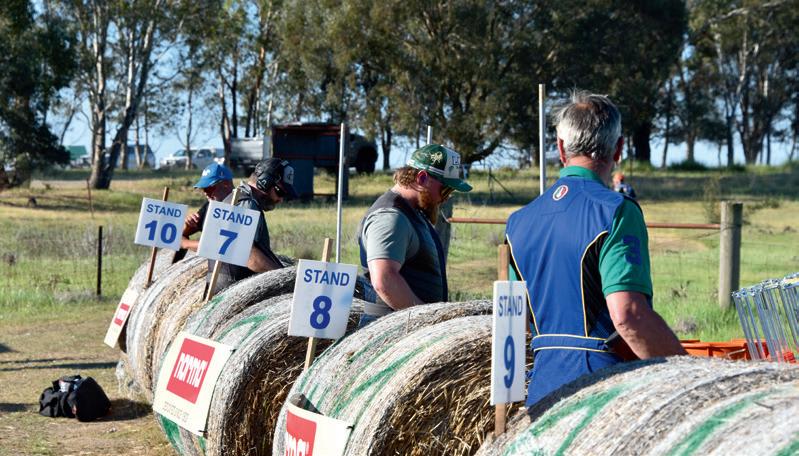
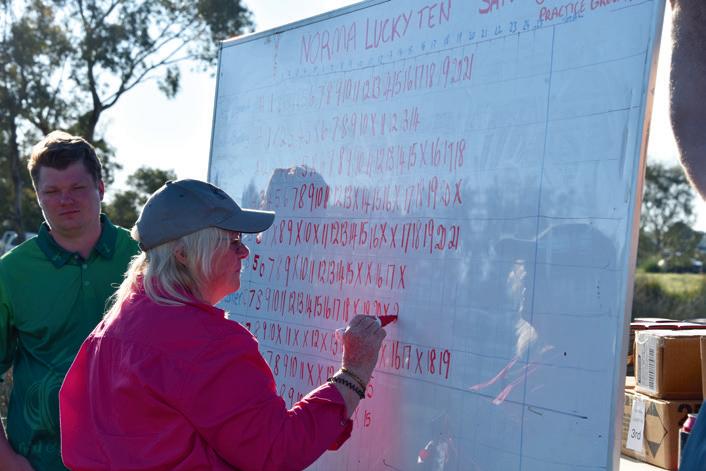
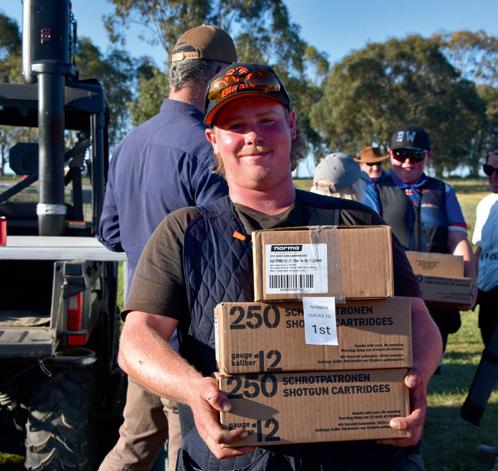
The crowd-favourite fivestand handicap returned for its second year at the FGA ASF National Championship, with ten randomly selected shooters going head-to-head for a stack of Norma Clay ammo supplied by Beretta Australia.
The 25-target event added a fun, competitive edge to Saturday afternoon, as names were drawn at random from the Championship entrants for a shot at the prize. It was Jackson Lomer who rose to the challenge, scoring an outstanding 29 to claim first place — and the lion’s share of the ammo. Lomer went on to back it up on Sunday with a C-Grade title win, making it a weekend to remember.
Jeff Zammit finished second with 26, while Mitchell Wilson placed third on 25, just ahead of Simon Lowe on 25 in fourth and Brandon Wood on 24 in fifth. Every competitor walked away with a share of the prize and a fun way to end the Saturday.
Final Results:
1st Jackson Lomer (C7) 29
2nd Jeff Zammit (AA1) 26
3rd Mitchell Wilson (A3) 25
4th Simon Lowe (B6) 25
5th Brandon Wood (A3) 24
6th Daniel Spark (A2) 22
7th Katie McPherson (C7) 22
8th Ebony Passarin (B5) 22
9th Josiah Burling (AA1) 21
10th Joanne Russell (B5) 20
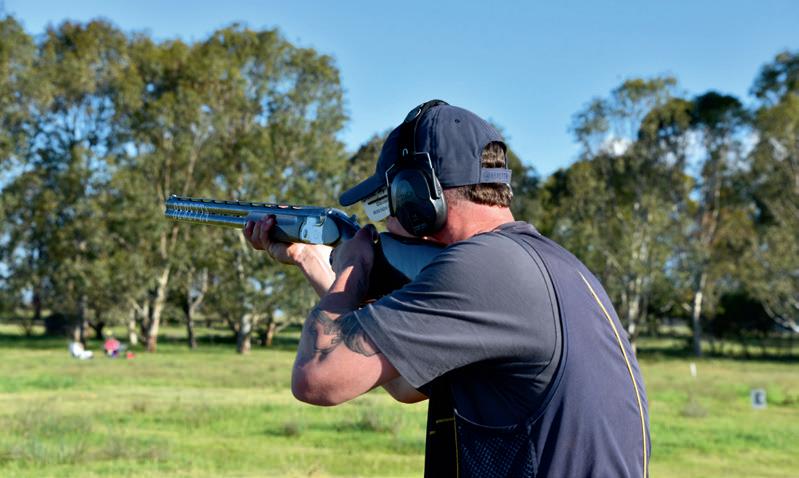
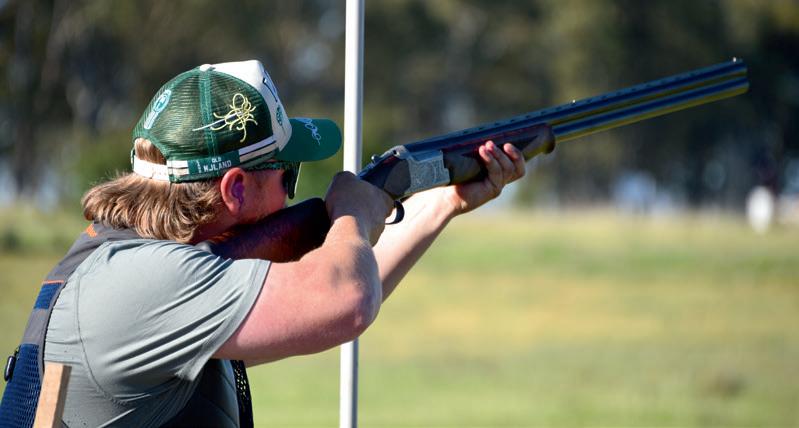
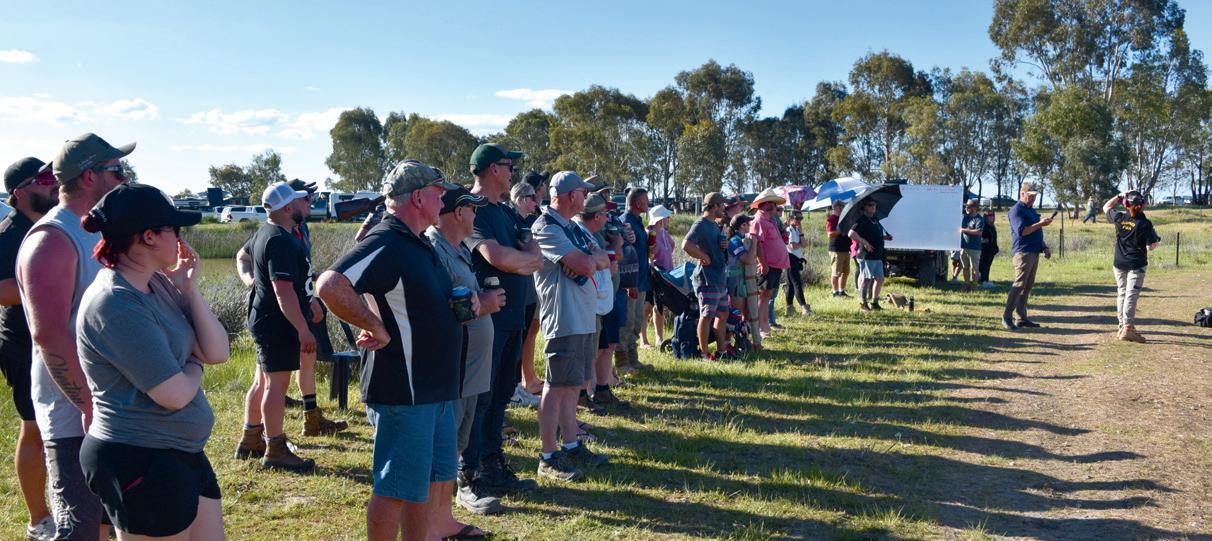
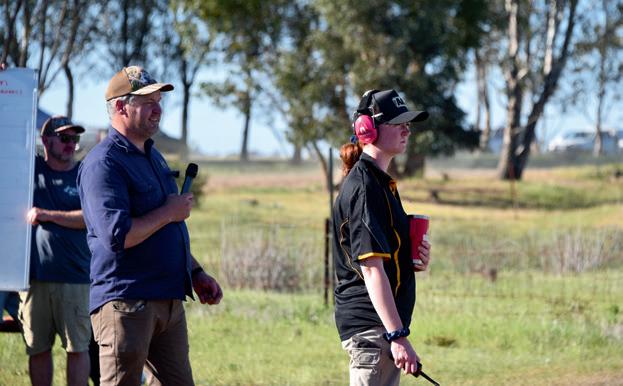
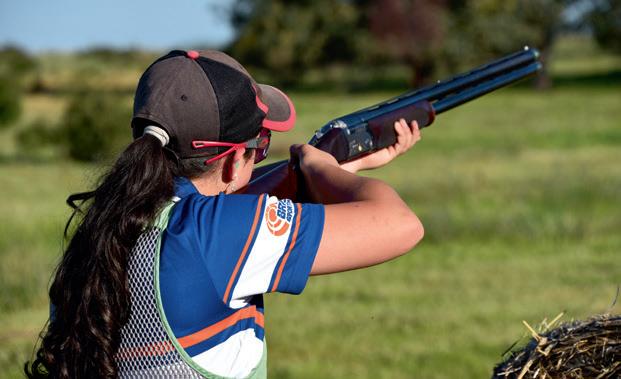
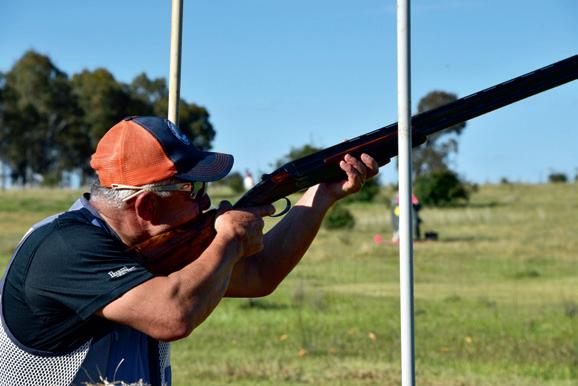
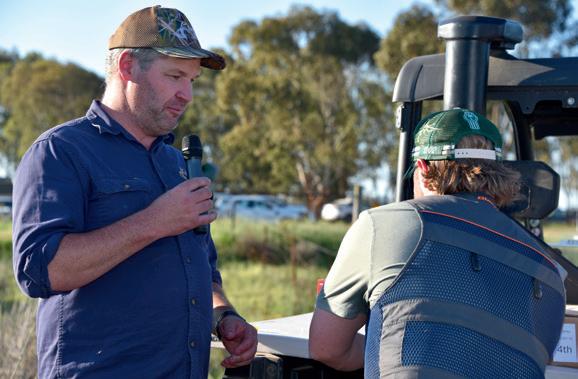
Behind every successful National Carnival is a small group of people whose dedication ensures the event not only runs smoothly but leaves a lasting impression on everyone who attends. This year, two individuals stood out for their tireless commitment, and pride in their work: Peter Hall and Phil Toose.
Across all four days of competition, from Friday’s 100 Target ASF Pre-Nationals Shoot, through the weekend’s ASF National Championship, to Monday’s Bronze Wing-sponsored Novelty Event, Peter and Phil worked relentlessly to present grounds that were safe, functional, and of the highest possible standard. Their contribution was felt long before the first shot was fired, with weeks of preparation ensuring layouts, access points, and amenities were ready for over 600 competitors across the full schedule of events.
Throughout the Carnival, their attention to detail was evident in every corner of the range. Whether it was adjusting layouts, navigating tracks, seeing to breakdowns across the range, or contending with Monday’s challenging weather conditions, Peter and Phil remained calm, solutionsfocused, and unwavering in their commitment to the Carnival’s success.
Their work ensured that competitors, volunteers, vendors, and sponsors could enjoy a seamless experience, one that reflected the professionalism and community spirit of Field & Game Australia. Events of this scale can only succeed with people who go above and beyond, and Peter Hall and Phil Toose exemplify exactly that.
We extend our sincere thanks to Peter and Phil for their extraordinary effort, endurance, and dedication. The 2025 National Carnival was stronger because of you.
Irecently attended a Sport Psychology workshop being run in Newcastle by the Australian Psychological Society called “Bridging Clinical and Sport Psychology: Helping Athletes” presented by Hugo Webster. I was hoping to learn new and exciting advances in the field, but that didn’t happen, the presenter went over the things that I have been researching, writing about and teaching to others over the years. I felt validated because I was on the same wavelength as the much younger than me presenter who is a leader in the field from Sydney.
There was one area however that sparked my interest. And that was the difference between being confident or being competent.
Confidence comes from the Latin and means “with trust”, and therefore it is an abstract construct. That means, it is not something that is concrete, you cannot pick it up for example or go the supermarket and buy some confidence. Confidence as ‘a thing’ is an integral part of how we see ourselves and interact with the world. It is closely tied the values and attitudes we hold. Being confident
means that you are unlikely to fall victim to self-defeating thoughts; to be confident you need a can-do attitude, a belief that you can handle anything that comes along. Patrick Cohn from Peaksports defines self-confidence as “how firmly you believe in your ability to execute a physical skill or perform a task”. Confidence, according to Cohn, comes from a baseline assessment of past performances, training, and preparation.
What is competency? Competency is having the knowledge, skills, abilities, and behaviours that contribute to individual performance. So being good at trap, skeet or sporting means you have the knowledge and understanding of how the shotgun works, how the cartridge works, how the targets fly and what is a proper presentation. It also means having the physical and technical abilities to be able to hit the target. To do this well in competition also means you have the mental and competition skills and behaviours to execute each shot.
Webster argued that “Competency is where you place your trust”. This is how you harness the skills, knowledge,
and abilities to hit the target. As your competency or skill mastery grows, your confidence becomes proportionally stronger, which is strengthened more with successful training and quality practice. This also ties in with the work of Tim Gallwey, author of the “Inner Game of Golf” who argues that to play well you need to “trust and let go”. Trust being the faith that you have the competencies to hit the target and letting go of past judgements about yourself, your past performances or future fears.
Confidence is a feeling; competence is a behaviour. If you make behavioural changes and become more competent in your knowledge, skills and abilities to shoot each target you will see and feel a difference in your performance.
References:
• P. Cohn. 2006. The Confident Athlete. Peak Performance Sports.
• T. Gallwey, 1979 The Inner Game of Golf.
• H. Webster 2025 “Bridging Clinical and Sport Psychology: Helping Athletes” Newcastle APS Branch presentation.
Michael Kruger-Davis is the consulting psychologist and a member of Newcastle Lake Macquarie CTC. He uses ammunition from Hunts Shooting Supplies. Questions regarding psychological aspects of sport and shooting can be addressed to him at mjkrugerdavis@gmail.com
My name is Glenda Anderson, I have been an active and continuous financial member of the Sale branch of Field and Game Australia for 29 years.
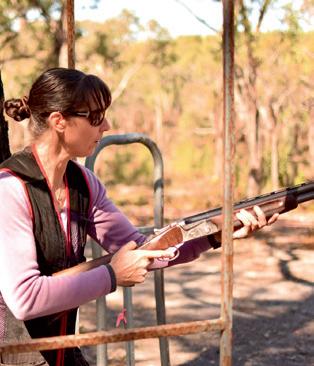
My husband and I regularly participate in the monthly clay target competitions at the Sale branch, and I also work in the canteen at every shoot. I occasionally shoot at other local Field and Game branches as time permits.
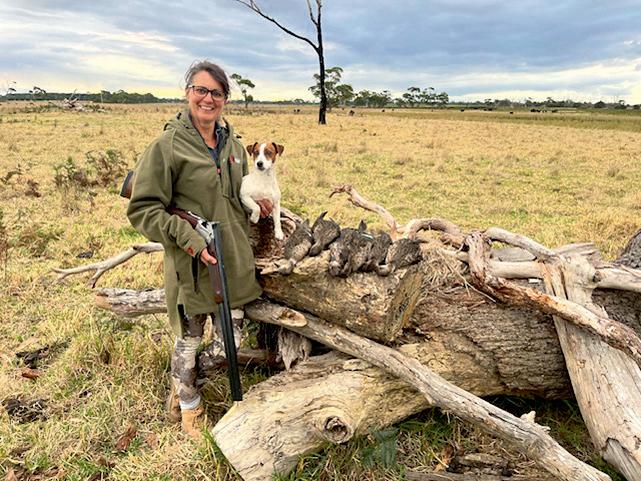
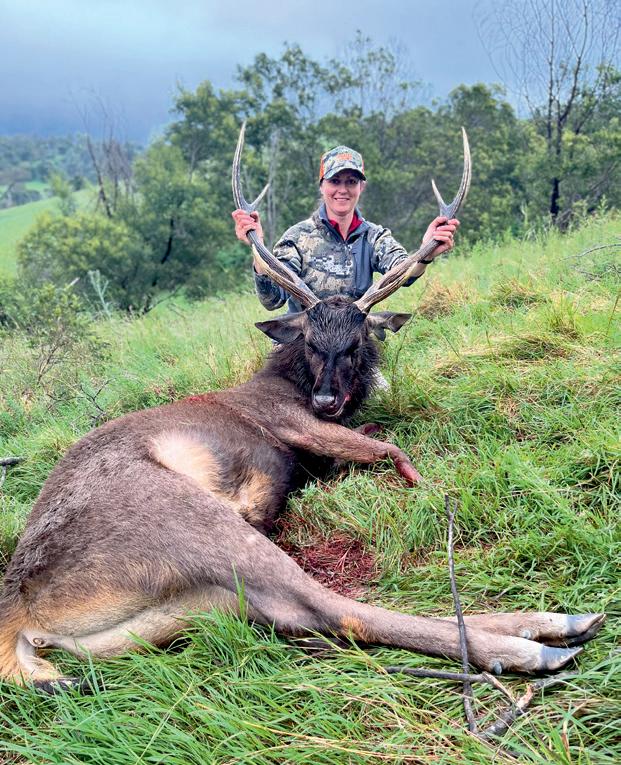
I am a keen hunter of both duck and deer. I took part in the ‘Inquiry into Victoria’s recreational native bird hunting arrangements’, representing myself as a duck hunter along with two other Field and Game members to put our case forward in supporting the continuance of duck hunting in Victoria. I feel it’s important as a member to support Field and Game Australia, especially in the current times, to enable the association to continue to uphold its values and fight for our recreational pursuits, which is why I decided, in 2023, to apply for a role on the board of Field and Game Australia.
I feel it’s important to help in upholding the founding history, traditions and values of Field and Game Australia in: the preservation and conservation of wetlands, research and management of our native duck populations through duck nest box working bees, waterfowl counts and data collection, pest management/ control through fox drives and staying true to what Simulated Field Targets were originally intended for, that is, for hunters to maintain their marksmanship out of season, where targets are thrown to ‘simulate’ the movements of game animals.
I have had many varying roles and responsibilities on different committees over the years. I hold a bachelor’s degree in health science (Nursing) and worked for several years on our local hospital wards. I worked as a vet nurse at a local clinic for eight years and currently work at our local
hunting and outdoor store, H&S Firearms, in Sale.
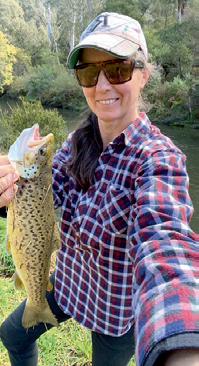
When I’m not chasing clays, I am hunting sambar deer in the Victorian high country, walking and kayaking rivers fishing for
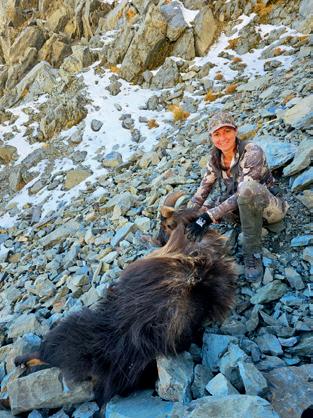
brown trout and bass. I have also been lucky to have had the opportunity to hunt Himalayan Bull Tahr in New Zealand the past two years, taking a nice mature Bull Tahr on both occasions.

This submission is a response to the September 2025 issue’s article, “Heritage Trophies: Max Beck Remembers the Tradition of Live Bird Shooting.” FGA member John Long shares his memories of a friend and former FGA member, now deceased, who achieved a major title in clay target shooting and left a lasting mark on the sport.
Congratulations to Max Beck, and a big "thank you" for his article in the 39th issue of our Field and Game Magazine, in which he provides a great insight into early competitive shotgun shooting in Australia.
As Max states, the sport was originally conducted using live birds, in flight, as targets.
It is well known that Australia "punches above its weight" in many sports at the international level over the years, and shotgun shooting has been one of these.
But what is not so well known now is that, in 1963, a young man from a grazing family, who owned a property near the small township of Cavendish in Western Victoria, became World Champion at live bird shooting, and later a long-time member of Field & Game.
The World Title event he won was
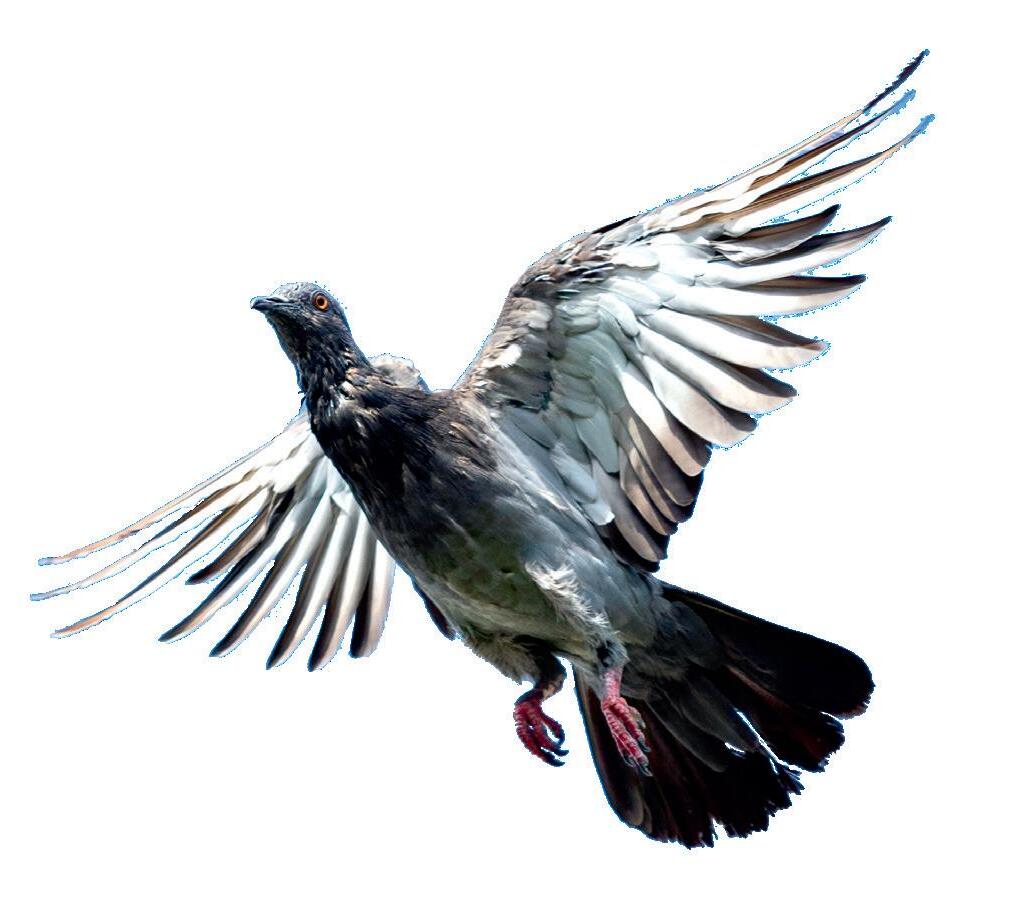
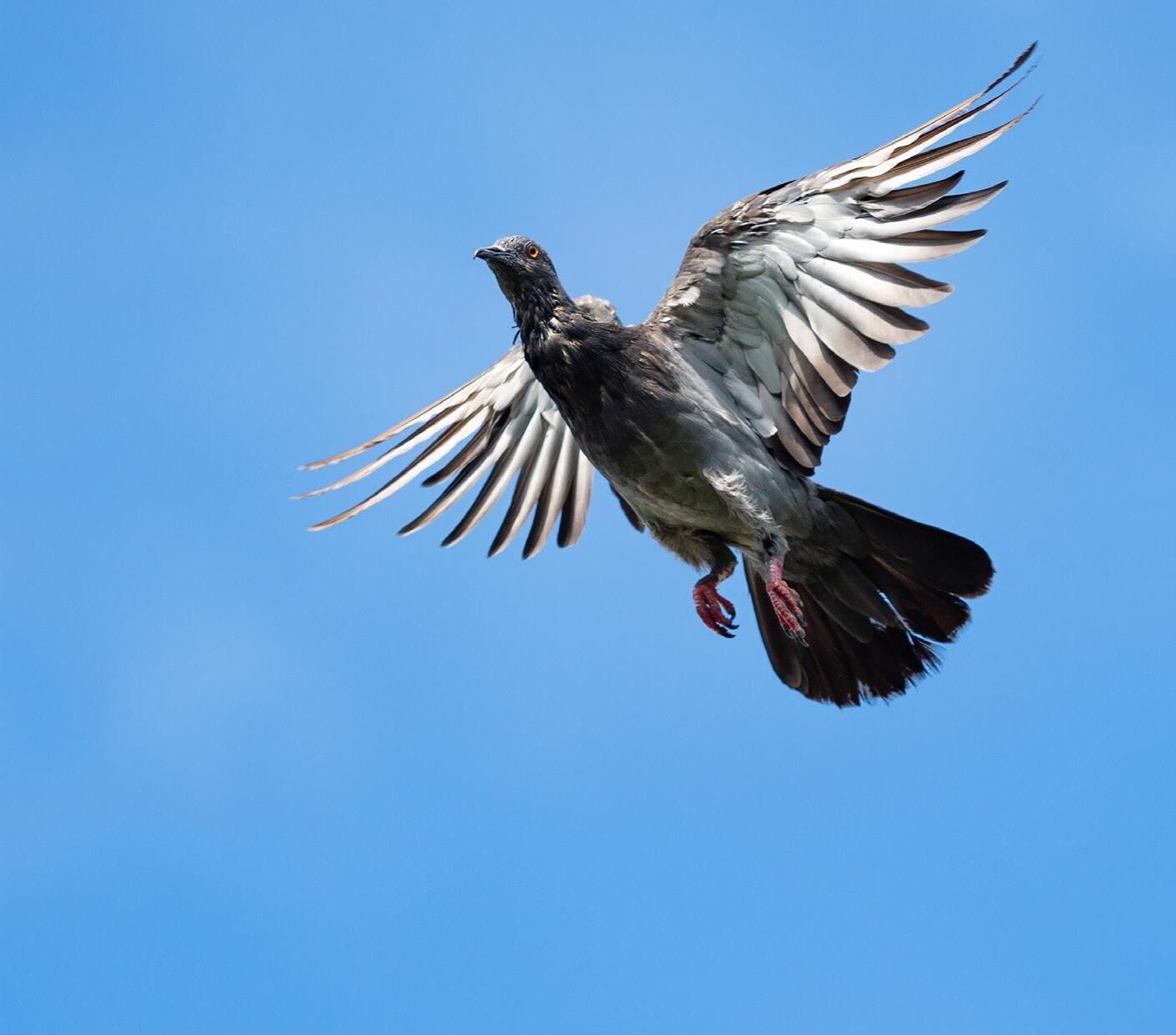
conducted using pigeons in Madrid, Spain, attracting the best competitors from the UK, Europe, and the rest of the world, including many professionals in the sport.
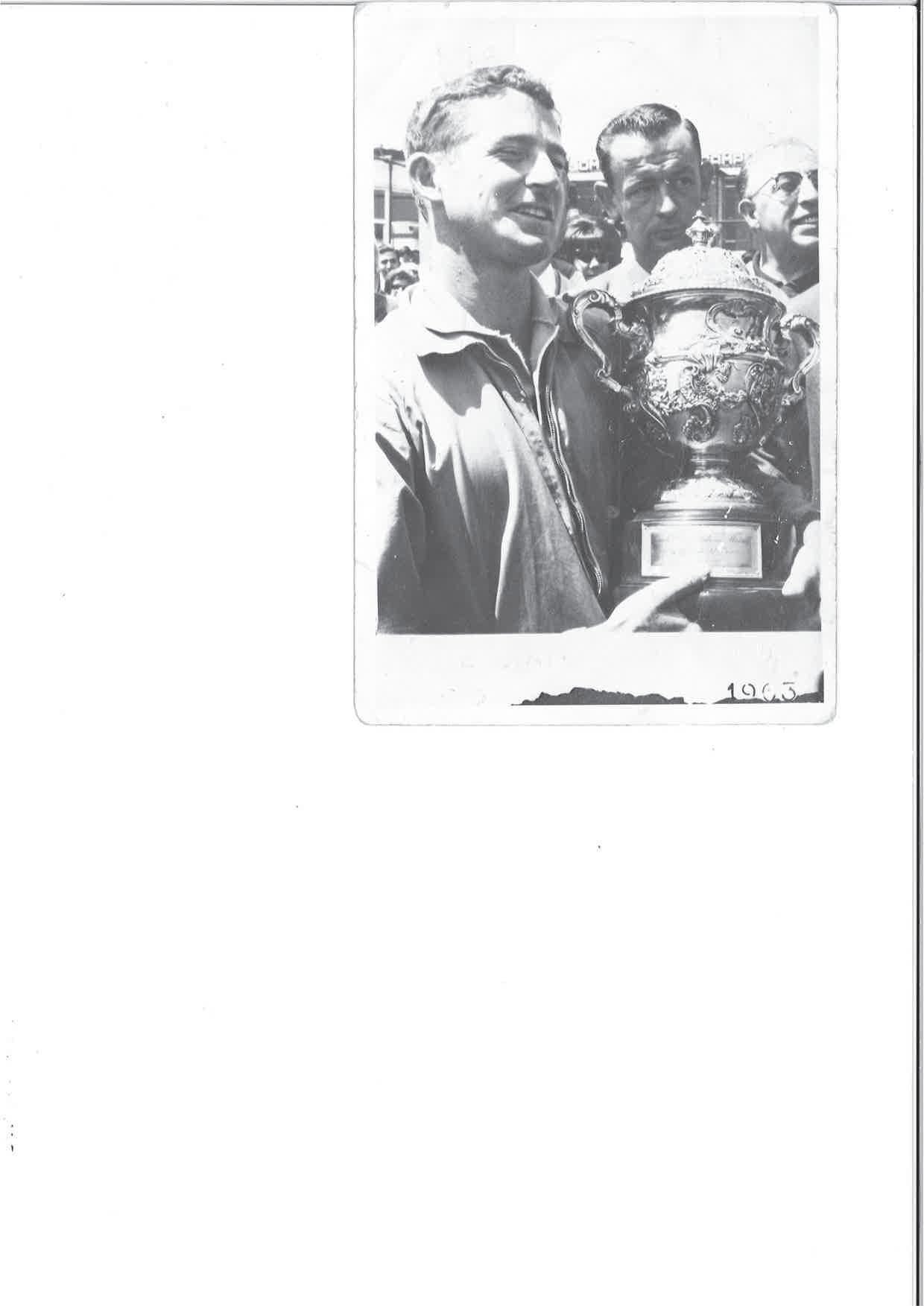
This young man was Don Mayfield (pictured with the trophy), who shot 25 pigeons straight to set a world record at that time.
So, where did Don Mayfield get started in target shooting?
The family farm was about 30 km from the now-named City of Hamilton, where shotgun shooting was prominent prior to WWII. The Hamilton Gun Club, of which my dad, Frank Long, was a Life Member, conducted live bird events. Don’s father, Oscar, attended these events regularly, so it followed that Don and I would be drawn into the activity when it resumed around 1946 or 1947.
Throughout the 1950s, interest accelerated
rapidly, with strong clubs being established in many towns and cities. This continued until 1956, when live bird events ceased, as Max mentioned in his previous article.
But let’s go back a step to the early 1950s, when the countryside was overrun with rabbits. Many of us shot them in large numbers with trusty old .22 rifles. It was part of Don’s duties to clear as many rabbits as possible on the farm, and he delighted in shooting them on the run whenever possible. (His son told me recently that Don taught them to shoot clay targets with their .22 rifles.)
At some point, Don acquired a C-grade Browning over-and-under shotgun, which became one of the "tools of the trade" on the farm. It got plenty of use—not only on rabbits, hares, foxes, and other vermin, but also on ducks, quail, and other hunting activities.
He always carried that gun with him while

on his farming duties, whether in the "ute" or on his horse in a holster beside the saddle. His horse would allow him to use the gun while mounted.
It became obvious that here was a brilliant young gunman. But as live bird events ceased in 1956, Don took some trips overseas, where the sport continued with renewed vigour at the highest level.
While Don took great care of his faithful old Browning and used it for all the activities mentioned, it was the same gun he used at these overseas events and at his World Championship win in Madrid.
It will be appreciated that participants at events of that level, particularly professionals, often had not one but a matched pair of specially fitted guns. Don, however, just used "old faithful."
After his win, he was approached by a Browning representative, who congratulated him and offered to have his company carry out a full service on his guns (plural). When advised this was his only gun, he was gifted one of the high-grade Brownings in recognition of his amazing performance.
As happened back then, Down-The-Line clay target shooting eventually took over, with some clubs offering Skeet and Tower, but both lacked the appeal that developed from Field and Game ASF events.
I lost regular contact with Don after a
career move from Western Victoria in 1964, but it is understood he took to ASF with enthusiasm and was a keen member of the Coleraine Club.
Don passed away at a relatively young age, but he is held in high regard by his many friends and those who competed with him in numerous shooting activities.
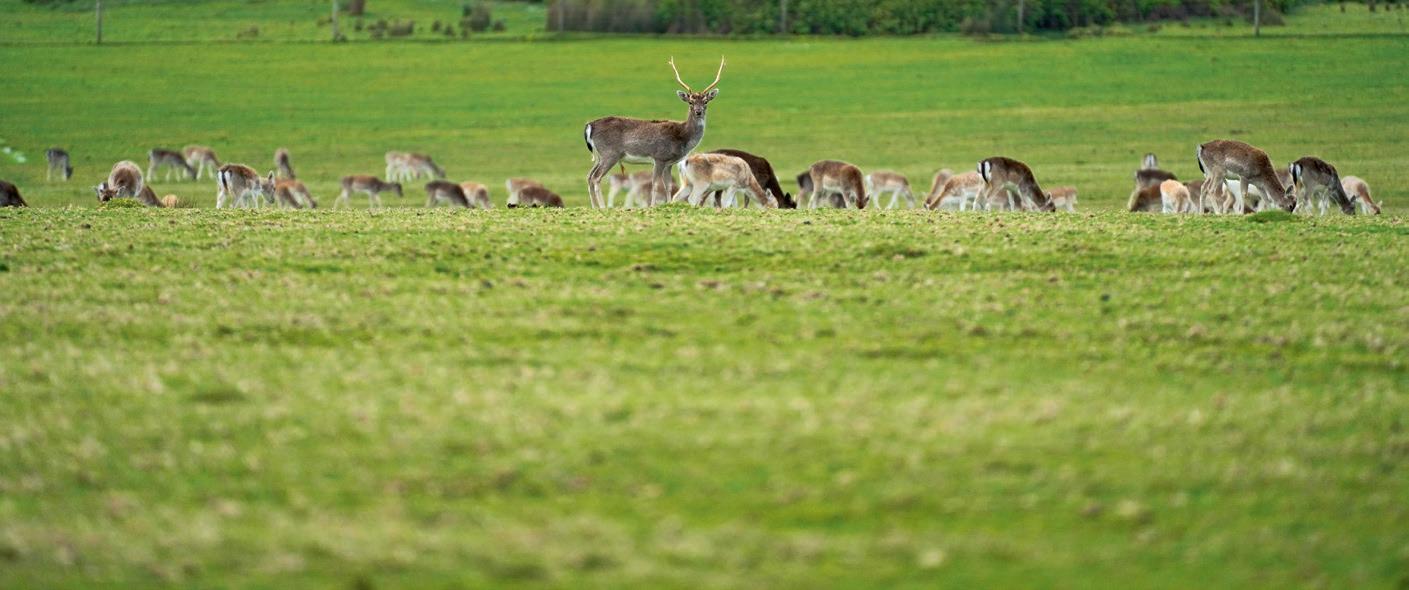
The 2025 Wild Deer Expo in Warragul was a strong reminder of why events like this matter for the Australian hunting community. Across two busy days, thousands of hunters, families, and outdoor enthusiasts flowed through the venue—creating an atmosphere that was energetic, positive, and genuinely community-driven.
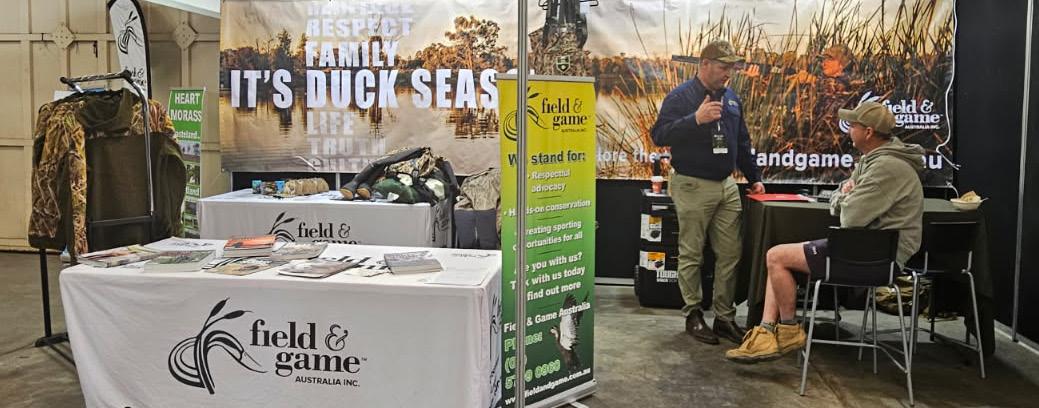
For Field & Game Australia, the expo was a fantastic opportunity to reconnect with long-time members, meet many new ones, and continue the conversations that matter most: responsible hunting, conservation, community, and the future of our lifestyle.
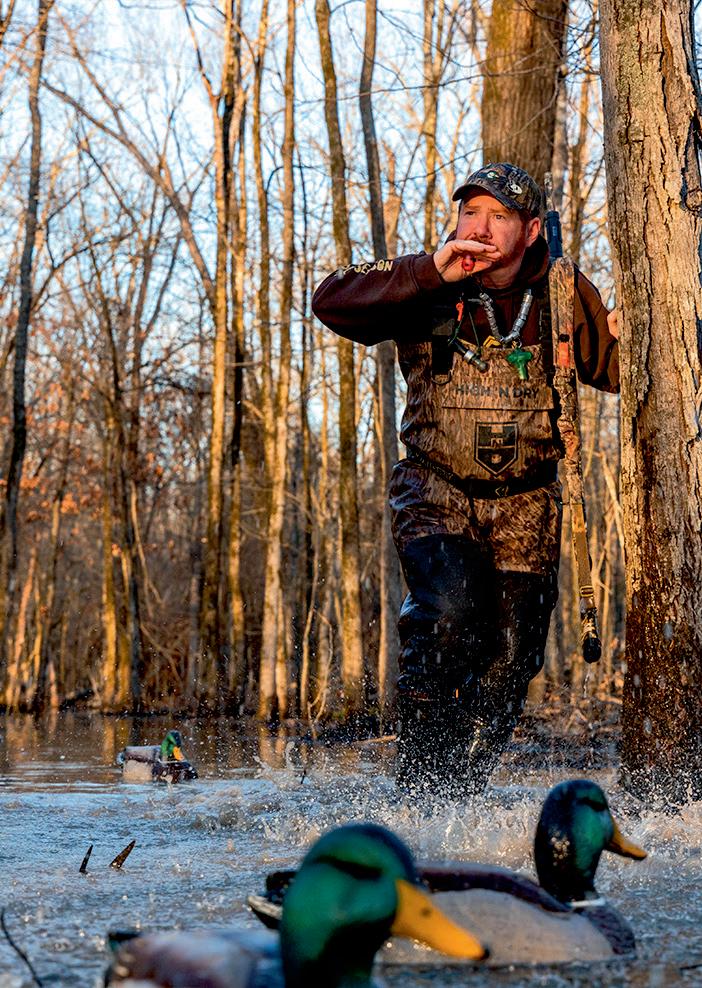
This year also marked the first time FGA has been able to publicly showcase the High ’n Dry waders, including the very limited-stock waist waders that have already generated plenty of interest. The feedback was overwhelmingly positive. Hunters recognised the build quality immediately—the stitching, the materials, the comfort, the design choices that only a true waterfowler would think of. These are serious waders, built for real conditions, and the reaction affirmed what we already knew: Australian hunters deserve access
to the best gear in the world.
The only hesitation we heard was around price, and that’s understandable in today’s climate. We’ve worked hard to secure the best deal possible for members, and the response at the expo made it clear that once people saw and tried them, they could see the value immediately. We’re looking forward to more High ’n Dry waders making their way into Australian wetlands this season.
This was the first Wild Deer Expo under new management, and despite a few hiccups— which are unavoidable in any major transition—the team pulled together and delivered a genuinely successful event.
On behalf of Field & Game Australia and our members, a heartfelt thank-you to Shaun, Jamie and everyone involved.
Running events of this scale is tough work. It takes risk, commitment, and countless hours—often from people who get little recognition and even less rest.
If the Australian hunting community wants expos, events, and public gatherings to continue, we all need to support them. Turn up. Buy a ticket. Bring a mate. Encourage organisers. Because without community backing, events like this disappear—and we’re all worse off for it.
Beyond the gear and the crowds, the expo gave hunting organisations the chance to connect—properly connect—with the public. Advocacy doesn’t happen in boardrooms alone; it also happens in conversations over a counter, by the wader stand, or at a map of wetlands.
There are always challenges ahead for hunters, and FGA continues to engage proactively and professionally on every front. Events like this help us stay grounded in the community we serve and reminded of what we’re fighting for.
The positivity across the venue was unmistakable. Hunters are optimistic. They’re engaged. They’re proud. And they are paying close attention to the organisations that show up—consistently and authentically.
For FGA, the Wild Deer Expo was more than a trade show. It was a chance to stand alongside members, talk about the future, celebrate what we’ve achieved, and showcase new gear that lifts the standard of hunting equipment in this country. Most importantly, it was a reminder of the strength of the Australian hunting community when we get together.
We left Warragul exhausted, but also energised, encouraged, and ready for the next chapter—and we look forward to seeing many more members (in High ’n Drys) out on the wetlands soon.

Over the next 12 months, two of Australia’s most important jurisdictions for regulated duck hunting and conservation—South Australia and Victoria—will be deep in election season. South Australia goes to the polls on 21 March 2026, and by the end of this month the state will be in full, public campaign mode. Victoria follows later in the year, with its election set for 28 November 2026, and both major parties are already sharpening their leadership teams, policies, and internal structures for the long campaign ahead.
For outdoor enthusiasts, especially hunters, clay target shooters these elections are far from abstract political events—they will shape the future of our seasons, our access, our wetlands, and our firearms laws for years to come. The simple truth is this: while decisions about hunting are guided by departments, they are ultimately decided by the Ministers and MPs who we elect, or fail to elect.
If anyone wants a reminder of what happens when governments believe hunters won’t show up at the ballot box, they only need to look across to Western Australia.
There, sweeping new firearms laws have been pushed through with very little concern for the thousands of law-abiding shooters and farmers who rely on firearms responsibly every day. WA’s reforms impose some of the toughest limitations in the country—strict caps on firearm numbers, bans on entire categories of commonly used firearms, and mandatory medical assessments for licence holders. Many responsible firearm owners now find themselves treated more harshly than actual criminals.
The biggest lesson? It happened because the government felt it could.
When hunters and outdoorspeople don’t vote, or vote without paying attention to who supports regulated hunting and fair
firearm laws, governments interpret that silence as permission. Anti-hunting groups never stay silent. We can’t afford to either.
It’s easy to assume that one vote doesn’t matter, especially in so-called “safe” seats. But when it comes to hunting, conservation and fair treatment of licensed firearm owners, a few thousand votes in the right places can shift:
• who forms government
• who becomes Minister for the Environment or Police
• who controls game management policy
• whether evidence or activism drives decision-making
Many MPs—particularly in the city—do not understand hunting. They don’t know the culture, the ethics, the conservation work, or the science behind regulated seasons. If they don’t hear from us in the polling booth, they’ll take their cues from the loudest voices—often groups who oppose hunting entirely.
Voting is not the only thing we must do, but it is the minimum thing we must do.
Field & Game Australia will always remain politically neutral.
That means:
• We do not endorse parties or candidates.
• We do not tell members how to vote.
• We work with whoever forms government in good faith.
But neutrality does not mean silence.
In the lead-up to the SA and Victorian elections, FGA will:
• Send every MP and candidate a clear set of questions about:
• their support for regulated, sustainable hunting
• their approach to science-based wildlife and game management
• their position on fair and evidence-
• Publish the responses (or non-responses) so members can make informed choices.
• Continue to present factual, scientific and ethical arguments to government and opposition alike.
Our job is not to “campaign”—it is to ensure that you have the information you need to vote with confidence.
You don’t need to become a political junkie to make a difference. Small actions, multiplied across our community, shape outcomes.
1. Check your enrolment. Make sure your details are current before rolls close.
2. Learn who’s standing in your district. When FGA publishes candidate responses, read them. If someone doesn’t reply, ask them why. Politely make it clear that hunting, wetland conservation and fair firearm laws matter.
3. Talk to your mates. Around the campfire, at the range, at your branch meeting—encourage each other to be enrolled, informed and ready to vote.
4. Be respectful representatives of our community. We gain nothing by feeding stereotypes. Be calm, factual and firm. Decision-makers remember that.
In South Australia, the campaign begins in earnest within weeks.
In Victoria, the race is already forming behind closed doors.
For hunters and outdoorspeople, this next 12 months is not the time for indifference. It is the time to be engaged, informed, and ready to vote.
The future of regulated hunting, of fair firearm laws, of access to wetlands and consultation with genuine conservationists—all of it depends on who forms government next year.
So when election day comes, don’t leave your season, your sport, or your say to chance.
Stand up. Number the boxes. Make your voice count.
When duck season closes, some hunters hang up their waders — but others head north to the NSW rice fields, where the battle between farmers and ducks begins anew. In this humorous, imaginative account, guest contributor Rob Baldinger shares what it’s like to answer the farmer’s call: “We want you!”
Another duck season has come and gone in the southern states — the ones that have a season, that is. It has been scientifically proven that autumn is the fastest of all the seasons. I think that’s true; I read a headline on social media to that effect, so it must be true, right? Fake or fiction, it certainly seems to be over just as it begins. There’s just so much great game hunting in autumn, leaving us hunters to suffer through the less desirable seasons on the annual hunting calendar. What’s a hunter to do in summer, really?
I’m here to tell you that all hope is not lost. At this time of year, there’s one direction a hunter can travel if they wish to scratch their duck itch — and I’m not talking about swimmer’s itch! Every year, around late spring and early summer, the farmers from the New South Wales rice fields get on the blower and call us hunters to action.
“We want you!” is their slogan. If I had more time and was a bit more tech-savvy, I’d use AI to create a mock-up of a rice farmer wearing an Akubra and high-vis shirt, pointing directly at the reader. You’ll just have to use your imagination to get the reference. The farmer’s name, of course, is Uncle Sam.
It’s at this time of year that rice farmers flood their paddocks and seed them with
rice. This bold proclamation by the farmer is the precursor to an annual civil war with another resident of the Riverina — the Anatidae (pronounced “uh-NAT-uh-dee”). This branch of the avian race holds little regard for the poor rice farmer and his quest for a productive and profitable season.
Every morning, the farmer wakes, willing his work-worn body out of bed in the hope of a productive day turning dirt and sun into edible products. He flicks on the kettle, whistling to himself a catchy country tune he heard a dozen times the day before. As the kettle light flicks off and the gurgle of boiling water subsides, he hears it — the soft drone of many birds in the distance. “Not again,” he laments, as the stress builds and his heart starts to race.
The symphony of sound grows louder. The enemy is greedily preparing for another day of destruction. The morning chorus stirs strong emotions in the farmer — helplessness, frustration. He’ll need to see a quack if this war continues. He can’t keep losing valuable territory to these elusive winged beasts. The farmer doesn’t have time to battle on the frontline; he’s busy being a farmer and doing farm stuff. If only there were someone who could help! The first signs of light illuminate the
enemy’s path toward victory. There’s a buzz in the air as they take to the sky — like a squadron of planes, they move into formation and proceed to battle.
“Target acquired,” the leader quacks as he spots his scouts on the water below, already securing the area.
“Food, glorious food!” one of the scouts quacks back from the surface of a rice bay.
The flock chatters excitedly as the message ripples down the line. The swarm descends, circling to land into the wind. With stretched wings and arched backs, they proceed to land behind enemy lines.
BANG!
Chaos ensues as one of their comrades falls from the sky. It’s an ambush — they’ve been set up and caught completely off guard.
“It’s a trap!” quacks the squad leader. “Retreat!”
BANG!
The leader falls, splashing down beside the decoys. The flock scatters in all directions, leaderless. Ducks go this way and that, thoughts running wild as to what went wrong and where to go next.
A black Labrador sits on the earthen bank between two rice bays, quivering with excitement for a piece of the action.
“Fetch!” The hero releases the dog, stands up on the bank, uncocks the gun, and pockets the spent shells. She admires the dog working. A soft sunrise reflects off the water, flickering in the wake created by the retriever. The hero etches this moment in her mind.
The Labrador retrieves the ducks with precision and softly releases them to her hand before settling back into position. She shakes off the silty water, rewarding the hero with an unwanted shower.
The hunter admires each duck’s plumage — the delicate feathers, the colours, the smallness of the life she’s taken. What beautiful birds, she thinks as a solitary teardrop rolls down her cheek. This moment will live in her heart forever.
She quickly fixes the birds to her tote and reloads her gun as a big flock of teal appears in the distance. Crouching low against the bank, she raises the reed to her chin and whispers her well-known slogan:
“It’s time to talk fowl.”
Sorry — I’ve let my imagination take hold a little there. The hero from the story isn’t me. I’m a bloke, and I try hard not to call myself a hero too often. We aren’t all egotistical… though we do enjoy telling a tall tale now and then.
However, some parts of my imaginary story are true.
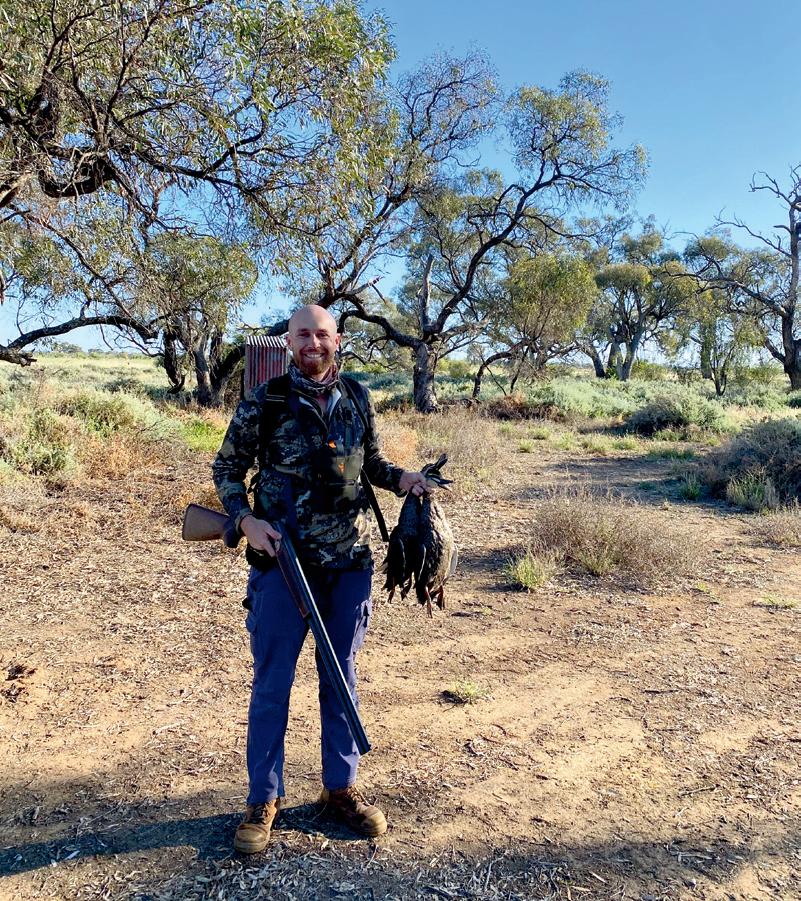
Firstly, rice farmers genuinely look to hunters as a valuable tool for managing wild duck populations and reducing agricultural losses. I’m invited back each year — the farmer even donates shotgun shells to our shared cause.
Secondly, duck hunting in the NSW rice fields is a romantic experience. Watching the sun rise and fall over the rice bays to an orchestra of birds keeps me coming back year after year. It’s a rewarding addition to an outdoorsman’s annual calendar — and a welcome distraction from the bombardment of pre-Christmas advertising. (The Grinch wears camo too, you know.)
So, if you’re looking for something to do in the hotter parts of the year, consider duck hunting in NSW. The farmers need us, and we need the ducks — and the ducks need us too, to help maintain healthy, sustainable populations. Without hunters adding value to wild ducks and bridging the gap between them and the farmers, the pendulum would swing back and forth between overabundance and wasteful control measures.
So when someone asks me, “Rice, rice, maybe?”
I respond, “Rice, rice, baby!” — and shuffle-dance my way westward on my annual migration to the NSW rice fields.
Please note Gamebird Management within NSW on the rice has different parameters to recreational seasons in other States and Territories - For further information - Visit NSW Dept of Primary Industries
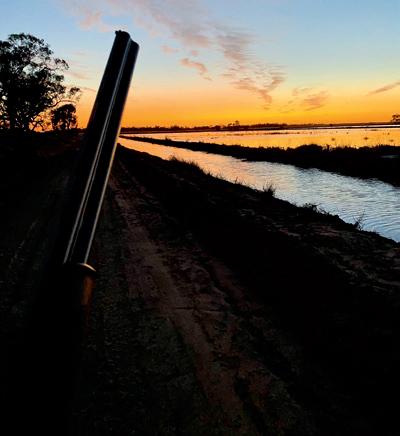

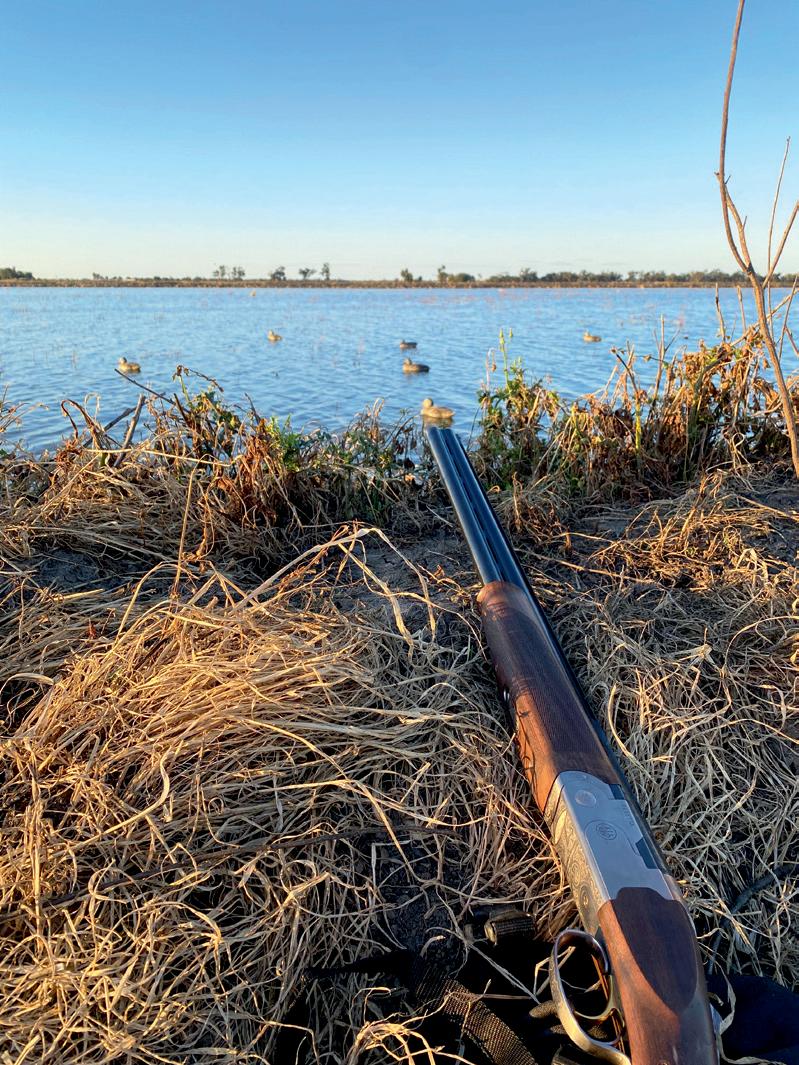
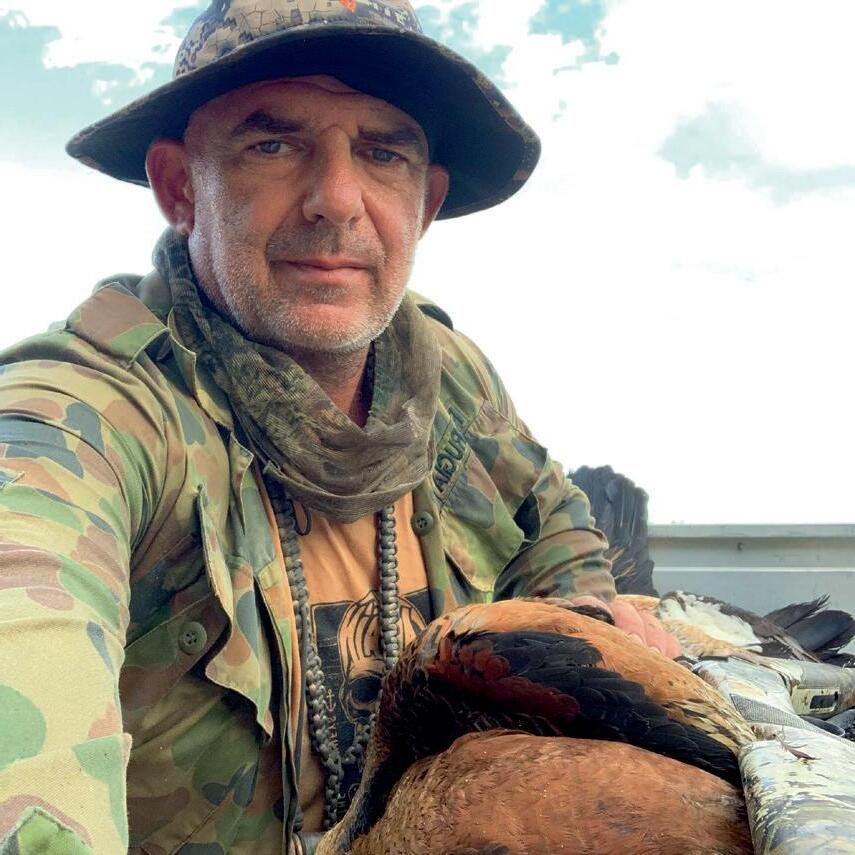
Rob’s
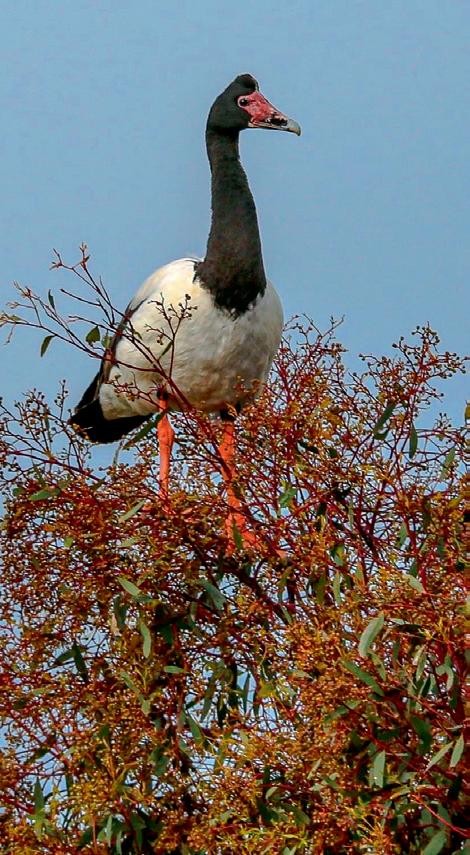
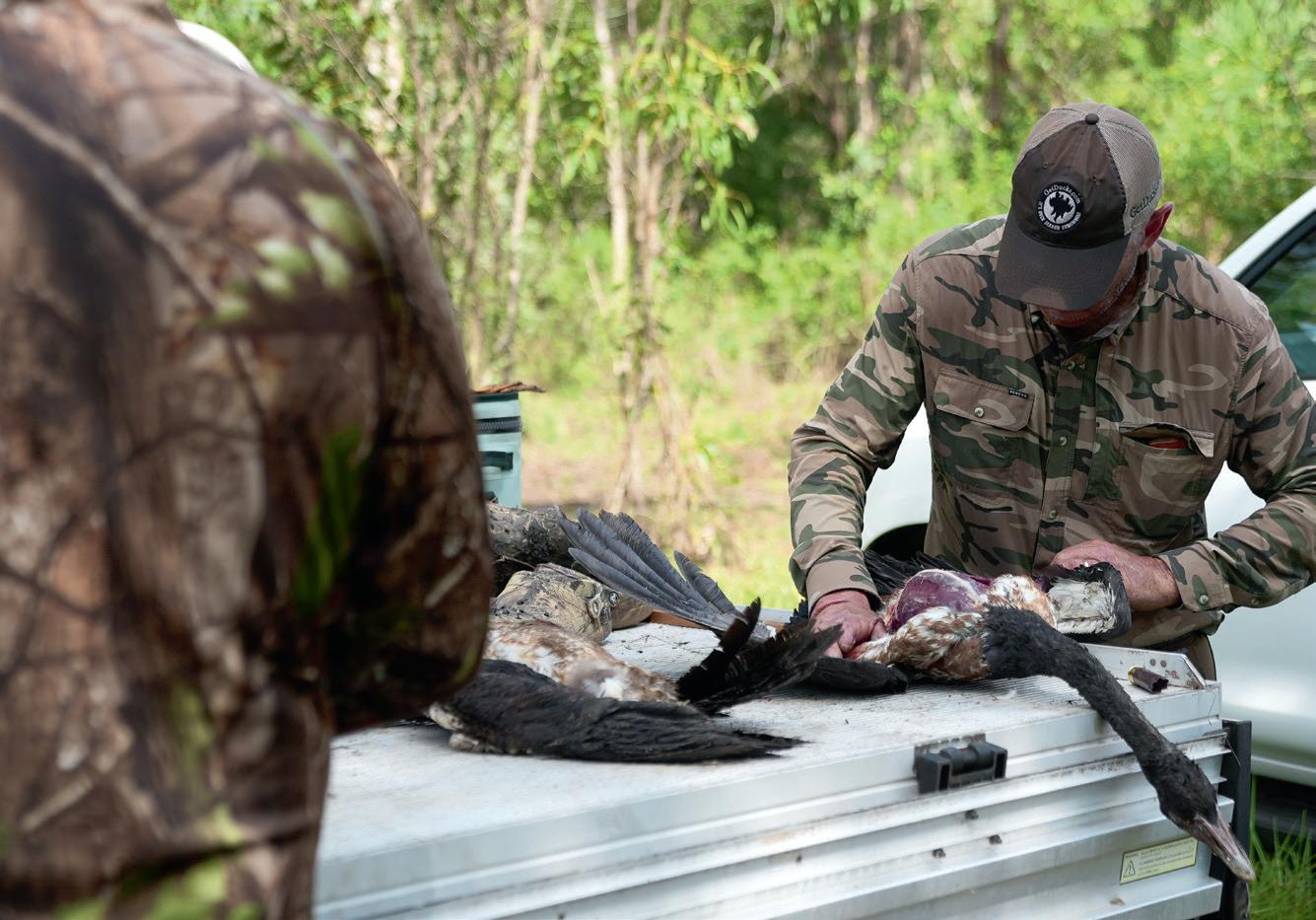


The 2025 Northern Territory waterfowl season opened with a mix of high hopes and sobering realities for hunters, farmers, and wildlife managers alike. While mango growers welcomed a quieter start with fewer early bird incursions into orchards, hunters have so far experienced varied success across the Top End.
Amajor announcement heading into this season was the decision to lock in the bag limit at seven magpie geese and ten ducks per day for the next five years. Introduced by the CLP Government, this long-term policy offers much-needed certainty for hunters, landholders, and conservationists. It’s expected to enhance management outcomes through improved planning, consistent monitoring, and a stronger focus on sustainability and breeding returns.
Water levels across the reserves around Darwin began the season higher than in previous years—creating more favourable conditions for both waterfowl and hunters. Government initiatives to expand and enhance access to certain reserves have been well-received, and early-season wildlife data indicated strong breeding activity, fuelling optimism for a fruitful season.
For many hunters, the first week lived up to expectations. Reports indicated good bird numbers early on, as the slow migration from mudflats and inland breeding areas gave hunters a rare opportunity to target settled flocks. Whistling ducks were particularly abundant. However, that initial window soon closed. Birds quickly dispersed, becoming wary and difficult to approach. Even seasoned hunters found themselves struggling to fill their limits, with many managing only a few birds per outing.
One factor increasingly recognised as contributing to this challenge is the behaviour of a small number of hunters engaging in “skybusting”—firing at birds well out of ethical and effective range. This scattergun approach not only wastes ammunition but also educates birds to stay high and retreat into inaccessible wetland centres, where croc-wise hunters know better than to follow.
With large numbers of Pygmy Geese and Burdekin Ducks in circulation this year, our experienced hunters have worked around them in a great fashion, avoiding casualties. Congratulations to all for continuing to show our abilities to recognise and avoid non target species.
And being croc wise is more critical than ever. Crocodile activity appears to be up this season, with multiple sightings of large saltwater crocs—ranging from 2.5 to 3.5 metres—reported in shallow waters
popular with hunters. Several problem animals were removed by wildlife officers before the season began, but the message remains clear: stay alert, stay safe. Crocodiles are part of the Top End hunting environment, and respecting their presence is essential for a safe experience.
Despite these challenges, hunters who remained persistent—and patient—have seen bag numbers improve as the season progresses. Those practising ethical hunting, working with the birds rather than pressuring them, appear to be reaping the benefits. As is often the case, the latter part of the season is expected to bring a fresh influx of birds as migration patterns strengthen and the first rains of the WET season arrive.
Traditionally, November and December mark the peak of bird movement through the region, coinciding with the arrival of southern hunters chasing their final hunts for the year. While this usually means more opportunity, it also brings added pressure on habitat and increased risk for orchardists as larger flocks descend into mango-growing areas.
More water means more habitat, and while this gives birds room to spread out—often making them harder to locate—it also increases the potential for crop damage if flocks aren't managed effectively. Balancing these interests remains an ongoing challenge.
With several months of hunting still ahead, all eyes remain on the skies. Will the birds arrive in greater numbers? Will the five-year bag limit policy prove to be a sustainable step forward for both hunters and wildlife? We look forward to bringing you the full story in our March–May edition.
In the meantime, stay safe, shoot straight, and remember: being croc wise is just as important as being waterfowl wise in the Top End.
And finally, please do your part to preserve these unique hunting environments. Take all your rubbish with you—and if you come across anything left behind by others, consider picking it up. Leave the wetlands in better shape than you found them. Respect for the land is as much a part of responsible hunting as the hunt itself.
Across the wetlands, river flats, and redgum country of Australia, more hunters are rediscovering what our grandparents took for granted — that the most ethical, healthy, and sustainable meat doesn’t come wrapped in plastic, but from the land and water itself. Gathering and harvesting your own wild game — especially waterfowl and upland birds, as well as rabbits, deer, fish, yabbies and salt water offerings — is about more than putting food on the table. It’s about stewardship, connection, and respect for the country that sustains us.
As household costs rise and supermarket prices soar, wild harvesting is becoming
both a lifestyle and a statement. A weekend on the wetlands can fill your freezer with lean, clean protein at a fraction of the cost of store-bought meat.
Duck hunters know that one wellplaced shot, a careful retrieve, and some thoughtful cooking can produce meat that rivals anything from a gourmet butcher. Similarly, a couple of rabbits from a morning stalk, or a deer from the Victorian high country, can keep a family well-fed through the cooler months. And let’s not forget that a large percentage of hunters also fish and usually enjoy a catch of crustaceans be they fresh or salt water. Of course, the value isn’t just economic. Every outing reconnects us to the land
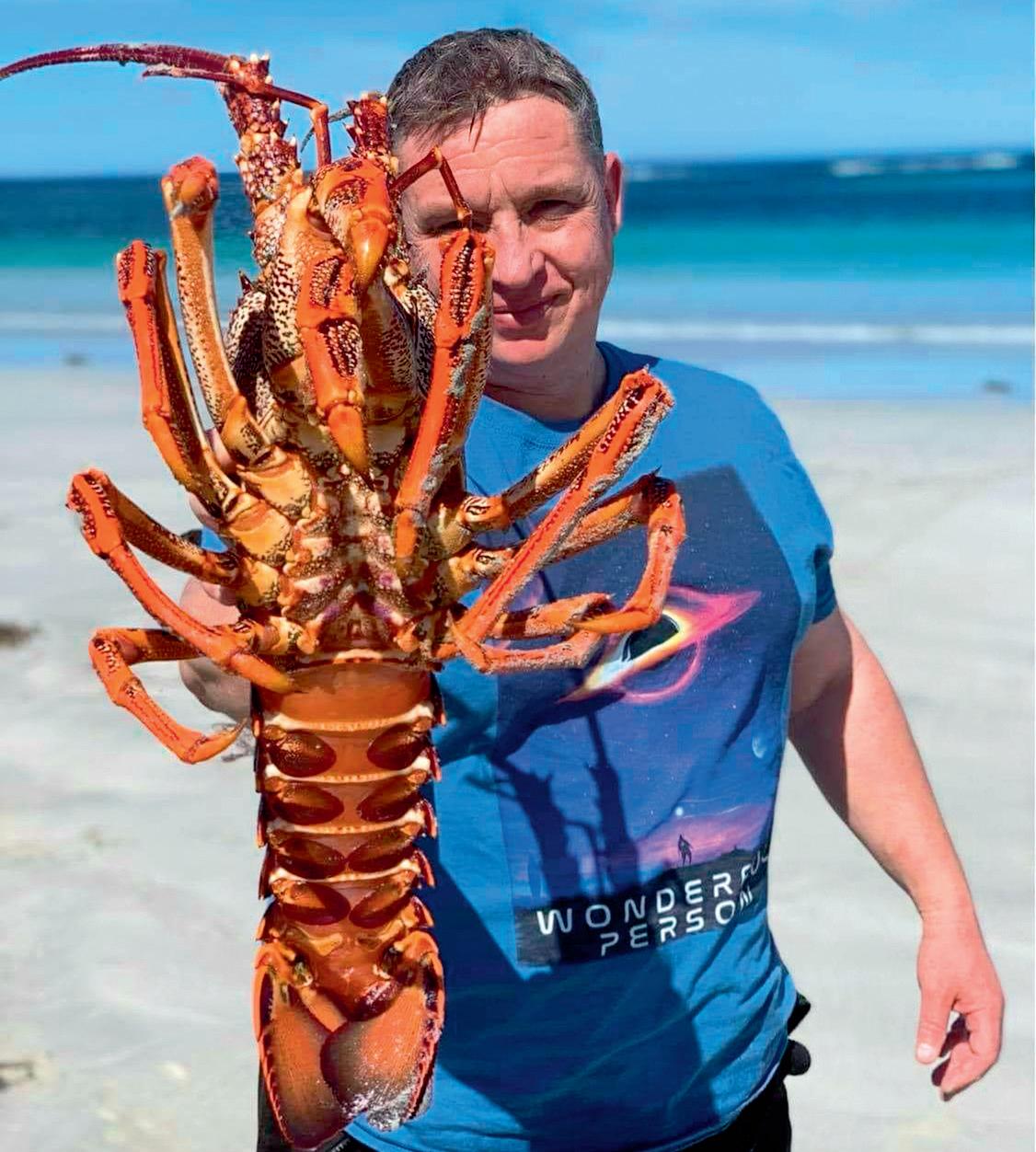
and the real rhythm of food — the satisfaction of working for what we eat, the understanding of where it comes from, and the pride in knowing we took it cleanly, ethically, and with care.
Wild game is one of the healthiest proteins you can eat. It’s naturally low in fat, high in omega-3s, and packed with iron, zinc, and B vitamins. Unlike intensively farmed meat, it’s free of hormones and antibiotics.
A wild duck that’s lived on open water and native seed tastes different from any supermarket bird — its flavour richer, its texture firmer, its story far more honest.
Venison, too, is an exceptional lean meat, and rabbit offers a mild, tender option that’s ideal for families looking for versatility in the kitchen. Dragging in a drop pot full of yabbies, redclaw or Murray Cray, a redfin or a yellow belly on a line or a shallow dive for crays or scallops will see the family and friends eating like royalty.
Beyond nutrition, there’s a deeper wellbeing that comes from the hunt itself. Time on country, early mornings on the water, the sound of wings overhead — these experiences reduce stress, build resilience, and remind us what it means to be alive and engaged with nature.
Long before the first settlers arrived, Aboriginal and Torres Strait Islander peoples were practising the principles of sustainable harvesting that we now strive to uphold. For tens of thousands of years, hunting, fishing, and gathering were carried out with respect, ceremony, and deep ecological knowledge.
Traditional foods — from waterbirds and wallabies to yabbies and fish — were often prepared with native herbs and plants that enhanced flavour while also promoting health. Many of these bushfoods make perfect companions to modern game cooking.
• Lemon myrtle brings a bright citrus note to roast duck or goose.
• Native pepperleaf (Tasmannia lanceolata) adds heat and aroma to
venison or quail.
• Warrigal greens sautéed in butter complement rabbit beautifully.
• Saltbush and bush tomato season meat with the true flavour of the outback.
• Paperbark, when used to wrap and smoke meat, infuses it with a warm, woody scent that’s uniquely Australian.
These are not fads or novelties — they are time-tested flavours that carry the spirit of Country and the wisdom of those who have lived in balance with it far longer than any of us. Now available wild harvested or supplied in specialty suppliers around the country.
Field & Game Australia has long championed the idea that hunters are
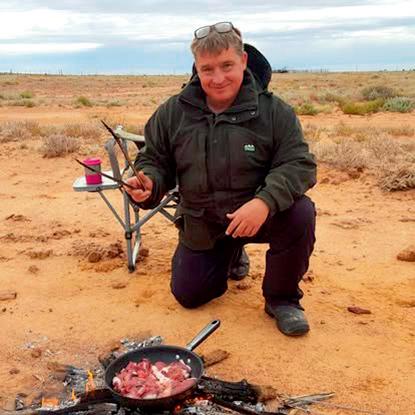
Pairing wild game with native condiments not only enhances the flavour but also celebrates the land from which both come.
Pacific Black Duck Lemon myrtle, saltbush Citrusy, savoury, distinctly Australian
Stubble Quail Wattleseed, native thyme Nutty and aromatic
Rabbit Warrigal greens, native mint Fresh and clean
Fallow or Sambar Venison Pepperberry, bush tomato Spicy and earthy
Magpie Goose or Swamphen Paperbark smoke, Kakadu plum glaze
Deep and smoky with a tart finish
These combinations honour both tradition and innovation — a way of cooking that’s modern yet deeply rooted in the Australian landscape.
At its heart, hunting for wild meat is about connection — to the land, to our heritage, and to each other. It’s about understanding that we’re participants in nature, stewards not just observers.
Picture this: a crisp dawn on the Kerang wetlands, a pair of black ducks taken cleanly and respectfully, later roasted in camp over redgum coals with lemon myrtle and pepperleaf. The skin crisps, the scent of smoke rises, and the first bite carries with it the story of the season, the water, and the land that gave it.
This is the real taste of Australia. Not factory-raised or mass-produced — but earned, respected, and shared.
among the country’s most committed conservationists. Responsible harvesting of waterfowl and game supports habitat management and biodiversity.
Funds from hunting licences and duck stamps once went directly into wetland restoration, breeding programs, and land care initiatives. Hunters are often the first to notice when conditions change — when a swamp dries earlier than usual, when water quality drops, or when invasive plants begin to take hold.
Wild rabbits, while providing excellent table fare, are also major contributors to environmental degradation, requiring population management. Ethical control through harvesting helps restore native vegetation and reduces competition with native species. Every ethical harvest is an act of conservation in action including the regulated hunting of deer.
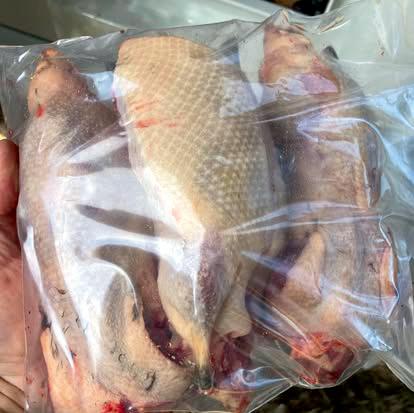
• Know Your Regulations: Always check local seasons and species limits before heading out.
• Respect Country: Seek permission on private or Indigenous lands and leave no trace.
• Waste Nothing: Use every part you can — meat, bones, feathers, hide.
• Give Back: Contribute to wetland rehabilitation and conservation projects.
• Share the Knowledge: Mentor young hunters in ethical fieldcraft and cooking.
In the end, harvesting your own wild meat isn’t just about sustenance — it’s about belonging, it’s about supplementing the larder and or the freezer. It’s a uniquely Australian way of living with the land: practical, sustainable, and deeply respectful of the balance that keeps our wild places alive.
The Australia Day Picnic at the Connewarre Wetland Centre will be a vibrant community gathering that celebrates Australia’s diverse culture, natural beauty, and shared future.
Assisted by the Australian Government through the National Australia Day Council, and delivered in collaboration with Geelong Field & Game, our Wetland Environmental Taskforce, and the FGA National Office, we are excited to invite you to join us at the Connewarre Wetland Centre in beautiful Connewarre, just outside Barwon Heads.
This inclusive event will feature a classic Aussie barbecue, live music, and a wide range of family-friendly activities that encourage us all to Reflect, Respect, and Celebrate. Visitors can explore the scenic wetland environment, enjoy wildlifespotting, stroll along well-maintained walking trails, and learn about the importance of wetland conservation.
We have a fantastic range of activities planned for all ages — from face painting, temporary tattoos, and boomerang painting to bug handling, wildlife discovery, and fishing demonstrations. With delicious BBQ options showcasing both traditional favourites and wild food, plus plenty of outdoor space to relax, there’s truly something for everyone.
With ample parking and accessible facilities, the event caters to all members of the community, including people with disabilities, ensuring everyone can take part in the day’s celebrations.
So, bring your picnic rug and join us for a fun, relaxing day at our beautiful wetland. Come and enjoy the atmosphere as we celebrate Australia Day 2026 together — connected by nature, community, and the values we share.
Join us!
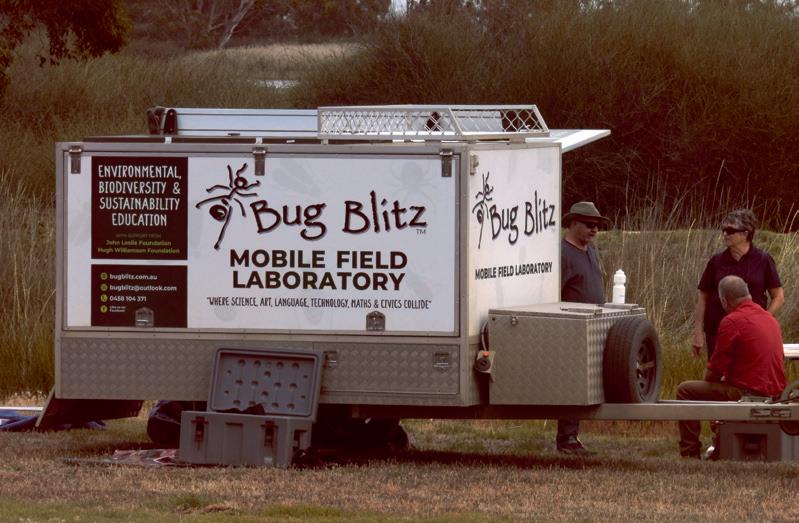
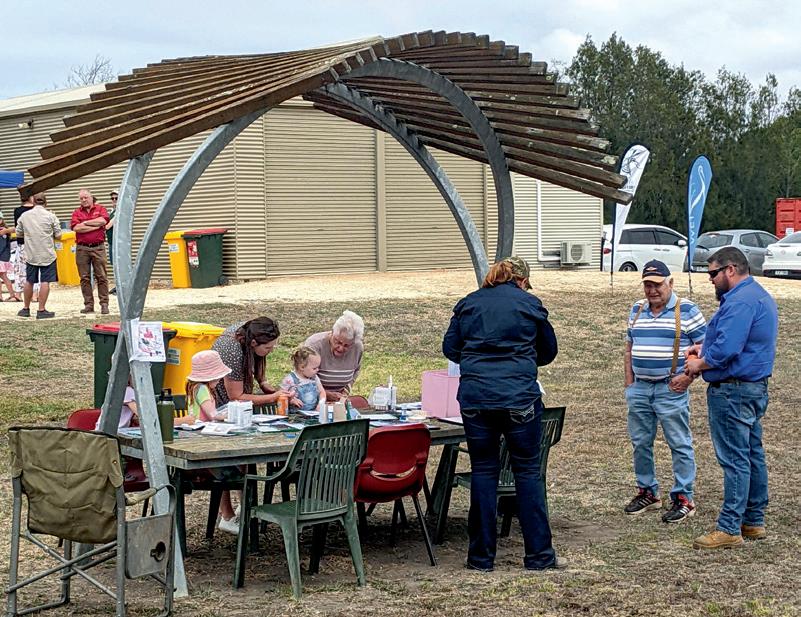

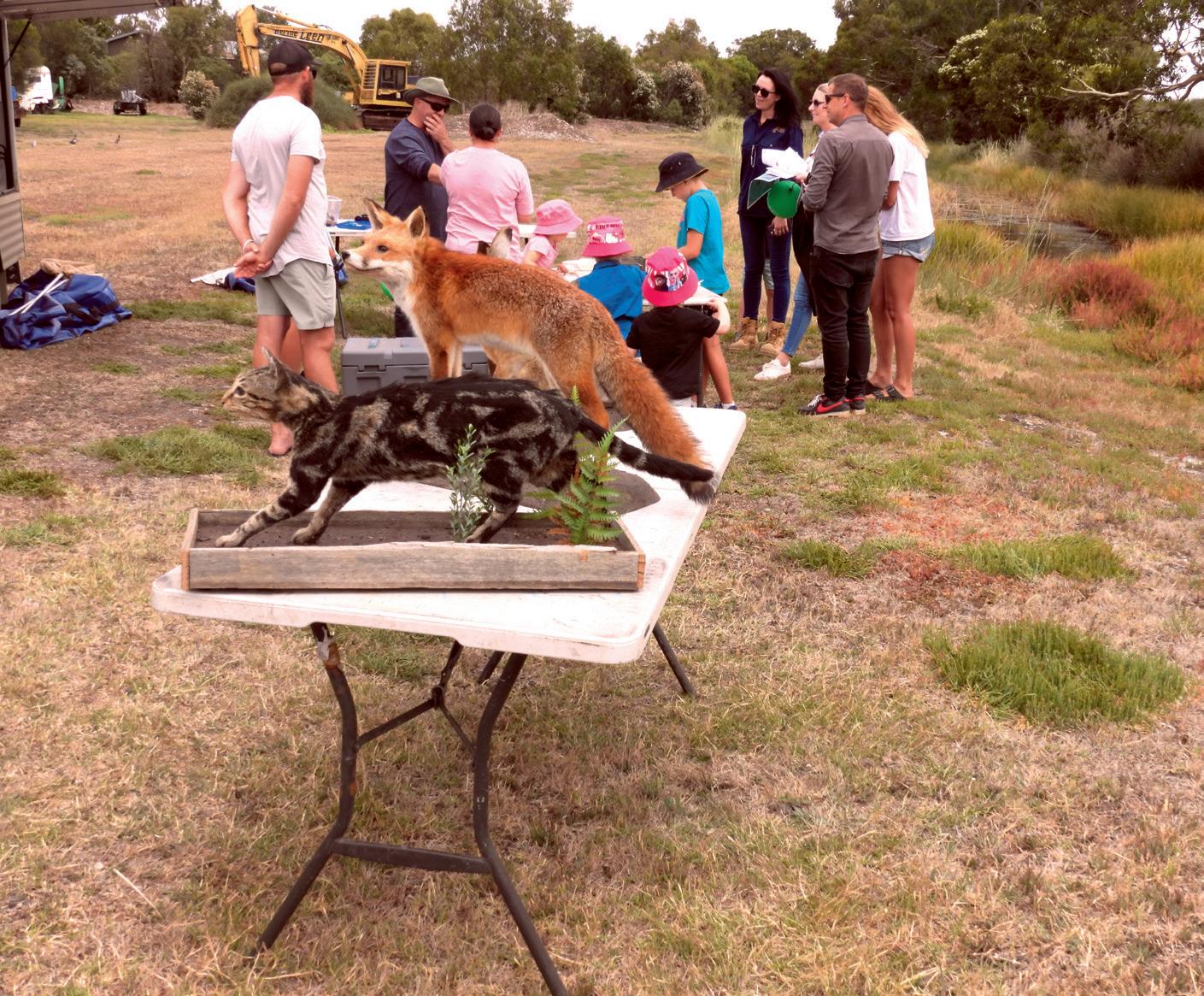
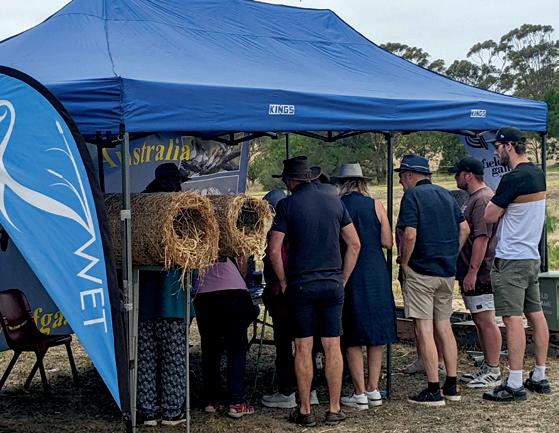
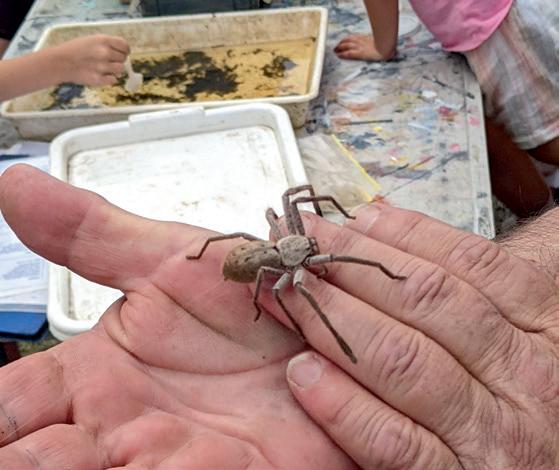

Working for Field & Game Australia is one of the most rewarding jobs you can have — but also one of the hardest. Not because the work is overwhelming, or the hours are long, but because FGA exists in a world most Australians simply don’t understand. And every now and then, that gap between “normal people” and “hunting people” becomes glaringly obvious.
The moment this trip was born began with an innocent question from a new staff member on the drive to Sale:
“Have you ever eaten fox?”
And she isn’t joking.
She isn’t trolling.
She isn’t trying to provoke a reaction. She genuinely wants to know — because in her world, eating unusual game isn’t strange… so fox must be fair game too.
This is exactly the challenge.
To a hunter, that question is unthinkable.
To a non-hunter, it is perfectly fair curiosity.
That right there is what makes writing for the magazine — and working here — uniquely difficult.
Every sentence has to land true to the values, culture, and reality of hunters and shooters… but half the staff had never fired a shotgun before they started.
They were hired for skills as administrators, media co-ordinators or governance skills.
“We can teach them hunting” we said… but sometimes a simple question shows
they don’t speak the language, They don’t have the instincts. They don’t know what will make members laugh — or what will make them sharpen pitchforks…YET.
It’s not their fault.
They’re learning.
But they can only learn so much sitting behind a desk.
Which brings us to the Heart Morass.
And that’s exactly why we decided to take several new staff members to the Sale Branch, the Heart Morass, and the Sale shooting grounds. If they were going to represent FGA to government, media, partners, and — most importantly — members, they needed to understand who we are, what we do, and why we do it.
You can’t learn that behind a desk.
Their introduction began at the Sale Branch meeting — and if anyone ever doubts the strength of FGA’s grassroots, spend one evening in that room.
Over forty members, straight from work,
ready to talk business. Not academics, not environmental commentators, not armchair critics — just everyday people who care about their sport, their land, their club, and their future. CEO, Lucas Cooke stood up to talk and they asked tough questions about seasons, bag limits, predator management, training modules, advocacy, and what FGA is fighting for next.
The new staff saw very quickly that our members aren’t passive consumers of information — they are engaged, informed, and deeply invested in the direction of the organisation. It also didn’t take long for them to understand that being “nice” and being “straightforward” are not mutually exclusive in regional Victoria. They were welcomed warmly, but they were also expected to listen, understand, and appreciate the seriousness of what FGA represents.
Afterwards came tea, biscuits, stories, jokes, practical banter, and the sort of casual honesty that only comes from a community built on shared experience. One member even shared how she had once opposed duck hunting — and now, thanks to conversations with the very people in that room, she’s writing a book on the branch’s history. You could see the staff connect the dots: this is how
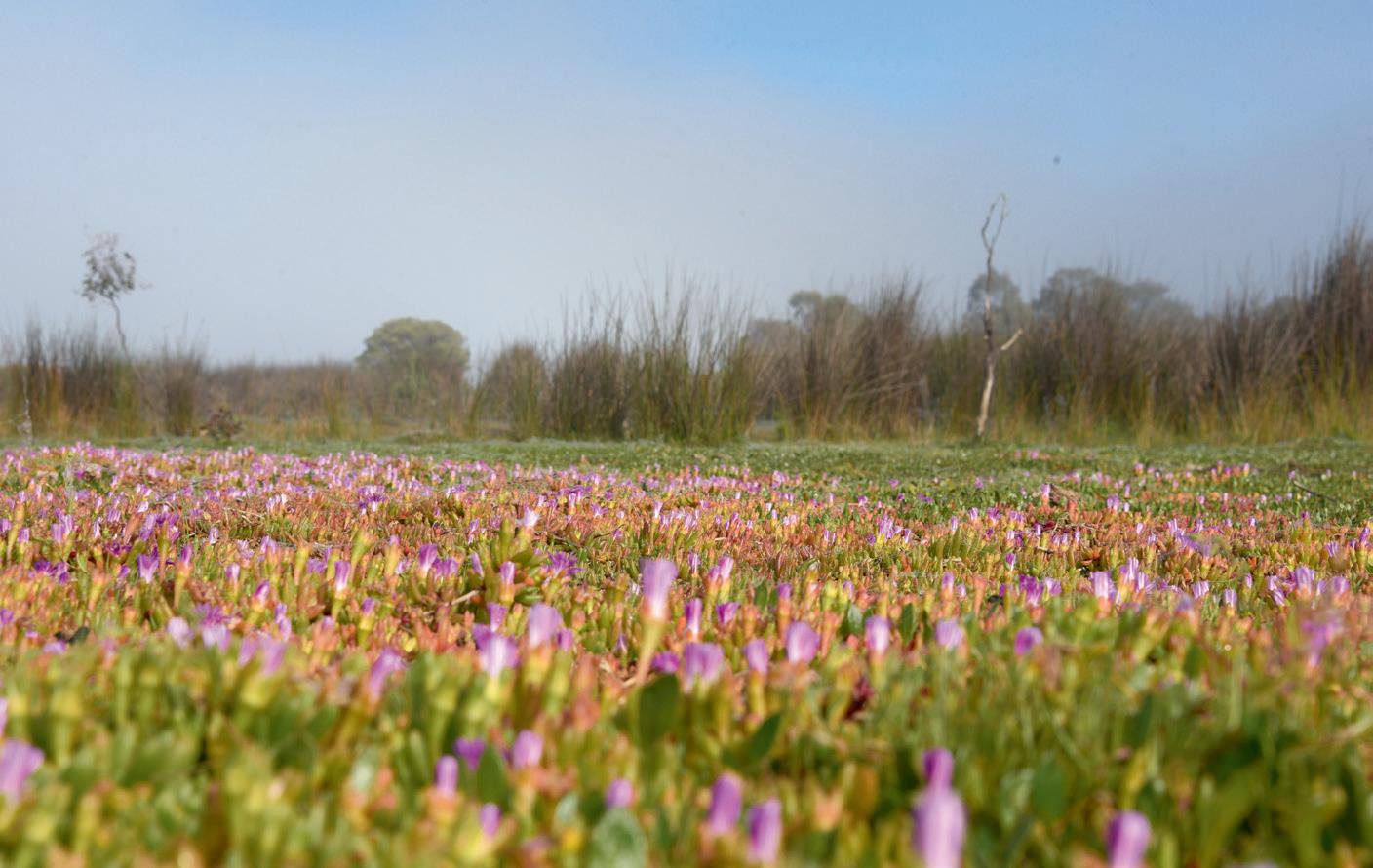
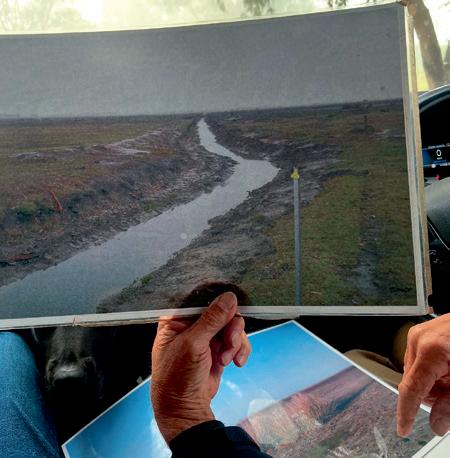
attitudes shift. Not through marketing campaigns, through conversations, respect, and real people telling real stories.
The next morning they met Pud at the Heart Morass. It’s one thing to read reports about the Heart; it’s another to stand on the gravel, fog drifting across the water, while Pud explains, in his practical, matter-of-fact way — how the whole place was transformed from a degraded wasteland into a thriving wetland.
There was no showmanship, no polished presentation.
Just decades of knowledge delivered plainly: how the land was bought, how the water is managed, how revegetation works in reality, why cattle graze certain sections, what species rely on the habitat, and why this place matters far beyond Gippsland, (and why there are no ducks in Gippsland!).
The staff saw birds lifting off the water, wallabies darting through the reeds, new trees taking hold, and the unmistakable signs of careful land management everywhere. They didn’t all feel something spiritual — and that’s fine. The point wasn’t to create poets. It was to show them what a small number of members, supported by thousands of others, had achieved.
And to show them why FGA’s advocacy carries weight: because when hunters say they care for the environment, we can point to the Heart and say,
“Here. This. We did this.”
The staff now understand that a little more, in a way they never could have from the office.
The visit to the Sale shooting grounds tied everything together. Immaculate facilities,
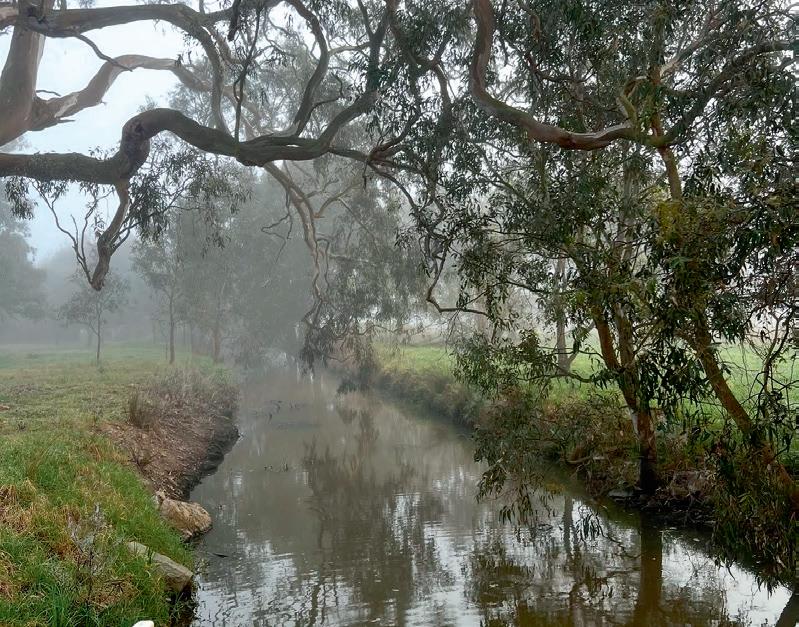
volunteers getting ready for a school shoot, dogs wandering around like they own the place, the sort of pride and discipline that outsiders don’t expect but instantly respect when they see it.
And this is where the staff began to understand something important: the same practical, no-nonsense culture that keeps clay target grounds spotless is the culture that restored the Heart Morass. It’s the same culture that holds FGA together. It’s the same culture that expects accuracy — not fluff — in the magazine.
It’s also the culture that will absolutely roast anyone who suggests eating fox.
And that leaves people like me — and now our new staff — trying to explain to well-meaning non-hunters why certain questions, although innocent, will trigger a tidal wave of reaction. It’s awkward, it’s funny, and it’s frustrating all at once. But it also highlights why every interaction between hunters and non-hunters matters: because most misunderstandings come from simple gaps in knowledge.
The only way to bridge those gaps is through conversation.
What struck our staff, more than the wetlands or the shooting grounds, was the power of those everyday conversations between members and ordinary Australians.
The Sale branch member who won over a former anti-hunter didn’t use statistics or talking points. She used honesty, experience, and respect.
Every member has that ability, whether
you know it or not.
Every time you talk to a neighbour, a colleague, a curious spectator, or someone who thinks duck hunting is outdated or cruel, you’re doing advocacy. You’re representing FGA. You’re shaping public opinion, one conversation at a time.
And that’s why we need new staff to understand our culture, and why we need members to keep supporting FGA, keep volunteering, keep showing up, and yes, keep having those conversations.
They now see the scale of FGA’s work. They understand the people behind it. They understand the expectations. They understand why accuracy matters. And they understand, painfully, that fox is not food.
They still have plenty to learn. They will still stumble. They will still ask questions that make us blink. But they are learning fast, and they now know enough about who we are and what we stand for to respect the responsibility they carry.
And that trip — that single, foggy morning on the Heart — did more to teach them our culture than six months of meetings ever could.
Because FGA isn’t just an organisation.
It’s a community with history, pride, skill, and a legacy that speaks for itself.
A legacy held together by members who care deeply about what they do — and about defending it for the future.
And now, our new staff finally understand why.
Norma’s CLAYSTRIKE 12-gauge 2 3/4 #7 1/2 shot 1oz Shotgun Shells.
CLAYSTRIKE is crafted with precision to elevate your shooting experience. Designed with the discerning clay shooter in mind, these high-quality cartridges boast exceptional performance and reliability.
Each shell is meticulously engineered to deliver consistent patterns and superb accuracy, ensuring you hit your mark with confidence. The #7 1/2 shot size strikes the perfect balance between pellet count and energy, making it ideal for busting clays with efficiency. With a payload of 1 ounce, CLAYSTRIKE shells offer a perfect blend of power and control. Not only does this provide ample force to shatter targets but also helps to maintain a more manageable recoil and lessened shoulder strain during extended shooting sessions. Whether you’re honing your skills on the range or competing in a tournament, Norma’s CLAYSTRIKE shotgun shells are your trusted go-to shell for achieving peak performance when it counts.
Constructed with premium components and stringent quality control measures, these shells deliver dependable performance shot after shot. Whether you’re a seasoned clay shooter or just starting out, trust Norma’s CLAYSTRIKE shotgun shells to enhance your shooting experience and help you reach new heights of success on the sporting clay fields.
The origins, specifications & components
• Founded in 1902: Norma was established by the Enger brothers in Sweden. The company built a reputation for meticulous quality and innovation, initially with a strong focus on military and hunting rifle ammunition.
• Expansion into shotshells: In 2017, Norma acquired the Gyttorp shotshell factory, signalling its entry into the shotgun ammunition market. This acquisition was key to the development of dedicated shotshell lines.
• Beretta acquisition: In 2022, Beretta Holding purchased Norma, but the brand's commitment to quality and
expansion continued. The introduction of the Clay Strike line came after this acquisition
Average Velocity = 1250 FPS
70mm Red Polyethylene Reifenhauser Tube / Black ink print that appears hardwearing
10mm Brass Plated Steel Base cup / NORMA 12 headstamp
6 Star Crimp
28gm of 71/2 (2.40mm) lead shot
We decided to try these cartridges out on the practice grounds at the Field & Game Australia National Championship at Clunes in early November and were pleasantly surprised when compared with our regular ammunition. In such a competitive marketplace it’s always a breath of fresh air when a new offering arrives to try and compare. There’s plenty of good product out there, but it’s always nice when you find one that suits your specific requirements and price point.
Keep your eye out and watch the fired
cartridges and products in the bins at your local club, because we think you might see a few more red cases in the future.
Observations & Performance on the field
Appearance & Gauging/Dimensions - All rounds appeared neat and consistent in their appearance and dimensions. 100% chambered without issue and ejection was consistent.
Consistency in Observed Sound & Recoil – Every shot appeared to perform consistently and when the consumer did their bit targets were broken with confidence, recoil was par for the course for a 28gm 1250FPS load.
Physical Inspection Post Firing - No signs of primer backout, gas leaks or crimp defects.
Value for Money: When compared with other products on the market, these seem to be well priced and consistent in their performance. We would thoroughly recommend you try some and form your own opinion as we believe this will be an attractive load for many looking for a go to round.
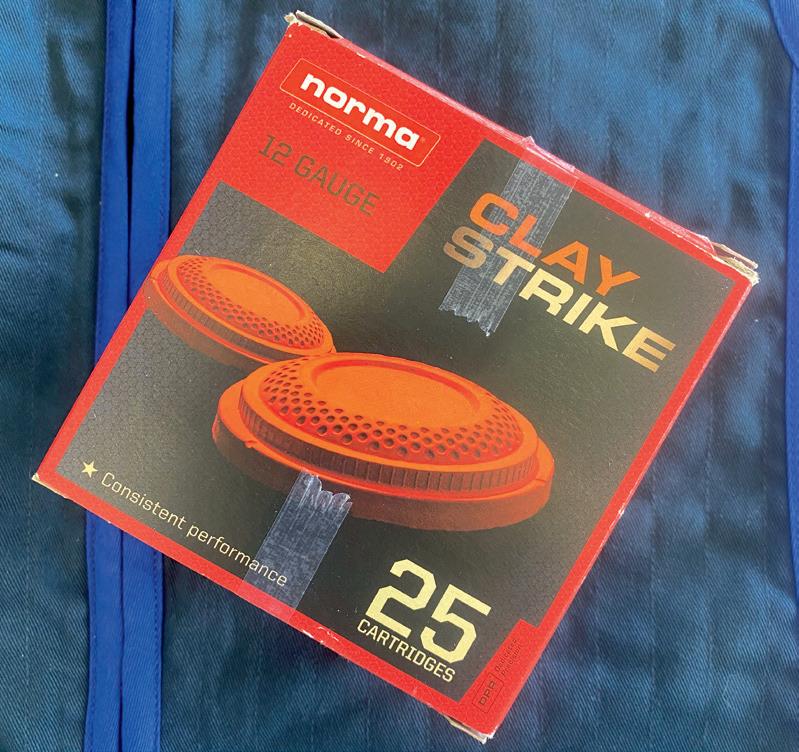
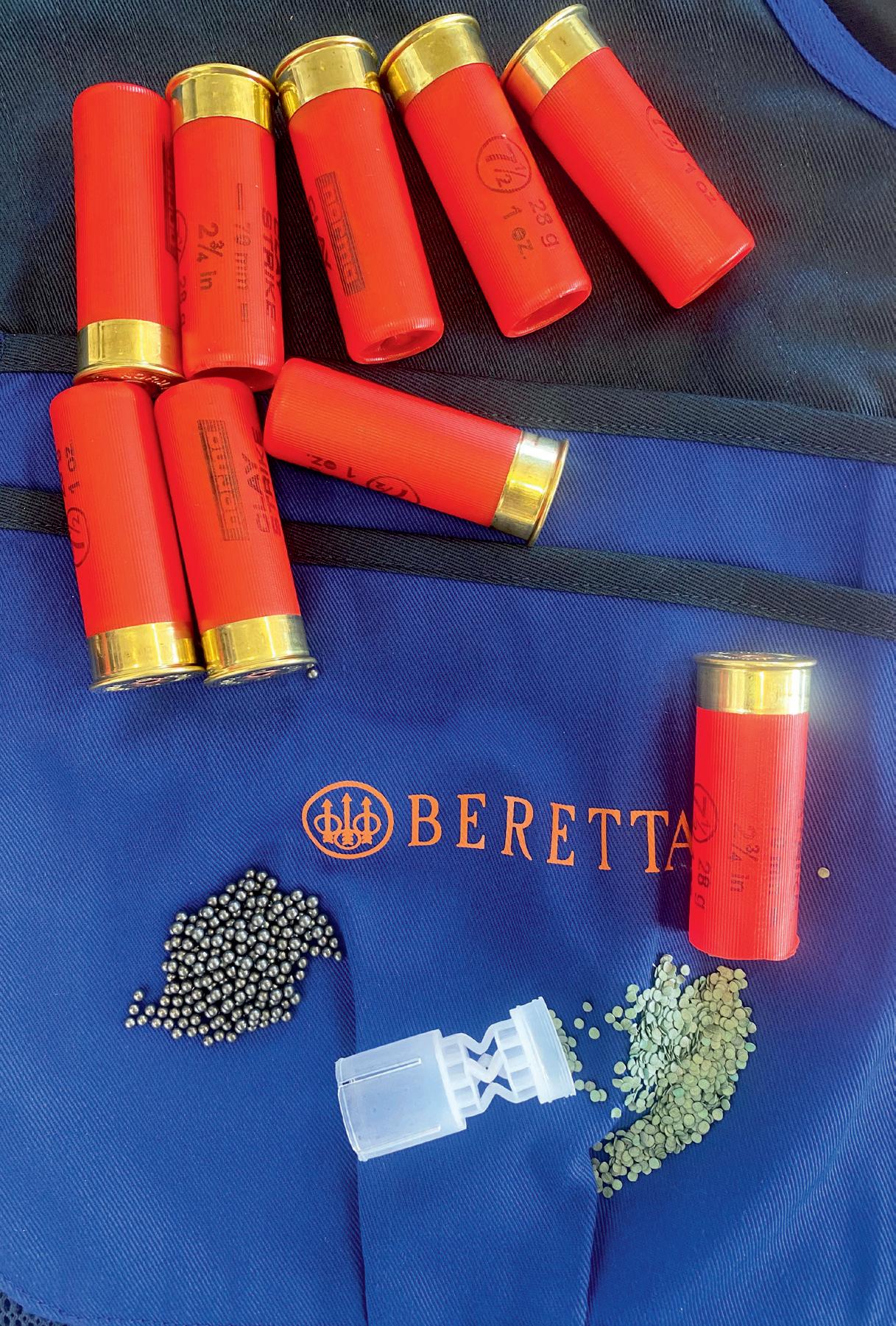
At most shooting clubs you’ll find two extremes of people - those who can recite every pellet size and ballistic character of their chosen load, and those who just grab whatever goes “bang” and smile. This is a gentle, non-technical look under the hood — a plain-English guide to what’s actually inside a shotshell and what each bit does. Think of it as the anatomy: base to nose, no preaching, just the useful stuff.
The Base: Start at the back: the base (or head) is the hard metal ring you see on the cartridge’s rear. It’s the shell’s spine — it holds the primer, takes the firing-pin strike and gives the shell the strength it needs to sit safely in the chamber. The little cup in the middle of that head is the primer. Strike it and it flashes; that flash lights the propellant.
The Propellant: Smokeless powder these days — is the chemical charge that turns into gas fast enough to shove the rest of the shell out of the barrel. Powder type and quantity determine how aggressively the shot is driven, but for this anatomy note, think of the powder as the engine: controlled, measured, predictable when made by a reputable maker.
The Wad: Between the powder and the shot sits the wad, and this bit deserves a paragraph of its own. Modern wads are engineered plastic parts that do three jobs in rapid succession: they cushion the pellets from the instant acceleration so the
pellets don’t deform; they seal the gases so the gas doesn’t leak forward between the pellets (giving more consistent push); and they act as a short-term shot cup, carrying and centring the pellets as they move down the barrel and into the choke. Wad design makes a surprising difference to how the shot behaves — they’re not just cheap filler.
The Shot: The part that takes all the glory! The shot itself is the final element — dozens or hundreds of tiny spheres packed into the nose of the shell. Shot comes in different sizes and materials: lead historically, and today commonly steel, bismuth or tungsten for non-toxic loads. The pellets are the business end; their weight, number and material determine the load’s momentum and how it performs on impact.
The Hull: Around all this sits the hull. Modern hulls are usually plastic with a reinforced head; paper hulls still exist for tradition or special loads. The hull’s
length is not decoration — it is sized to your gun’s chamber (2¾", 3", 3½" etc.) and contains the whole assembly until the moment of firing. The crimp at the nose — whether a neat star, a folded roll or a plastic over-cap — simply keeps the shot secure until the pressure releases it. How a shell is closed affects how the shot departs, but the closure’s main job is containment.
That’s the shell, succinctly: head and primer to start the chain, propellant to drive it, hull and crimp to contain it, wad to manage the column, and shot to do the work. No mystery or magic — just parts that have to play nicely together to make a safe, reliable round.
If you like this strip-down, tell the editor at editor@fieldandgameaustralia.com.au, and we’ll follow up with a technical look at chokes, forcing cones and how the barrel shapes that shot column into a pattern, or any other topics you’d like to suggest.
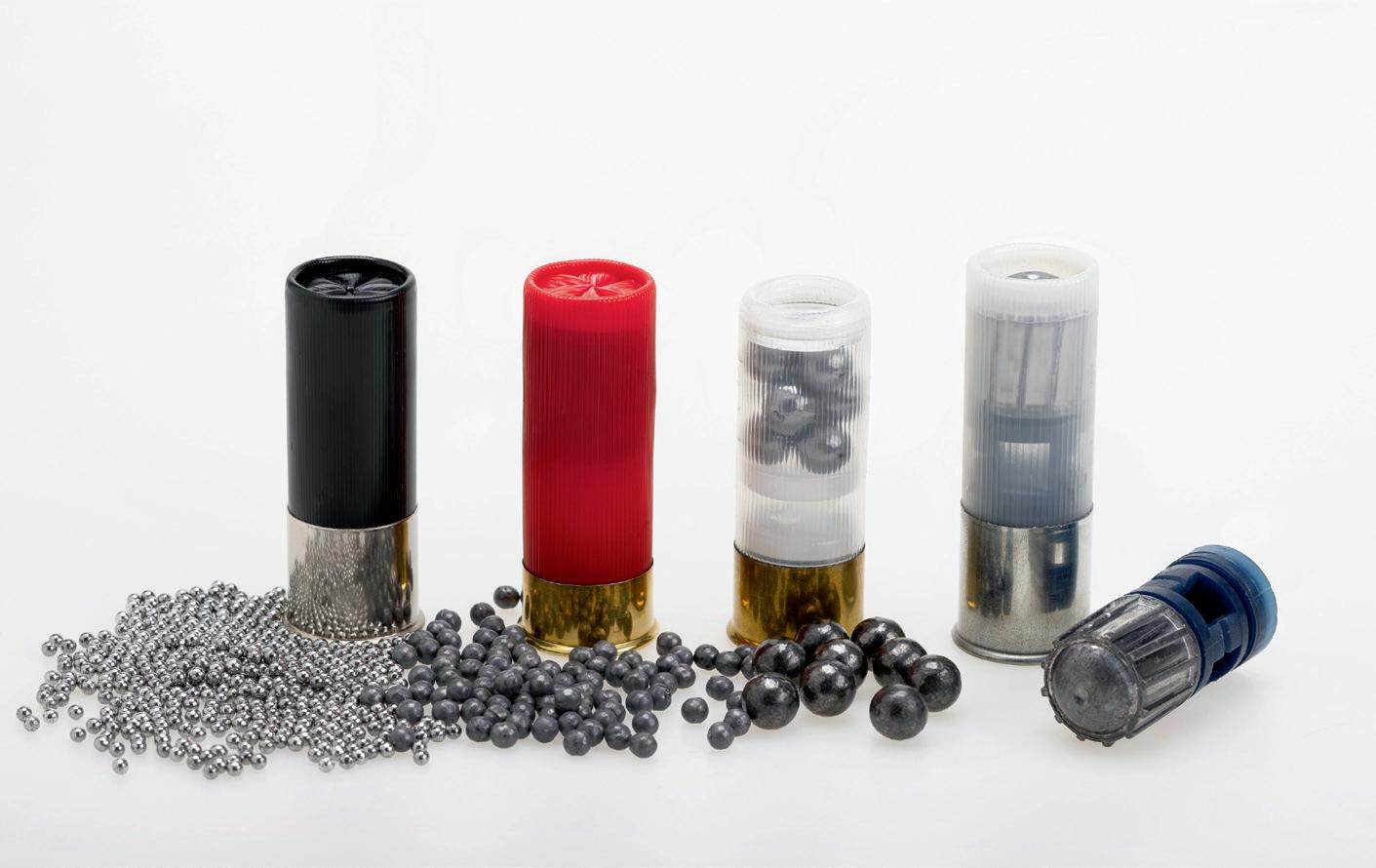
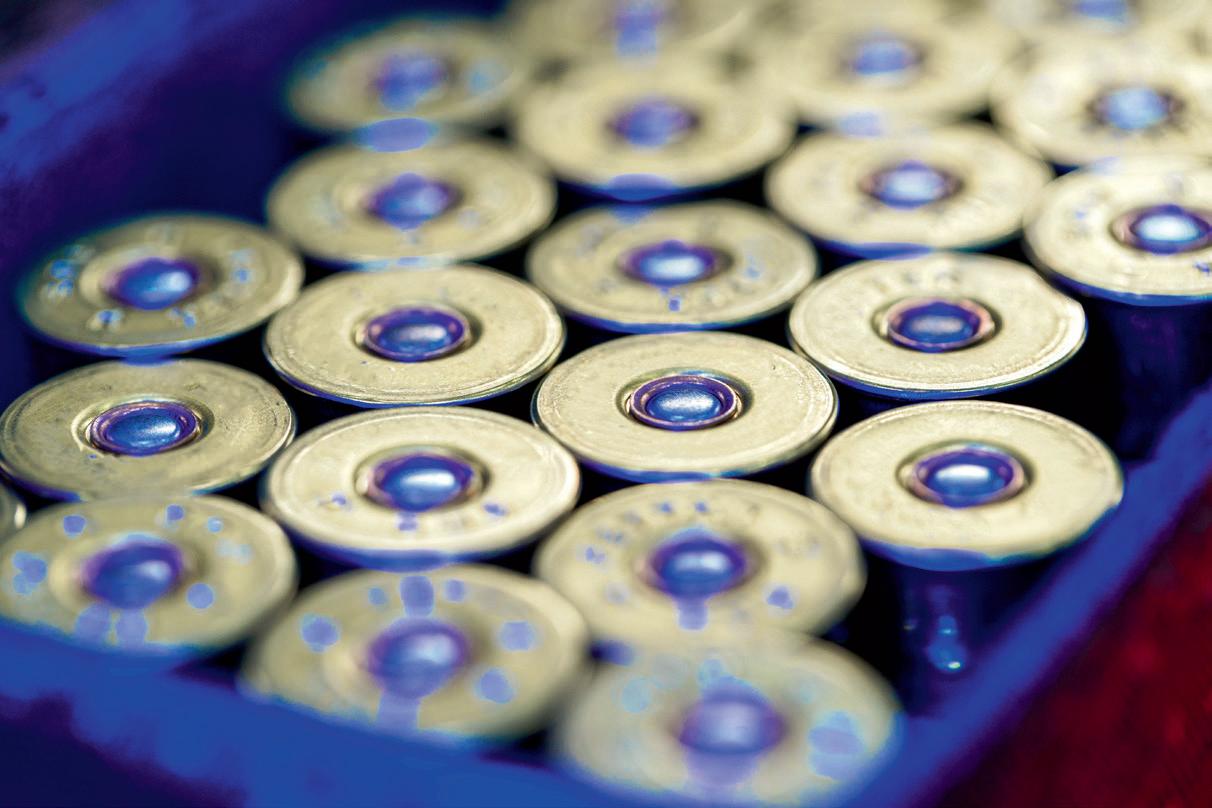
If you’re new to shooting — or one of the “type two” folks who just grab whatever goes bang — you’ve probably heard a few of these words thrown around and wondered if they all mean the same thing. Here’s a quick snapshot of the common terms you’ll hear when people talk about shotgun shells, and what they actually mean.
GLOSSARY (quick heads-up for new shooters)
Shotshell / Shotgun shell / Shell / Cartridge
All the same thing here — it’s the complete round you load into a shotgun. Cartridge is the more technical term; shotshell and shell are the everyday words. Round
Casual synonym for a cartridge or shotshell. You’ll hear this a lot.
All modern loads use Powder / Propellant
Smokeless powder — the chemical charge that becomes gas and drives the shot forward. Often just called powder.
Hull / Case
The body of the shell (usually plastic). It houses primer, powder, wad and shot. Hull length must match your gun’s chamber.
Chamber length
The maximum shell length your gun is built to fire — stamped on the barrel (e.g. 2¾", 3", 3½"). Never use longer shells than your chamber allows.
Wad / Shot cup / Gas seal / Cushion
Different words for the same component that sits between powder and shot. Wads cushion pellets, seal gases and carry the shot into the barrel.
Shot / Pellets / Payload
The small spheres in the nose of the shell. Shot or pellets are individual pieces; payload is the total weight/amount of pellets in the shell.
Birdshot / Buckshot
Birdshot = many small pellets for birds or clays. Buckshot = fewer, much larger pellets for big targets or defensive loads.
Shot size (numbers)
Pellet sizes are given as numbers (#9 = tiny; #6, #4, etc.). Buckshot sizes use BB, 1, 0, 00. The numbering convention can be confusing — check a pellet chart if unsure.
Materials (lead, steel, bismuth, tungsten)
What the pellets are made from. Lead is dense and traditional; steel is lighter and non-toxic; bismuth and tungsten are denser alternatives used where non-toxic shot is required.
Crimp / Closure
How the nose of the shell is closed (star crimp, folded, plastic cap). Keeps the shot secure until firing and affects how the shot departs.
Pattern / Patterning
How the pellets spread after leaving the
barrel. Pattern density and shape depend on shot size, wad, choke and range.
Choke (teaser)
Barrel constriction that shapes the pattern (Cylinder, Improved, Modified, Full). We’ll cover chokes and forcing cones in a followup tech piece.
Muzzle velocity / FPS
How fast the shot is moving as it leaves the barrel (feet per second). Faster gives a flatter flight but isn’t the only thing that matters.
Forcing cone (teaser)
The transition inside the barrel from chamber to bore — it influences how the shot column enters the barrel. More on this in the next deep-dive.
Reloading / Reloader
The hobby or process of making your own shells from components. It saves money but needs strict adherence to published data and safety.
Non-toxic shot (legal note)
Shot types that aren’t lead (steel, bismuth, tungsten) — commonly required for waterfowl and other wetland hunting.
Over recent months we’ve heard from many members who are struggling — or completely unable — to complete the new mandatory online training now required for a Victorian Game Licence. We want to be absolutely clear: we hear you, we understand the frustration, and Field & Game Australia has been raising these concerns since they were first proposed.
From the beginning, FGA opposed a digital-only, multi-step system because we knew it would disproportionately affect older hunters, rural hunters, and anyone without reliable digital access. Unfortunately, those warnings were ignored, and many of the problems we predicted are now unfolding exactly as expected.
But while we continue pushing for a fairer, more accessible, and less arduous pathway, one message is vital:
Please don’t give up your licence.
That outcome is exactly what anti-hunting groups are relying on. They are counting on frustration, confusion, and digital barriers to
quietly reduce hunter numbers. We cannot allow that to happen.
This is a time for our hunting community to close ranks, support one another, and make sure no hunter — especially those who have safely participated for decades — is left behind. Branches, families, and mates helping each other get through the process is not the solution we wanted, but it is the reality we face while we continue advocating for change.
And if you genuinely cannot find anyone locally to assist you, please contact the FGA National Office on 03 5799 0960.
We will do our best to assist you directly
or help connect you with someone nearby who can.
FGA will keep fighting for practical, proven, and inclusive requirements for all Victorian hunters.
We won’t accept unnecessary complexity. We won’t accept exclusion.
And we won’t stop pushing until there is a fair system for every hunter — not just those who are tech-savvy or comfortable online.
In the meantime, stay persistent, support each other, and know that we are doing everything we can.
For Game Licence Renewals - Visit www.gma.vic.gov.au then Navigate to Licensing
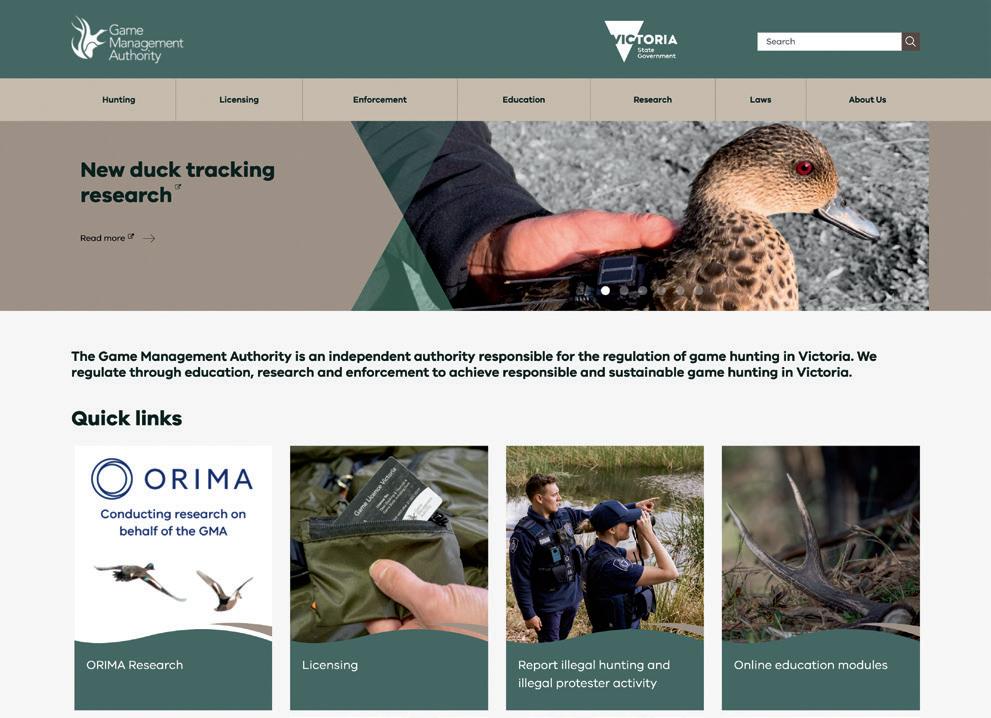
If you have a current Game Licence or held a Game Licence previously, you must register your email address first before Sign up / Sign in to your account!
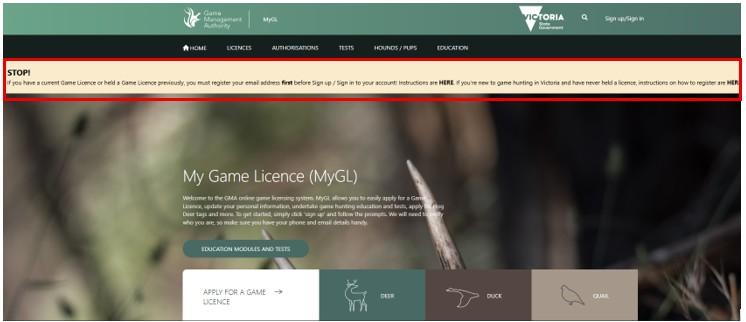
When you visit the MyGL area of the GMA website – there are several videos and instructions.

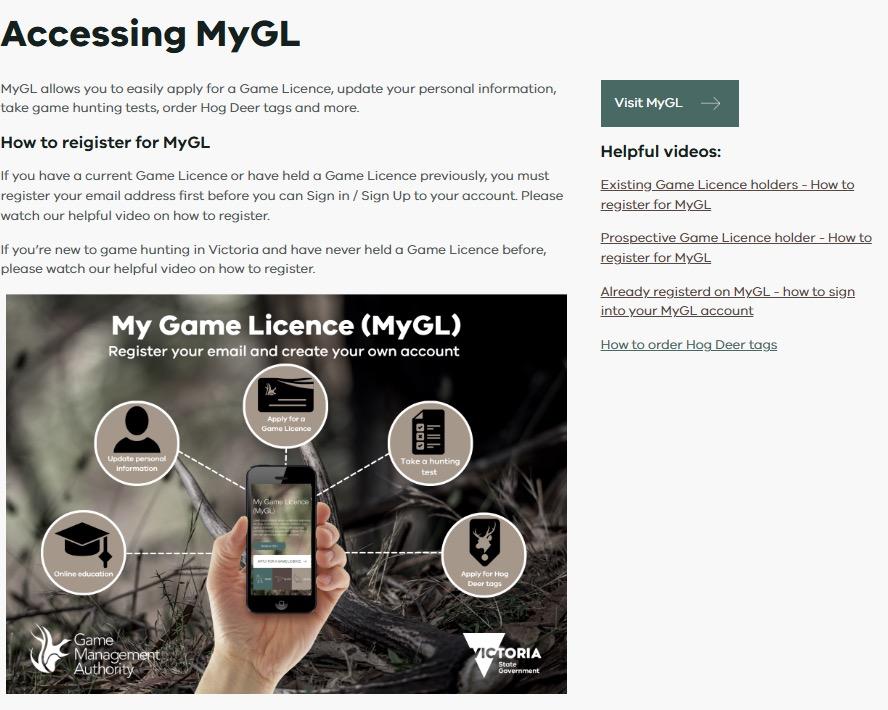
When the Victorian Government recently released their response to “expert” recommendations to re-classify deer as pests, some activist groups immediately cried foul. To hear them tell it, the government had “protected” deer for the benefit of hunters. But that’s simply not true, and the facts tell a very different story. Victoria’s current approach doesn’t protect deer; it manages them. It’s a practical, science-based system that recognises the difference between control and chaos — and it’s working better than most of its critics care to admit.
Since October 2023, five of Victoria’s six deer species — Sambar, Fallow, Red, Rusa and Chital — have been removed from protection under the Wildlife Act when found on private land. That means landholders no longer need a permit or an Authority to Control Wildlife to manage them. They can do so yearround, by any lawful means, and decide who accesses their property and how control occurs. This reform recognised that deer populations, particularly Sambar and Fallow, are expanding rapidly and causing genuine damage to farms and the environment. By removing red tape, the government gave private landholders the freedom to respond quickly and
responsibly, while maintaining safe firearm use and clear oversight. The only exception is Hog Deer, which remain tightly managed under their own short, quota-based season because of their smaller and more localised population. So when activists claim deer are “protected,” they’re ignoring the truth — for most species, deer are already unprotected wildlife on private land.
Public land, of course, is different. These are shared spaces used for recreation, forestry, conservation and tourism. Allowing unregulated shooting across them would raise obvious safety and public confidence concerns. That’s why the Game Management Authority maintains a regulated hunting framework, ensuring that only licensed, trained and insured hunters can take part. It upholds humane and ethical standards, monitors compliance, and collects data to inform long-term management. The system doesn’t protect deer — it protects standards, safety and accountability. It ensures deer are managed strategically rather than through uncoordinated, reactionary culls that achieve little at great expense.
There’s no denying that Victoria’s deer population is growing, but that growth isn’t a result of over-regulation. It’s a result of restricted access. Across the state, vast areas of public land remain closed to hunting, or so heavily restricted that only a handful of hunters can legally or safely operate. Dense mountain forests, inaccessible catchments and peri-urban green belts provide perfect refuges for deer — areas where no effective control can occur. The result is predictable: deer thrive where access is limited. Yet the same voices demanding urgent action
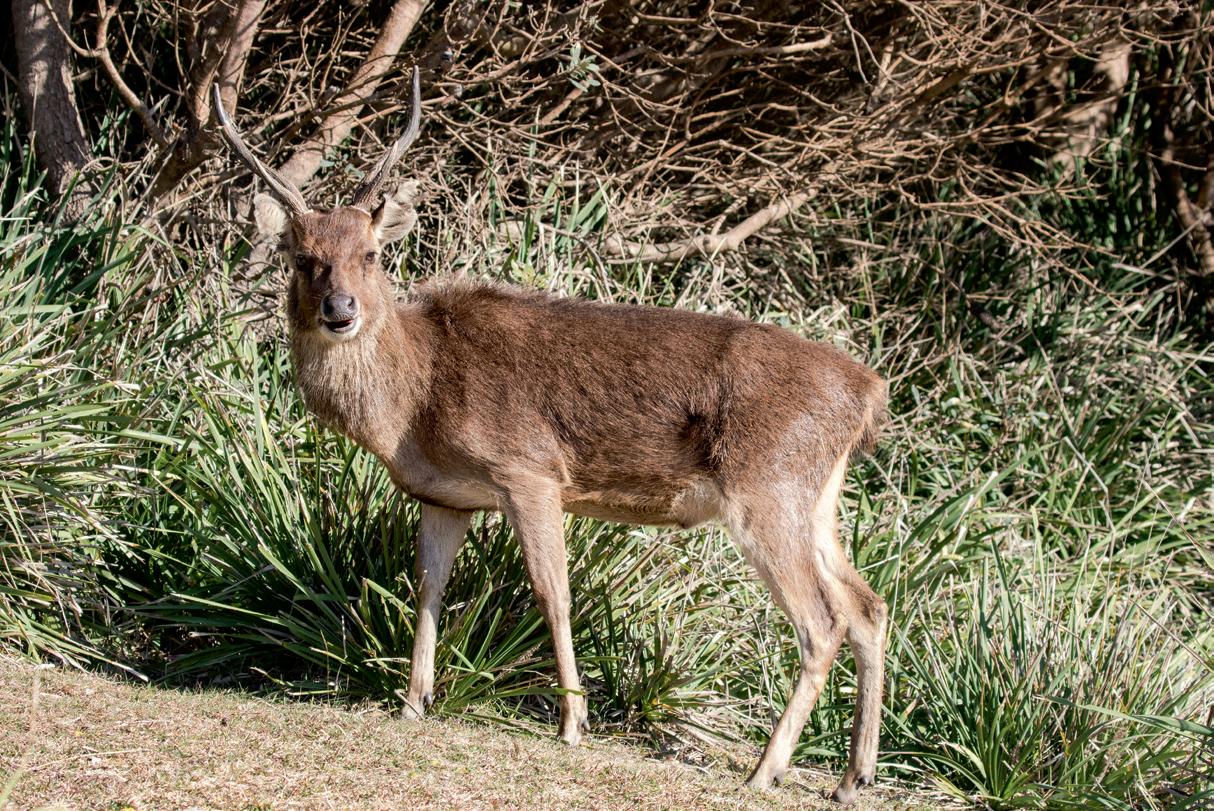
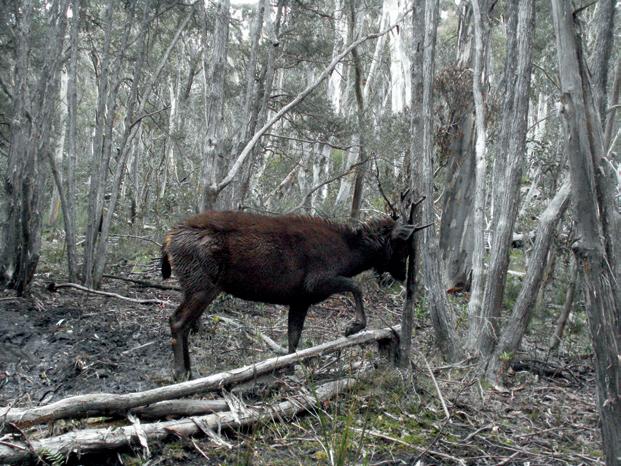
to reduce numbers are often the first to oppose giving hunters more access. It’s a contradiction that’s hard to ignore. They want fewer deer, but they reject the most effective, ethical and community-driven way to achieve that goal.
Every year, thousands of licensed and responsible hunters stand ready to contribute to deer management across Victoria. They represent a skilled, selffunded workforce that costs the taxpayer nothing and contributes enormously to local economies and conservation programs. But too often they’re sidelined by access barriers, bureaucracy and outdated assumptions about who hunters are and what they do. If Victoria truly wants to bring deer numbers under control, it needs to make hunting more accessible, not less. That means opening more suitable areas
of public land, streamlining volunteer programs, directing hunter effort where it’s most needed, and using hunter data to inform ongoing research and management decisions. When managed properly,
hunting is one of the most efficient, humane and cost-effective management tools available. Restricting it doesn’t protect the environment; it just wastes opportunity, resources and public money.
Keeping deer classified as game animals is not about privilege. It’s about maintaining a structure that allows government and land managers to respond adaptively — to increase access and hunting effort in one region, restrict it in another, and coordinate volunteer effort with professional control where required. It ensures continued data collection and oversight, and it allows hunting to be part of a larger, more integrated management plan. Removing deer from the game list might sound decisive, but it would actually reduce the State’s ability to manage them properly. A blanket pest declaration would deliver less oversight,
not more, and it would remove the very flexibility that allows the GMA to balance access, effort and conservation outcomes.
Victoria’s current model — unprotected on private land, regulated on public land — is not perfect, but it’s pragmatic. It gives landholders freedom to act, keeps the public safe, and provides a structured way to involve the hunting community in real, measurable management. It’s a system that rewards responsibility and cooperation, and it’s far more effective than the ideological alternatives being pushed by those who confuse management with emotion.
Deer are now a permanent part of Victoria’s landscape, and pretending otherwise won’t change that. What will make a difference is how we choose to manage them. Hunters, landholders and government all have a role to play — and the framework to do it already exists. It just needs the will, and the access, to work.
If the goal is fewer deer, healthier habitats and better outcomes for farmers, the solution isn’t more restrictions or more rhetoric. It’s more responsible hunters in the field, doing what they’re trained to do — helping manage wildlife with respect, skill and accountability. Sustainable management isn’t about banning, blaming or wasting. It’s about using the tools that work, and trusting the people who know how to use them.

When you’re out in the Aussie bush with your dog, there’s more to think about than just the hunt. Working dogs are tough, but they’re not machines. Between heat, rough terrain, and non-stop action, your four-legged mate can go downhill fast if you're not paying attention. Here's what you need to know to keep your dog safe, strong, and ready for the next adventure.
• Red gums or tongue
• Vomiting or wobbliness
• Collapse or seizures


Dogs don’t sweat like we do. They mainly cool down by panting, which means they lose a lot of water fast. When they're running, sniffing, and working hard in the sun, dehydration can hit before you realise it.
Signs your dog might be dehydrated:
• Sluggish or slower to recover than normal
• Sticky gums or dry nose
• Sunken eyes
• Lethargy or weakness
• Skin doesn’t bounce back quickly when you lift it
If you are getting these signs, your dog is already 5% or more dehydrated, this can cause the blood to thicken, making the workload on the heart harder. Electrolyte imbalances can cause muscle function issues, and that includes the heart muscle.
Make sure fresh water is always available. Offer small amounts often during breaks, not huge gulps all at once.
Some dogs may require IV fluids to get them back on track. If you are competent, you may be able to do some field medicine, however you can overhydrate and cause more issues, so unless you are a seriously experienced hunter and have had a great vet mentor you, this one should be left to the professionals. You can carry medical grade bags of saline as a supplement for the dog to drink. Running fluids under the skin is likely to take too long if your dog is clinically affected but can be done while in transit as first aid. Remember though, they can’t all go in one spot, or you can cause separation and altered blood flow to that area of tissue.
This is one of the biggest killers of hunting dogs. It can sneak up fast – especially in hot weather or humid conditions.
Signs of heat stress:
• Excessive panting
If you spot these signs, get your dog into the shade immediately. Cool them down with cool water (not ice), wet their coat, and fan them. Get to a vet as fast as possible – this is a full-blown emergency. Don’t panic and try to cool them too fast with ice/water combo or pack them in ice. This will cause the blood vessels in the skin to constrict and prevent cooling, so the body temp will actually go up.
When the dog gets overheated this can effectively “cook the blood” causing it to clot, using up all the clotting factors and then the animal can’t stop bleeding and will hemorrhage to death. As a vet, this is one of the most horrendous experiences in my career and there are always a few every year sadly.
Electrolyte solutions can help working dogs recover, especially after long hunts. But not all human products are safe.
• Avoid sports drinks like Powerade or Gatorade – too much sugar and salt.
• Use vet-approved dog electrolyte powders or solutions (like Lectade or Vytrate).
• Mix as directed, and offer in small amounts. Always have fresh water available too.
Don’t force it – if your dog won’t drink it, just stick to clean water and rest.
A solid recovery plan keeps your dog in peak condition for the next hunt.
• Let them cool down slowly – don’t throw them straight into cold water.
• Offer water and food once they’ve rested and cooled off.
• Check paws for cuts, seeds, or heat damage.
• Give them a quiet, shady spot to relax and recover.
• The next day, go light – short walk or gentle exercise to avoid soreness.
Remember: a well-rested dog is a better hunting dog. Don’t push them too hard, too fast.
Your dog’s job is to work hard and have your back – your job is to look after him while he does it. Know the signs, plan ahead, and treat him like the weapon he is. Keep him cool, keep him hydrated, and he’ll keep showing up for you every time.
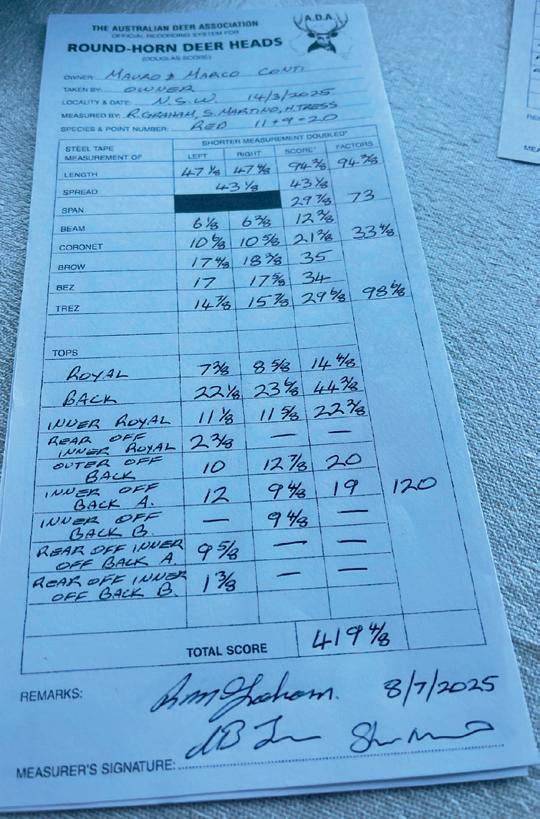
How patience, preparation, and one unforgettable encounter led to Australia’s largest recorded red stag.
Hunting has a way of taking the ordinary—first light, a headlamp glow, a thermos coffee—and turning it into something you carry for the rest of your life. For Field & Game member Mauro Conti, the ordinary became extraordinary on the morning of 14 March 2025, when, standing on a high ridge with his son Marco at his side and Serafina the GSP at his feet, he made a shot that would be recognised by the Australian Deer Association as Australia’s largest red deer on record.
Mauro’s route to the bush is familiar to a lot of us: rabbits and foxes in his younger years, then a long break. “That stopped for about 15 years,” he tells us, matter-of-fact. Clay shooting filled the gap. Then
friends invited him to spend a weekend on a private property up north and the itch came back. He had a 20-gauge over-under for rabbits and “just mucked around,” but a run with pigs changed everything. He bought a rifle, got a dog — a German Shorthaired Pointer named Serafina — and started hunting again.
What follows is a story in the simple, exact terms we recognise: long planning, wind, vantage and calm observation. Mauro and his son Marco had planned this particular trip for eight months, with his son’s availability being limited. The first morning out they parked down low and hiked up. “We decided to go stay up a little bit high,” Mauro says—to keep the scent from spreading and get the elevated view to look and wait.
They camped out of the way and moved carefully. “We were very slow. Very slow to get up to the top,” he remembers. Dawn was thick with fog; a fallow stag was “cracking” down below. They found a small
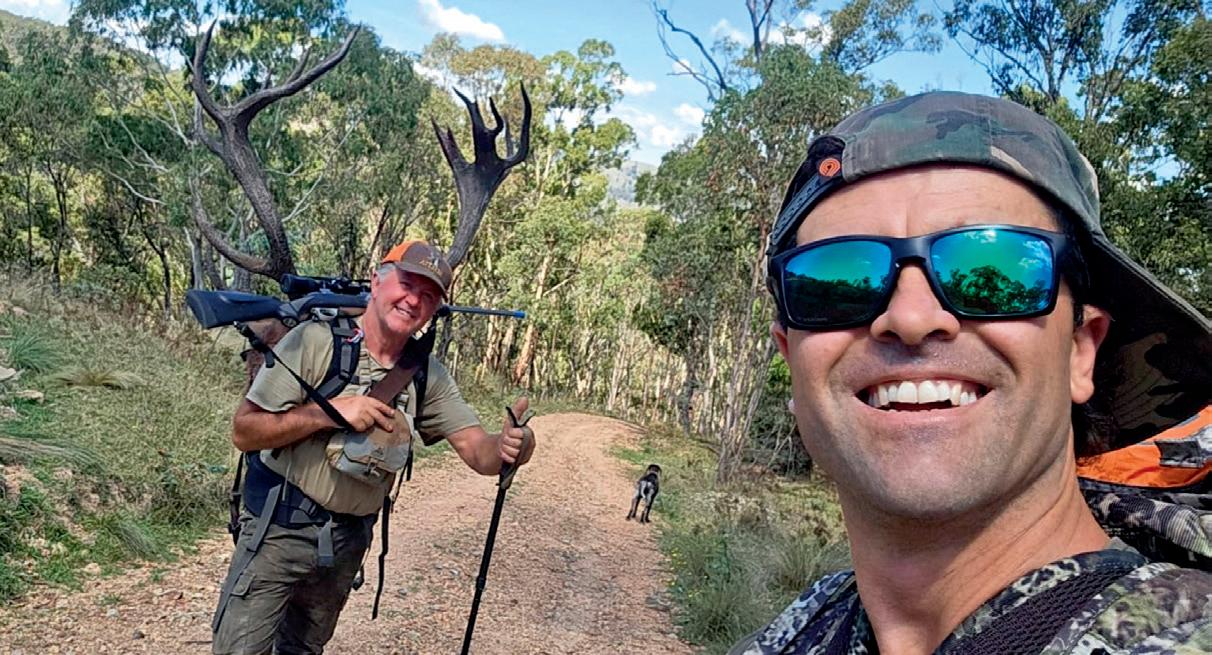
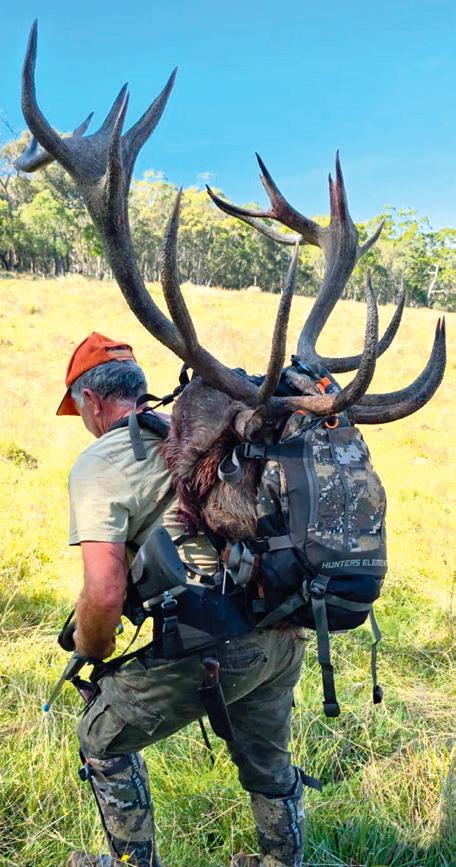
clearing and sat—just watching. A doe and a fawn came out, then a few more does; the pair was relaxed. Mauro and Marco waited. That’s when the great stag showed himself—first the antler tips, then more of a body. Mauro could tell the stag would either come out to the left or the right of the tree cluster; otherwise, he’d disappear back into the timber.
“It was such a big animal, I couldn’t believe it,” Mauro says. He had his Sako Finlight One with a synthetic stock in .270—his trusted hunting rifle. The stag presented at roughly 220 metres. Mauro aimed carefully and fired the first shot. As the animal dropped, Serafina barked excitedly. Mauro moved in cautiously; with an animal of that size, you never take anything for granted. A second shot ensured the stag was down, and a final, close-range shot at about ten metres made certain the job was clean and humane.
Few hunters will deny the practical truth Mauro shares plainly: “The first shot, you need to make it count. Use the best ammunition possible. Use the best and most accurate rifle you can get.” He adds, candid about the mechanics of the moment, that had he known this stag was going to appear he might have taken a heavier calibre— “7mm Remington Magnum”—but he’d chosen the .270 and trusted his shot. As they approached the
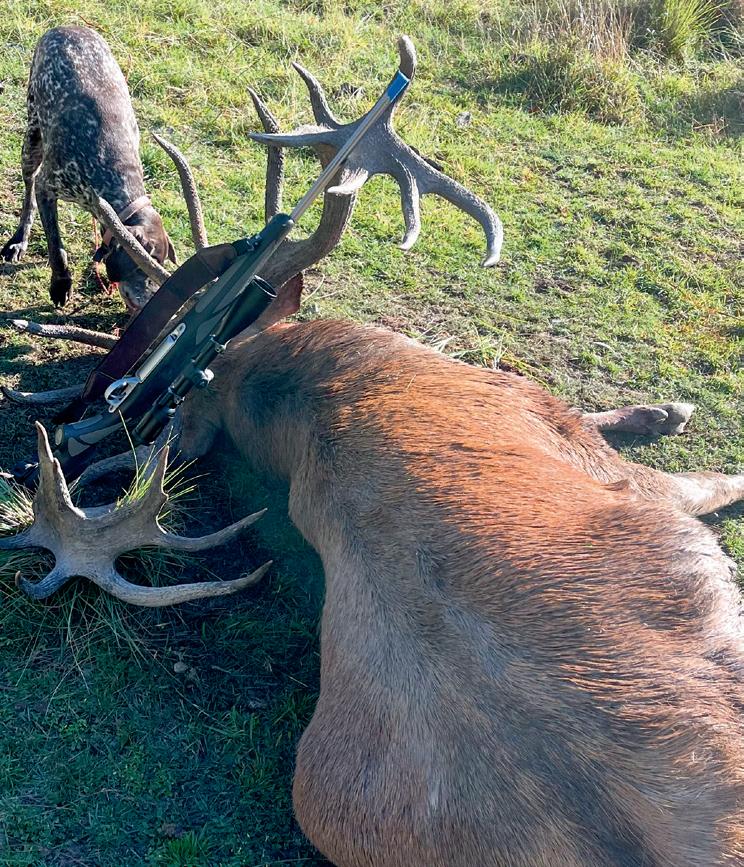
animal Mauro and his son were in awe.
The measurement process that followed was methodical. A friend suggested registering the stag, and the Australian Deer Association and certified measurers were engaged to verify and score the antlers. The team measured both sides, checked symmetry, and noted every detail you’d expect in a formal assessment—the result: a 20-point red stag, officially recognised as the largest ever recorded in Australia.
But scores and records are only part of the story. What runs through Mauro’s account is a hunter’s ethics as much as his skill. He’s clear about caring for the wildlife Australia is privileged to host. “You don’t shoot everything you see,” he says. In previous years he and his son had passed on 12- and 14-pointers because “we had meat in the freezer” or because the animal wasn’t the right one. That restraint is part of stewardship: letting some animals grow, taking only what you can use, and making sure every shot is as humane as possible.
While the encounter with the huge stag remains vivid, the hunt’s real weight for Mauro is the memory of doing it with his son. “Being there with my son, seeing everything come together exactly as it did—that memory will last forever,” he says. The morning was alive with the kind of quiet satisfaction every hunter knows: a job done properly, an animal treated with
respect, and the simple joy of sharing it with family. He also notes that everything had to come together perfectly for him to be there in the right moment and at the right time with his son.
After field-dressing and preserving what they could carry that first trip—antlers with pelt, back scraps and tenderloins— the men carried their load a kilometre back to the car, drove to camp and waited for the rest of the party. A friend who later saw the antlers in the shade was stunned; Mauro still finds the moment surreal. He’s talked about mounting the head, but has said he will, respectfully, run the idea past his wife first.
If there’s a lesson in Mauro’s story for other hunters it is straightforward: prepare, be patient, respect the animal and the land, and make the shot count. The bush keeps teaching us—every trip layers on another memory. For Mauro, that’s the best part: “A few weeks ago I took my grandchildren out. They dressed in camo, sat by the campfire, and we shared marshmallows. Sometimes you don’t even shoot; you just enjoy being there.”
The largest red stag on record in Australia will be in the books, but for Mauro Conti, this spectacular moment will be measured in more relational terms: a still, fresh morning, his son beside him, a dog at his heels, and the wild gift of that great red stag.

Last issue, we shared the story of Italian wildlife parasitologist Leonardo Brustenga, who spent six months in Victoria working with Field & Game Australia members to collect red fox samples for his PhD research. Thanks to our volunteers’ dedication, Leo gathered over 77 fox carcasses from across urban, rural, and regional Victoria, providing invaluable material for a series of scientific studies.
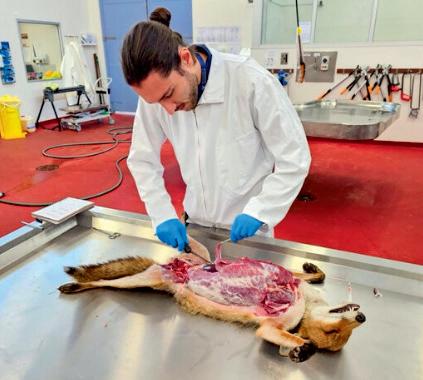
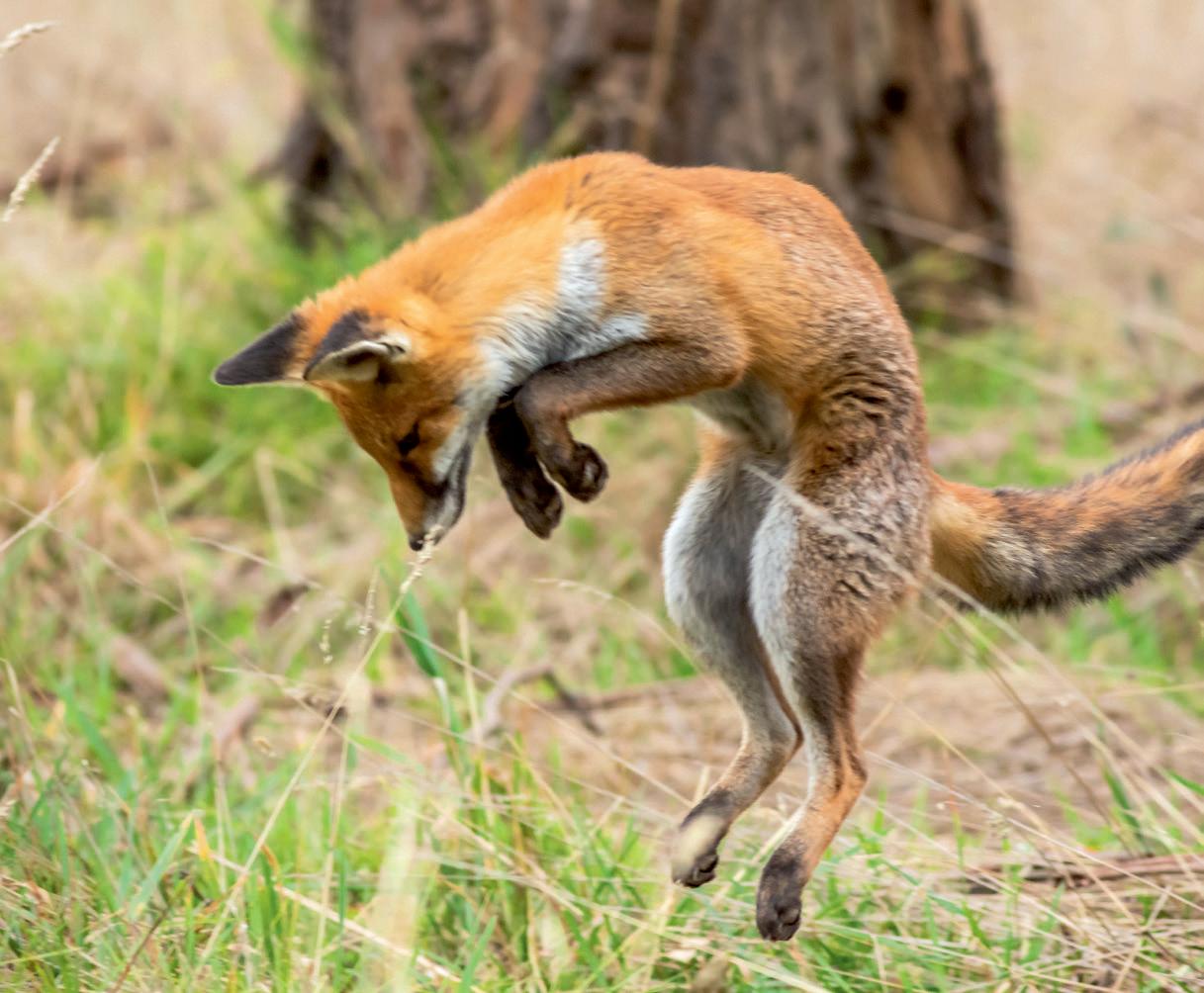
We are excited to report that some of this work has now been published in the International Journal for Parasitology: Parasites and Wildlife, with a paper titled “Gastrointestinal helminth parasites of urban and rural foxes around Melbourne, Australia”, co-authored by Leonardo and several other researchers. This study provides the first contemporary, comprehensive look at intestinal parasites in Victoria’s urban and rural foxes, highlighting both wildlife management and public health implications.
Researchers examined the gastrointestinal tracts of 51 foxes, recording age, sex, body condition, and location. They identified seven parasite species, including nematodes like Toxocara canis and Uncinaria stenocephala, and tapeworms such as Dipylidium caninum and Taenia species. Remarkably, this study reports Physaloptera sp. in Australian foxes for the first time.
The findings showed that over 92% of foxes carried at least one parasite, with
differences between urban and rural populations. Urban foxes carried fewer nematodes but more Dipylidium, likely due to higher flea burdens and closer contact with domestic animals. Rural foxes harbored more diverse parasite
"Our members directly contributed to pioneering research by supplying fox samples from across Victoria –even at the toughest times of year to hunt."
communities and higher nematode loads, reflecting the greater biodiversity and range of intermediate hosts in non-urban environments.
Importantly, several of the parasites identified are zoonotic, meaning they
can be transmitted to humans or pets, highlighting the public health relevance of fox populations living close to people. This research underscores the importance of ongoing surveillance and evidence-based wildlife management, as well as the value of hunter-conservationist contributions to scientific knowledge.
The study’s authors emphasize a One Health approach, linking human, animal, and environmental health to guide safe, sustainable management of fox populations. Long-term monitoring, spatial mapping, and public education about parasite risks are all recommended as part of a holistic strategy to reduce transmission and protect both public and animal health.
This publication is just the first in a series of research papers stemming from Leonardo’s work in Victoria. It demonstrates how contributions from Field & Game Australia members not only support cutting-edge science but also help protect the communities and ecosystems we cherish.
By Lucas Cooke
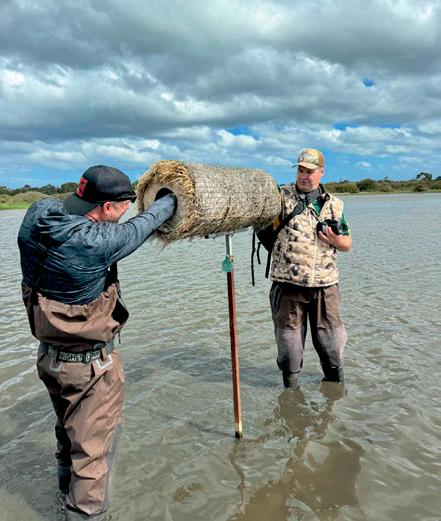
When Robbie Kroger from the Origins Foundation (formerly Blood Origins) visited Australia this year, it didn’t feel like we were hosting an international guest. It felt like welcoming a friend into our home.
For all his joking reluctance to admit it, Robbie has real Australian roots—roots that show in the way he talks about land, community, and conservation. And yes, his unrestrained enthusiasm for a meat pie gives him away every time. Beneath the humour is someone shaped by the same values that run through regional Australia: practicality, stewardship, and the belief that the people who use the landscape should also be the ones who help care for it.
But this visit wasn’t about Robbie.
It was about us.
It was about FGA, our members, and our work finally being seen and understood on a global stage.
And it was clear very quickly that Robbie wasn’t here to “teach” or “elevate” us—he was here because he recognises in FGA a powerful, authentic expression of the truth he has been telling worldwide:
Ethical hunting and real conservation go hand-in-hand!
Who is Robbie Kroger — and why does this partnership matter to FGA members?
Robbie comes from a background that aligns closely with our values: a scientist with a PhD in wetland ecology, grounded in measurable, on-the-ground environmental outcomes. He speaks the scientific language governments respect, and the practical language hunters live by every day.
But what makes his involvement valuable to our community is not his doctorate or his global profile—it’s the fact that
he understands, instinctively, the gap between what hunters actually contribute and what the public thinks hunters contribute.
He built the Origins Foundation to fill that gap with evidence, storytelling, and honesty.
FGA has been doing the work—quietly, consistently, and for decades.
Origins brings the megaphone.
This partnership is not about attaching ourselves to a personality. It’s about aligning with an organisation that amplifies truth, respects science, and recognises the conservation work our members do every week across Australia.
And just as importantly:
Robbie sees in FGA something worth amplifying.
He sees passion. He sees credibility. He sees results.
That matters.
Because when someone with global reach chooses to put a spotlight on Australian conservation work delivered by duck hunters, clay target shooters, volunteers, farmers, and regional communities… it strengthens our voice at a time when others work hard to silence it.
One of the standout moments of Robbie’s visit was time spent with the Rushworth Field & Game branch—a shining example of how even small, determined groups can have a massive impact.
Rushworth doesn’t shy away from its hunting identity. They don’t tiptoe around it. They lean into it—with pride, confidence, and total authenticity. And it works,
because people respond to honesty.
Their community impact is obvious in the H.O.P.E. program (Hands On Practical Education) run through the local school. These are students who were disengaged, disconnected, and struggling in traditional classrooms. But at Rushworth, they found something real:
• A reason to show up
• Work that matters
• Adults who trusted them
• A connection to land and wildlife
They’ve become active, enthusiastic contributors to the nesting-structure program—building, installing, and monitoring boxes for parrots, marsupials, and ducks across the region.
When Robbie visited, those students not only met him—and me—but watched him record an Origins podcast with Rushworth member Graeme Wall. For young people who rarely get recognition, seeing their local FGA branch showcased on a global platform was extraordinary.
That’s not just good for them—it’s good for all of us.
It’s proof that FGA’s model of land care, skill development, and community engagement works.
At the 2025 Wild Deer Expo in Warragul, 7,000–10,000 visitors moved through the venue across two days. FGA and Origins shared a stand, and the response was outstanding.
Hunters, farmers, conservationists, young families, dog handlers, and bowhunters all stopped in—not because we had merchandise on the table (though we were happily showing people our line of High ‘n
dry waders), but because the combination of FGA’s practical conservation work and Origins’ global storytelling drew people in.
We weren’t there to push products. We weren’t there to argue or defend.
We were there to represent hunting and conservation honestly.
And people recognised that. They appreciated seeing two organisations— one Australian, one international— standing side by side with a clear, authentic message. Authenticity always lands.
Another key moment was the boat tour through the Heart Morass at Sale—a wetland that will celebrate 20 years under FGA’s stewardship next year.
It is, quite simply, a triumph.
Robbie saw firsthand what so many of our members already know: the Heart is living proof of what hunters can achieve when they commit long-term, roll up their sleeves, and take responsibility for a piece of country.
The transformation isn’t a theory. It isn’t a report.
It’s there—in the reeds, in the water quality, in the birdlife, in the return of species that disappeared decades ago.
And it has all been delivered by a handful of incredibly dedicated volunteers who care deeply and quietly get the job done.
Origins will now help tell that story beyond Gippsland—across Australia and across continents through a podcast with Pud, and through the lasting impression left from the “money cant buy” experience of a sunrise at the heart, and a tour with people
who care deeply for that land.
As CEO, here’s why this partnership matters
I speak to many people—members, politicians, scientists, shooters, farmers, land managers, and everyday Australians who love the bush. And one thing I’ve learned is that, even though hunters are a minority here, we are part of a global majority.
The species might change.
The ecosystems might change.
The political climates might change.
But the core motivations—caring for wildlife, protecting habitat, giving back to the land, ensuring sustainable populations—are the same everywhere hunters exist.
When Robbie talks about Mississippi, Mozambique, or Manitoba, the challenges mirror ours:
• Habitat loss
• Policy made without understanding
• Pressure from predators
• Public misconceptions
• The need for real science
• The need for active management
• The frustration of being shouted down by people who don’t do the work
So when Origins partners with FGA, it's not charity. It's not borrowed credibility. It's recognition—recognition that the work our members do stands tall on the world stage.
And on a personal level:
I’m proud to call Robbie a friend.
I’m grateful he sees the truth in what FGA is doing.
And I look forward to more opportunities where both organisations benefit—and hunters everywhere benefit from the stories we tell together.
Robbie’s visit wasn’t a media drop-in. It wasn’t content for content’s sake. It was genuine alignment between two organisations that share a mission:
To ensure hunting is openly recognised as an essential part of wildlife conservation and land management.
There’s more coming:
• New Australian Origins Podcast episodes
• Stories from Heart Morass, Rushworth, and other member-led projects
• Joint conservation messaging
• Global amplification of local success stories
• Continued relationship-building between FGA and a respected international voice
FGA members should feel proud— because what Robbie saw here confirmed what we’ve always known:
Hunters in Australia aren’t just using the landscape. We are restoring it, defending it, and passing it on better than we found it.
Origins will help us tell that truth—loudly, clearly, and globally.
And together, we can shape the narrative, strengthen the future of ethical hunting, and proudly show the world what FGA members have always done: lead by example.
If you want to see more of what Robbie does – go to: “theoriginsfoundation.org”.
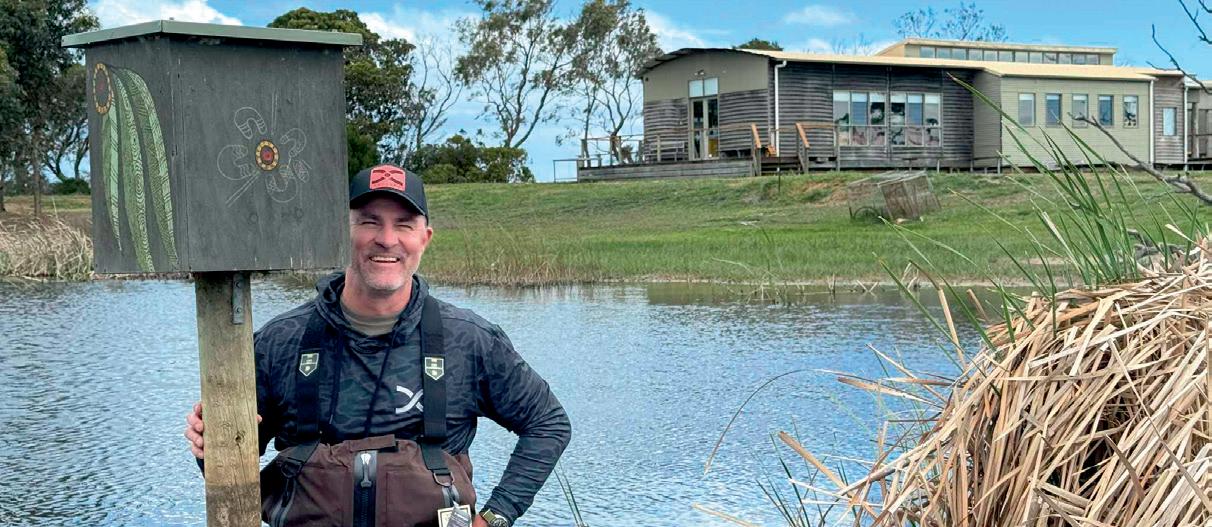
On a cool day, today, at the Sale Field & Game range, 76 students from the 5 secondary schools in the Wellington Shire gathered to participate in the final inter-school shooting event for the year. Some showers during the day did not cause any disruption, but the breeze was quite chilly.
This event has now been running for 17 years, and the aim is to bring the schools together early in Term 4 to enjoy the sport of simulated field clay target shooting.
Students are grouped in squads of 5 and shoot 2 rounds of 10 Simulated targets, at 5 stands, with 2 single barrel targets at each stand. The targets are different
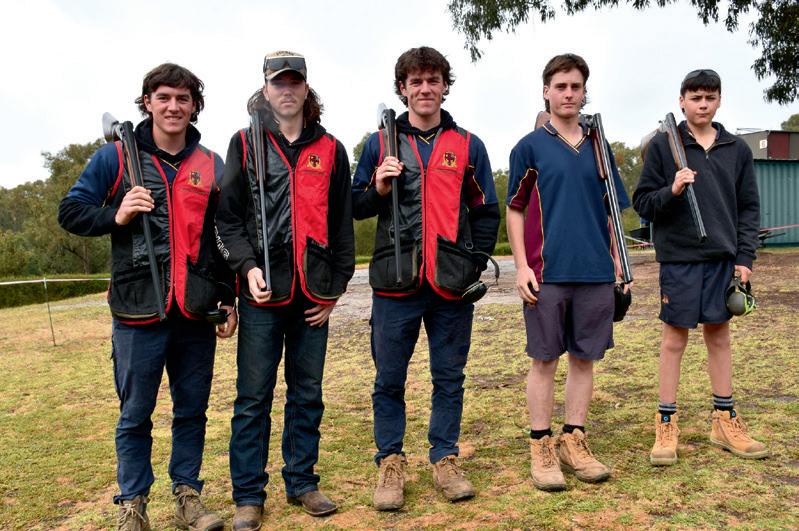
at each stand, from incoming, crossing, outgoing, looping and even a ‘rabbit’ target, thrown to run across the ground in front of the competitor.
A great day was had by all, with referees, scorers, armoury officials, office and trap setters supplied by the Sale F&G branch with help from F&G members from across Gippsland. A great canteen staffed by the Sale members, teachers caring for kids and watching over equipment, targets and ammo supplied by the Sale branch, parents supporting their kids, prizes donated by Greg Gonzalez in memory of his late father, and presided over by a very efficient and relaxed Gary (Pud) Howard, all led to a rewarding time for everyone involved.
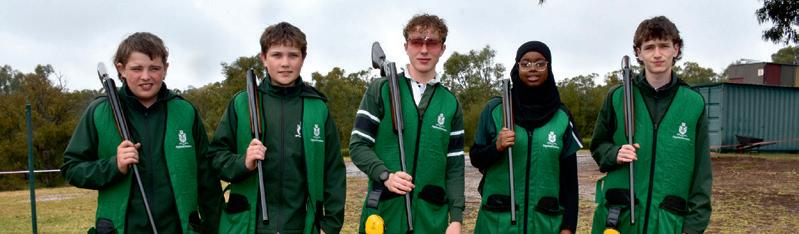
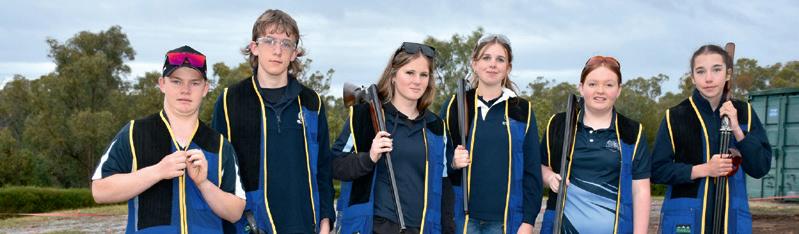
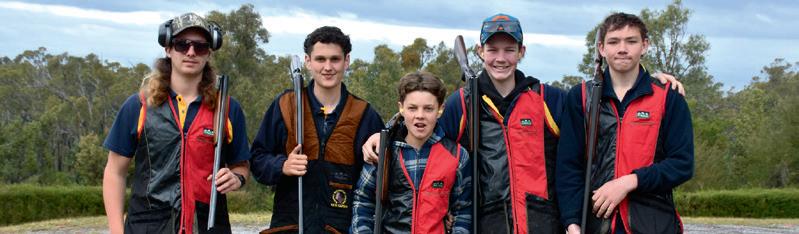
Benalla FGA hosted the Benalla Broken River Venturers Group with an afternoon on the clay target range.
The group leader, Jenny Wapling, made a request to the club, to see if it would be possible to engage and show this group of young people what clay target shooting is all about with a high emphasis on the safe handling of firearms in sporting activities.
After a number of tries and getting on top of their nerves they were breaking clays with grins from ear to ear.
Well done to the Adventurers club members, Jess, Patrick, Eddie, Alex & Connor.
Thank you to our on-duty volunteers for the day, Neil Campbell, Sheryl Ferguson, Alison Harwood & Trevor Jones.
Benalla FGA is committed to developing our future especially in junior shooters.
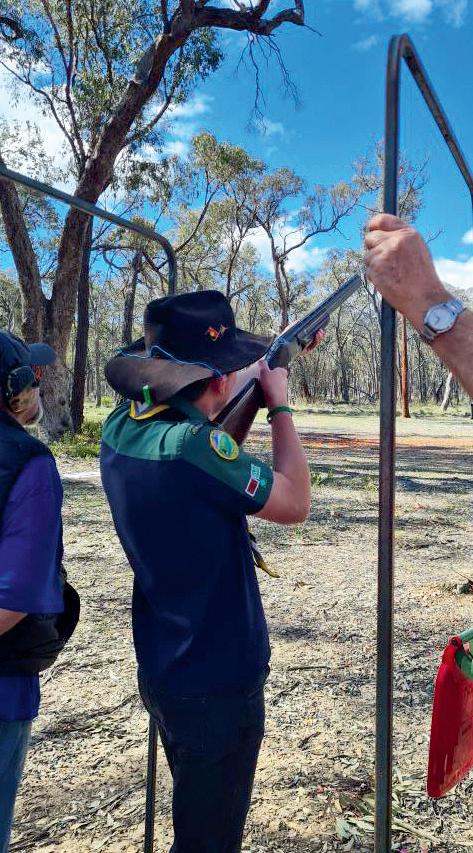
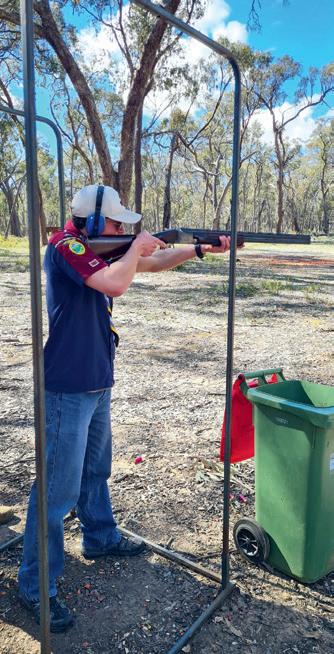
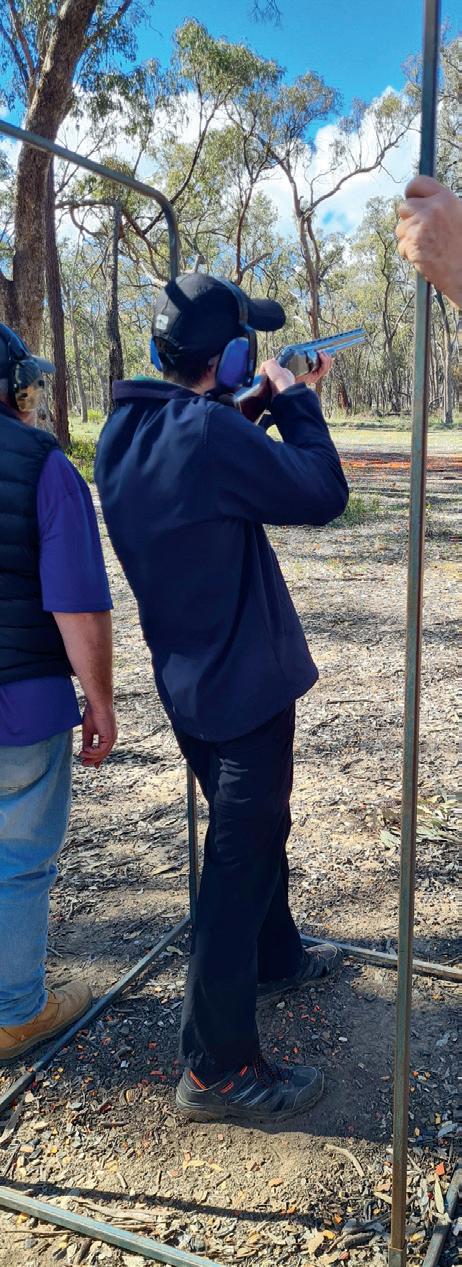
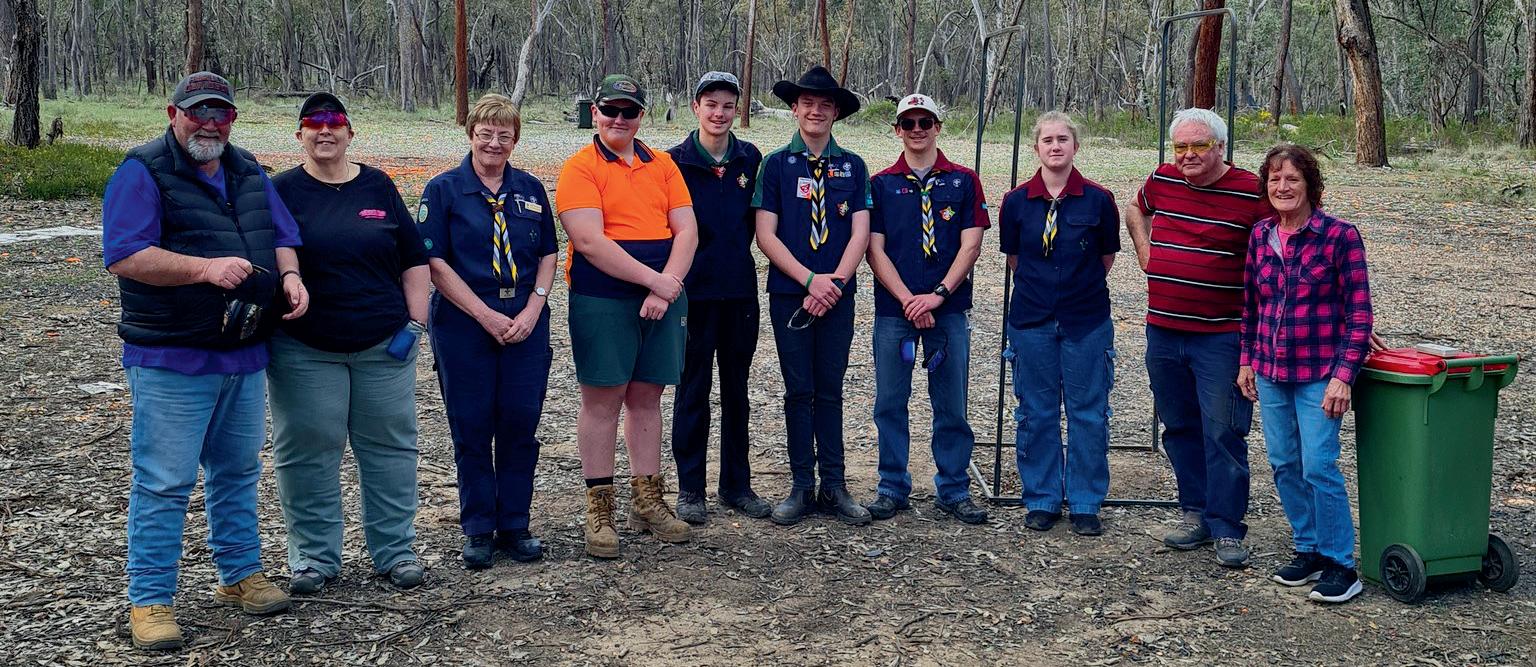
Benalla FGA again hosted another successful school student clay target championships.
120 students nominated to participate in the 64th Annual clay target championships held at Benalla F&G shooting range. Benalla FGA has been involved since 1984, when the discipline was changed to ASF. Since Covid, Benalla FGA has Soley organised and hosted the event at their Reef Hills Park Complex.
According to the dates on the perpetual trophies, particularly, the Charlie Whitla Shield, the Championships started in 1962; however, other trophies are dated 1964. This event became the North East Zone Championships and is now called the Benalla School Clay Target Championships.
The event has run continuously through to the present day, except for the one in one-hundred-year flood in 1993 when a large portion of the town was under water. The shoot was cancelled for that year. The event also went into recess for three years during the height of the Covid-19 pandemic.
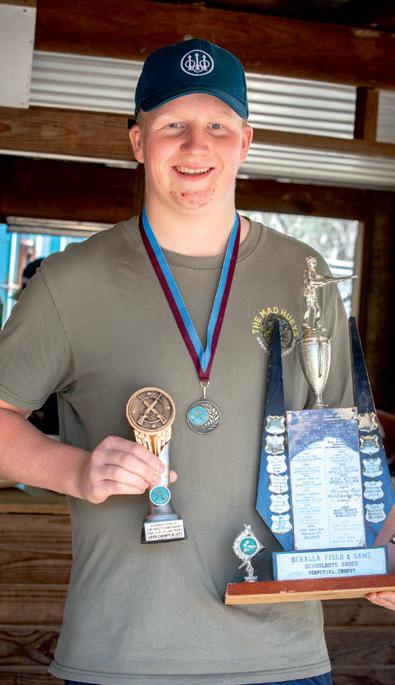
Students from 20 schools attended this year’s event.
The composition was a single barrel 30 target event held over two grounds with three targets at each stand.
There was plenty of target variety; out goers, incomers, rabbits, springers and loopers.
The students showed a great deal of maturity, sportsmanship, ability and firearm safety during the day. Parents and schools can be very proud of the young people who attended today.
The categories for the perpetual trophies were:
• High gun
• Old Girls and Old boys. (Someone who had shot before this year)
• New girls and new boys (Someone who has commenced shooting this year)
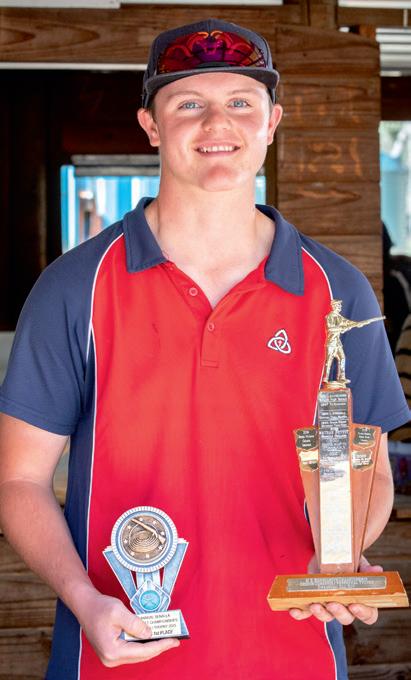
• Old teams (4 old members)
• New teams (4 new members)
• Champion team (the highest of the two teams)
Thank you to all the volunteers, teachers, parents and FGA members from other clubs for their assistance on the day.
The sponsors included Winchester, who has assisted with the sponsorship for the shot shells since 1984, Outdoor Trading Company, and Promatic Clays.
It was pleasing to see a large number of new shooters, including additional female competitors in attendance for the first time.
A special thankyou to all our members for their assistance in the setup and running of the day.
– Benalla FGA
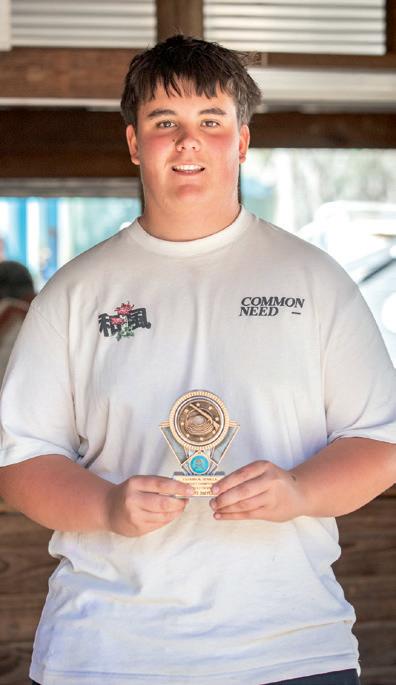
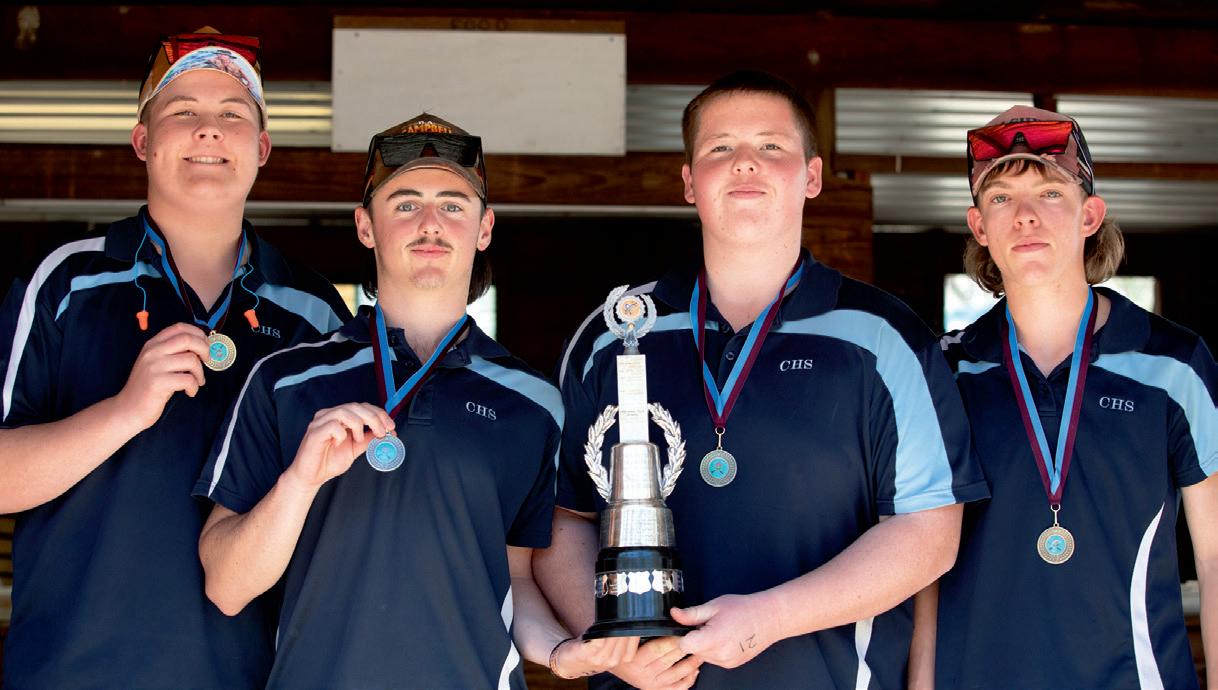
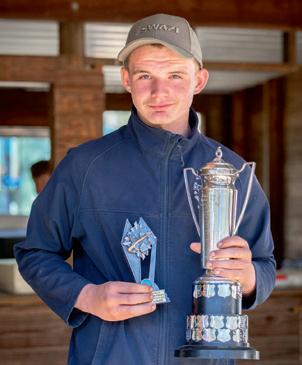
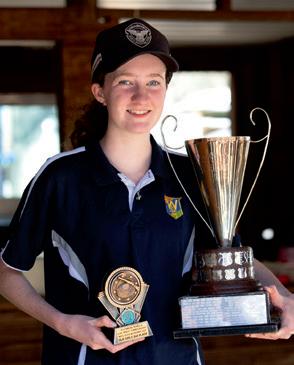
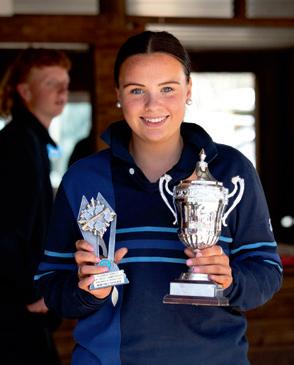
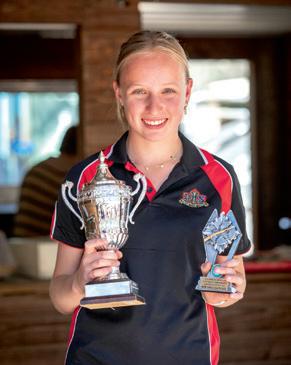
In a small patch of bushland outside Goulburn, New South Wales, something more than just clay targets takes flight— history, camaraderie, and deep respect for those who laid the foundation for a passionate shooting community. This year, like every year since 2006, Goulburn Workers Field & Game Clay Target Club gathered for their most cherished event: the Norm Bolton Memorial Shoot.
The club, founded in 1997 by three local shooters—Josh Lambert, Paul Croker, and Mick Lawler—was born from a simple gap: there was no sporting clays club in town. That changed on April 6th, 1997, when the first recorded shoot took place. Ten squads took to the stands, and Frazer Roberts shot his way to High Gun using a trap gun, a moment that cemented the beginning of something special.
The land where the club was established was owned by Norm Bolton, a man whose generosity and belief in the sport made the club’s existence possible. Born in 1925, Norm passed away in 2005. But his legacy lives on not only in the annual memorial
shoot named in his honour but in the continued support of his family. Today, his daughter Lyn Madden and son Neil Bolton continue to welcome the club onto their farmland, enabling shooters to enjoy what Norm first envisioned.
The Norm Bolton Memorial Shoot isn’t just a competition—it’s the heart and soul of the club’s calendar. Proudly sponsored by Goulburn Tilt Tray Service, a family-run local business owned by Daniel and Tracey Primmer, the event reflects everything the club stands for: respect, tradition, and inclusion.
This year’s memorial shoot, held on July
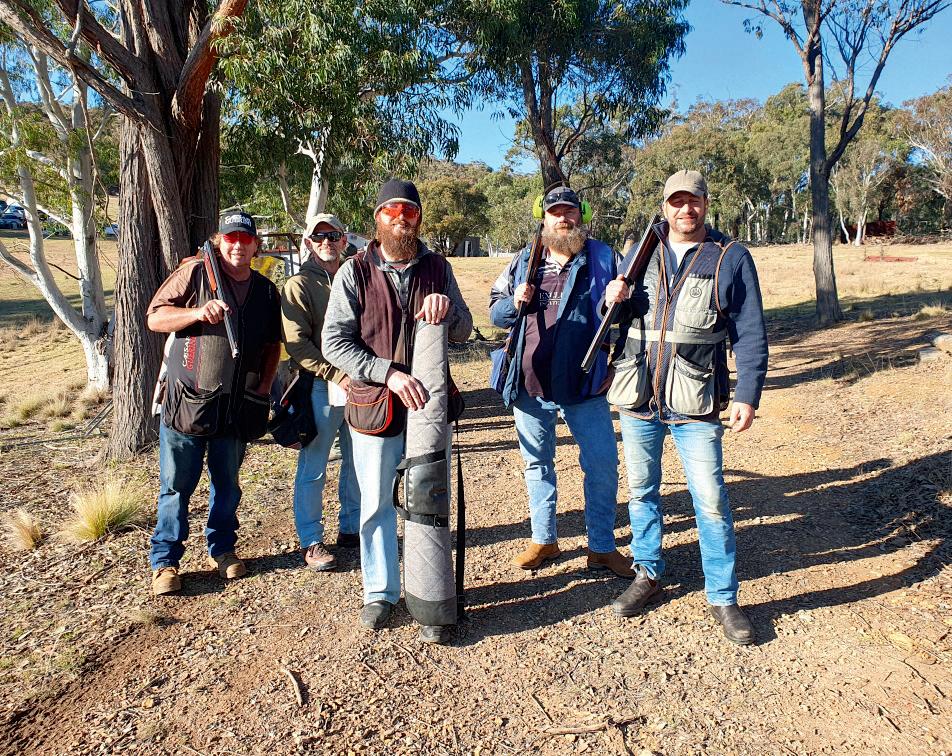
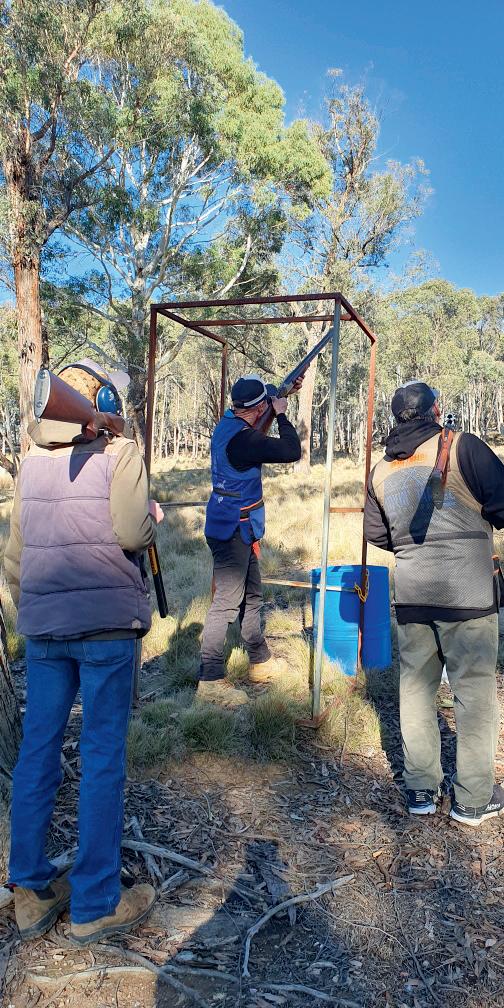
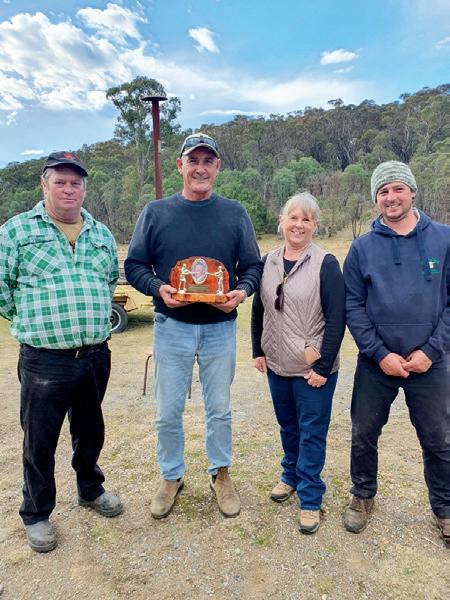
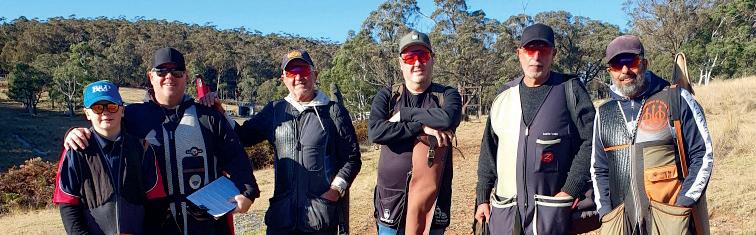
6th, promised more than good shooting. Wood fires kept the chill at bay, the laughter was warm, and the lunch was hearty—with the ladies serving up comforting curry snags and savoury mince with rice. It’s these small, thoughtful touches that make Goulburn Workers Field & Game Clay Target Club feel like home.
“Come and enjoy a day in the bush,” the club invited through their Facebook page. “Wood fires a must, rug up a must, guns a must—hitting clay targets, optional!” The tongue-in-cheek humour is part of what draws shooters back again and again.
From humble beginnings to hosting state selection shoots, the Goulburn Workers
Field & Game Clay Target Club has grown into a well-respected and welcoming hub for shooters across the region. They currently host six shoots annually, including both Off The Gun (OTG) and handicapped formats, and are aiming to expand to 12 monthly shoots in the near future.
With a consistent average of 60 shooters per event, the club continues to foster a community built on shared passion and genuine hospitality. Long-time sponsor Josh Lambert, through Goulburn Fish n Shoot, remains a strong supporter of the club, further highlighting the enduring ties between members and their sponsors.
The Norm Bolton Memorial Shoot is more
than just a competition—it’s a tribute to a man who gave a community of shooters a place to call home. It’s a celebration of family, both biological and chosen, and a reflection of what can happen when people come together with a shared vision.
As the Goulburn Workers branch looks to the future, expanding its shoot calendar and continuing to honour those who paved the way, it remains firmly grounded in the values it was built on: respect for the land, love for the sport, and deep appreciation for those who made it all possible.
Thank you, Norm. And thank you to the Bolton family, Daniel and Tracey Primmer, and every volunteer and shooter who makes days like this possible.
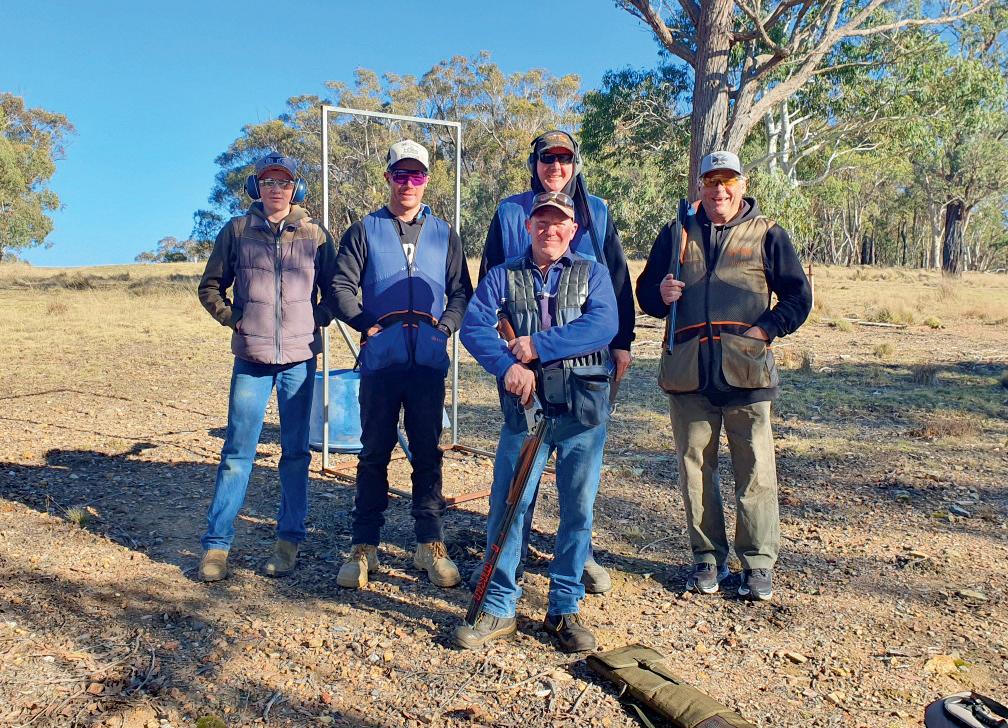
It was a good day with 146 shooters competing. The club is always so welcoming, and they put on a very successful day.
It was great to catch up with some of dad’s old mates. While a lot of his mates are now gone, I put together a squad of shooters that often shot with him, and we had a great day reminiscing as we shot our round.
A highlight of the day was the now permanent display of Dad’s cups that he won in Spain live bird shooting. For those who didn’t see the article I wrote in the June edition this is the story of his cups.
In 1972, Dad, Nipper Lacey, Max Anett, and their wives went on a six-week tour to Spain, Portugal and Italy. The World Championship that year was held in San Sebastian, Spain. Top shooters from around the globe competed. Dad was quickly handicapped as a back marker, being the great shot that he was.
In Granada, there was a four-day shoot before the championship — three main events and a “miss-out” as a fourth. Shooters like Purdue and Eisenhower (USA), Pardini (Italy, a two-time world champ), and Lacey (Australia, who placed
third) were all there.
Dad won the first event — a nice cup. Then he won the second — another nice cup. Then he won the championship — a magnificent cup. In the miss-out event, he missed his 68th bird and came second. A run of 67 birds straight — an incredible feat. When I toured Spain 10 years later, people still remembered it.
After the shoot, they drove to Rome to fly out for another competition in Italy. With three large trophies, Dad left them in a storage locker at the Rome airport — and never picked them up. It didn’t worry him. He never displayed trophies. They went straight to the shed. “If you’re any good,” he’d say, “people will work it out. You don’t have to show them.”
But Pop wasn’t having it. When he heard what had happened, he wrote to the airport. After much effort, he found the cups and had them shipped home. Dad put them on the lounge room table for a couple of weeks — and then back to the shed they went, where they
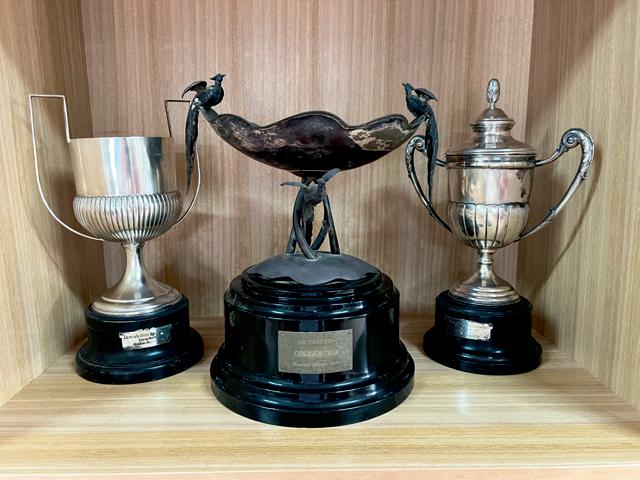
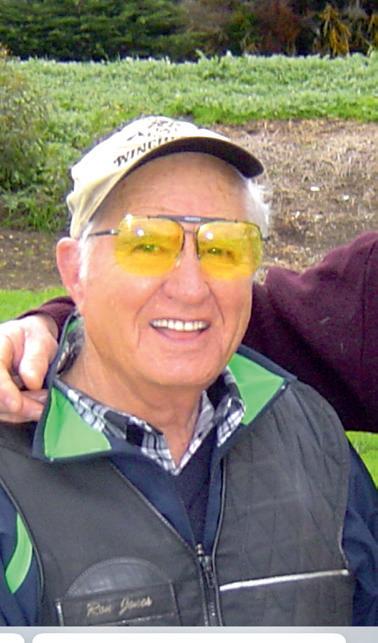
stayed for the next 50 years.
We lost Dad on 28 May 2024, aged 90. He was married to Mum (Doreen) for 70 years, and now they lay together. He had three children and 10 grandchildren, and no favourites — he loved us all equally. He is missed so very much.
As Seymour Field & Game was one of Dad’s favourite clubs, our family has decided to sponsor an annual memorial shoot in his honour for the next ten years. The long-forgotten cups have been retrieved from the shed, and a special cabinet has been built so they can finally be displayed at the club — 50 years on.
– By Ron Jones Jr.
On October 11th, 2025, 20 members from Sale Field and Game (18 competitors and 2 support crew) travelled from Yarram to Flinders Island for the highly anticipated annual Interclub Shoot against Furneaux Field and Game. This friendly competition, now in its 39th year, has become a highlight of the shooting calendar, drawing participants from both clubs for a day of challenging targets, camaraderie, and, of course, a bit of friendly rivalry.
The first year of this competition took place in 1986 at Furneaux Field Game Club (they were yet to join Field and Game Australia) and only one year has been missed (2019) due to the Covid-19 pandemic. Many of the original participants from 1986 are still shooting today, and with plenty of new and junior shooters from both clubs taking part in the event, the future of the trophy looks assured.
Furneaux Field and Game set the stage with 100 targets, spread across three rounds, offering a variety of challenges designed to suit every skill level. The day’s weather tested competitors, with a little rain and a lot of Bass Strait wind (great flying weather), but it was no match for the infectious enthusiasm of the shooters. Spirits stayed high, making for an exciting atmosphere from start to finish.
At stake was the much-coveted Bass Strait
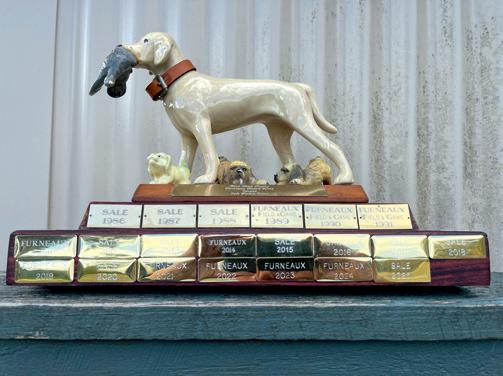
Trophy, affectionately known as "The Dog" which features a Cape Barren Goose in its mouth. Sale Field and Game had not claimed the title since 2020, and this year they were determined to bring it home. The competition was as close as it gets and after 3600 competition targets, Sale took the win by just one target! The tight margin made for a thrilling finish, fuelled the friendly banter between the two clubs. Sale members also had a number of place getters, and Dave Smith and Neil Collins won the A & B Grade Furneaux Club Championship which was run on the same weekend.
Off the range, Furneaux Field and Game provided excellent hospitality, treating everyone to a delicious dinner and desserts that perfectly complemented the day’s events. None of this, of course, would be possible without the dedication
and tireless efforts of the volunteers who work behind the scenes. Their hard work is key in making these events such a success and a tradition year after year.
As the competition wrapped up, Sale Field and Game look ahead to next year, where they will play host for the 40th anniversary of the event. With such a milestone on the horizon, expectations are high for a special shoot.
If you ever get the chance to visit Flinders Island, don't miss the opportunity to shoot at Furneaux Field and Game. It’s a unique corner of the world, offering not only great shooting, but also top-tier fishing, hunting, and breathtaking scenery—all in the company of a wonderful community of people. Seriously, it’s a place you won’t want to miss!
Article prepared by Elise (Fritz) Wedrowicz.
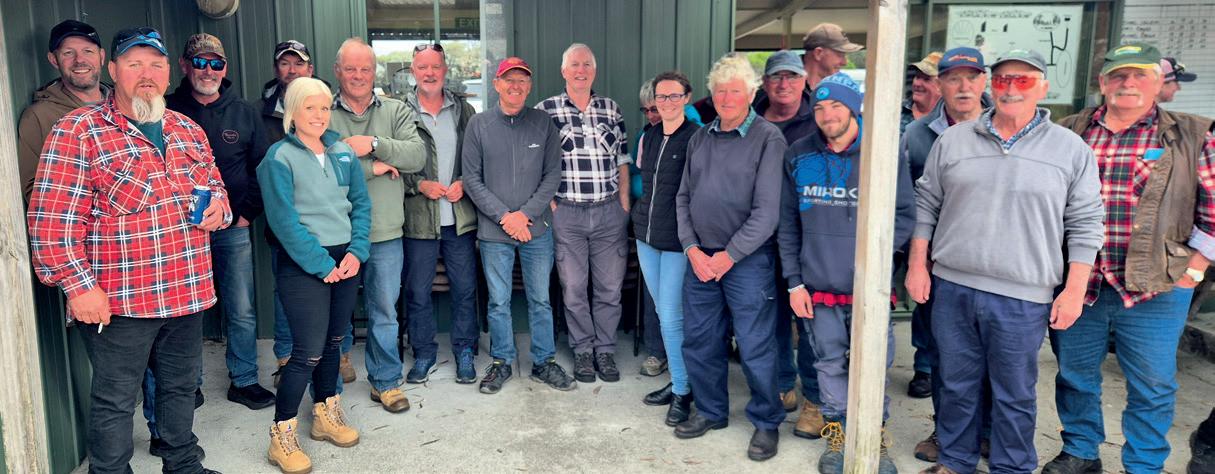
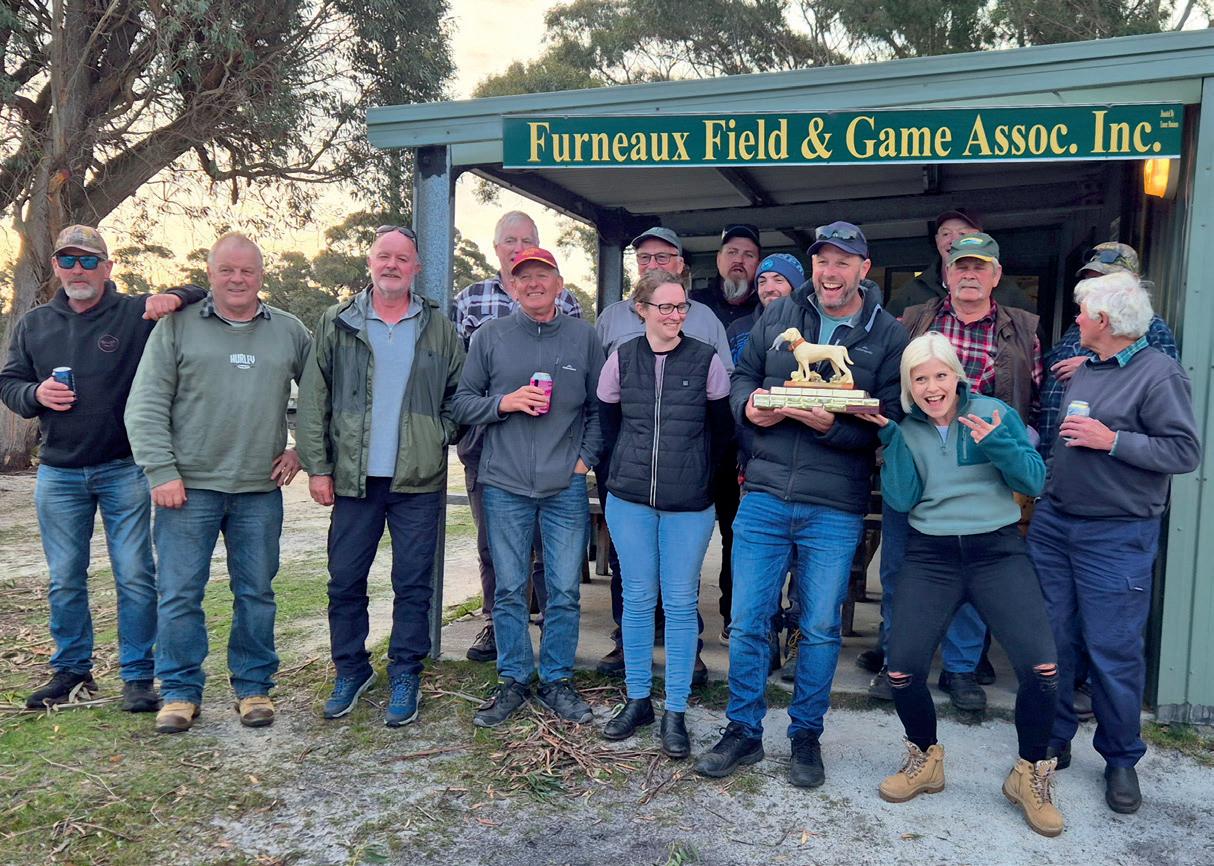
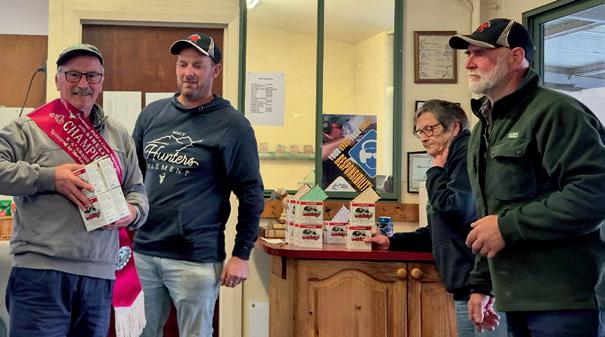
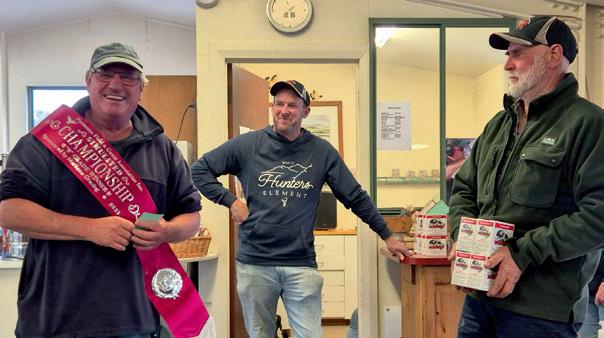
This prime event is a drawcard to shooting fraternity on the FGA shooting calendar, hosted by NT F&G.
The Festival of Clays event is held each year usually at the beginning of August depending on the calendar year.
Darwin temperatures at that time of the year are normally mild, around 20 deg C overnight to 32 deg C average during the day. The weather is a perfect change for southern members wishing to escape the cooler months.
Back in 2017 was when I first visited the club on its existing grounds. A fledgling club back then, very much in its infancy stages.
On that day I met one of the now club’s Life Members - Bart Irwin. Bart was the first person to be awarded life membership.
An enthusiastic man with a vision and
passion for his club and our sport.
NT F&G have four life members:
• Bart Irwin
• Peter Stoke
• Peter Bedgood
• Richard Noris
When I met Bart, he was running a 5std on the shooting ground. He appeared to be in his elements helping other shooters and organising the progress of this event full of authority and enthusiasm.
On that day there were approximately 30 participants all of whom were having a very enjoyable and exciting fun filled time at this relatively new style of shooting sport which had been introduced to Darwin.
Bart grew up in Melbourne and first visited Darwin on a school excursion in 1978. He loved the place and vowed to return and live here.
He first became a VF&G member of the
Frankston Club in 1980’s and a NT F&G member late 1990’s.
He is retired now and spends much of his time enjoying his passion for Goose Hunting, shooting clay targets and retrieving trials with his beautiful two-year-old black Labrador Elvis from Beeregan Kennels.
Bart is a true gentleman of our sport and with his vision and knowhow has helped develop the club to what it is today.
He is known for his abilities for helping others and getting things done.
Southern F&G members who are looking for a little adventure consider coming to Darwin.
Bring your gun and join the camaraderie with many other shooters in having a great time in the tropics.
At this club you should enjoy the company of the locals and nicely presented targets in a very hospitable friendly atmosphere.
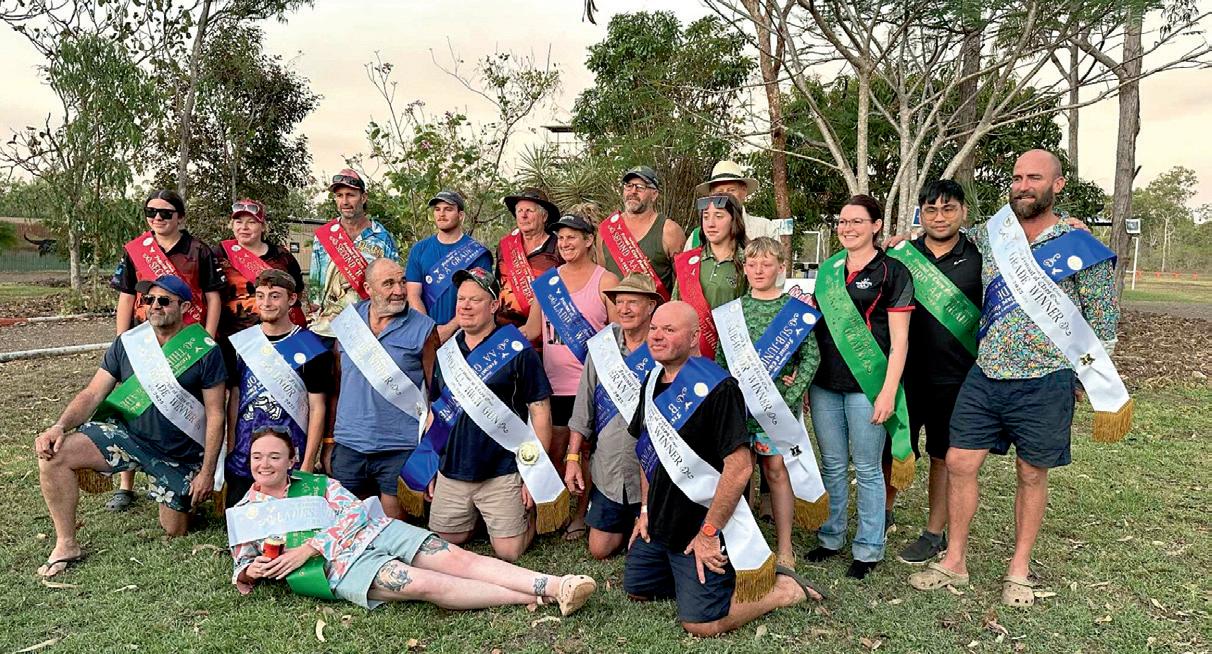
Prize Winners 2025 FOC. The lucky shooters with white sashes are firearm winners
The event program was changed a little for this year.
Friday - 72 Tgt 6 stand novelty event. 102 shooters nominated. Six stand novelty event Results
Grant Sanford 68/72 Jamie Baird 65/72 Grady Lardner 64/72
Jamie Baird 65/72 Nicholas Bateman 65/72 Daniel Cox 62/72
Nicholas Bateman 65/72 Mocka McSwain 64/72 Mark Irvine 60/72
Ed Zawora 63/72 Ben Phillips 46/72 Clarie
Joel Meaney 57/72 Samantha Piltz 42/72 Abby Yesberg 15/72
Steven Skahill 55/72 Jessica Backman 40/72
Junior Ladies Veteran
Hunter Lees 46/72 Krystal Sandford 58/72 Roger Kerslake 61/72
Molly Yesberg 26/72 Jacinta Clark 54/72 Shayne Wallace 60/72 Michaela Shirley 54/72 Bruce Duncan 58/72
Ed
Jamie
Bryce Rayner 56/75
There was lot of interest shown in this event. 95 shooters got their SxS’s out from the back of their gun safes and brushed off the cobwebs for this event while 12 shooters chose to stay with their familiar U&O.
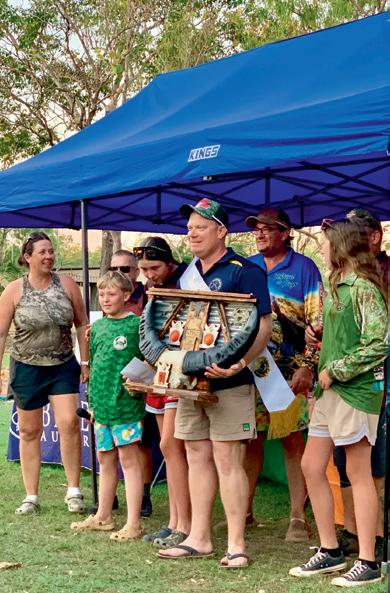
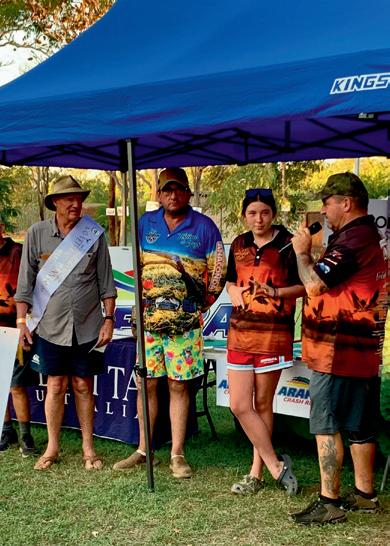
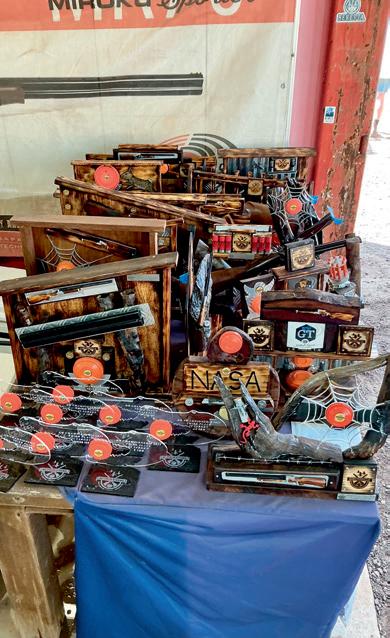
Robert Hall 73/75
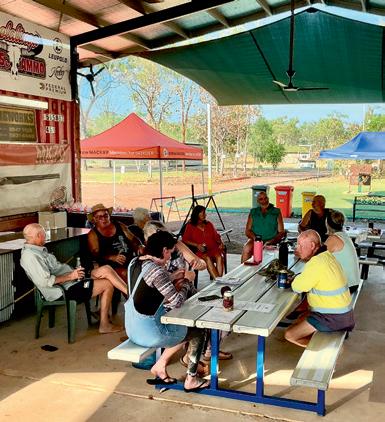
Prizes were awarded for first, second and third places in all grades and categories.
After each day when the shooting is over, presentations are held for that day’s event.
The prizes on offer are highly sought after and would be a highlight in any man cave. The trophies are crafted and hand made by club member Paul Manners.
This year some Australian Defence Force personnel, also F&G members, gave ‘Manno’ a helping hand by making all the third place trophies for FOC 2025.
At the end of each day when the guns fall silent competitors have a great opportunity to socialise and catch up with some old mates and discuss those unbreakable targets that got away.
Saturday U&O event saw Robert Hall shoot an incredible 75/75! He was also a clear Highgun winner for the tournament.
A hat trick of three 25’s in a row? Excellent shooting.
When the final presentations were over on Sunday the last day of competition
Adam Backman the club’s president had one further important duty to perform. He awarded a very surprised and thrilled Paul Manners Life Membership to NT F&G.
Paul has been a conscientious club member of NT F&G since 2012. A keen shooter who first joined the F&G Bar-rook NSW club before 2000.
“Manno”, as he is popularly known by his club members, has become a well known identity for the very unusual trophies that he creates for shooters who compete in the FOC event.
Paul is a talented man who has created uniquely rustic highly prized trophies for the Festival of Clays for 13 years now.
It takes him twelve months to create such a large number of trophies.
The material for his handy work can be
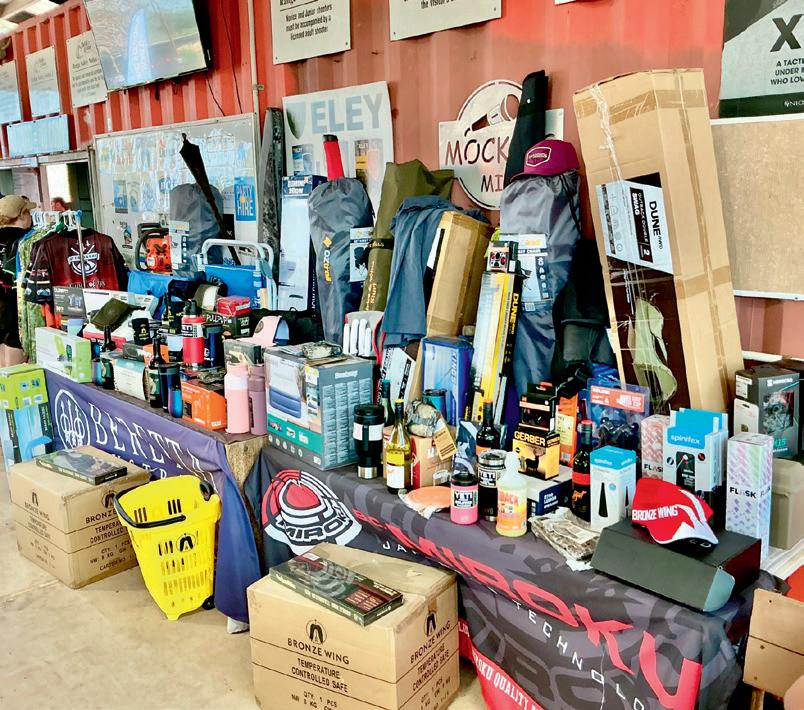
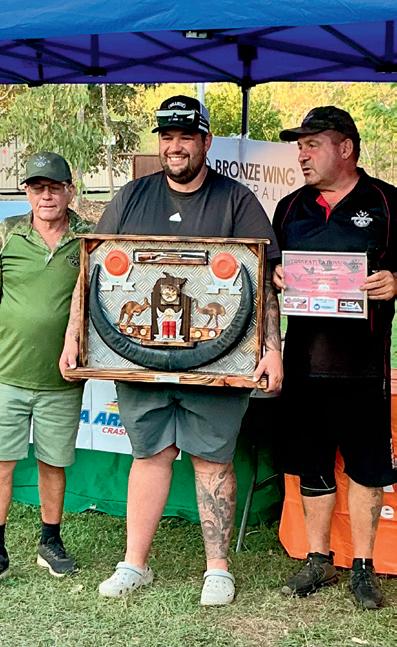
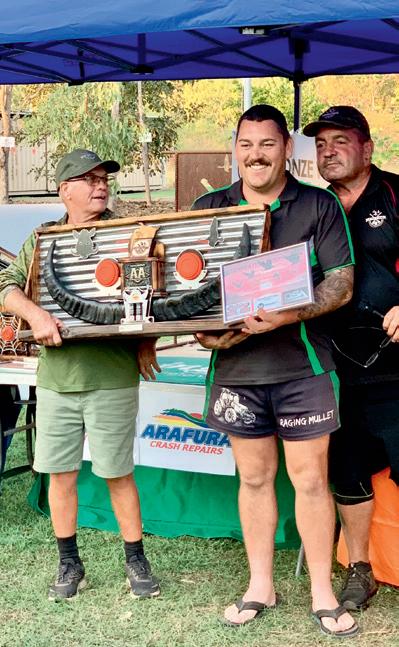
found in the bush whilst hunting. Old broken shotgun parts are dragged out of the rubbish bins and turned into dedicated trophies that shotgun shooters value most.
Buffalo horns and old gun parts are the main features on many of the larger first place trophies.
Other items carefully put together include pig tusks, dried goose legs, razor wire, old gun parts, mainly stocks and bits of gun barrels, empty ammo shells, clay targets, framed ripple iron or decking plate used for backing boards and more.
After Paul’s emotional induction and acceptance speech for Life Membership, it was time for drawing of the raffle, the most comprehensive raffle I have ever seen.
A true Monster Raffle.
Thanks to the club’s many sponsors who have contributed generously in topping up the prize pool.
Drawing of the raffle took almost two hours of continuous calling out of numbers and a cheering response from the lucky winners and surrounding crowd as they negotiated their way through the maize of tables and chairs to collect their lucky prize .
Most of the items on the raffle table were demographically suitable for our sport.
When the last raffle ticket had been drawn out and the raffle tables finally empty, there was a tasty roast dinner waiting for the hungry crowd. There was also a musician in attendance to entertain members, the costs of both of these were absorbed in FOC nominations.
Adam Backman and his enthusiastic committee ran a great shoot.
The targets were of high standard and were visible to shooters of all ages.
In summary the three day event ran smoothly thanks to Adam’s forward thinking committee.
Coolalinga Guns & Ammo are a major FOC sponsor.
This year they donated 13 firearms to the prize pool.
Great odds for shooters hoping to win such valued prizes.
For those adventurous people who have spare time on their hands and like to follow the dotted line around the country with a shotgun in tow and visiting different shooting venues, there is such a dotted line that will take you to the NT F&G grounds situated at “Mickett Creek” shooting complex.
There are two conspicuous large red
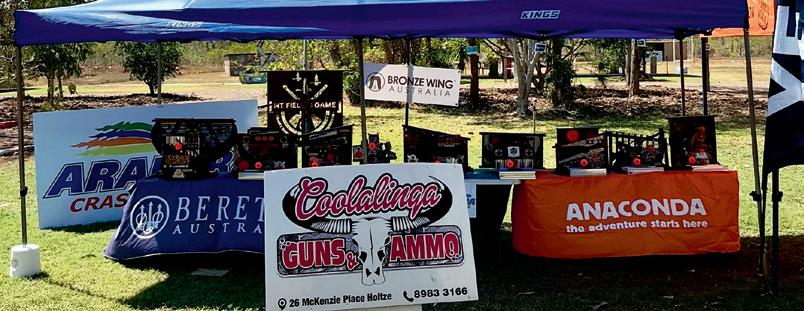
concrete pipes painted up to look like ‘cartridges’, standing 3 metres tall, positioned by the side of the road marking the entrance to the F&G club.
Prior to the Festival of Clays, each day at the club house visitors gather in the shade for a happy hour get together.
A relaxed informative story telling session, with ten to twenty visitors in number. It is a great way to catch up with the good goss and happenings of F&G clubs from around the country.
The subjects for discussion have no limit everything and anyone associated with Field & Game.
The NT F&G club is very hospitable and generous to interstate F&G members who have travelled long distances for this event.
The club offers complementary camping to those who have nominated for the FOC.
The shooting grounds are basically a circle about 500 metres in diameter set in amongst tall tropical native trees. Access to the traps and shooting stands is made easily by an ‘all weather’ compacted aggregated road.
There is a lot of room and opportunity for range setters to present a variety of interesting targets. Some of the shooting positions are elevated platforms and a hydraulically operated tower is also used to add more variety and realism to the targets.
The clubs practice facilities include a Skeet lay out, two 5std grounds, one DTL Ball Trap and six field lay outs.
All are operated by Long Range Tag system which has a delay release if required.
Members who wish to practice, dedicated cards and tokens can be obtained at the office.
The amenities include toilets, hot showers and a washing machine for F&G campers.
From the club grounds, Darwin’s shops and entertainment areas, shopping centres and tourist hotspots are a convenient short drive away.
In all fairness I suggest that F&G visitors to
Darwin obtain a list of FOC sponsors from the club and trade with them whenever possible and let the traders know you are here for the FOC.
The last couple of weeks in July through to the first couple of weeks in August is a fabulous time of the year to visit Darwin.
Two weeks before the FOC, two ACTA DTL clubs (Top End club and Darwin Clay target club) hold their two day and fourday trap carnivals.
The weekend before the FOC the Royal Darwin Show is held.
For race goers who can stay a little longer the Darwin Turf Club hosts the Great Northern Darwin Cup Carnival the following weekend.
There is something in Darwin for every visitor and the memories of your visit here will stay with you for a lifetime.
Many southern shooters find themselves returning to the FOC time and time again due to the experiences of genuine friendly hospitality.
So adventurous members, come and join in with one of the best Field and Game events in the country.
Travel safe and best regards
– Bruce Duncan
Side by side event, on the 3rd day, 75 targets
The NT F&G FOC 75 target SxS Championship event is held on the last day of the FOC.
It always comes as a surprise to me to see the large number of SxS shotguns that appear at the FOC SxS event. The locals seem to prefer the SxS when hunting wild geese due its more favourable handling characteristics.
For the FOC the NT F&G club offers 1st, 2nd and 3rd for all grades and categories which is much fairer on all competitors and not simply the highest three OTG places as most clubs do. It is a dedicated SxS event for those who wish to try their luck.
FGA branches sometimes adjust shoot dates, times, targets, and other details. Make sure you have the latest information before you attend a clay target event. Follow these steps:
1. CHECK THE 2026 SHOOT BOOK ONLINE
The FGA website always has the most current details. Make sure you review it before heading to a shoot.
2. FOLLOW THE BRANCH ON SOCIAL MEDIA
Visit the branch’s Facebook page or website. Updates on time changes, catering, parking, or other important info are often posted there.
3. PLAN AHEAD AND PRE-NOMINIATE
Secure your spot by nominating via My Clubs My Scores or contacting the branch directly. This speeds up check-in and allows the branch to reach you if plans change.
View the 2026 Shoot Book: www.fieldandgame.com.au
Questions? Call the FGA National Office on 03 5799 0960.
Geelong Field & Game is proud to present the 2026 Duck Hunting & Outdoor Expo, returning to the Geelong Showgrounds on Friday 27 February 2026. Organised and operated by the Geelong branch, the expo is the preeminent event for all things hunting, shooting, conservation and outdoor recreation.
From humble beginnings as a small scale hunting information night, the event has grown year on year into a large scale hunting and outdoor recreation show.
With exhibitors and attendees from across the country heading to Geelong to celebrate all things hunting, shooting, conservation and outdoor recreation, this expo is not one to miss.
Going from strength the strength, exhibitors are signing up on weekly basis to showcase their products to outdoor enthusiasts. From decoys to duck calls and everything in between, there is plenty to see at the Duck Hunting & Outdoor Expo.
Attendees will also hear directly from Field & Game Australia about:
• The latest 2026 duck season information
• Regulation and compliance updates
• Species identification and ethical hunting
• Safety considerations heading into the new season
This session will ensure hunters head into opening morning informed, confident and prepared.
A variety of food trucks will be on-site, creating the perfect environment to relax, grab dinner and reconnect with hunting mates and our hunting community.
The friendly, informal atmosphere has become one of the event’s biggest draw
cards and brings together all facets of outdoor recreation under one roof for one massive celebration.
The expo welcomes:
• First-time duck hunters
• Families and junior shooters
• Long-time waterfowl hunters
• Outdoor and conservation enthusiasts
• Anyone curious to learn more about responsible, ethical hunting
With experts, mentors and vendors all in one place, it’s the perfect place to plan your season or start your hunting journey.
What began as an information night for a small group of hunters, the Duck Hunting & Outdoor Expo has grown into an unmissable annual event that continues to be a highlight for
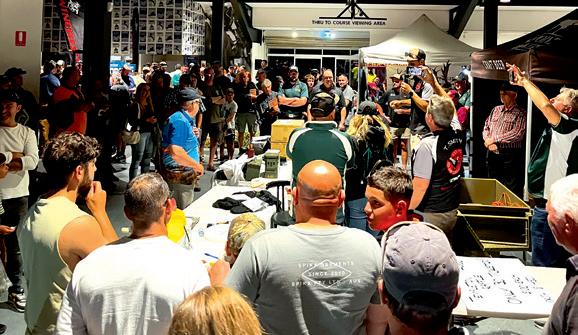
outdoor enthusiasts.
To grab your tickets and go into the draw to win a pair of High ‘N Dry Waders, visit the Geelong Field & Game website or scan the QR Code below.
EVENT DETAILS
• Friday 27 February 2026
• 5:30pm – 10:30pm
• Geelong Showgrounds, 79 Breakwater Road, Breakwater
• Tickets: $12 per person
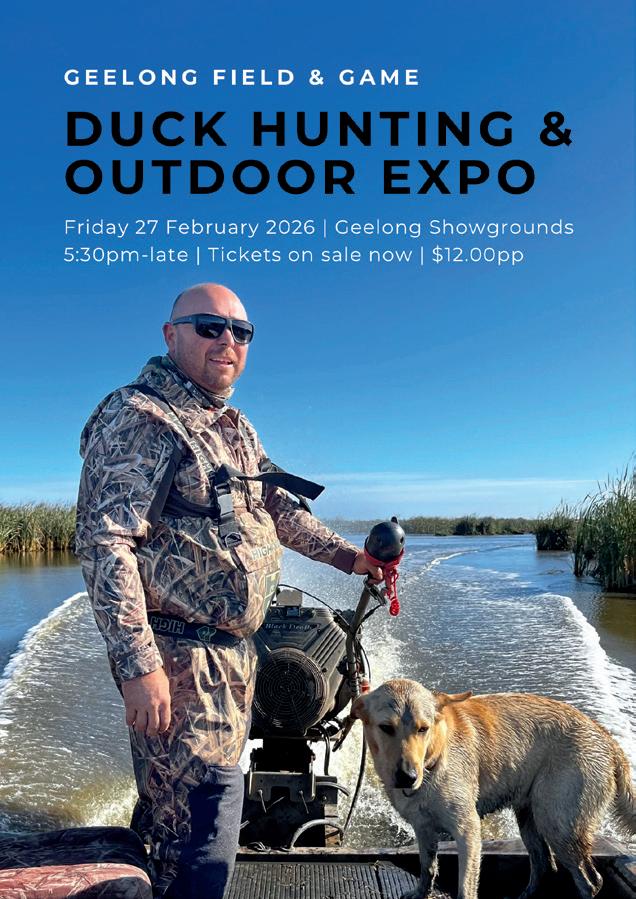

Emily Treble coaching a participant at our Come and Try Day.
What a year it has been for our club, with so much happening and with more investment in our grounds, traps and volunteers, the numbers at our monthly shoots are ever increasing. We are now averaging 130 - 150 easily, and we do appreciate competitors turning up each month to support us.
We have held a number of corporate events which are very successful and every two months we run a licensing permit day which are well attended.
We also held our Annual Come and Try Day, this year with 48 interested people coming out to give our sport a try, and even though the weather wasn't on our side, we still had good feedback from participants. We advertised through our Facebook page and also on local community pages and had a great response. We also applied for a grant through our local SEYMOUR GOULBURN LIONS group, and with this grant we were able to put on a bbq lunch and to buy hats to give to all participants, thereby getting our name out a little more.
We conducted the Annual Rod Drew Memorial Challenge between Seymour and Kilmore clubs, over two weeks, with Seymour taking home the trophy this year.
Our Supershoot in September saw 288 competitors, and by running three grounds, we were all done including presentations by 5 pm. A tribute to our volunteers who kept things running smoothly. The winner was James Saliba with a great OTG score of 91/100.
Through the generosity of the Jones family, we held the inaugural RON JONES SNR MEMORIAL in October, in memory of a man who loved his sport and the people involved.
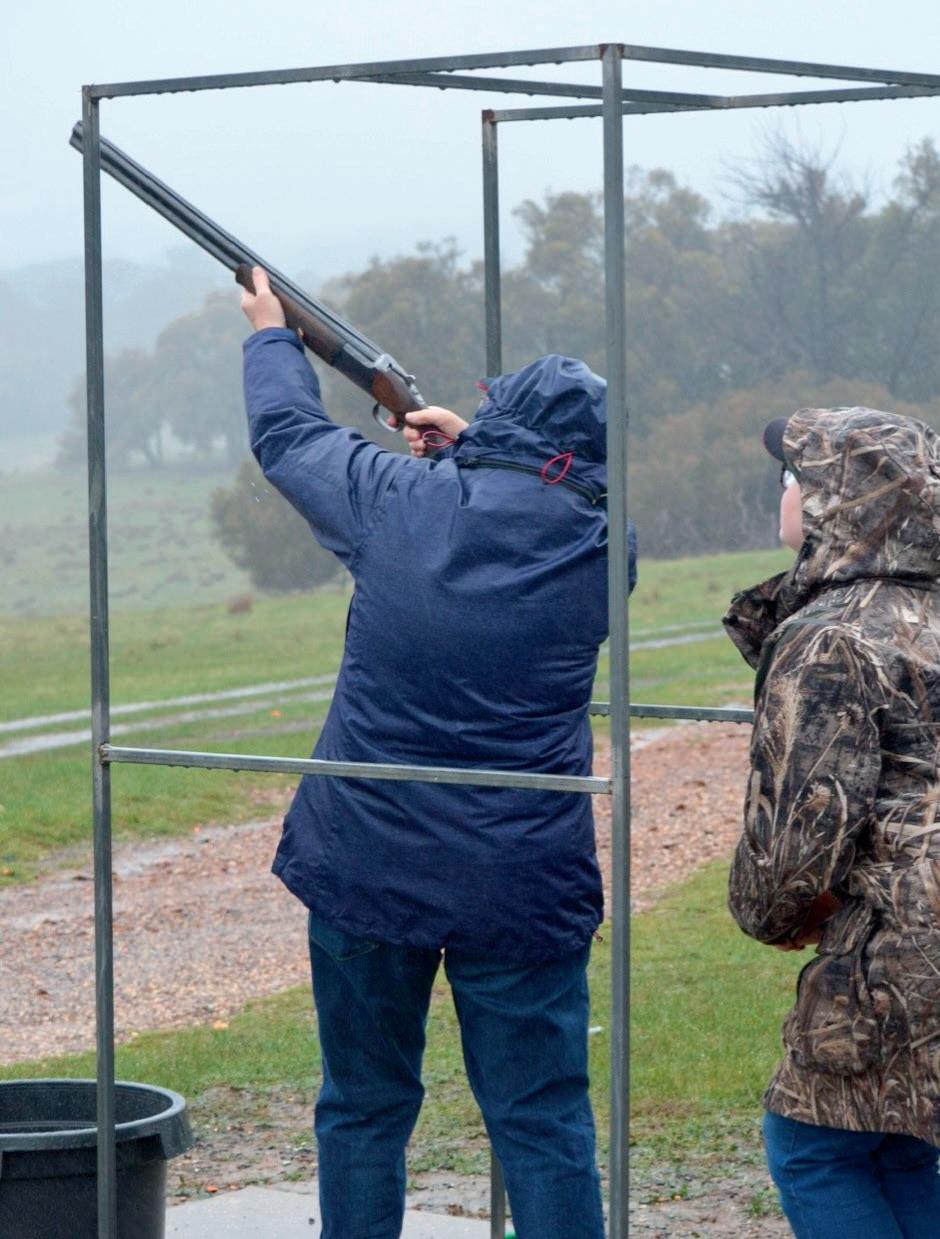
With 146 competitors turning up, it was a very successful way to celebrate the memory of Ron and his contribution to our sport. We thank the Jones family for allowing our club to run this annual event in his honour.
The winner was Mick Baldwin with a hcp score of 74/75.
We here at Seymour Field and Game are looking forward to our last couple of shoots for the year, and planning a big year in 2026!
– Alison Coombs.
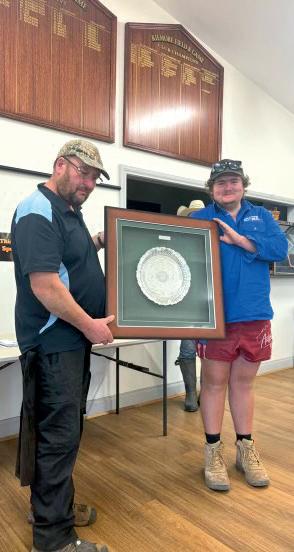
the dough:
• 3 cups all-purpose flour
• 1 teaspoon salt
• 1/2 cup (1 stick) unsalted butter, chilled
• 1/2 cup cold water
• 2 egg yolks, divided
For the filling:
• 450 grams ground duck breast (brown first in a frying pan and cool before including in the filling)
• 450 grams waxy potatoes, (peeled and diced)
• 2 carrots, (peeled and diced)
• 2 parsnips, (peeled and diced)
• 1 cup of peas
• 1 small onion, (diced)
• 2 tablespoons Worcestershire sauce
• 2 cloves garlic, (minced)
• 1/2 teaspoon dried rosemary
• 1/2 teaspoon dried thyme
• Pink salt and freshly ground black pepper, to taste
1. In a large mixing bowl, whisk together the flour and salt.
2. Cut butter into small pieces and using two forks, a pastry blender, or your fingers, work it into the flour until it becomes a crumbly mixture.
3. Mix together water and one of the egg yolks, then add to the flour mixture. Mix until all flour is incorporated, then turn out onto a clean surface and knead until the mixture comes together completely.
4. Wrap in plastic wrap and chill dough at least 30 minutes.
5. When ready to bake preheat oven to 200°C and line a baking sheet with parchment paper.
6. To make the filling:
7. In a large skillet over medium-high heat, season the ground duck with salt and pepper and brown until no longer pink. Remove meat to a bowl and set aside.
8. To the same frying pan, add potatoes, onion, and celery and cook until mostly soft, 6-8 minutes. If there isn't enough fat leftover from the beef, add olive oil or butter to the frying pan before adding vegetables.
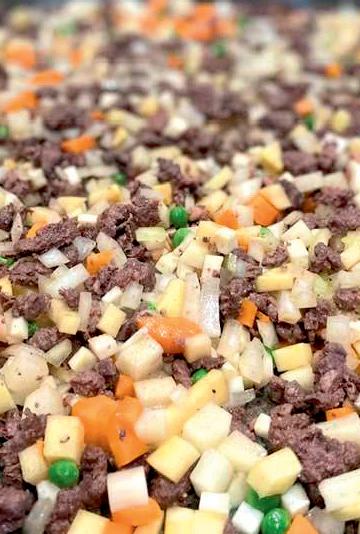
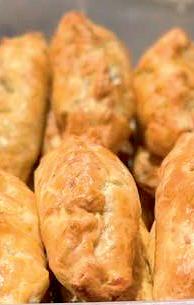
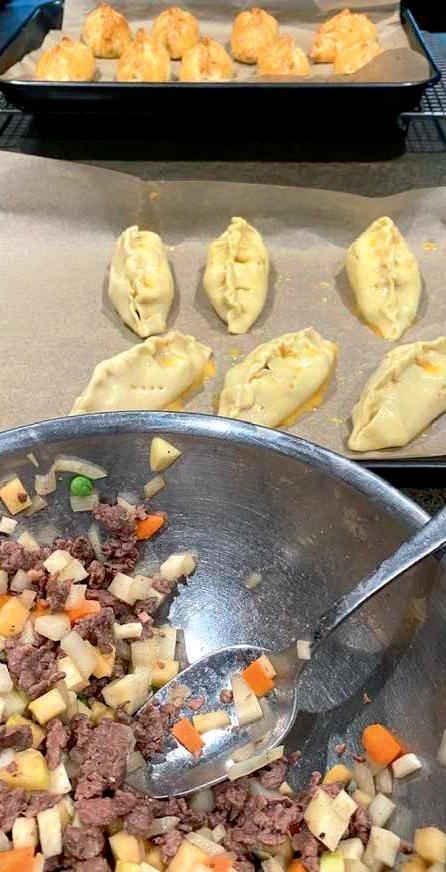
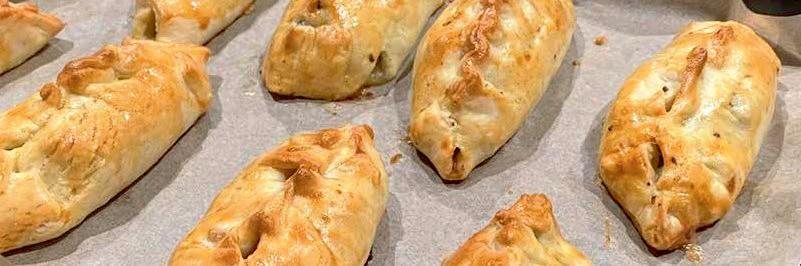
9. Add garlic, rosemary, and thyme and cook until fragrant, about 1 minute. Add Worcestershire sauce and cook 1 minute more.
10. Add vegetable mixture to bowl with duck and stir to combine. Season to taste with salt and pepper and set aside to cool.
11. Once filling has cooled to room temperature, you can assemble the pasties.
12. Flour a clean surface and divide dough into portions. Roll each ball out into a 10mm thick circle, trimming edges to neaten, if needed.
13. Wet the edges of your dough with some water, then spoon cooled duck mixture over a little less than half of
the dough, leaving a 15mm border.
14. Bring the dough together and seal edges by crimping using your fingers and shape them as per the images supplied.
15. Transfer pasty to prepared baking sheet and use a fork to make holes in the top as a vent. Repeat with remaining pasties.
16. Whisk together remaining egg yolk with 2 tablespoons water and brush over the top of each pastie. Bake until golden brown, 30-40 minutes
Best served with a good old fashioned chutney like nan used to make or perhaps a home made tomato sauce.
Ingredients
Magpie Goose Legs (8 slow cooked )
• 8 legs pulled after enough time in the slow cooker that the meat falls from the bone.
Risotto
• 1 cup Arborio rice
• 1 bunch of curley parsley
• 1 White onion
• 1/4cup Parmigiano Reggiano cheese
• 2 Liters Magpie Goose stock from the Leg cook
• 80g butter
Mushrooms
• 600g Gourmet mushroom medley, thinly sliced.
• 1 bunch of Curley leafed Parsley, finely chopped.
• 2 Garlic cloves, finely chopped.
Preparation
Setting up
1. In a frying pan, bring the broth to a boil, add your rice and cook 7 minutes.
2. Once the rice has been pre-cooked, drain it, carefully keeping the broth.
3. Spread the rice on a large tray or plate to stop the cooking.
4. Chop the herbs in preparation using a sharp knife on a quality chopping board.
5. Thinly slice the onion as well as the mushrooms and grate the Parmesan.
6. Shred the Goose legs confit.
Preparation for the risotto
1. In a pan with olive oil, sweat the onion until it is soft and translucid.
2. Follow with the rice and the goose stock and cook until it has absorbed completely.
3. Cover with the broth (the cooking liquid of the rice) and cook until the rice absorbs all the liquid.
4. Repeat the last step until the rice is cooked al dente.
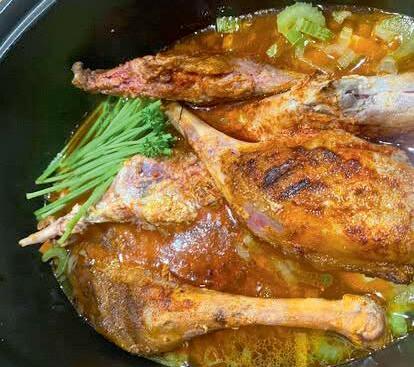
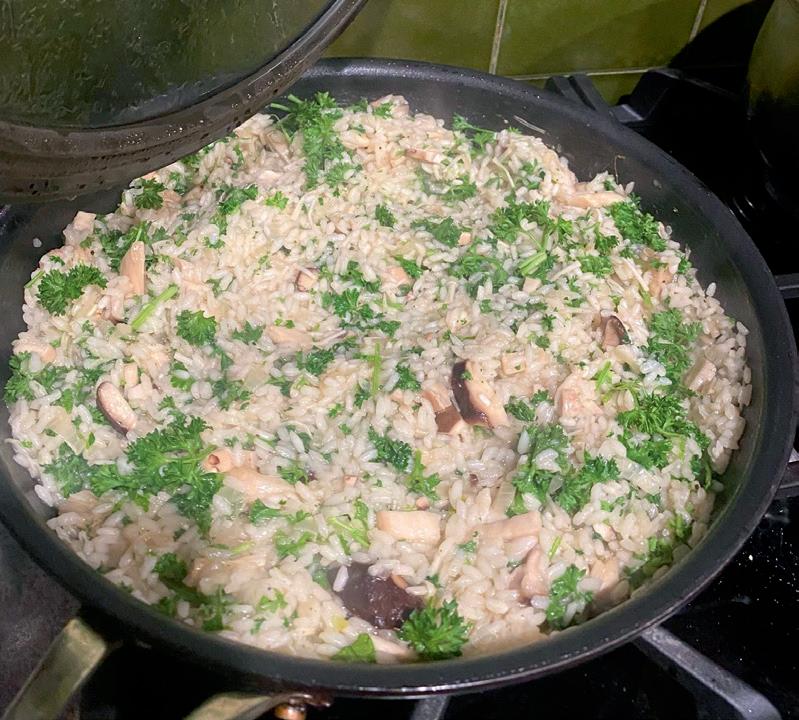
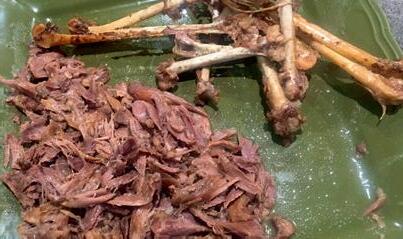
5. While cooking the risotto, in a hot frying pan with olive oil, cook the garlic with the mushrooms for 4-6 minutes until the mushrooms are browned and nicely coloured.
6. Add the goose confit to warm it up. Remove the risotto from the heat and add extra parsley.
Assembly
1. Place the risotto in a bowl and add the parmesan and a little bit of white truffle oil or garlic infused olive oil.
2. In a bowl, put a generous volume of risotto, containing mushrooms and goose breast.
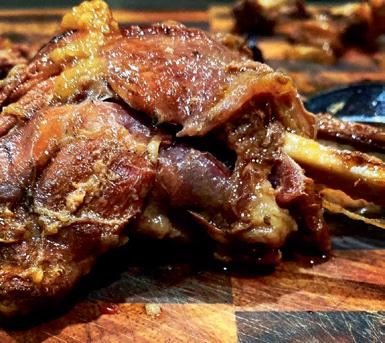
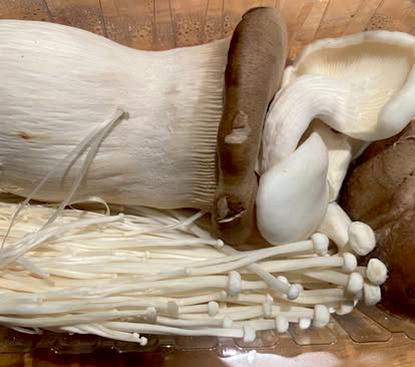

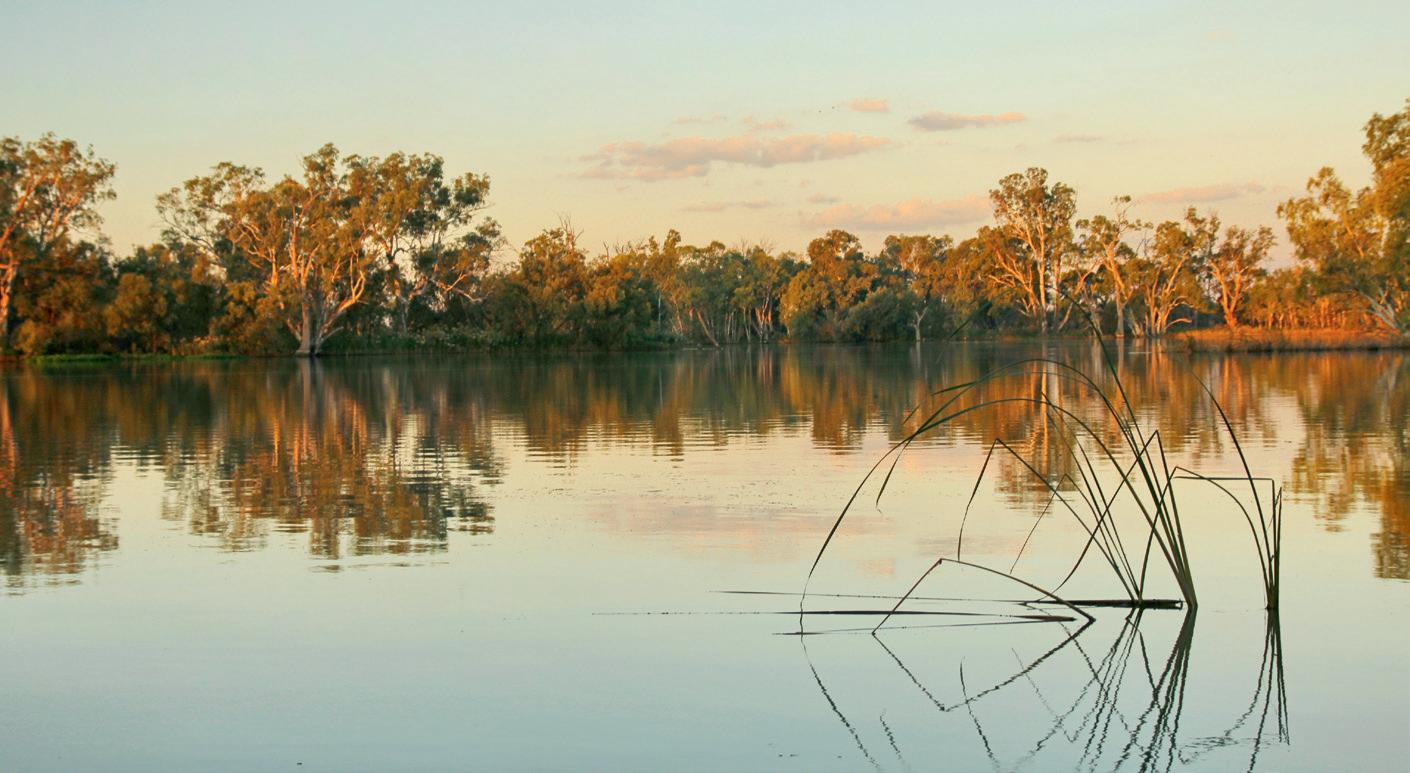
“Recreation”
I’ll be honest. For a long time, I disliked the word “recreation” when it was attached to hunting. It always felt like it cheapened what we do. I even thought we should replace it with something more serious, more descriptive — a phrase like consumptive harvest that showed clearly that this was about food, about provision, about respect for life taken.
But the more I’ve lived with the word, the more I’ve realised that dropping it isn’t the answer. What we need to do is take it back. Because when critics sneer that “recreational hunting” means “killing for fun,” that isn’t a reflection on us. It’s a reflection on them — on how little they understand of the act, the work, and the renewal that comes with it. In trying to belittle us, they’ve only revealed their own disconnection.
The word itself comes from the Latin recreare — to restore, to refresh, to renew. That’s not an insult. That’s the truth. That’s exactly what hunting does.
Anyone who has hunted knows it’s not a straight line to glory. It’s a cycle of work and waiting. The 4am alarm, the mud underfoot, the dog pulling at the lead, the hours of stillness and the empty skies. The grind. Then, maybe, a payoff: the sudden rush of wings, the perfect swing of the barrel, the clean fold of a bird. A rush of adrenaline, the pulse in your throat, the grin you can’t quite suppress. But even that isn’t the end. There’s more work — the pack up, the carry out, the cleaning, the preparation. And then, at last, the real reward: the duck in the pan, the story shared around the fire. A meal earned, not bought. A memory created, not consumed. A renewal of
something far older than any of us.
That is the reality of hunting. Not trivial fun, but a rhythm of labour, patience, skill, respect, and reward. A rhythm that carries the whole spectrum of human feeling — sometimes a quiet reckoning, sometimes a fist-pumping rush — but always responsibility. To use what is taken. To honour it. To care for the place it came from. And this is where critics reveal themselves. They cannot see it. They’ve lost the connection. Once you believe meat should only ever come shrink-wrapped from a supermarket shelf — or that people should not eat meat at all — you’ve already stepped out of the cycle. If that’s their choice, so be it. But it gives them no authority to mock or deny those of us who still choose to take part in the cycle of life and food. Hunting is our way of communing with country. To dismiss it as “just for fun” is not clever. It is ignorant. It shows not our lack of depth, but theirs.
And this is why I’ve changed my mind. I used to want to walk away from the word recreation. Now I want to wear it with pride. Because hunting, conservation, and clay target shooting are all recreational in the truest sense — they restore, they renew, they refresh. Clay target shooting gives enjoyment, the challenge of the target and the discipline of competition. Conservation is often “type two fun” — muddy, sweaty, hard, but deeply rewarding. Hunting holds both of those qualities and adds a fourth dimension: consequence. To hunt is not just to watch, but to participate. It is to step into nature’s rhythm, with all the weight and renewal that comes from taking part.
And maybe that’s what we’ve been missing in this debate. Recreation is not about shallow entertainment. It’s about restoration. About reconnecting with the country, the food, the animals, and with ourselves. It is serious. It is spiritual. And it is deeply human.
I know this job is hard. I know we have critics, knockers, and only a handful of staunch allies at times. But when I sit and write pieces like this, I am reminded why I keep going. Because despite the noise, we know the truth. Those who do it understand — and those who don’t are welcome to learn.
So, next time someone spits the phrase “recreational hunting” like an insult, remember this: it isn’t a stain, it’s a badge. Invite them to see what it really means. Show them the grind, the patience, the respect, and the renewal. Let them see that what comes out of a hunt is much more than just a kill. It is food, connection, and community. And it restores us all.
• What it means: From Latin recreare — “to restore, to refresh, to renew.”
• What critics say: “Just for fun.” Lazy, shallow, ignorant.
• What it really is: Work, patience, consequence, responsibility, renewal.
• The truth in one line: Hunting isn’t about fun alone. It’s about food, country, and connection. Fun is part of it, but never the whole.
Field & Game’s quarterly magazine is distributed to about 15,000 households in March, June, September and December each year. The magazine holds a wealth of information, articles and photos on all aspects of Field and Game Australia’s activities. No other publication can offer the same targeted, repeated exposure to our shooting members! Call us now to secure your spot. Contact our National Office on 03 5799 0960 or email - editor@fieldandgame.com.au