In an age where the rush of daily news often overshadows the deeper narratives that shape our community, the Georgetown View constantly strives to be an eager beacon of positivity and unity. Far more than just a lifestyle magazine, our publishers and staff are committed to creating a means of getting to know what makes our community thrive: its people and their impact.
Since its inception in 2009, the Georgetown View has not only reported on the great stories and people in our city but also taken pride in actively contributing to its enrichment. Through donations exceeding $100,000 in advertising, we have extended our support beyond the printed page to organizations that further amplify the voices of those who work tirelessly to make a difference, ensuring their missions reach as many eyes and hearts as possible.
But we are also good at doing what we do–showcasing prominent local businesses and community agencies and initiatives like ROCK, Georgetown ISD students, FFA, 4-H, and many more on our covers and in multi-page features. These not only celebrate their contributions but also inspire readers to personally engage and participate in the missions of these community pillars.
In every story, from first responders and veterans to the latest city events and programs, our purpose is to foster a sense of pride and connection. In addition to these, every November our "Giving Thanks and Giving Back" issue shines a spotlight on local nonprofits and philanthropic efforts, reminding us of the power of community support and the importance of gratitude.
In short, we believe the Georgetown View is more than a magazine; it is a vital part of the community’s fabric that spotlights advocacy, education, and celebration. We hope you will agree it stands as a testament to what we can all achieve when we choose to focus on the positive and the possible.
PUBLISHER
Cathy Payne • cathy@georgetownview.com
SENIOR WRITERS / CONTENT EDITORS
Ann Marie Kennon • Charlotte Kovalchuk
CONTRIBUTING WRITERS
Linda A. Thornton • Steve Fought
CONTENT MANAGER
Camy Reynolds
GRAPHIC DESIGN
Sandra Evans • Ann Marie Kennon
BUSINESS DEVELOPMENT
Jesse Payne
WEBMASTER
Ann Marie Kennon
ADVERTISING
512.746.4545 info@georgetownview.com
Georgetown View is a Fidelis Publishing Group, LLC publication and a product of AdvocateNewsTX Newspaper.
Mail may be sent to: Georgetown View P.O. Box 203 • Jarrell, TX 76537
SCAN THE CODE FOR E-SUBSCRIPTION AND NEVER MISS AN ISSUE.
FOLLOW US ON FACEBOOK FOR FOLLOW-UPS AND OUTTAKES GeorgetownViewMagazine
Amplify Your Reach!
In today's dynamic market, visibility is key to success. We invite you to explore the power of diversification by pre diverse range of magazines. Each publication in our portfolio offers a unique audience, ensuring your message resonates with a wider, yet targeted demographic. Seize this opportunity to broaden your reach, enhance brand recognition, and connect with potential customers in new, impactful ways. Let's collaborate to make your brand a household name.
CONTACT US • 512-746-4545 INFO@GEORGETOWNVIEW.COM
A SEASON TO REFRESH
March carries a quiet shift. The days stretch a little longer, the light lingers, and what felt dormant just weeks ago begins to stir. This issue leans into that transition—offering thoughtful stories and practical inspiration to help you step into spring with clarity and intention.
Inside, you’ll find fresh perspectives on health and wellness as routines evolve with the season, ideas for making the most of outdoor living as temperatures begin to warm, and home and garden features designed to help you prepare for the months ahead. Whether you’re fine-tuning habits, mapping out projects, or simply gathering inspiration, this issue is meant to meet you in the in-between—when winter loosens its grip and something new begins to take shape.
Here’s to moving forward with renewed energy, steady purpose, and a sense of anticipation for what’s just ahead.
MARCH FEATURES
COLUMNS
Meet our Pros — professionals, business owners, and subject matter experts from leading local companies who share their knowledge and expertise to bring readers practical advice, how-to tips, best practices, and current and emerging trends. To learn more about becoming a Featured Professional, contact info@georgetownview.com or 512-746-4545.
Aqua-Tots Swim School Round Rock
The largest international provider of year-round, indoor swim instruction dedicated to teaching water safety through our proven curriculum.
Aqua-Tots.com/Round-Rock 512-336-8687
Doleva Elite Tree
Certified Arborists to care for your trees! Our large equipment makes jobs efficient and economic, and prevents damage to lawn or property. Serving Georgetown since 2009.
DolevaEliteTree.com 512-943-8733
DTC Air Conditioning
DTC provides advanced HVAC solutions with Carrier® factory-authorized service, expert technicians, and a commitment to innovation, training, and 100% customer satisfaction.
DTCTexas.com 512-887-5091
Hall's Roofing & Sheet Metal, LLC
Family owned since 1939. Roofing professionals specializing in full-service roof repair, installation, and replacement.
HallsRoofing.net 512-864-7579
Inner Space Cavern
One of the best preserved caves in Texas, Inner Space Cavern has hosted hundreds of thousands of visitors since 1966 and offers a variety of activities year round.
InnerSpaceCavern.com 4200 S IH-35 Georgetown
Keller Commercial & Home Services
Experts specializing in maintenance, enhancement, and design. Armed with cutting-edge tools and programs — driving rapid growth in architectural landscaping.
KellerServicesTX.com 512-930-4769
Sky & Co. Jewelry
Silk + Stone Acupuncture
Personalized holistic treatments blending traditional Chinese medicine and modern insight, addressing pain, hormones, digestion, fertility, and stress to restore balance.
SilkAndStoneAcupuncture.com (512) 818-4949
Handcrafted elegance meets modern meaning. Sky & Co Jewelry creates minimalist pieces with lasting impact—designed to celebrate individuality, intention, and the stories you wear.
SkyCoJewelry.com 512-254-9337
Moore Liberty Buildings Chad & Amanda Moore Thousands of structures built since 2015.
MooreLibertyBuildings.com 512-548-6474
Prime Wellness and Longevity
Personalized hormone therapy, weight loss, and wellness plans to help clients optimize health, boost energy, and feel their absolute best.
PrimeWellnessand Longevity.com 512-240-4456
The Wesleyan
Providing a new, bountiful experience of aging full of purpose, passion, and possibility for more than 50 years.
TheWesleyan.org
Wild Birds Unlimited
Expert advice, quality seed, and feeders. Let us provide joy to you and your backyard birds. We bring people and nature together and do it with excellence.
GeorgetownTX.wbu.com (512) 763-1081
The Return of the Hill Country Estate
SPACE, PRIVACY, AND PANORAMIC VIEWS DEFINE THE NEXT CHAPTER AT THE CANYONS AT HCH RANCH
BY GRAND ENDEAVOR HOMES
In a housing market defined by tight lots and tall rooftops, The Canyons at HCH Ranch is doing something quietly countercultural: it is offering more space.
Phase II at The Canyons builds on the original vision introduced when Grand Endeavor Homes first broke ground in this west Georgetown enclave—expansive homesites carved into rolling terrain, with panoramic Hill Country views that stretch far beyond a backyard fence line. But if Phase I proved the concept, Phase II refines it.
Who Is the Phase II Buyer?
Buyers drawn to Phase II are not necessarily chasing amenities. Grand Endeavor’s typical Phase II homeowner is looking for acreage, architectural freedom, and permanence. These are often established professionals, business owners, or second-chapter buyers who have already experienced suburban master-planned living and are ready for something quieter and more deliberate.
Grand Endeavor Homes president, Justin Jacobs, says, “Our typical clients seek to secure their own piece of the Hill Country that offers views, space, and privacy in a location that provides convenient access to Austin’s Central Business District, Austin-Bergstrom International Airport, shopping, healthcare, and highly sought-after schools. This is packaged with the flexibility of designing a custom home tailored to each family’s specific wants and needs.”
Unlike high-density developments closer to Austin, The Canyons attracts buyers who are less concerned about walkability and more focused on long-term lifestyle. These are homeowners building for the next 20 years—not the next market cycle.
Lessons from Phase I
Every development reveals its personality over time. Phase I demonstrated buyers weren’t just responding to square footage. They were responding to setting. The topography, elevation changes, preserved trees, and layered views became as important as the floor plan itself.
Rather than rushing construction, many buyers have invested significant time in designing homes tailored precisely to their lot’s orientation and view corridors. That feedback shaped how Phase II was approached.
What’s Changed in Phase II
Grand Endeavor Homes is known for high-end craftsmanship and architectural precision, but even established builders evolve with each project and Phase II reflects refinements informed by buyer behavior and land response. Homesites have been positioned to maximize privacy and preserve view lines so design conversations now begin earlier in the lot selection process, allowing architecture to respond more organically to terrain.
Ann Marie Kennon
Justin says, “Grand Endeavor Homes leaned forward and removed many of the topographic challenges in Phase II from the equation for our clients. Select Phase II lots have been prepared for construction through extensive engineering and sitework, as required. Clients now have the ability to easily visualize site-specific characteristics such as house placement and orientation along with the building elevation and footprint.” The company also continues to adapt to broader market dynamics, e.g., material costs, labor timelines, and evolving buyer expectations. Luxury today isn’t just about finishes; it’s about intentionality.
Are Buyers Building Quickly?
In many developments, lot purchases can signal speculation. At The Canyons, that hasn’t been the prevailing pattern. Buyers there tend to move forward with purpose. While some are thoughtful about timing and watch interest rates or market trends, most are purchasing with the intention to build, not hold. Justin adds, “Our typical client represents a seasoned buyer with a firm understanding of the inverse relationship between interest rates and costs. With more interest rate cuts on the horizon, demand will increase and price will follow as it has in previous cycles. So, buyer strategy is centered on the ability to manipulate rates in the future while taking advantage of a lower cost basis at the commencement of the project.”
Responding to Price Volatility
Luxury construction has not been immune to economic shifts over the past several years. Material pricing, labor availability, and land valuation have all influenced home costs across Central Texas and Phase II reflects those broader realities. “Grand Endeavor Homes is uniquely positioned and structured in the custom home building arena," Justin says. "On average, we produce at a higher threshold when compared to industry norms for a custom builder while still delivering the full custom experience for our clients. Purchasing material and sourcing labor in greater volume allows us to pass savings along to our customers.” Yet even with pricing adjustments, demand for acreage living remains strong. In a region where many new communities are trending toward higher density, 1-acre-plus homesites with unobstructed Hill Country views are a limited category.
What Makes The Canyons Difficult to Replicate?
Land like this is finite. The Canyons sits in one of Georgetown’s most elevated and naturally contoured areas. The topography, canyon views, tree cover, and sweeping sightlines cannot be engineered into flat ground elsewhere. So while Central Texas continues to grow, developments offering this combination of acreage, elevation, and proximity to Georgetown’s historic square are increasingly rare. Justin explains, “Two aspects of The Canyons that consistently stand out to people who make their way to our community are the quality of the views along with accessibility. Many comment that they were unaware that Georgetown offers true Hill Country views while being pleasantly surprised by the convenient access to the major north-south arterials that feed into Austin.”
Unlike amenity-driven neighborhoods that can be recreated through infrastructure investment, The Canyons’ defining feature is the land itself. The views cannot be duplicated, or manufactured and the privacy cannot be retrofitted into a half-acre lot. In that sense, Phase II isn’t simply an expansion. It is a continuation of something increasingly uncommon in Central Texas real estate: the estate mindset.
As Georgetown grows north and east, westward acreage like this becomes more significant. The Canyons at HCH Ranch reflects a particular vision of luxury and it is not rooted in proximity to urban density, but in thoughtful distance from it.
Courage, Character, and the 8-Second Ride
On Saturday, March 21 at 7pm, the Superbronc Roughstock Rodeo Challenge rides into Harvest Ranch Arena in Liberty Hill. This Junior National Finals Rodeo-sanctioned event focuses exclusively on roughstock competition—Saddle Bronc and Bareback Riding—where young athletes compete for a chance to advance to the Junior NFR Championships in Las Vegas during December’s National Finals Rodeo.
Created about a decade ago, the Junior NFR was designed to help develop the next generation of professional rodeo athletes. Many of today’s top Professional Rodeo Cowboys Association competitors began their careers in this very system, including bareback riders Bradlee Miller of Huntsville and Gavin French of Fredericksburg, who now compete at the highest levels of the sport.
Now, that opportunity is riding straight through Central Texas.
Why It Matters Here at Home
Rodeo remains strong nationally, but roughstock competitors are becoming increasingly rare. Recently, leaders within the Professional Rodeo Cowboys Association shared that only about 75 active bareback riders are competing across more than 800 sanctioned PRCA rodeos. For a sport built on grit and courage, that number is a reminder that the next generation needs places to train, compete, and grow.
In parts of Central Texas, high school rodeo programs have faded over the past decade, and consistent training opportunities are limited. Events like this help rebuild that pathway.
Mike McCloskey, owner of Chisholm Trail Productions, saw that need and stepped in. After connecting with Las Vegas Events, parent company of the Junior NFR, he committed to hosting this local qualifier and expanding opportunities for young riders.
The morning of the event, competitors will participate in a professional rodeo school, receiving instruction and practice rides under the guidance of
experienced cowboys, including Liberty Hill’s own Cole Hollen and Saddle Bronc rider Isaac Diaz of Desdemona. Mike is also developing a training arena on his Rodeo Ranch in Gatesville to give young athletes structured opportunities to develop not only skill, but courage, discipline, and character.
It’s more than an event. It’s an investment in the future of rodeo—and in the young people who carry it forward.
How You Can Be Part of It
Whether you come to cheer on local riders, enter a child in Mutton Busting, or simply experience the energy of an 8-second ride under arena lights, the Superbronc Roughstock Rodeo Challenge offers something increasingly meaningful in fast-growing Central Texas: a way to celebrate tradition while helping shape its future.
A special word of appreciation goes to the many sponsors who help make the event possible, including presenting sponsor Mac Haik Ford Lincoln Georgetown, along with Sport Clips, Firefly Aerospace, and the many community leaders and businesses who continue to invest in the future of rodeo.
HARVEST RANCH ARENA
8355 RR 1869, LIBERTY HILL
Gates open at 6pm. The evening begins with crowd-favorite Mutton Busting for ages 3-7 (sign-ups start at 6:15pm), followed by roughstock competition and special features including a calf scramble and the Fort Hood First Mounted Cavalry Unit.
Adults $20 • 11 and under $10 $49.95 for a family four-pack. Military families receive half-price admission.
A Reason to Remember
Traveling Holocaust Exhibit Brings Jewish Families’ Stories to Georgetown
Six million Jews, along with millions of other victims—including people with disabilities, homosexuals, political dissidents, and Black citizens— were murdered during the Holocaust that devastated communities throughout Nazi-occupied Europe. Numbers, however, don’t reveal the personal stories of countless individuals whose lives were drastically changed because of this historical event. That’s why each year, the Georgetown Public Library and local nonprofit Congregation Havurah Shalom of Sun City present a public program commemorating Holocaust Remembrance Day.
This year’s program, A Reason to Remember, narrows the lens from millions to five families in one small German village from 1933 to 1942. “There are many, many accounts of genocide during the Holocaust and many more are lost,” says Hutto librarian Angela Hartman, who has attended many Congregation Havurah Shalom programs focused on Holocaust education.
The program begins Sunday, April 12, from 2 to 4 p.m. in the Hewlett Room at the Georgetown Public Library with featured speaker Deborah Roth-Howe, the daughter of Holocaust refugees who escaped Germany and rebuilt their lives in Chicago. In her talk, she will recount the history of five Jewish families who lived in Roth (pronounced "Rōt"), Germany, a rural village where Jews had been part of community life for generations. They were neighbors, friends, and business owners. The men in these families had served in the German army during World War I.
A Reason to Remember’s 28-panel exhibit and accompanying eight-minute video traces the families’ lives from relative stability in 1933 through
Every single story is significant.
A Reason to Remember humanizes this historical event by introducing the individual people in these families.”
the steady tightening of Nazi persecution. Visitors will see how discrimination moved from rhetoric to policy, from social exclusion to systematic destruction.
What happened in Roth was a microcosm of what unfolded across Europe, and serves as a reminder of how easily history could repeat itself.
The goal of the exhibit, Congregation Havurah Shalom member Lenora Hausman says, is “to show the effects of prejudice and racial hate and the need to speak out against injustices. We need to remember history could repeat itself.” Angela agrees. “This exhibit not only explains the history of what happened to these specific families but is a reminder to students
and adults of what can happen when hate is not challenged and cruelty to people considered different or inferior is met with apathy.”
Call To Remember
The Reason to Remember exhibit is free and open to the public, no registration required. Following the talk, the exhibit will remain on display at the library from April 13 through May 21 during regular library hours. Docent-led tours are offered daily for youth groups, private and homeschool students, church groups, and community organizations. The material is recommended for grade levels 6 and up.
BRINGING THE STORY TO GEORGETOWN
PHOTOS BY DEBORAH ROTH-HOWE
HISTORICAL CONTEXT
GERMANY 1933 - 1942
1933 - Hitler appointed Chancellor
1935 - Nuremberg Laws strip Jews of their citizenship
1938 - Kristallnacht • Coordinated Nazi attacks destroying Jewish homes, synagogues, businesses, and lives
1941 - Deportations begin
1942 - Mass deportations and extermination camps begin systematically murdering millions
To schedule a tour or learn more about A Reason to Remember, scan the code to visit holocaustexhibitgeorgetown.com.
THE WATER RECEDED THE WORK CONTINUES
Last July, devastating floods swept through parts of Central Texas. For many in the Bertram community, the destruction felt personal—because it was.
C.R. Williamson, great-grandson of “Three-legged Willie” Williamson, and his wife Gayle are familiar, well-loved faces. When floodwaters rose that weekend, they, their daughter Donna and her husband Randy, found themselves trapped inside the home that held decades of family life.
As water climbed nearly to the ceiling, the family made a split-second decision that would save their lives. They climbed onto the roof and waited for rescue. First responders later cut them out and evacuated them by boat, an ordeal that still feels surreal.
When the water finally receded, nearly everything was gone. Vehicles, clothing, furniture, and family keepsakes were lost. The house itself was left nearly unrecognizable— saturated and unsafe—requiring a complete gut down to the framing. Recovery would not be quick or simple.
After Headlines Fade
That reality is what L4 Cares founder Kendra Cofer encountered when she first met the Williamsons. She visited flood-affected areas to observe recovery efforts already underway. When she met C.R. and Gayle and heard their story, the magnitude of what they were facing was immediately clear.
“My heart went out to them,” Kendra said. “I didn’t know what the plan was going to be yet, but I knew we needed to stay with them.”
Like many families impacted by the flood, the Williamsons stared at uncertain future as insurance would not cover the full rebuild.
A Chain of Yeses
Kendra began making calls. One of those calls was to Tracy Hayes with CWS Corporate Housing. “Anytime there’s a need in the community, we feel very privileged to help,” Tracy said. “And because we have access to furniture and housewares, we’ve been able to support people who are trying to get a fresh start.”
Through partnerships with nonprofits serving veterans, homeless youth, and many others, Tracy has seen how dignity is restored when someone has a place they’re proud to call
home. “When Kendra called about the Williamsons, it was a no-brainer,” she said. “They’re just such a neat couple.”
"Community" Becomes Personal
Tracy mentioned the situation to her son-in-law, Justin Jacobs, owner of Grand Endeavor Homes, and asked if he would be willing to visit the property. No decisions or promises were made in advance, but the group set out to understand the scope of what had been lost.
Standing inside the stripped shell of the house, Justin recognized C.R. from years earlier—a reminder of how closely connected the community truly is. “This wasn’t just a project,” Kendra said. “This was someone we knew.” Justin made it clear this was not a business venture. After walking the home and listening to the family’s story, he made a quiet decision that changed the course of their recovery.
Six months later, the Williamsons’ home has been completely rebuilt from the studs up. Walls, systems, finishes, and furnishings have been replaced. What was once a hollowed-out structure is now a place of warmth again.
But Justin is quick to redirect attention away from himself. “This isn’t about me,” he said. “It’s about helping your neighbor—and remembering there are still people who haven’t recovered yet.” Tracy agrees and hopes the story serves a larger purpose. “This isn’t to toot anyone’s horn,” she said. “But maybe it inspires one builder, or framer, or window company to step in and . We can all make a difference.”
Ann Marie Kennon
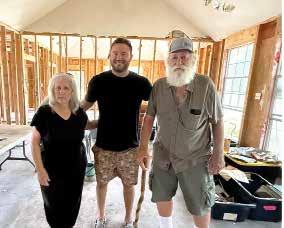
Justin Jacobs (center) with Gayle and C.R. Williamson in their home prior to the start of construction.
The Work Continues
While the Williamsons’ story is one of renewal, many families are still waiting. In places like Sandy Creek, residents remain displaced months later, living in RVs while navigating permits, codes, and the long process of rebuilding. “The work is still going on,” Tracy said. “It’s just not in the news anymore.”
Through grants, donations, and partnerships, L4 Cares continues working behind the scenes—coordinating donated flooring, rebuilding driveways, distributing gift cards, and connecting families with resources. They saw the impact of that presence when furniture was delivered to the Williamson home. “The transformation wasn’t just physical,” Kendra said. “Their eyes were shining. They were laughing, telling stories about family gatherings. You could see hope return.”
For the Williamsons, Justin, Kendra, and Tracy, the hope is simple: that this single home might serve as a reminder to stay aware, look around, and help when we can.
L-R: Kendra Cofer, Ronnie Williamson, Gayle and C.R. Williamson, Justin Jacobs, Tracy and Scott Hayes
THE BACKYARD NATURE COMEBACK
Turning Your Yard Into a Micro-Habitat
How simple, low-maintenance choices can invite butterflies, hummingbirds, songbirds, native bees, and even owls back into your outdoor space.
There’s a quiet movement happening in backyards across Central Texas—one built not on elaborate landscaping or hours of weekly upkeep, but on small, intentional choices that bring nature closer to home. Residents are discovering that with just a few thoughtful additions, an ordinary yard can become a micro-habitat: a welcoming refuge for the pollinators, birds, and wildlife that once defined the Texas landscape.
And the best part? You don’t need a green thumb or a large property to make it happen. According to local master naturalists, even a handful of native plants or a small patch of habitat can help restore ecological balance in ways that benefit both the environment and your own enjoyment of your outdoor space.
WHY MICRO-HABITATS MATTER
Many homeowners assume their yard is too small to make an impact— but that’s not how nature works. Pollinators like butterflies and native bees navigate using clusters of habitat spread across neighborhoods. Songbirds rely on pockets of shelter and food sources scattered from yard to yard. Even owls are drawn to areas where insects, small mammals, and safe nesting spots coexist.
“When one homeowner makes a simple change, it becomes part of a larger patchwork that supports wildlife across an entire community,” says one local master naturalist who has helped residents transform their landscapes. “You don’t need acres. You just need intention.”
THE POWER OF NATIVE PLANTS
The heart of any micro-habitat is native vegetation. These plants evolved with Texas wildlife, which means they offer the exact nutrition and shelter local species need—something non-native landscaping simply can’t replicate.
A few standout native plants that thrive in Williamson County include:
Milkweed for monarch butterflies
Turk’s cap for hummingbirds
Flame acanthus for bees and butterflies
Cedar elm and live oak for songbirds seeking shade and shelter
Golden groundsel and black-eyed Susan for color and pollinators
The beauty of these plants isn’t just ecological—it’s practical. Native species are drought-tolerant, heat-adapted, and require far less watering and maintenance than traditional landscaping plants.
BRINGING WILDLIFE IN WITHOUT THE WORK
One of the biggest misconceptions about wildlife-friendly yards is that they are time-consuming. In reality, micro-habitats are often lower maintenance than manicured lawns.
Here are some naturalist-approved methods that add life without adding labor.
Replace small lawn areas with native ground cover to reduce mowing.
Add a shallow water source, such as a birdbath or small bubbler fountain. Running water dramatically increases visits from birds.
Leave a small brush pile in a discreet corner—it becomes instant shelter for songbirds, lizards, and beneficial insects.
Install a simple owl box to encourage barn owls, which naturally control rodent populations.
Use mulch generously, which helps soil retain moisture and reduces weeding. You can start with just one or two elements and expand over time as your yard becomes more alive.
BUTTERFLIES, HUMMINGBIRDS & BEYOND
Butterflies and hummingbirds are often the first visitors to appear in a micro-habitat because they are drawn to bright blooms and nectar-rich plants. Monarchs pass through Georgetown along their migration route, making milkweed a powerful addition for supporting their journey.
Native bees—unlike honeybees—are gentle, solitary pollinators that rarely sting. They thrive in yards with flowering natives and small patches of bare soil.
Songbirds and warblers show up when plants provide berries, cover, and insects. Even owls will make a home nearby if conditions feel right.
“You’ll be amazed at how quickly wildlife responds,” says another master naturalist. “Sometimes within days of adding the right plant or water source, you’ll start seeing new species you’ve never noticed before.”
10 Easy Ways to Start a Micro-Habitat
A micro-habitat isn’t just good for the environment—it makes your outdoor space more vibrant and enjoyable. Morning coffee becomes a front-row seat to hummingbirds darting between blossoms. Dusk brings the soft hooting of an owl settling in. Butterflies drift through the yard on warm afternoons. Every visit becomes a reminder that nature is still all around us, waiting for an invitation.
And in a community like Georgetown, where the landscape is changing quickly, these small refuges matter more than ever.
“This is something anyone can do,” the naturalists emphasize. “Start small. Watch your yard come alive. You’ll be surprised how much joy it brings.”
High Impact • Low Maintenance Wildlife Approved
Plant three natives. Start small with proven Central Texas favorites like Turk’s cap, milkweed, or flame acanthus.
Add a shallow water source
A simple birdbath or shallow dish attracts birds, butterflies, and bees within days.
Create a “no-mow corner.” Let one small section of lawn grow naturally to give insects and pollinators a safe haven.
Install a hummingbird-friendly bloom. Red, tubular flowers such as salvia or Turk’s cap are irresistible to hummingbirds.
Leave a few leaves. A thin layer of leaf litter provides habitat for butterflies, fireflies, and ground-dwelling insects.
Add a native tree or shrub. Cedar elm, kidneywood, and evergreen sumac offer food, shade, and nesting cover.
Keep a patch of bare soil. Many native bees nest underground and need small, undisturbed spots of soil.
Create a discreet brush pile. A small pile of sticks or trimmings becomes instant shelter for songbirds and lizards.
Place a simple owl box. Barn owls help control rodents naturally—no chemicals needed.
Choose mulch over manicuring. Mulch protects the soil, retains water, and reduces your weeding workload.
Your Brain at the Start of Something New
The Cognitive Fresh-Start Effect
The surprising science behind why natural transition points—like the arrival of spring, or even a new week—makes it easier to think clearly, reset routines, and build momentum.
There’s something about a fresh beginning that feels different. A new calendar page, a shift in season, or even a subtle change in routine can make familiar patterns feel lighter—and possibility feel closer.
For years, people have talked about this sensation as a “New Year mindset.” But neuroscientists now know it isn’t limited to January—and it isn’t just a feeling.
It’s called the Fresh-Start Effect: a cognitive shift that occurs when we cross a meaningful time marker. A new month, a birthday, a move, even the start of a workweek can create psychological distance between our past selves and our current goals. While the turn of the calendar year is one of the strongest examples, the brain responds to fresh starts whenever it senses a clean edge between “before” and “now.”
Why Fresh Starts Work Like a Reset Button
Researchers have found our brains are naturally wired to embrace change at the start of a new cycle. Novelty sharpens focus, increases motivation, and improves self-regulation. It’s as if our minds lean forward, ready to begin again.
Environmental cues also play a role. Longer days, warmer temperatures, and renewed social rhythms create natural moments for reflection. This inward pause opens the door for clearer thinking and healthier decision-making.
Taking Advantage of the Fresh-Start Effect
The momentum that comes with a fresh start is powerful—but like all momentum, it can fade unless we reinforce it. You don't need a brand-new year to extend your mental "reset."
Try these simple strategies:
�Seek morning light. Bright natural light early in the day signals alertness and improves mood.
�Add something new. Join a class, try a new walking trail, or explore a hobby—novelty rewires the brain.
�Declutter one small space. A drawer, a shelf, or your car console. The mental clarity that follows is noticeable.
�Set micro-goals instead of massive ones. The brain builds confidence through easy wins.
Fresh starts aren't just symbolic—they are neurological. When we understand how the brain uses these fresh starts to re-orient and refocus, we can intentionally create them, rather than waiting for the calendar to do the work for us.
BEYOND THE RESET: What New Beginnings do to the Rest of Your Mind
What’s especially interesting about fresh starts is that they don't just make us want to change—it actually changes how we see ourselves. Psychologists call this temporal self-appraisal, the idea that we mentally separate our “past self” from our “current self” when a major time marker arrives.
That distance makes change feel safer. Suddenly, the choices you made in December feel like they belong to a version of you who no longer exists. This subtle identity upgrade is one reason people feel bolder, more optimistic, and more willing to make adjustments that felt overwhelming a few months earlier.
Fresh starts also reduce cognitive clutter in ways we rarely notice. After the frenzy of the holidays—shopping lists, travel plans, social overload—we naturally enter a period of lowered sensory and mental load. In other words, our brains finally have bandwidth again. With fewer inputs competing for attention, the executive parts of the brain (the planning, organizing, and decision-making centers) regain their strength. That restored clarity often feels like “motivation,” but scientifically, it’s more like finally getting access to RAM that’s been tied up for weeks.
There’s even a physiological rhythm at play. Changes in temperature, light exposure, and daily structure help stabilize circadian patterns and mood-regulating hormones. This is why a simple walk, a quieter morning, or a simplified routine can suddenly feel grounding again.
Perhaps the most overlooked aspect of the Fresh-Start Effect is what neuroscientists call habit architecture—the scaffolding around daily life. Fresh starts are rare moments when the brain is willing to question its defaults:
� Do I still want to start the day with my phone?
� Is this the healthiest rhythm for my family?
� What could I swap, streamline, or simplify?
These questions matter because new habits don’t form from willpower—they form when the brain is open to renegotiating the contract of everyday life.
In the end, the real gift of a fresh start isn’t a single choice or a date on the calendar—it’s the opportunity to think differently about who you are becoming. And leaning into that shift, even in small ways, can shape not just the year ahead, but the person you grow into along the way.
January gets the credit because it shows up with a clean calendar and a lot of marketing but springtime does some real work as Mother Nature reveals her own new self to us, even if she is a little muddy at first. It’s where habits either settle in—or get revised without the drama. And fortunately for us, the brain doesn’t care what month it is. It just needs a reason to begin again.
Prime Wellness and Longevity
Personalized hormone therapy, weight loss, and wellness plans to help clients optimize health, boost energy, and feel their absolute best.
PrimeWellnessandLongevity.com 512.240.4456
Understanding Platelet-Rich Plasma Therapy
Platelet-Rich Plasma, commonly known as PRP, is part of a growing field called regenerative medicine — treatments designed to support the body’s natural healing processes rather than simply masking symptoms.
PRP begins with a routine blood draw. The sample is placed in a specialized centrifuge that concentrates platelets and the growth factors they contain. These platelets carry biologically active proteins that help regulate inflammation, stimulate tissue repair, and promote collagen and blood vessel formation. When injected into an injured joint, tendon, skin, or scalp, PRP signals the body to amplify its own healing response.
Today, PRP is used in several areas of medicine. In orthopedics and sports care, it is commonly used for tendon injuries such as tennis elbow or Achilles tendinopathy, ligament sprains, mild to moderate osteoarthritis, muscle strains, and chronic overuse injuries. In aesthetics, PRP is often paired with microneedling for facial rejuvenation, acne scars, fine lines, and improved skin texture. It is also used in hair restoration to support thinning hair in both men and women. In select cases, PRP may be incorporated into broader men’s wellness treatment plans.
Unlike steroid injections or anti-inflammatory medications, which primarily reduce pain, PRP aims to stimulate tissue repair at the cellular level. Surgery repairs or replaces damaged tissue through a more invasive approach. PRP, by contrast, is minimally invasive and uses a patient’s own blood, making it well tolerated and appealing to those seeking restorative options.
PRP is not a cure-all. It tends to work best in patients with mild to moderate joint or tendon injuries, early osteoarthritis, or hair thinning where follicles remain active. It may be less effective in advanced arthritis or in individuals with certain blood disorders or active infections. Overall health, age, and how long an injury has been present can all influence results.
A typical PRP appointment lasts about 45 to 75 minutes. After confirming candidacy, blood is drawn and processed. The concentrated PRP is then injected into the targeted area — often with ultrasound guidance for precision. Mild soreness for a few days is common and usually reflects the body’s healing response.
Results vary by condition. Joint and tendon patients often notice improvement within four to six weeks, with
continued gains over several months. Hair restoration patients may see reduced shedding within two months and visible thickening by three to six months. Some individuals benefit from a series of treatments spaced several weeks apart.
As interest in PRP grows, choosing the right provider matters. Patients should look for experienced medical professionals who tailor preparation and technique to the diagnosis rather than using a one-size-fits-all approach. At Prime Wellness & Longevity, PRP therapy is delivered with that precision. The clinic uses advanced dual-spin technology to optimize platelet preparation and integrates PRP within a broader wellness strategy that addresses inflammation, lifestyle, and overall health. For those exploring regenerative options, Prime Wellness & Longevity offers a medically guided setting to determine whether PRP is the right fit.
For more information about PRP locally, visit: PrimeWellnessandLongevity.com 512-240-4456
Resetting Your Health at Any Age
THE MICRO-HABITS METHOD
by Camy Reynolds and Ann Marie Kennon
Why tiny changes, done consistently, are the most powerful way to transform your health in the new year.
Anew year has a way of making us feel like anything is possible. We buy fresh planners, reorganize closets, and promise ourselves we’ll finally commit to the big goals we put off last year. But what if the key to better health isn’t found in sweeping resolutions at all? What if the real secret is tucked into the smallest moments of your day?
Health researchers are increasingly turning their attention to micro-habits—tiny, repeatable actions that require almost no effort but, over time, create measurable improvements in energy, mood, and overall well-being. Unlike traditional resolutions, micro-habits don’t depend on willpower. They simply attach themselves to routines you already have.
A micro-habit might be as simple as drinking a glass of water before you pour your morning coffee. Or standing up and stretching each time you finish a phone call. Or taking 30 seconds to breathe deeply before you start the car. The goal isn’t dramatic change. It’s quiet, steady progress.
WHY MICRO-HABITS WORK
Our brains love patterns, but they are actually wired to be lazy. In more positive terms, this simply means they work in ways that conserve as much energy as possible to ensure sufficient resources to achieve big or critical goals. Big lifestyle changes can feel exciting at first, but they often fail because they demand too much too soon. Micro-habits sneak under the radar of resistance. They take seconds to complete, which means they’re easier to sustain—and much easier to build upon.
When done consistently, these tiny choices stack up, creating momentum toward bigger transformations. A daily one-minute walk often becomes five minutes, which becomes ten. A single stretch becomes a mobility routine. A nightly deep breath becomes a calming wind-down ritual.
WHERE TO START
Try anchoring micro-habits to things you already do:
While brushing your teeth, stand on one leg to improve balance.
When heating your morning oatmeal, do two simple shoulder rolls.
After you take your evening vitamins, drink a second glass of water.
At every red light, relax your jaw and drop your shoulders.
It doesn’t matter which habits you choose. What matters is consistency.
Instead of making resolutions that may already be fading, give yourself the gift of small, steady wins. Those tiny steps may not look dramatic on day one—but by day 100, you’ll feel the difference in every part of your life.
A LIFETIME OF GROWTH
There’s nothing wrong with turning over a new leaf now and then. Fresh starts feel hopeful. They remind us that we’re allowed to change our minds—and our habits—at any point in life. But lasting change doesn’t come from the occasional reset. It comes from quietly reshaping the lifestyle that runs on autopilot every single day.
Most of us don’t make choices moment by moment. We live by instinct, repetition, and routine. And as we age, those routines often shift without us noticing. We move less. We sit more. Aches and stiffness make us hesitant to be active. Portions slowly grow, even as our energy needs quietly shrink. Over time, the math stops working in our favor.
That’s why there’s no amount of intense exercise that can undo habits formed over years. You can’t out-train a lifestyle. If an extra 20 pounds arrived gradually, it won’t disappear through heroic effort alone. The real adjustment happens in the small, unremarkable moments—eating slightly less, choosing simpler meals, pausing before second helpings, and allowing your body to recalibrate.
Micro-habits work because they align with reality. They meet us where we are, not where we wish we’d been ten years ago. When the lifestyle shifts, the body follows—slowly, steadily, and sustainably.
by Ann Marie Kennon •
INVESTING IN THE HOME You Already Love
THE SMARTEST UPGRADE OF ALL
For years, the dream solution to a house that felt too small, too dated, or not quite “you” was simple: move. But as the housing market shifts, many homeowners are pausing—not because they’ve given up on better living, but because they’re rethinking what it means.
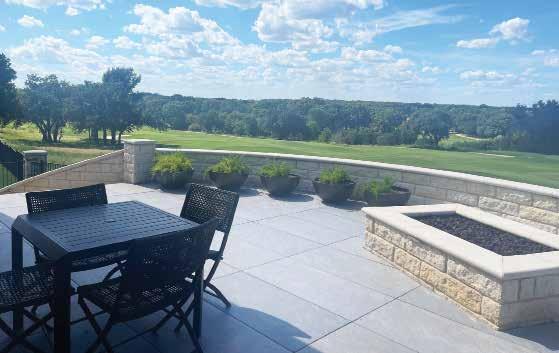
That kind of quality-of-life perspective is shaped by experience. Janice Bowman, who co-runs Bowman Outdoor Living with her husband, Jody Robinson (pictured), represents the second generation of leadership in a company built on long-term vision and craftsmanship and they help homeowners capture that perspective for themselves. What began as a family operation has evolved into a multi-generational business, with three of their children now stepping into the company as the third generation—bringing modern design tools and fresh perspective while preserving the values that have guided the business for decades.
“Most homes already have a natural gathering place,” Janice says. “It’s usually the kitchen. But when you create a true outdoor living area, one that feels like part of the home, you’re giving people another place to gather, relax, live, and entertain.”
More Than a Slab of Concrete
Janice is quick to clarify that not all patios are created equal. Pouring a slab, she says, isn’t outdoor living—it’s just concrete. True outdoor living is about continuity: materials that echo the home’s architecture, colors that flow naturally from inside to out, and thoughtful transitions that make the space feel intentional.
She recalls a recent project where a client extended the same porcelain tile from their interior living space onto the covered patio, then coordinated complementary pavers beyond that. The result was a seamless flow—kitchen to living room to patio to open air—creating a sense that the home had simply expanded.
“That cohesion changes how people use their space,” Janice explains. “They don’t just step outside occasionally. They live there.”
photos courtesy Janice Bowman
Function Over Flash
In a world shaped by Pinterest boards, HGTV reveals, and AI-generated dream yards, Janice brings homeowners back to a simpler—but often overlooked—question: How will you actually use this space?
She’s well known for gently steering clients away from expensive features that look impressive but don’t fit their lifestyle. Outdoor kitchens are a prime example. “If someone grills eight or ten times a year, a $12,000 outdoor kitchen may not make sense,” she says. “That money might be better spent creating a fire feature, shade, or a seating area they’ll use every single day.”
The same philosophy applies to layout. Level patios often outperform multi-step designs. Fire pits placed near the door get used more than ones tucked into the far end of the yard. Fewer stairs mean safer movement, easier entertaining, and more usable square footage. It’s design rooted in real life.
Standing Out in a Sea of Sameness
In newer neighborhoods, outdoor design becomes one of the few ways homeowners can personalize their property, and Janice sees it as an opportunity, not just for resale value, but for identity. “When so many houses look the same, thoughtful outdoor upgrades make yours feel intentional,”
she says. “It gives your home character and, eventually, when you do sell, it makes it memorable.”
One of her favorite high-impact, low-regret upgrades? Re-imagining the front porch and entryway with pavers or thin porcelain tile. “It’s one of the first things people see, and it completely changes the home,” Janice says. “Plus, we can often eliminate steps or create gentle ramps, which matters more as people think long-term about aging in place.”
Experience You Can’t Google
What truly sets Bowman Outdoor Living apart isn’t just design, it’s experience. Janice personally handles most of the company's sales appointments, giving homeowners direct access to decades of hard-earned insight. She understands local codes, HOA restrictions, build lines, and permitting nuances that can quietly derail less-experienced contractors.
Her team reflects that same depth. Many employees have been with the company for 15 to 20 years—stone masons, foremen, welders—people who remember projects from years past and return by name when clients call.
“That continuity matters,” Bowman says. “We want it done right the first time—but if something isn’t right, we stop and fix it. Even if it’s just ten stones.”
A DIFFERENT KIND OF INVESTMENT
As the housing market recalibrates, Janice sees homeowners growing more confident about spending money where they already live, not impulsively, but intentionally. “This isn’t about quick timelines,” she says. “Good de-
sign takes planning, permitting, and patience. But when we start a project, we stay until it’s finished—well.”
For homeowners choosing to stay put, the reward is immediate:
more comfort, more function, more joy in everyday life.
Because sometimes, the smartest move isn’t moving at all, it’s making your home fit the life you’re living.
Homegrown Healing
IN GEORGETOWN
How Silk + Stone Acupuncture Brings Real Relief for Longstanding Health Concerns
For many people in Georgetown struggling with chronic symptoms that haven’t responded to other treatments, relief can feel out of reach. Raegan Raguse knows that frustration well. When she first tried acupuncture as a high schooler, she was skeptical and nervous. “I’ve always been wary of physical pain, so the idea of needles wasn’t appealing,” she says. What surprised her wasn’t just how gentle the treatment felt—it was how effective it proved to be. She initially sought relief for digestive issues, later turning to acupuncture for hormonal imbal-
ances, chronic headaches, and fertility support. Years later, that experience came full circle when she opened Silk and Stone Acupuncture in Georgetown.
HOLISTIC HEALING
Many of Raegan’s patients arrive with the same skepticism she once had. “Often, people come in after they feel like they’ve tried everything,” she says. “Seeing them experience real, measurable change—especially when they didn’t expect it—is incredibly rewarding.”
Each patient begins with an in-depth consultation exploring health history, lifestyle, and goals. From there, Raegan develops a personalized treatment plan that may include acupuncture, customized herbal medicine, or both. “There’s a start and an end to the plan,” she explains. “The goal is to not need me as quickly as possible.”
She specializes in women’s health concerns including PMS, irregular cycles, fertility support, and perimenopause, as well as insomnia, digestive disorders, migraines, chronic fatigue, inflammatory conditions, and autoimmune flares. Drawing from traditional Chinese medicine, she creates
customized herbal formulas to address hormonal balance, digestion, sleep, anxiety, and other persistent issues at their root. She also offers cosmetic acupuncture to naturally enhance collagen production, improve circulation, and leave skin refreshed and radiant.
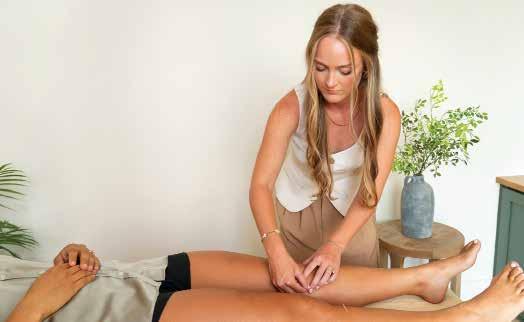
Raegan
who feel they've been dismissed or are unsure
CLIENT STORIES
Over the years, she has witnessed meaningful change through individualized care. One patient with long-term kidney challenges reported laboratory values improving to the strongest levels recorded in nearly two decades.
Another woman sought care after exhausting options for chronic constipation, persistent headaches, anxiety, and lingering post-COVID symptoms. Following a four-month customized herbal program, her digestion normalized, headaches became rare, anxiety eased, and she said she felt like herself again for the first time in years.
A patient struggling with hot flashes, insomnia, and digestive urgency began herbal treatment and soon realized she couldn’t remember her last hot flash—a welcome shift after months of discomfort. While each case is unique and results vary, these stories reflect Raegan’s commitment to addressing root causes and supporting lasting change.
ROOTED IN GEORGETOWN
What sets Raegan apart is not only her personalized approach, but her advanced education and specializations. She holds a bachelor’s degree from Texas A&M University, a master’s in Acupuncture and Integrative Medicine from AIMC Austin, and a doctorate in Acupuncture with a specialization in Chinese Herbal Medicine—an advanced credential not required to practice in Texas, but one that reflects her commitment to clinical excellence.
Just as important as her credentials is her connection to the community. A Georgetown native, Raegan grew up here and now makes her home here with her husband—also from Georgetown—along with their dogs and chickens. “Georgetown raised me. Opening Silk and Stone feels like coming home—not just personally, but professionally. I’m honored to bring this level of personalized, root-cause medicine to the community that shaped me.”
HIGHER EDUCATION REFORM
On September 10, 2025, the assassination of Charlie Kirk shook the country. What followed was just as troubling: the public celebration of political violence by many individuals operating within or around college campuses, amid heightened anti-Israel protests related to the ongoing conflict in the Middle East. That moment stripped away any remaining illusion that our campuses were immune to the broader breakdown in civil discourse gripping the nation. When violence is justified as political expression, the rule of law is no longer guiding behavior.
Why the Legislature Acted
These concerns did not emerge overnight. Senate bill 2972 was passed earlier this year in response to a wave of disruptive campus protests, many involving non-students and conduct that interfered with core academic operations. The bill represents the state’s direct effort to restore lawful order while fully protecting the expressive rights of students and faculty on campus. Following the events of September, Speaker Dustin Burrows and Lieutenant Governor Dan Patrick jointly established The Select Committees on Civil Discourse and Freedom of Speech in Higher Education. As Chairman of the House Committee, I am committed to using the interim to examine how campuses across Texas are implementing these reforms and whether further action is needed to preserve both liberty and safety.
From Transparency to Conduct
The bill makes clear that students and employees of public institutions of higher education have the right to engage in expressive activities and observe the expressive activities of others. Universities are instructed to treat these freedoms not as privileges, but as core institutional obligations.
This article is the second installment of a three-part series on higher education reform in Texas that began in last month’s issue. In the last article, an outline of SB 37 established a comprehensive framework for transparency and accountability in our public institutions of higher education. That law strengthened governing boards, clarified faculty roles, and created an independent ombudsman to ensure students, faculty, and administrators all have a fair and lawful channel for resolving disputes. However, transparency alone will not be enough. A university can be well-governed on paper yet still fail its fundamental mission if civil discourse collapses on campus.
SB 2972 codifies those principles in state law. Universities may adopt time, place, and manner restrictions only if clearly published pursuant to institutional policy, applied equally regardless of viewpoint, and allow ample alternative means of expression. The bill also prohibits institutions from requiring prior permits or permissions before individuals may assemble or distribute written material in designated public forums.
Governing boards are now explicitly required to designate the public forum areas on their campuses consistent with constitutional standards. This prevents institutions from moving the goalposts when controversy arises and ensures expressive rights remain stable no matter which administration is in place.
Under the law, students and employees are prohibited from using amplified sound during class hours if it intimidates others, interferes with campus operations, or obstructs the lawful duties of employees or law enforcement. During the final two weeks of a semester, when academic pressure is at its highest, disruptive expressive activities face additional restrictions to protect instructional continuity and student performance.
ORDER IS NOT OPTIONAL
Camping and encampments are expressly prohibited. Universities exist to educate, not to serve as permanent protest encampments where sanitation, safety, and access quickly deteriorate. The law also prohibits wearing disguises to obstruct enforcement, intimidate others, or interfere with law enforcement activity. Accountability requires visibility.
Expressive activity is prohibited between 10pm and 8am, recognizing free speech must coexist with the right of students to rest, study, and live without constant disturbance.
The lowering of the United States or Texas flag for the purpose of raising another nation’s or organization’s flag is also prohibited. Public institutions are required to uphold the symbols of the constitutional order under which they operate.
SB 2972 does not merely announce expectations. It requires each institution to adopt a formal policy outlining rights and responsibilities regarding expressive activities. Those policies must establish disciplinary sanctions for those who unduly interfere with the expressive activities of others or violate institutional rules or state law. They must include a grievance procedure for addressing complaints. And they must require individuals to present proof of identity and status when asked by an institution official engaged in lawful duty.
Oversight Continues
The Legislature does not pass laws and walk away. Following the September assassination and the unrest that followed, Speaker Burrows and Lieutenant Governor Patrick formed select committees in both chambers to examine civil discourse and freedom of speech in higher education. I was honored to be asked to serve as Chairman of the House committee.
Over the next year, our committee will hear testimony from students, faculty, administrators, law enforcement, and constitutional scholars. We will evaluate how institutions are implementing SB 2972. We will examine whether public safety is adequately protected. And we will assess whether outside political organizations are exploiting campus unrest to destabilize learning environments.
This work is not about punishing institutions—it's about ensuring laws passed by the Legislature are implemented faithfully and consistently across all systems. Uniform law is meaningless without uniform application.
SB 37 created the structure for transparency and accountability in governance. It strengthened Boards of Regents, clarified the advisory role of faculty senates, mandated leadership evaluations, and created the Office of the Ombudsman within the Higher Education Coordinating Board. That office will serve as an external channel for resolving disputes involving governance, curriculum, and employment practices.
SB 2972 supplies the behavioral framework that complements that governance structure, the statutory system through which Texas public universities are overseen by Boards of Regents, presidents selected by those boards and statewide oversight established by the Legislature. One law governs how decisions are made. The other governs how conduct is regulated.
Civil Discourse Is a Civic Skill
Civil discourse is not a political luxury. It is the foundation of self-government.
The First Amendment protects unpopular speech not because it is comfortable, but because it is necessary.
Still, no constitutional tradition has ever equated free speech with the right to disrupt, intimidate, or threaten.
A university should be a place where students learn how to argue without fear, how to disagree without dehumanizing, and how to engage in conflict without resorting to coercion. That is how leaders are formed. That is how citizens are prepared.
SB 2972 does not silence speech. It protects it by re-anchoring expression to the rule of law. It affirms that campuses belong to learning, not lawlessness; to dialogue, not disorder.
Texas is proving that it is possible to defend liberty without surrendering order. It is possible to protect speech without tolerating chaos. And it is possible to restore public trust without sacrificing constitutional rights.
by Ann Marie Kennon •
When Screens Go Dark, Kids Light Up
HOW A LITTLE LESS SCREEN TIME IS MAKING ROOM FOR CONNECTION, CREATIVITY, AND CHILDHOOD AGAIN
On December 10, 2025, Australia became the first nation to enforce a sweeping restriction on social media use: children under 16 are no longer permitted to hold accounts on major platforms like TikTok, Instagram, Snapchat, X, Facebook, and YouTube. Under the Online Safety Amendment (Social Media Minimum Age) Act 2024, tech companies that fail to block under-16s can face fines in the tens of millions of dollars. Last month, Spain also set in motion a bill that would do the same, while other European Union nations are also moving to enforce stricter rules. The laws don’t penalize kids or parents, but instead holds platforms accountable, aiming to address concerns about mental health, harmful content, and the addictive design of social media.
Meanwhile in the United States, Texas passed its own landmark law targeting how children interact with screens— specifically in schools. Under House Bill 1481, students are prohibited from using
cell phones and other personal communication devices during the school day. Schools must either ban these devices entirely or ensure they remain unseen and unused, tucked away in backpacks, lockers, or secure storage, from “bell to bell.”
Taken together, these two policies— one national and digital, the other state-level and physical—reflect a growing recognition that unfettered access to screens can shape young people’s social lives in ways that are neither healthy nor fulfilling. Both laws represent bold experiments: Australia’s in redefining how minors interact with social networks, and Texas’s in reshaping the environment of learning and community inside school.
The immediate critique of such efforts is familiar: don’t teenagers need digital connectivity? Isn’t online social life just part of growing up in the 21st century? But there’s something deeper at stake—a chance to reclaim social
Bettis
rhythms and spontaneous interactions that dominated childhood before smartphones became umbilical cords.
WHAT'S OLD IS NEW AGAIN
Imagine school hallways no longer dominated by heads bent over screens, headphones blocking out the world. Instead, in passing periods and at lunch, students might actually talk to one another—engaging face-to-face, sharing jokes, and trading stories from morning classes. Consider the subtle shift when a student reaches into a pocket not for a phone, but for a deck of cards, challenging a friend to a quick game of war or Uno at a lunch table. Cards—simple, tactile, social—become a catalyst for laughter, negotiation, and connection.
Or picture a group of friends at a picnic table, not posting to a feed, but weaving friendship bracelets with knots of thread that signify bonds, patience, and creativity. These bracelets carry memories of time spent together, of in-
photo by Christianna
side jokes embedded in color choices, and of hands that touched the same strings at the same moment. That’s a different kind of social imprint than likes or follows—one that lasts in braided color, not algorithms.
And what about folded paper notes? The clandestine whispers of friendships and crushes, passed with intricate origami folds that thrilled students back in the 1900s. Long before DMs, handwritten missives were the beating heart of school communication: goofy, awkward, sincere, secret. They demanded not just attention, but presence.
These are small things, maybe even quaint. But small things shape social muscles. They teach children to read tone of voice, to negotiate words and feelings, and to interpret a facial expression or a sliding chair. They cultivate patience—waiting for a friend at lunch instead of instant gratification from a screen—and empathy, listening to someone sitting right across the table.
EMOTIONAL AND MENTAL HEALTH
Of course, neither the Australian law nor the Texas school ban suggests a full rejection of technology. The goal isn’t to throw away screens, but to create space for real conversation, creativity, and connection. Australia’s law acknowledges that social media can distort self-image and domino into anxiety; Texas’s law recognizes that constant notifications fracture attention and distract from learning. Together, they may nudge a generation to rediscover the joy of being present—to look up, talk, and laugh without a screen between them.
Maybe, in this quietly revolutionary shift, kids will start doing old-school things again—playing, creating, speaking, and building community in the real world. And maybe that’s exactly the kind of social skill many Gen-Xers and Millennials have realized we’ve been missing too.
A Playful Pause from Screens
One creative tool that’s gaining attention in the effort to help kids and, honestly, adults as well to break the cycle of endless scrolling is an app called Touch Grass. True to its name, this app doesn’t just track screen time; it blocks access to distracting apps until the user literally goes outside and touches grass and takes a photo as proof. The idea behind it is simple and playful: instead of unlocking Instagram or TikTok with another tap, kids have to step outside, breathe some fresh air, and reconnect with the physical world before screens unlock again. Touch Grass turns a common internet joke into a real prompt for real-world movement, encouraging more outdoor breaks, more connection with nature, and a healthier balance between digital and physical experiences that can only help young minds grow.
Time is a Teacher
IN ORDER TO BE OLD AND WISE, YOU FIRST HAVE TO BE YOUNG AND FOOLISH
I’m in my early 80s and retired from three careers: one as a military pilot; one in academia; and one in local politics. I was fortunate to have worked for, and with, a lot of very good people. I’ve worked around a few stinkers too, but I still learned from them; after all, you can learn something from everyone.
Along the way I’ve concluded, and to borrow a phrase from others, “the long arc of experience bends toward wisdom.” While that is generally correct, it still has to be paired with the other long-standing truth that experience breeds good judgment, but some of the most meaningful experiences come from BAD judgment. Some can be more exciting than others, and, much like learning something from everyone you encounter, you can learn something from every experience.
I thought it might be useful to share some of the gems of wisdom I’ve learned in these 80+ years. Not the types of more-or-less humorous, anecdotal lessons-learned you read on Facebook (e.g., Always drink upstream from the herd, don’t mud wrestle with pigs…etc.), but more practical ones, linked directly to real world circumstances. So, here goes.
As your career advances your role changes and you need to change with it. Most careers begin on the front lines as a worker-bee, learning to apply the trade or profession. Your focus is on the task at hand. Once proficient, you may advance into supervisory positions and management.
As a supervisor/manager, you are still task-oriented but
now, rather than just focusing on the immediate task, you’re charged with orchestrating the work of others and coordinating your efforts with others at your level. But the orientation is still internal to the organization, largely downward into your area of expertise, but also across the organization chart at your level.
Proficient managers who also show potential for further growth, become leaders. A leader’s focus is outward, toward the future of the organization, and deals with setting organizational policies, determining the organizational culture, orchestrating how the organization relates to its environment and to interactions with other organizations beyond its boundaries.
Each step brings a new set of challenges and requires a new mindset to succeed. Managers rely on technical competency and “people skills.” Leaders, who often arrive in their positions with great technical and interpersonal competency, must be able to get out of the engine room and into the wheelhouse in order to set the course and the sails of the organization for future success.
In sum, managers do things right; leaders do the right thing. Leaders obviously have to be able to tell the difference what might work, and what will not. That nearly goes without saying. But, perhaps more importantly, leaders have to be able to distinguish between right and wrong. Leaders have to have strength of character, moral fiber, and ethics standards and hold others, and themselves, accountable to those standards.
I’ve not seen many cases where leaders failed on the basis of technical competency. But we all have vivid images of failures of senior leaders who failed because of immoral or unethical behaviors.
LESSON 1: A LEADER’S PERSONAL AND PROFESSIONAL ETHICS ARE AT LEAST AS IMPORTANT AS TECHNICAL COMPETENCE, AND PERHAPS EVEN MORE SO.
The next two lessons sprout from common management dicta. The first is that you should never bring a problem to the table unless you have a solution in mind. Sounds good at first blush, and we’ve all heard it hundreds of times, but upon reflection it’s an absurd proposition.
Suppose a seaman, working diligently in the lower decks of the engine room of the ship at sea, notices a major leak, but has no idea how to fix it. Should that seaman bring the problem forward?
The rule would have the seaman remain silent, return to duty, and watch the leak fill the hold. On the other hand, the Captain of the vessel, knowing of the leak, would probably have some good ideas on how to fix the problem. But the Captain DOESN’T know about it because the seaman remained silent; and the ship sinks.
LESSON 2: ENCOURAGE PEOPLE TO COME FORWARD WITH PROBLEMS, NO MATTER HOW DIFFICULT THE ISSUE, AND NO MATTER IF THEY HAVE AN IDEA ON HOW TO SOLVE IT. IF THEY HAVE A RECOMMENDATION, SO MUCH THE BETTER.
But if not, bring the issue forward in any case. Leaders are paid the big bucks to know how to solve difficult problems. Instructing people not to bring problems forward unless they have a solution stifles
The second comes from the age-old complaint of leadership: “I spend 90 percent of my time with 10 percent of my people, and those 10 percent are the trouble makers.” Well, if that’s what you’re saying about your own style of leadership, then you’re suffering from a self-inflicted wound. Here’s the sight picture.
You’re in your office, totally consumed with issues generated by the most difficult or non-productive members of your organization. But outside your office, waiting for your attention, is a line of individuals who work hard and produce results. They need to speak with you. But you won’t give them your full attention.
The solution should be obvious. Engage the productive folks first and foremost. Let the troublemakers wait, for as long as necessary, until you have satisfied the needs of those who produce results. After all, you’re a leader and you’re going to be working well after hours anyway. Let the more difficult individuals wait.
LESSON 3: SPEND YOUR TIME WITH THE GOOD FOLKS; LET THE TROUBLEMAKERS COOL THEIR JETS IN THE HOLDING PEN.
In sum, time is a teacher; hopefully it teaches you well. Some lessons are harder learned and earned than others. But remember, you can learn from everyone and everything.
Go For It!
by Linda A. Thornton and Ann Marie Kennon
ALL IN FOR TEXAS HOLD 'EM
YOU WOULDN’T EXPECT ANYTHING LESS FROM TEXAS. IF YOU'RE GOING TO PUT YOUR SPIN ON A CENTURIES-OLD CARD GAME, WHY NOT GO AHEAD AND PUT YOUR NAME ON IT, TOO?
While early versions of poker can be traced to Persian, Chinese, and European card games, Texas Hold ’em itself is a truly American invention—born in Robstown, Texas in the early 1900s. Recognized by the Texas Legislature as the official birthplace of the game, Robstown’s road gamblers refined a style of play that used two private “hole cards” and five shared community cards. This structure created a perfect mix of luck, psychology, and strategy—and it was only a matter of time before the game outgrew its Texas roots.
FROM ROBSTOWN TO LAS VEGAS
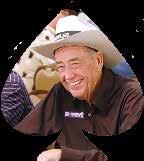
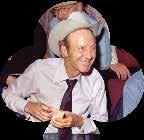
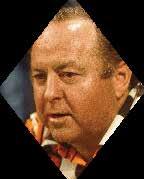
Throughout the mid-20th century, a group of legendary Texas gamblers (page 47) traveled the country playing highstakes poker. When they arrived in Las Vegas in 1967, they introduced Hold ’em to casino owners who were immediately intrigued by its action-driven pace and strategic complexity.
The turning point came in 1970, when the influential Binion family, owners of Binion’s Horseshoe Casino, adopted Texas Hold ’em as the featured event in their newly created World Series of Poker (WSOP). Patriarch Benny Binion believed the game’s mix of skill and drama made it the perfect format for determining the “world’s best poker player.”
He was right, and local culture played a part as well—seven of the first eight WSOP champions were from West Texas.
This decision transformed Hold ’em from a Texas curiosity into an international phenomenon. By the mid-1970s, Hold ’em was the preferred game of serious players. By the 2000s, it became the version of poker showcased on television, online platforms, and competitive circuits worldwide.
The biggest surge in popularity came in 2003, when amateur player Chris Moneymaker (yes, his real name) won the WSOP Main Event after qualifying online for just $39. His improbable win demonstrated that anyone could play—and anyone could win—sparking the modern poker boom.
Today, Texas Hold ’em is the most popular form of poker in the world.
DICHOTOMY OF THE GAME
The rules are simple enough for beginners, yet deep enough to reward long-term strategy.
♠ LUCK V. SKILL: You can’t control the cards you’re dealt, but you can control your odds, your reads, and your decisions.
♠ HIDDEN VS. SHARED INFORMATION: Your private hole cards make each player’s situation unique, but everyone must analyze the same community cards—and each other.
BUT ISN'T PLAYING POKER IN TEXAS ILLEGAL?
According to Texas Penal Code 47.04, poker is legal when the following conditions are met:
♠ Games must take place in a private venue with membership access.
♠ The house cannot profit directly from the pot as casinos do; instead, players pay for time at the table.
♠ All players must have an equal chance of winning, apart from skill and luck.
♠ This model has led to a surge of legal poker clubs across Texas—and a thriving poker culture.
POKER AS A PROFESSION • WITH MICHAEL GERONIMO
After ten years spent as a professional player, dealer, and floor supervisor, Michael Geronimo tried transitioning into a new business field. But whenever he networked, people were far more interested in his poker experience than anything else. Eventually, he realized the obvious: he already had a business worth building.
In April 2023, Michael launched Texas Poker Culture, a website and brand designed to showcase the industry he knows best. His professional dealer school quickly became his most in-demand offering, filling beginner classes almost entirely through word of mouth.
Since then, he has expanded to include private poker events— birthdays, charity fundraisers, corporate team-building functions, and more. Michael was especially honored to provide services for a Texas State Lawmakers annual event, where he was surprised to learn that many attendees had no idea legal poker rooms even existed in Texas.
TEXAS POKER CULTURE
Poker is having a moment in Texas— and Georgetown is part of it.
Not the high-roller, Vegas-only version people picture, but a modern, social game that feels surprisingly normal. The kind of normal where someone says they are playing poker the same way they would say they’re meeting friends for trivia, pickleball, or an escape room.
Across Texas, players are discovering that live, in-person poker is legal in private social clubs—clean, organized spaces that feel more like community gathering spots than smoky back rooms. Larger clubs like Texas Card House and The Lodge helped set the standard, while places like Georgetown Poker Club make the game accessible close to home.
For first-timers, the biggest surprise usually isn’t the game—it is the atmosphere. These rooms are professional, welcoming, and filled with regulars who remember what it felt like to be new.
Poker also isn’t quite what its reputation suggests. Unlike games of pure chance, poker is a social strategy game. Luck matters, but what keeps players engaged is the mental challenge—reading sit-
uations, managing emotion, and improving decisions over time.
That mix is why poker works across generations. Younger players enjoy the structure and competition. Older players treat it like a mental workout. And many stay because poker creates something rare: a place where strangers sit down, talk, and build community.
That’s where Texas Poker Culture comes in—helping people understand the game, the etiquette, and the pace so poker feels welcoming instead of overwhelming. Some tips from Michael:
♠ PAY ATTENTION TO THE GAME . Conversation matters, but newcomers learn when talk fits naturally between hands.
♠ PLAY PREMIUM CARDS . Starting strong builds confidence and supports better long-term decisions.
♠ STAY WITH IT . Poker is a lifelong game. It evolves, sharpens thinking, and blends strategy with social connection — which is exactly why its appeal keeps growing.
Scan the code to learn more about Texas Poker Culture.
LET’S PLAY TEXAS HOLD ’EM!
Gone is the knock-three-times-to-enter, smoky, secretive poker room. Today’s Texas poker clubs are legal, friendly, and designed for recreational players of all skill levels. Michael recommends trying your luck at:
Georgetown Poker Club The Lodge Poker Club Round Rock
THE ROAD GAMBLERS: TEXAS’ POKER LEGENDS
Before poker tables were televised and tournament fields filled stadiums, the game was shaped by a gritty, fearless group of Texans known as the road gamblers. In the 1950s and ’60s, these men traveled dusty highways from one underground game to the next, carrying only their skill, their bankroll, and the courage required to sit down across from strangers in high-stakes rooms where players could win a lot of money, or a bullet. They lived like poker nomads— crisscrossing the southern states of the USA, always with cash, guns, and cards. Their goal was one thing: to find a game with sufficiently rich opponents and weak abilities.
DOYLE BRUNSON THE GODFATHER OF POKER
LONGWORTH • Before he was a poker legend, Doyle Brunson was a world-class athlete. Standing 6’2” with NBA-level talent, Brunson’s professional basketball dreams came to an end after he broke his leg—an accident that changed the course of poker history. He turned his competitive fire toward cards and quickly became one of the most formidable Texas Hold ’em players in the world. Known as “Texas Dolly,” Brunson won two World Series of Poker Main Events, both with the same hand, 10–2—now famously called “the Doyle.” Another hand, known as a "Doyle Brunson", especially in Texas, is the ace and queen of any suit because, in his words, he "[tries] never to play this hand". His book Super System is still considered the poker player’s bible, laying out strategies that transformed the game from guesswork into calculated skill. Brunson wasn’t just playing poker—he was teaching the world how to think.
AMARILLO SLIM PRESTON THE SHOWMAN
AMARILLO • Amarillo Slim didn’t just play poker—he sold it. With his cowboy hat, quick wit, and fearless confidence, Slim became poker’s first true ambassador. A 1972 World Series of Poker champion, he helped bring Texas Hold ’em into the mainstream through television and film appearances, famously playing with figures like Larry Flynt and President Richard Nixon. Before tournament fame, he was a road gambler who helped introduce Hold ’em to Las Vegas in the 1960s. He later founded the Super Bowl of Poker, further elevating the game’s profile and authored several books on the game. Thanks to Amarillo Slim, poker gained personality, popularity, and a sense of fun that carried it far beyond smoky back rooms—even inspiring a 1991 video game bearing his name.
CRANDELL ADDINGTON THE STRATEGIST
SAN ANTONIO • Known as “Dandy” for his sharp dress and sharper mind, Crandell brought a rare intellect to the poker table. A selfmade millionaire, he earned his degrees right here at Southwestern University before applying that academic discipline to Texas Hold ’em. While others relied on bravado or instinct, he focused on probability, betting patterns, and long-term strategy, famously calling Hold ’em “the only poker game where strategy truly mattered.” Addington competed in the very first World Series of Poker, finishing runner-up in the inaugural Main Event, and played a key role in convincing casino owners that Hold ’em deserved center stage. His analytical approach helped legitimize poker as a game of skill, shaping its evolution from outlaw pastime to competitive sport.
SAILOR ROBERTS THE SILENT FORCE
SAN ANGELO • Quiet, disciplined, and relentlessly consistent, Sailor Roberts was the opposite of a showman—and that made him dan gerous. A former Navy serviceman, Roberts carried military precision into every hand he played. He avoided flash, rarely tilted, and outlasted opponents through patience and razor-sharp decision-making. Roberts was a founding figure in professional tournament poker, earning a World Series of Poker Main Event title and multiple final table appearances. Among fellow road gamblers, he was respected as the steady hand—the player who didn’t need theatrics to win. His calm, methodical style helped shape tournament poker’s emphasis on endurance and mental control, proving that sometimes the quietest player at the table is the one to fear most.
The Dr Pepper Museum
A Spring Break Win for Texas Families
DESPITE THE NAME, THE MUSEUM IS MORE THAN A SINGLE-BRAND ATTRACTION. IT USES DR PEPPER AS A STARTING POINT TO TELL THE BROADER STORY OF THE AMERICAN SOFT DRINK INDUSTRY— ONE THAT HELPED SHAPE ADVERTISING, MANUFACTURING, AND POPULAR CULTURE. THAT BROADER SCOPE IS PART OF WHY THE MUSEUM CONTINUES TO DRAW INTEREST WELL BEYOND WACO, WELCOMING MORE THAN 270,000 VISITORS IN 2025.
Spring break in Texas has “spring” right there in the name, even when the weather hasn’t quite gotten the memo. So, when kids are home for a week and outdoor plans are a maybe at best, it helps to have a destination close by that’s fun, educational, maybe even tasty, and mostly indoors.
That’s where the Dr Pepper Museum comes in.
Just over one hour from Georgetown, this family-friendly destination offers something rare: a place where kids can explore, adults can learn something new, and everyone leaves with a greater appreciation for a Texas original.
A Soft Drink with Lone Star Roots
Dr Pepper is more than just another soft drink, it’s a regional success story. Invented in Waco in the 1880s, it predates Coca-Cola and Pepsi, giving it bragging rights as one of the oldest soft drinks in America. That sense of Texas pride is evident throughout the museum.
Housed in the original 1906 Artesian Manufacturing and Bottling Company building, the museum operates as an independent nonprofit, not a corporate showplace. This generalized approach to soda history goes well beyond a single product, drawing from what is now the world’s largest collection of soft drink memorabilia. The result is a visit that feels deeper and more interesting than many first-time visitors expect.
Hands-On Fun for All Ages
Kids can explore interactive displays that explain carbonation, experiment with scent stations tied to the drink’s famously secret recipe, and watch early bottling machines in action. Older kids and teens often gravitate toward exhibits on advertising and branding, discovering how Dr Pepper carved out its own identity in a crowded beverage market. Along the way, science and history sneak in under the radar.
When You Go
Open 7 days/week, 10am–5:30pm (extended hours in March for Spring Break). Closed Easter, Thanksgiving, Christmas Eve, Christmas Day & New Year’s Day.
General admission is $12 per person (ages 5 and up); purchase only from the museum desk. Includes self-guided access to all exhibits and a free Dr Pepper at the soda fountain or $1 toward an upgrade item.
Street parking is available and there is paid public parking across 5th St.
Kid-friendly activities include visiting the Soda Fountain for Dr Pepper floats, and specialty drinks. There are also Keurig Dr Pepper Liquid Lab demo shows on select days and interactive exhibits and scent stations throughout the museum.
The museum provides sensory-friendly sunglasses and earbuds free of charge at the admissions desk.
The gift shop and Soda Fountain are open to walk-in guests during business hours even without museum admission.
You can also make a reservation for an MVP experience.
Make-A-Soda: ~$20/person; create and bottle your own custom flavor (includes one bottle; extras available to purchase).
VIP Make-A-Soda: ~$200 flat rate for up to 20 people; includes museum admission and guided soda making.
Extreme Pepper Experience: Private guided tour plus soda experiences (subject to availability).
Make it a Day
The museum is just the right size—substantial enough to feel worth the drive, yet compact enough to avoid burnout. Most visitors spend one to two hours exploring the exhibits, gift shop, and soda fountain, though museum staff note that peak times like spring break and summer vacation can stretch a visit to two or three hours. Even then, it’s easy to pair the museum with lunch in downtown Waco or a short walk to nearby shops and attractions. And if the weather cooperates later in the day, there’s still time to make a stop at Cameron Park Zoo.
What makes the Dr Pepper Museum such a strong spring break option is its versatility. It’s educational without being dull, interactive without being overwhelming, and rooted in Texas history without feeling like homework. Kids leave with fun facts and hands-on experiences, while adults gain a renewed appreciation for how a simple idea—served cold and fizzy—and a cool story helped shape American culture.
SPOILER ALERT:
IT’S EASY TO OVERLOOK, BUT THERE’S NO PERIOD AFTER “DR” IN DR PEPPER—AND THERE NEVER HAS BEEN. THE MUSEUM POINTS OUT THIS SMALL BUT INTENTIONAL DETAIL, ONE OF MANY REMINDERS THAT EVEN A DRINK TEXANS THINK THEY KNOW BY HEART STILL HAS A FEW SECRETS LEFT.
THE CALENDAR I ACTUALLY LIVE BY
Iam terrible with years. Ask me what happened in 2013 and I’ll stare at you like you’ve asked for my blood type. But ask me about my fifth grade teacher, my junior year of college, or the year Jack had to do school at home, and suddenly I’m fluent. I can tell you where I sat, what shoes I wore, and what the weather was doing because I really don’t remember time by numbers. I remember it by seasons.
Even when I was younger, years were never years. They were grades. They were chapters. They were the year Asia released "Only Time Will Tell," or the year the space shuttle broke apart on live television—the big moments that became "before or after" in life. Everything else floated into a blur of "back in my 30s..."
Motherhood made that even truer. Years became the year he learned to read, or when school got hard, the year he got his braces off for the second time, and when we finally caught our breath. Mothers don’t live in decades. We live in chapters, which is why March feels like a hinge.
Spring isn’t loud about its arrival, but it is persuasive. It’s the season when everything starts to feel like it might be okay again, not because you flipped a calendar page, but because you sense it. I can finally sit on my porch in my special spot again. The sun comes up before I get out of bed, so I’m no longer waking up like an Arctic explorer bracing for survival.
I carry my plants outside and set them down like children released for recess. They stretch their pale arms toward the sun and soak up the sunshine the way nature intended. They don’t worry about melanoma, and I envy that. They just soak it all in and grow accordingly.
Which is more than I can say for me, inside on the couch, trying to read my daily verses during the 15 minutes of the day when actual sunlight manages to beam through the window and land directly on my lap like a benediction. It’s supposed to be a peaceful, holy pause. But without fail, by the seventh verse—God’s number of completion, mind you—my dogs begin their interpretive door dance. One wants out, one wants in, and one stares at me like I’m ruining his life. I open the door like a disgruntled butler, only for them to switch places and repeat the performance. At no point do all three agree on anything. I am being spiritually mugged by a three-headed chaos beast in fur coats.
And even if the dogs gave me a break, I’d still be doing battle with my own squirrel brain, fighting to remember what I just read, circling back to finish a prayer I started with good intentions and abandoned somewhere between “Dear Lord” and “Wait, did I move the laundry?” Inside, I’m trying to conjure presence.
Outside, it arrives. Because in spring, I can go sit on the porch, where the actual squirrels are. The cute, tail-flicking ones. I don’t have to fight my attention span—I just hand it over to the birds and the breeze and the sunrise creeping slowly northward every day. The doors are open, the dogs roam on their own, and for a few minutes, all I have to do is notice.
Sometimes I imagine the calendar I would keep if I were honest. It wouldn’t have months. It would have entries like Season of Looking for Golf Shirt, The Great Stomach Bug Weekend, Fireside During Winter Storm [WHATEVER NAME], and Week We All Ate Breakfast for Dinner and Called It a Win. That’s
the time I know by heart. The real stuff never fits neatly into a grid anyway.
And while we’re being honest: January is not the new year. January is a frozen wasteland full of broken resolutions and unmatched mittens. No one becomes a new person in January. They become a slightly more tired version of the one they were in December, just colder. March is the real beginning. March is when people start opening windows again, remembering the sound of birds, and thinking, maybe I don’t need to retire in Portugal after all.
Of course, some days still fall apart. I try to sit outside with my tea and reflect, and the dogs immediately begin a fence war with the same neighbor dogs they see every day. Someone inside is yelling, “Where’s the good charger?” as if Nicholas Cage just spirited it away with the Declaration of Independence. The wind knocks over my mug. I give up and go inside, but I leave the door open and ignore the pollen that settles on the countertops.
March doesn’t fix anything. It doesn’t solve problems or reorder calendars. But it does restore a sense of preferred rhythms. The days lengthen, the air starts to warm, and our moods begin to thaw. Mothers quietly reset the household clocks—not by dates, but by light.
So no, in ten years I probably won’t remember what happened in 2026. But I’ll remember that March was the month I put my plants back outside and started turning my face to the sun again.
And honestly, that’s the kind of time I’m willing to keep. The rest can stay in somebody else’s spreadsheet.