
In an age where the rush of daily news often overshadows the deeper narratives that shape our community, the Georgetown View constantly strives to be an eager beacon of positivity and unity. Far more than just a lifestyle magazine, our publishers and staff are committed to creating a means of getting to know what makes our community thrive: its people and their impact.
Since its inception in 2009, the Georgetown View has not only reported on the great stories and people in our city but also taken pride in actively contributing to its enrichment. Through donations exceeding $100,000 in advertising, we have extended our support beyond the printed page to organizations that further amplify the voices of those who work tirelessly to make a difference, ensuring their missions reach as many eyes and hearts as possible.
But we are also good at doing what we do–showcasing prominent local businesses and community agencies and initiatives like ROCK, Georgetown ISD students, FFA, 4-H, and many more on our covers and in multi-page features. These not only celebrate their contributions but also inspire readers to personally engage and participate in the missions of these community pillars.
In every story, from first responders and veterans to the latest city events and programs, our purpose is to foster a sense of pride and connection. In addition to these, every November our "Giving Thanks and Giving Back" issue shines a spotlight on local nonprofits and philanthropic efforts, reminding us of the power of community support and the importance of gratitude.
In short, we believe the Georgetown View is more than a magazine; it is a vital part of the community’s fabric that spotlights advocacy, education, and celebration. We hope you will agree it stands as a testament to what we can all achieve when we choose to focus on the positive and the possible.




PUBLISHER
Cathy Payne • cathy@georgetownview.com
SENIOR WRITERS / CONTENT EDITORS
Ann Marie Kennon • Charlotte Kovalchuk
CONTRIBUTING WRITERS
Linda A. Thornton • Steve Fought
CONTENT MANAGER
Camy Reynolds
GRAPHIC DESIGN
Sandra Evans • Ann Marie Kennon
BUSINESS DEVELOPMENT
Jesse Payne
WEBMASTER
Ann Marie Kennon
ADVERTISING
512.746.4545
info@georgetownview.com
Georgetown View is a Fidelis Publishing Group, LLC publication and a product of AdvocateNewsTX Newspaper.
Copyright © 2026 All rights reserved. Georgetown View is mailed monthly via USPS to homes and businesses in Georgetown, TX zip codes.
Mail may be sent to: Georgetown View P.O. Box 203 • Jarrell, TX 76537


SCAN THE CODE FOR E-SUBSCRIPTION AND NEVER MISS AN ISSUE.
FOLLOW US ON FACEBOOK FOR FOLLOW-UPS AND OUTTAKES GeorgetownViewMagazine
In today's dynamic market, visibility is key to success. We invite you to explore the power of diversification by pre diverse range of magazines. Each publication in our portfolio offers a unique audience, ensuring your message resonates with a wider, yet targeted demographic. Seize this opportunity to broaden your reach, enhance brand recognition, and connect with potential customers in new, impactful ways. Let's collaborate to make your brand a household name.
CONTACT US • 512-746-4545 INFO@GEORGETOWNVIEW.COM

Communities are built in the moments between work and school, the places where families gather, creativity flourishes, and people come together simply to enjoy life.
This month’s issue celebrates the activities and spaces that help make that happen across our community. From neighborhood book exchanges and live music venues to youth programs, outdoor adventures, and family-friendly destinations, these stories highlight the experiences that bring people together.
Whether it’s discovering a new hobby, cheering from the sidelines, or sharing a love of learning, kids and families, arts and culture, and sports and recreation remind us that a thriving community isn’t just about where we live, it’s about how we live together.




Meet our Pros — professionals, business owners, and subject matter experts from leading local companies who share their knowledge and expertise to bring readers practical advice, how-to tips, best practices, and current and emerging trends. To learn more about becoming a Featured Professional, contact info@georgetownview.com or 512-746-4545.

Aqua-Tots Swim School Round Rock
The largest international provider of year-round, indoor swim instruction dedicated to teaching water safety through our proven curriculum.
Aqua-Tots.com/Round-Rock 512-336-8687

Doleva Elite Tree
Certified Arborists to care for your trees! Our large equipment makes jobs efficient and economic, and prevents damage to lawn or property. Serving Georgetown since 2009.
DolevaEliteTree.com 512-943-8733

DTC Air Conditioning
DTC provides advanced HVAC solutions with Carrier® factory-authorized service, expert technicians, and a commitment to innovation, training, and 100% customer satisfaction.
DTCTexas.com 512-887-5091

Hall's Roofing & Sheet Metal, LLC
Family owned since 1939. Roofing professionals specializing in full-service roof repair, installation, and replacement.
HallsRoofing.net 512-864-7579

Inner Space Cavern
One of the best preserved caves in Texas, Inner Space Cavern has hosted hundreds of thousands of visitors since 1966 and offers a variety of activities year round.
InnerSpaceCavern.com 4200 S IH-35 Georgetown

Keller Commercial & Home Services
Experts specializing in maintenance, enhancement, and design. Armed with cutting-edge tools and programs — driving rapid growth in architectural landscaping.
KellerServicesTX.com 512-930-4769
Silk + Stone Acupuncture
Personalized holistic treatments blending traditional Chinese medicine and modern insight, addressing pain, hormones, digestion, fertility, and stress to restore balance.
SilkAndStoneAcupuncture.com (512) 818-4949

Moore Liberty Buildings Chad & Amanda Moore Thousands of structures built since 2015.
MooreLibertyBuildings.com 512-548-6474

Prime Wellness and Longevity
Personalized hormone therapy, weight loss, and wellness plans to help clients optimize health, boost energy, and feel their absolute best.
PrimeWellnessand Longevity.com 512-240-4456

The Wesleyan Providing a new, bountiful experience of aging full of purpose, passion, and possibility for more than 50 years.
TheWesleyan.org

Wild Birds Unlimited
Expert advice, quality seed, and feeders. Let us provide joy to you and your backyard birds. We bring people and nature together and do it with excellence. GeorgetownTX.wbu.com (512) 763-1081
by Ann Marie Kennon
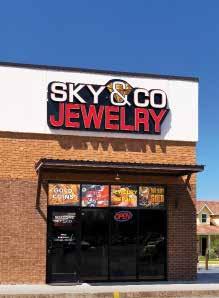
Jewelry often marks life’s most meaningful moments— an engagement, a wedding, a family heirloom passed from one generation to the next. For jeweler Efrain Montes, those moments are exactly what make the work so rewarding.
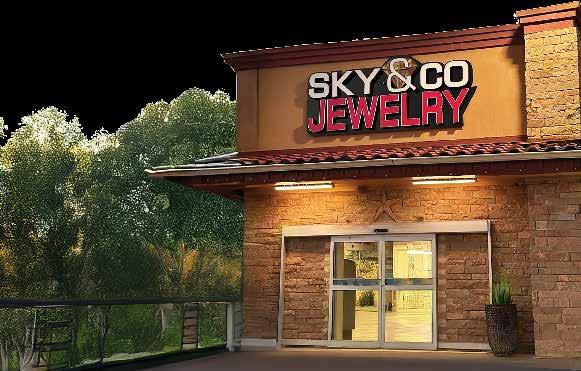
As the owner of Sky & Co Jewelry, Efrain has built a reputation for craftsmanship, personalized service, and attention to detail that keeps customers returning whenever they have something special to celebrate or restore.
But the journey to becoming a trusted local jeweler didn’t begin in Texas. Efrain originally lived in Chicago before moving to Georgetown to help his sister with her marketplace business. What began as a family move eventually became the foundation for a new chapter, one centered on a craft he had already spent decades perfecting.
He first learned jewelry repair at just 19 years old. What started as an opportunity to learn a technical trade quickly became a passion. Over the years, he developed the hands-on skills that allow jewelers to bring worn, broken, or outdated pieces back to life.
That early start eventually grew into more than two decades of experience working with precious metals, gemstones, and custom designs. Today, those years of knowledge form the backbone of Sky & Co Jewelry.
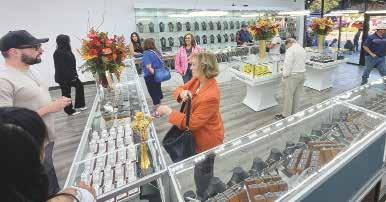
Located in Georgetown with an additional location in Taylor, the store offers a wide range of services, from engagement rings and bracelets to watch batteries, repairs, engraving, cleaning, and appraisals. The shop specializes in helping customers design or select jewelry that reflects personal milestones.
While many jewelry purchases today happen online, Efrain believes the in-person experience still matters.
Jewelry is not only valuable, it is deeply personal. Customers often arrive carrying pieces with emotional history: a ring that belonged to a grandmother, a necklace that broke after years of wear, or a diamond waiting to become part of a new engagement ring.
Helping customers preserve those memories is one of the parts of the job Efrain enjoys most.

“Every piece tells a story,” Efrain often explains when describing the work.
That philosophy guides the way Sky & Co Jewelry approaches both custom design and repair. Rather than simply selling products, the shop focuses on helping customers create or restore pieces that will continue to hold meaning for years to come.
Custom design has become one of the store’s most popular services. Customers frequently arrive with an idea—a sketch, a photograph, or simply a concept—and work with the jeweler to turn it into a finished piece. The process allows them to create something unique, whether it’s an engagement ring designed from scratch or a new setting that incorporates stones from family jewelry.

That combination of craftsmanship and collaboration helps set Sky & Co Jewelry apart from larger chain retailers.
In an industry where mass-produced pieces are common, Efrain emphasizes the importance of understanding the materials and techniques that go into making jewelry last. Proper repair, stone setting, and metalwork all require experience and precision.

For many customers, having access to a skilled jeweler who can perform those services locally makes a significant difference.
Community relationships have also played a major role in the growth of the business. Serving customers in Georgetown and Taylor has allowed Efrain to build connections with families who return for multiple milestones—engagements, anniversaries, birthdays, and graduations.
Over time, those visits become more than transactions. They become part of a shared story between the jeweler and the community he serves.
As Sky & Co Jewelry continues to grow, Efrain remains focused on the same principles that first drew him to the craft: attention to detail, pride in the work, and appreciation for the moments jewelry represents in people’s lives.
For Efrain, the work is about far more than precious metals and gemstones. It’s about helping customers celebrate the events that matter most—and creating pieces that will carry those memories forward for generations.

by Ann Marie Kennon
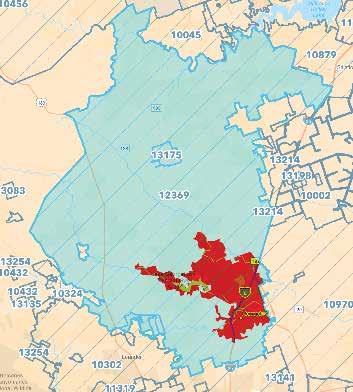
THE MAY ELECTION ASKS VOTERS IF THE CITY (RED) SHOULD TRANSFER PORTIONS OF ITS WATER SERVICE AREA (AQUA) OUTSIDE THE CITY LIMITS TO ANOTHER PROVIDER
When Georgetown voters head to the polls on May 2, they will be deciding whether the city should sell part of its water service territory outside the city limits. The territory is defined by what’s called a Certificate of Convenience and Necessity, or CCN.
In Texas, a CCN grants a utility the exclusive right and the legal obligation to provide water service within a specific geographic area.
Georgetown’s CCN stretches far beyond the city itself, covering roughly
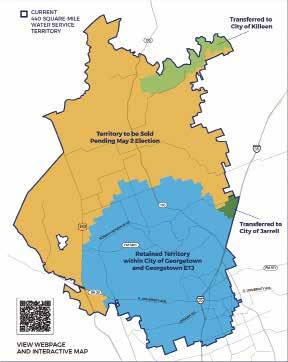
440 square miles across William son County and into portions of Burnet and Bell counties. Mayor Josh Schroeder says that territory grew over time as the city expanded and acquired neighboring water systems.

Decades ago, rural water providers like Jonah Water and the Chisholm Trail Special Utility District served farms and rural properties surrounding Georgetown. As the city expanded westward, Georgetown purchased the Chisholm Trail system to
While the city provides water service to those areas, it does not control development there. Properties located inside a CCN have the legal right to request water service. That means utilities generally must provide water connections when development occurs.
ensure development near the city had access to water infrastructure.
However, state regulators required the city to purchase the entire service territory rather than only the areas closest to Georgetown. “That led to us having a 440-squaremile water service territory,” the mayor explains. Today, a significant portion of that territory lies outside Georgetown’s city limits and outside its extraterritorial jurisdiction (ETJ).
Under Texas law, Mayor Schroeder says, utilities cannot refuse those requests. “If someone owns land in that territory, they can come to us and say, ‘give me my water,’ and we are required by law to provide it,” he says. As surrounding communities like Liberty Hill, Jarrell, and Florence continue to grow, that legal obligation could require Georgetown to build additional water infrastructure far outside the city.
City leaders say the proposal is about managing long-term water planning and infrastructure costs. When Georgetown evaluated its future water needs, officials determined the city would need a large additional supply of groundwater to serve the entire 440-square-mile territory. Much of that water would likely need to come from the Carrizo-Wilcox aquifer in East Texas, requiring major infrastructure and the construction of long-distance pipelines, which city officials say is an investment that could cost billions over time.
Another factor is how infrastructure costs are shared. Under the current model, existing ratepayers typically help fund part of the infrastructure required for new development. That means Georgetown residents could end up paying a significant portion of the cost to build water systems serving areas well outside the city.
“The sale of the water service territory frees Georgetown residents from the obligation to serve water to areas well outside the city.X”
— Mayor Josh Schroeder
Under the proposal, Georgetown would sell the portion of its CCN located outside the city limits and ETJ to a private utility provider. The selected buyer, affiliated with Bernard Capital Partners, would assume responsibility for operating the system, building future infrastructure, and securing additional water supplies needed to serve that area.
If Georgetown voters approve the measure, the city will move forward with final agreements and submit the transaction to the Texas Public Utility Commission for approval.
The state will evaluate whether the buyer has the financial resources, operational experience, and long-term water plan necessary to serve the area.
City officials say the change could reduce Georgetown’s long-term water demand by about 60 percent by 2070, allowing the city to focus on meeting the needs of residents within Georgetown and nearby areas.

“They get the obligation to go find the water and serve that entire area,” Mayor Schroeder says. The proposed transaction would transfer both existing infrastructure and the responsibility for future service to the new utility.
It is important to note the city would not be transferring its water rights as part of the sale.
If voters reject the proposal, the city would continue operating the entire 440-square-mile service territory.
That would mean Georgetown remains responsible for building infrastructure and securing additional water supplies needed to serve future development in those areas, and;
Continued investment in groundwater projects and infrastructure to supply growing communities outside the city.
“A no vote means the city continues to serve water in that area and continues to pay its share of the cost of infrastructure and groundwater needed to support it,” the mayor says.
ELECTION DAY: May 2 • Early Voting: April 20–28
BALLOT QUESTION : Whether Georgetown should authorize the sale of part of its water service territory outside the city limits.











In a profession often measured in transactions and dollar signs, the leadership at Keller Williams Realty Lone Star in Georgetown insists the real metric of success looks very different.
It looks like relationships, integrity and, above all, like people who genuinely care about the lives they touch and the community they serve every day.
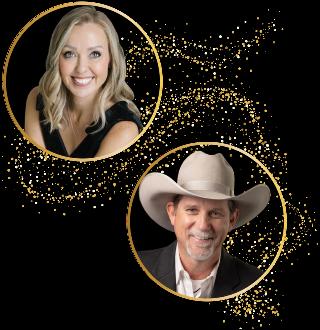
For nearly five decades, broker-owner Avis Wukasch (above) has been a central figure in Central Texas real estate. Colleagues across the state often refer to her as a “legend,” though the label seems to make her a little uncomfortable.
she recalls. “I began reading everything I could about leadership.” Over time, Avis became a devoted student of leadership author John Maxwell, whose teachings continue to influence her approach to mentoring others. This year, the brokerage will even host Maxwell’s Five Levels of Leadership training for its Agents as part of its ongoing commitment to professional growth. Decades later, her mission remains the same: develop leaders who will influence others.
“My
personal mission in life
is to

“I just do what I do,” Avis says with a quiet smile. “Most of the time I do my best to do what I believe I’ve been called to do.” That sense of calling has shaped not only her career, but the culture of the brokerage she leads. She traces much of that philosophy back to her early decision to join Keller Williams Realty, due to the company’s values: God, family, and business
“We’re not saying everyone has to believe exactly the same things, but those values shape the way we run the company and the way we treat people," she says. "We believe we lead where we live and serve where we sell."
Her focus on leadership began years ago when an early mentor told her she was managing well—but not truly leading. “That started my journey,”
make a difference in the lives of others who will make a difference in the lives of others.”
Market Center Leader Laura Stofle says that philosophy naturally attracts a certain kind of professional. “We value people who value people,” she says.

Each Keller Williams office is independently owned and operated and the Lone Star office includes top-producing agents, industry educators, board presidents, and leaders involved
in regional and national real estate organizations. Yet Laura says the accolades are simply the byproduct of something deeper. “The awards come from relationships,” she explains. “Our people build their businesses on successful transactions and referrals. The recognition is just the result.”
What she checks most closely isn’t production numbers. “I’m not watching the data as much as the people they’re becoming,” she says. “When they start standing out as leaders, that’s when I know we’re succeeding.”
According to Laura, agents often say the same thing when asked what stands out about the Georgetown office. “The collaboration. The people,” she says. Rather than competing, agents share knowledge and mentor one another.
“You’re never without help,” she says. “If you’re without help, it’s because you didn’t ask.” That accessibility extends to leadership as well. In a business that often runs seven days a week, Laura keeps her phone on from early morning until late evening to help agents navigate their business needs.
“We’re in a 24/7 industry,” she says.


“Our job as Leadership is to make sure no one feels like they're on their own.”
While real estate may appear transactional from the outside, Avis sees it differently. “For most people, buying a home is the biggest investment they’ll ever make,” she says. “But it’s also where they raise their children. It’s their safe place," and helping clients make that decision requires understanding what truly matters to them.
“What is it you need to accomplish by coming to Georgetown?” she asks. “You keep drilling down until you understand their ‘why.’”
At the same time, ethics and responsibility remain central to how the brokerage operates. “I’m probably one of the most risk-averse brokers you’ll meet,” Avis says with a laugh. “But that’s because we work hard to do things the right way.” That mindset is rooted in both professional standards


and personal conviction. “Texas law requires us to put our clients’ interests above our own,” Avis says. “But it’s also just the right thing to do.”
Service also extends into the community. Each year the office participates in Keller Williams’ international “Red Day,” when offices close to volunteer locally. Agents have supported local non-profits like the Caring Place, R.O.C.K., and several that advocate for the protection of children. “It’s one of my favorite days,” Laura says.
For Avis, the most meaningful impact often comes from small moments. She recently learned a simple kindness she showed a new student decades ago had left a lifelong impression. “I didn’t even remember it,” she says. “But it mattered to her. At the end of the day,” Avis adds, “it’s about how many people you can make a difference for.”
Keller Williams Realty Lone Star has over 140 agents who collectively hold dozens of industry awards, certifications, and leadership distinctions. The recognitions here represent only a portion of their accomplishments.



They look like tiny houses on posts—brightly painted boxes in front yards, outside schools, and along park trails—each filled with books waiting for their next reader. These Little Free Libraries turn ordinary spaces into miniature neighborhood book hubs designed to bring libraries even closer to the people they serve. What started as one small project in a Wisconsin yard has since grown into a global network dedicated to sharing stories and expanding access to reading.
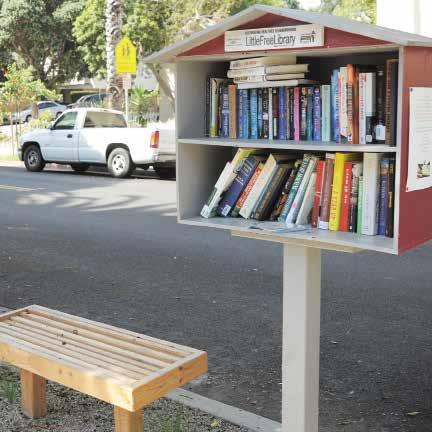

The first Little Free Library was built in 2009 by the late Todd Bol, a former teacher in Wisconsin. Todd constructed a small wooden box modeled after a one-room schoolhouse and mounted it on a post in his yard—a tribute to his moth-
er, a teacher and avid reader. He filled the miniature library with books and invited neighbors to borrow them freely. The concept was simple: “take a book, leave a book.” The idea quickly caught on. Todd partnered with Rick Brooks, a local university’s outreach program manager, to expand the concept and encourage others to build their own book-sharing boxes. Inspired in part by philanthropist Andrew Carnegie— who funded more than 2,500 public libraries in the early 1900s—they set a goal of surpassing that number with Little Free Libraries. They reached that goal in 2012 when the organization also became a registered nonprofit.
Today, more than 200,000 Little Free Libraries have been serving bibliophiles in 128 countries. The nonprofit behind the movement works to expand access to books, particularly in communities where reading materials may be scarce. By placing books directly in neighborhoods, Little Free Libraries function as miniature community hubs—encouraging reading, sparking conversations among neighbors, and reminding communities that sharing stories can begin right on their own street.
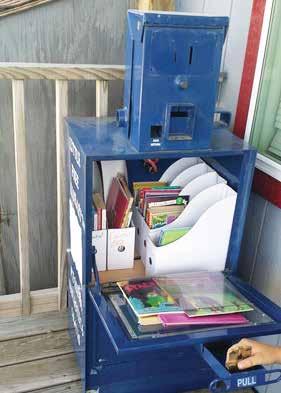
Riverside Resource Center – This Little Free Library, repurposed from a newspaper stand, serves a bilingual, low-income community in east Georgetown. Find it on the porch of the Riverside Resource Center at 7275 E. Highway 29.
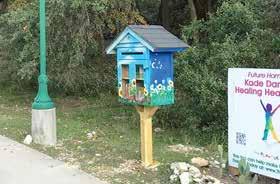
The Playful Child – Located along the San Gabriel River Trail, this library was placed by The Playful Child, a Georgetown nonprofit founded in memory of Kade Damian and his joyful, playful spirit. 1306 Country Club Road
Rentsch Brewery – A family-friendly Little Free Library stocked with children’s books, coloring activities, and titles for adults. It’s the perfect spot to relax and read together in the beer garden while kids enjoy a soda and parents sample local brews. 2500 Northeast Inner Loop
Visit LittleFreeLibrary.org or download the Little Free Library app to discover even more book-sharing spots around Georgetown.

Inspired by the Little Free Library movement? Here’s how to start your own mini neighborhood library:
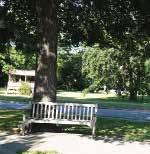
IDENTIFY A LOCATION AND STEWARD: Choose a spot where you can legally and safely install the library. The location should be visible and have regular foot traffic. You’ll also need at least one steward—a caretaker who helps promote the library and keeps it clean and welcoming.

GET A LIBRARY:
You can build your own, hire someone locally to build one, or purchase a readymade library through the Little Free Library website.

REGISTER YOUR LIBRARY:
Registration connects you to a network of support and benefits, including an official charter sign engraved with a unique charter number. Libraries purchased through the Little Free Library online store are automatically registered and include a charter sign.



BUILD SUPPORT:
Spread the word in your community. Contact local media, tell friends and neighbors, and use social media to encourage participation. The more people who know about the library, the more it will thrive.

ADD YOUR LIBRARY TO THE WORLD MAP:
Celebrate with a grand opening—invite neighbors, hold a ribbon cutting, share snacks, and exchange books. Take photos and add your library to the Little Free Library world map online to connect with the wider network of stewards.
To learn more about Little Free Libraries, scan the code to visit The Little Free Libraries website.










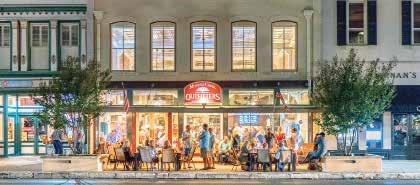

What started as one experiment has quietly grown into several of the most recognizable businesses on Georgetown’s Historic Square.
Cody Hirt and Brad Strittmatter opened Mesquite Creek Outfitters nearly a decade ago. At the time, neither expected the project to grow into a collection of restaurants, retail spaces, and gathering spots many locals now associate with the heart of downtown. “We were actually looking at opening Mesquite Creeks in other towns,” Cody says. “But then we had a conversation with David Morgan, the city manager, and he said, ‘I love that for you guys, but I’d also love to see you reinvest in Georgetown.’ That really shifted our focus.”
Instead of expanding outward, the partners began expanding here at home. Within months they were working on their next concept, the upscale Golden Rule restaurant, followed by additional projects that now include casual dining, retail, and pop-up experiences around the Square.
“We didn’t want to sit back and complain about growth,” Cody says. “We wanted to help steer it a little bit.” Part of that vision was creating spaces where people naturally come together. Over the years Mesquite Creek Outfitters has hosted everything from game nights to political rallies, earning a nickname from one local: Georgetown’s living room. “One year we had a couple send us a Thanksgiving photo,” Cody says. “The first year it was just the two of them sitting here. The next year there were more than 40 people in the photo. They said they met all those friends at Mesquite Creek.”
That same community-minded approach has influenced other businesses as well. Brad and Cody helped the team behind Tejas Meat Supply rethink their concept from a traditional butcher shop into a casual restaurant and hangout spot on the Square—a shift that has proven so successful the owners just opened a second location in Round Rock.
Brad says the guiding idea behind each concept is simple; “Our goal is to build community and serve others,” he says. “If we enjoy it, we hope other people will too.”
That philosophy even shows up in the details. Fireplaces anchor several locations because, as Cody explains, “A lot of your best stories happen sitting around a fire.”

The partners have also expanded the idea beyond downtown with Camp Briteside, an outdoor gathering space that combines food, fishing retail, and a large play area designed with families in mind.
Some stories are reflected in the décor. The mounted animals that line the walls of Mesquite Creek Outfitters sometimes surprise visitors, but many represent something deeper. Several are tied to trips the partners have taken with Veterans Outdoors, including one with a combat veteran who lost both legs in service. Moments like that remain reminders of the friendships and experiences that came from those trips.
Family also plays a role in the businesses. Three of their five children already work with them, and Brad’s oldest son Joe started helping when he was 13.
Both say their upbringing shaped how they run their businesses. Cody grew up on a West Texas farm where fixing problems yourself was a way of life, while Brad moved frequently as the son of an Air Force pilot. “Those experiences gave us a can-do attitude,” Cody says. “And the partnership helps too. If one of us is down, the other one is usually up.”
The Square itself has changed dramatically over the past decade, evolving into a destination filled with boutiques, restaurants, art galleries, and events. Brad believes downtown’s success depends on maintaining that balance. “It can’t all be restaurants or boutiques,” he says. “We need a healthy mix.”
Local ownership also helps preserve Georgetown’s character. “We want to see local owner-operators here,” Cody says. “We don’t want some big box store coming in and messing up the vibe.”
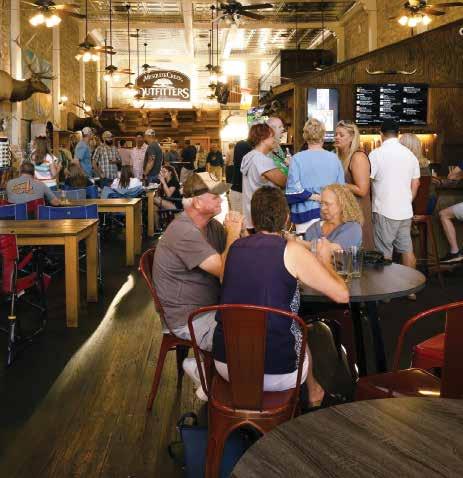
Looking ahead, the partners believe the Square is in a strong place. “I think we’ve got a great mix of businesses run by great people,” Brad says. “It’s a pretty good time to be on the Square.”
If Cody has his way, the future will still look much like the present—children playing near the courthouse while parents relax nearby.
“In ten years,” he says, “I still want to see kids running around the Square while the parents feel comfortable enough to sit back and enjoy it.”
For Cody and Brad, success isn’t measured only by business growth, but by the community that gathers around it.

In my first article of this three-part series on education, I covered the 89th Texas Legislature’s historic investments into public education and empowerment of parents to keep the public education system accountable. In the second, I covered the steps Texas has taken to ensure freedom of speech and academic excellence for our institutions of higher education.
For the third entry in the series, let’s look at how our institutions of higher education serve as economic engines, national security assets, workforce pipelines, and hubs of innovation, and how the 89th Texas Legislature acted to safeguard those vital functions from intellectual property theft, including espionage from foreign adversaries.
From stories of professors stealing research to sell for personal gain, to well-meaning but naive researchers partnering with their counterparts in adversarial foreign governments, to repeated accusations of how taxpayer money is wasted on niche research without obvious real-world application, universities across our nation have lost the trust of the public when it comes to research and innovation.
This last session, Texas took the lead in restoring that faith, taking steps to restructure our institutions to focus on

good stewardship of taxpayer funds, both in what research they choose to fund and in how they protect that research.
This last session, Texas took the lead in restoring that faith, restructuring our institutions to focus on stewardship, security, and measurable outcomes. In doing so, Texas did not just respond to national concerns. We built the first comprehensive, statewide frameworks aligning research, economic development, and national security. Other states are now beginning to follow that model.
Texas does not just compete with other states for jobs anymore. We are competing for entire industries built over time through research, workforce development, and strong partnerships between universities, industry, and government. The work happening inside our public universities is directly tied to the future of sectors like semiconductor manufacturing, artificial intelligence, biotechnology, energy systems, and aerospace. These are not abstract ideas. They shape our ability to remain competitive as a state.
Federal funding trends reflect this shift. Research dollars are being directed toward large, coordinated efforts that bring multiple institutions and industry partners together. These projects are designed to move ideas beyond the lab and into real-world application. That means the way states compete has changed. It is no longer about one university outperforming another. It is about whether a state can operate as a connected system that can deliver results at scale. If Texas wants to continue leading, we must recognize that reality and act accordingly.
When I was first elected as your State Representative in 2016, Texas only had 3 major research universities, one of which was private. I knew that our state could, and must, do better. As Chairman of Article III of Appropriations, which oversees funding our public and higher education institutions, I worked with leaders in both chambers to help lay the groundwork for the Texas University Fund (TUF), which was passed the following session.


The TUF set aside $1 Billion into an investment fund. The proceeds from those investments are used to fund research in universities across our state that previously did not have access to a reliable stream of research funding. With TUF funds, they are able to make long-term research investments, which can yield greater long-term benefits for the state.
Texas is now leading the nation in the number of research universities classified as “Tier 1” by the Carnegie Institute, with 16 in total. However, that distinction only tells the world that those institutions spent $50 million per year on research, which doesn’t mean much on its own. What matters is not only how much we spend, but that those investment produce quality, relevant research that advances our position as a global economic leader.
Texas institutions of higher education maintain strong relationships with the energy, aerospace, healthcare, and advanced manufacturing industries, ensuring that research investments drive job creation and economic growth, not pet projects. Our growing economy continues to attract talent and investment across the country,

but coordination across institutions remains a challenge.
Universities naturally compete for talent and funding, but Texas policy is increasingly structured to ensure that institutions also operate collaboratively. The Coordinating Board’s research planning framework explicitly requires institutions to demonstrate cross-disciplinary collaboration, partnerships with other Texas institutions, and alignment with regional economic priorities. Competition can encourage excellence, but we succeed better when we work together rather than competing against each other as isolated campuses.
The more competitive the research initiative, the larger and more multidisciplinary the team required to accomplish the goal. Coordinated research networks allow companies and government partners to move in the same direction.
Texas has the talent and institutional capacity to compete at that level. Achieving that goal requires viewing the state’s universities as components of a broader innovation system and keeping that system secure from foreign influence and the potential theft of the research they produce

Research security is ultimately about maintaining trust. Federal agencies require institutions to demonstrate strong security standards when awarding funding for classified research projects with the Departments of Defense, Energy, Commerce and Agriculture, which comprise the largest research and development budgets worldwide. Texas recognized early that research security is not just about preventing bad outcomes, it is about enabling growth. Rather than wait for mandates, Texas acted ahead of most of the country to build a structured, statewide approach to research security that allows institutions to collaborate, compete for federal funding, and engage with industry while protecting sensitive research.
Our universities are required to maintain policies to handle secure academic research by keeping intellectual property secure from international espionage and foreign governments so that Texas remains a research destination for industry nationwide. Industry research attracts proprietary industry partnerships like advanced manufacturing, supply-chain investment, and the jobs that follow.
The development of Silicon Valley provides a well-known example. Federal investment in university research during the early decades of the technology industry helped create collaborative networks that laid the foundation for one of the most productive innovation regions in the world.
The benefits from securing our research institutions lead to the passage of SB 1565 in 2023, creating a Research Security Officer (RSO) position at each Higher Education Institution in Texas with research capacity. SB 1565 made the SROs responsible for handling classified information, controlled unclassified information (i.e. trade secrets and proprietary designs), and foreign influence reporting.
SB 1565 made the RSOs responsible for handling classified information, controlled unclassified information (i.e. trade secrets and proprietary designs), and foreign influence reporting.
With those positions established, last year I authored and passed HB 127, which formed the Research Security Council, bringing all the RSOs across Texas together to develop best practices, create a common framework, and allow participating institutions to share information about potential security threats.
HB 127 also increased research security by requiring RSOs to review and vet all gifts, grants, and donations to a university or university employee from an adversarial foreign government, an organization or individual acting on behalf of an adversarial foreign nation, or any group, individual, or organization identified as a potential security threat by the Governor. It also placed those same vetting requirements on all cultural exchange programs within institutions of higher education.
HB 127 established enforceable accountability measures to ensure compliance. Institutions must certify adherence to research security requirements as a condition of receiving state appropriations, are subject to periodic audits by the State Auditor, and must cure any identified violations within a defined timeframe. Failure to do so can result in loss of eligibility for future funding. The bill also reinforces existing institutional consequences by integrating research security requirements into university policies and aligning violations with existing criminal statues related to theft of trade secrets.
HB 127 created consistency across Texas institutions and prevents conflicting standards for universities collaborating on major research projects. This approach is supported by efforts such as the Academic Security and Counter Exploitation Program, which focuses on protecting research from espionage and intellectual property theft while allowing legitimate collaboration.

Innovation depends on partnership, but those partnerships must be built on transparency and mutual benefit.
The goal is not to slow progress, but to ensure it can be secure and sustainable. Without a shared commitment to research integrity, Texas cannot fully scale its research ambitions. Building a state-of-the-art secure research ecosystem will require funding, but it is a proven investment direly needed to get our state not just to the top ranking, but to the top of our true potential.
Since 2009, the Texas Higher Education Coordinating Board has required every research university and emerging research university to develop long-term Strategic Plans for Research, creating a statewide framework that aligns institutional priorities with Texas’ economic and workforce needs.
These are not abstract exercises. They require institutions to clearly define their research priorities, demonstrate how those priorities will translate into economic impact, expand partnerships across institutions and industry, and align doctoral education with high-demand workforce needs. This framework reflects an important reality; research ecosystems are built over decades, not 2-year funding cycles. Long-term planning allows institutions to make sustained investments in talent, infrastructure, and partnerships that support continued growth and competitiveness. Today, Texas is building on to that foundation. For the first time, the state is pairing research security with a structured research strategy, ensuring that growth in research capacity is coordinated, accountable, and directly tied to economic development.
Throughout this series, there has been a focus on accountability, workforce readiness and maintaining strong academic standards within higher education. Research plays an important role in supporting this series expositionWorkforce initiatives ensure graduates are prepared for the evolving economy. Governance reforms strengthen institutional accountability. However, research drives the discoveries, technologies, and industries that power growth.
Workforce initiatives ensure that graduates are prepared for the evolving economy. Governance reforms strengthen institutional accountability. However, research drives the discoveries, technologies, and industries that power growth.
Research security policies protect intellectual property and integrity of the state’s research enterprise. Strategic planning encourages institutions to align their efforts with statewide priorities. Greater coordination allows universities to pursue larger research initiatives and attract greater investment.
Together, these efforts create the foundation for a modern

research ecosystem.
Texas already possesses the talent, institutions, and economic strength necessary to lead the nation in research-driven innovation. The challenge ahead is ensuring that these assets operate as a coordinated system rather than in isolation.
The state will remain positioned to build one of the most secure and competitive research economies in the country as long as Texas protects its research enterprise and aligns its institutions toward shared goals.
The next chapter of Texas prosperity will not be defined by any one university or policy. It will be defined by how well we integrate them; into a system stronger than the sum of its parts.and competitive research economies in the country as long as Texas protect its research enterprise and aligns its institutions toward shared goals. The next chapter of Texas prosperity will be bound by the strength of the systems that are built together.










by Charlotte Kovalchuk

April in Central Texas is the sweet spot between winter’s hibernation and summer’s relentless heat— the perfect time to rethink what a regular fitness routine looks like for you.
For many, that means stepping away from treadmills and weight rooms and taking things outside. Across Williamson County, parks, trails, and open spaces offer countless ways to move your body that feel less like a workout and more like a fun outdoor adventure. Whether you’re looking for a low-impact activity, a friendly competitive sport, or a full-day nature outing, there’s no shortage of ways to get out and enjoy the spring season.

Since the pandemic, pickleball has exploded in popularity as a safe, accessible sport for players of all ages and abilities. A hybrid of tennis, Ping-Pong, and badminton, it’s easy to pick up and made for social play. One of the best things about pickleball is its flexibility—you can play on converted tennis, basketball, or volleyball courts. Throughout Williamson County, dedicated courts make it easy to grab a paddle and play.
1. GEORGETOWN TENNIS CENTER: Dedicated courts with a structured, club-style feel. Reservations required. Cost: $2/hour per person. 400 Serenada Dr
2. MCMASTER ATHLETIC COMPLEX: Casual courts ideal for drop-in play and beginners. 101 Walden Dr. Cost: Free
3. GEORGETOWN RECREATION CENTER: Indoor and outdoor options with leagues and programming. Cost: Free for members / $5 day pass. 1003 N Austin Ave
4. SOUTHWEST WILLIAMSON COUNTY REGIONAL PARK: Spacious courts in a multi-use park setting. Cost: $2/day or $50/year. 3005 Co Rd 175, Leander
Central Texas offers trails that turn a hike— whether a short loop or a full-day trek—into a memorable experience. From gentle paths for beginners to challenging terrain for seasoned hikers, there’s something for every skill level and sense of adventure.
1. THE GOOD WATER TRAIL LOOP offers one of the region’s most ambitious experiences—a 28mile loop around Lake Georgetown that doubles as one of Texas’ few thru-hikes. While some take it on over multiple days, others challenge themselves to complete it in a single push, navigating everything from rocky hills to open grasslands.

2. For something slower paced, the CEDAR PARK SCULPTURE GARDEN blends art and nature into an ever-changing outdoor gallery. With sculptures rotated twice a year, each visit offers something new and engaging for both body and imagination. Find the sculpture garden next to the Cedar Park Recreation Center, 1435 Main Street.
3. Further south, the VIOLET CROWN TRAIl continues to expand as Central Texas’ first regional trail system. Stretching from Zilker Park in Austin toward the Lady Bird Johnson Wildflower Center, it connects neighborhoods, green spaces, and scenic landscapes in one continuous route.
4. For those craving something more immersive, the PECAN SPRINGS KARST PRESERVE offers guided hikes through a 1,205-acre protected ecosystem rich with native plants and wildlife. Located in northern Williamson County just five miles west of Jarrell, this preserve gives hikers the chance to observe wildlife, learn about conservation, and enjoy the Hill Country landscape. A guided hike is scheduled for 9am on Sunday, April 19. Admission is $10 per person, and registration is available at HillCountryConservancy.org.

If you’ve ever noticed metal baskets scattered through a park, you’ve probably come across a disc golf course. The game follows the same basic idea as traditional golf—make your way through a series of holes in as few throws as possible—but swaps clubs and balls for flying discs. Set in public parks, courses use trees, hills, and open space as natural obstacles, making each round feel a little different. Here are a few local courses to check out:
1. SAN GABRIEL PARK, PINNACLE PARK, RIVERY PARK: Georgetown offers a well-rounded mix for all skill levels. San Gabriel Park and Pinnacle Park are both 9-hole, beginner-friendly courses—great for families, quick rounds, or learning the game, with shorter holes and lighter technical demands. Rivery Park’s 18-hole course adds more variety,
with longer fairways, some elevation, and a balance of open and wooded play.
2. WILLIAMSON COUNTY
DISC GOLF COURSE: Known locally as “Wilco,” this 18-hole course in Leander is one of the most challenging in the area, with long, tightly wooded fairways that demand precision and control.
3. OLD SETTLERS PARK
DISC GOLF COURSE: A staple of Round Rock’s sports culture, this 18hole course is known for its tight, tree-lined fairways and emphasis on accuracy over distance. A solid step up for players looking to refine their game.
4. FLYING ARMADILLO
DISC GOLF CLUB:
A destination course an hour’s drive from Georgetown in San Marcos, featuring both a full 18-hole championship course and a quirky 18-hole mini course with creative obstacles.
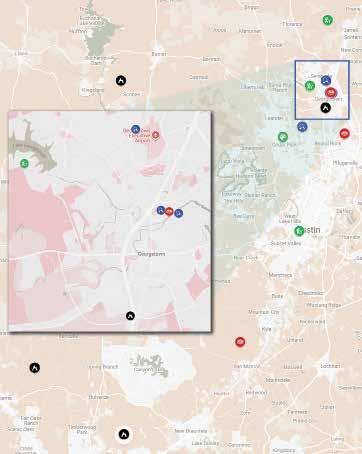

From beginner-friendly tours to wild, off-path ones, the Texas Cave Trail—five show caves around the state—offers excursions for caving enthusiasts of all skill levels.
1. CAVE WITHOUT A NAME: Enjoy an hour-long, quarter-mile tour of the cave that was “too pretty to have a name.” 325 Kreutzberg Road, Boerne
2. CAVERNS OF SONORA: In addition to touring the caverns in Sonora, visitors can pan for gemstones as well as camp on the ranch grounds. 1711 Private Road 4468, Sonora
3. INNER SPACE CAVERN: Explore lit, paved trails on the Adventure Tour, venture off the beaten path on the Hidden Passages Tour, or test your skills with hiking,

crawling, and climbing on the Wild Cave Tour. 4200 S I-35 Frontage Road, Georgetown
4. LONGHORN CAVERN: In addition to cave tours, visitors can enjoy hiking and picnicking at the Longhorn Cavern State Park as well as camping, boating, and other outdoor fun at the nearby Inks Lake State Park. 6211 Park Rd 4 S, Burnet
5. NATURAL BRIDGE CAVERNS: Embark on an adventure in the largest cave in Texas, and above ground, find your way through an outdoor maze, pan for treasure, and test your agility on a ropes course and zip rails. 26495 Natural Bridge Caverns Rd, San Antonio








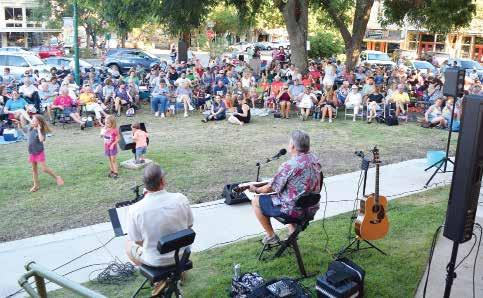
While Austin may be dubbed the Live Music Capital of the World, you don’t have to brave the traffic or fight the crowds to enjoy a great show here in Central Texas. This spring, live music series are returning across Williamson County, with the sounds of local bands and family-friendly tunes filling parks, plazas, and downtown restaurants.
The tradition of live public music dates back to 18th- and 19th-century Europe, where bandstands were built in town squares to bring music out of elite concert halls and into everyday life. These performances turned central plazas into social hubs where communities gathered not just to listen, but to connect.

The United States embraced—and expanded—that idea. During the 19th and early 20th centuries, towns across the country hosted regular concerts in courthouse squares, parks, and public green spaces. Free performances became part of civic life, bringing together growing and increasingly diverse communities.
In Texas, the tradition took on its own character. Alongside courthouse concerts, live music flourished in dance halls, saloons, and open-air venues, blending community gatherings with regional sounds like country, blues, and folk.
Today’s concerts on courthouse lawns and in community parks across Williamson County carry forward that tradition, proving that live music remains one of the simplest ways to bring people together.
From historic downtowns to neighborhood parks, several spring and summer concert series are bringing music back to local gathering spaces:
First Friday Music on the Square (Georgetown): On the first Friday of each month from March through November, the historic courthouse lawn comes alive from 6–8 p.m. with live bands, lively crowds, and after-hours shopping.
Live Music at the Georgetown Public Library: Free concerts take place at 2 p.m. on the third Sunday of each month, featuring classical soloists, jazz ensembles, folk groups, and more.
Music on Main (Round Rock): This long-running series brings Wednesday evening concerts downtown throughout the spring and summer. Guests are encouraged to bring lawn chairs or blankets. The city also hosts Hometown Lunchtime Parklet Shows from March 31 through June 25 on Tuesdays and Thursdays from 11:30 a.m. to 1 p.m.

Music on Main (Taylor): Held in Heritage Square, this spring series showcases Austin-area bands performing Latin rhythms, fusion styles, and Texas Americana. Concerts run March 19, April 16, and May 21 from 7–9 p.m.
Live @ Lakeline (Cedar Park): Lakeline Park hosts evenings of music, food trucks, lawn games, and family activities. This year’s lineup includes Madam Radar (April 3), The Capitol (April 17), Lover: A Taylor Swift Tribute Band (May 1), and the WILCO Symphony (May 15).
Live music isn’t limited to parks and public venues. Many local restaurants and gathering spots now feature regular performances:
Tony & Luigi’s • Tuesday & Thursday, 6–9 p.m.
Roots • Wednesday–Sunday, 7–10 p.m.
Juliet Italian Kitchen • Wednesday & Thursday, 5:30–7:30 p.m.
Sweet Lemon Kitchen • Thursday–Saturday, 5:30–8:30 p.m.
Georgetown Winery • Friday 4:30–7:30 p.m.; Saturday & Sunday 2–5 p.m.
Jack’s Lounge at the Sheraton • Tuesday–Saturday, 6–9 p.m.
Ichiro Asian Bistro • Friday & Saturday, 6–9 p.m.
The Summit at Rivery Park • Friday & Saturday, 5–9 p.m.
South Fork Food & Fun • Saturday, 7–9 p.m.
For many local businesses, live music isn’t just entertainment—it’s part of the atmosphere.
Tony & Luigi’s owner Jamie Cohen has seen how different styles of music can shape the experience from one night to the next. On Tuesdays, guitarist Jack Mason performs relaxed pop and rock favorites from the ’60s, ’70s, and ’80s, creating what Jamie describes as the perfect background vibe for families and date-night diners alike.

“Someone will hear a reworked Beatles song like Penny Lane and suddenly go, ‘Wait a minute—I know that song,’” Jamie says. “It adds warmth and nostalgia to the whole experience.”
By Thursday, the mood shifts. Performer Ken Cruse leans into Rat Pack-era classics, bringing a crooner-style energy to the room. While the music resonates with longtime fans of the genre, Jamie says younger guests often discover it for the first time.
“Tuesday is about comfort and conversation,” he explains. “Thursday is more of a show—people are engaging with the performer and singing along.”
Whether it’s background melodies over dinner or a full outdoor concert under the Texas sky, live music continues to transform everyday spaces into places where community, connection, and lasting memories are made.


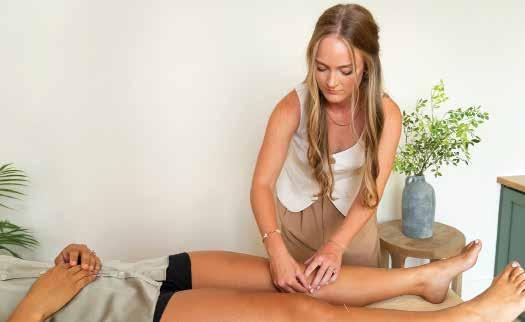
For many people in Georgetown struggling with chronic symptoms that haven’t responded to other treatments, relief can feel out of reach. Raegan Raguse knows that frustration well. When she first tried acupuncture as a high schooler, she was skeptical and nervous. “I’ve always been wary of physical pain, so the idea of needles wasn’t appealing,” she says. What surprised her wasn’t just how gentle the treatment felt—it was how effective it proved to be. She initially sought relief for digestive issues, later turning to acupuncture for hormonal imbal-

ances, chronic headaches, and fertility support. Years later, that experience came full circle when she opened Silk and Stone Acupuncture in Georgetown.
Many of Raegan’s patients arrive with the same skepticism she once had. “Often, people come in after they feel like they’ve tried everything,” she says. “Seeing them experience real, measurable change—especially when they didn’t expect it—is incredibly rewarding.”
Each patient begins with an in-depth consultation exploring health history, lifestyle, and goals. From there, Raegan develops a personalized treatment plan that may include acupuncture, customized herbal medicine, or both. “There’s a start and an end to the plan,” she explains. “The goal is to not need me as quickly as possible.”


She specializes in women’s health concerns including PMS, irregular cycles, fertility support, and perimenopause, as well as insomnia, digestive disorders, migraines, chronic fatigue, inflammatory conditions, and autoimmune flares. Drawing from traditional Chinese medicine, she creates
customized herbal formulas to address hormonal balance, digestion, sleep, anxiety, and other persistent issues at their root. She also offers cosmetic acupuncture to naturally enhance collagen production, improve circulation, and leave skin refreshed and radiant.
who feel they've been dismissed or are unsure
Over the years, she has witnessed meaningful change through individualized care. One patient with long-term kidney challenges reported laboratory values improving to the strongest levels recorded in nearly two decades.
Another woman sought care after exhausting options for chronic constipation, persistent headaches, anxiety, and lingering post-COVID symptoms. Following a four-month customized herbal program, her digestion normalized, headaches became rare, anxiety eased, and she said she felt like herself again for the first time in years.
A patient struggling with hot flashes, insomnia, and digestive urgency began herbal treatment and soon realized she couldn’t remember her last hot flash—a welcome shift after months of discomfort. While each case is unique and results vary, these stories reflect Raegan’s commitment to addressing root causes and supporting lasting change.
What sets Raegan apart is not only her personalized approach, but her advanced education and specializations. She holds a bachelor’s degree from Texas A&M University, a master’s in Acupuncture and Integrative Medicine from AIMC Austin, and a doctorate in Acupuncture with a specialization in Chinese Herbal Medicine—an advanced credential not required to practice in Texas, but one that reflects her commitment to clinical excellence.
Just as important as her credentials is her connection to the community. A Georgetown native, Raegan grew up here and now makes her home here with her husband—also from Georgetown—along with their dogs and chickens. “Georgetown raised me. Opening Silk and Stone feels like coming home—not just personally, but professionally. I’m honored to bring this level of personalized, root-cause medicine to the community that shaped me.”
If you’ve tried everything and still don’t feel like yourself, real relief may begin with a different approach.

Ready to feel like yourself again? Scan the code to begin your own journey to balance, renewal, and lasting wellness.



Six million Jews, along with millions of other victims—including people with disabilities, homosexuals, political dissidents, and Black citizens—were murdered during the Holocaust that devastated communities throughout Nazi-occupied Europe. Numbers, however, don’t reveal the personal stories of countless individuals whose lives were drastically changed because of this historical event. That’s why each year, the Georgetown Public Library and local nonprofit Congregation Havurah Shalom of Sun City present a public program commemorating Holocaust Remembrance Day.
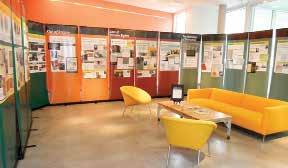
This year’s program, A Reason to Remember, narrows the lens from millions to five families in one small German village from 1933 to 1942. “There are many, many accounts of genocide during the Holocaust and many more are lost,” says Hutto librarian Angela Hartman, who has attended many Congregation Havurah Shalom programs focused on Holocaust education.
The program begins Sunday, April 12, from 2 to 4 p.m. in the Hewlett Room at the Georgetown Public Library with featured speaker Deborah Roth-Howe, the daughter of Holocaust refugees who escaped Germany and rebuilt their lives in Chicago. In her talk, she will recount the history of five Jewish families who lived in Roth (pronounced "Rōt"), Germany, a rural village where Jews had been part of community life for generations. They were neighbors, friends, and business owners. The men in these families had served in the German army during World War I.
A Reason to Remember’s 28-panel exhibit and accompanying eight-minute video traces the families’ lives from relative stability in 1933 through
Every single story is significant.
A Reason to Remember humanizes this historical event by introducing the individual people in these families.”

the steady tightening of Nazi persecution. Visitors will see how discrimination moved from rhetoric to policy, from social exclusion to systematic destruction.
What happened in Roth was a microcosm of what unfolded across Europe, and serves as a reminder of how easily history could repeat itself.
The goal of the exhibit, Congregation Havurah Shalom member Lenora Hausman says, is “to show the effects of prejudice and racial hate and the need to speak out against injustices. We need to remember history could repeat itself.” Angela agrees. “This exhibit not only explains the history of what happened to these specific families but is a reminder to students
and adults of what can happen when hate is not challenged and cruelty to people considered different or inferior is met with apathy.”
The Reason to Remember exhibit is free and open to the public, no registration required. Following the talk, the exhibit will remain on display at the library from April 13 through May 21 during regular library hours. Docent-led tours are offered daily for youth groups, private and homeschool students, church groups, and community organizations. The material is recommended for grade levels 6 and up.

1933 - Hitler appointed Chancellor
1935 - Nuremberg Laws strip Jews of their citizenship
1938 - Kristallnacht • Coordinated Nazi attacks destroying Jewish homes, synagogues, businesses, and lives
1941 - Deportations begin
1942 - Mass deportations and extermination camps begin systematically murdering millions


To schedule a tour or learn more about A Reason to Remember, scan the code to visit HolocaustExhibitGeorgetown.com.





GEORGETOWN ISD’S CTE PROGRAMS PREPARE STUDENTS FOR HIGH-SKILL CAREERS — AND A STRONG LOCAL WORKFORCE
Career and Technical Education (CTE) in Georgetown looks very different from what many adults remember as “vocational school.”
Today’s Future-Ready programs introduce students to robotics, advanced manufacturing systems, healthcare technology, culinary arts, and dozens of other high-demand careers, often using the same equipment and industry standards they will encounter in the workforce.
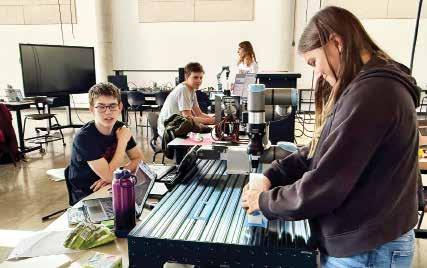
With 24 career pathways available, GISD’s CTE programs are a major part of the student experience. In fact, district data show 98.9 percent of students scheduled to graduate in the 2025–26 school year have participated in at least one CTE course. The goal is simple: prepare students for real opportunities after graduation, whether that means entering the workforce, earning certifications, or continuing their education.
“Career and technical education looks different today than what many people remember,” says Bretton Schulz, Director of CTE Programs. “We’re not preparing students to operate machines on an assembly line. We’re preparing technicians and programmers who understand how complex systems work and how to fix them when they don’t.”
Students on the newly-launched Advanced Manufacturing pathway get direct exposure to the technologies driving today’s industrial economy. In the classroom (above), they learn to work with robotics systems, automation technology, electrical circuits, and industrial controls, developing technical knowledge and the critical thinking skills needed in modern workplaces.
“Manufacturing is the subject or field where you try something, find out what went wrong, try again, and make a new mistake,” says senior Jed Ellis, describing the trial-and-error learning process that drives many classroom projects. And senior Aiden Sullivan says teamwork is just as important as technical skill. “Our manufacturing class is about teamwork and problem-solving,” he explains. “Whether we’re wiring AC and DC circuits or getting a robotic arm to move, we learn from what goes wrong and improve it together.”
Manufacturing teacher Terri Henry says the classroom environment is intentionally designed to mirror real manufacturing settings. “In the Advanced Manufacturing classroom, students collaborate and problem-solve in ways that reflect real-world manufacturing environments,” she says. “They’re developing the technical and employability skills needed for today’s workforce.”
A key part of the administration's approach is collaboration with local industry. Through the Georgetown Manufacturing Alliance, the district works with the Chamber of Commerce, city leaders, and manufacturers to ensure programs align with real workforce needs.
Companies like CelLink and other regional manufacturers help provide industry insight, guest speakers, and potential work-based learning opportunities. “The Advanced Manufacturing Program of Study reflects what can happen when education and industry work hand-in-hand,” says Dee Marrs, Vice President of Human Resources at CelLink.
“Students are gaining early exposure to the technologies and expectations that exist in today’s manufacturing careers.”
The results are already visible. In the 2024–25 school year, Georgetown students earned 1,277 industry certifications, including credentials in automotive technology, culinary arts, veterinary tech, healthcare assistants, and more.
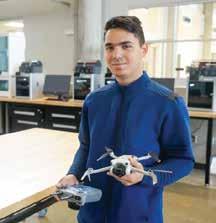
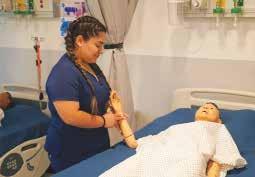
Many certifications come at no cost to students, and the administration is committed to helping remove barriers for families and giving graduates an immediate advantage in the workforce.
Communications Director Melinda Brasher says the benefits extend beyond individual students. As Georgetown continues to grow, strong CTE programs help attract new employers and support a skilled local workforce.
“We focus on programs that reflect high-need, high-wage jobs in our community,” Bretton says. “Our goal is to make sure students graduate with skills that translate directly into real opportunities.”
With advanced facilities, strong partnerships, and nearly every student gaining hands-on experience, Georgetown ISD’s CTE programs are helping build a future where students can live, work, and succeed in the very community where they grew up.






“Why didn’t we do this five years ago!” How many times have you heard that phrase? After nearly 20 wonderful, exciting, fulfilling years in Sun City, Gina and I finally decided to sell the house and move to an Independent Living Facility. Among the first things we said to ourselves after we settled in was: “Why didn’t we do this five years ago?”
So, why didn't we do this five years ago? Lots of reasons. First, we were well ingrained in the social structure of Sun City, enjoying the extensive amenities, and had fabulous neighbors. We had also become part of the governance structure, both in Sun City and in Georgetown. As I expressed at nearly every public forum in which I participated (and there were many): “Georgetown/Sun City is the best place we have ever lived, and we have lived in a lot of really nice places.” So why in the world would we even consider leaving?
Well, things change. Sun City and Georgetown didn’t change; in fact they got even better over the years. We changed. As we got older, our bodies began an ungraceful atrophy. It got harder to get out and enjoy the amenities. Even though we did our best to remain active socially, politically, and with volunteering, “getting there” became a chore. It was clear we needed to consider downsizing and take a serious look at some of the independent living facilities.
We dreaded the idea of moving into an “old folks home”. The thought of us in an apartment where neighbors were “a touch away”, suffering through institutional food, and having to beg property managers for even simple repairs, just wasn’t part of our game plan. So we delayed the decision for several years.
But last year it became apparent that either we were going to make the decision to downsize and move on our own, or circumstances would force that decision on us, at an inconvenient moment. We wanted to control our own destiny, so we made the decision to sell, downsize, and move.
We’ve been here for nearly a year and it’s obvious our concerns were entirely misplaced. Social interaction, physical activity, and healthy eating are keys to thriving after 55, and most certainly when you reach our ages. Now, and to my amazement, we’ve had more social interactions in the first months of living here than we had in the last few years in Sun City.
That’s not to denigrate Sun City; it’s just that we couldn’t get out and enjoy what we had there. Here we only have to open the door and the world awaits within the complex. There’s a wide array of exercises programs, ranging from Light and Lively in the morning (aka, "morning stretch”), to balance classes, to




more intense aerobics, to the very peaceful practice of yoga. Then there’s beanbag baseball (a sport in and of itself….), complete with teams and an eight-week recurring seasonal competition.
Board and card games abound. For musical entertainment, there’s karaoke (where the whole audience sings), and then a quarterly theater production (last time was Guys and Dolls, prior to that it was The Jungle Book).
There’s regular trips and tours (locally and to nearby sites) and an art studio (with a resident artist-teacher), a very active performing arts group, gardening, and a hair/nails salon. We have our own chapel, with resident pastors.
There’s a fascinating weekly lecture series, sponsored by several retired university professors, titled “Turning Points in World History”. We have both modern and “age appropriate” movies (i.e., oldies but goodies), and even old time radio with replays of programs from our youth!
The dining room is a socialization hub and the food is excellent, healthy, with multiple options, and a far cry from being “institutional food”. There’s no reserved seating, and sitting with a new person, or persons, is part of the lifestyle. People linger, stories are shared, as plans and new friends are made at the dining table. It’s not a restaurant; it’s home. And that’s nice.
Finally, yes it’s an older crowd, so we’re all “in the same boat”—but it’s a cruise boat! We have so many opportunities to do things that Gina and I have a “scheduling conference” each Sunday to make sure we’re not missing anything important, or, at the other end of the spectrum, wearing ourselves out. If you’re bored, or if you can’t find an activity to join, then it’s of your own volition. We love it!
So, “why didn’t we do this earlier?” Two reasons. First, we didn’t fully appreciate how isolated and insulated we had become by not being able to get out and
about as much as we had earlier. And second, we weren’t well enough informed about the actual environment in an independent living facility.
It’s obviously worked out very well for us and I encourage you to at least do some investigation once you cross the age 55 threshold so you understand the nature of the choice.
One final note. If moving to an independent living facility is in your future, I strongly suggest you do some research and facility tours well ahead of time. Each facility is unique, and each individual has unique wants and needs. Site visits can tell you a lot about not just the amenities, but the vibe and tempo of the facility. Then, if you have a preference, get your name on the waiting list. The lines can be long (years long in some cases) for the type of unit that fits your needs.
And then, when the time comes, you can —



















by Linda A. Thornton

The comforting "melting pot" of the early 20th century has been replaced with the modern realization that different cultures thrive together more like a salad bowl; coexisting but distinct, like the ingredients of a salad that retain their unique flavors and textures, while contributing to the whole dish.
We often take for granted the fact that today’s Texas lifestyle is built on the foundation of the deep roots of the past. Customs integrated into our daily life are derived from those traditions.

Tejanos were Texas’ original settlers. Spanish for “Texan,” the name refers to those of Mexican descent born or living in Texas. � San Antonio, Amarillo, and Llano are just some of the Latin named cities. The most well-preserved cluster of Spanish Colonial missions in the world is in San Antonio.
� Some Tex-Mex food favorites are tamales, tacos, burritos, enchiladas, and fajitas. Salsa, Spanish for “sauce” is the official state snack of Texas.

� Celebrations like Cinco de Mayo, Día de los Muertos, and Las Posadas have become familiar parts of life in Texas—not because they were imported later, but because Mexican culture has always been part of the state’s foundation.
� Spanish ranching and horsemanship traditions were the basis for the cowboy culture. So even classic “cowboy English” often has Spanish roots: mustang, lasso (from lazo), bronco, buckaroo (from vaquero), stampede, and corral.
� Many Latin words are a part of daily life: canyon, patio, rodeo, fiesta, plaza, tornado, and even cafeteria and vanilla.

The Caddo were just one of the indigenous tribes that developed farming techniques and trading net works. Waco, Nacogdoches, and Waxahachie are just some of the cities with names from indigenous languages. Native American land use practices, such as controlled fires and rotational grazing, were the basis of ecological techniques.
SOME NATIVE AMERICAN TRADE ROUTES WERE THE BASIS OF TEXAS HIGHWAYS, SUCH AS THE OLD SAN ANTONIO ROAD DEVELOPING INTO TEXAS HIGHWAY 21.
Professional beer brewing techniques made way for beer gardens and a bringing together of communities. Sausage, sauerkraut, and kolaches - hand-held pastries–remain traditions in the Hill Country, especially at Oktoberfest and Wurstfest. The National Polka Festival and the Polka Lovers Club of Texas still preserve this dance music. Traditional, staple construction featured wooden beams and steep roofs.
COMMUNITIES FORMED AROUND BEER GARDENS AND DANCE HALLS THAT LATER WELCOMED MUSICIANS FROM ACROSS TEXAS TRADITIONS.
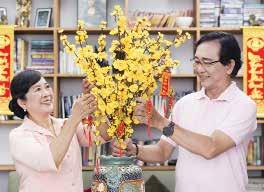
The Vietnamese helped revitalize the shrimping and fishing industries in the Gulf Coast. The third largest Vietnamese population in the United States is in Houston. The culture is known for cultivating family run businesses, a strong sense of community, and the preservation of language and heritage. Celebrations such as Lunar New Year, which marks the arrival of Spring, are embraced by all.
VIETNAMESE FISHERMEN HELPED TRANSFORM GULF COAST SEAFOOD CULTURE, GIVING RISE TO THE VIET-CAJUN CUISINE TEXANS LOVE TODAY.
Formerly enslaved Black cowboys became expert horse breakers, ropers, and trail drivers and were often the most skilled in a crew.
� Bill Pickett, the first Black cowboy inducted into the National Cowboy Hall of Fame, and Fred Whitfield, an eight-time World Champion in the Professional Rodeo Cowboys Association are just some of many Texas rodeo legends.
� Texas is the birthplace of Juneteenth, the commemoration of the end of slavery in the United States, celebrated on June 19th.
BLUES AND GOSPEL LATER SHAPED TEXAS COUNTRY, JAZZ, AND ROCK TRADITIONS.



Stop to buy a kolache in Amarillo, while celebrating Juneteenth. Sing along to Mariachi music, on the radio to attend a polka festival. Dine on sausage and sauerkraut before attending a fiesta: a Lunar New Year celebration.
Sit in a plaza at a gospel concert and enjoy garlic butter crawfish with lemongrass, a Viet-Cajun specialty.
Treat yourself to a beer and an enchilada, after hard work on the ranch, practicing native ecological techniques.








Personalized hormone therapy, weight loss, and wellness plans to help clients optimize health, boost energy, and feel their absolute best.
PrimeWellnessandLongevity.com 512.240.4456
Platelet-Rich Plasma, commonly known as PRP, is part of a growing field called regenerative medicine — treatments designed to support the body’s natural healing processes rather than simply masking symptoms.
PRP begins with a routine blood draw. The sample is placed in a specialized centrifuge that concentrates platelets and the growth factors they contain. These platelets carry biologically active proteins that help regulate inflammation, stimulate tissue repair, and promote collagen and blood vessel formation. When injected into an injured joint, tendon, skin, or scalp, PRP signals the body to amplify its own healing response.
Today, PRP is used in several areas of medicine. In orthopedics and sports care, it is commonly used for tendon injuries such as tennis elbow or Achilles tendinopathy, ligament sprains, mild to moderate osteoarthritis, muscle strains, and chronic overuse injuries. In aesthetics, PRP is often paired with microneedling for facial rejuvenation, acne scars, fine lines, and improved skin texture. It is also used in hair restoration to support thinning hair in both men and women. In select cases, PRP may be incorporated into broader men’s wellness treatment plans.
Unlike steroid injections or anti-inflammatory medications, which primarily reduce pain, PRP aims to stimulate tissue repair at the cellular level. Surgery repairs or replaces damaged tissue through a more invasive approach. PRP, by contrast, is minimally invasive and uses a patient’s own blood, making it well tolerated and appealing to those seeking restorative options.
PRP is not a cure-all. It tends to work best in patients with mild to moderate joint or tendon injuries, early osteoarthritis, or hair thinning where follicles remain active. It may be less effective in advanced arthritis or in individuals with certain blood disorders or active infections. Overall health, age, and how long an injury has been present can all influence results.
A typical PRP appointment lasts about 45 to 75 minutes. After confirming candidacy, blood is drawn and processed. The concentrated PRP is then injected into the targeted area — often with ultrasound guidance for precision. Mild soreness for a few days is common and usually reflects the body’s healing response.
Results vary by condition. Joint and tendon patients often notice improvement within four to six weeks, with

continued gains over several months. Hair restoration patients may see reduced shedding within two months and visible thickening by three to six months. Some individuals benefit from a series of treatments spaced several weeks apart.
As interest in PRP grows, choosing the right provider matters. Patients should look for experienced medical professionals who tailor preparation and technique to the diagnosis rather than using a one-size-fits-all approach. At Prime Wellness & Longevity, PRP therapy is delivered with that precision. The clinic uses advanced dual-spin technology to optimize platelet preparation and integrates PRP within a broader wellness strategy that addresses inflammation, lifestyle, and overall health. For those exploring regenerative options, Prime Wellness & Longevity offers a medically guided setting to determine whether PRP is the right fit.
For more information about PRP locally, visit: PrimeWellnessandLongevity.com 512-240-4456
by Ann Marie Kennon
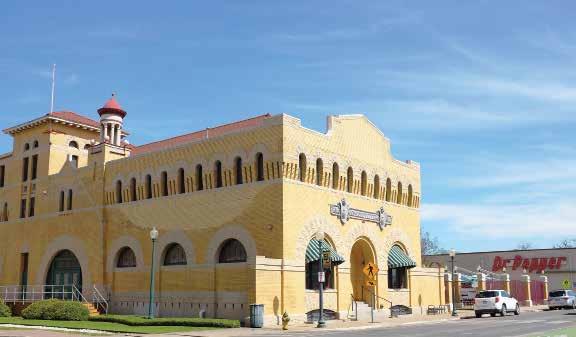
DESPITE THE NAME, THE MUSEUM IS MORE THAN A SINGLE-BRAND ATTRACTION. IT USES DR PEPPER AS A STARTING POINT TO TELL THE BROADER STORY OF THE AMERICAN SOFT DRINK INDUSTRY— ONE THAT HELPED SHAPE ADVERTISING, MANUFACTURING, AND POPULAR CULTURE. THAT BROADER SCOPE IS PART OF WHY THE MUSEUM CONTINUES TO DRAW INTEREST WELL BEYOND WACO, WELCOMING MORE THAN 270,000 VISITORS IN 2025.
Spring in Texas has a way of nudging families outdoors— even when the weather can’t quite decide whether it wants to cooperate. On those days when the forecast is a little unpredictable, it helps to have a destination close by that’s fun, educational, maybe even tasty, and mostly indoors.
Just over an hour from Georgetown, this family-friendly destination offers something rare: a place where kids can explore, adults can learn something new, and everyone leaves with a greater appreciation for a Texas original.
Dr Pepper is more than just another soft drink, it’s a regional success story. Invented in Waco in the 1880s, it predates Coca-Cola and Pepsi, giving it bragging rights as one of the oldest soft drinks in America. That sense of Texas pride is evident throughout the museum.
Housed in the original 1906 Artesian Manufacturing and Bottling Company building, the museum operates as an independent nonprofit, not a corporate showplace. This generalized approach to soda history goes well beyond a single product, drawing from what is now the world’s largest collection of soft drink memorabilia. The result is a visit that feels deeper and more interesting than many first-time visitors expect.
Kids can explore interactive displays that explain carbonation, experiment with scent stations tied to the drink’s famously secret recipe, and watch early bottling machines in action. Older kids and teens often gravitate toward exhibits on advertising and branding, discovering how Dr Pepper carved out its own identity in a crowded beverage market. Along the way, science and history sneak in under the radar.
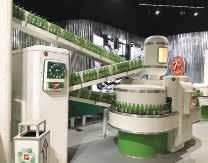
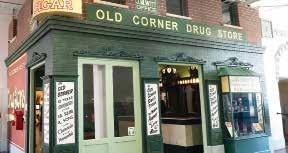
Open 7 days/week, 10am–5:30pm. Closed Easter, Thanksgiving, Christmas Eve, Christmas Day & New Year’s Day.
General admission is $12 per person (ages 5 and up); purchase only from the museum desk. Includes self-guided access to all exhibits and a free Dr Pepper at the soda fountain or $1 toward an upgrade item.
Street parking is available and there is paid public parking across 5th St.
Kid-friendly activities include visiting the Soda Fountain for Dr Pepper floats, and specialty drinks. There are also Keurig Dr Pepper Liquid Lab demo shows on select days and interactive exhibits and scent stations throughout the museum.
The museum provides sensory-friendly sunglasses and earbuds free of charge at the admissions desk.
The gift shop and Soda Fountain are open to walk-in guests during business hours even without museum admission.
You can also make a reservation for an MVP experience.
Make-A-Soda: ~$20/person; create and bottle your own custom flavor (includes one bottle; extras available to purchase).
VIP Make-A-Soda: ~$200 flat rate for up to 20 people; includes museum admission and guided soda making.
Extreme Pepper Experience: Private guided tour plus soda experiences (subject to availability).
The museum is just the right size—substantial enough to feel worth the drive, yet compact enough to avoid burnout. Most visitors spend one to two hours exploring the exhibits, gift shop, and soda fountain, though museum staff note that peak times like spring break and summer vacation can stretch a visit to two or three hours. Even then, it’s easy to pair the museum with lunch in downtown Waco or a short walk to nearby shops and attractions. And if the weather cooperates later in the day, there’s still time to make a stop at Cameron Park Zoo.
What makes the Dr Pepper Museum such a strong spring break option is its versatility. It’s educational without being dull, interactive without being overwhelming, and rooted in Texas history without feeling like homework. Kids leave with fun facts and hands-on experiences, while adults gain a renewed appreciation for how a simple idea—served cold and fizzy—and a cool story helped shape American culture.
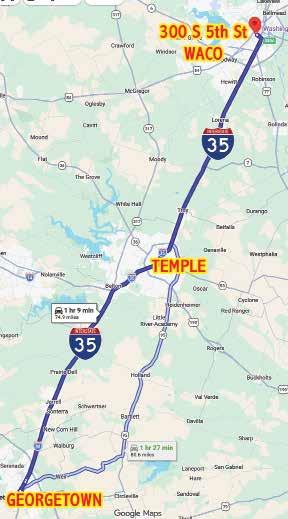
IT’S EASY TO OVERLOOK, BUT THERE’S NO PERIOD AFTER “DR” IN DR PEPPER—AND THERE NEVER HAS BEEN. THE MUSEUM POINTS OUT THIS SMALL BUT INTENTIONAL DETAIL, ONE OF MANY REMINDERS THAT EVEN A DRINK TEXANS THINK THEY KNOW BY HEART STILL HAS A FEW SECRETS LEFT.

by Ann Marie Kennon

Last month I voted on a very long ballot that appeared to be mostly judges. Knowing Texas recently added the 512th District Court, I realize there are at least 512 robe-wearers, plus county judges, justices of the peace, and a few dozen appellate and supreme court seats. I'm glad I live in a state that takes justice seriously.
At some point I stopped trying to remember which court handled which kind of dispute and just trusted the Founding Fathers planned for citizens to occasionally say, “Well, that name sounds reasonable.”
Judges do decide important things—constitutional rights to traffic citations—and apparently whether working on a farm qualifies as cruel and unusual punishment.
That one was in the back of my mind. Possibly because I’m married to a judge who believes hard work is character-building, personal responsibility still exists, and nonsense has a short shelf life in his courtroom. When I mentioned the federal ruling that found prison farming unconstitutional, he gave me the same look he gives defendants who explain that the meth in their pocket belonged to “a friend.”
He said Texas prisons once relied heavily on farming and ranching. Inmates grew crops, tended cattle, and produced a lot of their own food. It wasn’t glamorous, but it was productive, and the meals were fresh and healthy.
After the Ruiz ruling in the 1980s curtailed many of those operations, the system drifted away from agricultural programs. Today the prison system spends millions each month purchasing food and running facilities that
once helped sustain themselves. According to hubby, the irony lies in the low quality food the inmates now eat.
Which might explain why the debate crossed my mind last summer while I was celebrating the fact that I had successfully grown enough cucumbers to make actual pickles.
Real pickles. In jars. The kind you show off like you personally reinvented agriculture.
To be fair, some prison farms in the past looked less like vocational training and more like a sequel to "Cool Hand Luke"—massive fields, brutal heat, and guards who clearly did not attend the Healthy Workplace Culture seminar. So, perhaps, the concern makes sense.
Still, there’s something deeply satisfying about coaxing food out of the dirt. Humans have enjoyed doing it for roughly 10,000 years, which suggests farming is not universally regarded as a human rights violation.
It’s also the idea behind planned food forests like MatriArk Village— spaces where families learn to grow fruit, vegetables, and herbs right in their own community. Kids see how food grows instead of thinking it comes from the refrigerated aisle at H-E-B, while the soil does what soil was designed to do and humans mostly coax things along with sunlight, water, and a few dollars’ worth of seeds.
Turns out my dirt is surprisingly cooperative with some good gloves, a little patience, and ChatGPT to analyze my many photos of brown leaves.
Growing food is empowering when we teach it to children, admirable when farmers do it for a living, and deeply satisfying when suburban hobby gardeners like me produce an edible pickle.
But when inmates do it, we have a constitutional conversation—which suggests the problem may not be the vegetables.
The cucumber, for its part, remains baffled.