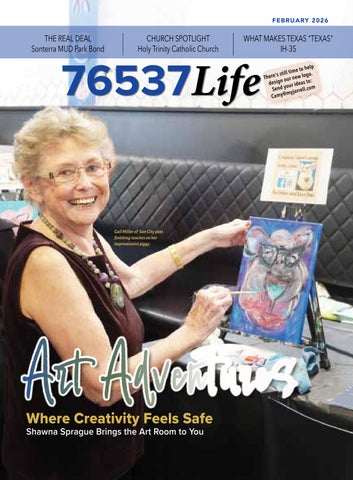
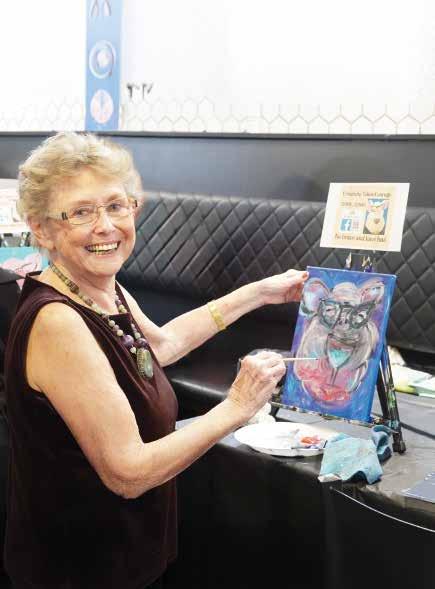
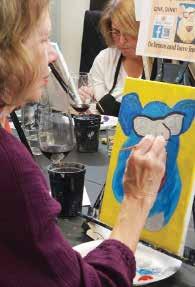
Gail Miller of Sun City puts finishing touches on her impressionist piggy.
One of the things I’ve always loved about living in Central Texas—and especially here in 76537—is that people genuinely care about where they live. They care about their neighbors, schools, roads, parks, and the decisions that shape the future of this community. That kind of care doesn’t happen by accident. It grows out of paying attention, asking questions, and staying informed.
This February issue of 76537 Life reflects that spirit.
At the heart of this issue is our update on the Sonterra MUD Park Bond. More than just a municipal report, it's about making sure our community has clear, accessible information about an issue that affects families, neighborhoods, and long-term planning. Bonds, budgets, and local elections can feel complicated—but they matter. An informed community is a more engaged, better connected community, and that’s something worth investing in.
February is also an important month for civic participation. Early voting for the 2026 primaries begins February 17. Primary elections often see lower turnout, yet they play a major role in determining who appears on future ballots and how policies take shape.
I grew up in a family where civic life was part of everyday conversation—where showing up, staying informed, and understanding the impact of decisions was simply expected. That perspective still guides the work we do here. Whether it’s reading up on a bond proposal, learning about what’s happening in local schools, or taking the time to vote early, these small acts add up to something bigger.
Thank you for being part of a community that cares enough to stay informed—and connected.
PUBLISHERS Cathy Payne • Mike Payne
COMMUNITY EDITOR Camy Reynolds
COMMUNITY LIAISON Janet Hage
SENIOR WRITER / COPY EDITOR Ann Marie Kennon
CONTRIBUTING WRITERS Linda A. Thornton
GRAPHICS Ann Marie Kennon • Sandra Evans • Marilee Goldoni
CONSULTANT W. Ben Daniel
DIGITAL MEDIA MANAGER Jesse Payne
ADVERTISING 512.746.4545 • info@myjarrell.com
76537 Life is a Fidelis Publishing Group, LLC publication and a product of AdvocateNewsTX Newspaper.
SCAN THE CODE FOR E-SUBSCRIPTION AND NEVER MISS AN ISSUE.
FOLLOW US ON FACEBOOK FOR FOLLOW-UPS AND OUTTAKES • MyJarrell
FEBRUARY
Meet our Pros — industry professionals, business owners, and subject matter experts from leading local companies who share their knowledge and expertise to bring readers practical advice, how-to tips, best practices, and current and emerging trends.
To learn more about becoming a featured pro, contact info@myjarrell.com or 512.746.4545
HallsRoofing.net
Jarrell Montessori... Where Families Belong! JarrellMontessori.com Director@JarrellMontessori.com
ART Adventures
Where Creativity Feels Safe Again
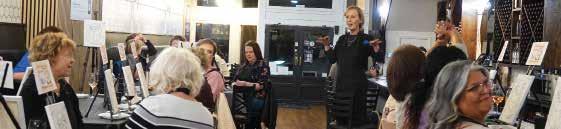
“Be kind to yourself and to your hard work,” Shawna Sprague tells a packed room. “We’re gonna have a good time.”
Shawna is the owner of Art Adventures, a traveling art studio that brings paint nights to the places people already gather—restaurants, wineries, living rooms, HOAs, senior communities, and parties. Her sessions are low pressure, high encouragement, and built for beginners.
NOT AN ART SCHOOL, AND PROUD OF IT
Shawna is quick to clarify that Art Adventures isn’t an art school. “My mission isn’t to teach art,” she says. “It’s to show people that whatever level they’re at— it’s okay.”
She noticed the intimidation factor early in her career while working at a traditional paint studio in Columbia, Missouri. What she saw wasn’t a lack of creativity, it was a lack of confidence. Beginners didn’t need a lecture on technique; they needed permission to try.
That permission shows up in the way Shawna teaches. She offers practical basics—rinse and dry brushes when switching colors, start with a quick “whitewash” base so the paint has something to grab, and use the brush you feel most comfortable with. Then she does what the best teachers do— she releases control. “Don’t try to paint around the lines,” she tells the group with a laugh. “Slap that paint. Get crazy. Make it a party.”
by Ann Marie Kennon
A SETUP THAT REMOVES THE STRESS
One reason the room relaxes so quickly is that Shawna does the hardest part before anyone arrives. Each canvas already has the main image sketched out, which allows participants to focus on color, background, and style instead of drawing.
“I do all the composition because I don’t want anyone stressed out,” she explains. “Everybody gets the same sketch, and not one of these paintings ends up the same.”
The subject when we chatted—a pig in sunglasses holding a wine glass— was the perfect example. There’s no “correct” way to paint a pig with glasses drinking wine. And in that freedom, people start to play. As participants worked, Shawna moved through the room checking progress, offering gentle nudges and reminding everyone that “light and dark” are often all it takes to make a painting pop.
THE WEIRD MIDDLE STAGE
Shawna says there’s a predictable moment in nearly every session. Halfway through, the painting looks… strange. Acrylic dries quickly, the steps move fast, and doubt creeps in. “Trust the process,” she tells the group. “It’s not gonna look weird in the end, but it should look weird right now.”
When that moment arrives, Shawna changes the rhythm. She encourages people to step back, chat, and look at everyone else’s work—because the inner critic gets loud when a painting stays “right in our face.”
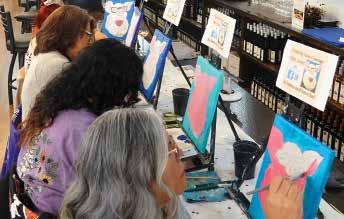
Around the room, you could see the effect: relaxed shoulders, laughter, compliments. One participant painted with vivid contrast colors and sharp lines that gave her canvas a graphic-novel energy. Another chose a soft, airy palette. At one table, neighbors—new to the area and new to paint nights— leaned in to compare ideas like they’d done it forever.
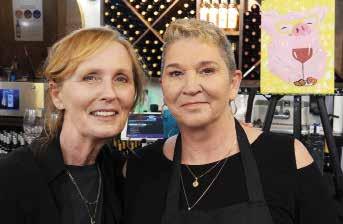
Shawna and Mendy
story and photos by Ann Marie Kennon
A SECOND TEACHER IN THE ROOM
Helping keep that supportive atmosphere moving is Mendy, Shawna’s assistant. Mendy’s day job is teaching dance—ballroom, Latin, and line dancing—and her experience shows in the way she cross coaches, she says; "Art and dance both require confidence, repetition, and the willingness to look a little awkward while learning."
“You don’t always want to follow what somebody else is doing,” Mendy said, comparing partner dancing to painting. “But you might like their idea.” She also expands what Art Adventures can offer. Beyond canvas painting, she helps with custom projects like T-shirts and koozies—proof that Art Adventures is less a single class format and more a creative toolkit that can travel. “I’m very custom,” Shawna says. “I’ll do whatever the customer tells me.”
A NEW TRADITION
For 76537 residents, Art Adventures isn’t a one-off novelty. Shawna hosts recurring paint nights at the American Legion, creating a rhythm that feels more like paint night than a special occasion. It’s community comfort like a bingo or neighborhood game night: show up, see familiar faces, and leave with something you made.
by Ann Marie Kennon
Shawna also keeps things fresh by letting participants help choose future paintings. She posts upcoming classes, asks for ideas, and selects one. The person whose idea is chosen gets to attend free that night.
MORE THAN A PAINTING
Shawna says 76537 has felt like home since she and her husband, a veteran, moved to the area nearly three years ago. Through community involvement— especially at the American Legion—Art Adventures has become more than a business. It’s a connector.
At this particular party, the reasons people showed up were as varied as the canvases: a hands-on break from desk work, a chance to connect with-
out having to host, a needed night out, or simply the thrill of making something tangible. That’s the hidden gift of Art Adventures: it doesn’t just produce paintings. It produces permission to try, to connect, and to be present.
“To put phones down,” Shawna says. “To lean into creativity—even for just a couple of hours to enjoy being brave, beautiful souls.”
What's the Real Deal?
If you’ve ever found yourself scrolling social media wondering: Is that actually true?
Why does this keep happening?
...this new column is for you. Each month, Here’s the Real Deal will tackle questions and conversations specifically related to our community in Jarrell and Sonterra and we're digging in to find real, reliable answers.
HOA and COA concerns
parks and amenities
new businesses coming to town
water quality issues
and other local topics.
Each month, we’ll take a question submitted by readers—or one we’re seeing repeatedly online—that relates directly to life in Jarrell or Sonterra, and do the legwork to get the facts. That means reaching out to local officials, organizations, experts, and trusted sources to provide clear information, helpful context, and when possible, practical solutions. No speculation. No keyboard debates. Just the real deal.
Faith communities play a quiet but powerful role in shaping the heart of a town—offering service, connection, and a place to belong. Our Church Spotlight feature is designed to introduce readers to the people, ministries, and missions behind local congregations, highlighting how they serve both their members and the wider community. In each installment, we’ll share stories of outreach, fellowship, and faith in action, offering a glimpse into what makes each church a meaningful part of life in 76537.
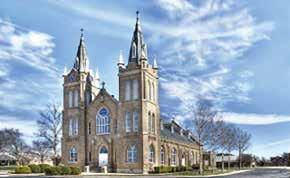
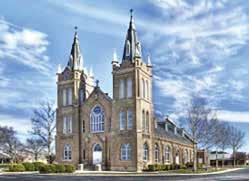
Holy Trinity Catholic Church of Corn Hill
1. What is one meaningful story from this past year that reflects the heart of your church community?
Holy Trinity is a giving parish. When we see someone in need, we help to the best of our ability. One example is our assistance to families during Christmas—and really throughout the year. We also support numerous organizations that help the poor and assist those experiencing crisis in their lives.
2. What programs or ministries have grown the most recently, and what do you believe is driving that growth?
Our religious education and youth ministry programs have doubled in size over the last few years. Our social ministry outreach has also experienced significant growth.
3. How does your church create opportunities for members to build real relationships and support systems?
Members build relationships through our parish organizations and religious education programs, coming together to support and assist one another. We also offer many opportunities for connection through events such as First Sunday Hospitality Breakfast, First Friday Family Night, Pray and Play for young mothers and their children, Senior Supper, Parish Dinners, the Parish Bazaar, youth activities, and other parish events.
4. Any upcoming events, seasonal initiatives, or programs our readers can mark on their calendars?
Our annual Czech/English Mass is February 15 at 5:00 p.m., followed by dinner in our Parish Activity Center. Other upcoming events include Stations of the Cross every Wednesday during Lent, Friday Fish Fries each Friday during Lent (excluding Good Friday), and Live Outdoor Stations of the Cross on Wednesday, March 1. We also invite the community to Family Fun Day on Sunday, April 19; our June Dinner and Dance on Sunday, June 7; and our annual Parish Bazaar on Sunday, September 20.
5. What is one outreach or service effort your church is especially proud of, and how can residents get involved?
Our Youth Ministry is one effort we are especially proud of, as it continues to grow. Through this ministry, we have been able to send our youth to conferences and activities in other cities and states.
6. For new families moving into 76537, what can they expect attending a service or event for the first time?
They can expect to feel welcomed and to have a spiritually reverent experience of our Lord during Mass.
7. What partnerships does your church have with local organizations, nonprofits, or schools? How do collaborations make a difference?
We support or partner with the Jarrell Community Food Pantry, Bartlett Families Helping Families, Caring Place, Annunciation Maternity Shelter, Igo Elementary, and others.
8. If someone feels unsure of where to start, what’s the easiest first step they can take to get connected with your church community? They can call our Parish Office at 512-8633020 or visit our website at holytrinityofcornhill.org.
WANT TO DIG DEEPER OR SUBMIT A QUESTION FOR A FUTURE ISSUE?
See page 8 for contact information and details on how to suggest a topic for an upcoming "Here’s the Real Deal?" feature.
As with any large, voter-approved investment, residents naturally have questions about timing, planning, and progress. To help address those questions, 76537 Life invited Sonterra MUD board directors to respond to a standard set of questions regarding the current status of the bond projects, anticipated timelines, and personal priorities related to the planned improvements. All responses were to be published exactly as submitted to ensure accuracy and transparency. At the time of publication, the Sonterra MUD Communications subcommittee provided the following official statement: “Due to the evolving nature of the MUD’s parks and recreation plans, the MUD does not currently have specific concepts to share. However, the MUD encourages public input during this planning process.”
In a separate email, board president Dr. Michael Cosimeno clarified that individual members of the Board of Directors were welcome to respond in their personal capacity, noting that any such responses would not reflect the official views, positions, or opinions of the MUD.
QUESTIONS SUBMITTED TO SONTERRA MUD BOARD OF DIRECTORS
1. What is the current overall status of the projects included in the $55 million Sonterra MUD Parks Bond?
2. Which bond-funded projects, if any, are currently underway or actively in the planning phase?
3. Have any projects included in the bond package been delayed, paused, added or removed from consideration? If so, what factors contributed to those decisions?
4. Of all the projects included in the bond package, which are you personally most excited about seeing completed?
5. Which project or projects do you hope to have the most direct input on as planning and development move forward?
RESPONSE SUBMITTED BY MUD BOARD DIRECTOR JESSE PAYNE
For questions 1, 2, and 3, I’ll defer to the official response sent by the board’s communications subcommittee. My responses to questions 4 and 5 reflect my personal perspective.
ANSWER 4: I’m most excited about the recreation center. As a Sonterra resident, the limited recreation options were something I noticed pretty quickly after buying my home, and that’s a big part of what motivated me to serve on the MUD board.
A recreation center brings a lot of amenities together in one place, which makes it a good value for the community.
Since the recreation center is a large project that takes time and money to do right, I’m also excited to keep improving parks around Sonterra in the meantime, so families have places nearby to gather, play, and spend time together without always having to leave the neighborhood.
ANSWER 5: I want to continue having direct input on amenities in Eastwood. Right now, residents there don’t have any neighborhood amenities, and for years they’ve been told by different groups that something was coming. As of February 2026, there is still no visible work on the site to show. That’s been frustrating for a lot of families, and it’s something I take seriously.
I currently serve on the Eastwood amenity subcommittee, where we’ve already spent a lot of time working with a well-regarded, recreation-focused architectural firm to explore what’s realistically possible. I want to stay closely involved so the work we’ve started keeps moving toward something real and usable for the community.
President Dr. Michael Cosimeno, Vice-President John Faske, Secretary Sherry Roark, and Assistant Secretary Bobbi McDonald did not respond.
When it comes to a $55 million bond approved by voters in May 2024, details matter. Rather than summarize or interpret what’s happening behind the scenes, the publisher has chosen to let the public record speak for itself. The following pages compile meeting minutes from Sonterra MUD board meetings over the past two years, presented as written, to give residents a clear, chronological look at how bond- related discussions and decisions have unfolded.
Scan the code to read the minutes in their entirety.
The scope and impact of this bond warrants a deeper look. For many families in Sonterra, this bond and its promised amenities are part of everyday life, and worth a closer look.
BOARD ACTIONS IN 2024
FEBRUARY 12, 2024
The Board voted unanimously to call an election for May 4, 2024 for a $55 million dollar Park and Recreation Bond by Directors Cosimeno, Faske, Dunbar, Roark, and Payne.
APRIL 10, 2024
The Board then considered the appointment of a subcommittee for the planning of the Eastwood Amenity Center.
Upon motion by Director Roark and second by Director Cosimeno, the Board voted 4-0 to authorize Directors Faske and Payne to plan the design of the Eastwood Amenity Center and make related recommendations to the Board.
MAY
13, 2024
The Board first reviewed and canvassed the election returns received from the Williamson County Elections Department.
Mr. Dean [Legal Counsel for Sonterra MUD] then reviewed the Order Canvassing Election Returns for the May 4, 2024 Park and Recreational Facilities Bond Election with the Board, and stated that a majority of the votes cast were in favor of Proposition A, which meant that it passed. After discussion, upon motion by Director Faske and second by Director Dunbar, the Board voted 4-0 to approve the Order Canvassing Election.
WHY THIS MATTERS
The February vote officially set the bond proposal in motion, putting a $55 million parks and recreation package before voters for approval.
The April decision placed early planning authority for the Eastwood Amenity Center in the hands of a two-member subcommittee, shaping how the project would be developed and presented to the full board.
The May vote formally certified the election results, confirming voter approval of the bond and authorizing the District to move forward with bond-funded projects.
JUNE 17, 2024
It was stated that Oro Design Group was working on planning the Phase 2 Trails and renovation of the Phase 1 Trails.
Mr. Dean stated Mr. Jones had recommended the District solicit Statements of Qualifications from multiple landscape architects in order for the Board to prequalify them for possible engagement on various parks and recreation projects.
Mr. Jones stated that so many projects were contemplated he did not believe a single landscape architecture firm would be able to handle the workload alone.
Upon motion by Director Dunbar and second by Director Payne, the Board voted unanimously to authorize the General Manager to formally request Statements of Qualifications from landscape architects for consideration by the Board.
AUGUST 19, 2024
Upon motion by Director Dunbar and second by Director Payne, the Board voted unanimously to prequalify Hitchcock Design Group, Oro Design Group, Halff, RVI Planning+Architecture, and Studio 16:19 for engagement on future projects, with the stipulation that this did not guarantee any of the firms would be engaged by the District.
SEPTEMBER 9, 2024
Mr. Jones [Engineer for Sonterra MUD] stated it would be preferable if the land was acquired sooner than later, to eliminate the chance that the District designed, but could not acquire the land to build, the [Eastwood] amenity center.
He noted the land should be conveyed to the District at no cost initially, then the District could reimburse the developer for the land from the bond proceeds later. The board directed Mr. Dean to discuss early acquisition of the land with Andy Bilger [developer], and agreed that design of the Eastwood Amenity Center should continue.
NOVEMBER 18, 2024
Mr. Nobbe then reviewed with the Board the proposed Change Order No. 2 to the District's agreement with Oro Design for design of the Eastwood Amenity Center. He stated the scope of the project had increased dramatically, and the change order would reflect the additional work and associated costs. Director Faske stated the Board had not been made aware of the additional costs in advance.
The Board directed Oro Design and its consultants cease work on the project, and directed Mr. Nobbe to provide backup for the additional work done and associated fees before the Board considered the matter further.
The Board agreed the Eastwood Amenity Center Subcommittee would consider the possibility of engaging an architect as lead on the project moving forward, since scope expanded beyond what Oro Design could provide as a landscape architecture firm.
DECEMBER 16, 2024
A representative of Halff & Associates addressed the Board and presented a proposal for project management services and project development for the Phase 1 Trails Project and Concrete Fencing Project to the Board.
Upon motion by Dir. Dunbar and second by Director Payne, the Board voted 3-0 to approve the proposal and authorize negotiation and execution of the associated Agreement for Professional Engineering Services on a Task Order Basis. A representative of RVI addressed the Board and presented Work Order 01 for design and project management services for four park spaces to the Board.
Upon motion by Director Payne and second by Director Dunbar, the Board voted 3-0 to approve Work Order 01 and authorize negotiation and execution of the associated Master Professional Services Agreement. Directors Faske and Roark were not present.
1 unanimous vote authorizing solicitation of qualifications
0 firms selected yet
AUGUST 19, 2024
1 unanimous board vote
5 design firms prequalified
SEPTEMBER 9, 2024
1 amenity center site under consideration
0 dollars paid upfront for land acquisition (initial conveyance)
1 directive to pursue early land acquisition
NOVEMBER 18, 2024
1 change order reviewed
1 project paused (Eastwood Amenity Center design)
0 additional costs approved at that meeting
1 directive to cease work pending documentation
DECEMBER 16, 2024
2 firms approved for project management and design services
2 unanimous votes (3–0)
4 park spaces included in one work order
Multiple projects advanced under task-order agreements
BOARD ACTIONS IN 2025
JANUARY 13, 2025
The Eastwood Recreation Center (ERC) Subcommittee recommended selecting Barker Rinker Seacat Architecture (BRS) as the project's architecture firm, as it was most qualified. After discussion, upon motion by Dir. Dunbar and second by Dir. Cosimeno, the Board voted 4-0 to authorize negotiating an agreement with BRS for architectural services related to the ERC.
FEBRUARY 17, 2025
After discussion, upon motion by Director Roark and second by Director Faske... the Board voted 4-0 to approve the proposal by BRS Architecture presented by Mr. Massey, for the Phase 1 Concept Design of the ERC, subject to the finalization and the execution of the Standard Form of Agreement between owner and architect, which Mr. Dean had negotiated with BRS.
MAY 19, 2025
The District Engineer said the letter from the Texas Commission on Environmental Quality approving the district's application to purchase parks and recreation facilities from the developer was received, and the purchase was made pursuant to prior Board authorization; that his office had made progress on the list of parcels that needed to be conveyed from the developer to the District, and he reviewed them with the developer; that Andy Bilger was compiling a list of additional parcels for possible sale to the district.
JUNE 16, 2025
Mr. Hemenes [Halff&Associates] addressed the Board and reviewed plans and cost estimates for the district's concrete fencing project, stating new fences would need to be located in the county’s rightof-way, or where the wooden fences were located, which would require their removal.
He added Halff was coordinating with the county regarding possibly obtaining a license to place the fences in the right-ofway, but that the replacement of the existing wooden fences was the better option. He then noted, however, that removal of the existing fence would require coordination with numerous residents, whose properties abutted the fences.
Director Faske asked what the warranty on the Fencecrete fencing would be. Mr. Hemenes responded 10 years.
JULY 21, 2025
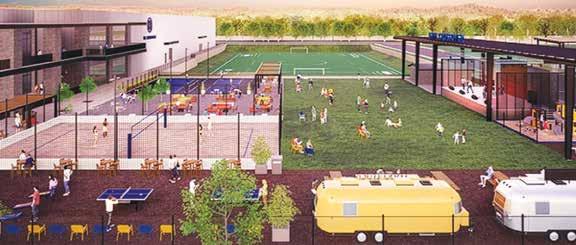
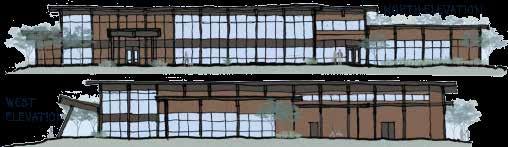
Director Cosimeno stated the Board would consider the Eastwood Recreation Center (ERC) design and recognized Mr. Bouck and Ms. Katsaros. Mr. Bouck presented an update on the status of the ERC design and proposed next steps. He reviewed the conceptual plans prepared by BRS in coordination with the ERC Subcommittee; the design and construction budget; the Phase 2 schematic design scope; and the proposed project schedule.
Mr. Bouck noted that on-street parking would be required due to the size of the project (approximately 58,000 square feet) and the relatively small site; that the design included an outdoor pool that could be modified for enclosure at a later date; that the current project estimate was approximately $33,700,000 compared to a budget of $32,450,000, and that cost-reduction strategies would continue to be evaluated; and that the proposed opening date would be Memorial Day 2028 if Phase 2 work began in September.
Ms. Katsaros addressed the Board regarding operational planning, including hours, staffing, attendance projections, entry pass costs, and revenue sources. She stated 12 full-time staff would be required and annual operating costs were estimated at approximately $2M, with entry pass revenue expected to largely fund operations.
Director Faske asked whether projects of this type typically exceeded budget. Mr. Bouck responded that such projects were typically delivered on budget, noting that escalating costs over time represented
the primary risk. He stated that additional cost-saving decisions could be made in remaining design phases. Director Faske expressed concern regarding construction bids exceeding budget. Mr. Bouck stated that the proposed schedule was realistic and that pool construction posed the most significant risk to timely completion.
Director Roark stated she would like to proceed toward Phase 2. The Board agreed to consider a proposal from BRS to proceed with the next phase at its August meeting.
Upon motion by Dir. Payne and second by Dir. Roark, the Board voted 4-0 to send notices of suspension to RVI and Halff for services on the parks, trails, and walls projects to concentrate resources on the ERC.
Mr. Jones discussed the purchase of land for parks facilities, stating that Andy Bilger was willing to sell certain parcels to the District at market value, but that acquiring land within the District would reduce its taxable value. He suggested purchasing land outside the District and annexing it instead. Mr. Jones further stated that the aquatics portion of the ERC, including the pool building, could not be financed with bond funds.
Mr. Dean asked whether the Board would like to consider Phase 2 of the ERC, including an amendment to the existing Architectural Services Agreement with BRS, at the next meeting. The Board confirmed it would.
AUGUST 18, 2025
Director Cosimeno asked if the Board would like to table the items concerning the ERC for consideration at a special Board meeting. The board agreed.
OCTOBER 20, 2025
The board tabled discussion regarding park and recreation capital improvement projects to a subsequent meeting.
For July 15, 2024 there are no minutes available. On October 21, 2024; and March 17, April 21, September 8, November 17, and December 15, 2025 there was no park bond discussion.
EXPERIENCE. INTEGRITY. JUSTICE.
WA judge’s role isn’t about power. It’s about responsibility. Knowing the law and applying it fairly is how you serve real people.
hen Ryan Bownds decided to run for Judge of the 512th District Court, he wasn’t driven by politics or ambition, but by experience. With more than a decade of prosecution experience he has devoted himself to Williamson County, including as the Chief of the Special Victims Unit. Ryan has spent his career in courtrooms where decisions carry real consequences for victims, defendants, and families. He has seen firsthand how much depends on a judge who understands the law, applies it consistently, and treats every person in the courtroom with fairness and respect.
Ryan is running for the 512th because he believes the courtroom should be guided by law, not ideology. His judicial philosophy is straightforward: a judge’s role is to apply the law impartially no matter who is standing before the bench. “When you do this job long enough,” Ryan says, “you must be mindful that litigants are not just cause numbers. They’re real people, and a judge’s decision can affect them significantly.” To Ryan, taking the bench is not a position of power, but one of responsibility, which carries an obligation to the community as a whole.
The Difference
Ryan believes one of the distinctions between himself and his opponents is depth of trial experience. Ryan has been a trial prosecutor for 13 years; consistently in the courtroom and handling cases from start to finish. He hasn’t just studied the rules of the road, he’s been behind the wheel for a long time. That experience gives him an instinctive understanding of how trials unfold, how evidentiary rulings affect outcomes, and how courtroom decisions impact everyone in-
~ RYAN BOWNDS
volved. A judge with that background doesn’t have to imagine how rulings will play out, he already knows.
As well, Ryan’s commitment to Williamson County runs just as deep. When he passed the bar, he was licensed in Williamson County, and his very first trial was in Justice of the Peace court here. “I didn’t move around to different counties or offices to chase a career,” he says. “This is where I want to be, and this is the community I want to stay invested in as a judge. I have consistently poured into the same role, building institutional knowledge and long-term relationships rooted in service to Williamson County."
That focus is also reflected in the professional organizations he supports. Ryan serves as Treasurer of the Williamson County Bar Association and is a member of the American Inns of Court—groups dedicated to ethics, mentorship, legal excellence, and strengthening the judiciary itself. These roles are about upholding the standards that keep courts functioning with integrity.
So why should voters choose Ryan Bownds?
Because he understands the weight of judicial decisions and has the experience to carry it well. “I’m running because I know the impact a judge’s decision has on real people,” Ryan says. “I know I can make fair, right, and just decisions and I feel an obligation to use that experience for the community I love.”
In a role where impartiality is essential, Ryan offers voters confidence that justice will be applied thoughtfully, fairly, and with the greatest respect.
by LInda A. Thornton
Little did the bucolic community of East Avenue in Austin ever expect their peaceful boulevard with wide landscaped medians—also known as “Calle Ancha” or wide street — would become the forerunner of Interstate 35.
In San Antonio, it is the Pan Am Expressway.
US-290 shares the same stretch of road in downtown Austin
In Waco, I-35 is known as the Jack Kultgen Freeway
Splits into I-35E and I-35W through Dallas-Fort Worth
I-35E is the R.L. Thornton Freeway south of I-30. North of I-30 is the Stemmons Freeway.
Like most primary interstates that end in a five, I-35 became the major cross-country, north-south route, following the path of this historic avenue.
At 1,568 miles, it is the ninth longest Interstate Highway in the United States. Construction on I-35 began in the late 1950s, but the section through Austin didn’t open until 1962.
The key thoroughfare connecting Mexico and Canada, it starts at the U.S - Mexico border in Laredo, Texas and runs through San Antonio, Austin, Oklahoma City, Wichita, Kansas and Des Moines, Iowa, ending in Duluth, Minnesota.
WHEN THE RUBBER MEETS THE ROAD
With sections of the Austin area exceeding 200,000 vehicles per day, endless construction is driving commuters crazy!
The area between Austin and San Antonio, one of the fastest growing in the nation, has created a volume of traffic that has far exceeded the highway’s original projections.
The original highway design included short ramps and bot-
tlenecks, now requiring the addition of lanes and bypasses.
Underground utility work and storm drainage improvements are essential.
In urban areas, where widening the highway is difficult, building over existing infrastructure serves as a creative, yet complex answer.
Maintenance and new technology upgrades are critical.
NO MIDDLE OF THE ROAD: A LOVE/HATE RELATIONSHIP
The infamous North–South route is known to be dangerous, congested, and a source of pollution. Austin, San Antonio, Waco, Denton, and the Dallas–Fort Worth region all experience high accident rates along the corridor. Its design has also divided neighborhoods, most notably in East Austin, where construction displaced residents and split historically Black and Mexican American communities. Yet I-35 remains a powerful economic engine, connecting major Texas cities, supporting commerce, and promoting travel. Communities
such as New Braunfels, San Marcos, Kyle, Buda, and Round Rock have burgeoned into major commuter cities largely because of their proximity to the interstate. I-35 became the catalyst for Georgetown’s development; positioned directly on the route, it attracted sustained economic interest and was recently named the fastest-growing city in the United States. By contrast, Taylor—once one of the most important towns in Central Texas—was bypassed by the interstate and subsequently fell behind the region’s growth curve for decades, until the arrival of Samsung and a dramatic economic turning point. Farther north, Denton’s location where I-35E and I-35W rejoin helped it grow as a key trade corridor extending from Mexico to Oklahoma, while Laredo has become the nation’s busiest inland port and a critical distribution hub.
DID TX DOT THEIR I’S?
The Texas Department of Transportation, or TxDOT, is planning a massive undertaking, called the Capital Express Program, which will rebuild and expand the corridor, add lanes, and improve bridges.
Because of its large scale, potential TxDOT contractors have decided that the $4.5 billion project needed to be split into two bid packages. This has led to a three-year delay.
DON’T BLINK
While TxDOT covers the base cost of rebuilding I-35, the City of Austin has opted into costly “caps and stitches”— decked structures meant to soften the highway’s impact with parks and pedestrian connections. The catch: Austin is now being asked to fully commit to funding those enhancements earlier than planned, before final designs exist and years before reliable cost estimates are available. Any overruns would fall entirely on the city.
For places like Jarrell and Sonterra—nearly split in two by the interstate—this is a familiar warning. Highways don’t just move traffic; they redraw towns. Decisions made quickly, on optimism and projections, can lock communities into decades of financial and physical consequences. When it comes to I-35, the real dividing line isn’t asphalt—it’s whether cities pause long enough to understand what they’re committing to before the concrete is poured.
ROAD RAGE OVER LANE NARROWING
Both TxDOT standards and federal guidelines from the American Association of State Highways and Transportation Officials call for 12-foot-wide freeway lanes. Through eminent domain—the government’s power to compensate owners for taking their property for public use—the state has already purchased more than 100 homes and businesses. To save from utilizing more land than that already appropriated, TxDOT plans to narrow lanes to 11 feet. TxDOT’s reasoning has been approved by the Federal Highway Administration.
While studies have found that people do drive about two miles per hour slower in 11-foot-wide lanes, it also cites that narrower lanes tend to result in more crashes causing injury or death. Narrower lanes are often utilized on city streets to slow down traffic, not high-speed, high-volume freeways with semi-trucks.
Scan the code for more information about what TxDOT is up to currently.
In Texas, even our problems are oversized. We gripe about traffic while barreling down the highway at 75, headed somewhere we chose to live on purpose. I-35 may fray nerves and divide towns, but it also stitches together Friday night lights, Sunday lunches, new jobs, old roots, and the kind of growth that reminds us Texas is still very much in motion. It’s loud, messy, and occasionally infuriating—but it’s ours. And most days, we wouldn’t trade it for anything.
HOME, HEROES, AND HEARTS
February used to mean something different.
Happy birthday, Abraham Lincoln— who told the truth even when it was wildly inconvenient, and who paid a steep personal and political price for believing all people were created equal.
Happy birthday, George Washington—kneeling in the snow at Valley Forge, praying not for a dozen roses, but for the survival of an entire nation.
For a historically short time, it’s meant Black History Month—a time to honor the struggle, resilience, and brilliance of generations who fought for freedom long after Lincoln signed the paperwork.
But, like Christmas hijacking Jesus for Santa, February has become vaguely more about romance, vaguely about sales, and very specifically about cinnamon-scented bears the size of Labradors. And, this year, it’s even about getting hammered on Mardi Gras.
Our forefathers gave us a republic— if we could keep it. We gave them... a long weekend and a clearance rack.
Don’t get me wrong, I’m not here to shame anyone’s longing to please their sweetheart. I’m just saying we’ve gotten a little confused. When Honest Abe gets reduced to a clip art top hat and George Washington’s birthday is mostly known as “That Mattress Sale Week,” maybe ‘Merica has lost the plot a little.
I mean, I’ve seen actual commercials where retailers try to combine Valentine’s Day and Presidents Day. “Show them you care—with 20 percent off select recliners!” Hmm... George crossed the Delaware for this?
Somewhere between Monticello and eternity, Thomas Jefferson is furiously editing a pocket Constitution to remove “February” altogether and replace it
with “Seriously?” He’s probably just relieved we haven’t added a Black Friday to every holiday, because nothing says “life, liberty, and the pursuit of happiness” like trampling a stranger for a cheap flat-screen.
Still, maybe Mr. Jefferson would be a little proud. The backyard gardeners. The Little Free Libraries. The citizens with compost bins and Constitution-themed dish towels. Somewhere out there, someone is quoting him while canning jam—and honestly, that’s probably closer to his vision than how quickly Cupid booted Santa out of the seasonal aisle on December 26.
We’re a country that has not-ironically consumed our own consumer culture. Every holiday is now a shopping season and we can’t commemorate anything without coupons. Christmas gave us Santa. Easter gave us marshmallow chickens. And February—the month of Lincoln, Washington, and Black Pride— has given way to Galentine’s Day, a surcharge in flower delivery fees, and anxiety about dinner reservations.
And let’s not forget Mardi Gras—our annual nationwide permission slip to eat, drink, and lose our minds before Lent starts. A tradition rooted in Christian repentance… now celebrated with glitter beads, king cake, and public indecency.
Do revelers even know they’re participating in a Jesus-based activity? Doubtful. But you’ve got to admire the commitment.
And just for fun—because Leigh loves a teachable moment—(big inhale) Mardi Gras is in February this year because the first Sunday after the first full moon after the Spring Equinox is Easter and Ash Wednesday is 40 days before that (and if you’re like, hey, it’s really 46— well, Sundays don’t count because
they’re technically little Easters, even during Lent, because nothing says spiritual consistency like carving out a few cheat days from your own repentance plan). Fat Tuesday is the day before Ash Wednesday—the last big blowout before the solemn season begins and that’s when people load up on beads and bourbon before pretending to behave for 40-ish days.
Whew! Clear as gumbo, right?
This year, I’m going to lay my iPad down next to the little cross on my piano and give up doomscrolling—because nothing says repentance like trying to give up anger for Lent. Now, if only there was a device I could channel my covert narcissism into and be rid of THAT for Lent, too.
Anyway, for a culture that loves to chant “Because, science” whenever it suits us, we sure don’t tend to whatever lunar-solar-calendrical magic puts the parties on the calendar—as long as we don’t miss the date to catch plastic beads and scream “Throw me something, mister!”
So maybe this month, in between the boxed chocolates and bead parades, we pause long enough to remember the men who gave us more than a long weekend. Maybe we try to be a little more honest like Abe, a little more resolute like George, and a little more forgiving like Jesus—especially when the world feels cold and we’re all just counting the days to Spring Break.
Because the older I get, I don’t like to think I’m getting crankier—just less impressed by shiny things wrapped in foil, and more appreciative of truth, sacrifice, and the kind of love that doesn’t melt under pressure.