













Florida Fire Service is the monthly publication of the Florida Fire Chiefs’ Association, provided to Florida Fire Chiefs’ Association (FFCA) members, by the Florida Fire Chiefs’ Association.
Florida Fire Chiefs’ Association
221 Pinewood Drive Tallahassee, FL 32303
Phone:(850) 900-5180
Email: info@ffca.org • www.ffca.org
FFCA Staff
Ngoc Huynh- Executive Director
Rachel Pardo - Marketing & Member Services Coordinator
Savannah Selski - Exhibit & Sponsorship Sales Coordinator
FFCA Board of Directors
Trip Barrs - President
Ryan Crawford - 1st Vice President
Mike Tucker - 2nd Vice President
Michael Choate - Immediate Past President
Carlos Aviles - Secretary/Treasurer
Jeff Wagner - Northwest Region Director
Brady Rigdon - Northeast Region Director
Todd Allen - East Central Region Director
Chantal Botting - Southeast Region Director
Ian Kemp - West Central Region Director
Gregory DeWitt - Southwest Region Director
Ngoc Huynh- Executive Director
Terry Parris - Foundation Chair
Jeffrey Money - Senior Member
Editorial Submissions magazine@ffca.org (850) 900-5180
Advertising
Scott Leisen, Editor in Chief scott@ffca.org (386) 717-0055
Subscription rate for members is $36, which is included in member dues. Archived electronic monthly editions of Florida Fire Service magazine are available at www.ffca.org. Log in as a member and click on the Publications tab.
Florida Fire Service
November 2025, Volume 33, Number 11 USPS # 016-759
Periodical postage paid in Daytona Beach, Florida, and additional post offices.
POSTMASTER: Send address changes to Florida Fire Service, 221 Pinewood Drive Tallahassee, FL 32303. Statements of fact and opinion are the responsibility of the authors alone and do not imply an opinion on the part of the officers or the members of FFCA. Copyright 2025 by the Florida Fire Chiefs’ Association. All rights reserved. Materials may not be reproduced without written permission.
Hillsborough County Breaks Ground on New Fire Stations
























Trip Barrs, Fire Chief FFCA President

The past month has been a powerful reminder that leadership in the fire service is not confined to command presence or decision-making in the moment—it’s about sustained engagement, thoughtful collaboration, and the courage to adapt. Across the state, our association continues to lead through service, representing our members with professionalism, vision, and an unwavering commitment to advancing the fire and emergency services profession. Our Board and committees have been active on multiple fronts, each effort aligned with our mission to support leadership, education, and advocacy for the Florida fire ser vice.
Effective leadership begins with presence—showing up, speaking up, and ensuring our collective voice is heard. Earlier this month, FFCA Board members and our Legislative Committee Co-Chair attended the Florida House Select Committee on Property Tax hearing. Our team provided testimony on issues affecting local fire departments and the communities they serve, emphasizing the importance of sustainable funding mechanisms and the potential impacts of

proposed tax legislation on public safety operations.
In conjunction with this appearance, we also met with several legislators, outlining our priorities for the upcoming session. These include support for firefighter health and safety initiatives, emergency response funding, PSAP and communications improvements, and maintaining strong local control in fire and EMS operations. These meetings reaffirmed the FFCA’s role as a trusted voice for Florida’s fire ser vice, a responsibility we take seriously and approach with professionalism and preparation.
Leadership, at its core, requires the courage to step into the arena and represent others. I am proud of the way our Board and committee members have embraced that responsibility, modeling the kind of engaged, informed leadership that defines our association.
Another highlight of the past month was our continued collaboration with The Florida Police Chiefs Association, attending a focused session with these partners to explore promising AI-based wellness tools for first responders, including the innovative platform Sworn.ai. The FFCA was represented at this meeting, recognizing the vital importance of addressing responder mental health through evidence-based and technology-supported solutions. Our participation underscores a core leadership principle: we are stronger when we lead together. By engaging in conversations that cross disciplines and jurisdictions, we expand our perspective and strengthen the safety net that protects both our members and the communities we ser ve.
Education and professional growth remain at the heart of our mission. I was honored to be invited to attend the Florida Fire Marshals
and Inspectors Association (FFMIA) Conference in Fort Lauderdale, where I had the opportunity to connect with inspectors, prevention specialists, and code officials from across the state. Events like these remind us that continuous learning is not a choice, it’s a professional obligation.
First Vice President Ryan Crawford also represented the FFCA at the NFPA Fire Chiefs’ Forum where national discussions on standards, emerging fire protection technologies, and life safety initiatives are shaping the future of our profession. Active engagement at these forums ensures Florida remains a leader in applying codes, standards, and education to protect our citizens.
As we approach the end of the year, the FFCA continues to focus on several key initiatives. Our Legislative Committee is preparing for the upcoming session in Tallahassee, where we will advocate for policies that strengthen the fire service, promote firefighter health and safety, and ensure our departments have the resources to meet growing community demands.
Every action the FFCA takes, whether in the legislative arena, at a conference, or in a meeting room reflects the principles of servant leadership: listening first, seeking understanding, and leading with purpose. As an organization, we are dedicated to ensuring that ever y Florida fire service professional has access to the tools, training, and advocacy necessary to serve their communities with excellence. I encourage each of you to stay engaged with your regional directors, attend upcoming FFCA events, and continue to share your perspective. Together, we embody what it means to lead with integrity, to innovate with courage, and to serve with heart.

By Rick Spence
By the time most of you are reading this, you are probably in some phase of getting ready for Thanksgiving. We like to say we have a lot to be thankful for, but do we truly recognize all that we have to be thankful for? Even though our nation is not perfect, it is far and away the best place to live in the world. We have our veterans that we can thank for that. They have fought and died for almost 250 years to allow us to enjoy the freedom we have in this country. We enjoy so much more freedom and opportunities in the United States than any other country in the world, including all other democracies.
We have our job to be thankful for. There is no other job that allows people to render aid and care to people who are facing the darkest hour of their lives. Being a firefighter allows us to make a positive difference and blessing in people’s lives with almost every call we run. That is something that no other profession can do.
Along the same theme as our jobs, we get to work in a profession that most of us love being a part of. Much of the job satisfaction comes from being able to help others and improve their situation. On top of enjoying what we do, we get paid well for doing something we love. I would speculate that most of us are making more money now than we have ever made in our lives. The salaries are finally starting to improve to where firefighters do not have to work a second job in order to make ends meet. The salaries allow us to live in nice
homes and not have to wonder where our next meal will come from. Those are two things a large percentage of the world’s population have to deal with on a regular basis. We have mostly reliable transportation that gets us to home, work, school, church and other activities. A firefighter’s main mode of transportation has four wheels, not four legs, or even worse, having to walk from one place to another. We also work in a profession that bases its promotions on our ability to take a test that accurately encapsulates those positions. This allows us to earn more money and move throughout the rank structure within our department or freely move to another fire department if we choose.
We have access to the highest level of health care should we get sick or injured. We have the ability to improve our minds and skillsets with access to formal education and vocational training from elementary school to the highest level of college. I’m thankful that I had the opportunity to work alongside people who encouraged me in this way. We also earn a pension that usually allows us to retire without having to take another job. There are many more things I could continue to name that show how truly blessed
we are. Too many times, I think we tend to take so many aspects of our lives for granted and fail to realize how good we really have it in life. Often, we get dragged down by the naysayers in our station and it tends to taint our perspective in life. The one thing that stands out to me is that those who complain the most, rarely leave the job or do anything to make their situation better. So, I did not pay much attention to people who were content to be miserable and stay in their current situation.
God has truly blessed our nation, our profession and our families. Paul accurately described it in Phiippians 4:8, “In conclusion, my friends, fill your minds with those things that are good and that deserve praise; things that are true, noble, right, pure, lovely and honorable.” There is no room for any of the negative ninnies that at times we have to work with in his statement.
Rick Spence retired as Assistant Chief from the Reedy Creek Fire Department after 30 years. Heis currently the Chaplain for the Florida Fire Chiefs’ Association, Central Florida Fire Chiefs’ Association, Reedy Creek Fire Department, Lake County Fire Department, Clermont Fire Department, Maitland Fire Department, and the Florida Professional Firefighters. He ser ves asSergeant of Arms for the Florida Professional Firefighters and International Association of Firefighters. He was selected Florida Professional Firefighter of the Year in 2018.He has been married to his wife Alecia for over 30 years
Allows employment with multiple Florida fire service organizations to meet five year, full-time firefighter continuous service requirement Simple Enrollment - No Roster Required Direct Claims Administration
By David Markle
As a career firefighter I have sat through leadership, company officer and fire ground management classes that focused on how to succeed as a leader both on the fire ground and in the administrative position of the fire service. The knowledge gained through these classes and other educational outlets have been priceless. Without actual experience, we are prepared and have the correct tools to succeed as fire officers at any level in the fire service. Let’s take a walk on the current leadership growth path, compared to the leadership skills my generation grew up under. To compare the differences, I want to use the Letter L, it’s the first letter that makes up what this discussion is all about (Leadership).
Let’s look at word Learning and how this word pertains to the success of a leader in the past and present. Higher level education seems to be the required minimum for advancement in the fire service today, the more certificates and degrees the better your chance of upper-level leadership. Years ago, it was time in the seat and knowledge of the job. You prepared for the first line officer by absorbing ever y move the guy or gal was doing in the officer’s seat, as you drove them to the emergency ser vice call. I remember my mind was like a sponge leaving shift each day with so many unanswered questions and hoping the senior guy next shift had the answer. Today’s young fire services leaders will never experience the pressure of mapping while en-route to a structure fire while losing the rip and run sheet under the seat while getting dress in a narrow cab. Today they just responded on a mobile console and GIS feature route them to the call. It’s not a negative effect at all, it’s a learning curve many of my generation struggles with. Technology has turned fire service learning into a smoother advancement transition. The past leaders attended in person leadership classes, this generation takes online classes and uses simulation machines to determine competence levels. The two generations of leadership that I have been talking about have evolved from different learning paths, it’s not that today’s fire service personnel are lazy, it’s that they have found simpler ways to meet objectives.
The fire services has focused on the development of leadership through education and experience, it doesn’t matter if you have thirty years on the job or five years. Your leadership skills are a direct reflection of the path you have taken. Great leaders are the ones that never forgot how they got into the leadership role and are willing to motivate others to a successful path in the fire services.
Being able to adapt to a leadership role while maintaining the “don’t forget where you came from” mentality isn’t always easy. This past year, I made the transition from combat battalion chief to an administrative role as the division chief of operations. When I was given this opportunity, my mindset was, “In this position, I’ll finally be able to make the longawaited changes our department needs.”
It didn’t take long, however, to see the bigger picture of administrative leadership. I quickly realized it’s not just about making immediate changes — it’s about planning for the future development and long-term success of the department.
Coming from the operational side, my focus had always been on three simple steps: prepare, plan, and implement with results expected in a short amount of time and with full attention on the moment at hand. Transitioning from the street to administration has been an exciting challenge. While the role has its pros and cons, it allows me to apply years of fireground experience toward shaping the department’s future and ensuring we continue to move forward.
As you progress through the ranks, take time to pause and reflect on your past experiences.
Consider how those experiences have shaped your leadership style and how you approach different situations. If you’re currently facing a challenge as a leader, don’t hesitate to seek advice before implementing a plan. A strong leader understands the value of different perspectives and recognizes that seeking input is not a sign of weakness, but of wisdom.
By asking for advice, you gain insight from others’ experiences and continue to grow — reinforcing your development as a thoughtful and effective leader.
David Markle is Division Chief of Operations with the City of Palm Beach Gardens Fire Rescue. Markle has served in the fire service for 31 years. He holds an associate degree in fire science and is working on completion of his bachelor’s degree in emergency management. Throughout his career, he has progressed through the ranks of lieutenant, captain, district captain, battalion chief and administrative operations chief.


By Joseph Dorsette, Assistant Chief of Specialized Services, Broward Sheriff’s Office Department of Fire Rescue
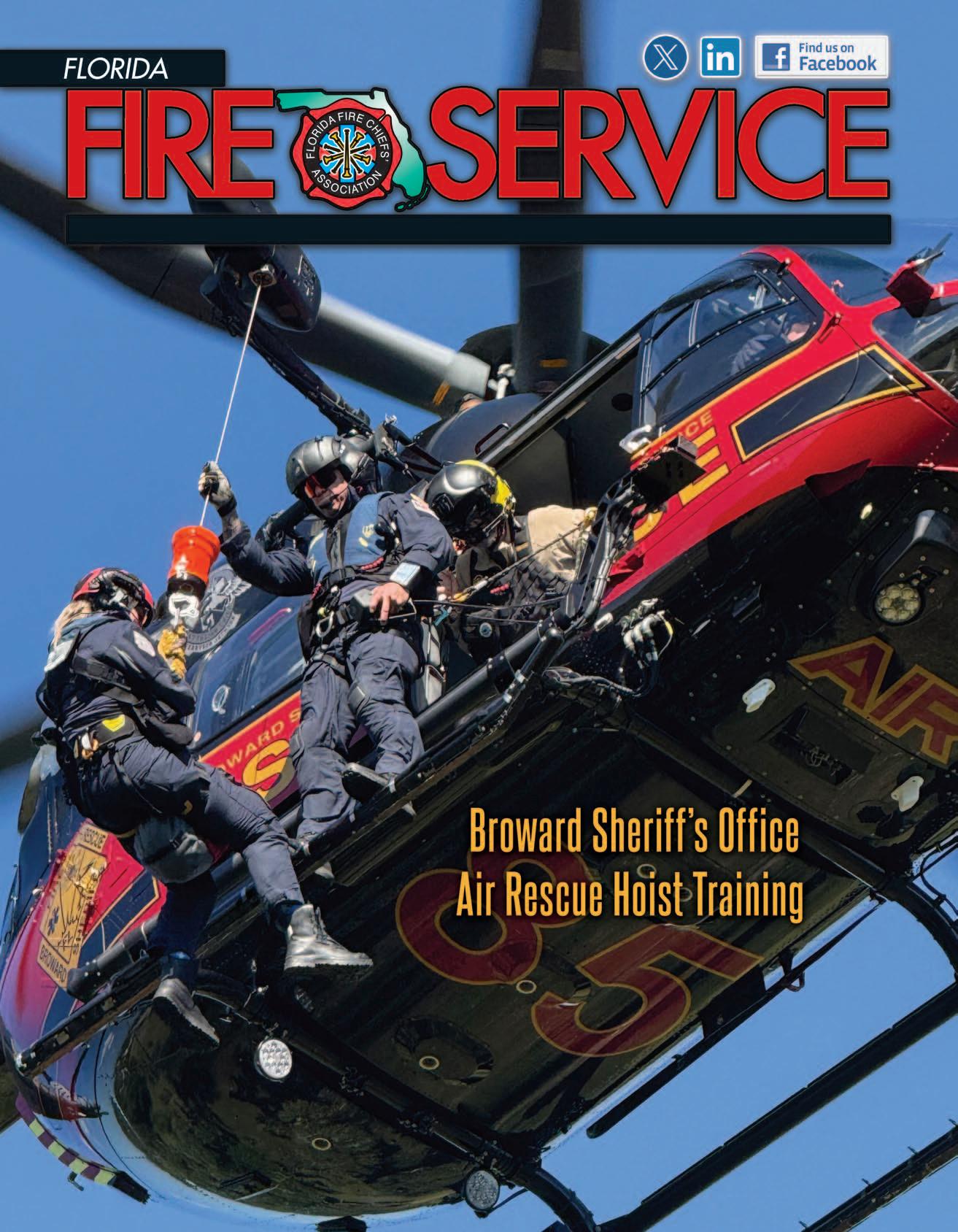
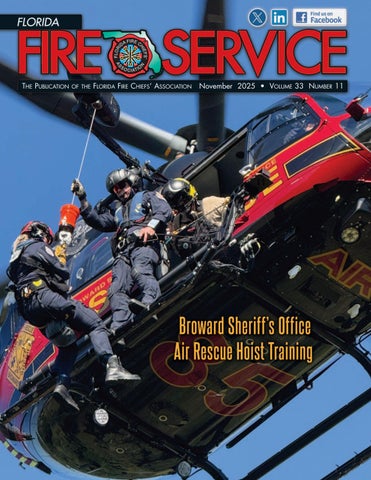
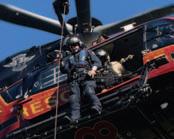
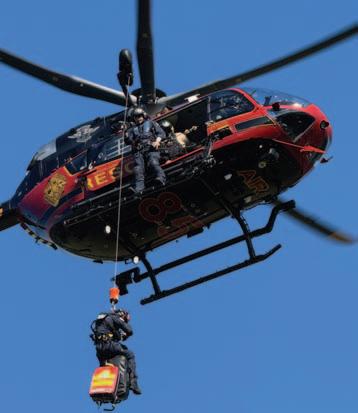
The Broward Sheriff’s Office Department of Fire Rescue, Air Rescue 85, has been conducting hoist training utilizing the new H145 helicopters. Flight crews have successfully completed comprehensive pre-course work, including both classroom instruction and practical evaluations. The training evolutions encompass a wide range of critical topics such as conning techniques, target selection identification, dynamic and static insertions, proper communications, rigging, and equipment securing procedures.
Several realistic training scenarios have been executed to immerse flight crews in diverse operational environments. These exercises require personnel to identify incident locations, establish and secure
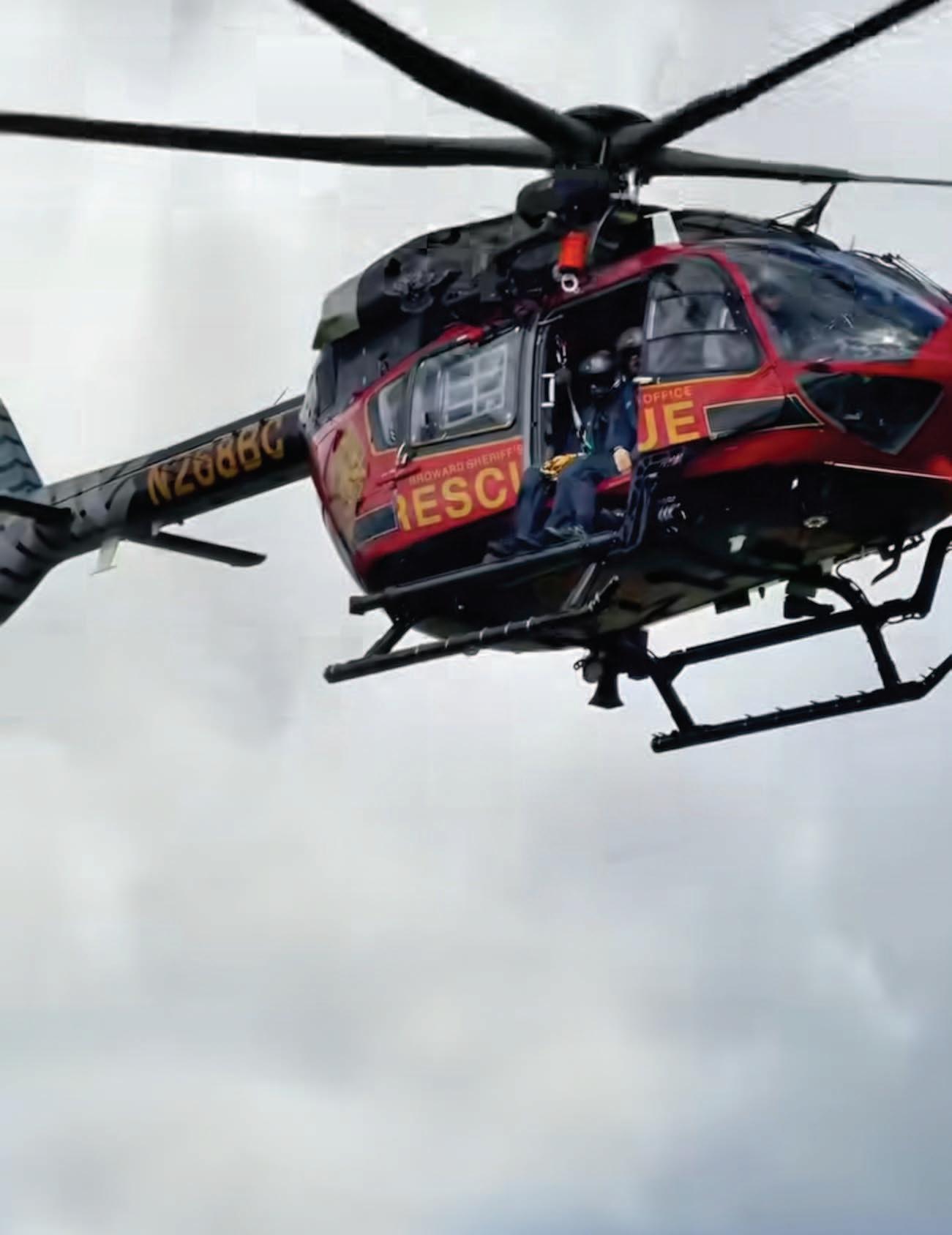
positions, initiate medical care, package patients, and perform hoist operations to safely raise both the flight medic and patient into the aircraft for rapid transport to the most appropriate medical facility.

By Corey Dobridnia, Public Information Officer,Walton County Sheriff’s Office
In an era where seconds can mean the difference between life and death, Walton County’s first responders are leading the charge in unified, life-saving response.
A school hallway, an active threat, and seconds ticking away, this is where training meets survival. Walton County’s first responders aren’t waiting for the next crisis. They’re training together to meet it head-on.
In 2025, Walton County Fire Rescue (WCFR) and Walton County Sheriff’s Office (WCSO) conducted intensive, multi-day Rescue Task Force (RTF) training evolutions while simultaneously launching the official rollout of RTF equipment across all fire apparatus. Together, these efforts mark a major step forward in the county’s ability to operate safely and effectively in high-threat environments. The joint initiative underscores the shared mission between fire rescue and law enforcement to protect, serve, and to “stop the dying” during critical incidents.
A Realistic and Demanding Training Environment
Held July 28–29 and August 5–7, 2025, RTF training brought together School Resource Deputies (SRDs) and fire/medic personnel for five days of rigorous, hands-on exercises at Freeport Middle School and Freeport Learning Center
Both venues present the kind of challenging environments responders could face in a real emergency including long hallways stretching over 175 yards, multi-story layouts, interconnected classrooms, and large open spaces requiring tactical movement and
precise coordination.
The RTF concept focuses on deploying emergency medical care immediately following the neutralization of a threat, bridging the gap between tactical operations and medical intervention.
Historically, pauses in medical access during active assailant events have cost lives. Walton County’s program is designed to prevent those delays by integrating law enforcement protection with fire/medic care by allowing responders to reach victims faster and safer.
Training to Integrate and Respond
From the first day, deputies and medics were “married” into unified RTF teams and learned how to move, communicate, and operate as one. Scenarios began with large-room triage before advancing to complex hallway and classroom-clearing operations.
During large room response, teams entered gymnasiums and cafeterias with simulated victims. Deputies secured the area while medics per formed triage, treatment, and patient movement from Casualty Collection Points (CCPs) to Casualty Exchange Points (CEPs).
When facing long corridors and opposing doors, personnel were challenged to maintain communication and sightlines. Law enforcement practiced “plating” positioning their armor toward potential threats while medics provided rapid trauma care in the
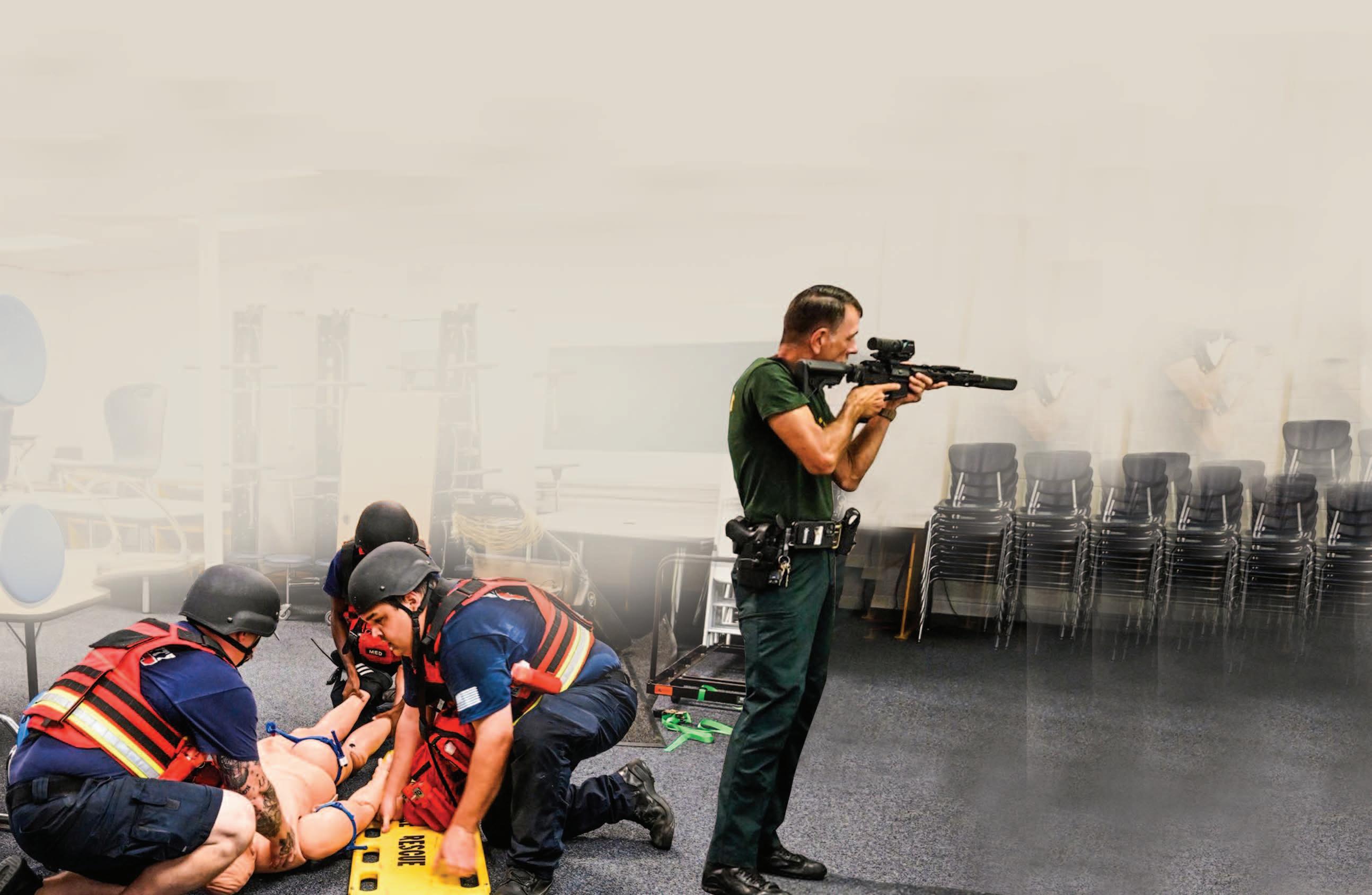
“Warm Zone.”
An after action of the training scenarios, led by WCFR Training Chief Slaughter and WCSO Training Deputy Steve Rogers, included structured debriefs, ensuring key lessons were identified and reinforced. By the end of the five days, teams had achieved seamless coordination between fire and law enforcement, developing trust and discipline essential for real-world mass casualty events.
For fire rescue personnel, the focus was on maintaining movement, communication, and cohesion that ensured patient care never outpaced team security. They practiced efficient corridor navigation, improved wound-packing techniques, and refined patient-carry methods to reduce fatigue and risk during an evacuation. For School Resource Deputies, the experience was transformative. Many came from training backgrounds emphasizing independent action, but the RTF environment demanded teamwork. Through interactive drills and targeted feedback, SRDs adapted from solo operators to synchronized units, improving muzzle discipline, communication, and sector control. These lessons went beyond tactics. They built mutual confidence. Firefighters and deputies left with a deeper respect for each other’s expertise and a unified understanding of their joint mission.
Preparedness, Partnership, and Purpose
The combined RTF training and subsequent
equipment rollout embody Walton County’s forward-thinking approach to emergency response. By fostering collaboration, standardizing procedures, and prioritizing safety, the county is setting a benchmark for integrated response across Florida.
As Sheriff Michael A. Adkinson, Jr. and Fire Chief Austin Pugh jointly emphasized, “Preparedness, partnership, and rapid, coordinated response remain the cornerstone of community safety.”
Through shared training, shared equipment, and a shared mission, Walton County’s first responders continue to exemplify the very best in interagency cooperation, ensuring that when the unthinkable happens, they are ready to act together to save lives.

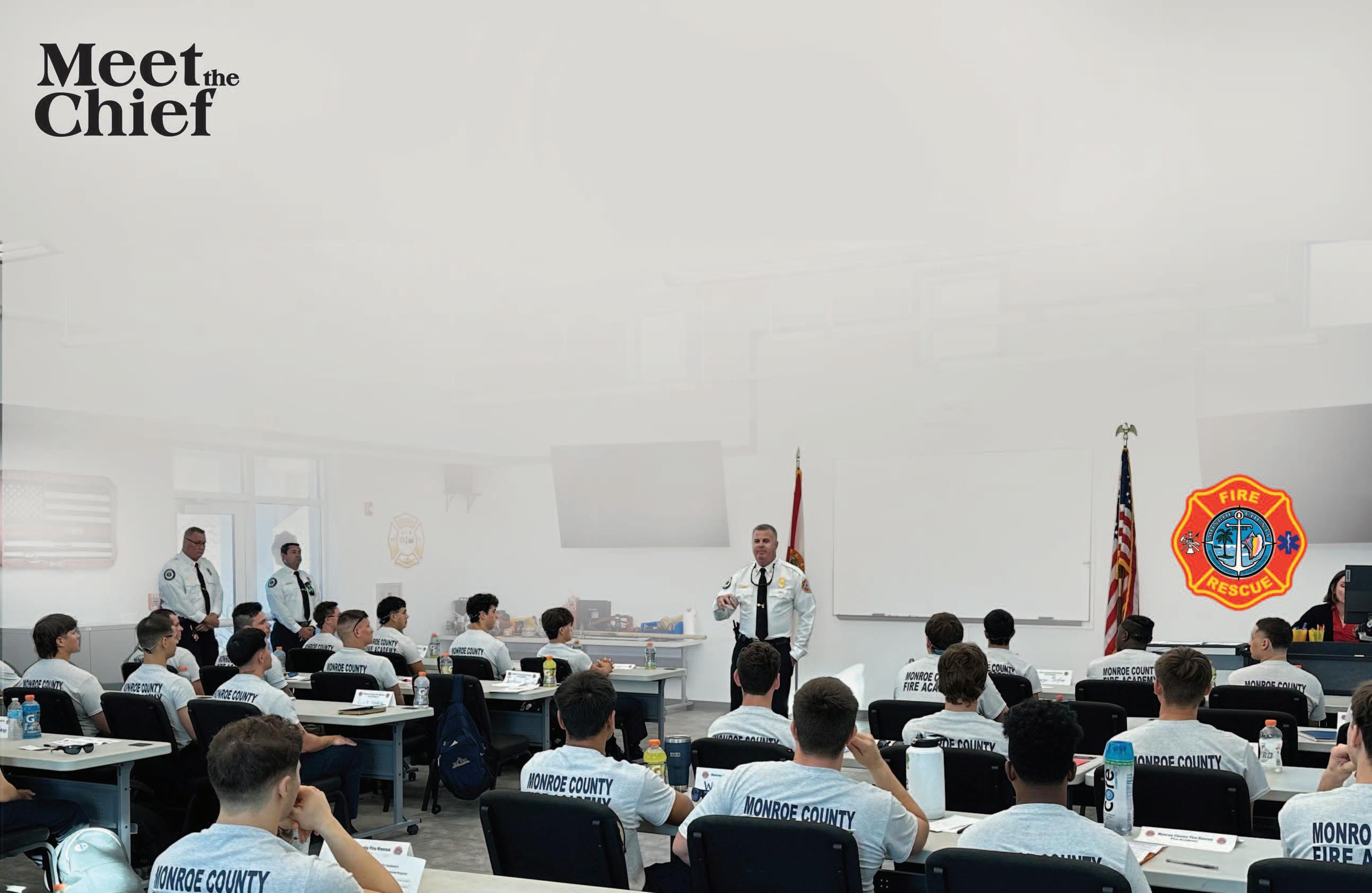
I have spent nearly three decades in the fire service, currently dedicated to serving the residents and visitors of Monroe County. My journey has included operational command, administrative leadership, emergency management integration, and strategic planning focused on long-term organizational sustainability and community safety.
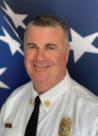
I began my fire service career as a firefighter/paramedic and progressively advanced through the ranks, holding positions including Lieutenant, Battalion Chief, and Deputy Chief before being appointed Fire Chief of Monroe County Fire Rescue. Each role provided valuable perspective on field operations, personnel management, and the complex coordination required in a geographically unique jurisdiction that spans 120 miles across the Florida Keys.
Monroe County operates under a County Administrator form of government with an elected five-member Board of County Commissioners. The Fire Chief reports to the County Administrator and collaborates closely with both
administrative leadership and elected officials to ensure operational readiness, fiscal accountability, and service to the public.
MCFR’s funding is primarily derived from ad valorem property taxes within the Fire and Ambulance Districts, supplemented by EMS transport revenue, state and federal grants, and cost recovery from specialized services. Strategic budgeting and fiscal discipline remain essential to balance the increasing cost of emergency services with the county’s unique economic landscape.
Monroe County Fire Rescue provides emergency services to approximately 82,000 permanent residents and millions of annual visitors across 1,000 square miles of land area and over 3,600 square miles of surrounding waters. The jurisdiction extends from Ocean Reef to the Dry Tortugas, encompassing a variety of residential, commercial, marine, and wilderness environments.
MCFR is a full-time paid professional department composed of career firefighters, paramedics, fire inspectors, training officers, and support staff, and reserve personnel in select divisions. The department maintains approximately 180 full-time positions, operating under a three-platoon system with 48-hour shifts and daily staffing levels of 40-45 personnel.
The department’s fleet includes:
• 8 front-line engine and rescue companies
• 3 aerial ladder trucks
• 10 advanced life support ambulances
• 3 air ambulances (Trauma Star helicopters)
All equipment is maintained through a structured replacement plan designed to ensure reliability, safety, and fiscal sustainability.
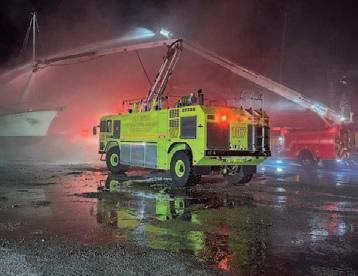
In 2024, Monroe County Fire Rescue responded to approximately 5,000 emergency calls, including structure fires, EMS incidents, marine rescues, and major incident responses throughout the island chain. EMS responses continue to account for roughly 75% of total call volume.
Our greatest challenge is balancing operational demand with sustainable staffing and funding. The Keys’ geography makes deployment complex, and rising housing and cost-of-living pressures impact recruitment and retention. Ensuring consistent response coverage across an island chain separated by bridges and waterways requires innovative planning and continued community support.
My management style is collaborative, transparent, and accountability-driven. I believe in empowering personnel at every level to take ownership of their role while maintaining a
strong foundation of operational discipline. I value communication, mentorship, and clear expectations, ensuring that decisions are informed by both data and field experience.
Does Your Department Have a Formal, LongRange Strategic Plan?
Yes. MCFR operates under a formal five-year strategic plan aligned with the County’s broader objectives. This plan outlines goals related to apparatus replacement, staffing expansion, facility improvements, training, and service delivery. It is reviewed annually to reflect changing conditions, fiscal realities, and emerging community needs.
How Have Current Economic Times Impacted Your Department?
Like many agencies, we’ve experienced the effects of inflation, supply chain delays, and rising labor costs. These pressures have required us to make difficult decisions about project prioritization, grant pursuits, and overtime management. The department has responded by increasing internal efficiency, leveraging regional partnerships, and focusing resources where they have the greatest public impact.
We have shifted toward multi-year financial forecasting, alternative funding models such as lease-to-own apparatus programs, and crosstraining personnel to maximize flexibility. Additionally, we’ve adopted data-driven analysis to ensure overtime usage and resource allocation align with true operational need, rather than tradition or assumption.
The modern fire service faces a convergence of challenges — recruitment and retention, mental health and wellness, evolving hazards, and fiscal limitations. We must also continue adapting to new technologies, increasing community expectations, and the changing nature of emergency response. Preparing for these realities requires strong leadership and proactive investment in people and infrastructure.
What Do You Look for in a New
I look for character, commitment, and adaptability Skills can be taught, but integrity, work ethic, and a genuine desire to serve cannot. We seek individuals who embody professionalism, humility, and teamwork… People who view this as a career of service, not just a job.
How Do You View Training?
Training is the foundation of operational excellence. It must be continuous, relevant, and realistic. From recruit academies to officer development programs, we invest heavily in professional growth and hands-on experience. A well-trained firefighter not only protects the community more effectively but ensures the safety of their crew.
Absolutely. Collaboration is essential in the Florida Keys. We maintain strong mutual aid relationships with municipal fire departments, the Sheriff’s Office, Emergency Management, and the U.S. Coast Guard. Our success depends on shared resources, joint training, and unified communication across jurisdictions.
What’s the Future for the Fire Service as You See It?
The future of the fire service lies in innovation, leadership development, and community integration. Technology will continue to evolve, but our greatest asset will remain our people. The fire service must continue to adapt — not just to new hazards, but to the expectations of the communities we serve. For MCFR, that means remaining fiscally responsible, operationally ready, and deeply connected to the residents who rely on us.
By Codi Donahoe, Fire Chief, Haines City Fire Department
The Haines City Fire Department was established in 1922 and has grown alongside the city for more than a century. From its early days as a small-town operation, the HCFD has developed into a professional, disciplined organization dedicated to protecting lives, property, and serving the community with pride and excellence.
Haines City is one of the fastest-growing cities in the nation, and the fire department has expanded to keep pace.
Every station, firefighter, and piece of apparatus is prepared to respond quickly and efficiently, ensuring the safety of residents, businesses, and visitors throughout the city.
The department is focused on readiness, rapid response, and maintaining the highest standards of service in a community that continues to grow and evolve.
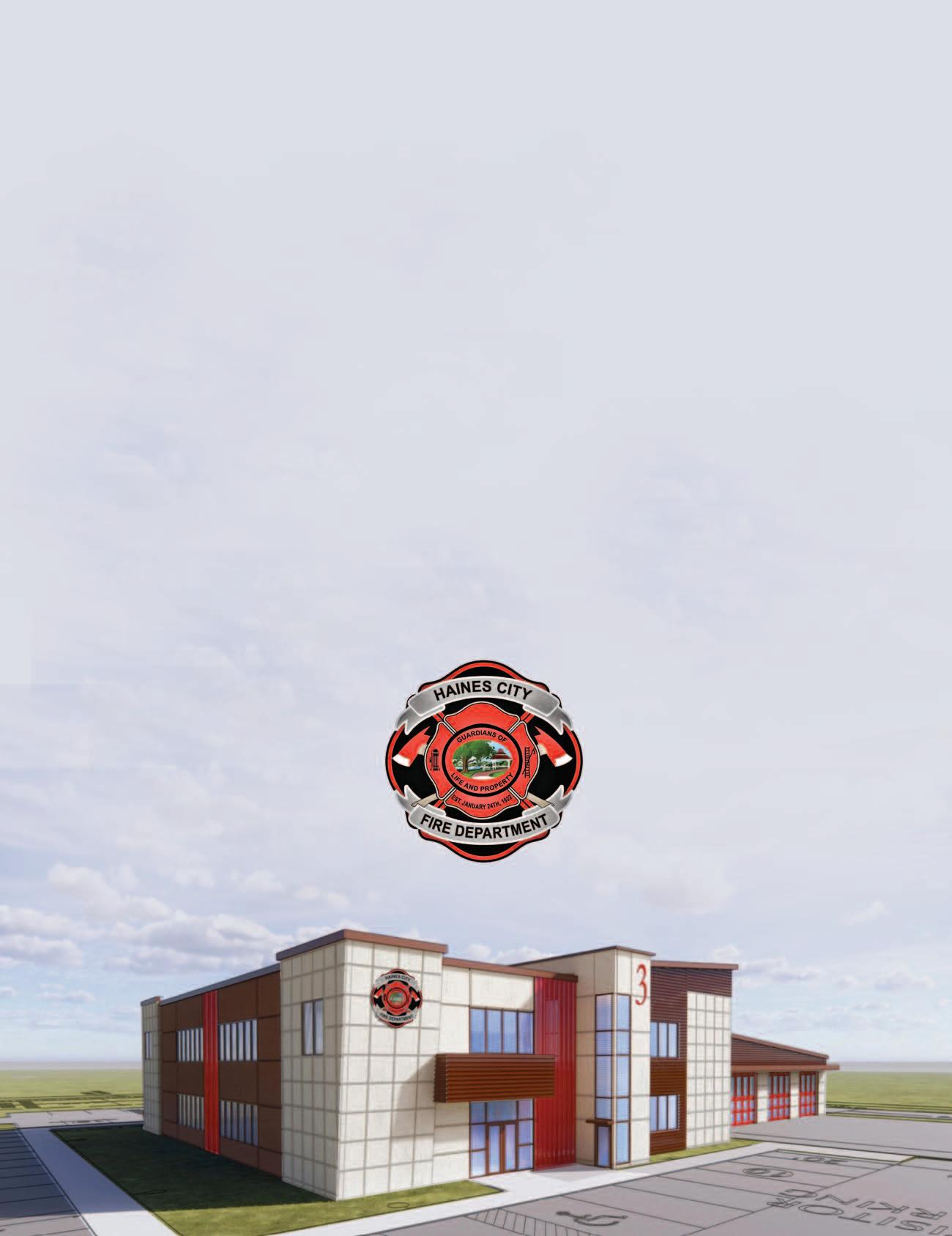
A major milestone in the department’s growth is the opening of Fire Station 3 on the city’s northwest side. The station houses both an engine and a truck company, improving coverage and response times across the area. Station 3 also features a state of the art Emergency Operations Center, which serves as a central hub for command and coordination during major incidents, disasters, and citywide emergencies.
Fire Station 3 is equipped with the Phoenix G2 Station Alerting System, which delivers notifications directly from dispatch to first responders. This system enhances situational
awareness, ensures crews receive critical information immediately, and allows them to respond with precision and speed.
Over the past year, the HCFD has nearly doubled its personnel, significantly enhancing operational readiness and the department’s ability to serve a growing population. Several new apparatus have been placed into service, with additional units planned, giving firefighters the tools and technology they need to respond safely and effectively. Planning is already underway for Fire Station 4, which will expand coverage and further strengthen the department’s capabilities as the city continues to grow.
Beyond staffing and infrastructure, the department emphasizes training, innovation, and community engagement. Crews participate in advanced emergency response exercises, public safety education programs, and large-scale drills to keep residents informed, prepared, and protected. The HCFD continues to develop specialized capabilities to handle complex incidents, including technical rescues, coordinated emergency operations, and disaster response.
The progress is the result of teamwork, leadership, and dedication. From city officials to firefighters on the front line, every member of the department is committed to readiness, professionalism, and protecting the community.
As Haines City grows, the department remains mission focused, disciplined, and prepared to meet every challenge. The Haines City Fire Department will continue serving the community with excellence, dedication, and pride, ensuring residents can rely on a capable and responsive fire service now and in the future.


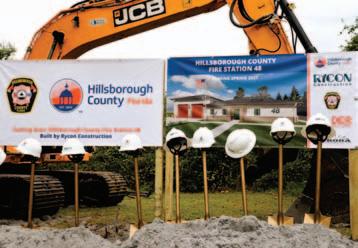
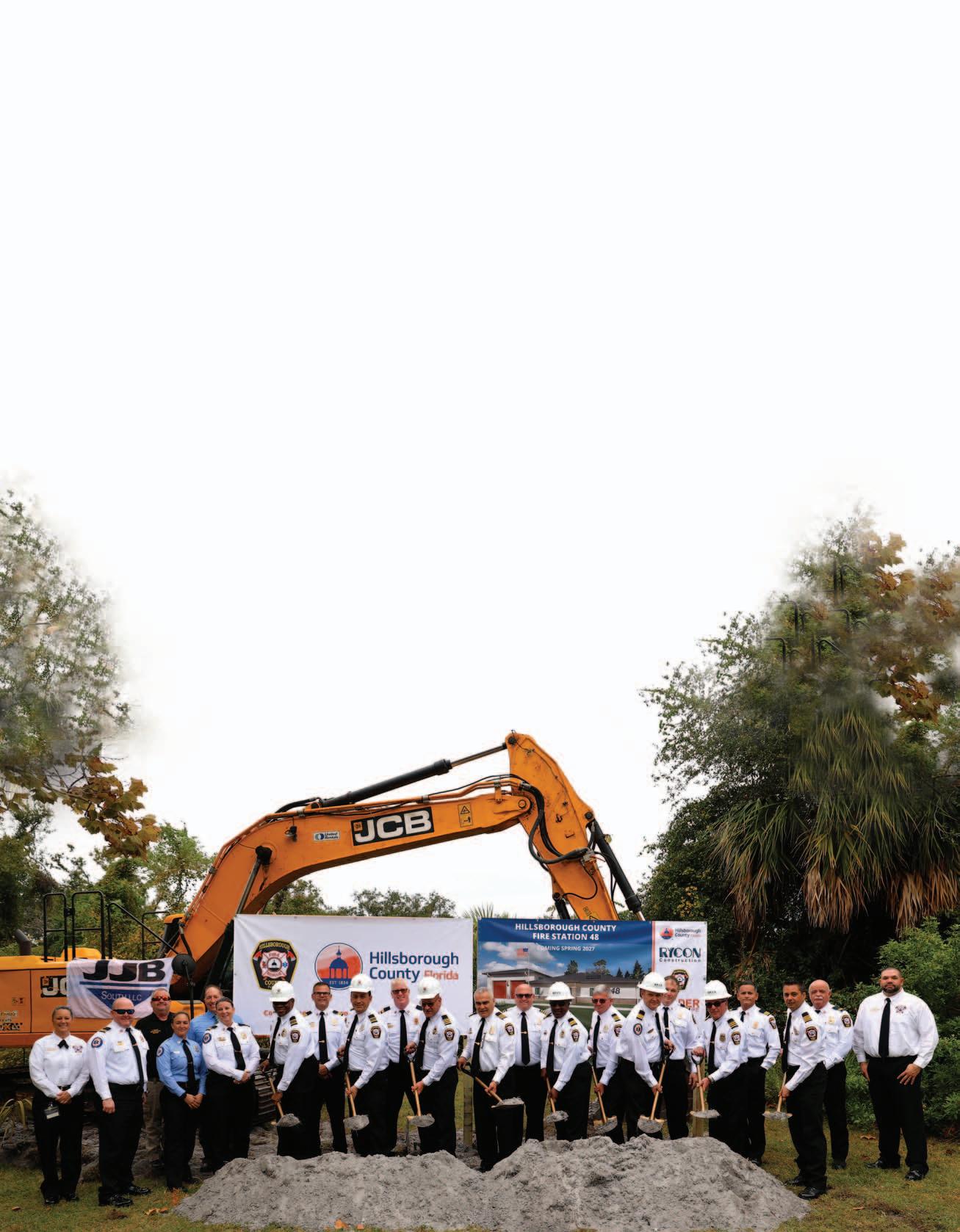
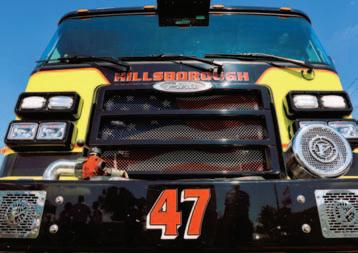
Hillsborough County Fire Rescue (HCFR) is expanding its service footprint with the groundbreaking of two new fire stations, Station 47 and Station 48, to meet the growing emergency response needs of the county’s rapidly developing communities.
On October 28, HCFR celebrated the groundbreaking of Station 47, which will serve North Sun City Center, Apollo Beach, and Wimauma. Just over a week later, on November 6, the department broke ground on Station 48 in South Progress Village, Tampa. Both areas continue to experience significant residential and commercial growth, driving increased demand for emergency services.
Each new station will feature a two-bay design and will house both a fire engine and a rescue ambulance, staffed by a minimum of five full-time firefighters per shift. Designed with firefighter health and wellness in mind, both facilities will include dedicated
By Hillsborough County Fire Rescue
decontamination areas, including showers and laundry rooms, allowing crews to remove carcinogenic contaminants before entering the living quarters.
In addition, the stations will be equipped with a modern alerting system that uses a gradual wake alert rather than a traditional jarring alarm. This system reduces stress and supports the mental and physical well-being of firefighters responding from rest.
Station 47 will also stand as an example of state and local collaboration. Hillsborough County Fire Rescue partnered with the Florida Forest Service to share land at no cost, with both agencies operating facilities on the same property—a model of efficient resource use and interagency cooperation.
The new fire stations will not only enhance service to residents and businesses but also benefit the men and women of Hillsborough County Fire Rescue, who respond to an estimated 140,000 emergency calls each year.
The addition of Stations 47 and 48 will strengthen Hillsborough County Fire Rescue’s ability to meet the needs of a growing population while maintaining the high standard of service residents have come to expect. These full-service stations represent the County’s ongoing commitment to enhancing public safety, reducing response times, and supporting firefighter health and readiness across its 909-square-mile service area.
By Tiffany Wood , Public Information Officer/Public Educator, Greater Naples Fire Rescue District
By Tiffany Wood , Public Information Officer/Public Educator, Greater Naples Fire Rescue District
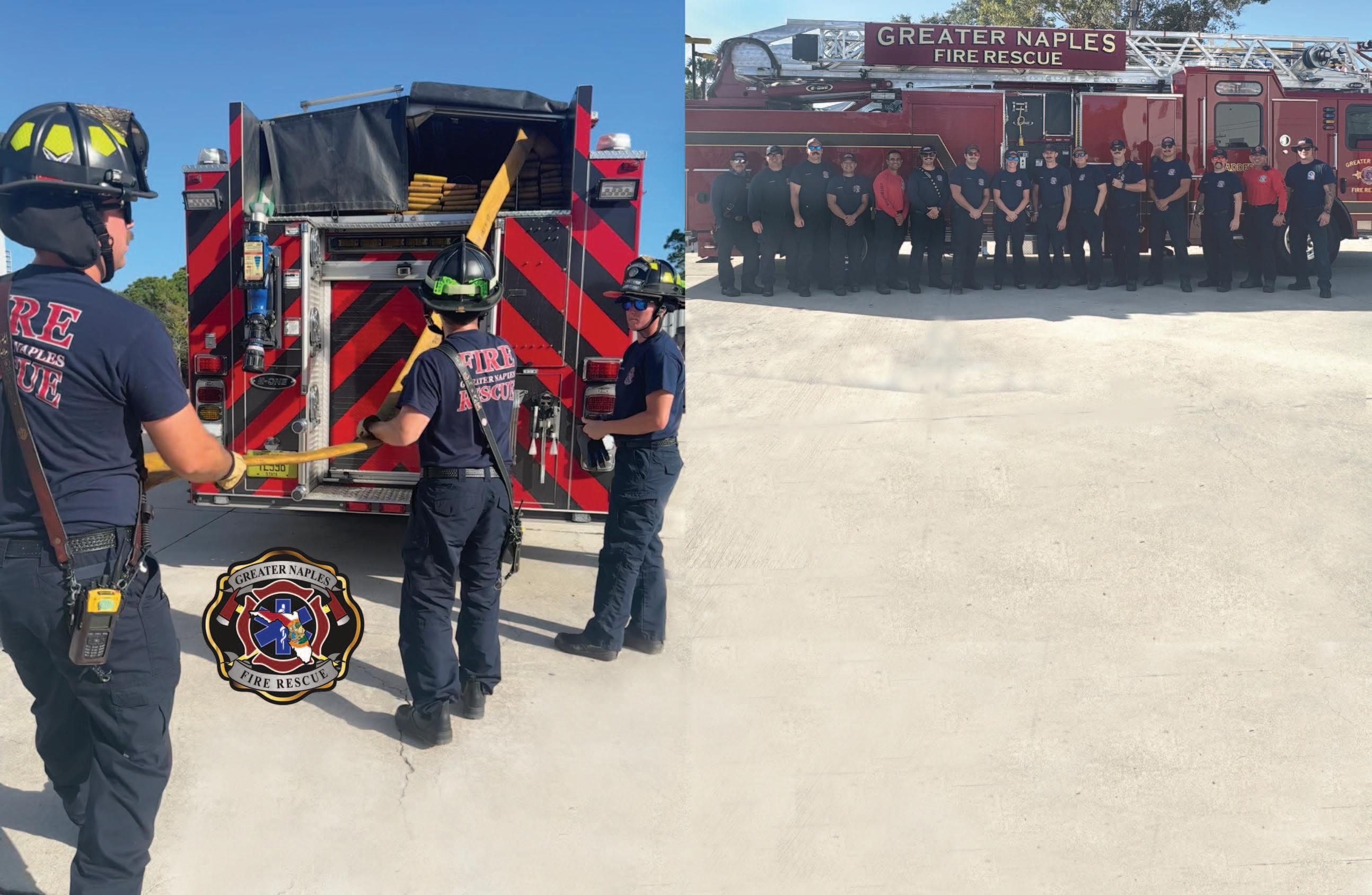
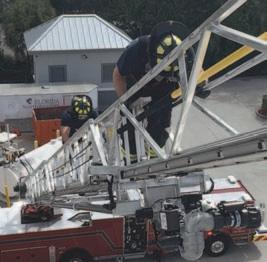
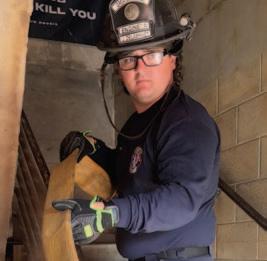
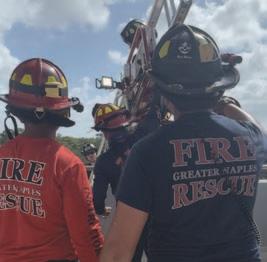
The Greater Naples Fire Rescue District recently marked an exciting milestone with the successful completion of its inaugural Engineer Development Academy.
This achievement was made possible through the dedication and professionalism of the participating Engineers and the instructors who guided them. Their commitment to mentorship, hands-on instruction, and the sharing of real-world experience exemplifies the core
values and service-driven culture of the Greater Naples Fire Rescue District. Through their leadership, they not only enhanced the technical skills of our members, but also helped strengthen a culture of continuous learning, collaboration, and excellence across the organization.
We are grateful for their contributions and proud to see this academy pave the way for future generations of Driver Engineers.

By Mackenzie McClintock, Public Information Officer, South Walton Fire District
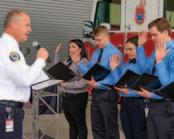
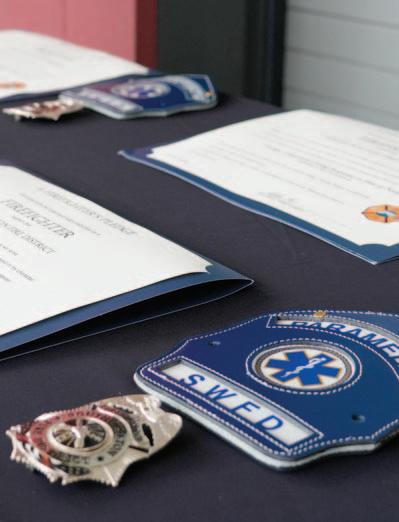
After a year’s worth of learning the ropes, six South Walton Fire District (SWFD) personnel successfully reached “career” status and were recognized at a pinning ceremony October 28, 2025.
SWFD congratulates the following on this significant milestone: Telecommunicator Nadia Branton, Firefighter/EMT Braxton
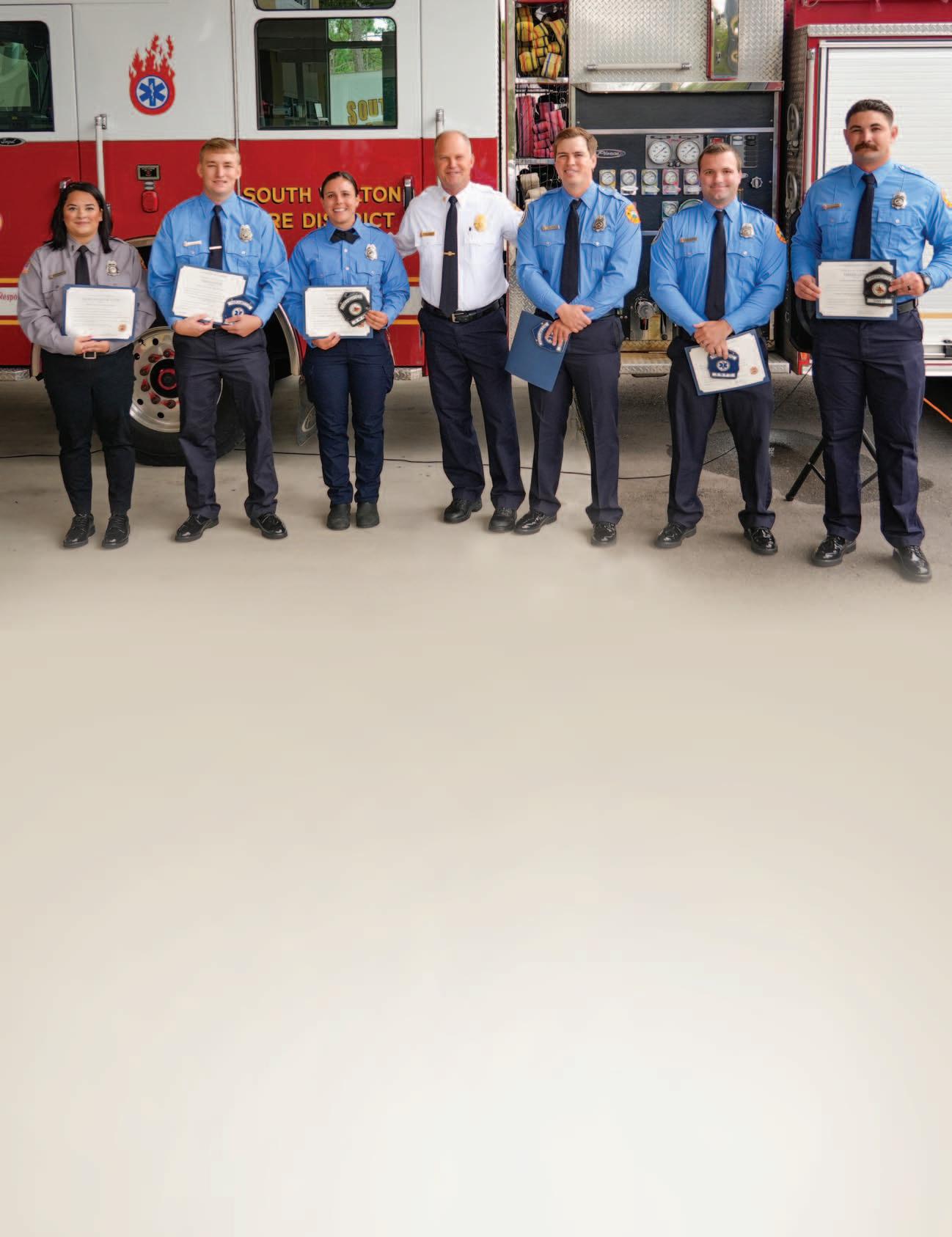
Dickerson, Firefighter/EMT Kaylynn Cabanas, Firefighter/Paramedic Travis Brady, Firefighter/Paramedic Adam Baker, and Firefighter/Paramedic Ethan Evans.
Each of these six individuals has worked very hard to get to this point in their careers. Hundreds of hours of training accompany their time handling
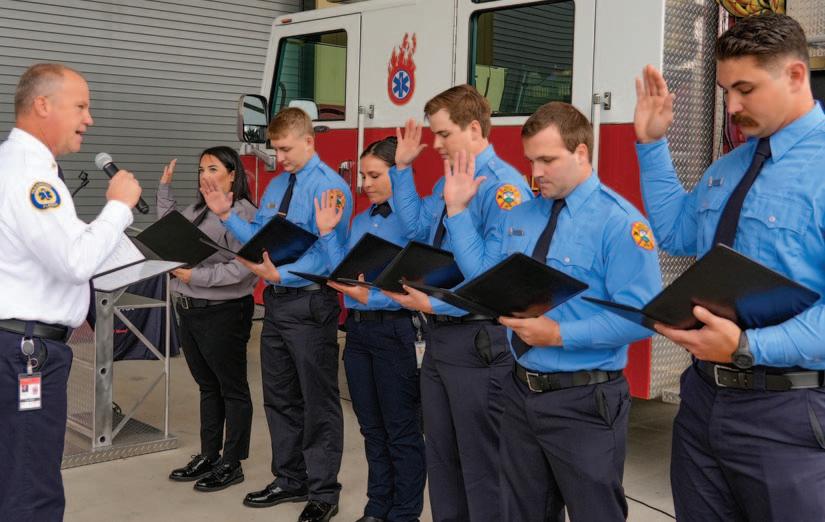
emergencies, plenty of late nights and early mornings, as well as time spent away from their families in ser vice to our community. With the continued support of their loved ones and fellow personnel, we have no doubt they will continue to serve with confidence, dedication, and passion for the job.


Department
Matt Kinley..................................Seminole County Fire Department
Joe LaCognata...................................................Fire Rescue Support
Bejamin Lamb.......................................................City of Palm Bay
Shane Lanoue.........................................Volusia County Fire Rescue
Christopher Laquerre.......................Boynton Beach Fire Department
Shawn Legleiter...............................Panama

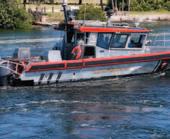
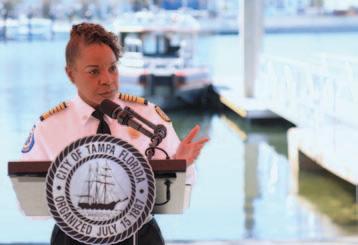
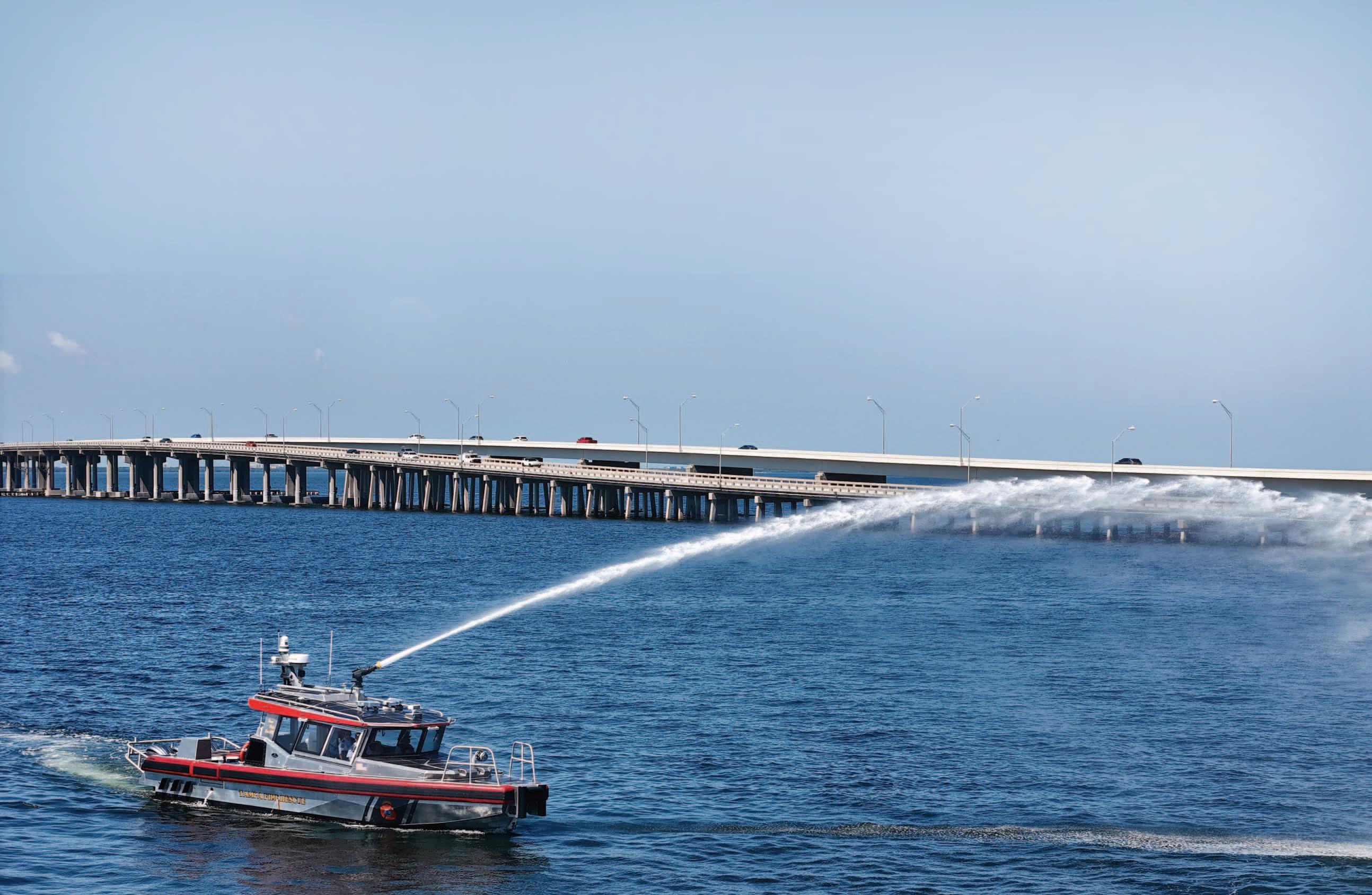
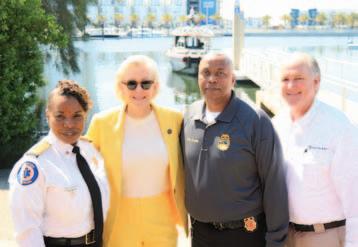
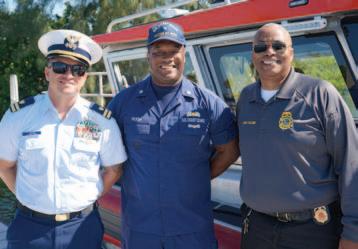
Tampa Fire Rescue has expanded its maritime response capabilities with the addition of the Black Eagle, a state-of-the-art, 38-foot fireboat introduced during a formal commissioning ceremony on September 19, 2025. City leaders, fire service officials, and members of the community gathered along the waterfront to welcome the new vessel, which replaces an aging unit and marks a significant advancement in the department’s ability to protect one of Florida’s busiest and most complex waterways.
The City of Tampa, now home to more than 400,000 residents and millions of annual
By Vivian Shedd, APIO, Tampa Fire Rescue
visitors, depends heavily on its waterfront for commerce, recreation, and tourism. With an active port, expanding residential shoreline development, and year-round boating activity, marine emergencies have become an increasingly critical component of Tampa Fire Rescue’s service delivery. Mayor Jane Castor acknowledged that demand, emphasizing that the new fireboat will serve as a vital asset for both daily operations and large-scale emergencies.
“This boat will be a critical tool in saving lives, protecting our port, and keeping our growing population safe,” Castor said during the ceremony. “Our first responders carry the responsibility of ensuring that everyone in the bay is safe—even when the unexpected happens.”
For Fire Chief Barbara Tripp, the Black Eagle reflects a broader commitment to modernization and readiness. “The Black Eagle represents a major step forward in our marine rescue capabilities,” Tripp said. “This investment strengthens our ability to respond to fires, medical calls, hazardous incidents, and rescues on the water.”
Built on a Metal Shark platform, the Black Eagle is engineered for multi-mission response and is the only CBRNE-capable (Chemical, Biological, Radiological, Nuclear, and Explosive) fireboat in the Tampa Bay region. It has a fully enclosed cabin, with a filtration and pressurization system, allowing personnel to operate safely in contaminated environments, an increasingly important capability as ports handle diverse cargo and face evolving security challenges. This positions Tampa Fire Rescue as a leading maritime emergency response agency on Florida’s west coast.
The vessel is powered by a 1,500-gallon-perminute Darley fire pump capable of supporting both defensive and direct attack operations on waterfront structures, vessels, and marina facilities. The pump is coupled with a remoteoperated rooftop monitor and integrated foam system, allowing firefighters to apply water or AFFF foam precisely during fuel-related fires or hazardous conditions. Dual 2.5-inch handlines and a five-inch Storz hydrant connection allow the fireboat to support land-based companies during large waterfront incidents.
Inside the Metal Shark NXT EMS cabin, crews have a climate-controlled, shockmitigating workspace equipped with dedicated control stations for the pilot, officer, and technical operators. A full-length EMS bench and patient care area allow the fireboat to
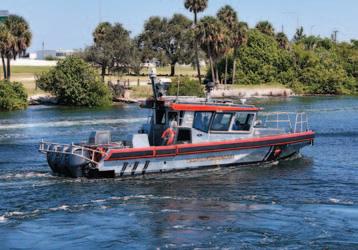
function as a marine ambulance, enhancing Tampa’s waterborne medical response— essential in a city where boating accidents, strokes, cardiac incidents, and traumatic injuries regularly occur offshore or on the bay.
Dive and rescue operations are also supported through integrated SCBA and dive tank storage, wide walk-around access, and a bow configuration that enables rapid retrieval of patients from the water. With Tampa’s active commercial port, cruise ship operations, and recreational boating community, these features significantly increase the department’s speed and effectiveness during mass-casualty or multivictim incidents.
The Black Eagle is outfitted with advanced Raymarine navigation and situational awareness technology, FLIR thermal imaging for night or low-visibility searches, and long-range LED searchlights designed to improve visibility in the bay’s often challenging conditions. Combined with the vessel’s full emergency lighting and communications suite, marine crews can coordinate seamlessly with land-based command posts, law enforcement agencies, and port security partners.
Stationed at Port 32 Marina, the Black Eagle is strategically positioned for rapid deployment anywhere within the bay, the Hillsborough
River, and surrounding waterways. Tampa Fire Rescue’s marine fleet currently consists of four vessels, and a sister ship to the Black Eagle is scheduled to arrive in 2026. Together, the expanded fleet will increase operational redundancy and ensure continuity of response during major storms, port emergencies, or simultaneous incidents.
The acquisition was supported by a Port Security Grant awarded through Port Tampa Bay, a program designed to strengthen national port safety and security. By leveraging this funding, Tampa Fire Rescue continues to modernize its response capabilities while aligning with federal preparedness priorities.
With the addition of the Black Eagle, Tampa Fire Rescue has set a new regional standard for maritime emergency operations—one that reflects both technological innovation and an unwavering commitment to public safety.
By Misty E. Sommer, Director of Economic Development and Public Informatio, City of Mount Dora
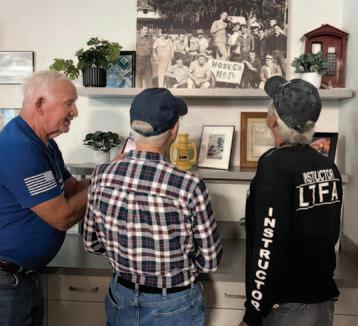
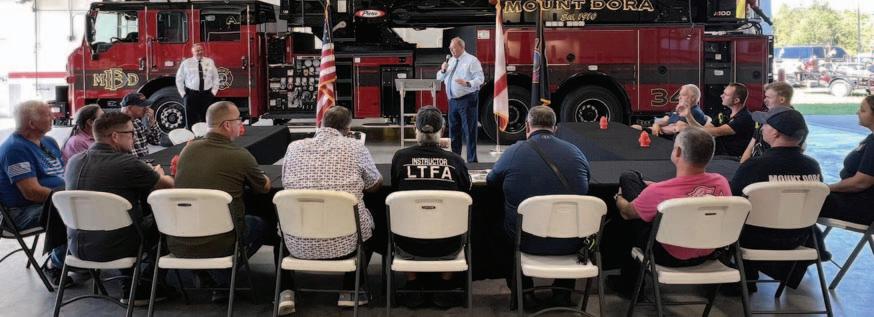
The Mount Dora Fire Department hosted its first-ever Retiree Luncheon, honoring the many generations of firefighters who have proudly servedthe
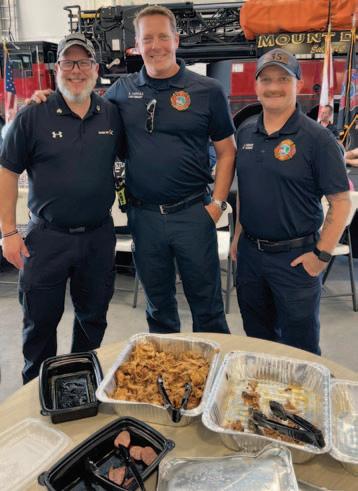
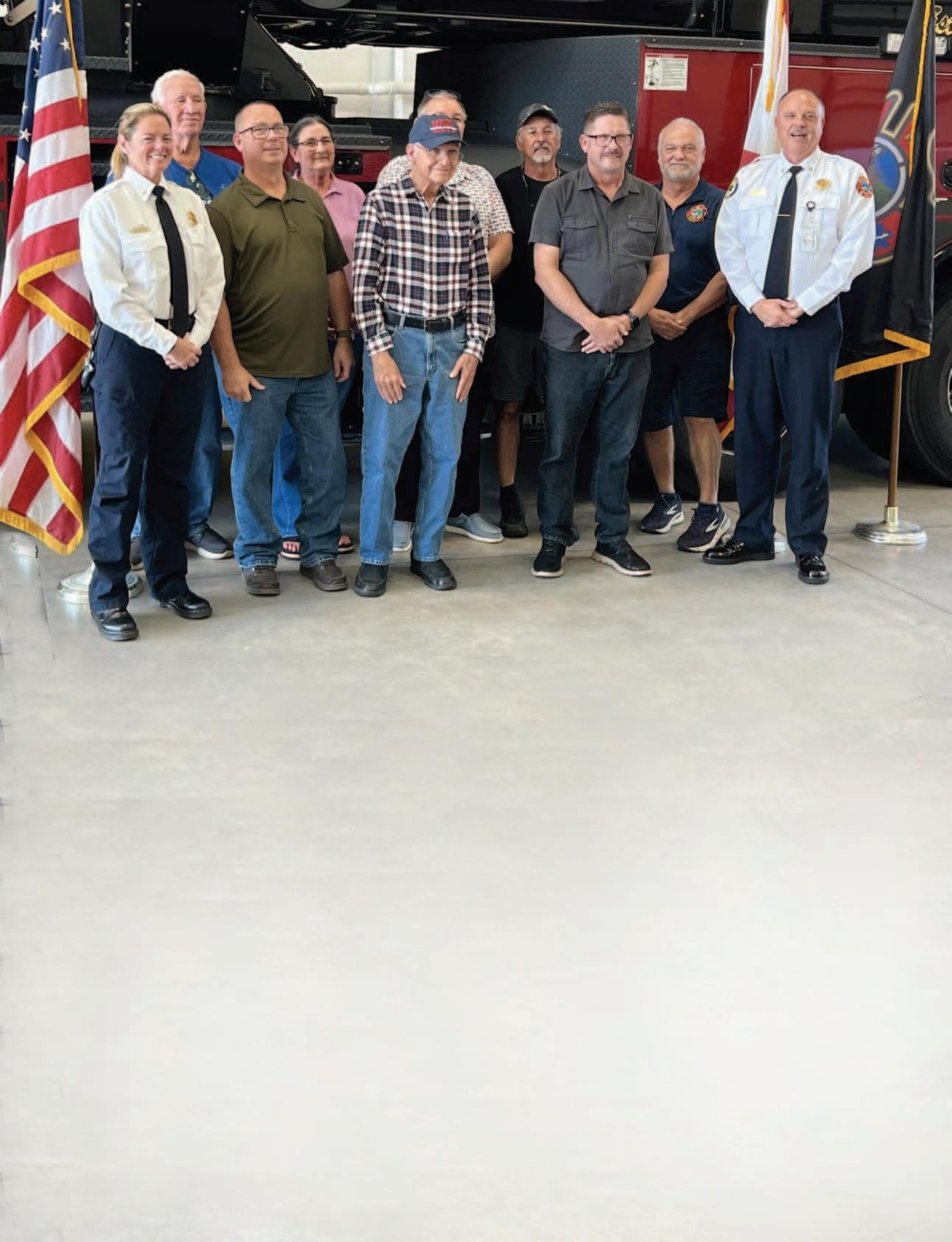
community. The event brought together retired firefighters, including several former Fire Chiefs, for an afternoon of camaraderie, storytelling, andreflection with current department members. The luncheon celebrated the legacyof those who paved the way and offereda meaningful opportunity to reconnectacross generations. The department looks forward to making this a new annualtradition for its retirees. A special thank-you goes to Mission BBQ for providing a deliciousmeal and for their continued support of local firstresponders.
By Frank Guzman, Public Information Officer, Fort Lauderdale Fire Rescue
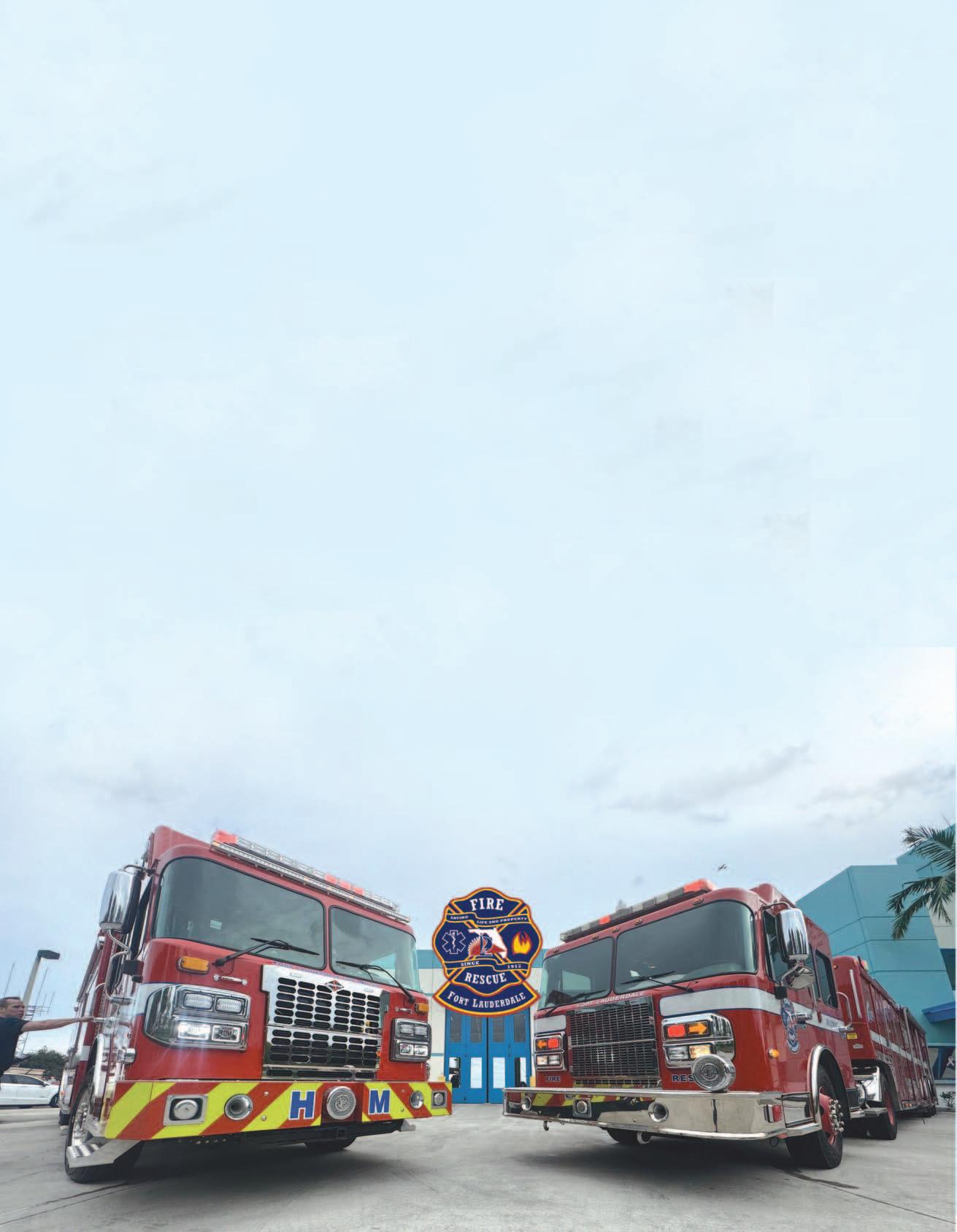
This fall, Fort Lauderdale Fire Rescue is adding not one, but two new life-saving vehicles to its fleet — a brand-new Hazmat truck and a state-of-the-art Airport Rescue Firefighting (ARFF) truck. Together, these two trucks will make the city safer on the streets and in the skies.
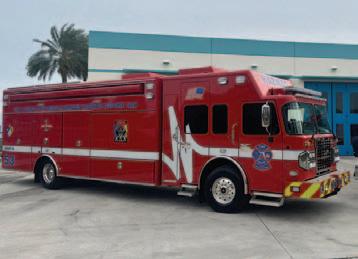
The first of the two additions is a 39-foot Spartan Metro Star heavy rescue Hazmat truck, replacing a 20-year-old tractor-trailer unit.
“This truck is important because it responds to hazardous materials incidents within the city and throughout the county as part of the regional team,” said Battalion Chief Christopher Davis-Partridge, Hazmat team coordinator for Fort Lauderdale Fire Rescue. “It’s almost like a rolling lab and toolbox in one.”
Unlike the bulky older vehicle, the new single-axle design is easier to maneuver through Fort Lauderdale’s narrow and tree-lined streets.
Inside, firefighters will find specialized equipment — protective suits, monitors, and high-tech spectrometers capable of telling crews exactly what a suspicious
chemical is and what hazards it poses. “For instance, I could take something as simple as antifreeze, put it on one of our spectrometers, and it’ll tell me what the hazards are and exactly what it is,” explained Chief DavisPartridge.
All gear is stored in air-conditioned compartments to protect it from Florida’s heat and humidity, ensuring crews are always ready to respond. The city invested $1.2 million to put the new unit into service.
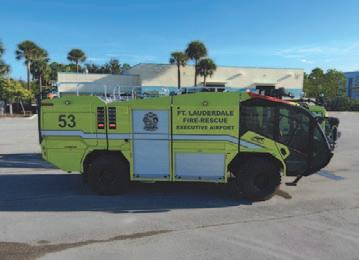
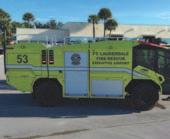
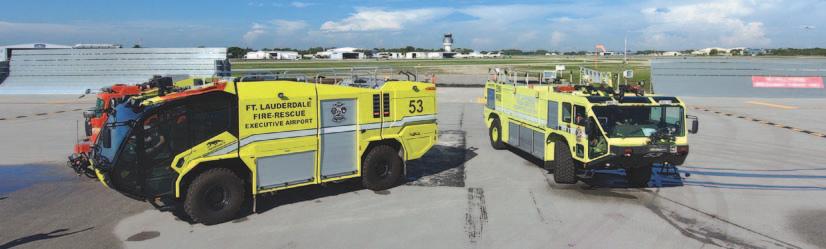
The second vehicle being added is a Rosenbauer Panther 4?4 ARFF truck, which will serve at Fort Lauderdale Executive Airport. This truck replaces a more than decade-old unit and brings a newer, more reliable platform for responding to aviation emergencies like aircraft
fires, fuel spills, or runway incidents.
“This truck doesn’t reinvent what we do at the airport, but it gives us a more modern, reliable platform to do it,” said ARFF team coordinator Battalion Chief Eric Peasant. “It’s built to perform faster and more efficiently when every second counts.”
The Panther features two water cannon turrets drawing from a 1,600 gallon tank, a 360degree camera system and other updated technology that makes it quicker and easier for airport firefighters to respond when seconds matter.
“Our crews will complete manufacturer-led training before the truck goes into service later this fall,” said Chief Peasant. “Once it’s online, it will give us an even faster, more reliable way to respond to emergencies at the airport.”
The city invested just over a million dollars to place this truck into service – a sign of its commitment to the safety of our airport and neighbors.
“These investments ensure our firefighters have the tools they need to protect the public during some of the most complex and dangerous incidents we face,” said Fire Chief Stephen Gollan. Whether it’s a hazardous spill downtown or an emergency on the air field, Fort Lauderdale Fire Rescue stands ready
By Chai Kauffman, Public Information Officer, Hollywood Fire Rescue and Beach Safety
Hollywood Fire Rescue and Beach Safety Launches Drone-Deployed Personal Flotation Devices to Enhance Ocean Rescues Hollywood Fire Rescue and Beach Safety is proud to announce a new drone-assisted rescue system that significantly enhances emergency response capabilities along the beach. As the first Fire Department in Broward County to implement this
technology, the initiative marks a significant advancement in the capabilities of Hollywood Ocean Rescue operations.
The personal flotation devices are mounted beneath drones and can be rapidly flown to individuals in distress. Once in position, the drone releases the flotation device directly into the victim’s vicinity, providing immediate support until lifeguards
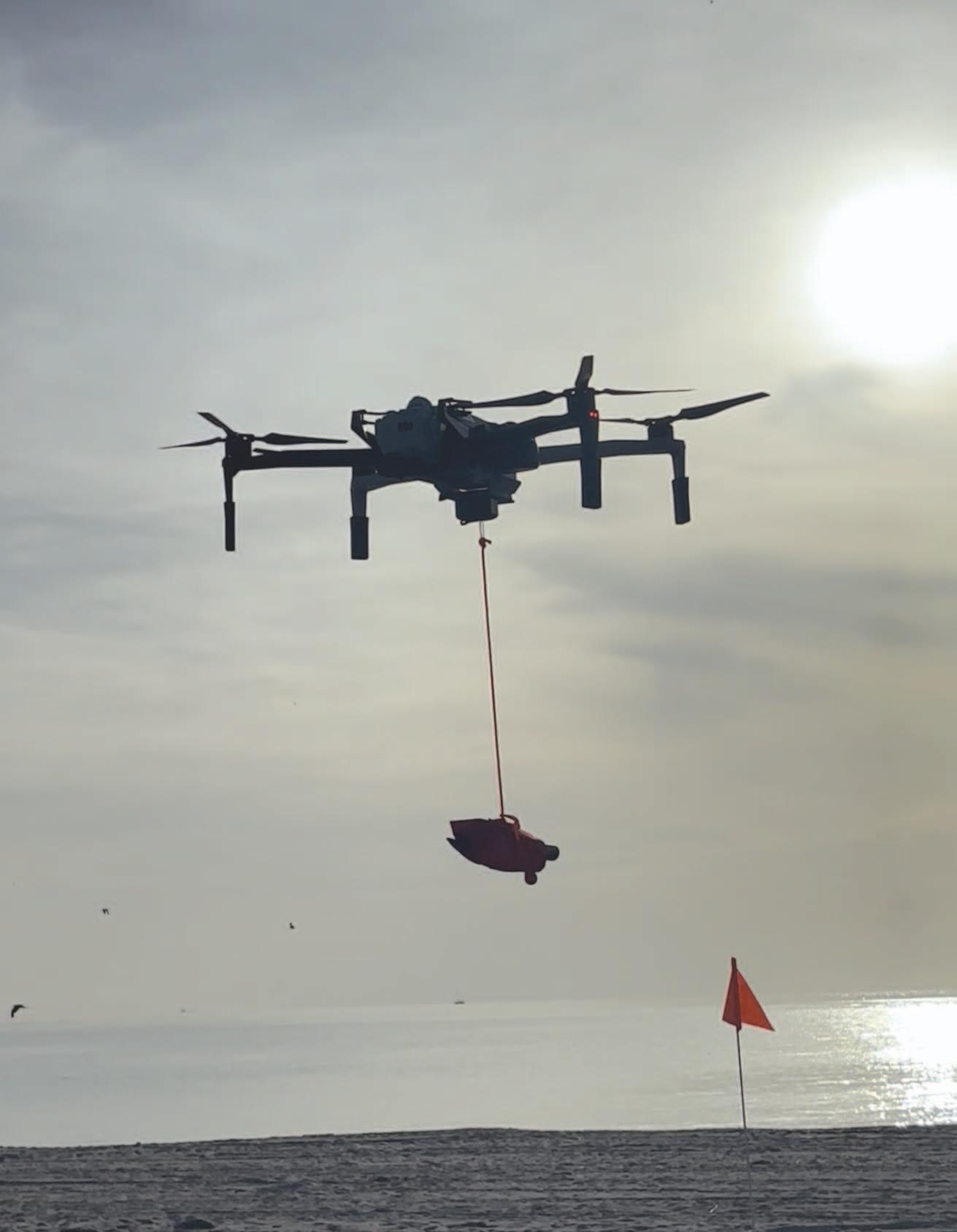
arrive to complete the rescue. These devices are water-activated and inflate upon contact with the water, offering instant buoyancy.
This innovative system enhances emergency response times and increases survival chances for individuals struggling in the water. It reflects Hollywood Fire Rescue and Beach Safety’s ongoing commitment to innovation, safety, and community care.
By Doreen Overstreet, Public Information Officer, Seminole County Fire Department
Every Wednesday night, 32-year-old HCA nurse Randy Rahming joins friends for a basketball game at Forest Lake Academy. On June 4, 2025, the game began like any other— until Rahming suddenly collapsed on the court after making a basket and going into cardiac arrest.
Fellow players, two who were both medical professionals, immediately sprang into action. Dr. Matthew Daulley, an emergency physician at AdventHealth and Sy Gilmore, began hands-only CPR while Ronaldo Green, a physician assistant at Orlando Health, located the nearest automated external defibrillator (AED) and directed bystanders to call 911. The AED was quickly used by Dalley to deliver a lifesaving shock.
Within three minutes, Seminole County Fire Department (SCFD) Station 13 crews arrived on scene and took over advanced
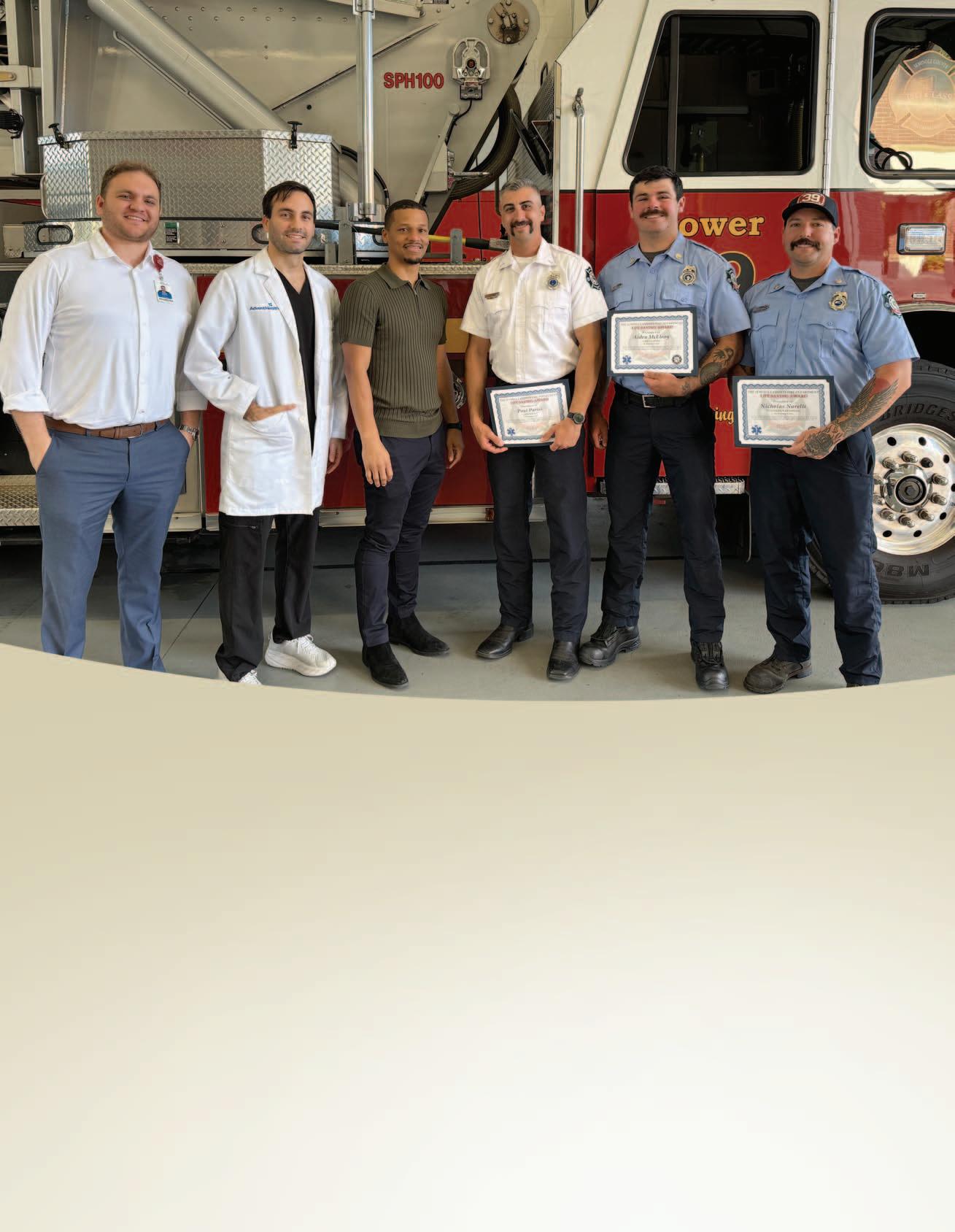
lifesaving measures. Their swift response, combined with the physicians’ quick action and availability of the AED, played a critical role in Rahming’s survival and recovery at AdventHealth.
Rahming recently reunited with the SCFD crew who helped save his life. During the ceremony, SCFD presented Dr. Matthew Daulley and Sy Gilmore with a Citizen Life Saving Awards, and the following SCFD crew members received Life Saving Awards for their exceptional response:
Rescue 13: Firefighter/Paramedic Jacob Burkhart; Firefighter Aiden McElroy
Tower 13: Lieutenant Paul Parisi; Engineer/Paramedic Nicholas Norelli; Firefighter Tyler Crain
Rahming, who is originally from Jamaica, says the experience has inspired him to study cardiology so he can help others the way
others helped him.
“It’s a miracle that everything aligned—the people, the AED, and the first responders,” Rahming said. “I’m forever grateful for everyone who played a part in saving my life.”

By Lt. Geoffrey Carmichael, Escambia County Fire Rescue
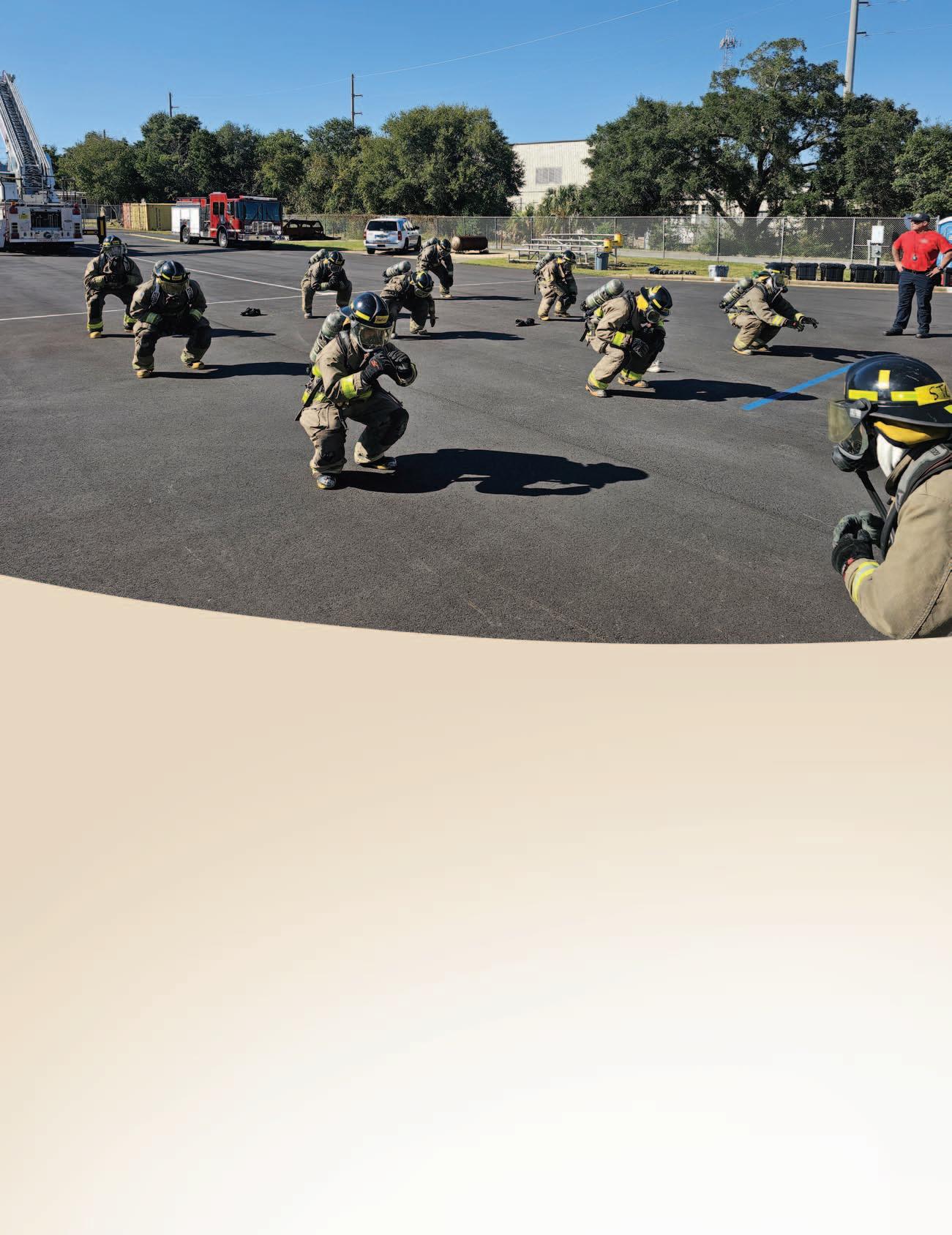
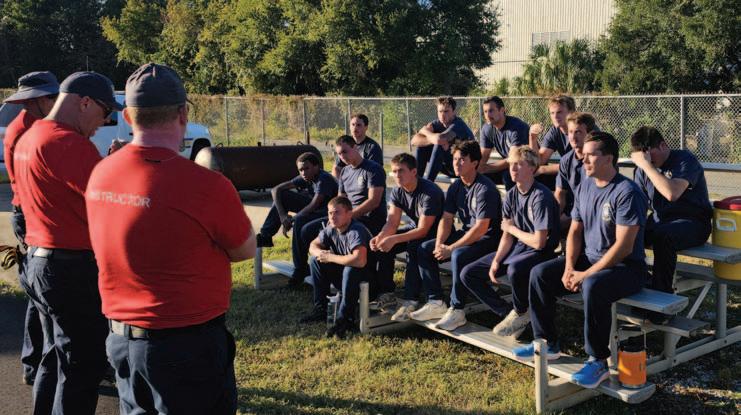
Escambia County Fire Rescue (ECFR) Fire Academy Class 25-01 recently concluded its first week of a 22-week training program, officially beginning their journey to becoming certified firefighters.
The first week of training focused on foundational and essential topics, including fire department organization, safety, critical communication, and more.
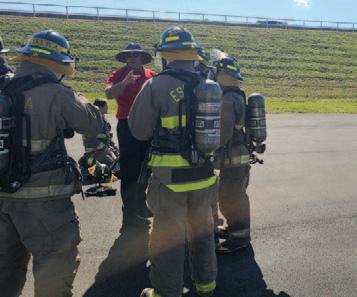
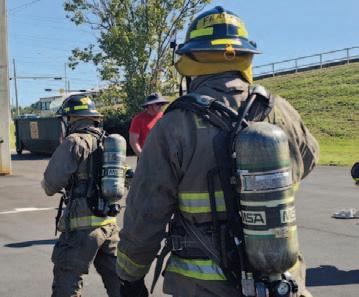
Each morning began with physical training before moving into the classroom. The first week concluded with a drill field exercise focused on the use of personal protective equipment and a self-contained breathing apparatus. While difficult, the training is designed to acclimate the cadets to the physical demands of the job.
The first 16 weeks of the training are focused on meeting the state of Florida’s minimum standards for firefighter certification, and the next six weeks are dedicated to ECFR’s “Beyond Minimum Standards” training, a specialized program that focuses on operational readiness in Escambia County.
ECFR Fire Academy Class 25-01 is comprised of 13 cadets who are ready to master the essentials of firefighting and embark on successful careers as Escambia County firefighters.


By Misty E. Sommer, Director of Economic Development and Public Information
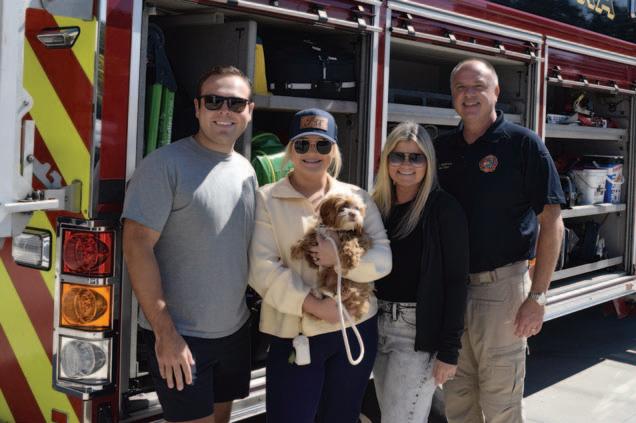
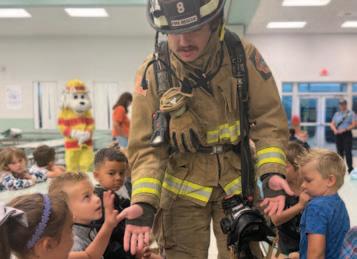
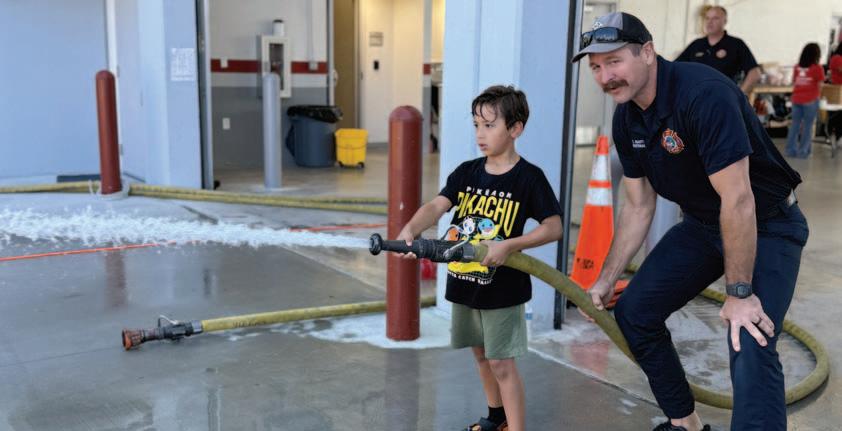
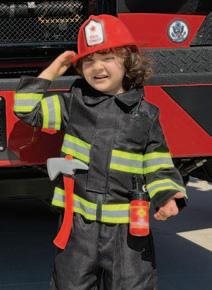
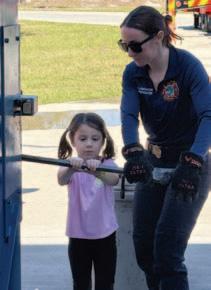
The Mount Dora Fire Department celebrated FirePrevention Month throughout October, highlighting the importance of safelybuying, charging, and recycling lithium-ion batteries — commonly found in phones,tablets, laptops, e-bikes, and power tools to prevent fires andprotect families. The monthlong effort culminated with the Fire Station 35 Open House on Saturday, November 1, where families enjoyed station and truck tours,a kids’ fire challenge course, a bounce house, emergency service demonstrations, food, and a visit from Sparky the Fire Dog.
Please submit your article as a MS word document and include a high resolution jpeg image as an attachment (do not embed photo in document). Try to keep submissions under 300 words if possible. E-mail files and pics to: magazine@ffca.org. If you have an interesting topic that would be informative or entertaining to other departments - feel free to write a feature article for this magazine, we welcome all your submissions!All articles must have a title or headline and a byline as part of the article (please note format in above briefs) - if no byline is supplied- the article will run without.
By PatrickJuliano, BattalionChief
The Knights of Columbus Corpus Christi Assembly 2810 and Santa Maria Del Mar Catholic Church recognized Palm Coast Battalion Chief Gary Potter with the Tony Gasparino “Lest We Forget Award.”Chief Potter accepted the award alongside his wife, Jacqui, and their children during the annual Veterans Day Celebration hosted by the Knights of Columbus.
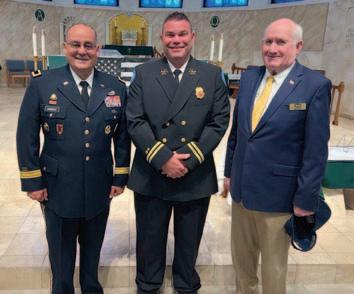
The Knights of Columbus Assembly 2810 has hosted the Tony Gasparino Veterans Day Celebration and Lest We
awards since 2019.Anthony Gasparino was a Vietnam Veteran and a past Grand Knight and Faithful Navigator of the councils. The Knights of Columbus recognizes Active-Duty Military, Veterans, Law Enforcement, and Fire Rescue, as well as other first responders, for their commitment and service to the Nation and their communities.
Battalion Chief Gary Potter has proudly served with the Palm Coast Fire Department since 2008. He holds a bachelor’s degree in safety studies from Siena Heights University and a Master of Public Administration from Barry University Over his career, Chief Potter has risen through the ranks— promoted to Lieutenant in 2012, Captain in 2016, and Battalion Chief in 2018. A respected leader in the department, Chief Potter is recognized for his professionalism, operational excellence, and commitment to firefighter safety and mentorship. His steady leadership and commitment to service embody the very principles that the “Lest We Forget Award” honors.
By Misty E. Sommer, Director of Economic Development and Public Information
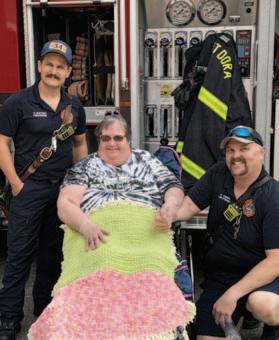
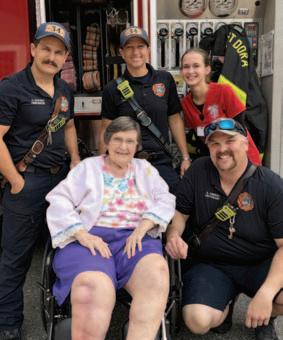
Residents of Waterman Village enjoyed a special visit fromthe Mount Dora Fire Department during the Frosty & Firefighter event. The gathering gave residents an opportunity to meet and chat with firefighters, explore fire trucks and equipment up close, and participate in a friendly Q&A session. It was a relaxed, fun-filled afternoon, complete with Frosty treats, where stories, smiles, and community connection tookcenter stage.


By Davis Wood, APIO, Public Information and Education Officer
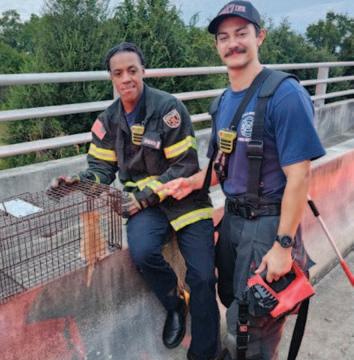
On Saturday, October 25, Escambia County Fire Rescue (ECFR ) was notified by a concerned citizen of a kitten trapped in a drain along the Bayou Chico Bridge.
ECFR’s Engine 16 was dispatched to the scene along with theEscambia County Department of Animal Welfare to rescue the kitten from the drain. Since crews were unable to retrieve the kitten through verbal commands, ECFR and the Animal Welfare rescue team lowered a trap into the drain to safely remove the kitten. Once secured, the kitten was brought to the sur face unharmed.
We’re happy to report that the kitten has been adopted by the citizen who alerted first responders to the entrapment.

By Corey Dobridnia, Public Information Officer
Through our Mobile Integrated Health services, WCFR teams provide chronic disease support, post-discharge follow-ups, care navigation, and non-urgent 911 assistance to help reduce preventable hospital visits and connect residents with the right care.
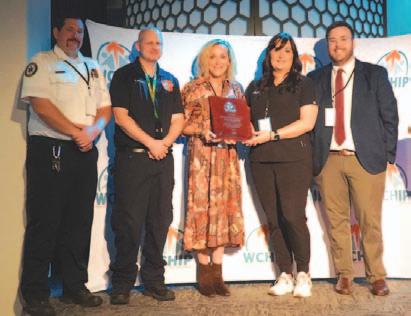
One of our most meaningful efforts is supporting overdose survivors with home visits, resources, and treatment options. We’re also proud of our Care at Home partnership with the FSU Family Medicine Residency and the Walton Community Health Center, bringing primary care directly to homebound residents.
Thank you to the Walton Community Health Improvement Partnership for this recognition and for working alongside us to improve health for all who call Walton County home.

By John Ringleb, Assistant Fire Chief, Public Information Officer
Palm Bay Fire Rescue is proud to announce the addition of four new trucks to our fleet — including one 2,200-gallon water tender and three brush trucks that can be converted into high-water/flood rescue vehicles.

These units, built by Acela Truck Company, were purchased using impact fees with the approval and support of City Management and the Palm Bay City Council. Each apparatus is designed to expand our capabilities for wildfire response, flood operations, and storm recovery across the community.
By Administrative Chief Matthew Ferguson
On Monday, November 3, 2025, Dixie County Fire Rescue proudly recognized one of its most dedicated leaders with a well-earned promotion. Battalion Chief Jason Lemmermen was officially elevated to the rank of Division Chief of Operations, marking a significant milestone in both his career and the continued growth of our organization.
Chief Lemmermen has been a cornerstone of Dixie County Fire Rescue for more than two decades, serving our community with unwavering professionalism, integrity, and commitment. Over the course of his distinguished career, he has excelled in numerous operational and leadership roles—consistently demonstrating the skill, composure, and dedication that define the values of this department.
As Division Chief of Operations, Chief Lemmermen will oversee critical aspects of field operations and personnel coordination, ensuring that our teams continue to provide the highest standard of emergency response and public safety ser vice. His wealth of experience and steady leadership will undoubtedly strengthen our command structure and enhance the operational effectiveness of Dixie County Fire Rescue for years to come.
We extend our heartfelt congratulations to Division Chief Jason Lemmermen on this well-deserved promotion and thank him for his continued service to the citizens of Dixie County. His leadership is an inspiration to all who wear the uniform.

By Davis Wood, APIO, Public Information and Education Officer
On Sunday, October 26, members of the Perdido Bay Youth Sports Association’s Firefighters baseball team visited the Innerarity Point Fire Station, Escambia County Fire Rescue Station #8. The baseball players were treated to a tour of the station and received fire safety information.
Thank you, Firefighters, for visiting our firefighters and spending time with us. Good luck this season!

By Misty E. Sommer, Director of Economic Development and Public Information
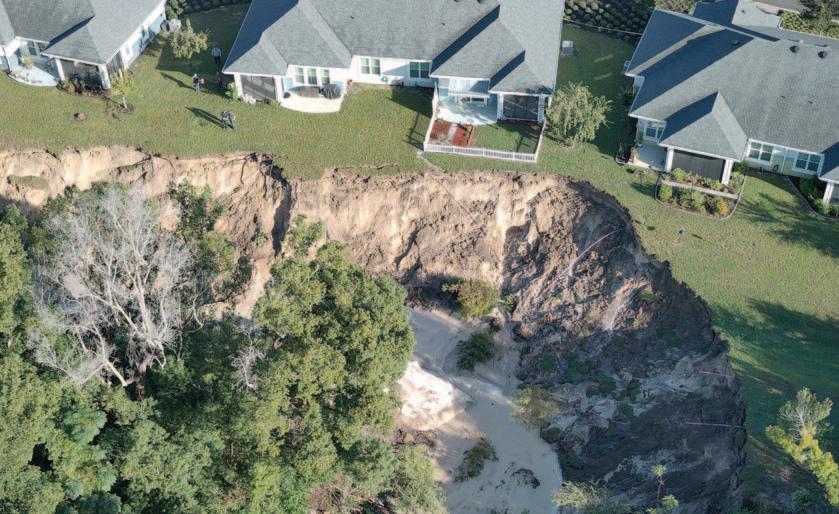
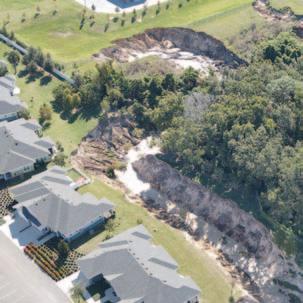
On October 26, Mount Dora experienced an unprecedentedflooding event as 14 to 19 inches of intense rainfall fell within hours,causing stormwater surges that breached two retention ponds. The surge led tothe collapse of a main roadway into the city and major washouts across several neighborhoods.
As conditions rapidly worsened, the Mount Dora FireDepartment immediately deployed resources—first providing mutual aid to theCity of Eustis to assist with multiple water rescues, then shifting focus tolocal emergencies as flooding intensified within Mount Dora. Crews responded to 18 calls for assistance, including water rescues and the evacuation of approximately 20 residents from a 55+ residential community,where washoutscreated unstable ground conditions.
Throughout the event, City crews, Fire, Police, and regionalpartners worked in close coordination to protect lives, safeguard property, and stabilize critical infrastructure. Their swift action and unwavering commitmentexemplified Mount Dora’s resilience and readiness in the face of extremeweather.
By Brittany N.Kershaw, DirectorofCommunicationsandMarketing
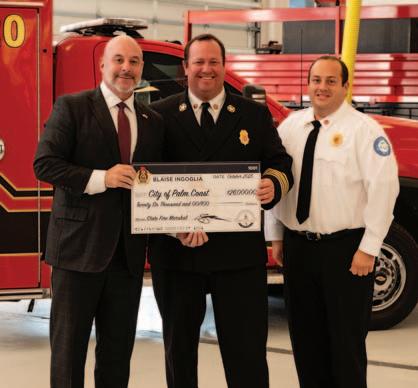
The Palm Coast Fire Department was awarded a $26,000 Firefighter Cancer Decontamination Grant from the Florida Department of Financial Services, under the leadership of Chief Financial Officer and State Fire Marshal Blaise Ingoglia.
Fire Chief Kyle Berryhill and Battalion Chief Patrick Juliano accepted the award on behalf of the department at a ceremony hosted by Clay County Fire Rescue Station 20, joined by agencies from across Florida who were recognized for their cancer-prevention initiatives.
The funding, administered through the State Fire Marshal’s Decontamination Equipment Grant Program, supports the purchase of vital equipment designed to reduce firefighters’ exposure to carcinogens encountered during fire suppression and overhaul operations.
Through this grant, the Palm Coast Fire Department will purchase a Solo Rescue SCBA Decontamination Washer. The system will provide advanced cleaning and decontamination of selfcontained breathing apparatus (SCBA) units, helmets, boots, and other contaminated gear — significantly improving firefighter safety and reducing long-term cancer risk.
“Cancer prevention is one of the most critical priorities in the modern fire ser vice,” said Fire Chief Kyle Berryhill. “This grant allows us to take another important step in protecting the men and women who serve our community ever y day.”
By Davis Wood, APIO, Public Information and Education Officer
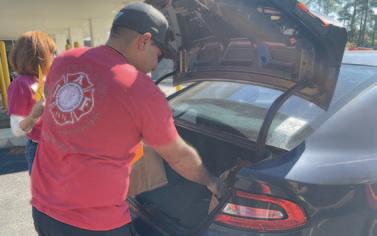

Escambia County Fire Rescue firefighters, in partnership withManna Food Pantries,PenAir Credit Union, and the Escambia County Sheriff’s Office, lent a helping hand on Tuesday, Nov. 4, distributing groceries to local militar y service members and their families.
We are proud to support our military and grateful to our local organizations that put their communities first.
By Chai Kauffman, Public Information Officer, Hollywood Fire Rescue and Beach Safety
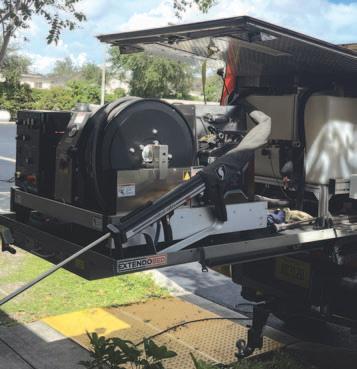
Hollywood Fire Rescue is proud to announce the deployment of the Cold Cut Cobra system, a cutting-edge firefighting tool designed to enhance safety and efficiency during high-risk fire incidents, including those involving electric vehicles.
As the first Fire Department in Broward County to implement this technology, Hollywood Fire Rescue marks another significant advancement in the capabilities of Hollywood Fire Rescue operations. The Cobra system uses a high-pressure jet of water mixed with an
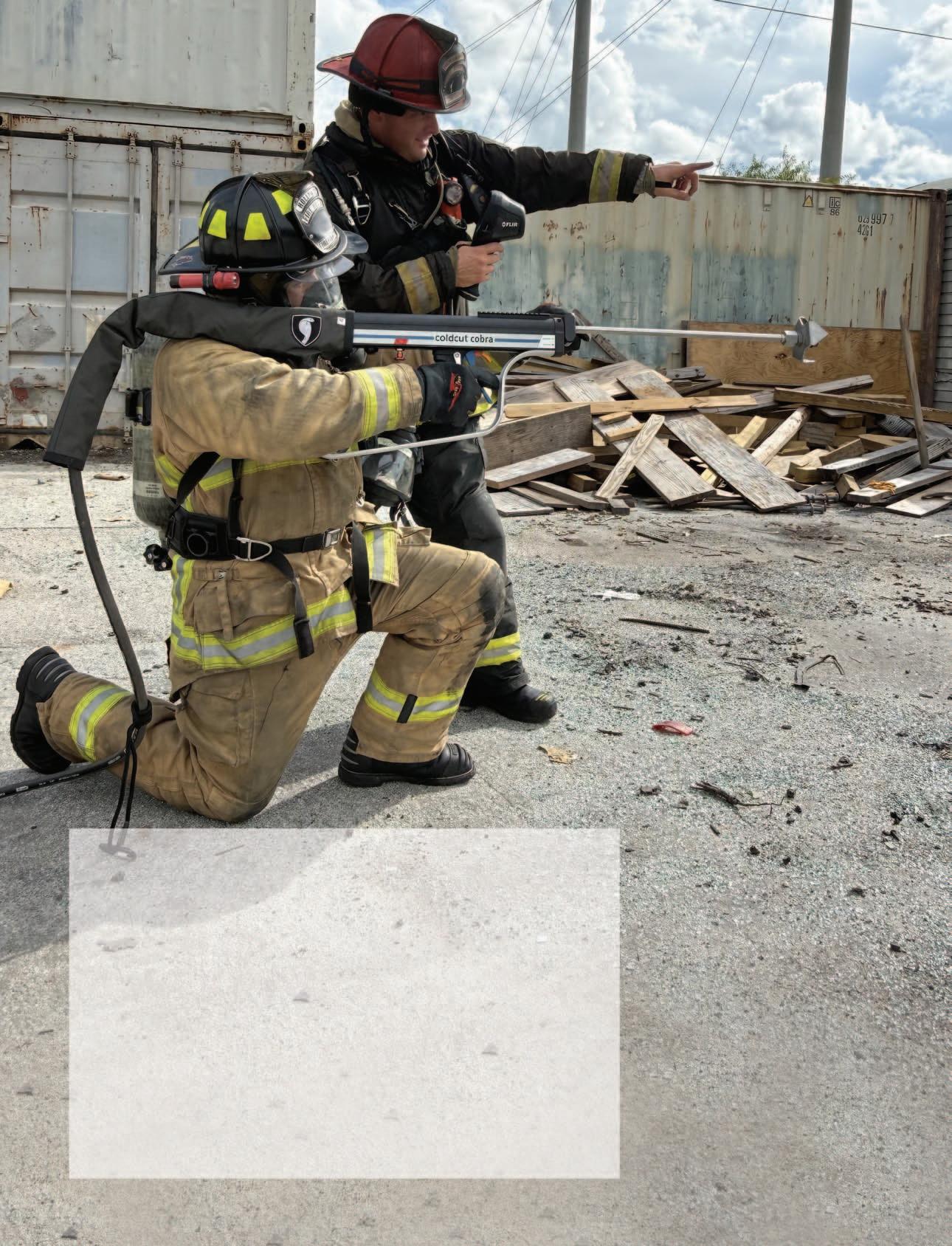
abrasive to cut through building materials and suppress fires from the exterior.
The Cold Cut Cobra system is highly effective against complex incidents such as lithium-ion battery fires in electric vehicles. It allows firefighters to attack fires safely from outside the hazard zone, reducing exposure to heat, smoke, and toxic gases while lowering flashover risk by cooling fire gases before entry. It is lightweight, making it operable by a single firefighter, and it uses less than 16 gallons of water per minute, making it both efficient and environmentally responsible.