











Florida Fire Service is the monthly publication of the Florida Fire Chiefs’ Association, provided to Florida Fire Chiefs’ Association (FFCA) members, by the Florida Fire Chiefs’ Association.
Florida Fire Chiefs’ Association
221 Pinewood Drive Tallahassee, FL 32303
Phone:(850) 900-5180
Email: info@ffca.org • www.ffca.org
FFCA Staff
Ngoc Huynh- Executive Director
Rachel Pardo - Marketing & Member Services Coordinator
Savannah Selski - Exhibit & Sponsorship Sales Coordinator
FFCA Board of Directors
Trip Barrs - President
Ryan Crawford - 1st Vice President
Mike Tucker - 2nd Vice President
Michael Choate - Immediate Past President
Carlos Aviles - Secretary/Treasurer
Jeff Wagner - Northwest Region Director
Brady Rigdon - Northeast Region Director
Todd Allen - East Central Region Director
Chantal Botting - Southeast Region Director
Ian Kemp - West Central Region Director
Gregory DeWitt - Southwest Region Director
Ngoc Huynh- Executive Director
Terry Parris - Foundation Chair
Jeffrey Money - Senior Member
Editorial Submissions magazine@ffca.org (850) 900-5180
Advertising
Scott Leisen, Editor in Chief scott@ffca.org (386) 717-0055
Subscription rate for members is $36, which is included in member dues. Archived electronic monthly editions of Florida Fire Service magazine are available at www.ffca.org. Log in as a member and click on the Publications tab.
Florida Fire Service
March 2026, Volume 34, Number 3 USPS # 016-759
Periodical postage paid in Daytona Beach, Florida, and additional post offices.
POSTMASTER: Send address changes to Florida Fire Service, 221 Pinewood Drive Tallahassee, FL 32303. Statements of fact and opinion are the responsibility of the authors alone and do not imply an opinion on the part of the officers or the members of FFCA.
Copyright 2026 by the Florida Fire Chiefs’ Association. All rights reserved. Materials may not be reproduced without written permission.
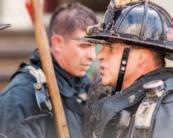

Transcending Average
Public Safety Broadband Technology Association
Christina Munro’s Determination Powers Her Fire Service Career 16 Melby the Manatee Rescue in Melbourne Beach .18 Charlotte County Fire & EMS Rope Rescue .22
DeLand Firefighters Help Students Have Fun and Learn Safety
Seminole County Opens Station
Escambia County Fire Rescue Medal Day Awards Ceremony
Cocoa Places “Tiger Pride” Fire Truck 32 into
Johns County Fire Rescue Unveils



Over the past several weeks, your Florida Fire Chiefs’ Association Board and staff have continued to deliver on our mission to serve, support, and advocate for Florida’s fire and emergency services. We have seen meaningful progress across legislative advocacy, national engagement, and member-focused initiatives that directly strengthen our profession and the communities we protect.
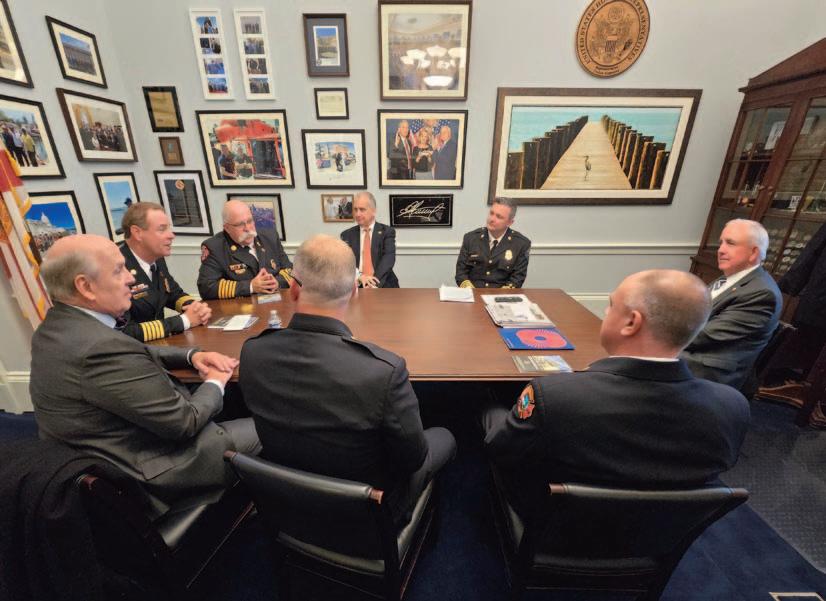
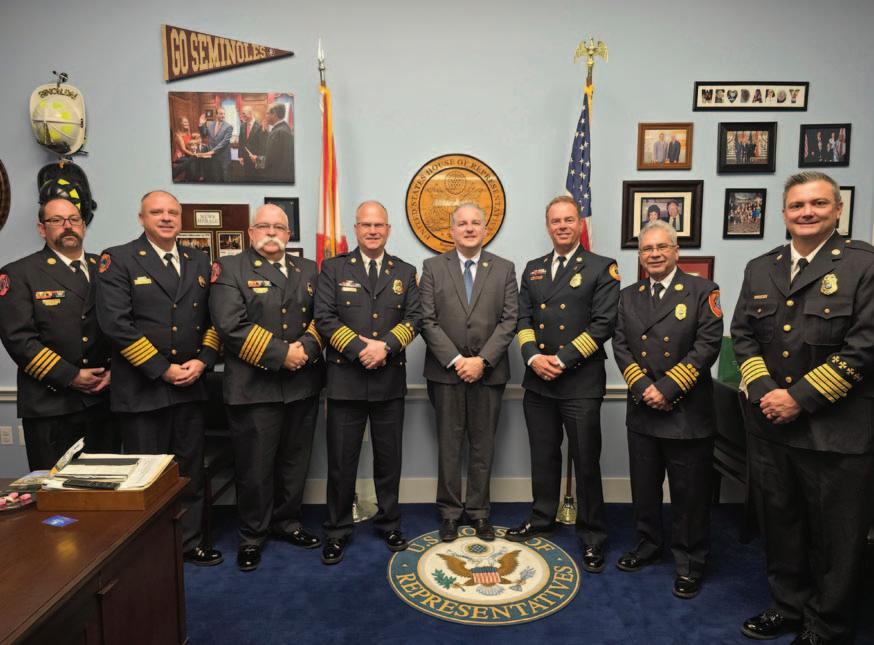
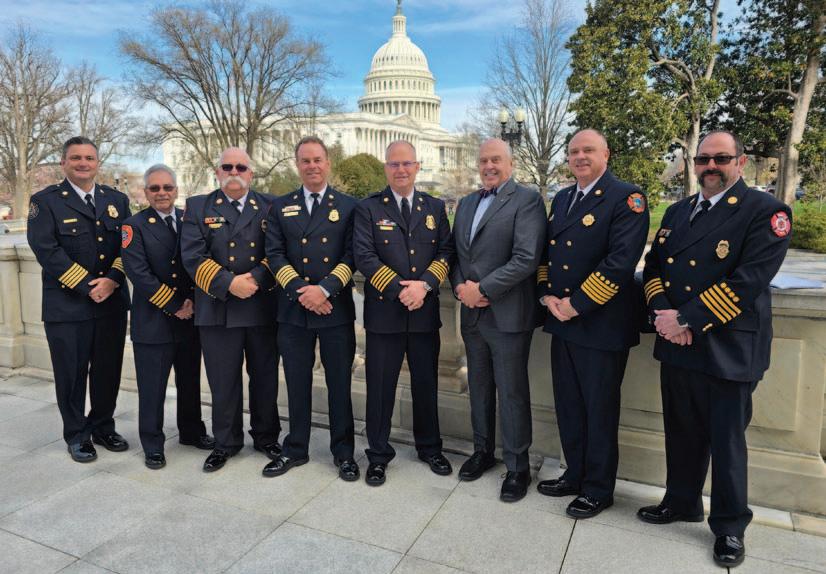
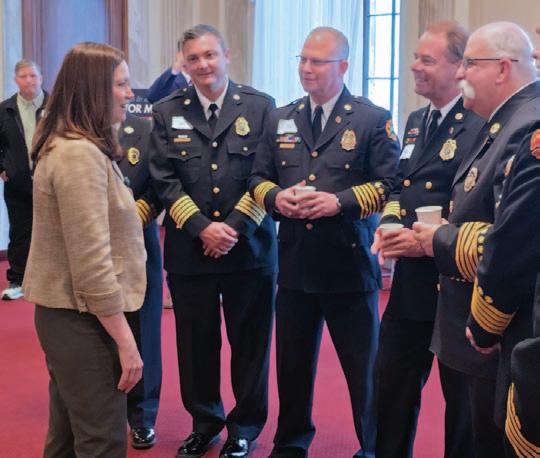
A major highlight was FFCA’s participation in the Congressional Fire Services Institute (CFSI) Annual Symposium and Dinner in Washington, D.C. This event remains one of the most important national forums for advancing fire service priorities, and FFCA was proud to be actively engaged alongside our partners. While in Washington, our team worked in close coordination with the Florida Fire Marshals and Inspectors Association (FFMIA) and state EMS leaders to conduct a series of productive meetings with members of Florida’s congressional delegation and their staffs, advocating for key federal priorities impacting the fire service.
During those discussions, we emphasized the importance of protecting and strengthening critical federal programs and policies, including:
•Full funding for the Assistance to Firefighters Grant (AFG) and SAFER programs in the DHS Appropriations bill, to sustain firefighter staffing, equipment, and training.
•Continued investment in the U.S. Fire Administration, reopening of the National Fire Academy, and support for implementation of the National Emergency Response Information System (NERIS).
•Preservation of FirstNet by removing the 2027 sunset of the First Responder Network Authority to ensure reliable, priority communications during emergencies.
•Establishment of federal lithium-ion battery safety standards to address the increasing number of fires associated with micromobility devices.
•Passage of the AM Radio for Every Vehicle
Act to maintain dependable emergency communication capabilities during disasters.
• Strengthening of fire-based EMS systems, including reimbursement for treatment in place (CARE Act), community paramedicine funding, improved EMS workforce data (EMS Counts Act), and reimbursement for prehospital blood administration.
• Opposition to policies permitting singlestair residential buildings over four stories, due to increased risks to occupant egress and firefighter safety
These conversations ensured that Florida’s fire service priorities were clearly communicated and well understood by our federal partners. Central to our federal advocacy efforts was addressing regulatory challenges impacting fire apparatus and emergency response capabilities. We were particularly encouraged by the leadership of

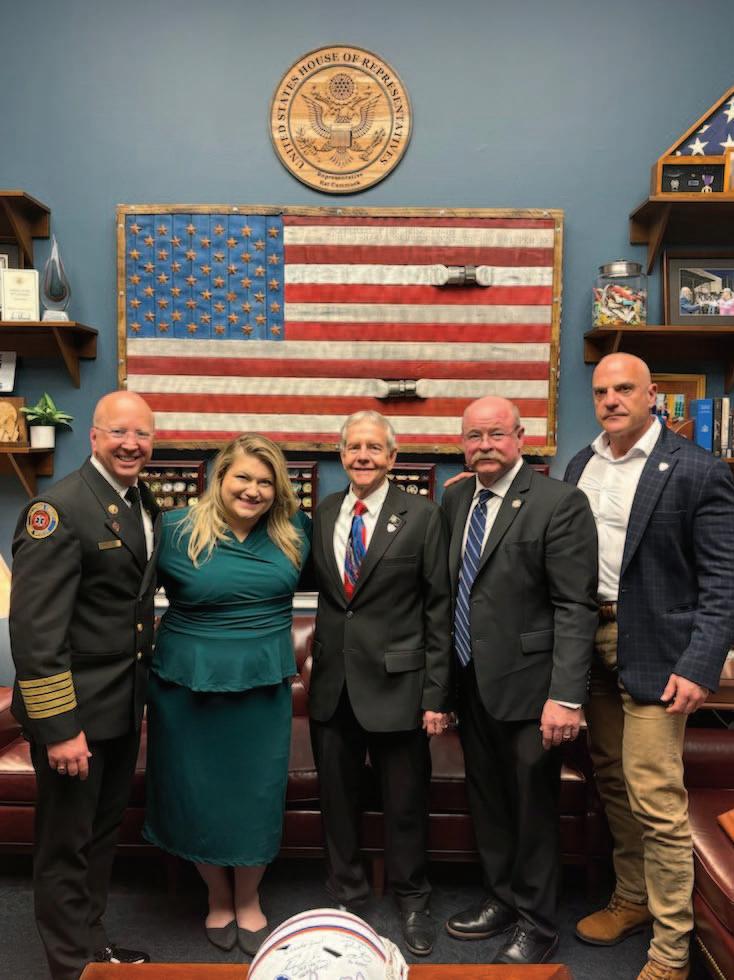
Florida Representative Kat Cammack, who has introduced the First Responders’ Equipment Access Act. This legislation represents a significant step forward in addressing EPA diesel emissions requirements for emergency vehicles.
As outlined in the legislation, the bill directs the EPA to revise existing regulations to allow exemptions for the diesel engines used in fire apparatus, EMS, search and rescue, disaster relief, and law enforcement vehicles. This is a common-sense, mission-driven solution that recognizes the unique operating conditions of emergency vehicles, conditions that differ greatly from commercial applications and often lead to increased maintenance costs, reduced reliability, and potential apparatus downtime.
The FFCA has formally endorsed this legislation, recognizing it as a critical measure to improve apparatus availability and operational readiness across our state and nation. We will continue to advocate for its advancement and for broader regulatory flexibility that supports the fire service while maintaining environmental stewardship.
association operations. With the Legislature preparing for a special session focused on adopting a state budget and advancing proposals related to property tax reductions, FFCA has been fully engaged to ensure that the interests of fire and EMS agencies are protected.
We have successfully secured language in the Florida House’s Bill that protects fire and emergency medical services from adverse impacts related to potential revenue changes. Additionally, we have received direct assurances from key members of the Florida Senate that any efforts to reduce local government funding sources will be implemented with clear protections in place for first responder services. We will remain closely engaged throughout this process to ensure that public safety remains a top priority and that any fiscal policy changes do not compromise service delivery or community protection.
Additionally, we are proud to be working in partnership with the Florida Professional Firefighters (FPF) to advocate for the restoration of a Cost-of-Living Adjustment (COLA) within the Florida Retirement System for first responders. The elimination of the COLA has diminished the long-term retirement security of those who dedicate their careers to public safety. Restoring this benefit is essential to ensuring that firefighters and other first responders can maintain their purchasing power and dignity in retirement. Together, our organizations are engaging legislators and stakeholders to advance a responsible and sustainable solution that recognizes the sacrifices of our members and strengthens recruitment and retention across the fire service.
In addition to our federal engagement, your Board and staff have remained actively involved in ongoing state-level legislative efforts, stakeholder coordination, and
None of this work happens without your support and engagement. The strength of FFCA lies in its membership, and I encourage each of you to stay involved—whether through committee participation, legislative outreach, or attending our events and programs. Together, we are making a difference. Thank you for your continued commitment to excellence and for all you do each day in service to your communities.
Thanks
By Rick Spence
To be at this point in our careers, we need to realize that we did not get here by ourselves. We are like a turtle sitting on a fence post. He did not get there by himself, he had to have some help along the way. We have had many people in our lives that have poured into us, giving us direction and guidance at a time when it was necessary. This starts with our parents/grandparents, teachers, coaches, pastors, other firefighters and fire chiefs. Each of them have added something significant to our lives that have helped shape our careers. When mentorship is added to a commitment to serve along with a strong work ethic, it equates to a successful and respected fire officer.
Each of you have taken time away from your job and your family to go through many hours of various types of training. Almost all of us have done this voluntarily and have used some of our money to help get the training needed to improve the service we provide to our community. We could have chosen to just take the classes that were only offered by the department or classes that were only offered when we were on duty. Had we done that, we would have done only the minimum that was required of us. In my experience, people that only do the minimum of anything are strictly average at what they do and do not excel at anything. An average firefighter is not a strong asset to their community. Do we want an average pilot flying the plane we are in, an average physician diagnosing us, average carpenters building our home or an average military protecting our great nation? Why
would we settle for average firefighters when we have the ability and opportunity to improve them? That is what an excellent leader does; makes those around him better.
I know we cannot force anyone to do anything on their own time and spend their own money, but we can train them up to a higher level than they are currently. Being an effective leader requires us to do much more than average. That includes those who work with us and for us. Once you have thoroughly taught a higher standard, you have the opportunity to hold those people (including yourself) to a higher standard. I have seen many scenarios where some of my coworkers were reluctant to fully embrace new concepts and ideas or reinforce traditional skills. But there always seemed to be an incident where these skills were needed to help ensure a successful outcome of the incident.
We may not be able to fix all the complacency and malcontents in our fire department, but we do have an opportunity to improve those who are within our sphere of influence. A little guidance at the appropriate time can alter the course of a career in a more positive way. Yes, it will take more time and effort on our part. At some point in our careers, someone did this for us. The Apostle Paul understood this over 2000 years ago, that you can transform those around you. His goal was to transform people’s lives to make them better people and to have them look more like Jesus. Paul knew before you could change people’s minds, you had to change their hearts

first. We are trying to transform firefighters into better firefighters to make them a stronger asset for our communities, changing the complacency and malcontentment in their heart. Paul wrote the book of Romans in the New Testament which was written to the early Christian church in Rome, that had both Christians and Jewish members. In Chapter 12, verse 2, he wrote, “Do not conform yourselves to the standards of this world, (in other words, do not accept the bare minimum that is being offered) but let God transform you inwardly by a complete change of your mind. Then you will be able to know the will of God and what is good and pleasing in His sight.” Who would have thought that improving ourselves and raising the bar around us would be considered biblical? The Apostle Paul did and he wrote about it over 2000 years ago.
Rick Spence retired as Assistant Chief from the Reedy Creek Fire Department after 30 years. Heis currently the Chaplain for the Florida Fire Chiefs’ Association, Central Florida Fire Chiefs’ Association,Reedy Creek Fire Department, Lake County Fire Department, Clermont Fire Department, Maitland Fire Department, and the Florida Professional Firefighters. He ser ves as Sergeant of Arms for the Florida Professional Firefighters and International Association of Firefighters. He was selected Florida Professional Firefighter of the Year in 2018.He has been married to his wife Alecia for over 30 years
By Chantal Botting
For decades, the fire service has been defined by tradition, resilience, and a fierce commitment to community. But as the profession evolves, so too must its leadership. One of the most significant and inspiring changes I have witnessed in my career is the growing presence of women in every facet of the fire service. From the fireground to the command staff, women are bringing skill, determination, and perspective that strengthen our teams, our departments, and the communities we serve. Their contributions are not just symbolic, they are transformational, and they remind us that the fire service is strongest when it embraces the talents of all its members.
The fire service has never been static. Advancements in technology, training, and operational strategy continually redefine the profession. Increasingly, these changes are creating opportunities for women to step into roles that were once uncommon, from firefighter and paramedic to company officer and chief officer. Despite progress, women remain underrepresented, and many still face challenges ranging from physical stereotypes to cultural barriers. Yet those who step forward demonstrate that leadership is defined not by gender, but by courage, commitment, and the willingness to serve.
Departments that embrace diversity gain more than fairness. They gain stronger decision-making, better team cohesion, and improved community trust. Different perspectives on the fireground lead to better problem-solving, more effective communication, and ultimately, safer outcomes.
One of the most important tools for developing leaders is mentorship. Early in my career, mentors shaped the way I approached both operational challenges and professional growth. I have seen firsthand how mentorship can provide guidance, reinforce confidence, and help women navigate a profession that still carries some traditional barriers. Mentorship can be formal through leadership programs and organized networks or informal, emerging in conversations during training, at the station, or on the fireground. These moments of shared knowledge build more than skill, they build trust, resilience, and a sense of belonging.
Programs that connect women across departments or across the profession are particularly powerful. They foster peer support, expand networks, and provide a safe space to discuss challenges and successes. For women in the fire service, mentorship is more than advice it is empowerment.
Leadership is often associated with a badge or title, but in reality, it begins with attitude, preparation, and the ability to support those around you. Some of the strongest leaders I know are individuals who demonstrate integrity, dedication, and professionalism every day regardless of rank.
Women in the fire service are leading in many ways. It ranges from training recruits, managing complex incidents, serving on specialized teams, and guiding departments toward more effective and inclusive cultures. Their presence challenges outdated perceptions and demonstrates that strong leadership is about competence, not gender. As leaders, it is our responsibility to recognize potential and create opportunities. Investing in people strengthens the entire organization and ensures the next generation of firefighters is prepared for the challenges ahead.
The firehouse is a unique environment, where trust, camaraderie, and accountability define every interaction. Creating a culture that welcomes and supports women does not diminish these values, it reinforces them. Respect, professionalism, and inclusion help departments retain talent, improve performance, and foster stronger teams. When
firefighters feel valued, they are more engaged, more confident, and more resilient. Departments that intentionally cultivate supportive cultures are not only investing in people, but they are also strengthening operational readiness and mission effectiveness.
Firefighting is physically demanding and mentally taxing. Long shifts, high-stress calls, and the responsibility of saving lives require resilience. For many women in the service, there can also be additional pressures, whether balancing family responsibilities or navigating environments where they may be one of the few women present. Departments that prioritize wellness, mental health support, and peer-to-peer mentorship create a workforce capable of per forming at the highest level. Resilience is cultivated not just on the fireground, but in everyday interactions and support systems that help firefighters navigate challenges and recover from setbacks.
The fire service has always been a profession defined by courage, teamwork, and commitment to others. Today, women are not just participating in that mission they are helping lead it. Their leadership, perspective, and dedication are shaping a profession that is stronger, more resilient, and more inclusive than ever before. By supporting mentorship, fostering leadership, and cultivating culture, we can ensure that the fire service continues to evolve while honoring its proud traditions. Together, we are not just building careers, we are building a future where every firefighter, regardless of gender, has the opportunity to lead, serve, and make a lasting impact.
Chantal Botting is a Deputy Fire Chief with Fort Lauderdale Fire Rescue in Florida, with more than 29 years of service. She has served in every operational rank and in numerous administrative leadership roles, including Operations/Emergency Services, EMS, Training, Information Technology, Recruiting and Hiring, Fleet, and Support Services. Chief Botting holds a bachelor’s degree in Organizational Leadership and a master’s degree in Executive Management. She has retained her Chief Fire Officer (CFO) designation, is a graduate of the Fire Service Executive Development Institute (FSEDI) through the IAFC and serves as the Florida Fire Chiefs Association’s Southeast Regional Director.

“Carry each other’s burdens, and in this way you will fulfill the law of Christ.”
Galatians 6:2
Dedicated to every firefighter who’s ever fought a silent battle.
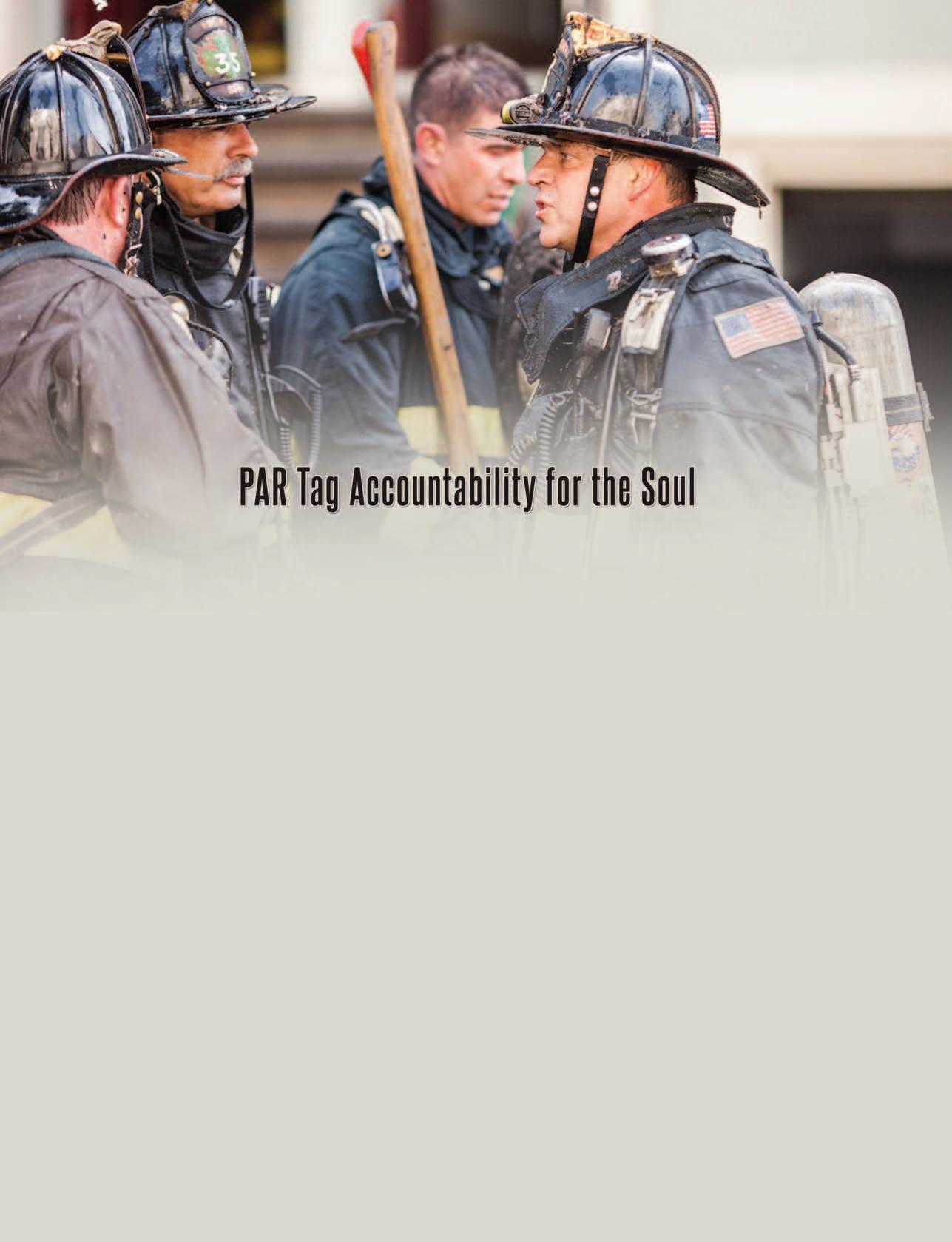
Accountability is at the heart of everything we do in the fire service. From the moment tones drop, we account for who is responding, who is on scene, and who is operating inside. A small PAR tag carries a significant meaning: a name, a life, and a family entrusted to the care of incident command.
This article is my appeal to treat the soul with the same urgency we bring to the fireground. The concept I teach,” PAR Tag Accountability for the Soul,” was born out of my personal journey and refined by grace. Suppose we require a Personnel Accountability Report to ensure no firefighter is lost in a structure. In that case, we must also practice emotional and spiritual accountability so no firefighter is lost in silence.
By Andrew Armenis
We do not talk enough about the weight our people carry. The call volume increases. The medicals get tougher. The domestic incidents cut deeper. The tragedies involving children linger longer Meanwhile, staffing shortages disrupt crew continuity, and overtime pushes the body and mind beyond healthy limits. We are trained to move on to the next call, but our nervous systems and our families tell the truth: the load accumulates.
Across the nation, we see the consequences: burnout, addiction, divorce, depression, and even suicide. These are the alarms we must start treating as emergencies. We are trained to rescue others but rarely taught to rescue ourselves.
In our profession, silence can be deadly. Too often, firefighters retreat into isolation, afraid to speak up or admit struggle. They stop responding to the people who care about them the most. “PAR Tag Accountability for the Soul” is my call to change that culture.
In my presentations, I ask each firefighter to bring a spare PAR tag. At the door is a simple board labeled “Accountability for the Soul: Who’s Holding Your PAR Tag?” During the session, members place their tag on the board. It is a symbolic act that says, “I want to be known and I want to be covered.” Afterward, I take those tags home and pray for the people whose names are on them. Each tag represents a firefighter who matters.
That visual act of leaving a PAR tag behind says, “Brothers and sisters, keep me in your
prayers.” Just as incident commanders monitor crews for safety, leaders in the fire service must also take responsibility for the well-being of their people. We can no longer treat wellness as optional; it must be part of who we are.
A key part of this culture change is what I call the “RIT Team for the Soul.” On the fireground, a Rapid Intervention Team’s primary mission is to rescue a firefighter in distress. In life, our RIT should be just as clear. For us, that team includes chaplains, peer support members, and clinicians, those equipped to help firefighters navigate the invisible fires of the mind and heart.
Just as we trust our RIT team with our lives, we must trust our spiritual RIT team with our hearts. This kind of accountability saves lives. In the second part of this article, I’ll delve deeper into the personal journey that inspired this message, the night I nearly went missing myself.
Who’s holding your PAR tag?
Division Chief Andrew Armenis serves as the Fire Marshal and Chaplain for Jupiter Fire Rescue Department. With twenty-five years in the fire service, he has dedicated his career to training, leadership development, and the holistic well-being of firefighters. A survivor turned servant leader, he teaches “PAR Tag Accountability for the Soul” to help agencies build cultures of connection, courage, and care.
If you or someone you know is struggling, call or text 988 or visit 988lifeline.org — help is available 24/7.

By Harold Theus, Fire Rescue Chief, Alachua County Fire Rescue
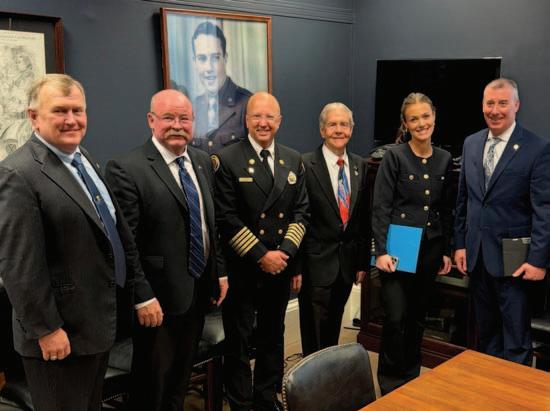
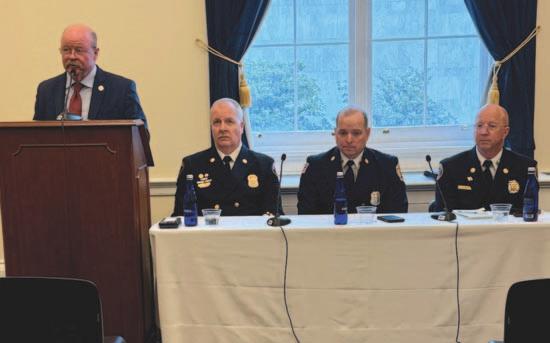
On March 4 - 5, FFCAPast President Harold Theus joined a delegation of public safety professionals in Washington D.C. with the purpose of educating and informing legislators and their staff on the importance of FirstNet and the need to reauthorize the federal legislation which funds it. The event was hosted by the Public Safety Broadband Technology Association (PSBTA) and included an educational panel for staffers followed by a day and a half of legislative visits. The delegation included Fire Chiefs from California and Wyoming, as well as executive

members from the PBSTA, the International Association of Fire Chiefs (IAFC), the International Association of Fire Fighters (IAFF), the National Sheriffs’ Association (NSA), and the International City/County Management Association (ICMA).
The First Responder Network Authority Reauthorization Act (H.R. 7386) is a legislative effort to extend FirstNet’s legal mandate for 10 years, through September 30, 2037, and to prevent the agency from sunsetting in early 2027. By securing this extension, Congress ensures the continued operation and build out of the nationwide public safety broadband network.

By Jenn Samsel, Independent Journalist
In recent years, the number of women aspiring to become firefighters has grown, and many compete against men to advance in their careers. In a fierce, competitive industry, these women are determined to fit in and pursue the careers they have always dreamed of.
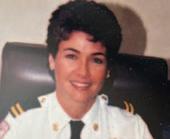
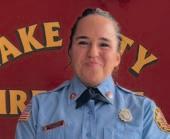
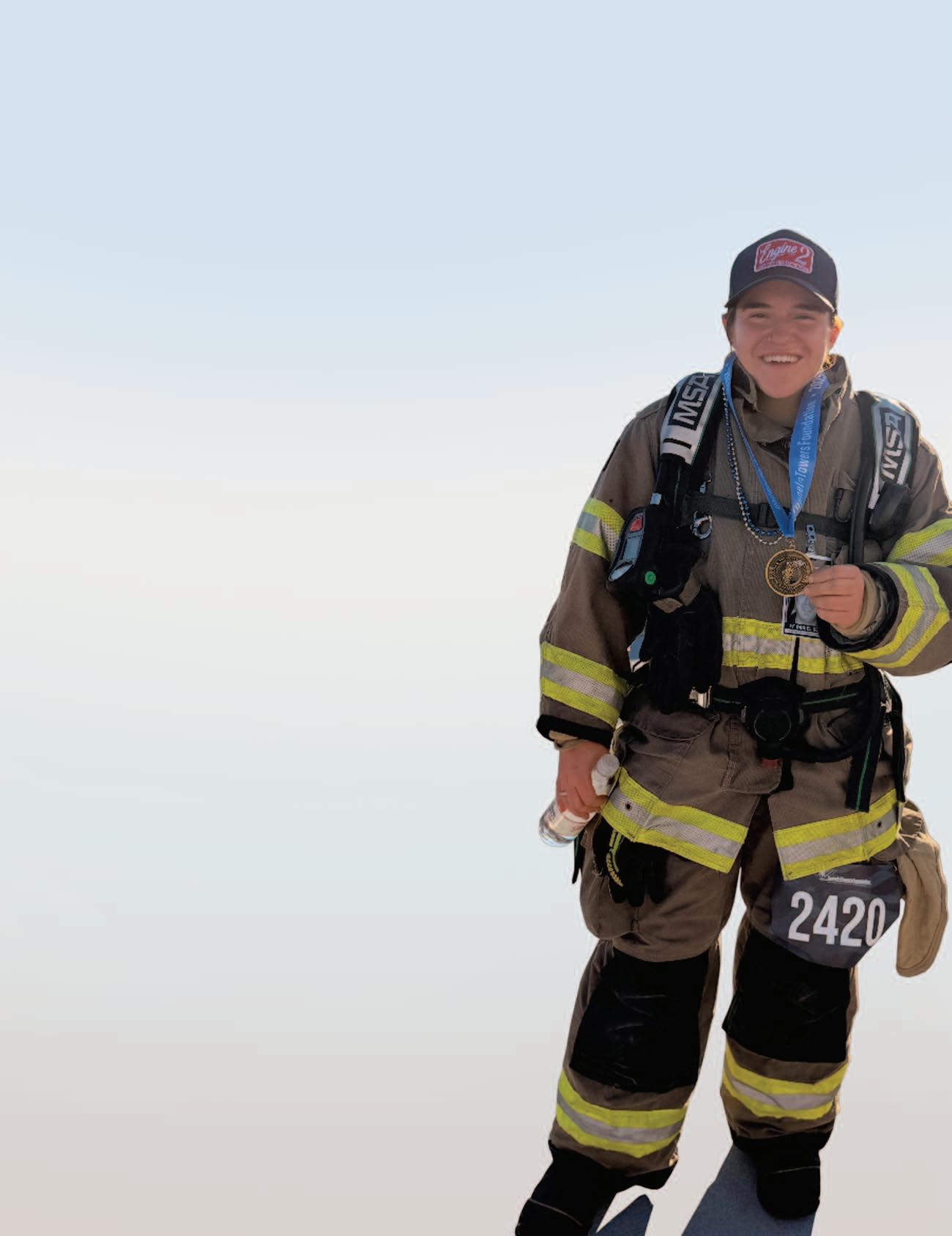
Christina Munro is one such woman— Charismatic, fierce, tenacious, passionate, dedicated, and enthusiastic are just a few words that describe her.
She works diligently to achieve her goals, going to work, putting on her firefighter uniform, and committing herself to whatever she puts her mind to.
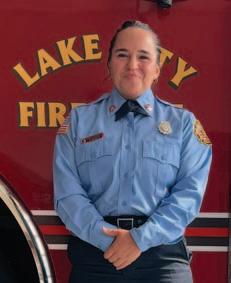
Following in her mother’s footsteps, she is preparing to become a Driver
Engineer, making her the first female to hold this position at the Lake City Fire Department when the opportunity arises. Her mother was a trailblazer as well, serving as the first female lieutenant at the Miami-Dade Police Department.
One of her long-term goals is to achieve the rank of lieutenant, just like her mother did.
“My mom is my absolute hero. She’s inspired me, and she always told me all these stories of her career, and I was just picturing it in my head and how much fun to do something like that,” said Firefighter Christina Munro, Lake
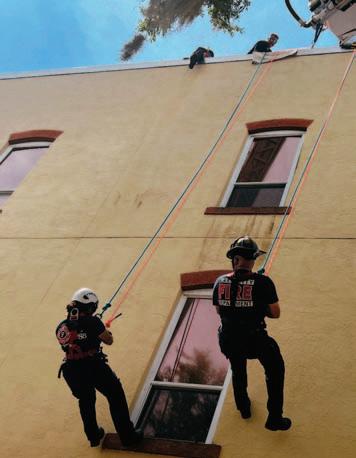
City Fire Department.
“I get to have that sense of pride going to work every day and knowing I’m doing something that really makes a difference. I’m very proud to represent my department. I love when little kids come up and see, and especially like little girls, they’re always like, you’re a girl, and you’re a firefighter,” she said.
She is an inspiration and icon for so many women. She encourages women not to give up on their dreams but to work hard and be determined.
“You’re going to have to do things that might make it; you might have to work 10 times harder, but that’s not a burden. You have to really want it, and you have to work for it every single day, you know, it’s something I chose to do.”
In December, she worked with the fire department to raise over $8,850 for the Christmas Dream Machine, collecting these funds in just six days. The organization provides gifts for children from low-income families in the local area, ensuring that both children and their families receive presents during the holiday season.
“If you see Christina, she’s always got a smile on her face, and the things that she tries to do and tries to accomplish, she should be very proud of, and we’re proud of as a department to have her because she represents us so well,” said Ret Tompkins, Assistant Fire Chief, Lake City Fire Department.
“She is an awesome recruiting tool for us because she is just so personable with the people when they come around. Not only is she knowledgeable, but she makes them feel welcomed and happy to be here,” he said.
“It may not be the next opening that happens, but she will be the first driver when it happens, in the history of Lake City Fire Department.”
She is currently an EMT working towards becoming a paramedic and has just completed her Driver Engineer Class. Previously, she spent two years with Suwannee County Fire Rescue before transferring to Lake City Fire
Rescue. She looks forward to being promoted to the first female driver engineer in her department and to advancing her career even further in the future.
In recognition of her outstanding performance, she was awarded the Firefighter of the Year Award for 2025.

By Lisa Smith, Brevard County Fire Operations
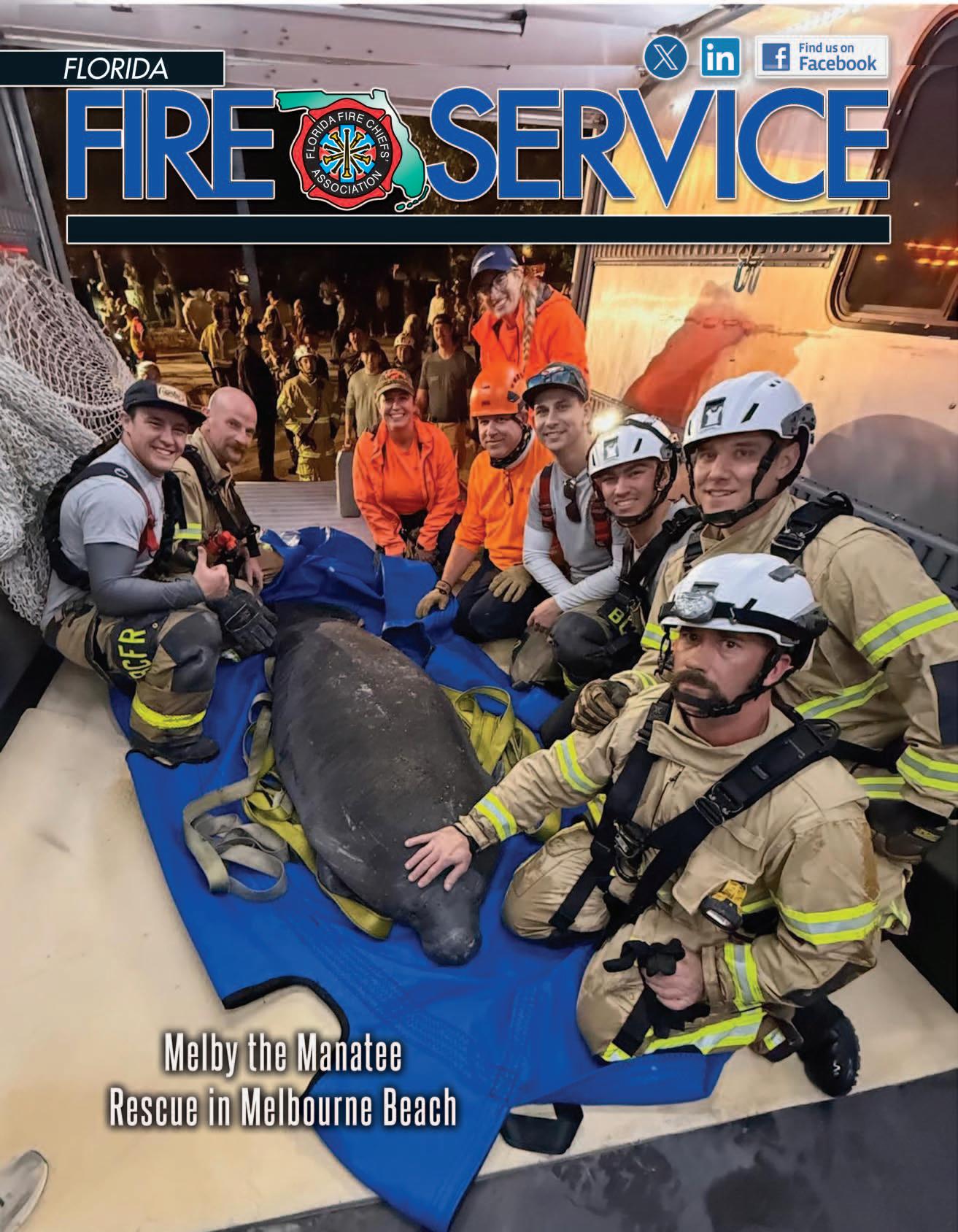
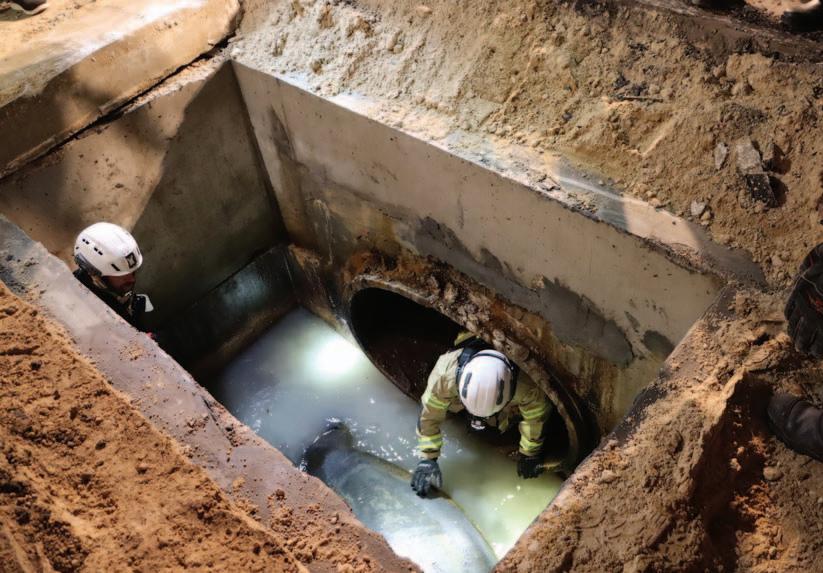
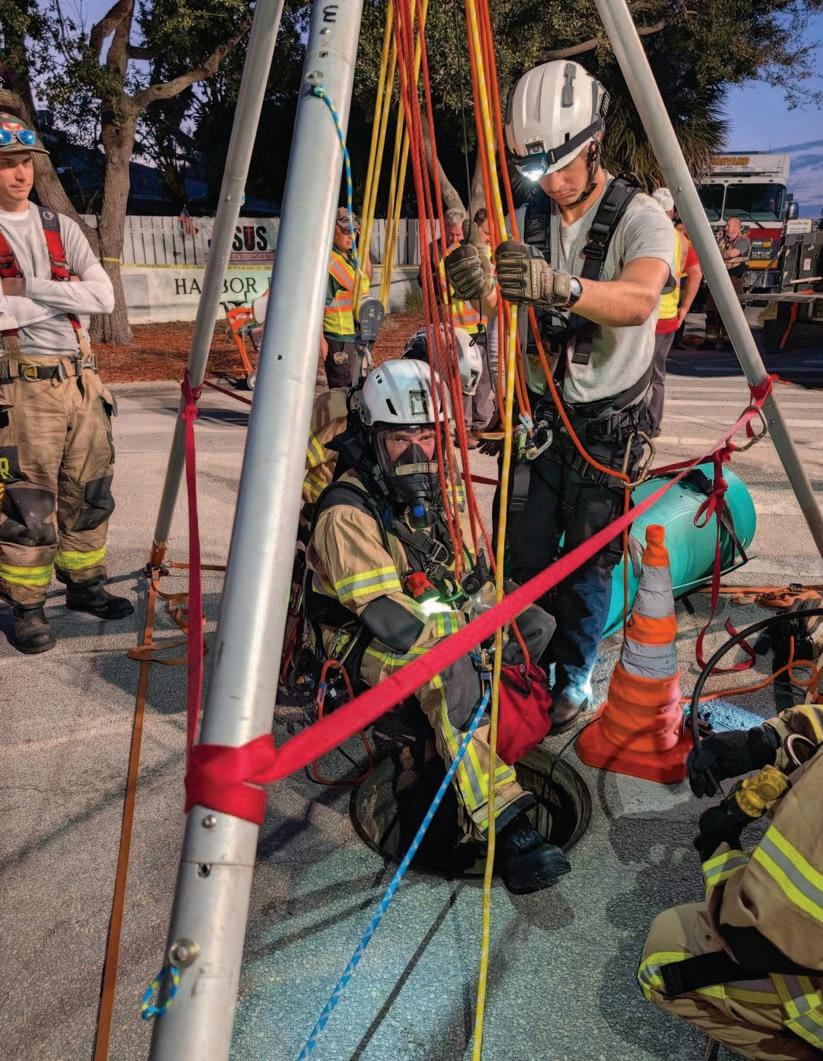
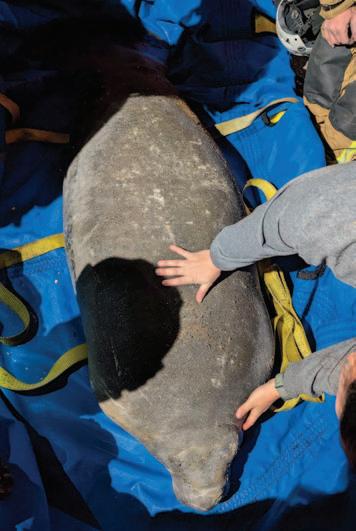
On February 9, 2026, at approximately 2:30pm, Brevard County Fire Rescue (BCFR) Stations 64 (Melbourne Beach) and Station 48 (Special Operations), responded to a call involving a manatee stuck inside a storm drain while trying to seek warmth due to a recent cold snap. Local surveyors working nearby discovered the trapped manatee and called 911. BCFR units along with FWC were dispatched to the scene on
Neptune Drive in Melbourne Beach.
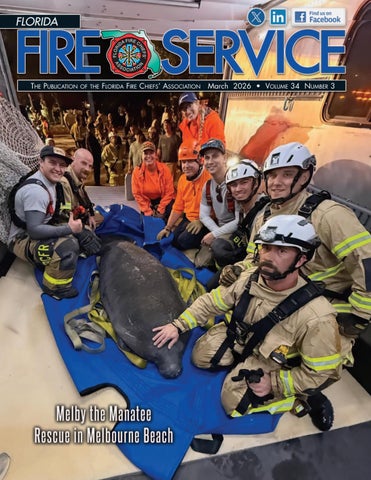
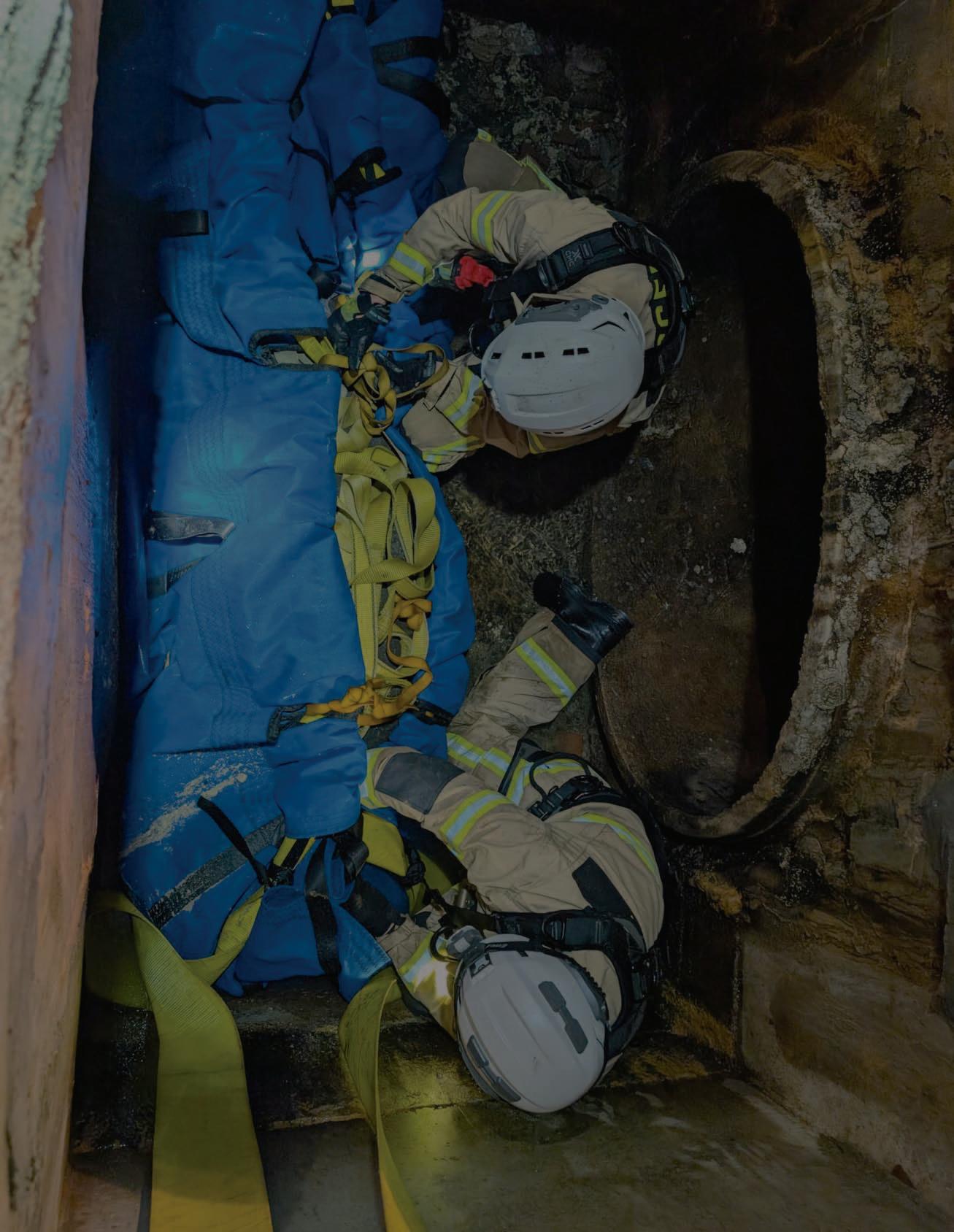
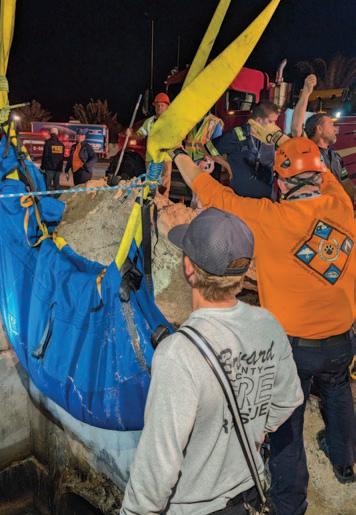
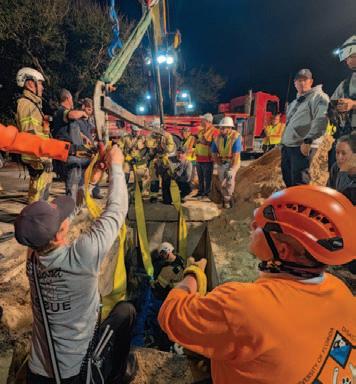
On arrival BCFR crews were presented with a 7-foot, 410-pound manatee trapped in an underground concrete structure. Heavy equipment was brought in to break up the roadway. After several hours had passed, crews were able to remove the trapped mammal by lifting it out of the drain via tow truck and then transported to SeaWorld for evaluation. This incident couldn’t have been
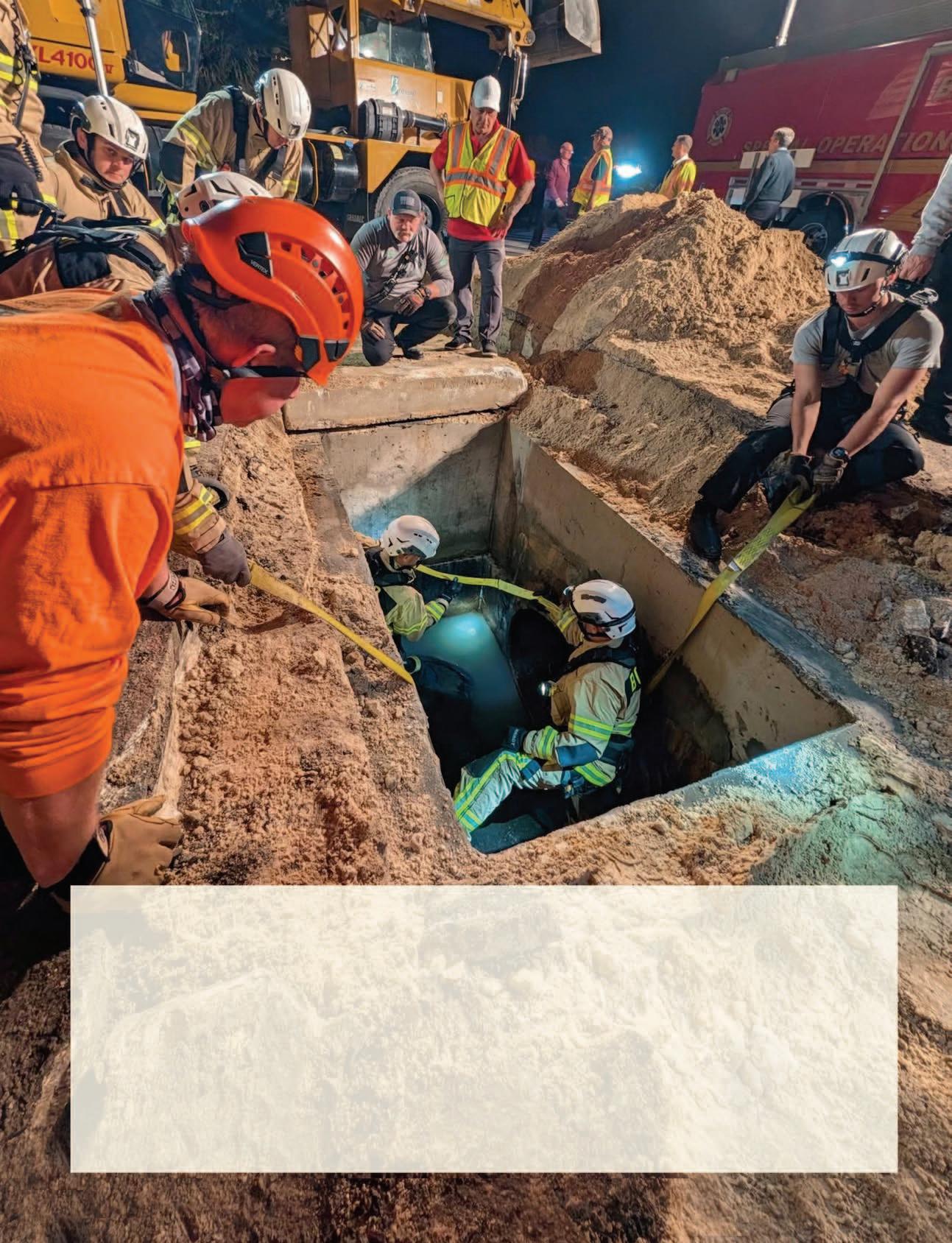
timelier! The station 48 crew had finished their first day of the UF Large Animal Technical Rescue and Disaster Response training!
Talk about teamwork, with the assistance of Indialantic FD, Melbourne Beach FD, UF’s Veterinary Emergency Treatment Services, FWC, Haley Ward Inc., Brevard County Public Works, and Jack’s Wrecker Service this rescue mission was a total success!
ByVivian Shedd, APIO, Tampa Fire Rescue
For much of its early history, the fire service in Tampa operated as a brotherhood. Fire stations were designed for men. Gear was made for men. The thought of women riding on fire trucks seemed unlikely to many people.
Over time, that began to change. A small number of determined women stepped forward, not to make history, but simply to do the job and serve their community. Their stories, spanning decades, reflect how Tampa Fire Rescue gradually evolved.
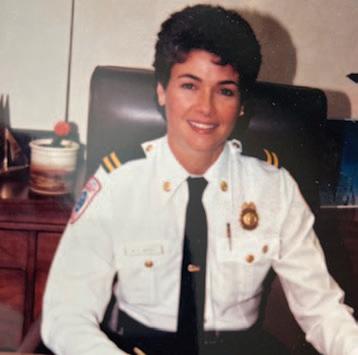
When Mechy Fernandez Wright joined Tampa Fire Rescue in 1978, she knew it would not be easy
“I knew I was coming into a fraternity of brothers,” she once said. “And here’s a female that’s going to change everything.”
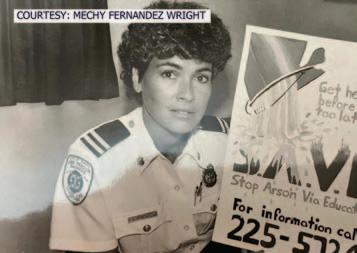
On June 25, 1978, Fernandez Wright became the first female firefighter in the City of Tampa. At the time, the moment didn’t feel historic. It felt uncertain and challenging.
When she started, the department wasn’t prepared for women. There was no protective gear designed for female firefighters. She wore a men’s size 44 coat and oversized boots, stuffing socks into the toes just to make them fit. However, equipment wasn’t the
biggest obstacle. Acceptance was.
“It was really tough,” she said. “I knew it was going to be that way.” Fernandez Wright had already experienced hardship before joining the department. Her family came to the United States as Cuban refugees, separated and forced to start over. Those experiences shaped her outlook.
“If my parents could go through losing everything,” she said, “I could go through this.” She stayed with the job and proved herself shift after shift.
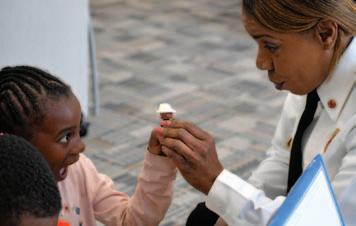
During her 20-year career, Fernandez Wright worked in several roles across the department. She served as a firefighter, paramedic, fire investigator, and fire inspector. She helped develop public education programs, worked with the arson task force, and helped create a camp for burn sur vivors.
Despite the recognition she later received, she never saw herself as someone breaking barriers. “I never felt like a trailblazer,” she said. “I just loved a challenge.”
Fernandez Wright retired on June 25, 1998, exactly twenty years after the day she was hired. By then, the department had already begun to change.
Betty Coleman entered the fire service in an unexpected way.
She had been working as a secretary at the city’s water department when she noticed people going into a room for interviews. “They were doing interviews on my floor,” Coleman recalled. “People kept going into this room, but nobody was coming out.” Curious, she asked what was happening. The fire department was recruiting women and Black candidates. Coleman realized she fit both descriptions.
“So I said, ‘Well, I’m Black and I’m a woman,’” she said with a laugh. She filled out an application, not realizing she was about to become part of Tampa Fire Rescue history.
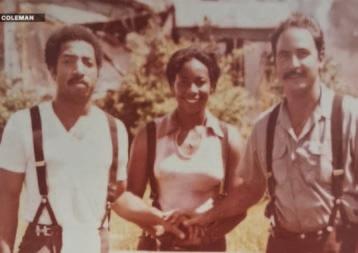
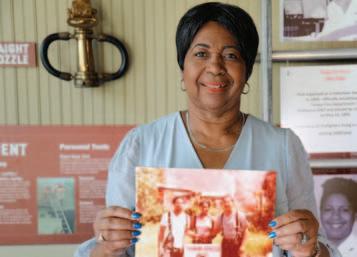
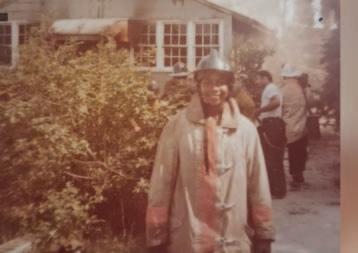
When Coleman joined the department in 1981, she became Tampa’s first African American female firefighter. At the time, she wasn’t thinking about the significance of the moment. She was focused on learning the job.
Coleman’s career lasted more than thirty years and included several assignments across the department. She worked as a firefighter, fire inspector, and fire investigator. In 1994, she was named Firefighter of the Year. Later she became chief supervisor of fire inspection for existing buildings.
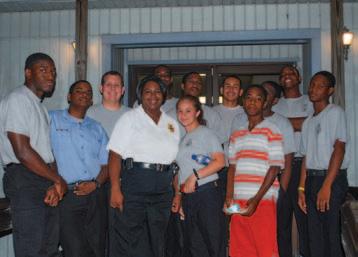
But the work she remembers mostly involved mentoring young people. “Training the youth was the most fulfilling part,” Coleman said. She served as an advisor for the department’s Explorer program, working with teenagers interested in careers in public safety. The program introduced them to the routines and expectations of the fire service, with many of those young people later joining the department.
Years later, another Tampa woman would rise to the highest position in the department.
Barbara Tripp never expected to become a fire chief. Growing up in East Tampa, she simply wanted to help people. Firefighting wasn’t something she had considered. “My first thought was it’s too hot in Tampa to put out
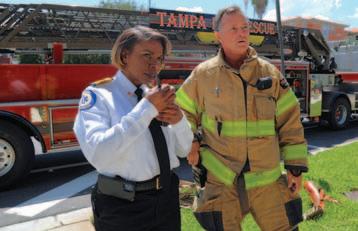
fires,” she joked.
A friend eventually encouraged her to attend fire academy at Hillsborough Community College. She completed the program and began working her way through the ranks. The path upward wasn’t always easy.
“There were times I felt like I was being pushed down,” she said. “People would say, ‘You sit over there,’” but Tripp kept moving forward.
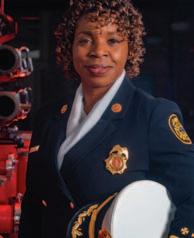
She earned multiple certifications and degrees and eventually became Rescue Division Chief. Then in November 2020, she received a call from Mayor Jane Castor about serving as
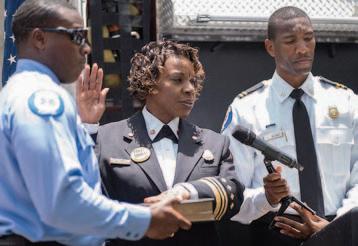
interim fire chief. On June 25, 2021, forty-three years after Mechy Fernandez Wright was hired, Barbara Tripp was sworn in as Tampa Fire Rescue’s first female fire chief, with her son Gregory, a Driver Engineer with Tampa Fire Rescue, by her side.
“It felt like someone should pinch you,” she said. “Like it wasn’t real.” As the Fire Chief, she has focused on strengthening the department and supporting firefighters who serve the city every day. While she made history in Tampa, she hopes the title “first” will not define her career. “I want to be remembered as a great leader, who just happened to be a woman of color.”
Today, more than fifty sworn female firefighters serve throughout Tampa Fire Rescue. That progress developed over many years. It began with Mechy Fernandez Wright proving she belonged in the firehouse. It continued with Betty Coleman guiding young people toward careers in the fire service. Presently, it carries on with Chief Barbara Tripp leading the department today.
Each of them entered the fire service for the same reason: to help others. Their work changed Tampa Fire Rescue and keeps the door open for future first responders.

By Ashley Turner, EPIO, Public Safety Public Information Officer, Charlotte County Public Safety
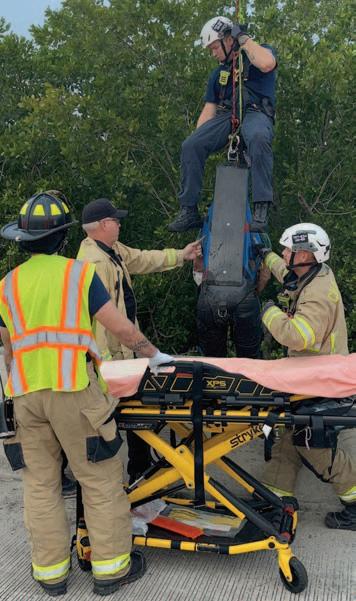
As the sun began to rise over Charlotte County, crews from Station 12 were dispatched to a report of a vehicle accident on Interstate 75 involving a person who had fallen from a bridge into the mangroves below. The fall was estimated to be approximately twenty feet, and access to the patient would require a technical rescue operation.
Engine 12, Rescue 12, and Battalion 1 responded immediately from quarters. Battalion 2 arrived shortly after and assumed command. The initial crews quickly confirmed that the patient was conscious but injured and located deep in the mangrove brush below the bridge. The terrain made direct access impossible without specialized rope rescue equipment and training.
Recognizing the complexity of the scene, Battalion 1 requested Truck 12 and Squad 12 to assist with technical rescue operations. Upon their arrival, Lt. Ryan Gage was designated as Rescue Group
Supervisor and assumed responsibility for coordinating the rope rescue. Personnel began developing an access plan that prioritized both patient and rescuer safety.
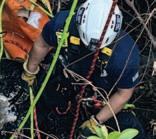
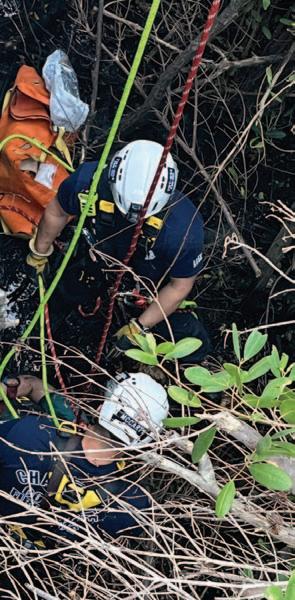
Special Operations personnel from Truck 12 and Squad 12 constructed a twin-tension rope system anchored from the bridge deck. This setup provided the necessary stability and control for the descent. Firemedic Nathan McCarty and Firefighter-EMT
Brandon Nevling were lowered into the mangroves
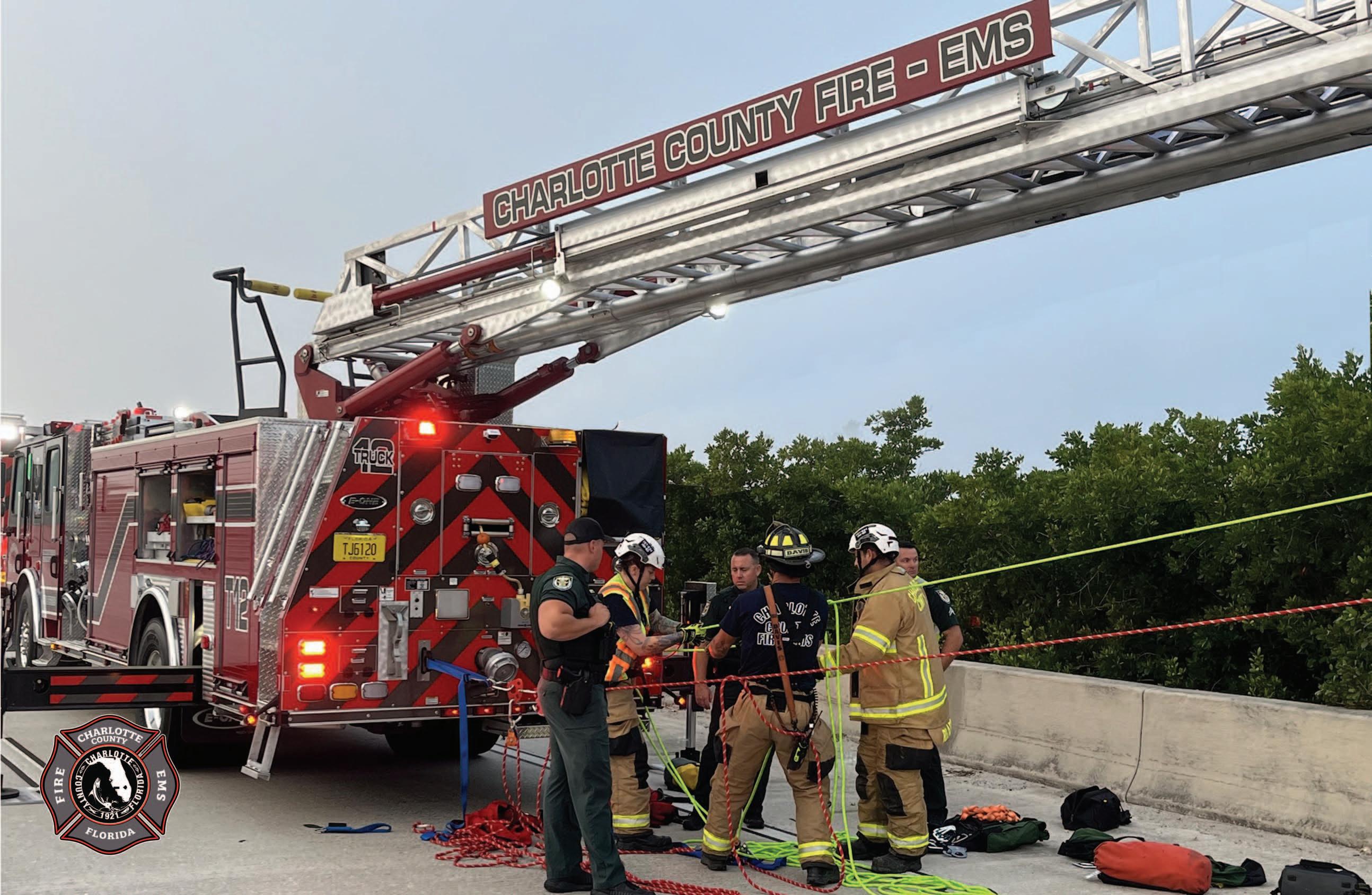
where they stabilized the patient, assessed for injuries, and prepared the individual for extrication using a Yates harness. The thick vegetation, unstable footing, and limited visibility added to
the challenge, but the rescuers worked methodically to ensure a safe operation.
suppression, rescue, and special operations units.
Once the patient was secured, the haul team at the top initiated a 5:1 mechanical advantage system to raise the patient from the mangroves to the bridge deck. Coordination between the descent and haul teams was seamless, guided by continuous radio communication and the direction of Lt. Ryan Gage. The operation required precision and teamwork, with each member contributing to a smooth and controlled lift.
When the patient reached the bridge deck, they were transferred to Rescue 12 for advanced medical care. The crew initiated trauma alert protocols and transported the patient to Gulf Coast Hospital for further evaluation and treatment.
This incident demonstrated the department’s high level of preparedness and technical expertise in rope rescue operations. From the initial size-up to the final patient transfer, every step reflected disciplined command, effective communication, and strong coordination between
The incident also served as a reminder of the department’s commitment to continuous training, inter-unit cooperation, and the shared goal of protecting the community under even the most challenging circumstances.
Charlotte County Fire & EMS continues to invest in specialized rescue training and equipment, ensuring that teams remain ready for any environment or situation. The successful outcome of this bridge rescue was the direct result of that ongoing commitment to readiness, safety, and excellence.
By Laurie Windham, Community Information, DeLand Fire Department
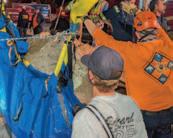
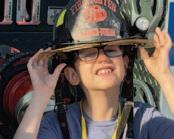
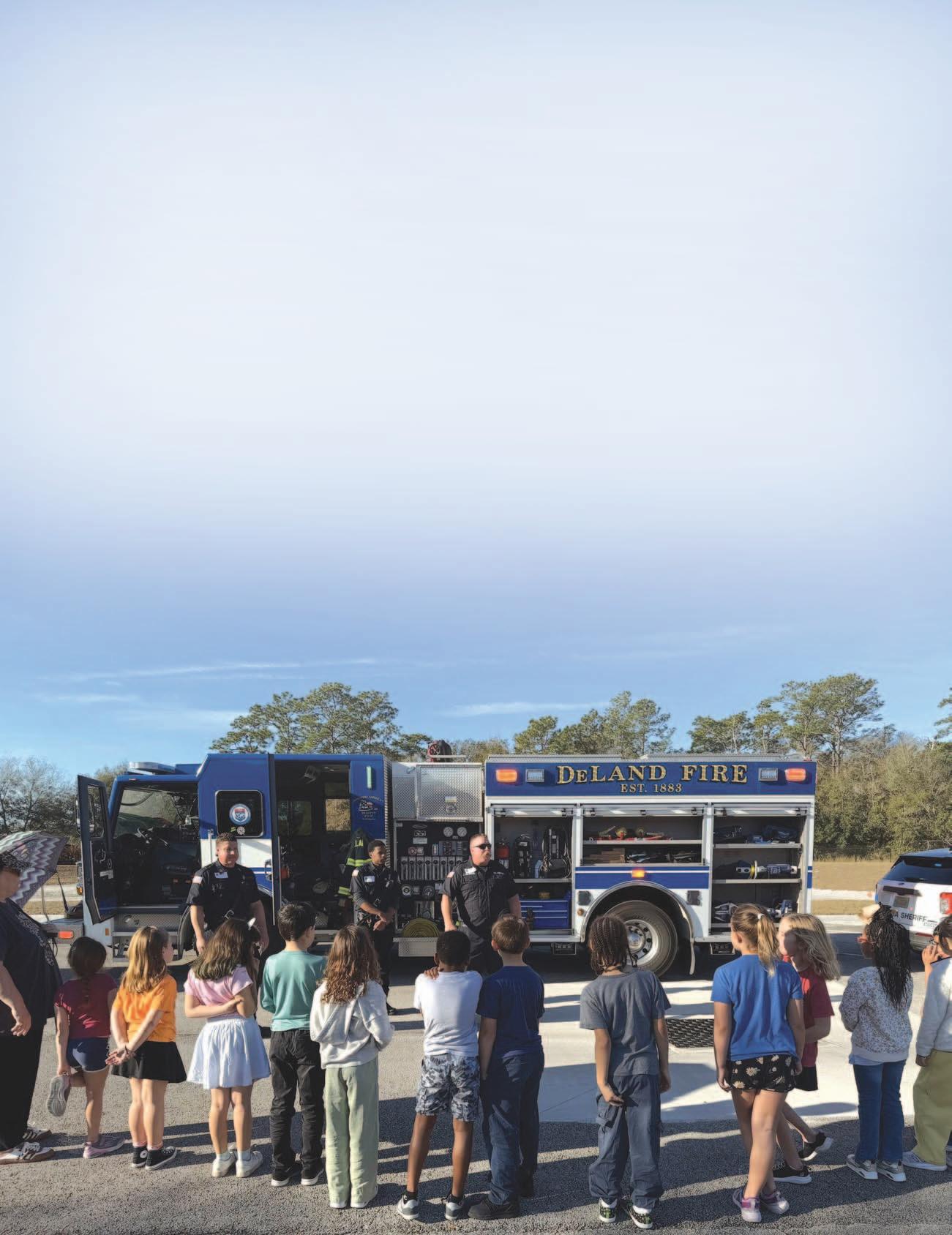
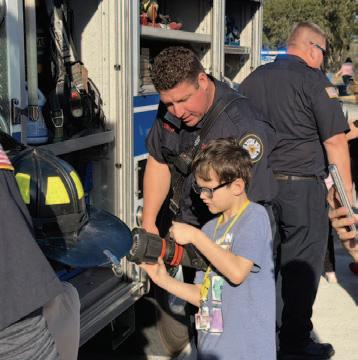
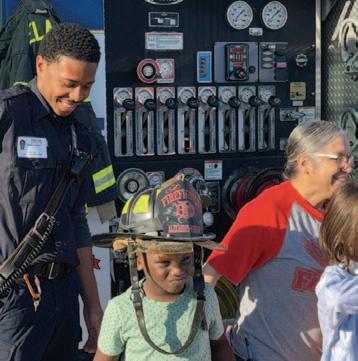
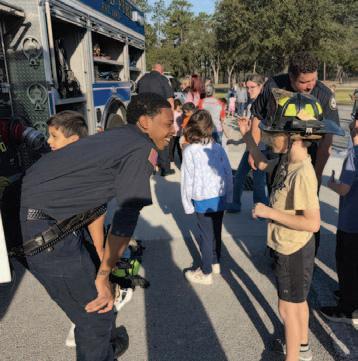
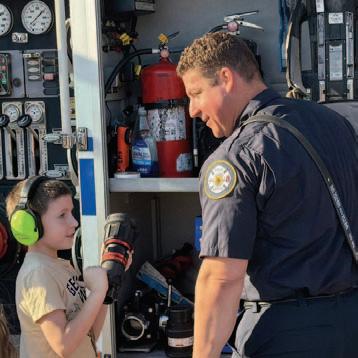
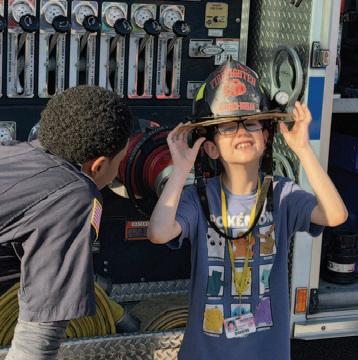
t a recent event designed by Freedom Elementary School to help educate young students on the dangers of large and heavy vehicles and equipment, DeLand Firefighters showed up strong with lots of cool stuff to share! Students gathered around and asked lots of questions, tried on firefighting equipment, held a fire hose and gazed at all of the gauges and valves on the big, shiny blue and white fire truck. At the end of the day, students had a better understanding of how these large vehicles and equipment work and the importance of staying safe by staying clear and both students and firefighters made new friends!

By Patrick Stone, R.A., LEED AP, Public Safety Market Director and Chris Kobos, PMP GISP, Director of GIS Services, H2M architects + engineers
The population in the state of Florida is growing at a rate unlike any other in the nation. According to a report from U.S. News & World Report, Florida’s population has grown by eight percent since 2020, more than any other state during that span. Populous regions across the state including Wildwood-The Villages, Lakeland-Winter Haven, Ocala and Port St. Lucie rank among the top fastestgrowing metro areas in the nation in 2023, according to the U.S. Census Bureau.
While the population increase may bolster the economy and create opportunities for businesses to thrive, there are rising concerns on how to effectively meet the needs of these expanding communities in the event of an emergency. The rapid population growth strains public safety infrastructure, making it essential to select the optimal location for updated, larger emergency response facilities.
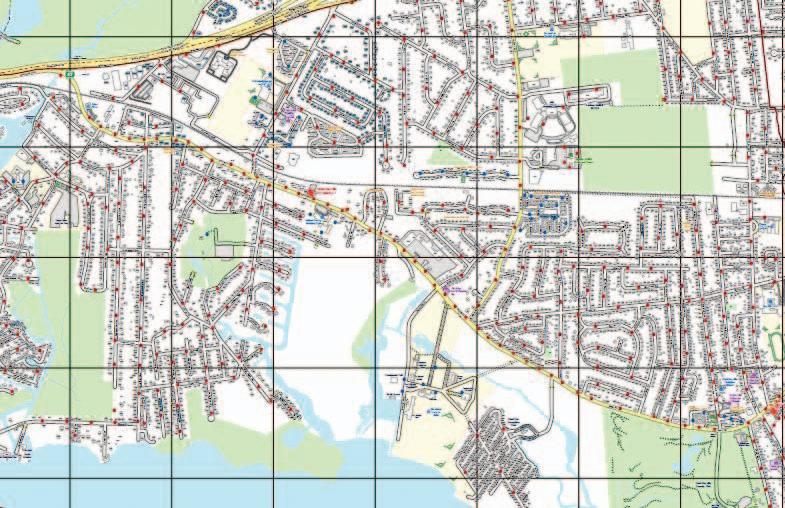
This is where geographic information systems (GIS) become valuable. GIS is comprised of geospatial software, data and sophisticated analysis tools used to incorporate large datasets into a map-based user inter face. These tools provide first responders with critical, spatially aware analysis for pre-incident planning, routing, and emergency response. GIS can also be used to help determine the best locations for a new public safety facility by assessing and identifying gaps in minimum station response times and driving distances as they relate to geolocated incidents and municipal growth patterns.
Population growth in the Sunshine State
poses significant challenges for environmental management and urban planning, but also exponentially increases demands on public safety agencies. Higher population density directly correlates with an increase in call volumes and traffic congestion, which can result in longer response times.
In order to service these communities, first responders are faced with the challenge of adapting to the increased demand for public safety agencies and infrastructure. The National Fire Protection Association Standard 1710 & 1720 set requirements for effective and efficient organization and deployment of fire suppression operations, emergency medical operations, and special operations to the public by career and volunteer fire departments to protect citizens and the occupational safety and health of fire department employees.
According to the NFPA 1710 standard, first due engines are expected to arrive on the scene within four minutes for fire suppression, 90 percent of the time. What impact on travel time can we expect in areas where major population growth is projected? Increases in call volume can negatively impact how quickly crews can respond. Factors like traffic congestion, staffing levels, and the number of calls can all contribute to longer response times.

A rapid increase in population can also quickly exceed the capacity of outdated public safety infrastructure, often requiring equipment and personnel to be relocated across various locations within the community to meet growing needs. This approach is less than ideal, as it stretches resources, can disrupt staff cohesion, and may lead to inconsistent response times.
Perhaps most impactful, increased call volume can leave staff over worked and overstressed. Although state regulations continue to evolve and station designers shift priorities to emphasize employee wellness, these principles alone cannot offset the strain felt by first responders facing increasing surges in call patterns.
Just as a visually appealing new station may not contain all the essential elements for operational success, a flat, five-acre parcel may not be the ideal site for a new facility. Architects routinely conduct feasibility studies for both current stations and possible new locations. Collaborating with a GIS specialist can help rule out certain sites or uncover options that might have been overlooked before using data.
For station siting, GIS can use regional growth patterns, incident location data, and spatial analysis to determine the most effective locations for a new emergency response facility Processing several years of geolocated incidents, GIS develops heat maps that showcase clusters of call density. By locating these areas, GIS technology helps identify potential station sites that accommodate the increased call volume and distribution of the area.
Understandably, many municipalities prefer to locate their public safety facilities in the heart of their downtowns, both to showcase these civic buildings in a central setting and out of the belief that such siting best supports emergency response operations. However, in certain instances, GIS may reveal traffic patterns during peak hours that could adversely affect response times, thereby rendering specific downtown locations impractical.
GIS can also play a crucial role in supporting Florida’s response to major storm events, which threaten public safety infrastructure with potential damage to facilities and power outages that may delay emergency responses. The Florida Division of Emergency Management (FDEM) Enhanced State Hazard Mitigation Plan categorizes the state’s natural hazards to include floods, tropical cyclones, wildfires, severe thunderstorms, sinkholes, extreme heat, erosion, winter weather, drought, earthquakes and tsunamis. Southeast Florida is in a High Velocity Hurricane Zone (HVHZ), which poses a significantly higher risk of damage brought on by extreme winds and windborne debris. In terms of storm response, GIS is used to identify residents affected by outages, identify, locate, and track the repair of damaged infrastructure, and alert residents to shelter locations and evacuation routes.
Conclusion
Population growth across Florida intensifies the need for new or expanded public safety facilities. By integrating GIS into planning, public safety officials and first responders can coordinate a variety of emergency response needs. As communities continue to grow in the region, integrating GIS into your planning process will be crucial to ensure that emergency response remains timely and effective, ultimately safeguarding both first responders and the residents they serve.
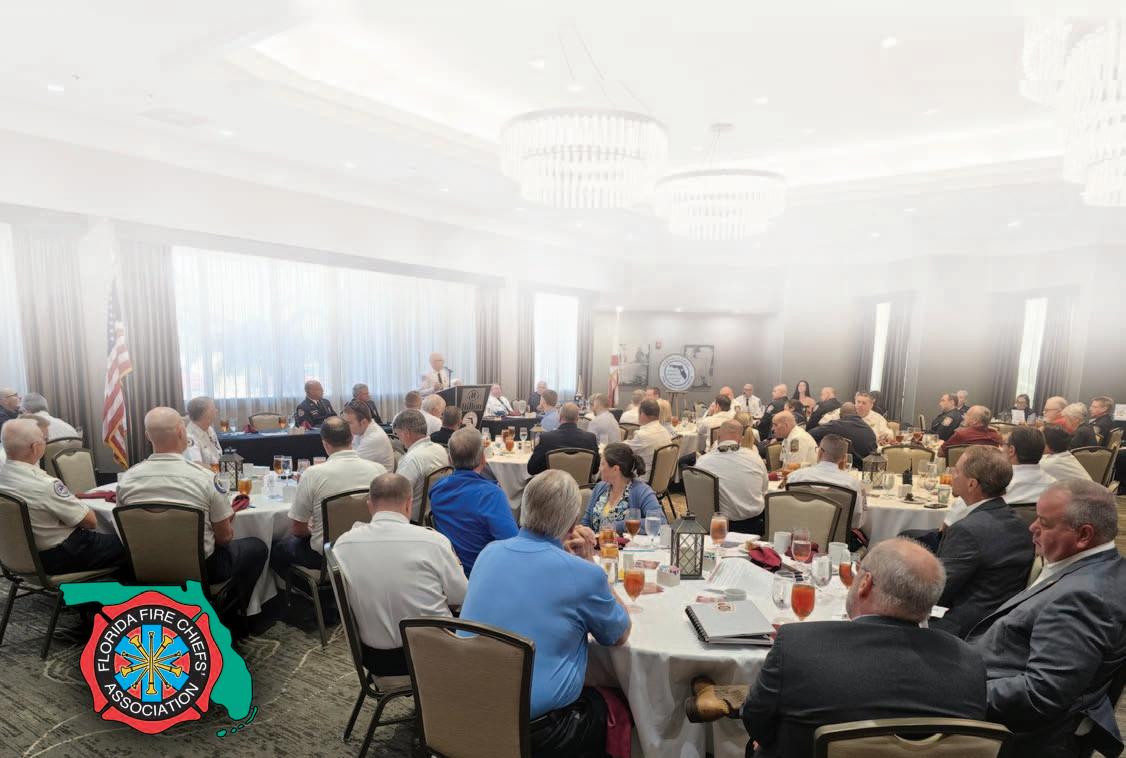
Southwest Regional Meeting
Tuesday, April 7, 2026 - 11:00 AM – 2:00 PM
Bonita Springs Fire Department Station 24 27701 Bonita Grande Dr, Bonita Springs, FL 34135
West Central Regional Meeting
Wednesday, April 8, 2026 - 11:00 AM – 2:00 PM
Sadye Gibbs Martin Community Center
302 S. Maryland Ave, Plant City, FL 33563
East Central Regional Meeting
Thursday, April 9, 2026 - 11:30 AM – 2:30 PM
Hilton – Orlando/Altamonte Springs
350 Northlake Blvd, Altamonte Springs, FL 32701
Northeast Regional Meeting
Friday, May 8, 2026 - 11:00 AM – 2:00 PM
Bradford County Fairgrounds 2222 US 301 North, Starke, FL 32091
Northwest Regional Meeting
Friday, May 22, 2026 - 11:00 AM – 1:00 PM CDT (12:00 PM – 2:00 PM EDT)
Northwest Florida State College, Building 400 100 College Blvd. East, Niceville, FL 32578
Southeast Regional Meeting
Tuesday, June 2, 2026 - 11:00 AM – 2:00 PM
Broward County Convention Center
1950 Eisenhower Blvd, Fort Lauderdale, FL 33316
hat if, once a month, every first responder in a city knew there was a place they could go.
Not to train.
Not to debrief.
Not to be evaluated or fixed.
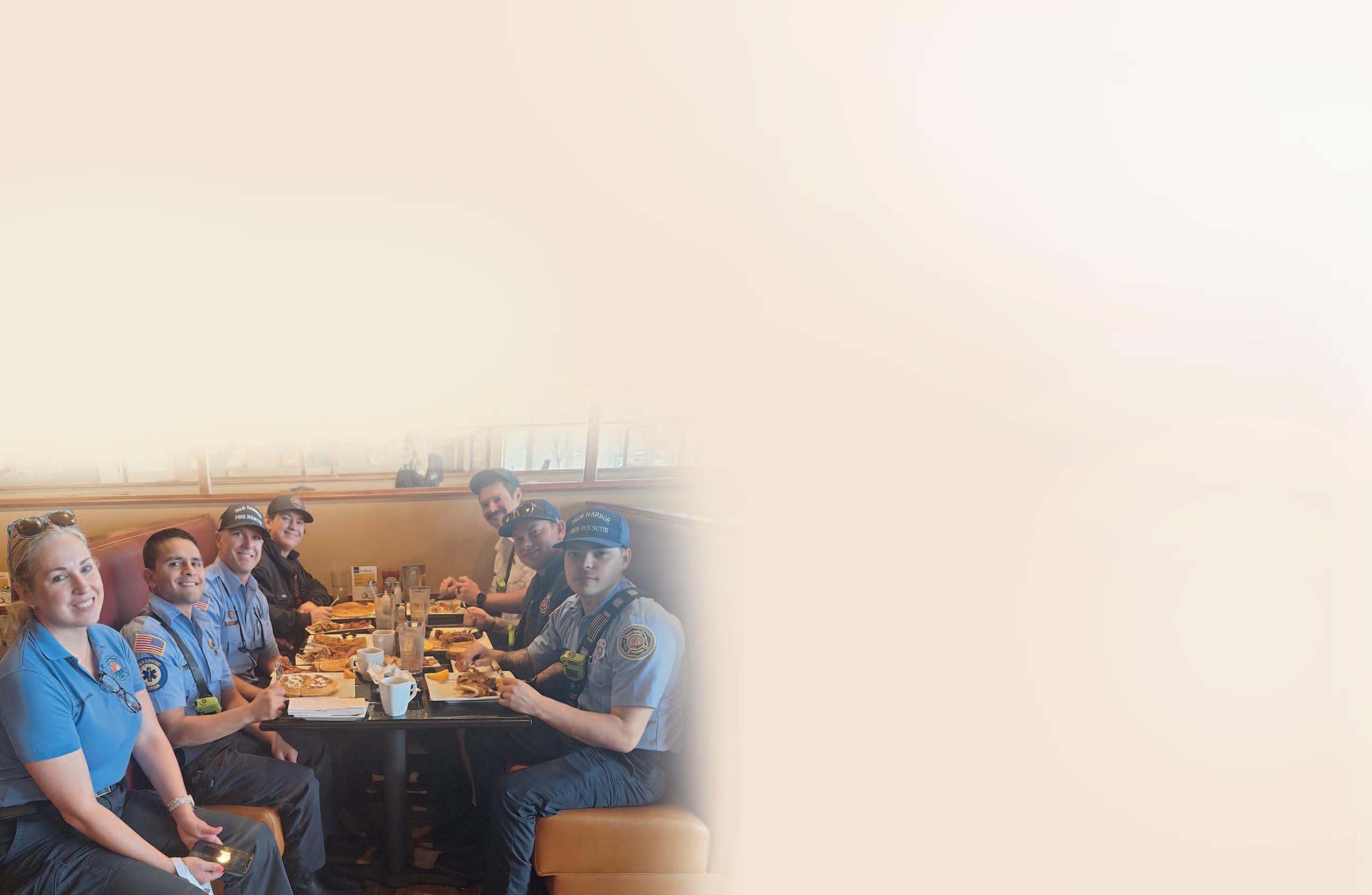
Just a place to eat breakfast, sit down, and be human with people who understand the job without needing an explanation. No agenda.
No podium.
No speeches.
Just food, conversation, familiar faces, and new connections.
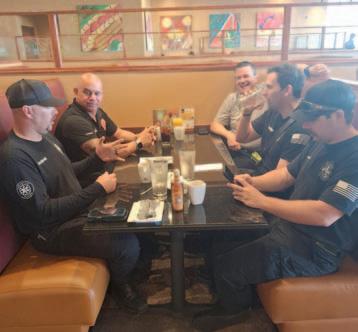
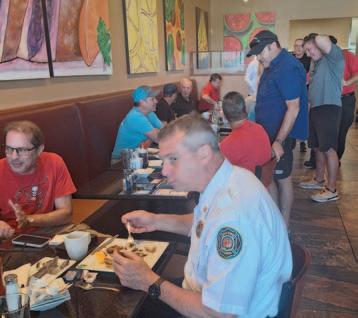
This is what All First Responders Matter (AFRM) has been quietly building—one breakfast at a time, supporting active and retired. And while it may sound simple, its impact reaches far deeper than a meal. Because the strongest support systems are built long before anyone is in crisis.
For first responders (law enforcement, fire fighters, 911 dispatchers, EMT, corrections, etc.), the most difficult part of the job often isn’t what happens on scene—it’s what happens afterward.
By Sandra Chmielewski, ACPE-CE, C.HYP, LMHC
It’s the accumulation of stress.
The calls that don’t fully leave.
The images that surface in quiet moments. The moral calculations made under impossible conditions—and second-guessed later in silence.
Much of this weight goes unseen. Not because it isn’t there, but because first responder culture is built around control, loyalty, and compartmentalization. These traits save lives on duty. Over time, they can isolate off duty. Suicide and burnout are rarely sudden. It is the final expression of years of stored pressure— physiological, emotional, and moral.
Hypervigilance that never fully shuts off. Guilt that logic can’t resolve. A nervous system trained for danger with nowhere to discharge it. And the longer someone carries that weight alone, the heavier it becomes.
When someone is struggling, the hardest step is rarely finding help. It’s reaching for it.
A pamphlet with a phone number is useful. A hotline can be lifesaving.
But a name in your phone—someone you’ve shared a meal with, laughed with, nodded to across a table—is often what makes the call
possible.
Connection is not a soft concept. It is protective.
Familiar faces lower the body’s threat response. Being recognized regulates the nervous system. Shared presence reduces shame. Trust formed in ordinary moments becomes accessible during hard ones.
This matters deeply when it comes to moral distress—the quiet erosion that happens when first responders are exposed to suffering they cannot prevent or outcomes they cannot change. Logic may say, You did everything you could. The nervous system often disagrees.
Recovery doesn’t start with answers. It starts with belonging.
Being seen.
Being heard—without judgment.
AFRM breakfasts create that environment without requiring disclosure. No one is asked to share. No one is put on the spot. The support is implicit, woven into the simple act of showing up and sitting together
Connection forms before vulnerability is required. That timing matters.
Support doesn’t work when it’s occasional. AFRM breakfasts aren’t one-time events. They happen every month.
That consistency is the point.
Trust isn’t built in a single conversation. It grows through repetition and reliability. Showing up again and again sends a clear message: This space will still be here next month.
For first responders whose lives are shaped by unpredictability, that reliability creates safety. Conversations pick up where they left off. Faces become familiar. Newcomers blend in without explanation.
You can come late.
You can leave early.
You can sit quietly.
Being seen without being scrutinized. Being welcomed without being evaluated. That kind of consistency doesn’t just feel supportive—it is supportive.
AFRM breakfasts are hosted in Illinois, North Carolina, and Florida—and they continue to grow through community partnership.
All First Responders Matter was founded in 2018 by a retired firefighter and longtime first responder Milton Smith. He serves as Chaplain for Palm Harbor, Tarpon Springs, Oldsmar and Clearwater Fire & Rescue Departments –showing up not to direct the room, but to make sure it exists.
Sponsoring an AFRM breakfast isn’t about visibility It’s about stability.
Your support creates a welcoming, reliable space where first responders build relationships long before they are ever needed. A single sponsored breakfast can spark connections that last for years—quietly strengthening trust, reducing isolation, and ensuring that when someone struggles, they already know who to call.
If you believe prevention is more powerful than reaction—and that connection is the foundation of resilience—we invite you to
sponsor an upcoming AFRM breakfast (AFRM is a 501(c)(3) nonprofit organization).
Your investment feeds more than a meal. It feeds a safety net built long before it’s needed.
Most support systems activate only after something goes wrong—after burnout, after a breaking point, after tragedy.
AFRM’s approach is different. These breakfasts are not a response to crisis. They are a safeguard against isolation.
By creating a predictable, welcoming space month after month, AFRM makes connection a habit, not a last resort. The distance between distress and support quietly shrinks over time.
A police lieutenant shared with me at a recent AFRM breakfast his department’s efforts to elevate mental health care. “These breakfasts are exactly the kind of thing that helps. We’re getting better, but old stigmas are still alive because, unfortunately, they are.”
When connection is normal, reaching out feels less risky Shame loses its grip. The nervous system has somewhere to settle.
And habits shape outcomes.
For retirees, the impact can be especially profound.
The identity of a first responder doesn’t disappear when the uniform comes off.
Retirement—planned or sudden—can feel like losing a role, a rhythm, a tribe.
“You spend your whole adult life being needed,” one retiree shared. “Then, in one day, you’re not.”
AFRM breakfasts intentionally include retirees alongside active responders. This matters.
Retirees carry perspective that can’t be taught. They recognize the signs of strain. They normalize what feels isolating. They make it easier for someone to say, I’m not okay, without having to explain why.
At the same time, retirees remain connected to the community that shaped them—reminded they still belong.
These breakfasts don’t happen by accident. They are made possible through sponsorships from individuals, businesses, and organizations who understand that support doesn’t have to be dramatic to be meaningful.
• A sponsored breakfast says:
• We value prevention, not just reaction
• We understand that responder health affects community safety
We invest in people, not just programs
A single breakfast brings together responders who might never otherwise cross paths. It
creates a space where trust can form quietly and organically—without a price tag for those who attend.
For sponsors, this is a tangible way to lead. To stand behind the people who stand for the community every day.
For first responders, it’s an open invitation: Comeasyouare.Noexpectations.
It may not look dramatic.
It may not make headlines.
But it works.
Because connection changes outcomes. Because trust is built in small, consistent moments.
Because prevention starts with presence. When support looks like breakfast, it looks like people showing up—month after month—for one another
If you’re a first responder: come eat. If you’re a community leader or business: sponsor a table.
If you believe those who serve deserve better support: help make the next breakfast possible. Sometimes, that’s exactly what saves a life. To participate or support: Click here or here.
Sandra Chmielewski is a clinical mental health therapist in Lutz, FL. Sandra supports healing through RTT, NPL, and ART. Sandra specializes in relationships/couples,first responders, trauma, anxiety, and life transitions.
Sandra has an M.S. in Clinical Mental Health Counseling, an M.A. in Theology, and an M.Ed. in Parent and Family Education. Sandra has achieved certification as an ACPE-certified Educator/Supervisor, Spiritual Director/Supervisor, Rapid Transformational Therapy, and Mind Movie Method Coaching.
Additional training and expertise in Mindfulness-Based Stress Reduction (MBSR), Sacred Art of Living & Dying, Crisis Incident Stress Management (CISM), Mind-Body Skills, Grief & Loss Counseling, Psychological First Aid (PFA), and Spiritual Deepening.

By Doreen Overstreet, Public Information Officer, Seminole County Fire Department
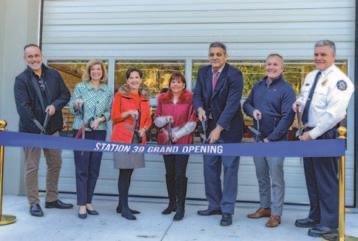
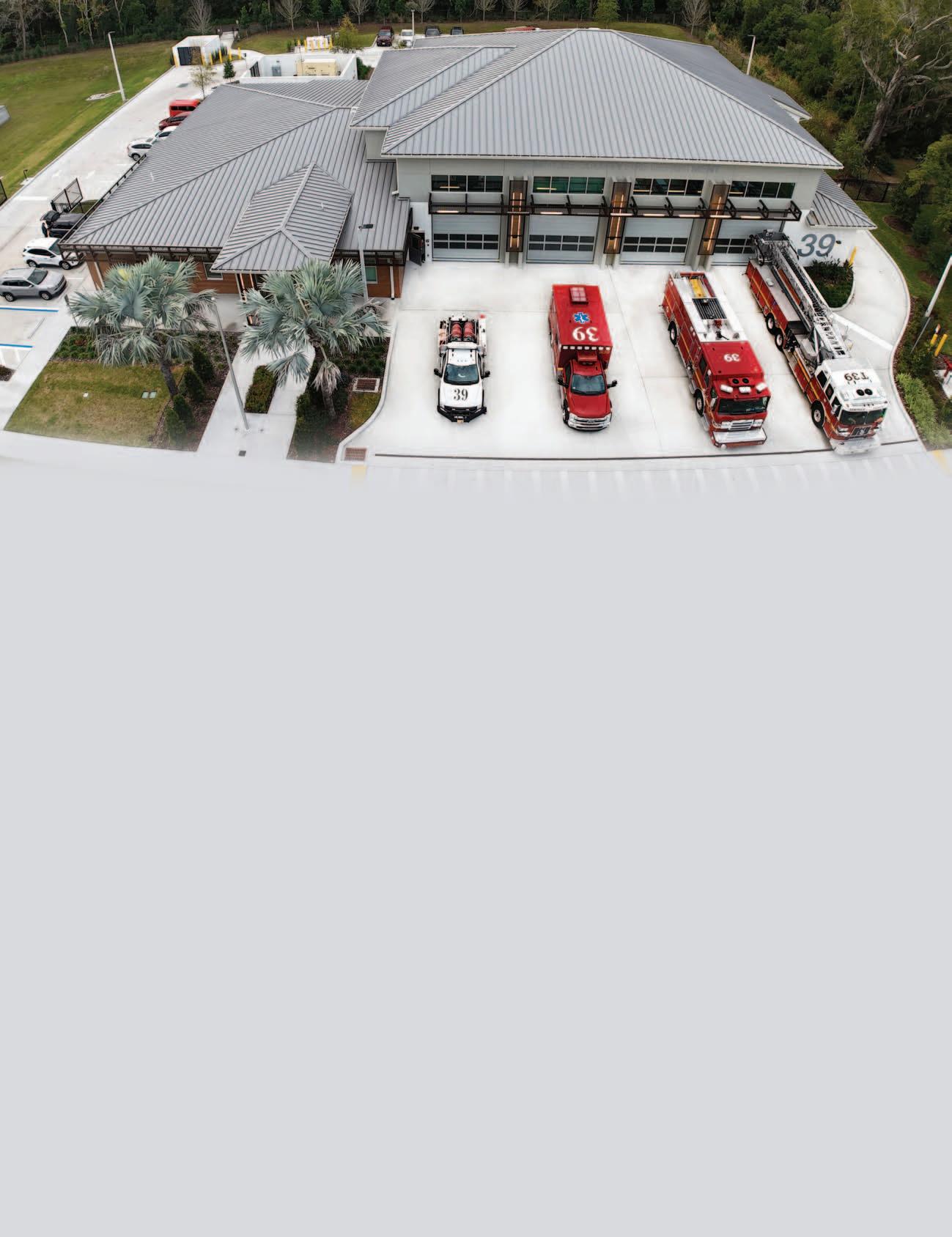
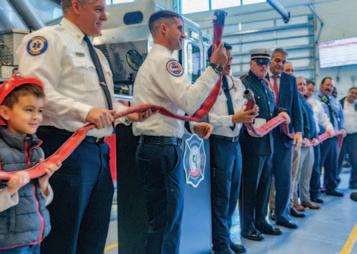
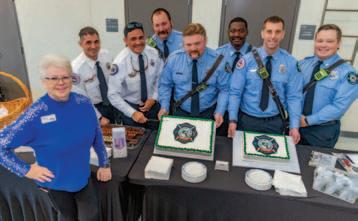
Seminole County celebrated the official grand opening of Fire Station 39, expanding fire rescue coverage for the growing northwest area of the County Located at 5639 First St. in Sanford, the new station will enhance emergency response for residents and businesses in the surrounding community
The Seminole County Fire Department’s 21st fire station is expected to improve response times by more than two minutes in large portions of the service area, and by more than one minute across most of the area. The station will alleviate call volume loads for Seminole County Fire Department (SCFD) Station 34 (Paola/Sanford), SCFD Station 36 (Heathrow), Lake Mary Fire Department Station 37, and Sanford Fire Department Station 38.
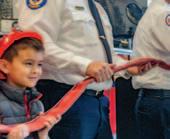
The milestone event included a Hose Uncoupling Ceremony, a fire service tradition symbolizing the completion and commissioning of a new fire station. Fire officials announced that in 2026, Station 39 will become the first in the SCFD — and one of the first in the state — to deploy a Crash Attenuator Truck equipped with a Scorpion II Truck Mounted Attenuator, a specialized safety vehicle designed to absorb impacts and help protect crews working highway and roadside incidents.
“Seconds matter in an emergency, and Fire Station 39 will enhance emergency response for residents in District 5 and throughout Seminole County,” said Chairman Andria Herr of the Seminole County Board of County
Commissioners. “This new station will improve response times in a growing area that is home to nearly 11,000 residents and more than 4,100 households. It’s another example of Seminole County’s long-term investment in public safety for both residents and visitors.”
“Just in the past decade, Seminole County Fire Department’s Fire Station 34 call volume has increased 53%,” said Fire Chief Matt Kinley of the Seminole County Fire Department. “Last year, the station ran more than 5,000 calls and was our eighth busiest station in the County. On its very first day of service, Station 39 supported a crew from Lake Mary Fire Department’s Station 37 with a significant residential fire, underscoring the station’s importance from day one. I thank the Seminole County Board of County Commissioners and County Management for supporting our Fire Department and the growing public safety needs in our community.”
The 13,356-square-foot station is modeled after the prototype design of Fire Station 29 on
Aloma Avenue, which opened in late 2018. Fire Station 11 in Altamonte Springs, which opened in 2024, also used this prototype.
Amenities at Fire Station 39 include four apparatus bays (which house Tower 39, Engine 39, Rescue 39, Woods 39, Boat 39, and UTV 39), a direct-source exhaust capture system, a self-contained PPE storage room, crew sleeping quarters (12 bunk rooms), a kitchen, offices, a fitness facility, an outdoor porch, a standby generator, a fueling depot, and EMS supply storage.


By Andrea Schuch,Fire Public Information Specialist, Cape Coral Fire Department
Incident underscores importance of experience, scene control and specialized technical rescue resources
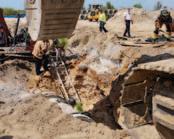
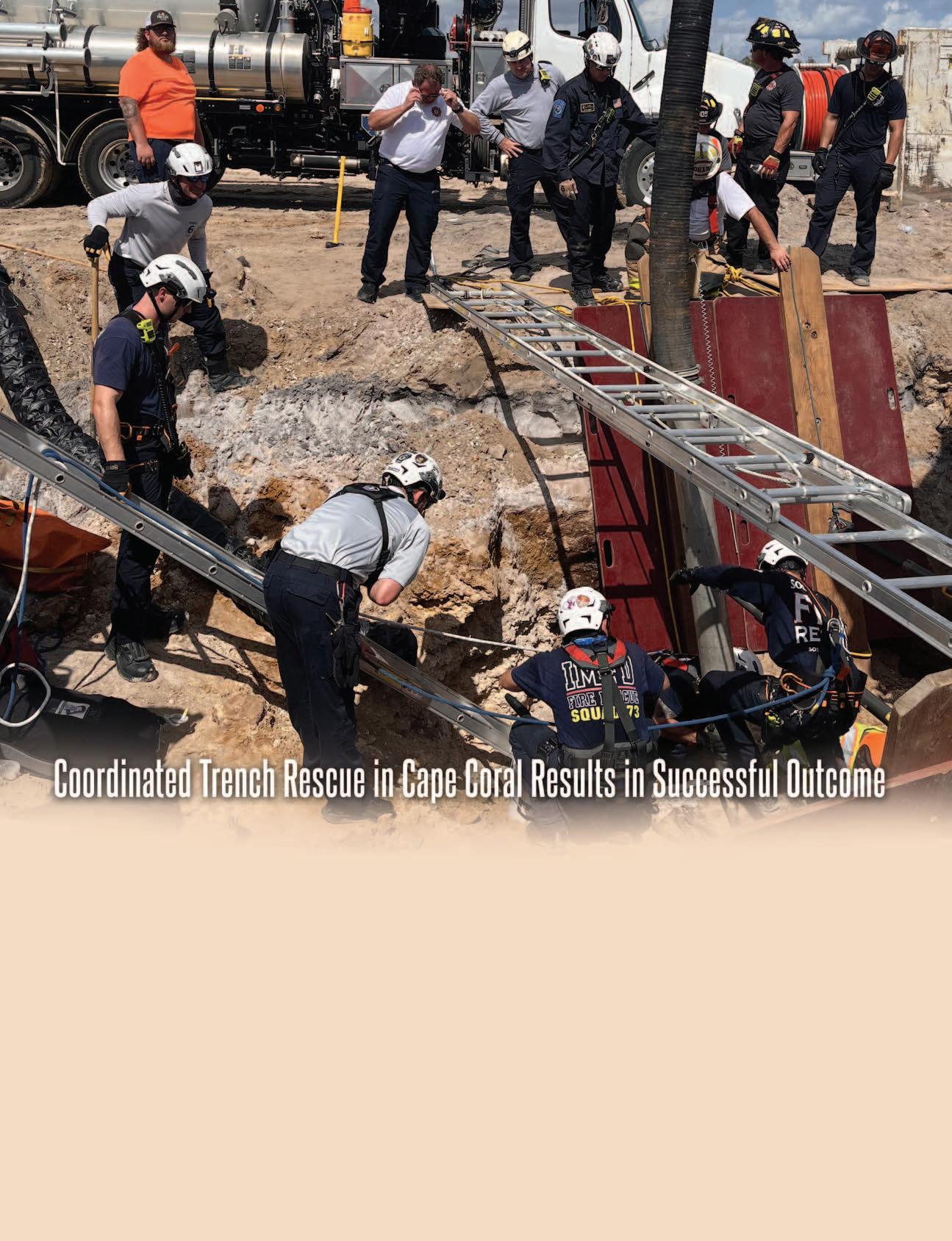
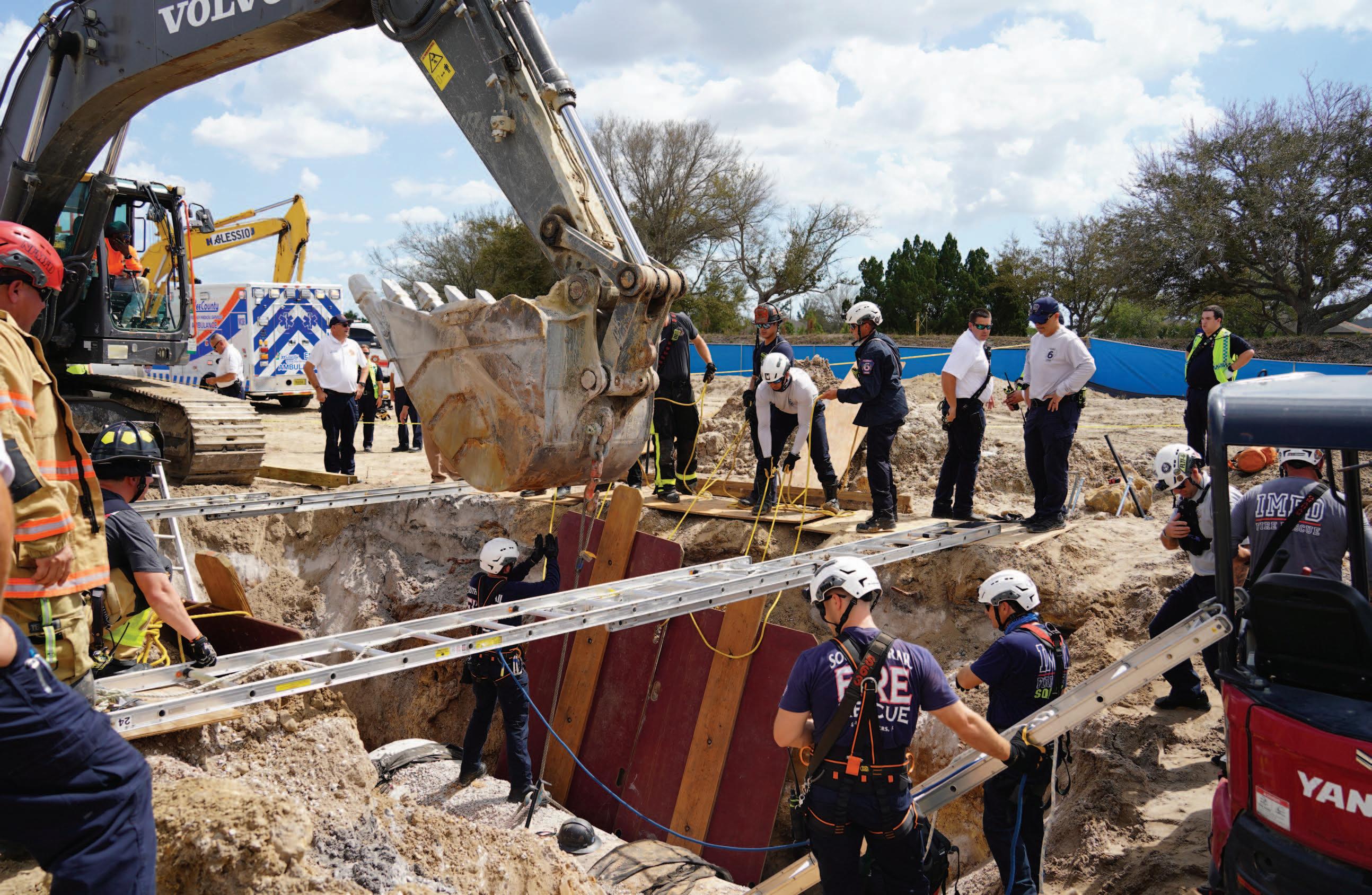
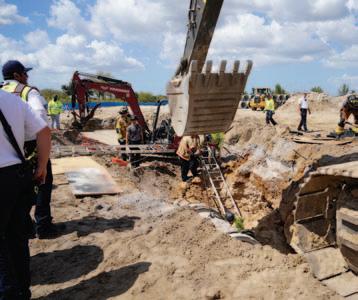
On the afternoon of Monday, March 9, the Cape Coral Fire Department (CCFD) responded to a call involving a trapped construction worker at a job site in a busy, centrally located area of the city. The worker was attempting to remove a choker from a large concrete pipe approximately 10 to 12 feet down in a trench, without the use of a trench box, when the surrounding soil shifted. He became pinned at the waist between the pipe and the side of the trench.
Battalion Chief Doug Cainas, ser ving as incident commander, has 20 years of technical rescue experience and has been a member of Urban Search and Rescue
(USAR) since 2019. Relying on that experience, he requested activation of USAR Task Force 6 and a Cape Coral Public Works vacuum truck while en route to the scene.
Upon arrival, Cainas ordered all machinery shut down to eliminate vibrations that could increase the risk of a trench collapse. He also directed crews to remove the spoil pile located within two to three feet of the trench using hand tools and to place ground pads along the trench edge.
When task force members arrived, they installed fin form shoring along the trench walls to create a safe working environment for rescuers. Once the trench was stabilized and access was gained, a vacuum truck was used to remove dirt and debris from around the patient. After he was freed, rescuers were able
to get him onto a backboard and to a waiting ambulance where he was transported in serious condition. Despite sustaining multiple crush injuries to his hip, pelvis and sacrum, the incident had a positive outcome as he is expected to make a full recovery.
Cape Coral is consistently ranked among the fastest-growing cities in the United States. With this growth comes increased construction activity and a higher likelihood of incidents like this one. In response, CCFD is actively striving to expand its technical rescue capabilities by acquiring additional equipment and increasing personnel certifications.
CCFD also extends its gratitude to neighboring departments that provided their See RESCUE page 35
RESCUE continued from page 33
technical rescue team members and equipment in support of Task Force 6: Bonita Springs Fire Control and Rescue District, Estero Fire Rescue, Iona McGregor Fire District, Lehigh Acres Fire Control and Rescue District, North Collier Fire Rescue District, North Fort Myers Fire Department, South Trail Fire Protection and Rescue Service
District, and Tice Fire and Rescue District. Technical rescue team members multiple Southwest Florida departments regularly train together to maintain seamless coordination during complex rescues. This ongoing collaboration is critical because, during realworld incidents like this, every second counts and a well-coordinated team can significantly improve safety and outcomes for both victims and responders.
By Davis Wood, APIO, Public Information and Education Officer – Public Safety, Escambia County Board of County Commissioners
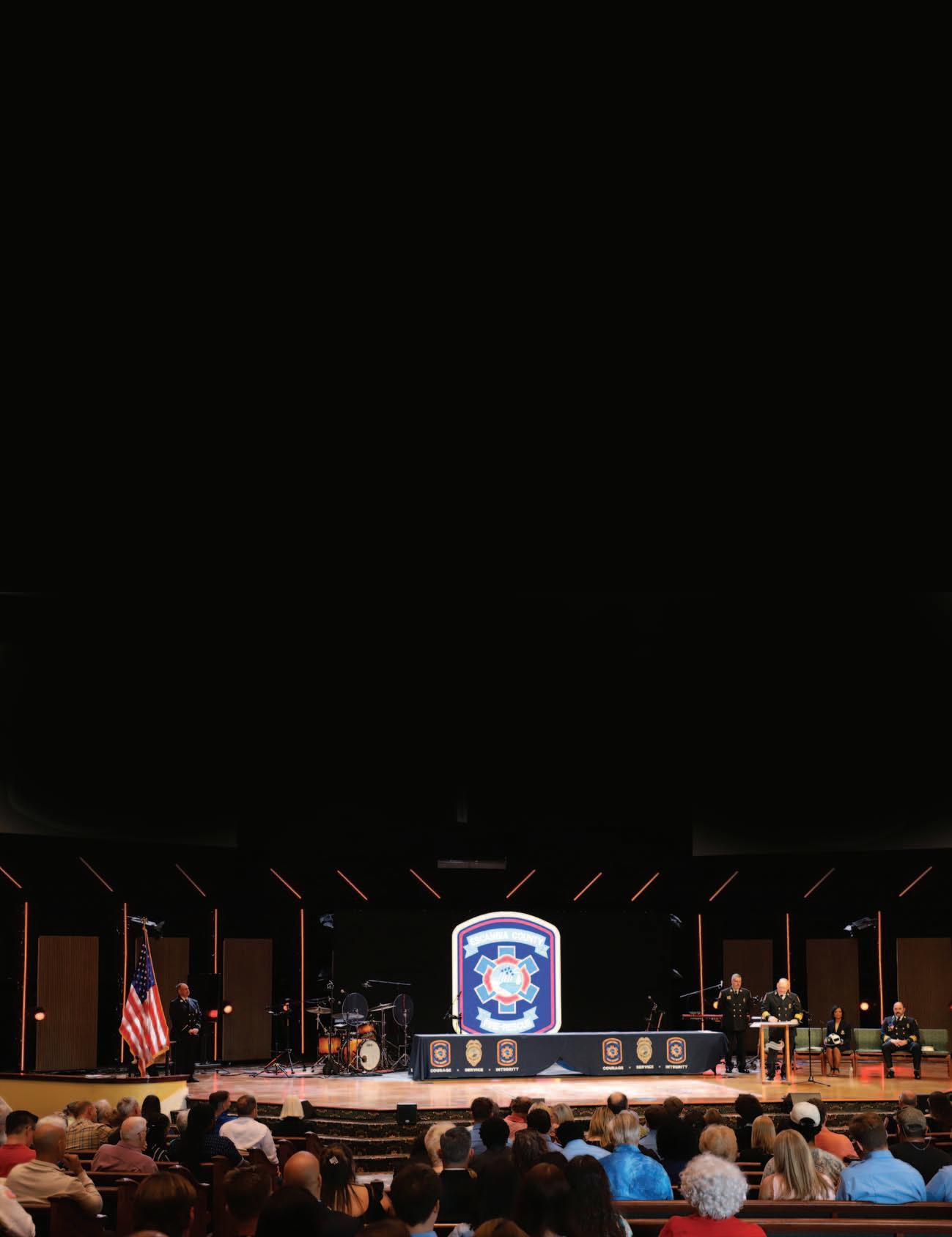
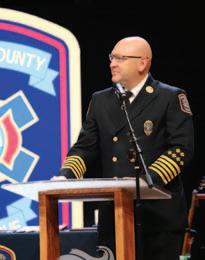
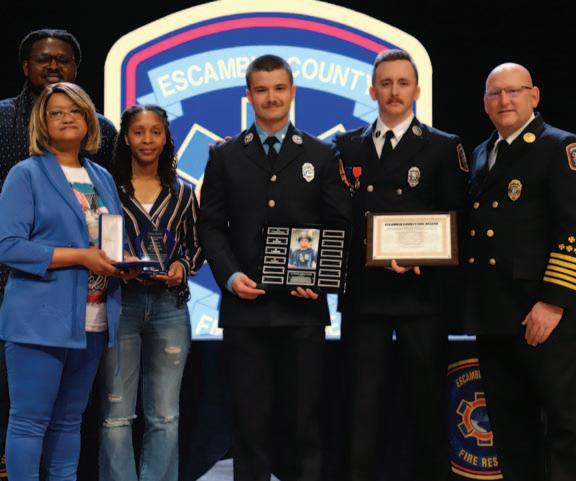
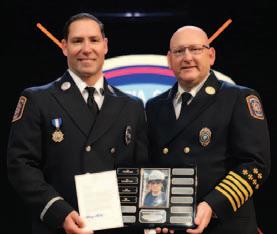
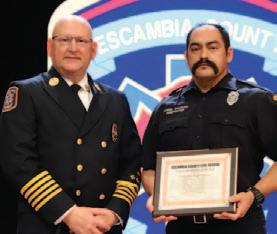
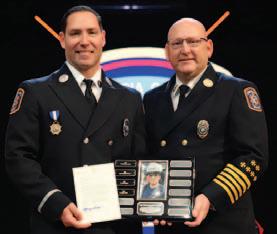
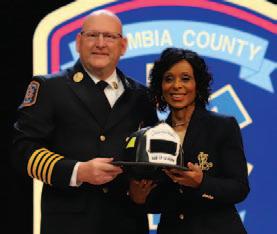
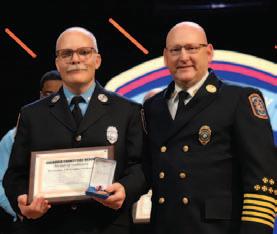
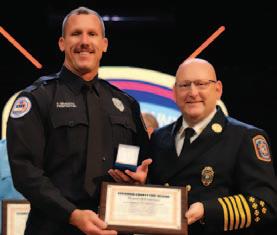
Escambia County Fire Rescue hosted the 2026 ECFR Medal Day awards ceremony at Marcus Pointe Baptist Church on Saturday, Feb. 21. The ceremony served as a celebration of all achievements accomplished by the hardworking men and women in ECFR during 2025. The following firefighters and fire officers received individual honors:
•Career Firefighter of the Year –Firefighter Angel Santana
•Career Fire Officer of the Year –
Lt. Jeffery C. Rohrer
•Volunteer Firefighter of the Year –Firefighter Joshua Bazinet
•Volunteer Fire Officer of the Year –
Lt. Christianne Barry
•Lt. Terrell Jackson Award –Firefighter Eli Jackson
• District Chief Dwain Bradshaw Award –
Lt. James Shaw
•Medal of Courage recipient -Firefighter Joseph Graczyk
•Medal of Gallantry recipient –Firefighter Christopher (Leslie) Williams
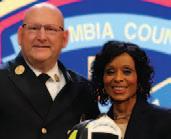
Several elected officials also attended the ceremony, including District 2 Commissioner Mike Kohler, District 3 Commissioner Lumon May, District 4 Commissioner and BCC Chair Ashlee Hofberger, and representatives from the offices of U.S. Sen. Ashley Moody and State Rep. Michelle Salzman. Several award recipients were also presented with letters of recognition from Sen. Moody.
Congratulations to all of this year’s award recipients.
By Jaime Braudrick, MA, Public Information Officer, City of Cocoa
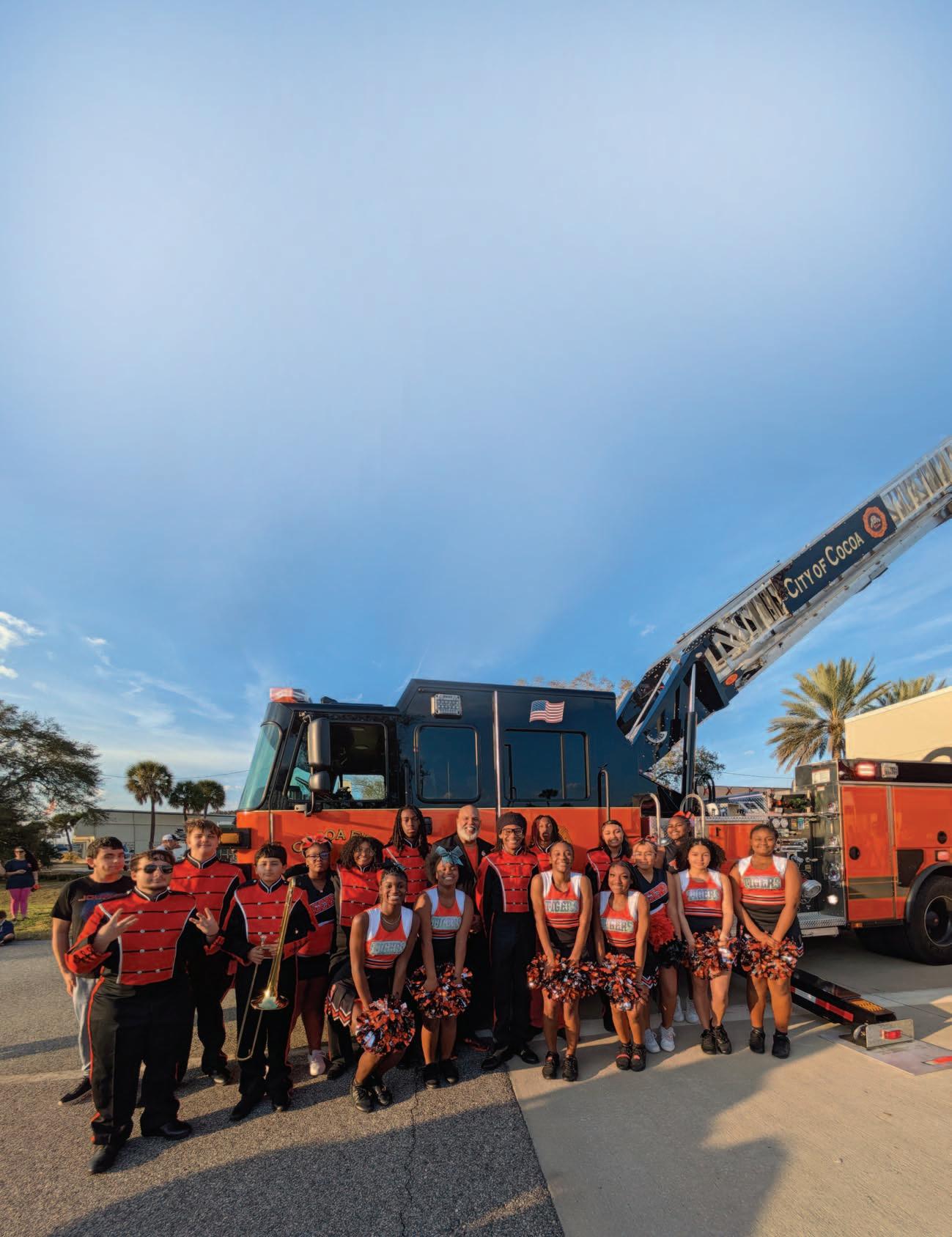
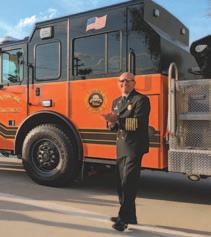
Cocoa Fire Rescue officially placed its newest laddertruck,FireTruck32, into service Thursday afternoon following a highenergy community push-in ceremony at Fire Station 2.
In a visible show of hometown pride,Truck 32is uniquely painted inCocoa High School’s black and orange “Tiger Pride” colorsand incorporates the school’s logo symbolizing the deep connection between public safety and the community it serves.
The new front-line apparatus represents a significant investment in public safety, featuring advanced aerial capabilities and modern safety enhancements designed to strengthen fire suppression, rescue operations, and emergency response throughout the City of Cocoa.
“This laddertruckwas built with Cocoa in mind,” said Fire Chief Lamm. “Truck32 enhances our response capabilities and ensures our firefighters have safe, reliable equipment to protect our residents.”
Cocoa Mayor
Michael Blake emphasized the broader meaning behind the investment.
“Investing in our fire service starts with investing in our community and that begins with education,” said Mayor Blake. “Our young students today are the future of this city and the future of our fire service. When we connect public safety with our schools, we are building pride, opportunity, and leadership for generations to come.”
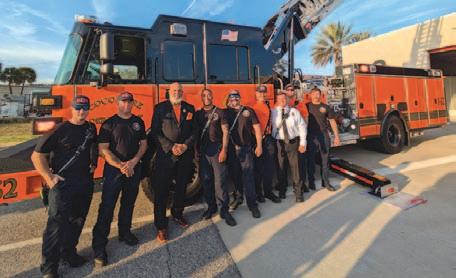
Cocoa High School Principal Stewart echoed that sentiment.
“This moment highlights what makes Cocoa special,” said Principal Stewart. “The dedication of this fire
truck, proudly bearing our school logo, speaks volumes about the strength of our partnership with the City of Cocoa. Our community’s support is second to none in Brevard, rooted in Tiger PRIDE, service, and unwavering commitment to our students and families.”
The ceremony featured performances from theCocoa High School band and cheerleaders, along with members of theCocoa High baseball teamand Head Football CoachNate Hooks. Fire service leaders fromBrevard County Fire Rescue, Brevard County Emergency Management, Rockledge Fire Department, Palm Bay Fire Department, and neighboring agencieswere also in attendance, as well asSchool Board Member Gene Trent, Cocoa City Council members, City officials, and community residents, and Cocoa High alumni.
Community members joined firefighters in the longstanding push-in tradition, symbolically pushingTruck32 into the station and is now fully operational and serving the citizens of Cocoa.
By Jenn Samsel, Independent Journalist
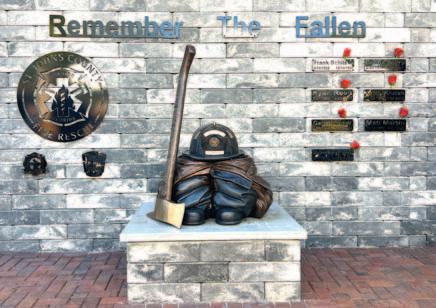
Amoment of silence and a solemn ceremony, filled with heartfelt tears, honored the fallen firefighters. St. Johns County Fire Rescue held an unveiling of a wall dedicated to those who lost their lives in the line of duty.
The event, held at the St. Johns County Headquarters in St. Augustine, brought together several counties to honor these brave individuals. Honor guards from Clay County Fire Rescue, Fernadina Beach Fire Department, Jacksonville Fire Rescue Department, and St. Johns County Fire Rescue participated in the opening ceremony, with bagpipes from St. Johns Fire Rescue and Jacksonville Fire Rescue Department providing a touching tribute.
An emotional day as the families rang a bell
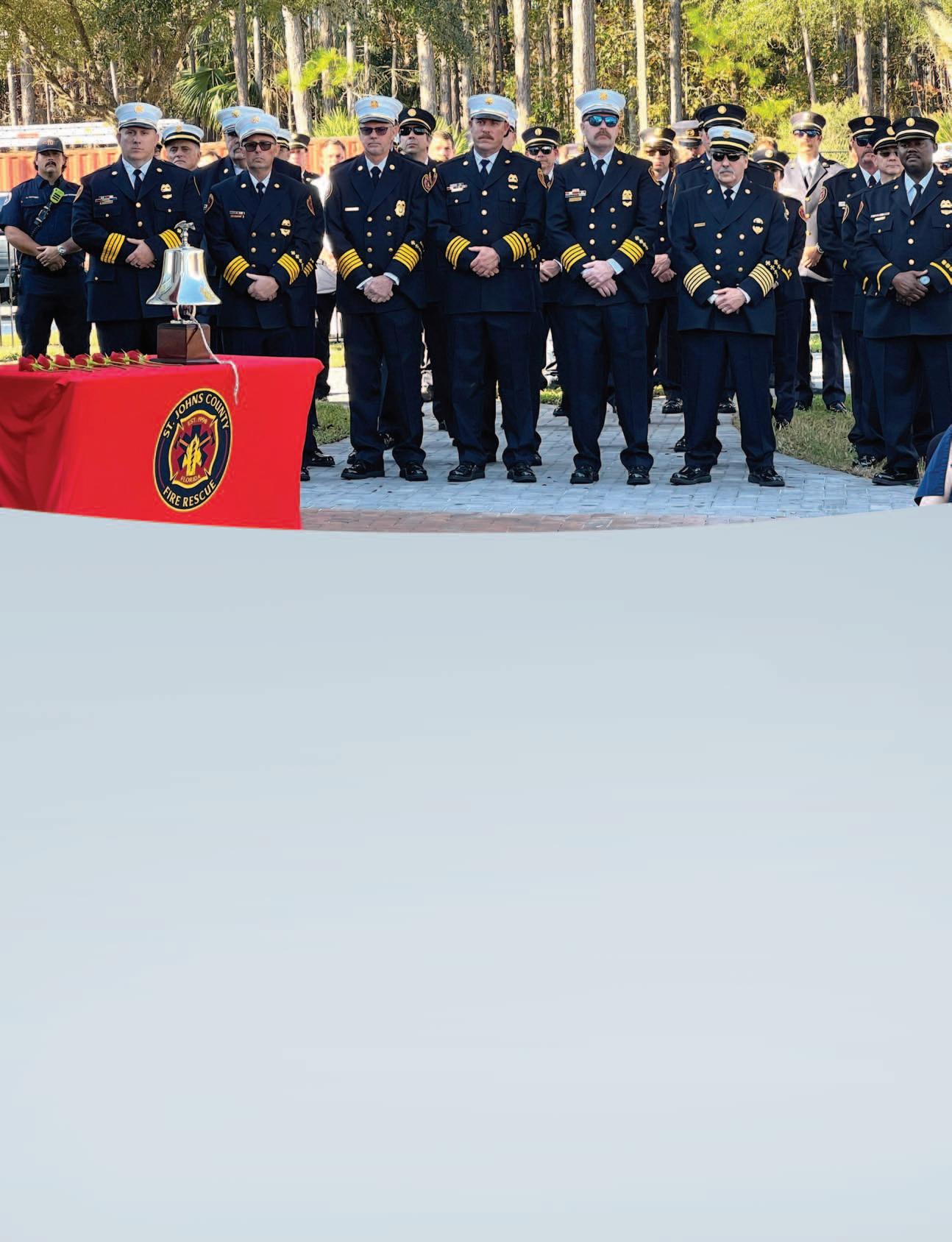
while receiving a flower to lay on the wall, which displayed the names of their loved ones, ensuring they will never be forgotten.
“We dedicate this memorial with respect and gratitude, and may it stand as a place of reflection, a source of remembrance, and long-lasting acknowledgement of this given, of the lives given in service to this community,” said Chairman of St. John’s County Commission, Clay Murphy.
“It is an honor to stand before you on this solemn and meaningful occasion. We dedicate this memorial, which will forever stand as a place of remembrance, reflection, and respect. It stands as a promise that those who lost their lives in service to others will never be forgotten, and it reflects the strength of a department and a community that stands together
Firefighting is a profession built on courage, sacrifice, and an unwavering commitment to serve. Every time a firefighter answers the call, they accept the risks that come with protecting lives, property, and our community. Their sacrifice is not measured only by the moments of service we remember, but by the crews they stood beside, the community they served, and the families they loved. This memorial ensures
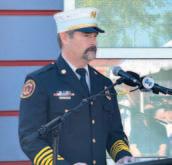
that their names, their service, and their sacrifice, endure beyond our lifetimes,” said St. Johns County Fire Rescue, Fire Chief Sean McGee.
The project, initiated by Chris Naff and his team on May 15, 2024, was completed on January 9, 2026.
“This memorial will be forever hollow ground, a place to come to remember, to reflect, and to heal,” said St. Johns County Fire Rescue, Chris Naff, PIO and Honor Guard Commander
In addition to the memorial wall, they also unveiled their 9/11 department memorial. It consists of a plaque placed in front of a very special tree. Both the tree and the memorial serve as symbols of the sacrifice made on that tragic day and will remind us never to forget.

By Elyssa Walterson, Communications Assistant, Orange County Fire Rescue
On March 2, 2026, Orange County Fire Rescue hosted a ceremonial ribboncutting for the brand-new Fire Station 32, located in the Horizon West area. Local dignitaries and members of the community gathered to celebrate the completion of this project, meet their first responders, and take a tour of the new station.
This facility replaces the previous Station 32, which was a rented storefront in a shopping
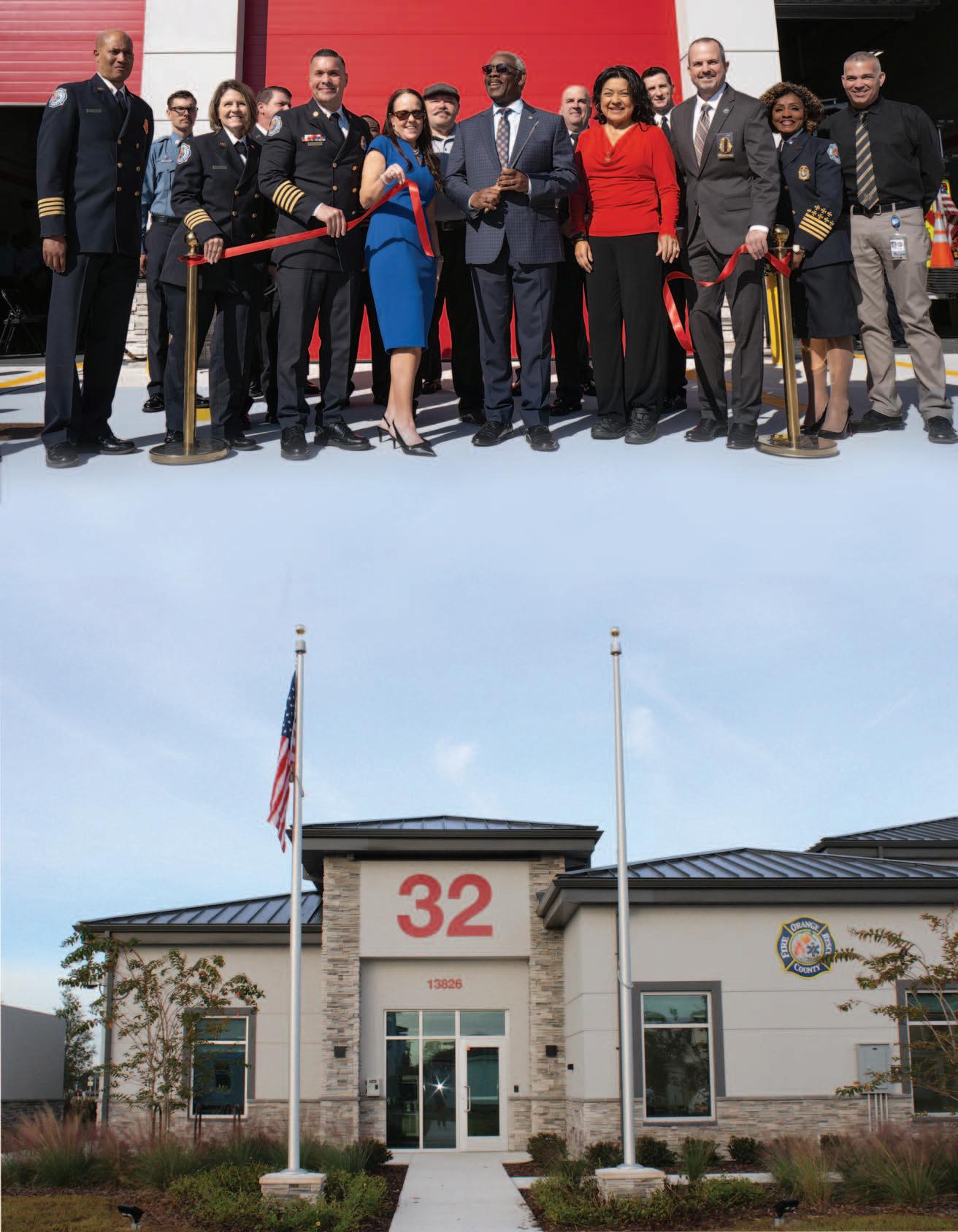
plaza for nearly two decades. The new station is purposefully designed with firefighters in mind, offering improved living quarters, enhanced health and safety features, and operational efficiencies that strengthen the crew’s ability to ser ve the surrounding area.
The now-permanent Fire Station 32 represents a significant investment in Orange County Fire Rescue’s continued commitment to the safety and well-being of both the community and Fire Rescue personnel, ensuring its firefighters have the resources needed to perform at the highest level.

By Treasure Island Fire Rescue
Fire departments from the Tampa Bay region were represented at this year’s Red Star Foundation Gala by chief officers from Plant City Fire Rescue, North Port Fire Rescue, Treasure Island Fire Rescue, Pinellas Suncoast Fire & Rescue District and St. Petersburg Fire Rescue in attendance. The event brought together fire service leaders, partners, and supporters from across the country to recognize the importance of supporting firefighters and their families beyond the call of duty.
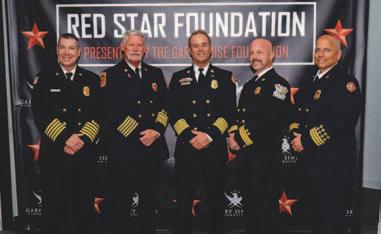
Participation by these departments highlights the fire service’s continued commitment to service, leadership, and taking care of our own.
The Red Star Foundation is dedicated to providing direct support to first responders, military and their families following serious line-of-duty injuries or other catastrophic events. Through financial assistance, family support, and recover y resources, the foundation helps bridge the gap when firefighters face life-changing challenges. The annual gala serves as a key fundraiser and awareness event, ensuring the organization can continue its mission of standing beside members of the fire ser vice when they need it most.
Pictured L-R: David Dittman, Scott Titus, Trip Barrs, Chip Bodine and Rich Ganci
By Davis Wood, APIO, Public Information and Education Officer – Public Safety
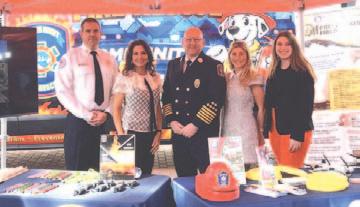
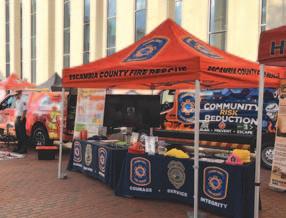
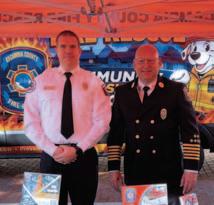
Escambia County Fire Rescue was proud to represent our community at the third annual Florida Fire Service Day at the state capitol earlier this week! Fire Chief Adam Harrison and Battalion Chief Dimitri Jansen attended the community-for ward event, connecting with members of the public, legislators, and other fire departments in the state to share ECFR’s contributions to Escambia County.
Thank you to the Office of the Florida State Fire Marshal and everyone involved in putting on this great event for our fire service industry!
By Lisa McDonald, Communications Manager
On Tuesday, March 10, 2026, the Oviedo Fire Department was dispatched to a call about a brush fire in a neighborhood on the east side of the city.
Oviedo Firefighters from Stations 46 and 48, along with units from the Seminole County Fire Department responded to a report of smoke and flames seen coming from a wooded near homes.
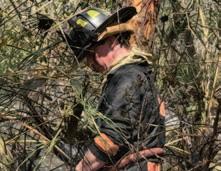
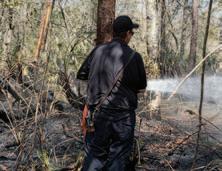
At first, firefighters had to evaluate how to get their equipment into the area that surrounds a large pond with minimal access. They were able to access private property to get to the fire before it spread.
Units worked to quickly extinguish the flames before they could move further into the brush, keeping it contained to a 50 x 50 area.
Like most of Florida, Oviedo took a hit from the recent freeze, which left a lot of dead and dying brush, on top of little rainfall over the past few months. The fire started from lightning. Oviedo Firefighters provided mutual aid to other brush fires within the county for several weeks following the freeze.
By Hillsborough County Fire Rescue
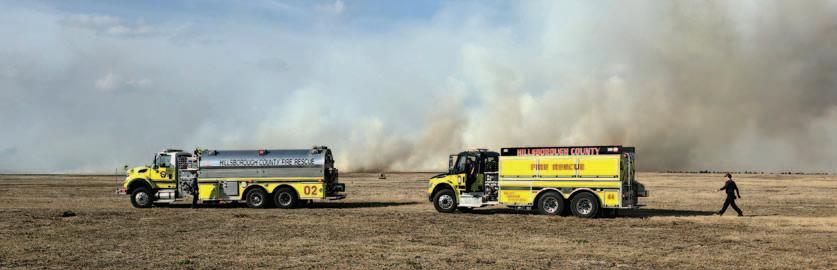
An extended dry stretch across Hillsborough County kept Hillsborough County Fire Rescue crews busy during the first two months of 2026. In January and February alone, crews responded to 741 outside and brush fires, a significant increase compared to 416 during the same period in 2025 and 381 in 2024.
One of the most notable incidents occurred on February 15, when crews responded to a rapidly spreading brush fire in Wimauma that ultimately burned an estimated 350 acres. Driven by dry fuels and wind, the fire required a coordinated response that included Hillsborough County Fire Rescue, the Florida Forest Service, and aviation support from the Hillsborough County Sheriff’s Office.
The large fire was just one part of an exceptionally busy day for crews across the county On February 15 alone, HCFR units responded to 22 separate brush fires, highlighting the operational strain that dry conditions can place on a growing county.
Through strong interagency coordination and aggressive suppression tactics, crews contained the fire and protected nearby structures.
As Florida’s dry season continues, firefighters remain vigilant as brush fire activity remains elevated across the region.
By Tiffany Wood, Public Information Officer/Public Educator, Greater Naples Fire Rescue District
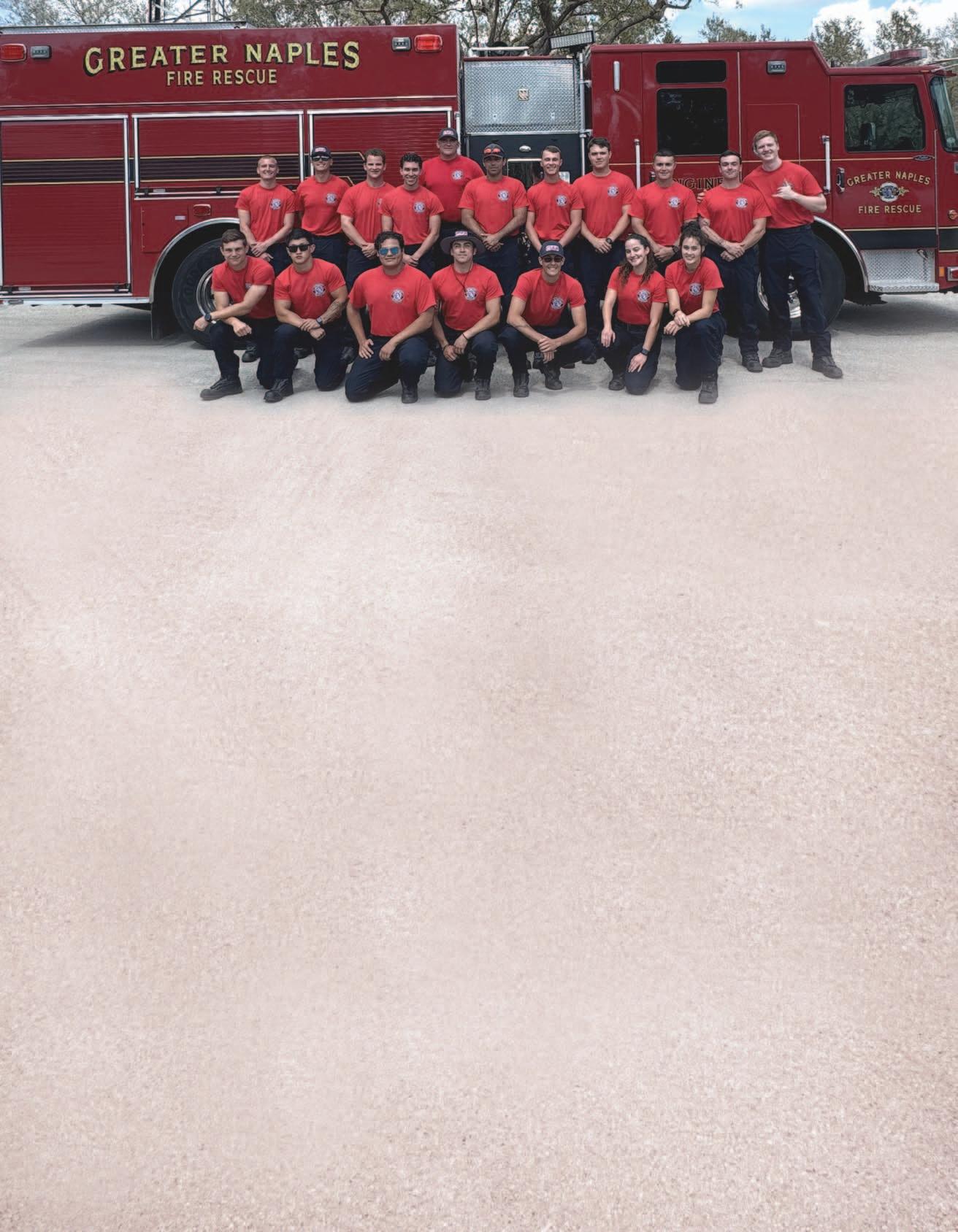
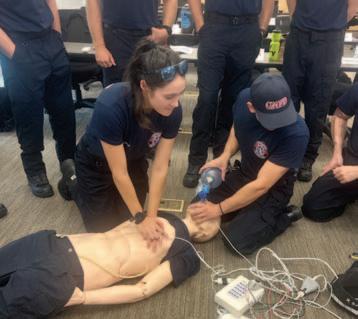
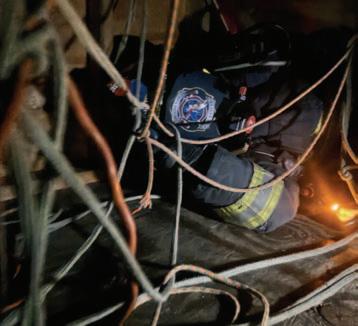
After seven weeks of intensive training, dedication, and hard work, Greater Naples Fire Rescue Recruit Class 26-01 has officially completed their academy and is now beginning the next chapter of their careers— serving on the line.
The seven-week academy was packed with learning opportunities designed to prepare the recruits for the challenges and responsibilities of the fire ser vice.
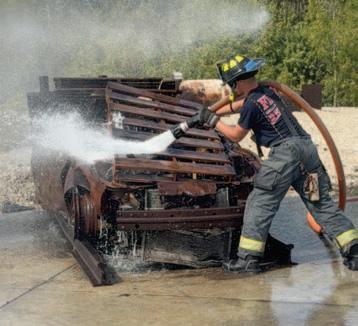
Throughout the program, the class trained in a wide range of critical skills including fireground operations, emergency response procedures, teamwork, physical conditioning, and the values that define the fire service. Each day pushed them both mentally and physically, helping to build the confidence, resilience, and camaraderie needed to succeed in this profession.
While the academy moved quickly, the recruits embraced every moment. From hands-on drills and classroom instruction to demanding physical training, Class 26-01
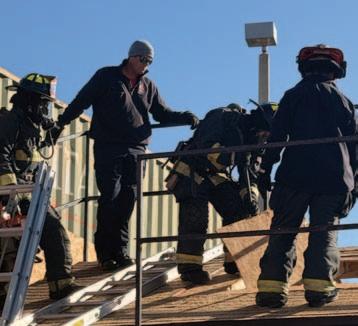
demonstrated determination and a commitment to learning. The experience not only strengthened their skills but also forged bonds that will carr y with them throughout their careers.
Greater Naples Fire Rescue is incredibly proud of the dedication and perseverance these new firefighters have shown. Completing the academy is a significant milestone, but it is only the beginning. As they transition to life on the line, they will continue learning from experienced firefighters and growing in their roles while ser ving the community.
Throughout the academy, the department’s Public Information Officer documented the recruits’ progress through weekly videos, giving the community an inside look at the training, challenges, and accomplishments of Class 26-01.
Everyone is encouraged to follow along and see the journey these recruits took to reach this milestone.
Follow Greater Naples Fire Rescue on social media to watch the weekly academy videos and see what the recruits learned along the way
As Recruit Class 26-01 steps onto the line for the first time, they carry with them the knowledge, discipline, and pride developed during their academy—ready to ser ve and protect the Greater Naples community
By Davis Wood, APIO, Public Information and Education Officer – Public Safety, Escambia County Board
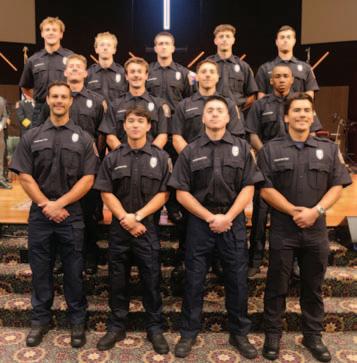
On Saturday, Februar y 14, Escambia County Fire Rescue graduated 13 cadets from the ECFR Fire Academy
These 13 cadets represent Class 25-01. They began their journey with Escambia County Fire Rescue on Aug. 13. They

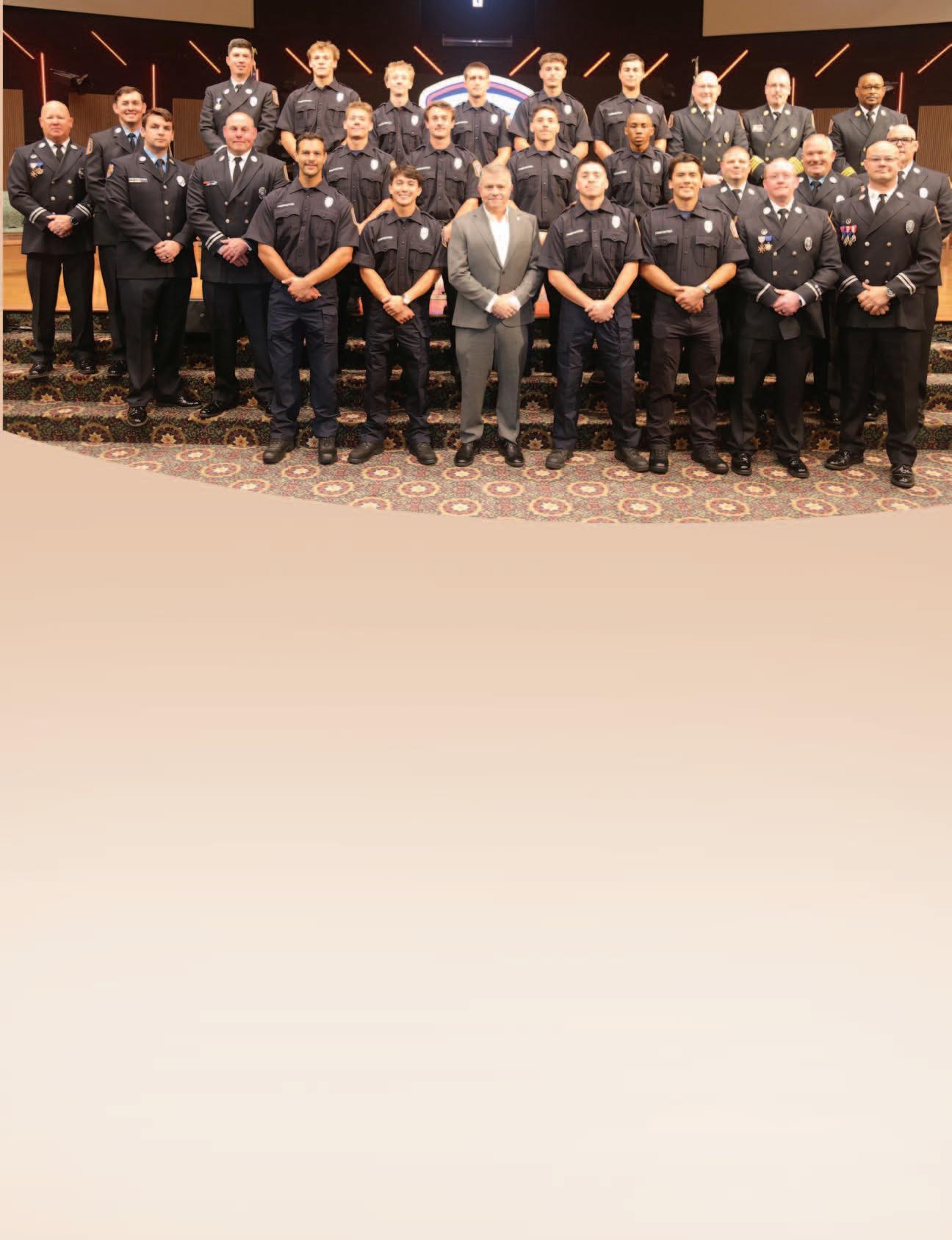
completed their final day of class on Feb. 13, making the number 13 a symbolic number for a class that maintained an astonishing 4.0 GPA.
Saturday was a day of celebration for these gentlemen, but their journey to becoming certified firefighters continues as they will begin their Beyond Minimum Standards training. Once the cadets have completed their Beyond Minimum Standards training and passed the state exam, Escambia County Fire Rescue will welcome these men as official firefighters.
Congratulations, Class 25-01!