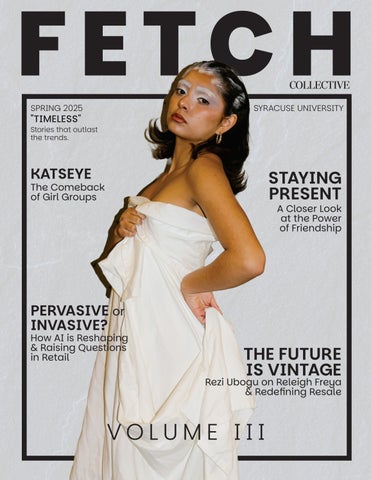
It seems fitting that my final edition as editor-in-chief of Fetch is “Timeless.”
Although my time as an SU student and with Fetch is quickly coming to a close, the work of the entire team contained in this edition will live on, as will the Fetch organization. I have no doubt that Fetch has a bright future under the leadership of incoming editor-in-chief Sabrina MacArthur. Without Sabrina’s sheer determination to plan fundraising events to secure funding for our third print edition, you would not be reading this.
Thinking ahead to the future with so many unknowns is exciting but also very daunting. So, for now, I focus this letter on the present by reflecting on my time leading Fetch and the many individuals who made our collaborative creative visions come to life. First, thank you to everyone on the 2025 spring executive team for all your hard work and determination. We had some new additions to our executive team this spring, including Sabrina MacArthur, PR & Marketing Manager, who led our marketing initiatives with incredible determination. Meg DeTitta, Graphic Design Executive, and Lydia Phillips, Graphic Design Senior Editor, joined our creative team and are the driving vision behind everything you see in this edition. Grace Stecher joined our editorial team as Senior Editor, aiding Eleanor Unsworth, Editorial Executive, in the well-oiled machine that makes up our executive team. Lastly, Sofie Nguyen, Co-Production Manager, and Elly Perosi, Lead Stylist, joined our production team and made our shoot concepts come to life. Thank you to all the individuals who have helped me lead Fetch this entire year: Kiara Gomez, Creative Executive; Kari Marvel, Assistant Social Manager; Eleanor Unsworth, Editorial Executive;
Tal Ben Ari, Co-Production Manager, and Lily Rubenstein, Lead Photographer. What I said in my letter from the fall still rings true; none of this would have been possible without your incredible artistic vision and determination. And finally, a special thank you to everyone who donated to make this third print edition possible!
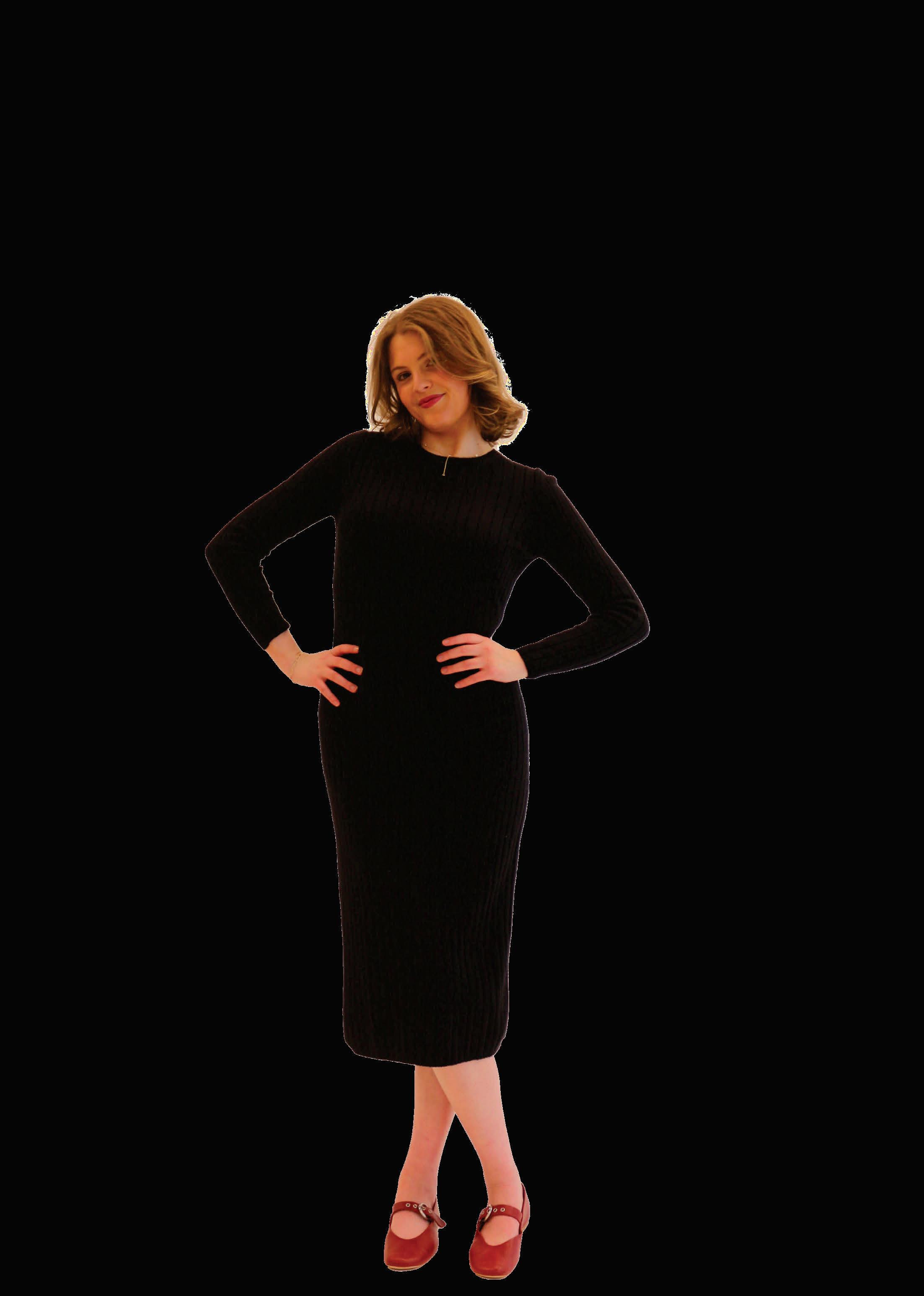
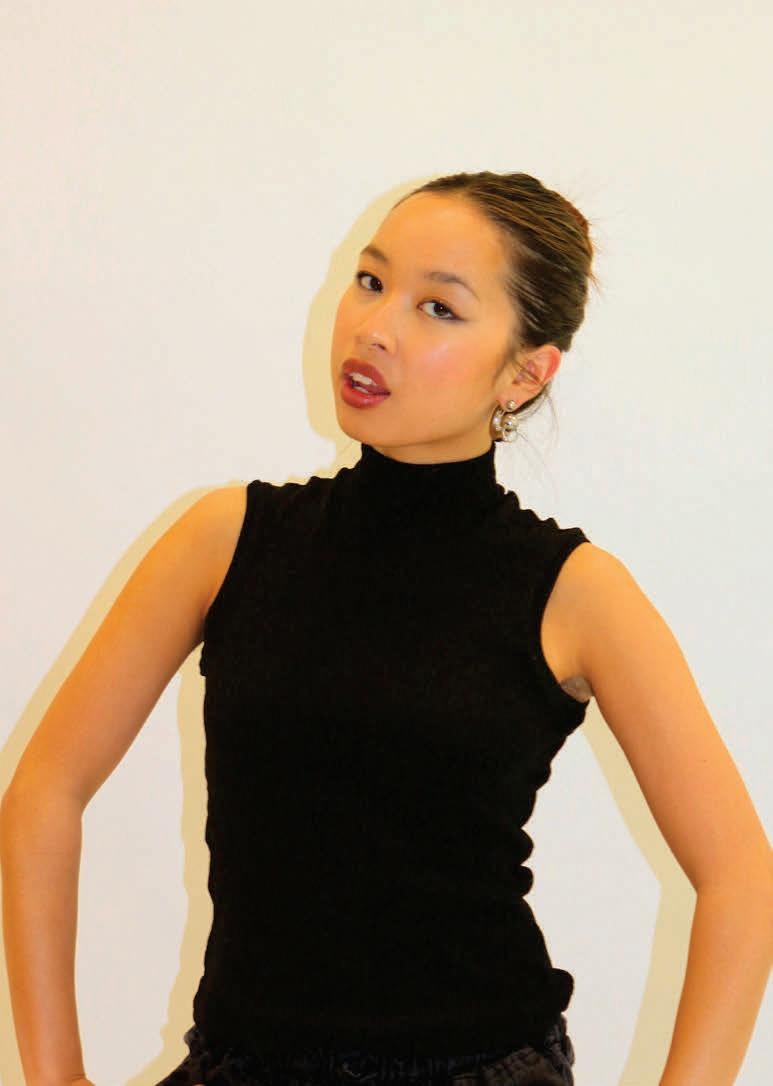
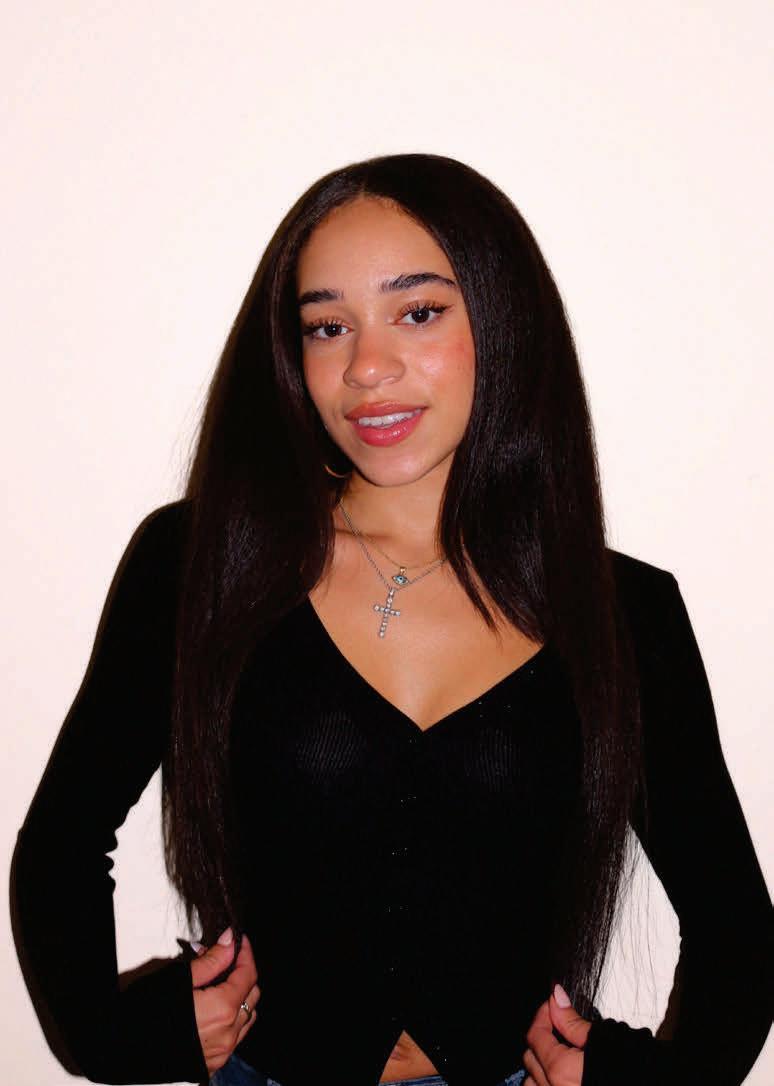
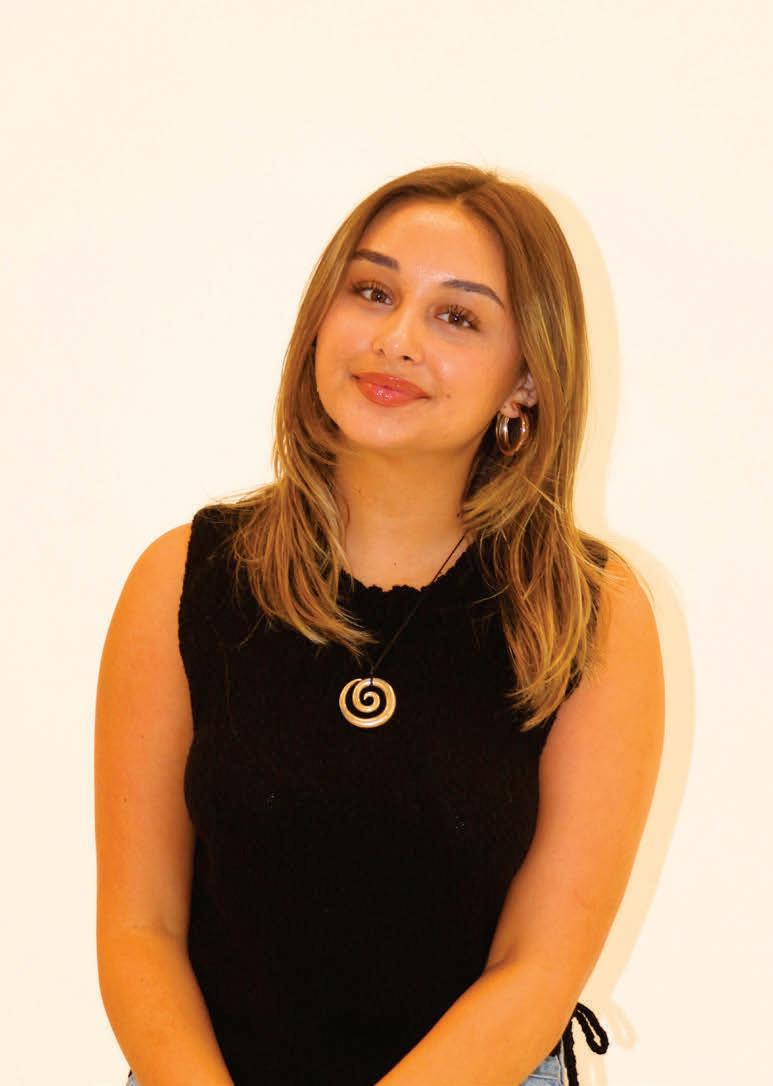
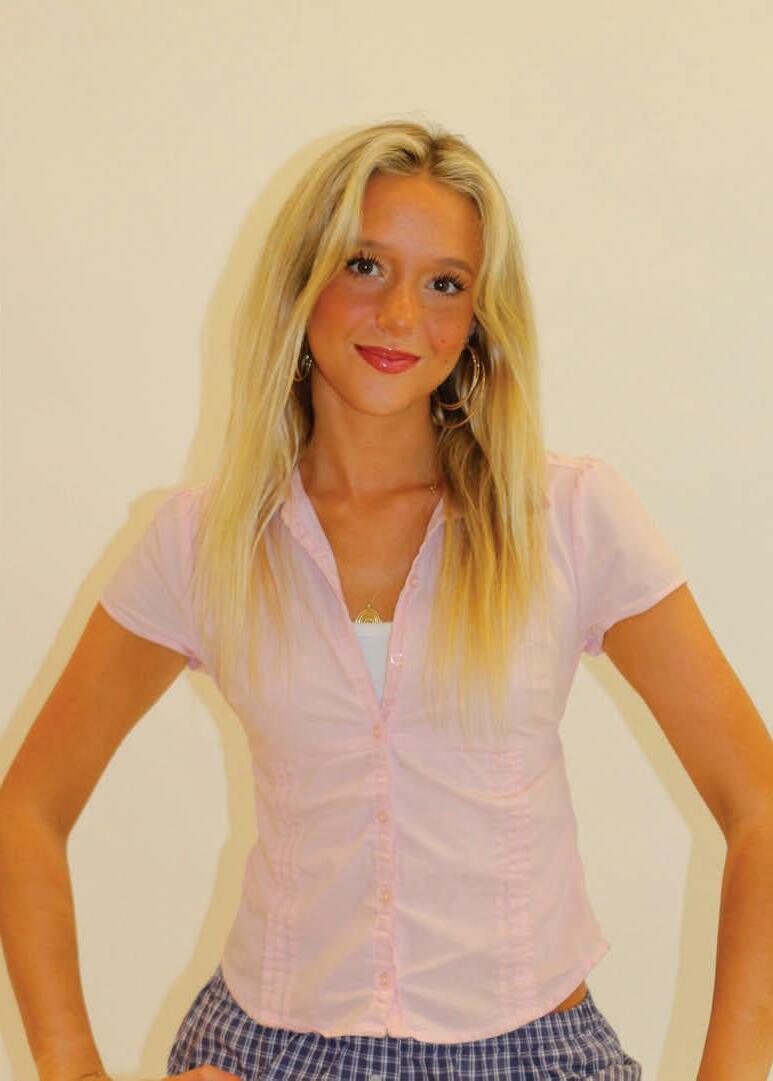
I want to also thank the shoot production team for my final photoshoot with Fetch, and my best friends who modeled in it. It is a shoot centered around the concept of staying in the present and celebrating friendship. So thank you to the fantastic shoot production team: Tosia Mysliwiec, Head of Makeup, Ava Savino, Maya Merante, Tal, Elly, and Lily for not only killing all of our makeup, hair, styling, and photos but also making my final shoot with Fetch so much fun! I joined Fetch my sophomore year and had no idea what a pivotal role it would play in my college experience. I have spent many hours editing, directing, and nitpicking content, with my friends supporting me through it all—showing up to launch parties, fundraising, and beyond. My final reminder to any current SU student is to remain in the present, be thankful for the time you have here, and appreciate the people who are always by your side. Fetch has allowed me to meet so many incredible creative individuals whom I have no doubt will carry on our vision and drive. I feel so lucky to have so many difficult goodbyes. For one last time:
Sincerely,
By Eleanor Unsworth and Grace Stecher
We’ve all heard a saying along the lines of “the only constant in life is change,” implying that change is inescapable, always accompanying the progression of time. For some, this statement might feel scary, but for others, it may feel comforting. Culturally, however, we choose to categorize things as “timeless” as a way to ground ourselves in continuity. However rapid the change around us feels, we find ways to reassure ourselves that we can and will handle the unpredictability of the future.
Timelessness is an attribute and concept we reference in our fashion, our culture, our values, and just about any other topic that includes personal opinion or preference. At Fetch, we explore the development and evolution of trends, movements, and milestones, identifying what makes something timeless. But why is timelessness a concept worth celebrating? Could something timeless to one individual resonate in the same way with another person?
Fetch, at its core, is about creating a collection of voices that share and celebrate fundamental values. As Sophie Lynch, founding Editor in Chief, states, “Fetch is about the power of community.” At Fetch, we encourage our members to think critically about the topics they explore through our outlet. We know that taking our own stance on current issues and topics will always be timeless. When we form our own opinion, it’s not just shaped by what is “cool” or “trendy.” This expression of individuality will be timeless because it fosters empowerment, and that is a major goal of Fetch Collective.
We know that trends are cyclical, and things come and go. As a community, we explore how to identify what is continuous and what we choose to value. As individuals, we can create our own personal style and opinion about what feels timeless to us, regardless of what current trends are.
As college students, we find ourselves at an interesting intersection of past, present, and future. College is an “event” in our lives, but it’s also a transition period. Some students love the college environment so much that they dread graduation, while others are counting down the days to move out of their college house. Some students feel the college experience has encouraged them to grow out of their high school selves, while others feel stifled by its demands, constructs, or stereotypes. Regardless of how the circumstance has shaped us as individuals, we all came to college with an intention, and although the specifics of that intention may have changed, we all leave with one too. As we encounter unpredictability and change, we have the opportunity to make timeless what feels most important.
TIMELESS
First Print Edition
Volume I: “The Evolution”
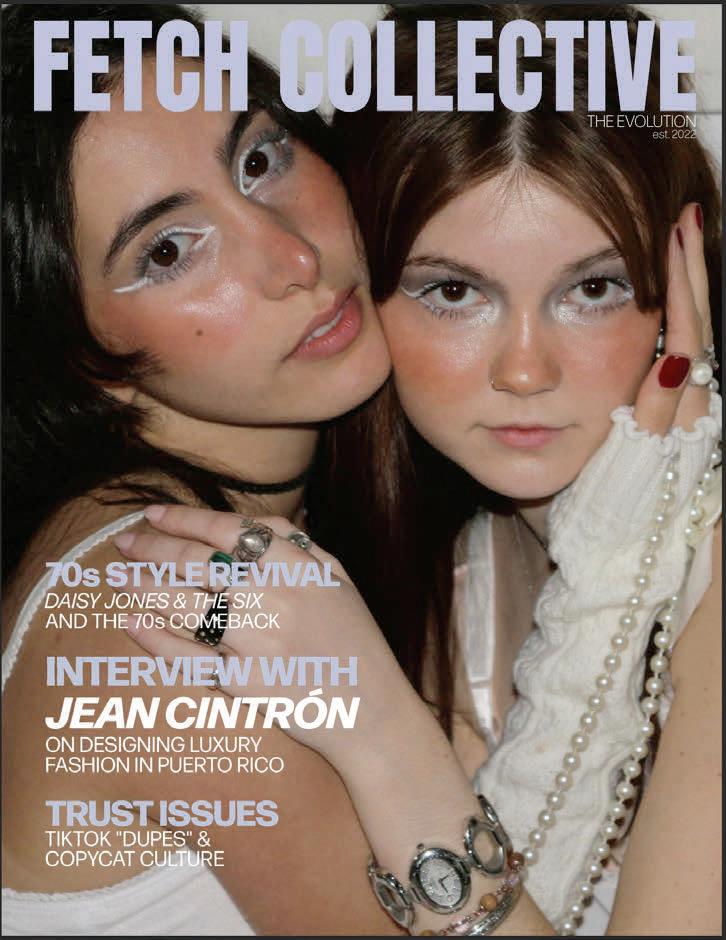
In Spring 2023, Fetch Collective released its first-ever print magazine, “The Evolution,” celebrating its first year of editorial and creative work. This edition was led by Sophie Lynch, Fetch’s founding editor-in-chief, and her vision to create a purpose-driven media outlet. This issue marked the beginning of a community built on storytelling, confidence, and career empowerment.
Wildflowers Armory
Fetch Metallic Jewelry Shoot
Jewelry Shoot with Wildflowers Armory: Fetch Collective partnered with Wildflowers Armory and the McCarthy Mercantile for a metallic jewelry shoot highlighting how to style bold accessories during the colder months. The shoot celebrated founder and co-owner Michael Heagerty’s vision for an “anti-mall” that empowers local artisans to grow their businesses within a supportive, creative collective. Fetch’s shoot showcased locally made pieces, honoring a space built on community, artistry, and entrepreneurial spirit.
Fetch X Charlie Brown Pumpkin Patch Shoot
In Fall 2024, Fetch brought the warmth of nostalgia to life with its Charlie Brown-inspired shoot, capturing the cozy charm of autumn through golden lighting, playful pumpkin patch scenes, and modern takes on iconic Peanuts characters. Fetch blended high-fashion styling with the whimsical spirit of childhood. The shoot celebrated friendship, changing seasons, and the simple joys of a crisp fall day.
Awkward Fish
The Inner Workings
Fetch Collective collaborated with Awkward Fish Clothing and Reel Talk Agency on a dance shoot inspired by Awkward Fish’s creative process, from product design to visual storytelling. Set in Awkward Fish founder Holly Anderson’s studio, the shoot combined fashion and movement to showcase the vibrant energy behind the brand, transforming a blank space into a colorful world of self-expression.
Second Print Edition
Volume II “Miss Fetch”
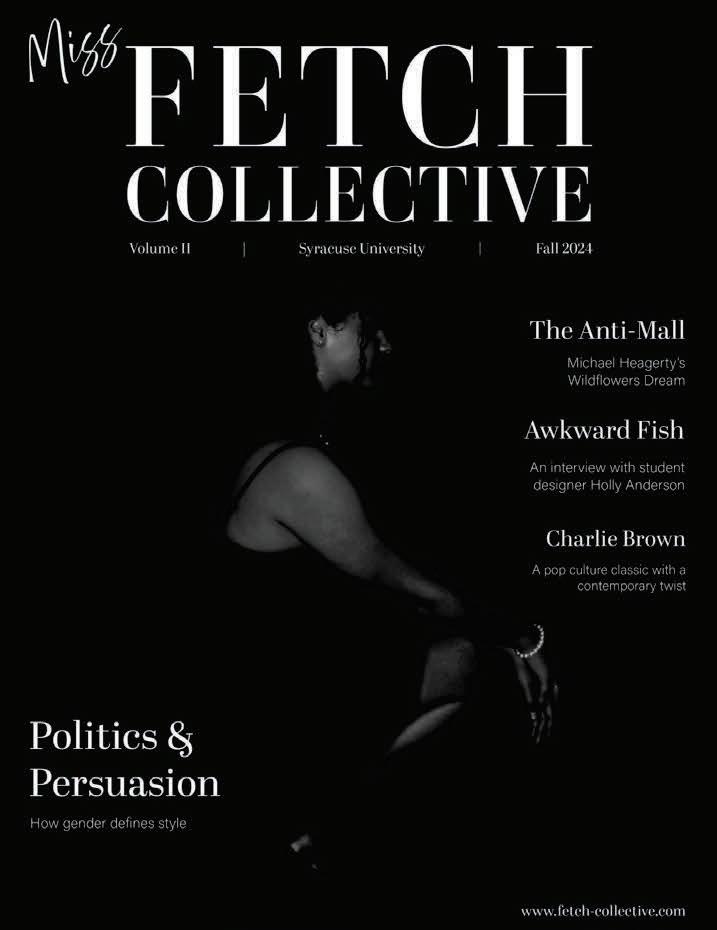
In December 2024, Fetch Collective released its second print edition, “Miss Fetch,” led by Norah Nappi, Fetch’s 2024-5 editor-in-chief. This edition celebrates the embodiment of the magazine’s core values through the personification of “Miss Fetch”—a figure who champions individuality and challenges traditional industry standards, guiding Fetch’s editorial tone.
Fundraising Efforts
Launching Third Print Edition
Syracuse University's Student Association budget was depleted early in the semester, so our Fetch Collective team stepped up to plan fundraising events so you could be reading this in print. Our current PR & Marketing Manager and incoming 2025-6 editor-in-chief, Sabrina MacArthur spearheaded these initiatives. Special thanks to Zoe Best, production member, and Phoebe's Restaurant for donating the muffins pictured below and to everyone who contributed and made this third print edition possible!
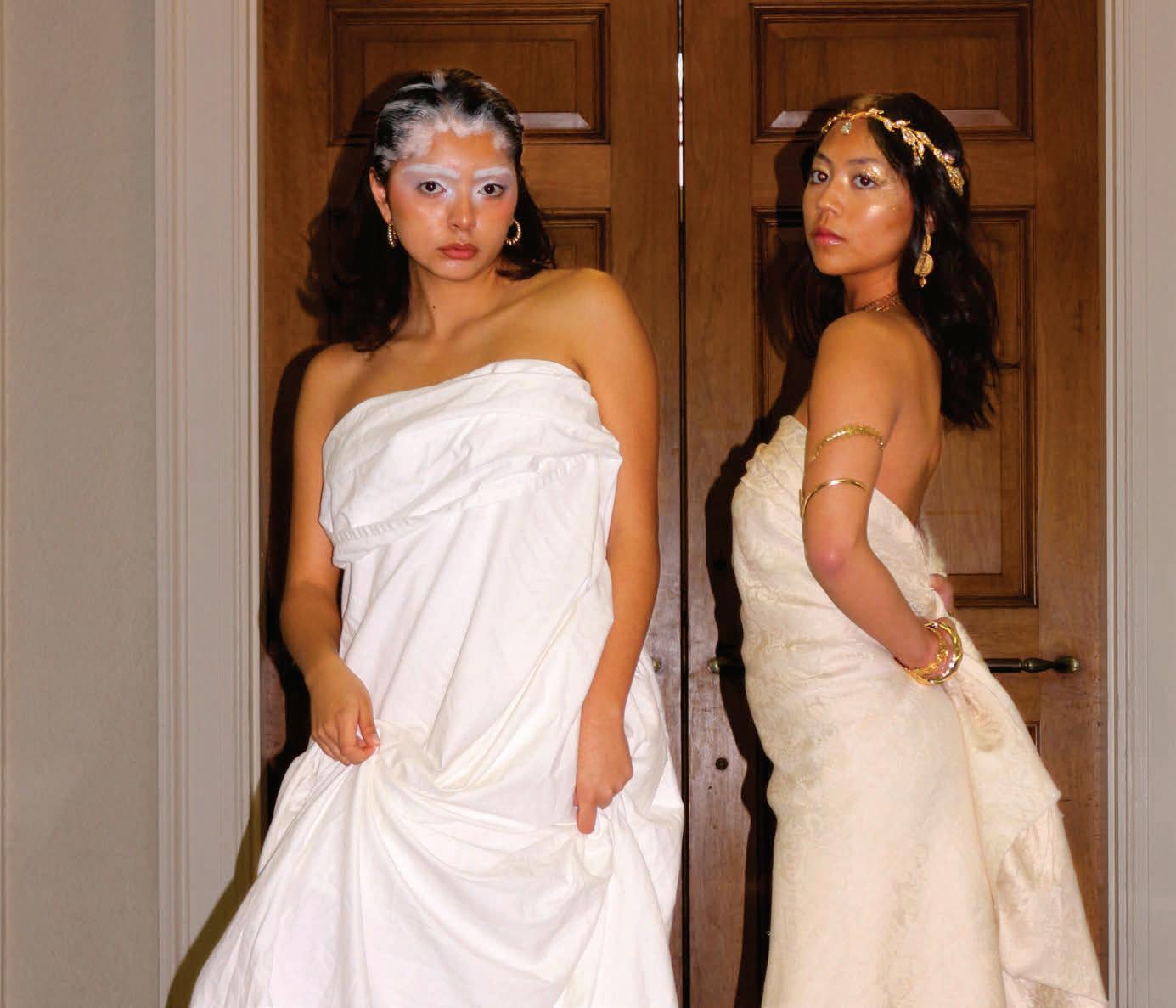
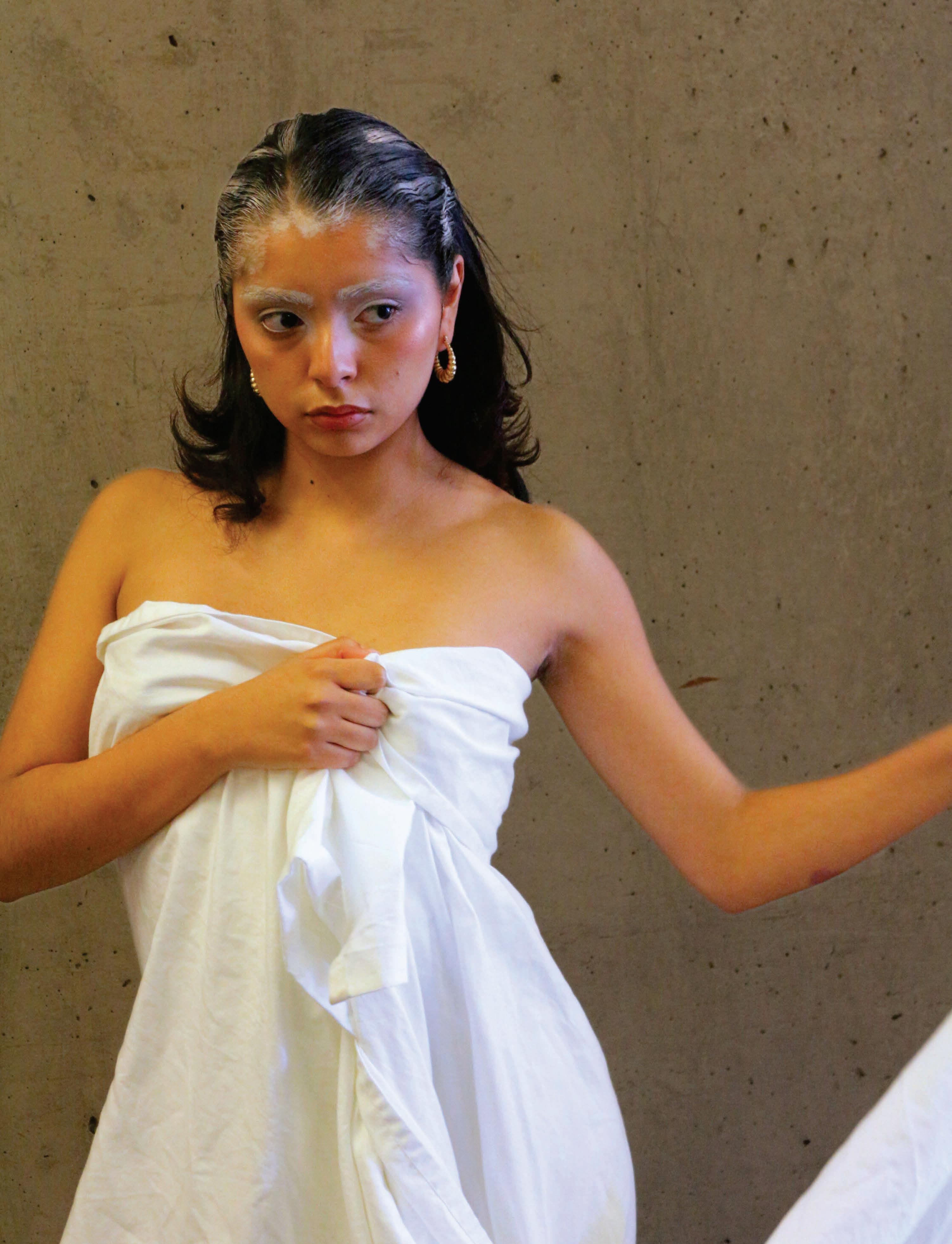
PastHaving the opportunity to help bring this edition to life through makeup and artistry was fun and particularly exciting due to the distinct themes we explored this semester.
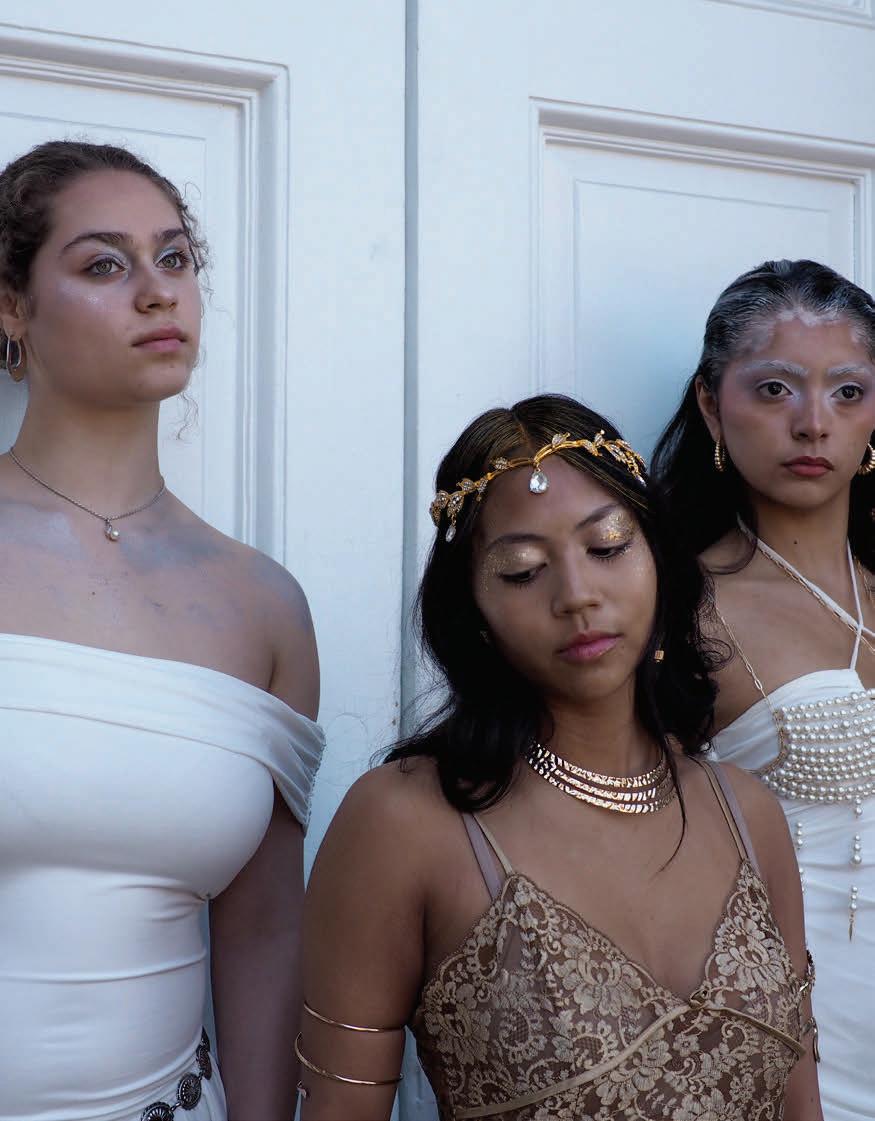
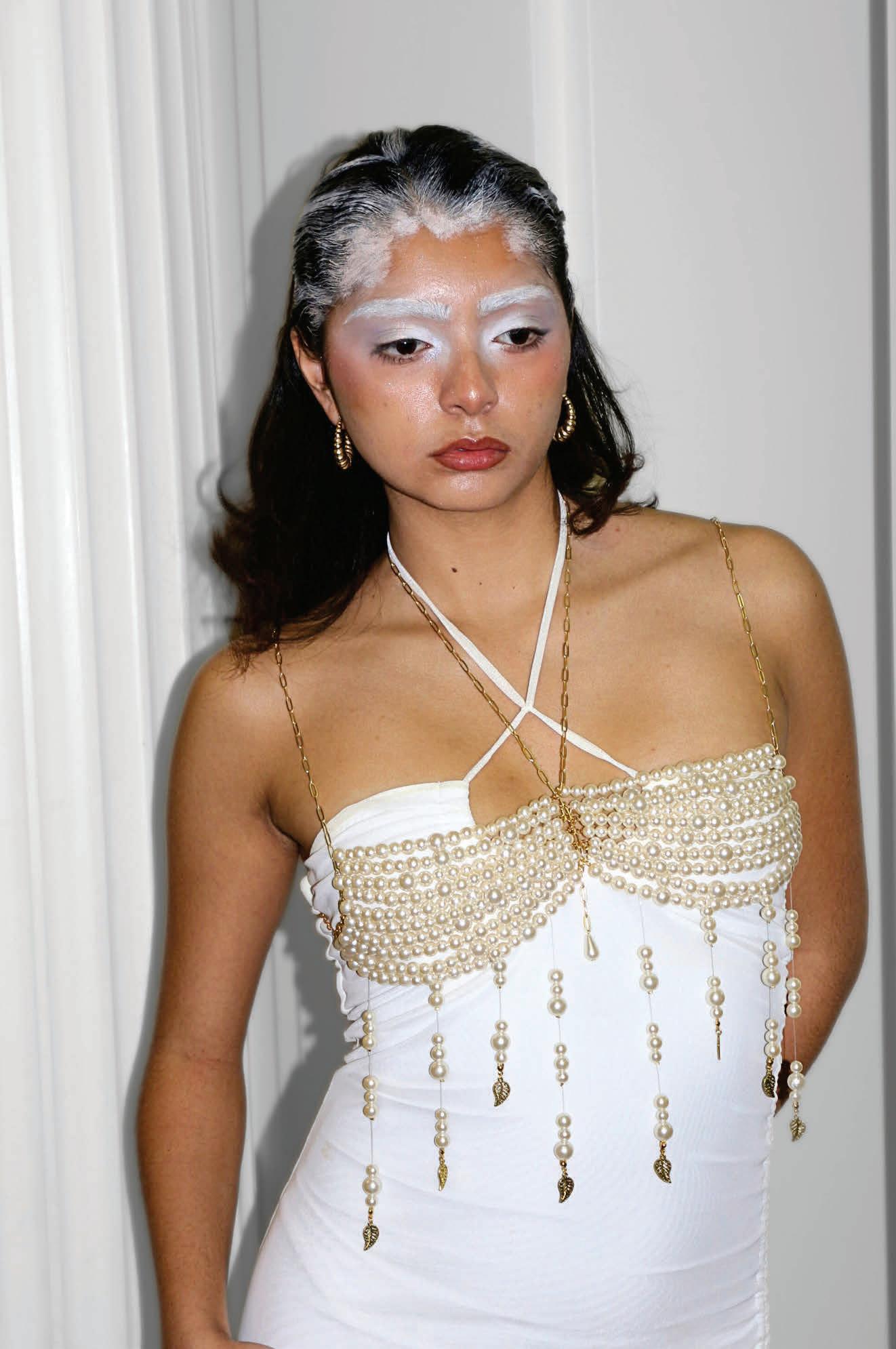
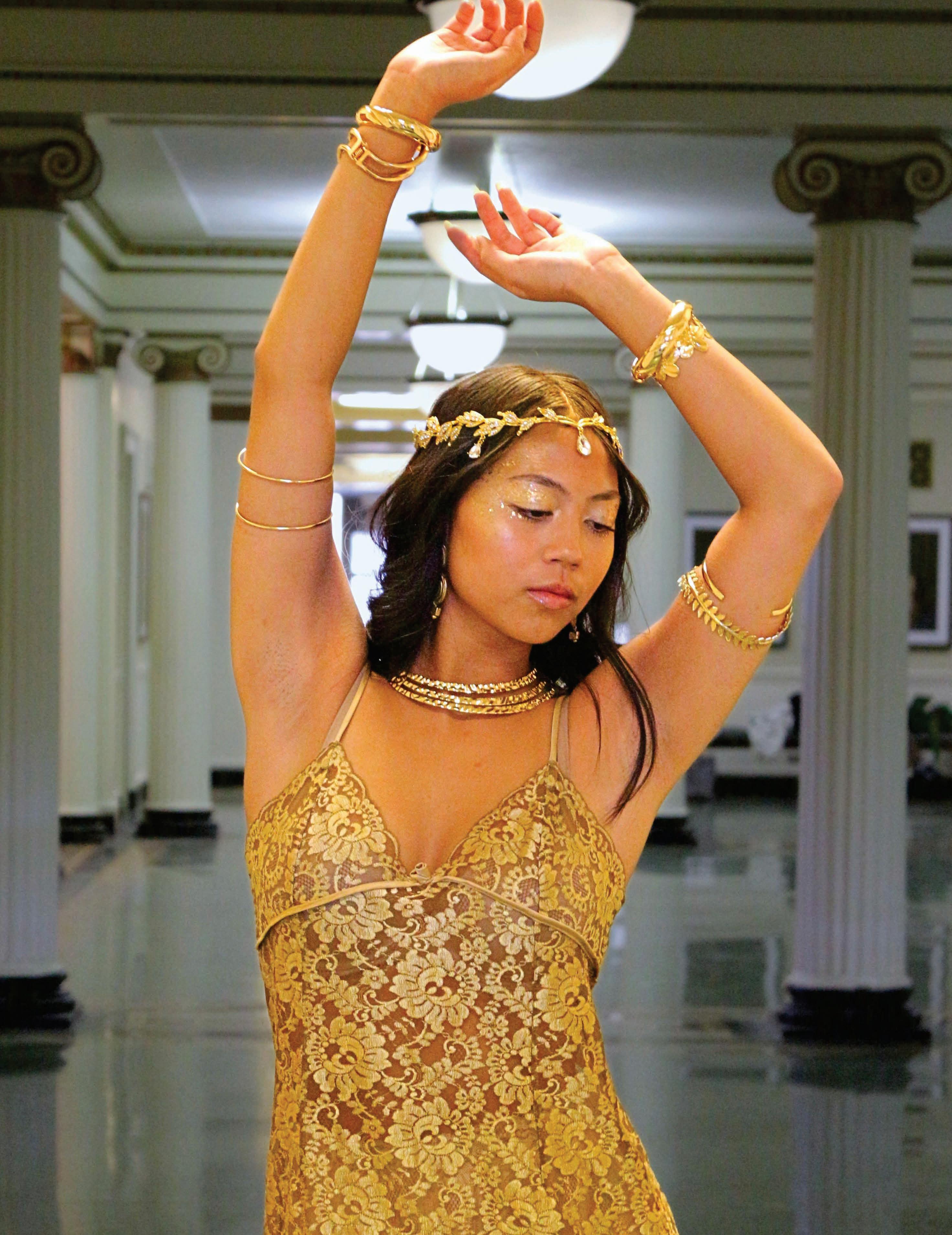
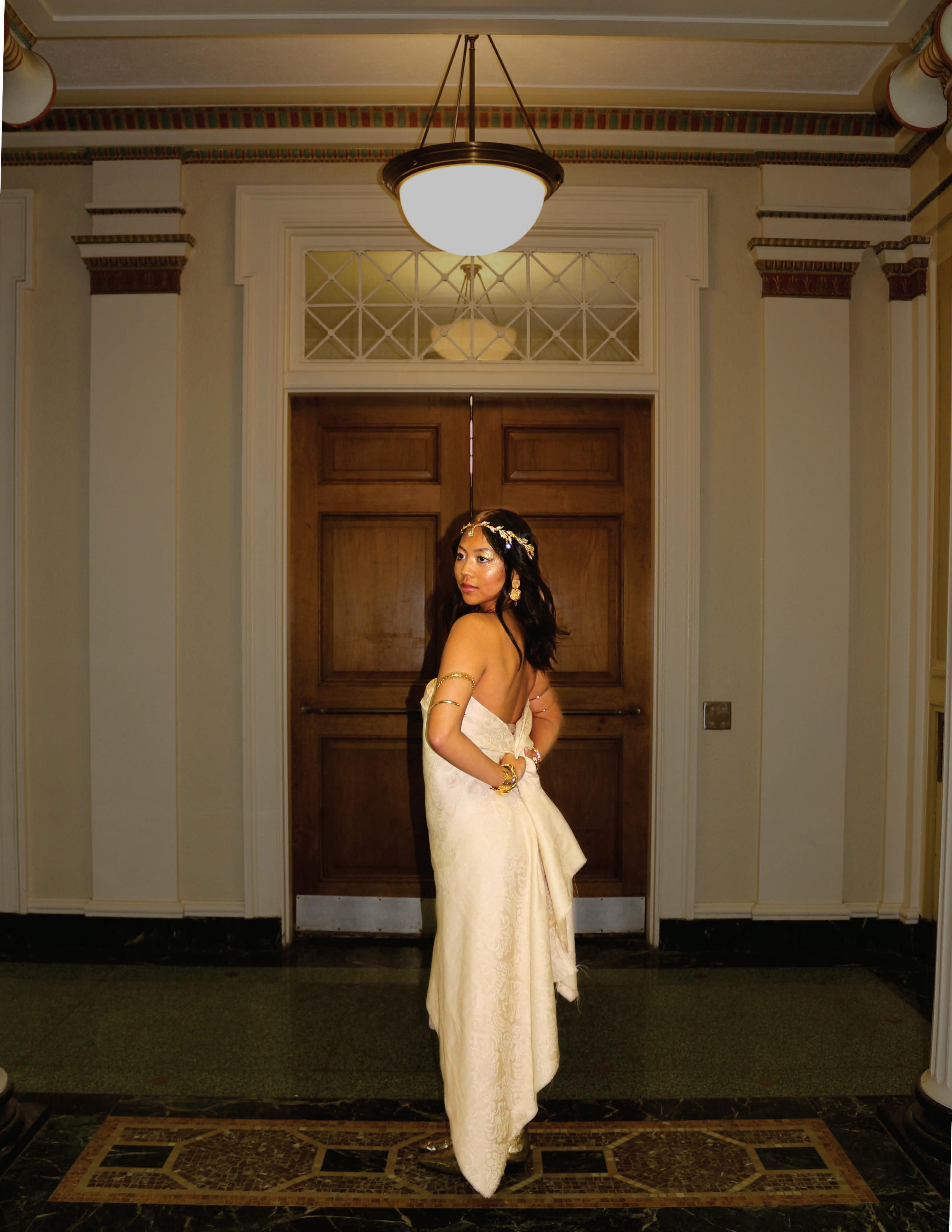
We started with the past –sculptural, ethereal, and almost otherworldly. We focused on distinct color mapping for each model, with metallics to emphasize the angeliclike atmosphere, we wanted to create. Silver, gold, and white were painted onto models to spotlight the sculptural essence of this shoot.
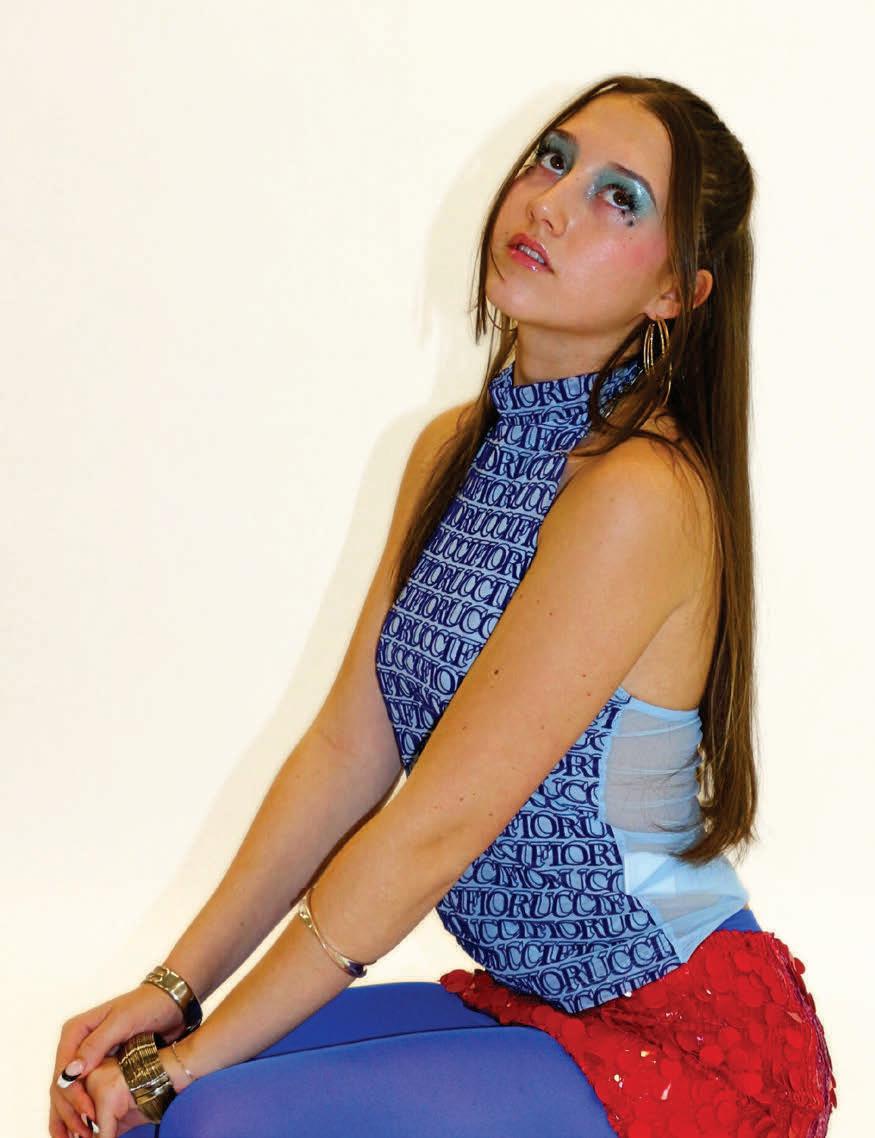
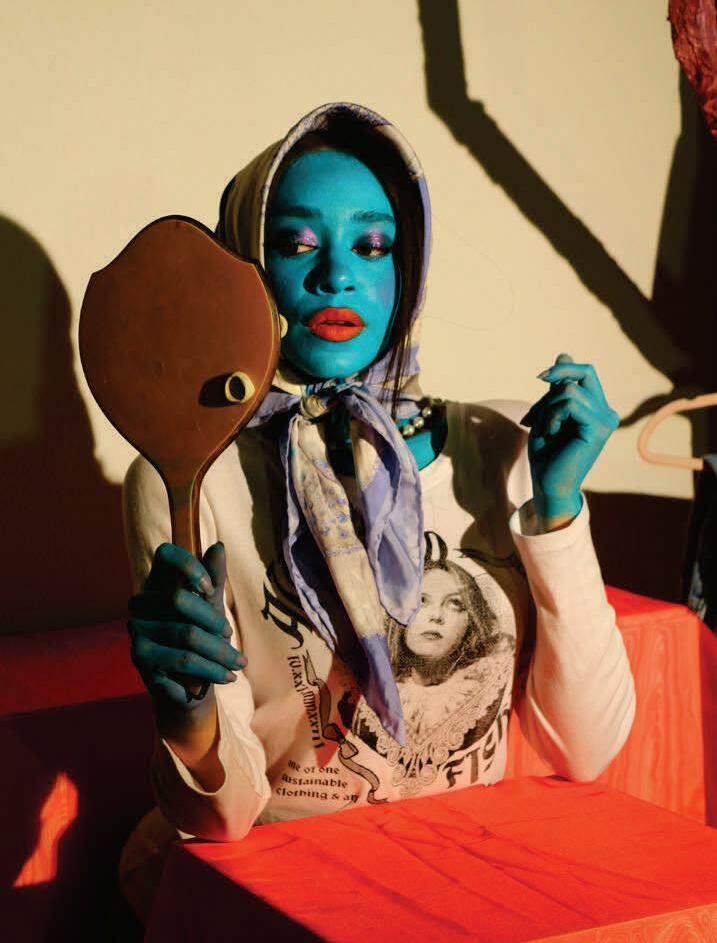
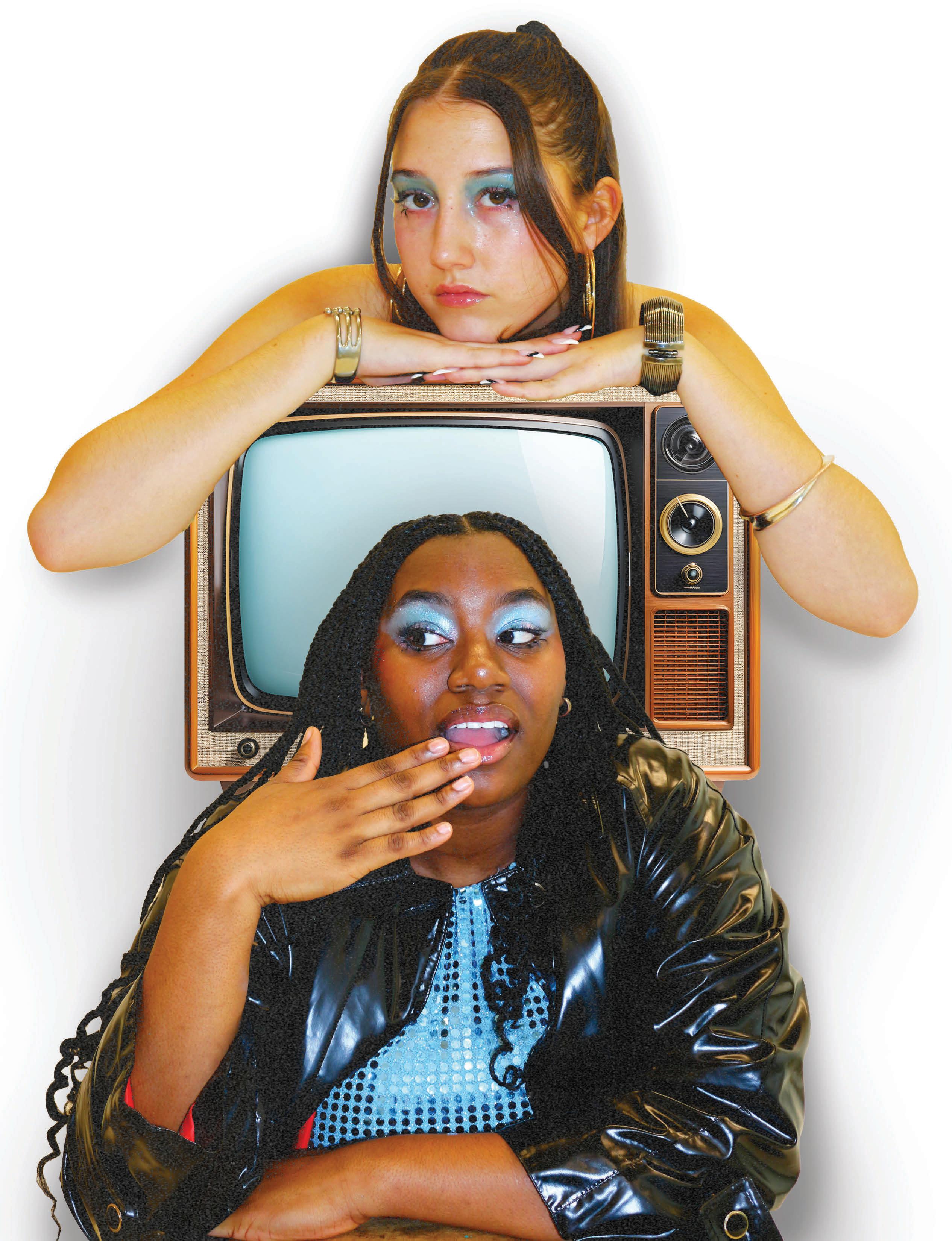
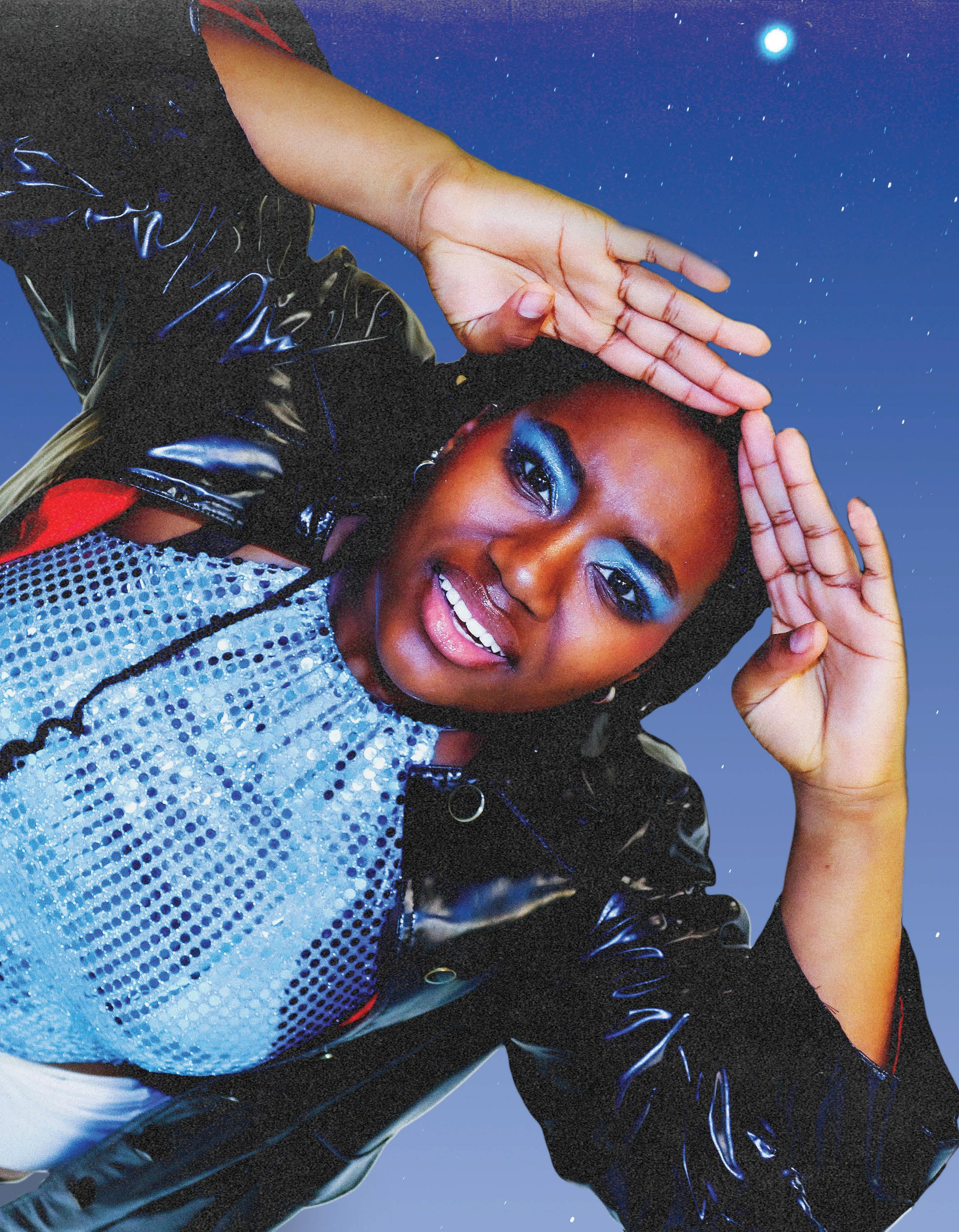
Next, we moved to the future –retro, funky, almost a new take on the 1960s. With fun and bold colors for the outfits, we decided to match that vibe on the models. Bright blue shadows can be found in both models, with some slight variation. This shoot was fun because we got to play around with products, shimmers, and bold looks.
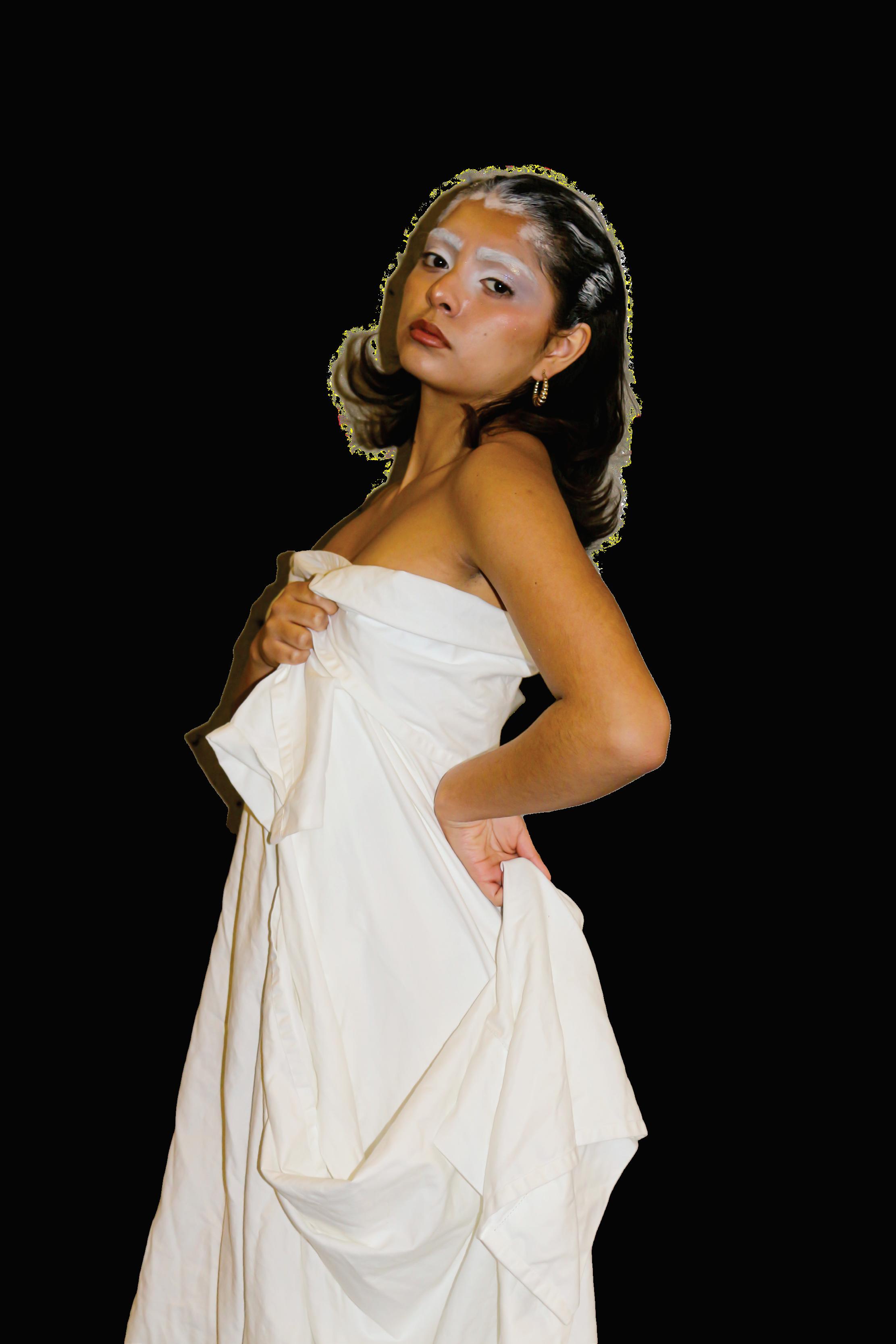
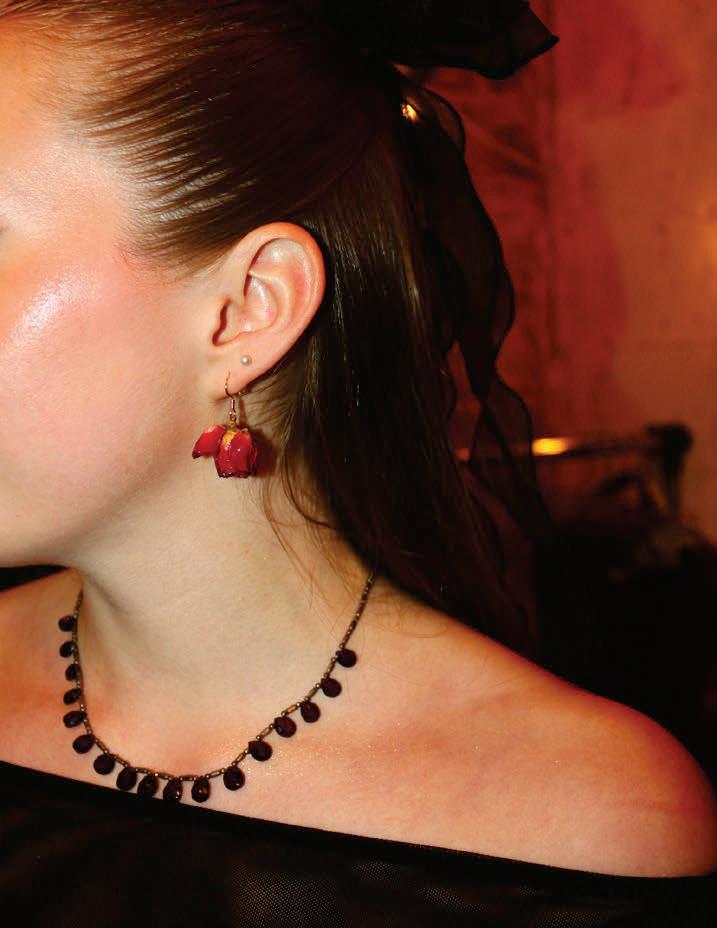
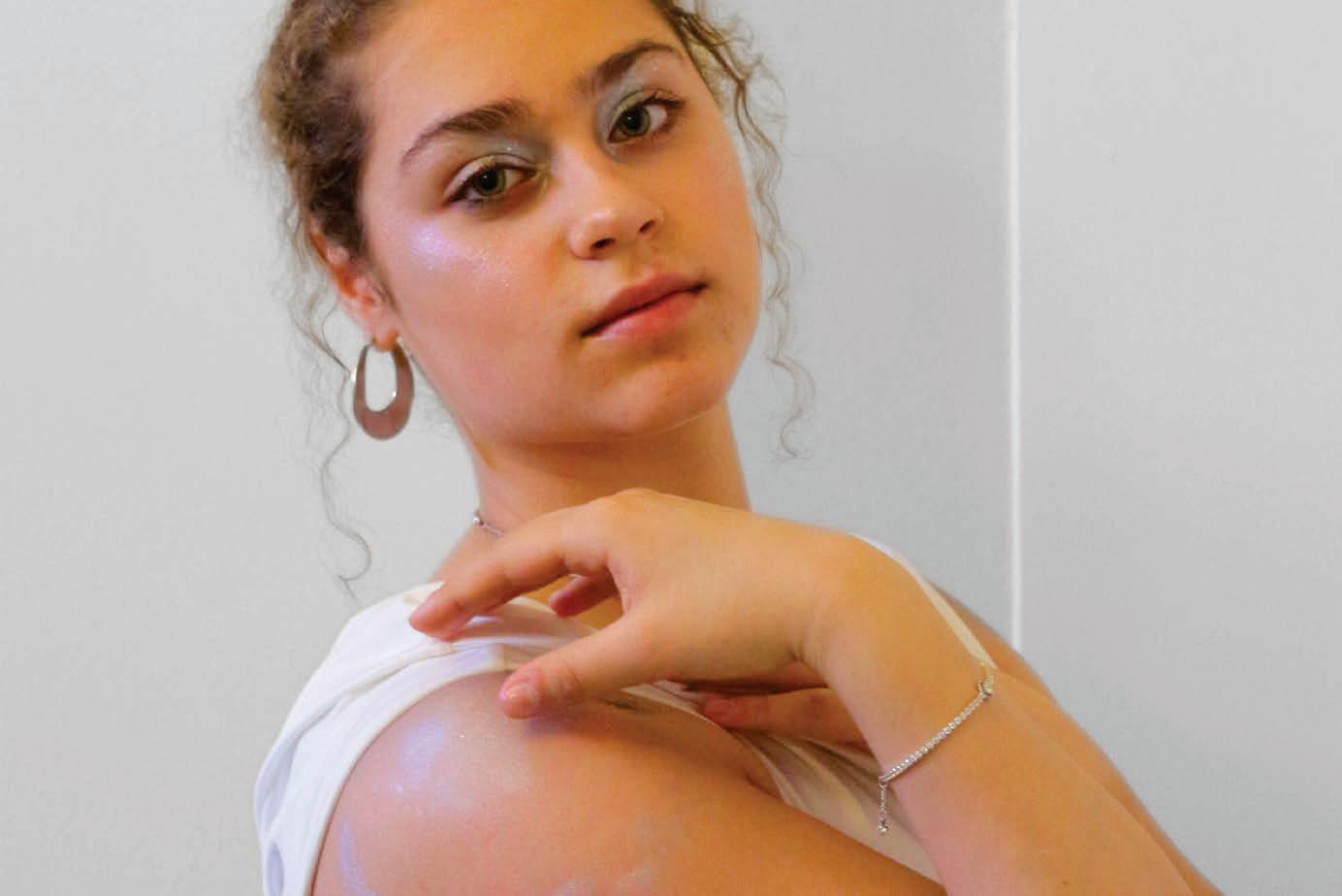
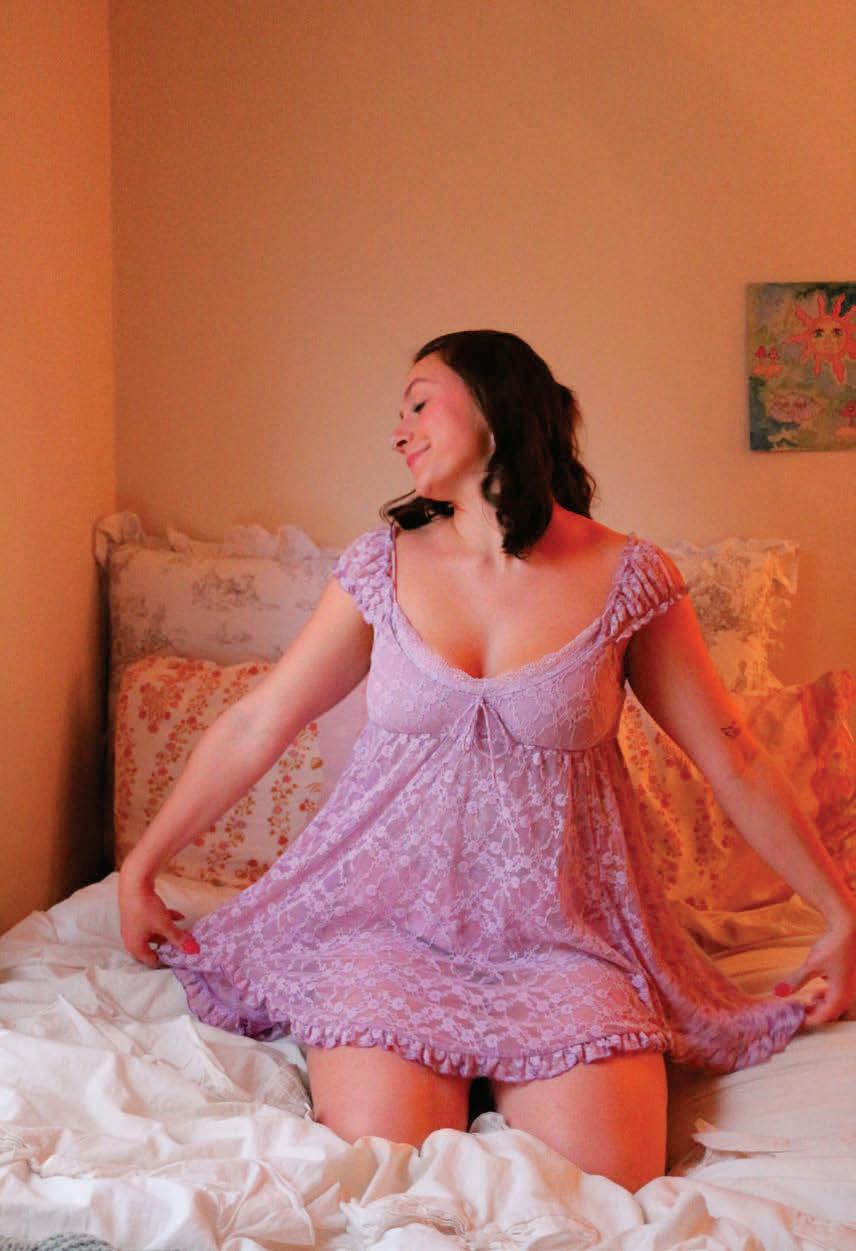
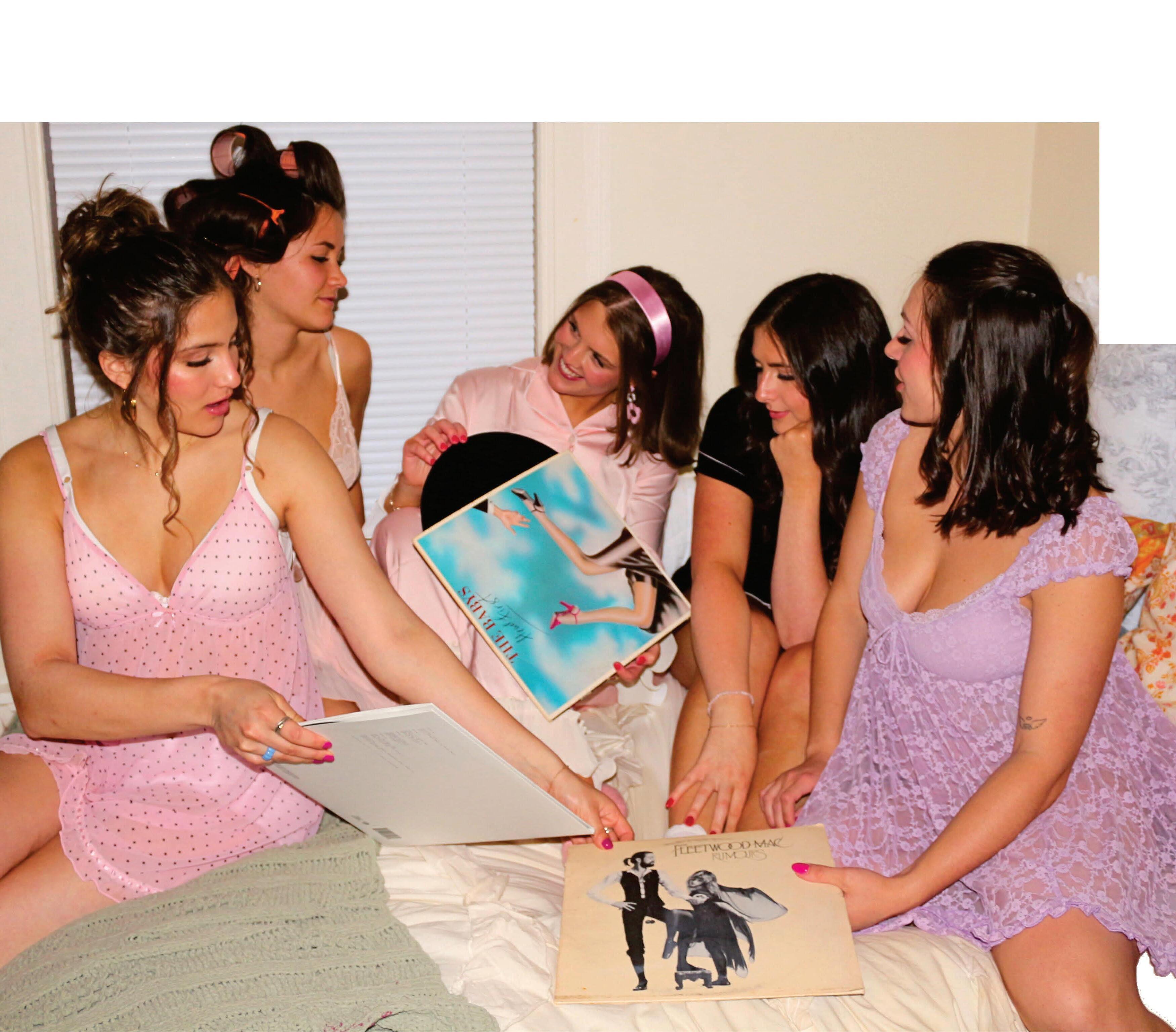
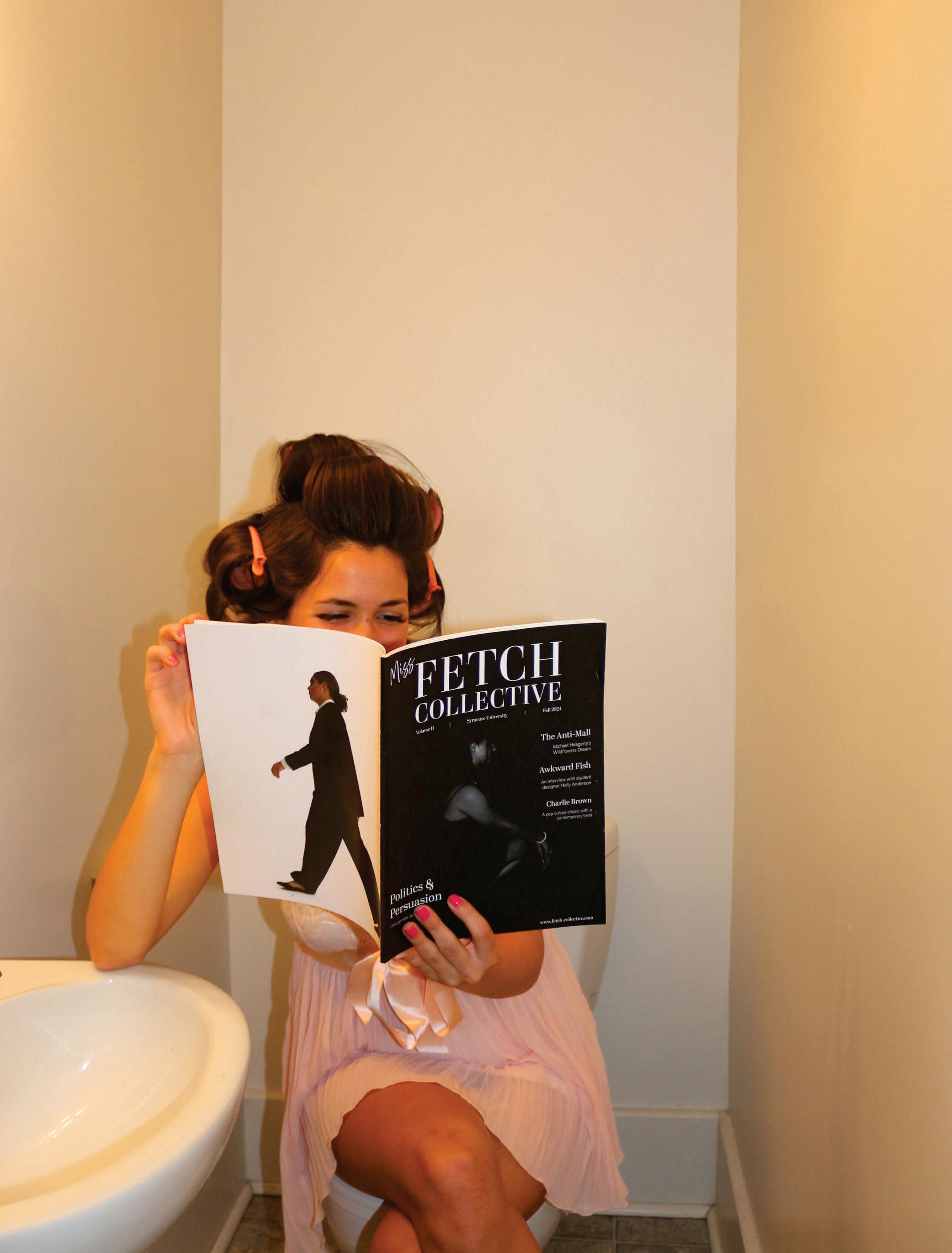
Finally, we had our shoot for the present. A play on the magic of sleepovers and friendship, this shoot focused on soft, blushy, natural looks and fun hairstyles to show the eternal timelessness of girlhood and connection.
This shoot was meant to highlight the natural beauty of our models! No skin/foundational makeup was used in this shoot. Rather, we used blushes, bronzers, and highlighters with rose-gold colors. To emphasize girly makeup (without necessarily making the look heavy) lash clusters were used to create soft yet flirty eye looks without any dark colors or liners! The cat eye effect of these really brought out the models’ eyes and extenuated their natural shapes. The goal was to create Charlotte Tilbury-esque looks, with loads of blush and natural pink lips alongside our adorable pink pajamas, making it the cutest bff sleepover of your dreams!
Tosia Mysliwiec HEAD OF MAKEUP
Ava J. Savino
MAKEUP ASSISTANT
XoXo
consistency THE TIMELESS NATURE OF
Author: Lianna Gourmos | Editors: Lamitha Iyer, Norah Nappi & Grace Stecher | Graphics: Ailani Wong
A person who changes their style daily may be considered a trendsetter, possibly even a rule-breaker. Others, however, embrace the power of their own signature look, an unwavering personal style essential to who they are. This difference in style choices is what determines the legacy of every fashion label in history because what truly makes a business memorable for generations to come is the niche it sticks to.
When a brand knows its strengths and stays true to them, it becomes more than just a business. With dedication over time, a brand establishes its niche as timeless. The meaning of "timeless" style has evolved over the years, but the term typically refers to wardrobe staples that can be worn throughout a lifetime. Timeless pieces also tend to be pricier, as they are higher in quality and designed to last longer. Anna Montgner from NSS Magazine says, “Embracing a concept of timeless style is, in some way, about being able to circumvent the system, not being caught in the consumerist trap of the industry and maintaining one’s identity.”
Having a sense of personal style has long been known to symbolize selfconfidence. The same applies to fashion brands—after all, who wants to be just like everyone else? There is a clear difference between iconic labels and those that will become irrelevant in the near future. Well-known labels like Garage and Shein carry all different kinds of clothing, from casual wear to cocktail dresses. Their affordability comes at a high cost: a lack of distinct identity. On the other hand, Lululemon and Triangl, two companies that have defined the 2010s, are known for their specific niches. Their products are on the more expensive side, yet people are willing to buy from them due to their meticulously crafted reputation.
A primary example of skillful marketing that honors a brand’s niche is the recent revival of Isabel Marant amongst social media users and fashion gurus. Isabel Marant was a popular label during the 2010s known for its boho-chic aesthetic. Today, TikTok and Pinterest have put
Marant back in mainstream fashion trends for teenagers and young adults. As Lindsay Talbot notes in The New York Times, “Those familiar with the brand are able to spot a Marant schoolboystyle button-down, floral georgette dress or pair of dip-dyed motorcycle jeans from a block away.” Other fashion brands may have similar products, but Marant’s enticing designs are iconic and cannot be mimicked. Marant’s consistent nature is especially eyecatching to today’s teens, who strive to achieve individuality by establishing a “signature style.”
“WHEN IT COMES TO VINCE, WE HAVE always STOOD FOR BEAUTIFUL quality AT A CONTEMPORARY PRICE.”
With social media diluting personal style opportunities through the influx of microtrends, it has become difficult for young people to cultivate an individual fashion sense. That growing challenge may help explain why the media is so smitten with Marant, as its “eyecatching pieces that exude a sense of bohemian nonchalance” experiment with various elements while staying true to its trademark look (The New York Times). “You want to be different enough that nobody else can do what you’re doing,” said Marty Neumeier, Silicon Valley’s so-called ‘godfather of branding,’ in an interview with Vogue “That can be hard in fashion where things can easily be knocked off and copied," said Neumeier.
In the world of copycatting patterns and logos, sometimes the simplest designs are the ones that make a lasting impact. Vince, a contemporary-priced clothing line founded in 2001, strives for designer quality. The brand is defined by its California-chic essence, emphasizing comfort and luxury.
“When it comes to Vince, we have always stood for beautiful quality at a contemporary price,” Jill Norton, Vince’s Chief Commercial Officer told Fetch. After over 20 years in the fashion industry, Norton has observed that risktaking is a vital aspect of establishing a distinct brand identity. “We’ve learned over the years that when we veer away from [our identity], we’ve lost our customers, and had to quickly pivot back.”
In addition to their price consistency, Norton says that Vince is all about fabrics: the way it drapes, the way customers feel in it, and ensuring it promotes body inclusivity. “If [we] are consistent with something, and people love it, customers continue to come back. They know us, they love us, they can trust us,” Norton said.
Vince, fostering its brand identity through consistent pricing and basic pieces made from quality fabrics, has established its label as timeless in just a couple of decades. This feat proves that a fashion brand remaining true to its “DNA,” as Norton says, allows the company’s passion and values to shine through its clothing. The people at Vince genuinely care about its customers’ comfort, displaying that through its simple and classy pieces.
Though Vince embodies Californiachic and Isabel Marant leans into boho-Parisian flair, both demonstrate that brands with a well-defined niche never go out of style. It is important for designers to keep up with the latest trends and observe the ebbs and flows of the market. Rather than conforming, the most successful designers are able to predict how they can intertwine their label’s signature style with the wants and needs of society’s runway.
the beauty industry. With a signature look and iconic products, MAC has amassed a cult following throughout the years, and it’s here to stay. While beauty is often considered an overconsumption-driven industry, it is essential to remember the importance of history for brands and people. Makeup spans generations, and our nostalgia for distinct eras within history speaks to the artistry.
community. For example, the original Spice Lipliner from the '90s, coined "The Supermodel Pencil," was a cool-toned shade synonymous with stardom and beauty.
Kathleen Hou, Elle Magazine's Beauty Director, writes in her article "After 25 Years, the Ultimate Lip Pencil Is Back and Better Than Ever" that "MAC Spice is one of the most well-known lip liner shades of all time, and in the '90s, the color was synonymous with supermodels. Cindy Crawford recently said that the shade was one of her beauty secrets, along with overdrawing the lips. But perhaps,
than before. The general shift from cool to warm is due to formulation changes and labs moving around different countries. Perhaps the most beloved release of The Nudes Collection is Cool Spice — '90s, cool-toned, supermodel-approved lip liner. The release also speaks to MAC’s ability to listen to its audience and work to create the shades that are in demand.
MAC’s responsiveness to consumer demand can be partly attributed to TikTok and the rise of many beauty enthusiasts and historians sharing their thoughts and wishes for MAC and other long-standing makeup brands. One such creator is Erin Parsons, a beauty historian who is
and lipsticks and was invited to the MAC historical archives to explore and learn the illustrious history.
The Nudes collection is an exciting release from MAC and emphasizes the often-overlooked role of history and science in the makeup industry.
Imagine this: the year is 2005. You’re experiencing an era defined by super low-rise jeans, Juicy Couture sweatsuits, and sequins everywhere. Sound familiar? Today’s trends are mirroring the iconic Y2K style of that era. No matter how innovative we try to be, fashion seems to come full circle.
The twenty-year fashion cycle is the idea that every twenty years, styles that were popular two decades ago will become relevant again. This idea was introduced in the 1930s by fashion historian James Laver as part of a 150-year trend cycle. Today, it has been condensed into a 20-year cycle that the fashion industry uses to predict upcoming trends. But how does this principle still apply to today’s fast-changing fashion environment?
Currently, it seems like we can see every trend, era, and reference happening all at once. Fur coats reminiscent of the ’80s, low-rise jeans from the ’90s, and early 2000s animal prints coexist effortlessly on any city street or college campus.
Social media has a way of making trends and personal expression seem "cool." Individuals can find their niche and people with similar styles on any social media platform, even if it deviates from the norm. Inspiration is now pulled from different decades in a digital world where many people embrace
individuality. Therefore, the predictability of the twenty-year fashion cycle might not be accurate. Whether a nod to the past or a futuristic take on vintage styles, it's accepted and often celebrated online. Individuality has become the ultimate fashion statement.
However, it seems that many fashion brands are losing originality and relying on nostalgia, pointing back to social media. Everyone wants the same clothing they spotted on their favorite celebrities or influencers. Microtrends like quiet luxury, balletcore, and the mob wife aesthetic went out of style almost as quickly as they became popular. The widespread reach of apps like TikTok and Instagram allows trends to reach millions of people within days, creating rapid trend cycles and even quicker abandonment when a new trend emerges.
Fast fashion also seems to have accelerated the twenty-year fashion cycle. What used to be a slow evolution of trends has turned into a rapid trend cycle. It makes any trend easily accessible, creating saturation in the market. People get bored of trends quickly when they feel too “mainstream” and start craving the next big thing. With the endless supply of fresh styles flooding the market, the cycle of trend turnover has only accelerated. It will continue to accelerate, with stores such as Shein, H&M, and Forever 21 still having growing sales.
Is the twenty-year fashion cycle still applicable today? In some ways, yes—it gives us a sense of history and continuity and highlights the importance of nostalgia in fashion. The early 2000s have been trending for a while now, and if the twentyyear cycle holds true, this trend will likely persist. However, the lines between trends from different decades are now more blurred than ever, and the rate at which we borrow from the past makes it feel like time is moving much faster. As we continue to embrace individualism, the notion of "the cycle" may be less about waiting for the past to return and more about remixing history on our own terms.
There is no longer a predictable trend pattern—it’s a fluid blend of past and present influences, amplified by digital culture, that makes every era feel timeless in its own way.
Jenna Annie Norah Zoe
Hailee
FETCH'S TAKE on Friendship
Friendship is timeless—like the laughter that fills a room, the inside jokes that never get old, and the moments that become memories. True friendship can stay the same in a constantly changing world, growing stronger with every shared secret, late-night conversation, and unwavering support. That same spirit lives at the heart of Fetch Collective, a creatively careerdriven media outlet built on risk-taking, unity, and courage. Fetch is more than a fashion magazine- it's a collaborative community where students come together to share their passions and grow creatively, side by side.
Back in Touch
KATSEYE the NEED GIRL GROUPS for
Author: Arieza Maglalang | Editor: Mams Jagha, Grace Stecher, Norah Nappi | Graphics: Meg De Titta
Rising global music group Katseye is spearheading the comeback of girl groups. Pop media has been missing a certain spark in the past few years, which might be the answer to bridging the gap between tweenhood and teenhood. If the ’90s had the Spice Girls and the 2000s had the Pussycat Dolls, who does the 2020s have?
Pop groups dominated the 2000s and 2010s. After groups like Destiny’s Child and the Pussycat Dolls paved the way, others such as Fifth Harmony and Little Mix kept the excitement alive. Aside from K-pop, what happened to all these girl groups? Even boy bands that appealed to tweens have disappeared from
Katseye is a group created through a reality show called Dream Academy whose goal is to find the next best thing in girl groups. The major hit labels HYBE and Geffen Records, who have formed hit groups such as BTS and signed on artists like Oliva Rodrigo, combined their efforts to create the show, and so far, it
As the younger generation now aspires to become influencers, the resurgence of girl groups could encourage them to pursue more artistic pursuits. Katseye’s SIS (Soft is consists of five tracks with R&B and pop sounds. They explore the themes of navigating through confusing feelings that may come with growing up but emphasize that leading with vulnerability can be your strong suit.
Other than the music they produce, Katseye’s performances don’t leave room for disappointment. Through being Jingle Ball headliners and bringing back concepts like mall shows, Katseye is sparking a youthful excitement that could be important for the younger generation. People loved Destiny’s Child because
of its versatility in their performances. Each member of Destiny’s Child carried their own weight and contributed to the overall performances of the group with either their vocals, dancing, or rappingthe same can be said for Katseye. With the six members divided into three categories: main vocals, dance, and rap, the girls of Katseye dominate the stage with live vocals backed by intense choreography.
People gravitated towards groups like the Spice Girls because of their distinct personalities. The members of Katseye interact with their fans in similar ways, but they’re also beloved because of one common thread: culture. The girls of Katseye are from vastly different walks of life all over the world. Showing their cultures with pride gives the younger generation an avenue to feel represented. Each member is also given a chance to shine in their performances, so there is sure to be someone in the group with whom every little girl can resonate.
Recently, some fandoms have tried to force connections between two popular artists they admire and project those connections onto the artists. For example, Olivia Rodrigo and Sabrina Carpenter are constantly compared online and in the media. However, the fans can't necessarily be blamed. People, especially young girls, are naturally drawn to media depicting strong bonds between women. With Katseye, this authentic sense of friendship is not lost and shines through in their craft.
It is clear that, for the sake of younger generations, there needs to be more meaningful media coverage of female artists at the forefront of their consumption- new female girl groups, such as Katseye, may be the incoming solution to this problem. Katseye is rising to fame quickly. They are a group of women that young girls can look up to, feel encouraged by, and see the possibility of reaching the same goals.
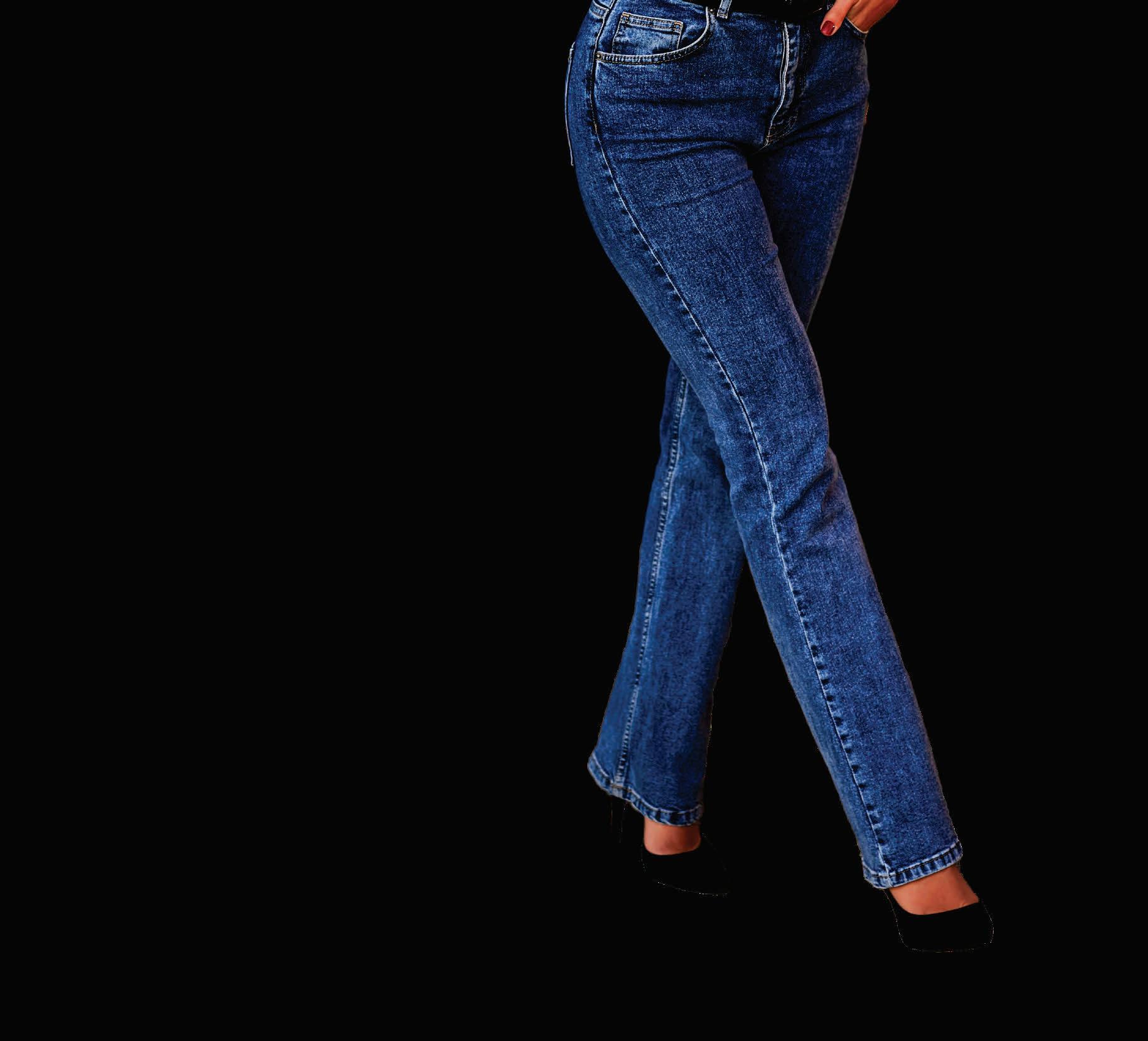
A split hem pant with heels is a chic, modern out-on-thetown go-to.
THE EVOLVING INTERSECTION BETWEEN FASHION AND HIGH-PROFILE
SPORTS
Author: Nola Roberts
Editors:
Rezi Ubogu, Eleanor Unsworth & Norah Nappi
Graphics: Charlotte Little
The 2025 Super Bowl proved that highprofile sports events are more than just games; they are cultural milestones. This year, athletes made fashion statements as they arrived in outfits from renowned designers, highlighting the growing intersection between sports and fashion.
Travis Kelce turned heads in a rustcolored suit from Amiri’s Fall 2025 collection, Saquon Barkley sported a denim Canadian tuxedo, and Jalen Hurts donned a dark purple suit. For the first time, the NFL introduced a red carpet and hired fashion editor Kyle Smith, showcasing the evolving significance of the event. These games are transforming into celebrations of culture, style, and self-expression, not just football.
To further explore this phenomenon, Clara Zaiman, a Syracuse University fashion design minor, shared her thoughts on the intersection of fashion and high-profile sports. Zaiman explained that she enjoys watching the games “not just for the sport, but also for the fashion.” She believes the outfits of the significant others of athletes offer insight into “personal aesthetic” and “self-expression.” Zaiman also noted how it is intriguing to see the contrast between the more extravagant ensembles and those who opt for more casual looks.
While the players used the opportunity to showcase their individual styles, they also adhered to professional dress codes, mindful of their public image. One standout moment was DeVonta Smith’s choice of a red suit with a gold belt. This bold look, which featured the Chiefs’s colors, drew attention and confusion from fans who wondered about Smith’s team allegiance. In contrast, other players, like Chamarri Conner in brown pants and a corduroy jacket or Jawaan Taylor in a black-and-white tailored suit with diamond accessories, took a more nuanced approach. Regardless of the specific choices, each player dressed professionally for the occasion. This tradition extends beyond the NFL, reflecting a broader expectation across major sports leagues such as the NHL and NBA.
The Apple Music Super Bowl Halftime Show also highlighted how influential figures express themselves through fashion. The headline performer, Kendrick Lamar, wore bootcut jeans paired with a varsity jacket that read “Gloria,” a reference to his GNX album, with a necklace featuring an “A,” another connection to his record. Similarly, his guest, SZA, sported a red leather jacket with “Crybaby” emblazoned on the back, promoting her new album, SOS Deluxe: Lana. These fashion choices were an extension of their musical identity, showcasing how celebrities utilize clothing to communicate messages.
The fashion choices of the wives and girlfriends (WAGs) of professional athletes also became a focal point on social media. As they cheered from the sidelines, some WAGs embraced bold, eye-catching outfits, while others went for more understated looks. Amina Smith, wife of Deon Bush, arrived in a striking red skirt set from Aknvas paired with tall black fur boots. Alix Earle, typically more casual at Dolphins games, wore a full black leather outfit, complete with a tight jacket and skirt with black stompers. These fashion choices emphasized how the Super Bowl is more than just a game for some—it’s a major cultural event. On the other hand, Taylor Swift and Ice Spice kept it more subtle, opting for neutral tones. Taylor Swift supported the Chiefs in a white Alaïa top and cream blazer, while Ice Spice wore a cream bomber jacket. These outfits contrasted with Brittany Mahomes’ extravagant choice of a white corset, a 73k diamond necklace, and custom Chiefs cargo pants, which made a powerful statement of luxury and style.
The diversity in fashion—from daring looks to more casual attire—reflects how people engage with high-profile sports games. Some attendees view it as an opportunity to push the boundaries of fashion, while others may not prioritize style as much. Chanen Johnson is a content creator and wife of New Orleans Saints player Juwan Johnson. In a Glamour article titled “Chanen Johnson Wants to Make Her NFL Player Husband a Stay-at-Home Dad,” Johnson emphasizes the importance of dressing up for game days. She said,
“I like to be overdressed rather than underdressed,”
explaining her excitement for the event’s energy, fashion, and celebrations.
However, she also stressed that, at the end of the day, it’s about supporting the team and appreciating the dedication it takes to reach this point in the season.
Ultimately, the 2025 Super Bowl underscored the growing integration of fashion into high-profile sports events. From athletes to WAGs, the Super Bowl showcased how fashion has become an essential part of the spectacle, making it clear that the event is more than just a game. As this evolution continues, I’m excited to see how future games further blur the lines between sports and fashion.
Photography By Lily Rubenstein
Graphics by Meg De Titta
For our "Future" photoshoot, we wanted to showcase fashion predictions for the months ahead while creating an out-of-this-world experience for our readers. Staying true to our timeless theme, we also aimed to evoke a sense of retro nostalgia. As head of graphics, I find this shoot especially meaningful. I had the opportunity to experiment with graphic manipulation to craft a design that feels unique, funky, and bold!
Sincerely,
GRAPHIC DESIGN EXECUTIVE
TO THE FETCH
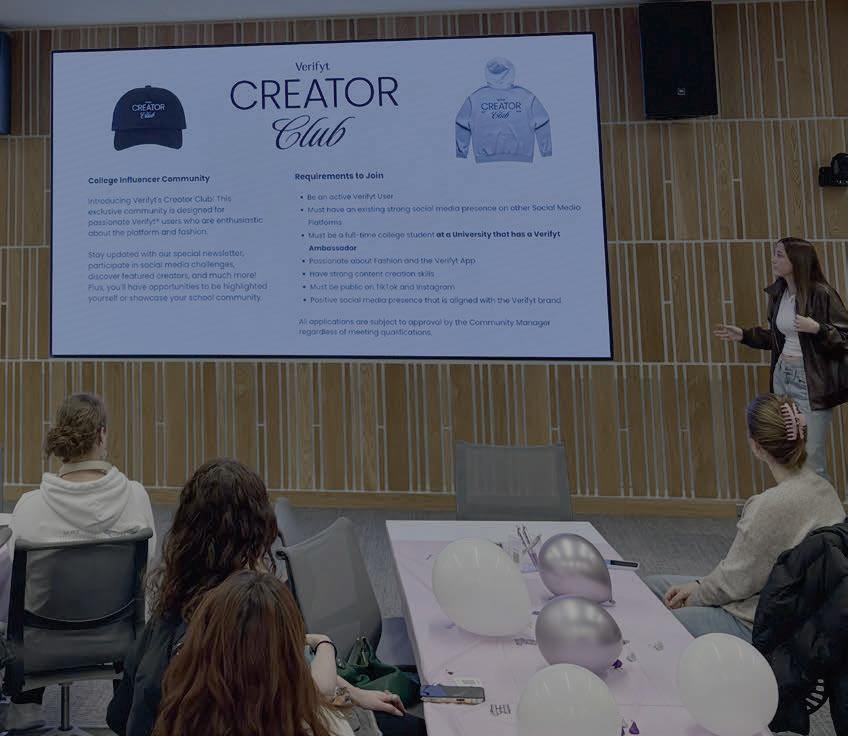
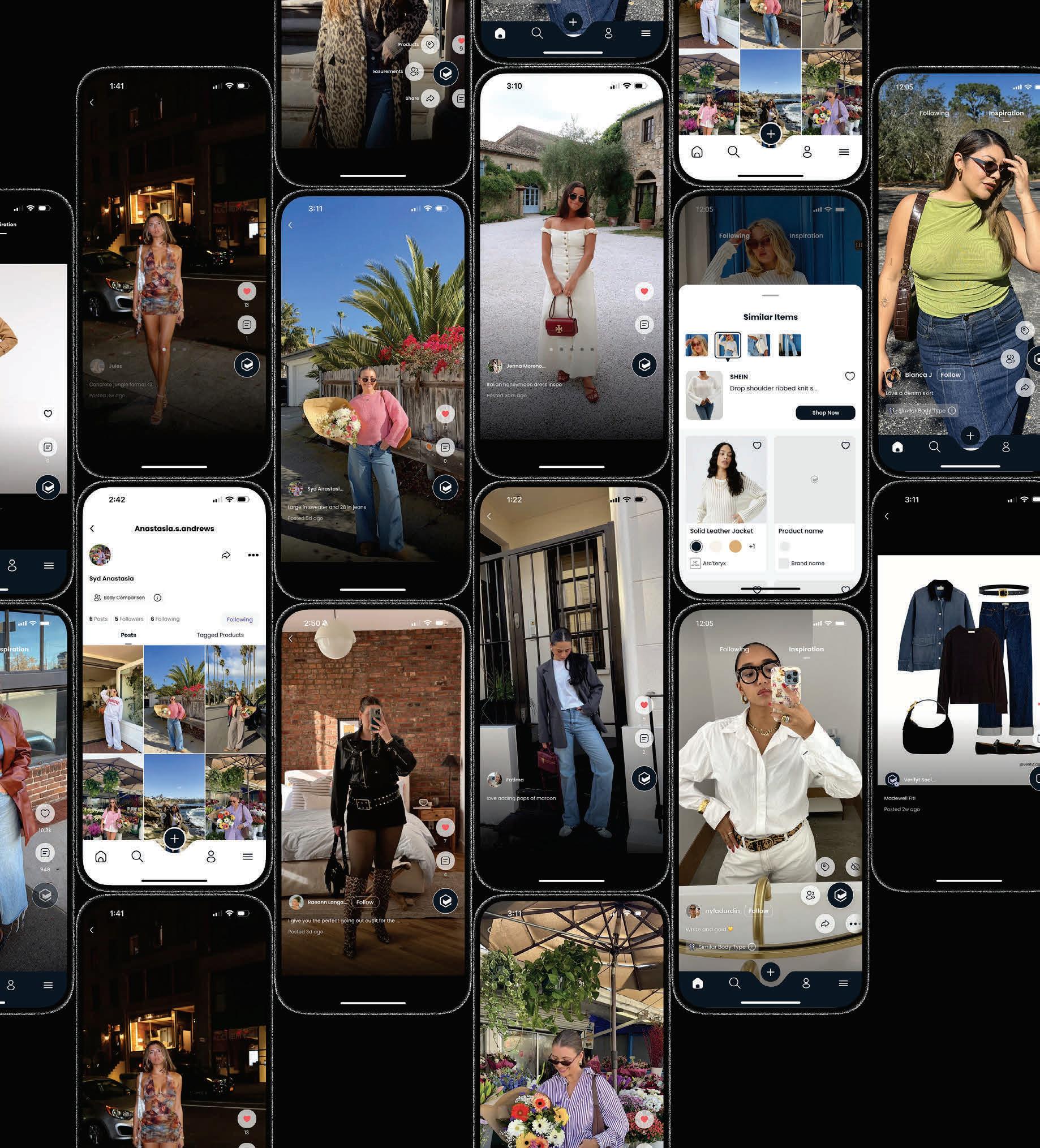
Despite the fashion facade that social media showcases, don’t be fooled: developing personal style is not nearly as easy as online influencers make it seems. Whether one is fashionforward or doesn’t care much about couture, everybody struggles with selfconfidence to some degree. Feeling comfortable in one’s skin is greatly influenced by their exterior appearance, especially in the clothes they wear. Verifyt, a new social media platform that uses 3D body scanning to give accurate sizing and style recommendations, could be the key to helping people build their confidence through fashion.
In a world where consumerism is encouraged by retail brands, simultaneously reducing online returns and giving customers a personalized shopping experience sounds impossible for any company to achieve. However, Netvirta, Verifyt’s parent company, has made this shopper’s dream a reality. Netvirta is an American-based software company founded by Massachusetts Institute of Technology alumni Jeff Chen and Andy Eow, focused on using innovative, 3D body-scanning technology across various fields, such as medicine, apparel, and sports. Netvirta even partners with Victoria’s Secret, providing their website with 3D scanning technology to provide shoppers with personalized bra size recommendations. Continuing their journey in the fashion world, Netvirta launched Verifyt in 2021, hoping to enhance the online shopping experience by utilizing their 3D bodyscanning technology to help people find their true size across different clothing brands. The app also allows shoppers to connect with other Verifyt users with similar body types, allowing for an inclusive space. Netvirta intends for Verifyt to prevent online return waste and protect the environment from toxic gas emissions. At last, fashion can coexist with technology, community, and sustainability all in one place.
Verifyt’s 3D body-scanning technology is a crucial breakthrough for the fashion community and sustainability—especially in the modern cultural wasteland of fast fashion and microtrends. Furthermore, there is another, possibly overlooked box that Verifyt checks with its growing inclusive community of users: confidence through self-expression. In her article "Confidence Dressing: How Clothing Affects the Mind," Katherine Bernard for Vogue says that clothing is a main factor in how people approach and interact with the world.
“It’s no secret that assembling an outfit is like selecting SOCIAL ARMOR and that what we wear has POWER over others.”
Author: Lianna Gourmos / Editors: Ava Pettigrew, Eleanor Unsworth & Norah Nappi
Bernard further explains how the phenomenon of “enclothed cognition” allows the brain to link fashion styles with certain attributes. If one associates a clothing brand with being intelligent or powerful, that person is more likely to take on those attributes when wearing that clothing. It’s all psychology, really, which is why Verifyt’s approach to helping its users achieve the fullest potential of their personal style is so unique.
As the app connects users of similar body types based on the 3D body scan, people can spend less time wondering whether something will look good on them and more time wearing outfits that help them feel most confident. Bernard describes the closet as a “selection of gateways to the best versions of [oneself].” Verifyt? Exactly. A digital closet with endless opportunities to explore self-expression with others.
Verifyt’s marketing journey is nothing short of spectacular, as the company has experimented with multiple different fields before delving deeper into the
Graphics: Rachel Diamond
From the medical field to online shopping, Netvirta’s Verifyt continues to make waves in its successful growth over a short period. By applying Netvirta’s revolutionary 3D body-scanning technology to a personalized fashion inspiration feed, Verifyt could help millions of people feel more confident in their style expression faster than ever before.
Author:
Eliza Brown / Editors: Maya Merante, Eleanor Unsworth, Norah Nappi / Graphics: Meg De Titta
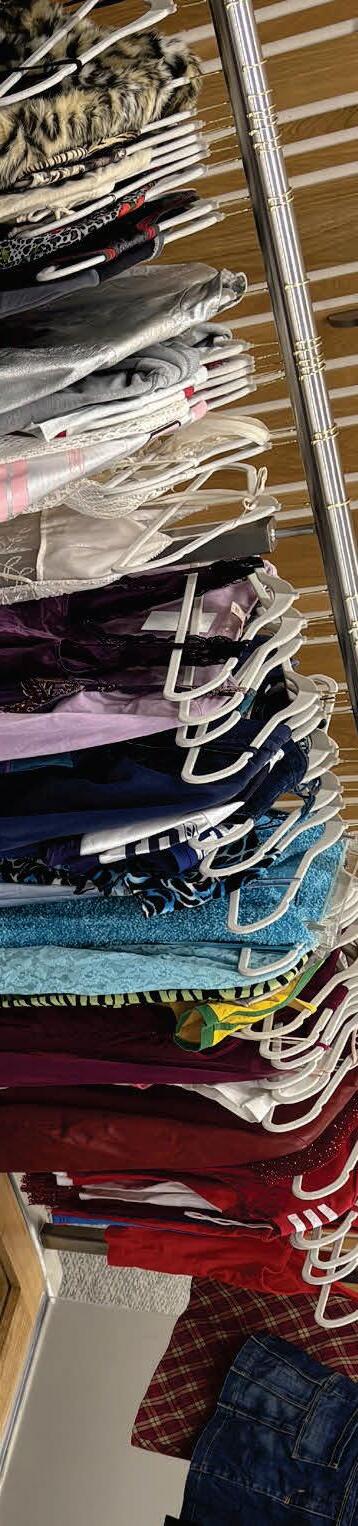
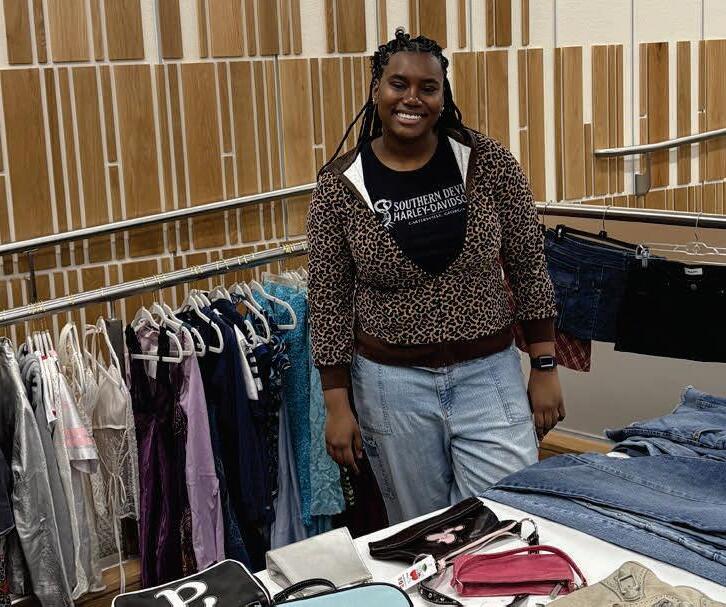
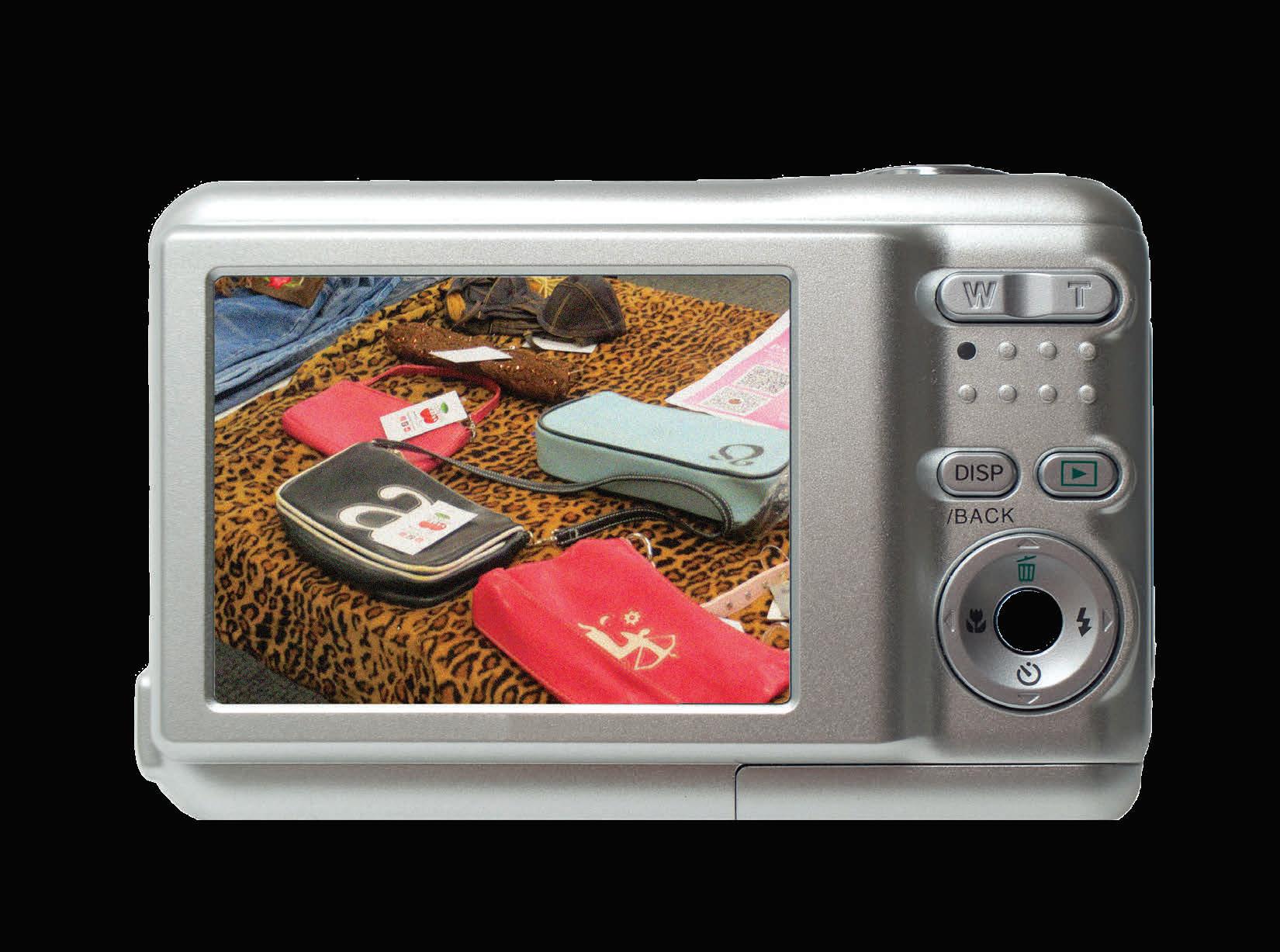
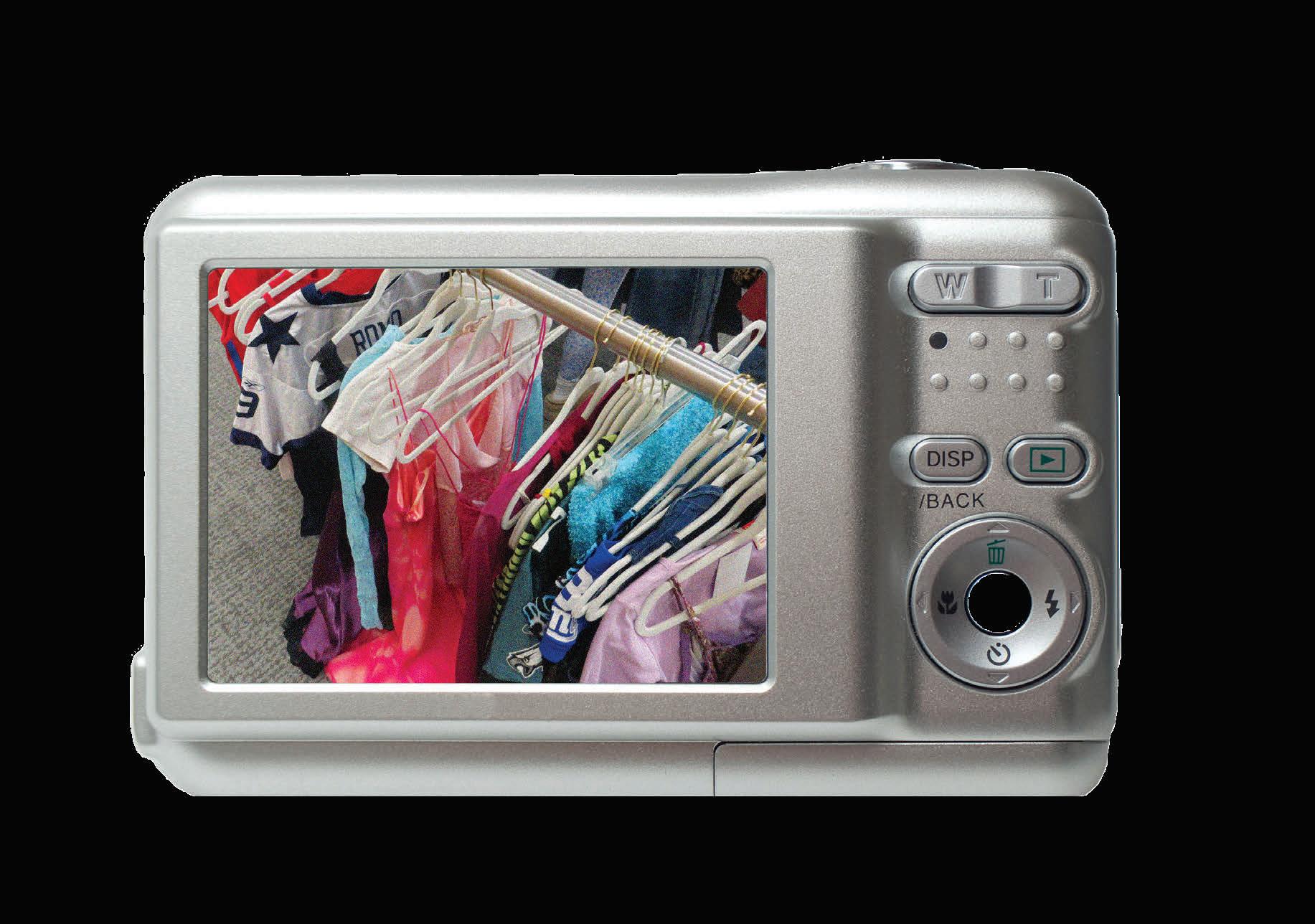
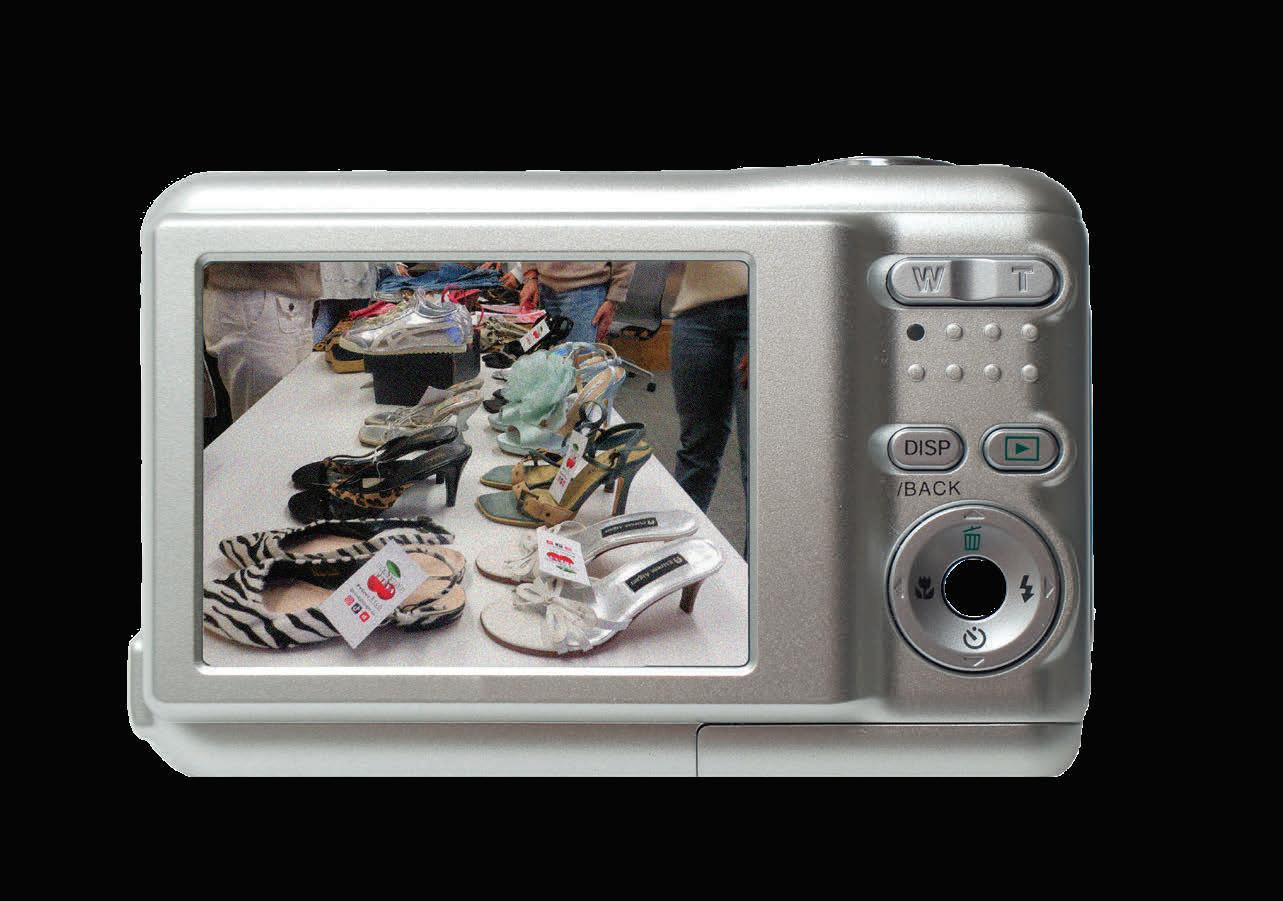
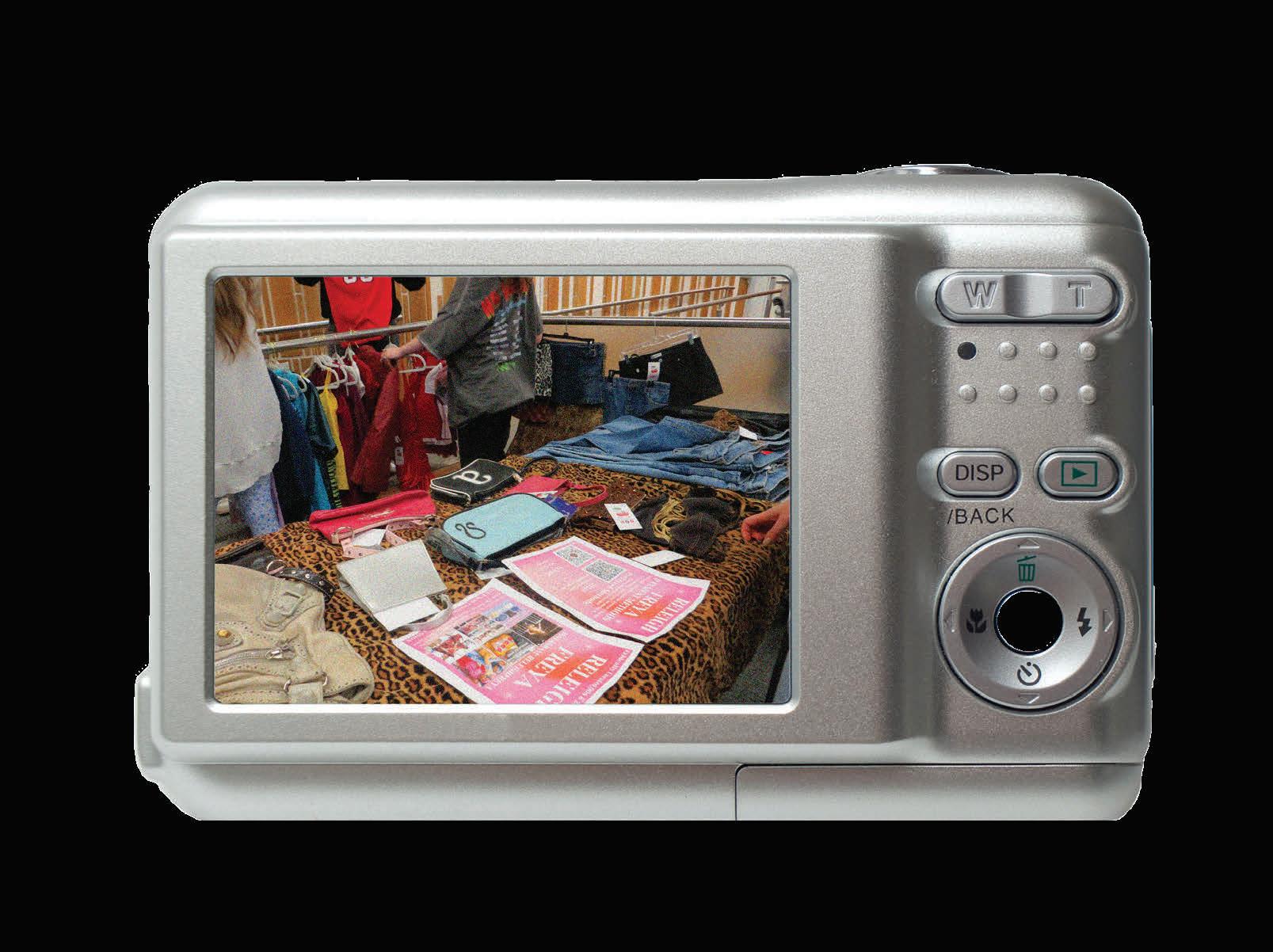
On March 23, Fetch Collective had a special event: a pop-up sale of vintage clothing. The brand, Releigh Freya, is founded and owned by Rezi Ubogu, Fetch Editor and dedicated member. She donated a portion of the funds from the pop-up to Fetch, stating that she didn’t do it for the credit but because she genuinely loves this organization. Members were able to support their peers’ business and Fetch as a whole while also shopping sustainably and bonding over a love for fashion.
Ubogu’s brand, Releigh Freya, began as a way to clean out her closet and make money in High School. Since then, her business model has changed. She primarily sources her items online internationally and has been selling them at pop-up opportunities around campus. Clearly demonstrated in her Fetch popup, “doing good” is a common theme for this entrepreneur. People often make assumptions about the resale industry, and Ubogu hopes to “debunk these misconceptions” and share her personal story.
Recently, the topic of reselling has been highly debated on social media. Often, people are concerned with the ethics of this industry. Ubogu has made it her priority to run her business ethically. She ensures the clothing is high-quality, not only for customer benefit but for environmental impact. Fast fashion contributes so much textile waste— one reason why selling clothes that will last is an important facet of her business. She also seeks out ethical brands that don’t support child labor and other harmful business practices. Her inventory is highly curated, and you can expect thoughtfully picked, hard-to-find items when shopping from Releigh Freya.
One common misconception about her business as a “Depop seller” (although her Depop storefront is technically closed until summer, she still holds this identity) is that the business takes away from people in need.
However, she always considers “making sure that these spaces or thrift stores that are often for marginalized communities aren’t encroached on.” Ultimately, most of her inventory comes from international wholesalers, her own closet, or from other people, and she wants to make sure that the clothing finds its way to a good home. When she does find items at thrift stores, she makes sure that the items make sense for her brand and customer base. The real issue lies within the resale community—when business owners are buying large quantities of items from thrift stores and clearing the stock, as well as buying items they won’t be able to sell.
Ubogu seeks to use Releigh Freya to make a positive impact on communities and the environment and share her love for fashion with others. She discussed how her business has really shaped her identity and sense of self. She also acknowledged the challenges she has faced, specifically as a woman of color. As mentioned previously in the article, due to misconceptions about resale, many people hold negative opinions about reselling clothes. However, she shares that this backlash is intensified as a woman of color. She often receives hateful comments that her white counterparts do not, exposing racial prejudice within the reselling business. Avoiding these comments on social media, specifically TikTok, has been important for her. She states that the negativity she receives “kind of
contrasts with what some of my mutual friends in this business, who don’t have my complexion, that don’t really get those kinds of comments.” Facing this “double standard” is a challenge she has faced in the resale community, and it drives her to push boundaries and contribute to inclusion within the fashion industry.
There is also a stigma surrounding vintage items. People might not want to buy “used clothes,” preferring to buy from new, trending brands. For Ubogu, the biggest strategy has been ensuring that she is selling to customers who support her in return. Creating a positive customer base of good people has made the experience more fulfilling— she notes that she loves it when people tag Releigh Freya in posts wearing her brand. “That’s really the positivity that I choose to focus on because, in this community, there are very few people that look like me, so when there is an opportunity to make my name known and also support people who are doing good things, it brings me a different level of joy,” she focuses on the people rather than the profit. This is a testament to Ubogu’s character, demonstrating her true passion for her work.
In high school, when Ubogu first started Releigh Freya, she wasn’t associated with the brand. Within the past two or three years, she decided to stop caring what others might think and take more ownership of her brand. She states that “without embracing who I am, Releigh Freya wouldn’t even exist to the capacity that it is today.” Aspects of Ubogu’s identity—such as being a woman of color and her commitment to social issues—are central to Releigh Freya’s mission and have played a key role in its continued growth.
When asked: How do you want Releigh Freya to be known? Ubogu stated, “Something that has an impact and is a safe space regardless of who you are…” Ubogu is passionate about sustainability, inclusion, and vintage clothes. If you would like to support her business, you can find her on Instagram and TikTok: @ReleighFreya.
Artificial Intelligence (AI) has been enhancing many different spaces with faster and more innovative ideas. More recently, the fashion and retail space has seen a significant transformation with the use of AI in the industry. From 24/7 customer service using AI chatbots to Augmented Reality changing rooms, the shopping experience we know is changing.
The AI-powered tools can optimize the way inventory is managed through data analysis to make it easier for sales associates to assist customers. Consumers will see more personalization with data-driven insights that can do trend and demand forecasting in record time. Sales associates are able to focus all their attention on the consumer now that AI can handle the background work. However, there are some ethical concerns from professionals in the industry.
Kathlin Argiro, a fashion designer, entrepreneur, and adjunct professor at the Fashion Institute of Technology (FIT) in New York City, sees the use of technology like AI as the future but emphasizes how important education is surrounding its use in retail. Argiro just launched a non-profit called Artisans, Ethics, and AI in February.
Argiro mentioned another issue, which is the extensive fear surrounding the use of AI in creative fields. She stressed the importance of retail associates and designers connecting face-to-face with customers. Since AI has gained popularity, many companies have started to lay off employees in favor of AI models to save money.
“I think a lot of people are terrified of it. For example, my fashion students and all creatives think it’s going to take their jobs, and they won’t need humans anymore,” Argiro said.
This fear of technology taking over jobs also affects employees in the retail industry. Emma Stark, a Syracuse University student who has worked at Old Navy and The Gap, said she feels the pressure of the new technology.
“I really
hope it doesn’t replace our jobs like retail associates and retail managers. It’s so important to connect with the customer,”
Stark said.
Another issue is bias in AI models. DEI is increasingly important, especially in the fashion and retail space, as diverse representation is the key to creativity. It is especially crucial to protect DEI initiatives to maintain inclusion and foster a sense of belonging in the industry.
“Addressing the ethical issues of AI is of paramount importance now because we’re in the very early days. So we need to correct this early on before it becomes a runaway freight train like it has in fast fashion,” Argiro said.
AI OF INVASIVE?
Consumers want to see someone that looks like them wearing the clothes they like. Argiro said many of the AI models are relatively new, so they haven’t had the exposure to produce content with inclusion in mind.
“That’s one thing that’s really an issue. The bias. Most images are of a Barbie-looking white woman or a white businessman. You don’t have any inclusivity or diversity, which becomes a problem in retail. People want to see themselves,” Argiro said.
Argiro also said that AI uses a mass personalization model to target the customer's needs, and retailers have to be cognizant of protecting their client’s privacy while using new technologies. While AI personalization is tremendously important in marketing, it can be a slippery slope as privacy concerns arise. Alexandra Eder, a Syracuse University student at the Martin J. Whitman School of Management, sees the advantages of AI in retail but has some trepidation around the security and use of her data.
“If I see an ad about something I was just talking about, I become more aware of how AI is using my data. I like personalized ads because it’s like [my technology] read my mind, and I like what they’re showing me, but I do find it a bit unsettling,” Eder said.
The world of fashion is constantly evolving as the trends change. Retailers need to keep up in order to remain relevant and avoid extinction. AI is an impactful tool for taking advantage of and growing a business. However, it’s important to explore all aspects of the technology and examine it from an ethical lens to protect ourselves.