ACKNOWLEDGEMENT
Firstly, I would like to thank God for giving me the grace to write this essay. He has been my strength in times of difficulty and prayer has provided me with a sense of comfort and peace. I am also grateful to my parents for their guidance and support throughout the duration of writing this essay. The encouragement they have given me has been valuable.
Secondly, I would like to express my sincerest gratitude to my brother for inspiring and introducing me to the art of craft. He has been a huge source of inspiration for me and I’m really grateful that I had the opportunity to write about this topic.
I would like to thank Samantha Lynch my dissertation tutor for helping me refine my work. Her feedback and guidance has been valuable throughout the process of this dissertation.
Finally, I am thankful to all those who have helped me in writing this essay. Without their support and guidance, this essay would not have been possible.
4
ABSTRACT
This research investigates how technological advancements since the industrial revolution have impacted the position of craft, which is defined as an activity that involves skill, knowledge and is guided by the hand. It particularly examines the significance of the human hand in craft, and how the introduction of machinery has resulted in the displacement of the human hand in much of craft production. Additionally, it addresses the consequences of automation, which have resulted in loss of value and sentiment that is connected with the maker. Crafted objects often have a story to tell, for example, how and where something was made. Knowing that makes us feel more involved in the process and fosters a stronger connection to the object, making it more valuable. As opposed to mass produced items, we often struggle to connect with an object, as we don’t have knowledge and understanding behind its existence. To conclude, this research questions whether the use of technology will still allow craftspeople and artisans to uphold the spirit of craft in the digital age.
5
6
CONTENT
Introduction
Craft
Technology and Craft
Tools and Machine
Craft and Material.
Conclusion
Bibliography
List of Figures
Pg. 8-9
Pg. 11-16
Pg. 17-21
Pg. 22-25
Pg. 26-29
Pg. 31
Pg. 32-33
Pg. 34
7
The aim of this research is to examine how the notion of “craft” has evolved in response to the changes brought about by technological advancements today. The term craft encompasses a wide range of definitions, but according to Richard Sennet, whose work has been instrumental in helping to redefine the importance of craft and craftsmanship in this digital age, states “craftsmanship is the pride of doing something well; it is a search for excellence.”1 He emphasizes that craft is an integral part of human life and is vital for our well-being and quality of life. Hand-crafted objects have seen a significant decline since the nineteenth century due to the advancement in technology and the availability of new materials. Machines have increasingly replaced the need for craftsmen, as they are able to produce products at greater efficiency and accuracy, resulting in higher product quality. As a result, society is presented with the dilemma of spending more money on a hand-crafted item or spending less money on an item from a mass production line. This paper will critically analyse the loss of value, sentiment, and connection with the items we possess today, because of the machine replacing the work of a human hand, which carries knowledge of how something is made. To help guide this research I will primarily focus on how the introduction of new machinery and manufacturing techniques during the industrial revolution challenged the role of crafts people in the design industry.
In recent years, digital fabrication processes have radically changed the material environment of both craft and architecture. With the advent of new technologies such as CAD/CAM or 3D printers, it has become easier to experiment with a wide range of materials, forms and texture’s enabling one to exploit the full potentials of the digital age. This topic will be discussed through architectural lenses by referring to several architects and comparing their approach to craft in their work throughout the dissertation.
8
INTRODUCTION
1 Sennett, Richard. The Craftsman, ( Penguin UK, 2009),56.
The architectural sector has embraced digitalization, and its benefits have allowed designers to process concepts more quickly, while also giving them a new approach to visualization. I believe that with the existence of such technologies, it has created a gap between reality and the virtual world2. Peter Dormer an inspirational figure within the craftsmanship industry states that “materials have flaws, and in real life these flaws have to be worked on or worked around but on the computer the materials remain imaginary and flawless.”3
It is important to highlight that developments in manufacturing processes since the industrial revolution has had a significant impact on people as it affected the way people perceive and appreciate craftsmanship. Advancement in technology has actively eliminated the need for a skilled artisan as the machine is able to carry out the same task with increased accuracy and at a much faster rate. For example, the textile industry, which traditionally relied on skilled craftspeople to manually loom wool, underwent a transformation following the industrial revolution. This transformation was brought about by the introduction of new machinery such as the spinning wheel which allowed for a speedier production process and thus eliminated the need for a skilled craftspeople, as anyone given the instructions could operate the machine. However, when making this observation a contradiction arises in which the machine requires human contact to process. Which challenges the role of a craftspersons and questions whether the use of machine will still allow craftspeople to stay true to the spirit of craft? To conclude this dissertation will also look at how technology and craft can be intervened to create the new notion of craft in this digital age.
2 Virtual world- digital interface (VR, softwares, rendering, metaverse)
3 Peter Dormer, The Culture of Craft: Status and Future (Manchester; New York: Manchester University Press, 1997), 147.
9
10
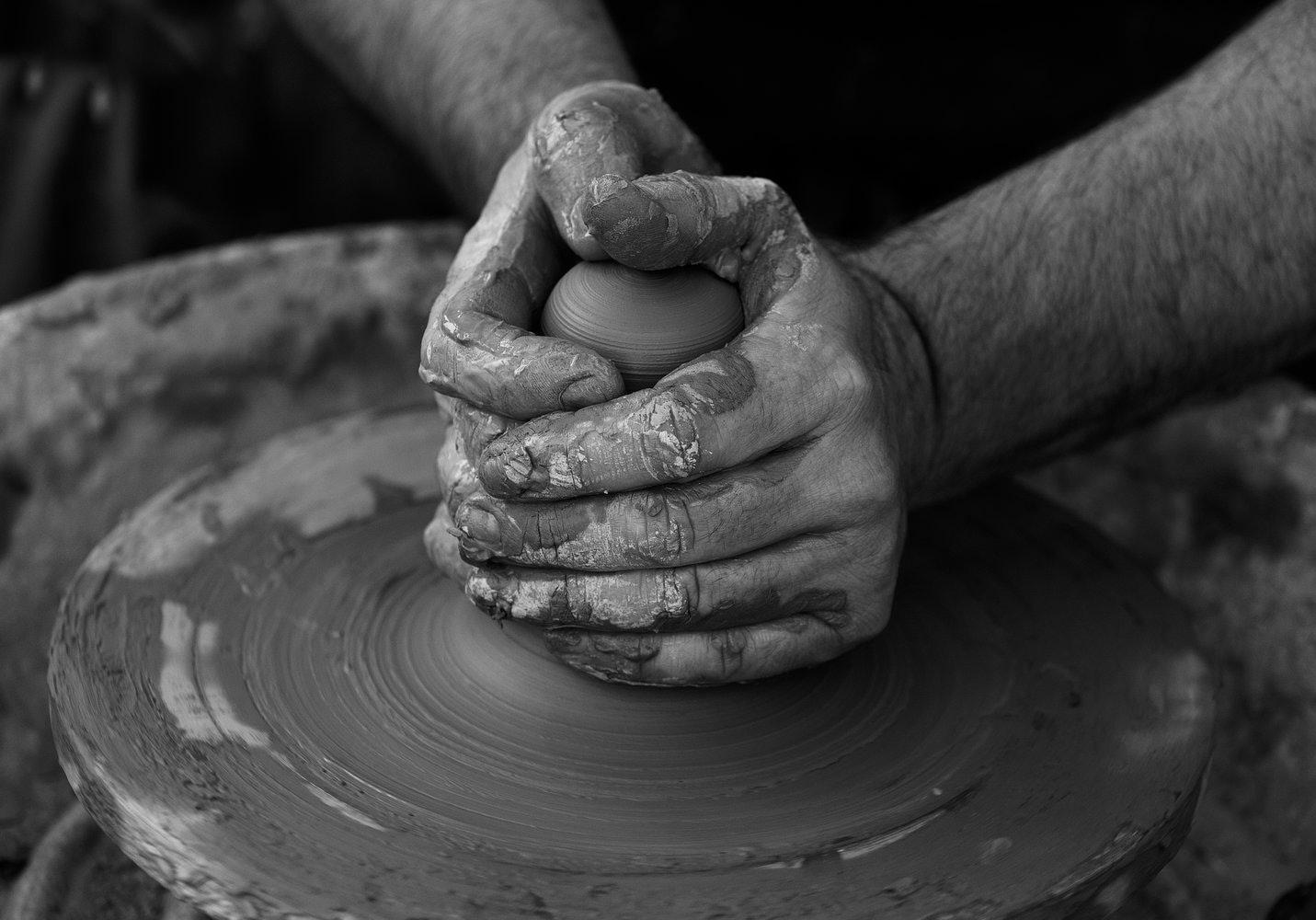
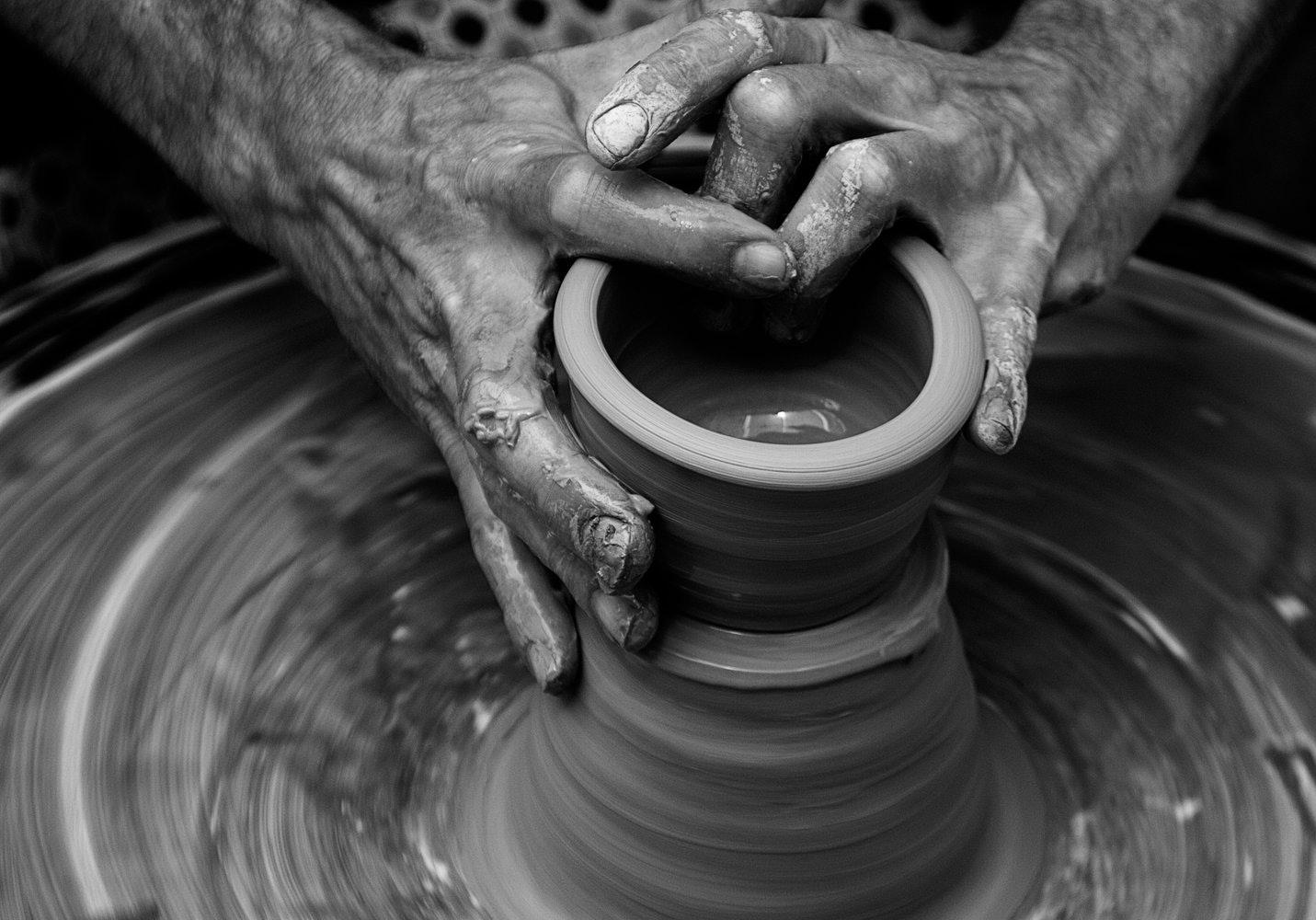
Figure 1 & 2 Melissa Domingo, The Potter’s wheel, June 21, 2017, http:// www.everywomangathering.com/blog/2017/5/30/the-potters-wheel.
CRAFT
The term craft has undergone a variety of redefinition over the years making it harder to nail down the exact definition. But according to the Oxford dictionary, craft is simply “an activity involving a special skill at making things with your hands.” Here we can see that craft is described as an action related to the hand and mind that holds the skill. Richard Sennett, on the other hand, argues that practically anything qualifies to be a form of craft from ‘parenting’ to ‘Linux programming.’4 One might agree with this statement as craft is such a board term that it cannot be merely defined by skill or the ability to make things by hand; there is more to craft which, if we extend and broaden our view beyond only equating craft with architecture or making things by hand, we may begin to find it appearing in the most unexpected places. A potter for example has craft skills, but what about a farmer or a surgeon? Every profession encompasses a certain degree of craftsmanship that requires skill, knowledge, and understanding, and so everything can be regarded as a form of craft.
11
4 Sennett, Richard. The Craftsman, ( Penguin UK, 2009),101, 26.
Sennett believes that craft is based on the concept of “tacit knowledge” developed through experience, and it is this knowledge that allows you to do things.5 This implies that craft contains knowledge that is not explicitly expressed, but instead is rooted in experience and instinct. This type of knowledge is heavily reliant on an individual’s ability to make decisions based on their past experiences, as well as their ability to draw upon their intuition to inform their present decisions. Similarly, Ingold, who is a prominent figure in the craft industry, has helped us to understand the role that craft plays in our lives. He claims that “making creates knowledge.”6 Which implies that the act of making is a form of knowledge in and of itself, as it involves a deep understanding of materials, tools, and techniques. Adamson on the other hand discusses the human and material relationship to craft, where he states that “It has always been us; it seems the first pots were made from clay dug out of riverbeds and the first simple baskets were plaited by hand. Seen from this perspective craft is intrinsic to what it is to be human.”7 From this we can deduce that craft has always been a fundamental part of human identity and culture since the dawn of time. He mentions that “it has always been us” which highlights the importance of humans in craft implying that we had power and control over the things we made. Another prospective on the definition of craft shared by Pye, who developed the concept of “workmanship of risk” emphasizes the importance of taking risks in the creative process and encourages people to develop the skill of making mistakes as a means of improving their craftsmanship.8 Overall, craft can be defined as process of making, that is learnt through hours of repeated labour and is determined by material knowledge that is supported by the hand. These three fundamental characteristics provide a unifying definition of craft for this dissertation.
5Sennett, Richard. The Craftsman, (Penguin UK, 2009),28.
6Tim Ingold, Making: Anthropology, Archaeology, Art and Architecture (Milton Park: Abingdon, Oxon, 2013), 20.
7 Glenn Adamson and Victoria And, The Invention of Craft (London ; New York: Bloomsbury Visual Arts, 2018), 13.
8 David Pye, The Nature and Art of Workmanship (A&C Black, 1995). Chapter 10, 114.
12
Many movements have served to define what craft is today, one of which being the arts and craft movement that arose in response to the negative effects of the industrial revolution. William Morris and his associates were the driving forces behind this movement who believed that industrialization had isolated workers from the products of their labour. It was a transitional period, with considerable changes in society and industry. The Arts and Crafts movement regarded craftsmanship as a means for making the world a better place for both individuals and society as a whole. It was inspired by the medieval era, which was regarded to be a period of honest craftsmanship.9 John Ruskin, who was a major influence on the Arts and Craft Movement, despised the homogeneity of contemporary machine-made design and believed that it was harmful to both those who consumed it and to those who created it. He felt that reintroducing individually led artisan skills such as textile weaving, wood carving, and stone building would give individuals control over their design, moral purpose, and creative spiritual fulfilment. This might result in better design, and hence would aid in retaining and communicating some of the care that went into its creation.10 Peter Dormer shares a similar notion about artisans being in control of their work where he states that craftspeople “engaged in a particular activity….are seen to be in control of their work.”
11 However, there are limits to how far this concept presented by Ruskin and Dormer can be taken in terms of today’s society, as the demand for items are higher, which means that individual artisans will struggle to meet the current population’s needs for the same item that can be manufactured for less money and at a much faster rate.
9Honest craftsmanship- Each item was carefully and individually crafted, people had knowledge on how and where the object was made. There was no underlying hidden secret. People could observe and appreciate the work of an artisan or craftsman.
10Lars Spuybroek, The Sympathy of Things : Ruskin and the Ecology of Design (Rotterdam: V2_ Publishing, 2011).
11Peter Dormer, The Culture of Craft: Status and Future (Manchester; New York: Manchester University Press, 1997), 13.
13
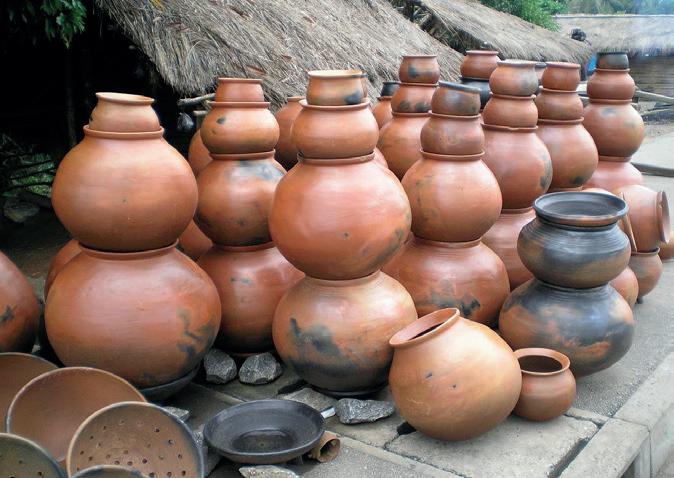
The nineteenth century marked the beginning of the industrial revolution, which had a drastic effect on the craft industry. The development of efficient steam-powered machines enabled a faster and more efficient production process, leading to a decrease in hand-crafted objects as craftspeople were actively replaced by the machine.12 But, before the industrial revolution, individuals had to rely on themselves and their communities for the great majority of their needs. Everything, from food to clothing, was produced locally. However, with the emergence of repeatable and machine-driven manufacturing, it became possible to produce items at a much faster rate, thus making them more affordable and accessible to everyone. While this process allows for more efficient production, it also grew to be less personal and distinctive as everything was of consistent quality as there was no room for errors. Hand-Crafted objects often tend to have imperfection and flaws that make each item unique and personal(see figure 3). The uniqueness is defined by it’s maker who leaves its imprints on the object. This aids in building a stronger connection and relationship with the item as we would regard it more than simply a form; it contains memories of the artist who created it and therefore holds greater worth. This point is also what Catherine, who is a major advocate for the preservation and promotion of traditional craft practises believes that “Making craft or buying goods from craftspeople enables a meaningful relationship with the material world.” 13 As we have knowledge on how and where the object is made making us feel more connected to the items we possess. This connection can be deeply meaningful, as it allows the individuals to recognize the care and attention that went into the creation of the product with the intention of adding value to the individual’s life.
This image illustrated how each pot is different in appearance, giving it unique characteristics.
12 Marie-Madeleine Renauld, “The Effects of the Industrial Revolution on Craft in the Arts and Crafts Movement,” TheCollector, July 24, 2020, https://www.thecollector.com/industrialrevolution-arts-and-crafts/.
13Rossi, Catherine, “Craft Contains the Critical Thinking That Could Unpack the Current State of Architecture.”, 2017
14
Figure 3 The Art of Handmade Objects, https://cognates.miami.edu/AT_0062.
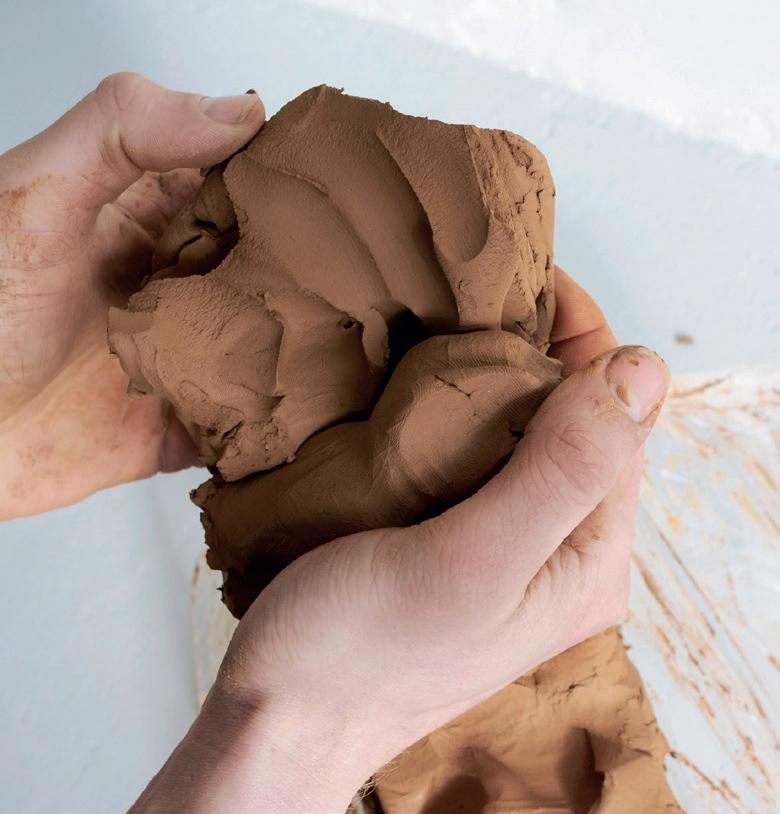
The hands and the minds of those who make things tend to leave countless traces behind for example the story behind how something was made and the time and context of where the object was made. The hand plays a crucial role in defining what craft is as Walter Benjamin states that “the hand marks out authentic experience.”14 Here Benjamin implies that the hand has the originality that differentiate crafted objects to mass produced items (see figure 4). Today we no longer sense significance in the items we possess as we once did. As humans we have lost our connections with the things we possess, we only notice them when they are broken or in our way. Objects arrive to us perfectly formed and ready for use. Therefore, we have little regard for their journey up until the time when we have them. Knowing how something came into being makes us feel more involved in the process as we have knowledge on where and how the item was made, leading us into being more responsible consumers in comparison to mass produced items where we struggle to obtain a relationship with the item as we have no insight on who or where the object was made and therefore don’t hold as much value. The items around us are becoming increasingly difficult to read, making it hard to learn anything about them other than through looking at or feeling them. The effect of the machine is a collective worry as people began to question what all of this technical progress was gaining, what these things were doing to us and how they were influencing us as individuals and as a society, had we created a monster?
This image Illustrates how the makers hands are leaving traces on the clay, marking an authentic experience.
15
14 Walter Benjamin, The Work of Art in the Age of Mechanical Reproduction (London: Penguin Books, 1935), 17.
Figure 4 Emma Tucker, 2017, https://www. dezeen.com/2017/05/06/cos-x-oliviervan-herpt-3d-printed-clay-vases-homewaredesign/
An item once made can be observed or used as a source of learning to assist us in further educating ourselves or expanding our knowledge. For example, in architecture models are used as a source of learning to help us understand particular aspects of the model such as its form or spatial qualities. Making gives us the freedom to experiment with new ideas while also training us into becoming more critical thinkers. By having the object in our hands, we are able to see different perspectives in and out of the object, thus allowing us to fully immerse ourselves in the experience/space. To craft something does not necessarily imply creating from scratch it may also refer to repairing things, which is also considered a form of craft and may be regarded a more advanced form of craft as the craftsman has to assess the thought behind the process of the original piece and then design a new solution. This notation was developed by sociologist Douglas Harper, who stated that when a craftsman fixes something, he or she is using more knowledge. A similar concept is explored in Unchopping a tree by W. S. Merwin where the writers aim to join the chopped parts of the tree. 15 He emphasises the preservation of nature by implying that people who cut down the tree must plant some in return in order to reverse the process. We could apply the same theory to craft in this digital age where it has connotation to the chopped tree replaced by technology. Which is trying to reinstate the loss of craft by introducing new methods of visualisation and designing.
16
15Merwin, W S, and Elizabeth Ward. Unchopping a Tree. (San Antonio, Tex., Trinity Univ. Press), 2014.
TECHNOLOGY AND CRAFT
We live in a time where digital technology is becoming increasingly prevalent in our daily lives, so it is important to examine the extent at which we let technology control the world in which we live. According to the Oxford dictionary, the term ‘technology’ refers to machinery and equipment developed through the application of scientific knowledge. In this context, technology is defined as a machine or a piece of equipment that serves as a powerful tool kit for designers to experiment their ideas with. Mies Van de Rohe provides an alternative definition on technology, stating that “technology is far more than a method it is world in itself.”16 This quote indicates the sheer power and potential of technology and how it has become a crucial part of our daily lives, representing much more than just a process. It has evolved into a tremendous force in our lives, changing the way we interact with the world around us. It is, in fact, a world in itself. The emergence of technology has resulted in new ways of thinking and designing, making it the ideal tool for creators, makers, and craftspeople; however, once an individual begins to fully immerse themselves in technology, it puts pressure on the term ‘craft,’ as it questions how craftspeople would define themselves.
16 Ludwig Mies van der Rohe: Technology and architecture, Chapter 1950.
17
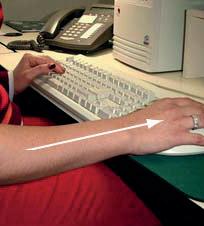
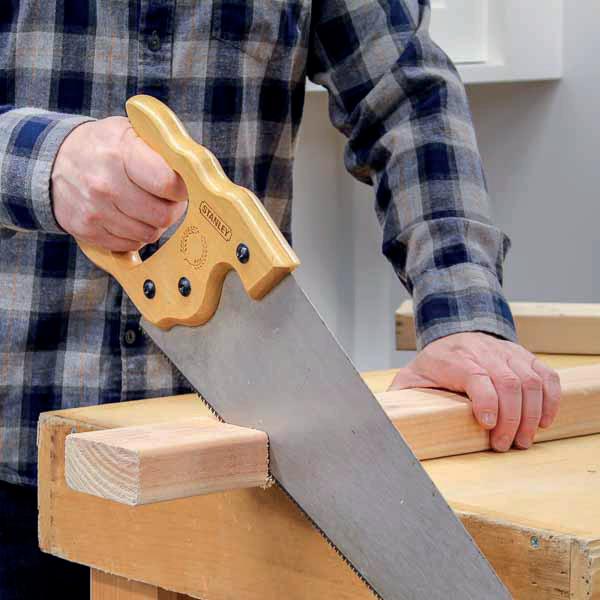
We have to recognize that, even with availability of technology, every design concept begins with a rough hand sketch that later gets translated digitally where the crafts-person who holds knowledge in the specific software is working directly on a digital product. Despite this, there is still a certain level of craftsmanship embedded within this process of making, but there is no direct interaction between the object and the maker, which is a significant difference between hand-crafted objects and digitally crafted objects. Both processes rely heavily on the hand, one more than the other. When crafting by hand, the hand must carry out a physical, repetitive action that interact with varied forces, whereas for digitally crafted objects, the hand is on the mouse, controlling the action that takes place on the screen. In this context, the virtual object has no physical characteristics, It’s only provides us a visual representation of what the object/product will be. Benjamin advocates that “the hand so crucial to the Handwerker (artisan or craftsman) is made redundant by technological advance.”17 wherein he believes that as technology progresses, the need for manual labour is becoming less essential.
17 E. LESLIE, “Walter Benjamin: Traces of Craft,” Journal of Design History 11, no. 1 (January 1, 1998): 5–13, https://doi.org/10.1093/jdh/11.1.5
18
Figure 5: Scott, how to cut wood for beginners, 2020, https://sawsonskates. com/how-to-cut-wood/.
Figure 6: https://www.ccohs.ca/ oshanswers/ergonomics/office/mouse/ mouse_selection.html.
Traditionally, craftspeople relied on their hands to produce and make things. However, with the introduction of new technologies, this form of labour is becoming increasingly outdated. By eliminating the hand from the process of making, the value and sentiment attached to the maker is diminished. Therefore, mass produced items hold less significant to consumers . However, I believe technology and craft are two inseparable elements that should be embraced in order to develop the new future of craft rather than viewing it as an entity that is threatening the hand-crafted industry, given that human interaction is present in the making. Malcolm McCullough presents a similar argument that is strongly in favour of weaving technology and craft as he believes that this would allow designers to come up with more innovative designs that are more efficient and beneficial to the environment. He also further highlights the importance of monitoring our use of technology to ensure it is not exploited.18 From this we can conclude to say that anything created by humans is still considered to be craft, and so employing technology to make craft would still somewhat allow craftspeople to stay true to the essence of craft to an extent.
Technology has given designers and makers’ the ability to experiment and explore new ways of crafting. One advantage of using technology to produce products is that errors can be easily amended, reprinted, and re-examined, while mistakes in hand crafted object would require the crafts-person to start all over again. I feel that is what distinguishes digital and hand-crafted things since artisans have control over what they do. They use their hand, mind, and eye to accomplish the task to perfection. Technology has no limitations, therefore we as designers should strive to maximise on its benefits in order to fully appreciate its value. The utilisation of technology has helped artisans to discover new ways of communicating and developing their ideas. For example, craftspeople now can utilise software such as Adobe Photoshop or Illustrator to create distinctive digital art or use 3D printing technology to construct intricate sculptures.
18 Mccullough, Malcolm. Abstracting Craft: The Practiced Digital Hand. Cambridge (Massachusetts): Mit Press, 1998.
19
Peter Dormer states an example in his book The Culture of Craft where he makes an important point that technology is useless without human interaction and knowledge.19 He gives an example of a potter needing the wheel, but without the potter’s expertise on how to use it, the wheel is useless. This highlights that humans and technology are two inseparable elements that need to work together to enhance craft in this digital age.
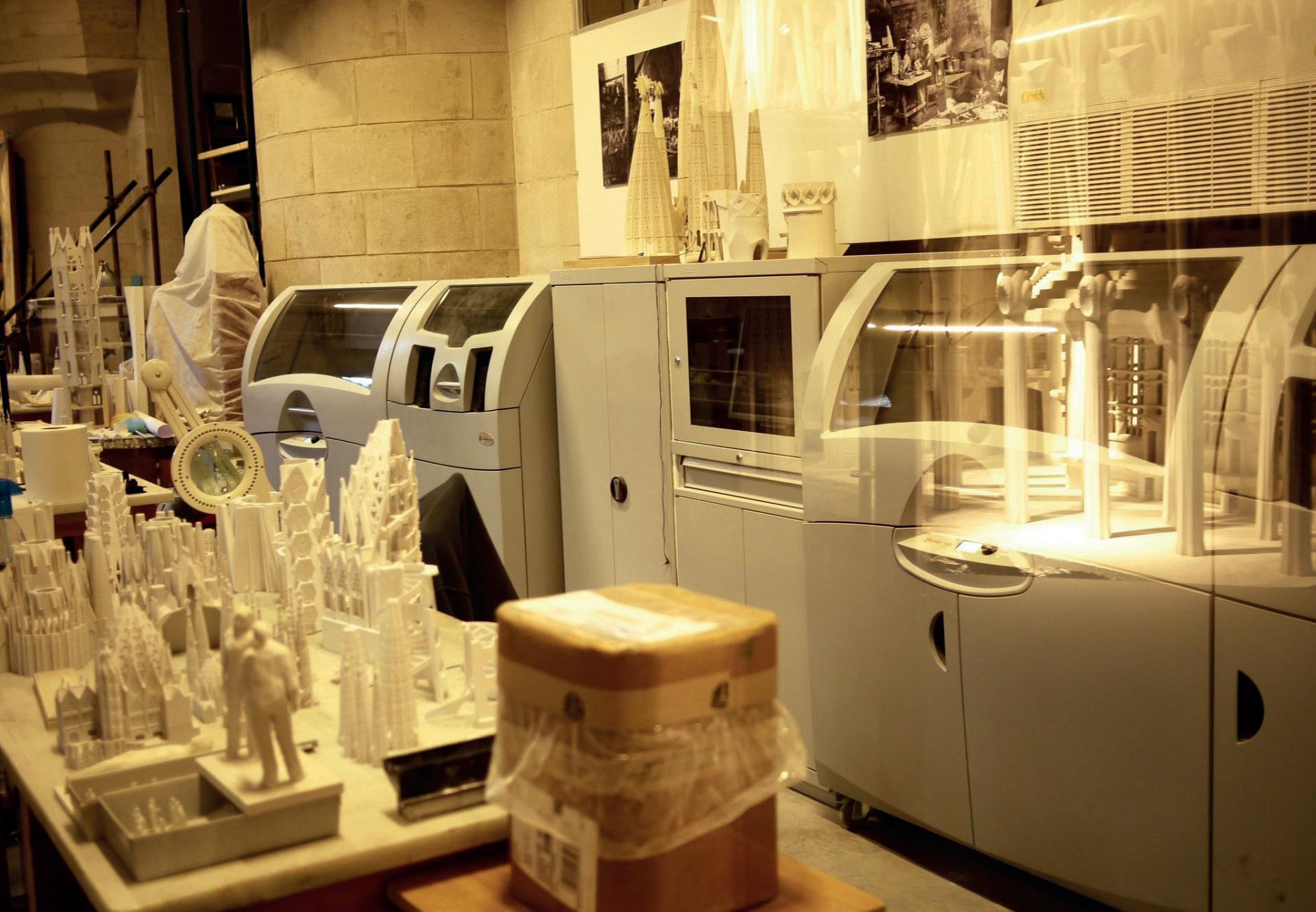
Technology has revolutionized the craft industry in many ways, not only has it made production faster, but it has allowed designers to break away from traditional methods of producing, allowing them to explore new possibilities. However, the increased reliance on technology has caused a disconnect between individuals and the manufacturing process, as well as the product itself, because mass production processes lead to the uniformity of products, leaving little room for uniqueness. Benjamin poses a similar argument where he states that “digital production lacks one element its presence in time and space. Items being replicated allows them to be everywhere but represses its aura.”20 He used the term “aura” to emphasize the lost element of physical presence and connection in digital production since the dawn of machinery. Wright on the other hand, advocates for the integration of technology in craft, asserting that it has the potential to enhance human creativity.21 He also promotes the use of technology to bridge the divide between humans and machines, allowing them to work collaboratively to establish a harmonious relationship. Finally, Wright believes that technology can help break down barriers and provide more opportunities for people from diverse backgrounds to access and participate in the creative process. An example of the perfect marriage between traditional craftsmanship and modern technology is the iconic Sagrada Familia. This magnificent structure showcases the beauty of both, with its intricate design and complex shapes that have been created using CAD and CNC machines. It serves as a reminder of the potential both craft and technology, and how together, they can create something truly remarkable.22
19Peter Dormer, The Culture of Craft : Status and Future (Manchester ; New York: Manchester University Press, 1997).
20Walter Benjamin, The Work of Art in the Age of Mechanical Reproduction (London: Penguin Books, 1935).
20
This Image showcases the use of 3D printing technology to create some of the intricate elements of Sagrada Familia.
21 Essay by Frank Lloyd Wright “the art and craft of the machine”
22Geraldine Chua, “Construction & Architecture News,” Architecture & Design, April 1, 2015, https://www.architectureanddesign.com.au/news/antoni-gaudi-s-sagrada-familia-has-been-using3d-p.
21
Figure 7: Lisa Goldapple, Sagrada Família 3D Printing, April 12, 2017, https:// atlasofthefuture.org/project/sagrada-familia-3d-printing/.
TOOLS AND MACHINES
Hand-crafting of objects result in the fabrication of unique and individual things. Historically, tools were regarded as an extension of the human hand. So, what exactly is a tool you may ask? A tool according to Malcolm McCullough is “a moving entity whose use is initiated and actively guided by a human being for whom It acts as an extension, towards a purpose”23 from this we can deduce that a tool can be perceived as an object that is used by people to extend their abilities and help them attain a desired outcome. In the book The Nature and Art of Workmanship, David Pye argues that very few things can truly be considered to have been done by the hand, and also claims that the term craft does not indicate “made by hand” because he believes that most of the things created by craft workers require tools, and some of which are specialized, time saving machines.24 The use of machines and tools in craft has helped designers to create complex designs that would otherwise be impossible to create. This shift to machine-based production has had a major impact on the way products are produced, as it presented society with a dilemma of having to choose between buying hand-crafted items or items from a mass-produced line.
23Mccullough, Malcolm. Abstracting Craft: The Practiced Digital Hand. Cambridge (Massachusetts): Mit Press, 1998, 11.
24 Peter Dormer. The Culture of Craft: Status and Future. Manchester; New York: Manchester University Press, 1997. 137,138.
22
The introduction of the steam engine signalled the beginning of the transition from manual labour to machine-based manufacturing. The implementation of tools in craft have benefited craftspeople since the beginning, allowing them to go beyond and expand on their crafts knowledge and attain optimum accuracy. The availability of CAD Software, 3D printing, and scanning tools allows designers, craftspeople, and artists to further experiment with ideas and look at different methods of production, ultimately resulting in more efficient design processes.
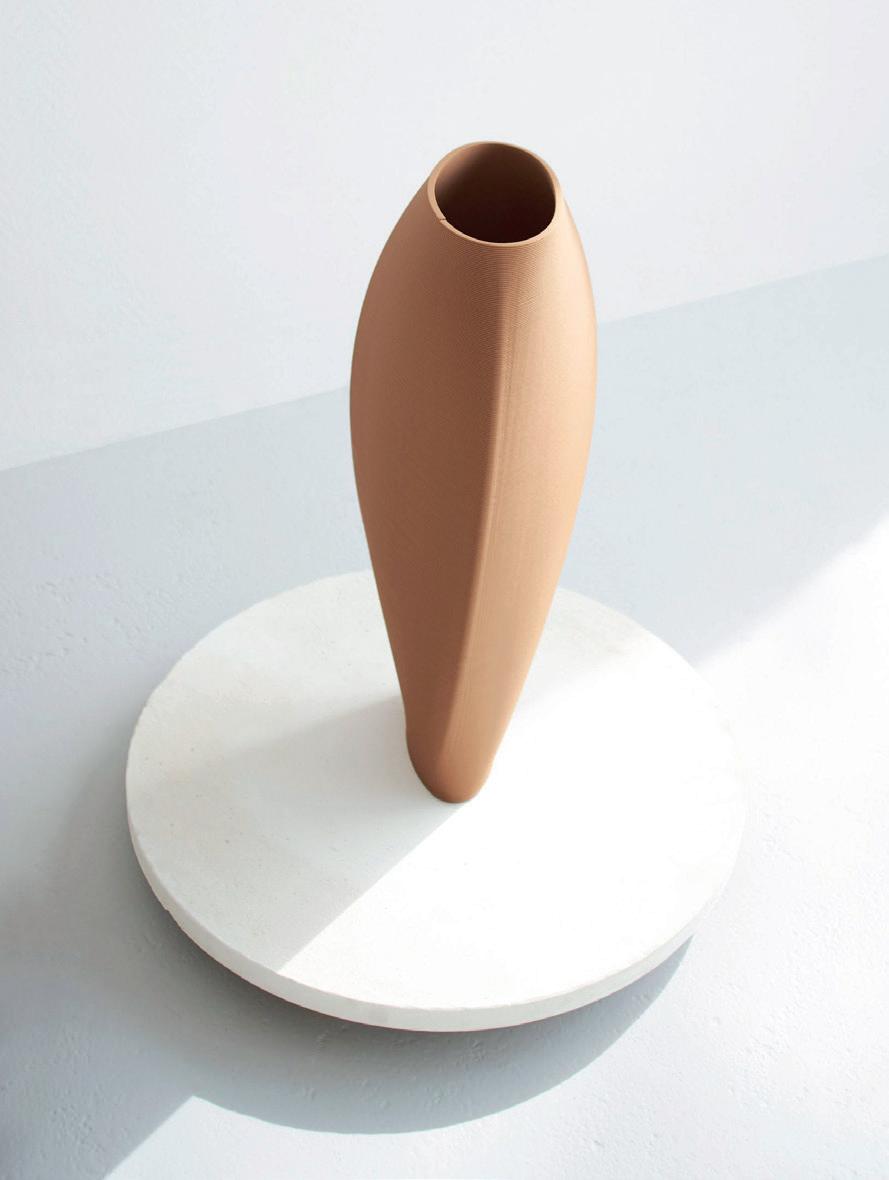
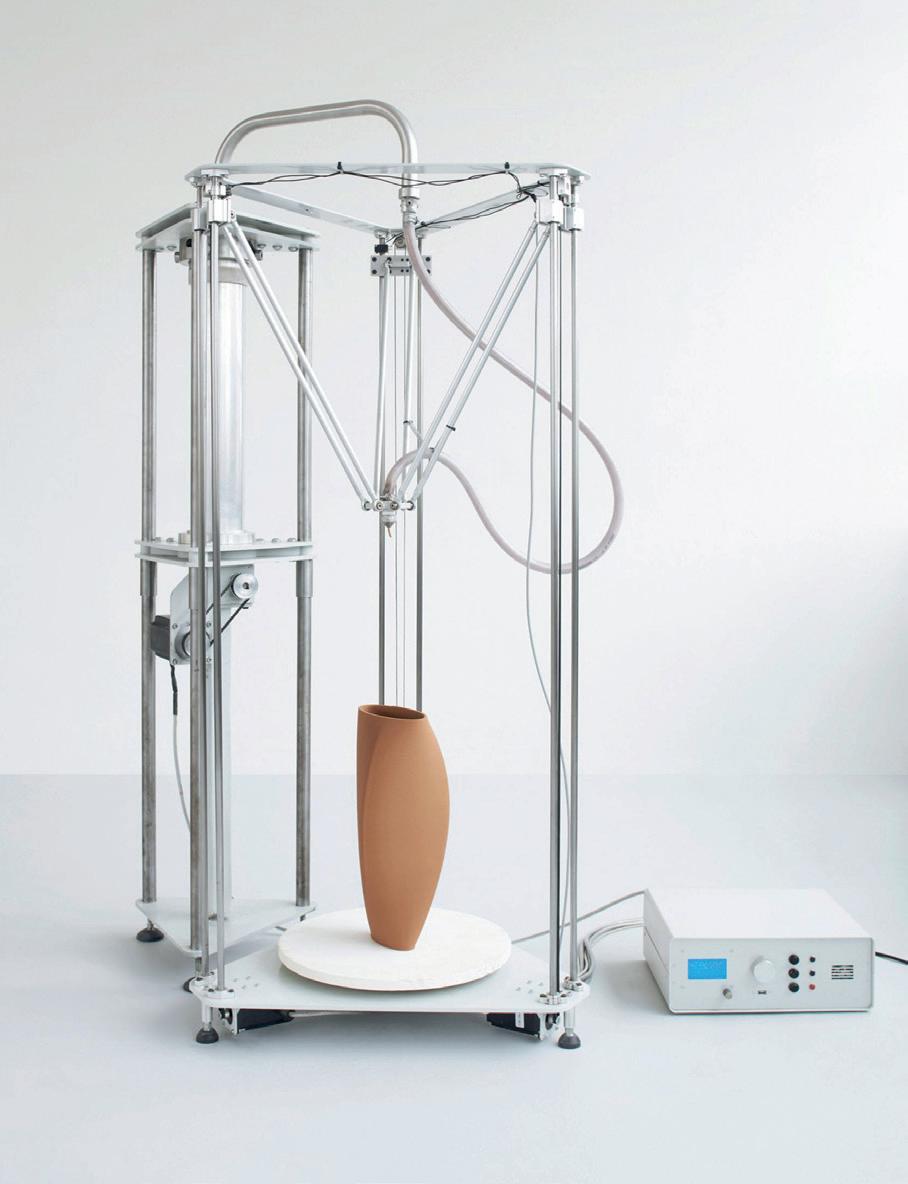
Digital fabrication technologies have influenced the manufacturing processes in numerous sectors for example ceramics, which now uses 3D printers to make vases and vessels (see figure 8 &9) that would have traditionally been crafted by a potter sat at a wheel. However, with 3D printers, it’s becoming easier to produce these at a much faster rate and at great precision leaving less room for error. To some this may appear as a step forward in ceramics, while others may see It as a threat to the true meaning of craft, a concept closely related to the hand. The fact that the vessel could be reprinted by anyone loses its value, as 3D printing eliminates the direct involvement of the maker and thus reduces the value associated with the object. However, if we examine the two different manufacturing methods, we find that they share very similar processes of making. The only difference lies In the tools used to create the desired outcome. 3D printing requires a one of design process, which can then be easily replicated whereas doing it manually requires the potter to repeat the same process over and over again to create a vessel or vase. I believe it is this process of repetition that allows the artisan to become the master of a skill as they acquire knowledge through this process which is core principle of craftsmanship. We don’t see this occurring when using digital fabrications tools as it’s become easier to modify a design by changing few elements electronically which doesn’t require much labour. Richard Sennett agrees with the statement and argues that “Modern machinery stops people from learning through repetition. The smart machine can take over human mental understanding from hands on learning. When this happens, human power suffers.” 25
23
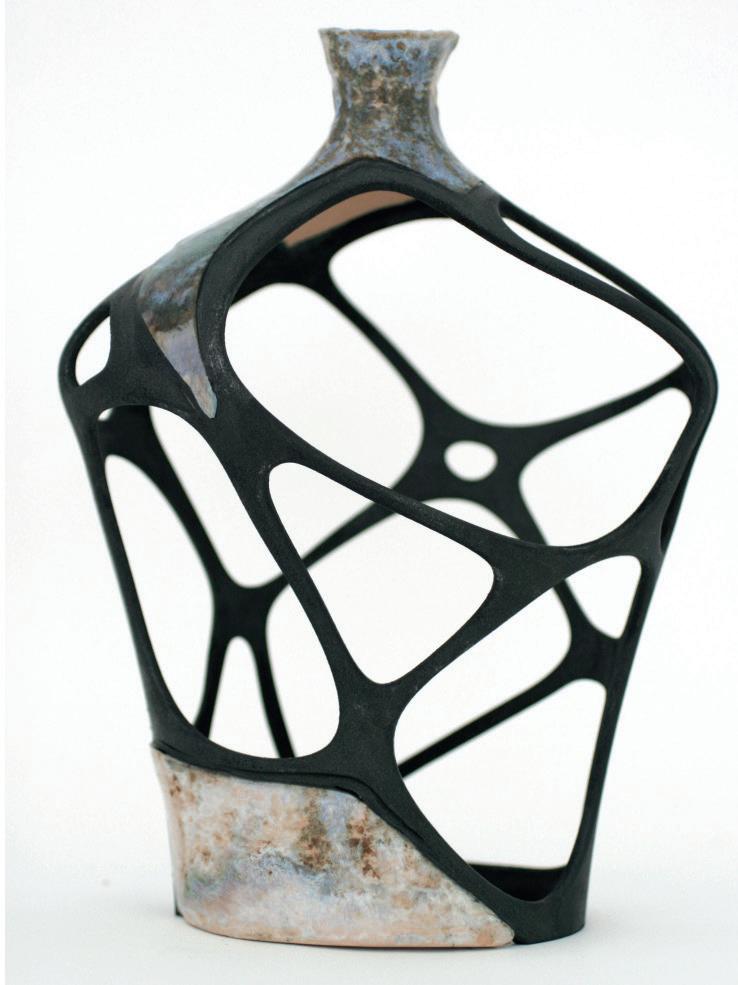
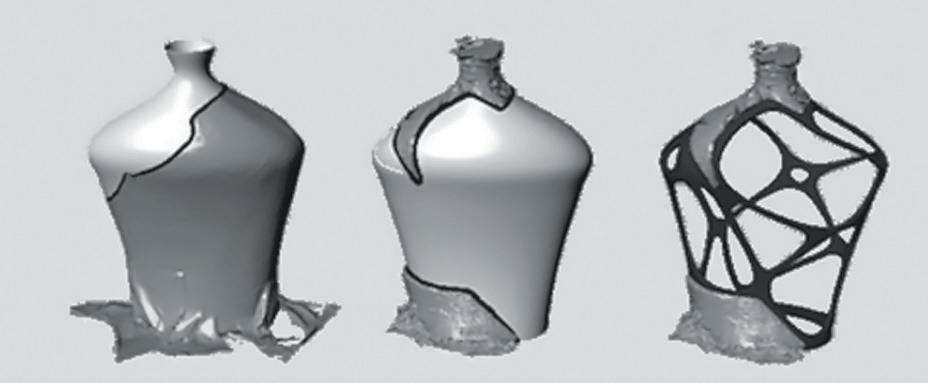
On the contrary the article Hybrid Reassemble: An Exploration of Craft, Digital Fabrication and Artifact Uniqueness explores a process of restoring crafted objects that have been destroyed and uses digital fabrication tools to preserve its original form. This is an example of how contemporary tools can be used to our advantage to explore new ways of crafting objects whilst still keeping true to the spirit of craft. For a machine to function and carry out its task it requires human thought and interaction to produce the final outcome, we can see in (figure 10 & 11) how they have used digital software/tools to carefully design and restore a vase. The 3D printed element allows the vase to stay in its original form whilst giving it a new identity. That is determined by the use modern material which showcases the new added element. There is a clear distinction between what is old and what is new. To summarise, I believe that tools have been an integral part of craft since the beginning; the only difference now is that some of the tools have become digital, which has advantages and disadvantages that can be used to further enhance craft in this digital age.
24
25 Sennett, Richard. The Craftsman. Penguin UK, 2009, 183.
Figure 8& 9: Emma Tucker, Olivier van Herpt designs 3D-printed clay vases based on latest COS, 2017, https://www.dezeen.com/2017/05/06/cos-x-olivier-vanherpt-3d-printed-clay-vases-homeware-design/.
25
Figure 10 & 11:Amit Zoran and Leah Buechley, Hybrid Reassemblage: An Exploration of Craft, Digital Fabrication and Artifact Uniqueness, 2013, page 8,9.
CRAFT AND MATERIALS
What emerges to your mind when you think about materials. Is it the feel, the texture or the experience that comes with it. According to Ingold material is about the “grain and texture, about the feeling of contact between malleable substance and sensitive skin.”25 Here he talks about how materials are connected with human senses that allow us to feel the different textures when we interact with them. He further goes on to explains that “to describe any material is to pose a riddle, whose answer can be discovered only through observation and engagement with what is there.”26 Through this we can see that Ingold is implying that human interaction has a vital role to play in the material world as it is our hand, eye and mind coordination that binds us to what we feel, see and experience. In contrast to Ingold Adamson talks about the connection between materials and craft as he states that “Craft is organized around material experience.”27 This implies that craft is a profound study of materials that allow craftsman to fully exploit the potentials of a material allowing for new forms to be created.
25 Ingold, Tim. Making : Anthropology, Archaeology, Art and Architecture. (Milton Park: Abingdon, Oxon, 2013), 4.
26 Ingold, Tim. Making : Anthropology, Archaeology, Art and Architecture. (Milton Park: Abingdon, Oxon, 2013), 55.
27Glenn Adamson Thinking through Craft. London: Bloombury Visual Arts, 2018, 4.
26
History of Materials: Architecture
Studying ancient materials allows us to see how far we have progressed since the dawn of machinery In ancient times, the only materials available to humans were those provided by nature, such as wood and stone. As the bronze age drew to a close, stone emerged as an increasingly popular building material. Subsequently, with the introduction of brick, the characteristics of building materials changed drastically. The Romans took this progress a step further by introducing an essential new material called concrete, which enabled major architectural advances possible. In the middle age, stone was once again the main building material for the most important structures such as churches and castles.28 Fast forward to the industrial era which introduced new materials and production processes that allowed architects to design and construct a wide array of structures. The Eames House, designed by the renowned husband-and-wife duo, is an iconic representation of how the industrial revolution changed the way buildings were designed and constructed. It is famous for its use of mass-produced and factory-made components to create a modern, prefabricated home that was affordable, efficient, and aesthetically pleasing.29 The house was built using a variety of industrial materials, such as steel, glass, and plywood, all of which were sourced from large manufacturers. The Eames house serves as a reminder of the profound influence that the industrial revolution had on the field of architecture and materials. The adoption of pre-fabrication, such as buying things off the shelf led in the downfall of traditional architectural style as the rise in factory-made materials and prefabricated components prompted a move from craftsmanship to mechanization, which resulted in structures that were less personalised and more homogeneous.
28“History of Architectural Materials & Techniques,” Study.com, 2023, https://study.com/ academy/lesson/history-of-architectural-materials-techniques.html.
29“Eames House | Eames Foundation,” Eamesfoundation.org, 2019, https://eamesfoundation. org/house/eames-house/.
27
https://www.archdaily.com/66302/adclassics-eames-house-charles-and-ray-eames.

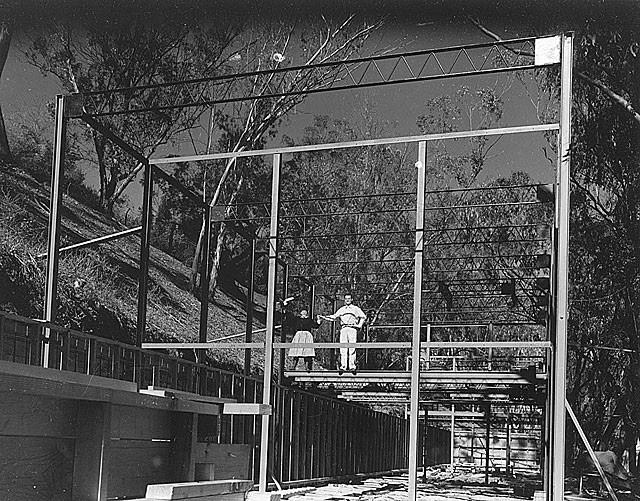
28
Figure 12 & 13: Stephen Canon, Eames House / Charles and Ray Eames,
Material Connection: Architecture and Craft.
The relationship between architecture, materials and craft is deeply intertwined since the very beginning of civilization, as materials have been the cornerstone of architecture, and the very foundation of its development. Material selection is an essential part of the design process and can have a significant impact on the overall look and feel of a building/product. Carlo Scarpa is a famous Italian architect, who focuses on understanding the application of materials in his buildings.30 His understanding of materiality developed through collaboration with local craftspeople, allowing his designs to become cultural icons. By closely examining Scarpa’s work we can see that he deliberately exposes construction detail to allow those experiencing the space to gain an understanding on how materials interact with one another giving them the impression that they are part of his architectural journey. The physical connection between a human and a material is integral to the crafting process, as it allows the crafts-person to gain an understanding of the material’s unique characteristics, such as how it responds to touch or pressure. By having this knowledge, the crafts-person is able to create something that is special and unique. The emergence of modern machine has resulted in a disconnect between materials and the maker, as the product is digital and lacks the tangible experience, which removes the crafts-person’s ability to understand the material on a deeper level. This division can result in a lack of appreciation for the material. Peter Dormer agrees with the statement as he states, “materials have flaws, and in real life these flaws have to be worked on or worked around but on the computer the materials remain imaginary and flawless.” . This suggests that when working with physical materials, there is limits to how perfect a product can be, resulting in uniqueness, whereas on the computer the materials remain flawless, leading in the uniformity of products.
30Di Eugenia Murialdo, “Carlo Scarpa, an Italian Icon,” ELLE Decor, March 8, 2018, https:// www.elledecor.com/it/best-of/a20682670/carlo-scarpa-architetto-biografia-eng/.
31Peter Dormer, The Culture of Craft: Status and Future (Manchester; New York: Manchester University Press, 1997), 147.
29
30
Can craftspeople still keep true to the spirit of craft while using technology?
As we have learnt through this essay that crafting is a process of making something that requires skill, knowledge, and tools. It is not just about the final product; it is about the story an object holds through the process of its creation. This journey provides an authentic experience for the consumer, as it has a direct correlation to the maker who has put in great effort and thought into making of the object, which adds value to the object. However, with the emergence of new technologies, this connection between the maker and the item has been lost, as the machine is able to carry out the same task without the need for a skilled crafts-person. This shift has resulted in the uniformity of objects, which has made them less personal, and as a result, we as consumers are unable to connect with the item on a deeper level. Craft is a form of creative expression that has been around for centuries, and it is still important today, although its application has been altered with the emergence of technology. The digital revolution has changed the scope of craft, expanding it to encompass the use of technology to create, produce, and design objects. This has replaced the traditional image of crafts-person’s making unique items with their hands. Now, craft is seen as a versatile tool that can be employed to produce both digital and physical objects, ranging from multimedia art to 3D printing. Since the beginning, technology has been incorporated into craft in the form of tools, allowing craftspeople to attain greater precision and productivity. Thus, we should regard these technological advancements as tools to help us further cultivate our knowledge and skill in the craft industry. By taking advantage of the various aspects that technology has to offer, given that it is not exploited and only used to enhance the notion of craft. By combining Craft and technology, designers and makers are able to experiment and develop ideas that wouldn’t have been possible with traditional methods of making. It is important to note that without human interaction, technology is useless and thus, it can be argued that utilizing technology to create something still allows craftspeople to remain true to the meaning of craft. I feel that technology and craft are two inseparable elements that should be embraced in order to develop the new future of craft rather than seeing it as a threat to the hand-crafted industry.
31 CONCLUSION
Books, Journals and articles:
Sennett, Richard. The Craftsman. Penguin UK, 2009.
Benjamin, Walter. The Work of Art in the Age of Mechanical Reproduction. London: Penguin Books, 1935.
Glenn Adamson Thinking through Craft. London: Bloombury Visual Arts, 2018.
Weston, Richard. Materials, Form and Architecture. New Haven, Conn.: Yale University Press, 2003.
Katie Lloyd Thomas. Material Matters. Routledge, 2006.
Corbusier, Le. Towards a New Architecture. 1923. Reprint, New York: Brewer, Warren & Putnam, 1923.
Amit Zoran , Leah Buechley Hybrid Reassemblage: An Exploration of Craft, Digital Fabrication and Artifact Uniqueness. Leonardo. 2013.
Pye, David. The Nature and Art of Workmanship. A&C Black, 1995.
Rossi, Catharine. “Craft Contains the Critical Thinking That Could Unpack the Current State of Architecture.” 2017
Unwin, Anna. “Carlo Scarpa - the Architect and His Impact on Interior Design and Style.” AU, 2020 https://annaunwin.com/blogs/journal/carlo-scarpa-a-look-atarchitecture-and-deisgn.
Peter Dormer. The Culture of Craft : Status and Future. Manchester ; New York: Manchester University Press, 1997.
LESLIE, E. “Walter Benjamin: Traces of Craft.” Journal of Design History 11, no. 1 (January 1, 1998): 5–13. https://doi.org/10.1093/jdh/11.1.5.
Adamson, Glenn. The Craft Reader. London: Bloomsbury Visual Arts, 2018.
Adamson, Glenn, and Victoria And. The Invention of Craft. London ; New York: Bloomsbury Visual Arts, 2018.
Lars Spuybroek. The Sympathy of Things: Ruskin and the Ecology of Design. Rotterdam: V2_Publishing, 2011.
Mccullough, Malcolm. Abstracting Craft: The Practiced Digital Hand. Cambridge (Massachusetts): Mit Press, 1998.
Treadaway, Cathy. “Digital Crafting and Crafting the Digital.” The Design Journal 10, no. 2 (July 2007): 35–48. https://doi.org/10.2752/146069207789272668.
https://doi.org/10.2752/146069207789272668.
Ingold, Tim. Making : Anthropology, Archaeology, Art and Architecture. Milton Park: Abingdon, Oxon, 2013.
Andrea Elizabeth Donovan. William Morris and the Society for the Protection of Ancient Buildings. Routledge, 2007.
32
BIBLIOGRAPHY
Websites
https://www.architectureanddesign.com.au/news/antoni-gaudi-ssagrada-familia-has-been-using-3d-p
https://www.archdaily.com/964178/from-handcrafted-stone-to-3dprinting-the-technological-and-material-evolution-of-gaudis-sagradafamilia
https://www.archdaily.com/940530/an-overview-of-digital-fabricationin-architecture
https://www.architecture.com/knowledge-and-resources/knowledgelanding-page/how-digital-crafting-is-revolutionising-traditionalmaterials
https://blog.britishmuseum.org/what-is-the-role-and-value-of-craftstoday/
https://www.thecollector.com/industrial-revolution-arts-and-crafts/
http://www.patenting-art.com/copyprob/wright.htm
Eamesfoundation.org. “Eames House | Eames Foundation,” 2019.
https://eamesfoundation.org/house/eames-house/.
Study.com. “History of Architectural Materials & Techniques,” 2023.
https://study.com/academy/lesson/history-of-architectural-materialstechniques.html.
33
List of Figures:
Figure 1: Domingo, Melissa. THE POTTER’S WHEEL. June 21, 2017. http://www. everywomangathering.com/blog/2017/5/30/the-potters-wheel. Accessed 12 January 2023
Figure 2:Domingo, Melissa. THE POTTER’S WHEEL. June 21, 2017. http://www. everywomangathering.com/blog/2017/5/30/the-potters-wheel. Accessed 12 January 2023
Figure 3: The Art of Handmade Objects, https://cognates.miami.edu/AT_0062. Accessed 10 January 2023
Figure 4: Emma Tucker, 2017, https://www.dezeen.com/2017/05/06/cos-x-oliviervan-herpt-3d-printed-clay-vases-homeware-design/. Accessed 6 January 2023.
Figure 5: Scott, how to cut wood for beginners, 2020, https://sawsonskates.com/howto-cut-wood/. Accessed 12 January 2023.
Figure 6: https://www.ccohs.ca/oshanswers/ergonomics/office/mouse/mouse_ selection.html. Accessed 12 January 2023.
Figure 7: Lisa Goldapple, Sagrada Família 3D Printing, April 12, 2017, https://atlasofthefuture.org/ project/sagrada-familia-3d-printing/. Accessed 4 January 2023.
Figure 8: Emma Tucker, Olivier van Herpt designs 3D-printed clay vases based on latest COS, 2017, https://www.dezeen.com/2017/05/06/cos-x-olivier-van-herpt-3dprinted-clay-vases-homeware-design/. Accessed 4 January 2023.
Figure 9: Emma Tucker, Olivier van Herpt designs 3D-printed clay vases based on latest COS, 2017, https://www.dezeen.com/2017/05/06/cos-x-olivier-van-herpt-3dprinted-clay-vases-homeware-design/. Accessed 4 January 2023.
Figure 10: Amit Zoran and Leah Buechley, Hybrid Reassemblage: An Exploration of Craft, Digital Fabrication and Artifact Uniqueness, 2013, page 8,9. Accessed 12 December 2022
Figure 11: Amit Zoran and Leah Buechley, Hybrid Reassemblage: An Exploration of Craft, Digital Fabrication and Artifact Uniqueness, 2013, page 8,9. Accessed 12 December 2022
34