
Fengate Infrastructure Fund IV (International) LP
Fengate Infrastructure Fund IV (International) LP (the “Fund”) qualifies as an alternative investment fund (“AIF”) and falls under the scope of Regulation EU 2019/2088 of 27 November 2019 (“Sustainable Financial Disclosure Regulation” or “SFDR”) In compliance with Article 10 of the SFDR, the Fund is required to make certain website disclosures regarding its promotion of certain environmental and social characteristics.
The Fund promotes the ESG Characteristics (defined in section 3 below) but does not have sustainable investment as its objective.
A reference benchmark has not been designated for the purpose of attaining the ESG Characteristics promoted by the Fund. The Fund invests in certain infrastructure assets located in Canada and the United States, and integrates the ESG Characteristics by applying a rigorous sourcing, due diligence and asset management process to its investments. Fengate has identified certain assets that it will exclude or limit from investment by the Fund, known as exclusions, to attain the ESG Characteristics promoted by the Fund In addition, the Fund will not invest in infrastructure assets whose principal operations are in a Restricted Sector (defined in section 6 below). Fengate will also conduct due diligence on investee companies to ensure that they are following good governance practices, details of which are set out in section 4 below
Fengate uses certain Sustainability Indicators (defined in section 6 below) to measure the attainment of the ESG Characteristics promoted by the Fund In addition, the Fund will report material ESG criteria for each investment in its annual ESG monitoring, including annual asset level GHG emissions data and an ESG assessment based on the predetermined key indicators for ESG health of an investment.
In relation to due diligence, Fengate will consider the following ESG criteria:
• environmental: GHG emissions, water and waste management, energy management, sustainable land use, and resource depletion / renewable energy;
• social: human rights, impact on local community, data security, employee engagement, diversity and social inclusion, employee health and safety, and labour practices; and
• governance: business ethics, board composition and governance rights, critical incident and systematic risk management, remuneration policies, accounting integrity and audit equality and bribery, corruption, and conflicts of interest
This financial product promotes environmental or social characteristics, but does not have as its objective sustainable investment.
Fengate aims to attain certain environmental and social characteristics (the “ESG Characteristics”) by applying a rigorous sourcing, due diligence and asset management process to its prospective investments. Through its investments in certain infrastructure assets located in Canada and the United States, the Fund intends to invest across the following target sectors (the “Target Sectors”):
• social infrastructure, which typically includes assets that accommodate social services to support a growing population, rising social and healthcare costs, and the need for replacement and enhancement of facilities. Through its investments in social infrastructure, such as hospitals, schools, universities, and other public facilities, the Fund seeks to foster social cohesion;
• transportation infrastructure, which typically includes assets that support a growing population, urbanization, and the need for replacement or enhancement of mass transportation assets. Through its investments in such assets, including light rail systems and green bus fleets, the Fund seeks to support sustainable urban transport and a greener economy;
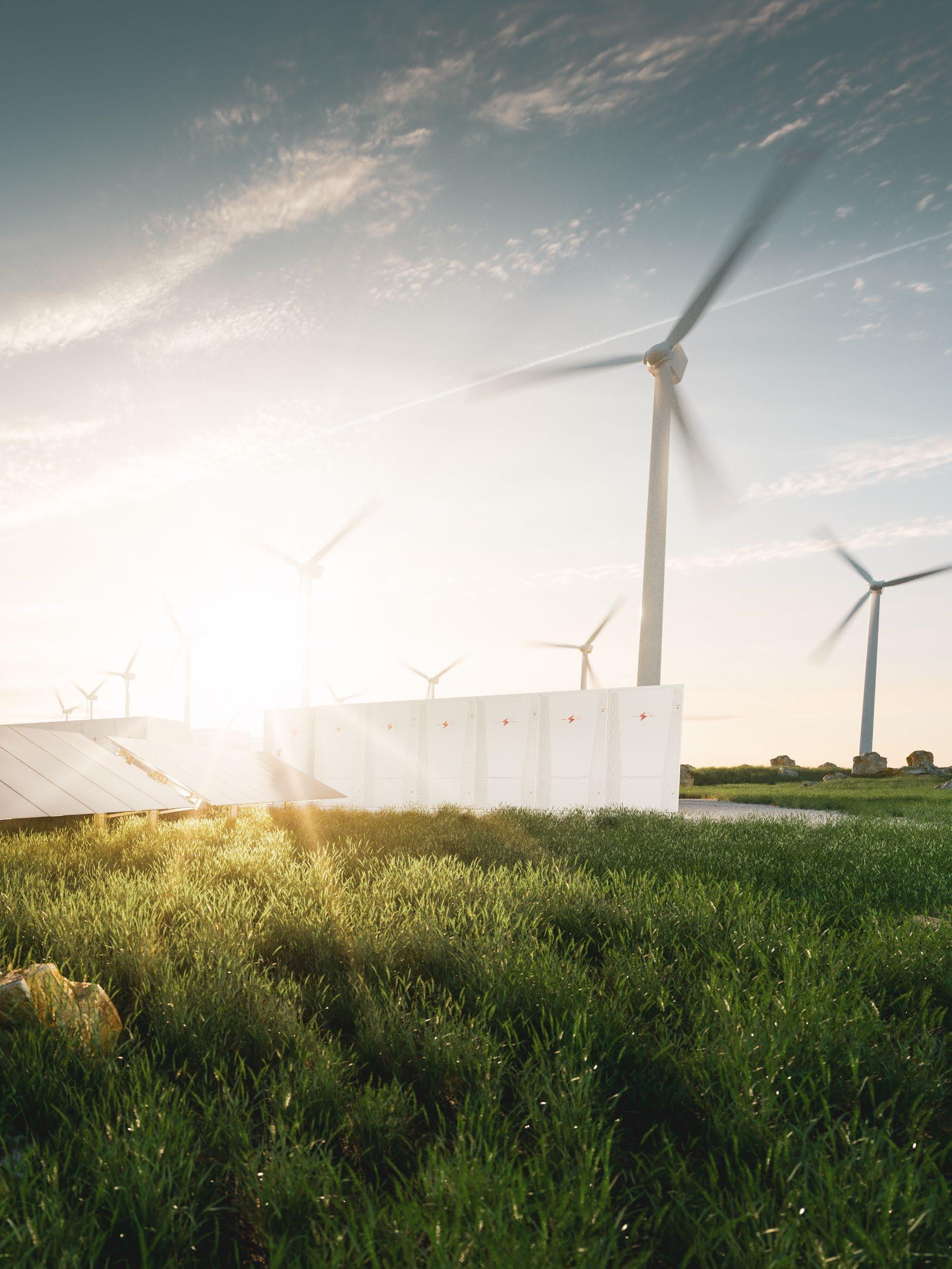
• energy transition, which includes renewable power assets such as solar, wind, hydro, battery storage, and co-generation. Through its investments in such assets, the Fund seeks to support the energy sector’s transition towards decarbonization; and
• digital infrastructure, which complements the social, transportation and energy transition sectors targeted by the Fund. Investments in digital infrastructure assets may also support the Fund’s activities towards achieving its social characteristics by providing access to digital technologies to rural communities.
The Fund will incorporate the ESG Characteristics into its investment strategy by adopting a rigorous investment process which comprises (i) sourcing; (ii) diligence and approval; and (iii) asset management.
As a first step, Fengate will ensure that any proposed investment falls within the four Target Sectors described in section 3 above. Fengate has also identified certain assets that it will exclude or limit from investment by the Fund, known as exclusions, to attain the ESG Characteristics promoted by the Fund. In addition, the Fund will not invest in infrastructure assets whose principal operations are in any of the following sectors (each a “Restricted Sector”): tobacco; firearms; nuclear power; coal power (including coal-fired generation, transportation and mining); oil (including upstream, midstream and storage); upstream gas; and mining.
The Fund may invest in infrastructure assets whose principal operations are not in a Restricted Sector but that nonetheless have some exposure to a Restricted Sector, provided that: (i) no more than 15% of any such infrastructure asset’s total revenues is derived from Restricted Sectors; and (ii) there is a planned trajectory to reduce this exposure over time. These restrictions will be assessed at the time of investment.
The Fund does not invest in projects that violate human rights, run afoul of local law, damage the environment, or have unfair labour practices.
As part of the investment process, Fengate will conduct due diligence on investee companies to ensure that they are following good governance practices.
Fengate seeks to make control investments to ensure appropriate oversight and control of companies or projects. In most instances, Fengate seeks to invest greater than 50% of the equity required for any investment, and therefore obtains majority voting rights and board representation. This gives Fengate the ability to closely monitor asset performance and influence proactive risk mitigation through its governance protections.
The Fund plans to invest 75% of its capital directly in assets that contribute to attaining the ESG Characteristics. 25% of investments will be included under #2 Other and they will comply with the ESG investment process. The Fund will not invest in infrastructure assets which are in Restricted Sectors. Out of the percentage of investments that are aligned with the ESG Characteristics, 0% are expected to be Taxonomy aligned. However, this position is subject to change as and when Fengate commences Taxonomy assessments.
Fengate uses the following key performance indicators (the “Sustainability Indicators”) to measure the attainment of the ESG Characteristics promoted by the Fund:
• environmental: GHG emissions, water and waste management, energy management, sustainable land use, and resource depletion / renewable energy;
• social: human rights, impact on local community, data security, employee engagement, diversity and social inclusion, employee health and safety, and labour practices; and
• governance: business ethics, board composition and governance rights, critical incident and systematic risk management, remuneration policies, accounting integrity and audit equality and bribery, corruption, and conflicts of interest.
If the screening or due diligence findings indicate that an investment opportunity is inconsistent with Fengate’s expectations in relation to these criteria, Fengate will not pursue the opportunity further.
In addition, with respect to monitoring:
• Energy management and usage (gas and electricity) of public-private partnership (“P3”) projects is carefully monitored by Fengate and its operating partners to ensure it is as efficient as possible and is in line with contract requirements. For all P3 projects, electricity and gas usage are contractually targeted and monitored resources Fengate and its operating partners are ultimately responsible for energy usage and are subject to financial penalties from local government authorities should forecast energy usage be higher or lower than the original agreed annual energy targets
• Water usage of P3 projects is monitored by Fengate and its operating partners by comparing monthly and annual totals to identify significant or unusual changes in usage Water usage is typically managed by comparing meter readings on site with water supply invoices. By closely monitoring usage and changes, Fengate and its operating partners can identify leaks, inefficient equipment (boilers, chillers), and issues with the metering systems themselves.
• For Fengate’s cogeneration investments, the operating partner reports regularly on the percentage mix of off-gases utilized from the industrial complex, and the quantity of steam generated from the cogeneration process. Given the financial benefits of operating as efficiently as possible, regular maintenance schedules for the equipment are required to ensure optimal function. Water consumption is heavily regulated by local environmental authorities, with scrutiny on water and steam recovery from the industrial complexes, leveraging metering to identify any issues
The Fund will also report material ESG criteria for each investment in its annual ESG monitoring, including annual asset level GHG emissions data and an ESG assessment based on the predetermined key indicators for ESG health of an investment.
7. Methodologies for environmental or social characteristics
As set out in section 6 above, Fengate uses the Sustainability Indicators to measure the attainment of the ESG Characteristics.
8. Data sources and processing
In order to promote the ESG Characteristics, Fengate uses its internal resources to calculate and review each asset’s performance against the Sustainability Indicators. Annually, Fengate’s asset management team completes an ESG Monitoring Assessment for each of its infrastructure investments, collating asset level data to assess greenhouse gas emissions, building certifications, employee health and safety, local community engagement and governance.
The asset management team gathers investment level data for reporting, as follows:
• For the Fund's P3 projects, data is metered and monitored to ensure accuracy and quality. There are no estimates used for energy or water use across P3 investments.
• For the Fund's renewable power investments, which do not use energy or water, no data is estimated.
• For the Fund's cogeneration investments, Fengate relies on several hundred data points, which are measured and stored. Data is compared against certified revenue meters, Continuous Emissions Monitoring Systems, and indirect energy balance calculations. No estimations are required for energy and water use measurements.
8. Limitation to methodologies and data
There is risk of inaccuracy or inconsistency due to the various available methods for monitoring the Sustainability Indicators, and in particular for calculating GHG emissions. However, Fengate leverages the Common Carbon Footprinting and Exposure Metrics recommended by the Task Force on Climate-related Financial Disclosures to communicate investment-specific GHG emissions across its portfolio. Fengate leverages this methodology to provide investors with a standardized method of calculating GHG emissions. In this way, Fengate ensures that the risk of inaccuracy or limitation to calculating and monitoring the Sustainability indicators is minimized so as not to impact how the ESG Characteristics are met.
Consideration of the ESG criteria set out below forms an integral part of each phase of the Fund’s investment strategy, to ensure that the Fund invests in, and remains invested in, infrastructure assets that fall within the four Target Sectors, that support the attainment of the ESG Characteristics described above, and that the investee follows good governance practices.
Fengate will consider the following ESG criteria as part of the due diligence phase:
• environmental: GHG emissions, water and waste management, energy management, sustainable land use, and resource depletion / renewable energy;
• social: human rights, impact on local community, data security, employee engagement, diversity and social inclusion, employee health and safety, and labour practices; and
• governance: business ethics, board composition and governance rights, critical incident and systematic risk management, remuneration policies, accounting integrity and audit equality and bribery, corruption, and conflicts of interest.
In addition, sustainability risks are identified during the due diligence phase and the results are presented to the Investment Committee and taken into consideration prior to proceeding with an investment.
Fengate’s infrastructure platform invests largely through Special Purpose Vehicles, for which Fengate’s asset management team is responsible for administering the project agreements with government sponsors; managing the funding of project debt and equity; managing payments to design-builders, infrastructure operators, and other service providers; renewing insurance policies; bookkeeping and administering bank accounts; filing regulatory documents; and preparing financial reports. Fengate will contract key project services to high-quality industrial partners (e.g. design-builders, infrastructure operators) and carry out administrative services (e.g. financial reporting, cash management) with which it is familiar. During the investment process, when counterparties are appointed, Fengate looks to ensure that equivalent policies are implemented by any service providers that it chooses to work with. Fengate engages with numerous service providers, including design-builders and operating partners, promoting the use of favourable environmental and economic practices.
To ensure appropriate oversight and control of companies or projects, in most instances, Fengate obtains voting rights and board representation. Fengate seeks majority ownership stakes in projects and majority board representation, which provides Fengate the ability to closely monitor asset performance and influence proactive risk mitigation through its governance protections
Fengate will consider opportunities to participate in collaborative engagement initiatives that support businesses and projects, Fengate’s stakeholders, and the industries in which it invests. To support positive growth and change within each industry in which it invests, Fengate is an active member in a number of industry groups including Association for the Improvement of American Infrastructure, Canadian Council for Public-Private Partnerships, Canadian Venture Capital and Private Equity Association, NAIOP Commercial Real Estate Association, and REALPAC. In addition, Fengate sponsors relevant industry events annually
A reference benchmark has not been designated for the purpose of attaining the ESG Characteristics.
“Fengate” refers to the Fengate group of companies which is comprised of Fengate Capital Management Ltd., its affiliated entities and the funds or other investment vehicles that they manage. Fengate has produced this information brochure (the “brochure”) for informational purposes only
The information contained in the brochure (the “Information”) is believed to be accurate at the time of publication of the brochure; however, Fengate does not guarantee or warrant or make any representations concerning the quality, suitability, accuracy completeness or timeliness of the information contained in the brochure.
This brochure and the information contained within it does not constitute an offer or solicitation by anyone in any jurisdiction in which such an offer or solicitation is not authorized or to any person to whom it is unlawful to make such an offer or solicitation.
In no event will Fengate be liable to any party any claim or any direct, indirect, exemplary, incidental, punitive special or other consequential damages arising out of information available in the brochure. Fengate is a trade name of Fengate Corporation All other trade names, trademarks, service marks or logos found in this brochure are owned by their respective owners. © 2023 registered and unregistered trademarks are the property of Serafini Holdings Corporation
and produced by Fengate. 2023.02.07