Lasting Solutions
Big ideas driving enduring design
Big ideas driving enduring design
Today’s urgent challenges may appear novel. The value of thoughtful design responses will endure.
In this issue, we look at designers shaping buildings to meet fundamental desires: community, efficiency, and privacy. Plus: takeaways from a roundtable discussion on an often-overlooked quality indicator: building longevity. This summer, the architecture, engineering, and design firm Page became part of Stantec. We’re sharing highlights from a conversation with our new team members on fostering a winning design culture in our Buildings practice.
With your reading experience in mind, we have built in easy ways for you to navigate this document. Use the bottom menu, arrows, and the table of contents to flip to different sections. Watch for information icons, arrows, buttons, and underlined hyperlinks throughout the document. They will lead you to more information.
We are seeing how powerful a design metaphor can be on a current project that’s part of an effort to rebuild Ukraine. Metaphor can be an important tool for unlocking a design solution that speaks to us on a deeper level beyond the basics of function or form.
Sometimes a design needs a soulful element to tie it all together and give it meaning. Metaphor allows us to elevate design beyond mere problem solving and utility. A metaphor can be a powerful tool in architecture. Designers use metaphor to make an idea tangible.
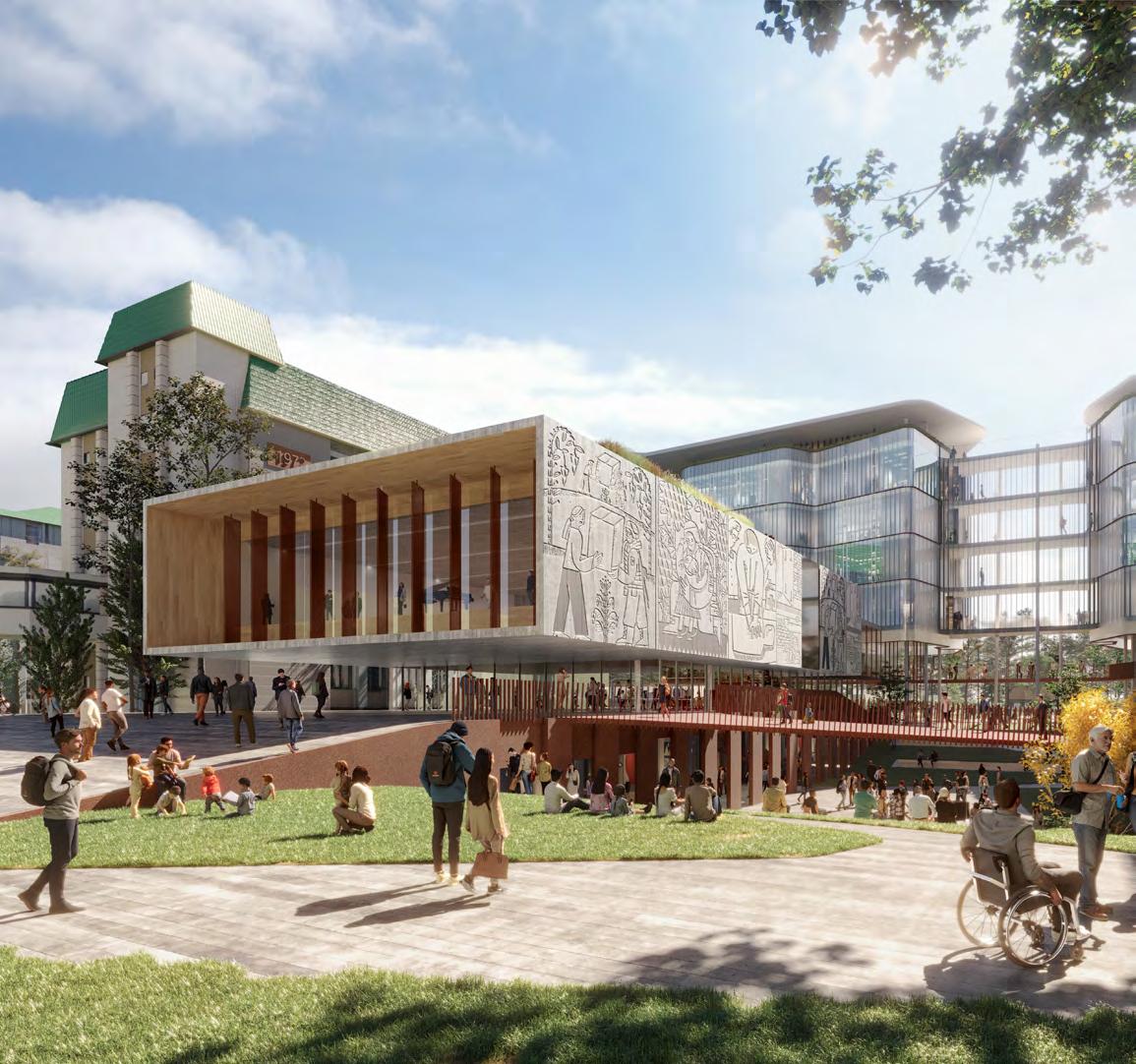
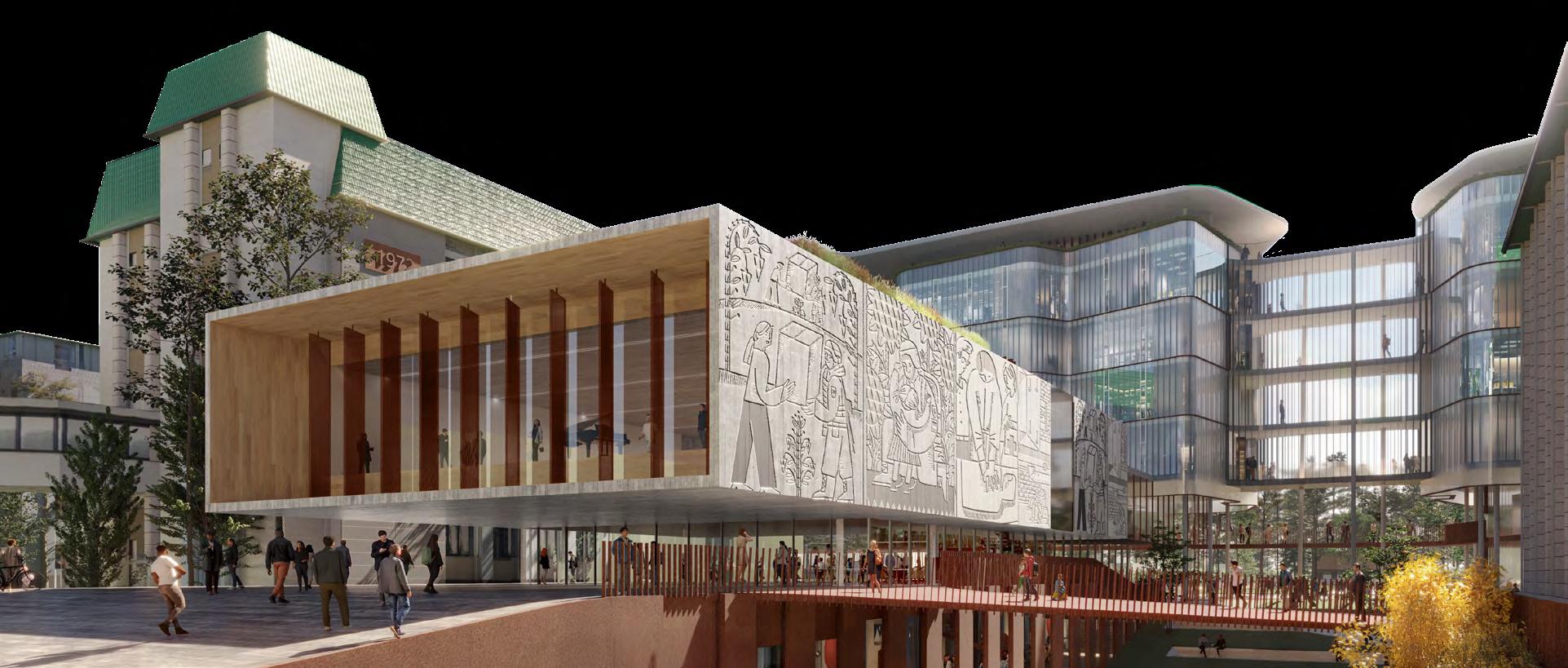
In the case of our recent winning entry for the State Tax University (STU) International Architecture Competition to redesign a campus building in Irpin, Ukraine, the right metaphor elevated a design solution to something more meaningful.
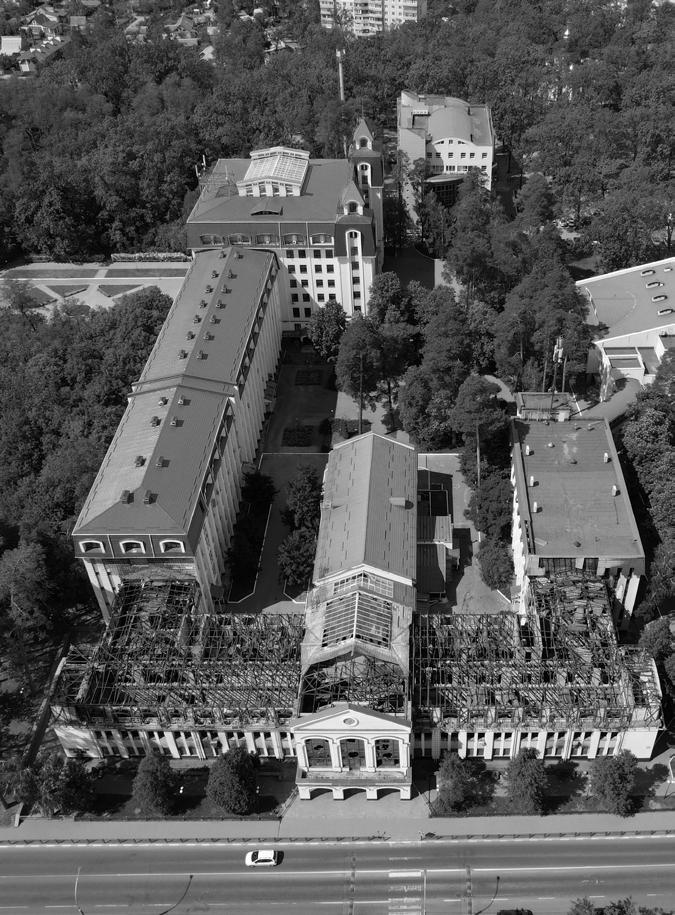
The main STU academic building in Irpin, Ukraine was almost completely destroyed in the first days of the Russian-Ukrainian war in 2022.
The new University building is envisioned as a replacement with functions of the one ruined, reflecting STU’s aspiration of becoming a regional and international hub for research and academic excellence. The competition brief sought a “progressive and comfortable place for learning, research, and student leisure based on innovative educational standards,” requiring shelter space from the ongoing conflict. The new building is the future public face of the campus—a reimagined gateway between the University and the community, a symbol of hope, and dream of a better future.
Layering place and context
We learned that Irpin is known as the “City of Parks.” But it bears the scars of war. To better understand Irpin and its context, we overlaid maps of the city’s damaged buildings, its parks, and housing types to see how the University fit in. Rather than simply replace the destroyed building, we reimagined it as a central gathering space, a regenerative civic and academic hub where collaboration, research, and cultural exchange can flourish.
With the layers of context in mind, we developed design responses that shaped our winning design submission. Here are the four themes and design responses that informed our design solution plus the metaphor that brought it all together.
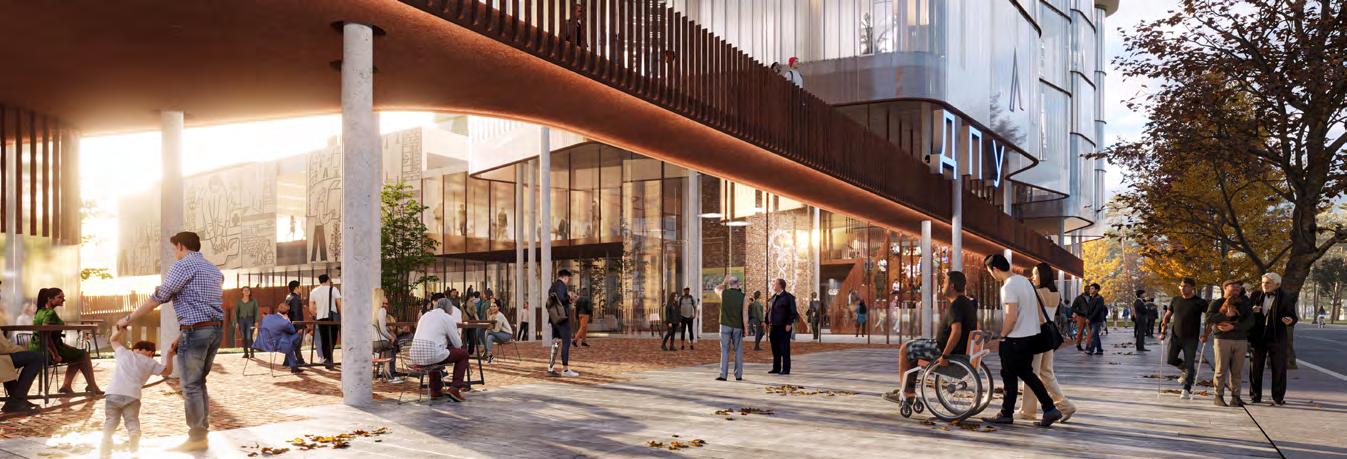
The existing academic building cuts the street off from the rest of the campus. Our goal was to connect the campus and city of Irpin to welcome students and the public. The idea of an open ground plane where pedestrians can move from the public arena into the University campus drove our design.
We reimagined the symbolic heart of the campus—the site of the former main campus building—as the Garden Gateway where the landscape itself becomes the front door. Rather than a structure, this open-air aperture welcomes us, connecting Irpin, the park, and the University.
The Gateway is an exterior place that people move through at least once a day. They come through to get lunch, meet their friends, or get ready for class. They can head back to the street or spend time in the forested park.
To create this space, we lifted the building off the street and made its lobby transparent. Movement along elevated walkways spanning over the opening adds vibrancy of the Gateway.
On the ground plane, the landscape is the architecture; pedestrian walkways, gentle slopes, and native plantings form a seamless transition from public to academic space. Curved walls direct visitors further into the campus.
The Gateway speaks to simplicity, functionality, and openness—core values of modern university design. It will be a powerful civic presence that invites community engagement and shared use.
The design reimagines the former campus building as an open-air aperture and gateway.



THEME TWO Memorial/ adaptive reuse
How important are the remnants of the neoclassical main building to the campus? Should the midcentury façade be preserved? What could be reused and how? These are important questions we considered for the STU.
RESPONSE
Create new memorials
We didn’t want to leave the remaining structure in place, because it disconnected the campus from the street and surrounding park. Rather than reuse, we opted to create a new multipurpose space for gathering that aspired to reconnect the community.
We designed the required safety shelter, but we made it a multi-purpose space with daylight. It functions as a community fitness and recreation center. And it connects to a courtyard we call the STU Community Room. It features deployable shelter walls that can be used to close off the area when needed.
Set within the land, the STU Community Room is a terraced, multi-level courtyard. We designed it for gathering, learning, and reflection. Sloped at a gentle grade for universal accessibility, the space blends sculpted terrain, berms, retaining walls, and tree canopy to form an inclusive and flexible outdoor room. It’s an adaptable social landscape, supporting both formal events and everyday campus and community life.
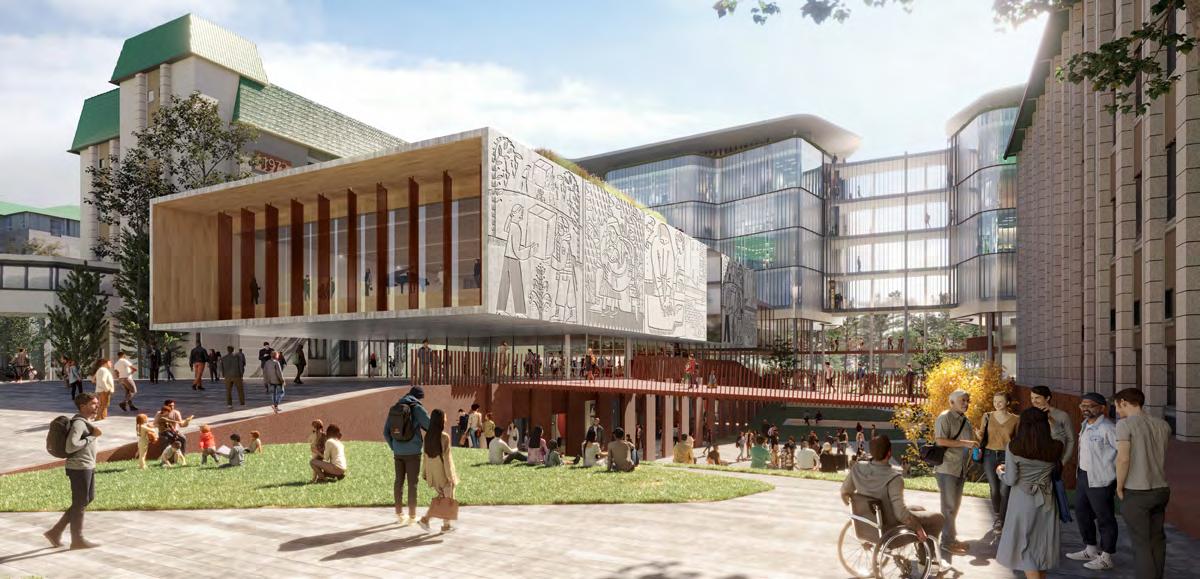



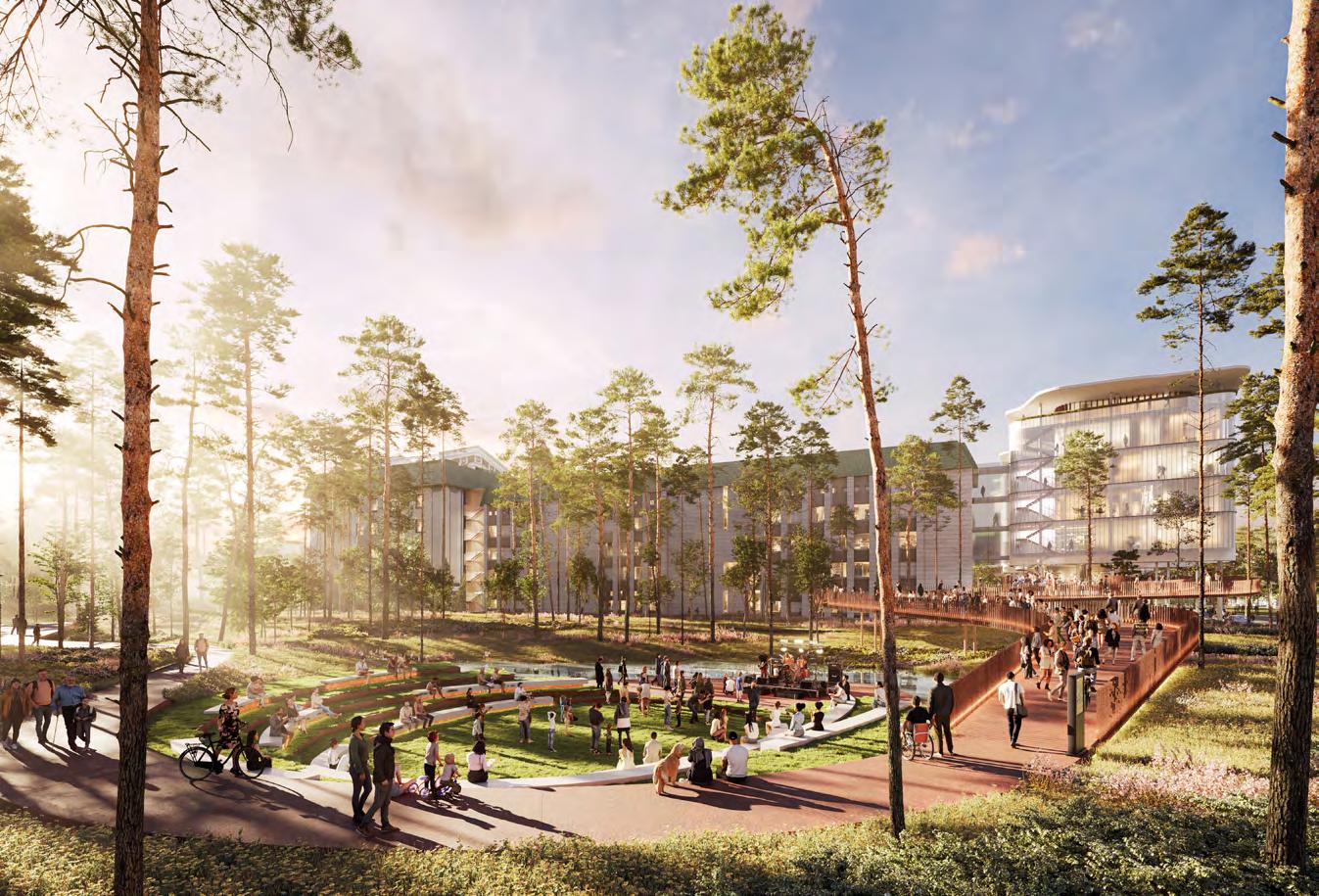
The STU campus is set amongst densely forested parks. How can our design acknowledge this connection to nature and enhance the sense of place at the STU?
We took inspiration from the surrounding forest. Could the architecture and building form “learn” from nature? Could its floorplates act as an extension of the natural treetop canopy?
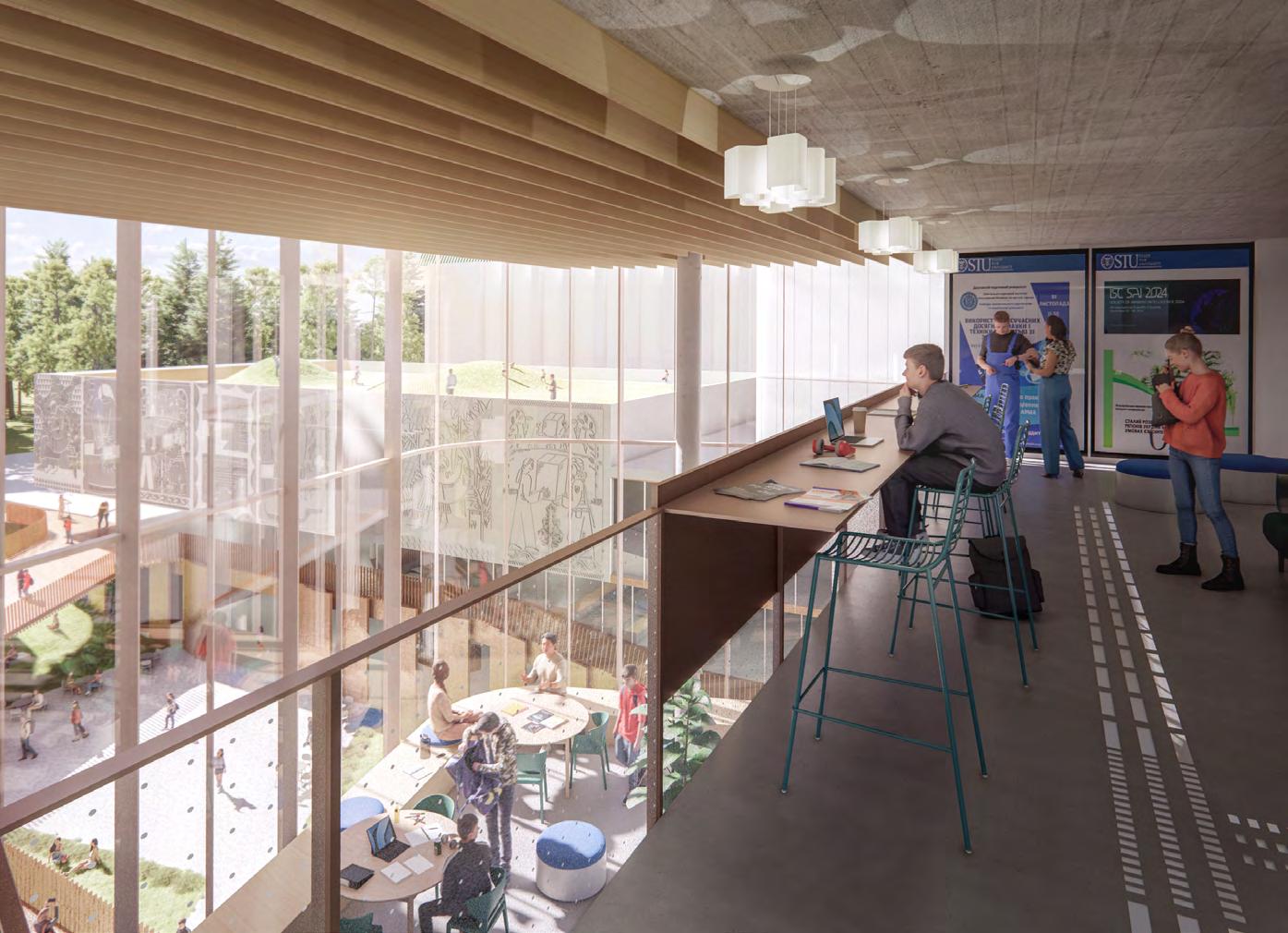
Above the forest floor, “the Treetop Canopy” terrace offers a tranquil elevated platform for collaboration and contemplation. We designed the canopy as a shared space for informal gatherings, interdisciplinary exchange, and visionary thinking. It allows students and faculty to connect with nature while engaging in academic inquiry. It’s a place to study or meet, with stunning 360-degree views back to the campus, the city, or out to the forest. Inclusive
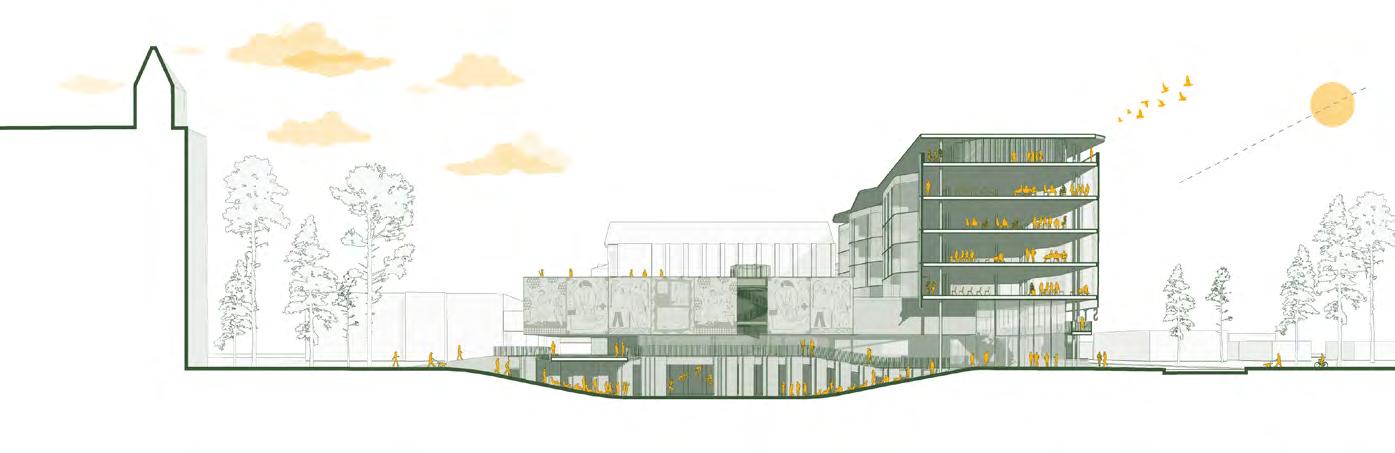
The STU competition brief prioritizes inclusivity and access to students, including veterans with physical limitations.
Rooted in the principle of Design for All, the project is guided by a commitment to equity, inclusion, and universal accessibility.
The new STU campus is envisioned as a place where everyone—regardless of ability, age, or background— can belong, participate, and thrive. It is designed to welcome a new generation of students and remove the barriers that have historically prevented full participation in academic and civic life.
Physical accessibility is embedded at every level. Buildings, pathways, and open spaces follow universal design principles, ensuring ease of movement for people of all abilities.
Gentle slopes, wide circulation routes, and intuitive transitions between indoor and outdoor spaces allow for smooth, independent mobility. Tactile surfaces are used at key decision points, thresholds, and elevation changes to assist those with low vision. Interactive digital wayfinding kiosks, equipped with audio support and multilingual content, are placed at major nodes across campus.
Classrooms, public areas, and recreational spaces are designed to accommodate diverse learning and social needs. Flexible layouts, acoustic treatments, and lighting controls allow spaces to adapt to a variety of teaching methods and sensitivities.
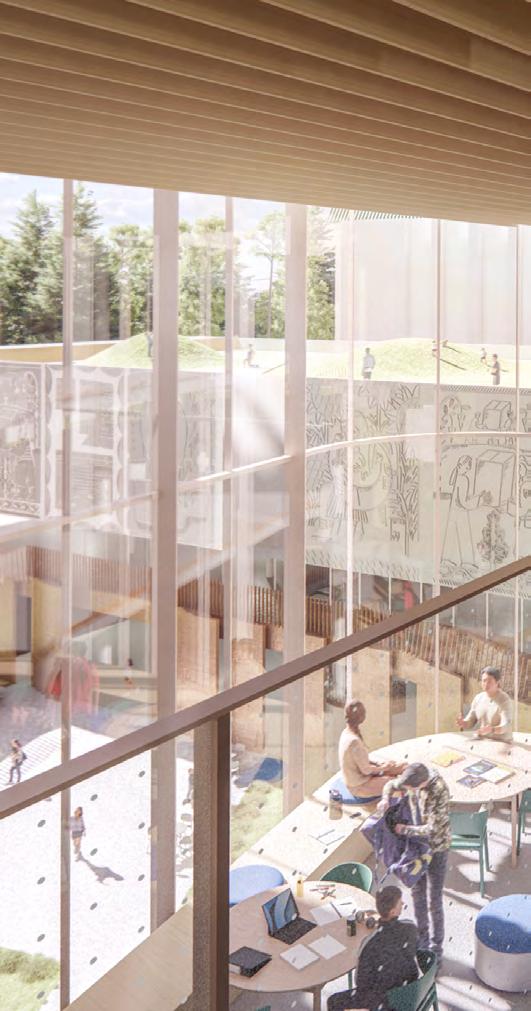
‘Learning Lanterns’ emerged as a visual metaphor for the building’s flexible rooms.
We had the bones of the idea, but it needed a spirit. We came up with an inspiring design metaphor that tied the project together and inspired the design solution.
The idea of the treetop canopy led us further. What could we hang amongst the tree branches that would beckon all to this renewed place of inclusive learning? “Learning Lanterns” emerged as a visual metaphor for the building’s flexible rooms. We imagined a series of light-filled academic spaces suspended among the trees. These learning lanterns offer serene, focused environments for study, teaching, and research with organic forms inspired by the forest.
The learning lanterns feature flexible, interconnected lounges that accommodate changing educational programs. We designed them to foster informal interdisciplinary collaboration outside of formal academic spaces. The lanterns symbolize knowledge and possibility—calling out to the community of Irpin.
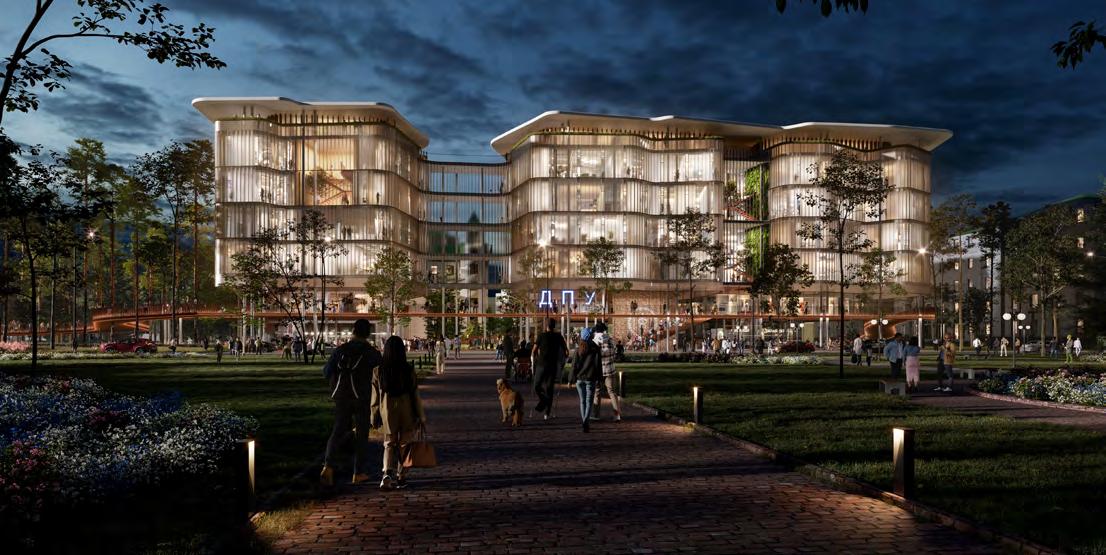
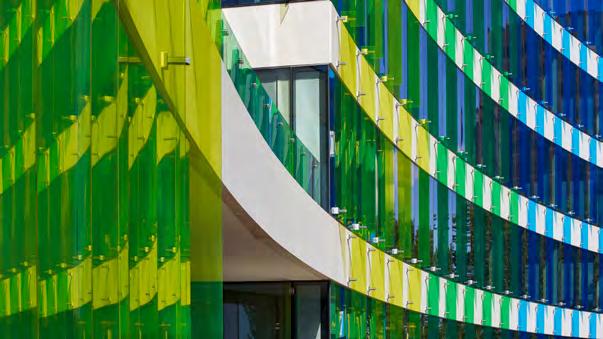
The learning lanterns metaphor informed our envelope design, choice of materials and the building’s architectural form. To achieve a translucent effect, we used channel glass cladding with translucent insulation between layers of glass in walls to disperse daylight. For solid areas, we combined an insulated back up wall with channel glass cladding and integrated lighting. This allows for good thermal performance. The curtain wall features vertical fins to match the rhythm of the channeled glass. The result creates a cohesive envelope and offers dynamic lighting and stimulating views in different places.
Design competitions give us the opportunity to think big. In many ways, this competition asked us to consider how to rebuild Ukraine. It invited us to think beyond a single building. It suggested we go further to create a shared vision for rebuilding a city together with community.
Typically, when designers engage in city building (or rebuilding) they design a few buildings at a time. Designers will need to think at the city scale to rebuild Ukraine.

Eugene Chumakov
Senior Associate Toronto, ON Eugene is a skilled design architect and a passionate supporter of engagement with the public realm delivering work in multiple sectors, most notability healthcare and education.

Dathe Wong Design Director, Canada Toronto, ON
Dathe believes great design enhances quality of life for all. A champion for design excellence, Dathe creates innovative, purposeful, and awardwinning engagements that prioritize positive human outcomes.
Being a part of a city rebuilding project is a tremendous honor and responsibility. Our design, we hope, can act as a catalyst and model for ambitious thoughtful designs to come. We want to set a high bar for what the city of Irpin can be. ■
STU International Architecture Competition Team
• Lucy Baird
• Chris Bridle
• Jeff Choi
• Eugene Chumakov
• Adam Fearing
• Arash Ghafoori
• Sach Grewal
• Xuehan Li
• Dathe Wong
What do private rooms mean for traditional dormitory design? Picture yourself on a campus tour in the year 2025. Sneaking a peek at the model dorm room—perhaps two or three beds in a room, with a small desk and a wardrobe for each occupant, and not much else.
Common showers and bathrooms down the hall, maybe a group study space on the floor. In the past, this spartan living situation might have been an accepted rite of passage. For many of us, it might be a fond memory of our time living on campus. However, student preferences and adaptability have rapidly changed in recent years, shaped by the COVID-19 pandemic and its aftermath.
By Meg Schubert Allen
This has resulted in a starkly different climate and demand for student housing today. Above all, students want privacy. It seems that this preference may have a lasting impact on universities. A 2025 survey from StarRez1 shows that at 51 percent of institutions, students rank single rooms as their top choice.
Today, student housing is in short supply on many campuses across the US and Canada. And increased housing demands are spilling over into surrounding communities. With universities taking a closer look at their investments in student housing, which supplements tuition as a key source of income, it’s important to look at what’s changed since the last time they invested in student housing.
Dormitory style housing has been a campus staple for decades, especially for first-year students. Of course, trends in student housing come and go.
While this model may not be as popular with today’s students, the logic behind it remains relevant. There’s a reason the traditional dormitory design doesn’t offer much private space. With smaller sleeping rooms and a heavier focus on common spaces, it encourages students to get out, socialize, and use the campus and its amenities. Administrators say this encourages connections between students and faculty and the place they’ve chosen to advance their education. Beyond that, it is also the most efficient use of space and budget.
Student success is another driver for on-campus housing. Studies (such as those by Alexander Astin at UCLA and Ernest Pascarella at the University of Iowa) show first-year students who live on campus tend to stay in university longer and complete their degrees. For decades, universities leaned into traditional dormitory design for this reason.
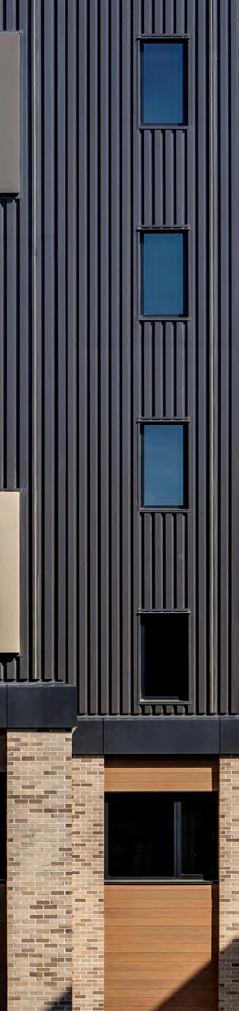
For example, take the City Heights Residence Hall at the University of Colorado Denver, where first-year students are two or three to a room. Rooms are minimal in this design, but every floor is sprinkled with a variety of study and lounge spaces. These include flexible setups and furniture. Bathrooms are communal; however each bathroom cluster includes fully enclosed compartments with a variety of arrangements and doors have occupancy indicators for comfort.
Designed in 2019, City Heights welcomed its first residents in 2021. A lot happened in between. During post-occupancy evaluations, residents shared their desire for more privacy. But they also had stories about using the common lounges for weekly game nights. Residents are creating lasting friendships and memories in the residence hall’s social spaces.
Universities with similar facilities are now grappling with marketing the more traditional dormitory design model to prospective students and their parents. Or they may be thinking about how they could adapt or renovate spaces to better fit with incoming student tastes.
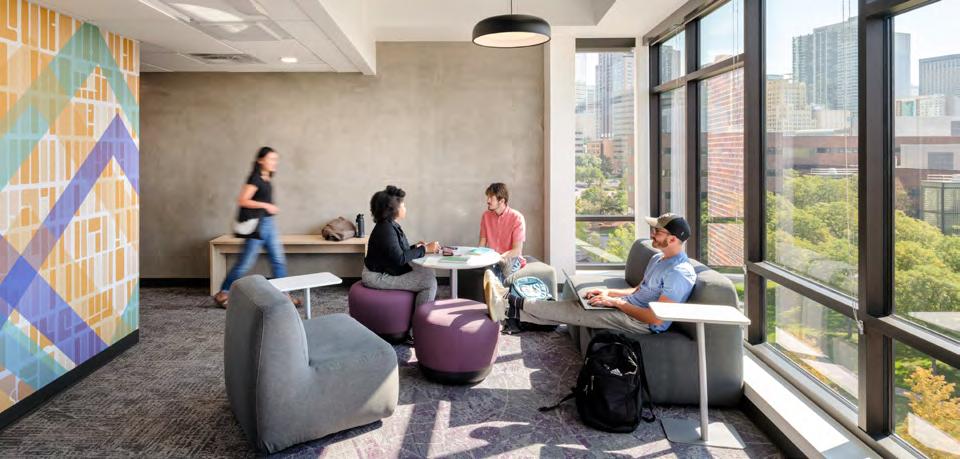
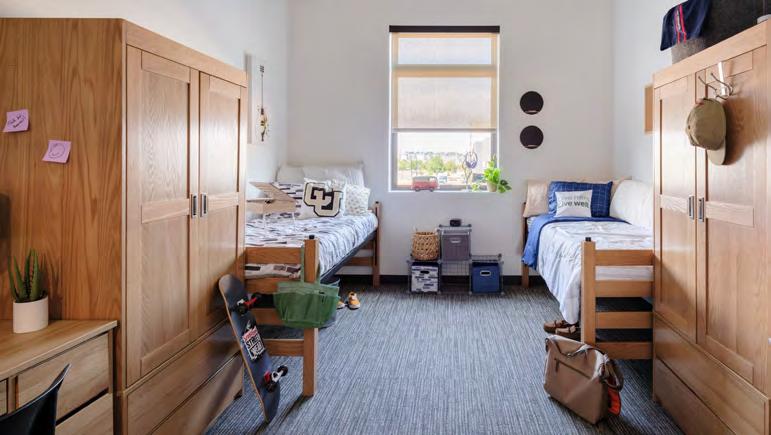
Universities have seen these preferential shifts away from traditional dormitory design for many years now. Growing up in the pandemic may have heightened students’ concerns about wellness, increased their social anxiety in large groups, or even contributed to lack of attention in the classroom. And as digital natives, they are accustomed to everything being available online. They can attend classes, order food, even virtually “hang out” with friends without leaving the comfort of their bedroom. This makes isolation all too easy. With mental health issues on the rise for this generation, 2 institutions and designers want to be intentional about encouraging socialization. We can encourage connection in shaping these living spaces.
On the other hand, there are also constraints in student housing that won’t budge regardless of student preferences. First, studies 3 show that the socialization and community building inherent in student housing play a large role in social and academic success. This leads to increased graduation rates and higher GPAs.
Furthermore, universities will always need a positive business case to build or renovate their housing stock. Higher-density plans are the most economical to build. And the cost to build is only becoming more expensive over time.
So where do we go from here in campus housing design? Universities investing in housing, whether building new or renovating existing facilities, have difficult decisions to make. They must look at the housing type and design that resonates with incoming students and stands the test of time.
How do they support students entering postsecondary education who express these postpandemic preferences? How can they encourage student interaction and face-to-face social connections, but not turn off the next generation?
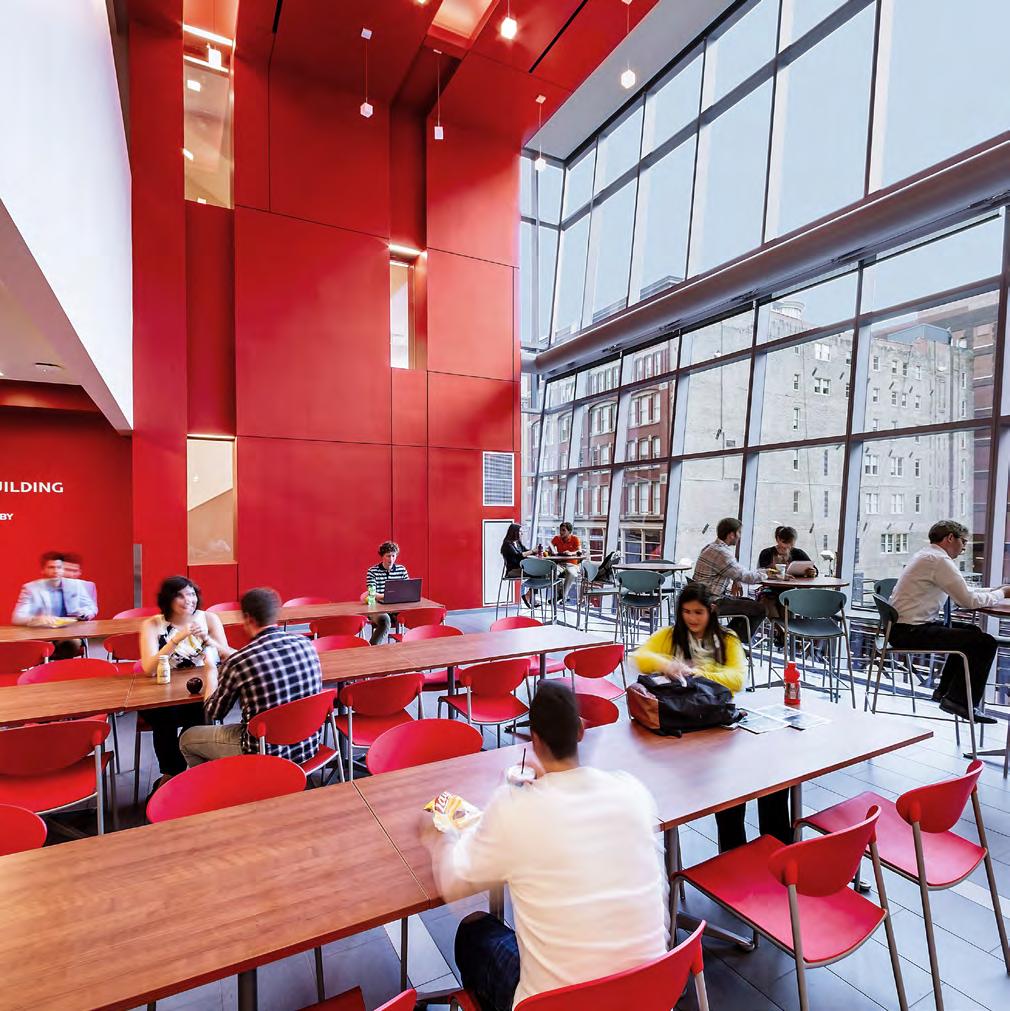
Here are six points to consider when planning a responsive campus housing solution.
Learn from upper-level and graduate housing
Typical upper-class and graduate student housing tends to allow more room for different lifestyles and independent living. There is less focus on community spaces. Today’s incoming first year and underclass students will find this apartment-style living more appealing in terms of privacy. The lack of social space, however, may be detrimental to their overall experience.
While universities may feel the pressure to add all private rooms, they should look toward creating what my colleague Travis Sage has dubbed “the efficient middle.” We know that the cost of renting a bed at a university has been rising. 4 Designs like the efficient middle can help the university deliver “bed equity” (meaning affordability) while giving students the lifestyle they desire.
1. Start with a program analysis
Program analysis is an important first step in student housing planning and design. This analysis should combine quantitative and qualitative data. When we do this, we look at demographic trends, enrollment, and student satisfaction. We also look at retention and graduation rates.
We drill down into housing demand, occupancy by housing type, waitlists, and student preferences. The result, combined with an offcampus market analysis, gives universities a clear view of their housing needs.
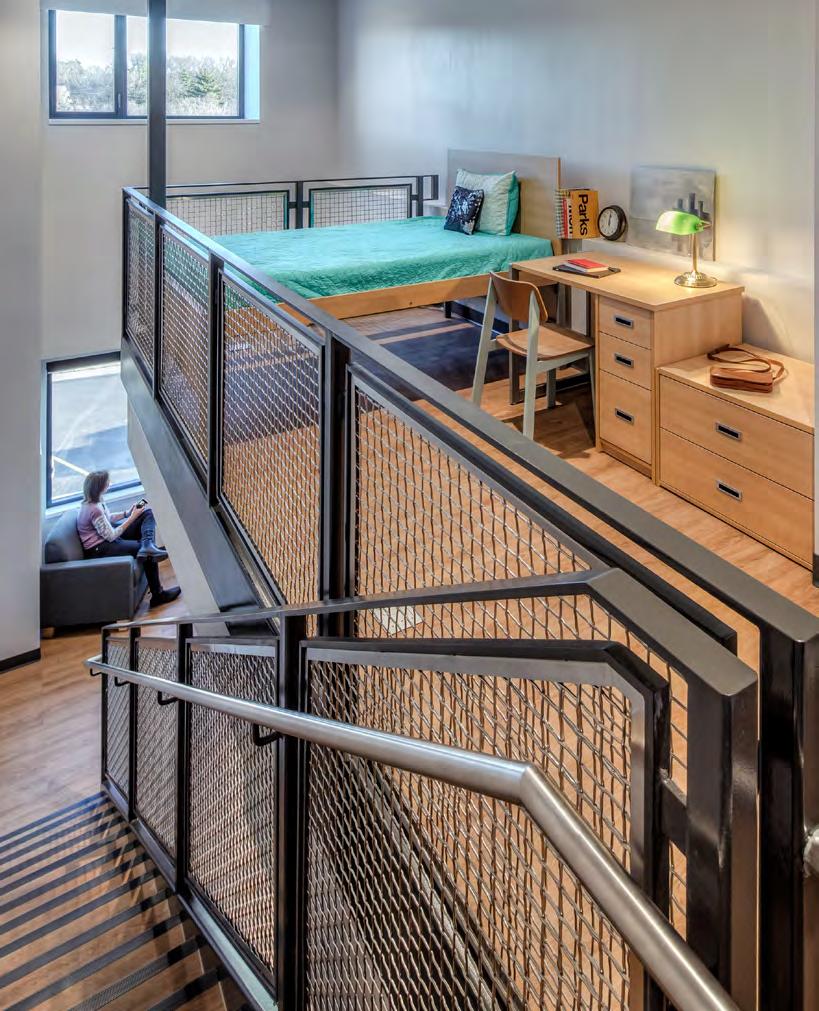
To design the efficient middle, we create compact footprints for dwelling units. They look like urban lofts and studios. They push the living space to the interior of the building, creating deep units that extend from exterior wall to corridor. This allows designers to shrink the typical circulation space needed in the building’s apartments.
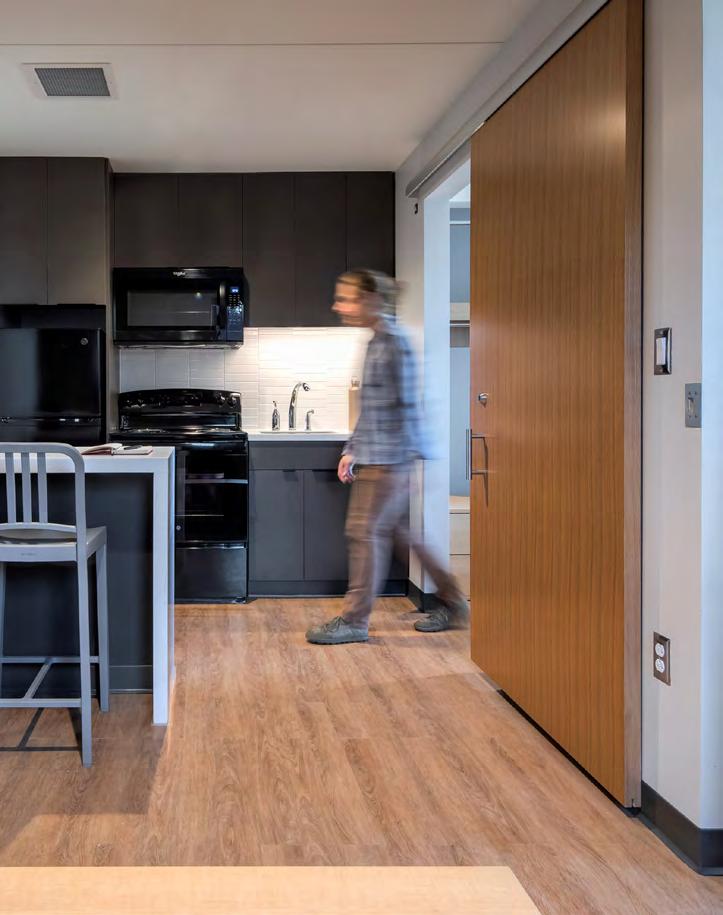
We took this approach on Arcadia Flats at Western Michigan University. The most spaceefficient units—a two-bed studio suite, two-bed flat, and one-bed studio—give space back to common areas for study, play, and socializing.
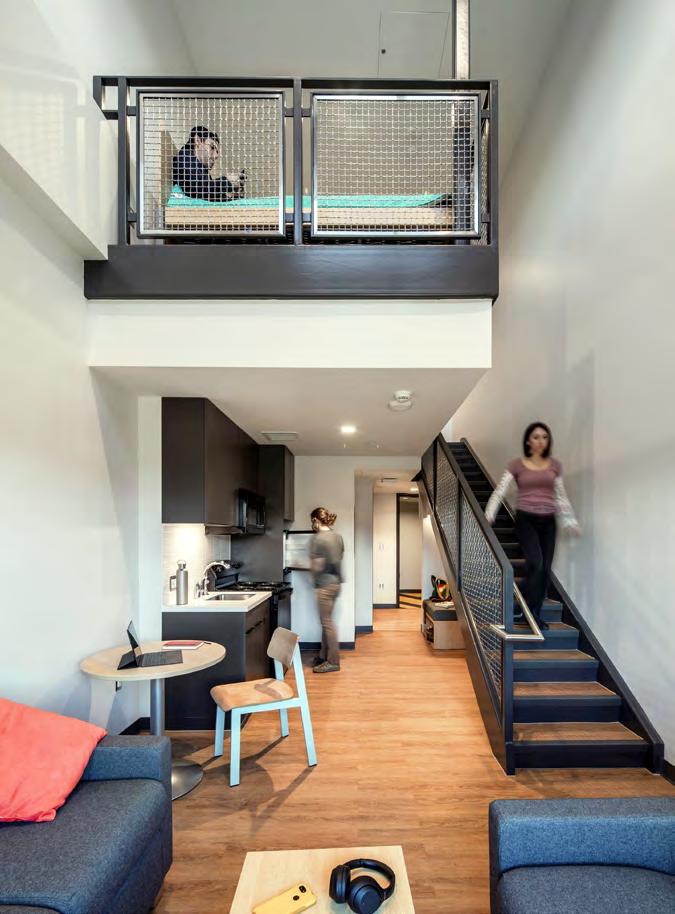
Here is the reality: Many universities have existing residence halls that are highoccupancy, low-privacy models. They likely won’t be able to fully convert these to suites or apartments. So, what can be done to enhance them?
One of the simplest options is to look at furniture solutions. Provide flexible furniture that gives students choices and allows them to easily arrange spaces to suit their needs, especially in common areas.
Moveable screens and partitions can quickly and easily repurpose a space. Having a variety of group and individual seating areas in the same space allows students who may have more social anxiety to ease into social situations or participate in ways that feel comfortable to them.
In shared living units, consider creative furniture solutions. These will provide some privacy without taking up precious floor space. This might include lofted beds with desks below or screens with built-in nightstands like the ones we used in Arcadia Flats.
Whether building new campus housing or renovating an existing facility, emphasize privacy where it makes the greatest impact.
For example, common bathrooms tend to be a particularly sore spot for students. Private inunit bathrooms might be out of reach due to space or budget constraints. But designs can focus on groupings of full-enclosed individual restrooms that are shared on each floor, similar to the City Heights model.
Perhaps the primary need is private bedrooms. If so, consider super-efficient unit types. These are more compact and have fewer square feet per bed; they allow for the expanded common areas that we see at Arcadia Flats.
and
The university that overreacts to fleeting preferences runs the risk of creating a housing portfolio that needs an update with every new trend. On the flip side, if it fails to thoughtfully respond to student desires, it could drive potential residents off-campus. These students could miss out on on-campus opportunities that help them thrive.
Universities should pursue long-term flexibility that can weather the trends. To do so, they should focus on providing an efficient variety of unit types. Unit types should support various lifestyles, preferences, and price points. And residences should still feature critical spaces for studying and socializing.
5. Don’t let the campus housing pendulum swing too far
As each campus tries to balance students’ desire for privacy, the need for socialization, and the cost to build, it’s important to not overreact. Reaching too far in either direction— toward all new private rooms or all new dorms—is risky.
Universities need to keep an eye on the bigger picture. They should look for balanced offerings that acknowledge preferences and varying student needs to create positive experiences.
Universities should seek a holistic campus housing portfolio. This can come through simple interventions or significant renovations and new builds. In this way, as students’ desires change, the school will be ready to adapt. ■

Leveraging technology and robotics in warehouse design to achieve supply chain agility
Automation is transforming warehousing. New technology like robotics and predictive analytics are reshaping the logistics industry.
Imagine a technologically advanced warehouse designed to optimize its layout for maximum operational efficiency. The new automated warehouse is a key component in achieving supply chain agility.
By Lilly Maniet
Warehouses can deploy radiofrequency (RF) or induct systems. These systems (sometimes called RFID for radiofrequency identification) feature tags that communicate with reader devices like smart barcodes. Inventory trackers like tunnels or towers can scan RFID codes in bulk as product moves through them, keeping track of what’s coming into, and going out of, the warehouse without the need to scan items individually.
3. Robotics for picking, packaging, and loading
Advanced sensors and cameras backed by AI computing allow robots to fulfill increasingly complex tasks like finding and picking a specific product out of a tote of mixed items.
Simply put, this automation speeds up the activity at the warehouse. It shortens the time between order and shipping out. AMRs (autonomous mobile robots), articulated robots, and COBOTs (collaborative robots) work long hours. They help logistics companies address a persistent warehouse worker shortage.
Advanced analytics enable warehouses to predict future demand and optimize inventory. With AI and predictive analytics, they can make their supply chains more agile. This technology allows companies to plan ahead and move inventory based on anticipated demand. Predictive analytics helps streamline operations and optimize inventory levels. They can implement artificial intelligence in their predictive modeling. For example, the model can use AI to incorporate weather data to predict increase demand for products like ice cream or umbrellas. These applications help companies make informed decisions and improve efficiency.
This is basic automation. WMS, integrated with RF tracking, provides warehouses with realtime visibility into inventory levels, order fulfillment, and shipping processes. It makes it easier for logistics providers to handle products and get them in the electronic system.
Use AS/RS or storage grid systems for increasing efficiency, densifying storage, and reducing labor costs. Newer systems are able to tie into the conveyance for the rest of the warehouse, and in some cases even use the same robots.
What aspects of the building and operations do we need to understand when we design for the automated warehouse?
Is the new automation going into an existing operational facility, an empty building, or starting from the ground up? Does this facility have existing automation systems, and are they performing well? Does this project need to integrate with the existing systems or will they all be removed? Does this facility need to stay operational during construction? These are all key questions at the start of an automation project. Some systems like large-scale AS/RS are better accommodated in a new building specifically constructed to its requirements, while others like COBOTs are more adaptable to existing building conditions.
Optimizing the warehouse with robots requires a building that can accept all the infrastructure that automation requires. We look at the quality of the floor slab, the foundations, and capacity in the roof for hanging loads. We also note the existing clear heights and other spatial constraints like bracing and roof drains that may limit automation options.
We worked with a client on upgrading an existing warehouse shell that was not originally built with any intention of having robotics in the future. After scanning the existing floor slab, we determined the amount of grinding required to meet their equipment specifications for flatness and levelness was extensive. We worked with our structural team, the client, and the contractor to determine if the slab would have sufficient capacity after grinding and if expected duration and cost of repairing the slab would be less than replacing it entirely.
Optimizing the warehouse for robotics requires a building that can accept additional infrastructure and utilities, which can require service upgrades.
Expansive use of robotics and conveyance in warehouse design requires additional utilities that can lead to potential service upgrades. Power and internet bandwidth requirements must be confirmed with what is onsite or
available from the local utility company at the start of the project. Others like vacuum and compressed air are essential for the operation of robotic systems and may need to be added to the facility. Increased storage density can trigger fire protection upgrades as well.
In the field we have seen a logistics provider that wanted to increase the robotics in its warehouse but simply didn’t have the power infrastructure to support it. The decision ultimately came down to either waiting until the electric utility could bring in a new service, rent costly and carbon-intensive diesel generators, or reduce the scope of the project to fit the power available onsite.
Warehouses have rules for health and safety. Automation adds another layer of complexity to these safety protocols. In designing automated warehouses, we need to know which areas are off limits to people, which areas are for service technicians, and so on. Even trained associates are required to follow specific procedures to ensure they’re safe in an automated facility.
For robotics installations that are not intended to be in the same area as warehouse workers, fenced areas with access control are necessary. We should design extra space to provide for the fence line, door clearance, and working clearance around the equipment. Depending on the size of the enclosure, egress routes from inside and around the outside must also be considered.
Warehouse design should allow access to maintenance and technical areas with robotics. To ensure that maintenance and repair for automation can be carried out efficiently, we consider the access pathways and points for technicians. Where can trained techs access and service robots and automated storage and retrieval systems?
Unfortunately, robots do break down. If maintenance and repairs will be conducted onsite by staff, our design should provide a specialized and enclosed repair area. Staff will need a clear access route from the robotics area with an opening large enough to bring in equipment. Space and utilities should be allocated for bench work, floor clearance, parts storage, and any large specialty tools like lifts or drills.
Investment in products and services over the next three years 1
According to the MHI Industry Report, 45% of companies surveyed in late 2024 are investing in automation equipment over the next three years.
Design can help you get the most out of automation and achieve supply chain agility. Your warehouse design should:
1. Optimize warehouse layout and flow with:
Flexible storage: The warehouse can benefit from a storage space which can handle varied inventory needs, such as totes that can hold either singles or cases. Space can flex to handle surge demand, seasonal products, and quick-changeover items.
Streamlined processes: The layout for the automated warehouse should minimize manual handling, maximize automation (conveyors, robotics), and ensure efficient material flow from reception to exit.
Integrate automation with workforce:
Automation in the warehouse will change the number of workers needed on site. There may be fewer item pickers, for example, because that role is more likely to be automated. But there will be a need for trained associates and technicians who can manage and service the automation. Technical roles require specific skills. Logistics providers will need to train personnel to operate and maintain robotic systems. Employers may need to meet these needs with additional hiring and training and keep that up to adapt to new technologies.
People are important in the automated warehouse. They’re just fulfilling different roles than they did previously, and likely better ones. We can enhance employee comfort and wellbeing by providing break areas with views of outdoors and opportunities to sit outside, and ensuring the warehouse is climate controlled for building occupants. We should also use automation as an opportunity to improve worker safety. By removing tasks in more dangerous areas like along the docks and in trailers and automating tasks that are prone to causing injuries like lifting and bending, new technologies can improve worker wellbeing.

Automation is not the end goal.
The prize is the agile supply chain. The goal is to establish a responsive environment for rapid adjustments, ensuring a seamless flow of goods from inventory to customers. Designs that make the most of the automation revolution will deliver benefits in the logistics marketplace. ■
Design leaders John Clegg and Dathe Wong share their insights on
Interview by John Dugan
How important is a design culture at one of North America’s largest buildings practices? As one might guess, very important. But when joining forces with another design practice, the answer requires a more thoughtful response. With the recent acquisition of Page, a 1,400-person architecture and engineering firm headquartered in Washington, D.C., Stantec’s Buildings practice grows by nearly 35 percent.
With Stantec and Page becoming one, we chatted with Stantec’s Dathe Wong and Page, now Stantec’s John Clegg about building a design culture at the largest integrated architecture and engineering firm in North America. Here are some of the highlights from that conversation.


How does design culture manifest in your respective practices?
Q The Design Exchange provided a framework to consider how we win the work, how we deliver the work, and how we tell the story afterwards.
JOHN CLEGG:
Empowerment and nimbleness:
Our fundamental goal is “Performance by Design.” And that has shaped our design culture. Achieving this depends on our success in empowering designers. I spent years working with Fortune Global 50 organizations around the world, where I often encountered client-side teams with the freedom to move across their company to solve challenges that couldn’t be addressed within silos. I’ve always sought ways for designers to have that same kind of impact at Page—and now, looking ahead, at Stantec.
Benchmarking and capabilities:
Design success is fostered by strong leadership and access to great teams and resources. I studied firms that consistently win awards and stand out for their creativity and boundary-pushing practices. I found that these practices were empowered by distinctive capabilities—a fabrication shop, a research group, or building sciences.
Design Exchange: In 2022, I recognized that Page had some new capabilities that needed to be incubated alongside its existing ones. I thought if we developed, packaged, and talked about these capabilities with intention, we could create a cohesive platform.
DATHE WONG:
Local identity and unique solutions:
We have great stories to tell about our signature projects, but we are a geographically diverse practice. Design culture is rooted in our local offices. Each city’s culture influences its studio. So, whether it’s a Philadelphia or Austin or Toronto or Chicago solution, these unique design ideas can float up and become interesting solutions.
Design agency: One of the terms that resonates with me is “design to win.” It’s about design agency and looking at our projects and thinking, how does this move the needle for architecture?
How does publishing this design fundamentally challenge how we tackle not just a beautiful building, but an important project that advances design for everyone? And then, how does design enhancement fundamentally become part of our culture? It should be the question that we always ask ourselves.
Exploration: When it comes back to design culture, we want to have teams at Stantec that are inquisitive and always asking questions. We want to encourage exploratory work where people regularly think about their work and iterate. We can tap into the spirit of the Design Exchange.
When it comes back to design culture, we want to have teams at Stantec that are inquisitive and always asking questions. We want to encourage exploratory work where people regularly think about their work and iterate.
Are design competitions valuable for design culture?
Q We understand these competitions are important in showing our design culture and perhaps dispelling some stereotypes about large integrated design firms. Wonderful things can come out of these competitions.
DW: Defining success: Before I started the design competition for the State Tax University in Ukraine, I thought about what success looks like. We want to win, obviously. But is it about flexing our design muscles? Is it about creating, or doubling down on our design culture? Elevating design dialogue into our everyday approach? Ensuring that there’s a venue for that?
Competitions play into being inquisitive and continually iterating as a part of our practice. We also want to participate with the broader architectural and engineering community on finding solutions tackling urgent issues in the world.
JC: Finding the right competitions: It can be hard to find design competitions that align with business goals. However, when we see emerging trends across markets, we want our thought leaders to engage with them, internally and externally.
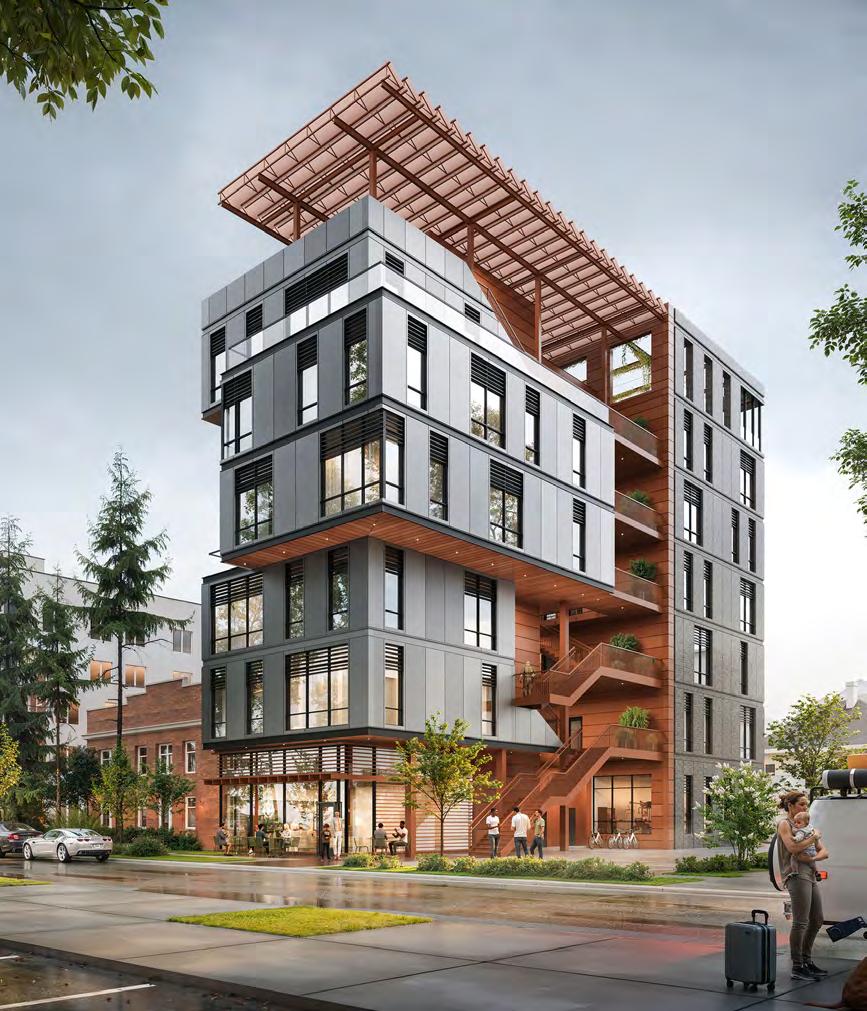
One competition that aligned with goals was the single-stair reform movement and the international Denver Single Stair Housing challenge hosted by BUILDNER. We brought together our commercial and mixed-use team with fire protection and building sciences to compete.
Competitions play into being inquisitive and continually iterating as a part of our practice.
Freedom: There’s freedom in a design competition. It has a brief and a problem to solve but it’s outside the typical constraints we have on our projects. The design competition frees you from that. So, in our design culture, we want to focus on ensuring that there’s a venue for that.
One unexpected pleasure has been in new engagement. Our winning project for Irpin has gotten some attention in academia, so we’re having conversations with Harvard, Stanford, and University of California, Berkeley.
The effort earned third place, the only North American recognition, and was featured on the spring cover of the Urban Land Institute’s magazine Urban Land.
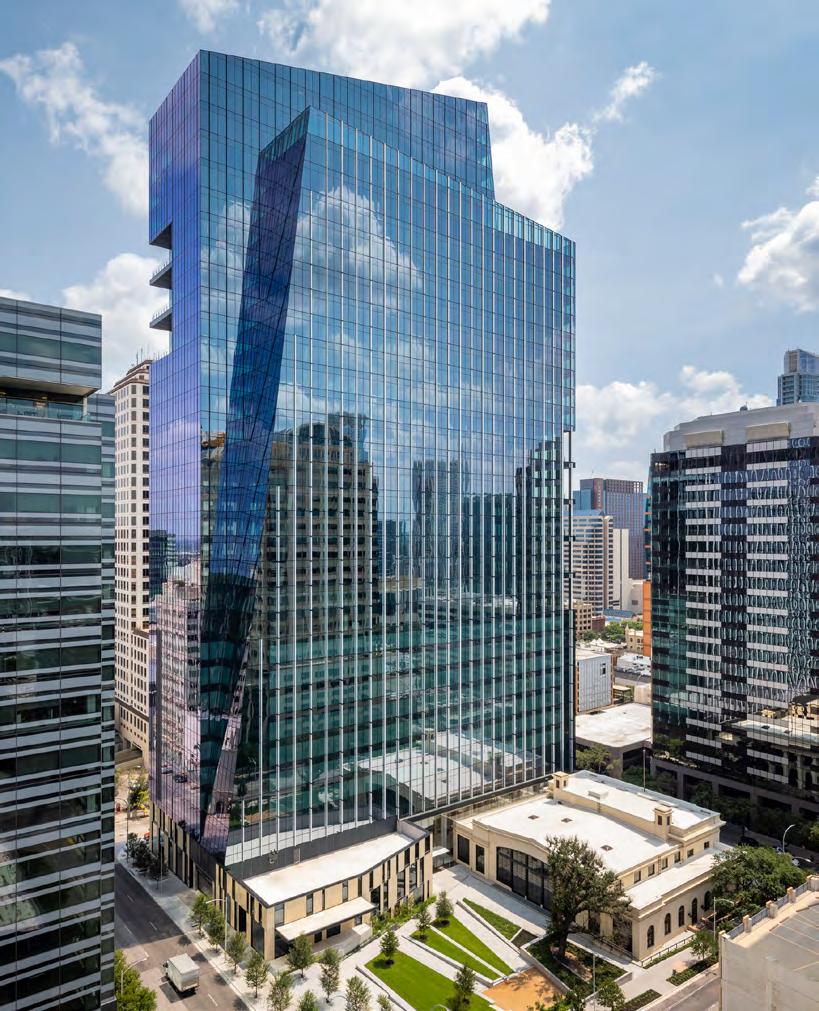
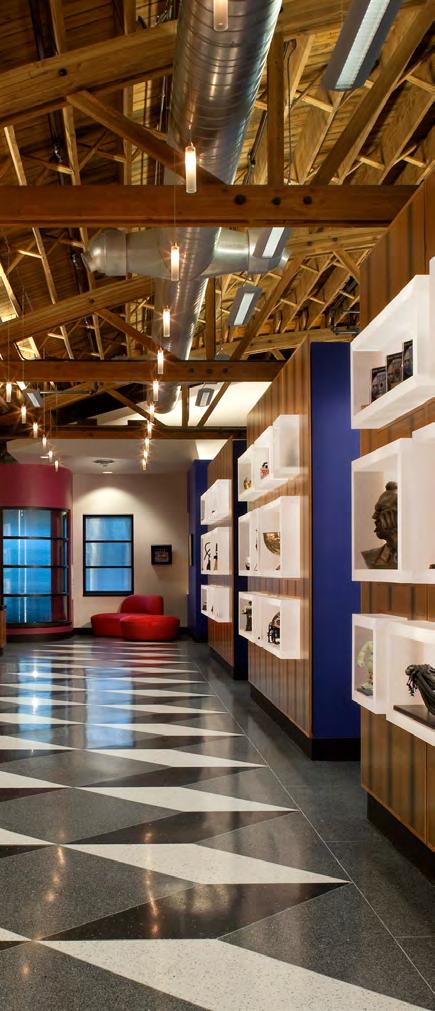
• Page, now Stantec Office at Indeed Tower Austin, TX
• American Academy of Pediatrics Headquarters Itasca, IL
• Page, now Stantec, Fabrication
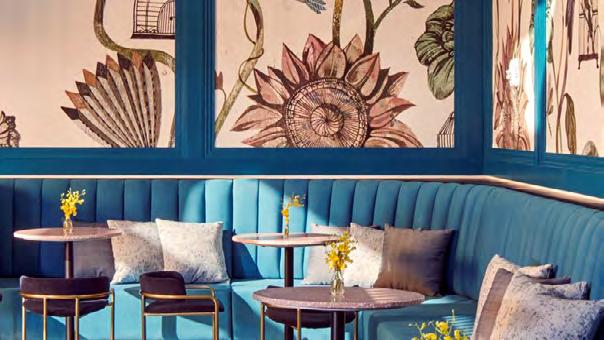
• Virgin Hotels
New York, NY
Interior design by Stantec in conjunction with Markzeff
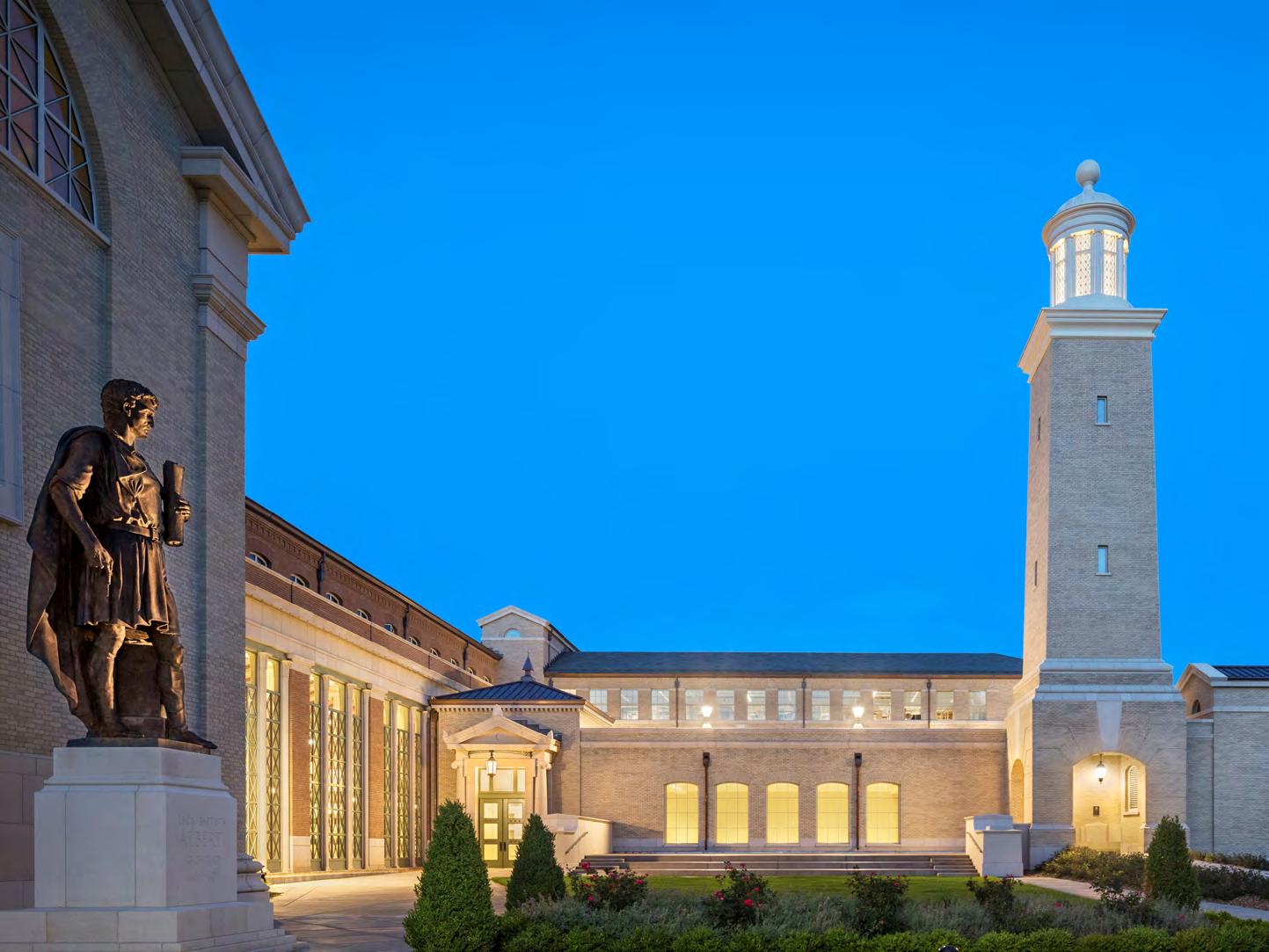
• Hedrick Middle School Lewisville, TX
JC: The big question is: what are you using a competition to do? Is it a space to test design ideas, or a way to support the direction you want to take as a firm? Both contribute to a design culture that encourages invention and drives great work. Our firms’ shared experiences show that success can take many forms.
How do you envision this new Stantec design culture?
DW: Vision: We want to be in a space where we are iterating, experimenting, and bringing real breadth to our work. It’s not about competitors, it’s about what can we offer together.
Opportunity: The opportunity for me as an architect is to expand beyond my traditional definitions of great architecture and say, now I have a new specialist with me on my team. How do we begin to iterate with people who think slightly differently when it comes to approaching a design solution? True exploration happens when we’re moving outside of our comfort zones and modeling in different methodologies.
Architects are often focused on form. We want to bring form together with building performance modeling. That’s an interesting space.
JC: Leveraging design culture: Some firms do a good job of identifying the elements that bring excitement to the organization’s culture. It’s about focusing on unique capabilities that you can bring to the table that no one else can bring. Moving forward, I see a strong design excellence program that has the structure and hierarchy to challenge the organization to make a difference at scale.
Stantec has done an outstanding job of bringing design leaders together around Design Excellence. As the program grows out it will make an even greater impact on the market. My hope is to build on that momentum by bringing lessons from Page’s Design Innovation ecosystem—and the leaders who shaped it—to help accelerate the program and define a design culture rooted in performance by design, reinforcing Stantec’s global leadership in design. ■

DESIGNERS’ ROUNDTABLE
What makes a good building? Designers, architects, and engineers are continually updating their definition. In recent years, the design industry has become more conscious of embodied carbon—the material investment in new buildings—as a metric for sustainability.
There’s another dimension to buildings, however. Time. Shouldn’t the embodied carbon equation consider materials over time? Some say that true low carbon design is about making buildings that last a long time. A century, even. Building longevity is not just about emissions. Long lasting buildings can resonate with people profoundly.
While designers, architects, and engineers are trained to revere long-lasting buildings, how often are they called upon to design for building longevity? Should the design industry be talking about 100-year buildings? And what does it take to make one? Which long-lasting buildings inspire us?
We checked in with a group of architects, structural engineers, building scientists, and designers to talk about building longevity. We have collected some of the highlights from the wideranging discussion here.
William Ketcham Architect
Building longevity is also adaptability; you need to anticipate what the change might be, and to design buildings that aren’t so rigorously programmed that they can’t be modified—to give them new life every 25 or 50 years. If you look at context, precedent, and adaptability, you’re going to get those multiple uses over time. It’s also about the resiliency of the envelope relative to the building’s context.
Meagan Erdman
Structural Engineer
Anik Teasdale-St-Hilaire
Façade Engineer
Are there certain buildings that are good candidates for reuse in your city?
Meagan Erdman Structural Engineer
There are quite a few buildings in Seattle, especially close to the waterfront that were used to support the shipping industry. They’re some combination of masonry and heavy timber. Their structures are exposed, and you can see the imperfections. They usually have a tall floor-to-floor height. They’re pleasant spaces to be in.
A building that’s going to have a long life needs to get some key things “right.” Those things are hard to change during renovation. Floor-tofloor height, for example, is one of those things where once your building’s designed and built with it, you’re kind of stuck. So you want to get it right if you’re trying to build a building that’s going to stay and be adaptable for other uses.
Durability. We’re seeing more extreme weather. There are huge considerations with respect to wind-driven rain. Previous versions of LEED had a durability building credit. That forced the design team to explain how the layers contributed to the durability of the building envelope, outlining which were easy to replace and which were meant to last. Material selection and application is important.
Alan Dyck Structural Lead
Denver has a lot of old industrial type of facilities in the River North Arts District.
The fact that they last a long time makes them valuable. And people are interested in these buildings because there’s a story to them.
William Ketcham Architect
Even the most utilitarian building can be one of the nicest spaces you go in. These buildings from the turn of the century, light industrial in Ravenswood, weren’t anticipated to last long. And now we take delight in them because they’re beautiful. The culture of Chicago has moved beyond those industries, but the buildings are big enough to be versatile.
It might not happen often, but when the client says they want a 100-year building, what are the main things you’re thinking about?
Michael Banman Design Director
Start with the site—what are you working with?
Shape the building to suit the geography and climate, ensure you’ll have solid foundations to build on, and consider your structure—how long will it last? Precast concrete and panelized systems are typically not as flexible or durable as built in place. Steel will require more maintenance. Cast-in-place concrete may be a good choice, but you should consider embodied carbon. Mass timber may be an option. Evaluate each material for its structural properties, systems, and spans, paying close attention to column spacing, floor-to-floor heights, and core locations.
Beyond that, consider the building enclosure. There’s an entire Canadian Standards Association (CSA S478:19) providing guidance on the durability in buildings. Select systems with a service life achieving approximately half the building’s intended lifespan. So, if you expect a 100-year building, your systems should last about 50 years before needing replacement. I’d look at installing a green roof, blue roof, or an inverted roof type—something I know can last that long.
You’d be looking at things like proportion and scale, access to natural light, views, and human comfort, because what’s the most sustainable building in the world? It’s the one everyone loves, right?
William Ketcham Architect
It will be adaptability, certainly, but it’s in the materials. On some of our higher education projects, we’re building multiple-wythe masonry walls with steel frames, or concrete frames, because there’s an anticipation that they will have a very long life. There are reasons that we are selecting copper flashings rather than aluminum, for example. We’re depending on technologies that have been proven over hundreds of years, not a mere decade or two.
Daniel Massaro Designer
Think about the materiality. There’s a reason why people use certain timeless materials like brick all the time. It’s being able to choose those materials and elements that have that staying power and that lasting ability and not always just getting caught up in a fad. Or being able to recognize what’s in the fad that will last.
kind of projects do you get inspired by?
Samira Zare Mohazabieh Building Scientist
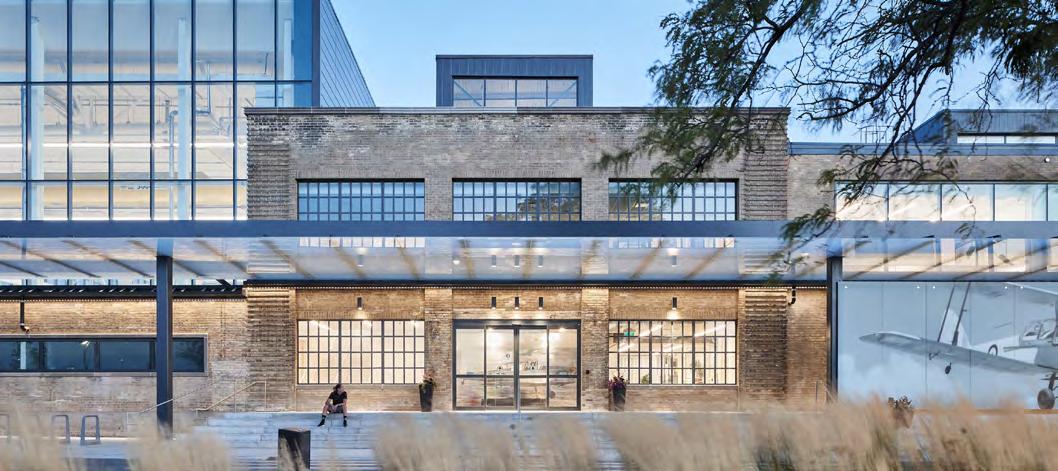
One great project is our Toronto office. It is a great example of adaptive reuse of a post and beam structure. The building was the McGregor Sock Company factory and now it’s our office. It’s beautiful.
Daniel Massaro Designer
Thomas Heatherwick finished Coal Drops Yard a couple years ago. It’s an old rail yard where trains would pull in to pick up coal. Now it’s shopping and food. He kept the original buildings and then added this roof system on top that is very organic and flowing but keeps the vibe of the area.
Alan Dyck Structural Lead
The Academy of Motion Pictures Art and Science building. It was the May Company building, a 1930s Art Deco department store with a historic designation. It needed a new purpose. It was fun to find ways to upgrade it and bring it up to code for seismic considerations. It’s meant to be this complete juxtaposition of the old versus the new, which is the Renzo Piano sphere next to it. It’s an example of finding ways for the community to protect its own culture.
Michael Banman Design Director
When I came out of school, I had my list of heroes, and I can tell you over the course of my career, those are not my heroes anymore. My perception has changed a lot. I appreciate simple, thoughtful, well-crafted buildings— buildings that are well-proportioned, wellscaled, and well put together, using quality building materials, designed systematically, rigorously, and holistically. Those are sustainable, and something we can all do. I want to see buildings that can be repeated because we need better urban environments, not more icons. One of my favorite architects is David Chipperfield, and when I go to his buildings, everything’s right—everything is exactly where it should be.
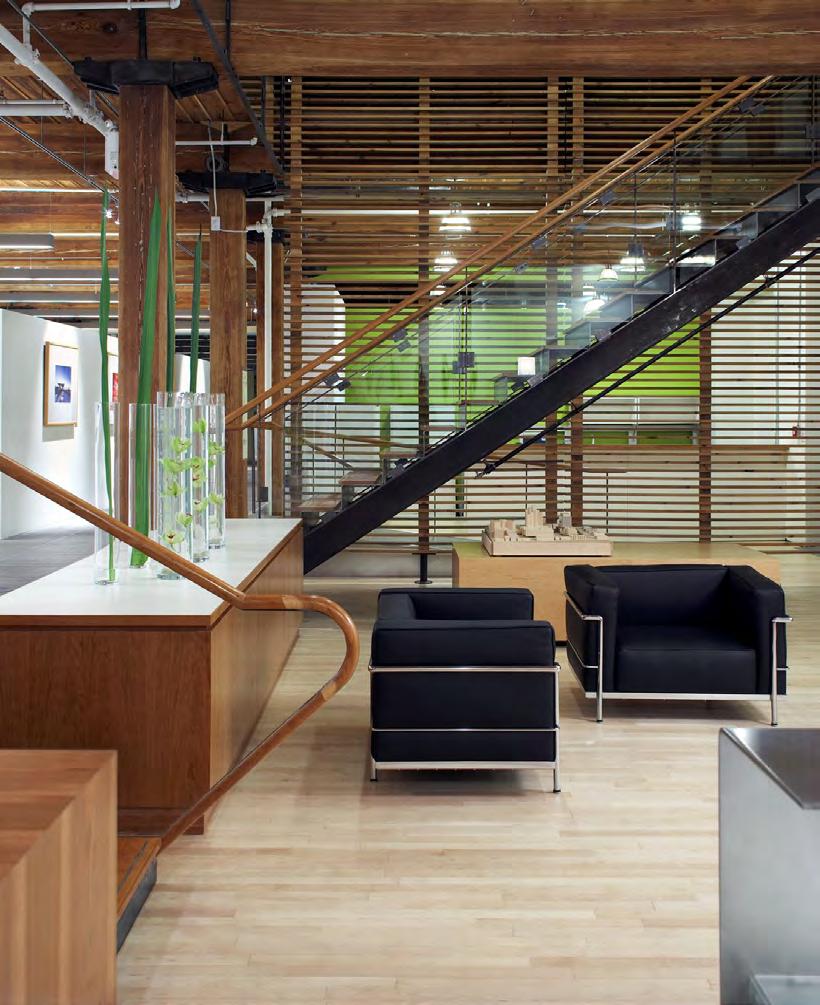
How much of longevity has to do with
Daniel Massaro Designer
Our ASHRAE competition project for reusing the Astrodome was about recognizing that the building had to be functional. You can make the most sustainable building ever but if nobody’s going to use it, they are just going to tear it down.
Which one do you think is more important? The structure, the materiality, the building, the design? It’s all in one. If you nail the structure, but the design is terrible, no one will use it.
Meagan Erdman
Structural Engineer
The longevity conversation’s tough because if I design an office building today, 100 years from now, it could still be an office building. Granted, some environmental loads are probably going to be updated and there will be some updates in the building code. But if it wants to stay an office building, it can do so with minimal changes to the structure. It’s harder to predict how human need changes throughout a building’s life, and plan for that future need in present day.
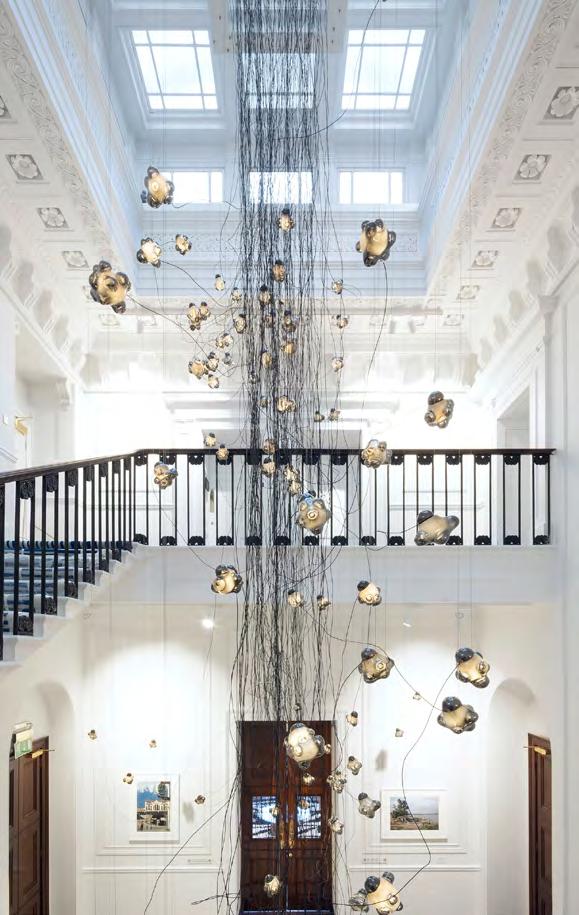
Does a flexible building that can be used for something else have a greater chance at a long life?
Daniel Massaro Designer
I had an architectural theory professor who posed the question, should a building last forever? A lot of my fellow students said, yes, it should last forever because that’s the mark we are making on the planet. I said, well, no, it shouldn’t last forever in its original form. I think a building should adapt and change based on what’s happening.
Maybe we should think, what if our most significant design projects need to become something totally different in 100 years? That lends itself to designing for structural adaptability.
Alan Dyck
Structural Lead
I worked with folks that wanted a parking garage design to be future proofed. They expected autonomous vehicles to lessen the need for garages. To do that, they had to calculate the costs for higher floor to floor measures, and more expensive foundations and structures. To design flexibility like that, you need a forward-thinking client.
How can we promote longevity in the industry, or our practice?
Alan Dyck Structural Lead
We need to spend more of our effort understanding our markets well and where they’re trending. What the data points to and where it wants to go and then educating those clients. They want to have the best thing 20 years from now. The conversation should be long term.
If you have clients that are interested in sustainability, get them thinking beyond LEED and thinking about true embodied carbon. The embodied carbon numbers are more meaningful if you have a 50-year building or 100-year building or 200-year building. You may have a high embodied carbon now, but if you’re looking at the full life cycle cost of the structure, you’re expanding the view of what you consider to be sustainable.
Meagan Erdman Structural Engineer
Let’s say I’m a building owner and I have that 100-year-old historic building and I’m trying to turn it into a cool live work office space. I can choose to do a heavy renovation to the existing structure or tear it down and rebuild new. There are of course cost implications with those two options, but there are also wildly different embodied carbon implications between the two. We can do a better job as designers of attaching those embodied carbon implications to those choices and advocating for the lower embodied carbon choice.
William Ketcham Architect
What is the definition of sustainability? It has to do with culture and the environment in equal measure. People often lose sight of the cultural component. We talk about being good stewards. Sustainability is good stewardship of the culture of the institution, the financial assets of the institution, and the buildings that still serve the institution. I’ve not had a client say “oh no, we don’t want to do that.”
Samira Zare Mohazabieh Building Scientist
The buildings industry is focused on operational and embodied carbon, climate resilience, and material health. By communicating both the long-term benefits and the risks of inaction, we can help clients move past resistance, make informed choices, and ultimately extend the life and value of their buildings.
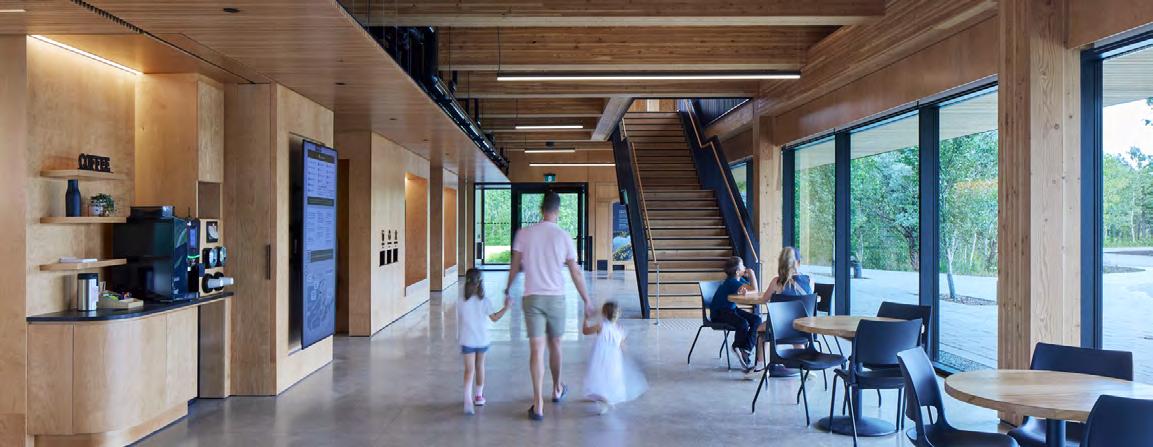
What’s holding back design for building longevity in the design industry?
Mindset, budget?
Meagan Erdman Structural Engineer
It’s not impossible to make a building last a century. When getting exactly what clients want costs less than the option to renovate, it’s difficult to influence that choice. You’ve got to have an owner that values the history of their building or a design professional that’s good at having that conversation.
William Ketcham
Architect
I think it’s immediate need and shortterm budget thinking. The result is buildings that are hard to reuse. We often see residence halls built between 1950 and 1972 that are hard to remodel. That makes them expendable. If you can bring some idea of longevity versus expendable to the conversation, then you have a chance.
Alan Dyck Structural Lead

I think it’s a culture of how we have a lot of design for replacement. The fashion industry is a perfect example. Maybe 100 years ago, people only had a few suits or a few dresses. You didn’t have 100 outfits. Those things were more expensive, but they were made to last.
I started my career in Las Vegas. It’s a city built on regurgitating and adjusting. Tear down the old. They tore down the Frontier and the Stardust and they built something new in their place that was taller and more extravagant. It was disappointing because those older buildings were well made at the time.
On the structural side, we see buildings designed to last 50 years and they’re being torn down in 10 or 15, not even reaching their full life cycle. So, it’s not just how we design or build for longevity. We need our culture to recognize and make use of buildings for that long too. ■


The Stantec Design Quarterly tells stories that showcase thoughtful, forward-looking approaches to design that build community.