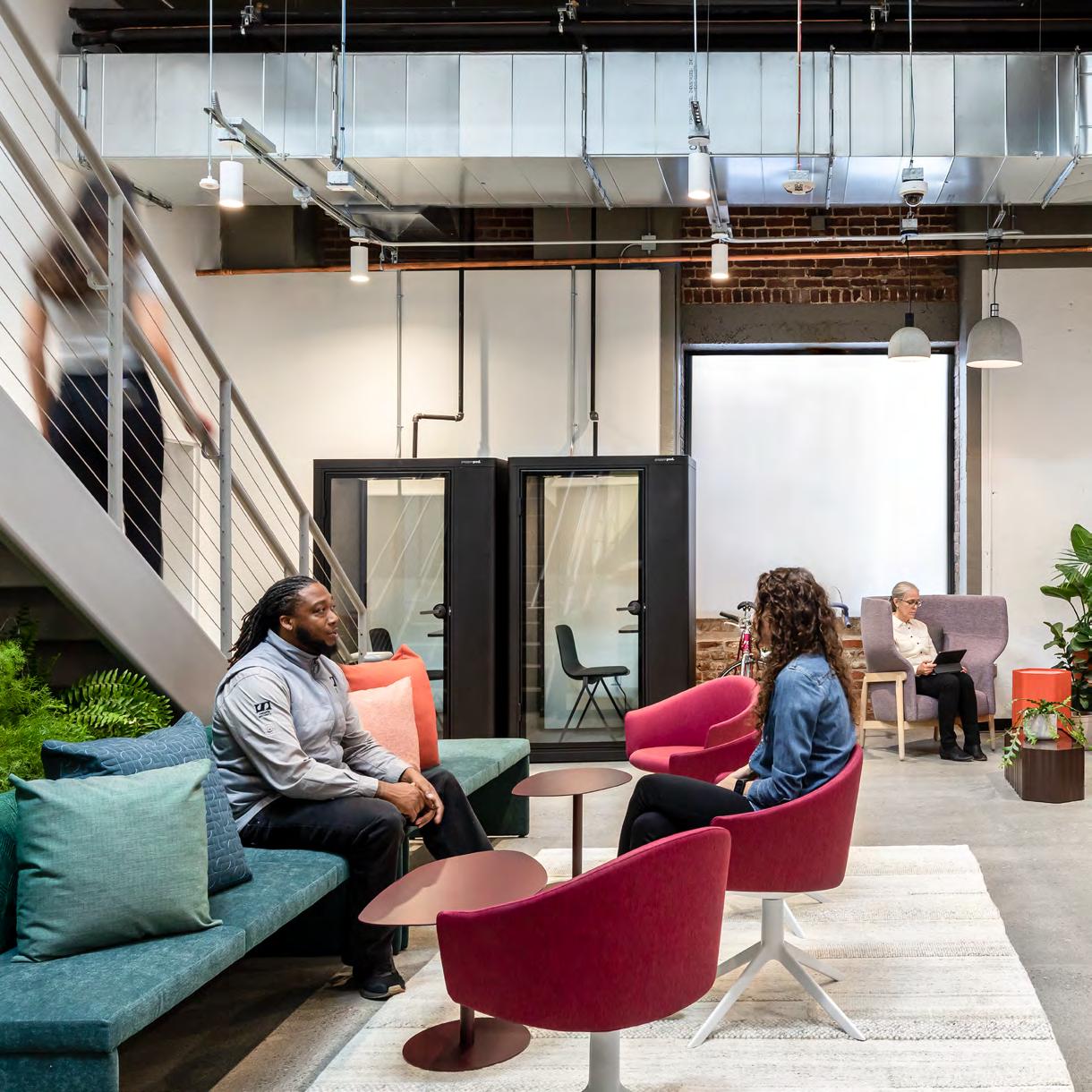
People power performance. Supporting cognitive diversity unlocks it
At the core of every organization’s success is its people—not just because they perform tasks, but because their thinking, creativity, and decision-making drive innovation, resilience, and growth.
Our Workplace Now and Next survey reveals that while organizations recognize the value of human potential, they often fall short in creating environments where individuals truly thrive. This isn’t just about having people in seats—it’s about how those people think, collaborate, and solve problems. In Why Workplace Wellbeing Matters, researchers Jan-Emmanuel De Neve and George Ward show that employee happiness and cognitive engagement directly correlate with productivity and financial performance. Their work reveals that how people feel and think at work shapes organizational outcomes.
To close this gap, we must invest in spaces, systems, and cultures that support diverse thinking, meaningful connection, and well-being. When people feel seen, supported, and empowered, the organization flourishes.
Diversity, Equity & Inclusion Needs
People are the heart of an organization’s success—or failure1. Companies that find themselves at the top... foster a culture that inspires innovation, dedication, and enthusiasm among employees 2 . Harvard
“There’s still lower focus on neurodiversity compared to other inclusivity aspects. We need neuro-inclusive considerations to reduce anxiety and enhance peak performance and flow.”
Stephen Parker Mental + Behavioral Health Planner
Action
To truly prioritize people, we must move beyond surface-level inclusion and build systems that support how individuals think, process, and contribute. This means designing workplaces that accommodate sensory needs, offer flexible collaboration zones, and foster cultures where cognitive outliers are not just included— but celebrated.
Technology has made hybrid work a strategic priority— but it’s also quietly fracturing culture.
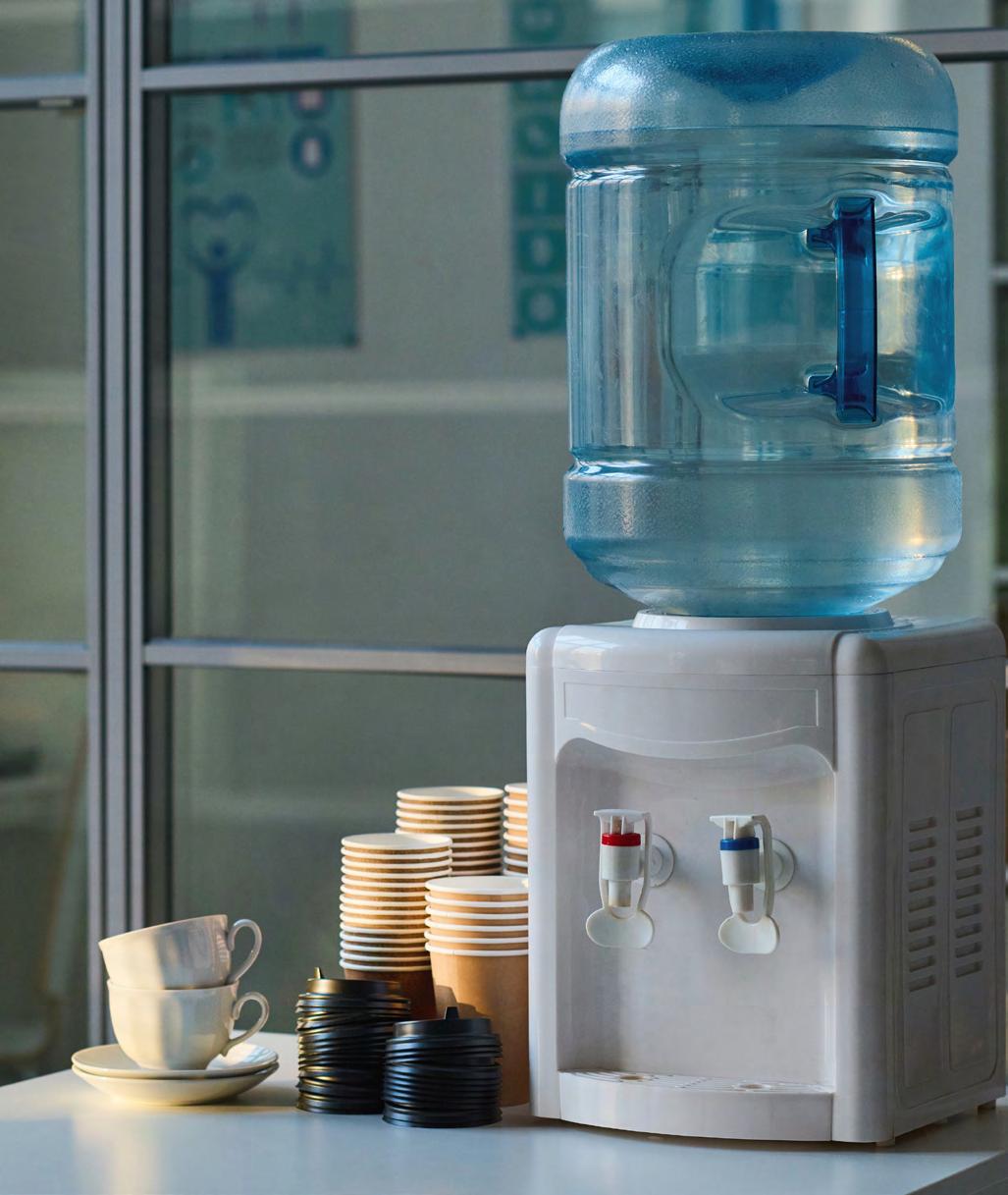
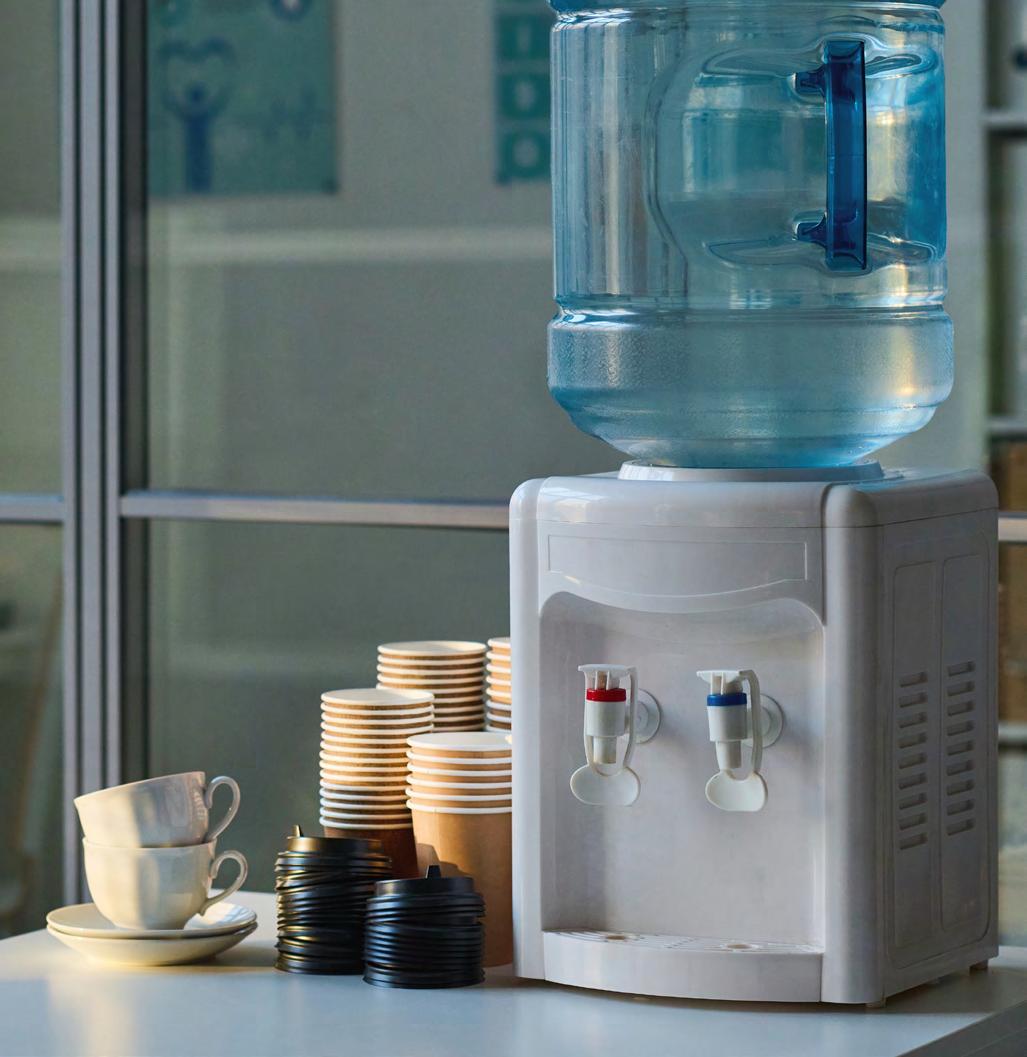
What happened to Monday morning encounters at the water cooler? Small inperson interactions were the building blocks of workplace relationships, trust, and cultural cohesion.
Hybrid work has become the dominant model for many organizations, offering flexibility and autonomy—but creating a paradox. While employees feel more engaged with their work they feel less connected to their workplace culture. This disconnection challenges the ability of the workplace to foster belonging.
Are water cooler moments relevant in today’s hybrid world? The human desire for connection remains as strong as ever, but the mechanisms that once made it effortless have vanished. Enter the modern water cooler—not a fixture, but a philosophy. The modern water cooler is designed for the “in-betweens”—those spontaneous, authentic moments that emerge not from mandates, but from intentional space planning and user experience.
Eighty percent of survey participants said that their company has a hybrid workplace strategy
Ninety–six percent of respondents agreed that technology has influenced their company’s culture
Seventy-six percent of respondents expect AI to reshape workplace policies within five years, but only 43% feel their organization is prepared to integrate AI in ways that support diverse working styles
Workplace Engagement & The Impact of Technology
Technology: Connector and Divider Research from MIT 1 and Harvard 2 shows that remote workers experience fewer spontaneous interactions, which are essential for building trust and social capital. Meanwhile, the American Psychological Association reports that loneliness has surged among remote workers, with 61% saying they feel less connected to their colleagues 3 .
“Balancing technology use with opportunities to unplug is essential. Employees need moments to disconnect and reset.”
Stephanie Wood US Workplace Strategy Leader
Action
According to Gallup4, employees who feel connected to their organization are 3.5 times more likely to be engaged at work. To bridge the gap between autonomy and connection, organizations should:
• Curate hybrid rituals that reinforce shared purpose—like virtual onboarding ceremonies, hybrid team huddles, and culture-focused offsites.
• Empower cultural stewards to lead connection initiatives and welcome new hires.
• Design inclusive tech ecosystems that support equitable participation and don’t replace—but complement—human interaction.
• Invest in hybrid collaboration spaces that allow both inperson and remote participants to engage fully.
Demand for authentic environmental alignment is rising.
In what ways, if it all, does sustainability play a role in your workplace?
Does your company have any specific policies or codes of conduct related to sustainability or social impact?
Are there any sustainability initiatives that are currently being implemented?
Research consistently shows that sustainability-focused workplace design drives measurable business benefits:
Organizations have a clear opportunity to gain a competitive advantage by strengthening workplace strategy to align more closely with employee environmental values.
Our survey data shows that employees place high personal importance on sustainability and climate change, and they rate their organizations’ sustainability policies and initiatives positively, indicating a strong foundation and shared values.
Cities are placing increasing emphasis on both decarbonization and people-centric planning. Yet many organizations are still not operating at that level. Bridging this gap requires bold investment in spaces, systems, and cultures that reflect not only environmental responsibility but also human potential.
Are there any current corporate goals for 2025–2030 that are underway?
1,300
Capgemini’s research shows that over 1,300 organizations plan to increase sustainability investments in the next 12–18 months1
80%
80% of Gen Z workers seek jobs that reflect their values, in which sustainability is a key factor2
Percentages reflect average of all survey answers collected
On a scale of 1 to 5, how important is sustainability to you?
On a scale of 1 to 5, how concerned are you about climate change?
4.4 4.4
“LEED is evolving beyond sustainability to embrace broader themes like quality of life, decarbonization, resilience, wellbeing, health, and equity—making it more aligned with the priorities shaping today’s built environment.”
Rachel Fitzgerald Lighting Practice Leader
Action
Expand the implementation of sustainability initiatives— especially those that directly impact the employee experience.
By embedding authentic sustainability into workplace design and operations, organizations can unlock:
• Deeper engagement and loyalty
• Improved productivity and innovation
• A powerful edge in the competition for talent and market leadership This isn’t just about compliance—it’s about creating environments where people thrive, values align, and business grows.
The shift toward “We” space is accelerating— but overlooking types of spaces needed will undermine performance
Now & Next Survey: Current/ideal distribution of workspaces
I think my company’s current workspace distribution is:
I think my company’s ideal workspace distribution should be:
“Me” Space
Single person
workpoint: office, workstations, focus room
Executive leaders are indicating a shift toward increasing “we” space, recognizing that collaboration and connection are essential for hybrid work.
Simply adding more collaborative areas, especially open-plan spaces, will not address the needs of today’s workforce. Our Now & Next survey shows organizations are moving toward a more even balance of “me” and “we” space, but leaders and employees alike emphasize the need for enclosed, tech-enabled “we” spaces that support hybrid meetings and focused teamwork.
Recent research confirms that open offices are increasingly misaligned with the demands of hybrid work and are associated with higher distraction, lower perceived productivity, and reduced ability to focus— especially when hybrid meetings are involved.1 As hybrid meetings become the norm, employees need enclosed, tech-enabled “we” spaces that allow both in-person and remote participants to engage equally.
“Support” Space
Wellness/prayer room, reception, storage, IT
“We” Space
Multi-person workspace: meeting, huddle, collaboration, social-hub, training
Trends in work space needs
Data source: Stantec benchmarking
Percentages are out of the total usable square footage (USF)
“I think open office will wane and industry will trend back towards individual spaces.”
Direct quote from The State of Workplace Now & Next survey
Action
• Prioritize enclosed, hybrid-ready “we” spaces. Move beyond open-plan layouts and invest in enclosed collaboration zones equipped with reliable technology and acoustic privacy, and environmental controls to support hybrid meetings and focused teamwork.
• Avoid the open-plan trap. Resist defaulting to open office layouts that increase distraction and reduce participation. Instead, create spaces that foster inclusion, focus, and meaningful connection.
• Redefine focus spaces. Support cognitive engagement by making them quiet, tech-enabled, and adaptable— ensuring they serve diverse working styles.
Organizations that default to open office layouts and overlook the need for enclosed, hybrid-ready “we” spaces risk creating environments where employees are easily distracted, struggle to focus, and can’t fully participate in hybrid meetings. Without environmental control—like privacy, acoustics, and reliable tech—engagement drops, stress rises, and collaboration suffers. This can lead to lower productivity, reduced satisfaction, and challenges in attracting and retaining top talent.
When workplaces adapt, people thrive-and organizations excel.
Modern work demands presence—not just physical, but cognitive.
In an era of constant multitasking, employees seek environments that allow them to be fully engaged in the moment. This means designing spaces that don’t require people to always “go somewhere else” to meet their needs but instead adapt fluidly to support a range of tasks, moods, and interactions.
Survey data provides compelling evidence that organizations are missing the most important elements of workplace wellness by focusing on standardized features rather than the personalization and choice that employees prioritize. More revealing is our finding that employees identify policy flexibility, team dynamics, and respect for individuality as the most important wellness factors, yet our workspace distribution data shows a fundamental misalignment: current workplaces are dominated by individual “ME space”, but employees desire more balanced environments with effective collaborative “WE space.” This suggests that organizations are designing for assumed individual preferences rather than the actual collaborative and choice-driven needs that employees express. As wellness evolves from optional perks to core infrastructure, it becomes a decisive factor in talent attraction, retention, and overall organizational performance.
Adaptive systems approach: The most successful organizations create adaptive workplace ecosystems. These systems don’t treat wellness, sustainability, technology, and cognitive diversity as competing priorities. Instead, these thoughtfully designed environments evolve with changing needs, accommodate individual differences, and integrate multiple organizational objectives. In adaptive ecosystems, personalization and choice become organizing principles for future workplace design. They support the full spectrum of human potential. And they enable organizations to attract and retain talent in increasingly competitive markets.
Implementation gap
Most common office wellness offerings don’t align with employees’ highest priorities.
See below for the top three offerings/priorities ranked from 1-10.
Action
• Design for adaptability: Create spaces that shift seamlessly between focus and collaboration, supporting diverse cognitive and emotional states.
• Integrate personalization: Offer intuitive controls for lighting, temperature, and layout to empower individual comfort and productivity.
• Elevate wellness from amenity to infrastructure: Treat wellness not as a perk, but as a strategic asset that drives engagement, retention, and performance.
• Support autonomy through flexible work arrangements, personalized schedules, and choice in work environments.
The next unknown: Why future generations belong in today’s workplace strategy
Consider this: Gen A will be entering the workforce in the next 10 years—are you ready for it? Currently, many organizations feel this generation is still “too young to consider.”
Survey results indicate that Gen Alpha will have a profound impact on the future workplace, particularly in areas of technology, innovation, and mixed reality. As our research team noted, “We were talking about adding the VR space in our office because if we don’t, we’re going to get left behind…”—a reflection of the growing urgency to integrate immersive tech and AI-enhanced personalization into workplace design.
But despite this confidence, a significant unknown remains. Organizations are still grappling with how to prepare for a tech-native generation that values authentic human connection, mental clarity, and purpose-driven environments. As Stephanie Wood and Jennifer Nye wrote in Workplace Design
Magazine, “This generation’s comfort with technology doesn’t negate their need for belonging—it redefines it.”
These insights reinforce a critical shift: future generations expect workplaces that balance digital fluency with emotional and cognitive wellness. Planning for Gen Alpha isn’t about predicting the future, it’s about being ready for it. Future generations will expect workplaces to balance digital fluency with emotional and cognitive wellness, making them essential to today’s strategy, not tomorrow’s problem.
Mindset & Behavior
y Self-motivated & informal
y Casual but results-oriented
y Digitally native & socially agile
y Fluid career expectations
y High adaptability to change
Workplace Design
y Hoteling & flexible seating
y Diverse, personalized spaces
y Work-life blend over balance
y Inclusivity & accessibility by default
Most common response:
“I don’t know”
What
impact do you think Gen A will have on the workplace?
Business Outcomes
y Innovation as expectation
y Efficiency through tech fluency
y Satisfaction tied to personalization
y Disruption as opportunity
“Gen Alpha may be tech-native, but they also recognize the need to disconnect and reset.”
Amy Holzle Higher Education Leader
“Companies that align workplace strategy with evolving generational expectations are more likely to outperform peers in engagement, innovation, and retention.”
Deloitte’s 2024 Global Human Capital Trends report1
Action
Technology Integration
y Mixed Reality & immersive tools
y AI-enabled workflows
y Automation as baseline
y Data overload management
y Cross-location collaboration
Collaboration & Culture
y High collaboration demands
y Expectations for instant connection
y Redefining the “modern water cooler”
y More tech, less formality
• Organizations must expand their planning horizon beyond immediate needs and begin integrating future generational insights into workplace strategy now. Those that act today will be better positioned to attract, engage, and retain the talent that will shape what’s next.
• Organizations should balance immersive tech with human-centric design. While Gen Alpha is tech-native, they value authentic connection. Workplace strategy should blend immersive technologies with spaces that foster belonging and purpose
Quick Wins
Low-cost, immediate actions
Reconfiguring Hybrid Spaces
Transform underused rooms into tech-enabled collaboration zones with privacy and environmental controls.
Hybrid Rituals Introduction
Intentionally create the modern water cooler moment, sustained shared behaviors and routines that foster connection and belonging.
Empowering Cultural Stewards
Identify ambassadors to lead connection initiatives and welcome new hires.
Support Cognitive Diversity
Design systems and spaces that accommodate sensory needs, enable flexible collaboration, and celebrate diverse ways of thinking.
Sustainability Policies
Publish policies, track goals and implement actions like reducing paper waste and zero waste break rooms.
Enhancements
Moderate investment, strategic alignment
Diversify focus spaces
Support cognitive engagement by redefining focus areas: Create tech-enabled, adaptable spaces to sensory-rich work cafes that support your workplace ecosystem.
Integrating Wellness Infrastructure
Embed wellness into workplace strategy through recharge spaces, flexible workplace policies, and supportive team dynamics.
Sustainability and Adaptability
Implement biophilic design, healthy building standards, and create multipurpose spaces for focus and collaboration.
Boost your ROI through Inclusive Environments
Prioritize lighting upgrades as part of a multi-benefit strategy that supports energy efficiency, personal comfort and cognitive diversity.
Design inclusive tech ecosystems
Complement—rather than replace—hybrid interaction by configuring furniture, audio, and visual technologies to support equitable participation
Investments
Transformational, foundational shifts
Hybrid-Ready Collaborative Spaces
Invest in enclosed collaboration zones equipped with reliable technology and acoustic privacy, and environmental controls to support hybrid meetings and focused teamwork.
Align Corporate Responsibility
Make a bold investment in authentic sustainable actions, practices and policies. Invest in renewable energy, electric vehicle charging, embark on green procurement policies.
Personalized Work Environment
Provide intuitive controls for lighting, temperature, and layout to empower individual comfort and productivity in support of the adaptive workplace ecosystem.
Generational Workplace Design
Integrate immersive technologies with spaces that foster belonging and purpose to meet Gen Alpha and Gen Z needs, blending digital fluency with emotional and cognitive wellness.
Design for Evolution
Design spaces with modular grids and flexible utility systems to adapt seamlessly to changing physical, digital, and cultural-creating an environment where belonging and purpose are not static ideals, but living systems.
Angie Lee
Global Office/Workplace Sector Leader Chicago, IL
Angie is recognized for her award-winning design leadership and vision in shaping high-performance, future-ready work environments.
Jennifer Nye
Workplace Consulting Leader Philadelphia, PA
Jennifer is an industry-leading workplace strategist known for crafting human-centered environments aligning with the organizational performance.
Stephanie Wood
US Workplace Strategy Leader Denver, CO
Stephanie leads workplace strategy, shaping futureready environments through data-driven design and deep client insight.
Rachel Fitzgerald
Lighting Practice Leader Denver, CO
Rachel leads the practice with a focus on delivering high-quality lighting that enhances experiences and promotes wellbeing.
Katie Formoso, PE
Office/Workplace Repositioning Leader New York, NY
Katie is an engineering principal with design and project management expertise in commercial infrastructure and workplace projects.
Amy Holzle
Higher Education Leader Plano, TX
Amy is known for translating emerging trends—like Gen Alpha’s evolving expectations—into inclusive, future-ready campus environments.
Stephen Parker
Mental + Behavioral Health Planner Arlington, VA
Stephen advocates for neuroinclusive design with sensory-enabled architecture.
About Now & Next: Sources and Additional Reading
Who Participated
Our survey reached a broad spectrum of organizations—from emerging ventures to global enterprises—spanning sectors such as life sciences, education, healthcare, technology, and professional services. Respondents included executives, HR leaders, workplace strategists, and employees at all levels, offering a wide variety of perspectives.
These diverse insights are not only representative but also actionable—relevant to both niche teams and enterprise-wide initiatives.
How We Gathered Insights
The findings in this report are drawn from four primary sources:
y Surveys conducted across market sectors and geographies, capturing the lived experiences and expectations of employees and leaders
y Benchmarking data comparing organizational strategies and spatial metrics across industries
y Third-party research including publications by peer organizations, industry benchmarks, and miscellaneous published research, offering broader context and validation
y Architecture and design perspectives from strategists, problem solvers, analysts, and thought leaders who shape the built environment every day
Click insight titles to return to page
Insight 1: People power performance
1.Charan, R. (2022). What Defines a Successful Organization?
Harvard Business Review
2.De Neve, J.-E., & Ward, G. (2021). Why Workplace Wellbeing Matters. Harvard Business Review Press
Additional Reading
y University of Oxford research shows one-point increase in employee happiness correlates with $1.39-2.29 billion annual profit increase (McKinsey Health Institute, January 2025)
y Low employee engagement costs global economy $8.9 trillion annually (9% of global GDP) (Gallup State of Global Workplace 2024)
y Only 23% of employees worldwide report being engaged at work (Gallup State of Global Workplace 2024)
y Depression and anxiety cost global economy $1 trillion annually through reduced productivity (WHO Mental Health at Work)
y Organizations prioritizing human-centered approaches see ROI up to 800% through higher productivity and reduced turnover (Spill Mental Health Statistics)
y Why Your Teams Aren’t Clicking: The Neurodiversity Factor | Psychology Today
Insight 2: Technology vs. Culture
1.Deal, J. J., & Levenson, A. (2022). Figuring out social capital is critical for the future of hybrid work. MIT Sloan Management Review.
2.Bloom, N., Barrero, J. M., Davis, S., Meyer, B., & Mihaylov, E. (2023). Research: Where managers and employees disagree about remote work. Harvard Business Review.
3.American Psychological Association. (2023). Work in America survey: Workplace health and well-being
4.Gallup. (2024). Employee engagement. Gallup
Additional Reading
y McKinsey: “Sustaining inclusion in our new remote work environment” – Explores how remote work can erode inclusion and belonging, and offers strategies for rebuilding team dynamics and inclusive culture
y Harvard Graduate School of Education: “What is Causing Our Epidemic of Loneliness and How Can We Fix It?” – Links remote and hybrid work to rising loneliness and outlines demographic trends and potential remedies
y Stanford Institute for Economic Policy Research: “The Evolution of Working from Home” – Highlights productivity challenges and cultural barriers in remote work environments
y World Economic Forum: “Gen Z is driving change in the multigenerational workforce” – Emphasizes Gen Z’s role in tech-enabled transformation and their expectations for innovation and inclusion
Insight 3: Demand for authentic environmental alignment
1.McKinsey & Company. (2023). Diversity matters even more: The case for holistic impact
2.Pomies, P. (2025, February 13). Employers can meet Gen Z’s expectations in 2025. Employee Benefit News
Additional Reading
y Capgemini Research Institute. (2025). A world in balance 2025: Unlocking resilience and long-term value through environmental action.
y Reynolds, A., & Lewis, D. (2017, March 30). Teams solve problems faster when they’re more cognitively diverse Harvard Business Review.
y Wang, G. (2025). Corporate sustainability and employee engagement: Fostering a green workplace culture. Journal of Lifestyle and SDGs Review (5).
Insight 4: Me Space vs. We Space
1.Leesman. (2023). Leesman Futures: The Office Event
Additional Reading
y Tang, J. C., Inkpen, K., Junuzovic, S., Mallari, K., Wilson, A. D., Rintel, S., Cupala, S., Carbary, T., Sellen, A., & Buxton, W. A. S. (2023). Perspectives: Creating Inclusive and Equitable Hybrid Meeting Experiences. Proceedings of the ACM on HumanComputer Interaction, 7(CSCW2), Article 351.
y IWG plc. (2024). The Future of Work: A Trends Forecast for 2024.
y Butler, J., Jaffe, S., Baym, N., Czerwinski, M., et al. (2023). Microsoft New Future of Work Report 2023. Microsoft Research.
Insight 5: When workplaces adapt, people thrive
Additional Reading
y Phillips, W., Dufresne, E., Hafner, M., Stepanek, M., Kotzen, D., Subel, S., & van Stolk, C. (2022). Employee Wellbeing, Work Behaviours and Work Outcomes in a Hybrid Work Context. RAND Corporation
y Corporate Wellness Magazine. (2023). The Impact of Workspace Personalization on Employee Wellness
y Adams, N., Allen, R., & Ojukwu, E. (2019). Workplace Redesign: Current Trends, Challenges, and Opportunities. SHRM CAHRS White Paper.
Insight 6: The next unknown
1.Deloitte. (2024). 2024 Global Human Capital Trends: Thriving beyond boundaries . Deloitte Insights
Additional Reading
y Gartner: “6 Ways the Workplace Will Change in the Next 10 Years” – Forecasts shifts in work modalities and the growing influence of younger generations on workplace design and policy
y Forbes: “8 Assumptions About Gen Z Employees—And Why They’re Incorrect” – Details Gen Z’s desire for purpose-driven work, psychological safety, and integration of values into daily tasks
y Teitelbaum, A. (2025, February 27). The Future of Work is Personal: How AI is Reshaping Employee Experience. SHRM.
y Pontefract, D. (2024, April 17). It’s Time for Leaders to Embrace Digital Wellness. Forbes.