“You get it wrong, and this glass of pale ale is going to be sour,” says Saint Louis Brewery co-owner Dan Kopman, raising a glass of Schlafly pale ale. It is the cellar – what Kopman calls The Playground – below The Tap Room at 2100 Locust St. that houses some of the first few forays into sour beer in St. Louis. Sour beers are often aged in oak barrels for many months or even years. Depending on the brewer’s preference, he may expose the beer wort to the air to pick up natural, wild yeasts or inoculate it with special yeasts. These yeasts consume more of the sugars in the wort than those used in the pale ales that dominate the market these days, giving the brew its signature tartness. The longer the beer ferments, the more it sours. Beers can also be soured with lactic acid bacteria, a shortcut that takes only weeks; however, this method alone may not yield the same complexity favored by beer enthusiasts. Some of the more assertive, funky sours are arguably an acquired taste, while milder versions are subtly, pleasantly tangy. Many varieties pick up dusty, musty or oaky flavors from the barrel aging, as well as hints of malt, fruit, yeast and acid, or even a barnyard quality. Often, brewers use a combination of yeast and lactic acid, blend batches, and add fruit to achieve just the right balance of tart, sweet, acidic and other flavors. Tucked back in what used to be Schlafly’s boiler room are four experimental batches of wild-yeast-fermented sour ale the brewery staff started in March 2010, and which Kopman hopes to share with his customers in a couple of years. Until then, look for a lactic acid sour beer to debut at the Schlafly HOP in the City event on Sept. 18 at The Tap Room.
It’s a Mad, Mad, Mad, Mad Wort “I’ve had people tell me I was insane – and some other words I can’t say,” says Drew Huerter, a brewer at Saint Louis Brewery and former head brewer at the recently shuttered Mattingly Brewing Co. Huerter, who fermented sour beers for Mattingly, says he was sharply criticized by peers who considered the aggressive yeasts an unnecessary risk. He scoffs at what he sees as overreaction. “It [brewing sour beer] can be done without any ill consequences, but you can also end up with a pale ale that tastes like it came from a blue cheese factory. Is the paranoia justified? Yes. Is it necessary? No.” The repercussions of contamination can be huge – Kopman cites the case of Jolly Pumpkin Brewery in Michigan, which he says converted to sour beer completely after the yeasts contaminated and soured every ale in the brewery
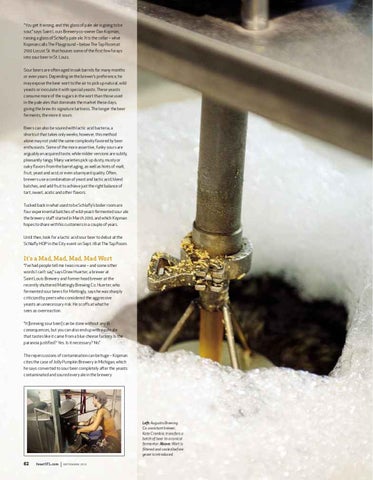
Left: Augusta Brewing Co. assistant brewer, Kate Crombie, transfers a batch of beer to a conical fermenter. Above: Wort is filtered and cooled before yeast is introduced.
62
feastSTL.com
SEPTEMBER 2010