Stability.
For Healthier Oklahoma Communities.

Consistent support empowers CCBHCs to provide stability, access, and targeted help at a state, local, and individual level.
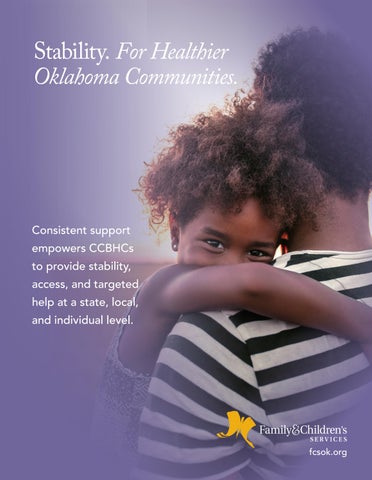
Consistent support empowers CCBHCs to provide stability, access, and targeted help at a state, local, and individual level.
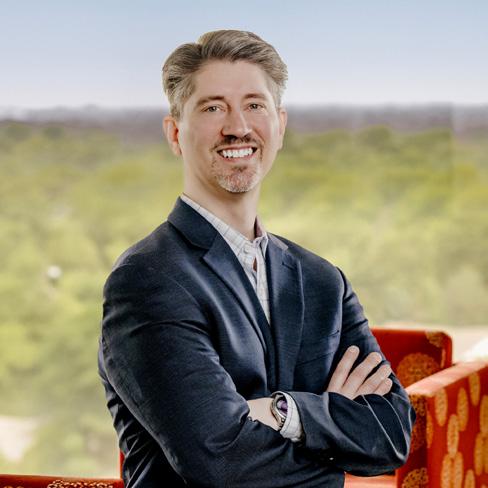
As we look ahead to the coming year, I am filled with optimism about what is possible when we work together on behalf of the individuals and families we serve; however, there is still work to do. It remains vital that we finish building a statewide approach that ensures no Oklahomans slip through the cracks in pursuit of a secure and healthy life for themselves and their families.
Family & Children’s Services (FCS) is proud of our longstanding ability to strengthen communities through whole person care. Every day, we invest in the social drivers of well being, because nearly every issue lawmakers hope to improve can be moved in the right direction when behavioral health is strong.
Finishing what we’ve started
Our work saves lives, and it saves the State money. But a system cannot be sustainable without predictable, reliable support. Oklahoma remains among the lowest states in the country for mental health spending per capita. As the number of Oklahomans in need grows, uninsured and uncompensated care also continues to grow—at historic rates. For FCS and other CCBHCs, this rise in unfunded care has become the most existential threat we face.
As we look ahead to the coming year, I am filled with optimism about what is possible when we work together on behalf of the individuals and families we serve; however, there is still work to do. It remains vital that we finish building a statewide approach that ensures no Oklahoman slips through the cracks as they pursue their own version of the American Dream.
Family & Children’s Services (FCS) is proud of our long -standing ability to strengthen communities through whole-person care. Every day, we invest in the social drivers of well -being, because nearly every issue lawmakers hope to improve can be moved in the right direction when behavioral health is strong.
Our work saves lives, and it saves the State money. But a system cannot be sustainable without predictable, reliable support. Oklahoma remains among the lowest states in the country for mental health spending per capita. As the number of Oklahomans in need grows, uninsured and uncompensated care also continues to grow at historic rates. For FCS and other CCBHCs, this rise in unfunded care has become the most existential threat we face.
We are proud of our outcomes, our reach, and the hope we provide. We see every day how people can meaningfully rise when they have access to care. But today, our clinics are operating under what has effectively become an unfunded mandate—one that we know can pay dividends not only for families, but for communities and for Oklahoma’s economic future. We will realize these dividends only through the thoughtful, intentional, forward-focused efforts of lawmakers and behavioral health agencies working in tandem with each other.
We are proud of our outcomes, our reach, and the hope we provide. We see every day how people can meaningfully rise when they have access to care. But today, our clinics are operating under what has effectively become an unfunded mandate one that we know will pay dividends not only for families, but for communities and for Oklahoma’s economic future . We will realize these dividends only through the thoughtful, intentional, forward -focused efforts of lawmakers and behavioral health agencies working in tandem with each other.
Thank you for your partnership during this time of change and for your commitment to an Oklahoma where every person has a fair chance at health, stability, and opportunity. For more information or to discuss these needs further, please contact us anytime at info@fcsok.org or reach out directly to our team.
Thank you for your partnership during this time of change, and for your commitment to an Oklahoma where every person has a fair chance at health, stability, and opportunity. For more information or to discuss these needs further, please contact us anytime at info@fcsok.org or reach out directly to our team.
Together, we can finish what we started.
Together, we can finish what we started.
With gratitude,
With gratitude,
Adam Andreassen, CEO
Adam Andreassen, CEO
Our Excellence in Mental Health demonstration program has shown that treating mental health like all other health is not only the right thing to do, it’s the smart thing to do . . . For too long, emergency rooms and law enforcement have served as the de facto mental health care delivery system in our country.
Certified Community Behavioral Health Clinics are changing that, helping people get the comprehensive behavioral health care they need, when they need it.
—
Roy Blunt, former U.S. Senator
What is the Purpose of a CCBHC?
CCBHCs are Part of a Bipartisan Plan to Save the Country Money
CCBHCs Meet Needs That Have Been Evolving for More Than Six Decades
CCBHCs Address Critical Needs and Create Stability for Clients
How do CCBHCs Stabilize Our Communities? .
CCBHCs Provide a Physical and Mental Health Safety Net
CCBHCs Address Health Disparities
How is Oklahoma Leading the Country in Embracing the Need for CCBHCs?
Oklahoma Has Proven Success With the CCBHC Model
How Does FCS Participate in the CCBHC Model? .
As a CCBHC, FCS Stabilizes Clients Where They Are FCS Fosters Client Stability Through Family Reconnection, Employment, and Education Initiatives
9-11
FCS Consistently Addresses Critical Behavioral Health System Gaps
FCS Creates Stability Through Timely, Consistent Access for Those Most in Need
FCS Support Continues Despite Limited Housing Availability How Has Our Local Community Responded to CCBHC Care? . .
What Challenges Are Oklahoma CCBHCs Facing?
CCBHCs Reinvest Revenues, They Are Not Money Makers
Oklahoma’s Uninsured Contingent is Increasing While State Funding is Decreasing
All Clients Must be Served Regardless of State Compensation The Uncompensated Services Funding Gap is Becoming Insurmountable
FCS Highest Need Clients Are Increasing and Are Requiring More Services
CCBHC Compensation ————————————
Why Does Competitive Compensation for CCBHC Employees Matter?
CCBHC Leadership Roles Are More Demanding Than Ever CCBHC Funding FAQs
What
is the Purpose of a CCBHC?

CCBHCs benefit leaders and the communities in which they serve.
Their cost-based model:
» Increases accountability
» Enhances ease of establishing local partnerships
» Promotes community-wide embedments
77.6%
fewer CCBHC clients reported that they “used an emergency room for behavioral health issues . ”*
86%
fewer CCBHC clients reported being “hospitalized for mental healthcare . ”*
*Source: https://www.thenationalcouncil.org/wp-content/uploads/2025/02/Transforming-State-Behavioral-Health-Systems.pdf
The CCBHC model grew out of the bipartisan Excellence in Mental Healthcare Act of 2014. States representing both sides of the aisle have launched CCBHC initiatives since then, and there have been significant investments in the program under our last three presidential administrations as lawmakers realize that healthcare “above the neck” should be treated the same as healthcare “below the neck.”

Certified Community Behavioral Health Clinics have become a cornerstone of bipartisan strategies to increase access to and improve the equality of behavioral healthcare in the United States.
— Amanda Mauri, Assistant professor/faculty fellow at the NYU School of Global Public Health
CCBHCs such as FCS serve people who do not have the means to access care elsewhere, and they do so efficiently, saving the State money by reducing expenses.
JFK signs Community Mental Health Centers (CMHC) Act.
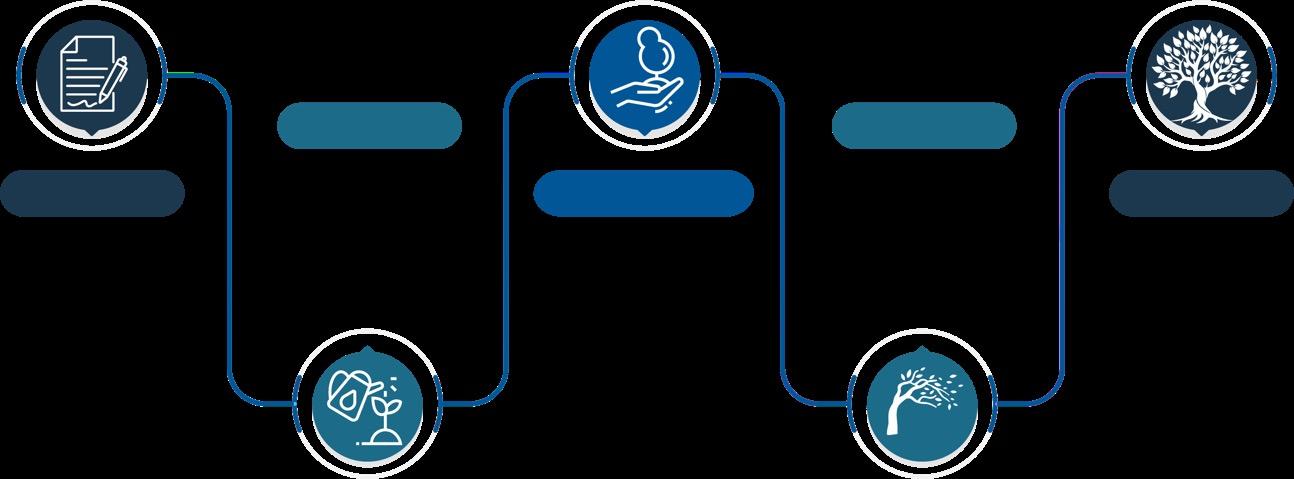
Lawmakers establish CMHCs as mental health safety nets. CMHCs expand to offer holistic approach to mental health recovery.
Leadership identifies gaps in CMHC model as issues become more complex.
CCBHCs are introduced to incorporate enhanced services, integrated care, and improved access.



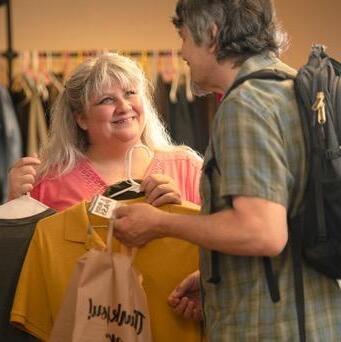
CCBHCs enable clients to get the care they need while alleviating the costly burden other institutions would have to bear if CCBHCs did not exist.

millions of lives across the country.
Today, CCBHCs serve an estimated 3 million people, with continued yearly growth since the model began. Gains among Medicaid CCBHCs expanded their number of people served by an average of 33% According to the National Council for Mental Wellbeing, here’s how they’re doing it:
87%
of Medicaid CCBHCs and established grantees offer one or more forms of Medication-Assisted Treatment (MAT) for opioid use disorder, compared to 64% of substance use treatment facilities nationwide.
of CCBHCs reported that their number of clients engaged in MAT of opioid use disorder has increased since becoming a CCBHC with 29% reporting increases of 20% or higher.
68% 98% 68% 83%
of CCBHCs and grantees are actively engaged in one or more innovative activities in partnership with criminal justice agencies.
of Medicaid CCBHCs and established grantees reported the number of children/youth they serve has increased.
of CCBHCs provide services onsite in one or more schools, childcare facilities, or other youth-serving settings.

1 . Mental health and substance use
2 . Primary care screening/ monitoring
3 . Skills for improving health and daily life
4 . 24/7 crisis services
5 . Screening, diagnosis, and risk assessment
6 . Targeted case management
7 . Community-based mental healthcare for veterans
8 . Peer family support counseling services
9 . Patient-centered treatment planning

How is Oklahoma Leading the Country in Embracing the Need for CCBHCs?

As an early adopter of and national leader in implementing the CCBHC model, Oklahoma achieved statewide CCBHC coverage of all 77 counties in 2021.
— healthymindspolicy.com
Source: http://www.odmhsas.org/eda/prevalence.htm
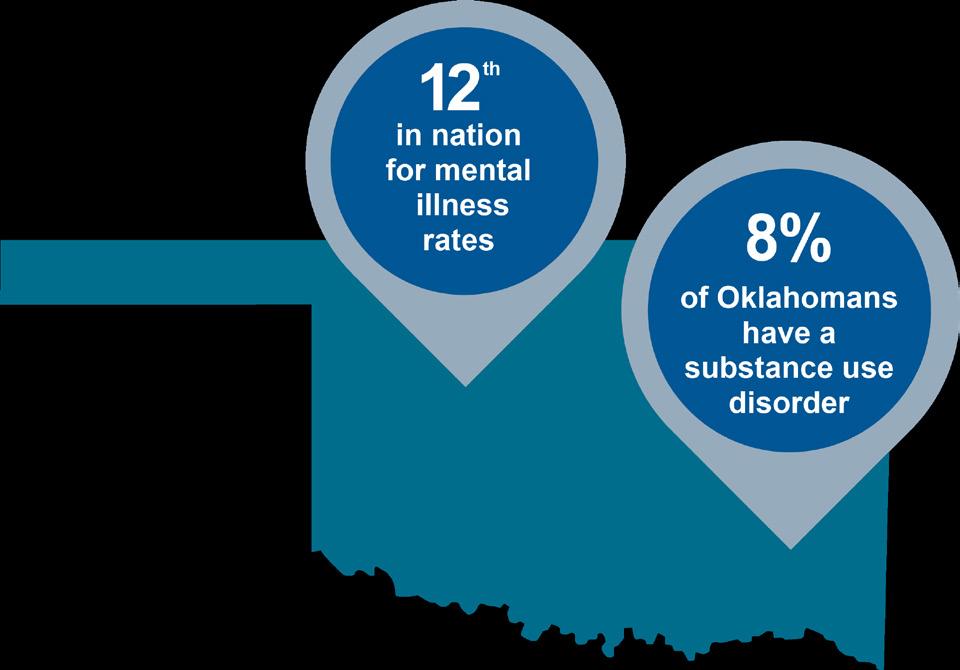
One of the highest prevalences in the US.
700,000-950,000 adult Oklahomans have unmet needs for recovery services.
Without CCBHCs, Oklahomans in need are faced with inadequate access as well as more expensive and overly-complicated levels of care.
Oklahoma Has Proven Success With the CCBHC Model By Age Group
Number of Oklahomans Served
86,693 2024 Statewide Total
86,693 Oklahomans from all 77 counties in FY24. This was a 319.5% increase from 20,665 in FY18.
58.8% Fewer Days in Inpatient Care
There was a 58.8% decrease in the median number of days CCBHC clients spent in inpatient care from FY18 to FY24.
Child (0-11)
19,058
18,701
73,160
12,835
Although CCBHCs are still in the early stages, Oklahoma’s demonstration history shows that the model is working. CCBHCs have elevated our state as one of the nation’s leaders in behavioral health.
Source: ODMHSAS CCBHC_OnePagerFinalEdits_Feb10.pdf.
How Does FCS Participate in the CCBHC Model?
CCBHCs have dramatically increased access to mental health and substance use treatment and recovery.

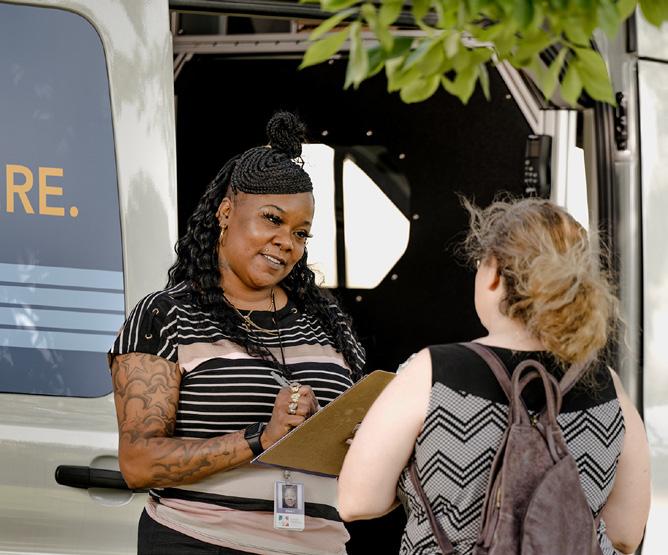







FCS saw 126% growth in client services from FY21 to FY25 with school-based services provided increasing by 189% within that time period.
FCS Fosters Client Stability Through Family Reconnection, Employment, and Education Initiatives

88% of Women in Recovery (WIR) graduating mothers are reconnected with their children . Based on FY22-FY25 graduate data
WIR family-based diversion programs promote stability through parenting support and skill-building, thereby reducing disruptions like school changes, loss of parental presence, and the stigma of incarceration. By keeping mothers engaged in daily caregiving and education, children benefit from continuity of care, reduced trauma, and stronger family relationships.
There was a 475% increase in employment services provided by FCS from 2022-2025. Individual Placement Services (IPS) served 500 clients, and the average salary of those served was $13.53/hour, nearly twice the federal minimum wage Employees averaged 30 hrs./week.
FCS Call Center has 73% show rate after setting first appointment versus national average of 55%
33% increase in HIGHEST NEED FCS CLIENTS from FY23-FY25
FCS served clients 6X faster than the national average
CCBHCs are able to see clients faster than the national average for services, which means an increase in providing for people in need.

9,021 hours of first responder time was freed up in Tulsa .
Medication adherence directly impacts:
» Reduced psychiatric hospitalizations
» Improved stabilizations and recovery
» Increased patient engagement
» Reduced total cost of care
132,728 prescriptions in FY24
146,835 prescriptions in FY25
The FCS pharmacy continues to see increases in client medication fulfillment.

FCS Crisis Care Continuum Saved Over $5.6 million in 2025 through prevention, intervention, and diversion.
In six months, FCS staff assisted clients with 253 housing applications . Only 7% were approved for housing .
Melissa’s Story: Learn how Family & Children’s Services CCBHC services evoke real change in individuals and families.

Scan to hear how one FCS client received life-changing care.
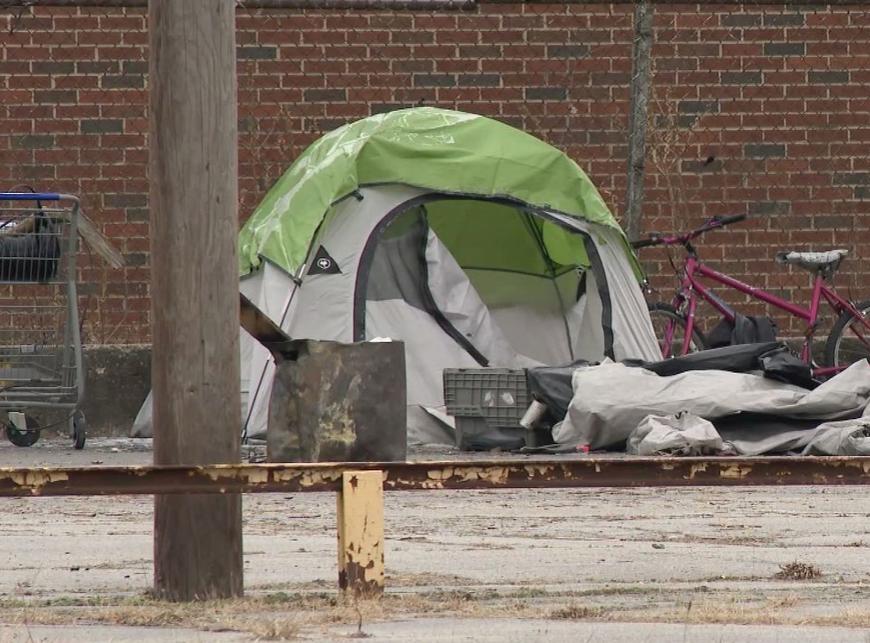
Oklahoma has the 6th highest rate of evictions in the US*
*Source: https://oklahomawatch.org/2025/07/01/get-out-oklahomas-eviction-timelineis-one-of-the-fastest-in-the-nation/
CCBHCs serve all 77 Oklahoma counties with a no-wrong-door approach, never turning away people in need of behavioral health services. CCBHCs often function as a mental health safety net, serving people who do not have the means to access care elsewhere
How Has Our Local Community Responded to CCBHC Care?


90% of FCS clients say they would likely recommend FCS to a friend or family member .

My therapist listens, and I mean truly listens. She doesn't make me feel crazy, but heard. She has helped me in so many ways, and for that I am forever grateful!
FCS provides lots of resources and services for those who might not be able to afford these types of services.
The staff at FCS is top notch, my care team genuinely stands by my side and is here to help and has helped with everything I’ve needed and seemed happy/excited to do so.
I’m constantly recommending and referring FCS to family and friends who I know are struggling.
— FCS Clients

MOST CLIENTS REPORTED THEY WOULD RETURN FOR FUTURE FCS SERVICES
MOST CLIENTS FEEL THEIR NEEDS ARE BEING MET AT FCS
My whole care team makes sure that I am always ok. My case manager, Ms. Shelbie, will call me and touch base with me to see how I am doing and if I need anything. The pharmacy team helped me tremendously to get set up with patient assistance*, and they are always very courteous when I speak to them.
— FCS Client
71% OF CLIENTS Rated their FCS care team ** as EXCELLENT
*Patient Assistance Programs (PAP) are designed to help individuals afford or receive medications for free.
Care Team generally consists of a therapist, a case manager, a peer recovery
CCBHCs Reinvest Revenues, They Are Not Money-Makers
Myth Fact Medicaid and Commercial Payments Cover CCBHC Costs .
Without Offsets for Uncompensated Care, the CCBHC System Will Ultimately Break Under Its Own Weight! What Challenges are Oklahoma CCBHCs Facing?
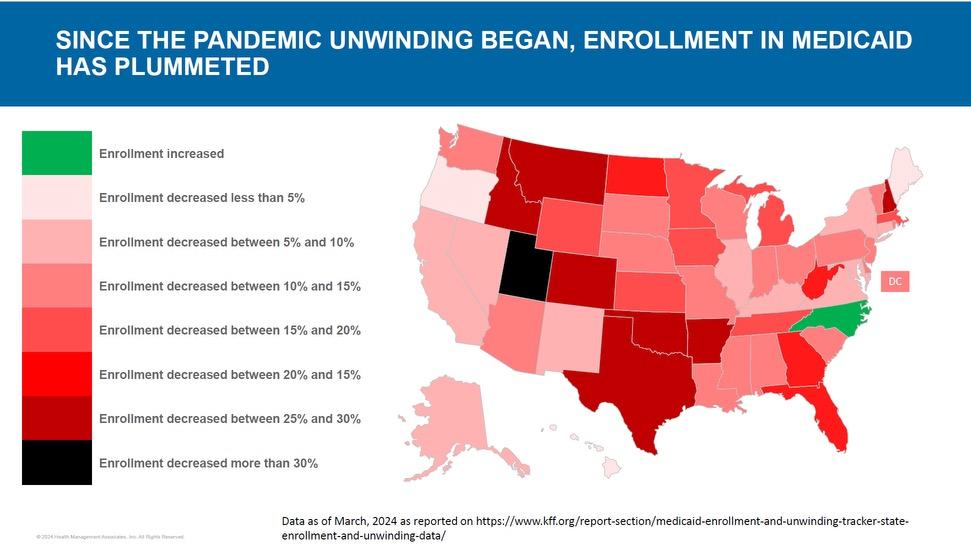
Oklahoma’s Uninsured Contingent is Increasing While State Funding is Decreasing
Since 2023, Oklahoma Medicaid clients have seen increased challenges in enrollment and eligibility that have caused many individuals to lose coverage, and while their coverage has discontinued, their medical and mental health needs have not. As the number of unenrolled, uninsured individuals has gone up, compensation has gone down, resulting in a financial cliff that, if not addressed, will cause the CCBHC system to break under its own weight!

In the absence of uncompensated payments, reimbursement may become disproportionate, potentially leading to a significant deficit.
» 40% of Americans live in areas without enough mental health professionals.
Oklahoma Faces Severe Workforce Shortages
» Demand for services is up 18%, with some conditions increasing 25-50% since the pandemic.
» Behavioral health wages rose 5%+ in 2025, driven by turnover and shortages.
» Psychiatrist starting salaries rose 10.5% on average to $315,000.
WHAT THIS MEANS: CCBHCs must match a rapidly rising labor market to maintain (or “provide proportionate”) access to care.
Oklahoma is Competing with Higher-Spending States
» Oklahoma invests just $59.29 per capita in mental health—among the lowest in the nation.*
» Other states invest 5-6 times more, allowing them to offer more competitive compensation.
Source: *https://rehabs.com/explore/mental-health-spending-by-state-across-the-us/
Executive Responsibilities Now Include:
» Crisis response system oversight
» Workforce stabilization
» Integrated-care partnerships
» Complex reimbursement and regulatory compliance
» Quality, safety, data, and reporting management
Executive Compensation is Highly Regulated
» IRS form 990 publicly reports compensation for highly compensated employees as well the number of staff making more than $100k.
» Federal “reasonable compensation” rules require independent salary benchmarking and comparability data.
» An independent board must approve compensation with documentation and conflict-of-interest controls.

High-skill leadership is essential to sustaining CCBHC operations, and the market sets the price in this highly regulated, highly transparent sector.

Without Competitive Compensation, CCBHCs Cannot:
Nonprofits Must Compete With:
Oklahoma Ranks Below the National Average in Nonprofit Executive Compensation
Competitive pay is not a luxury — it is how we protect Oklahomans’ access to care.
» Recruit and retain psychiatrists and executive leadership
» Maintain federally required staffing levels
» Keep crisis and specialty programs open
» Meet quality, safety, and accountability standards
» Provide timely access and reduce waitlists
» Private equity–backed behavioral health companies
» National health systems
» High-spending states offering richer packages
» Average compensation for executives (90th percentile) in nonprofit organizations across the U.S. as of March 1, 2026 is $333,679.*
» Average compensation for entry-level earners (10th percentile) in nonprofit organizations across the U.S. as of March 1, 2026 is $196,250.*
» Oklahoma’s average nonprofit executive compensation is $80,901.**
Sources: *https://www.salary.com/research/salary/benchmark/ceo-non-profit-organization-salary ** https://www.ziprecruiter.com/Salaries/What-Is-the-Average-CEO-Non-Profit-Salary-by-State

As part of a comprehensive cost reporting system that is overseen by the State, CCBHCs must submit a detailed cost report based on federally guided regulations from the Centers for Medicare and Medicaid Services. CCBHCs do not use a “name your price” model.
What are the three components of the CCBHC reimbursement framework?
1. Monthly Base Rate: A standard monthly rate that is established to reimburse CCBHCs for the provision of services to the standard population.
2. Special Population Rates: Rates that have been established to address the increased costs associated with delivering services to those Most in Need (MIN).
3. Quality Bonus Payments: Payments that are implemented to incentivize and reward high-quality service delivery. [Enhanced Tier Payment System (ETPS) in Oklahoma.]
How is the “Most in Need” category defined??
The “Most in Need” Special Population category is defined by the State based on a ratio of adults and children served by an agency and the actual cost to serve said individuals.
Who are considered to be “high need” clients?
“High need” clients are those who require intensive services and who face challenges in community-based services. They include individuals on the “Most in Need” list among others designated as “high need” by the State.
How do CCBHCs ensure their costs reflect current economic realities?
The PPS-2 model incorporates regular cost updates using either the Medicare Economic Index (MEI) or through a process of rebasing at least every three years. PPS-2 refers to Medicare’s Prospective Payment System, the methodology used to facilitate monthly payments for the covered services provided by CCBHCs.
How do “uncompensated payments” work?
Uncompensated payments are payments for unreimbursed services provided by the CCBHCs in excess of contract amounts, but for which there is no contractual obligation by the State to pay. When additional funds are made available, CCBHCs do get some payment, determined by a percentage share of all the CCBHCs in the state and their total bill.
Do CCBHCs receive the PPS-2 bundle payment for every client they see?
No. CCBHCs only get paid the bundle payment on Medicaid and uninsured clients up to the CCBHC’s State contract allotment. This leaves many clients served unfunded.

Scan to learn more about CCBHCs and their impact.