Dear Members,
This year has started off on a chaotic note. Thankfully not for us as a club, but certainly for the world.
We’ve seen global tensions flare up into war. We’ve dealt with volatile markets and travel confusion. AI continues to dominate our conversations.
In this first quarter, journalists have been there through it all, giving us daily updates, sometimes at their own peril. While Hong Kong may feel like it is on the outer rim of the chaos, journalists here are also feeling the squeeze.
At the Club, we started the year with our annual Press Freedom Survey. This survey of our Correspondent and Journalist Members takes the temperature of the media landscape in Hong Kong as we seek to reflect on the stressors and challenges these Members may be facing.
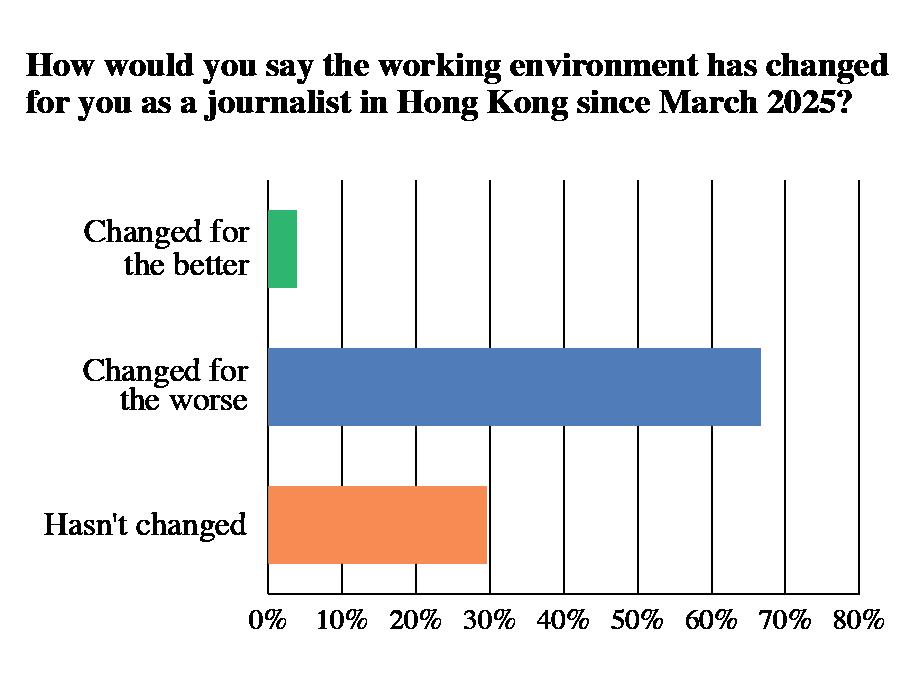
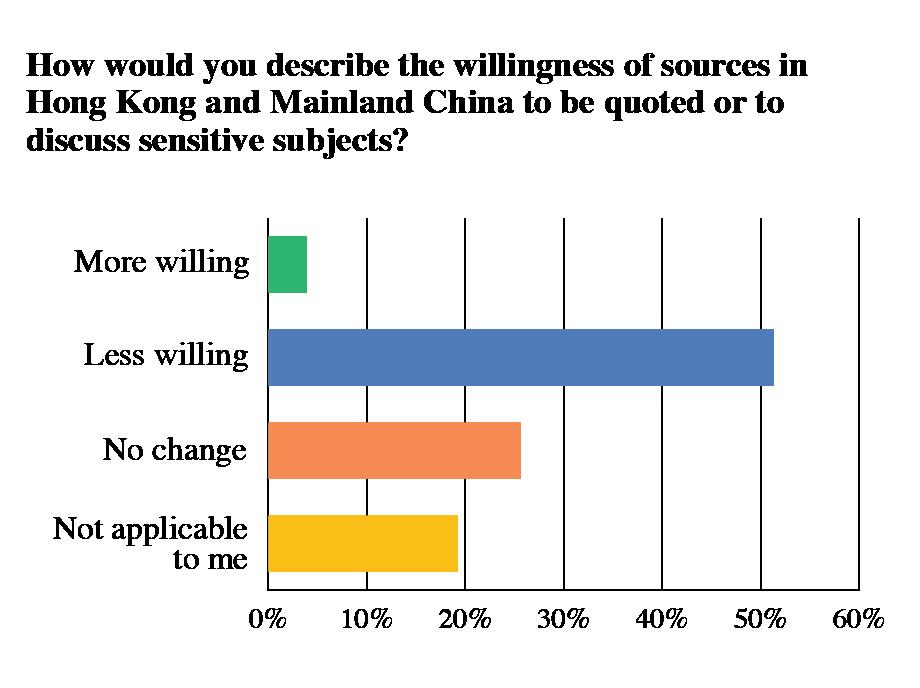
Notably, this year 67% said the working environment for them as journalists has changed for the worse in the past 12 months, and half said that sources have become less willing to talk. Please flip to page 14 to read about our survey and results in more detail.
The results of this survey are timely, as we celebrated World Press Freedom Day on 3 May. We honour journalists and press freedom, a right that is enshrined in the Hong Kong Basic Law.
Looking ahead, the FCC will continue to support our Correspondent and Journalist Members with trainings, events and our committee work. In May we will host our annual Journalism Conference, which is chock full of interesting speakers and helpful insights for today’s media. We already have a number of registrations from local journalism students. This is a group that we want to encourage to develop their skills and tell Hong Kong stories.
To our Associate Members, we thank you for your continued support of the Club and its efforts. We are all in this together and we couldn’t provide a safe space for learning and engagement without you.
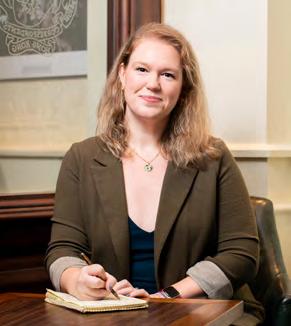
Morgan M. Davis President president@fcchk.org
The Foreign Correspondents’ Club, Hong Kong
2 Lower Albert Road, Central, Hong Kong
Tel: (852) 2521 1511
Fax: (852) 2868 4092
Email: fcc@fcchk.org
Website: www.fcchk.org
President Morgan M. Davis
First Vice President Karen Koh
Second Vice President Tim Huxley
Correspondent Member Governors
Jennifer Jett, Kristie Lu Stout, Peter Parks, Paul Tait, Laura Westbrook, Lee Williamson, Jing Yang, William Zheng
Journalist Member Governors Zela Chin, Joe Pan
Associate Member Governors
Liu Kin-ming, Lynne Mulholland, Christopher Slaughter, Barbara Yu Larsson
Club Treasurer Tim Huxley
Club Secretary Liu Kin-ming
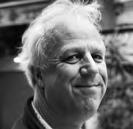
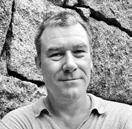

John Batten
John Batten comments, broadcasts and writes on art, culture, urban planning, heritage and policy issues for Hong Kong newspapers and overseas magazines and is a former art critic and contributor for the South China Morning Post. He is also a director of the arts education group Rooftop Institute and currently President of AICAHK.
Paul French
Paul French is the author of Midnight in Peking and City of Devils: A Shanghai Noir, as well as most recently, Her Lotus Year: China, the Roaring Twenties and the Making of Wallis Simpson.
Professional Committee
Conveners: Morgan M. Davis, Jennifer Jett, Karen Koh, Lee Williamson, William Zheng
Journalism Conference Sub-Committee
Co-Convenors: Karen Koh, Jing Yang
Press Freedom Committee
Conveners: Morgan M. Davis, Karen Koh, Lee Williamson, Jing Yang, William Zheng
Constitutional Committee
Conveners: Liu Kin-ming, Peter Parks
Membership Committee
Conveners: Zela Chin, Jennifer Jett, Joe Pan
Communications Committee
Conveners: Zela Chin, Morgan M. Davis, Paul Tait
Finance Committee
Treasurer: Tim Huxley Conveners: Karen Koh, Lynne Mulholland
House/Food and Beverage Committee
Conveners: Lynne Mulholland, Barbara Yu Larsson
Wine Tasting Group
Chairperson: Cammy Yiu
Building – Project and Maintenance Committee
Conveners: Liu Kin-ming, Christopher Slaughter
Wall Committee
Conveners: Kristie Lu Stout, Peter Parks
Charity Committee
Conveners: Morgan M. Davis, Laura Westbrook
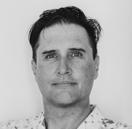
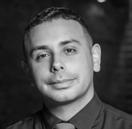
Christina Pantin
Christina is a Malaysia-born, U.S. citizen who is fluent in financial journalism and corporate communications. She is the Founder of communications consultancy Toot and a founding member of Global Commtrepreneurs Network and Web3 Women.
Editor Ann Tsang Email: editor@fcchk.org
Design Artmazing!
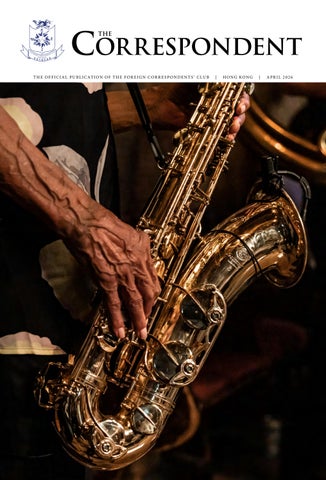
Cover Image Karen Cox
Printing Elite Printing: Tel: 2558 0119
Advertising Enquiries FCC Front Office: Tel: 2521 1511

Aaron Busch
Aaron is the FCC’s first Social Media Journalist Member, writing on various online outlets since 2020. He splits his time between news reporting and cricket commentating, as well as broadcasting in Hong Kong and internationally. His nightly Substack on Hong Kong news can be found at tripperhead.com
Hugo Novales
Hugo is originally from Chicago and joined the FCC just prior to graduating from HKU's Master of Journalism programme. As the Club’s in-house journalist, he covers events for the website and social media, contributes to The Correspondent, and also helps organise and promote workshops for early/mid-career journalists.
Jing Yang
Jing is currently the Asia Bureau Chief at The Information, leading a team of reporters covering the region's vibrant tech and venture capital scene. Prior to joining The Information, she was a Senior Correspondent at The Wall Street Journal and has held reporting roles at other news organisations.
The Foreign Correspondents’ Club Hong Kong was Incorporated in Hong Kong on 21 May, 1952. The Correspondent ©2026 is published four times a year by The Foreign Correspondents’ Club, Hong Kong. All views expressed in all articles are those of the authors and are not necessarily those of The Foreign Correspondents’ Club Hong Kong. All content contained in The Correspondent may not be reproduced in any manner whatsoever without authorisation.Advertisers warrant and represent that the descriptions of the products or services advertised are true in all respects. The Foreign Correspondents’ Club Hong Kong assumes no responsibility for claims made by advertisers and makes no recommendations as to the purchase or sale of any product, service or item. ©2026 by The Foreign Correspondents’ClubHongKong.Allrightsreserved.
1 From the President
4 Club News
6 Onwards and Upwards
Continuing our series of stories on the history of the FCC, in 1961, the landlord kicked the FCC out of its premises at 41A Conduit Road and the Club had to find a new home.
8 John le Carré’s FCC – ‘A Chorus Without a Hero’
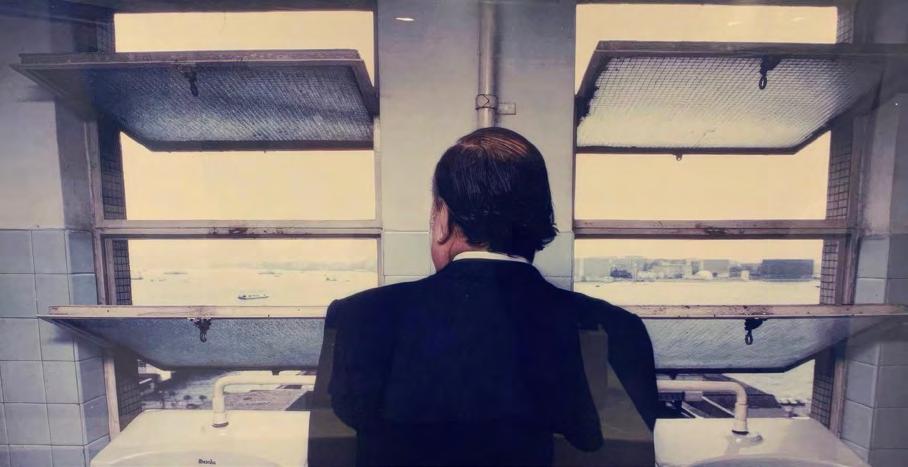
Sutherland House famously had an excellent view of Victoria Harbour – from the urinals. John le Carré must have been impressed because the 14th floor toilet even gets a mention in The Honourable Schoolboy.
9 A Purposeful Alliance
To misquote Mark Twain, the thing about heritage buildings is “…they’re not making them anymore.” With that in mind, there was very little debate when the FCC was approached to join the Hong Kong Built Heritage Alliance, a group dedicated to knowledge exchange about how to operate as a tenant in historic architecture.
10 Member Focus: Jan Verhein
12 Staff Spotlight: Mary Iu Choi Kwai
Mary is part of the invisible crew that keeps our Club spick and span, from inspections of the washrooms every 30 minutes, to washing stacks of dishes and cleaning silverware. She talks about her hobby, which takes her outdoors and far away from her domestic duties.
14 Press Freedom Survey
19 On The Wall
24 Through The Lens: A Born Storyteller
From creator of poetic images to compelling storyteller, throughout his career Jerry Schatzberg excelled in both photography and filmmaking. Published in Vogue, Esquire, LIFE , and many other leading publications in the 1960s, he went on to direct a number of successful films including ‘Scarecrow’, which shared the Palme d’Or at the 1973 Cannes Film Festival.
30 Feeling Bookish? Telling The Story of A Master of Deception
32 Feeling Bookish? Pankaj Mishra: The World After Gaza
34 New Orleans Comes To Bert’s
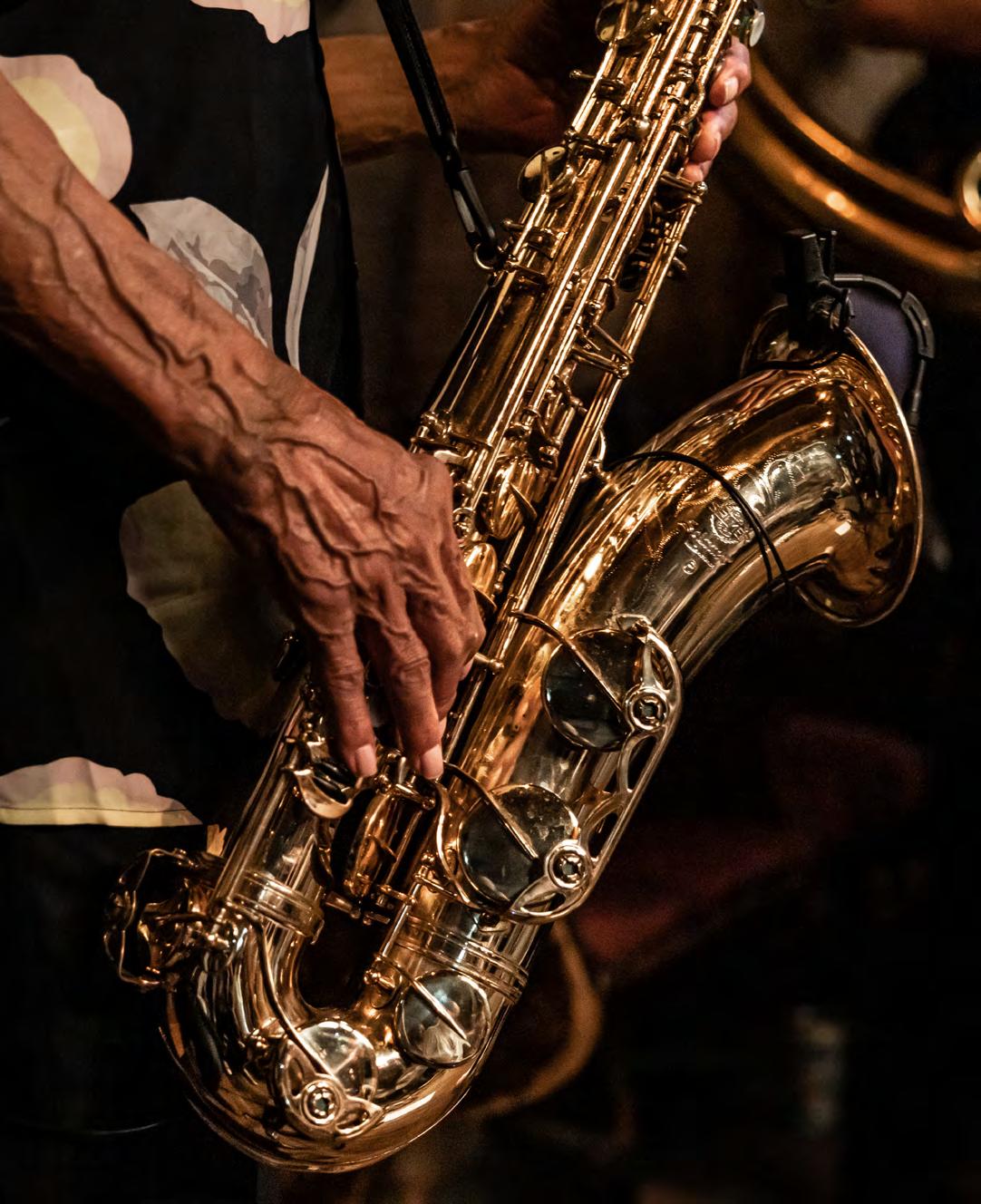
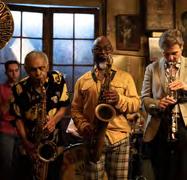
To coincide with the annual New Orleans Jazz & Heritage Festival, Bert’s is celebrating the birthplace of jazz with a festival of its own. Members can expect a host of activities including an exhibition of striking images of New Orleans jazz musicians by acclaimed photographer Karen Cox; a selection of jazz-themed cocktails from New Orleans, Chicago and New York specially created by our resident mixologist Diwash Gurung; Cajun specials on the blackboard menu; and a jazz-inspired playlist curated by Allen Youngblood.
37 Food for Thought
38 In Vino Veritas
40 Reciprocal Club: The British Club Singapore
42 New On The Block
46 Obituary: Peter Berry
50 Click!
56 Don’t Beat About The Busch
The FCC is thrilled that former President Lee Williamson has been named one of BoardRoom magazine’s Top 34 Private Club Presidents for 2025.
BoardRoom magazine is the official publication of the Association of Private Club Directors (APCD), Distinguished Clubs and Distinguished Golf Destinations. This year the magazine is celebrating 30 years of educating and informing the private club industry.
Now in its 18th year, the Top Private Club Presidents award recognises outstanding volunteer leaders who exemplify excellence in governance, leadership and partnership with their General Manager and Board of Directors. Each year, hundreds of nominations are received from around the world, a testament to the fact that exceptional Board Presidents remain both relevant and essential. “This award is not given lightly. Systems alone do not ensure good governance. True leadership requires commitment, competence, diversity, collective decision-making, transparency and effective communication, alongside fiscal responsibility and a clear sense of mission, vision and strategic direction,” commented BoardRoom’s Publisher, John Fornaro and Editor/CoPublisher, Heather Arias de Cordoba.
“I am both thrilled and humbled to receive this award. While I had the honour of being our Club’s figurehead for two years, it truly took a village to achieve our shared goals,” said Williamson of the accolade. “This award is not just for me; it’s a well-deserved recognition of the dedication, talent and hard work of my fellow Board of Governors, as well as the Committee Members, the Club staff, and the many unsung heroes who are the lifeblood of The FCC.”
The FCC extends its heartiest congratulations to Lee on this prestigious honour.


In more great news for the Club, we are delighted to announce that The FCC has been bestowed with an Honourable Mention as a 2026 - 2027 Platinum Club® of the World, a truly impressive achievement for the Club.
Recognition in the Platinum Clubs® of the World is an exclusive honour awarded to only the Top 300 Private Golf and Country, City, and Yacht Clubs globally. Our Honourable Mention was within five points of Platinum status, which would have placed us within the top 130 City Clubs in the world.
The Advisory Board appoints the International Voting Panel who elect the Platinum Clubs® of the World every two years for its unique ability to identify and acknowledge Excellence in Private Clubs. The Panelists, comprising some of the top Private Club industry experts, historians and connoisseurs, are invited to vote confidentially for each Club listed on the election Ballot.
“The Leadership, Members and Staff of The Foreign Correspondents’ Club should be justly proud, as your Club excelled in each of the Board-approved Seven Selection Criteria utilised in the election: Universal Recognition; Respected Membership; Excellence in Amenities and Facilities; Exceptional Service Standards; Adapting to Changing Times; Management and Operations; and Overall Experience,” said Jessica Johnson, Executive Director of the Club Leaders Forum. “Achieving Platinum recognition requires a commitment from your Club’s most important asset, the staff, and is a testament to their unwavering dedication and exceptional commitment to enhance the Club’s culture and enrich the Membership experience.”
General Manager David Brightling, who prepared the Club’s submission, noted that, “This award recognises the partnership between the volunteers who serve on Club committees and the Board and the dedicated staff – some of whom make their careers at the Club – and all of whom are committed to providing a safe, warm and welcoming home away from home for Members, their families and friends. We have many improvements planned for the future and look forward to making our next submission for 2028-29.”

On 16 May, the Club will host its annual one-day Journalism Conference, marking the 10th anniversary of an initiative to develop the local media community and nurture the next generation of practitioners.
This year’s conference, with the theme ‘Cutting Through the Noise’, will feature discussions about the practical use of AI in newsrooms, coverage of the devastating Tai Po fire, cultivating sources, legal issues, press freedom, career resilience and alternative media careers. The conference is open to FCC Correspondent and Journalist Members and university journalism students, as well as non-Member journalists and media professionals.
The conference will tap Hong Kong-based speakers and also bring in overseas guests, including Ian Yee, an investigative journalist and a co-founder of The Fourth in Malaysia.
“We are very excited to be able to host the journalism conference again this year at the FCC. It has now been 10 years since we began this endeavour, and it has been such a pleasure to watch the conference grow over the years,” says Morgan M. Davis, President of the FCC. “The FCC strives to support journalists in Hong Kong with resources and training to produce top-tier reporting. I look forward to another blowout event this year and know I will walk away with some new insights myself!”
The FCC Annual Nomination Meeting was held on 8 April for the purpose of accepting oral nominations for the Board of Governors for the 2026 – 2027 term.
A reminder that the ballot voting deadline is on 21 May, 2026 at 3:00 pm and the Annual General Meeting will be convened on 28 May, 2026 at 6:00 pm.

In a recent episode of The Correspondent podcast, veteran art critic and FCC Member John Batten chatted with host and producer Jarrod Watt about his take on Art Basel Hong Kong, cutting through the usual headlines about record auction prices and celebrity artists.
Batten also explores the wider Hong Kong art scene - from the city’s evolving history as an art hub and the rise of regional art fairs to how global trends are reshaping the market. He also shares insider tips on where to look beyond the Basel spotlight, including Tsuen Wan, Wong Chuk Hang and Hong Kong’s growing network of public art spaces. In addition, he offers practical advice for navigating art fairs like a prowhat to wear, how to connect, and where to explore.
Listen now: https://open.spotify.com/episode/1C9ZHtMYAZmPID1SpS3VJ7
FCC Hong Kong Vice President and veteran broadcaster Karen Koh sits down with photojournalist Ben Marans in the Hughes Room to talk about a powerful exhibition held at the FCC Main Bar in April. The show featured images captured by individuals who learned photography through workshops run by ImpactHK, an FCC charity partner, and led by Marans.
Through street photography, participants—many facing homelessness or economic hardship—share their personal perspectives on life in Hong Kong. Karen and Ben explore how the project gave them a platform to tell their own stories, build creative skills and highlight the human side of social struggle.
This podcast has used generative AI to give voice to the stories written by participants which accompany each photo.
View the images of the exhibition at the FCC website while you listen by using the QR codes opposite.
Listen now: https://open.spotify.com/episode/3lqvdx8u2omczVnUk8BhNZ?si=ZeqRnP rsTdu1Rx-cTn6LXQ



Continuing our series of stories on the history of the FCC, in 1961, the landlord kicked the FCC out of its premises at 41A Conduit Road which had been put up for sale. In hindsight, it would perhaps have been a prudent idea for the Club to purchase it, as apparently at one point it could have been bought for a mere HK$125,000 (although another source states that the figure was double that). But in any event, it was not to be and the FCC had to find a new home.
By Kate Whitehead
Upon vacating its palatial premises at 41A Conduit Road, the FCC moved down to Central into Li Po Chun Chambers, a then 14-storey building at 189 Des Voeux Road Central that extended to Connaught Road, then at the edge of the harbour. It was a case of “after the Lord Mayor’s show” and so began a relatively dark period in the history of the Club.
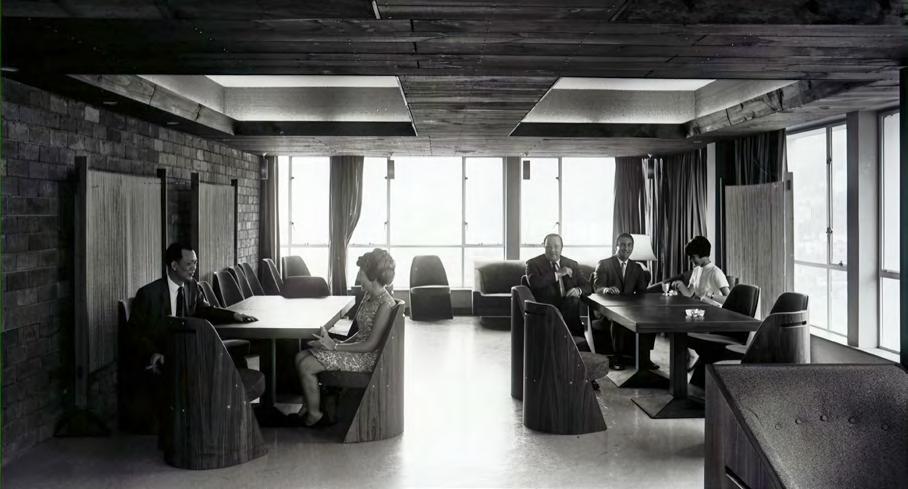
Resignations were commonplace and by 1963 the FCC couldn’t meet its bills. For a few months the Club folded, But the FCC is made of hardy stuff. Hobnobbing with diplomats and dignitaries was fun, but the Club’s feisty personality was forged in wartime, and it clawed its way out of the hole, finding a new home in a function room on the fourth floor of the Hilton hotel in Central (now the site of the Cheung Kong Centre). The Vietnam War was raging, and the FCC returned to its roots, offering a welcome respite for correspondents covering the conflict.
“The hotel was a ‘centre of gravity’ for Hong Kong’s social and cultural life, hosting the Foreign Correspondents’ Club (1963–1969) and featuring venues like the Dragon Boat
Bar, The Den (a popular dance spot), and the Eagle’s Nest restaurant, a celebrity favourite,” says Jamie Lloyd of J3 Private Tours Hong Kong, who has lived in the city since 1972.
Roughly every three months, journalists and photographers had a break of a couple of weeks in Hong Kong. Sometimes shell-shocked, other times giddy on life, the camaraderie of war-weary correspondents gave the Club its buzz. And it was certainly buzzing one afternoon in 1968 when a young local secretary lunched with a BBC friend. She was blown away by the vibe of the place.
“It was like watching a Clark Gable movie of the East; there were such wonderful characters around the bar, real Casablanca types,” recalls Annie van Es.
One of those characters, a tall Dutch photographer, invited Annie to join him for a drink. Love soon blossomed and the Club became the backdrop for their romance.
“Before dinner elsewhere we would always meet at the Club for drinks. And after dinner always led us back to the FCC for a ‘yat for the doh ’ [one for the road],” recalls Annie,
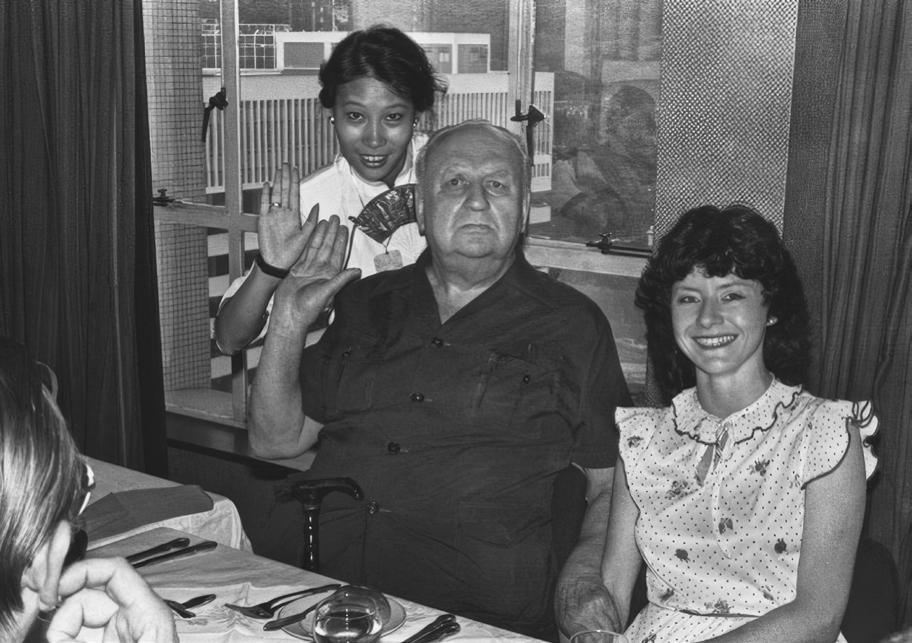
who to this day is still a regular.
The future, however, was still looking far from bright with the few Members getting fewer by the month. But in 1964 Guy Searls was elected President and took credit for turning the Club around. “When I took over we were HK$18,000 in the red, but by the time my year of office was over we were HK$14,000 in the black,” he once proclaimed.
The Club moved again in 1969, from the Hilton to Sutherland House, an office block at number 3 Chater Road which later became the Ritz-Carlton hotel before the building was demolished to make way for the current CCB Tower (China Construction Bank Tower).
The Sutherland House iteration of the FCC was spread over several floors, with casual dining on the 14th floor, formal dining on the 15th, and a workroom-cum-games room on the 18th.
RTHK also had its Central newsroom in the building at the time, and the Godown, a popular bar and restaurant, predominantly frequented by expatriates, was housed in the basement.
For RTHK staff working out of the Central office, getting to the Club was as simple as stepping in the lift and pressing the button for the 14th floor. Terry Nealon, a sub-editor who went on to become the head of English-language news at RTHK, recalls spending a riotous evening with the wellknown and much-loved journalist, the late Kevin Sinclair. With a fair few drinks under his belt, Nealon knocked the Club’s bust of the Australian correspondent Richard Hughes off its plinth.
“I’d got it into my head that there shouldn’t be a statue of a living journalist, so I pulled it off the plinth. I thought
I might get expelled, but the Club is pretty forgiving,” said Nealon.
The bust of Hughes crashed to the floor and bounced a couple of times, but it remained in one piece. Look out for it the next time you enter the Club, where it takes pride of place in the reception area.
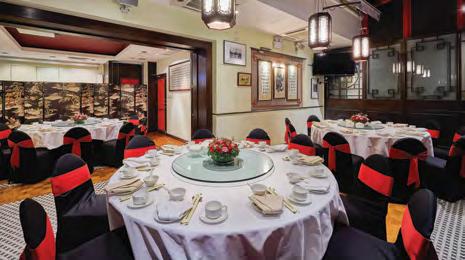
The Chinese restaurant (the Hughes Room) on the first floor is named in honour of this larger-than-life correspondent who passed away in 1984.
If you are new to the FCC, strike up a conversation with one of the old-timers and ask them to tell you their favourite story about the Club. Everyone has one. One such tale that did the rounds at Sutherland House was about an Associate Member, a serving policeman, who arrived at the Club very inebriated and, thinking that he was actually at home, stripped naked, helped himself to a beer, and sat down to watch television. This actually happened, and on more than one occasion. Eventually, the policeman in question was so mortified that he resigned from the Club.
A Club that attracts scribes, colourful characters and often riotous behaviour was bound to end up in a novel. The English-Irish author John le Carré visited in the 1970s and drew inspiration from some of the regulars around the bar. His 1977 Cold War spy novel The Honourable Schoolboy opens with a scene set at the FCC in Sutherland House. As a typhoon rages outside, a 27-year-old Vietnam reporter is in the men’s toilet swilling blood out of his mouth after a bar brawl, trying to recall a juicy story that his Chinese landlord had let slip. When he remembers, he charges into the packed bar, jumps on a table, smashing glasses and cracking his head on the ceiling. No one batted an eyelid… n
Sutherland House famously had an excellent view of Victoria Harbour – from the urinals. Le Carré must have been impressed because the 14th floor toilet even gets a mention in The Honourable Schoolboy. A photograph of that view hangs in the men’s WC today.
By Paul French
Close to the start of John le Carré’s 1977 magnum opus of Asian espionage and skullduggery, The Honourable Schoolboy, we meet the venerable and hard-drinking members of the Hong Kong FCC – a sloshed gang of foreign hacks hunkering down as a typhoon approaches the colony:
‘A Saturday in mid-1974, three o’clock in the afternoon, when Hong Kong lay battened down waiting for the onslaught. In the bar of the Foreign Correspondents’ Club, a score of journalists, mainly from the former British colonies - Australian, Canadian, American - fooled and drank in a mood of violent idleness, a chorus without a hero. Thirteen floors below them, the old trams and double-deckers were caked in the mud-brown sweat of building dust and smuts from the chimney stacks in Kowloon... The men’s room, provided the club’s best view of the harbour....’
In 1974 of course the FCC was in Sutherland House on Chater Road – now long demolished, though that loowith-a-view le Carré noted is memorialised by Australian photographer R. Ian Lloyd and remains adjacent to the urinal in the gents’ toilets on Lower Albert Road for male Members to contemplate as they empty their bladders.
Coming off the back of his bestseller Tinker Tailor Soldier Spy, le Carré was determined to get Hong Kong right in The Honourable Schoolboy. He made two trips to Hong Kong – in 1974 and again in the spring of 1975. The FCC was a natural first stop. The Club was packed with correspondents catching the tail end of Vietnam, just off to Phnom Penh
to catch the new fighting, flying to Bangkok to take photos of rioting students. In The Honourable Schoolboy stringers desperate for a payday buy Police Superintendent “Rocker” a beer in the hope of some inside gossip on “Big Moo” (the Governor), while the “honourable schoolboy” himself and “occasional” operative for the Circus (British Intelligence), Jerry Westerby, indulges in an “aimless drinking session”. And, at the bar, there’s always Luigi Tan, “a fixer who could get you anything from a Korean dance troupe to a cut-price air ticket faster than anyone else in town.”
And presiding over it all, commanding the bar, outdrinking anyone else and with a limitless fund of tales is William “Old” Craw, an ageing journalist with a sideline working for MI6. In real life Old Craw was Richard –Dick, Dicko, “Cardinal” or “Monsignor” (from his habit of addressing others as “Your Grace”) – Hughes. A larger-thanlife Australian known for his bonhomie, quite possibly also a “UA” (Unofficial Assistant) for Mi6, and most certainly the solidest fixture at the FCC bar, as well as author of one of the more insightful foreign correspondent memoirs of Asia, Foreign Devil (1972). He was immediately of interest to le Carré, and the author subsequently immortalised him in The Honourable Schoolboy
And in that novel it is always to the FCC that le Carré’s characters return. To the bar, to another cold beer and one more tall story. Le Carré supped at that bar too, imbibed the hops and the tales before weaving them all into his masterpiece, The Honourable Schoolboy n
To misquote Mark Twain, the thing about heritage buildings is “…they’re not making them anymore.” With that in mind, there was very little debate when the FCC was approached to join the Hong Kong Built Heritage Alliance (https://hkbha.org), a relatively new group dedicated to knowledge exchange about how to operate as a tenant in a historic building.
By Christopher Slaughter
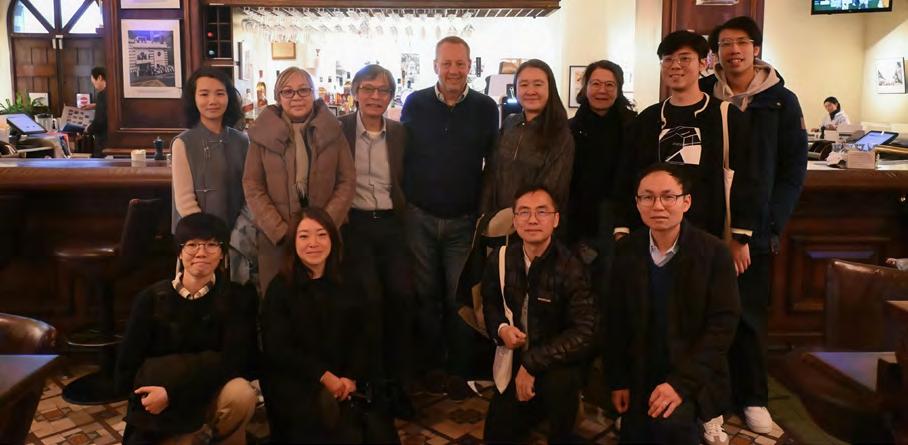
Professional heritage conservationist and FCC Member Winnie Yeung recently introduced the Club to the Hong Kong Built Heritage Alliance (BHA) which we are now officially a proud member of. Winnie’s project portfolio includes both Tai Kwun and the Tai O Heritage Hotel, and she was also involved in some of the original discussions to establish the BHA. “The Government’s ‘Revitalising Historic Buildings Through Partnership Scheme’ started in 2008, and as more of these heritage buildings came up for rental, we kept having the same discussions with their new tenants,” she says. “Only non-profit groups can bid for tenancy, and they tend to be focused on running their NGOs, not dealing with architectural preservation.”
Which is more or less what the FCC’s situation was back in the early 1980s, when the Club first began negotiating with the Government to lease our building on Lower Albert Road. “We weren’t specifically looking for a heritage building, but commercial rents were rising at a rate that was making it unfeasible for us to stay in Sutherland House, or for that matter, find a similar venue,” recalls former Journalist Governor and long-time FCC Member Sarah Monks. “Necessity is the mother of invention, and in this case, it meant re-inventing a building previously used to store things and turning it into a clubhouse where people would want to spend time.”
That initial renovation – and lots of sawdust – turned what Sarah describes as “a very gloomy place, quite a musty shell of a godown” into the clubhouse we know today. Since then, our collective minds have also been focused by the
obligation included in our initial lease (and every subsequent renewal since) to fully maintain the building from our own resources. Over the course of the past four decades, with the help of many professionals who have both volunteered their time and expertise or have been contracted to assist us, we have worked hard (and spent millions of dollars!), to become effective stewards of this heritage site.
This is why we were also keen to be part of the BHA, to share ideas and participate in discussion on matters as diverse as ongoing maintenance, operational issues, promotion, navigating grant providers, dealing with government departments, and other common issues.
Although the initial discussion about establishing the group started in 2019 or so, it only coalesced as a group after the pandemic. Its membership has grown to include such diverse locations as The Helena May (built in 1916), the Blue House in Wanchai (built between the 1920s and 1950s), the Cheung Chau Cinema (built in the 1930s), the Mei Ho House in Sham Shui Po (the first government housing development built after the disastrous 1953 Shek Kip Mei fire), and now, of course, the FCC, where we began the New Year by hosting a warts-and-all tour of our building for BHA members.
When we were granted our original lease in 1982, very few other government-owned heritage sites had been made available for private tenancy. As such, we have helped to blaze the architectural conservation trail, and as members of the BHA, we hope to continue to play our part in preserving Hong Kong’s history. n
Publisher and FCC Member Jan Verhein has taken a long and winding road to where he is today as the Publisher of Hong Kong’s only print and online bilingual Chinese and English contemporary art magazine. From former East Germany via Hungary, Austria and Australia, his journey finally brought him to Hong Kong, where like for many people, opportunity knocked.
By John Batten
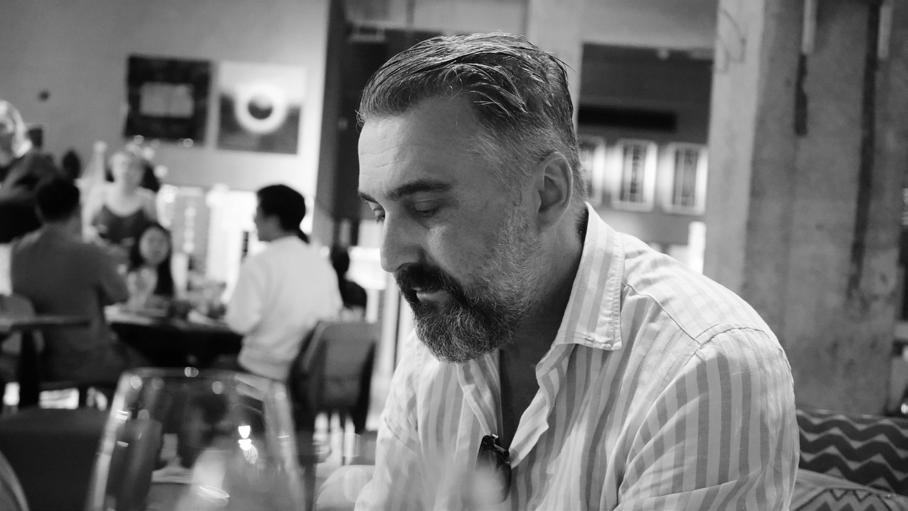
Escape’ was a familiar word for FCC Member Jan Verhein growing up in communist East Germany on the island of Rügen, next to the Baltic Sea in the 1970s and 80s. For as long as he can remember, he wished to travel. Childhood holiday visits to East Berlin were an early glimpse of a bigger world off the island. In early 1989 rumours of East Germans being able to freely enter Austria through Hungary were circulating.
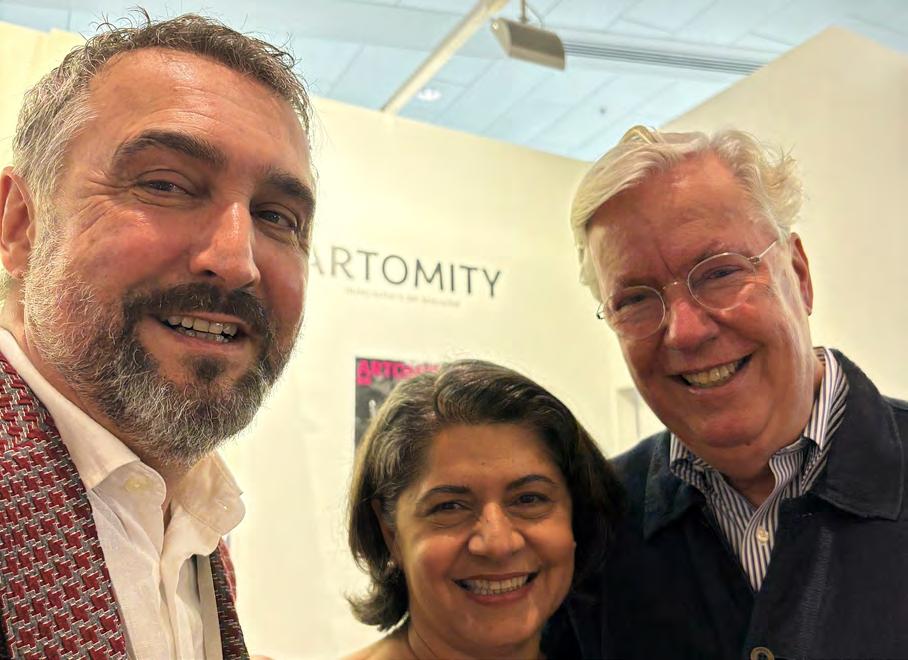
“I was 18 and had just graduated from high school, I told no-one but a sister that I was leaving,” Verhein tells me during Art Basel, in the large magazine section where Artomity, the art magazine he founded 10 years ago, has a booth with other international art publications, including Artforum, ArtReview, ArtAsiaPacific, Frieze and The Art Newspaper.
In mid-1989, Verhein was surprised to be issued a tourist visa for Hungary, a popular destination for East Germans to spend their summer holidays. Carrying minimal luggage and a return air ticket to appear as if a tourist, he arrived in East Berlin expecting at the airport - as a young, lone passenger appearing as a resident escaping the country - to be turned away at the immigration counter. He wasn’t. Arriving in Hungary, he immediately travelled to the Austrian border, crossed, and then went onwards into West Germany and
headed to Wolksburg – home of Volkswagen - to stay with a relative for a few months.
East Germans arriving in West Germany in those Cold War years were immediately granted residency and a passport. The Berlin Wall fell a few months later and Germany changed overnight with reunification soon after. “I first worked in Rostock, the closest big city to the island and began evening hotel management studies. I later received a good job offer at a hotel in Stuttgart, stayed for five years and completed my studies.” In his mid-twenties and longing to further travel after years of night school and learning English, Verhein bought a ticket to Sydney. “I then made my second escape from Germany!”
Despite not knowing anyone in Sydney, Verhein quickly settled. “I always had an interest in art and made a career change,” he recalls. He started studies at the improbablynamed Billy Blue School of Graphic Arts and worked parttime at a hotel. He later completed a Visual Communications degree at the University of Technology Sydney (UTS), focusing on typography, graphic design, corporate identity, photography and video production – using the excellent darkroom and computers with the latest Mac software, ground-breaking at the time.
“I was super happy in Australia and after graduation I got a
job at a friend’s film production company doing set and stage design for shoots. I also worked for a community theatre in a former church. It was fun and varied.” However, the jobs were temporary and casual. “I was looking for a permanent position, but it was frustrating as hundreds of graduates were also looking. Eventually, I considered a weird-sounding opportunity from China.”
The owner of an advertising company in Guangzhou was looking for UTS graduates to employ. “At first I thought it a scam as their methods were so strange, like wanting to interview me in a Hilton hotel room. A year later they asked me again.” Still without a job and offered good pay and accommodation, he accepted. “Later, I understood that this odd approach to hiring was just China!”
Verhein moved to Guangzhou in the early 2000s. “I quickly realised that I was not hired for any design work, but purely for the company to show a Western face. My job was to give presentations for advertising campaigns, which were then translated into Chinese for our clients. I did that for a year.”
He then met people who wanted to set up a photography festival. “In 2005, we launched the Lianzhou International Photo Festival (連州國際攝影年展) in the small town of Lianzhou, north of Guangzhou, with funding from the Ministry of Culture in Beijing. “I was involved in the first three editions and liaised with international curators and photographers and was responsible for all print production.”
As a third-tier city seeking tourist opportunities, the mayor (a photo enthusiast himself) embraced the festival and helped find venues. Verhein recalls that “there were lots of old, abandoned buildings around, and typical China, as we walked around town, any building we wanted to
use the mayor said ‘sure!’” The festival was immediately successful, but disputes over unauthorised payments soured relationships and Verhein moved to Hong Kong.
He was subsequently hired to work in a Hollywood Road art gallery in 2007 and a year later, he saw a business opportunity to print a monthly art exhibition and gallery guide. “Since university, I had always wanted to do a publication.” The gallery guide later morphed into Pipeline, a dedicated art magazine with a Hong Kong and Southeast Asian focus that Verhein published with a business partner.
After the Pipeline partnership ended in 2015, Artomity was launched in 2016 as Hong Kong’s only print and online bilingual Chinese and English contemporary art magazine. As sole publisher, Verhein runs all aspects of the magazine, particularly its design, production and advertising. Contributing writers and translators cover the city’s art scene with reviews and longer articles.
Asked about the future of magazines, Verhein feels that “… when the younger generation look at Artomity, they are fascinated. It is still so different from anything online. It is also perceived to have different values, like maintaining a reputation and quality, which is quite special.” Dealing with advertisers has changed over the years - they now want advertorial content, but Verhein resists as it is “boring for readers and no-one likes reading anything labelled as ‘paid content’.”
Similar to other Hong Kong SME businesses, Artomity suffered during COVID. Verhein closed his office, reduced the number of issues published in a year and now spends time overseas to reduce costs. He is an FCC Absent Member, visiting the city a few times every year, but he aims to ‘escape’ back here again as soon as business improves. n
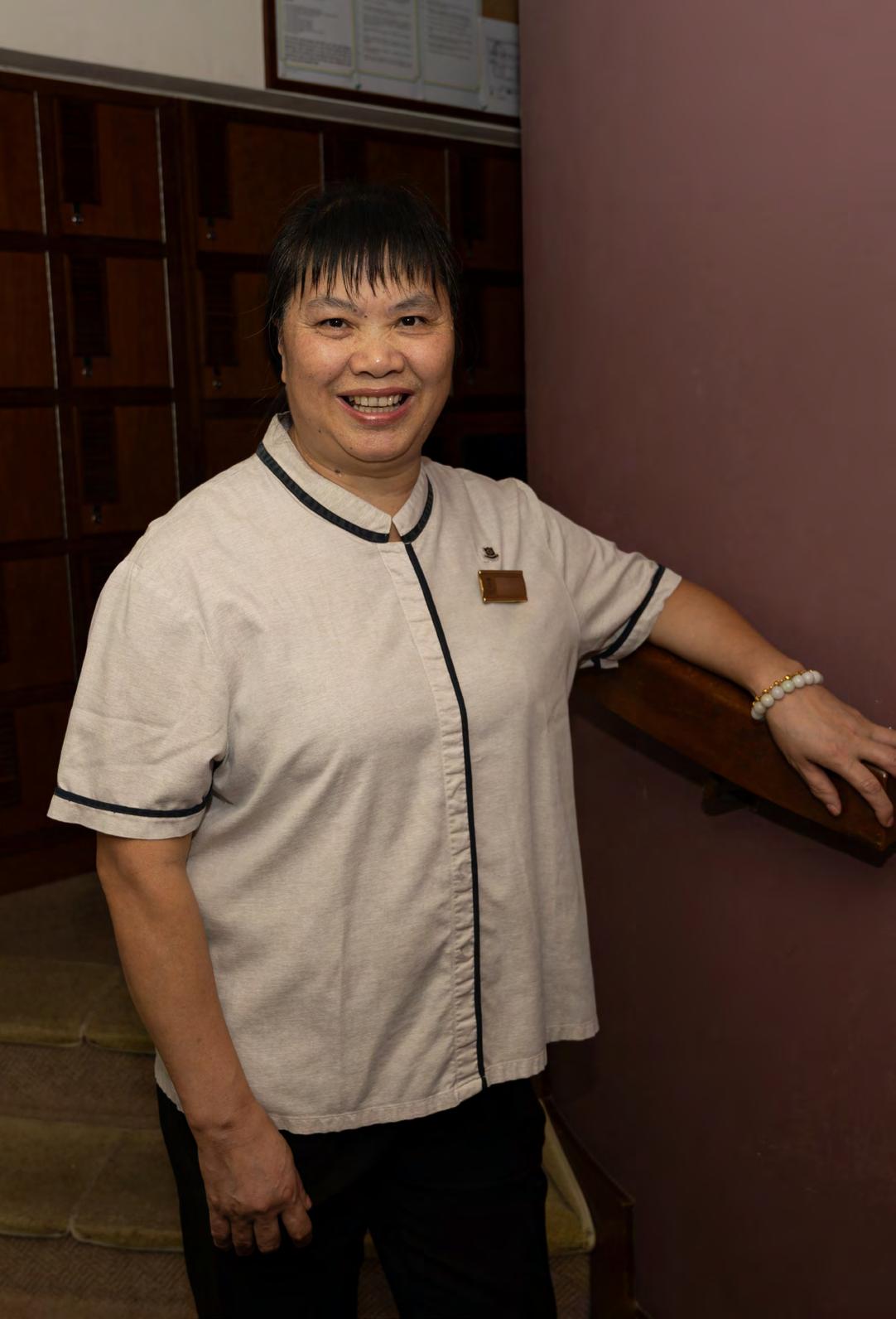
Mary is part of the invisible crew that keeps our Club spick and span, from inspections of the washrooms every 30 minutes, to tackling the stacks of dirty dishes and cleaning silverware. During key Chinese festivals like the Hungry Ghost Festival (Yu Lan), she also tends to the Club’s altar, folding the paper offerings that are then burned. In this chat, Mary talks about her hobby, which takes her outdoors into the fresh air, and far away from her domestic duties as we continue our Staff Spotlight series.
By Christina Pantin Portrait by Lakshmi Harilela @Love True Light
When did you begin working for the Club, and how did that happen?
I started in August 2009. It was my first job in Hong Kong after I moved from Dongguan, China in 2003 when my husband set up a small F&B business in Central, preparing lunch for customers. Both my son and daughter were both born here.
A friend recommended that I apply for the job FCC job - they needed a dishwasher. She was the former head of housekeeping. At the time I didn’t know anything about the FCC.
You are one of the Club’s long-serving employees. What has kept you here?
I think my managers found me to be very hard-working, and it helped that a few of the previous General Managers recognised this. I was given a promotion and as I progressed, I was also fortunate to also receive salary increments.
Three years ago, I was promoted to Housekeeping Supervisor, which I was really happy about. Everyone here respects each other, and I have close relationships with my colleagues. I have good communications with them. At the Club, I have worked on all the different floors.
Do you have any particular fond memories of your time at the Club?
In the earlier years, my English wasn’t at all good, and so I was fearful of foreigners when they tried to communicate with me. But now I can understand a bit, and I try to speak a little, and ask my colleagues if I need help.
What’s your daily routine?
I usually start by clearing all of the items from the previous night that need to be cleaned, like dishes and glasses. I then polish the silverware and help to maintain the guest washrooms, which I check every 30 minutes.
I also like to pray at our Club Guan Gong Chinese altar (located in the basement). The upkeep of the altar used to be done by another employee, but I picked up this duty, because I enjoy doing this. For festivals, I also fold the ghost paper offerings.
(The Guan Gong Chinese altar is a shrine dedicated to Guan Yu , also known as Guan Gong or Guandi, a historical Han Dynasty general revered as a deity of loyalty, righteousness and protection in Chinese folk religion, Taoism and Buddhism. The altars are often placed in homes and businesses and feature his statue, incense burners and offerings to promote safety, prosperity and wealth).
What do you like to do outside of work?
I love to go farming with my friends in Yuen Long. We grow organic vegetables, and I plant many different varieties. It reminds me of the time when I was growing up in China. There was plenty of land around my home in a small village, but now it has all been developed into multi-storey buildings.
Will you continue living in Hong Kong when you retire?
I enjoy living in China, but Hong Kong is more practical for now because I can earn more money. When I retire, I will go back there, perhaps to Dongguan. It’s famous for having the best lychees, which I enjoy harvesting. n
The FCC’s Press Freedom Committee surveyed Correspondent and Journalist Members in an annual exercise to take the temperature and understand how sentiment and perception have changed for the Club’s media professionals.
By Jing Yang
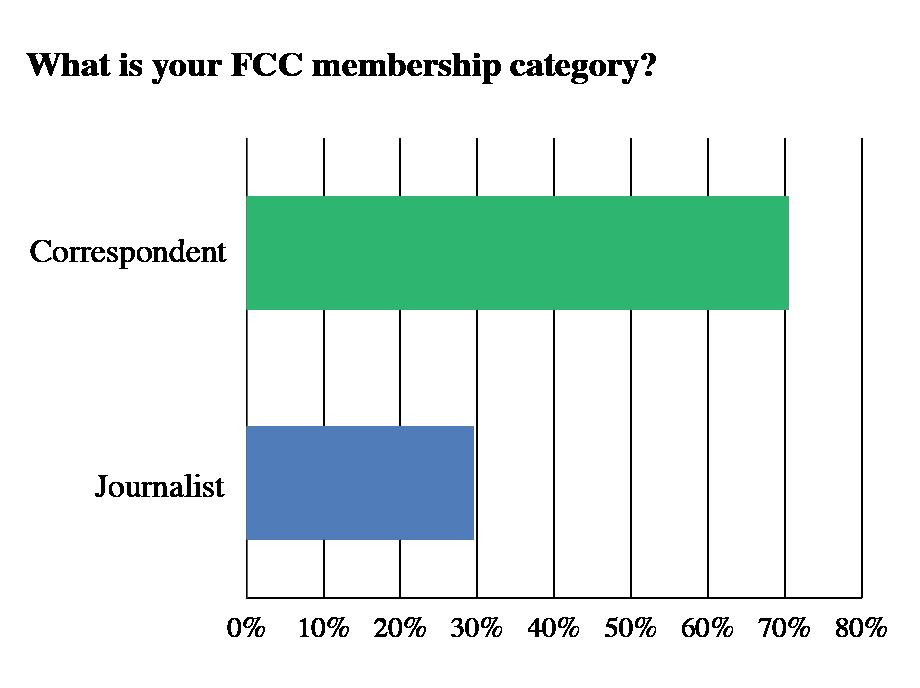
The FCC invited 294 Correspondent and Journalist Members to participate in the annual Press Freedom Survey on an anonymous basis between February and March. The surveyed base declined 12% from the previous year. Seventy-eight responses were received, a 15% increase compared to last year. In total, the survey response rate was 27%, an increase from 21% in 2025.
The Club has been conducting an annual Press Freedom Survey since the enactment of the National Security Law (NSL) in 2020 as an attempt to gather information on how Correspondent and Journalist Members have been navigating the changing legal and working environment in Hong Kong.
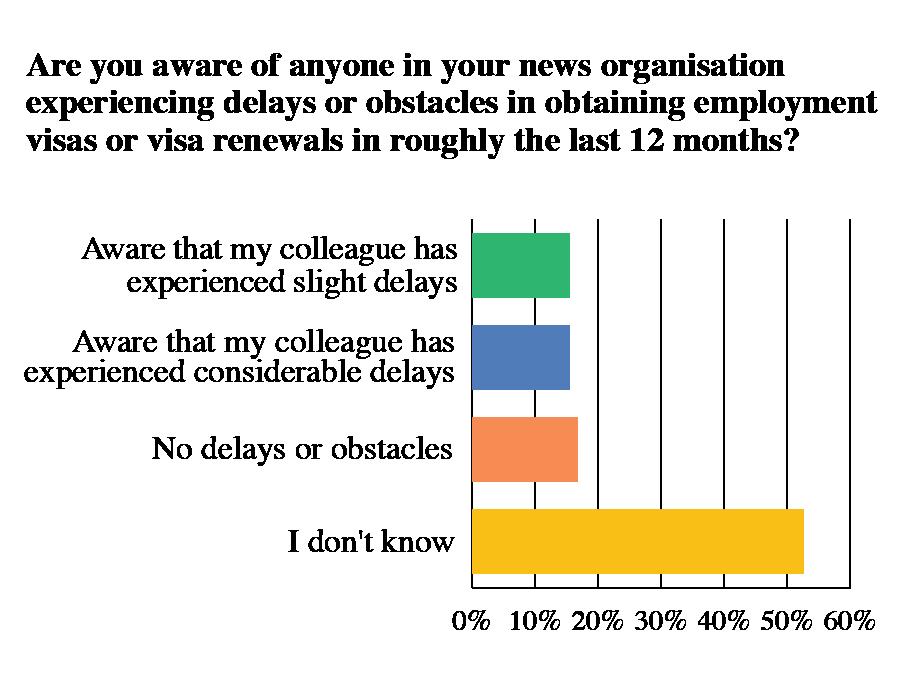
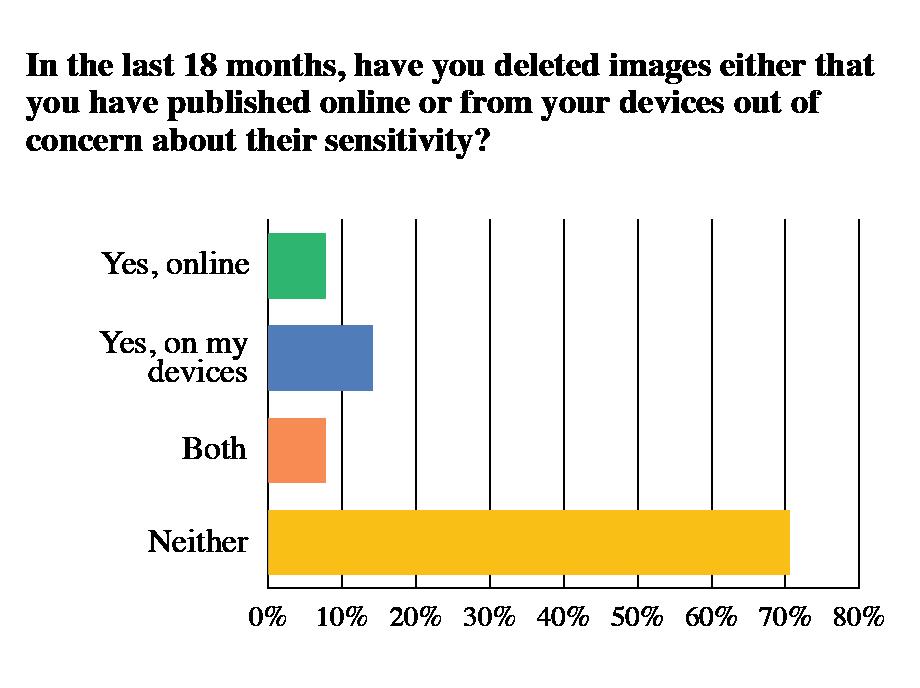
67% of respondents said the working environment for them as journalists had changed for the worse in the past 12 months, and more than 50% said sources had become less willing to be quoted during the same period.
“Each year the scope of what is ‘acceptable’ in terms of who can be quoted increasingly narrows. It has reached the point where non-political voices who question policy-making or have reservations about certain aspects of it will get cut or reduced significantly by editors,” one respondent commented.
“When it comes to clearly political stories, such as NSL trials, the scope of who can be quoted has shrunk to the point where rights groups (Amnesty International, Human Rights Watch or The Committee to Protect Journalists) cannot be quoted directly except as a general summary, for example, ‘rights groups also expressed opposition’,” the respondent added. On the other hand, some Members expressed a view that quoting from such human rights groups is acceptable, provided that it is balanced by quotes either from the government or pro-government sources in the same article, although such a precaution would not have been necessary before the promulgation of the NSL”.
The survey happened to take place after the Tai Po fire in November, the Office for Safeguarding National Security’s (OSN) ensuing summoning of representatives of foreign media in Hong Kong in December, and the conviction and sentencing of former Apple Daily Publisher Jimmy Lai and
other executives and editors of the now-defunct paper.
The OSN summoned representatives of several foreign news organisations in Hong Kong on 6 December. “This action was taken in response to false information and smear campaigns regarding the recent fire at Wang Fuk Court and the Hong Kong Legislative Council elections,” it said in a statement.
The Office pointed out that recent reports by certain foreign media concerning Hong Kong have disregarded facts and spread false information. These reports distorted and smeared the government’s disaster relief and recovery efforts, attacked and interfered with the Legislative Council elections, incited social division and confrontation, and disrupted the current atmosphere of solidarity and mutual assistance in Hong Kong.
“No media outlet may use “freedom of the press” as a pretext to interfere in China’s internal affairs or Hong Kong’s affairs. All heads and journalists of foreign news organisations in Hong Kong have an obligation to obey the law,” it said.
Respondents have taken note of the developments. “The warning issued by the National Security Office to foreign journalists should be seen as a watershed moment here in Hong Kong. It has created an increased chilling effect,” one respondent said.
Another respondent said: “The 20-year sentence for Jimmy Lai only further chills the local reporting environment, for political lobbying that would and should be completely legal in any country that protects political speech.
Interested parties may read in detail the 850-page judgment to endeavour to understand the new “red lines” for sedition and collusion in order to form an independent view.
In order to help Correspondent and Journalist Members understand the changing environment, the FCC hosted a legal briefing for Members by Andrew Powner of Haldanes in March on ‘The Implications of the Apple Daily and Stand News Sedition Convictions for Working Journalists in Hong Kong’.
“Press freedom remains engrained in Hong Kong law, but as is apparent from the results of our survey, the sentiment for working journalists in the city has been in flux.”
- FCC President, Morgan M. Davis
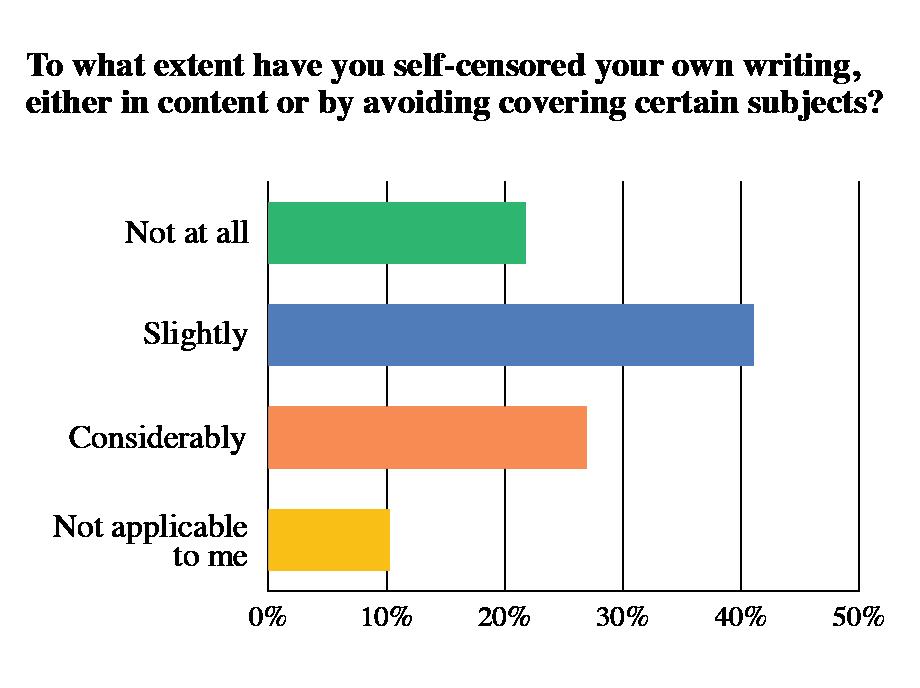
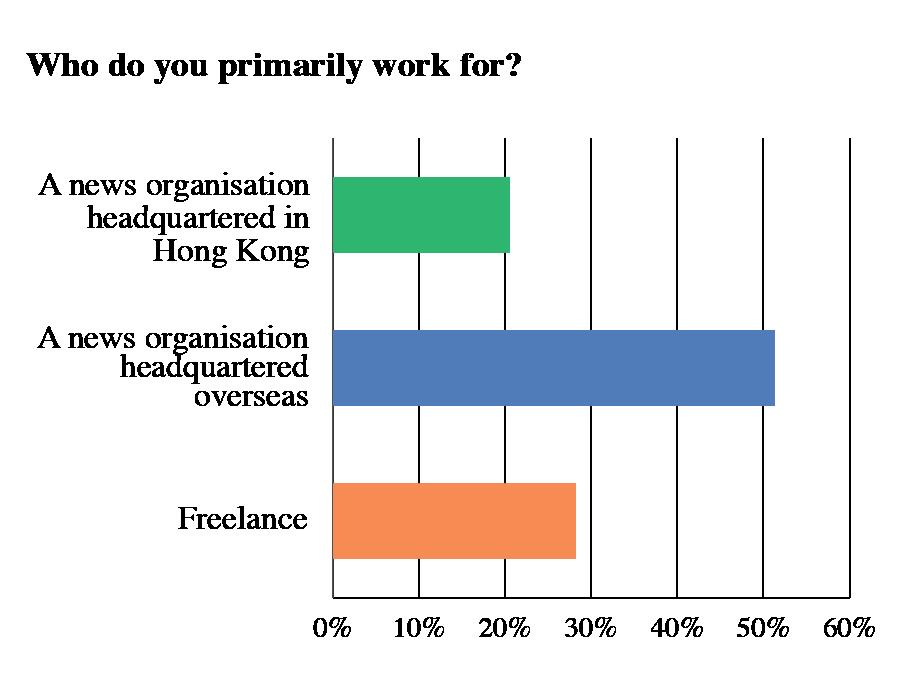
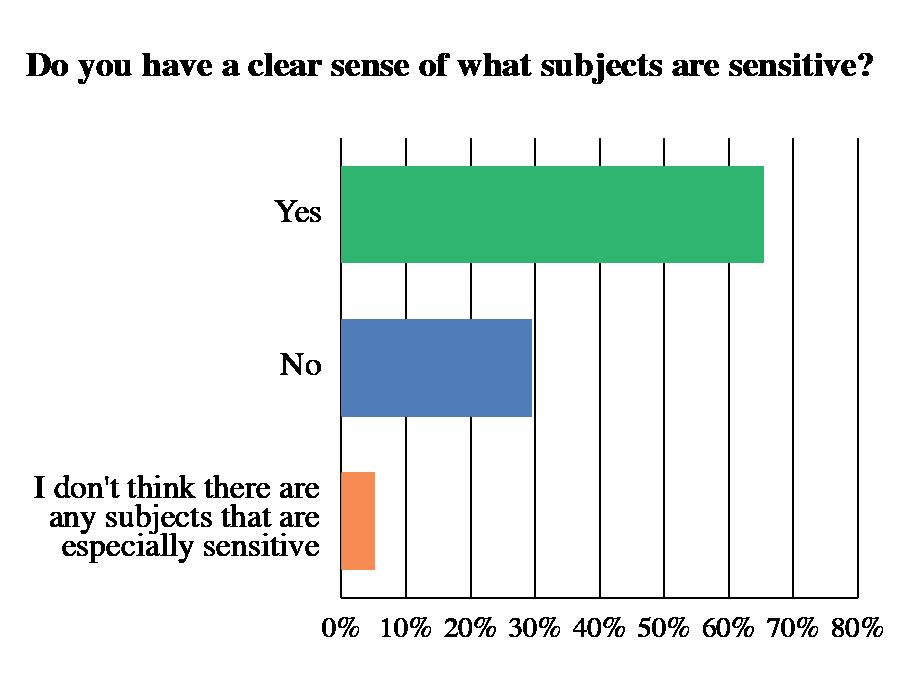
In this year’s survey, 65% of respondents said they have a clear sense of what subjects are sensitive, compared to 78% last year. “I feel the NSL is still rather fluid and capricious, and not being in news makes any potentially risky stories not worth the hassle,” one respondent said.
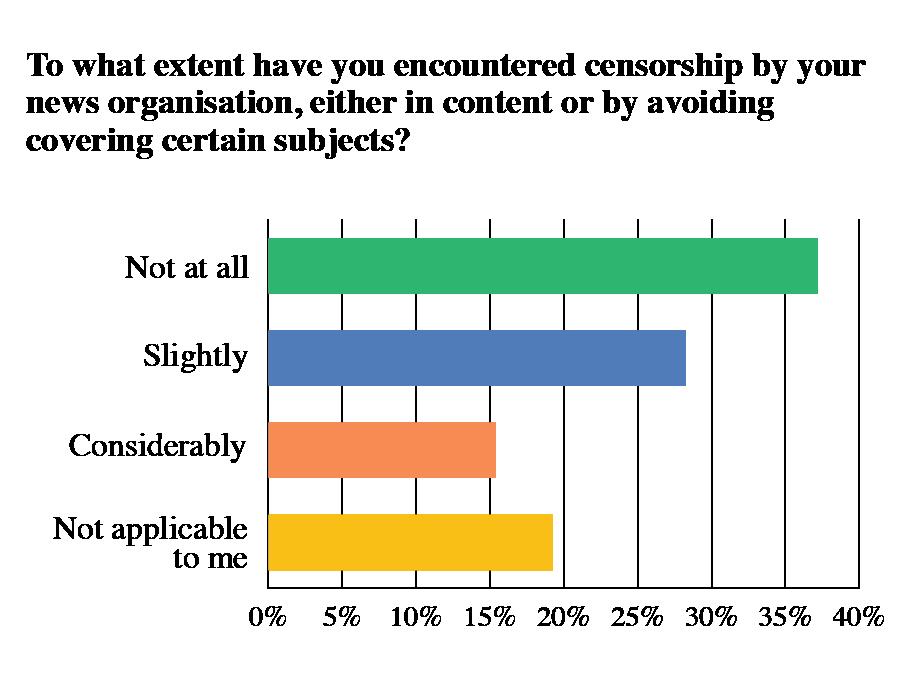
37% of them said they had encountered censorship in their organisations, with 28% experiencing “slight” censorship and 15% “considerably”.
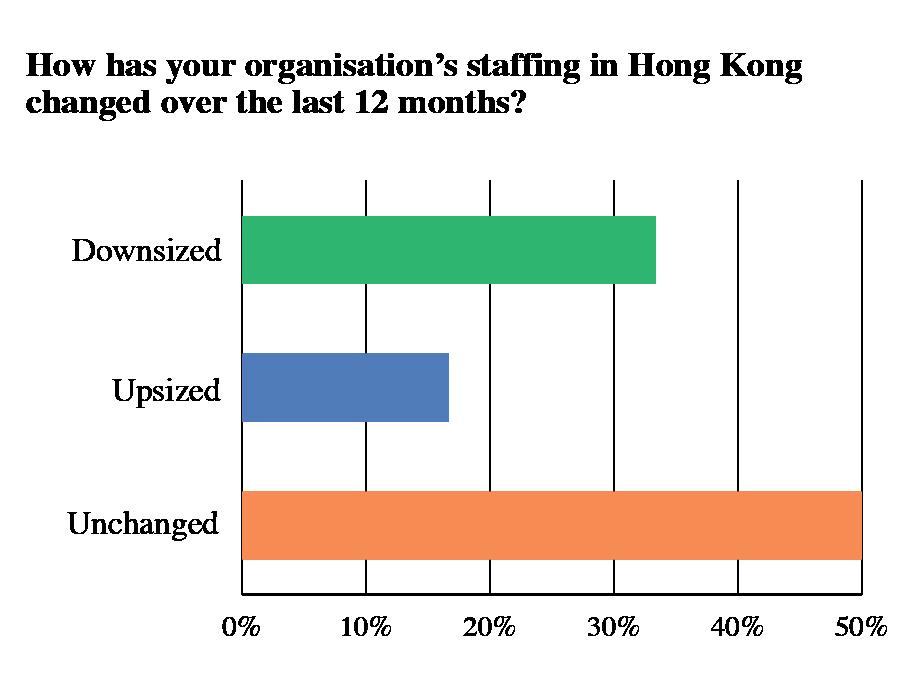
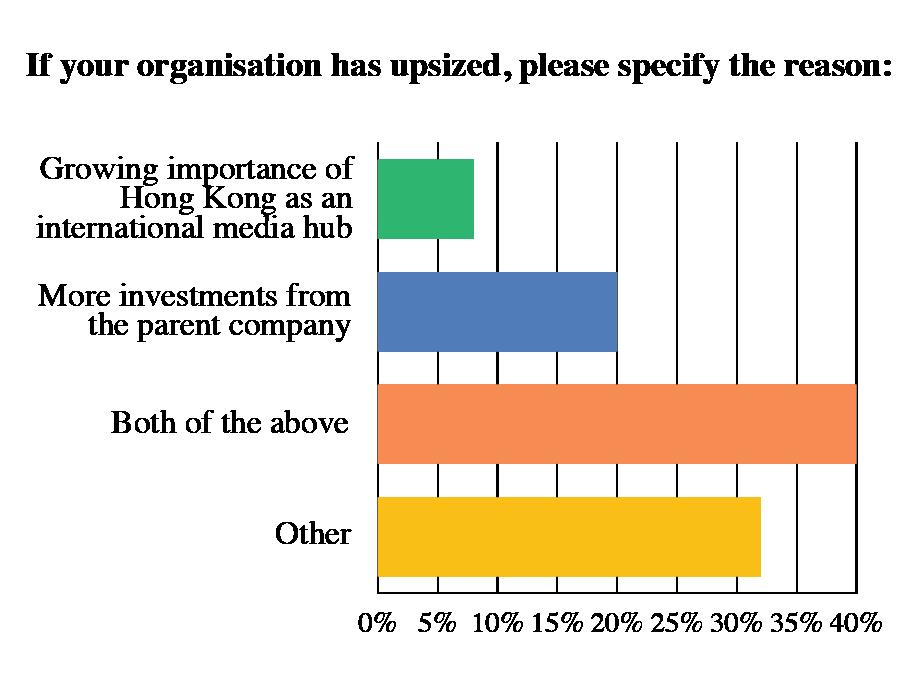
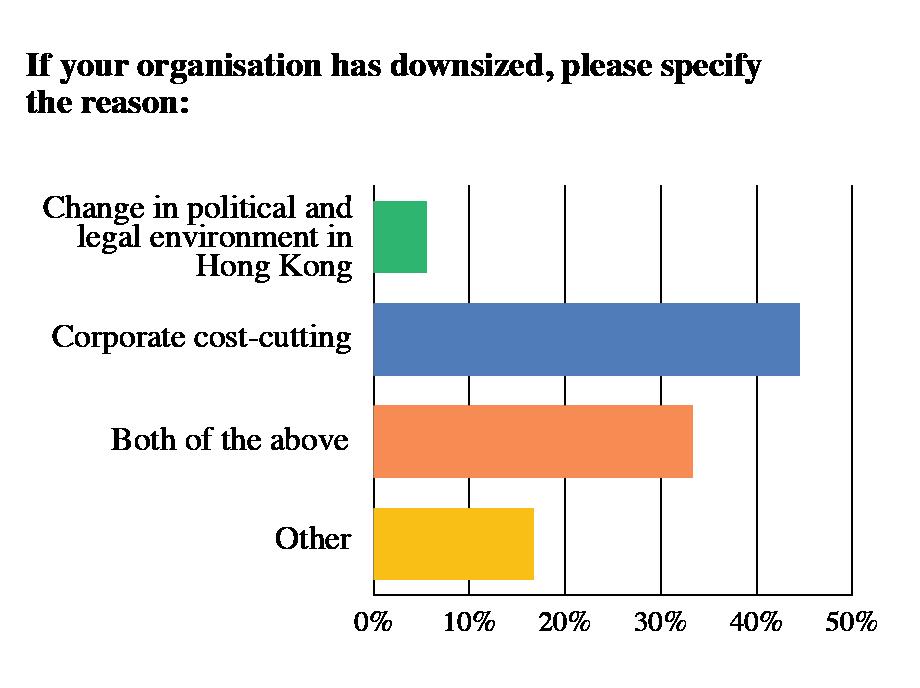
33% of respondents said their organisations have downsized in Hong Kong, with 33% of them identifying
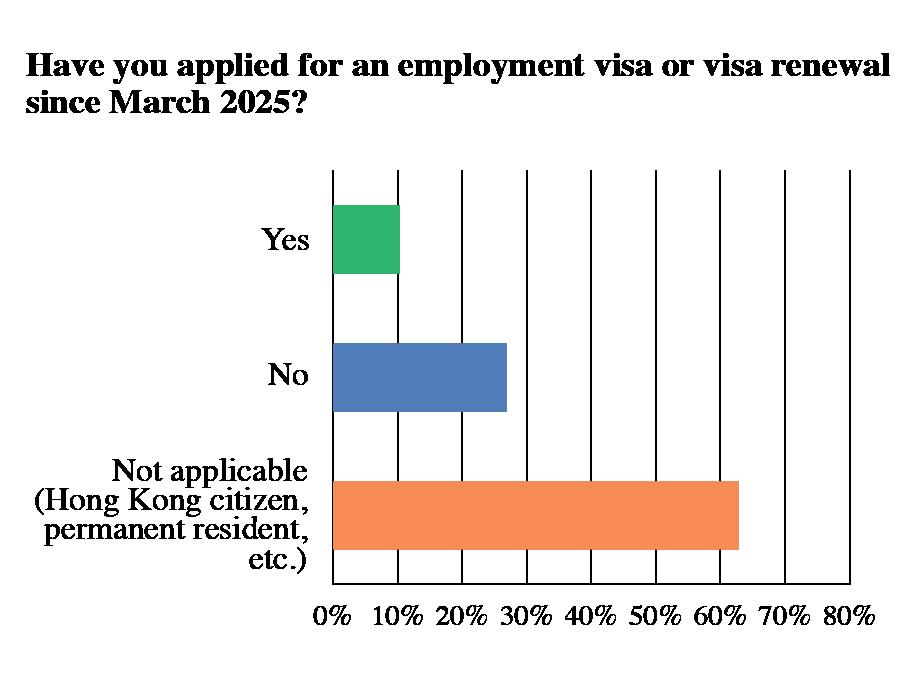

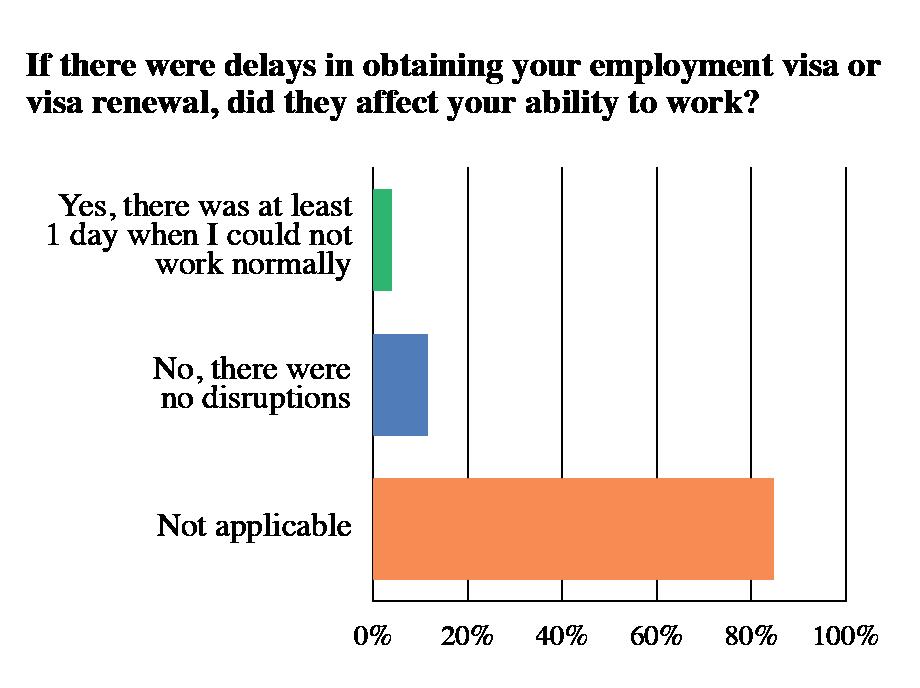
the changing political and legal environment and corporate cost-cutting as reasons. 17% of them said their organisations have increased staffing in the city over the past year, with 40% of them stating both the growing importance of Hong Kong and more investments from parent companies as reasons.
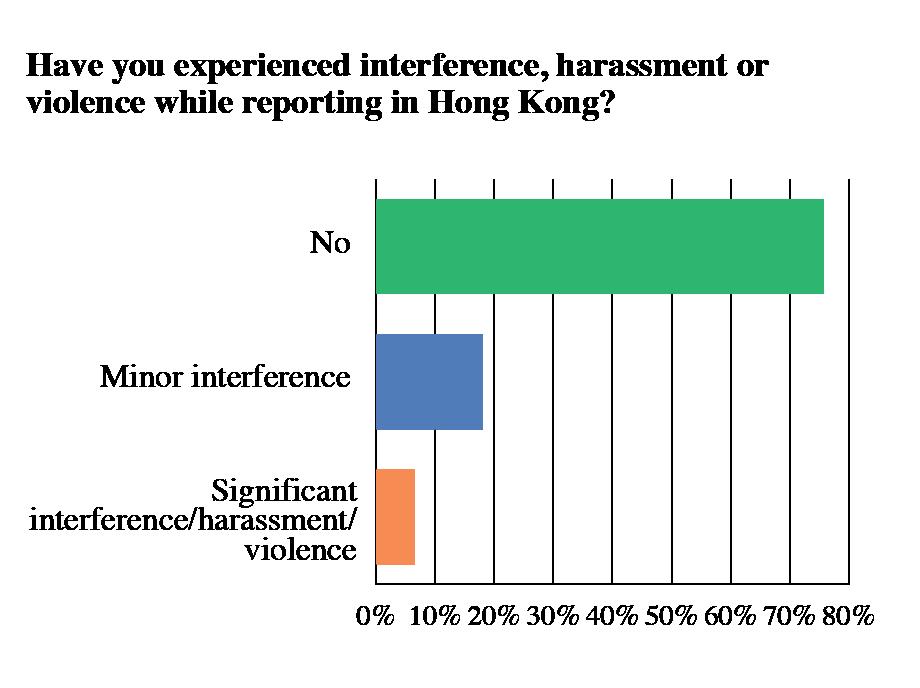
Fear of interference and harassment continues When asked whether they experienced interference, harassment or violence while reporting in Hong Kong in
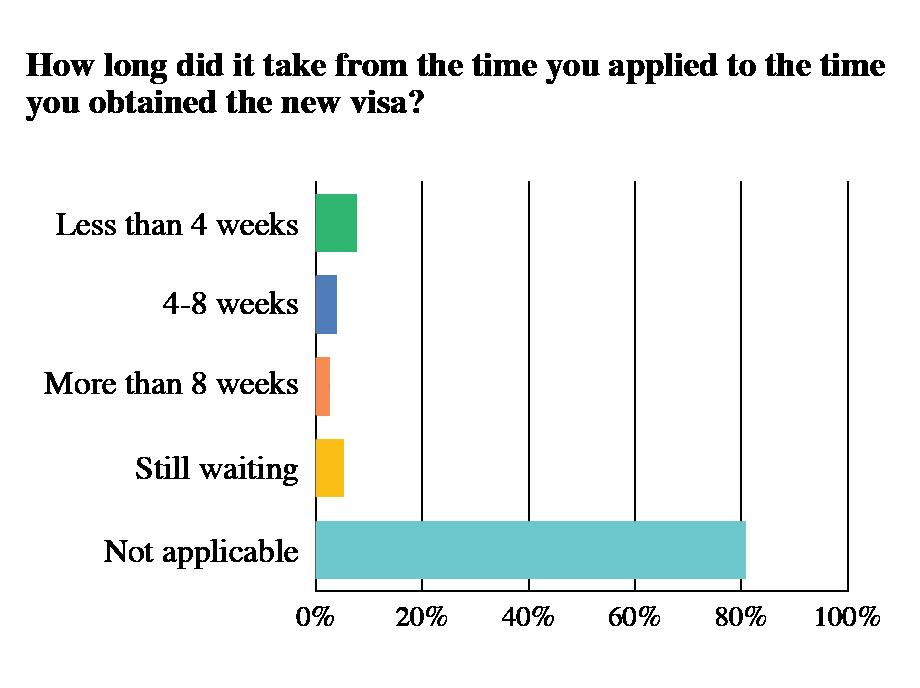
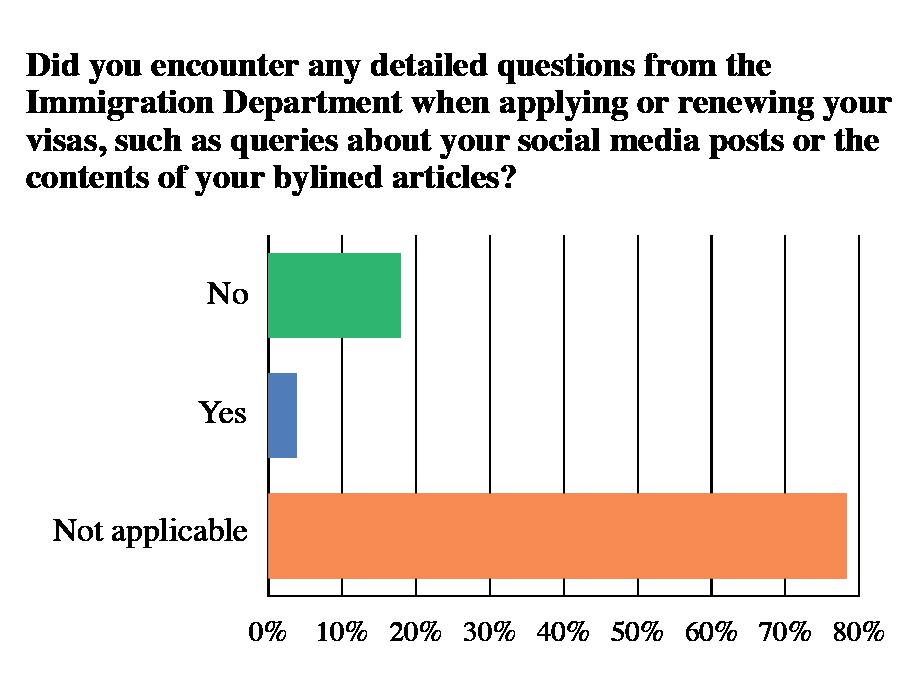
the past year, 76% said no. Of the remainder who said they had experienced minor or significant interference, most respondents listed encounters while covering the Tai Po fire. “Chased out of the Tai Po fire shelters by government-linked volunteers, who brought in the police to coerce us to leave when we were merely speaking to the survivors in a corner, disturbing no one,” one respondent said.
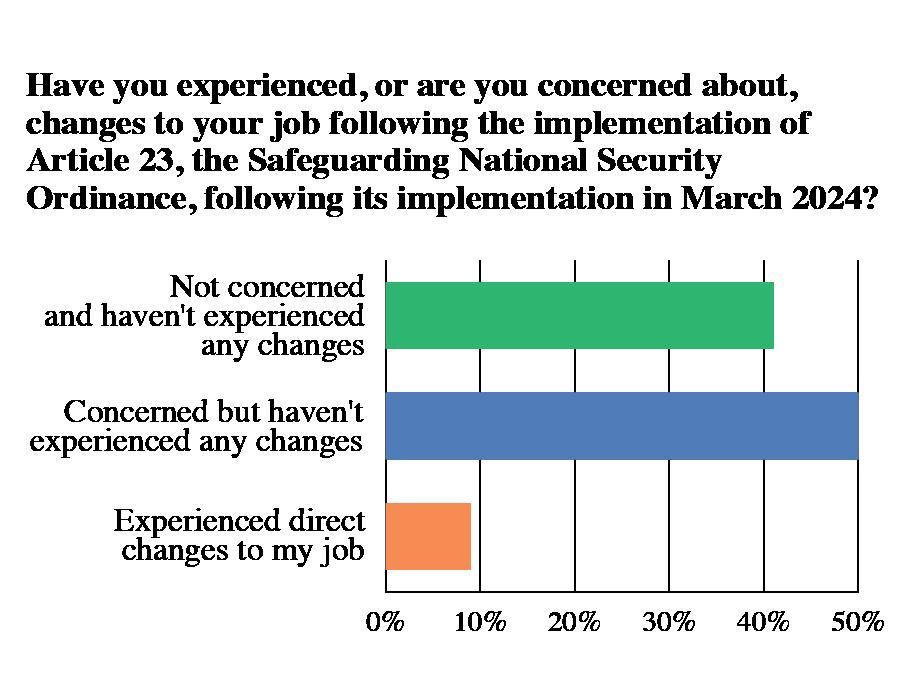
Nearly 80% of respondents said they were concerned about the possibility of digital or physical surveillance while reporting in Hong Kong, even though they hadn’t
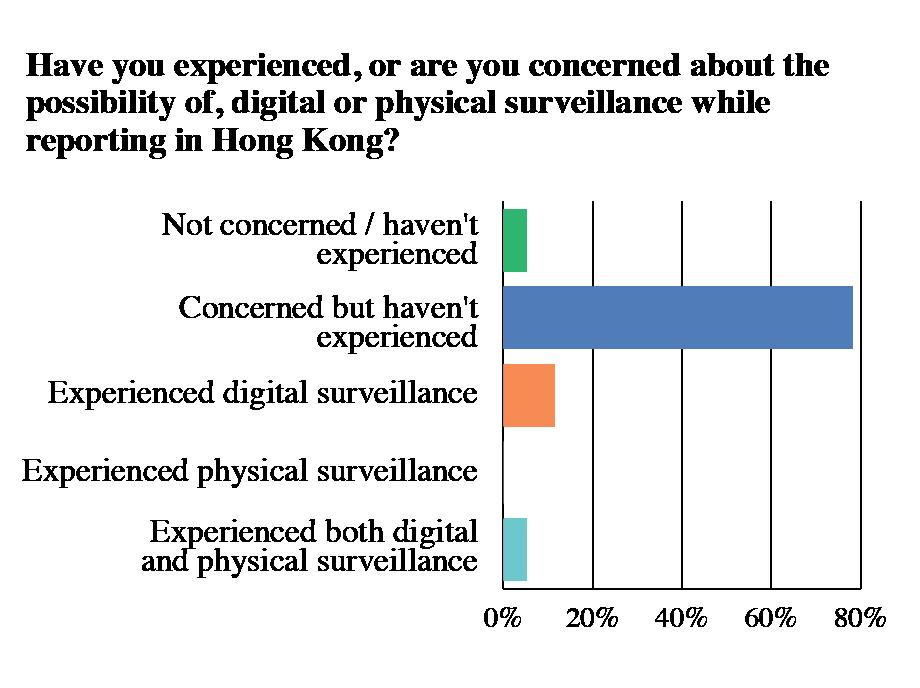
experienced any. “I am concerned and I operate under the assumption that digital surveillance is happening even if I don’t have express proof of it,” said one respondent.
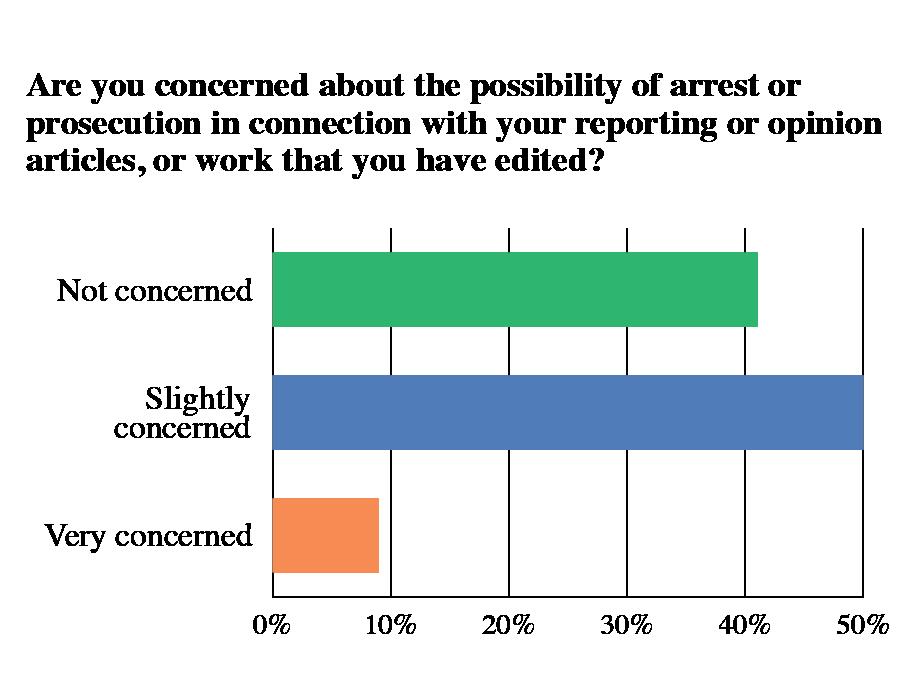
Half of the respondents said they were “slightly concerned” about arrests or prosecution in relation to their work as journalists in Hong Kong, while 41% were not concerned.
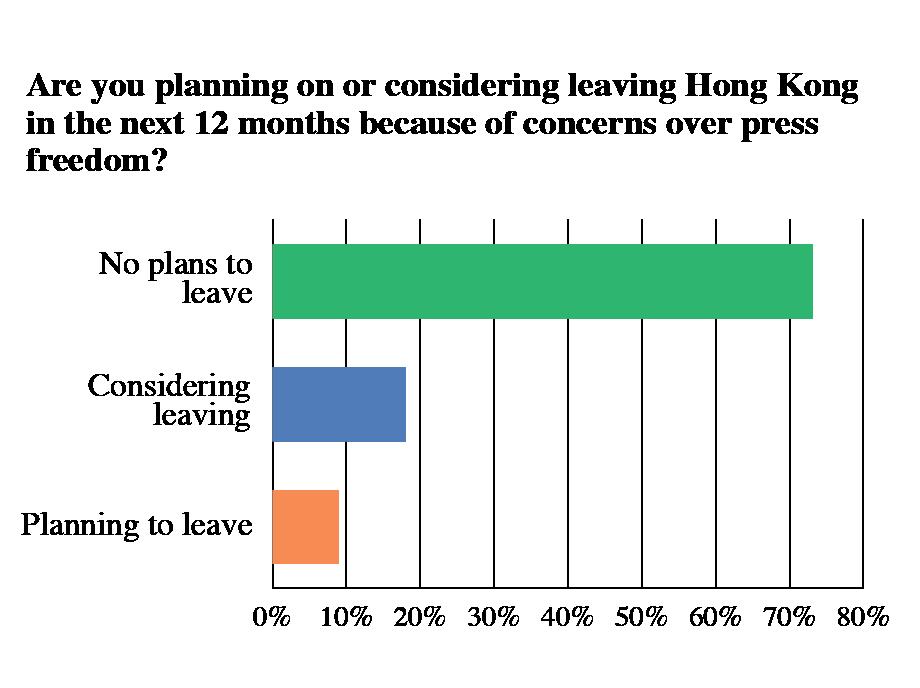
It is worth noting that 70% of surveyed Members said they had no plans to leave Hong Kong in the coming year due to concerns over press freedom.
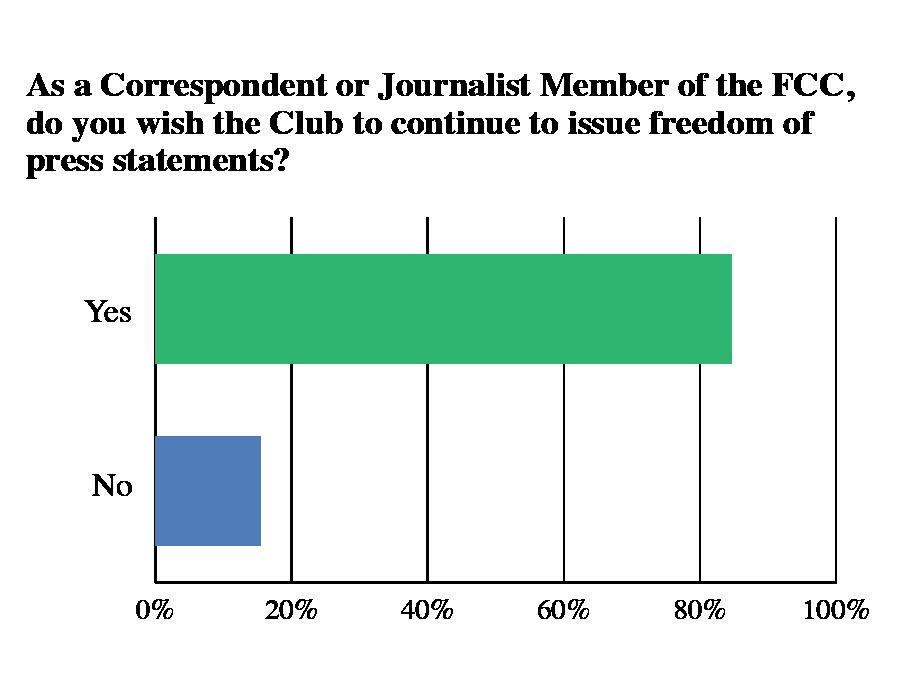
Nearly 85% of respondents said they supported the Club continuing to issue statements on press freedom.
“Press freedom remains engrained in Hong Kong law, but as is apparent from the results of our survey, the sentiment for working journalists in the city has been in flux. The events of the last few months have raised more questions for journalists about how to operate within the
confines of the law,” commented FCC President Morgan M. Davis. “The FCC will continue to survey our Members on an annual basis to monitor changes in sentiment. We are also proud to offer our Members regular workshops, an annual conference and access to experts that will support working journalists to be able to operate at the highest possible level.” n

The photograph is deceptively simple: a cardboard box filled with office supplies, a wilted plant, a few personal effects. The kind of box thousands of Hong Kong workers have carried out of office buildings after being let go. But for Water, the photographer behind this image, it represents something devastating - the precise moment his life changed.
“I never thought I’d be one of them,” he says of his first night experiencing homelessness in 2021, during the COVID-19 outbreak. A logistics worker with no savings and no safety net.
A logistics worker with no savings and no safety net, Water found himself with two bags of belongings and nowhere to go.
Water’s photograph is one of a series of images that were presented in April’s Wall exhibition - ‘The First Night’. It’s
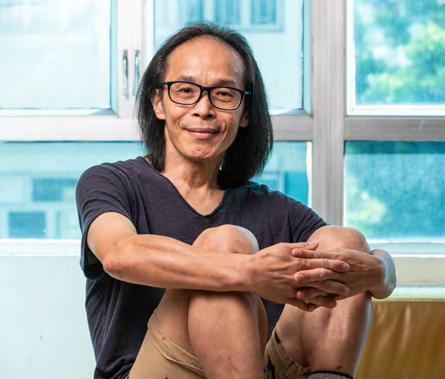
not a typical photography show; the photographers are people who have experienced homelessness, trained in workshops led by FCC Member Ben Marans, and supported by ImpactHK, one of the Club’s charity partners.
The exhibition’s objective is to challenge everything we think we know about homelessness by telling real stories through the images and Marans’ portraits of the individuals who took them.
Photojournalist Marans approached ImpactHK CEO Jeff Rotmeyer in early 2025 with an unconventional proposal: to teach photography to people experiencing homelessness, not only to offer them a creative outlet, but to provide them with a platform for storytelling and connection.
Marans had taught photography workshops before, including to underserved communities, but he wasn’t sure what to expect. Would there be enthusiasm? Would he be welcomed? Within minutes of the first session at ImpactHK’s centre in Tai Kok Tsui, his fears evaporated. “I was welcomed as a friend as opposed to a stranger, and it became the best three hours I can recall … probably ever.”
The participants - Marans calls them “our friends”, ranged from elderly Hong Kongers who had never held a digital camera to younger people familiar with smartphone photography. The technical skills were secondary. What mattered was learning to see through the lens, frame the image, and capture moments that would ultimately convey meaning.
During their first outings, the group visited the local wet market in Tai Kok Tsui. For some, it was their first time exploring the neighbourhood. With cameras in hand, they became observers rather than subjects of observation, chatting with local vendors and taking pictures, being treated as fellow Hong Kongers, rather than people defined by their circumstances.
The initial six workshops focused on basic street photography, but when ImpactHK proposed an exhibition that would explore the participants’ first nights of homelessness, the project evolved. Over two planning sessions, the group sat around a ping-pong table with paper and pens, discussing how to translate abstract feelings - fear, cold, isolation - but also beauty, serenity and faith - into visual concepts.
What emerged was a series of images that tell emotional stories, which the participants speak of (in AI-generated voices) in the latest FCC podcast. Rhoda’s photograph of crumpled, torn job applications captures the humiliation of rejection. After becoming homeless due to a rental scam, she applied for a cleaning position at the same McDonald’s where she had been sleeping. The manager tore up her application in front of her.


“I had applied with hope, and left with anger,” she recalls. The photograph reveals the systemic barriers that can keep people trapped. It also reveals something Marans discovered during the project: that many Hong Kong employers, including McDonald’s, only accept online job applications. Without internet access or a device, even entry-level positions remain out of reach.
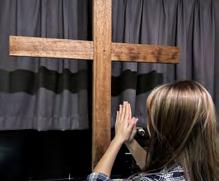
Purple’s image takes a different approach. A wooden cross stands before a black curtain, a woman praying in the foreground. At the age of 76, Purple initially considered photographing lottery tickets to represent her financial desperation, but upon further thought, changed her course. “I didn’t want to appear like I might be a gambler,” she explains. Faith, not chance, had sustained her.
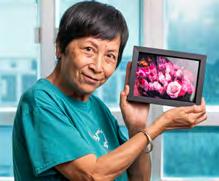
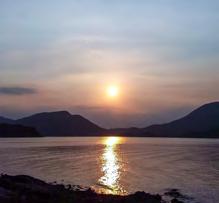
Li Jai’s photograph is perhaps the most outwardly peaceful: the sun casting light over water, and Marans describes him as “the quietest, most sensitive and most poetic in the group”. His statement contains a striking passage: “When I lived in the park, there was only today, never tomorrow. I was never a first-class citizen, always a third or fourth class one, waiting for food, waiting for charity bags, waiting for luck, waiting to die.”
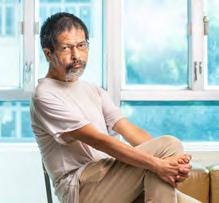
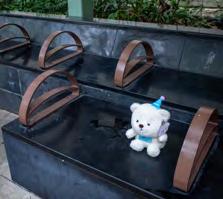
Poon’s image explicitly hones in on the hostility of public space through a brown park bench with distinctive metal armrests, deliberately there to prevent people from lying down. On the bench sits a small white teddy bear, a symbol of softness juxtaposed against harsh reality. “Every time I looked around, I had to ask myself if the place was safe or dangerous” he recalls. “I wasn’t worried about being hurt, but I was afraid someone would steal what little I had, so I stayed awake all night.”

Several images circle back to McDonald’s, Hong Kong’s accidental homeless shelter. The fast-food chain’s 24-hour locations have become de facto refuges for people with nowhere else to go.
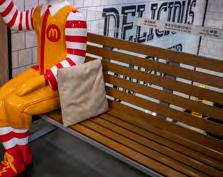
Yong’s image captures this. A Ronald McDonald figure on a bench, a pillow placed beside it. The image references a McDonald’s marketing campaign that placed these figures throughout the city, but Yong inteprets the mascot as something more melancholy - a silent witness to sleepless nights.
“I was forced onto the streets during one of the lowest points in my life,” he recounts. After days without eating, he tried to salvage french fries from other customers’ trays, but was asked to leave when patrons complained. He occasionally found coins on the floor - “just some cents” - enough to buy fries.
The cycle repeated: sleep, wake, hunger, rejection, sleep. “I didn’t know when it would end.”
Heung Heung’s photograph shows what cold feels like. A person sits bundled in a thick puffer jacket, layers of newspaper draped over them like a blanket. It’s a common sight on Hong Kong winter nights, but one that becomes invisible through familiarity.

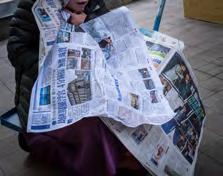
Heung Heung, who Marans describes as “one of the smiliest people I think I’ve ever had the pleasure of coming across,” lost everything when her bag was stolen on her third night on the street. The bag contained her wallet, credit card, and her last $50 note. Only her Hong Kong ID remained, proof she still existed in the system. “If you have no food, you have no life,” she says. “Hunger makes you feel invisible, like you’re disappearing from the world.”
Ah Choi’s image captures what hunger looks like from the outside: a person staring through a restaurant window at the barbecued meat hanging in display cases. Hong Kong’s food culture, with its abundant street-level displays designed to entice customers, becomes a form of torture when you’re hungry and penniless.
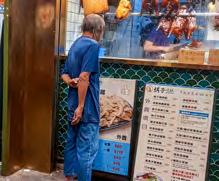
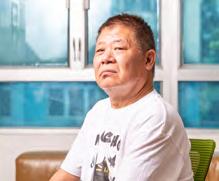
But Ah Choi’s statement focuses less on hunger than on the moment everything changed. After police directed him to a District Councillor’s office in Tai Kok Tsui, he discovered ImpactHK. Within four days, using the NGOs address, he had a bank account, a seemingly small thing that meant everything.”Without one, you don’t exist in the system,” he explains. “You can’t get a job; people look at you differently, sometimes with disgust.”
This detail illuminates how homelessness becomes a selfperpetuating trap. Without an address, you cannot access employment. Without employment, you cannot secure housing. The cycle continues, invisible to those who have never confronted it.
For Marans, the project’s deepest purpose centres on identity. “These are not homeless people,” he emphasises. “They are people experiencing homelessness.” This distinction matters. Most people aren’t defined publicly by their worst moments or most difficult circumstances, but homelessness is something that obscures everything else about a person.
While Marans provided technical instruction and helped participants to develop their visual concepts, the photographs and the narratives remain theirs. This collaborative approach extended to the exhibition itself, which included audio narratives from the participants’ written statements.
The exhibition’s impact has extended beyond the Club’s walls. Several participants continue to take photographs using the skills they learned. The workshops also helped to create friendships among the participants, and between them and Marans.

“There is no shame in being homeless,” states Heung Heung. “It’s just an unlucky situation, a circumstance. I am not afraid of people knowing, because I don’t feel any different from anyone else.”
Water’s statement concludes with a plea: “Please don’t judge. Everyone has their own difficulties, family problems, financial struggles or personal issues.”
Li Jai concludes his statement with an expression of gratitude: “Together across a thousand miles, the road is long and winding. The shelter welcomes new beginnings, because of you, ImpactHK.”
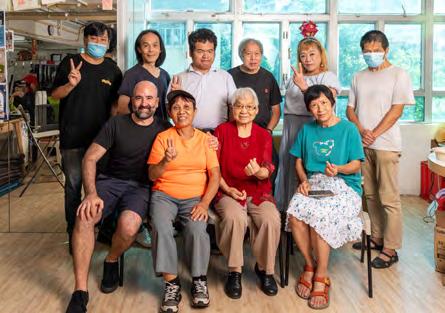
All participants portraits by Ben Marans To support ImpactHK’s work, visit fcchk.org

In the ninth edition of the FCCs annual series showcasing the work of Hong Kong students, this Van Es Wall exhibition presents 30 images - selected by the Wall Committee - of how these young photographers view the lives, livelihoods and changes unfolding in our city.
Through their images, these students from the Hong Kong Baptist University, the Chinese University of Hong Kong, The Hang Seng University of Hong Kong and Hong Kong University capture pivotal moments of Hong Kong - in the news, on the streets, and life as it happens.
Centred on the theme of ‘Hong Kong, My Home!’, the photographs offer multifaceted viewpoints and a diverse range of subjects, from haunting images of the Tai Po fire to the city’s ever photogenic skyline, its ubiquitous neon signs, street scenes and more.
Do make time to appreciate these works throughout the month of May in the Main Bar and Lounge.
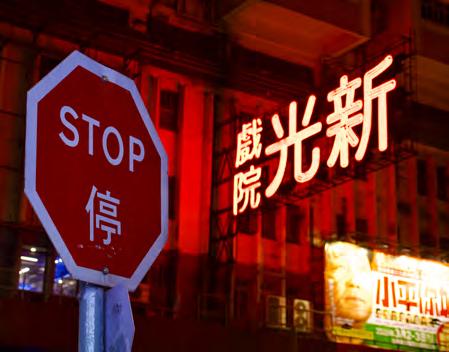
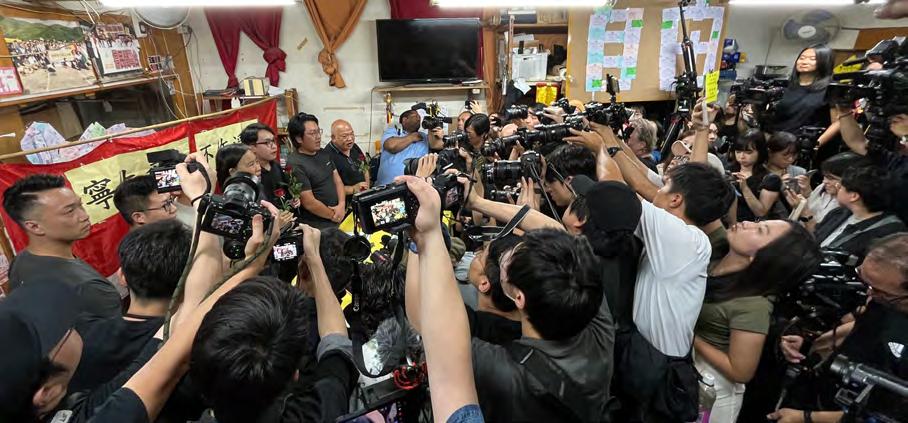
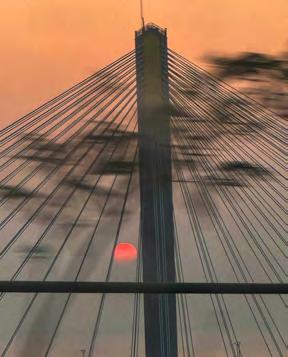

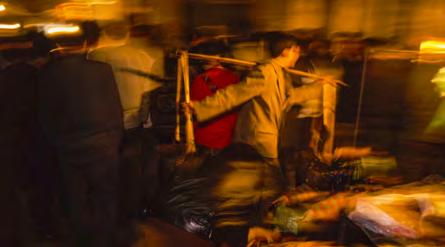
The images in this exhibition are from Basil Pao’s book ‘Light Flight’, a Studio 8 Editions production published by Hong Kong University press in 2023. Divided into two distinct sections, Pao himself presents the descriptions of each in his own words.
OOPS! THE LUCKY MISTAKES
We’ve all done it. If you’ve ever taken a picture on film with a manual camera, you’ve probably had this experience. You pressed the shutter button, and instead of going “click”, it stayed down and the shutter remained open, and you muttered “Oh S- -t!” under your breath as you realised that the shutter speed was on the wrong setting. In my case, that tended to occur with the first shot after a long off-piste car journey across the desert or up some unpaved mountain track, where both passengers and equipment were rocked and shaken to their core, and the speed dials of my cameras beside me were knocked loose and reset themselves at random. There’s usually only one of these shots, as one would reset the camera im mediately after the “oops!” moment. And normally, these images would be way overexposed, and back in the analogue days, slides that were 2-3 stops over were simply beyond redemption. Other times, they were simply brave attempts at capturing an image at night, knowing full well that there was not enough light even with the lens wide open to 2.8, and that a long exposure was inevitable.
With the travel schedules of the long journeys, I sometimes did not get to see the processed film for weeks or even months (three months once during Pole to Pole), so it was genuine joy that I felt when I found the images in this collection in the little boxes amongst the 36 mounted slides, to discover that nature had seized control, and the gods of light had intervened at the crucial moment.
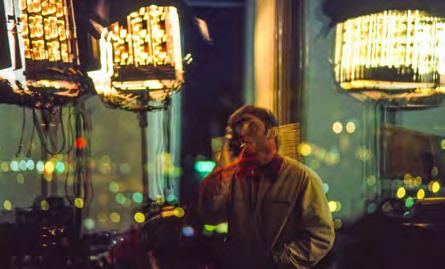
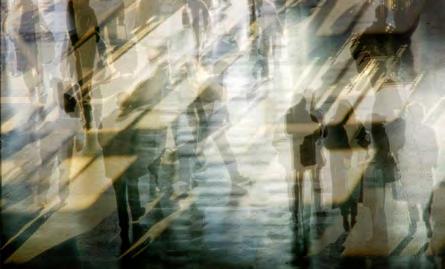
In this series, I sought to replicate the technique by using layers of film. It all began from the advances of camera technology, with the advent of the motor-drives, auto-focus and digital imaging, which allowed me to take multiple exposures at high speed without the concern of running out of film. The “smokiness” or blurring of sharp edges is achieved by layering slightly different frames of the same scene over each other in Photoshop. In the very beginning, the composites were primarily images taken from roughly the same angle, then gradually, they became images of the same set tings photographed from different angles, and with the passage of time and experience, they eventually evolved into compositions that were combining images from different locations from around the world,
Initially, what attracted me to this project was the painterly quality of these photographic images, which made me feel like I was, as my mentor Vittorio Storaro is so fond of saying, “painting with light”. And when my friends told me that some of the images were reminiscent of the work of J.M.W. Turner, my all-time favourite painter, I was totally hooked. The technical aspect of the process was also interesting. Besides revealing my shooting habits - as they clearly show how I’m constantly making minor adjustments to the framing as I look for the perfect composition. They also incorporated the idea of the movement of light – and sometimes of physical movements … And then there’s the element of time, one could say these are short segments of time compressed into a single frame, with fuzzy edges. And with the latest development, we have introduced a surreal element into the mix by juxtaposing psychologically contradictory images together in a painterly fashion.
The project continues to fascinate me as imaging technology continues to charge forward at breakneck pace; along with the new ideas that seem to come gushing to the surface the deeper I dig into my vast archive of previously unseen (some not even by me), unpublished and completely unknown images that never saw the light of day, I am very much looking forward to the next stages of evolution in these attempts to make light fly. n
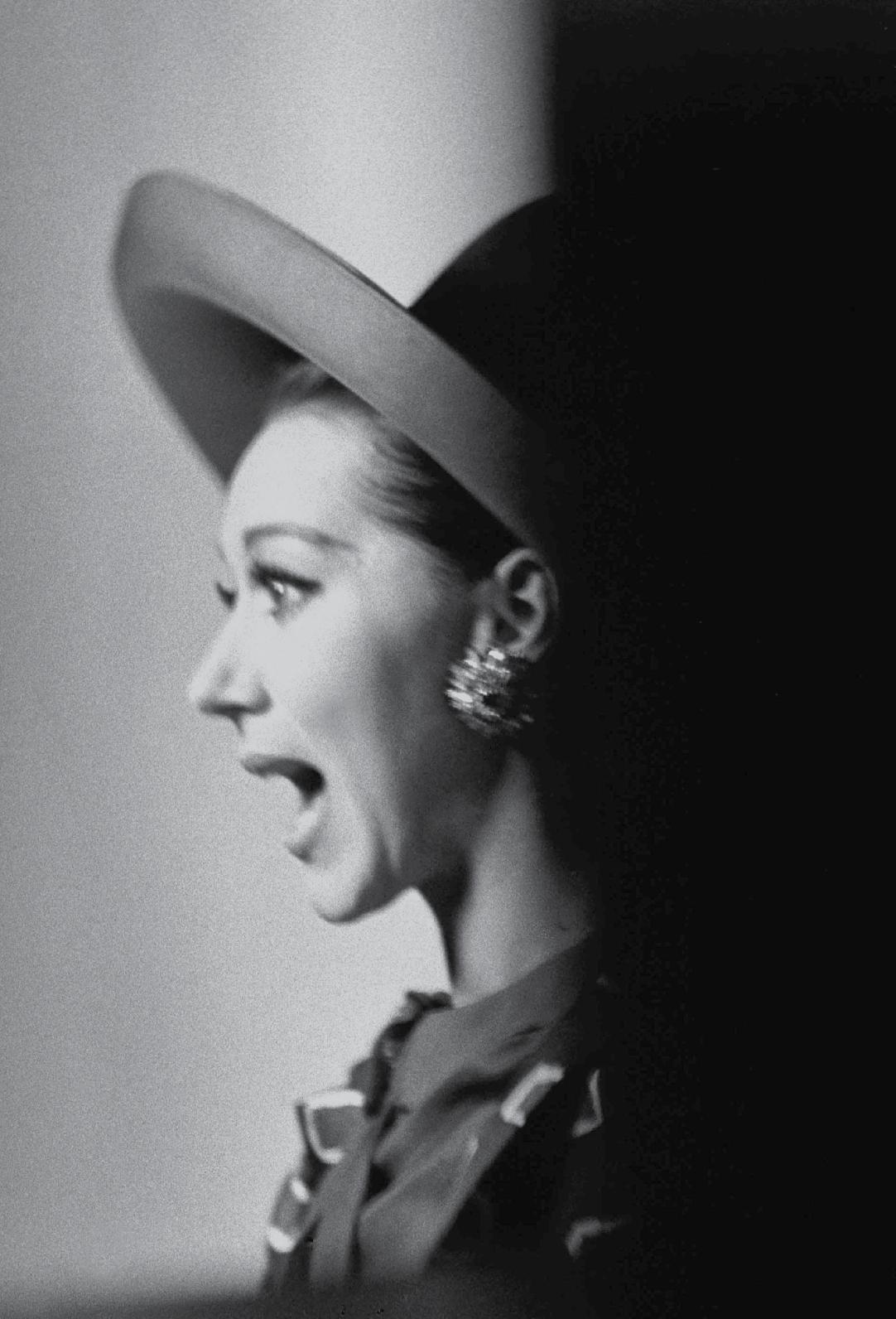
From creator of poetic images to compelling storyteller, throughout his career Jerry Schatzberg excelled in both photography and filmmaking. Published in Vogue, Esquire, LIFE, and many other leading publications in the 1960s, he captured intimate portraits of notable artists, celebrities and thinkers of the time. He went on to direct a number of successful films including ‘Scarecrow’, which shared the Palme d’Or at the 1973 Cannes Film Festival.
By Ann Tsang Images: Jerry Schatzberg
Jerry Schatzberg knows a thing or two about artistic achievement, although to this day, he remains modest about it.
Born in the Bronx in New York, Schatzberg’s first job was working in his family’s fur business before going on to become a co-owner of Ondine, a tiny club on 59th Street on Manhattan’s Upper East Side that became best known for hosting The Doors' first New York gig. Artists like Jimi Hendrix also performed there and frequent patrons included Jackie Kennedy, Faye Dunaway (who later became Schatzberg’s paramour) and Sonny and Cher. Schatzberg cultivated friendships with the club’s famous clientele and in 1956 he turned to freelance photography, scoring commissions for high profile magazines including Vogue, Esquire, Town & Country and LIFE , among others. One of his most prolific photographs was the cover image for Bob Dylan’s album ‘Blonde on Blonde’, which paved the way for his rise to become a contemporary of some of the 20th century’s photography greats - Helmut Newton, Norman Parkinson, Richard Avedon and Irving Penn.
But Schatzberg differed from his peers in that he very rarely gave specific directions to his subjects, preferring to give them the freedom to find their own moments. His images were more narrative in nature and rather captured specific actions, gestures and emotions.
Following a decade in the business, Schatzberg quit in 1967. Having worked for Vogue for two-and-half years, the magazine took the step of locking photographers into contracts that demanded exclusivity, but Schatzberg had other things in mind. “I quit because there was a particular story I wanted to tell, but I knew I could only tell it on film; it was about a model - they all went through such difficult times in those days. That model offered to work for me for free, and I really wanted to tell her story. As the years went by, designers, among others, regularly said about her that they wanted “younger models” and “new faces” for their collections. This affected her deeply because she was still young and not even 30. As she went through these difficulties, I watched her sink into depression. I always thought there was a story to tell. But my first film was really a metaphor for many sectors, not just fashion.”
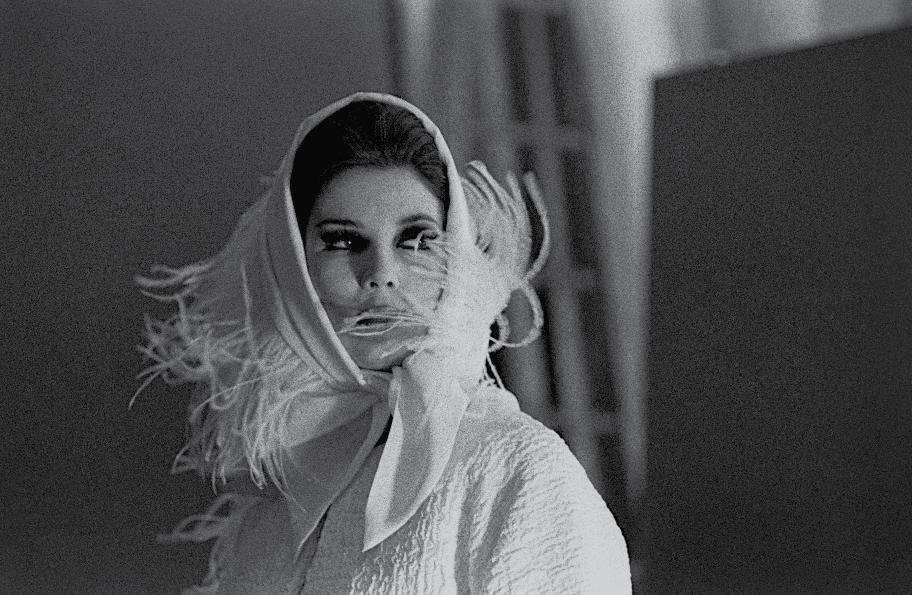
After directing a handful of TV commercials, Schatzberg made his debut as a film director in 1970 with Puzzle of a Downfall Child starring Faye Dunaway, who played the role of the model (Ann Saint Marie) that he had been determined to tell. A year later, he put together his second directorial effort, the gripping and finely acted The Panic in Needle Park, starring Al Pacino in one of his first roles. Pacino went on to co-star with Gene Hackman in Schatzberg’s next film, Scarecrow (1973), a moody tale of two drifters which in many ways defied convention and easy categorisation. The film shared the Palme d’Or at the 1973 Cannes Film Festival.
Perhaps significantly, Schatzberg’s critical following in the United States rose and fell, and after 1979’s Seduction of Joe Tynan, the trend in Hollywood shifted from small introspective films to the Spielberg/Lucas blockbuster genre. But he never lost his European devotees, as witnessed by the international success of 1989’s Reunion
Schatzberg’s films generally marked a significant time in the history of motion pictures when the importance of solid and introspective narrative proved to be paramount. But his focus was primarily on human relationships, which eventually made it more difficult for him to work in an industry that was rapidly changing with the rise of special effects, complex and adrenaline-infused car chases and adolescent comedies.
The director’s acute sense of people and places lent authenticity to the background in his films, and his actors worked to create totally believable characters, always delivering stellar performances. “I did a couple of awful films, a couple of good ones, and a couple of very good ones,” he said in an interview in 2008, the year that Rizzoli
published Paris 1962, which ironically took him back to his days of being a fashion photographer. The book brimmed with black-and-white images taken over a period of four days in Paris in 1962, during the debut collection of a newly independent Yves Saint Laurent following his departure from Christian Dior and the first collection by Marc Bohan for Dior.
The book evolved from an initial assignment for Esquire , in which only a handful of images ending up being printed. During the four days, Schatzberg had worked day and night to capture engaging, candid images both backstage and front-of-house during the two ground-breaking shows, mingling with models, makeup artists, and notable fashion editors including Francoise De Langlade (French Vogue), Jessica Daves (Editor-in-Chief of American Vogue) and Nancy White (Harper’s Bazaar). As an “insider”, Schatzberg was given access to the private, behind-thescenes world of the models and photographers, the latter of which is revealed in his candid images of Helmut Newton, William Klein, Hiro and Norman Parkinson perfecting their glamour shots.
Schatzberg’s images however, were different. While they captured the essence of a notable era in fashion history, and brilliantly documented the glamour, intrigue and opulence of these two shows, He focused not only on the models and the famous photographers, but also on the cleaners, the dressers, the madding throngs waiting to enter the salons where the collections were being shown, and even curious strangers - as evidenced in one particular image of a tiny old lady peering curiously through the window of a Christian Dior boutique.
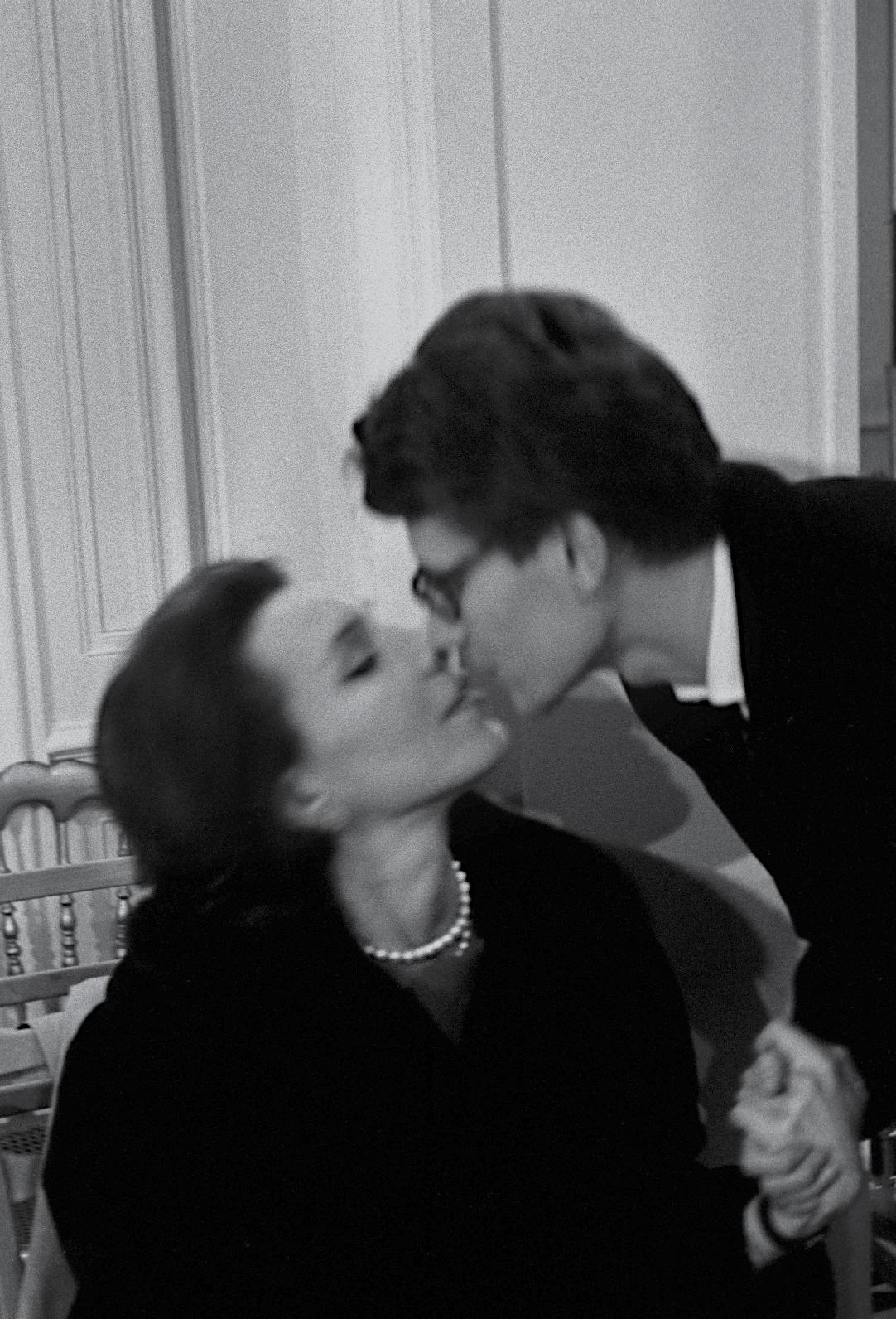
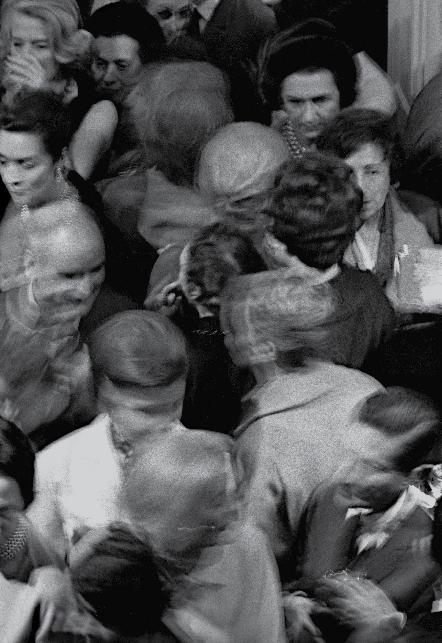
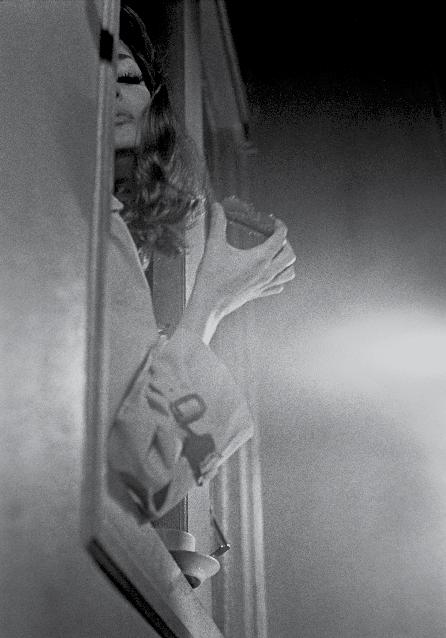
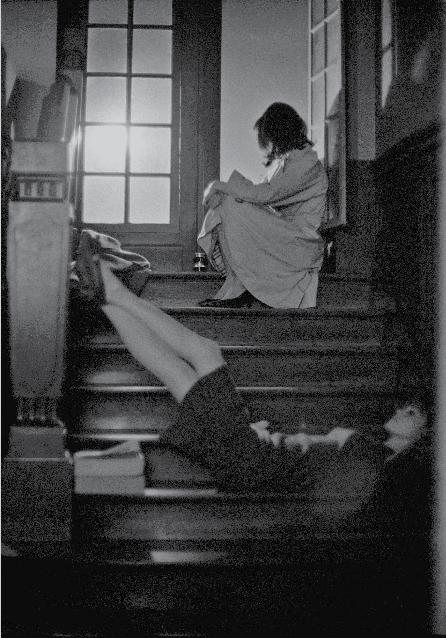
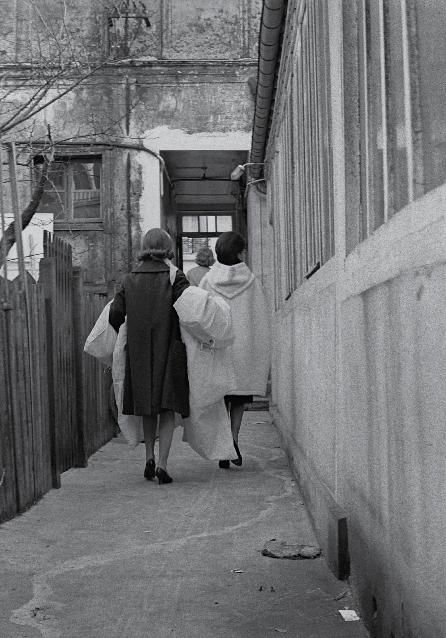
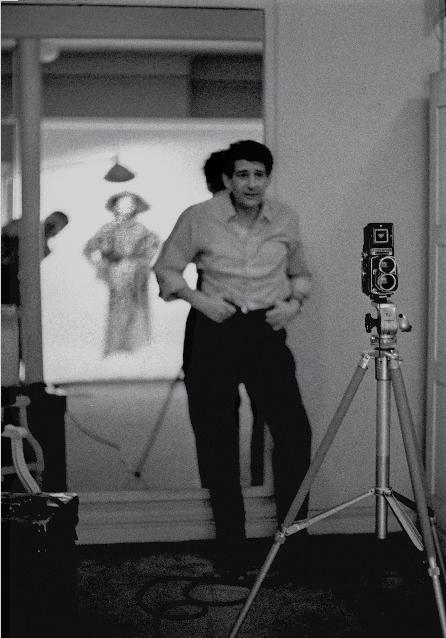
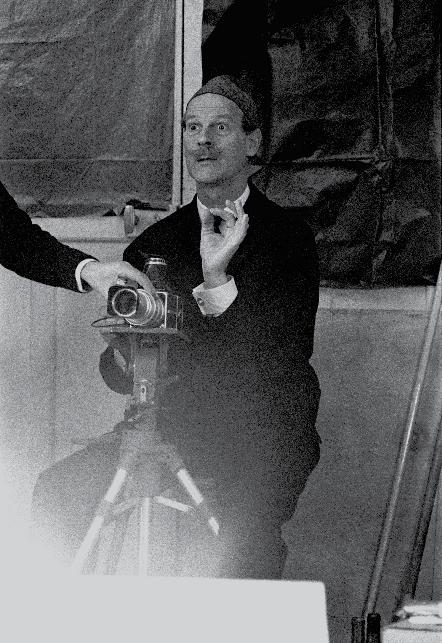
"I wasn’t that interested in the clothes,” Schatzberg points out, “it was much more about human behaviour for me." And he perfectly captures this sentiment in his images - models doing their own hair and makeup, dressing themselves, smoking, eating… Working alone with his camera, he worked tirelessly to produce hundreds of images - an exhausted model sitting bent over her knee crowned with a white hat; an atelier assistant arranging chairs; a young Yves Saint Laurent triumphantly kissing a fashion editor; a close-up of notes being written by a journalist that could potentially make or break the collection; models sleeping in stairwells or secretly eating behind doorways.
At the end of it all, Esquire only used five of Schatzberg’s images. Having shot endless rolls of film, the shots then seemed destined only for his personal archive. Then more than 40 years later, having in the meantime met with unprecedented success with his motion pictures, the photographer-turned-filmmaker decided to trawl through his archival material which had been sitting in a barn on his farm in upstate New York. Remarkably the negatives had somehow remained undamaged and Schatzberg subsequently arranged a meeting with photography expert Catherine Johnson, with a view to discussing what could be done with them. “She looked at my archive and then introduced me to a potential publisher, but they just seemed a little too institutional for my liking and I couldn’t see it working out the way I envisioned,” he recalled.
Enter Anthony Petrillose of Empire Editions, a boutique fine art book publisher based in New York City that
specialises in producing high-end illustrated books focusing on photography, fashion, architecture, design and fine art.
Petrillose, who had a career background in magazine publishing, instantly recognised the aesthetic and historical value of Schatzberg’s stunning black-and-white images and suggested that they collaborate. Several meetings and many an idea later, the two fully embarked on the production of ‘Paris 1962’, taking it into print in conjunction with publishing giant Rizzoli.
In September 2025, Schatzberg’s entire archive, including his portraits of Jane Fonda, Edie Sedgwick and The Rolling Stones, among others, was made available for the very first time through the Morrison Hotel Gallery in New York.
In more than six decades working behind both camera and lens, Schatzberg (now 98) mastered a rare equilibriumbetween carefully composed visual language and the capture of genuine, unguarded moments. His distinctive sensibility lay in his restraint, in what he chose not to show. By holding back emotion rather than expending it freely, he amplified its eventual impact. By suggesting rather than declaring, he avoided the obvious and invited deeper engagement. This approach produced something increasingly scarce in contemporary photography and cinema: the work of a mature artist addressing mature subjects with intelligence and nuance. He always trusted his audience to feel what his images left unspoken, and through that trust, he revealed not only his subjects, but a different perspective. n
https://morrisonhotelgallery.com/collections/jerry-schatzberg
By Paul French
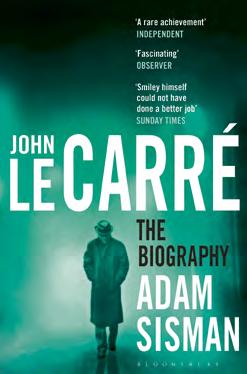
Adam Sisman is an author of big biographies. The birth-to-death and everything in between kind, real doorstoppers. The historian AJP Taylor, the poet best mates Wordsworth and Coleridge, that old curmudgeon Hugh Trevor-Roper and even, in a bold move for a biographer, the virtual inventor of the biography, that irascible Scot James Boswell. Most recently he has written 500 pages on the life of the English historian Asa Briggs.
But he’s perhaps most famous for his comprehensive life of espionage writer John le Carré (real name David Cornwell), published in 2015. That was a much anticipated, and much praised, authorised biography. Authorised perhaps, but Sisman still managed to get under the skin of the master spy writer, digging out his themes of love and abandonment, divided loyalties and misplaced trust. There were some aspects of his life – notably his penchant for repeated, hurtful and often amazingly convoluted love affairs – that le Carré asked his biographer to omit. After le Carré died in 2020, Sisman was free to tell some more intimate stories and so The Secret Life of John le Carré appeared in 2023. Both are warts and all biographies, though le Carré once complained to Sisman that he felt ‘it’s all warts and no all Adam!’
This March, Sisman came to town for the International Literary Festival. It was his first trip to Hong Kong and he was keen to come, after all the city is the primary setting for le Carré’s magisterial novel of espionage in the East, The Honourable Schoolboy (published in 1977). “THS” has long been one of Sisman’s favourite reads and the chance to finally walk in the footsteps of Jerry Westerby, le Carré’s seemingly frivolous but ultimately tragic hero in the novel, was too good to pass up.
Any ‘Honourable Schoolboy’ tour of Hong Kong has to feature Happy Valley, the old Bank of China building, the former cricket ground at Chater Garden, the Captain’s Bar at the Mandarin Oriental (le Carré’s Hong Kong digs while in town) and, of course the FCC. So naturally, Sisman needed a cold beer at the bar followed by a trip to the gents to see the old view, immortalised in a memorable scene from The Honourable Schoolboy, out over the harbour from the old Club premises on the fifteenth floor of Sutherland House.
Most biographers deal with the dead. It’s a process of archives, old letters, perhaps finding former acquaintances,
but never having to directly confront the subject – and neatly not having to worry too much about libel laws. Not so in this case – le Carré was still very much alive. Sisman admits his task was a challenge. Le Carré was a writer deeply concerned about his legacy, somewhat prone to self-mythologising, erratic changes of mind and mood. ‘Several times he told me stories that couldn’t possibly be true, but he had come over the years to believe them.’ At these moments Sisman would have to confront the author – ‘David, that’s not true!’ It led to some testy moments.
Unsurprisingly perhaps awkward situations persisted and included having to navigate some more problematic moments in le Carré’s life. Not simply his time with the British Intelligence Services before his writing career took off, but his aforementioned rather busy private life. “David ran his women like George Smiley runs his agents – fake names, discreet meetings in hotels, promising them the
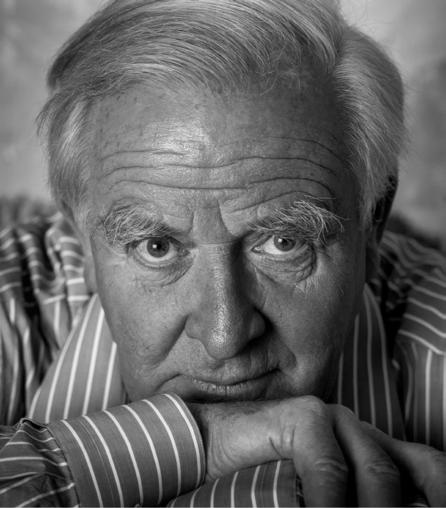
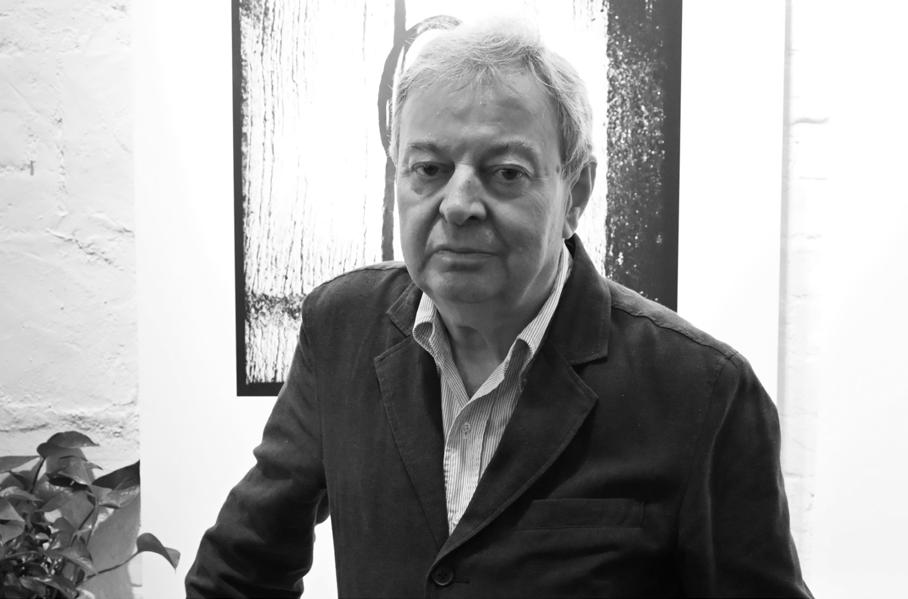
Adam Sisman at the FCC, March 2026.
earth and ultimately, in the final moments, never delivering, retracting the offers of a life together and returning to his wife.” It does show le Carré’s rather cruel side.
Sisman also came to think that his behaviour also revealed the long-term traumas le Carré suffered from his mother leaving the family home early and that home being extremely rackety. As is well known, le Carré’s father Ronnie was a serious lifelong conman. ‘There would be times they lived like millionaires and times the car was brought round the back at midnight, their suitcases piled in, and they’d skip the rent.’ Le Carré’s relationship with his father is as fundamental to his writing and major themes as his previous life as a spook. One of Ronnie Cornwell’s former associates told Sisman, ‘We was all bent David, but your dad was VERY bent!.’
Sisman was also able to gain insights into le Carré’s craft. Long walks along the cliffs near his home in Cornwall speaking dialogue out loud to really nail the cadences and resonances. Sisman argues le Carré is a major literary stylist, not just a very good genre fiction writer. He points especially to the author’s ability to almost pitch perfectly write dialogue for characters with English as a second language, something that so often comes over as clunky and clichéd in lesser writers.
There’s also the nomenklatura le Carré invented to create his fictional world of “the Circus” in its battles with “Moscow Centre”. “Moles”, “Lamplighters”, “Pavement Artists”, agents as “Joes”, are all le Carré creations, so familiar to readers. And, Sisman notes, his imagined terms became standard intelligence service speak. It’s now an oft-repeated trick of successful espionage writers – think Slow Horses, Slough House, The River House, The Park and so on.
For the moment the le Carré phenomenon continues. If you happen to be in Oxford this spring there’s an exhibition,
‘Tradecraft’, based around le Carré’s literary archive that is housed in the Bodleian Library. His sons from his first marriage manage his estate through their production company Ink Factory that has given us the BBC adaptation of The Night Manager, now going into a third, post-le Carré, series, and an adaptation of The Little Drummer Girl, directed by Korean cinéaste Park Chan-Wook. There’s a stage play of The Spy Who Came in From the Cold running to packed houses in London while soon there’s a TV new series, Legacy of Spies, with Matthew Macfadyen as legendary spymaster George Smiley. Meanwhile le Carré’s son from his second marriage, Nick Harkaway, has joined the family firm writing the heavily praised new Smiley novel Karla’s Choice, with more novels to follow. And the le Carré juggernaut rolls on - Ink Factory has recently completed production on a Chinese-language adaptation of The Night Manager for Alibaba-owned streaming platform Youku, with Eddie Peng and Sean Lau leading the cast of the 12-episode series. All this begs a question Sisman considers constantly, and was asked about at his recent session at the Hong Kong International Literary Festival – will we still read le Carré, still be as interested in George Smiley and Karla’s battles in another 50 years, a century from now? Many writers –bestsellers, prize winners in their day – are doomed to be forgotten. Sisman thinks le Carré will endure. Because of course the novels are great and that what was originally contemporary fiction is now historical fiction. The Spy Who Came in From the Cold, his 1963 Berlin-set novel that spawned a thousand imitators with the theme of jumping the Berlin Wall, is now a required text in Australia for those studying the history of the Cold War. And of course all these new TV shows, movies and adjacent new novels are bringing the world of John le Carré to new audiences. Le Carré endures. n
For the final speaker event of 2025, we welcomed essayist and novelist Pankaj Mishra. A longtime contributor to numerous international publications, his most recent book is ‘The World After Gaza’. He is also a Co-Founder of Equator.org, a new multimedia platform that seeks to highlight non-Western experiences and perspectives.
By John Batten
Following Hamas’ bloody assault on Israel across the Palestinian border on 7 October, 2023, Israel’s response was swift. However, as the months and years of Israel’s occupation and bombing of Gaza continues – and amid accusations of genocide – many in the world ask “why?” Why are Israel’s attacks of such unremitting and violent intensity? Why is Israel’s response continuing and why is it frequently indiscriminate? Why are civilians, children, women, the press, schools, hospitals, housing, infrastructure and convoys of relief supplies targeted? Why has the Israeli Defence Force (IDF) relentlessly attacked, killed, and in some cases, murdered?
Pankaj Mishra gives the answer in The World After Gaza. Contentiously, I hesitate to replace “the” with a more qualified “an answer”, as Mishra’s crucial book outlines a convincing historic overview. Far-right Zionists will strongly disagree. This book, however, is for the reader who queries the notion that any criticism of Israeli action in Gaza “is antisemitic”.
Mishra thoroughly explores the history of Zionism and its role in the formation of the state of Israel. He outlines the views of the earliest Jewish settlers - the Yishuv - in Palestine. He explores German - and the West’s - guilt of its historic treatment of Jews and recognition that the Holocaust/the Shoah to be “… for decades now,” as Mishra reminds us, “… the standard of human evil.” He analyses the denigrating colonial attitudes towards Arabs and the Middle East (itself a constructed colonial geographical term). He examines “the Americanisation of the Shoah” alongside the dogmatic demands for its protection by right-wing supporters of Israel in the U.S. He outlines the shaping of Israeli “victimhood” through the Shoah that “forged a collective memory of death and trauma, and used it to shape national identity and culture, while deploying it to devastating military and geopolitical effect.”
Mishra is one of the world’s foremost essayists and thinkers, who late last year spoke with a group of fellow writers at the FCC to outline the launch of Equator, a new long-form magazine that counters established, Westernfocused, mainstream news. Equator was explicitly initiated, the magazine’s website explains, in response to what was happening in Gaza: “… (while) watching the images coming out of Gaza, many of us felt we were going mad. Nothing, it seemed, could be done to stop the atrocity whose death toll mounted every day. Western leaders embraced the perpetrators of this unfolding genocide, while forcefully repressing their own citizens’ peaceful protests against starvation and ethnic cleansing… We began to imagine a new cultural venture, one that rejects the nihilistic idea that the powerful do what they please, and success is the only measure of moral virtue …”
Equator covers issues, people, culture and art in parts of the world too often overlooked by mainstream media, whose interests and news cycles predominantly follow the political
and financial interests of the West. Proving this, as the U.S./ Israel war on Iran (termed by the U.S. as “Operation Epic Fury”) unfolded in March this year, Western media’s news on Gaza and Ukraine’s war with Russia plummeted. Grabbing the headlines instead were U.S. and Israeli military attacks on Iran, alongside reports of oil and gas supply interruptions to the West and its impact on the worldwide economy and financial markets. Meanwhile, Gaza and Ukraine were continuing battlefields, as are Somalia and Pakistan-Afghan border conflicts, but the West’s news priorities had shifted.
As an example, the focus of Western news in the days over Easter - as bombings continued throughout the Middle East and Lebanon coped with a million displaced residents – was on the rescue of two U.S. F-15 Air Force personnel, a pilot and a weapons officer, downed by gunfire over Iran. After their rescue, readers endured the reporting of Donald Trump’s triumphalism: “… the United States Military pulled off one of the most daring Search and Rescue Operations in U.S. history…” Since his election, Trump’s vacillating opinions and inanities are reported as news, despite often being verified as lies and blustering hyperbole.
Mishra’s book is also “a personal intellectual journey”. India and Israel’s formation and independence were contemporaneous. He grew up in India in a family of Brahmin Hindu Nationalists with an “admiration for Zionism”, despite little knowledge of Israel. However, “the pretence of a “peace process” and a “two-state solution” led him to research Palestine and Israel. Mishra skilfully reflects historic commentary by public figures and writers from across the geographical, intellectual, literary and political spectrum, including early Jewish settlers in Palestine and the writings of James Baldwin, Premo Levi and Hannah Arendt.
Quoting George Orwell, Mishra identifies the root Israeli attitude towards Gaza as a “colour issue”. He tackles this delicate examination of Israeli racism towards Arabs by discussing historic anti-semitism within a wider discussion of colonial and systemic racism underpinning Israel’s assaults on Palestine and the West’s generally unquestioning support of Israel.
As European decolonialisation took place after the Second World War, Israel built a Jewish colonial state in the Middle East without a commitment, as suggested by Arendt, that “… a process of mutual understanding and progressing self-clarification on a gigantic scale must take place.” Thus, Mishra argues, Israel’s regional security remains susceptible and inevitably “Jews in Israel and the diaspora … remain as both objects and agents at the very heart of the modern world’s vast and fateful confrontations.” n
Pankaj Mishra: The World After Gaza Penguin Press, 2025, 292pp www.equator.org
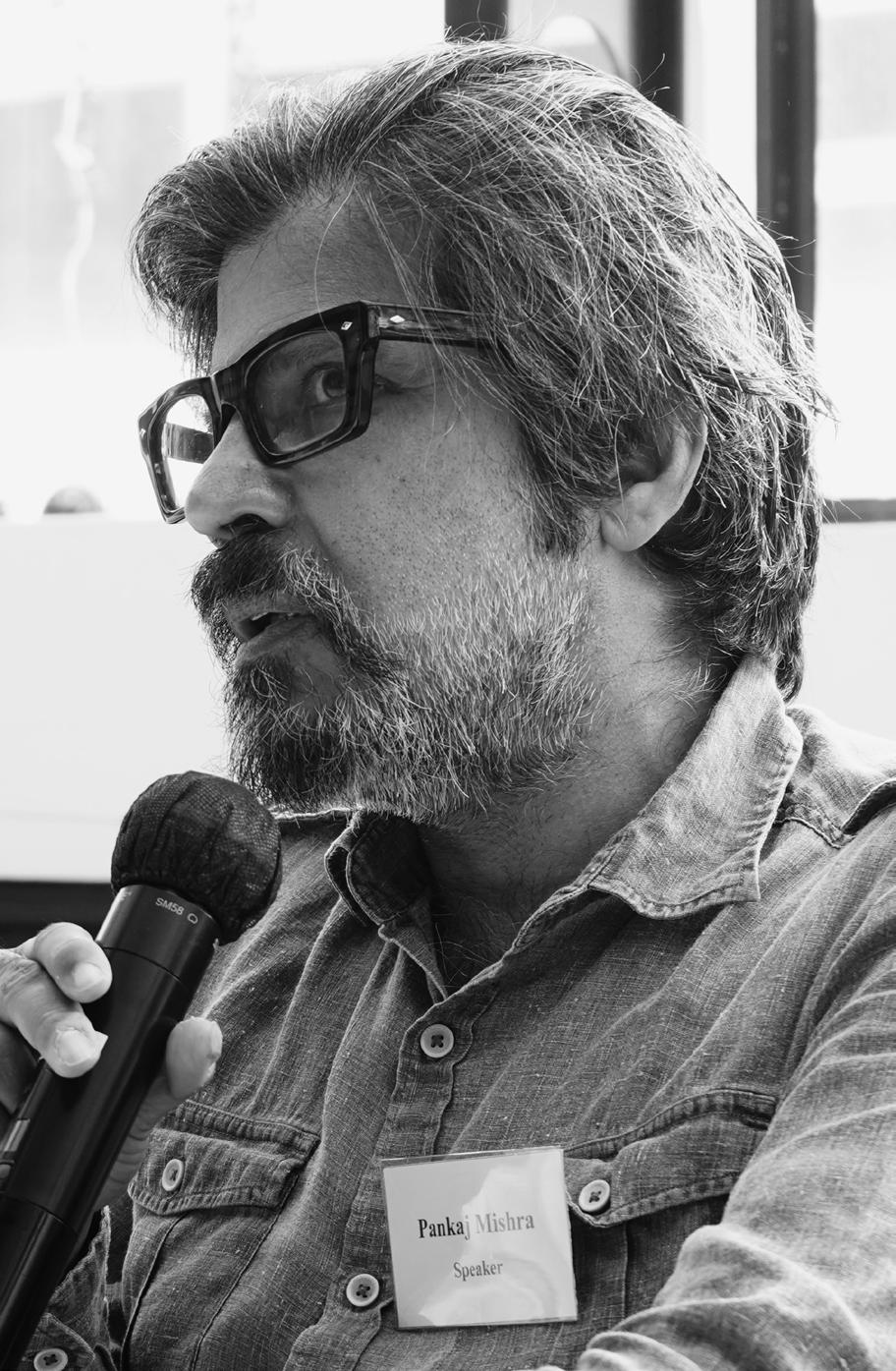
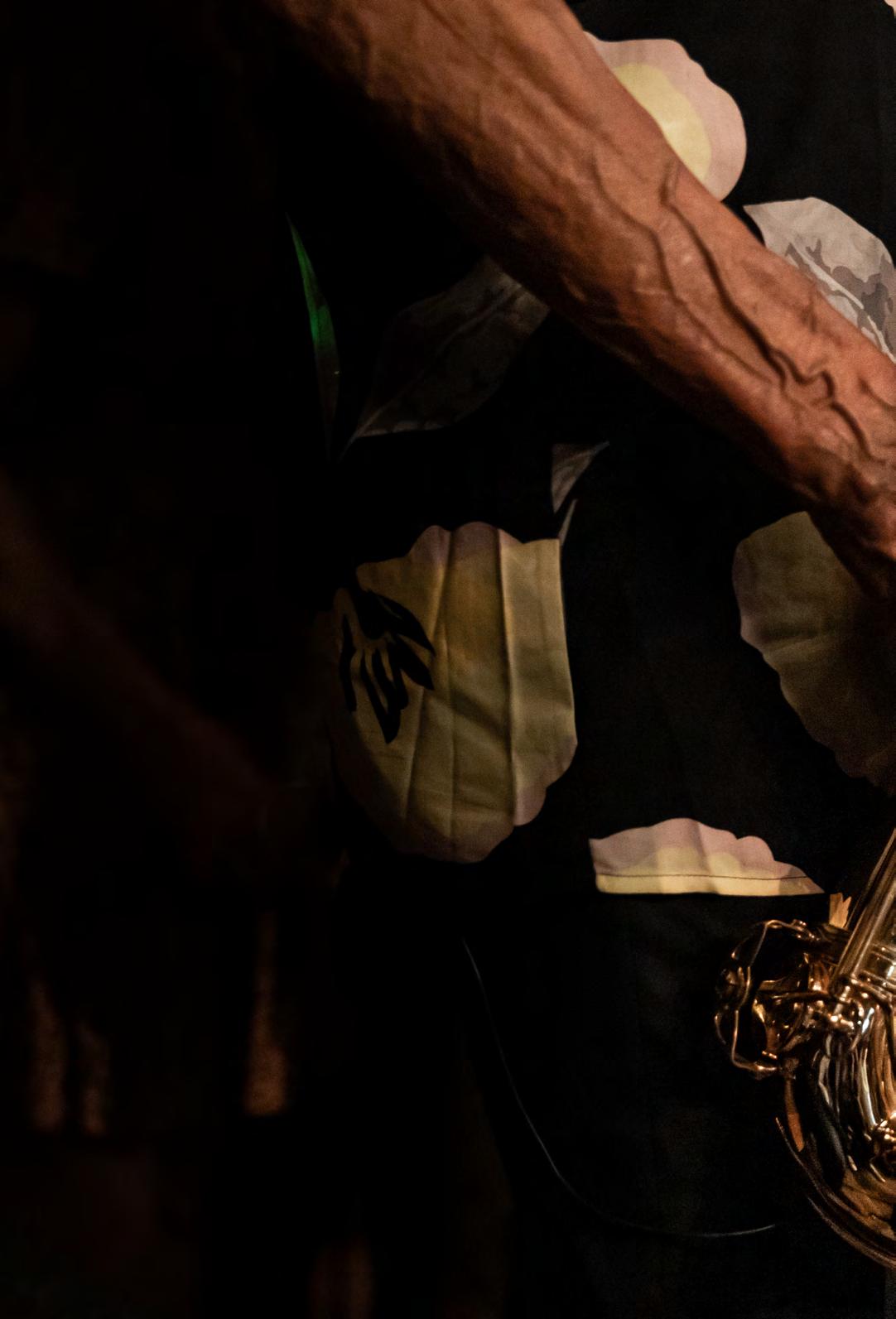
To coincide with the annual New Orleans Jazz & Heritage Festival, Bert’s is celebrating the birthplace of jazz with a festival of its own starting on 13 April. Members can expect a host of activities including an exhibition of striking images of New Orleans jazz musicians by acclaimed Irish photographer Karen Cox; a selection of jazz-themed cocktails from New Orleans, Chicago and New York specially created by the FCC’s resident mixologist Diwash Gurung; Cajun specials on the blackboard menu; and a New Orleans jazz-inspired playlist curated by Allen Youngblood, the Club’s in-house Music Director since 1997.
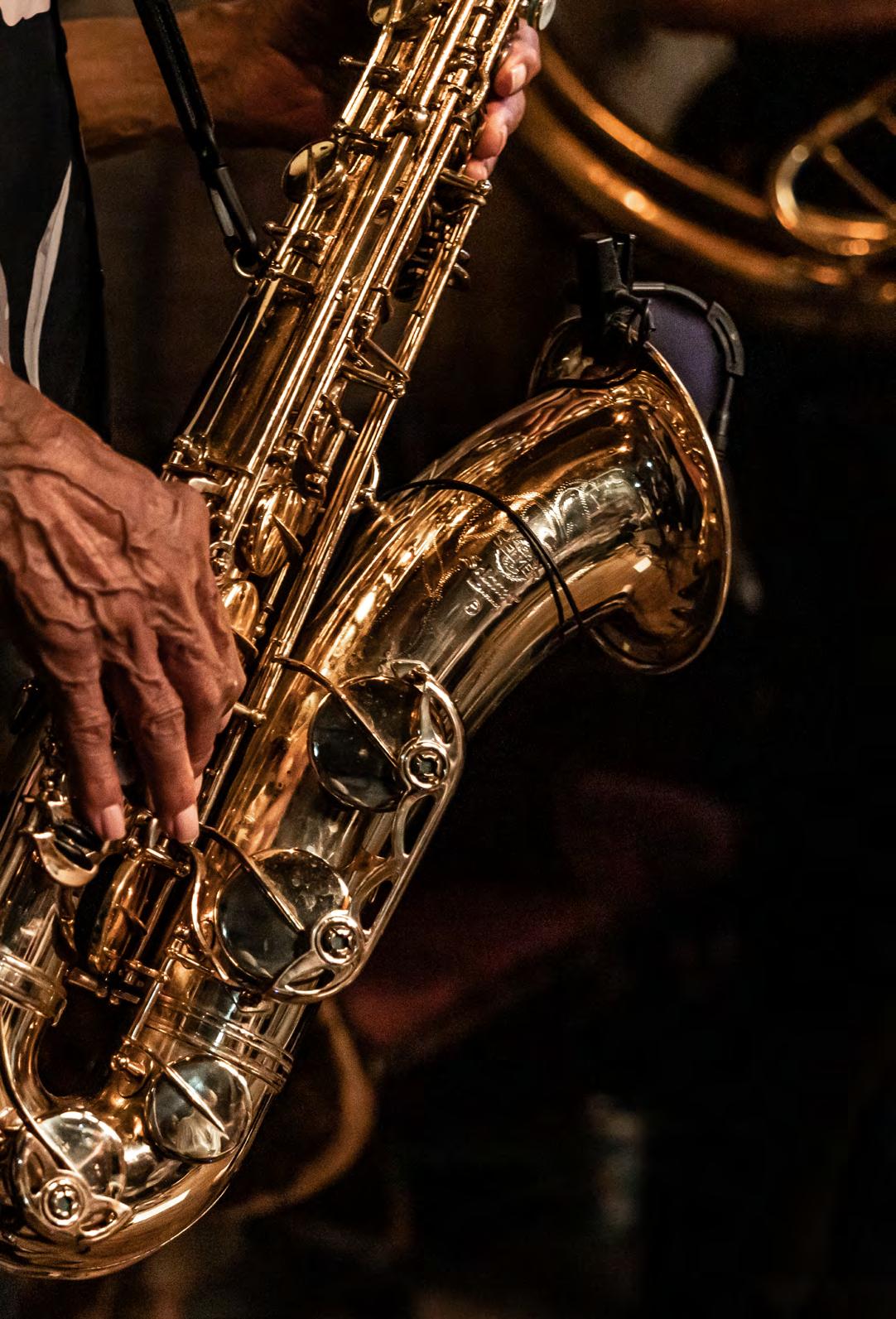
In the crowded universe of music photography, where countless lenses turn toward performers nightly, Karen Cox has carved out something rare: images that don’t merely document jazz but seem to breathe with its rhythms. Her 2024 series from the New Orleans Jazz Festival represents a photographer at the height of her powers, translating sound into silence without losing an ounce of the music’s vitality.
Cox arrived at the Festival not as a casual observer but as someone who understands that jazz photography requires the same improvisational instincts as the music itself. You can see it in her compositions—the way she anticipates a trumpet player’s crescendo, capturing the precise moment when technique transforms into transcendence. Her images reveal an artist who knows when to step back and when to move in close, when to freeze motion and when to let it blur into expressive abstraction.
What strikes viewers first is her treatment of light. New Orleans in spring offers harsh midday sun and golden twilight in equal measure, yet Cox navigates these extremes with sophisticated control. A series of photographs taken during an outdoor afternoon set shows musicians bathed in natural light that she’s somehow rendered both documentary-real and dreamlike. Sweat glistens on foreheads, instruments catch the sun, and shadows fall across faces in ways that emphasise concentration and joy simultaneously. These aren’t sanitised publicity shots; they’re honest portraits of working artists in their element.
Cox’s backstage and crowd images prove equally compelling as she captures festival-goers lost in the music, their faces telling stories about what jazz means to different generations. An elderly couple dancing, their movements
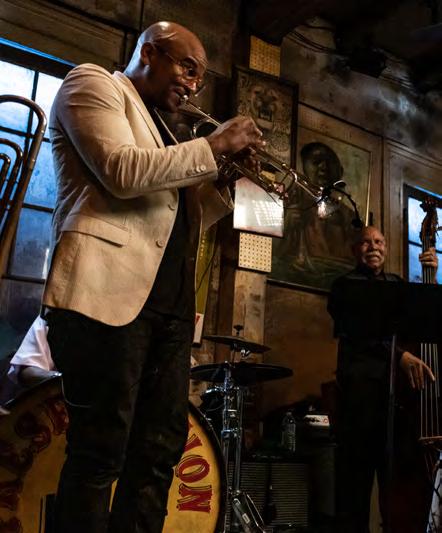
economical but deeply felt. A young girl watching a clarinet solo with absolute absorption. These human moments anchor the work, reminding us that jazz has always been music of and for community.
The Festival series gains additional resonance when considered alongside Cox’s documentation of Preservation Hall, the historic French Quarter venue that has stood as jazz’s beating heart since 1961. For over six decades, Preservation Hall has pursued a singular mission: to protect, preserve and perpetuate the spirit of traditional New Orleans jazz. The venue’s founding came at a critical moment when the city’s musical traditions faced uncertain futures, threatened by changing tastes and the passing of veteran musicians.
Cox’s Preservation Hall photographs, shown first at an exhibition at the Clew Bay Hotel Gallery in Westport in her native Ireland, reveal the intimate scale where tradition lives most authentically. The venue’s stripped-down aesthetic— weathered walls, simple benches, minimal amplification— creates a special atmosphere. Here, in this small room where tourists and devoted fans sit shoulder-to-shoulder, the impact of jazz’s early practitioners lives on through today’s performers. Cox captures this continuity perfectly.
Cox’s images aptly demonstrate that the venue’s commitment to preservation is about keeping its foundational spirit alive and adapting it.
What ultimately distinguishes Cox’s jazz photography is her evident love for the music and the culture surrounding it. These aren’t the stereotypical images of someone popping in for a weekend assignment, they’re the work of a photographer who has clearly spent time listening, learning, and earning the trust of her subjects. In some of her strongest images, the musicians seem blissfully unaware of her presence.
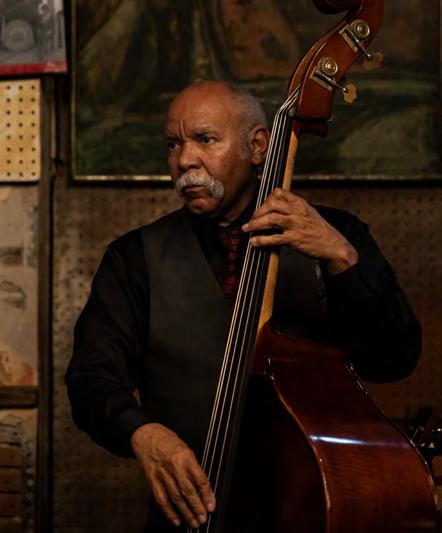
Images by Lakshmi Harilela/Love True Light
New Orleans cuisine tells the story of one of America’s most cosmopolitan cities, a melting pot where French, Spanish, West African, Caribbean and Native American traditions converge. In conjunction with the display of photographer Karen Cox’s images of New Orleans jazz musicians and a selection of themed cocktails, diners at Bert’s can also experience four blackboard specials that define the Crescent City’s legendary food culture.
Perhaps Louisiana’s most famous dish, Gumbo (HK$88) traces its roots to West African okra stews combined with French roux techniques and Native American filé powder. The FCC’s version of rich, soul-warming soup showcases roasted chicken and smoked sausage in a flavourful broth.
The Oyster & Shrimp Po’ Boy (HK$128) first emerged during the 1929 streetcar workers’ strike when the Martin brothers, former conductors turned restaurant owners,
provided free sandwiches to striking workers - their “poor boys”. Our version features cornmeal-crusted fried shrimp and oysters piled high on a crispy baguette with tangy tartare sauce, delivering the perfect contrast of textures.
Jambalaya (HK$128) reflects New Orleans’ Spanish heritage. This one-pot wonder combines Creole and Cajun influences, marrying rice with meat, seafood and the “holy trinity” of onions, celery and bell peppers.
Yak-a-Mein (HK$108), often affectionately called ‘Old Sober’, represents New Orleans’ lesser-known ChineseCreole fusion cuisine. This beef noodle soup, believed to have been introduced by Chinese immigrants in the 19th century, became a beloved hangover cure and soul food staple, typically sold from carts at second-line parades and late-night gatherings.

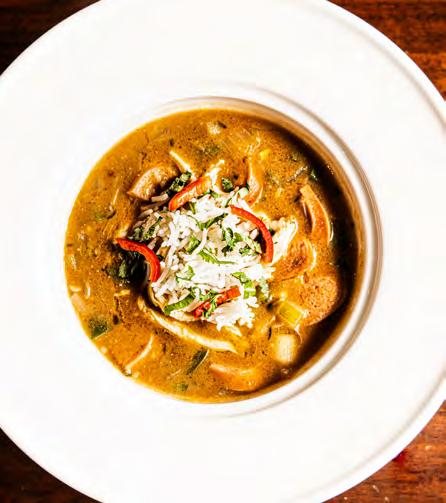
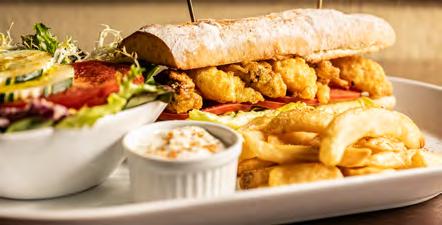
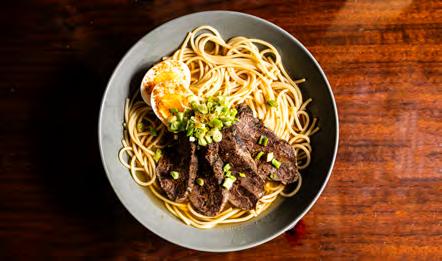
Diwash Gurung, the FCC’s resident mixologist, brings the Big Easy to Bert’s with an authentic New Orleans cocktail promotion featuring his take on America’s oldest mixed drink to Bourbon Street’s most notorious party fuel.
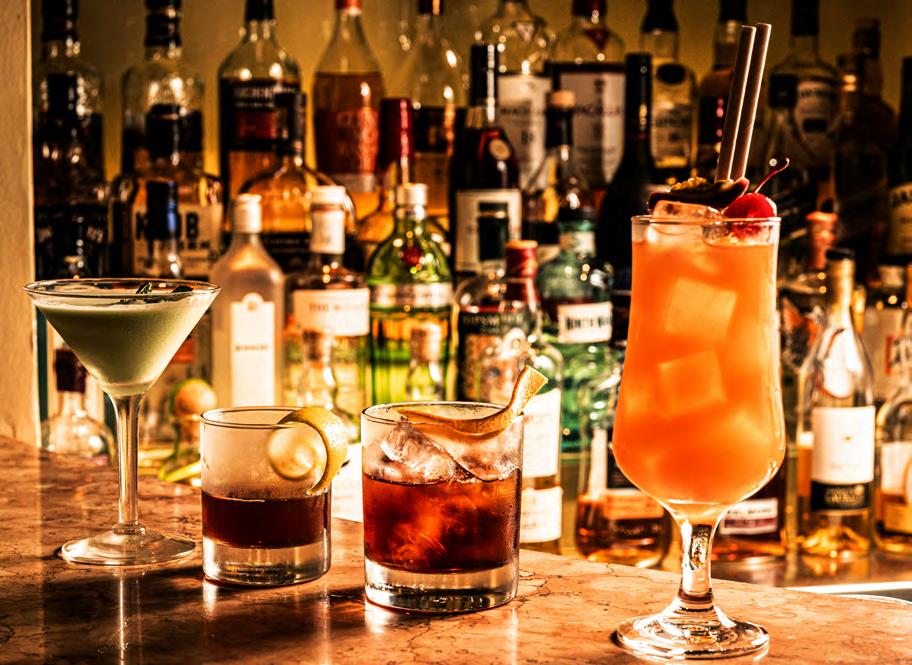
New Orleans didn’t just contribute to American cocktail culture - it invented much of it. These four classic drinks, reimagined by the FCC’s resident mixologist Diwash Gurung tell the story of a city where every corner bar serves up their own versions of classic cocktails,
The Sazerac (HK$68) claims the title of America’s oldest cocktail, born in the 1830s at the Sazerac Coffee House. Originally made with French cognac, it evolved to feature rye whiskey after phylloxera devastated French vineyards. The ritual is sacred: an absinthe-rinsed glass, Wild Turkey Rye, Peychaud’s Bitters (created by Creole apothecary Antoine Peychaud) and a generous sliver of lemon peel. In 2008, Louisiana officially designated it the state cocktail - a rare honour for any drink.
The Hurricane (HK$68) emerged from Pat O’Brien’s bar during World War II, when whiskey was scarce but rum was plentiful. Owner Pat O’Brien created this dangerously drinkable concoction of light and dark rum with passionfruit and citrus, served in a distinctive hurricane lamp-shaped glass. It became the drink of Bourbon Street, leading to many wild nights on the tiles.
The Vieux Carré (HK$88) - French for “old square”, referring to new Orleans’ French Quarter - was first dreamed up by head bartender Walter Bergeron at the Hotel Monteleone’s Carousel Bar in the 1930s. The sophisticated tipple bridges French and American spirits - Hennessy cognac meets Wild Turkey Rye - with sweet vermouth, Benedictine and a complex bitter profile.
The Grasshopper (HK$68), created at Tujague’s Restaurant in 1918 for a New York cocktail competition, represents New Orleans’ sweeter beverage side. This dessert-in-a-glass blends crème de menthe, white crème de cacao, and cream into a mint-chocolate indulgence that is both retro and timeless.
Each cocktail preserves a moment in New Orleans history - perhaps proof that the city’s greatest stories are best told with a glass in hand.
For Members and guests who prefer a non-alcoholic tipple, Diwash offers his Hurricane Mocktail (HK$48), a fruity and sweetish blend of fresh passionfruit, fresh orange juice and a dash of Grenadine. n
Promotion runs until 30 May, 2026
On 10 March, our Wine Social held at the Verandah brought 40 FCC wine enthusiasts together to select six wines from the 30 available for tasting contending to be included in the ‘Race for Correspondents’ Choice Wine of the Month’ promotion running until 10 May, 2026. Our Wine Socials are a regular FCC event which are always well attended, and participants shortlist their favourites, as well as enjoying a buffet of hot and cold canapés and mini desserts. The process through which the wines are selected is fully transparent for our Members (whose votes count!) as well as for the wine suppliers who are our long-term business partners.
After the votes were counted, the Members’ overwhelming choices for ‘Race for Correspondents’ Choice Wine of the Month’ promotion are listed below.
This was the third Wine Social hosted by the 2025-26 Wine Tasting Group and our resident Sommelier Michael Chan. Other recent events included our ever-popular Champagne Wine Social on 11 November 2025, the Old World Wine Social on 21 January and the tasting for the ‘Publisher’s Choice’ selections on 28 April.
The Wine Tasting Group is a long-standing advisory group of FCC Members whose objective is to ensure that the Club has a robust selection of quality wines that represent good value for money. Current members of the Group are Cammy Yiu, Houghton Lee, Elaine Pickering and Adrian Pierse.
The Group knowledgeably experiments with different formats for our tasting events and in addition, Michael kindly arranges for bottles of wine for the lucky winners of the wine quizzes at each of these convivial evenings.
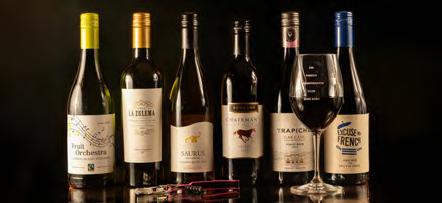
WHITE
Fruit Orchestra Chenin Blanc Viognier 2020. Western Cape, South Africa
This complex blend of two varieties brings irresistible peachy and tropical fruit flavours with a lemon tang. The fruit follows through on the palate and finishes with notes of honeysuckle and almond.
Saurus Chardonnay 2025. Patagonia, Argentina
Greenish yellow in colour, on the nose citrus aromas blend harmoniously with floral notes and tropical fruits. The wine’s short time in oak brings elegant touches of vanilla and white chocolate, while on the palate, it is fruity and fresh, with good acidity. A well balanced wine.
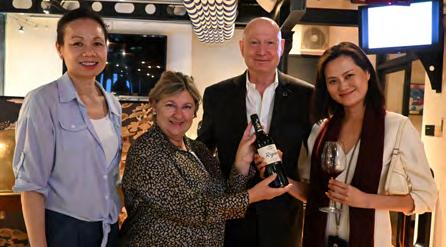
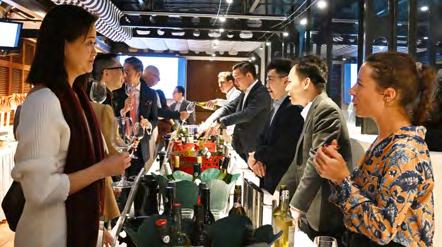
Do plan to attend one of our future Wine Socials and cast your vote for upcoming additions to our wines by the glass options. The more Members that attend, the more broadly representative the choices will be. These events are highly enjoyable, excellent value for money, and a great way to meet other Members who are interested in wine.
Pulenta Finca Zulema Sauvignon Blanc 2023. Mendoza, Argentina
This crisp, and aromatic white wine features expressive notes of white flowers, white pepper and citrus on the nose, and a smooth, fresh-acid palate that is both fruity and balanced.
RED
Renmano Chairman Selection Shiraz 2024. South Australia
Structured berry fruits and pepper carry from the nose with the fresh balance of natural acidity and fine oak tannins. Aromas of pepper, cherry, raspberry and fresh spices with hints of fresh vanilla oak.
Excuse My French Pinot Noir 2023. Languedoc, France
This wine presents red and black berries on the palate with a hint of vanilla and a delicious richness. The tannins are soft and silky and this Pinot brings an enjoyable juicy finish.
Trapiche Oak Cask Pinot Noir 2024. Mendoza, Argentina
A vibrant, medium-bodied red offering a soft, fruit-forward profile It features aromas of raspberry, strawberry and cranberry, with subtle oak, smoke and savoury notes and light, approachable tannins. n
The FCC’s newest reciprocal club, The British Club Singapore, is an exclusive hilltop retreat offering a diverse array of sports and family-oriented facilities set amidst lush greenery. The Club offers four exceptional restaurants and a collection of versatile event spaces, designed to cater to every visitor. Its facilities include three swimming pools - a 25-metre main pool, a 20-metre lap pool, and a children’s pool - alongside a well-equipped gym, co-working space and more!
By David Brightling Images courtesy of The British Club Singapore
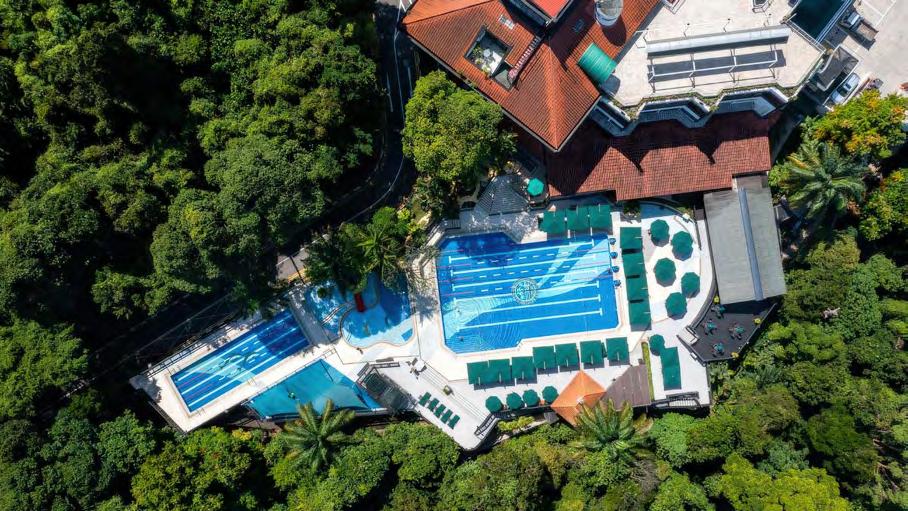
The British Club Singapore is a warm, welcoming and unpretentious social and sports club which is a home away from home for members from fifty nationalities. With our new reciprocal agreement, it is now a home away from home for FCC Members when visiting the Lion City.
In addition to superb sports and recreation facilities for the whole family, The British Club Singapore offers a wide range of dining options, banquet and meeting rooms, and a business centre with six workstations – all of which are available for reciprocal club visitors’ use.
The Mountbatten Bar & Grill is the Club’s upscale dining outlet, with steaks and an assortment of gins with Fever Tree tonic offered as specialties. The Windsor Arms Gastropub is a more casual option for those seeking to enjoy a pint along with selections from the pub menu. The Verandah Café, overlooking the pool; Scores in the sports building with a view of the tennis courts, and the poolside Splash Bar round out the various dining options.
Having lived and worked in Singapore twice, I have visited The British Club on numerous occasions and found it to be a warm and welcoming place. The Club’s hilltop atmosphere is
light and airy, and the staff are courteous and friendly. The Mountbatten Bar & Grill was a particular treat for this filet mignon aficionado after the requisite Tanqueray No 10 Gin –which was specifically distilled for a G&T.
With its recently redesigned interior, The Hideaway, previously known as the Club’s Library, provides a spacious and quiet haven for those who need a productive working area while at the Club.
The British Club is perfect for personal or business entertaining when you next take a trip to Singapore.
The FCC’s reciprocal club network is a valuable benefit to Members who travel regularly. To arrange a letter of introduction to The British Club Singapore, or to one of our 99 other reciprocal clubs, please speak to our friendly front desk staff or write to concierge@fcchk.org. Happy travels! n
The British Club Singapore 73 Bukit Tinggi Road, Singapore 289761
Tel: +61 (02) 8273 2300 www.britishclub.org.sg
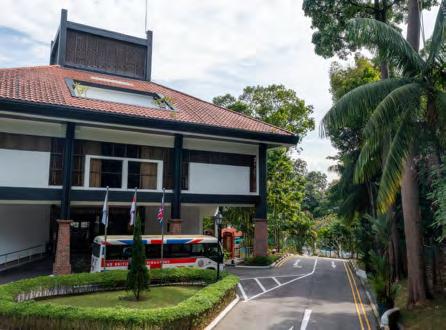
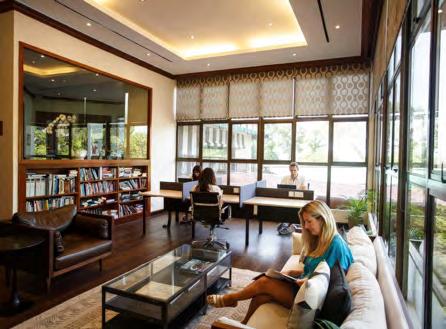
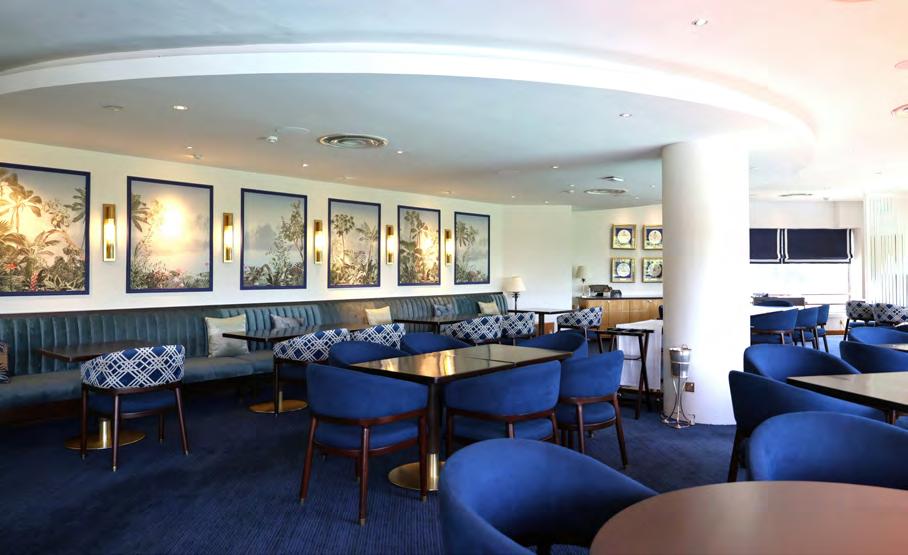

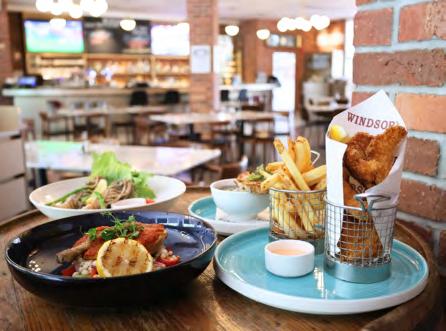
The FCC extends a warm welcome its new Members who come from a wide range of sectors, further adding to the diversity of the Club. Here’s a summary of who they are and what they do.


ASSOCIATE
Director
Mansu Exporters Ltd / Intercontinent Tailor
I was born and brought up in Hong Kong and I am a member of a number of clubs here. The FCC attracted me through their bar set-up and food selections. My father-in-law Vashi Gagoomal is a regular at the Club so I took this opportunity through him to join too. I hope the FCC family will welcome my wife Karina and my three children - Tanya, Devin and Vinay.
CORRESPONDENT
JOSH BALL
Sports Editor
South China Morning Post
I moved to Hong Kong in early 2018, which some might suggest was excellent timing on my part, but I have only just got my act together and joined the FCC. After starting life at the South China Morning Post on the Hong Kong desk, I moved back to my natural home covering sport around the time of the Tokyo Olympics. Before arriving in the city, my wife and I were based in Bermuda, from where she hails.
ASSOCIATE BEN COOPER
Managing Partner
Ashford Benjamin
I am a Barrister of England & Wales (Middle Temple) and previously practised employment law in London, before moving into executive search. I am the Founder of Ashford Benjamin Executive Search, which includes the largest specialist legal search team in Hong Kong. I have placed over 200 lawyers into in-house roles over a 20-year career, including more than 16 years in Hong Kong. I have also been a mentor for Women in Law HK and I am a Board Director for the migrant support charity ReAct. I am the proud father of two children.
ASSOCIATE
Director Networking
FIBS Logistics
I was born and raised in a subarea north of Stockholm, next to Arlanda international Airport. My friends have called me Fredda for as long as I can remember. I moved to Hong Kong in 1999 and ended up in logistics by chance; it’s a long story. It wasn’t planned, but it’s been one amazing logistical life journey. I got married and had a daughter, Sofia, in Hong Kong in 2004, but she has now relocated to Sweden for university. My annual highlight is hosting our company’s networking event to which we invite partners from around the world. I’m more than happy to share my experiences in logistics, event planning and business “speed dating” with any FCC Members.
www.fibsglobalconference.com https://www.linkedin.com/in/fredrik-nyberg-fibs/
My first visit to Hong Kong was in May 2025, when I joined the FT’s editorial team here. There is so much that I love about the city and its islands and am looking forward to learning more about Asia. I have been with the FT for about 18 years and this is my first overseas assignment with the paper. Previously, I worked for Bloomberg and The Associated Press -- in Amsterdam, Lisbon, Madrid and London. My husband João, a theoretical physicist at the University of Cambridge, has joined me. He spends his term-time evenings teaching Physics and Maths.
https://www.linkedin.com/feed/
Barratt Daniel John Ambrey Associate
Buhre Taisala Adrianus Director, Business Development Export Now Asia Associate
Chung Francis Chuan-pu Chairman
MPF Ratings Ltd Associate
Christensen Einar Vice President, Claims Skuld (Far East) Limited Associate
Garnaut Louise Helene Senior Manager Okay Property Agency Associate
Law Long Hei Adrian Vice President, Institutional Client Deutsche Bank Group Associate Group Investment Bank
Lee Tin Ho Specialist in Psychiatry Homing Medical Centre Associate
Leung King Yue Alex Founder A168 Limited Associate
Liu Zhi Associate
Mochida Masayuki Freelance Associate
Puleo Lewis Anthony Puleo Asia Limited Associate
Qin Qiuyu Founding Partner Sunflare Education Consulting Associate
Roethe Janet Margaret Irene Associate
Sharman Laura Jane Journalist ( Freelance)
CNN & Daily Mail Associate
Sherry Anthony James Barrister-at-law QED Chambers Associate
Teng Chuen Cheong Chief Editor Hong Kong Economic Journal Co., Ltd Associate
Walsh Matthew Editor AFP Associate
Wu Wai Kuen Information Technology Digibloom Limited Associate
Yuen Tsz Kin Senior Producer / Programme Host Hong Kong Commercial Associate CR1, CR2 Broadcasting Co., Ltd
ABSENT MEMBER
Van Zundert Lonneke Illicit Trade Prevention APAC Philip Morris International
Jaques Justin Geoffrey Kearsley Worldwide Flight Services
Leung Po Sum Andrew Quality Control Mystery Ranch
Chung Kaiwan Pilot ( Management ) Greater Bay Airlines
Yu Tak Po
POSITION
COMPANY
Property Manager Maximus Property Management
Shaw Catherine Jane Freelance
Chan Gordon Principal Edward C.T. Wong & Co
Matthews Anthony Peter Director Acorn Vet Hospital
Tsang Man Hung Veon Managing Director HotelsHR Limited
Tang Hans Hing-cheung Managing Director STWS Technologies Ltd
Lo Ka Chuen Independent Investor
RESIGNED
Mark Lin
Sammy Fong
Leung Sum, Billy Wong
General Manager Crown Records Management
Managing Director Crown Relocations
Angela Ka Man Chan Manager Ronin Group Enterprises Ltd.
Ahamed Nazvi Careem Principal Sub Editor Television Broadcasts Limited
Situma Anade Nasimiyu Bloomberg
Dave Sebastian Reporter Bloomberg
Teele Rebane Research / Producer CNN
DECEASED
Peter John Berry
Carsten Schael
REACTIVATED
Nigel Jonathan Moore
Director - Sales & Marketing Wallem Group Limited
David John Gardner Senior Lecturer Hong Kong Baptist University
Nigel Sharman Senior Associate Chaudhry Solicitors
Miranda Jane Houng Freelance
Lueng Gee Becky Cho
Senior Dir., Corp. Affairs, Asia Pacific VF Corporation
Stephen Otis Edwards Managing Director Red Rover
CHRISTIAAN HART PHOTOGRAPHY, providing professional sports, commercial, corporate and aerial photography in Hong Kong and throughout Asia. Studio portrait sessions available, for more information visit www.christiaanhart.com or call +852 96878282


SOOTHE YOUR SOUL, LIGHTEN YOUR SPIRIT, GLADDEN YOUR HEART

HOUR OF LOVE - AM 1044 METRO PLUS Prison Visitation on the Air Every Sunday 7:30 - 10:00pm l Live on Facebook
New Members joining the Club are entitled to receive the recently created FCC Passport. Through this initiative, the booklet, designed by the Club’s Marketing Department, guides newcomers on a tour of the FCC to meet with key staff who will introduce them to the Club’s numerous facilities, services and amenities. They will visit every part of the Club, learn about our Reciprocal Club network of more than 100 overseas clubs and how overseas visitors can use the FCC as Guest Members. They will also hear about our Club Lunches with guest speakers and panelists, screenings and much more. Each time a new Member utilises one of our venues, the passport will be stamped and once full, the holder will receive a HK$500 voucher for use in the Main Dining Room. Spread the news among your friends who are not yet Members.
New Members with fully stamped passports.
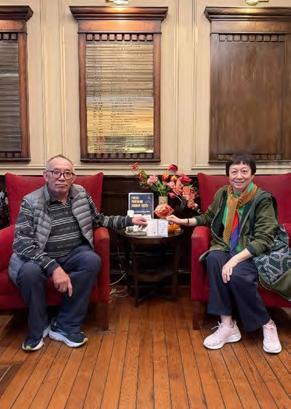
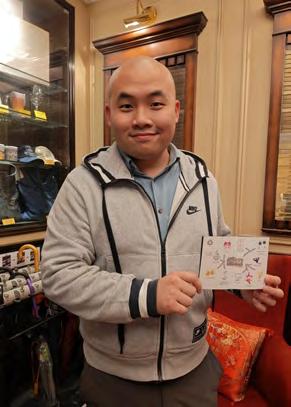
Many of us might describe our lives as “spent in various pubs”, but for long-time FCC Member Peter Berry, who died in February at age 89, that isn’t so much a metaphor as it is a biographical fact.
By Christopher Slaughter Images courtesy of John Berry
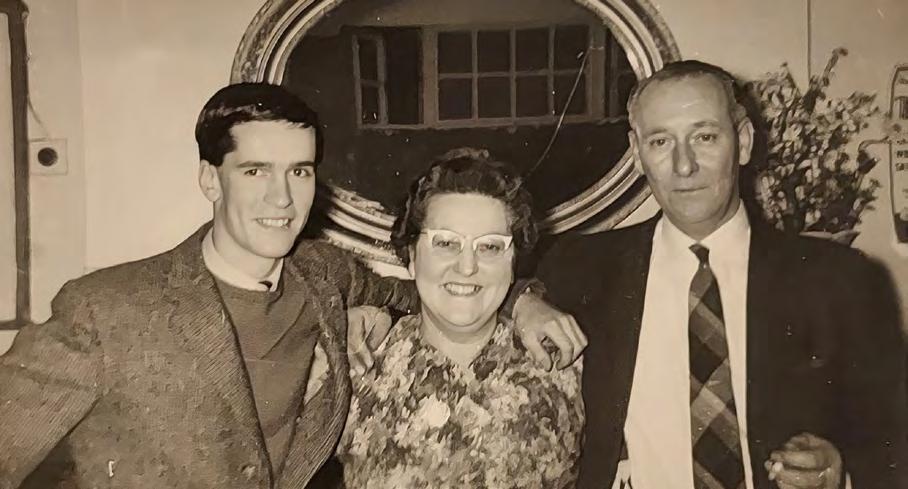
Peter Berry was born in the Wiltshire pub The Wellesley Arms, and during his childhood, his parents went on to run Reading pubs The Elephant Hotel and The Moderation.
“Keeping a pub”, Peter recalled, “was my father’s first real job after failing as a farm manager.” Following his retirement from Hong Kong Government service in 1997, Peter followed the family tradition, buying shares in Lamma’s Island Bar and The Waterfront Restaurant, and operating the latter with his wife Ira until his death.
But his story was very nearly cut short. As a child during World War II, Peter narrowly escaped a German bomb attack on Reading, which for the most part had remained untargeted during the war. “By chance, my mother had just called for me to sit down and have my tea,” he wrote.
“As I stepped away from the window, a bomb burst just around the corner on our street. In all, forty-one people died, but the pub opened in the evening, having swept up the mess and covered the windows for blackout.”
Peter attended Reading School, where he was introduced to cricket, which became a life-long passion, and shooting, which almost led to a military career.
Despite his keen participation in the army cadets and his expert rifleman badge, he declined Sandhurst, choosing to study quantity surveying at Hammersmith School of Building and Arts and Crafts.
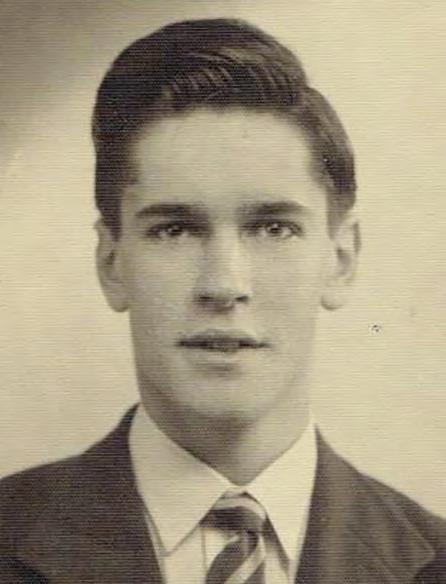
While preparing for his exams at the Royal Institution of Chartered Surveyors, by day he worked at the Atomic Weapons Research Establishment at Aldermaston, and by night, he danced at London’s swinging jazz clubs. He recalled seeing jazz greats including Louis Armstrong, Lionel Hampton, Duke Ellington, Count Basie, Dizzy Gillespie, Ella Fitzgerald, Jimmy Witherspoon, Jimmy Rushing, Champion Jack Dupree, Humphrey Lyttelton, and the FairweatherBrown All Stars, among others.

His dancing skills led to regular appearances on the BBC’s Saturday evening ‘Six-Five Special’ youth music show, where a close-up of Peter’s dancing feet was used for the show’s opening shot. (Another highlight was having his hair ruffled by Petula Clark).
A job ad in Building magazine got Peter a QS position in Jamaica, and in June 1960, he arrived in Kingston. Among other things, he played cricket with various West Indies notables as part of Sabina Park’s second team, learned to dance “Jamaican style” (reggae/ska/jump up/mash potato etc), and drank plenty of Red Stripe beer (9% alcohol).
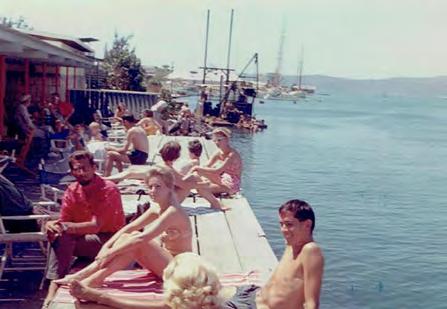
Returning to the UK in late 1962 to pea soup fog and what he described as “the worst winter of the 20th century”, Peter searched for a return to the tropics. He turned down a QS job offer in Nigeria, and a music industry offer from Island Records founder Chris Blackwell, a friend from Kingston. Instead, he accepted a QS post in Hong Kong and on 4 March, 1963, Peter touched down at Kai Tak.
Rich with irony and foreshadowing, his first project upon arrival wasn’t a construction job, it was to conduct a vandalism report on a colonial-era mansion. The previous tenants of The Fairview – the old Mok residence at 41A Conduit Road – had been none other than the FCC Hong Kong.
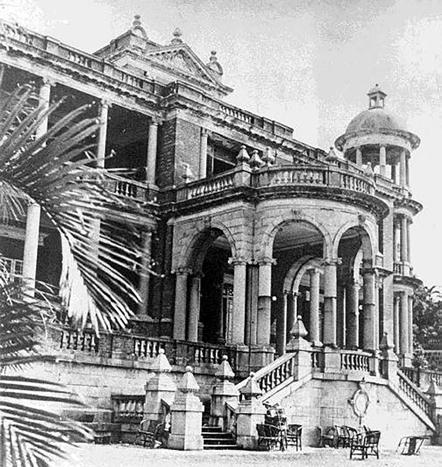
Unfortunately for the Club’s archives, Peter did not keep a copy of his report on the no-doubt-substantial damage done to the estate by ill-behaved hacks.
As with many a clueless new arrival to Hong Kong, Peter established himself in the then-as-now legendary Chungking Mansions on Nathan Road. He met his first wife, Pem, on the steps of “CKM”, and quickly established a home base in Kowloon while working in Central.
Of course, he spent plenty of time in the bars of Wan Chai and Kowloon and at the various clubs around town, joining the Cricket Club in September 1963, and thereafter playing for the Nomads for the next 24 years.

Fairly soon, Chungking Mansions gave way to a flat share on Granville Road, single life gave way to marriage to Pem in 1965, and as his contract ended in 1966, a job with the Hong Kong Government beckoned. And with this new stability and a better salary, a year later in 1967, their son John was born.
FCC stalwart Annie Van Es recalls that she recognised Peter long before they ever met. “He used to ride to Central on the Star Ferry every morning on the lower deck, and I would ride on the upper deck,” she remembers. “Later Hugh and I became friends with him, and Peter and Pem attended our wedding in 1969.” She recalls that after work they would often meet up for drinks at (what they later discovered was) a gay bar in Central called Seventh Heaven, before joining other friends at the FCC in Sutherland House.
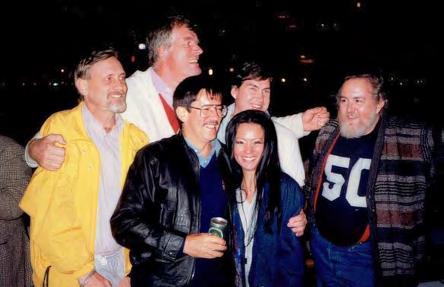
Often in that group was another FCC Member, Saul Lockhart, who met Peter shortly after he arrived in Hong Kong in the late ‘60s. Saul’s flat (with fellow FCC Member Alan Daniels) at 8 Carnarvon Road was close to Peter’s on Granville Road.
“We called Peter ‘The Last Colonial’ because it wasn’t too long after he joined Government that he moved to The Peak,” Saul recalls. “One day he invited me to lunch at the Cricket Club to discuss a proposal. The Cricket Club was about to leave Central and move to Wong Nai Chung Gap, and he offered to get me in – if I would nominate him for the FCC. It cost me a hundred bucks to sign up for the Cricket Club, and I had to buy Van Es a drink to get him to sign Peter’s FCC form, but it was definitely worth it!”
Peter’s membership of the FCC became fortuitous when, in 1982, then-Governor Sir Murray MacLehose offered to lease the Club the run-down Dairy Farm building on Ice House Street. Peter was invited (or “co-opted” as he put it) onto the FCC’s Move Committee and recalls inspecting the premises by torchlight, since the building had no electricity. His damning comments about “… the advanced state of building’s dilapidation …” (in rather more fruity language) were overheard by some of the Government team also inspecting the premises, repeated on the grapevine, and eventually reported to his Architectural Services boss – via a phone call from the Governor himself!
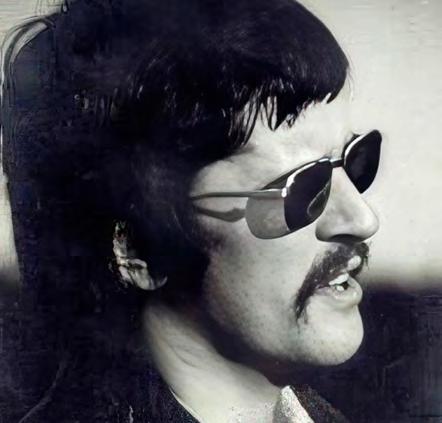
Peter’s Government career came to an end after 30 years in early 1997, and he sailed back to the UK on the Oriana with about 120 other former civil servants.
In typically modest style, Peter described his early career in the Architectural Services Department as “churning out one swimming pool complex after another and chasing recalcitrant architects”, but by 1990, as he moved into the Works Branch and rose to the rank of Principal Assistant Secretary, his role increasingly focused on policy.
In particular, fellow QS, FCC Member, and Life Chairman of the construction industry benevolent association Lighthouse Club International, John Battersby, cites Peter’s substantial contributions to safety on construction sites. “Peter was one of the driving forces behind the ‘Pay for Safety Scheme’ which is exactly as it sounds, a means of incentivising contractors to ensure they made construction sites as safe as possible,” John says. “It’s impossible to say how many lives that policy saved on construction sites across Hong Kong.” For those contributions and many others made during his long career, Lighthouse Club International honoured Peter with the Golden Helmet Award in 2011.
Within a couple months, his life had come full circle, and he returned from the U.K. to his actual home - Hong Kongand also to the pub business, where he had taken a share in a new Lamma tippling spot the Island Bar.
Having established himself on Lamma, Peter decided to begin hosting a regular ‘Curry Night’, despite the obvious impediment of (in his words) “… being unable to boil water, much less serve up an edible meal.”
During his married years (which had ended 25 years earlier!) he had acquired a taste for Sri Lankan cuisine and was eventually introduced to a cook named Ira, who not only succeeded in satisfying Peter’s stomach, but also captured his heart. They began living together, and were married at The Waterfront in May 2011, with his son John as best man (as Peter had been for his).
After nearly 20 years in business together, Peter and his partners sold the Island Bar in 2016, and he and Ira took over sole ownership of the Waterfront restaurant and the upstairs flats.
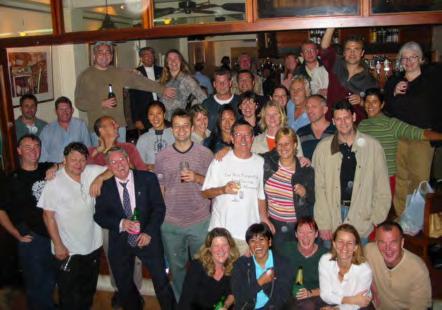
In the 2010s, Peter was diagnosed with Parkinson’s, and as the disease progressed, he was bound to a wheelchair. Over the past decade, his health became increasingly problematic, with skin cancer treatments, COVID, and ongoing issues with Parkinson’s leading to a lengthy hospitalisation, culminating in his death in February this year.
Peter is survived by his wife Ira, his son John, and his grandchildren Danielle, Jack and Alisha. John notes that his funeral was held on the 63rd anniversary of his arrival in Hong Kong, on 4 March 2026. A memorial service will be held on Lamma on Peter’s 90th birthday in October 2026, details to follow. n
On 13 February, prior to the Lunar New Year, the Club invited calligrapher Karen Tong to present a live calligraphy session. Members requested the characters representing health, prosperity and love. In addition to the expert demonstration, a fai chun booth was set up in the Burton
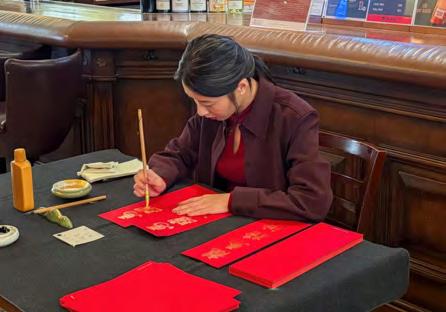
Room where Members were guided how to write their own blessings by hand. Thank you to everyone who came and participated and may every wish written down come true in the coming year.
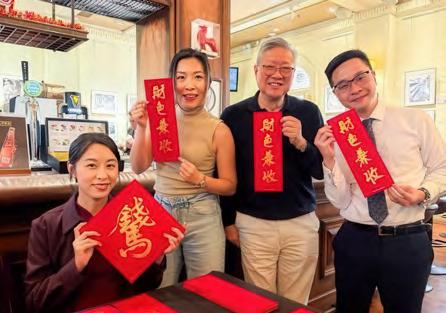
The FCC invited Members to celebrate the arrival of the Year of the Fire Horse on 19 February, 2026 with the Club’s traditional lion dance. The auspicious ritual commenced at the entrance and continued inside to bring luck, blessings and good fortune to all throughout the year. The Year of the Fire Horse occurs every 60 years in the Chinese zodiac cycle. People born in Fire Horse years are believed to be passionate, energetic and fiercely independent. They are also natural leaders with magnetic personalities and extreme enthusiasm. Astrologers and fortune-tellers commonly predict that the Fire Horse year will bring dynamic energy and significant change. Expect a year of rapid developments, bold initiatives and breaking from tradition.
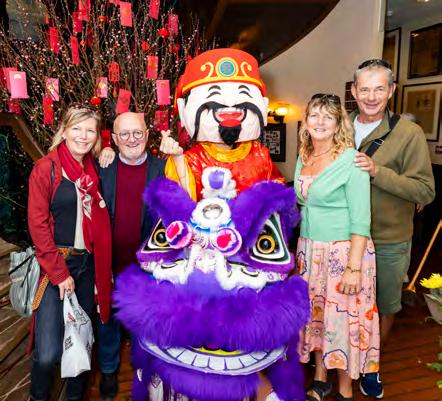
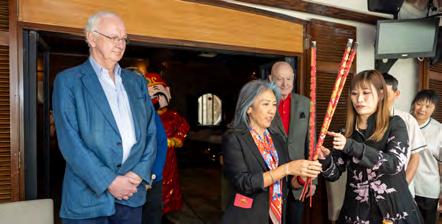
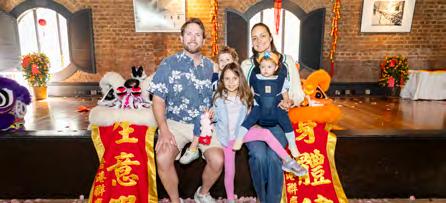
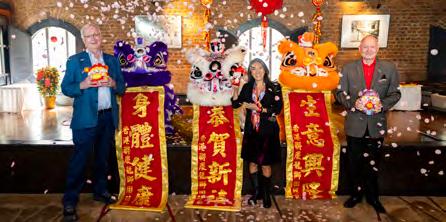
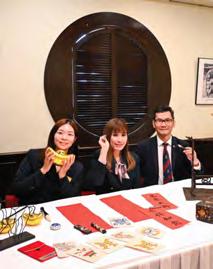
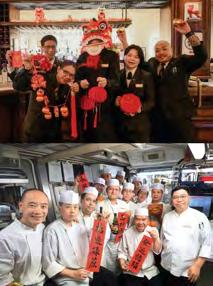
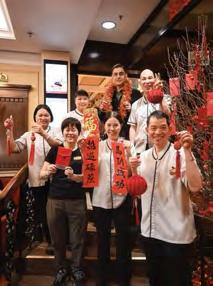
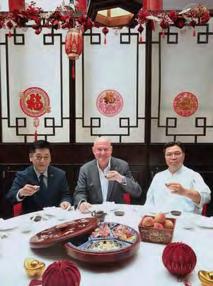
In early February the FCC presented ‘Primavera’, a Soirée with the Hong Kong Grand Opera featuring MezzoSoprano Samantha Chong, Soprano Li Yang and Pianist Ingrid Chan. The ensemble delighted their audience with a set that comprised classic opera pieces from Samson and Delilah and Madame Butterfly, songs by Strauss, Schubert and Delibes, as well as three popular Chinese pieces. Chong is a winner of major competitions including the inaugural ASEAN Vocal Competition and has established a significant career as a soloist with leading Hong Kong ensembles, while Li Yang has collaborated with eminent conductors including Long Yu, Pierre Vallet, and others. Pianist Ingrid Chan was awarded a scholarship to study at the Guildhall School of Music and has performed at prestigious venues including the Barbican Centre in London.

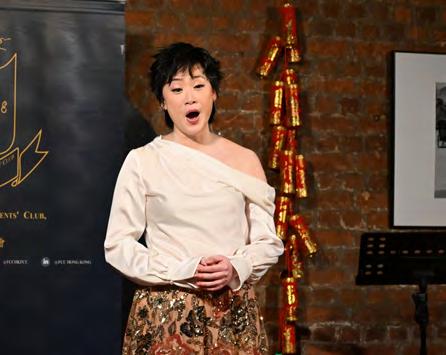
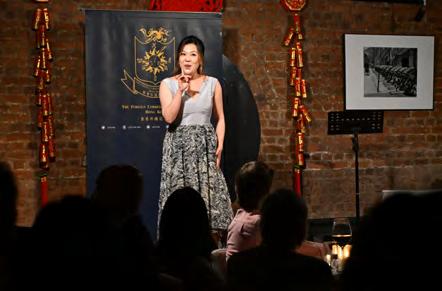
One of Ireland’s most accomplished singer-songwriters, Eleanor McEvoy, took to the stage at the FCC on 16 March in a pre-celebration of St. Patrick’s Day. The composer and singer of ‘Only a Woman’s Heart’, the title track from ‘A Woman’s Heart’, the best-selling Irish album in Irish history, participated in a Fireside Chat with President Morgan M. Davis and charmed a full house with an impromptu live performance. Eleanor also took the opportunity to take a tour of the Club.
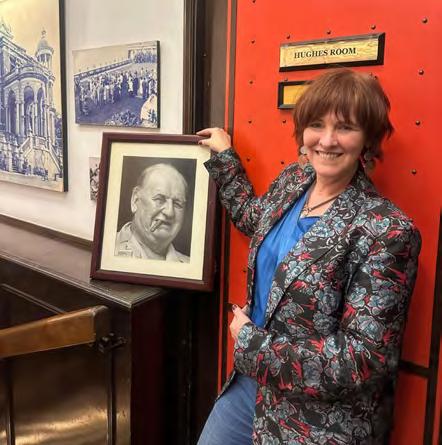
On 24 March, Members savoured an exclusive Italian Guest Chef Dinner presented by the talented Chef Fabio Mariella in the presence of the Consul General of Italy in Hong Kong, Carmelo Ficarra. With more than 25 years of culinary experience in five-star hotels and restaurants, Chef Fabio brings his exceptional flair to traditional Italian dishes.
The culinary journey showcased the diverse flavours of Italy through a menu that highlighted the rich traditions from the north to the south.
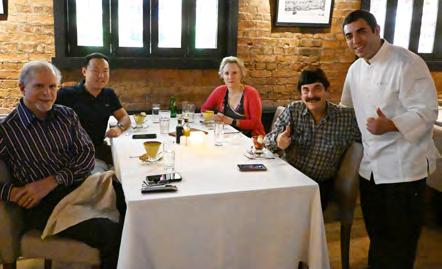
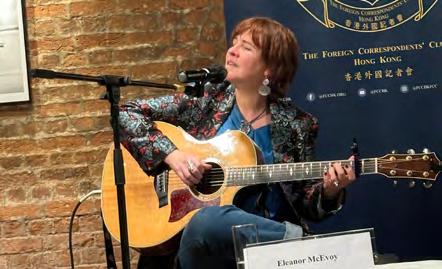
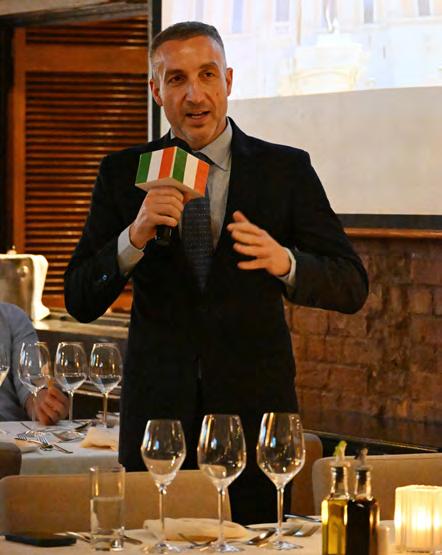
On 4 April, our Easter Lunch Buffet, Egg Hunt and Waffle Workshop was a big hit, especially with the kids who searched for eggs hidden throughout the Club to win prizes. The Junior Master Chef Workshop was also popular as young chefs decorated their own waffles using a selection of toppings. A great day was had by all!
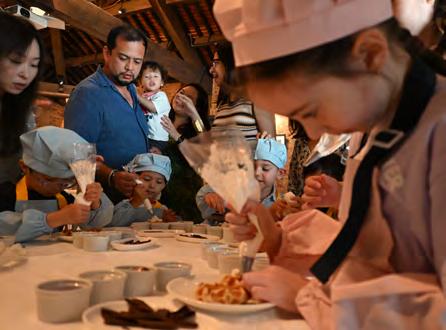

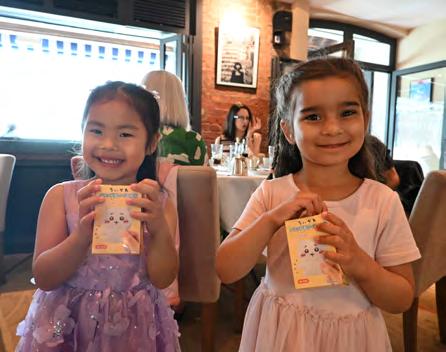
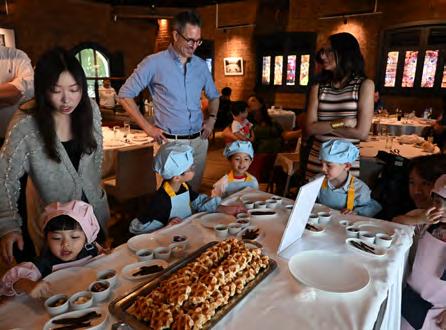
18 April saw all of our wonderful staff and Board Members converge at The Langham hotel in Tsim Sha Tsui for the annual staff party. With the theme of ‘FCC Cinema’, this year’s costumes were spectacular! In a hotly contested competition for Best Costume, Ahmed ‘Ali’ Riaz took the top prize for his starring role as Elsa from ‘Frozen’. Seven staff were honoured for long service to the Club, ranging from 10-25 years, although unfortunately Bert’s Restaurant Manager Vizmanos Ronald Allan Canega was unable to attend to receive his 10 years of service award.
Long-serving employee awards were presented as follows:
• 10 years
Sun Chi Nam, Demi Chef; Chu Siu Ling, Waitress (Main Lounge)
• 15 Years
Joe Law, Bar Supervisor (Main Bar)
• 20 Years
Jack Tang, Assistant Restaurant Manager (Main Lounge)
• 25 Years
Leung Chi Kin, Chef de Partie; Pardeep Ray Kumar, Chef de Partie (Indian)

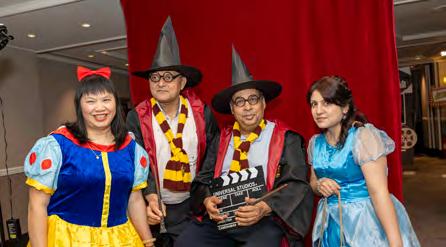
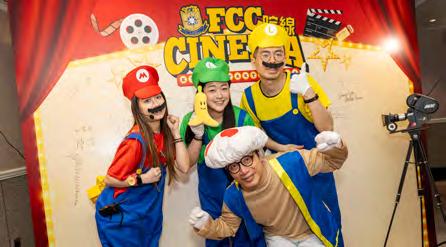
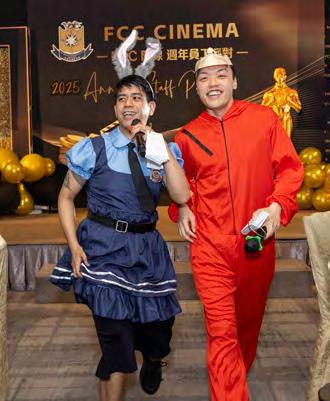
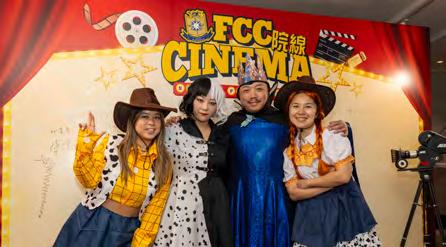
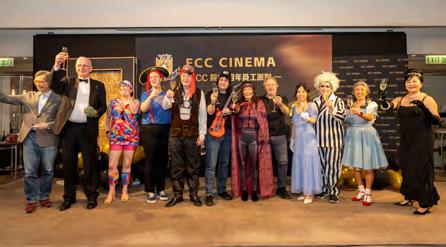
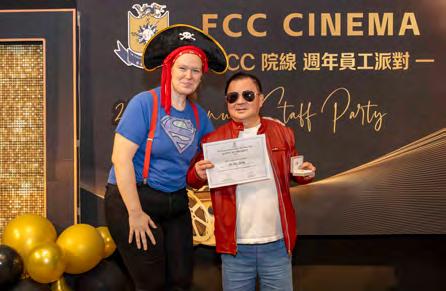
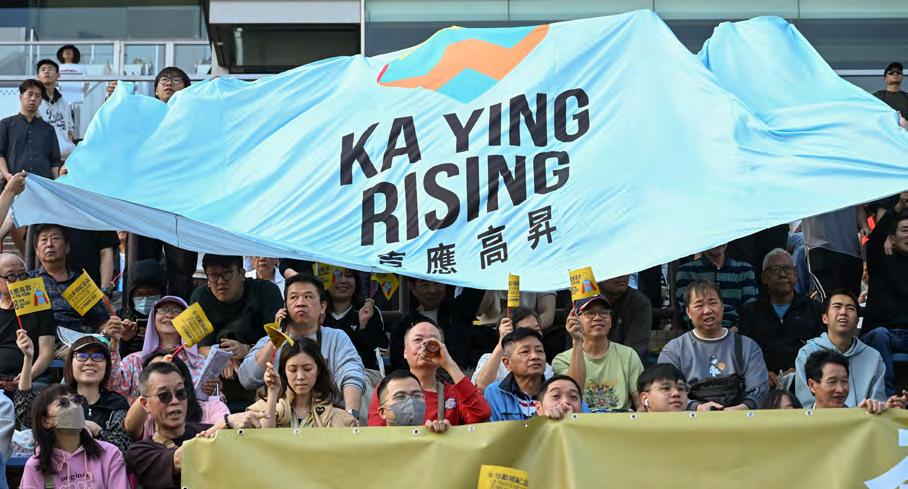
Aaah, spring has sprung once again. Everyone has packed away the puffer jackets and heaters and are embracing the beautiful mild spring weather Hong Kong serves up year after year.
Lol, joke! Once again spring lasted about two and a half days and then it started bucketing down like usual. Heat, humidity and mosquitoes engulfed us. But the five days that spring and autumn last in our fair city are truly breathtaking.
Anyway, now that I’ve come out of my winter funk and have defrosted, I’ve had time to take stock of how 2026 is panning out so far. And you know what? I’m feeling rather rosy about the Year of the Horse.
As I’m writing this from Tripperhead HQ in Kai Tak, the 50th anniversary of the Hong Kong Rugby 7s has just wrapped up. Did I go? Of course not! That would involve interacting with other humans and that’s just not my vibe, but I did see it on TV and read the news reports. A record crowd of over 113,000 people went through the turnstiles over the three days. Impressive.
But my optimism for 2026 isn’t just based around people dressed as squids and orange rubbish bins. No, my friends. It’s more than that. There’s something in the air. And it’s not just the return of the smog.
International arrivals are up substantially over 2025. Just last Sunday I was walking to work (don’t get me started on having to work every Sunday for nine months … the lot of a cricket commentator would bring down the buoyant tone of this issue) and I was stuck behind four guests arriving on our shores lugging suitcases along a footpath in Jordan.
Obviously my first reaction was to curse them out in my head, which is the only appropriate response for anyone who has lived in Hong Kong long enough. Cursing them in dual language is just a bonus. But then something occurred to me
– I hadn’t been stuck walking behind some lost gweilos in Hong Kong since 2018.
Then there was the case of some elderly German tourists standing at my bus stop in Kai Tak trying to get back to their cruise ship. They got on the bus, asked the driver in very broken (and heavily accented) English if this was the bus to the Cruise Terminal. They tried three times, even showing the driver a map in Chinese, and each time he shook his head. Eventually I asked where they were going and told them that yes in fact this was their bus. They looked at me, then at the bus driver, then at me again, and at the bus driver again, who just shrugged. A classic Hong Kong interaction that they will undoubtedly regale their grandchildren and great grandchildren with.
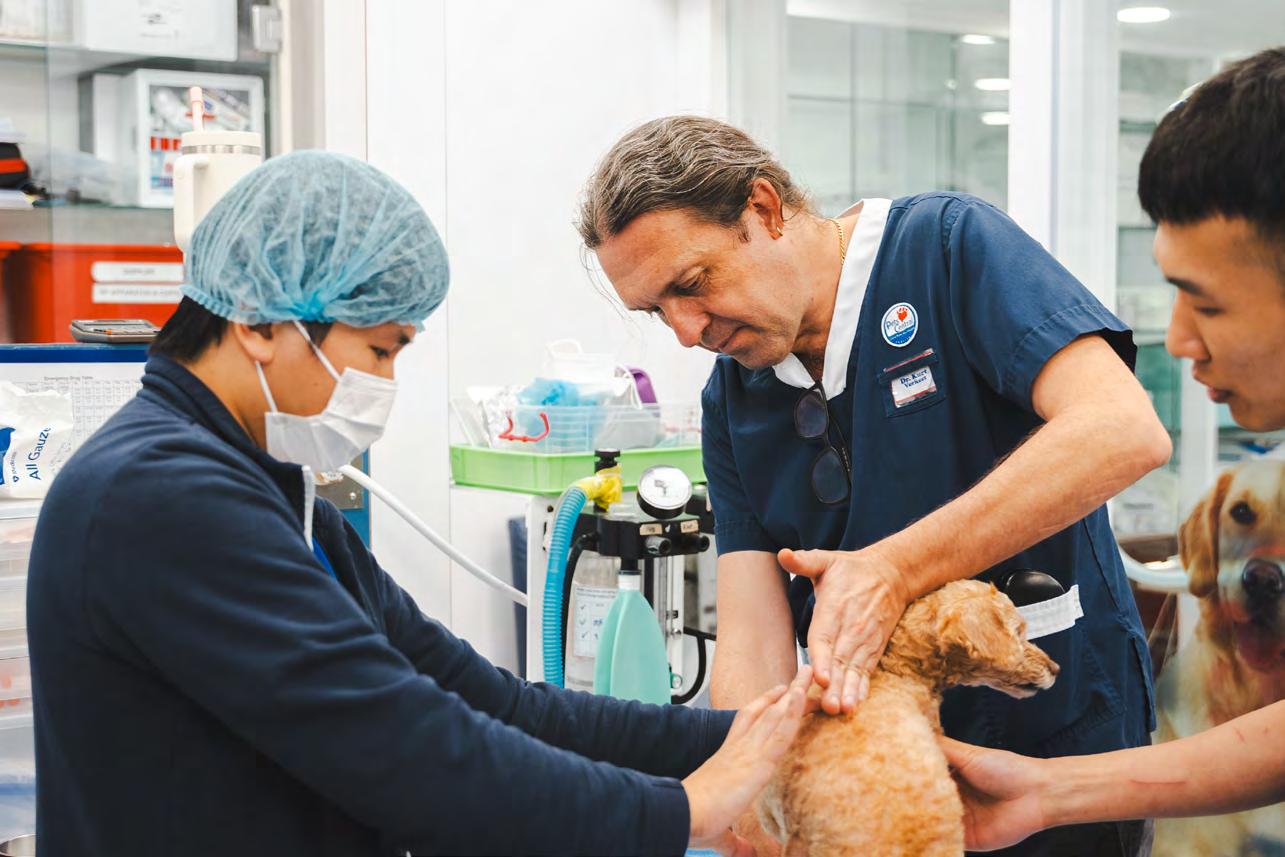
As I write this, the mess in the Middle East continues. While the world watches and waits, we here in Hong Kong can feel a little immune to the troubles. It seems a world away - unless you have to fly somewhere, then you’re heading to the bank to take out a personal loan. But that aside, life goes on here, and there is a sense that everything might just be alright.
I’ve been writing about Hong Kong news for quite some time now, and let’s be honest, there have been quite a few tough years in recent history. But sometimes it’s the smallest of triggers that reminds you of better times. Maybe it’s someone dressed in an instant noodle costume, perhaps it’s aggravating people taking up the entire sidewalk, or that grumpy bus driver. Whatever it may be, I do get this inkling that 2026 might be more the Year of Ka Ying Rising than that poor old nag off to the glue factory. n
Aaron can be found online on Twitter/ reads/Instagram at @ tripperhead, and the free nightly Hong Kong news Substack at tripperhead.substack.com

24-H O UR E M E R GE NC Y CAR E
NORTH POINT 28118907
G/F & 1/F, Yan Wo Building, 70 Java Road, North Point
MONG KOK 23092139
1/F & 2/F Sun Ming Bldg. 484-488 Shanghai Street, Mong Kok, Hong Kong
Con s ul t a t ion by A ppoin t men t .
Pets Central covers Hong Kong with 2 emergency centers. 8:30AM-8:30PM
SAI KUNG 27920833
TSEUNG KWAN O 8:30AM-8:30PM 22446684

PARK ISLAND MOBILE CLINIC 11AM-7PM WED & 10AM-7PM SUN 62230903




Steve Vickers & Associates ("SVA") is a specialist risk mitigation, corporate intelligence and security consulting company. The company serves financial institutions, private equity funds, corporations, high net-worth individuals and insurance companies and underwriters around the world.
SVA exists to assist clients in mitigating risk and, where necessary to respond swiftly and effectively to incidents or crisis situations.


• Investigative Due Diligence
• Initial Public Offering & Reverse Takeover
• Political Risk Assessments
• Advice on Countering Staff Defections
• Supply Chain Risk, Decoupling & Derisking

• Corporate Investigations
• Financial Investigations
• Fraud Investigations
• Asset Searching Services
• Litigation Support Services
• Anti-Corruption Investigations


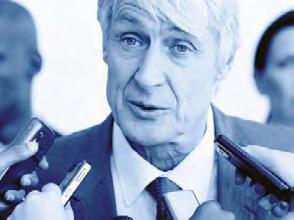
• Corporate Security & Technical Services
• Risk Assessment & Crisis Consulting Services
• Kidnap & Ransom Consulting & Response Services
• Aviation Consulting
• Resilience Consulting Services