WordWorks is provided three times per year to FBCW members and to selected markets. It is available on our website at bcwriters.ca and in libraries and schools across BC and the Yukon.
WordWorks advertises services and products of interest to writers. Contact hello@bcwriters.ca
ACKNOWLEDGEMENTS:
The Federation of British Columbia Writers functions on the unceded and ancestral territories of many Indigenous Peoples and cultures. As champions of language, we cherish the oral and written traditions of the Indigenous Peoples of this land. We commit to uplift the voices and stories of marginalized peoples and communities wherever we work.
We celebrate submissions from underrepresented communities and are actively seeking contributions from writers of all races, genders, sexualities, abilities, neurodiversities, religions, socioeconomic statuses, or immigration statuses. We encourage submissions from both published and emerging writers. We believe our strength as a community is in the breadth of our stories.
The FBCW gratefully acknowledges the support of the BC Arts Council, the Province of BC, Creative BC, the Canada Council for the Arts, and the Magazine Association of BC.
We acknowledge and are grateful for the generous support of our sponsor, Hemlock Printers.
Letter from the editor
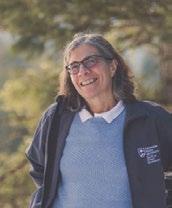
My name is Kris Unrau, and for the last few months I’ve had the pleasure of being the editorial intern for WordWorks. I hold a BA in English Literature and Creative Writing at UBC, and in the fall I’ll be heading to Toronto to begin my MA in Creative Writing. My internship was motivated initially by the desire to further my editing dreams (and to make the thousands of dollars’ worth of student loans spent on a BA at least somewhat worthwhile!) but quickly became much more than that. The community the FBCW has created is truly special, from the members of staff to the folks who participate in workshops. Joining the Fed immediately makes you a member of a welcoming, uplifting community of like-minded writers. So, welcome! Thank goodness it didn’t take you five years of an undergraduate degree to find a writing community. Or maybe it did. In that case, my condolences. The ultimate goal of my internship was to produce this special issue, however the initial project I took on was the cataloguing of every article published in WordWorks. If that sounds like a daunting task, you would be right. Sadly a large portion of work from the 90 s was lost (insert some kind of apologetic meme from Friends or some other piece of 90 s nostalgia here), but other than that, I spent a lot of time combing through WordWorks issues from December of 19 8 2 to today. As a writer who has been on the other side of the literary magazine process many times before, it felt deeply personal to read works that had been written, proofread, submitted, and selected by writers and editors of the past. Decades after publishing in WordWorks, former FBCW members are still charming people with their work. It’s been an honour to have the chance to read these pieces.
In a time of AI-everything, there was something therapeutic about going back into historical issues of WordWorks. I recall articles from the 8 0 s about big developments, as writers moved from typewriters to computers, and heated debates on which of these newfangled portable computers were the most efficient for improving word count. It gives me hope that maybe change isn’t all bad. Articles shifted from debates about whether so-called “vanity publishing” was worth it to pieces offering advice on the most cost-efficient self-publishing platforms. Poems shifted from pastoral pieces on the Okanagan sun (seriously—so many poems on the Okanagan sun) to poignant descriptions of Lunar New Year family traditions.
As I went through the archives and selected a longlist, then a shortlist, then an even shorter shortlist for this issue, I kept the FBCW’s values in mind: Craft, Connection, and Career. I wanted this issue to be one that displays the diverse and multitalented work members of the Fed have created, and also one that reaches a welcoming arm to new members. We are all here, we are all writers, and we all are starting somewhere. As for myself, I am very glad that you’ve started here, with this issue of WordWorks. Welcome to the Community!
Kris Unrau FBCW Editorial Intern
April 2025
Letter from the president
As writers, one of the great myths we tell ourselves is that the work we do is solitary. While the act of putting pen to paper or fingers to keyboard is sometimes—but not always!—done alone, a great deal of everything that follows involves others. And for many, the courage to not only begin writing but also to share the work that emerges grows from having a supportive community around them.
Open the nearest book and flip to the back. Chances are, the author lists many, many people who’ve helped and supported them throughout the process of bringing the book to life. Whether traditionally or independently published, the acknowledgements are a who’s who of the community that nurtures that author. These pages often name agents, editors, publishers, designers—but also family, loved ones, children, pets. Many people offer up gratitude to their friends, their spouses, their muses. Most authors thank their readers, without whom they’d be talking to themselves.
I love reading a book’s acknowledgements and seeing the names of the authors and critique groups and writing organizations who’ve inspired or mentored or commiserated with the writer. Rare, I think, is the author who could say “I did this entirely by myself.”
And that’s a beautiful thing, isn’t it? Because it means that even if a significant part of the work is solitary, we’re not alone. It means that when we take risks and crack open our hearts to create, others are there to guide and support and empathize. Who better than another writer knows the sting of yet another rejection or the triumph of receiving a yes after a series of nos? Who better than another creator knows how to walk the fine line between providing a hug and a kick in the behind?
Once upon a time, I trained as an actor. My husband says his favourite part of a theatre performance is when the actors take their final bows. In that moment, the audience is given the opportunity to see the people behind the performance. The audience is reminded that they, too, are part of the storytelling community. After all, stories exist to be heard, read, told, seen. Stories exist to teach us, to warn us, to entertain us. Stories help us form bonds, create understanding, and resist those who would silence us. As writers, we don’t often get to experience that praise, that sense of connection, in person. Community matters. I, for one, am beyond thrilled to have found such a warm, friendly, welcoming community here at the Federation of BC Writers. Whether in workshops and socials or during fundraisers and retreats, I am consistently amazed by the optimism, creativity, and dedication I witness in the people around me.
I look forward to one day thanking the FBCW in the acknowledgements of my own work, and to seeing many of you do the same in the acknowledgements of yours.
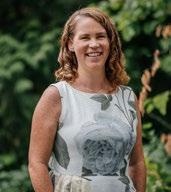
Tara Avery President, FBCW Board of Directors
May 2025
My first book
BY LILY QUAN
From 2022, a reflection on the joy of being published for the first time, and the road it took to get there.
Up on my computer screen is the cover of my first book. It comes out in February 2022. I can’t stop looking at it. The title is in big bright letters. The main character strikes an attitudinal pose. The drawings and sketches will surely catch people’s attention. But to me, the most important feature is right at the bottom. In small letters are the words By Lily Quan I actually wrote my first book when I was in the first grade. I was both author and illustrator. The plot featured three sisters who had a Big Mac Attack. Each sister had long hair in a different colour. I was so proud of my story. I stapled the pages together in book form and showed it to my mother, who told me she liked it. Then one afternoon I was home with a bad cold and needed to blow my nose. There weren’t any tissues nearby, so I reached for my book because it was handy. Scads of clear snot dripped down the sisters’ bodies. It didn’t bother me to use my book this way. This meant my book was special; it was multifunctional.
to me. She lived in Toronto. She talked about her life, her friends, and above all, her family. I immediately wrote everything down and began my second novel, set in her world. This meant I had to leave behind my beloved first novel and historical Chicago. It was tough to let go, but necessary.
Then one evening, the voice of a snarky, precocious thirteenyear-old ChineseCanadian girl came to me.
What I didn’t know then was that Disney and Pixar were working on Turning Red, a feature-length animated film about a thirteen-year-old Chinese-Canadian girl, directed by Oscar-winner Domee Shi. When they found out I had written something in a similar vein, they thought I might be a good fit to write an adaptation of the movie in book form. That’s the book I am looking at now. It took a lot of luck and perseverance to reach this point, and I needed both to get here. I can’t say that I would recommend a writing career. It’s an uncertain field where you make a lot of sacrifices for your work. An old friend congratulated me on the book and said I had obviously chosen the right career. I thought about it and replied, “Actually it chooses you, and then you make it work.” Afterward, I realized just how true that is.
The journey to publication as an adult has taken a lot longer, with plenty of snot-worthy moments. It’s tough to get published.
Over the years, I wondered if it was worth it to pursue writing. For several years, I worked on an ambitious historical fiction manuscript. The book was my passion. I got an arts grant for it and did a research trip to Chicago. Despite hundreds of queries, it was never published. Meanwhile, Twitter and Facebook became the media of choice and readers lost interest in writing with more than 140 characters. The thought occurred to me that by the time I wrote a second novel, people might not be interested in books at all. Then one evening, the voice of a snarky, precocious thirteen-year-old Chinese-Canadian girl came
Lily Quan is the author of the middle grade book adaptation of the Disney/ Pixar movie Turning Red, entitled The Real R.P.G.: The Story of the Red Panda Girl. She is currently working on her next novel, a ChineseCanadian riff on Pride and Prejudice. Lily lives on the unceded territory of the Snuneymuxw First Nation on beautiful Vancouver Island. Find out more about her at https://www.lilyquanwrites.com.
Words to our youth members; to our future!
BY BEN NUTTALL-SMITH
In this piece from 2014, Ben Nuttall-Smith offers encouraging advice to young members of the Fed.
“Dear younger writers,” is a fairly safe form of address for me, as almost everyone is younger than I. And it’s appropriate, too, as this issue of WordWorks presents perspectives to and from our Youth members—25 and under. I’d like you to know we consider you our most valued members. You represent Canada’s Literary Future.
Our motto and raison d’être “Writers Helping Writers” says it all. We’re here to help you in any way we can through workshops and personal consultation. One day it will be your turn. Here’s what you can do to become accomplished writers.
Study the rules of grammar and composition. This might seem boring, but you need structure, otherwise your writing is in danger of becoming sloppy.
“On writing, my advice is the same to all. If you want to be a writer, write. Write and write and write. If you stop, start again. Save everything that you write. If you feel blocked, write through it until you feel your creative juices flowing
again. Write. Writing is what makes a writer; nothing more and nothing less.”—Anne Rice.
If you’re still in school and have the opportunity, join the student newspaper. Submit to student editors even if you think you know way more than they do. The Ubyssey, UBC’s official student paper, has produced a number of Canada’s top journalists and authors. Look up The Ubyssey archives. If you attend or plan to attend Simon Fraser, look up The Peak. UVic has The Martlet. Study people. Study people of all ages and classes. Study them with empathy. Try to understand people as they are. Study yourself. This will help you develop characters who will not be shallow or warped versions of yourself; or of those you love, admire, and enjoy; or of those you despise.
Read everything you can get your hands on— even if it’s work that bores you. If it’s published, someone sold it to a publisher or magazine editor. If it doesn’t turn your crank, ask yourself why. Study it. Explore the library. Books are free.
If you’re into writing for magazines, read lots of magazine articles. What makes them good? What makes them bad? Become a good critic. If you
just want to be a reader, then read only what you like. If you want to be a published writer, read the people who have had their work published. “You must read dreadful, dumb books and glorious books, and let them wrestle in beautiful fights inside your head”—Ray Bradbury
Enjoy yourself. Don’t shut yourself up and just write. Find out what holds your attention and why. Live life. If you do decide to attend The Writer’s Studio (SFU), good for you. But do other things as well. Don’t become a boring, dull writer.
Learn a little about the publishing industry. You’ll one day want to sell your work. Explore writers’ blogs. Find out what other scribblers are doing. Be prepared for rejection. Stephen King had his stories rejected numerous times before he found a publisher willing to take a chance on him. Just because a piece is rejected by twenty publishers doesn’t mean the twenty-first won’t accept your story. Round out your life experience by volunteering— and, please, include writing associations like the Fed in your list, where there’s always help wanted and it’s always deeply appreciated.
“Write… Don’t write it right, just write it—and then make it right later. Give yourself the mental freedom to enjoy the process, because the process of writing is a long one. Be wary of “writing rules” and advice. Do it your way.”—Tara Moss
Go for it!
Ben Nuttall-Smith taught Music, Theatre, Art, and Language until he retired in 1991. He is a member of The Writers’ Union of Canada and a past President of the Federation of British Columbia Writers. Ben’s ten major publications with Rutherford Press of Qualicum Beach, BC, include a memoir, historical fiction, poetry, short stories and commentary, three illustrated children’s books, and a major film script. Awards include an Honorary Life Membership with the FBCW. He is still painting and writing …
Confronting reconciliation myths: Kwul’a’sul’tun speaks at VIU
BY JULIE CHADWICK
This 2019 piece re-imagines the path towards reconciliation.
Years ago, Doug White III (Kwul’a’sul’tun) asked his late grandmother Dr. Ellen White (Kwulasulwut) what would be lost when there was no longer a number of people who could fluently speak their language. What she said surprised him, said White.
“She told me that there is an elevated form of the Hul’qumi’num language that is only used in very close and intimate relationships between two people who really know each other and really love each other,” he explained. “And she said the last time she really spoke in this way was with her late sister, Eva. She said, ‘Imagine two old grandmothers sitting together in a quiet space having tea, being alone, being able to talk together.’”
White said that the special form of Hul’qumi’num described by his grandmother used different grammar, diction, tones, and rhythms. It was used only in very personal contexts and not for day-to-day relations and conversations.
“To me it sounded like she was describing a poetic way of talking to each other, in a place of unquestioned safety and love,” White said. “And what my grandmother described is the
heart of reconciliation that we never talk about. It’s about creating a new dynamic, a rhythm of caring and love between all of us.”
So opened the wide-reaching keynote speech by White titled “Re-Imagining Reconciliation: Confronting Myths and the Future of Canada” at Vancouver Island University in November, 2018. Offered in partnership with the CBC Radio One’s show Ideas, the talk marked the fourth instalment of the series, and the last before long-running host Paul Kennedy retired.
A Snuneymuxw First Nation councillor and director of VIU’s Centre for Pre-Confederation Treaties and Reconciliation, White used his vast knowledge base in this and other capacities—including as former Chief of Snuneymuxw, member of the First Nations Summit task group, member of the BC First Nations Leadership Council, and lawyer and negotiator for First Nations governments across the country—to paint a clear picture of what reconciliation currently is in Canada and where he believes it needs to go.
Presently, how reconciliation is conducted rests on a series of myths, White explained. The first myth is foundational, a myth of omission in how reconciliation is discussed. We’ve become good at talking about reconciliation in its legal, political, economic, social, and cultural dimensions, he said, but we fail when it comes to positioning
those talks on a foundation of love, intrinsic values, and our potential as human beings.
To exemplify this point, White referenced the sentiment present during a 1910 visit to Kamloops by then-prime minister Sir Wilfred Laurier. At this time, Laurier was formally addressed by a delegation of various BC chiefs which culminated in an extraordinary document known as the Laurier Memorial. “There’s a beautiful passage where [the chiefs] are reflecting back to a time when the first non-Indigenous people were arriving in their territory,” said White.
“Some of our chiefs said, ‘These people wish to be partners with us in our country. We must therefore be the same as brothers to them and live as one family. We will share equally in everything, half and half, in land and water and timber and so on. What is ours will be theirs, and what is theirs will be ours. We will help each other to be great and good.’”
The second myth identified and addressed by White was rooted in the perception that courts and lawyers were necessary in leading the work of reconciliation.
expansive Aboriginal title, White said this came with sweeping implications and points the process of reconciliation down a fundamentally different path.
“[It] stands as a major counterpoint to all the law, policy, regulations, and patterns of behaviour that are premised on the idea that Aboriginal title doesn’t matter,” said White. As a result, he argued that much of the economies in this country are structured on wrong ideas and now need to be rebuilt around the reality of Indigenous Peoples’ relationship to their lands and decision-making about their territories.
To do this, ingrained patterns that were currently taken for granted about how things have always been done would need to change.
“And what my grandmother described is the heart of reconciliation that we never talk about. It’s about creating a new dynamic, a rhythm of caring and love between all of us.”
“I do recognize that this last mythology discussion sounds potentially in tension with the first discussion around love, but it isn’t. If we truly accept one another as equals, with dignity and autonomy, and we love them, then we are willing to sacrifice. That is the dynamic of all healthy human relations,” said White. “It is the foundation of how we can work together to help each other to be great and good.”
“Lawyers and courts serve a purpose, but they are a blunt tool in reconciliation work,” said White, who pointed to a variety of causes, including political failures and lack of political will.
“Lawyers are trained in focusing on division and distinction, on how to be rational adversaries. They’re not agents of coming together,” he said. “No matter how much good courts may be able to do—they can settle matters, order change, compensate for wrongs—but they can’t make us love each other. Indeed, they often do the opposite.”
The final myth confronted in White’s keynote speech was the idea that “we are well on our way” in the process of reconciliation, when really the path was only just beginning.
Referencing the 2014 Supreme Court of Canada decision regarding the Tsilhqot’in First Nation, which for the first time recognized
Julie’s passion for journalism started on the job when she co-founded a youth newspaper right out of high school. She became an editor and section editor at the Nanaimo Daily News, and in 2017 turned one of her feature stories into a nonfiction book, The Man Who Carried Cash. Julie has won a variety of journalism awards and written for a range of publications such as Vice, Times Colonist, The Walrus, and IndigiNews. A strong believer in the power of local journalism, in 2020 she was the founding reporter of The Discourse Nanaimo, a community-based online publication.
Loving your creative animal
BY SONJA LARSEN
From 2021, Sonja Larsen’s article offers a sweet approach to self-care for writers through the lens of treating your creativity as a pet.
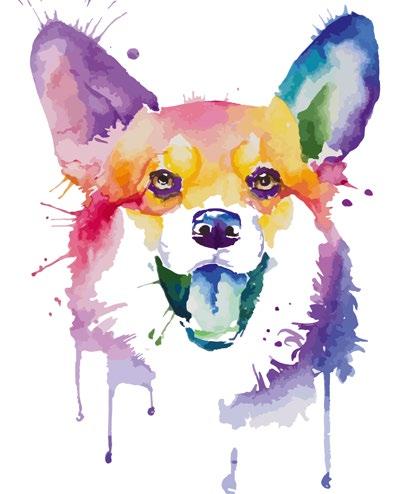
Everyone knows animals are good for our mental health. But it’s not just their fuzzy faces, cute antics, and warm bodies that help us. It’s what they can teach us about embodied learning, communication, and respect. After I adopted a small rescue dog, I discovered positive reinforcement training, which uses choice and rewards instead of fear and punishments. Committing to building a relationship based on joy instead of intimidation was a powerful decision that has affected every area of my life. What I’ve learned is a kinder and more effective way to work—not only with my dog, but with my own creative animal.
Reward the behaviour you want
The more rewarding something is, the more we like it. Simple, right? The little dog loves it when I call his name because he knows it’s always worth showing up. I try to remember to do the same in my writing life—to thank myself for showing up, to set some kind of reward. Maybe it’s a walk or a cookie. Maybe it’s drinks with a friend. Maybe it’s the reward of building craft, meeting interesting people, the pleasures of always learning. I have a mental, and sometimes a literal, sticker book where I put my little gold stars.
Stop yelling
In studies, dogs trained using corrections were slower learners, and their owners reported more frequent behaviour and aggression problems. As trainer Sue Ailsby says in “Sue Eh’s Rules of Training,” “Be aware of your own tendency to blame. Be aware of your own tendency to punish.”
I’ve stopped trying to negotiate with the blaming, shaming hypercritical voice in my head. Instead, I remind myself I wouldn’t talk to a dog that way.
Respect the body
Positive reinforcement training is part of a growing field that looks at the ways our bodies remember, react to stress, learn, and heal. Although I’d witnessed dogs “shaking it off” for years, it wasn’t until I read Resmaa Menakem’s book My Grandmother’s Hands that I really began to appreciate the importance of using movement as a way of helping all bodies process difficulty or uncertainty. Walks or two-minute dance parties often help me when writing about challenging subjects.
Work with the animal that shows up
My little dog came with some problems and issues—a phobia of crows, for example—but just because that seems dumb to me doesn’t make it any less real to him. Belittling fear doesn’t work. So I keep striving to give him the coping skills, choice, and motivation to manage more effectively. Sometimes we avoid the crows. Sometimes we watch them from a distance and eat cookies.
Slow is fast
You can’t rush learning, or healing, but you can optimize the conditions for it. When I train my dog to do something new, I start in very small increments: five minutes here, five minutes there. I want the learning-seeking part of his brain, not the fear and fatigue part. I want the little dog to feel like he could still go a little longer instead of thinking, thank God that’s over. When I wrote my memoir, instead of six-hour marathons, I worked in smaller chunks of time until writing and trauma didn’t feel like they automatically went together. And I gave myself extra gold stars for being brave.
Break it down
As I’ve taught my dog to jump through a hoop and spin around, I’ve learned the need to break down goals into their smaller components. We step over the hoop. We raise the hoop. I sit down every Monday night to write. I give myself credit for all those little challenges— submissions, rejections, word counts—that make up a page, a story, a writing life.
Work a little hungry
I don’t mean I starve my dog, I mean I choose to work with him when he’s most interested in the rewards I have. Just before dinner is a great training time— just after dinner, not so much. When I began to get serious about writing a book, I realized I often didn’t give my work my best energy and that I’d been filling up on other projects and not staying hungry for my primary creative goal.
Compassion vs. coddling
One of my favourite trainers, Emily Larlham, describes her style of training as “based on compassion for the learner.” Someone recently asked me, “How do you know the difference between being compassionate with yourself and slacking off?” The simple answer is I enjoy myself a lot more when I’m compassionate. When I feel like I’m spending my gold stars instead of guiltily playing hooky. Or when I’m still actively asking myself: What do I need to move forward? What’s the smallest win I can get right now? What do I need to keep making this process feel rewarding? More community connection? Guidance or mentorship? Long walks? What’s going to make the tail wag?
dog, would I treat it poorly? Would I punish it when it made mistakes? Would I be nice to it one day and kick it the next? Would I only feed it sometimes? And the answer to all those questions was no. My creative drive has been my faithful companion my whole life, but it has often felt like a source of anxiety and disruption. Since I’ve begun to treat it like a dog, it’s been easier to remember to be loving and kind, to rest, to play, to get outside, to find all the cookies I can.
There is only one best dog in the whole world and everyone has it
When I first saw a photo of my dog on the humane society website, he was holding a tennis ball in his mouth, and I assumed he was about thirty pounds. I didn’t know they made little tennis balls for little dogs. I didn’t know what to do with a dog that seemed so fragile and yet so independent. I didn’t know how much this dog was going to change my life. He’s not a perfect dog, and I’m not a perfect writer. I’m sure we’d both like to be bigger, tougher, and braver than we really are. But he loves it when I call his name. He can do small tricks. He’s the best dog in the world, if for no other reason than he’s the one I call my own.
Sonja Larsen’s memoir
Be a good guardian
One of the biggest changes came for me when I asked myself the following questions: If my creativity was a
Red Star Tattoo: My Life as a Girl Revolutionary (Random House Canada) won the 2017 Edna Staebler Award for Creative Non-Fiction and was shortlisted for the Writers’ Trust NonFiction Award. Her work has appeared in literary publications and anthologies in the US and Canada. She lives in Vancouver, BC.
Inside out: A writer serves time at a prison writing retreat
BY HEIDI GRECO
From the winter of 2006, the author tells how her interactions with writers in a mediumsecurity prison gave her a new perspective.
The last weekend of October actually began in September. Maybe even June, if I want to dig back to root causes. I just know it was early summer when I first put the note on my calendar—to be part of that gathering where I’d meet Mary. And Mary, well, she’s the reason I ended up in prison. Ed Griffin is another part of how I got to Matsqui. He can best be described as a long-time writing activist. He established Surrey’s Creative Writing Program and has always been a force behind the Surrey International Writers’ Conference. For years, Ed has run a program to help meet the needs of writers who are in prison. Even though Mary and I had never met before that day in September, when we did, it was as if something clicked. Her enthusiasm made me want to know more about the program she described for us—a writing retreat at the
medium-security penitentiary in Abbotsford. I’ll admit I first envisioned this as a weekend where I’d be sleeping over in the prison. I imagined the ghosts and haunted spirits I’d encounter, especially as the date would be so close to Halloween. But that wasn’t the case; we’d only be spending our days there. Still, even without having to prepare for an overnight stay, there was plenty to do. The first priority was filling out an application form to gain clearance into the facility. It was obvious this wasn’t some Internet dating form, where you could shed a few pounds or shift a number in your date of birth. This wanted nothing but the cold, hard facts, Ma’am. I worried some because I had to admit I have an acquaintance who’s in prison. A bigger worry was that there might be someone else I knew in there, but I hadn’t yet heard the news. Luckily, telling the truth did me no harm, as I was cleared for entry. Exhale.
The next item of business was submitting a piece for a booklet that Mary was going to produce. This would contain work by the participants: the ten writers who would represent the outside world and the group of men we’d come
to know as “Insiders.” Looking at it now, I’d have to say I submitted a chicken-shit piece, one that revealed very little. But the pieces the Matsqui inmates submitted compensated for my lack of courage.
They had written poems, short stories, and essays. As might be imagined, much of the men’s work found its focus in the prison system, often relating to the frustration that results when appeals go awry. Their pieces were among the strongest in the booklet, having obviously grown out of experiences that were emotionally fraught.
Consider these words from Chris: There’s a tire tread only inches from my face. Hair and blood on it. At least that’s what it looks like to me. There’s a throbbing sensation in my right hand, but my left is completely numb. A second ago I tried to swivel my neck to no success. Chin seems to move, however when I close my jaw it doesn’t quite hinge.
I don’t know about you, but to me that reads like something from Bill Gaston or Denis Johnson.
One of my favourite “Outsider” writings was by Todd Parker, a student at the University of British Columbia. He’s currently in the BFA program, with plans to pursue a master’s degree. His nonfiction piece had so much grit to it, I assumed an inmate had written it. One day my father drove his truck away and never came back. I thought that sounded like a pretty good recipe for turning out to be a criminal. It also showed just how little difference there was between the insiders and the outsiders. We were together on this retreat for one reason: because we were writers.
I could go on about the sound of the gates clanging shut behind us as we entered. I could try to describe the sloppy joes or the boiled hot dogs we ate for lunch. I could tell you about standing out in the chill of the smoke-hole between rains. But what I really want you to know is that this retreat changed something in me. When the weekend was over, it took me a few days just to “decompress” from where I had been. It was as if I’d gone diving and then emerged from the water too fast. It seemed ridiculous, but when I got home, I could barely speak. My partner wondered whether I’d fallen in love. While that wasn’t quite the case, it’s as if something clicked over in me, that the timer moved along to the next, more urgent notch. Something in my perspective shifted— about writing and probably also about people. Insiders or Outsiders, it was clear we all were passionate about words. One of the men raised the
idea of “the hierarchy of language,” explaining how language gets used by the prison system to keep the prisoners inside. He told us that even though many inmates are functionally illiterate, they must fill out forms in order to launch an appeal. Knowing my own inadequacies when it comes to filling out forms, I see this as yet another system that makes no sense, one with an outcome that can only be frustration.
Penny Duane’s sci-fi tale involving futuristic soldiers is based on her experience in the U.S. Marine Corps. Her account of her own recruitment did not seem much different from one of the men’s account of his dealings with a parole officer. In both cases, options were misrepresented; entrapment seemed the order of the day. It was as if choices didn’t really exist.
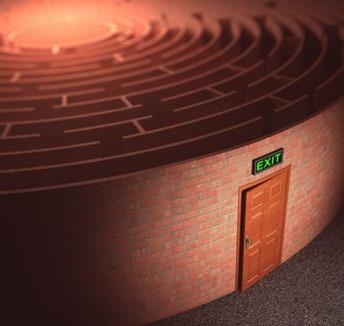
I remembered how one of the men summed up the problem when he said that so many of the inmates just get “lost in the linguistic labyrinth.” I looked again at the aptly titled Inside Out, the booklet containing participants’ writings. The labyrinth design on its cover—a pattern echoed on a cushion in my living room—seemed so appropriate.
It’s the image of that colourful and bright cushion I would like to leave you with. Discovered in a sales bin at IKEA, I bought it with the idea of having a finger-sized labyrinth for some lazy meditation. But if you look closely, the design is flawed. Whoever set the embroidery machine made a mistake: some of the curving roads are blocked. The resulting pattern is a maze without an exit.
Before, I’d tossed around the idea of fixing the pillow, of removing the faulty stitches, of opening some of those blocked paths in its pattern. Now, after meeting my new writing friends at Matsqui, this seems like an important thing to do.
Heidi Greco writes in many genres: poetry, fiction, essays, and reviews. She leads workshops on various aspects of writing and enjoys learning more about craft. She and her partner keep a small kitchen garden at their home on territory of the Semiahmoo Nation in Surrey, BC. Learn more at heidigreco.ca
Speed dating for writers
BY DAVID J. LITVAK
In this piece from 2008, the author takes a light-hearted look at the oftentimes nervewracking experience of seeking out an editor.
My knees quivered and my palms were sweaty as I waited in the hall with a small crowd of other nervous guys. I’d never done this before. I hope she likes me, I thought hopefully as I combed my hair and straightened my shirt. Maybe this will be the beginning of a meaningful relationship. You never know.
When my name was called, I entered the room and took my seat in front of a middle-aged woman with a stern gaze and a cool demeanour. There was an awkward silence. I tried to fill it by blurting out a few words about myself, hoping I would say something that would entice her to want to hear more. I was wrong. She was clearly not impressed. After ten excruciating minutes, it was time to gather up my ego and move on.
It was the first time that I’d ever “pitched” an editor from a prestigious publishing house face-to-face and to be honest, I was a little nervous.
Like many of her colleagues from the United States and Canada, the editor I had just met came to this year’s Surrey International Writer’s Conference to scout out prospective new writing talent. She spent a whole morning of the three-day extravaganza listening to pitches like mine from writers who were desperately trying to get their manuscripts published. It was the first time that I’d ever “pitched” an editor from a prestigious publishing house face-to-face and to be honest, I was a little nervous. Unfortunately, she was
wholly unenthusiastic and rejected my book proposals outright. But hey, as a writer, I’m used to rejection. In fact, in that sense, writing is a lot like dating. And, like speed dating, pitching ideas to editors and literary agents at ten-minute intervals is like going on a series of nerve-wracking first dates. Although my initial “date” with an editor left me somewhat dejected, my next two encounters were more encouraging. My second date was with an affable editor from a publishing house in Cambridge, Massachusetts. She listened to my pitch attentively. At the end of our brief meeting, she took my manuscript and promised to look it over, even though she thought it sounded too commercial for the literary children’s press that she represented. Fair enough. Getting a manuscript into the hands of an editor is half the battle. In most cases, when manuscripts by unknown authors are sent to publishing houses, they end up in the slush pile, and a standard “Dear Writer” form letter is sent back. So, we’ll see what happens.
My third date was with a literary agent, also from Massachusetts. By this time, I was getting the hang of things. I’d stopped blurting out my writing history in one breath. She was approachable and friendly, and we spent our ten minutes fleshing out some of my ideas. She felt that one of my books, The Accidental Publicist, would have limited appeal. But her curiosity was piqued by Dancing With Bears in Nelson, BC, a collection of short stories about my experiences in the magical mountain town situated in southeastern
British Columbia. She suggested that I email five of the stories to her. I explained that the book was still a work-in-progress and that I would gladly send her five chapters once I’d tweaked them. She wasn’t willing to represent me yet but was open to the possibility that she might in the future. So, although the morning wasn’t a resounding success, it wasn’t an absolute failure either. But, I’m not a sucker for punishment and after three meetings, I’d reached my saturation point. I decided to wander around the hotel lobby, visit some of the writing-related vendors and associations, and schmooze with other writers.
I discovered that other writers who’d met with agents had had a variety of experiences. One science fiction writer, instead of subjecting herself to the speed-dating assembly-line approach, decided to set up informational meetings with agents to hone her pitch. Some of the agents were responsive to her unconventional approach while others were not. I heard that one writer had met with twenty agents and editors. Talk about perseverance! And stamina. He obviously has a thicker skin than I. As for me, if I’m not published by next October, I will
probably do this again, but I don’t think I’ll have twenty literary dates. I’m not that desperate. But at least I won’t be a conference virgin. And maybe I’ll find the perfect match. You never know.
David J. Litvak is a prairie refugee from the North End of Winnipeg who is a former Voice of Peace broadcaster and Co-op radio broadcaster, freelance writer, accidental publicist, and singer/ songwriter. His articles have been published in the Forward, Globe and Mail, and Seattle PostIntelligencer. His website is cascadiapublicity.com.
Finding your people: Why community matters
BY CADENCE MANDYBURA
This 2021 article speaks on the importance of seeking out and maintaining a writing community.
Finding a critique group is standard advice for writers who wish to improve their craft, but the benefits of a writing community go far beyond the words on the page. The right community can give you hope, support your goals, and sympathize with your challenges. For both your writing and your wellness, it’s worth taking the time to find and connect with fellow writers.
Community “makes you feel like you are a part of something greater than yourself,” says Crystal Hunt, co-founder of the Creative Academy for Writers, an online writing community. “There’s a lot of research [...] around feeling like you are part of something and contributing to something that [suggests it] really does have positive mental health impacts.”
Hunt, who holds a master’s degree in health psychology with a specialization in social support, further explains that community can offer not only practical advice, but also emotional support: “You can come to the community and you can say, ‘Okay, I just got my heart stomped on by my fifth rejection letter on this one piece,’ [...] and you’re talking to people who understand what that feels like.”
Betsy Warland, a writer, manuscript consultant, and teacher, also mentions the importance of finding support from other writers, saying that “Most people don’t understand the writing life.” She has built many communities throughout her career, including the Writer’s Studio at Simon Fraser University and the Vancouver Manuscript Intensive. Building community takes time, she says, and “we have to learn how to recognize each other.”
Why writers need community
Because writing is an intensely solitary vocation riddled with rejection, it’s no wonder many writers feel isolated and inadequate. “As writers, I think sometimes we really struggle with issues of our self-worth and what our labour is worth,” says Natasha Deen, one of the mentors for this year’s BIPOC Writers Connect, a mentorship event organized by the Writers’ Union of Canada and the League of Canadian Poets. She acknowledges that this struggle can take on additional dimensions for marginalized folks. “How we exist in the world as women, how we exist in a world as part of the queer community, if we are Black, if we’re Indigenous—the world does not turn the same for us.”
don’t quite fit, and then it’s not going to be what you deserve, [and] it’s not going to be what they deserve.”
“ ‘Okay, I just got my heart stomped on by my fifth rejection letter on this one piece,’ [...] and you’re talking to people who understand what that feels like. ”
And the risks of going without community? “You quit,” says Deen. “The reality of writing versus the romance of writing is so huge. [...] If you’re not engaging a community, you may not necessarily have a very realistic view of what publishing is and you may not have a very realistic view of what it means to be a writer.” Hunt agrees that newer writers might feel like they have to learn everything on their own. Without a community, she says, “your risk of getting stuck, or of getting incorrect or incomplete information, at any stage in the process is very high.” That can be not only demoralizing, but expensive, too. Inexperienced authors might get caught in exploitative contracts, not knowing how to value themselves or where to go for guidance.
To thine own self be true
Knowing the importance of community is one thing, but how do you go about finding the right one for you? Warland advises that it’s a long game—and it starts with self-reflection. “Learning to figure out what makes community within yourself as a writer is really crucial to writing,” she says. For her, this includes things like how she takes care of herself as a writer, her writing environment, the writers she reads, and language and narrative itself. Deen agrees. “You have to know who you are as a human being in the world before you start building your community, or else what you’re going to end up doing is going out into communities where you
Your values, goals, dreams, and personal history can all factor into what type of community is right for you. Other aspects to consider are what sort of relationships you want to build, how much time you have, what you can be flexible about, and where you set your boundaries. The aim, according to Hunt, is “finding somewhere where [...] you have to edit as little as possible of who you are in order to participate.” In fact, you should feel welcome even when you’re not at your best. It’s all too easy to get caught up in the social media illusion that everyone else is wildly successful and never has a bad day. “Don’t hide if things aren’t going well,” says Hunt. “If we all show up when things are not rosy and perfect, it means that any of us feel like we can show up anytime.”
You
get what you give
The benefits of community are deep and wide-ranging—but like any relationship, it doesn’t come at the snap of your fingers. “For most writers, you have to put in the time and help make it happen,” says Warland. “It is a balancing act, it’s always changing. [...] You always have to be adapting.” For those seeking community, perhaps one of the most important questions is what you’re willing to bring.
“As you’re asking them to bring treasure to you, what is the treasure that you’re going to bring to them?” says Deen. Engaging with a community today can have effects long into the future. What you give, you will get back. Find your people—and treasure them.
Writer and editor Cadence Mandybura has never veered far from her passion for telling stories and fixing apostrophes. A graduate of the Writer’s Studio at Simon Fraser University, Cadence’s fiction has appeared in Metaphorosis, Pulp Literature, Tales & Feathers, and Orca. She likes to drum. Find her at CadenceMandybura.com
Reach your writing goals with support from mentors in our part-time program.
Join us in January or September for a mix of classes, workshops and one-on-one mentoring.
Han Shan poetry initiative
BY SUSAN MCCASLIN
This piece from 2020 celebrates a successful act of poetic activism.
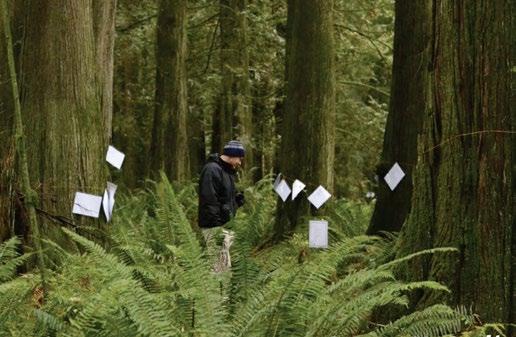
On discovering that a local rainforest was slated to be sold to developers, I was inspired by Han Shan—the ancient Chinese poet, monk, and forest dweller—to jump into the fray. Han Shan was said to have scrawled poems on rocks and trees at Cold Mountain in the Tang dynasty (9th century). So I sent out an emergency call on poet listserves for poems that celebrate trees. The response was remarkable, yielding over two hundred poems by young and old, beginning and celebrated writers, from not just Canada but as far away as Australia and Turkey. With the help of a local environmental group named WOLF, a group of us suspended poems from the trees during the Christmas season, inviting the community to stroll among them.
The poems became the forest’s anthology. The chances of stopping the sale seemed slim, but we figured at least those bearing chainsaws might read poems celebrating trees as they did their deed. After
the publicity surrounding this and other arts events spread from local newspapers to the Vancouver Sun, The Globe and Mail, and Global TV, the Township of Langley announced it would preserve 60 percent of the forest. At this point a local family generously stepped in, offering to purchase the entire twenty-five acres and donate them to a local university. The Blaauw Eco Forest is currently a well-maintained nature preserve open to the public, where students undertake important species inventories and nature study.
I see myself as a quietly introverted artist unexpectedly called into a public form of action by the plight and beauty of the forest. The first poem I wrote about the forest began with this line: “I fell in love with a forest and became an activist.” Something deep within called me to challenge W.H. Auden’s line, “Poetry makes nothing happen.” I jumped in without regard for outcomes, simply because I had to try. Being part of this project has deepened my sense of trees as sentient beings, keynote speakers, providers of oxygen, and sustainers of the planet.
Susan McCaslin has been writing poetry since she was twelve when she discovered the power of poetic language. Her most recent volume of poetry is Field Play (Ekstasis Editions, 2024). In 2012, she initiated the Han Shan Poetry Project, which drew on poetry to help save an endangered forest near her home.
Photograph from the Han Shan Poetry Initiative by Erin Perry
Photo phantasy: One writer’s quest for the elusive author photo
BY ELSIE K. NEUFELD
From 2006, “Photo phantasy” follows Elsie K. Neufeld’s amusing quest to acquire the ideal author photo.
Ishould have known there would be trouble when my husband got out his Pentax, the one that accompanied us in the late ’70s when we camped our way from Amsterdam to Morocco. I kept a journal and he snapped photos. Hundreds of photos.
Today, however, all I need is one black and white headshot for the anthology in which my poems will appear. The photos I’d sent were unsuitable and the publisher has given me only two days to replace them.
“Are you sure it works?” I ask my husband as he opens the battered case.
“Maybe we should just use my point-andclick. All I need is one good photo.”
Since his gaze verges on a glare, I don’t remind him of the photos he took last spring in which hikers and trees resembled a dense forest at dusk. Instead, I hand him the film, which I say is a twelve and he insists is a twenty-four.
I retrieve the empty box. What? I’m sure I asked for a twelve. Well! Maybe I am wrong about his camera, too.
Outside, he fiddles with the light meter. Should it wobble like that? Separate like three silver dollars? I’m afraid to ask. Instead, I ask where I should pose, then protest when he suggests on the top rail; it’s wet and might freeze my bum or worse—what if I fall off?
He repeats the word “up.” I grab the top rail, climb up, hold tight and look into the camera. I squint and blink just as he clicks. He tells me to wet my lips and shoots again, right when I stick out my tongue. Good thing it’s a twenty-four-exposure film.
I follow instructions. Put one leg down. Look thoughtful. Turn my face towards the mountain. Eyes elsewhere. Then he tells me to stick out my jaw. My jaw? My hand goes instinctively to my chin, which time has doubled. He assures me it won’t look silly, it will have a tightening effect. He mouths iguana and I laugh before I can think to be offended. Stick my jaw out as far as possible, smile, smile and click, click, click.
When the film is full, he tosses it in my direction and I drive to Costco, which has a one-hour processing service. Or so I thought, until the pimply-faced clerk, whose sculpted hair reminds me of our cockatiel, tells me otherwise. Nor do they process black and white film. The lad suggests London Drugs, where I’d purchased the film.
“How long will that take, Shirlee?” I ask the woman there. A blue, oval name tag hangs crookedly over her left breast. Shirlee drawls and calls me “Ma’am” before and after she informs me that it takes a week to process black and white film in their Alberta-based lab. When answering my question of other, more local, possibilities, she suggests ... maybe Vancouver.
I stand there, staring. Chew a tag of loose skin on my lower lip until I taste blood. What to do, what to do? A child screams behind me, and the poleand-rope aisle behind me collapses with a loud clang. “Now look what you’ve done,” says her mother. The screams grow louder.
Shirlee picks up a speaker. Her booming voice requests assistance.
are resilient. I demonstrate how they always land on their feet. Daughter is not impressed.
Wide awake now, I remember. The film! While the coffee drips, I check my answering machine. Nothing. I grab the phone book, flip to the back. Just as my finger finds PHOTOGRAPHY, my daughter says we have to leave right now or she’ll be late for school.
I squint and blink just as he clicks. He tells me to wet my lips and shoots again, right when I stick out my tongue. Good thing it’s a twenty-fourexposure film.
I ponder making two trips into Vancouver (six hours driving, plus gas) versus a courier, when my ex-photographer brother comes to mind. Of course! He’ll be able to help me. He used to own a shop in Abbotsford and knew everyone in the business.
I thank Shirlee, and turn to go. She nods, but without eye contact. “Ma’am? Ma’am? Your...”
The world spins, and suddenly I’m sprawled on the floor, my purse strap snagged in the hooked end of the cordoned-off aisle. A child giggles and a woman gasps. I pick myself up and right the toppled pole. Drive home without stopping. Don’t even notice, until I am pressing telephone buttons, that I’ve scraped my right palm. Never mind; it’s business first. But my brother’s not home and no shops are open so I leave a series of urgent messages and request a quick reply. Then I wait ... all evening. In the morning, I wake to my daughter dropping the cat on my pillow. I groan. Push the cat off. Daughter says I’m being mean, but I tell her cats
I return from my morning walk at 9:57, with a clearer mind. I will have this film processed today. I call the first photo lab listed in the Yellow Pages and describe my need. They don’t process black and white but recommend someone who does, though he’s a trucker so he may not be around. His business is “Black Knight” and he works out of his home. “If he’s not your guy,” says the voice on the line, “you’re out of luck.” I hang up and dial the number. “Bri-an?” a woman screams too close to the phone, “there’s some lady that needs a film developed today. Come talk to her.” Black Knight Brian takes over. “Yup. Nope. Leavin’ at one today. Sure. If you come down right now. What kinda camera? How old?” He gives me directions. Thirty minutes later, I find the house with a red roof and red trim. It’s older, all right. With a driveway long and wide enough to accommodate rigs. A ladder stands beside a tall rhododendron, a string of Christmas lights dangles between top step and bush. Painted plywood cut-outs are pegged into the lawn: penguins, candy canes, and five snowmen.
A guy in a black Stetson and cowboy boots appears. “So, you found the place, eh?” he says. He tips back his hat. A person could get lost in those round, cow-brown eyes.
He gestures, and for a moment I hesitate, but then follow him along the path, down three steps and into a small darkroom under the back deck. There’s a black panther on the door, like on the screen at the start of an old, R-rated movie.
Brian tugs at an overhead string and the room lights up. Black and white prints cover the walls. There’s one of a young girl holding a balloon. Nothing indecent.
I hand him the film. He takes it and starts talking. Seems in no hurry although it’s almost eleven. I ask if he still plans to leave at one. “Oh, depends. If it’s snottin’ outside, then one; if not, three. I’m just dickin’ around with Christmas lights today.” He points, asks if that’s the camera we used.
I nod and laugh; emphasize old Pentax. Finger the light meter until something clatters to the concrete.
Brian is startled. Takes a look, and says it shouldn’t fall apart like that. He suspects it has a loose screw, and if I don’t fix that I won’t get a proper reading. I say I’ll tell my husband. I try not to sound frantic and resist the urge to grab the meter from him. He hands it back. The meter comes apart in my hand as soon as he lets go. Brian steps toward me. I back away. He stops, looks me in the eye and smiles. “Just getting a Ziploc bag,” he says, “for the pieces.” He pulls one from a drawer, places the loose pieces inside, and rides his fingers, slowly, along the seal, then hands me the bag. He asks for my phone number so he can call when he’s done.
At home, I check my email. No messages. I give my son a five-minutesto-departure notice and listen to my answering machine. That was fast, I think when the Black Knight’s voice tells me to call him asap.
And then I’m back at London Drugs, buying three rolls of black and white film, to make sure I have the right kind. None is exactly what Brian asked for, but the clerk insists these will do, and if I’m back in an hour, I can return the unused ones.
The Black Knight is pacing his driveway with a cell phone when I return. A woman stands behind a parked Jeep. His mother? Wife? She looks older, but I can’t tell. I walk over, say hi. The bristly wart near her mouth yo-yos when she asks how my day is going.
I look over her shoulder. Tell her I’m having a bit of a photo nightmare. She assures me that Brian will take care of me, and then the wart stops moving.
I say they didn’t have twelve, and besides, I’m not photogenic. “Oh, I wouldn’t say that,” he says from behind the camera, his hand on its protruding lens. He kneels on the wet lawn. “Wouldn’t say that at all.”
The news isn’t good. He says he can’t get anything off the “thin negatives.” He asks again what kind of light we shot in.
I sigh into the phone. Mumble something about starting over.
There’s silence at the other end. Then, an offer: if I get more black and white film, Brian will shoot me. Since the weather’s holding, he won’t leave until three.
I resist at first, say I’ll find a studio in town. But he’s keen, says he has time and besides, “They’ll charge you a leg just for the sitting fee.”
I ask my son how I look as we drive down the mountain. I drive with one eye on the road, the other in the rear-view mirror. Damn! Why hadn’t I washed my hair?
I try to not smile, to focus on the penguins behind her, not the flashback of that movie in which John Candy tosses a quarter onto the desk of a dour-faced principal and suggests she hire a rat to chew that thing off her face. Luckily, the Black Knight comes over before I complete my thought. He suggests we get started, that we do it on the lawn. I follow him there. He paces from the rhododendron to the blue spruce on the far lawn, then points to a spot where I should stand. He looks at the film. “Twenty-four, eh?”
I say they didn’t have twelve, and besides, I’m not photogenic. “Oh, I wouldn’t say that,” he says from behind the camera, his hand on its protruding lens. He kneels on the wet lawn. “Wouldn’t say that at all.”
He tips his hat back, and then tosses it onto the porch. And suddenly, his eyes no longer draw my attention; all I notice now is his hair. It’s bad, really bad, dishevelled and flat. I touch my own. Fluff it up. Should I worry? If so, there’s no time. He’s rattling off instructions: Look that way. Turn slowly. Real slow now. He says he can tell I’ve done this before, and I laugh, recall posing for my husband. “Shhh. Don’t talk. Oh, there’s the spark. Good. Good. Keep turning ... ”
I pivot into another time, when I posed for the new Pentax in dandelion fields, beside collapsed barns and the rusty gate of an abandoned cemetery.
In the back of our van in southern France. It was a hot day, and we’d just come back from the beach. Yes, that Pentax has seen better days …
The Black Knight brings me back. Says he got some good shots and he’ll process the film real quick. And sure enough, within the hour I’m following Brian again down those back stairs. He stops. “Old ones,” he says, holding up a strip of blank brown negatives, “and ... new.” In the darker strip, distinct faces fill each square. He apologizes for not making a contact sheet and recommends a good place nearby that’s fast. I open my wallet and ask how much. He ponders my question, says, “There’s a lot of guys out there that’ll wanna rip you off, but I don’t charge that much.”
I throw down some tens and he hands me his card. Slips the coil of negatives into an envelope, passes it to me, and we head outside. He’s wearing his hat again. “Your eyes,” I start to say. “What’s that?”
“You’ve got a good eye,” I say, and refer to the photos I’d seen on his studio wall. He pushes his hat back, looks at me real slow.
“You caught me in a good mood. Christmas lights and all ... ” Barthel’s is re-roofing and the place is dusty and loud, but it’s open for business. I relinquish the negatives and hope for the best. I’ve already decided if these prints don’t turn out, I’m submitting a blank.
But an hour later they’re done. I’m laughing in a few, chewing gum in another, my hair’s flat in each one, and the wrinkles around my eyes resemble a mushroom’s underside.
I’ll mail the best ones to my publisher tonight.
I head home; take an alternate route past the Black Knight’s house. The driveway is empty, but the whole place is lit up. It looks cheesy and cheery. Festive.
At home, I spread the light meter’s coin-shiny pieces over my husband’s pillow, and place one black and white photo at the edge.
Postscript: Elsie’s marriage ended in 2014, and she now owns her own camera. If required, she takes a selfie with her iPhone.
Elsie K. Neufeld is a poet, essayist, and a personal historian who has mid-wifed two dozen books about individuals and corporations into being.
Revising expectations as divergent thinkers
BY RAYYA LIEBICH
This 2022 article provides empathetic advice for neurodivergent writers struggling to complete their projects.
Like many creatives, I am happiest when I am inspired and in the flow of a project ... but must accept that this is a finite place, and the “business of writing” involves many practical tasks. As an adult with a late diagnosis of AD(H)D, I am discovering why many aspects of the writing life are excruciating for me. With new awareness, I see the significant time and energy I need to go against neurotypical expectations, hold onto my focus, and keep discouragement at bay.
For example, organizing my time and planning my schedule is a constant battle. For years I thought my procrastination reflected my innate laziness, but I know now that this is the only way I can jump-start my focus. Instead of fighting the way I’m wired, I’ve shifted my mindset to practise acceptance, and trust that I will get it done. Here’s the proof!
But what about other roadblocks? How do writers who struggle with executive functioning get through the revisions, submissions, rejections, and practical details of a career in the arts? We need to come up with our own unique strategies through trial and error. The beautiful spreadsheets and tidy computer files might never be a solution. After many struggles and outside-the-box experiments, I’d like to offer some strategies that may help other writers like me.
“Go where the energy is.” —Natalie Goldberg.
When you pay attention to what has emotional energy in your writing, you can slow down and focus on the craft skills to improve it. You may set out to write a succinct essay on parenting, but if your draft takes you down a detour to a moment in your childhood—forget about the original topic and see where this thread wants to lead you. Writing that is raw, rich, vulnerable, and alive is always the more interesting story.
No shortcuts—take the scenic route.
There is no “correct” way to write a book and no point-A-to-point-B road map for larger works. If traditional narrative arcs haven’t worked for you, look to the forms on the margins. Discovering Nicole Breit’s “Outlier” classes of creative nonfiction revolutionized the way I saw writing into difficult material. If I could draw a picture to illustrate my process of completing a memoir, it would be a tangle of knots. I started in micro-memoir paragraphs, I changed the manuscript to poetry, I then “unpoemed” the entire draft, and, after learning about fragmented forms through Nicole, entered sideways using non-linear forms to unveil my memories. Intense and time-consuming? Yes. Fulfilling and freeing? Absolutely. Tangles are rich, complex, and beautiful. I needed time and detours to be able to find my authentic voice and the right container. Visual space as inspiration.
My writing room is my sanctuary and I use every wall to remind me of what I’m doing and why. I have a blackboard with Post-it notes, with reminders and inspiration from my favourite authors. I’m looking at a quote by Rilke: “The work of the eyes is done. Go now and do the heartwork on the images imprisoned within you.” Bam! Good reminder for when I think I want the easy way out of a project. I also have a bulletin board where I track submissions with bright paper and highlighters. An Excel spreadsheet might appear more organized, but I need the large format and personal penmanship to own it.
Celebrate the wins!
When anything positive happens in your creative life, mark it with a gesture of celebration. I keep a bottle of bubbles at the ready—just in case some good news comes my way. I also create a list of small wins throughout the month that I hang on a banner above my desk. It is remarkable how all the little wins add up to a long list at the end of the month and a long banner at the end of the year.
Create community.
Writing is a solitary act, but the vocation of being a writer is too hard to do alone. There are many wonderful groups to join and starting your own writing circle can give your creative life a great boost. I recently joined Chelene Knight’s Forever Writers Club and marvel at the organized platforms with craft modules, writing prompts, and live workshops. This club reminds me that building a sustainable practice means leaning in on other creatives, and that my mindset is what will allow me to carry on writing forever. I also teach creative writing classes, and this keeps me learning and engaged with other creative minds. In reflecting on the lifelines I’ve created to keep up my motivation and persevere, I can see how, without these tools, I would have given up a long time ago. Whatever your tools, your personal hacks, or your unique operating system, I hope you develop ways to stay connected to the pulse of creativity and the privilege of being a writer. And finally, being an artist is hard work: where can you find ways to make it a little more fun?
Little hacks—desktop must-haves:
1. Colourful pens: I indulge my child artist and make sure I have a rainbow of fun pens in a jar on my desk. Bright colours make even the most menial tasks bearable.
2. Timer: I rely on my iPhone timer for every task on my to-do list. For example: a) 10 minutes: email catch-up
b) 20 minutes: free write on an idea I’m excited about c) 20 minutes: boring and painful grant writing d) 10 minutes: peruse writing contests
I’m strategic and cushion the “fun” between the “not fun” tasks, making room for what keeps me inspired and what needs to happen. I also block in breaks to move and eat chocolate.
3 . Future ideas list: Keeping track of creative sparks was something I could never pin down. I now keep a list on pink paper and tape it to my desk (pretty washi tape bonus). By sticking this on my desk, I am affirming that ideas are important and won’t fly away. I may be deep in a difficult revision, but one day, I’ll get to the new stuff too.
Rayya Liebich is an award-winning writer of Lebanese and Polish descent. Passionate about writing as a tool for transformation and changing the discourse on grief, she is the author of three chapbooks, Tell Me Everything, Khalas/Enough, and Litany of Words I Cannot Read, and the poetry collection Min Hayati (Inanna Publications).
Writing days
BY ELIZABETH TEMPLEMAN
From 2007, this piece is a relatable and personal reflection of the author’s preparation for a twentyfour hour creative nonfiction competition.
For two months I’ve looked forward to this day, guarded my availability, and planned how to corral my energies. Now it has arrived, and I can only wonder at how peculiar I feel and act. It’s the morning of the twenty-four-hour creative nonfiction writing competition. A glorious excuse for focus and dedication to the writing I love: my annual day to be, unabashedly, a writer.
Yesterday was the day to set the mood, a challenging task after a week away, the trip I carefully fit in so as not to interfere with the writing day. Work was eight hours of scattered demands, following upon two hours
of scattered demands of home. Evening was a fluster of errands, and then a play in town, which was good relaxing though emotionally charged—a war story.
I worried about not sleeping, then fell hard and fast into the best sleep of the past two weeks, awakening groggy with rest, an hour later than I had expected to rouse myself. Ten past nine: a less than comfortable margin for our coffee and oatmeal, breakfast of champions. There are only the two of us home, and yet I feel distracted. There’s laundry to start, and some sort of dinner to plan. There’s even work intruding—a student leader I should go to observe this afternoon, but won’t.
At ten past nine, I dress with some careful consideration. I think, so often, of E.B. White’s loving description of his wife, who most always
my moves this morning. Maybe they drifted through at eight, when I was supposed to be up. Ten o’clock is the moment the topic will be released. It is two minutes to the hour when the radio begins to beep at ten am. Our clock is slow. I am slow. I gather the dishes and head downstairs to the computer. The moment is now. But first, check my email, and then stop and restart the laundry, fitting my husband’s work pants into the load. Removing a sopping t-shirt from the mass of sodden laundry, I make decisions about what should go into the first load with all the care that a wiser writer might bestow upon crafting an essay.
What else can I do? Nothing but to begin.
The topic is defining moments; the word limit, six hundred.
Draft one is done. It came fast, and in one long draw, like a satisfying drink of water after a run in July. But it’s not what I anticipated doing. It’s residual from three days spent with my mother and siblings in Colorado. It arises from the weight of the past, not from where I am grateful to be now. The completion of draft one has left me spent and giddy, when what’s called for is decisive and disciplined. The day is a period of intensity set off by the arrival of a single moment. At such moments those arbitrary markers in time that ought to matter—my focus evades me. I’m left thinking that what I do in defining moments is to blur the edges, with as much purpose as I prepare for such a moment’s arrival. It may just be that, while I long for dedicated writing time, with its precise and exclusive purpose, it is the murkiness and disorder of ordinary time that sustains the writing.
dressed in an elegant suit to work in her garden, honouring the activity by her attire. While that description of her gardening habit obviously touched me, it also forever left me feeling that I fall short.
This morning, however, I choose the navy wool sweater, not the grey sweatshirt, to complete my outfit of grey stretch yoga pants, patterned woollen socks, and white t-shirt.
Katherine White would not consider this attire fit for camping, I expect, but it will work for me. For me, wearing something that will commit me to an afternoon run is also important. But the woollen socks, favoured over the usual white cotton ones, a nod to KW, cause me to slip across our hardwood floor. My hand is bruised from breaking the fall. Not a start to inspire confidence. No gods favouring
Elizabeth Templeman lives, works, and writes in the south-central interior of BC. Publications include individual essays appearing in various journals and anthologies, and two books of essays, Notes from the Interior, and Out & Back, Family in Motion. To learn more about Elizabeth, check out her website elizabethtempleman. trubox.ca
Lunar feast (2019)
BY ISABELLA WANG
1. A tanka
As other families sit to feast at this year’s table, I over-indulge on the spring rolls and nian gao wafting out of their windows.
2. Year of the dog
My mother made dumplings for the dog today. Flour and water embraced to dough, a handful of dog pellets ground in a mortar and pestle, carrots and celery chopped to a fine pulp.
Dad and I waited in the other room to the sound of rolling pin against cutting board, floured dough scraping hardwood as she kneaded.
Filling nursed between the tips of two silver chopsticks, stack of paper-thin disks rolled—she cupped them in her hand the way you cup a red lotus at the Lunar parade each year to make a wish.
Two fingers dipped into water, edges sealed with neat folds.
With dogs, she says, you just need to feed them and they remain grateful forever.
Dad and I went for a stroll in the neighbourhood. Around us, upside-down banners and red lanterns. Fruit for luck. Tang yuan, dusted in flour, filled with sweetened sesame, peanut, or red bean paste—
served from bamboo baskets with each glutinous rice ball nudged tightly beside the other in a circle, like family members gathered by the roundtable. In the year to come, they are to bring harmony and unity.
Noodles with mustard greens for longevity, tossed with spring onions and chilli in peanut sauce. Spring rolls for wealth. Steamed fish in ginger and soy sauce for abundance. Sticky nian gao for progress.
We considered waiting out the evening, ringing the doorbells and asking for leftover tang yuan and maybe spring rolls. Instead, we gorged on these smells that will satiate us for another year.
Isabella Wang is the author of Pebble Swing (Nightwood, 2021), a finalist for the Dorothy Livesay Poetry Prize, and November, November (Nightwood Editions, 2025). She directs her own non-profit editing and mentorship program, Revise-Revision Street.
What the world needs now
BY KIRSTEN MAH
From 2024, Kristen Mah’s article discusses the recent rise in popularity of romance novels, and why these happilyever-after stories are needed now more than ever.
Romance is currently experiencing a surge in popularity. It is hot—often in more ways than one—and it sells. Romance novel sales in Canada have experienced a 42% increase since 2017. With over $1.44 billion in revenue in 2023, romance is single-handedly fueling the expansion of adult fiction. What draws readers to romance? Loneliness and the yearning for connection.
Given the instability of the past five years, it’s no wonder that the world is in the midst of a new epidemic.
In November 2023, the United Nations declared loneliness a global health concern, citing its serious impacts on physical and mental health, quality of life, and longevity—effects which are comparable to smoking and physical inactivity. The pandemic, environmental challenges, armed conflicts, and economic stress have left many of us feeling anxious, depressed, lonely, unseen, and disconnected. Romance sales began their upward climb during the dark days of the pandemic lockdown. When left with lots of time and few other choices, many people returned to books—romance most of all. And they liked what they found.
that many of us feel. When we witness characters going through tough times, we’re buoyed by their success. We feel validated if we are going through something similar in our own lives. We feel seen. Romance can help us cope in tough times by bringing us a little happiness, allowing us to explore our own wants and needs as we read. Above all, romance is a space that values and recognizes the “soft skills”—attributes like effective communication, emotional literacy, and collaboration. These skills are more commonly found in romance’s primary readership: women. Romance affirms and recognizes that what is often perceived as a weakness by the world is actually a superpower.
Romance novels offer a ray of sunlight in the darkness, a space to unwind and relax.
One of the irrefutable rules of romance is that it must have a “happily ever after” ending, or at least a “happy for now.” In an uncertain world, it’s a comfort and a big draw for many readers to know that they don’t have to worry about whether the characters they’ve come to love or admire are going to get hurt or suffer. They like knowing that everything will be okay.
Romance novels offer a ray of sunlight in the darkness, a space to unwind and relax. Love stories help us feel more connected to others because they focus on relationships. Immersing ourselves in the connection between characters creates a sense of closeness that can help to stave off the loneliness and disconnection
This is why I choose to write and indie publish contemporary romance. I want to spread light and love with my stories, to connect with my readers and assure them that I see them, and that I understand what they’re going through. I want my novels to be a soft place to land in a hard and lonely world.
To paraphrase a well-known song, what the world needs now is love, sweet love, and in one sweet (or spicy!) package, that’s what romance delivers. In a way, romance writers—and readers— are saving the world one love story at a time.
Under the name Keay Francis, Kirsten Mah is the author of relevant, small-town romance set in the supernatural beauty of contemporary BC. Kirsten used to be a teacher but wisely switched to writing fiction, because it is much easier to get her characters to do what she wants. The third book in her current Port Russell romance series, Revolution, entered the world in May 2024. Kirsten can be found online at www.keayfrancis.com
The last writer
BY GEORGE K. ILSLEY
From 2007, this article is a heartfelt tribute to the Berton House Writer’s Retreat, which at the time was facing the threat of closure.
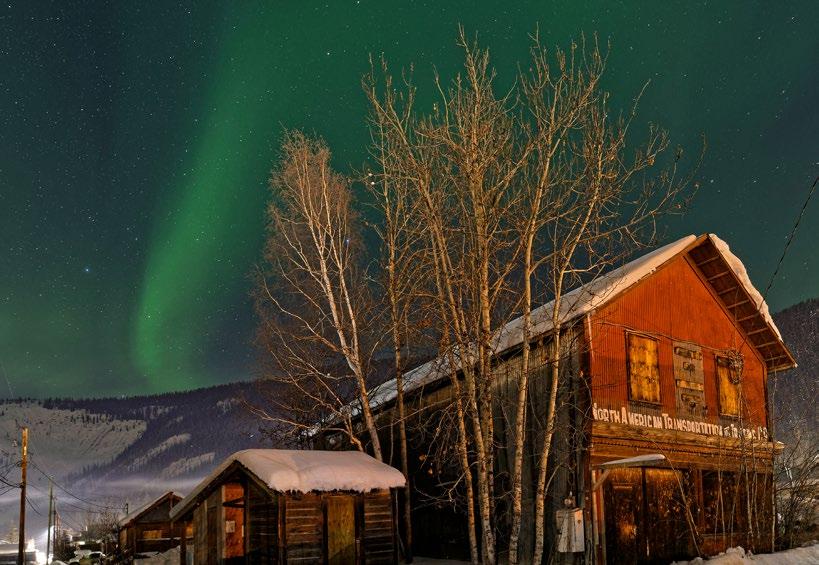
In November 2006 I was thrilled to be selected by Berton House as the writer-in-residence for October to December, 2007. The Berton House Writer’s Retreat, established in 1996 in Dawson City, is housed in the childhood home of broadcaster, historian, and Canadian icon, Pierre Berton. Dawson City is a small town that lives on history, thrives on art, and still, more than a century after the Klondike Gold Rush, feeds on gold.
The timing meant that I had almost a full year to prepare. I hit spring sales of winter gear, and read many tales of northern adventure, including Pierre Berton’s mother’s memoir, I Married the Klondike, which details family life in a much more rustic building: no running water, sawdust insulation, and a trapdoor to the basement privy.
The building has been extensively renovated, and in 2006 was even the subject of a makeover by HGTV’s Designer Guys. The decor, although masculine in a black leather furniture kind of way, is overly fond of busts of Shakespeare. Since we don’t actually know what he looked like, five Shakespearean busts are just too many.
My excitement turned bittersweet, however, in August 2007, when there was a flurry of news reports about Berton House funding difficulties. The Berton House executive director, Elsa Franklin, Pierre Berton’s long-time friend and producer, stated that there was a real possibility that Berton House might have to close after the last writer went up at the end of 2007.
The Last Writer, I repeated aloud. It appealed to me as a good title, but the last writer was not something I ever wanted to be.
For several years, the Canada Council had provided Berton House with an annual grant. Berton House selected the writers, and with other partners and fundraising, ran the premises and the writer-in-residence program.
However, in 2007 this procedure changed. Instead of allocating a fixed amount to Berton House, each writer selected then had to apply for Canada Council funding. The summer 2007 writer, a multiple-award winner already in residence, was turned down for funding (and caught in the glare of the ensuing publicity). Elsa Franklin expressed her surprise at the Canada Council’s decision, rejecting one of Canada’s most successful writers, and funding “only obscure writers.”
The example given of an obscure writer who received some funding was, yes, me.
Most residencies are advertised as “subject to funding.” Berton House did not issue conditional contracts. This meant that Berton House had agreed to subsidize the writer they had selected and that is why the panic ensued when the Canada Council changed the funding procedure. (A Canada Council spokesperson said that the special grants awarded to Berton House were “seed money” and not intended to be permanent.)
I must emphasize that I would know nothing about any of this except for media reports. I was not directly informed how much the Canada Council contributed towards my residency. Berton House carried out their obligations towards me in every way, and have treated me very well.
Turmoil and uncertainty can precipitate a reorganisation. In October 2007 the deed to Berton House and responsibility for the program was formally transferred to the Writers’ Trust of Canada. There is an appealing symmetry here, because Pierre Berton was one of the original founders of the Writers’ Trust in 1976.
The Writers’ Trust has stated that it has the resources to continue operating Berton House, and also intends to work closely with the Canada Council. The line-up for 2008 has been announced, and as usual includes writers from all across Canada.
And so, Berton House has another new lease on life. It has been a family home, and moved from one corner of Dawson to another, expanded in size and provided Pierre Berton’s mother with a kitchen table on which to write. The intervening fifty years saw several unrecorded occupants and owners, and then Pierre Berton bought the building and donated it to the Yukon Arts Society. The Klondike Visitors Association renovated the building, and the Berton House Writers’ Retreat was born. Now it is Berton House, Chapter Two, and the story is not ending, but just beginning to unfold. The Berton House writer-in-residence program provides the gift of time, space and an inspirational
setting, and so it is with great satisfaction that I am able to report that I am not, after all, the last writer. It is however completely true that I am widely considered one of the most obscure writers in Canada.
George K. Ilsley’s most recent book is a memoir, The Home Stretch. His work has been selected for many journals and anthologies including Geist, EVENT, Prairie Fire, and Best Canadian Poetry 2021 His time in the Yukon inspired a poem which won a contest in Dawson City and was awarded an actual gold nugget.
Northern Lights above Dawson City houses.
A Long Sentence (1988)
BY HILDA SOUTYRE
While out for a leisurely stroll around our neighbourhood one bright sunny day, I spied a short, stout little old lady wearing a largebrimmed brown straw hat with a cluster of bright pink cabbage roses on it, clutching a bulging beige-coloured crocheted handbag with a red and white polka-dotted scarf hanging out of one end and in her other hand was a brown braided leather dog’s leash which was attached to a squat, overweight beagle poking along on his little bowed legs, a glossy brown coat that shone in the sunshine and his curious black nose sniffing out various objects amongst the dusty tufts of grass on the well-worn pathway as they continued their daily hike along the winding trail beside the apple orchard which was already a pretty sign with round pink-cheeked apples ripening in the bright Okanagan sun.
For Those Troubled Times: A Litany (1989)
BY CHRISTINE BODY
I am A Placid Cow.
My jaws move rhythmically enjoying my cud. My warm brown eyes gaze nowhere, unseeing, as my whole being focuses on the pleasure in my mouth.
The day’s busy gathering of grass is done. The tumultuous noise and confusion of the barn forgotten.
The challenge of the dark rim of clouds approaching, the annoyance of the skulking coyotes do not bother me for at the moment I am totally content, placid.
(This cud is really good)
From the heart: What our community is saying
Our members love being part of the FED—and we love them right back. Their support fuels everything we do, helping us deliver stellar programs for the literary community.
But don’t just take our word for it—here’s a glimpse of what they’re saying.
Inspired? Come join the FED: A vibrant, creative space where writers grow, connect, and soar. We’d love to welcome you. Join us!
“ The Federation of BC Writers is hands down the best organization I have ever belonged to. The value they provide through their events is second to none, and the care with which the amazing Fed team serves their members is beyond comparison. Truly grateful for all their efforts in strengthening this community of writers and kind individuals. Such a pleasure to be part of it!”
F
“ This also gives me a chance to say how much I appreciate the FBCW—I belong to several writers’ organizations and feel I get the most from the Federation. Keep up the good work!”
F
“ Thank you all for all you do for us writers. I have spent so many years stumbling around in the dark, struggling with real-world ̒stuff’ that took me away from writing. I’m an introvert, and after so many years away, I find it hard to find my feet and return to my first love: writing. Thank you all for making the ̒new Fed’ a place where I can connect, learn, and practice—including practicing being amongst other people again! I’m very grateful.”
F
“ I just wanted to reach out and say from a colleague’s perspective I think you all are doing an amazing job, and have achieved really impressive results over the last two years. And as a relatively new participant, I want to thank you for everything you do for writers. It’s greatly appreciated!”