BRITISH COLUMBIA’S MAGAZINE FOR WRITERS







WordWorks is published by
THE FEDERATION OF BC WRITERS
PO Box 3503, Courtenay, BC V9N 6Z8 www.bcwriters.ca
hello@bcwriters.ca | wordworks@bcwriters.ca
Copyrights remain with the copyright holders. All other work © 2026 The Federation of BC Writers. All Rights Reserved.
ISSN: 0843-1329
WordWorks is provided three times per year to FBCW members and to selected markets. It is available on our website at bcwriters.ca and in libraries and schools across BC and Yukon.
FBCW Annual Membership Rates:
Regular: $ 95 | Senior: $ 55 Youth/Students: $ 35 | Accessibility: $ 45
FBCW BOARD OF DIRECTORS:
Tara Avery, Barb Drozdowich, Allison Finley, Kyle Hawke, Cindi Jackson, Cadence Mandybura, Glenn Mori, Kare Rae, Jenn Sommersby, Suzanne Venuta
FBCW STAFF:
Bryan Mortensen, Executive Director
Rachel Dunstan Muller, Managing Editor, FBCW Press
Diana Skrepnyk, Design Director
Emma Turner, Education Designer
Alli Boyd, Membership and Community Navigator
Alex Masse, Program Mobilizer
Maylon Gardner, Sustainability and Legacy Developer
AJ Gordon, Fiscal Operations Strategist
FBCW AMBASSADOR: Frances Peck
EDITORIAL STAFF:
Rachel Dunstan Muller, Managing Editor
Diana Skrepnyk, Graphic Designer Cindi Jackson, Proofreader
WRITE FOR WORDWORKS:
Visit our submissions page at bcwriters.ca/submit
ADVERTISING:
WordWorks advertises services and products of interest to writers. Contact hello@bcwriters.ca
ACKNOWLEDGEMENTS:
The Federation of British Columbia Writers functions on the unceded and ancestral territories of many Indigenous Peoples and cultures. As champions of language, we cherish the oral and written traditions of the Indigenous Peoples of this land. We commit to uplift the voices and stories of marginalized peoples and communities wherever we work.
We celebrate submissions from underrepresented communities and are actively seeking contributions from writers of all races, genders, sexualities, abilities, neurodiversities, religions, socioeconomic statuses, or immigration statuses. We encourage submissions from both published and emerging writers. We believe our strength as a community is in the breadth of our stories.
The FBCW gratefully acknowledges the support of the BC Arts Council, the Province of BC, Creative BC, the Canada Council for the Arts, and the Magazine Association of BC.
We acknowledge and are grateful for the generous support of our sponsor, Hemlock Printers.



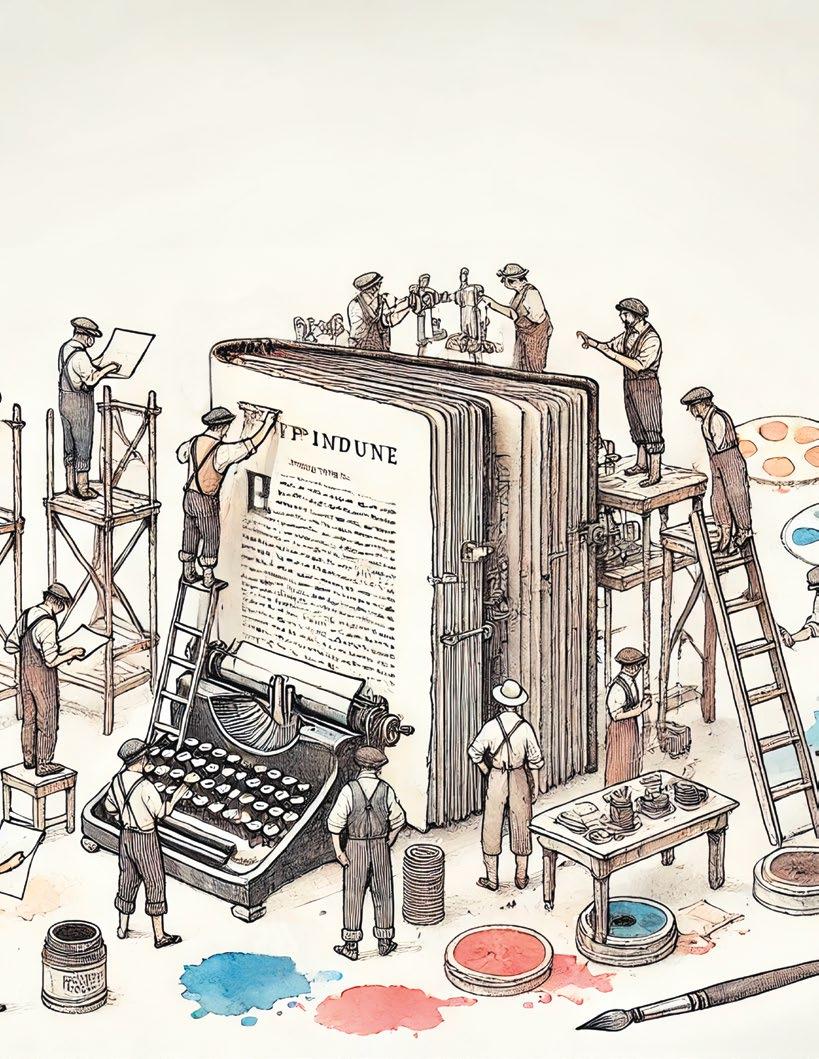
Like other committed craftspeople, writers value their tools—and we’ve never had so many to choose from. Some are a matter of preference; I have a friend who swears by Blackwing pencils and vintage fountain pens. Others are indispensable, the difference between getting words down … or not, as Harold Macy and Terrance N. James describe in their article about facilitated writing. We invited our contributors to interpret “tools” as broadly as possible—and they responded with a landslide of suggestions. Whether you’re looking for a few low-tech ideas to jumpstart your creativity or the right digital solution to help you organize a book-length manuscript, you’re sure to find something useful in these pages. But even the best tools are limited by the skill of the person wielding them, which is why several of our contributors offer resources for developing our own voices and creative abilities rather than relying on external tools. This in turn brings us to AI, the most controversial tool of all. Eric de Roulet argues that the “cognitive offloading” AI offers is dangerous, that writers who care about their craft need to consciously hone and nurture their writing brains. Avis Blackbird offers an additional perspective: since AI is already in many writers’ toolboxes, we have a responsibility to set intentional boundaries around its use to protect our artform—both for ourselves and for the next generation of writers. Ultimately, the most effective writing tools are the ones that work for you—and identifying which those are can take some experimentation. And so I’ll conclude with a challenge: if one (or more) of the ideas in this issue intrigues you, commit to trying it out. Who knows? The right new tool might transform your writing practice.
Rachel Dunstan Muller Managing Editor and FBCW Press Director
Spring is here— or at least it will be when this issue lands in your mailboxes. I could wax reflectively about how spring brings renewal and inspiration, but my word count won’t allow, so I’ll have to clumsily sow some analogies instead. This issue is about the “Tools of Our Trade,” and we hope that it seeds some ideas on how you might nurture your writing. In curating this issue our managing editor, Rachel, sought a diversity of articles and insights into writerly techniques, items, and ideas. One tool we would be remiss in not mentioning is the Federation of BC Writers itself (and perhaps its executive director, depending on who you ask).

This year is the Fed’s 50 th anniversary. As we begin our celebrations, I want to encourage our community to harvest more of the resources we offer. Two areas I want to highlight in particular are our ongoing and expanding writing sprints and our member orientations. Both are designed to help you get the most out of membership, connect with other writers, and engage with our team. They are also free with membership.
If you have never heard of a writing sprint before, the premise is that being near someone else who is working will inspire you to do the same, even in digital spaces. This might sound bananas, but I swear it works.
Whether you are a new member or a longtime champion of our organization, we hope you take advantage of these new tools to help you meet your writing goals.
Bryan Mortensen FBCW Executive Director
BY ERIC DE ROULET
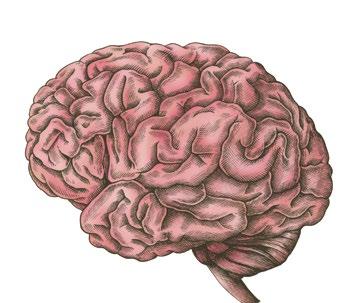
The whole endeavor of writing is full of frustration and uncertainty. Unfortunately, this makes us writers marks for tools and services of sometimes questionable value. These days, there are services being marketed at us that, far beyond checking for typos or helping us organize our notes, can make writing happen for us. As advertised, they can help us leap from the idea stage, over the harrowing work of drafting and revising, to having a finished manuscript in hand. What isn’t advertised is the risk inherent in depending on external tools. Modern life is full of temptations to practice cognitive offloading—to reduce the mental burden of both everyday and creative tasks. This is equally true of asking Hemingway (the editing tool) to proofread for you as it is of prompting ChatGPT to brainstorm for a new project or complete a sentence you’re stuck on. But offloading a cognitive task means we’re not practicing it ourselves. Practice causes the brain to build and reinforce neural networks, hardwiring new skills and memories. (Neurologists refer to this growth capacity as neuroplasticity.) This is true of all creative skills. My parents started taking art classes in early 2025; by the end of the year, my father was sketching portraits of his grandchildren and my mother had illustrated her self-published children’s book. We writers can also embrace our brains’ neuroplasticity. Many of the latest tools being pushed on us are solutions in search of problems— problems that have long been solved by successful writers. I humbly suggest that if you’re not satisfied with your writing process, the best and most fulfilling solution is to hone your original, fundamental writing tool: your writer’s brain.
Perhaps the most pernicious problem we writers face is staring at a blank page and thinking, The words just aren’t coming out. One might be tempted to use generative AI to overcome writer’s block, but the underlying problem here is the weight of our expectations on our writing. ChatGPT can’t fix that. When perfectionist self-consciousness makes us doubt the value of what’s in our heads, drafting becomes a miserable slog. The solution? Just write. John Warner, longtime writing instructor and author of More Than Words: How to Think About Writing in the Age of AI, says we don’t need to have perfect sentences ready before we start writing because the act of writing articulates our thoughts. My favourite method comes from Canadian fantasy author C. L. Polk: commit to writing just three sentences, at first opportunity, every day. Once you’ve done that, move on with your morning routine. While you’re waiting for your next opportunity to write, those initial words should prompt your writer’s brain to keep processing in the background. Whatever your method, don’t worry about form or aesthetics at first. Rest assured, the perfectionist in you will kick in as soon as you revisit your draft.
Sometimes, however, there’s a greater obstacle to sticking with a writing habit: burnout.
I track my short story submissions on the website Submission Grinder. Per my stats, I tallied more than forty-five submissions per year in 2023 and 2024, a breezy pace for creative writing alongside my day jobs as a PhD student, academic counsellor, and support staff for my partner and cats.
And then 2025 hit. Between my field research, personal
and political crises, and simply keeping a roof over my head, I only squeezed in seventeen story submissions. I lost track of more WIP stories than I finished. I’ve had to remind myself that while the brain is the ultimate writing tool, overworked tools will overheat. Sandra Tayler, author of Structuring Life to Support Creativity, recommends “learn[ing] what your canaries are.” When you see signs that your life is getting out of control, you need to pause. Don’t force yourself to push through your obligations and your writing at once. Your writing projects will still be there once you’ve cooled down and calmed down.
Now, let’s say you do get (back) into a steady writing habit, but revising is where you get stuck. Perhaps it’s keeping track of verb tenses for a wobbly narrative timeline or placing those damn commas. Or you might simply be daunted by the amount of work your extra-rough draft still needs.
you start an attention-demanding task, time yourself and see how long you can go without succumbing to distraction. He also recommends using starting rituals and setting aside distractors, signaling to your brain that it’s time to write—and only write.
In my experience teaching English and academic writing, revisionlevel issues boil down to either knowledge problems or attention problems. Working through obscure issues with grammar or mechanics may tempt us to offload our work to the machines. Yet spell checkers make mistakes, too. And they certainly don’t understand your intentionality as an author, your individualized choices for setting rhythm and writing prose that sings. Consider instead picking a reliable style guide and studying up. (Your library should have these at hand.) Once you understand the rules, you’ll be able to break them with finesse.
You can also hone your attention to detail. Our brains struggle with this when they already know what to expect, so introduce some novelty into your editing sessions. Take a break—a day or longer if possible— between drafting and revising. Read the last paragraph first and work backwards. Reading aloud (or with a screen reader) makes the material feel fresh, too. Daniel Pink, author of seven nonfiction books, says you can also “train your attention like a muscle.” When
Perhaps the final tool we need for honing and nurturing our writers’ brains is self-confidence. Our culture often treats talent as something we’re born with (or not), but leading psychologist Carol Dweck says otherwise. If you’re feeling stuck (intellectually or creatively), the best way out is to stop seeing your skills as static and embrace your ability to grow, what Dweck calls having a “growth mindset.” And if you still don’t meet your goals, don’t tell yourself, I can’t; tell yourself, not yet. Shortcuts are tempting, most of all when we compare our shorter publishing histories and slower output to those of
more experienced authors. But the authors we read got to where they are today by choosing to struggle along the way. Keep practicing.
Eric de Roulet (who sometimes writes as E.M. White) is a former international English teacher who’s now pursuing a PhD in Kelowna while also reviewing and writing speculative fiction. He’s a returning contributor to WordWorks and has written nonfiction about fiction for Speculative Insight, Typebar Magazine, and his blog, Sad but Building Worlds. All of this aside, he’s something of a year-round summer camp counselor for two too-clever cats.


Tips from the editor’s desk: Cleaner manuscripts and better writing found in editorial tools
BY CHRISTINA MYERS
Should book titles be italicized or in quotes?
How about albums or individual songs? Is it twentieth century or 20th century?
When should you use whom versus who? And do I really know the right way to use a colon and a semicolon or have I been doing it wrong all along?
It’s easy to think all of these seemingly “small things”—questions of style, formatting, grammar, spelling, and word usage—are no big deal, just something for the editors to figure out later.
Once upon a time, that might have been a reasonable approach, at least for established, in-demand authors. (I suspect Ernest Hemingway could file a damn messy manuscript and trust that a team of editors would tidy the whole thing up.) But it’s a much different industry now than it was then—with way less staff, money, and resources—and few of us are Hemingway.
Publishing is full of gatekeepers. If you want to traditionally publish, you might have to pursue an agent first, or go directly to a publisher and hope your query gets to the top of their slush pile. Then you’ll still have to work with an editor to shape, tidy, and improve your manuscript, followed by copy
edits, layout, and proofing. The amount of time and work involved in this stage often takes writers by surprise; isn’t writing the book supposed to be the hard part, not prepping it for publication?
Having a “clean” document before it ever leaves your hands—one where the semicolons are used properly, “whom” is in the right place, and album titles are properly formatted—increases your chances of getting out of that slush pile or catching the agent’s eye. And then it makes every subsequent stage easier and faster, because there’s simply less to fix.
If you opt to self-publish, there are still gatekeepers, just different ones. Self-publishing companies can offer editorial and design services, but they don’t do it for free. The more work the manuscript needs, the bigger the bill. If you’ve got an unlimited budget, that might not matter to you, but for most people it’s a potential stumbling block. No matter the path, making your work the best it can be signals to you and to others that you take yourself seriously as a professional, and it makes you desirable to work with. If you were a publisher with the choice between two equally compelling
stories, which would you choose: the manuscript that has a hundred hours of editing to wade through, or the one that’s already in pretty good shape?
A writer’s job is to write a great story, yes, but the most successful writers are the ones who take a vested interest in every part of the process, including all those “small things.”
So, now that you’re convinced you want and need the editor’s tools, which ones should you start with? Here are a few I consider indispensable:
The Elements of Style by William Strunk Jr. and E.B. White. This tiny tome has probably been on the desk (or in the back pocket) of just about every editor since it first came out in the late 1950s. Often referred to as simply “Strunk and White,” it was a required text in my first-year journalism classes. When I loaned it out a few years ago and it never came back, I was able to replace it for $6 at a used book store. A quick glance at the index gives you an overview: everything from possessive nouns, commas, and dashes, to commonly misused words and advice about sentence structure.
thrift stores; you’re likely to find one.) And while you’re at it, a new thesaurus won’t go amiss either.
Selfpublishing companies can offer editorial and design services, but they don’t do it for free.
The Chicago Manual of Style (18th Edition). Coming in at over 1,000 pages and weighing several pounds, this is a huge book. It is also, I’ll readily acknowledge, a pricey one. For professional editors, it’s worth the purchase (or a subscription to the online version). It may not be worth the investment for every single writer. But good news: libraries usually have it on the shelf, either in the reference area or in some cases as an item you can borrow. Most publishers in North America use CMOS as their default style alongside their own “house style” or “style guide.” (These would include style and usage preferences that default from CMOS.) Not sure whether to spell out a number or use digits? There’s a rule for that. Unclear if you should italicize or put quotes around the title of a movie or a magazine article? There’s a rule for that, too. Curious about how to punctuate abbreviated years or century references? Yep, it’s got all the rules.
Elements of Indigenous Style: A Guide for Writing By and About Indigenous Peoples by Greg Younging with Warren Cariou (Second Edition). An indispensable book that covers everything from Indigenous-led best practices for writers to spelling and terminology, along with advice on sensitivity reading. This guide is not just a valuable editing tool, it has become an incredible resource for learning as well—for editors, writers, and the general public. The Canadian Oxford Dictionary (Second Edition). There was a time when most houses had a dictionary somewhere on a shelf, and writers in particular usually had one (along with a thesaurus) close to hand. But as Google stepped in to replace every reference resource we might need, the dictionary became one more thing to declutter from the house. But here’s the problem: spell checkers are notoriously bad, most default to US spelling (which is okay if you’re planning to pitch a US publisher, but not ideal if you’re writing for a Canadian audience). And as AI continues to infiltrate every corner of the internet you increasingly can’t trust what Google tells you about anything, even basic spelling. It’s well worth the small investment. (Check
If nothing else, some time spent with these resources will highlight how much knowledge and expertise a professional editor brings to the table, so that when it comes time to work with one, you’ll have a better understanding of how they do what they do, and the tools they use to do it.
Christina Myers is a former journalist, freelance editor, and the author of two books: Halfway Home and The List of Last Chances. She has also been the editor of two nonfiction anthologies. She has been longlisted for the Leacock Medal, twice shortlisted for the Fred Kerner book prize, and won the 2023 Canadian Book Club Award in fiction. Her next novel is currently in the pipeline with details coming soon(ish) and she teaches fiction and nonfiction through SFU’s continuing studies.

BY PETRA CHAMBERS
In 1984, our local elementary school got a Commodore 64. People in the community called it “the word processor.”
I was thirteen and had an ancient black Underwood with a faded ribbon. I clacked out reams of juvenilia on that typewriter (the first half-dozen pages of dozens of novels) but those projects always faded out after the first big scene. As soon as the feral band of children escaped from the castle, or the half-elf rescued the interstellar traveller from the crumpled spaceship … the pages disappeared into the strata of dirty socks and apple cores on my bedroom floor.
That year, I rarely made the daily four-ferry plus sixbus commute to junior high. Instead, I stayed on my home island and went to the K-7 school where that beige word processor sat, rarely used, in the hall. I typed stories in a pixelated light blue font on its dark blue screen and discovered that—miraculously— on a computer, everything was fixable. There were no unalterable mistakes. I could experiment freely and save drafts to its vast 64 kilobyte bank of RAM. Plotlines and scenes no longer turned to compost in my bedroom. They stayed in folders, patiently waiting for my return. That Commodore 64 allowed me to see writing, and by extension my entire chaotic adolescent life, in terms of comprehensible projects that could be started, revised, honed, saved, and completed. Digitality formed me. Like other Gen-Xers, I had an analog childhood, but my adolescent
brain was shaped by software. Large parts of me are still most comfortable—and feel safest— communicating through a keyboard. However, in this fifth decade of the digital era, I’m mostly interested in analog writing practice.
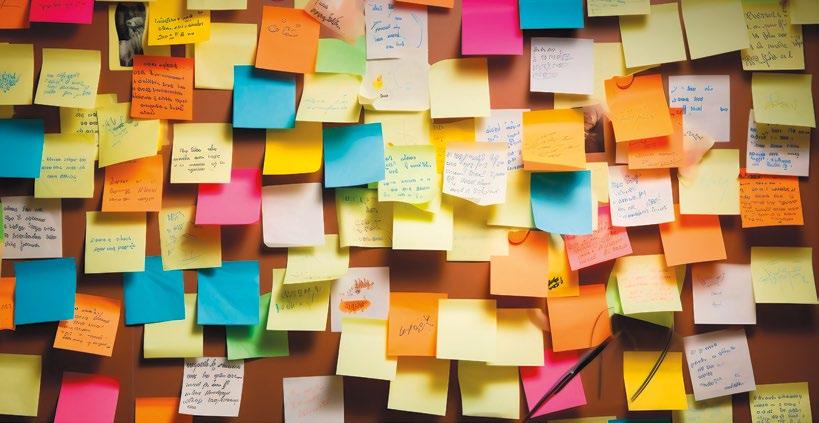
Pen and paper. Scissors and tape. A pad of sticky notes. Analog tools help me bypass the parts of me that prefer communicating via keyboard. They allow me to get beyond the digitally-influenced architecture of my conscious brain to access the generative ground, the subconscious, the creative messy strata of the bedroom floor of my psyche. In the same way that an early-era computer once helped me organize my writing and thinking, analog practice now lets me step outside those structures to access deeper creativity. After that first heady adolescent relationship with a Commodore 64, I put creative writing aside to raise children and do career things. Then COVID happened, I got laid off, and soon I had a collection of odd, unfinished pieces—disconnected memoir, weird fiction, loose stanzas, plotless landscapes, and scenes narrated by vague protagonists. Though my writing was rangy and unfocused, I kept returning to early traumatic life events, trying to give voice to experiences that felt impossible to capture. Like this one:
At five, I almost drowned while swimming in a pond with a friend. I survived, but my friend didn’t. An imprint of myself never left that pond, while the
rest of me grew up. Thereafter, I had one foot in the world of the dead while simultaneously living for us both. I tried to write about this experience using symbolic poetry, gritty prose, first-person storytellers, third-person narrators, lyrical essays, matter-of-fact voices, moody moods, up-close-and-angry styles, and “long ago and far away” tones—but I couldn’t capture it. How to write about a schism of self that created a personal mythology that I grew up inside, which nobody knew about but me? A subculture created by a child that my adolescence and adulthood was shipwrecked inside? How to portray my childself’s perspective, knowing I have re-remembered the events at the pond in 1976 so many times that they became echoes of memory long ago?
Analog practice.
I gathered all my strange scraps and scene fragments and started mashing them together, ripping them apart, and creating bridges between them. As I worked, I realized the disparate voices and styles were beginning to reflect the kaleidoscopic nature of perception, memory, and self. Stuff that seemingly didn’t fit weirdly did, because the common denominator in all my writing was me. This genre-fluid analog-collage approach gave me the flexible container I needed. Slowly, I crafted “Containment,” and having found a way to describe the subjective reality I had lived inside for so long, I started to feel less isolated.
“Containment” resonated for others. It was published by Prism International in 2024 and selected for the Biblioasis 2026 Best Canadian Stories anthology.
Going analog & genre-fluid: Gather tools.
• You probably already have everything you need.
• If you have space, set up an analog workstation or be like me and put your supplies in a container and work on the floor or kitchen table.
Work from copies.
• Stash your originals in a safe place. You can always go back to them.
• Give yourself permission to “kill your darlings.”
• Cut, tape, or staple ephemera to your manuscript; handwrite and free-associate.
Be an analog nomad.
• Put your tools in a literary bug-out bag and take your drafts into the woods or to a diner or to a dive bar. Work there.
• When you return, transcribe the resulting collaged drafts—riffing and deviating freely.
Play with genre.
• Read across genres: haunt unfamiliar stacks at your local library or bookstore.
• Start small. Add facts to your fiction. Mix poetry with your prose.
• Stray far. And learn from those who have strayed before. Read genre-bending innovators like Claudia Rankine and Jordan Abel. Gather anthropological documentation for an extinct future society, like Ursula K. Le Guin in Always Coming Home Or write a novel in verse with characters from myth like Anne Carson’s Autobiography of Red. Practice bricolage.
• Collect ephemera and text—your own and other people’s.
• Copy passages onto scraps of paper (attribute your sources) and stash them in an envelope.
• Pull some out and mash them together. Does the juxtaposition spark ideas? Inspire research? Kindle a story? Help you express something lurking just beyond your conscious mind? Every textual fragment in your envelope was picked by you, so your idiosyncrasies are the common thread. Pull the thread.


If you have an oeuvre of miscellaneous drafts, are bored with your writing, need a jumpstart, or have a tricky topic you haven’t found voice for, analog and genre-busting practices may help. These strategies are illuminating tools for exploring the uncharted territories of your creative self.
Petra Chambers (she/ her) lives in the traditional territory of the PE’ntlatc People and K’ómoks Nation. She writes creative nonfiction, poetry, fiction, and hybrid forms. Her work has been nominated for Pushcart, longlisted for the CBC Short Story Prize, and featured in Best Canadian Poetry 2026, Best Canadian Stories 2026

$25 entry fee | $500 prize Deadline: October 15, 2026 2027
portalmagazine.ca
BY JON NG
My current project, re(dis)covery, collects a decade’s worth of experiences in poems about depression, discovery, recovery, and the rediscovery of the self. Composing and compiling verses about my neurodivergence, emigration to a new continent, and falling in and out of love has been challenging, and organizing these thoughts would have been impossible without the right set of tools.
Neither the above nor the compilation of my first collection of poems would have been possible without Scrivener. No word processor has made the attainment of order easier for my naturally disorganized mind. I can start a new verse on a blank sheet, and it stays within the same portfolio—a godsend for someone who is easily distractible and somewhat perfectionistic. That and the way everything is organized in ‘binders’ that can be slipped into folders allows me to follow two mantras I use to train my executive function: namely, everything has a place and getting started is the hardest step
Anything with Cloud functionality and the ability to synchronize changes between devices has been a godsend for my writing process as well. I lose things, I forget things, and so being able to keep things always accessible regardless of the device I bring out has saved many a writing session. Google Docs, Google Keep, and Apple Notes are like my Airtags, but for writing. I won’t lose a thing, and if I do, I can use the search function for keywords or memorable phrases like “find my device” to bring me what I need. Plus, it doesn’t hurt one bit that these are accessible on mobile devices; the voice-to-text functionality has liberated my mind on various outings during which I had no table to write at, or when it was the sauntering and its movement itself that had inspired. The penultimate set of tools I use satisfies my need for excitement. My brain craves novelty, and once upon a time I attained instant gratification by posting blogs. I’ve left a trail of websites, which I’ve since abandoned in response to the introduction of bot-crawling LLMs.* (Plus, sometimes I found myself writing for the “likes” rather than whether or not I liked the text.) Vellum, too, has helped make up for my brain’s dopamine
deficit. Designed for streamlining and simplifying the e-book publishing process, it includes a preview function for seeing your book in print format, on Kindle, iPads, or other readers. I won’t complain either that this makes social media posts pretty easy. Finally, sometimes there’s nothing better than good ol’ pens and paper. No matter what bells and whistles new tech brings—and even as I toot Scrivener’s horn—nothing beats a stack of printed pages for revision. I’ll use highlighters and pens of various colours and scratch away, loving the crinkling of pages, the feel of the fences of page edges, satisfied and reinvigorated by seeing recategorized, reordered work in various stacks. And for midnight scrawls, nothing beats pen and paper as well, although I’ll need to transcribe my work in the morning or take a photo lest I forget that I ever wrote a thing.
I use what I can, I use what I must, and today, the blessing of my neurodivergence is that I can share some of the tools I still use in a toolbox filled with impulse buys. Maybe in another article I’ll write about the ones I’ve left to gather dust.
*Large language models that scan material on the internet for AI training purposes.
Jon Ng thinks of poetry as a way to capture the intangible within the amber of verse. Having published Hong Kong: Growing Pains in 2020 before departing from the city, Jon continues his writing journey on Canadian soil, exploring themes of aging, transition, and his reining in of ADHD in his current project, re(dis)covery His works have been published in EastLit, Voices and Verse, Cha, and the Twin Cities anthology of poems.
BY KELLI ETHERIDGE
Imagine staring in frustration at a blank page and a blinking cursor, with words darting around the room in frantic evasion from the mind’s frenetic butterfly net. Now compare that feeling to the perfect writing session, when the pages fill with words almost faster than they can be imagined, where your sense of time fades into the deep now, and where that nagging imposter-syndrome voice falls silent. This is flow state, and it allows us to create more prolifically with more powerful wordsmithing, channeling joy in the process.
The flow state, or being “in the zone,” is one of the most pleasurable human experiences. A cascade of neurochemicals is responsible for this sensation. Dopamine and norepinephrine arrive first, focusing our attention and enhancing pattern recognition. Anandamide, derived from the Sanskrit word for bliss, increases lateral thinking (our ability to connect disparate ideas—essential for creative storytelling). Endorphins and serotonin are released later, contributing joy and calm. Oxytocin, known as the cuddle hormone, occasionally joins the party, contributing connectedness and empathy. It’s no wonder flow seems magical. For me, it feels as if the words were being plucked straight from the ether. Yet despite my yearning to return to flow regularly, it can be elusive. There is no switch to activate flow state, but you can utilize triggers to improve the odds. Begin with a flow-readiness routine or ritual to prepare the mind for composition. My own ritual involves brewing a strong black coffee, lighting a beeswax candle, putting on a tourmaline ring, playing a song or playlist that is thematically related to my work in progress, and permeating my office with a stimulating scent in a diffuser, usually frankincense.
Try stacking different habits until you find a routine or ritual that works for you. Perhaps it’s a cup of jasmine tea instead of coffee. One of my writing circle members swoops her hair up with a special hair clip before her fingers hit the keyboard. Maybe for you it’s a cowboy hat or dinosaur slippers. Be playful and open. Consider keeping a flow tracker to analyze which habits have the best results.
A breathing exercise before writing regulates the nervous system and trains mental clarity, resulting in a clearer writing experience. This works especially well for me if I’m working later in the day, after the beta brain waves have pulled me away from peace. Box breathing is one of the simplest techniques. Sit comfortably, eyes closed. Inhale for a count of four. Hold for a count of four. Exhale for a count of four. Hold for a count of four. Repeat. I find it beneficial to visualize a box as I’m breathing and to trace the outline of each side with each breath phase. Write as soon as a sense of calm sets in.
Protect your flow zone with ferocity. It can take fifteen to twenty minutes to get back in the zone if you get disturbed—if you succeed at all. Have conversations in advance with your family, roommates, and coworkers. Ensure they understand how precious your writing time is. Beyond that, protect your flow state physically and energetically by printing a sign for your door announcing that you are not to be interrupted. A simple sign stating, Please Go. I’m in Flow! works perfectly. I prefer a version that has my other favourite f word. (I have printable PG and explicit sign options, free for download, on my Substack page.)
Clear goals are a non-negotiable flow trigger. Specificity matters: this isn’t as simple as, “I will write on Tuesday,” or, “I will write one chapter today.” Instead, hone in on the details.
“I will write 500 words of my prologue today in the style of Charles Dickens.” Or, “I will write chapter five of my novel by 11:00 am, conveying the anger of my protagonist.” Clear goals focus concentration and reduce cognitive load, resulting in fewer distractions. Make a list of specific goals at the end of each day for your next writing period, ordered from most difficult to easiest. As you complete each one, stroke it off the list and enjoy the dopamine hit, which focuses your attention even more on the next task.
A regular gratitude practice nurtures flow by eliminating negativity bias, reducing stress, and increasing openness to new experiences. Jot down three things you are grateful for each day, then expand one of them into a paragraph. You can do this at the end of your day, however, incorporating it into your morning flow-readiness routine will serve your writing best. Gratitude journaling stimulates dopamine and serotonin release, which primes the brain for flow.
Explore these prompts to encourage appreciative thoughts:
What made me excited about getting out of bed this morning?
List three things that evoked a smile yesterday.
I am thankful to live a creative life because______________.
I am grateful to have written ___ words today.
To practice flow well, you need to become a ruthless distraction manager. Cell phones prevent us from being fully present in the moment, breaking the intense concentration needed for inspired writing. Keep your phone out of the room while writing. Studies show that even having your phone on your desk beside you can pull you out of focus. The final tool for flow came to me a few weeks ago as I sat on a beach on the wild side of Cozumel watching the sunrise. As I rested with my toes tucked in the sand, my mind open in passive readiness, ideas rolled towards me in the untamed waves. The warm wind swept them onto the beach, where they landed on me like fragile butterflies, or rather, on that day, mariposas frágiles. My stillness allowed the ideas to approach and settle. If I had grasped at the words with frustrated yearning, they would have retreated or found a calmer host. The energy of desperation isn’t attractive to creativity. Inspiration comes when the mind knows openness and serenity.
Consider putting your butterfly net away. Increase your flow readiness with a customized pre-writing ritual or routine, hang that sign on your door, remember your gratitudes, and breathe into stillness. In doing so, all the right words will flutter and congregate, finding their way to you.
Kelli Etheridge lives on Vancouver Island. She loves dark beer, dark coffee, and dark fiction. Lately, you can find her curled up deep in the rabbit hole of flow state research. She has been published by Graveside Press, Renaissance Press, and the Van Isle Poetry Collective. Kelli facilitates a dark fiction writing circle with the FBCW.

BY CADENCE MANDYBURA
Let’s build an experiment together.
Think of a question you have about your writing practice. Something simple, meaningful, and measurable. For example: When is my most productive writing time? Where do I focus best? What types of goals motivate me? With an open mind and a little data gathering, the answers can be yours.
I’ve been tracking my writing since 2017, and what started as two simple columns (words and hours) has grown into an integral part of my writing practice. Data guides my writing efforts and encourages a curiosity mindset that helps me weather the ups and downs of the creative process.
Hang on to your question from two paragraphs back. Together, let’s explore how data can help your writing practice, the benefits of a judgement-free outlook, and some tips on building a tracking system that works for you.
First, in case the word “data” is causing heart palpitations and flashbacks to grade eight science class, let’s think of data simply as information. Data can be quantitative, like the number of words you write in a day, or qualitative, such as your mood before and
after writing. The data you gather will depend on what you want to find out about your writing practice. The beauty of data is that it gives you unbiased feedback. Most of us are unreliable narrators when it comes to our writing, since creative practices can be so strongly connected to our emotions and identities. Focusing on objective measurements takes the pressure off relying on your memory or being swayed by your current mood.
With that in mind, take the question you thought of earlier (say, what’s my most productive day of the week for writing?) and pick a data point or two to track (say, daily hours and word count). Also, decide how long it’ll take to gather enough information to analyze (say, three months). The idea is that if you track your hours and word count every day for three months, you’ll clearly see which days of the week work best for your writing practice.
Before we set up our tracking system, let’s get our mindset in order. For me, this is the most important ingredient (and benefit) of a data-tracking experiment: learning to observe without judgement. For this experiment to be meaningful, you have to record your data points no matter what. Zeros are
just as valuable as big numbers because we aren’t tracking success or failure; we’re simply gathering information. Does your data reveal a slump? Interesting. What might be at the root of it? Were there other factors affecting your writing during that time? The information you’re tracking has no moral weight. It’s there to serve you, not to shame you. Now, with our question, chosen measurement, and judgement-free mindset established, it’s time to build a joyful, easy-to-use tracking system—whatever that means for you. Tracking can take many different forms: spreadsheets are classic and convenient for numerical data, but the tactile reality of a journal or sticker sheet might be more your style. Joy is important here. Anything that makes the process of recording itself enjoyable will encourage you to stay consistent with your data collection. Because I find spreadsheets soothing, I have refined my tracking sheets over the years into beautiful, elaborate tools, with cross-referenced calculations and automatic colour-coding. That’s what brings me joy. For you, it might be a wall calendar, neon highlighters, or a habittracking app. Take a moment to think of the tools that will make tracking fun.
Focusing on objective measurements takes the pressure off relying on your memory or being swayed by your current mood.
With that said, while consistency is your ally, flexibility is also key. You’ll want to be as accurate as possible, but some measurements can be hard to pin down and ballpark figures are okay. For example, if you’re tracking handwritten words, count the words in an average line, then multiply by the length of a page and estimate. And if you fall behind in your tracking, don’t despair: go back, put in your best guess, and keep going. It doesn’t matter if a single data point is impeccably precise. What you’re looking for are patterns over time. Finally, whatever tracking system you set up, accept that it will evolve. Your writing practice and life circumstances will change; you’ll have new questions to answer and other tracking strategies to explore. The tracker, itself, is an experiment. Don’t take it too seriously. Remember to have fun.
A joyful tracking system makes it easier to build the habit of data collection, keeping your information up to date and reducing the need to play catch-up. To strengthen the habit further, try attaching your data tracking to an existing trigger. For example, if you’re tracking words and hours, use the end of your writing session to prompt an update in your tracker. If you’re using a physical journal, put it somewhere you’ll reliably bump into it, like beside your coffee maker or on your pillow. The more consistent you are, the more accurate your data will be, and the more insight you’ll gain.
Building a new habit can be hard, so be sure to reward yourself for sticking to your experiment. If you hit one week of consistent tracking (regardless of how much writing you actually did that week— remember, the commitment is about gathering data, not about hitting goals), then celebrate! Eat something sweet, order a fancy latte, or buy a new pen. Link the happiness of the treat to the satisfaction of committing to your tracking. And don’t stop!
If you’ve stuck with me— having selected a question and measurement, built a tracking system, and collected at least a few weeks’ worth of data—well, congratulations! Now we’re at the best part. Review your data for patterns. Let this guide any adjustments you might want to make to your writing practice. These could be practical (I write best in 20-minute sprints), or psychological (weekdays are a struggle for me, so I’m deciding that it’s okay if I only write on weekends). And then: pick a new question. Design a new experiment. Be curious. Stay flexible. Keep learning, and keep writing.
Mandybura has never veered far from her passion for telling stories and fixing apostrophes. A graduate of the Writer’s Studio at Simon Fraser University, Cadence’s fiction has appeared in Metaphorosis, Pulp Literature, Tales & Feathers, and Orca She likes to drum. CadenceMandybura.com
BY AVIS BLACKBIRD
The rounded, concave keys of a typewriter and smooth glide of an ink pen call to my romantic ideals; however, the pragmatist in me opens my laptop to get things done. Many of us have come to love technology: to research with ease, to draft and compose, and to efficiently edit our writing. We have embraced technological advances, recognizing that we are the artists controlling the instruments. Now we are confronted with a tool that has the potential to replicate our art. As a community, the time to debate whether we should embrace or resist Artificial Intelligence has passed. This shiny new tool has been let out of the proverbial box. AI is easily accessible and already being used by writers worldwide—and it’s only going to become more pervasive with time. As AI continues to learn and adapt, writers must also develop ways to utilize AI within the confines of our existing toolbox. When we set conscientious boundaries for the use of AI in writing, we protect our craft. Our experience and informed stance on AI will then model responsible use for the next generation of writers. The following suggestions are intended to reconcile the use of AI while maintaining individual authorship and artistic integrity:
Expand the habits that foster creativity and inspire you.
• Lean into the creative process, including intentional acts of grounding and emotional connection. For example, take quiet walks or make notes with pen on paper.
• Create community by joining groups that bolster your imagination and ingenuity. Separate the creative process from editing.
• Recognize and cultivate the organic habits that facilitate creativity, especially at the conceptualization and drafting stages.
• Separate these organic habits from any AI influence. Don’t use AI tools for the generation or development of ideas.
Develop personal boundaries for the use of AI.
• Follow submission guidelines as a good frame of reference and starting point.
• Analyze and reflect on your personal AI use and establish the extent and depth to which you feel AI use is helpful but still only a tool in your writing.
• Collaborate with other writers to develop consistent guidelines and share your expectations.
Model transparency.
• Credit AI assistance as you would any other outside influence or contributor to your work. In other words, AI contributions should be treated and referenced as any other source.
When we engage in and value our creative process, we ensure that writing remains a fine art. Consider the concrete acts that are at the core of your writing development. Overstay your welcome in the coffee shop with your coil bound journal, savour the cold air on a park bench while you people watch and contemplate the complexities of your characters, revel in your individuality. If we are intentional in separating our creative process from our use of AI tools and we are transparent in our AI usage, we can protect this art we love so dearly. The expression of human experience cannot be artificially replicated: therein lies our strength.
Avis Blackbird is an author, poet, visual artist, and photographer. She is a member of the Indigenous Arts Collective of Canada and the Federation of BC Writers, holds bachelor and masters degrees from UBC, and recently completed her graduate work for counselling.

Avis Blackbird’s full-length book of poetry will be released in 2026 through Brick Books Publishing. ;
BY HAROLD MACY AND TERRANCE N. JAMES
HM: For most of my 60 years working as a logger and forester in the majestic cedar and fir forests of BC, I thought that my end would come swiftly from a falling tree, landslide, or some other natural occurrence. Slumped by a trunk, my body would soon be picked clean by cougars, wolves, and black bears. Large black birds would finish the feeding, leaving little to mark my years.
Fortunately, I was spared from such a demise. Anticipating retirement, I aspired to write something more than scribbled notes on scraps of paper stuffed in my rain gear, on the dashboard of my truck, or in my library at home. I took courses at the Victoria School of Writing, Sage Hills, North Island College, and UBC. My publication credits grew and three books later I was enjoying retirement—until spinal surgery, a rotator cuff injury, cancer, neck surgery, and Parkinson’s disease curtailed my writing ambitions. I lost control of my fingers and could no longer type, write, or print. Peripheral neuropathy eliminated sensation in my fingers and I couldn’t even pick up a pencil. Two years ago I became totally dependent, requiring 24/7 care. My world as I had enjoyed it came to an abrupt end.
TNJ: In response to my friend’s plight, I offered to facilitate his writing. We tried the built-in Windows speech-to-text function and a stand-alone app on a laptop with minimal results. Finger dexterity and speech clarity were problematic. However, we met success when I recorded Harold’s stories with a handheld Sony ICD-PX370 digital voice recorder with a built-in USB connection, which made for quick and easy file transfer to my PC. It operates on two AAA batteries and has 4 GB of memory, allowing for up to 59 hours of recording time. At home I used TurboScribe to transcribe the recording, an AItranscription service that will handle three transcripts of up to 30 minutes each per day for free—no credit card required. I chose the Docx format and made two print copies for editing at our next twice-weekly session. In two years we produced a 60,000-word manuscript, which is now out to Beta readers.
HM: Without this level of assistance, I would not be able to write. I am frustrated when the muse is with me and I cannot access the computer. As I now essentially write on demand, the lustre is removed from my work. But I am still writing.
TNJ: Facilitating Harold’s writing has been a slow process, often interrupted by medication schedules, intermittent therapists, drop-in visitors, or resident disturbances. Some days he is simply too exhausted to talk. On other days clarity is obscured and the recorder clicks on and off. The writing session is never measured by time spent or the number of words recorded. It has become an element in his adjustment to a new reality, a new lifestyle. He says it gives him hope. Writers challenged by serious physical limitations should be encouraged: there are an increasing number of hardware and software tools which can facilitate writing.
HM: The facilitator must have some knowledge of technology, respect the author’s work, be collaborative, and be able to make a long-term commitment. As a writer I have had to learn patience, and more patience. Thankfully, my facilitator has lots of patience
Harold Macy’s experiences as a farmer, logger, forester, and woodlot contractor provide context for his literary articles and three fiction books. Dr. Terrance N. James, a graduate of the Rehabilitation Studies Program at the U of C, has authored twelve books of nonfiction. Together they are working on a book about Parkinson’s Disease.


BY TAMARA KRAMER

The day I graduated with my Master of Fine Arts in Fiction was all sunshine and blue sky. I was full of excitement, relief, and pride. But these feelings of elation were soon replaced by fear and anxiety. For the previous two years, I had come to rely on the structure of coursework, scheduled submissions, and syllabus directives. Now I had to learn to manage my writing life on my own. I felt untethered and overwhelmed. After all, “good writers” have a social media presence, an active website, and participate in the broader writing community, all while they prolifically create and develop their craft. Who among us hasn’t come to the end of a course or retreat wondering how we’re going to fit the influx of information, ideas, and new connections into our already busy lives? My solution to managing this tension is to assign everything to its proper place. To ease the overload I felt in the months after graduation, I developed a system that divides my writing life into categories, each with the routines, priorities, and goals necessary to strategize my forward momentum. While 5-C writing hasn’t propelled me to the summit, it has taken me multiple pitches past the trailhead.
Francine Prose says in In Reading Like a Writer, “Long before the idea of a writer’s conference was a glimmer in anyone’s eye, writers learned by reading the work of their predecessors.” Pick up your favourite (or not so favourite) book and read to understand why it works (or doesn’t).
The act of creation is unique to each writer. It may involve penning new words or revising old ones. It may be a dive into generative research or stream-of-consciousness freewriting. Some writers prefer early mornings before the demands of the day, while others write during lunch breaks or on their commute. Some writers create multiple projects at once, while others focus on one at a time. There is no wrong way to create; do what feels right.
While 5-C writing hasn’t propelled me to the summit, it has taken me multiple pitches past the trailhead.
Craft encompasses the techniques writers use to effectively convey their thoughts on the page, drawing on elements such as sentence structure, imagery, dialogue, and pacing. Writers may improve their craft through study, podcasts, workshopping, seminars, or reading with an analytical bent. As
For some writers, completion is an internal sense of “it’s finished.” For others, completion equates to publication. Finishing a project can take months or years, which is why planned writing time and both short and long-term goals are essential. And when the muse has gone on an extended vacation? Discover what helps you reignite and recharge. Refocus your goals, grab your favourite mug, pen, or notebook, and use the Pomodoro Technique (25-minutes of focused work followed by a 5-minute break). If that doesn’t help, do something drastic, like writing by hand or using a typewriter— anything to entice the muse to come home.

The act of putting words down on paper is a solitary activity, but the writing life doesn’t have to be. In fact, it shouldn’t be. As writers, we need other writers to motivate, challenge, and nurture us. We need them to encourage us through plot jams, writer’s block, and the latest rejection letter. Joining critique groups, workshops, and roundtable discussions are all ways to build community, as is engaging with others at writing conferences or book launches. When we are engaged literary citizens, community often develops organically.
Communication expands a writer’s network and influence beyond their immediate circles. It may include posting to social media, maintaining a website, producing a newsletter or blog, participating in a podcast, applying for grants, or marketing. All of these activities require significant time and perhaps extra learning, but they pay dividends in the end by building readership and enlarging our writerly reach. By recognizing the various aspects of the writing life, a writer can use the cognitive function of categorization to simplify to-do lists, prioritize tasks, and address all of the undertakings required of them. Grouping similar activities improves efficiency, which in turn can help control intrusive and overwhelming thoughts. Most writers struggle with at least one aspect of the writing life. Seasons of illness, difficult employment, and family obligations may leave little time for the pen, let alone for developing our craft. A project may take longer than anticipated. Discouragement may dampen the muse. Financial hardship can make attending conferences challenging, and critique partners may be nowhere to be found. Technological issues may bring us to a standstill.
Even so, we need to endure and give ourselves grace. Even if all we can muster is a reread of our favourite Jodi Picoult or Amor Towles novel with the intent of rediscovery, we are still moving forward. Life will turn around, and when it does the writing life will be there to embrace once again. Hardship makes us stronger; difficulty, more resilient. Perseverance, perhaps the most crucial writer tool of all, means we fall and get back up again.
Ten strategies for using 5-C writing to organize your writing life:
1) Divide your to-do list into 5-C categories.
2) Use the 5-Cs to establish short and long-term goals.
3) Assign each of the 5-Cs a colour for visual tracking.
4) Use a calendar with daily, weekly, and monthly views to schedule the 5-Cs.
5) Set daily, weekly, and monthly targets for each 5-C.
6) Not all 5-Cs require the same amount of time. You may need an entire morning to Create, but only thirty minutes for Communication or Craft.
7) Not all 5-Cs require daily or weekly attention. Allocate time only once or twice a month, if necessary. Prioritize scheduling based on need.
8) Participate in high-impact activities to address multiple 5-Cs at once.
9) Be a little wild and daring and put each 5-C on a slip of paper in a jar. Choose a slip at random.
10) Develop a routine to address each 5-C efficiently. Refine until the routine works, and don’t be afraid to adjust!
Tamara Kramer divides her time between Calgary, Alberta, and Golden, BC. She lives with her husband, four children, two rabbits, and an aged golden retriever. She has a Master of Fine Arts in Fiction from the University of King’s College (Halifax) and is busy editing her debut novel.

BY KIMIYE KAWASHIMA-TRIGGS
To everyone out there clutching a manuscript in covetous privacy and wondering, What next? I offer this: If you want your words to soar, you have to expose them to the air and eyes around you. Community is the key.
As an introvert, I considered writing an ideal pursuit. My tiny closet-turned-office, lined with books and with just enough space for one small desk, was my sanctuary. Out in public, my laptop served as a virtual shield I could hide behind to avoid tedious small talk. It was perfect.
For a while my self-inflicted isolation continued in idealistic peace. In every spare moment, I immersed myself in a fictional world. Page by page, chapter by chapter, my novel took shape. As the first draft solidified, I felt the very first glimmer of confidence in myself, and more importantly in my writing. I clutched my manuscript, buzzing with the anticipation of releasing my work into the world. I was writing a book. A real book! I couldn’t wait to share it with … That’s when I heard it. The hollow ring of silence. Looking around, I realized I was surrounded by quiet emptiness. I had nobody to turn to. No cheering squad of friends stood behind me ready to read and give the
precious feedback that every writer loves and needs. My efforts to shut myself away had been successful, and suddenly I ached in a way I had never expected.
Writing may be a solitary endeavour, but becoming a writer is not.
For many, this will hardly be a revelation. Self-help books and positivity memes constantly instruct us to find our tribe, like we could just add it to our shopping list on our next errand. For some it is that simple.
For myself, however, stepping out beyond my safe, comforting inner circle was so daunting I did what any self-conscious, insecure introvert would do: I lowered my head and hunkered down inside my shell. What was I even thinking, anyhow? How could I have been so pretentious as to believe, even for a moment, that I was good enough to create a book that people would read?
With my manuscript safely hidden deep in my hard drive and my creative enthusiasm respectfully tucked away, I resumed my mundane life. I didn’t need a community. I was an introvert, and that meant I didn’t need anyone. I was better on my own.
That’s what I tried to tell myself.
One day an email appeared in my inbox. I didn’t recognize the sender’s name, but it was apparently
someone I’d met a year before during one of my feeble attempts to overcome my introverted tendencies. It was a simple note, written by a woman who felt an urge to express how much she’d enjoyed the snippet of writing I’d shared at a mini workshop. She said she hoped I was still writing. Me. I barely recalled that workshop, let alone what I’d written. How did she remember?
A tiny whisper emerged from the shadows. See? You really can be a writer. I panicked, hastily smothering that glimmer of hope and sliding back into comfortable anonymity. For years I’d ignored the voice that belligerently insisted if I just tried harder, I could smash the stifling carapace of my introversion. I knew I couldn’t change. Then one day, the universe—or at least Facebook’s algorithm— thrust an ad for the Federation of BC Writers into my path.
Are you writing a novel? it asked. Why yes. Yes, I am! We can help! it claimed. Oh yes please!
And just like that, I joined. I was no longer alone. I was part of a Federation. A Federation of Writers! Did that mean I too was a writer? Surely it did. Right?
And just like that, I joined. I was no longer alone. I was part of a Federation. A Federation of Writers!
Immediately, I registered to join a writing circle. I perused the long list of groups, but none of them seemed appropriate for me. I wasn’t a poet; I wasn’t writing a memoir or creative nonfiction; my story wasn’t kid-lit or faith-inspired or travel writing. I settled on Novel Writing—only to find out that the group was full. Feeling discouraged, I attended an info session to hear from some of the moderators of the remaining available circles. That’s when I found the Queer Tales circle.
Apprehensive that I’d be rejected because my book wasn’t queer literature, I joined the first meeting. To my great relief, I was welcomed warmly by a group of amazing writers who accepted me and my story without judgement. We all wanted the same thing—a place where we could be ourselves and share our passion for writing. I finally understood what it meant to fit in. Through the writing circle I gained not only colleagues but also friends. We encouraged each other, cherishing each other’s projects as though they were
our own children, raising the characters together, laughing, shouting, and even crying as their stories unfolded. It went beyond the words on the pages. I felt seen in a way I’d never experienced before. This newfound camaraderie was invaluable on a personal level, but it was even more propitious for my manuscript and my writing. Nothing rivals the benefit of having a group of trusted individuals of differing backgrounds, personalities, and writing styles provide honest feedback and critique. While we may know our own work better than anyone else, we are also often blind to our own work’s shortcomings. Between calls for deeper interiority and more accurate actions and reactions, my keen-eyed circle mates left no plot hole unfilled. Through scheduled critique sessions and unscheduled latenight brainstorming jams, my manuscript evolved and matured until it was ready to release into the wild.
The world taught me that everyone, even an introverted writer, needs community. The FBCW provided a map to help me find mine. The Queer Tales writing circle proved to me that I didn’t have to lose myself or act like someone I am not just to fit into a group. Being alone isn’t always lonely. I loved my tiny writing closet, and I still prefer to write in cozy, isolated corners. Yet even as an introvert, I needed a supportive community to bring my words to life and my dream of becoming a real author to fruition.
Kimiye KawashimaTriggs is a queer, third generation Japanese Canadian born and raised in the Lower Mainland. A former EFL instructor who spent nearly two decades travelling the world and living in multiple countries, she is back on the West Coast with her spouse and three of their seven children, celebrating the recent release of her debut novel, UnVeiled: Amethyst
BY LISA HISLOP
Short story writers need different tools than novelists. Story forms are often defined by word count, but if you’ve ever received a rejection, you know that word count is a barrier to entry, not what defines your submission. Moving from counting words to making words count requires command over the short story trifecta: what to leave off the page, what to leave to interpretation, and what to do with the rest of the words you choose to include. Here are five resources to help you make every word count.
Read Submit, Publish, Repeat Authors Publish Magazine is my favourite resource for short fiction writers. They post well-written craft articles, useful webinars, and legitimate submission calls from publications that don’t charge fees. They also publish Submit, Publish, Repeat, by Emily Hartstone. This free e-book covers everything a novice needs to know about submitting to journals, as well as the advanced tricks Emily has discovered through years of publishing, editing, and teaching.
Subscribe to George Saunders’ Story Club.
In 2021, George Saunders, short story writer and creative writing instructor, published A Swim in a Pond in the Rain, a text version of his class breaking down nineteenthcentury Russian short stories. Shortly after, he began his Substack, Story Club, where he continues the class beyond the Russian greats. Through
analysis, exercises, prompts, discussion, and a lifetime of experience writing, submitting, and publishing short stories, George guides short story writers toward reading and writing more competently within the nuances of our form—all for $6/month.
Read slush.
Editors can tell when you don’t read within your form or genre. Aside from word count, each form has its own feel, rhythm, and pacing; each genre, its own conventions. Reading across your genre shows you what has come before, what is current, and what is at the bleeding edge, so you can see the gaps and fill them with your unique contribution.
Volunteering to read slush helps you get in your reading time and work on your sense of form and genre simultaneously. Reading others’ work will boost your confidence in your own submissions and clarify what to aim for.
Join Flash Fiction Magazine’s Authors Only Collective (AOC).
Immersion in a community focused on the practice of writing, critiquing, polishing, and submitting short fiction keeps you accountable to your writing and helps get you published. Lots of writing communities exist, but few focus specifically on short fiction. The AOC provides a safe place to share your writing and receive feedback, as well as write-ins, discussion forums, live critique groups,
webinars, and weekly writing contests, all for $13 US/month.
Take the 100-rejection challenge. Once you’ve been submitting for a while, you might need a goal to push you to the next level.
Finnian Burnett shares their own experience and everything you need to do to prepare for a 100-rejection challenge in an article published in the Volume 3, 2022 issue of WordWorks. Writers who push past their submission comfort zones with the challenge publish more, feel more confident submitting to higher-tier publications, and take bigger risks with their writing.
Adopting one or more of these suggestions as a short story writer will help provide the focused instruction, community, and immersion you need to develop your sense of the market, form, and your genre—distinct from how long-form writers do it.
Lisa Hislop is a professional editor specializing in the preparation of short stories, collections, and anthologies for submission, query, and publication. She has helped authors successfully publish via The Plaza Short Story Prize, Grain Magazine, Women on Writing, and Pulp Literature. You can find her and The Short Story Writers of the Earth at www.theshortstoryeditor.com.
BY ALISON COLWELL
When my son was five, he was diagnosed with an anxiety disorder. “We’re going to see a counsellor,” I told him. “She’s going to give you some tools to help.” But as we left the first session, he turned to me in disappointment. “She didn’t even give me a screwdriver.”
When I got serious about my writing, I began searching for my own tools to improve my practice. And that led me to realize that getting away from my desk or computer sometimes gives me the fresh perspective I need.
We all know the basic instructions given to new writers. Write every day. Keep your butt in your chair. Write 750 words. Great tools, but by thinking beyond the screen and incorporating other tools into our writing practice, our craft benefits.
I’ve found these four techniques indispensable to my writing process:
Experiment with getting literal. A couple of years ago I was working on a series of braided essays that pulled together traditional fairytales with my memoirs. The essay got too unwieldy for me to hold the entirety in my head, so I booked the meeting room at my local library, printed up my essay, and laid all nineteen pages out around the conference table. Then I took scissors and cut apart the different sections and moved the pieces around and wove the scraps of paper together. When I was happy, I taped the whole thing together and used that as a template for my editing.
Dictate to your phone. Sometimes I need to write a traumatic scene and I know that sitting still at my desk will make reliving those memories harder, which can cause me to get stuck. So, I take my phone to the forest. I walk the trails with my dog and I dictate the scene into the Notes app. I can get the first draft down while keeping my body moving.
I see my work differently when it’s black-andwhite on the page and I’m using a pen to cross out errors and redundancies.
Draft on a Freewrite or another drafting tool. This one’s a bit of a cheat because there’s a tiny screen involved, but I find that drafting is best done off my computer, and away from my desk and the pile of work papers demanding my attention. I don’t have the patience to write longhand, so instead I use a Freewrite Traveler, a typewriter-like device. It lets me write without the distraction of notifications, emails, or Facebook but still saves my file digitally to my computer. This allows me to jump straight into editing when I’m finished drafting.
Use a red pen. While I do most of my editing on my computer, I live on a small island and take regular ferry rides, and that gives me the opportunity to edit hard copies. I see my work differently when it’s black-and-white on the page and I’m using a pen to cross out errors and redundancies.
Sometimes writing is sitting at a desk, but sometimes you need to imagine creative ways to expand your practice to see your work with fresh eyes.
Alison Colwell is a writer, mother, domestic violence survivor, and community organizer. Her work has been published in several literary journals, including The Humber Literary Review, The Ocotillo Review, Roi Faineant Literary Press, Hippocampus Magazine, Dorothy Parker’s Ashes, and is forthcoming in Grist and Literary Mama. She lives on Galiano Island, Canada. Connect with her at alisoncolwell.com.
Alexander Boldizar sold world English rights to Simon & Schuster for Ride or Die Girl, a darkly absurdist crime novel that tracks Beatrix through Dante’s nine circles of Hell alongside BC’s most notorious gangster, as she transforms from prey to predator.
After winning numerous awards at regional and provincial drama festivals, Clint Hame’s new play Hector has been published and is available on Amazon.ca.
Megan Holley has hosted four empowering workshops inspired by her Inspired to Be Me Journal’s message of self-discovery and growth.
Alex K. Masse recently celebrated the production of their play Faye’s Room, a story about neurodivergence, queerness, and overcoming internalized ableism. It was produced by Glitch Theatre and ran at The Cultch in November, marking Alex’s debut as a professionally produced playwright.
Sharon McInnes’ short story “Through the Fog” is being published in the upcoming issue of The New Quarterly, and her memoir, Walking Each Other Home, is being released by BWL Publishing in April 2026.
Gregory Michael Nixon’s novel Diomedes in Kyprios has been chosen as a finalist for Chanticleer’s 2025 Chaucer Award for Early Historical Fiction. Additionally, the same novel was picked as a “Must-Read” booklist title in a recent Publishers Weekly, one of only three noted as “Editor’s Picks.”
Stephanie Ross’ poem “Arbutus” was published by the League of Canadian Poets. That marks the 30th online publication for this emerging poet, with four more forthcoming in early 2026.
Zena Ryder’s short story “Lucky”—about a young soldier who loses a leg during the American Civil War—will be included in an anthology published by History Through Fiction in March.
Frank Talaber’s recent victories include winning second place in the New Canadian Stories Magazine Spooky Tales Contest for “Were-lovers of the Ethereal” and being a top three finalist in the Canadian Book Club Awards for The Joining.

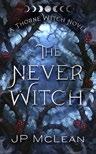
The Never Witch
Are you a member of the FBCW with a newly published book? Visit bcwriters.ca/launched to submit your book to an upcoming issue of WordWorks.
JP McLean | WindStorm Press | September 2025 | 978-1-988125-72-5 | $21.99
Adeline Thorne gets her first taste of magic when a rogue warlock, in an act of desperation, dumps his magic into her. Finally, the Never Witch had magic. The only problem? The warlock wants it back.
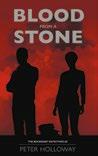
Blood from a Stone
Peter Holloway | Bonspiel Books | September 2025 | $24.95
Detectives Claire Kozak and Tate Boman search for a missing young woman as pressure grows. The trail sweeps through Tsawwassen and Ladner, exposing hidden secrets and unearthing long concealed sins.
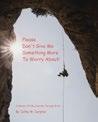
Please Don’t Give Me Something More to Worry About!
Cathy M. Carphin | September 2025 | 9780968749524 | $19.95
A series of life challenges from her husband’s stroke in 2015 through his death in 2019 led the author into her journey through grief to self-reliance. What treasures did she find at last?
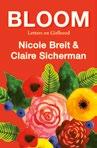
Bloom: Letters on Girlhood
Nicole Breit & Claire Sicherman | Caitlin Press | September 2025 | 9781773861692 | $25.00
A raw, searching, and intimate memoir, Bloom: Letters on Girlhood is a conversation between two acclaimed writers about silence and shame, and what it means to come of age as young women.
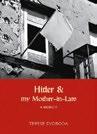
Hitler and My Mother-in-Law
Terese Svoboda | OR Books | November 2025 | 9781682196519 | $17.00
“A remarkable family memoir that stretches across major developments of the 20th century while questioning how the truth gets produced. Readers will be riveted.”—Publishers Weekly
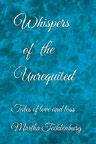
Whispers of the Unrequited
Martha Tecklenburg | October 2025 | 979-8268328400 | $14.99 (paperback) or $4.99 (e-book)
Short story collection of portraits of unrequited love. Stories are set in different eras and countries, with many that are contemporary and set in Canada.
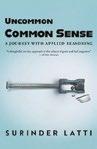

Surinder Latti | Friesen Press | October 2025 | 978-1-03-834199-0 |
$30.99 (hardcover) $16.99 (paperback) or $9.99 (e-book)
The concept, significance, and impact of Common Sense, including the role of Common Sense in a person’s life. Why do people fail to use Common Sense in the most obvious situations?
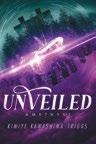
Amethyst
Kimiye Kawashima-Triggs | November 2025 | 9781069687807 | $23.99
A naive Apprentice Mage’s secret obsession with Reality could get her banished, if her careless curiosity doesn’t get her killed first.
Inside Out: Poems & Photos
Dakini Lynn Marlow | January 2025 | 9798330637997 | $21.99
These poems and photos are a celebration of imagination. Sometimes a wild ride, often with surprise. They reach deep within and splash far and wide, inviting your spirit to dive and soar.
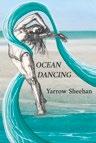
Yarrow Sheehan | Ensilwood Press | October 2025 | 978-1-990415-50-0 |
$19.95
Ocean Dancing is a lyrical memoir. From post-war Australia to the rugged coasts of Canada, Yarrow Sheehan explores motherhood, trauma, love, and aging with poetic honesty.
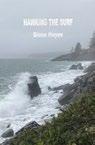
Hawking the Surf
Diana Hayes | Silver Bow Publishing | December 2025 | 9781774033890 | $23.95
Hawking the Surf is an invitation to wholeness. From earth to sea, Hayes steers us through heavy storms, her call for compassion permeating as we battle mortality in the search for meaning.
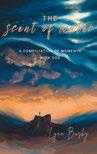
The Scent of Water
Lynn Busby | November 2025 | 978-1951611675 | $14.99
Lynn has a way of touching on the deeper meaning and purpose behind everyday life. Join Lynn in a journey of beauty and wonder.
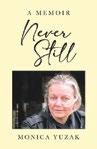
Never Still: A Memoir
Monica Yuzak | Tellwell Talent | August 2025 | 978-1-77962-064-4 |
$20.00 (paperback)
This book follows Monica as she comes of age as a doctor, mother, and woman through the physical, mental, and spiritual adventures of her first love—travel.
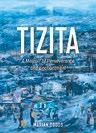
Tizita—A Memoir of Perseverance and Enchantment
Marian Dodds | Friesen Press | October 2025 | 978-1-03-834414-4 |
$29.75 (paperback) or $9.80 (e-book)
Infused with love for Ethiopia, Tizita (memory) challenges assumptions about gender equity, justice, and reciprocity in international work through an immersive journey with a Canadian volunteer.

The Zen of Poetry: For Beginner to Intermediate Writers
Cynthia Sharp | December 2025 | 979-8277518892 | $6.89 (e-book)
An updated release of the workshop material that made Sharp’s 2014 How to Write Poetry an awardwinning bestseller, winner of the Best Poetry E-book for Beginners, a list featured on CNN.
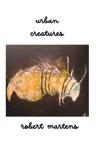

urban creatures
Robert Martens | Silver Bow Publishing | October 2025 | 9781774033814 | $23.95
Robert Martens’ book of poems, urban creatures, is a take on the displacement of the contemporary city. Its poetry carries the burden of his parent’s refugee exile, eased by gratitude and joy.
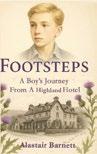
Footsteps: A Boy’s Journey
From a Highland Hotel
Alastair Barnett | October 2025 | 978-1-0698432-0-3 | $14.95
A memoir of a boy growing up as an evacuee in wartime Scotland, shaped by Highland life, early work, and the quiet lessons of resilience.
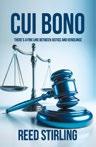
Cui Bono
Reed Stirling | BWL Publishing | December 2025 | 9780228638698 | $18.99
Cui Bono dramatizes the clash between justice and vengeance. In the court of moral judgement, conflict between personal betrayal and legal responsibility is resolved with Apollonian brilliance.
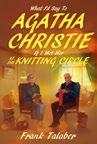
What I’d Say to Agatha Christie if I Met Her at the Knitting Circle
Frank Talaber | October 2025 | 978998052042 | $4.99 (e-book)
More off the wall stories including meeting your first wolf—or is he really a wolf? Late nights in a truck stop and the strange people that show up.
Hannah’s Dream
Hannah Ratnam | July 2025 | 978-1778093326 | $19.99 (paperback) or $5.99 (e-book)
Have you ever experienced something that completely changed everything for you? A terrifying and lifealtering prophetic dream was this moment for Hannah Ratnam.
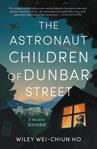
The Astronaut Children of Dunbar Street
Wiley Wei-Chiun Ho |
Douglas & McIntyre | March 2026 | 9781771624794 | $24.95
The Astronaut Children of Dunbar Street is an intimate geopolitical memoir about a family separated by distance and borders, split between Taiwan and Canada in the wake of shifting global powers.
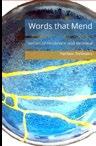
Words that Mend: Verses of Resilience and Renewal
Harilaos Stefanakis | October 2025 | 978-1739017507 | $15.00
Poetry slips past silence and defenses to remind us that even our deepest wounds can shine. This collection offers kintsugi-like poems that honor fracture while transforming it into beauty.
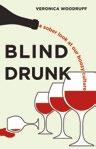
Blind Drunk: A sober look at our boozy culture
Veronica Woodruff | Tidewater Press | May 2025 | 978-1990160462 | $24.95
Combining research with memoir, the evolution of drinking culture in North America is reviewed, from morality-based prohibition to the science-based approach that drives the sober curious movement.

Roots in Nepal, Wings in Canada
Basu Dev Gaudel | September 2025 | 9789937994705 | $15.00
Roots in Nepal, Wings in Canada is a moving memoir of migration, identity, struggle, and hope—one man’s journey from the hills of Nepal to a new life and purpose in Canada.
BY DAVID BROWN AND MICHELLE BARKER
Many tools and systems now exist for writers to organize their ideas and simplify their writing practice. We’d like to honour the trusty (and perhaps rusty) axe. Yes, that thing leaning in the corner of your writing studio gathering dust or buried beneath a pile of blankets. We all know it’s there, but we like to forget about it because when it comes to revising your writing, wielding the axe is hard work and not a lot of fun. But if you’re up for the challenge and are willing to make big changes, the axe might become your best friend.
Most manuscripts are longer than they need to be. Most will also need at least one drastic revision to become the best version of themselves. This isn’t usually news that our clients want to hear, but in our experience as both editors and authors, it’s the truth. You’re going to have to cut and change things, and to do that you’ll have to sharpen your axe. This might sound painful, but we’ve found a few ways to lessen the pain.
Second: recognize that first drafts are meant to be exploratory. The idea of getting it right the first time is a myth that will only get in your way. If you start from the premise that your first draft is a process rather than a product, then the thought of making big changes simply becomes part of that process. Writing is rewriting. Revision is where you’ll spend most of your time. Recalibrate the ratio of writing to rewriting, and suddenly the axe is no longer a threat. It’s simply the next stage on the path to publication.
If you start from the premise that your first draft is a process rather than a product, then the thought of making big changes simply becomes part of that process.
Third: create a recycling file for your chopped material. We like to trick ourselves by calling this file Deleted… for Now. And yes, sometimes things that end up there do get recycled and used elsewhere. More often than not, however, when we review the material in that file much later, we realize it didn’t serve the work and is best sent to the trash.
Finally, embrace the “million words of crap” idea. In order to get better, you have to write. A lot. It won’t all come out smelling like roses. That, too, is part of the process.
Write. Chop. Write some more. Don’t fear the axe. It’s there to help you.
First: allow for time. Time creates emotional distance from the work. If you’re too close to it, you’ll only take baby swipes with the axe and won’t use this tool to its full potential. How much time? We suggest a minimum of six weeks, but preferably more—the time it takes for you to forget the story so that it feels like someone else’s work. We guarantee if you do this, not only will you see the errors you’ve made or recognize things that should be cut, but you’ll also be more inspired to do the work.
Michelle Barker and David Brown are awardwinning writers and senior editors at the Darling Axe, which offers narrative development, editing, and coaching. Their latest book is Fake Query Letters by Dead Authors. Learn more at darlingaxe.com


The Bumblebee Flash Fiction Contest
Deadline: 15 February Prize: $300
The Hummingbird Flash Fiction Prize
Deadline: 15 June Prize: $300
The First Page Cage
Deadline: 30 September Prize: $300

The Magpie Award for Poetry
Deadline: 15 April
First Prize: $500
The Kingfisher Poetry Prize
Deadline: 15 August Prize: $300
The Raven Short Story Contest
Deadline: 15 October Prize: $300

Commit these deadlines to memory
November 1, 2026
Open Season Awards | $6000
Three writers split the winnings
February 1, 2027
Long Poem Prize | $2500
Two winners share the prize
May 1, 2027
Far Horizons Award for Short Fiction | $1250
One winner takes the prize