WordWorks is provided three times per year to FBCW members and to selected markets. It is available on our website at bcwriters.ca and in libraries and schools across BC and the Yukon.
Maylon Gardner, Sustainability and Legacy Developer
AJ Gordon, Fiscal Operations Strategist
FBCW AMBASSADOR:
Frances Peck
EDITORIAL STAFF:
Rachel Dunstan Muller, Managing Editor
Diana Skrepnyk, Graphic Designer
Cindi Jackson, Christina Myers, Copy Editors
Cindi Jackson, Proofreader
WRITE FOR WORDWORKS:
Visit our submissions page at bcwriters.ca/submit.
ADVERTISING:
WordWorks advertises services and products of interest to writers. Contact hello@bcwriters.ca.
ACKNOWLEDGEMENTS:
The Federation of British Columbia Writers functions on the unceded and ancestral territories of many Indigenous Peoples and cultures. As champions of language, we cherish the oral and written traditions of the Indigenous Peoples of this land. We commit to uplift the voices and stories of marginalized peoples and communities wherever we work.
We celebrate submissions from underrepresented communities and are actively seeking contributions from writers of all races, genders, sexualities, abilities, neurodiversities, religions, socioeconomic statuses, or immigration statuses. We encourage submissions from both published and emerging writers. We believe our strength as a community is in the breadth of our stories.
The FBCW gratefully acknowledges the support of the BC Arts Council, the Province of BC, Creative BC, the Canada Council for the Arts, and the Magazine Association of BC.
We acknowledge and are grateful for the generous support of our sponsor, Hemlock Printers.
Letter from the editor Letter from the president
Thanks to a generous donation from TD Connected Communities, the FBCW launched a new project this spring: the TD Emerging Writers Mentorship Program. In alignment with our own mission and TD’s aim to amplify diverse voices and provide opportunities for emerging artists facing barriers to the arts sector, we set out to find participants from equity-seeking communities.
A committee of five ultimately selected nineteen applicants who had little or no previous publication history. These nineteen emerging writers were then paired with mentors from their own communities.
Over the summer, the emerging writers received encouragement and guidance as they pitched articles for WordWorks, wrote first drafts, and edited their final pieces. They participated in check-ins and social meetups, and attended a series of online workshops. These free workshops were made available to the general public as well.
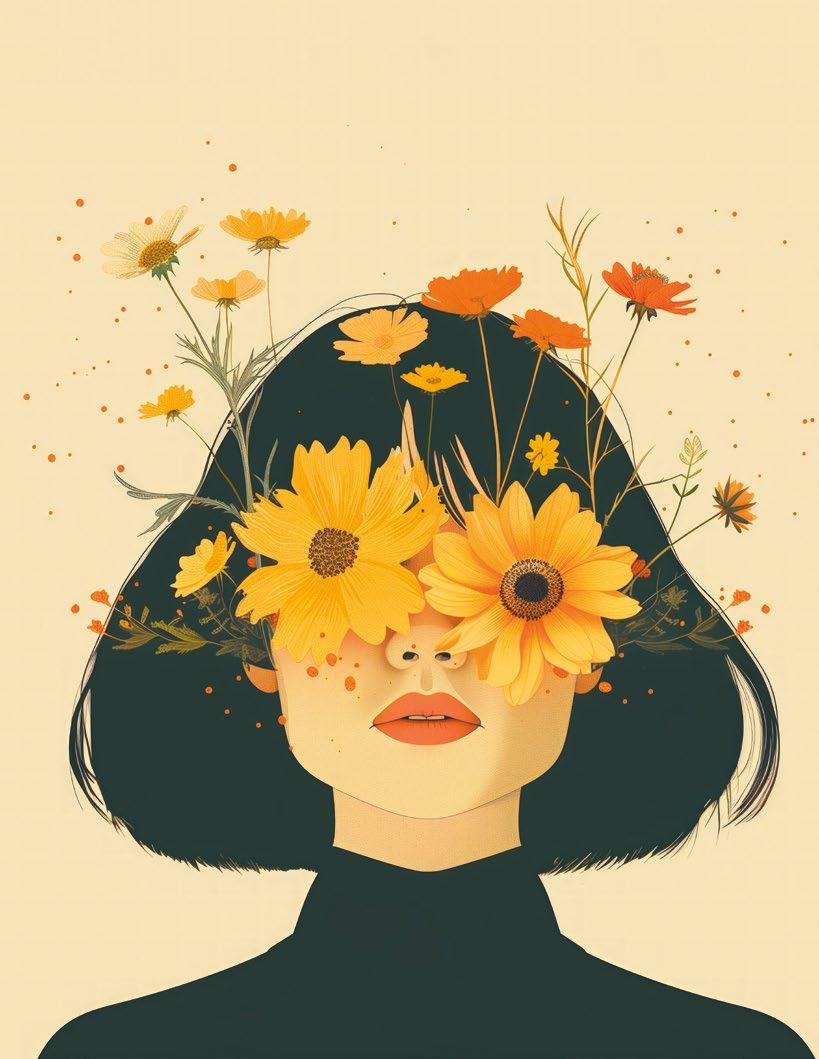
“Our Voices, Our Stories” showcases the final submissions of thirteen of these emerging writers. The remaining writers will see their work published online or in a subsequent issue. The resulting articles are by turns thought-provoking, moving, and inspiring. Some readers may find some of the material uncomfortable or even challenging; if that’s the case, please remember that it takes a tremendous amount of courage to write from the heart and then share that writing with the world. The contributors in this issue are nothing if not courageous, and I am grateful to each one of them.
A special note of appreciation goes to our mentors: Tara Avery, Gurjinder Basran, Dr. Finnian Burnett, Dr. Norma Dunning, Dr. Ruth Dyck Fehderau, Wiley Wei-Chiun Ho, Keiko Honda, Chelene Knight, JJ Lee, Tash McAdams, Anthony Nerada, Candie Tanaka, and Stephanie Watterson. We could not have offered this program without you.
Rachel Dunstan Muller Managing Editor and FBCW Press Director
All writers face the demon of self-doubt.
It’s a rite of passage.
“Am I doing this justice?” we ask ourselves.
“Probably not,” replies the demon.
Writing is an act of vulnerability. We create that which did not exist before our brains gave it form. To share these creations requires courage, because once the work goes out into the world, we can no longer control who sees it or what their reaction to it might be.
“Am I smart, clever, sensitive enough to tackle this?” we ask ourselves.
“Definitely not,” replies the demon.
As an editor, I frequently work with authors who are at least as worried about how their work will be perceived as they are about misplaced commas or glaring plot holes. But the reactions of others—readers, critics, awards committees, your mom—aren’t something over which we, as authors, have any control.
“What if someone hates it?” we ask ourselves.
“Oh, everyone will hate it,” replies the demon. Much as I feel confident reassuring my author clients that their stories are worth telling—they are, after all, the only ones who can tell precisely these stories in precisely those ways—I feel confident assuring every one of you who has ever wrestled with the demon of self-doubt that the moment it pulls out absolutes like always or never or everyone, you’ve won the battle. Because everyone hating your work is very unlikely.
Yes, someone will probably hate your words. Someone else will love them. Someone out there needs them. I hope they’re the audience you’ll think of the next time selfdoubt starts whispering in your ear.
Tara Avery President, FBCW Board of Directors
Restoring roots through historical fiction
BY HARKIT KAUR DHILLON
As part of my master’s research project in intercultural and international communication, I searched for references to “East Indians” in BC’s newspaper archives in the autumn of 2018. I wanted to understand how this label came to represent South Asian Canadians and how it had contributed to my own racialization as a second-generation Canadian. I thought that if I could pinpoint where “East Indian” came from and identify the meanings encoded within it, I could free myself from this false demonym that has followed me for as long as I can remember. I expected to find marginalizing representations in the newspaper stories, but I was surprised by how deeply the racist narratives affected me. These immigrants—who were often rendered nameless and came from small villages in Punjab like the ones my parents called home—were represented as “undesirables” and a “relentless horde” that threatened Canada’s status as a civilized white nation.1 If these people had been given a voice, what would they have said about the reported events? How would they have told their side of the story? These questions lingered long after I had completed my master’s research project. My thoughts kept returning to those early South Asian immigrants who had laid roots that would lead to my own birth here over half a century later. Who were these men, and later women, who embarked on a treacherous journey by sea and endured extreme hardship and racism to settle on Turtle Island?
My wondering slowly coalesced into an idea for a new project. After years of academic writing, I was intrigued by the possibility of reimagining these immigrants’ lives through historical fiction. By giving them a voice, I could restore the dignity that had been taken from them. I also loved the idea of telling underrepresented stories to counter racist representations of South Asian Canadians, past and present. Given the alarming rise in anti-South Asian hate in Canada over the past few years,2 I knew these stories were needed more than ever. Researching the history of South Asian settlement in Canada has given me many gifts. It has restored cultural roots fractured by racism and strengthened
my sense of identity and belonging. I was born and raised in Squamish in the mid-1970s, a few years after my parents immigrated to BC. The racism I experienced made me feel like an unwelcome outsider, and since there were few South Asians in my neighbourhood, I struggled to make friends and find belonging in the community I called home.
At school, I rarely made it through the day without hearing derogatory comments about my name, my body hair, and the smell of Indian spices in my clothes. “Go back to where you came from” was a common refrain used to remind me that my place was not here. I can still remember the hot sting in my cheeks when a male classmate refused to hold my hands during a partner dance we were learning in elementary school. He kept his hands tucked inside the long sleeves of his shirt but held them inches from my hands so the teacher would think we were doing the dance correctly. The rest of the class saw what he was doing and laughed, while I pretended not to be humiliated.
I wish my younger self had known that my roots in this land went back further than my parents’ arrival in the early 1970s—that they were almost a century deep. I wish I had known about the first South Asian immigrants, who had experienced similar challenges and had survived to lay the foundation that made it possible for my parents to settle here. I wish I could have felt safe to appreciate the richness and beauty of my Punjabi Sikh heritage sooner.
Writing a collection of fictional stories has become a surprising source of alchemy, transforming the complex intergenerational trauma I inherited. My ancestors lived through casteism, colonization, racism, religious persecution, and gender-based oppression. Depression and suicide affect at least three generations of my maternal family. My mother and an older cousin died when I was a child, and I never had the opportunity to meet my grandfather and one of my uncles. Who were these family members to whom I should have been intimately connected? What would they say about their lives if they could speak to me? It is difficult to accept that I will only know them through the stories other family members are willing and able to share.
Collection, Rare Books and Special Collections, University of British Columbia Library, JCPC-36-017
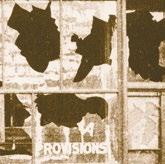
In creating historical fiction about the first South Asian immigrants in Canada, I have shifted energy stuck in the pain of loss into the generation of meaningful cultural knowledge. Transposing parts of my lived experience and ancestral lineage onto fictional characters, settings, and scenes rather than into memoir has also been a kinder, gentler way of working through my personal history. Writing fiction allows me to honour both personal and collective histories while offering me emotional distance and creative freedom. My first story is about a man who works at the Hastings Mill in 1907 just before antiAsian riots occur in three cities along the Pacific Coast, including Vancouver. When I describe him reciting Japji Sahib, a Sikh prayer that meditates on the nature of the Creator, and how his breath catches on the words “nirbhau nirvair”—which translates to “without fear, without hate”—I harness my own emotions in struggling to embody this core Sikh principle.
Through this writing project, the South Asian immigrants I had previously only encountered in historical newspaper stories have transformed into beloved ancestors—fictional, yet no less significant— who now sit beside my blood relatives on the branches of my family tree. My goal is to publish my stories to contribute to the invaluable work being done by historians, researchers, and artists to make South
Asian history in Canada more visible. Fiction offers an alternative but powerful way to communicate difficult truths, providing emotional safety for both the storyteller and the reader. In addition to creating space for intercultural awareness, understanding, and empathy, I hope readers from similar backgrounds will feel a deeper sense of connection and belonging as they see their history represented in these stories.
Harkit Kaur Dhillon is a writer and editor who specializes in uplifting underrepresented stories to build intercultural empathy and understanding. She fell in love with storytelling as a child during family visits to the local public library and enjoys the thrill of letting her imagination run wild inside the safety of story.
A Sikh man stands outside a Japanese-owned store damaged during the 1907 anti-Asian riot in Vancouver. This photo is the inspiration for Harkit's first historical fiction story. Credit: Japanese Canadian Research
Inheritance
The email appeared on New Year’s Day: Ricepaper Acceptance.
I felt my face flush. My first publication! It was a poem about going to Chinese school and the tensions of that experience. I had stowed it away for a few years, unsure what to do with it. When I learned about Ricepaper, a Vancouver-based magazine that showcases Asian Canadian literature, culture, and the arts, I thought that it would be the perfect home for my piece.
The next morning, I searched for the journal’s page and there it was—my poem, my name. I read and re-read the page, then sent the link to my sister along with a flurry of smiley emojis.
Who else could I share this with? Dad? He had been a writer in Hong Kong before we left to escape the uncertainty of the handover. Would he see this piece as an extension of himself?
But as I scrolled down, I came to the place in my bio that read, “as an immigrant …” It dawned on me that I had written about my childhood in my second language. Which meant Dad wouldn’t be able to read it.
of these texts, the importance of their rhythms. Long before I was aware of iambic pentameter, I was familiar with the musicality of Chinese poetry.
There was a shelf in our home that sagged under the weight of magazines and books hoarded over decades, even hoarded across continents. Collections of classical Chinese poetry were crammed between magazines and newspapers that featured Dad’s columns. I used to let muscle memory guide me to the volumes that had a photo of Dad published beside his writing. I could never read his expression, but I knew that behind the blank stare was a wild creativity, an energy that allowed him to churn out pages of text in a single late-night session. I never witnessed him at work and only heard these stories second-hand, but I could imagine him at his desk scribbling out his thoughts, his handwriting barely legible.
It dawned on me that I had written about my childhood in my second language. Which meant Dad wouldn’t be able to read it.
My first exposure to poetry was in Chinese. As children, my sister and I often memorized classical Chinese poems. While our parents prepared dinner we would stand in the kitchen reciting the verses that Dad had read to us. Initially, this was Dad’s way of instilling discipline in us, but the practice eventually morphed until it inspired in me a deeper curiosity about the art form. Dad would explain the meaning
The eloquence that came so naturally to him seemed like a superpower. I wished I could tap into it, that his superpower would pass to me. I wanted to be gripped by inspiration as he was, and so I revisited that bookshelf hoping for enlightenment. But if the source was in Dad’s writing, then my Chinese was never good enough to access it. I didn’t know which genres he dabbled in or the topics he wrote about. With time, my spoken language eroded too. I didn’t even have the vocabulary to ask him about his work. As English became my default language, I distanced myself from my Chinese name. I didn’t use it as
my middle name in high school as my peers did. Even though it is my legal name, I left it out of my university and job applications. I wanted to shed the weight of its archaic symbolism. When I published my first poem, it was under my English name. But now the realization that Dad would not be able to read my poem unearthed a latent mourning for my mother tongue. How could I share this milestone with him when I couldn’t even properly express what the poem was about, much less translate it for him?
Once, I told him about a haiku contest I had won and his reaction was tepid. He’d found out that there was no prize money involved. “It’s an honour to have been recognized!” I insisted. But I could tell from his silence that he expected more. I could hear him questioning my ambitions, wondering why I wasn’t aiming higher. Worse still, I could hear him criticizing my poetry for being driven by angst. Where was the depth, the intellect?
I decided against sharing my news with him. It was just easier.
I felt justified in my decision, convinced that after the hurdle of explaining things to him, he wouldn’t have anything encouraging to say. But even as I held fast to my decision, I wanted to know if it mattered to him that I had become a published writer, that even though we were separated by language we were both pulled to express ourselves on the page. I wanted to know if it mattered that I had published under my English name, a name that Dad never used for me. As I reflected on Dad’s role in my writing journey, I no longer wanted to drift away from my Chinese name as I had before. This was the name he composed for me. Composed because in traditional Chinese culture,
a name is like a poem. Each character is selected in balance with the other, each brushstroke counted to ensure harmony. Tung Mei—the clarity of winter, even though I was born in the spring. Because Dad knew that the fire elements in my birth date should be subdued by a quieter season, that my nature would otherwise be swayed by fleeting impulses. As if he willed stillness into my existence through his art. I’ve chosen to publish this article with my Chinese name, while I can still remember how to write it. Although my brushstrokes would be wobbly and the order misplaced, this is the name that came from Dad and connects me to him. At the end of the day, I write because he equipped me with intangible tools to do so. And maybe I will even share this article with him. Even though he won’t be able to read it, he will see that it was written by his daughter, . BY (ANTOINETTE CHEUNG)
Antoinette Cheung learned English from the Frog and Toad books and has had a soft spot for frogs ever since. Her writing adventures have included experimenting with micropoetry such as one-line and one-word poems. She is grateful for the mentorship of the effortlessly fabulous JJ Lee.
Words with no sound
BY CASEY SKINNER
In retrospect, there were signs. Specifically, reviews from preschool teachers about how I “wouldn’t listen” to them. But when I failed the required kindergarten hearing test and had multiple subsequent audiograms, nobody could deny it. Initially, I didn’t realize just how different I was—I knew I was deaf, the clunky BTEs with blue sparkly earmoulds were undeniable—but I didn’t realize that people should be able to understand others with their backs turned, or at a distance of more than a few feet, or when the speaker was whispering.
The one thing I’ve been sure about for as long as I can remember is that speech is unreliable. Verbal words have missing vowels, consonants, and substance. Most people will say things like “I just said that.” But they weren’t facing me when they spoke. Or they were leading me somewhere. They lowered their voice halfway through the sentence. The room was too loud or the ceilings were too high. The environment has to be perfect for me to understand verbal speech. And the auditory world is rarely perfect.
Unlike verbal speech, books and writing are perfect for me. All the words are simply there, laid out on the page and available anytime I wish to view them. No complicated guessing system required. I write without consciously thinking. It’s as natural to me as I imagine speaking is to hearing people.
The one thing I’ve been sure about for as long as I can remember is that speech is unreliable.
Of the many genres of writing, fiction is the one that grabs my attention the most. It allows me to create alternate worlds, since the physical world was never truly available to me. My mother recently told me I was so entranced with writing fiction in middle school that she had to set up meetings and study sessions with my teachers to try to convince me to write nonfiction. It’s still that way, really. Right now I should be studying for the LSATs but I keep thinking about a story I’m working on. How’s that guy gonna get away with that …?
In university, I read the Epic of Gilgamesh. It was originally written on stone tablets, but historians haven’t found all of them. The story follows Gilgamesh as he goes on an epic quest and then it jumps to an entirely different day. One minute Gilgamesh is in a cabin for the night and the next he’s at the mouth of a cave. It’s confusing and is very close to how I experience all verbal speech.
Because the auditory world is unreliable, my world is visual and spatial. This perspective can have benefits; for example, I am great at weaving through crowds because I’m very aware of my own spatial position and that of others. I’ve seen that most people tend to rely on verbal warnings before they crash into someone.
When I write, I imagine worlds in which conflicts and challenges come from something other than discrimination, prejudice, exclusion, and misunderstandings resulting from failed communication. My protagonists are always part of a community—even if that community is a crime syndicate. I write for those of us who lack community and have experienced discrimination, in the hope that we can create a world in real life where we all belong.
Casey Skinner is a writer and disability advocate. They graduated from university with a degree in sociology and a drive to do right in the world. He has always loved writing, and especially writing aspirational stories about a world in which equity is intrinsic.
Entering the flow
BY FERIN WILLMS
“Just drop it,” I spat, brow furrowed, arms crossed.
Four years into our work, my therapist challenged me to start writing again. I had gone to see him about estrangement, intergenerational trauma, and overdue healing work—so why were we talking about writing? He said it was an intrinsic part of who I was and could be cathartic. For me, it was loaded: with pain, guilt, and ego.
Three years later, I purchased a laptop as an act of faith. Instead of feeling galvanized to create, I felt immense guilt and pressure whenever I looked at it. Guilt at having spent money on an old “hobby,” and at every passing minute that I wasn’t writing. I felt shame; I couldn’t write. Instead, I read about writing.
In Novelist as Vocation, Haruki Murakami states: “... if you want to express yourself as freely as you can ... ask ‘Who would I be if I weren’t seeking anything?’... The you who is not seeking anything ... is as light and free as a butterfly. All you have to do is uncup your hands and let it soar.”
After reading Murakami’s novel Dance Dance Dance, I was inspired by the protagonist’s journey, who went from apathetic freelance writing to deciding to write with a fresh perspective, to write without deadlines or external influences. I decided to create for myself, not from a place of pressure to create something “brilliant.” I realized my expectations had been unfair, holding me back from free selfexpression. When I started taking myself less seriously, I could finally write. My resistance had been trying to protect me from “failure”; in truth it inhibited me from joy. So, I turned on The Smith’s Strangeways, Here We Come, closed the door to my room, and smudged to clear my mind and spirit of anxiety. I opened the laptop and stared at a blank screen. First, I wrote something bad and then something worse. I kept writing without a plan or purpose.
I discovered I was doing exactly what I ought to be doing when I saw that a thousand words had poured out. Did I really write this? I thought when I read them back. I felt satisfied. I was having fun. There was a contentment in being able to process what I was feeling through my characters. Now when I’m not in this space, I am constantly yearning to return there.
My reason for writing became the flow: to feel at peace with myself and at home in my body, mind, and spirit. The result has been a creative outpouring that I never expected. In the last year, I’ve written a manuscript of over 88,000 words. Once I started, I couldn’t stop.
The flow is transcendent and endless. I think to myself: Can I be as free as a blade of grass moving with the wind, accepting things as they are? Taking up space with respect and humility?
When a writer enters flow, there is no sense of time, only you and your imagination, your inner world. It is intuitive, with no judgement or self-editing. You commune with a unique piece of yourself in the present. And so I encourage you—go play! Write as if you’ve got nothing to lose. If you are open and willing, you will enter the flow again and again.
Ferin Willms (she/ her) is a mixed race artist of Blackfoot and Canadian ancestry and an off-reserve member of Kainaiwa First Nation (Blood Tribe). She is an emerging writer interested in telling stories with integrity, curiosity, and authenticity. She is based in unceded Coast Salish territory with her husband and two children.
Unexpected poetry for a middle-aged dad
BY FRANCIS CHANG
“Are you really sure you want to be a writer?”
It was 2018 and I was a Canadian expat based in Hong Kong, sitting in an airconditioned meeting room in Singapore with a leadership coach. The multinational company I was regional general counsel for was going to be acquired by an even bigger multinational conglomerate, and I was thinking about pivoting away from corporate life altogether.
Earlier that year, around my fiftieth birthday, I received an email congratulating me for having flown one million miles with Cathay Pacific. In the meantime, my children were starting to leave home for college.
I could relocate to Shanghai and continue with a lesser version of my role if I wanted to keep working, but I also had the option of accepting a severance package. Did I want to move again and keep flying? Was my desire to write just part of a midlife crisis?
I first wrote short stories and poetry when I was in high school and college, taking creative writing workshops as electives, even winning an undergraduate prize. I dreamt of writing a novel one day, but as the only child of anxious Chinese immigrants, I felt pressured to follow a path towards professional success.
Staring at the tinted glass windows, I contemplated whether midlife was the right time to resurrect this youthful dream. The leadership coach warned me that writing was a lonely endeavour, one where rejection was the norm. Maybe not advisable for a middle-aged man whose identity was so closely tied to professional status.
She pushed me again: “Are you really sure?”
I didn’t hesitate. I was sure.
At the end of 2019, I left Hong Kong and my legal career to return to my hometown of Vancouver. When the pandemic hit, it was the perfect opportunity—time at home to focus on writing. I had witnessed plenty of corporate intrigue and had drafted thousands of pages of legal memoranda and contracts during my career, so writing a captivating, award-winning bestseller would be easy. Right?
As I struggled to write scenes and chapters, my novelistic ambitions were swiftly humbled. My early attempts were like the executive offices I had worked in before: artificially climate-controlled and far removed from most of the world. I had to start over.
I began with Writing the Natural Way by Gabriele Rico, which provides right-brain exercises to help inspire non-linear creativity. I then ventured further with writing groups, both online through the now-defunct New York Writers Coalition, and in-person through the Historic Joy Kogawa House. In 2022, I enrolled in the Writer’s Studio at Simon Fraser University, with the intent of focusing on fiction writing.
Through the process of writing and workshopping, I noticed what resonated more—or less—with readers. With early pieces that reflected my experience working in big law, I might receive feedback like, “Wow, huh. I’m sure glad I never worked in a law firm.” By contrast, a piece I wrote about putting away my son’s childhood Thomas the Tank Engine blanket as he was leaving for college elicited tears and encouragement to write more. Writing took me into uncomfortable territory for a middle-aged man—interior emotions that left me feeling vulnerable and exposed. My conflict from wanting to provide well for my family but working such long hours that I was effectively an absent father. The
exhilaration I felt— and still feel—when I get to experience my children’s lives viscerally, but with angst and regret about not being present enough in their lives. My worry that I pushed my children too hard towards success, without acknowledging that finding your own happiness is just as important. The writing pieces that seemed to resonate most were, effectively, conversations I wished to have with my family—a Chinese family for whom the words “I love you” seem awkward and insincere.
Many of these imagined conversations took the form of poetry, which is the complete opposite of legal writing. In law, writing is a means to an end, the goal being to express terms of agreement, explain a concept, or win an argument. Lawyers use narrative to persuade a judge or jury that their interpretation of facts and laws is the correct one; it is an intellectual exercise whose goal is to establish certainty, often through a ream of seemingly endless words. Legal writing is not meant to move the heart.
In contrast, poetry does not ask for meaning. Instead, poetry helped me unpack emotions and memories that did not have a right or wrong answer. Poetry, sometimes elliptical, made me embrace uncertainty and discomfort. Poetry, ideally concise, became my compass for navigating feelings of love, guilt, and the desire for forgiveness.
My first midlife creative publication was a poem about Chinese language cards that explored my mother’s frustration—as well as my own ambivalence—at my failure to learn Chinese, and ended with my speculation at how my kids might view my failed attempts after I have passed away. A poem about picking blueberries with my children, my wife, and her extended family was the original blueprint for what became my first published creative nonfiction
essay. I have been gifted the opportunity to read both of these poems to audiences and to get to know more writers in the incredibly supportive and encouraging Canadian and Asian writing communities.
Far from the loneliness my leadership coach warned me about, my midlife career pivot has led me to an extraordinary group of like-minded souls who look at things differently and have shown me how to take hold of life with just the right words. With the support of this community, I have embraced writing as a way to pare down the jumbled world into that perfect turn of phrase, that stanza with the rhythm of a beating heart. These writers and readers are like long lost relatives who have been waiting for me for all along; they have helped me find the words that speak to those people we call family—the ones who are born to us, and the ones who find us. We craft our words with the hope that they will eventually be found by and move other like-minded souls. For me then, writing is both an act of craft and a leap of faith.
Francis Chang is a Chinese Canadian who was born in Tokyo, grew up in Vancouver, and studied, worked, and lived in Montreal, New York, Toronto, and Hong Kong. Francis previously practised law for more than twenty-five years. He is a graduate of the Writer’s Studio program at SFU, and his work has appeared in Ricepaper, CBC First Person, and The Fiddlehead
The showgirl and the storyteller: How burlesque helped me find my voice
BY STORRI CHESSON
For the longest time I was a writer without a voice of my own. I was passable at telling other people’s stories, yet everything I wrote seemed flat and inauthentic. I know now that this was a consequence of hiding my true self from the world. There was a lie at the centre of my being, carefully concealed, yet poisoning everything I touched. I lived this false life for so long that I was no longer able to recognize where the lie ended and my authentic self began. I knew as early as kindergarten that I should have been born a girl instead of a boy, but that part of me was shut down hard. I grew up in a household where masculinity was valued above everything. It was a precious yet somehow fragile thing that needed to be carefully protected. Like soccer players blocking a penalty shot, hands over their cups, fearful of what one solid blow could do, so my parents guarded against any sign of femininity. My father insisted that we leave the toilet seat up as a matter of principle, for no son of his would ever dare to pee sitting down. My brothers, who were more naturally masculine, seemed to thrive, tumbling through the world like growing men while I sashayed gingerly after them. I was constantly in trouble for standing wrong, berated for how I held my head and hands, or the way I walked. Everything about me seemed wrong and I was riddled with anxiety and self-doubt. I could not find my voice and didn’t even have the words to describe how I felt. And so I grew up emotionally stunted, unable to speak my truth or move my body freely. When I finally came out as transgender many decades later, it was like being released from a cramped prison cell. The joy I experienced was indescribable.
Yet I soon discovered how differently men and women move through the world. The first time I tried to manoeuvre my way through a crowded grocery store
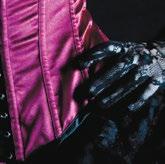
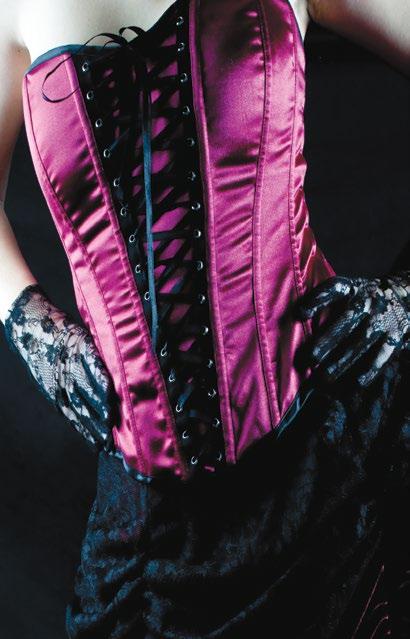
as a woman, I learned that the crowds would no longer part majestically before me, and that I would have to— daintily and with much apology—pick my way down the too-narrow aisles instead of just barging through. My voice changed too, not just rising in pitch, but altering in pattern. My speech became more playful, less direct and always with a questioning intonation, even when I wasn’t really asking a question? Like the bras and halter tops and body shapers I now wore, I found a woman’s life to be more restrictive than I had imagined. This began to inform how I carried myself and the way that I presented myself to the world. As a writer I was more unsure than ever. Then I discovered burlesque … Burlesque is the art of feminine movement. It’s bold and brassy and sensual at its core, in the way that women can be whenever we are released from the pressures and expectations of society. Above all it is an exquisite form of storytelling—campy, raunchy, and often funny as hell, the perspective of women laid bare. Our classes always started with a check-in: a circle of women sharing our stories, revealing our secret fears and shames. It was about forging a deep connection and learning to trust each other. It was about finding acceptance, despite our imperfections. There was a power in this unlike anything I had ever experienced as a man.
to the pounding music. Feeling the closeness of the air from all those bodies packed into a too-tight space, I began my dance—twirling and undulating, seductively peeling off layer after layer of clothing and tossing each one disdainfully to the side. I finished with a flourish and a wink to the crowd. Yet it wasn’t the full glam makeup, or the high heels, or the sexy lingerie that defined my experience. It wasn’t the dance itself or the reaction of the audience. It was me, a woman, unapologetically taking up space in the world and willing, finally, to be truly seen.
When
I finally came out as transgender many decades later, it was like being released from a cramped prison cell.
Signing up for burlesque class turned out to be a defining moment—not just for my transition, but in my evolution as a writer. Burlesque demands a raw honesty from its acolytes. It has a way of (literally) stripping away everything until at last one’s soul is laid bare on a stage in front of both friends and strangers, in the same way that we as writers must bare ourselves with our words. This process of uncovering and showing all that is within to the world, without apology, is one of the most difficult things to master as a writer. Writing can be an isolating experience and we can forget the need to share our humanity, thinking that our own voices do not matter. Yet if telling stories is what makes us human, then the ability to share is the most important tool a writer can possess. The first time I took to the stage felt like magic. I strutted out under the bright lights to a roaring crowd, drinks sloshing as they cheered and swayed
Some people say that a writer should remove themselves from the writing, that who they are as a person should not impact the stories they tell. Those people are wrong. As writers our voices are shaped by how we interact with the world, by the values, beliefs, and experiences we bring to our work. Telling stories is the most human thing we can do, and to have something worth telling we need to allow ourselves to be fully human. For most of my life I was unable to do that, but as I came into my own, no longer holding back or hiding my truth, that spark of authenticity flared. These days I approach the writing desk like a performer taking the stage rather than as an isolated individual sending words into the ether. My connection both to the audience and my humanity are more essential than ever before. In ways that I couldn’t have imagined, burlesque has helped me to become fully myself—and through that, I’ve found my voice at last.
Storri Chesson is a teacher-librarian, a writer, storyteller, standup comedian, and burlesque performer living on the traditional territory of the Kwanlin Dün First Nation and the Ta’an Kwäch’än Council, also known as Whitehorse, Yukon. She is currently writing a memoir of growing up as a deeply closeted trans person on a small farm in southern BC.
The writer’s retreat within
BY TIFFANY BUDHYANTO
Imagine yourself surrounded by a lush thicket, with birds whistling delightfully around you. You enter a cozy and welcoming cabin, tucked away from the chaos of life. The rustle of leaves in a soft breeze can be heard from outside, but it’s quiet enough inside that you are finally able to hear yourself think. With sunlight streaming through the large window and onto your warmed desk, you are ready to write.
This imagery may come to mind when we think of a writer’s retreat—a place where we can feel safe and inspired to record our stories. But what happens when a writer’s retreat is not a physical place, but an emotional one? A place not calm, but rather troubled? To me, a writer’s retreat is simply that: the unfortunate emotional distance I feel at times between the words I write and myself.
A withdrawal from one’s own writing can happen for many reasons. Opening one’s inner world to potential criticism or misinterpretation can feel extremely vulnerable, especially when it may come across as too personal or political. Self-censorship occurs so frequently for me that I often lose sight of what I truly think. I am certain I am not the only writer who feels this way.
it can also give us time to build courage. While we all have seasons of silence, bravery is ultimately required if we wish to write in a meaningful way.
But what happens when a writer’s retreat is not a physical place, but an emotional one? A place not calm, but rather troubled?
Yet the cost of staying silent is that we may lose sight of certain important truths. And others cannot learn about these truths if we never write about them. But how do we tell our stories confidently if our words are often misjudged or stigmatized?
Perhaps the act of telling the truth as we know it is its own form of defense. Perhaps our stories don’t need to be justified—they simply deserve to be heard. Maybe leaving our words for the reader to interpret is not a flaw, but the completing act in the writing process—a risky journey which all writers take alongside their readers, in whom they put their trust. While there are obvious benefits to silence—it can shield us from pain, and to an extent from criticism—
I’ve used a few practical methods to build confidence in sharing my voice. First, weaving in my truths subtly or partially allows me to share while still feeling a sense of control. Fiction is a great starting point for this. Second, I often don’t publish right away—but just seeing the words written down sparks courage to share with others in my close circle, who will provide honest but respectful feedback. This helps me reflect on why revealing something specific through my writing is important. Finally, I don’t wait for reactions after publication. I distract myself with other activities to give myself space before reading feedback. I hope you’ll find these approaches helpful too. While traditional writing retreats can provide a sense of motivation, the retreat within can be a hindrance to expressing our authenticity. By summoning the strength to share our voices, we may end up more frequently in those inspired woods, writing our next story with excitement instead of hesitation. The writer’s retreat can finally be a place where we are free to be (and write) who we are.
Tiffany Budhyanto is a writer whose works tend to explore identity and humour in everyday life. She lives in North Vancouver with her husband and young son.
Penmanship: A significant endeavour
BY SONIA KAUR
Despite his mere tenth-grade education in the early 1900s in India, my maternal grandfather was a powerful and compelling writer. He had impeccable penmanship and an extraordinary ability to convey his innermost feelings through letters. In the summer leading to my eleventh birthday, curiosity—and boredom—had me rummaging through the drawers of an old dresser in our family garage. His handwritten correspondence to his daughter, my mother, gave me valuable insight into my family’s history. Economic hardship and global scarcity dictated the paper and ink available to him, but he had saved enough money for his letters to ensure his messages would withstand the test of time. In that era, handwritten letters served as mementos—preserved and read indefinitely. I read pages of carefully selected words encompassing love, encouragement, grief, and reminiscence. The passages elicited a complex range of emotions with many layers of intensity; every word drew me in further, capturing my attention with visual appeal. My grandfather’s handwriting was remarkable: each calligraphic stroke made with deft intention, each word chosen with purpose. The ink, although faded with time, remained sharp and crisp against the backdrop of unlined paper. Each “t” had a ninety-degree line completing it, perfectly parallel to the invisible lines upon which they were placed. The indentations were consistently uniform in length, and the spacing between the words was even. Given his financial constraints and the cost of paper, he paid meticulous attention to avoid making any errors. He had perfected his craft, both in terms of sincere content and visual appeal.
Enter the nemeses of the modest pen: keyboards, phones, tablets, computers. With such a wide array of technology at our disposal, why practise the nearly-antiquated art of penmanship?
Much like the letters my mother has saved for decades, the handwritten works we create for one another still hold significant value. The art of penmanship adds a layer of meaning to a message; it becomes an imprint of our deepest thoughts and emotions in a way that can’t be matched by anything digital.
A handwritten knock-knock joke can inspire a child to make new friends at school. During periods of high stress in the workplace, an encouraging sticky note can uplift a colleague’s morale by reminding them of their contributions and worth. With a thoughtful poem written in a beautiful card, we can express our deepest gratitude to friends and family for delivering home-cooked meals during a time of need.
Handwriting is a therapeutic practice that transcends time and space, enabling individuals to share their unique experiences through their written work. We write to express emotions, offer support, share perspective, and display gratitude, often without full awareness of this humble yet significant act. Each stage in the process holds equal importance: choosing appropriate tools, selecting words to express ideas, and carefully forming each letter to promote understanding. Applying care and intent to each step not only engages the reader but also enables the writer to create a lasting impression. To the reader and writer alike, the act of handwriting itself becomes the inherited gift: a skill bestowed from one generation to the next.
Akin to the unconditional love and guidance my family and I experience through my grandfather’s handwritten letters—his legacy—our own handwritten words serve both as a means of communication and an homage to penmanship, an art worthy of preservation.
Armed with pilcrows and carets, Sonia is on a lifelong quest for literary satisfaction. She delights in weaving words to create healing tapestries for the heart, just as her immigrant grandmothers once used yarn to knit warm sweaters. As a secondgeneration Canadian raising daughters, she is thankful for the melting pot of experiences that have shaped her journey thus far.
Hi, my name is Demian and I walk
BY DEMIAN PETTMAN
If I had to name only one vital habit my dad instilled in me, it would be walking. (The second would be reading.) The practice of traipsing through changing landscapes has remained a stabilizing force throughout my life. So many songs sung, stories told, and thoughts carried to the rhythm of my own footsteps.
When I was growing up, no matter where our family travelled, a walk was part of the day’s activities. My favourite childhood games were “secretary,” tapping away on an old Smith Corona typewriter, and “reporter,” interviewing myself with a cassette recorder. I received a diary with a lock on my twelfth birthday, which became my most trusted confidante. At fourteen, I snipped a full-page footwear advertisement out of a magazine, filing it away with other “worldly” keepsakes. The ad showed Culsans, the ancient Etruscan god of passages, joyfully strolling in sandals above the words, Solvitur ambulando—“it is solved by walking.”
I admit, I am prone to rumination. Whether it is a result of a rural upbringing is hard to say, but considering I had a name before I was born, pondering identity is surely to be expected. Yes, my dad named me from a book title while I was still a genderless plum stewing in the womb.
for news of my dad’s recovery or imminent demise, I thought, maybe that’s true for our species as well.
Like the stroke of an omnipotent pen, a hemorrhagic stroke took away my dad’s ability to carve and paint, as well as his nomadic tendencies. His art fills our house, revealing moments in time, stories held in paint, wood, and stone. Rather than imposing his will on the medium, he felt what it asked of him, allowed himself to be carried along to an unseen destination.
A younger version of me rejected an artist’s life, having watched my dad struggle to balance creation with the need to eat, to make his way among the papered and elite. I was the first to go to university and I chose to study the natural world, where I had spent endless hours playing.
When I stand outside, the land is full: buzzing bees and birdsong, the terroir of saskatoons and bitter soapberry—sxúsem in Secwepemctsin ...
For an Indigenous Studies class, I interviewed participants and wrote an article about the Gustafsen Lake Standoff. I heard about armed soldiers in flak jackets and goggled helmets easing themselves through the forest, unaware of men silently standing like trees. One of the army’s German Shepherds crossed the battle line and napped in the defenders’ camp.
My father, Graham, is an 86-year-old Cree Elder whose life’s purpose has been to create art. Walking has well-served him; our bodies, a biological collection of pumps, benefit from movement’s kinetic energy to clean and awaken. Recently, he survived the medical system’s neglect based on his body’s age. In contrast, certain species of caribou depend on the herd’s most mature animals for survival. Hunting regulations targeting the biggest and oldest animals reduce the overall herd fitness. Sitting in a hospital lounge, waiting
Twenty-five years later, my path returned to the arts, as I changed careers from forest surveyor to freelance graphic designer-cum-writer. I continue to wander the same trail by my home. There is always something new in the neighbourhood: greeting fellow hikers, deer, trees and rocks, interspersed with wondrous observations. Like the day I saw a snake carrying a fish across the path all Richard Scarry-like, or when a gang of small birds followed me from shrub to tree to shrub, in conversational cacophony. Along with discoveries of weird bugs, changing skies, and lost trinkets, are all the things unseen to savour with my ears, mouth,
skin, and nose. When I stand outside, the land is full: buzzing bees and birdsong, the terroir of saskatoons and bitter soapberry—sxúsem in Secwepemctsin—the leaf-ruffling wind and perfume of cottonwood buds. But there is also the ever-present background of a nearby highway. In my neighborhood, an influx of new folks have moved to the subdivision. I feel physically hurt when the first thing people do is cut everything down, level their yard, then plant grass. It’s alien to me. Why would someone do that to themselves? I wonder if they know the opportunities they’ve lost.
In graphic design, you have a mere three seconds to grab a viewer’s attention. Successful entrepreneurship requires a succinct pitch and distillation of one’s business identity. Maybe that’s the appeal of lawns: they’re simple, compliant, and adaptable, without requiring too much inquiry. You can put up a sign one day, take it down the next.
After years spent looking for my reflection in other people’s eyes, I have turned to walking yet again to learn where I belong. The trail and my dad both teaching me how to live artfully, deciphering what’s in front of me, rather than imposing my limited human ideas, whether upon a trail, my yard, or the stories I hear and tell. I dress for comfort over fashion.
Today I step slowly, Dad and I closer now. He’s progressed from using a walker to walking sticks to a cane to aid his shuffling gait. We stop to sit on benches, where Dad greets passers-by and shares a secret word with friendly canines. He still wants to engage, to touch people with his art, to share his wisdom. He still prefers to walk alone sometimes too.
How others see us might be important, but it entails peering through so many different coloured glasses that they can never discern our true shape. Maybe it is better to exist in the moment, outside in nature, feeling our body like a wild animal might, part of something endless.
I am not the first to view words as containers, no longer important once an idea has crossed the distance between people. Words connect us, like an identity, a story holding a place of belonging. Like beads on a strand of sinew, walking is a progression of paragraphs that takes full form when returning to the point of launch—the design and beauty of the necklace only revealed once you step back from the work.
Demian grew up on Secwépemc territory, riding to a one-room schoolhouse on horseback. She sometimes feels misplaced into the wrong era, more scientific observer than participant in “normal” human behaviour. She runs her own business as a communications assistant for artists, First Nations, and non-profits. Through writing, she invites readers to discover shared humanity while challenging assumptions about power, appearance, and worth. Watch her film at https://www.youtube.com/watch?v=FqC39PrYsWs&t=20s
Surrender to transformation: Exploring queer identity through writing
BY GOLDBARD
It is often said that art imitates life—but sometimes we need our lives to imitate our art. I have written truths in songs and poems that I could never say out loud. Often, I have written the life I have desired as a fiction before I could make it a fact. It felt safer, somehow, to put my real feelings into my craft.
Case in point: many years before I was able to admit my sexual orientation, even to myself, I wrote a lesbian fairy tale. In the story, a mysterious illness befalls a princess after she is betrothed to a handsome prince. A wise sea witch sends her into the fairy realm with her best friend, a fairy named Celestia. If the princess can tell the witch what love’s true name is at the end of one year in the fae lands, she will be allowed to stay in the fairy kingdom with Celestia for the rest of her days.
But “Celestia and the Princess” was more than a story. How I was pining for my own Celestia to come. I felt trapped in a life I knew was wrong for me, but unable to imagine how I would survive in unfamiliar terrain. It is a bold feat to envision a life outside of the one expected of us. Writing a fairy tale removed that pesky obstacle known as “real life” that kept me stuck in old patterns.
groups; it’s about exploring the real truths of people who often struggle to come out.
The demands of a queer life mirror the demands of the written word. It takes courage to live or write authentically. It takes a certain disregard for the rules. You have to be willing to edit. Be willing to kill the character you once loved. Be willing to begin again. To surrender to transformation.
Joan Didion once wrote, “We tell ourselves stories in order to live.” Sometimes we are still playing out old stories that no longer resonate. Gay, straight, or gender queer, we all have moments in life where we have to reflect on where our stories are taking us.
Often, I have written the life I have desired as a fiction before I could make it a fact.
In these moments of uncertainty, when we are ourselves in a liminal space of transformation, we may be wise to mine the stories of our fictional characters for insight. They have already traversed the paths of possibility more freely than we ever could—and there is something to be learned from that journey.
I have been thinking a lot about character—about the stories we tell about our lives, and how those stories end up forming the basis for our selfimage, and thus our own character. Character as both a noun and a verb. We write our stories to the soundtrack of oft-repeated refrains. Do we paint ourselves as heroes, victims, or villains? What tired archetypes are we unconsciously recreating? What moulds are we ready to break? When we give ourselves the freedom to create characters who break those moulds, we often find more bravery to do so in our real lives. Crafting queer characters is about so much more than offering representation to marginalized
GOLDbard (they/them) is a queer blues songwriter, artist, poet, witch, and drag thing from the unceded territories of the Coast Salish Peoples in that moodiest of ports, Port Moody, BC. Their art centres Queer Joy as a spiritual practice, and their new single “Look Back” is an homage to all the Queer Creatives who paved the way for them to be a Professional Queerdo. Find GOLDbard on Instagram @goldbardcreative.
There is no word for what you are
BY KAYE GOSSELIN
It is the late 90s. I am eight. I get off the school bus and my brother greets me wearing one of my dresses. “Gay” is the only queer word I know, and we all know my brother is gay. How could we not know? It’s obvious. I grew up in a binaried world where if you weren’t gay you were straight, and if you weren’t a man you were a woman. Attraction meant something physical— sexual—and being either gay or straight was about who you were attracted to. The words were limited and lacked range when I needed nuance. I spent years questioning my identity, but all I learned was that none of the boxes fit.
Middle school. I am thirteen. People discuss who they think is cute, who is hot, and who is not. I don’t find anyone cute. I am only curious about people who look interesting and suspect this is not the same. A friend develops an intense crush on a boy she has never talked to and gushes about him for a year. The idea that she can be attracted to a stranger is so foreign to me that I wonder if the entire crush is fabricated.
effortlessly on men contort on my body, clinging to my hips and chest. One of my friends comes out as a trans man, but I am not a man. I am just myself.
What was missing: the word “nonbinary” and other language for trans identities. Even though I knew the word “trans,” the definition I had was limited. I knew I wasn’t a man, but femininity made no sense to me either. Womanhood required me to don a costume and wear a mask, perform a role that wasn’t mine with a script I was just expected to know.
Then I stumbled across a random Pinterest article about demisexuality—and something clicked.
What I needed: a dictionary of asexual (ace) identities that untangled the differences between sexual, romantic, and aesthetic attraction. Instead, I performed. I hung pictures of actors in my locker and remained confused until my mid-twenties. Then I stumbled across a random Pinterest article about demisexuality—and something clicked. However, in thirty-five years I’ve found only three ace characters in any form of media and one of those characters was a stereotype.
It is 2006. I am sixteen. A non-descript boy transforms into a lanky kid with swoopy hair and black nail polish. He wears eyeliner and skinny jeans. He is a boy and suddenly looks interesting and I like that, so I assume this is what attraction is. I vaguely want to be this boy. I am dismayed when the outfits that drape
For years I’ve watched queer characters evolve from the gay best friend in rom-coms to focal characters with complex viewpoints and stories. With this increasing representation the language has improved. Gone are the simplistic labels of my youth. Although I recognize that those early words provided a starting point, I often wonder how I would be different if the right language existed when I needed it. I will never have the answer to this question, but I do know that I will continue to share queer words and write queer characters with the hope that others will find themselves. I imagine them looking in the mirror and instead of seeing a mask, they witness their true face.
Kaye Gosselin is a trans nonbinary writer and poet of Metis and settler ancestry. They are currently working on their first novel, which explores themes of loss, family rupture, and the desire for forgiveness and belonging. Kaye lives on Treaty 8 territory in northern BC with their husband and children.
A long journey: Anxiety, writing, and an unexpected victory
BY WAI-KIN ARTHUR CHAU
By the time I was fifteen, depression had swept away all other sources of joy, but it failed to erode the happiness I felt creating stories. Writing was a beacon of hope, a defense against my illness. Eleven years later, my occupational therapist (OT) suggested that I meet other aspiring authors. I would go to a writing-focused meetup at a café—a normal, everyday event for others, but nerve-wracking for me.
When I arrived at the 49th Parallel Café my diagnosed social anxiety flared, which fed back into my depression and language delay disorder. I only needed people to make my breath shorten and my heart pound. Furthermore, the floor was split by a coffee counter. Not knowing where to go and too terrified to ask, I left. A no-show. But writing was the foundation of my recovery and even in moments when my depression made me believe my material was worthless, I felt the need to share it. So two weeks after the first attempt, I tried again. This time, I noticed the sign on the long log table. I walked up to one of the open chairs. I pulled it out. A middle-aged man asked, “Are you here for Just Write?” Too shy to say hello, I quietly answered, “Yes.”
I didn’t want to interact with anyone, but I did need to be there, so I took out a notebook, kept my head down, and penciled out my world. For the next two hours, I avoided any social interaction. I did my best to stay invisible, daydreaming, creating stories, like I was back in Hong Kong in grade two at recess, hiding in the washroom, avoiding social life … But I was there.
When I told my OT about my experience, she called it a milestone. Unfortunately I was down too deep to recognize my success. She urged me to introduce myself the next time I went, but I would need ten more meetings before I could speak up, saying my name in a barely audible voice. Anxiety will always weaken with repeated exposure, and these early meetups allowed me to become
more comfortable. I gradually gained confidence as I eavesdropped on the other writers’ chitchat.
Now my OT wanted me to share my work. She told me it would be a self-esteem building exercise, the next step for my mental health. I was only ready to try online, so I went on Reddit, r/fantasywriters, to share the first chapter of my fantasy novel. It was about a trickster getting ahead by conning the village noble out of his wealth. In retrospect I realize that it lacked fantasy elements and wasn’t very good.
The few replies I got were that the story had no hook, no explanations, and no emotions. I fell into a selfcritical spiral and wished I hadn’t posted. I took a week’s break before trying to fix the material—and then the moderators banned me for bad grammar.
I wanted to give up, but as I explored the deeper reason for this urge with my OT, I realized that if the fear wasn’t there, I’d make another attempt. So we came up with a different idea: join a public reading and critique group.
I haunted different writing groups, staying out of the spotlight, with no intention of talking with anyone, let alone reading my drafts aloud. My only goal initially was to fight my urge to leave.
With each exposure, I became more comfortable staying. Slowly and steadily, I built up courage. My desire to feel the pride of someone reading and enjoying my words began to overcome my fear of connections. But one more year of observation from the corner was necessary before I was ready to share my work. By this time I had switched to romance, which didn’t need magic.
I went to the Grind Café with a work in my backpack. The back room had a large table surrounded by writers, many with their own work to present. I don’t remember what they read, but I felt their work was better than what I’d brought. I had the beginning of a romance novel, which started with a successful man who wanted to date someone he had met in college. I hoped I hadn’t written about a stalker.
When my turn came, I didn’t have the courage to ask anyone to read it for me. Instead I left the room, embarrassed. I didn’t see who read my work; I didn’t hear the words read out loud. A participant came to the front of the café and told me to come back when they were finished. I was in no shape to listen to feedback, which I was certain would be gentle and general. It was a milestone that I was too anxious to celebrate.
Over the next five years, my fear gradually went down as other people continued to share my work. The Grind shut its doors during that time, but the group found somewhere else for their weekly writing nights. The group’s leadership changed, my OT was replaced by a paid counsellor, and I returned to fantasy. My work was now blossoming into a trilogy about a nobody who became a divinity by mistake. She learned that the magic system of her world caused more problems than solutions. The story captivated readers with its character-driven storyline.
As I became more comfortable with the group, I stayed to listen to my passages being read aloud by others. I came early to help set up and stayed later to clean the tables. Meanwhile, everyone continued to urge me to read my work myself. Finally it was time. I picked a passage that I had spent countless hours revising and refining and I knew people would like.
My anxiety increased as I entered Vancouver Community College’s cafeteria to read that evening. I was scared that I had made people angry by saying I’d read. I was scared that I would start reading wrong. I was scared that no sound would come out. None of that happened. When I started, there was a cheer— which covered any hesitation. Soon, my attention to my words drowned out any lingering nervousness. I finished the reading to satisfying applause.
That first shared reading was a victory—and one of the few anxiety-free milestones that I was able to enjoy.
Wai-Kin Arthur Chau’s love of writing came from the extra writing class he received as a supplement for his language disability. Writing later became the foundation for his mental health recovery. He is currently working on a high fantasy trilogy.
Writing myself back to life
BY JUSTINE CLARK
People are meant to express, if not to others, then at least to ourselves. We’re not built to hold things in. All waste must pass; all offspring carried only for a set time.
As a neurodivergent woman, it was hard for me to express anything in a way others seemed to understand. To me, neurodivergence is best defined by one word: difference—and not in a quirky or aesthetic way. Reality is shaped by perception, and for neurodivergent people our perception is different, so our world is different.
For years communication was a confusing charade made of rules I couldn’t keep up with. I struggled to talk to people because I didn’t know how to talk to myself. I didn’t know my first language.
Writing became that language.
As a child, I thought having a “voice” was a privilege, reserved for people who were older, smarter, or more experienced. A small Black girl from the Caribbean couldn’t add much to what had already been said. But if voices are only for those at the top of society, the majority will suffer under the weight of their silence. Therein lay the problem.
Silence isn’t an ordinary burden. It transcends lifetimes and generations until it becomes cellular. It can start with something as small as not speaking up when someone says your name wrong. Throughout primary school, I was either Justin Bieber or Justin Timberlake. It was occasionally funny, so I felt no need to correct it. My lack of a voice and lack of boundaries were one and the same.
Later, I realized this didn’t work. My silence had become a silver chain around my throat, and every time I opened my mouth to speak it only squeezed tighter. Instead, I started to write. On the page, things moved from deep within my subconscious to the surface. I began to understand the things I’d always hated or questioned about myself. Writing connected every flaw and misstep, building a golden bridge to a deeper awareness of who I was.
At first, I journaled to be present with myself and what happened around me. These writings were just for me. They were too young. Too precious to share. But since writing had become so necessary, I had to find a way to do it without feeling vulnerable. After spending enough time writing facts, I decided to try fiction. These words were easier to show, because I could hide what was real under what wasn’t. The urge to silence myself didn’t arise if I told myself that it was only a story. And yet, stories are their own kind of truth. They reveal what our voices can’t and reach places we may never go ourselves. Writing became not only survival, but also communication between myself and a world from which I once felt cut off.
Communication can take many forms—through music, movement, images, and touch. But for me, writing is how I finally found connection and clarity. Undoubtedly, there are many people like me whose first language is the written word but don’t know it. I implore such people to have courage and face whatever ugly truths may be keeping them silent. Within each of us lies a voice that we will never truly hear, unless we learn to listen.
Justine Clark is a Jamaica-native fiction and poetry writer based in Langley, BC. She is currently completing her English degree with a concentration in Creative Writing at the University of the Fraser Valley. Her work often blends reality with the surreal, exploring themes of family, identity, and race. Beyond writing, she spends her time engaging with music, film, and visual art.
Reflections from our emerging writers
We asked the emerging writers in this special issue of WordWorks how they were impacted by their participation in the TD Emerging Writers Mentorship Program. Here’s a glimpse of what they had to say:
I learned a great deal from a very talented writer, who made me more confident in my writing. I felt very well-matched with my mentor and found our commonalities made me more comfortable in sharing my thoughts and selfdoubts as an emerging writer.
—Tiffany Budhyanto (Keiko Honda*)
The FBCW’s TD Emerging Writer Mentorship has been like connecting with extended family—I’ve felt a sense of kinship and discovery meeting other writers, both emergent and those much further along in their writing careers.
—Francis Chang
(Wiley Wei-Chiun Ho)
My mentor made many edits, but he didn't tell me to stop writing altogether, like some people in my life had implied I should do. This encouraged me to consider sending more story pitches to publish additional works.
—Wai-Kin Arthur Chau (JJ Lee)
Having both a mentor and an editor guide me through the process of bringing an article to publication seemed daunting at first … The reality was that they were there to support me and help take my writing to the next level. They did this with
kindness but also a business-like approach that was oddly reassuring.
—Storri Chesson (Tash McAdams)
I have come to appreciate how much of a mental game the pursuit of writing can be. To write is to cycle backwards and forwards through excitement, self-doubt, anxiety, disillusionment, and persistence; to revise is to go through this process even more intensely. Essentially, I’ve learned that to write is to be brave.
—Antoinette Cheung (JJ Lee)
Chelene’s feedback encouraged me to approach revision as an opportunity for discovery rather than simply correction, which has shifted the way I engage with my drafts. Just as importantly, I gained insight into how to balance my writing practice with the other areas of my life.
—Justine Clark (Chelene Knight)
I’m incredibly grateful to my mentor for her guidance with refining my essay, navigating writing challenges, and developing a writing process that works for me. The program has been transformative and I deeply appreciate the support I’ve received to keep writing my stories.
—Harkit Kaur Dhillon (Gurjinder Basran)
I was paired with the hilarious and talented Dr. Finnian Burnett and every meeting we had was filled with so much joy and laughter. Getting to share in their expertise both in the craft and business of writing was invaluable to me.
—GOLDbard (Dr. Finnian Burnett)
Experiencing first-hand what happens after a piece is accepted taught me a lot about the administrative side of writing and removed many daunting unknowns. Overall, I gained valuable knowledge from the program and am now confident I have the skillset to move my writing career forward.
—Kaye Gosselin (Tash McAdams)
Having access to the knowledge of industry experts and connecting with fellow emerging writers helped stave away any feelings of self doubt; this reaffirmed my belief in the power of community.
—Sonia Kaur (Stephanie Watterson)
The timeframe allowed me to steep in the words, rewriting several versions before the whole became clear. I also experienced how much deep and detailed work is required to arrive at the finish line.
—Demian Pettman (Dr. Norma Dunning)
I was paired with a mentor that was similar to me and could provide personal insight into a personal piece of writing. If I had a mentor who didn’t understand my point of view, I’m certain my piece would not have been as good.
—Casey Skinner (Dr. Ruth Dyck Fehderau)
Working with Norma Dunning has been a privilege, not only because she’s an experienced writer and incredible teacher, but also because she brings Indigenous grace, wisdom, and humour to the table.
—Ferin Willms (Dr. Norma Dunning)
* names in brackets are mentors
member MILESTONES
Alexander Boldizar’s The Man Who Saw Seconds won the 2025 Locus Award for best sci-fi book of 2024, along with the Mark Twain Prize for best satire. Simon & Schuster is releasing a new audiobook version on September 23, and a French translation is coming soon from Éditions Gallmeister.
Laurence Hutchman will publish the third volume of In the Writers’ Words with Guernica Editions in 2026. This book will include interviews with BC poets Lorna Crozier, Robert Hilles, and Tim Lilburn.
Eva Kolacz recently published her fourth book of poems, Untamed: Lyrics and Erotics, with Ekstasis Editions. She wrote these poems when she was in her 20s in Poland. The book was reviewed in The British Columbia Review by Carellin Brooks.
Two members of the FBCW, Lillian Au and Bill Engleson, are among the thirteen authors in the Tidewater Press recent anthology release, Not the Same Road Out: Trans Canada Stories, edited by K.J. Denny.
Crime Writers of Canada shortlisted Peter Holloway’s book, The Roaring Game Murders, for Best First Crime Novel.
Angela Douglas’s Every Fall was a finalist in two categories for the National Indie Excellence Awards—Suspense and Cross-Genre.
Indie author Nancy McNeil launched a children’s picture book, Becki and the Trailer Kids, in June. This is the first book in a four-book series called Becki’s Farming Adventures. Written for 5-to8-year-olds, it’s available from Amazon.
Vansh Malhotra’s self-published chapbook, Power of a Pen, has been nominated by the North Shore Authors Collection committee for a special event in fall 2025. He will be attending the Writer’s Studio at SFU in September.
Make No Mistake, a feminist thriller by Julie Wise, is now available as a paperback and e-book as well as a podcast on Apple and Spotify. Written in 2019, it’s a story of resistance and hope as a corrupt president and his billionaire friends dismantle democracy, starting with women’s rights.
LAUNCHED!
new titles from cw members
Are you a member of the FBCW with a newly published book? Visit https://bcwriters.ca/launched to submit your book to an upcoming issue of WordWorks.
Talking To the God Who Heals Broken Lives
Neall Calvert | April 2025 | 978-0-9879967-2-5 | $9.99
Similar to Neale Donald Walsch’s Conversations with God series, this is a 340-page dialogue with a Higher Power that shows how hopelessness and despair from childhood trauma can be transformed.
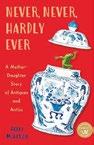
Never, Never, Hardly Ever: A Mother-Daughter Story of Antiques and Antics
Kelly McKenzie | March 2024 | 978-1-7382395-0-4 | $22.95
Kelly McKenzie spills the tea on working over a decade with her Type-A mother at their successful Vancouver antique shop. This comingof-age memoir is a mother/daughter story of antiques and antics.
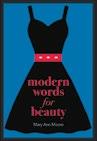
Modern
Words for Beauty
Mary Ann Moore | house of appleton | April 2025 | 978-0-9783474-9-9 | $20.00
In a magical blend of wonder, poignancy, and whimsy, Mary Ann Moore captures the nuances of every day in her new collection of poems, each of them unique and memorable.
A
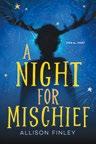
Night for Mischief
Allison Finley | Orca Book Publishers | August 2025 | 9781459840867 | $10.95
On Halloween night, a spirit of mischief starts bringing decorations to life and turning kids into real versions of their costumes. Only Syd can save her friends and reclaim her favourite holiday.
“This well-written, character-driven novel features headstrong, independent, interesting, damaged women (...) they all inspire the reader’s sympathy and admiration.”—Kirkus Reviews
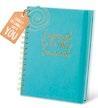
Inspired to be Me Journal
Megan Holley | May 2025 | B0F1T3ZFBC | $29.99
This guided journal helps women shift their mindset, raise their energy, and reconnect with who they truly are—one inspired, soul-nourishing page at a time.
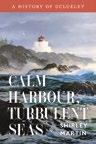
Calm Harbour, Turbulent Seas
Shirley Martin | Harbour Publishing | July 2025 | 978-1-998526-16-1 |
$39.95
Lifelong Ucluelet resident Shirley Martin weaves accounts of shipwrecks and sea serpents, settlement and dispossession, tragedy and resilience, to depict the vibrant history of her hometown.
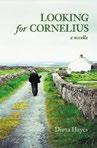
Looking for Cornelius
Diana Hayes | WIPF and Stock Publishers | September 2025 | 979-8-3852-5033-2 | $21.00
A poignant tale of homecoming told with a keen sense of poetic detail; a journey steeped in Celtic lore, lilting music, ghosts of the past, and the heart’s longing for the ancient unknown.
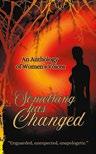
Something
Has Changed
The Pen Pals | July 2025 | 978-1-0694395-0-5 | $20.00
Something Has Changed holds nothing back as five women weave heartache into poetry, trauma into art, and hopelessness into inspiration. They will pull you into their world while turning yours upside down.
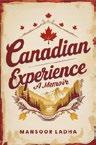
Canadian Experience
Mansoor Ladha | July 2025 | 979-82936477361 | $20.39
Canadian Experience is a deeply personal and compelling memoir that traces the author’s journey from Tanzania to Canada—a powerful narrative and a valuable contribution.
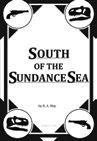
South
of the Sundance Sea
R. A. May | January 2025 | 1230008698193 | Free e-book Outlaws. Colonialism. Dinosaurs. A dark, genre-bending story about a corrupt regime buckling under its own failures while our diverse and morally grey heroes do their best to survive. Now on Kobo!
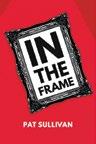
In the Frame
Pat Sullivan | Iguana Books | August 2025 | 9781771807326 | $20.99
When a high-profile gala fundraiser goes hilariously awry, the longsuffering staff of a Toronto art gallery scramble to save what remains of their competing agendas.
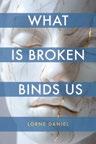
What is Broken Binds Us
Lorne Daniel | University of Calgary Press | September 2025 | 978-1-77385-639-1 | $18.99
What is Broken Binds Us is poetry of loss, acceptance, and hope. The poems explore the disruptions that shape us: enslaved families, hidden histories, addiction, estrangement, and bodily trauma.
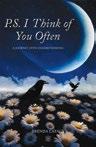
P.S. I Think of You Often: A Journey into Understanding Brenda Laface | May 2025 | 978-1-998537-01-3 | $24.99
A raw, honest journey through memory, loss, healing, and the strange beauty of becoming. Written by someone who has walked through fire into an understanding of how trauma can lead to transcendence.
The taste of a raindrop and other Haiku of the West Coast
Sheila Weaver | October 2024 | 978-0-9694140-3-2 | $20.00
While COVID-19 turned our lives upside-down, all around us life went on, inviting us to observe, to connect deeply with all that surrounds us with wisdom and beauty. Will you come along with the author?
With pieces by KT Wagner, JM Spronk, Alison Colwell, Rhea Rose, and others, the characters in these deliciously dark stories and poems invite readers on an adventure that crosses traditional boundaries and challenges expectations of the many forms a fairy tale can take.
Named & Nameless
Susan McCaslin | Inanna Publications | August 2025 | 9781834210032 |
$19.95
Susan McCaslin’s Named & Nameless honours and embraces nature’s vigour and human love. “How many poets evoke enough hope to praise ‘a pearl of great price / hidden in everyone’s core?’”—Brian Bartlett
Ladder to Heaven
Katie Welch | Wolsak and Wynn | October 2025 | 978-1-998408-27-6 |
$26.00
A speculative story of addiction and resilience, as well as alienation from a bewildering, rapidly-changing world, that simultaneously highlights the noncentrality of humans on our planet.
Poems that search for meaning in a world rife with injustice, yet find solace in the world’s small beauties—a spiritual quest that keeps love alive in a “darkening world.”
In Spite of Thunder
Thomas Mark McKinnon | August 2025 | 9781069647405 | $24.95 (paperback)
$9.99 (e-book)
FBI agent Frank Adler’s life is upended when his daughter vanishes on what should have been the trip of a lifetime. No witnesses. No demands. No trace.
The Courage to Be You
Andre Piquette | Friesen Publishing | August 2025 | 978-1-03-834696-4 |
$25.00 (paperback)
Poems sharing about our life struggles to become persons of integrity in today’s world of interconnectivity.
Beyond Blue: Stories of Heartbreak, Healing, and Hope in Postpartum Depression
Christina Myers & Oga Nwobosi | Caitlin Press | October 2025 | 9781773861739 | $26.00
Beyond Blue brings to light the hidden struggles of postpartum mental health in an honest, compassionate, and empowering collection of stories that breaks the silence and fosters hope.
The Adventures of Clementine Lemons & The Lost Stones of Dohi: Earth Stone
Ireland Von Mueller | Erin Miller Books | September 2025 | 979-8-218-63076-8 |
$19.99
A world on the brink of collapse. A chest hiding a secret salvation. An ordinary girl with the key to unlock it all. The first book in an epic series featuring a modern take on hidden world fantasy.
Voice: Showing up honestly
BY DAVID BROWN AND MICHELLE BARKER
We’re grateful to contribute to this issue, knowing the theme “Our Voices, Our Stories” carries many layers. As white, cis, straight authors, we don’t face the same pressures or risks that many emerging writers from marginalized backgrounds navigate. We also recognize that while some barriers to publication have started to lift, many remain. We’re honoured to support and cheer on those pushing through, reshaping the literary landscape in ways that will deepen what’s possible for all of us.
As writers, we all wrestle with voice. What does it mean to sound like yourself on the page? How do you write the stories that matter to you?
For us, voice has been less about “finding” and more about learning to trust.
Michelle started writing in high school with journal entries and one-act plays. When she eventually turned to short fiction, she had no idea what voice even meant and certainly no idea how to find hers. Didn’t everyone just want to sound like Margaret Atwood? Years of reading, writing steadily, and taking classes didn’t get her any closer to finding her voice. The turning point came when she decided to write something “just for fun,” the way she wanted it to sound, without caring if it would sell. It felt right. Authentically her. And there it was.
David’s teenage years were full of bad poetry: earnest, cryptic, half in love with its own mystery. Even now, he catches himself writing in code, hinting rather than stating outright. But for him, voice has become about meeting the reader halfway. He wants his writing to carry some of that inner rambling, but not at the cost of shutting anyone out. He keeps coming back to clarity—how to
ditch obscurity and say things plainly. His voice is still evolving, always caught between what feels true inside and what might actually connect.
For both of us, voice comes from showing up honestly. Writing toward the things that stick with you, scare you, or make you ache—regardless of whether they’re what’s selling or popular. Letting the work carry your own patterns of thought, wonder, frustration, or longing.
If you aren’t sure what these things are, ask yourself: what do you like to read? What kinds of films/shows do you like to watch? Spend some time reading the work of your favorite authors and try to pin down what it is about their writing that appeals to you. Try Ray Bradbury’s trick of keeping lists: what you hate, what you love, what you’re afraid of, what you can’t stop thinking about. This was how he found his voice. Voice is personal. It’s also shaped in relationship—to readers, to community, to history. If we have any shared insight from our different paths, it’s this: your voice is already in you. The work is to listen for it, trust it, and let it show up on the page.
Michelle Barker and David Brown are awardwinning writers and senior editors at the Darling Axe, which offers narrative development, editing, and coaching. Their latest book is Story Skeleton: The Classics. Learn more at darlingaxe.com.