







































Ballance and Farmlands are committed to helping you manage your soil for quality feed and productive stock – starting with these key factors:


Our expert advice will help you make the most of your fertiliser.

Every 10 tonnes of Ballance fertiliser you purchase through Farmlands gives you an entry into the draw to WIN your choice of these great prizes:



We’ll create a plan to use the right fertiliser at the right time to reach your production goals.



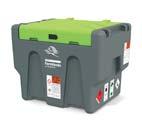


TRUCKMASTER
430L UTE TANK

RRP: $1,550
Efficient transportation and delivery.
• Easy lifting with minimised fuel spillage.
• Environmentally safe, leak proof design.
• 5 year guarantee.



We’ll help you get maximum production from your fertiliser investment.








BALLANCE
OPTIMAL N PACK
Including:


• Total N nitrogen soil tests.
• N-Guru nitrogen analysis.
• 500kg of each of our smart nitrogen products: SustaiN, PhaSedN and PhaSedN Quick Start.




Women in Agriculture
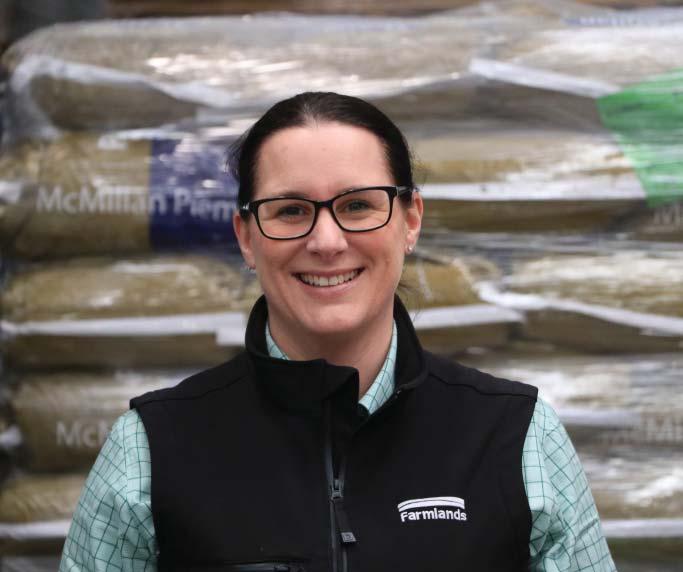
5 Farmlands staff profile
5 From the CEO
7 Farmlands 5 Minutes
8 Wendy Avery, the resilient other half of The Resilient Farmer, talks about her battle with breast cancer
13 Book extract from The Resilient Farmer, by Doug Avery
15 Choices Rewards
16 Awards nomination shines light on rural leader
19 Young Grower title goes to Bay of Plenty woman
23 Women half as likely to be injured as men Co-operative News
24 Farmlands' HeART of the Community project brings Mr G to Gisborne
28 Trial explores how to use data to comply with rules
30 Farmlands Fuel
31 Sales campaign raises $92,000 for Vanuatu
50 Buying Power Promise
63 Farmlands Real Estate
Plan365 Nutrition
33 Diet, exercise critical for yearlings’ sales success
35 Minerals review prudent step in pre-mating period
36 Setting targets essential for successful weaning
37 Rapid diet switch can put ruminants at risk
Plan365 Rural Infrastructure
39 Environmental concerns prompt stockwater plan
41 Innovative activator puts safety first at farm gates
43 Holes found in argument for cheap silage covers
Plan365 Forage and Arable
45 What you take off the paddock must go back
46 Vulnerable brassicas get targeted tool against pests
47 Higher yields the payoff for weed control plan
49 Conditions perfect for broadleaf weed invasion
51 Maize the first option for high-yield cropping
53 Improved genetics give red clover better finish
55 Yield, insect resistance drive ryegrass choice
Plan365 Animal Management
57 Automation puts farmers in control of weight data
59 Lamb trials prove worth of effective first drench
Plan365 Horticulture
61 Assist flowering and fruit set for high-yielding crops
4
OCTOBER
Hamilton Ladies Night
Join Annabelle White at the Mystery Creek Events Centre for a night of fun.
13-15
OCTOBER Equidays
Visit us at Mystery Creek Events Centre for demonstrations and seminars across all equine diciplines. More details on page 32.
25
NOVEMBER
Waitetuna Wind Farm Trail Run





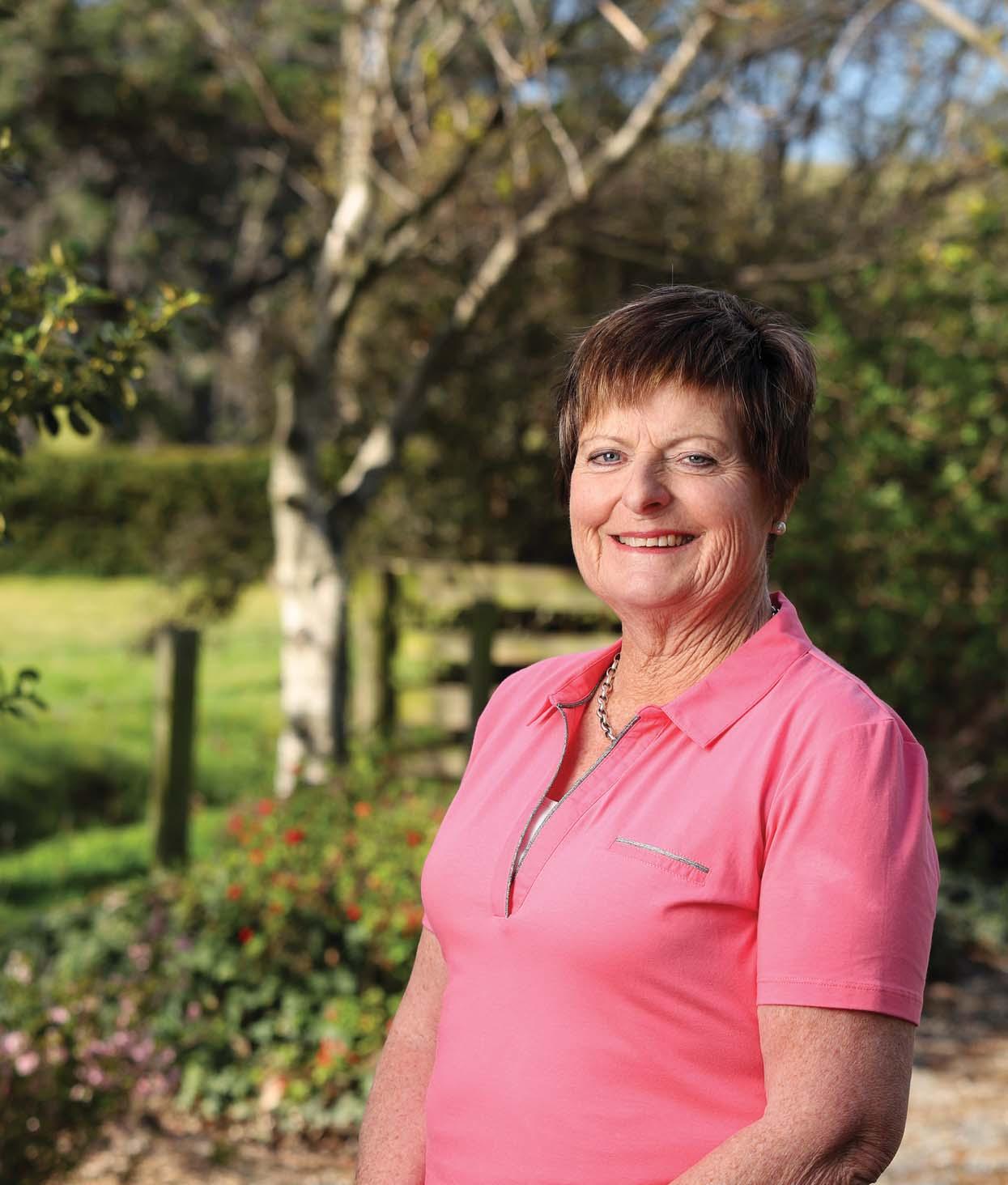
ON THE COVER Farmlands shareholder and breast cancer survivor Wendy Avery is sporting pink to show her support for Breast Cancer Awareness Month.
NEXT ISSUE – INNOVATION
The future of horticulture, and ensuring integrity in the food chain.
Sign up for a 5km, 10km or 21km run through the Waitetuna Wind Farm, near Raglan and help raise funds for Waitetuna School. Email trailrun@waitetuna.school.nz for details.
Q: What is your current role at Farmlands?
A: Technical Field Officer based at Leeston.
Q: What do you enjoy about your job?
A: I love working in the country and being able to go up shareholders’ driveways, form long-lasting relationships and provide the best service for them and their businesses.
Q: Tell us a bit about your family.

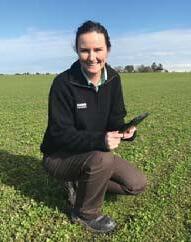
A: I grew up on my family’s farm in South Westland with my parents, Daryl and Carole. I also have a sister, Alex and a brother, James, who both live and work on the West Coast.
Q: What do you like to do most in your spare time?
A: I enjoy the outdoors and a bit of travel. My most recent trip was to America and Mexico with my partner, Jacob.
Q: What do you think can be done to raise the profile of women in agriculture?
A: Women already make a massive contribution to the industry and I think it is important to support the profile of women in agriculture through the likes of networks, groups, events, awards and even with social media. Many women are stepping in to leadership roles and this all helps and needs to be celebrated within our sector. I am proud of Farmlands’ stance on gender equality, with the leadership team, board and more women out in the field representing the company.


200g butter, softened
½ cup caster sugar or raw sugar
1 tsp vanilla essence
1¼ cups plain flour
¼ cup cocoa
1½ cups cornflakes or crushed Weet-Bix Icing
1½ cups chocolate icing sugar
1 Tbsp butter, softened
1-2 Tbsp boiling water
Method
1. Preheat your oven to 180°C. Grease or line a baking tray with baking paper.
2. In a large bowl beat butter, sugar and vanilla until light and fluffy. Sift in the flour and cocoa, add the cornflakes or crushed Weet-Bix then stir thoroughly until the mixture is combined.
3. Place heaped teaspoonfuls onto a baking tray, squeeze mixture together gently if necessary then press lightly with a fork.
4. Bake for 15-20 minutes. Cool on a wire rack before icing.
5. To ice, mix chocolate icing sugar, butter and 1 Tbsp boiling water at a time until combined, adding more hot water if necessary until icing is a spreadable consistency. Ice biscuits and top each one with half a walnut.


Welcome to the October issue of The Farmlander. We are now on the home stretch of our Regional Muster series and I thank those of you who have attended our events to hear about the future direction of your co-operative.
This issue of The Farmlander focuses on women in agriculture and their pivotal role in our industry. While there has been a lack of representation for women in leadership positions in the primary sector, it has been pleasing to see the next generation of leaders announcing themselves this year.
In 2017, we have a new female President of Federated Farmers and a female finalist for Young Farmer of the Year. Horticulture New Zealand’s Young Grower of the Year is female, as are the winners of the North Island and South Island Young Winemaker of the Year. Here at Farmlands, our new Independent Director, Julie Bohnenn, brings a high level of experience to her role. On page 16 of this issue, you can read a profile of Jess Strange, our Director of Marketing, who has been pivotal to the success of our HeART of the Community project.
Last month, we were also pleased to announce the latest addition to our Sales Manager team. Harriet Cameron has worked for our co-operative for many years and her hard work and dedication to our shareholders makes her the perfect fit for this important role.
Farmlands is committed to playing our part in fostering our next generation of leaders – both male and female. I hope you enjoy reading about the shareholders and staff who are leaders for the primary sector.
Kind regards,

Peter Reidie Chief Executive Officer
Farmlands Co-operative Society Limited
Notice is hereby given that the fifty-fourth Annual General Meeting of shareholders of Farmlands Co-operative Society Limited will be held at 3.30pm on Tuesday 7th November, 2017 at Farmlands Eskdale School and Community Hall, Hill Road, Eskdale.
Shareholders are invited to join the Directors and Executive of the Society for refreshments at the conclusion of the meeting. At this function, shareholders will be entered into a complimentary sweepstake in the Melbourne Cup that will run at 5.00pm.*
A TRIP FOR TWO TO MELBOURNE INCLUDING FIVE NIGHTS’ ACCOMMODATION, VALUED AT $3,000!
We look forward to your attendance at our Annual General Meeting.
Please RSVP by Friday 3 rd November to rsvp@farmlands.co.nz or 0800 200 600.
* Terms and Conditions
Katie Milne was elected National President of Federated Farmers in June.
As the new Federated Farmers National President, what do you bring to the role that is different to your predecessors?
I bring a grassroots farmer perspective. I’m less hands-on now but I have been a career farmer. I also did part-time work in the meat industry between milkings, so I have experience across the agriculture sector. I also bring a simple and earthy style to the way I connect with non-farmers. This is useful when reminding the general public that first and foremost, farmers feed families. How do you think the role of women in farming has changed since your parents’ time?
Well, in my household Mum was the farmer and Dad was the chartered
accountant, heading off to work each day in a suit! That was the exception then but it has changed. In most cases, women are now full partners on the farm. They bring different skill sets and the work is divided accordingly – on our farm [partner] Ian does most of the machinery stuff and I did pasture management and stock inventories. It used to be that the wife ran the home and the husband ran the farm but now it’s split down the middle. Rural women have definitely come out of the kitchen and are now in the office or the pasture. Is Federated Farmers doing enough to encourage and support women farmers?
The pathway is there for any woman who wants to come through, there are no barriers. We have leadership courses and they are open to anyone. We haven’t gone out and tried to lift our game there but there are lots of good examples. There is more we can do and there’s been a lot of

commentary around me being the first woman National President, which I hope encourages a few more women to come through. They just need to not be afraid to follow their passion. Do you agree that access to healthcare is affected by your postcode?
I absolutely agree. While some of us in rural areas have good access, others don’t – it’s the luck of the draw out there. I’ve been involved in pushing for better healthcare access. Advances like telehealth [online consultations] are OK but it’s great to be face to face with someone. And difficulty with access doesn’t help overcome the reluctance among many rural people to actually make an appointment and get something checked out. What challenges and opportunities are in store for the primary sector over the next decade?
Rural women have definitely come out of the kitchen and are now in the office or the pasture. “


A decade’s a long time in farming, especially given the rate of technological change. All over the world farmers and governments are coming to terms with managing nutrients such as nitrogen and phosphate. Technology will help there, keeping more available in the root zone for growth, so what's good for the environment can also be good for farmers’ pockets, so it’s a win-win. We’re on the verge of an absolute game-changer in agriculture with the technologies coming through, such as non-meat alternatives and so on. Around the world, big money is going in to food technology so the next 10 years will bring massive change and massive opportunity. I don’t know what I will be growing in 10 years but I do know agriculture will still be a bright shining star.
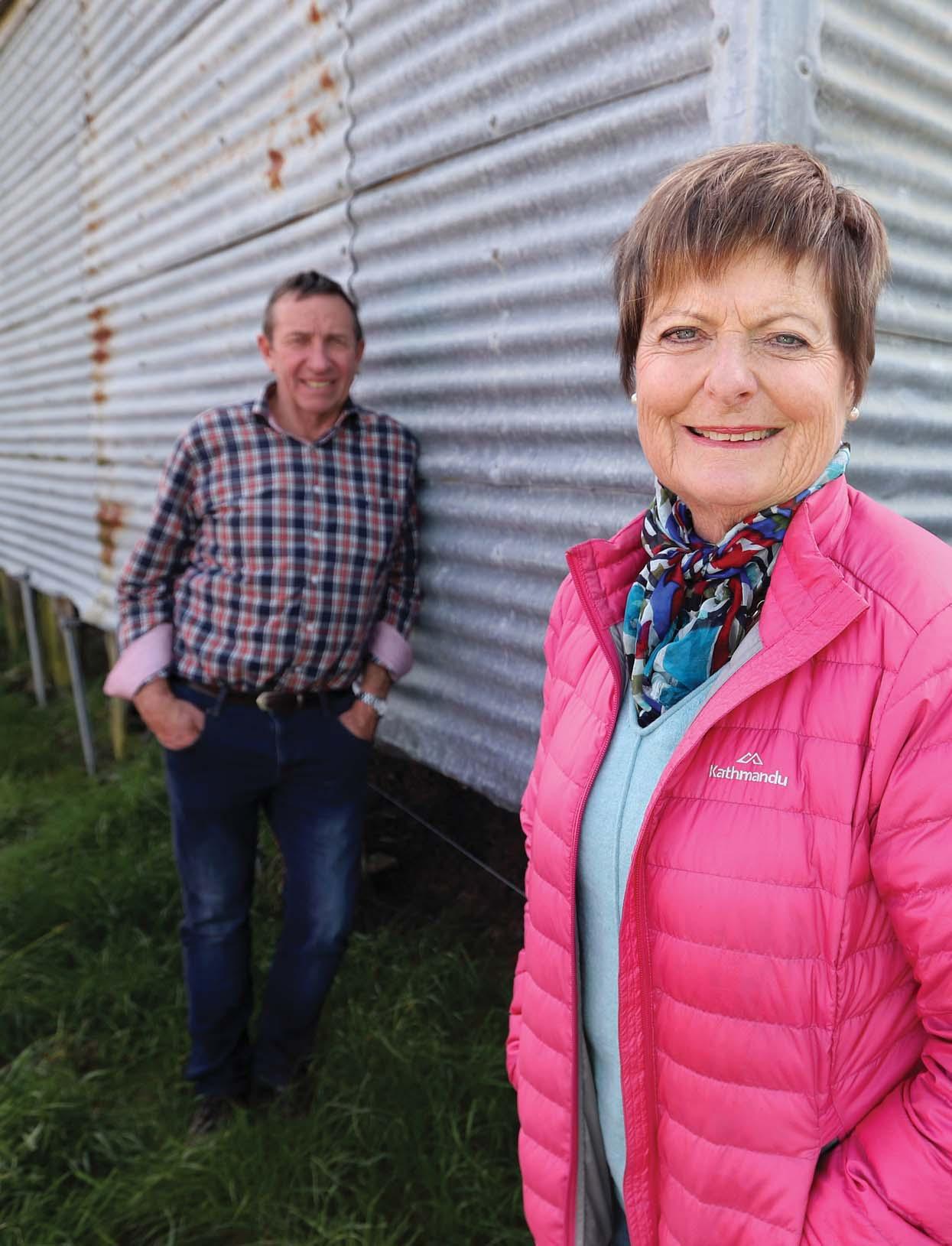



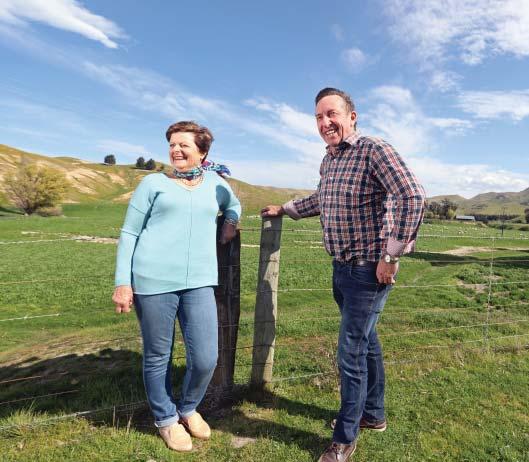
In farmer Doug Avery’s story of drought and depression, his wife Wendy has a supporting role. But Wendy also has a story of her own.
Wendy Avery stood at the desk of a Blenheim medical centre. She had just been told by the receptionist that without an appointment she could not get a mammogram that day, she would have to wait. “But I have this letter from my doctor,” replied Wendy, handing over the note she had received barely half an hour earlier but which she had yet to read herself. As the receptionist removed it from the envelope and Wendy gave it a glance, one word leapt out at her – URGENT.

“
Maybe I’d been a bit naïve and I hadn’t thought to take Doug with me.

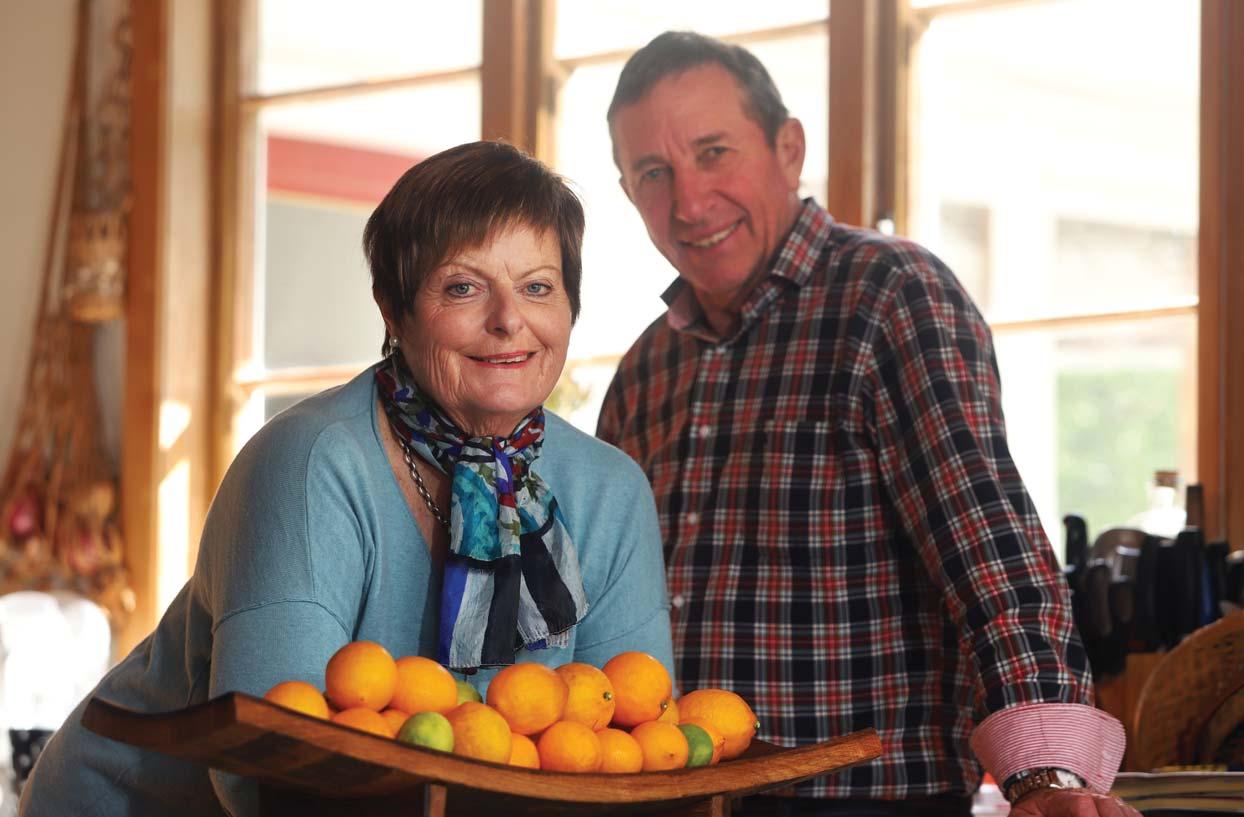
You may not have heard of Wendy Avery but you will have heard of her husband. Doug Avery, in his guise as The Resilient Farmer, has in fact been hard to miss over the past few months as he tours the country promoting his book of the same name. Written with Margie Thomson and published by Penguin, the book tells the story of a South Island farmer driven to severe depression by 8 years of unrelenting drought on the family farm at Bonavaree, in south-east Marlborough.
Through it all, Wendy displayed her own resilience. As Doug got angrier at the weather gods, he also drank more. Sometimes she feared for her own safety but increasingly she feared Doug would harm himself, or worse.
Doug’s book lays bare the depths of his depression but also his slow and steady climb back from that brink. Woven throughout is Wendy’s story, one of a rural wife and mother holding the family together as forces conspire to tear it apart. Wendy has another story too, of surviving breast cancer, and it’s one she wants to share for the same reason
Doug has shared his – to raise awareness among rural people of the need to reach out and get help when their physical or mental health is under challenge.
Until Wendy found herself in the medical centre waiting for a mammogram, that day in 1993 had been nothing out of the ordinary. Some time earlier she had found a small lump in
one of her breasts – she knew what to look for ever since she joined a bunch of other local Plunket mums at an evening on breast self-examination hosted by a Cancer Society volunteer. She took the find quite lightly – by her own admission there was a hint of denial in her response. Then one day she was in Blenheim and on the spur of the moment popped in to her doctor’s practice and asked if the lump could be checked out. She was told to take a seat and before long, ahead of other waiting patients, she was being examined by her doctor.
“I want you to go now for a mammogram,” she was told. “Right now?” Wendy asked. “Before I go home?”
“Yes,” her doctor said, “I want you to go right now.”
And he gave her the note for the radiographer.
Still Wendy was in denial. “I had the mammogram and I didn’t think much more of it,” she remembers now. “I had an appointment to see a surgeon and I still didn’t think much of it, I thought it won’t be anything too bad. And then it hit me when I walked in and it was up on the screen and I saw it myself. Maybe I’d been a bit naïve and I hadn’t thought to take Doug with me, so I had to take the news myself there and then and have a biopsy.”
Wendy had radical surgery in Wairau Hospital. “Probably the worst thing for me was that I had all my lymph nodes taken,” she says. “Now they only take one or two and test
The Cancer Society website, cancernz.org.nz, is full of information. Patients and their families can also call the society’s free 0800 CANCER line (0800 226 237) from anywhere in the country to talk to a cancer information nurse or ask what support is available, such as counselling from its trained medical professionals. The society has accommodation close to every major hospital in New Zealand. It also has over 3,500 volunteer drivers who drive patients over a million kilometres to their treatment, often from rural locations.
them and then of course if they do find [cancer] in the lymphatic system they need to go back for further surgery. But in my case they were all taken. As a result I have an arm that causes me a bit of grief but that’s all right.”
Once her own rehabilitation was complete, Wendy became a volunteer counsellor for the Cancer Society. “I found that work really rewarding,” she says. “Sometimes the first I saw of the woman was in hospital. I would go and visit with all the material we gave out and some of them told me later that I walked in and they thought, gee she doesn’t look like she’s had cancer – yep, I can do that too.”
She tells of visiting a young woman recently who was the same age as Wendy was when given her diagnosis. “And I went to visit this girl and I thought, oh she’ll think who’s this funny old woman in the community coming to visit her. I took a meal and she just had so many questions she wanted answered and I was able to answer them.
“One thing she wanted to do was shelter her children from what she was going through and I said don’t do that, be completely honest with them. And she thanked me for that.
“I remember the kids asked why I was bringing them dinner, and I said because mummy’s special and she needs looking after at the moment. And they just ran

Breast Cancer Foundation NZ is a not-for-profit organisation that depends on donations and fundraising for its work in breast cancer education and awareness, medical research and training grants, equipment, advocacy and supporting women with breast cancer. Look out for the pink buckets during the foundation’s annual street appeal, 13th and 14th October.
off and were playing and I said to her, they do need to be told that, they need to know the whole story.”
Wendy’s up for any question, and always has a prop at hand – “Usually they don’t understand what a prosthesis is going to look like. I’m very happy to actually show them!”
For those with younger children, Wendy tells them of the Cancer Society’s library – “You can get books out to read to the kids to explain exactly what you are going through.”
Wendy has no complaints about the speed or quality of her treatment but she was less impressed with what came next. “In the earlier days we didn’t get the same funding for prosthetic breasts as girls in Auckland, which seemed incredibly wrong. It was costing the same money if you lived in Invercargill or here or Auckland. And from memory Auckland got so much more. So in the earlier days I had to pay the difference, which was hundreds of dollars,” she says.
With other women, Wendy successfully lobbied the Government for equality of funding throughout the country. “And that was great,” she says, “but it should have been like that from day one.”
No argument there from Mike Kernaghan, Chief Executive of the Cancer Society. His organisation believes everybody should have equitable access to treatment and support if they are diagnosed with cancer, no matter where in New Zealand they live. To help enable this, the society has physical locations all across the country, from Northland right down to Otago and Southland. All its work is paid for through donations and fundraising.
The society’s latest battle on behalf of people who live rurally is its push for a review of the Government’s National Travel Assistance Scheme, which it says is disjointed and overdue for a review.
“When you've got an 89-year-old woman whose husband is 91, they live rurally and travel 97.1 kilometres for their treatment when the threshold is 100 kilometres, they can't stay overnight and they can't get any funding for their transport, that’s just not fair,” Mike says.
both breasts. You’re feeling for any lumps or thickening in the breast tissue, even up into the armpits. in front of a mirror. Can you see any physical changes to the breast shape, skin or nipples? any breast changes with your doctor. Even if you’ve had a mammogram recently.
The number of women being diagnosed with breast cancer in New Zealand is still going up – it’s well over 3,000 a year – but survival is improving, thanks to earlier detection and improved treatments. However, more than 600 Kiwis die of breast cancer every year. Breast Cancer Foundation NZ has a long-term vision of zero deaths from breast cancer; getting there will mean pushing for new frontiers in early detection, treatment and patient support.
The foundation’s Chief Executive, Evangelia Henderson, says that with breast cancer still on the rise, New Zealand urgently needs better care planning and enough highly qualified medical staff to meet patient needs.
“Faster access to life-saving new drugs and more clinical trials for breast cancer patients who have run out of treatment options are vital. We must relentlessly push for breakthroughs in detection and treatment, and thanks to people’s generous donations, the foundation is doing just that,” she says.
The final word goes to Wendy: if you are reading this and are concerned about any changes, “be pro-active. If you notice something abnormal, get it checked out ASAP. If you are eligible, get on the breast screening register.”

Actress Jacqueline Nairn shows you how at anychanges.co.nz WATCH
|
In this extract from his book The Resilient Farmer, Doug Avery recalls how he and Wendy responded to her cancer diagnosis.
That same year, Wendy found a lump in her breast. I gave little thought to the possibility it could be bad. She was so well, and only in her thirties! But she went to the doctor and it wasn’t long till the phone rang. Wendy answered, and I saw her face drop. It hit us hard. Cancer – we couldn’t even say the word. We had to wait six weeks for Wendy’s preferred surgeon to come back from holiday, and it was a terrible six weeks of uncertainty and fear.
We struggled. One of Wendy’s sisters took the children down to Christchurch for a week, and Wendy and I went to Hanmer. That would be good, we thought: we’d had so many lovely times there. But the cancer came with us and nothing seemed right. It was an early lesson in the worthlessness of running away. When you pack your bags, you pack your problems along with the rest of your gear.
We talked and talked between ourselves but we couldn’t say that dreaded word to other people. Wendy was approached by a friend to see if she could help cater an event, and Wendy couldn’t find the words to say, “Look I won’t be here, I’m going to be in hospital.” Instead, she just stared straight through her friend, who snapped, “I’m not asking you for a million dollars, for goodness’ sake. All I’m asking is for you to help.”
When she eventually learned the truth, that poor woman felt so bad that she organised six other women to come to the house after Wendy was back home, and they did a whole day in the garden. That was special.
After our long wait, we finally met with the surgeon and talked about what lay ahead. Immediately, we settled down; we knew what to expect, and suddenly Wendy knew she could cope. She’s never looked back.
I took Wendy to Wairau Hospital for a mastectomy, delivering her to a stark hospital ward. The next day when I returned the room was so full of flowers I could hardly find her. The nurse said
she had never seen such an outpouring of love.
Some time later, Wendy took a counselling training course through the Cancer Society, and for years she counselled other women diagnosed with breast cancer. She’d get a call, usually from the surgeon who had just made the diagnosis, and she would meet with women before their surgery. She loved helping them, and she travelled with them right through their journey.
No one is the same after they’ve been through a cancer experience. Wendy will tell you it made her appreciate every moment of every day. It made her feel, Look, I don’t have to answer to anybody. If I want to do something I will do it.
One day she had taken her lunch to eat outside under a favourite tree. It was a lovely day and so she stayed out there a while, reading a book. Up the drive came a stock agent. He looked at her and said, “Caught!”
Wendy bristled. “I don’t have to justify sitting here reading to you or anybody.”
He looked a bit surprised, but there’s no point feeling guilty about simply enjoying the day, enjoying the peace, taking time to rest in a busy day. Life’s too short.
Wendy will also tell you that going through cancer was nothing compared with having to live with me through my bad time, when I became a bitter, blaming man. But that was still three years in the future, and 1993 hadn’t finished with us yet.



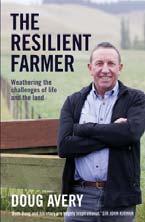

Farmlands has five copies of The Resilient Farmer to give away. To be in the draw to win, go to www.farmlands.co.nz/bookcompetition and enter your details, or address an envelope to Resilient Farmer Competition, Farmlands, PO Box 271, Christchurch 8053. Remember to include your contact details. Entries close 13th October. Winners will be notified and also listed in the November edition of The Farmlander.






We’ve gone pink to show our support of Breast Cancer Awareness Month! With more than 1,500 rewards from your favourite Farmlands Card Partners, Choices Rewards has plenty of pink products to choose from.















Jess Strange is Farmlands’ Director of Marketing and a member of the cooperative’s Leadership Team. Jess was a finalist for Co-operative Leader of the Year in Co-operative Business NZ’s 2017 Annual Awards. This was for her work on the HeART of the Community project, which has partnered Farmlands with street artist Mr G to paint murals on 15 stores across the country.
Jess, you’re a leader in one of New Zealand’s largest and most influential co-operatives. What do you think makes a good leader like yourself?
The decisions that a leader has to make can be complex but as long as you communicate well, you’re clear on what you are trying to achieve, you share the vision and you’re able to build trust and motivate your team – you’re a leader. For me personally, my motivation is to make our staff and shareholders’ lives better every day and every decision I make is about doing that.
You were an awards finalist for Co-operative Leader of the Year. How was that experience?
Amazing. I didn’t even know that I was nominated so when my name was called out on the night I was more than a little shocked. I am honoured and humbled that I was nominated. I work with a lot of amazing people and I really don’t see myself as any more special than the great leaders I get to work with every day. It was also inspiring to be surrounded by so many
worthy nominees on the night and I felt privileged to stand alongside them. One of my biggest drivers is my belief in the co-operative model and it was obvious at the awards that this same passion was a contributor to the examples and stories shared on the night. Why is the HeART of the Community project so special?
The HeART of the Community project is one close to my heart. We have partnered with an unbelievably inspirational artist, Mr G, to bring art
to rural New Zealand. We have already completed four – in Paeroa, Invercargill, Putaruru and Gisborne. This project is special because our local staff and the community select the subject to be painted. For our latest mural in Gisborne, the subject was Te MoanaNui-a-Kiwa Ngarimu, who was killed in action in Tunisia during World War II. For his bravery, Te Moana-Nuia-Kiwa Ngarimu received a Victoria Cross. This mural was so impactful because not only does the mural now recognise and commemorate a farmer and soldier known for his bravery and courage, it provides an opportunity for the community to remember someone of incredible significance that may have been forgotten. What do you like about working in agriculture?
I love that we get to have a real impact in our shareholders’ lives. We
are more than just a shop or card to our 66,000 shareholders. We are the backbone to their farms in many cases. People are very honest and that is refreshing to deal with. They invite you into their homes and share their stories – good and bad – with you. Who do you most admire as a leader?
I am fortunate that I have unlimited access to two extremely hard working and inspirational leaders on a daily basis. Honestly, most of the business lessons I have learnt have come from my parents. When I was 16, they had the vision to see that New Zealanders wanted a healthier lifestyle so they formed The Village Press, which is the largest producer of olive oil in New Zealand. They built that business from the ground up and along the way I learned so much from them. They taught me to always push
boundaries, to always care about your customer, the importance of building a strong brand and that hard work and dedication will always be rewarded. Any advice for the next up and coming leader in agriculture?
Don’t do it unless you have a passion for it. I’ve worked for Farmlands for nearly 8 years and I can honestly say that every day I’m confronted with a new challenge. It’s important to push yourself out of your comfort zone so you can be better and you can deliver better results every day. Finally, I would say respect the team around you. I’m fortunate in that I have an amazing team of Farmlanders, all across the country, who support, coach and inspire me every day.
For more on Farmlands’ HeART of the Community project, see page 24.






In 1962 locals met
in
this hall and helped shape the future of farming and horticulture in New Zealand. 55 years later that chance has come around again.
At Farmlands Co-operative, we’re sticking around to make sure horticulturists and farmers will be getting a fair deal well into the future, a future full of new ways of doing things, new crops and new successes.
Technical Manager - Hawke’s Bay
Utilise your extensive horticultural knowledge and pip fruit expertise to become our horticultural technical and R&D go-to person, ensuring our shareholders and staff receive the most up-to-date technical information.
Technical Advisors - Pukekohe, Hawke’s Bay, Tasman and Central Otago
Utilise your horticulture expertise to deliver the right advice to help improve our shareholders’ businesses. Develop enduring customer relationships while delivering top service to our shareholders. Opportunities exist for highly experienced and up-and-coming horticulture experts.
If you’d like to be part of the way Farmlands helps shape this future, visit www.farmlands.co.nz/future
The future of our $5.6 billion horticulture industry is in excellent hands as shown by the talent of this year’s Young Grower of the Year, Erin Atkinson of Te Puke.
Erin, 30, a technical advisor for Apata Group in Te Puke, was named Young Grower at an awards event in Christchurch after a long day pitting her skills, knowledge and experience against four other finalists. She is the first woman to win the title, which is in its 11th year.
Erin, who won the Bay of Plenty regional in February, also secured the national titles of NZ Young Fruit Grower and Young Grower of the Year, along with the Best Business, Best Innovation and Best Speech awards.
Runner-up for Young Grower of the Year was Scott Wilcox of Pukekohe, who is also NZ Young Vegetable Grower 2017, while third place went to Ben Geaney of Waimate.
Erin has a Bachelor of Science in Horticulture and has spent most of her working life in the industry. She says she is very proud to have been named Young Grower of the Year, especially as the standard of the other finalists was so high.
The Young Grower of the Year competition is run by Horticulture New Zealand and Farmlands has been a sponsor for several years. During the competition, all five finalists competed in a series of practical and theoretical challenges designed to test
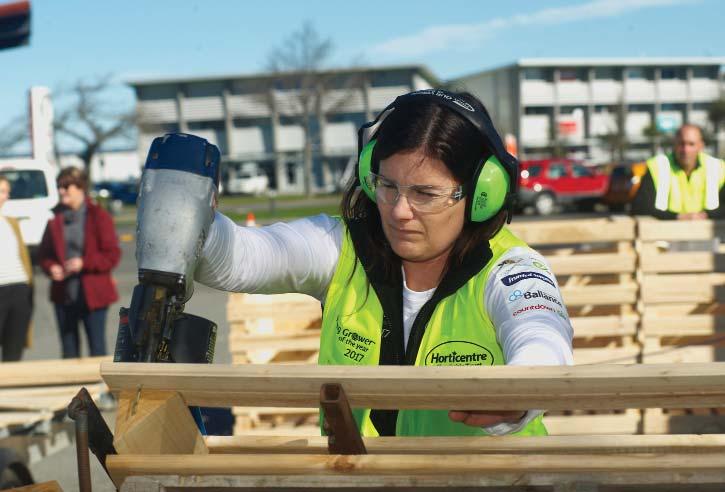
the skills needed to run a successful export-focused horticulture business. They also took part in a leadership panel discussion before delivering a speech on biosecurity in front of the judges at the awards dinner, which was attended by 200 people.
Horticulture New Zealand Chief Executive Mike Chapman says the aim of the competition is to foster excellence among young growers and future-proof a $5.6 billion industry that exports 60 percent of total production to 124 countries.
“Sponsorship is essential to the Young Grower competition and Farmlands gets involved in both the regional and national competitions by providing a lot of support on the ground, which adds to the overall success and professionalism of the events,” he says. Awards and placings were:
• Young Grower of the Year, NZ Young Fruit Grower 2017, Countdown Best Business award, SPS Best Innovation award and Fruitfed Supplies Best Speech award – Erin Atkinson, Te Puke.
• Runner-up, Ballance Best Practical award and NZ Young Vegetable Grower 2017 –Scott Wilcox, Pukekohe.
• Third place and Central Otago Young Fruit Grower 2017 –Ben Geaney, Waimate.
• Winner of the Ballance Leadership Panel/Outstanding Leadership Award – Ralph Bastian, Nelson.


























WHEN YOU PURCHASE ANY NEW





Not only can you enjoy exclusive shareholder pricing but for a limited time purchase any new Toyota vehicle on your Farmlands Card and you will also receive TRIPLE CHOICES REWARDS POINTS.*
So whether you’re after something for the farm, family or just for fun, Farmlands and Toyota have the perfect vehicle for you.














We’re here for the good of the country.
At FMG, we look after more rural New Zealanders than any other insurer. In fact, it’s something we’ve been doing for over 110 years now. So when it comes to offering specialist advice, like managing fire hazards on the farm, we like to think we know what we’re talking about. Ask around about us. Or better still call us directly on 0800 366 466.




More men than women work in agriculture so you would expect males to dominate the injury statistics, but not to the extent they do – across the sector the proportion is about double.
An analysis of ACC injury claim data from 2014 and 2015 shows that across five key agriculture sectors, 10.7 out of 1,000 women had a week away from work due to injury compared with 20.67 out of 1,000 men. Sector by sector, in sheep, beef and deer the number is eight women to 22 men; in dairying it is 19 women to 31 men; in horticulture it is seven women to 13 men; in shearing it is 13 women to 37 men; and in agriculture services four women to 10 men. Almost 80 per cent of workers injured and requiring more than a week off work in agriculture were men, with hand wounds and sprains of the lumbar, ankle, shoulder, arm and rotator cuff the most common injuries. Men were more likely to have a hand wound linked to tool use and maintenance work, whereas women are more prone to body stresses such as sprains.
In dairying, men are much more likely to suffer injury causing at least a week away from work when using tractors or dealing with sharp objects. They are much more likely to suffer injury to the upper leg, shoulder and torso. In sheep, beef and deer, men are more likely to suffer injury causing a week away from work when using tractors, ATVs or sharp objects and proportionally are much more likely to suffer upper back torso and upper leg
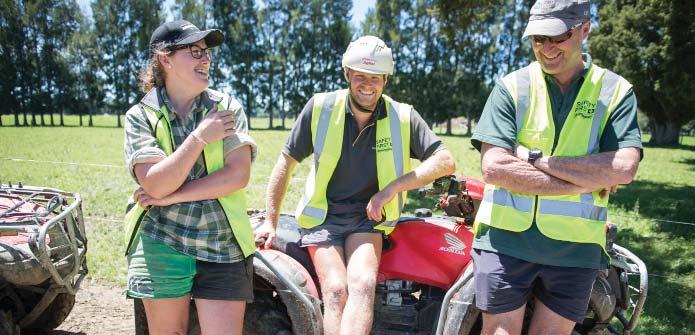
injuries. Women are proportionally more likely to be injured dealing with horses. In horticulture, men are more likely to suffer injury causing at least a week away from work when using tractors, ladders and knives. Proportionally, they are more likely to suffer upper leg and head injuries. Women are more likely to be injured from falls involving steps or stairs. The most common external factor involved in injury for both genders is live cattle (dairy), live sheep (sheep and beef) and contact with plants or trees (horticulture), followed by ground/ path (almost certainly related to slips, trips and falls) in all three sectors. WorkSafe analysis has also identified the critical risks that most often kill and maim farmers and agriculture workers. It should come as no surprise to farmers that these are vehicles, machinery, handling animals, falls and burn-offs.
Of these, by far the greatest
threat is working in, on or around vehicles, which accounts for over 50 percent of all fatalities in agricultural workplaces each year.
The Health and Safety at Work Act 2015 puts more emphasis on businesses to identify and manage their respective risks. The Act is clear that businesses and their workers must work together to do this – a safety plan isn’t something done by one person and left to sit on the shelf in the office. By engaging workers, the risks and solutions become something everyone understands and is able to do something about. It’s a sad fact that almost all agricultural accidents are avoidable. We encourage farm workers – men and women – to think about or discuss how to manage the risks involved in a task before doing it, even one you have done many times before. This will better prepare you for it. Article supplied by WorkSafe New Zealand.



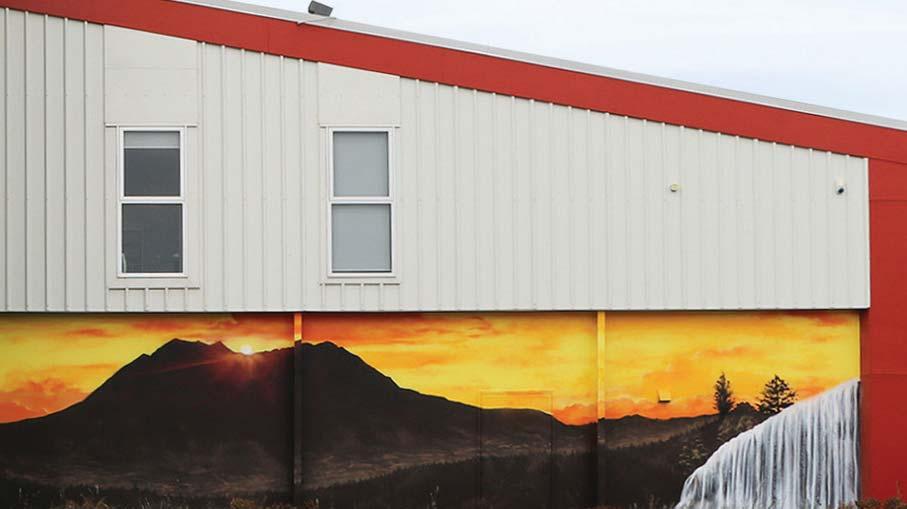
Farmlands Gisborne was given more than just a splash of colour recently, as Mr G worked his magic on the fourth HeART of the Community mural. The inspiration for the artwork came from staff at Farmlands Gisborne, who are immensely proud of their community and what makes it special. The mural includes the Tolaga Bay wharf, Rere Falls and an amazing portrait of Te Moana-Nui-a-Kiwa Ngarimu, the first M ori recipient of a Victoria Cross.




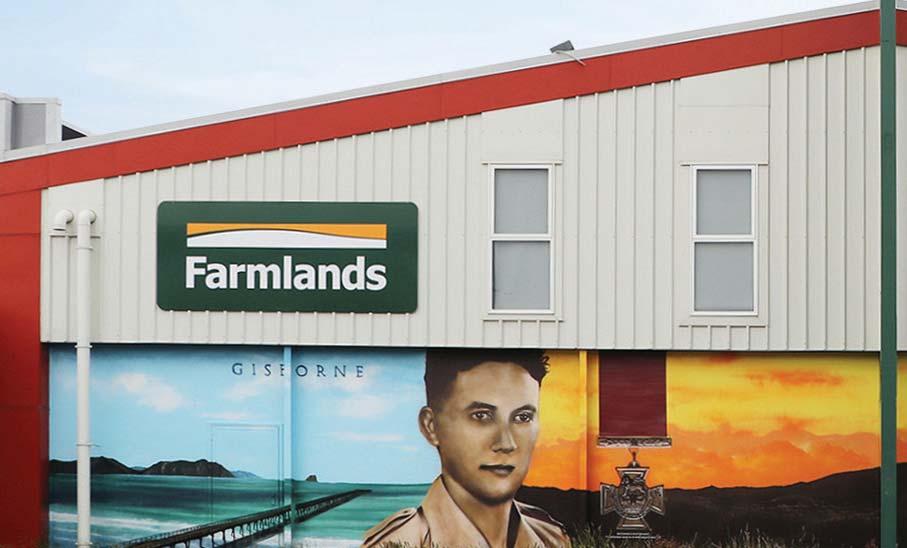
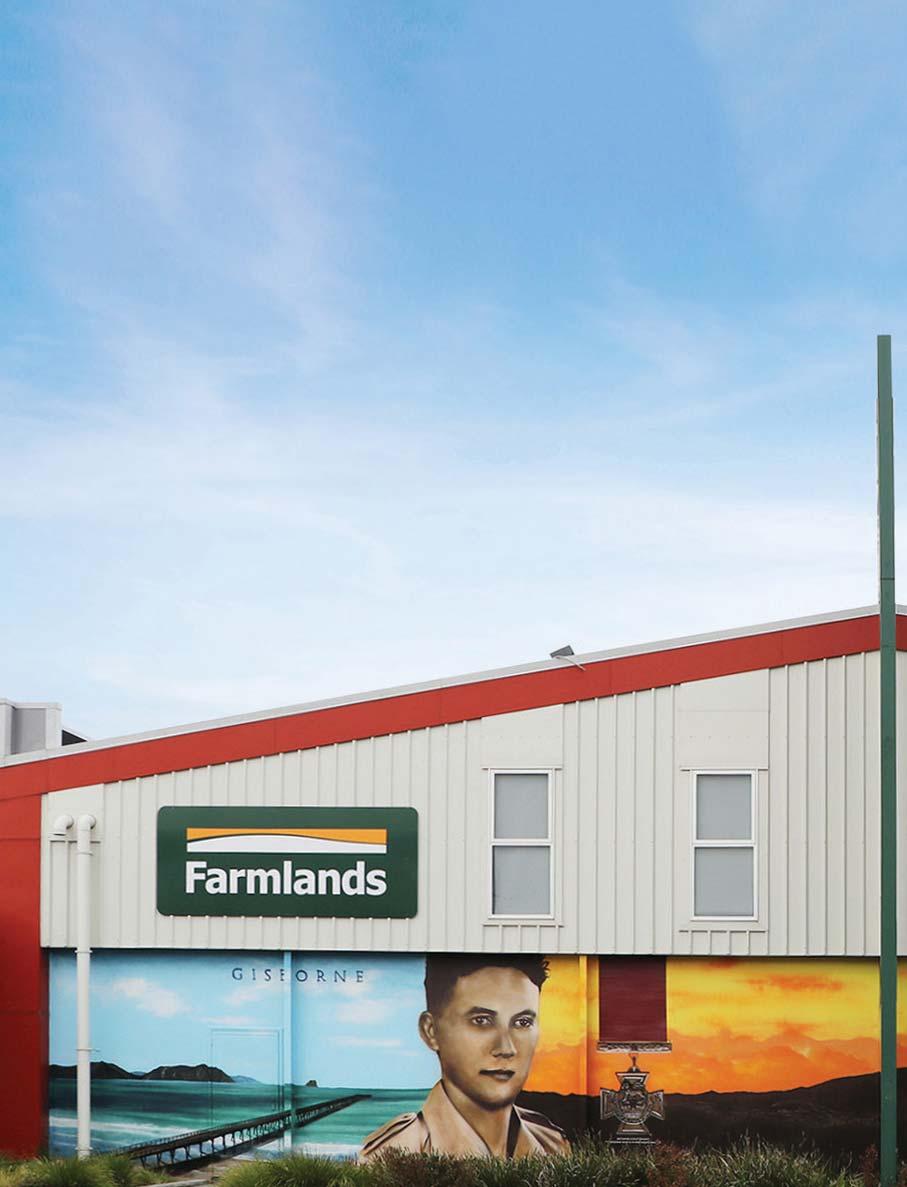






Te Moana-Nui-a-Kiwa, affectionately known as Mo, was born at his family farm at Whareponga in 1918. He attended Whareponga and Hiruharama School, before finishing with 2 years at Te Aute in Hawke’s Bay. Mo returned to work on the Whareponga farm for 4 years and also played rugby union for the Hikurangi team and participated in the Hikurangi Parish Choir.


Te Moa known farm at attend Schoo Te Aut to wo years the H in the At ag Batt valia had

At age 21, he went to fight in World War II as a member of the 28th Maori Battalion. He was killed in 1943 while valiantly defending a position they had captured from German forces in Tunisia. He received the Victoria Cross posthumously in 1943.


Mr G says painting Te Moana-Nui-aKiwa was a “humbling” experience for him. “It has been a huge honour for me to be permitted and entrusted by the family to paint the portrait in honour of him and the entire Maori Battalion.”
Farmlands is proud to be able to keep the memory of this important past alive for future generations and highlight the unique identities of New Zealand’s rural communities as part of the HeART of the Community project.


Mo’s legacy continues in the form of a scholarship to promote ori education – and even though he is buried at Sfax in Tunisia, his memory lives on in the community.





There are 11 more Farmlands stores in line to receive a Mr G makeover – you can follow Mr G and the HeART of the Community project on the Farmlands Facebook page, Instagram or at www.heartofthecommunity.co.nz


















































A trial of paddock-based data sensors has reached a milestone, with an initial batch pinging information to a new internet-based network.
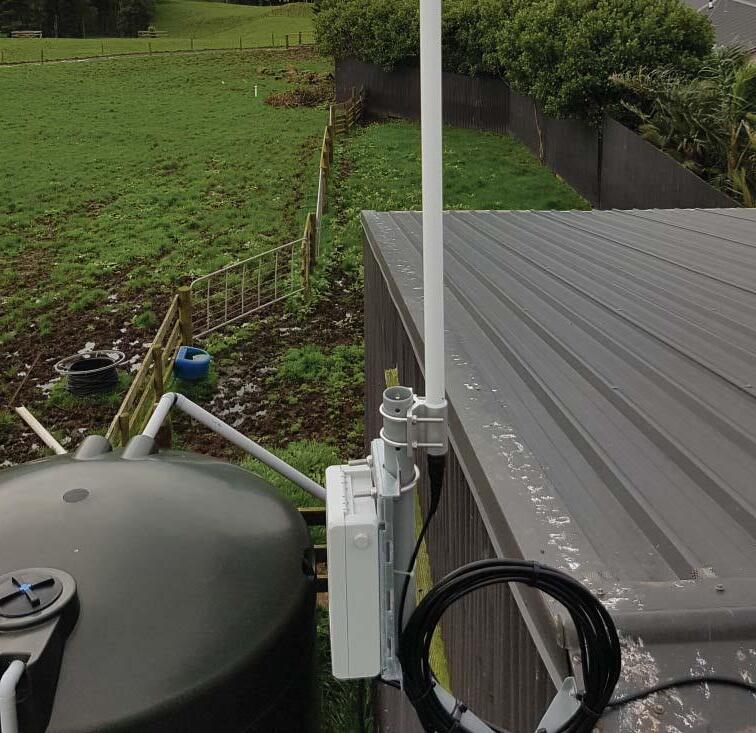
Called Connecting Farms, the trial is a collaboration between Farmlands, Spark, Ballance Agri-Nutrients and NIWA. It aims to bring better connectivity to rural areas and give shareholders data that helps them make better farming decisions.
As well as a rural Wi-Fi network, the trial includes a new technology called LoRaWAN, which brings coverage on-farm for devices such as the data sensors. LoRaWAN connects batterypowered devices over very long ranges and for long periods, many years in some cases. Once coverage is in place, farmers can deploy sensors without the need for complex set-ups.
One of the next steps for the trial’s designers is to explore how the sensor data can support farmers to meet their increasing legislative requirements and in doing so help improve the public’s perception of the industry. Before the trial started, Farmlands drew up some principles against which to evaluate it, including ease of deployment, maintainability, resilience and security. As Farmlands brings new devices and services to market, it needs to make sure they are going to do the job for shareholders in the challenging rural environment.
Sensor-based information can have an impact beyond the farmgate, especially as the legislative environment changes. For example, last month
a new National Policy Statement for Freshwater Management came into effect, bringing with it stricter rules on freshwater quality, limits on usage and limits on contaminants that can be discharged over time. This is a key reason for the partnership with NIWA. Farmlands will be trialling tools coming into irrigation season
that combine the forecast of, say, rain arriving in 2 days with what’s actually happening on and in the ground with soil moisture, pasture response and wilting point.
“This technology will allow for more timely, proactive decisions around key farming operations like when to irrigate, fertilise, spray or harvest, how to meet
environmental consent requirements and mitigate risks associated with New Zealand's dynamic and occasionally extreme weather,” NIWA’s Manager of Marketing and Industry Engagement, Dr. Mark Bojesen-Trepka, says.
“The seamless connection of technologies and information opportunities at paddock scale makes this an exciting project for NIWA and we look forward to demonstrating the benefits.”
The technology will not only save money for irrigating farmers but also help them to make better effluent and nutrient decisions. Good farm management practices that help the environment and are based on sound economic data are a win for all.
This is where the power of Farmlands comes to the fore – our national team of in-field specialists is on farms every day, acting as another set of “sensors” (the traditional hands-and-eyes sort) that provide an additional layer of learning, with more experts available in store.
After a successful Connecting Farms trial, Farmlands’ ambition is to support as close to 100 percent of New Zealand’s land mass coverage as possible. The recent Rural Broadband Initiative 2 (RBI2) announcement is a welcome boost to this goal, even though it is not necessary for the sensors to be within range of a 4G network. The sensor base stations do need to communicate with the outside world, and extending the 4G network deeper into rural New Zealand makes the national roll-out faster and cheaper.
In August, the Government made an announcement regarding partners for the Rural Broadband Initiative extension/Mobile Black Spots (RBI2/MBS) programme. The Government first announced the RBI2/MBS policy in 2015 with funding of $150 million for the roll-out of enhanced rural broadband and mobile coverage for black spots, in conjunction with telecommunications providers. The announcement was the outcome of the tender process Crown Infrastructure Partners (CIP, formerly Crown Fibre Holdings), the responsible Government agency, has been running for RBI2/MBS. CIP is partnering with a new joint venture between Spark, Vodafone and 2degrees called the Rural Connectivity Group (RCG) to deliver the bulk of the RBI2/MBS programme. CIP is also partnering with nine regional wireless internet service providers for additional RBI2 coverage. Graham Mitchell, Chief Executive of CIP, is pleased with the progress. “We have a strong set of partners with deep expertise in the types of wireless technology that we will be deploying and in the local regions that will benefit from the new coverage. This initiative will greatly benefit regional New Zealand in providing improved broadband connectivity and mobile coverage,” he says.
Funding for RBI2/MBS came from the Telecommunications Development Levy, a levy on telecommunications providers to fund rural connectivity services that would otherwise not be commercially viable. The August announcement included that the base $150 million funding will be topped up with an additional $140 million (bringing the total to $290 million) to be spread across the RBI2/MBS partners to gain more coverage.
For Farmlands shareholders, this will expand the number of rural households and businesses that will have access to rural broadband, and will also target coverage of mobile black spots by providing greater mobile coverage on stretches of state highway and in tourism locations where there is no coverage. On farms, improved broadband and mobile coverage will assist with health and safety, and through using “Internet of Things” technology will lead to improvements in monitoring, traceability and production.
Today, geographically New Zealand has about 50 percent mobile coverage. Post RBI2/MBS, the expectation is that this will be increased by 20-30 percent. The delivered coverage will depend on a formal planning process, although sites and areas have been announced. With Spark being a key Farmlands Card partner and a member of the RCG, we will be communicating in the coming months how the Farmlands rural community can provide feedback and support in getting fast wireless broadband to their homes and rural businesses.



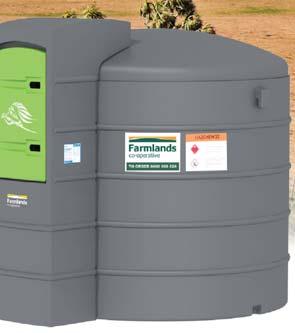
Farmlands has partnered with Kingspan, the global market leader in diesel storage solutions, to bring shareholders an EXCLUSIVE equipment offer.


20,000L to 35,000L of fuel per annum delivered to site.

35,000L to 50,000L of fuel per annum delivered to site.
Regular scheduled deliveries of competitively priced fuel direct to site.
Regular scheduled deliveries of competitively priced fuel direct to site.
Sign a 5 year equipment loan and supply agreement.
Sign a 5 year equipment loan and supply agreement.


Receive a loaned 2,500L Kingspan tank.
For more information, contact your Farmlands Technical Field Officer, head in to your local Farmlands store or call Farmlands Fuel on 0800 666 626.
Receive a loaned 4,800L Kingspan tank.



Rapid growth in the kiwifruit and pipfruit sectors has meant growers have had to seek more staff for harvest. Many of the workers are Recognised Seasonal Employees (RSE), who travel from overseas to work in New Zealand. Many RSE workers come from Vanuatu, which was devastated by Cyclone Pam only 2 years ago. This prompted Grochem to seek to make a difference to the RSE workers and their families.
With the support of UNICEF, Grochem has raised $92,000 towards a clean water and sanitation project for 10,000 school-aged children in Vanuatu. Grochem raised $18,400 of the total through sales of the fungicide Nordox in New Zealand. The New Zealand Government also contributed to the campaign.
Grochem General Manager Grant Morrish says the workers that leave their families and homes for such a long time provide a great benefit to growers in New Zealand and Grochem is invested in giving back.
“We began our search to find different ways to provide support to Vanuatu and it wasn’t long before we found UNICEF. UNICEF was promoting a large-scale 5 year project for Vanuatu to provide clean water and sanitation to 157 schools in the Penema region.
After discussing with UNICEF, we began shaping the Nordox campaign to support this project.
“Once UNICEF heard about the money we had raised, they were able to confirm that the New Zealand Government would contribute another
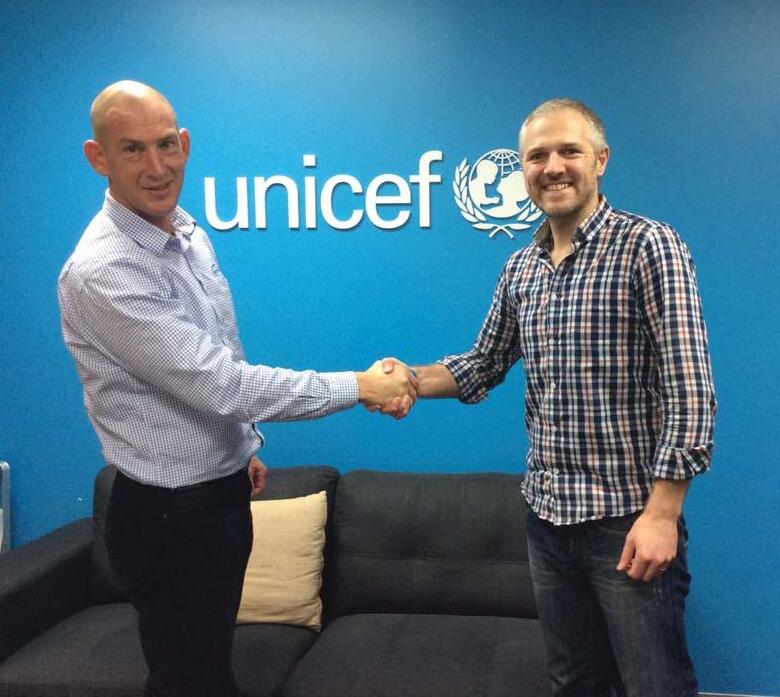
$4 to every $1 we had made for the project. We really want to thank Grochem, Nordox, Farmlands staff and especially the growers who purchased Nordox, for supporting this campaign and making it the success that it has been. What a wonderful outcome for all involved.” Nordox (Cuprous Oxide) is a disease control solution for various horticulture crops and a lead selling product for Grochem. It is made using the highest quality copper under strict
environmental conditions. The supplier of Nordox does similar charitable work in Africa.
Grochem is a leading supplier of innovative, sustainable products for growers including plant nutrition, insecticides, fungicides and plant growth regulators. They work with innovative, independent scientists and researchers to develop products that are effective while being environmentally sustainable.
Article supplied by Grochem.










Articles in the Plan 365 section allow Farmlands suppliers to share best practice and the latest advances in rural technology, to help shareholders with their farming needs all year round.
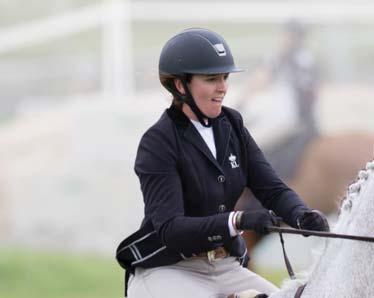
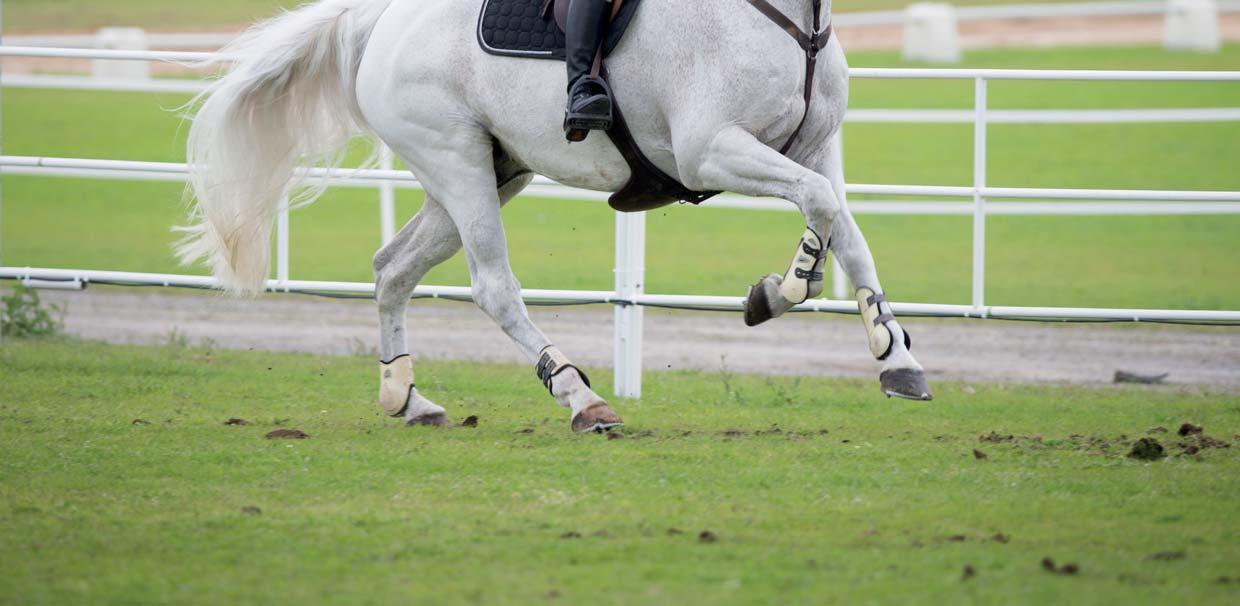
Preparing a yearling for sale is an important event in the stud calendar for both thoroughbreds and standardbreds and involves a carefully tailored balance between correct nutrition, conditioning, growth and fitness. Properly prepared yearlings will be fit, sound and well grown, with shiny coats and little body fat.
When preparing a yearling for sale it is important to understand the nutrient requirements of the horse and the critical balance between feed intake and exercise as they affect condition and soundness.
Forage should always be the first consideration in any horse’s diet, and some amount of pasture along with a high quality/high energy hay is important for yearlings. Higher energy hays such as lucerne and clover blends will contribute to energy requirements and work to decrease the amount of starch in the yearling’s diet. Also, using a high quality, early cut hay minimises the appearance of gut-fill that is often associated with a mature hay of high lignin content. Including additional fibre sources through chaff, ensiled forages and super fibres such as beet pulp and soy hulls is often highly beneficial for reducing the amount of hard feed or grain the horse requires, which can in turn reduce symptoms of starch overload including diarrhea, colic, laminitis and behaviour problems.
Yearlings do best on a 14-17 percent protein ration balanced for macro and micro-minerals, and fat and watersoluble vitamins. Feeding rates of
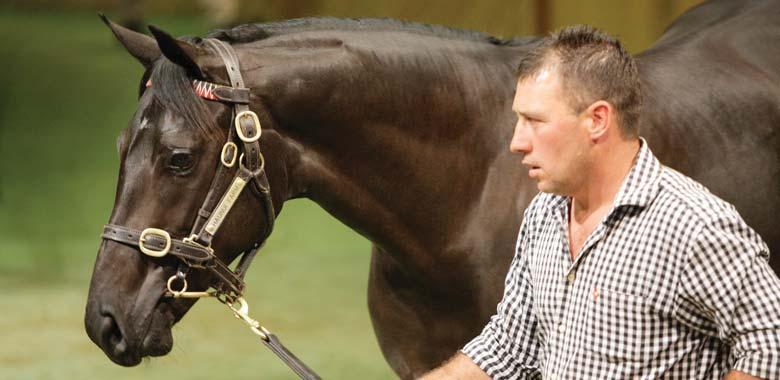
hard feeds for yearlings are extremely variable depending on choice of feed, growth history, skeletal size, individual metabolism, actual age and quantity and quality of forage. It is essential that all yearlings are fed as individuals, paying careful attention to body weight, weekly weight gain and body condition score, with feed intake adjusted appropriately.
Selecting a muesli-style textured hard feed is often beneficial as the high palatability encourages consistent intake of feed through stressful times of increased workload, travel to sales complexes and new surroundings.
To avoid hindgut disturbances and digestive conditions in yearlings it is also important to consider feeds that contain grains that have been processed to enhance digestion. Heat-processed feeds such as pelleted or feeds containing steamflaked grains ensure most of the digestion takes place in the small
intestine, thus reducing the risk of unprocessed starch entering the hindgut and causing acidosis. NRM Assett or NRM Prepare are great options of well-balanced textured feeds containing steam-flaked grains that are ideal for sales preparation. While there is an overwhelming array of supplements that claim to enhance coat quality and condition, including a fat source is always one of the best ways to achieve that sale ring shine. Suitable fat sources include vegetable oils, sunflower seeds, or a stabilised rice bran such as KER Equi-Jewel. Equi-Jewel is a high fat/low starch conditioning supplement that is highly beneficial for improving topline and coat quality. For more information and diet advice on preparing a yearling for sale, contact your local Nutrition Specialist.
Article by Luisa Wood, Equine Nutrition Technical Advisor.












If feeding dairy cows to support mating performance is constrained by budgets, it might be worth starting with the little things and working up the food chain rather than doing nothing because the big cost items are beyond reach.
Essential trace minerals are reactive elements required in tiny amounts that get involved in many enzyme and hormonal systems throughout the body. Their effects are often quite subtle and deficiencies hard to detect because they can be associated with symptoms that could be related to a host of other things. As indicated in Table 1, some are particularly associated with reproduction so it could be prudent to check the herd’s status or supplementation levels in the critical pre-mating period.
I would include the major minerals phosphorus and sodium in a mineral
review at this time – especially when heifers have been wintered on fodder beet and fed maize silage in early lactation. Lameness and poor udder health could affect a cow’s inclination to express oestrous so zinc methionine could be considered as a nutritional remedy in these areas. It is widely accepted that reduced mating performance occurs if cows are underfed at mating time. While a short period of underfeeding over mating may have little negative effects on reproduction for mature cows in good condition, it is always difficult to know how long underfeeding will last, and thinner cows and heifers are more vulnerable to under-nutrition. Mating of spring calving cows can coincide with grass getting into reproductive mode, resulting in rising fibre and falling metabolisable energy and protein levels. If compounded by poor weather and lower sugar levels,
TRACE MINERALSYMPTOMS IF DEFICIENT
Copper Poor fertility – delayed or depressed oestrus, abortion, poor semen quality
Iodine Abnormal oestrus (irregular or suppressed). Resorption of fetus (early embryonic death).
Manganese Low fertility in adults
Selenium Infertility affecting oestrus, ovulation, embryo fertilisation and development
Zinc Poor testicular development
Major mineral
Phosphorus Irregular oestrus, silent heat, delayed/low conception
Sodium Reduced reproduction efficiency through poor fertility in males
energy intake drops and cows that were comfortably holding their own can enter a negative energy balance, with milk production falling off peak faster than it would normally.
In this situation, feeding supplements to fill a feed deficit seems sensible if only to maintain milk flow, irrespective of what logic would suggest it do for reproduction. Preferentially feeding younger and thinner cows to improve energy status and body condition should increase the potential for successful reproduction. If a grain-based supplement is already being fed the rate can be increased if needed. Including some rumen-friendly fat or even protein to help close a negative energy gap should be considered, particularly if the total protein content of the diet is sub-optimal.
Trying to stem the global fall in dairy cow fertility is difficult partly because statistically it is a lot harder to prove that a treatment significantly affects fertility – either positively or negatively – than it is with, say, milk yield. Cows are either pregnant or not, they can’t be half pregnant, whereas milk yield can be continuously variable, and many other variables with nothing to do with the imposed treatment can affect the fertility outcome. Unfortunately huge budgets are required to deliver enough replication in fertility trials to ensure the results can be trusted so scientists may not provide the answers soon. For more information, contact your local Nutrition Specialist. Article by Dr Rob Derrick, Nutritionist, Farmlands.
Weaning is the process of transferring a calf from a liquid milk diet to a completely “solid” diet. Successful weaning depends on ensuring that a calf’s digestive system is well set up for processing bulky high fibre pasture, and pre-weaning decisions can have a significant impact on how well calves flourish once their milk is taken away.
Rumen development during calf rearing can be achieved by offering a high quality hard feed to calves from an early age and ensuring systems are set up to achieve good calf intake of a hard feed by weaning. A good quality hard calf feed will include starch, which encourages papillae development in the rumen and the establishment of a microflora population essential for the fermentation of high fibre feeds.
Weaning can be stressful for calves, particularly if done prematurely. If the rumen is not properly prepared for digesting pasture, calves can go backwards very quickly and lose condition fast as they are not able to get sufficient energy
• Do not wean calves during periods of additional stress – e.g. illness, dehorning or extreme weather.
• Weigh calves regularly.
• Gradually wean calves rather than abruptly taking them off milk (gradually reduce volume per feed and/or number of feeds a day to smooth the change).
• Be prepared to hold calves back from weaning if they are not eating enough hard feed – they are telling you their rumens are not ready yet.
• Assess the level of milk in your system if intake of hard feed is low (overfeeding of milk can reduce intake of hard feed).
• Continue with hard feed after weaning. This helps to support growth rates. Some farmers find it beneficial to continue with hard feed for several weeks or months post weaning, particularly if pasture quality/quantity is poor. Postweaning calves at pasture have been found to grow faster on 16 percent crude protein calf pellets rather than barley – however, continuing to feed 20 percent crude protein pellets may be advantageous.
• Coccidia challenge is likely to be highest in the 8 weeks following weaning. Calves take time to build up resistance to coccidiosis and may benefit from being fed a coccidiostat in pellets for some weeks post-weaning.
and protein out of the grass.
Deciding when to wean can be made easier by setting targets. Age or weight alone are not the best parameters as they do not assess rumen development. A better parameter is hard feed intake
in combination with having a weight target specific to a farm. As a rule of thumb, when a calf is eating 1-1.5kg (depending on breed) of hard feed for three consecutive days, it is ready to be weaned – the calf is telling us that the rumen is sufficiently developed. Grass quality and quantity can affect calf growth through the summer so it can be a false economy to cut back on hard feed too early in the spring when there is an opportunity to keep growth on-track.
For more information, contact your local Nutrition Specialist.
Article supplied by Stacey Cosnett, Nutritionist.
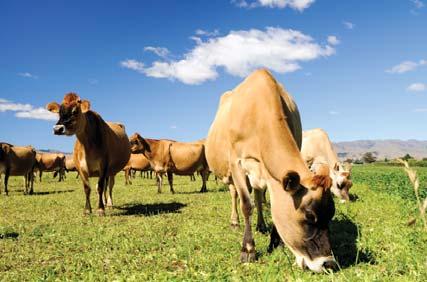
Acidosis is a metabolic disorder caused by a lowered pH in the rumen, which is caused by acids being produced at a faster rate than they can be neutralised, used by other microorganisms or absorbed through the rumen wall.
Ruminant animals digest feed predominantly in the rumen, where carbohydrates (sugar, starch, and fibre) are fermented by the billions of resident microorganisms. The by-products of this fermentation process – volatile fatty acids – are then absorbed by the ruminant animal and used as an energy source.
Sugar, starch and fibre are all carbohydrates but they get degraded and used by the rumen microorganisms at different rates, with sugar being used the fastest, followed by starch and then fibre.
If ruminant animals consume feed in which the carbohydrates are rapidly degraded without allowing time for the rumen to adjust to the new diet, acidosis can develop. The rumen microorganisms that digest fibre prefer a rumen pH of around 6, and when the
pH of the rumen drops significantly below this, their activity drops.
In less serious cases of acidosis, the reduced pH can cause reduced microbial activity and sub-optimal digestion. In more serious cases it can cause rumen microorganisms to cease functioning and reproducing altogether, and the acid can cause significant damage to the lining of the rumen and rumen stasis.
Risk factors for acidosis
• A diet high in rapidly fermentable carbohydrates and low in fibre.
• A diet low in physically effective long fibre that stimulates rumination. Saliva produced when animals are ruminating helps to buffer the acids in the rumen.
• Feeding out high starch and/or sugar feeds inconsistently and/ or without controlling individual animal intake, with the risk of dominant animals gorging.
• Not sufficiently transitioning animals to high sugar/starch feeds.
Symptoms/signs to look for
• Liquid faeces that contain undigested particles of feed and/ or bubbles (this indicates feed is not getting digested properly in the rumen). Faeces may be inconsistent across a herd, with some more liquid than others.
• Animals not ruminating sufficiently – rumination recirculates sodium bicarbonate, which helps buffer rumen acidity.
• A drop in milk fat for dairy cows (as the rumen pH drops, the volatile
fatty acid profile that’s produced can reduce the fat content of milk).
• Uncomfortable animals, restless with indigestion.
• Reduced feed intake, low gut fill in animals, ketosis and condition loss.
• Laminitis (acidosis is linked to laminitis).
• In acute cases, animals can become severely dehydrated, toxaemic, may bleed from the mouth and nose, the rumen ceases to function , bloat-like symptoms may occur due to reduced rumen motility and animals can die rapidly.
Prevention
Acidosis can be prevented by ensuring any new feeds containing rapidly fermentable carbohydrates (sugar and starch) are introduced slowly to animals, starting with a small amount and building up gradually. Ensuring animals have adequate total fibre and effective fibre in the diet is also important and can help to reduce gorging when introducing new feeds. Offering some hay, straw or mature baleage can help, and rumen buffers can be included to help elevate rumen pH levels.
When transitioning ruminants to a diet high in sugar and/or starch, monitor animal health closely and look out for some of those classic acidosis signs. The earlier you pick up on issues the better the animal outcome if acidosis is the issue.
For more information, contact your local Nutrition Specialist.
Article supplied by Stacey Cosnett, Nutritionist.




•
•
•
•












•













The quality of our natural water sources has been in the news. Stricter regional council water plans and tighter controls are among the reasons father and son John and Tom Latta are looking to install a reticulated stockwater system on their property in Owaka Valley, South Otago.
“A reticulated stockwater system provides surety of supply and quality of water delivered and can be designed to accommodate any potential future changes in livestock farming practice,” John says.
Stock excreting in rivers and creeks, causing nutrient and pathogen issues downstream, is well understood. Perhaps less understood is the harm
that sediment causes through stock pugging the banks and beds of creeks, causing slumping and erosion, siltation and water turbidity (muddy looking).
Sediment not only contains nutrients, pathogens and bacteria, it also adversely affects the habitat for instream invertebrates and native fish, reducing feed availability for trout and salmon and their ability to see prey.
While pugging-induced sedimentation can be mitigated by adequate riparian buffer zones, leaving margins uncultivated and planting unstable banks, excluding stock from waterways is the best option.
With these thoughts in mind, John contacted Invercargill-based Farmlands Technical Field Officer and water
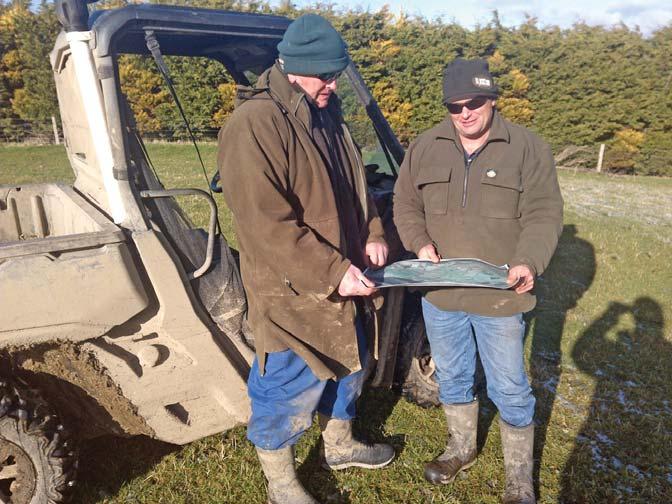
systems specialist, Ken Stewart. “John and Tom’s property is rolling to hilly country, currently carrying 5,000 sheep and 500 cattle, with future-proofing plans to allow a dairy support operation or to carry up to 2,500 cattle,” Ken says. “A natural spring at height delivering enough flow allowed the design of a gravity system, with negligible on-going running costs. This development will see the use of 22 kilometres of high-flow metric Greenline pipe, with 13 breakpressure tanks managing the water pressure to 100 troughs,” he says.
Paul McDonald, owner of Blue Sky Excavation, has been contracted for the development. “Paul is a great fan of the new Plasson Series 1 push-fit compression fittings and will be using them on this job,” Ken says, “as he values their quick and positive jointing system.”
In Ken’s 9 years as a designer he’s heard many favourable comments about his systems, with many focusing on the increased efficiency and short pay-back time. “It’s rewarding to hear things like that in regard to productivity”, Ken says, “and even more satisfying to know for John and Tom it’s an environmentally sustainable solution as well.”
For more information on stockwater reticulation, contact your Farmlands Technical Field Officer or the friendly team at your local Farmlands store.
Article supplied by Iplex.


Electric fencing is a popular option for containing livestock but safety for the operator and animals as well as ease of use can be problematic, especially where the electric fence meets the gate.
Traditional activator systems used widely in the dairy industry tend to have common issues as they all use a wood-post pinlock insulator with an attached steel activator plate. To accept the gate handle hook, the activators are fixed to a gate post on the gateway side. When cattle pass through, they often make contact with the activators and frequently break the insulator. The protruding steel activator plate also creates an injury hazard as the animals pass its sharp edge.
A new and innovative gate break activator developed by Strainrite Fencing Systems, the Activator Strap, won this year’s prestigious Mystery Creek National Fieldays’ International Innovation Award.
Market feedback had highlighted issues with traditional activator systems, made worse by the increased use of gate break systems as opposed to traditional gates. Farmers and fencing contractors were asking for solutions to problems with broken wood-post pinlock insulators.
Strainrite’s development team reviewed current systems, identifying issues and the opportunities for improvements. Its field team solicited feedback directly from farmers and fencing contractors, along with coordinating field trials to assess performance of potential solutions.
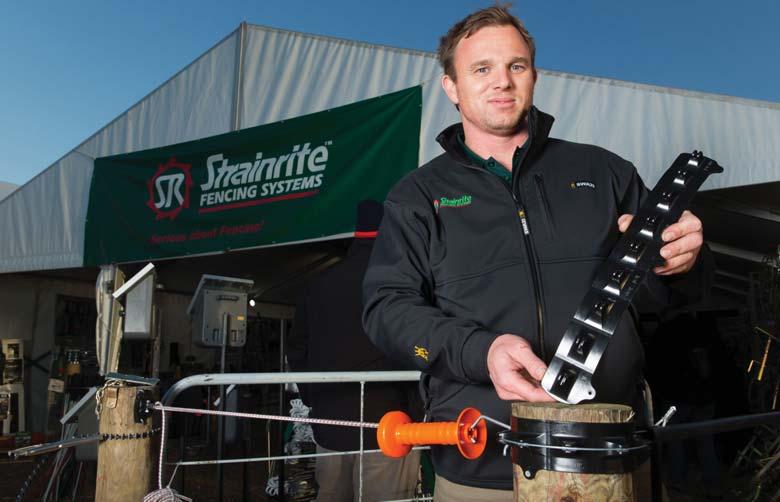
“Working with our farm and fencing customers we were able to ensure we were producing something that would really solve the on-farm issues,” Strainrite Director Maurice Wooster says.
The Activator Strap offers significant advantages over traditional products. It is a lower-cost, single-component, multi-function post insulator that eliminates auxiliary components such as the egg insulator, pinlock insulator, activator plate and separate electrical lead. It’s easy to install and there is no wiring necessary. With multiple hook points, it is also easy to use, even in the dark.
Manufactured from high quality UV stabilised polymer, the Activator Strap has no protruding parts or
steel plates. This means there is nothing for the stock to damage. It also reduces injury to animals.
“This new Activator Strap means there’s a good cost saving for the farmer, whilst gaining a hugely improved product for their electric fencing system,” Maurice says.
The Activator Strap offers farmers good time efficiency too. Time is saved on installation, with only the Activator Strap needing to be installed, plus it is less likely to be broken by stock. The high performance eliminates breakages and non-functioning gateways.
For more information, contact your Farmlands Technical Field Officer or the friendly team at your local Farmlands store.
Article supplied by Strainrite Fencing Systems.







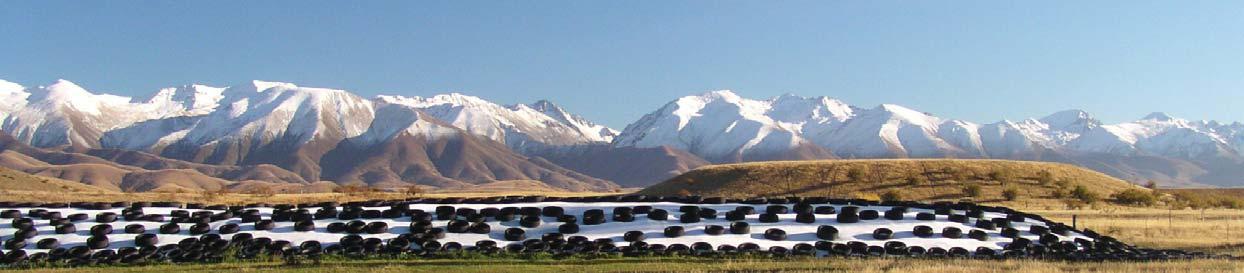

Plastics or polymers are one of the main materials used to make crop packaging products. Different types of polymers give very different physical characteristics to the finished product, so these characteristics can be tailored to the end use. Silage covers are such a product. The film is extruded from polyethylene but the type of polyethylene used makes a big difference to the final physical properties. The most common types of polyethylene used
in crop packaging are High Density Polyethylene (HDPE), Low Density Polyethylene (LDPE) and Linear Low Density Polyethylene (LLDPE). HDPE is used in some products, usually for its stretch characteristics rather than for strength. LDPE and LLDPE are used in plastic film production due to their ability to provide tear strength and puncture resistance. LLDPE is more expensive than LDPE but gives better mechanical properties due to its different molecular structure. At a molecular level, when chains of LDPE are placed side by side, this
forms an incomplete matrix, meaning there are some weak spots, whereas the LLDPE molecular chains form a complete matrix, with no weak spots. When covering a stack or pit of silage, the more resistant the cover is to tearing or puncturing the better. To reduce cost, some cover manufacturers use recycled polyethylene (which has lower physical properties than virgin material) and also LDPE with as little LLDPE as possible. This results in a cover with much lower tear and puncture resistance than one produced with virgin polyethylene and a sufficient content of LLDPE.
A simple test for the tear and puncture resistance of a silage cover is to grab a stubbie of beer and with the bottle on a flat surface, hold the cover with both hands and pull it down over the top of the bottle. The degree of ease with which the cover fails in this process is a good indicator of the quality of materials used in its manufacture. When choosing a cover for protecting your or your customers’ valuable silage, make sure it’s the best you can buy. Given the dollar value of silage that the cover is protecting, why put that at risk by using a lesser quality cover that may save a few cents per metre? For more information, contact your Farmlands Technical Field Officer or the friendly team at your local Farmlands store.
Article supplied by Donaghys.

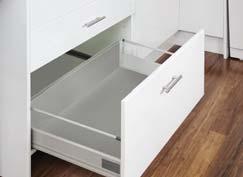
Exclusive to Bunnings Warehouse, our modular, easy-to-assemble kitchens can be made to suit your kitchen space and give you a designer look without the price tag.
There is a huge range of styles, colours and finishes, plus a wide choice of splashbacks and benchtops in new-look laminates and bamboo. Designer features like soft close drawers and hinges are available, plus a myriad of handles and drawer accessories so you can create a kitchen that’s individual to your needs.
Create your dream kitchen
To complete your design, Bunnings also offer a wide range of tapware, sinks and appliances to suit your budget. If you’re looking for something specific, the Bunnings Special Orders Desk can help you track it down and order it for you. And, if you need advice, there are kitchen experts in-store to give you a hand to make sure what you achieve is not only good looking but well thought-out and functional.



your new kitchen away with you
Some finishes from kaboodle kitchens are held in stock at Bunnings Warehouse, so if you have your measurements and plans with you, in most cases, you can take it home that day.
planning right now
The 3D kitchen planner on the Bunnings Warehouse website is a great place to start your new kitchen design. On the same site you can also browse through all the items you need and view online videos and guides with plenty of hints and tips from the experts to make your dream kitchen a reality. Start planning now, visit www.bunnings.co.nz/kitchenplanner
For exclusive Farmlands pricing visit your local Bunnings Warehouse.


Attention to a few nutrient management points will reduce the impact of hay and silage on your soil fertility and fertiliser budget. Taking advantage of spring and summer growth to conserve feed as hay or silage is an effective way to meet a feed gap and/or supplement forage crops later in the season, provided you manage paddock nutrient needs. Improving hay/silage yield
If no other nutrient is limiting production and conditions for growth are right, then applying nitrogen before you close hay/silage paddocks can increase yield. A response of 15-20kg of dry matter per kilo of applied nitrogen is feasible in late spring. SustaiN is a good option if 5-10ml of rain is unlikely to fall within 8 hours of application, as it will help to reduce nitrogen losses from ammonia volatilisation.
A post-harvest application of nitrogen will improve yields from a second cut or reduce the time the paddock is out of rotation. SustaiN K is
recommended for this purpose – as well as supplying nitrogen it replaces some of the potassium that hay/silage removes in large amounts, ensuring this doesn’t limit new growth. The size of the pasture response will depend on growth conditions, moisture often being the critical factor during summer.
Maintaining pasture quality
After the final harvest it is important to replace the nutrients used by your hay/ silage crop. Every tonne of dry matter removes around 5kg of phosphate, 3kg of sulphur, 2kg of magnesium and a massive 15 or 20kg of potassium for hay and silage, respectively. If hay or silage is fed out on the paddock from which it was cut, some of the nutrient content will be returned to the soil in dung or urine. However, if it is fed out elsewhere on the farm, its nutrient value goes with it. Either way, if the nutrients are not replaced, pasture quality will eventually suffer. Replacing potassium after the final harvest is advisable. Split applications
if winter leaching is a risk, or if large amounts of potassium are required to achieve the desired soil test range. Growing plants will take up excess potassium without converting it into extra growth. This luxury consumption can elevate potassium levels in your conserved feed and/ or re-growing pasture, which may contribute to metabolic issues in stock if not taken into account.
Post-harvest fertiliser does not replace normal maintenance fertiliser. It is an extra application that takes care of the nutrients removed by the harvest alone. You can either apply replacement fertiliser separately after harvest or combine it with maintenance fertiliser, ensuring a heavier rate goes on your hay and silage paddocks. For more information, contact your Farmlands Technical Field Officer or the friendly team at your local Farmlands store.
Article supplied by Ballance Agri-Nutrients.
Forage brassica crops can be attacked by a wide range of insect pests, which for many years have been controlled using broad spectrum, non-selective insecticides such as organophosphates.
A major downside of organophosphates is the impact they have on beneficial insects. This can lead to flare-ups of other insect pests in the crop by interfering with the delicate balance between pests and their natural enemies. Organophosphates are also unpleasant to apply due to their toxicity and strong odour. Farmers are increasingly looking for softer chemistry that has less impact on the wider environment.
A new broad spectrum insecticide available from Farmlands, Minecto Star™, is designed to control the main pests of forage brassicas without harming key beneficial insects in an Integrated Pest Management (IPM) programme.
Minecto Star contains two insecticides, cyantraniliprole (as in Exirel®) plus pymetrozine (as in Chess®), in a granular formulation. Cyantraniliprole’s efficacy against caterpillars and leaf miner and its IPM compatibility are well known. Pymetrozine is a highly selective and systemic insecticide with outstanding activity against aphids. It stops aphids from feeding almost immediately, and they are effectively controlled without
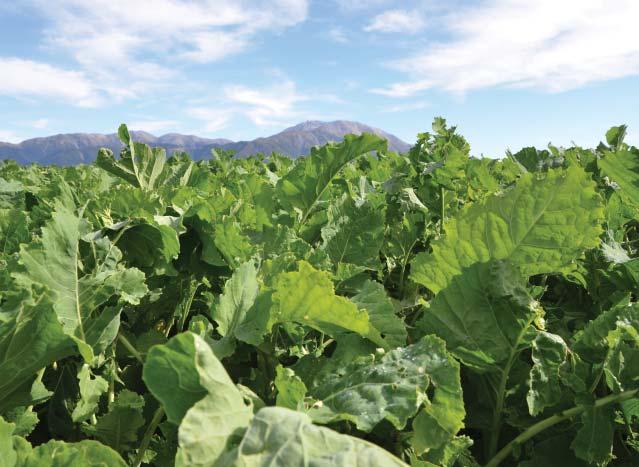
causing further damage to the crop. This combination of insecticides offers a broad spectrum of pest control, including diamondback moth, leaf miner, soybean looper, white butterfly, cabbage grey aphid and nysius wheat bug. Also, with pymetrozine belonging to Group 9, a different chemical class to all other insecticides used in forage brassicas, Minecto Star offers an effective tool to manage resistance in aphids. Minecto Star is recommended where both aphids and caterpillars are present, which is usually mid to late season as temperatures rise. Its systemic movement helps to control aphids in parts of the plant that are difficult to reach, such as the underside of leaves, and it also helps to protect new growth.
For early season pest control, when IPM is not such an issue, Ampligo® insecticide offers an effective alternative to organophosphates for the control of cutworm, leaf miner and nysius, with excellent crop safety in mixture with herbicides. The addition of an organophosphate is only necessary if springtails are present or nysius numbers are high. Ampligo can also be applied by air, which can be useful later in the season on tall crops, or where ground application is not practical. For more information, contact your Farmlands Technical Field Officer or the friendly team at your local Farmlands store.
Article supplied by Syngenta.
In the annual arms race between weeds and newly sown crop seedlings, weeds have an unfair advantage – they are almost always faster and more aggressive. They can also thrive in tougher conditions.
So regardless of whether you’re planning to sow fodder beet or forage brassica this spring, it’s time to make sure you have a good plan to keep weeds in their place from day one. Other factors – such as the weather and insect pests – will also affect your ultimate crop yield but weed seeds are already present in the soil, waiting to germinate and undo all your hard work up to this point. If the likes of shepherd’s purse, wireweed, chickweed and cleavers have a chance to take hold before the crop is properly established, they are strong enough to permanently suppress final DM yield, simply because they are so efficient at stealing essential light, water and nutrients from emerging plant seedlings.
Fodder beet and forage brassica seedlings are slow starters by comparison – they need your help to grow to their full potential. In exchange, you’ll achieve a better return on your cropping investment, because the higher your yield, the cheaper that feed will be. With Director ® CS from Nufarm you can get on top of broadleaf and grass weeds in both forage brassicas and fodder beet at the critical post plant, pre-emergence stage. Director CS is highly effective against difficult to kill species such as shepherd’s
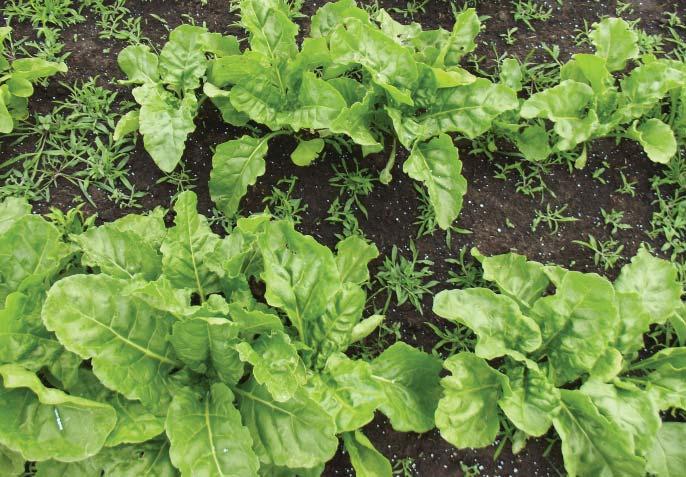
purse, wireweed, chickweed and cleavers so your crop can get a great start. This herbicide contains the active ingredient clomazone in a special capsule suspension (CS) formulation. Clomazone is by nature a highly volatile active ingredient, but Director’s CS formulation significantly reduces this volatility without affecting clomazone’s power to kill weeds. The formulation also improves crop safety, because particles of clomazone are surrounded by a carrier coating that remains dormant until it is activated by moisture. As a result, it can remain effective in the root zone and activate four to six weeks after application depending on moisture availability. Director CS works by being absorbed
into the roots and emerging shoots of germinating weeds and stopping photosynthesis. Susceptible weeds may still emerge from the soil but are bleached white, and soon die. It can be tank mixed with other pre-emergence herbicides to widen the spectrum of weeds controlled and it suits a range of sowing techniques, including direct drilling, drilling into cultivated ground, pre-plant incorporation into the soil, ridged seed beds and surface seeding of forage and oilseed rape. For more information, contact your Farmlands Technical Field Officer or the friendly team at your local Farmlands store.
®Director is a trademark of Nufarm Australia Limited.
Article supplied by Nufarm.






















Spraying spring-germinating weeds in established pastures could make all the difference this season on farms affected by prolonged, unusually wet conditions through autumn, winter and early spring.
Pugging and treading damage has been unavoidable and many pastures missed their routine autumn broadleaf spray because soils were just too wet to get the job done. The result is open pastures with plenty of space for weeds to become well established. When pasture plant populations drop, weeds are quick to take advantage. Spring-germinating weeds such as pennyroyal, willow weed, storksbill, dandelion, hedge mustard, buttercup, dock, nettles and wild turnip are fast growing and can colonise bare patches of ground surprisingly quickly. If these weeds are not removed fast, they will significantly reduce the amount of quality pasture that can be grown this season. They also cause problems in the future, because many are highly invasive. A further consideration is that
these spring-germinating weeds can only be effectively controlled in spring, when they are newly emerged from the ground and are most vulnerable to application of an appropriate broadleaf herbicide such as Baton® or Sprinter ® 700DS.
Baton is a phenoxy herbicide that provides an ideal means of control for spring-germinating weeds, because it is effective against a wide spectrum of seedling weed species. It is an advanced formulation, containing 800g/kg 2,4-D as the dimethylamine salt. This means it can be formulated as water-soluble granules, has low odour, is non-volatile and causes less damage to valuable clovers. Applied in spring, it will have some effect on clover growth but clover normally recovers well and any suppression is more than balanced by the benefits of less weed competition. Sprinter 700DS is a modern dual-salt formulation of 2,4-D amine, which is recommended for getting rid of established weeds such as storksbill, dandelion, dock, thistle and ragwort.
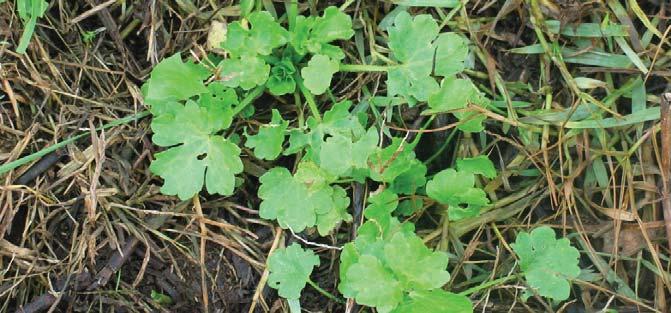
It’s easy to use, delivers excellent translocation of active ingredient through plant tissue and gives good weed control. Sprinter 700DS is less damaging on clover than older, 2,4-D ester phenoxy herbicides, so it is more flexible in terms of application timing. Pastures should be grazed prior to herbicide application to expose weeds and minimise any potential clover damage. Depending on the weed species present, Valdo® 800WG may be tank mixed with either Baton or Sprinter 700DS. This clover-friendly flumetsulam herbicide is particularly useful for improving control of buttercups and brassica weeds such as hedge mustard and wild turnip. Regardless of which herbicide(s) you use, correct timing is essential – because weed germination can be staggered throughout spring, the aim is to kill the bulk of the weed population without letting earlygerminating weeds get too big for effective control. Optimum timing is typically after the main germination but before any flower stalk development. Most spring-germinating weeds flower by late December – this is too late for consistent control.
For more advice, including help identifying which weeds could be a problem in your established pastures this season, contact your Farmlands Technical Field Officer or the friendly team at your local Farmlands store.
®Baton is a registered trademark of Nufarm Australia Limited. Valdo and Sprinter are registered trademarks of Nufarm Limited. Article supplied by Nufarm.
































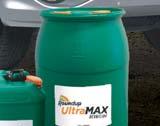



















Before buying a neighbouring drystock block, Sam Williams had already decided to plant a high-yielding crop with a good return – maize.
Sam, who works primarily as a dairy consultant, needed a crop that required little labour while complementing the Williams family’s 232ha dairy, ewe and Simmental breeding cow farm.
Based at Tihiroa, between Pirongia and
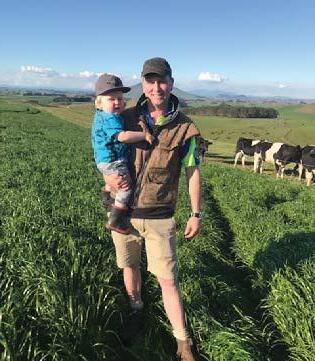
Otorohanga, Sam has grown maize on contract for dairy farmers for the past nine seasons on a 134ha support block adjacent to the main farm. Last season he planted 34ha of maize and hopes to increase that to about 40ha this spring.
“We have planted up to 70ha in the past but decided to be more conservative during lower pay-out years, just growing what we know we can sell,” Sam says. He chose maize as he saw several benefits over other crop options. “Maize works in nicely with the farm workload as it only has some seasonal labour requirements,” he says. “I manage the maize operation and we do the spraying and fertilising ourselves. We use John Austin Contracting for the groundwork and planting, and more recently in the selling of the maize as well.”
Sam says maize is high-yielding with a good return – even in average years –and has a reasonably transparent price.
“It is commonly traded in our area,” he says. “It’s easy enough to move –there is an established market for it.”
With the support block sitting at
altitude and subject to westerly winds, Sam chose Pioneer maize right from the start. “With the challenges on the site, Pioneer was the only company that had a wide enough selection of hybrids to meet our criteria,” he says. “We were impressed with Pioneer’s large breeding programme and therefore had more confidence in the reliability of the hybrids.”
Sam says the farm has also experienced challenges with northern leaf blight, which led them to grow Pioneer Hybrid 35A30 for the past 3 or 4 years. “Now 35A30 is being phased out, we are moving toward P0640 this spring.”
Sam’s maize has also adapted well to the low-fertility soil on the block.
“In our best years, we have grown 21t/ha but the yield is usually in the 18.5-19t/ha range,” he says.
For more information, contact your Farmlands Technical Field Officer or the friendly team at your local Farmlands store.
Article supplied by Pioneer brand products.





















When Southland farmers Keith and Vickie Clark sought help to improve their lamb finishing ability over the summer, they turned to Farmlands Technical Field Officer Allan Carlene. On his advice they decided to try Relish red clover on their Opio property and this has allowed them to increase their finishing capacity.
Red clover is becoming a valuable tool for many farmers across the country and Relish is a step change in its genetics. Relish red clover shows major improvements in persistence, carrying high yield potential over time. It has several years of proven outcomes as a high-powered, specialised feed for lamb finishing, as well as being part of a mix. In the past, red clover has been viewed as a short-term option but Relish red clover is a major advancement in persistence and can be considered a 2 or 3 year pure stand option.
Keith and Vickie have adopted Relish as the primary lamb finishing
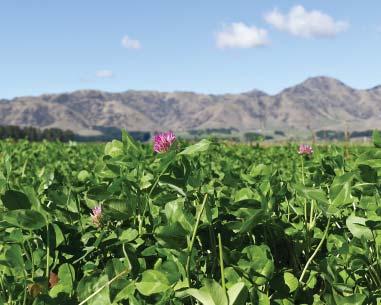
forage on their 268ha property. As fattening farmers, the spring and summer are key to driving profitability. “We put Relish in to improve what we’re doing – and we are putting in another 10ha this year,” Keith says.
The strong spring growth impressed Keith. “I was able to run 400 lambs over an 8ha block as well as 170 dry hoggets but it still got away on them,” he says.
Other summer feed options often require a transition period in which the stock will only maintain liveweight or have minimal gains but with the Relish stand Keith has not seen a single lamb take a step back. He was pleased with the ease of fattening lambs on Relish, knowing they would do well while staying clean.
Red clover’s lack of persistence has deterred farmers in the past but the new genetics of Relish have solved this issue for many. Relish offers a significant advance in red clover persistence, with longevity of the crop a key benefit. This benefit comes with industry-low levels of formononetin (oestrogen). Relish can be used in several ways.
In the past, red clover has been part of pasture mixes often sown at low rates. This meant the true potential was not realised until higher rates were used, along with pure stands. Pure stands of Relish have several benefits, including high-quality summer lamb finishing and increasing ewe hogget weights before tupping. To maximise the production and persistence of Relish red clover, best management practices suggest rotational grazing, with pre-grazing heights of 20-25cm leaving a residual 4-5cm. Relish’s spring growth is very rapid, and being well prepared to use this growth is key – an increased stocking rate is required through November to maintain the quality. As growth slows ahead of autumn, it is important to graze any residual growth before winter to minimise disease presence through the cooler and wetter months.
For more information, contact your Farmlands Technical Field Officer or the friendly team at your local Farmlands store.
Article supplied by Agricom.






















Michael and Shannon McMillan have been modifying their farming system on the Ngatea Hauraki Plains to capture more profit and make some significant agronomic advancements. Milking 230 cows through a traditional herringbone shed, they know the importance during bad weather of home-grown feed, and do everything to maximise it.
Following advice from their Farmlands Technical Field Officer, Brian McMillan, Michael decided to begin using ONE50 AR37 perennial ryegrass as the main component of his pasture mixes. “Other grass cultivars on the market can look impressive for yield in their first year but can disappoint as a long-term pasture option due to the
high insect pressures observed on the Hauraki clay soil types,” he says.
The most important determinants of a perennial ryegrass-based pasture on Waikato dairy platforms are production and persistence and ONE50 AR37 continues to go the distance for the McMillans.
Over the past year Michael and Shannon have taken their business from strength to strength by incorporating ONE50 AR37 perennial ryegrass into their system. “Its autumn and winter production is a real winner for us, as when we spray out our summer crops in the autumn, it’s paramount that grass on-farm is performing,” Michael says. This ensures that the McMillans grow as much feed at home as possible throughout the calendar year, reducing
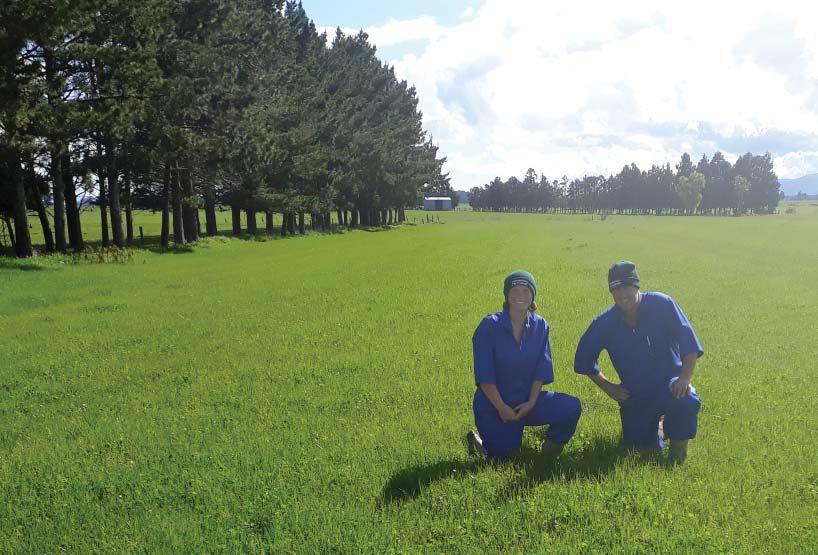
their reliance on volatile summer and autumn supplement markets. Recent droughts and more frequent dry summers have made many farmers in the Waikato question their perennial ryegrass cultivar choice. However for Michael and Shannon and their dairy system, ONE50 AR37 perennial ryegrass currently sets the benchmark. The partnership is relatively new to the farm and it understands the importance of choosing a perennial ryegrass cultivar that fits the farming system. ONE50 AR37, with its late flowering and high levels of autumn and winter production, ensures the McMillans have the most feed when they need it. By combining ONE50 with AR37, an endophyte well known for strong insect control, Michael finds he is able to capture invaluable summer production. “ONE50 AR37 perennial ryegrass is the first thing to bounce back after a dry summer and always manages to stay green, due to its rust tolerance genetics,” he says. The choice of perennial ryegrass is integral to any dairy farming business as it is the precursor to farm profitability. Dairy farms are driven by the ability to turn homegrown pasture into saleable milk as efficiently as possible. The McMillans are driving the productivity and longevity of their system using ONE50 AR37 perennial ryegrass. For more information, contact your Farmlands Technical Field Officer or the friendly team at your local Farmlands store.
Article supplied by Agricom.
Charge through Farmlands:
Allflex RapID Sheep Tag
$2.20
INCL. GST | SAVE $0.58
• High-performance HDX technology.
• • Automatic and manual applicators.
• 10 clear colours.
• 157524
Purchase either your RapIDT T puts you in the draw to WIN back your
HDX High performance EID technology, the benchmark for drafting and automation.
• 20 tags per strip dramatically reduces application time.
• New stem technology, reduces application pressure, superior healing and retention.
Bottom (maximum 2 rows of 7 characters)
Applies to either RapIDTags Tags h l
Laza-Printed FlexiTags 50c
INCL. GST | SAVE $0.12

• • • Automatic and manual applicators.
• 10 clear colours. 105219
Qty required
Male end (maximum 4 digits)
Qty required
Female end (maximum 2 rows of 8 characters
Number range (ie 1-100 etc.)
Tag colour (please circle) Yellow White Orange Blue Green Red Pink Black PurpleBrown Colour (please circle) Yellow White Orange Blue
Top (maximum 4 digits)
Number range (ie 1-100 etc.)


Flexitag
Male end (maximum 4 digits)
Qty required
Female end (maximum 2 rows of 8 characters
Number range (ie 1-100 etc.)
Flexitag colour (please circle) Yellow White Orange Blue Green Red Pink Dark blue Brown Black Purple
Brass Tag
Name (maximum 14 characters)
Start number (alpha
17)

Number range (ie 1-100 etc.)


In today’s increasingly competitive agricultural landscape, farmers are looking to drive continuous improvement in their operation. A regular weighing programme helps to maximise the performance of livestock.
Solutions that replace guesswork with accurate, reliable information are becoming increasingly popular. This is the case for wholesale customers requiring target weights, contract graziers reporting progress weights and weight gain and anyone seeking to achieve industry target condition levels for maximum reproductive success or to comply with breed society/traceability and other industrystandard reporting systems.
Critical performance measures captured include stock growth rates and condition scores, breeding performance (AI dates, pregnancy results, birthing ease/ complications etc.), growth rates versus crop and forage feed regimes, health treatments (drench dosage levels, dates and intervals) and stock inventory information.
This raw data can then be crossreferenced with influencing factors, making operating decisions clearer and more time efficient. Influencing factors include animal growth rates analysis (for example, against feeding regime/feed source or by genetic source), crop and forage performance and profitability (feed to target weight conversion goals), animal breeding performance (pedigree tree tracking, pregnancy results versus weight and AI, herd or flock culling
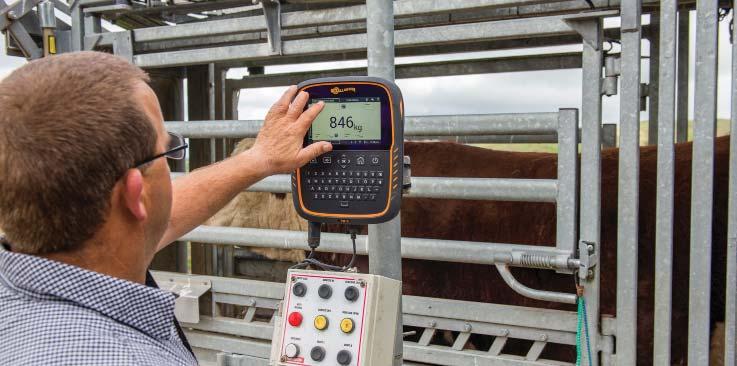
decisions) and animal health treatments (efficacy of treatment programmes, managing withholding periods).
One of the main challenges to a recording, monitoring and analysis strategy is time and efficiency. Traditional paper-based systems are notoriously inaccurate and timeconsuming. Error rates in manual tag reading due to mud and poor visibility are inevitable. Then there’s the time involved in retyping that information to review it at a later stage, let alone the time involved in analysis.
With the vast array of automated systems now available, the endto-end process from initial data capture through to reviewing the information in order to make decisions is far simpler and faster. The systems also add significant value in increasing accuracy and dramatically reducing on-farm labour requirements. Automation options include automatic identification of mob
or individual IDs, automatic or semiautomatic weighing and automatic or semi-automatic drafting of animals into specific treatment groups.
With 20 years developing weighing and electronic identification products that are as rugged as the environments they are designed for, Gallagher’s range provides a solution to suit every farming need – such as the TSi 2 Livestock Manager, which provides comprehensive animal data and analysis anywhere, anytime, or the newly released TW Weigh Scale range, which has daylight readable touch screen, or the award-winning HR5 Hand Held EID Tag Reader, which has an on-board keypad and large colour screen for instant data entry and in-yard decision-making. For more information, contact your Farmlands Technical Field Officer or the friendly team at your local Farmlands store.
Article supplied by Gallagher.





• Make sure your pool is safe to swim in
• Test for protection against bacteria and algae
• Strip’s test – Chlorine, Alkalinity, PH levels, Cyanuric acid




• Keep your water neutral, balanced and clear
• Makes for trouble free pool care


2 way - Cost effective protection Kills bacteria and controls algae
• Use up to 40% less than granules
• Slow release, over a week
• No measuring, no pre-dissolving required
• Kills bacteria/controls algae/ UV stabilised

• Long life algecide
• Destroys all forms of algae, moss and mould

Take the guesswork out of looking after your pool with our easy and helpful app.
• Water testing
• Types of Chlorine Explained
• Fixing Green Pools and Cloudy Pools






Ensuring lambs get the most appropriate first drench is one of the most significant decisions to affect their future growth, production and the level of pasture contamination on your farm. It is well documented that productivity for new-season lambs is where a farmer can be short-changed without even realising it.
Once lambs hit the ground, the same debate starts as to when to drench and should tapeworm products be included. The mainstream advice is that tailing drenches are of little benefit in most situations. The question then is should lambs be drenched pre-wean or wait until weaning?
Through a sheep’s life cycle, it is as a lamb that it faces one of its most significant internal parasite challenges. Pasture will have a high level of worm egg contamination,
initially from ewes as their immunity is weakened. Lambs then become the most significant source of worm eggs infecting pasture and this is why it is so important to ensure they get the best possible anthelmintic treatment right from the start.
Weaning places a lot of stress on lambs – the combination of separation from the ewe, removal of milk and changing to a pasture-based diet weakens their immune system, all at a time when they are already at their most susceptible to parasites. How to manage this was the subject of three trials by Beef + Lamb in the spring of 2010 in the Manawatu. Lambs were grouped into untreated (control), triple drench and triple drench plus praziquantel (specific tape drench) and monitored over 28 days. Across all farms, the triple drench group grew faster than control by 392g total and the triple plus praziquantel grew by 672g.
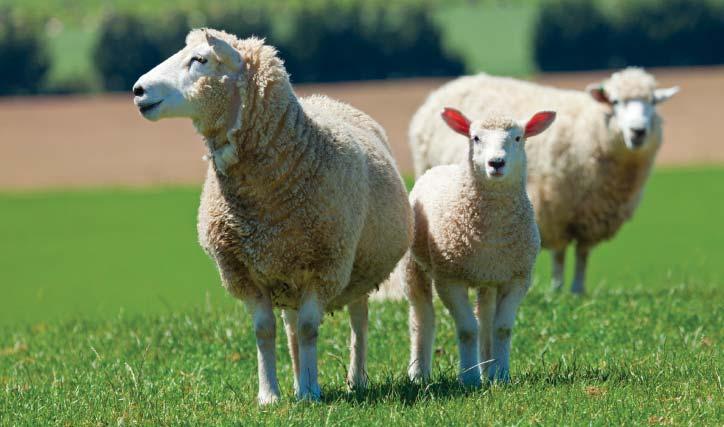
Lambs treated with the triple drench plus praziquantel grew 1.02kg heavier in 28 days than the untreated controls. Southwell et al. had a similar result in 1996 of 2kg liveweight gain over 2 months. Southwell also demonstrated that praziquantel was the only tapeworm product to remove 100 percent of heads and segments. Not only did the triple plus praziquantel give liveweight gain, it also reduced dag score by increasing faecal consistency over both the other groups. Several drenches can control roundworms – the level of worm resistance on your farm will dictate either a double or triple combination. To control tapeworms, praziquantel is the only active ingredient that will kill both the head and segments. As a good standard of practice, the first few lamb drenches should be an effective combination with an additional specific tape active. To follow, an effective combination is recommended. Whether this is a double or triple will depend on your management practice and the resistance levels on your farm. Do not get short-changed this spring. There is good evidence that a pre-wean drench has production advantages in many situations and that tapeworms can reduce liveweight gain and have the potential to increase flystrike through creating more dags. For more information, contact your Farmlands Technical Field Officer or the friendly team at your local Farmlands store.
Article supplied by Donaghys Animal Health.



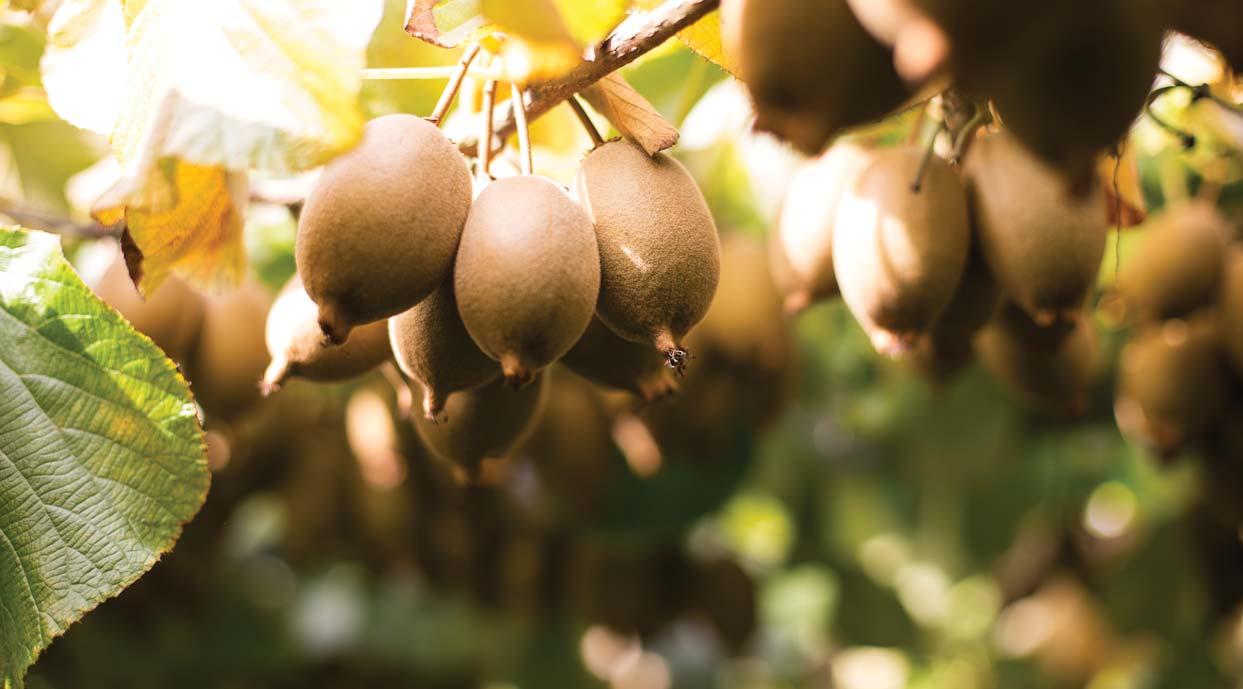
As flowering is one of the most important stages of crop production, it is essential that products supply specific nutrition to ensure success during this important and critical stage of plant development.
During flowering and fruit set, high amounts of energy, proteins, sugars, nucleic acids and phytohormones are required to sustain cell division, which is why plants need a boost at this time. Italian-based company Biolchim has designed two products, Folicist™ and Kriss™, specifically to assist these stages of flowering and fruit set, and to lessen the stresses that come at those stages of crop development. Folicist can assist during the flowering stage, when there can be an internal physiological competition for hormones and nutritional reserves. Folicist was designed specifically to help optimise flowering and fruit set and can be used for crops such as apples, kiwifruit and avocados. Folicist works both as a growth promoter and anti-stress agent. It can also be mixed with most
agrichemicals, which reduces time on the orchard sprayer.
The key ingredients in Folicist have individual functions:
• ACTA – an osmoprotectant and critical to production of plant energy.
• Folic acid – active in function of and synthesis of proteins.
• Glycine betaine – supplies nutrition to enable plants to recover from intense metabolic stresses.
Once your crop has set and pollination is complete, it is time to apply Kriss to enhance fruit enlargement. Kriss contains natural plant extracts with no synthetic hormones – this is important in the cell multiplication stage when fruit quality parameters can be defined. Kriss can also help increase fruit size while reducing the number of rejects in your pack-outs, thus increasing the profitability of your crop.
These key products from Biolchim have been helping New Zealand horticulturists with their crops during the critical yet temperamental early spring stages of crop production.
Grower testimonials
“When I used Folicist on our kiwifruit crop this year I definitely observed a more compressed flowering and hence a very uniform and optimally sized crop with excellent pack-out results.”
– Graham Philp, Kiwifruit Manager, Aongatete Coolstores
“Last season I applied a fruit-sizing product from Italian company Biolchim called Kriss and was extremely pleased with the results I achieved on my Hort 16A Gold kiwifruit.”
– Paul Currie, Kiwifruit Orchardist, Whangarei
“Last season I performed trials on a fruit-sizing product from Italian company Biolchim called Kriss and it certainly performed to our expectations and as well as other industry-standard products we have used in the past.”
– Denis Barker, Kiwifruit Manager, Turners and Growers Kerikeri
For more information, contact your Farmlands Technical Field Officer or the friendly team at your local Farmlands store.
Article supplied by Biolchim.

5% SHAREHOLDER REBATE

ORDER ONLINE OR GIVE US A CALL!

Making efficient irrigation & water supplies more economic for every New Zealand Farmer
Think Water New Zealand operates 14 locally owned and operated irrigation and water management stores providing a range of irrigation and water management solutions.
Now present your Farmlands Cards at any Think Water store and receive up to 5% rebates on your purchases or professional irrigation and water management services provided


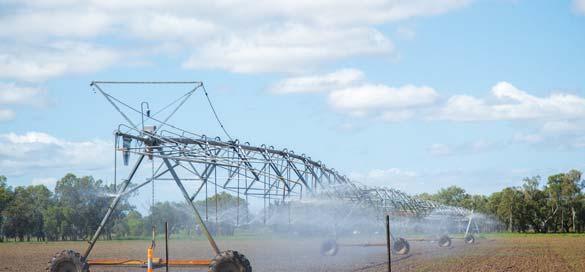




Design | Supply | Installation | Service • Water Pumps • Irrigation Systems • Pipes & Fittings • Filtration & Water Treatment • Drip Irrigation • Hoses & Accessories VISIT ANY OF OUR STORES LOCATED FROM NORTHLAND TO TIMARU FOR A FULL

As we enter the spring selling season, what a difference 12 months makes. In essence, spring 2016 saw a bull residential market nationally, initially driven by Auckland.
The key drivers are well-known, being immigration combined with low interest rates. In May, Farmlands saw a decline in the number of new properties coming to the market. Month-onmonth this has continued, with the total number of properties available nationally back 30% on spring 2016.
Sales of lifestyle properties nationally declined 19% for the 3 months ended July 2017 compared to the 3 months ended July 2016. The median price for all lifestyle properties sold in the 3 months ended July 2017 was $580,000 and $10,000 higher compared to the 3 months ended July 2016 (+1.8%). For the same period, the number of residential sales nationally declined by 24.5% with Auckland declining 30.6%. Nationally, residential values are up 3.4%. Northland, Gisborne, Hawke’s Bay and Otago all saw double digit value rises, however Canterbury, Auckland, West Coast and Bay of Plenty all recorded a decline in average values tapering off from record values in the autumn.
The rural market too has followed the softening cycle with decline in the number of available properties for buyers to consider. Sales data released from REINZ shows that in the quarter ending July 17, the number of farm sales decreased by 16%. Grazing farms recorded the greatest decline in value to $10,093 per hectare for the 3 months ended June 2017 from $15,326 per hectare in June 2016. Renewed confidence in the dairy sector saw a marginal increase in the national average of $35.97 per kg of milksolids for the 3 months ended July 2017,
compared to $33.45 per kg of milksolids for the 3 months ended June 2017.
At the time of writing, pre-election, key factors impacting purchasers who are seeking to make an informed buying decision include potential environmental reforms, a water tax and a capital gains tax on land. We may experience a quieter period while buyers and financiers seek clarity and certainty.
We have a number of vendors where we have successfully introduced a purchaser who is subject to Overseas Investment Office approval and we are finding that this process is far more drawn out and decisions lengthy. Again depending upon potential government regulatory change, we may see a total change in overseas buyers participating in our market.
Did you know Farmlands Real Estate sold about 28,000 hectares of rural land in the last financial year? We have a number of outstanding properties to present to the market in what will be an interesting spring selling period.
Remember we are always up for a challenge and if you are considering marketing your residential, lifestyle or rural property, all we ask for is the opportunity to be considered as your selling agency.

Calvin Leen General Manager Real Estate
027 453 0950
calvin.leen@farmlands.co.nz




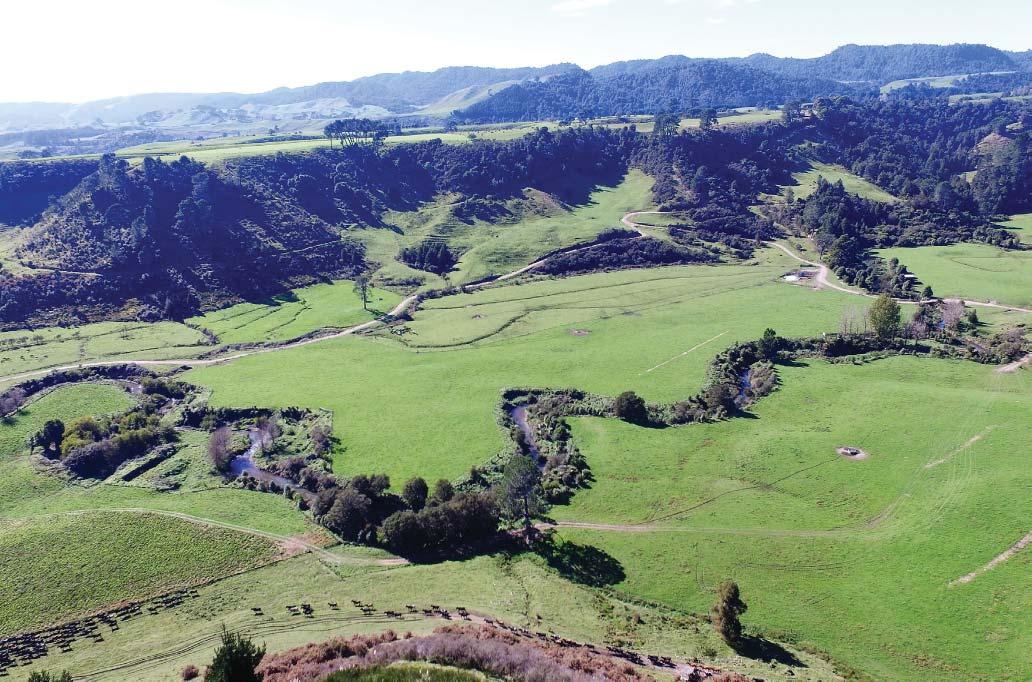
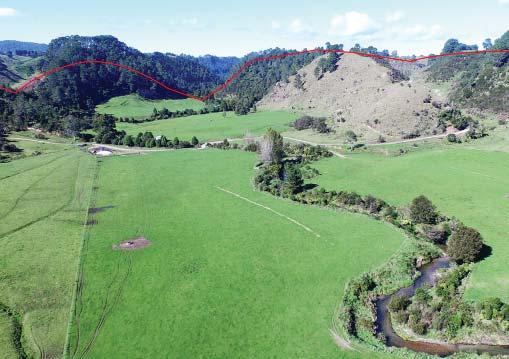
Boundary indicative only
• 285 hectares situated in Okoroire, Waikato
• Five bedroom homestead
• Implement/calf sheds, workshop and hay barns
• Flat terrace tops, wide valley floors
• Nutrient reference point 24kg/N/ha/year
• Approximately 50 hectares of arable ground
• Dairy heifers, breeding cows and cropping
Tender closing 2pm, Tuesday 31 October 2017 (unless sold by private treaty).
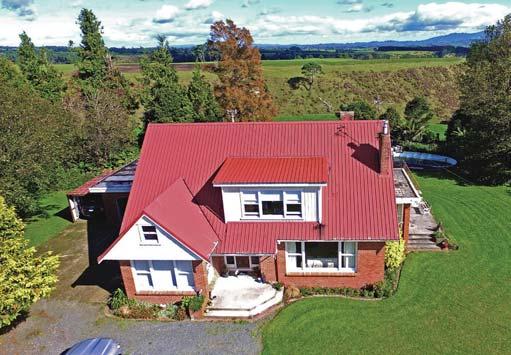


www.farmlandsrealestate.co.nz
Ian Morgan Rural – Waikato 027 492 5878 ian.morgan@farmlands.co.nz
Glen Murray Lifestyle/Rural – Waikato 027 488 6138 glen.murray@farmlands.co.nz
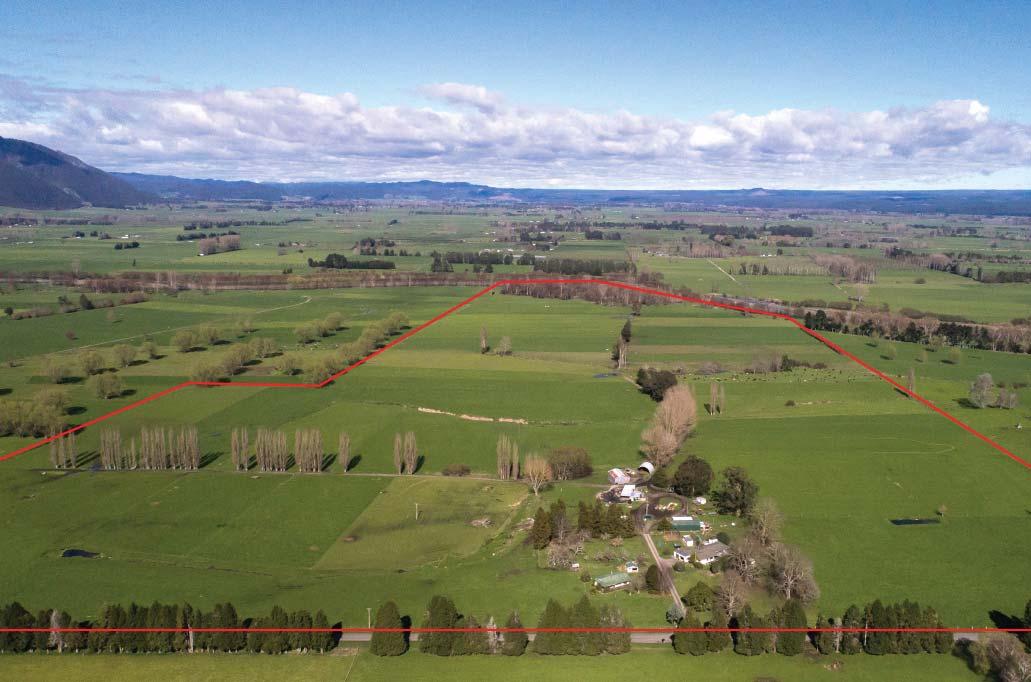
Boundary indicative only (includes lease land)
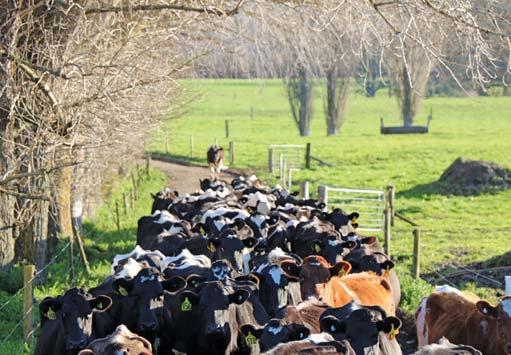
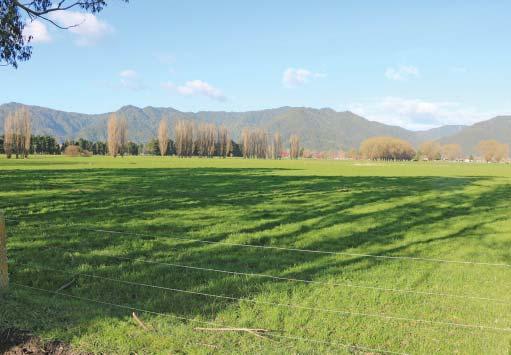
Fertile 53.91 hectare property in Galatea, producing 50,000kgMS with minimal inputs. Flat and well fenced into 44 paddocks growing strong pasture. A central race system connects the 15-aside herringbone dairy shed. There are two three bedroom homes plus a good range of farm buildings. A 5 hectare lease block adjoins the property to the Horomanga River, as well as 14 hectares of lease land 17km from the property with the opportunity to be transferred to the new owner. Tender closing 12pm, Thursday 23 November 2017 (unless sold by private treaty) .

Phil
Badger
Rural –
Rotorua
027 357 5704 phil.badger@farmlands.co.nz
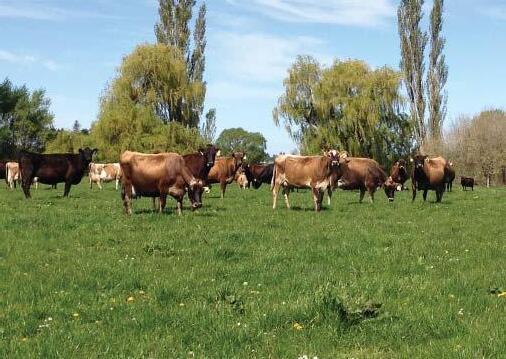
Located in a renowned dairying district between Geraldine and Temuka, close to Timaru. 226 hectares freehold and 109 hectares of lease land. Dairy platform made up of 255 hectares milking 1,050 cows. The balance of land used for wintering and feed production. 54-bail rotary with automatic cup removers, subdivision and laneways to a high standard. Multiple irrigation sources from the Kakahu Irrigation Company and on-farm water consents. Good array of staff housing with substantial homestead. Deadline sale closing 1pm, Thursday 9 November 2017.
hectare cropping block minutes from
• Superior cropping block, 65 hectares (more or less, subject to boundary adjustment) located on the outskirts of Hamilton
• Brand new 14-bay shed and 10-bay concrete floor workshop
• Two large water ponds ideal for irrigation, good water available
• Three road access points
• Two good-sized homes and office with kitchen and two rooms Excellent opportunity to secure a good-size cropping block in a great location close to quality schooling. Tender closing 12pm, Friday 10 November 2017 (unless sold by private treaty).

Simon Richards Lifestyle/Rural – Timaru 027 457 0990 simon.richards@farmlands.co.nz

Chelly Aitchison Lifestyle/Rural – Morrinsville 022 697 8779 chelly.aitchison@farmlands.co.nz
























































For full terms and conditions and offer dates please refer to www.bridgestonetyres.co.nz or see in-store. *Buy three get the fourth free promotion applies to selected Bridgestone branded car and 4x4/SUV tyres only (Potenza and Ecopia car tyres; Destination LE02 and Dueler 697 4x4/SUV tyres), which excludes all other patterns outside of this range and all van and commercial tyres. Some additional size exclusions apply. See www.bridgestonetyres.co.nz for a full list of exclusions. Normal fitting and balancing charges apply. Savings are off current in-store regular point of-sale price. In all instances the lowest value tyre will be given free of charge. All tyres must be fitted in-store at the time of purchase. Offer is available strictly while stocks last. Offer cannot be used in conjunction with any other discount or offer. Please see in-store or our website for details www.bridgestonetyres.co.nz.
†For agricultural tyre pricing, please ask in store for details.