RURAL INFRASTRUCTURE NUTRITION FORAGE AND ARABLE HORTICULTURE ANIMAL MANAGEMENT DAIRY MANAGEMENT
Plan 365 is a technical guide aimed at helping shareholders learn about best practice and the latest advancements in rural technology.

RURAL INFRASTRUCTURE NUTRITION FORAGE AND ARABLE HORTICULTURE ANIMAL MANAGEMENT DAIRY MANAGEMENT
Plan 365 is a technical guide aimed at helping shareholders learn about best practice and the latest advancements in rural technology.
On average, a kiwifruit crop will remove around 6t/ha of dry matter from your orchard at harvest, taking with it a large quantity of vital nutrients. If they are not replaced annually, the vigour of the vines and volume/quality of the crop will decline over time.
Post-harvest (late May through July) is a good time to assess your orchard’s lime and fertiliser needs. This means you can get lime on before pruning and before the ground gets too soft for machinery. It also allows you to fit a late-winter fertiliser application around pruning/mulching, so that nutrients are available to support spring growth. Avoid applying fertiliser 3 days either side of hydrogen cyanide spraying. It is also best practice not to apply fertiliser before a significant rain event, due to the environmental impact it may have. Soil sampling should be done annually post-harvest but before bud burst. Try to sample at a similar time and place each year to help identify trends over time. A sample involves taking 1520 cores from the root zone of the female vines (in a way that accurately represents the block you are testing) at a depth of 15cm. Ballance Agri-Nutrients has many science-backed products that are well suited for kiwifruit as a latewinter dressing, depending on what
The key soil test information required and related target ranges are outlined below.
pH 5.8-6.5
Olsen P 30-60mg/L
Potassium 0.60-1.2me/100
Calcium 6.0-12me/100
Note that despite this target, pH levels of 6.2-6.5 are common in kiwifruit orchards and consistently high producing blocks need a pH of 6.5-6.9.
Vital for photosynthesis and plant metabolic processes.
Kiwifruit require relatively high levels of potassium to regulate many of the plant’s functions.
Calcium is needed throughout the growing season for root and shoot growth as well as cell wall development, which affects how well the fruit will store.
Magnesium 1.0-3.0me/100 A core component of chlorophyll and therefore vital for photosynthesis, which provides energy for plant and fruit development.
Sodium 0.0-0.40me/100
CEC 12-25me/100
Volume weight 0.60-1.0g/ml
your horticulture specialist prescribes within your annual nutritional plan. Always use clean sampling equipment and bags and send to the laboratory as quickly as possible. Don’t allow samples to get warm or damp. Apply a bud burst application of N, P, K and S at or close to bud break (around early September) to support new leaf/ shoot development. A high quality compound fertiliser such as YaraMila Complex is a great choice, as it has all nutrients contained in one granule/prill.
A pre-flowering application of N and K in mid-October will support the vines through the demanding period over flowering and before fruit set.
A further post-flowering application of sulphate of potash (K) and/or kieserite (Mg) may be required in
Article supplied by Ballance Agri-Nutrients. Target range Comment
If CEC is low, nutrients may be more inclined to leach from the soil. Compost or manure can help improve CEC.
late November/early December, depending on crop loading. A further small application of nitrogen (N) may also be required.
Don’t forget that leaf samples can be taken and tested throughout the growing season to assess nutrient levels. This data may be used to adjust any further applications. Do not overlook trace elements (micro-nutrients), as they are as important as macro-nutrients. Note that application timings mentioned here may differ depending on the variety of kiwifruit in question.
For further information, contact your Farmlands Technical Advisor or the friendly team at your local Farmlands store.
Adequate winter chilling is an important factor for fruit production in New Zealand to condense the spread of bud break and maximise the amount of flowers per winter bud. Given the different geography of New Zealand, certain regions don’t often receive the optimum chilling conditions, so the need for a dormancy breaker is extremely important to initiate bud break. And traditionally this has been the realm of hydrogen cyanamide.
As there is a shift with the world becoming more sustainably focused and consumers are aware of how their food is produced and are demanding softer chemistry, the need for alternative dormancy breaker options are becoming more and more important not only for the environment but for operators on the orchard floor, local communities, schools etc. Valagro provides an alternative dormancy breaker to hydrogen cyanamide, a bio-stimulant called Erger.
Erger works through four main actions:
Stimulating respiration –monosaccharides and polysaccharides contained in Erger. During vegetative regrowth, the plant will increase its respiration rates and energy levels, even in the event of
unfavourable weather conditions.
Supporting enzymatic activity –the presence of calcium in Erger can increase the enzyme activities, producing more energy (ATP) in the very last stage.
Stimulation of inorganic nitrogen metabolism – this can positively affect early and uniform bud break and also help with early vegetative development.
Promoting synthesis of gibberellins – gibberellins play an important role in cell division and stretching of meristems during the growth phase, leading to more development and growth rate of the shoot tip. The increased level of gibberellin also counteracts the action of inhibitors of dormancy, such as abscisic acid and naringenin.
These actions activate the natural processes to give the plant more of what it needs to “wake up”.
Table 1 shows the effect Erger can have as a dormancy breaker.
Dormancy breakers are a specialist product, which require detailed understanding of plant physiology in relation to bud break. Timing is critical to optimise the result. There is a good, better and best
approach to application to maximise a dormancy breaker’s efficacy and this has been the Achille’s heel of the softer approach such as Erger, where there is a smaller application window and timing is critical.
Over the last 12 months there have been three study orchards in the Bay of Plenty region (Te Puke) on the variety G3. They consisted of three timing treatments each, one considered too early, one optimal, one too late. Buds were collected at different time points then sent to NSure to be analysed. By using genetic testing there was a strong gene response in the plant during the periods of week 33 to 35, which correlated with the third treatment of Erger. From the results, the plant’s response from the third treatment was significantly better than both treatments one and two, as well as the control.
For further information, contact your Farmlands Technical Advisor or the friendly team at your local Farmlands store.
Article supplied by Valagro.
Wind is one of the harshest weather conditions – it causes damage and creates havoc in the horticultural and agricultural field. Wind damages crops, leading to costly repairs and also puts plants under stress, which reduces the intake of quality fruit.
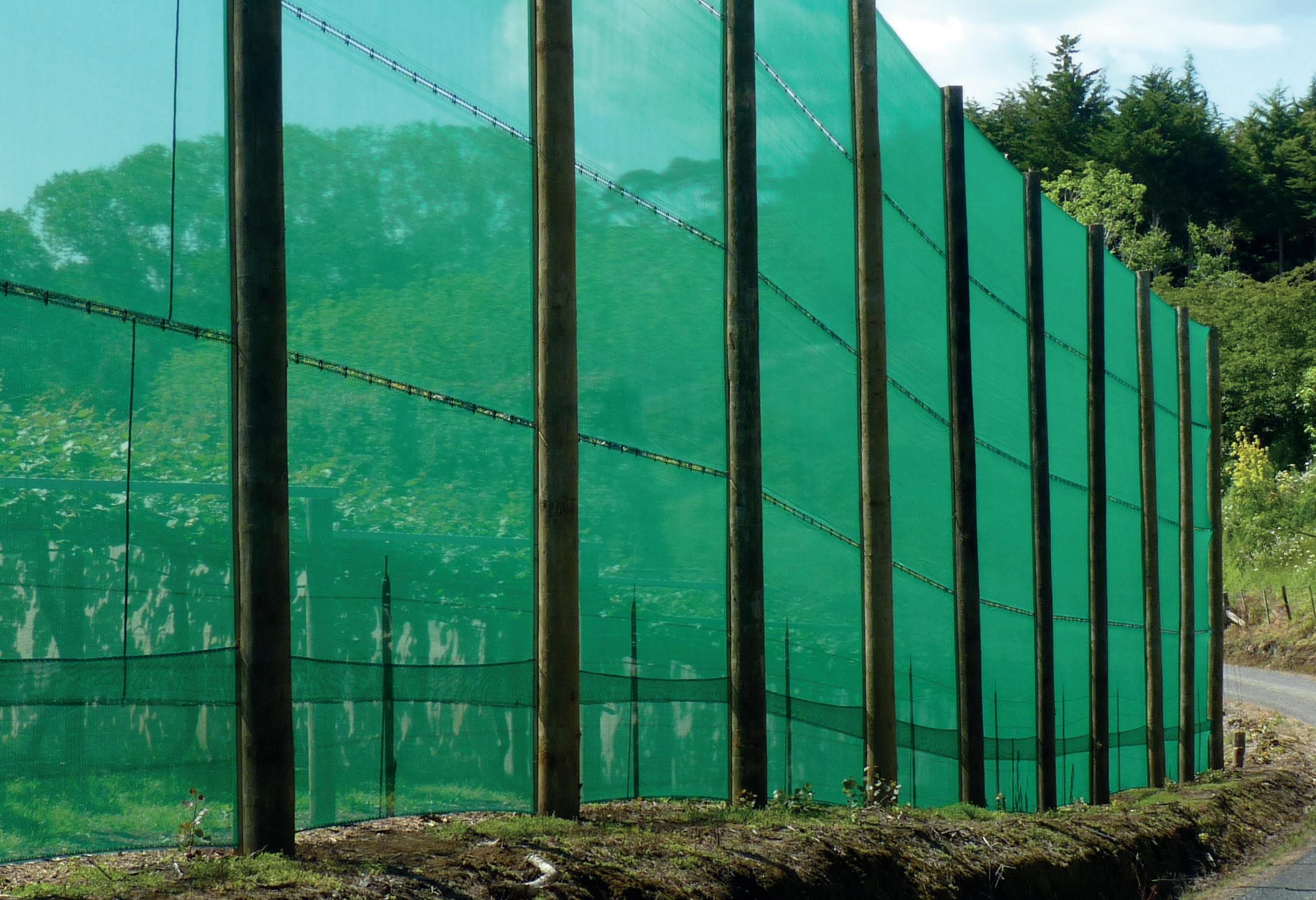
Installing a wind break can help protect crops and create a protection zone around your plants, reducing the high risk wind causes. Wind breaks are needed to filter the wind and not create a solid wall, which would create a turbulent effect on the other side.
There are two types of wind breaks – natural and artificial. With natural wind breaks, it takes time for these to grow to give you the protection you need and they can also contain diseases and pests. With artificial wind breaks, there are many things to consider to ensure you get the full benefit.
This includes ensuring you have a wind break that is right for the job, making sure it is at the correct height to give you the cover needed for full protection, making sure you have the correct pole size and spacing and ensuring it is installed correctly to reduce the risk of mechanical damage due to poor workmanship.
There are many different types of wind breaks with different wind porosities. It is important to have the correct wind break to filter the wind and not create turbulent air on the other side, which will cause damage – so get the right advice to evaluate what is the best for your situation.
Equally important is ensuring that you have the correct spacing between your
wind break fences. This will ensure the wind is kept above your crop across the entire area being protected.
Pole size is determined by the height and type of the windbreak being used. For standard 2 metre to 4 metre high windbreak fences, pole sizes are usually between 125 and 175 S.E.D. For wind breaks higher than 4 metres, it is recommended that a pole size between 175 and 220 S.E.D be used. Ramming poles into the ground is recommended. The depth required is not only dependent on the height and wind break material but also on the soil type. Your poles need to be able to withstand the wind loading they will bear.
Pole spacing is also dependant on pole size, the wind break type and especially the ground conditions. Average pole spacing is between 3.5 metres to
7 metres but again, it is important to get advice for your situation.
Battens and billow wires are the most common cause of wind break structure defects. Incorrectly installed, these can cause chaffing by rubbing against the material and over a short period of time the material will tear away from the structure. Battens must be clean shaven and the edges planed back to eliminate the sharp edges. If billow wires are required, it pays to consider the plastic coated option. Even though more expensive, they can pay off in the long run. For further information, contact your Farmlands Technical Advisor or the friendly team at your local Farmlands store. Article supplied by Cosio Industries.
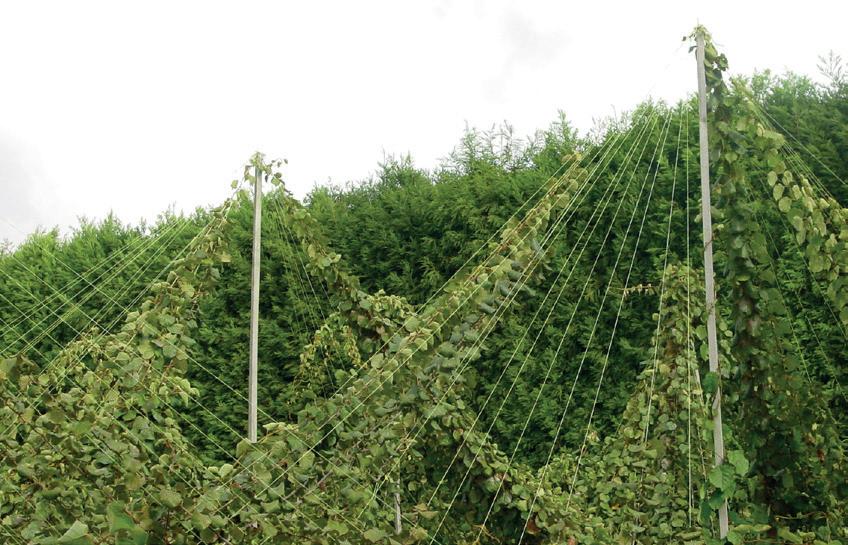
Post-harvest will again be time to focus on cane management. With kiwifruit only producing on new canes each year, new growth must be encouraged and nurtured. Gold kiwifruit, being a prolific fruiter, requires new canes to support a bigger crop.
Growing new canes vertically on strings reduces labour costs by eliminating specialist pruning and reduces guesswork because the old canes (only) not on the string require pruning. Essentially, when growing new canes vertically, separated from the old canes, there is less
risk of cutters accidentally cutting new cane. Additional advantages of enhanced light penetration assist increasing bud nodes, which are closer and provide an increased yield.
With kiwifruit’s vigorous vine growth and large biomass, it is key to choose a high break load twine such as Kiwi Twine to avoid strings breaking, at the same time being cost effective. Kiwi Twine is made from extruded polypropylene and provides a strong, 33kg breaking strain, as well as being UV stabilised for New Zealand climatic conditions.
Apiculture New Zealand is proud to be hosting their 2017 National Conference from 9 th – 11th July at the Energy Events Centre in Rotorua.
With the theme of “Bee-ing Prepared: Business: Knowledge: Risk”, the conference is the perfect opportunity for attendees to learn, build knowledge and understand what makes the apiculture industry tick. The conference offers informative and inspiring international guest speakers, including Randy Oliver from the USA and Yves le Conte from France. There will also be seminars, interactive workshops and an outstanding tradeshow exhibition – the largest ever assembled.
For further information, contact your Farmlands Technical Advisor or the friendly team at your local Farmlands store.
Article supplied by Empak.
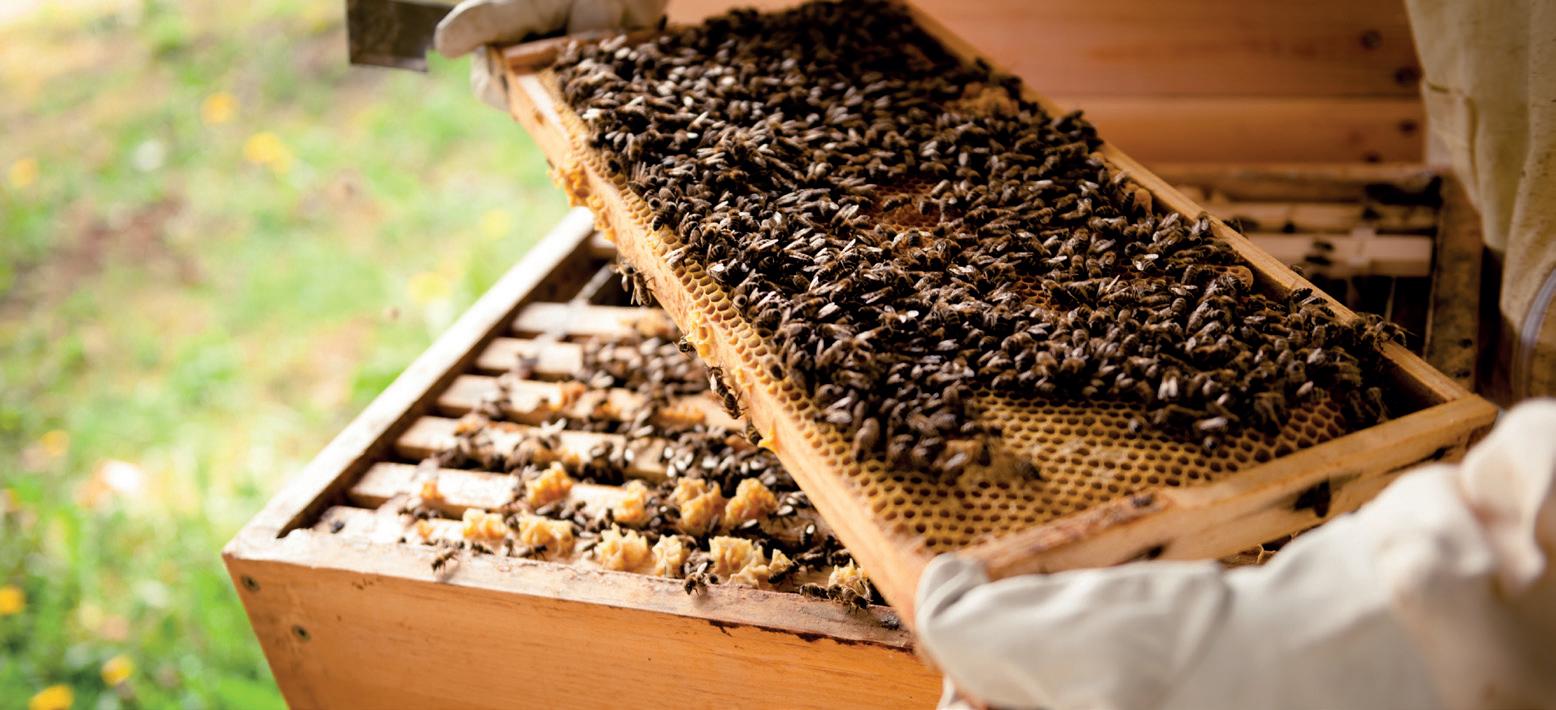
The programme covers a full three days and is suitable for all beekeepers, non-commercial and commercial, packers, exporters and the wider supplier network. Farmlands is a silver sponsor of the
event and will be displaying some exciting new innovations and products. For more information about the conference or to register, visit www.apicultureconference2017.co.nz
You’ve probably seen these revolutionary plastic bale feeders around the place and wondered – what’s the advantage? Being plastic, are they strong enough?
Well, the answer is there are plenty of advantages and yes, it is absolutely strong enough – they are not only tough but lightweight and easy to use.
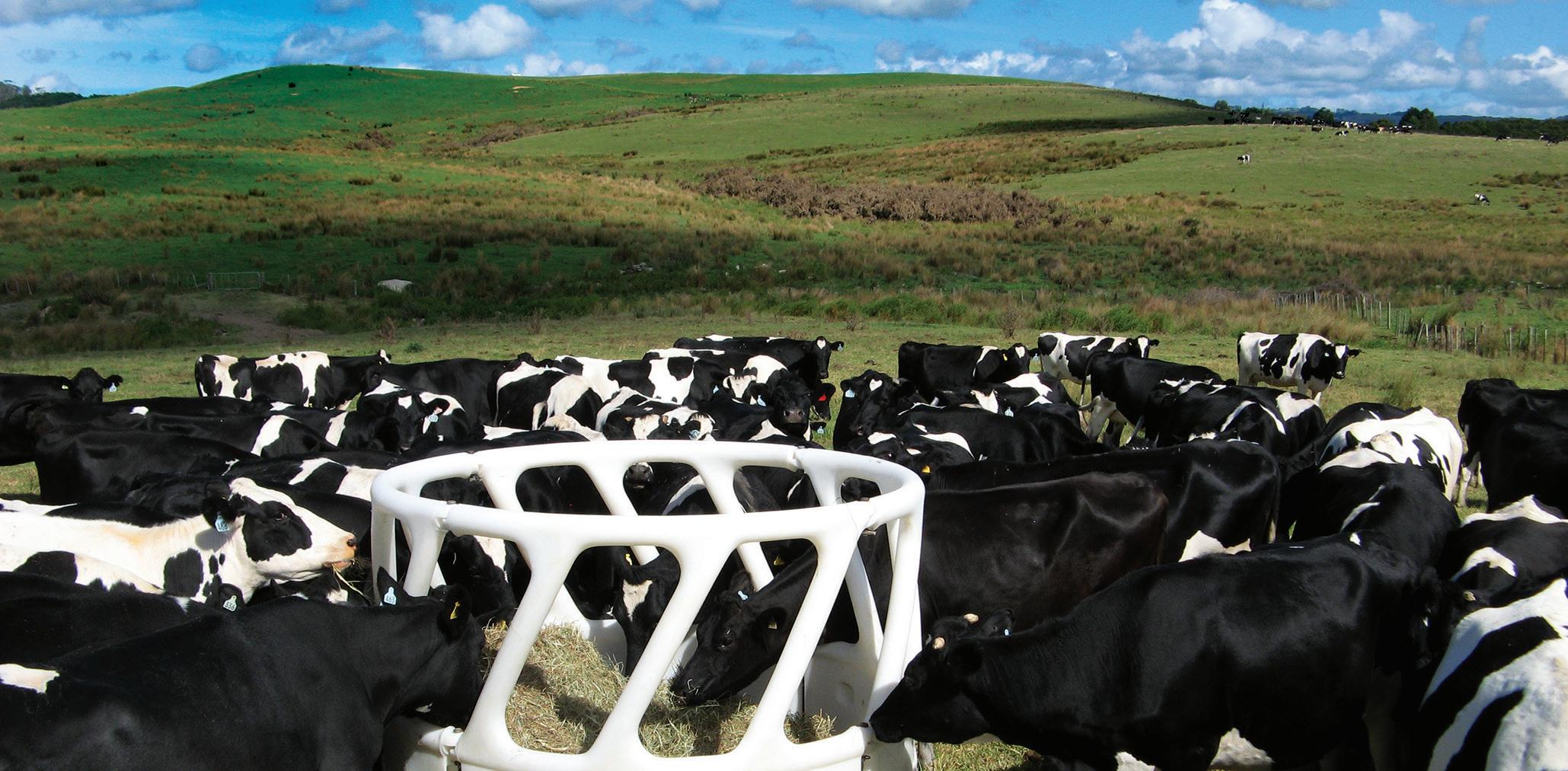
The Promax Round Bale Feeder is made up of four quarters, held together with heavy duty, quick release lynch pins. It’s called a round bale feeder but it can work for bales of any shape or size because it’s modular – you just add the curved panels and you can enlarge or reduce it as you want with the quick release pins. You can even assemble it around a bale – it’s that easy!
The Promax Round Bale Feeder
is not only the most innovative on the market, it’s also the strongest. The UV protected plastic is sturdy and tough but at the same time is light enough to be moved by one person. You can roll it around, throw it on the back of the ute or pick it up with the forks on the tractor.
The Z shaped truss is one of the biggest advantages of the Promax Round Bale Feeder – it reduces wastage by up to 30 percent compared to other feeders. This is because the stock can’t pull the feed out. They have to twist their heads through the Z shaped truss before backing out, leaving the feed to fall inside the feeder – not on the ground to be trampled. This means the feeder soon pays for itself by reducing wasted feed.
With no sharp edges and being sturdy and well made, the Round Bale Feeder is stock friendly.
Ideal for cattle and horses, the Round Bale Feeder is your ideal solution for stock feeding.
For further information, contact your Farmlands Technical Field Officer or the friendly team at your local Farmlands store.
Article supplied by Promax Plastics.
Testimonial by Paul Ambler, fourth generation beef farmer.

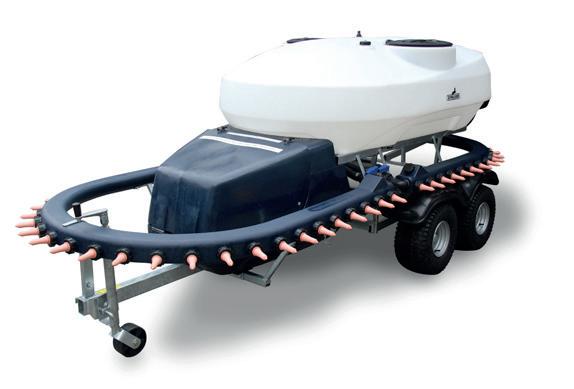
Feeding calves each year can bring about a number of health and safety issues on-farm. Issues such as sore backs, aching arms or buckets of milk getting kicked over may be problems that need to be looked at on your farm.
Mobile feeders are designed to save time, save money on labour and reduce the back breaking work of feeding calves morning and night.
A self-cleaning feeder such as Stallion Plastics’ Mixer, Tanker, Feeder (MTF) may save even more time – the tank, manifold and teats
self-clean within 3 minutes.
Stallion Plastics CEO and dairy farmer Grant Allen says the mobile was designed after he noticed how much time it was taking to feed the calves on his farm. “It was taking my farm staff 2 hours in the morning and 2 hours in the afternoon just to transport milk and feed calves,” he says. “No one wanted to do the job, it was hard going. Now it’s great, less than an hour each time and easy to clean up at the end of the day. Everyone gets away on time, every time.”
The MTF can be used for mixing and feeding out colostrum and milk powder in pens and then feeding out in paddocks later in the season. For further information, contact your Farmlands Technical Field Officer or the friendly team at your local Farmlands store.
It’s fair to say that farm culverts are “top of mind” for a lot of farmers for all the wrong reasons, given the recent major flooding around much of New Zealand. No one would suggest sizing a culvert pipe to cope with a one in 100 year rainfall event – here we seek to provide some guidance as to the correct sizing of farm culverts to deal with what is generally expected.
This article covers the sizing of culverts 110mm to 500mm in diameter. Larger culverts will require a degree of engineering expertise along with possible resource consents. In these instances, a visit to your local regional council would be advisable. Modern culvert pipes tend to be lightweight plastic, either PVC or twin-wall PE (polyethylene) pipe. Both are easy to transport and install and importantly have a smooth internal bore. PVC culverts have a larger bore for the given nominal diameter and a more precise socket, to stop joint seepage undermining when pipes are used in combination. PVC culvert pipes also exhibit excellent longitudinal rigidity, so are more resistant to slump if the trench base is less than ideal. A low spot in a culvert pipe will accumulate debris, as will internally corrugated culvert pipes. Any reduction in the bore size caused by debris accumulation will make the culvert pipe more prone to being blown out during high water flows. A strong weed spaying programme, cleaning out the culvert regularly for silt and vegetation build-up and using smooth bore culvert pipes will dramatically reduce blockage issues.
Using an undersized culvert is a common mistake. It may appear to save money in the short-term but if the culvert fails, replacing it could cost up to four times more than the initial savings. As a rough guide, the larger the catchment area, the steeper the catchment, or higher the likelihood of high intensity storms – the larger the culvert pipe needs to be.
Example: 1 length of 315mm Farmtuff Culvert Pipe x 6 metre.
Step 1. Calculate hydraulic gradient: 303mm ID/6,000mm length = 0.05. Step 2. Determine maximum flow for nominated pipe diameter. Locate 0.05 on flow chart Y-axis – go vertically up from that point to intersect Farmtuff 315mm then horizontally across to the X-axis to determine the flow in litres per second.
Most farmers will have a good idea of the culvert pipe diameter they require, as they’ve seen how much water can go through the culvert after heavy rainfall. In general, it’s more flow and cost effective to use one larger diameter culvert pipe than two of the next size down, i.e. 1 x 315mm culvert pipe will flow more than 2 x 250mm culvert pipes.
Alternatively, when dealing with a known flow requirement, using the pipeline length and fall to determine the hydraulic gradient will allow the correct pipe diameter to be selected using a flow chart.
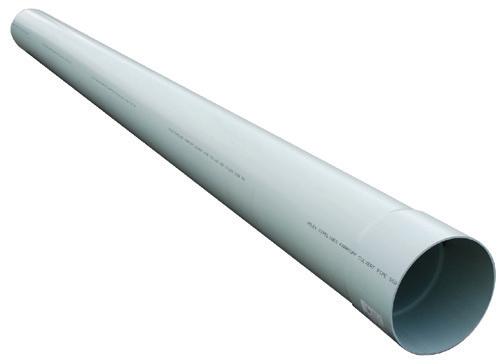
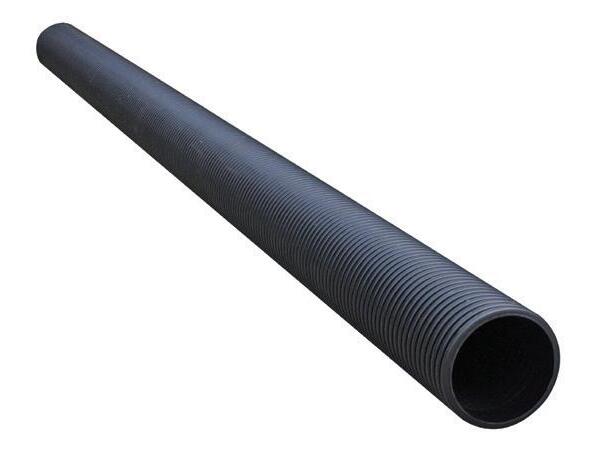


For good long-term performance, getting the culvert pipe diameter correct is very important but equally so is correct installation and having an ongoing culvert maintenance plan. For further information on culvert pipe selection or other rural pipeline matters, contact your Farmlands Technical Field Officer or the friendly team at your local Farmlands store. Article supplied by Iplex Pipelines.
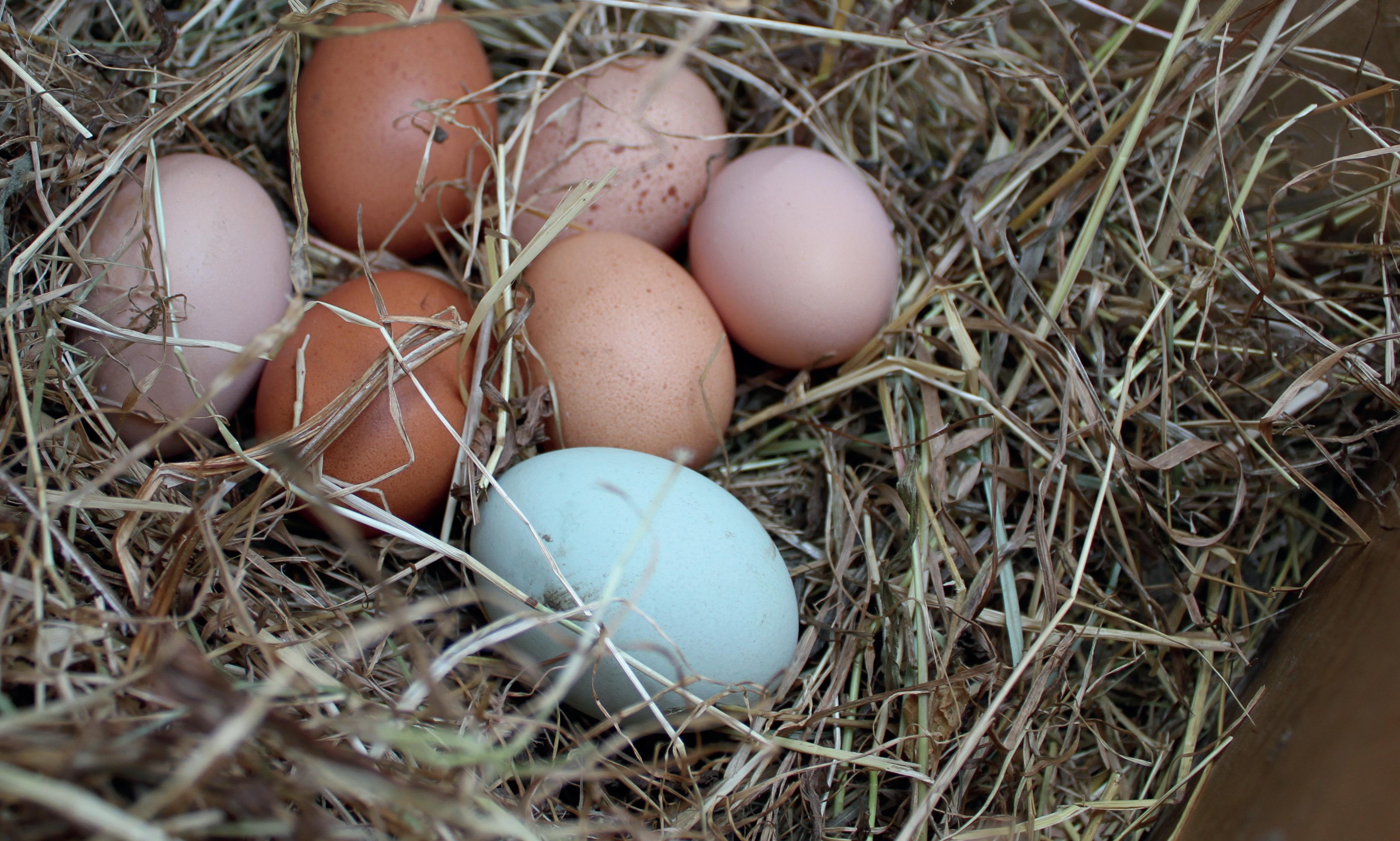
With the onset of winter and decreasing day length, laying hens will often undergo a moult. This is a normal process for chickens, which generally moult once a year. During this period, egg production will decrease and may even stop, as hens partition nutrients to feather regeneration rather than egg production. While hens generally grow new feathers over about 8 weeks, egg production doesn’t typically start again until after day length has increased to over 12 hours. This means that without artificial lighting in the hen house, egg production in backyard hens will be limited through until late September or October in many parts of New Zealand.
Looking after your hens during a moult and subsequent off-lay period is just as important as looking after them well when they are in lay. Providing a good quality, well balanced feed is essential to help restore muscle mass and support future egg production. Ensuring an
adequate but not excessive supply of calcium and phosphorus is essential if the hen is to restore bone mass lost over the laying period. Feeding the correct feed when your hens are off the lay will help ensure production of quality eggs with strong shells in the subsequent laying period. Designed to support frame and bone development in non-laying birds without supplying excess energy, NRM Pullet Grower is ideal for hens that are going through a moult and while they are not in lay. If egg shell integrity is to be maintained once hens start laying again, it is important to feed a high quality laying hen feed with good levels of calcium to support shell quality as soon as lay recommences. NRM Peck ‘n Lay is specifically formulated with quality ingredients to provide balanced levels of the essential nutrients that hens require to support egg production.
Free ranging hens can be exposed to a range of gut health challenges. Any damage of the gut lining will result in reduced ability of the hen to efficiently
utilise nutrients in her feed. Although we often tend to think of this effect in terms of energy and protein utilisation, poor gut health will also affect the uptake of essential minerals such as calcium and importantly for laying hens the uptake of those pigments in the feed that give egg yolks their rich golden colour. To help support gut health and aid in protecting against gut pathogens, NRM Peck’n’Lay contains specifically selected organic acids and essential oils. For older hens that have been through a moult or high producing hens, supporting gut health is particularly important. Choosing an appropriate feed for the age and stage of production of your hens is important if you want to ensure ongoing production of great tasting fresh eggs with rich, golden yolks. For further information or advice on the best option for your birds, contact your NRM Feed Specialist or the friendly team at your local Farmlands store.
Article supplied by Natalie Chrystal, Nutritionist, NRM.
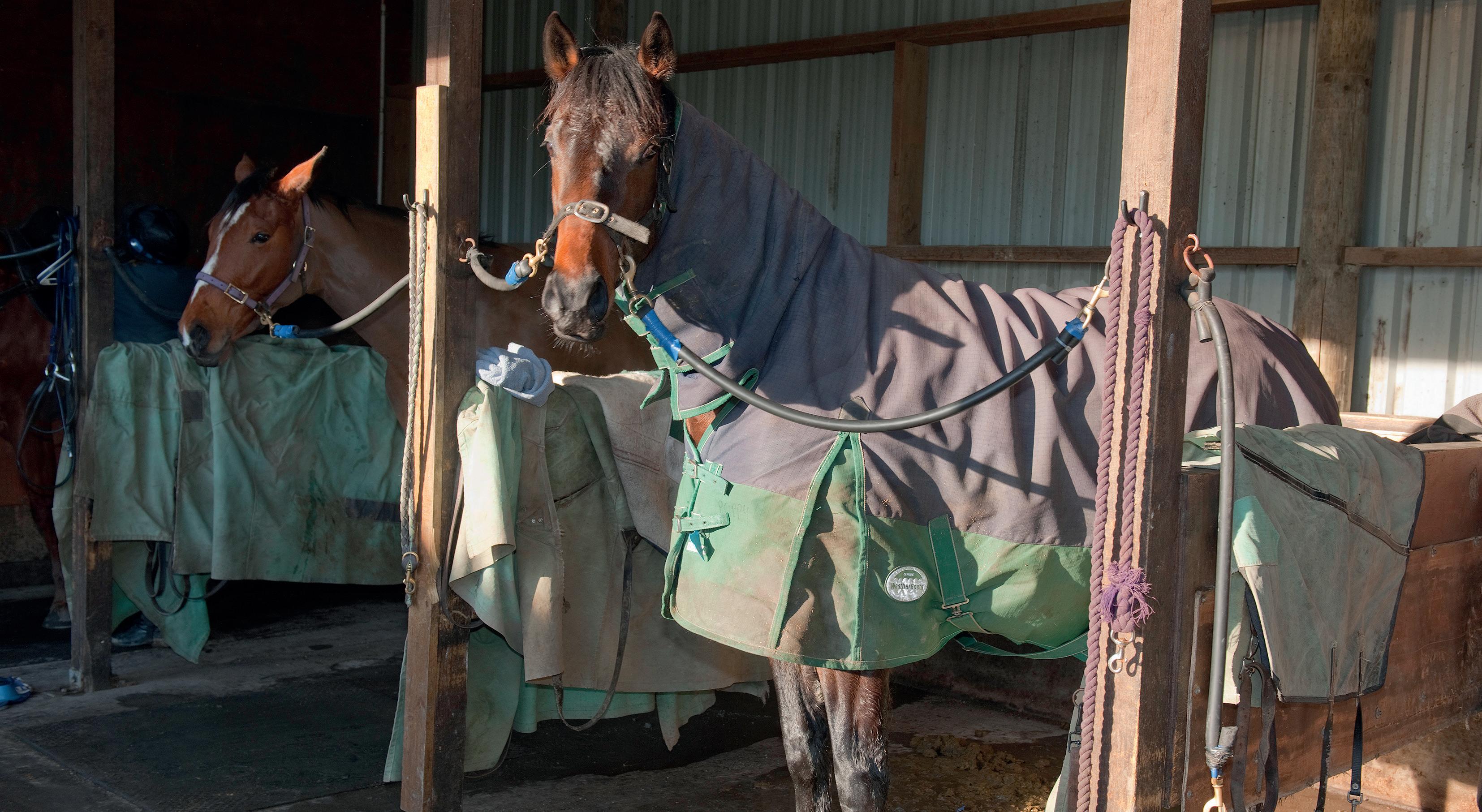
The occurrence of equine colds and viruses generally increases along with the dropping temperatures and increased rain (and snow in some places) associated with a typical New Zealand winter. Along with various other management factors such as providing shelter and isolating any sick horses to avoid contamination, there are numerous dietary adjustments that can be made to support the equine immune system and prevent illness occurring.
The foundation of all horses’ diets should be forage and in most cases this provides the majority of the required nutrients for a horse at maintenance or in light work. Performance or breeding horses being provided a balanced formulated feed at the right levels, in conjunction with the required amount of forage, should also be meeting nutrient requirements easily. However, some nutrients play vital roles in preventing sickness occurring and should be considered to be provided at higher levels at this time of the year. Protein is well known for providing the building blocks needed for muscle
and connective tissue maintenance and repair, however it also plays an important role in producing enzymes and antibodies required to fight infection. High quality protein sources will provide the correct ratio of amino acids the equine body requires, with especially higher amounts of essential amino acids such as methionine, lysine and threonine, which horses are unable to synthesise themselves. Selenium and vitamin E both play an important role in immune support, working together as powerful antioxidants to neutralise free radicals and support the production of antibodies. When selecting feeds and supplements containing vitamin E, it is important to consider that natural source vitamin E is absorbed more easily than synthetic forms. Vitamin A plays an important role in enhancing the function of white blood cells that are on the front line of immune response. Green plants supply beta carotene, which is used in the horse’s body to produce vitamin A, so a paddock of fresh pasture is a great way to increase vitamin A consumption.
In many cases it is the lack of fresh pasture and turnout time that can contribute to a compromised immunity, as grass can become scarce throughout winter and many people increase the amount of time the horse spends indoors. As well as the benefits of grass, time in the paddock interacting with other equine friends can considerably improve stress levels in some horses that can also help to avoid a drop in immunity. While the lack of fresh pasture can often not be avoided, nutrients can be easily and conveniently added to the diet through feeding increased amounts of well fortified and balanced feeds. For horses that do not require additional energy, balancer pellets such as NRM Equine Balancer are extremely useful for increasing nutrients, including protein, selenium, vitamin A and natural vitamin E, without the calories. For further assistance with providing a balanced diet to assist with immunity, consult an experienced Equine Nutrition Advisor.
Article supplied by Luisa Wood, Equine Nutrition Technical Advisor, Farmlands.
Vitamins – important for animals all year round but even more important for animals coming out of a long, dark winter with low vitamin status and the approaching stress of parturition and lactation.
Vitamins are organic compounds used in physiological functions in the body and are vital nutrients that animals require in limited amounts. Vitamin nutrition is a small part of the complete nutrition of an animal – however the correct vitamin balance is essential for maintaining normal body function to support growth, performance, immunity and fertility requirements. An increased supply of vitamins above
normal requirements can sometimes have positive effects on animal health such as improved immune status or hoof quality. Vitamins are prone to degradation over time in feedstuffs, particularly when exposed to sunlight. For this reason conserved forages and mature standing forages tend to be lower in vitamins than younger forage. Some vitamins are produced by rumen microorganisms (particularly the B vitamins). This means that when a ruminant animal has a wellfunctioning rumen, supplementation of some vitamins can become less important – however for ruminants that are high producers, under stress conditions, or experiencing health
issues that may impact on rumen functionality, vitamin supplementation becomes more important. Immature ruminants with rumens that are not fully developed will require additional vitamin supplementation due to lower production of vitamins by the rumen microorganisms, which is why vitamins can often be found in high quality calf milk replacers and hard feed options. Vitamins can also be particularly important around certain times of the season for mature ruminants such as during mating or late pregnancy. Late pregnancy in particular is a time when a dam’s immunity is naturally suppressed in preparation for parturition, so vitamin
supplementation during this period can be particularly beneficial for both dam and offspring. Some feeds are known to be low in certain vitamins, which can increase supplementation
requirements if included in the diet. To date 15 vitamins have been identified in the natural world – however only the most important vitamins in relation to ruminant nutrition are covered below.
For further information, contact your local Nutrition Specialist.
Article supplied by Stacey Cosnett, Assistant Nutritionist, Farmlands.
Vitamins particularly important in ruminant nutrition and their functionalities and deficiencies.
Vitamin Function
Vitamin A Important for good eye sight (especially at low light levels) and maintaining integrity of mucosal cells, which are the first defence against invading organisms.
Vitamin D Involved in calcium and phosphorous homeostasis. Important for growth of teeth and bones.
Vitamin E Major function as an antioxidant and free radical scavenger (free radicals inhibit the action of certain enzymes and damage cellular membranes).
Vitamin K Involved in normal blood coagulation.
Vitamin B12 Involved in energy metabolism, blood formation and the nervous system. Important in metabolism of propionic acid in the rumen.
Biotin (Vitamin H) Plays a critical role in hoof, skin, hair and horn health.
Symptom if deficient
Night blindness and susceptibility to infections. Reproductive issues including abortions, retained membranes, birth of blind/weakened calves.
Reduced appetite, poor bone health, rickets/bowed legs in young animals.
Supplementation (check with a vet or supplier)
Extra supplementation may be beneficial around mating for improved fertility or if low quality forage makes up a large part of the diet.
Most feeds contain the “provitamins” to vitamin D, which require UV light to convert to the active form. Supplementation is more important in young ruminants who are growing frame.
White muscle disease in growing animals. Cystic ovaries, retained membranes and possibly increased risk of mastitis. Poor immune function.
Impaired blood coagulation, haemorrhaging.
Loss of appetite, body condition loss, poor clearance of propionate from the blood.
Supplementation is more important for stressed animals and during mating and late pregnancy. Young ruminants may require supplementation.
Generally produced in adequate amounts by rumen microbes in mature ruminants.
Generally produced in adequate amounts by rumen microbes in mature ruminants but is worthwhile supplementing for young ruminants.
Additional information
The main precursor to vitamin A is beta-carotene, which is found in plant matter. Low quality forage has lower betacarotene levels and when fed may require additional vitamin A supplementation.
Known as the “sunshine vitamin” as it can be converted into its active form by UV light. May become deficient when sunlight levels are low for extended periods of time, e.g. winter housed stock.
Some functions of vitamin E can be fulfilled in part by selenium but they are not totally interchangeable.
Poor hoof health, increased lameness. Brittle horns, alopecia (loss of hair).
Choline Important in fat metabolism. Ketosis, fatty liver disease.
Thiamin (B1) Involved in carbohydrate metabolism and nerve transmission.
Poor leg co-ordination, retraction of head, polioencephalomalacia (PEM).
Can be included in the diet if lameness is an issue as it helps to harden new growth of the hoof.
Supplement as choline chloride. Can help to reduce ketosis in early lactation.
Generally produced in adequate amounts by rumen microbes in mature ruminants.
Supplementation more important in immature ruminants/mature ruminants with poor rumen health.
Supplementation is more important in immature ruminants and mature ruminants with poor rumen health. Can be useful to supplement animals recovering from sickness as it helps stimulate appetite.
It takes time to improve hoof quality as it only improves the quality of the newly grown hoof, so is no quick fix to lameness issues.
May be important for animals in very good condition around calving to decrease ketosis risk.
Supplementation more important in immature ruminants/mature ruminants with poor rumen health.
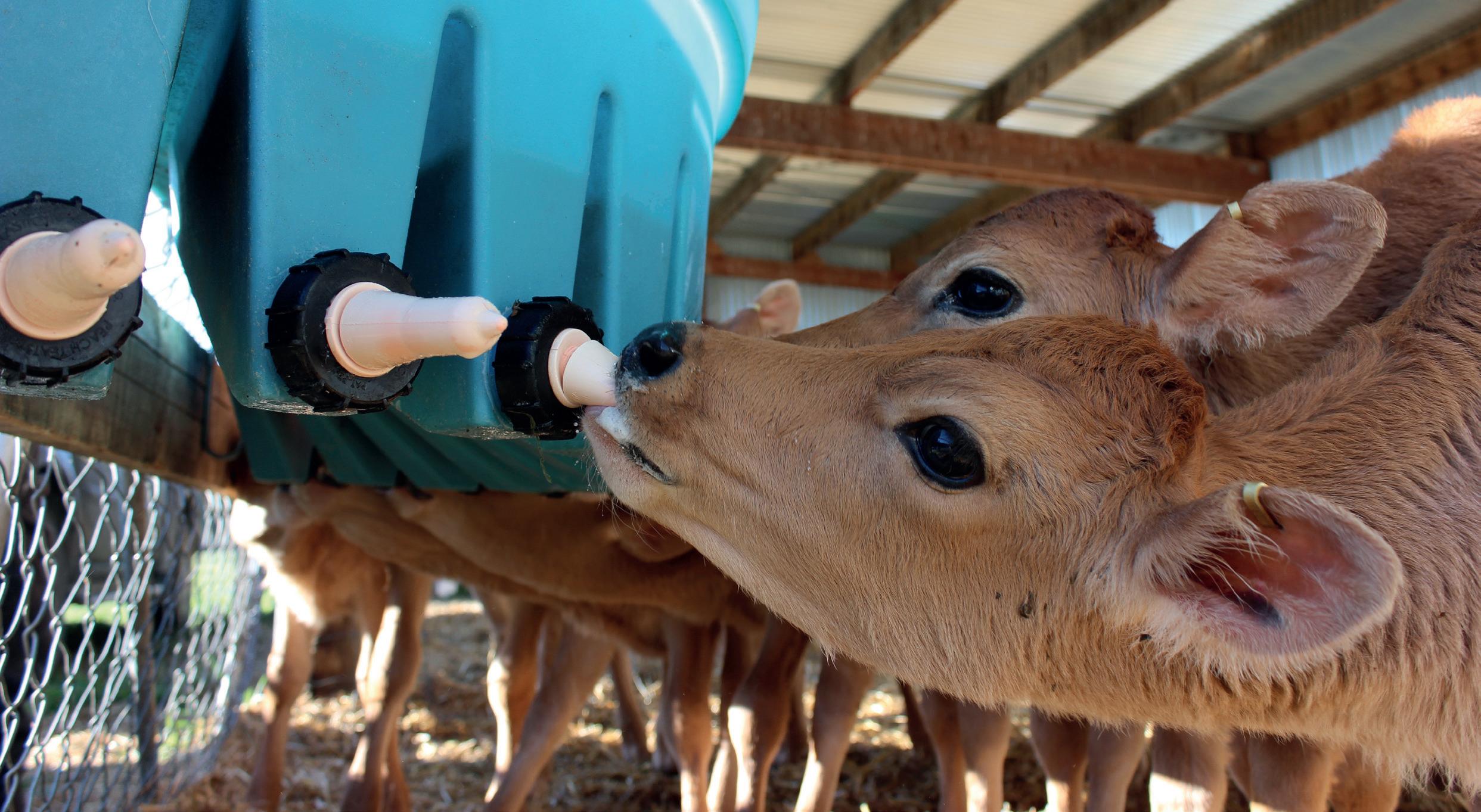
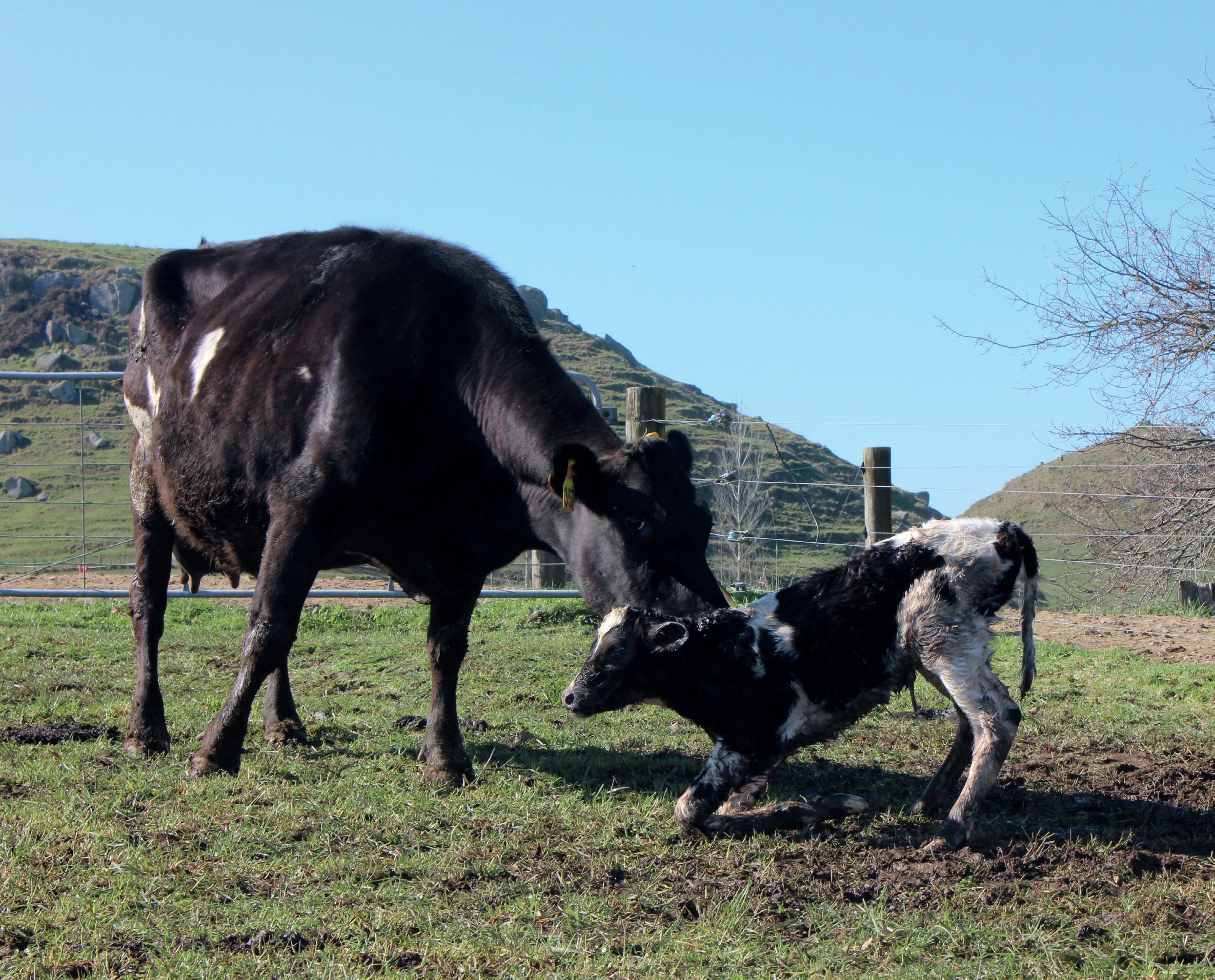
Farmlands’ commitment to supporting shareholders and promoting animal welfare has inspired the production of a series of video clips focusing on calf feeding and management, which will be available on our website this month.
Karen Fraser’s calf rearing series in The Farmlander, in which she shared her experience as the Young Stock Manager at Rakaia Island, was well received last year. Feedback from readers highlighted that with so many new entrants to the industry annually, there is a need to bring staff up to speed as quickly as possible in a hectic season.
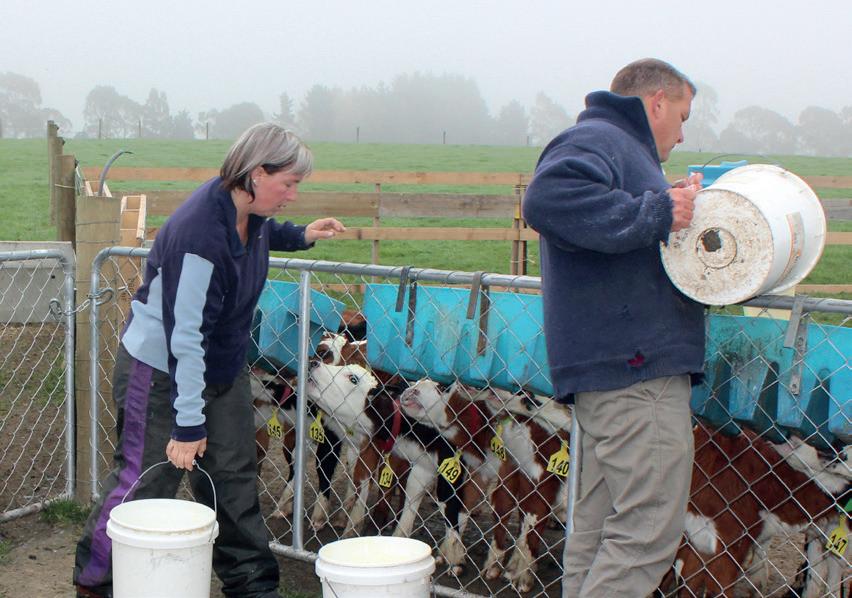
Thanks to Doug and Dave Turner and their team at Rakaia Island, some of their best practices were recorded during what turned out to be a cold spring in mid-Canterbury. The videos will offer something to both new and experienced calf rearers and will give regular readers the chance to put a face to Karen Fraser and Farmlands’ Assistant Nutritionist Stacey Cosnett. The videos follow the calf rearing process from picking up newborn calves in the paddock through to weighing weaned calves. Special attention is made to the care of bobby calves and colostrum feeding. Viewers will gain valuable insight into tasks such as hard feeding, housing and grazing management. Karen also provides some great advice on comfort food when the going gets tough.
To give another perspective from the beef calf rearer’s viewpoint, Stacey was also filmed with part-time commercial calf rearer and Farmlands Nutrition Specialist David “Rabby” Fairhall from South Canterbury. Rabby’s advice on mixing milk powder is worthwhile for anyone who wants to reduce the risk of poorly mixed milk replacer. As someone
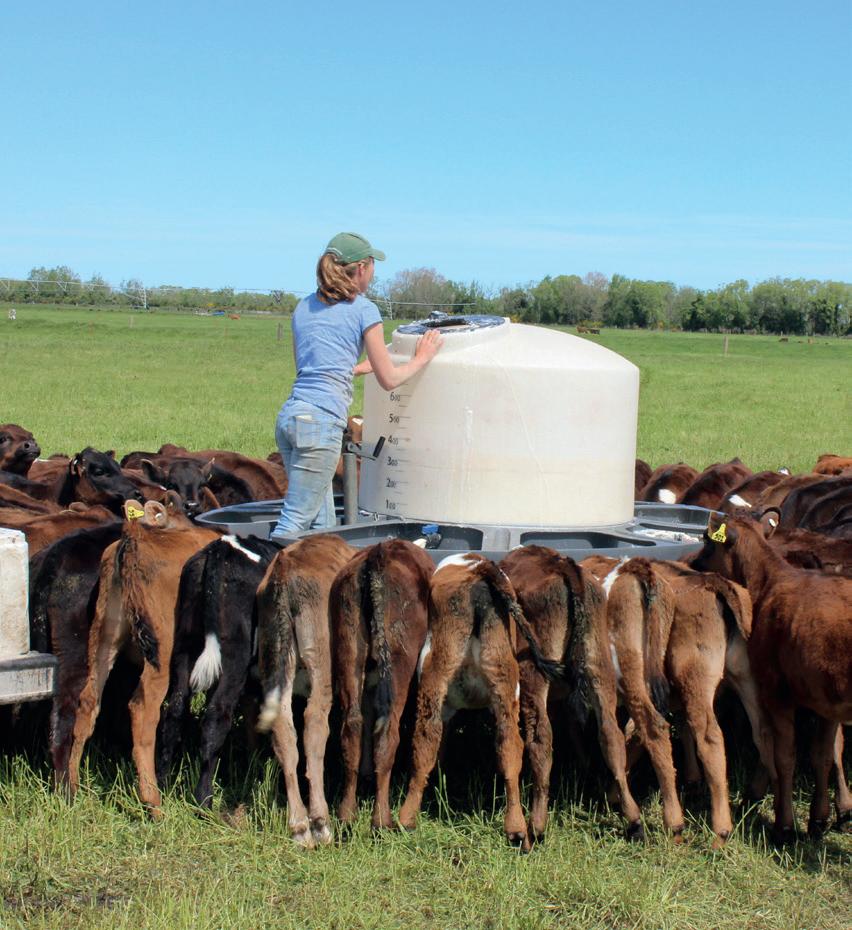
who has bought and reared calves to 100kg and beyond successfully, his thoughts on calf selection and transport provide great insight for anyone contemplating the season ahead. For further information, check out the videos online or contact your local Nutrition Specialist.
Article supplied by Dr Rob Derrick, Nutritionist, Farmlands Nutrition.
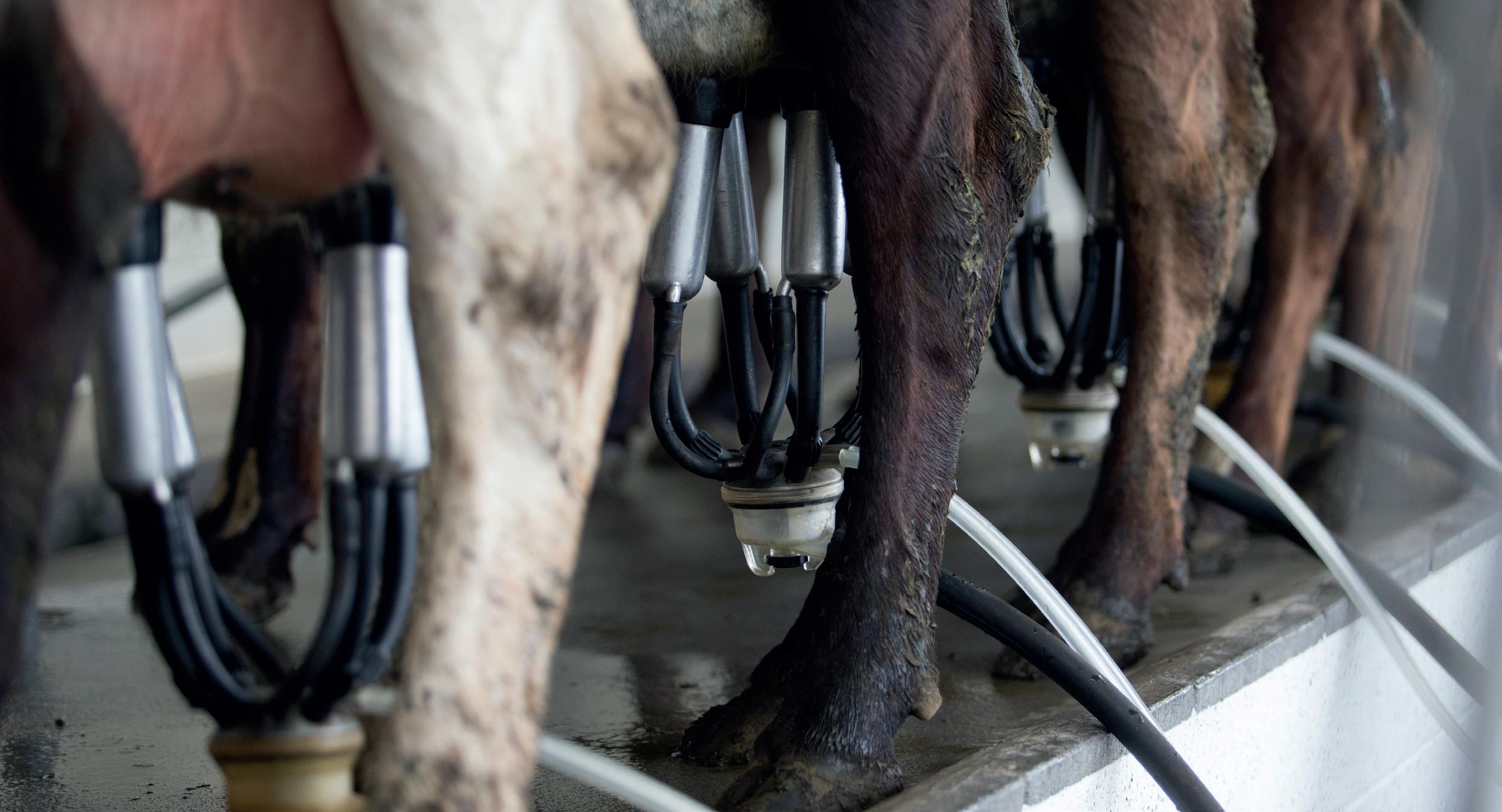
Now is the time to start planning annual maintenance for your dairy plant and fittings. As a rule of thumb, any rubberware that touches milk should be changed once a year.
Most dairy rubberware is designed to take a lot of punishment and it needs to be. As soon as it is installed in your plant, its surface strength and integrity comes under daily attack from a wide range of environmental challenges, including milk, detergents, sanitisers, milkstone removers, ozone, UV light and variable temperatures. Best practice for dairy rubberware includes replacement before any splits or severe perishing is seen on the outside. The very first item on the list should be your milking liners. Old liners can waste energy, cause grades and damage cows. They are one of the single biggest factors influencing milk production and they are also one of the most economical things to replace. Unlike tubing, liners come in direct contact with the cow, so rough, ill-fitting surfaces on the inside affect not only milk quality and milking efficiency but also teat health and cow comfort.
Worn out liners cost time and energy, damage cows and increase the chance of bacterial grades, mastitis and elevated bulk milk somatic cell counts (BMSCC) if they are not replaced at recommended intervals (i.e. every 2,500 milkings), Skellerup National Manager Perry Davis says. Changing liners now means you’ll get a flying start to the next season, with no worries about sacrificing milking performance through worn out rubberware.
Tubing looks perfectly fine outwardly, for example but can be eroded and pitted where the interior surface comes into contact with milk and farmers may have no reason to suspect there’s a risk associated with it until a milk quality problem crops up.
“That’s why we support the best practice of replacing all rubberware that touches milk every year, rather than waiting until you see signs of splits, wear or perishing on the outside,” Perry says. “Tubing is particularly vulnerable. By the time you see or feel cause for concern externally, the inside has almost always been well damaged by
milk fat and cleaning compounds.”
While farmers are paying attention to their milk tubing, air tubing needs to be checked too, as do claw and pulse tubes. Perry advises farmers to look for splits and holes – these can cause loss of vacuum in the system, changing pulsation characteristics and increasing problems with cup slippage. This also reduces milking performance, leading to a longer and/or incomplete milk out. As a general rule, air tubing can last longer than milk tubing but should be routinely replaced every 2 years.
“It might seem like a bit of a chore but following a simple maintenance and replacement schedule for all dairy rubberware helps farmers remain efficient and productive for a relatively low outlay. Plus it gives peace of mind – you don’t need to worry about problems you can’t see coming if you know your plant is well-maintained.”
For further information, contact your Farmlands Technical Field Officer or the friendly team at your local Farmlands store.
Article supplied by Skellerup.
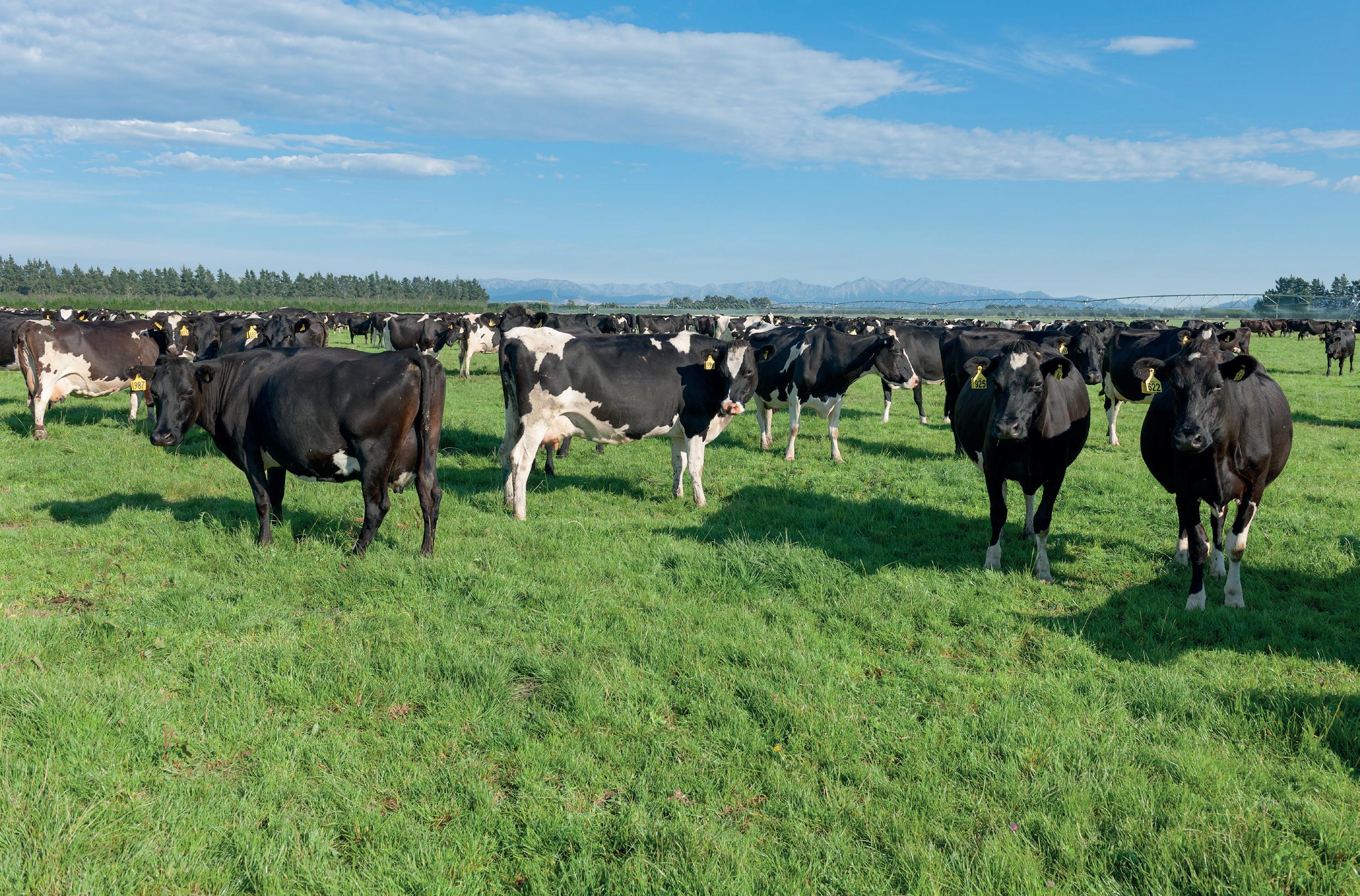
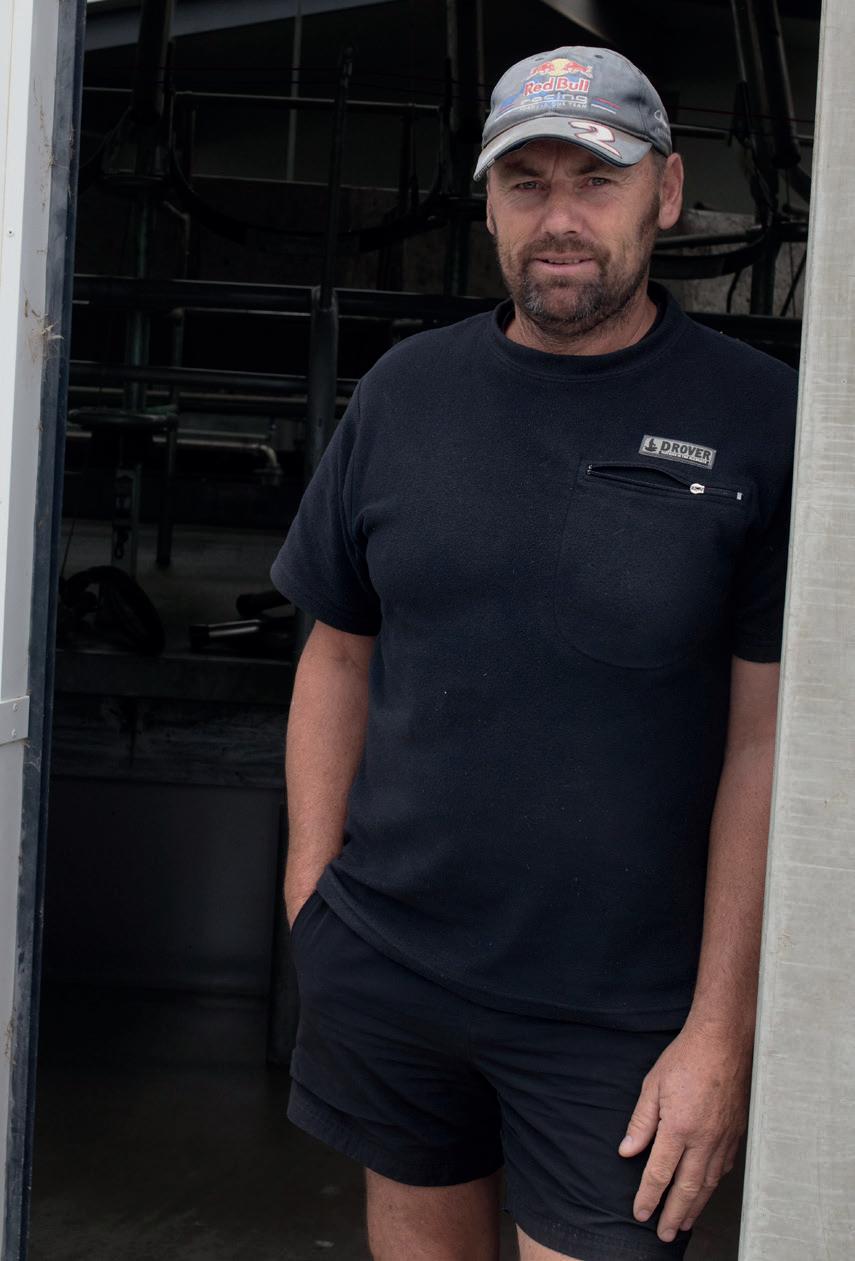
Milking 480 cows with the help of lower order sharemilkers, South Taranaki dairy farmer Mike Eggink recently installed a new shed with an automatic teat sprayer. At the same time, he also implemented a tailored teat care programme.
Mike enlisted the help of GEA’s FIL Area Manager, Craig Allen to implement the teat care programme and his team have learned the importance of using the right product for their situation and sticking to the rules when it comes to mixing rates.
“Craig has been excellent value to our business,” Mike says. “He works closely with our team to ensure we’re using the right stuff and mixing to the right rates. And, because he takes the time to educate us, we make informed decisions. For example, we used to think we were better off to boost the amount of teat spray we were using during periods of high risk. Since
Craig became involved, we don’t do that. In fact, we’re using less teat spray solution than we did before.”
Mike says that just being more aware of best practice, plus the added benefit of a new shed and automatic teat sprayer (calibrated by Craig) has made their teat care programme a whole lot more cost effective.
“Plus we’re maintaining good teat condition year round.”
Mike also notes that his somatic cell count is on target for 100,000 or below this season.
“I believe these good results are due to a combination of the new milking system and the support we get from the GEA’s FIL team.”
For further information, contact your Farmlands Technical Field Officer or the friendly team at your local Farmlands store.
Article supplied by GEA FIL.
A significant proportion of any herd’s health and welfare costs can come from the 3 weeks pre-calving to the 3 weeks postcalving. This is the period where the cow lays down the building blocks for the coming lactation, so minimising metabolic disease and implementing a system to reduce negative energy balance and maximise post-calving dry matter intakes can be very profitable.
Poor feeding and management during the transition period can result in a host of problems around calving such as dystocia (difficult calving), retained placenta, milk fever (hypocalcaemia), grass staggers (hypomagnesaemia), rapid weight loss and ketosis. Many of these issues are related as one may lead to manifestation of the other conditions, often as a result of reduced feed intakes.
Feed intake tends to decline as calving approaches and does not peak until about 10 to 12 weeks after calving. This is the opposite of cow requirements, as nutrient demands increase rapidly in the last 2 months of pregnancy and cows achieve peak milk yields about 6 to 8 weeks after calving. Any calving or metabolic issues can be the final insult, resulting in downer cows and the consequent effects. For example when a cow experiences a case of milk fever, it is then far more likely to experience ketosis (negative energy balance), displaced abomasum (twisted stomach), retained cleansings and even higher cell counts. The same can also be said
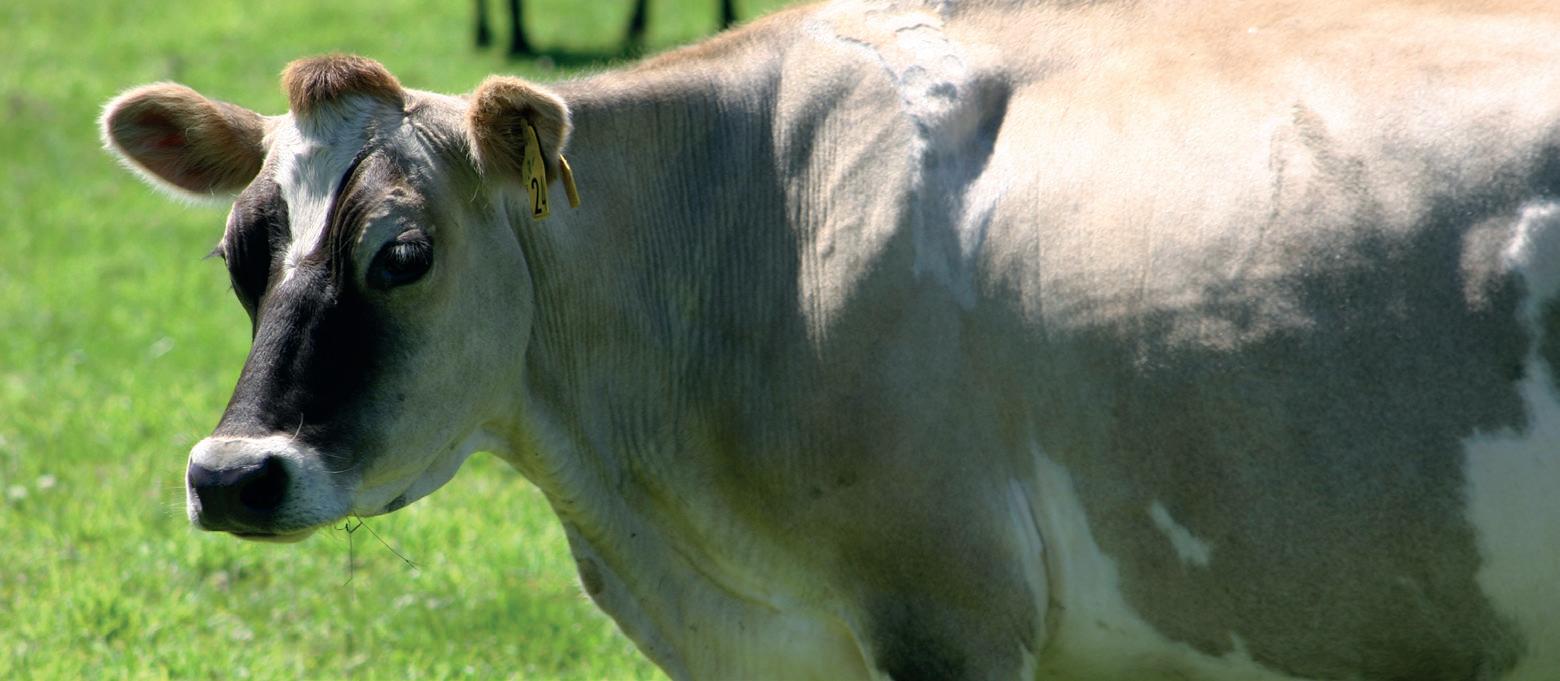
for sub-clinical milk fever, which by its nature is very difficult to see and treat but can have a similar effect.
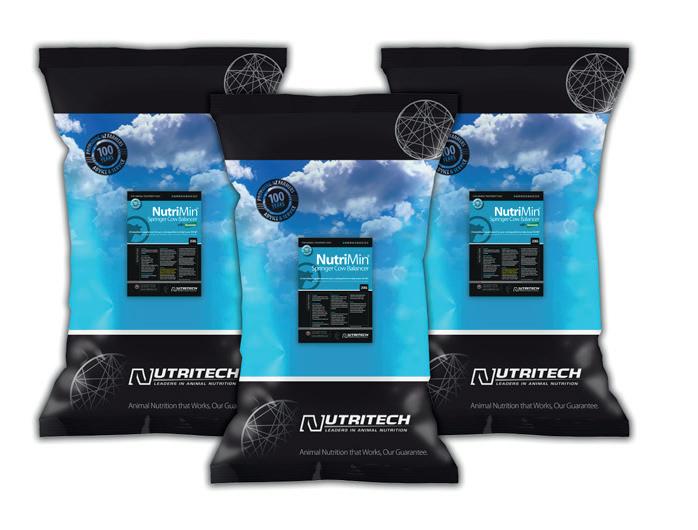
Dietary cation anion difference (DCAD) is a nutritional method of stimulating the cow’s own metabolism of calcium reserves used all over the world. Low DCAD diets can increase calcium utilisation and reduce milk fever, both clinical and sub-clinical. However in New Zealand we often feed high DCAD diets made up of pasture and grass silage, as opposed to low DCAD diets such as maize silage, wholecrop silage, hay and straw. Nutritech International has developed a low DCAD product called Springer Cow Balancer, which is made up of a blend of anionic salts that reduces dietary DCAD more so than a more traditional approach of feeding magnesium chloride or sulphate. The lower DCAD diets can increase calcium mobilisation and help to reduce milk fever issues. Another common metabolic disease is ketosis, caused by severe negative energy balance in early lactation.
Quality feed management is key but we must also remember that cows are ruminants and stimulating rumen health can help to increase both dry matter intakes but also fibre utilisation. Levucell SC is a rumen specific live yeast proven to both increase rumen pH through challenging conditions and increase fibre digestibility, which can help cows adjust to an early lactation diet. For further information, contact your Farmlands Technical Field Officer or the friendly team at your local Farmlands store.
Article supplied by Nutritech.
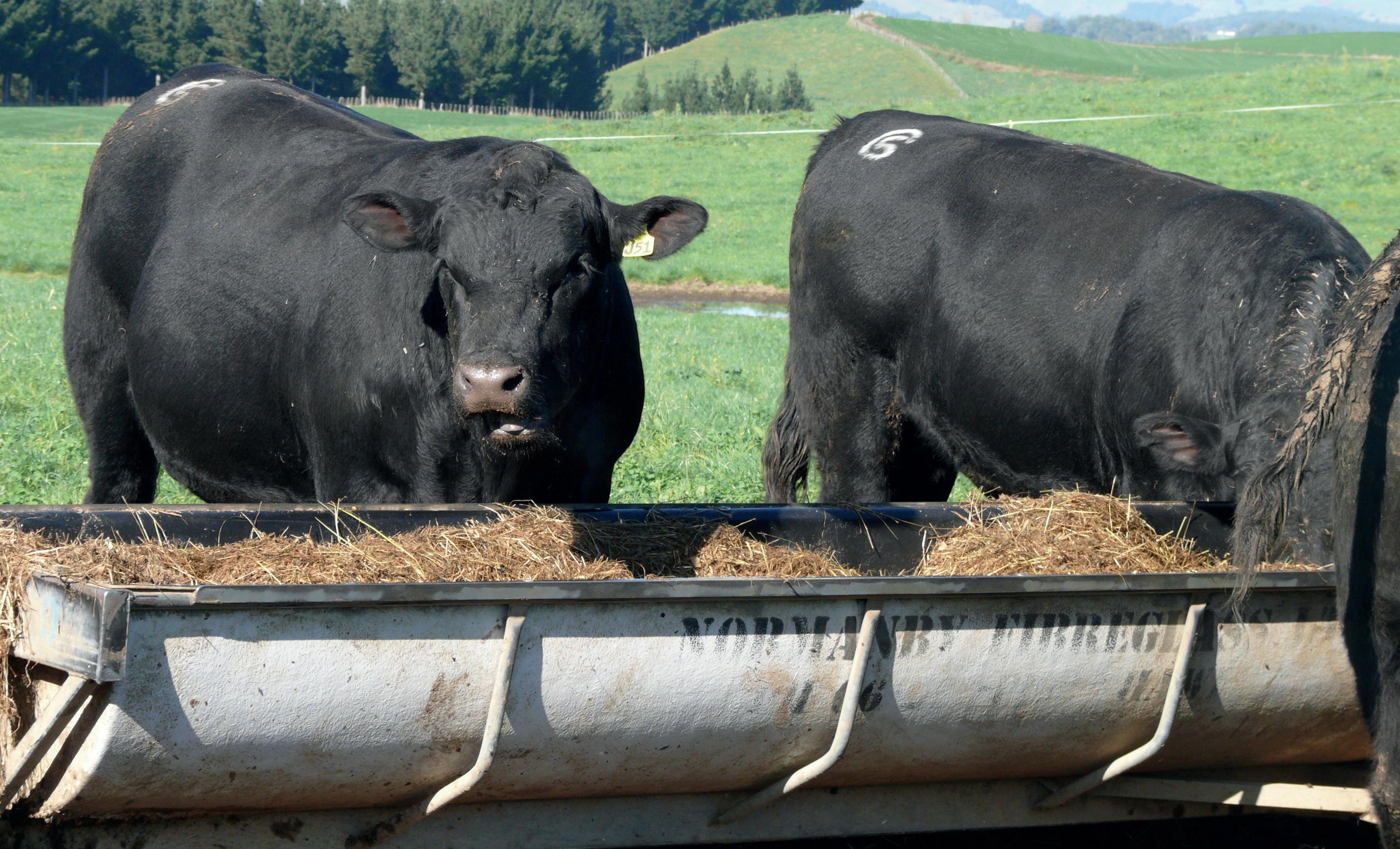
Maize silage is a major component in beef cattle diets in many countries throughout the world. It is a great complement to pasture and has an excellent place in Kiwi beef farm systems. Beef farmers can use maize silage to:
1. Maintain high weight gains throughout the year. Keeping animals growing at a steady rate improves feed use efficiency, as it takes a shorter period of time to reach slaughter weight and less feed is used for maintenance (Table 1).
2. Intensify beef operations. Typically beef pasture yields less than 12tDM/ha each year. A maize silage crop followed by a winter crop or pasture can produce twice as much feed, allowing more animals to be taken through to higher weights.
3. Ensure cows and heifers meet condition score targets. Meeting beef cow condition score targets is important to ensure good reproductive performance and high calf weaning weights. The energy in carbohydrate-rich maize silage is used 50 percent more efficiently for condition score gain than the energy in autumn pasture.
4. Help weatherproof beef farm systems. Keeping a stack of maize silage on hand allows beef farmers to reduce the impact of adverse weather effects. This includes keeping weight on capital stock such as bulls and breeding cows as well as maintaining young stock growth rates.
5. Capitalise on beef schedule premiums. With a stack of maize silage on hand, farmers can be confident they can put weight on animals regardless of the weather. Farmers can plan to sell animals when the schedule is at a peak (e.g. in the late winter). Alternatively, they can secure contracts for a reliable supply of animals of a set carcass weight throughout the year.
Hastings based Farmlands Technical Field Officer, Craig McKinnon says that he has a few clients feeding maize silage to beef cattle. “The cattle always come out of the winter looking fantastic.”
For further information on how maize silage can fit into your beef system, talk to your Farmlands Technical Field Officer or the friendly team at your local Farmlands store.
Article supplied by Pioneer brand products.
Last summer saw a massive difference in the weather conditions across different parts of New Zealand. The west coasts of both islands and the central North Island were particularly wet and the east coast and Northland were very dry. This means that stock condition, feed levels and parasite challenge around lambing in each of these areas will be very different. The decision whether you need to treat ewes with a pre-lamb drench and what drench product to use will also vary.
One factor that should be consistent across all regions is the need to protect ewes and lambs from sudden death due to clostridial infection. Vaccinating with a multi-component vaccine such as Lifeguard® 5 in 1 should be routine on all farms. Every ewe should be vaccinated every year to prevent unexpected deaths. This will also ensure new-born lambs receive colostrum with high levels of antibodies against diseases such as pulpy kidney and tetanus. Preventing the loss of just one pregnant ewe makes vaccinating 500 ewes worthwhile based on a cost-benefit analysis. Choosing whether or not to drench and with what product is harder to decide. The first question you need to ask is, “will the ewes be exposed to high parasite larval challenge or not”?
Consistently wet areas are more likely to have higher larval challenge than areas that have experienced an extended dry period. The need to protect the ewes from parasite challenge and the benefit of doing so is
likely to be greater in the wetter areas. The use of faecal egg counts (FEC) taken from the ewes at scanning and pre-lamb can be useful when making this decision. If ewes have high egg counts at scanning then the use of a long-acting product such as Cydectin® Long Acting Injection for Sheep would be a good choice. This means the ewes can be treated 2 months prior to lambing with the benefit of not having to fight off parasites during late pregnancy and early lactation. Trials have shown that twin ewes treated pre-lamb with Cydectin Long Acting Injection for Sheep can be more than 3.2kg heavier than untreated twin ewes at weaning1,2 Ewes that are not exposed to significant parasite challenge but are in poor condition or will be grazing low pasture covers over lambing can be susceptible to parasite reinfection as their immunity decreases around lambing. This can result in an increase in the egg count over lambing and subsequent pasture contamination. Ewes from drought affected areas may fall into this group. Use of a shorteracting product that works over the immediate lambing period may be more appropriate and cost effective for these ewes. Eweguard® is a convenient option in these circumstances as it prevents reinfection from Teladorsagia (Ostertagia) circumcincta for at least 35 days and also contains a 6 in 1 vaccine, which means only one injection is required rather than two. Field trials have shown that ewes treated with Eweguard prior to lambing were on average 2.2kg heavier and produced up to 5kg more liveweight of lamb than
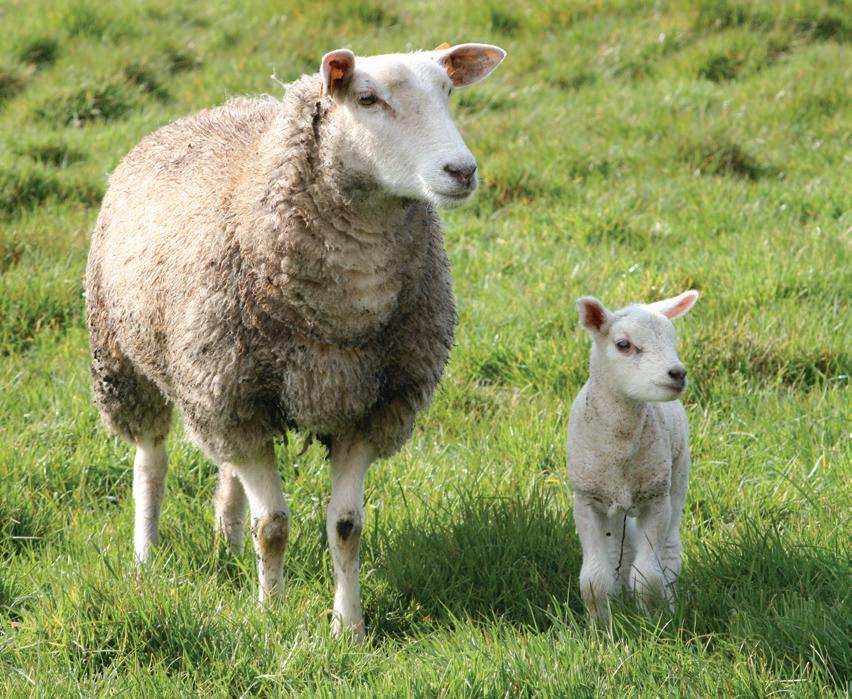
untreated ewes at weaning, resulting in a net return of $10.61 per ewe3. Trials have shown that the production responses achieved with pre-lamb drench products can be highly variable between farms. They have also shown that use of these products can increase the rate at which drench resistance can develop. Therefore not all ewes should be treated for parasites and advice should be sought from your animal health professional as to the best drench plan for your farm. For further information, contact your Farmlands Technical Field Officer or the friendly team at your local Farmlands store.
1 Miller, C. M., Ganesh, S., Garland, C. B. and Leathwick, D. M. Production benefits from pre- and post-lambing anthelmintic treatment of ewes on commercial farms in the southern North Island of New Zealand. New Zealand Veterinary Journal, 63, 211-219, 2015.
2 Bingham, C. Comparison of the production effects of two different long acting pre-lamb treatments in poor conditioned twin bearing ewes. Proc. of Soc. of Sheep and Beef Cattle Vets, NZVA, 2016.
3 Zoetis data on file.
Cydectin, Eweguard and Lifeguard are registered trade marks of Zoetis Inc. or its subsidiaries. ACVM No. A7302, A9122, A9659, A9926, A11146 and A11147. Article supplied by Zoetis.
A “start from scratch” mentality has resulted in a new range of weigh scales designed to be extremely robust, tough in a harsh operating environment, water repellent and capable of taking the knocks typical in the field.
A device like weigh scales may not be used frequently by all farmers. This could mean they forget how to use them, making the experience each time frustrating and time consuming. Trying to extract information from scales and linking it to other systems also proved clumsy and put into the “too hard” basket.
The research and development team at Gallagher went back to the beginning, heading up rural driveways to discover what farmers needed in
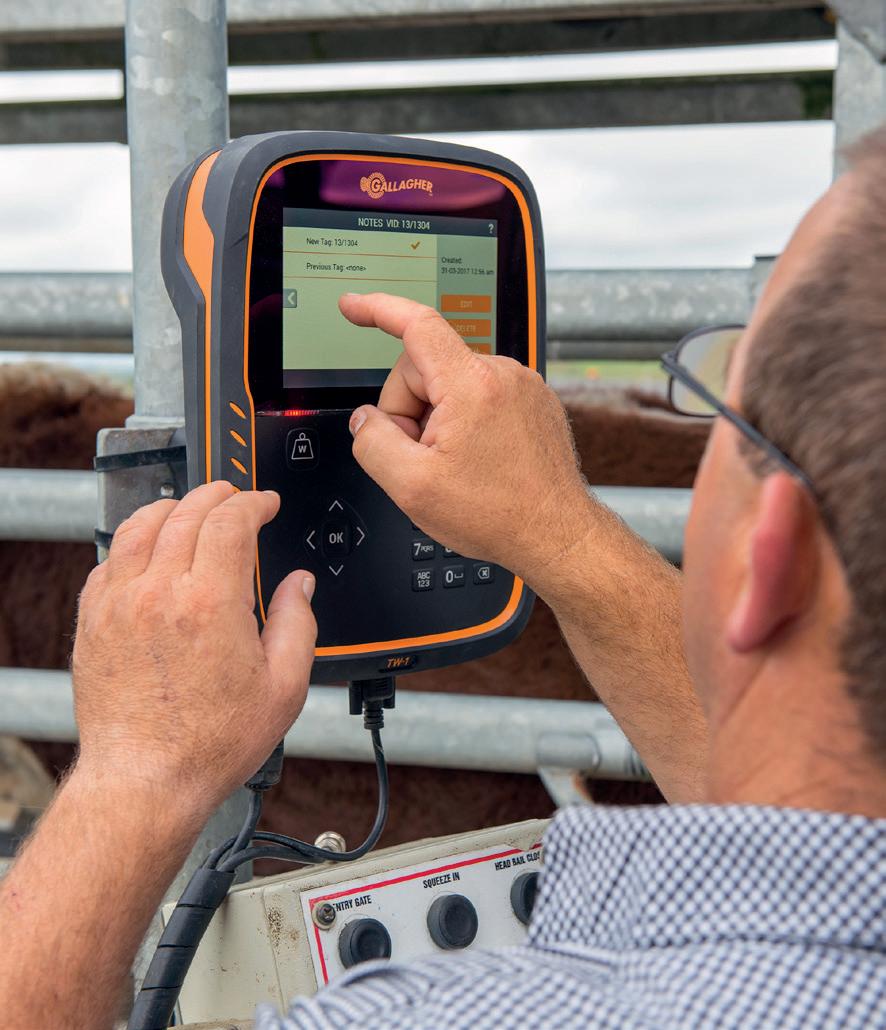
the modern age. Taking inspiration from smart phones, the result is the TW-1 and TW-3 weigh scales.
The scales represent a complete rework of the company’s stock weighing systems, until now served by both the robust W610 and W810 models and the TSi integrated scale range. “We were looking for a complete redesign from the ground up,” Gallagher Product Manager Dan Loughnane says. “We wanted a design that recognised how farmers interact with equipment. Touch screens are part of their daily lives now, with smart phones and tablets with simple user interfaces, and we wanted to deliver a new generation of scales that shared that simple interface.”
A key focus for the designers was user experience. Often packing multiple features into a specialist piece of equipment like weigh scales requires a complex menu, with options that can be confusing to navigate.
“Farmers told us they often only use 20% of the functionality in equipment and devices, because of complexity, so we spent considerable time developing a very friendly user interface,” Dan says.
Repeated trips out to farmers to test and re-retest improvements resulted in a more intuitive screen interface, from initial scale setup to final weigh data download. The touch screens have full colour display, delivering maximum screen visibility regardless of sunlight conditions. Tensuring every step of the scales’ operation is easily understood with help options embedded
throughout, doing away with the need for an instruction manual.
“The steps are very logical and give the operator every chance to work out where to go next.”
The TW scales software is designed to connect simply and quickly to load bars and readers regardless of what brand they may be. Connectivity is now crucial on all farm devices and the scales connect direct to Gallagher’s own Animal Performance Software (APS) system.
APS provides easy access to reports on individual animal information, offering timely analysis and understanding of individual and mob performance. All data recorded in the field can be directly uploaded into the APS software, doing away with the one thing farmers hate the most – having to enter data twice.
The TW-1 is ideally suited for farmers already using livestock EID and is capable of weighing and drafting by average daily gain, and drafting on weight ranges.
“It is ideal for finishers and graziers wanting to maximise weight gain, manage poor performers and maximise profit per hectare,” Dan says.
The TW-3 has all the capability of the TW-1, plus the ability to record animal traits, including ownership, breed, sex or age, and the ability to draft the animal based on the recorded traits.
For further information, contact your Farmlands Technical Field Officer or the friendly team at your local Farmlands store.
Article supplied by Gallagher.
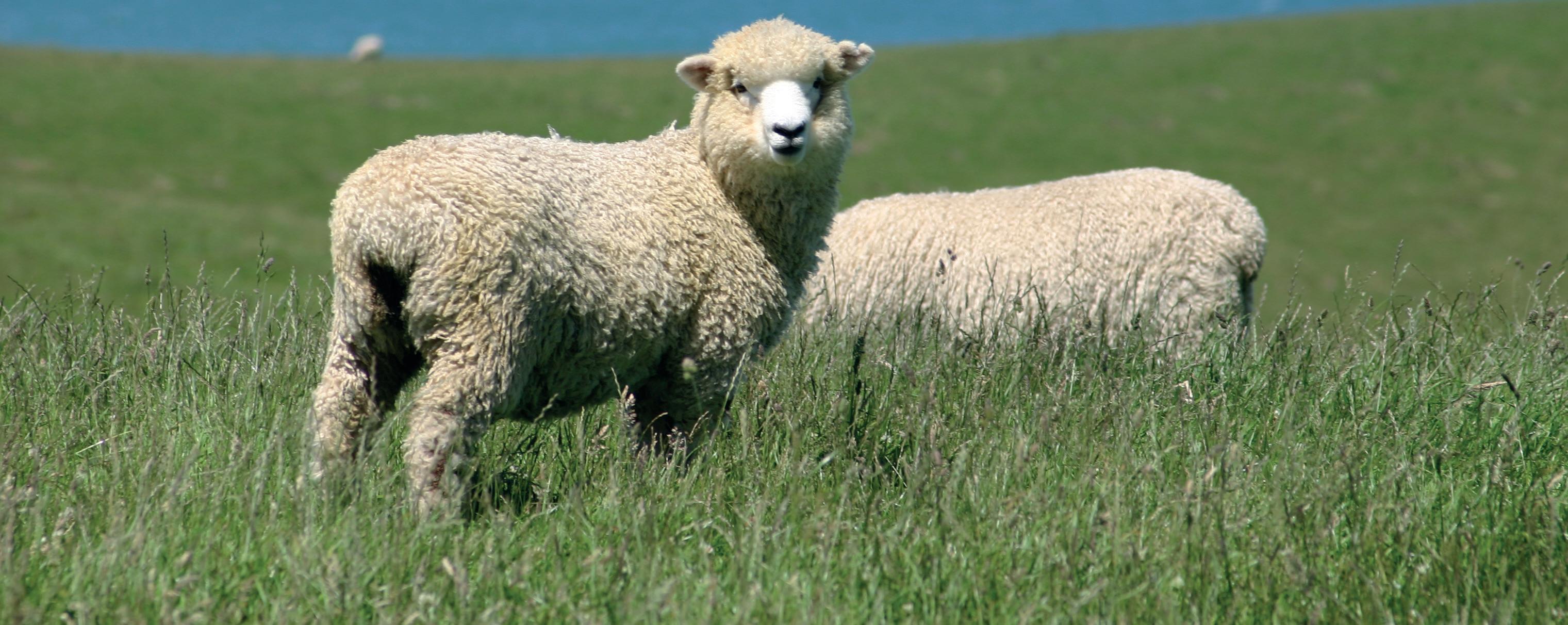
It is common knowledge that it’s critical to set ewes up well ahead of lambing – pre-lamb vaccination, pre-drenching and winter/prelamb shearing being some of the common tasks to manage. It’s also common knowledge that the first milking colostrum (“liquid gold”) provides vital protective antibodies and nutrients.
Lambs are born with no antibodies, so they depend on these protective antibodies from their dams’ colostrum. The more antibodies they receive, the higher their chances of survival if they face disease challenge (for example from diseases like tetanus or pulpy kidney). It is therefore vital to get pre-lamb vaccination right – both with timing and the level of antibodies produced.
With timing it’s about stimulating the ewe at the right time, so her antibody levels peak when forming her colostrum. Ideally this is about 2 weeks ahead of lambing but different farms have different management systems and lambing spread varies, so the flexibility to vaccinate earlier can be important. For antibody levels, it’s about ensuring sufficient antibodies are available for transfer into the lamb(s). How much is sufficient can vary depending on whether a ewe has one, two or three lambs suckling and how much disease challenge a lamb may face. So, if it is convenient to vaccinate
the flock 2 weeks ahead of lambing, you have a large amount of single bearing ewes and historically your farm has shown low disease challenge (e.g. low lamb losses) then you may choose a pre-lamb 5 in 1 vaccine like Multine®. Multine gives a good antibody response, is only used closer to lambing (2-4 weeks) and provides protection for the lambs for up to 12 weeks. However, if your flock has a higher number of multiple bearing ewes, or you vaccinate earlier (for example, to reduce the likelihood of sleepy sickness), or you want longer protection of lambs to reduce losses through until weaning (e.g. pulpy kidney deaths) then Nilvax® would be a much better choice for your farm. Nilvax is a unique vaccine, formulated from a 5 in 1 plus an immune booster – levamisole.
Used at pre-lamb, Nilvax boosts the protective antibody levels of ewes, preparing them to produce antibody-rich colostrum available to their lambs. With Nilvax:
• more ewes respond with higher antibody levels than with other 5 in 1 vaccines1
• higher antibody levels provide protection for up to 16 weeks, 4 weeks longer than other 5 in 1 vaccines2
• vaccination can also happen earlier – from 6 weeks pre-lamb, 2 weeks earlier than other 5 in 1 vaccines2
Nilvax can also be suitable as a short-acting, priming drench ahead of pre-lamb capsules.
Wheather Nilvax or Multine is the right choice for your farm is up to you. To make your ideal choice easy, ask yourself these four simple questions:
1. Do I have multiplebearing ewes?
2. Do I like/need the convenience of greater flexibility?
3. Do I want longer protection of lambs, through to weaning?
4. Do I use capsules at pre-lamb?
If your answer is “yes” to any one of these then Nilvax is the better choice for you at pre-lamb.
If you answered “no” to all, then Nilvax probably offers more than you want – so Multine would be a great choice.
For further information, contact your Farmlands Technical Field Officer or the friendly team at your local Farmlands store.
1. Pre-lamb vaccination – comparing apples with apples. J. R. Moffat. Society of Sheep and Beef Cattle Veterinarians, NZVA 2004.
2. ACVM Approved Label, Nilvax A3977, Multine A934.
Article supplied by Coopers Animal Health.