RURAL INFRASTRUCTURE NUTRITION FORAGE AND ARABLE HORTICULTURE ANIMAL MANAGEMENT DAIRY MANAGEMENT

Plan 365 is a technical guide aimed at helping shareholders learn about best practice and the latest advancements in rural technology.

RURAL INFRASTRUCTURE NUTRITION FORAGE AND ARABLE HORTICULTURE ANIMAL MANAGEMENT DAIRY MANAGEMENT
Plan 365 is a technical guide aimed at helping shareholders learn about best practice and the latest advancements in rural technology.
Many aspects of equine health and nutrition require extra attention over the summer months. Hoof health is especially important to uphold when the weather is warm and the ground may be harder than other times of the year. The age old saying, “no hoof, no horse” is especially true and the following recommendations should be helpful for keeping hooves as healthy as possible during this time.
Regardless of whether your horse is shod or remains barefoot, prevention is always better than cure when it comes to hoof health. Regular inspection of hooves by cleaning them, picking them out and examining them for cracks, bruises and any further damage is important. Using a quality hoof oil can be highly beneficial for preventing hooves from becoming too dry and brittle in the warmer weather. If paddocks have become particularly dry at a fast rate it is important to monitor hooves for abscesses, which can occur from mud entering cracks and becoming trapped when the hoof hardens. The bacteria in the mud can cause painful infections, which can make the horse lame for some time if not treated by a veterinarian or experienced farrier. Investing in a reliable, trustworthy farrier is an important part of maintaining hoof health, as regular trimming of feet can also help to identify any problem areas and prevent cracks that can lead to hoof abscesses if left untreated. Often hooves can grow faster with the warmer weather and it is therefore worthwhile to stay on top
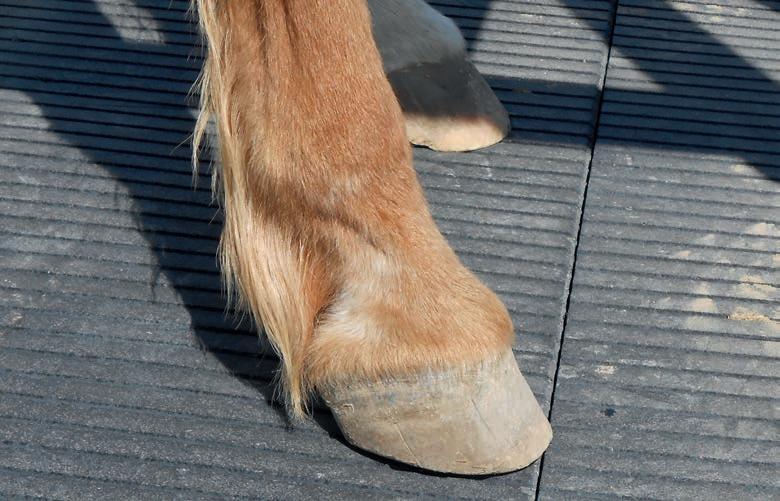
of regular trimming to keep them at an acceptable length. Shod horses may require re-shoeing more frequently in summer to avoid hooves becoming too long, resulting in losing shoes that can sometimes be expensive to replace.
Providing a balanced diet that includes all trace minerals and vitamins is important for every horse. The specific nutrients that are required for optimum hoof health include biotin, zinc and methionine. Zinc plays an important role in the health and integrity of skin and hooves, however studies have shown that feeding zinc at higher levels than requirements has little effect on hoof quality. Biotin is the most common nutrient supplemented for hoof health. While there have been some studies that have successfully shown
a difference in hoof health in horses supplemented with biotin, it is generally more effective when supplemented in combination with zinc and methionine. In the case of a horse with consistent hoof problems such as cracks, abscesses or brittle hooves, additional supplementation with a hoof supplement that contains these three nutrients can be beneficial. Considering the horse takes 6 to 9 months to grow a new hoof, it is important to be patient with any hoof supplementation and allow significant time to see a difference in hoof quality. For assistance with feeding plans to enhance hoof health and quality, consult with an experienced equine nutrition advisor.
Article supplied by Luisa Wood, Equine Nutritionist.
Managing ruminant livestock on a smaller piece of land can be more challenging than on a larger block when it gets dry and pasture quality and quantity starts to decline.
Larger farms are typically better equipped to take delivery of bulk loads of high fibre feeds (such as palm kernel), which can be used to fill a feed deficit. They may also have had more opportunity to conserve surplus forage during a pasture surplus earlier in the season and therefore may have plenty of silage on hand. It is difficult to manage feed supply for ruminants such as cattle, sheep, goats and deer, or pseudo-ruminants such as alpacas and llamas when there is a large feed deficit to fill. This is due to the presence of a rumen in these animals (where the feed they eat is fermented by microorganisms), meaning it is important to ensure that they always have some forage available. Care also needs to be taken when offering feeds that are high in starch or other readily fermentable carbohydrates, such as grain. Formulated feeds, designed for ruminant animals on smaller blocks, can be a useful tool to help manage relatively short spells of low pasture availability and can be useful in helping to stretch out available pasture when a dry spell is forecast. These feeds should always be introduced to animals gradually if they are new to the diet and they should never make up all of the diet at any one time. Make sure you check the recommended feeding rates on product labels and stick to
them. It is important to think ahead and if you are concerned that a dry spell is likely, it is better to start introducing a supplement early rather than to wait until there is very little pasture left, as this gives the animals very little time to adapt to the new feed.
Feeds such as NRM MultiFeed Nuts and Reliance Alpaca Pellets are well suited to this use and are an ideal complement to lower energy dry, stalky, summer pasture. When supplemented correctly they can help to increase the energy intake of animals, as well as ensuring they get all the vitamins and minerals they need to stay healthy.
NRM MultiFeed Nuts with zinc are also a great way of ensuring adequate intake of zinc during the facial eczema season.
When in a more serious pasture deficit situation, where the available grass plus the formulated feed still isn’t enough to meet animal requirements, it is a good idea to introduce another source of fibre into the diet. This is where it becomes difficult for a smaller farmer who is unable to take bulk loads of high fibre straights (such as palm kernel), or where the farmer doesn’t have silage on hand or this is unavailable for purchase. In these situations, an option worth considering is the use of high fibre feed options designed for the equine industry. Many of these feeds are developed and promoted as a fibre replacer for horses but they can also help to replace some forage in the diet of ruminant animals. A great example is Maxisoy (available from Farmlands
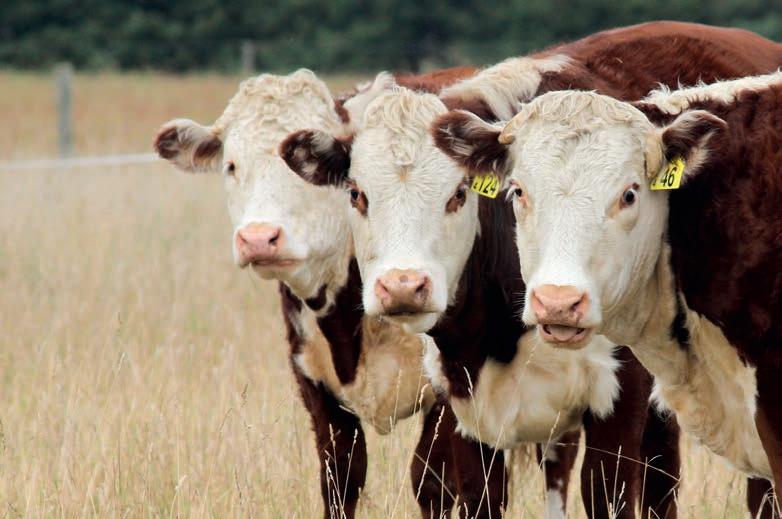
| Follow feeding instructions on bag labels. Introduce to animals slowly and don’t overfeed.
stores), which contains soya hulls, a high fibre, low starch feed that is widely fed to dairy cows in New Zealand. Maxisoy offers flexibility in that it can be offered ad lib, with animals having access to and able to consume the feed throughout the day, with no risk of acidosis.
When fed in conjunction with formulated feeds such as NRM MultiFeed Nuts (which have a higher fermentable carbohydrate component and which are typically offered in a more controlled manner, e.g. fed in small amounts once or twice a day to prevent excessive intake), Maxisoy helps to increase the amount of feed that can be supplemented per animal per day when pasture availability is low. As pasture availability improves, Maxisoy can be reduced or taken out
of the diet and just the grain based feed fed as a supplement to pasture.
A good rule of thumb if you need to use Maxisoy during a dry period is to feed as much grain based feed as recommend on the feed bag and then feed the same amount again as Maxisoy. For example, NRM MultiFeed Nuts are recommended to be fed to sheep at up to 150 grams per head per day, so you can feed 150 grams of Maxisoy either mixed in with the NRM MultiFeed Nuts or on its own, with the NRM MultiFeed Nuts offered separately. If the feed can be offered twice a day rather than once a day, this is a better option (e.g. half the NRM MultiFeed Nuts and half the Maxisoy in the morning, then the same again in the evening). It’s a good idea to also offer plenty of hay and/or silage to animals if you are able to source some.
If you are going to use a forage replacer (other than Maxisoy) that has been designed for horses to feed to ruminants on your property, always check with your Nutrition Specialist to make sure that the product is suitable for this use. Other tips for dealing with a summer dry
• Ensure animals always have access to plenty of clean, fresh water. Keeping water as cool as possible is important.
• Ensure there is enough shade for animals and that any constructed shelters do not limit airflow, as a breeze can be useful for keeping animals cool.
• Reduce animal activity (e.g. moving stock) during the hottest part of the day. Your animals will thank you for it.
• Try to encourage feeding during the cooler parts of the day. Offer feed in the early morning or late afternoon and ensure that forage is always available.
• Be cautious when buying in baleage and silage. There may be a lot of high priced yet poor quality conserved forage for sale. Silage that hasn’t been fermented properly will not taste as good for stock and intakes will be lower than a good quality silage. In a worst case scenario, a very poorly fermented silage might be rejected by stock altogether.
• Watch out for drought related animal issues such as tooth wear from grazing short pasture and also nitrate poisoning when stock are grazing crops that come away well after a dry period.
• Continue to feed supplements to stock for some time once the dry has broken. Half the grass available is lost after rain because it is dead and decays very quickly, so you might not have as much green feed as you think.
• Think about having a pasture restoration plan in place if paddocks are very burnt off from a more severe dry period.
For further information, contact your local Nutrition Specialist.
Article supplied by Stacey Cosnett, Nutritionist.
Whilst challenging, growing a fodder beet crop can be extremely rewarding in providing a high yielding, nutrient dense food source for your stock through the difficult feed budgeting months. Attention to detail through the whole crop growing season is critical to growing a successful fodder beet crop.
Intensive management from paddock preparation, crop planting, nutrient management and weed control is vital to get the crop established. Once the crop covers, the management intensity reduces as it tends to look after itself. However following crop covering in, growers should be alert for the threat of foliar diseases, which have been increasingly common in recent seasons.
Foliar diseases including rust, powdery mildew and cercospora leaf spot can significantly reduce the potential of fodder beet crops. While being unsightly, foliar diseases reduce green leaf area, reduce leaf retention and palatability and ultimately reduce bulb and leaf yields.
Following covering in, crops should be regularly monitored for any signs of disease. Timing is important and a fungicide should be applied immediately when the first signs of a disease infection are seen in the crop. Escolta® fungicide from Bayer Crop Science is highly effective in controlling foliar diseases in fodder beet. Use throughout New Zealand has clearly demonstrated the disease control and crop greening effects from Escolta applications. The
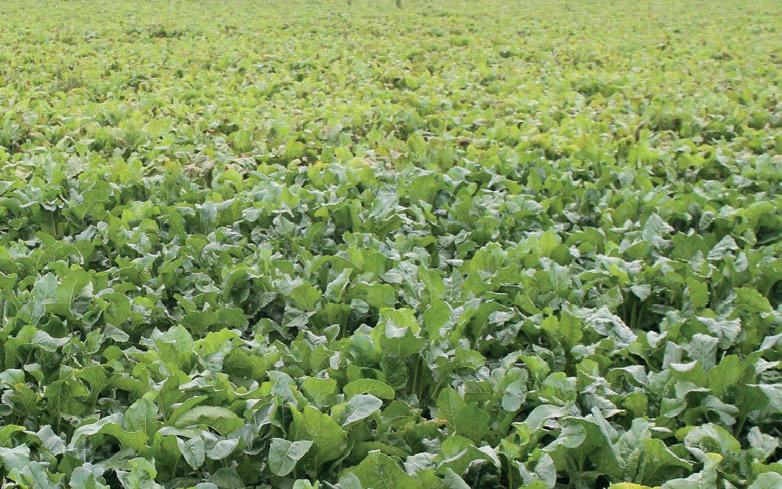
benefits of increased yields from Escolta applications have also been demonstrated through commercial farmer block trials. All the trial blocks received standard farmer management except for Escolta treatments – strips were left untreated or received two applications of Escolta. The trials were yield assessed by independent crop assessment companies using industry standard methods. Yields were assessed as a combination of the leaf and bulb measurements in tonnes of dry matter per hectare. The trial strips that received two applications of Escolta demonstrated outstanding yield benefits of 15 percent, which equated to an average yield increase of 3 tonnes of dry matter per hectare. Using a value of 20 cents per kilogram of dry matter, this returns
a $600 per hectare advantage over the untreated. Visit www.hardtobeet.co.nz for more information about the trials. Best results are seen if Escolta is used protectively, so don’t wait for significant disease to become established before applying the first treatment. If required, a second application can be used 3 weeks later. Ensure a 42 day withholding period is observed after the final Escolta treatment before allowing the crop to be grazed. The Escolta rate is 350ml/ha and can be ground or aerially applied. For further information on foliar diseases in beet crops, contact your local Farmlands Technical Field Officer or the friendly team at your local Farmlands store.
Escolta® is a registered trademark of the Bayer Group. Article supplied by Bayer Crop Science.
When looking for ways to maintain the non-productive areas of the farm, farmers often turn to common knockdown herbicides to keep these areas weed free. As time pressure mounts on-farm with these ongoing maintenance tasks, it is worth considering what you are trying to achieve and finding out if there is a smarter way to achieve the result.
Maintaining non-productive areas on-farm has a two-fold effect – not only getting rid of invasive weeds and grasses but also showing that pride is being taken in the appearance of the property. The most common areas to be maintained generally include driveways, electric fence lines, stock yards, farm tracks, culverts and areas around buildings.
Herbicides containing actives such as glyphosate will get rid of the weeds and grasses but will not control them long-term. So farmers may find that they are returning to spray the problem areas all to often. Mowing, trimming, or slashing can also be effictive in getting rid of weeds in these problem areas. However, as with the use of standard herbicides, these methods will not provide long-term weed control. There are a few herbicide products on the market and along with use of mechanical mowing, trimming, or slashing, these methods make up the predominant toolbox for farmers looking to maintain non-productive areas.
However, when looking for long lasting
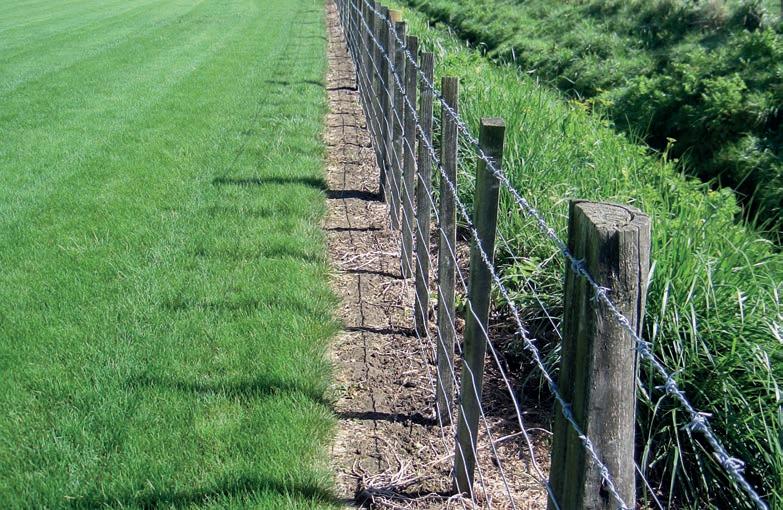
results, think about working with smarter tools instead of working harder. The use of a smart tool such as Tag G2, a powerful knockdown herbicide, will provide long-term control of unwanted weeds. Formulated and designed in New Zealand for New Zealand’s specific requirements, Tag G2 contains a combination of four complementary broad spectrum herbicides –terbuthylazine, amitrole, oxyfluorfen and glyphosate. The overlapping modes of action will provide immediate knockdown and longer term residual activity to give longevity of control. This superior formulation can keep treated areas weed free and looking smart for up to 12 months, as well as providing results that assist with the day-to-day management of the property. An example of this is when Tag G2 is used under electric fence lines. It is a necessity to remove vegetation to stop weeds and grasses encroaching and touching the wire. If left untreated, this vegetation can cause a disruption or shorting of the electrical current and over a period of time, will lessen the effectiveness of the electric fence system containing livestock. Therefore when thinking about total vegetative control on-farm, think smarter and don’t work harder by employing the correct tool for the job. For further information, contact your Farmlands Technical Field Officer or the friendly team at your local Farmlands store.
Article supplied by Lonza.
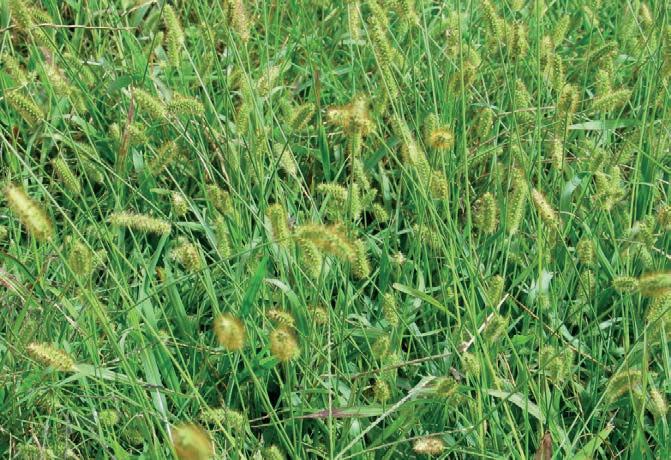
For farmers affected by yellow bristle grass, one of the key recommendations for best practice control and management is to encourage better pasture competition – particularly between October and December, which is the time of year that yellow bristle grass germinates.
By reducing or avoiding pasture damage before and during the period of yellow bristle grass germination, there are less likely to be bare patches where yellow bristle grass has enough space and light to take hold.
But what can you do about paddocks that are known to be infested? From now on, the focus turns from stopping yellow bristle grass germinating, to stopping it setting seed. This is a critical step in preventing the weed from spreading further.
Techniques to stop the spread of yellow bristle grass include early mechanical topping (before viable seeds are set), heavy grazing or chemical control with a herbicide.
In addition to effectively controlling yellow bristle grass, a new herbicide option available from Nufarm, Dockstar®, has no grazing withholding period (when used on its own).
Paul Addison, Technical Specialist for Nufarm, says as a result, sprayed paddocks can still remain in a grazing rotation as short as 21 days.
Up until now, the earliest return time for paddocks sprayed for yellow bristle grass control has been 28 days, with a further 7 days required between grazing and spraying. Dockstar also
requires at least 7 days between grazing and spraying, plus a gap of at least 14 days after spraying to the next grazing – this ensures maximum translocation and efficacy.
Paul says at this time of year, a 21 day return time is easier for farmers to fit into their typical early summer grazing rounds. Recommended rates for Dockstar are 1.5-2.0 litres/ ha, with no adjuvants or other products added to the herbicide.
“Our trials have shown this gives excellent, cost-effective control of yellow bristle grass, with consistent results year to year,” Paul says.
After spraying, Dockstar is likely to cause temporary yellowing and growth suppression of some pasture species, including ryegrass and clover. Keeping stock off treated paddocks for at least 14 days after application
allows the active ingredient in Dockstar (asulam) to take maximum effect on yellow bristle grass and minimises any check to pasture growth.
“For best results, we advise spraying yellow bristle grass after it has emerged from the ground but before seed heads are visible,” Paul says. Seeding plants will not be controlled.
“Seed heads are easy to spot but identifying the weed as a young plant can be more difficult. Look for a flattened, hairless leaf sheath – long hairs at the base of roughedged leaves and reddish-purple colouring at the base of the sheath.”
For further information, contact your Farmlands Technical Field Officer or the friendly team at your local Farmlands store.
Article supplied by Nufarm.
The adoption of Integrated Pest Management (IPM) compatible insecticides is growing rapidly, as growers become increasingly aware of the benefits of using selective insecticides that target key pests, while allowing beneficial insects to thrive.
Insect pest damage can reduce forage brassica yields by over 3,000 kilos per hectare of dry matter, costing farmers more than $500 per hectare in lost feed. A few years ago the main options for pest control were broad-spectrum organophosphate (OP) sprays, which killed everything, including beneficial insects. But now a range of selective insecticides are available that can provide effective control of forage brassica pests, without harming beneficial insects (i.e. ladybirds, lace wings, predatory wasps and spiders).
One of the latest IPM compatible
insecticides approved for use in forage brassicas is Minecto Star, which contains two IPM friendly active ingredients – cyantraniliprole (the active ingredient in Exirel®) and pymetrozine (a selective aphicide with systemic activity). The addition of pymetrozine, with translaminar and systemic activity, provides superior aphid control compared to cyantraniliprole alone and offers built-in resistance management for aphid control without harming beneficial insects. Farmlands Technical Field Officer based in Winton, Jim Beer, was quick to realise the benefits of Minecto Star after seeing how it performed in field trials on both aphids and caterpillars. “Farmers don’t want to smash an OP over the top anymore and smoke all the beneficials,” Jim says. “But until Minecto Star was available we had to use a combination of selective
insecticides to control both caterpillars and aphids. Nine times out of ten if you can see caterpillars in a crop then aphid numbers are also building. Now we can use just one product to do both pests.”
Because it controls a wide range of pests, Jim says he would recommend Minecto Star as the best product to have in the shed coming up to Christmas. “Using an IPM compatible product like Minecto Star gives a better return on investment, because if you look after the beneficials they work for you for free – it’s almost like free labour,” he says.
“Selective insecticides may cost a bit more but with old OP chemistry you would expect re-infestation after 7 to 14 days. With Minecto Star you can come back after 14 days and the crop will be as clean as a whistle. It ticks all the boxes and also has a low use rate, which means not having to lug around heavy containers of liquid. It’s easy.”
Jim says he would recommend using forage brassica insecticides in at least 200 litres of water per hectare, with up to 400 litres on tall and dense crops, with the addition of a non-ionic surfactant to improve leaf coverage.
“It’s also important to keep an eye on the weather forecast, because you know pest numbers will increase when it’s hot and dry and getting the product on early gives peace of mind.”
For further information, contact your Farmlands Technical Field Officer or the friendly team at your local Farmlands store.
Article supplied by Syngenta.
The term “IPM” is being used more frequently when considering insect pest control in forage brassicas. Even though the term IPM is being used often, the meaning is not always understood.
“IPM” stands for Integrated Pest Management, the use of three pest control methods together in a compatible way. The three methods are biological, cultural and chemical control.
Biological control – the use of beneficial insects that naturally occur in the crop and making sure they are not disrupted by using pesticides that may impact the various life cycles of the beneficial species.
Parasitic wasps and hoverfly larvae are two important examples.
Cultural control – any farm management technique that disrupts the pests and enhances the beneficial population. Examples maybe the variety of crop selected and its insect tolerance, timing of planting, weed control along fence lines or the use of irrigation.
Chemical control – IPM is not about eliminating all pesticides but rather utilising them in an effective way that minimises disruption to beneficial species. It is important to understand the impact a product has on all the beneficial species at each of their life stages. In the example of the hoverfly, it is the larvae not the adult that preys on aphids. The mixing of insecticide active ingredients can also have a negative impact on the beneficial species by the mixture causing greater disruption than either of the ingredients
used on their own. For the target pests, a mixture can also increase the risk of pesticide resistance.
The Sustainable Farming Fund and Plant & Food Research New Zealand recently carried out a project, titled “IPM strategy development and demonstration for forage and seed brassicas”. Exirel® was the selective chemistry chosen for the project. Results from the 2015, 2016 and 2017 seasons (multiple trials) showed an IPM approach provided a financial benefit with a lesser number of insecticide applications being made while retaining crop health. To avoid disruption to beneficial species in your crop, there are some key points to be followed:
• Understand the pest and beneficial species present at each crop stage – and have a plan from establishment through to late crop stages.
• Use broad spectrum insecticides at the establishment stage of the crop leaving Group 28 insecticides (Exirel) for mid to later stages of the crop when beneficial species are present.
• There are many selective insecticides available but that does not mean they are safe to all beneficial species. Gather data on each product used and its impact on beneficial species.
• Use a hand lens to monitor the crops and identify the eggs of both pest and beneficial species, along with early juvenile stages, to help plan treatment application timing.
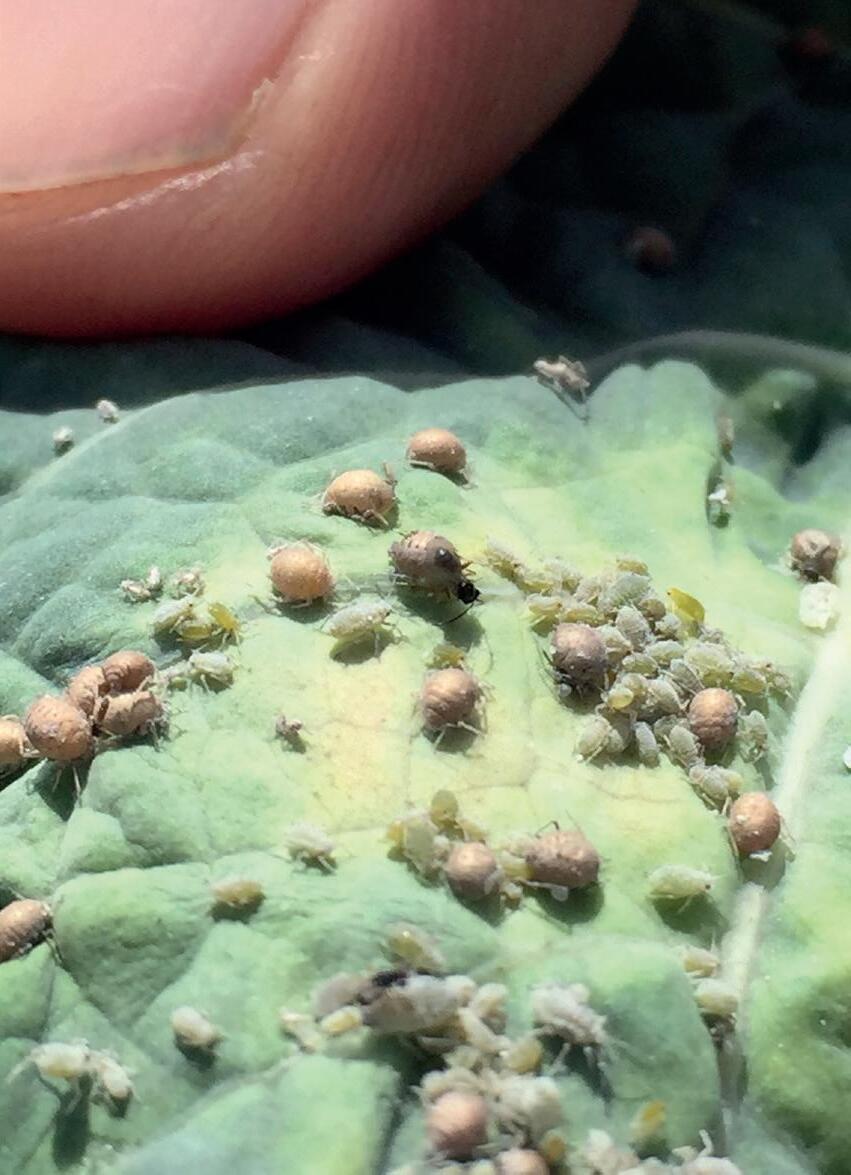
• Once the crop is established, apply Exirel early at the first sign of pest pressure to minimise impact on yield and spread of insect transmitted disease. At the same time establishing beneficial populations.
• Continue to monitor the crop for signs of beneficial activity, such as mummified aphids and parasitised caterpillars, along with overall reduction in pest population.
For further information, contact your Farmlands Technical Field Officer or the friendly team at your local Farmlands store.
Article supplied by FMC.
Early summer is here and weaning of lambs in the North Island is underway. From now until late April, it is likely that at some stage flystrike will occur in New Zealand in most unprotected breeds and classes of sheep.
Timing of treatment(s) and correct application of products play an important part in preventing or reducing the damage that flystrike causes and the stress to flock owners. With animal welfare care and attention increasingly focussing on livestock farming, treatments to prevent flystrike and control lice combine as an important aspect of the management of the sheep flock. The new generation of flies that emerge after overwintering in the soil appear in the warmer temperatures. After mating, the females are attracted to sheep by the odour of wool grease, green dags or urine odour on the breech wool. Initial strikes mainly occur in these areas, e.g. shoulder strike from the wool grease odour and bacterial action at the skin level or dag strike/ urine strike around the base of the tail. Unchecked, these strikes occur with up to 200 eggs deposited by one female fly. The eggs hatch in less than a day and then larvae develop by moulting, with each larval stage aggressively damaging the skin layer and penetrating the tissues. All this damage is compounded by the attraction of more flies and sheep not previously treated with a flystrike preventative die a painful death. In the summer the complete life cycle of the Lucilia spp
flies can be as short as 4 weeks.
Shearing, crutching and/or dagging lambs, two-tooths and ewes in the early summer months alleviates the risk of flystrike. The tell-tale signs of the flystruck sheep are biting, twisting and irritation from the early larvae attack and indicates the need to check the whole mob and use a flystrike dressing treatment on affected sheep after cleaning up the struck areas with a shearing handpiece. The best way to prevent flystrike is treatment by saturation methods, jetting or the use of pour-ons with a T-bar applicator along the backline and around the breech – preferably with a dual action (fly and lice) combination product. Examples of these are Unlock Combination, a saturation/jetting product and Unlock Pour-On, a product for backline/breech application. Both products have a dual action for flystrike and lice each time they are used.
Timing of application for flystrike is important (generally within 4-6 weeks of shearing, when the wool length will retain the flystrike chemical for the claimed protection period on the dip label. It must be emphasised that the label protection period claim with flystrike dip products state “up to” a number of weeks. In certain periods of moist and warm weather, particularly in sheltered paddocks or locations where flystrike can be severe, shorter periods may necessitate shorter treatment intervals. One often-used procedure where these conditions prevail with lambs is to run the lambs through a jetting unit as they leave

the race (after drenching lambs with an anthelmintic in the race at 28 day intervals). Another method of ensuring efficient coverage of the backline and breech with chemical is the use of a conveyer to space the sheep as they are jetted or the pour-on applied. The application of a pour-on for flystrike also needs care. Coverage as indicated on the product label needs to be meticulous and done carefully, with recommended chemical-proof over trousers and not in shorts. Rushing large numbers through the application procedure often leads to some failures in the sheep receiving the correct placement of the chemical. Reading the application rate or the dip mixing rate is important, as is use on the same day of mixed dip wash – as overnight settling out of the active chemical will markedly reduce the protection benefit. Lastly, take care with jetting and showering to not allow run-off into waterways and good dipping this summer and autumn. For further information, contact your Farmlands Technical Field Officer or the friendly team at your local Farmlands store.
Article supplied by Animal Health Direct.
It is easy to take the same approach year to year for high value crops. But this can mean missing out on higher yields and valuable information to help plan for next season. Plant testing can take high value crops to the next level.
Horticulture and Arable Specialist with Ballance Agri-Nutrients, Dusty Hulley says plant testing is a worthwhile complement to soil testing, especially for high value crops like avocados and kiwifruit.
“Soil testing shows what soil nutrients are available to the crop but it doesn’t show what nutrients the crop has actually taken up. Plant testing is a useful tool for diagnosing deficiencies and monitoring effectiveness.”
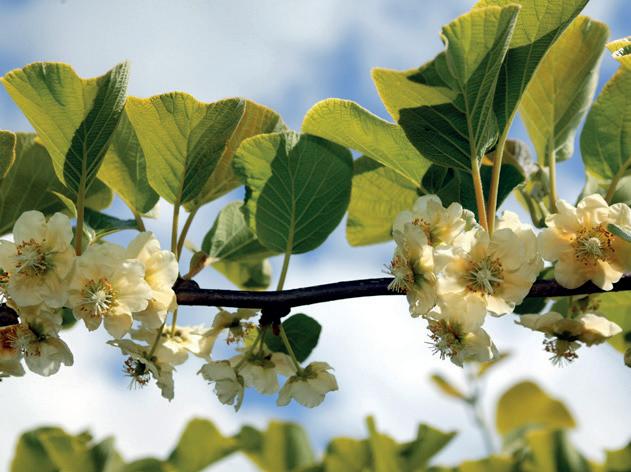
Diagnose early, monitor late In kiwifruit, deficiencies are more pronounced early in the crop’s development, before plants adapt to their growing conditions. Testing leaves and petioles before fruit set allows you to correct any deficiencies for the season’s crop. Dusty recommends Basic Plant (BP) and Chloride (Cl) tests in September to October.
Autumn is the time to test kiwifruit plants once again, as nutrient levels will have stabilised. Late season sampling monitors the effectiveness of the fertiliser programme. Dusty recommends repeating Basic Plant (BP) and Chloride (Cl) tests in February to March.
Added value avocados
Testing avocado trees can reveal a number of potential deficiencies. Avocado leaves (blade and petiole) are best tested from April to May, after the summer flush. To diagnose an obvious problem, test as soon as symptoms appear. If a problem appears outside the usual testing period, test as soon as you notice symptoms and use a sample from a nearby, healthy tree as a comparison. Avocados need high levels of nitrogen for adequate flowering and fruit set. Too much nitrogen is problematic but not common in New Zealand. Make sure application follows regional authority guidelines. Adequate zinc levels are also important for healthy, young leaves.
Plant testing is especially valuable for detecting boron deficiencies. Deficient boron can prevent growing shoots from elongating, resulting in short internodes, poor pollination and fruit set and distorted fruit. Soil levels can be medium to high but leaf analysis can still show low levels of boron. Boron deficiency can be challenging, as standard application rates appear to be insufficient in New Zealand. Calcium is another vital nutrient for avocados. It is used to build cell walls and membranes, so plays a role in fruit quality, particularly after longterm storage and shipping. Gypsum provides calcium but also helps to improve soil structure, reducing the severity of Phytophthora root rot, to which avocado trees are susceptible. Serpentine Super, sulphate of potash, YaraMila Complex and YaraBela CAN are recommended for kiwifruit and avocado orchards. For further information, or to have plant samples analysed, contact your Farmlands Technical Advisor or the friendly team at your local Farmlands store.
Article
For something that affects every apple on every tree in your orchard, ethylene keeps a very low profile. You can’t see it or smell it – but the closer you get to harvest, the more obvious its impact becomes, because ethylene is known as the ripening hormone.
An odourless, colourless, naturally occurring gas, ethylene is responsible for the changes in texture, softening, colour and other processes that occur as fruit ripens.
The effect of ethylene on plants was first noted back in 1864 but it was not until the early 1900s that plant tissues themselves were shown to produce it.
Today, ethylene is recognised as a powerful plant hormone that plays a critical role in seed germination, flowering, fruit development and disease resistance, among other things.
Modern science has provided tools to manipulate ethylene. In some crops, these are used to accelerate ripening but in apples they are used to do the opposite.
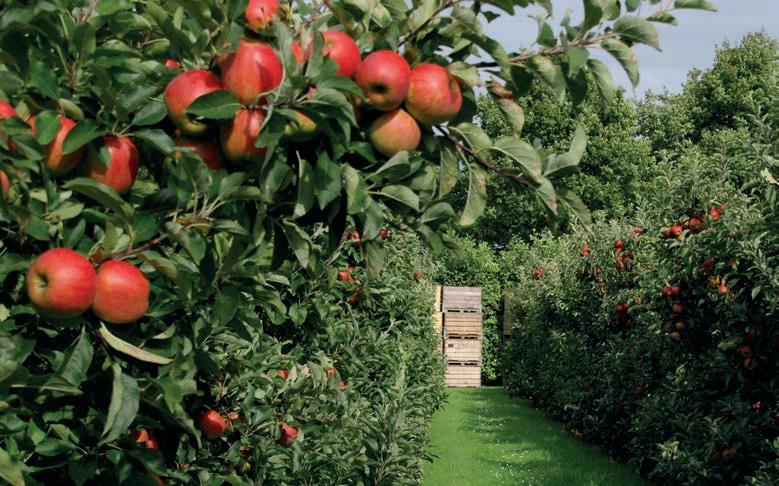
By applying a specialised product such as ReTain 21-28 days before the date of the first pick, growers can extend their harvest of treated blocks by up to 7-10 days, without affecting fruit quality.
ReTain is a naturally occurring plant growth regulator (PGR). It temporarily inhibits the production of ethylene in developing fruit, slowing maturation, ripening and development of abscission tissue while allowing continued fruit growth.
Mike Caplan, Technical Advisor at Farmlands Whakatu, says the result
is better, more efficient harvest management, which is the main reason his clients use ReTain.
“Some of them use it for increased fruit size but most of them want to stagger the harvest of particular blocks, so they’re not stressing out about getting over the whole crop at once,” he says.
This is especially important in the context of current labour shortages, as the New Zealand apple industry continues to grow both in size and value.
Last year more than 340,000 tonnes of apples, worth nearly $700 million, were exported from New Zealand and those numbers are expected to keep rising as new plantings come into production. Mike says a consistent flow of work is critical for maintaining
pickers and post-harvest staff.
“You don’t want 20 pickers going flat out for 2 weeks and then having nothing to do for the next 2 weeks, because they will naturally go and find other work somewhere else. You’re better off with fewer staff and more continuity.”
His advice is to apply ReTain to blocks of apples that would naturally ripen later than others, to extend the harvest window as long as possible. Correct timing and application technique are critical for getting the best out of ReTain.
For more information, contact your Farmlands Technical Advisor or the friendly team at your local Farmlands store.
Article supplied by Nufarm.
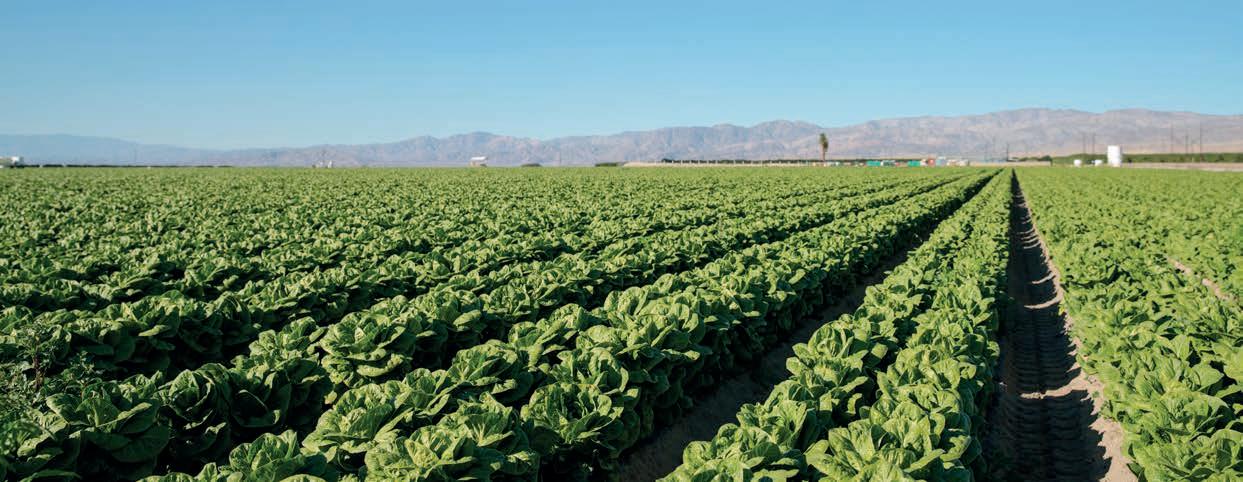
Growing crops is complex. Many events can influence the growth and development of a crop from seed germination to bud burst or to maturity. Some of these events include nutritional deficiencies, presence of insects and diseases (biological stresses), as well as environmental stresses associated with intensive crop production, such as low or high temperature, drought and soil salinity.
Over the years many synthetic crop inputs have been developed to mitigate some of these challenges. However, natural biostimulants are becoming more popular – working at the cellular level to promote the production of growth-regulating and protective components within plants.
A seaweed called Ascophyllum nodosum is one particular biostimulant element that has proven its efficacy in plants. Ascophyllum nodosum marine plants are abundant in the cold, pristine waters of the North Atlantic inter-tidal zone – an area where the plants are above water at low tide and submerged at high tide. During the summer, these hearty plants lay exposed to direct sunlight and extremely high temperatures before the cold, salty ocean water submerges them again at high tide. In the winter, the plants withstand the frigid and icy conditions. Ascophyllum nodosum has adapted to the harsh, extreme conditions by
producing its own stress-fighting and growth stimulating compounds.
Studies have tapped into the science of these hearty plants, leading to the production of plant-derived, natural biostimulants to power plant growth and help crops tolerate stress.
Every crop experiences a variety of stresses during the season – including spring and fall chill stress, pesticide and herbicide application stress and mid-season drought and heat stress. Each stress event affects the plants’ vigour and decreases the crop’s yield. Reducing the effects of stresses leads to better yield at harvest.
For growers looking to reduce the impacts of stresses to their crops, adding a seaweed extract to the crop care programme is a viable option. There are several factors to consider when using a seaweed extract:
• Seaweed species and processing – ask for proof (in terms of field trials) of the benefits of products derived from species other than Ascophyllum nodosum
• Application timing and rates – as with most crop inputs, timing is everything. Application timing and rates vary by crop and growers should consult their Farmlands Technical Advisor to determine the best application practices for their practical crop in their specific region.
• Compatibility – growers should consult their Farmlands Technical Advisor to be certain that all their crop inputs are compatible.
• Plant and soil conditions – by knowing what you can about your plant health and soil conditions, you can tweak your crop input programme to meet your specific needs.
Acadian Plant Health™ has spent many years studying Ascophyllum nodosum, developing a unique process that essentially captures the beneficial compounds from the sea plants. The resulting extract serves as the platform for their fully water soluble, compatible and easy-to-apply biostimulant products – Acadian® and Stimplex®. Hundreds of trials in greenhouses and field conditions, as well as growth chambers in laboratories and universities, on a wide variety of crops have proven that plants that treated with Acadian and Stimplex consistently produced higher yields and higher fruit quality. Acadian and Stimplex are also BioGro™ certified, meaning that organic growers can reap the benefits of these biostimulants without compromising the integrity of their organic produce. For further information, contact your Farmlands Technical Advisor or the friendly team at your local Farmlands store.
Article supplied by Acadian Plant Health.
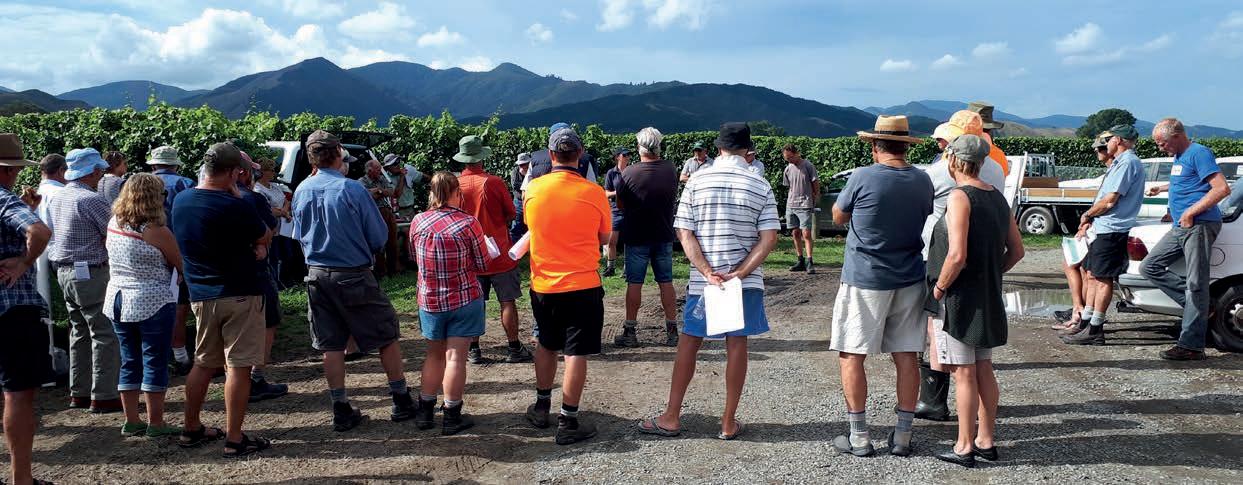
The Innovation Vineyard Project was initiated in 2017, as a collaboration between Marlborough Grape Growers and Farmlands. The vineyard itself comprises blocks at Ben McLauchlan’s Rothay Vineyard in Rapaura, Marlborough.
The Innovation Vineyard Project aims to facilitate participation and discussion of best practice that will improve crop quality and grower returns. In addition, blue-sky technologies are being demonstrated and assessed. Growers belonging to either Marlborough Grape Growers or Farmlands will benefit by engaging in and learning from this project. Outcomes from the project will be presented to Marlborough Grape Growers and Farmlands shareholders annually through field days, seminars and technical notes.
The actions implemented for this season include under vine mulching and planting, vine phenology and management practices, trunk disease, pruning wounds, vine replacement, nutrition monitoring, botrytis decision model application, spray coverage assessment, botrytis management with a biological product and bluesky technology investigation.
The scope of the Innovation Vineyard Project has been established by breaking down key vineyard tasks, so that best practice can be investigated and ultimately implemented for them.
The focus is on the following tasks: Data recording systems – recording
everything that is done. If it’s not measured then it can’t be managed. Information can then be compared with annual benchmark reports from New Zealand Winegrowers.
Soil type and topography recording – blocks have been mapped using AgriOptics electromagnetic ground survey, providing a GPS map of soil texture at 50cm and 150cm depths and soil surface data. The maps record aspect, depressions, soil texture variation (gravel/sand/clay), bulk density, water holding capacity and infiltration rates, elevation and landscape changes and slope percentage (relevant for water/nutrient run-off, safe machinery movement).
Pruning – with a focus on individual vine health and vigour, crop load and disease management.
Vine replacement and replanting – with several methods introduced for comparative assessment.
Crop monitoring – scouting to support pest and disease management decisions.
Spray timing – using a comprehensive programme, reporting will reveal planned vs actual applications.
Spray application – calibration, appropriate sprayer setup for changing canopy and targets and coverage assessment at key timings using water sensitive papers. Canopy management – to aid spray coverage and optimise airflow for disease management.
Irrigation monitoring – using Sentek Irrigation Probes coupled with electromagnetic map data.
Nutrition – combining soil testing, electromagnetic maps and Integrape satellite imagery to finetune requirements. The Innovation Vineyard Project has subscribed to Integrape to assess its value on behalf of growers. Foliar nutrition, fertigation and foliage testing will be used to manage nitrogen and trace elements.
Under vine management – comparing conventional systems using herbicides, with under vine plant establishment and mowing. Ease of management, vine vigour and crop quality will be used as assessment parameters.
Blue-sky thinking – investigating the use of drones and satellites for crop health assessment, as well as the use of smart machinery and GPS mapped data for targeted application of agrichemical and nutrition.
The Innovation Vineyard Project is a new, dynamic endeavour aimed at delivering information to provide Marlborough Grape Growers and Farmlands shareholders greater vineyard returns.
Further information can be gained from either Mart Verstappen (Farmlands, Blenheim) or Johnny McMillan (Marlborough Grape Growers, Blenheim).