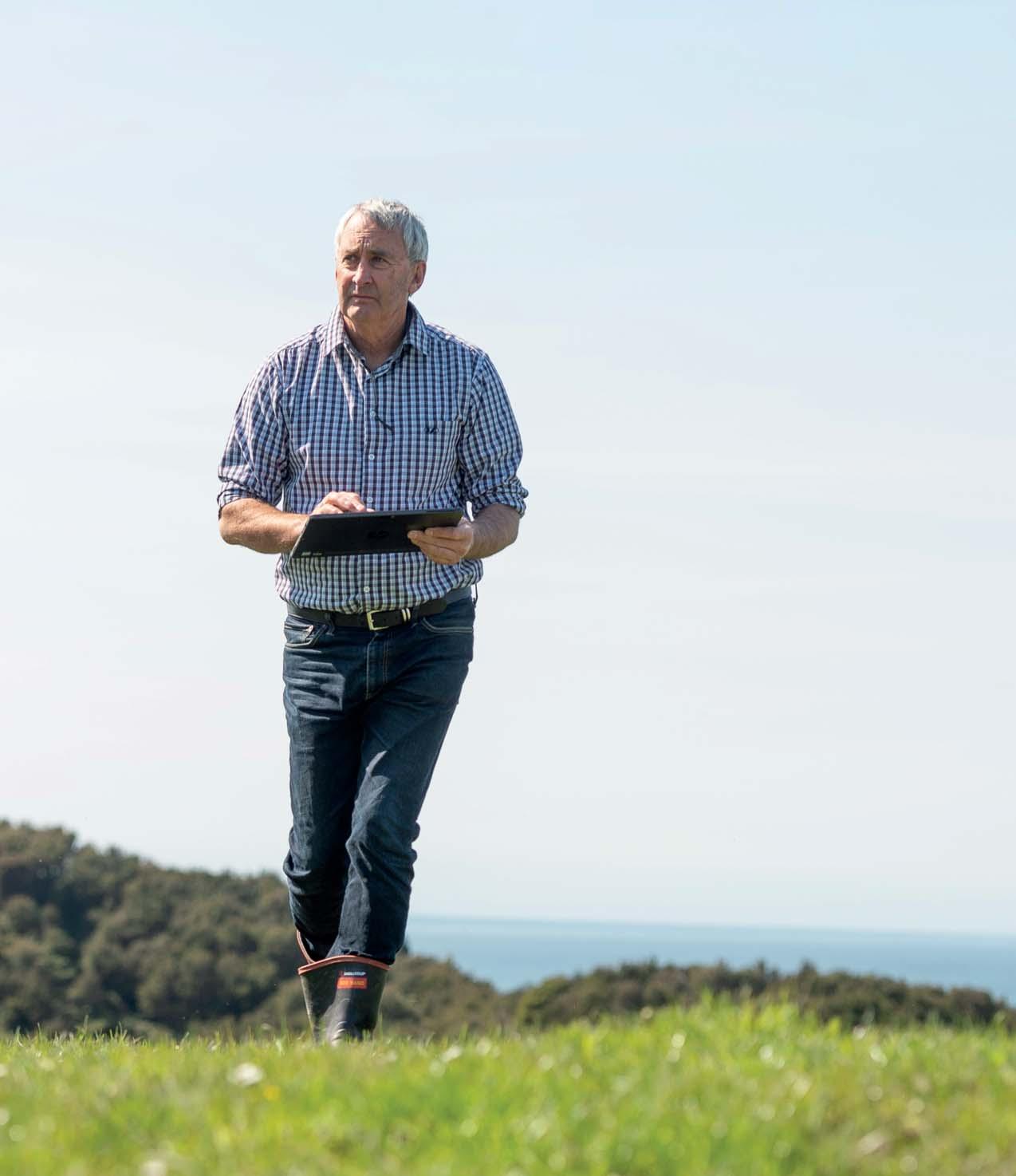
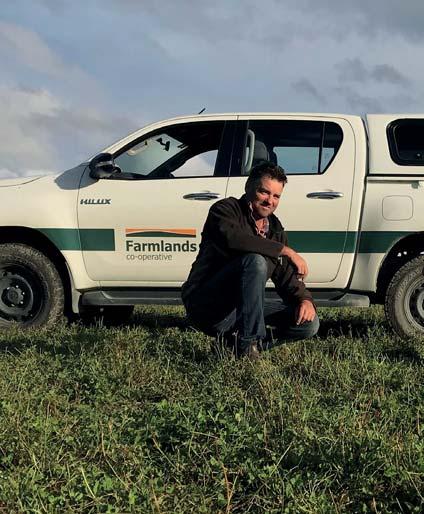
We’re already among the most effective and innovative, why not aim to be the safest too? It’s an achievable goal.
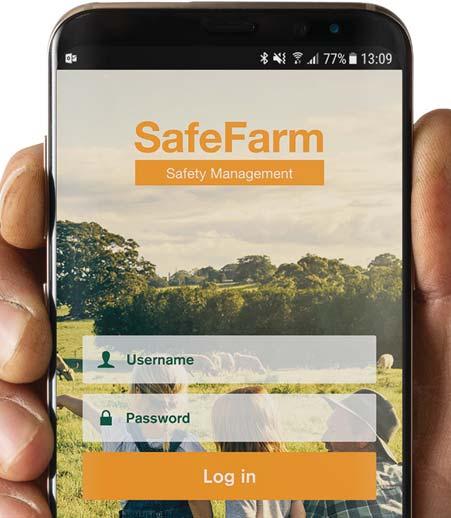
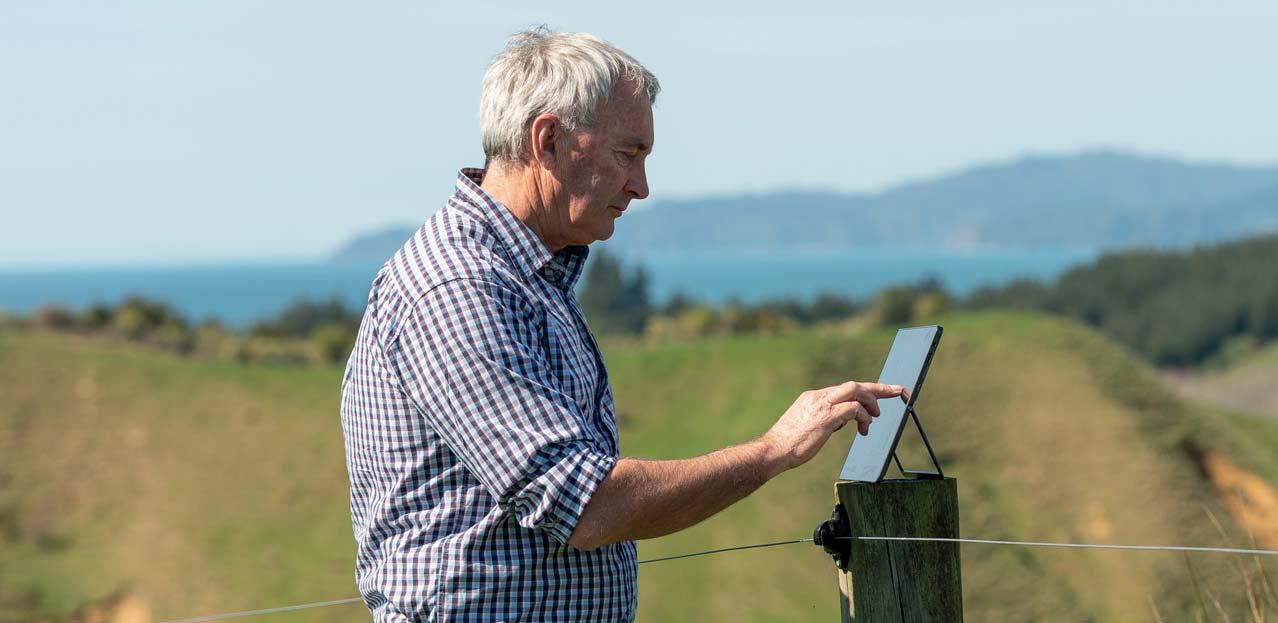
As a first step towards this, we want to equip all shareholders with free safety software to help keep them, their workers and their families safe.
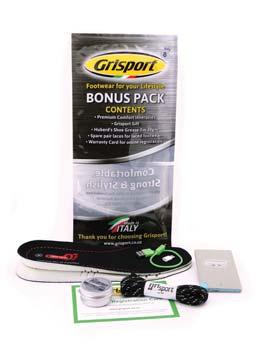
That’s why we’ve teamed up with FarmIQ, New Zealand’s most complete farm software, to create the Farmlands SafeFarms Pack containing innovative tools to help make Health and Safety management on your property easier and more effective.
To start your digital Health and Safety journey today, visit www.farmlands.co.nz/safefarms
INSIDE THIS ISSUE
INTEREST
5 Farmlands staff profile
5 From the CEO
6 5 minutes with Andrew Horsbrugh
8 Special Feature – Adding value
15 SafeFarm set to improve Health and Safety on-farm
16 High-tech tool designed to benefit shareholders
17 Notice of Annual General Meeting
19 Personal answers to the Health and Safety question
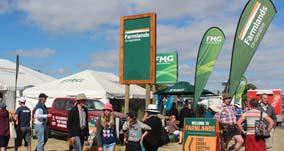
20 Farmlands at The New Zealand Agricultural Show 2018
21 A progressive partnership
52 Buying Power Promise
58 Choices Rewards
62 Responding to your feedback
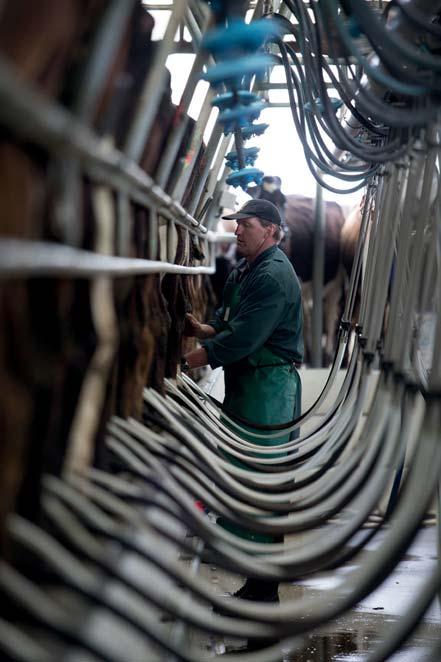
63 Innovation and technology to make the milking shed safer
65 Century Farms – Erskine family celebrates more than 130 years
67 Farmlands Real Estate
PLAN365
Plan365 Nutrition
25 Feeding for optimum performance
29 Balancing the major mineral needs of cows
31 Troubleshooting egg shell quality issues in your flock
Plan365 Forage and Arable
33 The lasting value of a clean start
35 New kale genetics deliver
37 Is herbicide resistance knocking at your door?
39 Pick the right brassica herbicide
41 Taking a look at lucerne
42 Now is the critical time to protect cereal yields
43 A step change in lamb finishing potential
Plan365 Animal Management
47 Ensure your calves hit their target weights
49 Achieving goals using monitoring technology
Plan365 Horticulture
53 Timely disease management now pays off later
55 Robust, effective botrytis control for grapes
Plan365 Rural Infrastructure
56 7 years on
57 Cost effective infrastructure essential
59 Installing your water tank
9-11
OCTOBER
Ladies Night
It’s Whangarei, Hamilton and Tauranga’s turn to host Karen Walker for an inspirational evening!
12-14
OCTOBER
Equidays
Don’t miss New Zealand’s premier equine event! Join the Farmlands team at Mystery Creek for demonstrations and seminars across all equine disciplines.
18
61 Solutions that suit New Zealand conditions
Star Farms General Manager, Boyd MacDonald is an advocate
OCTOBER
We're your co-operative so we want to hear what you think
Join us in Whangarei to discuss how your co-operative is performing and our vision for the future. For more information, visit www.farmlands.co.nz/rsvp
FARMLANDS STAFF PROFILE
Jo Murray
Q: What is your current role at Farmlands?
A: Partnership Manager – I work with our retail Card Partners to ensure that we provide the best possible retail opportunities for our shareholders.
Q: What do you enjoy about your job?
A: I enjoy the many different interactions with people and building good, solid relationships with our Card Partners.
Q: Where are you from originally?
A: I’m originally from England – I moved to New Zealand 10 years ago and have lived in Canterbury since then.
Q: What would you do if you won $100,000?
A: Travel! I’d take the kids to Disney World on a trip of a lifetime –then travel back via Africa to go on safari.
Q: Past or present, who would you like to meet? What would you ask them?
A: Kate Sheppard. I would ask her what her motivations were for joining the women’s suffrage movement and what social challenges did she face and overcome during this time.
Brioche Bread and Butter Pudding
Ingredients
• 3 eggs
• 3 tablespoons caster sugar
• 2 cups of both milk and cream – mixed together
• ½ teaspoon vanilla extract
Method
1. Pre-heat the oven to 180°C.
• 1 loaf brioche bread
• 50g butter
• Large handful of raisins (if you need an extra sugar hit, add some chocolate chips to the mix as well)
2. Mix the eggs, sugar, milk and vanilla extract together in a large bowl.
3. Slice the brioche – toast and butter it.
4. Place slices in an ovenproof dish.
5. Add the raisins and chocolate chips then pour in the egg mixture.
6. Bake for 30 minutes in the pre-heated oven.
7. Serve warm with vanilla ice cream and custard.
FROM THE CEO
Welcome to the October issue of The Farmlander magazine. In this issue we look at how Farmlands can add value to your business through technology, in particular our relationship with FarmIQ
Our co-operative has invested in a 30 percent stake in this game-changing farm management software company. We chose to partner with FarmIQ because we identified the need to support our shareholders with what they need today and into the future as well.
At the end of September, we produced our first offer for shareholders through FarmIQ. Given the importance of keeping our people safe, it is an offer that is available to all shareholders, free of charge.
SafeFarm, a digital Health and Safety offer from FarmIQ, is available to every Farmlands shareholder in the country at no cost. There are no strings to this offer – this is simply about ensuring you and the people on your property have an opportunity to work safe and get home safe, every day.
We appreciate not everyone is prepared or ready to move their farm management to computers. That is why we consider this free offer the start of the digital farming journey for some of our shareholders. There is a mobile or desktop version of this program and shareholders simply need to go to the Farmlands website – www.farmlands.co.nz – to access it.
Its purpose is to help our shareholders manage their Health and Safety on-farm more effectively. We have seen the statistics and the headlines regarding serious injuries and fatalities in rural New Zealand. Farmlands wants to assist with the protection of our shareholders and effective Health and Safety management is a cornerstone of this – as is your attitude to safety.
You can read more about the FarmIQ offer throughout this issue. We are excited about the possibilities our partnership with FarmIQ brings to our shareholders – stay tuned as we continue our digital journey.
Kind regards,
Peter Reidie Chief Executive Officer Farmlands Co-operative Society Limited
5
minutes with Andrew Horsbrugh
Director – Agri Products and Services, Farmlands
As Director – Agri Products and Services, Andrew Horsbrugh oversees the Farmlands Emerging Technology portfolio. He discusses Farmlands’ investment in FarmIQ and how it will benefit shareholders.
Tell us about your role as the Farmlands representative on the FarmIQ Board.
Farmlands invested in FarmIQ in late December 2017. We are joined as investors with three other companies that have a vested interest in the future of New Zealand agriculture – Pamu (Landcorp), Silver Fern Farms and VetEnt.
As well as the obvious governance focus, having a seat at the table allows us to help with the direction of the company to make sure our shareholders’ interests are well represented. It also provides early visibility of the perpetual new developments, enabling us to plan for how these might help Farmlands and our shareholders.
Why did Farmlands invest in FarmIQ?
The future of New Zealand farming is linked to data and insight and it is a matter of when, not if, farmers will need their inputs to be digitally captured. FarmIQ can help us unlock this. It’s about driving better farm incomes for New Zealand agriculture and horticulture – as a co-operative that wants to lead rather than follow, this is a key part of our desire to help advance agriculture. We have stringent measures in place to ensure any investment we make is for the betterment of our owners. That, combined with our strategy to identify ways to grow New Zealand agriculture, saw Farmlands invest in FarmIQ because it can add real value for our shareholders. We see FarmIQ as “best of breed”. We are not complacent and we also want to help FarmIQ become the preferred digital platform for the primary sector in New Zealand. Change is constant in our sector and for the past few years, Farmlands has worked hard to put the “building blocks” of our future in place. We want to help shareholders prepare for the changes, both when interacting with their co-operative (Braveheart
The future of New Zealand farming is linked to data and insight and it is a matter of if, not when, farmers will need their inputs to be digitally captured. “
Programme) and making decisions affecting their own business (ASB). FarmIQ pulls the multitude of systems or data sets a farm has to manage into one spot. It is a platform that helps farmers more efficiently manage their business, contributing to better decision making.
What can shareholders expect from the FarmIQ partnership?
Farmlands and FarmIQ will work hand in hand to deliver insightful solutions back to shareholders. FarmIQ is farm management software that provides users with simple compliance, inputs, delivery and traceability tools – while also helping with everyday tasks like labour management, Health and Safety, inventory, shopping and task lists, daily diary, etc. Over time, this will develop further and provide value-added advice to you directly into your farm, such as allowing you to view and compare your farm against benchmarked farms.
Farm management software enhances a farm’s value by integrating all activities onto one platform, enabling better decision making and accurate record keeping. It enables a farmer to improve production and yield through data and trend analysis and improves farm profitability by better decision making and increasing efficiencies. Regulatory, processor and consumer requirements continue to evolve. These days, the discerning consumer with discretionary income will say “I will buy this product if it aligns with my values”. How do you prove it aligns? It will be tools like FarmIQ that help our
farmers achieve the premiums on offer. There are some good examples of farmers using FarmIQ for other advantages – you can read in this issue about a farmer being able to prove what paddocks their cows had been in, which greatly assisted during Mycoplasma bovis discussions.
What is the first part of Farmlands’ FarmIQ shareholder offer?
We’ve worked with FarmIQ to bring our shareholders the Health and Safety package and have further enhanced it to provide the optimal product from a safety perspective. We are now excited to offer this Health and Safety software tool, called SafeFarm, free of charge to all Farmlands shareholders. Why is it free? It is free because we care about our shareholders and think this is a really important area that needs focus. It is a great advantage of this partnership with FarmIQ that we can provide a tool such as SafeFarm that can truly make a difference. The power of our co-operative has allowed us to invest in a technology that keeps our shareholders safe. It is also the start of our digital journey with our shareholders. We appreciate not everyone is comfortable with digital technology, so we have provided the tools to help people learn. As it is a free package to over 68,000 shareholders, it is important that it is self-serve. Shareholders can load themselves onto the package, with support from the help videos and self-learning tutorials that are available. It means shareholders can learn at their own pace and use
this to make the difference on-farm.
For those that want expert help to further complement what is on offer through SafeFarm, Farmlands has worked with Card Partners such as OnFarmSafety New Zealand that can provide shareholders with a range of professional Health and Safety consulting services.
What can we expect from future FarmIQ shareholder offers?
The FarmIQ packages are perpetually evolving in areas that better service or meet farmers’ and growers’ needs. Recent work on the dairy package has significantly enhanced what it provides for dairy farmers. Future plans will help the FarmIQ farm management software become more relevant and efficient for
our horticulture shareholders as well.
I’d love to see every farmer and grower in New Zealand using SafeFarm to help manage and improve the health, safety and wellbeing of themselves, their staff and their visitors. SafeFarm will include a farm diary, inventory control and soon to be released safe visit tools, so you know who is on your farm and that they are aware of hazards. You can control and manage visitors and their safety in a simple manner. We understand not everyone is up with the technology age but this is a great opportunity to start. Watch this space as we continue to develop the package to meet the needs of Farmlands shareholders and the wider primary sector.
| Farmlands Director – Agri Products and Services, Andrew Horsbrugh.
ADDING VALUE
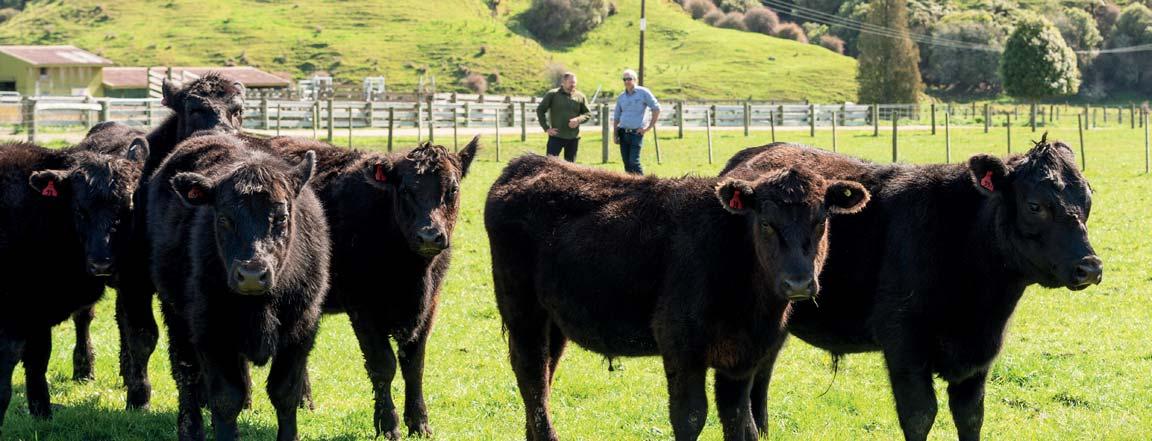
Lone Star Farms is a business built for the future. Their valueadd business model focuses on creating premium product and finding markets that will pay top dollar for the result.
The search for a production advantage has taken them on a digital journey, where farm management software has helped them with everything from identifying their best paddocks to Mycoplasma bovis.
Trying to photograph Lone Star Farms General Manager, Boyd MacDonald is a logistical nightmare – not because he is shy but rather he never seems to be in one place very long. When he spoke with The Farmlander, Boyd was heading to Golden Bay to spend time at one of Lone Star Farms’ seven sheep and beef operations.
Lone Star Farms is a business that has identified – and is working hard to perfect – the value-add business model in the growing market for the discerning consumer. The social consciousness movement is leading the industry to address consumers that want to increasingly understand the inputs that went into the meals they are about to eat.
“We are focusing on trying to grow high marble grassfed beef and focusing on growing Omega lambs,”
Boyd says. “It means looking at ways to get up the value chain and producing a quality product.
“We are working with First Light Foods and their marketers in North America, while our lamb through the High Health Alliance is selling in the food service businesses of New Zealand and Hong Kong. Our aim to produce the highest quality grass fed protein with the lowest impact on the environment.”
For the uninitiated, “marbling” is intermuscular fat – the speckles of fat that sit inside the muscles. Boyd is emphatic when discussing the virtues of value-add product. He is a Board member of Headwaters, established in 2006 to breed ewes with high levels of fat in New Zealand’s high country. Headwaters’ own Omega lamb project complements the high marble grass-fed beef on Lone Star Farms.
“We have both Wagyu Cross and straight Angus – we just believe with its high marbling it’s a quality product and it will command a high premium at the end of the day,” Boyd says.
“Omega lamb has the health benefits that Omega brings. It’s a differentiated lamb product and high in marbling as well – it’s a great tasting product.”
A point of difference in the market is a great start but Lone Star Farms wanted to set the bar higher for their product. They wanted to be able to tell a story to their end users, so they began to investigate how farm management software could elevate their business.
“
Once they see how it can help them with their roles, it’s not a difficult sell at all.
Lone Star Farms started by collecting their own data and storing it in their own database. They also developed their own farm management software projects internally, trying to find the right solution for their unique operation. Boyd says having the data is one thing – but being able to use it effectively is what really counts.
| Lone Star Farms General Manager, Boyd MacDonald says staff have been adapting to farm management software as it grows and evolves.
“We had been looking around for a good while, trying a few products. FarmIQ came along and we have been using that, widespread across the business,” Boyd says. “Our staff find it quite easy to put data into and collecting that data and using it helps us make better decisions – more timely decisions.”
Boyd says the Lone Star Farms team have been using FarmIQ for the past few years and their farm management software has grown as FarmIQ has. “It’s been developing and will continue to develop for years to come,” he says. “Some of our managers are trialling the Health and Safety part of FarmIQ and it has also given us some pretty reasonable production data.”
The production data helps to drive the value and volume focus of the business. Boyd believes the “pretty useful information” helps Lone Star Farms make timely decisions, leading to more accurate predictions than what was possible without the data.
“It certainly helps us identify our high performing paddocks. People ask why that paddock performs better than others and we can drill down into it and hopefully find some answers,” he says.
“A lot of the software is a tool at the end of the day. It’s not the complete answer but it’s a part of what you do and helps with those decisions. You can make decisions based on some facts, instead of what you think is happening out there.”
The ability to identify not just high production paddocks but the stock that had grazed on them had an unintended benefit. When Boyd discusses the ability to make decisions based
Lone Star Farms
Farms: 7
Farm type: Sheep and Beef
South Island: 6
North Island: 1
Total hectares: 14,700ha effective
Total stock units (on average): 100,000
on facts, he turns to his experience with Mycoplasma bovis.
Lone Star Farms has been caught up in the outbreak, with two infected properties confirmed by the Ministry for Primary Industries. Farm management software helped provide unique traceability when it came to stock movements, which meant lower cull numbers.
“With Mycoplasma bovis, being able to prove where our stock had been on-farm and what stock had been in the vicinity of infected stock was pretty huge,” Boyd explains. “It saved us from having to slaughter over 3,000 head of cattle. What it allowed us to do was narrow the restricted areas down on those two farms, as we were able to show where the stock had been in relation to one another.”
With farm management software having proven its value from a traceability perspective on-farm, focus can revert back to showcasing that traceability to consumers.
Boyd says quotability is a big deal to high-end markets, so the more information is available to consumers, the more likely they will be receptive to your story.
“Software is going to help with that, in the same way it helped us with Mycoplasma bovis,” he says. “It’s just another attribute you can add to your product.”
It’s an attribute that continues to evolve at a rapid rate, much like the desires of consumers and markets. Boyd anticipates farm management software will continue to adapt and provide solutions to reinforce its own value.
“We’ve run through a few of our own products and templates. Where the farm software struggles a bit is the prediction side of it, having historical data but not being able to turn it into predicting,” Boyd says. “It’s an area where if you can pull all the data together like soil moisture and climate data, it would be good. FarmIQ are starting to do that. We need as many of the computer programs as possible to be able to talk to one another, as we only want to be entering data once.”
Like other Farmlands shareholders, Lone Star Farms has the option of a free Health and Safety farm management software through FarmIQ, called SafeFarm. Boyd says Lone Star
Farms is familiar with the Health and Safety functions of farm management software and appreciates it is there as a support mechanism, running complementary to existing protocols and practices on the property.
“It certainly can improve the compliance side of things,” he says. “Compliance is one part but the other, bigger part is culture. I’m not sure culture can be trained by a computer –that’s up to our managers and staff to create a safe culture. Culture is more important than compliance in my book.”
As a relatively new addition to the primary sector arsenal, for many farmers and growers in New Zealand farm management software retains a fear of the unknown. The staff at Lone Star Farms have had an opportunity to grow their own digital skills as the software has evolved over time.
“Everyone’s been pretty open (with accepting farm management software) and we’ve let them play with it for a while,” Boyd explains. “Once they start playing with it and they identify how it can help them, they can pick it up, run with it and drive it. Once they see how it can help them with their roles, it’s not a difficult sell at all.”
Boyd says he has noticed that his younger staff are “a lot less frightened” of the farm management software and have a tendency to adapt “a bit quicker than some of us older fullas”.
His advice for those new to digital farm management is to just “give it a go”.
“The farmers out there that are inquisitive enough will already be having a look and the ones that aren’t, won’t,” Boyd says. “Choose one of the smaller parts, have a look and see if it adds value. If it is then keep going and look a little deeper.
“With the demands that the consumers of our products have, we’ve got to the point where we’re going to have to manage a lot more precisely than we have in the past. Now we’re doing a lot more management of individual animals, individual paddocks and areas and individual crop management, such as fertiliser management, proof of placement and how much water or irrigation a paddock may need.
“It’s only going to get more, not less. They (farm management software) are a tool but they can certainly help us big time by helping us farm a lot more precisely than we have in the past, which will have positive flowon effects for the environment.”
| Lone Star Farms produces Wagyu cross and Angus beef, along with Omega lambs.
| Lone Star Farms have seven properties across New Zealand.
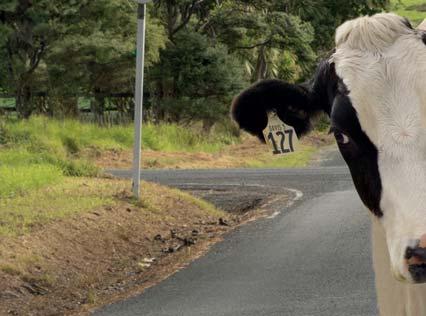
SILLY COW.
IT HAPPENS MORE OFTEN THAN YOU’D THINK.
When you’ve been a rural insurer for as long as we have, you’ve seen most things before. Which is why at FMG, we recommend Liability cover* that protects you against damage to other people’s property – like when your stock gets onto public roads and causes chaos. It’s the kind of advice that really makes a difference in the country. If you’d like to know more about it, go to fmg.co.nz. Or better still, call us directly on 0800 366 466.
*See fmg.co.nz for product terms & conditions
We’re here for the good of the country.
SafeFarm set to improve Health and Safety on-farm
Farmlands recently welcomed Katrina Berry as the new General Manager – Safety and Wellbeing. Katrina brings a wealth of experience to Farmlands, having been part of the New Zealand Health and Safety industry for more than 13 years. She has worked in both public and private sector organisations throughout the country.
The daughter of three-time Golden Shears Champion, Colin King, Katrina was raised on a 161-hectare sheep and beef farm in Otorohanga. She and her family are still involved in the New Zealand agricultural sector today.
Katrina is passionate about rural communities and she says that what gets her out of bed every day is the work that Farmlands is doing to provide support for shareholders
to keep themselves, their families and visitors to farms safe. Since joining Farmlands, Katrina has been a key part of the SafeFarm project team, enhancing the FarmIQ Health and Safety content for release to Farmlands shareholders. A focus for the development work has been to provide a package that does not just meet minimum Health and Safety compliance requirements but that can support good and even best practice. Key enhancements in the SafeFarm package include contractor management, emergency preparedness and the assessment of risk when identifying hazards. SafeFarm provides an easy to understand Health and Safety system to support all types of farming
operations. It is easy to use and has a solid mobile platform. Farmers and their staff can record Health and Safety information like near misses and hazards/risks easily and on the go.
“
SafeFarm provides an easy to understand Health and Safety system to support all types of farming operations.
“Some farmers don’t understand their responsibilities to contractors,” Katrina says. “Even if they are a one-man band they more than likely have contractors come onto their farm. SafeFarm provides an easy to follow process to ensure the transfer of safety related information prior to work starting.”
Farmlands has partnered with OnFarmSafety New Zealand to support SafeFarm users who might need some extra help with managing Health and Safety on-farm. They can assist with all SafeFarm content including hazard and risk identification, contractor management and any other aspects of Health and Safety. If you need some extra help with Health and Safety on your property, visit the Farmlands website, or talk to your Farmlands Technical Field Officer to get in touch with OnFarmSafety New Zealand.
| Technical Field Officer, Jo Davies and General Manager – Safety and Wellbeing, Katrina Berry.
High-tech tool designed to benefit shareholders
Farmlands shareholders will soon have access to innovative technology that will allow them to better record information and give greater precision to their operations.
Good weather and a little bit of luck may be crucial in the farming business but data is becoming one of the most important crops an agribusiness can reap.
Farmlands is playing its part in fuelling the revolution of on-farm data by working with Microsoft Dynamics 365 (D365) – a customer relationship management application that delivers shareholder and industry information in real-time to any laptop, tablet or smartphone.
More than 140 Farmlanders across the country will be equipped with shock-resistant, state of the art tablets installed with D365 in the coming weeks. Technical Field Officers, Technical Advisors and Sales Managers will use observations from the devices to provide improved forecasting and greater seasonal, crop and stock insights to shareholders through data analytics. The online dashboard will give Farmlands shareholders the information they need to make faster and smarter decisions.
Leeston-based Farmlands Technical Field Officer, Ellen Condon is trialling the ultra-fast device and has seen firsthand how the D365 system can record temperature, stock levels, amount of stock sold, weight of grain and wool produced – all numbers which can help
Farmlands gain a deeper understanding of our shareholders’ businesses.
“It really personalises it and enables us to make improved onfarm decisions,” she says.
“People often underestimate the variability within a few weeks of crop growth. Recently I was able to use my tablet to capture photographs of a range of weeds in a wheat crop and instantaneously send the images to our Agronomy team for an extra opinion on spray options. This meant together we could examine the crop in real-time.”
Ellen says she is only in her second season on the job, so being able to record data on-thego and have historical information “in-hand” is invaluable.
“It streamlines day-to-day decisionmaking, meaning Farmlands shareholders can focus on the activities that drive their profitability.”
Microsoft Dynamics 365 is designed to manage and maintain customer relationships, track engagements and sales and deliver actionable data – all in one place.
Looking ahead, the integration of new technologies with other gadgets offers exciting possibilities for Farmlands shareholders.
Farmlands Acting Director of Technology, Matt McGrath says that by working with Microsoft, Farmlands is able to offer shareholders the latest technology while also looking for ways to innovate further in the future.
“We know that the tablet will be popular because of the positive feedback we’ve already had from those trialling
the technology – and because our farmers are amongst the best in the world when it comes to the adoption of technologies that enhance animal health, environmental sustainability and efficient farm management.”
Matt says that recent changes in technology offer an exciting outlook for the local primary sector, so long as rural co-operatives, like Farmlands, continue to evolve.
“New Zealand has always been a great place to farm but we can only stay ahead of the game by ensuring our farmers have the latest tech solutions to help them be more productive.”
He says Farmlands is in the process of combining relevant parts of its technology offerings to provide its rural shareholders with a range of easy-to-use and cost-effective online tools that offer better insights into their operations.
“These days farming is truly a technology business,” Matt says.
The D365-installed tablets will be used by Farmlands Technical Field Officers, Technical Advisors and Sales Managers from October this year.
| Technical Field Officer Ellen Condon with shareholder Ian Lowery.
ANNUAL GENERAL MEETING
Notice is hereby given that the fifty-fifth Annual General Meeting of shareholders of Farmlands Co-operative Society Limited will be held at 11.30am on Friday 23rd November 2018 at Farmlands Hokitika.
Shareholders are invited to join the Directors and Executive of the Society for refreshments at the conclusion of the meeting.
Shareholders who attend will be entered into a prize draw for a Farmlands Cup experience.
Farmlands Cup experience includes:
• Flights to Christchurch (if required)
• 1 night’s accommodation
• 4 Farmlands Cup tickets
• Pre-match hospitality and dinner
RSVP at www.farmlands.co.nz/agm by Friday 16th November.
0800 200 600
www.farmlands.co.nz
Meridian Energy, saving summer
Make sure you’re with Meridian before summer gets here so you can lock in our seasonal rates*.
Saving is easy when you’re with the electricity provider who’s partnered with your co-operative since 2003.
Simply call our dedicated agribusiness team on 0800 496 444 or visit meridian.co.nz/agri to find out more
Proud to be a partner of
*Terms and conditions apply, visit meridian.co.nz/tandc
Personal answers to the Health and Safety question
Farmlands has access to a range of services to help shareholders with their Health and Safety compliance. The Farmlander talks to OnFarmSafety New Zealand Managing Director, Bronwyn Muir about how their in-person service can complement Farmlands’ farm management software offer.
As the primary sector changes in sync with the developments that improve production and practice, the personal touch remains. Inperson technical expertise is still the preferred option for most – and Health and Safety is no different.
Bronwyn Muir is in the unique position of not only instilling a Health and Safety focus on her farm, she helps others do the same. A dairy farmer by trade, Bronwyn’s teaching experience came in hot demand as compliance and regulations changed.
“In 2013, we were approached by a number of farmers within my network, based on my prior industry involvement,” she says. “I was training ag students at Taratahi and also helping farmers during my time as President of Taranaki Federated Farmers.
“There was quite a bit happening in the Health and Safety area and there was pressure through industry campaigns – getting helmets on farmers’ heads for quad bike use.
There was a strong focus on the industry getting Health and Safety on-farm a lot better than what it was.
“We were being approached by farmers saying ‘can you help us, can you come on-farm and talk to my partner, or my team, or my boss, or my sharemilker.’ That’s where it all started.”
The result was OnFarmSafety New Zealand, a business dedicated to providing on-site consultation services to improve compliance and identify risks. Bronwyn says having been involved in delivering Health and Safety training in the classroom, she noticed a lot of the lessons were being left behind.
“The training wasn’t getting implemented in the way we had advised. Attendees at the sessions were trying to communicate what they had learned but it wasn’t getting through. Our focus has always been about getting it back on-farm,” she says.
“There is now a lot of education about Health and Safety legislation and how it should be applied. There is still a need to help explain and work through the complexity of working with other businesses such as contractors, leased land, sharemilkers or contract milkers on your property.
“There is education as the law evolves and the industry matures around Health
and Safety – and the bar is raised. People need to be reviewing Health and Safety systems, regardless of the stage they are at. We provide a governance reporting format back to the wider stakeholders and if needed, or as needed, being able to get in support to help with the action required.”
OnFarmSafety New Zealand has a team of consultants throughout New Zealand and originally started working with dairy farms, with Bronwyn explaining it is “a visual industry – under the spotlight”. They now cover all industries and recently authored the Health and Safety systems for Apiculture New Zealand.
Bronwyn says OnFarmSafety New Zealand was approached by Farmlands to support SafeFarm, the FarmIQ Health and Safety offer for Farmlands shareholders, to complement digital compliance with in-person advice.
“Part of our relationship with shareholders will be getting to know a bit about their operation, where there might be roadblocks and helping them get compliant with reasonable and practical working systems,” Bronwyn says. “We can provide ongoing support if and when required.”
OnFarmSafety New Zealand is a Farmlands Card Partner and can work with shareholders looking for in-person advice to complement the free SafeFarm offer.
14th – 16th November 2018 Our shareholder hospitality area is back by popular demand! FREE lunch daily from 11.00am to 2.00pm. Snacks available throughout the day.
Mad about rugby?
The Crusaders Caravan will will be on-site with the Farmlands Cup and Investec Super Rugby Trophy. Get your photos with the cups! We also have exclusive deals on Farmlands Cup tickets!
A progressive partnership
ASB’s GM of Rural Business Banking, Richard Hegan discusses the new partnership between ASB and Farmlands.
There’s a saying, “life is about the journey and not the destination”. I think that is only partly true. Yes, life is about the journey but it’s also definitely about where the journey takes you, both on a personal level and from a professional perspective. After all, I’m not sure there is a point in toiling away, giving something your all day-in and day-out, if ultimately you don’t realise your dream.
And I’m not alone in my view – our team at ASB spend each day working with like-minded progressive and aspirational people, focused on delivering the best outcomes for them and having an equally positive impact on all of those we engage with. Why? Because we, like you, learn and grow by meeting driven and inspiring people – we help them progress and the spin-off is that we progress too. It’s hugely motivating – that’s the journey part. Witnessing our customers succeed and achieve their financial goals – that’s the destination
part. You’ll understand now what I mean and I hope too it will help you appreciate why our ASB team is genuinely excited to have started a new chapter in our history by choosing to partner with Farmlands.
“
Our team has taken the time to make sure we fully understand Farmlands as a business and co-operative and understand the diverse requirements of its shareholders.
To partner with this co-operative, one of the country’s most trusted and influential rural brands, is an amazing opportunity for ASB. Our team has taken the time to make sure we fully understand Farmlands
as a business and co-operative and understand the diverse requirements of its shareholders. We’re confident our common commitment to help the rural sector get ahead, by ensuring good sustainable business practices, can create opportunities to evolve and grow. These opportunities can help us all make smarter decisions and build financial adaptability and confidence to help weather the ups-and-downs involved in rural business life.
Being a good farmer means being a good business person and we’re here to help not only Farmlands’ shareholders but the co-operative as well to be the best – both in terms of reputation and customer experience. The journey we’ll be traveling together will involve establishing valuable connections, along with developing tailor-made banking packages that could help you save time, money and provide additional farming and business insights.
Achieving better financial and farming outcomes for our rural sector, the lifeblood of the New Zealand economy – that’s the destination.
STRATEGIC BANKING PARTNER OUR NEWYour
WE'VE CHOSEN ASB TO HELP SUPPORT YOU
ASB is committed to helping Farmlands and our shareholders.
Having spent time learning about your co-operative inside and out, ASB is looking forward to introducing their range of tailored offers for shareholders. The offers cover everyday banking, rural solutions, through to business lending and plenty in-between.
Through this new partnership, you will be able to tap into ASB’s considerable economic expertise, make use of their
YOUR BANKING
innovative financial tools and get financial solutions tailored for you. Farmlands and ASB are excited about working together for the benefit of Farmlands shareholders nationwide.
YOUR BUSINESS
ASB can look at your current and future banking needs and help you find ways to make the most of their tailored offers.
No matter where you are or what you’re doing, the team at ASB are keen to discuss your unique banking requirements.
To learn more about our new strategic banking partnership – and how ASB can help you – visit www.farmlands.co.nz/asb
ASB wants to understand your financial needs and tailor an offer that may help you save time, money and provide insights into your business.
YOUR COMMUNITY
ASB and Farmlands share similar values in supporting and helping our local communities.
YOUR DECISIONS
ASB has a range of financial tools and partners that can help provide valuable insights to assist with your decision-making and financial management.
Feeding for optimum performance
The significant nutritional requirements of a hardworking horse mean that designing a balanced diet that provides these in the correct amounts is vital. From the all-important energy required to perform, to essential amino acids, trace minerals and key vitamins, simple changes to the diet can mean the difference between a winning and a mediocre performance.
Energy for performance and weight maintenance during increasing work is arguably one of the most important factors of the diet – and the energy sources selected can influence exercise type and recovery. Most working horse diets will require a blend of structural and non-structural carbohydrates for energy, as well as some amount of fat. However, the levels of each of these provided should depend on the work type being asked of the horse. While structural carbohydrates such as forages should be the largest part of all equine diets, horses performing
fast-paced work (for example racing, polo, eventing and show jumping) will most likely require some amount of grain in their diet. The starch grain contains is released rapidly into the bloodstream as glucose and fuels anaerobic work and fast paced muscle contractions. Horses performing slower-paced work that is aerobic in nature (for example endurance and dressage) require higher levels of structural carbohydrates such as forage and slow release forms of energy such as fat and less energy from grains. While protein is not as crucial to the mature performance horse as it is for breeding and growth, providing the correct level and ratio of amino acids is highly important for muscle development and maintenance.
A performance horse receiving a diet that is deficient in protein or uses poor quality sources will over time begin to show signs of muscle wastage and lack of top-line.
Each trace mineral and vitamin plays a different role in the horse’s body and contributes to overall health and performance in various ways. Achieving optimum health by meeting all nutrient requirements improves overall vitality, therefore increasing the chance of improved performance, while also reducing time needed for recovery. Key nutrients for performance horses include chromium, antioxidants selenium and vitamin E, as well as electrolytes sodium, chloride and potassium.
Hardworking horses are often candidates for digestive problems such as gastric ulcers and hindgut acidosis, which can occur for various reasons (including management practices and stress) and can cause significant discomfort and therefore impact on performance. There are a number of essential management practices to avoid these conditions and ensure the equine athlete is able to perform to the best of their ability. This includes ensuring at least 1.5 percent of the horse’s body weight in high quality forage is consumed daily at a consistent rate, keeping grain meals to less than 2.5kg and only feeding digestible energy sources such as steam flaked grains and high quality fat sources.
For assistance with feeding plans to enhance overall health and performance, consult with an experienced equine nutrition advisor.
Article supplied by Luisa Wood, Equine Nutrition Technical Advisor.
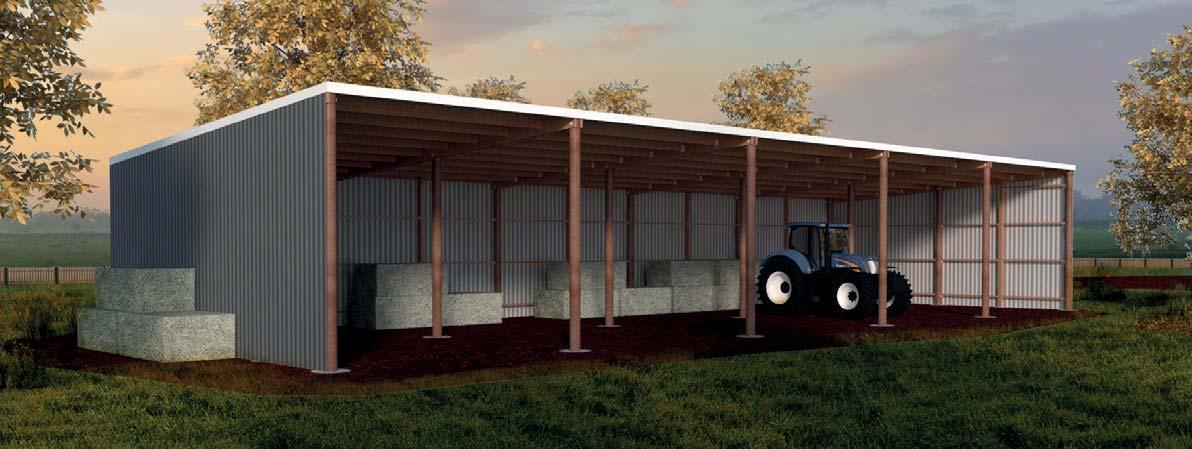
FARM BUILDINGS THAT SUIT YOUR NEEDS
• Four standard kitset designs (2 Bays, 3 Bays, 4 Bays & 5 Bays)
• Kitset with plans & material quantities ready to be ordered
• Custom options for your farm building available upon request
• Made from H3.2 Gauged Timber, H5 Treated SED Poles
• Timber from sustainable forests
• Suitable for high wind zone areas
• All flashings supplied
• Special price for Farmlands shareholders
• Zincalume Roof and cladding as standard (The roof and walls are 0.40mm Zincalume Custom Orb with the option to upgrade to 0.40mm Custom Orb Colorsteel Endura)
Balancing the major mineral needs of cows
Once the threat of metabolic issues around calving has passed, it can be easy to overlook the need for supplementing major mineral levels in the milking cow’s diet. Not balancing the mineral content of diets can be a false economy, which jeopardises both the health and productivity of stock.
The use of straights (commodity purchased feeds) and simple unmineralised blends of straights changes the mineral supply in the diet relative to a pasture-only diet and may make a significant difference to the total mineral supply to a herd and the farm as a whole. Palm kernel expeller (PKE) usage increased in 2017, at a time when compound feeds and blends also became more widely used – possibly as a way to dilute the contribution of PKE, as Fonterra suppliers prepared for the introduction of Fat Evaluation Index penalties this season. The growing shift from single straights to blends increases the opportunity to balance
out some of the potential deficiencies of a pasture based diet, which may be exacerbated by the mineral content of some straights and conserved forages.
The mineral requirements of lactating dairy cows have been defined per kg of the dry matter intake by the National Research Council (NRC). The mineral content of pasture is not ideal relative to the nutritional requirement of dairy cattle, who are committed to depositing minerals in their milk daily with the intention that it will help safeguard the health and vitality of their offspring. Straights tend to be a poor source of calcium relative to the needs of milking cows, as indicated in the table. Grains are an especially poor source of calcium, so grain-based compound feeds like NRM Dairy Extra are fortified with added calcium. Farmers feeding rolled barley or wheat, kibbled maize, distillers dark grains or PKE run the risk that their cows will have to mobilise more bone calcium than would be necessary on a pasture-only diet.
Mineral content of feeds relative to the needs of milking cows
CalciumMagnesiumPhosphorusSodium
NRC requirement for dairy cows (g/kgDM) 6-81.1-2.93.5-4.52-3.4
Approximate content per litre milk (g/litre)311.60.8
Barley (g/kgDM)0.91.240.6
Distillers dark grains (maize) (g/kgDM)1.63.38.31.5
Maize grain (g/kgDM)0.10.120.1
Maize silage (g/kgDM)1.81.221.4
NRM Dairy Extra (g/kg)1063.44
Palm kernel expeller (g/kgDM)22.34.90.1
Soy hull pellets (g/kgDM)4.92.21.40.1
Spring pasture (g/kgDM)2-151-42-60.3-6
Wheat (g/kgDM)0.51.34.80.2
Whilst cows are good at mobilising body calcium in the short-term, if supplementary feeding is continued throughout lactation it may get harder for higher producing, older cows to replenish their bone calcium levels.
Many pastures contain insufficient magnesium to meet the needs of milking cows and high potassium, high protein and low sodium levels can reduce the magnesium availability. For most herds, supplementary magnesium is required through to Christmas and beyond for higher yielding herds. Topdressing magnesium oxide can be particularly inefficient when it is needed the most. Delivering magnesium in a blend or compound feed with some readily degradable carbohydrate improves absorption and helps mask the bitterness of magnesium oxide. It is generally considered that high protein, vegetative pasture should have more than enough phosphorus for dairy cows. If milk urea levels fall through November it may be worth checking pasture protein and phosphorus levels, as sub-optimal results may indicate declining pasture quality. A straight like distillers dark grains may improve a diet by adding both protein and phosphorus. Adding salt to blends is a great way to supplement sodium levels and also stimulate palatability, as salt is a good appetite stimulant. For further information, contact your local Nutrition Specialist.
Article supplied by Dr Rob Derrick, Nutritionist.
Troubleshooting egg shell quality issues in your flock
A bright yellow yolk from a freshly laid egg is a key benefit of home produced eggs. However, packaging is important for the perception of quality and egg shell quality is one issue that sometimes crops up with laying flocks – especially in the spring as birds come back into lay. When a flock has an increased incidence of egg shell quality issues, the following checks may assist with troubleshooting.
Feed intake and quality
A good quality layer feed that contains balanced levels of calcium, phosphorus and vitamin D should always be available for birds. A laying chicken should eat approximately 130 grams of layer feed each day – if the amount of layer feed eaten drops, this can have an impact on egg shell quality. Housing until after they have eaten a hearty breakfast can sometimes stop them filling up on less well-balanced herbage. If birds have a lot of alternate feeds on offer as well as their layer feed (e.g. whole grains or table
scraps), this could also be decreasing their layer feed intake. Oyster grit can aid gizzard function and help to balance low calcium feeds birds may consume when foraging – but it must be offered separately to the layer feed, not sprinkled on top. Access to good quality water is also important, as reduced water intake results in reduced feed intake. High temperatures can reduce feed intake too, so over summer make sure chickens have access to cool water and shade.
Disease in the flock
Some diseases can affect egg shell formation and cause eggs to be laid with thin shells, misfired shells or with no shell at all. Two common diseases which can result in poor shell quality are infectious bronchitis and egg drop syndrome. Regular cleaning of coops with a disinfectant product such as Virkon®S, as well as preventing contact with other birds will help with minimising disease burden in your flock. Check with your local veterinarian for vaccination options.
Egg size/age of chickens
Hens will deposit the same amount of shell for a small egg as a large egg. This means that there is less shell to go around a larger egg and thin shells can result. Older birds will naturally lay larger eggs that have thinner shells, so aging chickens may be the culprit.
Rearing of chicks
How a chick has been reared can impact on how they will perform as a layer. If a chick is not supplied a diet with balanced levels of calcium, phosphorus and vitamin D, it can have
an impact on bone development and when they eventually get to point of lay they will be more predisposed to laying thin-shelled eggs. It is therefore important to use a wellbalanced chick starter feed followed by a balanced pullet grower feed.
Feeding over a moult period
Laying chickens will typically go through a moult with the approach of winter and decreasing day length. During this period, egg production will decrease and may even stop. Believe it or not, what you feed a chicken over the moulting period can impact on egg shell quality in the next laying season and if a diet is too high or too low in calcium it can be an issue. The recommended feed for chickens going through a moult is a pullet grower feed, as it contains the right amount of both calcium and phosphorus. As soon as the moult period is over and chickens begin to lay again, they can be switched back over to a laying feed.
Nesting box and bird management
The design of nest boxes as well as the quality and depth of nesting material plays an important role in preventing damage to egg shells. Nests require 5cm or more of bedding material to provide a soft landing for the eggs.
Stress
Any factor that causes stress to the birds can result in poor shell quality. Make sure wild animals are not able to disturb the birds and that a good routine is established and maintained. For further information, contact your local Nutrition Specialist.
Article supplied by Stacey Cosnett, Nutritionist.
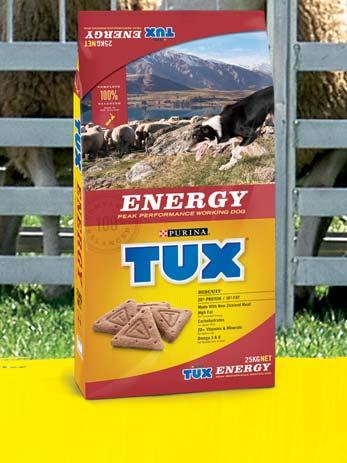
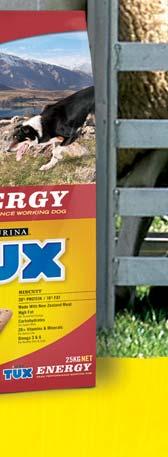
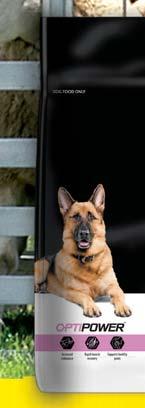
Support your local Sheep Dog Trial Club
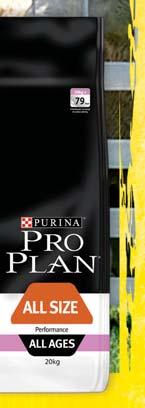
For every bag of TUX 25kg Energy or ProPlan Optipower 20kg purchased from Farmlands during October 2018 towards supporting NZ Sheep Dog Trial Clubs across New Zealand
All proceeds will be paid directly to the NZ Sheep Dog Trial Association who will distribute all funds across the regional Sheep Dog Trial Centres nationwide
The lasting value of a clean start
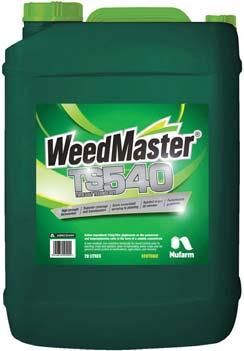
It is often said that there is little difference between the cost of growing a low yielding crop and a high yielding one. However, the high yielding crop will always win when it comes to profitability – because every kilogram of dry matter (DM) that it delivers will dilute your overall costs of production as measured in cents/kgDM. Fortunately, you can start optimising the yield of your spring-sown forage crops for a more profitable result straight away, before they are even planted. The key lies in choosing the correct inputs to ensure newly emerged crop seedlings get off to great start, with minimal competition for vital resources like sunlight, moisture and nutrients. So where should you begin? It is a good idea to start with a pre-plant herbicide to clean up cropping paddocks in spring, because this saves time and helps reduces weed competition from day one. Most weeds can easily outgrow crop seedlings and this can have a lasting and negative effect on final crop yield. A proven first step is WeedMaster TS540 glyphosate herbicide, plus Pulse Penetrant, applied to paddocks prior to sowing forage crops. This pre-plant spray out provides several benefits. It stops existing perennial weeds from outgrowing crop seedlings during the critical establishment phase and it also speeds the breakdown of the turf and roots of old, existing pasture. This in turn makes for easier tillage, saving time and fuel and helps
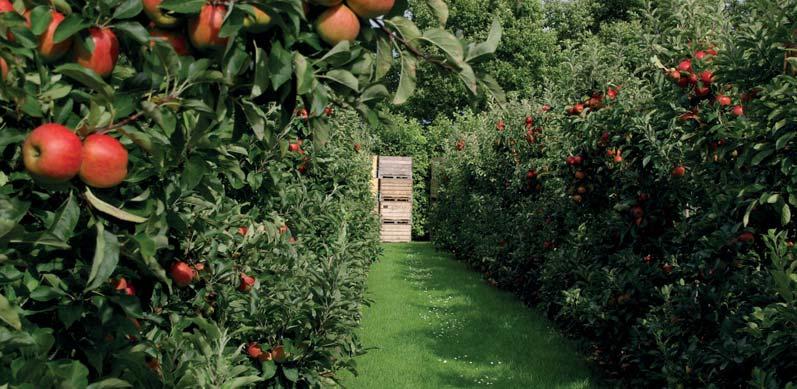
| Optimise the yield of your spring-sown forage crops before they are even planted.
provide a better seedbed. It also reduces the fallow time required before sowing your new crop. Different weeds require different rates of WeedMaster TS540, so it is a good idea to check which species are present (e.g. browntop, couch, perennial ryegrass etc.) before spraying.
Pulse Penetrant is always essential. This high quality organosilicone is designed to help the herbicide penetrate the outer waxy cuticle that protects plant tissue and it reduces the rainfast period after spraying to 20 minutes. Where required, Nail EC as a tank mix partner for this preplant herbicide application both broadens the spectrum of weed control and speeds up brownout. It contains the active ingredient carfentrazone-ethyl, which boosts control of several broadleaf weed species for which glyphosate
alone is not always adequate – particularly creeping mallow, seedling storksbill and nettles.
Nail EC is one of the few companion herbicides for glyphosate with a nil plantback for all crops, including fodder beet, chicory and plantain. Nail EC has rapid foliar uptake, so it is rainfast in 1 hour and it has livestock grazing withholding period. The tank mix of WeedMaster TS540, Nail EC and Pulse Penetrant will control a wide range of weeds –including annual poa, burr medic, chickweed, cleavers, creeping buttercup and mallow, fathen, fumitory, hawksbeard, nettles, prairie grass, oxtongue, speedwell, wireweed and shepherd’s purse. For further information, contact your Farmlands Technical Field Officer or the friendly team at your local Farmlands store.
Article supplied by Nufarm.
Cost effective, clover friendly dock control
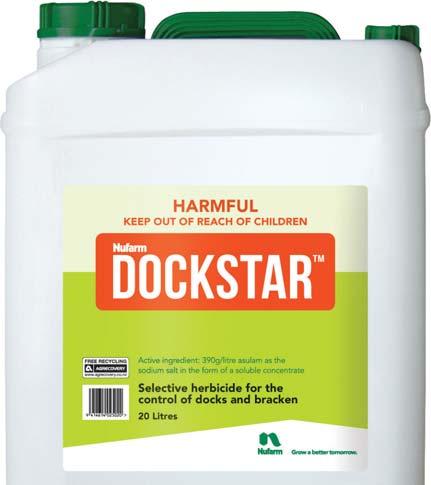
Dockstar is a selective systemic herbicide for the control of docks and bracken. Dockstar contains 390g/L asulam as a soluble concentrate.
Key features:
• Controls established docks
• Easy to use liquid formulation
• Selective to clover, ryegrass and tall fescue
• Apply in tank mixture with Baton® 800WSG to control docks & other broadleaf weeds.
New kale genetics deliver
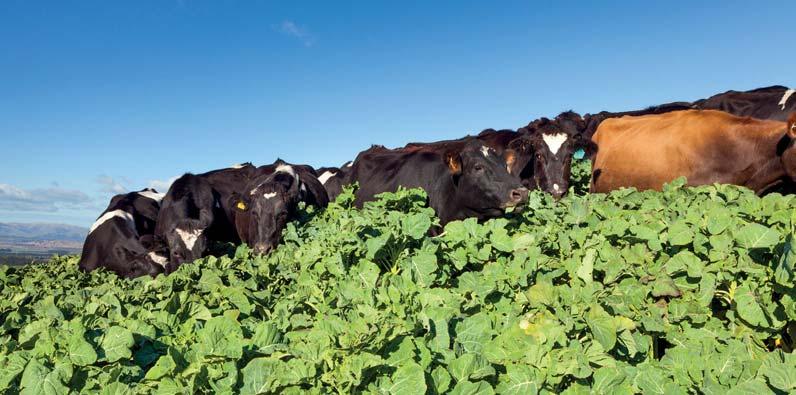
Farm Equity Manager, Ben Crickett runs a 480 cow self-contained dairy farm at Otautau with an intensive crop rotation consisting of fodder beet, swedes and then kale.
The role of kale as the second or third crop in a winter feed rotation is one of the species’ key strengths for farms with limited area and the need to multi-crop intensively. Although not perfect, the disease tolerance and resilience of kale is an important part of its functionality in these situations.
This past year, Ben’s Farmlands Technical Field Officer, Mike Magennity recommended he take an early look at the next generation of kale genetics from Agricom, with the New Zealand-bred SovGold kale being available in very limited amounts during the 2017 sowing season. SovGold combines excellent quality with a high yield potential. In any kale, the leaf component of the plant is where the quality is at its greatest. Ben has been impressed with the big visual leaves and he has been happy with how the crop has been utilised by his stock. As SovGold’s large leaves contribute to a large proportion of total yield, it has a high leaf-to-stem ratio. SovGold is able to hold quality, resulting in high intake and utilisation. SovGold will hold its quality right through winter and like Sovereign, is a later flowering kale.
Ben’s SovGold crop was sown on 22nd December 2017, at a rate of 4.5kg/ha. The crop was sown with 250kg/ha of DAP and had two urea applications of 100kg/ha each in mid-January and mid-March. Kale is traditionally sown
between late November and early December but in Ben’s environment he chooses to sow late to avoid insect pressure. The only reason to sow earlier than late November is if it is being sown in very dry conditions or if lambs are being used to graze the crop in February/March. Early sowing of kale may produce higher dry matter percentages and therefore possibly higher yields by late autumn, however this is associated with an aging plant with more lignin and lower quality stems. This can make utilisation harder and often leads to more stem left in the paddock, complicating future management.
As an alternative to sowing a forage rape crop, SovGold can be sown in January or early February. The benefits are that SovGold will hold its leaf for longer and maintain stem quality while
still having a potential yield of 8-10t DM/ha, therefore making it a great option for young cattle or sheep.
Ben has definitely noticed that the leaf size is bigger than that of the Sovereign kale, which he had previously been using. Of the four paddocks on-farm, SovGold has averaged a very pleasing 14.6t DM/ha. “This past year it was very dry at establishment and while the crop germinated, it did sit there for a while until it really took off,” Ben says. “We are really very happy with the yields and would definitely use it again.”
SovGold offers a real fit in a range of farming systems and is also suitable for a range of stock classes.
For further information, contact your Farmlands Technical Field Officer or the friendly team at your local Farmlands store.
Article supplied by Agricom.
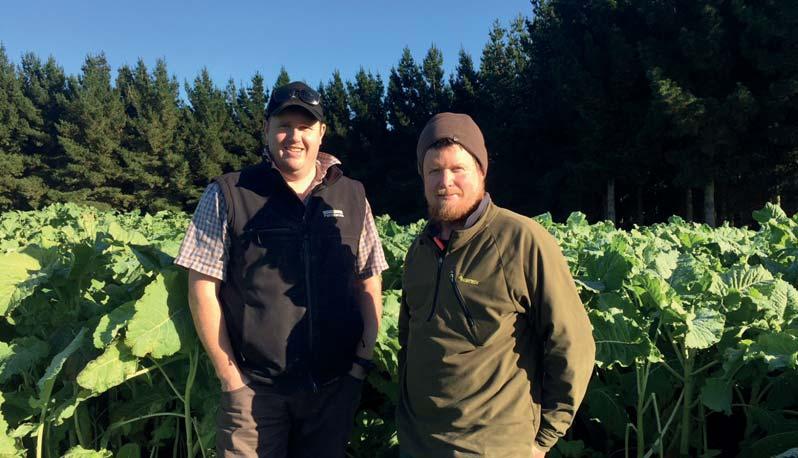
| Farm Equity Manager, Ben Crickett and his Farmlands Technical Field Officer, Mike Magennity standing in Ben’s SovGold crop.
Is herbicide resistance knocking at your door?
It’s not if it knocks, it’s when. Herbicide resistance has been a hot topic for years. However, we seem to have more problems with accidentally introduced weeds than issues with herbicide failure. The same is not true for places like Australia and North America – wellknown graveyards for herbicides. There are several reasons New Zealand has few true herbicide resistance occurrences – basically our farm systems are more varied and we have access to a wide range of chemistries. Still one cannot be complacent. The next resistance problem is only a spray away. Resistance is when a herbicide previously controlled a weed but now is less effective or totally useless. Herbicide performance relies on effective active ingredients, formulations and application technology (including adjuvants). Get one factor out of alignment and the job is second rate. There are many more enquiries where the circumstances around application are the problem rather than resistance. That’s not to say resistance is not occurring but getting the product correctly applied is fundamental. These “ducks” must all be aligned – coverage, droplet size and distribution, climate, sunshine intensity, rate of product, size of and age of weeds, choice of adjuvant(s), combinations of products can be both a positive and a negative and the list goes on. By not using esterified canola oil (as in Hasten) with Arietta® performance is notably reduced. Labels
carry adjuvant statements because they are required for optimum result.
In the late 1980s, continuous seasonon-season use of simazine plus glyphosate in Nelson orchards resulted in problems with tall willow herb. This was not an example of resistance but the selection for a weed not controlled by the herbicide mix. The solution was to alternate to diuron/ linuron based products. This type of event occurs on many farms as a result of overuse of effective solutions – the spectrum of weeds changes in response to the herbicides used, it is not that the weeds become resistant.
If you believe your situation could signal resistance, the first action is to discuss with your Farmlands Technical Field Officer and they can seek out further advice if necessary. The testing for resistance is not a quick or cheap process and is reserved for cases that are likely to be resistance rather than a routine test. Before it ever gets to that stage there are a wide range of activities onfarm that should be done, to prevent the resistance in the first place. Obviously not using herbicides is the strongest measure but that is a different conversation. Limit the use of herbicides to only when required and rotate the chemistry used. This means alternate modes of action, not just a change of trade name – 2,4-D is 2,4-D regardless of who sells it. A name change will not suffice – in the case of 2,4-D swap to Pulsar ® (bentazone based) or flumetsulam. Herbicide labels all carry a mode of action
heading, e.g. Group K3 Herbicide and the simplest resistance strategy is to use different groups in rotation. Just by rotating the crop there is often a forced rotation of herbicide choice. Another resistance strategy, particularly for glyphosate, is mixing with spiker, enhancer or partner herbicide. This is fine if the partner product enhances the glyphosate performance and is separately active on the problem weeds present. Using the latest new adjuvant is not the same as a partner herbicide like Sharpen®. The saflufenacil in Sharpen is herbicidal on certain broadleaf weeds in its own right. That’s how dandelion, tall willow herb and mallow are more effectively controlled than by glyphosate alone. In the end, whether it’s resistance or compromised performance, we all want the same result – good weed control – and that is best achieved by selecting the right product and reading and following the label. For further information, contact your Farmlands Technical Field Officer or the friendly team at your local Farmlands store.
Article supplied by Grant Hagerty – Technical Development Manager, BASF New Zealand.
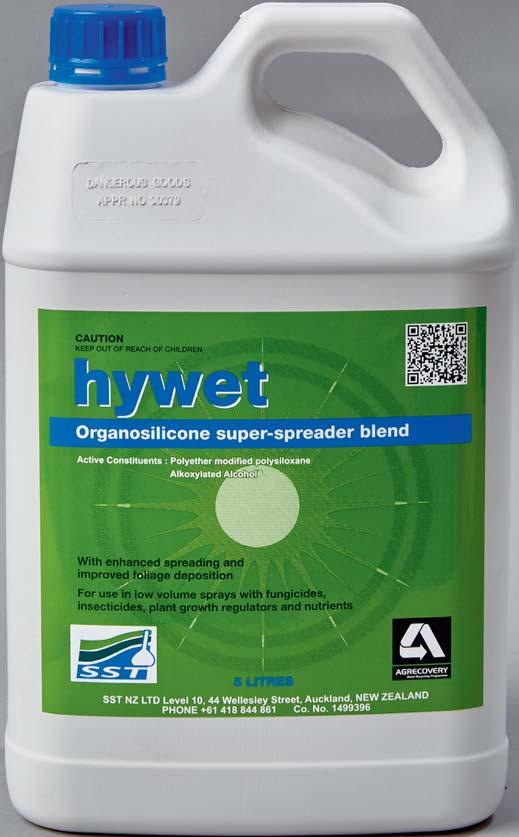
HYWET SuperSpreader
Formulated for New Zealand conditions.
Special adjuvant for low volume concentrate spray
Use when enhanced coverage is required and improved deposition
Use with fungicides, insecticides, plant growth regulators and nutrients
Free of amino alcohols & NPEs
Hywet has the advantage of being a homogeneous formulation that does not need vigorous mixing before use.
Pick the right brassica herbicide
Forage brassicas are particularly susceptible to weed competition during establishment. This is especially the case when sowing into scenarios with moderate to high weed seed loadings in the soil, such as previously cropped ground or run-out pastures. Cultivation can also bring dormant weed seeds to the soil surface enabling germination within the crop.
Most brassica crops will benefit from a herbicide while the crop emerges and establishes. Control of weeds during brassica establishment relies on choosing a suitable approach for your scenario (pre or postemergence programme) and then selecting herbicides that best fit the weed spectrum and crop rotation.
Post-emergence weed control programmes are all about spraying if and when weeds have emerged. Select a herbicide that best controls the key weeds present, with a manageable grazing withholding period and a plantback suitable for the following crop. There are several post-emergence herbicides to choose from, each with their own weed spectrum. All of these herbicides have plant-backs that need to be considered for broadleaf pasture species like clover or other crops such as beet or lucerne. Corteva Agrisciences has developed
Korvetto™, a unique post-emergence broadleaf herbicide, for scenarios where a wide weed spectrum and short plant-back are important. The plantback for clover following application of Korvetto is just 3 months, while fodder beet, lucerne and many other crops is 6 months. An application of Korvetto to spring or early summer sown forage brassica should not pose any restrictions for typical rotations in pastoral farm systems. This is a key advantage over many existing post-emergence herbicide options, which have longer plant-backs.
Korvetto controls many weeds commonly found in forage brassica. Arylex™ active and clopyralid combine to kill a broad spectrum of weeds including fathen, black nightshade, hairy nightshade, shepherds’ purse, fumitory, thistles, yarrow, dandelion, narrow leaf plantain and many more. Application timing is important as best results are achieved on weeds at the 2-4 leaf stage. Delaying application often leads to poor control of some harder-to-kill weeds, by which time they are already competing with the crop and will not be suppressed by canopy. Poor plant populations or crop establishment, e.g. due to unforeseen pest damage or adverse weather events, often leads to a poor canopy and exposes the crop to weed
pressure throughout the growing season. These scenarios require careful assessment, so talk to your Farmlands Technical Field Officer as soon as possible for advice.
Walk brassica crops regularly and thoroughly to identify issues early for timely treatment. When assessing brassica crop for weeds, consider the opportunity to control pests that may be present or are building up in the crop. SpartaTM provides control of springtail, leaf miner, white butterfly caterpillar and diamondback moth while aphids can be controlled using TransformTM For more information, contact your Farmlands Technical Field Officer or the friendly team at your local Farmlands store.
Article supplied by Corteva Agrisciences, Agriculture Division of DowDuPont.
| Ideal time for post-emergence herbicide application –weeds are 2-4 leaf.
Taking a look at lucerne
High in metabolisable energy and protein, lucerne can provide excellent feed from spring through to autumn.
Lucerne is a legume and (just like clover) can fix nitrogen from the air to power its growth. It is usually planted for grazing or conserved feed on dryland farms but can also do very well under irrigation. Lucerne’s deep taproot makes it very good at foraging for water and it recovers quickly from dry spells by rapidly mobilising nutrient reserves from its roots. A wellmanaged stand can last up to 8 years.
Spring start
Lucerne is dormant over winter, so is better established in spring than autumn. It prefers a soil pH of 6.0-6.2, an Olsen P of 15 and sulphate (S) of 6-10 ppm. Test to 150mm, where roots will be searching for nutrients. Testing to this depth will also reveal whether high aluminium levels will limit root and nodule growth. When it comes to micronutrients, herbage test to find out exactly what the stand needs – don’t rely on standard lucerne mixes. Lucerne needs molybdenum to help fix nitrogen (> 0.5 ppm is the target) and may need boron if grown on pumice soils.
Spring is also a good time to assess the impact of winter on existing lucerne stands. Check waterlogged spots,
as lucerne doesn’t like the wet and these areas may not recover. Re-sow them after spring weed control to stop weeds flourishing in bare patches.
Replacing K
If harvesting lucerne, you need to apply potassium after every second cut to account for the amount removed. If grazing, replacing potassium is less of a concern unless site levels are low.
Grazing guide
Lucerne stands need to be kept at 15-20cm high to stop stems from getting too stalky and to keep
Crop useReplacement K
Grazed in-situ0 to 30kg K/ha
Harvested for hay15kg K/ha per tonne of DM harvested
Harvested for baleage20kg K/ha per tonne of DM harvested
weeds out. On the other hand, over-grazing will shorten the life of the stand, so managing grazing properly is very important.
Lincoln University Professor Derrick Moot is an expert in this area and offers valuable advice on grazing lucerne –including tips on stocking rates, rotation timings and set-stocking approaches – through the Lincoln dryland pastures blog (blogs.lincoln.ac.nz/dryland).
Note that lucerne doesn’t take up sodium, so provide a salt lick for grazing stock. Animals may also need a bit of fibre (like hay), especially if they have come off hard hill country. For more information, contact your Farmlands Technical Field Officer or the friendly team at your local Farmlands store.
Article supplied by Ballance Agri-Nutrients.
| A well-managed lucerne stand can last up to 8 years.
Now is the critical time to protect cereal yields
October is here and autumn/winter planted wheat and barley is at its most vulnerable to disease attack.
Why is now so important for disease control?
Most wheat crops will reach GS39 (flag leaf emergence) in late October, which means all leaves will have emerged. With the top two leaves of a wheat crop delivering around 70 percent of yield, it is so important to protect them against disease attack. The threat is also increasing. Throughout New Zealand, the Bayer field team has seen an increasing incidence of aggressive and very yield damaging attacks by speckled leaf blotch, leaf rust and stripe rust occurring in late October and November.
Turning to barley, all will have the flag leaf fully emerged and for the earliest
crops the awns may be visible. While the lower leaves and stem of a barley crop deliver a high percentage of the final yield, in recent years this has started to change. An increased area sown with barley cultivars with larger flag leaves combined with more frequent and more aggressive attacks by Ramularia leaf spot, mean that late season fungicides for barley are now normally necessary.
Protecting wheat
The key diseases to prevent are speckled leaf blotch and leaf rust. Both diseases can devastate yield and over the past two seasons Bayer has recorded yield reductions of 50 percent from late disease attacks –a loss from speckled leaf blotch of 6.8 t/ha* and a loss from leaf rust of 4.1 t/ha**. Yield losses of this kind are always devastating but
especially this year with wheat attracting very high prices.
The simplest way to protect your crops is to apply Aviator Xpro at GS39 and to follow this 21-25 days later with either a second application of Aviator Xpro or with an application of Prosaro, plus a strobilurin fungicide.
Protecting barley
Here the target is Ramularia leaf spot. This disease is the unseen killer, growing within the barley plant until a trigger (plant stress, sunlight etc.) causes Ramularia leaf spot to rapidly develop necrotic lesions, which kill the leaf.
Apply Aviator Xpro at GS39, a time when there are likely to be very few Ramularia leaf spot lesions visible. Then, if your crop is irrigated or has good financial potential (at the price available for barley, this means most crops this year), apply a second application of Aviator Xpro around 14 days later.
Available fungicides, including Aviator Xpro, do not kill Ramularia leaf spot but they manage the impact of the disease. With timely application, Aviator Xpro significantly slows down disease development, allowing the crop to continue to assimilate yield.
For further information, contact your Farmlands Technical Field Officer or the friendly team at your local Farmlands store.
* Bayer trial 2016/2017, Timaru. Disease speckled leaf blotch untreated yield 5.5t/ha, programme using two applications of Aviator Xpro 12.3t/ha.
** Bayer trial 2017/2018, Timaru. Disease leaf rust untreated yield 10.1t/ha, programme using two applications Aviator Xpro 14.2t/ha.
Article supplied by Bayer Crop Science.
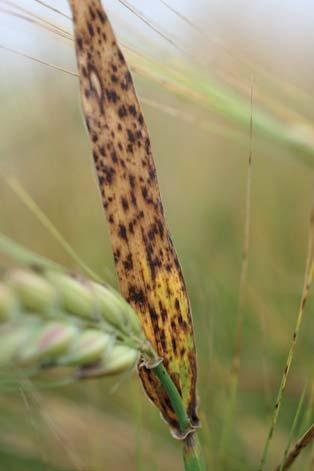
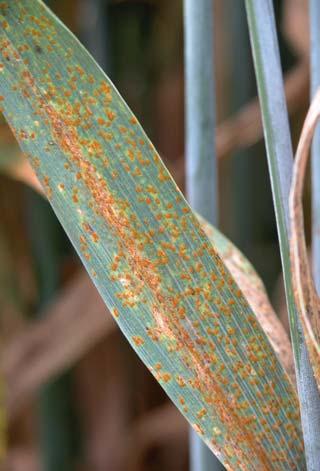
| Ramularia leaf spot. | Leaf rust.
A step change in lamb finishing potential
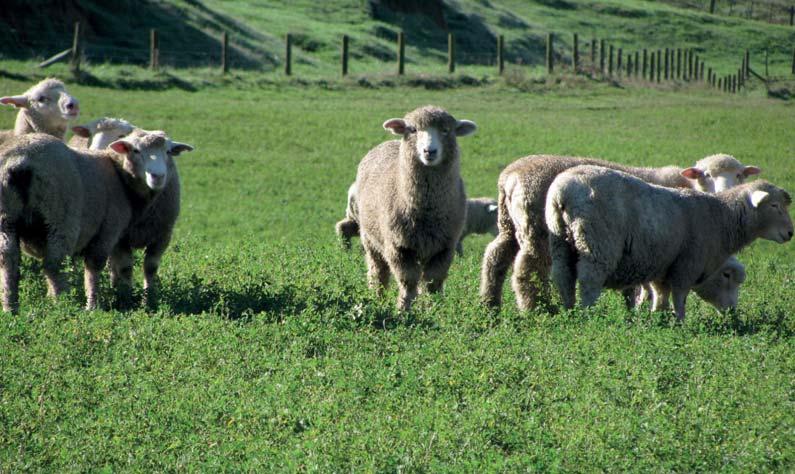
The use of red clover finishing systems has recently been gaining traction with New Zealand farmers. The increased persistency and rapid liveweight gains achievable with new cultivars has helped farming brothers Daniel and Matt Nicholson achieve far greater farm gate returns. Increasing lamb liveweight gains per head has allowed their operation to grow and finish more stock per hectare than ever before. Currently Daniel and Matt operate two farming properties in south Wairarapa. The friendly team at Farmlands Masterton recommended Relish red clover would have a fit on both. Tokaroa is a 607 hectare farm where most of the Relish is utilised and currently holds 6,500 stock units. Here, the
main focus is on the finishing of trade lambs, old ewes, replacement ewe lambs and beef cattle. Their second farm, Bush Gully Station consists of 1,417 hectares and 11,500 stock units. Bush Gully Station’s main focus is on its breeding ewe flock. Ewe lambs are transported and grown out on Relish red clover at Tokaroa where they maximise the species’ summer growth potential. From here the ewe lambs are kept on red clover until they reach an ideal weight for mating. “Relish gives us the horsepower to get these ewes producing well and back up to our target weight on time,” Daniel says. These ewe lambs, now hoggets, lamb in October onto Relish stands when it is growing near its maximum. The lambs born onto Relish stands are brought up to weight as quickly as possible before being sold. “Relish is the only perennial feed that we can guarantee liveweight gains consistently of 300g/head/day,” Daniel says. Red clover is functional throughout many regions of New Zealand including the harsh environment in south Wairarapa. Red clover has an extensive root system that is able to permeate through the topsoil in addition to its taproot. This taproot allows the plant to extract valuable moisture and nutrients from further down the soil profile during the dry harsh summer months, while also having the ability to fix generous amounts of atmospheric nitrogen back in to the soil. Daniel and Matt utilise mixes of Relish with AgriTonic plantain and Tribute white clover for early lambing ewes on Tokaroa, when it is too early
to utilise the true potential of Relish. During this early spring period, they have noticed this mix to be beneficial to the ewes, due to AgriTonic plantain elevating their calcium levels. In return, “this enables the ewes to produce more milk for lambs early, before the Relish really gets going,” Daniel says. Historically the persistence of red clover has been a deterrent to farmers, however the new genetics of Relish have solved this issue for many. Relish offers a significant advancement in red clover persistence with longevity of the crop being a key benefit. Pleasingly this benefit comes with “industry low” levels of formononetin (oestrogen). “The persistency of Relish is great, we are achieving excellent stands with 4 years of maximum production,” Daniel says. Best practice management to maximise production and persistency of red clover is to rotationally graze with pre-grazing heights of 20-25cm and leave a residual of 4-5cm post grazing. The spring growth of Relish is very rapid and being well prepared to utilise this growth is key. This growth will require an increased stocking rate to maintain the quality. Coming into the autumn months as growth slows it is important to graze any residual growth prior to winter months to minimise disease presence through the cooler and wetter seasons. For further information, contact your Farmlands Technical Field Officer or the friendly team at your local Farmlands store.
Article supplied by Agricom.
| Relish red clover has helped Daniel Nicholson achieve far greater farm gate returns.
SHEEP TAG PROMOTION
Sendto:
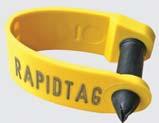
Allflex RapID Sheep Tag
$2.20
INCL. GST | SAVE $0.58
• High-performance HDX technology.
• • Automatic and manual applicators.
• 10 clear colours.
• 157524
Purchase either your RapIDT T puts you in the draw to WIN back your
Rapid EID Tag
HDX High performance EID technology, the benchmark for drafting and automation.
• 20 tags per strip dramatically reduces application time.
• New stem technology, reduces application pressure, superior healing and retention.
Flock Tag
Bottom (maximum 2 rows of 7 characters)
Applies to either RapIDTags Tags h l
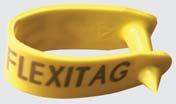
Laza-Printed FlexiTags 50c
INCL. GST | SAVE $0.12
• • • Automatic and manual applicators.
• 10 clear colours. 105219
Qty required
Male end (maximum 4 digits)
Qty required
Female end (maximum 2 rows of 8 characters
Number range (ie 1-100 etc.)
Tag colour (please circle) Yellow White Orange Blue Green Red Pink Black PurpleBrown Colour (please circle)
Top (maximum 4 digits)
Number range (ie 1-100 etc.)
Flexitag
Male end (maximum 4 digits)
Qty required
Female end (maximum 2 rows of 8 characters
Number range (ie 1-100 etc.)
Flexitag colour (please circle) Yellow White Orange Blue Green Red Pink Dark blue Brown Black Purple
Brass Tag
Name (maximum 14 characters)
Start number (alpha
Number range (ie 1-100 etc.)
Ensure your calves hit their target weights
Healthy, well grown calves are the key to any successful calf rearing operation.
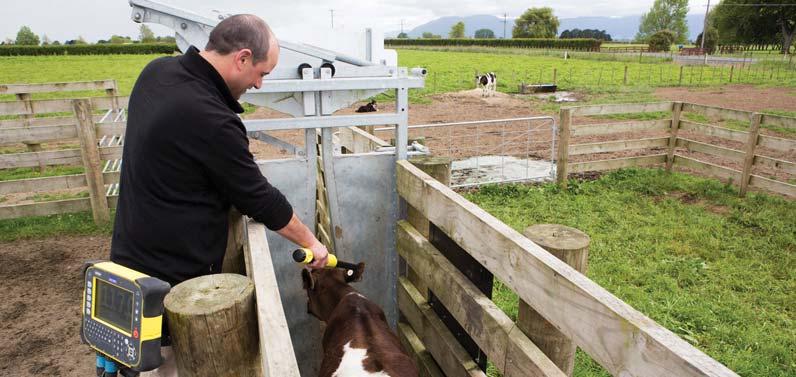
Whether you’re a dairy or drystock farm, one of the simplest and most efficient ways to ensure calves are hitting target weights is regular weighing and monitoring throughout the season. One of the simplest reasons you should be weighing your livestock is to make sure your animals are consistently gaining weight so you continue to profit.
Traditionally farmers have relied on their years of experience to know when animals are gaining weight and are ready to be sold or slaughtered. Weighing backs up that experience with facts.
It’s all about input verses output –the input cost of feed, staff wages, time, health treatments, pasture and equipment maintenance per day versus the weight your animals are putting on per day. In order to profit, your input costs need to be lower than your output gains.
Regularly weighing your livestock can help you to:
• Ensure animals are continually gaining weight.
• Review the speed that animals are gaining weight each day.
• Identify good performers who might require less feed.
• Identify poor performers that may require medical treatment.
This will help you to determine the most profitable point to sell or slaughter your livestock. Regular weighing will help you recognise when your input costs
are in danger of becoming greater than your output gains, so you can continue to run a successful, profitable business. Tru-Test has the hardware and software solutions that make life easy for you when it comes to weighing and EID, adding value to your bottom line and ensuring you meet your compliance obligation too.
Tracking growth using a Tru-Test weighing platform, weigh scales and EID stick reader used in conjunction with a software package like MiHub Livestock, Minda or FarmIQ helps farmers improve productivity and animal management within their farming operation. Regular weighing allows you to manage animals individually. Identify top performers, or those that may need extra attention to bring them up to weight and make the decision to sell animals at the optimum time, to achieve the best price. Using a Tru-Test solution also
gives total herd traceability and MiHub for Livestock Management helps record, track weight growth and manage herd genetics.
MiHub is a cloud-based online software system that provides a tool to manage the data you collect. Free when you purchase a Tru-Test 5000 series indicator, MiHub turns weigh session data into an easy to understand graphical snapshot of where your animals are at and helps identify trends. MiHub Livestock is the simple way to monitor animal weight gains and track performance to target weights. Gather accurate information using your Tru-Test EID reader and weigh scales, analyse it using MiHub Livestock, keep compliant and send to NAIT, as well as use it to make timely decisions on-farm. For further information, contact your Farmlands Technical Field Officer or the friendly team at your local Farmlands store.
Article supplied by Tru-Test.
| Regular weighing allows you to manage animals individually.
It provides farmers with unmatched heat detection accuracy and timely information on the reproductive, health, nutritional and wellbeing status of both individual cows and herds.
How can SenseTime™ save you money and time?
• Reduced alternative heat detection devices (tail paint, heat patches)
• Labour savings from reduction in manual inspection
• Reduced bull leasing costs (none at all if you move to full AI)
• Reduced culling errors
• Monitoring recovery and drug efficiency
• Reduced antibiotic use (through early detection)
• Reduced preventable deaths
• Reduced distress through early intervention
• Reduced calving stress
All in aide of having more cows in milk, for more days = $
For more information, contact your Farmlands Technical Field Officer or visit your local store today.
SenseTime™ is the award-winning cow monitoring system by Allflex.
Mating Season Checklist
Higher 6 week in-calf rates
Monitor anoestrus cows
Reduced stress
Breakfast with the kids
Achieving goals using monitoring technology
A fourth-generation farmer at Waikuku, North Canterbury, Alastair Robinson is making use of high performance technology to achieve goals on his farm.
The property has been in the family for almost 100 years and is home to a Royal Oak Holstein Friesian stud, milking 900 cows at the peak and 750 over winter.
Alastair has been on the farm full time since 1993 and has grown the operation by taking opportunities to purchase neighbouring properties and lease blocks as they came to the market. He says his strategy was purely to be in a position to take any opportunities as they arose – and he has also had a little bit of luck.
Alastair has three main goals for the farm over the next 2-3 years. Firstly, he is aiming to have a lower percentage of empties and carryovers. He is also aiming to have more accurate mating records for drying cows off at suitable times to allow for recovery. Lastly, he is aiming to decrease the number of wasted straws each year. He has chosen a cow monitoring system, SenseTime™ by Allflex, to assist him in reaching his management goals. The SenseTime system delivers actionable information on the reproductive, health, nutritional and wellbeing status of individual cows and groups. Primarily purchased for mating, Alastair planned to fit 200 SenseTime collars a month and had a total of 425 collars on when the Allflex team caught up with him in July. He started
with the empty cows he is mating for autumn and the early autumn calvers that he is starting to mate now.
Alastair says the SenseTime system is already having an impact on heat detection and insemination accuracy.
“It has been really helpful and accurate so far, the collars have picked up cows that staff have missed, including one silent heat.”
The SenseTime system also fits with his current automations and in-shed feeding facilities in his 70-bail rotary shed.
“As our mating is spread throughout the year, the focus does shift from staff to a certain degree,” he says.
“We also were really keen to see if we could pick up sick cows sooner and have a better chance of successfully treating them. We were getting about 1-2 cows per milking that the staff had missed for mating but this morning we had four picked up, which was great.”
The farm uses pedigree straws at approximately $40 per straw. If cows
are inseminated on a false heat, the cost of wasted straws and heat patches can add up very quickly.
“We won’t see the full benefit until we have them on longer but I can easily see it saving us $20-$30 per cow per year,” Alastair says.
They currently use the system twice a day, after each milking, by monitoring the heat graphs for specific cows. “We monitor the cow’s optimum mating window and if she is a little early, we hold off inseminating until the next milking,” Alastair says. “It is great, I feel confident we are inseminating at the right time and are not missing any.”
Alastair says he is really looking forward to getting the collars on his springers and fresh cows. “You can’t always be down in the paddock, so it will be good to know when they’ve started calving.”
For further information, contact your Farmlands Technical Field Officer or the friendly team at your local Farmlands store.
Article supplied by Allflex.
| Alastair says the SenseTime system is already having an impact on heat detection and insemination accuracy.
Bee-Scent 9.46L. Bio Bit Boost It Boost It Plus Bud-Wiser Trace-it Boron 200L. Campbells Trace-it Trace-it Campbells 20L. Feed It Finish It Kiwi Combo MegaStar MobStar 20L. Nordox 75WG
GROCHEM PRODUCTS: Ambitious 1L, 5L. BAPSol 1L, 5L. Bee-Scent 9.46L. Bio Bit 1kg. Boost It 10kg. Boost It Plus 10kg, 25kg. Bud-Wiser 10kg. Campbells Trace-it Boron 5L, 20L, 200L. Campbells Trace-it Magnesium 5L, 20L, 200L, 1,000L. Campbells Trace-it Manganese 5L, 20L, 200L. Campbells Trace-it Manganese N 5L, 20L. Campbells Trace-it Molybdenum 5L. Campbells Trace-it Zinc C 5L, 20L. Campbells Trace-it Zinc S 5L, 20L. Comic 860g. Feed It 10kg. Finish It 10kg, 25kg. Gib 47 1L, 5L. Growth 1L, 5L, 20L. Gro-Mag Super 20kg. Kiwi Combo 10kg. MegaStar 900g. MobStar 20L. Nordox 75WG 5kg, 10kg. ParaMite 5L. Spray Aid 5L, 20L. Sunny 1L, 5L. Super Boron 10kg. Umbrella 10L. Velocity 50SC 240ml, 1L.
Spring is a high-risk time for fungal infections in apple trees, because it brings an ideal mix of conditions – warmer, often wet weather, which promotes rapid growth of spores and bacteria and soft, fresh growth of blossoms and leaves from dormant branches.
Protectant fungicides at this stage of the season are essential to prevent primary infection of diseases such as black spot taking hold in the new season crop. By successfully averting primary infection, growers can reduce the need for fungicides later in the season and lessen the potential for secondary infections to establish.
Black spot (Venturia inaequalis) is a serious disease for New Zealand apple growers and if it is not adequately controlled it can result in large losses of marketable fruit. Typical symptoms are circular black spots on leaves and fruits. On fruits, the spots can coalesce resulting in cracks and rots. Black spot infection and spread is favoured by wet and mild weather.
Other apple diseases, which can become established on fresh new growth at this time of the season include Glomerella, ripe spot and sooty blotch. Nufarm Research and Development Manager, Alan Cliffe says repeat applications of protectant fungicides such as Manzate Evolution are used from green tip onwards to prevent fungal disease spores from germinating on fresh, newly emerged plant tissue.
| Black spot is a serious disease for New Zealand apple growers.
Such spores are always present in the background environment to a greater or lesser degree, depending on orchard management, previous disease outbreaks, crop variety, hygiene and prevailing weather conditions.
Manzate Evolution is a contact fungicide, which means it does not move into the surface of the plant.
“It needs to be applied prior to disease infection and subsequent applications should be carefully timed to ensure its ongoing protective action keeps up with the rapid pace of early season plant growth,” Alan says.
Recommended re-spray intervals are 7-14 days, using higher rates and shorter intervals early in the season or under severe disease conditions. Manzate Evolution is a water dispersible granule formulation containing 750g/kg mancozeb, a long-established and very broad-spectrum protectant fungicide. It belongs to the dithocarbamate
grouping of fungicides and has a multi-site mode of action, which stops disease organisms from adapting and mutating.
This means that even after decades of use, fungal strains have not developed resistance to Manzate Evolution.
The Fungicide Resistance Action Committee (FRAC) places mancozeb in the M mode of action group (M3) and it can be mixed with at-risk fungicide groups such as SDHIs to prolong their efficacy and delay the development of resistance.
Formulation benefits of Manzate Evolution include quick wetting and suspension of the fine granules, uniform deposition on the plant surface and low dust and low foaming characteristics. For further information, contact your Farmlands Technical Advisor or the friendly team at your local Farmlands store.
Article supplied by Nufarm.
Robust, effective botrytis control for grapes
Fungicides are only one part of successfully controlling botrytis (Botrytis cinerea) in New Zealand wine grapes. However, like all the other elements of best practice disease management, they play a critical role in determining a successful outcome.
Botrytis or bunch rot is ubiquitous in New Zealand vineyards, as it is in every vineyard around the world. Infections pose a major challenge for growers and winemakers, as the disease affects grape yield, quality, colour and flavour. The tiny organisms that cause the disease are present in the environment year-round, so effective control entails an integrated approach that includes vine vigour control, canopy management and good vineyard hygiene to reduce the amount of botrytis inoculum building up in the environment. One of the highest risk times for infection is when grapes are at flowering to bunch closure, because airborne fungal spores infect dead or dying flower parts, such as flower caps and aborted berries. It is at this stage that timely fungicide application protects the crop. This
season, New Zealand growers have another fungicide available for botrytis control, which acts against the disease at key stages of its lifecycle using a new active ingredient.
Prolectus, the new botryticide from Nufarm New Zealand, has several important benefits in this regard.
Prolectus is a suspension concentrate (SC) fungicide based on fenpyrazamine, a new active ingredient offering unique chemistry and properties, which is able to block botrytis in various stages of its biological cycle. Key attributes include excellent translaminar properties, which deliver powerful curative and protective activity, as well as offering excellent rainfastness. Fenpyrazamine is a Group 17 active, which penetrates quickly into the crop to provide an immediate effect on botrytis infections. Importantly, it is also safe on a number of key beneficial insects used for biological pest control, including predatory mites and parasitic wasps. Nufarm Development Specialist, Cynthia Christie says because fenpyrazamine acts at multiple points of the botrytis lifecycle, Prolectus is able to provide robust and effective disease control.
“It prevents germ tube elongation at
the very start of the disease lifecycle, impacts infectious mycelial growth, prevents lesion development and finally, inhibits spore formulation,” she says.
Field tested on several different grape varieties in Auckland, Hawke’s Bay and Marlborough, Prolectus provided the same level of botrytis control as the reference fungicide used for the trials. It is registered for botrytis control and has MRL’s set in many major wine growing regions around the world. Up to two applications applied no later than 80 percent capfall will result in nil detectable residues in wine.
Applications made pre-bunch closure, another key spray timing for botrytis, can result in detectable residues. Users should consult the New Zealand Winegrowers Vineyard Spray Schedule or contract winery for the latest MRL information to plan a use pattern that meets their export destination MRL requirements. The local market withholding period is 7 weeks after the last application. For further information, contact your Farmlands Technical Advisor or the friendly team at your local Farmlands store.
Article supplied by Nufarm.
7 years on
It is a bitterly cold and wet, late August day at Matahiwi Road near Masterton. Farmer, Tom Holmes and Iplex Pipelines Rural Project Manager, Pete Carswell, are sitting in a Can-Am side-by-side, in the middle of an 8 hectare paddock discussing land drainage. Pete has returned to Tom’s property to see the changes that subsoil drainage has made to this block.
This long-term trial, on understanding the benefits of land drainage on a dry stock farm, has featured in two previous Farmlander articles (circa 2012 and 2013). Arranged through Farmlands Masterton, utilising land drainage consultant Warren Woodgyer, the expertise of Manawatu based Blackley Construction to install the system and Iplex’s high-flow smooth-bore Nexus land drainage pipe, the changes to this block have been transformational.
7 years ago, at this time of the year, this paddock was virtually impossible to walk on, let alone drive a vehicle over. The drainage system design, utilising 110mm Nexus lateral lines, with 160mm Nexus laid under a shallow depression running the length of the paddock to form a grass runway, stone dykes to mitigate erosion and mole-drains has resulted in:
• Vehicle access for virtually 12 months of year.
• Improved pasture performance.
• Lamb safely on the block without fear of undue lamb mortality.
• Graze cattle on the block for 9-10 months of the year.
“There has been a major change in the soil structure following the initial drainage,” Tom says. The paddock was originally a heavy clay base and after years of saturation, the soil profile was very compacted with virtually no pores and had a thatched root mass close to the surface.
A programme of aeration to a height above the mole drainage lines has seen a transformation in the soil structure. A look at the soil profile now shows a healthy layer of top soil that is providing a strong seed bed for crops and grasses.
“I’m convinced that a good drainage system, combined with aeration, can turn around soil structures to become highly productive,” Tom says. “Why spend good money on the flash fertilisers and high-powered cultivars when the soil structure is broken?”
Tom also notes that as a dry stock farmer, land drainage has always been of interest but the relatively high cost has been a detractor. However, beef and sheep meat returns have certainly improved and are now much more consistent, so the “return on investment” through the greater productivity off well drained land is more acceptable.
“As with any trial, we had an undrained ‘control block’ on Tom’s farm adjacent to the drained paddock,” Pete says. “Nothing reinforced to me more the differences between these two blocks 7 years later, than my side-byside getting stuck in the undrained paddock when visiting Tom that day!”
For further information, contact your Farmlands Technical Field Officer or the friendly team at your local Farmlands store.
Article supplied by Iplex Pipelines.
| Tom Holmes is impressed with the improved pasture performance of his block.
Cost effective infrastructure essential
For many cost-conscious farmers, saving money on investments such as farm infrastructure is extremely important. However, ensuring that the infrastructure can last the test of time is just as essential.
Lighter and more cost effective than timber gates, steel gates are now the most common type of gate used on New Zealand farms. They are galvanised to reduce corrosion and being lighter they are easier to get out to the fence line and for one person to swing. Due to increased demand across New Zealand for simple, yet functional farm gates suitable for the costconscious farmer, EuroSteel went to market to secure this supply.
Having started off with two employees, EuroSteel (a division of Euro Corporation) has now grown to more than 400 staff spanning eight locations across New Zealand. Since 1994 the founders of Euro Corporation, the McKenzie family, have been servicing the wider rural and broader construction industry.
EuroSteel Rural Manager, Stuart Tyler says that from the very beginning, Euro Corporation has been dedicated to helping customers succeed.
“Without our customers and clients, we wouldn’t have a business,” he says. “Being a New Zealand owned and operated market leader, we are always aiming high to deliver to the needs of our customers whether it be in product, service, quality or price.”
Obtaining the right gate, which was priced fairly and could withstand the harsh New Zealand environment, was no easy task. EuroSteel got to work with a local design engineer to create chain link and barred gate specifications and concept samples.
“It was important that we designed a gate that had the correct protective coatings and steel frame diameters, with adequate holes for venting and draining,” Stuart says. “Strong welding points were also critical, to ensure durability in high stock pressure areas. The final designs included key features such as, heavy galvanised coating, double lacing laps on all corners, three vertical stays and clean finishes.”
The concept gates were then put to the test on a number of New Zealand farms. Once the design and testing phase was complete, EuroSteel engaged with several offshore production mills, eventually narrowing this list down to two key manufacturers that shared the same competencies, disciplines and values.
“It was crucial that these manufacturers had the capability to construct our product fit for the market,” Stuart says. “This manufacturing process is supported by a robust, independent and accredited quality assurance programme. This programme ensures all products meet the strict standards in place, prior to being containerised and shipped to New Zealand.”
This comprehensive range is now made up of 15 different gates to suit various farming types and conditions in New Zealand.
For further information, contact your Farmlands Technical Field Officer or the friendly team at your local Farmlands store.
Article supplied by EuroSteel.
Installing your water tank
Now that winter is over, things are starting to dry out and spring has sprung, you may be looking to get a new water tank to ensure an uninterrupted water supply for the summer ahead.
Here are some handy hints and tips to consider when installing your new water tank:
• Ensure that the tank site is flat and level and also free from any foreign matter that may damage the tank’s base.
• Ensure that the tank site is well compacted if fill is used to prepare or level the site.
• Ensure that the tank site is at least 300mm larger in diameter than the tank.
• If a sand base is used, a retaining cover should be used to prevent sand from washing away after installation.
• Remember that a full tank will weigh up to 30 tonnes – so it is important that the surface it sits on is level, stable and firm.
• If the tank is not secured properly, wind or stormy weather can blow it away or move the tank out of its level place. Add 200mm of water to the bottom of the tank to weigh it down.
Planning how you will install and add the plumbing accessories to the tank is also important. The Promax team highly recommend that you run your project past a drainlayer or plumber to ensure your plans will work. To take advantage of the maximum catchment of water, downpipes can be fed from both gutters into the one tank. The overflow capacity must match the downpipe capacity.
Important considerations when plumbing the tank are:
1. Ensure a flexible hose is installed after the gate or ball valve with a minimum 300mm length.
2. The tank outlet must not be subjected to extra force, e.g. over-tightening of fittings.
3. Overflow must be piped clear of base to avoid erosion.
4. The number of inlet pipes, their sizes and capacities must equal the number of overflow pipes, their sizes and capacities.
5. Do not allow the tank site to deteriorate after installation due to any form of erosion or site destruction caused by vermin such as rabbits.
Burying your tank is a great way to avoid height restriction issues. A buried tank with shrubs planted around it is also more attractive in your backyard. Promax Corrugated Enduro tanks can be buried up to 1 metre in the ground and still retain their 20 year warranty. If you are planning to bury a Promax corrugated tank, you should prepare the base with 100mm minimum of compacted sand, just as you would if installing the tank above ground. For further information, contact your Farmlands Technical Field Officer or the friendly team at your local Farmlands store.
Article supplied by Promax.
Solutions that suit New Zealand conditions
Reliable, fit for purpose solutions are key aspects to making farm life easier and more profitable. Dependable solutions are especially important when it comes to farm infrastructure such as gates, as to most farmers this infrastructure can be a significant investment.
The research, design and manufacture of gates and gate hardware to standards New Zealanders can be proud of is especially important to Gallagher – and this is reflected in the recent introduction of a 5 year warranty for their products.
For Gallagher’s Gate and Gate Hardware Manager, Ian Richards, refining and maintaining processes to continually set benchmarks for excellence has been top of mind since his grandfather – John Richards Senior – started what was called Franklin Machinery Exchange in the South Auckland suburb of Pukekohe in 1941.
“Recognising a market need for quality metal products, by 1960 the business further diversified into developing frame gates and gate hardware,” Ian says. Having taken on that commitment to
developing quality metal products, Ian explains that was met with the need for investment into people and machinery to deliver on those customer expectations.
“When we’re designing gates and gate hardware that are produced in Pukekohe, we think a lot about New Zealand’s farming landscape. That meant we’ve always had a strong desire to have control over the complete manufacturing process – that led to the installation of a zinc electro-plating plant and later a hot dip galvanising plant, so that our output could consistently deliver what was needed.”
Continuous improvement, fresh thinking and innovative undercurrent saw Gallagher purchase the company in 1994.
“The shift to Gallagher meant we could leverage the skills of a network of manufacturing and rural specialists. Being part of an international brand comes with some truly useful benefits for customers too – and that’s who we’re dedicated to,” Ian says.
“Ever since the start, we considered – and continue to consider – design
to be critical in the success of our products and a number of our designs have come directly through working with farmers. All of our equipment is made and maintained by our in-house engineers who uphold a high level of control on quality, so that we’re producing gates and gate hardware that is not only made to last but represents value for money due to their design and the quality of materials used in manufacture, which is why we are confident to introduce the 5 year warranty.”
Ian says they have come a long way with their manufacturing processes.
“Gate frames need to stand the test of time, so the hollow structures are punched for venting and are submerged in a bath of molten zinc at a temperature of 460 degrees Celsius.”
This method of hot dip galvanising is considered the best form of corrosion protection.
“The process itself means the product is galvanised on the internal surfaces of the pipe, as well as the outside. This protective coating provides excellent corrosion resistance for exposure in the toughest conditions,” Ian explains.
“All outputs are checked for accuracy against drawings and testing jigs.
That’s something we’ve done for the last 60 years and look forward to doing for the next 60 years – all to ensure we’re delivering for our customers.”
For further information, contact your Farmlands Technical Field Officer or the friendly team at your local Farmlands store.
Article supplied by Gallagher.
Responding to your feedback
Earlier this year, Farmlands launched its “always on” customer engagement programme. Farmlands shareholders can now provide their feedback online at any time.
Below, Farmlands Chief Executive Peter Reidie discusses the programme and the value of shareholder feedback.
Our shareholders are at the centre of everything we do. We were created more than 50 years ago to challenge the status quo and the power base of the traditional stock and station agents. Since the earliest years of our co-operative, we have grown and evolved to provide a great range of land inputs, at consistently the best prices,
| Farmlands Chief Executive, Peter Reidie.
together with solutions both in terms of the products we present and sell and the technical expertise we offer. Given that, what I enjoy about our model is that our customer is our owner – any commercial enterprise (well the smart ones, anyway) seek to please their customer. In our case, we please our customer, we please our owner. It is critical we listen to your thoughts, your feedback (good and bad) and what you believe we need to do to go from good to great.
Six months ago, we launched our customer engagement programme. It is “always on”, which means that shareholders can provide their feedback at a time, place and date that suits them. It is always available to every shareholder, regardless of where they are, who they are and how many shares they have.
Each piece of shareholder feedback – and we have received more than 8,000 responses to date – is of equal value to us on our journey to improve your customer experience and performance our co-operative. With half a year of surveys now completed, we have a Net Promoter Score of +58. In comparison, the published New Zealand retail benchmark is +29. This is a positive for our co-operative and this was reinforced when Farmlands won the KPMG Customer Experience Excellence (CEE) Award in July. We aim to go higher. Our entire existence is dependent on – and has never deviated from – helping our members save on what they need to
effectively run their business. This, together with our purpose of “reinventing the Farmlands Co-operative Spirit, putting our shareholders’ future success at the centre of everything we do”, is what we are seeking to do. Your feedback ensures we remain focused on that journey to highlight opportunities for us to do better.
“
It is critical we listen to your thoughts, your feedback and what you believe we need to do to go from good to great.
Over the coming months, we will be rolling out initiatives that continue the re-invention of the Farmlands Co-operative Spirit. Some are big, some are small but all work towards making sure we are delivering a great experience for our members. Whilst we are pleased with our baseline results, we know there is more work to do. Your quest for a better cooperative and your efforts to provide us with the feedback we need to make that a reality allow us to build on what we are doing well, eliminate our negatives and close the gaps you are identifying. Without your feedback, we would not be in this position. Thanks for providing it and keep it up.
Innovation and technology to make the milking shed safer
Involving our workers in good risk identification and management is key to improving Health and Safety on your farm – but innovation and technology help too.
As twice daily milking gets underway, dairy shed related injury claims to ACC rise rapidly. Dairy farming accounts for the largest number of workplace injury claims, with many happening in the milking shed.
These range from injuries involving machinery, handling animals and slips, trips and falls to musculoskeletal injuries, electrical and chemical hazards and hot water burns.
“A new farm dairy should be designed with Health and Safety measures front of mind,” Agricultural Sector Lead for WorkSafe, Al McCone says.
“However, existing dairies can be modified and many safety features incorporated into refits, expansions, upgrades and general maintenance.”
Many milking shed related claims, such as repetitive strain injuries from handling milking clusters and slips, trips and falls can be controlled through good design.
The dairy should be designed to let workers milk in a comfortable position, between shoulder and mid-thigh. A common risk is the mismatch between the worker’s height and the depth of the pit or the height of the rotary. Set up the workplace to reduce bending, twisting or loading and keep work in front of people. The shoulder to midthigh position allows the natural lumbar curve in the back to be maintained. Kick rails should be installed, rotary
platforms rollers guarded and all effluent ponds fenced off. Machinery should have emergency stop buttons. Obstacles such as pipes and rails should be above head height and banana rails fitted between the backing and kick rails in rotary platforms. Hot water taps should be sited out of reach of small children. The best options are taps requiring a two-step process to turn them on.
Purpose-built artificial insemination (AI) platforms with steps and rails and a separate AI test race alongside the dairy are good design features. Poorly designed cow entries and exits with turns, ramps, or steps which are too steep, pose risks. Avoid corners or bends at cow entry points and design the entry sloping up to the farm dairy, with a slope of less than six percent. Quick release gates should be in place to release cows if they go into the pit.
“Changes farmers can make at any time include installing slipresistant flooring or non-slip matting, fitting handrails and installing guards on machinery,” Al says.
“Hang hoses on walls and run pipes along walls, not walkways. Remove unused fittings, like bolt fasteners in floors. If you can’t remove tripping hazards, highlight them with yellow paint, tape or safety signs. If you can’t remove overhead obstacles, cover them with padding, highlight with bright colours or put up warning signs.
“Install weatherproof and waterproof switches and droppers to keep electrical leads off floors and you should have a circuit board with a
residual current device (RCD) or safety switch, covering the farm dairy.”
And remember – if you have staff, you have a source of good ideas. Sitting down, going through the milking process and discussing what does or could go wrong and what you could do about it will lead to the best innovation and ideas for your particular farm.
For further details on dairy design and upgrades see the “Staying Safe in and Around Farm Dairies” section at www.worksafe.govt.nz.
Article supplied by WorkSafe.
| The dairy should be designed to let workers milk comfortably.
The New Zealand Century Farm and Station Awards aim to capture and preserve the history of our country’s farming families. Each month we will share stories from Farmlands shareholders who have worked their land for 100 years or more.
Erskine family celebrates more than 130 years
The Erskine family have farmed at Westwood in Tuatapere, Southland, since 1885.
Hugh Erskine emigrated from County Down, Ireland in 1880 and was joined 3 years later by his bride to be, Agnes. In 1885 Hugh and Agnes took up farm land on the western side of the Waiau River, approximately 50 miles west of Invercargill. They were the first pioneering family in what became known as the Papatotara district. At the time, west Waiau land was only available
on lease and although Hugh cleared land and was granted the right to build a homestead, it was 1893 before Hugh officially purchased the 315 acres known as Westwood.
For a time, the Westwood homestead was the centre of the growing community and was used as the school and post office. Hugh also funded the start of the Tuatapere Pipe Band, who wore the Erskine tartan. Hugh and Agnes had nine children, however only four lived to adulthood. Their son Ebenezer (Ben) was the second generation and took over running the farm in 1922. By chance the neighbours had a friend from Marlborough visit and in 1930 Ben married a Marlborough girl called Clinton. Ben and Clinton had two children, David and Florence. Clinton took their children to Marlborough to visit family, which in the 1940s was a multi-day trip. Seeing the success of his parents, David also found himself a Marlborough farm girl called Janet. David and Janet married in 1962 and became the
third generation to farm Westwood David and Janet had five children. Four lived to adulthood and three (Quinton, Anita and Eric) were keen on farming life. David and Janet purchased an additional 570 acres to expand the farming operation and provide opportunities for their children. Quinton, Anita and Eric are the fourth generation and have added another 110 acres to the farming operation. Today they farm 995 acres/402 hectares (freehold) and lease another 320 acres/129 hectares.
In the late 1890s/early 1900s, cattle were the mainstay when the Westwood land was being broken in. However, within 10 years Hugh Erskine was running a mix of sheep and beef cattle. The Westwood farming operation today remains a sheep and beef operation. The Shorthorn beef cattle introduced by Ben Erskine in the 1950s suit the land. The Shorthorn Stud, managed by Anita, provides premium animals, has imported new genetics to New Zealand and has been recognised by a Silver Medal in the 2017 Beef and Lamb Steak of Origin competition.
| Hugh and Agnes Erskine with family and Fanny Nickless (first teacher) in 1899 taken outside Westwood homestead.
| Clinton and Ben Erskine with their children Florence and David in 1955.
| Hay making.
Grisport Footwear utilises the strength of many years’ experience with cutting edge technology to make footwear with exceptional build quality. Beautifully tanned leathers, strong hardware, precise stitching and smart designs produce footwear that lasts the distance. Good
We consistently strive to ful l Grisport’s paramount, ongoing mission - Comfort First and Forever - by creating a range of quality footwear featuring stylish designs and state-of-the-art technology.
Set on 6.9 hectares with views over the surrounding farmlands, out to sea and the bright lights of Christchurch. Built in 1997 this board and batten home with corrugated iron roof features four bedrooms, large open-plan living/dining/kitchen, separate toilet, large laundry and bathroom. Large 4-bay shed, two bays closed in with concrete floor and single phase power. Cattle yard and circular horse yard. One unit of county water. Waipara deep silt loam soils. Suit as contractor’s yard. Offers over $765,000 including GST.
This attractive and well maintained 27 hectare deer farm is being offered to the market due to our vendors retiring. The home is approximately 175m² and comprises four bedrooms, two living areas, separate kitchen and there is a detached three car garage. Farm buildings include a 3-bay hay shed, a 3-bay implement shed, as well as an old storage shed. Twelve deer fenced paddocks on Timaru moderately deep Silty Loam, with excellent handling facilities, good fencing and shelter in all paddocks. Deadline sale closing 4pm, Wednesday 17 October 2018 (unless sold prior) plus GST (if any).
161.41 hectares of easy rolling contour, subdivided into 25 paddocks, four holding paddocks with central lane leading into the yards. Eight units from the local water scheme, shelter belts and cattle yards. Magnificent three bedroom, plus office brick home built in 2013 with open-plan kitchen/dining and separate formal lounge. Double garage with internal access. This property is well situated, being only 20 minutes (approximately), by sealed road to Gore. Deadline sale closing 1pm, Wednesday 17 October 2018 (unless sold prior).
Nigel Moore
Lifestyle / Rural – Gore 027 444 6132 nigel.moore@farmlands.co.nz
Allan Thompson
Lifestyle / Rural – Gore 027 201 0410 allan.thompson@farmlands.co.nz
Situated 35km north of Taupo and 58km south west of Rotorua is this 198 hectare dairy unit. Currently a Miraka supplier milking 350 cows with a 3 year average of 130,000kgMS. Calving date 25th July, 100 calves reared, herd wintered on plus 30 carryovers. The central location is ideal for those looking for both economy of scale and lifestyle. Call Phil for open day times and dates. Price by negotiation.
125.7 hectares (subject to survey) of high quality, free draining Tirau Ash soils. This property provides an opportunity to secure a grazing and cropping support block with good scale, in a location where these types of properties are hard to find. The property is subdivided into approximately 45 paddocks that are serviced by a central and lateral race system. There is no dwelling on the property and the only farm building is a 2-bay implement shed. Tender closing 2pm, Wednesday 17 October 2018 (unless sold by private treaty).
Ian Morgan Lifestyle / Rural – Waikato 027 492 5878 ian.morgan@farmlands.co.nz