




























LEARN MORE ABOUT OUR FUEL SOLUTIONS. GAMES


SPOT PRIZES ON THE DAY PLUS GO IN THE DRAW TO



































LEARN MORE ABOUT OUR FUEL SOLUTIONS. GAMES
SPOT PRIZES ON THE DAY PLUS GO IN THE DRAW TO
Balclutha
Invercargill
Ashburton
Darfield
Rangiora
Blenheim
Masterton
Hastings
Gisborne
Whakatane
Thursday 24th May
Friday 25th May
Monday 28th May
Tuesday 29th May
Wednesday 30th May
Friday 1st June
Tuesday 5th June
Wednesday 6th June
Thursday 7th June
Friday 8th June


Feilding
Hawera
Rotorua
Taupo
Te Awamutu
Matamata
Pukekohe
Ngatea
Wellsford
Kamo
Monday 11th June
Tuesday 12th June
Monday 18th June
Tuesday 19th June
Wednesday 20th June
Thursday 21st June
Friday 22nd June
Saturday 23rd June
Monday 25th June
Tuesday 26th June

2 Farmlands Fueldays
5 Farmlands staff profile
5 From the CEO
6 5 minutes with Craig Presland
8 Special Feature – Welcome change 14 Farmlands at Fieldays
17 Building resilient businesses
19 Make your business accounting faster and easier
20 Choices Rewards 21 New technology to improve efficiency
23 Working safely during the demands of winter
25 Fuel tank signage important for safety 28 Farmlands Shout Out
29 Long-term vision for sheep and beef sector unveiled
30 Win a digger 57 Buying Power Promise
Farmlands Real Estate
transfer of immunity
Feeding the young calf Plan365 Forage and Arable 43 Technology for better farm performance Plan365 Animal Management
45 The importance of pre-lamb vaccinating your ewes 49 Success doesn’t just happen – it’s planned
Plan365 Dairy Management
51 Simple steps to increase milk yield Plan365 Horticulture 53 Choosing the right tool for the pruning task at hand
Horticulture on show in Hawke’s Bay





ON THE COVER
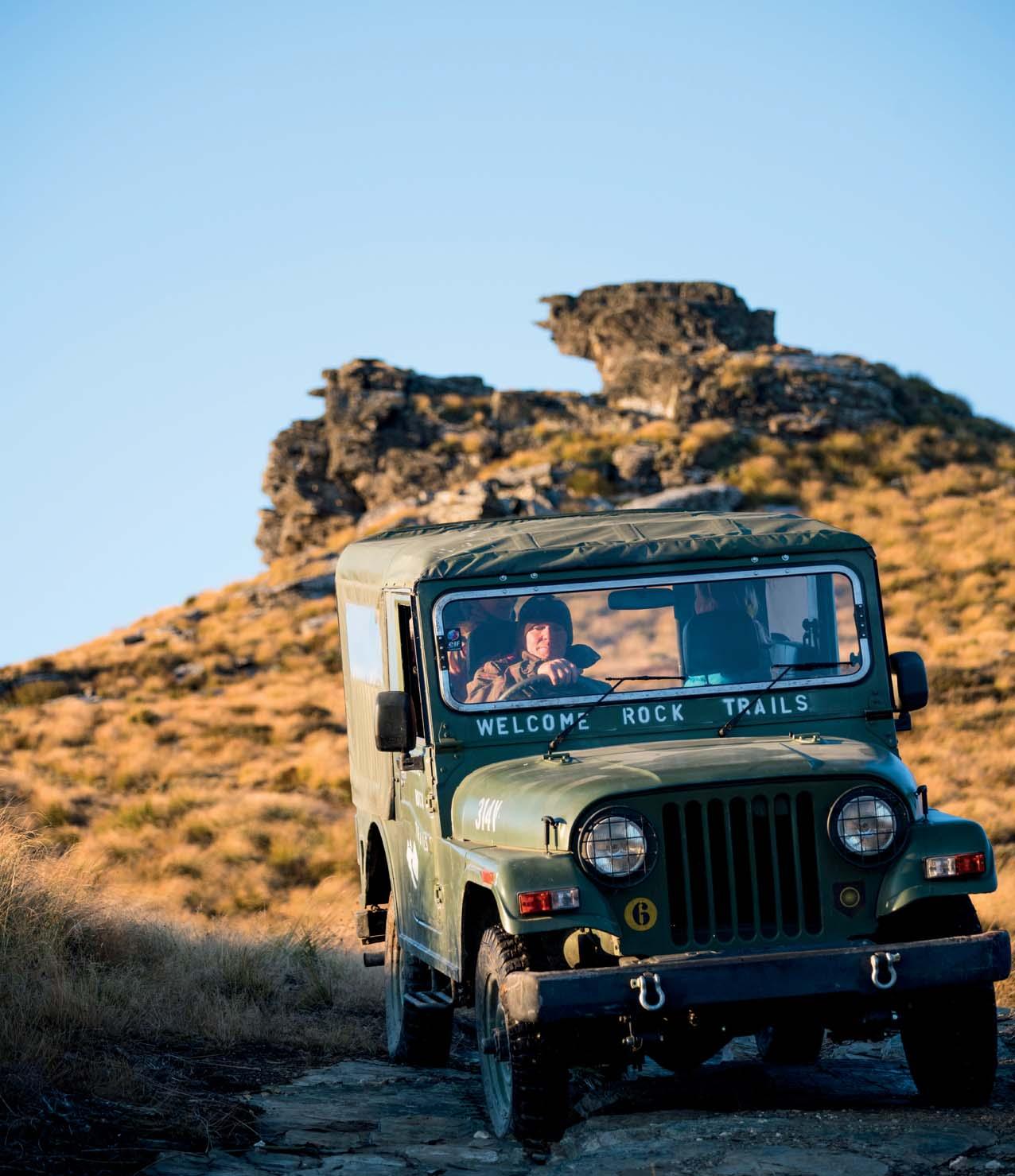
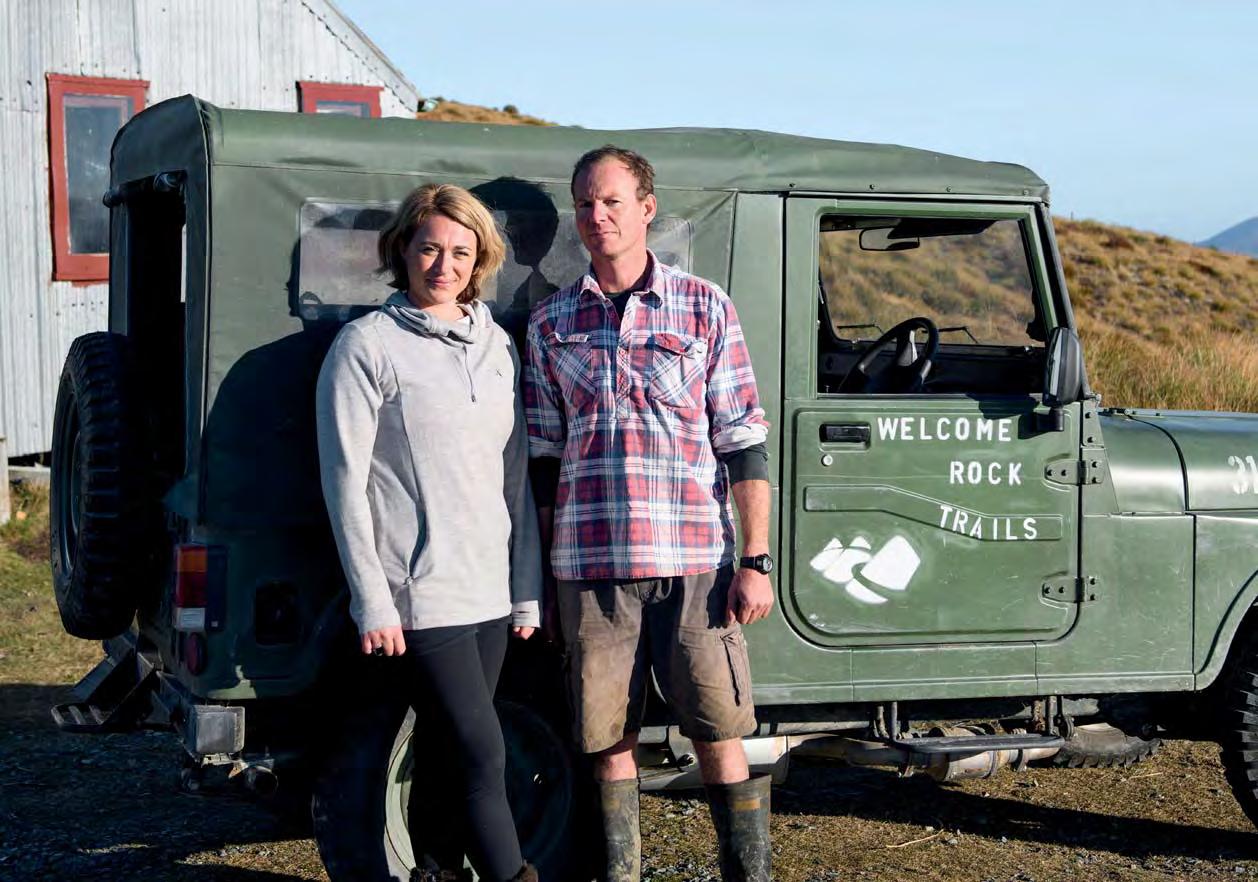
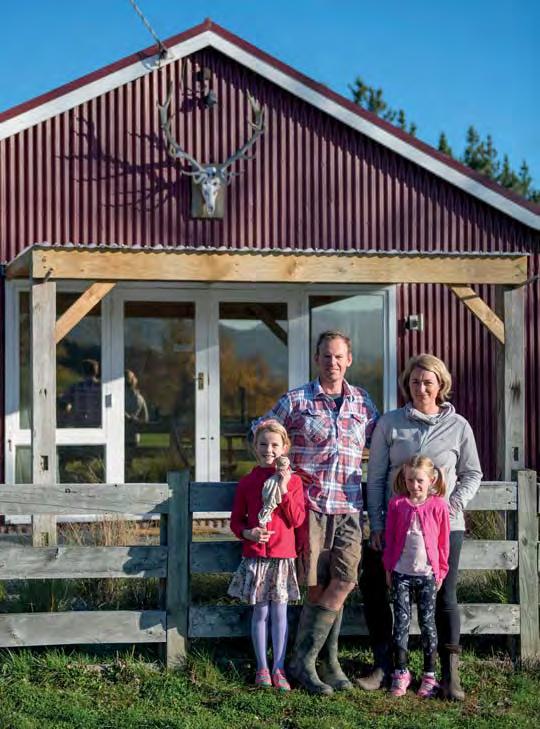
The O'Brien family of Blackmore Station have re-invented their land and paid tribute to the history of the area with a new venture – Welcome Rock Trails. Read more on page 8.
Annand
Q: What is your current role at Farmlands?
A: Horticulture Technical Leader (Pip and Stone Fruit), based at Whakatu.
Q: What do you enjoy about your job?
A: Dealing with growers and with the team involved in this sector.
Q: What do you like to do in your spare time?


A: Spending as much time as I can with my family (I am married with two kids), along with riding my road bike.
Q: What is the strangest thing you have ever eaten?
A: Cow’s tongue!
Q: What is the most interesting trip you have ever taken?
A: I went to Denmark to race the age group worlds.

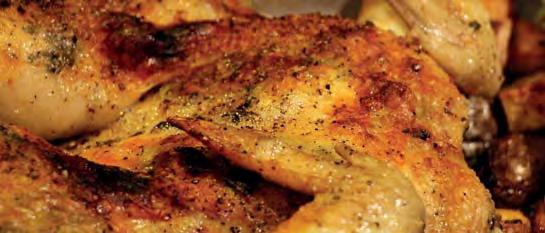
• 1 large chicken, about 2kg
• 1 tablespoon light olive oil
• Salt and ground black pepper
• 1 teaspoon baking powder
• 2 teaspoons parsley, thyme, rosemary, oregano, marjoram, savory, or a mix
Gravy
• Chicken spine pieces
• 1 tablespoons light olive oil
• 1 medium onion, roughly chopped
• 1 medium carrot, peeled and roughly chopped
• 1 medium rib celery, roughly chopped
• 1 bay leaf
• 1 cup dry vermouth or sherry
• 1 teaspoon Worchester sauce
• 3 tablespoons unsalted butter
• 2 teaspoons lemon juice
1. Preheat oven to 260°C. Remove spine from chicken and cut spine into thumb size pieces. Set spine aside. Flatten chicken by placing skin side up on a cutting board and applying firm pressure to breastbone. Transfer to a wire rack set in a roasting pan.
2. Rub chicken with light olive oil. Combine salt, ground black pepper and baking powder in a small bowl. Sprinkle all over chicken with chopped herbs. Season evenly.
3. Roast chicken until thickest part of breast close to bone registers 66°C on a thermometer and joint between thighs and body registers at least 80°C, about 45 minutes, reducing heat to 230°C if chicken starts to darken too quickly.
4. Meanwhile, heat oil in a small saucepan. Add chicken spine and cook, stirring frequently until well browned. Add onion, carrot and celery and cook until beginning to brown. Add bay leaf and then the vermouth or sherry and 1 cup water. Reduce heat and cook for 20 minutes. Strain out solids and return liquid to pan. Boil over medium-high heat until about 1/3 cup remains. Whisk in Worchester sauce, butter and lemon juice off heat.
5. Remove chicken from oven, transfer to cutting board and allow to rest 5 minutes before carving. Serve with hot gravy.

Welcome to the June issue of Farmlander magazine. The theme for this month’s issue is re-invention – a key concern both for us at Farmlands and for our shareholders.
We’re increasingly focused on our stated purpose to “re-invent the Farmlands Co-operative spirit ensuring our shareholders’ future success is at the centre of everything we do”. To achieve this, we need to look not just at want you need today but what you will require from us into the future.
The primary sector is in a process of dramatic change. Social conscience and a commitment to “responsible farming” has to be balanced against the needs of a rapidly growing global population. Farming smarter not harder is the direction New Zealand should set itself on to maintain a point of difference.
Farmlands is well placed to be a leader in this regard.
Our investment – which is also your investment – in the farm management software company FarmIQ is one way of supporting you with the most effective tools to enhance the way you manage your land. We have chosen FarmIQ because of the calibre of solution they can provide you with and we look forward to enhancing the offer as we continue to build our interaction and relationship with FarmIQ
In the near future, you will also find our staff routinely using CE – our new software that has been customised to help us track and understand the needs of our shareholders and provide them a more complete, effective and efficient service from their co-operative. Our staff have been actively preparing for the changes that are coming within the framework of our Braveheart programme. CE is an important step towards providing better solutions to more shareholders.
Have a safe and productive month. If you are heading to Fieldays, be sure to pop in to the Farmlands tent – we have plenty of offers and solutions to assist you to respond to the ever more complex and demanding world we are continuing to face.
Kind regards,

Peter Reidie Chief Executive Officer Farmlands Co-operative Society Limited
What is the overall goal for Cooperative Business New Zealand?
Our purpose reads as follows: “Through collective strength empowering New Zealand’s co-operatives and mutuals as New Zealand’s most enduring business model”. We are essentially here to provide value and support to
our members through such initiatives as advocacy for the co-operative business model and co-operative business sector itself (including mutuals and societies) here in New Zealand, staging interesting and educational networking events for our members, fostering productive relationships with external parties such as New Zealand government departments and agencies and the International Cooperatives Alliance (ICA). We also provide support to new co-operative start-ups as they seek to evolve and become commercially viable businesses and drive collaboration amongst our members in what has become one very large New Zealand co-operative family.
What are some of the key achievements for Cooperative Business New Zealand over the past 2 years?
We have been able to grow our member numbers, which has been pleasing. In terms of providing value for our members, we now hold networking and educational events during most months of the year, with two large events held in February (our Co-op Business Leaders’ Forum) and August (our AGM/Annual Awards Dinner).
We have introduced a new membership category in Corporate Associate Members for those non-co-operatives that wish to provide their services to our members and who understand and support the co-operative principles themselves. By doing this we have extended the services provided to our other members. In addition, we have been able to promote and facilitate collaboration
amongst our members within the spirit of co-operation amongst co-operatives – for example preferred supplier agreements, leveraging on scale by combining the purchasing requirements for common items such as electricity and the sharing of information and experiences via our quarterly Co-op Business Roundtable Discussions.
We have supported new startups including the NZ Housing Co-operative in our quest to help alleviate the Auckland housing crisis, providing advice and guidance in drafting constitutions and strategic plans, forming new boards and gaining external funding.
We have introduced four annual awards for our members – one of which Mark McHardy (General Manager – Farmlands Fuel) won in 2017 (Cooperative Leader of the Year). There were 17 outstanding nominations received last year, making the task to choose a winner a difficult one.
We were able to lobby with the Financial Markets Authority in 2016 so that our smaller members could gain exemptions from the need to provide Product Disclosure Statements for their members when wanting to raise share capital from them – this saving considerable cost and avoiding over-compliance.
We successfully raised funds to enable the production of a joint university study, titled "The NZ Co-operative Economy", which was released in January 2017 – this quantifying the size of the New Zealand co-operative sector (17.5 percent of New Zealand’s GDP, with almost 50,000 kiwis employed by co-operatives, mutuals
and societies) and raising awareness of the sector with our politicians, key stakeholders and the public. Finally, we have involved more New Zealand government senior cabinet ministers, departments and agencies in our events, so that members become better updated and politicians and regulators more aware of co-operatives and the cooperative business model itself.
There has been a growth of membership with Cooperative Business New Zealand. What are the strengths of the cooperative business model?
We have grown from 74 members 2 years ago to 100 today. These made up by Full Members (61), Individual Associate Members (18), Honorary Members (9), Corporate Associate Members (7) and Provisional Members (5). Of our 61 current Full Members, over two thirds are now more than 25 years old, while five were established more than 100 years ago (Fonterra, Tatua Dairy, LIC, FMG and SBS Bank). These organisations have provided trusted brands, products and services to New Zealanders for decades and even centuries – that trust and brand loyalty is a real strength. The strengths of the co-operative business model include the following:
• Member-owned and controlled, not investor-owned and controlled (investors could be here today and gone tomorrow).
• Members in control of their own destiny and who are rewarded financially based on the level of volumes supplied or the amount of business transacted in a given year.
• Well proven guiding principles.
• Profits are retained in New Zealand.
• Commercially-driven organisations that give back to communities and those in need.
• Endurance – organisations that are here for decades and centuries.
• Sustainability (economically, environmentally and socially).
• Spirit of collaboration (co-operation amongst co-operatives).
• Scale and diversity (there are now over 250 million cooperatives globally, serving over 1.0 billion people as members).
• Alignment with the UN’s 17 Sustainable Development Goals (in the quest to save the planet and its inhabitants).
“
We have been able to promote and facilitate collaboration amongst our members within the spirit of co-operation amongst co-operatives...
How does Cooperative Business New Zealand relate to the United Nations’ 17 Sustainable Development Goals?
Cooperative Business New Zealand is in full support of (and widely promotes) the UN’s 17 Sustainable Development Goals, as it recognises that the cooperative business model is the most closely aligned towards supporting the UN in meeting these goals by 2030.
All of the goals are relevant to New Zealand and its people as we endure poverty and hunger in this country, we have a growing intolerance towards gender inequalities and everyday inequities, we seek true environmental sustainability so that we have clean water along with affordable and clean energy, and we are addressing climate change through plans to reduce carbon emissions, seeking
alternative sources of energy such as solar and geo-thermal and the planting of trees on a grand scale over the next 10 years as announced recently by our new government.
As a country, New Zealand continues to invest heavily in its infrastructure and economic growth, while it is widely recognised that sustainable and vibrant communities are a key factor in achieving social harmony. We have the opportunity to collaborate more effectively however – sharing information and resources, avoiding duplication of services and learning from each other. From an environmental perspective the quality of life on land and in our rivers, waterways and oceans has always been important to New Zealanders as awareness and knowledge continues to rise, as does our intolerance towards pollution and harm to our eco-systems. Many of New Zealand’s cooperatives, in particular those from the agri-producer sector, are now investing heavily into achieving true environmental sustainability. Fonterra reports that over 98 percent of the length of defined waterways in New Zealand now have dairy cattle permanently excluded via fencing, plantings and other systems. Ballance Agri-Nutrients and Ravensdown are utilising satellite-controlled technologies in ensuring the right amount of fertiliser is applied on the right pastures and at the right time. Other initiatives from our agriproducer co-operatives include raising low-carbon greenhouse gas emissions through innovation and infrastructure, co-generation and the more efficient use of energy, minimising waste from farm to consumer including the recycling of packaging and the introduction of Farm Environment Plans that focus on reducing the impact of farming and manufacturing on the environment.
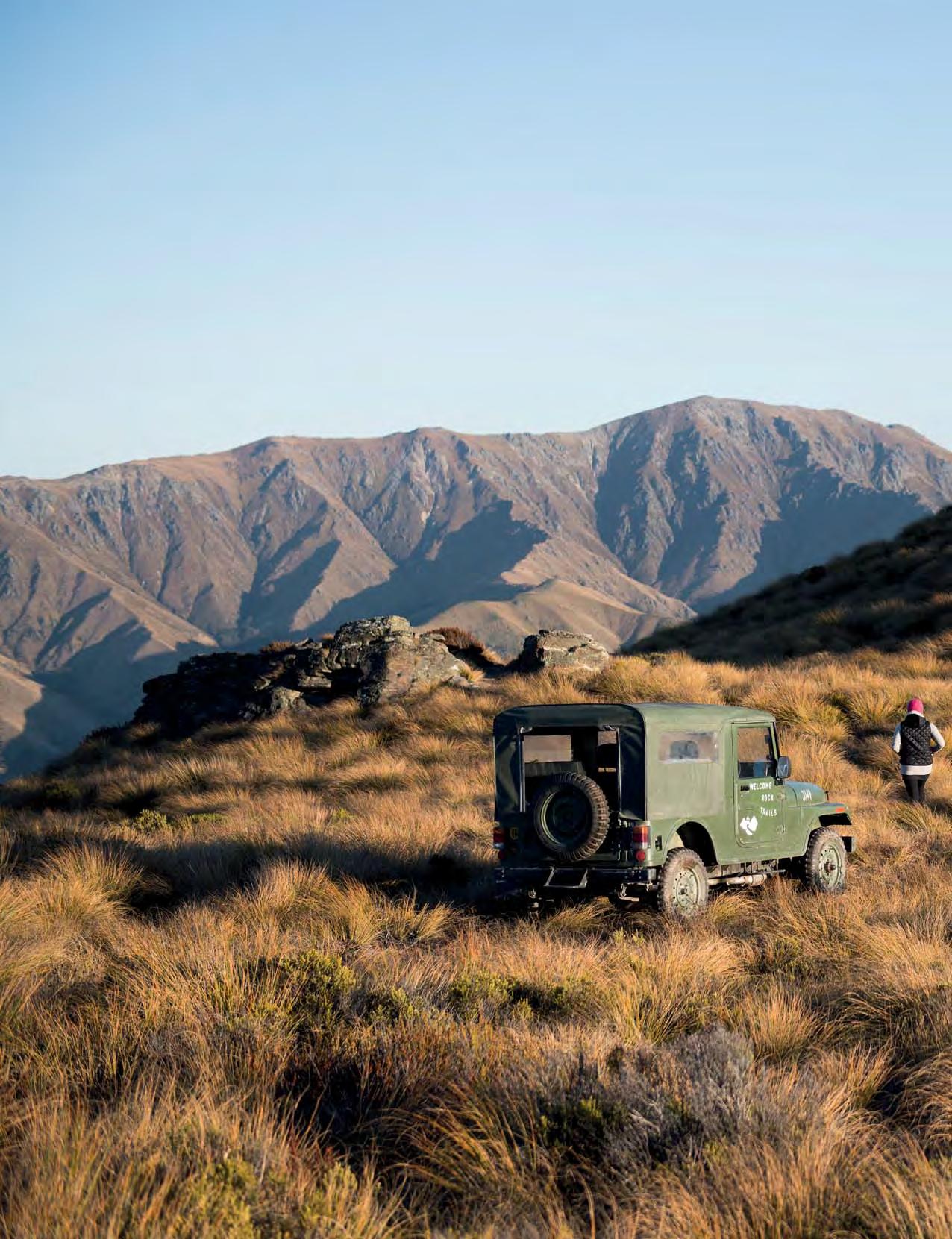



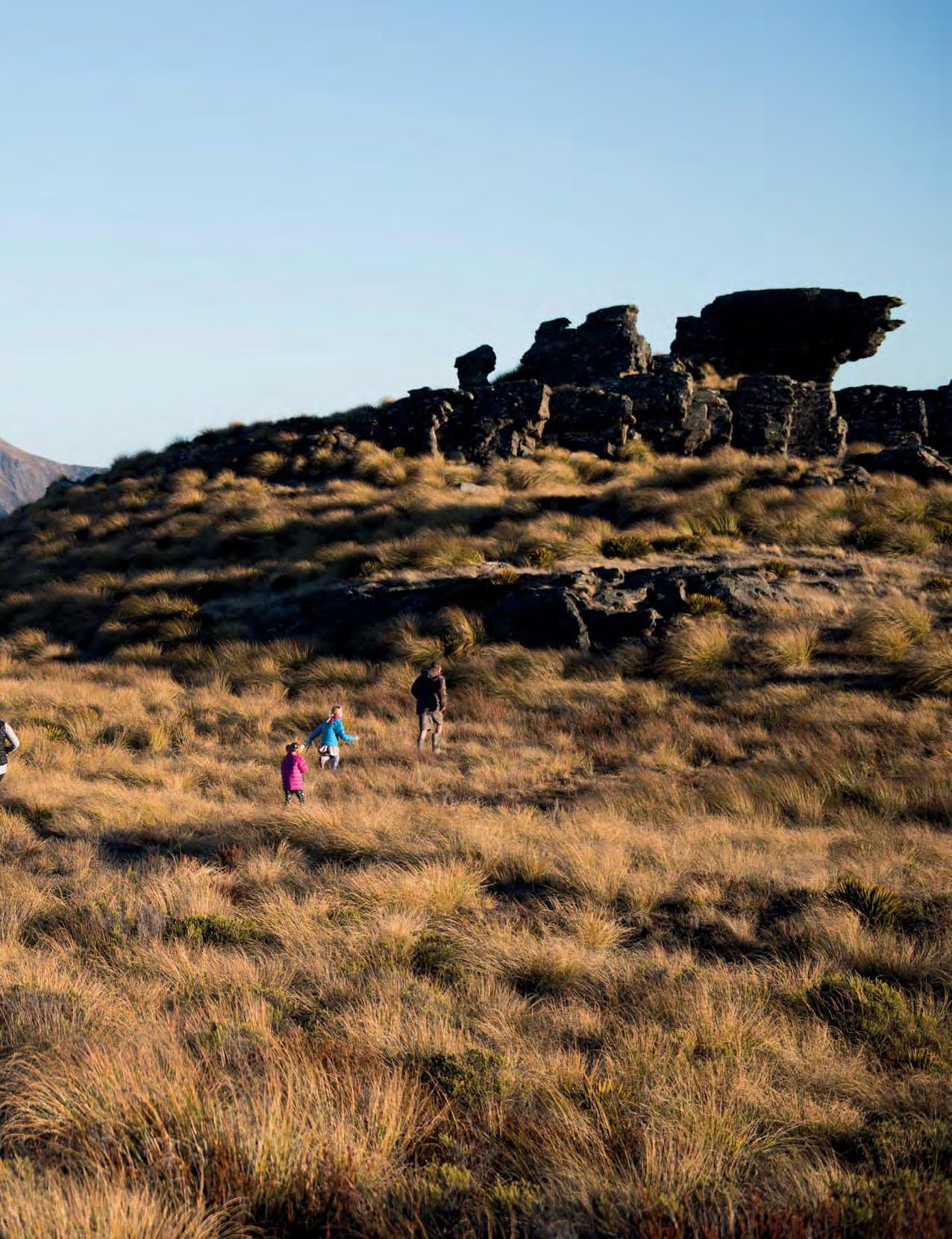
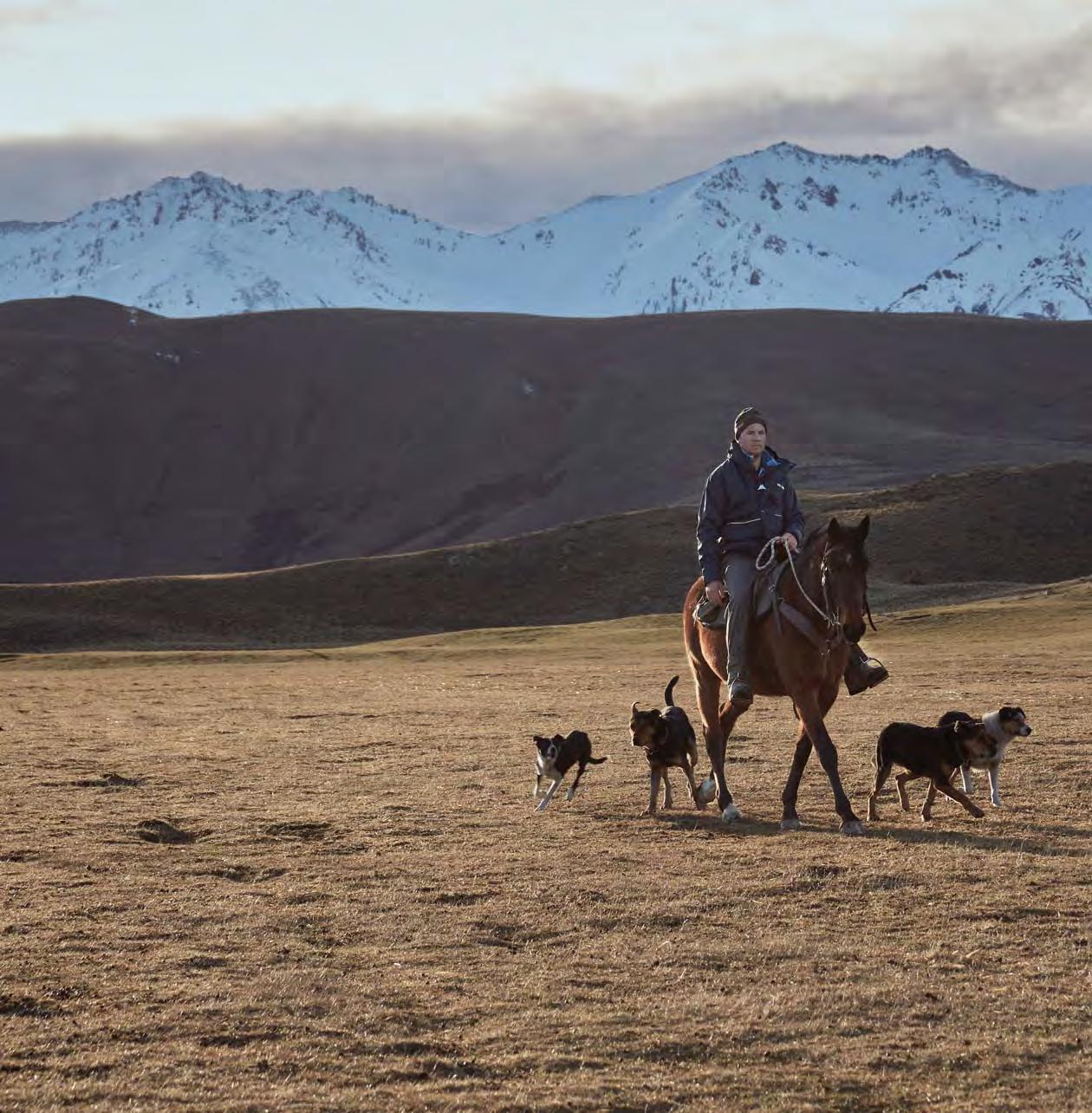
The McLean family has been making a living from Blackmore Station for more than 100 years. Now the fourth generation on the farm, Tom O’Brien, has paid tribute to the history of the area with a new venture.
No one could say the land that is now called Blackmore Station has had a quiet existence. Located in Garston in Northern Southland, the property is a sheep and beef operation that has had its fair share of visitors over the years.
The gold rush saw it become a regular travel path for weary miners and its mixture of native flora and fauna have made it a sightseeing staple. Fast forward to today and close to 1,000ha of the freehold property is protected by Heritage New Zealand and the Department of Conservation.

Protection on a swathe of the station requires less intensive farming and thinking outside the box to profit from the land.
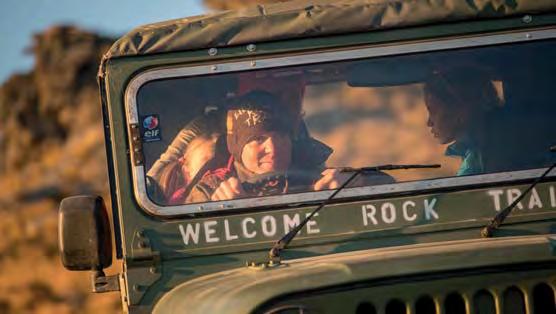
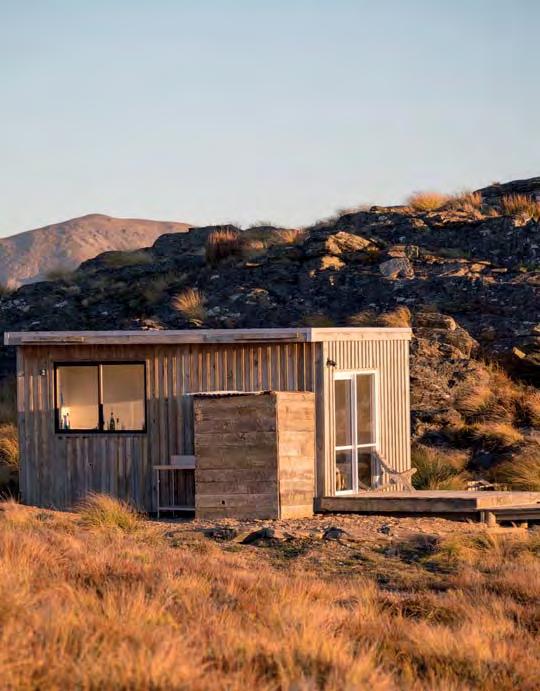
Blackmore Station’s Tom and Katie O’Brien looked to the past for inspiration – and Welcome Rock Trails was born. Taking just under 2 years and 5,500 hours of labour to complete, Welcome Rock Trail is a 27km looped mountain bike/hiking track through the property. Stock have been completely removed from trail land and accommodation is provided through refurbished gold miner huts. The result is a quintessentially Kiwi experience, using pristine landscapes and staying true to the pioneer spirit of the area.
“The block is 1,000ha and has historically been recognised as an area for protection from Heritage New Zealand for its gold and farming history,” Tom explains.
“We also have the 47km long Roaring Lion water race, which took 30 men 3 years to build by hand.
“Half of the Welcome Rock trail is built along the water race – we wanted to replicate what those guys did by building by hand."
While building the trail by hand is consistent with the storyline of the property, it was also a necessary step. Before the trail was constructed an archaeologist surveyed the area and found 300 separate points of interest from an archaeological perspective.
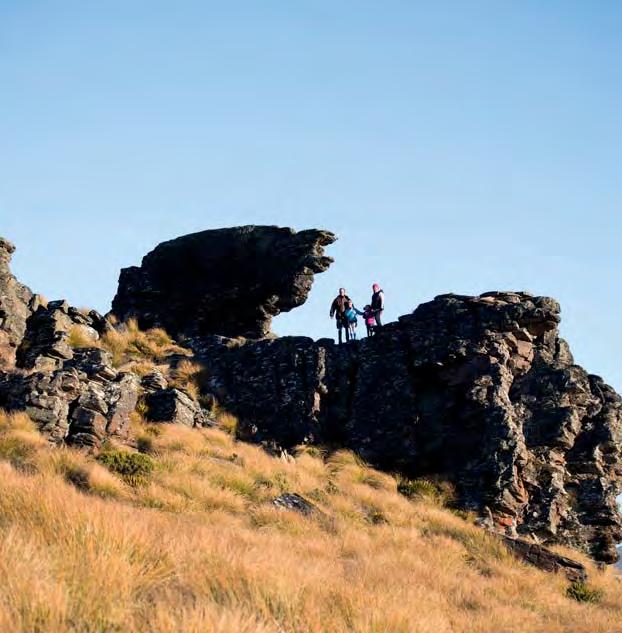
“They had to remain in situ. If we used mechanical means, there was a chance of disturbing those artefacts,” Tom says.
“We wanted to keep the trail in sympathy with the landscape – we didn’t want a big scar on the side of the landscape.”
Half of the Welcome Rock trail is built along the water race – we wanted to replicate what those guys did by building by hand.
While the historical significance of the area draws visitors, the ecological perspective of the area is also considered. The area is recommended for protection by the Department of Conservation and while the entire farm is freehold, a conservation covenant was put on the 1,000ha block because of the native flora and fauna species.
“Essentially, because of this status there was a 500 stock unit
Welcome Rock Trails receives its name from the distinctive landmark at the highest point of Blackmore Station. At 1,130m above sea level, early pioneers knew Welcome Rock was the meeting point at the centre of three catchments –Nevis Valley, Upper Mataura Valley and Nokomai Valley.
The early pioneers would head to Welcome Rock and utilise it as a trading post. Visitors could water their horses and trade goods and services while commuting to and from the gold mines in the area.
One of the traditions at the time was a favourite for weary travellers – a sneaky dram of whiskey. Whiskey was cached into the rock and visitors that were in the know would help themselves to a drink after making safe passage. It is a tradition that Tom and Katie O’Brien have reinstated. Visitors to Welcome Rock can now help themselves to a drink of whiskey when they reach Welcome Rock – if they can find it.
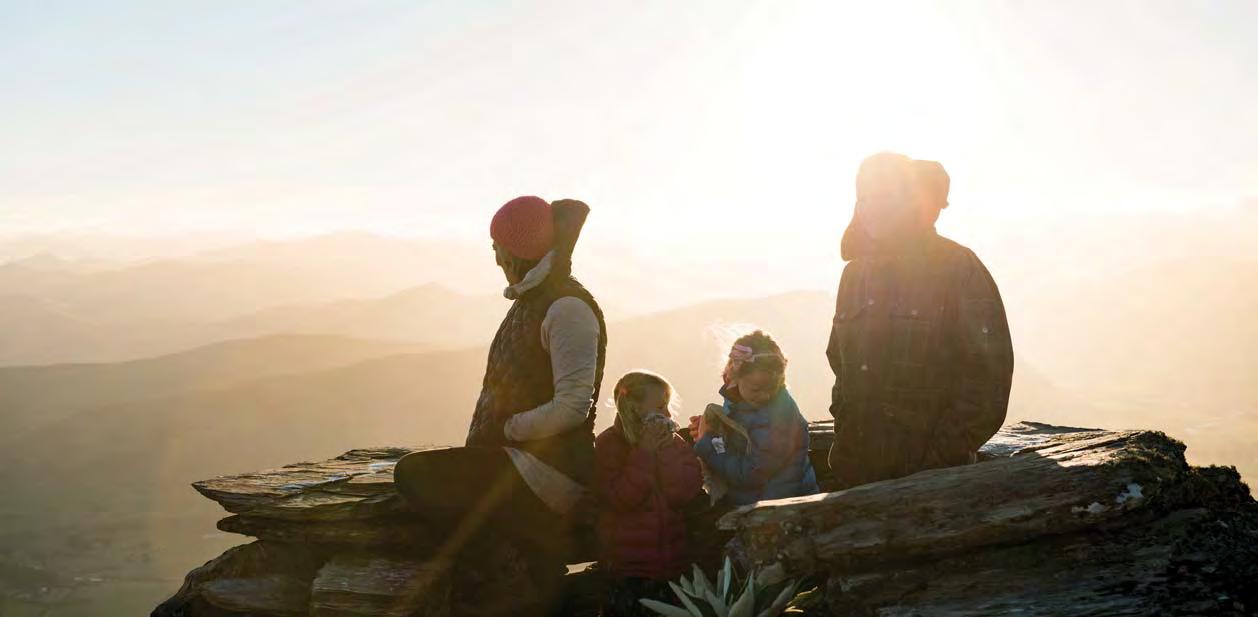
grazing restriction. That was the catalyst behind looking at alternatives, a form of diversification as it were,” Tom says.
“We historically put dry stock wethers over there but as the price of wool declined over the last 40 odd years, it wasn’t economically viable. We needed to look at alternative ways to get this land to work for us and if it means taking it to the world so other people can enjoy it as much as we do, it’s a real positive situation.”
The alternative – a mountain bike/hiking trail – was discovered by chance. Tom met a trail designer and builder, who wanted to see the property for himself.
“He came and had a look at the back of the farm and recognised the area as being particularly scenic and having a lot of history and ecology,” Tom says. “It had the gold miners’ huts, which we’ve restored.
“Mountain biking and hiking has become a growth industry in New Zealand and it still continues to do so today, so I ended up with a couple of textbooks this designer gave me about trails. I surveyed amongst local people to see what they thought and I started following the trends amongst a certain demographic.
“The demographic we have looked at is mainly the 35 through to mid-60s/70s age group. They like being out in the wilderness, enjoying our countryside but also the privacy of having their own huts. It’s about getting a taste of what those miners experienced – the history, the ecology – and enjoying that with friends or a partner.”
Tom admits mountain biking wasn’t initially a hobby of his own but he is proud of his hand built trail. He wanted to create a cross country trail that had slight gradients but was still technically challenging and felt hand building the trail was the best way to accomplish the task.
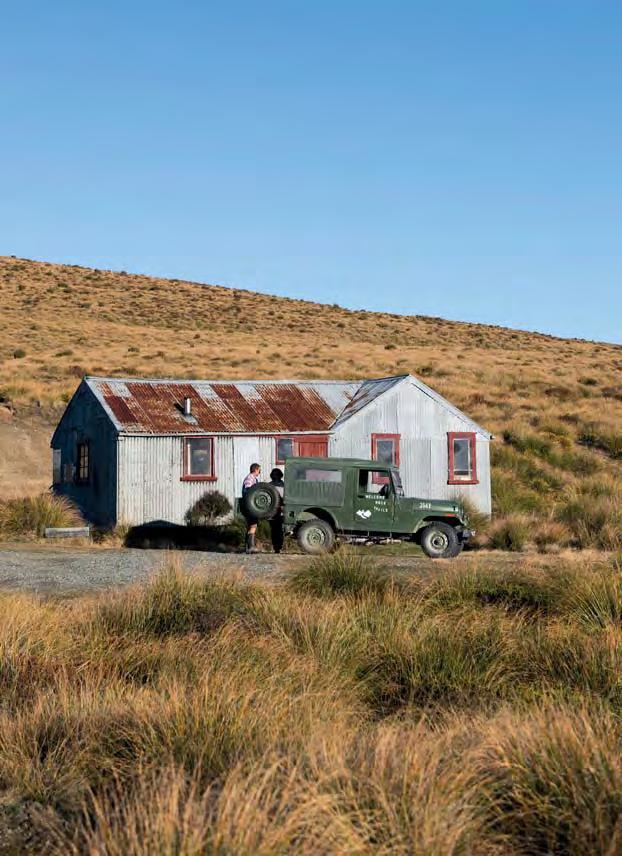
“We identified there wasn’t really anything like that (Welcome Rock Trails) for people. A cross country hiking and mountain bike trail that has historical ecological interpretations and ability to stay overnight in the huts. People said we didn’t have that here,” Tom says. “It’s really satisfying when you’re up the hill doing maintenance and you see a couple of dots on Welcome Rock and you’re wondering if they might have found the whiskey. You see people bike past and they do not know who you are. You ask how they are enjoying it and they say it’s wonderful – that’s fantastic,” Tom says.
“
One of the traditions at the time was a favourite for weary travellers – a sneaky dram of whiskey.
However, the hard work is not over. The focus has switched from building the track to getting the message out not just to New Zealand but travellers from around the globe. Tom mentions he is preparing for a visit from delegates from TRENZ, a tourism venture showcasing the best of New Zealand to the world.
“Our biggest hurdle at the moment is telling people about who we are, how we do it and why they should come to us and experience something that is uniquely New Zealand,” Tom says. “We’ve got 30 people coming from Europe, North America and Asia for TRENZ – 30 wholesalers from around the world looking at non-traditional forms of tourism. We want to see if we can form synergies and relationships with people from these continents when they come to visit.
“We want to personify something that is uniquely New Zealand, particularly from a high country perspective.”
That high country perspective has held Blackmore Station in good stead over the years. From gold to bike gears, Welcome Rock retains its position as a beacon for visitors and adventurers alike.
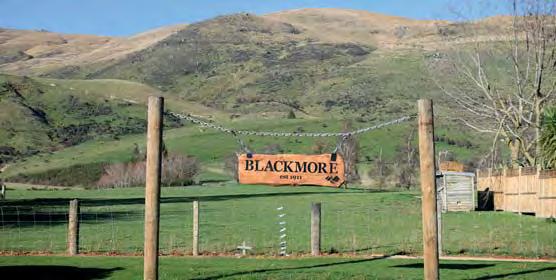
Tom O’Brien says his maternal great-greatgrandfather, George McLean settled at Blackmore Station in 1911 via pre-emptive right. Tom is the fourth generation on the land, although it was not until 1911 that the family really settled.
“We started off at a place called Bridesdale Farm, by Lake Hayes, which is now known as Lake Hayes Estate,” Tom says. “After that the family moved to a place called Half Way Bay, half way down Lake Wakatipu. The family settled at Blackmore Station in 1911 and we’ve been here ever since.”
Blackmore Station is near Garston, reputed to be the most inland village in New Zealand, along with the most inland pub as well. Tom says that the community of Bannockburn have a bit to say about the inland crown, so he’s unsure who can officially claim it at this stage.
“Garston is predominantly a farming community.
We’re well known for the Mataura River, which is one of the best brown trout fishing rivers in the world.
It’s on State Highway 6, so it’s a stop off point for tourists on their way to Milford Sound and Te Anau.
“The pub has reopened after a few years with new owners and more people are starting to use the little cafes, the honey shop, a furniture shop and we’ve got B&Bs and little lodges popping up.
“It’s a great little spot.”



Make Farmlands your first stop at Mystery Creek!
Visit us for helpful advice, knowledge, great deals and a range of activities for the whole family. Talk with the experts

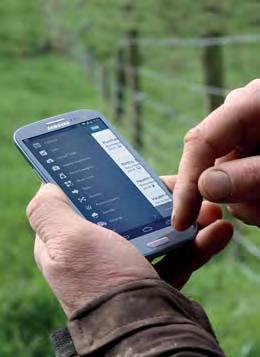
Farmlands emerging technology


Join Farmlands and our innovative partners to learn about emerging and available technology.
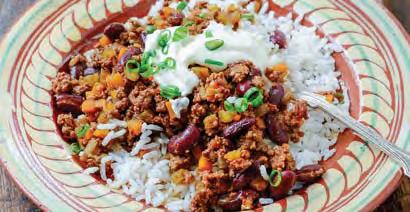
Enjoy our shareholder lunch menu – designed by Simon Gault
While at Fieldays check out the Kitchen Theatre. Simon Gault demonstration –Wednesday 10.00am and Thursday 11.45am.

Purchase your tickets early at selected stores or at the gate with your Farmlands Card.*








Take a load off. We can store your bags, jackets and shopping while you are at Fieldays, just look out for our Shareholder Hub.
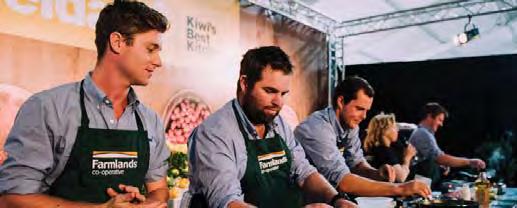
Rural Catch challenge
2.30pm Friday
The Rural Catch contestants will be on-site competing in our challenge. Come and witness a spectacular showdown!
*Terms and Conditions apply. See www.farmlands.co.nz/fieldays for selected stores.


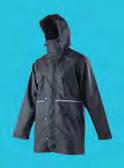
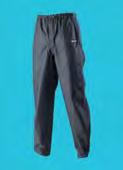
Hot deals on wet weather gear, polar fleece t-shirts and more!
US HERE

| F103–F109









Farmlands CFO, Kevin Cooney, discusses the key to adapting your business for long-term success.
Darwin said, “It is not the strongest of the species that survive, nor the most intelligent but the one most responsive to change.”
Building resilient and profitable farming businesses is critical to the long-term success of our rural economy. With the volatility, uncertainty, ambiguity and complexity characterising today’s business environment, the strategic thinking and flexibility needed for this has never been more important.
A trait common to companies that thrive in the face of this disruption is an adaptive mindset – that is, an ability to adapt or re-invent themselves more quickly and consistently than their competitors. This ability stems as much from owner-imagination as it does from great design. Better awareness of our emotional makeups (how we react to situations), our leadership styles and the influence of external factors on our decisionmaking unlocks our imaginations. Investing time into thinking beyond the day-to-day, and seeking insight from a diversity of sources and people unlocks our strategic thinking.
I find insight from companies that have successfully adapted or re-invented themselves particularly helpful. What makes companies adaptable?
• They accept that strategy is not a static plan but rather “a haphazard
process of discovery” that uncovers new sources of value as markets and customer expectations change;
• Curiosity, engagement with ambiguity, and embracing the fear of change are core values;
• They build innovation-led cultures by creating the conditions for their employees to discover, test, experiment and fail-fast on new initiatives that don’t bet the farm (so to speak);
• They employ a design approach to leadership and strategy-formulation that invests in getting close to and thoroughly analysing a customer’s journey, including connecting with their emotional worlds;
• They connect on multiple planes with customers and markets, by telling their unique stories; and
• They evaluate strategic advantage from an eco-system as well as company-only level, and through this build aligned collaborations and partnerships to create long-term advantage.
Leadership, governance and a culture characterised by the fear of missing opportunity rather than the fear of failure drive their success. The leader’s job in these companies is not so much to know the future but to create an organisation that can deal with uncertainty and discover the future. What holds companies back? Fear of failure and its negative influence on governance, leadership, strategy and creativity is the primary reason. In these companies, innovation beyond simple incremental improvements on existing “tried and true” value propositions is
frustratingly elusive due mainly to:
• Traditional approaches to governance limiting agility and diversity of contribution;
• Dominance of the “leadership-byexample” model, which limits an organisation’s vision to its leader’s imagination and experience;
• Strategy focused on “best-practice”, or doing stuff better than traditional competitors, for simple incremental advantage, rather than “marketbeating” for enduring advantage;
• Over-engineered value propositions with more features than customers need and are willing to pay for; and
• Failure to understand key trends transforming markets and competitive landscapes.
These tend to coalesce into a collective problem, but each alone opens the door to new competitors, particularly those using technology and digital platforms that deliver superior customer experiences. They are faster, cheaper, better-quality, convenient, predictive and joyful to deal with – and these new operators are not burdened by the same cost structures and management distractions of larger, slower incumbents.
How “stories” enhance adaptability They also tell their story effectively. Stories create emotional connectivity. Often, they are our only real point of difference in a world of commoditised brands.
Focus on being curious, seek diverse views, and develop your unique story – in particular, how that connects emotionally with those customers willing to pay for authenticity and unique experiences.











Help us save big on paper statements. Receive them by email instead.
Every year we spend in excess of $500,000 to send out paper statements and we believe that’s money that could be better spent supporting our shareholders in other ways.

Plus there are loads of other great reasons to make the switch:
• faster to your inbox than your letterbox
• more flexible categorisation summary

• more detailed including a category breakdown
• more sustainable so better for the environment
• compatible with most popular accounting software
Make the switch now.


To switch to electronic statements and, if necessary, to update your email address, visit www.farmlands.co.nz/statements or call 0800 200 600.



In addition to huge savings for the co-operative, there are loads of other great benefits for your business by making the switch to electronic statements.
What you get with electronic statements
They arrive in your inbox sooner and provide a more detailed view of your Account. You can receive three files:
1. Farmlands Monthly Consolidated Tax invoice
This provides all your Farmlands spend in one tax consolidated invoice as a PDF and a CSV file. Save time by uploading the CSV file directly into your accounting software.
2. Category Summary
Only offered via email or as a download via MyFarmlands (not sent out with paper statements), this collects and collates your spend from each of our speciality business units within the Farmlands business platform (such as Retail, Fuel and Lubricants, Grain and Seed and Nutrition) in addition to more than 7,500 Card Partners across the country. The fuel summary is great for calculating Fuel Excise Tax.
3. Optional Daily Invoice Summary
Sent nightly to shareholders via email, this summary of Farmlands retail purchases helps you stay on top of your business transactions every day. Available in PDF and CSV formats, it contains only transactions made within the Farmlands retail network.
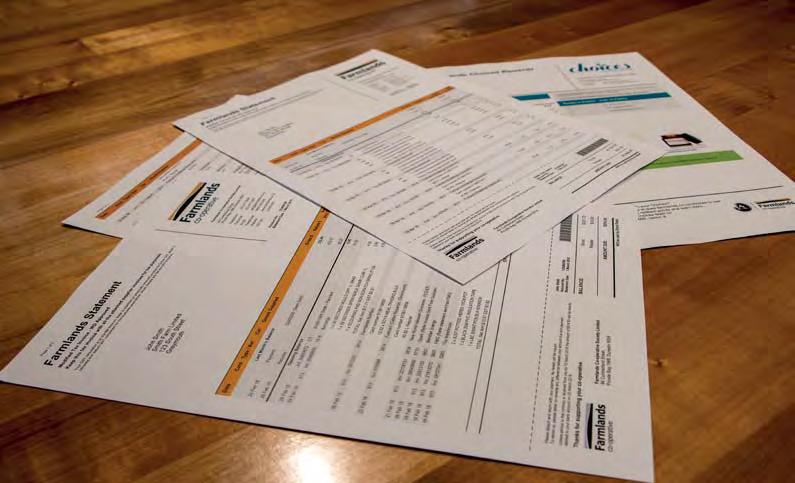
Compatible with most popular accounting software
Utilising e-statements for your business will save you hours of manually inputting transactions. You can receive your statements in the format that works best for you with PDF, CSV or QIF files that can integrate seamlessly into most popular accounting software platforms, including specialised file formats for importing into Xero and CashManager Rural.
Set up rules and save time
Setting up account codes for your transactions means that you’ll be able to upload your Farmlands statement into Xero, Cashmanager Rural or MYOB and your transactions will automatically be recognised andreconciled with these codes.
No more time-consuming manual uploads
Setting up “Bank feeds” will automatically sync all of your Farmlands transactions to your MYOB or Xero account. It’s a real time-saver. Get all the business benefits of electronic statements – faster and easier accounting just makes good business sense. So visit www.farmlands.co.nz/statements to make the switch to electronic statements today.












Braveheart is Farmlands’ journey from good to great – we’re reinventing the co-operative spirit by ensuring our shareholders’ future success is at the centre of everything we do.
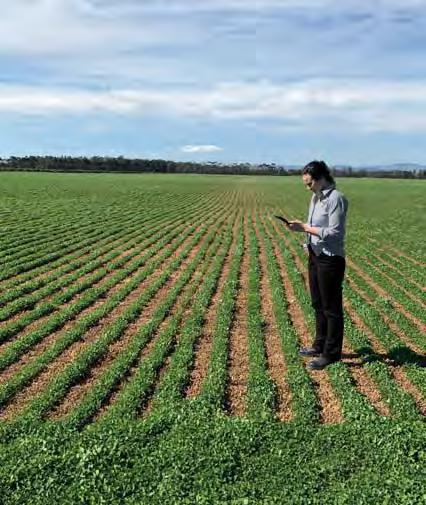

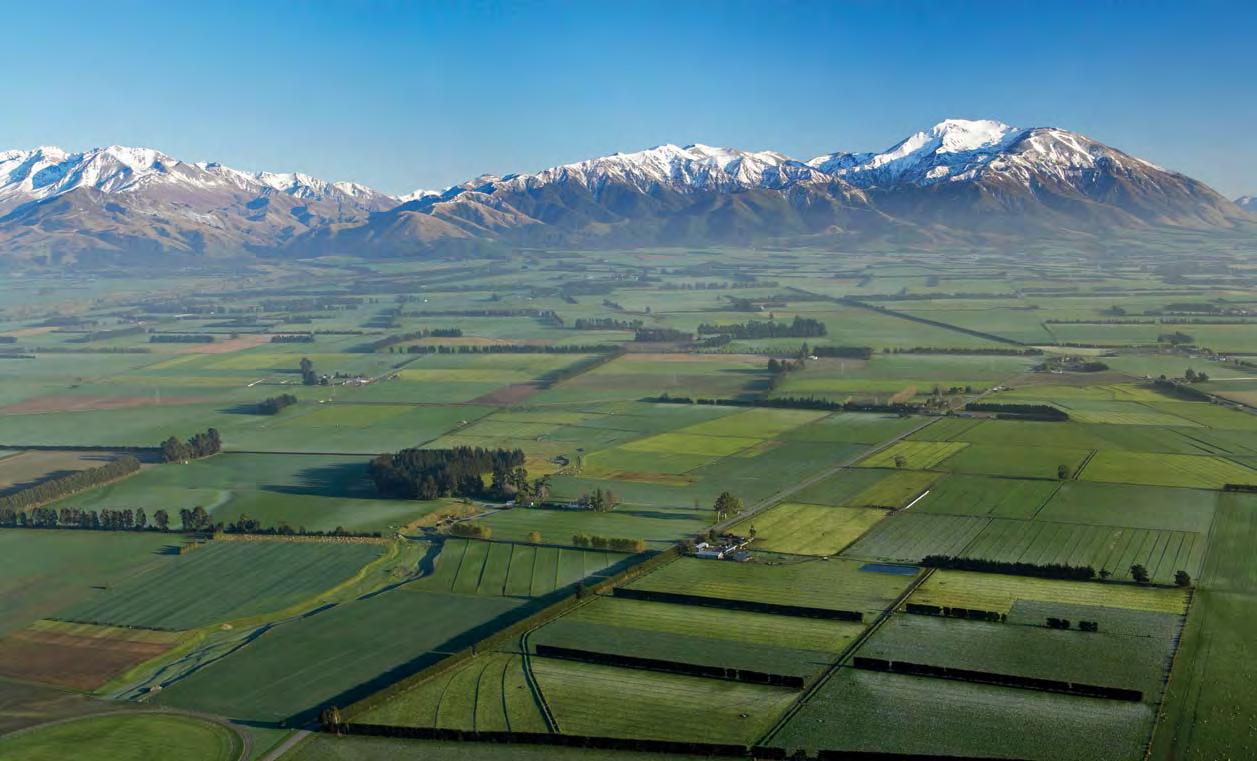
It’s a 3-year journey that will enable us to build a stronger Farmlands Co-operative together. One part of this journey is the development of Farmlands’ Customer Relationship Management system, also known as CE. Development of this system is almost complete and shareholders will start to see the benefits of this over the coming months.
The system will provide us with visibility, accountability and standardised processes. This means shareholders will receive consistent messaging and service from whichever part of our business they interact with.
CE will provide a “360-degree view” of all shareholder interactions with Farmlands. This means we will be more accurate in our goal to work in partnership with our shareholders. We will be better placed to follow up on opportunities and queries, and we’ll have access to all the latest industry news, trends and research to share with shareholders.
The new system will allow more reporting capabilities regarding the inputs and purchases on a shareholder’s Account. We will hold historic information regarding the products and services you receive from Farmlands, which we will be able to share with you to assist you in making decisions going forward. Our technical experts will have the ability to provide a “Whole of Business” offer, as they will have convenient access to relevant information on their mobile devices. They will be able to build account plans and review information about past visits, including what was discussed, quoted for and ordered during that visit. Braveheart has been designed to co-ordinate the business units of Farmlands into a seamless offer, with a culture that builds on the proven strength and capability of our people. Braveheart will ensure that the Farmlands experience is unrivalled in our sector.





IT HAPPENS MORE OFTEN THAN YOU’D THINK.
Being New Zealand’s leading rural insurer, we see it all. So when you suffer the kind of damage to your property that you’d never expect in the city, we not only understand, we’ll have you covered. It’s the kind of understanding and advice that really makes a difference in the country. If you’d like to know more, go to fmg.co.nz. Or better still, call us directly on 0800 366 466.
We’re here for the good of the country.
The shorter days and tough weather conditions mean it’s a challenging time for farmers.
It’s important to remember that when you’re heading out first thing or finishing up at the end of the day, there is an increased risk of accidents on the farm.
According to an analysis of data by WorkSafe, there are two peak times when fatal accidents occur in farming – 8.00am to 9.00am and 5.00pm to 7.00pm.
In many cases, increased levels of fatigue or distraction are factors in accidents – often during routine jobs farmers have done on a regular basis.
“The statistics do seem to suggest that these are times when people might be more likely to let their guard down around safety,”
WorkSafe New Zealand Sector Lead – Agriculture, Al McCone says.
“It’s a good idea to always take that few minutes, whatever time of the day or evening and no matter how busy you are, to think or talk through the job you are about to do and how it can be done safely.
“Even if you are rushing out to the woolshed after the kids get off to school, or if you’ve had a long day, you're tired and trying to get everything finished before going home – a few minutes of planning will help ensure you and everyone on-farm gets home safely,” Al says.
“It’s about taking the time to consider whether you’re using the safest vehicle for the job and conditions or leaving that one last job to the morning.
“Equally, those peak times fall before and after school when any children might be out and about playing, so it’s very important to know where they are – check around any vehicles before moving them and ensure young children are well supervised.”
Al says that while farming is challenging with the long and irregular hours, it’s important for farmers to manage fatigue for themselves and their staff – including making sure they and their workers take breaks.
“It can be tempting, particularly if you are a solo operator, to press on and get the job done before it gets dark or starts to rain but fatigue and dehydration can cause headaches, loss of sleep, loss of concentration and a lack of co-ordination.
“Add to that the need to take individual factors into account too, such as age, general health, lifestyle and work experience. All that can affect how individuals cope with fatigue.
“There is a personal, social and financial cost to accidents. Some farms have, for instance, reorganised their rosters to ensure people don’t work as many days in a row,” Al says.
“When people are properly rested, they work better, think more clearly and there’s less likely to be damage to equipment. Planning now for how you will ensure you and your team will get sufficient rest, keep hydrated and eat properly during challenging winter tasks like calving, will pay off for your farm.”
Article supplied by WorkSafe.




•
•
•
•
•









•










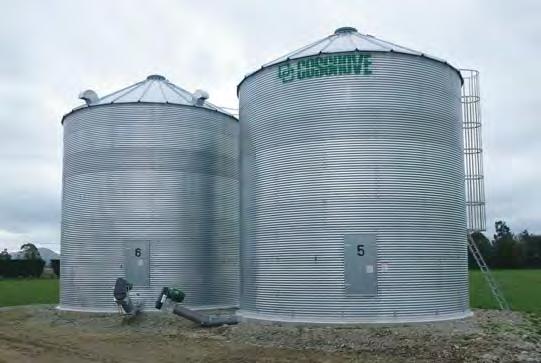




If your fuel tank contains more than 250 litres of petrol or more than 1,000 litres of diesel, safety signage is required.
Safety signage refers to the signs that are in place to draw attention to objects, situations or substances that might affect our safety or wellbeing. As a rule, safety signage falls into one of the following categories:
• Prohibition signs, e.g. "No smoking".
• Mandatory signs, e.g. "Hearing protection must be worn".
• Hazard signs, e.g. "Forklift in use".
• Emergency information signs, e.g. "First aid kit".
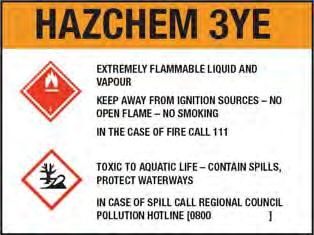
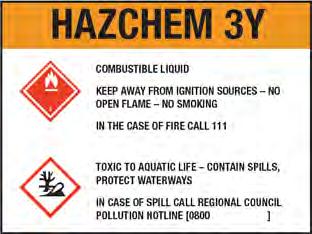
Bulk fuel stored on-farm is required to have the correct signage in place, ideally detailing the Hazchem code. The Hazchem code is the emergency action code that informs the emergency response team what precautions or actions are required to deal with emergencies like spills, leaks or fire.
In general, signs must:
• Advise that the location (or storage facility) contains hazardous substances.
• Describe the hazardous property and nature of the hazard(s) of the substance.
• Describe the precautions needed to safely manage the substance.
• Note the actions to be taken in an emergency.
• Identify appropriate emergency response agencies or personnel and the means of contacting them.
• Be able to be read from a distance of 10m and be easily understood.
• Be at least 29cm by 42cm in size.
Self-adhesive signs for your tank can be purchased through Farmlands Fuel. For further information, contact the Farmlands Fuel team on 0800 666 626.
It’s time to be proactive and get prepared for winter. If you’ve got bulk diesel storage, your diesel fuel needs to be winterised. All diesel fuel contains wax molecules, which are natural components of the crude oil diesel is produced from. In severe winter conditions, the wax starts to crystallise and if enough wax crystals form, they can block fuel filters, fuel strainers and fuel lines in diesel powered engines and machinery.
To combat this, Farmlands’ fuel supply is enhanced with additives relevant to climate zones in New Zealand. The following list outlines the zones of fuel deliveries and the
minimum operating temperature the additive may work at:
• Northland/Auckland – suitable for use down to -6°C
• Rest of North Island and Nelson – suitable for use down to -9°C
• Canterbury and South Canterbury plains – suitable for use down to -9°C
• South Canterbury inland, hills and high country – suitable for use down to -15°C
• Otago and Southland – suitable for use down to -15°C
For further information about ensuring your fuel is ready for winter, contact the Farmlands Fuel team on 0800 666 626.


Milk cooling changes are here. What does that mean for you? Well, it means now is the time to get sorted!
Last summer we had soaring heat across the country. Hot temperatures and warm ground water at the same time as peak flow had refrigeration systems straining and farmers screaming for a milk-cooling fix.
Next season your milk needs to be colder. And the coming year is bound to bring closer scrutiny around the adherence to new regulations. Do you comply?
Here’s fine print*
Milk needs to be chilled to 6°C within two hours of finishing milking, and within six hours from the start of milking.
After that, milk must stay at 6°C or below (but without freezing) until tanker collection or the beginning of the next milking.
If your vat is partially full from an earlier milking, the blend temperature with any following milkings must not go above 10°C.
Finally, you need to keep a record and be able to provide an audit trail if requested by your milk processor.
Don’t let an ageing cooling system, undersized units, water issues, an unreliable power supply or a fly-by-night cooling cowboy make life harder than it needs to be.
There’s good news. Winter is here. Right now is the perfect season for upgrading your plant and gearing up for whatever maintenance is needed before calving kicks in.
Ensuring your system will meet, or exceed, the new regulations is not always a costly fix. In fact, over the summer period, Tru-Test has assessed over 1000 dairy systems with many only needing minor work to comply. If you do need to
invest in new gear, make sure it’s right for your individual farm situation and is going to last the distance for your herd development plans.
Partner with Tru-Test Dairy Solutions to get the right advice and the right cooling system, and get it sorted easily and cost effectively. We offer years’ of experience in on-farm cooling and offer a solid range of cooling solutions followed up with real service and support long after you’ve made your purchase.
Don’t let an ageing cooling system, undersized units, water issues, an unreliable power supply or a fly-by-night cooling cowboy make life harder than it needs to be.
Check out our products below and talk to Tru-Test Dairy Solutions about your cooling needs.
Call 0800 TRU-TEST (878 8378)
* http://www.foodsafety.govt.nz/elibrary/industry/ dairy-nzcp1-design-code-of-practice/amdt-2.pdf

























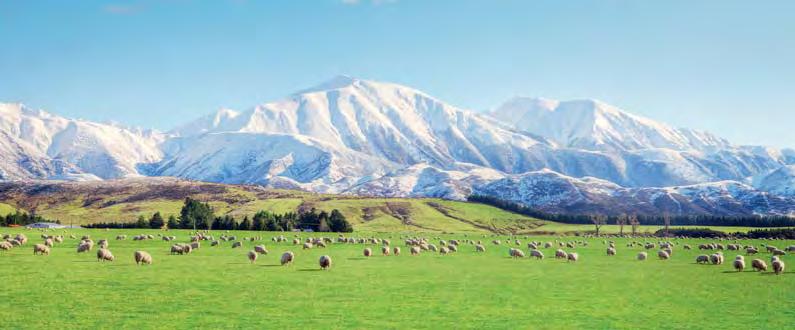
A new blueprint to lift the environmental performance of New Zealand’s sheep and beef sector has been unveiled by Beef + Lamb New Zealand.
The Environment Strategy lays out a progressive long-term vision for the sector based around four priority areas – healthy productive soils, thriving biodiversity, reducing carbon emissions and cleaner water.
As part of the plan, Beef + Lamb New Zealand has identified two key goals – every sheep and beef farm having a tailored and active environment plan by the end of 2021, and the sheep and beef sector as a whole moving towards net carbon neutrality by 2050.
Over the next 3 years, Beef + Lamb New Zealand will roll out a range of environmental initiatives to support sheep and beef farmers.
This includes establishing a Collaborative Catchment Communities programme to help communities work together to target water quality, greenhouse gas emissions, biodiversity and soil health issues.
The organisation will also invest in developing a new generation farm plan that encapsulates these four priorities, develop new tools and technology, provide support and advice and undertake research.

“As a sector, we have an opportunity for our sheep and beef farmers to be world-leading stewards of the natural environment and sustainable communities,” Beef + Lamb New Zealand Chief Executive, Sam McIvor says.
“Sheep and beef farmers have made meaningful improvements to their environmental performance and lowering emissions and they deserve credit for these gains. However, farmers know there is more to be done – not just extending the good work already underway – but also taking new and different approaches,” he says.
“This includes adopting new management techniques that better connect actions to the environmental outcomes and more on-farm monitoring and measuring that gives farmers confidence their actions are reaping benefits. We also need to allow the wider community to better understand the contributions farmers are making.”
Sam says the strategy has been developed in partnership with sheep and beef farmers.
“This blueprint is about supporting sheep and beef farmers to manage their properties to improve freshwater, helping them to continue to reduce emissions and provide habitats that support biodiversity and protect
our native species. We will also be working hard to ensure land use is closely matched to soil potential and capability. That will mean soil health, carbon content and productivity will improve while minimising soil erosion and loss to water ways.”
Beef + Lamb New Zealand will equip farmers with the knowledge and tools to best manage their resources and make changes as required. They will also use funding from the Ministry for the Environment’s Freshwater Improvement Fund to work with farmers in four priority catchments to scale up individual actions.
Beef + Lamb New Zealand Chair, Andrew Morrison says the Environment Strategy aims to turn today’s challenges into tomorrow’s opportunities.
“Agriculture is inextricably linked to the natural environment, which means how we farm today will directly affect what’s left for tomorrow. Our sheep and beef farmers fully understand this and are determined to be part of the solution.”
Article supplied by Beef + Lamb New Zealand.







































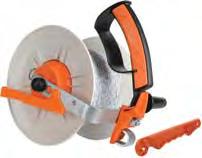









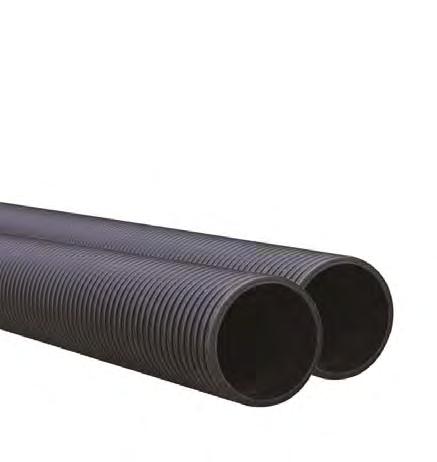



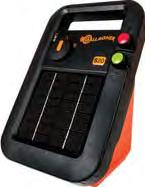













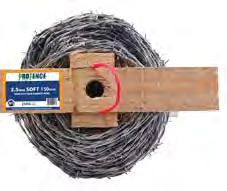

































































Articles in the Plan 365 section allow Farmlands suppliers to share best practice and the latest advances in rural technology, to help shareholders with their farming needs all year round.
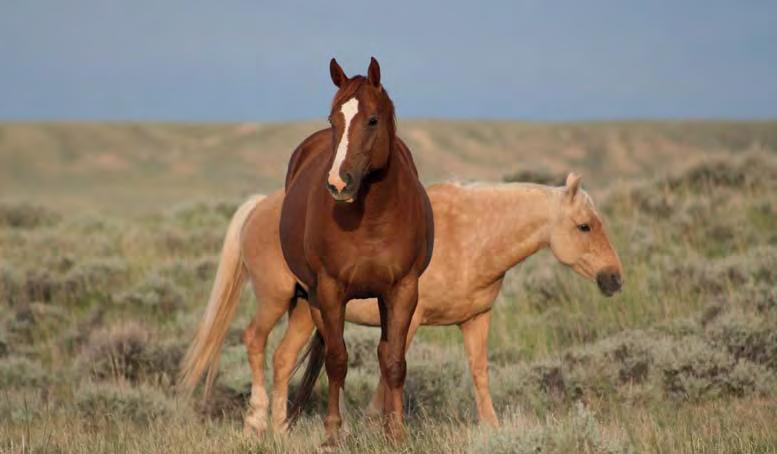
The increased awareness of horse owners around aspects of general equine health, from nutrition to dental, hoof and parasite management, has resulted in the average horse living for longer. Although the natural lifespan of the horse has not changed, many are now surviving easily to 30 years of age or older, where previously this was very uncommon.
Because of the physiological changes normally associated with aging, geriatrics may require special adaptations in health care, environment and diet to enable them to remain healthy. As well as slight changes in dietary nutrient requirements, it is important to pay attention to joint health, dental health and the risk of various conditions such as Cushing’s, laminitis and other metabolic issues.
Requirements for certain nutrients in older horses can increase, as
the effectiveness of the intestinal lining decreases with age. This can make it difficult for nutrients to pass the mucosal surface in order to reach the bloodstream. Research has documented a decreased absorption of phosphorus, vitamins and protein in the aged equine.
Regular dental and worming programmes are even more important in older horses, as teeth can become compromised and worn and resistance to many deworming pastes can build significantly. As with any horse, structural carbohydrates in the form of forage should be the most important part of the diet. In cases where dental health is inhibiting the ability for the horse to consume the all-important 1.5 percent of their body weight in forage daily through pasture and hay, super fibres such as beet pulp and soy hulls are an extremely beneficial
fibre source. These are not only high in digestible fibre, they have the added bonus of supplying moisture and being extremely easy to eat.
While many older horses tolerate grains well, the increased risk of digestive conditions and metabolic issues mean that it can be best to select a lower starch feed with higher levels of fibre and fat to supply safe energy. A well-formulated senior horse feed should contain a fibre percentage higher than 12 percent and a protein percentage between 12 and 16 percent from a high quality protein source like soybean meal. Any grains contained in the feed should also be processed into other highly digestible forms such as pelletised or steam flaked to enhance digestibility. While certain feeds are designed and marketed specifically for old horses, there are many high quality feeds available that meet these specifications and are equally as suitable for ensuring horses receive all the nutrients they require for optimum health in their older years. McMillan Grain Free is a great high fibre option containing soy hulls, beet pulp and high quality fat from canola oil. Other equally suitable options include certain breeding feeds such as NRM Evolve and high fibre performance feeds such as NRM Low GI Sport. For assistance with feeding plans for older horses, to manage condition and enhance overall health, consult with an experienced equine nutrition advisor.



















Rabbits are very interesting animals when it comes to nutrition and it is worth getting to know a bit more about your furry friends so you can make sure they are receiving the best care possible.
With the recent release of the RHDV1 K5 virus throughout New Zealand to control pest rabbit populations, it is also a good time to review your rabbit’s vaccination history with your local veterinarian to make sure your rabbits are protected.
Some things to know about your rabbit’s digestive system:
• Rabbits are animals designed to consume a diet high in fibre. They are hind gut fermenters, which means that a majority of the digestion of the feed they eat occurs in their caecum where it is fermented by resident microorganisms.
• If rabbits are not fed a diet high enough in fibre they can develop a potentially fatal health problem called gut stasis, so it is important to offer them a feed that is well suited to their unique requirements, along with ample access to hay to keep their gut healthy.
• Sedate pet rabbits are particularly prone to becoming overweight, which has its own set of health issues just like humans, so offering a well-balanced, high fibre feed with a lower grain inclusion will help to keep rabbits at a healthy weight.
Rabbits must always have constant access to either grass or hay to keep their teeth worn down. Rabbits with
no access to hay or grass end up with teeth that overgrow, which can cause health issues such as mouth abscesses and incorrect jaw alignment.
Rabbits young and old love NRM Rabbit Pellets, which are designed to fulfil a rabbit’s preference for a diet packed with fibre and are suitable for feeding to young growing rabbits and mature rabbits alike. The fibre in NRM Rabbit Pellets comes predominately from high quality lucerne chaff, however a unique raw fibre concentrate with a perfect balance of cellulose to lignin is also included in the pellets, which has been proven to improve the digestive health of rabbits. NRM Rabbit Pellets also contain high quality soya oil to deliver linoleic acid, a fatty acid that rabbits have a specific requirement for and which can help to improve coat condition. A comprehensive rabbit specific trace element and vitamin pack to support optimum health and vitality is also included, along with a coccidiostat to prevent coccidiosis, a parasite that can be an issue particularly in young kits but can also effect mature rabbits.
Update on RHDV1 K5 – important for rabbit owners to consider
To control the wild population of rabbits, which cause a lot of damage to New Zealand, a new strain of Calicivirus was released in Canterbury, Otago and Marlborough in March and April. It is expected to spread beyond these regions over time. It isn’t a new virus but a new strain of the current RHDV1 virus, which many rabbits are now immune to. The virus can infect pet
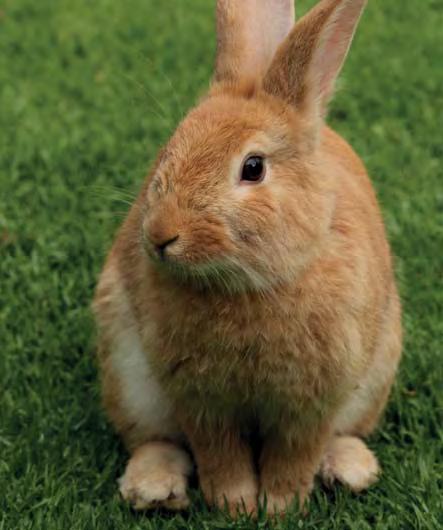
rabbits through contact with diseased wild rabbits, faeces, bedding material and flies, so unvaccinated pet rabbits will be at risk. There is a vaccine available that can protect pet rabbits, which is recommended by the New Zealand Veterinary Association (NZVA) and MPI. It is also recommended to follow biosecurity measures for pet rabbits, which can be found on the NZVA website and Facebook page. Have a chat to your veterinarian and make sure your rabbits are protected. For further information, contact your local Nutrition Specialist. Visit your local Farmlands store to take advantage of this month’s special pricing on NRM Rabbit Pellets.
Article supplied by Stacey Cosnett, Nutritionist, Farmlands.










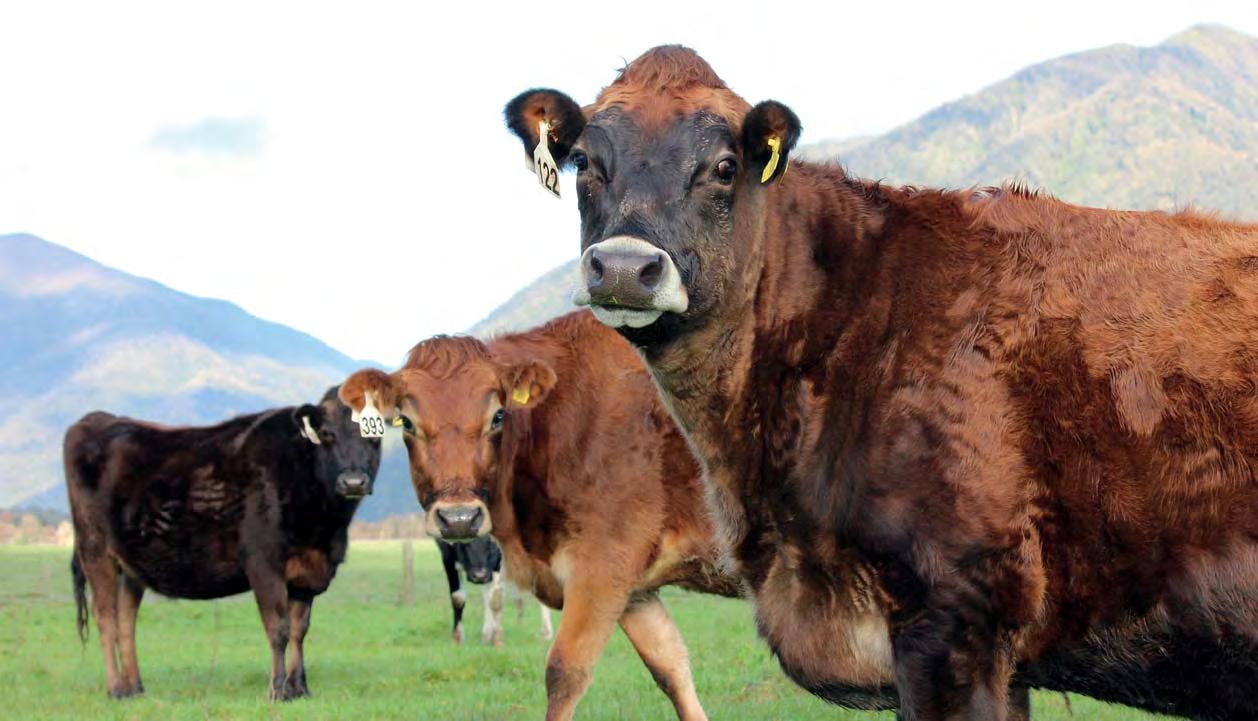
There is a mantra that the 3-week transition period each side of calving, critically important to the productivity and health of cows and their calves, is as easy to ignore as a background radio. I think it is worth re-stating and action taken where improvements can be made.
Calcium is not just critical for bones and teeth – it is integral to the operation of smooth muscles, so maintaining blood calcium levels is essential if calving is going to go well. Imagine the forces required to move 200 litres of wet rumen fluid full of long forage. How easily would rumen function be affected by poor muscular function at a time of the year when low dry matter forages limit rumen fermentation rates anyway? A quickly growing unborn calf and the production of calcium-rich colostrum will test the ability of cows to mobilise bone calcium as calving approaches. However, older cows are especially at risk because they tend to come into milk faster but mobilise bone calcium slower than younger cows. We are all slaves to our hormones but
calving cows are under extra pressure because the hormones secreted to relax ligaments in preparation for expelling a calf are not specific to the birth canal. Suspensory ligaments that normally take the weight of the cow on the wall of the hoof also relax and increase the risk of bones bruising the very sensitive cells that produce the sole tissue. The digital cushion, which works like a gel insert in sports shoes, is not fully developed in 2 year old cows and is thinner in cows with a lower Body Condition Score (I think the “Recent Advances in Lameness Control” seminar by Professor Jon Huxley makes for interesting viewing –available on YouTube). Ensuring cows calf down in the optimum condition with good appetites is not only going to impact on their production and fertility but also their vulnerability to sole ulcers, which may take 3 months to grow through to the surface of the sole. Add to this a mix of evolutionary strategy in all mammals for reduced immune response around parturition, an egg that takes about 90 days to mature (and is sensitive to hormonal
and chemical signals) and a suppressed appetite in cows so they keep close to their young rather than wander off for fresh pasture. You have a potent biological mix with some potentially negative consequences. NRM Pre-Calver Pellets have been specifically formulated with anionic salts to encourage bone mobilisation before calving to meet the growing needs of the calf and colostrum production. They have added protein to lessen the need for cows to mobilise body protein reserves. An ME of 12.5MJ/kgDM is impressive given their high mineral loading and reflects a high content of readily fermentable grains, which can help reduce the risk of subclinical ketosis. A high trace mineral and vitamin content in addition to Bovatec® add to the suite of ingredients selected specifically to help cows transition to lactation. They are worth considering by anyone looking for increased peace of mind this calving season. For further information, contact your local Nutrition Specialist.
Article supplied by Dr. Rob Derrick, Nutritionist, Farmlands.



It is critical for all newborn animals to receive colostrum in the first 24 hours after birth, so they maximise the absorption of the antibodies (immunoglobulins) present in colostrum directly into their bloodstream within that period.
Key for survival and nourishment, colostrum contains high levels of immunoglobulins and approximately 90 functional components beneficial to life:
• Immunoglobulins provide passive immunity to the newborn animal.
• Growth factors especially stimulate the growth of the gut.
• Other antimicrobial components include lactoferrin, lysozyme and lactoperoxidase.
• Fats are a direct fuel source. Immunoglobulin G (IgG) is key to a strong, robust start to life and for fighting infections.
The process by which a mother passes IgG to a baby via colostrum is called passive transfer of immunity. The antibodies in the colostrum pass through the walls of the gut to be absorbed directly into the bloodstream. The window for optimal passive transfer of immunity is about 24 hours.
What is failure of passive transfer?
Failure of passive transfer (FPT) occurs when a baby animal fails to obtain or absorb adequate quantities of IgG from colostrum in the first 24 hours. This affects long-term durability and hence productivity. What contributes to FPT?
• Feeding colostrum with inadequate levels of IgG.
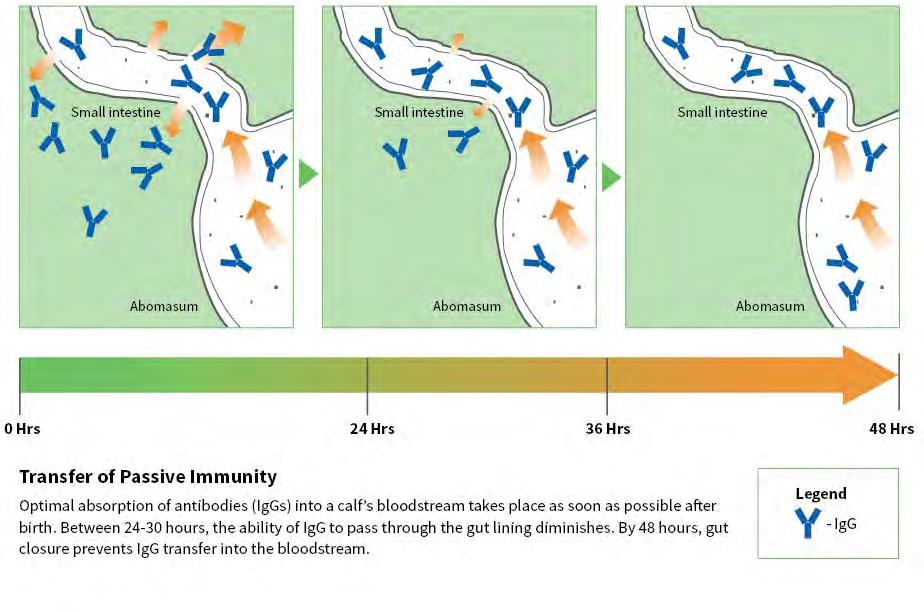
Optimal absorption of antibodies (IgGs) into a calf’s bloodstream takes place as soon as possible after birth. Between 24-30 hours, the ability of IgG to pass through the gut lining diminishes. By 48 hours, gut closure prevents IgG transfer into the bloodstream.
• Feeding insufficient volumes of colostrum.
• Feeding colostrum too late after birth.
• Bacteria contaminating colostrum at harvest, during storage or at feeding.
Numerous factors influence the immunoglobulin content of colostrum, such as:
• An insufficient quantity of colostrum.
• Inferior quality of colostrum, i.e. colostrum collected from cows after the first 24 hours post-birth.
• Poor maternal instincts.
• Suckling drive of the baby animal. In a 2015 study by DairyNZ, only 10 percent of 298 colostrum samples collected at multiple times during the calving season had IgG concentrations over the recommended levels¹.

Legend - lgG
FPT costs millions of dollars annually. Avoid FPT with AgriVantage’s new Launchpad 18 Colostrum Powder. Launchpad 18 is made from Colostrum Gold, sourced from cows in the first 24 hours after birthing, after the calves feed. Due to a unique manufacturing process, Launchpad 18 is both highly concentrated in IgG (18 percent) and full fat (24 percent), making it an excellent source of immunity and energy for optimal animal rearing. Launchpad 18 is suitable for rearing all types of ruminant animals. For further information, contact your local Nutrition Specialist. 1. https://www.dairynz.co.nz/news/ latest-news/colostrum-managementgiving-calves-a-great-start-to-life/ Article supplied by AgriVantage.






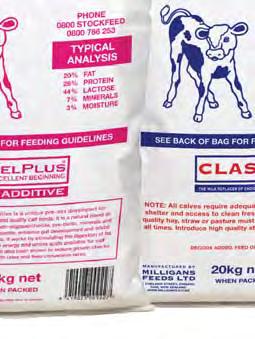

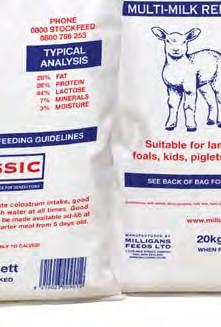

health and higher energy.
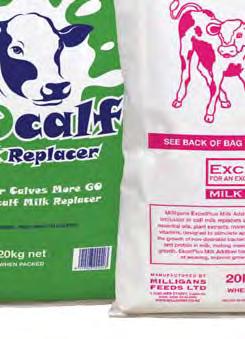
A proud 100% New Zealand owned and operated company based in Oamaru, South Island, Milligans Feeds is one of New Zealand’s leading suppliers of animal nutrition products.
Having over 30 years experience in producing high quality, top performing calf and lamb milk replacers, Milligans Feeds has been the choice for generations. With the growing range of animal health supplement products, Milligans has you covered!
• Premium quality milk replacers specially formulated for the selected animal
• Milligans ExcelPlus CMR contains ExcelPlus Milk Additive, a unique premix comprising of conventional minerals and vitamins at optimum levels, and a blend
• Made from a nutritionally balanced blend of milk products and selected vitamins and minerals
• ExcelPlus and Classic CMRs contain Deccox as an aid in the control of coccidiosis
• GOcalf and GOcalf Whey contain Bovatec® as an aid in the control of coccidiosis
• Also available, ExcelPlus Colostrum, ExcelPlus Electrolytes and Milligans Feed Bottles.


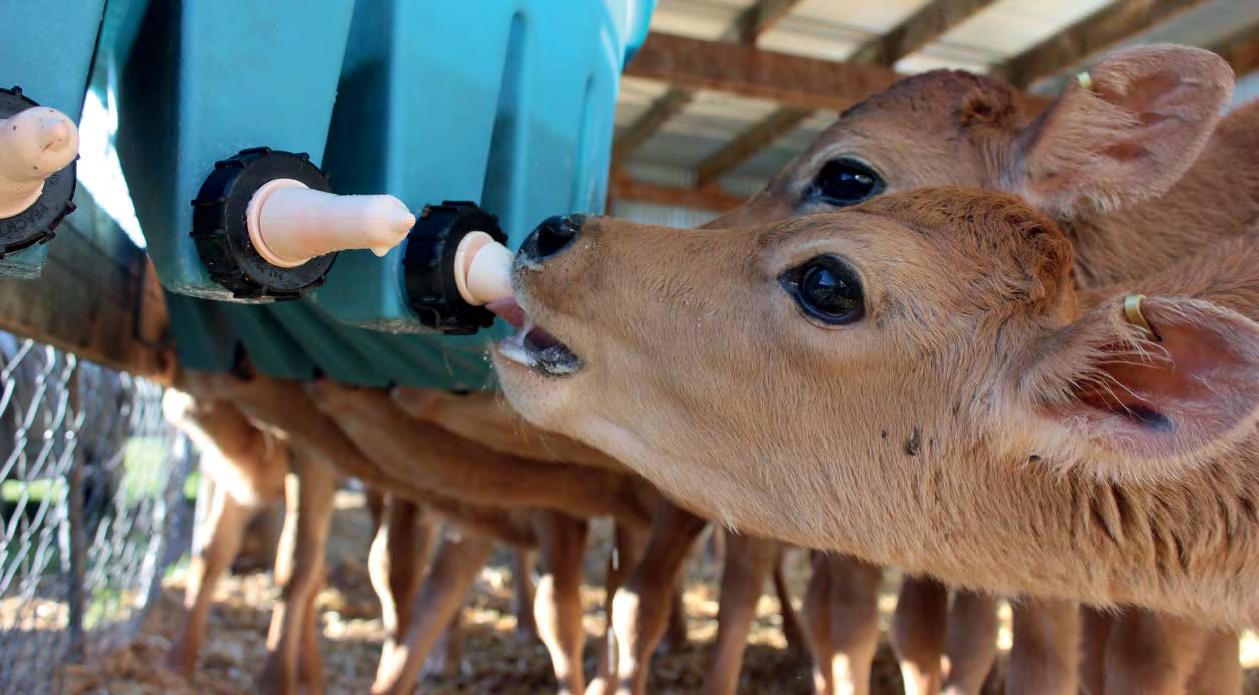
A key focus of the calf rearing period is to stimulate the rumen to start growing and developing prior to weaning off milk. Nutritious and health-supporting milk and a good quality starter feed are key components of a successful calf rearing system and can help take some of the stress and risk out of calf rearing.
After good colostrum intake has been achieved in the first day of life, milk becomes the most important source of nutrients for a calf. Feeding calves transition milk from the first milkings and waste milk from treated cows carries the risk of transmitting Johne’s, salmonella and other diseases such as Mycoplasma Bovis. These and other animal health concerns help to justify the use of well formulated calf milk replacer beyond a simple cost price advantage. There are two main types of calf milk powder – casein based milk replacers and whey based milk replacers. Both types can be used very successfully to rear calves. Casein based milk replacers will tend to clot in the abomasum of a calf, whereas
the whey based milk replacers will not.
Clotting is not essential for digestion in a casein based milk replacer – it may only affect nutrient flow and not nutrient digestibility or performance of calves1, provided raw materials have not been heat damaged. Anyone specifically buying a guaranteed high curding product is advised to check the curd strength using rennet to confirm it meets their expectation.
Starter feed
Offering a palatable, high protein, grain based calf feed as early as day 5 is the key to kick starting rumen development and stimulating dry feed intake in preparation for a grass based diet. Top tips for hard feed intake
• Choose a high quality, mineralised and vitaminised starter feed –ideally with no palm kernel. A key attribute should be a low dust feed with a great taste and mouth feel, as calves don’t like eating fines. Recent improvements to the NRM Moozlee formulation means it is now an even better choice for those who prefer to offer young calves a textured feed, with the added benefit of lucerne
chaff for a great taste and to help clean developing rumen papillae.
• Always make sure the feed on offer is fresh and only put as much into troughs as calves will eat between milk feeds.
• Calves maintain a lot of mouth activity after a milk feed – hand feeding young calves some hard feed immediately after their milk feed can help get them used to the texture and flavour.
• Calves can be exposed to coccidiosis from an early age, so feeding a hard feed with a proven coccidoistat such as Bovatec can help prevent a debilitating or even deadly parasite taking hold – but remember to keep away from dogs and horses who can be killed by ingestion of coccidiostats.
• Always have fresh water available –water is critical for hard feed intake.
For further information, contact your local Nutrition Specialist.
1. J. I. Longenbach, A. J. Heinrichs, 1998. A review of the importance and physiological role of curd formation in the abomasum of young calves. Animal Feed Science and Technology in 1998. Article supplied by Stacey Cosnett, Nutritionist, Farmlands.












For full terms and conditions and offer dates please refer to www.bridgestonetyres.co.nz/farmlands or see in-store. *Buy one get one half price promotion applies to selected Bridgestone car tyres (Potenza and Ecopia) and selected 4x4 tyres (Firestone Destination LE02 and Bridgestone Dueler 697). Which excludes all other patterns outside of this range and all van and commercial tyres. Some additional size exclusions apply. See www.bridgestonetyres.co.nz/farmlands for a full list of exclusions. Normal fitting and balancing charges apply. Savings are off current in-store regular point of-sale price. In all instances the lowest value tyre will be given free of charge. All tyres must be fitted in-store at the time of purchase. Offer is available strictly while stocks last. Offer cannot be used in conjunction with any other discount or offer. Please see in-store or our website for details www.bridgestonetyres.co.nz/farmlands.
†For agricultural tyre pricing, please ask in store for details.
As farming becomes more complex, technology is becoming increasingly important.
Regulation, industry and market requirements, the drive for precision, accountability, traceability and transparency are all increasing demands on farmers. But there are still only 24 hours in the day, so technology has a crucial part to play. Gathering, analysing and using data to help improve productivity and profit, simplifying routine tasks and improving communication and collaboration are some areas where technology can provide valuable support to your farm business.
Companies providing farm services and supplies are also embracing technology to reduce time and effort for their customers. As an example, Ballance Agri-Nutrients has undergone a major digital
transformation with the launch of its MyBallance online customer platform.
GM Customer Experience and Marketing, Sheena Henderson says MyBallance will provide farmers with a consistent, contextualised customer experience and a “360-degree view” of their Ballance relationship including online ordering, access to fertiliser plans and recommendations, spreader integration, proof of application, shareholding and financial data. Benefits include better information about fertiliser application and volume, easier collaboration and delegation and a better all-round customer experience. “It’s about making life easier to do business with Ballance on any device via any channel that you might use to interact with us as a customer, whether that be via a retail and merchant partner like Farmlands, through one of our Ballance nutrient specialists, by
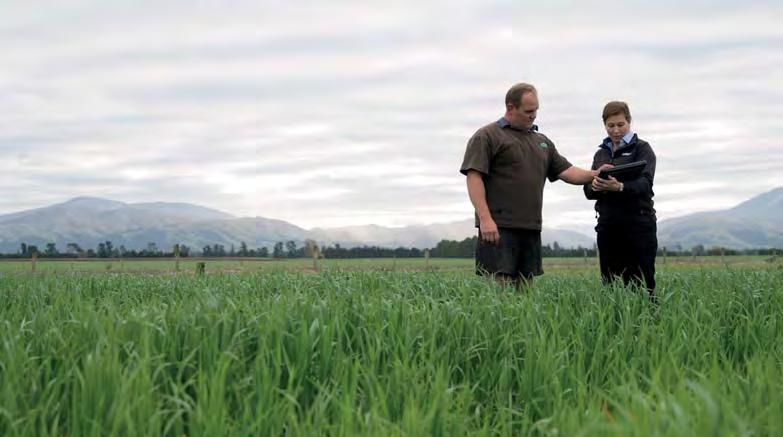
ringing our customer services team, or by dealing with us directly online,” Sheena explains. “It provides one version of the truth for you however you choose to engage with us.”
Chief Digital Officer, Dave Scullin says the company has worked closely with farmers to develop MyBallance so it is easy to use and meets the demands of modern farming environments. MyBallance combines e-commerce features with rich multi-farm information to support analysis and decision-making. A key advantage is the ability to plan visually by using an accurate 3D map. MyBallance leverages the ArcGIS mapping platform from ESRI (a global leader in geo-spatial software) to model each farm’s surface area and topography, so you can make more accurate fertiliser purchases by taking into account the contour and any exclusion zones. “You can draw boundaries to define paddocks, management blocks and farm features,” Dave explains. “You can then use your map to view different soil types, order fertiliser directly from the map, see the status of orders and access your fertiliser plan for the year.” MyBallance provides a flexible, transparent and easy way to order products online 24/7 (including repeat orders and custom mixes) and choose delivery dates or pick up locations. For further information, contact your Farmlands Technical Field Officer or the friendly team at your local Farmlands store.
Article supplied by Ballance.





Lambs are born with very few antibodies and rely on antibodies in the ewe’s colostrum for protection against clostridial diseases including pulpy kidney and tetanus.
Clostridial vaccination of the ewe just prior to lambing is utilised on most New Zealand farms to maximise the level of antibodies lambs receive in colostrum. The more antibodies they receive, the higher their chances of survival if they face disease challenge (for example from diseases like tetanus or pulpy kidney). It is therefore vital to get pre-lamb vaccination right – both with timing and the level of antibodies produced.
For timing, it’s about stimulating the ewe at the right time, so her antibody levels peak when forming her colostrum. Ideally this is about 2 weeks ahead of lambing but different farms have different management systems and lambing spread varies, so the flexibility to vaccinate earlier can be important. For antibody levels, it’s about ensuring sufficient antibodies are available for transfer into the lamb(s). How much is sufficient can vary depending on whether a ewe has one, two or three lambs suckling and how much disease challenge a lamb may face.
The gut of the newborn lamb is best at absorbing these antibodies within the first 12 hours of life, so it’s crucial this colostrum is the best quality and volume possible. So, if it is convenient to vaccinate the flock 2 weeks ahead of lambing and you have a large number of single bearing ewes, then you may choose a pre-lamb 5-in-1 vaccine like Multine® Multine gives a good antibody response and when used closer to lambing (2-4 weeks), provides protection for the lambs for up to 12 weeks. New Multine B12 also contains a dose of vitamin B12, meaning you can supplement the ewe (and her lambs via colostrum) with B12 in a single injection. However, if your flock has a higher number of multiple bearing ewes, or you vaccinate earlier (for example, to reduce the likelihood of sleepy sickness), or you want longer protection of lambs to reduce losses through until weaning (e.g. pulpy kidney deaths) then Nilvax® would be a much better choice for your farm. A specialist pre-lamb vaccine, Nilvax is formulated with a powerful 5-in-1 plus an immune booster – levamisole. Used at pre-lamb, Nilvax boosts the protective antibody levels of ewes, preparing them to produce antibodyrich colostrum available to their lambs.

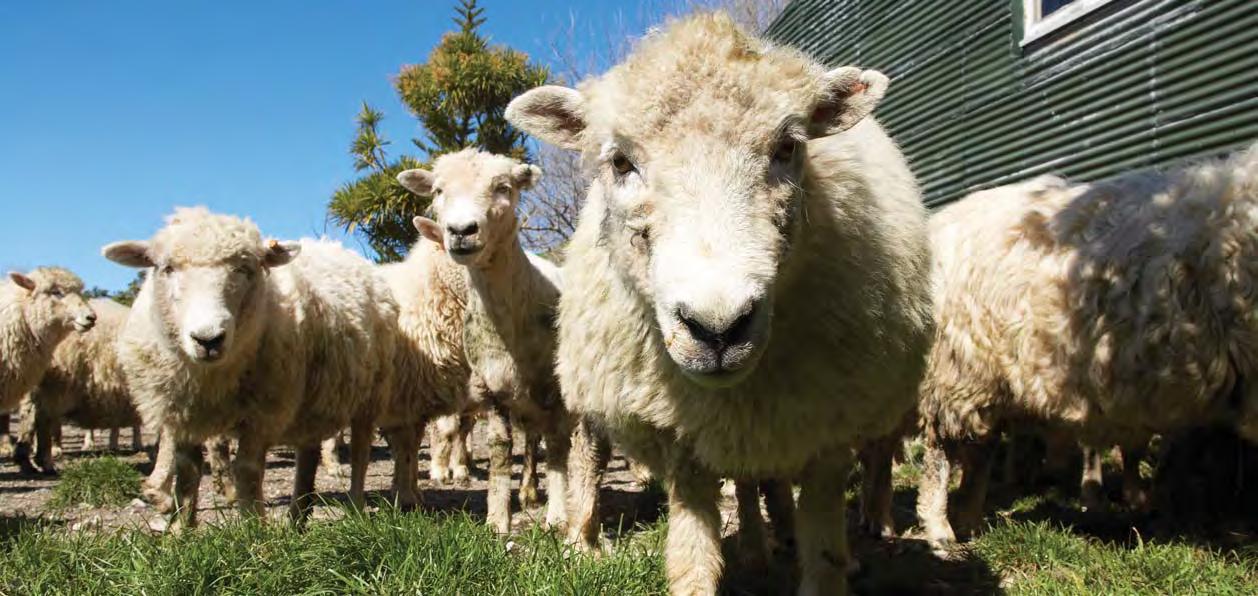
With Nilvax, more ewes respond with higher antibody levels than with other 5-in-1s1. Higher antibody levels also provide protection for up to 16 weeks, 4 weeks longer than other 5-in-1s2 Vaccination can also happen earlier – from 6 weeks pre-lamb, 2 weeks earlier than other 5-in-1s2. Plus, Nilvax can also be suitable as a short-acting, priming drench ahead of pre-lamb capsules or in combination with other long acting drench products. Whether Nilvax or Multine is the right choice for your farm is up to you. What you can be assured of with both is they are both developed and manufactured in New Zealand to the highest standard, for New Zealand farming challenges. They both have excellent local field data that shows that Nilvax produces the highest antibody levels in ewes at pre-lamb and Multine also produces high antibody levels2 For further information, contact your Farmlands Technical Field Officer or the friendly team at your local Farmlands store.
1. Pre-lamb vaccination: Comparing Apples with Apples, J. R. Moffat. Soc. Sheep and Beef Cattle Veterinarians, NZVA 2004.
2. ACVM Approved Label, Nilvax A3977, Multine A0934, Multine B12 A11311.
®Registered Trademark. Schering-Plough Animal Health Ltd. ACVM Registration numbers: A3977, A0934, A11311.
Article supplied by MSD Animal Health.

























When it comes to having a successful lambing, it doesn’t just happen – it’s planned.
There are a number of well-known key ingredients required for a successful lambing, including nutrition, body condition score, disease prevention, parasite management and resource management.
Nutrition
Ensuring the ewes are set stocked in the right paddocks on good feed covers starts with having enough feed going into winter. You need to time your winter rotation to ensure the twinning country has time to recover between being grazed and set stocked, all the while ensuring your ewes are on a rising feed plain that matches their increasing energy demands as the unborn lambs develop in late pregnancy.
Body condition score (BCS)
Ensuring ewes lamb in adequate body condition (> BCS 2.5) should start at weaning the previous summer. Constantly drafting off the bottom end of the ewes and either culling or preferentially feeding them will not only keep the average condition score up but will also maximise the number of ewes lambing within the optimum range of body condition (BCS 2.5 – 3.5).
Disease prevention
As pregnancy advances and the ewe’s immunity relaxes, she becomes more susceptible to disease. Clostridial diseases (tetanus, pulpy kidney, blackleg and malignant oedema) are common causes of sudden death in ewes and their lambs. Preventing these deaths through vaccination of
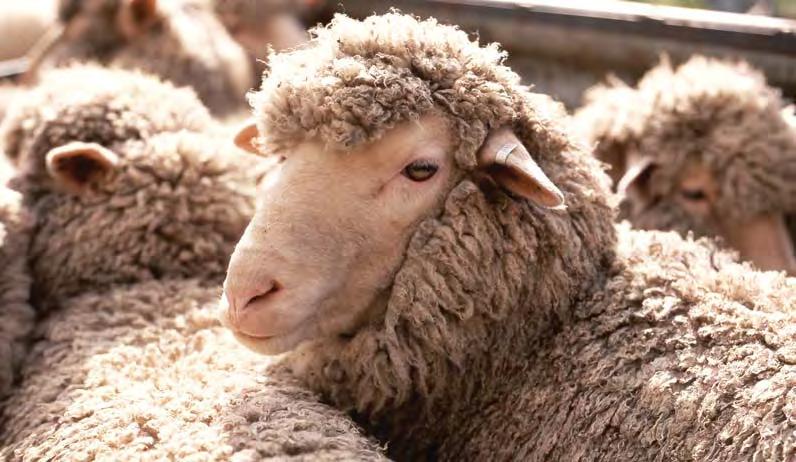
the ewes 3-4 weeks prior to lambing with Lifeguard® 5-in-1 is crucial to reduce ewe wastage and to pass on protective antibodies through the colostrum to protect the lambs until they can be vaccinated. Planning to make this happen on time is crucial to ensure good colostrum antibody production and that ewes are not off grass too long, too close to lambing.
Parasite management
Planning which ewes are treated for parasites and with which product can help lift the performance of the ewe flock. Unnecessary treatment is just another cost. Single ewes that are in good condition and on reasonable feed should not need treatment. Twin ewes in poor condition will benefit significantly from a long acting treatment (e.g. Cydectin® Long Acting Injection for Sheep) given at pre-
lambing or even as early as scanning. Single ewes in poor condition, or twin ewes in good condition but on poor feed would benefit from a shorter acting treatment (e.g. Eweguard®) given at pre-lambing.
Resource management
Planning the use of your available resources (e.g. labour, contractors, time and facilities) will often dictate product selection at pre-lambing. Where labour and time are limited the use of combined injections (e.g. Eweguard) can be a great benefit. Plan to make this a great lambing! For further information, contact your Farmlands Technical Field Officer or the friendly team at your local Farmlands store.
Cydectin, Eweguard and Lifeguard are registered trademarks of Zoetis Inc. or its subsidiaries. ACVM No. A9926, A11146 and A11147, A7302, A9122. Article supplied by Zoetis New Zealand.





















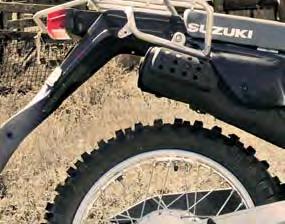






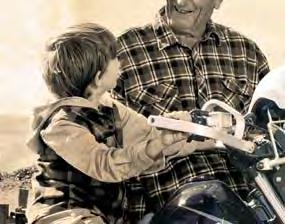
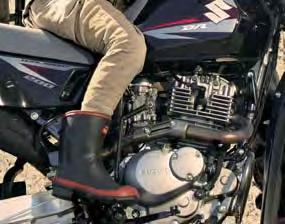
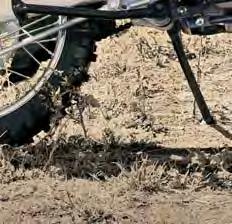






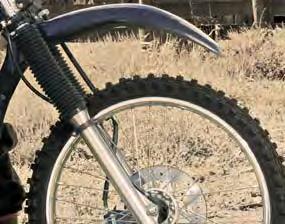

















To celebrate 60 years of Red Band, purchase any Red Band product during June/July and be in to win 1 of 4 Suzuki DR200SEL5 Trojan bikes & helmets. Enter at your local Farmlands store or online at redband.co.nz/win Terms &
















Reducing costs and improving milk income this season could be as easy as making a few simple changes to the rubberware in your dairy plant. As a bonus, you’ll end up milking more efficiently too.
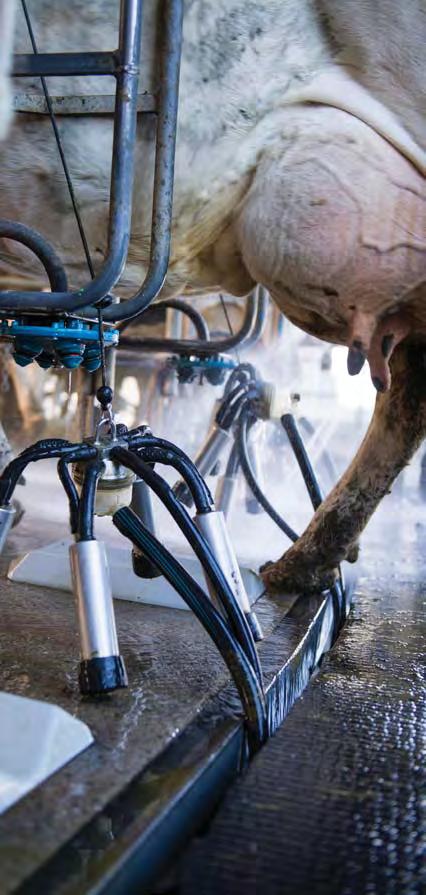
Most dairy rubberware is designed to take a lot of punishment and it needs to be. As soon as it is installed in your plant, its surface strength and integrity comes under daily attack from a wide range of environmental challenges, including milk, detergents, sanitisers, milkstone removers, ozone, UV light and variable temperatures. Changing milking liners once they reach their use-by date not only shortens milk-out time, reduces cup slip and lowers somatic cell counts, it also helps save power, labour and animal health costs and can increase milk solids yield while minimising the risk of costly grades. Farmers who change milking liners at the recommended lifespan of 2,500 milkings report immediate reduction in teat end damage as well as better SCC result, according to Skellerup National Manager, Perry Davis. Unlike tubing, milking liners come in direct contact with the cow, so rough, ill-fitting surfaces on the inside affect not only milk quality and milking efficiency but also teat health and cow comfort.
Changing liners now means you’ll get a head start to the coming season, with no worries about sacrificing milking performance through worn out rubberware.
Tubing is another area to check – while it may look perfectly fine outwardly, it can be eroded and pitted where the interior surface comes into contact with milk and you may have no reason to suspect there’s a risk associated with it until a milk quality problem crops up.
“That’s why we support the best practice of replacing all rubberware that touches milk every year, rather than waiting until you see signs of splits, wear or perishing on the outside,” Perry says. “Tubing is particularly vulnerable. By the time you see or feel cause for concern externally, the inside has almost always been well damaged by milk fat and cleaning compounds.”
Air tubing needs to be checked too, as do claw and pulse tubes. Perry advises farmers to look for splits and holes – these can cause loss of vacuum in the system, changing pulsation characteristics and increasing problems with cup slippage. This also reduces milking performance, leading to a longer and/or incomplete milk-out. As a general rule, air tubing can last longer than milk tubing but should be routinely replaced every 2 years. “It might seem like a bit of a chore but following a simple maintenance and replacement schedule for all dairy rubberware helps your plant remain efficient and productive for a relatively low outlay. Plus, it gives peace of mind – you don’t need to worry about problems you can’t see coming if you know your plant is well-maintained.”
For further information, contact your Farmlands Technical Field Officer or the friendly team at your local Farmlands store.
Article supplied by Skellerup.











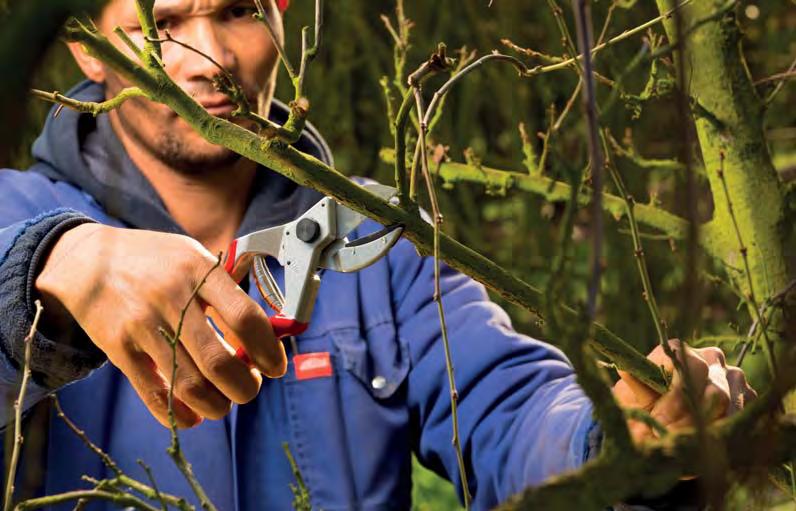
Selecting the right tool for your pruning task will depend on the size and hardness of the wood that you plan to cut, your strength and your preference.
Generally, secateurs are used for cuts up to 25mm, loppers for cuts 4045mm and a saw for anything bigger. Secateurs
There are two types of secateurs to choose from – bypass and anvil. Bypass secateurs are those where the blades cross each other to give a nice, clean cut. They need to be properly adjusted and maintained to give the best results. Anvil secateurs have the cutting blade press against a stop. This tends to bruise the plant, so these types of secateurs are preferred when cutting dry wood, as they are more efficient because of the reduced friction between the blades. Several parameters come into play when selecting secateurs. Quality of manufacture should be at the top of the list. A quality tool will not only last many years, it will stay sharp and work efficiently for longer and be easier to maintain. The shape and size of secateurs is a matter of personal preference. It’s simply a matter of which one feels comfortable in your hand. Secateurs designed for lefthanded operators are also available. Loppers
Loppers come in various lengths and specifications. Once again, consider the quality of manufacture when selecting one. This is more important with loppers than with secateurs, as you will be putting
| Use secateurs for cuts up to 25mm, loppers for cuts up to 40-45mm and a saw for larger cuts.
a lot more pressure on the tool.
Handle length depends on how much heavy cutting you have to do. Longer tools give you more leverage, so you can make more cuts without tiring. Short loppers (40cm handles) are a perfect alternative to secateurs when you want to, or have to use both hands.
With saws, there are two types of blade to consider – straight and curved. A straight saw is easier to use in tight situations because you need less space to move the blade. Curved saws are designed to be more efficient when pruning above shoulder height. Quality blades are heat treated to minimise resistance when cutting. Today’s new blade designs makes resharpening very difficult but
replacement blades are a good option. To determine the size of branches you can cut with a specific saw, a good rule of thumb is to cut branches that have a diameter that is up to one-third the length of the blade.
The Felco range of pruners, loppers, cutters, saws, knives and accessories can provide the right tool for your pruning task. Distributed exclusively by Heiniger New Zealand and available at your local Farmlands store, the Felco range brings quality engineering, ingenuity, safety, reliability and performance to the agricultural industry. For further information, contact your Farmlands Technical Advisor or the friendly team at your local Farmlands store. Article supplied by Heiniger New Zealand.













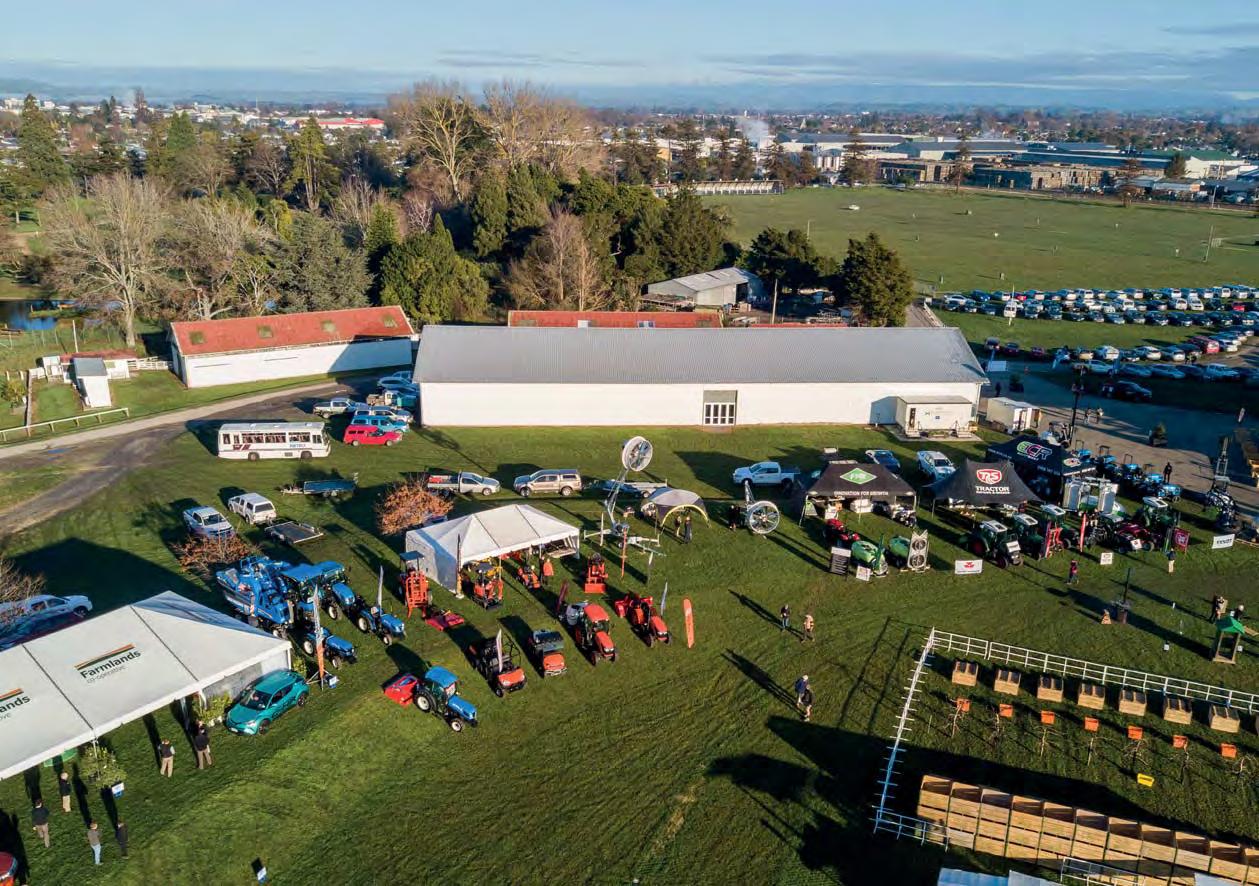
Farmlands is proud to again support New Zealand’s premier horticultural event, the BNZ National Horticultural Field Day. Held at Showgrounds Hawke’s Bay Tomoana, this year’s event will take place from 8.00am to 4.30pm on Thursday 28 th June.
A showcase of New Zealand’s horticulture industry, the event creates a genuine opportunity for industry networking, business to business interaction and education.
General Manager of the Hawke’s Bay A&P Society, Sally Jackson says that one of the best things about the event is that it is specifically created for the horticulture industry. “There is no other event like it,” she says.
The National Horticultural Field Day will feature more than 66 trade sites, interactive displays of new and innovative horticultural
machinery coming to the market, an outdoor horticultural art competition and an array of other exciting activities – including the popular BNZ Seminar Series.
The BNZ Seminar Series is a great opportunity for industry heads, researchers, scientists and industry representatives to come together for education, innovation and information sharing.
Following this, all eyes will then be on the main event of the day, the Hawke’s Bay Young Fruit Grower of the Year, where up to eight competitors battle it out for the annual title.
President of the Hawke’s Bay Fruitgrowers Association, Lesley Wilson says that visitors come from all over New Zealand to attend the event and the focus on the horticultural industry is key to its success. “The organisers
are committed to keeping the 100 percent horticulture focus and growing the event in line with the industry’s demands and requirements,” she says.
Join the Farmlands team at the National Horticultural Field Day to see the best that the New Zealand horticulture industry has to offer. In addition to key supplier exhibits and special deals in the Farmlands marquee, the Farmlands team will be on-hand to provide advice and information.
The National Horticultural Field Day has a complimentary ticketing system, which ensures most members of the industry can attend the event for free. Tickets can be acquired by contacting Event Co-ordinator, Di Roadley –events@showgroundshb.co.nz or (06) 878 3123 – 704. Visit www.nationalhort.co.nz for further information.

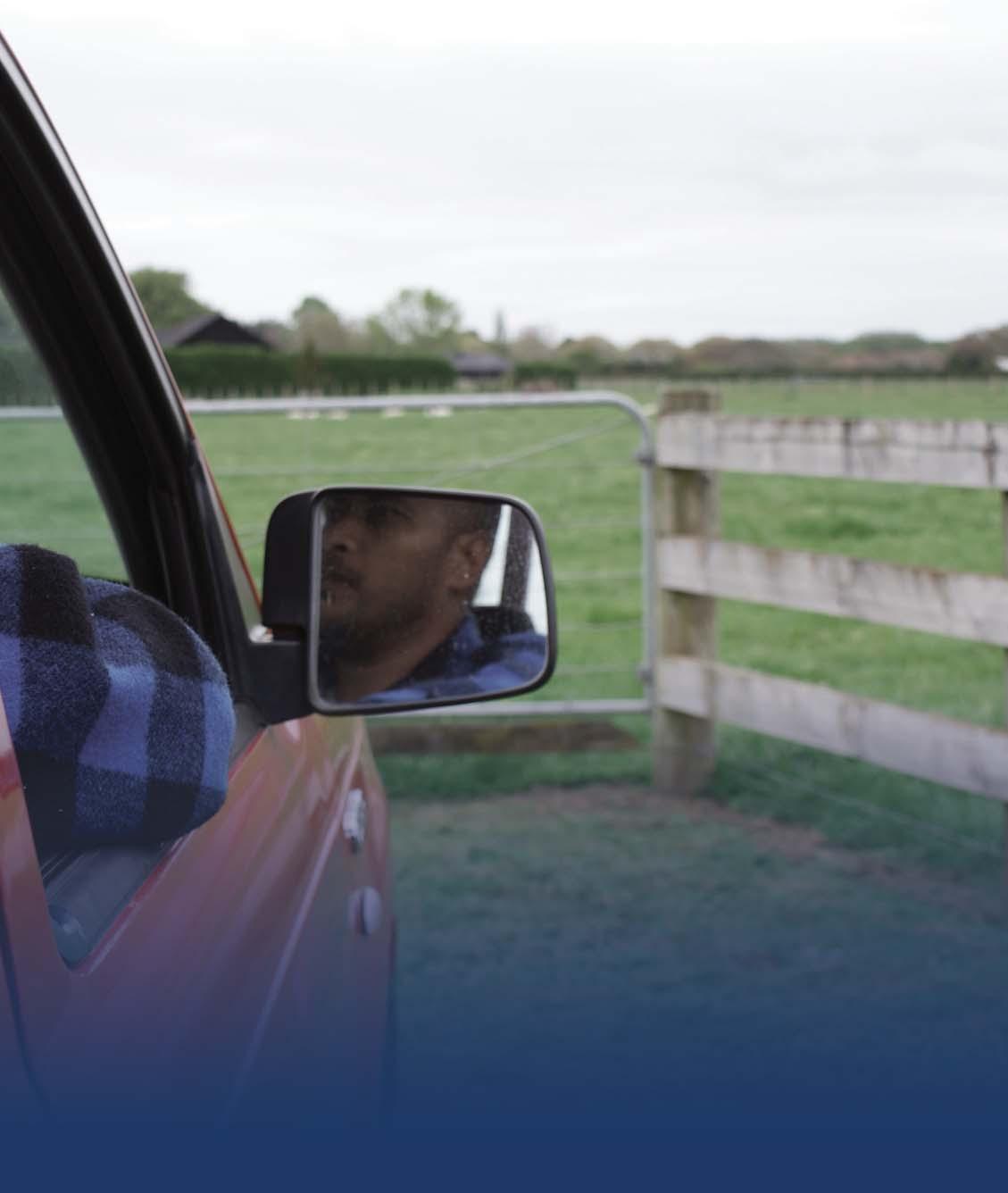








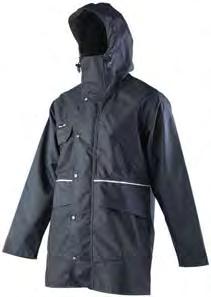
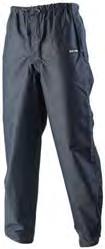
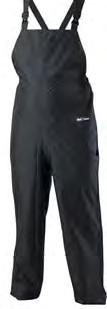




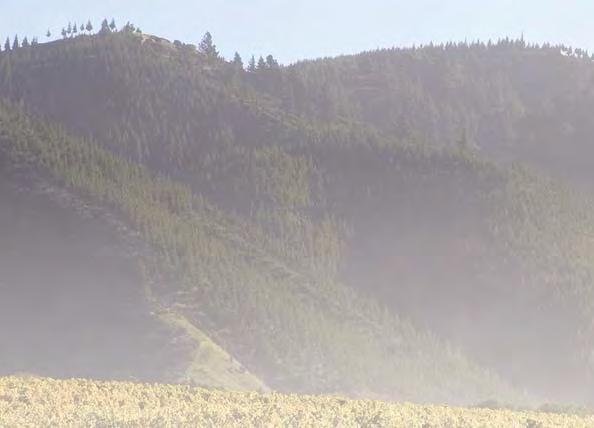










Mystery Creek, 13th to 16th June
Site F103 – 109
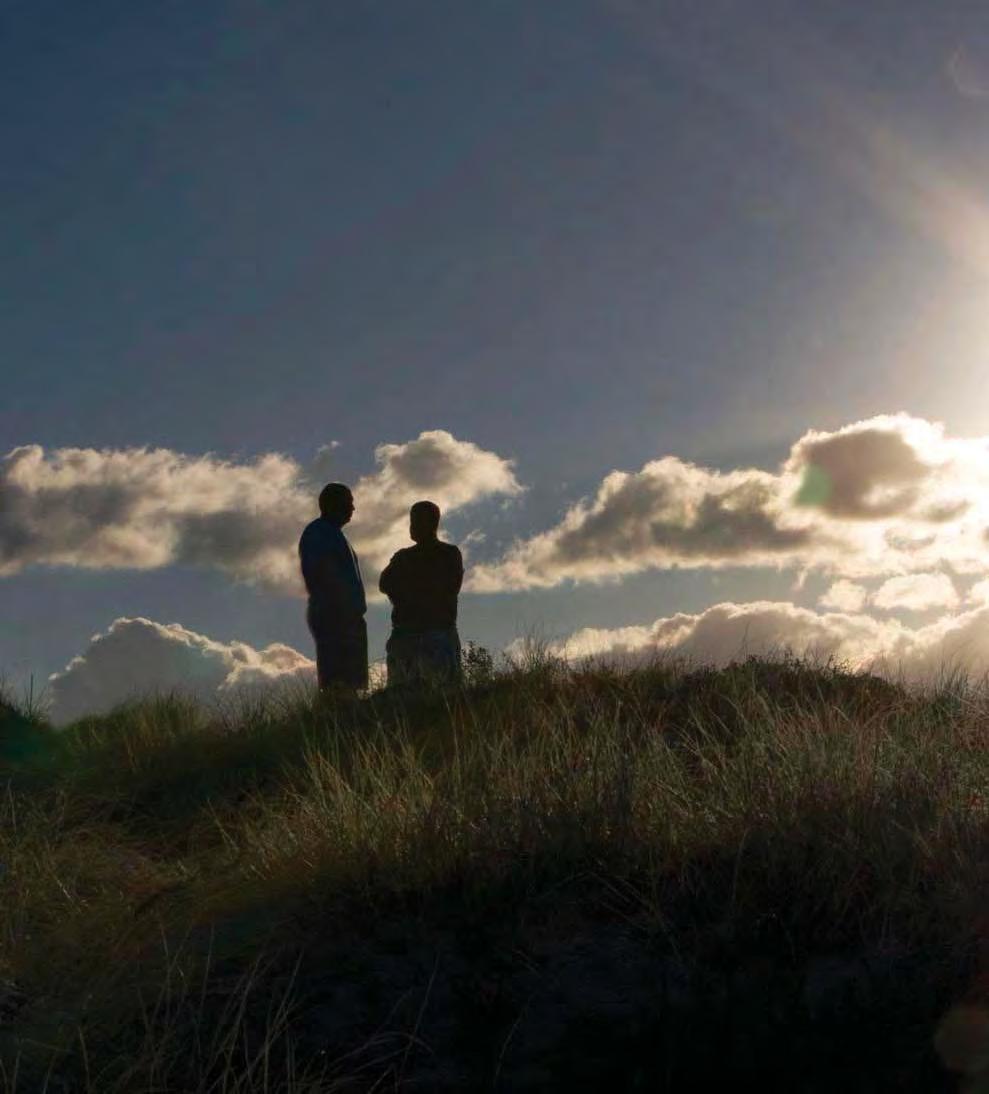
Whether you have questions about selling, buying, renting or even a career change, come and chat with our Farmlands Real Estate team at Fieldays.
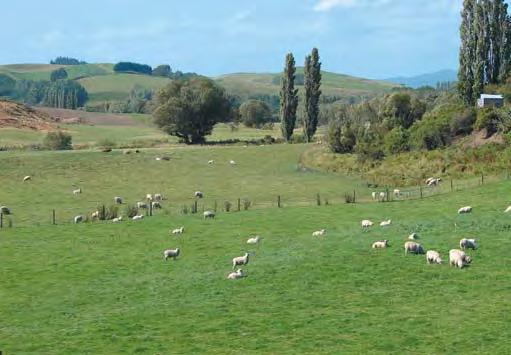
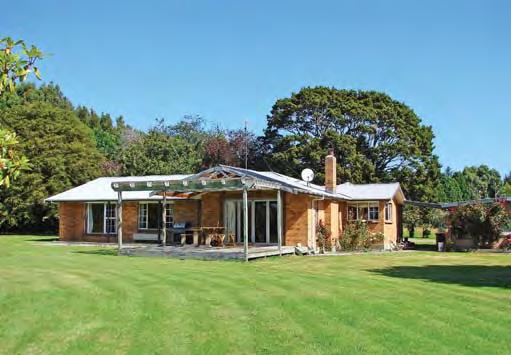
Large four bedroom family home with office, plus a games/ hobby room or fifth bedroom. Well set up with an exceptional amount of very good shedding from the 4-stand raised board woolshed and covered-in yards, 4-bay implement shed and workshop area, storage shed, 4-bay hay barn and cattle yards all complement this property. Well suited for a contractor or engineering mind set farmer wanting just a little more. The farm has a mix of river flats and easy rolling land with one steeper sidling. $1,230,000 plus GST.
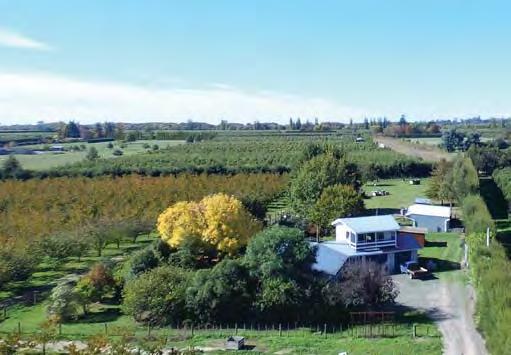
Three bedroom plus office summit stone home, with a deck area that leads off the family room and a large bedroom or rumpus room above the integral double garaging. There is a good selection of shedding with power to the main implement shed. Four hectares of deep alluvial flats, fully planted in Tatua Star and Golden Queen peaches and a small selection of plums. Own bore and fully consented to irrigate with an overhead delivery system that may suit a variety of horticultural uses. Tender sale closing 2pm, Friday 15 June 2018 (unless sold prior).

John Beaufill
Lifestyle / Rural – Invercargill 027 431 0054
john.beaufill@farmlands.co.nz
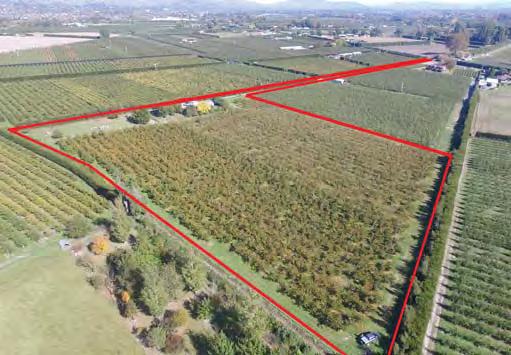

Paul Evans
Lifestyle / Rural – Hastings 027 533 3314 paul.evans@farmlands.co.nz
Mark Johnson
Lifestyle / Rural – Hastings 027 487 5105 mark.johnson@farmlands.co.nz
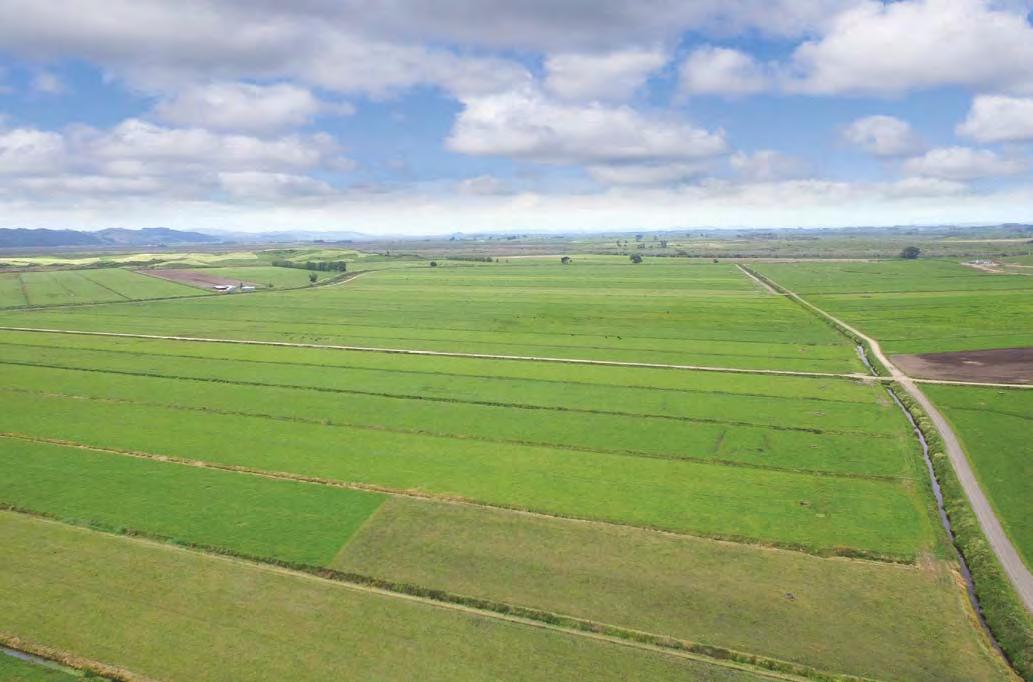
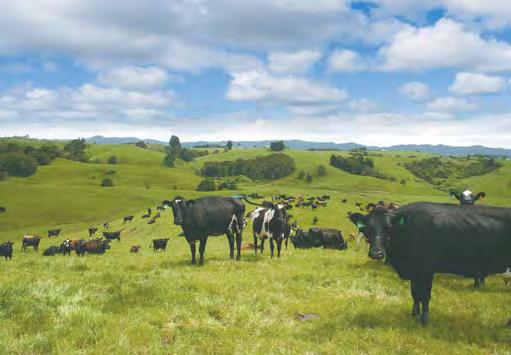
Kopuera Land Company has developed this substantial land holding of 1,014 hectares into a modern and efficient dairy farming enterprise over the last 7 years. The Company is being offered for sale by negotiation for Land and Buildings with an option to maintain the current lease arrangement with the lessee owning the livestock, plant and machinery. Lease quantum represents an expected commercial return with a 3-year term and two further rights of renewal. Price by negotiation.
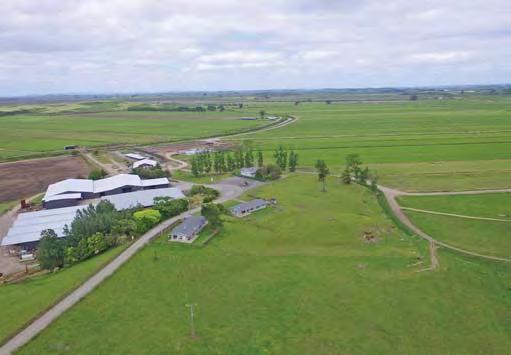


www.farmlandsrealestate.co.nz
Ian Morgan Lifestyle / Rural – Waikato 027 492 5878 ian.morgan@farmlands.co.nz
Glen Murray
Lifestyle / Rural – Waikato 027 488 6138 glen.murray@farmlands.co.nz