

Welcome to the final edition of The Farmlander for 2016. It has been a year of two halves. Our business started 2016 by continuing to work in difficult market conditions. It is finishing well and we look forward to what 2017 will bring. Last month we held the Farmlands Annual General Meeting, where shareholders had their opportunity to speak on our result announcement and our Annual Report. We have taken all feedback on board and thank those that either attended in person or sent through their proxy forms to have their say. At the AGM we also announced the result of the South Island Director election. Chris Dennison has been elected on to the Farmlands Board of Directors, replacing John Foley. We would like to congratulate Chris on his election – he is someone who has great experience on both a farming and a governance level and our co-operative will benefit from his experience. Later in this edition you can read an article on John’s time as a Director – we felt it was important to pay tribute to more than a decade and a half of service to our co-operative.
Finally, on behalf of the Board and staff at Farmlands, we wish you and your families a happy and safe summer. We all know that in the primary sector, there are no real days off but our hope is you at least get to recharge the batteries, spend quality time with your family and friends and close off the year in style.
The Farmlander will be back in February – until then, enjoy your summer. Kind regards,

Lachie Johnstone Chairman
Farmlands Co-operative Society Limited

20-21
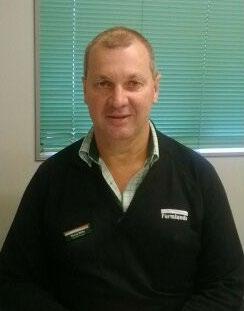
Q: What is your current role at Farmlands?
A: Business Manager, Farmlands Palmerston North.
Q: What type of work were you doing before you started at Farmlands?
A: Managing a kiwifruit and pear orchard.
Q: Where is your favourite New Zealand getaway?
A: I enjoy Hawke’s Bay and the Napier area, especially when the fruit is being harvested.
Q: What is the most interesting trip you have ever taken?
A: I was taken on an in-depth tour through the township Soweto, just outside Johannesburg.
Q: If you could live anywhere in the world, where would it be?
A: Right here in New Zealand. I spent 24 years living overseas only to realise the best place to live is right here.

1 tablespoon rice bran oil
500g chicken breast (skinless), chopped
1 onion, finely diced
1-2 tablespoons red curry paste
50g palm sugar
1. Heat oil in a frying pan or wok.
2 tablespoons tamarind paste
4 fresh kaffir lime leaves
1 tablespoon dark soy sauce
400ml can coconut cream
1/2 cup roasted peanuts, finely chopped (optional)
2. Add the chicken and brown over high heat until golden.
3. Remove the chicken from pan and set aside.
4. Add the onion to the pan and cook over medium heat for 2 to 3 minutes until onion softens.
5. Stir in the red curry paste, tamarind paste and palm sugar and cook for a further minute.
6. Add the chicken back to the pan along with the soy sauce and coconut cream and bring to the boil.
7. Once boiling, add kaffir lime leaves to the pan and simmer for a further 10 minutes or until the chicken is cooked all the way through.
8. Remove kaffir lime leaves from the pan and garnish with the chopped peanuts.
9. Serve with steamed rice and a selection of green vegetables.
Tap into the huge amount of knowledge and experience at your local Farmlands store. Drop in, call 0800 200 600 or visit www.farmlands.co.nz

Check out our Facebook page to see what’s happening at Farmlands. www.fb.com/farmlandsnz CALL
Farmlands store.
Horticultural Advisory Service available.













with 3 Seats and 2 Loungers Farmlands Card
Save
Available from PoolPac, call 0508 766 5722 or visit www.poolpac.co.nz.



and Conditions apply.












New Zealand schools training the next generation of the rural industry.
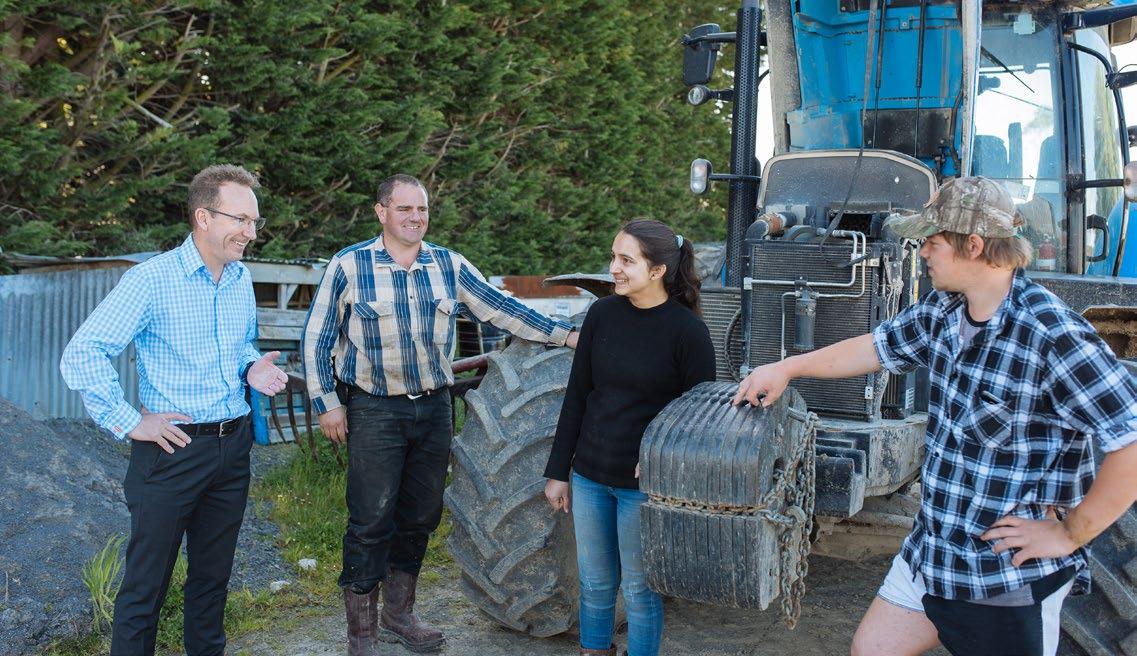
To run a successful farming business, understanding all the aspects of modern farming is paramount – and what better way to learn than by doing? Getting out onto the farm to learn the ins and outs of farming work is what is expected of the students at Lincoln University’s Telford Campus and at Smedley Station and Cadet Training Farm. Telford and Smedley are two well-known and well respected institutes and the staff at these institutes are dedicated to training the next generation of farmers.
Located 5 minutes from Balclutha in the heart of South Otago, Telford covers more than 921 hectares of farmland with halls of residence and facilities, technical workshops (machinery, carpentry and welding), classrooms and livestock units.
Telford students learn practical farming skills through handson training supervised by experienced tutors, as well as being
part of regular work experience on external farms.
Telford Campus Manager, Chis Hargest, has been responsible for the day to day running of the campus for almost 4 years and says he loves the variety of his role.
“Every day is different, that’s what makes the job so enjoyable. You just don’t know what’s going to happen from one day to the next,” he says.
The Director of Telford is based at the main Lincoln University campus near Christchurch, so Chris travels up there on a regular basis.
“We’ve also got a satellite campus up in Kaitaia where we run our apiculture course,” he says. “I remember when we moved all our beehives up to Kaitaia – that was the first time I had ever dealt with bees. I had to get in a bee suit and all the hives

There’s not many businesses where you can look out the window and see sheep in a paddock and then look out the other window and see students on campus. It’s a really vibrant place.
had to come in to the campus to be put on a truck to be driven up north. It was more bees than I’ve ever seen in my life. That was quite an experience.”
Not only does he love the variety of his role, Chris says it’s hard to beat the location. “There’s not many businesses where you can look out the window and see sheep in a paddock and then look out the other window and see students on a campus. It’s a really vibrant place.”
Chris has lived in Balclutha for most of his life and although he doesn’t have a background in farming, he currently lives on a small lifestyle block with his wife and two children. Before finding his dream job at Telford, Chris had roles in banking and finance, small business enterprise and business development.
“I enjoy the challenges at Telford and I enjoy the people I work with. Sometimes it takes people a long time to find a job that they really enjoy – I’m really lucky that I’ve found it.”
Chris says he really enjoys seeing how the students develop as individuals during their time at Telford and he appreciates the hard work and dedication that the tutors put in to getting the best out of them.
“The students that leave the Telford campus are certainly prepared to do well in the workforce. The tutors put a lot of work in to getting them to where they are. Telford students are sought after in the workforce,” he says. “But the thing that probably stands out to me about Telford is the dedication of the staff to the organisation.”

Telford originally operated as the Telford Farm Training Institute from 1964 to 1974, a result of successful negotiations by a group of South Otago residents who were keen to see an agricultural training facility established in the area. The land for Telford was made available by the family of William Telford, administered by the Telford Farm Board of Management according to the terms of the Telford Act of Parliament 1964. In 1974 a partnership was made between Telford Farm Training Institute and the Ministry of Agriculture and Fisheries, whereby the Board was responsible for the farms and the Ministry was responsible for the education. In 1989, the Ministry of Education replaced the Ministry of Agriculture and Fisheries as partner and in February 1991, Telford became a polytechnic with a council elected to operate the campus and educational facilities, alongside the Board.
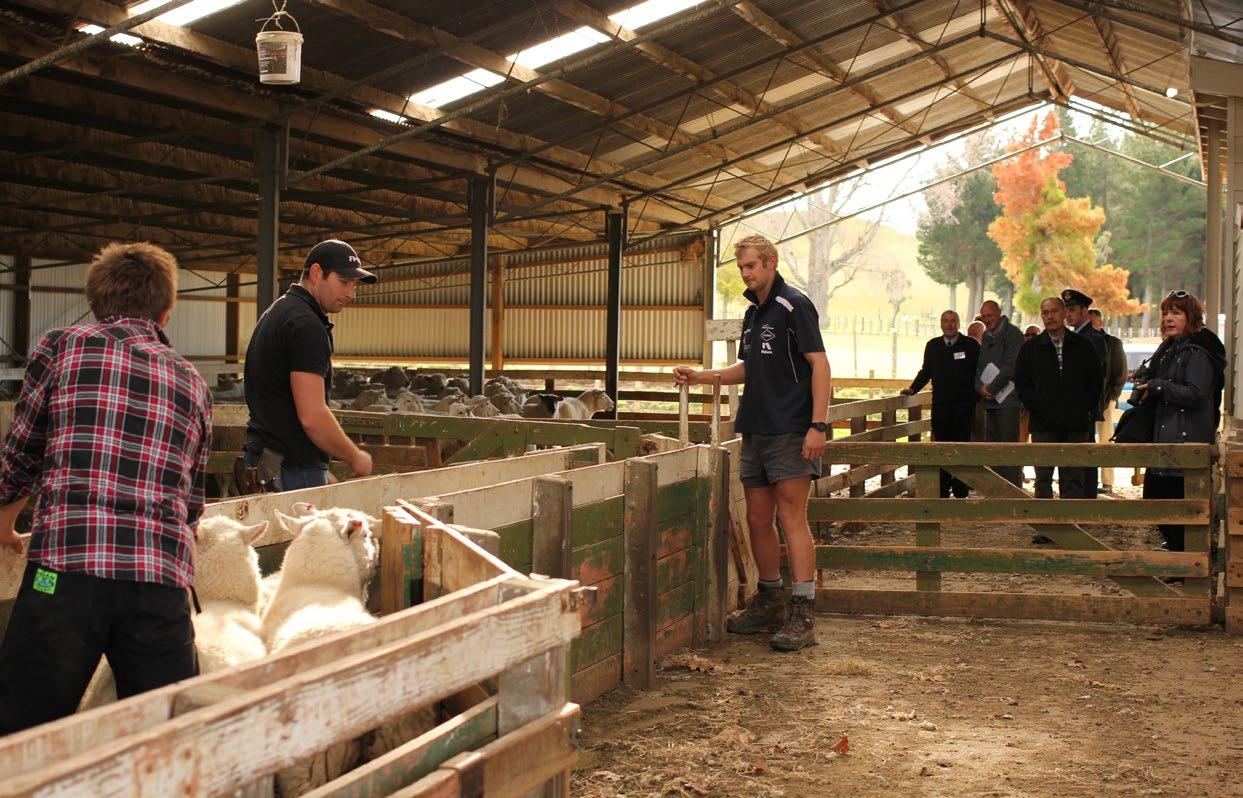
| 11 cadets enter Smedley Station and Cadet Training Farm each year for a 2 year cadetship.
Telford is an integral part of the Balclutha community, with a long and proud history of training New Zealand farmers. “You know it’s here,” Chris says. “But it’s not until you actually come in the gate and see what Telford is, that you appreciate what an asset the community has got in Telford.”
Smedley Station and Cadet Training Farm is another New Zealand institute with a long and proud history of developing future farmers.
Situated in Tikokino, 40km west of Waipukurau in Central Hawke’s Bay, Smedley Station was gifted to the Crown by Josiah Howard in 1919 for the purposes of agricultural education. The first intake of five cadets arrived at Smedley Station in 1931 and over the years, the number of cadets taken on annually has increased. Now 11 cadets enter Smedley each year for a 2 year cadetship. Cadets receive practical instruction and training in all aspects of farm operations carried out on Smedley Station, along with instruction in the principles of agricultural science and technology and their application to the establishment and maintenance of pasture crops and stock. Every day the cadets do work that they will expect to do in their future employment.
Smedley Business Manager Rob Evans knows the programme well. Formerly manager of a sheep, beef and deer operation, Rob is new to the Business Manager role at Smedley but is certainly not new to Smedley itself – he was a cadet there from 1998 to 1999. “Farming has changed since then,” he says. “But the station, when you drive in, it still looks the same.”
Rob returned to Smedley as the Business Manager in July last year and he and his wife Jenn live on campus. His role is to oversee everything that happens at Smedley and to keep things rolling along. “It’s a lot of organising and a lot of time spent ticking boxes,” he says. “But I try to get out as much as I can – helping and teaching the cadets.”
Rob says he misses being hands-on but knew that being in the office a lot was all part of the role.
“
It’s really rewarding. To be part of a team that influences is pretty cool. And also to see the staff happy in their jobs. It’s like a little community really. It’s a cool environment.
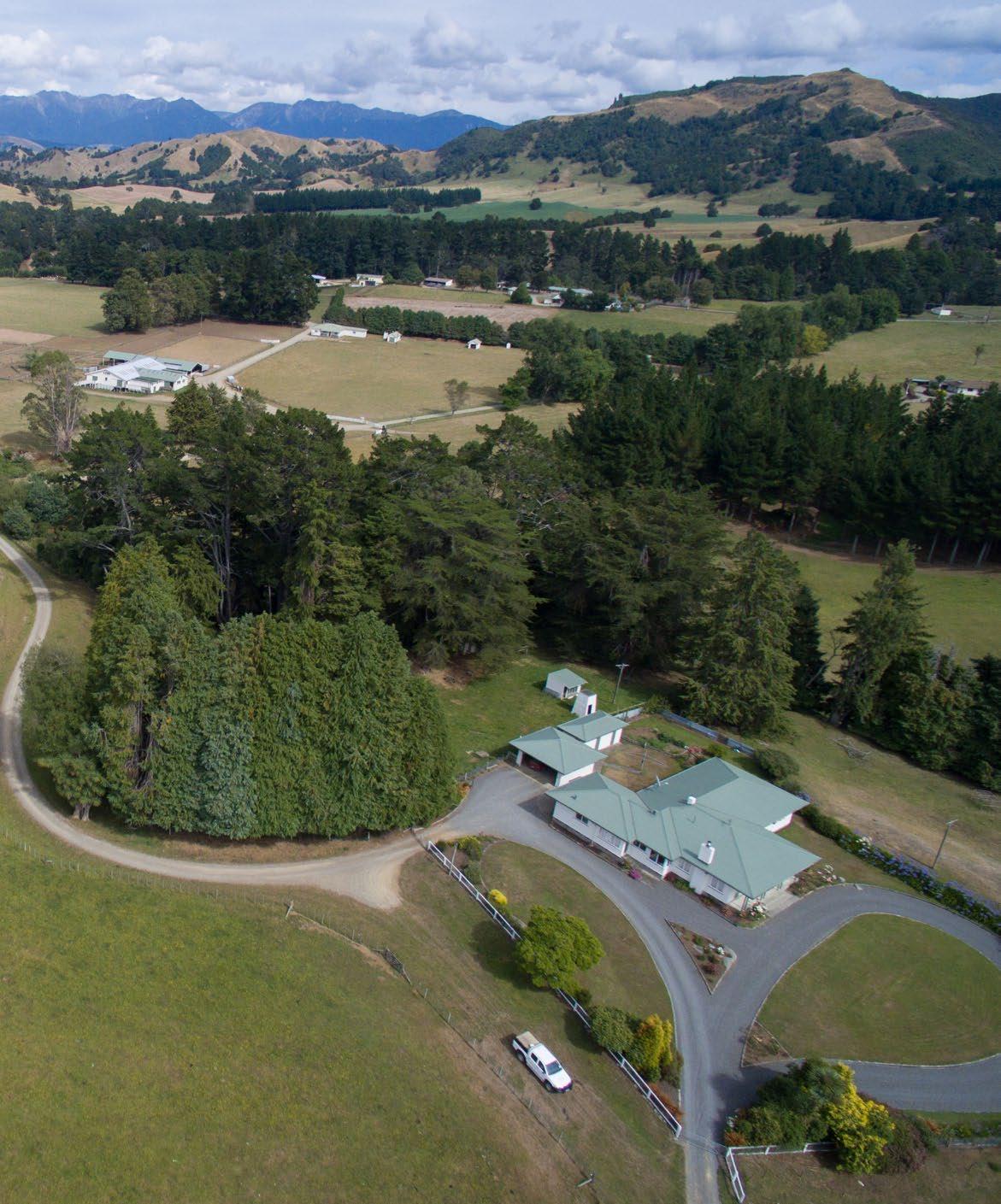
Smedley Station and Cadet Training Farm is another New Zealand institute with a long and proud history of developing future farmers.
“I try and get out as much as I can but sometimes it puts a bit more pressure on me to go and catch up on stuff I didn’t get done. I enjoy being out… I might have a week where I can spend a lot of time out and then the next week I’m tied up with meetings or organising or doing accounts and all that stuff. The challenge is trying to balance it and still try and give back to the cadets.”
Smedley Station spans 5,054 hectares (3,186 effective) of flat to steep hill country made up of three blocks – the Main Station, Ridgelands and Onepoto. The station runs sheep, cattle, bull beef and deer and carries approximately 27,000 stock units. Operating as both a commercial farm and a self-funded training facility, the practical and theory based training is structured around the farming year so that training is relevant to what cadets are doing on the farm at the time.
The academic part of the Smedley programme is delivered by Telford and upon completion cadets are awarded the Telford Certificate in Agriculture Levels 3, 4 or 5.
Smedley graduates are in high demand in the farming industry and Rob says he feels lucky to be part of the development of the young cadets over their 2 year cadetship.
“It’s really rewarding,” he says. “To be part of a team that influences that is pretty cool. And also to see the staff happy in their jobs. It’s like a little community really. It’s a cool environment.
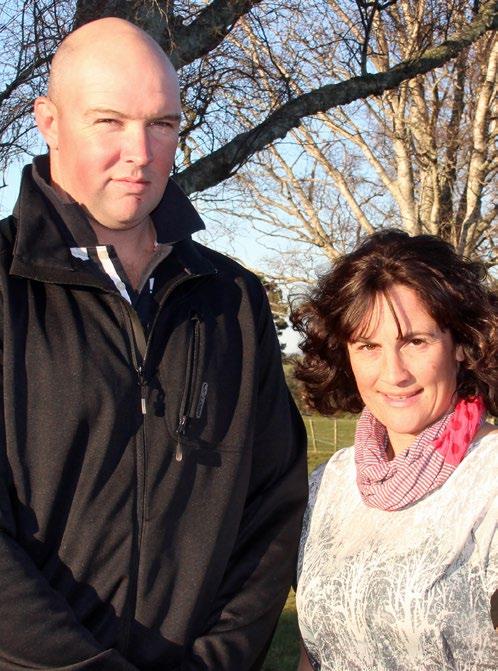


John Foley has a long history as a Director of Farmlands, serving for 16 years. He started first as a regional then South Island director of CRT, before being put forward as one of four CRT directors to serve on the establishment Board that led the merger between CRT and North Island-based Farmlands 5 years ago. This merger created Farmlnads, New Zealand’s largest rural supplies co-operative. As well as being a Director, John served on the Farmlands Fuel Board and Farmlands Audit and Risk Committee.
“I’m very proud of the sheer strength and breadth this business now has. It’s been put together not only by the shareholders but also successions of people involved with the Board of Directors that have done extraordinarily well,” he says. “It’s not just one person. The Board has been split twice during my time due to mergers and all the Directors that went off were bloody great people who contributed a lot. They put this business ahead of themselves.
“Many years ago when I first started my working life as a stock agent, I was working with the late Sir Ron Trotter. I vividly remember him saying ‘John, it’s a very simple business – it’s all about the people you work with and the culture that creates. From that, the business will flow’.”
John won both the East Coast FMG Royal Excellence Award and the AC Cameron Award. He is a graduate of the Rabobank Executive Development Programme, is a member of the New
| Isolation means the vines are phylloxera free.

Zealand Institute of Directors and is the current President of Oamaru Jockey Club.
“I am grateful for the support I have received as a Director over the last 16 years. It was very humbling, having staff and the many friends I have made over the years at Farmlands come to say goodbye and wish me all the best.
“I have built relationships with many interesting people over my time and they are friendships that I will maintain for the rest of my life. I feel very fortunate.
| Peace and quiet at Te
“For now I look forward to focusing on our own business with my wife Ruby, a spot of fishing with our son Jack and enjoying spending time with my daughter, Ginny, visiting from the UK. We shall see what other opportunities may present themselves in the New Year.
“Farewell and thank you to all shareholders, staff and suppliers that I have crossed paths with over my time. I wish you all the best.”
Chris Dennison has been announced as the new Farmlands Director, following the South Island Director election. The result was announced by Chairman Lachie Johnstone at the Farmlands Annual General Meeting in Christchurch at the start of November. Chris has extensive experience as a Director, including as former Deputy Chairman of Ravensdown Fertiliser and former Chairman of the Lower Waitaki Irrigation Company. He and his wife Kay run a 400 hectare arable farm, with an adjacent dairy farm milking 800 cows and producing 360,000kg of milksolids.
Tell us a bit about your family.
I’ve been married to my wife Kay for 27 years and I’ve got two children, Rebecca and Harry. Rebecca is in her fourth year of study at Otago, studying Social Welfare, while Harry has just finished his last year of secondary school and is off to start a B.AgCom at Lincoln.
Tell us a bit about your farming history.
I returned to our family farm when I finished my degree at Lincoln, because my father had health issues. It was a traditional mixed livestock farm with a little bit of crop and we changed that over the years to a different mix that involved dairy.
Our split involved dairy on the light soils and moving to 100 percent arable on the heavier cropping soils. We probably did that transition over 10 years or so.
How many years have you been involved with Farmlands?
My family has been involved since the early days of the Otago co-operative, so from around 1963 or 1964. I’ve certainly been involved all of my farming life, which is about 30 years or so.
You get those shareholders that are proud of their shareholder number and my father was no different – his number is 273.
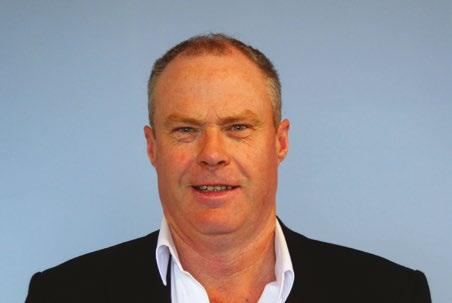
Farmlands Director
What do you appreciate the most about the co-operative model?
What I like about co-operatives is it is farmers helping farmers, working towards a common goal. My grounding in governance is around co-operatives, so it is an area that is close to my heart.
What is your goal as a Director of Farmlands?
My goal is to adhere to the co-operative principles and to make Farmlands the enduring co-operative it should be. I want to help Farmlands continue to build trust relationships with our shareholders, so that Farmlands is the first call that people make.
“
What I like about co-operatives is it is farmers helping farmers, working towards a common goal.
I’m pretty well grounded because I am a farmer, not a businessman that pretends to be a farmer. My passion is arable but I also have a very good background in sheep and beef. And I sit on a number of other Boards as well – I’m heavily involved in irrigation.
It is an honour to have been elected and I am looking forward to helping Farmlands as both a Director and a shareholder.
While the land provides the practical touches to a career in the primary sector, Professor Hugh Bigsby believes higher education is crucial to reaching the next level in agribusiness.
The Dean of Lincoln University’s Faculty of Agribusiness and Commerce says while it may not be for everyone, the decision to move towards tertiary education is dependent on “where in the portfolio of career opportunities you see yourself sitting”.
“University or tertiary education is still the main pathway for anyone wanting to work in financial services such as banking and insurance, farm consulting or in the global supply chain, such as people working in overseas marketing or branding,” he says. “We have a number of degrees in our programme that position people in that value chain for offshore consumer markets as well as on the farm.
“There’s still a huge demand for the people who have got the kind of advanced skills in understanding farm systems and where technology and the future is going. The agri industry is going through this huge, quite quick change with technology around software sensors and real time data information, so even the people who are going to be farm managers or working on farms are increasingly needing to be more tech savvy.”
“
Things move very quickly – we’re just trying to future proof people.
Hugh says success for the primary sector is not just dependent on learning about technology – it is about how we learn about technology.

“It (technology) changes so fast –really what you want to be doing is positioning people so that no matter what the change, they can adapt to it.”
Hugh says Lincoln prides itself on providing applied programmes for students. He says the goal is to produce graduates that not only can enter any work environment and make themselves productive, they also have the foresight to keep informed about advances that can be beneficial to their business.
“Adaptability has to be the key thing, because things change so quickly that if you’re not reasonably quickly adopting new technology in a way that continues to keep you in business and allows you to move ahead of the curve, you slowly disappear, I think,” he says.
“And the reality is it is not specifically just the ag sector, although that’s where we’re training most students for. Things move very quickly – we’re just trying to future proof people.”
Hugh’s advice for any student tossing up between staying on the farm or entering tertiary education is to look at the opportunities further education can open up.
“Even if your goal is to go back on the farm, you’ll likely make a much better business person and get exposed to things that might be a little different to what you’ve experienced on-farm,” he says. “We try to provide opportunities for our students throughout the value chain, including going offshore, and expose them to things that broaden horizons and allow them to think differently.”
Professor Ray Geor, Massey University College of Sciences Pro Vice-Chancellor, gives his opinion on what is needed for New Zealand to become world leading in agriculture.
In a speech earlier this year, John Key said that New Zealand and Australia should join forces to create a “Harvard” of agricultural learning to attract the “best brains, the very best research, the very best technology and the very best young people from around the world”.
In the international Quacquarelli Symonds’ (QS) world university subject rankings, Massey University has the highest ranking for agriculture of any New Zealand institution at number 30. But admittedly, this is far from world leading, which begs the question –what would it take for a New Zealand institution to be viewed as the “Harvard” of agricultural learning and discovery?
In my view, the New Zealand agricultural research and education sector must adopt a more “joinedup” collaborative approach to realise Mr Key’s vision and also drive the innovation needed to meet the government’s high expectations for growth in agrifood exports. To attract the “best brains” to perform “the very best research”, we require critical mass of leading researchers working as multidisciplinary teams to tackle the big issues facing agriculture, for example achieving the balance between on-farm productivity and environmental sustainability.
Currently, New Zealand’s research and education activities in agriculture
are distributed among several entities including universities and Crown Research Institutes (CRIs). Each of these entities is small by world-standards and, as stand-alone organisations, arguably lacking the critical mass of expertise to secure a global leadership position, attract and retain the very best and brightest staff and students and capture significant international funding.
To attract the best brains to perform the very best research, we require critical mass of leading researchers. “
The emerging collaborative effort among universities, CRIs and other industry partners around Lincoln University (Lincoln Hub) and Massey University (Food HQ) is a step in the right direction – but is it enough? In reality, there is competition among these partners for the same limited pool of resources to support research, technology transfer and capability development (education and training). We need to closely examine the advantages of other systems globally, for example the Land Grant Universities in the USA and Wageningen UR (University Research) in the Netherlands in which government, industry and university investment in agriculture

is focused on the delivery of a cocreated strategy. It is no coincidence that Wageningen UR occupies the number one spot in the QS world rankings for agriculture.
A similar “golden triangle” of integration among government, research institute and university interests in agriculture in New Zealand would provide the level of sustainable funding required to achieve critical mass and develop the innovation and capacity in research, education and technology transfer needed for us to become a “Harvard of agriculture”. Only then can we hope to realise our national and international ambitions for agriculture.
The 2016 Tom Cranswick Memorial Award winners have been announced. To qualify, the recipients must be the child of a shareholder or staff member and be studying towards a career in the rural sector.
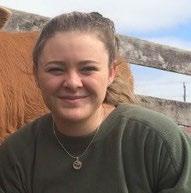
Bachelor of Agriculture
Lincoln University
Age: 19
What is your ideal role in the industry?
Growing up surrounded by agriculture I have always had a passion for growing, breeding and caring for stock. I am intending to follow the genetics side of the agriculture industry through my degree at Lincoln University. I would like to be involved with developing new genetics and improving what is available for farmers in New Zealand. I would also like to keep increasing my registered Limousin cattle stud and develop my own herd’s genetics while pursuing a career in the agriculture sector.
How does this award help you?
The Tom Cranswick Memorial Award helps me greatly by lowering the costs of my degree and will also create further opportunities with Farmlands. Through my part time job at Farmlands Wellsford, I have seen first-hand how important the co-operative is and look forward to the new opportunities that the year will bring
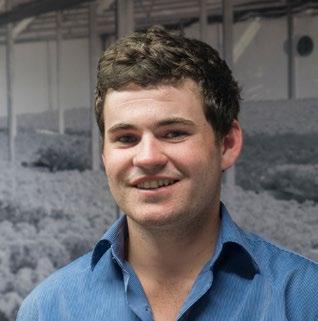
Bachelor of Commerce (Agriculture)
Lincoln University
Age: 20
What is your ideal role in the industry?
After graduating I am looking towards rural bank and stock agent roles in order to build my network and knowledge from my degree. In the future I am aiming towards farm ownership within the sheep and beef industry. In the future, I would also like to add to my experience working overseas and completing rural leadership courses such as Kellogg’s. I would also like to get further involved with industry organisations such as Beef + Lamb and Farmers Council.
How does this award help you?
This award eases the financial burden of university. It also allows for me to network within Farmlands, which can hopefully lead to future careers and involvement with the co-operative.

Bachelor of Agricultural Science (Honours) Lincoln University Age: 21
What is your ideal role in the industry?
My ideal role in the industry is in a position either on-farm directly or in a soil research/consultancy role. But I am still not certain, so am keeping all my options open at this stage. I enjoy being a part of the agricultural industry and want to do my part to ensure it grows and remains successful.
How does this award help you?
The Tom Cranswick Award will help me cover some travel costs to and from university and pay a portion of my course fees for 2017, which reduces some financial pressures. Receiving this award also provides me with great networking opportunities, which will be essential in the coming years.
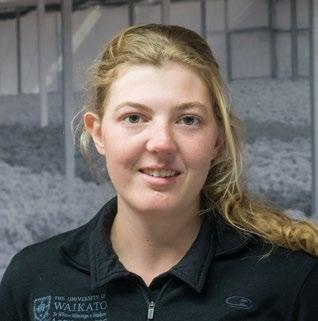
Bachelor of Management Studies with a Double Major in Agribusiness and Supply Chain Management University of Waikato Age: 20
What is your ideal role in the industry?
My ideal role would to be aid in creating better value for farmers. I feel there is a massive opportunity for the New Zealand agricultural industry to capture premium value for products through marketing, more streamlined supply chains and strong relationships through from paddock to plate. My ideal role would either be in a supply chain/logistics role within agribusiness or a consultancy role for farmers.
How does this award help you?
From a monetary perspective, the award helps cover my travel costs from Pukekohe to Hamilton everyday as I commute, to enable me to keep up with my sporting/extra-curricular activities. I currently travel over 800km a week to and from university, so the fuel costs are relatively high! From a non-monetary perspective, the networking activities that Farmlands has provided to me since receiving the award have been invaluable and such a great opportunity to learn about the industry and meet prominent people in it.

Bachelor of AgriScience with a Major in Agriculture Massey University Age: 20
What is your ideal role in the industry?
My degree allows a lot of versatility and provides many career options within the agriculture sector. However I have always had a passion for livestock and the red meat sector, particularly in genetics and breeding, which supports my own small Hereford stud. In the future I hope to contribute to improving beef genetics for all farmers throughout New Zealand from a stud to commercial level, whilst continuing to grow my stud to a larger operation.
How does this award help you?
This award has already provided me the opportunity to meet with the Chairman and CEO of Farmlands. The networking aspect of winning this award will be a huge benefit to make myself known and get to know many other passionate agriculturalists. The financial aid this award provides me with is a huge relief, as studying full time and the associated costs with it do not come cheap. The money will go towards paying some of my financial fees for my final year of study in 2017.
The Memorial Award is in honour of Tom Cranswick, a founding Farmlands Director who served on the Board until 1985, including 20 years as Chairman. His passion and dedication was a major influence in the establishment of Farmlands. The Cranswick family has been hugely supportive of Farmlands and it is an honour to offer this Award in his memory.
There are FIVE Awards, valued at $2,000 each, to enable students to further their knowledge and experience through study to achieve in their chosen careers, thus allowing them to contribute to the New Zealand primary sector.

The key focus of agrichemical training is to learn about applying agrichemicals in a safe, responsible and effective way with minimal adverse impact on human, environmental and animal health.
Approved Handler certification qualifies people to handle very hazardous substances safely and to provide guidance and assistance to other people handling the substances.
To become an Approved Handler, you need to apply to a Test Certifier for an Approved Handler Test Certificate. Certificates are valid for 5 years.
To obtain an Approved Handler Test Certificate, you will need to demonstrate your knowledge of the substance(s) your certificate will cover, including:
1. Hazards of the substance and how to protect people and the environment. This includes the substance classification, regulations about safe handling (including codes of practice) and what to do in an emergency.
2. Working knowledge of any operating equipment, including the protective clothing and safety equipment required to handle the substance safely.
3. The controls imposed by the Hazardous Substances and New Organisms (HSNO) Act and what the law is trying to achieve.
The details of what you need to know are set out in the Hazardous Substances and New Organisms (Personnel Qualifications) Regulations 2001 on the New Zealand Legislation website.
The Test Certifier will need evidence of your competence. The evidence must describe how your knowledge and skills were assessed and the results of that assessment. This can come from:
1. Training providers. If you completed a relevant training course, you can provide this as evidence. It must be signed by the trainer issuing the qualification.
2. Work supervisors. If you were trained at work, a supervisor or manager can provide evidence for you. Make sure they sign it.
You cannot continue to work as an Approved Handler, or purchase hazardous substances that require an Approved Handler, if your test certificate has expired. However, you do not need to attend a course to renew your Agrichemical Approved Handler Test Certificate.
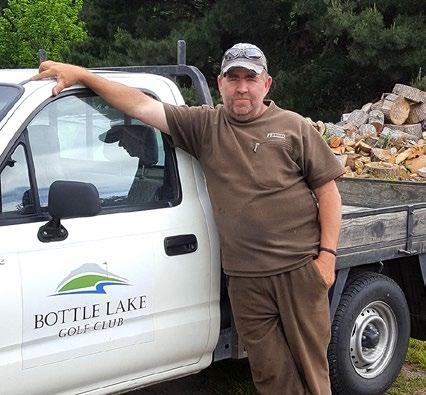
Blair Burtenshaw, superintendent at the Bottle Lake Golf Club in Christchurch, recently renewed his Agrichemical Approved Handler Certificate online. “I needed to renew my certificate, so I did it online and it was easy to do,” Blair says. “For my role it’s really important
I keep up to date. I am working alongside the public and need to be using chemicals safely… things such as putting out signage, using the right products and reading labels are really important.
“The consequences of getting it wrong can be really bad. You wouldn’t want to spray the fairways with a non-selective chemical for instance!”
Shareholders can renew their Agrichemical Approved Handler Test Certificate by contacting Farmlands Card Partner Farmsafe. You can renew it online, or they will send you a home pack renewal to your front door. Contact Farmsafe on 0800 545 747 or visit their website www.farmsafe.co.nz.
Make sure you update Farmlands with a copy of your new certificate once you have received it.
Information sourced from www.worksafe.govt.nz.
Students looking for a career in the primary industries can become frustrated if the education opportunities they receive during secondary school don’t transfer into the ‘real world’ once they start seeking a job or further study.
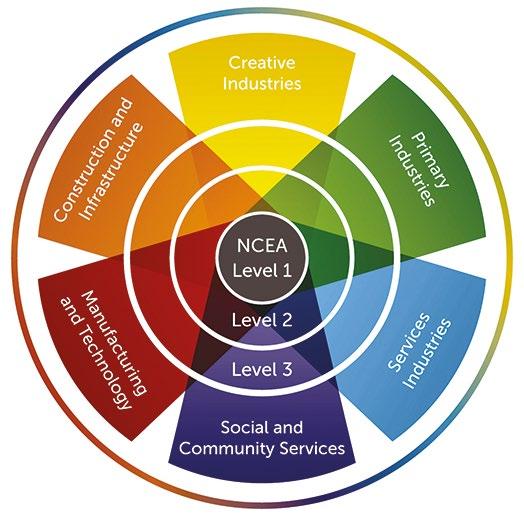
To help provide more transferable education for students looking to join or study industry after secondary school, the Ministry of Education has created Vocational Pathways, which incorporate industry-specific training and help highlight how a student’s learning will be valued in the ‘real world’ of industry.
What are Vocational Pathways?
There are six industry specific Vocational Pathways. These six pathways represent ways a student can structure NCEA Level 2 to allow them to staircase into a chosen industry. For example, a student wanting to work in or study horticulture would align their NCEA Level 2 studies and training with the Primary Industries Pathway.
What is a Vocational Pathway Award?
A Vocational Pathway Award is granted to a student who achieves the minimum recommended NCEA credits for a specific pathway, including credits gained through industry specific training.
What is Industry Specific Training?
Vertical Horizonz works with schools to deliver Rural, Industrial Safety, Health
and Safety, First Aid and Leadership training as part of their Youth training division. These industry specific training courses align with Vocational Pathways and provide students with real life industry skills.
What do employers need to know?
For employers, any new recruit is a risk to your business but that risk is heightened when an applicant is new to a specific industry or workforce. Vocational Pathways is industryendorsed, so employers within the industry know they can trust the training that has been given to an applicant with a relevant Vocational Pathway Award.
Employers can have confidence that young people are better prepared to participate in the workforce if they have achieved NCEA Level 2 with a Vocational Pathway.
What do parents need to know?
If your teenager is thinking about a future in the primary industries, the Primary Industries Vocational Pathway can help you, your teenager and your teenager’s school work together to tailor studies and industry specific training towards the Primary Industries Vocational Pathway. This helps all involved see how your teenager’s learning relates to study and employment opportunities in the future.
To support trainees seeking a Primary Industries Vocational Award, Vertical Horizonz through the Gateway programme offer courses including Rural Health and Safety, Knowledge of Chainsaw Safety, Quad Bike and Light Utility Vehicle Safety.
As a parent, you can talk to your teenager’s school to discuss how these courses can be incorporated into your teenager’s studies.
Together, primary industry, students, parents, schools and Vertical Horizonz can work to help a student achieve enough credits for a Vocational Pathway Award. This makes it simple for employers to see who has the abilities they are looking for and makes landing that first job all the more painless for a student at the dawn of their chosen career.
Article supplied by Vertical Horizonz.


































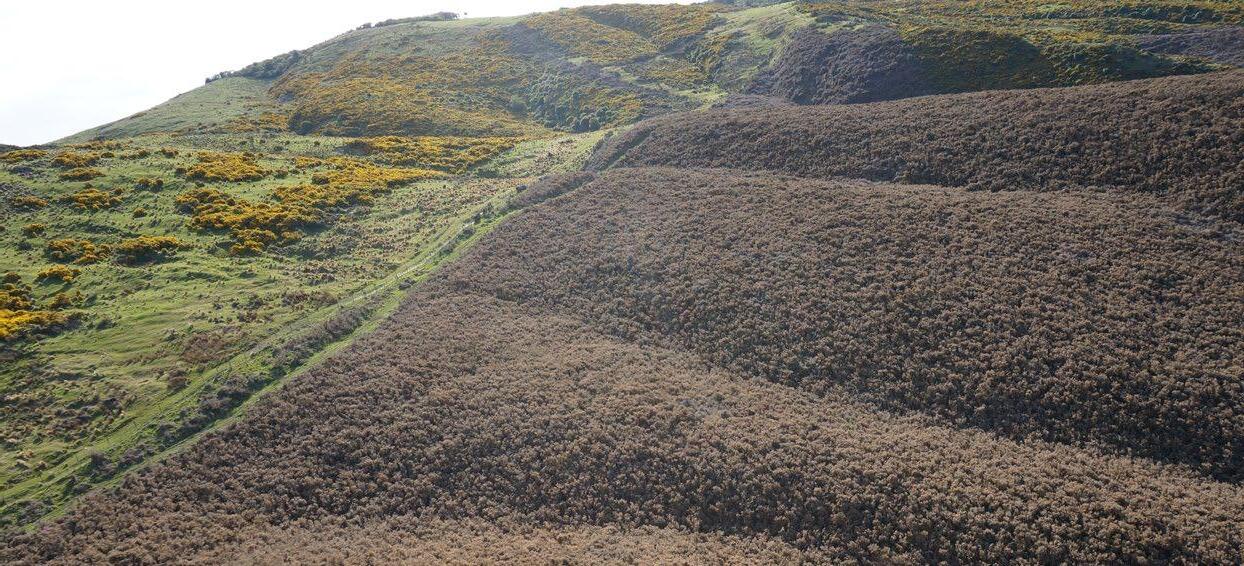
Gorse is a perennial brushweed that was originally introduced to New Zealand as a hedge plant and marginal fodder crop for domestic stock. It is estimated to have spread over 900,000 hectares¹ of New Zealand farmland.
Being a legume gorse grows quickly and can out compete pasture for water, light and nutrients and thereby reduce grazing capacity. Gorse flowers twice each year, once in the autumn and again in the spring/summer – after which it will produce seeds that can remain in the soil for decades before germinating.² Seed populations of up to 6,000 seeds per square metre are not uncommon in the top soil and disturbance will trigger germination. In particular, heat from fire, will strongly promote germination.
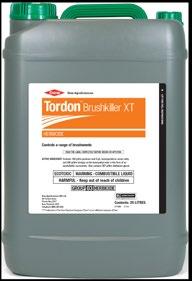
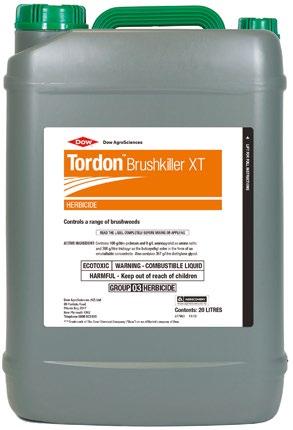
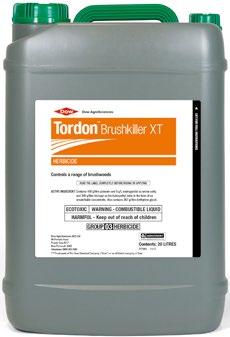
Tordon Brushkiller XT TM reliably controls brushweeds thanks to its combination of three active ingredients. Uniquely, Tordon Brushkiller XT is the only brushweed herbicide to contain an extremely powerful active ingredient called aminopyralid.
Unlike other herbicides that simply burn off brushweed foliage, aminopyralid is systemic, which means that it moves throughout the treated plant –including down into the roots, thereby preventing regrowth of treated bushes. Aminopyralid residues remain active in the soil after application to prevent germination of new gorse seedlings and if applied to flowering gorse prior to seed maturity, Tordon Brushkiller XT will sterilise the seed and reduce the future weed burden. Only Tordon Brushkiller XT with aminopyralid offers this high level of control.
Because Tordon Brushkiller XT is grass friendly, pasture grazing potential is maximised after spraying and existing pasture grasses re-establish quickly to help prevent the germination of secondary invasive weeds, therefore full pasture productivity is restored more quickly.
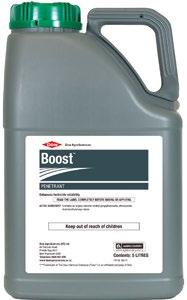
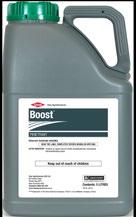
Tordon Brushkiller XT is highly versatile and can be used to control gorse, broom, blackberry, woolly nightshade, wattles, tutus, lupin and many annual broadleaf weeds. Reliable and robust in both aerial and gun and hose applications, it is recommended that Tordon Brushkiller XT be applied with Boost™ penetrant for optimal results. After application, gorse may take 18-24 months to fully break down, so it is recommended that the treated area is monitored for any plants that may have escaped the initial treatment. These can then be targeted with a follow-up spray. Over-sow areas of previously dense infestations in order to rapidly re-establish grasses that will prevent infestation of invasive secondary weeds. Avoid pugging, cultivation or burning, as this will encourage germination of any remaining viable seed in the soil.
For further information, contact your Farmlands Technical Field Officer or the friendly team at your local Farmlands store.
Article supplied by Dow AgroSciences.
¹ Sandrey, 1985.
² Gonzalez et al., 2010.
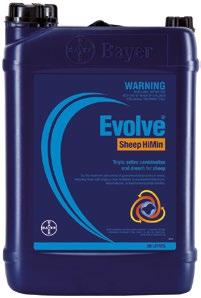



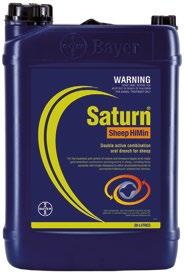

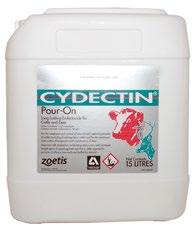



Demonstration trials showing the use of beneficial insects in forage brassica crops to combat major pests have been met with enthusiasm by farmers looking to reduce applications of chemicals and maintain the yield and quality of their forage.
The demonstration trials conducted by Plant and Food Research, as part of a Ministry for Primary Industries Sustainable Farming Fund project, have run for 2 years and compare an integrated pest management strategy with a conventional insecticide programme.
Workshops held in-field with industry representatives received very positive feedback, with participants showing an appetite for understanding how to utilise integrated pest management strategies in forage brassicas. Farmer involvement also increased from the initial year.
The project is designed to examine if integrated pest management systems will improve the financial and environmental performance of the crops.
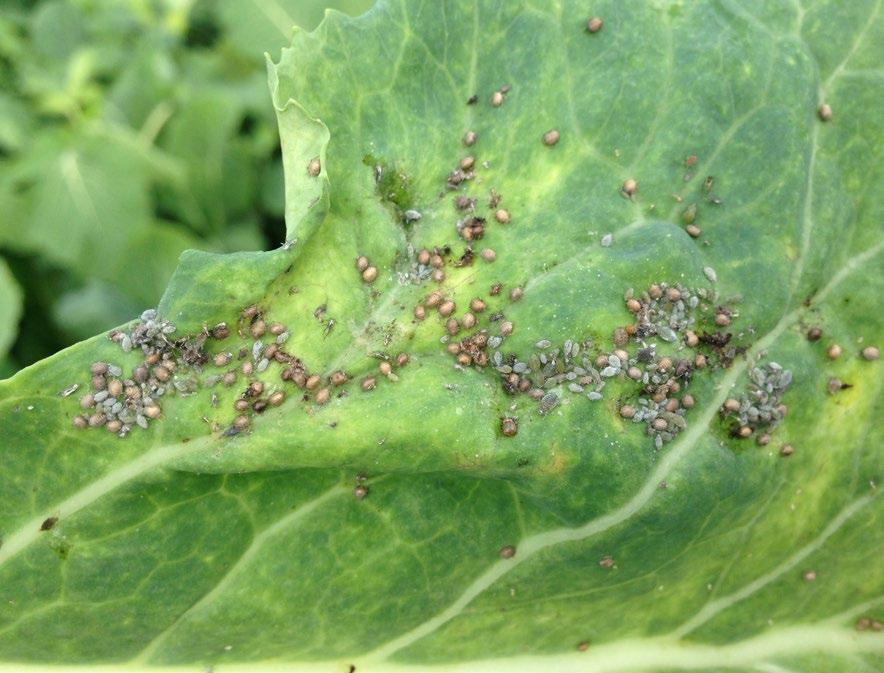
as the pest species. This approach can lead to spikes in populations of unwanted insects.
Biological control agents such as lacewings, ladybirds and parasitic wasps are often naturally occurring in forage brassica fields and can play a part in controlling a range of pest species.
The demonstration trials, which were conducted across the Canterbury region, compared the farmer standard pest management practice with a programme that encouraged beneficial insects with the inclusion of selective
With the more recent introduction of products such as Exirel insecticide, which selectively targets a range of caterpillar pests, European leaf miner and grey cabbage aphid but importantly has minimal impact on key beneficial insects, an integrated pest management based programme is a realistic option.
At harvest the yields between the conventional areas and the integrated pest management areas were virtually
Ultimately, it has been shown that the same level of control is possible in crops treated with a broad spectrum or selective insecticide.
Predators such as lacewings and ladybirds were active at all sites and were important in reducing aphid numbers, however, parasitic wasps had the biggest impact on reducing diamondback moth.
For further information, contact your Farmlands Technical Field Officer or the friendly team at your local Farmlands store.
Article supplied by DuPont.


Arriving at one goal with Christmas fast approaching, is the starting point to another goal.
Whether it be a goal of relaxing over the Christmas period with your weaners being easier heading to 6 months old, or a time to reflect the season you have come out of and the hot, dry months ahead. Keeping quality feed up to heifers (young stock in general) comes down to grazing management. At the end of each season, make notes of anything that can be changed or improved upon for the following year –especially when the previous year had long summer droughts. Do you need to reduce numbers to ensure you will be able to grow out a high quality dairy animal every year? Particularly if the previous year had drought challenging your animals. Do you need to have options like having another form of grazing available or graziers sorted before the pinch of feed comes on?
Having a plan “A” is important but more importantly, a plan “B” is a must. As the pasture quality starts drying off, suddenly you need extra to feed the young stock. Unfortunately it’s the same time as everyone else, hence a plan “B” must have been thought of
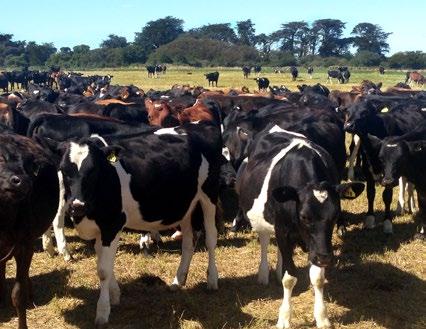
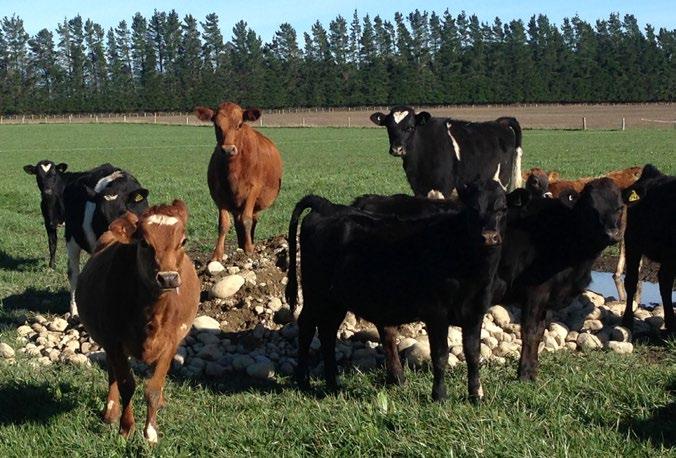
already. Do the weaners need to be fed extra supplement feed, i.e. 16% pellets, baleage, palm kernel or something else to keep them performing good daily weight gains? From February to April can be the hardest time to put weight on, so better daily weight gains before Christmas and straight after will set the heifers up well to get through the lower weight gain times.
Keeping up with weighing is also important, as is giving selenised B12 and mineralised oral drench each month. Remembering a vaccine programme – has it been followed through? Minerals are hugely important to young, fast growing animals. We have a health programme set in place that is followed strictly.
Young weaned animals get the first pick of the best feed then you can tidy up your paddocks with the older stock or mowing behind them. Getting a performance out of our heifers is number one on any plan put in place. In my experience a young animal must always be moving forward, forcing them to back graze too early has some negative effects, as well as increasing the worm burden by eating too close to the ground and eating soiled pastures.
Checking heifers or moving them almost daily is the best requirement for better performance. If their coats are shiny, you know they’re healthy and doing well, the weaners will tell you if they haven’t got enough feed. Be careful when holding them back as feed becomes tight, the weaner then resigns to the fact that they are only allowed a certain amount, so will give up telling you they are hungry. Remember we are all creatures of habit, so it’s important to keep routines the same each day – a full tummy in the morning will prepare the weaner for anything that will be thrown at it during the day, like yard time.
I have enjoyed writing and sharing my thoughts and years of experience with you, this will be the last in my series. But my passion for the young stock still rolls on! What you do today can improve all of your tomorrows.
For further information, contact your Farmlands Technical Field Officer or the friendly team at your local Farmlands store.


†For
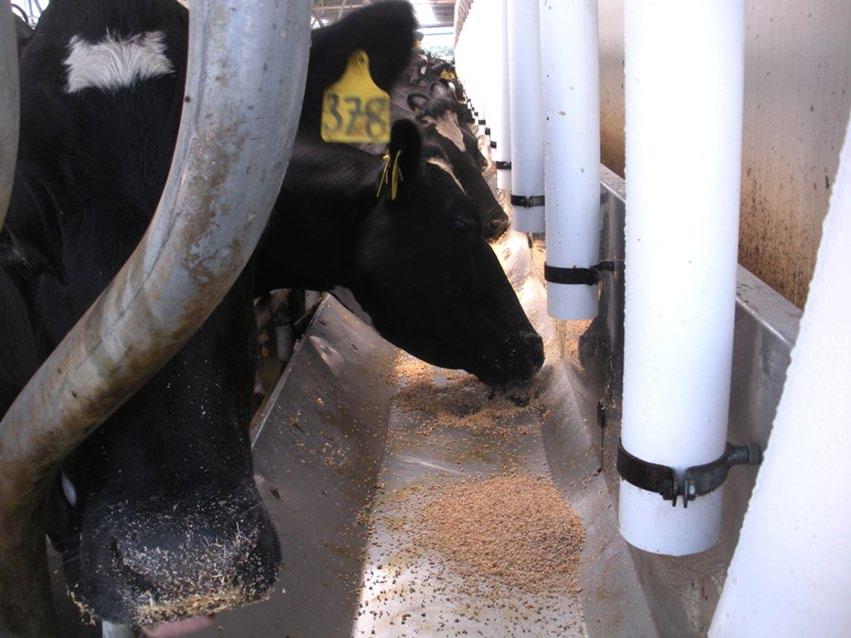
Carbohydrates are the main source of energy for rumen microorganisms and consequently are also indirectly the main source of energy for the host ruminant animal. Starch is one of the three types of carbohydrates, along with sugar and fibre. It is classed as ‘nonstructural’ and similarly to sugar is readily fermented in the rumen by microorganisms.
Starch is produced daily by most green plants as an energy store and is found in high levels in grains such as wheat, barley and maize, as well as in potatoes and rice. Starch is a more ‘slow release’ form of energy compared to sugar, which means that starch can provide energy to the rumen microorganisms over a longer period of time, as it does not disappear from the rumen as rapidly as sugar.
Compared to fibre, starch is much more readily fermented by rumen microorganisms and therefore does not require long rumen retention times as higher fibre feeds do. Pasture is typically very low in starch, with only 2-4 percent of the ‘soluble sugars and
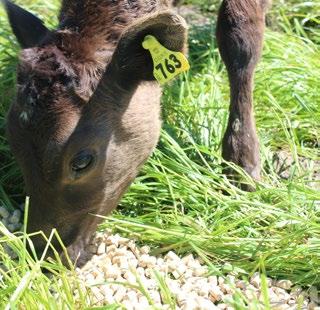
starch’ (SSS) present in pasture actually coming from starch.
Feeding grains and starch based compounds can be an effective way of increasing the energy density of the diet, therefore increasing the amount of energy that can be partitioned to milk production or condition gain. This is because starchy feeds, such as grains, are higher in energy per kilogram of dry matter compared to higher fibre forage, therefore less grain has to be consumed to deliver the same amount of energy as forage would.
Starchy feeds tend to be lower in protein than high quality pasture, so can help to lower the total protein percentage of a diet at times when it may be high relative to animal requirements and leading to high excretion of nitrogen in urine. Too much fibre in the diet can limit dry matter intake, so feeding some starch in the diet can help to optimise dry matter intake by lowering the fibre percentage of the total diet. Feeding starchbased feeds can also help to minimise condition loss post-calving, which is linked to improved fertility.
protein ingredients – especially if pasture protein levels fall as grass goes to seed.
Young ruminants benefit from a source of starch in the diet, as starch stimulates development of the rumen and sets them up for weaning. The better the rumen is developed at weaning, the better the young animal will do and a young ruminant with a well-developed rumen will avoid a growth check at weaning. Starchy feeds can be quite low in protein relative to the needs of growing animals, so it can be important to ensure they are balanced with higher
Caution needs to be practiced when feeding supplements high in starch and ruminants must be transitioned onto starchy feeds slowly when initially offered them. If too much starch is fed too soon, the pH of the rumen will drop and acidosis could develop. If transitioned onto starchy feeds more slowly, the rumen microorganisms will have time to adapt to the changing diet and no health issues should arise.
For further information, contact your Farmlands Technical Field Officer or the friendly team at your local Farmlands store.
Article supplied by Stacey Cosnett, Assistant Nutritionist, Farmlands Nutrition.

it!
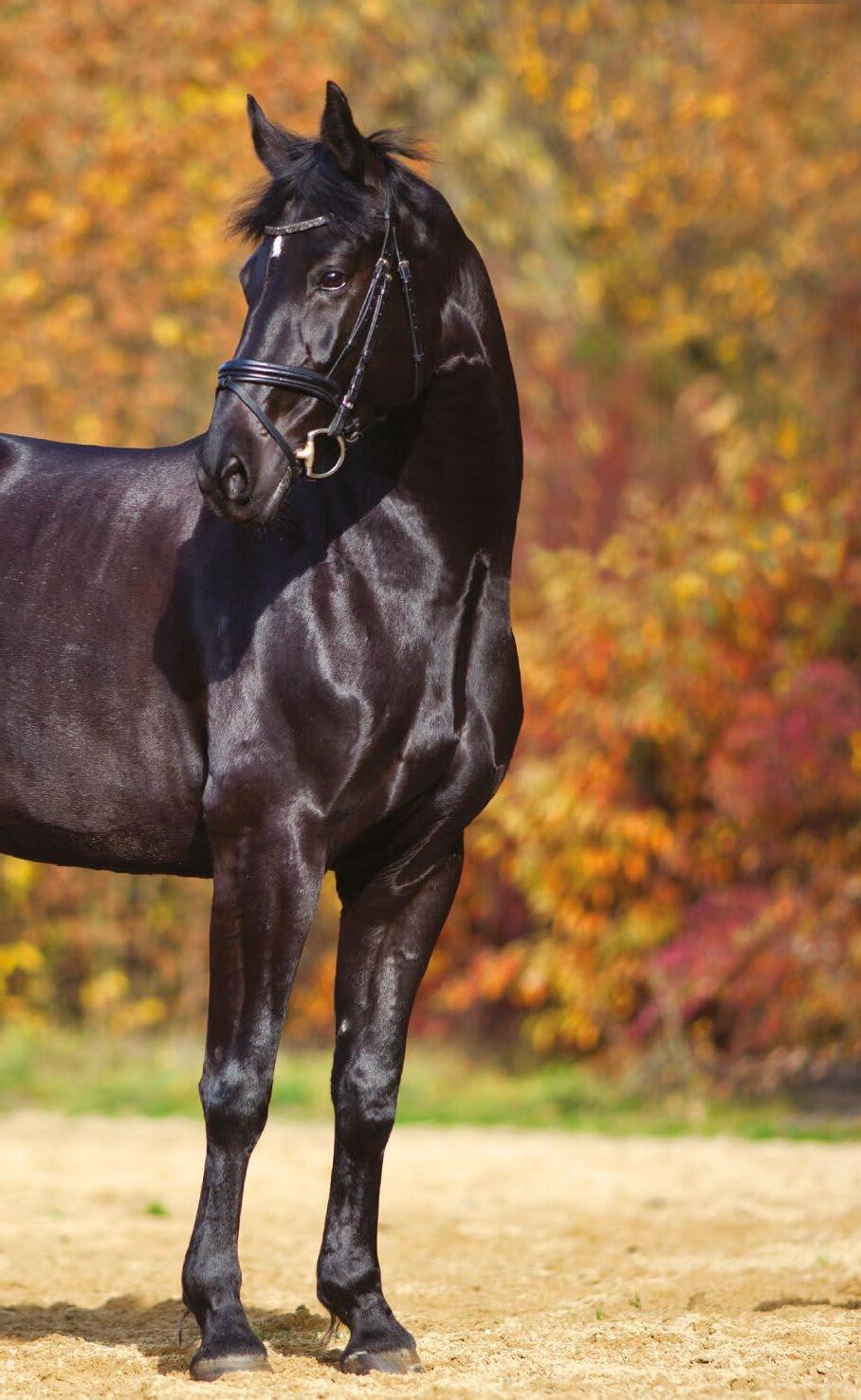
A brand new range of top quality economically priced products to have your horse or pony looking tip top. Imported direct from the UK with an exciting selection to suit most needs.
Shampoo
Available in citronella to deter flies and bugs, herbal with extracts for a fragrant deep clean, medicated with a mild antibacterial agent, or tea tree with natural tea tree oil to soothe skin.
Sizes: 500ml and 4L
Manes, Tails and Coats
Non sticky sprays for a silky super shine – plus a mane and tail conditioner that removes static and tangles for those that don’t like sprays.
Conditioner sizes: 500ml and 4L
Coat Shine Spray size: 500ml
Body Wash
Soapless rinses, diluted and ideal for after work – available in lavender or cooling wash with tea tree oil.
Sizes: 500ml and 4L
Hoof Oil
A rich antibacterial formula with Pinetar. Complete with brush for day to day use to prevent drying out and create a shine.
Sizes: 500ml and 4L
Hoof Grease
Available in black and neutral for that long lasting show day look. A non spill formula that also helps to keep hooves and frogs in good condition.
Size: 400g










The damp, humid weather experienced across New Zealand in the first few months of 2016 provided ideal conditions for the proliferation of the fungal toxins responsible for facial eczema and the summer of 2016 is generally recognised as one of the worst for facial eczema in the past 2 decades.
While the weather is unpredictable, forecasts for the start of 2017 suggest that warm, humid conditions are likely to prevail over the summer months, bringing with it once again elevated spore counts and increased risk of facial eczema. With concerns around global warming, New Zealand researchers have predicted that the regions of New Zealand likely to be affected by facial eczema in the future are increasing (Figure 1).
Despite considerable research, our current understanding of the association between factors that support toxin production are not sufficient to allow for accurate prediction of a challenge. It is clear however, that given the right conditions the levels of toxins present in pasture can rapidly reach dangerous levels. Proactively planning and implementing effective control measures before spore counts start to increase is therefore key to minimising the negative effects of high spore counts on animal production.
Monitoring pasture spore counts is one tool that can be used to assess risk of facial eczema. However, it is important to recognise that because of variation from paddock to paddock and the
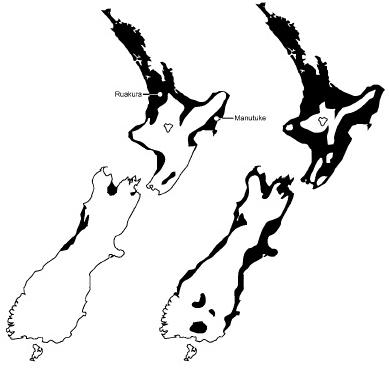
rapid proliferation of spores under ideal conditions, simply monitoring pastures does not remove the risk of facial eczema but helps provide better information to support effective control strategies.
When assessing risk based on pasture spore counts, it is important to consider that pasture swards with a greater proportion of dead material or pastures that are intensively grazed or with low residual are likely to present a higher risk, due to the greater concentration of spores at the base of the pasture sward. At the same time, prolonged low level ingestion can be as toxic as a single high level dose and consequently the length of time over and so it is important to consider both prior exposure as well as the duration of exposure to any given level spore count.
Early implementation of effective control strategies is essential if liver damage and the subsequent production losses are to be minimised, as significant damage to the liver
occurs prior to the observation of typical skin lesions. Being proactive is particularly important if using a fungicide to suppress the toxin as these must be applied when pasture is green and growing and where spore counts are low. Similarly, planning ahead is important if your strategy is to either avoid or dilute the toxin present through pasture management (pre- and post-grazing residuals), feeding low risk crops or supplements or increasing the supply of concentrates.
Protection can also be achieved by supplementing affected animals with high levels of zinc, in drinking water or feed or by drenching. Regardless of the method of supplementation used, knowing the liveweight of the herd when calculating the expected dose rate is vital, as the recommended daily intake of elemental zinc is 2g per 100kg of liveweight. When done well, supplementing stock with zinc added to feed can be both easy and effective, as the intake of supplementary feed is often more consistent and easier to manage than water intake. NRM offers a range of solutions for producers looking to supplement zinc through the feed. Zinc oxide can also be included as an additive in any of the NRM Dairy Feeds or custom blends.
For further information, contact your Farmlands Technical Field Officer or the friendly team at your local Farmlands store.
Article supplied by NRM.
1 Di Menna et al., 2010. A history of facial eczema (pithomycotoxicosis) research. New Zealand Journal of Agricultural Research, 52: 345 – 376.











Ten kilometres south of Te Awamutu is Huntaway Farm, home of young showjumper Emily Hayward-Morgan and her family. Emily has been jumping and competing at national level since she was 6 years old.
Last season, at the tender age of 16, Emily surpassed all expectations by taking out three New Zealand National Series titles, something that no one has accomplished before. The first at Junior Level (under 18), the second at Young Rider Level (under 21), and the third at Grand Prix Level (open).
During a trip to the South Island 4 years ago to compete at the National Showjumping Championships, Emily tried her horses on McMillan Equine feeds. “The horses loved it so much we decided to try the whole team on it,” she says.
“We love the fact that McMillan Equine makes it so easy. It’s so
accessible, being available in Farmlands stores nationwide.
“This season I am competing a team of five horses that have varying temperaments and energy levels. The range of McMillan Equine feed enables me to choose feeds that match the natural energy level of each horse.
“
We love the fact that McMillan Equine makes it so easy. It’s so accessible, being available in Farmlands stores nationwide.
“We love everything about McMillan Equine feeds – from season to season we’ve found the feeds to be highly palatable, even to the fussiest of eaters! It seems more and more the trend to add supplements and
additives to your horse’s feed and the array of supplements available is somewhat mind boggling. We take a very minimalistic approach to our supplements and additives as we feel they aren’t required.
“Very regularly we are asked, ‘how is it that your whole team looks so well and is in such fabulous condition?’” she says.
McMillan Equine has developed several partnerships with competitive riders that have been carefully selected to represent the brand in the field.
Emily partnered with McMillan Equine earlier this year and has already proven herself as a fabulous ambassador for the McMillan brand.
“I am so very grateful and honoured to be partnered with McMillan Equine,” Emily says.
Article supplied by McMillan Equine.

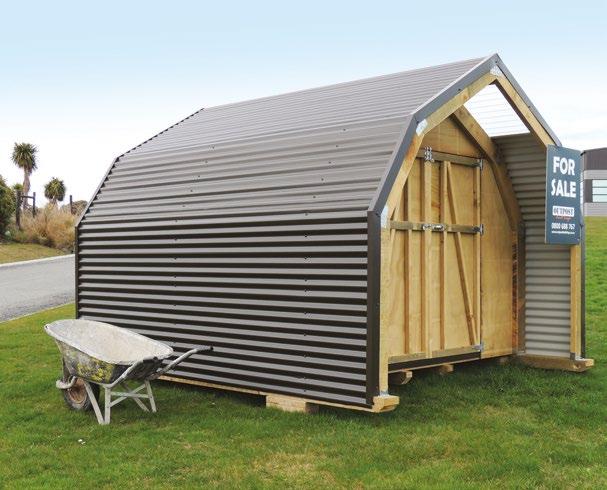
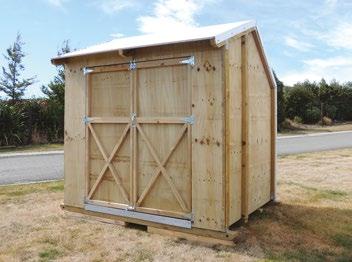
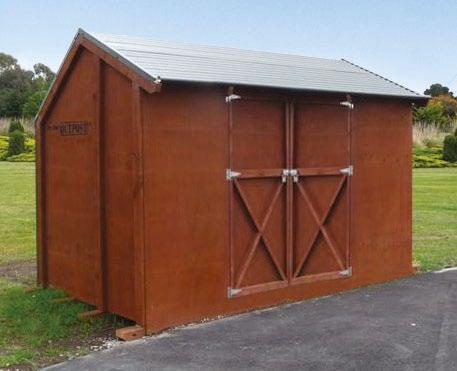
Adequate amounts of water are needed to maintain good levels of production and stock health. Limiting water intake reduces animal performance quicker and more drastically than any other nutrient deficiency. Understanding your stock’s optimal water requirements, the components that make up a reticulated water system and where to go for advice are key to developing, upgrading or maintaining an efficient stock water system.
Ensuring adequate water is consistently available to meet the stock’s daily water requirements is essential. As stock do not drink evenly over a 24 hour period, storage typically needs to be built in to systems to cope with peak demand. Likewise, pipe diameters need to be able to handle this greater water volume, or the reticulation network becomes a system bottleneck, not allowing adequate supply to the troughs.
System water intake is determined by the water source location and topography of the farm. Systems
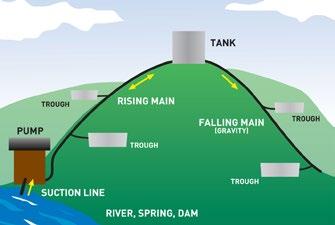
System components include:
• Source – springs, streams or bores.
• Intake – powered by gravity or mechanical/electric means.
• Storage – tanks and dams.
• Reticulation – pipe and fittings.
• Outlet – troughs and trough valves.
vary from a complete gravity system, to pumped gravity (up the hill with a pressure main and back down from storage tanks with a gravity main), to completely pumped pressure systems. Size, shape and number of troughs per paddock are an outcome of type of stock and stock numbers. Stock type also decides trough size and height. An appropriate shape should also be chosen to suit location, i.e. oblong troughs through a fence line to provide water to two paddocks, or round for best stock access in the middle of a paddock. Diameter is determined by the required number of stock able to access a trough at any one time, which also influences the decision as to the number of troughs per paddock. Water storage shouldn’t be a determinant as to trough size – at the end of the day it’s a drinking vessel, so the delivery of adequate fresh, clean water is an outcome of a correctly designed reticulation system. Trough
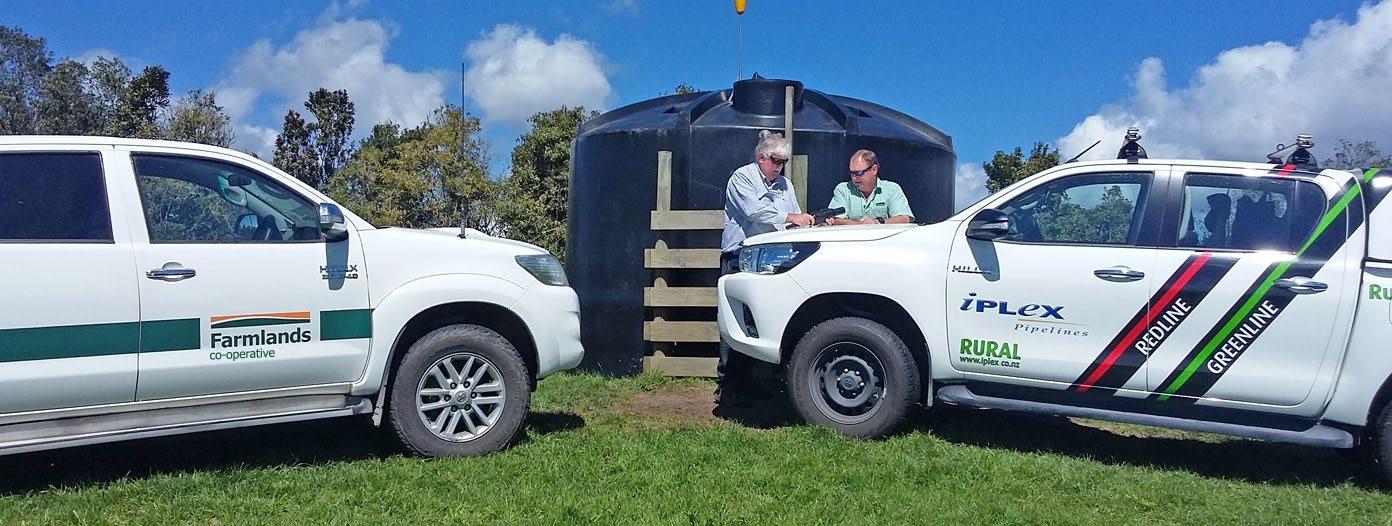
valve selection is governed by the pressure and flow requirements – also an outcome of the reticulation design. Seeking professional advice is important. The teams at Farmlands and Iplex Pipelines can assist in this regard, using the latest surveying technology and their many years of experience, they can specify the correct system components and network layout to provide a stock water system designed to meet your requirements.
Head to the Farmlands website –www.farmlands.co.nz/water – and fill in your details to get started. You will be contacted by a member of the team to see how they can be of assistance. Your stock water reticulation system is too valuable an asset and productivity tool to second guess what will and won’t work.
For further information, contact your Farmlands Technical Field Officer or the friendly team at your local Farmlands store.
Article supplied by Iplex Pipelines.

From National Fieldays to the paddock, Farmlands shareholders have joined Ford New Zealand on an incredible journey for the past 20 years.
Over the past 11 months, Farmlands has undergone an extensive review of our internal fleet requirements and shareholder fleet offer. The hard decision has been made to discontinue our national purchasing arrangement with Ford New Zealand and from 28th February
2017 shareholders will no longer be able to access special pricing via the Ford New Zealand national purchasing agreement. This isn’t the end of the road – we are delighted that selected Ford dealers have chosen to remain a valued Card Partner for support and servicing. This ensures that shareholders continue to receive the impeccable service they have enjoyed from Ford for the past two decades.
Farmlands is committed to bringing shareholders the best Card Partner savings and offers and we will be confirming an exciting new offer coming to shareholders in the early New Year. Until then, Farmlands just wants to say thanks to Ford New Zealand for sharing the journey with us.
If you have any questions, please contact us on 0800 200 600 or ask@farmlands.co.nz
Dairy farmers Andy and Liz Hayes milk 1,000 cows on their farm in the Hakataramea Valley near Timaru. Water to the farm is spring fed. A member of the Lower Waitaki South Coastal Canterbury zone committee, Andy is constantly involved in looking at strategies to improve water for the community.
He’s looked at several different solutions but considered every one of them way too expensive for treating just his milking plant water source, which tested positive for E. coli, making him non-compliant.
The reasons behind MPI demanding (farm) water that meets Farm Dairy Water Standards is driven from food safety perspectives. Water may fail because of E. coli (which often comes from bacteria in animal faeces), clarity or turbidity (haze, sediment or cloudiness in the water) or colour (could be from leaves and dirt in streams or iron in water).
From a dairy processor’s perspective, it’s important that water used to clean the milking plant meets MPI’s standard as it could come into contact with milk, affecting quality.
Having non-compliant water, Andy was treating his water manually with chlorine and paying $100 a month in penalties. It was GEA | FIL Area Manager Kirk Falconer who introduced Andy to the concept of the Farm Chlor Chlorinator. “I noticed the big red sticker on Andy’s hot water cylinder and recommended he try the Chlorinator to make the water potable. He took one look at the very
simple design, ordered it immediately and then installed it himself.”
Andy had been on temporary water exclusion for 3 years before installing
GEA | FIL’s Farm Chlor Chlorinator and within a week of installation, he got the all-clear from his Farm Dairy Assessor –the water was potable.
The Farm Chlor Chlorinator provides farmers with a simple, affordable solution to quality water.
It’s a water disinfection system installed into the main water line between the water pump and water tanks. The water passes through the Chlorinator and is treated with a pre-set amount of chlorine before being stored or dispensed. Based on where you install the Chlorinator, you can treat the entire farm including stock drinking water or just the dairy. The system treats water to approved drinking water standards, suitable for human consumption.
GEA | FIL Chlorinator rods, used in the Chlorinator, are the only dry chlorine approved by MPI for use in dairy sheds.
For Andy, the Farm Chlor Chlorinator was the most practical option he’d seen. “There are no other products on the market like it,” he says. “It’s relatively cheap to buy, simple to install and cheap to run.
“When we installed the Chlorinator, we also cleaned the tank. A week later we were off exclusion. An added bonus was that Fonterra refunded me $1,200 for fixing the water issues, so effectively a third of the cost was gone.”
Pleased with the performance of his Farm Chlor Chlorinator, Andy is now
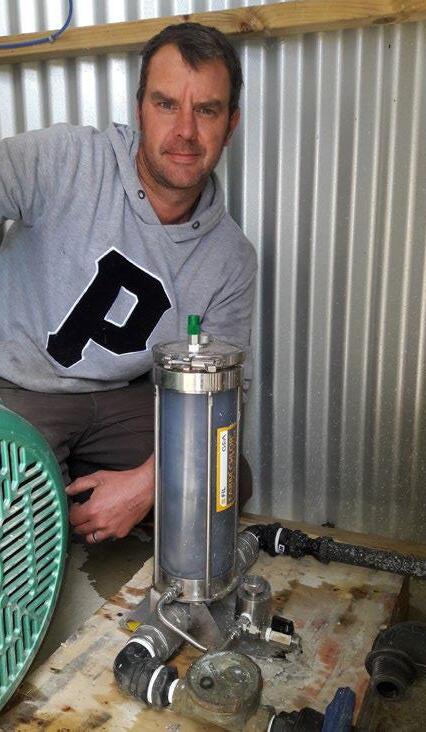
an advocate for the system. “It’s the cheapest solution to potable water. We go through about 5,000 litres of water a day for the shed and plant, the chlorine rods will only cost us about $250 a year.”
For further information, contact your Farmlands Technical Field Officer or the friendly team at your local Farmlands store.
Article supplied by GEA | FIL.

You may be unaware that some (or all) animals are affected. Skin peeling is the symptom most farmers associate with facial eczema but that is only half the story.
If a small proportion of the animals develop skin lesions (which appear about 4-6 weeks after the ingestion of spores), there will be a higher number of animals suffering liver damage that have not yet exhibited skin damage. The cost of facial eczema to the agricultural industry is estimated to be in the hundreds of millions/year*.
National economy is one thing – how about the physical cost to your sheep or cattle and your business?
Challenges for farms unaware of facial eczema
Distressing as it is to the cow and to us, the skin damage is the least of its problems – irreparable liver damage is of greater concern, as cattle need a functional liver for a whole range of reasons.
Some examples of the liver functions that are challenged during facial eczema season:
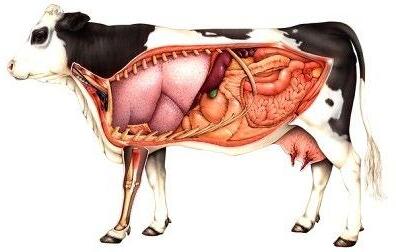
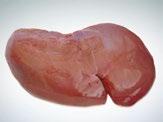
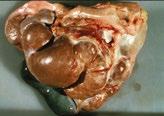
Prevention is not just better than a cure – prevention is the cure
Once facial eczema has affected livestock, there is nothing a farmer can do to repair the damage. Farmers who are serious about preventing facial eczema must first monitor facial eczema spore numbers on the farm and then implement a robust prevention plan – and check it is working and understood by all staff.
The effect of zinc is instantaneous but it is only effective if used before and during danger periods. It cannot be used (to treat) after the danger period, when stock have already been affected.
There are many factors associated with a sound facial eczema management programme:
• Measure the spore challenge on your own farm, either by pasture spore count or faecal spore count.
Sporidesmin, the toxin that causes facial eczema, eventually compromises liver function:
• Liver concentrates sporidesmin into bile (ready for excretion).
• Sporidesmin causes localised damage to the bile ducts (“the drainage system”).
• The bile ducts fill with debris and block.
• Bile excretion slows/stops within 14 days.
• Reduced/no bile leaving liver means the liver is damaged. It loses functional ability, including getting rid of breakdown products of chlorophyll = photosensitisation.
• Plan for effective prevention by learning about the many preventative options available and adopt one or more that will suit the farm operation.
• Check the accuracy of measuring equipment and the zinc dose rate for the required number of animals to be protected.
• Check the chosen prevention option is working by collecting blood samples from a representative number of cows (or sheep) and check the GGT levels for signs of liver damage.
The cost of facial eczema is too huge a risk to leave to chance.
Article supplied by NZ Agritrade Ltd.
*Bruce Faull; Facial Eczema: Disease Prediction and Surveillance; Proc 3rd Annual Seminar, Society of Dairy Cattle Veterinarians NZVA, 1986 © VetLearn® Foundation (NZ) 2003.



In this season where lamb numbers are high, it makes sense that we need the flexibility to get lambs away to the works as soon as possible. Many studies have shown that shearing lambs will increase growth rates, so what do we do about lice/ fly treatments in lambs for the summer months?
Insect growth regulators kill immature insects by interfering with moulting. Immature lice are killed as insect growth regulators affect their moulting process. Adult lice are not affected and die of ‘old age’ over about 14 weeks. However, after a few weeks, adult female lice appear unable to produce viable offspring. Insect growth regulators pose little risk to humans or animals and are not classified as acutely toxic.
Magnum® is the only pour-on insect growth regulator on the market in New Zealand that has a nil meat withholding period. This gives you the ability to treat all lambs and cull ewes immediately off-shears and it offers up to 20 weeks control for lice and up to 12 weeks protection for fly. In most cases, this will mean one treatment only and the flexibility of destocking as required. Why use a product and then wait for a month after treatment before slaughter? Pour-on treatments are all designed for use off-shears and this means within 24 hours of shearing, not 3 weeks later. This is because the lanolin grease layer on a sheep after shearing assists with movement of the chemical around the animal. Likewise, saturation dips such as a shower or jetting
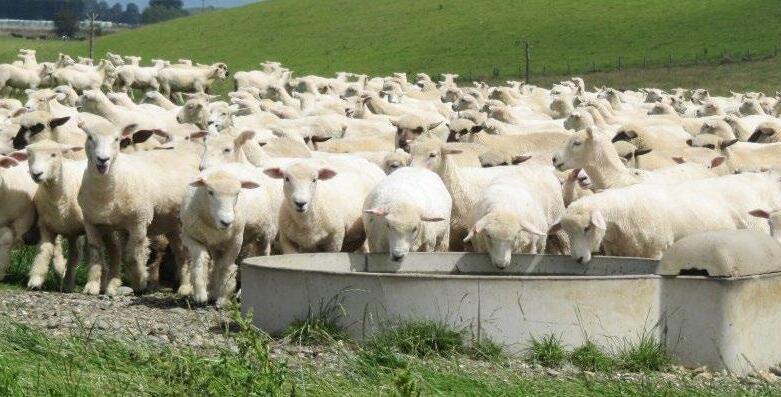
race usually require 2-4 weeks wool growth after shearing, to allow some wool to be present for the chemical to ‘stick to’. Magnum is also rainfast – and its performance on sheep will be unaffected by up to 25mm of rain before, during or after application. Long wool pour-on treatments should be considered an emergency treatment only and never part of a routine lice control programme.
All products need to be applied correctly to ensure good lice control, as poor application and under dosing increase the risk of resistance developing. When applying Magnum, use a suitable T-Bar and start from the poll (between the ears) pouring on down the middle of the backline all the way to the tail. Do not deviate from the spine. Starting at the shoulder misses the critical neck and head areas and lice simply move to and camp in these ‘safe’ areas until the chemical in the treated areas runs out.
Magnum’s water based formulation provides users a more environmentally sound and people-friendly product, while still achieving excellent results against both lice and fly. This has proven to be a real winner for many farmers who feel more comfortable with insect growth regulators for health and environmental reasons and wish to avoid using solvent based products that can be less safe and unpleasant to use. The water based formulation is simple to use, the paste-like compound sticks where it’s needed and at cleanup time, water and detergent are all that is required.
For further information, contact your Farmlands Technical Field Officer or the friendly team at your local Farmlands store.
Article supplied by Coopers Animal Health. ACVM No: A7704 ® Registered trademark. ScheringPlough Animal Health Ltd.
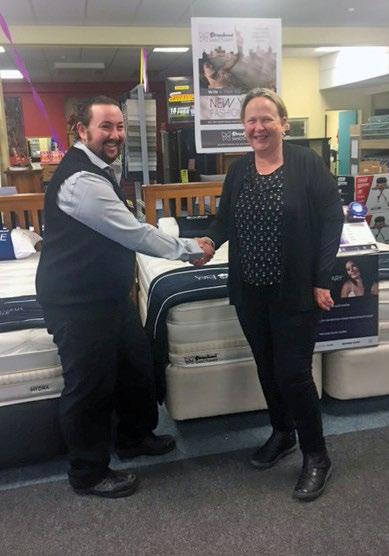
Smiths City salesman Stefan Godman completed Rosalee’s purchase that won her this amazing prize.
The September Smiths City VIP Event included great shareholder product offers, drinks and nibbles and the chance for one lucky shareholder to win a $5,000 Sleepyhead bed.
A huge congratulations to the lucky winner of the Sleepyhead bed, Farmlands shareholder Rosalee Gilchrist from Cromwell.
Thank you to all the shareholders that supported the September Smiths City VIP Event. The team at Smiths City look forward to continuing to bring shareholders great deals through Farmlands Card.
As we head towards the festive season, don’t forget to check out the great range of Christmas gifts in-store at Smiths City.
Plus, the Smiths City team will have even more great savings for shareholders at the next Smiths City VIP Event on Tuesday 6th December 2016.



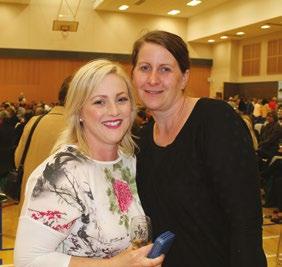
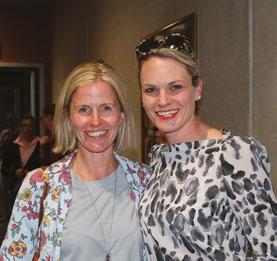
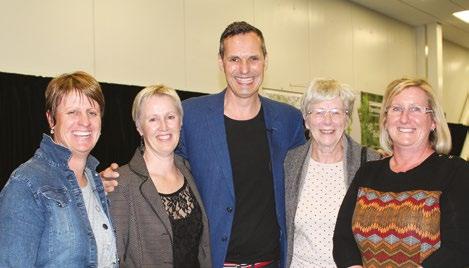
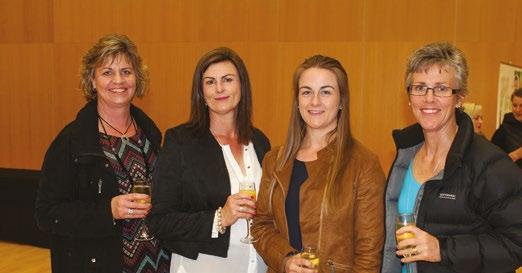
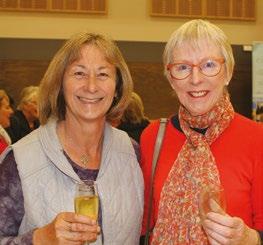
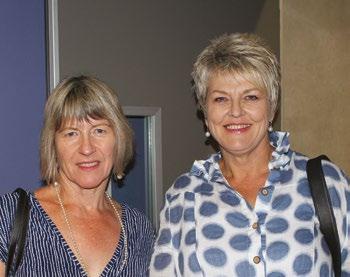
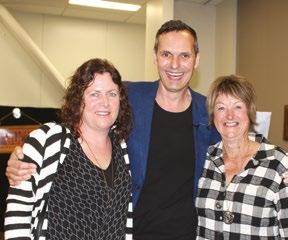
Many laughs were had, great prizes were won, glasses of bubbly were sipped and plenty of gardening tips were shared as garden guru Tony Murrell made his way around the country for the 2016 Ladies Nights. Check out some photos from the events!
you will always have something new to discover.


Budgeting – it’s just planning by another name. Every business needs a plan to be successful and once you have that plan, you need tools that can help you get the job done.
Farming is no different. Planning 1, 2 or even 5 years out is critical to stay focused on your goals, maximise your chances of success and take advantage of opportunities that arise along the way.
The key elements to planning are:
• Identify what is to be achieved
• Decide when you will do things
• Determine the most effective way to get it done
• Find the resources you need
• Monitor and review progress
Your financial budget forms a key part of the plan and while your bank is often the mainstay for your working capital requirements, Farmlands Creditline can be used strategically alongside your overdraft to smooth cashflow during peak months.
Farmlands Creditline is a multipurpose deferred payment and cash flow smoothing facility, available exclusively to Farmlands shareholders.*
It is simple to arrange and once in place, provides options to:
• Defer payment of goods purchased on your Farmlands Card for up to 3 months
• Access exclusive Farmlands, Card Partner and supplier deferred payment deals (refer to next page)
• Transfer part or all of the amount due on your Farmlands Account and pay it in 3 months
• Defer or spread payment of Ballance fertiliser for up to 6 months
• Accommodates positive movements in your cash flow, as there is no need to wait for the
3 month deferred payment period to expire before repaying, therefore reducing interest costs
• No penalties or hidden costs, Creditline has no establishment fee and interest accrues daily on any outstanding balance, so you only pay for what you use.
For more information, talk to the friendly team at your local Farmlands store, call your local Regional Finance Manager or contact us on 0800 200 600.
* Subject to Farmlands Finance Limited lending criteria, Terms and Conditions.






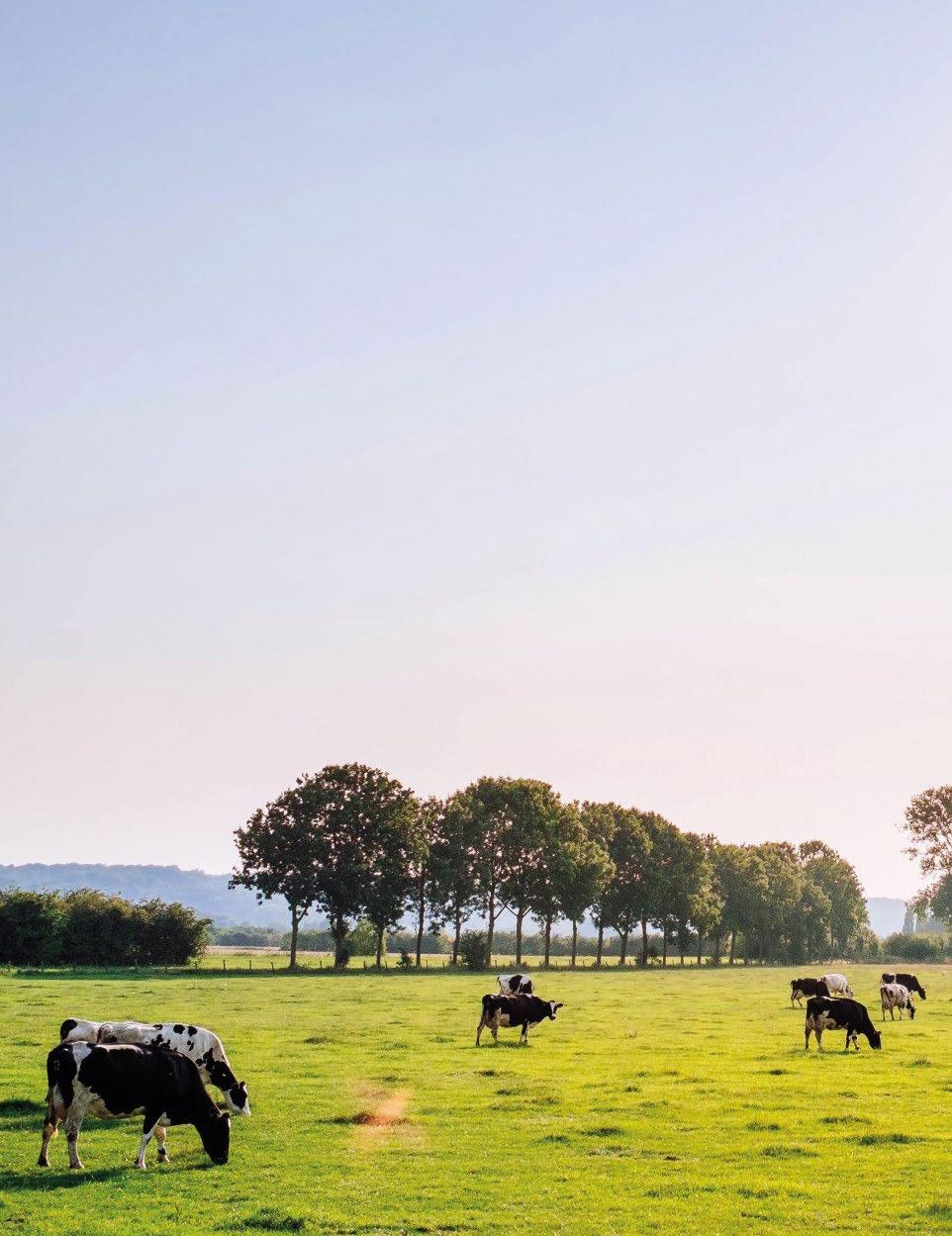
By grouping large numbers of cows regionally, your independent co-operative will negotiate a better deal for your animals – putting more money in your pocket.
Book your cows now!
STEP 1: Go to www.farmlands.co.nz/cull
STEP 2: Register your cows
STEP 3: Farmlands will confirm all details including pricing
For more information call:
Brian Martin – 021 244 4463
Philip Webb – 027 801 8057
Rob Blincoe – 027 677 8969 Or call us on 0800 200 600
Choices Rewards brings you the best from Farmlands Card Partners – with more than 1,500 rewards, you’ll find everything you need for Christmas gifts, summer adventures and beyond!
Redeem before 31st December and go in the draw to win! See below for details.

Choices Points



Choices Points




Products provided by Farmlands Card Partners.


Choices Points
Redeem your Choices Rewards Points between 1st October – 31st December 2016 and be in to win one of three prizes of 2,000 Choices Rewards Points! Terms and Conditions apply. 12,000 Choices Points

Redeem your Choices Rewards Points at www.farmlands.co.nz/choices or simply call the Choices Rewards team on 0800 200 600, option 4.





















































More than 3,000 farmers from across the country have taken part in Beef + Lamb New Zealand health and safety workshops during the past year, with strong demand for upcoming events.
Richard Wakelin, General Manager Farms for Beef + Lamb New Zealand, says the one day workshops, initially introduced as a pilot programme before the introduction of new health and safety legislation in April, will be part of the organisation’s programme into the future.
Developed and delivered with support from WorkSafe, Richard says the workshops for sheep and beef farmers continue to be oversubscribed and have received positive feedback.
“Our role is to help farmers make informed business decisions and this was an opportunity to provide a tool to help them,” Richard says.
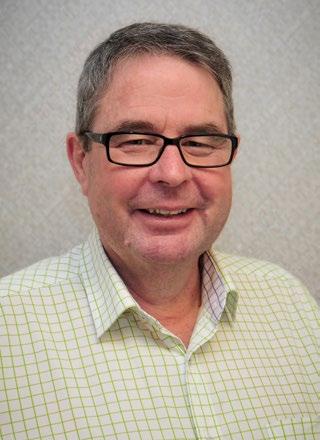
| Richard Wakelin.
Beef + Lamb New Zealand worked with risk management company QSI to develop the initial 10 pilot workshops, delivered last spring. The programme is free to farmers and funded through Beef + Lamb New Zealand levies and WorkSafe.
“
This type of positive sector leadership will make a real difference to farm safety and ultimately to farm productivity.
“We worked very closely with WorkSafe on development and implementation,” Richard says. “Inspectors from WorkSafe have attended most of the 90 workshops we’ve delivered so far. It’s important for farmers to have WorkSafe in the room. There are many myths and misconceptions out there and WorkSafe has helped dispel those and provide clarity on expectations.”
Workshops run from 9.00am-3.00pm with a maximum of 30 participants working through a specially-designed workbook. “It helps farmers understand the various elements they need to adopt and implement a health and safety plan.
“The focus is on identifying risks and developing a culture around engaging their on-farm teams, in terms of understanding risks and how they might manage them. It’s about raising awareness and developing skills, which
farmers can go back to their farms and put into practice.”
Al McCone, WorkSafe’s Sector Lead for Agriculture, says Beef + Lamb New Zealand played a vital role in the ongoing programme of developing a stronger health and safety culture across farming.
“We’re not about telling farmers how to farm but about supporting them to farm more safely. But there are myths around that. It’s hugely valuable to have Beef + Lamb New Zealand stand up and get the real practical messages to farmers. This type of positive sector leadership will make a real difference to farm safety and ultimately to farm productivity.”
Richard says that while many farmers approach workshops with trepidation, they feel very differently by the end.
“By the time they leave, they are relieved and positive they can manage the process. They also realise that the requirements are not expensive or onerous to put into place.
“Farmers tell us, anecdotally, about the difference it’s made. We are now gathering information – talking with people some months after they have attended a workshop to understand what changes they have made on their farms.
“We really appreciate the support WorkSafe has provided. It is never easy to introduce something new and different but they are really good to deal with and have worked very hard to support us in any way they can.”
Article supplied by WorkSafe.


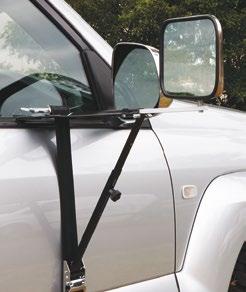
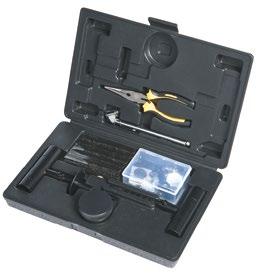
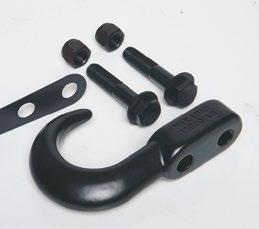















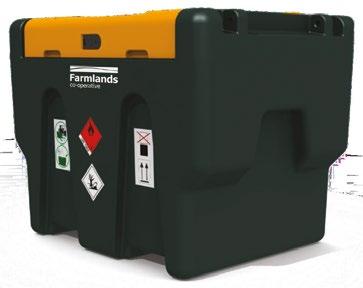
Tank stability, access to overhead tanks and the use of ladders can be identified as hazards that need to be minimised.
Delivery drivers do carry free-standing ladders but WorkSafe does not recommend the use of these unless it is not practical to have a fixed ladder. To use a freestanding ladder, they must be on flat and stable ground, allowing for a strong and secure footing. Fixed ladders are preferred and these should be robust and secure, free from rust, with no cracked or broken rungs. It is also important for your tank to have a dip stick. Dip sticks can reduce waste
and environmental contamination. All HSNO approved tanks are supplied with calibrated dipsticks and these also confirm the safe fill level for the tank. This ensures that the delivery drivers can pre-dip your fuel tank and confirm correct delivery volume without any waste or spill. Tanks can become over filled with heat expansion – if the tank is filled above the safe fill level in the early morning or late evening, product could spill out during the heat of the day.
For further information, please contact the Farmlands Fuel team on 0800 666 626.
The actions below need to be implemented to minimise risks:
• Tanks should be stable and secure before the delivery driver will refuel from a ladder access.
• The portable ladder should not exceed 2.7 metres in length with a maximum work height of 1.8 metres.
• The tank fill point should not exceed 3 metres in height from the ground.




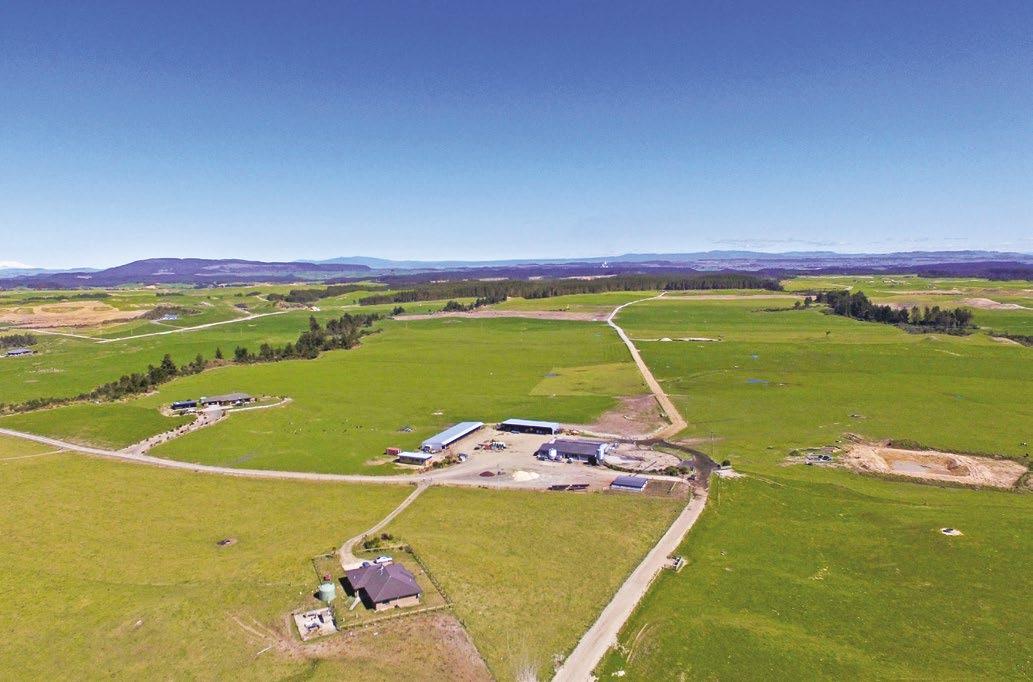
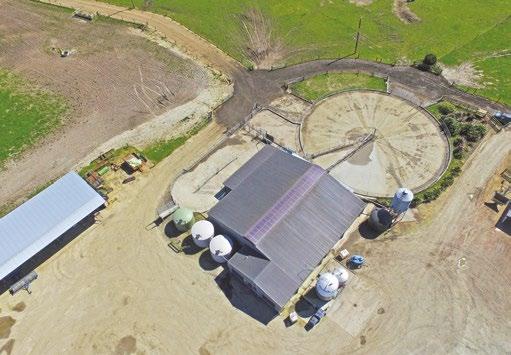
316 hectares located in Tokoroa with a mainly flat to gentle rolling contour. Simple farm to operate, with a central race system, 54 bail rotary dairy shed with drafting, in-shed feed system, 9-bay calf/implement shed, 5-bay implement shed, two concrete silage bunkers and a workshop. Executive, four bedroom plus office home and two other three bedroom, modern brick homes providing accommodation for staff. Approximately 800 cows wintered on with production around 320,000kgMS with inputs. Price by negotiation.
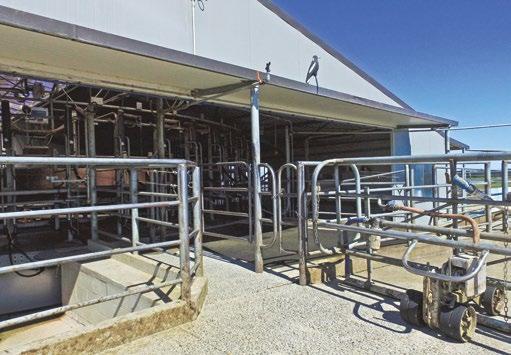


Property ID: MT1013 www.farmlandsrealestate.co.nz
Ian Morgan Rural 027 492 5878 ian.morgan@farmlands.co.nz
Glen Murray Lifestyle/Rural 027 488 6138 glen.murray@farmlands.co.nz
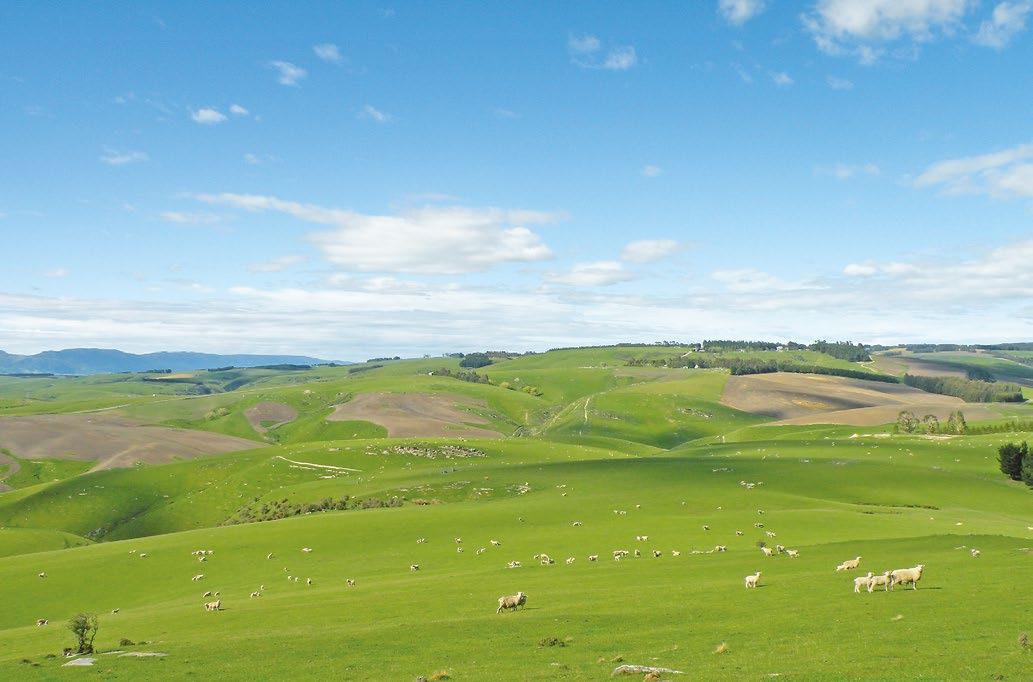
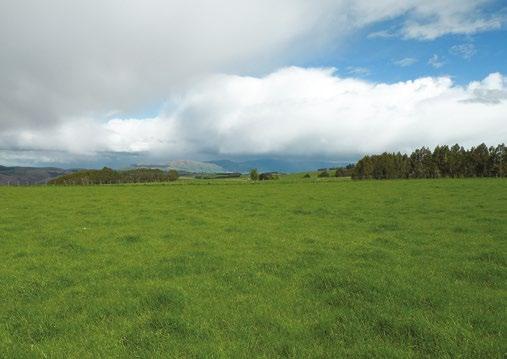
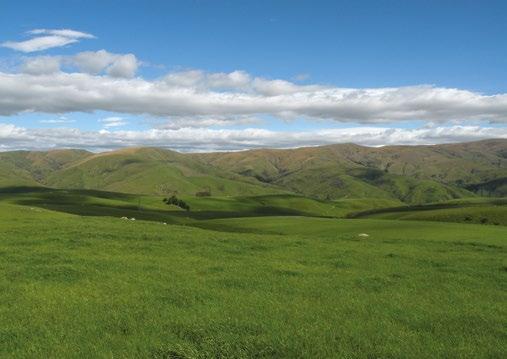
Comprising “Cone Downs” being 1,410.8 hectares and “Kynros” being 238.5 hectares freehold. Located in a well known farming district – gravity sprinkler irrigation to approximately 29 hectares, 48 hectares of dry land lucerne, 55 hectares of new grass, 25 hectares new lucerne, 32 hectares of fodder beet, several mature woodlots and productive tussock hill country. Good range of farm buildings, two four bedroom homes, two woolsheds, sheep yards, large cattle yard complex with Te Pari crush. Tender closing 12pm, Wednesday 14 December 2016 (unless sold by private treaty).


Dave Hardy
Property
www.farmlandsrealestate.co.nz
Lifestyle/Rural 027 533 2770 dave.hardy@farmlands.co.nz
Craig Bates
Lifestyle/Rural 027 489 4361 craig.bates@farmlands.co.nz
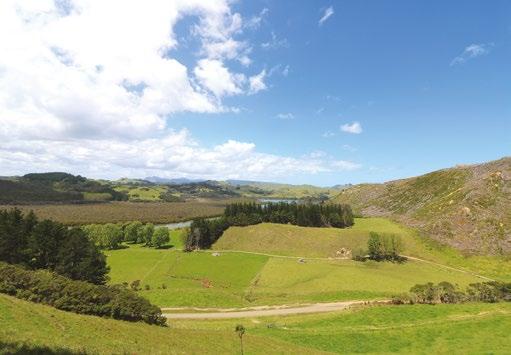
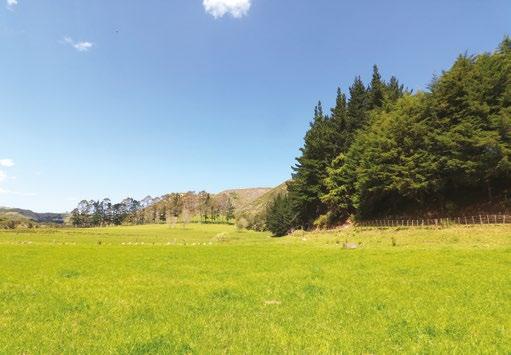
• 125 hectares including 5 hectares of mature pine trees with flat to undulating land and stunning views of the Herekino River
• 12 aside herringbone shed and calf holding pen
• Two implement sheds, hay shed, two calf sheds and 3-bay house shed
• An additional 57 hectare run off block is located 3km away
• Three bedroom home filled with character
Price by negotiation
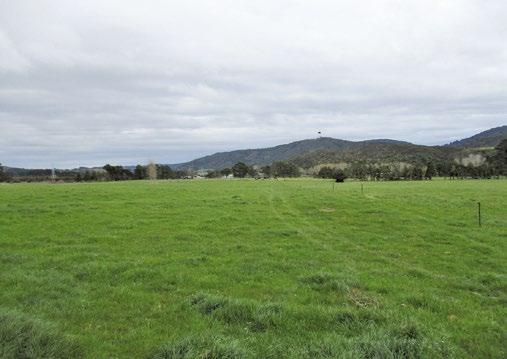
113 hectares of freehold land in two titles. Currently milking approximately 130 cows, production in 2015 was 43,000kgMS. The dairy production is in ‘cruise mode’ at present, with the ability to crank up the production if desired, through the 13 aside herringbone dairy shed. Great spring fed water supply, crystal clear creeks, numerous sheds and a cottage. The property lends itself endless possibilities of subdivision, recreation, niche raw milk or cheese production and passive manuka honey, $60,000 yearly income. Price by negotiation.

Paul Yates
Residential/Lifestyle/Rural 027 577 9962 paul.yates@farmlands.co.nz
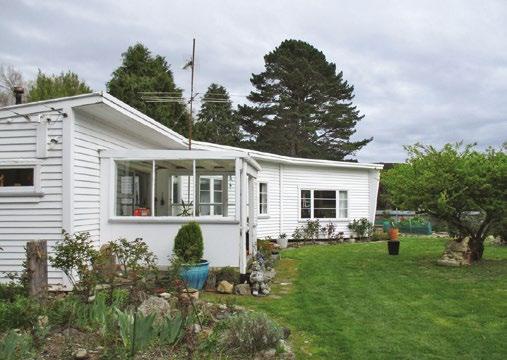


Tim Falloon
Lifestyle/Rural 027 449 2105 tim.falloon@farmlands.co.nz
Rod Cranswick
Lifestyle/Rural 027 436 5738 rod.cranswick@farmlands.co.nz
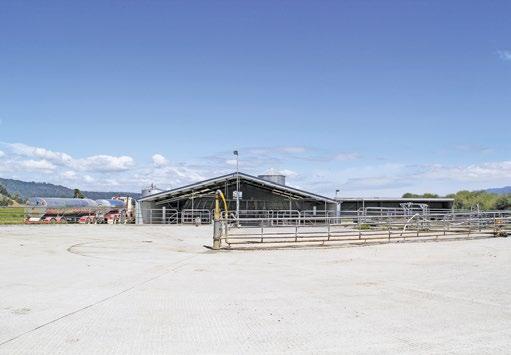
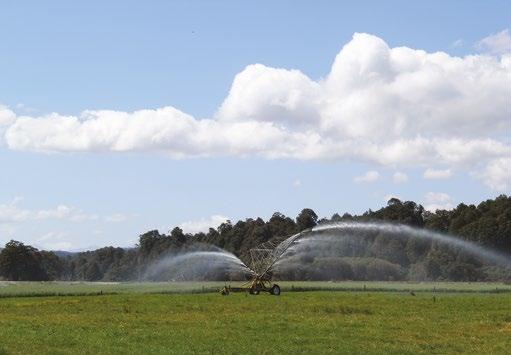
This West Coast property has a 44 bail rotary cow shed at the heart of the property. The options are yours, as we are selling the property as land and buildings only. Approximately 150 hectares effective, 135 hectares of which can be irrigated and 20 hectares of grazing land. Three good dwellings makes you and your staff well set up. The free draining river gravels and silts allow you to grow any variety of crops you may like. Great location, only 20 minutes from Greymouth. Deadline sale closing 1pm, Thursday 15 December (unless sold prior).
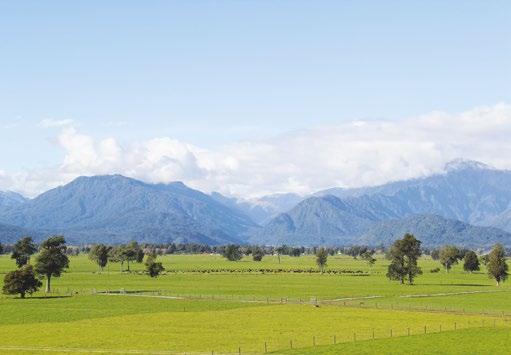
This dairy unit is located only 20 minutes out of Hokitika. Production is now near 140,000kgMS, even on the lower payouts and this season they are on budget to surpass this. The 28 aside herringbone shed, with automatic teat sprayer, is wellmaintained and has a new milk silo and refrigeration unit that was put in last winter. Three good houses and enough barns to make any man happy. Available as a going concern. Contract milker in place for the 2016/2017 season and open to staying on. $4,350,000 for land, buildings and shares plus GST (if any).

Shari McLaughlin
Lifestyle/Rural 027 266 6850
shari.mclaughlin@farmlands.co.nz
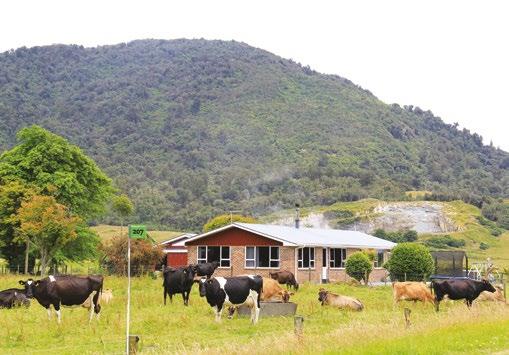
Shari McLaughlin
Lifestyle/Rural 027 266 6850
shari.mclaughlin@farmlands.co.nz
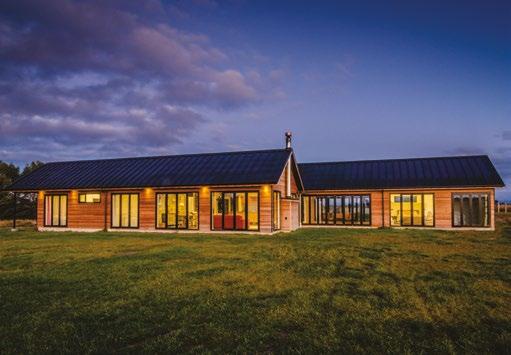

On 3.7 hectares in Timaru’s sought after lifestyle location, this architecturally designed home combines textures and materials that create modern living and smart design. Featured in Your Home & Garden magazine, the home is a must view for those who appreciate stylish innovation. Award winning kitchen design, solar power for energy and natural ventilation are key features. Large internal/external living spaces can be configured to suit climate conditions. Three bedrooms and the master suite capture rural and mountain views. Price by negotiation.
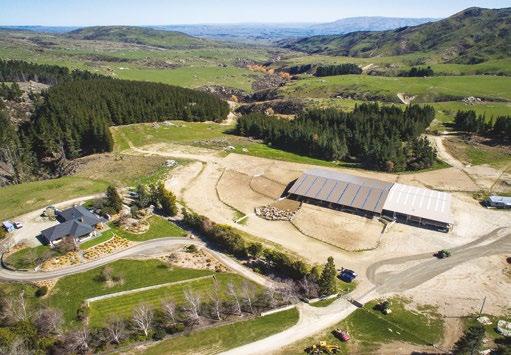
Craiglynn Station is an exceptional, traditional sheep and beef station operation with scale and outstanding infrastructure. For genuine sale, we offer Craiglynn Station with options to purchase the 3,330 hectares plus stock and plant at valuation. Or purchase the original station of 2,733 hectares and lease to buy the balance of 619 hectares at the northern end. Talk to us regarding these options, as there is flexibility available. Possession 31 March 2017 or by arrangement. Options from $13,000,000.

Nic Shaw
Residential/Lifestyle 021 183 5615 nic.shaw@farmlands.co.nz
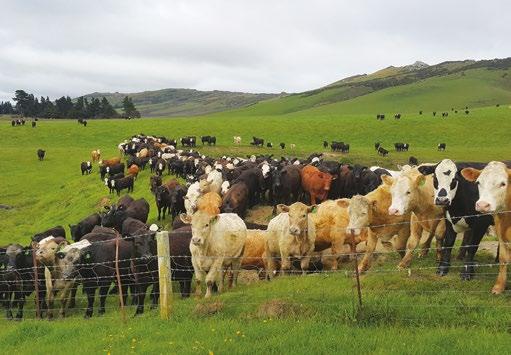

Craig Bates
Lifestyle/Rural 027 489 4361 craig.bates@farmlands.co.nz
Alan Eason
Lifestyle/Rural 027 489 8760 alan.eason@farmlands.co.nz
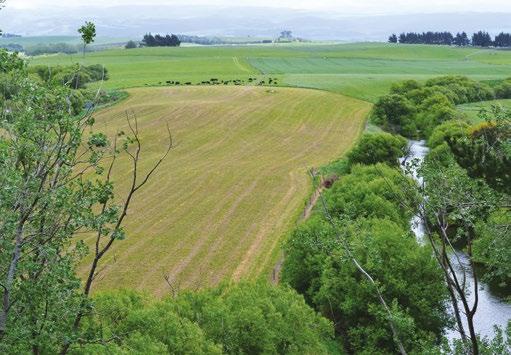
Situated in Kakanui, North Otago, 192 hectares of flat to easy rolling contour and strong soils. Irrigated via pivot and gun sourced from the Kakanui River and NOIC. Improvements include a large four bedroom home, two large closed in implement sheds, woolshed with covered yards, 5-bay hay barn, plus various other sheds and new cattle yards. Offers to be presented on or before Thursday 2 February 2017.
Merv Dalziel 027 439 5823
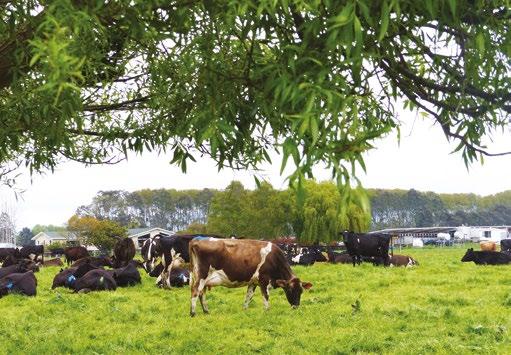
Location, irrigation, flat contour, great soils and a real grass growing machine. This 94.9 hectare Waimate property is currently milking 400 cows and achieving very good production. Good infrastructure with two houses, 40 aside herringbone shed, 550 cow feed pad, 3-bay implement sheds, workshop, palm kernel bin, calf sheds and 4-bay shed. Deadline sale closing 1pm, Wednesday 7 December 2016 (unless sold prior).
Neill Dick 021 359 793
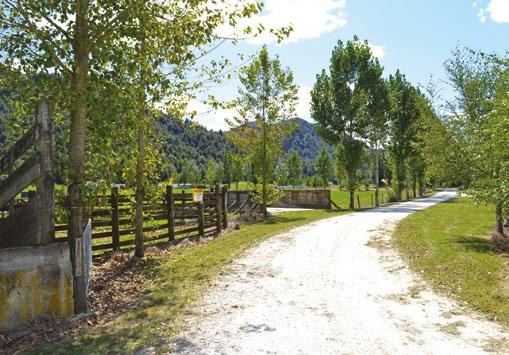
Motivated Vendors, mid-season takeover. This 151 hectare Murchison property with 80 hectares of effective and irrigated land includes a 32 aside herringbone shed with automatic cup removers, a new effluent storage facility plus modern farm sheds, good fencing and stock handling facilities. The three bedroom, two bathroom home is only 13 years old and enjoys great views of the farm and surrounding ranges. $2,600,000 plus GST (if any).
David Green 027 326 4059
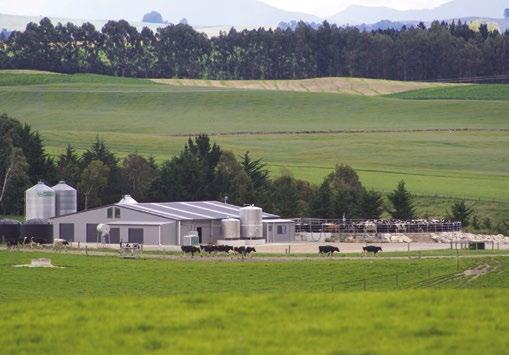
No compromises were made when converting this fertile cropping farm, with quality infrastructure and a milking platform to capitalise on the outstanding soils. Designed for ease of management and producing 272,000kgMS 2015/2016 from 600 cows. Located close to Oamaru and the Southern Lakes recreational playground. Quality dairying plus lifestyle. Stock and plant available at valuation. $7,600,000 plus GST on land and buildings.
Calvin Leen 027 453 0950