Planning an autumn clean-up of weeds and pests on your property
Early ordering a win-win for farmers
Pasture sown, job done? Not quite…
Don’t let velvetleaf take over your farm
How to cope with Cooperia 41 Meeting regulations this calving season Plan365 Rural Infrastructure
Safeguarding your farm dairy effluent system
FARMLANDS STAFF PROFILE
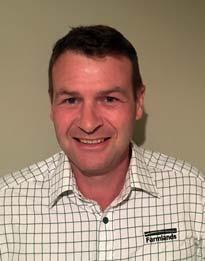
Grant McKay
Q: What is your current role at Farmlands?
A: Sales Manager – Otago.
Q: What do you enjoy about your job?
A: People, challenges and solutions.
Q: Tell us a bit about your family.
A: My wife Jo is the principal of a primary school in Wanaka where we live and I have two amazing young girls, Harriet (6 years) and Gabriella (3 ½ years).
Q: What piece of technology could you not live without?
A: I think it would be my smart phone – but sometimes I think I would be smarter to be without it
Q: What is the most interesting trip you have ever taken?
A: I went on my OE with no particular plan and it blew out to 4 ½ years but saw some pretty neat places – Nepal and India come to mind as being interesting and memorable.
Grant’s
Ingredients
800g pre-cooked lamb meat
2 tablespoons ghee or vegetable oil
2 tablespoons garlic and ginger paste
3 fresh green chillies, finely chopped
2 scotch bonnet chillies, finely chopped
1 tablespoon cumin powder
1 teaspoon turmeric
1 tablespoon madras curry powder
1 tablespoon coriander powder
1 tablespoon tomato paste
3 tablespoons chopped coriander
Method
3 tablespoons red hot chilli powder (be careful – less might be better)
4 cloves
1 bay leaf
6 green cardamom pods, smashed
2 potatoes, pre-boiled (optional)
2 tablespoons vinegar
2 tablespoons plain yogurt
500ml (2 cups) heated curry sauce
Salt and pepper to taste
1. Heat the ghee/vegetable oil over medium heat.
2. Allow to sizzle for about a minute and then add the spices. The curry will darken as the turmeric fries away.
3. Now scoop in the garlic and ginger along with the chopped chillies.
4. Throw in the potatoes (if using) and the heated curry sauce. Stir to combine while adding the pre-cooked lamb pieces.
5. Stir in the yogurt 1 tablespoon at a time followed by the vinegar and tomato paste.
6. Check for seasoning and then sprinkle with the chopped coriander and season to taste with salt and pepper.
FROM THE CEO
Welcome to the April issue of The Farmlander.
March was a positive month for your co-operative. I spent the first part of it visiting our staff around the country for a series of Regional Conferences. These conferences are crucial in making sure all our staff are aligned on how we can best serve our shareholders. We can do that by harnessing the buying power of our strong shareholder base while focusing on our three key strategic goals –Enduring Customer Relationships, Impregnable Business Model and Leading Agricultural Knowledge and Expertise. We’ve harnessed this buying power to bring you some great deals on your fertiliser, chemical and fencing requirements at the time of year that you need them most. If you haven’t checked these out, I urge you to visit your local store or talk to your TFO or TA. You won’t be disappointed.
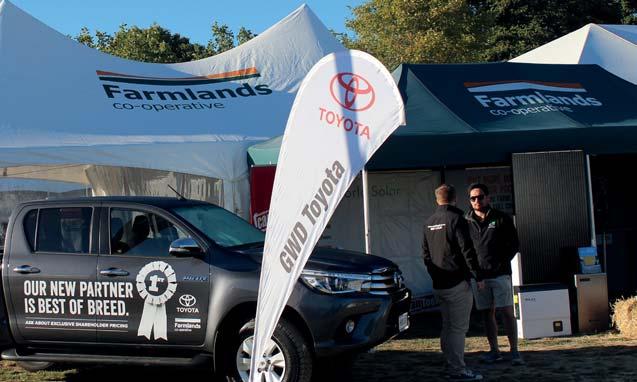
The theme for this month’s issue is Rural Leadership and we pride ourselves on being a leader and not a follower. That’s why we continue to announce exciting partnerships with businesses and organisations that will bring proven benefits to our shareholders. Hot on the heels of our new agreement with Toyota – which we have enjoyed a fantastic response to – we have also announced a new partnership with NZ Fieldays Society. This partnership will bring more technology and innovation to shareholders, in a sector that is always searching for ways to boost production and find better practices. You can read more about this partnership on page 14.
I look forward to bringing you more exciting announcements in the months to come. All the best for a productive April.
Kind regards,
Peter Reidie Chief Executive Officer Farmlands Co-operative Society Limited
Lamb Vindaloo
Never stop learning
Julian Raine proves education and perspiration brings the right rewards.
Twenty years after he became a Nuffield Scholar, Julian Raine is still finding new ways to turn the theoretical into practical. Dairy. Beef. Horticulture. Hops. Forestry.
This is not a roll call of the different industries in the primary sector – just the ones Nelson’s Julian Raine involves himself in. It sounds like a hectic existence but Julian seems to take it all in his stride.
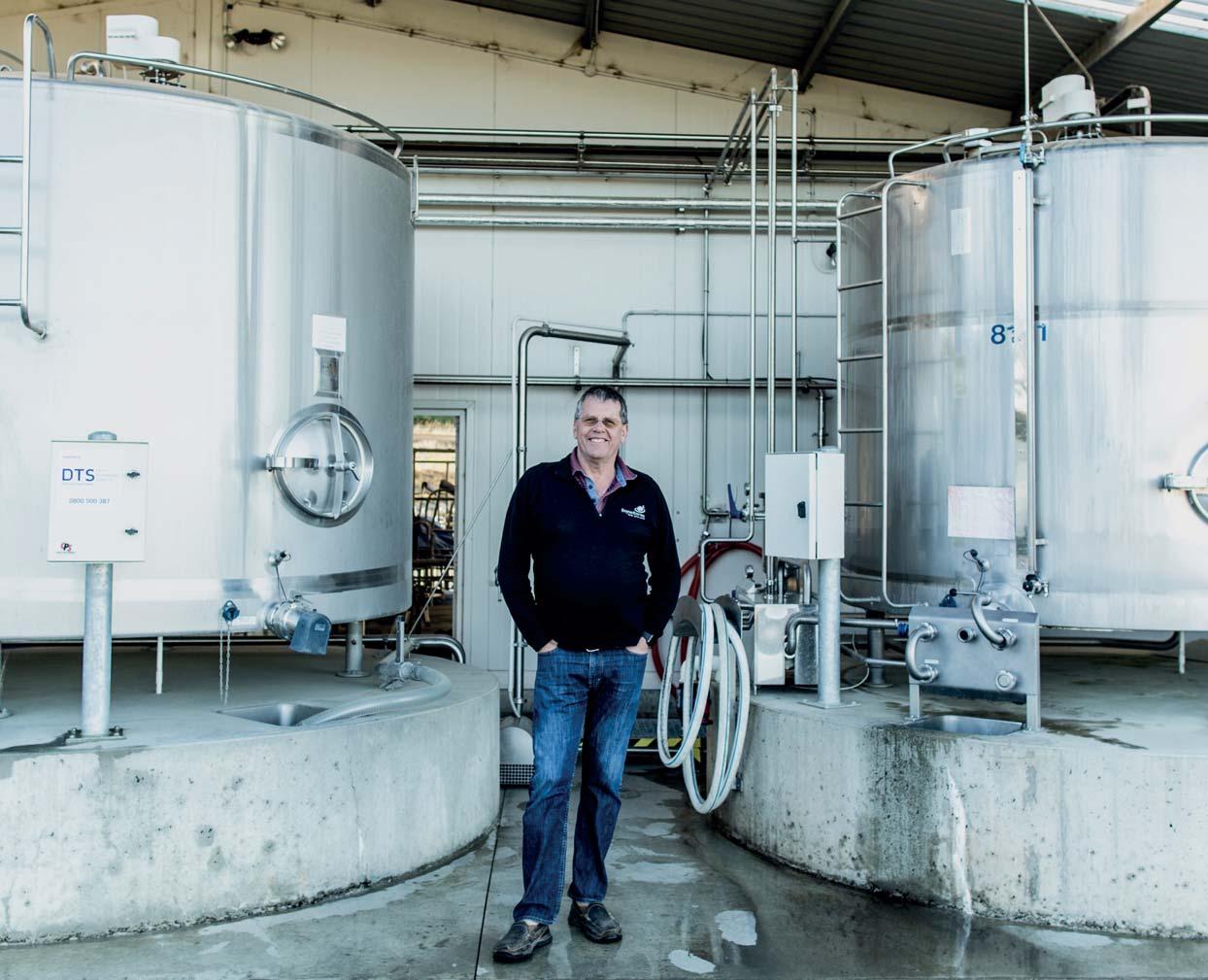
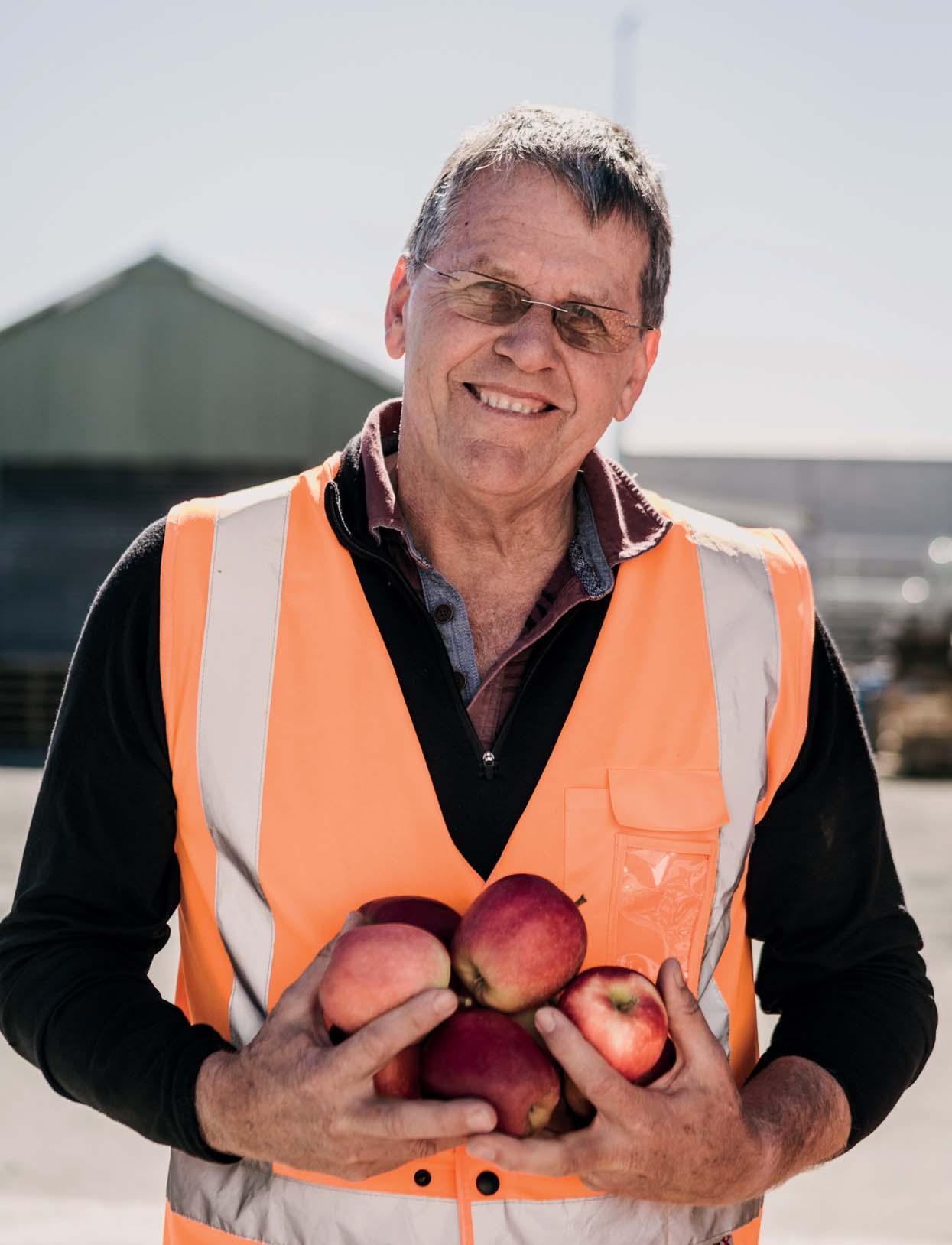
From a strong farming family, Julian is a Director and shareholder in Wai-West Horticulture – just over 200 hectares of apples, berryfruit and gold kiwifruit. Further down the road, he still manages Oaklands, the dairy farm that has been in his family since 1844. The 200 cow, 460 hectare operation is complemented by a 400 cow, 300 hectare operation at Motupiko.
It’s one of New Zealand’s oldest farms but Oaklands these days finds itself sandwiched between urban sprawl. The realities of urbanisation do not daunt Julian, as he
is passionate about the value of local production.
“Oaklands Milk is its own brand and goes to cafés, restaurants and vending machines in Nelson, plus there is a home delivery service,” he explains. “We also have Aunt Jean’s, which is our supermarket brand.
“All of our milk is delivered in glass bottles, so when the restaurants, cafés and home delivery are finished with their milk, all the glass bottles come back to us to be sterilised and re-used. With Aunt Jean’s, the bottles can just go into the recycling.”
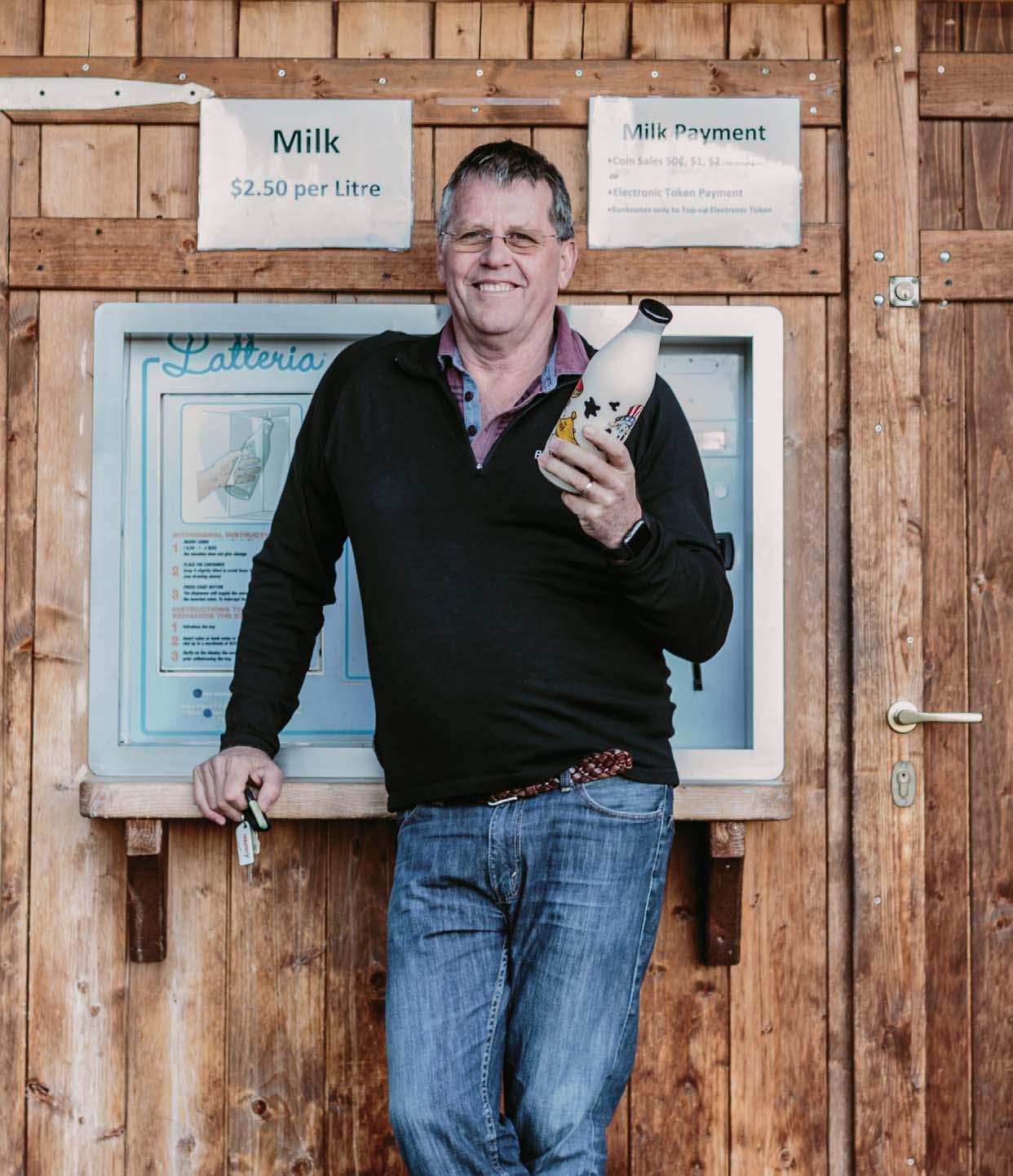
Glass bottles and value-add milk is only one aspect of the Oaklands story. Nelson is also centre stage to another unique Oaklands initiative – milk vending machines.
“It came about partly by necessity – our winter contract was cancelled and we were a longtime winter milker, roughly about 80 years.
| Oaklands is a multi-generational farm that has been in the family since 1844.
I was the last Chairman of Nelson Milk before the shareholders agreed to sell to Kiwi Dairies, one of the three parties that formed Fonterra in the late 1990s,” Julian explains.
“We had been milking as a town supply farmer for decades and leading up to that, milk used to be taken from Nelson and trucked to Christchurch. They didn’t renew our contract so we felt there were a couple of things we could do – we were more remote from where our milk came from and there was an opportunity to get back closer to the Nelson customers. It was evident in some of the other industries I’m in that people had become more remote from where their food is produced.”
In his various travels, Julian had seen vending machines in villages, so contacted a manufacturer in Italy. After a year’s planning, the machines were imported and rolled out to the public.
The initiative is an example of what Julian describes as “looking at complex issues from every angle”.
| Cows on this farm even have a robotic back scratcher.
| There are two brands on offer – Oaklands and Aunt Jean’s.
He credits the Nuffield Scholar programme, which he completed in 1997, as critical to his growth in this area.
Julian focused his Nuffield Scholar studies around integrated fruit production. His travels on the subject took him to Europe, South East Asia and North and South America. So how did a man from a longstanding dairy family find a passion for horticulture?
“I live in Nelson and I wanted to continue to live in Nelson. Nelson isn’t renowned for its dairy, so you’ve got to think where the future is – the future is we grow really good fruit here and a wide range of fruit. I thought if I’m going to be involved in farming in its broader sense then I need to learn a wide range of skills,” he says.
Nuffield provided an opportunity to develop and Julian was keen to know more through an obvious thirst for knowledge. “There were obviously some things about integrated fruit production that I wanted to bridge the gap between the growers and scientists.
I wanted to become the translator between the scientists and what they said and those in the field.”
Applying what he learned during his studies has paid dividends. Understanding the life cycles of insects and the associated scouting techniques have become standard since the early 2000s.
“Understanding the timing of chemicals rather than calendar spraying, which was true 2 decades ago, has been important. We are now far more sophisticated in what we do when we are targeting specifically.
“In the apple industry, we have developed very sophisticated systems to a point there are nil detectable residues at harvest time. It is very friendly chemistry now that is targeting specific species and is environmentally friendly.
“Apple futures as well, which is now the apple standard for the industry. That evolved around the time of the initial study and the majority of the industry is now done through apple futures.”
Since his studies, Julian has developed an intensive governance portfolio. Aside from his involvement with Oaklands and Wai-West Horticulture, he is President of Horticulture New Zealand, Chairman of Boysenberries New Zealand and is on the Board of New Zealand Hops.
“The Nuffield way is to give back to the industry and community for the rest of your life – not in the thinking of ‘it’s a life sentence’ – but people have invested in you and you need to repay that investment.
“It’s kind of like a moral contract and you’re doing it all the time. Nuffield has a great global network –not just New Zealand but the UK, Ireland, France, Netherlands, Canada, Australia – we’re also forming beachheads in Brazil – so it is well on the way to forming a global network of farmers and thought leaders.”
| Julian focused his Nuffield studies on integrated fruit production.
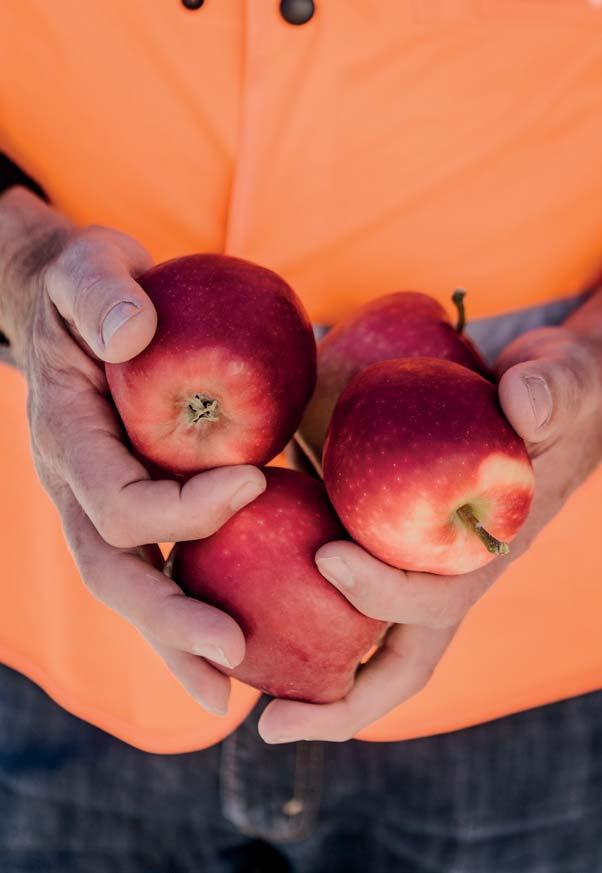
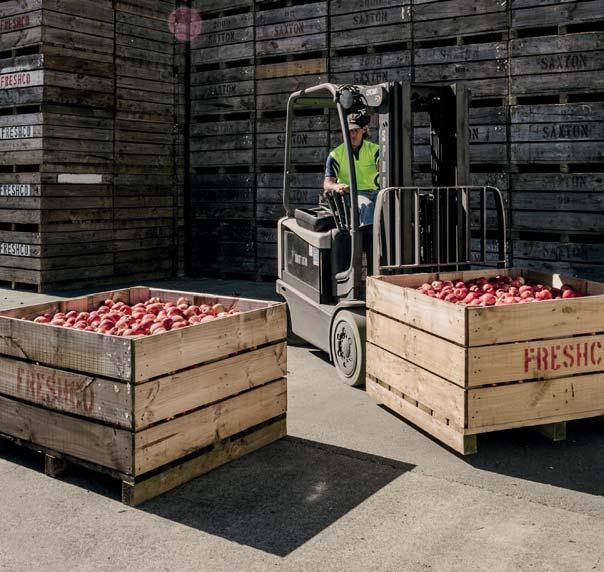
| Wai-West Horticulture has just over 200 hectares of apples, berryfruit and gold kiwifruit.
“
Some people try and solve a problem and look at it from one direction. Nuffield has given me the ability to walk around a problem and look at all the different aspects.
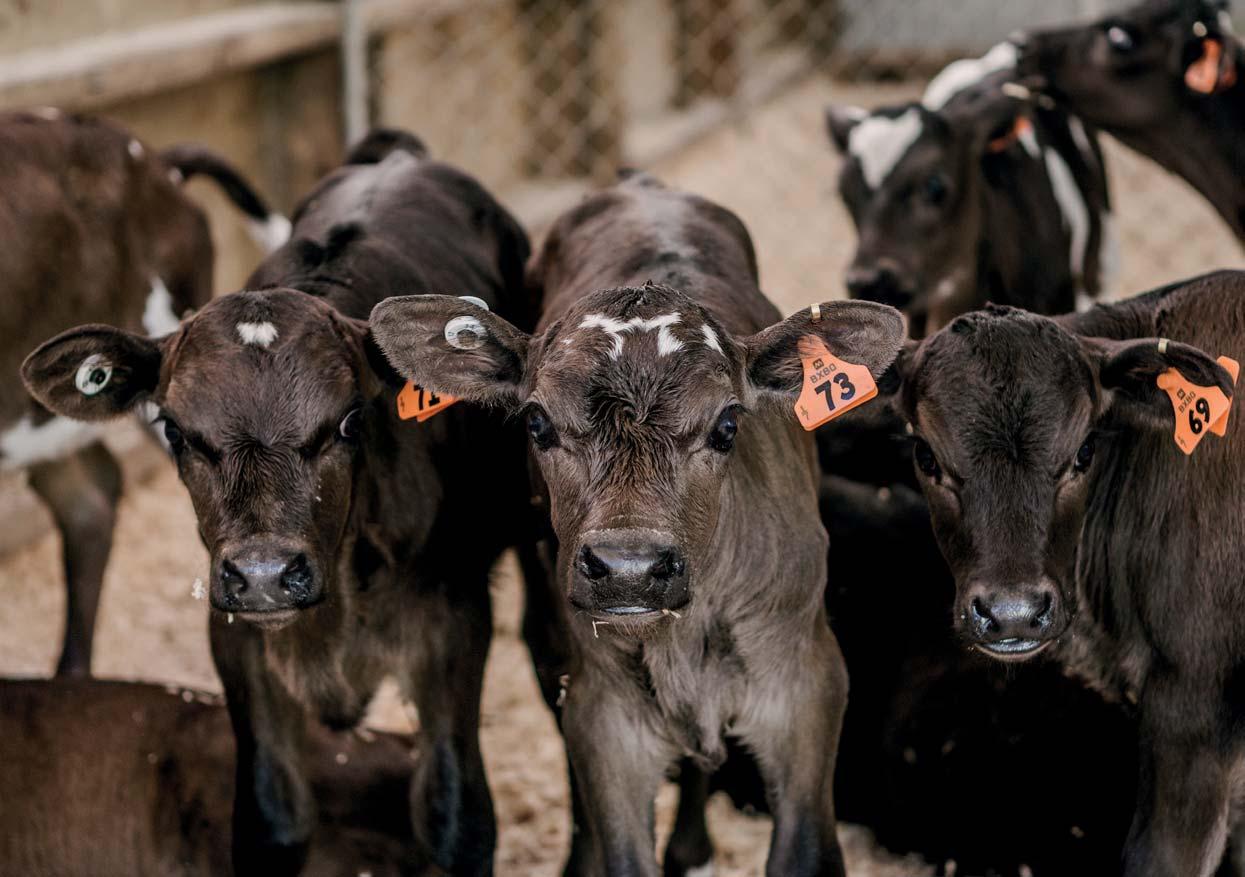
The global networks have provided a valuable sounding board for Julian with his many ventures. He says his family have had a long association with the hop industry, which is going through an exciting period at the moment. A Director of grower Himetai Hops, Julian says new entrants to the market are being kept busy trying to satisfy some of the demand coming out of the craft beer industry. Beef is a sideline to the dairy operation, although they are now able to rear their own calves. Julian says the change came out of the public concern for bobby calves. “I know it’s not practical for every farmer but we have sufficient land to rear our own beef and sell them to other farmers to grow them on for the beef market, or we grow them on,” he says. When you add in the 100 hectares of forestry – a long-term investment consisting of mainly Pinus radiata with redwood, cypress and Douglas fir thrown in – it makes for an extensive
portfolio. Julian insists dairy is the main focus for him at present, as they continue to push value-add products.
“We’ve put in a new dairy and now have a public viewing room. We get lots of school groups – we have one coming from Richmond today and we’re hosting secondary school students tomorrow,” he says. “We have regular viewings with school groups, who come and see where their food is produced, rather than buying it from the supermarket and having no idea where their food came from.”
Julian says he opens up the farm to connect people to the realities of food production, while trying to remain grounded with public thought.
“People refer to it as the urban/rural divide – this is about bridging that,” he says. “We’ve learned things talking to kids and parents and they’ve learned things from us.
| Julian is keen to use Oaklands to bridge the “urban/rural divide”.
It’s the same philosophy when I’m selling boysenberries around the world. We have a good idea of where the trends are and we need to keep up. It’s a two way street –we’re always talking about the issues we have, what’s too costly, what’s not working or what we have in place.”
The previously mentioned ability to “look at complex issues from every angle” is key to keeping up.
As Julian explains, “some people try and solve a problem and look at it from one direction. Nuffield has given me the ability to walk around a problem and look at all the different aspects.”
The advice Julian gives any aspiring Nuffield Scholar is simple – the support network is already there.
“There’s more than 100 Nuffield Scholars around New Zealand. Go and talk to one – you can go online and look on the website and there is lists of farmers there.
You can pick up the phone and talk to Anne Hindson, who is the General Manager. There is plenty of help there.
“There’s also the Kellogg Rural Leadership Programme, which is also better known. It’s seen as a stepping stone for Nuffield. There’s about 40-50 places a year in the Kellogg Programme and that can give you a taste of where it is going to lead you.”
It is sage advice from someone that has put his theory into practice. That being said, he’s happy to avoid branching out into another industry anytime soon.
“I think there’s enough on my plate at the moment, I’m just doing more of the same.”
For more information about Nuffield Scholarships and the Kellogg Rural Leadership Programme, visit www.nuffield.org.nz or www.kellogg.org.nz
| Having completed his Nuffield studies in 1997, Julian urges candidates to make use of the support network
5 minutes with Nathan Guy
As Minister for Primary Industries, you connect with all aspects of the rural sector. Where do you feel the greatest opportunities lie in terms of growth?
We have a lot of opportunities ahead of us to target the wealthiest consumers around the world with premium, value-added products. This is why we’ve set a goal of doubling the value of primary sector exports by 2025. Irrigation and water storage will play a part in this by improving how we use our valuable water resources. We’re also investing heavily in science and research with industry through the Primary Growth Partnership, which has enormous potential.
What does New Zealand need to do to develop more rural leaders?
Attracting talented people and keeping them in the primary sector is a challenge and priority for both industry and Government.
Last year at Fieldays we launched Growing Our Futures, a series of videos of Primary Industry Champions developed by MPI to showcase people doing great things in the primary industries. We now have 135 Primary Industries Ambassadors available to go into schools, working with teachers and students to support their learning and raise awareness of these careers. They have already made over 500 visits to more than 150 schools.
An important message we’re pushing is the primary sector isn’t just about milking cows or shearing sheep. It’s things like environmental planning, IT and robotics, research and development, veterinary science, biosecurity, food safety and plant science. Over the last three Budgets the Government has also increased tuition subsidies for tertiary agriculture qualifications by around 50 percent.
What parts of the world do you believe we should be targeting to grow our primary industry exports?
We already export to around 130 countries and it is important we keep diversifying so that we don’t become too reliant on one market.
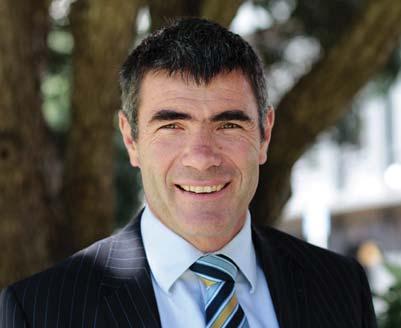
Nathan Guy, Minister for Primary Industries.
I visited Iran last month and witnessed an agreement to restart our sheep and beef exports. In the 1980s they used to purchase around a quarter of our sheep meat so this is a market with great potential. China will continue to be important as they have relaxed their onechild policy, which is expected to create a 30 percent increase in consumption within the next 10 years. It’s forecast that 38 children will be born every minute in China over the next few years – that’s the equivalent of a New Plymouth of babies per day.
What are the greatest challenges facing the primary sector and what strategies do MPI have in place?
Biosecurity is my number one priority as Minister because we need to protect our producers who are the backbone of New Zealand’s economy. In recent years we have beefed up the system with more resources and man-power. In Budget 2015 I announced $27 million in new funding, which has helped employ 50 new front line biosecurity staff and 20 extra detector dog teams. We have also introduced new x-ray scanning machines, a new inflight video and a dedicated border clearance levy to fund biosecurity services. Work is well underway on building a new $87 million biocontainment lab at Wallaceville in Upper Hutt. Another key tool is the GovernmentIndustry Agreement (GIA), which involves industry and MPI working together on biosecurity.
In the past few years New Zealand
farmers and growers have faced droughts, flood and insect pressure in various parts of the country. What lessons have we learned to increase our resilience to these issues?
Farmers and growers are incredibly resilient. In recent years they have made it through droughts, floods, snowstorms and commodity price fluctuations. The importance of water storage and irrigation has been reinforced. That’s why it’s good to see the Hurunui Water Storage project in
North Canterbury making progress as this is a region that really needs it.
Water reticulation also has proven to be a good investment for farmers in dealing with these dry spells.
As a Government we’ve been quick to support the primary sector through events like the Kaikoura earthquake and Wanganui floods and with extra funding for rural mental health to support dairy farmers. The importance of communities looking out for each other has been paramount and groups like Rural Support Trusts have done a fantastic job.
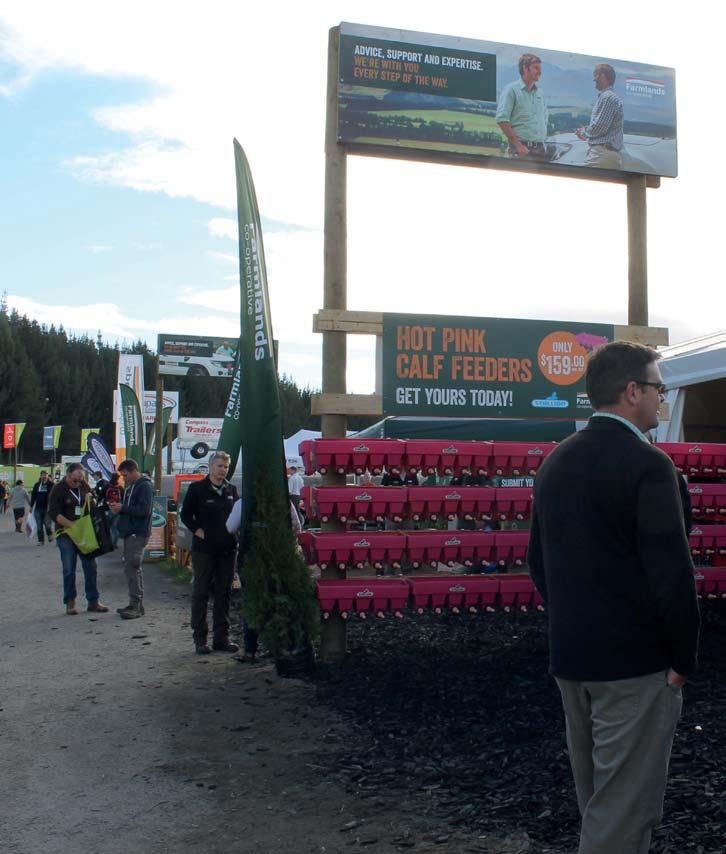
Farmlands and Fieldays team up
Farmlands Co-operative and New Zealand National Fieldays Society have joined forces to foster innovation and lead change in New Zealand’s primary industries.
A three-year partnership was officially announced at the annual Farmlands Supplier Awards evening at Lincoln University in February. The alliance positions Farmlands as a major New Zealand National Fieldays Society sponsor, supporting key events at the New Zealand Agricultural Fieldays in June, including Rural Bachelor of the Year, No. 8 Wire and Tractor Pull.
Farmlands brands NRM, McMillan and Gulf Oil have partnered with New Zealand National Fieldays Society to support their other major events – Equidays, held in October and The Transport and Heavy Equipment Expo (THE Expo), held last month.
New Zealand National Fieldays Society Chief Executive, Peter Nation says they are delighted at the partnership and the opportunity it presents. “Farmlands is a brand that is well known and trusted by New Zealand farmers and those working in the primary industry.
The New Zealand National Fieldays Society and Farmlands have similar values and we are both passionate about innovation and positive change in the agricultural industry.”
Farmlands Chief Executive Peter Reidie says the partnership benefits the 65,000 Farmlands shareholders nationwide by helping them gain access to the latest technology and innovation across the primary sector. Peter Reidie says he is delighted by the newly cemented relationship and the potential it holds for the entire agricultural sector.
“Farmlands was born from the desire of everyday farmers to work together for a better deal. Our partnership with the New Zealand National Fieldays Society will support their events to grow to the next level and help the industry to find new, smarter ways of doing things,” he says.
“New Zealand agriculture needs more collaboration and Farmlands intends to play a leading role here. Our partnership with Fieldays is a great start.”
Peter Nation says Farmlands is wellresourced and has strong connections to key markets. “I am confident that our partnership with Farmlands means we can grow Fieldays and our other key events, as well as the business overall.”
The New Zealand National Fieldays Society’s mission is to advance agriculture for the benefit of New Zealand through collaborative leadership in technology, innovation, education and internationalisation. The charitable organisation was founded in 1968 and will celebrate its 50th anniversary in 2018.
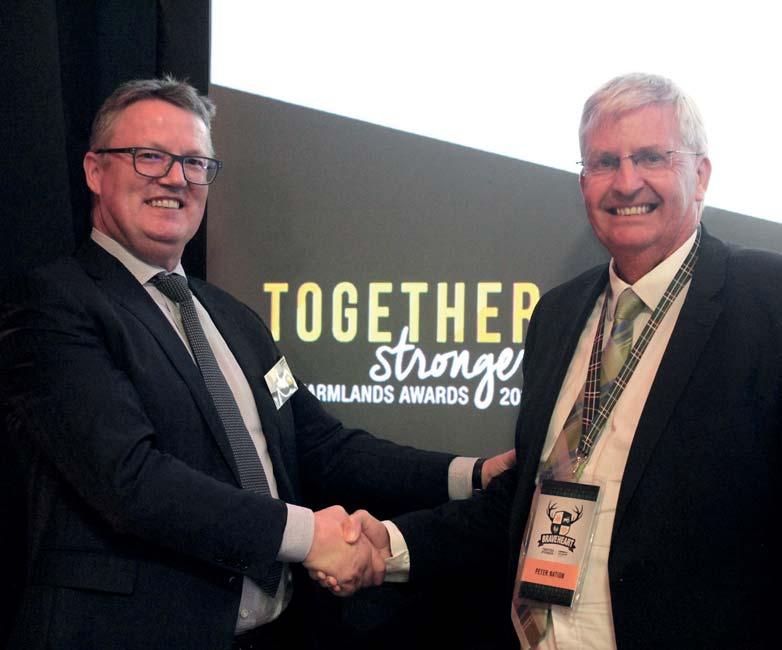
| Farmlands Chief Executive Peter Reidie with NZ National Fieldays Society Chief Executive, Peter Nation.
New Zealand Agricultural Fieldays is the largest event of its kind in the Southern Hemisphere and is a trusted brand on the world stage. In 2016 the event generated $430 million in economic benefit for the New Zealand economy. There were 1,462 exhibitor sites and 130,684 visitors through the gates over the four-day event. Last year economists valued the Fieldays brand, which is internationally recognised, at $380 million.
The theme for Fieldays 2017, which will be held from 14th-17th June 2017 at the Mystery Creek Events Centre, is “leading change”. Peter Nation says the new partnership will assist change to happen. “Farmlands is a leader in its field and together we hope to assist in providing leadership and innovative thinking to transform the future of primary production in New Zealand.” Growing leadership and innovative thinking is critical to the ongoing success of Farmlands shareholders. The co-operative is proud to be able to announce a partnership that will give shareholders an edge in their quest for better business practices. For more information, visit www.fieldays.co.nz and www.farmlands.co.nz
Celebrating success at the Annual Farmlands Awards
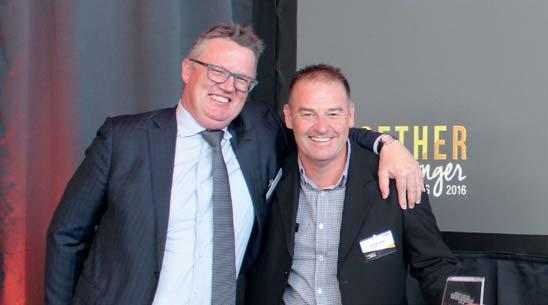
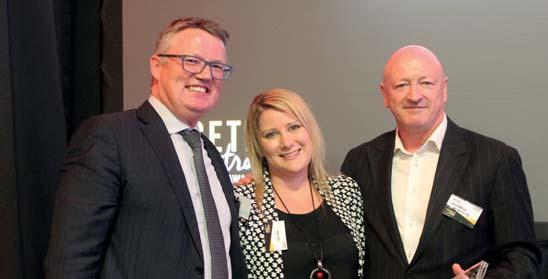
Farmlands staff and suppliers from around the country came together recently for the annual Farmlands Awards. It was a great opportunity to reflect on the year that has been and celebrate success within Farmlands.
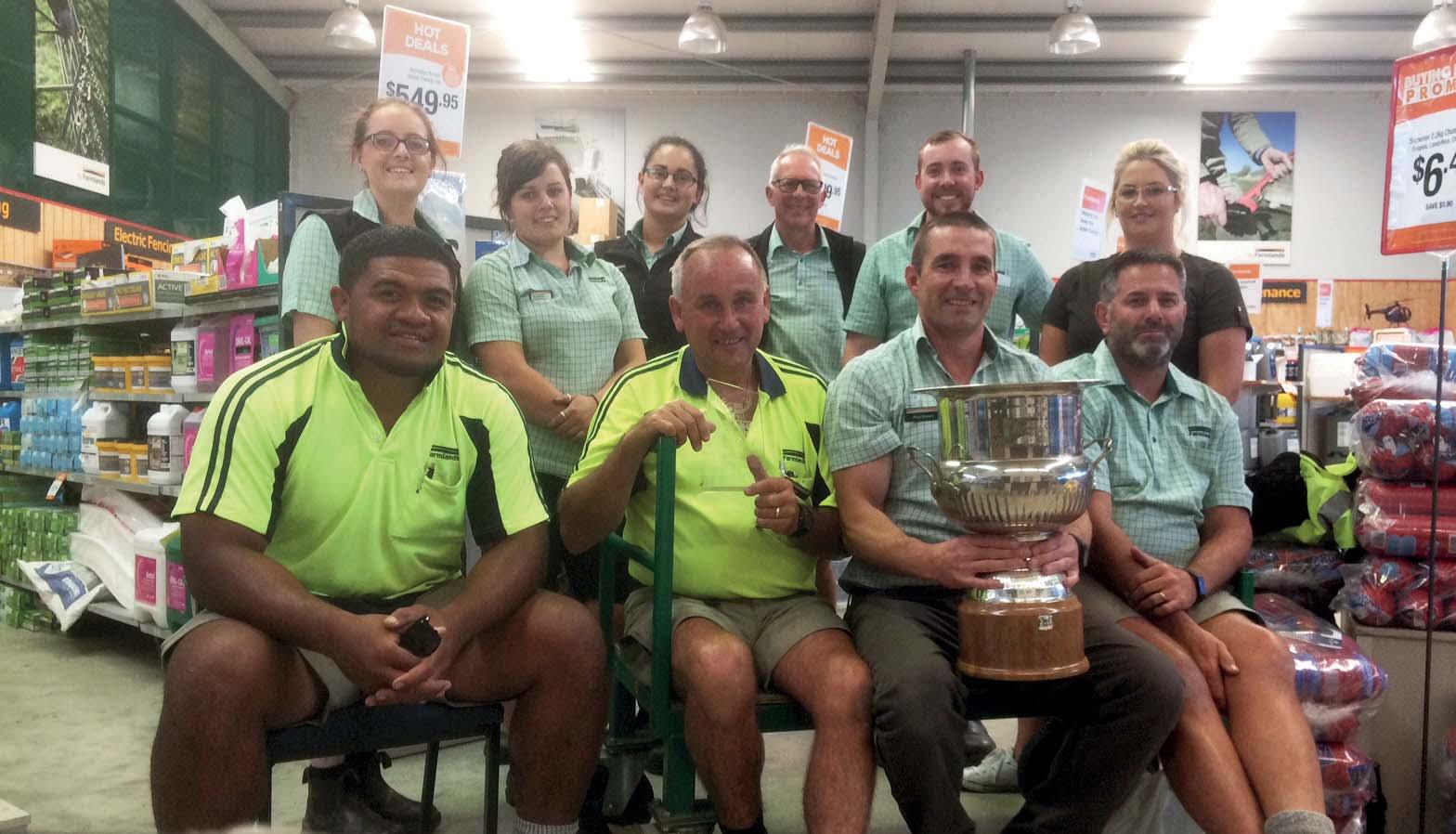
The team at Farmlands Pukekohe, led by Business Manager Paul Brears, took home the Branch of the Year Award and the Health and Safety Excellence Award. Paul says the team was surprised and very proud to win Branch of the Year.
“The trophy is proudly displayed on our front counter and generates plenty of banter from shareholders. It’s a great reward for all the hard work the team have put in,” he says.
“Winning the Health and Safety Excellence Award capped off a great
Staff Awards
night and again is great reward for all the team who constantly look out for our customers and each other to ensure everyone goes home safely. We’ll be working hard to win them both again next year.”
Christchurch based Technical Field Officer, Robin Moody, took home the TFO/TA of the Year Award. Robin says he was surprised and honoured to receive the award and acknowledged the support of his manager and colleagues, as well as his family.
“My focus as a dairy TFO at Farmlands has always been to provide the best advice, best prices and best possible service to our loyal dairy farmers/ shareholders in Canterbury and I would like to thank them for their support over the years,” he says.
Card Account Manager of the Year: 1st Rachel O’Brien, 2nd Sarah Reid, 3rd Sophie Loe.
Top Performing Salesperson – Gulf Oil: Carey Ellison.
Top Business Growth – Fuel and Lubricants: Carey Ellison.
Territory Manager of the Year: Bruce Davis.
Livestock Agent of the Year: Scott Gibson-Smith.
Livestock Lifetime Achievement Award: Rob Blincoe.
Real Estate Salesperson of the Year: Simon Richards.
Real Estate Overall Top Branch of the Year: Timaru.
TFO or TA Rookie of the Year: Stacey Lloyd and James Abbiss.
TFO/TA Seed Top Gun: Andrew Brown.
TFO/TA Greatest Growth Award: Erik Thomas.
TFO/TA of the Year: Robin Moody.
Shout Out of the Year: Scot Pollard and Emma Monk.
Branch Awards
“Dairy farming in New Zealand is always challenging and in the past year our farmers have coped with earthquakes, droughts and fire risks. Having worked in Canterbury for 28 years, almost 11 years with Farmlands, I empathise with the problems and respect the hard work involved in dairy farming.”
Shareholders had their say and Smiths City was crowned Shareholder’s Choice Card Partner of the Year, with Spark receiving the Card Partner of the Year Award.
Gallagher was presented with the Supplier of the Year Award for the second year running. It was the 10th time Gallagher has received the honour since being named Supplier of the Year at the inaugural ceremony in 1991.
Congratulations to all our winners!
Category – Animal Health and Dairy Management: 1st Timaru, 2nd Wellsford, 3rd Kurow.
Category – General Farm Merchandise: 1st Cromwell, 2nd Kurow, 3rd Te Puna.
Category – Infrastructure: 1st Te Puke, 2nd Tauranga, 3rd Motueka.
Rural leaders are taking a stand and seeking to help farmers improve health and safety on farms.
The Agricultural Leaders Health and Safety Action Group (ALHSAG) has identified three areas where a collective sector approach could help improve the industry’s health and safety record. The membership group, launched last year, brings together farmers, CEOs and senior leaders from agribusiness, agricultural industry groups and government through a united commitment to making farming safer by sharing information and practical solutions to on-farm health and safety issues. Farmlands is a proud member of the group, with CEO Peter Reidie sitting on the ALHSAG Board. Al McCone, Programme Manager Agriculture for WorkSafe New Zealand, says WorkSafe strongly welcomes and supports the work of the group.
“ALHSAG is a positive sign of the sector taking leadership and working in co-operation with various initiatives already underway. Through the collective reach of its members, it is well positioned to get its practical tools and messages to farmers and other agricultural workers. These, in turn, will encourage on-farm leadership, which is essential for creating genuine behaviour change. It will provide a framework that will enhance the existing health and safety programmes that its members already offer.”
Justine Kidd, chair of ALHSAG, says the group grew out of a group of senior agricultural leaders involved in the influential Business Leaders’ Health and Safety Forum, who met to discuss health and safety in the agricultural sector and how they could help drive improvements for themselves and for farmers.
“A key driver was the realisation among the group that there are many things that would be better done together, rather than alone, if there is to be an improvement in the agricultural sector’s health and safety record.”
Peter Reidie, Farmlands CEO, says the group is committed to working with all farmers, leaders from agribusiness, agricultural industry groups and government agencies with an interest in the welfare of the sector.
“By carefully considering the sector’s issues and what benefits a collective approach could provide, ALHSAG has prioritised three areas where collective action is needed. These are ‘agreeing the problem’, ‘conversations to learn’ and ‘a healthier, safer sector’.”
Actions will include using good data and information to help the sector and farmers focus on the right priorities and drive action.
ALHSAG will promote both regular “normal” conversations about health and safety in the sector and learning from each other’s experiences, good or bad. It will also support changes in health and safety practice and culture
over time, to deliver better results for the industry.
The organisation will focus on the delivery of its projects and services regionally, building on and supporting the strong regional networks already in place in the sector. These projects and services will be designed to complement and link, not duplicate, existing work.
The group has two initial projects underway. These are to develop a farmer workshop and resources, to “dig into the data” to help farmers and to focus sector actions on the things that will make a difference.
A high number of fatal accidents in agriculture are contractors and most incidents involve vehicles. Accordingly, ALHSAG will also work with agricultural contractors and service providers, with the aim of developing simple resources to help farmers work more effectively to keep contractors, suppliers and their farms safe.
Article supplied by WorkSafe New Zealand.
OUT AND ABOUT with Farmlands
T.H.E EXPO GRASSROOTS GAME DAY
Not even torrential rain could put a dampener on the amazing atmosphere at the Farmlands Grassroots Game Day on 17th February. Around 4,500 fans packed the Border Rugby Club in Waverley, Taranaki, to watch the Hurricanes take on the BNZ Crusaders. It was an extremely tight match but the Hurricanes beat the BNZ Crusaders with a final score of 33-27!
NORTHLAND FIELD DAYS
The Farmlands team caught up with shareholders at Northland Field Days from 2nd to 4th March, with many people having a go at the gate hanging competition. Farmlands vouchers were awarded to the fastest man (with a time of 7.11 seconds) and the fastest woman (with a time of 13.92 seconds).
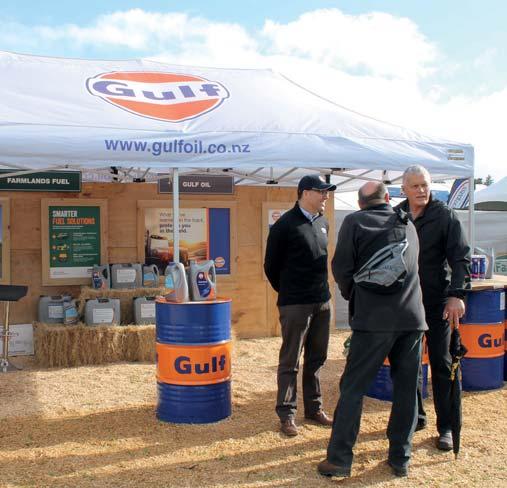
The Gulf Oil and Farmlands Fuel teams were on-site at the Transport and Heavy Equipment Expo at Mystery Creek in Hamilton from 2nd to 4th March. The teams had coffee on hand for shareholders throughout the event. Gulf Racing Porsche driver and Kiwi motorsport legend Jono Lester visited the Gulf site to check out the GT40.
GOLDEN SHEARS
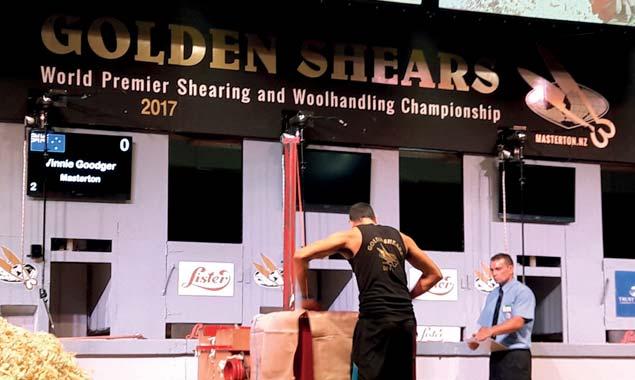
The top shearers, wool handlers and wool pressers were in Masterton from 2nd to 4th March, competing to be supreme champion of the Golden Shears. The Golden Shears is the world's premier shearing and wool handling championship and Farmlands is proud to sponsor the wool pressing events.
WANAKA A&P SHOW
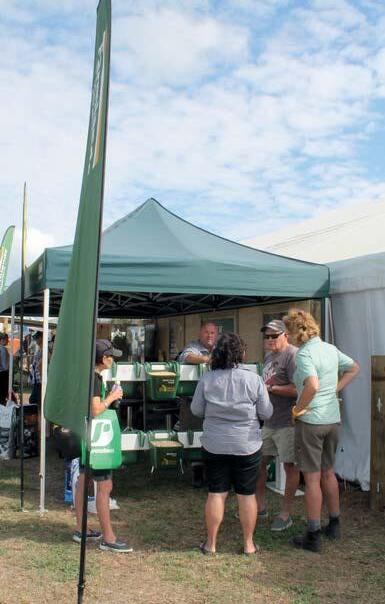
The Farmlands site was the place to be at Wanaka Show on 10th and 11th March. 1,279 shareholders enjoyed lunch in our hospitality area during the 2 day event, which was prepared and served by the Wanaka Rotary Club to generate funding for the local Upper Clutha community.
HORSE OF THE YEAR
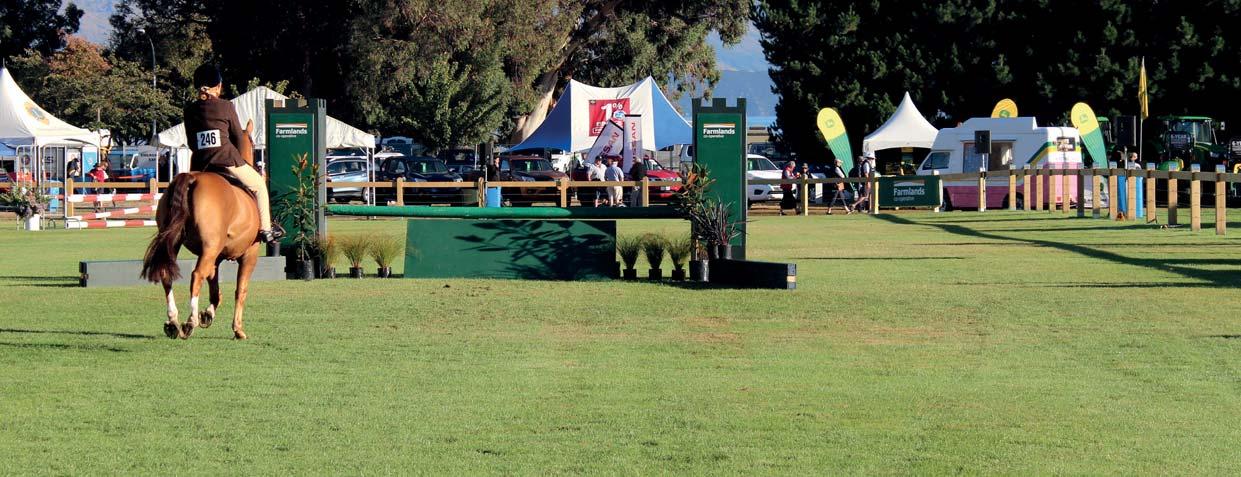
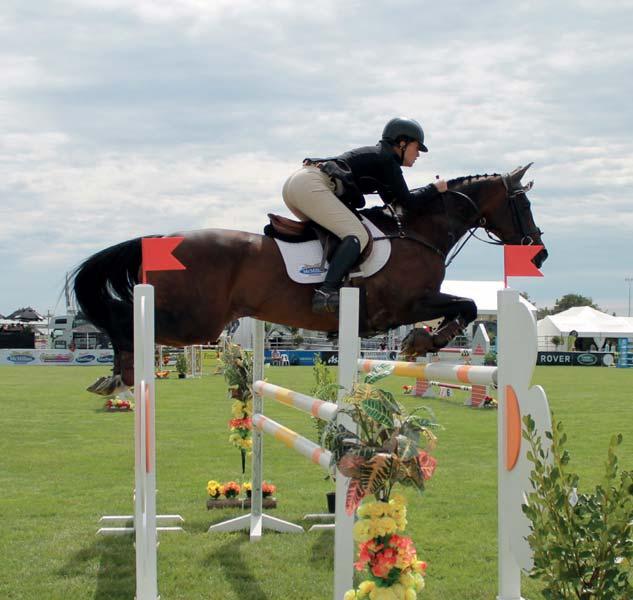
Horse of the Year kicked off on 7th March in 27 degree heat in Hawke’s Bay, which then turned into a muddy, wet week for all involved. The McMillan and NRM sites looked great – and Horse of the Year was the perfect place to launch the new McMillan website and to have some fun with a lucky dip on the NRM site, with riding lessons and Kentucky Equine Research products given away!
INSURANCE FARMERS GET.
When you’ve come from the land yourself and worked in rural New Zealand for as long as we have, you know instinctively what the right cover is – and how to offer great service. It’s what’s made FMG such a trusted partner for farmers and growers all over New Zealand. And it’s made us this country’s leading rural insurer. If you’re still not sure, ask around about us, or better still call us on 0800 366 466.
We’re here for the good of the country.
A cut above the rest
For horticulturalists, selecting the right cutting tool is important – and cutting tools made with Japanese high carbon steel have proved to be superior for use in the horticulture industry.
Japanese high carbon steel is formulated to the highest standard in the industry and is traditionally harder than steels from Europe. Due to this high standard, blades will remain sharper for longer and can provide higher resistance when accidently cutting wire or other hard objects. Japanese steel blades have been known to last up to 4 years in some horticultural markets – some users have got up to five times more life out of their blades than what they had previously used. Their ability to stay sharper for longer means less wear from files, stones or diamond sharpeners and their great resistance to wire etc. means the rate of blade wear and replacement drops drastically, saving the user money on spare blades. Another key factor not often considered is that the higher quality the steel, the easier and faster it is to sharpen. It is very noticeable how quick the edge will come up compared to sharpening a lower quality blade. A sharper blade also requires less effort to cut, so the user will be able to conserve energy and perform better during a day’s work.
One of the most important things to every horticulturalist is the health of their fruit bearing plants. A clean cut is essential and this can only be achieved by a sharp lopper blade. The duller or more damaged
the blade, then the rougher the cut – which means increased risk of disease getting into the plant.
The team at Aorangi Merchants recognise the many benefits of using this type of high quality steel and have imported a range of ARS secateurs and loppers for use in the horticulture industry. ARS cutting tools are widely used in many horticultural and agricultural areas including kiwifruit, pipfruit, vineyards, greenhouses, avocados, citrus and flower growing.
Farmlands shareholder Greg Clifford, a grape grower based in Marlborough, trialled ARS loppers and secateurs and says the first thing he noticed was the hardness of the steel.
“We were able to get five times more life out of the ARS blades than anything we have used previously.
This is a no-brainer from a cost point of view – the savings are very good. The loppers for example have the same feel and weight as what we have used previously,” he says.
Farmlands Whakatu Business Manager, Daniel Hill, says that the ARS LPB Bypass Loppers have proved very popular with many of their major shareholders.
“One particular shareholder growing kiwifruit had four seasons of use out of his LPB Bypass Loppers before he needed to change blades. This has made them a popular choice throughout the region,” he says.
For further information, contact your Farmlands Technical Advisor or the friendly team at your local Farmlands store.
Article supplied by Aorangi Merchants.
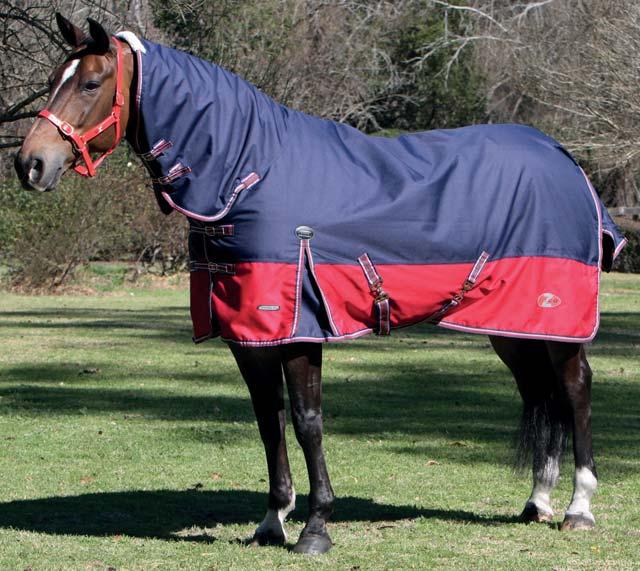
Features:
• Shoulder gussets.
• Double front straps.
• Satin lined neck and shoulders to reduce rubbing.
• Tent style tail flap.
• Rump darts for a more contoured fit.
• Fleeced wither on the rug model and fleece poll protector on the combo. This Zilco horse cover is
www.zilco.net
Keep your horse warm in winter weather with the Zilco Crusader 200. With a waterproof yet breathable 1200 denier polyester rip-stop outer and a 200g fibre filling, the Crusader will provide a warm, dry and hygienic cover for your horse this winter.
Autumn pasture risks for horses
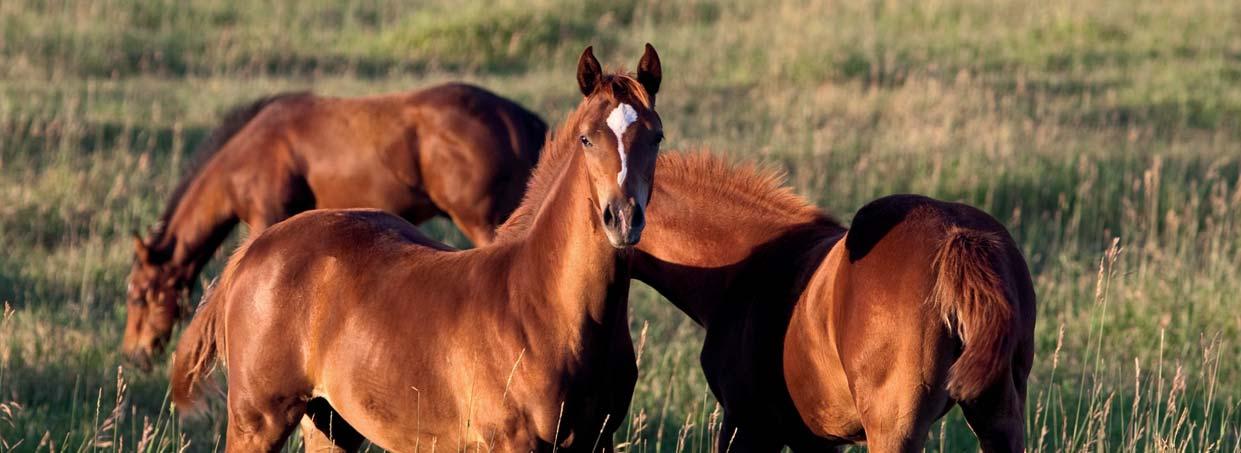
While forage is the most significant part of any equine diet and pasture is often the most readily available form, there are a host of potential issues that accompany grazing horses on New Zealand pasture at certain times of the year. The most common grass related problem is ryegrass staggers, a condition that affects the nervous system causing incoordination. Ryegrass staggers is caused by fungi called endophytes contained in the ryegrass producing mycotoxins and autumn is prime season for high endophyte pastures.
Staggers occurs from the toxins produced by the endophytes affecting part of the brain’s cerebellum involved in muscle co-ordination and can present as various symptoms depending on the severity of the toxicity. Mild signs include muscle trembling around the head, neck and possibly shoulder area and reactive and anxious behavior may also be noticed. Symptoms will progress with increased exposure to toxins, with severe symptoms including unsteadiness and loss of control, particularly in the hind end, which may progress to
complete loss of co-ordination and balance. While the disorder itself rarely results in fatalities, horses with severe symptoms require careful monitoring as often the loss of co-ordination can increase the risk of associated injuries that could be life threatening. Individual sensitivities to ryegrass toxins can vary significantly from horse to horse, resulting in various degrees of outward symptoms. Because the signs will increase with the more toxins consumed, horses with high energy requirements and therefore higher pasture intakes will generally be more at risk. This includes growing horses, lactating broodmares, breeding stallions and larger horses with high workloads. The most effective form of treatment and management of staggers is to avoid consumption of the toxins through removing the ryegrass from the horse’s diet. However in many cases this is not easy, as ryegrass is a significant part of most New Zealand pastures. Restricting pasture access through yarding or stabling and offering hay as a replacement
forage source is often required for horses experiencing symptoms, although in this case it is important that ryegrass type hay is avoided also. Management to avoid cases of ryegrass staggers on farms includes planting low endophyte grasses when resowing pastures and regularly rotating stock. Pasture quality and stage of maturity contributes considerably to the level of endophytes it contains, as they are mostly concentrated in the base of the sheath of the leaf or in the seed heads. Therefore rotating stock to avoid horses eating to the base of the plant and to ensure ryegrass is kept to an acceptable height to avoid going to seed is beneficial. Mycotoxin binders can be included in diets for horses that are consistently experiencing symptoms of staggers, however these are required to be fed at regular intervals to be effective. For further assistance and advice on preventing and managing ryegrass staggers in horses, consult a reputable Equine Nutrition Advisor.
The summer and autumn can be a difficult time for calves, so weighing beefies and dairy replacements regularly (every 3 months if possible) is recommended to avoid future disappointments.
It is important to weigh stock to check if they are on track and allocate feed appropriately to achieve the required growth rates, whilst ensuring that animal health issues like internal parasites and diseases are not holding back performance. One question which is often met with vagueness is “what is the mature weight of your cows?”
If you are rearing calves from your own herd it is important to identify the potential mature weight of your calves.
Weighing 6-8 year old cows in April or May is considered a good time to determine a reliable liveweight. With calves from a herd of variable breed and size it will be harder to monitor weight by age, so extra care is required with a mixed herd. Calves should be 40 percent of mature weight at 9 months of age, rising to 60 percent of mature body weight when 15 months old. If the calving pattern of first calvers and 3 week submission rate indicated a
moderate to high risk that heifer rearing affected reproductive performance, it is even more important to check heifer weights and review practices. It is harder for smaller heifers to calve and they will need to catch up and grow during their first lactation, which is likely to impact on both milk production and fertility. Autumn should be a good time for pasture growth and quality but surveys suggest calf growth is not always good enough to compensate for earlier shortfalls, possibly dealing with excess protein in the diet is limiting growth.
Identifying any animals that are above or below allows their feeding to be adjusted. Typically with young stock they need to be fully fed to achieve growth targets but even when fed ad-libitum, dry stalky summer grass may lack both energy and protein relative to the needs of calves. Lots of mature baleage has been made in some regions that may be lower in protein than expected, which could limit its ability to complement lower protein summer pasture.
Straights and simple blends can be useful options when a simple forage
deficit is holding back young stock –they provide useful buffer feed to fill a gap. Generally quite low in fermentable carbohydrates, they lend themselves for use in trailers because gorging is generally less of a threat. Increasingly we are seeing issues associated with excess copper supply, so if animals are not performing it is worth checking if an over-supply of a key nutrient could be to blame rather than just a deficiency and consider the copper level in any potential supplements. Where the quality of the pasture in terms of digestibility and protein level is holding back performance, higher quality supplements many be justified to lift growth rates. Controlled feeding is required with gradual introduction but generally 1-1.5kg per head per day of a mineralised 16 percent calf feed can help put calves back on track. For further information, contact your Farmlands Technical Field Officer or the friendly team at your local Farmlands store.
Article supplied by Dr. Rob Derrick, Nutritionist, Farmlands Nutrition.
Micro minerals in the ruminant diet
Minerals are inorganic elements required in small quantities by animals and are present in all feedstuffs at varying levels. High producing animals have higher requirements for minerals and minerals can become even more important when feeding particular feeds known to be low in certain minerals or when the diet is rich in antagonists, which reduce the availability of other minerals.
Minerals are split up into two main categories – macro minerals (usually required in larger amounts, e.g. g/kg of body weight) and micro minerals (usually required in smaller amounts, e.g. mg/kg of body weight). Micro minerals (otherwise known as “trace elements”) can be very important to supply in adequate amounts to avoid deficiencies, however deficiencies
of micro minerals are not always as obvious to pick up on when compared to macro mineral derived issues, as the symptoms are not as debilitating. Symptoms between
the different micro minerals can also be quite similar, often including decreased feed intake, decreased milk production, poor fertility, poor immune function and overall ill-thrift.
A summary of micro minerals, their key functions in the body and signs of deficiency:
Micro
CopperEssential for blood formation and also involved in many metabolic processes.
SeleniumNatural antioxidant. Involved in liver and immune function.
ZincEssential for skin, bones and hair as well as reproductive organs and the immune system.
CobaltRequired by ruminants to produce vitamin B12 in the rumen.
IodineEssential for the control of basal metabolic rate, thermoregulation, reproduction and muscle function.
IronA component of protein, e.g. haemoglobin and myoglobin. Important for cellular respiration and metabolism.
Manganese Important for brain and nervous system as well as bone mineralisation and connection tissue growth.
Molybdenum Component of many enzymes and plays a role in protein synthesis.
ChromiumStimulates insulin activity and glucose uptake in the body.
Anaemia, paleness of mucous membranes. Poor skin/hair condition. Reduced growth. Commonly seen in young ruminants on milk.
Bone malformation and poor growth in young. Low fertility in adults. Nervous disorders and muscle weakness.
Poor fertility, delayed onset of puberty.
Glucose metabolism issues. Reduced growth rate.
(check with a vet or supplier)
Copper sulphate fertiliser, injection, bullets and licks.
Sodium selenate orally or by injection, mineral supplements or as fertiliser.
Zinc oxide in drench or bolus, zinc sulphate in mineral supplements. Works well with biotin.
Cobalt sulphate in fertiliser, bullets, injection.
Iodised salt or injection. Too much can lead to excessive level in milk.
Important for suckling animals as milk is low in iron. Most hard feeds and calf milk replacers have adequate iron.
May be more important in TMR type diets.
Sodium molybdate. Not commonly required to be supplemented to grazing animals.
Chromium propionate added to dairy feed.
| Micro minerals may be needed in small amounts but are still important for animal health and productive performance.
As it can often be difficult to decipher the exact micro minerals in deficiency in a particular situation, it can be helpful to look at micro mineral supplementation as more of an insurance policy for animal health – and a good micro mineral supplement is worth including in the ruminant diet all year round in
order to prevent issues arising. There are many ways of supplementing animals with micro minerals – with the two most common being in their feed or through the water system. Some micro minerals are known to be low in New Zealand soils and therefore require more targeted supplementation.
Comments
Cattle and deer have higher copper requirements than sheep. Sheep are more prone to toxicity.
Typically low in New Zealand soils. Excess is toxic, so avoid supplementing by several routes at the same time.
May help good hoof growth. Can help to prevent facial eczema if supplemented in adequate amounts during facial eczema risk period.
Cobalt levels in grass lowest in spring and summer.
Typically low in New Zealand soils. Requirement increased in presence of goitrogens (kale and other brassicas).
Not normally issues in grazing animals as forages/ soil usually provide adequate levels.
The least toxic of the trace micro minerals.
An antagonist for copper. When too high in the diet copper absorption can be compromised.
Could help to increase feed intake post calving in dairy cows.
For further information, contact your Farmlands Technical Field Officer or the friendly team at your local Farmlands store.
Article supplied by Stacey Cosnett, Assistant Nutritionist, Farmlands Nutrition.
Living the dream with pigs in your life
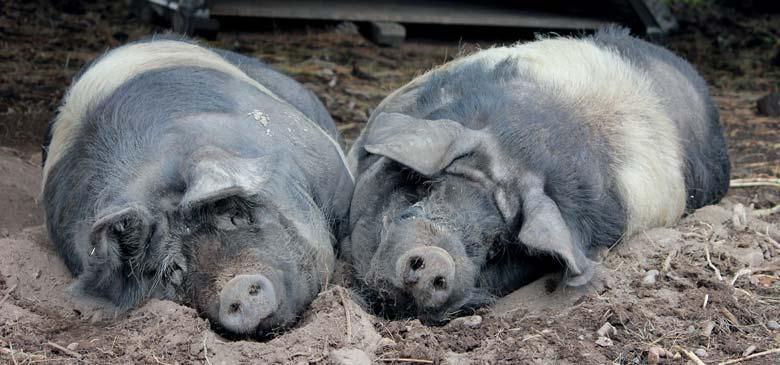
When Kaikoura residents Chris Sturgeon and Fiona Read returned to the South Island from Wellington a few years ago, they succumbed to the River Cottage dream and bought a couple of piglets for their 7 acre block.
Five pigs currently occupy about ¾ acre of the block, with Belted Galloway cattle occupying the majority. As Managers of Hapuku Lodge and Tree Houses, which offers a unique tree top experience, they thought a heritage breed would give them the potential to produce high quality meat products for guests to savour. Wessex Saddlebacks have delivered both the temperament and great tasting meat they were looking for. Slower maturing than commercial breeds, Fiona and Chris are happy that when ready for slaughter their porkers have internal marbling and a layer of firm, delicious fat, which allows them to recreate the high quality meat products they found when travelling through Italy.
Top tips for anyone thinking about upgrading from poultry are:
• Pigs are addictive – they are intelligent and highly amusing – a great antidote to the pressures of work.
• You are never too old to learn a new skill if you have a passion – stock management skills soon develop but if needs be, Google is always close by.
• Two pigs are better than one and are great cultivators for the veggie patch.
Guests are keen to know how stock have been raised and handled and value products that have a story. Finished pigs are taken by horse float to Harris Meats at Cheviot, so bacon, ham and pork belly can be sold at the local farmer’s market. Immediately after the November 2016 earthquake, their meat was in high demand and stocks were cleared in a day.
• Socialise your pigs and teach them to come for feed – there will be a rebel in every litter that encourages its litter mates to escape – pigs love nuts and are easy to lure back with feed.
• Never underestimate how strong pigs are – build shelters as strong as you can.
• Be careful how much well prepared pork belly you have access to – it is totally moorish.
• Give it a go – the set-up costs are not great and the proof is in the eating.
The pigs are given access to grazing and can exhibit all natural behaviours. As their foundation boar – Mr. Pig –has matured, he has surpassed the size expectations of an allegedly “small breed” but has always been a gentleman to handle. Now on their second sow, they have found Wessex Saddlebacks to be easy farrowing, good natured attentive mothers that prefer to make their own nest under the trees than use an ark, which they resort to in really bad weather. NRM Big Pig Nuts and NRM Little Pig Pellets have proved to be a convenient core diet enriched with kale out of the garden, vine leaves and even swedes. Bakery waste is largely avoided as it can be a little over fattening for the breeding pair.
With tourists now returning to Kaikoura, it’s good to see that people can continue living their lifestyle dreams and add to the visitor experience.
Article supplied by Dr. Rob Derrick, Nutritionist, Farmlands Nutrition.
Fodder beet transitioning
Transitioning is a major phase in the successful use of fodder beet. Introducing your stock to fodder beet, whether it be for autumn or winter grazing, or feeding it out after it has been lifted, requires careful planning and management. A transition period is essential to reduce the risk of animal health problems, such as rumen acidosis.
Prior to feeding fodder beet to livestock, a diet plan is essential. This addresses the desired animal performance and the target volume of daily intake required to achieve this and the percentage of total daily intake that fodder beet will make. The main health concern around introducing and grazing fodder beet to the diet is rumen acidosis. Acidosis occurs when poorly transitioned animals eat a large amount of rapidly digestible carbohydrates (sugars), which lowers rumen pH due to the
excessive production of normal volatile fatty acids (VFAs). This will typically occur within the first 3 weeks of stock having access to fodder beet.
The choice of supplement is important as it needs to be palatable, balanced in fibre and also potentially make up for the lack of protein in the fodder beet. Fodder beet leaf supplies the majority of the protein, however as the crop matures, the leaf proportion decreases. If grazing in early autumn for example, there may be sufficient protein as the crop will have a higher leaf percentage and an adequate supplement may be hay or straw. If your crop is damaged, or you have a high yielding crop and leaf proportion is low (i.e. 10 percent) then a high protein supplement such as grass baleage or lucerne silage is preferred. This principle also applies if you are trying to achieve liveweight gain in young stock, a high protein
supplement will generally be required, whereas if you are just maintenance feeding (particularly mature cattle) then a lower quality supplement such as hay or straw may be sufficient. Developing a transitioning feed programme and determining what will be the finial diet is crucial. Fodder beet yield can be very hard to estimate accurately, with huge variation between sites and variation in bulb dry matters depending on cultivars and growing conditions. Therefore it is important to have an estimate of your crop yield based on samples taken from your own paddock to get a good estimate of the feed available. For further information on transitioning your stock to fodder beet, contact your Farmlands Technical Field Officer or the friendly team at your local Farmlands store.
Article supplied by Agricom.
Example of a transition programme and final diets of fodder beet for cows, sheep and deer systems:
StartBeet1-2kg DM per cow allocated behind a wire. 1kg DM per animal allocated behind a wire. 0.5-1kg DM per animal allocated behind a wire. 2-3 hours on the crop.
hours on the crop.
Supplement8-9kg DM per cow.7-8kg DM per animal.5kg DM per animal.Access to pasture > 2000kg DM/ha. Access to pasture > 2000kg DM/ha.
TransitionDietIncrease the allocation of crop by 1kg DM and decrease the supplement allocation by 0.5kg DM per cow every second day until the final diet is reached for each component. If residuals are accumulating, pause until the allocation is totally consumed.
Increase the allocation of crop by 1kg DM and decrease the supplement allocation by 0.5kg DM per cow every second day until the final diet is reached for each component. If residuals are accumulating, pause until the allocation is totally consumed.
Increase the allocation of crop by 0.5kg DM and decrease supplement allocation by 0.5kg DM per animal every second or third day until the final diet is reached for each component. If residuals are accumulating, pause until the allocation is totally consumed.
Increase time spent grazing crop by 1-2 hours every second day until the final diet is reached for each component. If residuals are accumulating, pause until the allocation is totally consumed.
Increase time spent grazing crop by 1-2 hours every second day until the final diet is reached for each component. If residuals are accumulating, pause until the allocation is totally consumed.
Beet @ 1.0kg DM/ head/day. Lucerne hay @ 0.5kg/head/ day.
This is a guide only. Accurate allocation is important. The timing of feeding each day needs to be consistent. Regular checks are suggested to identify issues early. Always seek further technical advice.
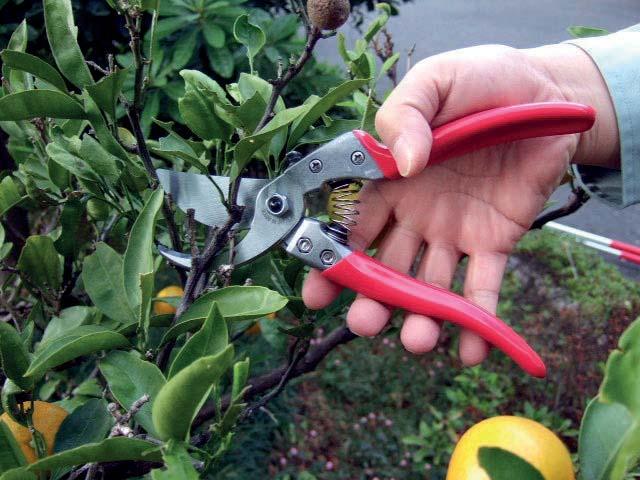
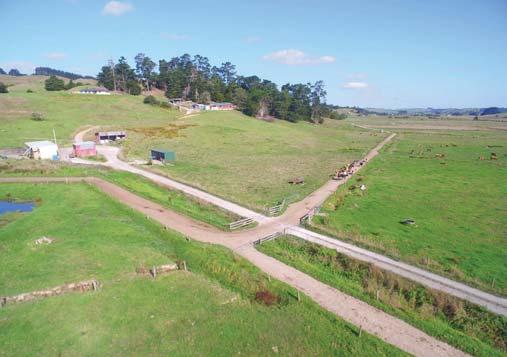
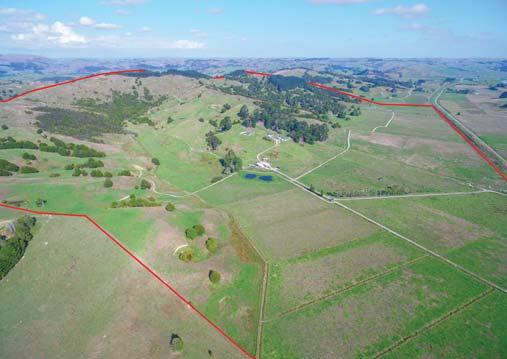
Planning an autumn clean-up of weeds and pests on your property
The autumn/winter months are a good time to carry out property maintenance to ensure smooth running of your farm operation and optimise productivity.
Have you ever looked at the tidiest property in the district and wondered about how the owner achieved it? It is natural to assume a higher level of investment on relatively weed free neighbouring properties but if you dig deeper, this is often not the case. “A stitch in time saves nine” is an appropriate saying in relation to property maintenance.
“Regular, well planned weed and pest control are a key part of keeping ahead of weeds,” Dow AgroSciences National Sales Manager, Peter Holden says.
There are a number of areas to focus on.
Pasture weeds rob you of valuable feed and mature, flowering weeds in fence lines, farm roads etc. act as an ongoing seed source, which generate new infestations. While many farmers use glyphosate to control weeds in these areas, mature broadleaf weeds like ragwort, dock, oxeye daisy and thistles are often poorly controlled and start to become the dominant weeds in these non-productive areas – and continually seed your productive areas. Tordon™
PastureBoss™ is an ideal product for reliable control of these “tough” broadleaf weeds without damage to grasses – but if necessary may be mixed with glyphosate if total vegetation control, including grasses, is required. Brushweeds such as gorse and broom require a different approach.
As a general rule when embarking on any brushweed programme, it is important to start in the cleanest areas of a property and work back from there – so here are a few tips:
• Always treat scattered brushweeds in paddocks first. Tordon Brushkiller XT is a tried and trusted product and is ideal because it doesn’t harm grasses. Brushweed plants up to knee high can be treated by knapsack sprayer or a battery powered spraying unit. Larger plants are best treated by a high volume brush-gun.
• As with fence lines, farm lanes and other non-productive farm areas mentioned earlier, removal of brushweeds from these areas should also be a priority to prevent the spread of seed. This is particularly important with gorse and broom, which are prolific seeding plants.
• Where there are undeveloped “blocks” of dense brushweeds on a property, hand spray the perimeter of these areas to prevent spread into clean areas. Make a point of repeating this perimeter spraying every year. While this type of approach is focussed on containment, many farmers find that by repeat spraying in this manner annually they can, like peeling an onion, push 4 or 5 metres into a brushweed block each year and ultimately clear a block completely over a few years. An advantage of this approach is spreading and minimising the cost of development.
With more than 30 years’ experience in the agrichemical industry, Peter also notes new considerations that farmers need to be mindful of when planning weed control on their properties.
“Farmers have been very proactive in fencing off waterways and planting up riparian areas to mitigate nitrate run-off. Weed control in these areas to ensure safe release and rapid establishment of riparian plantings is crucial. Preferentially, these areas should be as clean as possible before planting.” There are some limited options for weed control post-planting but Peter recommends farmers seek prescriptive advice about weed control for riparian areas before they plant.
For further information, contact your Farmlands Technical Field Officer or the friendly team at your local Farmlands store.
Article supplied by Dow AgroSciences.
Early ordering a win-win for farmers
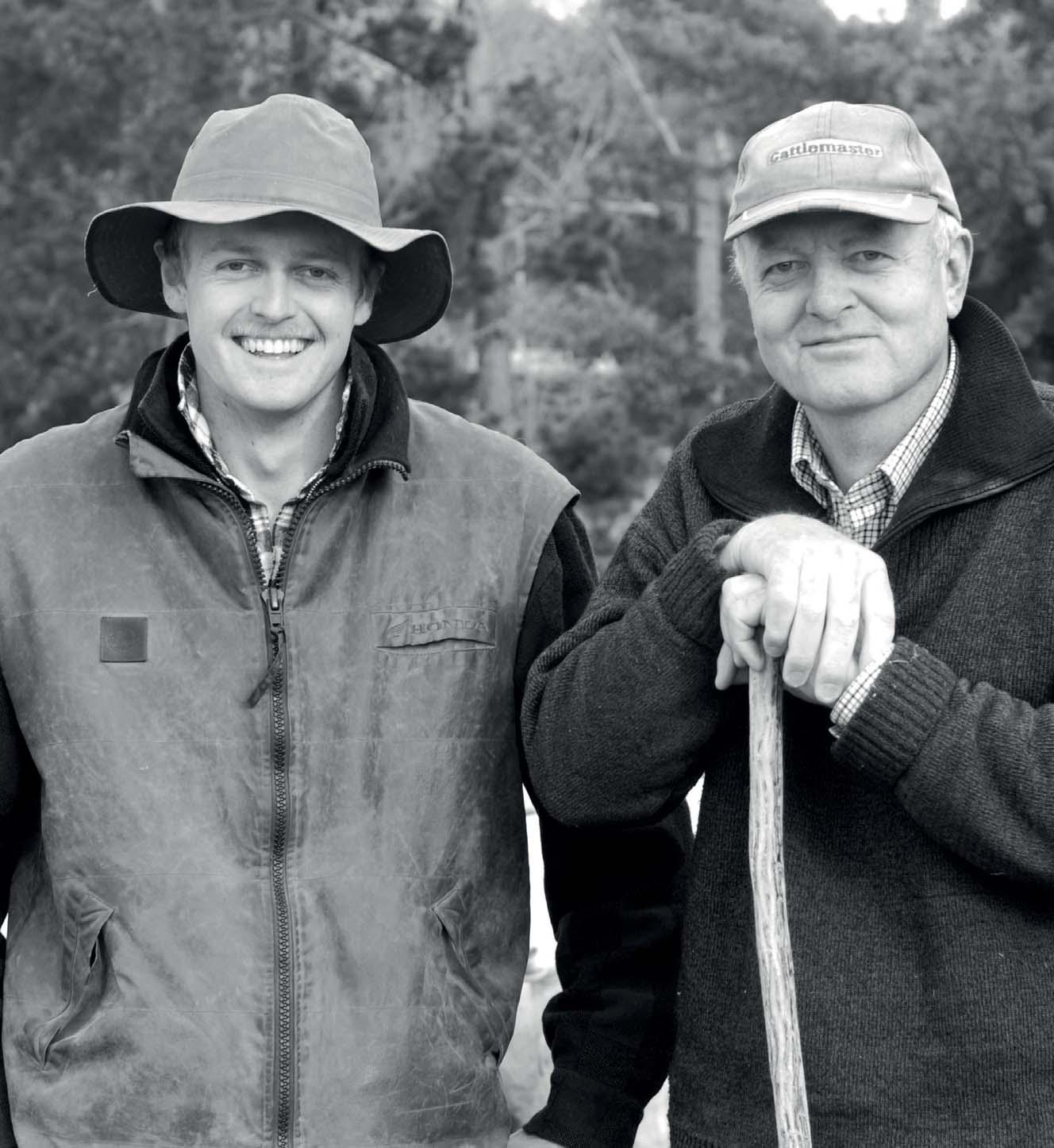
When Bay of Plenty farmer Kevin Clark learned he was a winner of the Pioneer Early Order 2016, he was a bit bewildered.
“I couldn’t remember entering any competition,” he says. Farmlands Technical Field Officer Mark Beer explained to him that everyone who places an early order of maize with Pioneer before the cut-off date automatically goes in the draw to win the purchase price of their seed back. Last year Kevin’s name that was drawn out of the hat.
Mark suggests to his clients that they order their maize early. “You secure your choice of hybrid early, which means you know when to plant, so you can book your contractor early and everything else seems to fall into place. There’s no last minute rushing around trying to get something done.”
Maize silage is an important part of the Clark’s farm system, providing 50 percent of the winter intake for their 430 cow herd. “We’ve found that wintering-on with maize silage has increased the output and efficiency of our farm,” Kevin says.
Each season Kevin grows 7.5 hectares of maize on the farm and brings in another 20 hectares from outside sources. In spring 2016 he planted Pioneer ® brand P0791 hybrid, which is a drought-tolerant AQUAmax hybrid. After harvest he inoculates his maize silage with Pioneer brand 11C33 to reduce heating and retain the nutritional quality.
The Clark’s farm has an 800m border with the Waimana River, which can be a source of flash flooding. “We’ve never had our crop destroyed by floods but there have been a couple of occasions where it’s gone through the maize covering the ground in silt. The crop survived pretty well though.” That potential for flooding is another reason why Kevin orders his seed early. The Pioneer Early Order replant guarantee provides him with free replacement seed and $100.00 per bag towards the cost of replanting if the first crop is destroyed. According to Mark, there have been a couple of farmers in the area in who
have had to rely on the Pioneer replant guarantee for exactly that reason. Kevin wouldn’t go without maize silage in his system. The benefits are just too big to pass up, increasing his milk output, increasing farm efficiency and having the guaranteed feed to fill any feed gaps. That, and the advantages of the Early Order scheme, is why Kevin will be ordering the seed for his next maize silage crop before June.
For further information, contact your Farmlands Technical Field Officer or the friendly team at your local Farmlands store.
Article supplied by Pioneer.
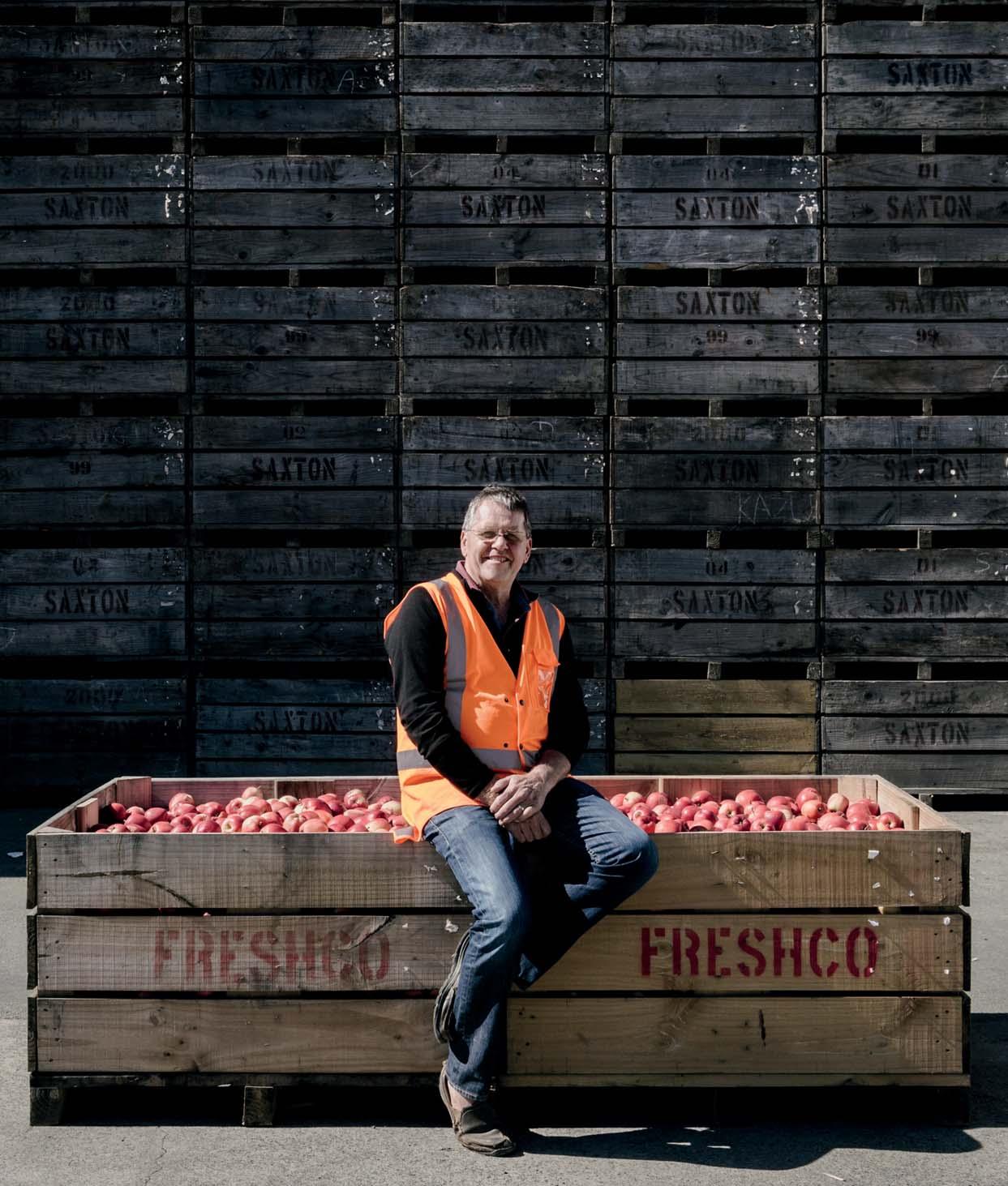
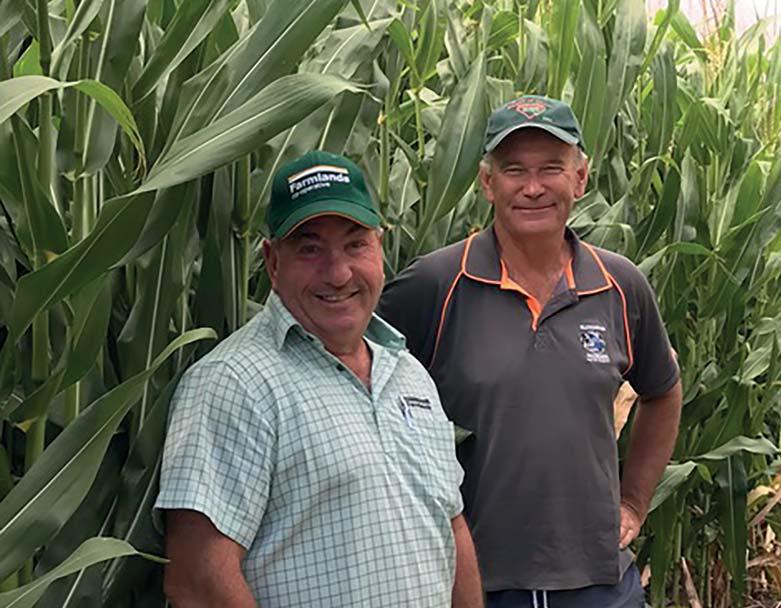
| Kevin Clark (right) with Technical Field Officer Mark Beer in front of Kevin’s P0791 crop.
Pasture sown, job done? Not quite…
You’ve sprayed out your paddocks and sown new pasture – now all you have to do is sit back and wait for the grass to grow. Job done. Or is it?
Chances are grass and clover are not the only seeds in the soil of your renewed paddock. And it’s those other seeds that are about to cause a problem.
“The sprays we use before sowing do a great job of cleaning up the weeds that are already growing but they have no effect on the weed seed that is hidden in the soil,” new grass specialist Chris Brenan explains.
“As soon as conditions are right for germination, those seeds will get growing as fast as your grass and clover seeds, if not faster.”
Hence the need to spray most new pastures after they have emerged, even though the paddock was sprayed before sowing.
“The moment you have weed seedlings in there challenging the clover and grass you have competition for light, space, moisture and nutrients. That’s when part of your new pasture never becomes new pasture, because it becomes weeds instead.”
In 20 years as upper North Island Territory Manager for Nufarm, Chris has seen more new grass paddocks than most. He says while farmers have a great range of post-emergence herbicides to control weeds at different stages of pasture establishment, spraying early is still the gold standard.
“There are two times you can spray –before the first full grazing and after.
To my mind, the best time is before the first grazing, because this is when weed competition does the most damage.”
Tribal® Gold is the Rolls Royce treatment at this timing. It’s ideal where farmers want a broader weed spectrum and/or need to control hard to kill weeds like chickweed, shepherd’s purse and buttercup. Thistrol® Plus has a narrower weed spectrum and is also very effective before the first full grazing. Valdo® 800WG can be added if required to extend the range of weeds controlled. Bonza® spraying oil should always be used with Tribal Gold and Valdo 800WG. Spray applications ideally are applied when approaching approximately 70 percent ground cover and the clovers have two identifiable trifoliate leaves. Different chemistry is required to kill weeds in new pasture after the first full grazing and while this timing is not Chris’ first choice, Baton® herbicide is highly effective. It’s important not
to confuse the “first full grazing” with the light pasture nip off recommended at about 6 weeks after sowing. That’s because young clover leaves in particular must be properly grazed before Baton is applied, to minimise the risk of clover damage (if your pasture mix includes red clover, Chris says to use no more than 1kg/ha Baton). If necessary, Baton can be mixed with Valdo 800WG to kill weeds that don’t respond to phenoxy herbicides, such as perennial buttercup and chickweed. Look out for Nufarm’s GrassmanshipTM video series for tips on weed control in new pasture, available on the Nufarm Youtube channel. For further information, contact your Farmlands Technical Field Officer or the friendly team at your local Farmlands store.
Article supplied by Nufarm.
® Bonza, Valdo and Tribal are registered trademarks of Nufarm Limited. Thistrol is a registered trademark of Nufarm Australia Limited.
TM Grassmanship is a trademark of Nufarm Limited.
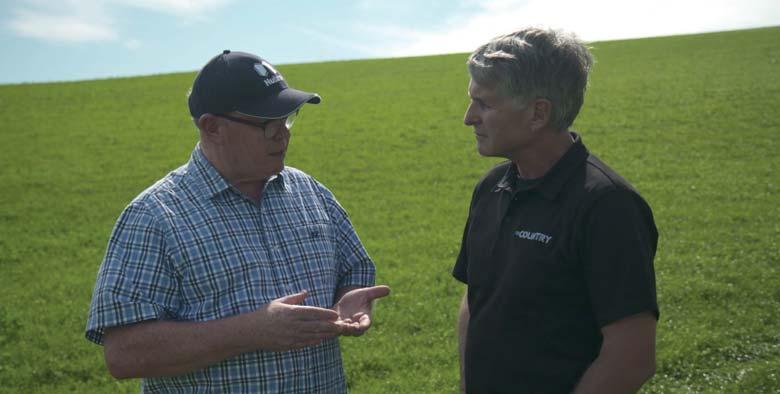
| Chris Brenan and Jamie MacKay discuss best practice weed control in the GrassmanshipTM video series.
Don’t let velvetleaf take over your farm
With a new fodder beet season underway, landowners who’ve planted beet are being reminded to check their crops for the possible appearance of the pest weed velvetleaf.
The Ministry for Primary Industries (MPI) says now’s the time to expect to see velvetleaf plants if the weed has made it onto your farm and it’s important
any plants are found early and pulled out before they can go to seed.
MPI’s Response Manager Catherine Duthie says if left unchecked, a single velvetleaf plant can produce up to 17,000 seeds, and what may look like a small issue one season can become a massive problem in following years. Early last year velvetleaf was found on farms in most regions of New Zealand.
The weed entered the country as seed contamination in imported fodder beet seed that was planted out in the 2015 planting season.
Catherine says MPI has funded regional councils around the country to visit some 1600 properties known to have bought the affected seed and help the farmers concerned develop plans to manage the weed.
“But velvetleaf is a notorious spreader and may have moved to other properties on rural contracting equipment or with stock.
“We recommend all farmers be on the lookout for velvetleaf and if they find plants, pull them out and destroy the plants by deep burial, e.g. in an offal pit.
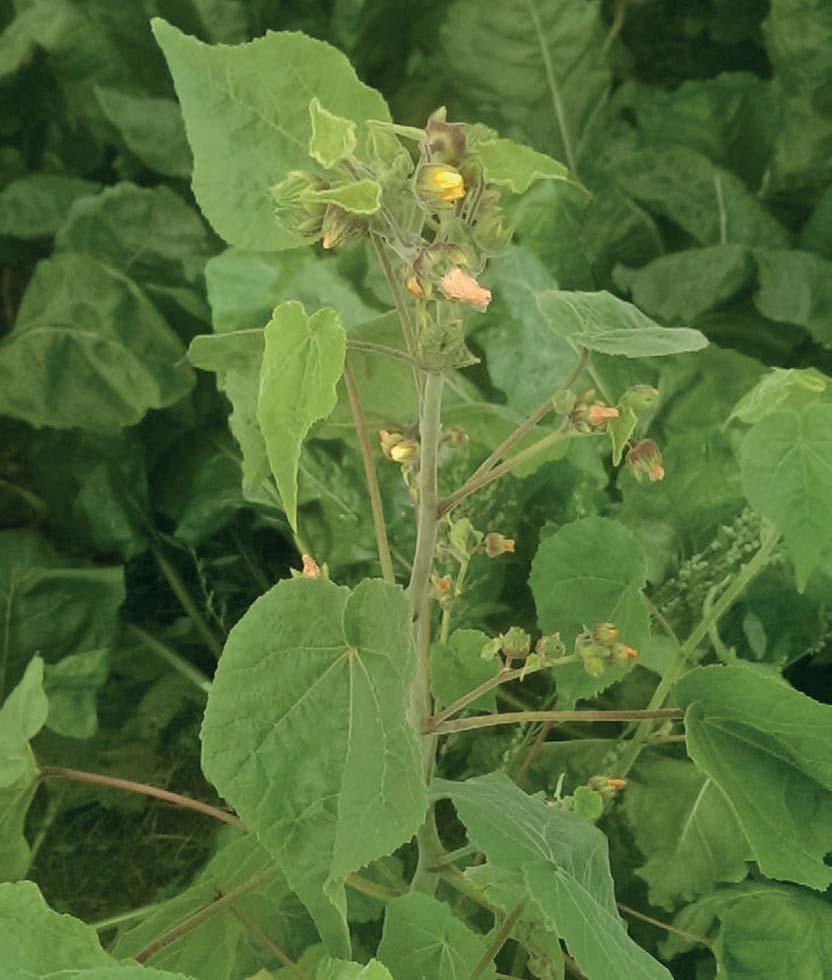
“Ideally, pull out plants before they flower and especially before they set seed. Where plants are already flowering or seeding, tie a plastic bag over flowers or seedheads, bend the stem in half so any seed is contained inside the bag, pull the plant out and safely dispose of it by deep burial,” Catherine says.
MPI encourages farmers to report any finds to its pests and diseases hotline – 0800 80 99 66 – for help managing the situation.
Full information about the weed, the affected seed lines, how to identify plants and safely dispose of them is at www.mpi.govt.nz/alerts
For further information, contact your Farmlands Technical Field Officer or the friendly team at your local Farmlands store.
| Velvetleaf in flower. Photo courtesy of Ministry of Primary Industries.
How to cope with Cooperia
In today’s ever challenging environment eliminating worm burdens is not only important in improving animal health but it also assists in valuable increases in production. One of the most productionlimiting worms in cattle is Cooperia, with scientific evidence showing that if Cooperia are left unchecked it can lead to lost production, clinical disease such as scouring and even death. The main impact a Cooperia infestation is likely to have on
productivity is a reduction in appetite. Changes in grazing behaviour have been demonstrated in scientific studies where naturally infected animals spent less time grazing than non-infected herd mates. Cooperia populations have also increased due to management systems and inadequate worm control being in place. Increased incidents of Cooperia related production loss is a direct result of these.
In some parts of New Zealand it is known that Cooperia has developed a resistance to the ML
type drenches, which means that a combination product should be used. Some have also suggested that a product containing levamisole and a benzimidazole, which also controls Cooperia, could be used as an alternative. The use of these types of combinations is even more important through late summer and autumn when calves are at the greatest risk of infection from Cooperia. Depending on your formulation preference, there are two options in either a pour-on or an oral product. Saturn Pour-on is a combination of abamectin and levamisole, which helps delay the onset of resistance, plus it is highly effective against Cooperia (mature and immature) as well as controlling sucking lice.
Concur Cattle is a great example of a levamisole and benzimidazole combination product. It is an easy to use oral drench where levamisole is combined with oxfendazole to provide a drench that is particularly successful for young stock.
For further information, contact your Farmlands Technical Field Officer or the friendly team at your local Farmlands store. Article supplied by Donaghys.
Meeting regulations this calving season
Figures from the 2016 calving season showed a major improvement in bobby calf welfare. Mortality rates for bobby calves between farm and processing more than halved from 0.25% to 0.12% in 2016.
A significant effort from government and industry through education, information and regulation has made a real difference. This work will continue as further regulations will come into force in August 2017.
As planning for the spring calving season gets underway, the Ministry for Primary Industries is encouraging everyone across the supply chain to ensure they meet all of the young calf regulations. Seven regulations were issued in 2016 to strengthen the rules around calf welfare. Five of those are now in effect and the remaining two come in to force on 1st August 2017.
These require:
• that suitable shelter be provided for young calves before and during transportation and at points of sale or slaughter.
• that loading and unloading facilities be provided and used when young calves are transported for sale or slaughter or as a result of sale.
The requirements for a loading facility and suitable shelter were given a 12 month lead-in time to allow farmers, transporters, sale yards and processors time to make any necessary changes to their infrastructure or system and procedures.
DairyNZ is supporting farmers with information on the regulations through
a good practice guideline for all aspects of calf holding and loading facilities on-farm, including siting, access, design, construction, building consent and health and safety. You can find it at www.dairynz.co.nz/caringforcalves.
If you want to know more about the regulations, go to
www.mpi.govt.nz/calves, where you will find a guidance document containing commonly asked questions. Alternatively, you can ask a specific question either by emailing animalwelfare@mpi.govt.nz or phoning 0800 00 83 33.
Smart ways to control air conditioning
Air conditioners made by Mitsubishi Heavy Industries have a stylish design and are easy to use, making them perfect for the home or office.
With a range of sizes from 2kW to 9.2kW, there’s an air conditioner for every space, from small rooms to large entertainment areas as well as commercial areas. Compact and quiet, these units are easy to install and are loaded with great features.
• Low ambient capability
• Fully optioned remote control
• Optional Wi-Fi control lets you control your AC from anywhere
• The IR wireless remote controller is compatible with most AC units
• Control and monitor: On/Off Mode, Set Temp, Room Temp, Fan Speed, Vane Position
• On/Off status and AC Mode LED indication
Mitsubishi Air Conditioner IntesisHome Wi-Fi Adaptor
The IntesisHome universal device lets you connect to your air conditioning unit through the internet using your Wi-Fi network. This means you can control your unit with your desktop computer, laptop, Apple devices (iPod, iPhone and iPad) and even Android devices, from anywhere in the world. To learn more about Mitsubishi Heavy Industries air conditioners talk to your Bunnings Trade Team.
Find your nearest store at bunnings.co.nz/stores or call 0508 BUNNINGS.
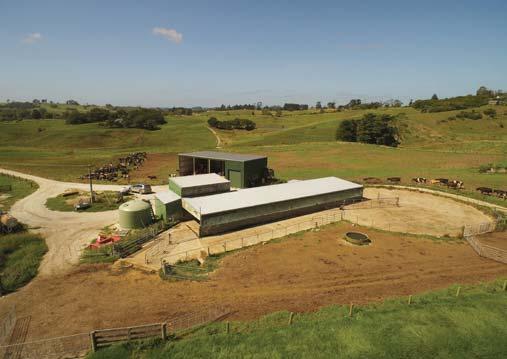
Safeguarding your farm dairy effluent system
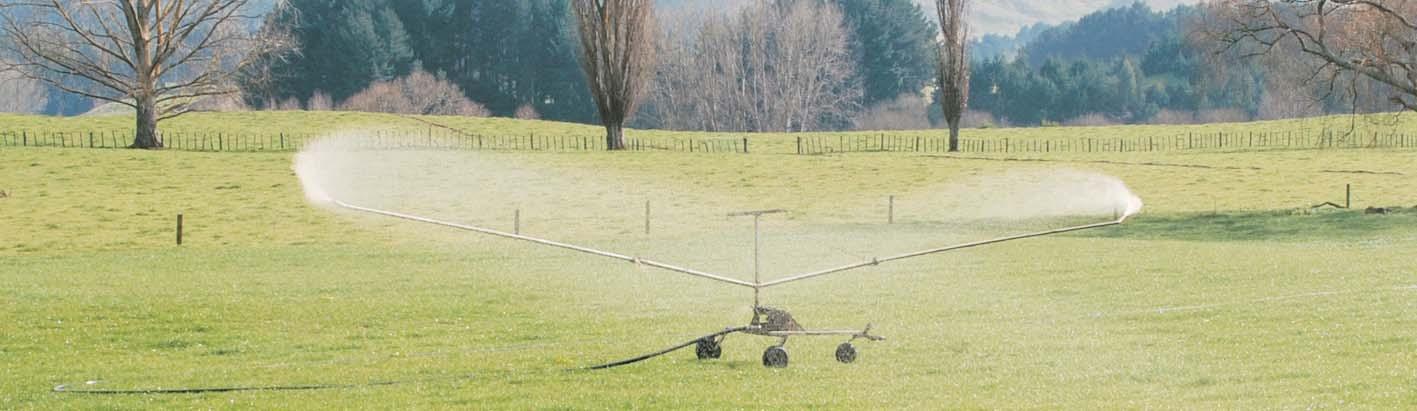
As many dairy farmers approach the end of the current milking season, some thought needs to be given to the upkeep of their farm dairy effluent (FDE) system, following the demands placed upon it during the year. Many farmers will already have a preventative maintenance programme in place but for those who haven’t, it is timely to consider the following simple system maintenance checklist.
Daily
• Before and after each milking, check that the storm water, or wash water, diversions are in place.
Regularly
• Assess whether the soil is dry enough and the water table is low enough to allow effluent application to the pasture without excessive ponding or run-off.
• Shift the spray applicator at the completion of each run.
• Make sure water troughs are covered, if affected by the spray drift.
• Regularly check waterways to ensure effluent is not entering these.
• Check flow-switches on pump.
• Grease the applicator.
• Check nozzles.
• Flush clean water through delivery lines and applicators.
Six months to annually
• Strip down pump for oiling and cleaning.
• Check pump seals.
• Have a nutrient analysis done on the stored effluent, soil and pasture.
• General storage facility maintenance such as weed spraying and sludge removal.
The DairyNZ Farm Enviro Walk technical support booklet is an excellent source of information.
The outline of this very instructive booklet is a simple self-assessment checklist for the farm. It aims to highlight practices on your farm that can lead to effluent and nutrients, such as nitrogen and phosphorus entering ground or surface water.
To obtain a copy, visit the DairyNZ website www.dairynz.co.nz.
The booklet encourages both dairy farm owners and farm staff to take a proactive outlook in checking their FDE system. Examples of the things to be checked via the quarterly walks include:
• Has the sump ever overflowed?
• Do the holding ponds leak or overflow?
• Is there vegetation on the pond’s surface?
• Do the irrigation nozzles block?
• Have any pipes burst?
• Does ponding occur when you irrigate effluent?
• Are there dead worms on ground surface?
• Does the grass brown off after applying effluent?
• Is the effluent from the stand-off and feed pads collected and treated?
As well as checking the existing system, it may well be time to look at extending the current system.
Article supplied by Iplex.
New pigtail lasts longer, so saves time and money
Gone are the days of replacing lots of bent, broken or rusty posts every year – a new pigtail, designed and manufactured in New Zealand, uses leading edge technology to ensure superior flexibility and a much longer life. This new pigtail increases on-farm efficiency, with less time and money spent replacing broken posts.
Renowned for their innovation, Strainrite Fencing Systems has taken the electric fence pigtail post to a whole new level with the Dura-top Pigtail.
Brandon Given, who farms cattle and sheep on 430 hectares near Raglan, has been using the new Dura-top Pigtail posts for more than a year.
“It used to be really time consuming and frustrating having to replace broken ones all the time – but that’s a thing of the past now,” he says.
The Dura-top Pigtail post is engineered to reduce tangling during use and storage. This also means it is more efficient to install and offers maximum resistance to wear.
“If you had asked me 2 years ago if you could improve the pigtail, I would have said no,” Strainrite Director Maurice Wooster says. “But, here we are with a new family of pigtails.”
“It’s not just an improvement,” Maurice says. “The Dura-top range resolves all the common issues related to pigtails.”
Strainrite’s unique and proven hot dipped galvanised pressed steel foot design offers superior strength and a great hold in the ground. Plus, the high strength glass fibre reinforced
insulator coupling not only insulates the top steel loop from the shank but also doubles as a convenient handle to move when the temporary fence is live.
“These new Dura-top post handles are still in great condition, even after being out in the elements for a good while now,” Brandon says.
The galvanised spring steel shaft offers enhanced corrosion protection, increased durability and greater bend resistance. The Dura-top Pigtail is available in 6mm or 7mm shaft thickness.
Strainrite Fencing Systems are committed to providing quality fencing products that are built to the requirements of the farming sector. With a focus on product development and innovation, Strainrite Fencing Systems listen to the market and deliver market leading fencing products that withstand the tough and demanding farming elements.
The Dura-top Pigtail is available exclusively at Farmlands. Head into your local Farmlands store today to find out more.
| Farmer Brandon Given with Strainrite’s new revolutionary, tangle free Dura-top Pigtail post.
Avoiding environmental hazards and waste
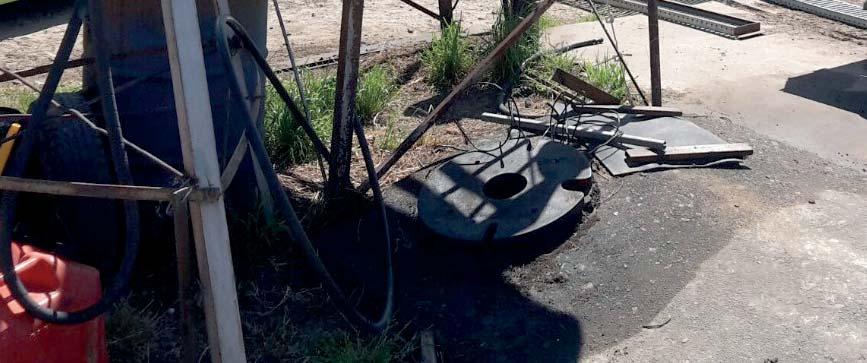
Is this the spill waste below your tank? Is your tank being over-filled above its safe fill level and overflowing with heat expansion? Is your tank lacking a dipstick for the fuel tanker driver to accurately gauge refuelling quantities to avoid over-filling and spills? Are your tapes, hoses and nozzles or filter leaking?
If you have answered yes to any of these questions, contact the Farmlands Fuel team now for assistance in fixing your tank situation. Many farm tanks have been in service for a number of years and may have had little or no maintenance. Problems can be avoided by performing regular basic checks to make your fuel storage safer and reduce the risk of any fuel contamination. Regular checks should include hoses, tap outlet, filters and nozzles. Farmlands Fuel can organise
the supply of replacement accessories. Don’t wait for your fuel tanker driver to say your tank is unfit or unsafe to fill.
A tank leaking one drop every 30 seconds equates to lost fuel of more than 500 litres per year. Check your insurance policy to ensure spills, fires and compliance are covered. It is possible that in the event of a fuel incident, your insurance
company may not cover you if you are found to be non-compliant. Farmlands Fuel has the expertise to assist you in avoiding environmental hazards and waste. Talk to your local representative or contact the Farmlands Fuel team on 0800 666 626 if you would like to discuss any environmental or tank compliance support.
Panasonic HC295 Micro System 2,650 Choices Points
Panasonic PMX70 Micro System 5,200 Choices Points
Denon DN9B Micro System Black 13,000 Choices Points
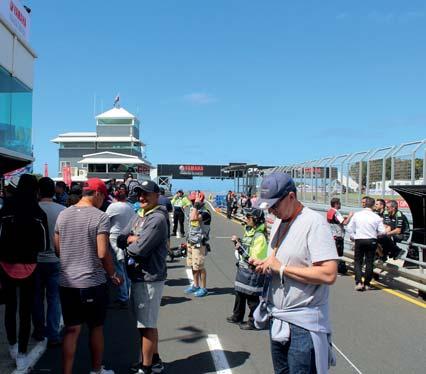
Gulf Oil New Zealand hosted 12 Farmlands shareholders and 14 Gulf Oil and Farmlands Fuel commercial customers recently at Phillip Island in Melbourne for Round One of the World Superbikes. The shareholders won the VIP experience of a lifetime by purchasing Gulf Oil from Farmlands – the prize included 2 days at the World Superbikes Round One, as well as return flights to Melbourne, transfers to Phillip Island, accommodation, VIP hospitality entry to Gulf’s trackside area, breakfast and lunch at the hospitality suite, access to the VIP trackside viewing area with an open bar and the chance to meet the Gulf BMW team and riders and get a tour of the team garage.
Technical Field Officers Robin Moody and Stephen Vince and Farmlands Fuel Territory Managers Carey Ellison, Daniel Reeve and Andrew Gowers also won the opportunity to attend the weekend.
Gulf Oil National Sales Manager, Sander Kriek, says it was a fantastic trip with hosting from the two Gulf Oil International sponsored race teams –Milwaukee Aprilia and Althea BMW.
“Our guests had unrivalled access to the riders, the team management
and the mechanics, as well as full behind the scenes garage tours,” he says. “The weather was wonderful and our guests left the weekend really feeling a stronger Gulf Oil and Farmlands connection.”
Shareholder Toby Satherley was also the winner of a Grid Access Pass. “Only select race team members are allowed on the grid, so it was pretty amazing to get this opportunity for one of Gulf Oil and Farmlands Fuel’s key customers,” Sander says.
| Sander Kriek (left) and Toby Satherley.
Mud grabba
Rural Support Trusts appoint National Council
New Zealand’s rural community will be better supported when times are tough, with the election of a national body to represent all 14 Rural Support Trusts across the country.
Rural Support Trusts operate independently in their areas. Some have been around since the 1980s to provide support on hardship or assistance in adverse events, such as the Otago Rural Support Trust. Others, like Taranaki, have been set up out of Federated Farmers. A number of Trusts, such as Northland, were formed or strengthened with (then) MAF’s assistance after the On-Farm Adverse Events Recovery Framework came into effect in 2007. The new National Council will help make Trusts more efficient and effective, sharing resources and experience and providing a single point of contact interacting with other organisations and the Government. The Trusts and National Council work closely with MPI, which provides partial funding along with their own fundraising work.
All Trusts have trained facilitators who can assist rural people with a range of issues, whether during or following an adverse event, or in “peacetime”. The facilitators are all local people who know the area and the farming or growing industries and much of their work is helping sometimes isolated rural communities keep connected and build morale when the going is tough.
In the last 2 years Minister Nathan Guy has provided extra funding to Rural Support Trusts to improve access to mental health support in the rural community. Co-ordinators are trained to recognise and manage signs of depression or extreme stress and are connected to rural health professionals. Recent adverse events, such as the current drought in North Canterbury, the 2 year South Island drought
and the Kaikoura/Marlborough earthquakes have made the relevance of the Trusts very clear.
In its first meeting in January, the National Council elected its first Chairperson, Waikato Rural Support Trust chair Neil Bateup – and Gavan Herlihy from Otago was appointed Vice Chairperson. The Rural Support National Council will be structured as a charitable trust, which is responsible to the Trusts around the country. For further information on the Trusts, visit www.rural-support.org.nz
Your Rural Support Trust is always available. Need a chat? Concerns about yourself, your partner, family, worker, neighbour or friend? Contact your local Rural Support Trust on 0800 RURAL HELP for a free, private and confidential chat.
Get involved – fixing up quake farms
If you are between jobs or feel like some new scenery for a few days, give 0800 327 646 (0800 FARMING) a call. This line is the central point of contact to match volunteers and paid skilled workers with damaged farms in Marlborough, Kaikoura and the Hurunui.
Under MPI’s Skilled Worker and Volunteer Programme, Federated Farmers collects requests for help and offers of assistance and Agstaff has responsibility for running the workers on the ground, including managing essential paperwork like contracts, pay, accommodation and health and safety.
“We are still working in an earthquake zone and with the risk of aftershocks the safety of people on the ground is our top priority,” Agstaff representative Jones says. “It’s a massive piece of recovery work there.”
With entire boundary fences disappeared under hillsides and buckled terrain and massive boulders pushing through fences, the need for fencing skills is clear.
“We’ve had offers of volunteers in the hundreds,” MPI Director Resource Policy, Kate Hellstrom says. “The key is getting the right skillset into a team and getting the jobs done area by area, so we are effective and efficient.
“Fencers are obviously needed – along with building and general farming skills. It’s essential for many to get at least their boundary fences and stock yards under control and that’s our top priority with the fund, which runs through to the end of May.”
Federated Farmers’ Adverse Events
Spokesperson, Katie Milne says that it’s getting down to the wire to help farmers get things sorted with winter inevitably approaching. She hopes there are farmers and fencers out there who might want to experience another part of the country.
“Even if they can offer a few days, that would be extremely welcome.
The help famers have received to date is tremendous and we can’t thank people enough for their generosity.”
The other challenge is getting farmers to stop and ask for help.
“New Zealand farmers are a tough bunch and loathe to ask for help in case they are getting in the way of someone who is worse off,” Kate says. “We are asking them to register their damage anyway, so that we can at least help with essentials like boundary fencing to help people manage their animals and get back up and running more quickly.”
Minister for Primary Industries, Nathan Guy announced the $600,000 fund for skilled workers and volunteers to help earthquake-hit farmers with recovery from February to May 2017.
“As we move from the response to recovery phase, some farmers and growers need skilled hands to get back to pre-quake operational levels,”
Nathan says. “Many have suffered damage to key infrastructure such as fences and water reticulation systems. This kind of infrastructure requires experienced labour to get back up and running.
“All skilled workers deployed will be appropriately remunerated and volunteers can have some costs reimbursed. The initiative will also help ensure that issues such as like health and safety are managed in what is still a challenging situation.”
⊲
⊲
⊲
The Card that gives back
Time to plough
The harvest is done, the rams are out and the cows are dried off, so that means it is time to plough. This is especially the case for the Courtenay-Paparua Ploughing Association, as they are well underway with the organisation of the 63 rd New Zealand Ploughing Championships.
This year is a special one too, as the championship final also coincides with the Courtenay-Paparua Ploughing Association’s 150th anniversary. The first recorded ploughing match was held on 30th September 1867 in a paddock owned by the Seaton family at the back of the Desert Woolshed on Woolshed Road, Courtenay. 25 horse teams ploughed at this match and a dinner was hosted afterwards at C. Watson’s Halfway House, Old West Coast Road.
150 years later, the CourtenayPaparua Ploughing Association is holding the championships in a paddock not far from the original site, which is still owned by the same family. There will still be horse teams ploughing, along with the vintage class, the Farmlands Fuel reversible class and the Gulf Oil conventional class, with a total of 40 competitors. Three of these competitors are also on the organising committee for the event and have been involved with ploughing over the last few years. Patron of the Courtenay-Paparua
Ploughing Association, Jim Brooker, has also gained an accolade for being the first ploughman to represent New Zealand at a world final in England.
To the naked eye, ploughing may seem dull but it is actually quite technical and done at a slow speed where accuracy is the most important aspect. Judges will be looking for straightness, uniformity and an ideal seed bed to sow into. The winners of the Farmlands Fuel reversible class and Gulf Oil conventional class will go on to represent New Zealand in Germany at the 2018 World Ploughing Championships.
New Zealand Ploughing Association President, Bruce Redmond, says he is looking forward to seeing the celebrations of 150 years unfold for the oldest ploughing association in the country. Events for the 63rd New Zealand Ploughing Championships will begin on Wednesday 19th April and the official competition runs from Saturday 22nd to Sunday 23rd April. Join in the action of the competition at 1900 Highfield Road, Courtenay – there will also be trade displays, art and craft stalls, food stalls, entertainment, steam engines, vintage displays, a straw bale maze and a children’s play pit with ride-on toys. Entry is $10.00 for adults and free for children under 16 years.
HAWKE’S BAY FEATURE HERD
220 outstanding Crossbred cows, being a computer split of 2-8 year olds from a 400 cow herd.
BW 95 PW 103 RA 98% as at 5/03/17.
Calving from 6th August 2017.
$2,095 + GST p/h.
Great opportunity to purchase cows with three generations of ownership.
To view and for further information, contact: Philip Webb 027 801 8057
Chris Johnston 027 257 4091
FEATURE DAIRY HERDS DAIRY LIVESTOCK FOR SALE
DAIRY HERD AUCTION – TE AWAMUTU
Dairy herd auction – Tuesday 11th April A/C of Hophead Farms Limited
To be held on the property: 107 Kiwi Road, Te Awamutu.
On offer: 150 Friesian Crossbred cows. Calving from 17th July 2017. Note: Cows will be sold in-milk. Also on offer a good selection of farm machinery.
To view and for further information, contact:
Stephen Weck 027 455 1106
Jason Duncan 021 170 5354
Growing sheep milk industry bolstered by science
New research is adding weight to the benefits of sheep milk as New Zealand’s industry continues to expand its base and reach to the world.
New Zealand now boasts more than 30,000 sheep for milking at 16 different producers, providing quality sheep milk products to overseas markets and a distinctive New Zealand dairy sheep breed, Dairymeade, has recently been registered.
In the past few months, new sheep dairy genetic material has been successfully imported into New Zealand for the first time since the 1990s, to add to the quality of the country’s stock and improving New Zealand’s ability to compete on a global scale.
At the 2017 Sheep Milk New Zealand Conference last month in Palmerston
North, scientists from AgResearch, Massey University, University of Otago and Callaghan Innovation presented the latest research into sheep milk, including science made possible by a $6 million fund from the Ministry of Business Innovation and Employment (MBIE) – “boosting exports of the emerging New Zealand dairy sheep industry”.
AgResearch scientist, Linda Samuelsson says that while sheep milk – and products from it like cheese – may still seem an unusual concept to many New Zealanders, its qualities are already well recognised around the world.
“There were a number of pieces of research presented at the conference that further underline the benefits sheep milk has to offer when it comes to nutrition and digestion and how we can enhance milk production,” Linda says.
“For example, in a study using rats we found that sheep milk made solids pass through the animals’ systems rapidly – which we’d expect would mean improved gut comfort, reduced constipation and general improvement for a sluggish gut.
“In another study with rats, sheep milk proteins were more readily digested than cow milk proteins, with higher levels of essential amino acids. A
further study shows a major waste stream from sheep cheese – whey – has the potential to be processed into a stable base ingredient for beverages or soup stocks under controlled circumstances.”
Associate Professor Craig Prichard, from Massey University, says aside from the health benefits, there is exciting potential for the development of innovative new sheep milk products such as cheeses.
“We know the sheep milk products have distinctive characteristics depending on what region of New Zealand they come from, so there is a real opportunity to develop some really distinctive regional offerings that you wouldn’t find anywhere else.”
The 2017 Sheep Milk New Zealand conference featured Gilles Frégeat, General Manager of Upra Lacaune (the French sheep dairy breeding society) as the keynote speaker.
Maui Milk was the principal sponsor of the conference, supported by Kingsmeade Cheese, GEA, Farmlands Co-operative, AGMARDT and ABS (Animal Breeding Services). The conference was part of the New Zealand Agrifood Investment Week 2017.
| Kingsmeade Cheese was one of the sponsors of the 2017 Sheep Milk New Zealand Conference.
Avo-can-do!
Don and Cherie Redgrave wanted a lifestyle change. What they got was an adventure, tranquillity and plenty of avocados.
Fifteen and a half years ago, the pair upped sticks from Auckland to escape the rat race. Don, a salesman at the time, was looking for a change from being in the big smoke. Their Pukenui avocado orchard, now known as Cheron Avocados Limited, proved to be the perfect fit.
“We looked at tomatoes, kiwifruit and avocados but I loved the look of this place, because of the lake and the potential I saw in the farm,” he says. When it came time to move onto the 18.6 hectare property, the only issue was their lack of knowledge on growing avocados. In fact, Don had never even driven a tractor before. The previous owner stayed around long enough to show them the ropes and they have been living their dream ever since.
Unfortunately due to health issues the time has come to move on, even though Don is quick to point out any other reason and he and Cherie would not be budged from their slice of paradise.
This means Cheron is on the market – and is an opportunity for anyone willing to seize it.
“Basically they (the buyers) don’t need to know a lot, because I came on here knowing nothing,” Don says. “The previous owner spent a bit of time with me and I’m more than happy to spend a bit of time with the buyer.
“You can also pick up advice from consultants and the Avocado Council – a lot of advice comes for free.”
Cheron is a dream lifestyle scenario –close enough to the shops but isolated enough to enjoy the best of rural living. Don says they have both loved their time there – a house overlooking the lake, with geese and pukeko as guardians of the water. The house is separated from the orchard, which is in extremely good health. And even though the property access is off the main road, the almost kilometrelong driveway takes you away from the noise and closer to relaxation.
“Even though we’re on the main road, you wouldn’t know it,” Don says. “We’re about 10 minutes north of the local shopping area, Pukenui, about 6km to the west coast and 6km to the east coast beaches. The fishing is fantastic and we’ve got the northernmost golf club in New Zealand.”
Cherie says golf is just the start – fishing, bowls, the lot!
“There are plenty of community activities going on,” she says.
As for what type of person should look at the property, Cherie simply states “a family who could enjoy the house and the lake”.
“From a retired husband and wife, it only takes two people,” Don adds. “It’s very easy run – it’s not a full-on job. You can go away for holidays for quite considerable amounts of time, especially in winter and you don’t have to worry.”
“You only really need to get extra help in for picking and pruning,” Cherie says. Cherie and Don now move on to the Bay of Plenty, where they have purchased a three quarter acre section at Te Puna that they plan to build on. Cherie’s mother is moving over from Australia to live with them, to be closer to family. And even though there’s not much room for trees, Don says he’d dearly love to plant some avocados once they have settled.
To learn more about Cheron Orchards, visit listing number KT1028 at www.farmlandsrealestate.co.nz or email paul.yates@farmlands.co.nz
| Don and Cherie Redgrave on their Northland avocado farm.
Real Estate Update
Awards time of year is a highlight and recently we celebrated our success. Our ability to achieve sales consistently year upon year, across residential, lifestyle and rural market sectors, is due to an exceptional level of hard work by our professional salespeople. Congratulations to all our winners.
Business Innovation Award 2015/2016
Bill Millham and Yvonne Forlong, Palmerston North/Feilding
Top Ten Salespeople 2015/2016
1 – Simon Richards, Timaru
2 – Neville Hamilton, Invercargill
3 – Patrick Bowden, Balclutha
4 – Shari McLaughlin, Greymouth
5 – Trevor Norman, Wanaka
6 – Merv Dalziel, Oamaru
7 – Malcolm McNaughton, Christchurch
8 – Noel Lowery, Leeston
9 – Ian Moore, Neill Dick and Tim Meehan, Waimate
10 – Dave Hardy, Dunedin
Bay of Plenty grazing land with options
This fertile land is consistently running 20 stock units to the hectare and growing good cattle with ease. Option to purchase the entire property of 250 hectares more or less or as smaller blocks ranging from 4 to 116 hectares (subject to title). Each block has good fencing, water troughs in each paddock and boasting strong pasture. Contour is flat to rolling with some steeper sidings. The property is situated in Otamarakau Valley, 33km from Te Puke, 44km from Whakatane and only 6km from the beautiful Pikowai beach. Price by negotiation.
Top Office Award 2015/2016
Winner – Timaru
First Runner-up – Invercargill
Second Runner-up – Dunedin
Top Rural Salesperson 2015/2016
Simon Richards Farmlands Real Estate, Timaru
Top Lifestyle Salesperson 2015/2016
Noel Lowery Farmlands Real Estate, Leeston
Top Residential Salesperson 2015/2016
Ondy Herrick Farmlands Real Estate, Masterton
Phil Badger
Lifestyle/Rural – Bay of Plenty 027 357 5704 phil.badger@farmlands.co.nz
An all-round performer
Diversity gives a competitive edge to this 186 hectare beef and dairy farm situated near Dargaville. Fertile peaty clay loam flats form a small dairy platform, while two gentle west-facing basins provide grazing for beef cattle plus all the dairy dry stock. There is a 12 aside cow shed and two good homes – one of them near-new. A split calving herd and plenty of calf sheds provide an opportunity to build up stock numbers. Our vendors are ready to go and will consider offers over $1,500,000 (land and buildings). Deadline sale closing 2pm, Thursday 20 April 2017.
A smart move
This dairy farm is located only 83km north of the Auckland Harbour Bridge, 10km west of Wellsford. There are two good homes and a 32 aside cow shed. Buildings and improvements have received a significant injection of cash in the past few years. In spite of a few management issues, production has averaged 86,500kgMS over the past three seasons on an all grass system with the help of an adjacent block of lease land, which would also be available to the successful purchaser. Tender closing 2pm, Wednesday 12 April 2017 (unless sold by private treaty).
Nicky Reid
Rural – Northland 0800 100 027
nicky.reid@farmlands.co.nz
Nicky Reid
Rural – Northland 0800 100 027
nicky.reid@farmlands.co.nz
Boundary Indicative Only
Tidy operation
“Bamfarm” is located in Waitakaruru, approximately 1 hour from Auckland and 20 minutes from Thames. 105 hectares of fertile land subdivided into 72 paddocks. The 26 aside herringbone dairy shed with PPP in-shed feed system was fully rebuilt in 2005. Renovated three bedroom home with new kitchen, open-plan living, double garage and outside room. The property has been farmed on a once a day milking platform with an average of 67,000kgMS for the past 4 years on a mainly grass input with some supplement. Price by negotiation.
Ian Morgan Rural – Waikato 027 492 5878 ian.morgan@farmlands.co.nz
European inspired forest hideaway
Set in established gardens up above the Tuki Tuki Valley, Havelock North, sits this 12 hectare property in two titles. The land is a mix of easy medium hill and has 8.4 hectares of fully tended 24 year old pines, which will provide a significant income stream in a few years. The four bedroom family home has two separate living areas and expansive north facing decking. It has many interesting features including Austrian wood burner providing a central heating system to radiators throughout the house, plus Norwegian oak flooring in all rooms. Tender closing 4pm, Thursday 18 May 2017.
Mark Johnson
Lifestyle/Rural – Hawke’s Bay 027 487 5105 mark.johnson@farmlands.co.nz
Paul Evans
Lifestyle/Rural – Hawke’s Bay 027 533 3314 paul.evans@farmlands.co.nz
Great deal!
This farm option really is a great deal. Location is great, only 20 minutes inland of Hokitika. Being only converted for six seasons, the 30 aside herringbone cow shed is near-new and well located. Three year production average 100,233kgMS. The scale of 150 hectares effective means you can either continue twice a day milking and wintering the cows on with calves going off, or move to a fully self-contained system. It is a versatile property with a lot to offer. For genuine sale by retiring vendor. $2,600,000 plus GST for land, buildings and shares.
Large West Otago farming property
Cone Downs – 1,410.81 hectares freehold provides a balance of tussock hill or productive, developed hill country, located in Moa Flat, Otago. Development over a decade or more has seen the introduction of gravity sprinkler irrigation to approximately 29 hectares. Complemented by a very good range of farm buildings, a four bedroom home, one bedroom self-contained cottage, woolshed and covered sheep yards, large cattle yard complex with Te Pari crush, plenty of woodlots and mature shelter, well laned and fenced to a very high standard. Price by negotiation.
Shari McLaughlin
Lifestyle/Rural – West Coast 027 266 6850 shari.mclaughlin@farmlands.co.nz
Nestled between Coopers Creek and Eyre River in North Canterbury, this 38 hectare property will fit well into your current farming system as a run-off/finishing block, or as a trading unit. Due to the normally high rainfall area you will get the benefits of reasonably high growth rates. There is electricity to the boundary and rural water supply with storage tank, which creates options for whatever you choose to do. Price by negotiation.
Maurice Newell 027 240 1718 Emily Newell 027 472 0409
Retiring vendor
This an ideal opportunity for a young family to start their farming career. 204 hectares of rolling and hill country currently growing good grass, is well fenced with a sprinkling of native bush, its own rock pit and a duck pond. There is a very tidy four bedroom home supported by a range of farm buildings and yards. Within easy travelling distance to Edendale, Mataura and Gore, gives good options for schooling. $2,600,000 plus GST (if any).
Val Tytler 027 315 7201 Derek Ayson 027 667 9601
This attractive 80.9 hectare bush block, with a movable hut, is less than 2km from the centre of Kumara on the West Coast. Live off the grid and get away from the daily grind at this private oasis. Could be developed into agricultural land or suitable for manuka honey production. You could also take advantage of its location right on State Highway 73, perfect for starting up a home business being near the West Coast Rail Trail. $359,000 plus GST.
Maurice Newell 027 240 1718 Emily Newell 027 472 0409
Well established 259 hectare unit situated in Pine Bush, Southland. Large lease block 4km away for ease of wintering and young stock control. Four bedroom manager’s home plus two additional homes. 40 aside herringbone cow shed with circular yard, double sided concrete feed pad plus stand-off pad. Excellent fertiliser and re-grassing history, with stands of pinus radiata. Deadline sale closing 4pm, Friday 7 April 2017
John Beaufill 027 431 0054 Patrick Bowden 027 436 5161
Property ID: RA1742 Bush block
Property ID: RA1744
Pine Bush dairy farm
Property ID: IN2022
Property ID: IN2020
Full Gulf Oil range now available nationwide at your local Challenge service station.