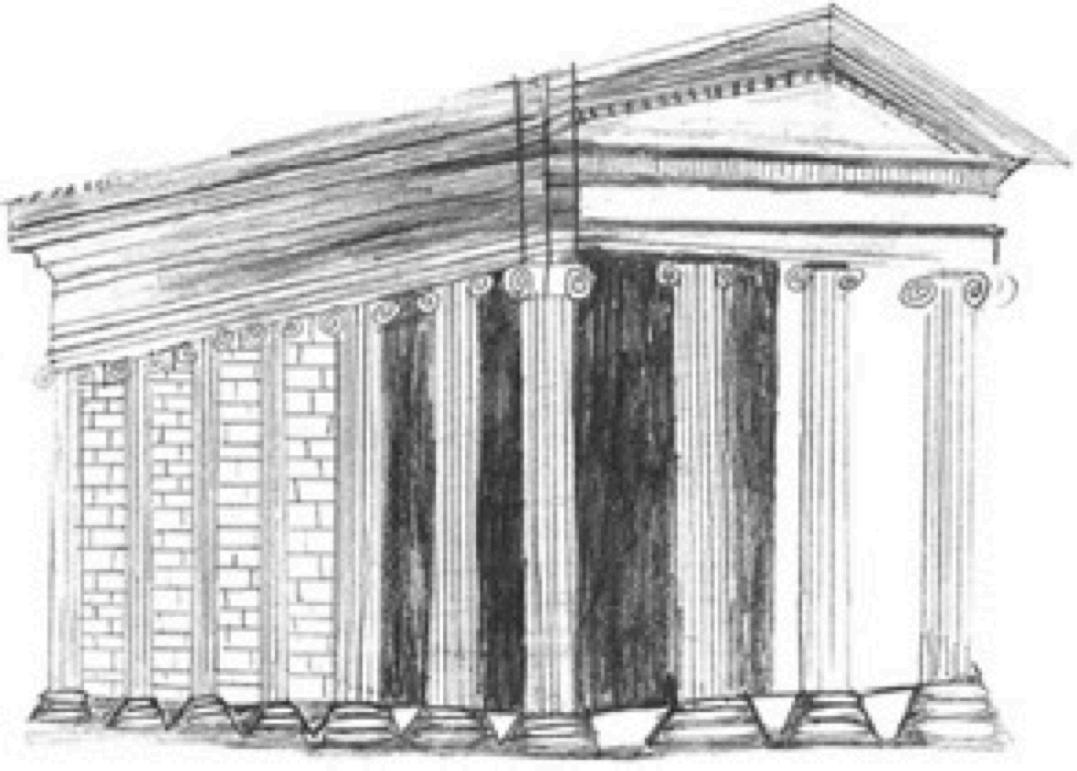
In Sixth Grade students consider connections between personal identity and power, how power is used and misused, and what factors impact how power has been distributed over time. Students evaluate the sources of written history and question the notion of a single story. Students also examine what are fundamental human rights, and how the understanding of these rights have changed throughout history? Students explore the interplay of power and human rights through several important time periods. Beginning with an exploration of ancient empires, including Mali, Ottoman, Mongol, and Inca, students also look at the impact of world religions on civilizations. They expand their perspectives by studying the factors that empower groups of people and hinder others. This inquiry into power continues with a look at how immigration shapes the racial and cultural landscape of the United States. We begin with a study of the first peoples of the United States, and continue with the transatlantic slave trade, extending to issues of modern immigration. Students take a close look at the dominant “melting pot” narrative for immigration, and analyze the structures of power that dictate either the exclusion or inclusion of various groups of people, and how the interplay of voice and power helps define a culture. The class engages in reading for information and research, class discussion, and simulations to understand the history and cultures. Students explore why all maps are wrong and identify different types, their purposes, how they show information, and how understanding an issue spatially can change our perspective.
Students explore What is an individual’s power? focusing more specifically on What can leadership look like in my own life? This is explored through their leadership on the Middle School sports teams and in Community Groups.
Sixth Graders participate in Model UN simulations. Students identify people similar to themselves that have made a difference throughout history and critically consider how to solve problems of the present through a lens of what has happened in the past. Through this process they write a strong research essay with appropriate citations and thesis statements and deconstruct sources through considering an author’s point of view, biases, and lived experiences. Additionally, they negotiate and problem solve with people who have opposing viewpoints and exercise leadership and action in society. In the spring, Sixth Grade competes in a Middle School Model UN competition with local independent schools. Some Model United Nations scenarios
for the 2023-24 year include: Marvel Universe, International Relations Mock Universe, Ottoman Empire, Mali Empire, Mongol Empire, Inca Empire, and Contemporary United Nations.
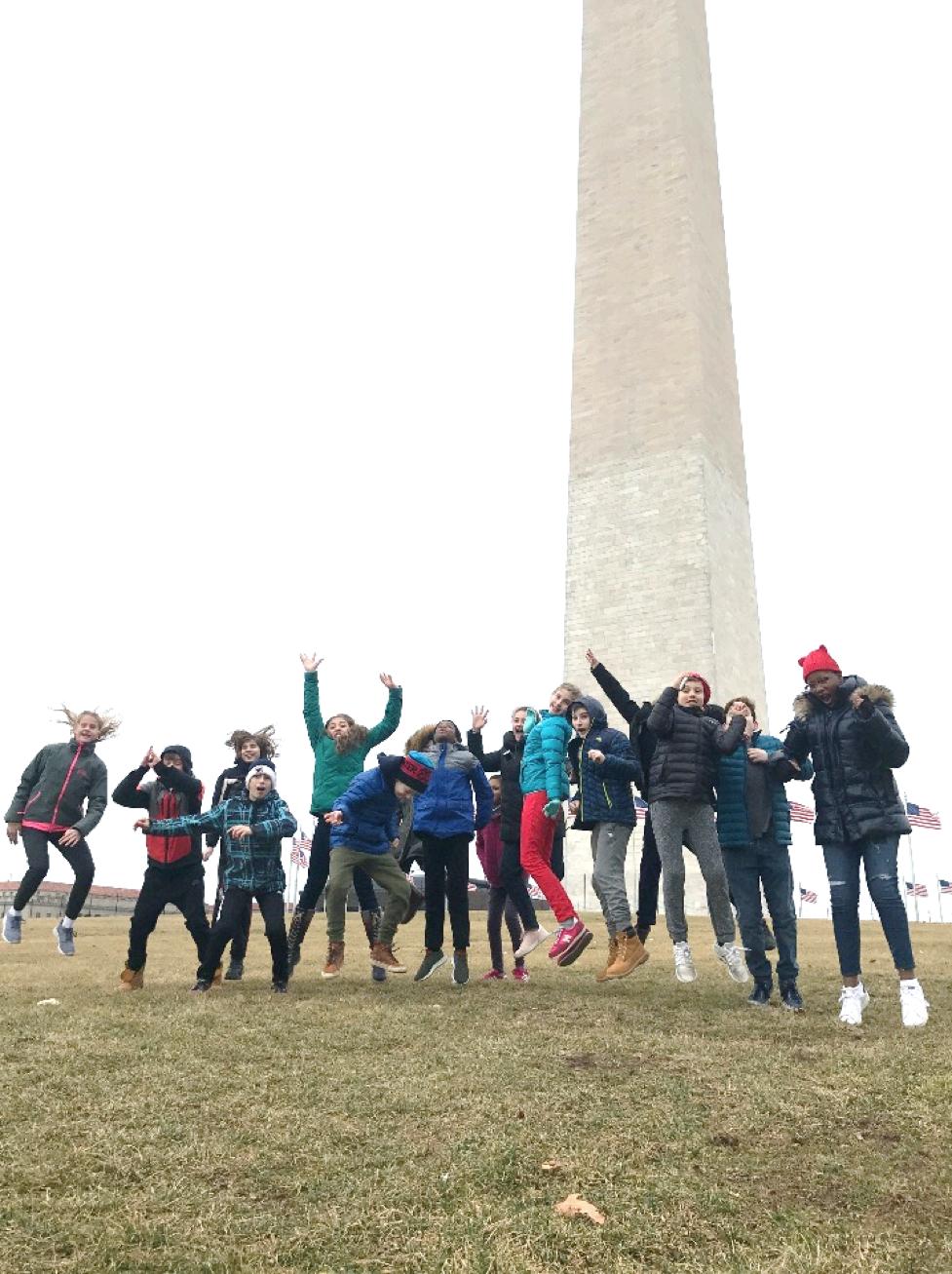
The culminating event of the Sixth Grade’s Middle School journey is a 3-day overnight trip to Washington, D.C. which offers students an opportunity to think critically about what forms a society and democratic government. The trip builds on the studies they have experienced from Grades 4-6.
Reading: The Sixth Grade uses a workshop approach to reading. Students read and share books as a class, meet in book groups to discuss a chosen book and read independently with coaching from their teachers and peers. Emphasis is placed on practicing and refining the critical thinking skills needed to analyze character and plot and to infer the author's intent. Students learn important tools for organizing their studies: they keep track of their independent reading and take ownership of setting personal reading goals. Class discussions, journaling, and written essays help students form and refine thoughts about what they have read. They engage in creative endeavors related to the topic - art, music, drama - that reinforce and deepen their understanding. The Sixth Grade's culminating event is reading the Shakespeare play, A Midsummer Night’s Dream or The Tempest that they will perform in their Eighth Grade year
Building on the skills learned in earlier grades in narrative, information, and argument writing, and poetry, Sixth Grade students expand their writing repertoire to include memoir and literary analysis. These skills are practiced throughout the year In their notebook writing, students learn the process of
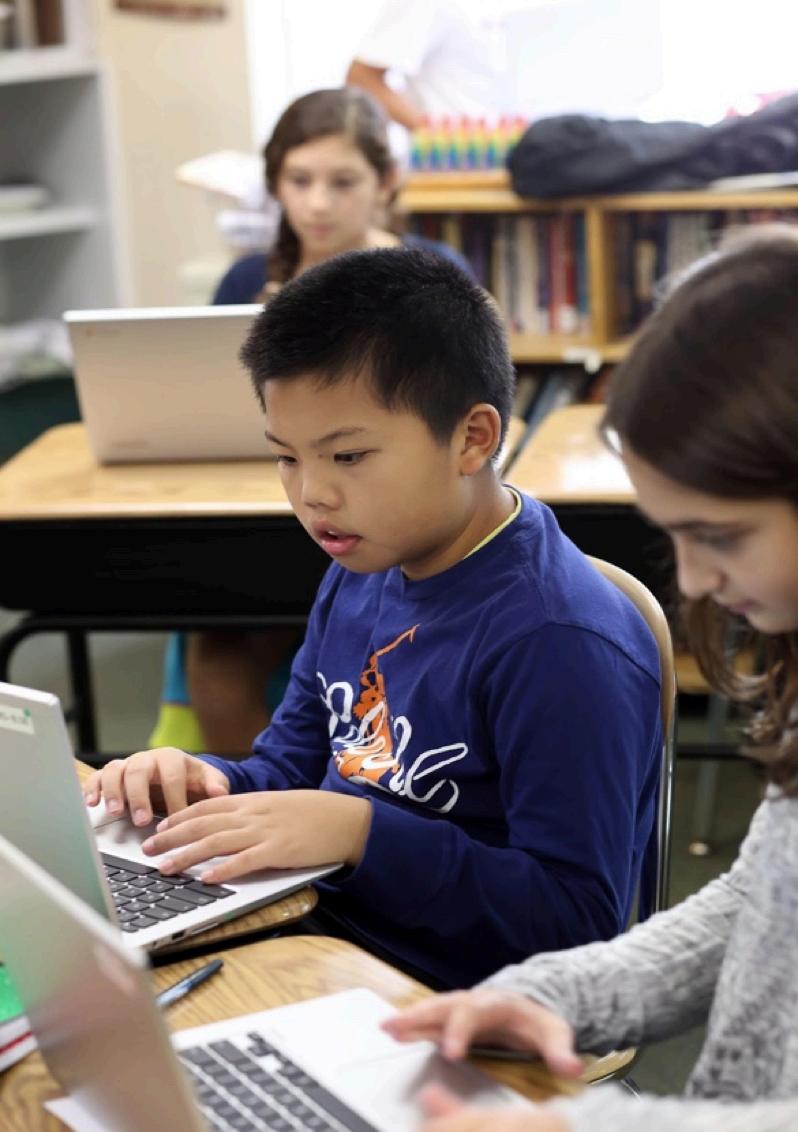
editing and refining their work through multiple drafts. They are also introduced to writing formal outlines to organize longer research essays. Peer review editing and teacher coaching are components of the process. There is a concentration on the study of vocabulary, grammar, spelling, and punctuation, which includes quizzes. Using Chromebooks in the classroom, they compose and share their written work in Google Docs.
The skills of problem solving, communication, critical thinking, and analysis continue to evolve in Sixth Grade Math. Emphasis is placed on problem-solving processes and sound computation skills. Oral and written communication of mathematical ideas as well as analyzing problems become more important as students transition to more abstract concepts of early algebra. Skills developed throughout the earlier grades are combined with more advanced creative analysis and sequential thinking.
The Sixth Grade math curriculum includes decimal operations; fraction comparisons and fraction operations; ratios, scale drawings, rates, and proportions; angle geometry; percent/decimal/fraction conversions and percent word problems; probability including tree
diagrams, Venn Diagrams, and counting principles; the study of data analysis and graphs; signed number operations and order of operations; solving simple equations, distributive property, and collecting like terms; and graphing inequalities.
Text: Illustrative Mathematics Grade 6

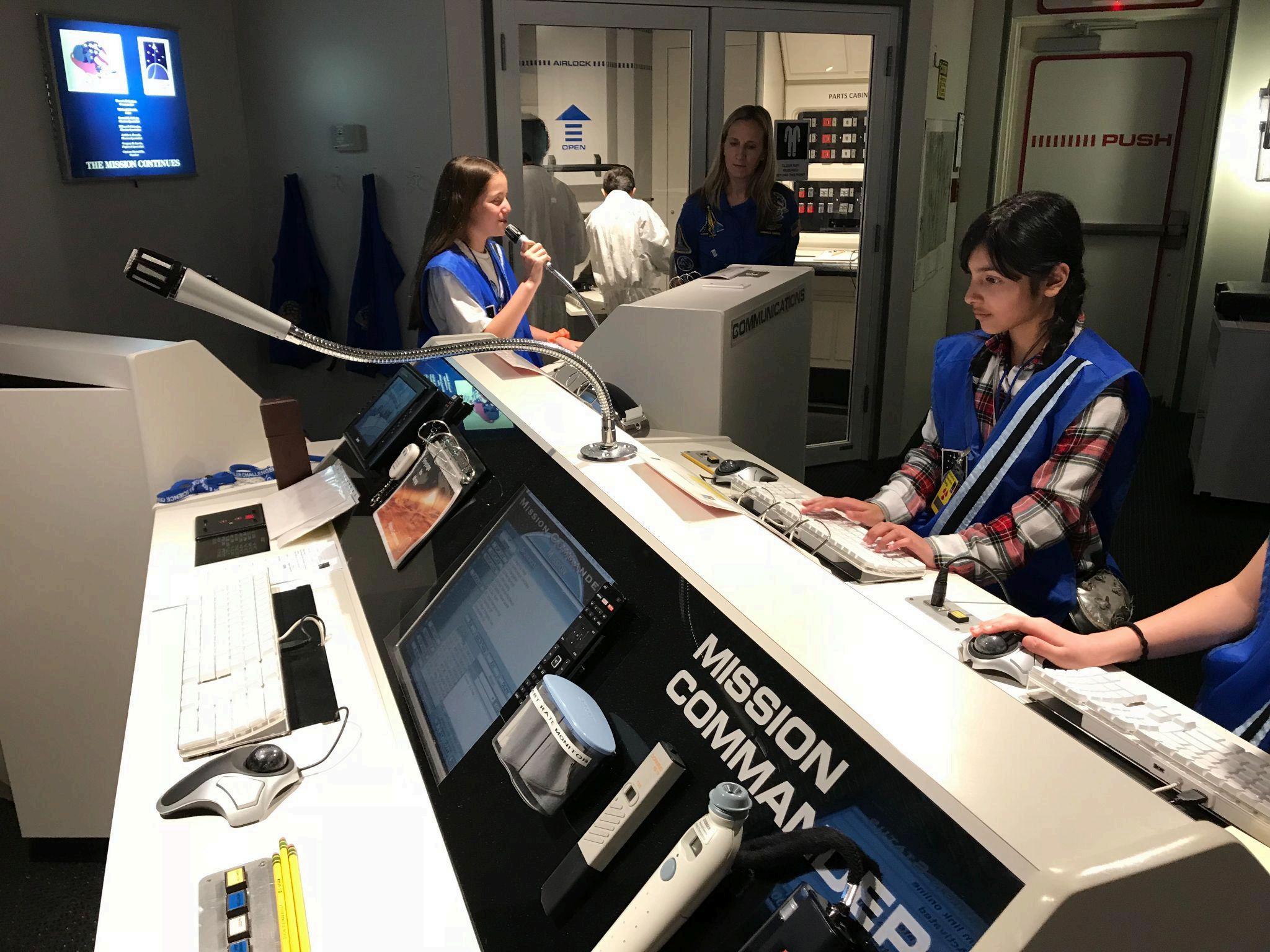
Keeping with the themes of expansion, migration, and survival in a new environment which are introduced in the Sixth Grade study of ancient empires, the science curriculum involves the exploration and potential pioneering of Mars. In the Sixth Grade science course, “Matter and Energy in Our Lives: An Exploration of Earth and Space Systems,” students use math and science skills to complete “authentic space mission tasks” in the classroom and during a trip to The Buehler Challenger & Science Center.
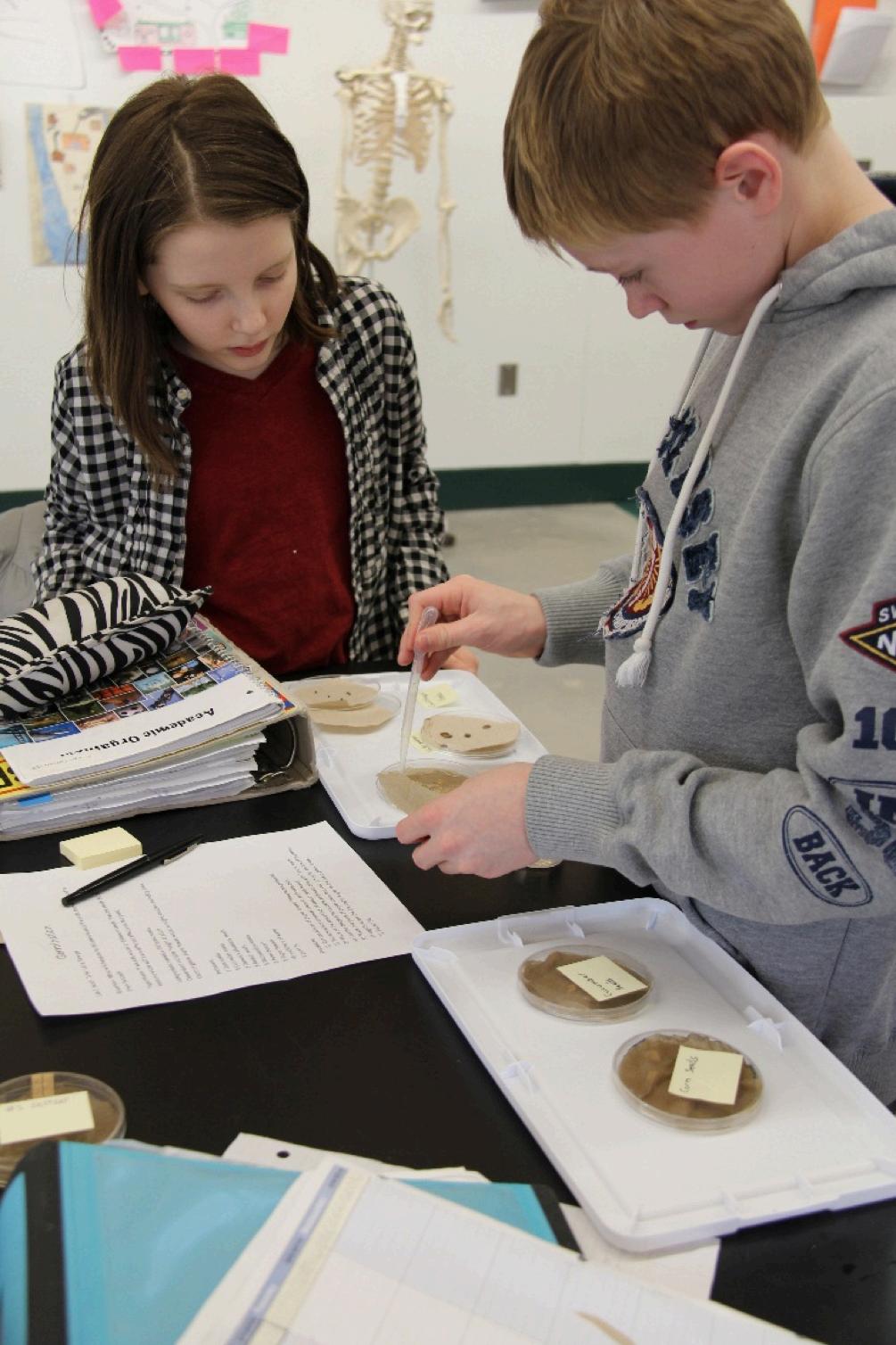
In addition space missions at Buehler, students determine whether or not it is possible for humans to get to and live on Mars. In answering this research question, students study the history of Earth, evolution, energy, phases of matter, gravity, orbits, force and motion, rockets, climate, and the atmosphere. Students explore the Wetlands Habitat to learn about photosynthesis and the sources of oxygen on our planet, such as plants and cyanobacteria. Students also work to perfect their science and engineering practices by designing, making, and testing models of rockets and landers. In carrying out these scientific investigations, students ask questions and define problems; formulate hypotheses; select independent, dependent, and control variables; collect, analyze, and present their data; draw conclusions and write explanations based on the analysis of their data; create sound scientific arguments; and engage in the same iterative design process that is used by scientists and engineers.
French and Spanish: In the Sixth Grade, students delve deeper into one language. They take either French or Spanish until the Eighth Grade. They use storytelling techniques, personalized conversations, songs, and communicative games to develop reading, writing, listening comprehension, and
speaking skills. They acquire new vocabulary related to physical description, classroom objects, telling time, clothing and currency, and they learn to use numbers from 0-100. Grammar concepts include personal pronouns and possessive adjectives. The classes also read the French novel Isabelle Capture un Singe Hurleur and the Spanish novel Isabela Captura un Congo Each chapter is read chorally, and students act out the scenes to gain further meaning of the text together While reading these novels, students learn about the cultures of French Guiana and of Costa Rica. In the French class, students communicate with a partner school in Brittany, France through pen pal letters and video conferences.
Group: In Group, students rehear that they sing during many music Brook, including Thanksgiving Processional, Stabat Mater and Other Voices, and Music Concert. Group is the school’ advanced Upper School choral ensemble, includes students in Grades 6 to 8. provides the opportunity for studen the theoretical and literacy concep learned thus far, through the instrumen all possess, the voice. Students learn selection of repertoire, from classic contemporary, which allows them community, understanding and empa each other and the world. The studen study vocal pedagogy and learn health habits that will sustain them in their beyond Far Brook.
Cambiata and Trebles: Cambiata (formerly known as Boy changing voice choir for students
While most students in this ensemble identifying, AFAB (Assigned Female at Birth) students who identify as male or non-binary are also welcome to participate. Students learn about the vocal anatomy, and the skills and techniques they will need to navigate their vocal changes, while delving into appropriate and stimulating choral literature.
The Trebles is a newer group that rehearses at the same time as Cambiata. The Trebles delve deeper into treble works, exploring songs with more complex voicings, richer harmonies, and diverse textures. Students will strengthen their singing and advance their aural and sight-reading skills. While most students in this ensemble are female identifying, AMAB (Assigned Male at Birth) students who identify as female or non-binary, and desire to continue exploring their treble range are also welcome.
Orchestra: Students in Grades Fourth through Eighth join the Far Brook Orchestra once they reach a certain level of proficiency in their musical skills. The Orchestra plays in Morning Meeting and at the
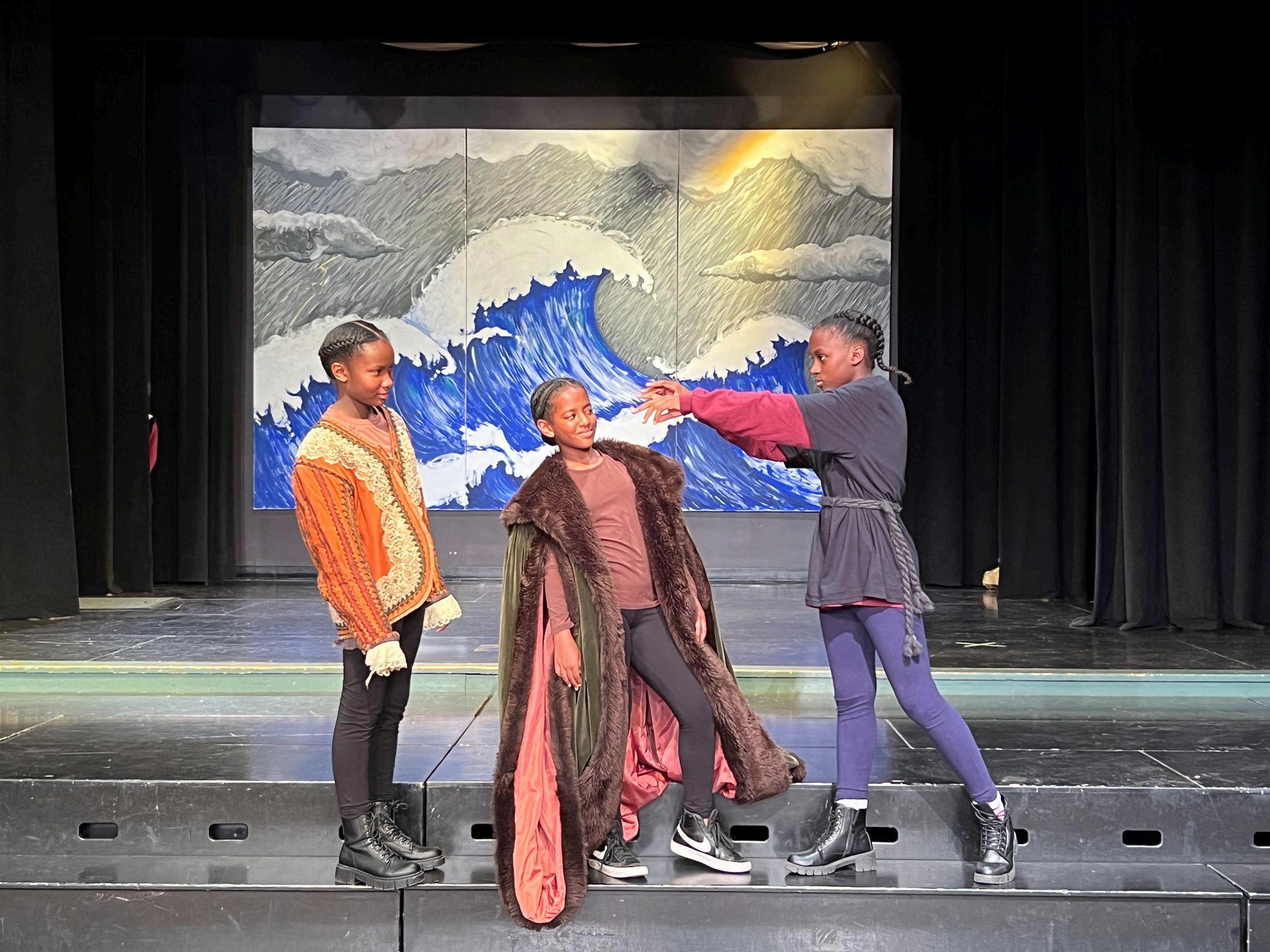
Drama: Rome and the early Medieval eras are part of the studies during the Sixth Grade year and the class play is chosen from a library of Shakespeare’s plays with Roman or early Medieval settings, and from Ancient Roman comedies. The work challenges the students to imagine themselves living in another time. The students take on more complex and challenging texts: Shakespeare plays set in Roman or early Medieval times such as
Hamlet, Julius Caesar, King Lear, Cymbeline; the Roman comedies of Plautus or Terence such as Phormio or Epidicus; or plays set in those transformational ages, such as Brecht’s Galileo and the RSC’s reimagining of the Robin Hood legend, Marian. The technical elements supporting the production, especially period costuming, likewise become a larger part of the process, helping the students enter into the details of these historical periods.
Dance Choreography: The Dance choreography workshop builds on the skills and creative experiences the students have in Dance during their previous years. Students take inspiration both from their classroom learning and from instruction in dance to create their own movement in small groups that will be woven into the larger structure of group choreography.
Art: In Sixth Grade, students immerse themselves in the art of still-life painting. While looking at famous still-life paintings from relevant historical eras, students become familiar with the formal issues that have evolved throughout art history including perspective, color theory, shading, composition, and light. Students develop important painting skills like color mixing, underpainting, blocking and masking, and detailing. Students also learn how to read and interpret light and shadow in
a still-life and how direct observation influences accuracy and believability of painted images. Woodshop and Design Thinking: In the Sixth Grade Woodshop Mini, the students are charged with creating balloon powered cars. Using the 3D printer and the engineering design cycle, the class makes multiple iterations of their designs and uses their critical thinking skills to improve their cars’ performance. The class ends in a bracketed tournament to see which design performs the most successfully
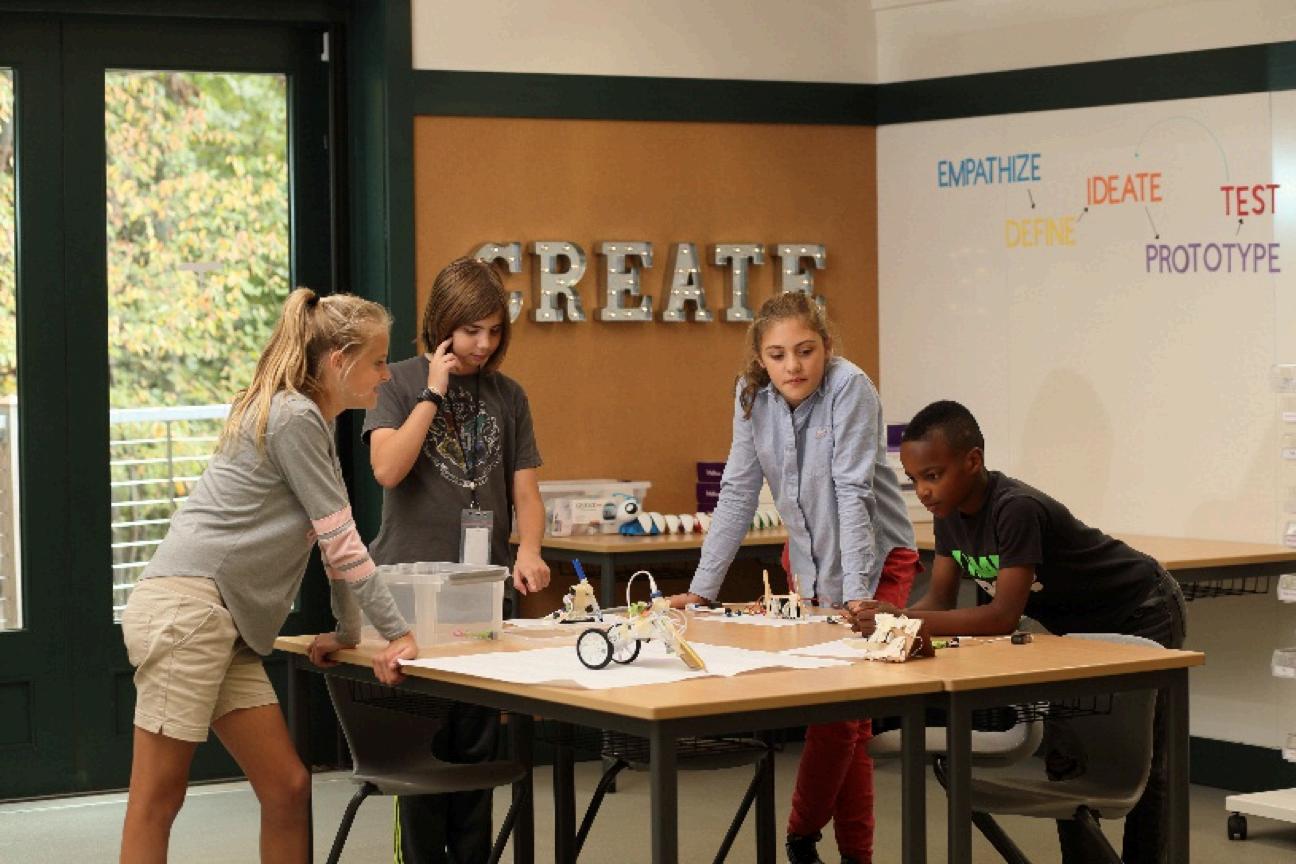
In the Sixth Grade Technology mini, students begin the course by considering and reflecting on how best to balance media consumption with other aspects of their daily lives.
Then, building on the robotics and coding skills they developed in previous grades, students first build and then program their own robot using littleBits, a collection of programmable, modular electronics. In coding and constructing these robots, students learn about the various inputs and outputs that allow these machines to fulfill certain functions. Using the robots they’ve developed, Sixth Graders–working in pairs–put their machines through a series of challenges that prompt them to interact with the physical world around them. Throughout this robotics work, the class engages in discussions about current and potential future uses of robots.
In Middle School, the Learning Specialist works with students individually and in small groups within various classroom settings. The learning specialist consults regularly with the classroom teachers to coordinate strategies that take into account students’ specific learning styles.
Students in the Middle School begin to take on more responsibility for their learning. Through support from their academic teachers and the Learning Specialist, students learn organization and time management skills that are reinforced daily, resulting in students who are more independent with homework. Students also learn various study strategies as they prepare for quizzes and tests and memorize lines for their class play. In addition, students learn test-taking techniques for classroom quizzes and tests, and are also afforded opportunities to experience standardized testing. The ERB CTP-5 is administered to the Fifth through Eighth Grade students each year.
Opportunity Period allows students to self-select into an activity of choice during the school day. Recent options include Far Brook’s Upper School Orchestra, Lower School Helpers, mindfulness, chess, and Far Brook Newscasters.
Community Groups: In the Fifth and Sixth Grades, Community groups provide an opportunity for small group conversations across the grade levels. Discussions focus on identity, community and a broad range of social justice topics. engage in conversations about what community means and what it means to be active and engaged community members. In their small groups, students design and take ownership of a service learning project and a Far Brook community
project. Both as an individual and a collective group, students recognize they have influence as helpers and leaders in their class, the Middle School, the Far Brook community, and beyond.
Classroom Meetings: Sixth Graders have weekly class meetings to participate in discussions that help them assess their progress as a class community During these meetings the teachers lead lessons on topics such as establishing and respecting community expectations, cooperating and compromising, problem-solving, recognizing and accepting differences among people, mindfulness, positive self-talk, and more. The goals of these lessons and meetings are to create a cooperative classroom environment and to give students the skills they need to solve interpersonal problems and to build positive relationships.
Progress Reports: At the Middle School level students work with their teachers to set academic and social goals for themselves. At the end of the first semester students lead their own academic conference for their parents, sharing a portfolio of their academic work and share their reflections and goals.
Middle School Project Day:
Each spring, students in Grades 4-6 have a special day to choose, explore, and share arts and interests that are outside of their usual curriculum.
Recent projects have included tie-dying fabrics, making world cuisines, creating wood-burned designs, and performing original skits.
ades 5 and 6 travel to Fairview Lakes for a full day of nature exploration and fun team building exercises.
In March, the Sixth Grade competes in a Middle School Model UN competition with local independent schools.
In April, students use math and science skills to complete “authentic space mission tasks” in the classroom and during a trip to The Buehler Challenger & Science Center
Washington, D.C. Trip: The entire Sixth Grade and faculty members travel to Washington, D.C. in May for three days. This overnight trip is the culminating experience of the Middle School program and offers students an opportunity to think critically about what forms a society and democratic government. Itinerary highlights: Visit to the house of Frederick Douglass, National Air and Space Museum, Daniel’s Story at the United States Holocaust Memorial Museum, National Museum of African American History and Culture, National Museum of American History, United States Botanic Garden, Capitol Hill, and various monuments and memorials (Lincoln Memorial, World War II, Vietnam and Korean War Memorials, Jefferson Memorial, Franklin Delano Roosevelt
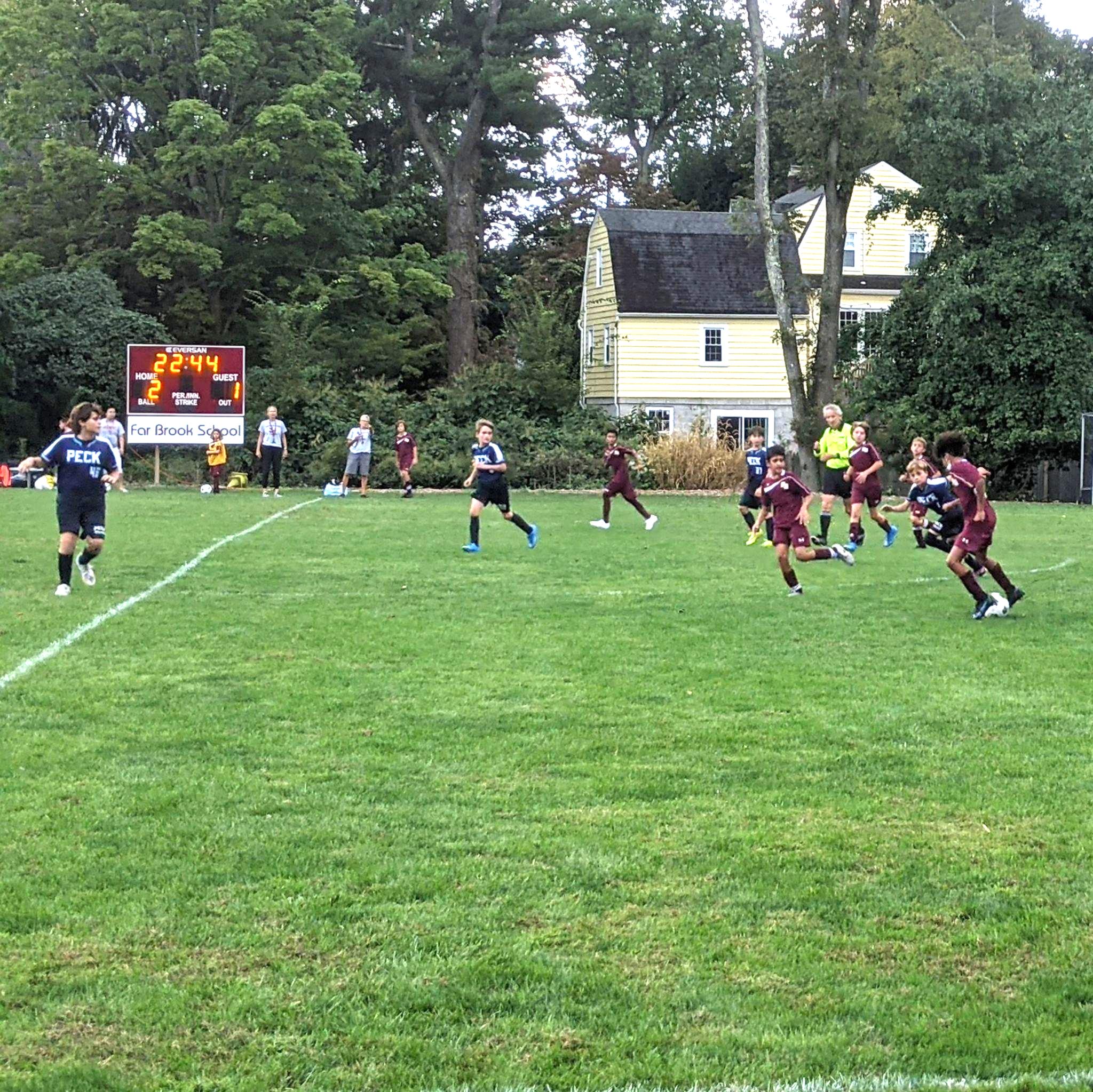
rules and strategies of these sports, and practice more advanced skills, leading to active participation in interscholastic competition. The development of leadership abilities and learning to be a supportive teammate are reinforced during every practice and game. The cornerstone of the sports curriculum is character development through sportsmanship. It is essential that our students learn what it means to be a positive and reliable member of a team, and how to handle the adversity of competition. During the sports seasons, students share Sports Reports in Morning Meeting, reporting on the team's accomplishments to the entire school community. When not in season, students participate in activities such as pickleball, ultimate frisbee, team handball, basketball and various fitness activities.
Health & Wellness: During the winter session, students participate in sports games, fitness training, and health classes. At the sixth grade level students complete the American Red Cross First Aid Babysitting Curriculum that they began as fifth graders. Topics covered include leadership, child safety, and emergency care. At the end of the course they will be American Red Cross Certified.
Sixth Grade families have opportunities to enroll their students in After-School Programs.
● Debate Club - An opportunity for Junior High and Middle School students to collaborate in building public speaking skills, building confidence in argumentation, and showing off their subject speciality knowledge in a team building environment.
● On Friday evenings in January and February, Ski Club offers all levels of skiers an opportunity to ski and snowboard on Shawnee Mountain.