DEPARTMENT OF CHEMICAL & BIOMEDICAL ENGINEERING
The Joint College for Florida A&M University and Florida State University
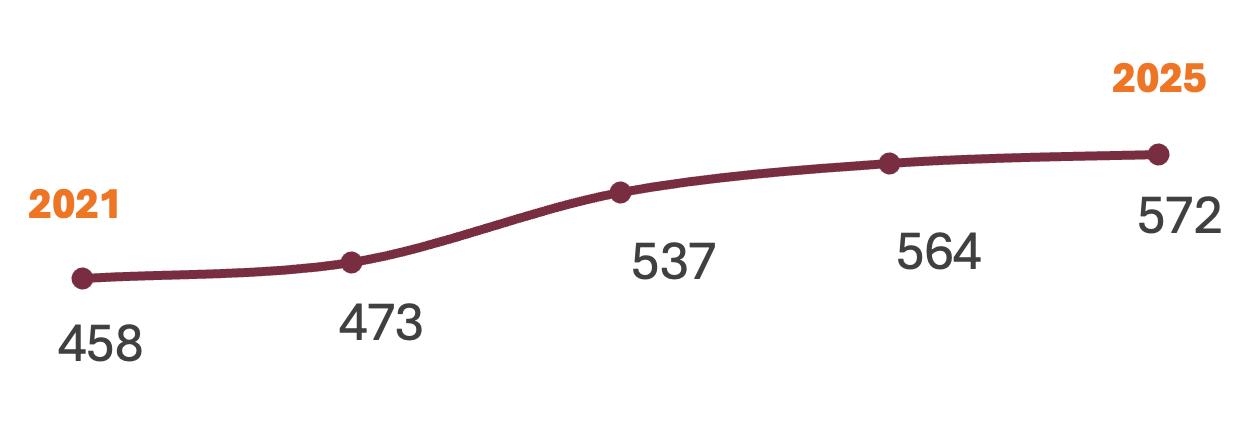
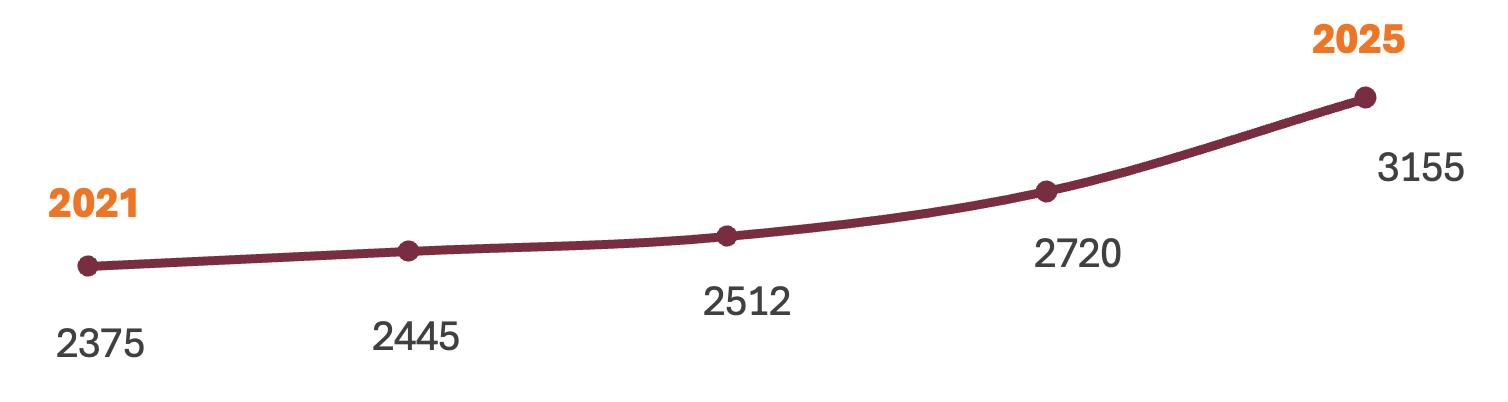
3,162 UNDERGRAD STUDENTS


DEPARTMENT OF CHEMICAL & BIOMEDICAL ENGINEERING
The Joint College for Florida A&M University and Florida State University
3,162 UNDERGRAD STUDENTS
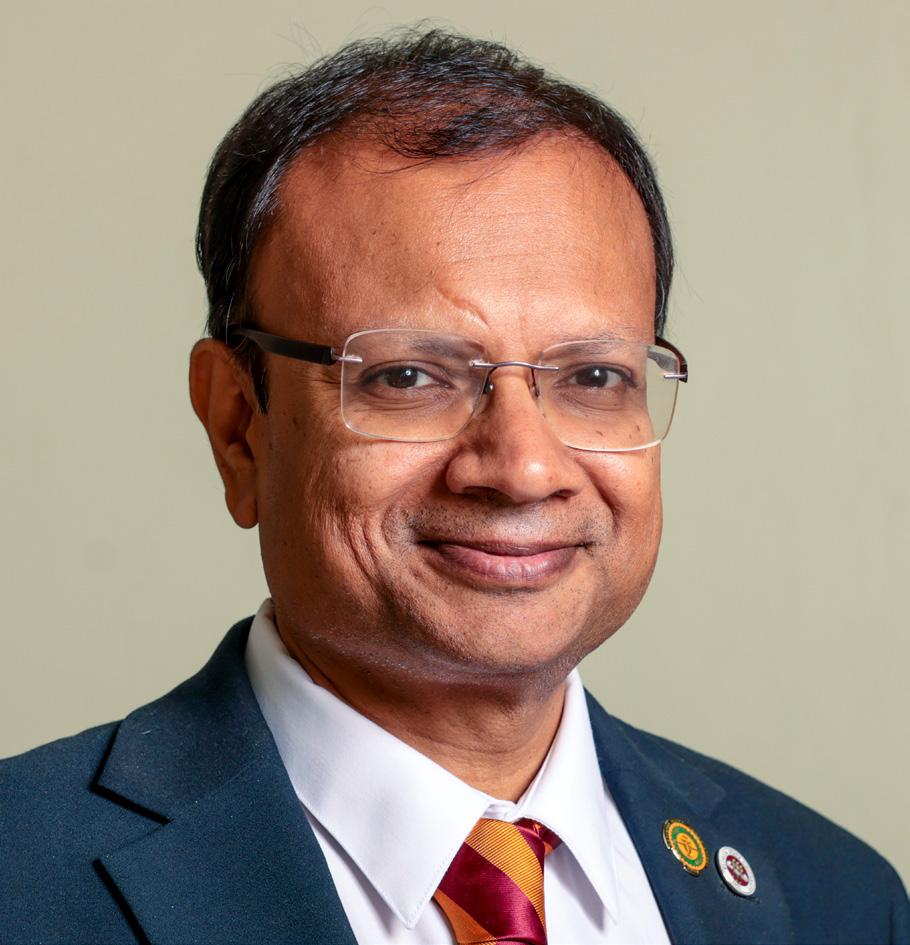
Suvranu De, Sc.D. Dean, FAMU-FSU College of Engineering
Engineering transforms ideas into reality—a truth embedded in manufacturing itself, from the Latin manu factura, “to make by hand.” What began as craft has become how societies convert imagination into infrastructure, discovery into capability. Today’s transformation emerges from the convergence of intelligent systems, advanced materials, and fabrication environments stretching from terrestrial laboratories to space. At the FAMU-FSU College of Engineering, this manifests in landmark work: the NSF CREST Phase II in sustainable materials and NASA’s MIRO Center for In-Space Additive Manufacturing—research bridging fundamental science with applications critical to exploration, defense, energy resilience and human health.
Our faculty engineer sustainable polymers from biomass waste, develop MXene-based inks for space fabrication, create fusion-reactor materials at Sandia, and deploy AI-driven systems detecting manufacturing defects with unprecedented precision. These interconnected efforts form a comprehensive research ecosystem strengthened by partnerships with national laboratories and federal agencies. Students drive this work through immersive internships at NASA, Brookhaven and the Air Force Research Laboratory—publishing first-author papers, earning NSF Fellowships
and sweeping national competitions. The result: a talent pipeline feeding directly into careers shaping American technological leadership.
This momentum takes physical form as Innovation Park transforms into an “engineering village” where research, learning and entrepreneurship converge. The new Interdisciplinary Research and Commercialization Building pulses with energy as faculty bring fresh perspectives into spaces designed for collaboration at scale. FSU Ignite translates discoveries into startups with increasing velocity.
Our new 164,000-square-foot engineering building is well into the design phase. The strategic renaming to Mechanical & Aerospace Engineering captures our aerospace enterprise’s expanding national relevance. Initiatives including Engineering Intelligence, iCREATE and Quantum Engineering are radically elevating the learning environment, creating pathways for students to explore, invent and lead. Together, these forge an exceptional ecosystem—one not merely preparing the next generation but empowering them to shape the technologies and industries defining the century ahead.
At the FAMU-FSU College of Engineering, advanced manufacturing has evolved from a specialized research focus into a comprehensive innovation ecosystem bridging multiple disciplines with transformative applications—from sustainable materials to technologies enabling human space exploration.
The college’s capabilities demonstrate remarkable breadth: artificial intelligence-enhanced metal 3D printing, bioprinting human tissues in microgravity and creating materials for fusion reactors. This multidisciplinary approach positions the institution as a critical contributor to national priorities in defense, aerospace and sustainable technology development.
“Our advanced manufacturing research portfolio exemplifies the power of interdisciplinary collaboration and strategic partnerships,” says Suvranu De, Google Endowed Dean of the joint college. “From developing next-generation materials to pioneering space manufacturing technologies, our faculty and students are addressing some of the most pressing technological challenges of our time while building the next generation of engineering talent that will shape the future of American innovation.”
We have cornerstone collaborations with premier national laboratories and federal agencies, creating both research infrastructure and direct career
pathways for students.
Through partnerships with Sandia National Laboratories, our researchers are advancing nanocomposite polymer development for fusion reactor applications and creating rapid detection platforms for viral pathogens using metal-organic framework technology. The Sandia collaboration extends beyond research to talent cultivation through the START HBCU internship program, which recruited six students this year with plans to welcome 15 additional interns in 2026.
Collaborations with Brookhaven National Laboratory have led to the development of novel X-ray scattering techniques that reveal how additive manufacturing influences composite microstructures, establishing new design rules for manufacturing these important materials.
NASA partnerships have generated $5 million in funding to develop in-space manufacturing capabilities, focusing on advanced composite materials that enable astronauts to produce missioncritical components during space exploration. Professor Subramanian Ramakrishnan, who leads this initiative, envisions astronauts printing sensors, radiation shields and even functional tissues as missions progress.
“This capability makes missions more sustainable and adaptable to unforeseen challenges,” Ramakrishnan said.
Building on the success of his initial $4.9 million CREST Phase I grant awarded in 2017—which established the Center for Complex Materials Design for Multidimensional Additive Processing and trained 15 doctoral students—Ramakrishnan secured a $7.5 million CREST Phase II award this year from the National Science Foundation. This expanded program anchors research on sustainable materials across multiple engineering disciplines.
Research teams are exploring bioderived sustainable thermoplastics, flexible hybrid recyclable electronics and responsive sensors and actuators. The work focuses on self-assembly of complex building blocks, including polymers and proteins, to create hierarchical structures with adjustable properties.
Professor Rufina Alamo collaborates with Ramakrishnan and Professor Daniel Hallinan Jr. to develop bioderived recyclable polymers that could transform packaging practices. Their interdisciplinary team incorporates machine learning techniques to enhance custom material design, creating polymer-based devices that adapt their properties in response to various conditions.
These sustainable materials research efforts connect directly to advanced manufacturing applications through partnerships with industry leaders including ExxonMobil, DOW and the
National Renewable Energy Laboratory, as well as national laboratories at Sandia, Brookhaven and Oak Ridge.
“Our researchers are not simply improving existing manufacturing processes—they are fundamentally reimagining how materials are designed, characterized and produced,” says Richard Liang, associate dean for research. “This integrated approach demonstrates the competitive advantage of our joint college model.”
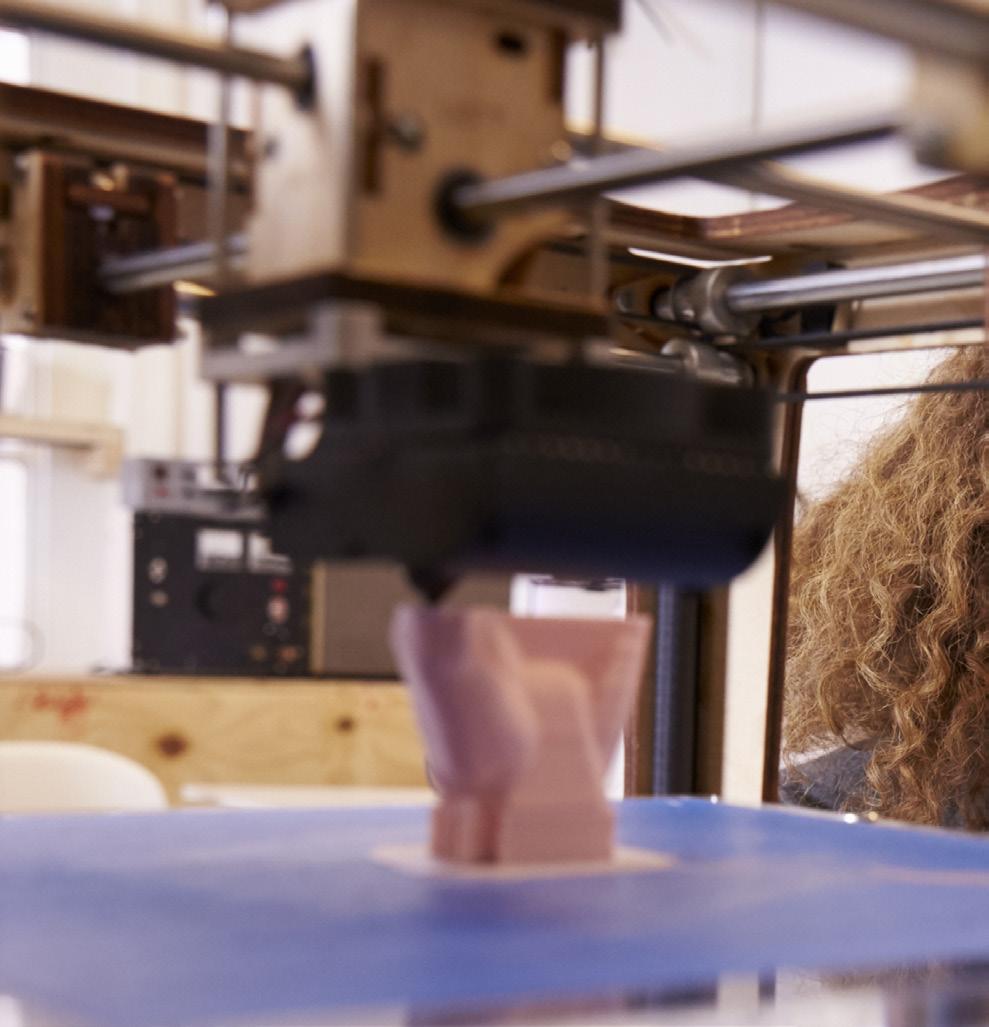
The integration of artificial intelligence into 3D printing represents a significant advancement in manufacturing quality assurance. Associate Professor Hui Wang leads a team that secured more than $2.2 million from the Air Force Office of Scientific Research to implement defect detection systems in powder-based additive manufacturing.
This AI-powered approach mimics human cognitive patterns, enabling systems to make inferences about new manufacturing scenarios based on knowledge learned from multiple data sources. The research focuses specifically on binder jetting, a 3D printing technique critical for creating complex,
high-performance components in aerospace, automotive, healthcare and defense industries.
“This technology could democratize manufacturing, making it easier for inexperienced manufacturers to advance from lab testing to largescale production,” Wang said.
Professor Tarik Dickens applies similar AI and machine learning techniques to optimize the additive manufacturing of polymer electronic devices, contributing to projects that span biodefense technology and multi-material 3D printing capabilities.
Our space manufacturing research pushes the boundaries of what can be produced in extraterrestrial environments. Researchers have developed specialized inks using MXenes—unique two-dimensional materials—along with metallic and semiconducting nanoparticles for 3D printing in space.
One promising innovation involves utilizing lunar and Martian regolith to create inks that can be 3D printed into functional structures for future missions. This approach transforms local extraterrestrial resources into valuable construction materials, potentially enabling sustainable habitation on other worlds.
The team has developed an electrohydrodynamic printing technique that employs electric fields to precisely deposit nanoparticles for creating flexible electronic sensors. By combining this technique with laser curing, researchers can rapidly manufacture sensors crucial for space missions, particularly on the International Space Station.
Florida A&M University acquired an advanced nScrypt 6-axis 3D printing system through an additional $700,000 grant from the National Science Foundation. This specialized equipment can print on curved surfaces and create intricate designs tailored to various shapes, particularly valuable for aerospace and medical device needs.
Assistant Professor Jamel Ali leads parallel efforts to understand how human cells self-assemble in microgravity environments, investigating 3D-printed tissue behavior in space to enhance therapeutic cell expansion and regenerative medicine through collaboration with researchers at the Mayo Clinic in Jacksonville.
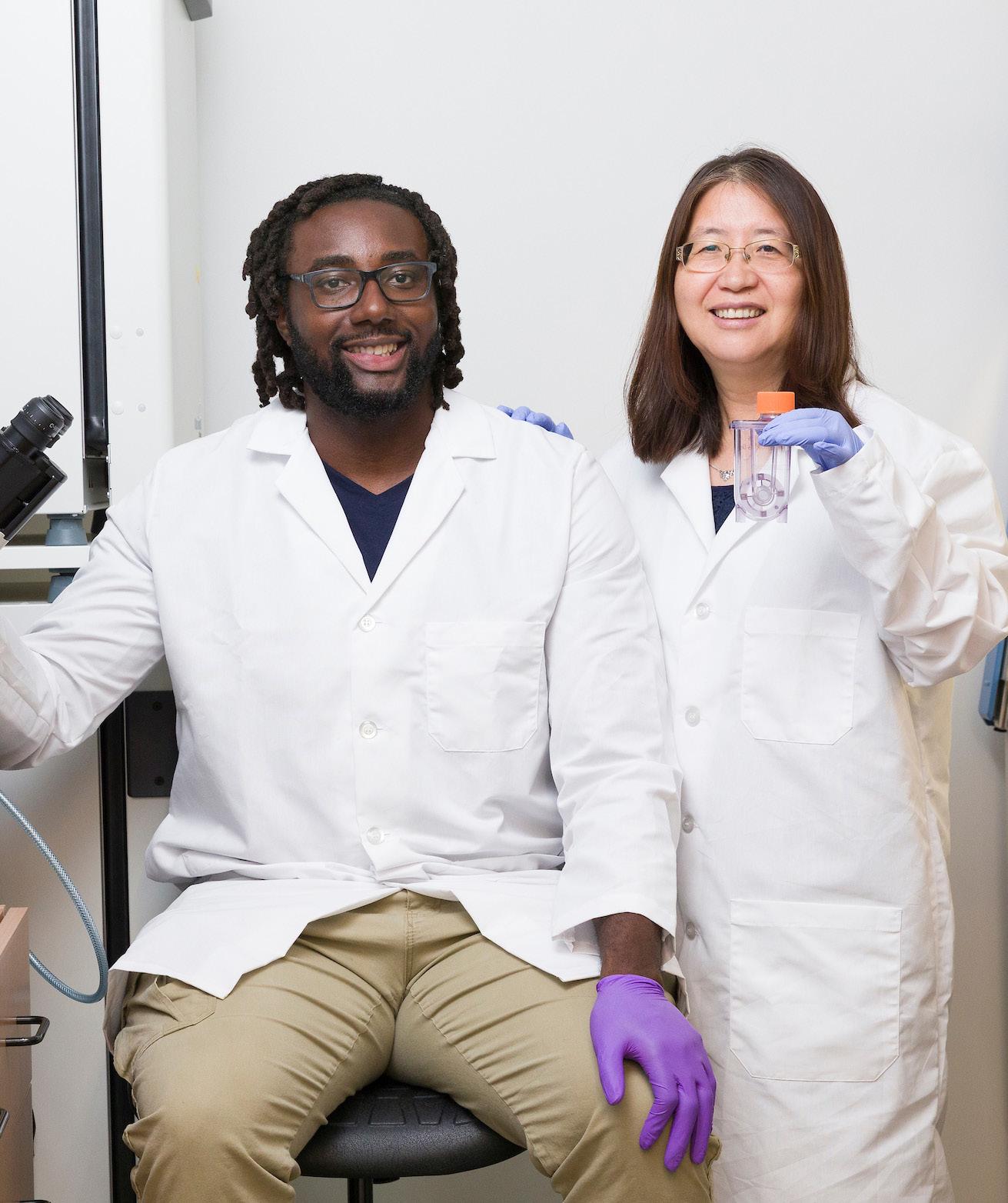
The college’s advanced manufacturing capabilities extend into biomedical applications with significant therapeutic potential. Professor Yan Li’s team developed a method to mass-produce extracellular vesicles—tiny healing particles derived from labgrown blood vessel tissues—using Vertical-Wheel Bioreactors.
These bioreactors feature spinning chambers that create gentle currents mimicking natural blood flow, significantly boosting production of cellular “delivery trucks” that carry healing molecules directly to damaged cells. The innovation addresses a fundamental bottleneck that has prevented extracellular vesicle-based therapies from reaching patients due to prohibitive production costs.
Laboratory tests confirmed the mass-produced vesicles maintained their healing properties, successfully reducing cellular damage from aging and boosting cell growth. The research, published in Stem Cell Research & Therapy and supported by the National Science Foundation and National Institutes of Health, creates a pathway for transitioning promising treatments from laboratory research to affordable medical interventions.
Our strategic partnerships have created a comprehensive talent development ecosystem spanning national laboratories, federal agencies and industry collaborators. Through summer research programs at NASA, Army Research Lab, Air Force Research Lab and Brookhaven National Laboratory, students gain hands-on experience that translates into exceptional outcomes and national recognition.
In 2025, the college produced two National Science Foundation Graduate Research Fellowship recipients alongside four honorable mentions. Our students made history at the 2023 Society for the Advancement of Material and Process Engineering symposium, sweeping first place in all degree categories for the first time in the competition’s 40year history.
Female graduate students have emerged as research leaders at the High-Performance Materials Institute, with doctoral candidates Ana De Leon and Aspen Reyes publishing first-author papers on fiber bonding under extreme conditions and carbon fiber nanocomposites for aerospace applications. Their mentorship of high school interns creates a pipeline from secondary education through doctoral training. First-generation college student Franchesca Bellevu received the prestigious McKnight Doctoral Fellowship for her research on hybrid structures with additive manufacturing.
The CREST Phase II program aims to produce more than 30 doctoral graduates from diverse
backgrounds while engaging 50 undergraduates. Through the NASA-funded Minority University Research and Education Project, students participate in internships at NASA’s Goddard and Marshall Space Flight Centers, directly impacting 30 to 40 undergraduates while potentially reaching hundreds more through expanded infrastructure.
“Engineering for space requires a different mindset,” said Margaret Samuels, the 3D Printing Electronics Group Team Lead at NASA Goddard. “As any NASA engineer will tell you, we often get one shot to get it right.”
The college’s K-12 outreach arm, the Challenger Learning Center in Tallahassee, extends this pipeline earlier. “Getting kids interested in STEM early is crucial,” said Executive Director Alan Hanstein. “Early STEM exposure fosters critical thinking, creativity and problem-solving skills.”
The joint college’s advanced manufacturing capabilities represent an integrated ecosystem where materials science, artificial intelligence, biomedical engineering and aerospace applications converge. This multidisciplinary approach, supported by strategic partnerships with national laboratories, federal agencies and industry leaders, positions the institution to address pressing national challenges while preparing engineering talent for tomorrow’s technological demands.
From developing fusion reactor materials at Sandia National Laboratories to printing sensors in space for NASA, from creating AI-powered quality control systems for the Air Force to engineering mass-production methods for regenerative medicine, our advanced manufacturing research demonstrates both technical excellence and transformative potential across the full spectrum of engineering disciplines.
iCREATE is an innovation-focused engineering initiative that empowers students to transform ideas into impactful solutions. The program cultivates entrepreneurial thinking by rewarding exploration, embracing experimentation and promoting handson problem-solving. Students develop as both entrepreneurs launching ventures and intrapreneurs driving change within organizations. Core goals include fostering an innovation culture, encouraging intellectual property development, supporting venture creation and building a collaborative ecosystem of mentors and partners. By centering education on ideation, ownership and real-world application, iCREATE prepares engineering students to lead transformative change and create meaningful societal and economic value throughout their careers.
Engineering Intelligence (EI) integrates AI throughout engineering education and research through a dual approach. AI for Engineering applies data-driven methods to optimize autonomous vehicles, smart grids and infrastructure. Engineering for AI builds the computational foundations—sensors, hardware, and data systems—that enable intelligent technologies. The initiative updates curriculum with AI-integrated courses, hands-on labs, and interdisciplinary projects teaching students to both apply and engineer AI systems. Through industry partnerships, research collaborations and startup incubators, students address real-world challenges in energy, mobility, manufacturing, healthcare, and infrastructure while developing ethical, responsible AI solutions and fostering regional economic growth.


Our researchers draw on unique strengths in cryogenics, materials, optics and high magnetic fields to advance the frontiers of quantum research and deliver solutions with lasting societal impact. By partnering with national labs and leading universities, the college will be a hub for innovation in quantum technologies. An initial investment of $10M in NSF ExpandQISE funding supports our projects in secure communications, advanced sensing and quantum computing. We are contributing to national security, economic competitiveness and developing critical technologies for aerospace, defense and energy sectors.
$1.8M NIH Award to Study Cellular Mechanosensing
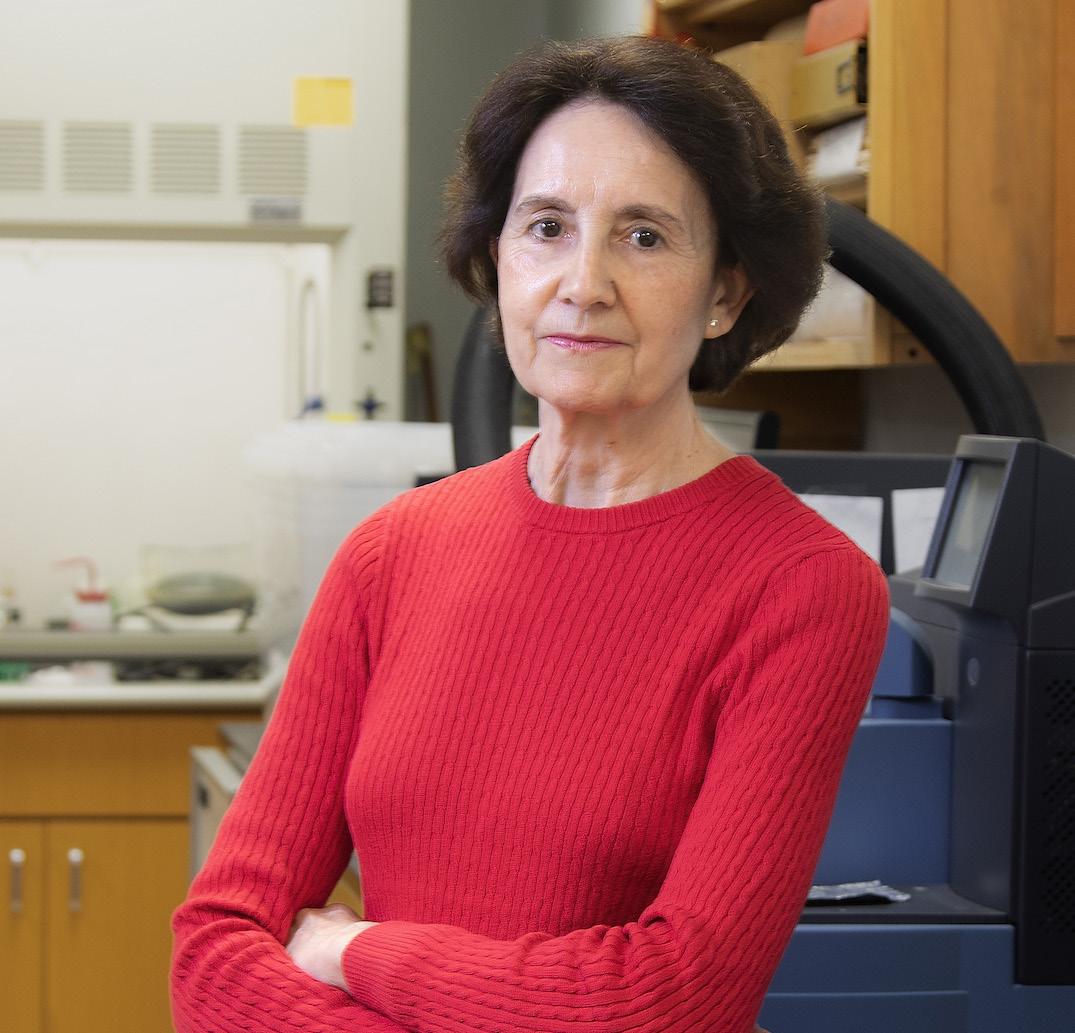
Rufina Alamo
Professor Emerita of Chemical & Biomedical Engineering
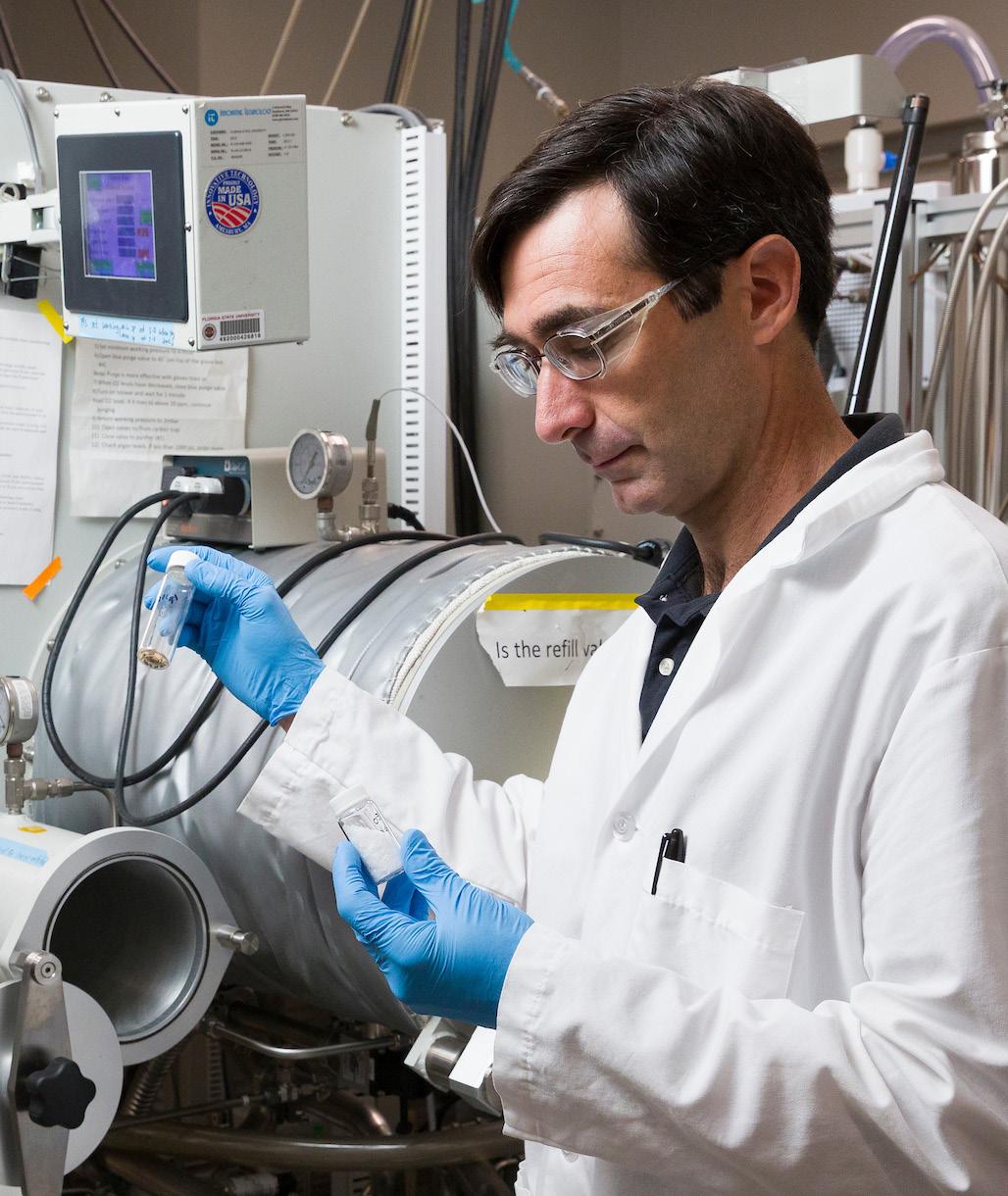
“We develop structure-properties relations for bioderived and recyclable polymers to find sustainable substitutes for difficult to recycle petroleum-based polymers, e.g. polyethylenes and polypropylenes, that we use in very large quantities.”
Assistant Professor Tristan Driscoll is investigating how cells sense and respond to directional forces using advanced microscopy techniques and engineered biomaterials. His work aims to revolutionize understanding of cellular mechanics and establish groundwork for mitigating conditions like fibrosis and cancer, which involve cellular mechanical dysfunction, ultimately enabling targeted strategies to slow or reverse tissue structure loss and advance the engineering of functional replacement organs.
Researchers Develop Biomass-Based Polymer that Can Absorb and Release Carbon Dioxide
Associate Professor Hoyong Chung has developed a biomass-based polymer made primarily from lignin that can repeatedly capture and release carbon dioxide from concentrated sources or ambient air. His work enables precise control of CO2 absorption and release without high pressure or extreme temperatures, offering a promising and reusable tool for mitigating carbon emissions while utilizing abundant natural resources from wood processing byproducts.
Tin Selenide May Hold the Key for Thermoelectric Solutions
Professor Theo Siegrist has discovered atomic-level structural changes in tin selenide that occur at elevated temperatures, enabling the compound to conduct electricity while blocking heat transfer. His work provides fundamental insights that could lead to new technologies for applications such as refrigeration and waste heat recovery from cars or nuclear power plants, advancing the development of more efficient thermoelectric energy conversion devices.
A Corkscrew Journey: Researchers Unlock Secrets of Bacteria Movement
Associate Professor Hadi Mohammadigoushki is leading research on how Helicobacter pylori bacteria navigate through stomach mucus using their corkscrew-shaped movement. His work involves developing miniature robots and advanced computational simulations to identify the critical thresholds bacteria must overcome for rotation and propulsion, aiming to unlock new treatment possibilities that could strengthen the body’s natural mucus barrier defenses and potentially inspire micro-robot designs for targeted drug delivery and other applications.
NSF CREST Center Phase II Kicks Off with $7.5M NSF Grant for Sustainable Materials Research
Professor Subramanian Ramakrishnan is developing bioderived sustainable thermoplastics, flexible hybrid recyclable electronics, and responsive sensors and actuators through the study of self-assembling polymers and proteins. The work incorporates advanced discovery methods and machine learning techniques to create hierarchical structures with adjustable properties, enabling flexible manufacturing of eco-friendly recyclable devices and smart materials that respond to different conditions.
Dive deeper: famufsu.engineer/cbe

Environmental Weathering Transforms Plastic Pollution
Assistant Professor Jeffrey M. Farner is investigating how environmental weathering transforms plastic pollution through exposure to ultraviolet radiation, temperature and physical stresses. His research demonstrates that weathered plastics behave differently based on size, surface chemistry and morphology, affecting their transport in water systems and toxicity to microbial communities, with implications for water treatment and environmental risk assessment.
Researchers Leverage AI and Computer Vision to Revolutionize Roadway Geometry Data Collection
Professor Eren Ozguven is using artificial intelligence and computer vision with YOLO algorithms to extract roadway geometry data from aerial imagery. The FDOT-funded work achieved 87% accuracy in detecting lane markings across Leon County, reducing the time, cost and errors of traditional manual surveys while providing transportation agencies with improved data for roadway safety analysis and maintenance.
Civil Engineering Professor Receives National Water Resources Award for AI-Driven Algae Research
Assistant Professor Nasrin Alamdari is using artificial intelligence and machine learning algorithms to predict and prevent harmful algal blooms in Florida’s waterways. Her research combines AI-driven prediction models with

Assistant Professor of Civil & Environmental Engineering
“We work to better understand and predict surface water quality and floods, and their impacts on human health using numerical modeling, advanced statistics, ground measurements, satellite observations, high performance computing and AI.”
traditional water quality monitoring methods to provide early warning systems, earning her the A. Ivan Johnson Award from the American Water Resources Association for innovative work in environmental water management.
Strengthening Coastal Infrastructure Against Hurricanes
Assistant Professor Scott Wasman, collaborating with the U.S. Army Corps of Engineers Engineering Research and Development Center, is using numerical modeling and the Corps’ Geotechnical Centrifuge facility to study storminduced hydrodynamic loads on bridge abutments and retaining walls. Their FDOT-funded work aims to develop improved design and remediation standards for coastal geotechnical structures to enhance hurricane resilience along Florida’s coastlines and other vulnerable areas.
Dive deeper: famufsu.engineer/cee

“We have developed affordable quantum technology enabling secure communications, entanglement distribution through turbulence, quantum sensing beyond standard limits, covert messaging and proposed simplified receivers plus hybrid networks for future quantum Internet infrastructure.”
Professor Named to National Academy of Inventors
Professor Hui “Helen” Li was named a 2024 National Academy of Inventors Fellow, recognizing her exceptional innovation in power electronics. As the FSU Provost McKenzie Professor and 20-year leader at the Center for Advanced Power Systems, Li has secured 31 patents for technologies advancing renewable energy, electric power grids and transportation. Her groundbreaking work translates laboratory research into real-world solutions that enhance safety, reliability and efficiency across critical infrastructure sectors.
Building a Quantum Research and Education Hub
The college is establishing itself as a quantum research leader after securing two of only five nationwide $5 million NSF grants. Professors Wei Guo and Bayaner Arigong are spearheading initiatives in quantum fluids, solids and microwave chip development while building comprehensive educational programs. Their collaborative projects with institutions including Notre Dame, Yale and the University of Chicago will create a quantum research center, develop new curricula and prepare students for careers in this transformative field.
Researchers Pioneer Hydrogen Electric Aircraft Cooling System for NASA Zero-Emission Aviation
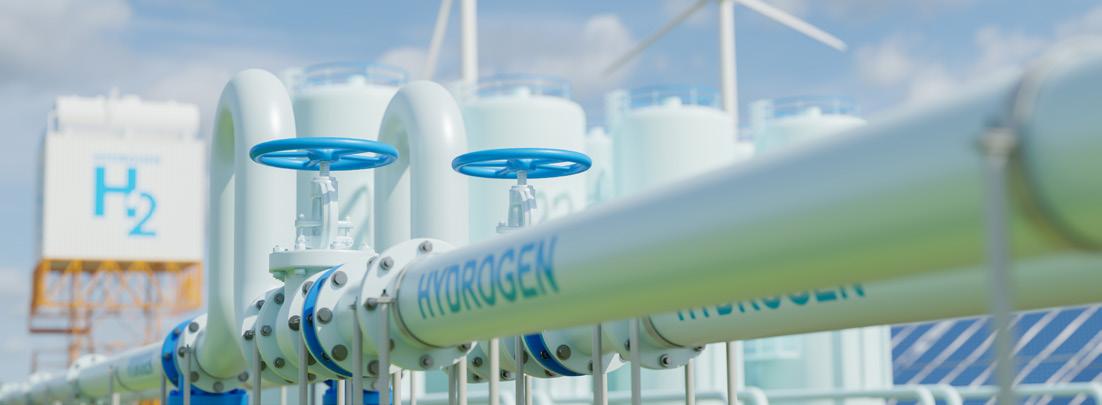
Researchers are developing groundbreaking liquid hydrogen cooling technology for NASA’s zero-emission aircraft through a $10 million University Leadership Initiative grant. Led by Assistant Professor Peter Cheetham at the Center for Advanced Power Systems, the team is creating a helium-hydrogen heat exchange system that
leverages superconductivity and cryogenic cooling to enable hydrogen-electric propulsion. This pioneering university-based testbed could help integrate sustainable aviation technology into commercial airline fleets within two decades.
Using AI To Improve Intersection Safety
Researchers are deploying PREDISS, an AI-powered Predictive Intersection Safety System, to prevent crashes at one of America’s most dangerous traffic environments. Led by Associate Professor Olugbenga Moses Anubi, the team won $266,666 from the U.S. Department of Transportation’s Intersection Safety Challenge. Partnering with Tallahassee, they’re testing sensors, cameras and algorithms that track vehicles and pedestrians in real-time, predict trajectories and enable intervention—addressing a problem responsible for 25% of U.S. traffic fatalities.
25 Years of Advancing Science and Engineering
Florida State University’s Center for Advanced Power Systems (CAPS) marks 25 years as a national leader in electric power innovation. Founded in 2000 with Navy support, the center specializes in power hardware-in-theloop simulation, testing equipment at megawatt scales for electric ships, grid resilience and emerging technologies. Under Director Roger McGinnis, CAPS partners with DOE, NASA and industry leaders while training over 90 doctoral graduates. Recent projects include grid cybersecurity, superconducting transmission cables and hydrogen energy research through international collaborations.
Dive deeper: famufsu.engineer/ece
Rebekah Downes
Associate Professor of Industrial & Manufacturing Engineering
“We develop extreme-environment composite nanomaterials and digital-twin characterization tools that integrate multiscale imaging, physics-based modeling and additive manufacturing to accelerate the design of next-generation high-temperature, radiationresistant polymer and ceramic systems.”
AI Enhances Defect Detection in Metal 3D Printing
Hui Wang, Tarik Dickens and Rebekah Downes, collaborating with HP Inc. and Penn State, are applying artificial intelligence to enhance defect detection in powderbased metal 3D printing. Their work aims to make industrial processes like binder jetting more reliable and costeffective, benefitting applications in aerospace, defense and other high-performance sectors by improving manufacturing quality and productivity.
Flexible Photodiodes Advance Wearable HealthTech
ZhibinYu and researchers at the FAMU-FSU College of Engineering, in partnership with experts at Florida State University and Brookhaven National Laboratory, have developed flexible, stretchable photodiodes in elastic polymers that improve wearable health-monitoring device accuracy and comfort. Their innovation offers more precise, comfortable cardiovascular readings and helps advance accessible home testing for better healthcare outcomes.
Statistical Modeling Accelerates Disease Outbreak Detection
Researchers Rupert Giroux and Arda Vanli have developed an advanced statistical modeling tool to improve disease surveillance and public health response during emergencies, including pandemics and hurricanes. Their adaptive model analyzes large-scale time series data, allowing health officials to quickly identify and contain geographically concentrated outbreaks, supporting faster and more accurate predictions through systems like Florida’s Electronic Surveillance System for the Early Notification of Community-based Epidemics, called ESSENCE-FL.

Sandia Partnership Accelerates HBCU Engineering Innovation
The FAMU-FSU College of Engineering’s expanded partnership with Sandia National Laboratories exemplifies how HBCU collaborations drive innovation in engineering education, research and talent development. Initiatives like the START HBCU internship program, advanced manufacturing symposiums, and joint research projects in infrastructure resilience, materials science, polymers and biodefense position students and faculty at the forefront of national security and emerging technology challenges, building a sustainable pipeline of diverse engineering talent.
AI and Modeling Revolutionize Transportation Efficiency
A team led by Yanshuo Sun is pioneering operations research and AI-driven modeling to transform transportation systems. Their work has optimized airline maintenance scheduling, improved auto carrier logistics efficiency and delivered smarter paratransit scheduling, which decreased costs and increased reliability for people with disabilities, demonstrating the real-world impact of industrial engineering research.
Dive deeper: famufsu.engineer/ime

$3.9 Million for Hypersonic Technology
Shreyas Balachandran
Associate Professor of Mechanical & Materials Science Engineering
“My lab studies material performance and degradation in extreme cold (cryogenic) environments. We’re pushing superconductor performance limits in high-frequency and power applications by understanding the microstructures that minimize energy losses.”
Professor Rajan Kumar recently received a $3.9 million Air Force grant to advance hypersonic technology research. He will lead the project focused on understanding hypersonic flows at speeds beyond Mach 5. The grant will fund acquisition of advanced diagnostic equipment and hardware to improve wind tunnel testing capabilities. This research aims to develop computational tools for next-generation flight systems while supporting existing projects and student education, potentially transforming our high-speed experimental aerodynamics research.
Scientists Work to Enhance Supersonic Vehicle Performance
Supersonic inlets are crucial for high-speed vehicles but face efficiency challenges throughout flight regimes. Since inlet performance issues affect overall vehicle capabilities, improving inlet operation enhances entire vehicle performance. Researchers Unnikrishnan Sasidharan Nair and Rajan Kumar are collaborating with the Air Force Research Laboratory to study supersonic inlet design challenges. Their computational research will provide detailed flow data and practical insights into operational limits and unstart margins for mixed-compression inlets, helping develop better design strategies for high-speed aircraft engines.
Developing AI-Integrated Aircraft Skin for Autonomous Flight
Professor William Oates leads the $5 million AEROMORPH Center of Excellence, funded by the Air Force Research Laboratory, to revolutionize high-speed flight technology. Over the past two years, the team has extended bandwidth of high-temperature optical pressure sensors, designed wireless sensor arrays, and successfully tested physical reservoir computing metamaterials in wind tunnels. This breakthrough integrates artificial intelligence directly into aircraft structures, enabling autonomous navigation. The center advances morphing structures, high-speed sensors and intelligent control systems for next-generation aerospace vehicles.
New Research Challenges Traditional Approach to Human-Robot Interaction
Assistant Professor Taylor Higgins co-authored a groundbreaking Science Robotics article challenging conventional human-robot interaction approaches. The research, produced by an all-female team, argues that successful robotics must prioritize understanding human behavior over robot functionality alone. Robots need to adapt intelligently, recognizing human unpredictability while both parties adjust behaviors together over time. Higgins conducts innovative research including unicycle-riding studies to examine motor learning and three-dimensional balance. The work has significant implications for rehabilitation robotics, particularly powered exoskeletons requiring active user engagement to achieve therapeutic goals.
Zero-Emissions Future with Hydrogen-Power
Professor Juan Ordóñez is working on a NASA University Leadership Initiative grant with colleagues to develop concepts for zero-emissions aircraft using liquid hydrogen as both fuel and coolant. His research focuses on thermal management solutions for advanced power systems and optimizing renewable energy conversion, particularly enabling megawatt-scale fuel cell systems for commercial aircraft. He aims to contribute innovations toward clean, well-engineered energy solutions for future generations.
Dive deeper: famufsu.engineer/mae
Developing New 3-D Printed Polymer Matrix Composites
Associate professors Zhibin Yu and Tarik Dickens are developing 3-D printable perovskite-polymer composites for radiation detectors. These new materials can be processed at lower temperatures than traditional semiconductors, making them scalable and cost-effective. The composites can be manufactured using standard plastic processing techniques like injection molding and extrusion, enabling production of various detector shapes and sizes. Applications include transporting nuclear materials, industrial quality control, medical diagnostics and space research. The NSF grant also funds educational programs training underresourced engineering students for careers in manufacturing, electronics and national security.
Graduate Student Wins National Lab Research Award for Superconductivity Work
Aidan “AJ” Hoolihan, a graduate student at the joint college, won the 2025 Summer Student Best Poster Award at Oak Ridge National Laboratory for his superconductivity research. Working under Professor David Larbalestier at the Applied Superconductivity Center, Hoolihan examined Nb3Sn superconducting wire—materials that conduct electricity without resistance at extremely low temperatures. His research focuses on improving manufacturing processes for superconducting wires used in MRI machines, nuclear fusion reactors and particle accelerators. He competed against hundreds of student interns across multiple scientific disciplines at the laboratory’s extensive facilities.
Team Develops Non-Toxic Polyurethane from Plant Waste and Carbon Dioxide
Hoyong Chung and his team have developed a breakthrough method for producing polyurethane using lignin from plant cell walls and carbon dioxide, eliminating toxic isocyanates from the manufacturing process. Published in ACS Sustainable Chemistry & Engineering, the research demonstrates how lignin—typically waste from pulp and paper processing—can be combined with captured CO2 to create non-isocyanate polyurethane with properties matching or exceeding conventional materials. The new synthesis requires fewer reaction steps and less energy while maintaining desirable heat regulation, processing flexibility and structural strength.
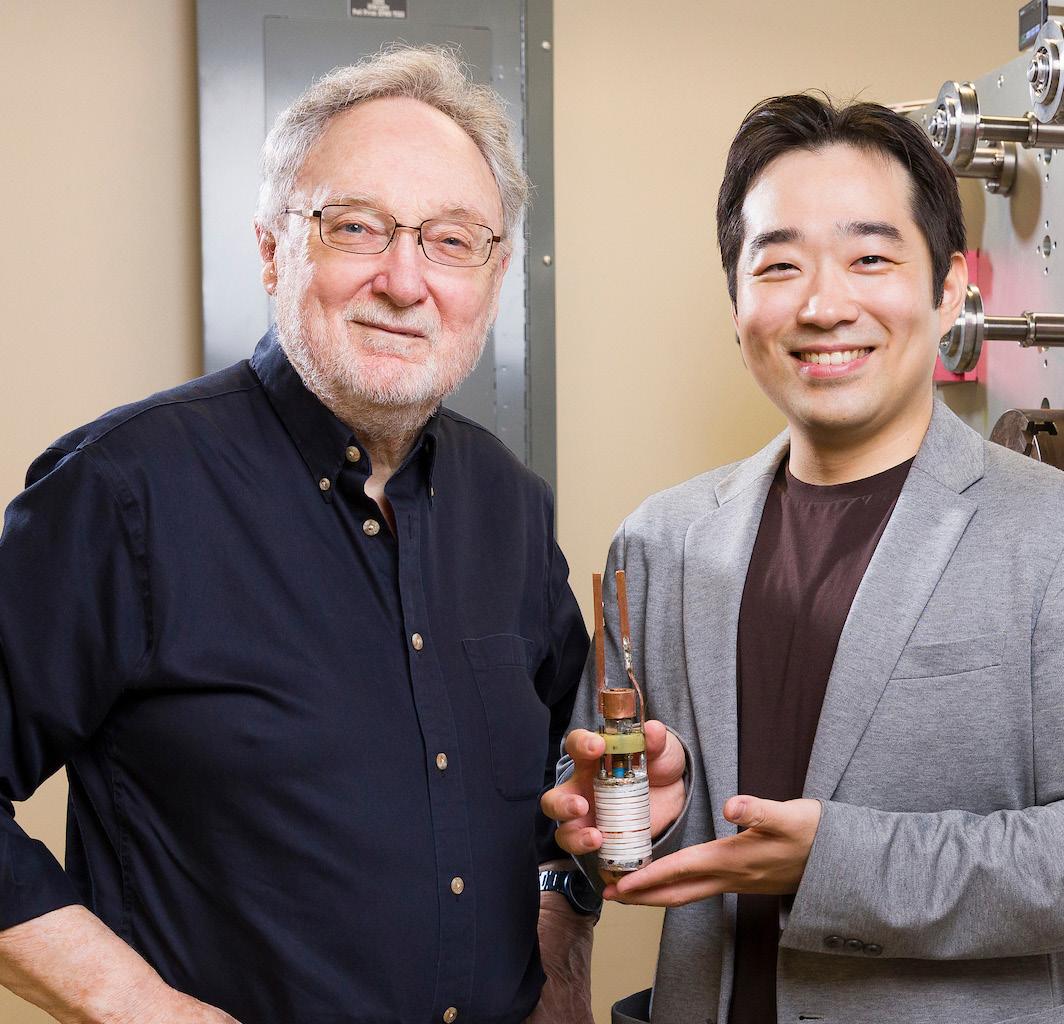
Professor David Larbalestier’s team shattered the magnetic field record with a salt-shakersized superconducting magnet reaching 48.7 tesla—exceeding the previous 45.5 tesla mark by over 3 tesla. “Little Big Coil Number 9” generates fields 50 times stronger than industrial magnets using pioneering no-insulation winding technology. This breakthrough enables revolutionary applications in electric aircraft motors, fusion reactors and medical imaging, proving superconducting magnets can surpass traditional electromagnets while being dramatically smaller. Their new target? 50 tesla.
Layer By Layer: Professor Develops New 3D Printing Technology
Tarik Dickens developed field-assisted additive manufacturing technology using magnets, acoustics or electricity to fine-tune 3D printing. His patented magnetic device rotates nanoparticles during printing to adjust material strength and electromagnetic shielding. By combining magnetic and nonmagnetic materials, the technology creates composites with precisely oriented fibers for targeted properties. Applications include electromagnetic interference protection and structural reinforcement in automotive components and aircraft parts, enabling rapid prototyping from concept to finished product.
Dive deeper: famufsu.engineer/mse
The Joint College for Florida A&M University and Florida State University
provides an opportunity to level STEM inequities. Students attend our joint college via either Florida A&M University or Florida State University, and they learn, work and develop together in our shared labs, classrooms and research centers. This synergy provides benefits far beyond the obvious. Future faculty members are able to form positive, experience-based relationships with professors who are mentors and strong models of engineering research success—a critical factor in increasing the number of engineering faculty who are from Black and other groups.