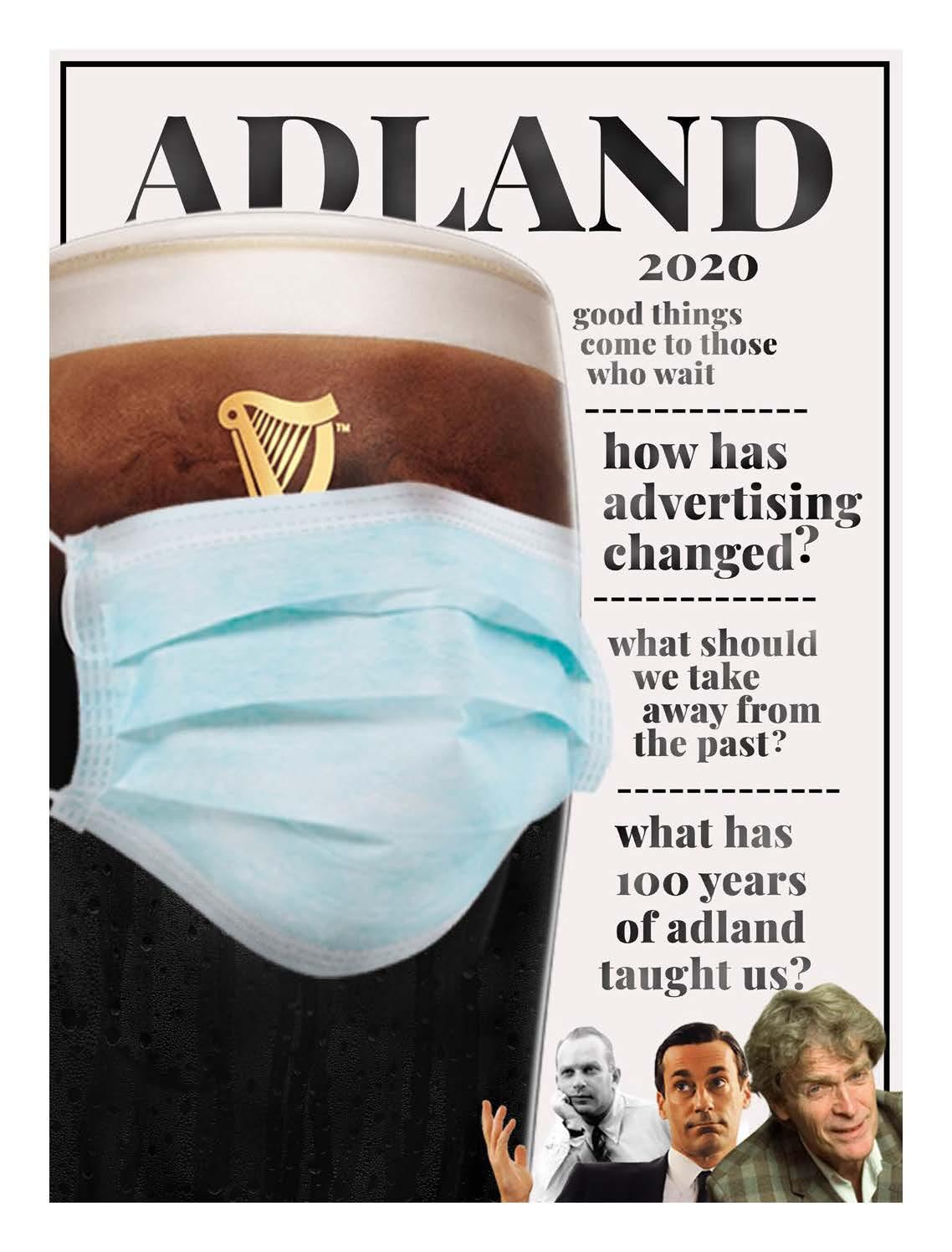

BY BECKY WASS, ASSOCIATE LECTURER
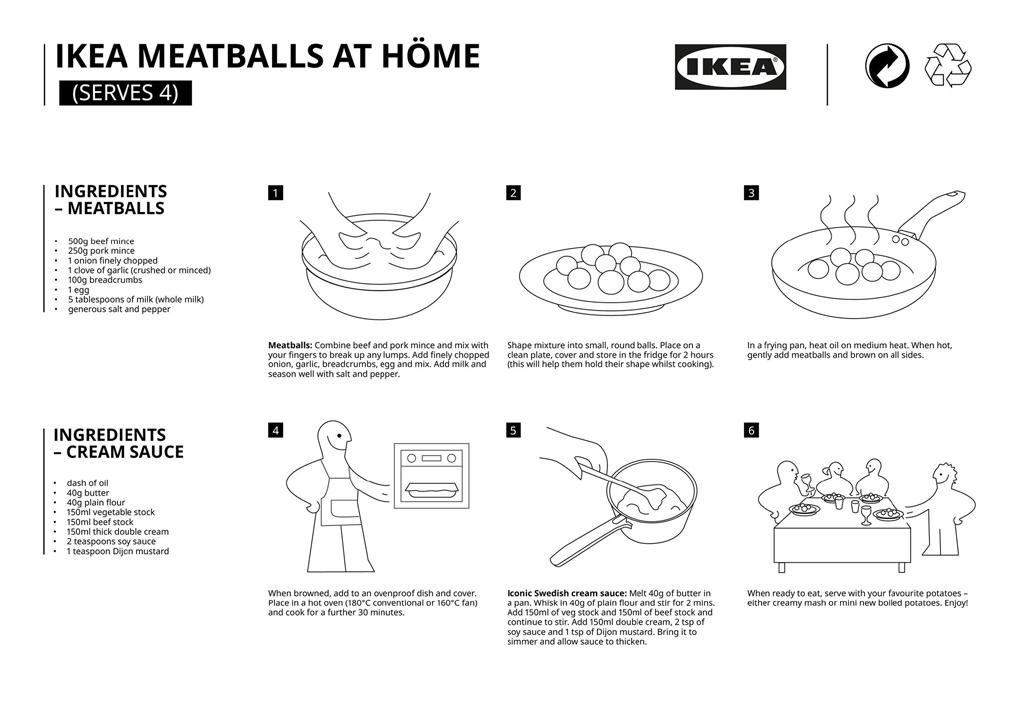
This was the question posed to 1st While Ikea stayed relevant from behind closed 2020 has also been a year for deep reflection. encourage you to read her article, ‘Goodbye year Creative Advertising students doors by releasing a DIY recipe for its popular The killing of George Floyd and the Black Lives Aunt Jemima’, which is on page 31. in February 2020. We had no idea meatballs (see above), Uber joined in with the Matter protests that followed in June highlighted then just how much the world – outpouring of support for the NHS and offered that there is still so much work to do in the hope that you find this collection of student and the advertising industry – would change free rides to nurses and doctors. We had just fight for equality. Following a guest lecture articles as interesting and enjoyable as I have. over the next few months. As the phrases discussed the role of brands during WW2, on racial stereotypes from PhD student Kelly If you’d like to hear more stories from Adland, ‘unprecedented’, ‘R-rate’ and ‘furlough’ entered so it was fascinating to see the ‘Stay at home’ Parker, Bronwyn Cheshire has explored the please follow our module on Instagram our weekly video catchups, Adland scrambled to message being reinforced through campaigns by role that advertising has played in perpetuating @AdlandFalmouth respond to the ‘new normal’. Netflix, Heineken and McDonald’s. stereotypes, and how the industry can do better.
PEOPLE A spotlight on the work of David Ogilvy, Mary Wells Lawrence and John Webster. THE WORK What can cigarette ads, ‘Get a Mac’, ‘The Pepsi Generation’ and ‘Labour Isn’t Working’ teach us today?
A collection of opinion articles discussing the controversial Benetton campaigns and more.
From the legacy of Aunt Jemima to gender stereotypes, the issues facing Adland today. 04 12
A story that turned the
advertising industry on its head.
Advertising in its youth
Some say it started with cavemen painting on their walls whereas others will claim it began with the Romans, however “it’s safe to say that advertising has been around for as long as there have been goods to sell and a medium to talk them up” (Tungate, 2007, p. 10). It is without question that the first meteoric era of advertising took place just after the second world war with the appearance of advertising (ad) agencies on Madison Avenue, New York. This is where it gained its reputation and bubble seen by those from the outside. Admen, otherwise known as Madmen, would work until the early hours of the morning mastering briefs and pursuing clients. The ads were the same, repetitive, brightly coloured and shouting at you, but one Madman stood out compared to the others, “a figure we might have seen strolling down Madison Avenue on his way to lunch – perhaps with a young colleague hanging onto his every word – was a lanky Englishman.” (Tungate, 2007, p. 39). Today this ‘lanky Englishman’ is known for his huge impact on the advertising industry. (Tungate, 2007, p. 9-39).
Life and times of an inspired creative
Enter the ‘lanky Englishman’, David Ogilvy, hopeful creative and member of the mad-men era. Born and raised in Surrey, highly educated but with no degree, he was later given a job in Mather & Crowther by his brother, which would then kickstart an explosive career in the advertising industry which we still feel today. Although British, Mather & Crowther opened many doors to the advertising industry in America. H e would later migrate and begin work there under George Gallup. “Dr. Gallup has been consistently recognized as one of the world’s greatest Americans” (Gallup, 2020), mentoring Ogilvy and thus providing the experience that helped his future genius. Ogilvy happened to be with George when he created the Gallup Poll, a form of understanding of what is happening in the world, and Audience Research “which dealt with the motion-picture industry, testing
titles, testing story ideas, predicting the gross on pictures” (Gallup, 1986). Through this Ogilvy understood what was happening in the world and also started to learn what sold, an obvious but also crucial part of advertising.
Ogilvy’s breakthrough
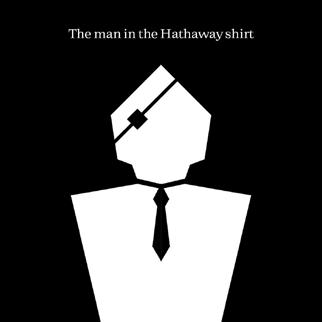
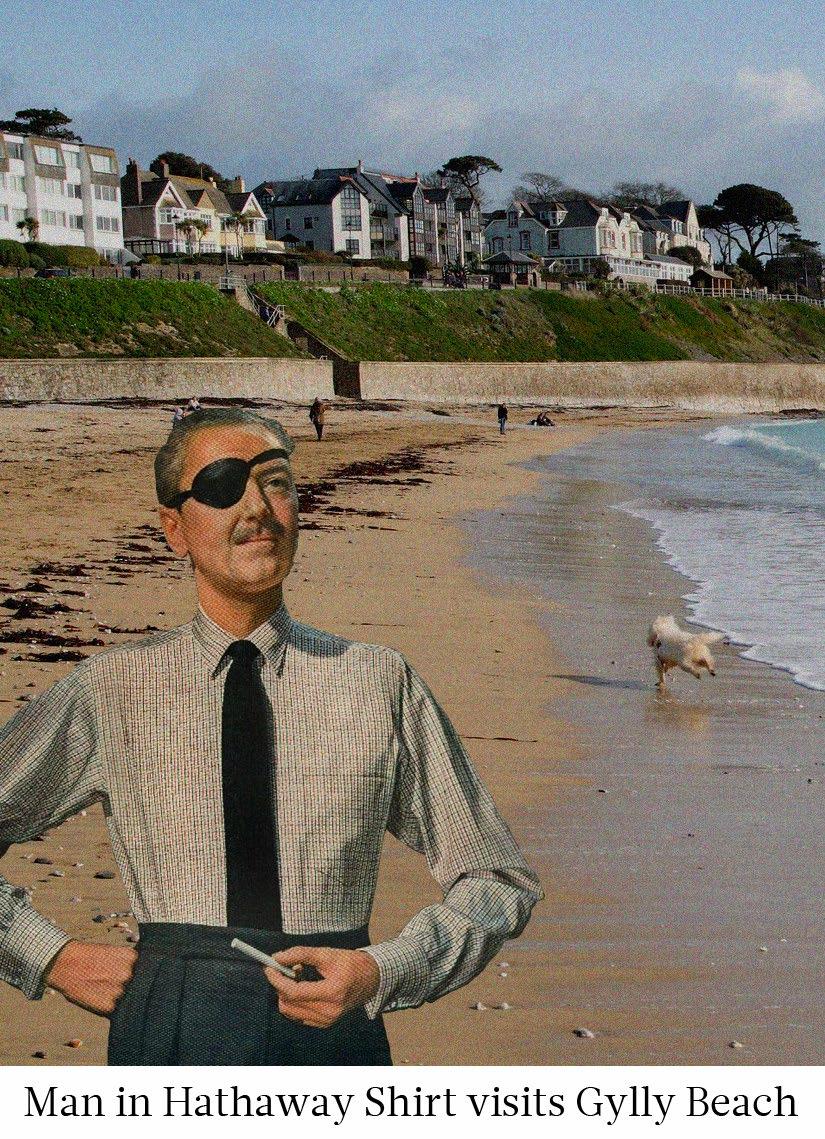
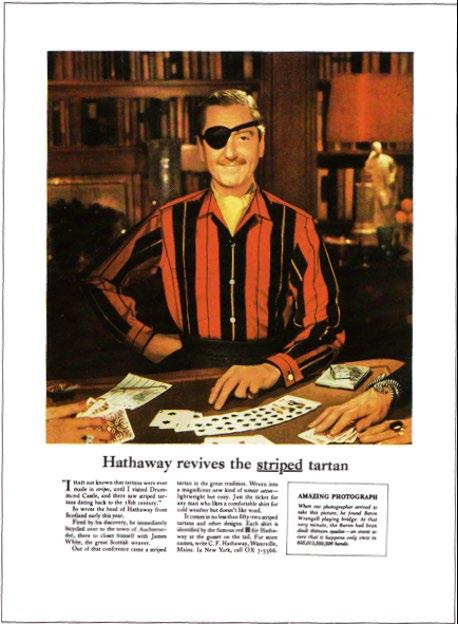
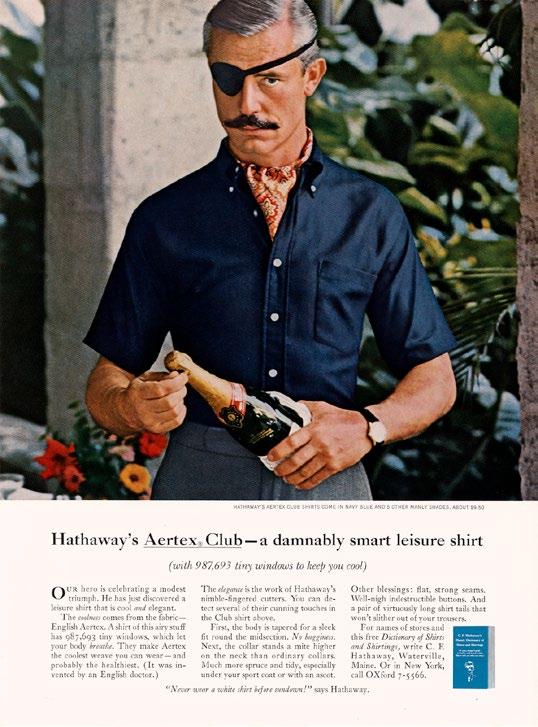
During his time on Madison Avenue, Ogilvy was approached by Hathaway Shirts, a mundane everyday company with a small budget for advertising (Cracknell, 2011, p. 37). He now faces the problem that all creatives will face in their career, how on earth can I make this product stand out? How can I generate more sales? Well, inspiration comes in an infinite number of forms and thanks to many factors he was able to produce one of the most famous ads in ad history. His first form of inspiration came about in a corner shop when he saw eyepatches on sale. This was his lightbulb, his eureka moment, influenced by a picture he had seen of Lewis Douglas sporting an eyepatch. Gut instinct took over and he bought the pack of eyepatches for a measly sum, which ironically increased the overall value and earnings from the advertising campaign. Secondly, he needed a figure that would suit the eyepatch, a man who was not visually boring and would stand out, after all the target audience was seemingly middle-aged men. They settled on George Wrangell, a tall and frail PR man but who portrayed an air of nobility and confidence. The perfect image to appeal to middle-aged men the length and breadth of the United States.
When shooting the ads Ogilvy asked, “that Wrangell be photographed with and without one of the eyepatches” (Cracknell, 2011, p. 37) but it was indisputably obvious what worked, and which would sell the product in a better way.
OB&M or otherwise known as Ogilvy, Benson and Mather published the campaign featuring Wrangell performing day to day activities in his eyepatch and attracting the ‘eyes’ of the nation.
According to Andrew Cracknell in his book The Real Madmen, Hathaway shirt sales in the span of 19 years “rose from $2 million per year to $30 million” (Cracknell, 2011, p. 40) and recognition of the brand increased “from under 1 percent to 40 percent in ten years” (Cracknell, 2011,
Want to sell your product? Or simply stand out?
David Ogilvy was your man. With a keen eye
for consumer behaviour and a nifty finesse for advertising, he could turn rags to riches. In this
article we will explore the genius of Ogilvy and his impact on the advertising world.
p. 40), thus demonstrating the Ogilvy effect in full swing. This success did not go unnoticed and earned the agency some top tier clients including Schweppes, Rolls-Royce and many others helping to blast them into the limelight.
Whatever Ogilvy touched accomplished change and resulted in a meteoric shift in the advertising industry at the time; well and truly turning it on its head.
A new train of thought
The Hathaway Shirt campaign changed the game and for the better, a leaf had been turned, and other advertising agencies were starting to reconsider their advertising strategies. Shouting and pestering the viewer of the advertisement was slowly becoming a thing of the past, this style of thinking was succinctly summed up by Ogilvy himself:
“A good advertisement is one which
sells the product without drawing attention to
itself.
(Ogilvy, 2004, p. 118)
This quote gives us an insight into his revolutionary style of thinking at the time, and possibly explaining why he was so sought after. Flashy eccentric actors in expensive cars will still sell your product and will do today, but at the time, a change was needed. A fresh burst of creativity to attract the eyes of the buyers was needed and going in a different direction allowed Hathaway and Ogilvy to become so successful. His view on advertising strategy worked so well he reused it with Schweppes, why fix something that isn’t broken? In this campaign, retired Royal Navy Officer Commander Edward Whitehead can be seen getting out of planes or visiting exotic countries showing tribes people the brilliance of tonic water (Cracknell, 2011, p. 40-41). The client has been put first and it is clear they are not just trying to ‘flog off’ the product like many other brands. It serves not only as an advertising purpose but also that of entertainment, giving people a break in their day to look at something interesting. This not only respects them, but also gives them something to think about. Once they are thinking about your product you at least have your ‘foot in the door’ and just maybe another potential customer. The success of the campaign brought light towards the effective use of not only copywriting, but also art direction and the use of visual stimuli mixed in a new and cuttingedge way. This very much contributed to the success of Ogilvy and consequently, the agencies he worked at. It changed the way advertising was planned and strategized, finding new ways
to get people engaged and potentially buying a product. After all, is that not the basic foundation of our industry?
The eyepatch technique
What made the Hathaway shirt campaign so popular and why did it capture the eyes of millions? Advertising can sometimes be
People had someone they could compare to or talk about, “soon it became a popular prop at parties and offices, and other campaigns aped it, even putting it on animals” (Cracknell, 2011, p. 37). This effectively gives the brand a unique identity, now every time someone looks at an eyepatch, they associate it with the Hathaway shirt campaign. A means of access using the art of persuasion, but yet an amazing
Ogilvy’s impact in today’s industry
We can still see the ripples from this change today with many agencies still employing the same strategy. An example of this appears with Dos Equis beer which entails the Most Interesting Man in the World drinking their beverage, a man of class whom people will look up to with the tagline “Stay thirsty, my friends.”. Ironically, this again engages the viewer as it tells them nothing about the Most Interesting Man in the World, in other words he is saying “stay curious, my friends”. With a budget under $1 million, the success of the campaign was dazzling. “99 million media impressions; 40,000 sampled beers; contributed to Dos Equis’ 22% year-over-year sales increase from August 2008 to August 2009” (Levy, 2009, p. 8).
BY LOU NORTHAM
accredited to luck, but it is safe to say this was not so in this case. The campaign brought change, it provided a narrative and a story about the man in the eyepatch. People just wanted to know ‘why this man was wearing an eyepatch?’. It gave him a backstory and a persona not just another actor or model from a magazine; it truly was that simple yet so unbelievably effective. As humans we are curious, storytelling in advertising was an ingenious way to get the population hooked.
feat of creativity. It is evident that Ogilvy has harnessed boundless creativity, natural intuition and years of experience to pull this off. Aspiring creatives nowadays strive to match Ogilvy’s accomplishments, this comes in all shapes and sizes with inspiration coming from something as obscure as a pack of eyepatches. Ogilvy, as a result, remains a preeminent role model for many creatives who wish to create new and interesting avenues in the advertising world.
Not only this, but it became memeworthy, becoming one of the first memes at the start of the meme generation and one of the biggest internet trends of this generation. Millions of people associating your beer with the bearded man from the memes is enough to send businessmen and marketing professionals to cloud 9. Stroke of coincidence and fortune or not, free advertising is free advertising and many clients will fall head over heels for this kind of exposure. This style of narrative advertising, if done correctly, is a proven age-old technique. Like The Most Interesting Man in the World, you need to get people questioning the ad and left curious about a certain topic or aspect of the ad. You must also have either a person or an object that the viewer can identify with. Successfully providing this allows a topic point for the viewer, something to talk about at the dinner table. Creatives with years of experience and creative competence, whilst following in Ogilvy’s footsteps, will have the opportunity to be successful with the right idea. It is safe to say that the future of advertising is unclear but very exciting thanks to the inspiring works of David Ogilvy and other creatives in the Mad Men era. They paved the way for how advertising is done, and we can never be too sure whether it would have been the same without them and their work. The Ogilvy Eyepatch story is just a piece in the puzzle that is the advertising we know today, we must hope that this example of creativity and narrative style is still used in the future because it is evident that, when used correctly, it is both timeless and effective. With new and emerging technology in our generation, alongside state-of-the-art resources, the sky is the limit for creativity and ingenuity. All thanks to the small things...like a pack of eyepatches.
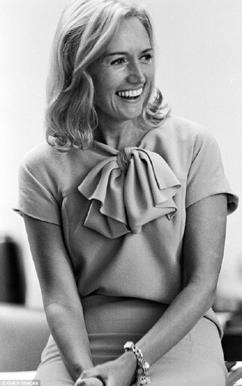
A force to be reckoned with and a face to be adored. Mary Wells Lawrence ‘the advertising pioneer’ broke social standards and rose above a man’s world.
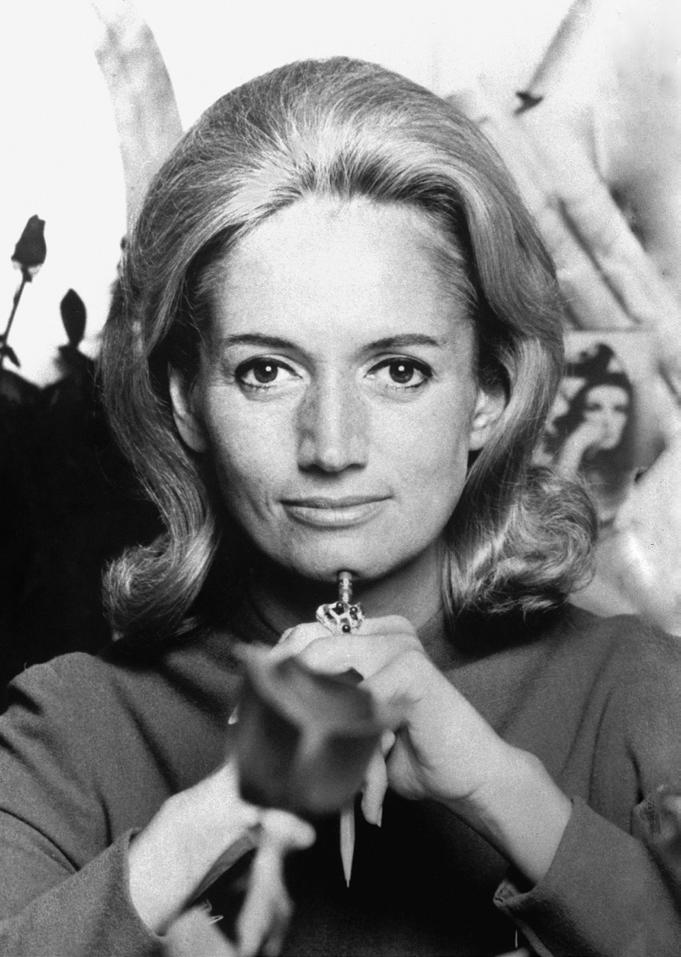
Mary Wells Lawrence opened seven bright pastel colours, one for each of the
posed to engineers about how they could make every creative’s eyes back in planes. “From the minute you stepped up and the Eurostar from Paris to London better. Their 1965. Mary had originally come checked in, until you got on that plane and to solution was to build new tracks to make the to New York to be an actress; your destination you were having fun” Mary journey shorter. Rory goes on to project his however, she fell through the cracks and ended (PBS, 2013). It became so successful that there
thoughts on how they could “employ all of the up working within a publicity unit of Macy’s “were rumours of customers booking tickets world’s top male and female supermodels, pay department store (Cracknell, 2012). Due to her to fly purely to get on all the seven different them to walk the length of the train, handing out acting experience, she incorporated a theatrical coloured planes” (Cracknell, 2012). free Chateau Petrus for the entire duration of the style to her work. She managed to catch the journey” (Sutherland, 2009). The impression right attention and gradually worked herself These mind-blowing, imaginative ideas were that “advertising adds value to a product by through different big advertising agencies. Due revolutionary for their time and in complete changing our perception rather than the product to her reputation for hypnotising and amazing contrast to anything previously seen. Previously itself” (Sutherland, 2009) links back to the everyone around her she eventually landed on advertising had been very bland; copy was
way Mary addressed advertising. Similarly, the Jack Tinker & Associates. very factual, and colour was very limited. The same lateral thinking is displayed in the Braniff emphases were not to ‘catch people’s attention, campaign, the copy of the TV advert says, “we Life and times of an inspired creative. it was rather to keep things looking professional won’t get you where you’re going any faster, but and mainstream. The words ‘exciting’, ‘thought it will seem that way”. provoking’ and ‘captivating’ were not ‘on the menu’. It all felt very safe and proper. This United
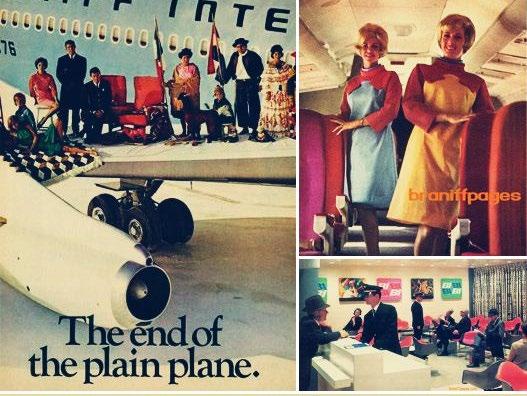
You feared her, you respected the advertising stage and gave the performance empowerment and objectification and was of a lifetime. Those who were there to witness emblematic of a broader shift in culture and it were mesmerised by this class act, those who The evolution of this idea was inevitable! Now, be doing that kind of quality work. Giving this, attitude, with Madison Avenue’s ad agencies
Braniff was not the only one impacted by Airlines poster is an example of the standard Mary, society was looking towards a different advertisement before Mary Wells stepped onto future. Mary had “blurred the lines between
her, and you were not are able to see many examples of how as soon as you arrive through the airport door to say “only the nuts and kooks are screaming seen as modern pioneers of this mindset” it has continued to influence advertising to this you are greeted by such novelties as Disney like babies” (Cracknell, 2012) is quite an offence (Muraben, n.d.). She was an empowering figure wanted her to day. (Baker, n.d.) characters, elves and Father Christmas. Ready and it’s understandable why there was an uproar. for women as ‘she looked past the traditional to wave you off ‘bon voyage’ to Disneyland and ways of doing business’ (Cracknell, 2012). She
This wasn’t the first time Mary had managed Lapland respectively. To then taking a seat on She used her own initiative to strip the product noticed that “women at that time were talking work for you. to persuade clients into changing their strategy the plane, glancing through the enticing glossy apart and advertised new exhilarating reasons to a lot but they weren’t doing much, they hadn’t of advertising. Alka-Seltzer (pain relief tablets) magazine for in-flight shopping. Mary wouldn’t buy it; that was her style. She ran with the idea had the opportunity” (Leary, 2002). She worked
Now set your mind back to a time when the was Jack Tinkers & Associates first account and have anticipated that years later we aren’t just that it was all in perception, you had to look her way up enabling her to eventually be a coworld had come through The Great Depression it definitely started with a bang.... Or should I having a theatrical experience, we are also from different views of the product and make founder of Wells Rich Green. and was recovering from the devastation of say “plop, plop, fizz, fizz”. Drug advertising in enjoying a shopping trip! And we can’t forget it exciting and colourful. Don Draper may have World War Two; the year is 1947 the world is the 1960’s was focused on the pain rather than about everyone’s guilty pleasure, the travel bag said “if you don’t like the conversation change Mary left her mark on the advertising world lifeless. Even the finest of luxuries -air travel the relief, which was displeasing to watch. on a long-haul flight. This took advertising to it” (Mad Men, 2009), but Mary lived by this. and made it her own. From an unnoticed writer - was dreary, to say the least. “All planes had Flipping that on its head was just the start of another level from the mini toothbrushes, to She was known for her talent of getting clients to in Macy’s, she climbed her way to be the first come out of the army, they were grey and when Mary’s ideas. “No one wanted to be seen taking the socks and eye masks; what do they all have talk about what she wanted to talk about, looking
female
CEO of a company listed on the New you were in them, they were as dull as they could it; young people felt it was only for older people” embroidered on them? Of course, the airline’s from a different point of view. Even in her office York Stock Exchange. She showed everyone that possibly be... everyone looked like some kind of (Tungate, 2007). This encouraged Mary to make logo. Is it just me or does everybody have a at Doyle Dane Bernbach she was bending the advertising should go beyond just advertising, army officer” (PBS, 2013). the adverts modern and appeal to a wider target drawer filled with these travel goodies which rules, Charlie Moss recalls “it was the only beyond one’s perception. She threw paint onto audience. The think tank at Jack Tinker & when stumbled across, put you in a guilt trip and office that was decorated. It had orange floor and the world of black and white adverts. Mary was The creative revolutionary had her breakthrough Associates highlighted different reasons to take you inevitably end up in a dark rabbit hole of a French provincial credenza” (Cracknell, 2012). an icon to women, she showed them a way they one morning when standing in a check-in queue at Alka-Seltzer with upbeat music the advert had looking at holidays and destinations? We know Colour was everything to Mary. never imagined possible. Mary Wells Lawrence Chicago airport (Cracknell, 2012). Mary desired a cheeky twist showing flat, wobbly, dancing we crumble every time, and to a certain extent is an inspiration to me, along with other women to reinvent flying into a theatrical experience large stomachs. Suggesting that whatever shape we have Mary to thank. To this day Mary’s idea has survived through to this day. and she sold this idea to Braniff Airlines. She your stomach is in Alka-Seltzer fits all, “it the ever-evolving changes in society and in explained to them that she wanted to infuse capitalized on the new trend of self-deprecating Mary was a woman in a man’s world. people. Rory Sutherland has the ability to think ‘fun’, ‘colour’ and ‘sexy’ into everyone’s lives humour” (Tungate, 2007). Mary later built on laterally much like Mary, this is portrayed in a again through flying. She envisioned ‘the end of this campaign and educated the audience that if She was a risk taker and that was what made her TED Talk titled ‘Life lessons from an ad man’. the plain plane’, which later was the copy for the they took two of the tablets the relief is quicker so ravishing for her time. She proved to the male She was able to think outside the box and her adverts created by writer Charlie Moss and art (Tungate, 2007). Mary had actually gone so far dominated industry that she could equal and if lateral thinking remains through advertising, director Phil Parker (Swanda, 2018). in her research around this product to try out the not outdo their aptitude. She believed there was as Rory the ‘advertising guru’ continues to tablets with her team in order to allow them to no discrimination between genders, and it was explain it to the public in his Ted Talks. In this She took it upon herself to hire Emilio Pucci to make this claim. Like a fish the public took the only the weak that experienced it (Cracknell, presentation he explains that a question was design the hostesses’ uniforms and Alexander bait resulting in sales doubling promptly and the 2012). This wasn’t an appreciated or accepted Girard as interior designer of the planes “Plop, plop, fizz, fizz” jingle (relating to two view and Amelia Bassin, formerly advertising (Cracknell, 2012). Of course, she was to oversee tablets taken) was introduced. director of Faberge, voiced her opinion at the “Mary
all of the designs, to make sure everything was to Advertising Woman Of The Year when elected her standard. The “stewardesses would dress in All airline advertising was the same before back in 1970 (Cracknell, 2012). “I can well
the most outrageous outfits” (Cracknell, 2012), Mary, she introduced the advertising world believe Miss Mary never got discriminated not that the outfits were on for long! It was said to perception. At this time the airlines image against. There is no privileged class in the world
that the hostesses stripped parts of the uniform wasn’t appealing and all adverts for it were the to compare with that of the beautiful woman” when approaching higher climates; Wells called same; Mary “literally changed the face of airline Amelia announced. It’s fair to say women of
it the ‘air strip’ in commercials that followed, advertising. Other airlines were forced to change that were objectified, especially in workplaces and they were a hit to say the least. You can in order to compete” (Swanda, 2018). Mary and men thought they were superior. However,
imagine the amount of men taking ‘business actively tried to create a tradition for air travel by Mary protesting in this way may have been trips’ that year! and boy did she succeed! Her influence is still due to how highly appreciated her work was for
created
the coolest,
the sexiest,
the most
sixties airline
around”
here to this day, a holiday becomes an adventure a woman. Meaning that she never experienced The think tank at Jack Tinker Associations chose from the moment one steps onto the plane. men discriminating her because they wanted to (Tungate, 2007)


BY DANIEL TALLON

‘We found that housewives were bored stiff with adverts featuring other housewives’ (Delaney, 2007).
The Smash Martians first appeared on our screens in 1969 and were voiced by Peter Hawkins, who is famous for voicing Doctor Who villains such as the Cybermen and the Daleks.
However, instead of wanting to destroy earth, the Smash Martians were more focused on making fun of it. In their debut advert, a group of the Smash Martians are seen discussing what they have discovered about the earthlings.
One of the Martians proceeds to tell the other Martians how we make mashed potato.
The Martians burst into hysterics, and as the green fades Cadbury’s
Instant Smash is seen whilst a voice over sings ‘For mash get Smash’ (Delaney, 2007).
To shoot the Smash Martians commercial,
to the advert, and so therefore it was left in. The that makes him human. Capturing emotions was commercial would prove enormous success with something that John was exceptionally good at. consumers and was the first of many more Smash Martian ads to come. It is worth noting that is 2009, an advert for Comic Relief: Red Nose Day
“He tapped was created and titled as ‘The Greatest Minds in Advertising Join Forces’ and featured the best into the simple characters in the history of British advertising. The advert included a Smash Martian with a speaking role and the Honey Monster who sung emotions we a ballad at the end of the advert.
feel, he didn’t
Comparing car insurance is ‘Simples’ make things too
So how has John influenced advertising of today? Well, just take a look at characters used in
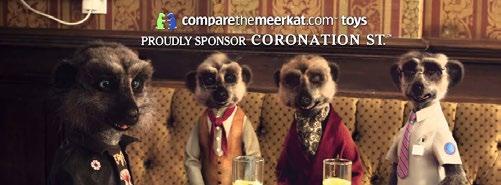
complicated, modern day advertising such as Aleksandr Orlov. Aleksandr is a Russian meerkat who appeared in simple emotions the original advert for comparethemarket.com detailing his frustrations with consumers coming like laughter to his website to ask for car insurance rather than
John Webster’s impact on advertising has comparing meerkats. Since the meerkat’s debut, left a long-lasting mark on the industry and Aleksandr has gone on to star in adverts for and tears” comparethemarket.com for over 10 years and is in many ways helped shape the world of still starring in them today. There are countless (Delaney, 2007). amounts of meerkat merchandise, including a advertising into what it is today. He was the memoir called ‘A Simples Life: The Life and John’s use of humour in his adverts is universal king of fluffy creatures and from the 70’s and Times of Aleksandr Orlov’, Meerkat movies and and can be enjoyed by the many and not the few. a whole range of meerkat toys. Aleksandr even No matter how old you may be, the humour is onwards his presence in advertising was well- has his own twitter account with 57.7k followers. timeless known. Characters like the Cadbury’s Smash
MDaniel Tallon
another planet and saw that we bothered to peel potatoes, boil them and mash them up when you can just get it out of a packet, they’d think we were barmy!’ (Campaign Magazine, 2012).
John Webster hired an American man by the name of Bob Brooks who was formally a creative director at Benton and Bowles but moved on to become a photographer and then later a director. Bob was renowned for being a hot head on set and he even shouted directly at the tin Martians when one of the puppeteers would do the wrong thing.
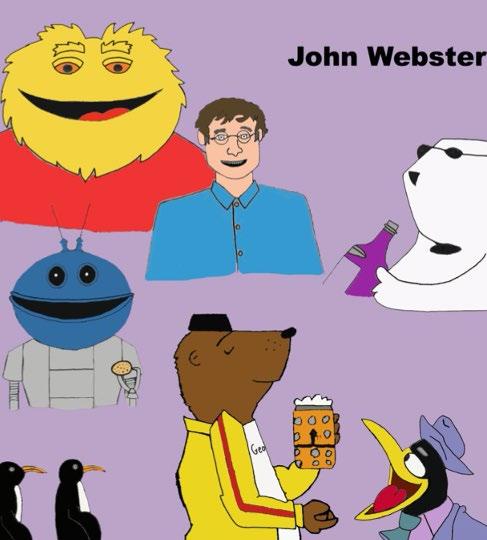
“Compare the Meerkat is a brilliant example ‘Creating characters is one of the many ways Martians, the Honey Monster and George the of brand, agency – in this case VCCP – and that advertisers capture the imagination of production working together to create an ad audiences, bringing a brand or product into three- Bear of Hofmeister are just a few of the genius campaign that has not only successfully grown dimensional life, giving it a relatable personality creations John came up with. a business and brand awareness – but introduced and a place in culture.’ (Powell 2012). a catchphrase and characters that have both become part of British culture” (Lloyd Barnes, As a young aspiring creative, John’s work is
2019). exactly the kind of work I want to produce. It’s really inspired me to see the passion he has put any of the campaigns he created Well, in 1957 the Quaker Oats Company causing mischief as he failed to contain his Aleksandr’s noticeable presence in modern into his work and how being quirky and different are still used today and there is a launched a new range of cereal called Sugar eagerness for Sugar Puffs! Today, the Honey advertising is a clear indication that characters is important. I have also learnt from John that lot that can be learned from his Puffs. The cereal launched with a mascot, but Monster can be found all over social media with still thrive and are a big part of advertising being a ‘collector’ and a ‘magpie’ is really useful work, from his compelling use of not the widely recognisable mascot we know accounts on Facebook, Twitter and Instagram. culture. Some brands have even adopted existing for creativity as your surrounding can have a big storytelling to the unforgettably iconic characters, today. Jeremy the Bear was the original face of characters that have already proven to be popular influence on you work and can help in giving you John made adverts that were entertaining and Sugar Puffs. He starred in books and comics that Martians love their mashed potato across generations, such as Halifax using the direction for new ideas. There is still so much we enjoyed by many. It comes as no surprise that you could get if you bought Sugar Puffs, and a casts of The Flintstones, Scooby-Doo and also can learn from John’s work and how he captured John won many awards over his career, and that theme song from his TV advert was adopted as John was no one hit wonder though, as the Top Cat to draw in consumers with nostalgia. a brand’s voice perfectly in the characters he there was even one named after him by British a football chant, However in 1976 Sugar Puffs Honey Monster was just one of his incredible made. John’s work ‘had great humanity in it, I television advertising in honour of his work. decided they wanted to change their mascot and creations. Another great example of his work So, what is it that makes a character so think it also had humour in it, it was surprising, (Haymarket 2006) However this was not a part so they approached BMP. They would go on to are the Cadbury’s Smash Martians. It’s quite successful in advertising? engaging and it had a great sense of integrity of advertising that interested John. He also did provide them with a new mascot that Sugar Puffs hard to believe that once upon a time, Cadbury’s about it. think it was all of the things that not associate with people he worked with, but would use for the next 44 years. the British chocolate giant was a brand that also
The following morning Chris had created this idea into a script and so John drew up some pictures to go with it, yet when they presented it to the client, they thought they were ‘barmy’. However, the two requested that the idea should be included in the research and luckily it came out on top with housewives.
John was shocked by the director’s behaviour.
‘He went berserk at this Martian, which was basically an inanimate object,’ ‘He had to be held back from beating the thing up.’ (Delany 2007).
And what makes them so intriguing and make a great piece of creative work wonderful rather people with no relation to his profession. sold instant mash potato, but they certainly did. interesting to consumers? Well for example, and yet available for everybody.’ (Trott, 2013). These were the people John wanted to impress as John Webster was a key player on this account But how did the Smash Martians come about?


During the shooting of the final take for the advert, one of the most iconic parts of the advert occurred completely by mistake. The take was supposed to have all the Martians laughing in synchronisation about the ‘earthlings and their primitive ways’ yet one of the Martians fell over but was still moving around on the floor. However when it came to the editing process, Brooks found that the Martian rolling around on the floor would add even more comedic value
whilst the Honey Monster is a giant yellow John truly had the magic ingredient for creating they could give him audience insights. and as part of his inspiration for Sugar Puffs, “He And why did they ridicule us for our potato creature that wants nothing more than to eat characters that could touch our hearts and had heard that women love their kids but would peeling culture? Well, the original advert for all the Sugar Puffs he can get his hands on, his build trusting relationships between brands and “When John was involved in something, he was often refer to them as little monsters” (Trott, Cadbury’s Smash was very simple and basic. It passion to do so makes him clumsy, funny and consumers. relentlessly involved in it. He would never lose 2013). This stuck with John and led him to his had a voiceover describing its rival competitor, loveable. His excitement is very relatable and enthusiasm. Like Hockney, who never does a next piece of breakthrough inspiration, Sesame the potato, and in the background a bland video lazy mark on a bit of paper, John put so much Street. Sesame Street was a TV show that of the product. However, after the commercial loving, technical care into everything he did.” debuted in 1969. The show featured many wacky was created, BMP’s Creative Director, Gabe (Powell 2012) characters that served the purpose of entertaining Massimi, left the agency and John Webster and educating children at home. However, there was the newly designated Creative Director. Tell them about the honey mummy! was one character from the show that John was John had a very different idea for Cadbury’s particularly interested in, The Cookie Monster. Smash advert which came to him whilst he So how was the infamous Honey Monster This character was blue, crazy and had a rather was in the pub with his copywriter Chris created? How did this giant, lovable, fuzzy unusual obsession with cookies. From this, Wilkins (Delaney, 2007). creature make its way onto our television screens the iconic Honey Monster was born, his first and into our hearts? appearance would see him breaking tables and ‘It’s crazy! If anyone came down from
BY JAMES CROOK
protect the public in the 1970’s and 80’s, actually big screen to endorse and promote their products. before a total ban on advertising cigarettes came
fanned the flames and triggered new styles of “Fake News” continued with companies using, into play. How do you promote a product known advertisements, brilliant in their simplicity. lying labels such as, “mild”, “filtered” and to cause health issues? How do you promote Benson and Hedges and Silk Cut cigarettes were “calming”, to reassure worried consumers. a cigarette brand and increase sales without The creators of the early trail blazers in this respect (York, 2003). breaking the law? Enter the new Benson and The “Marlborough Man”, became a well-known Hedges and Silk Cut advertising campaigns of tobacco advertisements
A smokescreen of lies... macho sensation, linking the Marlborough brand the 70’s and 80’s, showcasing a new approach surely have blood on with the themes of freedom, self-determination to brand promotion, with creativity and a unique
To fully appreciate the success and brilliance and independence. Similarly, Virginia Slims and fresh style. They produced brilliant ads that their hands, shamelessly of the Benson and Hedges and Silk Cut Ad shaped their brand campaign to target young are now recognised as being some of the best campaigns of the 70’s and 80’s, let us rewind professional women, linking glamour and ever created (Tylee, 2003). promoting cigarettes at to the early days of tobacco advertising. As far success with their brand (WHO, 2003). back as 1875, through to the 1940’s, companies
Going for gold... the expense of public encouraged cigarette brand loyalty by the use of Rolling out legislation... collectable cards placed in each packet (Whiting, Benson and Hedges cigarettes, owned by health. Yet from the lies 2014). The game was on! Companies were By the 1960’s the clock was ticking. The tidal the Gallaher Group, were the first to respond and questionable past of fighting for brand supremacy. wave roll out of anti-smoking legislation was fast to restrictions, by running their own unique approaching and the tobacco companies braced advertising campaign in the 1970’s. They early tobacco advertising
was born a new, fresh,
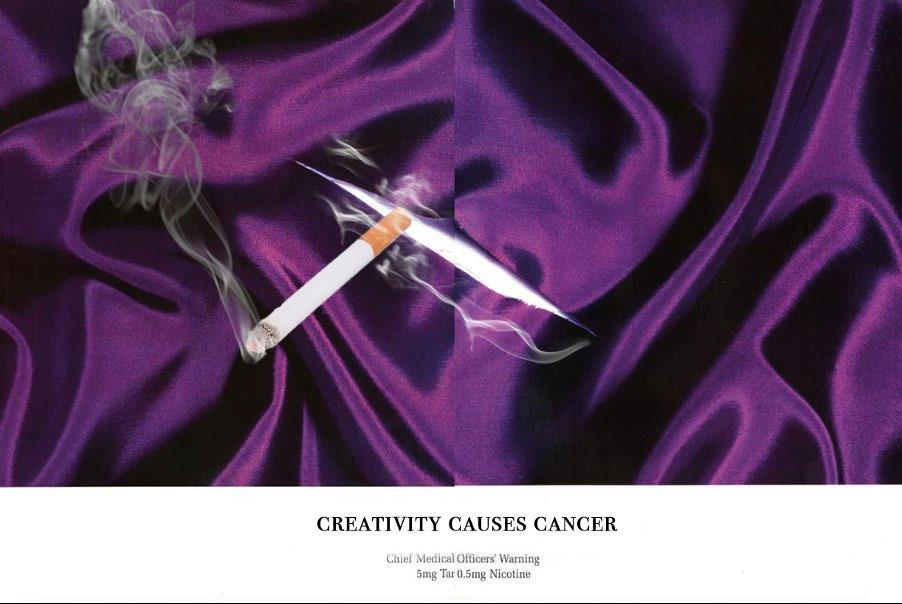
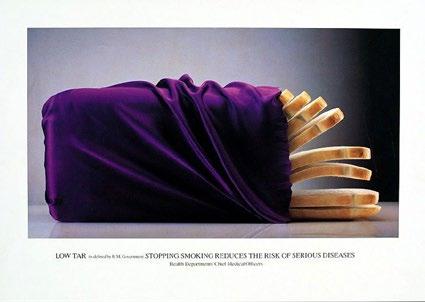
from the cigarette packaging. In each image, purple silk fabric was shown either being cut in various ways or having the suggestion of cutting. There were sexual undertones to the images and a slightly menacing and dark feel to some of them, for example, one piece shows the metal spout of a tin oil can suggestively penetrating a hole in a piece of purple silk. Many included the theme of sharp scissors and purple silk, one of the most famous being the surreal row of ‘CanCan ’dancers, the kicking legs of which are open scissor blades surrounded by ruffled skirts of purple silk (Hagart, 2003). The list is endless, each one as thought provoking and attention grabbing as the next. They all unanimously scream out the unwritten words, “SILK CUT”, leaving the audience in no doubt as to which brand of cigarettes it refers to. The consumer has to decode what each image is actually trying to say, a riddle which has to be solved or understood. Once this is achieved there is a sense of pride and achievement equal to pleasure which the viewer then subconsciously links with the brand. Anyone viewing these cannot help feeling a combination of fascination and unease, perhaps also, anxiety or distaste. Despite the generation of uncomfortable feelings, there is an overriding appreciation of the quality of the finished image, so that the viewer has the sense that the brand itself is also of high quality.
The early advertisements aimed to encourage themselves. From their point of view, advertising instructed agency, CDP, to launch a series of the public to link cigarette smoking with class, campaigns generated new users and revenue, quality ads which fully complied with the new
glamour and a good lifestyle, publicising vital to continued success. From government strict rules of tobacco advertising. They used a powerful style of fashionable people smoking certain brands. and World Health Organisation viewpoints, surreal and fresh approach, using the government Often advertisements featured young healthy tobacco caused health issues and deaths to constraints to push forward creatively (Dye, creativity. brides dressed in white, smoking, suggesting millions of users annually and action needed to 2016.) Frank Lowe, who was managing the cigarettes to be pure and safe pastime of the be taken. In 1962 in the UK, The Royal College B and H account for CDP at that time, found young (Butterly, 2014). Around the 1950’s, of Physicians had enough evidence to prove that these restrictions were affecting his ability concern began to grow as people started to the link between smoking and lung cancer and to actually advertise the brand effectively. Rolling out history... link throat and lung complaints with smoking. were able to push for a ban on advertising (RCP, Searching for a solution and inspired by work
TWorried cigarette companies responded by using 2017). By 1965 all cigarette ads were banned on of surrealist painter, Rene Magritte, he decided he tobacco industry has woven a health professionals in their ads such as doctors TV in the UK and by 1971 all cigarette packets to use a similar style, producing a selection of colourful timeline thread through and dentists, in an attempt to falsely reassure had to carry the Government warning “Smoking images that held no logic. The glamour of the the history of product advertising. consumers that these little white ‘cancer sticks’ can damage your health” (BBC, 2007). The gold box was exploited, with no words used Cigarette manufacturers have always were in fact safe! A 1946 RJ Reynolds campaign restrictions continued to roll out like a runaway apart from the obligatory Government Health competed aggressively to increase their market famously stated, “More doctors smoke Camels train and companies had to move fast to adapt, warning. Lowe later explained the genius of shares in such a lucrative industry. From cigarette than any other cigarette.” The accompanying cards, posters and print, radio and television, image was a smiling trustworthy doctor in a through to event sponsorship and more recently white coat smoking a Camel cigarette. Similar internet marketing, the battle to raise brand sales false claims even quoted data to further reassure and loyalty has raged forcefully for decades. consumers, for example, a Lucky Strike brand (Steele, 2013). Looking back through its ad depicted a smiling doctor in a white lab coat history, the tobacco advertising industry could holding a packet of Lucky Strikes, with the be criticised as being a ‘pioneer of fake news’, caption, “20,679 physicians say LUCKIES are falsely promoting cigarettes as healthy lifestyle less irritating”. Companies manipulated data by enhancers in order to make billions in revenue at issuing free cartons of certain brands to doctors, the expense of diminished health and lost lives then questioned them as to which brand they (WHO, 2019.) The style and content of cigarette preferred to smoke! (Little, 2019). Fast forward advertising was forced to change as awareness a decade or two and people, in particular the of the dangers of tobacco grew and governments medical profession became increasingly aware of began to intervene with protective consumer the potential harm of cigarettes. Advertisements legislation (Ash, 2017). Significantly, rather than no longer used doctors to promote cigarettes, dampening the flames of advertising creativity, as this was no longer convincing to the public. this ever-restrictive legislation brought in to Instead brands used celebrities and stars of the
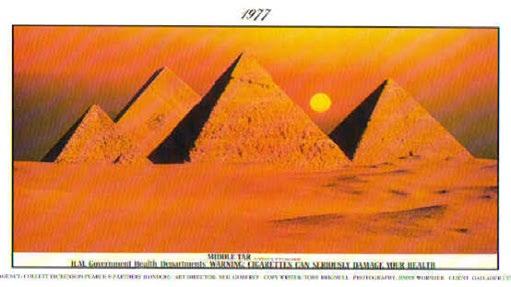
Image source: Benson and Hedges, 1977. V&A
Image credit: James Crook this approach by saying, “There is no logic to the story, it just puts strange elements that go together to make it notable. You get attention, you catch attention, if you do something odd like this!” (Meggit-Philipps, 2019). The brand was promoted as a market leader and no expense was spared with the photography and production of each ad. Using the “Pure Gold” theme, the creative team were instructed
shows a golden pack of B and H perched in an ornate birdcage, but strangely, the shadow on the wall behind, shows the silhouette of a bird in the cage, instead of the packet. Simple, yet thought provoking. Perhaps most memorable of all is the B and H Iguana film, known for a time as being one of the most expensive commercials ever made. Directed by Alan Waldie it involved
Cutting away from the past...
Following on from the Benson and Hedges campaign came Silk Cut in the 1980’s, keen to share the success of a new approach to cigarette advertising. How did the Silk Cut ad campaign wow and why was it so successful in the face of such restrictions becoming such an inspiration to creatives within the industry? to use, “great art direction, The Gallaher Group, owners of great photography and spare Silk Cut, hired Charles Saatchi’s no expense” (Hamilton and ad agency to come up with a new Tylee, 2007). The result was campaign, that would adhere to a series of ads that oozed the new restrictions and looming glamour and style, with ban on tobacco advertising, the gold packaging doing whilst still promoting the all the talking. Particularly brand (SRITA, 2007). In line memorable was the 1978 with new regulations, tobacco Egyptian pyramid scene, advertisements could no longer brilliant in its simplicity. show the product, the name, Produced in the pre- nor make any association with Photoshop era these images any particular social group or required great skill and sport (Ash,2017). The genius patience to execute. The for the campaign came from its image at first glance is a simplicity. The advertisements beautiful sunset with four were purely visuals, with no text pyramids grouped in the added apart from the obligatory
desert bathed in golden light. Only on closer inspection do we see that one of the pyramids is in fact a golden pack of B and H cigarettes turned on its side with matching symmetry to the other pyramids (Laidlaw and Marsden 2018). The viewer cannot help smiling and feeling a sense of achievement at having spotted the camouflaged packet and this feel good sense becomes associated sub consciously with the brand. Another of the B and H ads
a strange series of unrelated objects travelling through the desert. It included a helicopter, an iguana, a swimming pool, a sardine can and a packet of B and H! Confusing, but certainly memorable and a talking point between viewers as to why all these random objects were put together in the film (HAT, 2016). Benson and Hedges ads are, to this day, regarded as amongst the most successful ads of all time.
Government warning across the bottom edge of the image. Paul Arden of Saatchi and Saatchi was the creative director of the campaign which was inspired by the work of Lucio Fontana, a master of slashed canvasses and punctured metal sculptures (Campaign, 2012).
So, in the face of huge creative restrictions and using inspiration from Fontana, a series of visuals were created, which played on the two words, Silk and Cut, using the well-known colour purple
Final puff...
Advertisements by Benson and Hedges and Silk Cut in the 70’s and 80’s inspired creatives to approach advertising in a unique and different way.
No longer were constraints of any kind viewed as negative, but rather seen as a boost to creativity.
Advertising moved towards being more simplistic and daring and in doing so became slick, classy and successful. The Silk Cut and B and H years can be seen as part of the turning point for creatives. No ideas these days are too strange, and the ‘clutter’ of words and boring images of ads of the past have largely been swept away. Jack Meggitt-Phillips sums this up perfectly, in his History of Advertising podcast, by stating, “Censors have been accused of curtailing creativity ever since they came into existence. But sometimes, they can act as a boon to originality....so Adland should be censored in more things. It might lead to better work” (Meggit-Phillips, 2019). It is hard not to agree with him.
For references please visit bit.ly/adland2020
market group. Why? They were perceived as almost become a type of media consumption your competitors directly, and sometimes never underestimate a certain target market. Just being bums, who couldn’t hold a job, took drugs, for them. A potential reason for this change in actually get more interactions because of it. because it might not look great in society’s eyes,
Is the success of a product based and let the rest of society do the work for them approach from the public is due to how fast However, it is still just as important to keep the does not mean your product doesn’t relate to on how good it is, or how well you (Harris 1967). Even though it might not be true, they now consume content from digital media, jokes playful and light-hearted, otherwise you them. Apple perfectly demonstrated this when this ideology about this group of people has therefore the feuds moves along too quickly for could find yourselves in a whole new world they took the risk of advertising to so-called can sell it? Today, we are throwing stuck ever since. Needless to say, who would people to consider them too deeply (Aveard, of trouble – cancel culture. If your brand does misfits, yet they loved the product and started to
want that as their target audience? Especially 2019). something that can be seen as too negative buy into it. it back to 2006, and taking a look since no company had ever become largely towards someone, or a group of people, the profitable by doing so. A great example of this, is the fast food internet will come together in an attempt to Secondly, in the adverts, they we’re able to at Apple’s infamous “Get a Mac” restaurant brand known as Wendy’s. In 2018, destroy the reputation of your brand. Leaving a connect with an audience on more of a human
Campaign, just one example of
Well, apparently Apple did, and level, they made it feel like as if you decided to take the risk. They did we’re just a part of a conversation. The how they have mastered the art of this by directly referencing the public no longer saw Apple as just
things they enjoy in the ads as corporate
persuasion through a regular use of to why they needed to buy one. and
but
had a
For example, in the ad from this People felt more
irregular methods. campaign called “Angel/Devil”, as if they knew them, making them feel
BY RYAN CROWHURST
Isafer and trusting the brand more with album he made, so PC takes a look Mac is talking about a new photo what they were saying. They almost
Where did it all begin? office had one, which can be proven with PC’s advertising agency, TBWA/Chiat/Day, who filming (Quenqua 2016). after that, the rest was and says, “You don’t care about felt like a friend. In recent years, lots
96% market share in 2005 (Quenqua, 2016). had also worked on multiple iconic Apple history. Over the next 3 years they went on to arts and crafts, you like work”
of brands have now started to take this n 2005, Apple was continuing to grow at It became second nature to people that if you ad’s like ‘1984’. Their objective? Simple. To record over 300 versions in three years, only to (Apple, 2006). This implies that approach, as to a lot of people, their a steady pace with the huge successes of wanted a computer, you bought a PC, so it made clearly demonstrate the Mac’s superiority to release 66 on air (Quenqua 2016). people who should use Macs relationship with a brand on a personal recently released products, such as the sense that the public were sceptical about trying the PC. Weirdly though, Jobs gave no deadline
this, they’re people who love art
are the complete opposite of level can be more influential than if the product is even good or not. the company on its way to becoming the global good to be true? Eric Grunbaum, the executive creative director, and have an adventures spirit. phenomenon it is known as today. However, there “with Steve, briefs weren’t super formal like a Firstly, it was one of the few times we had seen What they didn’t expect, is what iPod Mini and the iTunes store, helping what was essentially PC 2.0. Seemingly too for this to be done by. Although, according to Why was it revolutionary?
A great example of a modern brand was one area they were struggling to get hold of, This is where the campaign came to light. At traditional agency. The brief was like you know a big company make direct insults at one of happened next. doing this is Cards Against Humanity. personal computers. In 2005, it was revealed the time, Intel, most known for their CPU’s, had what? Mac needs a campaign, we want you guys its competitors, and actually show them off in
The product itself is pretty simple, just that in the US market share for computers, Apple just partnered with Apple, meaning the next-gen to come up with something” (Quenqua, 2016). their own advert, effectively giving them free
The dawn of digital tribes was some cards with outrageous lines of only held around 4% (Quenqua, 2016). So, Mac would be powered by a new super-fast chip, So, it seemed these types of irregularities were promotion. In the early 2000’s, it was considered upon us. Apple had just accidently text on them in order to fill in blank before it could reach overall stardom, it needed the same cores as PC’s (Quenqua, 2016). The actually commonplace. immoral to talk bad about another brand. found unleashed a whole new world no questions. In one ad, they created to convince people that it really was better than a playing field had just suddenly got a lot more this best explained by Lisa Barone, “If you need one knew could exist. But, what is an email as if it was your father PC, proving it was time to switch. level. Therefore, Steve Jobs wanted to push For the next nine months, TBWA were hard to spend your time trashing your competitors a digital tribe? Well, it’s an online messaging you, sharing all the proud this across to the public by creating a massive at work presenting 10-15 new ideas, highly to convince users not to use their product, you based group of loyal followers moments you had together, including People love to stick with what they know. In this campaign. detailed, and mocked up weekly (Quenqua, have a sucky product” (Saldibar 2013). But here, who are heavily dedicated to one a joke about how you should buy this case, PC had been dominating the scene since 2016). Steve only wanted perfection and Apple actually had a good product, so how do thing (Guardian, 2009), in this for me, because “You know how I am the invention of the computer. Nearly every From here, he gave this task to their go-to wouldn’t settle for anything less. According you manage to make insults at the opposition case, Apple. with buying stuff online” (Schroeder, to Scott Trattner, creative director, “There was without coming off this way? 2019). a graveyard of those ideas” (Quenqua, 2016).
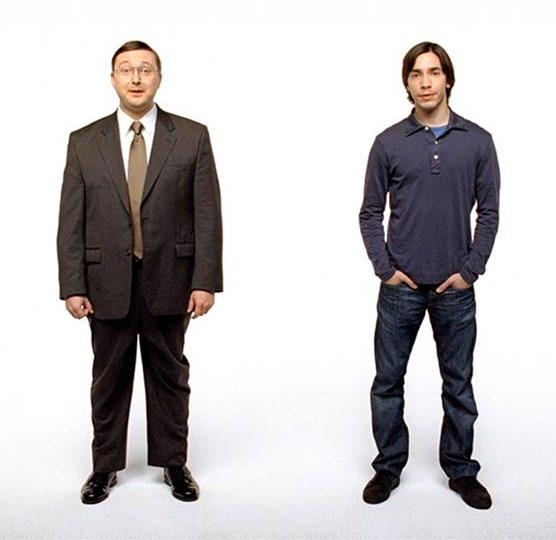
This was great for the brand as Steve was becoming increasingly frustrated This is where Apple’s “Get A Mac” campaign they had already established

So, the final lesson to learn from this Apple campaign that can still Campaign?” and “If you can’t do it, we got to getting around this stigma. In the ads, they didn’t in their tribe throughout this with his team, yelling things like “Where’s my really came into its own, with a smart way of exactly who they wanted to be be applied today? You should treat find someone who can” (Quenqua, 2016). go straight into it saying, “PC’s are terrible ad campaign, now they finally customers as friends, not just random because they do this badly”. No, they went into had somewhere they could go, people. They prefer sincere, human One day, Eric & Scott were out in Malibu, surfing, saying “Well, PC can do this cool thing, but, here somewhere they belonged. This like communication. (Blustein, 2018). Attempt to make them feel comfortable When suddenly, they came up with the idea of giving the implication that, yes, PC’s are actually customer base who would discussing their frustration with the campaign. is how we can do it better”. This way, they were let them develop a returning around your brand, to the point where making it so simple, it would be like reading off good, but also getting the point across that a Mac exclusively use Apple products if they read one of your ads, it’s as if it’s bullet points from the specs sheet, and embodying is clearly superior in some ways. A very clever and were then sharing their love just two friends talking and having a them as real-life characters (Quenqua, 2016). solution to avoid public backlash. for them online. Then, this cycle laugh. People are sick of big corporate They took it and ran. Eventually, after all that would continue, recruiting more companies just shoving products in time and hard work, the ‘Get a Mac’ idea was Now, the second way this was revolutionary and more people with anyone their faces saying, “buy it”, they want pitched. Finally, they had created this idea that lied within who they were trying to target, around the world able to see it. A to feel loved and appreciated, being not only Steve and Lee Clow loved, but one that and how they did it. PC’s had created a rather great way to gain free publicity. able to connect with your brand on a was also highly campaign-able. dreary label for themselves as they were seen as more emotional level. work machines, and only to be used when work How was the industry changed They weren’t out of the woods just yet though, needed doing. This was caused by companies by this campaign, and what can Conclusion they still had to make the campaign. Justin Long only using them for business. Thus, the idea that we learn from it? was hired as “Mac” after Steve had seen him in they were only for function, and not fun, became
To put it simply, Apple’s “Get a Mac” the movie “Herbie: fully loaded”. He didn’t even a normal idea. Let’s start with brands at war. Since this they released an album consisting of five songs, long-lasting effect on the future of the business campaign was ahead of its time, with everything need to audition. John Hodgman was discovered campaign, we’ve seen the progression of brands all aimed at taking shots and badmouthing other in a negative way with decreased sales and fans. they were able to portray in that ad being via a review of his book in the New York Times, Fortunately for Apple, this left a massive hole taking direct insults at each other, now without fast food chains, including McDonald’s ice (Adranly, 2019). solidified as some of the top techniques still “The Areas of My Expertise”, and later an they could fill. Therefore, they decided to target the need to make them look good, like Apple cream machines and drive-thrus (Tesema, 2018). being used to this day. Whether you’re trying to interview on “The Daily Show” (Quenqua 2016). more towards people of the arts who were fun with PC. However, the more interesting side Further beyond the music, they have taken the Finally, let’s take a look at how it changed the sell food, or playing cards, these methods can loving, adventurous, and notoriously, hippies. of this, is how the public’s perception of it has heat to twitter, engaging with and roasting fans. way brands see an audience, and vice versa, still be applied with a high chance of success if In April 2006, the crew met together and filmed Here’s why this was revolutionary. From the changed. Instead of finding it un-professional and starting with the brand’s perspective. If there done properly. So, talk your talk, and walk your the first round of ads over a course of three days, mid 60’s, all the way up until the 2000’s, no disgusting, people now, especially the younger But what can we learn from this? In the modern was anything to take away from the “Get a walk, just as long as you can take what you’re even writing new scripts on set as they were major company would dare target towards this generations, find it extremely entertaining. It’s day, it is now possible to get away with insulting Mac’ campaign in this area, it should be to dishing out.
How we got here one in Adland believes this. The Conservative chamber. The modern online political soapbox juggernauts is a mammoth task in itself, however,
Party asked Saatchi & Saatchi to
The
Strikes had crippled Hardtalk, 2013)
Looking back at the Thatcher years it is clear to see the reasons the country with many blaming what was to become blue Britain. With
why her political ads were so iconic and questions arise if they’ve the unions. The current prime minister, James mind, we must remember the immense power ad feel that some creativity is lost when campaigns the future then messaging is key and knowing Callaghan was plagued by a toxic relationship agencies hold over our democracies. are increasingly digitised, and the material is your audience is even better. Just as Sinclair influenced how we see politics today. What are the lessons for with union bosses (Channel 4, 1998). A party for less about quality and more about quantity. The did, appealing to the working classes against the the workers being crippled by the workers was The magic three words lesson to learn from this is that we are shifting working-class party. Those on the left must now
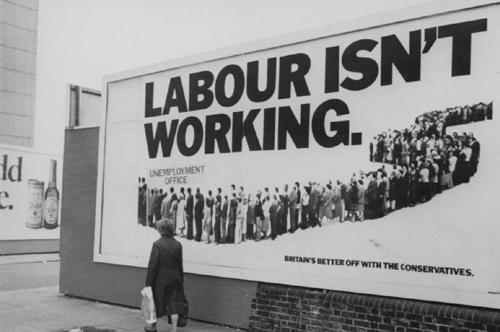
others? Should we look in admiration at the transformation of not optimal for Mr. Callaghan and this was both to a political scene of personalised ads and the appeal to traditional right-wing voters if they politics from grey suits to fashionable brands? the catalyst for Thatcher’s coronation and an Messaging is seen as the most important part of more you feed that machine with propaganda, ever want a chance of winning. It is clear that advertising revolution. politics. Get Brexit done, Labour Isn’t Working, the more chances you have at keeping your newcomers into the marketing world must be a they all hold a similar level of omniscience, voters. The other lesson is that to attract new part of that change. If messaging and marketing The most notable and underrated accomplishment vagueness yet state a clear opinion. In a CNBC voters you must still keep traditional print media is not equal amongst the political spectrum then of Thatcher’s dynasty is her mark on political article (Reid, 2019) it is suggested that “The in mind to create a conversation. the voter’s choice is never fair. advertising. The 1979 general election propelled brutal simple message” was successful due to its political marketing into unknown territory, a repetition in the media. How true is this? Or is A lesson learnt A personal take new wave of appealing to the masses had been it because it summarised beautifully the feelings invented. Saatchi and Saatchi famously took of a frustrated 52%? The answer is not clear, What Saatchi & Saatchi did for Thatcher was When looking back at the changes in political on the Conservative Party as its client and however Mukundan Sivaraj states that the best what it would’ve done for any other brand, sell advertising from Thatcher to Trump, we can tested the waters with its striking ‘Labour Isn’t political messaging is “relevant and appealing it to the consumer. Making the Conservatives see that each candidate benefits from policy and Working’ poster (Campaign, 2014). Having to to their core human values and needs” (Sivaraj, the face of hope and vision in the winter of surrounding circumstances. On the other hand, sell a Conservative to Britain came with its own 2019). To an extent we see this being the case discontent was perhaps the biggest reason why we see many similarities in campaign strategy challenges at the time, however, its first woman for Obama’s “hope” (Scott, 2017) as people the campaign was so successful. In a consumerist and placement. While in Thatcher’s campaign leader also threw up obstacles. Lord Saatchi, one fundamentally needed anything such as hope in society, we want things that make our lives the mass media of choice was billboards and of the architects of the Tory campaign said that the midst of a global recession. This is the same better, positioning a political party in the same print ads, Trump’s optimal presence is online. “she was interested in convincing people of her for Jeremy Sinclair’s ‘Labour Isn’t Working’, it light creates an exciting and electable face. To Both campaigns use tactics such as attacking and view on life” (Channel 4, 2013). I believe that reflected the reality shown from the winter of many there is a direct correlation to what Saatchi making a negative profile for their opponents. this is the first lesson that we must learn from discontent. The simple look of a campaign is did and what we have now; Donald Trump, A lesson to learn for Joe Biden and any other Lord Saatchi, politics wins when we humanize only the surface, the works to wordsmith it are Boris Johnson, and other contemporary heads politician looking to advertise in 2020: Create a the politicians. Throughout history, Demos, the immense. Capturing the mood of the majority of state have all benefited from campaigning hopeful campaign that seeks to be the solutions people, have been separated from the Kratos, the to win power is how marketing is most effective themselves as a brand rather than an ideology. to problems caused by the incumbent. The key power, which is why we have seen a hunger for in politics. One lesson we must learn from this Firstly, Donald Trump, his make ‘America to a successful campaign is to be as creative down to earth politicians. Saatchi’s aim was to specifically is the number of words or precise Great Again’ trope is an instantly recognisable and moddable as possible, campaigns that make Thatcher ‘one of us’. The most notable way nature of the message doesn’t matter, it is how phrase and comes with merchandise, chants and use multimedia and new formats to express of doing this was through the print campaign that relatable that short sentence is, how spreadable a following. This is one of the reasons people a message come across as a new choice and followed, it highlighted a frustrated Britain, but the core values are. like him win today, they follow in the footsteps therefore better than what has been tried before. it also did something ground-breaking. The use of Thatcher’s tribe marketing. Creating a group This is the recipe used to create “Labour isn’t of the word Labour being much bigger than any Where’s it going to go? of people that are all brought together through working”, and that achieved years of successive mention of the Conservative Party was shocking politics is the way that we see democracy living Tory rule. Messaging and simplification without to many, but it kickstarted a generation of attack The message is important but arguably if it isn’t today, many commentators feel that 2016 was degrading voters is also a winning ingredient. ads that are still running today. seen then the message is no longer relevant. The an incredibly divisive year in world politics The lesson learnt in 2020 is adapt or die. The effectiveness of advertising placement cannot however this division has been growing since message can only be as strong as how you present Jeremy Sinclair was enlisted to work on the be understated in politics. In 1979, the given the ’70s. The ‘them and us’ mentality somewhat it. Those working in today’s quick and complex ‘Labour isn’t working’ print advert as part of placement for any posters produced was print. scared voters into siding with Thatcher. life don’t have time to wave through waffle. It is his wider efforts on the Conservative campaign. Without the methods we know today, the playing our job as creatives to help the electorate make He expresses in a video from the ‘History of field was even and it was down to the ad itself to Taking away the history from these advertising informed decisions. Advertising Trust’ that Saatchi & Saatchi were stand out. However, we now have the internet. A keen to work with Thatcher due to the potential new form of conflict for advertisers to wage war to speak to the electorate, the widest audience on each other. possible at one time. The most notable and intriguing point that Jeremy Sinclair states is “we In 2016, the online juggernaut operation was applied the same analytical process to politics in place to help both Donald Trump and Brexit as we did to products” (History of Advertising, become the new normal. The era of micro2019). Sinclair also highlights the importance of targeting is upon us as a New Yorker article simplifying a strong message. Both points show suggests (Marantz, 2020). The Facebook the wireframing for the Thatcher campaign; the machine is seen as the way we communicate Conservatives were to be as strong on messaging with the voter today, localism and personalised as a brand. The emphasis on simplified messaging advertising to further push you within an echo is shown in the final print ad. To simply state that chamber. As for Brexit, this was used to further the party in power wasn’t working while around push the fears of average voters that immigration you was record unemployment, bins not being from Turkey would increase from the EU if we collected and other manufacturing problems, were to stay. Earlier it was stated that hope and was important as nobody could clearly argue people’s fundamental truths were instrumental against it. in a winning slogan, the same applies to online strategy; giving people the platforms to meet all Lord Saatchi believes that his agency did very the people who agree with them and continuously little and it was the Conservatives who were pump marketing to reinstate their thinking elected purely on merit. Dear Lord Saatchi, no creates an unquestionable cult following echo
BY ELLIOT MILLARD
Since their conception in 1886 (Coke) and Pepsi goes poptastic 1893 (Pepsi) the leading cola brands had
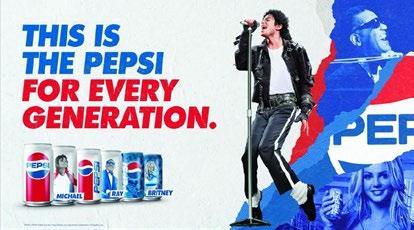
quite differing images. Pepsi was known for Michael Jackson approached BBDO, Pepsi’s ad agency, being cheaper and gained a reputation for with a $5 million proposition of a collaboration (Herrera,
but a way of life. This brought in a new wave of current influencers is an effective marketing perfume and make-up brands; Usain Bolt Pepsi you are part of the youth culture of today. consumers: the ‘Pepsi Generation’. strategy, because of the rise of social media boosting Virgin Media and popstars advocating Their latest slogan is ‘That’s What I Like’ with and ‘cancel culture’ it is vital to have the whole cars. 360 deals, where the celebrity gets a ads showing someone ‘letting go’ when they take The pop-video advert was ground-breaking. concept right percentage of revenue from not only album sales the lid off/pull the ring of a Pepsi and hear the Whilst pop-videos had been around since the but also merchandising and concert sales, in fizz. They dance like no-one is watching, except 1960’s (although the first official pop-video is The ‘New Generation’ campaign not only return for more comprehensive career support, that someone is.
often cited as being Bohemian Rhapsody by mixed advertising and pop culture but also are very popular still although none have yet to Queen in 1975) it was not until the launch of the took integration to a whole new level. Multiple surpass the multimillion dollars involved in the Pepsi has continued to be the ‘cool’ brand versus MTV channel in 1981 that they started to come marketing channels were used: the TV ads, Michael Jackson/Pepsi collaboration. Coke’s mature brand steeped in tradition. The into their own, so a pop-video as an advert in tour sponsorship, can labelling, displays in biggest problem to face both soda brands is the 1983 was way ahead of its time! So now not only supermarkets and PR events. Initially the tour New Generation to Future Generation. global movement away from unhealthy drinks has the ad got the appeal of pop superstardom sponsorship was confined to the USA, but the and towards drinks with more health benefits but in a media attracting millions of viewers. subsequent deal was for global coverage. “It Pepsi and Coke continue to battle it out for such as iced tea
The
1984 and an increased market share while Coke Murphy, executive VP of branded entertainment Nooyi decided to run a new Pepsi Generations incorporate all its brands including Diet Pepsi sales dropped according to financial reports at at TBA Global. “You couldn’t separate the tour campaign, focussed on nostalgia-based ads and Pepsi Max.
in response to their abysmal performance in the campaign was all about.” (Cavill, 2018) ‘This is the Pepsi for Every Generation’. Since own skin, enjoy life without worrying what other ‘Pepsi Challenge’. New Coke was supposed to then Pepsi have had taglines such as ‘Live For people think.”’ (Steinberg, 2020)
taste sweeter, more like Pepsi, which consumers Today all manner of companies use celebrity Now’ and ‘For Those Who Think Young’. All the had indicated they preferred, however the endorsements: sports stars endorsing sportswear accompanying ad campaigns were still aiming at Billie-Jean is no has-been backlash was incredible. Sales plummeted and a and equipment; actors promoting clothing, the younger generation implying that if you drink campaign was created by Coke fanatics to bring back the original Coke.
Michael’s multi-million model
The combination of advertising and pop culture being for the poorer and lower social classes. It was 2020). Pepsi’s then-CEO Roger Enrico was looking for created much more powerful advertising as seen
even associated with racial stereotypes as in early days a breakthrough idea to launch his ‘New Generation’ clearly by the rise in Pepsi sales, as not only were
Imagine that it’s summer 1983, your hair is wild, Pepsi had a ‘Negro markets’ department (Estes, 2020), campaign aimed at a youthful audience and the creative they branding themselves as relating to the ‘New whereas Coke was aimed specifically at white people. director at the time, Alan Pottasch, subsequently created Generation’ but also giving Coke the image of
outfit is colourful and pop culture is thriving. This implied that even in early days Pepsi was ahead the ‘Pepsi Generation’ series with Michael Jackson that being old and dated. ‘In a way, Enrico launched ‘Essentially two kinds of people existed in the ‘80s: of its times in its advertising and marketing. Their combined Pepsi and the King of Pop for the next decade! a new era in modern marketing, a version of
marketing strategy changed over the years, adapting to which we’re still living in, where brands crave, Coke drinkers and Pepsi drinkers. And if you loved the evolving market and created a new image for itself Michael Jackson’s managers approached Jay scrap, fight, and create to become part of pop Michael Jackson, you had good reason to fall into the implying it gave more energy, came in bigger bottles Coleman, founder/CEO of Entertainment Marketing culture’ (Beer, 2016). Products began selling
and refreshed without filling. The 1960’s saw a move & Communications International who then initially based on how they make you feel or what you latter group’. (Herrera, 2020) The ‘Thriller’ album towards rebellion against conformity amongst the youth contacted Coca-Cola, however they were far more are a part of rather than just the key benefits of
had been released one year before and was a global culture and Pepsi’s new message was ‘Now it’s Pepsi cautious and concerned that it would be a targeted, ethnic the product, bringing a whole new emotion into success with unprecedented sales, cementing Michael for those who think young’. campaign, although they did offer a $1 million deal advertising. The Michael Jackson Pepsi ad was a which was refused. Where Coke maintained their safe springboard for the use of celebrity endorsement
Jackson’s place as the undisputed King of Pop. Pepsi Coke had a more wholesome image, supporting the persona, Pepsi took a massive risk agreeing to such an and Pepsi went on to make a further $10 billion had always appealed to the younger audience with Temperance movement in the 1900’s, expressing outrageous sum and signed an integrated marketing deal deal with Jackson that joined the two through
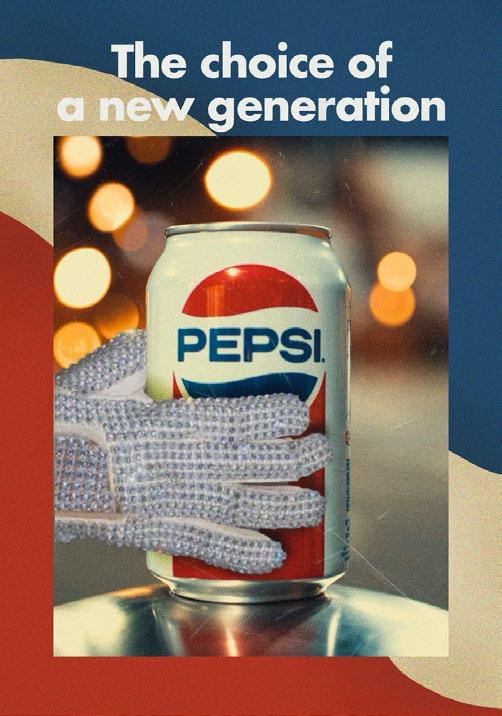
themselves as a patriotic brand, greeting American which would set the bar for many years to come. The until 1988 and has since signed Lionel Richie, advertising echoing current social shifts, but they soldiers wherever they went during World War II aim of the Choice of a New Generation campaign was to Madonna, Beyoncé and Britney Spears to lend were about to take a leap of faith that would launch ‘reminding them of home’ and was highlighted by make Pepsi look young and Coke look old. Jackson was their name to advertising campaigns. them into a new stratosphere in the advertising world. its 1972 advert ‘Hilltop/I’d like the world to buy a young and perfect as the face of this campaign.
coke’ celebrating cultural and ethnic differences. Both
Just a single,
iconic advert
changed the
way Pepsi was
perceived and
forged the
way for all
campaign that went spectacularly wrong advertising, plus cemented the use of integrated companies’ campaigns and indeed most advertising up But how did Jay Coleman persuade BBDO and Roger however involved Kendall Jenner in a video, marketing campaigns. to this point had always been ‘safe’: not too controversial Enrico that they would get a great return on their amongst other things, handing a policeman or costly. Despite gaining market share in the ‘Cola investment? “I pitched it as a multifaceted marketing a can of Pepsi during a protest, which was
Celebrity endorsements stemmed from this Wars’ thanks to the ‘Pepsi-Challenge’ launched in 1975, campaign with lots of touch points: big-time advertising, immediately condemned by the public as ground-breaking advert and are used in many Coke was still out- selling Pepsi, but only just. Pepsi had tour sponsorship, logos on the cans, displays in the racially offensive and trivialising activism. marketing campaigns around the globe. The everything to play for: could they take the cola top-spot? supermarket and PR- friendly events,” Coleman says Thus, care must be taken to pitch it absolutely idea of targeting a younger generation has also (Herrera, 2020). Jackson then suggested using Billie- perfectly. There were a number of objectors but been picked up by many companies such as The ‘Me’ generation, a phrase coined by writer Tom Jean with rewritten words and the deal was done. equally as many people who could not see a Apple, Samsung, Microsoft and Nintendo. In Wolf to describe the 1970s, hit the ‘80s embracing problem, sparking an internet-wide discussion. fact, it would be difficult to find a major ad that consumer and entertainment culture. The ‘feel-good The advert BBDO created was a simple adaption of Although Pepsi removed the ad from airing on doesn’t use at least one element that originated self-absorption of the 1970s’ Me Generation, evolved ‘Billie-Jean’ by Jackson with new lyrics such as “You’re the media, it was not a complete loss because in that foot-tapping homage to ‘Billie-Jean’. into a generation that now strived to gratify its ego the Pepsi Generation/ Guzzle down and taste the thrill of of the publicity created through the controversy. However, as we’ve seen you cannot just chuck a by acquiring material wealth (Paracha, 2020). It was the day/And feel the Pepsi way”. A young boy, posing Advertising agencies around the globe did not celebrity on an ad and expect everybody to love ok to be different, individual, colourful, hardworking as his icon Michael Jackson and dancing with a group shy away from celebrity endorsement however it, endorsement and media integration is a craft and hard playing. Pepsi wanted to be a part of this of friends, bumps into the real Jackson dancing with his they learnt to be more selective in the roles in that needs to be done carefully. It can truly make evolving culture and seized the opportunity to go where brothers. The youngsters, drinking Pepsi out of both which they ask celebrities to partake in. Even or break a brand. no advertising budget had gone before. Enter Michael cans and bottles, are a visual representation of who the though we know endorsing a product using
target audience is. Pepsi were no longer selling a
BY CHRISTIAN COOPER
Shockvertising, also known as shockadvertising, “Uses taboo subjects and societal issues that we typically ignore to intentionally attract widespread attention and trigger a strong reaction” (Turgeon, 2020). In other words, shockvertising is a form of advertising that intends to stop and shock people and force a reaction out of them. A very effective way at grabbing people’s attention, but the outcome? Not always beneficial for the brand. What can the history of shockvertising teach us in 2020?
The kings of shock
One company that has ruled the headlines of shockvertising campaigns is the United Colours of Benetton. They have produced some of the most shocking, controversial and talked about campaigns of all time. One of them in particular was considered especially distressing and caused a lot of controversy and hate around it. This was their 1992 HIV/AIDS campaign which used a graphic image of David Kirby laying in a bed, dying, with his grieving family around him. This caused a lot of upset mainly because of the content of the image. People did not want to be exposed to an image of a 32-year-old man looking skeletal, dying. Let alone see that image being used to promote and sell clothes.
Life magazine published the image of the gay rights activist David Kirby in an article about AIDS and two years later when Benetton used it as an image to sell, people were not happy. There was a lot of backlash; AIDS activists said that it spread fear within the AIDS community and was distressing and therefore launched a global campaign to boycott the company. However, Benetton had done this to raise awareness of the epidemic and David Kirby’s father gave permission for them to use this photograph. He said, “Benetton are not using us, we are using Benetton” (Genova, 2020). Spreading
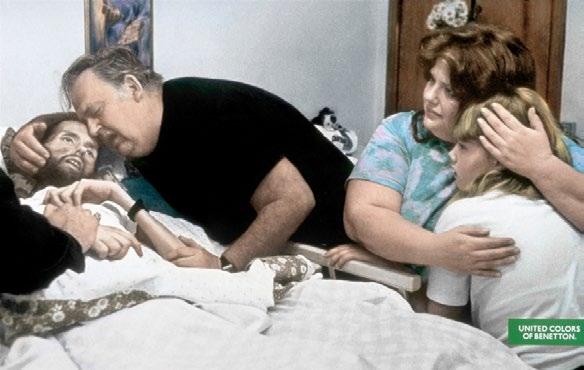
the message of the dangers of AIDS, a message their son would have wanted to keep preaching. That year AIDS in America had become a silent, shameful killer, and it was the number one killer in men aged 25-44. This made it a much more sensitive topic for Benetton to be addressing and according to them is was the first public campaign that brought AIDS to light.
Various AIDS groups didn’t just boycott the company, but they sued them over “commercial exploitation of suffering” (Eilidh Nuala Duffy, 2020), which is a very large claim when Benetton were adamant that they only released this ad to raise awareness and help the cause. The main reason why they did sue was that they saw a large company such as Benetton, which had no prior link to fighting HIV/AIDS, use it to gain worldwide attention which would lead to profits.
The shock factor of this ad is what made it such a powerful ad to the naked eye. The fact that the subject, Kirby, looks like a skeleton, is aged 32 and is actually dying surrounded by his grieving family is the worst nightmare for most families. This advert would have hit a spot of discomfort and given the audience a slice of the pain Kirby’s family was feeling. These feelings would trigger strong emotion and reaction because the public was not used to this. Let alone used to letting their sons and daughters look at an image like this.
The man who went too far?
The man behind this campaign and many like it was the creative director of Benetton and selfproclaimed genius Oliviero Toscani. Toscani was born in Milan in 1942 and studied photography and design at the University of the Arts in Zurich from 1961-65. He is most well-known for his advertising campaigns for Chanel, Fiorucci and of course Benetton. Known as a creative force in his industry, he even created the ‘Playlife’ sports
line for Benetton. His most famous period were the years 1982-2000 when he created an identity for the United Colours of Benetton and created some of the most shocking ads of the 20th/21st century. Some of these included the famous pig hearts, labelled black, white, yellow, the image of the new-born baby with the umbilical cord still intact and the image of the priest and nun kissing. It was argued that the ads promoted the brand’s ‘social consciousness’. These ads all brought a lot of attention to them and the message behind.
In 1995, Toscani had another one of his AIDS campaigns attacked by a German court which said that the advert “violated the standards of fair competition” (Wallenfeldt, 2020) because it exploited humans for commercial purposes.
This was an advert which included the image of a man’s behind with the letters ‘HIV’ stamped on it. A lot more toned down from the Kirby ad a few years earlier, but still massively shocking to the world. The French also had a go at getting the ad removed and they said it had “evoked Nazi barbarity” (Wallenfeldt, 2020). These countries took extreme responses to this advertising and it is fair to say that it must have provoked an intense emotional internal reaction within some people for them to take this action. In that sense the advert was a success, but not the reaction Benetton might have hoped for.
After all this angst with countries banning Toscani’s campaigns, the rest of the Benetton family decided that they were going to try and take control back from Luciano Benetton (the co-founder and Toscani’s good friend). At this point Toscani decided that he was going to make what he would find out would be his last shockvertising campaign for Benetton. He was going to use the faces and stories of criminals on death row. He produced a 96-page segment in Talk magazine telling the stories of these men and using their portraits. There was an uproar.
The American public did not approve, they thought that it was utterly inappropriate and there were groups of protesters outside their main store, ranging from the families of the victims to Benetton’s own customers. However, this was only the start of the backlash that they were going to receive. The state of Missouri sued them saying the company had “misinterpreted its intentions” (Usborne, 2020) when it went in to photograph the prisoners and the state of Pennsylvania called for a nationwide boycott of Benetton goods. Now Benetton only conducted 5% of their business in America and wanted to expand there, they had a large franchising contract lined up with Sears Roebuck, which owned a number of large department stores, which would have heavily boosted their sales in America. Sears reportedly tore this up after hearing about Benetton’s latest move, a severe loss for Benetton.
Frederico Santor, a spokesman for Benetton spoke out after the uproar calmed down admitting that, “Maybe we didn’t fully calculate the emotional reaction it was going to cause” (Usborne, 2020). On the other hand, Toscani was never going to apologise proclaiming “I don’t regret campaigning for anything that’s in the 10 commandments” (Usborne, 2020), a bold statement seeming all the hate he’d had. From Toscani’s stretch at Benetton you can clearly say that shockvertising has to come with a certain amount of confidence. Toscani certainly was the last person to care if he disrupted or offended, he was there to get people to think!
The power of shock
Shockvertising as a whole is a very niche way of advertising. It is powerful in creating instant reactions and staying in our minds. It can be cost effective and it can cost the brand masses amounts of money. Over the years many shockvertising campaigns focus on violence,
sex, drugs or graphic content because these extremes attack our social norms and often trigger some sort of intense reaction.
The CDC’s anti-smoking campaign, which included graphic images of post-surgery smokers, is another example. It has been estimated that since 2012, 5 million attempts have been made to quit. Even though there were lots of complaints about it, it was very successful in its mission. Shockvertising can be especially memorable. Psychology tells us that the more time we focus on an image due to it grabbing our attention to try and get our head around the message, the longer it stays in our short term memory, therefore the higher the chance that it will transfer to our long term memory. These campaigns can force your brain to stop and ask itself what kind of reaction has this caused in me?
Emotion is a large part of it; emotion centres of the brain are activated first when looking at something, this can also lead to the image triggering a past emotion, tying it to an event in your life. Professor A. Gardener from the Chartered Psychologist and Psychotherapists said, “shocking ads traditionally worked because the message became so deeply lodged in a person’s consciousness that they are eventually forced to act upon it” (Matt Williams, 2020). So, this shows how it has been and still is effective, but has overexposure to it jeopardised its effectiveness?
Relevant or rude?
Overexposure does not tend to affect shockvertising a huge amount, each campaign is so niche and differently offensive that the audience is generally looking at something completely new. Therefore, shockvertising is still very much a relevant and extremely effective tool because nothing else gains attention like it. For shockvertising to work and have a positive impact for the brand in 2020, there are a number of things that have to be done. First of all is it very important that the idea works, is appropriate and is released to the right audience (as we have learnt from Benetton). Because if all of these are not in place, they can drag the brand down a dark path.
It is important to be a lot more conscious of today’s society and the hypersensitivity to current issues. You have to be aware of the powers of social media, it facilitates the brands message behind the campaign and lets support be shared much wider and faster, as well as hate also being able to be spread much faster.
Overall...
So, what can shockvertising teach us today and should we use it? Shockvertising can tell us a lot about how people can react massively when exposed to something that is not their norm. This reaction can be positive and build a strong bond between the audience and the brand. It can also go terribly wrong if not enough care is taken to make sure it is in conjunction with the message the brand wants to give, and if it is crossing the line going that bit too far that people turn and hate. We should use shockvertising today because it is a powerful advertising tool and nothing will get people talking about a brand like it, however it should not be overused and without careful planning to make sure it works.
The 3 main questions a brand needs to ask themselves before going ahead with a shockvertising campaign.
01
What are our goals? Thinking about what they stand for and what impact they want to have with the campaign and if they are going about the right tactic to get it.
02
Have they done their research? Whether this method has been used before, or anything similar? As well as details about an image being used, is it going to cause problems later down the line?And of course, they need to ask themselves if they have done their research on the local laws.
03
The final and potentially most commonly looked over point, has the brand asked themselves what are all the possible misinterpretations, reactions and consequences that could happen?
Is a brand associating themselves with hard hitting political messages ever a good idea? If you agree, wait and see what happens when they do and fail.
In 1991, United Colours of Benetton unveiled the new-born baby ‘Giusy’ advert, featuring a new-born baby; unwashed, crying, still attached to her mother’s umbilical cord. Benetton splashed their Giusy advert over every magazine and billboard they could find for the world to gaze upon. The Giusy advert added to Benetton’s growing collection of controversial advertisements. Oliviero Toscani, Benetton’s chief art director had been responsible for this collection since the early 1980’s. In previous years the adverts being produced where made in an attempt to battle gender, religious and racial stereotypes. Yet “Giusy” is said to be the company’s most censored image (Duffy, 2018). Toscani never shying away from large topics of the times. Although, the rawness of Giusy seemed to be a step to far in some people’s eyes, at the time of release it was a relatively new concept for fathers to be present in the delivery room. The subject of childbirth was still very private and in some countries was rarely spoken about openly, not with the ease and openness that we have today when discussing it. The British Advertising Standards Authority (BASA) received “800 letters of complaint” (Fashion, 2011) over “Giusy”, it also sparked protests in Palermo Italy where the council “forced the billboards removal” due to its “indecency”; some magazines refused to run the advert, including Cosmopolitan and (ironically) Child, and the ad was condemned by many, including “The Code of Advertising Practise Court, The Self- Regulatory Committee for the sector” who all came to the consensus that the advert did “not take account of public sensitivity”. Despite the immense backlash, the ad was met with some praise. It was awarded a prize by the Swiss ‘Société́ Générale d’Affichage’ (General Poster Association) and the Sant’ Orsola General Hospital, located in Bologna who requested Benetton “display the photo in its delivery room” (Fashion, 2011).
Not so united
Over the years, Benetton certainly seems to have made a name for itself with its hard hitting and challenging visual statements. They are a prime example of a company using shockvertising and their fearless approach often led to scandal.
In 1995, the brand found themselves at the centre of a court battle in Germany against its own retailers. On trial, in effect, is “Benetton’s right to advertise its products as proactively as it sees fit” (Crawshaw,1995). This came after the wave of adverts that had been produced since 1992 which had been deemed to be “deeply harrowing or vilely inappropriate”
(Crawshaw,1995). The cases were heard in courts in “Dusseldorf, Braunschweig, Mannheim, Cologne and in a clutch of other towns” after the German people decided they had had enough of Benetton’s attempt “to raise awareness of key social issues”. Germany was the biggest foreign market for Benetton and yet “leaflet campaigns” were initiated, calling for people to boycott the brand. This all backfired on Benetton, “When Benetton sued retailers for refusing to pay their bills, they counter-sued for the money allegedly lost because of the shock advertising - to the total tune of approximately £2m in five cases alone” (Crawshaw, 1995).
BY HANNAH
This was one of the many backlashes that Benetton would receive over one of its adverts. Another, dates back to the year 2000 when they released their “We on death row” campaign. The campaign featured 26 condemned men from different states in America. “The written profiles” attached to the campaign only served to fuel the fire in the nation’s eyes. They were “mostly sympathetic, focusing on the regrets expressed by the men about their plights but stopping short of providing details of the crimes they were convicted of committing” (Usborne, 2000). The backlash the campaign received was unlike any that Benetton had ever received before and many protests were staged.

One in particular took place outside the company’s Head Office in New York, where family members of the people that had been murdered by men included in the adverts attended. Consequently, contracts between major department stores and Benetton were withdrawn. Sears was one of the first to cut ties with the brand and clear any merchandise from their shelves. Benetton received thousands of letters from individuals stating that they would “never buy Benetton products” (Usborne, 2000). Della Famina Jeary, Head of the New York advertising said “If the death sentence was handed out to those who are guilty of producing excruciatingly tasteless, ineffective advertising and inflicting it on the masses, Oliviero Toscani, the self-proclaimed genius behind Benetton advertising, would be appearing in his own anti-capital punishment ads” (Usborne, 2000). In the months that followed Toscani announced that he was leaving Benetton and there has always been speculation about his departure. Toscani and the brand has never confirmed the reason why he left.
Despite Toscani departing Benetton - for reasons perhaps linked to the controversial ad campaign - he left knowing that for better or for worse he was always true to himself and what he believed in.
To this day, Toscani always makes his views and opinions known. Benetton as a brand never did any of its ‘shockvertising’ in half measures. Every message they conveyed they firmly believed in. That is why Benetton is considered one of the only brands who has done shockvertising well. Despite the backlash, the media coverage and the boycotting that the brand has received over the years, Benetton has achieved what every brand wants. For everyone to know who they are.
the ad itself was too generic.
In the 2.5 minutes of Pepsi’s 2017 “Live for now” advert you can see Kendall Jenner, the eldest daughter of Caitlyn and Kris Jenner, leaving a modelling job to go and join a procession outside. The procession is filled with all ethnicities, carefree young and hip people, carrying signs emblazoned with “join the conversation” and “love” (Smith, 2017). They are then met by a group of officers where “Jenner picks up a can of liquid corporate America and approaches the menacing line and hands it to the most photogenic officer” (Solon, 2017). This gesture from Jenner leads the policeman to take a swig of the drink and turn to his colleague and acknowledge the drink, causing the crowd to rejoice.
The ad was created at Pepsi’s in-house studio, New York based “Creators League Studio” (Chapman, 2017). It was Brad Jackman, their head of in- house content who gave the advert
being released it was pulled down. After 48 hours the ad had received a staggering 1.6 million (Watercutter, 2017). Pepsi insisted that they were “trying to project a global message of unity of peace and understanding”.
Jenner never directly commented on her involvement in the campaign, bar a segment in her family’s reality TV show “Keeping up with the Kardashians” in which she states that she “would never purposefully hurt someone” (Newsbeat, 2017). Pepsi also later apologised, saying, “We also apologise for putting Kendall Jenner in this position.” This was not received well by social media users who said: “It’s incredible that @pepsi apologised to Kendall she chose to be a part of that ad. Pepsi needs to apologise to the protesters.”
There were repercussions from the ad and the brand was undoubtedly affected. It has now been said that it took nine months for the brand to fully recover in the eyes of millennials. The ad was realised April 4th, 2017. At this time 28% of adult consumers stated that they would
This story would then have been very different. Unlike Benetton, they did not feel comfortable to outrightly supporting a specific movement or message. They would have gained much better publicity and more respect if they had changed their approach.
The examples above show a clear divide between the good publicity surrounding shockvertising and bad publicity. Also, between purposeful shockvertising and the latter. The common thread in both is the media.
Whether the brand purposefully releases an ad that intends to follow shockvertising, it is the media which decides this for them.
Toscani and Benetton intended to shock the world. The Pepsi “Live for Now”, shocked the world, but this was certainly not their intention. Yet both were spoken about across the media. The media is a huge platform in the 21st century, one that few can avoid. Yet it is what brands and companies rely on. Publicity and having your work, product and campaign being spoken about is all that is wanted by all concerned. Oscar Wilde once said, “There is no such thing as bad publicity”, I wonder if Benetton and Pepsi would agree with him?

This is why shockvertising works. The main aim for any brand or company is to be known and by using shockvertising this will happen. Yes, it can be a risky business and companies have to be prepared to not be universally loved, but this is why Benetton’s legacy is so important. They are an example of a brand doing shockvertising to the right standard because they were “comfortable with being uncomfortable”. They were a small company that wanted to grow and knew exactly how to do so. This is perhaps why the Pepsi 2017 “Live for now” advert did not work for them. Being an already very well-established brand,
the all clear. The ad sparked an uproar from both Pepsi and non-Pepsi drinkers. Their anger centred on how insensitive it was. Given how similar a resemblance it had to The Black Lives Matter movement, the organisation that was peaking in 2017 after protests had already been held for two years prior. People did not like how simple and small Pepsi seemed to make the issue. The trending anger stemmed from their belief that “If the Black Lives Matter movement was led by a 21-year-old white supermodel armed with a can of fizzy soda, then maybe everyone would just get along”. Within the first 24 hours of the advert
buy the drink. By 12th April that figure had dropped to 20%. It then dropping from 27% to 24% in the eyes of millennials (Marzilli, 2017).
Pepsi as a brand needed to have a clearer directive. They did a half-hearted job at supporting the main issue, The Movement. They could have approached the ad differently. Pepsi could still have used a march, but it would have been better to have used it in a more realistic fashion and not have had such a simplistic resolve to such a complex topic.
Benetton were the pioneers for shockvertising, they took the leap and it worked. Yes, they received criticism, lost clients, customers and staff, yet they continued to use it. Why? Because the leap worked for them. They were able to establish themselves as a serious competitor in the fashion world, growing from the publicity that their questionable ads received and paved the way for brands to follow their example. However, 40 years later there are few examples of Benetton’s tactics working for other brands. Living in a world where a new generation has taken over and are striving for change. The fight for racial, gender and religious equality has never been stronger. Social media enabling millions to rally together, Pepsi experienced the full force of this new generation. However, is the generation at fault or is it the advertisers poorly trying to use the same tactics Benetton did 40 years ago? Shockvertising could still work in a modern-day society and could have a useful benefit, but companies need to adapt the 40-year-old tactics Benetton founded to suit a new generation in an ever more digital world. Since the 1980’s, advertising laws, politics, technology, people’s moral codes have all changed so the tactics need to change to meet the 21st century requirements.
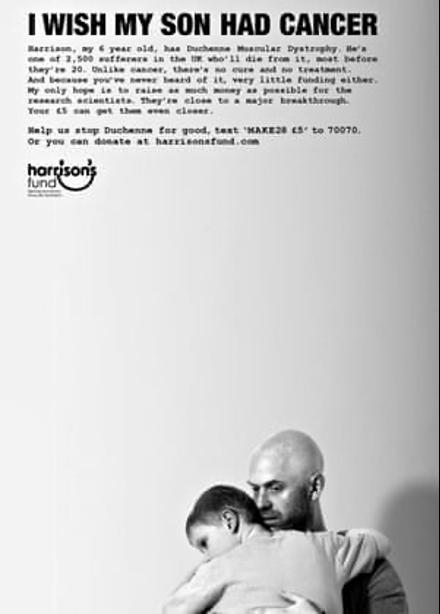
They create to shock, cause a stir. Sometimes they go too far and sometimes they make a point strong enough to change the world.
Throughout the history of advertising it’s possible to observe many examples of shock advertising and the effect it had on people. So how many of them crossed the line of moral boundaries? Is it even possible to shock and stay true to one’s belief system? What made some ads more ethical than others and what can we learn from them in 2020?
Whether you’re creating an ad campaign which spreads awareness or raises money for a good cause, it seems noble, like making a big change, making world a better place. Creatives working on such a project are not only seen as an ad person, but a good person. And undoubtedly there is that sense of a purpose when you’re creating a social ad campaign. However, even if you are fighting for a good cause you can still cause controversy and your actions might be questioned by many.
In May of 2013 a charity named Harrison’s Fund released a campaign to raise awareness on Duchenne Muscular Dystrophy. It would be an understatement to say that the campaign, created by AIS London advertising agency, was a success. It not only raised thousands of pounds for the before unrecognised charity, but also, won over 30 international advertising, press and copywriting awards. However what at first might seem like a gem for the advertising industry, after being released to the public, it was vilified in the press too. ‘I wish my son had cancer’ - that was the copy which made the ad incredibly successful but at the same time extremely controversial.
One sentence and you immediately get a gut feeling, that something is wrong, not right. Unethical even. There are so many kids suffering from cancer. So many parents who every single day helplessly watch their child’s uneven battle.
“I wish my son had cancer.”
How insensitive, unsympathetic do you need to be to say that? And then go even further, create a print with that copy and put it out there, for the whole world to see? Why would someone even say that?
Bill Bernbach, creative director and founder of DDB ad agency stated that “you can say the right thing about a product and nobody will listen. You’ve got to say it in such a way that people will feel it in their gut” (Shockumentary, The Drum, 2014).
Barney Cockerell, creative director at WWAV Rapp Collins shares a similar point of view and says that shock advertising is crucial for fundraising. “There is a need to snap people out of a state of apathy, to get them to engage in the subject matter emotionally” (The Guardian, 2006) He goes even further to say that a charity campaign “must be hard hitting or it doesn’t work” (The Guardian, 2006).
And that thought might apply not only to charity advertising, but any kind of commercial communication. “The digital and data revolutions have empowered people to consume the content they want on their terms. Consumers are willing to reward brands with their attention - provided that their branded content lives up to their expectations. If it doesn’t people will skip, mute or even seek ad-free environments” (The Drum, 2019) Understanding that, it becomes clear that brands and charities need to strive for attention from consumers who, as the time flies by, are getting harder and harder to reach. Nowadays even producing high quality content might not be enough. Shock, if being sincere, could be the medium used to get the message across to the audience. Ruben Turner, executive creative director at the advertising firm Good Agency agrees that “controversial advertising can be effective in grabbing people’s attention,
but he also warns that the content has to be seen as coming from a place of truth” (Third Sector, 2019)
In the Code of Fundraising Practice, realised in October 2019 by Fundraising Regulator, it is stated that “you must make sure all advertisements are decent, honest and truthful” (Code of Fundraising Practice, 9.1.1, 2019) and that “your marketing communication must not contain anything that is likely to cause fear or distress without a justifiable reason.” (Code of Fundraising Practice, 9.1.4, 2019). Even though that particular code of conduct was released years after the Harrison’s Fund’s campaign, it still can be useful to shed some light on the matter whether the controversial ad was ethical or not. As the campaign was shocking to the public and caused indignation, the charity responded immediately with their explanation for the use of shock advertising and told the story, the truth, behind the ad.
Alex Smith, dad to the 6-year-old Harrison who was diagnosed with Duchenne muscular dystrophy, described that “during the creative process, the agency asked him to take them through Harrison’s diagnosis, tap into the dark thoughts he had to be brutally honest about how he felt. He quietly told them that he wished his son had cancer.” (The Guardian, 2014) “Duchenne currently has no treatments, no cure and is 100% fatal. (Smith, 2013). “Funding for cancer research is epic in its vastness and reach” (Smith, 2013), while no one who Harrison’s father spoke to had heard of DMD. With the advert he hoped to “open up a conversation, look wider than the big players and help children like Harrison.” (Smith, 2013)
After considering the story behind the ad and looking at the copy again, it is possible to understand why the charity and AIS London decided to run this brave and controversial campaign. Labelling it as unethical, doesn’t seem right if you consider the amount of money that was raised for the Harrison’s Fund only because of how bold the statement was.
Nevertheless, the usage of shock advertising still remains morally questionable. “Opinions on shocking ads are highly divergent. Some people approve shock advertising due to its eye-opening effect, while others believe that shock advertising relies heavily on emotional manipulation” (Sciendo, 2018). With that being said, it is still possible to argue whether the truth shared by Alex Smith was emotionally manipulative or not. After all, it is reasonable to assume that Harrison’s dad wouldn’t want his son to have neither DMD nor cancer, he wished his son was healthy, as every parent does. That makes the copy “I wish my son had cancer” a distortion of the truth, an exaggeration created to shock. Also knowing that Alex was not only a father, but an “experienced marketer, versed in the world of branding and communication” (Dervan, 2020) it is fair to judge that he was fully aware that the ad could came across as offensive, especially for those suffering with cancer.
Furthermore, Harrison’s Fund campaign definitely could be classified as a “promotional campaign that uses threat appeals that elicit negative emotions including fear, shock or distress” (Journal of Business Ethics, December 2018). Even though “consumers can judge threat-based marketing communications as morally questionable they can also judge them as ethical”. (Journal of Business Ethics, December 2018) The ad challenges people’s moral boundaries and in some way violates their social and personal ideals. Nevertheless, after seeing the campaign and evaluating whether the ad is good or bad, morally acceptable or not, many people presented a positive response towards the campaign and took action such as donations. “It [the campaign] raised an impressive £65000 in donations. Website visits rose by 17,000% and their Facebook reach increased by 800%”. That might lead to a conclusion that the majority of people judged the ad as ethical as they decided to support it.
There is definitely a variety of reasons for which the ad is morally questionable. It balances on the edge between manipulation and truth, audacity
and boldness, distress and apprehension. Ethical judgments are fluid and incredibly flexible so what for one person might appear offensive and unethical for another might seem morally acceptable. While Harrison’s Fund’s advertising campaign remains in the grey area of ethics, there might be other examples of charity shock advertising which could expand the understanding of ethics in shock advertising.
In late 80s, LYNX, animal rights organisation, ran an extremely shocking and offensive advertising campaign aimed against fur-coat industry. The ad was photographed by David Bailey and it featured a model trailing blood from a full-length fur coat. The caption read: “It takes up to 40 dumb animals to make a fur coat. But only one to wear it.”
The LYNX campaign, same as Harrison’s Fund campaign, falls into the category of promotional campaigns that elicit shock. However, it seems that it didn’t cause as much controversy as Harrison’s Fund’s ad. “Most people thought it was brilliant” says Lynne Kentish, director of the Lynx Educational Trust for Animal Welfare. “This was very shocking at the time, but it was also well received and made people think about things in a way they hadn’t done before.” (Independent, 1999)
The ad was incredibly effective, “leading furriers were forced to call in receivers as sales dropped by 50 per cent. Out of Britain’s 75 fur farmers, only 29 survived the slump” (Independent, 1992).
There is a variety of broad categories of shock appeals. The Lynx campaign featured two of those offence elicitors: disgusting images (blood) and impropriety (calling people out for being dumb). So how was it that Lynx’s advertising campaign didn’t cause as much controversy as the Harrison’s Fund’s advertisement?
The brand identity prism is a marketing model which portrays a brand’s vision and its values. One of the components is “the brand-user’s self-
image - the target-group’s own internal mirror” (Book of Brand Management Models, 2006) and how customers perceive themselves when associated with a brand or a product. Before Lynx’s ad campaign people were wearing fur because it made them seem glamorous and it was a way to show off their status. However, that brand identity component which was fuelling fur coat industry turned out to be incredibly fragile. Mark Glover and Lynne Kentish “decided that they would make people who wear fur coats a pariah. They used the fact that “people in mid1980s Britain were imbued with the idea they could change the world” (East Anglian, 2012) to their advantage. What was even more nurturing for their idea was that “around the same time there was an explosion of interest in vegetarianism and animal welfare issues” (East Anglian, 2012). The anti-fur movement initiated by Lynx had values behind itself and supporting it might had been perceived as even more glamourous than wearing a fur coat. In addition, it also “harnessed the power of celebrity endorsement. It was not only shot by leading photographer David Baily, but its celebrity supporters included Twiggy, Yasmin Le Bon and Elton John” (East Anglian, 2012). Most importantly however, it was fighting a cruel and wasteful industry. Lynne says in the interviews that “the animals were only used for fashion and they suffered horrific deaths. We don’t need fur - there are plenty of alternatives.”
Unlike Harrison’s Fund’s advertising campaign, Lynx opposed a clearly unethical behaviour and proposed a positive one. “If you don’t want millions of animals tortured and killed in leghold traps, don’t buy a fur coat”. Harrison’s Fund’s advertisement however, proposed an ethical conduct aimed to support kids with DMD but it also targeted an immensely sensitive issue - cancer. Nevertheless, in both campaigns shock was what grabbed people’s attention and made them care.
BY SARA KOMPA
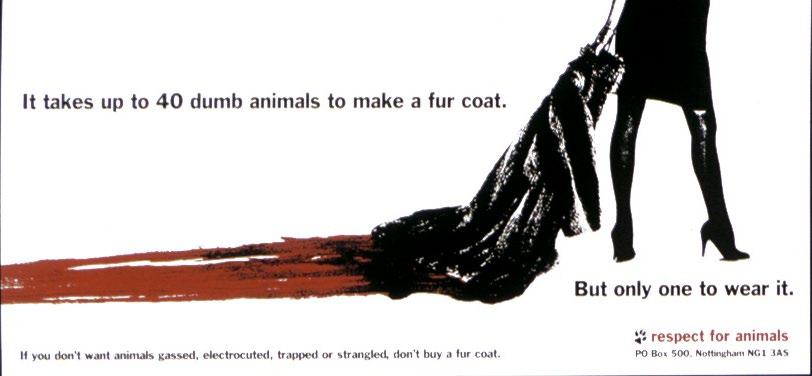
The stories behind Harrison’s Fund’s and Lynx’s advertising campaign are both great examples of how effective involving shock advertising can be and how it can open in-depth conversation of truly important matters. Both of those ads wouldn’t have the same world changing power if they were lacking the shock elicitor. Shock might be still a useful advertising tool in 2020 if it has justification and consideration for the wellbeing of the audience. John Hegarty, art director and co-founder of BBH advertising agency, writes in his book “I applaud anyone’s desire to open my eyes, to make me look at things afresh and bring different ideas to my attention. But it must be done with sincerity, integrity and with sympathy - or the danger is it can look as though it’s just exploitation” (John Hegarty, 2012).
BY TED MACDONNELL
Shock advertising, or more commonly known as “shockvertising”. This lawless and daring marketing technique has been around since the very beginning of advertising. The idea is to grab the audience’s attention through an alarming image or piece of copy, which makes them stop and think about the product. Commonly taken up by smaller businesses’ it can be an incredibly effective way of getting publicity, whether it be good or bad. Of course, this technique has caused massive controversy over the years, and it seems to have somewhat fallen out of favour with the public, with increasing levels of backlash whenever it is presented, no matter the form. I
done right, it can be a thing of beauty, or horror!
Even in this ‘snowflake’ generation, the riskiest ideas can still be applauded, and as modern art continues to develop and stretch its wings, there has never been a better time for shockvertising to make a return.
Benetton and Toscani vs The World
In the early nineties Benetton launched a campaign featuring a series of ads designed to tackle the growing stigma around HIV Aids. In this time Aids was considered a world-wide pandemic and masses of misinformation was being spread all the time. The first
The mix of Kirby’s disease-stricken face and his already grieving family is unnerving and it is certainly not something people expect to see on a billboard. Benetton claims it was the first public campaign to address Aids and although it received backlash from activists and other sufferers, it has since been acclaimed by critics and is seen to have spread an important message (Duffy, 2017). Kirby’s family wanted the photo to be used to send a message to those who had been misinformed about the disease and people who were discriminating against those suffering from it (Duffy, 2017).
Benetton’s unapologetic execution of this message was fantastic and they went about this with positive intentions.
This was the tip of the iceberg in a series of controversial ads and campaigns, which started in 1982. Benetton was one of the first brands to truly use shockvertising to its full capabilities. In 1982 they hired Oliviero Toscani, a middle aged Italian photographer who was best known for stints working for magazines like Vogue and a controversial ad campaign for ‘Jesus Jeans’ which was a shot of a woman’s bum in jeans shorts, with copy reading “He who loves me follows me” (Duffy, 2017). Toscani had a history

have definitely benefited from these ads and have made a name for themselves through shockvertising, however in the process they have offended all sorts of groups and people. In the current climate, Benetton is a struggling brand, with poor revenue figures and a lack of real brand identity (Mortimer, 2016). So, the question I pose again is, would this tactic work in the modern day? And can we learn from Benetton’s mistakes and use shockvertising to its full potential again?
Recent hits and misses
It is important to identify the difference between controversial adverts and shocking adverts. In recent times many companies have attempted pretty vanilla campaigns and accidently created something incredibly controversial, with virtually no benefits to the company. Shockvertising is supposed to be controversial but is also supposed to be effective and ultimately help sell the product. A modern example which I found fascinating was Gillette’s ‘we believe’ ad in 2019. The advert takes a stance on male stereotypes and tries to tackle issues such as casual sexism and toxic masculinity. Most companies are applauded for taking a stand on topics like this, however some claimed it was rich coming from Gillette which has been selling strictly male products for most of its existence (Small, 2020). It’s a good their aim was to shock the audience, get them want to explore the idea that shockvertising can action Benetton took was bold and now of controversy so it was a tactical decision from advert with a positive, encouraging message, to lean forward and take notice of which I am more interested in the effect a shocking still teach us many lessons in the modern day somewhat iconic, it featured a photo
Benetton to hire him. Hired as an art director, however they couldn’t decide which issue to company this is. Even if people only wanted image has on us. Depending on the person, 2019). So maybe companies are looking at this and that if of gay rights activist David Kirby,
Toscani had a vision to change Benetton’s image tackle, which made it seem a little aimless and to know the company behind it so they could you may want to do something about the and think it isn’t worth the risk if people are lying on his death bed next to his and the public’s perception on massive issues perhaps spineless as they could be deemed a complain, Wrigley’s were still winning as image, like complain or look into the brand becoming harder and harder to surprise. heartbroken family. such as HIV Aids and racism. One of the first little scared to just tackle one. Although the ad everyone was talking about them. (Marsh, 2016). Another person might not campaigns Benetton launched after acquiring had its critics it was generally well received be affected at all and can mentally separate Conclusion Toscani and deciding on their new strategy, was and Gillette successfully changed their image Something that could be criticized about this shocking images from real life experiences, a campaign called “All the colours of the world” from an old school ‘best a man can get’ stiff advert is that the imagery is hideous, and that feel personally I fall into this bracket. From Now we have plenty of examples, from (Collins, 2019). This campaign was a series of brand, to a woke, socially aware brand which is sort of imagery shouldn’t be associated with a brand’s perspective they would want you either the 20th century, the modern day or prints with people of different races, enjoying moving with the times. So perhaps this advert that product. Take Extra for example, they to link their ads to your personal experiences somewhere in-between. How can we take the each other’s company and spreading a positive ticked many boxes in terms of controversy, wouldn’t use an image associated with dirt and and preferences as you are then building a lessons we have learned from these examples, message. Not that controversial I hear you say, and it was in some sense shocking as people bad hygiene as they would fear that association relationship. For instance, Benetton’s “has all and carry them into the current climate? Well well don’t forget this was a time which was only hadn’t seen these ideals coming from this would impact on the customer’s perception the colours’’ campaign might relay positively for a start we have to be less vigilant, as we 30 years away from segregation ‘Jim Crow’ laws brand, however it could be said that they aren’t of the product. The shame for them is that onto older African Americans as they haven’t become more and more socially aware for the in America, and the apartheid was still in place comparable to the Benetton adverts as they this ad was before the age of social media, so seen an image like this before, and equal rights better, a consequence of this means people are in South Africa. So, although people weren’t aren’t truly shocking in their essence. By that I they couldn’t rack up hundreds of retweets or was something that was fought for. Particularly becoming easily offended. People will find a as ignorant, they were not used to seeing these mean you don’t look at them and feel taken by likes, which most likely would have spread with shockvertising, you may not gain a huge way of being offended by anything, so in some kinds of images. The most famous of all the surprise, you aren’t seeing an image you may this ad world-wide. However, this is still an volume of people who identify or think fondly senses, any work will offend someone. What Benetton campaigns is the David Kirby photo not have seen before. ad synonymous with Wrigley’s, almost twenty of your advert, but those who you do will feel made Benetton’s campaigns so effective was I previously mentioned and that really shot years on, so for that I applaud them and for that strongly about it and the idea is you would that they didn’t care who they offended, images them into stardom and established them as Wrigley’s take it too far this ad goes down as one of the most famous have then gained a loyal customer. like The Pope kissing an Imam demonstrated a defining voice of a generation. However examples of shockvertising in the modern day. this. Benetton set out to shock everyone to gain
Benetton didn’t exactly go from strength to However, when Wrigley’s created the ‘Dog A possible explanation for the demise in awareness for their brand and raise awareness strength after this, in 1993 they released Breath’ advert they certainly set out to do this. The effect it has on you shockvertising could be found here too, in for social issues, however in the modern-day a print ad with a photo of the top of The ad depicts a younger man waking up after the twentieth century the internet wasn’t companies and agencies alike are too scared to two bum cheeks with a stamp on a heavy night, realising he has bad breath and The psychological effect shocking images around and the culture and need for constant take these kinds of risks in case they get torn the top reading “HIV Positive” then proceeding to regurgitate a wet dog. Yes, have on the human brain is fascinating, and entertainment wasn’t as ingrained in our apart on social media. So, if brands are willing they were subsequently sued you read that right, the man literally throws up there is no doubt that businesses are well society as it is now. So, when a shocking image to take a leap of faith and try something with by various Aids groups for a dog. This advert received a record number aware of this when they are launching a was put out on a billboard, or on the TV, people an element of risk, the creatives at agencies “commercial exploitation of of complaints and was eventually pulled from particularly alarming campaign. Pictures can really noticed. Since the turn of the digital age, will come up with the goods, however we as suffering” (Duffy, 2017). airing. People were disgusted by it and it was trigger memories and even help to recall an people have become desensitized to heinous consumers have to continue to support and In the grand scheme not received well (Kirby, 2003). Although this exact moment. To this day neuroscientists are images as they are everywhere to see - if one praise this kind of advertising, or it will die out. of things and looking advert didn’t tackle any major issues or any still investigating why humans have an innate was to scroll on the Instagram explore page back with the benefit issues for that matter, it is still comparable to ability to recall images and store them in the for long enough you would be sure to see of hindsight, Benetton the adverts I have previously mentioned as long-term memory (Glaser, 2016). However, something that would make you gasp (Pittaro, Image credit: Ted Macdonnell
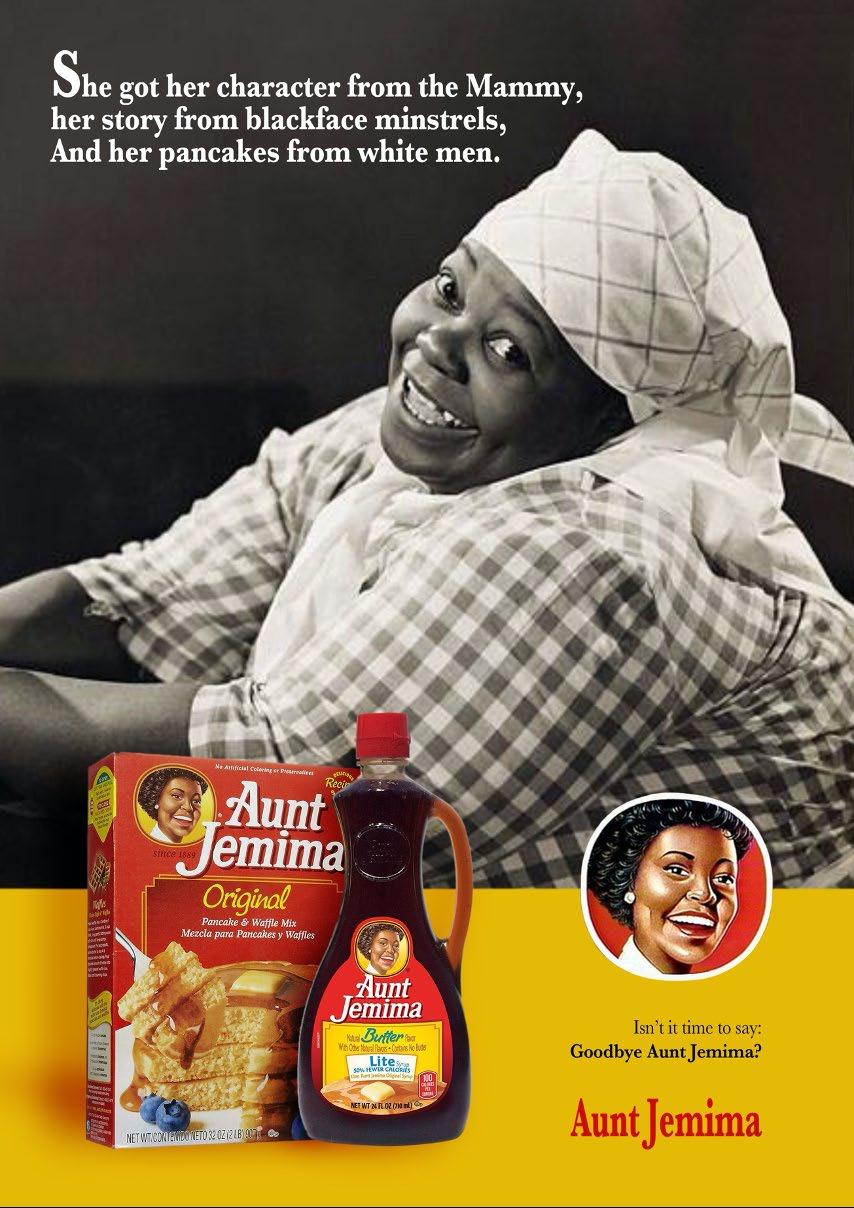
BY BRONWYN CHESHIRE
Advertising, through the continued use of slaveryestablished stereotypes, became “… a structured mechanism that eroded the self-esteem of blacks and kept them powerless.” (Kern-Foxworth, 1994)
Black culture has been stereotyped by Western media for over two centuries, in times of slavery to black civil rights and continues today in 2020. With so much change in society since the American Civil War, why is there so little change in black media representation? Starting in the 1800s and ending in 2020, the evolution of stereotypes and the industry’s responsibility will be analysed to decide whether an advertising industry without stereotyping is the future or a pipe dream.
Aunt Jemima’s story began in 1889 when the Pearl Milling Company was founded by Charles Rutt and Chris Underwood. They created a new convenience pancake mix and wanted to give their product a strong, recognisable brand. Inspiration struck when Rutt was visiting St. Joseph, in Missouri, and saw blackface minstrel comedians Baker and Farrall performing a popular song originally known as “Old Aunt Jemima” (Kern-Foxworth, 1994). The character of the song was the perfect fit, but without the funds in the business, Rutt and Underwood sold everything to R. T Davis Mill and Manufacturing. Davis took up the hunt in finding the perfect black woman to be “Aunt Jemima”, and after a tip-off from a friend he met unsuspecting Nancy Green, the first of many Aunt Jemimas. Green was well known for her own pancakes while having a personality and look fitting with the Mammy stereotype (the faithful slave who’s ‘happy’ to serve and cook for her white household) that Aunt Jemima was about to adopt. In many ways, she can be considered the extension strategy of the Mammy. Aunt Jemima was “consciously portrayed as an asexual, unattractive being” and wore a red bandana, a symbol of slavery (KernFoxworth, 1994).
Rights Movement became a catalyst in the way black culture was represented. By the Movement vocalising their disapproval of black portrayal in the media, stereotypes in their original form began to dissipate within advertising. It was only during the 1950s that real black models began to be used to advertise products on a small scale (Kern-Foxworth, 1994). Change was happening but not everyone was happy about it. Southern America did not approve of favourable black representation when advertising products, so much so they would frequently boycott brands that did. Consequently, television executives and advertisers “feared alienating consumers and therefore avoided programming and commercials that were too flattering or egalitarian towards blacks” (Kern-Foxworth, 1994).
“The one stereotype that has been the most prolific, the ultimate stereotype, has been that of Aunt Jemima.”
(Kern-Foxworth,
1994)
Green’s “debut as Aunt Jemima [was] at [the] World Columbian Exhibition, Chicago” in 1893 where she “served more than a million pancakes by the time the fair ended” (Kern-Foxworth, 1994). She remained as Aunt Jemima until her tragic death in 1923, after being hit by a car.
Aunt Jemima did not end there, as many black women took her place. The stereotype prolonged the life of the Mammy into the 20th century and facilitated it in US homes of the post-slavery era.
The Mad Men Era
The Mad Men Era encapsulates the height of advertising in America during the 20th century, during a time of large social change. The Civil
Aunt Jemima had her own product line, most successfully being Aunt Jemima Dolls, as well as a restaurant in Disneyland which opened in 1955. It is said that the Aunt Jemima restaurant saw over 1.6 million visitors during the time it was open (McElya, 2007) (Kern-Foxworth, 1994). The civil rights movement helped to discontinue the Aunt Jemima product line as there were “objections from blacks who viewed the images as derogatory and denigrating” (Kern-Foxworth, 1994). Over time the fat, ugly Aunt Jemima went on a weight loss and beauty plan transforming her to a prettier woman, that the brand said ‘better represented’ the modern black woman. But there is no doubt in the harm Aunt Jemima caused. She became a symbol of black womanhood that invaded the beliefs of American society.
“…black women saw themselves confined to a low economic status in life; even though free, they were slaves to a stereotypical symbol.”
(Kern-Foxworth, 1994)
Black representation in the media seems to be on a high currently. “Seems” is the key point as the small representation of black people in advertising creates the image of a changed, equal and diverse industry, a façade that industry has been hiding behind for too long. Jordan Vernon said the primitive involvement of black models in media, which took a lot of protesting to achieve, has now given the industry a “degree of self-deception in that many advertising executives think they have done their bit..” (Jordan, 1975). It is clear today, 45 years on, that they still have not.
“…the Industry is truly colour blind.” (Jordan, 1975)
Although the number of black people in media, such as TV and magazines, have increased, they often appear in smaller roles for less time, in racially integrated groups and often lost in the background (Appiah, 2001). Vernon supported this viewpoint, saying that black involvement in advertising is:
“…one of deceptive visibility.” (Jordan, 1975)
Their presence suggests that a milestone has been reached, and their image portrayed equally in the media to whites, but black representation still remains half-heartedly achieved.
A study into “Ethnicity in Advertising” by Lloyds Banking Group, 2018, highlights that although minority ethnicity representation in the media has doubled in the UK, too many advertisements include them as supporting roles (Group & staff, 2018). The study goes further, revealing that black consumers still feel that advertising creatives do not recognise their culture (42%), inaccurately portray black people (34%) and negatively stereotype black people in advertisements (29%) (Group & staff, 2018). Nearly one-third of black audiences still felt stereotyped by today’s advertising identifying that the advertising industry still needs to catch-up with the changes of the black community to recognise that stereotypes are archaic and far from reality (Jordan, 1975).
“…The advertising industry… must make business decisions that adequately reflect black reality and not the myths and stereotypes of bygone ages.”
(Jordan, 1975)
Why do we need to change?
What used to be minorities in a population, Black, Latino and Asian people are now becoming one of the fastest-growing segments with rising importance in terms of economic, political and purchasing
power (Precourt & Whiteside, 2017). The advertising industry may simply have to improve black representation out of necessity, because the industry will have to constantly reach a wider ethnic audience, and agencies need to do this effectively.
Osei Appiah’s study into the “Ethnic Identification on Adolescents’ Evaluations of Advertisements” revealed that a white audience can comprehensibly understand black characters
in non-stereotypical roles proving that a majority audience can understand another ethnicity without the need for stereotyping (Appiah, 2001). Furthermore, highlighting and celebrating cultural difference may have a stronger beneficial impact than trying to blend cultures together (Group & staff, 2018) suggesting industry needs to change because diversity of culture is seen positively.
Is the Advertising Industry to blame?
It can be considered not only a responsibility towards society but towards clients that creatives refrain from stereotyping their target audience.
Julie Bramham states that creatives are unaware they are using stereotypes, labelling this a “danger” highlighting the “real disconnect between how we think we are doing and what the consumer is experiencing” (Chow, September 2019). Consequently, it cannot be ignored that a vast majority of future stereotype use in advertising relies on the awareness and responsibility of creatives to be accurate in their portrayals of different cultures; to be able to identify stereotypes; and refrain from indulging in them. If creatives maintained this standard, the industry may be able to self-heal from its long history of accepting stereotypes as an acceptable method of communication.
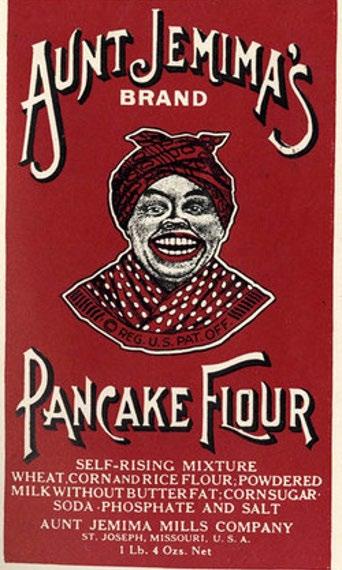
Removing stereotypes should be seen as an “opportunity” (Precourt & Whiteside, 2017) for the industry’s future. Not only will it have a positive impact on society, but on improving brand image by building a stronger repour with black audiences.
The industry carries the responsibility to initiate this change, to communicate a modern ideology of inclusion and diversity within society, and to finally leave archaic racial slurs and symbols to the past where they belong. It has been shown that white racial majority audiences can respond equally as well to black cultural cues as white cues (Appiah, 2001). Hence, this shows a multi-cultural society that industry needs to represent. By effectively using black cultural cues, advertisements are not losing the engagement of other ethnic audiences as previously feared. Society is driving us towards a stereotype-free media. It is the industry’s responsibility to reflect this.
Why has the Advertising Industry been unable to shift stereotype usage within the 21st century?
In 1975, the issue of diversity within the industry was brought to light by Vernon Jordon at an American Association of Advertising Agencies conference. At the time minority ethnicities working in industry was a small section of the industry’s workforce as a whole and was declining.
“…Only three of every hundred higherpaying jobs in the industry [were] held by blacks…”
(Jordan, 1975).
Is diversity in industry still an issue today?
In 2019, AEF’s report discovered that many African American interns/ early-career workers in marketing and advertising “experience discomfort, mistrust and culture shock” (Griffin, May 2019). Often, there is a lack of cultural understanding with many fearing they’d lose their jobs if they brought up their experience (Griffin, May 2019).
Hostility within an agency creates a business culture of unacceptance which breeds ignorance, creating a facilitating environment towards the use of negative stereotyping. Such hostility is prevalent within the prominent issue of implicit bias; what’s acceptable for one race is deemed inappropriate for another (Chiu, 2019). The report goes on to say that industry puts too much emphasis on obtaining diversity without the ability to include diversity in current industry culture (Griffin, May 2019). Like creative teams, a Copywriter and Art Director, it indicates that diversity cannot work within the industry without inclusion. Perhaps it is inclusion that the industry has been lacking in the 21st century.
effective targeting and therefore improved business results. Adobe’s report on Diversity in Advertising (2019) confirms “38% of U.S. consumers, and 26% U.K. consumers… are more likely to trust a brand that shows more diversity in its ads…” (Chiu, 2019). Diversity is a heavy factor that will influence the strength of accurate ethnic representation and consumer’s perceptions of brands within advertising. Eventually, with diversity, the need to use stereotypes will evaporate, and it will slowly lose its hold within black media representation.
Goodbye Aunt Jemima
The Advertising Industry sadly has close connections in the facilitation of slavery and black stereotyping, and it is those close connections that industry today, and those that follow tomorrow, have to dedicate themselves to finally cutting.
It is the time to take responsibility and nurture awareness as an industry to prevent the continued
“…the legacy of slavery did not wash away as easily as snow does on a rainy day.”
(Kern-Foxworth, 1994)
Is diversity the answer to the industry’s problems?
As inferred by the AEF’s report, obtaining diversity is only part of the answer, embedding it within industry culture is the other. Diversity has been shown to better business outcomes as HP revealed: the “Brand Monitor showed an impressive six-point increase in purchase intent, and Marketing Mix Analysis, run by Nielsen, captured a 33 per cent increase in revenue per impression” (Griffin, May 2019). HP goes further to say they hire “agency partners that are diverse and represent the audience we are targeting” (Griffin, May 2019). This indicates diversity as a new need that clients want filled. Jordan said that agencies “are not doing right by clients” by lacking cultural diversity when targeting the “black consumer market” (Jordan, 1975). This is prevalent today as creatives lack the cultural understanding to relate to a range of audiences.
Overall, there is evidence in support that diversity can lead to better cultural representation, resulting in
exploitation of minority ethnicities through stereotyping. Bill Bernbach took Advertising through its first major revolution when he challenged how we work together, by bringing copywriters and art directors together. It’s time to take the industry through its second revolution by challenging who works together. To achieve this industry must strive for greater diversity but, most importantly, the inclusion of diversity. An industry whose workers reflect the society in which they operate will be superior in reflecting, representing and communicating with their audience. We are closer to an accurate representation of black people than our predecessors at Madison Avenue, but there is still a far way to go. 42% of black people said that the advertising industry doesn’t recognise their culture today (Group & staff, 2018). Will you recognise them tomorrow?
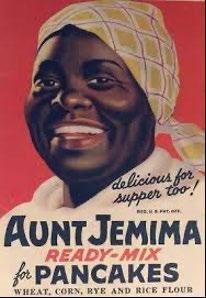
Just a few months after Bronwyn Cheshire wrote this article, Quaker Oats decided to retire Aunt Jemima from its pancake mix packaging.
BY VIKTORIJA JODINSKAITE

The ugly truth how advertising changes the way we think and feel” (Kilbourne, 1999) writes about the most
Having smooth skin, shining hair, common stereotypes which has been used in large eyes, chubby lips, pointy advertising over the years (Kilbourne, 1999). jawline, small nose, white teeth, One of them is domestic obsessive. There is flat belly, long legs and sexy forms. no doubt that women have been portrayed as Incredibly strong, confident, sexy, seductive, “housewives” from early ages not only on social charming, clever and the most important – media but also in the daily life. In the early 20th beautiful. It is not an example of an object. It is a century, both world wars changed woman’s role description of women. in the family. While men were at war, women were responsible for housekeeping which caused Women who have to be perfect in all facets of life. a long-lasting stereotype to label them as the A machine which has a huge number of different mistresses of a household. The female gender tasks that have to be done at the same time is one was depicted as stupid and incompetent (Roberts, of the most accurate comparisons of a woman’s 1979). An example for that could be the Ovulen role in her life. While the woman is presented ad which was mentioned above. as a sex object or as a weaker gender who does
not have enough power to stand for herself on Moreover, another well-known stereotype is social media, the new generation is growing up presenting them as a sex object. Probably it is the with a distorted attitude to women. Due to the most common role which has been used by many
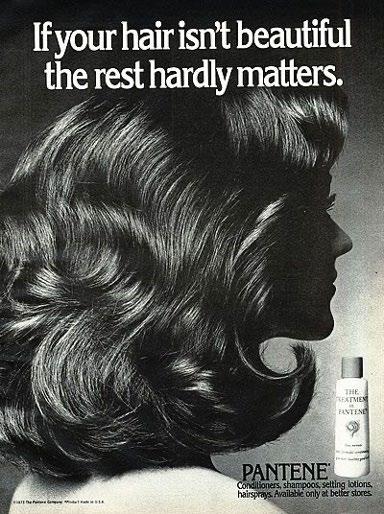
Back in 1968, an ad for a birth control misrepresentation of women, teenagers start companies. The main goal of advertisement pill called Ovulen 21 was run by Lancet having not only health issues, for instance, is to attract attention and try to persuade the anorexia but also it may cause psychological consumer. Therefore, brands are trying to which was one of the most offensive problems such us depression (Kilbourne, 1999). affect people brains through their sensibilities. Overall, an objectification leads to violence and “Sexual advertising “appears to have all of ads in all the history of advertising abuse which are the most common issues in the these ingredients” by titillating emotional (Kilbourne, 1999). The tag line of the new generation’s life today. Taking a critical areas of the brain” (Hucal, 2019). Women have look at offensive ads could teach us what people been presented as objects of lust and desire in ad was “Ovulen 21 works the way were doing wrong in a past and what we could advertising incorporating nudity. Brands, which a woman thinks – by weekends, not change now in order to live in a peaceful world. were selling products from alcohol to perfume, have been using this type of advertising. by cycle days.” The ad depicted a Light at the end of the tunnel Certainly, it attracted many consumers, therefore, there was a lack of respectfulness towards woman with seven different boxes in An objectified image of women has played a women. For example, an ad of perfume for men her head of domestic chores. The ad significant role in advertising for over a hundred in 1967 showed women’s role in society. The ad years. The portrayed woman in advertising in the presents a woman who is giving a massage to an was saying that women are too stupid past made a huge impact throughout the history of old man because he smells good: “She won’t say, to remember their cycles, but they can advertising. Therefore, the way brands presented ‘what are you wearing?’ She will say, ‘You smell women in ads induced other people to think good!’’ It is evident that the advert’s idea is to remember days of the week by each more about it. One of them was Jean Kilbourne – show that a man could get a woman for the price day’s house activity. It is evident that a woman who started making changes and tried of a perfume bottle (Unknown, 2013). A woman to encourage others to look at a woman in a more is equating to an object and also, the ad presents this was showing an absolute mockery respectful way. She was one of the first people her as a woman who has sexy body forms. On the could still have been a successful advertisement. her feel uplifted. “The spotlight that focused who showed an appropriate model of a woman other hand, the centaur in the ad is a creature from on me in mid-adolescence was shocking, scary, of a woman’s daily life. The ad is one and started spreading the word about it to more Greek mythology that is half-man and half-horse In addition, another famous stereotype is seductive, compelling.” (Kilbourne, 1999). of the hundreds of examples of women and more people. or ‘half-man, half-animal’ (Cartwright, 2012). presenting women as always beautiful. Beauty She started taking drugs and it became a huge The company took advantage of well-known advertising has historically been harmful for struggle to get out of that moment in her life. being presented as a weaker gender or She became active in the women’s movement Greek creature to compare men to the strong and embellishing reality and selling women idealised After an incident with the world-famous fashion a gender which has been idealising as in the late 1960s (Kilbourne, 1999). Jean dangerous animals. Without the woman’s part, it and restrictive forms of perfection (Kemp, designer who tried to convince Jean to spend Kilbourne mentioned that one moment in her life 2018). For instance, in 1973 the ad for Pantene time with him intimately in exchange for a job, an ideal of perfection. encouraged her to commence making changes. hair products “If your hair isn’t beautiful the rest she realised that it was one of the lowest points It was a contract to work as a model. According hardly matters” shows this idealised perception of her life. In 1967 she went to Boston to find a to her, at that time modelling was one of the few of a woman’s beauty. meaningful job. (Kilbourne, 1999). One of them ways that women could make money and, as she encouraged her to be involved in the women’s confessed “It was seductive” (Kilbourne, 2014). To be a part of the solution instead of a movement. She had to stand in a public place She became one of those girls who had to pose problem and hold a board with photographs of napalmed in front of many people and show her body to the children. Jean changed her approach “to be world. She describes her experience as alienating Jean Kilbourne started giving lectures and talks a part of the solution instead of a problem.” and soul-destroying. Being in someone’s role about women’s role in advertising after she got (Kilbourne, 1999). Everything started because of could help to understand the reality. It happened through the hardest moment of her life. Young the wish “to be beautiful”. Although, if she has to Jean. She decided not to follow a modelling days for Jean Kilbourne were not the highlights not had any thoughts about modelling life, she career path. Accordingly, she started exploring of her lifetime. She was one of those girls who would not have been through everything she had harmful examples of picturing women in had many psychological problems because of her experienced, and she would not be standing in advertising. Now she is a well-known speaker addiction to alcohol and drugs. Being involved the place where she is standing now. in a wide range of conferences, filmmaker and in a model’s life led her to depression and low writer who empowers people to take an action in self-esteem. Jean was one of the examples of The environment where we all grow up society’s interest (Kilbourne, 1999). a modern girls who thought that appearance is the only important aspect in a girl’s life. Every In 1976, Jean Kilbourne gave her first talk in Three colours of a flower single part of her life has been related to the way front of many students (Kilbourne, 1999). She she looked: her friends, work and environment. was so nervous that she considered driving off Jean Kilbourne in her book “Can’t buy my love: Being the centre of attention as a model made the road before her lecture: “not to kill myself,
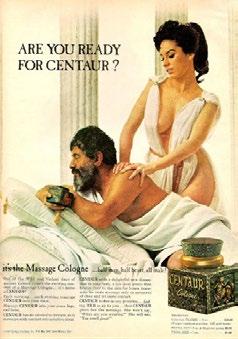
but to be incapacitated” (Kilbourne, 1999). However, she showed up and students loved her talk. Jean started making a very successful career in a new movement in society because she had experienced all the issues the modern girl could have. “I acted out my rebellion and my despair by nearly destroying myself with cigarettes, alcohol and harmful relationships” (Kilbourne, 1999). She found out that every choice she made in the past was encouraged by the environment she was living at that time. It was partly advertising and labels such as “to be attractive all the time”, “to be sexy and seductive”, “to have a beautiful body” which had a huge impact in her life. We all make particular choices which are influenced by complex reasons in a complex world (Kilbourne, 1999). Therefore, advertising is one part of that complex world which is extremely important today. She made her own film “Killing us softly: Advertising’s image of women” (Kilbourne, 1999) in which she presented examples of harmful advertising towards women (Kilbourne, 1999). The film is still shown throughout the
world and it has taken a relevant part in her movement.
“Our children are falling into the river”
Jean Kilbourne
Jean Kilbourne has a daughter who is on the brink of adolescence (Kilbourne, 1999). Jean talks about her in a very gentle and kind way, but she worries about her future. Her daughter is growing up in a very distorted society which could affect her as a growing individual. According to Jean, nowadays women’s role in advertising has not change in a more respectful way. Since the internet and social media has been taking a relevant part in daily life, pernicious advertising has become more harmful force towards the new generation. Kilbourne is raising her daughter “in a culture that still teaches that girls are less valuable than boys, that girls are sex
objects and must be beautiful and thin in order to be successful’’ (Kilbourne, 1999).
Obviously, Jean Kilbourne is not the only mother who expects to raise her child as a strong, independent, clever and kind humanbeing. A human who could have the ability to distinguish the real values and illusions that damage the perception of a girl’s life and could have their own approach to such things as beauty or appearance; A human who could be a rebel –to defy the cultural stereotypes of “femininity” (Kilbourne, 1999); a human who could love herself just the way she looks.
Let’s change it
The story of Jean Kilbourne and her own rebellion towards the advertising industry could be the start point making the real changes. Since Jean’s movement, there are still some harmful ads that have been made by the agencies. One of them was launched a few years ago. In the
ad for ‘Protein World’ with a slogan “Are you beach body ready?” was depicted a model in a bikini with “the perfect body” (Sweney, 2015). The only one difference between the past and the current situation is that there are more and more people who want to talk about it loudly on the internet.
Let’s change it. Start spreading the world about the current problem. The story of Jean Kilbourne could teach us to start talking about that and most importantly, to express the different attitude to women. Jean Kilbourne is the one who already has started doing that. Let’s get united and start making change. Let’s love ourselves the way we are.
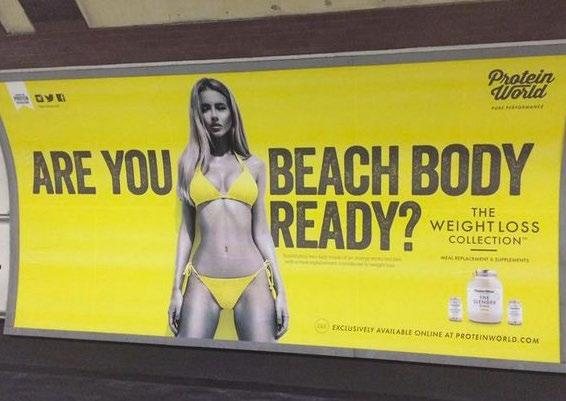
BY AMY-BETH WATSON
The Volkswagen (VW) adverts; probably some of the most famous and memorable in history.
It’s post-war USA and Doyle Bayne Bernbach (DDB) of New York were posed with the brief of advertising a small German car to Americans who thought bigger was better. Helmut Krone, the director for the original ad was a second-generation German himself, and he believed ‘’that the look and feel of the page, the attitude and body language of the artwork should reflect the attitude and body language of the product’ (Cracknell, 2011, p.87). This resulted in DDB creating an ad with the tagline ‘Think Small’ which was different from everything else at the time. First being released in 1959, it was “simple, uncluttered and honest advertising that reflected the “no-frills” offering of the Beetle itself” (No 55: ‘Think Small’, 2013). Little did they know the ads would be so revolutionary and would change the face of advertising for many years to come. ‘Think Small’ lay solid foundations, as DBB came up with multiple ads in the following decade using the same approach which also had a lot of success.
In the 50’s and 60’s the ad industry was dominated by men and is well known as the ‘Mad Men Era’. Although in the 60’s women were able to find their voice and aspire to be more than they could previously, they were still seen as inferior and limited by men. Reflecting the culture at the time, many advertisements also portrayed women in a misogynistic way. Wasn’t
advertising meant to be selling an ideal world? Because it certainly wasn’t for women.
So, it shouldn’t come as a surprise when in 1964, in the midst of the revolutionary, inspiring VW campaigns, DBB released an advert for the Beetle with the tag line ‘Sooner or later, your wife will drive home one of the best reasons for owning a Volkswagen.’ The first line of the copy read “Women are soft and gentle but they hit things.” It followed the same noticeable layout as the other successful adverts, the copy was witty and in line with the VW way, yet the “entire premise is that a man’s wife will crash the car ‘sooner or later’” (Smith, 2018). But not to worry, the Beetle was that cheap to repair, it didn’t matter. This just shows that even men in the height of their career can still fall into the trap of stereotyping women.
The Bigger Picture
When we look at women in advertising, Aunt Jemima can probably be traced back the furthest to 1889 (Adage 2003). Although some would say she became an icon, she was still heavily stereotyped due to her race and gender. Following on from this, whether you were a married housewife or a single working woman, you would have been portrayed negatively in advertising. Brands such as Budweiser, Schlitz and Hoover show women in the kitchen, doing housework and usually under the thumb of her husband. And if we were to only look at advertising that was being created at that time,
Women are easily influenced. Women are submissive. Women are emotional. The list goes on.
Gender stereotypes like these have been embedded in our lives so deeply that often it can be hard to see them lurking in the shadows. They are especially prevalent in
the advertising industry, from the 19th century through to the current day. From children right through to adulthood they can affect us,
but is it finally time to step away from gender stereotypes in the ad industry? After all, it is 2020.
it seems women were only in the market to buy domestic and self-care items, they obviously didn’t have the brain capacity to purchase anything else. But adverts didn’t only use the female persona to persuade women to buy these products, they were used to sell products to men. Women were seen as clueless, helpless creatures and men portrayed as strong, powerful individuals. For example, an ad for Jello was released with the caption “The ‘congratulations dear, but exactly what does an assistant vicepresident do?’ pudding” (Jell-O 1969-1970). It ticks a lot of the boxes, it’s patronising, shows women as being stupid, but also as the ones that do the cooking and supporting their hardworking husbands.
Stereotypes like these are dangerous as they influence people’s way of thinking and how they act. If a girl has only ever seen women in adverts hoovering or cooking dinner for her husband, how can she be expected to act differently? To prove this point even further, when the tables are turned, and the men are put in the position of the women, it looks wrong and therein lies the problem.
In his book Ways of Seeing, John Berger describes how ‘seeing comes before words.’
(Berger, 2008 pg. 5). We are influenced by what we see, and our preconceived ideas also affect what we see in things. He goes onto talk about the way women view themselves as a result of the way men view them. Women take notice of how they are treated and looked at by males and this,
in turn, reinforces the idea that they are an object, especially one that is looked at and surveyed. Women often look at themselves through the eyes of men. (Berger, 2008 pg. 42), this can be applied to the way women view themselves as a result of the how females are portrayed in the media, ‘Her own sense of being in herself is supplanted by a sense of being appreciated as herself by another’ (Berger, 2008 pg.41). This is why it is so important to step away from using women in a degrading and limiting manner, as it can have a detrimental effect on her sense of self.
Sex sells.
It seems to be true that if you want to sell a car, a beer or a pack of cigarettes having an image of a beautiful, near-naked woman means you’ll be onto a winner.
This age-old technique has been used for years, for example in an ad, this time for Silva Cigarettes in 1967, says “Cigarettes are like women. The best ones are thin and rich.” The image in the background is of a slender woman’s silhouette. Again, this is degrading to women but also similar to everything else at the time.
Fast-forwarding 40 years, where you would have thought things may have changed, mainly due to the changes in society and women asserting their rights, agencies unfortunately still used women as sex objects to sell. Particularly in the fashion industry sex is used to sell and in 2007, Dolce and Gabbana (D&G) missed the mark entirely when
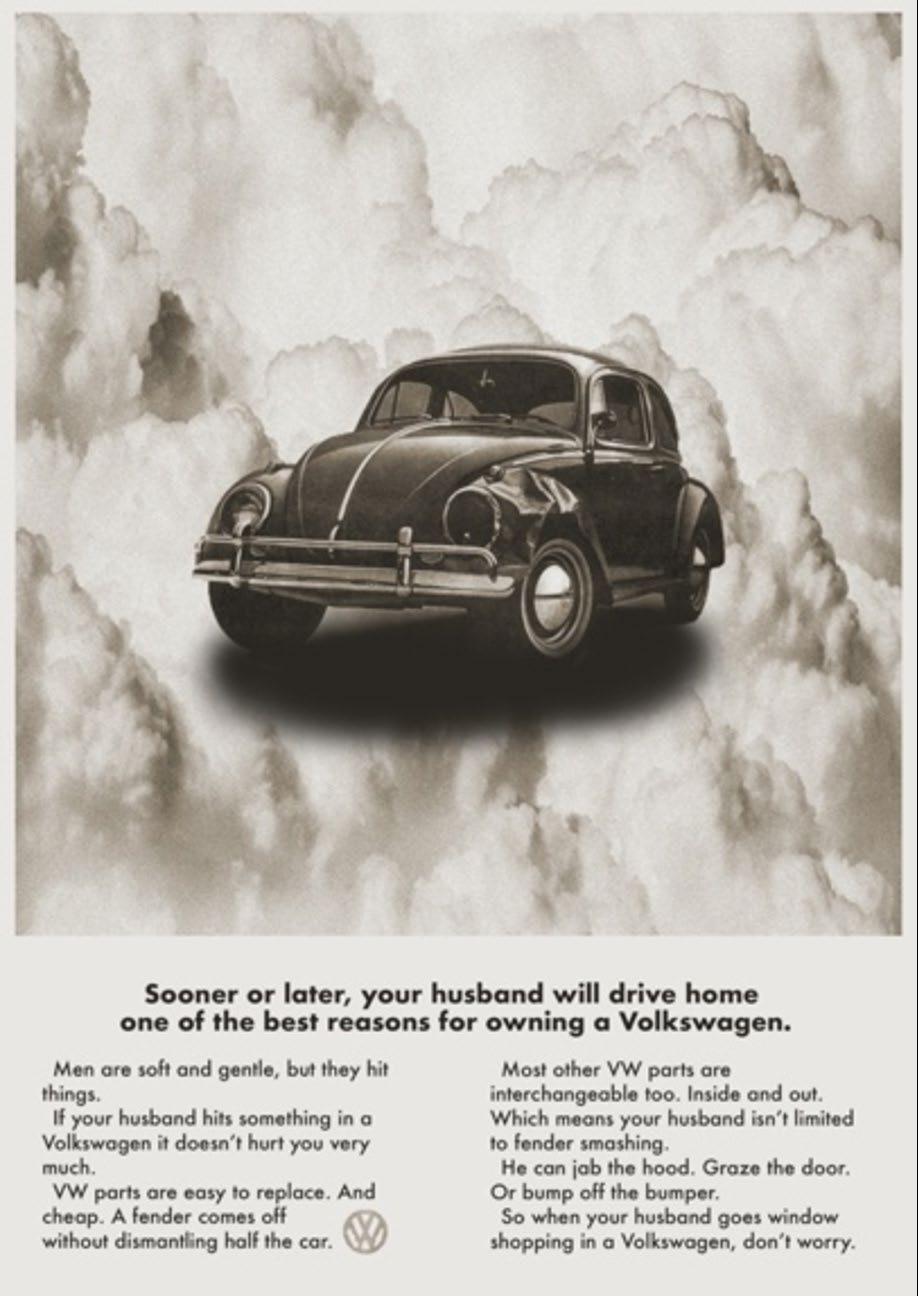
they released adverts for their new fragrance range. The ads themselves came under intense scrutiny as they seemed to depict the gang rape of a woman. The woman was portrayed as highly sexualised and in one of the images is being held down by a man whilst looking uncomfortable. Women deemed the adverts as highly degrading and glorifying rape, causing D&G to pull the adverts entirely. Unfortunately, ads like these are produced too often, and most of the time we are so desensitized to it, that people don’t notice anyway. Sut Jhally speaking in a documentary called Codes of Gender stated that ads that portray women in this way “actually look kind of normal. It is only when we start to look at them carefully that we begin to see how strange and weird they actually are – and begin the process of thinking independently, for ourselves, about what the culture holds up as normal” (Codes of Gender, 2010).
And you think you’ve heard it all.
Gradually the use of gender stereotypes has decreased over the years as more pressure has been put on the brands and advertising agencies to increase diversity and think about what they are putting out into the world. Women started to ask questions about the things that were being put into the media. Why should their bodies be treated as objects or be secondary to men?
A campaign released in 2015 that goes against gender stereotypes is the ‘This Girl Can’ campaign, which encourages women into sports (This Girl Can, 2020). It is an empowering campaign showing women doing sports and breaking the stereotype that only males can be successful in sports. Personally, I felt inspired by this campaign, it spoke to me. The images were strong, and the copy was well-written and relatable. The campaign covered print ads, social media and TV advert.
When researching this campaign, I came across an article asking if this campaign was actually reinforcing the stereotypes it had tried so hard to work against. With taglines like “I kick balls deal with it” and “I jiggle, therefore I am” it seems empowering but the fact that it labels all women, in the campaign name, as ‘girls’ suggests that something is amiss. Women should be women in their own right, and by labelling them as girls is reinforcing them as weaker, younger and inferior. It shows women with their natural bodies playing sports, but again, like many other adverts it still focuses solely on women’s bodies as objects to be scrutinised (Francombe-Webb and Fullagar, 2015).
However, the figures do speak for themselves, with “2.8 million women aged 14 -40 who recognised the campaign took on a physical exercise, while 150,000 more
women are now active once a week, every week” (Litsa, 2016). Although in some aspects the ‘This Girl Can’ campaign may have fallen short, it did manage to empower women and is a step in the right direction for a positive and realistic portrayal of women in advertising.
Are we nearing the light at the end of the tunnel?
As we have discussed, things have been rough for women in the portrayal of advertising over the years. And as we are now 20 years into the 21st Century, brands and advertising agencies alike are finally starting to realise that using stereotypes isn’t the way forward, and certainly won’t win them any favours with the public. As 48% of women are more likely to buy products from brands that challenge stereotypes of women (UK by UM, n.d.), the brands have a lot to lose. This may be related to the fact there has been more diversification in the advertising industry as a workplace meaning different genders, backgrounds and cultures influence the creative work being produced. Consumers want
a realistic and authentic portrayal of characters in the media, and although this is difficult to do well, brands that are seen to make the effort certainly make a positive impact.
Alongside culture changes, in June 2019 the Advertising Standards Authority (ASA) also took a stance against gender stereotypes in advertising, making it more difficult for advert containing stereotypes to slip through the net. The guidance dictate’s “Advertisements must not include gender stereotypes that are likely to cause harm, or serious or widespread offence” (ASA, 2018). This seems to be progressive, however, it may be causing more harm than good as it has been difficult for the agencies to clarify what is deemed as harmful or not, so perhaps it does need to be revisited.
We end this story where we began, with Volkswagen. As a result of the ASA guidance, VW had an ad banned last year for the new eGolf. The ad showed people in different situations, making the point that humans were able to adapt to change and circumstance. However, they
received complaints that the ad depicted men as adventurous and women as caregivers (Watson, 2019). Haven’t we heard that before? There’s no doubt that in the future more ads will fall victim to the new guidelines.
Advertising agencies need to ensure that they don’t generalise when creating ads, as this can often lead to the use of stereotypes. Understanding the audience you are advertising to can lead to a more realistic portrayal. By not making assumptions about an audience, it can mean greater personalisation and even better success. Though making sure that it doesn’t go too far the other way is important too, sometimes in the fight against stereotypes it’s important not to take it to the extreme as it still should be relevant and meaningful (UK by UM, n.d.).
The most important message we can take forward for the advertisers of today and in the future is to steer clear of gender stereotypes. Treat women and men with equal respect and portray both with authenticity and care. The role of advertising in society is to inspire and influence and is equally
important for brands and consumers alike. And whilst we aren’t there yet, do feel that we are finally on the way to banishing these harmful stereotypes used in advertising.
Women are fierce. Women are strong. And women are ready to challenge should they need to.
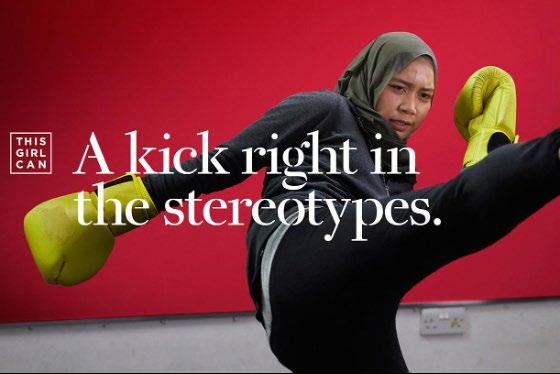
more stories and perspectives from Falmouth University’s Adland students,