A Call to Reimagine: From Functional Campus to Purposeful Place
Reimagining a medical campus is not simply a matter of modernizing infrastructure or expanding capacity—it is a powerful opportunity to redefine how an institution delivers care, expresses its identity, and fosters a resilient community of healing, learning, and innovation. We believe the next generation of healthcare environments must move beyond functional efficiency to become places that elevate experience, embody institutional values, and adapt to the future of care delivery.
At the heart of our approach is a belief that thoughtful, cost-conscious design can be deeply transformative. Clearly defined constraints—of cost, space, legacy infrastructure, or community expectation—are not limitations but invitations to innovate. These boundaries sharpen creativity, forcing the design process to focus on what truly matters: the people who give and receive care. We work within these parameters to uncover opportunities to rethink not only how buildings are used, but how a campus can operate as an ecosystem of care, connection, and discovery.
Our integrated design approach unifies three core dimensions of the medical campus: the planning framework, the exterior brand identity, and the interior experience. Each component informs the others, creating a campus that is as operationally efficient as it is emotionally resonant.
1
Reimagining the Campus Framework: A Platform for Growth, Flexibility, and Belonging
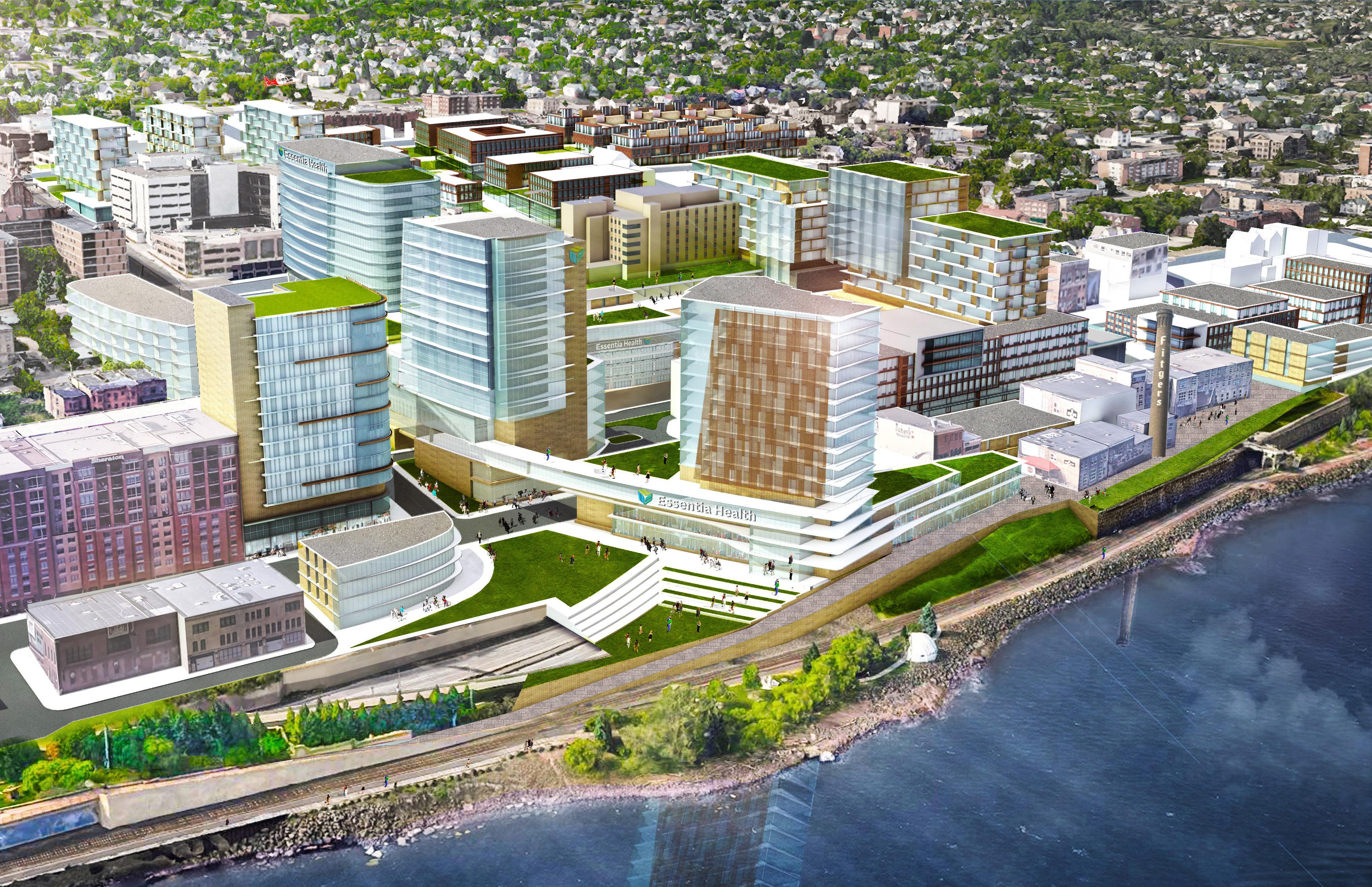
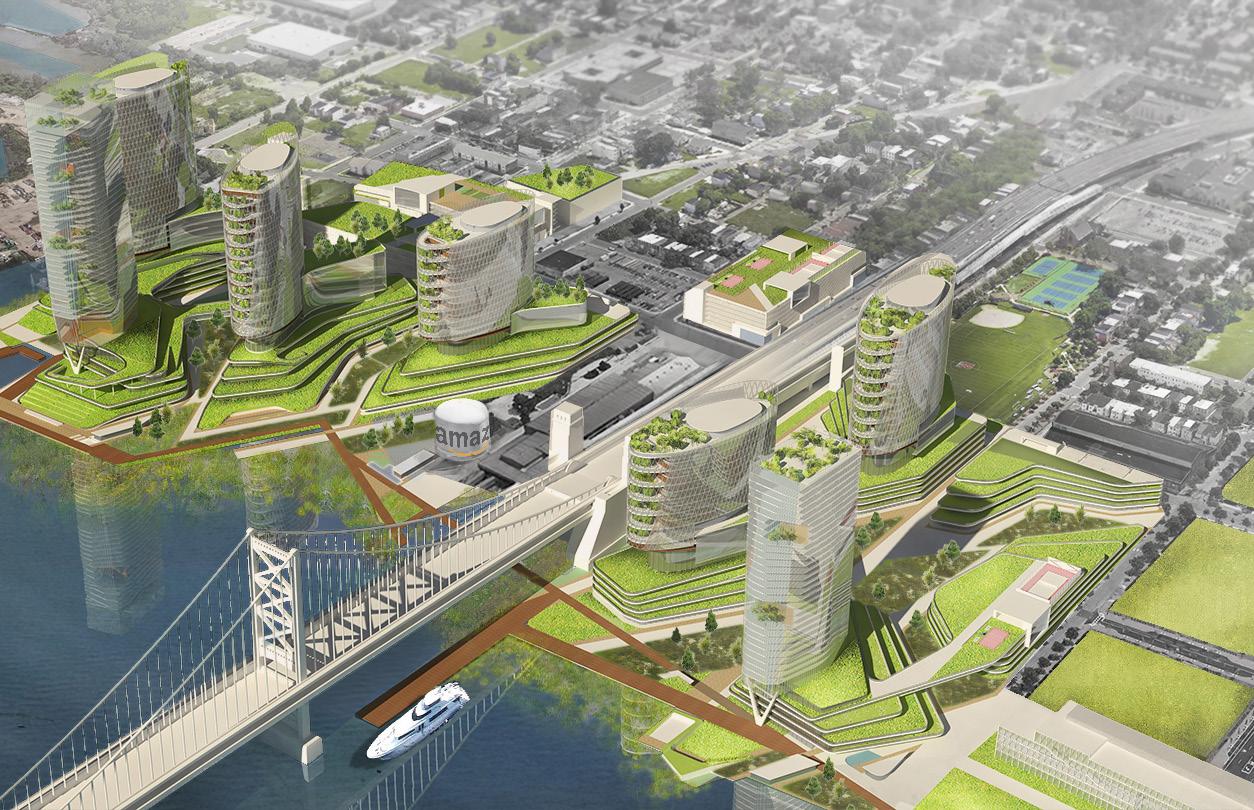
The medical campus is more than a setting for healthcare delivery; it is a living framework that supports movement, memory, and meaning. Reimagining this framework begins with a rigorous and empathetic analysis of existing conditions, paired with a vision for future adaptability. We explore the campus through three interrelated lenses:
– Capacity and Constraints: We analyze what the site can support today and what it could support tomorrow—through zoning codes, land-use regulations, topography, and infrastructure capabilities. We identify both limitations and untapped potential, considering the costs of unlocking new space and the implications for long-term sustainability.
– Building Stock and Reuse Potential: We assess existing facilities for their physical condition, structural integrity, and adaptability to new programs. Where appropriate, we advocate for adaptive reuse to preserve embodied carbon and reduce capital expenditure—always balancing preservation with the demands of modern care delivery.
– Flow and Quality of Experience: We assess the physical and psychological dimensions of circulation—from public access to onstage/off-stage flows—and identify how site and building configurations can be reshaped to support more intuitive, inclusive, and healing experiences.
Defining Your Brand
From this shared exploration, we generate a range of exterior design options—each tailored to the unique goals and constraints of the project. These options are shaped not only by aesthetic preference, but also by how they support patient and visitor arrival, reinforce clinical function, and communicate meaning. Whether the final direction emerges clearly or as a hybrid of multiple ideas, our belief remains firm: offering real choice ensures a collaborative process, grounding the final design in shared authorship between architect and client.
Core principles include:
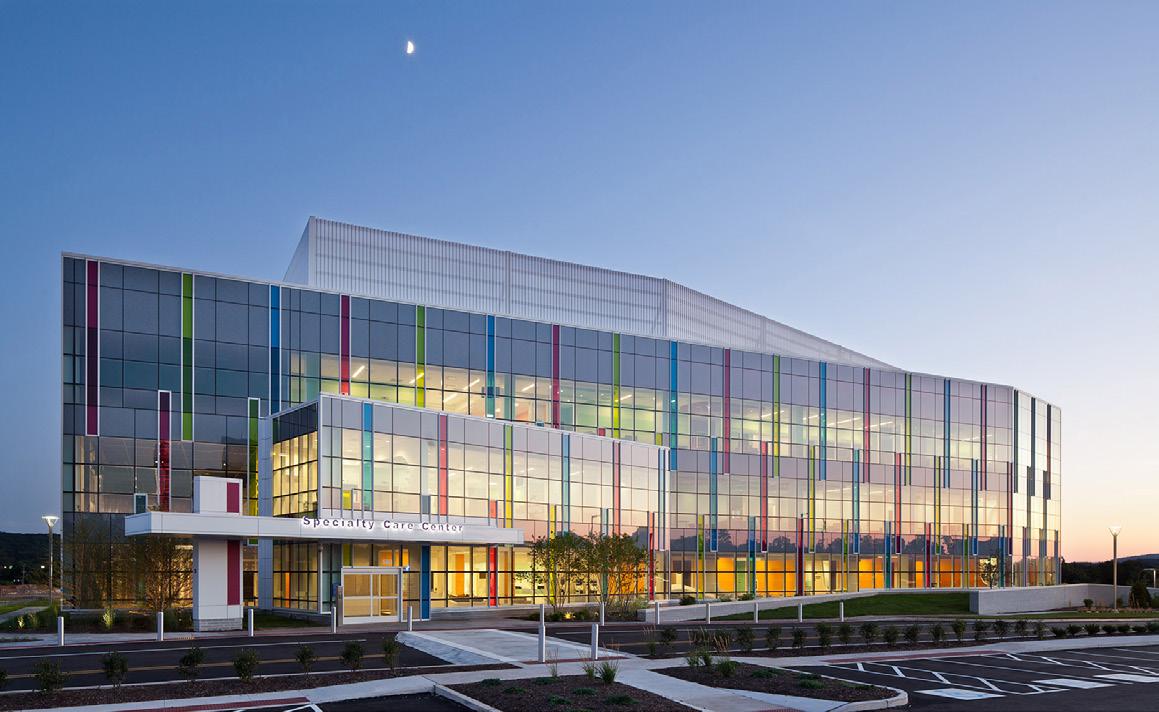
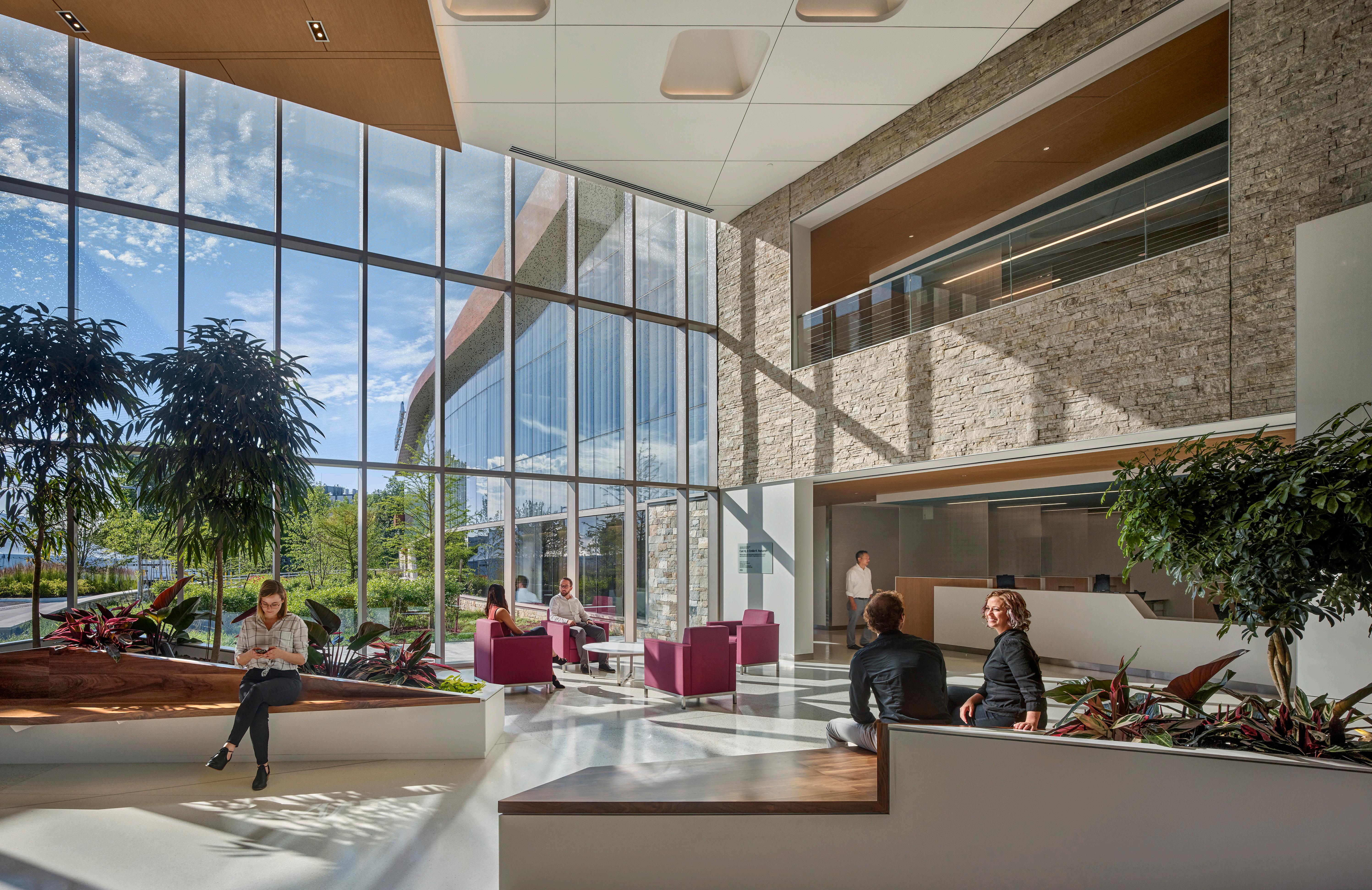
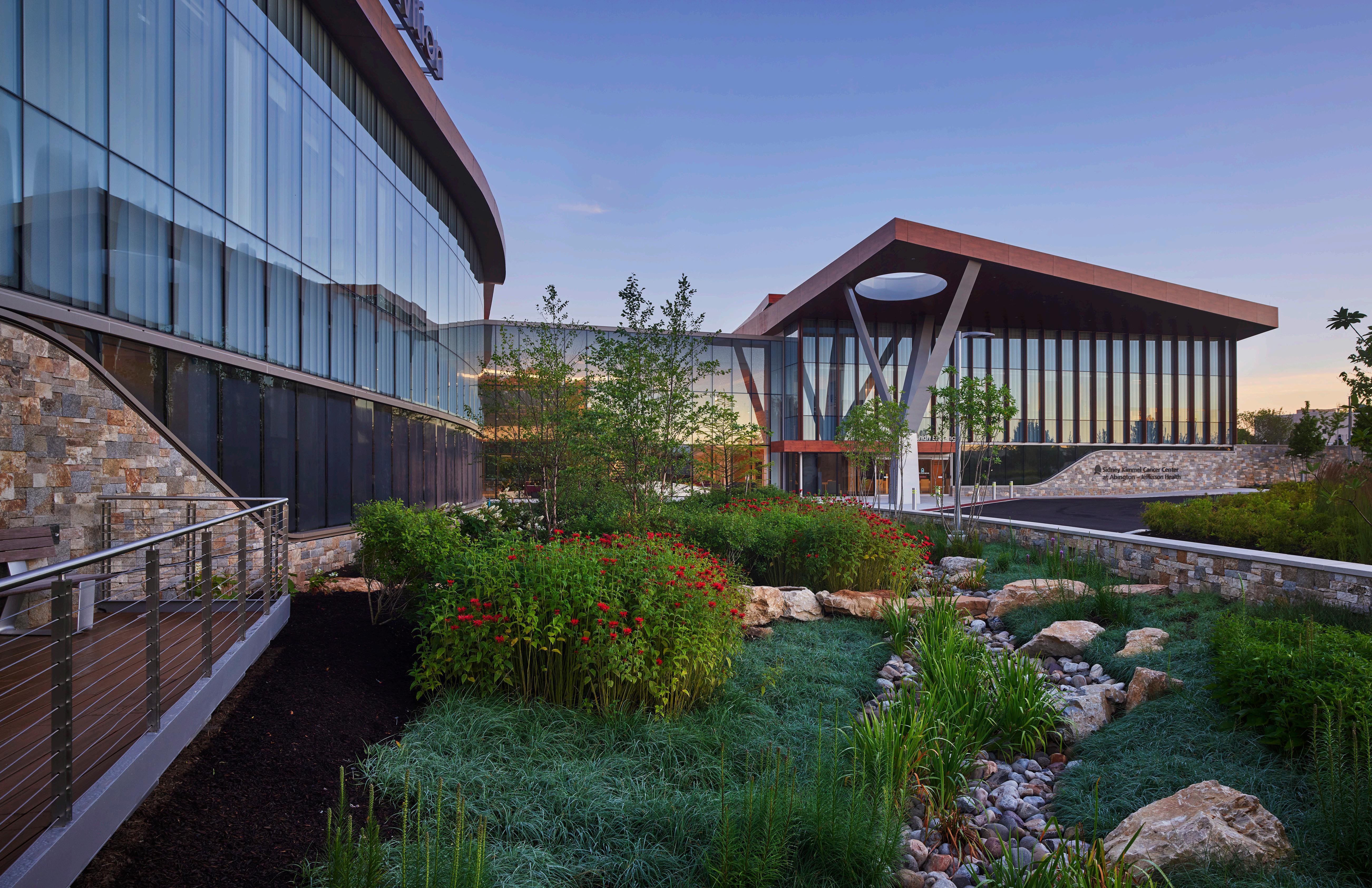
– Program-Informed Transparency and Opacity: We emphasize openness at lobbies, waiting areas, and other publicfacing zones—using glazing and view corridors to demystify care and create connection. Conversely, clinical and support areas are designed to protect privacy and reduce distractions, often using subtle shifts in material or fenestration to create appropriate thresholds.
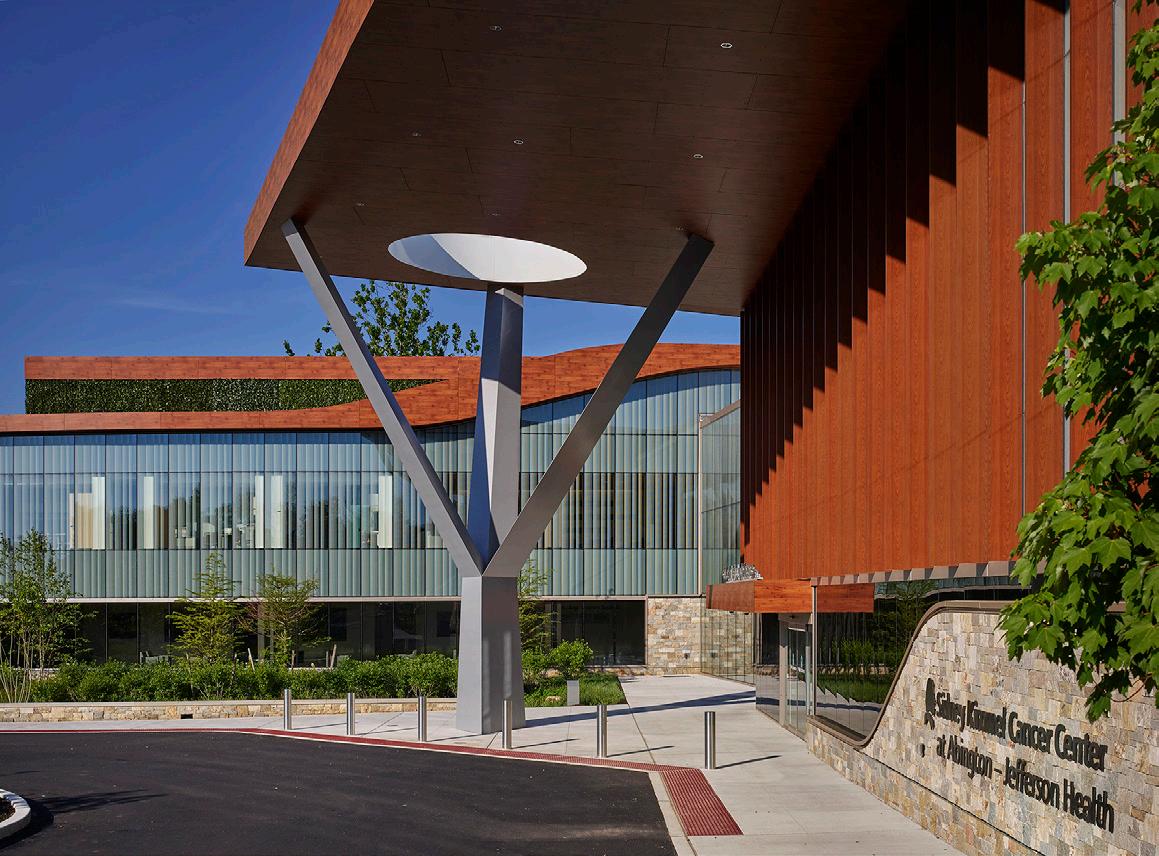
– Contextual but Contemporary Design: Our buildings acknowledge and reflect their surroundings—through massing, materiality, and urban rhythm—while offering a forward-looking aesthetic that reflects institutional ambition. This creates a sense of belonging in the present and aspiration for the future.
– Visual Interest through Restraint: We create richness through rhythm and contrast: alternating solids and voids, layering textures, and framing views. These strategies elevate modest materials, allowing architecture to communicate quality without excess.
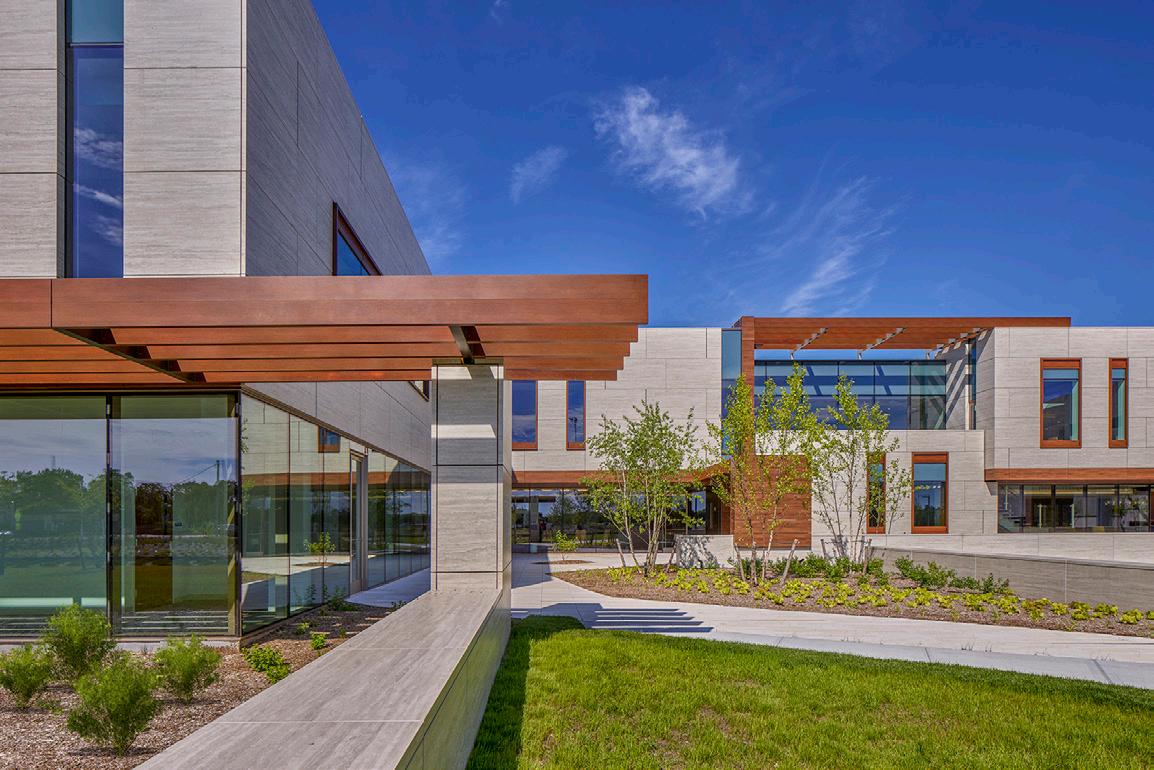
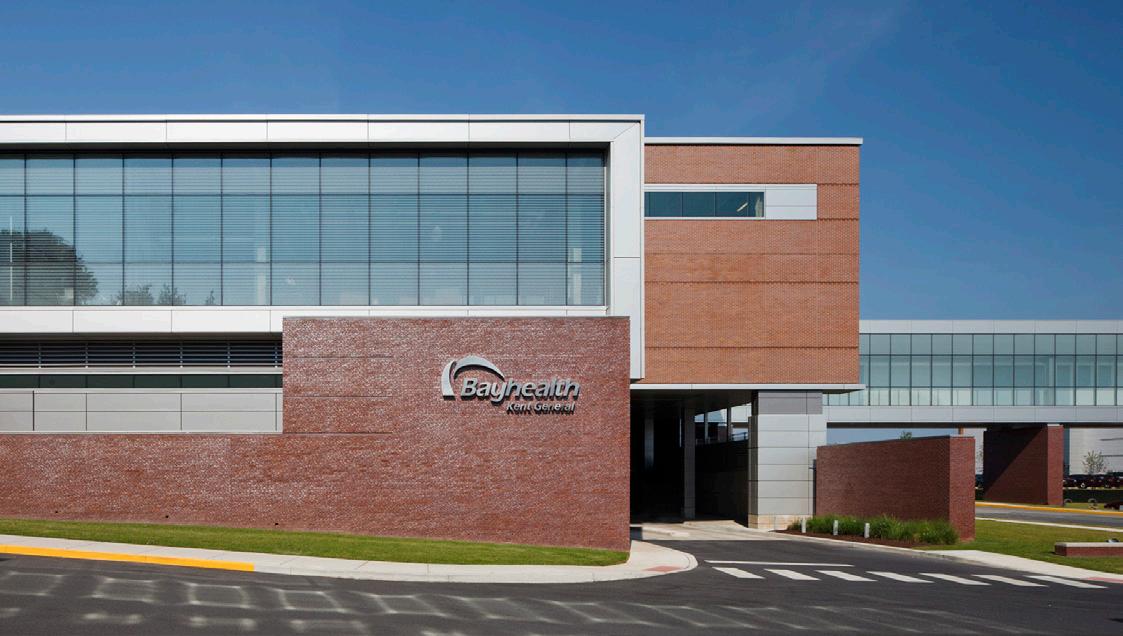
Memorial Sloan Kettering Cancer Center, MSK Nassau Bayhealth, Kent General Pavilion
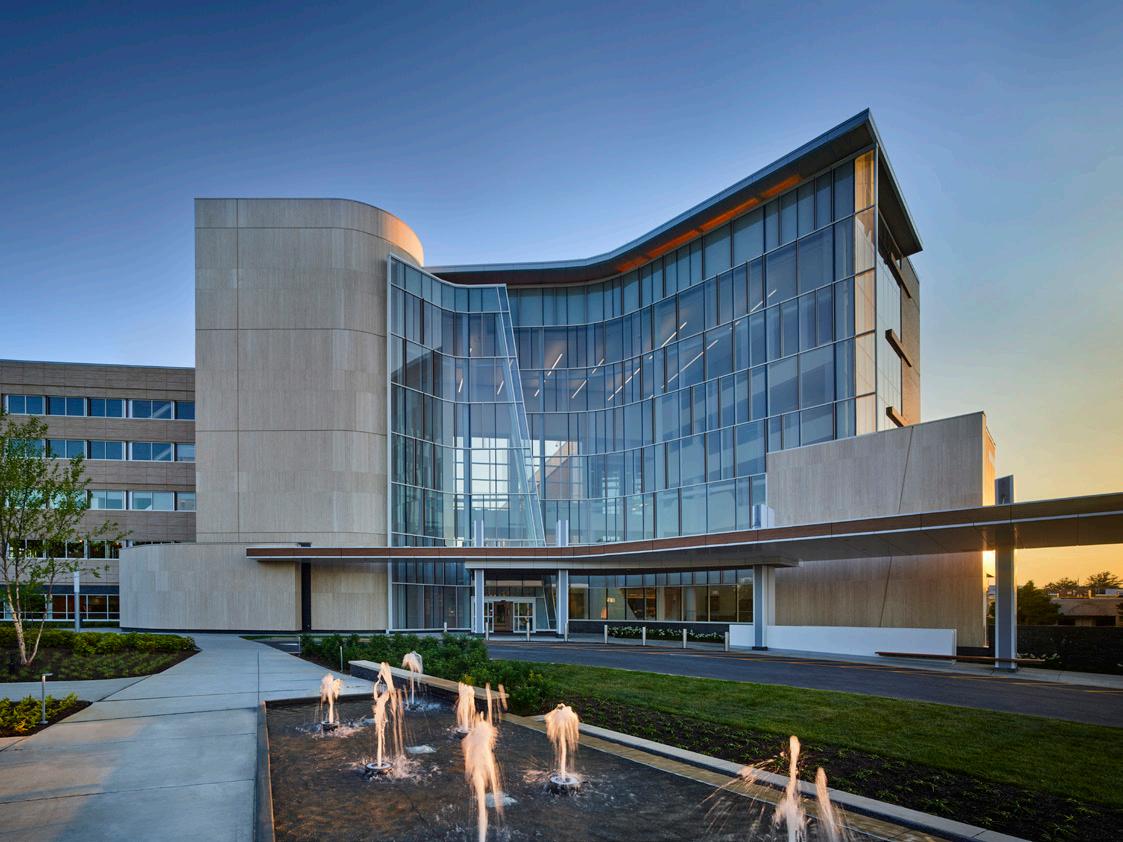
Jefferson Health, Ambulatory Care Center
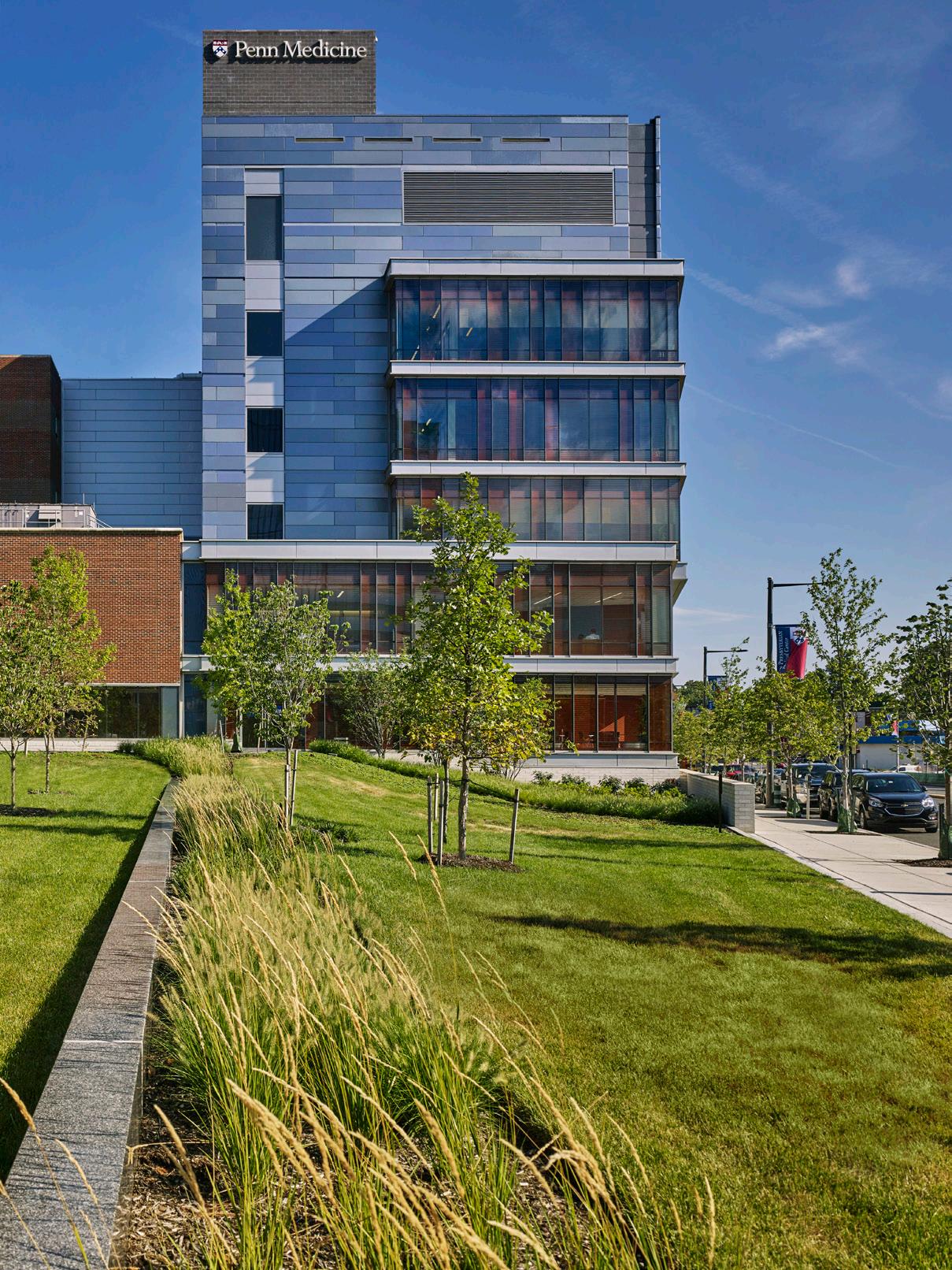
The University of Pennsylvania Health System, Pavilion for Advanced Care
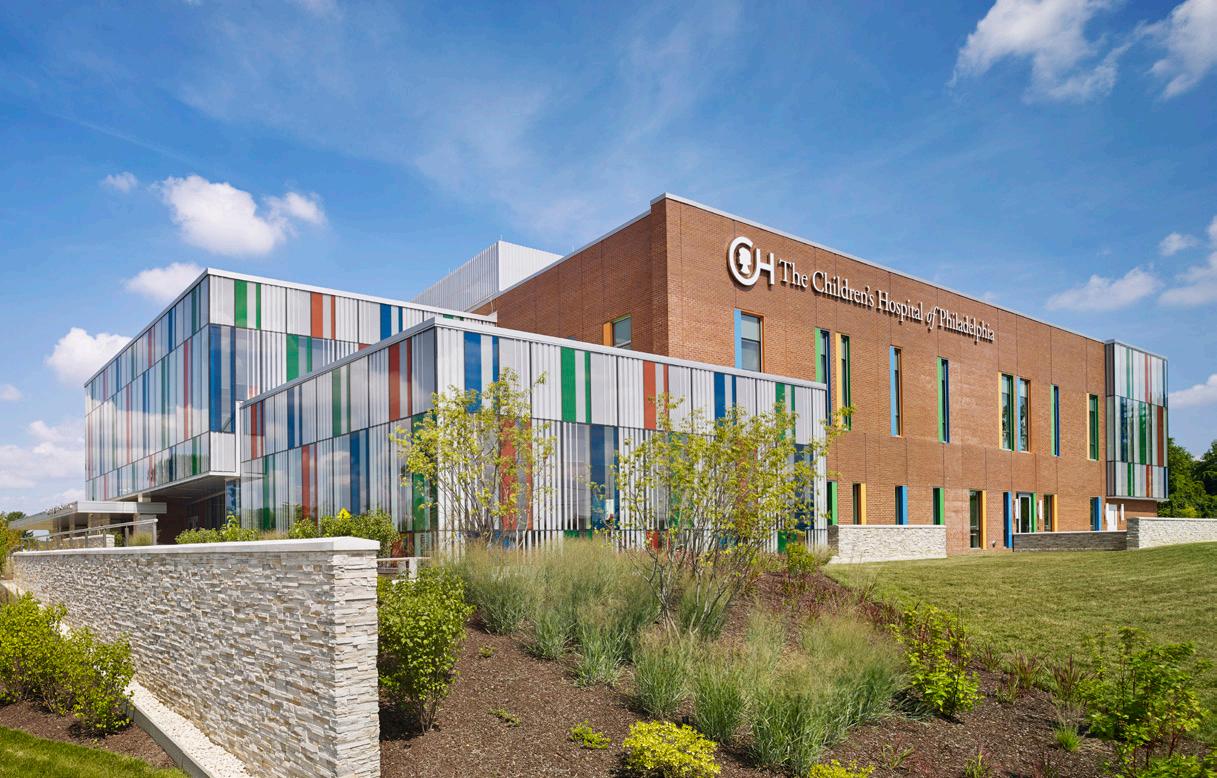
Children’s Hospital of Philadelphia, Specialty Care & Surgery Center
Children’s Hospital of Philadelphia, Specialty Care & Surgery Center
Jefferson Health, Asplundh Cancer Pavilion
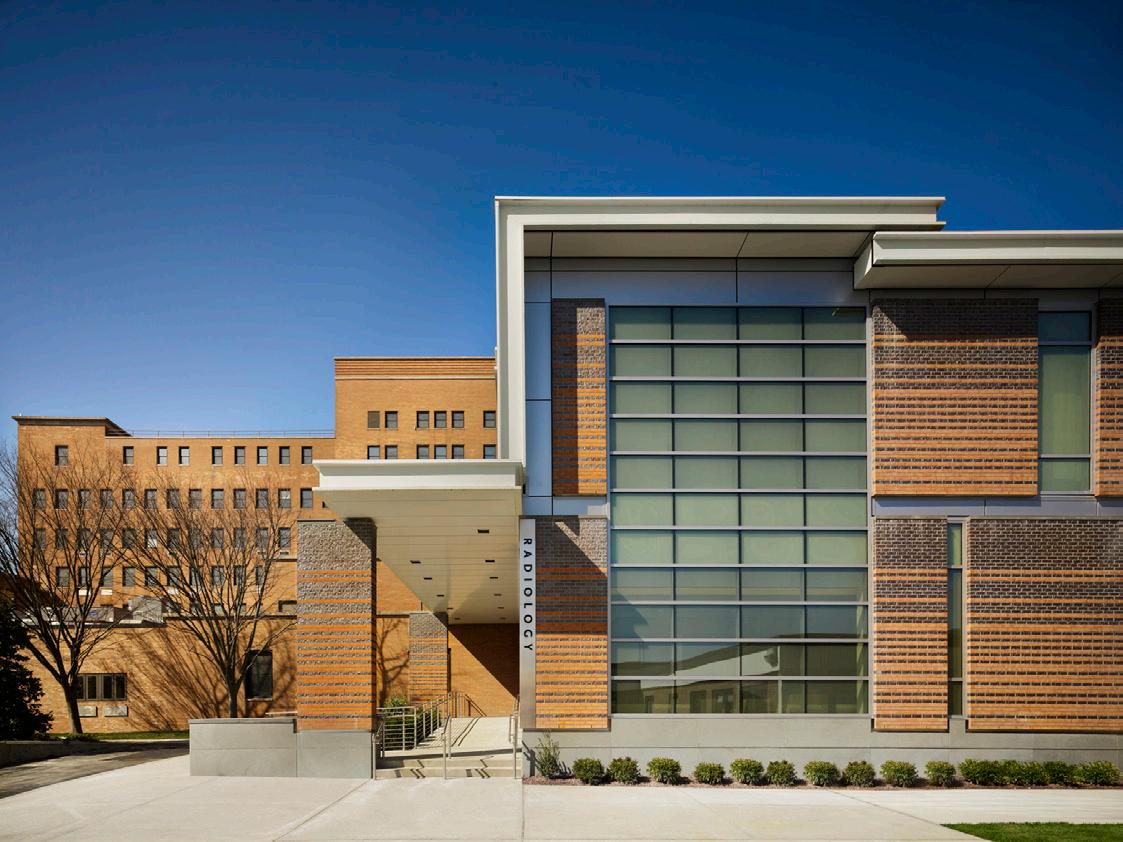
Good Samaritan Hospital, Radiology Department Expansion
Key strategies include:
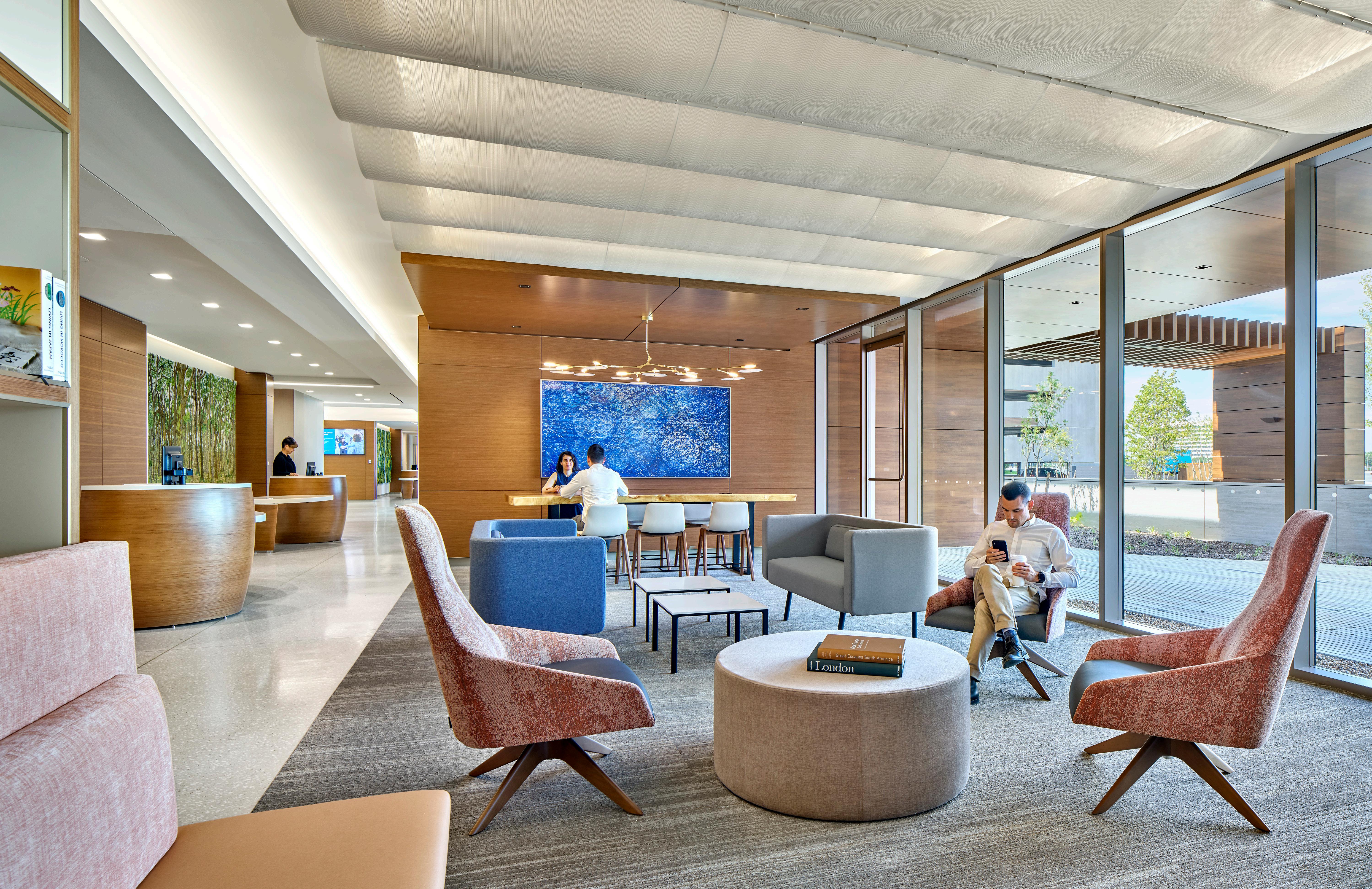
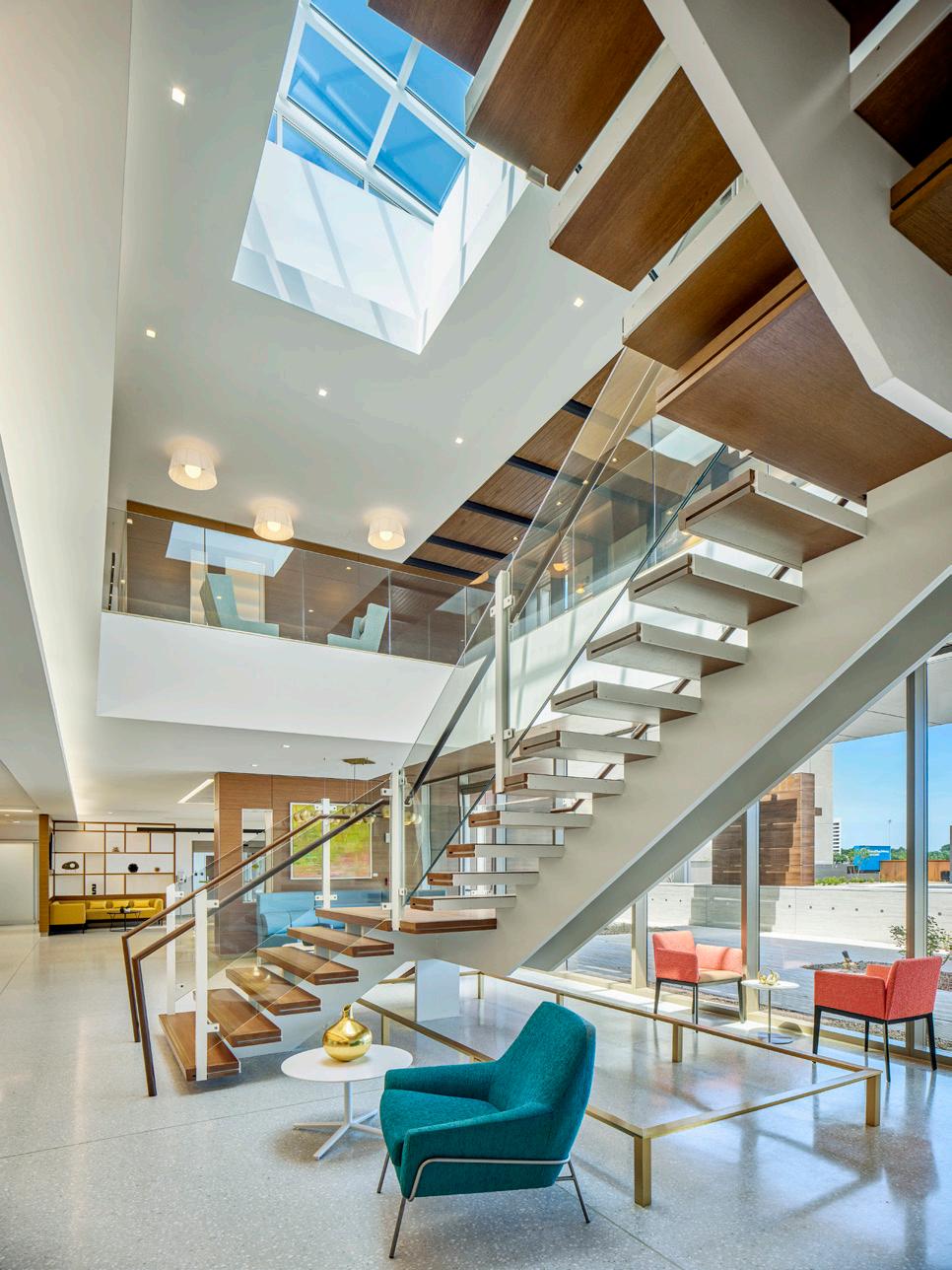
– Choice and Flexibility: We design waiting areas and lounges as multifunctional spaces that provide a spectrum of experiences—from quiet reflection to family gathering, from distraction for children to workspace for adults. Every user should find an option that meets their need.
– Ageless and Inclusive Design: We craft interiors that serve all ages and abilities, considering everything from seat heights and lighting levels to sensory engagement and visual language. This ensures environments are universally welcoming and equitable.
– Durability with Dignity: We specify materials that are cleanable, resilient, and budget-aligned—but also warm, textural, and uplifting. We avoid institutional aesthetics in favor of calm, inviting palettes and tactile richness.
– Engagement and Distraction: We incorporate light, sound, color, and movement in ways that reduce anxiety and improve the quality of wait times. Interactive elements, curated views, biophilic patterns, and storytelling components support emotional well-being.
– Operational Alignment: Our designs are shaped by emerging care models and lean operations. We accommodate teambased care, decentralized workstations, and direct-to-room strategies that enhance patient experience and staff efficiency.
– Equity and Empathy: We design for the full spectrum of lived experience. This includes multilingual signage, genderinclusive amenities, cultural touchpoints in artwork and finishes, and thoughtful accommodations for neurodiverse users.
Memorial Sloan Kettering Cancer Center, MSK Nassau
3
– Minimized Medical Presence: Clinical equipment is integrated discreetly into the architectural fabric to reduce visual stress and maintain a welcoming atmosphere.
– Clear Onstage/Offstage Separation: Patient-facing areas are thoughtfully distinguished from clinical and operational zones, maintaining privacy, dignity, and efficiency.
Our process often includes immersive workshops with staff, patients, and leadership to ensure the design reflects the needs and aspirations of those who live and work within it. The result is an interior environment that supports performance while nurturing the human spirit.
Jefferson Health, Asplundh Cancer Pavilion
Memorial Sloan Kettering Cancer Center, MSK Nassau
From Building to Campus: Grafting Identity Through Integrated Design
The transformation of a campus happens building by building—but each project must be more than a discrete improvement. It must be a carefully grafted extension of the larger campus identity. We think of this process as a fusion of architecture, infrastructure, landscape, and institutional culture.
A successful building integrates multiple layers of meaning. It creates new connections, anchors public space, amplifies brand values, and elevates the surrounding context. It is legible as part of a larger whole and powerful enough to shape the trajectory of that whole.
Through integrated design—master planning, architecture, and interiors working as a unified system—we help our clients craft not just facilities, but destinations. Not just spaces of treatment, but platforms for care, learning, and discovery.
Conclusion: A Living Campus, Rooted in Purpose and Designed for Possibility
To reimagine a medical campus is to imagine a future of deeper impact, greater clarity, and expanded potential. Our approach brings together visionary planning, architectural character, and interior empathy into a design process that is both rigorous and human centered.
By aligning every element of the built environment with the mission of the institution, we help our clients transform their campuses into places that are not only efficient and functional, but meaningful and memorable. These are environments that invite participation, foster resilience, and express care in every detail—places designed to grow, adapt, and inspire for decades to come.
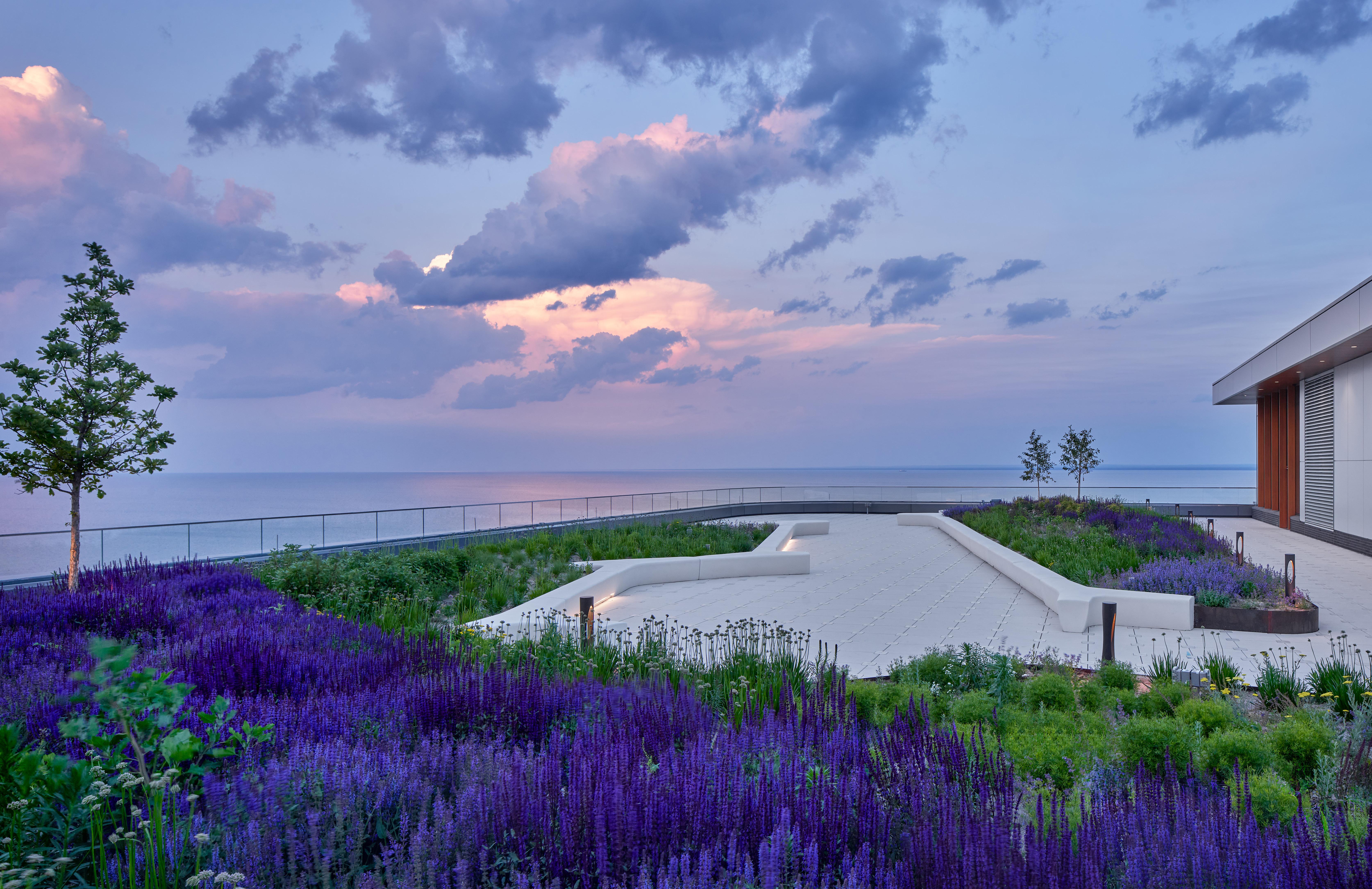
Essentia Health, St. Mary’s Medical Center